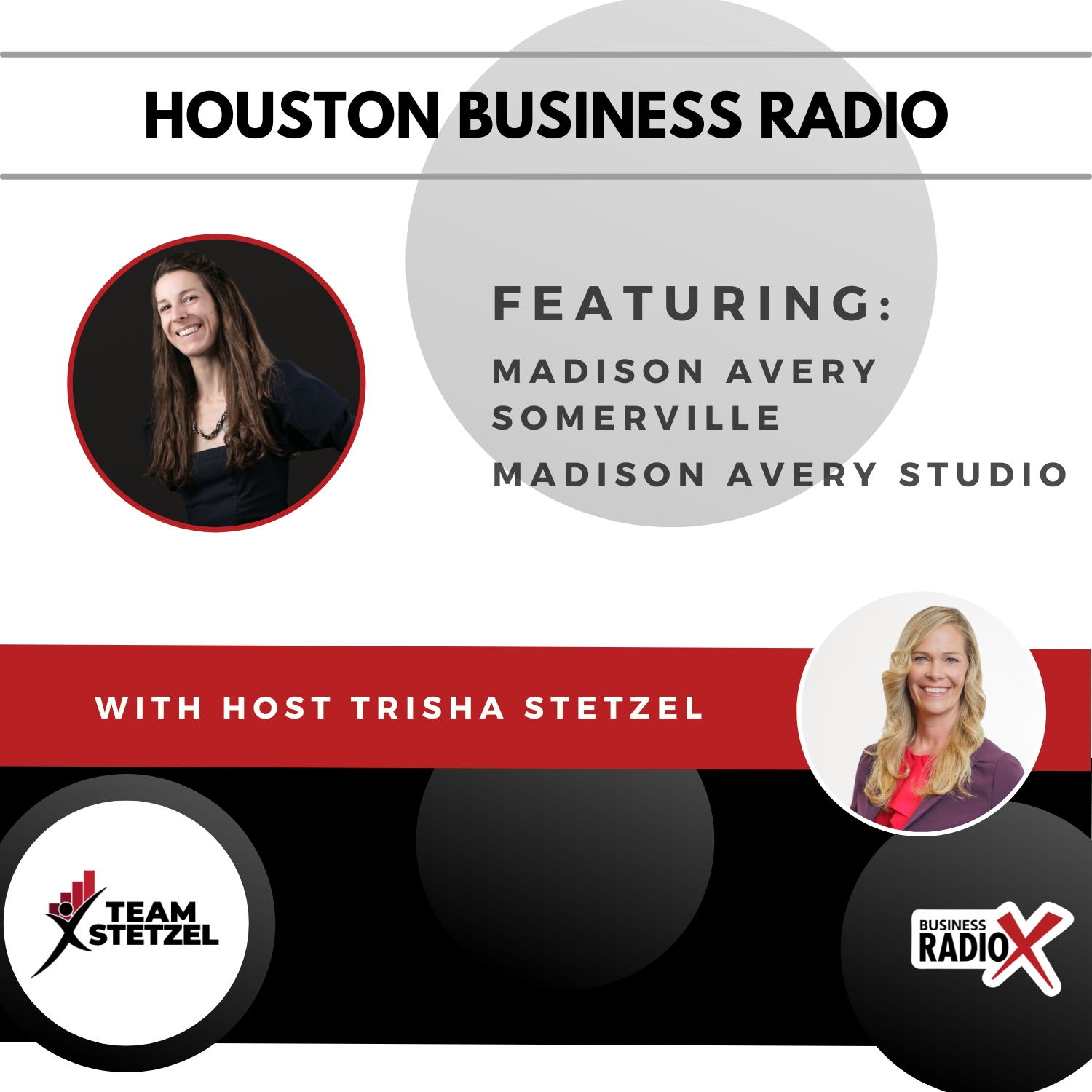
Madison Avery Somerville with Madison Avery Studio

/
RSS Feed

 Madison Somerville is a business portrait photographer from Houston, TX. She received her first camera as a gift from her father in 2011 and never looked back. She then graduated from The University of Texas with a degree in photography and started her business in 2015.
In 2021, she moved back to her hometown of Houston and rebranded as Madison Avery Studio. Her mission is to help professionals and business owners look their best, tell their story and connect with their dream clients. With so much business happening online, a digital presence is no longer optional.
Unfortunately, most professionals have no idea how to use their image for maximum effect. To solve that problem, she’s created the MAS Visual Strategy, a process and custom roadmap that gives each client clarity about how, when and where to use their photographs.
Her services include personal brand photography, individual and company headshots, website and marketing images, and corporate event photography. Her favorite clients are lawyers and small law firms although she enjoys working with any small or medium sized business.
In her free time, you can find her riding her bike around The Heights, practicing yoga, shooting black & white film, and spending time with loved ones.
Connect with Madison on LinkedIn and Instagram.
 This transcript is machine transcribed by Sonix.
TRANSCRIPT
Intro: Broadcasting live from the Business RadioX studios in Houston, Texas. It’s time for Houston Business Radio. Now, here’s your host.
Trisha Stetzel: Hello, Houston. Trisha Stetzel here bringing you another episode of Houston Business Radio. I’m super excited about my guest today, Madison Somerville. Madison is a business portrait photographer that I was introduced through a mutual network contact. I think it was John Ricardo. Thank you, John, for introducing us. She’s here in Houston, Texas. She received her first camera as a gift from her father in 2011 and never looked back. She’s been back in Texas since 2021 and has rebranded herself and her business as Madison Avery Studio. Her mission is to help professionals and business owners look their best, tell their story, and connect with their dream clients. Madison, welcome to the show.
Madison Somerville: Hi Trisha, thanks so much for having me. It’s really a pleasure to be here.
Trisha Stetzel: Well, I’m so excited to have you on. You and I have had several conversations around what you’re doing and the way you do it, and I just love how you capture the realness of people in the photography that you do. So what? Tell me about your favorite clients. Who is it that you love to work with the most?
Madison Somerville: So I love working with lawyers and engineers above all else. All professionals really. But but lawyers and engineers are just my my cup of tea. I guess I get along with them really well. We jive and I can help them a lot.
Trisha Stetzel: Awesome. So tell me about your experience in that space. Some people listening may be like, she wants to work with who? Uh, because it is like this. Very what? Most of us sitting on the outside looking in, maybe a staunch profession. Right. And what I know about your work, and we’re going to tell people about where they can find that is it is very real. And it is not this stuffy, staunch kind of photography. So talk more about, you know, the work that you do in that space for this, these particular professions.
Madison Somerville: Sure. So I see business changing and some of these more, as you call it, staunch uh, or traditional, uh, professions are they’re facing a lot of competition today from both each other, from AI, from the changing way we do business. And it’s becoming more and more important for those kinds of individuals to differentiate themselves, they often have a ton of knowledge that nobody knows about. They have experience, they have stories, and people have never heard these things from them because it’s not traditionally thought of, uh, lawyers and engineers telling their story or connecting with their, their people. But I see a huge opportunity for them to do so as the world becomes more digital, as we do more business online, and as people connect with one another to do business with people that are like themselves.
Trisha Stetzel: Yeah, absolutely. Talk a little bit about Madison. The the difference between using like a stock photo or using AI to create these photos versus what you’re doing for your clients.
Madison Somerville: So the main objective or result that I’m trying to get my clients is to create a platform, an audience, a personal brand around themselves and what they believe in. And there’s no one in the world like you. And so I help people highlight that and show that they’re not just a stuffy professional. I also enjoy fishing, or I also enjoy, um, connecting with this nonprofit or supporting this cause. Or these are my values and just helping people think about that and present that so that they show the whole picture of who they are. And I just doesn’t allow that human connection and stock photography the same thing. You’re not connecting with the actual business owner, and you just look like everyone else who’s doing what you’re also doing. And people want to connect with other people. And the best way to do that is through our faces, our, you know, faith. There’s nothing like face to face connection. And digitally that’s through photography.
Trisha Stetzel: Yeah, that’s and you’re your photography is beautiful. So, uh, give a little plug. Where can they find some of your work? They’re probably curious. Already listening, to the show today. So where can they find some of your work? Madison?
Madison Somerville: Sure. You can find it on my website at Madison Avery Studio.com. Or I’m also on Instagram at Madison Avery Studio and LinkedIn as Madison Avery Somerville. Yeah. All right.
Trisha Stetzel: I want to dig in just a little more into this AI space. You and I have had this conversation around, uh, you know, it’s, uh, people deem it to be less expensive and it’s easier. I just put my face out there, and then they put my face on some body with some clothes and some hair, and it doesn’t even look like the person anymore, in my opinion. Uh, so talk a little more about being in this photography business and how you might see AI as competition or not.
Madison Somerville: Sure. Uh, for for my own business.
Trisha Stetzel: Yeah, absolutely.
Madison Somerville: Okay, so I do and I don’t because at the end of the day, humans buy from other humans. We don’t. Occasionally we buy from robots, but it’s usually like commodity, you know, things that don’t really matter that much to us. If you’re going to get your estate plan done or you, uh, need a tax attorney or you’re starting a new business and you need help with with, uh, forming that the human is who you’re going to be working with. And so we you want to be able to connect and get along with that person. And I just doesn’t give you any kind of idea of what that human is like.
Trisha Stetzel: Yeah, that’s very true. And when I look at your photography, it’s just so human. There’s something about the way you capture people’s faces and the activities that they’re doing in a way that really brings life to that person. And I agree with you. We do so much business online. We’re looking for that. Still looking for that human connection because we’re humans. Why wouldn’t we be looking for that human connection? So what is I want to talk about people who have pictures that are really old online. What is best practice for updating your headshot or the the photos that you have on your website or LinkedIn or any of those social areas?
Madison Somerville: So it depends a little bit for on your goals, what kind of business you’re in, how you market your business, and that kind of thing. But at minimum, every two years we change our hair. We change the way we look. Shave your face, change your clothes, lose weight, gain weight, whatever it is, we look different and also and people notice when you post a new picture, update your LinkedIn profile. And it’s just another way to show that you exist and remind people, oh hey, I’m here.
Trisha Stetzel: Yeah, absolutely. So shout out to those of you who have picked your profile picture on LinkedIn. It’s like 15 years old. Please update it. Yes, please update it. Please. You know who you are. You know who you are.
Madison Somerville: You deserve.
Trisha Stetzel: Better. So, Madison. Yes, exactly. Uh, we’ve talked a lot about just headshots, but I know you do a lot more work than just headshots with attorneys and engineers. So talk a little bit more about the other work that you do in your business.
Madison Somerville: Sure. So part of it is that the personal brand photography and kind of strategy and consulting around that, what are your goals? What are you trying to achieve? Where do you want to go? How can photography help you get there? And then I also photograph corporate events. So awards ceremonies, uh, networking events, galas, that kind of thing. I really enjoy, uh, connecting with people and capturing the fun of the event.
Trisha Stetzel: Yeah, absolutely. And from a photography perspective, you talked about even capturing the things that people do outside of work. So is that something that you enjoy as well? Like if somebody wanted to go to Galveston or go to Kemah or something like that. Do you also capture those images for people?
Madison Somerville: I do, and I think a comprehensive personal brand strategy includes various aspects of your life. And so some of my clients we do take go out on several shoots so that they can capture the different aspects of their lives.
Trisha Stetzel: Awesome. I, you and I had talked a little while back about a program that you want to run a couple of times a year, and I’m just curious if you’d like to share that with the audience today. I know the timing on it is we’ve got several months, I think, before you’re running it again, but I would love to get this out there in front of people because I think it’s an amazing program. Can you talk about that?
Madison Somerville: Thanks. Sure. So it’s called the Reflection Project. And the idea is to take time for ourselves to reflect on how far we’ve come and the progress we’ve made in our lives. We move so fast, and life is so busy that sometimes we forget, oh, I’ve come really far in the last six months. I’m spending more time with my kids, or I’m spending less time on the screen. I’m eating better, I’m exercising more, the small things. So the purpose of this project is that twice a year around Christmas and New Years, and then in the summer, I will come out to you and capture your portrait on film, and we will have a conversation about kind of what you, uh, done the past six months and what you hope to accomplish in the following six months. And then once that six months is over, I will send you a physical print of one of the pictures we took together and a little worksheet to help you kind of reflect back on the time since we captured that image. And the idea behind the physical print is that it’s it’s hard to ignore. It’s there in front of you. You see yourself. There’s just something magical about having a physical photograph. And then you always have that record that’s apart from all your other photography on your phone or your computer. That is a record of that time and place.
Trisha Stetzel: Above that man. So I love that the idea of the reflection and celebrating our wins, that’s something that I always talk with my clients about, is making sure that we take the time to celebrate the things, even the small things that we’re doing that are making us better humans or better business people or better friends, better parents, better siblings, whatever that looks like. And I love that you’re running this program. Uh, is there more information on your website about that matter?
Madison Somerville: There is information on my website through my, uh, social links. So it’s, uh, Madison studio.com/social, and there’s information on that page.
Trisha Stetzel: Okay. Fantastic. Tell me your favorite. Um, tell me your favorite client story.
Madison Somerville: So probably my all time favorite client story is a young man that I met out networking. He’s not that young, but younger than myself, but. And I met him at networking. He had recently started a nonprofit, and he he felt like he was ready to kind of level up, be more of a professional than a young man, and kind of come out as a nonprofit founder and really make a splash with his business. And so we worked together, I guess, about a year and a half ago, and took some, some photos that he’s then used to promote his nonprofit. And the growth has been incredible. That year he had like triple or quadruple the people from the year before, and this year he’s partnered with University of Houston. Like it’s become this huge thing and I can’t take full credit for that, but I do. He told me his in his words, he that that investing in that photography shoot helped him to feel confident that he was a professional and able to go out and do do the great things that he’s done.
Trisha Stetzel: That’s amazing. And in part it was you and the and the the work that you did together. But being able to experience that alongside of him, I think is really cool as well. Let’s talk about, from a business perspective, um, how do you find your clients? What is your best source or how you engage with the people that you want to bring to your business?
Madison Somerville: Uh, networking has been huge for me. I get out and meet people, and I think that the way, maybe the way I approach networking is a little bit different than some people. Um, I really just go out there trying to build relationships. I’m not even generally trying to sell anything to anyone. I want to hear about the people that I’m meeting. How can I help them? Having kind of an attitude of service and giving first and just being present. And then eventually people start to, how can I work with you? They start to kind of come around and ask, you know, I might need some photography. They start to consider photography as an option for their business where they might not have before, but I really think it’s because I don’t push it and I just say, this is what I offer, this is how I can help. And yeah, it’s it’s it’s the long term strategy for sure. But, um, yeah. And just being out I mean at least minimum one networking event every week. Okay. All right.
Trisha Stetzel: So then you and I, you and I even met through networking. Uh, I believe that in most businesses, building relationships is the key to how you source your clients or even build strategic alliances inside of your business. And that’s why you and I have had so many conversations and continue to try and recognize ways that we can help each other. And I love that about you and being out there and building relationships. And as a photographer, I think it’s very special that that’s something that you want to do, because as you build those relationships, you get to know people and then you get to actually take their photos and see who that real human being is behind those photos. So thank you for doing such amazing work. Uh, how can if people are interested either in your reflections program or having some shots done, whether they’ve got a group or they want to do some headshots for their business, how can they get in touch with you? Madison?
Madison Somerville: Uh, the best way is to send me an email or, uh, give me a phone call. My email address is hello at Madison Avery Studio.com. And maybe we could put my phone number in the show notes or.
Trisha Stetzel: Yeah, absolutely. I’m going to put all of your connections in the show notes and, yeah, whatever you want to put here verbally, we can get out there as well. Uh, and we’ll make sure that you’ve got, uh, that folks who are listening can just point and click and get in touch with you right away. Um, anything, Madison, that we didn’t touch on today, that really you wanted to bring out in the show?
Madison Somerville: Um. I think one of the things that stood out to me the most from client feedback is how how surprised people sometimes are by how much fun and how enjoyable the photography session really was. I think people sometimes dread being photographed. To be honest, I kind of do sometimes too, and I really try to make it fun, enjoyable, lighthearted. We get the best photos if you’re having a good time. So really, it’s my intention to help us just have a have fun.
Trisha Stetzel: I’m glad you brought that out because I think a lot of people, especially my husband, I know personally, right? He’s like, oh, we have to take more pictures. I don’t want to take pictures, and I don’t mind them. Uh, so yeah, I think it’s really cool that you’re, uh, wanting to capture people having fun or enjoying what they’re doing with you when it comes to photography. And I love your work. You do such amazing work, Madison. I love the heart that you have. Uh, you and I connected because we both have high energy. And I think that that is something that, um, we can bring to others. And I’m so glad you were on the show with me today. Madison. Thank you for being here.
Madison Somerville: Thank you so much for having me. It was really a pleasure.
Trisha Stetzel: And that’s all the time we have for today’s show. Join us next time for another exciting episode of Houston Business Radio. Until then, stay inspired and keep thriving in the Houston business community.
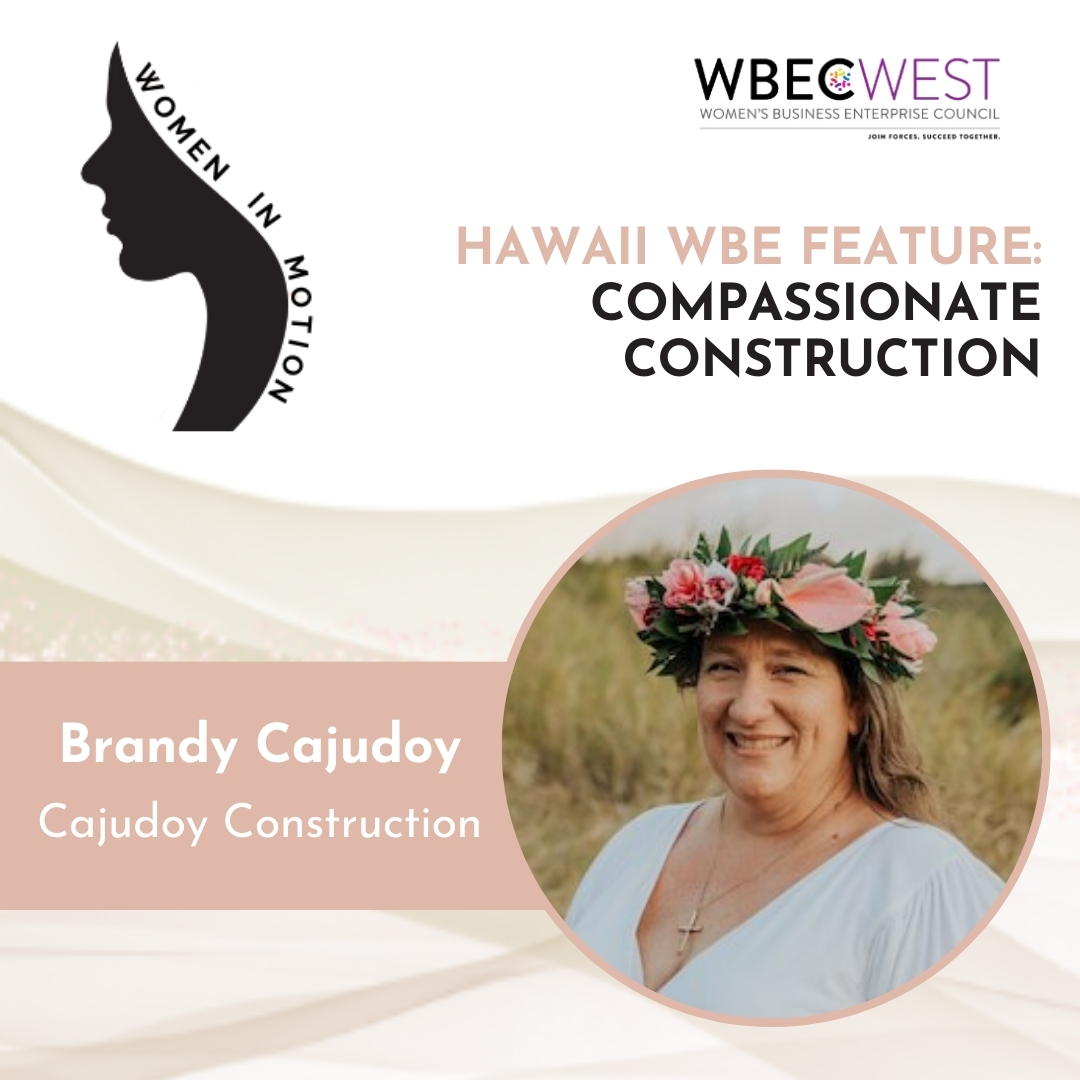
Hawaii WBE Feature: Compassionate Construction
/
RSS Feed
In this episode of Women in Motion, Lee Kantor has a conversation with Brandy Cajudoy, owner of Cajudoy Construction. Brandy shares her journey from high school teacher to construction firm owner in Maui, discussing her company’s projects and the challenges faced in the industry. She highlights a poignant story about rebuilding after a fire in Lahaina and emphasizes the importance of community support and giving back. Brandy also talks about her involvement with WBEC West and the resources that have aided her business. She calls for skilled volunteers to help rebuild Lahaina, stressing the need for nationwide support.

Cajudoy Construction builds and remodels hale (home) with aloha and provides high quality products with honest service so that every customer can have a hale they enjoy with their ʻohana (family).
 Brandy Cajudoy is a retired teacher that enjoys giving back to our community. Her Tutu (grandmother) always told her to give back to the Hawaiian people.
While growing up in LA, she never really understood this until she made Maui her full time hale. Brandy gives each day as much as she can.
Follow Cajudoy Construction on Facebook.
Music Provided by M PATH MUSIC
This transcript is machine transcribed by Sonix
TRANSCRIPT
Intro: Broadcasting live from the Business RadioX Studios, it’s time for Women In Motion. Brought to you by WBEC-West. Join forces. Succeed together. Now, here’s your host.
Lee Kantor: Lee Kantor here. Another episode of Women In Motion and this is going to be a good one. But before we get started, it’s important to recognize our sponsor, WBEC-West. Without them, we couldn’t be sharing these important stories. Today on Women In Motion, we have Brandy Cajudoy and she’s with Cajudoy Construction. Welcome.
Brandy Cajudoy: Hi.
Lee Kantor: Hello.
Brandy Cajudoy: Aloha!
Lee Kantor: Aloha! I am so excited to be talking with you. Can you tell us a little bit about your construction firm, how you serving folks?
Brandy Cajudoy: So, we actually serve the island of Maui. It’s my home. I love it so, so much. And all the people. But we truly love our Aina in Maui.
Lee Kantor: And what type of building do you do?
Brandy Cajudoy: So, we actually specialize and love to do residential. We do some commercials once in a while, and then we do have a few state jobs and county jobs here in Maui, too.
Lee Kantor: Now, what’s your backstory? Have you always been involved in the construction industry?
Brandy Cajudoy: No, I was actually an Algebra 2 high school teacher in my former life. I loved it. I had so much fun, loved the kids, still miss the coworkers because my only coworker now is my husband, which is okay. But yeah, I was a former teacher before, you know, we kind of decided that you know what, our kids are getting older. We are financially have positioned ourselves so that we can kind of start working from home.
Brandy Cajudoy: We had done construction on the side for 20-something years. We all – we both enjoyed it. My husband always came home with a smile on his face, and then kind of made the jump to get our general contractor license, and I did. I did that, with, of course, a lot of help from my husband. But yeah, I got the license and then started staying home. And from there, we just made it a full-time thing and it has grown. Normally, people tell you in the first five years you’re going to just, you know, struggle, struggle, struggle. And our first five years, it just got better, better and better. And it’s been great. We’ve had a lot of fun.
Lee Kantor: So, what do you think your secret is to having such explosive growth right out of the gate there?
Brandy Cajudoy: I want to say it was our experience, and I have to say that it’s just – and we’ve never advertised, so it’s word of mouth. And so, it’s all about the relationships that we’ve made with the people in our community.
Lee Kantor: Now, how did you get kind of those early jobs? Was that word of mouth like friends and family, people you knew, like, had projects that they needed help on?
Brandy Cajudoy: Yeah, exactly. So we did a few family jobs, and then our whole goal was that we had some friends that were close, and they worked early in the morning and they wanted to do some part-time work in the afternoons. And so, my husband was just finding construction jobs because they all enjoyed doing it, just to have them have the extra money. It wasn’t about us bringing any money. In fact, I think a lot of those early jobs, we didn’t get any money out of it. It was literally just for those family and friends that we got jobs for so that they could just have that extra money for their own families. Because here in the islands, we all have to work two and three jobs. And it’s just not that we want to do it, but it’s a must. So, it’s just second nature for you to have a second job or a third job. So, that’s what we did. We created those second and third jobs for a lot of our family and friends, and that’s how it grew.
Lee Kantor: And, like, what do you think the split is between kind of construction from scratch and remodeling?
Brandy Cajudoy: Remodeling can actually, and we tell these people – we tell people all the time, remodeling almost can be double your price sometimes because you’re having to pay for that demo, which is one price, and then rebuilding it back, which is a whole nother price. So if anybody ever has an opportunity to kind of start with the clean slate, it’s definitely, you know, for the budget-wise, they’re going to make out better.
Lee Kantor: So, sometimes if you have just you’re at the ground and you’re building up from like a blank slate that’s less expensive than tearing down and then, like, kind of piecemealing something?
Brandy Cajudoy: Yes. Yes, definitely.
Lee Kantor: Can you talk about a project that you’re particularly proud of? Has there been any work that you were like, wow, that really came out nice, look at how this family really appreciates, and this is going to really make a difference?
Brandy Cajudoy: Oh, man. There’s so many, so many. But I think one of the projects in particular that, I don’t know if it’s a, it’s not like a good story, but it’s a story where we’re hoping for a happy ending. And this family had worked really, really, really, really hard and saved up for years and years and they wanted to build this huge house and it was in Lahaina. And their whole family had put in money to do this. And so we started building – it was like eight bedrooms, seven or eight bedrooms.
Brandy Cajudoy: And in Hawaii, you know, we have a multi-generation – everybody lives together. And because it’s just economically, that’s what they – that’s what we can do. So this is what this family did, they were building this huge house for their families for them to all live together. And then the fire came. We were in the middle of building that, and it was right in Lahaina. And it’s just gone. Completely gone.
Brandy Cajudoy: I mean, that fire was so hot. We had steel beams inside this house because it was right by the ocean. It was like right across the street from the ocean. So, you know, the foundation was just phenomenal because we had to go so far deep because there’s a whole, like, you know, I mean, obviously the ocean is right there so there’s an SMA and everything else. So, we wanted to make sure that it was very sturdy. These steel beams just, like, melted like butter, you know, down into the – but it’s going to come back, it’s going to come back and the family is going to come back and so is the rest of Lahaina.
Brandy Cajudoy: But I feel like it’s not a really good, good story, but like, we know we’re looking for the happy ending. I feel like right now everybody’s seeing kind of the light at the end of the tunnel a little bit about okay, here’s the road, this is where we’re going, this is what’s going to happen. But that family, they’re just, they’re so special to us. And we’ve been with them for like three years because we actually had a home on that property, and as you were asking, you know, is it better to remodel or to start from scratch? And they demoed their whole – there was a house there already and they demoed it and got everything off the land and started from scratch. And they saw it started coming alive. We were 98% done with that house when the fire hit.
Lee Kantor: Oh, wow.
Brandy Cajudoy: Yeah, 98%. So for that, the permit is still open, which is – so whenever the fire had hit and we had asked the county, like our permits still open so as soon as their lot is cleared and everything’s cleared and we can go in, “Can we just start rebuilding?” And they were like, “Yes. We’re not holding anybody back.” So, that’s been really amazing.
Brandy Cajudoy: So, they’re still waiting for their lot to be cleared. There’s a couple of different stages they got to go through but they have a few other properties too that they need to rebuild. But it’s just it – time’s going to heal everything. And it’s going to be great. It’s going to be great. They are already excited. But that family holds a special place in our hearts, though.
Lee Kantor: Well, so they got to see it at 98% done so they were like – it was almost real. And then it becomes, you know, not real. Wow. That must have been really hard.
Brandy Cajudoy: Yeah. It crushed everybody. Yeah. Yeah.
Lee Kantor: And then what’s the – like, how long would it take, like if everything said, okay, tomorrow we can start, like how long would it take for that to be completed?
Brandy Cajudoy: That house was pretty big so I’m probably – that would probably be like a year project. Most projects could be, like, eight months to 12 months, but this one definitely, because it was so big and it had, like, CMU blocking on it. But there were a lot of different sidings. But yeah, that one probably took about a year to get rebuilt. And we were right at the year mark. We had already been with them, like I said, for three or year years. So, yeah.
Lee Kantor: Now, for you having the career as a teacher and now in this construction world, when you’re completing a project here, does it feel like when the kid gets it in class, like, are you getting the same emotional kind of thrill from those experiences?
Brandy Cajudoy: Oh, yeah, that’s a good question. Yeah. There is that like, “Oh, my goodness, the light went off. Oh, and this finished project, it’s beautiful.” And the happy faces that you see on the family’s faces, yeah, definitely that same feeling and the little giddy like, “Oh, my goodness, we did this for our – ” and that’s what we’re all about is we always wanted to give back to our community.
Brandy Cajudoy: Like, when I was a little girl, I actually grew up in Louisiana, and so my Tutu, my grandmother, was born and raised in Maui and Oahu, and she married a military man, who was from Louisiana. So when I was growing up, she would always tell me, “You know, you need to give back to the Hawaiian people. You go give back to Maui.” And I was like, what is she talking about? I have no idea. I have no clue what she’s talking about. But I get it now.
Brandy Cajudoy: You know, now that I’ve lived on Maui for over 30-something years, I’m like, oh, my goodness, they’ve given so much to us and to our family. You know, we wouldn’t be where we are today if it wasn’t for the people of Maui and the Hawaiian people. So, to just be able to give back to our community every single day, it sends chills down the back of my spine. I love it, I love it.
Lee Kantor: And then when you’re done, you see it. I mean, it’s not –
Brandy Cajudoy: Yeah.
Lee Kantor: Like, this is something real at the end of the day that you were part of making come to life.
Brandy Cajudoy: Yeah, yeah. And that’s what we’re all about, we just want to keep giving back to whoever. And I actually have to scold my husband. He gives a lot of freebies. And so when I run reports on different projects, I’m like, “Why do we never make any money? Never make any money. You give away so much.” And like, how do I scold him for doing that? You know, it can be hard. It can be hard.
Lee Kantor: Look, he’s just doing what your grandmother said to do.
Speaker4: I know, exactly, so I can’t scold him. I can’t get mad.
Lee Kantor: Now, any advice for women out there who are thinking about getting involved in the construction industry?
Brandy Cajudoy: Ooh, that’s a tough one. Getting involved in construction, you better have some tough skin. You’re still going to run into certain people that don’t think you know what you’re doing. And when you get really riled up and passionate about something, they’re going to think that that’s, oh, you being overwhelmed or not being able to handle it whenever you’re just being passionate.
Brandy Cajudoy: So, just have some tough skin when you’re getting into the construction business. But other than that, I mean, it’s a lot of fun and there’s a lot of gratification, you know, in everything that happens. And I love that we can see a finished product and see how the families are. But yeah, just have a little tough skin when you’re starting to deal with certain people out in the community.
Lee Kantor: Now, what was it that compelled you to get involved with WBEC-West? Why was it important for you to join that community?
Brandy Cajudoy: So, a few years ago, because we’ve actually had our general contractor license for maybe about seven years now, and maybe four or five years ago, I had run across WBEC-WEST by email or online, or it may have been through SBA, through the Small Business Administration. And one of my goals, not my husband’s goals, but one of my goals was I wanted to start doing state jobs and county jobs and maybe even some federal jobs. And so SBA had said, “You know, you’d probably get your small business, your woman-owned small business.” And I was like, “Oh, okay, I’ll look into that.”
Brandy Cajudoy: So, I did, and I was like, oh, federal jobs. We could get, you know – people could probably use us to do some contracting because there are a lot of federal jobs that have to give back to a certain percentage, and it has to go to small businesses and even more so to women-owned small businesses. And so, I had gotten, you know, once I started looking into that, and then I saw all these, like, resources through WBEC-WEST, I would get emails all the time, I love it. In fact, I’m trying to get into one of their other programs right now where – but they have a lot of classes on working capital. That has been amazing. And that was one of the big things was right in our five-year mark, I had said, “You know what? Let’s start doing these state jobs.” Got into the state job. We received a state job. We were, you know, just so excited about it.
Brandy Cajudoy: And we knew that that project I was talking to you about earlier, we knew that when that project ended, we were going to have the perfect amount of working capital in order to allow us to go into working in that state job because many of you know that in a state job, you need to have a lot of your money upfront so that you can – because you’re not going to get paid as quick as possible in most state jobs and even federal and county jobs. So, we knew we had to have a lot of working capital going to that job.
Brandy Cajudoy: So, that job that we had, that burnt out in Lahaina, the goal was that whole year we were going to use that final payment, and then it was going to take us into the state job. But then the fire had happened. So, we didn’t receive that final payment. So we did – we almost gave up the state job. We did not, though. We have two state jobs and one county job now, and it worked out fine.
Brandy Cajudoy: But I have to say that WBEC was able to help me figure out where am I going to get this working capital from, what am I going to do, how am I going to make it so that my books look good because there’s all this bonding involved, too. Bonding wants to make sure that you have working capital. So, I have to say that WBEC really helped us in that area and helping us make our plan and getting back on track.
Lee Kantor: Well, congratulations to work through that. That’s a great story, you know, to have that tenacity and just hang in there through that tough time. That’s great.
Brandy Cajudoy: Yeah, yeah. Thank you, thank you.
Lee Kantor: Now, what do you need more of? How can we help you? What, like, who’s your ideal customer? And what can we do to help you connect with more of them?
Brandy Cajudoy: Well, I have to say that I have so many hats in our community, and I am going to put a plug out there because Lahaina is special now in all of our hearts. So, I am on the board for the long-term recovery and I am in the construction management. And we need all the help we can get out here on Maui, if anybody has, you know, supplies that you want to send out or volunteers that you want to send out and skilled volunteers for construction would be amazing and helpful. Not to say that we don’t have enough here on the island but there’s no way that we’re going to build back a whole town with just us. We know that we need help.
Brandy Cajudoy: But that would be amazing because us as a small business, we know we can only build so many houses. But even if with the amount of contractors that we have on the island of Maui, we probably could probably build about, you know, 100 homes in a year. If you look at that, we have 1700 homes to rebuild. That would take 17 years. We don’t want to do that. You know, we need to be able to get out there and get these done.
Brandy Cajudoy: And with our county doing what they’ve done, and I think this is kind of unheard of, they are going through the permitting process. Once you put in a permit and you have your plans ready and you put in your permit, it’s taking about 15 to 20 days for it to get back out to you. Normally, it takes, you know, six months.
Lee Kantor: Right.
Brandy Cajudoy: So, it’s unheard of. I love it. And they’re not skipping any – they’re not skipping any steps. They just have found a third party to kind of come in and help get it done. And so, I feel like being on this long-term recovery board with our island and me being able to give back in that other way, we’re going to need so many resources and so many, so much help in order to make that happen. And if our whole nation and our world could come together and just, like, help Lahaina rebuild in the way that it needs to be would be amazing.
Brandy Cajudoy: And I’m – I just – that’s all I want. I don’t need anything for my company. I mean, we’re word of mouth. I love it and we have so much, but I really just want to give back to our community and give back to the people.
Lee Kantor: If somebody wants to learn more about your firm or connect with you, what’s the website?
Brandy Cajudoy: It’s cajudoy.com, so C-A-J-U-D-O-Y dot com. I believe my phone number is on there and my email is on there. You are more than welcome to contact me. It’s nothing fancy, but it’ll get to you – it’ll get you to me and we can connect and I can give you any other information you need. And if you have any questions, let me know.
Lee Kantor: Well, Brandy, thank you so much for sharing your story today. You’re doing such important work and we appreciate you.
Brandy Cajudoy: Thank you. Thank you for the opportunity.
Lee Kantor: All right. This is Lee Kantor. We’ll see you all next time on Women In Motion.
BRX Pro Tip: 4 Ways To Be A Better Active Listener

/
RSS Feed

BRX Pro Tip: 4 Ways To Be A Better Active Listener
Stone Payton: Welcome back to Business RadioX Pro Tips. Lee Kantor and Stone Payton here with you. Lee, let’s talk a little bit about becoming a better active listener.
Lee Kantor: Yeah. When we’re training our hosts, being an active listener is a key component of what makes a good host and a good interviewer. And some of the the tips that we suggest to our hosts are these.
Lee Kantor: Number one, give your guest your full attention. This is not a time to be multitasking, doomscrolling on your cell phone. The basics of active listening is actively listening. You have to listen. You have to be paying attention. You can’t be doing other things. You really have to be in the moment if you’re going to be a good, active listener.
Lee Kantor: Number two is try not to cut the guest off or talk over them. You have to be respectful. You have to give them the opportunity to tell their story in its entirety. And so, being respectful and patient and letting them talk is part of that. You know, if you don’t want your guest to give a rambling question or go off on tangents, then ask better questions because you can control some of that if you ask a clear question.
Lee Kantor: Number three when they have an answer, build on their answer. Ask clarifying questions. Dig deeper. Be curious. Those are things that are important because this helps your guests articulate the message they’re trying to communicate. So, if you’re building on what they’re saying, you’re going to help them give a better answer and create a better content that is going to be more likely to be shared.
Lee Kantor: And then, lastly, number four is stay neutral. You know, try and be a safe, judgment free zone for your guests by supporting and celebrating their work. At least at Business RadioX, we’re not investigative reporters trying to dig and trying to uncover some scandal. We’re here to help our guests articulate their message.
Lee Kantor: And by employing these active listening techniques, you can conduct more effective interviews, you can build better rapport with your interviewees, you can gather more insightful information, and most importantly, you’re going to create content for your guests that will be more likely to be shared by your guests, which is what everybody wants.
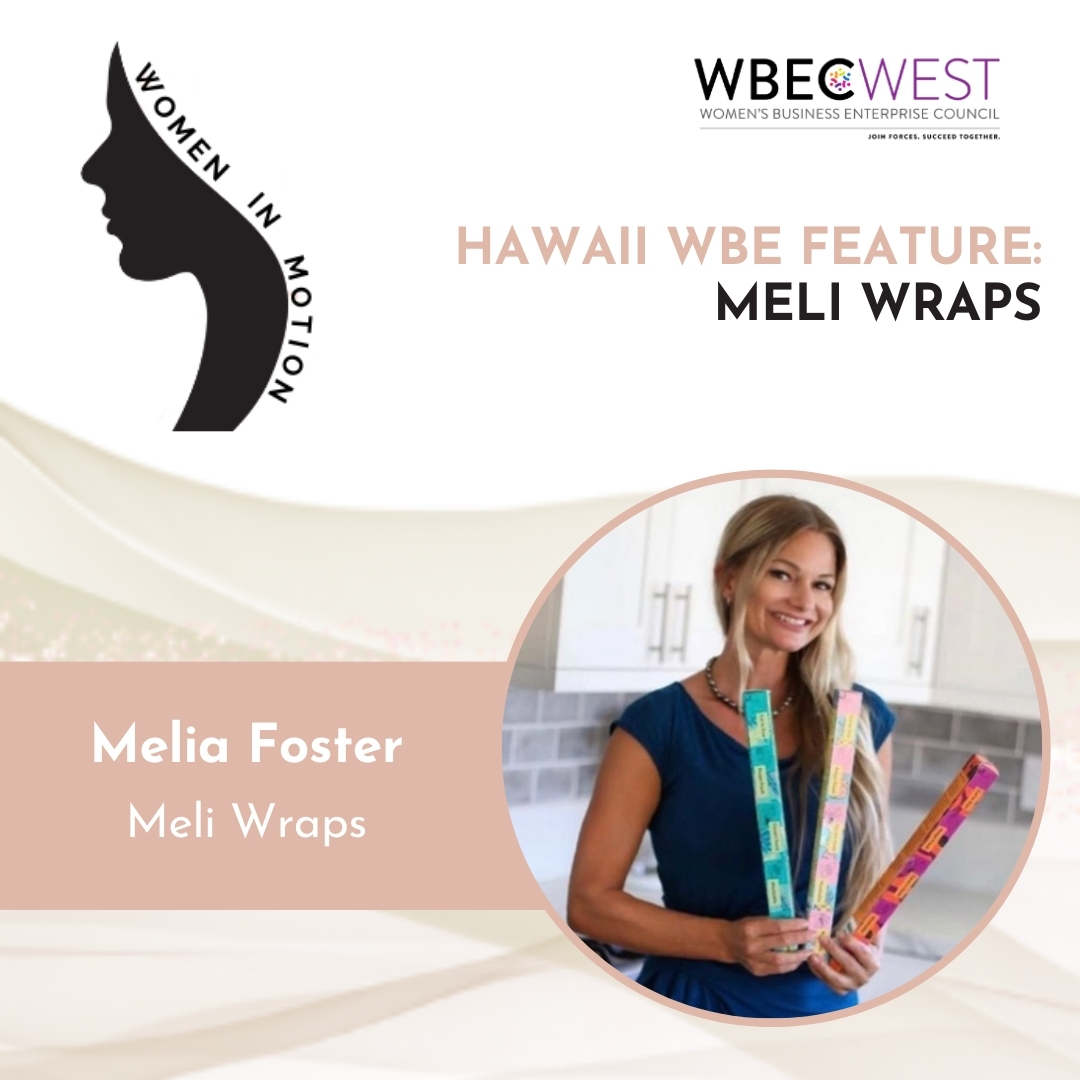
Hawaii WBE Feature: Meli Wraps
/
RSS Feed
In this episode of Women in Motion, host Lee Kantor interviews Melia Foster, founder of Meli Wraps. Melia discusses the inspiration behind her eco-friendly, reusable beeswax wraps, which originated from a trip to Australia. She explains the production process and highlights the wraps’ durability and versatility. The conversation covers the artistic designs of Meli Wraps, their direct-to-consumer and wholesale business model, and an upcoming collaboration with Whole Foods. Melia offers advice for entrepreneurs and shares the benefits of being a certified woman-owned business.

 Melia Foster Co-Founded Meli Wraps in Jan of 2016 in an effort to reduce plastic waste locally and eventually globally. As a mother of 2 boys she was frequently packing lunches for school and always looking for eco friendly alternatives to plastic bags and containers. Meli Wraps sources local beeswax and creates high quality beeswax wraps that work as an eco friendly replacement to plastic wrap for food storage on the North Shore of Kaua’i.
Melia studied textiles and fashion technology at Maui Community College before starting a family on the North Shore of Kaua’i. She started a clothing company in 2013 designing woman’s wear and then producing in Bali Indonesia. Between 2008-2020 Melia also worked in sales for Starwood Vacations.
In 2020 Melia became the sole owner of Meli Wraps and is actively working to expand sales across the US and abroad. In 2022 Meli Wraps attended the Tokyo Gift Show in Japan and opened the door to sharing Meli Wraps with the world. Currently Meli Wraps in sold in 5 Regions of Whole Foods and will be going global at the end of the year! You can also find Meli Wraps at PCC Markets, Foodland, Dean & Deluca, Lassens Market, Rosauers,Food Pantry & more!
In 2023 Meli Wraps will release new prints focused on plants that are Native to Hawaii. They have also expand their line of kitchen products to include reusable Swedish dish cloths and cotton dish towels. Meli Wraps was a finalist for the 2023 HVCA start up in Paradise peoples choice award. Melia’s mission is to continue to reduce plastic waste on the planet and will continue to support organic farming, local bee keeping (and bees), local jobs and ocean conservation.
Follow Meli Wraps on Instagram.
Music Provided by M PATH MUSIC
This transcript is machine transcribed by Sonix
TRANSCRIPT
Intro: Broadcasting live from the Business RadioX Studios, it’s time for Women In Motion. Brought to you by WBEC-West. Join forces. Succeed together. Now, here’s your host.
Lee Kantor: Lee Kantor here, another episode of Women In Motion and this is going to be a good one. But before we get started, it’s important to recognize our sponsor, WBEC-West. Without them, we couldn’t be sharing these important stories. Today on Women In Motion, we have Melia Foster with Meli Wraps. Welcome.
Melia Foster: Oh, thank you so much. I’m excited to be here.
Lee Kantor: I am so excited to learn what you’re up to. Tell us about Meli Wraps. How are you serving folks?
Melia Foster: Definitely. So, for those that do not know what Meli Wraps are, they are reusable beeswax wraps that you use instead of plastic wrap for food storage. So, they’re a really nice, eco-friendly alternative to plastic wrap. And we make them here in Kauai, Hawaii – where I grew up – by hand with local beeswax. So, a wonderful product, and, yeah, I’d love to share more.
Lee Kantor: Yeah. So, what was the genesis of the idea?
Melia Foster: Well, I’m a mother of two boys, and I’m constantly making lunches for school or sporting events, and I can’t stand plastic wrap. So, a girlfriend of mine and I were on a mom’s getaway in Australia way back in 2015, and we came across in a little coffee shop kind of like a bowl of fruit covered with this wax cloth. And I kind of checked it out and I’m like, “Wow. Why don’t we have these in America or Hawaii? These are amazing. This is the perfect eco-friendly alternative to plastic wrap.” Now, this was just like a plain kind of off white colored wrap. And I thought, “You know what? We should make fun prints and do these colorful, exciting patterns. And how fun would that be?”
Melia Foster: So, the two of us, we both had corporate jobs at the time. And so, this was kind of just like a fun side project that we were like, “All right. Well, let’s go ahead and make these for Christmas gifts.” And everybody loved them. So, from there, we went ahead and sold them at local farmers markets, sold out of our product there, and took it to wholesale to local shops in Hawaii, and they did so well.
Melia Foster: Fast forward a couple of years, my business partner, Nicole, at the time, she moved to Bend, Oregon, and she thought, “You know what? Should we keep doing this business?” And I thought, yeah, this is a great opportunity to kind of expand to – we call it – the mainland over there. And so, we started doing expos. Where did we go? We went to Expo West, which was very successful for us. And from there, we got into some larger retailers like Whole Foods and PCC markets and whatnot.
Melia Foster: So, yeah, it just kind of took off and was such a fun adventure and the perfect product that I was hoping for so I didn’t have to use plastic wrap anymore. So much better for the planet.
Lee Kantor: So, you see this product in Australia or a similar product, did you know anything about manufacturing like this? How do you go from a bee to wax to this solution? You know, there has to be some manipulation, obviously, of the beeswax to get it into the form you need it to be in. So, how did all of that take place?
Melia Foster: Yes. Yes, it’s very interesting. So, we, of course, hopped online and were like, How are these made? Where did this idea come from? We did a ton of research. It turns out the Egyptians invented beeswax wraps. So, they have been around for a very, very long time. The Egyptians used wax cloth to preserve their food because wax is a natural preservative. It keeps your food nice and fresh in an eco-friendly way.
Melia Foster: So, we sort of played around with recipes. Luckily, we lived across the street from each other in Hawaii, so we would be running across the street with, you know, pots and pans and beeswax and trying all these recipes. We finally perfected our recipe after a couple of months, and it’s beeswax, natural tree resin, organic coconut oil, and organic jojoba oil, which are both antimicrobial. Everything’s natural. And then, we also use certified organic cotton.
Melia Foster: And the process is, basically, we take a whole bolt of organic cotton material, and we go ahead and infuse it into the melted wax and let it cool, and then we cut everything and pack it. And the wax blend is super important. The recipe has to be just right for the wraps to come out, sticky enough and not too firm, not too soft. So, it was definitely a process.
Melia Foster: But we’re known to have the best beeswax wraps on the market. They last about two years or 150 washes. And people love our patterns and prints, so we’re very prone to doing fun, tropical, bright colored prints. And usually that’s what attracts people in the first place is what they kind of see, like, “Wow. That’s a beautiful print.” And they’re like, “What is this thing?”
Melia Foster: So, yeah, it’s a very unique product. But I’d say about half the people we meet these days have heard of beeswax wraps and the other half have no idea what they are, so very exciting.
Lee Kantor: And then, for the people who don’t know what they are, the plastic wrap that I’m familiar with comes in a roll. It’s hard to tear off. It always sticks to it. It never sticks the way you want it to. Everybody is annoyed by it at some point in the use of it, right? So, now in your case, obviously they’re cut a certain size that is like one static size or do you cut it yourself? How does that work?
Melia Foster: Yeah. So, we actually started by offering a pack of three or four wraps, and we do three sizes. So, we’ll do a 7 by 7, which is perfect for covering half a lemon, half an avocado, all of your odd shaped fruits and vegetables or small bowl. And then, 10 by 10 is our medium size, and that is perfect for a plate of leftovers, a sandwich, something like that. And our large is 10 by 16, which is perfect for a loaf of bread or covering a 9 by 13 pan. We also offer a roll that’s 42 inches long by 13 inches, and then you can go ahead and cut your own sizes with scissors.
Melia Foster: And a lot of people love the roll because they have those, you know, special dishes or trays they want to cover, or maybe they only like to use very small wraps so they can cut just what they need. So, you have those two options. I noticed that a lot of our customers are like, “Gosh, you know what? I don’t want to mess with cutting anything. Just give me your pack that’s precut.” And others will say, “You know what? I want to get creative and cut my own sizes.” So, it’s just personal preference.
Lee Kantor: And then, some of the uses obviously for leftovers, things like that, but are they using it for their kids lunches? Is that another use?
Melia Foster: Yes, 100 percent. They’re great in the lunchbox. You can even fold one into a little envelope to use for snacks instead of a plastic sandwich bag. So, there’s several uses. They can go over dishes. They can go directly over food. They’re completely food safe. And then, they can also be folded into envelopes for snacks and sandwiches.
Lee Kantor: So, I’m on the website, so the things that obviously stand out that’s much different than any type of plastic wrap is the design. I mean, it’s beautiful, artistic, the designs people would want. I could see just for the design element of it, but not even counting the utility of it. How important is that? Is that something you’re always kind of iterating and having, you know, maybe seasonal designs or different designs?
Melia Foster: Oh, definitely. Yeah, that’s the fun part for me. I mean, we’ve been in business for nine years and that’s the creative side. It’s like, What print are we going to do next? And, you know, it really is exciting for our repeat customers who are waiting for the next print or something that speaks to them.
Melia Foster: We are in the process of designing two new prints. We usually do about two or three new prints per year, and then eventually we’ll kind of cycle those out. But we have probably 12 to 13 to offer right now. And it’s so sad when one eventually just sells out. And sometimes we’ll bring it back if we get a lot of requests. But we are definitely known for our fun prints.
Lee Kantor: Now, is this kind of direct to consumer or do people buy this in a wholesale manner or, you know, kind of in bulk?
Melia Foster: Both. We actually do a lot of in-person, direct to consumer shows in different cities. We also sell on our website, meliwraps.com. And then, we do a ton of wholesale. Actually, 80 percent of our business is wholesale and that’s our bread and butter. We service hundreds and hundreds of stores across the U.S. and a couple in Japan, which is exciting. But our largest account would be Whole Foods, which we’re actually going global with them this fall, so you’ll see us in almost every Whole Foods this fall, which is so exciting.
Lee Kantor: Wow, congratulations. That’s such a big achievement.
Melia Foster: Thank you. We’re super excited. We’re doing a custom pack for them, and you will just have to wait to see what that looks like.
Lee Kantor: Now, any advice for the entrepreneur out there that wants to get into a Whole Foods? Because I know they’re pretty good about, you know, testing things out in a hyperlocal manner.
Melia Foster: Definitely. So, the way that we got into Whole Foods, we went to Expo West, which we’ve done several years in a row. It’s a natural foods expo in Anaheim, and we met some sales reps there that had a connection with a buyer. And that was our foot in the door for the Hawaii kind of Southern California region, and then we also got into the Pacific Northwest. And once you’re in one region, it’s very easy to connect with other regions and Whole Foods. So, it’s really just meeting the right person to make that connection.
Melia Foster: So, I would say definitely working with sales reps or a broker is your easiest, straight path to getting into Whole Foods. They know the buyers and they know what needs to be submitted. And sometimes there are some really nice local opportunities as well. So, yeah, I think that’s the best place to start.
Lee Kantor: Yeah, I heard they’re really good to work with and that they really try to figure out how to make it work. They’re not just looking to say no to you. They’re looking to say yes and try to figure out how to make it work for both of you.
Melia Foster: One hundred percent, yes. They have been wonderful to work with. Especially this year, we have been working with a global buyer for our category and she has been absolutely wonderful. So, we’re super excited. We’re going to be doing a bunch of demos in stores when we launch our product. And we love that because it’s such a hands-on product. I mean, you want to kind of see it in motion, and customers can kind of see how it works and feel the product before they buy it. So, it’s going to be fun.
Lee Kantor: Now, kind of now that you’ve gotten into this part of using beeswax, are you seeing the uses for it in lots of, you know, kind of tangential ways that maybe you didn’t anticipate when you started?
Melia Foster: I mean, beeswax in general is such an amazing, amazing byproduct of the bees. And we haven’t used it for, you know, candle making or anything like that. We kind of just stick with our one product or very busy with that. But the beeswax wraps, in general, we found some interesting uses for that are not necessarily related to food.
Melia Foster: So, for example, I was at a soccer game last week and my son, a ball hit him in the head and he was knocked out of the game. And so, we took the beeswax wrap off of the bowl of oranges that was sitting there and wrapped some ice in there, and it became an ice pack. And it was perfect because it’s waterproof and you can just fold it up. It worked really well for that.
Melia Foster: You can also use beeswax wraps to open stubborn jars. I’ve used them for medical reasons in a pinch, sort of like a Band-Aid around the finger. Gosh. What else? If you’re missing, like, a cap for something or if you need to seal a hole, you can kind of scrunch one up and it takes a certain shape. So, it’s really funny. We have jokes about it. It’s like, just use a beeswax wrap. If you can’t figure out how to fix that thing, just stick that on there. They’re very malleable. And wax is incredible, because it’s waterproof, it’s really helpful in certain situations.
Lee Kantor: Now, what compelled you to get involved with WBEC-West? What was kind of the thinking there of being part of that community?
Melia Foster: Yeah. You know, I applied a long time ago when we first started the business and I just thought it was super special with lots of opportunity. I am a single mother and a woman. I have always looked forward to becoming my own boss and thought, “You know what? I’m going to apply for this and have this certification.” It’s also one of the questions that they ask when you’re applying if you want to have your products in a Whole Foods or PCC markets or other grocery chains, they ask if you’re certified. And so, I thought, “Well, I should probably be certified.”
Melia Foster: So, we have that logo on our packaging, which is really nice. And people recognize that and they say, “Wow. This is a woman-owned business. I’m going to support them.” So, I feel like we’ve definitely benefited from that and are very proud of it.
Lee Kantor: So, what do you need more of? How can we help you?
Melia Foster: Oh, gosh. I think just maybe sharing about our products. I think it would be so fun to have some sort of marketplace for women-owned businesses or some way to. I mean, this is great. Being on a podcast is wonderful. I feel like this is the easiest way to kind of reach the world, and so this is wonderful.
Lee Kantor: Now, do you need more wholesale clients, more consumers, or just kind of all of the above?
Melia Foster: All of the above. Absolutely. We’re always looking to grow and want to continue to share this wonderful product that’s great for the planet with everybody. So, we would love connections to some more wholesale opportunities and direct to consumer. That would be great.
Lee Kantor: Now, if somebody wants to learn more, have a more substantive conversation with you or somebody on the team, what’s the website? What’s the best way to connect?
Melia Foster: Yeah. So, it’s meliwraps.com, just M-E-L-I. So, meli is actually honeybee in Hawaiian. So, meliwraps.com is the best way to check us out and see what we have to offer.
Lee Kantor: Well, thank you so much for sharing your story today. You’re doing such important work and we appreciate you.
Melia Foster: Oh, thank you. Thank you for having me. This is such an honor and the first podcast I’ve ever been on, so that’s exciting.
Lee Kantor: Congratulations and congratulations in all the success and the momentum. You know, you should be really proud, what you’re doing is hard.
Melia Foster: Thank you. Yeah, it has been challenging. But I personally enjoy challenges and feel that that is the best way to learn. So, for anyone out there looking to start a business or in the middle of it and coming across some obstacles, just keep going.
Melia Foster: That’s my advice. Don’t stop. Just keep going and ask questions. Especially other entrepreneurs or business owners that have gone through it before, they know so much and have been through so much, so definitely don’t be afraid to ask. You can contact me if you want.
Lee Kantor: Well, thank you for that. And thank you again for sharing your story.
Melia Foster: Yeah. Thank you.
Lee Kantor: All right. This is Lee Kantor. We’ll see you all next time on Women In Motion.
BRX Pro Tip: 5 Insights to Consider when Identifying Your Ideal Client
/
RSS Feed
BRX Pro Tip: 5 Insights to Consider when Identifying Your Ideal Client
Stone Payton: Welcome back to Business RadioX Pro Tips. Stone Payton and Lee Kantor here with you. Lee, what are some things that we ought to be taking into consideration as we’re trying to identify our ideal client?
Lee Kantor: Yeah. Some of these are obvious. Some of these maybe are not so obvious. But I think five insights to consider when you’re identifying your ideal client, and I think it’s a good exercise for people to do periodically, is to identify who their ideal client is and make sure that they’re working with those people who are the ideal client, the client that you’d like to clone and have lots more of.
Lee Kantor: The first obvious thing is demographics, you know, gender, current job, where they live, things like that. So, the obvious are the demographics of that individual. Second, maybe not so obvious, what are the goals of that individual? What outcome does that individual desire? So, that’s another important insight to consider when you’re identifying them. What is their goal?
Lee Kantor: Number three is what is their challenge. You know, what are the obstacles that are in their way? What pain do they have? What are they frustrated with? And really under understanding what those challenges are and where your solution fits in is really important when you’re identifying that ideal client.
Lee Kantor: Number four is, how do they make decisions? Who influences their decision? What type of information do they need to make decisions? Those are really important to understand kind of the buyer’s journey when it comes to that ideal client. So, understanding their decision-making is important.
Lee Kantor: And number five, what’s their budget? Are they buyers? Are they shoppers? Have they bought what you’re selling before from somebody else? What do they prioritize, value, quality, or price when it comes to buying? Really understanding kind of the money side of this is really important when you’re kind of positioning yourself as a solution for these folks.
Lee Kantor: So, I suggest, you know, kind of spend some time identifying that ideal client. And then, the tighter you can hone in on it, the easier it is to find them and market to them. And then, things change. You know, maybe your ideal client today is not the same ideal client who was five years ago when you started your business.
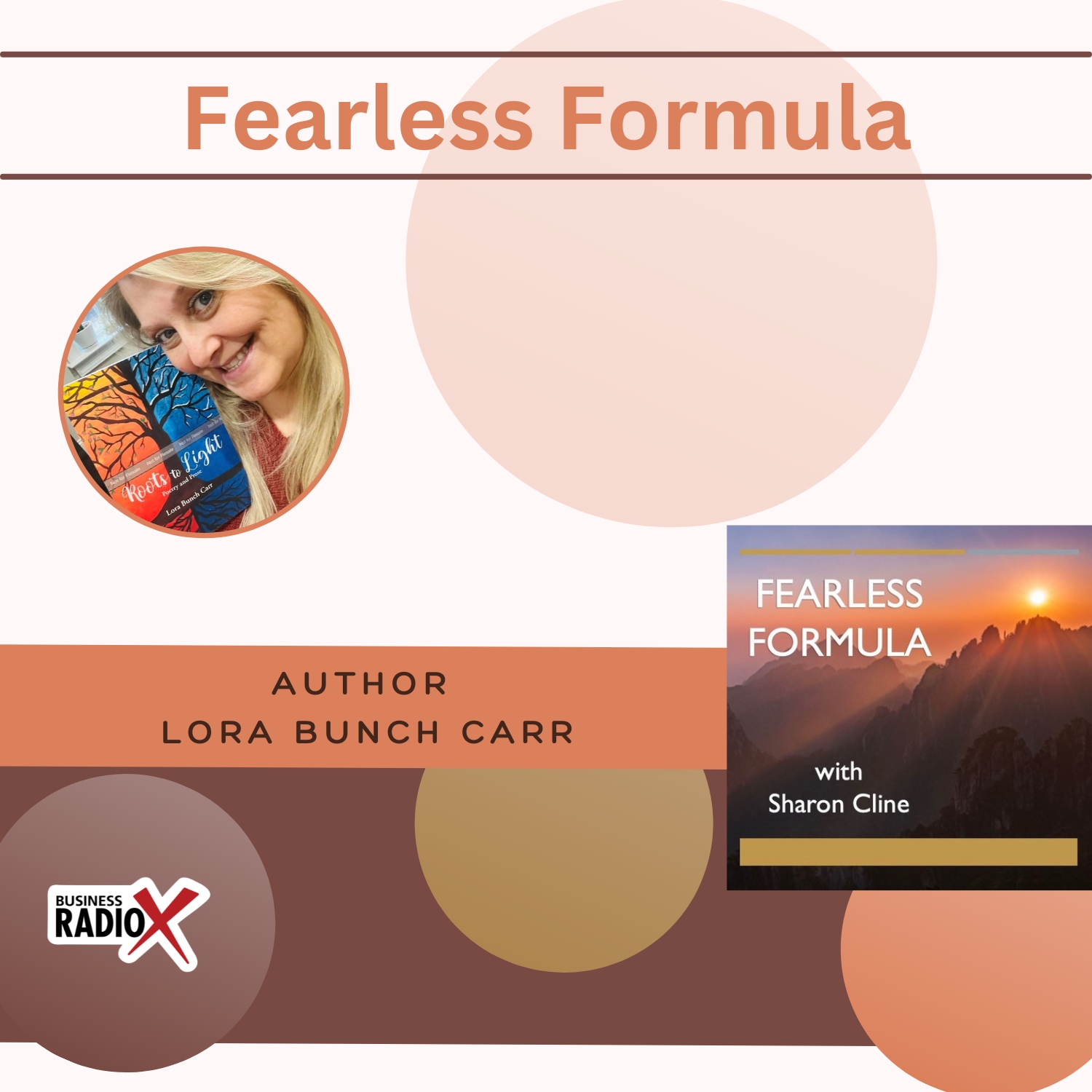
Author Lora Bunch Carr
/
RSS Feed

 Lora Bunch Carr has been writing since she was 11 years old. She found a love for words in her English class where poetry settled into her heart and mind and flourished rapidly. It quickly became a way to process events, her thoughts, and feelings, and bring some balance and release for her.
She added painting to her artist belt later in life. It became a way to visually put tangible life to her thoughts and emotions. She finds it to be like a meditation for her when she is left alone with her paints and canvas.
She is a mother to 4 amazing children and a Lolly to 3 beautiful grandchildren. Her family is her heart and soul. Lora strives to continue growing and learning every day while sharing with others any valuable knowledge she obtains.
Connect with Lora on Facebook.
This transcript is machine transcribed by Sonix.
TRANSCRIPT
Intro: Broadcasting live from the Business RadioX studios in Woodstock, Georgia. This is fearless formula with Sharon Cline.
Sharon Cline: Welcome to Fearless Formula on Business RadioX, where we talk about the ups and downs of the business world and offer words of wisdom for business success. I am your host Sharon Cline, and that was a new intro I am very happy to have, and I have a new guest in the studio today. Her name is Lora Bunch Carr. She is an author of a collection of poetry. It’s called Roots to Light. She’s also a native to Jasper, Georgia, which is wonderful to hear. Got some other books in the works? I’m very excited to have you in the studio. Welcome, Lora.
Lora Bunch Carr: Thank you Sharon, I’m happy to be here. Yay!
Sharon Cline: We were just kind of debriefing before the show, and you’ve got some really amazing twists and turns to your journey of becoming an author. And to be sitting right here in this chair. And I’m excited to kind of dig in.
Lora Bunch Carr: I’m excited to be here. There is much to the story, that’s for sure.
Sharon Cline: Well, what’s wonderful is that I found you on Facebook, and you are associated with a lot of different authors here in Georgia. What I love is that there are so many, and it’s you don’t have to go outside of this town or even North Georgia to find some really talented people who are doing a lot of really amazing things.
Lora Bunch Carr: Yes, there is a lot of talented authors and artists and craftspeople in the North Georgia mountains.
Sharon Cline: And I love, too, that when we were talking about being native to Jasper, there aren’t as many people that I’ve met that can say those words, you know?
Lora Bunch Carr: No, it used to be a lot smaller town and everybody knew everybody. Today at lunch, I was telling my husband, who was not from Jasper, I was like, I don’t think I’ve sat in a restaurant and only recognized one person in a long time. Today, I only knew one person in the in the entire restaurant. That’s so.
Sharon Cline: Wild. What kind of changes have you witnessed over the years? I mean, it must be dramatic.
Lora Bunch Carr: Well, when I was a child growing up in Pickens County, 515 was not even built yet. So there is a lot of changes overall, like you had to go up old highway five to get from Canton to Jasper, right?
Sharon Cline: Right, which goes through Keithsburg and all of that. But there wasn’t a highway, it was just backroads.
Lora Bunch Carr: I remember them bringing the dirt in and leveling it. I was very small, but my grandfather owned property, um, that was adjacent to the highway, so we could sit on his front porch and watch them filling in the roadways and making the big banks going up to build the highway.
Sharon Cline: Oh my gosh, so wild.
Lora Bunch Carr: So I mean, it would take us a very long time to talk about all the changes, I bet.
Sharon Cline: I imagine so, but there.
Lora Bunch Carr: Will be a book about it.
Sharon Cline: So how exciting. Well, I was thinking too, about just the fact that this isn’t like a traditional, um, fiction story. This actually has the book that you have roots to light is obviously a collection of of poetry, but there’s real deep, deep meaning behind how this book came to be. Would you like to talk about that?
Lora Bunch Carr: Yes. Roots to Light is 100 poems and 21 paintings, including the cover that all came about during a time period in my life, I would say about 10 to 12 years of when my late husband was very sick. He was sick for 17 out of the 19 years that we were together. And he had, um, kidney failure, which led to, um, dialysis, a kidney transplant, and then dialysis again, um, about 12 years after the transplant. And then so much dialysis is really rough on your heart. So he ended up having a, um, open heart surgery to replace a valve. And then a year later, the valve was closed off due to a blood clot, and he went into cardiac arrest and passed away. So these poems were written during the end stages of his illness, during the grief of his passing, and then the rebuilding of my life and who I was because I had been a wife and caretaker to him for all those years, and we were raising four children. So you’re kind of somebody’s mom, somebody’s wife and somebody’s caretaker, and you’re so busy doing all that, you don’t really know who you are when it all stops abruptly like that.
Sharon Cline: What a long time to take care of someone. Um. Virtually the entire time you were married, there was this weight over you, I imagine.
Lora Bunch Carr: Yes. We lived with a lot of that. But, um, he was very good to not focus on that. Like, our focus was always our children. They were the center of everything. So he coached their ball teams. Even through his illness. I worked in the school system. We made sure that our lives kind of revolved around them and their needs. Instead of focusing on what was going on in the background. And I mean, it did affect everybody, including the children, but we didn’t make that an everyday thing in our house. Well, I.
Sharon Cline: Imagine, you know, who would want to be sad every moment like that? Well, you made an effort to really try to create normalcy for your family, it sounds like. Mhm. How hugely important that is for children.
Lora Bunch Carr: It is, it is. They weren’t always aware of how sick their daddy was. We didn’t want them living their life around that. So they weren’t really aware of that most of the time.
Sharon Cline: Wow. And then in hindsight you know I imagine I wonder if they could see things that they didn’t even realize they were witnessing. You know, when you’re you have parents that are trying to protect you, you know, but as adults, I’m sure they could look back and say, yes.
Lora Bunch Carr: They’re all much older now. And and we’ve discussed that and they see things quite differently than they did at the time.
Sharon Cline: I bet you couldn’t believe it. You know what your life was like.
Lora Bunch Carr: Then, right? Oh, what my life is like now versus then is like two different lives. It’s, you know, and both equally important in my journey, but very different for sure. But it took, um, I think it took that to get here. A stepping stone. But the poems and the art were my way of working through the pain and the grief and the loss and finding where I go next.
Sharon Cline: Because you’re you are an artist. Obviously you’re also. I saw an ordained minister, which is so cool.
Lora Bunch Carr: I am, yes, that’s kind of new to the platform.
Sharon Cline: And you are new to the platform and you are a like a coach, a life coach. Yes.
Lora Bunch Carr: That is another thing that I started doing after my husband had passed. Before he passed, I started doing yoga and wellness for my own self because I was just. I had Lyme disease right toward the end of his illness.
Sharon Cline: Oh my goodness.
Lora Bunch Carr: And I was just needing natural ways to heal physically and mentally from the Lyme disease and the stress of the life we were living. And so I got into natural things with wellness, and that led me to the life coaching. And I started taking the classes for me not to help others, but then same as the art and poetry, but then later. Now I feel like by releasing the book I can help other people and with using all the certifications that I got helping myself, I can in return help other people.
Sharon Cline: I love it because some people don’t turn to the light when something like that happens. But you did and you do continue to.
Lora Bunch Carr: I try to stay on the positive side of things. It’s never always positive. Of course, everybody has a bad day or a bad moment, but, um, I feel like when this happened, when you’re when the worst thing that you feared for many, many years happens, and you find yourself standing there and you’ve survived it. Then it changes the way you look at fear, and it changes the way you let that fear control your life because you realize, okay, well, if the worst thing that ever haunted me happened and I made it through it, then what else could there possibly be to be afraid of? So I decided not to let fear stop me anymore, that it didn’t matter what other people thought, and it didn’t matter if I didn’t think I could do it or I might fail. You know you’re going to fail. If you don’t try, you’re never going to have it. You’re automatically failing. So if you don’t try it, you just let fear win. And I wasn’t about to do that. And a little of that motivation too, came from thinking about Terry. That was my late husband, and the fact that he couldn’t really continue living life. He was only 45 years old when he passed away, but I could live it big enough for both of us. Oh my goodness. So that’s was the motivation behind it was like, okay, well I survived this and he’s not here to do it. So I’ll just do it all and we can do it together that way.
Sharon Cline: Had you always been a writer?
Lora Bunch Carr: Yes. I started writing poetry and song lyrics when I was 11, and it kind of became, um, a passion of mine. I took a class in elementary school that sparked it, and I just loved reading anyway, and I started writing, but I didn’t share poetry with anybody until actually, I think it was about six years ago. I started putting it in the paper that I write for. I’ve been writing for them for about 11 years, but I didn’t share poetry with them either until a few years ago.
Sharon Cline: Was it too personal?
Lora Bunch Carr: Yes. Um, it was much easier for me to share paintings because people can, um, interpret their own feelings into the painting more than they seem to care what you were thinking. But poetry is more raw, and it’s hard to hide behind, I guess.
Sharon Cline: Truth. It’s so, um. You feel so exposed, right? And yes, transparent and and seen when you’ve had a lot of pain already. I can’t imagine not having those be received in the way that you would want, like it would be too painful on top of what you already experienced, right? At least that’s the way I would have looked at it, I guess.
Lora Bunch Carr: Yeah, it was something that held me back for a while, but then like other things, I was like, well, I’m not going to let fear conquer me in that area. Plus, the poems could help someone else who went through what I went through. And they’re not all about what happened. Some. Sometimes it’s just about a nice day. But, you know, sometimes a nice day is what you need on a bad day. You know what I mean? A bad emotional day.
Sharon Cline: And the fact that you could even put into words what you’re thinking and feeling, looking at a normal day, you know, how many times do I just walk by and think it’s beautiful and don’t think another moment about it? But you took time to really feel it and put words to it.
Lora Bunch Carr: I’m really good at overthinking and feeling that way.
Sharon Cline: Oh my God, we’re soul sisters. I overthink everything. Well, I mean, how beautiful is it to consider that you chose to honor your husband by ex-husband? Or is that how you say it?
Lora Bunch Carr: How do you literally just say late husband? Late husband?
Sharon Cline: Sorry. Thank you.
Lora Bunch Carr: Now that I’m remarried, it gets kind of funny to how to.
Sharon Cline: Yeah, I’m sorry if I said it wrong, but like we’ll say late husband. Your late husband to say I’m going to honor you by pretending you’re with me all the time and live, um, bringing you with me. I mean, how beautiful is that?
Lora Bunch Carr: Well, that was not in the way of the book, because I don’t think he ever thought I would share any of my poetry either. But, um, that’s how he wanted it. Even in his death, he did not want to be away from his family, so he wanted to be cremated. And he stays in our home now. And so it was just another way to honor that. He always wanted to be with us. So this was another way to carry him with me.
Sharon Cline: When you talk about the journey of healing through poetry, what was it like to start writing? And did you notice by the end of the time that you were kind of processing that the writing changed over these hundred poems?
Lora Bunch Carr: Yes. The writing goes in so many different directions, and as you read through the book and even the paintings as well, you can see, you know, some were written through the stages of, you know, reflection, some were written through anger, you know, some were written with sadness. So there’s so much just like there’s so many stages of grief, you know, you can kind of tell when you’re reading through where they were and even into the rebuilding, because once I had to figure out who I was and find that confidence in myself and be able to move on and allow myself to love again, because that that wasn’t easy. Like even after you start dating again, there’s a big difference between, okay, I’m lonely and I’m just going to date and find somebody to hang out with, so I’m not home alone all the time. Then being ready and open to actually loving someone again because the next fear is I don’t want to be left like that again. So you don’t open up so easily to right to do that. Risky.
Sharon Cline: It’s too risky.
Lora Bunch Carr: So it was it was a lot, but I wasn’t really looking for it when it happened. And that’s usually the best ways. You know, he and I were friends. We had met through work, through a work thing, and we were friends and and then it just became more than friends. And here we are for almost four years later and a year and a half married.
Sharon Cline: Wow. I bet you couldn’t believe that either.
Lora Bunch Carr: No, no definitely not. But it’s been a wonderful blessing and he’s very supportive. And what I love most is that, um, he’s very inclusive and encouraging with keeping my late husband’s memory involved with our children and grandchildren. And he doesn’t. You know, some people it sounds silly, but some people are threatened or jealous of someone who has passed away and he has never been that way. So it’s been it’s been wonderful the way it all came about.
Sharon Cline: It’s a gift. Like a gift to your life.
Lora Bunch Carr: Definitely. I’m very blessed.
Sharon Cline: So when you realized as you were writing and processing, what were some of the, um, were you surprised you had 100 poems and then enough to actually make an official book?
Lora Bunch Carr: I guess I was surprised that it was 100, but to be honest, there’s there’s more than 100. This was just the 100 that I picked for the book. But, um, I still was surprised that there was that many. I did not realize because I had not written them all in one place, somewhere in notes in my phone, and some were in journals that I had written in during all the processing, and some were in a little notebook that I just put in. So when I started typing them all up and putting them in a document, it was like, wow, I really have written a lot of poems and there’s even more that I’ve written since.
Sharon Cline: So what was the feeling like to process with writing? Like how did that healing come? Was it because you were getting something out of your heart and actually written down? Yeah, it’s.
Lora Bunch Carr: Like a release, like when something’s built up and you feel the anxiety and the pressure, and then when you can write it down and get it out, then you’re allowed to let go of it. Then, you know, there’s been times when I’ve had trouble sleeping and something’s rolling around in my head or my heart, and I can get out of bed and sit down and write it down. Well, then I can go to sleep because I’ve released it. I’ve let it go.
Sharon Cline: How cathartic. And have something beautiful to show for it.
Lora Bunch Carr: It can be the same way with painting too. I’ve woken up in the middle of the night and not been able to go back to sleep and get up and do a painting. So, I mean, I guess that’s just my outlet. You know, somebody might listen to music or sing or play the guitar, and that’s their outlet. But writing and poetry and nonfiction writing are mine.
Sharon Cline: So how did you go about, um, publishing the book yourself? Um, what were the steps that you took?
Lora Bunch Carr: Well, first I talked to several publishers, and I did have three that offered to publish the book for me. But this book was very personal to me, and I wasn’t willing to compromise on what was in it or what the cover was, or they could have changed it. I got you. Um, you. Some of them are really good to to leave you with a good bit of creative control, and some aren’t. But I can be kind of stubborn. And with this book I wanted 100% creative control. So a friend of mine had published a book on her own and she gave me the number to her editor. Um, and so I called Miss Ashley Jane, who is the editor of my book, and she was absolutely amazing and walked me through all the steps of what I needed to do and where she could fill in for me and do the things that I didn’t know how to do or didn’t want to do.
Sharon Cline: I’m sure it’s daunting.
Lora Bunch Carr: It is. It was several months in the making to get it from sending the draft to the actual printed book. Being in my.
Sharon Cline: Hand, I saw it’s on Amazon. It is.
Lora Bunch Carr: It’s actually it’s published through both KDP which is Amazon’s publishing, and Ingram Sparks. Oh, wow. So it is on Amazon. But you can find it on Walmart or um, any of the bookstores. Barnes and Noble. Second, Charles is in with all of them.
Sharon Cline: I found that many times when I’m trying to connect with someone, that the more raw my feelings are, and emotions and ways to articulate those feelings and emotions really create a path to connect. Because so much of what we’re feeling are universal emotions and we are more alike than we are different. I agree, which is why I love Fearless Formula because highlighting fear. Everyone knows what fear is like, but the goal of the show is to help people, anyone, to see what someone else did to manage it. So hopefully it’s inspiring to someone to follow their own dreams. Um, but it sounds like when you have grief, like what you’ve tried to process and how you’ve used poetry and this book to process through that, you’ve opened a pathway for other people to really feel the rawness of what it’s like to be a human. Can you talk a little bit about the reception of your book and what what ways you feel like they’ve helped other people?
Lora Bunch Carr: Um, I have gotten some really good feedback from people that have told me that they have found things in the book that help them not only to know me better, but to relate to themselves and be able to look at things in a different way that they may not have thought about before. And that helped them get through different areas of their life that they were having a challenge in.
Sharon Cline: It doesn’t have to be death, right? Anybody can feel grief for anything.
Lora Bunch Carr: There’s a lot of different ways to feel grief and to experience trauma that you might need help processing those feelings and being able to release them in a positive way, because there’s a lot of negative ways out there that are available to you if you so choose. But we don’t talk about enough. The positive ways that you can channel a hurt into a way not only to heal yourself, but to help other people. And that’s what I wanted to do. And I’m very thankful that I do get that feedback from people because it makes me feel like, okay, well, I didn’t open myself up here for nothing. You know, I was able to reach some other people and help them. And if you can do that for just one person, then it was worth it.
Sharon Cline: It’s sacred work. It’s very sacred work knowing Knowing that you could have, like I said, you could have chosen a darker path, or you could have shut down or anything. There is no telling what kind of impacts grief has, and I don’t know that anyone can truly predict it until they’re in it. But the fact that you chose to do something that is helping other people, not just like you said, get to know you as a human, but ways that they can process a grief day or just a beautiful day or an angry day We all feel all of those things.
Lora Bunch Carr: And they’re all valid and they’re human, and they should not be something that we’re ashamed of or feel like we can’t share with someone because we’re going to be judged.
Sharon Cline: Where did the title Routes Into Light come from? What does that mean to you?
Lora Bunch Carr: Um, I think it became more of a symbol of having to grow from those roots that were left and find the light, you know, because when you’re transitioning from one life to another that you didn’t ask for and didn’t want, you only can use what you have, which are the roots that are left over after the fire, so to speak, and then try to grow from those roots up to the light and build something new and beautiful for yourself.
Sharon Cline: What do you think people don’t understand about what it was like to be you during that time?
Lora Bunch Carr: Um, I think sometimes as humans, we see traumatic events and we see loss and we feel really bad for people, but then they feel like it falls off, you know what I mean? Everybody goes back to their normal life, and that’s when you’re left with yourself. And people don’t realize how hard that part is. That part is very lonely because in the beginning, everybody’s around you. Everybody wants to be there for you, but they can’t just sit with you forever. They have to go on with their life. And then you have to figure out, okay, now what? Now all the people have gone back to their life and they’re not sitting here with me day in and day out, and I have to figure out how to do this. And that was the hardest part for me, was finding myself sitting there and not knowing which direction to go.
Sharon Cline: Because you had been a caretaker and a mother and all of those things. But to find out who you are, just you. Mhm. That must have been overwhelming.
Lora Bunch Carr: It was. And we were in this little small town where we both have huge families and everybody knows everybody. And like I said, he had coached for all those years and I had worked in the school system. So we knew a lot of people from our families and our works in the community. So everybody was there for you, but you did know everybody, so there was also no escaping it. Like you couldn’t go to the grocery store to buy gas, or where you didn’t run into somebody to talk to about how are you? How are you doing? So, um, I started kind of spending a lot of time to myself, and that’s how the painting and the writing started, because I was like, I have to find a way to heal myself without having to talk about it all the time.
Sharon Cline: And face it and be defined by it, right? Every place you went. I always think that’s awkward for me. How, you know, do you? When something like this happens and imagining I’m seeing you at Walmart, do you just. Do you talk about it or do you just say, hey, how you doing? It’s good to see you? Or do you say, you know, how are things? And I don’t know, it’s like an uncomfortable space because you don’t want to upset someone, but you don’t want to ignore something that’s so cataclysmic. So I don’t know how I would have approached it either.
Lora Bunch Carr: It’s just it’s not a right or wrong. It’s just kind of one of those things that it is how it is. But sometimes, you know, you do need a break from it. So you go to the store in a different town, or you stay home and write a poem or painting.
Sharon Cline: What is painting meant to you then?
Lora Bunch Carr: Painting is actually a lot newer to me. I did not start painting till 2014 and that just came from. We moved to an apartment and I wanted some artwork for the walls and living off disability and a part time job, because I only worked part time because the kids in his medical needs, we didn’t really have the money to go buy all new paintings, but it wasn’t that expensive to get some canvas. So I was like, I’ll try to paint them myself then. And I did, and I, I loved it, and it was like, oh, wow. I had drawn all through my life. So drawing was something that I had done, but I never painted, and it was so relaxing and such a meditation for me that I just kept doing it. But that’s how it started. I really didn’t even know it was something that I could do.
Sharon Cline: When you’re getting ready to paint something, do you have an idea of what you want to paint, or do you let it just unfold and it becomes its own thing?
Lora Bunch Carr: It really depends. Sometimes I will have an idea that I want to do, and I will just do it and let it flow. But sometimes I see something else and I think, oh, I would want to paint that, but in a different way. Okay. You know, I like abstract and silhouette paintings. So sometimes I will see a painting that’s more realistic or or not really the style I would have painted it in. And I will think, oh, I’m going to try to paint that, but in my style. So it, it kind of depends on if I’m painting from just, oh, I want to do that or if painting from feeling.
Sharon Cline: So you got to use two different mediums of art and creativity to process. Yes. And you still do you have an art show tonight?
Lora Bunch Carr: I do actually. It’s, um. Art walk in Jasper tonight from 6 to 9. I will have a booth with my book and a few paintings of mine. Some are from the book, some are not. And I’m on the board of Sassafras Literary, which is a writing club in my town, and they will be there next to me, also with a booth. So I’m looking forward to seeing all of my friends and everybody that comes out to join us for Art walk.
Sharon Cline: So that community. How important is that community been to you? Sassafras.
Lora Bunch Carr: Um, sassafras is kind of new to me other than, you know, as a child it was around and we could submit to it. But as far as getting to be part of it, that’s only been in the last year, and it’s been very exciting because it’s taking a new growth. Um, a lot of the members that founded it have been retiring. So they kind of recruited some of us that are in the community that are, um, younger writers to come in and bring it into the next generation to inspire more writers. And we’re having a youth contest this year that we’re going to be starting up soon for all the the middle school and high school age kids to submit different writings of all the different genres.
Sharon Cline: Do you feel like there are so many people that write, and then they just don’t have an opportunity or an outlet to really share what their writing is? Because I do. I think I have some poems I’ve written and I’m like, I’ve just never considered it actually meaning something to anyone but me, right?
Lora Bunch Carr: I think that a lot of people, um, that write don’t share it because they’re either afraid of opening themselves up or that, like you said, like they just don’t think it’ll mean anybody, anything to anyone else. But I encourage them to go. There’s so many different. Like I’m a member of Broad Leaf too, and the Cartersville Area Riders. So I encourage people to go to things like that in their town. And even if you don’t want to read right away, listen to the other people read and you’ll find there’s not as many differences in you that you think like you we were talking about, we’re so connected that, you know, hopefully eventually they’ll want to get up and share their works as well. I started going to writing events and listening years before I actually shared anything of my own. So that impacted you? Yes, and encouraged me as well.
Sharon Cline: And there’s so many opportunities in many different towns. You don’t have to go that far, you know, to really feel like you are part of a community that makes you feel brave to do it.
Lora Bunch Carr: Your local library will have many different things going on, and they can connect you with things, but also just search in groups on Facebook. Almost everybody has a Facebook group that has a writing group.
Sharon Cline: And you’re part of one as well, right? On Facebook too. Well, the broadleaf, I know I had interviewed the founder. Um, there are just some amazing people that are just I walk by every day, you know, and just never know their backstory. Um, which is why I love hearing about yours, because I. I would never have known what it’s like to be you. And the fact that you look at fear so differently, having faced something so devastating, makes me wish that I didn’t have to experience something devastating in order for myself to be brave.
Lora Bunch Carr: I, I can see why we do that as humans. But I’m with you. I feel like it shouldn’t take something so hurtful and traumatic for us to realize that fear is something we’re allowing to control us. Like it doesn’t have any power unless we give power to it. But for the majority of my life, I lived with fear.
Sharon Cline: Well, every day, right?
Lora Bunch Carr: Right. I mean, for 41 years, I was 41 when when my late husband passed. And until that point, fear had been a main driver and controller in my life, and I didn’t even realize it until it was gone. And it was a little scary, to be honest, when it was gone, because I was sitting there one day and I was like, wow, like, is this even normal? Should I call a counselor or something? Oh no kidding. Because like, why am I not afraid of anything? Like, you know what I mean, right? Not saying I still aren’t a I’m not afraid of anything. There are things that I do but get afraid of. But in that moment when it first hit me, I literally was not afraid of anything. It was like the worst things happened. There’s nothing to be afraid of anymore. So then after that, of course, fear creeps in here or there, but I’m able to use that to push it back out the door and be like, nope. You know, I already know that you can’t control me like that.
Sharon Cline: So you can feel the natural impulse to want to control or want to protect or whatever it is that drives or encourages fear to be part of your life. But you, you know it’s coming and you have a tool to get it to, right?
Lora Bunch Carr: Well, I showed up here today. I never would have done that a few years ago, really. And I still have to talk myself into it sometimes. And like you said, um, when I first came in, you were like, um, you know, I feel like I haven’t prepared you a whole lot, but I don’t like to be prepared. And my husband was asking me last night. He was like, do you want to talk about it? Do you want to go over what you might say? And I’m like, no, because then, you know, I won’t want to do it. Oh, so I don’t think about it anymore. Like, I, I don’t let myself overthink that. I just if it’s something I want to do, I say yes, and I just make myself do it through the fear instead of, you know, letting it push me back and and control me.
Sharon Cline: Well, I become too, I, I care too much. And then the outcome is so important to me that if it isn’t the outcome that I want, then I’m hurt in some way. So I don’t want to prepare too much either. If I put too much into it, then I have too much invested in the outcome as opposed to surrendering to the process, which is a much happier experience and actually winds up being more satisfying. And usually I’m much happier with the outcome if I don’t try to make an outcome well.
Lora Bunch Carr: It’s very unnatural for creative people to detach their emotions from their work. But I think you do have to find some level of that. Of course, you can’t do that entirely, because your emotions are what drive your creativity and you want to feed that, but you also don’t want to be so emotionally attached to it that the fear takes over, and you don’t want to share it because you’re afraid of what other people might think or how they might receive it.
Sharon Cline: How do you think your attitude toward fear has, um, sort of not letting it drive you or impact your life as strongly as it did before? How do you think that attitude change has impacted your children? Because they’re the next generation to come and they haven’t had to experience a partner leaving, you know. But I’m wondering how that impacts their relationships or or the direction of their lives. Have you noticed anything?
Lora Bunch Carr: Um, they have told me in different ways, especially my daughter. You know, girls tend to talk to you more about their feelings than the boys do, but, um, they have they have told me that, um, things that I have said or done have helped them in different ways to see things differently. But even though they haven’t lost a partner, they lost a parent and they were not very old. My youngest was ten when their father passed away, and then I had a 17 year old and two that were 20, so they were still quite young. And I think in some ways it was the same for them. You know, they had also had to realize something that they had feared and they were able to overcome that. And while it never really you never really start stop grieving. It just kind of changes. It’s a place that you learn to work through and around, but it doesn’t ever leave. But they have all done so well. I’m so proud of them. The youngest one will be graduating my Tristan. He will graduate this next year is his senior year. He’s playing football. He’s doing great. And then, um, my middle son, he he works really hard. He’s works in auto body, but he also writes he’s a he’s a rapper actually, and he’s recorded a couple of songs and he does write all his own material. So he, he did get that, you know, Gene from me, I guess that’s amazing. Way to one. The one that is actually out on YouTube is about his father and his, his passing. So. And then my oldest son, he is a writer as well. He has written some country music songs.
Sharon Cline: Amazing! Oh my goodness. Yeah.
Lora Bunch Carr: And some of those have been played on the radio as well.
Sharon Cline: So I’ll have to have your creative family come and talk about what it’s like to, to use something like these deep, intense emotions to connect to other people and make them feel less alone.
Lora Bunch Carr: Yes. It is so great to have that outlet that you can help yourself and help others with at the same time. And my daughter went on to get her degree in psychology and she works mostly with children. Oh wow. So everybody has found really positive ways to channel their their loss and their trauma to give back to other people in various ways.
Sharon Cline: You had said that you compare your life that you have now to what it was like before, in it’s night and day. I almost feel like we have periods in our lives that are kind of like a renaissance. You know, there’s I was married for 20 years, and who I was when I was married was is not who I am now. And I’m so much happier now. And as much as I didn’t want, you know, the negative things of of of a family breaking up, I didn’t want that who I am now as a, um, human. Like the way I move through the world, the way I like to say it, um, impacts them differently than if I had stayed in a relationship that wasn’t, um, emotionally sustaining.
Lora Bunch Carr: Right? We. We should always be learning and building and growing and bettering ourselves. If you stay the same person all the time, then that’s not healthy for you. You should always be, you know, growing and learning something new to become a new version of you. Because there’s a real problem if you stay stuck not just for you, but for all the people around you too, because that means that you’re not really living life, that you’re just kind of existing. And I’ve always said there’s always events that happen in your life, whether it be having a child, getting married, getting divorced, losing someone that kind of defines before that and after that. But nothing’s the same because it changes everything. Because before you were a mother, you know, I was a totally different person then than after my first child was born. But it definitely is like two entirely different lives that I’m living now versus before.
Sharon Cline: And you seem like you’re in a happier, obviously happier spot. But how amazing is it to even go to a bookstore and potentially see your book on a shelf? I mean, I always think things like it didn’t exist before and now it exists came from your, you know, inspired through your brain. And now it’s a physical something. I always find that amazing. It is.
Lora Bunch Carr: Interesting. And there’s two things that are real interesting to me about it. One is that it will be here longer than I will be. And that’s a kind of a weird feeling to think, okay, well, something I said or or wrote or painted could live on many years past me. And then the other was why is my picture on everything? That was really hard to get used to. And when they would be like, oh, we need to put your picture on the book and you know, you need to have your picture on a flier. And I was just like, okay, all the time.
Sharon Cline: Yeah, yeah. I’m not a very happy selfie person. I don’t like taking pictures of myself or being in pictures. I just don’t like it. I like the voice part, like we can have video in here, but I actually really appreciate that. It’s not about looks, it’s not about any of that. It’s like the message is the most important to me. I love that.
Lora Bunch Carr: I don’t know why it was different. I’ve never really minded selfies so much and I would I would take them with my friends and stuff and put them on my social media. But I guess it’s different Still, whenever you think, okay, well, this little group of people that you already know versus all of these people that you don’t, you don’t know, so.
Sharon Cline: Wild.
Lora Bunch Carr: And I have a group of friends you’ll see in the front of the book we call each other ya-yas because we have been friends forever, a lot of us since elementary school. I’m really blessed to have such a large group of women that are so supportive and amazing and, um, they are very instrumental in keeping me encouraged and focused as well. And, um, you know, they find it humorous sometimes too, with me, and we can laugh about it and be like, can you believe this?
Sharon Cline: Do you think you have a fearless formula? Do you think it is just being able to look at what you’ve been through and know that nothing is ever going to scare you as much as that?
Lora Bunch Carr: Yes, I do, and and even if something were to be more scary than what I would think, that could be the worst. Scary. Um, just knowing that I have enough faith, and I have my friends and my family. That’s the trifecta to see me through whatever it is that I need to come out the other side of.
Sharon Cline: Friends and family and faith. What advice would you give someone who is experiencing something that, like you have or has a collection of poetry that they think they would like to publish as well? What would what advice would you give them?
Lora Bunch Carr: Well, someone who is experiencing the things that I have been through, um, one big thing that I would say is that you have a lot more power than you think you have. You’re in control of so much more than you, than you might feel like you are. You feel like everything’s coming down on you and you have no control over it. But you can really change your entire life by first looking inside and changing the way you view things. You can’t change the things that have happened to you or that will happen to you, but you can change the way that you look at it and the way you react to it, and that can make all the difference. And that’s really hard to see when you’re that far down. But it is the most important thing to see because without the knowledge that you can change it, what are you going to do to actually take action to change it? So people just don’t know that they have that power, that you can really change the way you think about something and make that the first step to changing your entire life. And then, um, what was the second part of the question?
Sharon Cline: Oh, um, also, I did throw two in there. Um, also, um, if someone has a collection of of poetry or have a book that they would like to have published, what what advice would you give them?
Lora Bunch Carr: Well, I would say if you aren’t ready to jump all in, find a like a little local paper, like the paper that I take poetry submissions and do stories for the best in North Georgia mountains. Um, I encourage people all the time that I’m friends and family. Even if you want to put your name on it, you know, write under a pen name or use your initials. But send me your poem or send another paper. Your poem. We keep it anonymous. We don’t tell if you don’t want us to, but put it out there and let people read it and see what their reaction is. And if that’s really what you’re afraid of. Because honestly, the reaction is probably not going to be what you think it is. People are really going to either not care at all, and then you know that releases you from that, or they’re going to receive it in a way much better than what you thought. But honestly, in my opinion, you shouldn’t care anyway. Like at some point just don’t care what they think and do it anyways. But that gives you a little start if you’re not ready to just throw a book out there yet. But if you if you want to do it, just do it. I mean, there’s feel the fear.
Sharon Cline: And do it anyway.
Lora Bunch Carr: Right? Just do it anyways. I mean, what are they going to do? What’s the worst they can say to, you know, they didn’t like it? Well, don’t read it then. Yeah.
Sharon Cline: Read something else. Kind of simple. When you think about it.
Lora Bunch Carr: I don’t like everything either. I mean, we’re all going to have the things we like or don’t like, but you know, you don’t exactly have to make someone try to feel bad about it. And you shouldn’t let fear keep you from doing it just because you can’t please every person on the planet.
Sharon Cline: That’s such good advice. Well, if anyone wanted to get in touch with you regarding your book, or to talk about you about any of the things that you’ve experienced, how could they do that?
Lora Bunch Carr: I have a website, Laura Bunch Cars.com try to keep things real simple there. And um, my wellness email is revived 360 wellness at gmail.com. That’s a good way to email me. I do run the book through there too, so that’s always a good way to get me and social media. I’m pretty much everywhere now. Instagram, TikTok, Facebook.
Sharon Cline: I’ll have to follow you on all of those. I know I’m friends with you on Facebook, but you also have a book page that I need to follow. So it’s it’s interesting. It’s like you can never kind of rest with the social media side of it.
Lora Bunch Carr: Um, no. And it’s really weird to Google yourself and see a million things pop up. I think that was my first realistic, um, shock was when I decided to just try to Google myself and see. And then the book came up and the different social medias and the website, and I was like, wow, okay.
Sharon Cline: You have a real presence now. It’s wild. I know I always think the same thing. Like, I’m not really that it looks like I’m so important, you know? But it’s really I’m just, you know, you’re still just you. Yeah. Just me.
Lora Bunch Carr: And then I’m like, thank you, God for this platform. Please help me to use it in a positive way. So I don’t end up on a tabloid. I can end up instead helping someone.
Sharon Cline: It’s nice that you have that thought of using it in a nice way, because not everybody does so right. Well, I want to thank you so much for being so willing to share about your story. I appreciate, too, that you really look at not just poetry and not just yoga, but you’re actually looking at a lot of different aspects of people’s lives in the wellness field to encourage people to feel better about whatever it is that they’re experiencing. And I admire that so much because, again, like, it’s something that’s happened to you. You could have chosen many different paths to process, but you chose one that is not only beneficial to yourself, but anyone else who’s in your in your realm. Um, and that’s very, um. It’s beautiful.
Lora Bunch Carr: Thank you. Um, I also would like to invite you and everyone else to pick up a copy of The Best of North Georgia, because I do write a wellness column for for the coaching and wellness, and it talks a lot about different outlets that help you. And then I do a travel column for them as well, because my, my husband and I like we like to travel a lot. Wonderful. So we do that. And that would be, um, a really good way to see more of what I’m up to as well. Excellent.
Sharon Cline: Well thank you. Thank you so much for sharing. And thank you for coming all the way from Jasper to the studio today and and braving the Woodstock traffic that I dealt with earlier today.
Lora Bunch Carr: At least there was no rain today. It’s a beautiful day.
Sharon Cline: That’s true. I’m tired of the rain as well. Um, but yeah, I feel really lucky to have gotten to share this conversation with you. And anytime you’d like to come back, please feel free. I’m excited to see where you go.
Lora Bunch Carr: Maybe next year we can talk about, um, my book about my Appalachian pawpaw that’s coming out, my nonfiction book next year.
Sharon Cline: Yes, I would love to. I’m fascinated by that. So how fun. Something to look forward to for sure.
Lora Bunch Carr: That book will definitely be fun. He was quite the funny guy. He had lots of interesting songs and sayings that will be in the book. Well, then.
Sharon Cline: A lot of people will be able to identify with it, right? Yes. No, it’s a whole culture. Yeah. I’m excited. Well, thank you again so much for for coming to the studio and and being such a caring and kind heart and soul in the world. I really appreciate the opportunity to get to share that with you. And thank you all for listening to Fearless Formula on Business RadioX. And again, this is Sharon Cline reminding you that with knowledge and understanding, we can all have our own fearless formula. Have a great day!
BRX Pro Tip: 6 Local Directories Every Professional Services Provider Should Be Listed In
/
RSS Feed
BRX Pro Tip: 6 Local Directories Every Professional Services Provider Should Be Listed In
Stone Payton: And we are back with Business RadioX Pro Tips. Lee Kantor and Stone Payton here with you. Lee, I know we have found tremendous value as studio operators being listed in local directories. Any more specific guidance on that strategy?
Lee Kantor: Yeah. Local SEO is getting harder and harder and being in these directories are kind of table stakes when it comes to being found locally by geography. So, if you’re doing any kind of work locally or you want to do any kind of work locally, it’s important to show up on these kind of directories or lists.
Lee Kantor: The first one, the most obvious one, obviously, is Google My Business, make sure that your profile is filled out as completely as possible. A second place that’s good to appear in are Chamber of Commerce directories, so try to show up there if you can. Other places are social media company pages like on Facebook or LinkedIn, make sure that’s filled out properly.
Lee Kantor: Number four would be local business associations, not the Chamber of Commerce, but other kind of specific ones to your industry. A lot of those maintain directories, make sure that you are listed properly there. Number five, Better Business Bureau is a nice one to be part of, make sure that your listing appears there. And lastly, are these neighborhood platforms like Yelp or Nextdoor. If that’s where your clients are hanging out, make sure that you are listed there because you always want to show up online where your clients are hanging out.
Lee Kantor: So, if there’s a place where your clients appear, make sure that you are listed properly there. And always make sure on a regular basis that all the listings are up to date. I mean, people’s phone numbers change, their emails change, their addresses change. Make sure that when those things happen that you go through and go into each of those places and make sure that all of that information is up to date.
Hawaii WBE Feature: Safety Intelligence
/
RSS Feed
On today’s Women in Motion, Lee Kantor is joined by Tracy Lawson from Lawson and Associates and the Safety Intelligence Institute. Tracy discusses her company’s role in providing safety support services across various industries, including construction, general industry, and maritime. She shares her journey from military service to joining her family’s construction business and emphasizes the importance of integrating safety into all business operations. Tracy highlights the benefits of proactive safety management and the value of leadership and communication.
 Tracy Lawson has 30+ years’ experience in the occupational safety & health field. Tracy has a Bachelor of Science in Occupational Safety and Health and maintains several board certifications. In 2009, Tracy opened Lawson & Associates, a certified VOSB, VBE, WOSB, WBE and State of Hawaii DOT DBE/SBE specializing in safety support services. In 2020, Tracy and Nalani Jenkins co-founded the Safety Intelligence Institute.
Tracy is the 2021 Pacific Business News Business Leader of the Year – Small Business, 2020 Pacific Edge Magazine Businesswoman of the Year, 2019 BBB Torch Award for Ethics Honolulu (Tier 2) recipient and SBA Person of the Year for the County of Honolulu, 2015 PBN Small Business Leadership Hawaii Award recipient and finalist for the PBN Women Who Mean Business Award, 2010 Honor Alumni of the Honolulu Community College OSH Program, 2003 PBN Top 40 Under Forty business professional and American Society of Safety Engineers Hawaii Chapter Safety Professional of the Year. 
Tracy’s experience ranges from being a U.S. Army Military Police Corps Traffic Accident Investigator, a construction small business Safety Director, a Vice President of a national general contractor and a business owner.
In 2002 her program was recognized as one of America’s 17 Safest Companies in the October 2002 Occupational Hazards Magazine, was the recipient of the 2001 AGC of America National Construction Safety Excellence Grand Award and First Place in Building for 500,000 + man-hours and contributed to winning the 2000 USACE Worldwide Contractor of the Year.
Connect with Tracy on LinkedIn.
Music Provided by M PATH MUSIC
This transcript is machine transcribed by Sonix
TRANSCRIPT
Intro: Broadcasting live from the Business RadioX Studios, it’s time for Women In Motion. Brought to you by WBEC-West. Join forces. Succeed together. Now, here’s your host.
Lee Kantor: Lee Kantor here, another episode of Women In Motion and this is going to be a good one. But before we get started, it’s important to recognize our sponsor, WBEC-West. Without them, we couldn’t be sharing these important stories. Today on Women In Motion is Tracy Lawson. She is with Lawson & Associates and the Safety Intelligence Institute. Welcome, Tracy.
Tracy Lawson: Hi. Good morning. Aloha.
Lee Kantor: Aloha. So, before we get into things, tell us about Lawson & Associates and the Safety Intelligence Institute. How are you serving folks?
Tracy Lawson: Well, we are a safety support services firm. We are not consultants. And so, we work in the occupational safety and health field in all industries, whether it’s construction, general industry, maritime. And our focus is to help companies stay out of trouble and learn how to be productive and safe at the same time.
Lee Kantor: So, how did this come about? What is your journey? How did you get involved in this line of work?
Tracy Lawson: Well, it’s kind of a crazy journey. Out of high school, I joined the Army and I was a military police traffic accident investigator and saw a lot of stuff. And when I got out of the Military after Desert Shield/Desert Storm time, I joined my family’s construction company. My dad was a contractor and developer. And probably the first three months in business, we got a visit from our insurance company and they said your rates for accidents are so bad that we’re not going to cover you anymore if you don’t do something drastic. And I told my father about it and he said, “Well, you are law enforcement, go do something about it.” And that’s kind of how I fell into the industry.
Tracy Lawson: And I found out pretty soon that it’s not about following rules. It’s actually about managing your business really well and planning ahead to do the job the right way, the first time, the safe way. And I’ve been very fortunate to have some really great success throughout my career. And we just try and share that information with other businesses and help change their perspective about not having to choose between safety and production.
Lee Kantor: Now, are there certain industries or niches that your work focuses in on?
Tracy Lawson: Well, definitely. I mean, we work in all industries, especially construction. I think I just have a heart for that coming from, you know, a construction family. And there’s so many things that change on a daily basis. It’s dynamic. It’s constant challenges. And I enjoyed a lot. In fact, some of the smartest, most innovative people I’ve ever met work in construction and they just have to use that power of innovation for safe production, not the other way around.
Lee Kantor: Now, when organizations contact you, is it proactively or is it kind of after something happened, they’re like, “Oh. We need to fix that so that doesn’t happen again”?
Tracy Lawson: That’s a great question, Lee. Actually both, it just depends on the organization and kind of their, I think, maturity and understanding of how safety can help their business. So, often we get people calling us saying we want to have you come evaluate how we’re doing with our own in-house safety department and do some independent audits or help us put in place a safety management system versus just safety programs. And of course, we get phone calls saying I just got inspected or we’ve just had a serious incident or a lawsuit, can you help us? And so, we’re happy to help both circumstances, of course we prefer to be proactive if possible. But we’re here to do whatever we can to help our industry make sure we provide safe workplaces for everybody so they can go home to their families.
Lee Kantor: Now, is there any advice or any low hanging fruit for organizations that they can implement that maybe is obvious to you but maybe not so obvious to them?
Tracy Lawson: Yeah. I think the first thing is really understanding what laws apply to you and figuring out the perspective how the law and the regulators view your decisions versus how you personally would view them. That’s a big gap we see with organizations. And leadership, making sure leadership understands and has a good foundation of safety knowledge to be able to value – basically a lot of times, you’re paying for training and staffing or programmatic elements, that if they work, you won’t see something go wrong, and that can be kind of counterintuitive sometimes.
Tracy Lawson: And as far as low hanging fruit, it’s all over the place. You know, the obvious going to the OSHA website and looking at what are the top citations issued for the year prior, and going back and checking your house and making sure that you’re a business house. And making sure that is our hazard communication program in place. Do we actually have good value added training taking place that’s resulting in changes in behavior, not just checking a box that we did a class? Or do I actually have the written programmatic elements that I need and do they integrate into all the operational elements in our business?
Tracy Lawson: So, there’s a lot of requirements that need to be made and just taking one at a time and looking at them through a different lens of somebody else’s perspective. Everybody thinks that we have reasons why we do something or don’t do something, but look at it from a regulator’s perspective and see if that can help identify things that you could change or do better. And we tell people this can be overwhelming sometimes, especially if you have nothing or you’re in a bit of a situation with the regulatory agencies.
Tracy Lawson: But we encourage people, you know, do 5 percent better every day. Just pick one thing, do 5 percent better every day, and just chip away at it so that, eventually, you’re moving forward, you’re gaining traction, and you’re changing your culture and putting the elements that are necessary in place.
Lee Kantor: Now, can you explain kind of the pros and cons of hiring somebody, an outsourced solution to this rather than just saying, “Oh, I’m just going to give that to Bill and Bill will figure it out.” You know, somebody on the team already and just add this to the pile of stuff that person has to do.
Tracy Lawson: A lot of times people think that they’ve got someone who may be interested or could handle an extra workload, and I advise against that. First of all, Bill may not be interested and really know what he’s getting himself into. And this is a scientific profession. It’s a subset of engineering. And so, there’s a knowledge base that needs to be there. And, really, for in-house professionals, they need support too.
Tracy Lawson: And what we often hear from clients who come to us to help them staff or mentor their safety staff in-house is most business owners don’t have any idea what their safety person is supposed to be doing, if they’re doing it well or if they’re doing the right things. And that’s where we can come in and help from all different aspects.
Tracy Lawson: It can be much more cost effective to hire a third party like us to come in and maybe staff a construction site. When that project’s done, then we go away. Or come in and help coach and set up and put in place your company program and teach your leadership what are the things they do on a daily basis to support those programs. It’s a tell when we see that companies are going to give safety to their administrative assistant or some other manager who they’re probably already overwhelmed with the amount of work they’re doing in the first place.
Tracy Lawson: And to think that it could be so simple to just put a plan on paper and there we go and we’re good. There’s so much more to it. And it really takes someone with good leadership, well-rounded ability to communicate in writing and verbally. And it takes somebody who has the passion and desire and understands the value that this can bring to an organization to work through things that can be challenging.
Tracy Lawson: So, we’d love to talk to companies about the pros and cons of in-house versus hiring externally and, of course, we encourage folks to take a look at both sides and see what works best. It’s a pretty tight market right now. And, you know, I think with all professions, there’s a difference between people who are professionals in the industry and people who are practitioners, I’ll say.
Lee Kantor: And I think it goes to your point about this is a leadership kind of marker here. It’s about the culture, how important really are your people. This doesn’t have to be an administrative expense. This is something that could kind of impact your company in a lot of ways if you do this right and it’s more of an investment than it is an expense.
Tracy Lawson: Absolutely. You know, short story, I just did a safety leadership class for an executive group. There’s probably ten executive leaders within this very large organization. And we have a full day safety leadership course and then we do a workshop at the end identifying what does the ideal safety management system in our organization look like after we’ve created a good foundation through training of what is culture, what is the true cost of safety, what are the legal implications, and just looking at safety from a little bit different perspective from a business lens. And we always talk about culture and how culture is so much more important than any policies and procedures and strategies that you may have as an organization.
Tracy Lawson: And after that meeting, I had a bunch of executives walk in, kind of like, “What am I doing here wasting my day? I’ve got other things to do.” And by the first hour, they were surprised and engaged and actively participating to create what the future of their organization’s program looked like through their leadership.
Tracy Lawson: And so much so that shortly thereafter, one of the senior vice-presidents from a whole division came back and said I want to do this training for my leaders and my division because this isn’t just about safety. The things you talk about translate into production and quality, and they are big picture leadership issues that all my supervisors and managers need to know about. So, you’re spot on that this truly begins as a pure business leadership people leading issue.
Lee Kantor: Now, you’ve used the phrases safety management system, safety program, can you explain the difference between both of those, because one sounds more systemic and one sounds more administrative?
Tracy Lawson: Well, unfortunately, both have administration that has to be done. We live in a society where – somebody said this to me the other day – if it isn’t on paper, it’s vapor. And I said, “Well, that’s so good.” I used to say if it isn’t written down, it didn’t happen.
Tracy Lawson: But the biggest and the easiest way I can identify the difference between a safety management system and then an organization just running on safety programs is this, safety programs are just a bunch of different parts and pieces, not necessarily interacting effectively with one another. You go implement a fall protection policy, you go implement your scaffolding policy, and you go implement your personal protective equipment policy, and all three of those were written in a vacuum, standing alone and not looking at how they interface with one another, and certainly not taking into account how that impacts or interfaces with the activity and the operational element.
Tracy Lawson: Where a safety management system interacts with all the core business elements from estimating, if that’s what your company does, or procurement of materials and tools and equipment to marketing, to accounting, to human resources, to your production element, your operational element of how the work that you do gets done, to how we evaluate how effective was that. And even instead of incident investigation, using learning teams to be able to take people from each group and look at an incident and say how can we learn from that with different perspectives, and also what’s working well in our business, and how do we replicate that.
Tracy Lawson: And so, a safety management system is just like you said, the interaction of safety with all the parts of the business that help it be systemic, help it drive culture, and help the business be more effective and doing the job the right way and the first time, the safe way, and preserving our most important resource, which is people, and the intellectual property that they have, and the ways that they contribute to our business versus somebody going out and trying to just implement parts and pieces that don’t necessarily fit nicely together.
Lee Kantor: Now, can you explain why it was important for your organization to become part of WBEC-West? What were you hoping to get out of it and what have you gotten out of it?
Tracy Lawson: Well, I think it’s important to join like-minded people. And when we look at women-owned businesses, especially for us, we work in construction, we work in maritime, and we do a lot of other general industry work that’s a variety from warehousing to schools, to hotels, to telescope organizations, you name it, it’s a wide variety, it’s important to be able to connect with organizations that help understand and want to understand what we do, and promote the business that we do, and see the value in even having the opportunity to talk on this podcast about safety and health.
Tracy Lawson: So, WBENC has been great for us from that aspect. And it’s wonderful to be a part of an organization that’s trying to lift up businesses and help us to be competitive and successful and to learn from one another.
Lee Kantor: Now, can you share who your ideal client or referral partner is and maybe we’ll be able to help you connect with more of them?
Tracy Lawson: Sure. Well, our ideal client, first of all, is an organization that either knows what they don’t know and needs help or values safety and health in terms of how it can make their business more efficient. They realize safety doesn’t have to slow them down. They don’t have to choose between, you know, making their dollars and getting their productivity done versus saving their employees. That’s the first thing.
Tracy Lawson: And, you know, we’re looking for businesses who see a value proposition and understand how it can help level their organizations up. That’s really our broad brush criteria of what we’re looking for, who wants our help and will allow us to come in and work with them to make improvements. And so, that’s what we’re looking for, organizations that either want to know more and learn and want to know better and do better.
Lee Kantor: Now, is your work primarily in Hawaii or you do the Mainland as well?
Tracy Lawson: Primarily in Hawaii, however I have worked across the whole U.S. And I am not opposed to coming out and helping organizations that are ideal clients who really want to learn and level up and do better. So, physically and geographically, of course, we’re located here in in Honolulu. We work on all of our neighbor islands. But we’ve done work in Micronesia, we’ve done work across the whole U.S. And so, we just take it on a case by case basis.
Tracy Lawson: We’re very open to helping organizations that are interested. Safety Intelligence Institute is the training institute and we’re global with that. We’ve had people from the Continental United States, Bahrain, Wake Island, Guam, Alaska, everywhere participating in our classes, which we really focus on competent person level training and teaching people not just here’s what the rule says, but what does this look like for me when I implement it in my workplace, and what are some strategies I can use to be successful, and just a little bit of a change in perspective about how that applies to them, how it affects them, and how it can make them and their business better.
Lee Kantor: Now, if somebody wants to learn more and have a more substantive conversation with you or somebody on the team, what are the websites?
Tracy Lawson: They can go to lawsonsafety.com or safetyintelligenceinstitute.com. Lawson Safety, there’s a contact us point, they can sign up to be on our email blasts and they can reach out to us directly. It’ll come straight to me. And then, we’re happy to reach out and have a conversation.
Lee Kantor: Well, Tracy, thank you so much for sharing your story today. You’re doing such important work and we appreciate you.
Tracy Lawson: Well, thank you, Lee. I really appreciate the opportunity. And I appreciate what the organization, WBENC, is doing for all the women and our women-owned businesses.
Lee Kantor: All right. This is Lee Kantor. We’ll see you all next time on Women In Motion.