Please log in to view this content
BRX Pro Tip: What is Your Time Worth?


/
RSS Feed

BRX Pro Tip: What is Your Time Worth?
Stone Payton: Welcome back to Business RadioX Pro Tips. Stone Payton and Lee Kantor here with you. Lee, of all the questions we should be asking ourselves, I think one of the most important is, what is your time worth?
Lee Kantor: Yeah. I believe that your time is your most valuable resource and you have to kind of really guard it and protect it and invest it wisely. And you have to ask yourself, am I doing the most important things that move the needle in my business? Is this something I should be doing? Is this something I should be delegating? Am I kind of squeezing the most value out of my superpower? And am I doing only the things that I should be doing and handing off any of the other things?
Lee Kantor: I think one of the biggest investments you can make as soon as you can afford it is to delegate kind of the non-moneymaking tasks to other people. The more time you can spend leveraging your superpower and doing the activities that move the needle in your business, the sooner you will be on your path to making more money and your business will become a success.
Lee Kantor: So, do some sort of audit. Make sure that you’re investing your time in the right places and make sure that you’re not just doing things just because you used to do them or no one else can do them. Invest in other people, delegate as much as you can, and just focus on the things that are going to move the needle in your business. That’s time well invested.
WBE Feature – Women’s Health Awareness: Postal Petals
/
RSS Feed
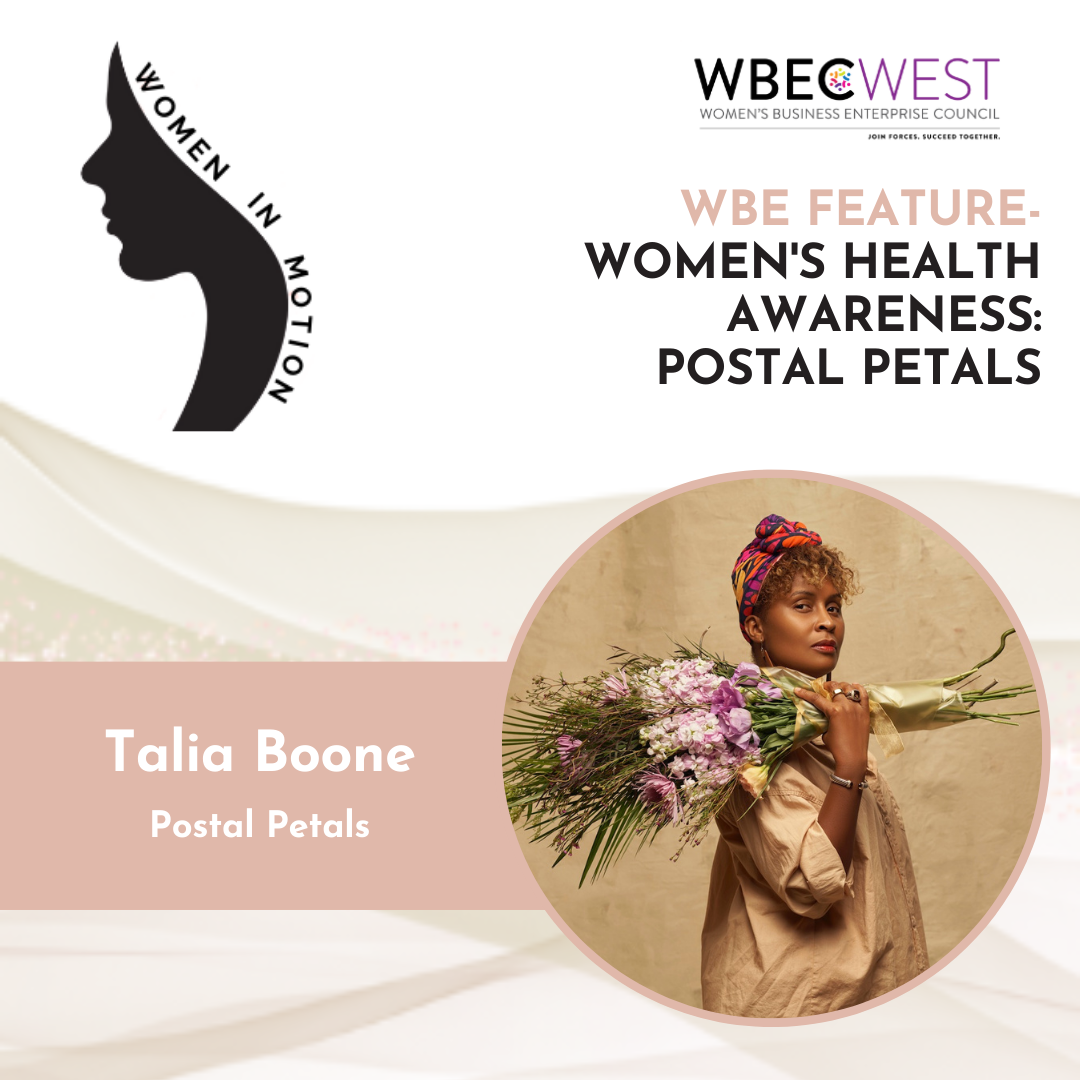
On today’s episode of Women in Motion, Lee Kantor is joined by Talia Boone, founder of Postal Petals, a company that delivers fresh cut flowers for DIY arranging as a form of wellness and self-care. Talia explains the concept’s origin, its therapeutic benefits, and the challenges of educating consumers. Postal Petals offers national shipping and various subscription options. Talia also discusses her involvement with WBEC West and the advantages of being a certified women-owned business. She advises entrepreneurs on collaboration and using earned media for brand building.
 Postal Petals® Founder & CEO, Talia R. Boone, enters the floral industry after a groundbreaking career in sports, entertainment and social impact. She brings with her over 15 years of experience in brand strategy, communications, marketing, public relations, promotions, sales and strategic partnerships.
In addition to Postal Petals®, she is the Managing Director of INTER:SECT, a tactical solutions agency that serves as a catalyst for pioneering ideas, collaboration and creative opportunities that exist at the intersection of sports & entertainment, business, technology, consciousness, culture and the arts to promote socially and culturally relevant conversations leading to collective action resulting in measurable social impact.
Talia’s passion to help drive efforts to achieve long-standing, systematic social justice spills over into anything she does and that includes Postal Petals®, where messages encouraging consumers to register to vote and highlighting the frequent injustices against underrepresented communities can be found throughout the brand’s site and its social media platforms.
A native of a Los Angeles suburb, Talia is a graduate of San Diego State University where she earned a degree in communications with an emphasis in public relations. Talia is an advocate of civic engagement and collective social change as well as a lover of facts, experiences, art, culture and of course flowers. 
Follow Postal Petals® on LinkedIn and Facebook.
Music Provided by M PATH MUSIC
 This transcript is machine transcribed by Sonix
TRANSCRIPT
Intro: [00:00:07] Broadcasting live from the Business RadioX studios. It’s time for Women in Motion. Brought to you by WBEC West. Join forces. Succeed together. Now here’s your host.
Lee Kantor: [00:00:27] Lee Kantor here with Women in Motion. We have a great show today, but before we get started, it’s important to recognize our sponsor. WBEC West. Without them, we couldn’t be sharing these important stories. Today on Women in Motion, we have Talia Boone with Postal Petals. Welcome.
Talia Boone: [00:00:46] Thank you so much, Lee and I appreciate you for having me. Super excited to talk to you today.
Lee Kantor: [00:00:51] Well, I am excited to learn what you’re up to. Tell us a little bit about Postal Petals.
Talia Boone: [00:00:56] Yeah. So Postal Petals is an immersive wellness and self-care company that uses fresh cut flowers and do it yourself flower arranging as a tool for creative expression, mindfulness, and therapeutic exercise. And so what we do is we partner with domestic flower farms to ship boxes of fresh cut flowers to our customers all across the country for them to create their own arrangements. Then we also do virtual and in-person floral design workshops. We’ve got some corporate offerings, a few other kind of key audiences that that we solve with our wellness solution.
Lee Kantor: [00:01:34] So let me get this right. Like it’s a subscription box that like, you know, some people do snacks or, you know, skincare, but this is flowers.
Talia Boone: [00:01:44] Yeah. So the best way that I can describe it is I think about like a mail delivery service where they send you all of the ingredients and then it’s left to you to make the meal with the ingredients that they ship you. That’s ultimately what we do. And you’re able to we offer it in three box sizes and you can purchase on demand, meaning you can do one time purchases. But we’re primarily a subscription model where people can subscribe to have rather than, say, subscribe to have flowers delivered to you once a week, every other week, or once a month. We we say, you know, subscribe to have your, um, your, your wellness experience, um, scheduled. So again, it’s a three subscription option, either weekly, bi weekly or monthly.
Lee Kantor: [00:02:26] And then the flowers come kind of loose. And then the individual just kind of uses them, maybe in multiple vases or however they want to arrange it.
Talia Boone: [00:02:35] However they want to arrange it. And typically that that’s the number one most consistent feedback that we get from our customers is that you get a lot of flowers when that box shows up. So you’re typically making multiple arrangements. And we have some people that, you know, have really big vases and are able to make a single arrangement with all of the flowers in the box. But typically what we find is that people make multiple placements to go around their homes or offices.
Lee Kantor: [00:03:01] Now, what was the genesis of the idea? How did this come about?
Talia Boone: [00:03:05] Uh, you know what? This was one of those ideas that came out of, um, a hobby turned, um, profession, but really came out of necessity. So many years ago, I started arranging flowers. Really. My first entry point to it was as a friend activity. Just something to do. Kind of different with a friend that, you know, was different from, you know, coffee or dinner or lunch or something. And I found it immediately just really relaxing. It just resonated with me. And I started to, you know, whenever I would feel stressed or anxious in any way, I would go down to the LA flower market kind of mill around, never knew the names of flowers, just would mill around and, um, just kind of pick whichever flower spoke to me which the colors of that that made me feel good for that day, the shapes, what I thought would look good together. And then I would go home, put on, you know, some, you know, kind of like soft music, pour cup of tea and just kind of lose myself in the process of arranging flowers. And it just really became kind of my go to form of self-care whenever I’d feel stressed or anxious, have, you know, a lot of kind of emotional weight on me. I would just arrange flowers and I could just instantly feel that pressure just start to relieve itself from me in the process of prepping them and arranging them stem by stem.
Talia Boone: [00:04:20] It just was always very therapeutic for me. And then fast forward to the very early days of the pandemic. You know, here in LA, we’re based in LA. Um, you know, we went on lockdown about the second or third week of March, and it was, remember, only meant to be for two weeks, and that two weeks turned to four weeks, turned to six weeks, turned to, you know, a year and a half. But by the sixth week, it was becoming really clear that this was not a temporary situation like immediately temporary situation. And, you know, I just, like everyone else, started getting really nervous and anxious around the uncertainty of it all. What does that mean for me, for my family, for my livelihood, all of these things. And I was stressing. The walls were starting to close in on me. And, um, you know, I was, you know, meeting with my therapist twice, sometimes three times a week at that point. And she was the one who actually suggested she was like, you know, Talia, I haven’t heard you talk about arranging flowers in a few months. Why don’t you try that and see if that helps you to calm down? Because I’ve been really successful using that as a tool previously, and I thought, oh, that’s a great idea.
Talia Boone: [00:05:25] Um, the main. Problem was that the LA flower market was closed because of the pandemic lockdowns. And so I figured, uh, you know, I’m sure everybody’s you can ship everything at this point. Anything can be delivered. I’m sure I can find a company that could ship me fresh cut flowers that I could arrange myself. But as I looked, I really I couldn’t find it. People were shipping finished arrangement, which is traditionally what what people are used to, um, when engaging with flowers. But I just could not find a company that would just ship me, you know, a bundle of roses, a bundle of dahlias, a bundle of sunflowers that I would then, you know, break apart and create my own arrangement. And so, um, long story short, it was really that journey that led me to recognizing that there was a hole in the marketplace and that based on my background and, you know, marketing, PR, branding, brand strategy, I knew that that I had the expertise, um, to, to fill that gap. And so that’s how the Postal Petals was birthed back in, um, early May of 2020 is when I came up with the idea. We launched in beta by July, uh, of 2020. And we’ve been we’ve been, um, going and growing ever since.
Lee Kantor: [00:06:34] Now, is it something that, um, you have to invest a lot of energy and time in kind of educating the consumer of this is even a thing to do to create these wellness outcomes that people desire. Like, because I wouldn’t think that this is top of mind. Like you said, it was difficult for you to find kind of a mixture of cut flowers just sent to you.
Talia Boone: [00:06:55] Yeah, yeah. Lee. And that’s a really great question because that’s exactly one, probably one of our biggest challenges, right. Like I always say, just again, going back to my experience in in branding, I always say, you know, there are two major obstacles that any new brand typically comes up against when they’re coming into market. First and foremost, is brand recognition, right, making sure that people know that you exist. Um, the second thing is help, um, you know, kind of making people understand why they would prefer you over the alternative. Right? And this is typically apples to apples, like, why I would choose Pepsi over Coke or, you know, something like that, like a kind of even comparison for us. We had a third obstacle, which to your point, Lee, is, you know, why would I even want to do this? Right? Because as I, as I, you know, um, alluded to earlier, you know, people are traditionally and really generationally conditioned to experience flowers as a ready to use product and buy ready to use product. I mean, professionally designed by a florist, typically just either, you know, picked up at, you know, a retail space or delivered right to your door. You, you know, you kind of sit it down on your table, maybe you take a few pictures and throw it up on the gram.
Talia Boone: [00:08:06] But that’s really the extent of your engagement with flowers. You don’t really think about them as an interactive experience, and you definitely don’t think about them as as an interactive self-care or wellness experience. So a huge part of of what we’re doing right now is really educating people on the benefits of arranging your own flowers, right? The idea of, you know, this being the floral, um, version of, you know, when people will say, oh, you, you know, you need to go touch grass, meaning go and connect with nature, right? And, you know, talking about gardening as a comparative for flower arranging, you know, both being, you know, when people talk about touching grass, it’s really what they’re saying is you need to go and connect with nature because that’s, you know, that those are those things like are scientifically proven to improve your, your well-being. And gardening is is also a known therapeutic. People who garden talk about how incredibly meditative it is and how therapeutic it is just to have their hands in the soil and, and just be working with the earth.
Talia Boone: [00:09:07] And so we a lot of our, our kind of messaging, um, with, with our flowers has really been around finding comparisons that people can understand. And, and then we do a lot of work in the community. Right. We host regularly, uh, what we call our free community wellness events. And it’s typically kind of curating an experience so that people begin to associate flowers in this way of, you know, of self-care and wellness. So we’ll typically start with movement, which is usually walking, hiking, or a gentle restorative yoga session followed by either a guided or sound bath meditation or a, you know, breathwork exercise. And then we have them take that peaceful energy into just a really relaxing, um, floral design experience. And we find that when people are kind of guided, um, through that journey and kind of culminating with that floral design experience, they get it right away because it is incredibly, incredibly relaxing. But that is that’s an obstacle that we, you know, are constantly coming up against and trying to find new ways to educate people on, um, not just, you know, the art of flower arranging, but really why why it’s a wellness and self-care benefit to them.
Lee Kantor: [00:10:24] Now, um, when you’re out in the marketplace, are you selling primarily locally, or is this something that anybody around the country can, uh, go to the website and order?
Talia Boone: [00:10:37] Oh, yeah. We we absolutely ship nationally. So the way that our that way that it works is we partner with domestic flower farms. Um, and then we ship the boxes of flowers all across the country. So we are an e-commerce platform for consumers. So they’re able to go onto our website and then select the flower recipe, um, that they like best based on the flowers that are curated in that recipe. They tell us what box size they want, and then they let us know, do they want just a one time purchase, or do they want to subscribe to receive that box again, weekly or bi weekly or monthly? And then we ship those boxes to them overnight via Fedex. Um, and we ship anywhere in the continental United States. And then when they receive that box, they open it up and right away they’ve got, um, they’ve got some instructions on what to do when they get their flowers. First thing is always, you know, give them a little trim and put them right in water and let them, you know, kind of hydrate and perk up for at least 2 to 3 hours. And that’s really because because we ship, you know, usually the flowers have been out of, of water for, you know, at least at least 18 to 24 hours by the time they arrive to their recipient. And so we give them some quick care tips to get their flowers to perk up. And then once their flowers have rehydrated, they’re able to scan a QR code on the box that takes them right to our website, where we start to kind of give them, um, some more specific design tips, uh, for, for those specific recipe that they have.
Lee Kantor: [00:12:04] So on your website, there’s kind of instruction or education about how to, you know, attractively design. Of Acer because I would imagine people haven’t had this experience before, so they don’t even, you know, they don’t want to necessarily. There’s probably no right or wrong, but they want to look good. So there’s probably techniques to make it look as good as it can. Right.
Talia Boone: [00:12:27] That’s exactly that’s exactly right. It’s it’s interesting. I appreciate you asking that because we’re actually in the process of, of redesigning our website and having it be one that will support a design app that we’re ultimately build, that we’re working on building out now, that’s really intended to kind of show people all the different ways they could design that one recipe. So they may have one recipe, and we may have, you know, 5 to 7 different design videos that they can tune into, um, that can show them different ways that they could arrange the flowers, you know, in their vase. Right. So it’s to say, you know, our box is for the three sizes that they get will come with, you know, six, 9 or 12 bundles of flowers. We will we always say to people, don’t feel like all of those flowers have to go together in a single vase. If you like two of the flowers together, maybe it’s a you have one arrangement that just has two types of flowers, one arrangement that only has one type of flower, one arrangement that has, you know, four of the six or, you know, just kind of showing people that they don’t really have to be, um, just because we curated them together in a box doesn’t necessarily mean that they all have to go in a single arrangement together.
Talia Boone: [00:13:36] It’s really kind of a more, um, holistic, uh, esthetic curation to say that these flowers, when placed in proximity, will all look good and we’ll all look good together. And so, um, yes, they can go on to our website and see, um, design tips. And, you know, within the next I think probably I think 4 to 6 weeks, we’ll have the new site up where they’ll be able to see even more design videos and tutorials for the recipes that they have. We’re actually really excited about that because, you know, again, that’s one of the things that that we’ve heard from our customers most is that they’d love to see more tutorials, more videos that kind of support them, um, through that design experience. Because to your point, uh, for the most part, most of them have not, you know, they’re novice. They’re very new to this experience. And so the more that we can support them, um, the more they’re willing to to give it a try.
Lee Kantor: [00:14:26] Now, can you share a little bit about the reason you decided to become part of WebEx West?
Talia Boone: [00:14:33] Oh, wow. Yeah, that’s an easy one. I’m all about finding your community and finding your people. And, um, I just I met a couple of of women who were, um, a part of Webrequest and, and, uh, um, were, were certified women owned businesses, and they just, you know, really raved about the way the women worked together, the way they collaborate, but also the way, um, we bec uh, overall, we bec West in particular, really goes out of their way to curate, um, experiences and opportunities to get you in front of, um, your in front of corporate clients, which is, you know, again, when I talked earlier about, you know, we we have several key audiences, one of which being um, corporate partners. And there’s the, the opportunities that exist when you become a certified WebRTC, uh, member just cannot be matched. Right? Because when it’s almost like giving you an extra leg up and, and point of entry when you’re trying to get connected to brands that you may not currently have, you know, relationships with, they they set up opportunities for us to, you know, pitch them on our products and services, actually talk to them about how we can make our offering more compelling, you know, so that we can, you know, be, um, more likely to, to land contracts and those kind of things, they, you know, help us with, you know, creating capability statements so that we we know that the, you know, kind of initial, um, presentation explanation of capabilities and services are being presented and laid out in a way that, that, um, that corporate, um, um, partners and potential clients would, would want to see. So it’s just, um, it’s been a really, really incredible experience. I actually just earlier this week, um, uh, submitted my renewal, um, for them, we renew every year, and I don’t anticipate a time when I won’t be a member of, um, of WebRTC, in particular WebRTC West. I think that their, their programing and the way that they support their members is, is bar none.
Lee Kantor: [00:16:34] Now, um, it would be remiss for me not to ask you, since you are a marketing and branding expert, any advice for the entrepreneur or aspiring entrepreneur out there? Like, what are kind of foundational elements of branding and marketing that you would recommend somebody explore if they have a new venture like yours was new in a space, and you were kind of creating that space. Um. Any advice?
Talia Boone: [00:17:00] Yeah. You know what the the two main pieces of advice that I give any, um, any new founder, any new entrepreneur is first and foremost ask for help because you’re likely going to be doing something that you’ve not done before. And it’s there are so many people that want to help you. They just need to know that you need help. So absolutely, absolutely ask for help and allow people, um, allow people to be of service to you by helping you to grow the business that you’re that you’re, that you’re building. The second thing would be collaborate, collaborate, find other people to collaborate with. Right. I always, I always say one of the core, um, value tenets of, of postal petals is that African proverb that says, you know, if you want to go, um, if you want to go fast, go alone, if you want to go far, go together. And I just believe strongly in the power of collaboration, you know, cross, um, cross branded, uh, collaboration on social media for giveaways, those kinds of things. Whenever we do giveaways, we always do them in partnership with at least one, but sometimes up to 3 or 4 other other, um, emerging brands.
Talia Boone: [00:18:08] And that’s because when you’re when you cross promote, you’re able to introduce your product and service to their audience and they’re able to introduce, um, their product and service to, to your audience. And it’s just a really great kind of cost effective way for you to expand the visibility, um, of, of your brand. And then the third thing that I’ll say, and this, this probably comes from my, you know, kind of professional training as a, as a, as a, as a publicist is never underestimate the power of earned media. You know, most of the time when you’re starting a new company, you know, you’re bootstrapping, meaning that you have very limited resources and earned media is an excellent way to gain brand recognition and to get the word out about, um, your story and what and what you’re doing. So, um, I would say, um, ask for help, collaborate and really, really, um, you know, focus on earned media in the early days as much as you can.
Lee Kantor: [00:19:06] So, um, what do you need more of? How can we help you?
Talia Boone: [00:19:11] Uh, you know, this is this being on right now is a huge help for me because, you know, for us, it’s all about continuing to, you know, to spread the message. You know, right now we’re in the throes of Mother’s Day promotions, and we’ve got a really exciting workshop that we’re that we’re rolling out for Mother’s Day that we’re super excited about, where we celebrate, you know, not just traditional moms, but, you know, people who are mother figures, you know, um, women who are aspiring to be mothers and really curating a space that’s safe for moms in all walks from all walks of life, in all stages. And so for us, it’s, you know, just continuing to push our message out, continuing to, um, to let people know that we exist, let people know that, you know, there’s a new way to experience flowers, there’s a new way to experience, um, self-care and its postal petals. And you know, where, uh, postal petals. Com and at postal petals across all, um, digital platforms. And so we’d appreciate people, you know, visiting our pages, liking our pages. Subscribe to our newsletter. Um, and, you know, purchase our box for themselves for a friend. Um, and just, you know, continue to spread the word about about floral healing and floral wellness.
Lee Kantor: [00:20:21] Well, thank you so much for sharing your story. You’re doing such important work and we appreciate you.
Talia Boone: [00:20:26] Oh, thank you so much, Lee. I truly appreciate it. Thank you. Thank you again for having me.
Lee Kantor: [00:20:31] All right. This is Lee Kantor. We’ll see y’all next time on Women in Motion.
BRX Pro Tip: Launch Conversation with Lee & Stone
/
RSS Feed
BRX Pro Tip: Launch Conversation with Lee & Stone
Stone Payton: Well, Lee, I think it’s fair to say that we’re beginning to hit our stride in terms of expanding the network, bringing on entrepreneurs in various communities across the country, bringing them into the Business RadioX family, setting up these new Business RadioX markets for these licensed studio operators. And I wanted to ask you, just getting started launching a new Business RadioX market, what are some things you’d be thinking about? What are some of the first few steps you would take? Let’s talk that through a little bit.
Lee Kantor: Yeah. I think at the heart of our business, it’s always the guests, right? It’s important to identify who the right guest is for the show. So, the first thing I would do if I was launching a studio in a new market would be to build this kind of dream list of guests. And that would be business associations that were in the market. I would identify referral partners. But, ultimately, it’s who are the businesses and the business people that I want to invite on the show to be a guest, to have them come on and share their story.
Lee Kantor: And I try to build this list both via build an email database of all these people and a LinkedIn database, so I have access to these people so I can ask them to come on a show without having to pay money to attract them. So, I would be connecting with them on LinkedIn and I would be building an email list in a CRM system so I can periodically send them content and send them invitations to come on shows. So, that would be my first move is kind of building this database of ideal guests for my house show.
Stone Payton: Yeah, and I’m the same way. And I would complement that with the activity I’ve already have some history doing. If it is my local community, which is typically the case when we’re setting up a new licensed studio operator, but I would start to socialize the idea that we’re launching the studio, and so the people that I’m already in relationship with, that’s another way to serve them and to get some buzz and some energy around it.
Stone Payton: So, while I would want to think through very carefully who I need to be in relationship with that I am not, I would also want to capitalize on those relationships I already have with people who, of course, have their own network. It’s kind of a balance, right? Like make sure you have a critical mass of people that you want to be in relationship with, but at the same time don’t be too scared to cast a little bit of a wide net. Have other folks from the community in there, give them a chance to share their story, promote their work, because one thing we have learned over the last 20 plus years is guest flow. I mean, that is the machine. That’s the cog that makes this whole machine work, isn’t it?
Lee Kantor: Yeah, it’s so important to build that pipeline. And that’s always a great place to start is to start with people you already have a relationship with and just kind of, like you said, evangelize to them in saying, “Hey, I’m doing this thing, I would love for you to be a guest. And oh, by the way, do you know any other business people that are doing interesting things that I can connect with so that I can invite them on as a guest?”
Lee Kantor: Because, like you said, a good guest usually turns into two or three other good guests because you don’t know who your friend knows and your friend doesn’t know who their friend knows. So, it’s a great way to elegantly and organically build up your potential guest list is you start with people you already know and then just kind of ask people for referrals for other interesting guests.
Stone Payton: So, that’s a great start on a path to genuinely serving, actually helping people. What do you think the lead playbook would be? Again, you’re not brand new to the community, but you’re brand new as a licensed studio operator, what do you think the lead playbook would be in terms of beginning to actually make some money with this thing?
Lee Kantor: Right. You have to have, I think, two offerings to begin with. You need kind of a low price offering for people who can’t afford what, really, you want to sell is this higher ticket sponsorship. So, I would create some sort of a community partner program that sells a low price kind of a branding opportunity.
Lee Kantor: People who want to attach their brand to the Business RadioX brand locally in the marketplace, and that could be $100, $200 a month thing where their logo or their link to their website is on all of our email communications or on the website, things like that. Some digital branding opportunities for community partners. Give them access to the platform in terms of they can invite guests. You know, do things that don’t cost a lot of money, so that all of that initial money is pretty much just pure profit. So, I would have some community partner offering at go.
Lee Kantor: And, also, I would have some done for you, done with you business type show offering the associations, the chambers, the executive MBA programs, some of these larger institutions that we can be doing interviews of their clients or members or their students on their behalf and sell that at a good price, you know, usually in the $2,000 to 5,000 a month range. So, something that they can afford, something that is very tangible. It’s done for them for the most part.
Lee Kantor: Also, give them a chance to come on and be smart and create the thought leadership, and then also spotlight their existing customers or members or clients, so that you create a flow of content that’s shareable, that their people can share, that their sales people can share, that their organization can share, and that you can execute pretty easily on their behalf. So, those would be my first two moves until I had enough revenue to graduate to having my own physical studio in that market.
Stone Payton: So, going back to that done for you offering, I mean we’ve got some good use cases, maybe talk a little bit more, dive in a little bit more on because you’re actually the lead on executing it for one of our clients and it really is almost entirely done for you. And they’re getting tremendous benefit and we’re making a nice margin, yeah?
Lee Kantor: Yeah. So, like I said, we work a lot with associations and membership groups where we’re interviewing their members. This provides a tremendous value to the members. It helps keep them sticky. It helps them feel good about the relationship. And one of the deliverables back to the association is, during the interviews, I typically ask for some sort of a testimonial, like, how has this group helped you or impacted your business? And they are happy to share an anecdote.
Lee Kantor: And so, we’re able to capture, you know, tons of this type of content that’s super important for the association because they don’t get that kind of organically. And then, we’re able to elegantly deliver that to them as a standalone piece of content that’s just part of the interview that we just kind of sneak in there. And so, that’s a big part of the offering.
Lee Kantor: And then, also, we periodically facilitate some sort of a roundtable or a discussion with the executives of the association that allows them to be the thought leader that they are, and to share their wisdom and knowledge, and facilitate a kind of robust conversation about their work and their mission and things like that. And that’s also an important deliverable back to them in terms of content that might be difficult for them to create on their own and then to have it being facilitated by us.
Lee Kantor: This third party established business talk network is important for them in terms of credibility and then it creates a ton of content. I mean, we’re just creating so much content for them to use in a variety of platforms throughout their whole kind of media mix. So, we’re creating the audio, we’re creating digital text, and then they can use that for video. We’re posting it everywhere. So, it’s just a tremendous amount of value and it’s pretty much done for them.
Stone Payton: And another core revenue stream for us that I’m going to ask you to dive into in some detail here in just a moment is the done with you in studio but, of course, it pretty much requires having a physical studio. But I’m thinking a good half step between what we’ve talked about, the done for you and kind of the community partner revenue streams, a good half step before making that commitment to establish a physical studio.
Lee Kantor: There’s equipment available now that’s pretty darn portable. And there are facilities now, you know, co-working spaces and other places that would be delighted to have you come in whether you’re in it or will you strike some kind of deal. You come in every Friday or two Thursdays a month, and you could actually take this portable equipment, you know, have radio day down at the local chamber or the bank or the co-working space, and you could start to ease into that physical studio kind of dynamic.
Stone Payton: What do you think about that as a half step before going to what I know I want to talk about and the company was actually founded on, which is, you know, a full physical studio?
Lee Kantor: Yeah. I think that that’s a great half step. And the equipment that you use for this kind of portable situation can easily transfer to that, you know, full-blown physical studio. So, it doesn’t have to be an or, I mean you can use the same equipment for both things. So, it’s one of those things where that could definitely work. It just requires you to then start feeling comfortable in and around this type of recording equipment and make sure you have your redundancy and all that stuff, which obviously we teach all of that.
Lee Kantor: But I think that that opens up and unlocks way more revenue streams. Now, you’re doing live events. Now, you’re showing up. Like you said, you could show up at golf tournaments. You can show up at trade shows, conferences. You can go into their office and just interview their people or their customers. So, radio day is a great half step to go in and start unlocking more and more of the revenue streams you get with Business RadioX.
Lee Kantor: I mean, when you look at it at the end of the day, there’s dozens of ways to make money with our platform. And the more tools you have at your disposal, the more of them you can access. So, yeah, that’s definitely a great way to go about taking the brand that you’re working with and then giving more and more people the opportunity to share their story in a variety of places and ways.
Stone Payton: Okay. Let’s talk about the bread and butter way of helping people and making money. The company was founded on this. You’ve got it pretty well baked, man, and very transferable. But let’s walk through some of the key tenets of that.
Lee Kantor: Yeah. At the heart of our work and the way that it began was helping B2B professional services, people in local markets meet those hard to reach people in person, face-to-face in an elegant, non-salesy way. It was helping them differentiate themselves from everybody else because they were creating a show that was spotlighting and supporting and celebrating the work of the niche that they work in.
Lee Kantor: The people that are the most important to them are invited on as guests. They come into the studio. They get a full-blown studio experience with microphones and headsets inside of a studio. It’s a photo op. They take a million pictures. It’s just a really intimate, great way to build and deepen relationships with the people that are most important to you.
Lee Kantor: And that is our bread and butter. This is what we do for folks in all of the studios all around the country. And this is where we help in those local markets. Those professional service experts who might feel like they’re a commodity, they’re just like one of a bunch of them, this helps them differentiate themselves and position themselves as that indispensable leader in the community that are doing the hard work of telling the stories of the folks that are in their niche and in the industry that they’re working in.
Lee Kantor: So, that’s the bread and butter. That is really the heart of the business in a lot of cases that have physical studios, because every day we’re interviewing real people in person, face-to-face, and helping people build and accelerate their relationships with those people who are most important to them.
Stone Payton: Well, this has been a refreshing and revitalizing conversation for me, man. I’m ready to ramp up and do it all over again. But, yeah, anyone who’s listening, if it’s a conversation you’d like to have and you would like to explore the idea of joining the Business RadioX family, becoming a licensed Business RadioX studio operator, let’s talk it through. There’s a tremendous opportunity there, first and foremost, to leverage the platform, just like you would do with your clients – and we’ve done for 20 plus years – to grow your existing business.
Stone Payton: And as Lee has described, I think, very well, there is also tremendous opportunity to genuinely serve, to help people, and make a very comfortable living while you’re doing it there in your local community. If you’d like to have that conversation, just reach out. My direct line is 770-335-2050. My email is stone, S-T-O-N-E, @businessradiox.com. And we’ll set up some time and talk it through.
David Samaha Interviews Host Sharon Cline
/
RSS Feed

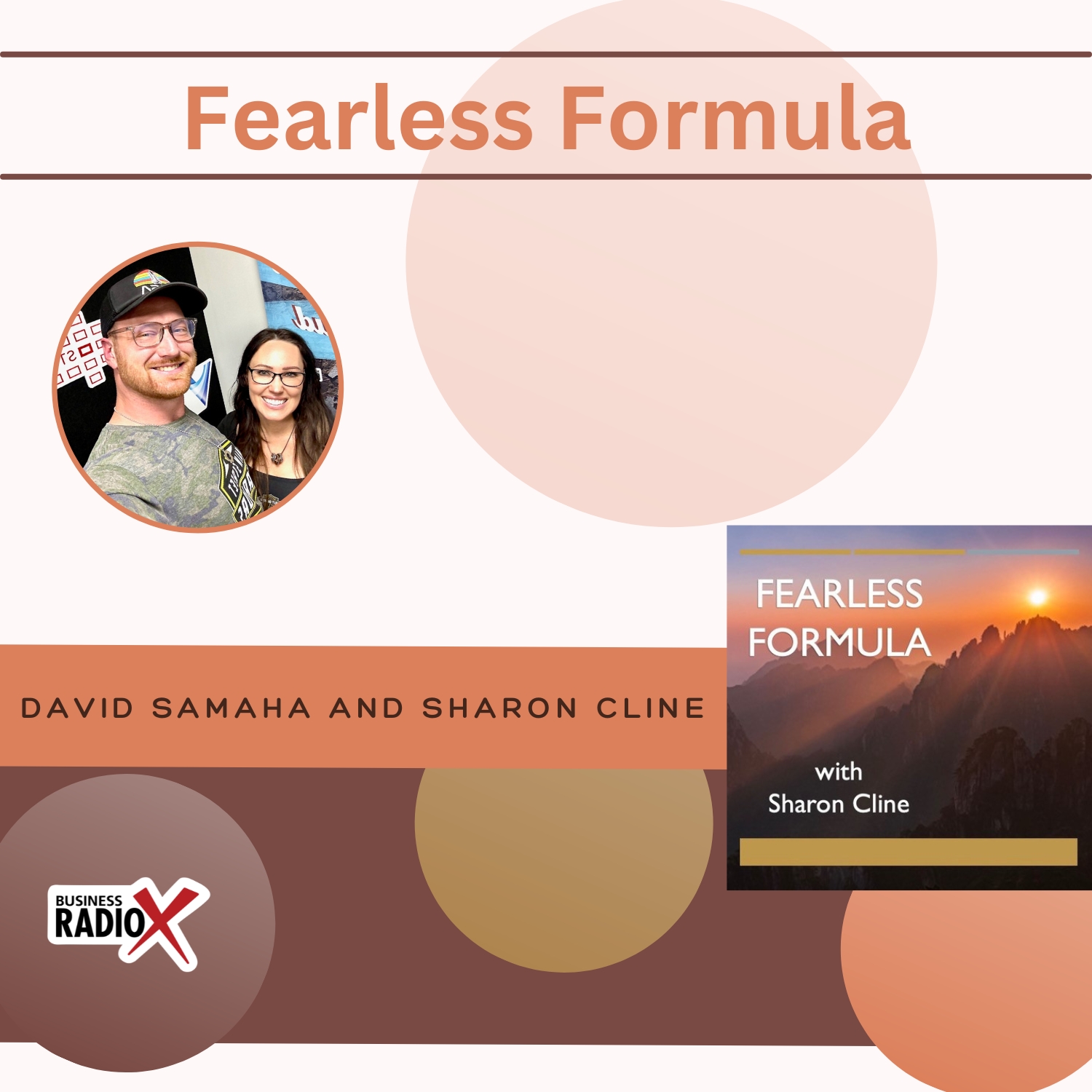
David Samaha turns the tables on host Sharon Cline, as he asks the questions in this episode of Fearless Formula.
Listen in to hear about Sharon’s background, and how her interest in radio brought her to Business RadioX®.
 David Samaha is an ASE Certified Technician. In 2014, he started Diesel David, which eliminates the frustrations of working with a repair shop. His services are 100% mobile.
David’s customers love him because he saves them time, money, and heartache. No more waiting rooms, no more sheisty mechanics, and the best part is you get to drive your car or truck with confidence!
This transcript is machine transcribed by
TRANSCRIPT
Intro: Coming to you live from the Business RadioX Studio in Woodstock, Georgia. This is fearless formula with Sharon Cline.
Sharon Cline: Welcome to Fearless Formula on Business RadioX, where we talk about the ups and downs of the business world and offer words of wisdom for business success. I am your host Sharon Cline, and thankfully in a month it will be the two year anniversary of Fearless Formula and I’m going to have a new intro and I’m very excited about that. And also, third time is a charm because today on the show I’ve got Diesel David, who is one of my most favorite people, David Samaha. Hello.
David Samaha: Hello, Sharon. How are you doing?
Sharon Cline: I’m good. I’m freaked out, actually.
David Samaha: You’re a little bit nervous.
Sharon Cline: I am, I don’t like it.
David Samaha: So there’s this study that I recently saw where the brain cannot tell the difference between anxiety and excitement.
Sharon Cline: Okay.
David Samaha: It is what we tell the mind that it is.
Sharon Cline: Okay, then I’m excited. Right? Is that what I’m doing? I’m reframing. So this is a different show today for me. So that’s why I’m nervous.
David Samaha: Why is it a different show for you?
Sharon Cline: Because I asked the questions. I like being on this side where I’m like, David, tell me about your dreams. Tell me about how you made them come true and inspire other people to have the same kind of feeling that you do, but instead you’re asking me questions. Which the reason why I agreed to do this show, seriously, is because, uh, Joe Cianciolo, who we both know, Front porch advisor Joe, um, told me that one of the things that I can do to help connect with listeners is actually allow myself to to have the same vulnerabilities that I’m asking guests to have. So this has been on my mind for probably six months of sure, I’m going to do that someday in the future. And so when you asked me about….
David Samaha: I said, have you ever been interviewed?
Sharon Cline: And I was like, not on my show.
David Samaha: I was like, we should do it. I was like, let’s. And you’re like, okay? And I was like, when? And you’re like, da da da da date. And then I messaged you last week. I was like, hey, what was that date?
Sharon Cline: I was like, oh yeah, you didn’t forget about that. Okay. So anyway, it’s today, today’s the day. So I’m excited but nervous too. So I’m going to try to reframe it as excited. I don’t know why this like makes me uncomfortable because the the truth is I, I love asking questions and kind of understanding other people’s lives. Like, what is it like to be you for a little bit? But it’s interesting because I don’t think as deeply about myself as I do about other people. So this is fascinating.
David Samaha: Do you think some of our listeners have that have a similar tendency?
Sharon Cline: Yeah, I.
David Samaha: Do, to think more about others than, than oneself.
Sharon Cline: I do.
David Samaha: Do you I think absolutely.
Sharon Cline: Okay. It’s a lot easier. I think it’s very easier.
David Samaha: Yeah.
Sharon Cline: Yeah. Okay. It’s going to be fine. Yeah. Because this is.
David Samaha: Fun. This is going to be good. So I wanted to start by understanding more of your background and your journey to. Because you’re not from Cherokee County. That’s right. Okay. So you came here and you got into to radio. Yeah. So how did how did that happen about your life on, like, what brought you to Cherokee County and then how you got into being a radio show host?
Sharon Cline: Okay. So, uh, I moved here from Florida in 1995, so I’ve been here almost 30 years, so it feels like home to me. Lived in, uh, Forsyth County for a good bit, but then about 21 years ago moved to Cherokee County. So I kind of consider it more my home now, Cherokee County. Um, but being on the radio, um, I had gone back to school, um, in 2009, 2010 to get my degree. And I went to Kennesaw State University and worked at the radio station there. And I had a couple different radio shows that I did, and I loved it and thought, that’s where I really would go for my career. Um, but I wound up going into the network television field, which is great, but always loved radio, always just loved the freedom of being able to ask questions and make it kind of my own, which is what I did at the station at the Owl Radio. And so when I met Stone at our networking meetings, Stone owns the studio here. He’s one of the founders of Business RadioX Stone Payton. He, uh, he had me on the show like two years ago or so, and we had talked about the fact that I had worked in radio, and if he ever needed someone to be a backup for him doing producing, that, I would be happy to do it. So it just kind of naturally unfolded that way. He was really generous with me and allowed me to, um, kind of decide how I would like to frame the show and who I would like to have on it, and it’s just been the biggest blessing to my life, I have to say. It’s like my happy days are Fridays because I get to talk to people.
David Samaha: Oh, that’s so fun. Thanks. So was it would you say Stone was your inspiration to get into radio or what?
Sharon Cline: It was it was, I would say, Stone because he I had wanted to work at a radio station at one point, but I really just needed the stability of an everyday job. That I could count on that didn’t require me to have weird hours, because at the time my son was young and I needed to be home. So I really went to stable route, stable, steady job. But then when I met, when I got into voiceovers and started doing books, which was in 2016, um, in an attempt to, um, expand my network, I started to go to our networking meetings that we go to here in Woodstock, and that’s how I met Stone. And when I heard he was in radio, I was like, well, maybe he needs voiceover work. Maybe he needs people, you know, to do announcing. And I didn’t really understand what Business RadioX was or whatever I just heard. He said radio. And then we became pretty fast friends. He’s one of the nicest people you’ll ever meet in the world. And, um, he was just so sweet. Allowed me to be part of this. We also work on Main Street Warriors, which is a whole other program that’s associated. He’s wearing a shirt right now. Diesel David is, uh, yes. So that’s also another little avenue of Business RadioX that I get to participate in occasionally. So it’s been just so much fun, so much fun for my life. And I love how I get to know people in the community right next to me, right around me. How many times have I seen you at the networking meetings, having you on the show and actually devoting time, just you and me and also Brendan, who was here just being able to have a discussion in a room where there’s no distraction, there’s no other place I need to be, fosters such a sense of friendship and understanding that I don’t get when we’re in big networking meetings or on the street.
David Samaha: That’s what I love. That would that would make me want to have all sorts of people I know.
Sharon Cline: Right?
David Samaha: Like, it’s.
Sharon Cline: The truth.
David Samaha: And it’s not even it’s not so much of the interviewing and and the getting to know it’s I think it like is the authentic time. Right. Like the quality time.
Sharon Cline: Yes. Quality time. That’s a great way to look at it.
David Samaha: I think that’s like where the joy and like where the beauty. Yeah. In what goes on in this room.
Sharon Cline: Oh, that is so inspiring to me. Thank you. It’s true though, because when I am finished with an interview, most of the time I feel like I really know someone. And if and we’re friends somehow. It’s been an hour and I didn’t know you before, and now I feel like I know you and I genuinely want to understand, and I have no other motive than just what could other people glean from your experience that could be inspiring for them to follow their own dreams? I mean, that’s the goal, really. What keeps you from allowing fear to stop you? So yeah, it is a it is a sacred space that way for me. And, um, it is genuine, at least on my end. I think it’s genuine.
David Samaha: Some fake ease in here.
Sharon Cline: I haven’t really felt that yet, but that’s the thing. It’s like, maybe I. Maybe I just don’t know. I see everything through my lens and it all is the same, you know? But maybe.
David Samaha: Wow, that was prophetic. Thanks. I was I keep.
Sharon Cline: I go deep sometimes it.
David Samaha: Was like effortless. You’re like yeah that’s just that’s so you mentioned voiceover. Is that radio or is that something that’s different?
Sharon Cline: It is different. There are many, many avenues that voiceovers affect many different places that you can hear someone using their voice. But my goal when I started to do voiceovers was to be able to do a book, but in a tiny, tiny, tiny version of it because books are, you know, laborious. And I’m a producer of the book as well. So it’s intensive and I’m fine with that. But it’s I agree with doing that when I signed to do a book, but for voiceovers, you kind of, you know, 30s you’ll do an ad, you’re in and out. And that’s kind of what I like is, well, let me, let me do this, but in a quicker pace. So that’s why I went back. I went to school to, to learn how to be a voiceover artist and really be prepared to be in the industry. It’s very competitive. And I went to a school called called Such a Voice and they were wonderful and created my commercial demo and my narration demo, and that’s when I made my website and kind of tried to grow from there. But yes, there’s commercials that you can hear on TV, there’s radio, there’s um, oh goodness, I’m trying to like, you can definitely do books. There’s also, um, video games. That’s a big place to do. Well, um, animation is another place that I’m really working on. In the next couple of weeks, I’m going to a class that I’m going to learn a little bit more about that. So I’m trying to grow.
David Samaha: So you might see you on the on like an upcoming like Pixar.
Sharon Cline: Exactly. Well that would be the dream. The big dream I have. Okay. If I had to say that’s the big dream. Yes for sure. Um, but I, you know, it may be a minute before that happens.
David Samaha: Do you have like, any partiality towards like Dreamworks or Pixar?
Sharon Cline: Do not.
David Samaha: Disney right. Is there like one that you’re like, I want to work with these people? Because basically.
Sharon Cline: Yes, Disney would be great because my kids we watch Disney movies, you know, and it’s still just part of our sort of history. And every Disney movie that comes out, you know, we’ll watch. But I, you know, it’s so competitive. And I would love to make that my big dream. But at the same time I’m like, you know, that’s the big pie in the sky right there.
David Samaha: You’re also so talented.
Sharon Cline: Oh, this is the best interview.
David Samaha: So it’s like a matrix, right? Like you have the competition on the x axis and you have like talent on the y axis.
Sharon Cline: So that’s amazing X and y. Yeah I never thought about that.
David Samaha: And I think that your talent definitely a sense. And you’re not afraid to work hard.
Sharon Cline: No that’s true. You have to.
David Samaha: You also have a teenage son right.
Sharon Cline: Well he’s 21 now but yeah, he requires a lot of attention. I mean, as far as, like, being a parent to him because he’s still home. I don’t want to neglect, you know, my being in his life. So I still feel tied, you know, to home right now. Yeah.
David Samaha: That’s fine. So, like, I mean, because you were balancing what was it like to balance motherhood and launching a radio show two years ago? So you would have been 19, so you would have been a teen teenager, and.
Sharon Cline: You met him and talked to him about his car dreams, which, you know, he has big car dreams because you’re a diesel, David. You know, you’re in that whole world. Not only that, but your job is so successful and your business so good on you as well. Um, I it was a challenge, I think, because I didn’t know what I was doing. Um, but they’ve been my kids have been the most supportive in the world. I just love them. I got so lucky in the kid department. Very grateful.
David Samaha: So what? I’m trying to wrap my head around what makes you lucky in the kid department.
Sharon Cline: Um, I our relationship. That’s a good question. Our relationship? Um, between all three of my kids are. They’re very special to me, and, um, I, I love to observe who they are as adults. Can you hear the thunder? It’s, like, about to pour really bad outside the studio right now. I heard that I was wondering if you could hear it on.
David Samaha: Be like an ASMR. Yeah.
Sharon Cline: We’ll just take the mic outside. Funny. Yeah. So each of my kids, I love that I can appreciate who they are as just humans on the planet. Not my daughter or my son. It’s just, who are you? And how lucky am I that I got to have a hand in bringing these people to the world, and I just delight in them, you know? It’s just like, I love seeing what their journeys are like and how they’re different from me and how they’re alike, um, as I am. Is that how you say that? Yeah. So, I don’t know, we just they’re a really good people. They really care about other people. Um, they have a lot of resilience. Um, I’m very proud of of who they are and kind of admire that, you know, I’m related to them.
David Samaha: Wow. What a what a compliment. I think if I ever received that compliment from my mom, I wouldn’t know how to respond. I mean, because I think something that stands out to me here is your your kindness and support that you share with your kids. Because I think something that can be a tendency of so many people, right, is is like perfection. And that comes down to so many kids and they feel like they’re not good enough. And and that shows up in, in anger that shows up in like maybe isolation. And I don’t feel like that describes your kids at all.
Sharon Cline: No, no, I, I’m not perfect. I’m so far from perfect. So for me to look at them and expect any kind of perfection is unrealistic and damaging. And I wouldn’t want to do that to them because I could never live up to anything like that. I think one thing I really appreciate, and that I it’s one of the goals I have here on on this show, is that we all are humans on this planet, and we all are trying to do the best we can. And so I can I can ascribe that same philosophy to being a mother and putting my children in that same sort of lens of, you’re just, you’re doing the best you can. I’m doing the best I can, and some days I do better than others. But like, I am fully human. I’m all the things. I’m jealous and supportive and angry and happy. I’m every spectrum just depending on whether or not I’ve had enough sleep, whether I’ve eaten, whether I’m just, yeah, what is that day?
David Samaha: What is it? Halts like hungry, angry, lonely. Tired. Yeah. If it’s any of those four things and if it’s two of them, God help us.
Sharon Cline: I forgot about my God. I have to remember that I love it. Yeah, because I yeah, I would, I would just want them to be I want them to live their life however, they believe their life should be lived, as long as they’re not hurting themselves or somebody else. If they if that, whatever they’re doing that makes them happy and feel the most authentic to themselves. That’s what I want that for everybody. But yeah.
David Samaha: A, um. Almost like an abiding in, like, nonviolence.
Sharon Cline: Yes. Right.
David Samaha: And then. And then like. Like bowing to nonviolence would be, like abiding in their truth.
Sharon Cline: Oh my goodness.
David Samaha: So it’s like, be be in your truth, son, but not at the cost of someone else. Exactly. Oh, that’s so good.
Sharon Cline: Yes, that’s exactly it. I love the word abide. I never really thought about it like that, but that was a really beautiful way to phrase that.
David Samaha: You said, like, laborious or something. Oh, yeah. And I’m like, oh, we’re gonna learn on this show. No, we’re going to did I, we’re going to prep for college.
Sharon Cline: And no, you’re, you have, uh, you know, a way of looking at the world that is really cool to me. So I’m, I’m excited to see when you’re asking me questions, I’m like, okay. Because again, I like asking the question. So when you’re asking questions, my brain immediately is like, okay, so what? How does he think about this? You know, it’s like my brain’s working really hard right now.
David Samaha: That’s so fascinating because I feel like it’s probably working even harder since I don’t have any formal training. Well, right. Like like if, like, it’s like if I see someone talk about cars that doesn’t know what they’re talking about, it’s pretty exhausting to follow them, especially if it’s regarding a problem.
Sharon Cline: Because you know so much.
David Samaha: Because it’s like there’s a there’s a particular way that you would assess this problem and you would provide the data in that manner. And when the customer is like giving you this information and this information like everything’s out of sorts, you have to recompile it in your head to make sense. So I almost feel like you’re experiencing that in terms of having all of the knowledge and what an interview format looks like, how it flows and the like. Okay, I’m trying to get this emotion like all the way to the audience, right? Like my listeners. Right? It’s like, that’s who this is. It’s not just for the people in this room. Yes, it’s in a sense, it’s it’s selfless for like, what can I provide? What can these people get out of this type of value? Yes. Whether it’s joy or knowledge. Yes. You know, wisdom or inspiration. Yes. Yeah.
Sharon Cline: It’s true. But I also like it because it’s forcing me to exercise a muscle that I don’t usually exercise, which is vulnerability and kind of a profound way in a deep way. I don’t usually answer. I love asking because I know my motivation behind the asking is really for genuinely, for good and for understanding, but being on the other. And I do ask a lot of guests, you know, to be vulnerable or authentic. And I’m that’s my favorite place to be.
David Samaha: But what would you tell a guest that was struggling with being vulnerable? Like you could tell there’s just so much more depth and like, so much more there.
Sharon Cline: Yes. Um. So oftentimes before a show, if someone’s never done this before, I try to say, you know, it’s like we’re just at a coffee shop having a conversation because the truth is, I would most likely be asking those exact questions at a coffee shop where I’d just be like, tell me what it’s like to be you. You know, it’s not about the audience. And sort of, um, what do they call it, like gratuitous, um, displays of emotion or or, um, deep questions for the sake of an impact. It’s not about that. It’s more about what’s it just like to be you. And oftentimes at the end, of course, I just want every guest to be happy. At the end, they’ll say, that was great, you know, or they’re happy. And that that’s all I really want is for someone to feel heard and honored and, um, understood and valued for a little while because I think that is really missing a lot in life for most people, for a lot of people. So that’s what is like joy for me. That’s why it’s sacred to me, because it’s really honoring the human experience you’re in right now. It’s the whole goal for the show for me.
David Samaha: Do you feel like there was do you feel like it came natural to you to experience the human experience? Yes, yes, because I think it’s so unnatural for so many people.
Sharon Cline: I agree, I agree, I think I’m a weird person. I really think I’m a little odd. I swear, I think I’m a little bit of an outlier somewhere. My brain does not relax. It’s always thinking, thinking, um, I don’t really have a chill. I don’t have a shut off. I’m not a.
David Samaha: Doctor, but I think that’s a condition.
Sharon Cline: It’s called a weird condition. The outlier condition. It probably is. I don’t know, I, I’m a very curious person, and so but I also love, um, knowing I come from, like, when I’m interviewing someone, I’m coming from a place of, um. We’re your human. I’m a human, you know? What’s it like to be you and your human world and. I don’t. We’re the same, you know. We’re more alike than we are different. So if someone’s struggling in an interview, I will usually highlight an emotion like, okay, did that scare you? Or, you know, how did you work around the setback that you had? How did you get the courage to do it? What what was the feeling like that made you do it? Because those feelings are universal.
David Samaha: Yeah, well, things were a mess back in oh eight and oh nine. Yes. 2010. So where did you get the courage to go back to school? Like that was an undertaking?
Sharon Cline: It was um, so I had been married for 20 years, and I suspected that my marriage wasn’t going to last much longer. So I went to school in an attempt to be able to take care of myself because I had been a stay at home mom the majority of my married life, and I wanted to be able to take care of myself and make sure that I had some kind of degree or something so that I could be on my own if I if I needed to be. And so that was the impetus for going back to school. But I loved school, I absolutely loved school. And, um, would probably have been a lifelong student if I didn’t. You know how there are people that are what are they called, like a professional student? Something like that. I would have done that.
David Samaha: Probably five degrees.
Sharon Cline: Yes. Exactly.
David Samaha: On their sex.
Sharon Cline: Exactly. Because I just was kind of fascinated with seeing the world from a I think I was 38 or 39 when I went back to school. So seeing the world from an adult perspective and, and having it explained to me, um, almost as on a basic level to mostly 20 year olds, um, I just kind of saw it a little bit differently. And I was very determined to graduate, um, with the highest honors I could get because I thought, these are 20, 19, 18, you know, year old kids. I’m smart. I can do this. You know, like, I just determined, very determined to graduate with, um, you know, as high grade as I could. So I was very hard on myself with school, and I took it very seriously. Um, but I also knew that it was an attempt to make sure that I could at least take care of myself financially, you know, on my own, if I. If my marriage didn’t survive.
David Samaha: Yeah. That makes me think of the meme where it’s like there’s four pictures of the same person. So it’d be like, Sharon is a student, and it’s like, you look like a courtroom judge. You know, you’re like, so stern and, like, determined. And then it’s like Sharon as like a radio host and like.
Sharon Cline: What is it I know.
David Samaha: Well, so it it obviously you succeeded in taking care of yourself. And I can make that statement factually, just simply looking at your eyebrows because they are so manicured. I know I’m going to describe it for y’all. So there’s this a perfect amount of spacing between her eyebrows and then the shape of them. It just goes, it has this, this very nice radius that it follows. And I mean, they’re perfectly manicured and I it’s we’re on radio, which is, you know amazing like glad to be here but this these eyebrows need to be on TV. They need to be on TV.
Sharon Cline: So I hope I can replicate tomorrow and every day whatever I did today. Because that is so sweet.
David Samaha: I don’t think you did anything. I feel like just like.
Sharon Cline: No, I did.
David Samaha: Well, that’s so inadvertently put so much pressure on her. But the best part is, is no one will have anything to compare it to.
Sharon Cline: That’s so true. Whatever your imagination is, we’ll just make that.
David Samaha: As we move into quadrant two of Sharon on radio, she’s like, all smiles, super positive. I was like, on time. And for me, that’s running behind. Oh. And oftentimes. I saw on the big stuff. I’m like. 30 minutes, 15 minutes early. You don’t.
Sharon Cline: Give yourself that.
David Samaha: Time. I don’t like on time is not or, you know, on time is late on like the big stuff. But then like the normal things. It’s time is time is a spectrum.
Sharon Cline: Oh that’s fascinating.
David Samaha: So like like young professionals of Woodstock, I’m always there 15 to 30 minutes early like that. That’s an event that’s like a big deal to me. Yeah, that’s.
Sharon Cline: Our networking meeting. Yeah. So you’re always there early before 730.
David Samaha: Always there early before. Yeah, I’m usually there like 650 to like seven. Geez. And then so early. I know it’s so early. Um, yeah. So, like, you were just so gracious. Oh, like. Yeah. We’ll just get started. You’re like, it’s gonna rain. And I’m like.
Sharon Cline: Yeah, just be safe.
David Samaha: Does that have to? I was like, does that affect the audio quality? No, I didn’t understand. It was just like supportive. Yeah. Like okay. That was that was fun.
Sharon Cline: No I would feel horrible if you rushed here, you know, and something happened to you. So that would destroy my life, I think. So let’s just just take your time. You take your.
David Samaha: Time. Still not interviewed?
Sharon Cline: Oh, God. Yeah. That’s okay, I know. Oh my gosh, I can’t.
David Samaha: So so. Okay, so who would Sharon be as like a mother, right. If we had to fill like fill in that quadrant because I feel like you’re, like, bubbly and like smiley on the radio show, like, needs to be TV. Maybe we can settle for, like, a podcast video. Maybe.
Sharon Cline: So at some point, I think we’re moving in that direction. We have a couple cameras in here in the studio, but we don’t use them consistently.
David Samaha: More and more. Um, yeah, I’ve noticed more and more cameras come here. That’s right.
Sharon Cline: It’s a it’s a it’s a next venture, but it’s not like I like just rolling in here and not caring what I look like too. So that’s kind of nice.
David Samaha: Well, I think that’s part of the human experience. Right? It’s like it doesn’t have to. It’s almost like you could come in here exactly like. How you are now or in a day. Apparently, when you don’t care. Like what do you look like? And it’s like that could be. Almost like a Business RadioX video exclusive. Yes. Right. Does it have to be every episode? No, but it’s like whenever it’s like feeling. It’s like, you know what? Like, let’s let’s go live, like, let’s, you know, let’s kind of show people the energy we have going on here because some people are visual learners, right? Even if it’s just learning from a smile, it hits the cortex that much more.
Sharon Cline: That was amazing. Learning from a smile I love that. Well, okay, so yes, um, TikTok and reels and all of that. It’s very important. Um, but I just, I don’t know, I like being I don’t like being on camera as much as I like being, you know, just the voice. That’s where I’m happiest.
David Samaha: Like, I like being interviewed more than I like being on camera.
Sharon Cline: Which I don’t like at all. No, you’re making this fun, though, so thank you. I appreciate that.
David Samaha: You’re welcome. Okay, so if we went to the Motherhood Quadrant okay, that would be like quadrant. I don’t know you as a mother.
Sharon Cline: Truth. You know, me as just a networking person and voiceover and also business radio X but as a mom, um, okay, so I’m saying this knowing that my children may be better to explain it to you than than I.
David Samaha: How would your kids describe you in that quadrant?
Sharon Cline: Um. Optimistically, I’m going to say that they would say that I’m supportive and loving. Um, but.
David Samaha: So you’d have, like, a spatula. It’s like I.
Sharon Cline: Made fresh.
David Samaha: Linens. Like, is that what we’re describing? Okay.
Sharon Cline: When they were younger, I was very heavily into the mother role. I would stay at home, mom. I did what they needed. They were in classes and they took sports and whatever. I did the very classic stay at home mom things in the minivan. Absolutely. And loved being a mother to them. I always wanted to be a mother, so I felt very lucky that I got to have that experience and and still feel that way. Um, as they have grown and their lives have changed, two of them have moved out. I still just have the one home. I don’t my interactions with them are different, so my role shifted instead of being I’m still their mom and I still care about you and.
David Samaha: A call center.
Sharon Cline: I’m in a call center? Yes, like answering phones.
David Samaha: This is your. This is your mother. What problem may I solve for you today? It’s like, mom, all my laundry is pink because my roommate put in the blanket. Okay, here’s what you do.
Sharon Cline: Here’s what you do. Yes, I would love those calls. I can I can do those calls. It’s harder now, which is surprising. Wow. Actually, to say, because when they were younger and I was, you know, in charge of kind of a good bit of what they experienced in life, they were, uh, movable and according to what I needed that, you know, we’re having dinner now. We’re taking a bath now we’re going to bed now, um, and as they got to be teenagers and now are well, my oldest will be 29 next month. And then Rachel just turned 27 the other day. Um, and John 21, they’re my role is not I can’t control anything that they’re going through. Really. My role is to be support and to witness what they go through and to give them tools to help them manage whatever they go through. But I cannot control any of it. And my job is not to insert myself and give them my opinion. I don’t think that’s unless they ask for it. If they ask for it, I will give it. But my role is support is if they need me, how can I best help them navigate relationships or, um, you know, situations that they’ve been in. Um, so it’s harder because I cannot influence as much what their experiences are like. I just have to help them get through them if they want me to. Yeah, it’s harder for me. Do you feel like.
David Samaha: You have a sense of, like, need to know with them? Is that like, something that you try and keep at bay, or is that not really?
Sharon Cline: It’s a good question because my daughter actually, I just had lunch with her, my oldest, Grace, and she I asked her some questions and she said, how much do you want to know about this? You know? And I was like, well, this is a good question. How much should I know about this? Just a topic that we were kind of trying to figure something out about. And, um, some things are their experience to have completely separate from my role in their life. I don’t need to know everything. I don’t want them to feel a, um, that that judgment of mother onto them. Um hum. Um, they’re always my child, but they are. They’re they’re humans that were brought here to have their experience. And it’s not my place to influence that unless they ask for it and or unless I think they’re in danger. Um, and then, you know, or something horrible is going to happen, I’ll be like, listen. But mostly I try to observe what they’re going through and say, do you need, you know, be here for them. If they say, I’m struggling or what would you do? Or here’s how I would handle it. But, you know, their experience, their job is to grow and learn while they’re here. And I don’t want to hinder that. So witnessing them struggle. Very hard for me for sure, because I don’t want them to struggle and witnessing people being mean to them or whatever, not love them like I do is very difficult for me. I want them to be loved like I love them, but I also know they won’t be so. Having having to see them go through, have a very full human experience and know that I can’t save them from anything really is tough. For sure. But but but that’s okay.
David Samaha: Yeah. That’s what.
Sharon Cline: We do.
David Samaha: That’s. I feel like that’s more. That’s ideal. Oh nice. Right. Like way more than okay. I mean, I feel like that’s almost like a goal of parenthood, right? Because I think it’s so you get so attached to wanting the best for them. And then we don’t realize that we’re taking away the best, which is to be able to be present and experience your life. And it seems like you’ve actually really. Done a lot of work to make that be true for your relationship with them, I think.
Sharon Cline: And I think a lot of people when they because I had I’ve had like a tough childhood. So like growing up and seeing how I would have wanted someone to treat me makes me want to treat my children that way. If the support that I want to give them, I want the goal is for them, for me is to be. Resilient, you know, don’t let life knock you down too hard. Um, be able to get up and keep going and also care about other humans as well as yourself, and just live a life that is the most authentic to the way you think you should, whatever that looks like. Um, that’s it for me. I want them to just be happy. What makes you happy? You know, again, as long as they’re not hurting themselves or someone else, do what you got to do, you know, to make yourself happy. That’s it. Uh, I don’t know. I think, you know, when you when you grow up and you see things that you wish were different and you have an opportunity to do different than then, that’s like liberating.
David Samaha: Yeah. It’s great. This is, you know, we can rewrite. We can rewrite the story.
Sharon Cline: That’s exactly right. And in the same way, I get to reparent myself because I get to give them what I would have wanted. I get to experience it as if it were a little bit me. And although we’re different people, the support is universal. So I get to I rewrite, rewrite history a little bit for myself.
David Samaha: What do you what challenges do you face personally or professionally that shaped that?
Sharon Cline: Um, so I am the hardest person on myself. When I make a mistake. It’s it goes in the 2:00 in the morning playlist. Gosh. It’s awesome. It’s so awesome being me. Uh, yeah. So I think that I, I struggle with mistakes. I struggle with hearing, um, you know, the voices that are like, you should have known. It should be different. How could you let that happen? Why didn’t you? You know, the the. I don’t even know where those voices exactly come from. Outside of, like, maybe it’s parent related, but I think just knowing that I make mistakes is really tough for me. And knowing that, um, oftentimes now when I’m doing things, it’s out there in the world, it doesn’t go away. So it’s not, you know, it’s just it’s out there. So, um, I think that has informed a lot of the struggles that I have, because I have a lot of anxiety and a lot of worry, and, um, I don’t surrender as well as I wish I did to to the experience, to the journey. You know, the journey is the destination. I’m always like, nah, I got to get to the destination. What are you talking about? Like we suffer through the journey to get the. You know, it’s just I have to always reframe myself, reframe the way I think about it and calm myself down. Um, it’s tough because I’m, again, I’m my own worst enemy and no one is harder and no one says more awful things to me than me. And, um, so yeah, that’s that’s tough, but I’m I’m getting a little bit better.
David Samaha: I’m honestly. But I know that I’m not perfect.
Sharon Cline: No I’m not. That’s great. Yeah. I’m not, and nobody else is. But yeah, for me I think that’s that even though I say I know I’m not perfect, I if I make a mistake that I really didn’t want to make, that’s tough for me to forgive myself for. But do you find that is the same for you?
David Samaha: Oh, yeah. Oh, yeah, for sure. And I feel like the. I think that’s common for so many people. There’s this thing that I once heard that what is most intimate is what is most universal.
Sharon Cline: Oh, what? I’ve not heard that.
David Samaha: Yeah. So it’s like, that’s a very personal, intimate thing, right. To to not feel good enough.
Sharon Cline: Oh, yeah.
David Samaha: Or to feel like you, you are missing the mark.
Sharon Cline: 100% when like.
David Samaha: A lot of times it’s arbitrary.
Sharon Cline: And whose decision is it that’s good enough, right.
David Samaha: Yeah. Well, and and it’s what’s so fascinating is you have, I think what tends. To be true is like when we’re so hard on ourselves, then we’re hard on other people. And I think that you have. Cultured a lot of awareness around it to especially protect your kids right from this, like trauma and this, you know, perfectionism. Perfectionism. Yeah, yeah. To to to bleed over to them to be like, no, here’s what you need to do. Or, you know, like don’t do that. Like right to like almost like I think it’s so easy for many people to want to live and to actually, like, live out their kids lives. Yeah.
Sharon Cline: That vicarious thing.
David Samaha: Yeah, I.
Sharon Cline: Do, I, I mean, I do experience what they experience. So if it comes.
David Samaha: Down to what’s your action. Right. Like, yes. You know, I think that’s like so many of us. Will not even realize that we have a choice. And you know that you have a choice, and then you’re observing it, and then you’re changing your actions to be like, this is what I actually wanted, right? Because you didn’t have that reality, because your parents did not have the awareness and also the self-discipline to be able to create a disconnect between what was in their mind and what actually came out of their mouth. And here you are. Curing generational trauma really is what this comes down to, because your kids are not going to have the same trauma that you had, and your parents probably had that same trauma from your grandparents.
Sharon Cline: It’s there.
David Samaha: It’s literally stopped here with you.
Sharon Cline: Yeah, that’s one of the goals I had, was that I didn’t want them to feel the way I felt in many situations. Um, so check. However, it’s fascinating to me how different they are when presented with situations. I would respond a certain way. They would respond differently. I’m fascinated by that. How how different would I have been with a different upbringing? And that’s what I actually do here at Fearless Formula is I want to know, what is it like to be you and what was your upbringing like? And I wonder if I would have made the same choices that you’ve made, if I had your upbringing, or if I wouldn’t have? Do I like that? Do I not like that? Is that inherent to my personality? You know, I’m just very curious that way. My brain again. Yeah, doesn’t chill. But I appreciate your acknowledging that. It’s very sweet. I do want they just have their challenges will be different. They don’t have that same challenge that I did that I continue to battle battle. They have different challenges, but their life is still challenging. So but they just don’t have this one.
David Samaha: Yeah. So this is forewarning. If you have kids in the car, if you’re on children you don’t want to like, oh no, what are you so well okay. Yeah we’ll give it a second. So if you were just laughing and this is about to exit my mouth. So if you passed away. Yes. Today. Yes. Would you be happy with the life that you lived? Yes. I have zeroed out in that. I believe that wholeheartedly. Like, I mean, just the one. Just that little. Not even little. It’s the massive nugget that we unlocked about, like how many people can claim that they’ve stopped generational trauma? What an accomplishment.
Sharon Cline: Thank you. It’s funny. I don’t think it’s like.
David Samaha: A life goal. I feel like some people like. They’ll never accomplish that. And even even. And they want to.
Sharon Cline: Right, right. Uh. Thank you. I don’t even know what to say I. I don’t know. I think each generation, you know, their influences as we watch TV and as we grow and what we’ve been exposed to can help us think a little differently. So who knows what my children and their children will be like in terms of exposure and and accessibility to knowledge and how pervasive it is now to look at, you know, the words like narcissist and gaslighting and all of those kind of relationship dynamics that maybe 20 years ago were only heard if you were in therapy. So now it’s become such a normal part of our vernacular that they’re now going to normalize that, I believe, and then have an awareness of it that will create different relationships than what we’ve had in the past. So my parents and their parents and their parents did the best they could with what they had. And I trying the same. I’m sure if you were to look at a pendulum being on one side of a very abusive and the other side very permissive, um, you can, you can swing one way or the other and they’re, they’re damaging items, you know, results each, each side.
Sharon Cline: Yeah. So striking the balance of honoring, you know, my children and their human experience, but also worrying about them and, you know, hoping that they will make decisions that, you know, I know because I’ve been on the planet so long, you know, generally are not a good outcome. I don’t know, I can’t I want them to learn. That’s the best thing. I want them to learn and, um, and, and, and care about other people leave the world a little better, you know, because they were on it. That would be great. And I see that, though, with the relationships that they have and the interactions that they have with their jobs and things. So I’m that, you know, I couldn’t be prouder of just the fact that, like, I was I was part of of that. That’s like, I if I died today, that’s the legacy that I, I’m proud to leave for them. But I, I would also say I’m, I’m afraid of a lot of things, but I’m not afraid of making some changes that will align my life to be more authentically lived for myself, even if it’s scary, even if it’s I don’t know how it’s all going to play.
David Samaha: Has it always been that way for you? Yes. Really? Yeah.
Sharon Cline: I’ve always had that drive for freedom. That drive for control of how I want my life to play out. Um, so I was terrified, you know, to leave a marriage I’d been in for 20 years. I’d never been in the, you know, a business world or taking care of myself in a major way and didn’t know a lot. And. Uh, but I still. Did it.
David Samaha: You knew. You knew that there that it was possible.
Sharon Cline: Yes, and I was.
David Samaha: And you knew that there was access for that to be true for you. Yeah.
Sharon Cline: Resources. Somewhere, somehow it’s going to work out. If it doesn’t, I’ll make a different decision and hopefully that’ll work out. Um, I don’t know.
David Samaha: So what I feel like that would be like, almost in like list format, right? If you could list off some of, like, the top resources that you saw or maybe even thought would be resources, and it was necessary to explore that to get to the actual resource. If you could maybe list off a few things for someone that is thinking about entering singlehood, right?
Sharon Cline: Again, something very daunting, like, yeah, what?
David Samaha: What would those things be?
Sharon Cline: I’m very grateful to, um, I’ve had some very good friends that have helped me to, um. Find people that can help me. So if I say, here’s my problem, oh, I know, I know someone who knows someone, you know, even finding my divorce attorney and all of those things, like really good people that led me along the way.
David Samaha: So you said wise, safe friends that you’re able to be vulnerable around?
Sharon Cline: Yes. That genuinely want good things, you know, that are that.
David Samaha: Aren’t trying to live your life for you.
Sharon Cline: Yes. Or control anything or want an outcome, anything other than my being happy. So yes.
David Samaha: Okay. How how do you know when your friends want to control you? Or we can literally get it.
Sharon Cline: So oh my God, I.
David Samaha: Feel like it’s way more that happens with women, right? I don’t feel like that happens as much with guys. Kind of like.
Sharon Cline: I never thought about that. I feel like.
David Samaha: Guys are just like, oh yeah, man. Like, don’t do that. That’s dumb. Or like, did you just need to go ahead and do that? Like, you’ve been talking about it for two years, like. It’s not just in relationships, right? I’m just thinking like guys in general, but I feel like I’ve.
Sharon Cline: Never thought about that.
David Samaha: This whole I’m a firm believer that if you go all the way back to the beginning of the Bible, it is very telling of anyone’s struggles where like the the core core struggle. Right? So the feminine struggle is trust and the masculine struggle is worthiness. So when you had Eve, right, she didn’t was not trusting that God was going to provide all the knowledge that she needed, the plan that she needed to know. Right? So she sought control by going after the apple. And then Adam was there with her. So he witnessed all of this going down. And because of his own lack of worthiness, he was not strong and foundational enough to say, hey, we should not do this.
Sharon Cline: Wow. Interesting. I never thought about that whole story like that before.
David Samaha: Yeah, I really would like to have like. Some actual, like, philosophical, you know, explanation of this. This is only my own, um, hypothesis from from reading the Bible. Right. But it’s like. Yeah, I think that like with guys it’s worthiness. It’s. Yeah, they’re being passive. Like they wouldn’t judge another guy because they might. They’re judging themselves too hard. Oh right. And I feel like with women it’s like they want to seek control even with their friends. Right. So it’s like they’re not ashamed of what they have going on. So they’re willing to just be like, tell you how that you need to live your life.
Sharon Cline: So I have had relationships, friendships that have had more of a, um, an investment in the outcome of what my decisions were. And I’ve had to leave those friendships. And it’s some of it’s been somewhat traumatic for me. And, um.
David Samaha: Because then you beat yourself up because you’re like, I should have known.
Sharon Cline: Or.
David Samaha: Or I didn’t do it.
Sharon Cline: Should have been more generous, or I should have taken someone else’s feelings into consideration more as opposed, you know. Yeah. Um, but I also know that as I’ve evolved and continue to, um, if there are friends that can’t come along the journey with me. Um, and I’ve had to let let them go, then I’m actually making room for people who are wanting to go on the journey with me as I see my journey to be.
David Samaha: Oh, wow. So that would almost be like resource number two is like understanding that you’re you are capable, even if you had to let some people go along the way.
Sharon Cline: Yes. Which the irony is that the more authentic I became to myself, the more I lost some people that I didn’t want to lose and I could not reconcile. That was it was the antithesis of what I wanted. Um, but. I also, um, had to shore up myself to where, at the end of the day, am I being the most authentic to me? Is someone wanting that same, you know, journey for me, or do they want something for themselves in the end? Um, if they don’t want to, if they’re not aligning with me and aren’t congruent with me, then they can’t come. And I, I grieved it, I didn’t understand it. I went to therapy because of it. No doubt I was very confused. But I see now my friendships are in a very they’re in a different level for me because, um, I allow people in my space that are willing to be supportive in the way that feels, uh, congruent with.
David Samaha: That’s so cool.
Sharon Cline: Yes, but I had to I had to learn it the hard way. I had to grieve a lot, so.
David Samaha: Well, yeah, I mean, it’s something that isn’t. I don’t feel like we just know how to pick friends, right?
Sharon Cline: And. And women are horrible. I’m one of them. I mean, you know, we can be horribly mean and duplicitous and, um, you know, controlling is a is a great word. Um, there’s a lot of competition and a lot of different ways. And I am not a competitive person as a human on the planet. We’re all just humans on the planet. So for someone to feel competition with me is painful for me, because I just think you’re just like me. I am you, you are me. You know? We’re the same. Like, why are we competing? So I don’t know. That’s how I feel today. I may change someday, but right now I. I just feel like the friendships that I have and the way, the way that I have curated a small group, um, I’m grateful for and value very highly. And I’m good. I’m good where I don’t need anything else. Even even having time like this with you is special. But going out with my friend Tricia, I went out with her last night. Like there’s only so much time I have, you know, so I’ve kind of got, like, my hierarchy. And I try to feed those relationships by spending time with them or talking on the phone. Um, but yeah, I mean, women, women are, are pretty messed up in a lot of ways. But I really am grateful for just the perspective I have now of where I want them in my life, how I want to place them in my life. But it came through pain, a lot of pain.
David Samaha: And you feel like that was was that like a journey that you went on after you? Yes. Left your marriage? Yes. Okay. So to even get to that point, you were really you had to double down on your resources. Yes. So one of them was like asking right, the right friends for guidance and for like actual resources. Right?
Sharon Cline: Like people and support and emotional support. And what would you do if you know, this happened? How would you feel? Where would you go to get help if this problem was presented to you? Yeah, but I didn’t lose everyone. I just lost some very key people. But my, um, I still had some good friends that I could still talk to. And the bottom line being that I really was my best resource, I had to learn how to do it on my own. It’s the best way for me to become strong. And I.
David Samaha: Was just thinking.
Sharon Cline: That, yeah, so I didn’t. I had support, but the bottom line always came down to what did I really ultimately want? How did I see my life playing out? And, um, I had to figure it out on my own. I had to be good with losing people if it meant that I was being authentic to myself. And it’s like a muscle, you know, after after a certain point, you know, you just you do that enough to where you start to see relationships where. No, I see that tendency is not going to work for me, you know? Yeah. You just get stronger because you have because you have to. But ultimately it is, you know, your journey is yours and mine is mine. And we have I’m going to die alone, you know, on this planet. It’s going to be my journey is mine alone, you know? So I have to I have to be responsible to myself. Um, but I let myself down a lot, too, so, I mean, I say, I’m going to do stuff and I don’t. And, you know, I make plans, like, today is the gym. And then I’ll be like, no, you know, this TikTok is taking me way too long to go through. And then, you know, I don’t go that kind of stuff. So I still have work to do.
David Samaha: Yeah, yeah. I mean, we all do. Yeah, we all do. And I feel like that’s such a good example. Right. Like with social media and the asset that it can be. Right. And you live in that world like you are, you’re talking about like, um, you know, your kids and like their access and like just this generation’s access to media. And I’m like, you are media. Yeah, you are, you are, you are, you are radio. Like that’s true.
Sharon Cline: Yeah.
David Samaha: And what a good. You know what a good resource to. Leave, right. So like, you know. Yeah.
Sharon Cline: Well it gives me self esteem, honestly, to do something that I feel is, um, good in the world. I know my intention behind it and I, I’m grateful to have an area, an avenue, you know, to use to help, to have that experience that I feel like I’m loving on people a little bit. It it makes me feel, uh, good about myself at night, you know, when I put my head down, like I did try to honor people today. And not every day is the best day. But on these days, I feel lucky that I can do that. So, I mean, there are a lot of things I do wrong. Or, you know, if you want to judge wrong, whatever that subjectiveness is, but I can do better, whatever. But at the end of the day, I like knowing that what time I did have here, I got to love on people a little bit, or maybe make them happier a little bit, because you don’t know where that happiness exponentially can go, you know? You don’t know what it’ll mean for someone, or maybe someone will hear this and be inspired.
David Samaha: We don’t always know the outcome, what we do that will actually bring that truth. So it comes so much down to this, like authentic living, right? Like I had a friend messaged me the other night, um, and she was like, hey, um, I was just talking with my son about, you know, some personal things, like, you know, just how, like when you talk with kids and then they start rambling and, like, sharing, like, things that they remember about an event. And it was actually the passing of her mother. And it was at the funeral. And like, you know, it was shared publicly. And she was a friend of mine and I like stopped in to like, pay my respects. And I don’t know if they had food there or if I had food with me. Long story short, I remember her son was crying and I just like, gave him some, like, cheese puffs and like, that’s what like, I totally forgot about this. And she messaged me and she’s like, yeah, like he says, like saying he’s like, yeah. And I was sad until someone gave me cheese puffs. And then I was happy and like, that’s what he remembered from it. And like, I almost didn’t. I almost didn’t go, but like more so than that. Like that was just me being me, right? Like someone that’s a friend. Like, we didn’t go super far back, right? And I showed up and like to the point of, like, I was the only person in my friend circle that was there. So I immediately felt really awkward, like, oh, like, I shouldn’t be here. Like I’m an imposter because it’s like such a like it was like family, like very close family. So but it was like two years later for that story to come back to here. It was like, how cool is that? Right? So like when you come in here and you’re able to like ask questions, you don’t really have this agenda, right? You’re not trying to like, understand more about diesel mechanics. So that way you can, you know, fix your diesel truck. Yeah. You know.
Sharon Cline: What is it, diesel? David? It would be Chateauneuf. Diesel. Sharon. Something like that. Like, try to take something.
David Samaha: You could be like a Honda shadow expert.
Sharon Cline: Excuse me. No, the Prius, the Toyota Prius expert. Yeah.
David Samaha: Those are such great cars.
Sharon Cline: Thank you. Gosh, thank you for saying that on radio. I really appreciate that. Brendan goat.
David Samaha: My coworker is like, man, I’m surprised that you don’t drive a Prius. Like, hybrids are really starting to grow on me. And it’s just funny because it’s like two guys that run a diesel shop, like talking about like, the practicality of hybrids. And it’s just, it’s funny. Um, how awesome.
Sharon Cline: For you to have a moment that two years later, you get to almost see it from a third party perspective because you don’t remember it. You know, you get to experience it in that moment of what I did, that you know, how awesome to see yourself that way. What a gift that is.
David Samaha: It was such a gift. It was it made me I read it and I like I had to take a pause because it had. It shocked me that much. And what I did remember was feeling like out of place.
Sharon Cline: Oh, like.
David Samaha: Almost like.
Sharon Cline: Feeling. The whole thing was.
David Samaha: Almost like regretting going. I mean, obviously I didn’t like, hold a regret about it, right? But like in that moment, I remember being like, I shouldn’t be here. But it’s like when you do things like just because you’re doing it authentically doesn’t always mean that it’s going to be comfortable truth or it’s going to be easy.
Sharon Cline: Or land the way you think it’s going to. Yeah.
David Samaha: Truth, right? Like how many times have we spoken life in our friends and it was not an easy conversation?
Sharon Cline: No, you’re right, I have this quote on my phone. It’s my screensaver right now that says the outcome has little to do with me. The process is what needs my participation. The process is mine, the outcome is not mine. And I love that because it means that I’m just in this moment, doing the best I can with what I know. The outcome is going to be what it’s supposed to be. Yeah, and I can’t control everything or everyone because I would if I could. Yeah, for safety, I guess. For safety. Safety above all else, I’m sure. But yeah. So I think that’s like what you’re saying. You were just in that moment and the outcome landed in a way that you didn’t even expect. So that’s actually super special. You know, you’re right. How often do we do little things that we don’t know where what the impact will be? But if your intention is for good, you just having the peace of like I did the best I could with what I knew, you don’t have to. I’m a mental torture person. But in those moments, you don’t have to mentally torture yourself if you’re just doing the best you can in that moment.
David Samaha: And I think sometimes of when. We’re not doing our best. We. Can simply look at evidence of what we did do when we were at our best, and then just do that.
Sharon Cline: Yes, that’s true.
David Samaha: Because it’s not always clear on what we should do. Especially like if you’re going through a season of life, if you’re going through some stuff. You’re not going to know what to do. Your judgment, your wisdom is not going to be at the level of when you are switched on and you are, you know, properly nourished and you’re like, not, you know, stuck in. Yeah, yeah. When you’re not stuck in like the base of Maslow’s triangle. Right. Like, oh, wow. So from then it’s just like we can go, like, empirically. Yes. And look back like. Okay. Well, when. Sharing eats noodles. She feels better, right? Like when David gets a good night’s rest like and then responds to this text like the conversation goes better. So it’s like, I’m just going to go to bed now, right?
Sharon Cline: So that requires self control. And there are days where I have more than others. But yes, I mean, I like that you talked about that. Maslow, Maslow’s hierarchy of need. You know, where the base is, the survival, you know, shelter. And then as you go further up the triangle to the peak of the triangle is like, you know, existence and the purpose of being here. So, yeah, there are days where I’m surviving on the bottom of that triangle, and then there are days where I get to touch on moments like this, where I get to talk more philosophically and, um, you know, esoterically, which I love. It’s like my happy spot. But I also love that what you’re saying is embracing, um, like what I talk about the human experience. Like there are going to be days where you do need to know where you are. Yeah, just you’re going to need to rest. Just rest, you know, but give yourself the space to not respond from, you know, the times where you know, you’re not 100%. I love that I’m a.
David Samaha: Huge fan of like, what can we do to set ourselves up for a more joyful life? And like, you don’t have to ascend from, you know, food, water, shelter up to, you know, stable family environment, up to, you know, through the ladder. You can skip that whole thing and all the like, exhaustion and energy that would be involved and just simply because it doesn’t take much energy to think about the past, you know, or to like, be like, okay, what would. Another thing that I like is like if I have like someone that I really look up to or someone that’s wise or like a mentor in my life, be like, what would this person tell me to do in this instance? Or what would I tell someone to do if they were in this? And it’s so easy, right? I don’t have to go through all those stages to be that person at that level to like, show up how that person would show up. Because guess what? In this moment, I’m not that person. So yeah, I’m a huge fan of this of this hack of like, look at what? Tell someone, look at what I would do if I was in a really good spot or what would someone tell me to do, not taking any of these things and then just do that.
Sharon Cline: But, you know, it gets bogged down with shame. So that’s a struggle for me is being able to look at myself. Third party. What would I tell if I were Sharon’s good friend? What would I say? But that comes with the other side of the coin of why didn’t I already know that? You know, why am I fighting so hard? What do I ultimately really want? Am I being lazy? You know the judgment and the shame. So I have to be better a little. Because what you’re talking about, I get, I completely get. But when the resistance comes with how do I not shame myself for needing that? So I gotta work on that rules.
David Samaha: Right?
Sharon Cline: Like rules. Whose rules?
David Samaha: What’s your rule? Right. You make a rule that sets you up for a congruent life, right? If that’s what you’re optimizing for. Yes. Is congruency alignment, right. Like what I try and optimize for is joy. And that’s something that’s an area that there’s a lot of growth opportunity in that in that area. We all have it for me. Right. But it’s like I mean your rule could be like, hey, like if I am struggling, like I will automatically map myself and on Maslow’s triangle, and if I’m in the bottom category or the second category from the bottom, then I will. Handle things this way, right? Like if I’m, if I’m in the bottom or next to the bottom, like, then there’s no judgment because I am going to do things in a survivalist mindset. Correct? Correct. So then it’s no, there’s no judgment. There’s no room for judgment because you’ve already said like, okay, now if I’m here, here, like I’m going to expect the most out of myself because I can actually deliver the most nice.
Sharon Cline: I love that it’s a hack, like you said, a life hack.
David Samaha: It’s not a it’s not ambiguous anymore.
Sharon Cline: No it’s not. I love that because.
David Samaha: You’re either there or you’re not.
Sharon Cline: And either way, it’s okay. Because I have a plan. Yeah. And I don’t have to judge myself for needing the plan. I got it. That’s nice. Um. Thanks, diesel. David.
David Samaha: You’re so welcome. Sharon. So one thing that I wanted to get into, and I know we’re closing in on our time, was. You ride motorcycles?
Sharon Cline: Oh my gosh. Yeah I do. And so in 2016, I took a riding course at one of the Harley dealerships here in town. And I always wanted to, um, at the time I was dating someone who did ride, so I was like, that’s it. You know, I want to ride to and really loved it and took the class twice. And then I took the advanced riding course, and, uh. You’ve got a motorcycle that I still have. And, um, you know, thinking of expanding and getting a different motorcycle at some point. Um, but I really enjoy the camaraderie in the motorcycle community. I think it’s gotten a bad I mean, it’s maybe a justified rap. However, it’s some of the most wonderful people and most solid, kindest, funniest people I’ve ever met has been on a motorcycle. And, um, it’s just a major part of my life. I mean, I’m sad it’s raining all weekend. It’s Memorial Day weekend, and I’m the saddest person because I, you know, would love to go out tomorrow and just go for the day and go ride somewhere and explore the world. And I don’t know, part of me likes that. It’s unexpected. There’s just always a little part of me that’s like, yeah, I ride, you know, as.
David Samaha: You wear a Harley Davidson shirt and have like, I know, right? Like hard metal necklace on there’s like ball bearings and this like this black tank top with like a, there’s like a goose riding a motorcycle. There’s two geese that say Harley Davidson.
Sharon Cline: Yeah. So true.
David Samaha: Like on the beach, like bum bum. Like riding away from the sunset. They’re like, this ain’t a happy shirt. Like we’re hard. We don’t. We don’t ride off into the sunset. We ride out of it. We go and we say goodbye. We’re going ladies.
Sharon Cline: It does. It’s funny though. It’s like lots of women in particular, being part of a women’s writing group called The Leader’s Atlanta. Here in Atlanta, um, a lot of people don’t see women writers as being, um, a large part of the demographic. And they are they grow every year. So I, you and I both have a mutual friend and a coworker. I met her through the leaders. She’s become one of my best friends.
David Samaha: She yells, gang leader.
Sharon Cline: Gang leader.
David Samaha: That was that was my original question. So. So you’re a part of a biker gang? Yeah, I’m.
Sharon Cline: Part of a biker gang. Sure, yeah. Girl gang. I call it my girl gang. But it’s not a gang. It’s just a collective of women that ride once a month and we have a bike night and, you know, just nice people. Just the nicest people you’ll ever meet. Um, so far that I’ve experienced. But, yes, I mean, lifelong friendships can come from that, you know what I mean? Like, um, you do life together in certain ways, and I’ve had some of the most joyful rides where I’ve cried because I’m so happy and, uh, just it’s spiritual for me and, um, very important. And thankfully, my children are very supportive of the times that I go riding. And, you know, I’ll say like, can you hold the fort down? You know, when they were what was this, eight years ago? So they were younger, you know, it was probably a big surprise, I would say, for them, for me to ride. But they’ve they know it’s just part of who I am. So, um. Yeah.
David Samaha: Do you, do you and your. I know your son loves cars. Do you inherit him also share a love for riding.
Sharon Cline: You know he doesn’t. No one else rides in my family. My kids don’t ride. I do, but I think we have a love of mechanics. Like, right now, he actually is taking a class on, um, motorcycle suspension and something else. So I told him, whatever you learn, can you teach me so that I can know about. And it’s a good opportunity for us to spend time together. But also, I’m a big fan of classic cars like he is. So that’s our time. We get to, you know, talk like we’ll be driving somewhere and he’ll see some car and he’ll be like, oh my God, that’s a whatever name. And he knows all the names and numbers and whatever it means. And yeah, so we get to bond, um, we get to bond about different vehicles, you know, not the traditional, you know, Prius. Not that there’s anything wrong with that, but yeah, we get to talk about the different ways that we can get around the world in different kinds of vehicles. So they’re very all my kids are very supportive of that. So I’m very grateful.
David Samaha: That’s so cool.
Sharon Cline: Yeah.
David Samaha: That is that is so cool. Yeah. I feel like that’s like the ideal. Um. Relationship, right? So you have to like bond over it. But then so there’s like a certain risk. Right.
Sharon Cline: Yes there is. So if they were riding I would be worried like crazy because they’re my children. But I ride and I don’t, you know, I’m just like, well, I’m heading out. Yeah. It’s terrible. It’s it’s definitely hypocritical. But yeah, I like to I.
David Samaha: Like that’s the biggest, the biggest double standard. Yeah. Like this is not a bad one to have. I feel like.
Sharon Cline: I can’t get it out of my head though. Like it’s I don’t know if I could disengage the, the worry that I just naturally have over my children, but, um, you know, if they wrote, I’d be like, great, just tell me when you get home. But, like, I don’t worry about myself, so I don’t know. It’s the price of love.
David Samaha: That’s so fun. Well, as we close up, yes, I would like to do a few, like rapid fire.
Sharon Cline: Oh, no. Okay.
David Samaha: Right. This has been, like, really conversational and enjoyable. Okay. Um, what is your favorite motorcycle ride?
Sharon Cline: So I just did it recently. Um, I and my friend Presley, we went riding up to, um, Suches, which is part of North Georgia, and I felt like I rode very strong and, um, different than I usually do because I was using a different bike and I just had the best day. That was my best, happiest ride. It was like two weeks ago. Um, we went up to where two wheels of Suches is, which is like this campground and a lot of bikers go to. And it was an unexpected day because we didn’t plan to do that. But it was my happiest day, I would say for sure.
David Samaha: That’s awesome.
Sharon Cline: Thank you. It just happened. Out of all my years in.
David Samaha: Two Wheels of Suches. Is that the corner store?
Sharon Cline: It is. It’s like a little store. It’s like a restaurant. Yeah, it’s.
David Samaha: Like across from the campsite of where? Yes, yes. Right there. Super familiar with that spot.
Sharon Cline: Nice.
David Samaha: What is a favorite car of your son’s?
Sharon Cline: The 1988 Toyota Corolla. Gt-s is his absolute most favorite car, so he is still working on getting it running just right. But it’s his favorite. He and he also loves the Ae86, which is a Toyota um Torino vehicle. It’s part of the initial D anime series. So it’s like this hatchback. It’s like 1986. It’s got like black, black and white paint. And that’s his dream car. But they’re very, very expensive. Um, so this car is like the next best thing that he has. Yeah.
David Samaha: Yeah. Like a stepping stone. Yeah. And it makes it that much more enjoyable when he gets the 86, you know, like.
Sharon Cline: Yeah, he’s determined, you know, 100%.
David Samaha: Yeah. What is hidden talent of yours?
Sharon Cline: A hidden talent. Um. Oh, no. Oh, no. Do I have a hidden talent? Oh, I sing. Really? Oh, yeah, I forgot. Yeah.
David Samaha: I forgot, I forgot it just. Well, I just smash it on stage.
Sharon Cline: No, I don’t lead my life with singing. But I do sing and. Yeah, like, that’s just a little side side thing that I do, so. But mostly in the car or the shower or do people who are like, please stop. That’s hysterical. No, but I do, I do, I can hold a tune. Okay.
David Samaha: That is great. All right. So the last one is what are you looking forward to doing on your Memorial Day weekend?
Sharon Cline: Oh good question. Okay. If you answer that for me as well when I’m finished okay. And then we’ll wrap it up. So this weekend I would have wanted to ride. It’s a beautiful weekend. Normally you know it’s summer, beginning of summer, but no riding. Um, I may be spending time with my friends. I know Anna, actually. Our mutual friend may be having some friends over tomorrow, so I might do that. Um, but generally speaking, if I can just get some good rest in because I’ve had a very busy several weeks, I would love that. So, and any time I can spend with my kids is great. So that’s probably what I’ll wind up doing.
David Samaha: And it’s, you know, like so the rain actually serves a purpose because.
Sharon Cline: It forces me to rest. Yes. To rest. Okay. Yeah, that’s a good thing.
David Samaha: Let’s look at purpose in the plan.
Sharon Cline: Purpose? The big plan. All right. What are you going to do?
David Samaha: I am so looking forward to a wedding. Really? Yes.
Sharon Cline: Who’s getting married?
David Samaha: My best friend, Kyle. Isabel is his name. He moved in next door to me when I was two years old. You’re still best friend and we are still best friends to this day.
Sharon Cline: So sweet.
David Samaha: We live next door to one another for 18 years. And then my family moved like three miles over, two miles over and again, still best friends. And then I’m going to be the best man in his wedding. So when I leave here, I’m going up to North Georgia. It’s going to be at Coal Creek Lodge or something, and it’s beautiful facility. And I think something that I’m like also so proud of. I’m going to brag on this for a minute. I only asked you this question so you would ask it back.
Sharon Cline: I love how honest you are. I’m down for the honesty that is.
David Samaha: That isn’t why at all. No, it’s just it just so happens that I have a really rad weekend coming up. Oh, goodness. So he. Yeah. Like we’ve I’ve reserved the cabin from Friday to Monday a while ago. And then, as it turns out, because like that was like kind of the dates that they were going up there. Got it. And, you know, being part of the wedding party, I figured everyone was going to do that. And there’s like not many of us going up tonight really. So that to me was like, and there was a time where I was thinking like, okay, do I go up on Saturday with everyone else? And then it was that was very short lived thought, because you’re like, no, like, this is my best friend. Like knowing the woman and knowing the man that he is, it’s one of those marriages where you’re like, they will be together for the rest of their lives.
Sharon Cline: My goodness.
David Samaha: You know, like his heart and his willingness to compromise. And also like, he’s not a passive guy. So he’s very like he’s assertive to her. On when he needs his alone time. He’s assertive about like his non-negotiables, which aren’t much. Right. Like he’s he’s like the guy, right? He wants to go hunting. He wants to play golf, he wants to eat a steak and he wants to spend time with his partner. Right. Like. Those are like. Those are his wants. And, you know, for him to be able to take care of his own needs to be like, hey, like, I need this time for myself. Like it makes him present for her. Like she gets the full him. And I think that that’s so important, right? Because if you’re not doing things for yourself, then you’re just pouring from an empty cup. And I think that’s why a lot of relationships fail is because the woman’s not having their needs met and the man is unable to meet their needs, and they’re like, oh, he’s not the right guy for me, right?
Sharon Cline: Or vice versa. Yeah. Same thing. Exactly. Right. I love that he has boundaries like that, because, I mean, the way I define boundaries is like my way to love myself and you at the same time, honor myself and honor you at the same time. And that, to me, makes a balanced human, you know? Yeah. So that sounds are you going to spend time with him tonight? Yes.
David Samaha: So so that was like it was a quick I was like, should I just go up with everyone else? Like. And I was like, no, like he’s my best friend. Like if anything, this gives us a chance to bond more. And knowing how like caring of a person he is, like he’s definitely a nurturer and. He that’ll mean so much that like, man, if all the people like you are one of the few that actually came up that was willing to, like, adjust your schedule, you know, reprioritize, you know, pay the extra night, like, you know, all all the little things that go in. Yeah. For someone knowing that, like they made a good choice in a best man and that they also like, you know, just feel valued and like, you know, just that everything is, you know, it’s good. It’s not tainted.
Sharon Cline: It’s so rare that people have friendships for that long these days. And it’s something that you clearly value. And it’s very sweet that you get to be part of such a moment in his life and, you know, his new wife’s life. I’m such a romantic. So when I hear happy couples, I’m just like, yay! I love happy couples, happy marriages. And yes, you know, the belief in, um, true love. Yeah. So that is so wonderful. Yes. I’d probably cry all weekend.
David Samaha: No, I have every belief that they will continue to flourish in their marriage. Like there is a point of where she. Was doing some things that weren’t serving her and their relationship. And like he had the courage to bring that up to her. And like, that’s what you need in a partner. Like you need someone that actually cares about you and will speak truth because and like about you, because sometimes we’re stuck and whether we know it or whether we don’t know it, right? Sometimes we know we’re stuck and we’re just that stuck that we like, need someone to just put out a hand and save us. And it’s like his voice and his care and his love was able to, like, pick her up and give her permission to just be who she actually is. And like that type, like, I feel like that’s the relationship goals. Heck yeah. Right. Like to see it.
Sharon Cline: Right in front of you? Yes. And celebrate it this weekend 100%.
David Samaha: Can’t wait.
Sharon Cline: Heck yeah. Okay, okay. That was a good show. We had fun.
David Samaha: Yeah. And I feel like we learned a little bit about you. There’s still much mystery for future interviews.
Sharon Cline: Oh, interesting. Okay. You know a lot. Diesel. David, I can’t thank you enough for even asking me to do this. And I was so nervous, obviously, in the beginning, but it actually turned out to be a lot of fun. And I appreciate you even investing time with me this way, because I don’t I don’t normally do that. So, um, you know, have, have this moment of, of vulnerability that again, I know I ask a lot of, of guests that way. So, um, now I can kind of even have a little more compassion for them when I’m when I’m asking questions, too, because I know what it’s like. So thank you for providing that opportunity for me.
David Samaha: You’re so welcome. I’m happy to be here.
Sharon Cline: We’ll do it again sometime.
David Samaha: Absolutely. Thank you so much, Sharon Cline.
Sharon Cline: You’re welcome diesel David, and thank you all for listening to Fearless Formula on Business RadioX where um, oh, again, and this is Sharon Cline. And I’m reminding you that with knowledge and understanding, we can all have our own fearless formula. Have a great day.
WBE Feature – Women’s Health Awareness: Insight Therapy Solutions
/
RSS Feed
On this episode of Women in Motion, Lee Kantor interviews Franchesca Van Buren, founder of Insight Therapy Solutions. Franchesca shares her journey from being an attorney to establishing a telehealth-based therapy clinic. They discuss the significance of therapy in addressing various life challenges, especially in the wake of events like the COVID-19 pandemic.
Franchesca highlights the shift to remote therapy and the benefits it brings, including increased accessibility and better client retention rates. She emphasizes the importance of building a strong client-therapist relationship, which is facilitated through Insight Therapy Solutions’ unique therapist matchmaking service. Additionally, Franchesca reflects on the challenges and successes of leading a fully remote business and the importance of supporting women in the professional world.
 Franchesca Van Buren founded Insight Therapy Solutions in 2012 to help at-risk youth in rural Nevada. Today Insight is a national behavioral health telehealth company that has helped thousands use their insurance benefits to see some of the best therapists in the country.
She is an attorney and entrepreneur who uses her combined expertise in business and in the law to build companies that are ethical and sustainable, and provide value to their communities and to the world. Not only that, but to be truly sustainable must also create corporate cultures that value every single individual team member for their unique contributions.
Franchesca is half Chilean and fluent in Spanish. She spends her time outside of the office with her husband and young daughters.
Follow Insight Therapy Solutions on LinkedIn, Facebook, X and Instagram.
Music Provided by M PATH MUSIC
This transcript is machine transcribed by Sonix
TRANSCRIPT
Intro: [00:00:07] Broadcasting live from the Business RadioX studios. It’s time for Women in Motion. Brought to you by WBEC West. Join forces. Succeed together. Now here’s your host.
Lee Kantor: [00:00:27] Lee Kantor here, another episode of Women in Motion and this is going to be a good one. But before we get started, it’s important to recognize our sponsor, WBEC West. Without them, we couldn’t be sharing these important stories. Today on Women in Motion, we have Franchesca Van Buren with Insight Therapy Solutions. Welcome.
Franchesca Van Buren: [00:00:48] Thank you so much. I really appreciate the invite. It’s nice to be here today.
Lee Kantor: [00:00:52] Well, I am so excited to learn what you’re up to. For folks who aren’t familiar, can you share a little bit about Insight Therapy solutions? How you serving folks?
Franchesca Van Buren: [00:01:01] Yeah, definitely. So Insight Therapy Solutions is a national talk therapy clinic. We are all telehealth and and we accept insurance. So basically counseling.
Lee Kantor: [00:01:13] Now what is talk therapy for folks who aren’t familiar.
Franchesca Van Buren: [00:01:17] So. Yeah. So it’s it’s counseling. So basically like if you have, you know, depression anxiety, anger management family issues it’s counseling for that. So I say talk therapy because there’s lots of different types of counseling. You know there’s religious counseling. There is you know, school counseling things like that. So that’s why I say talk therapy because it’s basically therapy that, you know, that you talk about, like you talk about and get therapy, you know.
Lee Kantor: [00:01:47] So can you explain it between like a life coach and a therapist? How kind of would the work be different from a patient perspective?
Franchesca Van Buren: [00:01:57] Oh, it’s very different. So therapist therapy is a medical model. So therapists have to go to school. They generally have a master’s or a PhD. And then they are licensed through their state as therapists a life coach. There’s there’s a lot of programs out there that can be a week long. You know, it’s it’s not there’s no real degree for life coaching. So life coaching is really more, I would say like a motivational kind of thing. You know, you might get life coaching to help you figure out maybe you want to change your career, or maybe you want help figuring out how how do you reach reach your weight loss goals, you know, things like that. Whereas therapy is really much more, you know, generally there’s a diagnosis and you have an actual treatment plan and it might last five weeks, it might last six months, it might last years. But really therapy is very, very different from life coaching. It’s not the same thing at all.
Lee Kantor: [00:02:57] Now, what would be some of the things that a person’s going through, where therapy is the right path to go to solve their problem?
Franchesca Van Buren: [00:03:05] Well, therapy is is such a good thing for so many different things. You know, you think about, um, some people have things like chronic issues, like they may have chronic depression or they may have chronic anxiety, where, you know, their entire life they’ve struggled with with a mental health issue. And of course, therapy is very important for that. But you may also have a certain life issue that’s happening, such as maybe you’re going through a divorce or maybe you just lost your job, or maybe maybe you lost a parent, or even a child, or maybe you got a life altering diagnosis. Like maybe you’ve been told that you have cancer and, um, and that plunges you into depression and anxiety and that kind of thing. And so even if you never experienced a mental health issue before, uh, all of a sudden, you know, you may need a professional to come in and help you, help guide you through that. And, you know, one of the things that I think, um, brought the whole world to a better understanding of mental health issues is Covid. You know, Covid happened recently and that was such a that was such a terrible life event for all of us. Um, I’ve talked to many people about, you know, how Covid made them feel. And all of a sudden, all over the world, people, people now understood depression.
Franchesca Van Buren: [00:04:30] They now understood anxiety because people who had never felt that before, because Covid was such a huge, life altering thing, all of a sudden they got it, you know, they couldn’t leave their homes. They were worried about their health. They were worried about their families. I mean, it was that was such an incredible event that we all went through where where we understood, you know, I think most people understood what mental health, um, what mental health issues were at that point. So, you know, I would say those are the types of things that, um, you might you might want to reach out to a therapist for basically, you know, anything that, uh, you’re feeling lost, you’re feeling confused. You know, you you feel like, um, maybe your daily life functions are, are are no longer, um, the way that they were. You know, maybe you don’t have motivation to get out of bed anymore. Maybe you hate your job and you hate your life, and you’re constantly, you know, yelling at your kids or, you know, yelling at your partner. Um, it’s it’s these kinds of personal crises that that we experience. Um, when you’re having a personal crisis, it’s a good it’s a good opportunity to reach out for help. Even if you never experienced what you consider mental health issues before.
Lee Kantor: [00:05:52] Now, do you think that prior to Covid, that people just thought that this type of anxiety and stress was just kind of part of normal day to day life and that you were just supposed to accept it and just kind of tough it out and that now there is, uh, more conversation and talk about that. This isn’t you know, you don’t have to tolerate this as normal. There are ways out of this. And we start labeling it and then actually talking about it and then trying to get help and trying to improve the situation.
Franchesca Van Buren: [00:06:23] Oh, 100%. You are absolutely correct about that. You know, before it was, you know, buck up, buttercup. You know, you don’t. You’re sad. You’re upset. Well, you know, that’s life. Well, yeah, that’s life. But it doesn’t mean that that we can’t reach out for help. You know, it’s it’s like we have doctors to help our physical wounds. Why is it so terrible to reach out to a doctor to help you with your emotional wounds as well? You know, it’s just part of being healthy. It’s part of, uh, wellness is taking care of those things before they get worse. You know, you notice a problem, you notice, let’s say you notice a cut on your arm. Well, you’re going to you should treat it with antibiotic or not antibiotic, but, you know, like, uh, antibiotic cream, maybe, and put a Band-Aid on it. Make sure it doesn’t get worse. It’s the same thing with, with, uh, mental health issues that we come up with. You know, you start to see yourself decline. There are resources out there to help you with that. And there is there should be no shame in that. And you’re right. Before Covid, there was so much shame wrapped up around reaching out for help. There was so much shame. Well, you know, if I’m depressed or if I’m anxious or if I have postpartum, well, there’s something wrong with me, you know, especially like postpartum.
Franchesca Van Buren: [00:07:38] You think about new moms. It is postpartum is something that affects, uh, such a great number of new moms. But guess what? You’re not supposed to talk about it. Because if you’re depressed after you have your baby, well, there must be something wrong with you. Despite the fact that it is so common. It is so common that, you know, doctors have a checklist of postpartum depression issues that they ask new moms, you know. Right. For the baby is born. Well, are you feeling depressed? Do you want to kill yourself? I mean, these, these keys, but it’s it’s ridiculous because there’s still a stigma that, you know, you can’t say that, uh, that something hurts inside, you know, you. But I will say it is so much better today than it was before Covid. Because as I mentioned, when Covid happened, we could not cope. You know, the world as a whole could not cope with the overwhelming, um. Black hole of despair. That was Covid, you know. And so today there is much less stigma around reaching out for help. And that is, you know, what a silver lining around Covid that it really has allowed people the the ability to, to reach out for help before things get really, really bad.
Lee Kantor: [00:08:59] Now, can we switch gears a little and talk about your journey? Have you always kind of been involved in this kind of work?
Franchesca Van Buren: [00:09:06] No, um, I am actually an attorney. I’m not even a therapist. Um, but, uh, I started this. I actually was a business attorney for a long time, and I started this company as, uh, basically as a hobby, as an after school program for, uh, troubled kids in a little tiny community that I grew up in. And, um, working with those kids, I realized that therapy was the linchpin in trying to improve their lives for the better moving forward. So these were kids who, uh, they were, you know, they were on free lunch. They lived with an aunt or maybe grandma. Their parents were on the streets on drugs. Um, I had just seen there was this cycle of, um, the cycle of of issues that these kids were dealing with, their families were dealing with. And, uh, they were they were under a lot of it was untreated mental health issues. And so we came in, we started the after school program. We brought therapists in, and all of a sudden we were really able to to change their lives in in a way that was just unbelievable and spectacular to me. And that’s when I realized, wow, like mental health is just so important in changing the world. So that’s that’s kind of how insight started. Um, like I say, it was an after school program. And then we realized the importance of therapy and decided to focus on therapy so that we could make real change.
Lee Kantor: [00:10:44] Now, when you started, it was in person. And now your business is primarily remote and virtual.
Franchesca Van Buren: [00:10:50] Yes, it was in person. And when Covid hit, um, you know, we had this little office, it was a little old office, and the therapy was done in these little tiny, airless offices. And many of my therapists were older. Some of them were medically fragile. I didn’t feel like I could keep them safe. I didn’t feel like I could keep my clients safe if we were doing therapy in person. So I said, okay, well, you know what? Let’s, uh, let’s go online. And I was I was so scared. I was convinced that that was going to be the end of insight. But lo and behold, within three months, our retention rates had gone up 10%. And my therapists were telling me that they never wanted to go back to the office because they loved it so much working from home. So, uh, that was the beginning of really a huge expansion for us. Um, because without the burden of having physical locations, uh, we were able to get therapists licensed in many different states and, and start seeing clients in lots of different locations. So it was a pretty incredible thing for us.
Lee Kantor: [00:12:04] And when that occurred, I’m hearing that the, um, therapists were happy about the change, but were you noticing, uh, the clients were getting the same, if not better, results?
Franchesca Van Buren: [00:12:17] Better results. Better results. So, um, I pretty, pretty immediately we started seeing our retention rates go up. And what I mean by that is clients were sticking around for a longer period of time. And, um, that’s really important because therapy is like going to the gym. If you go one time, you’re not going to go anywhere. Um, it’s it’s the kind of thing where you’ve got to, you know, we usually have a treatment plan and treatment, depending on, uh, the client’s diagnosis will last. It’s supposed to. It should last anywhere from, you know, let’s say, uh, 2 or 3 months to six months. Um, but, uh, in the office, we had a lot of people drop off after the first time or after, you know, the second or third time. And we know that those people who drop off after the first, second or third time are not getting anywhere. They didn’t get effective treatment. And, um, you know, they’ve got to stick around for a little bit longer in order to actually get real relief of their symptoms, whatever their symptoms are. So, um, like I said, we started seeing our retention rates go up and, um, and client satisfaction went up. Um, so when we were in the office, it was, it was it was challenging for a lot of clients. We we had a lot of, uh, Medicaid clients who had transportation issues. And, you know, when the weather was hot, if they were taking the bus, they couldn’t they couldn’t make it, especially if they had if they had, um, medical issues. Um, if you, you know, if they had to if they didn’t have money for gas, you know, it was it was really hard for them to come to their weekly appointments because they just didn’t have the money for it.
Franchesca Van Buren: [00:14:07] Um, let’s say they had any if they had a car accident or if they had a, a flat tire, you know, that that session couldn’t occur today. Those barriers don’t exist with telehealth. And it’s really it’s really an incredible thing. And I and I, I just have to emphasize the changes that Covid brought about with the insurance companies. Um. Previously, insurance companies would not reimburse for telehealth. You know, they or if they did, they they they paid a lot less. They really they didn’t like telehealth. Um, and then Covid happened and we realized we’ve got to get people help, you know, even if we think maybe it’s not as good, we’ve got to get them help. And so the insurance companies relented and they, um, took away a lot of these barriers. And so, you know, today, uh, Medicaid will will reimburse for a phone call, they’ll reimburse for, um, a video call. And while the majority of our sessions are video sessions, the ability to have just a telephone therapy session with somebody who is, um, who, who, who has, uh, issues paying for internet, you know, everybody’s got everybody. Almost everybody has access to the phone. So it just opens the doors so wide to allow people to access, uh, mental health benefits. It’s really it’s really an amazing thing that happened. So we saw tremendous benefit. We we still see tremendous benefit to people being able to utilize, um, uh, telehealth. It’s really an incredible thing.
Lee Kantor: [00:15:51] It sounds like you also expanded your potential clients beyond the the students in school. Now it’s adults and it’s, uh, businesses. You have more variety of clients nowadays.
Franchesca Van Buren: [00:16:05] We do. We, uh, we do. We see. We see clients of all ages. We see all insurances. Um, and the wonderful thing is that we’re able to access people who were not able to access services previously. So, um, when we started, we started in rural Nevada, and it was very challenging for me to get quality clinicians to go out to rural Nevada. So I had, you know, my clinicians would drive an hour and a half, two hours a day to get to our physical location in order to see people in rural Nevada. We had an office, um, in, in a we had an office in one tiny town. And, uh, in that town, while I did have licensed clinicians, I, I was not able to get on all of the insurance panels. So I was so upset because we had this one lady call in and she was desperate to come in and see us because the only other therapist, the only therapist in town who accepted her insurance, was her next door neighbor. And of course, she didn’t want to be seen by her next door neighbor. So we tried desperately to to get on that panel or to get, um, like an exemption just for her. But the insurance, they wouldn’t allow it. So that and I and I still think about that today that that that poor woman was never able to access therapy um, because of, because of the, uh, strictures of time and place and the insurance company. But today, you know, we would be able we would be able to see her because, you know, now I have 50 clinicians that are credentialed with almost every insurance company. And, uh, we are no longer bound by geographical limitations. It’s just such an amazing thing.
Lee Kantor: [00:17:50] Now, uh, can you share any insight from a business leadership standpoint when it comes to running a I guess now it’s a fully remote company.
Franchesca Van Buren: [00:18:01] It is. It is almost fully remote. We actually had to, uh, reopen a physical location in Las Vegas, uh, basically to, um, comply with the Nevada Board of Social Work. Um, because we, we have interns and they have certain rules for their interns. They want their interns to have some face to face time that they call it face to face time. So we do have a small physical location, but none of our administrative functions, um, come out of there. And, uh, it’s really a very small part of our operation, but almost everything we do is remote. Um, so. Yeah. So then you were saying what?
Lee Kantor: [00:18:43] What were like what from a from a business leadership standpoint, what are some of the challenges and maybe, um, learnings you’ve had in running a pretty much remote business? Because I would imagine just from a keeping the team on the same page, you have communication challenges. There’s, you know, how do you develop that corporate culture without, you know, being in the same building with people? Like some of those things could be challenges for a remote organization.
Franchesca Van Buren: [00:19:11] Absolutely. And, you know, it’s interesting because I’ve had both experiences, you know, for the longest time we we had our physical location, but we were a lot smaller when we had our physical location. And we’ve grown exponentially since then. I mean, we when we, uh, shut down our physical office, I think we had, oh, fewer than ten team members, and today we have almost 90. So it’s a it’s a real big change for us. And, um, I. I think for us, the biggest challenge has been changing the way that we think about training people. So in the office we would train people, you know, we’d sit side by side and we would show them things on the computer or whatever. And, um, it was. It. We didn’t have the same need for processes and procedures that we have today, that we are much larger and we are all remote. Um, but and, and there’s a lot of, there’s a lot of pushback. I mean, you see it in the news, you know, these companies that are asking their remote workers to come back to the office and you have a lot of leaders who say, well, you know, I can’t monitor productivity. I you know, there’s a lot that’s lost when you’re not in person. Um. But for my perspective, that that’s not my that’s not my reality and that’s not my perspective. What I have seen is that, um.
Franchesca Van Buren: [00:20:45] If you have the right policies and procedures in place, you can effectively run a remote company. Um. One of the amazing things for us has been that we are no longer because we’re remote, because we can hire talent anywhere in the world. And we do. And we have we have team members in at least ten different countries. We are we are able to access the best talent in all of the world. And, you know, when I was when I had my physical location, I was really limited to people who lived within like a 30 mile radius. And that was, uh, very, very limiting. Um, but having the right policies and procedures in place, having, you know, good onboarding that includes, um, the right kind of training. It’s just it’s it’s really all about training and it’s about having the right productivity tools. So we we actually do use employee monitoring software to, you know, to make sure that people are, um, working when they should be working and, uh, being as productive as they can be. You know, when when you’re in the office, you’re able to see, okay, is this person coming in on time? And are they are they leaving at the right time? Um, but one of the things that I always think about is I used to work at big law firms, and I remember walking up and down the halls and a lot of the people who were sitting there, you know, they had they were sitting in their seats.
Franchesca Van Buren: [00:22:17] They were in front of their computers. They were sitting there doing online shopping. They were playing solitaire. They were on Facebook. They were not working. Um, so for us, we don’t have those problems generally. And if we do, uh, those people don’t stick around very long. So I actually think that we’re able to monitor what people do in a way that’s much more efficient than what I used to see in the office. Um, and then in terms of, you know, you think about, well, okay, well, what about FaceTime? You know, how do you establish relationships? Um, I, we use Google Workspace, um, for, for one of my companies. Another one, we use slack. But all day long the people on the team are communicating with each other. I so all day long we have we have voices in our heads of our teammates. Like we know what everybody is working on. We know what they’re doing. We’re constantly communicating. Um, we also use asana to keep track of, uh, the projects that everybody’s working on. And so we get constant updates on, okay, well, where are we on this project? Where are we on that project? Um, I, I, I think that remote work is just it’s so much more efficient, uh, than in person.
Franchesca Van Buren: [00:23:37] I mean, my so for me personally, I don’t lose any time in the commute. You know, I, I, I’m here in my home office. I am productive all day long. I don’t have anybody coming in to my office. And, you know, just hey, how’s your day going? And, you know, hey, what did you do this weekend and blah, blah, blah, blah, blah, which I understand there’s some value there, but when I was in the office, I would say 40% of my day, at least 40, 50, maybe even 60% of my day occasionally was taken up with those types of water cooler chats. I mean, I would close the door to my office and people would still come in and just hang out. And I am just so much more productive in my home office where I can control who is coming in and who is coming out. You know, like, I can pick up the phone to talk to somebody, I can do a zoom call, I can do a a Google Meet video call. Um, or I can just chat with them on the chat. I just think I just think that it’s I think remote work is, is so efficient. And when it’s done, I think that when it’s done well, it is so much better and so much more efficient than in-office work.
Lee Kantor: [00:24:45] Now, how do you protect the Insight Therapy Solutions brand when, um, and I’m sure this was an issue in the law firms. Right. Like the relationship between the client and the lawyer is one thing. And then how does how do you kind of protect the relationship between the client and the brand? You know, because that’s slightly different because the firm wants to keep the clients, obviously. And then you’re dependent on that individual who is dealing with them intimately, you know, for the vast majority of the time together.
Franchesca Van Buren: [00:25:20] Yeah, that’s a great question. Well, uh, we have, we have. So. The way that we do business. It’s not just the therapist that has the touchpoint with the client because we are insurance based. Um, and more than that, you know, we have a we have an excellent front desk that is constantly in contact with clients to make sure that they’re that they’re happy with our services. You know, just to check in and see how things are going. Our billing department is constantly in contact with clients to make sure that they understand their insurance benefits. Um, so we we have a lot of touch points with clients. But to be honest with you, I encourage the therapists to have that close personal relationship with clients because that is where that is how good therapy happens. 70% of the efficacy of therapy is related to the relationship between the client and the therapist. And number one most important for me is that clients get good therapy and they have a good experience. So, um, I understand what you’re saying about protecting the brand, but I guess from my perspective, what’s what’s more important is that people get good quality service, and I expect that they’re going to establish that close personal relationship with their therapist. And, you know, at the end of the day, um, clients are free and they they should be free to choose the provider of their choice. Um, so, you know, if if a clinician leaves, um, sometimes the clients will go with them, uh, but sometimes they’ll stay with us because we provide good value and good service at every single touch point. So I guess what I’m saying is it’s more important to me that the clients, um, actually get something of, of value, and that is necessarily going to include that close personal relationship with their therapist. And I wouldn’t want to interfere with that.
Lee Kantor: [00:27:28] And one of the things that you do that I believe is kind of unique and special and is is more value to your client, is this complimentary therapist matchmaking service? Can you talk a little about that?
Franchesca Van Buren: [00:27:41] Yes. So that’s something I think very different from what other clinics do. Basically other clinics, if you call into a clinic and you say, hey, I’d like to see a therapist, they’re probably just going to put you with anybody that has an opening and that is not the right way to do it. Uh, our therapist matchmaking services, what it is, is when you call in and you say, hey, I’d really like to see a therapist. Our matchmakers get to know you. They get to know the issues that you’re dealing with and a little bit about your personality, because as I mentioned, 70% of the efficacy of therapy is related to the relationship between the client and the therapist. So every single client needs to be placed with the right match for them. And what that means is from a personality perspective. So, you know, of course the clinician needs to specialize in whatever the issues are, right? Like if it’s depression or anxiety or couples or whatever, and they need to accept the insurance, that’s important too. But also what is very important is the therapist’s personality and their style. So some clients might need a softer touch.
Franchesca Van Buren: [00:28:49] You know, they might need somebody who’s warm and fuzzy, somebody who’s going to be, you know, like a warm blanket. Other clients may need somebody who’s going to be very firm with them, who’s going to call them out on stuff. And, um, those are the types of things that make for an effective therapeutic relationship down the road. And those are the things that we train our matchmakers to listen for when they are speaking to a new client. You know, is the new client soft spoken? Do they seem a little hesitant? Do they seem angry? Do they seem, um, like they would walk all over a softer spoken therapist? Um, and so that’s something very special that I haven’t seen any other, uh, clinic out there do. And I’m very proud of that. And and I think that that speaks to that also speaks to our retention rates. So 85% of our clients come back after the first time. And that’s a big deal. Um, with other clinics, you see, uh, 25 to 50% of clients don’t come back after the first time. So I think it really speaks to the effectiveness of our matchmaking program.
Lee Kantor: [00:30:02] Can you, um, share why it was important for you to become part of Webrequest?
Franchesca Van Buren: [00:30:09] Yes. So it’s.
Speaker4: [00:30:15] Um.
Franchesca Van Buren: [00:30:16] How do I want to put this? As a professional woman, I have. I’ve had a hard time, just like most professional women do. And, um, you know, as a woman, when you walk in a room, you don’t have the same. Effect that men do even as a professional woman, as a lawyer. You know, I found this all the time. I was a litigator and I was a very aggressive litigator. And it always it always surprised me when I would walk into a room. Uh, I would sometimes have to be more aggressive than men because, you know, because I look like a cute little woman, you know? And so, um, it’s just it’s very it’s very difficult for women in the workplace. It’s very difficult for women in the professional world. And, um, I’ve, I’ve always tried to do business with other female professionals, and I’ve tried to do business with women owned businesses. And, um, it was when this opportunity was presented to me, I thought, wow, that seems like exactly the kind of place, uh, that I should be a part of because I want to meet other women business owners. I want to meet other people who have had the same struggles that I have had, and that understand where I’m coming from.
Lee Kantor: [00:31:44] So what do you need more of? How can we help you?
Franchesca Van Buren: [00:31:47] Well, um. That is such a great question. Uh, you know, I would I would just love to have more, um, connections, uh, with. I’ll be honest, we really have not utilized this resource the way that we should have. And part of it is, you know, we’ve been pulled in lots of different directions. Um, I’ve, I’ve, uh, I’ve learned some things, but, uh, I still find it to be a very complicated world. And so really, I think I’d like I’d like some additional support in figuring out the, the resources that are that are available through this organization.
Lee Kantor: [00:32:35] And if somebody wants to learn more about insight, what is the website? What’s the best way to connect with you?
Franchesca Van Buren: [00:32:42] Um, Francesca at Insight Therapy us. Uh, our website is Insight therapy Solutions.com. And, uh, we’re always, you know, we’re always looking for people to partner with, for people to collaborate with and, uh, put more good out into the world.
Lee Kantor: [00:33:03] Well, thank you so much for sharing your story today. You’re doing such important work, and we appreciate you.
Franchesca Van Buren: [00:33:08] Thank you so much. I appreciate that you had me today. Thank you.
Lee Kantor: [00:33:11] All right. This is Lee Kantor. We’ll see you all next time on Women in Motion.
BRX Pro Tip: 3 Tips for Getting the Why Right
/
RSS Feed
BRX Pro Tip: 3 Tips for Getting the Why Right
Stone Payton: And we are back with Business RadioX Pro Tips. Lee Kantor and Stone Payton here with you. Lee, let’s talk a little bit about getting the why right when you’re starting a B2B podcast.
Lee Kantor: Yeah. We deal with so many B2B podcasters that are frustrated with the lack of results they’re getting with their podcast, and I think a lot of it stems from the fact that they’re not getting the why right when they begin. And they have just kind of the wrong outcome they desire at the time and then they’re they get frustrated because they’re not getting the result that they dreamed of getting.
Lee Kantor: So, I think when you’re starting a podcast or really anything when it comes to B2B, you got to make sure you’re choosing a niche that aligns with your business superpower. If you’re not kind of in the realm of what your business does well, you’re not going to get a result that you’re happy with.
Lee Kantor: So, I think, first of all, you got to choose that niche very carefully and methodically. Secondly, I would define a clear purpose for your podcast and what value the people you care about most will benefit from it. So, you have to be clear on that going in or else, you know, if you’re not aiming at the right target, even if you hit it, you’re in the wrong spot. So, I would definitely get that right. And third, have a clear understanding of your target audience and the goals they have and the pain points they’re struggling with and make sure that you’re addressing those things.
Lee Kantor: So, you’ve got to be clear on what the purpose of the podcast is. You have to be clear and make sure it connects to your superpower. And you’ve got to really understand who your prospect is and the pain that they’re having so you can be addressing those things so that this content is valuable for the people you care about most.
Lee Kantor: So, if you do those three foundational things right, you’ll have a better chance of producing a successful podcast that’s going to achieve your ROI goals. And at Business RadioX, we spend so many years, now approaching two decades, in this space and we fixed a lot of broken B2B podcasts over those years.
BRX Pro Tip: 4 LinkedIn Sales Navigator Tips
/
RSS Feed
BRX Pro Tip: 4 LinkedIn Sales Navigator Tips
Stone Payton: And we are back with Business RadioX Pro Tips. Stone Payton and Lee Kantor here with you. Lee, you and I both have LinkedIn Sales Navigator. What are some tips to get the most out of that service?
Lee Kantor: I think it’s important if you’re going to pay for it, then use it. One of the things that I like to do on Sales Navigator is identify ideal prospects. Having Sales Navigator opens up more search filters and you can really get kind of granular. I mean, not super granular, but granularly enough that you can identify the right folks on LinkedIn to engage with. So, identify your ideal prospects. LinkedIn has billion plus people on the network, so you’re going to find the people you’re looking for there.
Lee Kantor: Secondly, you want to engage with those prospects on a personal level. You don’t want to automate this stuff there. Linkedin is going out of their way to prevent you from automating. They’re limiting the amount of contacts you can make. They’re doing all kinds of work to encourage you to only engage with people in a personal manner, rather than in an automated kind of blunt instrument manner. So, use the wealth of information that’s available to you to interact by finding kind of common threads and interests so you can have this kind of personal relationship with people as much as possible.
Lee Kantor: Number three, when you focus in on building relationships first before trying to sell anybody anything, you’re going to get a better result. So, try to create a human to human relationship if possible. Again, this isn’t scalable. Again, this is important especially in professional services where you don’t need thousands of clients, you just need a handful of clients. So, do the work. Focus on building human to human relationships first before trying to sell anybody something.
Lee Kantor: And lastly, use Navigator to set up alerts for specific types of activities, such as job changes or new openings, so that you can be ready when an opportunity strikes. A lot of times people, if they were using your service before and they switched jobs, they might be open to using your service again. So, it’s a great opportunity to congratulate them on the new job and then let them know or remind them about the service that they had used with you in the past.
Lee Kantor: So, those are some LinkedIn Sales Navigator tips that should help you get more for your money.