Please log in to view this content
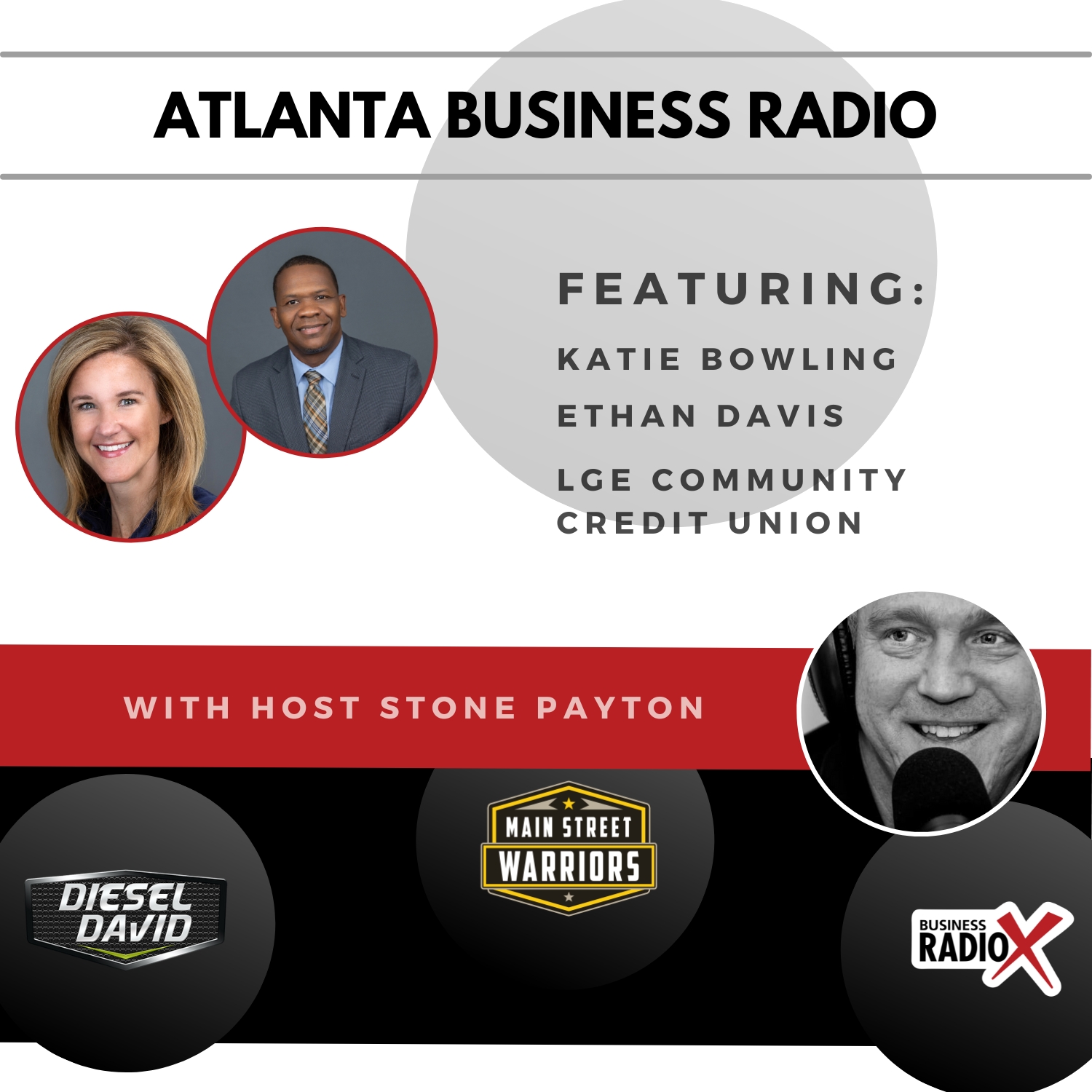
Katie Bowling and Ethan Davis with LGE Community Credit Union

/
RSS Feed

Brought to you by Diesel David and Main Street Warriors

In this episode of Atlanta Business Radio, Stone Payton chats with Katie Bowling and Ethan Davis from LGE Community Credit Union. They discuss the credit union’s growth and commitment to community involvement, highlighting their upcoming branch grand opening in Roswell.
Ethan talks about their member-focused approach, showcasing unique offerings like high rewards checking accounts and free business checking. Katie shares the importance of building trust through active participation in local events and supporting charities. Their genuine dedication to serving the community shines through, making it clear that LGE is more than just a financial institution—it’s a partner in community development.

LGE Community Credit Union is dedicated to the health and advancement of members’ financial lives and its communities. They are a not-for-profit, member-owned financial institution with a strong commitment to the local community. Profits made by LGE are returned back to the members in the form of better rates and lower fees. LGE is governed by a volunteer board of directors who are also members of the credit union.
Follow LGE Community Credit Union on LinkedIn, Facebook, Twitter and Instagram.
 Katie Bowling
Business Development Officer at LGE Community Credit Union.
 Ethan Davis
Financial Center Manager
 This transcript is machine transcribed by Sonix
TRANSCRIPT
Intro: [00:00:02] Broadcasting live from the Business RadioX studios in Atlanta, Georgia, it’s time for Atlanta Business Radio, spotlighting the city’s best businesses and the people who lead them.
Stone Payton: [00:00:17] Welcome to another exciting and informative edition of Atlanta Business Radio. Stone Payton here with you this afternoon, and today’s episode is brought to you in part by our Community Partner program, the Business RadioX Main Street Warriors Defending Capitalism, promoting small business and supporting our local community. For more information, go to main street warriors.org and a special note of thanks to our title sponsor for Main Street Warriors, Diesel David Inc. Please go check them out at diesel. david.com. You guys are in for a real treat this afternoon. Please join me in welcoming to the broadcast and back to the Business RadioX microphone, Business Development Officer with LGE Community Credit Union in Roswell, Ms. Katie Bowling, how are you?
Katie Bowling: [00:01:11] I’m great. How are you?
Stone Payton: [00:01:12] I am doing well. I’m refreshed. I’m rested. Got a little bit of jet lag. Just got in from Paris yesterday, but I knew that we were going to get a chance to visit and have you guys in studio. I’ve really been looking forward to this conversation. I got a ton of questions. I know we’re not going to get to them all, but maybe a good place to start is to just get caught up with what’s been happening since I talked to you last. Seems like every time I turn around, you guys are opening new branches, offering new services. So maybe mission purpose of LGE in general and what’s going on here more recently?
Katie Bowling: [00:01:45] Yeah, sure. So last time I was here, we were talking about Sandy Springs and got that branch up and running and it’s doing great. And now we have our Roswell location that has recently moved, and we’re having a big grand opening in May that we’re really excited about. It’s at Holcomb Bridge. And Alpharetta Highway gets much better visual than where it was previously. So that’s something we’re really looking forward to because this is actually our ten year anniversary being in the Roswell City. So now that we have a better spot, we’re excited and hoping to see, uh, more members come in and join us in celebrating.
Stone Payton: [00:02:23] And so we’re going to have tropical punch Katie cakes. Yeah, balloons.
Katie Bowling: [00:02:27] Well, we’ll always have our Nothing Bundt Cakes, Bundtinis®, because we’re a big fan of them. Um, and then we’ll have some charcuterie, a lot of fun things going on. Giveaways. Just be a big celebration.
Stone Payton: [00:02:40] Neat. So Background on LGE started out as a credit union for the folks out there building airplanes.
Katie Bowling: [00:02:45] That’s right. Yes. So we were Lockheed Martin in 1951 is when they started Lockheed Credit Union. And um, over the years, we started opening up our field of membership and went to the acronyms LGA for Lockheed Georgia employees. And we can now it was more focused on what businesses that you worked with, like if you were lucky, Cobb EMC, whereas now it’s where you live or even where you work. Um, you can join LGE. Uh, we are in eight counties and we have 16 branches in Georgia. Wow. Yeah. So we’re really growing, doing a lot of work to get our name out and, uh, let people know that we want to be a community partner.
Stone Payton: [00:03:32] Well, the bar is low and the service is great. I say the bar is low because I’m a customer and everybody has what really attracts them. Right. And some of it’s, you know, fees or not, fees, access, location, all that stuff for me here locally at the, uh, one here in Town Lake that, uh, my buddy Wesley works at. It’s the coin thing because. Yes. Oh, it just irks me to go to the grocery store and pay the extra fee, right, to count the coins. And we’ve got this Folgers coffee can, and that’s, you know, we put our change in it all the time. I just, I that’s what got me. Well that and Wesley’s personality. So shout out to Wesley.
Katie Bowling: [00:04:08] That definitely helps. I will say when I was a branch manager I several years ago, the coin machine goes nonstop. I a lot of people love the coin machine. You don’t have to roll the coins, you just drop them in. So that makes it very convenient.
Stone Payton: [00:04:21] Oh it’s awesome. All right. Who’d you bring with you today?
Katie Bowling: [00:04:24] So I have Ethan here. He’s our Roswell branch manager, and, uh, I know he’s got a lot of exciting news to talk about with the Roswell location and, um, a promotion that we’re having. All right.
Stone Payton: [00:04:35] So, Ethan, before we dive into that, I got to know the backstory. How does one find themselves in this line of work, doing this kind of thing for these kind of people? Like when everybody else was playing cowboys and Indians were you’re like, I’m going to be a branch manager.
Ethan Davis: [00:04:51] Actually, Stone, sometimes the business chooses you instead of you choosing the business. Because honestly, when I moved here 21 years ago, I was working for an enterprise, rent a car, and picked up customer. Um, she was wowed by my customer service, so she said, how about you trying to do something a little bit different? So I applied for a, uh, one of the big banks. I’m not going to say the name. Um, and that’s how my career got started in banking. So I’ve been here ever since. And then I just love helping members, uh, taking care of their financial needs. And, you know, just seeing how we can truly impact customers and members throughout the community.
Stone Payton: [00:05:33] All right. So give us your perspective on LGE in general and this this branch that you that you’re managing.
Ethan Davis: [00:05:41] Great company, great company, great people. Um, it’s founded on people helping people. And it’s truly that’s what they truly do. And, you know, we had the grand opening next Thursday, so we expect a big turnout. Yeah. Beautiful facility. So if you got a chance to come by there, come out and see it. Um, and you’ll be you’ll be pleasantly surprised.
Stone Payton: [00:05:59] So you’ve been doing this for how many years now?
Ethan Davis: [00:06:02] Actually been in banking. Almost 20 years. Almost 20 years. Yes. Combined.
Stone Payton: [00:06:07] So now that you got a little bit of time under your belt, what’s the what’s the most rewarding, man? What’s the most fun about it for you?
Ethan Davis: [00:06:14] Um, most fun about it. Just you meet you meet different people every day, and you build those relationships with the members that come in. But you also build relationships with your team members as well. Um, like Katie, um, um, me and Katie, we go out through the community. Uh, she asked me, Ethan, hey, are you available to do this? Hey, my schedule is open. Let’s do it. So, you know, whenever you whenever you have that good partnership. Uh, that’s what makes the job a lot less tedious.
Stone Payton: [00:06:38] So I got to say, I enjoy going to the branch and visiting, and I, you know, I feel like Norm in that old. You’re not old enough to remember this, but there used to be. Okay. Yes.
Ethan Davis: [00:06:46] Norm and Cliff.
Stone Payton: [00:06:46] Right. Norm.
Ethan Davis: [00:06:47] Right there. Right. Sit there. Right there at the edge of the bar as soon as they walk through the door.
Stone Payton: [00:06:50] That’s right. Okay, so you are, uh. But I feel that way when I go into the branch. But I’m around the community a lot, you know, being the radio guy in the community, I know a lot of the small business people and that kind of thing in the local community leaders. And I see large people at every thing, every thing. So you guys, it’s not just a slogan or a poster. It’s, uh, I mean, it is the it’s it’s a key part of your culture or your ethos is to genuinely invest in and be part of the community day to day. Yeah.
Ethan Davis: [00:07:23] Absolutely. That’s what we’re about. We’re about the community, um, because we support the school, the local schools where we have our branches, um, we support, support local charities. Um, we have our special. No holiday celebration in December, where we highlight those different charities and let them come up and speak and tell, uh, what they’re about and what we do for them to help them stay, um, in the place of where they are. And they truly appreciate what we do for them. And we appreciate, uh, what they do for us as well.
Stone Payton: [00:07:57] So banking strikes me as a very competitive arena. So so these things surely would help you distinguish yourself. But I, I asked this almost in every interview, but I’ll ask you guys to maybe get a little bit from both of you on this, the whole sales and marketing thing. I mean, how how does that work? Because you’re talking about for most of us anyway. You’re talking about my money, right? How does the whole you don’t just pick up the phone and say, you know, would you like to come bank with or do you I don’t know.
Ethan Davis: [00:08:29] Well, with credit unions, um, we’re a member owned, so we don’t have stockholders. So whatever we do generate, we give that back to the members and dividends and interest rates. So we don’t compete with other banks and things like that. We just focus on taking care of the member and giving those benefits back. That’s the reason why you see us out in the community, because I worked on both sides. So I worked for the bank for almost 15 years, and plus I worked for a credit union. So pretty much everything you do for a bank, you know, there’s something tied to it. So it’s always stockholders that you got to take care of. So when you talk about generating money, we don’t we you know, we’re not for profit, but we’re not for loss either. So.
Stone Payton: [00:09:08] Oh I’m going to use that. So good.
Ethan Davis: [00:09:10] Point. Yeah. So great. Uh, yeah. So with with that being said, we, you know, we get we pass those benefits on to our members.
Stone Payton: [00:09:18] I like it. So, uh, anything to add to that, Miss Katie? On on just I guess it’s being out in the community, building real relationships. That’s the that’s the core of this whole thing, isn’t it?
Katie Bowling: [00:09:29] Right? The more they see you, the more top of mind you are, the more they become to trust you that you’re out sponsoring events, and they see that you really have that connection with the community and the people there. They see that you care about them, you care about what they care about, and they want to come and see you because they know you’re going to take care of them personally, their finances. And that’s what we want. We want to build that trust.
Stone Payton: [00:09:51] And that same value system that you’re speaking to. It also starts at home. You touched on it a moment ago, I think, Ethan, uh, the people inside the branch, your your team, you’ve, uh, uh, talk to me from a leadership perspective. Uh, how do you live into, you know, the stuff that is on the poster and is in the manual and is like. But how do you. Well, I would back up all the way to recruiting and selecting to developing, to sustaining. Speak to that a little bit if you would.
Ethan Davis: [00:10:22] Well, whenever you have a team and if you’re familiar with sports, everyone has a role. But you also when you’re in a leadership position, you have to manage personalities. You can’t have all of the same type of person in a branch. So it’s it’s about blending that unique group of people and leading them to a common goal. And some days it’s easy. Some days it’s hard because, you know, you’re dealing with personalities. So some personalities are easy to deal with, some personalities are harder to deal with. But the goal is to just to find, uh, find a way to, to take care of making sure your team is taken care of first. And if your team is taken care of, they got a positive attitude, positive vibe. Then whenever someone walks through the door, they’re going to feel it. They’re going to know it, and then they’re going to enjoy coming in. Then. All the great things. That’s when the magic happens then. So it’s easier to ask them to open up an account, do a loan, um, open up a, you know, maybe a Christmas account for you, for your kids, a vacation account, things like that. So you want to make sure you got the right people there in the right environment, and which will produce those results that are desired.
Stone Payton: [00:11:32] I got to believe just sitting here, hanging out with you in the studio, some of this was just born in you. I could I just I feel that and I sense that this behavior, this value system, this ethos was also modeled really well for you somewhere along your career. Is that accurate?
Ethan Davis: [00:11:50] Very accurate. I’m the oldest of three, so I had a younger brother and sister, but both of my parents, my dad worked for Southwestern Bell, AT&T, Bell South for like 35 years. My mom worked for Sanyo Manufacturing Company for 40 years. So while they were at work, I had to make sure I had to take care of my younger brother and sister then. Plus, my dad was a Sunday school teacher. So, um, there were certain things that, uh. We’re not going to fly in his house. Easy way to put it. So, um, when you’re the oldest, a lot is put on your plate, a lot is put on your table, and you just rise to the occasion.
Stone Payton: [00:12:26] You spoke about roles, so you guys are in a different roles. Kind of make the distinction for me, Katie.
Katie Bowling: [00:12:33] Sure. So with me doing business development, I have a region and, um. Roswell is part of my region. I do North Fulton and East Cobb. And so my job is to go out in the community, be active and involved, build these relationships. And when that person is looking for an auto loan, looking for a mortgage, wanting to switch over their main accounts for a new checking account, I will send them to our branches. They build that trust, I build their trust up and I will set them up with whichever location is nearest to them. So that’s my job is just to really bring the business to the branches. Whereas Ethan being the branch manager, his main focus is Roswell because that’s his office. It’s the Roswell location. So he’ll go out with me to different Roswell events and the branch manager for Alpharetta, she’ll go with me to the Alpharetta events. But, um, it’s it’s actually a very fun role because I do a lot of lunches and meeting and just talking with people, and I’m like, wow, I never thought this was going to be a career for me. It’s fantastic.
Stone Payton: [00:13:42] If I had your job, I’d weighed 300 pounds.
Katie Bowling: [00:13:44] Yes, that happens very easily. You have to be very, in control or have a good mindset like, okay, we don’t want to go there. Dessert. Every meal is not a good idea.
Stone Payton: [00:13:59] Oh my goodness. All right, Ethan, talk to me about products, services. There’s probably an awful lot I suspect, that is available to a customer of LG that they don’t. It’s not on their radar necessarily. Oh, yeah. I hadn’t thought about this or that.
Ethan Davis: [00:14:15] Right. So we have our specialty product. Our main product is our high rewards checking account. Okay. Um, and so with that particular account you can earn up to 3%.
Stone Payton: [00:14:25] But I didn’t know you could earn percent anymore. I thought I thought those days were gone.
Ethan Davis: [00:14:29] And see, that’s the difference between a credit union and a bank. See, we won’t charge you just to put your money in the account with a monthly maintenance fee.
Stone Payton: [00:14:39] Another old show. You remember Beverly Hillbillies, where Drysdale was so nice to the clampetts because he didn’t charge. Right? Right.
Ethan Davis: [00:14:45] So we’re going to give you money if you put money in the account and meet certain criteria. So that’s the difference we don’t want we’re not going to charge you a monthly fee. We’re just going to give you some money, a certain percentage, if you bring your money to us and and do certain criteria. So that’s the reason why you should come to LG.
Stone Payton: [00:15:02] I like it it sounds like he’s said that before. Maybe.
Katie Bowling: [00:15:06] Yeah, I think he’s well trained.
Stone Payton: [00:15:10] And so, uh, the small business owner, that’s a lot of the folks who tap into our work. Uh, what are some things they should be on the lookout for or see in their environment that says, you know what? I really ought to go talk to the LG folks. You know, I’m I’m I don’t know what it might be. You know, I’ve got this line of credit over here. I’ve got these kind of account. I what are some things I should be looking for that say, you know, I probably ought to have a conversation with Ethan or somebody on this team.
Ethan Davis: [00:15:37] One word, four letters. Free, free business checking account.
Stone Payton: [00:15:42] Oh, wow. That’s a very attractive word.
Ethan Davis: [00:15:45] Very attractive word. Free. So we just rolled that out maybe a month or so ago.
Stone Payton: [00:15:51] Oh, okay.
Ethan Davis: [00:15:52] Yeah. So if someone has a small business and they want to, you know, see what it’s like, see what we have to offer, just come in and sit down with one of our financial service specialists and enroll in our free, free business checking account.
Stone Payton: [00:16:06] Got it. And you guys are very, uh. What’s. Take technologically adapted. Or you can do a lot on a computer, correct? Right. With and move money around and set stuff up online banking. You can see how fast all I am.
Ethan Davis: [00:16:21] Yeah, yeah. Our online banking plus uh, the mobile banking and online banking so you can be able to transfer in between accounts. Nice. Um, also we have a snap deposit where you can do your mobile deposits from your phone. Do you have a ATMs? Uh, some branches have multiple ATMs where you can make your deposit at ATM after hours. If we’re not open to make sure you know your cash and deposit checks and get into the account, then you also do withdrawals as well.
Stone Payton: [00:16:45] All right. There was something that I needed signed. Not signed, um, notarized the other day. And I went in and harassed Wesley and, uh, or somebody in there, and they got that done for me, too. There’s a lot you can get done.
Ethan Davis: [00:16:59] A lot, a lot. So, yes, we offer notary services. Uh, we also offer medallion services as well. So whenever you have stock, which you can’t use a notary for, you set an appointment and then want to more than likely to be the branch manager financial center manager. And we’ll take care of that notary service, uh, that medallion service for you as well.
Stone Payton: [00:17:16] See, I guess you got to have a certain amount of money to even know what medallion service is. But that’s not.
Ethan Davis: [00:17:21] Necessarily as long as you have some stock and you want to do some transfers and move something around or redeem something, yes, we can take care of that.
Stone Payton: [00:17:26] For you. Well, that’s good to know. So what is the plan? Are we going to keep opening branches and keep doing it? Because you guys just seem like you’re on fire? Katie.
Katie Bowling: [00:17:36] Yeah, absolutely. That is the plan is to keep growing. And we have, uh, like we are looking at Douglasville. That’s been another area that we are looking to put a branch, uh, wherever we see the need, where we see that our members are going and like, we have to constantly have reports coming to us, showing us where our members are, where they’re going, where they’re shopping because we want to be convenient to them. And, I mean, there is most things you like to do in the comfort of your own home or be able to bank up through your computer. But when they need a branch, we want to be there for them. So as many branches are not as big as what you would normally think, like a bank branch would look like. Mhm. Um, because there’s just not really a need for the big bank branch anymore, having a long line of tellers. Um, back when I was a branch manager, I had four tellers and they were twiddling their thumbs because most people have direct deposit, snap deposit or go to ATM or use their debit card. So it’s just we felt that it’s better suited to have smaller branches but have more locations.
Stone Payton: [00:18:47] I love it and I do. We didn’t mention it earlier, but I have a large beer card. Um, that’s because I well, it’s just reformation here. Here in Woodstock. You got reformation in Queens in that same space, and Queens doesn’t take cash. Okay. And so, um, so I always make sure I have plenty of change deposited over there. And then that card, that’s my reformation slash queens card. So I go get beer and barbecue.
Katie Bowling: [00:19:11] Oh, that’s a good plan. We like it.
Stone Payton: [00:19:13] So why the focus? Why the interest in local charities? I understand enlightened self-interest, maybe to a point of, you know, being out there with the business people. You know, Ashley is, uh, always at the Young Professionals of Woodstock meeting here locally. But, yeah. Um, what is the impetus? What is the the driver for being so invested in supporting, um, charities?
Katie Bowling: [00:19:37] Well, as being a nonprofit ourselves, we want to support a nonprofit. And it’s, you know, sometimes these smaller charities or foundations are forgotten about, and we don’t want them to feel forgotten about. We want to take care of them. They are a big part of our community, and what they do for our community is huge and supporting the less fortunate. Just different things for the schools, for public safety. It’s all of that is so important for everyone to feel supported and we want to do our part. And I mean not just because we want to see business in return. We want them to feel like they really have someone that has their back, whether that is on a financial level or just on a personal level. We’ll take it whatever way we can get it. Just it’s, um, we got to help each other out, be like a true community together.
Stone Payton: [00:20:32] Well, you’re certainly seeing in my song. From a media perspective, my observation is that traditional media is not typically knocking their door down to cover their stories. And that’s one of the things that we enjoy with our community Partner program is to give these folks an opportunity to share their story and promote their work. And it sounds like you’re very invested in that as well.
Katie Bowling: [00:20:52] Absolutely. And we love that you all do that too. Thank you. Yeah.
Stone Payton: [00:20:55] No, it’s our pleasure. Beats the hell out of working.
Ethan Davis: [00:20:59] That it does.
Stone Payton: [00:21:00] Speaking of which, when you’re not working outside the scope of your work and serving the community interests, passions, hobbies, my listeners know I like to hunt, fish and travel. How about anything you have a tendency to nerd out about? Well.
Ethan Davis: [00:21:18] And when you’re married, you have, uh. Was it what did it called? Honey do list. So. So I spend most of my weekend doing doing things like that. So. Okay. Um, painting rooms or putting together a swing or.
Stone Payton: [00:21:31] Oh, my.
Ethan Davis: [00:21:32] Building a fire pit, anything. Anything that anything that she says that needs to be done, that I can actually do and not pay someone for it. I will do it.
Stone Payton: [00:21:41] So it’s like a Home Depot, Lowe’s brand ambassador. I’m the exact opposite. I have no I have two tools at my house, even a telephone and a checkbook. I will write important tools.
Katie Bowling: [00:21:53] We all need those.
Stone Payton: [00:21:54] Oh, good for you. So, Katie, what do you get into when you’re not out in the community or you just are you or do you manage to do it while you’re in the community? You just do both.
Katie Bowling: [00:22:04] Yeah, I mean, definitely with my position with LG, I do a lot of community events on the weekends as well. Oh yeah, which I love. I really, truly enjoy it. Uh, but I also have two daughters that, um, one in elementary and one in high school, so they keep me pretty busy as well. Um, but my husband and I, we also like to play golf together, so when we get some free time, we’ll go out and play 18 holes, or maybe nine, depending on how we feel.
Stone Payton: [00:22:31] I don’t think I have the temperament for golf or the budget because I would I would have to buy a lot of balls.
Katie Bowling: [00:22:37] Yeah, well we do that. We definitely have to, uh, go searching for mini balls and it’s fine.
Stone Payton: [00:22:44] All right, let’s talk about this event again because it’s coming up great.
Ethan Davis: [00:22:49] Uh, May 9th. At 1:00.
Katie Bowling: [00:22:52] That’s right.
Ethan Davis: [00:22:53] 655 Holcomb Bridge Road, Roswell, Georgia 30076. All right.
Stone Payton: [00:22:58] And let’s talk about that cake company again so I can send them an invoice. No I’m kidding.
Katie Bowling: [00:23:04] Nothing Bundt Cakes. They are the best.
Stone Payton: [00:23:05] They are. Yeah. They do some good work over there. All right. What’s the best way for our listeners to tap in. Is it to swing by, stop in their local, uh, branch there in in Roswell? Is it, uh, reach out and connect with you on a on a LinkedIn or what’s the best way? I’ll website whatever.
Ethan Davis: [00:23:22] Yes. You can go to the LG website. And then, um, there’s a tab at the top where it says locations, and you’ll see a picture of myself and a branch, and it gives our address plus the email address. You can drop by any time. And if it’s and if it’s not convenient for you to drop by, you can always schedule an appointment and we’ll we’ll take care of you or.
Stone Payton: [00:23:40] Just go to some community event and people are going to be there. Right?
Ethan Davis: [00:23:43] Right. Yeah. And pretty much if you go to any, any community event, uh, in those uh, eight counties that we’re in, you will see someone from LG there.
Stone Payton: [00:23:52] Just look for the LG e blue right.
Ethan Davis: [00:23:54] Look for the LG blue.
Stone Payton: [00:23:56] Katie, thank you so much for coming back to the studio and introducing us to Ethan. You guys are doing such important work and we we sure appreciate you.
Katie Bowling: [00:24:04] Well thank you. We really appreciate you taking the time to talk with us.
Stone Payton: [00:24:07] Yeah Ethan man, just keep doing just keep it up. I am I’m inspired by what you’re doing. And, uh, we really do sincerely appreciate your your contribution, your commitment to community and your change machine.
Ethan Davis: [00:24:22] All right. Not a problem. Great meeting you. So.
Stone Payton: [00:24:25] Oh, it’s my pleasure. Alright, until next time. This is Stone Payton for our guest today, Katie Bowling and Ethan Davis and everyone here at the Business RadioX family saying we’ll see you again on Atlanta Business Radio.
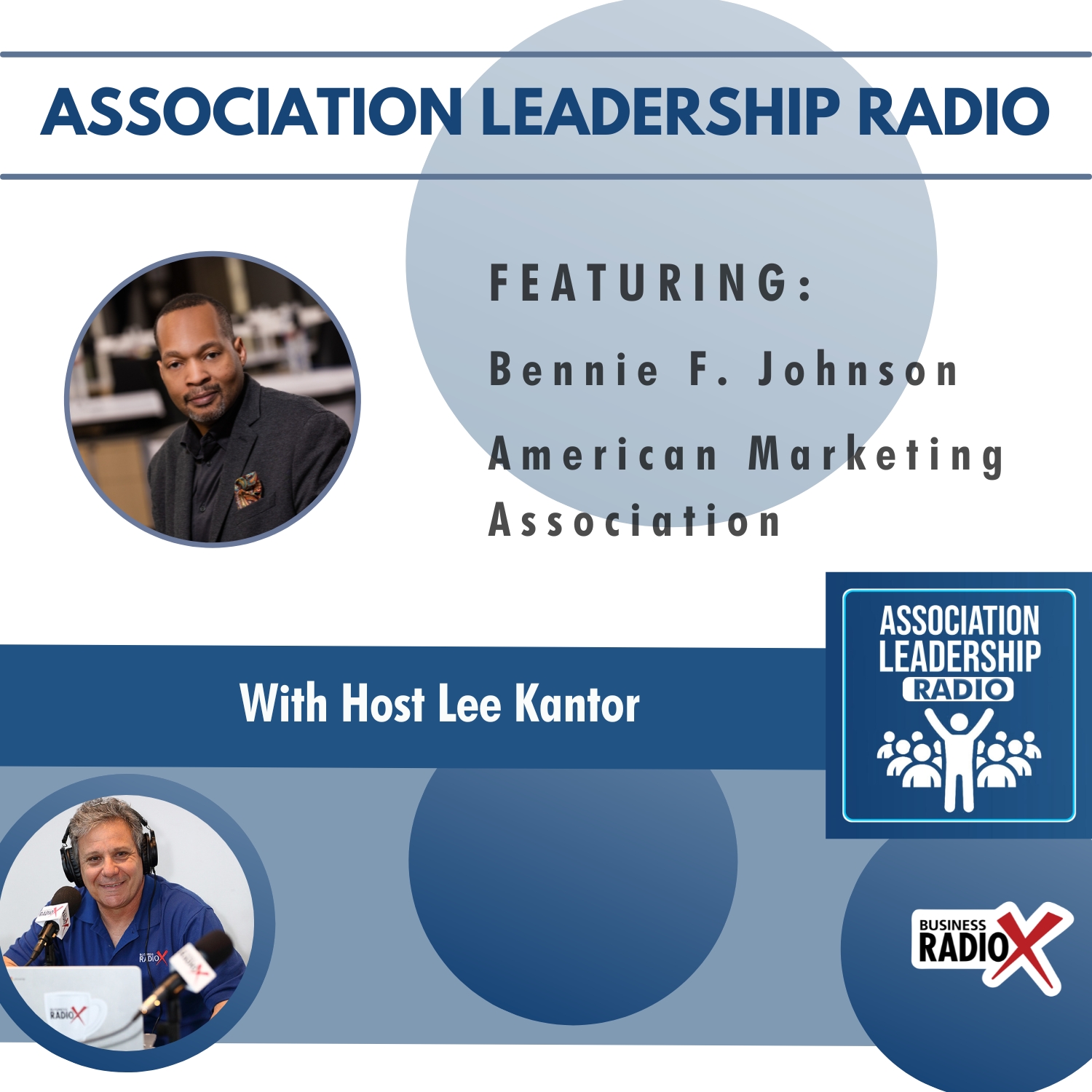
Navigating the Evolving Landscape of Marketing: Insights from the American Marketing Association
/
RSS Feed
In this episode of Association Leadership Radio, Lee Kantor interviews Bennie F. Johnson of the American Marketing Association (AMA). Bennie discusses the AMA’s mission to support marketers in their career development and the organization’s long-standing history and global reach. He also emphasizes the importance of understanding customers and market opportunities in association leadership. The conversation covers the AMA’s proactive stance on AI in marketing and the need for ethical guidelines, and Bennie touches on the broad nature of marketing skills and the challenges young marketers face in the job market, advocating for personal branding and authentic connections.

 Bennie F. Johnson is the Chief Executive Officer of the American Marketing Association (AMA). AMA is the largest community-based marketing association in the world, trusted by marketing and sales professionals to help them discover industry trends.
AMA’s community of local chapters spans more than 70 cities and 320 college campuses throughout North America. AMA is home to award-winning content, PCM® professional certification, five premiere academic journals, and industry-leading live and virtual training events.
He most recently served as the Executive Director of AIGA, the largest professional association for design. AIGA grows the power of design as a professional craft, strategic advantage, business driver and catalyst for positive impact. While at AIGA, Bennie hosted the acclaimed Design Adjacent podcast and the design leadership fireside chat series from 2020 to 2022.
Currently, he serves on the Board of Overseers for Columbia University’s School of Professional Studies, as a Trustee of the Smithsonian Archives of American Art and is a former Board Chair of the Smithsonian’s Anacostia Community Museum. Bennie is also a special advisor to the People’s Graphic Design Archive. Additionally, he was recently named to the Board of the Phillips Collection in Washington, DC.
Bennie thrives on the connections between marketing, technology, education and innovation. With experience in strategic and consumer marketing, brand management and innovation management, he is drawn to opportunities that allow him to lead and create new modes for business engagement.
He has broad experience growing brands, businesses and organizations with a special focus on venture launch and brand relaunch business environments.
Bennie graduated from Yale University with a B.A. and from Columbia University’s School of Professional Studies with a M.S., Strategic Communications.
Connect with Bennie on LinkedIn.
This transcript is machine transcribed by Sonix
Intro: [00:00:02] Broadcasting live from the Business RadioX studios in Atlanta, Georgia, it’s time for Association Leadership Radio. Now, here’s your host.Lee Kantor: [00:00:20] Lee Kantor. Here, another episode of Association Leadership Radio. And this is going to be a good one. Today on the show, we have Bennie F. Johnson with the American Marketing Association. Welcome, Bennie.Bennie F. Johnson: [00:00:33] Hey, welcome. Thank you. Thank you for being here. And thank you all for listening.
Lee Kantor: [00:00:37] Well, I am excited to learn what you’re up to. For folks who aren’t familiar, can you share a little bit about American Marketing Association? How you serving folks?
Bennie F. Johnson: [00:00:45] You know, we are, as we like to say, and work towards our mission. We are the essential community for marketing, and that really sums up kind of our world. We represent all of the development points, career, personal, professional that marketers need in order to be successful. In our current world. We are the oldest marketing association we’ve been around for almost 100 years. We have 75 professional chapters across the US, another 330 collegiate chapters, and we have membership covering the entire globe. We are also the publishers of five of the world’s most renowned journals, dealing with marketing, marketing, research, and global marketing. So that that’s where we are at at AMA. It’s an incredibly rich community. Professionals and practitioners, students, entrepreneurs who are all committed to advancing marketing.
Lee Kantor: [00:01:41] So what’s your backstory? How’d you get involved with the association? Did you come from marketing? You come from the association world.
Bennie F. Johnson: [00:01:48] You know, a little bit of both. I am I am the marketing kid who grew up and has the enormous task and humble opportunity to be CEO of the Marketing Association. So my background in training was entrepreneurship and marketing. As a part of that, I’ve worked in startup brands, relaunches, uh, you name it, and global marketing and strategic roles. And a few years ago, I had someone who became a mentor who actually tapped me to rebuild a global marketing function for an association. And it was the first time that I had really kind of stepped in the association space. And that kind of opened up a new door career wise. So always still with marketing being my first business language, but over the last 15 years, having the chance to lead and grow in contemporary associations. That leads me here.
Lee Kantor: [00:02:35] So how does somebody with a marketing bent, like you have kind of attack a role as leading an association?
Bennie F. Johnson: [00:02:44] You know, I think it starts one of the beautiful things about having a marketing background is you always start with understanding the customer, understanding the marketplace, understanding the business and the opportunity. And I think those are incredibly good ways to start to think about leadership and strategic leadership as an executive, as a chief executive officer.
Lee Kantor: [00:03:06] So when you think about the customer in your case, who is that customer? Is it that young person who is aspiring to be a marketer? Is it kind of that corporate person that is just trying to keep things, you know, moving and, and just kind of withstand all the turmoil that seems to be around it. Uh, it seems like you have different constituents.
Bennie F. Johnson: [00:03:27] You really do. And the answer to that is yes, yes and yes. Right. When you think about, uh, the beauty of professions or they’re made up of all those parts and pieces, right. That’s it’s the person who’s just starting the career, the one who is pivoting in the career, and those who are starting executive leadership that make up a full fabric of a profession. And we offer resources and training connections and really kind of, uh, a comprehensive approach to helping marketing professionals grow and excel, both for their own careers, for their teams, for their organizations, for their missions. And so we see a broad mix of backgrounds and, uh, experience levels in our membership community. And it’s really dynamic to see, you know, we have executive marketers, CMOs working in networking with each other in safe spaces where only the executives are kind of connected to each other. We’re a growth area for them. But those same executives may serve as mentors to younger students who are coming up or may serve as subject matter experts. For those who are thinking of making career or functional changes, you know, likewise, some of the great kind of innovation that you see in marketing is happening with younger participants in our profession who are coming in with unique backgrounds and opportunities and are really pushing the profession forward. So I see at times where a member of our community can be both an expert in a novice at the same time, and I think that’s the beauty of a contemporary profession where there’s there are things that you learn that are part of how you excel. And grow. But there’s also these opportunities to shape new technologies, new learnings and new opportunities. And so our goal is to continue and to create a space within AMA in which all those things are possible starting middle, you know, executive level, your career. This is a space for you.
Lee Kantor: [00:05:18] Now, you mentioned new technologies and one of them is AI. And that is something that is affecting or at least uh, could be affecting soon or if it’s not already impacting and disrupting a lot of different industries. How does an association like the AMA kind of lead in this regard? Are we at a stage right now where we’re just still learning and we don’t really know what it is, so it’s a little premature to make recommendations? Or are we at a point where we can kind of understand some of the, um, trade offs that might be kind of coming down the road?
Bennie F. Johnson: [00:05:55] Well, I will say this. It’s never too premature to lead. You know, when you think about the role as a profession in the space, in there as things are being written, developed, imagined, there is always a role for the profession and leaders within the profession to help shape what that reality is. So are there component parts of what is AI in terms of technology and platform that’s ever evolving? Uh, we had a panel discussion recently, and we talked about the fact that the contemporary version, the version of AI that you see today is the dumbest AI you will ever encounter. Right. And that’s that statement is really about how advanced and how dynamic the growth space will be. You know, so as a profession and as professionals, we need to understand how to harness the tool and what are the things that we can do. You know, machine learning, algorithmic learning, AI and generative form have all been a part of marketing for the last few years. If you know, if you look at digital marketing spaces, we were using AI in other ways, um, that will continue to grow and evolve and there’ll be places in there. But there’s also a space as a profession where we have a role in shaping the practice and the policy that goes around it. You know, I’m a fond of saying just because you can do something doesn’t mean you should do it. So where are the ethical guide rails? Where are the practice standards that come in? That’s a role for the profession and the professional association to help, you know, our members in the industry start to shape that. Will it evolve? Yes. Will it be a work in progress? Absolutely. Should we step in and be a part of this work? We must.
Lee Kantor: [00:07:32] But is it also should we let it just kind of. Grow to see what’s what before we hamstring anything, or before we start pruning something, we don’t even know how it’s going to be. I don’t think.
Bennie F. Johnson: [00:07:46] It’s a question of pruning, right. But I do think it’s a question of being involved in the growth. So if we were to wait, you know, then I would be happening to us, not us. Harnessing the potential of AI. Right. There’s there’s guidance and rules that are being structured right now that marketing should have a conversation in a place at that table. You know, there’s no value in the profession waiting to not help to shape this. You know, it doesn’t mean it’s going to be perfect. And I’m not saying that we offer kind of false regulations and guardrails in that sense, but we need to be a part of the conversations of understanding how this evolves in our professional space, because we’re being discussed whether we step up in that space or not. You know, you look at AI, their ethical concerns, their structural concerns, their privacy regime concerns. These are all things that are actively happening in the marketing space. And so as a profession, can we sit back and wait? Yes. And we’ll wait ourselves out of a leading space.
Lee Kantor: [00:08:47] But sometimes when large institutions get involved early on in the technology, um. They might not be open to having some sorts of this disruption that might impact them as a whole, that sometimes they’re kind of territorial about, um, kind of limiting the opportunity when it comes to allowing something like this to grow a little bit before making moves to constrain it.
Bennie F. Johnson: [00:09:18] Yeah. This I, you know, my conversation or my approach to this isn’t about a constraint, but it is about the fact that we as a profession need to be involved. Right? And I’m not pre-scripting any one way in which we’re involved. But I am saying that we should be there’s, you know, we’ve seen from past technological innovations, there is not value in opting out right in the space in there and the transformative moment in there, you know, because these are when I listen to our community and our members and the scholars. These are questions that they’re dealing with every day. It is very real. It’s not I it’s happening in the future. This is happening now. Right.
Lee Kantor: [00:09:55] And I know, like, I, I think that it’s one of those things like I mean, I’m sure you’re old enough and I’m old enough to remember when we first when calculators came into the scene, there was a hubbub about should we allow kids to have calculators? Um, because they’re never going to learn math if there’s calculators. And then the same was with the the internet, you know, like Wikipedia can’t replace encyclopedias, which obviously it has. So sometimes the, the status quo, um, is wants to pump the brakes and not let things just kind of go and then prune. They’d rather start making kind of changes, uh, before we even know what it’s going to be.
Bennie F. Johnson: [00:10:44] Right. Well, that is the nature and definition of the status quo. Right? So the status quo defends what has existed, what we have enough to see in terms of looking at history and looking at more recent history, is that disruption is real, and it shows up in unexpected creative ways in which we have a community. We’ve talked about this as well that sometimes definitions getting your own way right, definitions seek to control and curate, and sometimes before understanding the creative space. We have a lot of new people coming into marketing who never would classically consider themselves marketers, but the techniques and tools that they’re using and the the function that they are is all about marketing. You know, our language has to expand because there are things that our profession is learning from new entrants, and also things that the established profession can teach in order to continue the profession to grow in a healthy way. So yeah, we’re gonna the fallacy is that anybody in any one of us can control these innovations. That’s not what we’re discussing, right? It’s not about the controlling of innovation, but it is positioning us to understand and adapt, to change right positioning, to understand and say, hey, there should be a voice that we raise as a marketing profession about what things are valuable in terms of protecting, you know, our access to customers and consumers and our business organizations. We are keepers of the brand and customers, and all of those success measures that can be adversely impacted by this. So we should have a role in shaping the way that our organizations, our tools and our strategies show up.
Lee Kantor: [00:12:21] Yeah, I mean, you definitely have to be part of the conversation. That goes without saying. I mean, because, um, you know, there’s a saying about branding, your branding, whether you’re being proactive about it or not, you know, you’re you’re leaving an impression, uh, in the consumer’s mind, whether you’re investing a minute of thought into it or not.
Bennie F. Johnson: [00:12:41] It really is. And to think that, you know, new technological advances that are happening today or planned for tomorrow or next week won’t have a critical impact on what you’re doing. And your audience is really kind of a naive space. And so what we’re trying to encourage as a profession is facing there is how do we step in fully into these dynamic spaces, you know, because that’s what our members are asking. That’s what they’re looking at. You know, some of the things we’ve talked about in AI are changing the very tools that marketing marketers use, but they’re also policy changes that are happening that are then on top of that, changing the tools. So where do we show up as marketers who have these devices to use to delivering against our goals for our organizations and our missions?
Lee Kantor: [00:13:26] Now, are you finding that the marketing as a as a career has, um, is just kind of growing and growing because, like you said, it’s now permeating almost every aspect of business. You know it even if you’re an engineer, you’ve got to be a marketer, too, nowadays.
Bennie F. Johnson: [00:13:47] You really do? I mean, you see, marketing’s expanding. Kind of like our solar system, right? It continues to grow and expand on itself. The beauty of it and what I get excited about marketing is the profession is very different than it was 25 years ago when I started. Right. And it’s going to be very different 25 years from now. There are constant new ways and approaches and new entrants. You know, there are things that may be established, principles that we kind of remix and, and look at again today because as our consumer audience changes and its behaviors and needs changes, so does marketing. As our toolsets change, so does marketing as the future of business and work change. Guess what? Marketing changes as well. And so there are students who we have coming into profession. Some are coming in with PhDs in specialized market research fields, and they have a phenomenal path ahead of them. We have some who are coming out of college who didn’t study marketing, but find that this is a space that makes sense and and it’s an incredibly robust space. We also have students coming in from two year programs, or influencers or creators who have no formal education, but have something to say about how companies and organizations shape their marketing practice. I mean, we’re a really dynamic profession in which you can enter in all these points. You know, we don’t have licensure, but our organization offers certification and training for just in time resources and more, you know, long tail critical skill sets as well. And we have members, as I mentioned, who range from PhDs and CMOs to new creators who are using some of the great platforms and doing more socially driven connection points to, you know, traditional strategic marketing managers who are coming in with MBAs or masters in marketing management. All of them have a place in a contribution to our profession.
Lee Kantor: [00:15:36] Now, are you seeing a blurring of the lines of all kind of the industries within the industry, like marketing is kind of now a catch all for what used to be advertising or PR or media. Now there’s kind of a blurring of the lines, like, where does one of those end and another one begin? Or is everything marketing now?
Bennie F. Johnson: [00:15:55] I think it it always was right. I think sometimes the definitions get in our own way, right. When you look at the purview, especially if you look at organizations as you ladder up, each of these items end up influencing and tying in. So if you have a really strong marketing leader, they’re going to understand branding. They’re also going to understand marketing analytics. They’re going to understand content marketing and digital. They’re going to get paid media and advertising but also own created media. You know, now you can argue that any of those fault that I mentioned fall into somebody else’s budget line or category. But when you step back, these are all skills that successful marketers need to understand, hone and be able to deliver against. You know, our business and organizations are requiring, you know, that the marketing leader be in an expert or have a facility with technology, understand data, understand good business management practices, while also honing creativity of brand and social engagement. You know, the marketing role requires all of those things in service to delivering against the brand and the company and organization mission.
Lee Kantor: [00:17:02] Now, um, what is kind of the the job market look like nowadays for a young marketer? I’ve been hearing local. I’m in Atlanta and I’ve been hearing some, uh, I don’t want to say horror stories, but some frustrations by, uh, candidates where they’re being ghosted by some companies, they apply. They it feels like they’re not getting any, you know, they’re having a difficult time getting their foot in the door. Sometimes they get asked to do, um, you know, projects without getting paid as a way to kind of, um, you know, see if they’re a worthy candidate and then they their fear or some people say this has happened where they’re taking their materials and then using them and not hiring them. Uh, how would you, if you were a young person, navigate the world if you were trying to get in, uh, get a job in marketing?
Bennie F. Johnson: [00:17:53] Yeah. Well, I will say that some of the things you’re describing are some of the horrors of contemporary job market. So they’re not unique to marketing or that space in there. Sadly, you’re seeing that, as, you know, companies and organizations pursue job markets. And this is where we talk about what are your kind of ethical responsibilities and spaces in there and understanding how you build out an organization, you know, so those are some bad practices that we see across the board. Um, what you’re describing in terms of the work in my last organization, we took some very harsh stances on that. That’s the category of spec work in which you would do things on spec to kind of prove in space in there. And it’s not a really it’s not a great practice. And it leads to exactly what you just described, a feeling of vulnerability or exploitation. If you’re in the market space in there, you know, if I if I’m advice to a young person working in marketing space in there is to really work on strengthening your personal brand. Work on strengthening your connection points that allow you to distinguish yourself in authentic ways from others who are in the marketplace. We see a lot of success in terms of working through networks and organizations like your professional association, the AMA, both at a local, regional and national level is a great way to continue that network. We just had our major collegiate event, and a big part of it was an open house for employers looking to hire, train and grow marketing professionals. And so as a professional association, we can provide that kind of entry point, um, to help people move along in that, you know, it’s you want to be cautious before you put out your work in the marketplace in there because you want to, you know, protect yourself against that risk. But I think going into established organizations, as you said before, um, really distinguishing your value and experience and building on your ongoing network are important things that serve you well, whether it’s your first job or your 10th.
Lee Kantor: [00:19:48] Yeah, I agree 100%. That’s my advice to any young person is join your associate, the local association, for whatever industry or niche that you’re working in, and lean in. And don’t just pay money and join and think you’re done, but then volunteer, take leadership positions, demonstrate so so the people that can hire you will see with their own eyes what you can and can’t do. And that’s your best chance of standing out and getting a job. I mean, by throwing your name in the hat in one of these kind of algorithm driven, you know, uh, search engines, you know, good luck. That, to me, is a lottery ticket.
Bennie F. Johnson: [00:20:24] Yeah. But to your point, it’s a great way to think about your engagement with a professional association. It’s not just membership sign and done. It is being actively involved in that. I know in this organization, in the past, organization, volunteer leadership is one of the things that people use to distinguish themselves for advancement, promotion and distinction at their 9 to 5, if you will. Right? Because often you may not get an opportunity to lead a robust project that has impact at work, but you get a chance to be a part of a robust project in your professional association, and that allows you to work with other peers. It allows you to be seen and noticed and how often if you are. I have this now and the Professional Association of Marketing. So people in my network reach out to me and say, hey, we need to hire marketers, right? And that gives you an opportunity both locally, regionally and nationally to connect with resources where people are going. First. If I want to hire a quality marketer, um, it’s a great assumption to assume they’re connected with the high quality Marketing Association.
Lee Kantor: [00:21:23] Now what do you need more of? How can we help you?
Bennie F. Johnson: [00:21:27] Well, we always need more championing the fact that being a part of an association matters, that being able to grow both personally and professionally, but also to network and help others grow, is essential to associations, right? It’s essential to how we push the profession forward. It’s an incredibly dynamic time period to be in marketing, and it’s a fun space to be. We want to spread that word for those who are considering marketing or are marketing adjacent, right? Because marketing, as you said before, it’s such a part of success. Any successful organization, campaign for profit nonprofit has marketing at its heart.
Lee Kantor: [00:22:06] It should. Because if people don’t know who you are, that’s not going to help. And you better be delivering value to your constituents or you’re not going to grow. I mean, so.
Bennie F. Johnson: [00:22:17] And it’s got to be an ongoing conversation and exchange, right? It can’t be. Rest on who we’ve been and who we were, but it has to be that ongoing, what we represent and what value we show up in your professional personal lives as we think about brands for all spaces, I mean, we’re marketing missions, we’re marketing ideas, we’re marketing services and products, but it all comes back to that relationship.
Lee Kantor: [00:22:42] And and you’ve been around for 100 years, and that doesn’t happen. Uh, by accident or mistake, I mean, to be around for 100 years shows that you’re providing value and you’re you’re growing an organization that’s doing important work.
Bennie F. Johnson: [00:22:56] Yeah, it does, but it also gives us a challenge that in order to be around for the next ten years or 20 or 30 years, we still have to be intentional of understanding how our profession grows and evolves and being able to provide support as we navigate that as well.
Lee Kantor: [00:23:11] Good stuff. Well, thank you so much for sharing your story today, Bennie. You’re doing such important work and we appreciate you.
Bennie F. Johnson: [00:23:17] Well, thank you for having me. And I thank everyone for listening. And once again, uh, Bennie Johnson, CEO of the American Marketing Association and the.
Lee Kantor: [00:23:25] Website, if somebody wants to connect with you or learn more about the association.
Bennie F. Johnson: [00:23:29] We are AMA. Org and you can follow us and connect with us on LinkedIn as the heart of our professional space. And if I may give a plug, you can also listen to my new podcast, which is marketing. And and we’re talking to unexpected marketing leaders about the impact and future of the profession.
Lee Kantor: [00:23:48] Good stuff. And is that started or that’s coming?
Bennie F. Johnson: [00:23:51] It is started. It is. We are well into season three recording and season one just dropped.
Lee Kantor: [00:23:58] Well congratulations on that. And um, and they can find that I’m sure on any podcast platform.
Bennie F. Johnson: [00:24:04] Any place you get your podcasts you can find it. Uh, AMA marketing and with Bennie Johnson.
Lee Kantor: [00:24:10] All right, Bennie, thank you.
Bennie F. Johnson: [00:24:13] Thank you so much.
Lee Kantor: [00:24:13] All right. This is Lee Kantor. We’ll see you all next time on Association Leadership Radio.
TRANSCRIPT
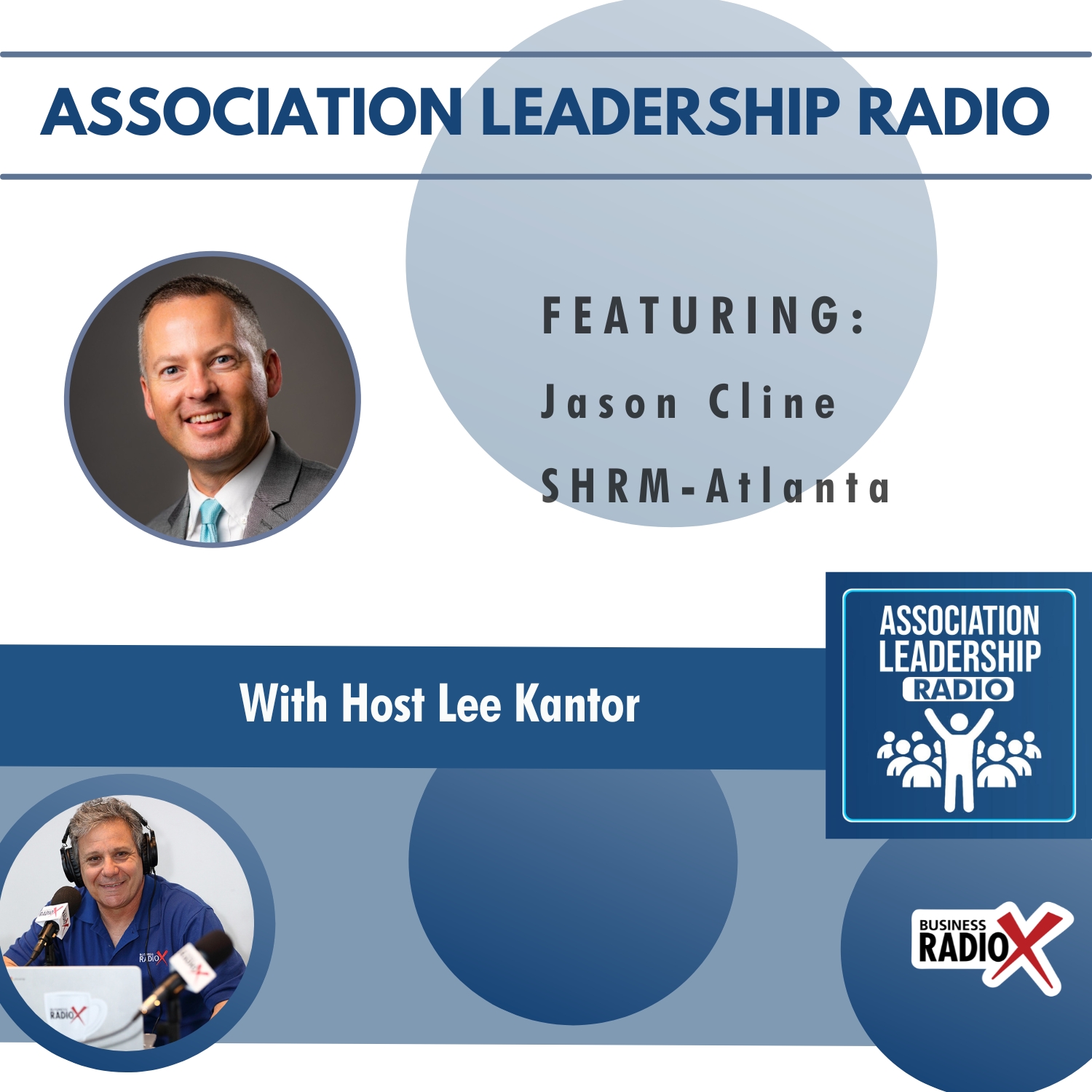
How Associations Are Impacting the Evolving HR Landscape
/
RSS Feed
In this episode of Association Leadership Radio, Lee Kantor is joined by Jason Cline from SHRM-Atlanta. They discuss the role of SHRM-Atlanta in serving the HR community by providing education, resources, and benefits. Jason talks about the unique challenges in HR, the impact of AI on confidentiality and data handling, and the importance of best practices in AI use. They also cover the value of human connections in HR, the engagement of young people in the field, and the growth of the association industry. Jason emphasizes the importance of persistence in job hunting and the benefits of networking.

 Jason Cline has over 23 years of association management and leadership experience. Prior to serving as CEO of SHRM-Atlanta, Jason was the President & CEO of the Printing & Imaging Association of Georgia. There, Jason spearheaded the development and execution of a strategic plan and led a highly profitable insurance arm of the organization.
Before that role, he was the Strategic Initiatives Executive at the Association of College Unions International and served in membership roles at both the American Bar Association and the Roller Skating Association International.
Jason earned both his undergraduate degree in Elementary Education and graduate certificate in Nonprofit Management from Indiana University. He also holds the Certified Association Executive (CAE) credential from ASAE: The Center for Association Leadership. Currently, Jason serves as chair-elect for the Georgia Society of Association Executives.
Connect with Jason on LinkedIn.
This transcript is machine transcribed by Sonix
TRANSCRIPT
Intro: [00:00:02] Broadcasting live from the Business RadioX studios in Atlanta, Georgia, it’s time for Association Leadership Radio. Now, here’s your host.
Lee Kantor: [00:00:20] Lee Kantor. Here, another episode of Association Leadership Radio. And this is going to be a good one. Today on the show we have Jason Cline with SHRM-Atlanta. Welcome, Jason.
Jason Cline: [00:00:32] Hi there. Thank you. Lee will be here.
Lee Kantor: [00:00:34] I’m so excited to learn what you’re up to. For folks who aren’t familiar can you talk a little bit about SHRM-Atlanta. How are you serving folks.
Jason Cline: [00:00:41] Sure. So I’m CEO of SHRM-Atlanta and I’ve been here about three years and we serve at the air community of the Atlanta metro area from at all levels, at all sized organizations, we provide education and resources and benefits like many other associations do, but specifically for the air space. But we’ve also realized, especially coming from my background in association management, that there are folks out there that do HR functions every single day, but they don’t call themselves an HR person. So they could be small business owners. They could be association leaders like myself that do the day out HR work. But again, they’re not HR professionals and they need the same resources and information that we provide.
Lee Kantor: [00:01:23] Now, you mentioned a background that has been in this kind of nonprofit association space historically. Is there something unique to the HR world that’s different than your other experiences in the variety of other associations you work with?
Jason Cline: [00:01:37] There is I mean, the industry itself obviously is different than the associations I’ve worked for. It’s my fifth one that I’ve worked at, but they all face the same challenges. They all have the same types of issues. They’re all working to make themselves and their organizations better. And that’s what makes associations unique or common ground is the fact that that we’re all trying to help our members accomplish whatever it is they’re trying to accomplish in their own professional space.
Lee Kantor: [00:02:02] Now, are you seeing any concern or interest in AI, and how are you dealing with kind of some of the rapidly evolving technology changes that are occurring in the marketplace?
Jason Cline: [00:02:14] Yeah, that’s certainly a hot topic in the air space, especially as it comes down to confidentiality. I think a lot of folks want to use it for to free up some of their time and their day. They might be writing policies or might be putting together presentations or things like that, but they also deal with sensitive information. And as you know, once you put something out in the world of AI, it becomes the something that could be grabbed from other entities in that space. So we certainly have many conversations about what a good use of AI is in the HR world and what isn’t. And especially as you deal with sensitive employee information and company information data.
Lee Kantor: [00:02:52] Now, is it impacting in any ways the way you kind of measure and report successes and just document things.
Jason Cline: [00:02:59] A little bit? I think you have to be careful. Like, you know, like I said, it’s AI is put out there to pull in information from a lot of different sources. And and once you enter that information into that, it becomes a part of that collection of data that could be pulled from other users. And so as you’re working with it, it’s really important to make sure that you are thinking about the end result of what you’re working on through the AI system before you start entering things into it. So it’s something that I’m sure is on the minds of all HR professionals, all business owners, or really any type of professional out there, but specifically so when you have that sensitive data about your employees.
Lee Kantor: [00:03:38] Now, um, as a leader in this space, is that something that you’re trying to just kind of are we at the stage where you’re just kind of learning what’s out there to determine what the best practice is, or is it something that you’re kind of leading and then trying to determine what. And you tell the folks what the best practice is?
Jason Cline: [00:03:57] There are certainly leaders in the AI space, specifically in HR, and we have certainly pulled in. Those professionals who have already been through the process have already learned some of the things that are do’s and don’ts in the in the world of AI. Um, we certainly I don’t think we could say safely that we are a leader, uh, in the information that’s being, uh, that we’ve developed. But we certainly have professionals in our space that are leaders, and we certainly utilize them to our best ability to inform the other members in our association that can learn from them.
Lee Kantor: [00:04:29] Uh, I probably didn’t ask this the way that I intended, but are you are we at a stage right now where everyone’s still kind of at the learning stage and just assessing kind of the best way to deal with it? Or are we are we coming to a point where we kind of have a best way to deal with it, and then you’re just sharing that?
Jason Cline: [00:04:50] Yeah, I think there are probably more on the side of still learning. I think there are plenty of people out there, um, that, you know, kind of didn’t jump on the the AI bandwagon early. And so they’re still looking a wait and see approach. So there are probably many more of those folks out there. And so in that regard, I would say that we’re still learning, um, because there aren’t the number of people that have that have adopted the practice of using AI yet within their workspace. But like I said, there are certainly those that embraced it early on and are helping us find the way and what best practices might be.
Lee Kantor: [00:05:26] Now when you’re, um, leading an organization, uh, like the folks that are in the air space. How do you kind of create engagement amongst your members and try to provide as much value to them as you possibly can, knowing that this is such a, that this space is impacted so much by technology and kind of some of the trends in hiring nowadays.
Jason Cline: [00:05:53] Sure. I mean, HR just in definition is about humans in the connection that humans make, um, specifically at work. And so as HR practitioners, um, I think they really enjoy getting together and talking with other folks that have been through the same types of things that they have and learn from them, learn from each other about the practices that they’ve that they’ve been through. So, you know, I think our members generally want to do that. So, um, we we certainly provide the number of opportunities that as many as we can for those folks to get together. We like to do that in person. And we’re and we’re getting back to, you know, hopefully a pre-pandemic status when it comes to, uh, in-person engagement. Um, we just had our annual conference two weeks ago. Um, and it was the largest one since the pandemic. And so we’re very proud about that. But we also enjoy seeing folks come out, reengage and reconnect with the community that they are in, and develop those relationships that will last, uh, in their careers and that can help them throughout many different challenges they face.
Lee Kantor: [00:06:56] Are, um, is is HR still a career that young people are, are kind of gravitating towards?
Jason Cline: [00:07:03] Absolutely. Um, in fact, we, uh, we there are student chapters of Sherm National, um, and we have a new one in the Atlanta area, um, the Atlanta University Consortium, um, which is a collection of three campuses of Clark, Atlanta University, uh, Morehouse and Spelman, um, that just started its own student chapter. Um, and those student chapters are made up of students that are in the air space. And so we do see a number of, uh, younger folks still engage with, uh, human resources and finding their way through the, the professional network that we create.
Lee Kantor: [00:07:39] And what are some of the the best ways you would recommend a young person kind of leveraging their experience at one of these associations?
Jason Cline: [00:07:49] Yeah, I would just say get involved. Um, as as professional members of our association, I hear almost after every single meeting or event that we have that somebody either found their next job because of a connection they made, or learned something about how to do something more efficiently or better at their workplace. And so that’s what we are here for, is to make those connections. And so the earlier you can do that the better. Uh, Sherm Atlanta, you know, if you’re a member of one of the student chapters, you automatically get membership in Atlanta for free because of that student chapter membership. Um, but we also offer reduced rates for those folks that don’t have a student chapter on their campus. Um, and also reduced rates for all of our programs and services. And so it’s it’s important, I would say, for them to get involved early because you never know who you’re going to meet that might help you now or might help you down the road in any aspect of your career.
Lee Kantor: [00:08:40] Now with hiring as kind of tight as it’s been lately, is there any kind of job advice that you would give somebody? Forget about just being an HR, but just trying to get a job in today’s marketplace? Is there any kind of do’s and don’ts you can share? Because I’ve heard some horror stories from individual candidates, like they’re being ghosted by companies and they’re not, or they’re asking them to do free work, or there’s been a lot of, I want to say, a difficulty for some people to kind of get their foot in the door when it comes to, um, getting hired. So is there any advice you can share for somebody that’s out in the looking for a job right now?
Jason Cline: [00:09:23] Sure. Um, I, you know, I’m sure there are examples of of employers, uh, ghosting and, uh, candidates, but I think it’s most much more prominent the other way around, uh, because there are so many options for, um, uh, job seekers out there. They have they could be more selective, um, because so many companies are looking for workers right now that they don’t feel the need to if they if they no longer want to be in the process, they just simply go away. And they don’t make them aware that they don’t make the company aware that they are no longer interested. And so the HR professional or company has to work a little bit harder to bring in a greater pool of candidates, because they know that those types of individuals are going to be in the pool and potentially go away because they found a better offer or some other opportunity that exists. So, um, you know, I think it’s always been the case that it’s about who you know. And just like I mentioned, with HR professionals being open, saying yes to things, um, taking on opportunities or, uh, participating in, in community events or things that you may not necessarily participate in normally as part of your life. You never, like I said, you never know where you where you’re going to meet somebody that might potentially influence your career or your career path down the line. So I would just say to be as active as you can in many different areas, because those opportunities can arise from anywhere.
Lee Kantor: [00:10:43] Now, is there any advice regarding kind of. When you’re submitting a resume or a cover letter into one of these systems, people are always kind of fearful that they’re going to say the wrong thing, or their their name’s not going to appear in the algorithm to be the, the, you know, the one chosen. Is there any secrets to that, or is that a myth of this kind of magic algorithm that’s picking and choosing?
Jason Cline: [00:11:11] Um, you know, that’s one of the functions of HR. You mentioned earlier, it’s largely based on technology and how how are companies use technology in their in their workplace. And that’s certainly one function that helps reduce time. Um, there are certainly, probably in every industry keywords that exist that will help get your resume or cover letter bumped to the top. But, you know, in general, I would say it’s more about persistence. Um, you know, because we’re in a we’re in an age where companies are looking for good individuals to, to work with, with them at their companies. I think persistence is the key there, because if you show you’re interested and you’re passionate about what that company does, you’re going to rise to the top and that’s going to come through on your resume.
Lee Kantor: [00:11:57] And I think the it always helps, like you mentioned earlier, is to have kind of some sort of a human connection with somebody there. And I think that’s kind of the cheat code, if there was one, is to know somebody in the company you’re trying to get a job in so that at least you have a human advocating for you.
Jason Cline: [00:12:18] Oh, absolutely. I would agree with that, and especially with social media, if you don’t know somebody at the company, I bet you know somebody who knows somebody at the company. And so doing your research and finding that finding that connection, that can that can help you in that journey is certainly going to be helpful for you.
Lee Kantor: [00:12:34] Now, getting back to your role as a leader in a variety of associations, has there been a piece of advice that you were given or a mentor that you had that has helped you in your career to, you know, be part of so many successful associations?
Jason Cline: [00:12:51] Yeah, absolutely. I think, you know, you go through your career and there are always those people that, um, see something in you that maybe you don’t see or maybe you don’t see could be developed and certainly had that, uh, few jobs ago. Um, when I was at the Association of College Unions International, uh, my, my CEO then at the time was, uh, Marshall Hermann Bengtson and, uh, she still, uh, even though she’s retired now, she still serves as somebody I can talk to and bounce ideas off of. But, um, I think she probably, you know, I remember her in my interview for the job, uh, where she hired me, and she asked me what I wanted to do with my career, and I said I wanted to have her job. And so she spent her time, uh, the eight years that I was there, helping me find the skills and have the experience to make sure that I was prepared for that. So that has helped me as a CEO now in making sure I have those conversations with my employees, because it’s important to know what they want to do so that you can help them get there. Um, no employee is going to stay with you forever. It’s very unlikely these days that that people stay with the same company for a long period of time. So helping them develop that into their next role, into their next opportunity is not only going to help them, but it’s going to help you as well because you’re going to get the best out of them throughout their career, throughout their time with you at your organization.
Lee Kantor: [00:14:10] Now, is there anything about just being in the association industry like you have been? You also are, uh, you know, work with the Georgia Society of Association Executives. Are you seeing the industry as a whole kind of grow? Is this an area that you’re kind of bullish in? Is the association work happening here in Georgia and across the country?
Jason Cline: [00:14:32] Oh, absolutely. I would say so. I mean, I think when I, I fell into association management by accident, um, and that’s probably true for many of my colleagues, especially those around my same age, um, because there weren’t, uh, college programs around association management mostly was in public sector work or, um, something related to charitable organizations, but, you know, nonprofit organizations that are more membership based or that are focused on providing education and resources to a to an industry or a profession. Um, it’s not something that you grew up wanting to do because you were probably unaware that it even existed. Um, and I’m sure you’ve heard the saying, there’s an association for everything, and that is 100% true. You can find any hobby or any profession or any group gathering of people, and there’s probably an association that represents them. So I think the opportunities to work in the association space are vast. And you can really find, um, you can really find a passion not only in association, association management, but if you’re passionate about a, a thing or an idea or a topic, you can probably find an association that is, uh, that is built around helping that that group of people.
Lee Kantor: [00:15:41] Yeah. When I first started interviewing folks in the association world, I didn’t realize kind of that kind of Russian nesting doll, uh, world of association for associations, for associations. And there are some companies that all they do is manage associations. And there could be ten associations in one office.
Jason Cline: [00:16:02] Absolutely. Yes. As a matter of fact, I used to work at an organization that managed multiple associations. So you get the, you know, the scalability that comes with the, uh, opportunity to do things like that. But you also have the opportunity to learn from each other because each each organization, like I mentioned at the beginning of the program, um, each association is there for a similar reason, but they serve a different industry. And so there’s definitely ways to share information and resources.
Lee Kantor: [00:16:31] Right? Because the bottom line is it’s it’s usually about education. It’s about, you know, kind of wrangling volunteers that’s putting on events. It’s um, you know, serving this niche, uh, to, you know, create that kind of community around a niche and, and create all the best practices that are necessary for to make that industry grow.
Jason Cline: [00:16:54] Absolutely. I think that’s 100% true. And I think that’s a reason why associations are so prevalent in the United States and around the world. Uh, because there are so, so many of them and there are so many opportunities to develop new ones, because there’s always a new group of people that want to better themselves in their in their space, and they want to, um, help each other in that way. So associations seem to be the choice for those.
Lee Kantor: [00:17:17] Yeah. And it’s important because it helps it accelerates the growth of all the members. I mean, they get to learn best practices from everybody and and to be creative and find fellowship amongst people that have like minded beliefs and and objectives.
Jason Cline: [00:17:31] Yeah, absolutely. I think that’s I think that’s why they call. Associations because they’re they’re groups of people that are similar, that have similar thinking or that’s not necessarily thinking, but similar goals. And they can work together, share ideas and um, and work to achieve whatever it is they’re trying to achieve.
Lee Kantor: [00:17:48] Now, it must be such rewarding work for you. Um, is there a story you can share that maybe illustrates kind of, uh, a time where somebody told you, hey, this really impacted me, or you really helped our our company or our group grow.
Jason Cline: [00:18:05] Yeah. I think, um, you know, one that comes to mind, uh, especially at a, at a previous job, uh, I served before at Sherm Atlanta. I was the CEO of the Printing and Imaging Association of Georgia. And, um, not long after I started, um, some of our members were having issues with, uh, uh, taxes on their equipment, uh, because they were listed as one type of business. And, um, somehow they got changed to a different type of business, which caused a huge increase in their tax liability. And you know, I, I’m from the association space. I was learning about the printing industry when I took that job. So I didn’t know too much about that. Um, but, you know, I worked through the system of Georgia government. Um, I did a lot of research and at the end of the day, end up saving many of our members tens of thousands of dollars, um, by getting their tax situation figured out. And that’s not my background. It’s not something that, uh, I went to school for, nor did I have any knowledge in the area. But, uh, I think association managers and people that work in the association space are very committed to being servant leaders. And so, you know, as an, as a new CEO, as a new CEO of this association in particular, I was determined to find a solution for them. And and fortunately for for me and for them, I did. And I still hear from some of those folks, uh, today about how much money I saved them in taxes that they shouldn’t have had to pay.
Lee Kantor: [00:19:30] Right. Because that’s your role is to just help solve their problems. I mean, you’re there of service for them to help them achieve their objectives. And if they had a pain, then you were trying to alleviate that pain to the best of your ability.
Jason Cline: [00:19:43] Absolutely. And I think that’s why people again, join associations. They, they want, uh, that collective work to be done. And again, it wasn’t for one specific person. It helped the industry for that solution to be found. And and I was pleased to have been able to do that for them. Um, but it also just furthers the, the argument, the reason why having a professional association to belong to is important because, again, you never know when something like that’s going to happen to you and others may have already been through that. It can help you through it a lot easier than they did. Yeah.
Lee Kantor: [00:20:14] And that’s why it’s important for all the constituents of that niche or industry to get involved with their local association, because not only can they benefit like you help them benefit tangibly, but also they can be sharing what they’re learning to help the collective group as well. So I think it’s so important that all the that people do join these and they get involved, not just write a check to it, but just get involved and share what they know because then everybody benefits.
Jason Cline: [00:20:43] Yeah, definitely. I always say to folks that are thinking about joining, it’s not just about us providing them information, it’s about the information the collective organization gets from each new member. Um, and, you know, with each new member, the, the knowledge of the organization just grows exponentially. And so it’s more it’s it’s equally about what they can bring to us as to what we can provide to them.
Lee Kantor: [00:21:06] Yeah, I agree 100%. And I think whatever group you’re part of, you should be joining and not just joining and writing a check, but just leaning in and volunteering and doing kind of some of the leadership work too, because everybody benefits when everybody is involved. Great. So if somebody wants to learn more about Sherman Land or connect with you, what is the website?
Jason Cline: [00:21:29] Sure. Our website is Sherm Atlanta. Org and that’s H SHRM Atlanta. Org. Um, you can find me on LinkedIn at Jason Klein or under the Sherm Atlanta uh, page.
Lee Kantor: [00:21:40] Well, Jason, thank you so much for sharing your story today. You’re doing such important work and we appreciate you.
Jason Cline: [00:21:45] I appreciate that. Thank you very much for having me, Lee.
Lee Kantor: [00:21:47] All right. This is Lee Kantor. We’ll see you all next time on the Association Leadership Radio.
BRX Pro Tip: Marcus Aurelius Tip for Better Productivity
WBE Feature – Women’s Health Awareness: Nourish the Brain Institute
/
RSS Feed
In this episode of Women in Motion, Lee Kantor talks with Gemi Bertran, founder of Nourish the Brain Institute. Gemi discusses the institute’s evolution from providing brain and behavior coaching to offering accredited programs for upskilling injured workers in California. She explains the role of a brain and behavior coach in addressing issues like depression, anxiety, PTSD, and the importance of lifestyle choices for brain health. Gemi also shares dietary tips for brain health and the effectiveness of their holistic approach.
 Gemi Bertran, PhD, is the visionary behind the Nourish the Brain Institute, championing integrated behavioral and neurological health training. With advanced degrees in cognitive sciences and a passion for holistic wellness, she has developed innovative programs addressing PTSD, TBI, and mental health challenges. Her work is crucial for First Responders and those experiencing trauma, providing tools for resilience and recovery.
As an esteemed author of “The Fabulous Brain” and a compelling public speaker, Gemi’s insights bridge scientific understanding and practical strategies for improving cognitive function and behavioral health. Her bilingual proficiency in English and Spanish expands her impact, reaching diverse communities. 
Under her leadership, the institute has launched impactful initiatives like the Veteran Outreach Program, emphasizing the importance of community support and preemptive mental health training. Gemi’s approach is grounded in the belief that education and understanding pave the way for healthier, more resilient individuals and societies.
Follow Nourish the Brain Institute on LinkedIn and Facebook.
Music Provided by M PATH MUSIC
This transcript is machine transcribed by Sonix
TRANSCRIPT
Intro: [00:00:07] Broadcasting live from the Business RadioX Studios, it’s time for Women In Motion. Brought to you by WBEC-West. Join forces. Succeed together. Now, here’s your host.
Lee Kantor: [00:00:27] Lee Kantor here. Another episode of Women In Motion, and this is going to be a good one. But before we get started, it’s important to recognize our sponsor, WBEC-West. Without them, we couldn’t be sharing these important stories. Today on the show we have Gemi Bertran with Nourish the Brain Institute. Welcome.
Gemi Bertran: [00:00:47] Thank you. Thank you for having me.
Lee Kantor: [00:00:50] I am so excited to learn what you’re up to. Tell us about Nourish the Brain Institute. How are you serving folks?
Gemi Bertran: [00:00:58] Nourish the Brain Institute started with the idea of a very specialized brain and behavior coaching, and then it morphed towards a school, and now we are providing training. We are an accredited school. Our programs are in the ETPL list. That means that we work with the State of California through injured workers to provide them upskilling or reskilling their careers. Also, we have a GSA contract. We are federal contractors. And we are in the midst of working with a medical organization for brain mapping that is going to make our work much easier. So, this is what basically we have going on right now.
Lee Kantor: [00:01:51] So, for the people who aren’t familiar, do you mind sharing a little bit about a brain and behavior coach, like what do you do and what is the problem I’m having where I would need a brain and behavior coach.
Gemi Bertran: [00:02:02] So, brain and behavior coach is designed and stemmed from my brain issue that I had many years ago. I was working overseas, I was an independent auditor for nonprofits, and my brain broke due to a stress. And when I say my brain broke, it didn’t break physically, but the stress caused for my body to stop functioning the way that it used to.
Gemi Bertran: [00:02:29] So, the doctors didn’t know what was going on, so I started doing research, and I learned the things that work and don’t work for the brain. Because anything that we do, we think, and we eat changes the chemistry in our brain and that facilitates difficulties, neuroplasticity, which is the capacity for our brain to recover from almost anything and everything. So, I became very, very knowledgeable since I am a researcher, very knowledgeable with the type of foods and superfoods and the things that create homeostasis in our brain chemistry and that enhances recovery and the processes of healing.
Gemi Bertran: [00:03:16] So, our coaches, our graduates help people to address those behaviors that can cause a problem on their health. It can be anything related with depression and anxiety. Actually, I’ve been training and working with special forces officers for years through multiple organizations and also police officer survivors through Wounded Blue, and we coach them and we help them to readdress anything that is related with PTSD or TBI, trauma, and also regular health issues such as type 2 diabetes or anything related with immunodeficiencies. So, our coaches help people to readdress whatever is not working in their overall health and can be improved through improving brain health.
Lee Kantor: [00:04:18] So, how does an individual know if I should contact a brain and behavior coach or a therapist?
Gemi Bertran: [00:04:29] It’s interesting. This is a really, really good question. Often what happens is people that comes and finds a brain and behavior coach is because therapy hasn’t worked. We can go so far with therapy, but there is one thing that we do all the time – not all the time, but we do at least two or three times a day, which is eating. And those habits are creating the perfect environment for our brain to address whatever therapy addresses or it can create interferences in whatever therapy addresses too. We can go to therapy once a week, but we eat three times a day. And if we go to therapy once a week and the rest of the time we are not taking care of our own health, therapy is pointless, often.
Lee Kantor: [00:05:35] Now, can you share for the listeners some maybe low hanging fruit in terms of what they can be consuming, I guess food and drink wise, that can help create that healthier brain environment.
Gemi Bertran: [00:05:51] So, I mean like the basics, but there is things that people doesn’t think that are detrimental for their health. One of the things that causes the most problems and more difficulties on the brain chemistry to go back to homeostasis is stress. We don’t eat anything that causes stress, but we have a lot of behaviors that create the stress in our life.
Gemi Bertran: [00:06:24] Like just getting stuck in traffic is stressful, right? So, what we want to do is to create and have the brain to go back to health. It means that stress is not going to go away because you will be in traffic again tomorrow. But if you can eat things that will calm down your brain and have your brain more resilient, that will aid to stress be less damaging.
Gemi Bertran: [00:07:01] I’m going to give you a few things that are creating that more perfect environment for the brain. Good fats are extremely important because our brain, for the most part, is fat. And when I say fats, I mean plant-based such as coconut oil, olive oil, always cold pressed and organic, avocado oil, fish oil, especially salmon or cod liver oil. Those help the brain to be more flexible. Then, lean proteins such as good quality fish, good quality chicken, always organic. Also, plant-based protein, if you are vegan or vegetarian. Those things help a lot.
Gemi Bertran: [00:07:55] But the one thing that enhances all the benefits of that are the superfoods, like microalgae such as chlorella or spirulina, because those enhance oxygen and then that creates more oxygenation on the blood supply, not only on the brain, throughout the body. It means that there is more cell regeneration. It helps to enhance brain oxygenation so we don’t feel so tired, we don’t have low energy. Your energy levels go up. We have mushrooms such as lion’s mane, cordyceps, chaga that help brain health. Again, maca, which helps to balance brain hormones. There’s all kinds of things.
Lee Kantor: [00:08:49] Now, if somebody is working with you, how quickly do they see a positive response? Is this something that takes a long, long time in order to see the benefits? Or is it something that if you changed certain foods or start eating more of the right foods that you get a benefit pretty quickly?
Gemi Bertran: [00:09:07] So, the problem often is not to eat the right foods. Often it’s the wrong things that we do or the wrong foods that we eat. We can eat good foods most of the time, but then – I don’t know – drinking too much alcohol to cope with the stress. So, that’s when a brain and behavioral coach is so helpful because it addresses everything holistically. So, it just kind of helps you to balance the things that we do right and the things that we do wrong.
Gemi Bertran: [00:09:43] Often it doesn’t take much. I mean, we had clients with all kinds of issues, like really, really bad trauma, many, many brain injuries, and often it takes a couple of weeks, a month to start feeling very different. In extreme cases, like there is a lot of depression or anxiety, it might take a little bit longer. I always say, if you do what I’m telling you to do, you will be healed, feel so much better no longer than six months. I mean, you will be able to take control of your own health —
Lee Kantor: [00:10:39] Now, you mentioned that the genesis of this concept was kind of personal. When did you start kind of realizing, hey, I think I’m on to something. Like, what were some of the clues that you had early on that said, you know what, I think I’m going in the right direction.
Gemi Bertran: [00:10:58] Well, I mean, the first clue was when I did heal myself from that. All of a sudden, my body is not functioning – I mean, I couldn’t move. I was laying in bed, and one morning I woke up, I knew I wasn’t dead because I had thoughts, but my body was not responding. I couldn’t lift up my leg. I couldn’t do the things that I usually do.
Lee Kantor: [00:11:29] But then something changed?
Gemi Bertran: [00:11:32] Yes. So, what happened is, later on, I worked as a business director in a behavioral health facility, and I realized how much medicine is provided to people with brain and behavioral issues instead of addressing the basics, which is the things that we do the most, like exercise, relationships, meditation, eating habits, education about what are the foods that are going to help to support where you want to be instead of supporting the things that you know that are detrimental for your own good.
Lee Kantor: [00:12:17] And then, at what point did you start kind of certifying people and getting people interested in becoming coaches?
Gemi Bertran: [00:12:26] So, that happened around a year ago when we created the course, and then you have to go through the whole process of the BPP, and that takes very, very long time and it’s costly and very demanding. And then, we got into the ETPL, which speeds things up really quickly. So, yes, about that time.
Lee Kantor: [00:12:54] And then, who is a good candidate to become a brain and behavior coach? What are they currently doing now?
Gemi Bertran: [00:13:03] People take this type of education for many reasons, often for themselves. Some people got to a place – such as I was – and they decide if I am going to take any kind of education, I’m going to take care of myself, and this is what I’m going to do. But in many cases, it is people that is already related in a way or another within the mental and behavioral health already. We have people that are therapists, psychologists. We have some doctors and nurses. We have people that is already a drug and alcohol counselor. We have people that is in the fitness industry. We have all sorts of people that they are already on the well-being business. But anybody can take this course. Like, again, we have special forces operations officers that they are taking this course, police officers, because what we do is also create community within the groups and they get to have peer-to-peer support which is extremely, extremely helpful.
Lee Kantor: [00:14:29] Now, can we talk a little bit about the book The Fabulous Brain? How did that come about?
Gemi Bertran: [00:14:36] Well, that book came out of my own experience, what I had to go through, and just to give an example of what us, as human beings, individually can do for our own good, for our own health. Often we rely on other people, such as coaches or doctors or therapists or psychologists to take care of us. And often he says, as simple as addressing your own eating habits and the things that we do and we don’t do. And it’s fairly simple. It’s just sometimes we need help, sometimes we can do it ourselves. So, the book came out out of being able to help people to do it themselves if they want to.
Lee Kantor: [00:15:31] Now, can you talk a little bit about why it was important for you to become part of WBEC-West?
Gemi Bertran: [00:15:39] Well, I am always for women. Anything that we do, especially if we do it together, if we are able to support each other, it just makes everything way better. These organization, especially, I really enjoy because, for once, it gives you that special and better place within the federal contracting world. Like I am WOSB business, so we always have set asides, that’s one thing.
Gemi Bertran: [00:16:21] But the other thing is, through newsletter, you are always on top of whatever it is for women in business that is trendy or is important or you have grants. Or whatever they are, they have on their reach, they put it in front of you. Which in other ways, like if I wasn’t, I will never find out because you don’t have time to go through, to research things on your daily basis. It’s just super easy when you find it in your inbox from them.
Lee Kantor: [00:17:00] So, what do you need more of? How can we help you?
Gemi Bertran: [00:17:05] Well, I’m going to tell you a little bit about the reason why I created the program, because I think it’s my purpose in life. The program is originally designed to address and prevent suicide within the military and the police force. We all know that in the military, there is 21, 22 members that they are all retired, about to retire, and they attempt or commit suicide in a daily basis. Until the last year, the FBI start counting how many police officers commit suicide, which is from 300 to 500 percent more than the ones that die in the line of duty. The program is designed for them to take the course while they are taking training after recruitment.
Gemi Bertran: [00:18:08] The reason why I created the program is because, in 2004 when I was ready to pick up my daughter – I adopted my daughter from Haiti – I was ready to go to Haiti, and Haiti got into a coup d’etat, so I was forbid to go to the country. And I knew that they were most likely going to die because what was happening there politically or because hunger. And I flew to Dominican Republic and there was no flights to go to Haiti. What I did it was to find an Air Force guy, and thanks to them, they flew me to Haiti. And thanks to that, I could rescue my daughter from the orphanage. And that was the reason I made the promise that I will do whatever I could if I had a chance. And because I did have the chance, I took action. So, that’s my goal.
Lee Kantor: [00:19:13] So, now you want to share this knowledge and this type of program with more and more of first responders and folks like that?
Gemi Bertran: [00:19:22] Yes. Yes. First responders is my main goal because they are the ones that defend our country and they get in trouble. And when they retire, they are not good for anybody else. So, it’s just really, really sad to think that that’s the only exit they can see in that moment.
Lee Kantor: [00:19:50] So, now, if somebody wants to learn more what is the website? What’s the best way to connect?
Gemi Bertran: [00:19:57] So, the website is ntbu.org or nourishthebraininstitute.com or nourishthebrain.com. All of them redirect to the same place. I always say ntbu.org because it’s the easiest one.
Lee Kantor: [00:20:13] Yeah. N-T-B-U-dot-O-R-G. Thank you so much for sharing your story today. You’re doing such important work and we appreciate you.
Gemi Bertran: [00:20:22] Thank you so much.
Lee Kantor: [00:20:23] All right. This is Lee Kantor. We’ll see you all next time on Women In Motion.
Breaking Down the Complexities of Insurance: A Conversation with Snellings Walters
/
RSS Feed

In this episode of Sandy Springs Business Radio, Lee Kantor discusses Snellings Walters Insurance Agency with team members Chip Renno, Kurt Seiler, and David Roos. They delve into the agency’s services, history, and client-focused approach. Chip highlights the agency’s independence and ability to offer a wide range of insurance options. Kurt talks about providing employee benefits to help companies attract talent while ensuring compliance with regulations. David focuses on educating small business owners about the importance of comprehensive coverage. The team emphasizes their commitment to personalized service and building long-term client relationships in a challenging insurance market.
 Chip Renno specializes in the design and placement of the most favorable Property and Casualty Insurance and Risk Management programs achievable in the marketplace. Chip has worked diligently to be an advocate and professional advisor for his wide variety of commercial clients for over 30 years.
Chip received his undergraduate degree in Risk Management from Terry College of Business at the University of Georgia. He believes continuing education is essential in the Insurance Industry, so he continuously strives to learn and grow.
His passion for industry knowledge has led him to earning several sought-after professional designations including: CIC (CertifiedInsurance Counselor), CRM (Certified Risk Manager), ARM (Associate of RiskManagement), CPIA (Certified Professional Insurance Agent), and CWCP (Certified Workers’ Compensation Professional).
Outside of Snellings Walters, Chip and his wife Tammy enjoy spending time with their two sons. They also enjoy supporting their community via various charitable causes. Some of Chip’s hobbies include snowboarding, golfing, and wakeboarding.
 A Georgia native from the Atlanta area, David Roos began his college career at Rhodes College where he was a member of their baseball program. After two years at Rhodes, David decided to transfer to the University of Georgia where he graduated from the Terry College of Business with a degree in Risk Management and Insurance.
David’s interest in insurance began during his first internship at Snellings Walters in the summer of 2021 and then continued the internship program during the following summer.
David’s experience playing college athletics taught him valuable relationship and time management skills that drive his success. In his free time, David can be found spending time with friends and family, enjoying the outdoors, and cheering on his favorite sports teams, the Atlanta Braves and all UGA Athletics.
 Kurt Seiler began his insurance career on the carrier side working for State Farm during his college days at Kennesaw State University. He learned through early formative experiences that insurance wasn’t just about a policy or a piece of paper that says you’re covered – it’s about having the client’s back and fulfilling promises.
His favorite career moment to this day is riding along with that State Farm agent as he hand-delivered a loss-of-use check to a homeowner whose house had just burned to the ground the night before. “Without that immediate assistance from our office, he might not have been able to get a roof over their head or a rental car for his family that week.
In that moment he realized money was not just a means of keeping score, but rather to accomplish the necessary utilities of life. What really has meaning is being there for your family, your clients, and your community when they need it the most.
Fastforwarding to now with almost a decade of experience on the independent agency side, those early lessons still have a strong hold on Kurt. He will never lose sight of what matters – protecting families and employees through the conduit of insurance.
Kurt grew up in Atlanta and still resides in the heart of the city today. An avid fan of competition and challenging puzzles, he is a participant in combat sports and competitive swimming.
In his downtime, he enjoys touring Georgia’s vineyards with his girlfriend and scooter surfing Atlanta’s “beltline.”
Follow Snellings Walters on LinkedIn, Facebook, X and Instagram.
This transcript is machine transcribed by Sonix.
TRANSCRIPT
Intro: [00:00:07] Broadcasting live from the Business RadioX studios in Sandy Springs, Georgia. It’s time for Sandy Springs Business Radio. Now, here’s your host.
Lee Kantor: [00:00:24] Lee Kantor here, another episode of Sandy Springs Business Radio, and this is going to be a good one. Today we’re doing a special episode focusing in on Snellings Walters Insurance Agency. We have with us today a few folks from that agency, and we’re going to lead off with Chip Renno, one of the principals. Welcome, Chip.
Chip Renno: [00:00:45] Thank you, Lee, for having us.
Lee Kantor: [00:00:47] Well, I am so excited to learn what you are up to. Tell us a little bit about Snellings Walters. How are you serving folks?
Chip Renno: [00:00:54] We are privately owned insurance agency located here in Sandy Springs. I’ve been in business for over 70 years, started in 1952 by John Snellings, and we have about 85 employees and do insurance in a number of different areas commercial property and casualty insurance, employee benefits, personal lines, insurance, etc..
Lee Kantor: [00:01:24] So what was the genesis of the agency like? How did this come about?
Chip Renno: [00:01:29] So John Snelling started the agency as mainly a personal lines agency and a small business agency, and ran it with another partner, Nunley Walters, for probably about 20 years, and then eventually brought in their son, his son, Clay Snellings, who is still with the firm. Clay has been with the firm for about 35 years.
Lee Kantor: [00:01:54] And then, as it always been, based in Sandy Springs.
Chip Renno: [00:01:57] Always based in Sandy Springs.
Lee Kantor: [00:01:58] And what kind of what draws you to Sandy Springs? Why is that so important for you all to be based out of here?
Chip Renno: [00:02:05] Well, central Atlanta is a great place to be because we can we have clients all over metro Atlanta, and it’s very convenient for them and for us when we go to see the clients and when the clients come to see us.
Lee Kantor: [00:02:20] Now, is insurance still done kind of that face to face in person, or is that something that your agency strives to do?
Chip Renno: [00:02:26] We strive to see our clients in person. Uh, do as few zoom calls as I can, but we have obviously a lot of clients who prefer to do a zoom when things are busy, and it’s hard to get a lot of people together in the same place. And so we do. We do both.
Lee Kantor: [00:02:44] Now, when a business person is shopping for insurance, like, what are some of the do’s and don’ts in order to find the right agency for your firm?
Chip Renno: [00:02:54] They want to interview the multiple agents. And we always tell prospective clients, pick who you like best, who who you think is going to do the best job for you, somebody that you like and trust, and then let that person go to market for you, assuming that they represent a, you know, a tremendous amount of insurance companies like we do.
Lee Kantor: [00:03:16] And then that’s one of your niches is that you are independent, that you’re not representing one firm and kind of force fitting everybody into that one.
Chip Renno: [00:03:25] Correct? Correct. We represent about 60 different insurance companies directly, and then we have a lot of indirect representation as well.
Lee Kantor: [00:03:33] And that benefits the end user, because now they’re getting kind of the whole market to choose from rather than just being force fit into one solution.
Chip Renno: [00:03:41] That’s correct. So we represent all of the national insurance companies like the travelers and Hartfords of the world. And then we also represent about 95% of the regional insurance companies who do business primarily in the southeast.
Lee Kantor: [00:03:54] And then your insurance, at least. Um, in my personal, the insurance company is one thing and my insurance agent is another. How do you kind of help when something does go wrong? And I need to kind of lean on the insurance that I have been paying for. Like, how do you advocate for your clients?
Chip Renno: [00:04:13] Well, we we advocate both from a coverage standpoint, if we need to buy, you know, additional limits of umbrellas or we need to buy more property coverage, then we go with work with the underwriter on getting that negotiated. Um, and rates as well. Of course, we’re always negotiating rates, but.
Lee Kantor: [00:04:33] When something goes wrong is that do I call you or I’m calling that agent agency that I was that you helped us.
Chip Renno: [00:04:40] The insurance company know that typically you’re coming to us and then we’re advocating whether it’s a claim problem, a coverage problem, something like that. Then you’re coming directly to us and then we’re handling it where your.
Lee Kantor: [00:04:51] Advocate now is that kind of where the value comes in. Is that your secret sauce?
Chip Renno: [00:04:57] Absolutely. We are we dig into the details. We’re, um, very high on giving coverage, advice to clients, giving them options to look at. We have our own claims advocacy group, practice group that helps with specific claims, um, help. And, um, we have people that are doing specifically marketing for our accounts as well out to the insurance companies.
Lee Kantor: [00:05:23] Now, your firm, uh, has several focuses, right? I mean, you have a couple of folks here that are in charge, I guess, of each of those. Can you correct?
Chip Renno: [00:05:31] We have Kurt Seiler, who is in our employee benefits department and handles all sides of accounts. And we also have David Roos, who is with us, who works directly and indirectly with me on, um, the emerging market clients that are in this smaller space, um, typically those clients whose revenues are, you know, anywhere from zero up to a couple million dollars in revenue.
Lee Kantor: [00:05:59] All right. So let’s get into it with Kurt. Welcome, Kurt.
Kurt Seiler: [00:06:02] Thanks for having me, Lee.
Lee Kantor: [00:06:03] Well, uh, tell us about your specialty. How are you serving, folks?
Kurt Seiler: [00:06:07] Sure. So, uh, employee benefits is mainly designed for most companies to retain, retain and attract talent. But how we add value is to look out for compliance issues, to make sure that the government isn’t fining you or, uh, putting penalties on your company because you’re not doing something right. We all know about the Affordable Care Act, so that changed a lot of things. And the employee benefits and medical plan marketplace.
David Roos: [00:06:33] Um.
Kurt Seiler: [00:06:33] Uh, one of the common mistakes I see when I look at a company is say they have 100 or more enrolled, and they haven’t filed 5500 forms to report their benefit plans. Who’s in it, what the employees are getting for it, uh, how they’re covered. And those fines are pretty steep. Uh, the Department of Labor will find you $2,600 a day with no cap. The IRS can find you a few hundred dollars a day with $150,000 cap. So say you have a broker or agent who just hasn’t been paying attention to your health plan. They’ve just been giving you cookie cutter policies over the years and renewing you at increases. Uh, if they haven’t paid attention to the details and the compliance stuff, then your company could get, you know, serious penalty and fines and that’ll really affect your cash flow of your business. So what we do in employee benefits is keep an eye on that, provide you with coverage to keep your employees happy, help them get access to care. And also when claims come through on the back end, we make sure that they’re getting paid out correctly and promptly. So your doctor isn’t, you know, sending you bills in the mail over and over and maybe restricting your access to care.
Lee Kantor: [00:07:35] So, uh, is there a niche that you specialize in? Like, does a company have to be of a certain size to benefit from your service?
Kurt Seiler: [00:07:42] You know, that’s something we try to accommodate for because some of the larger firms like an Aon, you know, big publicly traded corporation, they don’t really pay attention to the to the small and medium sized business. Even a company with a few hundred employees to them is is not really a focus. We try to serve everybody, especially the people in our community, and we can at least give you advice if you’re a small company with five employees. But, uh, where we can help the most is probably companies between 25 to 300 employees. Mhm. Uh, that’s where we can get creative with the medical plans. We can put you in plans that give you an opportunity to earn profit back from your plan. Uh, for example, if you don’t have the amount of claims in a specific year that that they expect, you can actually get a surplus back, uh, from your medical insurance carrier. That’s something a lot of people don’t know about. You think you just pay premiums into the insurance marketplace and, uh, you know, it’s just sunk cost. But that’s not always the case. Uh, if you can get creative with the plan design, you can put in certain, uh, lost control, uh, tactics, like a pharmacy benefit manager. You can get them, you know, like I said, level funded, self-funded plans. Uh, you can also help them go to certain pharmacies where the cost of the prescriptions are lower. You can get them a better network of doctors and make sure that it’s they’re billing you the correct amount in comparison to the area’s claims. Uh, there’s a lot of things you can do to to bring value back into the business, and we can get most creative in that space.
Lee Kantor: [00:09:14] Now, are your clients, uh, is this the first time they’ve worked with an agency like yours, or are they moving to you from something? Or is this, uh, you know, are they leaving a competitor to come to you? Like, what’s kind of the the, uh, point of you getting involved with them?
Kurt Seiler: [00:09:32] Yeah, typically they’ve been on a plan with a with an agent or a broker for many years, and they just haven’t looked at it. They’re getting ten, 17% increases every year, and they’re just kind of paying the money and dealing with it. A lot of times those agents and brokers are lazy, uh, or they don’t care. We don’t really know sometimes. But when we look at it, it’s it’s like, why are your suggestions to just contribute less to your employees coverage? Uh, or make the plan worse, raise deductibles, lower coinsurance, and just put that cost back on your employees. And then they and then those companies will wonder why they have a problem retaining and attracting talent. Uh, what those companies really need is, is an agent who’s going to pay attention to the details and, and give, you know, care about their business enough to give them the ideas that will help them grow and, and take part in this.
Lee Kantor: [00:10:21] So is that one of the reasons that somebody should reach out to you is if their premiums just keep creeping higher, or the level of service is creeping lower, those are kind of symptoms of maybe you don’t have the optimal agent.
Kurt Seiler: [00:10:34] Exactly, exactly.
Lee Kantor: [00:10:35] Now, um, when you’re working with somebody, how does it like what’s the typical beginning? Like what does that look like. So they they’re frustrated with their certain situation. Then they come to you. What happens next? Like is there, uh, some way that you educate people, like what’s your kind of initial point of entry?
Kurt Seiler: [00:10:55] Sure. Uh, what we would typically do is do a review of their current plan and get a census of their employee population. That way we can figure out what market, what what doctor network and what area, uh, they should be covered in. And then you can find the right provider for them. For example, if someone is in northeast Georgia, um, you know, Northside Hospital is a is a great resource for doctors up there you don’t want to be with, like, a United Health care because they’re in a dispute with that hospital system. So that isn’t part of their network. So there are companies who are still with United up there, and then their employees go to the doctor and then they’re paying out of network, uh, prices on all of their, their claims, all of their medical care. And that’s just driving up the claim cost for the company. Then you’re going to get a high renewal every year. Uh, what you want to do is, is make sure that it’s tailored to the population of the company and the geographic area they’re located in.
Lee Kantor: [00:11:48] Now, is there a story you can share, maybe with one of your you don’t name the name of the client, but maybe the problem that they were having and how you were able to come in and maybe save them money or provide more services. Yeah.
Kurt Seiler: [00:12:00] And uh, yeah, definitely don’t want to name the client because this is actually an ongoing situation. But I mentioned this earlier. The 5500 forms, it’s required by the Department of Labor and the IRS. So so if you have over 100 or more enrolled on any one of the benefit plans. So, for example, most companies give out free life insurance to their employees. That’s pretty standard across any corporation or most jobs, right? You have more than 100 people who get that free life insurance coverage. You need to file a form. And it’s as simple as just filling out a one page document. Send it to the Department of Labor that shows who’s on the plan, what benefit they’re receiving, how much the company is paying for it, etc. if you don’t file that form, like I said, you can get fined $2,600 a day until you’re compliant. There are companies, and the company that I’m actually referring to is, uh, based in New York. They they haven’t filed in over. Five years, so we could be looking at a potential of millions of dollars of fines. I mean, that’ll cripple a company’s cash flow and operations, right? Or at least severely hurt it.
Lee Kantor: [00:13:03] So now the reason they wouldn’t have filed, they weren’t aware of it. Like what would be kind of the rationale their previous agency wasn’t kind of on top of the paperwork.
Kurt Seiler: [00:13:14] You hit the nail on the head that it’s all on the broker, the agent. That’s a simple form that we send out for the client. I mean, we’re doing the medical plans, right?
Lee Kantor: [00:13:23] So, you know, all the whatever they’re doing.
Kurt Seiler: [00:13:25] Exactly. We know we know what’s on that form because they’re paying us to know, right? They’re paying us to do it. Right. So it’s just as simple as filling it out and sending an email. And some of these agents, they don’t do it. They forget to do it. They don’t realize they have to do it. That company is self-insured or self-funded, which sounds like a very scary term, but all it means is that you put together a plan that pays for your claims. You purchase stop loss insurance, you purchase a doctor network and a pharmacy benefit manager, and it feels just like a fully insured health plan. It’s your employees wouldn’t notice a difference. You’re still going to have an ID card that says Aetna or Cigna or whoever, right? So when you’re self-funded, level funded, self-insured, you have to file those forms. If you’re fully insured, which means you just buy a cookie cutter plan with ACA Community ratings, which that means that you’re paying for your zip code, right? Everyone in that zip code has a certain claims rating you’re paying for, for the health of that area that you’re based in. When you’re self-funded or level funded, you’re just paying for the rating of your company’s population. So if you have a healthy company, uh, younger folks on the plan, you’re going to pay a lot less in premium, sometimes even half.
Lee Kantor: [00:14:40] Uh, but that’s part of the value you add. You kind of can assess what is the best solution for them, and then you can, uh, kind of make your recommendations based on what you see for them specifically, not just kind of generally.
Kurt Seiler: [00:14:54] Exactly. You want it. You want to get it as customizable as possible for the business and the population. They’re fully insured. Might be better for a company with a lot of older folks or a lot of sick folks. Right. But level funded, self-funded, you can get a surplus back and you’re paying a much lower rating for your actual company.
Lee Kantor: [00:15:11] Now, this level of service, um, does it are you meeting with your clients on a regular basis to see if there’s any changes or any, uh, new desires or needs from them? Like, how does that kind of once you once you’re working with a client, how often are you kind of communicating with them to understand how their business is changing and how you might better best serve them?
Kurt Seiler: [00:15:33] So the agent usually checks in 2 or 3 times a year at least, unless there’s an issue that comes up or they want to change something. But the we’re just the point of contact, right? We set it up, we check in, we always make sure renewal goes well. There’s a whole team behind us of hard working folks at Snellings that actually have a compliance calendar, where they’re checking in every few months on the company, making sure they’re compliant, making sure the health plan is running well, making sure that employees aren’t complaining about claims not being paid. So that’s a tough question to answer it, uh, I would say at least 2 to 3 times a year for the agent, maybe six or more times a year for the service team.
Lee Kantor: [00:16:13] Right. But one of your points of differentiation is this level of service. Because sometimes if you get one of these mega firms, um, you know, you’re just a line on a spreadsheet and you might be forgotten in the mix. It’s easy to kind of just be a number and not kind of have a this type of relationship where someone’s watching your back.
Kurt Seiler: [00:16:32] Absolutely. That’s a great point. Uh, those mega firms, it’s just it’s so impersonal. It’s just a number on the spreadsheet. You’re just a number to them. Uh, whereas to a firm like us, we’re privately held. Uh, our culture is everything. We’re not just about writing sales, right? We’re not just about growing numbers. We’re actually about growing personally. And the clients feel that, like we actually care about their business and who they are as a person, too. And we make sure a company aligns with us and our values. We don’t just work with anybody. I mean, we’ve got to be on the same page so that we can have that healthy working relationship.
Lee Kantor: [00:17:07] Now, David Roos, um, can you share a little bit about your role and how you’re serving the emerging markets?
David Roos: [00:17:14] Sure. Uh, Lee, thank you for having us. Um, so I’m in the small commercial space, typically working on accounts that pay $50,000 in premium and below. Um, so I’m actually not going out and seeking new business. Uh, most of the referrals that come in go to middle market and then come to me if it doesn’t fit their book, um, as well as current client referrals coming over. If someone’s starting a new business, um, well, where we add value is really just having a conversation and understanding what is their pain. Because if someone’s coming to us looking for a cheaper price, we may be able to get them a cheaper premium that first year or second year even. But the state of the market with it being so hard, um.
David Roos: [00:18:03] You know, we typically tell them we try to get you the best coverage for the best price, but you’re buying insurance for it to pay out in the event of a claim. And most of these new business, new business owners or new ventures, or if they’re starting a new company, don’t want to affect their cash flow as much. So they typically will go to a direct rider and get something that will satisfy their insurance requirements. Um, however, if there were to be a claim, um, you know, it’s unsure if that will be paid out. Um, so we typically try to get them the best coverage for the best price, but also making sure they understand what they’re buying. Um, because nobody wants to just, you know, put a big sum of money out there and not really understand what they’re buying. Um, so we try to do it educationally, but also, um, kind of change their process because these smaller businesses typically typically tend to be a little bit more transactional and not looking for a relationship at that point just because they’re trying to get their business started and hit the ground running.
Lee Kantor: [00:19:05] But one of the challenges in that that it might be transactional at the beginning, but a lot of those small businesses turned into midsize or large businesses down the road. So you you don’t know which one is going to be kind of the golden ticket, right? Like you don’t know which one is the one that’s going to make it and that you’ll be able to serve them. And it may be a deeper level later. So how do you kind of, um. Create that value on an ongoing basis so that you do stay in front of them so that you do kind of serve them in the way they need to be served, even though they don’t maybe have the resources of some of the larger firms.
David Roos: [00:19:39] Yeah, and I think that’s what separates Snellings. Um, there are a lot of agencies that say they have a small business unit. Um, but it’s kind of a catch all for those agencies, or it’s a dumping ground where, hey, they don’t want to put this book, this business on their individual books, so they’re going to send it to the small business unit. Um, it’s snellings there’s a large interaction between middle market and small market. I go into Chip’s office just about every day, talk to him about, hey, what what are the exposures here? What am I not seeing? Um, and so I think if you come to Snellings, especially with our small business unit, if you were to graduate and outgrow us, um, the middle market team, you know, we can transition an account from small business to middle market and can’t really outgrow our agency.
Lee Kantor: [00:20:27] So now, when you’re talking to the small business owner, um, what are those conversations looking like? What are their kind of chief concerns? Usually?
David Roos: [00:20:36] Typically they just want to get paid. So they’re trying to get a certificate of insurance that meets the insurance requirements that they’re having, uh, that they’re required. But. We, um. Sorry. I just lost my train of thought. Um, are you.
Lee Kantor: [00:20:52] Working with them to help create a benefits plan and, uh, for their employees? Or is it sometimes just them as individuals?
David Roos: [00:21:00] Um, I’m on the property and casualty side, so general liability property insurance, auto liability umbrella. Um, from a benefits side, that would be more on Kurt’s team. Um.
Lee Kantor: [00:21:11] So, Kurt, you’re working with small businesses also of that, you know, kind of these micro businesses or.
Kurt Seiler: [00:21:17] Yes. So when like I said, when there are about 5 to 10 employees, it’s there’s less you can do as far as getting creative with the health plan.
Lee Kantor: [00:21:25] Right. Because there’s just less choices. Right. Because there’s less money that they’re spending on premiums. Right.
Kurt Seiler: [00:21:30] And then another thing is it’s basically volunteer voluntary on the company’s behalf. They are just offering benefits to retain and attract talent. The IRS rules don’t kick in until you have about 50 employees. That’s when you’re required to provide benefits. So a lot of times with the smaller market, uh, smaller businesses, they like to reimburse their employees while they’re out getting their own coverage, which is actually not allowed. It’s not legal under ACA rules. Uh, and not to mention, when they kick out those reimbursements to the employees, they’re paying FICA payroll taxes on that reimbursement, whereas you could set up, um, an ICRA, which is an individual coverage health reimbursement arrangement, and then you identify who in your company is on that, and then you you don’t have to pay FICA taxes. You’re able to reimburse them legally, right?
Lee Kantor: [00:22:20] So the business owner doesn’t understand all the this minutia of this. This is what you live every day, right? You understand the ins and outs of it. And I think that’s where it’s important for business people to understand that it’s better sometimes to hire professional, that this is all they think about. 24 seven you’re trying to run your business. You don’t know all the ins and outs of the rules.
Kurt Seiler: [00:22:42] Exactly. Like if you if you had a problem with the the wiring in your building, you would hire an electrician, right? Someone who specialized in who’s licensed and who has experience doing this. We look at it the same way, right? We specialize in this and we have your back. We’ll make sure you get the solutions your business needs.
Lee Kantor: [00:22:59] And then this is something that is more complex than just, oh, I just buy this premium and then I’m done. Right. Like this is a it’s a moving target to in order to help your employees and your company kind of thrive when it comes to insurance.
Kurt Seiler: [00:23:14] Exactly.
Lee Kantor: [00:23:16] So, Chip. Um. What is kind of the future? What kind of trends are you seeing in the marketplace?
Speaker6: [00:23:23] Um.
Chip Renno: [00:23:24] Uh, the marketplace by and large, right now is is very difficult. Um, the most difficult that I’ve seen it probably in the last 30 years. So a lot of reasons for that. Um, the property insurance market is, is very difficult due to inflation. All the weather related events. Um, values of buildings, you know, it costing a lot to rebuild something. Um, there’s a lot of reasons for that. As you you may have seen all the tornadoes in Nebraska this weekend. You know, the, the crazy weather events are really, um, hampering the insurance companies ability to make money. So, um, on the property side, that’s what’s going on there. Um, in Georgia, specifically, the auto, um, liability arena is very difficult because of the nuclear verdicts. Georgia, unfortunately, is the number one worst state in the country for nuclear verdicts.
Lee Kantor: [00:24:32] What is a nuclear verdict?
Chip Renno: [00:24:34] That’s a verdict where, um, someone has gone to court and it’s an auto liability claim. And, uh, the jury awards an amount that’s substantially above what should be reasonably paid. So as a result of that, a lot of the insurance companies have continued to raise rates so that they can break even. And, um, that’s been going on for about the past three years steadily. And insurance companies are being extremely selective on the auto accounts they write. And then that flows into the liability umbrellas, um, because it goes right on top of the auto coverages. So, um, that’s what we’ve been dealing with. And uh, Georgia and I think most states are dealing with that with the same kind of issues. So, uh, plaintiff’s attorneys are taking quite advantage of that. And, um, they’re getting the insurance companies to settle claims way above, typically where they should be.
Lee Kantor: [00:25:38] Now, um. When it comes to issues like you mentioned, climate issues, is that something that you’re seeing as a reality in the marketplace, like in some states now? Aren’t insurance companies just kind of walking away like we’re not going to insure absolutely. This type of, uh, of a situation anymore because of what’s happening.
Chip Renno: [00:26:01] Absolutely. Lots of insurance companies have completely walked away. Um, California is a very difficult state for property. Texas is also a very difficult state for property. Um, anything that’s along or near the coast is very difficult to insure.
Lee Kantor: [00:26:16] So when that happens, what does an individual do? They just are rolling the dice. Like if something happens, it’s everything’s out of pocket.
Chip Renno: [00:26:24] Well, typically, uh, they’re required to have insurance. Obviously if they have a loan on their, their property. So they’re having to buy, you know, um, coverage with large deductibles, um, much larger than they have in the past just to bring the premium to some sort of relatively, you know, um, affordable, uh, amount.
Lee Kantor: [00:26:46] So that’s that’s really the only course of.
Chip Renno: [00:26:49] Action that’s really it shopping it have making sure they have an agent that shops it you know, um amongst all the carriers that will consider an account that’s um difficult to place.
Lee Kantor: [00:26:58] Or they have to just buy the property outright so they don’t kind of need insurance.
Chip Renno: [00:27:02] Well, they can they can do that if you’re, you can self-insure if you’re, you know, if you own it and don’t have a loan on it. Mhm.
Lee Kantor: [00:27:09] So it sounds like it’s, it’s becoming more and more difficult like if not impossible in some places. Yeah.
Chip Renno: [00:27:14] It’s it’s definitely difficult. And the coastal issues are, are, are quite uh extreme.
Lee Kantor: [00:27:22] So what are the kind of the ramifications of that if that continues and expands.
Chip Renno: [00:27:27] Um. Uh, that’s a good question. Um, I mean, I think the, the states, you know, like Florida has always had a hurricane, you know, option. Um, where, uh, they’ve got an emergency fund set up. And I think more and more of the states are having to do look at this, the same sort of thing.
Lee Kantor: [00:27:48] So then the state will have to step in.
Speaker6: [00:27:50] Correct.
Lee Kantor: [00:27:52] And then for your firm, what do you need more of and how can we help you?
Chip Renno: [00:27:57] Uh, what do we need more of? Well, we’re always looking to bring in new clients that look for long term relationships. Whether that’s on the personal side, the business side, property casualty, employee benefits. Um, we look for, for those long term relationships and, um, uh, and, and we want to work with companies that appreciate, uh, professionals, uh, and the advice we give. So that’s what we’re, we’re primarily looking for.
Lee Kantor: [00:28:25] What about talent? Are you hiring right now?
Chip Renno: [00:28:27] Always hiring. Um. We’ve grown. We’ve probably grown 30% in the last, uh, 2 to 3 years. And our targets are to continue to grow at, at a at a very hefty clip clip. So we’re always looking for, um, people that are accountable and engaged, um, and want to, um, have a better place to work.
Lee Kantor: [00:28:50] Now, are they typically, like, coming right out of college or are you getting more veteran?
Chip Renno: [00:28:56] Um, some of both. Um, we bring the people out of college, like Mr. Royce here, who recently graduated from the University of Georgia with a risk management degree. And, uh, and then we bring in a lot of, um, uh, service, uh, support staff that are, uh, very experienced, um, and are looking to make a change to a better firm.
Lee Kantor: [00:29:19] And if somebody wants to learn more, have a more substantive conversation with you or somebody on the team. What is the website coordinates?
Chip Renno: [00:29:26] Uh snellings. Walters.com. And then, um, easy to find us on LinkedIn as well.
Lee Kantor: [00:29:32] Good stuff. Well, thank you all for sharing your story today. You’re doing important work and we appreciate you.
Chip Renno: [00:29:37] Thank you. Thank you, Lee, very much.
Lee Kantor: [00:29:39] All right. This Lee Kantor we’ll see y’all next time on Sandy Springs Business Radio.
BRX Pro Tip: What’s in Your Tech Stack?

/
RSS Feed

BRX Pro Tip: What’s in Your Tech Stack?
Stone Payton: [00:00:00] Welcome back to Business RadioX Pro Tips. Lee Kantor and Stone Payton here with you. Lee, I don’t know that this was a question people asked 20, maybe even 10 years ago, but it’s an important question for any firm I would think these days, certainly professional services firms, and that’s what’s in your tech stack.
Lee Kantor: [00:00:22] Your tech stack is growing and growing, and it’s one of those things that you have to keep an eye on, and you have to audit those kind of subscriptions at least once a year, because the tech stack kind of just takes on a life of its own. I just saw recently that most businesses have over 20 vendors in their tech stack. And if you have 20 vendors in your tech stack, I guarantee you there’s some duplication that some of those have services that kind of spill over to other service providers, vendors in that area.
Lee Kantor: [00:00:58] So, you have to kind of get a handle on how many are you actually using. Do you even know? Can you get rid of some of them? Are there better answers nowadays for some of them? These are things that you may not even understand how they’re all playing together. There might be a security risk to your company because they all might not be playing nicely together. They could be sabotaging your website because you’re using them incorrectly.
Lee Kantor: [00:01:25] So, really go through your tech stack and decide what you should keep and what you can get rid of. And if you do this in your business, bonus tip is do that same audit with your personal life. You know, how many subscriptions do you have in your personal life? Do you really need Spotify and SiriusXM? You know, you can get rid of a bunch of subscriptions in your personal life, too, if you do this same exercise.
BRX Pro Tip: 3 is the Magic Number for Offers Pricing
/
RSS Feed
BRX Pro Tip: 3 is the Magic Number for Offers Pricing
Stone Payton: [00:00:00] And we are back with Business RadioX Pro Tips. Stone Payton and Lee Kantor here with you. Lee, I know you’re studying this kind of thing all the time, what are you learning about structuring offers and pricing?
Lee Kantor: [00:00:13] When it comes to offers and pricing, three is the magic number. This is according to Bob Moesta, he is the author of the book Demand-Side Sales 101. He is one of my new favorite authors. He has the jobs to be done kind of theory about services. And he believes that three is the magic number, and he says that people need to be able to eliminate options to decide, but not have too many options because that only confuses them.
Lee Kantor: [00:00:45] So, three is the best way to handle that. So, find three possible solutions to your client’s problems and have them choose among those three. And that way they can establish clear trade offs between them and choose the one that is right for them. So, don’t have 20 options. Don’t have one option. Shoot for three options.