Business RadioX ®

  • Home
  • Business RadioX ® Communities
    • Southeast
      • Alabama
        • Birmingham
      • Florida
        • Orlando
        • Pensacola
        • South Florida
        • Tampa
        • Tallahassee
      • Georgia
        • Atlanta
        • Cherokee
        • Forsyth
        • Greater Perimeter
        • Gwinnett
        • North Fulton
        • North Georgia
        • Northeast Georgia
        • Rome
        • Savannah
      • Louisiana
        • New Orleans
      • North Carolina
        • Charlotte
        • Raleigh
      • Tennessee
        • Chattanooga
        • Nashville
      • Virginia
        • Richmond
    • South Central
      • Arkansas
        • Northwest Arkansas
    • Midwest
      • Illinois
        • Chicago
      • Michigan
        • Detroit
      • Minnesota
        • Minneapolis St. Paul
      • Missouri
        • St. Louis
      • Ohio
        • Cleveland
        • Columbus
        • Dayton
    • Southwest
      • Arizona
        • Phoenix
        • Tucson
        • Valley
      • Texas
        • Austin
        • Dallas
        • Houston
    • West
      • California
        • Bay Area
        • LA
        • Pasadena
      • Colorado
        • Denver
      • Hawaii
        • Oahu
  • FAQs
  • About Us
    • Our Mission
    • Our Audience
    • Why It Works
    • What People Are Saying
    • BRX in the News
  • Resources
    • BRX Pro Tips
    • B2B Marketing: The 4Rs
    • High Velocity Selling Habits
    • Why Most B2B Media Strategies Fail
    • 9 Reasons To Sponsor A Business RadioX ® Show
  • Partner With Us
  • Veteran Business RadioX ®

BRX Pro Tip: How to Make Better Decisions

March 20, 2024 by angishields

BRXmic99
BRX Pro Tips
BRX Pro Tip: How to Make Better Decisions
Loading
00:00 /
RSS Feed
Share
Link
Embed

Download file

BRX-Banner

BRX Pro Tip: How to Make Better Decisions

Stone Payton: [00:00:00] And we are back with Business RadioX Pro Tips, Lee Kantor and Stone Payton here with you this morning. Lee, let’s chat a minute about strategies, tactics, how to make better decisions.

Lee Kantor: [00:00:14] Yeah. I was recently reading this book by Annie Dukes who’s a poker player, and her book is called Thinking in Bets. And she had some good points I’d like to share. And I think it’s important when you’re making decisions to maybe keep in mind, just, learn about how a poker player makes decisions because they’re making decisions all the time. And the way that they think may not be the way that you think. Maybe you can learn something from this.

Lee Kantor: [00:00:43] One of the things she says are, to think about what are some reasons others can have a different belief. So, like, when other people, in her case, they’re looking at the cards, they’re believing something that maybe you don’t believe. And that they’re seeing something that you’re not seeing. So, how are they supporting their beliefs? How are these people coming to the conclusion that they’re coming up with? And why might they be right?

Lee Kantor: [00:01:11] So, if they’re seeing something you’re not seeing instead of just saying, “Oh, they’re wrong.” Just try to look at it through their eyes and understand why they might be believing what they’re believing. So that the more you can kind of have empathy with them in their thinking, it might open your eyes to some things that it might be a blind spot that you’re not seeing.

Lee Kantor: [00:01:33] So, another thing are, what are some sources of information that they may have that you don’t have. Or maybe you dismiss some information that you thought was not important, but they think is very important. So, looking at the sources of information also kind of informs the decisions that you’re making. And maybe you have to look elsewhere for different information or be open to, maybe, other kinds of thinking when it comes to this.

Lee Kantor: [00:02:01] So, those two things were kind of important takeaways that I got from her book, Thinking in Bets. But it just kind of emphasizes the importance of empathy to really look at things through other people’s eyes and really understand where they’re coming from and not be so quick to dismiss what they’re thinking, because you may not understand kind of all the aspects to why they got to where they got.

Lee Kantor: [00:02:23] And I always like to ask myself, if somebody does something that I disagree with, if they’re a smart person and a reasonable person in other areas, why am I so sure that they’re not being smart and reasonable in this area I disagree with them? And I don’t think people spend enough time really kind of giving other people the benefit of the doubt when they disagree.

The Little Sober Bar’s CEO Bryttany Victoria

March 19, 2024 by angishields

FF-Little-Sober-Bar-Feature
Cherokee Business Radio
The Little Sober Bar's CEO Bryttany Victoria
Loading
00:00 /
RSS Feed
Share
Link
Embed

Download file

FF-Little-Sober-Bar-banner

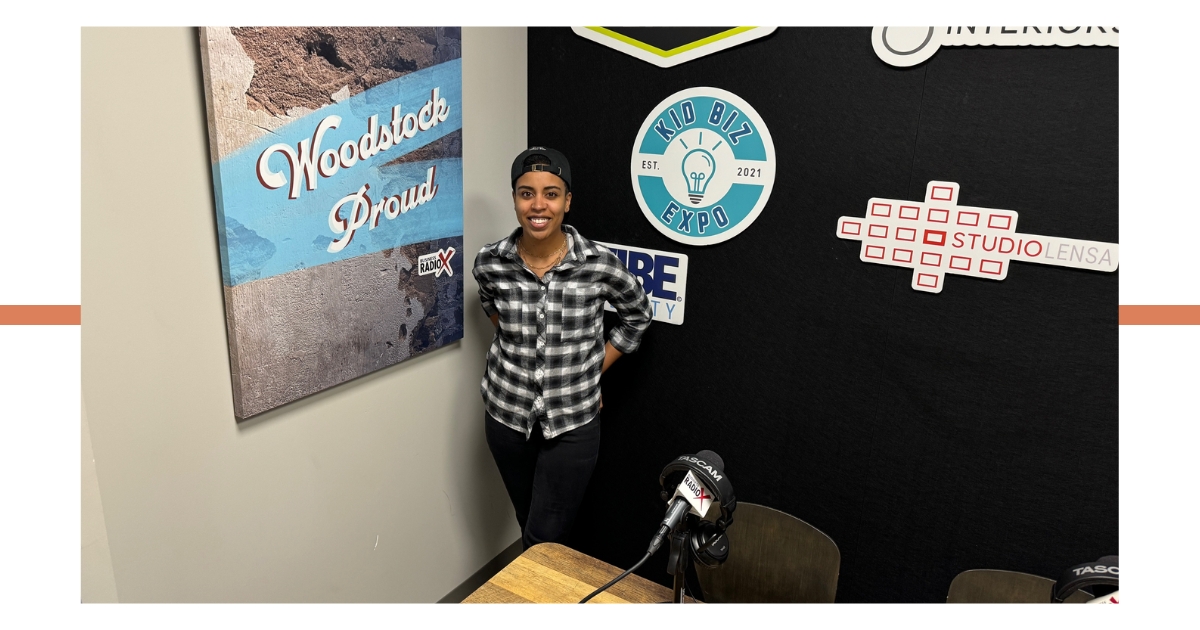
Bryttany-VictoriaBryttany Victoria is the CEO of The Little Sober Bar.

She’s been the epitome of an entrepreneur for years, constantly learning from every business she’s been a part of.

Connect with Bryttany on Instagram.

Transcript-iconThis transcript is machine transcribed by Sonix


TRANSCRIPT

Intro: [00:00:05] Coming to you live from the Business RadioX Studio in Woodstock, Georgia. This is fearless formula with Sharon Cline.

Sharon Cline: [00:00:19] Welcome to Fearless Formula on Business RadioX, where we talk about the ups and downs of the business world and offer words of wisdom for business success. I’m your host, Sharon Cline. And today in the studio we have the founder and CEO of The Little Sober Bar. It’s a mobile bar that improves access to sober curiosity. One moment at a time, I love it. Please welcome to the studio, Bryttany Victoria.

Bryttany Victoria: [00:00:42] Hi.

Sharon Cline: [00:00:43] Hi. I’m so excited to talk to you. You’ve been on my mind all week, but part of it is because I saw an update about the fact that you are now associated with the Cherokee County Chamber of Commerce, which is very cool. How did that come about?

Bryttany Victoria: [00:00:58] Um, yeah, we I’ve been wanting to get, you know, more ingrained in the county because I am very close knit with the Woodstock community, as you know.

Sharon Cline: [00:01:06] Yes, I do,

Bryttany Victoria: [00:01:07] Um, shout out to Wipeout. Of course.

Sharon Cline: [00:01:09] I know our networking meetings. It’s so great.

Bryttany Victoria: [00:01:13] Yeah, the best. Um, but I wanted to take it a step further and really solidify ourselves in the county because we do go everywhere. Really? Um, we’ll be in canton this weekend, actually. So I wanted to make sure that everyone in the county knew who we were and that we had the support of the county, and that we were supporting the county in return.

Sharon Cline: [00:01:31] So it’s like a little as a relationship.

Bryttany Victoria: [00:01:33] Yeah, exactly.

Sharon Cline: [00:01:34] That’s awesome. It must feel even more legit in some way.

Bryttany Victoria: [00:01:37] Yes.

Sharon Cline: [00:01:38] Well, it’s nice because I know that I see your it’s not really a pop up, so to speak, but it’s your, your mobile bar basically. So I was looking on your website and it’s a 65 Shasta compact. Tell me about this. This is so cool looking.

Bryttany Victoria: [00:01:56] Yeah. It’s our mobile bar. And we turned it into, um, a place where people can come and find sober curiosity. It started out as a friend had this camper and she was going to turn it into a business. Things changed for her, things changed for me. And we kind of the universe aligned and we we bought it and. Then two weeks later, I lost my job.

Speaker3: [00:02:23] Always happens that way.

Bryttany Victoria: [00:02:24] It does. But just kind of means that this was the right path, you know? Things kind of align and make way in space for what’s meant for you. So I took that as a sign to really go all in on the bar, and we built it out in 43 days because our first event was with the Rock in Cherokee County, so we had to get it done. Wow. So we did. And I mean, it wasn’t perfect that first event, but it was it was almost there, you know, it was we learned something new every single day, even six months. Now we’ve been changing things. So.

Sharon Cline: [00:02:59] So you’ve been in business six months officially?

Speaker3: [00:03:02] Yeah.

Bryttany Victoria: [00:03:02] Approximately. Yeah, maybe a little bit more.

Sharon Cline: [00:03:04] What was the impetus for the little sober bar?

Bryttany Victoria: [00:03:08] Well, I started taking control of my mental health. Um, first and foremost, that was something that I noticed was lacking in my life. And as I did that, I started drinking alcohol less. And with that came a whole slew of other things, like having social anxiety in social situations when I don’t have a drink in my hand. Um, then also the side of I just it’s not fair. Like I want a cute drink too.

Sharon Cline: [00:03:39] So it’s interesting to think that it was like you were observing yourself as you were changing and noticing things you wouldn’t have if you hadn’t made that decision. Um, and I know that I have anxiety. It’s just kind of like the background running program, at least right now I’m working on it. But, um, I do find that if I don’t have something to do or something to fidget with, that I can’t really relax as much as I want. It’s like a fight. So that must be similar to what you’re talking about.

Bryttany Victoria: [00:04:07] Absolutely. I tend to scroll my phone a lot. That’s my fidget. Even though I’m listening, I still am looking downwards. Um, but that not having a drink in your hand in social situations when everyone else does, you definitely feel. Uh, you know, out of place or, like, you don’t fit in. Everyone’s watching you and all of those anxiety like words that are in the back of your head. They they come to light because you can see it. You can see that you don’t fit in. And it’s not that you don’t. It’s really not even real. It’s just all in your head, really. But.

Speaker3: [00:04:40] Right.

Sharon Cline: [00:04:40] But if everyone has, like, this really cute cocktail or whatever and you’ve just got your water, it almost feels like you stand out in some way, or you’re making a statement and you’re wondering if people are wondering what the statement is, even though you’re not exactly.

Bryttany Victoria: [00:04:51] And everyone has their own opinions as to what why someone’s not drinking or what their motivation must be, or how can you keep them safe in social. And it’s not even it’s not even that. Like the biggest thing is you can just ask someone.

Speaker3: [00:05:06] Imagine that.

Bryttany Victoria: [00:05:07] Or provide another option, which is what how the bar came about was the fact that there wasn’t as many. I mean, there are options out there, but they weren’t easily accessed and they are more now. But it’s still there’s so much good out there. Um, and that’s why we built the bar, because we wanted to bring that good to people.

Sharon Cline: [00:05:27] It’s so interesting to to think about the fact that this is really because you wanted to kind of center yourself. You had, you know, like it happens to me too. Even last night I went to a birthday party and had, um, one drink. But I can still feel it today. I don’t drink very often. I can still feel it today. I have been sluggish all day. It’s fine. I, I knew that most of the time that’s what happens to me. It’s. I accept this, but I never love it and wonder why. I know that I’m going to pay this price. Like what’s what’s the benefit in the moment? Did I really need to do it? So it’s if if someone had presented me at that moment with some other options, I would have chosen, you know, a spritzer of some kind. But no, I was just like the anxiety came in and I just went ahead. And I don’t judge anybody else who isn’t drinking or drinking. But for myself, it’s nice to think that there’s a potential other option for fitting in, but not being not standing out in a way where even someone will feel like I’m judging you because you are drinking. When I’m not drinking, it’s all of this in my mind, I imagine.

Bryttany Victoria: [00:06:31] Yeah, I have a metaphor that I like to tell people it’s we each have a window to the world, right? And so all we can control is what’s on our side and not what is on anybody else’s side. And we can also only control what goes in. And it also is filtered through that window. So like there’s so many factors as to why somebody is doing something or saying something to where if we really just accept people as they are and are more honest. And that’s a big part of my personal like mental health spirituality journey that I’m on. But it is. I mean, it’s true though, like if we just accept people as they are and we’re honest and open to each other, like the more acceptance and, um, the more, you know, just options for love and all of that thing in those situations. There are because you could see somebody not drinking and be like, okay.

Speaker3: [00:07:16] Who cares, right? Yeah. Or your truth.

Sharon Cline: [00:07:18] Whatever that is.

Bryttany Victoria: [00:07:19] Exactly. Here’s another option. And then not even to mention the fact that there’s adaptogen options out there and all sorts of other infusions in drinks that will give you the relaxation or like a buffer on the social anxiety without like paying the price tomorrow.

Speaker3: [00:07:35] You know.

Sharon Cline: [00:07:36] You have. What’s kind of cool about your mocktails, right? Is that, um, I was reading on your website that you say they have depth. It’s not just a sugary beverage option. It has the feel of a cocktail, which is amazing. So can you tell me about some of the different cocktail mocktails that you have?

Bryttany Victoria: [00:07:54] Absolutely. So we have on our trailer, we carry 30 plus canned options. It’s a curated menu that I’ve tried lots and lots of drinks, um, well hydrated these days. Um, but we have stuff that is sober curious, um, which is our quote unquote top shelf. That’s our, um, adaptogen, you know, CBD and kava, anything that has like 0.5% or less ABV, that’s like our sober, curious line. And then we also have our, um, strictly sober, which is zero proof cocktails. And then on the flip side, when we make handcrafted mocktails at parties, I tend to try to find alternative spirits that have no either have infusions if it’s a sober, curious event or have nothing, you know, zero proof. That way I can craft something that’s a little bit different. I don’t really have a menu list for people to choose from. I tend to see what the event is and, um, craft the cocktail. Zero proof cocktails to sober curious cocktail for that event. So we had a wedding, our first big wedding, and I made it’s our most popular one. Everyone’s all over it on Instagram. Um, but it was a happily ever after. That’s what I called it, because that’s, you know, it’s a wedding, and that’s what you want. Sweet. Right? And it was a cranberry lime spritzer. Sir. So it had limeade. So you’re thinking. Okay. Yeah. Just like any other wedding. Like lemonade. Right? But no, it had limeade. And then we used one of our, um, canned mocktails, but it’s a it’s actually a dry soda, so it’s a soda, but it’s not as sweet as other sodas, so it’s more the flavors of cranberry and lime. So we combine that with the limeade. I added glitter of course.

Speaker3: [00:09:46] Oh my gosh, I.

Bryttany Victoria: [00:09:47] Have glitter that’s.

Speaker3: [00:09:48] So special.

Bryttany Victoria: [00:09:49] And then a little bit of butterfly pea flower for like the color change and all that. And then I did a citrus smoke bubble on top.

Speaker3: [00:09:56] Oh my.

Sharon Cline: [00:09:57] Gosh, are you.

Speaker3: [00:09:57] Kidding? No, that sounds amazing.

Sharon Cline: [00:10:00] I bet the presentation was just fabulous.

Speaker3: [00:10:02] Yeah. It’s fun.

Bryttany Victoria: [00:10:03] I mean, that’s what it being sober or sober. Curious doesn’t have to be boring. It can be fun. That’s the whole point of, like, a cocktail is for it to be beautiful and fun and feel like it’s special.

Sharon Cline: [00:10:15] What’s cool, I think about your Instagram, is that you also have chronicled your build for the camper and making it. It’s not even really is it a camper kind of? Or your bar? Let’s call it the bar. The bar. It’s really nice because people can kind of see exactly how you did it. And if that’s something that they’re interested in, they can they can follow along with you on your journey as well as making new cocktails. I love that you’re using social media that way as well as Facebook, obviously. Um, but what is it like to be out there in the community and be so public this way too, because there’s so much judgment around, I don’t know, alcohol. There’s a lot of alcohol around here in Woodstock in particular. It’s fine. It’s what it’s supposed to be. But yeah. How has it been for you?

Bryttany Victoria: [00:10:57] Um, okay. So being public is a lot. So when you’re newly sober, they say don’t make any big changes in your life. Right. And I decided to open a bar, so I’m about. I don’t even know now. I know it was 14 months, a little while ago.

Speaker3: [00:11:14] Congratulations. Thank you.

Bryttany Victoria: [00:11:16] I like to say I’m sober, curious, because the pressure of staying sober is like, I don’t have a choice, but I, you know, I just I choose every day to make the choice. Um, but anyways, so it’s funny, the the more I talk about the bar, the more people open up and say, hey, I’ve been sober for this many years, and that’s so cool. And I was surprised. I was shocked, honestly.

Speaker3: [00:11:38] When you.

Sharon Cline: [00:11:39] Opened that door for yourself, it brought in people. It made a safe space for them to tell their story.

Speaker3: [00:11:44] Yeah. Who would have thought? Who would.

Bryttany Victoria: [00:11:45] Have thought.

Speaker3: [00:11:45] Right?

Bryttany Victoria: [00:11:46] I just didn’t think there was that many people in Woodstock or in this area that would be open to a sober bar. That’s kind of. I had been talking about the bar for about a year before we really dove in, and I was honestly terrified.

Speaker3: [00:12:02] Really?

Bryttany Victoria: [00:12:02] Yes. Because making the choice to not drink or be labeled as quote unquote the sober girl, because people think of me now as, you know, the girl in Woodstock, that’s the sober bar. Um, it’s a lot of pressure, and it’s a big change, and it’s it’s a lot.

Sharon Cline: [00:12:17] Do you feel like you have to represent something?

Bryttany Victoria: [00:12:19] I think part of me has that feeling. But a big part of me knows that who I am right now is exactly who I am. And I feel like so good about that lately, that it’s okay if people see me as a sober girl. I’m like, yeah, totally. Yeah, I’m the owner of the sober bar. Like, I’m very confident in the me that I’m growing into because I believe you grow every single day. So yeah, it’s it’s been a lot, but it’s also been really good at the same time.

Speaker3: [00:12:49] What were you.

Sharon Cline: [00:12:50] Doing before.

Speaker3: [00:12:50] This?

Bryttany Victoria: [00:12:51] Uh, before this, I was a bookkeeper, I guess. Technically an office manager at a manufacturing company.

Speaker3: [00:12:59] Wow. Right.

Bryttany Victoria: [00:13:01] So lived a lot of lives. I’ve always been an entrepreneur about ten ish years of on and off entrepreneurship. But, yeah, I was doing photography, and, um, I was actually at Made Mercantile for a little bit with products. And so I’ve kind of gathered lots of information about different things. Yeah.

Sharon Cline: [00:13:18] Like, you know, a little bit about business ownership then. So this was a natural transition then for you to, to have your own business that can travel. Well, that’s what’s so cool about it is you can set up all these different events I saw on your website. You have a calendar where people can see where you’re going to be. Um, so what are what are some of the places that you’ve been to? Where are some of the places that you’ve been to?

Bryttany Victoria: [00:13:38] We have been as far as Athens for events and then as far, I guess, South, quote unquote, as Fayette County and then all over Woodstock and Canton and Kennesaw. Yeah, all over Cherokee County.

Speaker3: [00:13:52] Yeah. Wow.

Sharon Cline: [00:13:53] It’s so fun. Um, are you ever surprised at the reception that you’re receiving when people aren’t expecting you to show up?

Bryttany Victoria: [00:14:01] Sometimes. Um, my favorite thing that people do is when they walk up to the bar, they’re like, I’m curious.

Speaker3: [00:14:09] That’s exactly what we want. Exactly right.

Bryttany Victoria: [00:14:12] And that’s our tagline is stay curious, because we really believe that you should be curious about life. You’re curious about yourself, curious about, like, the things you put in your body. It’s not about we’re a sober bar, you know? Dun dun.

Speaker3: [00:14:24] Dun. You know.

Bryttany Victoria: [00:14:27] We’re just saying, hey, there’s other options. There’s also options. There’s, you know, like, hey, look at this.

Speaker3: [00:14:33] I like when you’re.

Sharon Cline: [00:14:34] Talking about the fact that when you’re being talking about being curious, it takes the judgment and pressure and, I don’t know, reframes it to be something, uh, neutral. Mhm. I love that. Yeah. And it’s the same as your journey. You’re just like today this is where I stand and that’s fine.

Speaker3: [00:14:56] Mhm. Yeah that’s honestly.

Bryttany Victoria: [00:14:58] I’m, I’m just a big believer in like doing what you can do however you can do it. And if that means today I, yesterday I laid in bed all day and I didn’t get things done or emails responded to. Sometimes that happens and that’s okay. Like you have to listen to your body.

Speaker3: [00:15:13] Sometimes truth like it’s.

Sharon Cline: [00:15:16] True. And I like that too. You’re kind of just wherever you are in your life. You’re accepting and and this is, it’s it’s like the way I look at the fact that I don’t eat meat. I haven’t eaten meat in a long time. But today, you know, I’m not eating meat. I may change my mind at some point, and that’s fine if I do or fine if I don’t. But it’s like it doesn’t mean that I’m labeled as anything. And I guess I love that too. That’s your message too, is like there’s no labels here. Mhm. Because people do. Mhm.

Speaker3: [00:15:43] Mhm. Mhm.

Bryttany Victoria: [00:15:46] It’s easy to categorize people because it makes sense in your brain when people have a spot like because, because of that whole window theory is that you don’t know what’s going on behind their window. So you have to kind of put them in a box. So it makes sense in your head. And you could just ask them questions.

Sharon Cline: [00:16:04] Why do you think people don’t.

Speaker3: [00:16:06] Are.

Bryttany Victoria: [00:16:06] I don’t.

Speaker3: [00:16:07] Know, I.

Bryttany Victoria: [00:16:08] Think sometimes that people expect you to give more information and just freely, like, I don’t know, I noticed this as I stopped drinking is that I had more anxiety but also less anxiety, so I would I used to be able to just talk about everything that was going on, and I would just word vomit. And now I’m much more aware of what I want to share and things like that. And I think that. If people were interested, they would ask questions. And that’s something that like I, I struggle with asking questions sometimes with like getting to know other people that, um, I’m around. But I think it’s just, it’s tough because you don’t know what to say sometimes. And that is like a lot of it is mental health related, like anxiety and just being nervous as a normal human. And I’ve learned in our networking that sometimes you just have to walk up and be awkward.

Sharon Cline: [00:17:05] Accept your awkwardness.

Bryttany Victoria: [00:17:07] Yeah, yeah, because you never know who you’ll be around. And like people, it’s refreshing to just be yourself. It feels good.

Sharon Cline: [00:17:14] Just be honest.

Speaker3: [00:17:15] Yeah.

Sharon Cline: [00:17:16] I think that’s that’s such a theme too. Is hiding kind of I don’t know, especially in the networking and business world is presenting your business self. But one thing that I really appreciate is when you’re getting to know someone in our networking group, kind of more one on one. Even in this scenario, we’re so much more alike than we are different. And you don’t have to be, um, perfect professional person. You can say, oh, you know, I love this. Or I like our questions that they ask every week in our networking meetings are so fun, because it does kind of normalize a lot of the things that we think about. And, um, I don’t know, I remember yesterday, yesterday was it yesterday at Thursday. So you had mentioned how people will ask you if you have alcoholic beverages in your little sober bar. It just made me laugh. So people are funny. But yeah, I mean, we were all asking kind of what what are some really important things that you’ve learned or what does somebody said that’s kind of impacted you in your business sense? And these are important things to know. So surprisingly, people ask that. Is there anything else that’s been really surprising to you as you’ve gone on this journey is something that you were like, I never would have expected this to be happening or something that you wish you knew before.

Speaker3: [00:18:26] Um.

Bryttany Victoria: [00:18:29] Honestly, like, I really just been following the flow of it. If everything has been going the way it’s been going and I’m excited and I’m there’s always opportunities and I. I don’t know. I feel very much like I’ve learned so much throughout the journey of my, like, career, I guess as an entrepreneur slash adult.

Sharon Cline: [00:18:52] The career of being an adult, it’s true.

Speaker3: [00:18:53] Yeah, I’ve.

Bryttany Victoria: [00:18:54] Learned enough that, like, I feel really good about where I am in business. I love the fact that I’ve embraced the side of myself that’s seeking knowledge. Um, there are a lot. I guess that’s something that I wish I knew too, is there are a lot of really great opportunities in Woodstock and in Cherokee County for your business in a lot of counties, actually, but you just have to look out and find them. Sometimes they’re on websites and they just people just don’t talk about it. And so if you can find somewhere to get more knowledge about what you’re doing, it all kind of clicks together. Because that’s kind of what I’ve been learning. I’ve been doing the Hatch Bridge program with coed.

Sharon Cline: [00:19:36] I’ve heard about it.

Bryttany Victoria: [00:19:37] It’s been really good. The launch pad program was amazing, and it kind of clicked together pieces for my for my brain because I’m definitely more of the visionary entrepreneur side, the creative side, um, and I’m know how to do the other things, but they really clicked together, like the math and science of it all. And my, my nerd brain was like firing on all cylinders. But I wish I kind of wish I had known some of those things before I took step one. Not that anything. It would have changed much, but it’s just it’s nice that I know it now and I’m still early in the business. But yeah, if you are an entrepreneur out there and you’re looking for something, those programs are amazing and they’re out there.

Sharon Cline: [00:20:18] It’s nice because that knowledge feels powerful, right? You’re prepared or you’re as prepared as you can be.

Speaker3: [00:20:23] Yes.

Sharon Cline: [00:20:24] Where do you come up with your mocktail recipes, like how did you come up with the one where, you know, for the wedding and was edible glitter and all of that? Like, who would have ever thought, I mean, I would love to drink something like that.

Speaker3: [00:20:35] So it’s so fun.

Bryttany Victoria: [00:20:36] Um, honestly, they come out of my brain.

Speaker3: [00:20:39] That’s what I was thinking.

Sharon Cline: [00:20:40] You were talking about the creative side and the science, and I’m like, how cool is that? You know?

Bryttany Victoria: [00:20:45] Yeah, I used to work at, um, a wine and whiskey bar locally here in Woodstock, um, rootstock. And they are very creative there with their drinks and, but it’s at a different level. It’s definitely a I learned to appreciate whiskey while I was there, which I walked in being a vodka soda girl and walked out being a Scotch lady. Um, so like, my palate changed and it allowed me like that experience. It was wonderful because I tried some really amazing, like wines and whiskeys and all sorts of spirits and different combinations and like, that’s kind of where my love of mixology came from, was, I’m trying these really amazing ingredients and how can I mix them up? But also, I don’t want to feel drunk after I’m playing because it’s playing. It’s fun for me. So now that I’m in the zero proof, sober, curious space, I’m using all of those. All that knowledge and all those tools and all of the palate, you know, increase in my palate and different things. I’ve tried to kind of create something new.

Sharon Cline: [00:21:51] It’s so clever, too, because you could use herbs and, you know, and make them beautiful, too.

Bryttany Victoria: [00:21:58] Absolutely. And I’m a photographer, so everything has to be esthetically pleasing.

Speaker3: [00:22:01] Otherwise I’m like, oh, this doesn’t look.

Sharon Cline: [00:22:04] As appetizing as it could.

Speaker3: [00:22:05] Exactly.

Bryttany Victoria: [00:22:06] It has to be pretty and fun and interactive because, I mean, my big thing is like, it’s fun. Mocktails don’t have to be boring. So we’re curious. Doesn’t have to be boring. It can be fun.

Sharon Cline: [00:22:16] I love it because we’re talking about just like enhancing what you’re experiencing in the moment. It doesn’t have to have like without the price. The next day. I always heard drinking is borrowing happiness from tomorrow. That’s the way I look at it, because the next day I’m always like, oh, I don’t really want to get up and do as many things or I’m impatient, I don’t know, I always kind of suffer. It’s not like it’s a constant problem for me, but I just noticed and certain things will hit me harder than others.

Speaker3: [00:22:40] So interesting.

Bryttany Victoria: [00:22:42] I noticed that as I aged, it changed how I was able to function, which I was already barely. I learned a lot of my mental health and neuro spiciness. I was like, oh, so that’s why.

Speaker3: [00:22:54] Yeah. And then interesting. Yeah.

Bryttany Victoria: [00:22:56] And then adding drinking to it, I was like, oh, so this is why I’m just not useless but like affected. Yes. Like I can already I’m already struggling and I didn’t know why. And then adding drinking on top of it made it so that I wasn’t able to function as best as I could. So taking one thing away to allow me to explore the other side and really like learn how to function as a.

Speaker3: [00:23:21] Human.

Bryttany Victoria: [00:23:22] For myself, I mean effectively from who I am. You know, it’s not necessarily all people, all human. I’m not a robot. Um, but being able to take one thing away so I could focus on that other thing and then giving myself permission to be sober, curious. It’s just it’s a freeing feeling, like I just. I feel so much the pressure is just off and I’m able to get things done, which is really nice.

Sharon Cline: [00:23:47] I love that you talk about it being fun. So many people consider any limit that’s good for.

Speaker3: [00:23:53] Them.

Sharon Cline: [00:23:54] Be it alcohol or salt or whatever, as not fun. Like now I can’t have or something. And so it’s not what you’re talking about actually is like you can it’s just a little modified, but it’s still fun.

Speaker3: [00:24:08] Um.

Bryttany Victoria: [00:24:08] Really like that’s the.

Speaker3: [00:24:09] Thing is and that’s.

Bryttany Victoria: [00:24:11] I think people get confused that limiting yourself equals not fun. But it doesn’t necessarily mean that. It just means you have to shift your perspective and find a solution. So if you think that limiting yourself isn’t fun, it’s because you didn’t figure out a way to make it fun. You know? And that’s I mean, that’s just what I teach my kids too. Is that like being a I want them to have a solutions based mindset, but always think of like, how can I make this better? Or how can I make this happen for myself and not just give up or or choose a bad choice because it’s easier?

Sharon Cline: [00:24:44] Gosh, isn’t that the truth? I’ve always heard the path of least resistance is most or the path of yeah, is is actually generally not always the best choice. The easiest choice is not always the best choice in business.

Bryttany Victoria: [00:24:56] Yeah, that’s true. And it’s hard to in business too. Like doing going back to do the steps. Is what is needed. But it’s hard to go back and do those steps when you want to look at the big picture vision. Like as an entrepreneur, you’re always seeing the big picture, and that’s your job as the CEO and you know, the founders to see the big picture. But there are a lot of little pieces that you have to be aware of as well.

Speaker3: [00:25:22] Um.

Sharon Cline: [00:25:23] What has been the most challenging to you as you’ve grown in your business?

Bryttany Victoria: [00:25:29] The most challenging for me has been. Hmm’hmm. Well, see, I’m really bad at budgeting. So this is why I just brought on a finance intern.

Sharon Cline: [00:25:44] Aren’t you smart? Look at you.

Speaker3: [00:25:45] Solution based.

Bryttany Victoria: [00:25:46] Solution based. Right I yes, that’s.

Speaker3: [00:25:50] That’s.

Bryttany Victoria: [00:25:51] Been the struggle for me is that it’s just because I’ve done it so much in my past lives that I don’t want to do more bookkeeping. I want to do the fun business stuff, the the making of the fliers and talking, making up mocktails and things like that. And I feel like I do have a lot of knowledge that I’ve accrued lots of skills over, you know, a long time of life that I could give to a student that, um, I thought that this would be a good opportunity for me to solve a challenge that I.

Speaker3: [00:26:22] Have.

Bryttany Victoria: [00:26:23] And also give back, because that’s a big thing I want to do.

Sharon Cline: [00:26:27] How do you give back? What is your what? What is your main way that you do that?

Bryttany Victoria: [00:26:32] We have partnered up with Nami Georgia. So they’re the National Alliance of Mental Illness because obviously my story is very much mental illness based, but I think that there’s not a lot of, um, help or highlights on mental illness. It’s becoming more regularly available, but it’s still expensive and it’s still not easy. And there’s still so many more opportunities out there for help that people aren’t aware of. And so we that’s just a really big part of what I want to do is that I want to tell people that, like, there is help out there, there is ways to um. To be supported and loved. Um, my best friend actually committed suicide when I was in college, so that kind of changed the trajectory of my, like, mindset, thought process, everything. I was like, I’m never going to live a life where I’m not doing what makes me happy and what’s fun. And so mental illness and like mental health is like such a big part of that that. I. That’s why I wanted to partner with not with Nami. And there are other we have other partnerships too that are out there, but that’s like our biggest one. And it’s something that’s like in our employee handbook. It’s like if you have any sort of mental if you’re feeling like not okay, here’s some links that you can, you know, you can go to here. You can call this website. You call this number. Um, tell us, let us know. Like how can we support you. And we’re very, very big of like ask questions if you’re confused, like, please do not ever feel like it’s not a safe space.

Sharon Cline: [00:28:08] Do you feel like companies really don’t.

Speaker3: [00:28:09] Focus on that very much? Yes.

Bryttany Victoria: [00:28:11] Absolutely. I think it’s becoming more regular, but. Smaller companies. Small business like mindsets are not always seen in big corporations. And so that’s something that I really want to change with the trajectory of my business is I, I see it bigger than just one trailer. So we are very much corporate headed but with a family business mindset. And that’s what I want to instill in people. And as I hire employees and everything like that as we grow is that it’s there’s a seriousness to it and a get your work done. Hyper focus on what your job is and focus on that and do it the best you can. Do it and you’ll be involved. Like we’re a family. Like we’re here to help you, but we’re not a family like a corporate says it. We’re actually here to help you. It’s, um.

Sharon Cline: [00:29:04] Fascinating to me that small businesses are all businesses. Most likely started pretty small, right? So not all, but in general. So when you’re thinking about having a large business mindset and the mission statements that they have and, um, parameters around mental health, because a company I work for now is very, um, motivated to help their employees. Yes. Not everyone is. It’s new to me as well. What I’m finding, what I’m thinking is how nice it is to be able to, um, encourage people who don’t have a big corporation around them and big CEOs telling them, um, you have to follow this protocol for your best interest, because when you’re considering a small business, it’s all up to you. It’s there aren’t the boundaries around it. Um, you could work 24 seven if you wanted. And I’m sure there’s pressure. Most people that come on the.

Speaker3: [00:29:55] Show talk about.

Sharon Cline: [00:29:55] The fact that boundaries are really difficult to maintain when you’re a small business owner. Um, it’s up to you if you miss a call or whatever, you could miss a sale. And so knowing that you have that mindset of, we want to normalize this, it’s just it’s calming. Um.

Bryttany Victoria: [00:30:12] That’s the goal is that I just I don’t want anyone to ever hate their job if they worked for me. I don’t ever want that to be why somebody leaves. I want them to leave because they found something better. Or because they made enough money to retire. Because we’re, you know.

Speaker3: [00:30:28] A bajillionaires.

Bryttany Victoria: [00:30:29] All of.

Speaker3: [00:30:29] Us. You know, that’s awesome. That’s what.

Bryttany Victoria: [00:30:31] I want. I mean, that’s just my mindset of growth for my business and for myself, honestly, is like, I’m an employee, too. That’s what I want for me.

Speaker3: [00:30:39] So how do you how.

Sharon Cline: [00:30:40] Do you put the boundaries around business and kind of balance yourself out the look on your face?

Bryttany Victoria: [00:30:50] Well, honestly, I. Okay, so I have ADHD, which makes it difficult to work in, like the parameters of I’m going to work for these hours. I tend to work in project based, so like if I’m working on something in particular or have festival this weekend, we have the Etowah Wildlife Expo this weekend. So I know I have to get X, Y, and Z done for that. It’s a project, so it makes it feel. Honestly, everything is about making it more fun for me. Everything is. Every night. I mean, people talk about how they don’t take care of their mental health and their their self care and all those things. And I’m like. I mean, my house is a wreck, but I play sims every night and I’m not stressed.

Speaker3: [00:31:32] You’re balancing.

Sharon Cline: [00:31:32] Yourself out.

Speaker3: [00:31:33] Right?

Sharon Cline: [00:31:34] That’s what’s important, right?

Bryttany Victoria: [00:31:35] Yeah. And I mean, it’ll I will get there. I have I mean, my kids, me my two kids and I have a partner and we all like we all do our best. And that’s what I really want my kids to know is that, like, I ask them all the time, like, do you feel loved? And they’re like, yes. And I’m like, okay, good.

Speaker3: [00:31:49] That’s what’s most important.

Bryttany Victoria: [00:31:50] That’s all that I care about. I mean, I want you to be kind humans, good humans. I want you to do your best, and I want you to feel loved and love the people around you. And like everything else, we’ll figure it out. You know, you’ll find a solution.

Speaker3: [00:32:02] That’s success.

Sharon Cline: [00:32:02] That’s success to you.

Bryttany Victoria: [00:32:04] That is success to me. Yeah.

Sharon Cline: [00:32:05] It’s nice because, uh, the pressure is so different. It’s it’s such a reframing and it’s like, it’s it’s refreshing, isn’t it?

Bryttany Victoria: [00:32:14] Because you can still accomplish everything you want to accomplish without stressing yourself. I mean, I’m definitely stressed at times, like I am breaking out all on my chin, but I’m not as stressed. I’m in a stressed in a different way, like the way that I was in the corporate world. The stress that I was under where I just wanted to like throw my computer every day and I wasn’t even doing like the type of work I’m doing now where I have to make phone calls like, that’s my anxiety. Hates that part, but I’m able to do it now. I just do it because it’s just I just do it because I’m doing something I love. I’m following what my passions. I’m building, something that I know will be good for other people to like everything about what I’m doing. It just makes me happy. And it’s so that’s what’s fun for me is like diving into all of that and. If my like, you know, were behind on laundry like, well, it’s laundry mountain. Let’s climb over it. It’s fun.

Speaker3: [00:33:09] It’ll happen.

Bryttany Victoria: [00:33:10] It’ll get done. That’s the thing. Like there’ll be time. Like I’ll make time for it. It’s all about. It really is about reframing your mind. It’s your mindset, reframing your mindset, getting things done. And like, prioritizing the things that are mean more to you. Like, I’d rather snuggle in bed with my kids and watch Wonka, then go downstairs and fold laundry. Because they’re not going to be seven and nine forever.

Speaker3: [00:33:34] Wow.

Sharon Cline: [00:33:36] I grew up in a different way. Where that was really important was that, you know, like our environment had to be really super straightened up. And my three kids that are adults now are not like that at all. I mean, they’re but not with the pressure like I would I will have like a mini panic attack if things get too messy. I can’t handle it. I mean, I could, but I don’t. I just clean it. But my children, I think it’s so fascinating that they didn’t have that anxiety around it. So if it’s messy, like they’ll clean it when they clean it or there’s no judgment to it, their safety is not tied to it. And I love that. And I don’t want to put it on them either. Like you have to clean this up for me you know.

Speaker3: [00:34:17] Mhm.

Sharon Cline: [00:34:18] Do you live your truth or whatever it looks like. Um but I love that you’re providing that same.

Speaker3: [00:34:24] Um.

Sharon Cline: [00:34:24] Um change.

Bryttany Victoria: [00:34:25] Yeah. We’re trying my, my partner is much more, much more neat and tidy. He likes things in certain places than I do. Um, but I like that we kind of we we do our. We do like the main parts of the house where everyone is. That has to be clean, like you know, that has to be picked up. Yeah, it can’t be messy, but your rooms, that’s your space. If that’s what you want to live in, that’s fine. But now that they are older, we’re instilling in them like different things like, hey, let’s do this today. How nice is that? That this is done. And because they can understand it and we can talk to them like this and I can be like, hey, you know how my room is like x, Y and Z and how I have to do this? And it’s so annoying. Do you like doing that in my room? And he’s like, no. And I’m like, so maybe you should do that in New York.

Speaker3: [00:35:13] You know, like life lessons. Yeah.

Bryttany Victoria: [00:35:15] And I feel like it kind of. Maybe we should have taught them how to, you know, pick up everything when they were three. But I’m kind of glad that they’re able to, like, articulate back and learn things and like, know what why they’re doing that and.

Sharon Cline: [00:35:29] Then figure out if that’s what they want as opposed to it being instilled in them.

Speaker3: [00:35:32] Exactly.

Sharon Cline: [00:35:33] In an authoritarian way.

Bryttany Victoria: [00:35:35] Exactly. And they’re able to put it the way that makes sense for them, like put things in a way that makes sense for you. How can I help you? That’s what we say, too. We’re like, how can I help you? Do you need more? More drawers? Do you need more boxes? Like, what do you need to make this space work for you and to make you happy in the space?

Sharon Cline: [00:35:51] It sounds like you’re, um, all around, business wise and home, kind of integrating the same energy through everything, which is probably why it’s so fun. You know, you’re in alignment and congruent, you know?

Bryttany Victoria: [00:36:04] Yeah. It’s a big thing, I think, is that actually it’s something we learned at the luncheon this week with in Woodstock. They talked about how your goals in business and personal business and then any other goals you have, like if you can find a common theme in all of them and align everything, you’ll be more successful. So like I love I mean, I was like, oh, I’m already I’m doing that. Cool.

Speaker3: [00:36:27] Yay.

Bryttany Victoria: [00:36:29] So yeah, I mean, because it’s true though, like if everything is in alignment, if you’re doing the same things in your business and outside of your business and at home, like should, it should just go, right? I mean, it should flow. Yeah. There’s always going to be up and down ups and downs in business. I mean, we didn’t have any events in December and trust me, I was my wallet was not happy, my business wallet was not happy. But that was a choice. I made that choice because I knew we weren’t going to have another slow December ever. Because our business was becoming popular and people were excited, and we tried a bunch of different things in October and November to try and figure out, like, what are we doing here? Like, what exactly are the packages we want to create? And like, how do we want to package, um, festivals in the future? What do we need to bring? Like how do we want, you know, all the things. And so in December we really just took the time off. So that way we could figure it out. And then also spend time together as a family because there just there’s not going to be another time like that ever again.

Sharon Cline: [00:37:29] It’s cool that you made it a conscious choice knowing that, okay, well, this is most likely our last quiet December. Mhm.

Speaker3: [00:37:37] Yeah.

Sharon Cline: [00:37:38] That’s smart isn’t it. Because it sounds like you know how to at least balance some of your energy and time. I mean I’m sure it’s not easy.

Speaker3: [00:37:46] It is.

Bryttany Victoria: [00:37:46] Not. I’m actually leaving here to go to book club.

Speaker3: [00:37:49] So.

Bryttany Victoria: [00:37:50] That I forgot I had today. Oh no it’s not so later I think I don’t know. And that’s the thing too is I’ve also surrounded myself with people who understand that I’m busy and that I’m very busy and what I’m doing and they’re proud of, like, who I am. And they’re sharing, you know, it’s just like a supportive group of people that like, if I’m late for book club, they’re still going to have a mocktail sitting there waiting for me, you know, like and also, I didn’t finish the book. So sorry, guys, I’ll finish. Next month’s book is all about burnout. So we’re going to be I will be fully ingrained in that one.

Sharon Cline: [00:38:18] But how awesome that you’re a business owner, a mom, and you know a partner, and you have book club that you do like, you still are trying to balance yourself and do things that are good for your mind and, um, kind of keep like a social side of, of you that it doesn’t have to do with business.

Speaker3: [00:38:35] Going, trying, trying luck.

Bryttany Victoria: [00:38:37] Luckily, this this book club was brought on by one of my other friends. So she and I are very. We’ve been close since we were pregnant actually. We walked as I walked into my home birth midwife’s office. She was walking out and I was.

Speaker3: [00:38:50] Like, whoa, this is crazy! Hi. And we’ve been.

Bryttany Victoria: [00:38:54] Friends ever since. And that was ten years ago. Wow. So she started this book club and said I would be a good fit. And I was like, sure, I’ve been wanting to read more. Last year was amazing. We read so many great books and I love that they they take it a step deeper. Like, we’ve talked a lot about mental health and about neuro spiciness and.

Speaker3: [00:39:09] I love that firm. I’ve never heard that before.

Bryttany Victoria: [00:39:11] Well, I’m trying to.

Speaker3: [00:39:12] Normalize it, I love.

Sharon Cline: [00:39:13] It, I’ll normalize.

Speaker3: [00:39:14] It. I’m trying.

Bryttany Victoria: [00:39:15] To. What’s it, Gretchen wieners she does the. So fetch. Yeah, yeah, yeah.

Speaker3: [00:39:19] That’s my so fetch moment. But yeah.

Bryttany Victoria: [00:39:23] She started the book club. And so it’s nice, like being able to take a step back and not be in control of that. That’s another thing too, is that, like, um, delegation is huge in business and at home because for me, I was doing everything for so long, plus working. So now that I’m owning my own business, like I have to rely on my partner a lot more, and he’s taking on a lot more of the financial load at home, because I cannot do everything. I cannot be in every place. So allowing myself the ability to control what I can control in all aspects, like social, like if I don’t get invited, I don’t know about it because I can’t. I don’t have the energy or time to be reaching out to everyone anymore. So it’s like cool book club. You have it on the schedule, you know? I know what the book is. I will see you guys there, you know? And then I see them. We have a great time. We like we have deep conversations and we feel real connected. We text every once in a while and it’s perfect. It’s like memes. And they let me know, like, hey, we’re going to go do this. You want to meet up? And I’m like, actually, yeah, I can. So it’s wonderful. I mean, I know that as my time gets smaller with this business, my goal is to create more time for myself. So there are certain things I have in place for employees in the future that will allow me to continue having the life that I have now, because I really, I think that that whole work life balance thing is not a thing. It should be life work balance. Like you should figure out how to support the life that makes you happy. Just find a job. I mean, I know it’s not. It sounds so easy. Just find a job that makes you happy.

Speaker3: [00:40:56] No, but.

Bryttany Victoria: [00:40:57] I mean, like, just kind of figure out a solution that follow your hyperfocus, follow your passions. If that means you want to be a doctor, be a doctor, be the best doctor that you can ever be. If that means you want to be an entrepreneur and struggle and work 80 to 90 to 1000 hours a week, then that sounds like sounds like fun to me. It’s all about. Finding out who you are and really just diving into that and. I don’t know, all businesses are different, but for me, that’s what that’s what I did. That’s what I’ve done, is because it’s fun for me. I like doing it and it’s something I can change the world and I can make a difference, and I can create a legacy for my kids. And, you know, it’s just like all the things, all the things I’ve ever wanted. It’s packaged perfectly in this business. Even though it took me ten years of learning and failing at other businesses to get here is now. I have all these tools in my tool belt and it feels really good.

Sharon Cline: [00:41:50] What is the not a typical festival?

Bryttany Victoria: [00:41:53] Oh hey, I was wondering if you were going to ask about that. So we’re six months into our business and I said, let’s throw a music festival. Because it seems so easy when everybody else throws festivals. Oh, you got it. So honestly, it was because I wanted to create a sober fest that wasn’t a sober fest. I wanted it to be like what? Our business is sober, curious. It’s not a sober fest. Like, we’re not requiring you to be sober to come party with us. We’re just creating a space that’s fun. So we partnered up with Artist Control Music. They’re actually it’s a funny story. I worked with the owner at when we were at rootstock.

Speaker3: [00:42:35] Got you. I was wondering how you approached someone.

Sharon Cline: [00:42:37] How do you approach these people? But it’s nice. You had a previous relationship.

Bryttany Victoria: [00:42:40] We did and we had. We also I’m just friendly and I make lots of.

Speaker3: [00:42:45] Friends in.

Bryttany Victoria: [00:42:46] The networking circles too, so I we’ve reconnected. He’s actually dating my niece, which is wild to go like full circle in the last like seven years. Um, and he’s building, you know, he’s building his own business as well. So I was like, hey, let’s team up and let’s create this festival. And the most fun part is that every time we think of, should we do that, we just go, hey, why not? It’s not a typical festival. Should we should.

Speaker3: [00:43:11] Might as well.

Sharon Cline: [00:43:13] It’s cool because it’s like, um, you get to do something completely different. It’s like a different brand of festival. So you’re not competing with anything. It’s completely its own uniqueness.

Speaker3: [00:43:23] It is.

Bryttany Victoria: [00:43:23] It’s we like to say our tagline, I guess, is not a typical festival. The festival with options.

Speaker3: [00:43:30] When? When is your.

Sharon Cline: [00:43:31] Festival?

Bryttany Victoria: [00:43:32] June 8th.

Sharon Cline: [00:43:32] And where is it?

Bryttany Victoria: [00:43:33] It’s going to be at the Woodstock Arts Event green, which is right across from Reformation, and there’ll be tons and tons of options from donation options. So different fundraisers going on throughout the whole festival to music options. So whether you’re into what’s being played live or you like something else, we’ll have silent disco headphones. So you can choose. You have.

Speaker3: [00:43:53] Options. Oh my gosh, that’s so cool.

Sharon Cline: [00:43:55] Silent disco.

Speaker3: [00:43:56] Yeah.

Bryttany Victoria: [00:43:57] Why not, why not. And we have like 20 I think we’re at I don’t know how many right now, but we have about 23 spots for vendors, food trucks, um, a whole activity village full of things to do, like physical things to do. And then we have a tent for our introverts. They can go find some puzzles or, you know, dominoes, stuff like that. And then we’ll have a little place, I’m hoping, a little spot for babies to like a soft play area and just literally something for everyone. The festival with options.

Sharon Cline: [00:44:27] What’s neat is like it’s focusing on, um, mental health too. I mean, how many times have I been a place where the music is too loud? But you know, what am I going to do? I’m here. So you’re giving people safe places to be whatever makes them feel the best?

Speaker3: [00:44:42] Yes.

Sharon Cline: [00:44:42] And normalizing that.

Bryttany Victoria: [00:44:43] Yes. I think that’s something that people it’s just not thought of. People keep telling me when I talk about the festival, they’re like, you’ve thought of everything. Yeah. And I’m like, well, I just thought of what I would want.

Speaker3: [00:44:54] Yeah. Isn’t it cool.

Sharon Cline: [00:44:55] To imagine what you’re doing for, like you said, your legacy for your kids. Yes. But what you’re doing for the community in, in, um, a way where people can say, oh, ten years ago there was this festival I went to, and you have no idea where it will impact someone and what it will mean for their their lives and their future.

Speaker3: [00:45:15] Yeah. That’s amazing.

Bryttany Victoria: [00:45:16] Yeah, that’s a big part of like, my mantra is in ten years I’m going to think X, Y and Z. And every time we have a bump, I’m like, you know what? In ten years is going to be so funny when we talk about this. So I think about that with things that I’m doing too, is like the people that come to this festival and every time somebody comes up to me and they’re like, oh my gosh, you’re the so like the sober bar. And it just it blows me away that they’re blown away and it makes me feel good. But it’s also like I feel good because they feel good. I a lot of a lot of what I do is for myself, but it’s also for anyone else who feels the way that I do. I post on social media every day, like three big quotes or memes or something funny, or I don’t even know, it doesn’t even matter I. It’s something that I’ve related to in my lifetime, and I need to see it. And it’s kind of like journaling, but in public.

Speaker3: [00:46:07] I guess.

Sharon Cline: [00:46:09] It’s neat. I like that you, um, are using social media in a way to help promote the theme behind your business. It’s not even so much the business, but like, what motivates you behind the business?

Bryttany Victoria: [00:46:21] Yeah, I think that a lot of people connect to stories, and even though my story isn’t, I mean, there are parts that are ups and downs and heavy hitting, but. I don’t feel like I have that. I hit rock bottom moment, you know, my story is more like a feeling. It’s a vibe. That’s what I always say. It’s like it’s a vibe.

Speaker3: [00:46:39] You.

Bryttany Victoria: [00:46:39] Know? It’s just. It’s just different. I want to be different. I want to make a difference. So yeah, that’s what I’m doing.

Speaker3: [00:46:47] Where do you see yourself?

Sharon Cline: [00:46:48] What is your five year goal? Ten year goal? What would you like to see the business become?

Bryttany Victoria: [00:46:52] Um, let’s see, I am trying to build the business to be something that can function without me, because obviously that’s the goal of a business. It’s also because I have a big plan for, um, my future. I really, my friends, are going to laugh when they hear this because they already know that I’m going to talk about the commune. It’s not a commune.

Sharon Cline: [00:47:15] Let’s just get that out.

Speaker3: [00:47:15] Of the way. It’s not a commune.

Bryttany Victoria: [00:47:17] It is a piece of land where all my friends live and we all live together, and we have a house in the middle where we all make dinner every week, you know, like every day. And everyone shares everything. So it’s basically a commune.

Speaker3: [00:47:30] It’s a community, a community.

Sharon Cline: [00:47:31] A community without the weird commune feeling.

Speaker3: [00:47:33] Exactly. Or association. I mean.

Sharon Cline: [00:47:36] I like that it’s it’s, um, the notion of like, it takes a village.

Speaker3: [00:47:41] It does.

Bryttany Victoria: [00:47:42] It’s literally what we’re trying to create is that every piece of the puzzle for that big Long Terme commune community building, it’s all, I mean, this business can I feel like I’m like, we can all do it, I can we we all have my friends. We all have pieces that can go together with this business or with a business. Either way, it’s it’s just really about helping each other. I think a big theme of what I do in business and in at home is comm is community over competition. It’s collaboration over competition. Like I’m not trying to compete with anyone. We all have different things we do. We all have different things we bring to the table. And if I can help you and you can help me, then why don’t we just help each other?

Sharon Cline: [00:48:25] There’s room for everybody.

Bryttany Victoria: [00:48:26] Yeah, maybe I’m just a hippie.

Sharon Cline: [00:48:29] I’m born in the wrong. No. You’re gonna bring it.

Speaker3: [00:48:31] Back, girl, I am Woodstock. We’re in Woodstock. Shouldn’t we? It’s hilarious.

Sharon Cline: [00:48:39] Oh, God, that was funny. No, but, um, it’s healthy. That’s what it feels like. It’s healthy. And it’s for such good reasons. And the win win, right? It’s like you win to have a business and other people win because they get to experience something different and maybe have a different mindset that’s better for them. Um, if they want.

Speaker3: [00:48:59] If they want.

Bryttany Victoria: [00:49:00] And other businesses too. I mean, we a lot of like our pop ups and stuff are at corporations where it’s, you know, it would be great is if you had a happy hour during the day when people are working, and then they go home to their families so that they can live their life.

Sharon Cline: [00:49:16] So they’re not spending their evenings, like.

Speaker3: [00:49:19] At their happy.

Bryttany Victoria: [00:49:19] Hour. Yeah. And, you know, and also like you’re sending your you’re spreading a message to your employees that you appreciate them. Since we want to do pizza parties, let’s do a pizza party with the sober bar. You appreciate them, but you also appreciate and value their time and you care about their health and well-being. So and that’s a big part of like our corporate message is that is that part is that as much as I’m building a corporation, as much as the experience I’ve had was necessarily there’s goods and they’re good and bad parts, is that you can still connect with the people that you’re working with in a safe and healthy way, and then go home and do whatever you want to do at home. Who cares?

Sharon Cline: [00:49:58] It’s just such a nice feeling when you when you feel like you are a person and not just part of a company. When someone sees you.

Speaker3: [00:50:07] Yes.

Sharon Cline: [00:50:08] It’s completely different. Almost like, um, for me anyway, it it promotes a I don’t know if it’s the loyalty or more of an investment, more of an exchange, not just I’m an employee, a cog in the wheel. Um, as long as your profits are good. Whatever. Um, there’s a value of the human.

Bryttany Victoria: [00:50:26] Exactly. I mean, because we are humans, and that’s a big thing, too, is the the whole inclusion side of it from whether you’re in a corporate situation or a wedding or a party or, you know, your sweet 16, whatever party or entertainment, whatever it is your neighborhood gathering, you’re just offering. If when you work with us. This is my little sales pitch, I guess it’s not really a sales pitch.

Speaker3: [00:50:47] It’s just how I feel. The truth. It’s the truth. Yeah.

Bryttany Victoria: [00:50:49] You’re offering options for everyone, so that way everybody gets to feel the way it feels to have, like, a beer at happy hour. Like, why can’t everyone have that cool, fun drink?

Sharon Cline: [00:51:04] Without, without the price, without the negativity, without the price. So everyone feels.

Speaker3: [00:51:08] Valued.

Bryttany Victoria: [00:51:08] Exactly.

Speaker3: [00:51:09] Oh yeah, I love it.

Sharon Cline: [00:51:12] I’m so excited for you. I mean, it’s really fun to to see you, um, kind of take on a little bit of a community vibe with it because oftentimes you set up your business and, you know, you hope people come to you, but you go out and look for opportunities and, um, and who knows where it will lead. I mean, I’m so excited to come to the fest, to your music fest.

Speaker3: [00:51:35] It’s going to be so fun.

Bryttany Victoria: [00:51:36] I cannot wait to tell everybody who’s playing. And like, I have so many surprises in the works, like, oh, it’s going to be so fun.

Speaker3: [00:51:43] Well, how.

Sharon Cline: [00:51:44] Can people get in touch with you if they would like to learn more?

Bryttany Victoria: [00:51:47] Absolutely. So the bar pages, it’s at the little sober bar on all social media, whether that’s TikTok, Instagram, Facebook, we are not on Twitter or Snapchat.

Speaker3: [00:52:00] Sorry guys.

Sharon Cline: [00:52:03] You’re covering some good bases though I.

Speaker3: [00:52:05] Am, I am.

Bryttany Victoria: [00:52:06] Um, and or my personal pages, obviously. Brittany Victoria, I’m a quote unquote influencer. I feel like I’m too old to be an influencer, but apparently I was I was just one of the influential women of Woodstock. So I guess I am an influencer. But at Brittany, Victoria is my pages. So that’s where you can find me.

Sharon Cline: [00:52:27] Well, Brittany, I can’t thank you enough for coming today. You’ve been on my mind all week, and I was saying before the show that there must be a reason this timing is the way it is, because, um, I don’t know, you just kept popping in my head and I’m like, okay, okay, okay, I’ll ask her, you know, ask her to come on the show. So thank you so much for coming today and sharing your story, and really inspired us to look at my own self and reframe some of the ways that I function through the world. Um, without that anxiety lens, but more of just a a vibe lens and a peace lens and not put undue pressure like what’s going to happen if I don’t if I have dishes in the sink, does anything happen? The answer is no.

Speaker3: [00:53:05] No. I mean, maybe.

Sharon Cline: [00:53:07] My own anxiety.

Speaker3: [00:53:07] Maybe like after.

Bryttany Victoria: [00:53:08] A month you might want to.

Speaker3: [00:53:10] Reevaluate. We won’t go that far.

Sharon Cline: [00:53:11] But yeah, you’re right. Like there that reframing and just thinking of it as a, um, just where I am is fine is a lesson I think everyone can benefit from, but specifically myself. So thank you so much for sharing that for me today.

Bryttany Victoria: [00:53:24] Thank you for having me. I’m honored to be here.

Sharon Cline: [00:53:27] Oh, yay. Well, come back come back in six months and we’ll do a checkup and we’ll see how how things have progressed for you and what other fun things you’ve learned on Fearless Formula. Um, well everyone, thanks for listening to Fearless Formula and Business RadioX. And again, this is Sharon Cline reminding you that with knowledge and understanding, we can all have our own fearless formula. Have a great day.


Tagged With: The Little Sober Bar

BRX Pro Tip: The Value of Value

March 19, 2024 by angishields

BRXmic99
BRX Pro Tips
BRX Pro Tip: The Value of Value
Loading
00:00 /
RSS Feed
Share
Link
Embed

Download file

BRX-Banner

BRX Pro Tip: The Value of Value

Stone Payton: [00:00:00] And we are back with BRX Pro Tips. Lee Kantor and Stone Payton here with you this afternoon. Lee, let’s talk a little bit about the value of value.

Lee Kantor: [00:00:09] Yeah. If you’re a service provider, it’s so important to just kind of overdeliver results. You got to be providing 10X value for your clients that’s reliable and predictable. And if you can overdeliver these results, then you can charge more. Your clients are going to stay with you longer. And they’re going to tell other people about you and other people will find you.

Lee Kantor: [00:00:36] If you’re only delivering a little bit of value, that is going to be a lot harder because people are going to shop you. They’re going to be looking for a better solution. That means you got to be better at sales and marketing because you’re going to have to talk to a lot of people. And you got to do that in order to keep your pipeline full and keep that flowing.

Lee Kantor: [00:00:57] But if you provide 10X value, you don’t have to keep that pipeline as full because your work is going to be talked about and people are going to find you. And they’re going to want to get that same result you’re delivering.

Lee Kantor: [00:01:09] So, I find it’s much better to focus on providing overpromise and overdeliver. Keep that value bar super high. Your clients are going to be happy. They’re going to stay with you. And you’re going to be able to attract a lot more faster.

BRX Pro Tip: Word of Mouth

March 18, 2024 by angishields

BRXmic99
BRX Pro Tips
BRX Pro Tip: Word of Mouth
Loading
00:00 /
RSS Feed
Share
Link
Embed

Download file

BRX-Banner

BRX Pro Tip: Word of Mouth

Stone Payton: [00:00:02] And we are back with BRX Pro Tips. Stone Payton and Lee Kantor here with you. Lee, let’s talk a little bit about word of mouth.

Lee Kantor: [00:00:10] Well, word of mouth is super important in B2B selling. It is probably over 50% of all sales are referred by somebody in your network or somebody who knows something or suggests something. So, how do you become more referable is really at the heart of word of mouth in our world. So, what things can you be doing in your studio or for your show to be more referable? You could share more stories, you can connect more people, you can show up at more places where the people that matter to you hang out. The key is to matter the most to the people who matter the most to you. So, what are some ways you can be ubiquitous to the people that matter most to you? How can you surprise and delight the people around you, so they think of you when it’s time to recommend or to refer? Those are the things you should be thinking about. Those are the things we think about in our studio every day.

Stone Payton: [00:01:09] And to me, that’s one of the reasons that it’s so important that you’re real focal point, your litmus tests, I guess I would say, of a show, how you conduct it, why you conduct it, the way that you drive an episode of your show, you want to create an episode that your guest is really excited about sharing to their extended network. That is absolutely  critical to this whole enchilada.

Lee Kantor: [00:01:36] Right. And that’s why when you’re interviewing, we recommend an interview style that supports and celebrates. It helps them out of kind of areas when their mind wanders, you want to rescue them, and make them look good, and help them create content they’re proud of, so they happily share it. They want to share it. If you’re not doing that, then you’re not going to be referable.

Breaking Barriers: Teri Agosta’s Journey to Leadership in Hospitality

March 15, 2024 by angishields

Breaking Barriers: Teri Agosta's Journey to Leadership in Hospitality Feature
High Velocity Radio
Breaking Barriers: Teri Agosta's Journey to Leadership in Hospitality
Loading
00:00 /
RSS Feed
Share
Link
Embed

Download file

Brought to You by

Main-Street-Warriors-banner

In this episode of the High Velocity Radio Show, host Stone Payton interviews Teri Agosta, General Manager of Signia by Hilton Atlanta. They discuss the hotel’s mission to change lives, starting with hiring locals and impacting guests through memorable events. Teri shares her journey in hospitality, from sales and marketing to general management, and her passion for service. They also touch on mentorship, gender dynamics in the workplace, and the importance of recognizing individual differences.

Signia-by-Hilton-logo

Teri-AgostaAs the general manager of Signia by Hilton Atlanta, Teri Agosta is responsible for leading the openingand operations of Signia by Hilton Atlanta, the first new build for the brand.

Owned by Georgia World Congress Center Authority and managed by Hilton Management Services, the 976-room hotel features 100,000 square feet of meeting space, eight world-class dining options, and an entire floor dedicated to wellness, including a spa, beauty bar, fitness center and lounge pool.

Most recently, Agosta opened the 600-room award-winning Hilton Cleveland Downtown and its four food and beverage outlets in 2016.

A hospitality industry veteran, Agosta has spent nearly the last 30 years with Hilton. She started her Hilton tenure in Baltimore as the director of marketing at Inn at The Colonnade Baltimore – a DoubleTree by Hilton Hotel and DoubleTree by Hilton Hotel Baltimore – BWI Airport before becoming general manager.

Over the years, she’s overseen the day-to-day operations at DoubleTree by Hilton Hotel Wilmington, DoubleTree by Hilton Hotel Washington DC – Crystal City and Hilton Phoenix Resort at
the Peak.

Throughout her tenure, Agosta has received numerous awards including General Manager of the Year by the Hospitality Sales & Marketing Association International, Arizona Chapter, in 2010, and named Hotelier of the Year by the Delaware Hotel and Lodging Association in 2003.

Agosta earned a bachelor’s degree in business administration and marketing at Grand Valley University, Grand Rapids, Michigan, and studied at the L’Institute D’Tours, Tours, France.

Connect with Teri on LinkedIn.

Transcript-iconThis transcript is machine transcribed by Sonix


TRANSCRIPT

Intro: [00:00:04] Broadcasting live from the Business RadioX studios in Atlanta, Georgia. It’s time for High Velocity Radio.

Stone Payton: [00:00:15] Welcome to the High Velocity Radio show, where we celebrate top performers producing better results in less time. Stone Payton here with you. Today’s episode is brought to you in part by our community partner program, The Main Street Warriors. Please go check us out at Main Street warriors.org. You guys are in for a real treat. Please join me in welcoming to the broadcast, General Manager with Signia by Hilton Atlanta. Ms. Teri Agosta. How are you?

Teri Agosta: [00:00:46] I am great on this beautiful sunny day. How are you?

Stone Payton: [00:00:50] I am doing well. Really been looking forward to this conversation. Got a ton of questions. Terry. I know we’re not going to get to them all, but I think a great place to start would be if you could share with me and our listeners mission. Purpose. What are you and your team really out there trying to do for folks?

Teri Agosta: [00:01:10] Wow, that’s pretty easy because we have simplified it. Uh, we are here to change people’s lives. And, you know, it may sound basic and it may not be congruent with the hotel or hospitality business, but it really is, uh, because we are a state owned property here. Sygnia, uh, by the state of Georgia, uh, managed by Hilton. Um, we feel that we have an obligation to work with the community, uh, most specifically to work with the citizens of Atlanta. So as we bring our team members in, um, they are primarily from this demographic here. And we’ve worked with a lot of organizations, uh, throughout the years that have been here a couple of years, two years now. And, uh, you know, basically Job Corps, Urban League, West side transitions and identified superstars in their organizations, um, that would like to get involved with hospitality and really build a career. Um, so we’ve been able to do that. So as we bring people in, we’re hiring for attitude and training for aptitude. So we start with our team members and then our team members start changing our guests lives. Right. Because what we do is through meetings and conventions, um, you you educate, you elevate, you expose people to things they’ve never been exposed to, uh, through social occasions, weddings. We’re obviously creating memories, uh, different types of birthdays, bar mitzvahs. All these events are really life changing. So our mission really in I think if you ask any team member, we’re about changing lives. And like I said, it starts with the team members and goes to the guest and then the economic ripple through the city of Atlanta and then the state of Georgia. So it’s that simple.

Stone Payton: [00:02:57] Well, I got to know, what’s the back story? How did you find yourself in this line of work and pursuing this particular, uh, niche, if you will?

Teri Agosta: [00:03:09] Um, hospitality and the hotel business, you know, just kind of fell into it. Um, I was born in Michigan, and obviously it’s all about cars and automobiles. And I decided, you know, I really love to be around people, uh, and love to serve. I think if you’re in the hotel business, you are serving people. I got involved with Hilton Hotels. I started in sales and marketing and just really got involved with clients and and delivering exceptional experiences to our guests. And then I said, you know what? I would really like to lead the organization and become a general manager. Um, so, you know, I posted several times for general managers positions and lost out, but I really just said, I know there’s going to be a good one there for me. Uh, and I got my first appointment, uh, in 2000in Washington, D.C., and I’ve loved it ever since and just worked my way up. Uh, and the insignia here in Atlanta is my seventh hotel, uh, with Hilton.

Stone Payton: [00:04:06] Wow. Well, I have to believe I just. I got to believe this must be incredibly rewarding work.

Teri Agosta: [00:04:17] It is. I call it immediate gratification. I think when you’re in a business where you are providing a service or you have people right in front of you, or you have your team members around you, um, you’re going to get immediate feedback like you’re doing well, you’re not doing well. The gas is going to say, I love this, I don’t love this, this tastes great, or this team member didn’t treat me at the level I’d like to be treated. So you’re getting immediate gratification one way or another. Um, which, you know, takes a certain type of person and you’ve got to love that. Definitely. Um, and, you know, I’ve never really worked from home, uh, a day in my life. I love coming in. I love being in front of people. I love being in front of a community. And I love the synergies of just having a variety of people around you.

Stone Payton: [00:05:05] So I’m sure the answer to this question is yes, but I’m going to ask it anyway. But I got to believe with an organization as as large and as well placed and experienced as as Hilton, this opportunity is certainly there. But I’m going to ask anyway, have you had the benefit of one or more mentors along the way to help you, help you kind of navigate this terrain of leading other people and generating results with and through the voluntary cooperation and effort of other folks.

Teri Agosta: [00:05:42] You know, I think, yes, but I think it, you know, I had to go out and grab it, right? I think that especially I mean, if you’re thinking, you know, around 2000, you know, with men and women in the workplace, there still was that posturing of the best way to work together, to synergize together. So a lot of times it took the initiation or the drive from myself to go and ask somebody like, hey, you know, can you help me interpret this? Or how do you see this? Or am I looking at this right? Or do you have a better way to do this? And then I think once you open those doors, um, people tend to be a little more open or free with advice. But I do think, you know, it’s not like somebody came and tapped me on the shoulder and said, hey, let me mentor you, or, hey, let me be your role model. I had to kind of seek it out and say like, oh, this person is very successful. Um, I would like to understand better how they’re doing this.

Stone Payton: [00:06:54] So you found that you had to be willing to to ask. And now I’m sure you’re finding yourself on the other side of being available as a mentor to to other young people and maybe specifically even, uh, uh, female people in the organization to help them, uh, carve their path out. Yeah.

Teri Agosta: [00:07:15] Yeah, absolutely. I think especially females, because, you know, there aren’t, uh, to this day, uh, a lot of females in high level leadership. And, um, it’s just the reality of life. So I think there is always that, uh, question or their curiosity of what are the right moves that need to be made, uh, to get further along in your career or what are some of the political steps or what are some of the landmines that we can avoid? Right. Um, so I do, uh, often find myself I have three mentors. I always, uh, mentees, I always do work with, um, and have regular calls or teams calls, uh, because they’re all over the country, uh, and just, you know, like, how’s it going? What’s going on? Tell me about something, uh, that caused you to say, I’m not sure how to do this. And, you know, we talk through things. Um, and I think that that that’s what you need because. You’ve got to really pick and choose how elevated you want to be about things and how much something’s really going to influence your life. And are you better letting it go, or do you really want to go after it and say, this is something I’m going to choose to really focus on and try to make a difference? I mean, like I always try to say like, if if is what I’m going to say make a difference and is that person going to change their behavior of it? And that’s not always true with everybody, right? And you have to recognize that if somebody is not going to change and you’re not you’re not going to be that person that’s going to make them change.

Teri Agosta: [00:08:54] Um, so don’t waste your effort and put it towards an area or a person where you can really make a difference, and you guys can both have a learning and a growth from it. So I think if you don’t focus on things that are going to drain your energy or not be responsive to your energy, um, and you kind of eliminate that and you go towards more people who are really open and receptive and understand and are going to take words and they’re going to alter their behavior. I think that’s where you’re going to get energized. Right. And that’s kind of a basic. Pretty sick where I live.

Stone Payton: [00:09:34] Well, it’s marvelous Council and I’m so glad that I asked. Now I’m operating under the impression that hospitality in general is, even to this day, still kind of a male dominated industry. Is that accurate?

Teri Agosta: [00:09:50] It’s very accurate. Um, and we’re really trying to change it. Um, but, you know, it it takes a lot of work and, and and the world still is not balanced as far as work life balance. So I think we try to, to do baby steps. Right. And I think that’s the best way to approach a lot of things that are these large mountains to move. So definitely, uh, you know, try to work with as many females as possible recognizing females. But, you know, in today’s workforce, it’s interesting. If you do too much of recognition, then you get some feedback from other areas, too. So you got to kind of love everybody equally and recognize everybody equally. But then at special moments or at moments that might not be as out loud as we say, uh, you really you really work with people that, you know, have promise and that know might need a special hand.

Stone Payton: [00:10:49] Well, it’s a timely conversation because we find ourselves as we’re in this conversation in the middle of Women’s History Month. Uh, I, uh, I am on record more than a few times, uh, sharing that. I actually prefer to work with women. I find them better with money. I find them more open. I find them more relationship oriented. I find I just given a choice. I actually prefer to work with women. So I’m sure you have a lot of counsel on how a female, uh, things they might do or not do to navigate their own career, but I am specifically interested as a fan of women, particularly in the in the workplace. Anything in particular that you would share with, with males to say, hey, here’s what you can do, should do, should be thinking about not doing to create an environment that really allows you to fully capitalize on the power and the talent and the energy of, uh, a pretty, uh, powerful female workforce.

Teri Agosta: [00:11:58] Yeah, I think what you say is valid. But would you report to a woman. Right. And I think that’s a lot of times what’s very different for people. Um, you enjoy working around women, but then you think like, could I report to a woman? Could I have a woman, boss? Huh? And that’s sometimes is a little more challenging for people, right? Um, I think you have to look at it, um, as it’s generational and everybody’s different. Right. And can you take the female component out of it? Absolutely not. And you don’t want to do that. You know, and I think rather than saying women are different and men are different, we have to say people are different and everybody has to be approached in a different way. Um, and if you just really take a look at your female boss or your female direct reports and just say, what is it? Um, what is it that they want? What is the win win situation for both of us? What is their skill set? How do they best receive information? How do they best deliver information to me? And you kind of work from there. Then everything else will kind of. You know, figure its way out. And then I always say there’s, you know, there’s there’s ignorance and malice. A lot of people just don’t know. So and it’s it’s racial, it’s female. It’s a lot of stuff.

Teri Agosta: [00:13:18] But there’s no malice there. So we also have to be willing to dialog about it. So I think there’s a fear where people don’t even want to dialog. They don’t want to ask the question because they feel it might be sexist or racist. But we we do have to be adults about a situation and be open to dialoging. And we have to say, you know, is that okay if I say that this way, or how would you like to be addressed? Or, um, is there a particular place you’d like me to sit at the table? Or, I mean, ask questions. I mean it, and I think then you will get the answers that you want rather than being timid about. I’m wondering what I should do. Um, just kind of start the dialog. Or if you have a relationship with somebody close enough, you can say, hey, I’ve always been wondering about this. Am I approaching this? Right? And hopefully somebody will tell you the right answer. Um, but I think just the communication, the ability to talk and the willingness to know that you’re not doing anything with malice. Now, if there’s malice involved, that’s a different story, right? Yeah. But it kind of helps you filter that these questions don’t have a sharp edge or people are not trying to be mean. Some people just want to know and are just curious.

Stone Payton: [00:14:43] Well, I appreciate you sharing that because my interpretation for what you’re saying in my environment, and I’m a small business person and we have a pretty good size, very successful media company, and a lot of our members of the team are female. But it’s what you’re this conversation is encouraging me to to not walk on eggshells, right? Just have a real conversation with Karen Nowicki out in Phoenix or Angie here in Atlanta and just have that. Don’t walk on eggshells with them just because they are female. Just as I would not walk on eggs with my business partner Lee Kantor, or the guy who runs the North Fulton Studio, right? Just have a real conversation and give them the benefit of of that, that authenticity. Yeah.

Teri Agosta: [00:15:32] Yeah, it’s true, I make missteps. I mean, the other day I said, like, maternal leave. It’s parental leave right now, right? Are I, you know, just little things like that. I’m like, oh my gosh, thank you for pointing that out. And I think that’s a really good example because it’s like, I didn’t even know that. I mean, I didn’t think that way, but now I’m I know that way and I know better. So I’m going to be better. Right? Right. And you say something and they’re going to say, you know, that’s not okay anymore. And you’re like, oh, thanks for pointing that out. And be really rather than saying, you know, don’t be such a, uh, you know, don’t be so wound up about that, you know, be grateful that somebody really had enough initiative to say, you know, we’re not doing that anymore.

Stone Payton: [00:16:13] Yeah.

Teri Agosta: [00:16:13] And if I can just.

Stone Payton: [00:16:14] Be real with them, they’ll appreciate that. And they’ll just be real with me. And neither of us are having to dance around this, uh, all these unspoken concerns that we have. Okay, I want to hear more about this property. Tell us more about this. About this property.

Teri Agosta: [00:16:30] Absolutely. Signia is first purposeful brand, uh, built high end meeting and convention hotel. Thousand rooms, 100,000ft² of meeting space, eight restaurants. Uh, just really changing the landscape of Atlanta, Georgia, on the Georgia World Congress campus here, uh, which is super exciting, welcoming meetings and conventions from around the world. About 40% of our business is new to Atlanta. So we’re bringing people into Atlanta that have never been here before. Our crown jewel is Capolinea, our Italian restaurant, just voted as one of the top ten restaurants in Atlanta. Great reviews on our Italian food. We also have a more casual nest sports bar, which is super exciting. Uh, those are really the two top favorites here at the hotel, but invite you to come and look around it. Really. We’re really shaking up hospitality, and we’re really bringing back southern hospitality to at the highest level with our team members, because they’re so excited to be a part of this project. And, you know, people are really hiring some hospitality and service, uh, generated team members.

Stone Payton: [00:17:40] So I’m always interested to know a little bit about how the sales and marketing thing works for for my guests. As a general manager, do you have a role in the whole sales and marketing side of things to get that convention business, to get that guest business, to get that dining business? Or how does all that work for somebody like you?

Teri Agosta: [00:18:03] Absolutely 100%. Any successful person has a sales vein in their body.

Stone Payton: [00:18:09] Amen.

Teri Agosta: [00:18:12] So let’s just start with that. So yeah, I mean people want to know that their, you know, sales person is representing the operation. The operation can pull it off. So clients that are booking multi-million dollar events want to see that synergy between the the general manager and the salespeople. Yes. What they say is true. Yes. We are going to be able to execute it. Yes, we’re going to be able to welcome you. Yes, I know of your laundry list of expectations and we can meet them. So I think people want to know that, um, they aren’t being sold at a level that might not be executed. So that partnership is so important. So yeah, I do greet a lot of guests and a lot of meeting planners and, uh, we have a lot of really great conversations about how we see their meeting or convention, uh, you know, really developing at the hotel.

Stone Payton: [00:19:04] Well, I must confess, I entered this conversation with a frame of reference or a preconceived notion that your world, your business was largely transactional, I guess would be the right word. But the more I’m hearing you speak of the work, the more I’m hearing of the way that you interact with your team. And the more I hear about the way that you’re trying to serve others. Man, nothing could be further from the truth. So much of your work is truly grounded in building relationships and creating the the right experience for people, isn’t it?

Teri Agosta: [00:19:42] That’s why we’re successful. You’ve got to operate from the heart, and you’ve got to operate from the people around you. And we all have to feel the same way. And it really goes back to treating the team members with respect and love and just saying hi to them every day. And they’re going to say hi to every guest that walks through the door. We’ve created that habit here. Um, and we’re all really, really proud to be a part of this, this project. And I welcome you to come down and take a look as well.

Stone Payton: [00:20:11] You should be and color me there. I will bring my bride down and we will make an evening of it. I cannot wait. I’m going to switch gears on you for just a moment before we wrap. Uh, I don’t know when in the world you would find the time, but I’m going to ask anyway. Uh, most of my listeners know that I like to hunt, fish, and travel. Before we came on air, I shared with you that I had an opportunity to go fishing this morning. Uh, outside the scope of your work, hobbies, interests, pursuits that, uh, that you try to pursue. Yeah. Outside the scope of your of your work.

Teri Agosta: [00:20:49] Yeah. I told you, I love to garden. I, um, actually live in midtown, and I’m often at the botanical gardens there. They’re absolutely gorgeous. Uh, and I do a lot of yoga. I do yoga at evolution yoga, um, and practice meditation, which keeps me centered. So the more you’re in nature and the more you’re in heart, your heart, the better your life is going to be. So I feel very balanced. Thank you.

Stone Payton: [00:21:13] That’s a great way to put it. Staying centered I’ve often heard it described as creating a little bit of a white space, but it’s so important, I think, for entrepreneurs, people in leadership positions who are genuinely responsible for impacting a lot of lives and a lot of different ways, it’s important to to get centered and and and give yourself an opportunity to, to re-energize so you can come back and attack the rigors of the day, isn’t it?

Teri Agosta: [00:21:44] Yeah. You got to plug in your battery.

Stone Payton: [00:21:47] Absolutely, absolutely. Okay, one last thing I’ll ask of you. And it’s, um, I well, I call them pro tips. You know, just a few things. You’re obviously a seasoned leader. You’ve learned a great deal about business in general, about serving. You’ve learned about leading other other people. Anything from what you’re reading, some dos or don’ts, some lessons learned. But anyone who might be tapping into this con, uh, into this content that might give them just one little thing or two to be that’s actionable, you know, something to think about a working discipline. I’d love to leave them with a with a tip or two.

Teri Agosta: [00:22:28] I mean, I think one thing I’ve realized is, um, people just lack recognition and love and appreciation for what they’re doing. So any time, you know, I’m even out, uh, at a restaurant by myself or, uh, experience any level of service, I try to thank people for their hard work and for their service. And I think I’m always amazed at how people light up when you do that. So I think recognizing what people do in every aspect you touch, you know, even when I got out of yoga the other day, I thank the guy for refolding all the blankets and lining them up so nicely. And he’s like, I can’t believe you recognize that. You know? I mean, it’s just like the simplest little thing, but, you know, everything people do puts bread on the table for their family, and you need to respect people at that level, and you need to thank them for putting forth that effort to provide for their family and their loved ones.

Stone Payton: [00:23:34] Oh, I’m so glad I asked. That is fantastic. So guys, if you want to get some great free counsel from some very learned, experienced people, get yourself a radio show, man. You can learn a ton. That’s marvelous. All right, let’s make sure that our folks know where the property is and any other coordinates you might want them to have to tap into your work. And the great things that you guys are, are doing out there at Signia by Hilton Atlanta.

Teri Agosta: [00:24:02] Yeah, I suggest our website. We put a lot of time into it. It’s very colorful. It’s very engaging. Uh, talks about all our restaurants. That’s, uh, you know, Signia by Hilton in Atlanta. And that’ll walk you through everything. We have a beautiful spa here and health club, uh, so you can even just come and have a little lunch and get a spa treatment, or just have a spa treatment and walk around, have a cocktail. So there is really a lot of things going on here. After a game, you can come over to the nest and enjoy. Uh, but I would suggest starting with our website.

Stone Payton: [00:24:33] Well, you had me at cocktail. Terry. That’s so good. Color us there, Terry.

Teri Agosta: [00:24:39] I look forward to seeing you.

Stone Payton: [00:24:40] It has been an absolute delight having you on the show. Thank you for sharing your insight and your perspective. Keep up the good work. Let’s do this again sometime. Maybe we’ll, uh, we’ll circle back and find out how how it’s going. But you’re really you’re doing important work. You’re impacting a lot of lives. And we sure appreciate you, Terry.

Teri Agosta: [00:25:02] Yes, I appreciate you, too. Thank you for spreading the good word. Have a great day.

Stone Payton: [00:25:06] My pleasure. All right, until next time. This is Stone Payton for our guest today, Terry Augusta, general manager with Signia by Hilton Atlanta. And everyone here at the business Radio X family saying we’ll see you in the fast lane.


Tagged With: Signia by Hilton Atlanta

BRX Pro Tip: The 2 Best Ways to Get Paid on Time

March 15, 2024 by angishields

BRXmic99
BRX Pro Tips
BRX Pro Tip: The 2 Best Ways to Get Paid on Time
Loading
00:00 /
RSS Feed
Share
Link
Embed

Download file

BRX-Banner

BRX Pro Tip: The 2 Best Ways to Get Paid on Time

Stone Payton : [00:00:00] And we are back with Business RadioX Pro Tips. Lee Kantor and Stone Payton here with you. Lee, let’s talk a little bit about ensuring that we get paid on time.

Lee Kantor: [00:00:10] Yeah. I think that as – especially in the professional services, one of the things you have to understand really early on when you go into business is that you are not a bank. And I think that people forget this and that because of that, they’re not really being mindful about the ways to get paid on time. And in professional services, you should always try and get paid upfront before you do any meaningful work. Because once you’ve done the work, you’ve lost any type of leverage you had of getting paid on time.

Lee Kantor: [00:00:45] So, the first thing to do is to be crystal clear about your payment terms early in your conversations, so there’s no misunderstandings. Tell your prospective client that in order to begin the work that they agreed for you to perform, they’re going to have to make payment of some kind.

Lee Kantor: [00:01:03] And secondly, I highly recommend that you make it as easy as possible for someone to pay you. Give them multiple payment options like ACH or credit card, Venmo, whatever electronic payment they would like to make. Make it very easy for them to pay you.

Lee Kantor: [00:01:18] So if you do these two things, you’re going to get paid either upfront or on time, and you’re going to be happier about it. Because the worst thing and the biggest waste of your time is chasing people for money that they owe you.

The Workshop: Where Crafting Meets Purpose

March 14, 2024 by angishields

CBRX-The-Workshop-title
Cherokee Business Radio
The Workshop: Where Crafting Meets Purpose
Loading
00:00 /
RSS Feed
Share
Link
Embed

Download file

The Workshop: Where Crafting Meets Purpose

Brought to you by Diesel David and Main Street Warriors

CherokeeSponsorImageDieselDavidMSW

In this episode of Cherokee Business Radio, Stone Payton is joined by Kimberly Mauriello, owner of The Workshop, a multifaceted boutique and workshop space. The Workshop serves as a creative hub where the public can engage in crafting activities, learn new skills, and purchase unique handmade items crafted with care by local and global artisans. Many of the products sold support various non-profit missions, such as aiding survivors of trafficking and domestic violence.

The Workshop also directly supports A Firm Foot Forward, a non-profit helping young women in difficult circumstances by providing job skills and opportunities for entrepreneurship. Kimberly shares her journey from a corporate job to establishing The Workshop, driven by a desire to make a meaningful impact and support her community. The-Workshop-logo

The Workshop is a place for community, collaboration, and creativity for artisan makers. They are a social enterprise workshop designing and making unique, limited quantity, handcrafted goods.

Kimberly-Mauriello-headshotKimberly Mauriello started The Workshop and A Firm Foot Forward a year ago after deciding she wanted more than just putting time into a job for someone else.

With a BS degree in management from the University of MN, and over 30 years of business experience in various roles from sales, training, marketing, operations, and accounting, Kimberly felt it was time to make a difference with the skills and knowledge she had.

Kimberly is married and has been living in Towne Lake for over 12 years. They have four children; one is still a junior at Etowah HS.

Connect with Kimberly on Instagram and follow The Workshop on Facebook.

Transcript-iconThis transcript is machine transcribed by Sonix


TRANSCRIPT

Intro: [00:00:07] Broadcasting live from the Business RadioX studios in Woodstock, Georgia. It’s time for Cherokee Business Radio. Now, here’s your host.

Stone Payton: [00:00:24] Welcome to another exciting and informative edition of Cherokee Business Radio. Stone Payton here with you this morning, and today’s episode is brought to you in part by our Community Partner program, the Business RadioX Main Street Warriors Defending Capitalism, promoting small business, and supporting our local community. For more information, go to Main Street warriors.org and a special note of thanks to our title sponsor for the Cherokee chapter of Main Street Warriors, Diesel David Inc. Please go check them out at diesel. David.com. You guys are in for a real treat this morning. Please join me in welcoming to the broadcast with the workshop. Ms. Kimberly Mauriello, how are you?

Kimberly Mauriello: [00:01:11] I’m good. Thank you for having me. Stone.

Stone Payton: [00:01:14] Oh, it’s a delight to have you in studio. We have a mutual friend, Myrna. How do you pronounce her last name? Myrna. Caesar.

Kimberly Mauriello: [00:01:21] Caesar, Caesar, I believe.

Stone Payton: [00:01:23] All right. I just call her Myrna.

Kimberly Mauriello: [00:01:24] I know, I could just call her Myrna.

Stone Payton: [00:01:26] Uh, so special thanks and shout out to to Myrna for putting us together. But I’ve really been looking forward to this conversation. I got a ton of questions. Uh, I’m sure we won’t get to them all, but maybe a great place to start would be if you could describe for me in our listeners mission. Purpose. What are you and your team really out there trying to do for folks?

Kimberly Mauriello: [00:01:47] The workshop is kind of a hodgepodge of of things. Um, if anybody walks into the workshop, which I mean, a lot of people say, okay, the workshop, what is it? Um, people come in and say, okay, am I doing crafts? Am I building things? Am I doing, uh, you know, secretarial work, you know, what is it? Um, we do all different kinds of things. We are a workshop. We are a functioning.

Stone Payton: [00:02:18] This is a physical place.

Kimberly Mauriello: [00:02:19] It is a physical place. You can walk in. And we have a window there in our back office. You can actually sit and watch us. So if you want to, we have, um, industrial sewing machines. We have embroidery machines. We have workspaces where we are actually working and crafting. Um, and so we are selling what we are crafting into the boutique that we have out front. We also invite the public into, um, public workshops that we offer. So we do workshops and classes in the evenings, on, on Saturdays where people can learn a new craft, they can learn a new skill, they can come in and have a girls night, they can have a date night. They can come in and have some fun and do make candles, learn leather working, do chunky blankets. They can come in and do whatever we have on the calendar. So we are a functioning workshop. Um, the other facet of it is we are a boutique, so you can come in and shop. Oh, wow. So not only are we making things, but I bring in, um, things from local artisans, but also global artisans. Everything that we have, somebody has carefully made with their hands and their heart. Um, so somebody has put their blood, sweat and tears into making something with their craft, with their heart and their art.

Kimberly Mauriello: [00:03:43] And I sell that in the workshop boutique so you can come in and find unique, wonderful handmade gifts and items to give to, um, your friends and your relatives and your loved ones with knowing that somebody made something very special and so you can give something very special. Um, what’s near and dear to my heart is not only are those things made special, so they’re all a little bit unique. You’re not going to find just two alike. Yeah, because they are made by hand. But almost everything in there is made with a purpose. So you will find just about everything in there is made by a nonprofit. Zero. Most everything in there is made supporting a nonprofit, supporting a purpose of supporting a mission, whether it be rescuing young young women and girls out of trafficking, um, whether it be supporting, um, women, uh, leaving domestic violence, whether it be supporting artisans, just trying to put food on the table and building their communities and keeping their families together, whether it be supporting, um, orphanages, you know, whatever it is, the cause a lot of most of the products I have are all supporting those missions, those purposes. So not only are you buying wonderful, beautiful products, you are also supporting not only the artisans, their communities, their families, but also the greater missions that they’re supporting.

Stone Payton: [00:05:29] Wow, I love that I have a very artsy person in my life, my my wife Holly. Many of our listeners know Holly because she teaches a watercolor class over at the Reeves house. She was in murder on the Orient Express. She was more recently in Steel Magnolias. And I. While I have zero skill, I have a tremendous appreciation for art. And I have a sister in law in town who quilts and she won’t. She quilts them and then she she makes these beautiful quilts, and then she’ll give them to organizations like Circle of Friends or Enduring Hearts or somebody like, and then they auction them off and make money. So you’re very much in my world. So we’re going to come see you. Uh, and this place is, uh, easy to get to, right and close by.

Kimberly Mauriello: [00:06:09] Yes, we are on highway 92 just before, if you’re coming westbound out of the city of Woodstock on 92, right before you get to 575. If you know where the Woodstock post office is, you will drive right by our building. You’re right behind the Starbucks. Um, right there by the goodwill, um, that I give those two landmarks. Um, and everybody knows where we are. Sure. Um, but, yeah, we, um, we’re kind of. Everybody calls us the hidden little gem when they find us. Um, they said how, you know, how did I not know you were here? And I’m like, well, we’re here. Yeah. And I raised my hand and I said, we’re here. Um, I’ve had no one come into the store and said, we hate your store. Um, everybody that I, you know. Has come in, said, I love your shop and it feels so warm, so cozy, so welcoming. I said, well, because unfortunately or fortunately, this is my home away from home. I spend a lot of time here and I’m going to be comfortable here if I’m going to stay here all day. I want this to be my home. And this is right. Right. Yeah. And I want people to come here and feel comfortable. And the other reason behind that is we also support a nonprofit.

Stone Payton: [00:07:24] I directly you guys directly us.

Kimberly Mauriello: [00:07:27] Wow. Um, we support a firm foot forward, and I tell people everything in the workshop is the window dressing. Mhm. The real meat and potatoes behind the workshop is a firm foot forward. Is the nonprofit everything. Not only are you supporting the artisans that made the beautiful products and their missions, but everything in that place supports the nonprofit that we support. And that is the hope is to build relationships with organizations that are serving young women. Coming out of difficult circumstances. So young women that have come out of trafficking, coming out of domestic violence, coming out of addiction, coming out of homelessness, whatever their circumstances have been, they are transitioning out of those programs. They are survivors, they are recovering. They are winners, but they are not quite ready to just, you know, full steam ahead. Yeah, they are tiptoeing forward in many cases. Um, but they get lost in that middle ground and we’re hopefully the place where they can come in a safe, secure, comfortable environment where if they don’t have the job skills, they’ve never had a job. Um, we can give them those life lessons, those job skills, that opportunity to get that first income, to get that first job under their belt, to understand what it is to come to work every day, to understand what it is, to have a job, to have somebody stand up for them and says, yes, this person is reliable, this person is worthy.

Kimberly Mauriello: [00:09:19] This person is, you know, give them a shot, give them a chance and give them the confidence and the moral boost to say, yes, you can do this. You can take a firm step forward and and go ahead with your life. Leave that old one behind. You can move forward. And so hopefully that’s the place that we become. And so that was part of building that comfortable, warm place is that is the place that they can come and be safe and work until they’re comfortable moving forward. Um, I’m hoping it becomes a place where they can become entrepreneurs and they can make their own products and they can sell their own products. That’s, you know, that’s the dream of a firm foot forward is they can be they, you know, they can make their own candle line. They can make their own jewelry line. They can make their own leather, you know, they whatever they want to be creative and make they can make and sell and support. Us and themselves. And again, they have then the whole, you know, enterprise to, um, to support them. You know, moving forward. So that is the whole dream of the workshop and a firm foot forward. Like I said, it’s kind of a hodgepodge of all different things, but that’s why they all work cohesively together. Um, yeah. That is.

Stone Payton: [00:10:42] How did it all start for you? What got you going down this path?

Kimberly Mauriello: [00:10:46] Um, I guess maybe you can say it was a little bit of a midlife crisis or realization that, um, after. I will admit, I’m over 50. Um, my my kids are all growing. I’ve got one left at Etowah High School. Um, everyone else, um, is is growing, is is finding their niches and their paths forward. And it was finally time to say, okay, I’m no longer so and so’s mom and and just tired of being. I guess if I was going to put that many hours and blood, sweat and tears into something and work so many how to hard hours. Um, I’m not one to put just a little bit of effort into anything I.

Stone Payton: [00:11:35] Can tell I’ve known. I’ve known you for 15 minutes, and I can already say that about you. Um.

Kimberly Mauriello: [00:11:40] I’m. I’m both feet in, and I’m, you know, head over, you know, um, or water over my head into everything. And, um, it’s like, if I’m going to do that, I want to make a difference, and I’m going to do something that matters. And so it’s like, okay. And years and years ago, I had the opportunity to kind of do a little bit of something and. Yeah, the Lord just says no, now is not the time. Not yet. And he yanked that away from me, and but he put me in a place where I learned just about every skill set that I needed to do what I’m doing now. He put me in a lot of different roles and a lot of different opportunities and. Fast forward, you know, ten, 12 years and paths crossed again with a few people. And it’s like, you know, I think now is the time. And I said, okay, I’m leaving my corporate job. And I said, I’m taking a chance. And the Lord put on my heart. It’s like, okay, I think this is the time and you’re going to do this. And I’m like.

Stone Payton: [00:12:51] Wow, what was that like when like you came home and you said, okay, honey, things are going to be a little different around, like, what was that?

Kimberly Mauriello: [00:12:58] My husband is still reeling after that. He still thinks I’m kind of nuts after that. I mean, he’s bless him. He’s still he’s incredibly supportive, um, through this, because I can’t say it’s not been without its bumps and bruises and its hardships, and, um, but it’s it’s been scary. Um, it’s been very scary, but, um. But it has been so. So rewarding emotionally and spiritually.

Stone Payton: [00:13:30] And just what’s the most fun about it for you now that you’ve been at it a little while? You think?

Kimberly Mauriello: [00:13:35] I had the people that I meet. It’s amazing and I can’t explain it other than. Divine intervention. I just I can’t explain it any other way other than. And Myrna is one of those people. I mean, the people that just walk into my place, into the workshop and just start talking and tell me their stories and share with me their experiences and, and open. I mean, there’s not necessarily, um, there are people that, you know, share with me that, you know, I’m a recovering alcoholic or I was in a shelter once, you know, thank you for what you’re doing. And in that.

Stone Payton: [00:14:12] Environment, they open up pretty quickly, it sounds like.

Kimberly Mauriello: [00:14:15] Exactly. And so it’s like I’m like, okay, I’m in the right place. I’m doing the right thing. Even though some there’s some days it’s like, oh my gosh, what did I do? I’m like, I’ve got to be crazy. I’m like, okay, pull out the wand or pull out the employment ads and want ads because I’m applying for jobs again, I’m, you know, I can’t do this. Another I can’t do this another minute. And then somebody walks in and shares a story with me and it’s like, no, okay, no, I’m doing the right thing. I’m here, I’m doing it. And I’m just I’m so lucky. And that is the best part of my job. That is the best part of doing what I did, man.

Stone Payton: [00:14:55] So how does the whole sales and marketing thing work for a physical retail kind of environment? I’ve never I’ve been in business for myself for 30 plus years, but I’ve never had a retail operation. What’s the sales and marketing thing like for something like, I mean, do you have to go out and shake the trees a little bit? Or if you build it, they’ll come or a little bit of both.

Kimberly Mauriello: [00:15:16] If you can figure it out, tell me. Oh, okay. I mean, I will say. And I have a degree in marketing. That was that was my degree way, way eons ago. Go, gophers! Um. I’m sorry, I’m not sec. I’m big ten. So which is now what, like the big 22 or something like that?

Stone Payton: [00:15:38] Yeah. They got they’re merging and just like corporations now, right?

Kimberly Mauriello: [00:15:41] Um, but, uh, it is so hard as a small business. And that’s what I love about Main Street Warriors. I mean, you go after and you help the little guy, we sure try. Um, because it is so true. I mean, and you hear everything about, you know, Google has changed its algorithms and, you know, Facebook has changed its algorithms. And so you, you know, trying to do Instagram and Facebook and this, but that and yeah, but you can’t say no, I’m not going to do it. Because on the off chance that it may work well, you need to still do it. So you’re pulling out your hair trying to do social media and keep up with it. And then it’s like, well, do you do Google Ads? Do you, do you know this and that? And um, then it’s like, okay, well, does print still work? And it’s like, now you talk to my miRNA and it’s like, yes, of course it still does work. You need to do that. Right? Right. Um, so I do do a little bit of print. Um, and yeah, you try to do as much publicity as you can. Um, it’s, it’s.

Stone Payton: [00:16:49] Noisy out there though, right?

Kimberly Mauriello: [00:16:50] It is not, it’s, it’s still really who you know, and it’s still, um, I tell people share, share, tell everybody, you know, because it still comes down to the old fashioned spreading the word. Um, just tell. Tell your friend, tell your neighbor. Tell. You know, tell everybody you know, if you know, if you liked your experience, if you liked what you bought, you know, share it. Tell somebody. Um, because that still is, especially for small, um, small stores, small, um, especially brick and mortars. Um, that is how we grow is by people telling people about us.

Stone Payton: [00:17:29] Right? Right. So when you made this leap, did did you have the benefit of one or more mentors to help you kind of navigate this whole new landscape of running a business, or did you have to pretty much teach it to yourself?

Kimberly Mauriello: [00:17:43] I pretty much taught it to myself. Um, I have a wonderful friend, Sheila, um, who is my mentor in what I say is the the crazy world of pulling kind of the nonprofit and working with a lot of the, um, the people that I know in the nonprofit world that started me on this. Um. And she still is my kind of my right hand. Um, she helped me, you know, set the shop. She helped me organize. She, you know, she. I still call her my my chief juicer. So a lot of times, if you see, all of a sudden somebody will come in and say, well, the store didn’t look like this last month. I said, no, because Sheila was in. So Sheila comes in and she’ll totally change everything.

Stone Payton: [00:18:37] And we should all have a Sheila in our lives, right?

Kimberly Mauriello: [00:18:40] Exactly. So, um, so she still is very much a big part of, uh, of the shop and, um. But other than running the store and running the business and getting things off the ground, I pretty much did it on my own. Um, like I said, thankfully I had enough years business experience working with people and working in roles. That I had enough, I felt. To. It’s kind of figure things out that I wasn’t totally going in blind.

Stone Payton: [00:19:18] Yeah. So a lot of our listeners, as you might imagine, are either entrepreneurs running a small to medium sized business. Sometimes they are. They have to practice their craft, right, like they’re a business lawyer or they’re a CPA, but they may or may not have much actual business experience. I wonder if maybe as an entrepreneur, this kind of made it over that first hump anyway. And still, you know, out there fighting the good, good fight, uh, any kind of disciplines you’ve picked up or if you do’s or don’ts or words of encouragement or counsel, you might offer that, uh, that, that entrepreneur or even maybe the aspiring entrepreneur that.

Kimberly Mauriello: [00:19:57] Um. I guess the biggest thing is stay organized as much as you can. And and that’s hard. And, um, I’ll say my experience right now is, um, working through getting ready for taxes. Oh, yeah. Yeah, yeah. As much as I thought I was organized and, you know, all together, I’m realizing, well, I wasn’t as organized as I thought for last year. So I’m scrambling, pulling everything together and and buttoning everything up. Um, so even though you think you’re everything’s together, you’re probably not as together as you think you are. Um, so that is probably one of the biggest things is you may not think it’s as important as the accounting, um, and, you know, making sure that you have everything documented. Um, you may not think that at the time that that’s important, that that’s critical. Right? It will be it will come back and bite you. Um, it will um, unfortunately, that’s just the life of the world that we live in. Um, somebody’s going to come back and ask you for that information, and it’s better to have it at your fingertips, or at least know where it is. Then try to scramble at the last minute and try to, you know, find it.

Stone Payton: [00:21:17] Um, Amen. And timely advice, uh, going into tax season here. Yes.

Speaker4: [00:21:21] Yeah.

Kimberly Mauriello: [00:21:21] Yeah. Um, thankfully as an I, my last role was a director of accounting. So at least I had some of that discipline in me already. So I was pretty meticulous about that. Um, just as one of me and not having a multiple clones, trying to do marketing and sales and purchasing and selling and marketing or and accounting and doing everything and trying to flip all the hats at one time. You know, it is hard, um, to somebody that wants to try and do it. You can do it. Um, it is it is doable. Um, be ready for a lot of long nights. Um, be ready for working, you know, 24 seven, if you know, not quite 24, seven. But, um, it’s.

Stone Payton: [00:22:17] Hard, though, to turn it off, even if you are in some, like, family time at the beach. On the boat. For me, anyway, I’m still sometimes thinking about that one client.

Speaker4: [00:22:27] Right. You are.

Kimberly Mauriello: [00:22:28] You’re always. And all of a sudden something will pop up. And that’s. I mean, I pretty much always have a paper and a pen around, right? Um, just because something is always popping into my head and I’ve learned, just at least write it down because I’m sorry. At my 53, almost 54 year old brain, it doesn’t remember much anymore, at least very long. So I do have to write it down. And at least that way you can say, okay, I wrote it down, now I can remember, and now I can go back on to whatever I was doing. I can go back on to that watching that movie or back into, you know, that conversation or back to enjoying the beach or whatever I was doing. But I haven’t lost that thought and I haven’t, you know, um, given up that because you’re right, if you are in business for yourself, you’re always your brain is always going. And it has to you can’t turn it off. Really. Um, but it is also true that though there are times when you really do need to try your best to turn it off. Um, so.

Speaker4: [00:23:36] What, uh, give.

Kimberly Mauriello: [00:23:37] Yourself a chance to refresh.

Stone Payton: [00:23:40] Yeah, you need that space, right? So I am interested to know, uh, most of of our listeners know that I like to hunt, fish and travel. Uh, how about you? I don’t know when you find the time, but it sounds like you do commit to finding the time. Uh, hobbies, interests that you pursue outside the scope of your work that allows you to create that little bit of space and refresh opportunity. What do you kind of nerd out about anything?

Kimberly Mauriello: [00:24:02] Um, one of my favorite things to do, uh, we have we rescue collies. Um. Oh, my. We have three right now. Um, and they are, um, full, full collies. Um, so we have three big, huge, you know, 70 plus pound dogs in our house, but we love them. Um, they are truly our, our fur babies. And, um, but we love taking them out in the woods and walking with them. And that is, that is one of my biggest escapes, um, is to take them out and walk with them. Um, I would love to travel. Um. That was one of my husband’s and I favorite things to do was travel and just hop in the car and take road trips. Um, that’s been harder and harder now. Maybe as empty nesters, that’ll become easier again now that the kids are kind of flown the coop and gone. Um, but now with a business to run again, that’s harder, but, um.

Stone Payton: [00:25:05] Well, and you may find as you continue to, to grow, that you can delegate more and more of that.

Kimberly Mauriello: [00:25:09] Well, that’s the hope too, is that as we’re, as I’m able to bring in young women, um, to the business, that they are able to take on some of those roles.

Speaker4: [00:25:21] There you go. Yeah.

Kimberly Mauriello: [00:25:22] I would love to find somebody that has an aptitude for social media, for running a website or doing, you know, photography. And I was blessed last year to have somebody that did want to go into photography and did a photo shoot for me. Um, so those are the things that hopefully will be able to come about through this. Um, so those are the types of roles that hopefully be able to be taken on by the young women that were able to serve as those things will be able to, and that they can explore to say, okay, I like this. Um, and then have the chance to explore that and say, yeah, I really do like this, you know, what can I do with this? And then say, well, hey, you can do anything with learning, you know, social media and writing and doing, you know, ad writing. And, you know, you can do it as, as a career, as a job, as, you know.

Speaker4: [00:26:19] Oh, I like that. So yeah.

Kimberly Mauriello: [00:26:21] You know.

Stone Payton: [00:26:22] Everybody will win from that. All right.

Kimberly Mauriello: [00:26:23] I’m hoping so. Yeah.

Stone Payton: [00:26:24] We’ll continue to follow this story okay. So the workshop I can go in right now this afternoon. Enjoy it as a patron. Yes. Uh, so so there’s that. But talk to me a little bit more about, uh, how someone like a Holly or an aunt Sandy. Sandy’s my sister in law. That does the quilting. Holly’s the one that’s, you know, neck deep in the arts and will be more so when we when we get her retired. Yep. Uh, how might somebody like Holly tap into to what you’re what you’re doing?

Kimberly Mauriello: [00:26:52] Um, there’s a there’s several different ways. Um, if if Holly if she wants, she retires. And if she has any inclination in teaching, I would love to have her or anybody else that wants to teach a class.

Speaker4: [00:27:08] Uh, if, um.

Kimberly Mauriello: [00:27:11] I don’t want to be the one teaching classes, you know, all the time. Yeah. For instance, we have wine, wine, glass, painting. Um, if somebody has an aptitude to teach, um, painting, I would love to have them teach the classes. If somebody wants to teach sewing, if somebody wants to teach, you know, whatever gift that they have, if they want to teach those classes, they are, I would love to have them come in and teach. So that is an opportunity for people to come in and get involved. Um, you can shop online. We have the website, the workshop dot site s I t e you can shop us online so you can be a patron online. You don’t have to live here in Woodstock. Um, and.

Stone Payton: [00:27:53] Know that you’re not just supporting a local entrepreneur, which for me is enough. I mean, our whole mission around here is to support and celebrate local businesses. But you’re not just supporting a local entrepreneur, you’re actually helping folks in these organizations that you were describing. What was the the firm foot forward? Did I get that foot forward?

Speaker4: [00:28:11] Yes.

Stone Payton: [00:28:12] Yeah. I mean, you’re actually you’re helping them. You’re helping these these young ladies who are coming from some really tough circumstances and starting to to get their get their footing. And they don’t they all they, they just need a little a little a little little help. Right. A little.

Speaker4: [00:28:27] Help. Little help. Yep.

Stone Payton: [00:28:28] Wow, man, what marvelous work you’re doing.

Speaker4: [00:28:31] Thank you.

Stone Payton: [00:28:32] I am so glad you came in to visit.

Speaker4: [00:28:34] Me, too.

Stone Payton: [00:28:35] And I hope you’ll keep it up. I have every confidence that you will. And the other thing I’d love to do, if you’re up for it, I think it might be fun to do, like a a special episode with you. Maybe some of the folks who are creating this art, maybe some of the the folks who are benefiting from the program and just dive into how you’re working together and how everybody really is, uh, benefiting from this collaborative effort. I think that would be a fun set of stories to to share.

Speaker4: [00:29:01] Yeah, I would love to. Yes.

Stone Payton: [00:29:03] All right, so before we wrap, let’s make sure that we have appropriate points of contact. Make it easy for folks to talk to you, get to the workshop, tap into these organizations. So whatever you’re comfortable with let’s leave them with some coordinates. Okay.

Kimberly Mauriello: [00:29:16] Um, again, the workshop physically, um, is located on highway 92 9539, uh, highway 92, in Woodstock, just before 575, right behind, um, the Starbucks, right across from the goodwill. Um, our website is the workshop. Dot site site. You can email me at info at the workshop dot site.

Stone Payton: [00:29:45] Fantastic. Well, Kimberly, it has been an absolute delight having you in the studio this morning. I’m quite sincere about us getting back together and doing some version of this again before too long, but keep up the good work. What you’re doing is having such an impact, probably beyond even you what you recognize. But it’s important work and we we sure appreciate you.

Kimberly Mauriello: [00:30:09] Thank you. Stone, I’m glad I came in.

Stone Payton: [00:30:11] My pleasure. All right, until next time. This is Stone Payton for our guest today, Kimberly Mauriello with the workshop and everyone here at the Business RadioX family saying, we’ll see you again on Cherokee Business Radio.


Tagged With: The Workshop

Innovative Strategies for Community Empowerment: The Role of Franchising and AI

March 14, 2024 by angishields

High Velocity Radio
High Velocity Radio
Innovative Strategies for Community Empowerment: The Role of Franchising and AI
Loading
00:00 /
RSS Feed
Share
Link
Embed

Download file

In this episode of High Velocity Radio, Sean Goldsmith, co-founder of Groe Global, discusses the company’s mission to support franchise owners, especially in the face of challenges like the COVID-19 pandemic. He talks about the success of franchising in Malaysia and its potential in Africa, particularly for empowering women.

Sean introduces the concept of fractionalized franchise management and the integration of AI into franchising to democratize business knowledge. He also highlights Skill Samurai, an educational franchise providing STEM education through popular games, and its expansion into Africa. The episode covers the importance of entrepreneurial skills for children in the AI era and Groe Global’s role in franchise marketing and consulting across 14 countries.

Innovative Strategies for Community Empowerment: The Role of Franchising and AI

Sean-GoldsmithSean Goldsmith is an award-winning leader in franchising AI. As an AI Advisor, he excels in global franchise management and marketing, focusing on social impact. Co-founding Future Intelligence Technologies, we’ve developed innovative AI solutions which are revolutionizing the franchising industry.

Sean is also a co-founder of Groe Global, an esteemed international franchise consultancy in 14 countries. Collaborating with industry leaders worldwide, he’s achieved remarkable success. Additionally, Sean co-founded The Foundation for Franchising in Africa, driving economic growth and prosperity on the continent.

With visionary leadership and extensive franchising expertise, Sean strives to make a lasting impact. His journey is marked by achievements, pushing the boundaries of franchising AI. As we shape the future, Sean is excited to continue contributing to its evolution.

Connect with Sean on LinkedIn and follow Groe Global on Instagram.

What You’ll Learn in This Episode

  • An overview of the partnership between Groe Global and Skill Samurai
  • What motivated Groe Global to invest in Skill Samurai
  • How Groe Global envisions leveraging its resources and expertise to support Skill Samurai’s mission of equipping children with future-ready STEM skills

Transcript-iconThis transcript is machine transcribed by Sonix


TRANSCRIPT

Intro: [00:00:04] Broadcasting live from the Business RadioX studios in Atlanta, Georgia. It’s time for High Velocity Radio.

Stone Payton: [00:00:15] Welcome to the High Velocity Radio show, where we celebrate top performers producing better results in less time. Stone Payton here with you this afternoon. Please join me in welcoming to the broadcast co-founder with Groe Global, Mr. Sean Goldsmith. How are you, man?

Sean Goldsmith: [00:00:33] I’m doing well. Stone, thank you so much for having me. Uh, you know, it’s a great honor to be on your on your show.

Stone Payton: [00:00:38] It is such a delight to have you on the program. I know this has been in the planning stages for a while. I got a thousand questions. I know we’re not going to get to them all, but. But I think a great place to start would be if you could paint for for me in our listeners, a little bit of a feel for mission purpose. What are you and your team really, really out there trying to do for folks, man?

Sean Goldsmith: [00:01:02] Well, I mean, you know, it’s it’s it’s quite extensive, if I’m honest. But, uh, I’ll give you a bit of history on, on myself. And that might make a lot more sense when it comes to the mission and the vision. Um, so I grew up in a, in a very, very small and poor town, uh, in South Africa, actually, um, and, uh, at the age of 21, I packed up my kit bag and shot off to England to go and find fame and fortune, which took a little longer than I thought it would. Um, but but, um, you know, just accidentally, um, purely because I was on minimum wage, and I want to make a bit more beer money. Um, I started a little recruitment agency, which about a year and a half later and at the age of 22 was, uh, you know, had about 800, um, South Africans, Australians and New Zealanders working in all the pubs in the and the, um, you know, the race courses and all of that in, in Britain. And I was very fortunate to have won the Amazon account. So we were doing all the Amazon picking and packing and all kinds of things. But long story short, I got into franchising, um, you know, in a big way. And it’s 27. We, we, um, you know, I was part of a team. I was the general manager of a of one of the first multi multi-brand franchises in, in Britain.

Sean Goldsmith: [00:02:12] Um, and it was in home services and we took that all the way from when I joined 15 franchisees, uh, you know, to, again, about 700, uh, franchisees across, um, ten brands. Uh, and we, we floated that on the stock exchange. So at the age of 27, you know, we’d we’d taken a, a brand and, and done some incredible things with it. Now during, during my sort of education on franchising, you know, in those, those formative years, um, you know, it became very clear to me that as a franchisor or somebody who’s in charge of a franchise, you’ve got a hefty responsibility on your shoulders because you are in the palm of your hands holding somebody’s, uh, future. And, uh, you know, you are you are the reason and part of the mechanism that’s going to help somebody, um, who potentially in, you know, in a, in another life where an employee very unhappy, um, you know, what what what your job is, is to make sure that that person succeeds in business. That is your only job. Um, you know, and to make sure that they’re able to look after their family, etc.. And I and I saw when I was looking around, um, especially in the ecosystem around Britain, um, you know, where there is no regulation or anything like, like there is in, in the US and in Canada.

Sean Goldsmith: [00:03:29] Um, you know, there were some, some franchise laws that really weren’t taking that responsibility to heart. And, you know, when when a franchise goes wrong, as with any other small business, um, you know, the repercussions are way more, more severe than just losing money. You know, uh, families divorce and, you know, crazy things happen. So, you know, we we, you know, I kind of, you know, made a promise to myself that the, you know, or at least the an assertion that that my job is to make sure that people don’t fail. That’s the only reason that franchising exists. Yes. You make some money and you’ve got a great, uh, you know, system to follow, but ultimately your job is to look after humans. Anyway, fast forward to to Covid and about, uh, two weeks before Covid, we launched this, uh, this program in the UK called the Franchise Mastermind. Um, and we started inviting all the franchisees that we could find, uh, into this, this little group. And it became very evident very quickly to me that whilst franchisors and this, this, this holds true in every country I’ve worked in around the world, whilst franchisors peddle the the narrative of when you buy a franchise, you have the support, you have the infrastructure, you have the business model, you have the plan of action, you have all of these things, right? And they push this very, very, very hard on on to potential franchisees.

Sean Goldsmith: [00:04:53] They have none of those structures in place for themselves, none of them really, really interesting, if you think about it, because a franchisor statistically. Right falls into the same category as a as a small business right. Failure rates sky high where whereas whereas franchisee franchisees their success rates are very, very high. So what happened is we immediately thought, well, God, we gotta we gotta be able to put a support system in place here for franchisees doors. Um, you know, they are, you know, especially over Covid, the, the mental health, uh, challenges that they were going through and the, you know, the financial challenges and all of this kind of stuff. And, you know, in my mind, you save one franchise or you potentially saving 30, 40, 200 small businesses. So we put a lot of effort into, into these, um, into these franchise doors. And, um, you know, funny enough, we that is where the sort of the, the where grow global in its in its current format, um, you know, became formalized because we were doing that previously. But what we noticed was that franchise stores are the ones who need additional support, and ironically, the ones who need it the most are not McDonald’s. Right? Uh, they they’re pretty clued up with these kind of things.

Sean Goldsmith: [00:06:12] It’s the little guys. And, you know, those little guys when they go bust the franchise doors and this, this whole story, I think in the States, too, when they go bust, they go bust when they’ve got five franchisees, when they are tiny, when they’re insignificant, they’ve not been part of an association. They’ve not done anything like that. But they, they, they, they have great fundamental businesses that they’ve built themselves. And those businesses often don’t go bust. But the franchising element of it, right, uh, is, is very, very difficult. And it’s a completely different skill set to running a business, doing window cleaning or doing burgers or whatever it might be. So, uh, we, we set about to develop the infrastructure to support franchisees. So what we did, um, as Grow Global is, uh, we decided that what we were going to do is we were going to start fractionalizing franchise management, um, so that a small franchisor of like three, 4 or 5 franchisees, if necessary, could access a team of highly experienced franchising people and, and really focus on on the relationship part of the of franchising rather than the operational part, because really they need to grow into that. And our, our job and our mission is to become redundant for those franchise owners. So to help them to get to the point where they know which person they want to hire, they’re not just guessing and they’re not putting an ad out and thinking, oh God, I need a franchise manager, I need an ops person, I need a marketing person.

Sean Goldsmith: [00:07:42] What they do is they grow with us. And then when we get when they get to the stage where they can afford or they have the, um, you know, they have the knowledge to be able to get rid of us. Um, you know, we, we, we, you know, do that with, with a smile on our face because that was our intention in the first place. Um, so so that was the kind of nexus of, of of grow Global, um, and at the same time, um, you know, being from Africa, um, I just kept seeing these horrible stories about people in massive poverty. And, uh, during my time in franchising, I’d come across, uh, the Malaysian Franchise Association, and they sent over a delegation of about ten people to me to, uh, into to England specifically to buy franchises. Right. And this is the government wanting to buy franchises. And this was fascinating to me. I was like, well, you know, either this is a like a huge scam or, you know, there’s a politician who’s kind of using government money or, you know, to buy their own franchises. I was like, what the hell’s going on here? But no, it turned out that, um, you know, Malaysia sort of 23, 24 years ago now, um, they had a massive problem in that the actual local Malays, you know, the Malay people themselves, uh, were impoverished and they were really, really struggling to get out of, out of this the doldrums, basically.

Sean Goldsmith: [00:09:01] And, um, you know, the wealthier, um, people were of Chinese origin or of Singaporean origin, etc., but the Malay people themselves were the poorest of the poor, similar story to South Africa, you know, um, but what they did is they had a really forward thinking president and he, he basically said, look, the way to get people out of poverty is through entrepreneurship, right? There’s not a person in the world that won’t agree with that. However, he said, it’s not through just giving people money and saying, go and start a company because the failure rates of small businesses are way too high. So he looked at franchising and he was like, hold on a second, here we go. We could buy master licenses for various franchises which conform to things which people need. So window cleaning or home cleaning or, you know, burgers, but the smaller the smaller, uh, concepts, etc.. And he said, if I buy the franchises as the government and we become the master licensee, then we can fund our people to start businesses, but they’ll be franchise businesses.

Sean Goldsmith: [00:10:04] And those franchise businesses have the systems in place, they have the support structures in place. And most importantly, there is a commercial vested interest up and down the line all the way from the the US franchisor, um, down to the, to the, to the master franchisee and then the franchisee. There’s a vested interest up and down that line to make sure that the guy on the ground succeeds. So fast forward 22 years and they have completely turned around the fortunes of the whole of Malaysia. The Malay people are doing incredibly well. The proportion of entrepreneurs that are that are being spun out of franchises, if you if you know what I mean, guys that learn the trade, they learn the systems, they learn the processes of, um, you know, business through franchising are going out and they’re creating their own, uh, variations of, of, of businesses and franchises. And that became Grow Global’s mission for Africa. So we ended up on the on the stage with the president of South Africa, sir Ramaphosa. Uh, we got very involved in an organization called Wakona, which, um, is primarily there to, to, um, you know, try and help women who have been, uh, you know, suffered violence at home, which is endemic in Africa. It’s terrible. Terrible, especially in South Africa. Um, you know, so we figured, well, you know, why don’t we do this? Why don’t we why don’t we start introducing franchises? We’re going to follow the model proven model.

Sean Goldsmith: [00:11:32] Um, and we’re very pleased to say one of one of the first US brands, very big brand. Um, you know, we managed to to get, uh, master licensee into, into, um, South Africa, a company called teki um, where, you know, the most wonderful thing is happening because they specialize in tech repair. Um, you know, so what we are being able to do is we’re able to, you know, train women who otherwise would have no opportunities to start repairing phones and tablets and drones and PlayStations and, you know, all of these things. So we’re giving them a very real trade, uh, while we’re doing it. Anyway, um, you know, the third and the last very long winded part of this, um, is that, uh, about a year and a half almost now ago, um, this funny little company called OpenAI dropped us. Funny little thing called, uh, AI and ChatGPT on our laps. Um, and, um, it was, it was, uh, it was it was very, very important for us because, uh, what we immediately saw was an opportunity to be able to take all these principles of, you know, uh, eliminating franchisee failure and, you know, helping people that are impoverished. Um, and really, the redistribution or at least the smooth distribution of knowledge and experience. Um, you know, I just saw all of these things, you know, just in, in the droves in, in, um, in AI and immediately we, we set about creating small business AI, right? Um, from the ground up based on franchising principles, you know, um, so we, we, um, are sort of franchising division called Grotech.

Sean Goldsmith: [00:13:16] Um, we building operations manuals. We are building, you know, and these are live AI operations manuals that give somebody context. So, you know, if they, they come along on their phone and they say, oh, sales are low, you know, what should I do? It’ll give them context based on the fact that the franchising world is the most prolific and successful, um, you know, contributor to, to small business success in the world. So we’re taking that combined intelligence, that unified intelligence of franchisors, um, you know, and franchisees from around the world. We are building that into AI with the single minded vision that we are able to help a lady who is selling coca-colas from a mud hut in Central Africa. As long as she’s got a cell phone and she can access the internet, that this I will give her the knowledge of Elon Musk and all the other billionaires combined, along with some of the, the, the, um, you know, the franchise laws when it comes to running a business and how to make it successful. And that’s us in an incredibly large nutshell.

Stone Payton: [00:14:24] Well, no, it’s very helpful context. You must sleep incredibly well at night. The this strikes me as a very noble pursuit. Now that you’ve been at it a while, what are you finding the most rewarding about the work? What are you enjoying the most?

Sean Goldsmith: [00:14:43] Um, I think it is the, you know, the maybe just the diversification or the breaking up of centralized knowledge. I think that’s probably for me, the most, most exciting bit because, you know, when I got into this, this game called franchising, uh, you know, there were there were some guys with big mustaches and walking canes, um, you know, that that weren’t sharing any information, you know, and really, the knowledge when it came to running a business, or at least what the pitfalls are, was, was all very secretive and hidden. You know, uh, a few guys would write books, uh, you know, and I’m, I’m, I have to say, I’m probably one of the only people who’ll ever hear that says I’m skeptical about authors and business books. Um, and, and really, the reason the reason is, is because when you write a book, right, any person, you know, you tend to think about big picture stuff, right? And you, you speak, you speak philosophically and you and you, you, you, you you reach into your into your, um, you know, the knowledge that’s in the forefront of your mind. Um, and, you know, if you were talking to your friend, that same author, if they were just talking to their friend, they would speak in a very, very different way to what they write books and the knowledge and the and the precision of the knowledge that they would impart when chatting, you know, would be much more, much more relevant and much more, more interesting.

Sean Goldsmith: [00:16:06] So similar to a podcast. So I listened to a lot of podcasts because often, often the the authors will say things, uh, in the podcast, which are about 5000 times more useful than what they wrote in their own book, you know, um, because they, they speaking it. So I think the, the, the ability for me to, to know that what I’m building is something that can go into the hand of an ordinary mom and pop, or a lifetime employee that has been working in manufacturing, and the mere thought of running their own business gives them the heebie jeebies. You know, being able to put a, a, an advisor, a world class advisor that is better than a team of advisors in their hand that can talk to them any time of day. Um, that to me, um, is that’s just magic.

Stone Payton: [00:17:03] Well, it certainly sounds like magic to me. Now, you guys have something exciting and intriguing to me, cooking with an outfit called Skill Samurai. Can you speak to that a little bit?

Sean Goldsmith: [00:17:16] Absolutely. So skill summary. Um, in all my travels around, the franchising world is one of the most interesting, uh, little franchises that I’ve come across. So, um, it was originally founded by a wonderful guy called Jeff Hughes, um, who’s Canadian. I think he’s down in Florida at the moment. Oh, God. So sorry. Um, and, uh, so what we what we liked about Skill Samurai was it was part of our broader mission. So what I mean by that is skill samurai is all about education. But they but it’s an intelligence education. They do Stem education. They teach kids coding. They, uh, use the Singapore method for maths. Um, so they say they do, uh, maths training, but they do it in such a smart way, they let the kids, um, code for their favorite games. So Roblox and Minecraft, you know, and they could, they could even do, uh, create themselves a game similar to Fortnite. And I’ve got got three boys under 12. And I can tell you what a powerful sort of, uh, draw card that is. So, um, you know, we started looking at Skill Samurai in the context of the fact that, you know, we could launch it into places like Africa, um, you know, as a, as a relatively low, uh, investment franchise with a high impact. So, so, um, you know, after some discussions and, you know, some very, very amazing alignments, uh, in our thinking between Jeff and I, um, you know, we decided that we’d go ahead and, uh, you know, take 50% of the company, uh, with the mission that we want to we want to empower children.

Sean Goldsmith: [00:18:51] So we’re going to in addition to the Skill samurai curriculum, which is already better than almost any other franchise that I’ve seen out there. Um, we are adding AI training, and we’re also adding something I’m very, um, passionate about, which is an entrepreneur curriculum. So, you know, in in my view, if I look at where AI is going at the moment, I can’t honestly tell you what jobs my kids are going to end up doing. You know, that’s I can’t do. And, you know, I’m I’m developing the AI. So, you know, it’s like it’s it really is very scary to me. Um, I’ll tell you. I’ll tell you, Stone, I’ve got a I’ve got an AI that we’ve deployed in the, in the US that will take an inbound call. And we’ve done tests right. And 85% of the people that this AI speaks to have no idea that it’s an AI. So what’s hoped for my children. Right. So, you know, this was a this was a big problem for me because here I am trying to trying to help, uh, people in Africa, you know, in, in South America all over the place. And this AI thing comes along and I’m just like, oh, God. What, what, like how what what’s, you know, you you’re going to have to become a plumber, my son. You know, it’s nothing wrong with that. But, um, then it just occurred to me, you know, the the one thing that is true about humanity is that the most innovative and, um, you know, uh, I guess, um, uh, sector or at least the way of thinking.

Sean Goldsmith: [00:20:22] Right. That is the most protected for the future is entrepreneurial thinking. So as far as I was concerned, you know, everything that you teach children must come with the mindset and the method of thinking of entrepreneurs, right? Where they are able to spot a gap, you know, a millimeter wide and about ten miles deep, you know, and and that, that that was the key. So with Skill Samurai, what we’re going to be doing is we’re going to be, uh, you know, teaching kids the engineering side of things with 3D printers. We can teach them coding. Uh, you know, we’re going to be teaching them, um, all kinds of things. We’ve even just, uh, you know, started discussions with, uh, you know, um, the company called techie that does electronics repair, um, to incorporate that into the kids training. So they got physical, actual engineering training along the way. And then we’re going to combine all of that. The glue behind all of that is going to be entrepreneurial thinking and entrepreneurial training, but not in the way that, you know, currently exists, where, you know, you go to, uh, you know, you have an entrepreneur class at school and they tell you to sell some soap or cookies or whatever it might be. Um, this will be this will be franchise AWS. I mean, franchise AWS are that’s their job. They train people on how to run businesses. So we’re going to be using the fundamentals of franchising to help these kids take the skills that they learning, whether it’s coding or, you know, working on Canva or whatever it might be, and find a way to make a bit of money out of it.

Sean Goldsmith: [00:21:54] Um, and we think that if we continue to do that, if we do that from a young age and we get the kids continually working in the program, what’s going to happen is one of the most beautiful things that could possibly happen to mankind, as far as I’m concerned. And that is we will be able to allow children to leave school as. Trends of entrepreneurship. Now think about the implications of that. In all my years in franchising, the vast majority of people that have come to us, you know, that are wanting to start a business for the first time, are in their mid 40s, plus first time they’ve ever done anything. They have to learn how to be an entrepreneur at that point, right? Right. Doing this, doing it this way. What we would be able to do is empower young people with the ability to, regardless of what the future is, what I can and cannot do, figure out the tiny little gap that is going to make them, you know, help them feed their kids one day. So that’s our that’s our kind of mission. And, you know, along those lines, we’ve been engaged with, again, the South African government, um, and we’re going to be trying to take this across the whole of Africa and try and see if we can, you know, find a few entrepreneurial sparks that might turn into a blazing fire.

Stone Payton: [00:23:15] Well, it sounds like it’s a it’s a marvelous marriage, if you will, because it’s allowing you to live into your mission and specifically your commitment to corporate social responsibility. But you’re going to be able to help these folks gain some reach well beyond anything they would have achieved without the discipline and rigor and methodology that Gro Global brings to the party. Huh?

Sean Goldsmith: [00:23:41] Yeah, absolutely. And you know, we very humble when it comes to these things. You know the the the fact is, you know, I grew up poor and I remember, you know, what it was like for my parents. I still have this this one little vision. I must have been I probably about six or so. And I remember we were in this big department store and I was begging my mum for, for this, uh, this little toy car. And I was begging and I was begging. I was begging. And the reason I think it got seared into my memory is, uh, because she just turned to me and she had tears coming out of her eyes, and she just said, boy, I just can’t today, right? And that that stuck with me. And, you know, the thing is that this is happening all the time. I’ve got to tell you, Stone, you know, you come to a place like Cape Town and, um, it is it is like the best that the first world has to offer. It is beautiful and it is impeccable. And, you know, the it’s it’s almost dream, like, it’s like that old 1960s American vision, you know, of the of the suburbs. Um, and then five minutes later, um, there’s people living effectively in a favela, you know, uh, dirt poor, got nothing. So, you know, those things just don’t marry up for me in my head. And, uh, as far as I’m concerned, you know, we should all be trying our very best to figure out how to help people like that. Uh, not by by handouts, but by empowerment. That’s the core.

Stone Payton: [00:25:08] So are you guys at Grow Global? Are you still taking on additional clients, or is your plate full right now?

Sean Goldsmith: [00:25:16] No, we always taking on additional clients. Um, so, you know, we are, um, pretty busy at the moment. We do franchise. Well, we work in 14 countries around the world. Wow. Um, you know, we, uh, we do a huge amount of franchise marketing, uh, you know, a lot of consulting, um, you know, just, uh, really, really fundamental, um, you know, basics of franchising. And we, we combine all the learnings we, we have from, from the global franchising community and we apply them to our clients. Um, and then, of course, we’ve got the AI that we’re working on heavily. So, you know, the beauty is that our workforce is a lot cheaper than, than the US workforce at the moment. So that’s helpful when it comes to marketing and bits and pieces for the franchise laws. Um, and because we, we kind of offer a management solution, um, you know, we manage entire franchise networks, their global networks for US based clients. So, you know, they focus on the US, we represent them as them, uh, on a white label basis, um, worldwide. And we, we build the international, uh, network and they focus on the US. It’s a marriage made in heaven.

Stone Payton: [00:26:24] Well, I’ll tell you what, if you’re up for it, we’re going to do this again and we’re going to try to follow this skill. Samurai story. I’d love to have you come back sometime and get caught up on the progress, what you what you’ve learned in that process. That would be a fun story to follow. If you’re up for that.

Sean Goldsmith: [00:26:41] We’d absolutely love it. And, uh, you know, there’s plenty more amazing entrepreneurial stories coming out of Europe and and Africa I’d be happy to share with you.

Stone Payton: [00:26:50] Oh, it sounds marvelous. All right. For now, though, let’s make sure that our listeners can tap into your work if they’d like to have a more substantive conversation with you or someone on your team, or they just want to tap into your work, uh, you know, website, LinkedIn, whatever you feel like is appropriate. I just want to make sure we make it easy to connect with you guys.

Sean Goldsmith: [00:27:08] Yeah. Great. Um, so on my LinkedIn. Absolutely. I’m very happy with that. So it’s Sean s e a n Goldsmith, uh, at, uh, well, it’s LinkedIn forward slash Sean Goldsmith. And then of course our websites, which is uh, grow globalcom which is g r o e globalcom. Uh, and uh, of course we’ve got our tech, our AI side, which is grow tech, grow tech. Com and, uh, you know, any of those ways are completely perfect to contact us on.

Stone Payton: [00:27:41] Well, Sean, it has been an absolute delight having you on the program today. Thank you so much for your insight, your perspective. Keep up the work, man. The work you’re doing is so important and we sure appreciate you.

Sean Goldsmith: [00:27:56] Thank you so much Stone. I really, really enjoyed this and thank you. Thank you for taking the time to listen to my very long winded story.

Speaker4: [00:28:04] My pleasure.

Stone Payton: [00:28:06] All right, until next time. This is Stone Payton for our guest today, Shawn Goldsmith with Grow Global and everyone here at the Business RadioX family saying, we’ll see you in the fast lane.


Tagged With: Groe Global

BRX Pro Tip: 3 Quotes About Networking

March 14, 2024 by angishields

BRXmic99
BRX Pro Tips
BRX Pro Tip: 3 Quotes About Networking
Loading
00:00 /
RSS Feed
Share
Link
Embed

Download file

BRX-Banner

BRX Pro Tip: 3 Quotes About Networking

Stone Payton: [00:00:00] Welcome back to Business RadioX Pro Tips. Stone Payton and Lee Kantor here with you. Lee, today’s topic, networking.

Lee Kantor: [00:00:08] Yeah. I was going through some of the early paperwork that we had when we started Business RadioX, and I see that I wrote down some quotes about networking from, you know, some thought leaders, and I thought I’d share them because I think they’re still relevant today, and I still think that they speak to, really, the heart and mission of Business RadioX.

Lee Kantor: [00:00:27] So the three quotes that I wrote down, you know, many, many years ago, are number one from Dale Carnegie. He said you can make more friends in a month by becoming interested in other people than you can in a year by trying to get other people to be interested in you.

Lee Kantor: [00:00:44] Number two is from Stephen Covey. He said successful networkers build genuine relationships and give more than they take.

Lee Kantor: [00:00:54] And finally, number three is from Maya Angelou, who said, “People will forget what you said. People will forget what you did, but people will never forget how you made them feel.”

Lee Kantor: [00:01:07] Those three quotes were important in the formation of Business RadioX because we tried to live into those principles, and we tried to do that every single day. And if you’re out there and those quotes resonate with you and you want to become a better networker, then really take some time to learn about Business RadioX because we put those lessons behind each of those quotes into action every single day.

  • « Previous Page
  • 1
  • …
  • 140
  • 141
  • 142
  • 143
  • 144
  • …
  • 1329
  • Next Page »

Business RadioX ® Network


Our Most Recent Episode

CONNECT WITH US

  • Email
  • Facebook
  • LinkedIn
  • Twitter
  • YouTube

Our Mission

We help local business leaders get the word out about the important work they’re doing to serve their market, their community, and their profession.

We support and celebrate business by sharing positive business stories that traditional media ignores. Some media leans left. Some media leans right. We lean business.

Sponsor a Show

Build Relationships and Grow Your Business. Click here for more details.

Partner With Us

Discover More Here

Terms and Conditions
Privacy Policy

Connect with us

Want to keep up with the latest in pro-business news across the network? Follow us on social media for the latest stories!
  • Email
  • Facebook
  • Google+
  • LinkedIn
  • Twitter
  • YouTube

Business RadioX® Headquarters
1000 Abernathy Rd. NE
Building 400, Suite L-10
Sandy Springs, GA 30328

© 2026 Business RadioX ® · Rainmaker Platform

BRXStudioCoversLA

Wait! Don’t Miss an Episode of LA Business Radio

BRXStudioCoversDENVER

Wait! Don’t Miss an Episode of Denver Business Radio

BRXStudioCoversPENSACOLA

Wait! Don’t Miss an Episode of Pensacola Business Radio

BRXStudioCoversBIRMINGHAM

Wait! Don’t Miss an Episode of Birmingham Business Radio

BRXStudioCoversTALLAHASSEE

Wait! Don’t Miss an Episode of Tallahassee Business Radio

BRXStudioCoversRALEIGH

Wait! Don’t Miss an Episode of Raleigh Business Radio

BRXStudioCoversRICHMONDNoWhite

Wait! Don’t Miss an Episode of Richmond Business Radio

BRXStudioCoversNASHVILLENoWhite

Wait! Don’t Miss an Episode of Nashville Business Radio

BRXStudioCoversDETROIT

Wait! Don’t Miss an Episode of Detroit Business Radio

BRXStudioCoversSTLOUIS

Wait! Don’t Miss an Episode of St. Louis Business Radio

BRXStudioCoversCOLUMBUS-small

Wait! Don’t Miss an Episode of Columbus Business Radio

Coachthecoach-08-08

Wait! Don’t Miss an Episode of Coach the Coach

BRXStudioCoversBAYAREA

Wait! Don’t Miss an Episode of Bay Area Business Radio

BRXStudioCoversCHICAGO

Wait! Don’t Miss an Episode of Chicago Business Radio

Wait! Don’t Miss an Episode of Atlanta Business Radio