Please log in to view this content
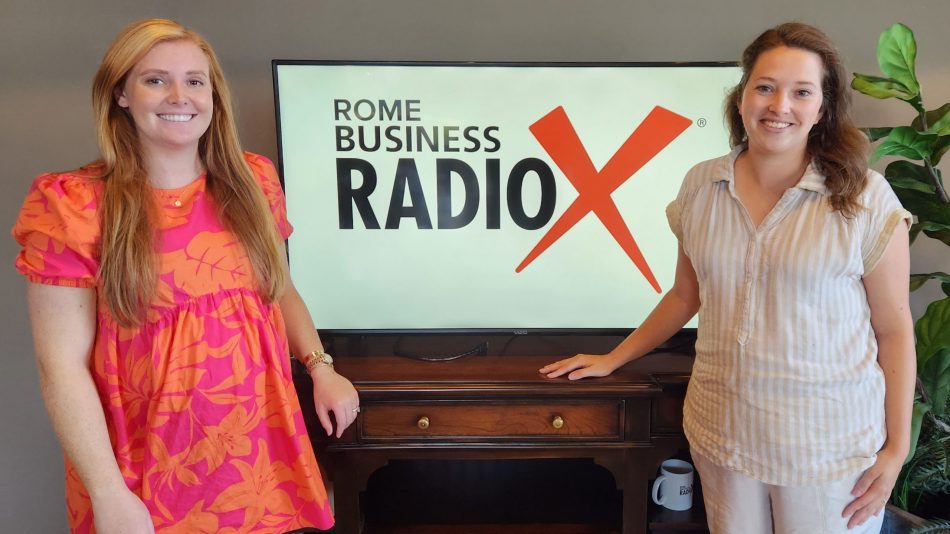
The Rome Floyd Chamber Show – Karley Parker and Amber West


/
RSS Feed
Dawn Boxell with Gastric Health

/
RSS Feed
In this episode of Digital Marketing Done Right, hosts Lee Kantor and David Brandon interview Dawn Boxell from Gastric Health, a bariatric healthcare provider. Dawn, a registered dietitian, discusses the gaps in care for bariatric patients that led her to create Gastric Health.
She explains the unique challenges of bariatric healthcare and the importance of specialized care and aftercare. She also emphasizes the need for evidence-backed solutions and building trust with the audience through scientific research. Dawn shares a rewarding proof of concept and discusses the challenges of technology.
 Dawn Boxell is the Founder of Gastric Health. She’s a licensed registered dietitian specializing in weight loss surgery.
Dawn’s career started in 1995, working at one of the very first bariatric centers in the United States, Winona Hospital Bariatric Center in Indianapolis, IN. Over these past 30 years, she’s been fortunate to counsel tens of thousands of weight loss surgery patients.
Dawn is proud to say the center she started at has transitioned into one of the very best and most highly regarded bariatric surgery centers in the United States, St. Vincent Carmel Bariatric Center of Excellence in Carmel, IN.
Follow Gastric Health on Facebook and Instagram.
This transcript is machine transcribed by Sonix
TRANSCRIPT
Intro: Welcome to Digital Marketing Done Right, a customer success spotlight from Rainmaker Digital Services and Business RadioX. We cover digital marketing success stories drawn from real Rainmaker platform clients and showcase how they use the Rainmaker platform to build their business. Now here’s your host.
Lee Kantor: Lee Kantor here with David Brandon. Another episode of Digital Marketing Done Right, and this is going to be a good one. Well, David, who do we got on the show today?
David Brandon: Well, today we’ve got, uh, Dawn Boxell from Gastric Health. How’s it going, Dawn?
Dawn Boxell: It’s great. Thanks. Nice for having.
Lee Kantor: Me. Well, before we get too far into things, Dawn, tell us a little bit about gastric health, how you serving folks.
Dawn Boxell: So gastric health is really about, you know, bariatric health care. We are serving the bariatric community before and after weight loss surgery.
Lee Kantor: So what’s your backstory? How’d you get involved in this line of work?
Dawn Boxell: Well, I am a registered dietitian, and I kind of started in this industry back in 95. I was at one of the very first bariatric centers, very, we’ll say, in the top five bariatric centers in the country. Um, and stuck with it. I just fell in love with the patients and I just enjoyed, thoroughly enjoyed the challenge that each person brought to me. So I just kind of got stuck in it in the aspect of I wanted to serve them more. So being in it for so long, I’ve been in it now for 27 years and I’ve literally counseled tens of thousands of patients and it really kind of highlighted some gaps in care and gaps in delivery of care. Being at a very large bariatric center, you really did get to see trends and you could see where health care, as it is to date, has many holes and gaps that we lack services to the end person. So someone seeking services at a health care facility, you know, the luxury of time is not there. And when it comes to bariatrics, they need time. And that’s what I wanted to create. So gastric health was kind of born. It was kind of evolved through a variety of things, but landed at gastric health. And really we just want to create a space for the bariatric community to kind of grow and evolve into kind of the new person that they’re desiring to be and wanted to provide maybe a little different type of care, different level of care, because I kind of take a spin of the conventional health care and the natural health care, and I merge them together and have a really big toolbox of solutions for resources to help support them in, you know, all of their health care issues and their weight loss journey. So I really I really try to cater more to the needs of the bariatric patient so that they can be successful long term with kind of a sustainable lifestyle.
David Brandon: So, Don, I do I did want to kind of ask so for our for our audience, two things. One, can you define what bariatric is for them? And then also, you know, what makes that specific niche, um, you know, unique or challenging or, you know, needs special care? What makes it specifically important?
Dawn Boxell: So bariatric is really just kind of it’s considered bariatric and metabolic surgery. So it is we’re doing a couple of different types of surgeries there. There are probably about five different surgeries out there that are most surgery centers will do. The majority of them are going to be like a gastric bypass or a gastric sleeve surgery. And with the intent to lose weight because they have at least qualified themselves with having a BMI of over 35 with some comorbidities. And this signifies them that they need help with their health conditions. And now what was the other question?
David Brandon: So like, what makes this niche different as a dietitian, you know, approaching this?
Dawn Boxell: So what makes us different with Bariatrics is one, you know, you get in two different camps because, you know. This niche is very special because not every health care professional believes this is a great strategy for weight loss. So many times if we would have. So where I am, we were the only provider for Medicaid. We would see any. And for a number of years, we were the only center of excellence, meaning that we were the only one that really met all the Medicare and Medicaid parameters. So we would have people drive four hours to come see their doctor and their dietitian. And so this would create a dilemma when they would have complications and need to go to a local facility because then they would be like, we don’t touch bariatric patients. You need to go back to your facility, go back to your surgeon. So that over the years, what we found was that, my gosh, many of our surgeons were needing to be skilled in more areas because their their primary care providers were not dropping them, but not really caring for them. They were dismissing and blaming any type of health care problem on the surgery. So they would say, you just got to go back to your surgeon. So it it created this environment where, you know, our the surgical team is now doing more things than what a general surgeon would normally do. So it just kind of grew and evolved into big programs where, you know, you needed nurse practitioners and PAs to manage any type of health care issues that come along.
Lee Kantor: Now, did the business evolve like you were working at this place and you saw this need for some, I guess, aftercare in some ways to help these people on their journey as they progress, you know, post surgery, is that that’s the impetus for creating this community. But is that the business model? Is that your your business is a community for folks who have gone through this kind of surgery and it’s a place for them to learn about the best ways to optimize that experience.
Dawn Boxell: Yeah, I would say, I mean, honestly, it started, I, I, I self published a food guide back in 2005 and I was allowed to, you know, sell it at our bariatric center. And I then kind of took that material. And when really the online stuff really shifted is when we just took it online and just decided, I don’t want to sell just a book. I want to I want to provide a service because there are so many gaps in care. For example, as dietitians and as practitioners in a bariatric center, you’re given 15 minutes with someone and I was given 15 minutes to figure out, okay, why is someone not losing weight or why they’re regaining weight? Or maybe while they’re why they’re having some you know, vitamin and mineral deficiencies or, you know, digestive issues, you know, all the things that come with it. You have 15 minutes there. You can’t solve those types of problems in 15 minutes. So that’s where it’s like there’s a better way to do this and and one with being in it for so long and seeing so many of the trends, you really do understand their needs a little better. And it’s it’s allowing me to kind of package information together so that it’s it’s easy for them to interpret and take that information and do something with it. So, you know, like my blogs and my podcasts and all my YouTube videos, you know, it really is designed with the heart of helping them with their problems that they probably maybe are experiencing now or will experience at some point.
Lee Kantor: And then it’s through it’s through the website. They learn about all of these different offerings and then it’s you’re giving them information for them to do it themselves. But is there a component where you do it with them or do it for them?
Dawn Boxell: Yep. So we kind of when we, you know, kind of evolved to putting everything online, I it kind of started with a challenge. I did a ten day challenge and it was a, it was really a challenge to, to get their mindset out of the quick diet fixes. So if you’ve had bariatric surgery, you’re doing this with the thought that this is my last ditch effort. You know, I’ve struggled with my weight maybe my entire life. And this is kind of my last Hail Mary of I’m I’m doing surgery because I need something permanent that can truly help me, you know, be sustainable with this. But that doesn’t change their mindset. So their mindset needs to shift from having a diet to follow to this is a lifestyle to follow. So, so yes, we did a ten day challenge and it just I mean, we’ve taken thousands of patients through this challenge and they were really getting good success and it was really through the lens of. We’re providing you a meal plan, we’re providing you a grocery list and all the recipes, and we show up every day for you for these ten days, and we do it all together. And I help guide them through that ten days so that they have, um, kind of the support and the motivation to kind of keep going because the meal plan is really focused to protein first, but then, you know, plenty of vegetables and fruits and things that they maybe are not used to, including in their diet. So it’s, it’s challenging them to to look at food differently and to utilize, um, kind of the whole food properties that can really benefit their health long term.
Lee Kantor: Now, all of this stuff you’re talking about is kind of the day to day of a dietitian, right? Doing having these conversations, sharing this kind of information. How did you make the pivot, I guess, to actually now running a website and an online business? Because those are different hats.
Dawn Boxell: They are? I don’t know. I think I’ve always been an entrepreneur at heart. I mean, I’ve I’ve pursued and desired to have a business. And I think my husband and I, he’s been an integral part in helping me launch all of this, especially in the beginning. He was kind of the back end side. He would help build some of these things within the website. So yeah, I would say, I mean naturally I probably have a little entrepreneurship, just blood going through me that I desire to own a business and I desire to have something more that I can have for my children and pass on to generations and have that, I guess, that timestamp of information that you can reflect back on and, you know, learn from, laugh at, and just kind of evolve through.
Lee Kantor: Now, what was the kind of the first signal you put a website together, you put out information, what was kind of the first signal or breadcrumb that you’re like, Hey, I think we’re on to something. This thing could work.
Dawn Boxell: You know, I would say that I would say the ten day challenge that we we really you know, we we put it in the Facebook groups. We were really probably heavy in the Facebook audience, mostly in social media. That’s our the, you know, our dominant area of audience and which kind of correlates with our demographic because our demographic is really like 45 to 65 year old females is who is having bariatric surgery. And technically that is kind of the demographics of Facebook. So you’re going to find the younger audiences on Instagram and TikTok. And so we find that we just have a bigger audience and. I do find that a lot of my audience are in health care. The majority, if not all of my clients, have a job in health care. Very few don’t. So I think my the way I approach it is I like to provide evidence backed. Solutions. So I document all of my recommendations with science. So there are links to research studies. Some of them I’ll have like 30 and 40 different research links in the podcast or the blog post that I am validating my reasoning of why I feel like this is a good solution. So I feel like they I. You know, kind of grew enough to allow them to trust. And to partner with them in health.
Lee Kantor: Now, when you’ve been doing this for a while now, is there a story that you can share that’s been the most rewarding kind of proof of concept that, Hey, I am making a difference, I am leaving a legacy. This is work that matters.
Dawn Boxell: Gosh, let’s see. I don’t know if I can think of one. Well, you.
Lee Kantor: Don’t have to name a name, but maybe share what their challenge was and how that you were the solution to that problem.
Dawn Boxell: I mean, I mean, recently I had a lady that she she came to me for genetic testing. So I do a genetic test to kind of help. Provide a roadmap when I especially when I have somebody that is really struggling with nothing, seems to be working, then I will likely recommend that we we check their genetics to really give me a better roadmap to see where to focus better. And that was kind of what she, she, she found me. Someone recommended me in a Facebook group. Um, she was really seeking out some help with gut health issues, which I kind of specialize in with digestion and improving your gut microbiome and again, the genetic test. And so she started learning more about me. And the first thing she’s like, I really want to do the genetics. And so we did the genetic test. And it was it was so interesting. For one, I would say I’ve never had a genetic test that I could literally not even have spoken to the person or read anything about their health. I can do the genetic test, um, interpret it and tell them everything that they’re struggling with and have struggled with from that interpretation. It’s so powerful in its way that it gives you really kind of the feedback that you need and the direction you need to go with someone. And for her, she had had, um, a bariatric surgery, a sleeve gastrectomy over a year ago and she was concerned about weight regain weight regain is a fear among all bariatric patients.
Dawn Boxell: I have yet to have one patient tell me that they don’t have some underlying fear of regaining weight. And her reasoning was, I want to understand my genetics so that I can maybe prevent this from occurring. And so we really we dug into her genetics. And, you know, it was interesting to see the areas that she really needed to focus on, areas that she has never focused on before. Um, when trying to achieve weight loss, she had never used this approach. And so it was really kind of an aha moment for her that she was like, okay, I have the tools I need. I this is what I need to be successful to prevent, regain. And if I notice that, you know, life happens and I’m back into some old behaviors, you know, all I need to do is either call you or look at my roadmap and and figure out where the areas that the genes may have been turned back on because of some, you know, life event that occurred and help. It kind of helps guide you on how to turn that gene back off. So I would say currently she’s probably the one that, you know, I get excited about the most because she took the information, she acted upon it. We we made a plan each each visit. And she went and did the work. And she found the success that she was desiring and she feels, you know, capable of maintaining her health long term with just that information.
David Brandon: That’s awesome. I really love, like, we’re getting some wins. We’re getting some things that you that are in your kind of natural purview, right? Like you’re you’re an expert dietitian, But one of the things that you’re not necessarily you I don’t think you have a background in is, you know, digital marketing or, you know, building websites or anything like that. So from a digital marketing and website perspective, what are some of the challenges that you’ve had to face and overcome through this process?
Dawn Boxell: Technology, for sure. I mean that for me, I have a clinical brain and it does not correlate with technology the same as other areas, even though, you know, maybe there are some similarities. My brain does not think the way that technology lays out. So I do struggle with just understanding how to set things up and how to, um, you know, put a class together. And now I’ve, you know, over the years, the blogs, the podcasts, all that stuff, I’m good at it now. I can, I can maneuver through that. But initially, you know, there was a learning curve of just knowing the right steps to do to to get it. Launchable even just to get it so that we could, you know, make it live. So, so, yeah, to me, definitely the technology is really the hardest piece.
Lee Kantor: So how did you deal with it being difficult and challenging? How did you approach it? Did you just dive in and just tried some stuff or did you get help right away?
Dawn Boxell: So so yeah, I would say, well, initially my husband is he was really his brain is more business driven. He’s more of the business minded person and he definitely understands more of the technology than myself. So at the beginning he did the majority of all the technology and putting all that together, I would do all the content. He would do all the technology. Um, more recently, his career has just kind of shifted and he’s, he doesn’t have the ability to stay engaged and help consistently. So that’s where we, we’re kind of, we’re relying on partnering with people like Rainmaker to help us move this forward so that we can be successful in providing the content that we want to deliver.
Lee Kantor: So now when you decided, okay, I need help and I’m going to reach out to the Rainmaker, folks, what was that process like? Did they take you through? Can you walk through what that onboarding was like and how they got to the heart of your problem and helped you solve what you were challenged with?
Dawn Boxell: Yeah, I would say it kind of started, you know, we had a contact. I think we created a contact with just some questions. We would send some questions, you know, through the the Help Desk. And, you know, they would help us with just immediate needs. They’ve always been responsive and and getting problems solved on the back end side when we would see that things were, you know, not doing what they’re supposed to do, we could just reach out. And that that has gone well for us. And then we just had a contact from Rainmaker with Katie, and we were able to start the conversations of this back end technology piece that we’re now faced with that now, Dawn, who doesn’t have the technology mindset, is in charge of all of this, needs help and so that’s where we’re kind of working through kind of how how Rainmaker is going to help serve us through this piece and get us get all the details in place. Because, again, you know, there’s with any business and especially any online platform, there’s always little things that need to be tweaked or improved. And that’s what we’re in the midst of. We are working through that plan now so that we can kind of develop some new programs that will lead into some memberships and the ability to have, you know, more clinical staff and more resources that will be available to the community.
David Brandon: So that and I can actually I can actually speak to that too, because I’ve been involved on the other side of it, you know, something that they’ve been doing that we’ve been working with them on pretty closely is, you know, really making community and membership kind of more of a central piece of the process, which I think to everything Dawn said at this point is really important as far as her niche.Yeah
Dawn Boxell: Right.
Dawn Boxell: And eventually that’s where it needs to go. We have to get to a membership model. We kind of started a membership model and I think we’re a little early for it. So we have kind of thought we might we might pause it for a minute so that we can have the full time to kind of write it all out or write the book. If, for lack of a better way to say it, you kind of have to write the end product and then the rest flows out of that. And that’s kind of where we’re at. So I need the time. And that, I would say, is my second issue is time. You know, not only my husband and I have been married for over 30 years and we have four kids and they require attention, although they’re all teenagers and young adults, they still require attention. So and, you know, just that piece of managing, you know, a family and a business and just making sure everything is accounted for. You know, there’s never enough.
Lee Kantor: Time now in this community. Would it like, who is the ideal participant in the community? Is the community member just someone who went through bariatric surgery? Is it somebody that’s a health care professional that deals in bariatric? Is it a caregiver or somebody that is related to somebody that’s going through this? Like who? Who would be the community members in your ideal world in this future?
Dawn Boxell: You okay. So and I will say we will work through to a model that will allow bariatric support, but then we will also have a non surgical arm to it so that if you say you have a family member that you know, maybe hasn’t had bariatric surgery, but they desire to kind of follow along with you, we could help support them in that way. But I would say right now, you know, my main focus is to write the book, get this deliverable content out to them so that we can then really have kind of the back end available of a ton of resources that they can kind of binge on and and learn from with, you know, video content, you know, written audio, all of that that they can, however they learn best, they’ll have those resources to kind of. Take from.
Lee Kantor: So that’s where you see the kind of the the biggest opportunity is just finding that portal that has all this information no matter where you are in the process. But it is scientifically based not, you know, some of these kind of opinion oriented solutions.
Dawn Boxell: Right. And and it’s sustainable. So for me, it’s important for this to, you know, I can write you a diet that you can lose weight in ten days. Um, but you’re probably going to regain it as soon as you go off of that. So to me, it’s important that this is sustainable and that they have the space and the support to build, the confidence, to take the action, to be consistent long term. And that. Doesn’t happen in ten days or 30. That takes time.
Lee Kantor: Right. And so, yeah, it’s managing the expectations as well because the person thinks they’re just getting a surgery that’s solving a problem. But this this is part of the solution. But the solution is a lifestyle change for real.
Dawn Boxell: It is. And and they they know that. They know that going on at least at the center that I worked at. Um. They were told many times that, you know, this is the beginning. The hard work begins after the surgery. And there is a lot that goes into changing your behaviors and lifestyle. So. For them. It’s it’s they need the time to be able to do that.
Lee Kantor: So you so you found, though, that rainmaker has been a good solution partner for you to enable you to get this information out there and get products out there and services out there in a way that you didn’t have to be kind of an I.T. genius tech superstar in order to do that, that there’s enough kind of support around you and enough power to the portal and the platform that allows you to do what you’re trying to do.
Dawn Boxell: Oh, yeah. I mean, again, my husband did a lot of the back end building when we we did we did a ten day challenge that rolled into a 30 day class. And they had like for the ten day, they had videos for ten days and we were easily able to create the video, upload it into Rainmaker and put it into the whole course that they then they would have the links to go and, you know, go into the content each day and learn that that, you know, information that I was providing. And then the same with the 30 day class. We even did a quiz and we had giveaways. We gave away a $600 Vitamix blender to one person at the end of the 30 days so that it challenged them to learn. And so each week was a topic and we built all of this in Rainmaker, and we had a quiz that at the end of the week they had the content that they they had to review each day short videos or, you know, it was, you know, four and five minute videos and then you would do a quiz at the end of the week. And then at at the end of the four weeks, then everybody who completed all of the quizzes were put into a drawing to win a Vitamix for going through the process.
Dawn Boxell: And for a lot of them, it really helped them see that. You know, they they really needed to dig deeper. It was more than just calories in, calories out. Why they were back to old behaviors or why they were seeing some regain had more to do with um life issues and how they were managing it and their coping mechanisms and how they, um, hadn’t, you know, lost those strategies that they used prior to surgery. They were still trying to apply them after, but they don’t work anymore because they’ve had bariatric surgery. So it allowed them to see that, hey, I have some inner work to do and let me focus there for a little bit and that will help me continue to grow. And in that 30 days, we had several people that they really they really kind of discovered discovered that they didn’t feel they had purpose in life. And that is where they needed to focus, that they needed to find what makes them happy, what brings them joy, and to go down that path because the food is not going to fix that. They had. They need to do more work on the inside, right?
Lee Kantor: It’s more holistic than a surgery. It’s not a like it’s a whole process. It’s very complex. What what do you need more of and how can we help?
Dawn Boxell: You definitely need the technology help for sure. And yeah, I think once I write this book, which essentially is happening in a few weeks, I’m, you know. I’m going away and initially taking this time to really I’ve already got all the notes together. I’m just putting it together and how I really want this to play out for, you know, the bariatric community so that they have the resources that they need. And then, boy, we’re going to need lots of, you know, technology help to pull this off. And and then, you know, the VA’s already have four VA’s that we’ve hired and they do video. They help me with the blog and SEO. They help me with the podcast and editing and all that stuff and then email. So email is a big one that we have never been good at and we have never really done. So that is our next big step, is really tackling our email nurture sequence so that our audience, when they when they actually come in and they they buy something from our site that they actually hear from us again, besides just an invoice of, Oh, thanks for your purchase. So, so email nurture sequences is top of list and that is where we’re going next. I think with Rainmaker, they’re going to help us with this piece in, um, and, and the layout that our, our front page layout needs tweaked.
Dawn Boxell: We, we did develop a supplement line with me using kind of the natural and the conventional world together there are supplements and the bariatric community they are required to take supplements for life. This is a known thing and this is something that they are prepared for. And um, I developed a supplement line that really is more about digestive health because I found that was a big issue. And so we kind of with the ten day challenge, it kind of just we, we made this landing page and we just started utilizing these products and we’ve kind of just evolved it. We added WooCommerce and kind of developed that piece back in piece so that we could have a, um, the actual retail store that they could purchase products from. And that’s kind of what our front page shows. And we want it to be more that our front page shows all the good services that we offer and eventually, you know, the membership and all of that that will be so important. And the supplements are there as a side benefit and not as it appears now that it looks like the supplements is the main business. And that’s not our goal and that’s not our focus and heart.
Dawn Boxell: But it just kind of turned into that when, um, you know, initially Rainmaker wasn’t, um, WooCommerce wasn’t there, so it wasn’t made for a retail site. And my literally God bless all of our, our clients who purchase from us because they would they would have to they could not buy like two products. Together, they would have to. The way he built it was he had they had to buy one product, then go back and check out, purchase it, go back in, buy another product and check out. Because it wasn’t that. It was more designed at that time to not be for retail. And it wasn’t until they added that piece that it you know, we added the WooCommerce that made it so much simpler and so much, um, it was a better experience for our, our clients when they visited our site. It was before it was pretty painful for them to actually purchase something from us. But now it flows well and it does well. But we want forward facing, we want that to, to be the, the services and and the care that we want to provide. That should be the main face of our website, which is what Rainmaker is going to also help us accomplish.
Lee Kantor: So what is the the website if somebody wants to go on and check it out.
Dawn Boxell: Gastric health.com.
Lee Kantor: Well, pretty straightforward and simple. Well, Dawn, thank you so much for sharing your story today. You’re doing such important work and we appreciate you.
Dawn Boxell: Awesome. Thank you.
Lee Kantor: All right. This is Lee Kantor for David Brandon. We will see you all next time on digital marketing done right.
BRX Pro Tip: Selling – Use the Story Structure

/
RSS Feed

BRX Pro Tip: Selling – Use the Story Structure
Stone Payton: [00:00:00] And we’re back with BRX Pro Tips. Lee Kantor and Stone Payton here with you. When it comes to the mechanics of selling, your counsel is to use a story structure. Walk us through that a little bit, if you would.
Lee Kantor: [00:00:14] Yeah, I’m a big fan of Don Miller’s story brand and just the power of storytelling as a way to communicate the value of the service to the prospect. And Pixar is a movie company that does a great job of telling stories. And I think that a lot of kind of their technique of how they tell a story is applicable to the way that we tell a story and the Business RadioX story. So, they use something. They have kind of these little hooks that you fill in the blanks after the hook, but their thing is every day, something happens, until one day, something else happened. And because of that, there was some change that happened. And then ever since then, I got some result.
Lee Kantor: [00:01:09] So, the way that that would work for Business RadioX would be every day I struggled to meet my best prospects, until one day I discovered Business RadioX. Because of that, my best prospects want to be interviewed on my show. And ever since then, my business has grown. So, that’s kind of our story, and it fits very nicely in the Pixar story model as well. But the whole thing is remembering that Business RadioX isn’t really the hero of the story. We’re the guy that helps the prospect be the hero that they want to be to solve the problem that they’re trying to accomplish. We’re just there to help them get there.
BRX Pro Tip: Framing is Key
/
RSS Feed
BRX Pro Tip: Framing is Key
Stone Payton: [00:00:00] Welcome back to BRX Pro Tips. Lee Kantor and Stone Payton here with you. Lee, we all know framing is key. But let’s unpack that a little bit.
Lee Kantor: [00:00:11] Yeah. Especially in our work, when you’re talking to a prospective client, it’s important for them to understand the value they’re getting from us. So, a lot of times, you’re going to have to reframe what they think they’re getting and what they’re actually getting when it comes to sponsoring something or opening up a studio. So sometimes it’s not obvious what it is that they want and they desire and they get kind of confused.
Lee Kantor: [00:00:36] And something I read recently illustrated this pretty well. Mercedes and BMW stopped showing up at car shows. Because when they were at the car show, they were the least affordable choice and that didn’t help their sales. So, what they did was they started showing up at airplane shows where they were a more affordable choice. So, when they changed the frame in the eye of the buyer from something that looks expensive on one hand to, now, inexpensive, on the other hand, when it’s in the context of everything else, that they sold more.
Lee Kantor: [00:01:10] So it’s the same thing when we talk about our value to our clients. When we’re talking about the annual and lifetime value of a customer, we’re not talking about how much it costs to record a show or produce a show. We’re talking about big numbers and how this plays into helping them get these larger accounts in front of these customers that are difficult to reach. And we’re talking about how this is an elegant, really affordable way to do that. Rather than comparing it to somebody recording or pressing record on their iPhone.
Lee Kantor: [00:01:48] So, it’s important. The framing is important when you’re communicating to your customer. And it’s important to kind of put our positioning in that area of we’re helping you achieve something that’s very difficult. And we’re helping you do it in an elegant non-sales way. And it’s going to help you make a lot more money. So, it’s worth what we charge.
Systems Checkup List
Amy Beth Danzer With Printers Row Lit Fest

/
RSS Feed

 Amy Danzer works at Northwestern University where she manages several master’s programs, including the MA in Writing and MFA in Prose and Poetry programs. She directs the Northwestern University Summer Writers’ Conference and Chicago’s Printers Row Literary Festival.
She serves on the Board of Directors for the Association for Graduate Liberal Studies Programs, and as President for the Chicago Literary Hall of Fame’s Board of Directors. She is also on One Book One Northwestern’s steering committee. She has made two appearances on Newcity’s Lit 50 list.
On the side, she interviews authors for Los Angeles Review of Books, Newcity, and The Rumpus, at bookstores and literary festivals. When she isn’t working, reading, or writing, she’s regularly at literary and storytelling events around Chicago, and occasionally shares a story of her own.
Connect with Amy on LinkedIn and follow her on Facebook.
What You’ll Learn In This Episode
- About Printers Row Lit Fest
- Why Amy thinks this festival resonates with authors and readers
- Why some people still like to have an actual book in their hands
- How e-books have affected the way people read
- How the COVID-19 pandemic changed the event
- What Amy sees for the future of Printers Row Lit Fest
This transcript is machine transcribed by Sonix
TRANSCRIPT
Intro: Broadcasting live from the Business RadioX studio in Chicago, Illinois. It’s time for Chicago Business Radio. Brought to you by firm Space, your private sanctuary for productivity and growth. To learn more, go to firm spacecom. Now, here’s your host.
Max Kantor: Hey, everybody. And welcome back to another episode of Chicago Business Radio. I’m your host, Max Kantor. And before we get started, as always, today’s show is sponsored by Firm Space. Big thanks to Firm Space because without them, we couldn’t be sharing these important stories. And on today’s show, we have a good one for you. Today. We have someone who manages several master’s programs at Northwestern University, including the Ma and Writing and the MFA in prose and poetry. She also directs the Northwestern University Summer Writer’s Conference and Chicago’s Printers Row Literary Festival. So please welcome to the show, Amy Danzer. Welcome to the show, Amy.
Amy Danzer: Thanks for having me, Matt. So nice to be here.
Max Kantor: I’m excited to talk to you about everything that you’re doing. So let’s jump right in. Tell me a little bit about the printers Row Lit fest.
Amy Danzer: Gosh, it’s such a joy to be a part of it. It’s this is its 38th year. It’s one of the oldest literary festivals in the country and definitely the largest lit event in the Midwest. It’s going to be Saturday, September 9th and Sunday, September 10th, all day from ten in the morning till 6 p.m. we’ll have programing. So my job, I’m the director of programing for the Lit Fest, so I deal specifically with authors and poets and and that sort of thing. So we’ve got over like 200 presenters who are participating in the programing, 75 plus programs and just something for everyone. We’ve got poets, we’ve got children’s programing, we’ve got nonfiction writers, we also have exhibitors. So we take over like five blocks in the printer’s row neighborhood, which used to be like the printing hub of the publishing hub of the Midwest. And and so we’ve got streets just lined with exhibitors. We’ve got like over 100 exhibitors this year. So you can just kind of walk from, you know, tent to tent and do a little book shopping. But it’s not just book sales. There are literary organizations and publishing houses, MFA programs that are there to kind of talk with people about their programs. So so that’s a little bit about the the program or the literary fest.
Max Kantor: So talking numbers wise about how many authors and poets do you expect and how many visitors are you guys expecting?
Amy Danzer: Yeah. Like on the programing side, we have I think we’ve got like 220 or 230 at this point. Wow. On the exhibiting side. So there are tons of authors that also are exhibiting, I would say. I mean, there are, let’s see, like 118. But that but at each tent, sometimes, you know, authors, there’ll be like a couple or few different authors in one tent. So, I mean, I don’t know, like 500, maybe more than that. So it’s really a great opportunity to talk with writers and, you know, get your book signed by some of your favorite authors, listen to them, talk about, you know, read from their new books, get autographs.
Max Kantor: Totally. And with with numbers that size, I mean, even if you don’t know a single author going to this festival, odds are you find something that you enjoy or interested in.
Amy Danzer: I think so. You know, and I think, you know, sometimes people are like, you know, I want to read more. I just don’t even know where to start. You know, I go to, you know, the bookstore and there are just so many books and people can get overwhelmed. And the lit fest is a really nice way to just kind of sample, you know, just what’s what’s new and out there and just to kind of hear from a variety of of authors. We have just such incredible diversity. It’s just definitely something for everyone. We also have children’s programing. Um, yeah, for the little people in everyone’s life lives. So we’re going to have a storybook parade. Costumes are optional, way more fun, but totally optional. Um, and the, the Chicago Public Library, which is celebrating its 150th anniversary, their great Horned Owl mascot is going to be leading the parade along with Miss Friendship Ambassador Miss Friendship Ambassador with the Chinatown Chamber of Commerce. Um, so that’s going to be fun. And then it’s going to kind of end it’s going to kind of circle back to center stage where we’re going to then have like a little bubbles and bookmarks dance party and there’s going to be storytelling On Sunday. We’re going to have a drag story hour with Mrs. Uka. Um, that’s going to be awesome. And then. Hawken is going to do a draw along like a reading and a draw along. So just lots of really fun stuff for the kids.
Max Kantor: Totally. There’s activities for everybody no matter your age. Correct. So you mentioned this festival has been going on for almost now four decades. Why do you think this festival resonates with so many people? What has kept it going?
Amy Danzer: Man. I just I feel like a lot of there are a lot of, like, angels of the festival. Like just guardians, I should say. Guardian Guardian angels of the festival that have just really, um, just help, help keep it going, you know, whether by, you know, helping to fund it, helping to organize it, helping participate in it. There are just so many people that are involved and have such a, you know, fond memories of the, you know, and experiences with the festival. Um, I mean, the festival is free and open to the public and so it’s very inclusive, it’s very accessible. And I think because of that, it just has such a great reach and, and just a lot of people are invested and, and it does so much for the community, I think. So it inspires reading and connections. Um, you know, as much as there’s like fantastic programing going on and shopping to be done, there’s just, there’s also a lot of networking to, to, you know, to, to do at the festival. Um, you know, if you’re a publisher or a bookseller or an aspiring writer or an experienced writer, there are I mean, it’s just a great networking opportunity to just meet, you know, other people in that same, um, in those same fields and just to kind of pick their brains and just establish relationships or, you know, reunite at the at the festival. I feel like a lot of people only see each other from Festive Fest.
Max Kantor: So you talked a lot about just then networking and, you know, the community aspect of this festival, and that’s what it sounds like. It’s not just a festival where you go buy a book and leave. There’s people making connections, talking to each other. Um, and to do that, I imagine you get support from the city to help you put on this festival. So can you talk about the kind of support that you’re getting from the city of Chicago to help you put this on?
Amy Danzer: Yeah. I mean, I, I’m a little bit removed from like budget and that sort of thing. But I do know that DC’s helped make this year’s festival possible. Um. Betty and Joseph Fineberg Foundation also helped make it possible. Um, and then, um, and again, there are just so many volunteers that that help make everything happen. So we’re really fortunate for, for everybody who cares about the festival and wants, wants it to be a success.
Max Kantor: Now, can you talk about some of the author speakers you might be having anyone that you are highlighting or showcasing at this year’s Fest?
Amy Danzer: Yeah. Our, our our opening presenters are 2023 Pulitzer Prize winners for nonfiction, Toluse Olorunnipa and Robert Samuels. They wrote the book. His name is George Floyd One Mans Life and the Struggle for Racial Justice. And they’re going to be in conversation with WBEZ’s South Side reporter Natalie Moore, which were really delighted to have them join us. Just following that that presentation that’s going to be on the the Jose Joseph and Bessie Feinberg Foundation stage is Curtis Sittenfeld. She’s the writer of romantic comedy, which was like a Reese Witherspoon selection. It’s it’s getting a lot of fun attention. But she’s going to be in conversation with WBEZ Susie an also super excited, kind of like a new addition to the festival is Jack Bender. You might know him as the director for Lost and Game of Thrones and The Sopranos, Mr. Mercedes. But he’s an artist and storyteller and writer, and he has a children’s book coming out this fall, which will also be available at the festival. Um, but, and usually I don’t think he’d be able to join us. But because of the writers strike right now, he’s got a little wiggle room in his schedule. So that’s super, super exciting. Um, on a more local level, we’ve got just some incredible writers like John Eigg who will be at the fest.
Amy Danzer: He has a new book out right now. It’s a biography of Martin Luther King Jr. It’s called King A Life. It’s an instant New York Times bestseller. And I think it’s like the first biography of Martin Luther King Jr in like 40 years. So that’s going to be an incredible interview with him. We have a number of poets laureate, so we’ve got Avery R Young, who is Chicago’s inaugural poet laureate. We’ve got Angela Jackson, who was an Illinois poet laureate, and we have Nandi comer who is Michigan’s poet laureate. So they’ll be in they’re going to do a reading and be in conversation with Parneshia Jones, who works with Northwestern University Press, who will have a table there as well. Um, Rebecca Makkai will be there. She has a new book out entitled I Have Some Questions for You. That’s a New York Times best seller. And she’ll be in conversation with Gina Frangello, who’s just a remarkable writer. Um, anyway, I could go on and on. I recommend people take a look at our schedule, which is posted and just kind of, you know, just go through it. Mark whatever, you know, captures your attention. There’s just, again, there’s like 75 programmers or programs and over 200 presenters, so lots to choose from.
Max Kantor: Totally. I know I mentioned this earlier, but to reiterate, you guys truly have something for everybody for sure. Anybody coming to this festival can find something they are interested in, and I think that’s what makes it so cool and interesting. And I’m curious for you personally, is there an event or speaker that either you mentioned or haven’t mentioned yet that you personally are most excited about?
Amy Danzer: Max. They are all my favorites. I really I have to say, I mean, I’m just so excited about each program. I mean, the sad, sad thing for me is that I am stationed in author check and hospitality all weekend, so I miss all the programing, but in my head it’s just it comes off perfectly and everybody is just charming and brilliant and yeah, but I’m also excited about a couple of podcasters that are coming in from out of town and out of country. Actually. There’s just a wonderful poet podcaster named Patrick Otwoma and he has a podcast entitled On Being. And and what he does on that podcast is he reads a poem, unpacks it, and then reads it again. And it just really illuminates the art and the brilliance of of the poet, the poet’s writing. And so he’ll be at the festival interviewing Sheriff Shanahan, who has a new book out right now. Um, and so I think they’re going to that format is going to be kind of similar. Sharif’s going to read from his new book and and Patrick’s going to interview him. We also have Mitzi Rapkin, who has a podcast entitled First Draft, a Dialog on Writing.
Amy Danzer: And she’s also just incredible. She has just so many notable authors on her show. I mean, just, you know, you’re a podcaster. It takes so much more work. Do people have any idea of about And and so she’s going to be interviewing Antoine Wilson at the festival, who was like Barack Obama’s like favorite novelist of 22. Um, so that’s going to be a really incredible interview. I think she’s going to be recording it live, too, from the festival, which is exciting. I think that’s the first time we’ve done that. Um, so and then we also have I’m just thinking about it. Lindsay Hunter is a writer and podcaster, and she’s going to be interviewing Jenna Friedman, who has a collection of essays out right now called Not Funny. Um, and so Jenna, is this a really awesome comedian, feminist, political, um, just really smart and funny and, and that’s another one. I’m really sad I’m going to miss. Um, but yeah, that’s going to be a really good conversation. I’m certain of it. So yeah, those are just a few few more for you.
Max Kantor: Max So, Amy, what do you see for the future of the printers Row Lit Fest?
Amy Danzer: Um, I don’t. You know, I don’t know. I mean, I love it the size it is. Um, I feel like I’d be. I’d be fine with it getting bigger and maybe having some. Some reach into other neighborhoods across the city to kind of bring pieces of the festival to people. Um, but I just, I just love also, um, just its current iteration, I think it’s, it’s, there’s so much for everyone, but it’s also not too overwhelming, um, you know, which I feel can kind of paralyze people sometimes, you know, psychologically. Um, so we’ll see. But, I mean, next year is going to be the, I think it’s like the 40th anniversary of the fest. Um, so this is the 38th annual. But we, you know, we were interrupted with Covid for one year. So, so I’ll be interested to talk with the, the higher ups to see what kinds of ideas they have for next year. But um, yeah.
Max Kantor: So my last question for you is a question I love to ask each guest that comes on Chicago Business Radio for you. What is your favorite thing that you get to do in regards to the printers row lit fest?
Amy Danzer: Mm.
Amy Danzer: It’s so funny. You know, the grass is always greener, right? So when I was first exposed to the lit fest, um, a girl friend that I had gone to, to, to school with, she had invited me and I was like, wow, this is amazing. Like, this is just so fantastic. And it was just such a wonderfully indulgent thing to just kind of go to the festival, listen to authors, talk about their books and read from their books, and then maybe have a glass of wine at like, you know, the, you know, one of the restaurants, you know, right on that on South Dearborn. Um, and talk about what we had just heard and, and and then go listen to some more and browse some books like that was that was just such a treat. And then I was like, you know, very interested in becoming involved. And so at one point I was invited to moderate a discussion and that was super exciting. And then I moderated another conversation and with all I’ve got, you know, a number of different hats that I wear in the literary world. So I’ve got some experience like coordinating events, like literary events and participating in them. And so one thing led to the next, and now I’m in this role and, you know, this is kind of a dream job for me. Like, I really I love so much about it. But there is also a part of me that kind of wishes, you know, is nostalgic, very nostalgic for when the fest was new to me. And I kind of hope that for for other people that they get to have that experience, too.
Max Kantor: So, Amy, the festival is coming up. If people want to learn more about it, do you guys have a website and can you remind us of the dates and times of the actual festival?
Amy Danzer: Yes. So the website is it’s just printers row lit fest.org. And the dates are Saturday, September 9th and Sunday, September 10th, ten inches the morning till 6:00 in the evening. And that’s also the same weekend as Taste of Chicago. So it’s kind of it could be a twofer for people they can pop over to Taste of Chicago, get some good food and then stop over at the lit fest and listen to some good conversations or vice versa. So it should be a really it should be a really exciting weekend. Yeah.
Max Kantor: Reading and eating. It’s a perfect combo. It’s a perfect weekend.
Amy Danzer: Books and food.
Max Kantor: Yes. Well, Amy, thank you so much for being on Chicago Business Radio. It was awesome to talk to you. I mean, you guys are doing great work over at the fest and I can’t wait to stop by in, what is it, next week? I think September 9th and 10th.
Amy Danzer: A week and a half, yeah.
Max Kantor: So thanks again for being on the show today. It was great talking with you.
Amy Danzer: Really nice to be here. Thanks.
Max Kantor: And thank you for listening to another episode of Chicago Business Radio. I’m your host, Max Kanter, and we’ll see you next time.
Intro: This episode of Chicago Business Radio has been brought to you by firm space, your private sanctuary for productivity and growth. To learn more, go to firm Space.com.
Gerald Griffith with Corridor Publishing

/
RSS Feed
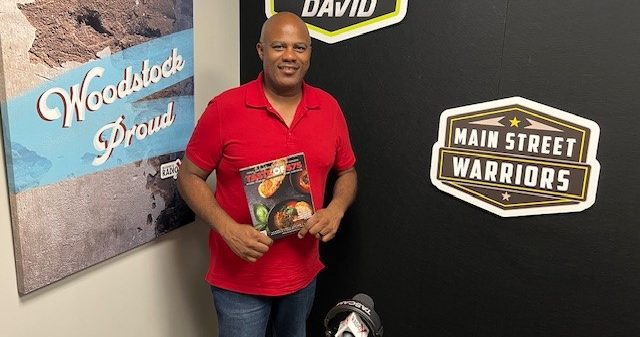
 Gerald Griffith is the owner and founder of Corridor Publishing, the parent company of Taste of 575 and other brands currently under development. He relocated to Cherokee County in 2009 from Northern Virginia with his wife and kids.
During his time here, Gerald has continued to be very active in the business community. Until 2022, he spent most of his time working as the Executive Producer of an international conference for Professional Voice Actors, VO Atlanta. When that ended, he pivoted to focus on local efforts and interest.
With a degree in computer technology, experience as a combat veteran in the United States Army, and a background in graphic design and printing, Gerald started Corridor Publishing. The company represents several brands, but is currently focused on the Taste of 575, a food and dining guide, and Corridor Printing, a small printing business that offers custom printing services and support.
Gerald is proud to call Cherokee County home and greatly values the many friendships he has established over the years. Through his new business, he hopes to continue making an impact in the area and encouraging others along the way.
Follow Corridor Publishing on Facebook, Instagram and Twitter.
This transcript is machine transcribed by Sonix
TRANSCRIPT
Intro: Coming to you live from the Business RadioX studio in Woodstock, Georgia. This is Fearless formula with Sharon Cline.
Sharon Cline: And welcome to Friday. Fearless formula on Business RadioX. And this is your host, Sharon Cline. And this is where we talk about the ups and downs of the business world and offer words of wisdom for business success. And today on the show we have the owner of and founder of Corridor Publishing. This is the parent company that publishes Taste of 575 magazine. I’m very excited to talk to Gerald Griffith. Hello.
Gerald Griffith: Hey, Sharon. How’s it going? Good. How are you? I’m doing wonderful.
Sharon Cline: Yay. I’m so glad to have you on the show. It’s been interesting because I have noticed this magazine like for a couple issues now. And one of the reasons that I had Sylvie on our on our show is because you had interviewed them for your magazine. And so I think it’s funny how our like, worlds kind of all overlap and collide like that. So thank.
Gerald Griffith: You. It’s a small.
Sharon Cline: Community. It is. And now they’re like good friends of mine, which is so crazy. All right, so I’ve been reading your bio and you’ve been around Cherokee County for quite a while, but you started in Jacksonville, Florida, which is where I’m originally from. And then you were in Savannah in the military and you were in radio, which is cool. So tell me about that.
Gerald Griffith: Well, I tend to get involved in a lot of things. My travel time was when I was doing in the military, so when I left Jacksonville, I was in the Army and went to Korea, then ended up back in Fort Stewart, Georgia, and at the time ended up in radio after coming back from Desert Storm. And oh wow, I didn’t.
Sharon Cline: Even know you were at Desert.
Gerald Griffith: Storm. Yeah. So I had a chance to to do a short stint in radio and ended up moving back into Florida, then up north doing it stuff for a while. So my, my degree in technology is kind of what I did in college, things like that. So. Wow. Just dabbled in a lot of different things and have fun learning all the way.
Sharon Cline: You’re like a jack of all trades kind of person, don’t you think? You know, if you’ve got a lot of different skills and a lot of different places. So yeah, the.
Gerald Griffith: Funny thing about that phrase, it’s just a really quick story with that is, you know, most people will say that and they’ll have mixed intent when they say it. Sometimes, but the actual phrase is jack of all trades. Master of none is oft times better than a master of one.
Sharon Cline: Listen to that. I never actually knew that whole phrase. Yeah.
Gerald Griffith: So it was intended as a compliment that a person could do a lot of different things, which meant in the theater world, they were more useful to the production. Oh, instead of someone who was a one trick pony.
Sharon Cline: So that’s you. You’re useful in lots of ways. I like to think so.
Gerald Griffith: So when I heard the whole thing, I was like, Oh my gosh. All this time they were cheating me out of a compliment.
Sharon Cline: Heck, yeah. Yeah. I’m glad to know that whole story. Because it’s funny sometimes that’s referred to me because I have like my, I don’t know, my toe in lots of different places. So I do appreciate the idea of saying, you know, you have a lot of diverse skills that can be plugged into different places. I actually didn’t think about it like that.
Gerald Griffith: Yeah. And a lot of things are like that because, you know, you just have to be able to do different things. Communication skills is an important thing. Being able to talk to people on a lot of different levels, being able to work in a technology space. So when I was in corporate, I would have to work with people in the call center who may have just started working with computers. But I’d also have to work work with the VP or the president of the company, who may also be new to computers, but their place in the company and what they needed from me was different.
Sharon Cline: So you have to shift your energy.
Gerald Griffith: A little bit. You’d have to shift and be able to be very dynamic in that process and then go back to the IT department and talk to people who were tech minded. Yes. So it comes in handy. And I think having grown up in a large family down in the South and always being around different people of different backgrounds, you you get used to talking to people from a lot of different walks of life and things like that. And so it just all layers on top of each other and works out well.
Sharon Cline: It does. I do think that’s a skill. There are some people who struggle in like that social setting, but like if you feel like you can talk to anybody at any time or at least find a commonality, there’s something kind of calming about it. You’re never going to feel like you’re in the wrong place.
Gerald Griffith: Absolutely. Absolutely. And people enjoy that when they feel that you’re not talking up to them or down to them, but you’re talking to them relating.
Sharon Cline: Absolutely. I love that. How did you like being in radio?
Gerald Griffith: I liked it. I did it. I think they gave me a shift. I’m still you know, in hindsight, I look at it, I don’t know if it was just because I was okay at radio or because they couldn’t find anyone else to work the midnight to 6 a.m. shift or something. It was a small gospel radio station there in Savannah, Georgia, on the river. And it was great. It was it was great to go there. And the only hard part about it was the hours between 3 and 5 Oh and that sleep.
Sharon Cline: Oh.
Gerald Griffith: Yeah, it was it was tough. I’d be walking around the studio trying to do all kinds of stuff to stay awake.
Sharon Cline: That’s like I always think about how like there are some cultures where that’s like your siesta time, that’s where you nap and then you get up at like 6:00 and then you, you’re up until like ten. But there’s something kind of am oh oh Am Oh, I thought you were talking about afternoon.
Gerald Griffith: This is 3 a.m. to 5 a.m.. Oh.
Sharon Cline: So you work night shifts and all that. Well no, I can’t imagine. Yeah.
Gerald Griffith: I was like, man, that’s a late siesta.
Sharon Cline: I don’t like I was. But although I do get that thing where after lunch, I’m like, so tired. I know, you.
Gerald Griffith: Know, I know. But it was. It was great. I think it was always a good experience. I think back even in the summers, I would go to Fernandina Beach and be in a church setting. And so my brother in law was had a band. They were in a church band thing that they would travel around. And so I would often go with them when I was there and help set up the equipment and things like that. So I’ve always been around that space. I’ve got a brother that’s into music a lot, and so it was a very common thing for me to work in the space of hooking up things and being around people and things of that nature.
Sharon Cline: How did you get involved in the corporate world then with it then? The path. Yeah.
Gerald Griffith: The funny thing is, when I came back and got out of the military and everything, I had a short stint working at Toyota. Oh. But I was doing it stuff. I had always done it. I just never thought about it as a job. And one day I did a test drive with this gentleman. He worked at an IT company and we were just on the test drive, just riding. And he was chatting with me and everything, and I was telling him about the things I had done with computers. And and so we get back from the test drive and before we get out of the car, he said, So why are you doing this? You said you really should be doing something else. You know, you should be working with computers. You definitely know enough about that. And I was like, Well, that’s just something I do for fun, you know? He said, Exactly. That’s the best kind of job to have. Wow. And from there, I just one thing led to another. It was right before Y2K, and opportunities were very plentiful in it at that time. And I went to Philadelphia, and that was that was when I started working in that area.
Sharon Cline: So you were part of the group of people that would say, change your date on your computer before midnight?
Gerald Griffith: You know, I was in it during that time.
Sharon Cline: Yeah. And the stickers that they used to have on the sides of computers that would say, don’t forget to make sure that you’ve backed up your computer because everything’s going to end in.
Gerald Griffith: Yeah, No one no one knew what was going to happen. Yeah, it’s like, oh my God, is this like a bad movie or something?
Sharon Cline: But nothing happened. But still, it was it was a concern. So that was interesting. That’s probably a very interesting time to be in it.
Gerald Griffith: It was. But but the cool thing about it was if you had an interest in it, there was somebody willing to train you or teach you things like that. And so it gave me a really big opening to jump into the space.
Sharon Cline: All right. So you were in it in Philadelphia for how long? How long was that your stint?
Gerald Griffith: I mean, well. Technically, I guess I’m still in it because I do some. But I worked at various companies because a lot of the companies were getting bought and sold past that time. So I had the opportunity to find myself in a lot of transitions between one company to another. I went to Nextel and then about six months later they got bought by Sprint and it seemed like every company I’d go to like within six months or so they were bought by some other company which which always made life interesting. But yeah, but again, you just have to kind of get used to the transition. And a lot of those were contract things back then. And so just, you know, I worked at Ikea for a while for their headquarters, though. Interesting, which is just outside of Philadelphia.
Sharon Cline: Did you do it things for them as well? Oh, wow.
Gerald Griffith: I worked in the headquarters, which was behind the main showroom there. They had a small building. It was maybe three levels there. And most people don’t even realize it’s behind the building, but it’s back there and you go and they’d have all the internal workings of that headquarters location for North America.
Sharon Cline: Wow. Yeah. And then okay, so after I’m trying to like, I’m leading up your story to this magazine.
Gerald Griffith: So it’s all good.
Sharon Cline: It’s all good. So what happened after that? Like, where did you go after that.
Gerald Griffith: Ultimately ended up at Washington Gas light in in Maryland? Okay. So I had an opportunity to come down to Maryland did that And. Gosh, I was I was there when 9/11 happened. In fact, I was a few blocks from the Pentagon when nine over 11 happened. So that was that was a very interesting day.
Sharon Cline: Can’t imagine.
Gerald Griffith: Yeah, it was. It was it was it was another scene out of a movie. I looked out the window and you could see all these people running. And I kind of stood there a little perplexed as to where they’re running to. Where are they running from? They they didn’t know. They were just running somewhere. I just wanted to have lunch. Whatever was happening was way outside of my control. Wow. But I did it for the public utility there. And so we were in the Virginia area for about eight or about 8 to 10 years. We were there before moving to Georgia.
Sharon Cline: All right. So you get to Georgia, you get here to Woodstock or Cherokee County.
Gerald Griffith: We’ve always lived here in Woodstock.
Sharon Cline: So you’ve seen a huge change in Woodstock over the last, well, I don’t know, ten, 12 years.
Gerald Griffith: Oh, yeah. Yeah. There’s definitely a few more storage facilities and car washes and things of that nature. Absolutely.
Sharon Cline: Pretty soon, a little boutique hotel down the street. I know.
Gerald Griffith: It’ll probably have a car wash for you and.
Sharon Cline: Storage.
Gerald Griffith: And that storage.
Sharon Cline: Funny.
Gerald Griffith: But it’s it’s, you know, the community overall reminds me a lot of the community we moved from in Virginia. So. Life happens around it. It grows, it expands, the roads get wider. It’s that that inevitable conflict between people want better roads, they want better things, but they don’t want more people that that ultimately support those things, you know? So there’s that weird relationship there. But I mean, we moved here, you know, our kids were really young at the time, so they’ve grown up. My daughter graduated from Ottawa High School and now up the street attends KSU, and my son is a junior at Ottawa High School and working on engineering pathway program there and everything. So it’s it’s been good You know we’ve we live in town. Lake so the community was already built out so for us it. A lot of the growth and things that people experience in a lot of the newer communities around here, we don’t have because Townlake was built in the early 90s. Got you. So so it’s pretty stable in terms of once you get off exit eight and you go down there, it’s pretty much it’s established.
Sharon Cline: Yeah, very established thing.
Gerald Griffith: So that’s been really good. And you know, I have to say, we we landed on a really good street with really great neighbors. We met most of them when a tree fell in our yard the weekend we were moving in. Oh my goodness. But the neighbors all came out and probably within an hour or two there were like 20 people out there with some type of chainsaw or something, whatever they had that day. And they helped help break it all down and stack it all to the side. And that’s how I met most of my neighbors. But it’s been great. I mean, you know, when you’re in a neighborhood and we did we used to do movie nights a lot out on out on one of the neighbors driveway and and everything. And you always felt like like I tell my kids, hey, if anything ever happens, do you ever feel afraid you can go to any of the neighbor’s house and you didn’t have to worry about it?
Sharon Cline: Pretty priceless.
Gerald Griffith: So it was really good.
Sharon Cline: Okay. And so now. Ten years later. 11 years later. We have Taste of 575 Magazine. Can you tell me how this came about?
Gerald Griffith: Well, part of what I did during that interim time before starting this at the end of last year, early this year, was that I worked on on a conference that I did for professional voice actors and ran that for ten years. So I was in a lot of event planning and things. But the interesting part about that is that most of the interaction I had was always outside of the community. Which was really odd because here I would run this conference, which ended up being the largest conference of its kind in the world. But then I’d come home and it didn’t mean anything to anybody. They didn’t they didn’t know anything about it. So it was always weird because I’d go down to the hotel and I’m on the stage in front of the hundreds and hundreds of people welcoming to this conference. And then I’d come back home and it’s like, Hey, can you remember to take the garbage out on your way back down to the conference? I was like, Wow, you know, I’m a nobody again.
Sharon Cline: I wish I had gone. I you know, I think I told you I was just starting voice overs before, Right? Right. At the time the pandemic started. And so I never got because they shut. They still.
Gerald Griffith: Have it. Yeah, they still do it. Someone took it over for me back in 22. And so that created an interesting vacuum because when you grow something from 120 or 30 people and then it’s closer to a thousand people, it’s it’s a pretty big transition between those two. But one of the things that that Covid spurred was this realization that while it’s great to deal with people from all over the world and all over the country and everything, that ultimately they’re not my literal community. So when all those things went away because of Covid and we’re shut down, you know, I had to look at I really didn’t have a strong connection to the people and the community as I would have liked to have because so many things were just dependent on things outside of the community. But Covid shot a lot of that down. So you kind of have to start in a little way. And I had connections to a certain business networks and stuff like that, but most of my interaction was outside of the community. So, you know, you fast forward to the time know, I’ve moved beyond the conference and then you’re like, okay, what do you want to do? And one of the things I kind of set out to do even during the conference phase, was figuring out how to to provide some type of resource or services or something that weren’t just dependent on, say, being Woodstock.
Gerald Griffith: And then I said, Well, you know, maybe I’ll do something at the county level. And I was like, Well, there’s already things done there as well. And I was like, okay, well, how do you how do you really tie together something that isn’t like your neighborhood, which would be an HOA level or city or county? And then one day it dawned on me that the one thing we all share in this area is 575. You know, we go up and down the road all the time. You know, if you live in battleground, you probably still go to Kennesaw. If you live in Kennesaw, you may go to Canton, you know, But there’s that spur that that we all travel up and down without even thinking about it. So I decided at that point to treat the area more as a single entity while overlooking the the the existing boundaries. So it’s not about a specific neighborhood. It’s not about a specific city, you know, because there’s six main cities and what I call the corridor, there’s you start down in Marietta, you go into Kennesaw Acworth, Woodstock, Canton, battleground.
Sharon Cline: Truth, You’re.
Gerald Griffith: Right. So altogether it’s about 310mi². It’s a little over a half a million people in there and things like that. So so it’s a pretty big area. But the nice thing about it is that it’s 13 zip codes and there’s so much that happens in it that you’re continually discovering things, which is what spurred a lot of it. Because even now, when I purposely set out to seek things, I still have conversations with people say, Hey, I saw that this location wasn’t in there, you know, you should add them. I’m like, Who are they? Where are they? And they’re like, Well, they’re right down there. They’ve been there like 20 years. I’m like. Who knew, Right. And so you’re constantly finding what I call stuff beyond the tree line, right? You don’t see it. They may not advertise a lot. You don’t know they’re there. And so it’s not even just the food thing. It’s like a lot of things that are just beyond the tree line and you don’t know about them until somebody that you’re talking to one day mentions it to you like, Hey, Sharon, did you know that such and such was over there? And you’re like, No, what? I was driving to wherever to do this. Yeah. And so the goal with it is to. To create resources that allow people to know what’s around them without feeling like, I have to go to Alpharetta, I have to go to Roswell, I have to go to Atlanta. I have to go to Cartersville. I have to go somewhere else where there are so many things right here.
Sharon Cline: Was it natural? Was it natural for you to go the food route and focus on the restaurants?
Gerald Griffith: Well, I think it ended up with the food route because I think we were on vacation somewhere and they had a food magazine. And I said, Well, because I originally started off with a guide to 575, and that was more general purpose. And I found that it was very difficult to try to cover everything for everybody. And then when I went somewhere and I saw that they had a food specific one, I said, you know, that works. Why not create more specific targeted?
Sharon Cline: I love that. It’s needed because there isn’t one exactly like this. Right.
Gerald Griffith: And so this is just one because, again, quarter publishing represents a number of things. So the first one is food and dining. There will be a resource I’ll bring online for outdoors and that’ll cover like your fishing, biking, hunting, swimming, you know, all these kind of things. Anything that doesn’t require a referee is what I call it, a referee. Yeah, because people will say, Well, it’s going to have sports. And I was like, that has referees and no, it doesn’t. But, but boating and things like that. Absolutely. Hiking, biking, all those kind of things. Sure. They can be in there fishing. Yes. Then I want to have one for arts and theater type stuff. So that’s called the arts on 575. And that’s for your theater and galleries and things like that. And then the last one was called The Sounds of 575, and that’s more of your entertainment venues, you know, festivals, events, things like that. So that would be a go to guide for you wanting to know what’s happening in the area. Now, the natural inclination a lot is people say, Well, can’t you just get that off Google or get that off of the online resources and the answer is largely yes, you can. But I can tell you that it was maybe a week or two ago I was sitting there and I pulled up, I think it was Yelp or TripAdvisor or one of those. And I searched for restaurants in Cherokee County. So it brings up these listings and I’m like, Wow, I haven’t even heard of these restaurants before. Well, you know, I hadn’t heard of them before because they weren’t in Cherokee County.
Sharon Cline: Oh, really?
Gerald Griffith: Right.
Sharon Cline: They didn’t specifically make them.
Gerald Griffith: They, they, they put the fact that they’re sponsored in such a nondescript way that when you first look at it, you don’t know that. But none of the ten listings at the very top five on each row, not a single one of them was in Cherokee County.
Sharon Cline: Interesting.
Gerald Griffith: And so and it’s also very distracting. So you go in there and you’re just looking for somewhere to go for brunch and all these listings that keep coming up, you get all excited. But it’s in Atlanta. Yeah, it’s in Alpharetta. Some of them was in Decatur. I was like, How do you get from Woodstock to Decatur?
Sharon Cline: That’s so interesting because it’s like you are specifically putting in an area and it’s not listening to you at all. Yeah, and that’s not helpful. You’re right. It’s frustrating. That’s happened to me as well. So now you have.
Gerald Griffith: That’s why my corridor always focuses on on what’s here. And if something is outside the area, it’ll be very well indicated that it’s a sponsored thing and you know where it’s located or something like that. But the main listings of them are all in this area.
Sharon Cline: What has been the most surprising to you as you’ve had this magazine become published?
Gerald Griffith: Wow. Well, probably the easy part of that is realizing just how many places there are. Yeah. Even when you start off and you start doing your searches, you realize that there are a lot of places that for one reason or another, just don’t show up even when you do a Google search. There are places that I will only find online when I know their name. You do a specific search specifically for their name, but if I just search for barbecue or search for French or whatever, they may never show up. Wow. Because a lot of them just don’t advertise. They they they’re not tech people. They’re restaurant people, small restaurant people. They’re working hard. They do great things. They have great food, great establishment. They just don’t have the bandwidth to take on all the extra stuff.
Sharon Cline: So it’s just been so surprising how many restaurants are out there that no one’s heard of. Yeah.
Gerald Griffith: I mean, there’s over there’s like 115in the magazine right now. Wow.
Sharon Cline: Yeah. Is there one that you just were. Just want to shout to the to the rooftops is so good.
Gerald Griffith: No, because then gonna get in trouble.
Sharon Cline: Oh, I didn’t put you in an awkward position. Didn’t I? No. Well, no, I guess I’m saying, like. Well, they’re kind of gems, right? They’re hidden gems.
Gerald Griffith: So. So that’s where it gets interesting because they really. They all have their strengths. I think they’re unique and. It’s always a little tricky for me to get into one versus another because my mission with this is more so to raise awareness for the community of restaurants or businesses that I’m dealing with. And so it’s not really one versus the other. It’s maybe just finding the ones that fit for you. I tell people, you know, go out and try them all. You know, the goal is that someone doesn’t have to drive to Milton to eat. They can go to Canton and try somewhere new. They can go to Marietta Square and try something new. They can go to ball ground and try something new. Realizing that all I have to do is hop on one road, get off a couple exits away and I can experience something new. But I will say, I will say probably the most unique place if I had to point out something because this is very specific to them. Okay, there’s a nouveau amigos, which is a Mexican restaurant right on Sixes Road. And the unique part about them is that they sit atop a hill, they’re right next to Bab Tavern over there, which I also like, but they’re in a shopping area, so it’s more of a traditional setup. You drive by, you see them there, but Two Amigos is unique in the sense that you really don’t notice them from the road.
Gerald Griffith: I never knew they were there and I was like, What is this place? You know, we were searching something. I was like, Where is this place? And so my wife and I went there for brunch one Sunday and you drive in the parking lot is a little bit on a hill. Then you go on up and then you walk out and there’s this absolutely gorgeous view. Oh, I love out the back. And you can see like the mountains and everything. And so they have this large yard area. There’s a big fire pit. There’s a giant water fountain there. And so I have to say it’s the most unique setting that that I’ve experienced in the area. And there are other places that have great views as well. I know Jay Michael Prime up in Canton as well. They have a nice view, but it’s a small balcony type thing, whereas Los Amigos is like giant space out back. And it was really, really unique in that way. So in those situations, yes, I think some of them are better fit from the place where they’re located and things like that. But as far as the restaurants themselves, they’re each unique. I go to dive a lot. They have great food. They’re right there near Riverstone Bistro, who has a nice rooftop bar as well. And there’s just a number of them that are unique in their own way. That’s why it’s so much fun to to explore, Right.
Sharon Cline: Because there’s room for everyone.
Gerald Griffith: Yeah, absolutely. And we continue to find new ones, which is.
Sharon Cline: It’s a crazy. Right.
Gerald Griffith: Absolutely incredible. There’s a place I just discovered the other day. I was coming back and I was on Chastain Road, I believe it is. I was sitting at a traffic light and I saw that this place called Churros and I was like, I think it’s tourist. Yeah, I’m pretty sure it is. Yeah. It’s a Brazilian steakhouse that just opened, like two months ago, and I was like, Oh, that’s interesting. Let me go over there and stop in. And I went in and I’m a low carb guy, so I eat a lot of meats, you know, kind of thing. And the meats were phenomenal. I mean, they were they were really, really good. I didn’t have to add anything to the no salt, no pepper, nothing. It was just super flavorful meat. And it was all these different types on the skewers and the guy cut it for you and everything. It was great. But they sat down this hill. You really didn’t see them from the road just driving by. And because they were new, they’re still trying to get the word out. So I was able to go in and met the owner for a moment, was able to add them in the latest, latest edition of the magazine.
Sharon Cline: And so do you feel like people are getting to know who you are? Like, can you be the anonymous, just regular customer for now? For now, I’m thinking if people are, you’re going to start getting recognized. And like you said, you like being the under the radar, just regular representative of whatever, you know, normal person who’s eating dinner.
Gerald Griffith: There’s always that trade off because one of one of the the pros and cons, if there’s such a phrase here, is that when you’re in a smaller community, I think it’s harder to stay arm’s length. At some point you’ve got to get in, you’ve got to get in it. You know, you’ve got to jump in and you’ve got to meet people and you’ve got to give them a chance to meet you. Because I think in a larger city, if we were in Atlanta or something like that, or even a lot closer to Atlanta, where you’re you’re sharing, you know, 4 million people. There’s probably hundreds and hundreds and hundreds of restaurants down there. So you can stay a little more arm’s length because it’s more of the business of it all. But I think when you get to communities like this area, people kind of want to know you a little more. They want to meet you a little more. They want to know a little more about you. They want to know how you connect to the community, things like that. And so I think that as time goes on, they see me more, they meet me more, they know that while, yes, I’d love for you to advertise, it’s not a requirement. You know, I’m not going to see you as a worse or better place because you do or don’t advertise with me.
Sharon Cline: Got you. Is there. Is there something you wish you knew before you got started publishing this magazine that could have helped you along the way? Or are there any sort of lessons that you have that you would want to tell somebody else if they were interested in starting a magazine?
Gerald Griffith: Well, probably the best thing to know would have been all the the numbers to the Powerball.
Sharon Cline: Oh, my gosh.
Gerald Griffith: That would have probably shortened the process a lot. But no, I think I think the thing is, having having in high school learned printing and graphics and being able to largely design and put the magazine together myself, I had an assistant who helped me some with it as well. But that makes it a lot easier. I think it’s definitely like anything else, you know, when you look at it from a distance, you think you kind of know what’s what it takes to get going. And as life would have, it is always a lot more to it than than you think it is. But fortunately, in the process, I was able to add a lot of printing equipment and have a background in that. So I’m able to print some of the magazines myself, especially like the samples and things, because the quality is very important and I think that’s what I want people to see when they look at it, is that this is not just some throw out there magazine. I want the images to be great. I want the restaurants to look at it and feel great. There’s a section in the back where, you know, I have the restaurants have an opportunity to add their menu, to showcase what their menu looks like, not what everybody else’s menu looks like, but what theirs looks like. Got you. So that’s an area where I sometimes say that, you know, we grew up there was always that drawer in the house where you toss all the recipes. Well, I want the magazine to be able to be either on the coffee table or in that drawer, because you know that whenever you want to find something to eat, you can easily look through the menus or you can go to the website, taste a five 75.com and you could easily search from anywhere in this area. It’ll show you where you are on the map. It’ll show you the restaurants that are around you. You can filter on different things and it’ll help you and you know that it focuses on this area.
Sharon Cline: So you’ve got a physical printed magazine, but you also have the online version.
Gerald Griffith: Yes, there’s a digital version of it all. The content is also in the website and we’re getting to where I’m adding a lot more content to the website. And ultimately I’d love to be adding in some video segments and things like that. So it’s like one step at a time.
Sharon Cline: But was there any kind of question about having a physical magazine as opposed to something online? We had talked briefly about that. Like so many people go online and do searches for things, but I personally, just as because I’m an old person, I like the physical magazine. I like being able to flip through and look. And there’s just something nice about it.
Gerald Griffith: Yeah, I see it as an all of the above approach. So I grew up in a certain age where we learned how to write cursive and we had pencils and paper and things like that. And the funny thing is I talk to people and they, they have this notion almost that because things are digital, that somehow everybody went digital and there’s nobody left. And that is so false. There are plenty of people who don’t have any social media accounts. There are plenty of people who still write checks. They still get the paper, still get the paper. And sure, it’s not as many as there once were, but that’s okay. I think they deserve to have a place where they can sit at the doctor’s office and thumb through a magazine, see beautiful images that represent the dining opportunities and the area. They know they’re fairly close to home. They can drive to them, they can go check them out when they have a chance and things like that. And so it was never a thing of me saying, Oh, well, let’s go all digital and just keep it all easy. No, I have a distributor that puts the magazine out in over 200 and nearly 250 locations around the area, and I’m working on some other things to put it in close to 20,000 homes on a regular basis.
Sharon Cline: So that’s amazing. Yeah, it’s exciting, isn’t it?
Gerald Griffith: It is draining, but exciting, draining.
Sharon Cline: How do you balance your home life and doing this magazine?
Gerald Griffith: Oh, my gosh. I’m glad my wife’s not here with me answering that question. But it’s, you know, I don’t know. I think that. You just take it a day at a time and you you look at it like I do in the sense that you learn to appreciate the process. Because in some ways, as much as small businesses want to start off and grow right out of the gate, there are some things you need to learn along the way. There are some experiences you need to have along the way so that when those bigger opportunities come up, you’re ready for them. You know, there are people I know now that I could reach out to and ask for referrals or ask to give a plug, but I’m waiting till the right time when I’ve gotten to the right place because you don’t want to spend those opportunities early on. And then you get a bunch of attention and all of a sudden you’re really not ready for it because that could be a bad thing because you may never get that chance to make that first impression. And so I think it’s important sometimes as a as a newer publication to to try to find your identity. So in my case, it’s it’s being very specific about who you’re trying to reach. When you see that magazine lying on the table, I want you to know it’s food and dining, whether it’s upright on the front or the back. I want you to know it has something to do with food and dining. And all of the publications will follow that same type of approach.
Sharon Cline: Do you use a specific photographer? Like, do you have resources that way or do you kind of find someone that you need to be able to take a picture of this particular dish at this restaurant?
Gerald Griffith: It varies. I don’t have I have a photographer that I work with for some restaurants who need to upgrade their images. That does get to be a little tricky sometimes because they may feel like they have images that are great, but because of the your vision, the look and feel for where I want the magazine to sit, sometimes I have to find gentle ways to say, Hey, look, you know, I’m not saying yours are bad. They’re just not good for this. This.
Sharon Cline: Oh, interesting.
Gerald Griffith: Because I need the images to speak. I don’t do a bunch of coupon stuff. And there it’s not that kind of magazine. It’s not a penny pincher or a money mailer type things. Those things all have their place. I want the magazine to have a certain look and feel so that when person picks it up, they feel good about the magazine, they feel good about the images. I want that to transfer to. Let me find somewhere in here to go eat, you know, to spend my my time and my money.
Sharon Cline: I love that. On the front, you say don’t travel for more than 100 restaurants close to home. It does make you feel like, well, I don’t have to go all the way over to Avalon or I don’t have to go down south of Kennesaw. You know, I love that you are focusing on people that are directly, like you said, in your community.
Gerald Griffith: Absolutely. I don’t think there’s anything in there that if you were at the farthest tip of ball ground, you could reach the farthest end of Marietta within like 30 minutes, partly because the highway is a thousand an hour.
Sharon Cline: But and it’s 575. Yeah.
Gerald Griffith: But, but that’s the idea that you don’t have to go far. There are a lot of things here. We’re going to be doing some things later highlighting some of even some of the vineyards. We don’t have a lot that are directly and there are couple that are in the area, but they’re pretty close. Yeah, there are vineyards in there. There’s just so many varieties and some of the restaurants are a little higher end than others. But that’s the beauty of it, that if you want to go out that really special occasion, you can do that. If you want to go to something a little more casual, you can do that. But the nice thing about being in the suburbs is that the line between super fancy and super casual is not as structured as it is if you’re in the big city. Truth. You know, we went to an event, my wife and I went to an event at MetLife and we were just fairly casually. But but you know, it was a nice casual, I guess. But we left and we went over to Aspen’s, which is on the on the fringe of, of my area. But it was nice.
Gerald Griffith: I mean, we went in and we had an appetizer. We really enjoyed ourselves. It was a great experience going there. But we just continue to try to find places in there and that is a big commitment I have because sometimes, you know, I want something simple, but I say, You know what, I’m going to frequent places and there and I’ve gotten through probably more than half of them at this point. But it’s fun to go in and there’s probably only been a couple of instances where I’ve elected to reconsider someone being on the list. I’ll put it like that. Interesting. Not that they were bad or anything like that, but the general rule of thumb for me is if I visit a place and I don’t feel like I can encourage you to come, or if you mentioned it and I had to hesitate, I probably would just leave them off. So I don’t want to ever have to hesitate about a place that’s in the magazine. If you were to mention, Hey, we’re thinking about checking out this place, I want to be able to wholeheartedly say, Definitely check it out. Let me know what you think.
Sharon Cline: Well, would you say that you have a fearless formula? Like what? What? What gives you courage? If there are moments where you’re sort of like, I’m in over my head or this isn’t working the way I thought it would like, what is your way that you manage the natural sort of trappings of being a small business owner?
Gerald Griffith: Yeah, well, let me spend that a little bit. I think as a small business owner, you should be over your head because if you’re just standing there, you’re probably not taking any chances. You’re probably not making a big impact on something because you’re playing it safe. You know, the nature of it is that you’re doing something different. You’re doing something that’s not safe. If you want it safe, get a 9 to 5. You know, if you want to venture to gain something big or make a big impact or a huge splash, you’re going to have to get out of out of your comfort zone and again, be understanding of the fact that it’s a process. You know, it doesn’t matter how much you want it to happen. Right now, I we say it’s more akin to farming than hunting.
Sharon Cline: Interesting. How is that how is it more?
Gerald Griffith: Well, if you think about it, like, you know, if I were going to be hunting. Right, I would go and I would get whatever type of tools I need for hunting or traps or rifles or whatever. And if I know generally where to go, I can go. And and then one day I’ve accomplished my hunt. Right? It’s pretty straightforward process. But in farming, it requires a different level of patience. It’s not based on if you can sit in the stand or something for a couple of hours is if you can be patient for months and for weeks. And if you can realize that I’m going to plant this crop over here, it’s not going to even sprout for a while. It doesn’t mean that nothing’s happening. It means that now I’ve got to prep the soil on the other area and then I’ve got to prep the soil on the other area and I got to come back and water and I got to do all these things. It’s a process that takes a lot of time sometimes before you ever even get to the signs that you’re on the right track.
Sharon Cline: So it’s that delayed gratification.
Gerald Griffith: Oh, very delayed.
Sharon Cline: Very delayed.
Speaker3: Extra delayed.
Gerald Griffith: Super delayed. But there’s there’s a certain there’s a certain. Accomplishment to it and you constantly evaluate it. The nice thing is that there are a lot of resources that are available these days. I benefit from a lot of the business relationships that I’ve met in the community. I’ve also participated in the Small Business Development Center down at KSU. And then there’s another organization that started not long ago called Hatch Bridge down at KSU as well. And I go in and be able to work through some business ideas and concepts and conversations and things like that. So I think if people are trying to do things, you know, take advantage of the opportunities that are out there and most of them are programs that are sometimes run by the state or different things, so they’re not expecting you to pay. They know you’re starting and they have resources available to help you, but you’ve got to be willing to put in the work.
Sharon Cline: That’s your fearless formula.
Gerald Griffith: Yeah, but in the work. Put in the work. Take. Take it a day at a time. And sometimes you just. I get to where I’m sitting there sometimes. And I’m on fumes. And I just have to ask myself, you know, have you done everything you could do today? And then you say. Pretty much. It’s okay, Shut it down. Go to bed.
Sharon Cline: I like that. Because there’s a little element of I can’t control the universe. I can only control myself. And what’s supposed to happen will happen. And there’s always like a surrender, you know, to it.
Gerald Griffith: Yeah. When I had this phrase, which I think will be applicable here, when when I was doing the conference, I would say, you know, it’s not my job to make things happen. It’s my job to create an environment in which great things can happen.
Sharon Cline: Nice. So you’re the the behind the scenes.
Gerald Griffith: I like being behind the scenes, but I like I don’t know, you know, I’m so conflicted on that sometimes because I like having an element of presence, but I don’t want it to just be about me.
Sharon Cline: I’m the exact same. I was talking about this recently with Jose Fanciullo, who was on the show with his company Front Porch Advisors, and we were talking about before the show how I like to ask the questions. I don’t like it to be about me. I want it to be about you. But I do ask the question, so there’s like, I’m in it. But it’s more about like, how do you feel at the end of the interview? How do you like do you feel like you were heard? And so it’s funny. It’s like, yeah, I’m part of it, but like I don’t like it about me. I like it about the person who’s here. So but you have to be part of it too. So it’s like.
Speaker3: A little weird, like a.
Gerald Griffith: Funny thing. You know, I was thinking about, as you were saying this and I’m thinking like, well, what would success look like and feel like for me with with, say, the Taste of 575 magazine? And it’s one hand I could say, well, yeah, if I sign up all this stuff and generate all this revenue and that would be true. But I think the bigger prize for me would be able to point to a number of restaurants in there that say. Through the magazine, through the resources surrounding the magazine, that restaurant was able to point to growth. They were able to point to to more people knowing they existed. Because I really try to operate from the mindset that when you win, I win. And when I win, you win.
Speaker3: When wins.
Sharon Cline: Are there the.
Speaker3: Best? Yeah.
Gerald Griffith: And people say, Yeah, but you’re just making money or something like, sure, but guess what? I want my growth of money to be directly connected to your growth of money. And so I want your tail to be full too. I don’t want it to be empty while mine is full because then that doesn’t work long. So I want to get to that place where when you walk in, you know, people can have that that ongoing testimonial that says, Man, it’s so great working with you guys. I love being in the magazine.
Speaker3: Thank you.
Gerald Griffith: It’s great to know we have a lot of tourists that come through the area as well. So one of the things we do is make sure the magazine we have it in 20 hotels and stuff in the area, and we emphasize that in the distribution to make sure that when people visit the area, they tend to look for something to eat, right? So if they’re left to just shopping online, they’re going to end up in those places. They’re going to end up in Alpharetta because that’s what’s going to come up in the search, because those people pay to sponsor to be at the top of those searches, whereas I prioritize everything within the corridor. You know, it’s not to say that someone couldn’t do an app, but I prioritize things that are local. So you can rest assured that there’s always an emphasis on local first.
Sharon Cline: Well, if someone wanted to get in touch with you, either to talk about being in the magazine or kind of talk about advertising in some way, anything, how could they how could they reach you?
Gerald Griffith: The best way is to just go to taste of 575. Com. There’s a link there for advertising. There’s a link there for contact and everything like that.
Speaker3: And like if it’s a.
Sharon Cline: Restaurant owner who’s like, Oh my gosh, no one knows about my restaurant like they would if I was in this magazine, you know?
Gerald Griffith: And the neat thing, too, is that because I do a lot of printing as well, I help restaurants. Some of them now even redesign their menus and I print their menus for them and everything like that.
Sharon Cline: That’s so cool. Little side business.
Speaker3: Yeah.
Gerald Griffith: And so because I’m local, it works out great because they don’t have to order 500 of them at a time. They can order a smaller quantity. We can do the regular paper ones. We can do the synthetic plastic type ones and things like that. And but I always try to work with them. You know, I’m not a very I’m not very good at someone just saying, oh, you know, here’s the file, just print it. I look at it and I go, you know, okay, this looks great. This doesn’t if there are some challenges with it or opportunities to help them do better because I come from a printing background is know I’ll ask you know you know the font looks a little small or something and I noticed that your restaurant has somewhat dim lighting. So if your average patron is 30, 35 years old, dim lighting, small font doesn’t work. So maybe we’ll go to a larger size, or maybe we’ll reduce the number of items on it. So it’s a dialog. It’s a relationship there. Again, I want you to do well, and if helping you improve your menu and your customer experience helps you do well, then that’s what I want to be to you. I want to be a resource provider, not just a vendor.
Sharon Cline: Well, Gerald Griffith, Master of No, Jack of all trades, Master of none. But you have a lot of skills that are very useful. What was the phrase? Whatever that phrase was, it sounds like you’re.
Speaker3: In the exact right trades.
Gerald Griffith: Master of none is times better than a master.
Speaker3: Well, look at how.
Sharon Cline: All these different skills that you naturally have are just being all put together in one very successful publication, you know, and then how you’re impacting the community in such a positive way where you get to see the growth. And wouldn’t it be great to come back in like six months and talk about what you’ve learned along the way and how, you know, the different parts of your magazine? And if you can also point to, like you were saying, restaurants that feel like they’ve been able to really be highlighted and grow because of the gift that you’re giving them, you know?
Gerald Griffith: Absolutely. And that’s and that’s the best part.
Speaker3: Come back when.
Gerald Griffith: You can do well because you help other people.
Sharon Cline: Yes. Yeah. We’ll come back and we’ll talk about it again in like six months.
Speaker3: Or would love to.
Sharon Cline: Yay.
Gerald Griffith: Well, do some on location stuff. We’ll go out and.
Sharon Cline: I would love that too.
Gerald Griffith: Maybe one of the restaurants would be really nice and have a salad and we can just sit there and.
Speaker3: And chit chat.
Gerald Griffith: And chit chat and have some good food and talk about the specials and stuff.
Speaker3: Like that. Okay. Well, I.
Sharon Cline: Don’t see one downside, one not one downside to any of that. Sounds like a plan. All right. Well, thank you for coming to the show and sharing your story. I’m really excited to see where you go. It’ll be really.
Speaker3: Fun. Well, I.
Gerald Griffith: Appreciate you having me. It’s been a pleasure.
Sharon Cline: Awesome. Well, all of you, thank you for listening to Fearless Formula on Business RadioX. And again, this is Sharon Cline reminding you that with knowledge and understanding, we can all have our own fearless formula. Have a great day.
BRX Pro Tip: Building Community in the Studio
/
RSS Feed
BRX Pro Tip: Building Community in the Studio
Stone Payton: [00:00:00] Welcome back to Business RadioX Pro Tips. Stone Payton and Lee Kantor here with you. Lee, we get a chance to use different venues, different platforms, different media to do much of our work. Sometimes we’ll do virtual interviews. Our core business is typically much more focused around In Studio work. Talk a little bit about building community in the studio.
Lee Kantor: [00:00:29] Yeah. This is really kind of the secret sauce of Business RadioX and in the local markets that we serve and that trade shows it’s the same premise either way that when we produce a show in a studio format, in person, face to face, we’re creating an elevated community experience. It’s unique. It’s rewarding. The client is happy. The guest is happy. Everybody is happy of having participated in this. And every show becomes a little mini networking meeting and it’s just the serendipity that happens. It’s just a magical experience in the studio.
Lee Kantor: [00:01:08] You know, because of the pandemic, we get it, we’re doing a lot more virtual and we have solutions for virtual. But it’s nowhere near as powerful as a face-to-face interaction with the headphones on and the mics on and people kind of seeing each other, seeing their body language. It’s just a very powerful experience, and that’s what kind of separates what we do, especially at the local level from pretty much every other person that’s doing work like we do.
Lee Kantor: [00:01:36] But when we’re doing these shows, we’re allowing these people to tell their story and connect with each other. We’re sharing important thought leadership. We’re connecting the other people in the room together. They’re hearing things that they didn’t know about. They’re kind of forced to listen, so they’re paying very much attention. Nobody’s phones on. Nobody has their attention divided. They have their undivided attention for a period of time.
Lee Kantor: [00:02:04] And those moments are fewer and fewer in today’s busy world. And so, when you put them in a studio, in person, face to face, we’re really one of the last places where this kind of intimate interactions can happen, and that people can really listen and learn from each other and share and really become a community unto itself.
Lee Kantor: [00:02:29] And at Business RadioX, it’s critical that if we’re truly living into what we say is important being the voice of business and the community we serve, it’s important to have that voice happen face to face, in person. And I think that the folks that do this well in our network, they kind of can create those show experiences. They build a really tight network. They build a really strong community where people want to come on. They want to participate. They want to be part of it because they’re being heard, they’re sharing stories and they get to share with the world the important work they do, and they get to build really intimate personal relationships with folks that they wouldn’t normally have seen in their day-to-day life.
Lee Kantor: [00:03:17] So, we get to be at the hub of this and we get to be the ones that are connecting the community together. We become that indispensable resource in each of the communities by being the place where these stories are told.