Business RadioX ®

  • Home
  • Business RadioX ® Communities
    • Southeast
      • Alabama
        • Birmingham
      • Florida
        • Orlando
        • Pensacola
        • South Florida
        • Tampa
        • Tallahassee
      • Georgia
        • Atlanta
        • Cherokee
        • Forsyth
        • Greater Perimeter
        • Gwinnett
        • North Fulton
        • North Georgia
        • Northeast Georgia
        • Rome
        • Savannah
      • Louisiana
        • New Orleans
      • North Carolina
        • Charlotte
        • Raleigh
      • Tennessee
        • Chattanooga
        • Nashville
      • Virginia
        • Richmond
    • South Central
      • Arkansas
        • Northwest Arkansas
    • Midwest
      • Illinois
        • Chicago
      • Michigan
        • Detroit
      • Minnesota
        • Minneapolis St. Paul
      • Missouri
        • St. Louis
      • Ohio
        • Cleveland
        • Columbus
        • Dayton
    • Southwest
      • Arizona
        • Phoenix
        • Tucson
        • Valley
      • Texas
        • Austin
        • Dallas
        • Houston
    • West
      • California
        • Bay Area
        • LA
        • Pasadena
      • Colorado
        • Denver
      • Hawaii
        • Oahu
  • FAQs
  • About Us
    • Our Mission
    • Our Audience
    • Why It Works
    • What People Are Saying
    • BRX in the News
  • Resources
    • BRX Pro Tips
    • B2B Marketing: The 4Rs
    • High Velocity Selling Habits
    • Why Most B2B Media Strategies Fail
    • 9 Reasons To Sponsor A Business RadioX ® Show
  • Partner With Us
  • Veteran Business RadioX ®

BRX Pro Tip: No More Ads

June 22, 2023 by angishields

BRXmic99
BRX Pro Tips
BRX Pro Tip: No More Ads
Loading
00:00 /
RSS Feed
Share
Link
Embed

Download file

BRX-Banner

BRX Pro Tip: No More Ads

Stone Payton: [00:00:00] And we are back with Business RadioX Pro Tips. Stone Payton and Lee Kantor here with you. Lee, let’s talk a little bit about advertising as a strategy to grow your business.

Lee Kantor: [00:00:11] Well, advertising has changed dramatically over the years, and we’re getting to a point where there’s so much content out there nowadays and the media is so fragmented nowadays. That old model of interrupting people in some form or fashion with an advertisement with your brand on it or your logo on it, it’s just not effective anymore. It’s just difficult to monetize anything with ads, whether it be your podcast, blog, website, business, anything. The idea of slapping your logo on something or your name on something and thinking that’s going to turn into money for you, it’s just difficult nowadays, if not impossible.

Lee Kantor: [00:00:51] I think that the consumer is just over it. The days of interrupting a consumer with an ad is just over. It’s just not there anymore. People want their content in the manner they want it. They’re not thrilled when you interrupt them with some sort of a pre-roll or mid-roll or post-roll. They just mute the T.V. when they come on and they look at their phone and do something else. They’re just not responding to that.

Lee Kantor: [00:01:18] Just think about it yourself. How many times have you responded to an ad that moved you to an actual purchase? And especially B2B. B2B media companies are going to monetize in other ways. They’re not going to monetize through advertising. It’s going to be through product placements. It’s going to be through exclusive content. It’s going to be through paid subscribers. It’s going to be some sort of exclusivity. And a way to monetize, it’s not going to be through an interruption ad. People are just not excited to see any type of ad.

Lee Kantor: [00:01:52] I mean, we were just recently at a conference and somebody put their logo on the lanyard. When was the last time you bought something because you saw their name on a lanyard? Can you even remember the last lanyard sponsor that there was? No one buys anything because of that. It just doesn’t work and it’s ineffective. There’s other ways to monetize content, and it’s not through advertising.

Black Women Entrepreneurs in Motion Part 2

June 21, 2023 by angishields

Women in Motion
Women in Motion
Black Women Entrepreneurs in Motion Part 2
Loading
00:00 /
RSS Feed
Share
Link
Embed

Download file

In this episode of the Women in Motion, Lee Kantor and Dr. Pamela Williamson talk with Todd Jackson and Anna Spearman about their experiences as black entrepreneurs and the barriers they face in networking and accessing opportunities with corporations.

They provide insights and advice on how to overcome these barriers, including attending conferences and events, following up with connections, and having a strategy for networking. They also discuss the importance of representation and diversity in the business world and the role of corporations in promoting diversity and inclusion.

This episode emphasizes the need for exposure and mentorship opportunities to increase diversity in the industry.

Todd-JacksonTodd Jackson (TJ), is Manager, Supplier Diversity with Republic Services.

TJ is the manager of Supplier Diversity at Republic Services. He’s responsible for creating and managing supplier diversity in the environmental service industry to meet Republic Services’ set initiatives by end of 2025 in the supply chain.

TJ’s career spans from manufacturing to program management with positions such as Process and Equipment Development Engineering, Strategic Sourcing and Supplier Diversity.

Prior to joining Republic Services, TJ is a former employee of Intel Corporation and Union Pacific Railroad and served in the United States Air Force. TJ has served in the capacity of several board of directors’ positions for non-profit organizations. Motto: “I can……”

Connect with Todd on LinkedIn.

Anna-SpearmanAnna Spearman  is CEO and founder of Techie Staffing. Since its launching, Techie Staffing has placed VPs of Engineering, Senior Directors of UX, Principal Data Scientists, Directors of Product Management, Directors of Engineering,  Directors of DevOps, Senior Full Stack Engineers, Senior Backend Engineers, Senior Front End Engineers, and Senior Product Designers. Techie Staffing was profitable within the first year.

Techie Staffing will celebrate its 3rd anniversary on July 6th, 2023.  

 Connect with Anna on LinkedIn.

About our Co-Host

Pamela-Williamson-WBEC-WestDr. Pamela Williamson, President & CEO of WBEC-West,  is an exemplary, dedicated individual, and has extensive experience as a senior leader for over twenty years.

She has served as the CEO of SABA 7 a consulting firm, overseen quality control at a Psychiatric urgent care facility of a National Behavioral Health Care Organization where she served as Vice President and Deputy Director,and has served as the CEO of WBEC-West, since 2008.

Her extensive experience in developing and implementing innovative alliances with key stakeholders has enabled the organizations to reach new levels of growth and stability. Her ability to lead and empower staff members creates a strong team environment which filters throughout the entire organization.

She takes an active role in facilitating connections between corporations and women business enterprises and sees a promising future for WBENC Certified women-owned businesses.

Dr. Williamson holds a Doctorate in Healthcare Administration, a Master’s degrees in Business Administration, and bachelor degrees in both Psychology and Sociology.

Connect with Dr. Williamson on LinkedIn.

Music Provided by M PATH MUSIC

This transcript is machine transcribed by Sonix

TRANSCRIPT

Intro: [00:00:07] Broadcasting live from the Business RadioX Studios. It’s time for Women in Motion. Brought to you by WBEC West. Join forces, Succeed Together. Now here’s your host.

Lee Kantor: [00:00:27] Lee Kantor here with Dr. Pamela Williamson. Another episode of Women in Motion. So excited about the group we have here today, Pamela.

Dr. Pamela Williamson: [00:00:37] Me too. I am excited for two reasons. One, this is our second show where we are celebrating Juneteenth. And the second reason that I’m excited is because we have two amazing guests. Our first one I’d like to introduce is Anna Spearman. She is the CEO and founder of Techie Staffing. Since launching this amazing business, she has placed VP’s of engineering senior directors of UX, principal data scientist, directors of Product management, directors of Engineering, Teche Staffing was profitable within the first year of operation and they will be celebrating their third anniversary on July 6th of this year. So Anna, welcome. Our second guest that we have today is Todd Jackson, also known as TJ. He’s the manager of supplier diversity at Republic Services. He’s responsible for creating and managing supplier diversity in the environmental service industry space. So, TJ, I’d like to throw the first question out to you, which is just tell us a little bit more about your role within Republic Service and talk to us a little bit about who Republic Service is.

Todd Jackson: [00:01:51] Sure. Thank you, Pamela. Yes, this is TJ. Supplier diversity here at Republic Services really started back in the emphasis of the George Floyd movement incident, and Republic Services wanted to to change the narrative of diversifying the supply chain. And so my my job was to create and design a program that will allow diverse suppliers, certified diverse suppliers to participate in the supply chain in the environmental industry. So our purpose is really to transform supplier diversity within the environmental services industry and then just really drive that economic empowerment with diverse communities and through that is the inclusive supply chain. So our procurement procedures, we’re changing those, we’re making sure we’re doing different things. And I would always like to to say that I’m probably more of a dad, see, and which that means D is the disruptor, A is the advocate and D is the doer. And then I’m a supporter. And then of course, the C is the connector. So I’m all those things here at Republic Services.

Lee Kantor: [00:03:12] Now the topic of today’s show is to celebrate black women entrepreneurs. Is there anything black women entrepreneurs can get some help with when it comes to some of the barriers that it is to get into some of these corporations to do work with them? I’d like to throw that out to to both TJ and Anna, maybe explain some of the barriers and also explain some of the ways to get into the corporations to partner.

Anna Spearman: [00:03:44] Hi. So this is Anna. So I would.

Anna Spearman: [00:03:46] Say, you know, as of course, I’m a black woman entrepreneur and for the past three years and I would say maybe one of the biggest barriers is just networking. You know, I really realized with DEI and specifically diverse suppliers and diversity in general, it’s really about breaking that network because a lot of people who only network within their own circle, usually it’s only going to be a lot of homogeneous groups and it’s not going to be truly diverse. So it’s really interesting when you when I first got in and when I was creating Tiki staffing, I had no network, no contacts. Like, you know, I had to create all of that from scratch. And it’s interesting how you see how a lot of people have the privilege to have different contacts in their families and friends that have the opportunity to make decisions and really give them an opportunity, because that’s all it takes, is an opportunity.

Lee Kantor: [00:04:44] Tj, can you share your your kind of because you’re on the other side you have some of these opportunities that the entrepreneur would want?

Todd Jackson: [00:04:52] Yes. And I would say an Echo Anna’s is really about the network and getting to know the supplier diversity professional if they have one in their that particular company or someone who has that connection, such as an area president, such as a general manager to connect with that that supplier. But really growing the network is what it’s about. And I would say that just because you have that connection doesn’t mean that that business is going to happen. I think the emphasis should be more on if you don’t have the network, grow the network, make sure that you have a relationship with that person. And then when opportunities come, they can have that opportunity to provide you as a supplier within that response for a proposal or just doing business.

Lee Kantor: [00:05:53] Now, are there any advice on how to grow a network when you don’t have a network like Anna was mentioning? There’s you know, some people have relatives or friends that are part of that crowd you want to get involved with. But if you don’t have anybody, how do you kind of penetrate that network so you can get that opportunity.

Todd Jackson: [00:06:14] That this is? Tj That’s a good question, Lee. I think one of the ways is that the organizations such as Whitbeck West is providing those opportunities to connect with network, with corporations through conferences, through some of the venues that the organization is providing, I would say show up, be available and continue to to network and harvest those relationships.

Anna Spearman: [00:06:46] And this is Anna. And just like what TJ is saying last month, actually, or actually it was the month of March, I attended the Webbank National Conference in Nashville, Tennessee. And being in person instead of because I initially was just doing cold outreach on LinkedIn, but being in person and having people see me and be able to introduce myself and really tell my story in person really made a difference. It was amazing to not only network with the WBS, but networking with corporate members who were there was the expo where I was able to connect with many supplier diversity professionals from Fortune 500 companies and health care, automotive, just a diverse set of industries. So that really allowed me to just open my network and I was even able to run into people that I had attended previous in-person events with at the Webbank West. And it was amazing that they were able to see that I was there and I was actively investing in my business and coming out and just really showing that I really want to be an active member. And it really made a difference, you know, to have increased introductions and more people really wanting to create additional connections for me.

Todd Jackson: [00:08:00] Yeah, totally agree, Lee on that. This is TJ and it’s just really about that in person. I mean, as you know, we’ve been going through the virtual world for since the pandemic, but we’re out of that pandemic. So those those that eye to eye contact relating to the stories that folks are telling is very important. And as Anna spoke about, is, you know, there’s going to be a lower probability of you connecting through those cold emails such as LinkedIn or just getting on a corporation’s website and putting in something. You really need to have that interaction. And the organization such as we bank, whereas and the National We Bank can provide that.

Lee Kantor: [00:08:57] Pamela.

Dr. Pamela Williamson: [00:08:59] I think the only thing I would add is that showing up is definitely a significantly important. I think the other thing that I hear a lot from corporations is that people will show up, they will connect and get that eye to eye experience. But then sometimes people forget to follow up. And I think that’s the other big piece of having a successful networking experience is to make sure that you follow up with who you connect with. I think my other comment would just be around making sure that you have a strategy for your networking. I think a lot of people just go out and connect but don’t really have a strategy with what they’re going to do with that connection once they make it. So I think the follow up and showing up, following up and having a strategy are the three pieces that I think are significant.

Lee Kantor: [00:09:54] Now, do you think that if you do an effective job in networking in this manner and really take advantage of the associations like Quebec West, where you can be seen, you can be heard? Is that going to help us resolve this lack of representation? A lot of women of color feel.

Dr. Pamela Williamson: [00:10:15] This is Pamela. I’m going to say no. I think that that’s a piece that is a woman of color. That’s a piece I can own. Like I can definitely attend networking events. I definitely am going to show up. I’m going to hold conversations. I’m going to follow up. But I think corporations hold a big piece of moving that forward, especially if people want to do businesses with corporate America. I think that. Todd I’m curious what your thoughts are around what corporations can do or what your corporation is doing to not only just ensure that women of color have a seat at the table, but also ensuring that they’re able to order and they’re able to actually eat from that table of opportunity.

Todd Jackson: [00:11:06] Yeah, that was I was thinking about that as you were you were speaking. I noticed that here at Republic Services, there were really some, a couple of, um, internal goals that were set and, and it was really based on doing business with not only black owned businesses, but women of color as well. And so I think some of the corporations, through that pandemic and all the the killings that people were really trying to commit to doing business with women of color and black owned businesses. But I think sometimes the corporations may forget what how to proceed in that after all the the limelight have settled. So I think it’s really it’s really on the corporations to main that particular focus on making sure that when they provide those opportunities, get them to the table and you can look at your supply chain and know how many suppliers you have, you know, the ethnicity around those suppliers, I think your focus has to be intentional, and that’s for any corporation. If they’re doing true business around supplier diversity, it is not a box for me. It is the way of life for me here at Republic Services. And and you have to have mechanisms in place for corporations to make sure that those those initiatives are are valid and make sure those initiatives are done and and materialize. So putting metrics around that is one of that. One of the things also trying to have compensation around the businesses that you’re you’re bringing in or doing business with. Here at Republic Services, we’re a little different model. We’re somewhat of a hybrid. So we have operations in approximately 40 something states. And so we’re headquartered here in Phenix. But it is it behooves all of us in Republic services to to understand that it’s not only sustainability as a pillar, it’s not only charitable giving as a pillar, but it is also diversifying in the supply chain. Because if we’re doing business in a diverse community, we need to have a diverse supply chain and we need to make sure that all of our city are represented in our supply chain.

Lee Kantor: [00:13:54] Now, Anna, your business is just three years old. Have you seen any progress?

Anna Spearman: [00:14:01] This is Anna. And of course, I’ve seen progress. You know, when I started during the pandemic and had to make that pivot, it definitely was. It was a little daunting at first, I’ll admit. I always say that it was super stressful, but at the same time it’s super rewarding. So actually in 2021, that’s when it really blew up because at the time I had contacted a CEO who raised 50 million a Series B round of funding and they were going through a hiring sprint. And it was an amazing first client to really have because basically it was just a really mission based pharma tech company. And so it felt amazing to be able to pitch that startup to engineers and really emphasize how they can potentially help people’s lives in terms of getting the proper drug pricing transparency that they need. And so in one month, we actually filled five roles. It was senior front end, senior back end and senior full stack engineer roles. And since then, you know, we’ve been working with companies like Indeed as well as multiple high growth startups to fill their engineering leadership as well as their product and design roles. So it’s definitely just taking a lot of contacting and creating everything from scratch from my networking as well as establishing the business paperwork and coding the website. But but for sure, I’ve seen like crazy progress and it’s amazing to see how I started and where I am right now. It’s just truly a transformation for myself and tech staffing.

Lee Kantor: [00:15:36] Pamela.

Dr. Pamela Williamson: [00:15:38] So I have a follow up question from TJ’s statement that he made. I’m curious about you talked about the diversification of the supply chain. I’m curious about whether you see a correlation between the diversification of the supply chain and the diversification of those individuals within organizations that make decisions.

Todd Jackson: [00:16:08] Uh, yeah, good question. Yeah. So if you see, if you here at Republic Services, I think you probably hit the, uh, the head on the nail. There is basically if you have those particular diversifications within that particular area, I think you get more, more diversity. I mean that you can really go on a correlation here with Republic services as far as supplier to area. So we’re we’re definitely in all the 43 states, right? So if you have some diversification within a particular area, I think it drives more diverse. Unlike unless you have a super champion that is a non diverse area. So I think you can draw that correlation for sure. Pamela But it’s not always true. But I think the the thing that I harp on here at Republic Services is that we continue to be those change agents, whether you’re in a undiverse area or not, right? So here at Republic Services, probably in the Wyoming and the Montana and all that areas, we probably won’t have a lot of diverse As far as women of color. However, we do have a lot of diverse for veterans as well. So that could be that’s kind of how you kind of correlate it to areas of the United States as well. Um, I think you probably can draw other correlations to the geographical area within the United States as well. But yes, there are many correlations throughout our corporations and probably other corporations as well on where they see that. So I really think, yes, you really need to have some diversification within your workforce to drive supply chain diversity education as well.

Lee Kantor: [00:18:10] So I’d like to shift gears a little bit here. Can we talk about how you’ve individually overcome some adversity? And from your standpoint as a startup, you know, that has its own challenges? And then TJ, in your role, there must have been a lot of, you know, hurdles you had to get over in order to kind of see your vision through.

Anna Spearman: [00:18:36] Well, this is Anna, I would say. Well, just to start off with my background. So three years ago, actually at the time I was attending the University of Virginia where I was a computer science major in an entrepreneurship minor, and I was coming back to LA where I was born and raised for spring break, and that’s when lockdown happened in spring of 2020. So I had to finish my second semester of senior year remote and upon graduation there was initially I either wanted to be a junior software engineer and then be a technical product manager and then become an entrepreneur. That was always going to be my goal was to be an entrepreneur and no matter what because I was raised around entrepreneurship. But so but just basically there was a rapid dwindling of entry level tech and product roles with companies during the time. They just didn’t really know how to ramp up entry level tech talent or really what was going on in general. But on these same job boards, I saw a wealth of senior tech jobs, specifically with companies that were thriving due to the pandemic, such as Discord and Peloton. So I with a little bit of experience recruiting at a past summer internship, as well as wanting to utilize my entrepreneurship minor, I just thought, why not start now? And I created tech staffing. So tech staffing is actually a technology staffing agency specializing in direct hire engineering, product and design roles nationwide.

Anna Spearman: [00:20:01] So the biggest adversity is, of course, you know, starting off like I am young or it’s almost like a triple minority because I have, you know, I’m definitely I’m a black woman, but there’s also the age. So just overcoming I always have to be twice as good. You know, I have to make sure that I am extremely sharp because if I make a mistake, then people will be like, Oh, well, she’s young. Like, okay. They’re like and just disregard when really there’s a lot of people that have many years of experience that make plenty of mistakes, you know? But because they have that years of experience to protect them, that definitely helps. So it’s just always trying to stay as sharp as possible and really honing in on my craft so that people truly understand that, you know, we will be able to provide like top tier caliber talent. And we worked with Fortune 500 companies where we beaten out agencies that have been around for for 30 plus years. So it’s just always staying as sharp as possible and, you know, doing what I can personally do to break down barriers. You know that. In my control because some things I do understand aren’t in my control. But, you know, the some of the subjects or things that I do have to learn that are in my control, then I am going to execute on it.

Todd Jackson: [00:21:20] Yeah, this. This is TJ. I think if you if I go back a few years prior to Republic Services, I did work with Intel. Intel was one of the members of the DDR who were looking at to do more business with not only black owned businesses, but women of business as well within the the DDR. Um, when the the incident happened about 2020, 20, 21, that’s when I kind of opened up my LinkedIn to, to see if I can do more of an impact to those corporations that do not even have a supplier diversity program. So from, from that standpoint, just coming in and creating a new environment around diverse suppliers was a barrier of itself, right? Because it’s more of when I say a supplier, diversity professional, you really are a change agent for the corporation as well. And you have to put in some of those particular practices of, of, of um, you know, where you have MSAs with different content and how do you go about creating certain policies around supplier diversity. So you always have that kick back of, you know, why have we got to do this or barriers such as that or why we got to change? Um, why, why this and why that? My, my answer to that is, is that the world is changing as well. And when you have a diverse supplier, I would say probably over 90% of that diverse supplier has that innovation, that technology that some of the larger corporations or suppliers don’t have because they don’t have to be agile, they don’t have to be flexible, they don’t have to be adaptive.

Todd Jackson: [00:23:27] They’ve already got their foot into the door. And so we have to make sure that those barriers for those diverse suppliers are removed or at least have an opportunity to to do that. So what I do is I really try to make sure that it is the barriers that are pop up that we resolve them, whether it be through supplier segmentation, whether it be through Tier one. Not everybody can be a Tier one supplier within the the Republic services. Some may have to work with a non diverse supplier that has the niche of the market in the environmental industry and put that into a tier two span. But either either way, Tier one or Tier two would definitely want to make sure that the supply chain from end to end is diverse. And so those barriers such as networking or getting them in front of some of the category managers or senior manager leaderships, that that is that is important. And of course, dispelling, dispelling those myths around, um, diversity as far as diverse supplier, it needs to be nipped in the bud.

Lee Kantor: [00:24:44] So TJ, what are some of those myths?

Todd Jackson: [00:24:48] I think some of the myths are that they’re too small, right? Everybody started out at some point small. They just grew the business. The second of all is they don’t have the innovation and technology. We know that that’s not true because they’re more agile and flexible than the bigger boats. I mean, you can take, for instance, the ship of Intel. Intel needs very small tugboats to put it in the port, same as the environmental industry, where environmental industry was more waste connection, waste connected. So how do you go about dispelling that? You know, this is just a male dominant, which it is a dominant field. How do you go about saying that women can play a part of that as well? So you have woman owned disposal companies, you have women owned gas providers, petroleum that can do that. So the question is, is not about not about if they not can do it, but how about giving them opportunity to do it and execute. And that’s what it’s that’s what it’s about.

Lee Kantor: [00:26:03] Well, stories kind of are a great way to illustrate some of these points. T.j., can you share a story about a minority supplier that really with with an opportunity really got to a new level? You don’t have to name the name, but maybe explain the challenge that they were asked to to deliver on and how they delivered.

Todd Jackson: [00:26:27] Well, I think one of the things is, is that one of the suppliers we are using in one type of capability. So when we looked at that particular supplier, we noticed that the supplier had many channels of opportunities for this particular for a Republic services. And the question is how do we expand the growth? How do we expand their capability within the organization from one product to to the next that that we can use? Well, we just ensure that, you know, it met the criteria around that and then provided an opportunity for that to to to happen into one of the one of the areas that geographical areas because each each landfill is different each state has different regulations around how we align align the sales for making the landfill. So that provides different geosynthetics around liners and things of that nature. So giving them an opportunity to expand within the organization from one product or one service to multiple services. So using that particular supplier to grow their business through multiple services and capability, that is just one of the ways. And then the other way is bringing on that supplier that in a small way providing, you know, everybody needs an opportunity, but providing the service that they do, um, got more, more notoriety around the, the stakeholders. And once the stakeholders did that, the word spread and then after the word spread, the, the, the supplier got more opportunities within a sector and started growing the business by that. So there’s, there’s two stories that I shared that shows you how you can grow within the Republic services.

Lee Kantor: [00:28:40] Now, Anna, can you share a story for your firm where you were given an opportunity and maybe you don’t have to name the company, but the problem they were having in how you were able to help them and that helped you get to a new level.

Anna Spearman: [00:28:53] Of course. This is Anna. So at the time I was working with a Fortune 500 company and they were hiring for a VP of engineering. And this company, their future was really going to be embedded in AI and really trying to just transform their industry and really make a difference. So they this VP of engineering, was going to manage an org of 300 engineers and hire an additional I think it was about 250 engineers. So this was a big role. And both the internal and other agencies, it was other executive recruitment agencies that were really large and had been around for years. They just really weren’t sending any talent that was even passing through the initial stages of the interview. So they decided to give tech staffing a chance. And that’s all it takes is a chance. So I took that chance and I wasn’t going to lose it. So we recruited for the role and by the end of that project we finished with two VP of engineering candidates that the company liked so much that they were willing to present both of them an offer. So if one candidate rejected the offer, it would be presented to the other candidate. And it was just an amazing candidate. Matchmaking experience. Like it really warmed my heart because the candidate that ended up accepting the offer he was really looking for the role just wasn’t about the salary.

Anna Spearman: [00:30:27] It was overall about the company he was working at and the culture, and especially due to the pandemic. And it really changed his outlook and his mindset. So that company coming in during that time really made a change to his direction and his career and also just making a change at that company itself since they were just really thinking about an innovative future, like especially in AI. So that definitely was the most heartwarming, especially, you know, since we were able to make a difference in just like TJ was saying, you know, the first myth that they say is they’re small. But even though we may be smaller right now, we’re extremely flexible and we’re also just on it versus a lot of other agencies who are bigger, they’re a little bloated and they’re not having maybe as many people who just truly care and are really on it in terms of finding the right aligned talent. So even though we were one of the smaller agencies of that company, we ended up being their top performer because we just we, we just like I said, we had to be sharp and we had no room for error. But that’s all we needed was a chance. And we took it and we executed on it. And and we’ve received nothing but praise for that company from that company.

Lee Kantor: [00:31:45] Now I’d like to share or put this out to the group. What for the for the organizations and the leaders that are listening now that maybe haven’t leaned into working with diverse suppliers as much as maybe other people in their space? What are some of the benefits of having a more diverse entrepreneur pool to be choosing from in your mind that you’ve seen in TJ? Why don’t you start?

Todd Jackson: [00:32:14] I think one of the first things is you have if you have a diverse supplier pool, you have different perspectives. You’re not only representing a particular group, you’re representing the world because the world has changed, right? The world is, um, people of color, people with different backgrounds, seeing how things work. So I would, I would say the perspectives is probably one of the, one of the things that people should lean into is right is having that I think Anna hit it on the head again is, you know, you may be small, but you’re agile, you’re flexible. You can give that personal relationship where maybe a larger company cannot give that. Um, then you’re able to pivot as well. So I think those are very, those are things that you really should be leaning into and providing that, particularly if you serve in the communities and the communities is diverse. I mean, you have an obligation to be diverse as well. That’s kind of where I stand, is, you know, um, why not put the tax dollars into the communities that are diverse? They’re coming from that community, they’re working from that community. So it’s all impactful to to not only the community, but those those corporations that are doing business within those communities. And I would suggest that those communities that are diverse, I would I would lean on corporations that are in my my community to say. Hey, what are you doing in the world of workforce diversity? What are you doing in the world of supply chain diversity? Who is doing business in our community? That looks like me. Those are some of the questions that I would would push back on from a community standpoint.

Anna Spearman: [00:34:12] This is Anna. I would definitely just agree with TJ there in terms of working with supplier or the diverse suppliers, it’s really just that change in perspective. So coming from my perspective, my background is not not as traditional. You know, I was a computer science major and as a black woman, I would walk into lecture halls of 100, maybe 200 students, and I would see maybe one other person that looked like me and just know other black women. So you really understand, like walking. I’ve always been used to walking into spaces where I’m the only one. And so that definitely provides perspective. So for some of these companies, and although we don’t specialize in diversity, you know, and but it’s just been super natural in providing a diverse candidate pipeline because in the back of my mind, I’m always thinking about, you know, will I be the only one when I walk into this room? So it just adds that needed perspective and also just that resilience, you know, So you’re just strengthened by those battle scars of all of that adversity. So like I said, from all of the times that I’ve, you know, had to break down those barriers, it’s made me stronger.

Anna Spearman: [00:35:26] And it’s it’s made me, I don’t want to say hardened in a way, but it just made me, like I said, battle ready and sharp where I have to really know that craft. So having all of those different perspectives, you know, and perspectives outside of my view, you know, LGBTQ age, all different backgrounds, socioeconomic backgrounds, like that’s super important because I came from a private school and I was a financial aid kid. But you know that private school, their tuition is like 40,000. So interacting with people that were from lower socioeconomic all the way to the top 1%. So having all of those different perspectives, especially perspectives outside of my view, really just provides a value add because every company is always talking about how they understand their users. But if they’re if their users or if their teams aren’t reflecting who their users look like or what their users backgrounds are, then how are they ever going to be able to accommodate and help the users lives in any way?

Todd Jackson: [00:36:31] Yeah, and this is TJ and I like to just add on. Even though we’re here talking about women of color, diverse supplier just comes in all types of ways. Here at Republic Services, we do the five major groups, right? So people with disabilities, LGBTQ plus that Anna talked about, of course minority owned our veterans owned and then of of course, women business as well. So all that diversity within a company can can contribute to a larger diverse supply chain. And I think one other thing is sometimes times, even though you want to lean in through those particular procedures and programs, sometimes you just have to be intentional. And what I mean by intentional is, is that you got to focus on, hey, let’s bring in some business. I have that. I have that opportunity, I have that decision making. Let’s let’s do this. That’s being intentional.

Lee Kantor: [00:37:36] Now, is there any advice or any thoughts on what it takes for the community to inspire and encourage maybe the next generation of diverse entrepreneurs?

Anna Spearman: [00:37:50] This is Anna. I would definitely say my number one word for that is exposure. Exposure makes such a huge difference. So, for example, I studied Chinese for eight years, so four years in high school and four years in college. And I was actually able to study abroad in China. And really getting that exposure just really changed my life and just changed my perspective, you know, because I’m always trying to look at different perspectives that are outside my my views. So it’s just, you know, really when you expose people and it doesn’t have to be just like STEM or just any new topic that can really change their life. Like my life was also changed in high school where my counselor or one of the science teachers. Since they knew I enjoyed math, they recommended that I join the OR. I join a robotics summer camp for Girl Scouts. And that changed my life because I never really heard about coding or computer science at all. And I learned Robot C and I learned how to code a robot autonomously. And that was that blew my mind. And all that took was one counselor to just expose me.

Anna Spearman: [00:39:01] And so I always say to just exposure. And I actually had a beautiful full circle moment where so I played tennis when I was eight and I attended. I was a part of this program in South Central that helped my basically exposed minority kids to tennis, which is like the sport of kings and queens and is a really elegant sport. And I was able to come back and just teach them about STEM and just teach them about what I was doing. And although they had no idea what I was talking about, about UX research managers and data scientists and machine learning, but at least they heard it and at least they were exposed to it. And you never know whichever kid that may be allowed them to Google it and can lead them to a new path. So exposure is so important in order to get people the opportunities that not only that they need, but that they’re passionate about and that only grow, you know, different organizations or have them create their own companies.

Todd Jackson: [00:39:59] Yeah, this is TJ and I’m going to echo on the word exposure as well. Um, and I may not know, Mandarin like, uh, like Anna, but I do know a little of Japanese. So being in the Air Force was exposed to a lot of different countries, a lot of different people. Um, which in hand exposed my, my two children who are engineers, aerospace industrial engineers. So just knowing, um, the exposure around that and making sure that folks are giving back, that is probably the most important thing because I can remember doing taking a whole, um, junior middle school through a science program. Did STEM, did robotics, uh, my son did robotics as well. But exposure is so important. Um, those kids never knew about rockets on how to build a rocket or what is propulsion and things of that nature. Those kids didn’t know what materials can actually clean a a copper penny. So it’s really about trying to understand the exposure and give those folks exposure that may not be able to go outside of their community to see any other thing that’s happening. And that’s why it’s so important that corporations do do those particular things in the charitable giving, um, space as well as, as volunteering. Uh, those your skill set into those, those communities did mentoring as well. So you know going to that. Nesby Junior Nesby meetings and things of that nature provides that opportunity that that exposure for those and then hopefully those exposure provides that entrepreneurial spirit where we have more awareness in the world as well.

Lee Kantor: [00:42:03] Well, thank you, TJ. Well, TJ, what do you need more of? How can we help you?

Todd Jackson: [00:42:11] Oh, I need to make sure how you can help me is make sure that when we have those diverse suppliers, they really know about the industry that they’re they’re committing to. Right. So you’re talking about the waste industry waste and the environment is going to be here to. We’re not here. Uh, so how do we go about moving that that waste? How do we go go about doing doing the organics? How do we go about doing plastic circularity where we’re recycling those particular types of plastic so they don’t end up in the landfills, so they don’t end up creating the, the, the impacts of our our environment. So we really want to make sure that we, uh, we really learn about those industries. I’m one of those industries that people really don’t think about, right? They just put their cart on the edge of the the street and some truck come and pick it up. But it is a process behind picking up that truck, putting it in a transfer station, transporting that to a landfill, packing it, composing not only composing, but understanding that, you know, decomposing, give off methane. How do you collect that methane, making sure that the environmental waste is not our tables are not contaminated. So using these different synthetics to cover it and underlying our landfills. So that is where we want to start putting people in, because really environmental waste industry was really dominated by male and dominant by Caucasian. So we really want to put some diversity within this space and all aspects of environmental waste.

Lee Kantor: [00:44:06] So so TJ, if somebody wants to learn more about Republic or connect with you, what is the best way to do that?

Todd Jackson: [00:44:13] Oh, you’re just going to our website Republic services.com supplier diversity and there will be a contact that you can send as well.

Lee Kantor: [00:44:23] And what do you need more of? How can we help you?

Anna Spearman: [00:44:28] Oh, this is Anna. I would say, well, same thing. Exposure. So, you know, just like touching different audiences, whether that’s hiring managers or whether that is engineering, product and design candidates. I do say we specialize from senior level to C-suite talent, but if you are entry level, you know, feel free to contact me because I definitely understand what it feels like to be entry level and trying to get that first job. You know, I had to create my own first job, but I can definitely try to just help in any way I can and provide any resources. So just any exposure at all to to any audience would be amazing.

Lee Kantor: [00:45:04] And then the website, the best way to contact you?

Anna Spearman: [00:45:07] Yes. So my website is w-w-w dot tech staffing. So tiki Tiki staffing staffing.com. And you can contact me at my email and my email. It’s Anna Anna at tech staffing.com.

Lee Kantor: [00:45:28] Good stuff. Well, Pamela, what a show, right?

Dr. Pamela Williamson: [00:45:33] It’s been great. You know, I want to thank both of our guests for providing both valuable and just some great, vibrant conversations on this topic and sharing the their the journeys and experiences that they’ve had to their success. So thank you both.

Anna Spearman: [00:45:53] Thank you. Glad to be here.

Todd Jackson: [00:45:54] Thank you. Glad to be here as well.

Lee Kantor: [00:45:57] All right. This is Lee Kantor for Dr. Pamela Williamson. We will see you all next time on Women in Motion.


Tagged With: Black Women Entrepreneurs

BRX Pro Tip: Prep Tips

June 21, 2023 by angishields

BRXmic99
BRX Pro Tips
BRX Pro Tip: Prep Tips
Loading
00:00 /
RSS Feed
Share
Link
Embed

Download file

BRX-Banner

BRX Pro Tip: Prep Tips

Stone Payton: [00:00:00] Welcome back to Business RadioX Pro Tips. Stone Payton and Lee Kantor here with you. Lee, let’s chat a little bit about getting ready for a sales call.

Lee Kantor: [00:00:11] Yeah. I think a lot of times when you have a sales call and, especially if you’ve been selling for a while, you might be kind of just thinking, “Oh. I don’t have to prepare. I can just wing it. I know all this stuff, and I don’t really have to take the time to or the effort to really get ready for the sales call or for the meeting.” I think that people do get kind of lackadaisical when it comes to this kind of stuff. And it’s important to really treat each sales call as a special time because this could be an important sale for you, you just don’t know and don’t take anything for granted.

Lee Kantor: [00:00:47] So, I recommend going through your notes. And if you don’t have notes, start taking notes. But do some research on the company and the individual you’re meeting with. And I’m not saying to take, you know, hours and hours of time doing this kind of research, but even just a few minutes of time to see what they’re about, what makes them different, what makes them special, what are the things that are important to them. Try to anticipate what they might need and have it at the ready so you don’t have to come back with anything. And do you have any case studies or intel that might help the prospect buy or make your current client feel better about their purchase.

Lee Kantor: [00:01:25] Do some prep work, invest some time on preparation. It’s an area that a lot of people, especially if you’ve been in sales for a while, that you’re taking for granted, I guarantee it. And if you can create that beginner’s mindset, it’s going to be very helpful in this area. You might be able to really uncover some stuff that you might have just been glancing over because you thought you didn’t have to kind of dig a little deeper. And then, after your call, review your notes to make sure that all the action items that you talked about are completed before your next meeting and that’ll help you as well. But invest some time on preparation. It’ll pay off in the long run.

BRX Pro Tip: Say Goodbye to Mass Audiences

June 20, 2023 by angishields

BRXmic99
BRX Pro Tips
BRX Pro Tip: Say Goodbye to Mass Audiences
Loading
00:00 /
RSS Feed
Share
Link
Embed

Download file

BRX-Banner

BRX Pro Tip: Say Goodbye to Mass Audiences

Stone Payton: [00:00:00] Welcome back to Business RadioX Pro Tips. Stone Payton and Lee Kantor here with you. Lee, today’s topic or the thing I want to talk through a little bit is this idea of targeting your efforts, you know, whether you’re going after a big audience or whether it’s better to kind of niche. What are your thoughts on that?

Lee Kantor: [00:00:21] I think that there is no more big audience. The events that occur where there’s a big audience are few and far between. I mean, you have the Super Bowl, probably one of the only times that there’s a big audience. NFL football is another time or college football where there’s a lot of big audience. But especially in business, there’s no kind of big audience anymore. Those days are over.

Lee Kantor: [00:00:45] In order to be successful in content or media nowadays is you have to carve out a niche and you have to serve that niche. And you do that by going deep within that. Media is so fragmented today. It’s impossible to reach everybody. There’s too much out there right now. There’s no good way to reach a lot of people. It’s just impossible.

Lee Kantor: [00:01:08] Think about your own kind of media consumption nowadays. How many T.V. shows do you watch or listen to that all your friends also watch and listen to those shows? I mean, there was a time when we were younger that everybody knew what was happening on certain shows. And now it just doesn’t work that way. There are so many shows out there. And you have close friends, I guarantee you, that if you told them I watch these five shows, they’re going to have five other shows that they watch and they’re just as passionate about. And you just don’t have any kind of overlap or the amount of overlap is minimal nowadays.

Lee Kantor: [00:01:46] I mean, it goes the same with T.V. shows, songs, music, all this stuff is just so much out there that it’s difficult to get lots and lots of people on the same page for one thing. I mean, back in the day, a hit show had tens of millions of viewers. Today, a hit show can have a million viewers. I mean, the numbers are down so dramatically. And then, when you get into things like podcasting or blogs or websites, it’s even worse.

Lee Kantor: [00:02:13] So, it’s much better nowadays to find your niche, create content for that niche, and just go deep with that, and just serve the heck out of that small niche, and just build great relationships with as many people that are interested in that type of content as possible. It’s just impossible to have a mass kind of audience nowadays, so you have to have a niche and you have to figure out a way to serve them with the type of content that they’re interested in. So, go deep rather than go wide.

The Rome Floyd Chamber Show – Evie McNiece with Justin M. Owens CPA

June 19, 2023 by angishields

RomeFloydChamber
Rome Business Radio
The Rome Floyd Chamber Show - Evie McNiece with Justin M. Owens CPA
Loading
00:00 /
RSS Feed
Share
Link
Embed

Download file

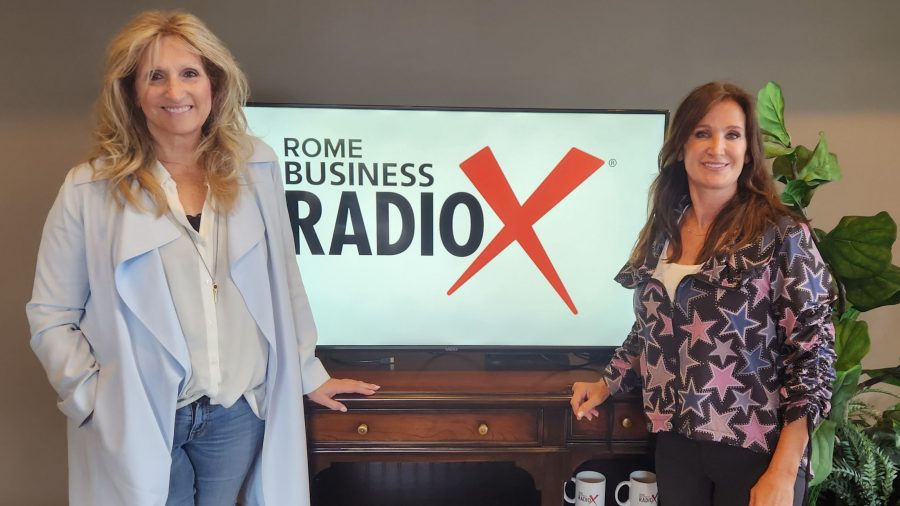
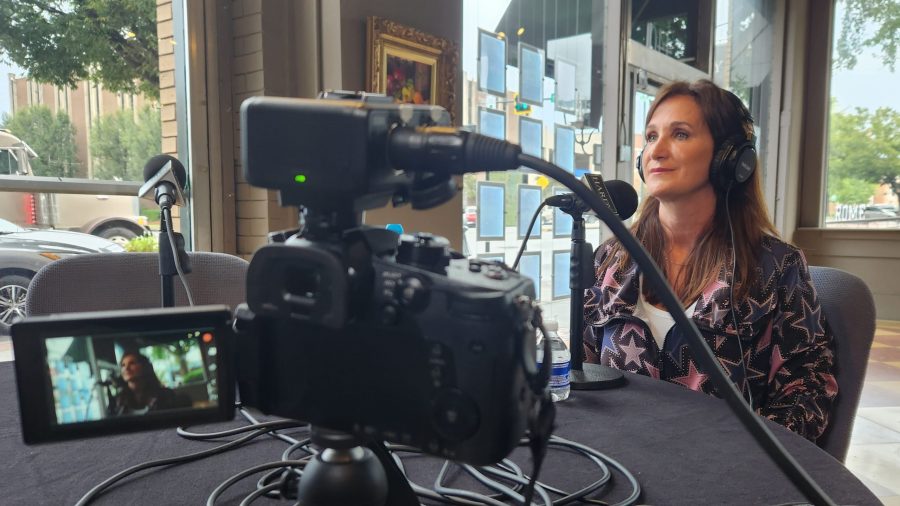
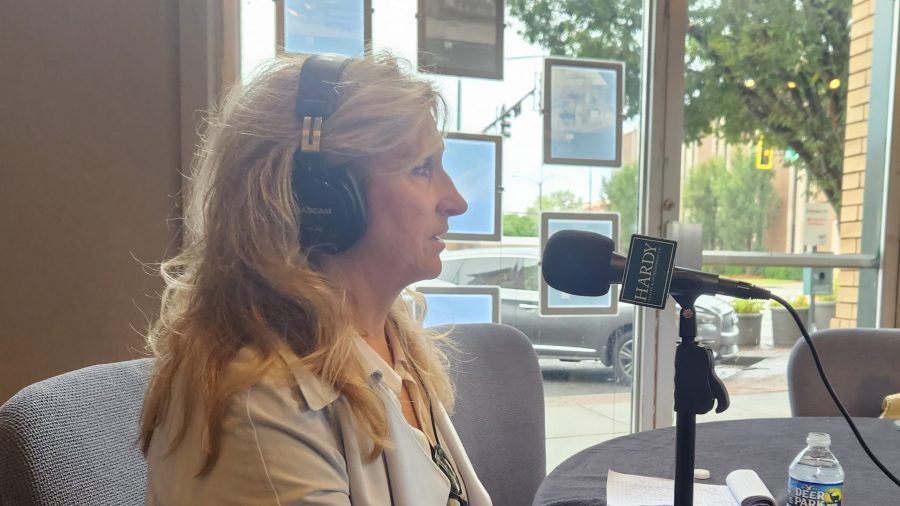
2023-06-15 rome chamber pic 1 of 2 2023-06-15 rome chamber pic 2 of 2

Tagged With: Broad Street, Evie McNiece, Hardy on Broad, Hardy Realty, Hardy Realty Studio, Justin M. Owens, Justin M. Owens CPA, Karley Parker, Rome Floyd Chamber, Rome Floyd Chamber Business Resource Series, Rome Floyd Chamber of Commerce, Rome Floyd County Business

Kristy Johnson with Spotlight Dance Studio and Joe Cianciolo with Front Porch Advisors

June 19, 2023 by angishields

Cherokee Business Radio
Kristy Johnson with Spotlight Dance Studio and Joe Cianciolo with Front Porch Advisors
Loading
00:00 /
RSS Feed
Share
Link
Embed

Download file

Fearless-Formula-061623-banner

Kristy-JohnsonKristy Johnson is the co-owner of Beyond the Spotlight Dance Studio in Woodstock and has a Bachelors Degree from Reinhardt University in Business Administration.

She is also the compliance manager for the Cherokee County Transportation Department.

Connect with Kristy on LinkedIn.

Joe-CiancioloJoe Cianciolo, Human Capital Strategist with Front Porch Advisers, is a thinker, questioner, planner, goal setter, problem solver, family man, and all-around believer in people.

As a teenager in small town Ohio, he learned early that reaching higher levels of success requires becoming, building and leading from a healthy place of self-awareness.

Connect with Joe on LinkedIn.

This transcript is machine transcribed by Sonix

TRANSCRIPT

Intro: [00:00:06] Coming to you live from the Business RadioX studio in Woodstock, Georgia. This is fearless formula with Sharon Cline.

Sharon Cline: [00:00:16] Welcome to Fearless Formula Friday, where we talk about the ups and downs of the business world and offer words of wisdom for business success. I’m your host, Sharon Cline, and today on the show, I have one of my absolute most favorite returning guests, Joe Cianciolo. He is the human capital strategist with Front Porch Advisors, and he has brought someone he’s been working with who I know as well through our networking meetings. Kristy Johnson. She is the co-owner of Beyond the Spotlight Studio, and she’s also the compliance manager at Cherokee County Transportation Department, also called Cats. Welcome to the show.

Joe Cianciolo: [00:00:52] Thank you for having us.

Sharon Cline: [00:00:53] You’re welcome. I was just saying to Joe before the show started that this is one of my absolute favorite shows that we do because I am so fascinated by why I do what I do. And I’m I think a lot about myself. I just want you to know that I’m getting it right now. I think a lot about me and not so much about why other people do what they do as much as like, do I like what I just did? And if I don’t, why did I do it? And what are my choices? And this is the ongoing conversation in my head. It’s fabulous. But what Joe does is that he actually makes it has a has a template which allows you to kind of instead of me judging myself and the things that I’m doing, it allows me to look at here are the positives of the things that I do, and here are the things that could trip me up. But here’s a tool to use to go around it, and that just makes me feel so much less like I’m, I don’t know, like my own worst enemy and that I can’t get what I want. So would you say that that’s an accurate reflection of what you do? Joe Well, that’s.

Joe Cianciolo: [00:01:51] Why I was watching Kristy, because Kristy has worked with me for for years, actually. And yes, that is exactly. I mean, hurray. We’re done. We’re done. Yeah. No, I mean, we are all unique and we are. I don’t know. I think we’re all our own worst critic. So the components that you discussed are described in what? What? Kristy is very, very well practiced in is understanding how to be aware of yourself. You talked about it in terms of why you do the things that you do, the choices that you actually do have in it. And rather than being critical of yourself, we study awareness and then we study acceptance. And that’s a piece that I just recently within this year have started using that term. I’ve been doing my own research into that. Sometimes we can be very aware of those patterns but not accept them.

Sharon Cline: [00:02:39] Oh my gosh, that’s like up at two in the morning moments where I’m like, Why did I say, Why did I think I know better? And maybe I was hungry? Like, I come up with all kinds of reasons to justify some of the things that I’m very critical about myself.

Joe Cianciolo: [00:02:54] And then you can talk yourself onto and off of ledges that way. And what I talked to Kristy about earlier is if you can be, I don’t know, grounded in who you are, what you bring and what you need, then it helps you to choose actions accordingly. And when you are off the reservation, then like you said, we have tools for that. We have tools that help you remember. Oh my gosh. No wonder why this feels the way it does. I’m really excited that Kristy is here today because Kristy’s world is different than my world. Yet she and I use a lot of the same dialog, the same communication styles and terminologies. And we also know how to kind of calm each other down so that we can face something much bigger, you know, as opposed to getting really frazzled by the annoying daily. Sometimes you get stuck in the grind of tasks and sometimes you feel like the world has all these expectations of you and realize, Oh wait, that’s my problem, not the world’s problem or whatever it is that you’re wiring actually brings to you. Got it.

Sharon Cline: [00:03:55] So some of the things that I do is I can spread myself kind of very thin because I don’t like to say no specifically. If someone asked me for me like, Oh, you know, I thought of you, you would be so great. And I’m like, What? You thought of me? When did you think you thought of me? Like, the next thing you know, I’m like, Oh, my God, You like. Like, it’s pathetic. It’s just like something I judge myself for really harsh because I know that that’s. Those are magic words for me. The next thing you know, I am roped into something that I didn’t even really think that through very hard if I wanted to do, but because they thought of me and I’m so honored by that, I’m in. And it’s like those are the things that I can see as a problem. But like I would imagine you, Joe, having so many skills that you could give me a potential, I could take that moment, you know, not become ungrounded because that’s, that’s like one of my favorite tools is to become ungrounded and then just kind of get through it and then think about it later. But I would love that that pause that gives me a moment to choose a response that’s really authentic to me because it’s really more about me and like what I want, as opposed to they want me. Oh, my God, Yes.

Joe Cianciolo: [00:05:02] Can you hear her wires right there? Okay. So a couple of things. One of which is the recognition piece can be an energizer for you as a believer that we’ve talked about this before.

Sharon Cline: [00:05:13] Oh, yeah. I’m a believer. Case you didn’t guys didn’t know who was listening.

Joe Cianciolo: [00:05:16] And the caretaker piece doesn’t feel worthy, right? So for you as a combo, that’s an interesting conundrum because you like the accolade, yet you feel unworthy at the exact same time. But when you study that and understand sort of the groundedness of it, what you realize is that what you connect to in terms of when somebody thinks of you and you’re like, Yes, wow, that makes me feel great with the understanding that you don’t have an obligation to say yes if there is something that is of shared value with that person or with the idea or whatever, then you get the opportunity to do both of those things, which is to say yes, with the ultimate care that you naturally provide. But as Christy can probably speak to the caretaker, you want to talk about where that could get you in trouble. Yeah.

Kristy Johnson: [00:06:05] So, I mean, I’m a caretaker. I’m a caretaker first, and so I will spread myself. So thin that then you do, like you were saying, just feel like you have to do those things. I said yes. Yeah. And that, like, I.

Sharon Cline: [00:06:22] Can’t let someone down.

Kristy Johnson: [00:06:23] Exactly. And you’re you’re honestly just you’re doing it because you are, you know, personally wanting to have a good like, you know, perception of what they think of you and things like that. So and it really leads to like burnout. You know, you don’t want to help anyone and you’re just drained by the end of it and that’s so easy. And you want to just take it all back. Like, you know, when you do get burnt out, you don’t want to help anybody because you’re feeling that way.

Sharon Cline: [00:06:57] But here’s here’s what’s interesting about that, though. And tell me what you think of this, Joe, is that I don’t want to help anyone, but that will include myself because I’m so tired that I really want to I need to do laundry because I need to do laundry. And I’m so burnt out that I will not do any of the things that I’ve been frustrated that I can’t do because I’m so burnt out from other people. And so, yeah.

Joe Cianciolo: [00:07:19] You guys see me on the edge of my seat. I’m always you both keep saying the same words need and have to need to and have to. And those are Kryptonite for caretakers especially and for people who are outer driven. Right? So when we talk about the expectations wiring versus the personality wiring, that’s where they go together. And so when somebody is externally wired, I’m internally wired so nobody can tell me what to do If I don’t if it doesn’t make sense to me, I won’t do it if it makes sense to me. Awesome. Like if you tell me I need to do the laundry and I don’t find any reason to it, I won’t. But if I realize obviously I have to take care of my kids, you know, my spouse, I got to do those things. It’s because I think it’s important. It makes sense to me to do it. When you say words like need to and have to, it is a very dominating outer expectation. And the problem is there is that you aren’t taking care. I’m going to go through like a number of tools real fast. I’m ready without calling out the tool, but the caretaker can take care of everybody else except for themselves.

Joe Cianciolo: [00:08:19] What I always have to tell the caretaker is if you don’t provide care for yourself, if you don’t, if you don’t give yourself that time, you cannot provide the same level of care to others. So when that happens is you you have spread yourself so thin because you’re allowing all these expectations around you to dictate what you’re doing well, that takes down your natural strengths. It doesn’t allow you to do them. So if you had to, had to need to do the laundry for your family. Is it because you want to you want to be known as that person that’s always there to make sure that like I was sitting there doing laundry while I was eating lunch, hurrying to get here, realizing that I love that my kids have that person like me to fold the laundry for them so that when they come back from camp, everything is already ready and done for them. And that is a show of care and it’s an opportunity that I have to show my kids that they deserve to be cared for. But if I don’t take care of myself first or at all, then it will always feel like I’m chasing.

Sharon Cline: [00:09:18] Okay. But I have a question for you about that. So. So if I’m. Okay, so you phrased it. Sorry. I’m thinking on the fly. This is just great. It’s great on radio. This is so great. Okay, so if I. Have that obligation, thought process. Right? That okay, well, I agreed to do that for this person. This person, this person. In some ways, I like the surrender of control of my life to someone else who has asked me to do things so that I don’t have as much choice. Well, no, I mean, this is the result of what people have needed from me. And of course I’m going to do it for them. So in some ways, I’m surrendering the responsibility of the effects, the outcomes of them. Right.

Kristy Johnson: [00:10:03] I think that, you know, especially being in that mindset quite a bit, it’s also really understanding your identity too, that like you get so used to having people rely on you and that becomes who you are. And really a lot of us, I know myself personally, I’ve had to sit down and really like think about what do I like, what I don’t like, what is it like, Who do I actually want to be? And instead of allowing other people to take that choice away from me because I don’t want to make the decision, I don’t want to be the bad guy. Yes, I want to be me. I don’t need me. I want to be needed and I want to have that relationship with them. And that’s how I feel, like I can love them. But what am I doing to, like, separate myself and like, put myself last? You know? Is it really like a true reflection on how much I love myself?

Sharon Cline: [00:10:58] How did that sound? Joe, are you having a moment?

Joe Cianciolo: [00:11:00] I’m having a moment.

Sharon Cline: [00:11:01] You deserve that moment.

Joe Cianciolo: [00:11:04] I can’t wait to go back and replay that one again and again. It was said very, very well because the outer accountability and the outer expectations are fine. I mean, some people find that to be a negative. I don’t once you are aware of it and accept it, then you can act on it. And the thing is, is are all those tasks liberating for you because you have chosen to create your identity around that, or is it dominating to you because you really feel like it’s easier when people just tell you what to do?

Sharon Cline: [00:11:31] Both.

Joe Cianciolo: [00:11:32] Okay, So the liberating one, you have to make sure that you can measure. That’s one of the tools that we study in. I don’t know whichever of the programs that you would go through or whatever is that we have to say. Who are the influences in your life? Who are the people and what what kind of influence are you allowing? Are you making room for a balance of supportive people, people who are natural challengers and people who actually do liberate you for you to be you easy like you at your best. You without having to make excuses, without having all that inner talk, which is what typically drains you. And so you got to be able to then say, Wait, everything all these people, all these outer expectations are coming from people who feel like they’re providing nothing but challenge. And that is something that Christy and I’ve talked a lot about is how do you make time for the people who are natural supporters and how do you give them permission to also challenge you from a place of support first.

Speaker4: [00:12:28] Like a place of love.

Kristy Johnson: [00:12:30] And it’s like communicate, eating with them, you know, like really looking at, you know, there’s there’s that quote that, you know, the closest five people are the biggest influencers in your life. And so, you know, you become those five people. And if all of those five people are constantly challenging you, are you just okay being with them? Because that’s what you’re you know, you’re naturally in that world all the time. Or do you have liberators who are going to come and and support you and really lift you up? And, you know, even in those dark times, like are they are they around you? And do you actually know how to name them? That was my hardest thing was to.

Speaker4: [00:13:08] Ask you.

Sharon Cline: [00:13:08] Actually would like to ask just can we go back slightly like how did you become associated with Joe? Did you approach him? Did he approach you? I would like to know what the impetus was.

Kristy Johnson: [00:13:18] Yeah. So I actually have a great story of how we actually met. So our networking group had an afternoon social and I had been meaning to go. I just hadn’t. I brought my sister and we got split up and we were sitting, we were going around, we asked a couple questions with each other. And so I was answering the questions and I had a group that was just like life changing. Joe Was was there diesel? David Like, there was all of these wonderful people in the community and they just fed into me. They were like, You need to focus on this. You need to look at this and and you need to, you know, you need to come to the morning, you know, networking. And I was like, I can’t. I have a 9 to 5 job and there’s no way I can do that. And they’re like, Did you ask? And I said, No, I’ve never asked. And and so luckily, you know, the stars aligned. And I started going, you know, every Thursday morning. And but, you know, after that, it was just, you know, they saw me they they just fed into me ever since. And, you know, it’s honestly a huge reason of who I am today and like even becoming an entrepreneur with my sister, I mean, they just have, you know, changed the outlook, my mindset, because I was just like, I work a 9 to 5. That’s what I was taught. I go to school, I go to college, and that’s what I that’s who I become. And really, there’s a whole different world. And Joe really opened the world for me just to kind of explain like there’s different there’s different ideas out there and there’s, you know, different ways of viewing the world and yourself, which you’re just not taught in school. You know, I was you’re young, you’re.

Sharon Cline: [00:15:09] More encouraged to comply with and, and not be different because being different is, is could potentially be chaotic or a bigger personality. In school, it’s more about just not kind of being quiet, flying under the radar, doing what the teacher said don’t cause trouble.

Kristy Johnson: [00:15:24] And that’s that was 100%. My personality is I was shy. I didn’t I didn’t know how to talk to people. And and and so, you know, getting in front of these people who don’t even know me and are just like Christy, you have this like you can you can do it. And it’s like, that’s weird. Like I, I don’t think I can.

Sharon Cline: [00:15:44] It’s actually so sweet, though, The way that you’re talking about it is that you had ideas in your mind about what you wanted, but, like, life was happening to you as opposed to you’re taking control of life. Okay, Joe, you go.

Speaker4: [00:15:55] Joe, you go. Okay.

Joe Cianciolo: [00:15:57] You need to playback this when you go home and you need to listen to what you just said versus what you said earlier, which is.

Speaker4: [00:16:02] You know, this show, I get.

Sharon Cline: [00:16:04] To point everybody else. No, but actually, you’re right.

Speaker4: [00:16:06] I know a lot of.

Sharon Cline: [00:16:07] What I say is choice.

Joe Cianciolo: [00:16:08] But, you know, and choice sounds scary. And that’s why we keep working through. I mean, Christy has actually been very helpful, not only having come and sat on the front porch, she’s also helped me develop some of my newer tools and try to make it more accessible to a bigger audience, because that’s one of the things that’s hard. It’s very personal. I mean, not everybody wants to come and say, okay, cut me. Open and look for the insides that nobody sees. Luckily, Christy just happened to be sitting at a table of wildly bold. I remember that night very vividly. Lauren from Pie Bar was there.

Speaker4: [00:16:43] Oh, I love Lauren.

Joe Cianciolo: [00:16:44] She’s amazing. So imagine being sitting at a table for the first time with Lauren, David and myself and Christy. Like, they’re big personalities.

Speaker4: [00:16:52] Big, big.

Sharon Cline: [00:16:52] Personalities.

Joe Cianciolo: [00:16:53] But that’s what we all need, is we need people to be able to see us for who we are, not necessarily who we’re choosing to be every day, but who we can be. And we saw it in Christy very quickly, and we didn’t know what it was. Now, my job is human capital. I see that people have value. The value is in the person, not just your experience is what you do with your experience. How much do you understand your experience? Are you okay with that experience and what do you do with it? And so the fact is, is that when when Christy and I have have within, I don’t know, the last year or year and a half, I’ll send a new tool worksheet or something to her that says, hey, let’s work through this because choice doesn’t have to be as daunting as you think.

Sharon Cline: [00:17:36] But choice isn’t as daunting. But the but the. Responsibility of those choices are. What’s so scary to me is I the consequences of the choices and whether or not I’m going to be happy with those consequences or not make me disinclined to want to make them.

Joe Cianciolo: [00:17:57] Well, have you ever actually mapped them out?

Sharon Cline: [00:18:00] Well, I mean, in my head.

Speaker4: [00:18:02] Well, and so that’s different.

Joe Cianciolo: [00:18:04] And that’s the thing. Why? Because the responsibility of it is hard. And so, you know, for me, being inner driven, I once I commit to it because it makes sense that I would want to do it, I go crazy. And I’m a strategist, which means I need data. But for people who are unaccountable, especially caretakers who don’t feel like maybe they are worthy of it or they don’t, they would love to give it to everybody else, but they it’s scary to do it themselves. Is is I say, okay, let’s map it out. Let’s let’s and I’ll walk them through, you know, sitting on the porch. We actually have it in. I don’t remember which chapter that you were doing.

Speaker4: [00:18:38] You actually write this down.

Joe Cianciolo: [00:18:39] Oh yeah. Where we actually map out. Okay. When, you know, this is a natural driver, whether it be good or bad, and this is when it tends to happen. And and this is what I usually choose as a result. And each time I choose that these are the consequences. And the consequences over time are what create our reality. A lot of people say, I wish my reality was different. Well, you can’t change consequences. You you can’t even change your tendencies. You can only change the choice that you make as a result. But that requires having some kind of understanding of choices that you do make, which could even be isolating yourself from other is a choice. Or saying yes to everything is a choice and you have to then map the whole thing out. Once you map it out, you can start to apply it to every different situation or challenge or choice that you have to make and say, Oh, which one do, which one do I really want? And then for people who come to me and they say, I wish my life was different, okay, well, what do you want it to be? Let’s work backwards. We can do it any which way, but we have to be able to identify each of those pieces so that you can see the pattern.

Speaker4: [00:19:41] Is that what happened.

Sharon Cline: [00:19:42] With you, Christine?

Kristy Johnson: [00:19:43] Yeah. Yeah. I mean, I still have.

Sharon Cline: [00:19:45] Problems ongoing, isn’t it.

Kristy Johnson: [00:19:47] Though? Yeah. I mean, I mean him as a human capital strategist over here. I mean, it’s just you have to work on yourself daily. I mean, I still am going back to like, you know, I still get shy in networking events. I still like I will get into a, you know, a funk and a habit of, you know, I like just want to stand by myself and and those things. I just know now, like when I see the signs and that’s really understanding yourself is, you know, understanding the signs of like, I’m in that habit again, You know, what? Can I get myself out of this habit and break it and break that monotony of it?

Sharon Cline: [00:20:21] Have you found a surprising trigger for yourself? In other words, sometimes when I watch a movie that is like overly romantic and very sweet, and at the end of it, I like shut the TV off. And then I look at myself alone in my house, and then all of a sudden, like, I have a whole thought process that comes into play that I’ll be very different after watching a movie in my feelings and what I think then before. So I know for myself that I have to kind of choose when I’m in the mood to really go down that road. Sometimes I don’t know that I’m going to, but I was wondering so that maybe that’s not surprising for me because I don’t do what you all do yet, but.

Speaker4: [00:21:04] I’m saying yes. She said.

Sharon Cline: [00:21:06] Yes, Oh, no, that’s on the radio and everything. Yeah, but like, do you have you found that there are certain things like if you see a certain person or a certain car or are there triggers that were surprising to you?

Kristy Johnson: [00:21:18] So one of mine that I have realized, you know, we were talking about, you know, like overextending yourself and burning out. I realized by going through this process that when I start to drink way more caffeine, if I have a Starbucks iced coffee in my hand daily, that I have started to like put myself last because I am codependent on that, that like caffeine, I need it. And it’s it’s weird because it’s only a Starbucks, you know, iced coffee for some reason. No one else like no other coffee company. But but it is it is very like I will just get in that habit and I just know that, you know what, I have to take a step back because something’s going on with me and and I’m I’m off balance.

Speaker4: [00:22:06] Well, that isn’t.

Sharon Cline: [00:22:07] That just fascinating in itself. Like, let’s take a second to say how much of my life do I allow things like that to happen that I’m completely unaware of all day long?

Joe Cianciolo: [00:22:18] We live in a very chaotic society and technology with everybody having phones is we’re constantly distracted and we choose that. And sometimes that’s it’s a defense mechanism. It’s like, Oh, I can spend all my time and I’m busy, busy, busy, busy because it feels easier to to be a victim, to busy or to not have to. Face what you want to face. And it was funny because before today I had all these things that I wanted to get done, and instead I ended up taking advantage of an unplanned, however many hour session with with a client where we went to a level of depth that if I hadn’t have allowed it to happen, I wouldn’t be in the mind that I’m in right now. I would have done all the cleaning and all the things that I wanted to get done. Yeah, tasks. And I still want to because I’m very competitive and I like to get that stuff done. It’s part of my wiring. But I was so grateful that when I saw that opportunity because I do this study every day, I mean, this is my job is I realize very quickly, no, this this becomes the opportunity that I have to sit back and say, what’s going to come of it? And what was funny is the client sent me a text afterward saying, I saw your dream today and Dreamer is my last. I’m not a dreamer. And he was able to see it.

Sharon Cline: [00:23:42] I got chills just now.

Speaker4: [00:23:44] That’s a very.

Sharon Cline: [00:23:44] Important text you got.

Joe Cianciolo: [00:23:46] Yeah. Yeah. And and I immediately, as I do in my program, is to say thank you. But I had to be specific about what I was thanking him for, which was to actually put me in that spot that allowed the not the weakest but the least strong part of my personality to come out in a way that he could understand it. I said, Oh, can you put it into words? Because I honestly, like, I allowed myself to just go there. That kind of awareness when you give it more time. If she were to give her awareness more time than the Starbucks in her hand, it’s a different machine.

Sharon Cline: [00:24:22] Well, what did it feel like for you, Joe, to feel all of those feels?

Joe Cianciolo: [00:24:26] Oh, I thought I. I kept thinking, well, this is probably the best way to start a week of on my own while the kids are at camp is because I often the kids are my priority. I love my children and I have other things I wanted to say about them in terms of what we were talking about earlier. But maybe a better use of my time this week will be to stay in this mindset. Maybe instead, like I remember when they they went to camp last year, I was like, Oh, I can watch my own movie. What is that? I can watch my own show. And so this year I actually prepped. I was like, okay, these are the shows I’ve been wanting to watch. And today I thought, Well, maybe I don’t need the TV this week. Maybe I need to make more time to just sit and be in awareness, not with myself. Because what I notice or what we talked about in our session was I need to do my awareness with others. If I do it by myself, I can make excuses. I can let my mind wander in other ways, start preparing, task listing, you know, all that kind of stuff. Whereas I do my best thinking out loud with others. And so I happened upon it by accident. And now that I’m aware of that, I can make that a bigger priority. This week, as you and I always talk about, there’s a difference between accidental and intentional. Well.

Sharon Cline: [00:25:43] So is intentional. For some reason, this word keeps coming up this week for me, and I’ve said it a couple of different times to a couple different people, is I am trying to be very careful about how I’m spending my time because as much as my voiceover business is getting bigger and lots of opportunities are coming that make me so happy, I love doing all of those things. But then I’m also there’s a natural stress that comes with it too. So I’m trying to and I’ve never had to say no to someone where I’m like, What, you want to have dinner? Yes. What, you want to go do this? Yeah, let’s go. Let’s go ride motorcycles. It’ll be all day. But now I’ve. I’ve thought about it in a way where I’m actually going to have to say, I would love to see you, but I’m going to have to schedule it a couple of weeks out or something like that, or be more intentional with the way I’m spending my time. And I’ve never actually I mean, I probably have had to do this before, needed to do this before, but I’ve never done it before. But I see what you’re talking about is also you’re choosing your experience in the moment that you’re having it. So if next week when you realize that you’ve had enough of the feelings that you’re in now, you could choose to watch your movies if you wanted. But these are choices. They’re not reactions, right?

Speaker4: [00:26:51] Oh, she hit another hot button because reactions.

Joe Cianciolo: [00:26:55] Did you have something you needed to chime in?

Speaker4: [00:26:57] Well, so.

Kristy Johnson: [00:26:57] I was going to say actually, so I just finished reading A Mountain Is You, which is a guide to self-sabotage. It absolutely changed my my life. But you know about feeling your feelings like a lot of your feelings they talk about in the book is, you know, actually, you know, a way to cope with that, you know, as a symptom to that self sabotage. So those feelings are, you know, a reaction, a symptom of something else. And taking that time to actually, like feel those feelings and are so important, I think that we just don’t do in our society anymore.

Speaker4: [00:27:34] So I love that.

Sharon Cline: [00:27:36] That’s so. And how do you how do you see yourself doing these things to.

Kristy Johnson: [00:27:40] You know, I mean, I think you have to you know, like you were saying, being intentional and taking a like a second to to feel them and not be scared of the feelings and allow them to, you know, to actually, you know, feel it and not react.

Sharon Cline: [00:27:56] So you’re saying that you’re not judging yourself for your feelings? Yeah.

Joe Cianciolo: [00:28:00] So she needs a timeline. You need to get you a timeline for yourself, because once you start to study the past patterns and look at your life and your current reality, you will see all the things that make you want to say yes now are still exciting and they’re all important, but they all can’t be urgent. And because you’re unaccountable, one of the tools that we always say is you want to say yes. So say yes. Dot, dot, dot. As long as this is true. And so the thing is, is if they’re all too much and this is where you we practice finding your grounding so that you don’t get into this whipsaw situation where the answer is yes, as long as we can do it two weeks from now, not. But I’ll have to wait because that puts you in that negative. So, yes, as long as.

Speaker4: [00:28:52] Like yes.

Kristy Johnson: [00:28:53] And.

Joe Cianciolo: [00:28:53] Yes. And which is interesting because we’ve heard that before. But putting it into practice is a little bit harder. Harder. So I had that mentality. I think it was 2 or 3 years ago when we started to really, I guess during Covid, I got really busy and I wasn’t expecting it because everybody was at home. And you know, what we do is very personal and I didn’t think we could do it over video, but we did is I had to get to that point where people were like, Do you have space for me? And the answer was always, yes, As long as these are the hours that I can do this and do it well, if I overbooked myself, then my kids who were home and schooling at the time because of the Covid restriction, I couldn’t give my clients their full due. Just like if you say yes too much, you’re not giving the best version of you. If it’s too far out of balance. So when you say yes, as long as this is, yeah. And then we go through all of our.

Speaker4: [00:29:47] So do you do.

Sharon Cline: [00:29:48] The same thing Now you’ve learned this skill and that’s how you are interacting with people.

Kristy Johnson: [00:29:52] Yeah, I’ve actually, I’ve kind of leaned more into, you know. I think about if I say yes, what opportunity am I also giving up because of saying yes?

Sharon Cline: [00:30:05] So when you’re saying yes to something now you’re saying no to something else. Yeah.

Kristy Johnson: [00:30:09] I mean, you’re breaking any opportunity to have, you know, have something better or even, you know, maybe there’s this opportunity that’s supposed to come in, you know, into your life. And, you know, if I’m saying yes to to to kind of everything, there’s no there’s no opportunity there’s no availability for you to even know what you don’t know yet. So it’s a it’s a hard it’s a hard practice, but it’s, you know, it’s worth it.

Joe Cianciolo: [00:30:35] But one of the things that Christie and I are actually trying well, trying we are working on we haven’t figured out the best way to launch it is for people who are out or accountable who need that liberating outside force to help remind you that you matter, that you need to say yes to yourself. You’re probably going to say yes to everybody else first. We want to be or create that that community of people that will be that constant reminder that it is okay to say yes as long as it is okay to not get stuck in obligation. And it’s a shared experience for people who are outer accountable. They they have that all the time. I do. You’re not. Yeah. And that’s why I was glad to have Christy come, because I wanted Brendan’s the same. That’s why his his radio spot that day was so powerful because he spoke to it so comfortably. And that’s our goal. Like at Front Porch Advisors, our goal is to find you at your most comfortable. Not your easiest, but your most comfortable, the one that you just naturally wake up into, not the one that the world expects of you, not the one that you think the world expects of you. Or that a.

Sharon Cline: [00:31:44] Lie is this that I tell myself. Because what I believe is most comfortable is what I have always done.

Kristy Johnson: [00:31:51] The habit that I think that is. I think our brains are wired for that. We want to stay where it feels okay. We know to do so that we don’t have to to get outside of that comfort zone any. So, you know, for me, it was, you know, as soon as you go out of that comfort zone, there’s more problems. Right. And we we don’t like problems. We we try to do everything to keep status quo. And so when we start to change, it’s like this is the scariest thing I’ve ever done. But at the but, you know, but what does what does it bring, you know, and so the question of, you know, I just I just want to I just want to keep doing what you’re doing. Like you’re not happy doing that, though. We all know it. Like we’ve all like said, how many times like, oh, man, it was just a bad day. Was it really though? Like, are we just in the habit of complaining constantly because we it’s what we’re used to.

Sharon Cline: [00:32:46] Because the world is happening to me and I’m not I’m I’m not in control.

Joe Cianciolo: [00:32:50] Well, and for a believer, the depth is the scary part. Every one of the wires has a different, scary part. I am a strategist, which means that I am very risk averse. But that doesn’t mean I don’t take risks. I have to take risks in alignment with my strategist, which means I have to calculate just enough data and all the possible what if scenarios and then tap into my second, which is initiator. And it’s interesting because my combo, we’ve talked about combos before, my second is risk taking, so I am conflicting within that. But once I figured it out, once we went, well, I’ve been through the program how many times I do it all the time. But when I realized that it’s not the risk taking part, that’s natural to me. It’s the confidence to be bold. That is, if so, if I combine them and I gather just enough data and remember I’m confident enough, when I get enough data, then I will do it. So for the believer, the believer is.

Speaker4: [00:33:48] I’m the believer, right?

Joe Cianciolo: [00:33:49] Yes. Always excited by easily excited and able to bounce around from one thing to another. And the depth can seem so scary because it’s like, No, let’s just do this and let’s do this. Yes, this is a great idea. Everything’s a great idea. But you have to know what the trade off with that is, that eventually nothing goes below the surface and you are more than that. That’s where the caretaker comes in. Your caretaker number two has the ability to care for a very big population of people who need it. And especially now when we’re constantly being barraged with challenge. And what people need is natural care. And when you’re saying yes, yes, yes, yes, yes, that care is the trade off because you’re not actually bringing it up. So when you learn how to combine them, you’re going to say yes, because this is my opportunity to care for you and do what I love to do because your idea is so awesome. You know.

Speaker4: [00:34:41] This show feels.

Sharon Cline: [00:34:42] Like that to me.

Speaker4: [00:34:43] Because.

Sharon Cline: [00:34:44] I believe so much in what we’re discussing. And I think one of the things that I love about having this opportunity to meet so many different people and talk about what they do and why they do is that it is just so exactly human and. I just so accept that I’m just such a human and I just make the biggest mistakes ever all the time. But we all.

Speaker4: [00:35:05] Do. And isn’t.

Joe Cianciolo: [00:35:06] It interesting that this is the one that you don’t overthink.

Speaker4: [00:35:09] This? I don’t.

Sharon Cline: [00:35:10] I don’t even.

Speaker4: [00:35:11] Prepare exactly at all.

Joe Cianciolo: [00:35:13] That’s natural energy coming out of you without having to put it on.

Kristy Johnson: [00:35:17] And I think people are drawn to that. You know, I mean, you are you are like as as a caretaker. I mean, that’s what we naturally do. So people are going to be drawn to that side of you so much easier if you’re living that authentically.

Sharon Cline: [00:35:31] So do you, Christy, find that when you are in your caretaker energy, that you what is the second what is your second?

Speaker4: [00:35:37] She’s a strategist, too. Oh, really?

Sharon Cline: [00:35:40] Strategist number two, which is interesting. Okay. So when you are authentically in your caretaker space, you find that with boundaries around it and you’re not compromising yourself, that your interactions are different or the outcomes are different.

Kristy Johnson: [00:35:54] I think they’re deeper. I think my relationships are deeper with people and and even thinking, you know, like not having, you know, having to say no, like it was because I wanted to say no. And actually, you know, I always assume that I need to to go deeper with someone like to continuously, you know, like, like I really do need to give that pot pie to them, you know, like I have to because then they won’t like me. But when I’m living my my true authenticity, you know, people are just happy that I’m around, that I’m contacting them, that I’m, I’m caring because even when I’m when they don’t even know that I am, I am I’m caring for them in some way. But it’s also, you know, they they just genuinely want to talk to me. They’ll reach out to me because we’re we’re just in that relationship and I’m I’m thriving the way I need to be. And I’m not. It’s it’s an a balance, too.

Joe Cianciolo: [00:36:50] Can I chime in, please? Oh, my gosh. Okay, So last time Brendan and I did this to you today, we’re going to do it to Christy. Oh, you and.

Speaker4: [00:36:56] Me, we.

Sharon Cline: [00:36:57] We’re looking at each other right now.

Speaker4: [00:36:58] Our eyes. Okay.

Joe Cianciolo: [00:36:59] Did you notice the difference in the way she’s sitting and the way she’s talking into her mic between the beginning and now?

Speaker4: [00:37:04] Yes, I.

Joe Cianciolo: [00:37:05] Do. And do you know why there’s a fearless formula here?

Sharon Cline: [00:37:10] What is it?

Joe Cianciolo: [00:37:11] Is the natural Sharon formula, which is you you used your believer and believing that this is such a good opportunity and then you took the vulnerability on yourself, which immediately took it off of her. And you didn’t even mean to do it. You didn’t try to do it.

Speaker4: [00:37:27] What did I do?

Sharon Cline: [00:37:28] What? What? How did I do that?

Joe Cianciolo: [00:37:29] You took over the vulnerable spot. So for her, when I said, Hey, Christy, you should come on the radio, she’s like.

Sharon Cline: [00:37:36] Yeah, no, lots of people don’t like to do this. I was like, crazy to me. But yeah, a lot of people are not comfy.

Speaker4: [00:37:41] But she.

Joe Cianciolo: [00:37:41] Knows that it’s my job to liberate her. That’s my job. So I have to not only support and believe in her, but I also have to challenge her. So she said yes, knowing that it was for some kind of bigger purpose. And as she came in, I could feel it see it on her, that natural caretaker know, you know.

Kristy Johnson: [00:37:59] That’s the bad part is as caretakers, I think everything is shown. I mean, like all of our, like, you know, our flaws in a sense. Like when we’re nervous, like all of our, our motions, you.

Sharon Cline: [00:38:08] Can look at me and see it.

Kristy Johnson: [00:38:10] It’s everywhere.

Joe Cianciolo: [00:38:11] So where you became the fearless formula today for her is that you started asking very intimate, personal questions about your own fear of that internal dialog, which immediately allows her to care for you by sharing her experience. Oh, that’s what I’m talking about. That’s where it happened. You didn’t know you were doing it, but that’s what you get on the backside. So when you can do that for yourself and realize inner dialog, that’s super self critical. Isn’t necessarily. That’s internal. And you’re not an internally driven person. You’re an externally driven person. So when you bring somebody in and say, Hey, how do you like, you might be a little bit like me. How do you deal with this? Then they immediately relax and provide care. It’s glorious. And you can study that with the people that you surround yourself with.

Kristy Johnson: [00:39:03] Like it makes you look at everybody that you you have in your life so differently.

Sharon Cline: [00:39:08] I was going to ask that exact question as well. First of all, I want to say thank you for pointing that out. Let’s just say thank you for that, pointing that out because I had no idea. So that’s interesting to me. And I wonder how often I even do that.

Speaker4: [00:39:20] Probably a lot on this show.

Joe Cianciolo: [00:39:21] Yes. I don’t know about other places, but I hope you’ll start to pay attention. Actually, I know she will. She’s going to hear us in the back of her head. Yeah.

Speaker4: [00:39:27] 2:00 in the morning.

Joe Cianciolo: [00:39:28] You know, you’ll pay attention to it while you’re doing other work because you’re going to feel the difference. Did you feel the difference when I actually brought it out to her? Like you are more comfortable?

Speaker4: [00:39:38] Yeah.

Kristy Johnson: [00:39:38] No, I am.

Speaker4: [00:39:39] Yeah, well, I.

Sharon Cline: [00:39:40] Love that actually. I appreciate just the the pointing out of a tendency that I have that I could actually be really happy about because I tend to look at the things I’m not. So thank you for being generous with me.

Speaker4: [00:39:54] But that’s part.

Joe Cianciolo: [00:39:54] Of your identity that you want your identity to be. And that’s what Kirstie was talking about earlier. You’ve got to try to figure out who do you want to be and this. Is that for you? Yes. Which is why we see it. And we’re like, oh, we love Sharon and we love going on the show. And as much as I would love to create a five page script, I don’t because it is it’s a.

Speaker4: [00:40:15] Conversation.

Joe Cianciolo: [00:40:15] To explore together. We’re being curious together.

Sharon Cline: [00:40:18] But that’s like, that’s my happy place, like an hour ago. I mean, we might be here. I don’t know. It just it goes by so fast that I don’t realize that there’s a part of my brain that is actually like having a party while we talk about these things. It’s just. It’s helping me to understand why I do what I do. And when I have a little bit more of like, peace about it, then I find that when I’m interacting with other people, I’m not quite as critical of them in my head either, which I’m not proud of. But that is.

Speaker4: [00:40:46] A huge.

Kristy Johnson: [00:40:47] Plus for.

Speaker4: [00:40:48] For you.

Sharon Cline: [00:40:49] High five each other. Yeah, they high five. That’s what that was on the radio. Well, also, I wanted to ask you when how I’m not as intentional. I think of the people I’m surrounding myself with my five. I don’t know that I’ve ever actually been like, all right, is this person going to be my challenge? Challenging person or cheerleader or whatever? So, Christie, how have you noticed that your what categories do you put your friends in and has that changed how much time you interact with other people?

Kristy Johnson: [00:41:19] Yeah, I mean, you know, like my liberators and my like my supporters, you know, there’s there is so, you know, a group of them in my life that I do, you know, I’ll go to my problems with them, you know, things like that. There’s also you know, there’s also times like in my life where I do need a challenger. I need someone who’s going to come to me and just be like, you’re completely wrong. And I don’t like to hear that. I mean, I want to, you know, but but I know that I need them. Like, every part of it is, is, you know, what I need and and even to just fully support me, you know, there’s just days we have those days where we’re just not we’re not feeling feeling life right now. And and I have those dark days and, you know, I know exactly who to go to, you know, and I just know him now. So before I was just kind of flopping around, trying to like, Hey, can you listen? Can you listen? And it’s just that’s not who they were in my life.

Kristy Johnson: [00:42:14] And so now I’m just more confident in who I who I need to surround myself with. And even if, let’s say they become they were a liberator and now they’re just, you know, a challenger because people change and, you know, things happen in their life. I now know, like, okay, I need to go back and, you know, find find another liberator in my life. Maybe there is someone there. You know, I have I have a good friend who I would have never guessed he was a liberator in my life. And after going through the practice of it and I was like, wow, Yeah, you know, he’s always been there. He’s always, you know, told me good luck and like, how can I help? And and it’s like that’s what I needed. And I just never looked at him like that. I just was like, Oh, he’s an acquaintance. But really, he was a really good friend and, you know, still is and just really helps the business. And and in my life personally. So. So you have an.

Sharon Cline: [00:43:03] Appreciation for him in a different way, a value. A value.

Kristy Johnson: [00:43:06] And I think it changes the way of, you know, you have those people in your life where you’re like, they just don’t ever listen. They just talk about themselves. But really, that’s okay. Like, that’s not what I was expecting from you. Your expectations change from them and.

Sharon Cline: [00:43:21] Then you don’t judge them for not being able to.

Kristy Johnson: [00:43:23] And you can appreciate the great things about them and what they do in your life.

Joe Cianciolo: [00:43:28] I’m handing over.

Speaker4: [00:43:29] My book to are, you.

Joe Cianciolo: [00:43:31] Know, because she’s saying so many things that I mean we study and then after after you get to that point where you know and you can kind of navigate your life you she has a list. You know, I like to make lists, but when you can go back to your list, then after that, then you can go to an even bigger step, which you and I haven’t talked about. But we’re actually talking about my kids today because I did this where my kids, their kids, they constantly challenge. Right. And as a. You think I have to do for them? I have to do for others and for for outer accountable people. I have to do for other people. What I did was I shared that vulnerability with my kids the other day in a way that everything was just extremely challenging the entire environment. And I, I have now figured out how to use this communication to not have to seek only those five people, but to be able to communicate to anyone, no matter where they are or you are in a way that they can then provide you what you need at that moment. And I allowed my kids to hear the amount of challenge I was under in a way that was appropriate for them and gave them permission to support me by telling them what support for me is. Right? So I that’s why it’s a formula for Christy. It’s going to look different. Support for her and challenge for her are going to look different for me.

Joe Cianciolo: [00:44:45] I have to know what that looks like. So I told my kids, you know, this is what I’m trying to do. Sometimes I feel like I’m not great at it. I know I’m working really hard, but I’m outside of my own element. And what I just need is for people who actually can believe in what I’m doing and why I’m doing it. And I was actually doing research on them and they said to me, they’re like, No, we really appreciate you doing all this work, which is the support that I needed. And kids don’t lie very well. And so when they gave me, I asked for support and they gave it to me. And then they actually helped me out around the house a little bit more because I let them in on it. So when you’re saying yes to all these people and you start to feel the overwhelm of the world of constant, like, yes, yes, yes, I have to. I have to. I have to, I have to is to be able to say, you know what? Yes, I want to I’m feeling very overwhelmed right now. And what I really need is somebody to help make sure that I take some time for myself. I’m not very good at that on my own. This is what it looks like for me. That’s why Christy knows that we’ve had to go through that and list out all the things that support are so you can ask for them.

Kristy Johnson: [00:45:48] And I think the huge part is and what Joe is, you know, Joe is saying is, you know, I think we have to get really good at communicating. And that’s understanding yourself first to be able to tell others because they don’t know of how to support. Because Joe support is very different than what my support is. And so, you know, the people that come into your life, if you can if you can communicate that with them, then our relationships are just going to get deeper and more. I think we’re going to be more fulfilled, you know, in a deeper aspect with our friends, with our relationships, with the.

Speaker4: [00:46:24] Way we spend.

Sharon Cline: [00:46:25] Time, right? Yeah. We’re not as resentful of the way we spend time because we’re being intentional, the way we spend it.

Joe Cianciolo: [00:46:30] And, you know, my secret motive there is I want you to continue to learn all these things because I think you will be able to see each interview you do. And I see the world through a matrix in my head because I do it so often. I see everybody is wired to be amazing at something. But like she said, you don’t always know what they’re dealing with in that moment that’s blocking that. Christie came that night to an empower. It was an empower.

Speaker4: [00:46:57] Yeah. It was an empower.

Joe Cianciolo: [00:46:58] And empower and we saw it like that. She didn’t even know it.

Kristy Johnson: [00:47:02] I didn’t have a clue.

Joe Cianciolo: [00:47:04] I didn’t. We saw it. And it’s important for us to to realize that everybody has something. That’s why we started from Porch advisors is because we believe that everybody can contribute once they understand it. And then there’s got to be value and opportunity created around it. Not everybody is wired, wired like an initiator that can go make everything happen. But here’s a caretaker who’s kind of the quietest, the lowest, the most intro negative thought. You know who is so powerful? You know.

Sharon Cline: [00:47:37] I love.

Joe Cianciolo: [00:47:38] That. And it’s art. I think it’s our responsibility as a community to help her stay in that zone.

Sharon Cline: [00:47:46] Do you feel that power when you are using a different thought process than you had before?

Kristy Johnson: [00:47:53] Oh, yeah. I mean, I think, you know, it was one of those things where, you know, you always felt like you were destined for something more. But then when when you know, you change your thought process, like it’s not like a codependency on, you know, on Lauren and Joe and David to constantly feed, you know, feed me for that power. I’ve figured out that I it’s inside. I can I can tap into it and and I’m, I’m putting myself in those positions to constantly and get that feeling of Yeah, like I’m, I’m great, you know, and people, people should come up to me and talk to me like because I’m worth it and my self worth definitely went up, you know, I mean, constantly learning this.

Speaker4: [00:48:40] Just, you.

Joe Cianciolo: [00:48:41] Know, the what we do when we’re off our game like that. Like she said I am. But none of us are that 100% of the time. It’s it’s within us. But that doesn’t mean that we know how to use it 100% of the time. So when we’re off, all the people that are front porch people, we. Those who know that they are from important people. We will laugh with each other when we’re off because we’ve all studied all of the different patterns. So much so that I can give Christy a look and she’ll be like, Oh, I know.

Kristy Johnson: [00:49:11] I have a saying. It’s WW Wwjd. What would Joe do? He’s the voice inside your head.

Joe Cianciolo: [00:49:17] But it’s the same of when I get stuck and I excuse me, I have to laugh at myself because I remember it’s human. None of us are going to be on all the time. And once you kind of become more comfortable, accept that, then you can choose accordingly. And I just say to myself, after a day like that, I’m like, Oh, that was not my day. Tomorrow will.

Speaker4: [00:49:39] Be better.

Sharon Cline: [00:49:40] Are there typical or common factors that contribute to someone being off?

Kristy Johnson: [00:49:48] Unbalance. I think if you’re going more into one of your, you know, wires. Wires and you’re not balancing those, you’re not living in kind of that boat.

Joe Cianciolo: [00:50:00] So, for example, if you for me, if I get into analysis paralysis, because I am a strategist and I love data and I love to prepare for 8000 different ways that everything can go wrong, if that’s all I am, I’m out of balance. I’m out of order. Well, in that sense, I’m just selfish in my one wire. And we are made up of all of them. There’s pieces. That’s why I said my my dreamer is five. It is part of me. It just doesn’t come out very easily. If all of them are going, of course I can tap into it. But if I’m only using one and this happens frequently with most anybody who’s feeling stuck or overstressed, it’s probably because either you’re only using your top one or you have them completely out of order. And we’re trying to be something that we’re not. And that’s another big thing that we have to watch out for.

Kristy Johnson: [00:50:50] It’s also, I think, finding also where you are in those places. So like I’m a huge strategist at work. I’m I’m in that I’m in that mentality and I have to be really mindful and like when when I, you know, have hired people, I’ve I’ve said, hey, I can become in this zone. So just kind of call me out of it. Tell me like, hey, you know, I need some caring right now. I just need you to listen to me or and I’m like, Oh, right, I’m sorry. Because I’m both and I’ve explained that. And and one of the nice things is that I can I can kind of explain that to my coworkers and the people around me, especially at work, and be like, Hey, as a team, I might, I might go into strategist, I might be in my spreadsheets or I might be in, you know, in just analysis paralysis and just call me out of that.

Sharon Cline: [00:51:40] I have a big question for you, Joe. So when Christie is telling people that she works with, um, it requires a vulnerability to be able to say, here’s where I can get tripped up. If you could please help me to get back on track or what if you are working with people who take those things that are vulnerable about you and use them against you? Because not every environment. What I feel comfortable saying, Here’s where I can get off track. I could totally see a darker energy person using that to shame me or control me or I mean, it happens in relationships all the time as well. Like personal.

Speaker4: [00:52:23] Ones. Yes.

Joe Cianciolo: [00:52:24] But you have a choice in it. You always have a choice in it. No. So the first thing that comes to my mind is when she’s doing that, she’s not doing it out of obligation. She’s not being vulnerable with her coworkers because she’s expected to or she’s being told to. She sees it as, I have nothing to lose here and everything to gain. So she’s choosing the trade off she talked about earlier of what’s the opportunity if I ask for that feedback, if I ask for you to jostle me out, it’s because I want that. And if somebody starts to take advantage, if you are not seeking that opportunity and are sort of becoming what we call reactionary, then it makes it easier for those people to prey on on the vulnerability.

Sharon Cline: [00:53:07] So if your intention is to is for loving yourself yourself, then nothing that anyone says is actually going to make you feel like they’re trying to take.

Speaker4: [00:53:15] Advantage, right? I mean.

Joe Cianciolo: [00:53:16] You’ll even see it. And then you say, Oh yeah, I don’t really have that’s not what I’m needing and that’s not what I’m looking for and I’ll go find it somewhere else. And the thing that’s so funny is it’s like kids are on my brain, I guess, when kids are in school who who who do the quote unquote, bullies always seek the people who are most vulnerable. Why? Because they hear it and believe it. And so the thing is, is if you are the one that’s in control of that saying, no, I want this kind of feedback or I’m giving you permission to do that because I benefit, well, that’s a place of strength.

Kristy Johnson: [00:53:46] Yeah, I was going to say power from it, you know, like that internal power that that I felt before.

Sharon Cline: [00:53:50] What does that say about me? That the minute she. Kristy, you were describing yourself saying this, the first thing I thought was, oh, no, there’s going to be someone that’s going to see that as a weakness and try to hurt you with it.

Joe Cianciolo: [00:54:02] That’s your inner fear. We have limiting beliefs and we have self-preservation. We have all these kinds of things. And so you just haven’t realized yet how often each time you’ve done it, each time you’ve been allowed to be vulnerable on purpose by your choosing, what that outcome, that consequence and reality that we talked about earlier, I mean, I haven’t.

Sharon Cline: [00:54:21] Cataloged it.

Joe Cianciolo: [00:54:22] But if you did, you would realize, oh my gosh, every time I do it, instead of it happening to me, I get much more benefit. And then when you sit there and wonder, Oh, what happens if they do that? Then you’re then you’re your fear is what’s dictating the choice.

Kristy Johnson: [00:54:38] And I think also for you, like for, you know, if you have that that fear, it could be just a story you’re telling yourself because you saw it in a movie one time. Like it’s just a it’s just a roadblock. And really, that’s not it at all, because most of the time everybody is good. I mean, 99% of the time. And so by you having that vulnerability, like if you if you know yourself, you’re not going to let it affect you in a.

Speaker4: [00:55:04] Way what.

Joe Cianciolo: [00:55:05] She just said, 99% are good. What would cause them not to be is often their own stress, their own overchallenged, their own burnout. And when you start to see people that way, you detach a little bit of the heaviness, the weight of what it is that they would try to take advantage of. It’s not.

Sharon Cline: [00:55:24] Even personal.

Joe Cianciolo: [00:55:25] No, it’s their it’s their issue, not yours especially. And the more you’re aware of your own, I mean, I know what most of mine I don’t know that people can take me down because I’ve given them all out.

Speaker4: [00:55:37] And.

Joe Cianciolo: [00:55:37] I’m not afraid of them and I accept them.

Kristy Johnson: [00:55:40] But it also feels good, you know, being vulnerable with people because, you know, you know in who you are, it’s just going to come back to you in a beautiful way.

Speaker4: [00:55:51] Well, I think.

Sharon Cline: [00:55:52] Too, what you’re saying is there is no manipulation.

Speaker4: [00:55:56] Now, Do you know what I mean by that?

Joe Cianciolo: [00:55:58] Yeah. We feel manipulated, which if you’re looking at the quadrant, it puts you in that over challenge. Okay. Fear and manipulation comes from too much challenge. Too much support. What do we say always is sort of entitlement and mistrust. If there’s only support, if you only hear all the good things and the frilly things and the supportive things, eventually you don’t trust them because there’s no there’s no challenge there. But when you’re feeling over challenged, you want that. So you go seek it from the people who naturally give it. But when it’s feeling like everything’s too easy, then you go seek challenge. When you have those liberators, they they have learned how to provide both. And when you seek it out, you’re telling them your own formula. This is what I need. I need a little bit of this and a little bit of this challenge, a little bit of this support. Here’s my playbook. And when you are that open and confident, then it’s really hard for them to manipulate you because you’re the one that knows it.

Speaker4: [00:56:56] Yeah.

Sharon Cline: [00:56:57] So you don’t feel vulnerable when you’re in that space of explaining what you need?

Kristy Johnson: [00:57:03] No, because, I mean, it empowers me to know that, like, if they choose not to, you know, pull me back out when you know, it’s. At least I didn’t. I told you I communicated with you. And. And to me, the only thing that you can do, I mean, in business and in your personal life, in relationships, it’s over, in a sense, almost over communicate because you’ve explained it and you know it. And at least you know what you’re wanting and what you’re needing. Now those can change. And that’s where I think the miscommunication happens, because as you grow as a person, maybe they don’t or vice versa, like, but you’re constantly growing, you’re constantly looking at yourself versus always looking at the other person and being like, You need to change. No, I need to change. And and we need to communicate better because for me, I, I know what I need. I just need to hear from you what you need so we can work together. And instead of it being one sided, it’s a partnership.

Sharon Cline: [00:57:59] Do you find that there are people who just will not do meet you.

Speaker4: [00:58:03] Will not meet?

Sharon Cline: [00:58:04] What do you do in those cases? Let’s say it’s a marriage. Okay. Are you okay going down this road? Are you okay? Because, you know, it’s like a microcosm of what other kind of relationships are. So they can be it can be applied either either way. But let’s say that there’s someone who’s married and the other person you’re asking to grow together and that other person doesn’t want to do the work. How do you navigate that?

Joe Cianciolo: [00:58:28] Well, it depends on how you have done your work because, like she said, you can’t fix somebody else. All you can do is fix yourself, become aware of yourself so well and then start to see what might be their challenge. And this is why I do it with kids and why I’m excited for Kristy for be on the Spotlight because that’s one of the meanings I think behind Beyond the Spotlight.

Speaker4: [00:58:51] It is.

Sharon Cline: [00:58:51] Oh my goodness, I never thought that.

Speaker4: [00:58:53] So.

Sharon Cline: [00:58:54] Oh, I love that.

Speaker4: [00:58:55] Oh, what.

Joe Cianciolo: [00:58:56] They’re doing is more than dance.

Speaker4: [00:58:58] And imagine dance.

Joe Cianciolo: [00:58:59] Somebody like Kristy as a caretaker raising children who are being raised to be afraid of vulnerability. No, no, no, no, no. I know what it feels like to be this. And I’m going to walk you through it because you deserve the opportunity that I have. And when you’re old, older and out into the world, you need to understand that you are more than just what the world expects of you, which is absolutely beautiful. But when it comes to the relationship, like the marriage example is, once you start to do the practice for yourself so much, then you realize, Oh, this are these are natural stress triggers or challenge triggers of the spouse. And I actually did this when I was doing this, one of these programs for the first time. I tried them all out on Dan, I didn’t tell him, but what I could see is just like I talked about with body language. And, you know, you you look for the signs. If I saw that there was too much challenge, I provided more support. If there was too much support, I had to step up and be more bold. And each time I was able to dial it in properly, everything was easier. Now, whether or not the other person is willing to be aware, I can’t. I can’t make that true. But what I can do is be so grounded in myself that they might be curious and say, You seem so sort of unaffected by the extremes. What are you doing? Well, and then I go through my whole playbook. It’s like, all right, every time I do this, I get stuck here and every time I need this, and then you start asking for the things that you need and they this is where it’s great for children. And why I’m excited for the studio is they start hearing these phrases that we use asking for support, asking for challenge in ways that it becomes very normal. We were not taught to communicate that way. We were not taught to ask for the things that we need and we.

Sharon Cline: [01:00:51] Only have the verbiage.

Speaker4: [01:00:52] For it.

Joe Cianciolo: [01:00:53] And we’re we’re making sure that all the clients that come to the front porch, all of their staffs, all the businesses, all of them have enough of that language. And then what I’m loving for her is that they get to do it with kids.

Speaker4: [01:01:05] Well, I think about what.

Sharon Cline: [01:01:06] Social media does for people, and I think that’s kind of what was my thought is when you’re making a fake Facebook post about something that’s vulnerable to you, well, within five seconds, five people will come and tear you down for it. Right? So that’s what I’m saying with children. Isn’t that what they see all the time?

Joe Cianciolo: [01:01:24] All the time.

Speaker4: [01:01:24] But no.

Kristy Johnson: [01:01:25] So I think that I think you also have to be mindful of who you’re being vulnerable with. Like what what is the format? What’s the what’s the reason behind it? Did you put that social media post up and be vulnerable to get like sympathy or sympathy or.

Joe Cianciolo: [01:01:42] Well, and the thing that’s even crazier is when taking control of that vulnerability is to be able to say, I know that’s what I need and I’m going to do it anyway. But if you set the expectation ahead of time like this post is basically so that I. Can get sympathy. Let me tell you why. Then you’re taking over what it is that your point is most people don’t don’t think about it because they have sort of what we can probably call a passive aggressive purpose behind a post. And they want to prove something or they want they’re afraid that others are going to not see their side or it’s mostly prove something like.

Kristy Johnson: [01:02:18] Our self-preservation preservation.

Speaker4: [01:02:20] She saw it.

Joe Cianciolo: [01:02:21] In the tool. And so as a result, the vulnerability, you have to understand where are you putting those words out there? And do you is it is it going to provide you what you need? Because the thing is, is like I don’t really post much anymore because I don’t need that affirmation. If Facebook and Instagram and I don’t know what you young people do.

Speaker4: [01:02:45] Tiktok Snapchat.

Sharon Cline: [01:02:46] Said you young people, that’s me and you. I’m taking it. Joe. I’m probably older than you are.

Joe Cianciolo: [01:02:51] Once they created the like button and the, you know, all that stuff, we became addicted to people’s response. It’s not response, it’s reaction. And then some people feel the need to respond, but then they create their own self preservation posts of why do I need I need to say these things to you? And then it becomes I, which is not, which is not ideal. And so instead you go seek them out personally. You seek it within the people that you spend your time with. Because at the end of the day, when you get a true response and you’ve given that dialog where you say, This is what I need and you thank them for very specific things like thank you for the guy that you talked about earlier that you didn’t even think would be a liberator when you thank them for the formula. Yeah, you know, you say thank you for blah, blah, blah, blah, blah. It makes them remember part of their goodness and it’s giving them directions on what they do for you. My very first client, I told him I haven’t. It’s been years and years and years ago. But recently I called him and I said, You know, you always believe in me more than anybody else and you won’t let me stop there. And then he goes on this whole diatribe of the exact formula that gets me fired up. But I’ve given him all of those tools. I’ve opened the playbook for him. And once you do that for people, they they are kind of jostled at first because they’re like, Oh, you can say that.

Speaker4: [01:04:10] Like, yeah.

Joe Cianciolo: [01:04:11] And what would happen if we had a world where more people felt.

Speaker4: [01:04:15] Well, you did that.

Sharon Cline: [01:04:15] For me by even saying today, like, you made yourself vulnerable, which gave her permission to be a caretaker, which is interesting in itself because I don’t. I know that’s a natural thing, right? For a caretaker, it works really well. But what if it were just you and me, Joe? And to for me to be vulnerable, would you have engaged your caretaker or would you have given me a strategy? Because you’re a strategist? Like, what are the different ways that people.

Speaker4: [01:04:44] Why do.

Sharon Cline: [01:04:45] You guys look at each other?

Speaker4: [01:04:46] This is what happens when there’s a secret language.

Kristy Johnson: [01:04:49] When you when you do this, you just have that.

Speaker4: [01:04:50] I’m like.

Sharon Cline: [01:04:51] My goodness, you guys just had a whole conversation in like five seconds.

Speaker4: [01:04:54] Christy, tell.

Joe Cianciolo: [01:04:55] Tell her what she just became in five nanosecond. Which wire did she just tap into?

Kristy Johnson: [01:05:02] She tapped into her caretaker.

Speaker4: [01:05:04] No, no.

Joe Cianciolo: [01:05:05] No, no, no. She strategized.

Speaker4: [01:05:09] She was asking.

Joe Cianciolo: [01:05:10] Me the hard question. That’s true. I mean, when you think about it, she. She took you out of the equation, and then she went into depth, which, remember, depth used to be the part that we said, watch out for because you don’t like it now you like it. Why? Because you want to know, is it only something that you can tap into when it’s natural for you? Yes. And the answer is no, not when you study them all. And it’s funny because I’ve had some business owner clients when I talk about strategic hiring, which we do a fair amount of, and I had an intensive client and we sat at the end of his entire 12 week journey and I told him, when you’re talking to X, Y and Z person and I went through every wire all back to back, and each sentence I said was in a different tone, a different intention, a different tapping into each one. He said, Oh my gosh, how did you do that? I said, Practice because I know that if we can find which one is their natural best, we’re going to get the best version of them in an interview. Yes. And then after that, once you see them, then you can set expectations that, you know, they can say yes to and deliver. You don’t want somebody that’s just going to say yes. You want to know what it’s going to take to keep them excited because an interview is one of the hardest places. People will say yes and yes.

Speaker4: [01:06:25] Doesn’t necessarily mean a good interview. No.

Joe Cianciolo: [01:06:28] And so we say, okay, we’ve got to practice. And so if it were just you and me, we would set the intention of what it is that we’re trying to accomplish. We would use one of the tools. We would study how that is applying to the current situation. So whatever that concern would be, I mean, Christie just got another worksheet that I think that I sent her to, to test out where we would then go through and say, okay, let’s find the formula that’s going to work for you to help you understand why this keeps happening, because you do have a choice in it.

Sharon Cline: [01:06:57] It’s. It feels so. It feels so powerful. But. But. Not in a corrupt, powerful way. I have tools that I get to use to exploit what I want. It’s not that it’s more loving. I don’t know if that’s the right word.

Kristy Johnson: [01:07:18] Is that a good word? I think it’s loving to be able to talk to people in their natural voice, you know, like for me to be able to talk to you in what you need as a believer. Like, I think that for me as a caretaker seems just amazing because, you know, I’m giving you what you need. And then now that you know that I’m a caretaker, you’re like, Oh, we can relate to each other now.

Joe Cianciolo: [01:07:40] Oh, it’s you. You can say, I always say, like, because I have to be. I mean, I have to lead by example. So I give my whole playbook out to everybody. And they said, Man, you don’t you don’t ever hide anything. I said, There’s no point. There’s no point because I believe that we all need to be so grounded in ourselves that it doesn’t mean that everything’s amazing. It just means that I’m comfortable. I’m comfortable with who I am, what I bring, and what I need. Good, bad and ugly. And if if we see that in other people, it just realizes that we’re seeking good in you.

Speaker4: [01:08:14] Yes, that’s.

Sharon Cline: [01:08:15] I guess what I mean.

Joe Cianciolo: [01:08:16] Yeah. So I love that you guys both connected with the word loving. That wouldn’t have been the word I used. Empowering because I’m a strategist initiator. It’s just different wording, but it’s the same outcome, which is to bring people to their best. Bring them up. Yes. Not put them down. Not judge. There’s no judge because we’re all good and negative at the same time. Like the thing that I said this every time we come in, the thing that makes you naturally amazing under stress and pressure can make you awful. And that’s true of every single one. There’s not one that’s immune. And once you realize none of us are immune to it, you realize the person who might take advantage of your vulnerability. Is not at their best. They’re under some kind of, you know, self-preservation or pressure or extreme stress that makes you have empathy for them. You don’t have to solve it. But once you have empathy for it, you don’t take it on as your own.

Sharon Cline: [01:09:12] It’s a natural shield.

Joe Cianciolo: [01:09:16] And instead you say, Oh man, I feel bad, but I also can’t solve it for them when they’re ready, if they want my help, if I am a good person for them to receive, then sure. But not everybody can receive the way I communicate, the way that I explain all this stuff, which is why I have Christy, why I have Brendan, why all of my clients bring that same understanding from their own set of wires, their own expectations, their own verbiage. But we all have that sort of common intent and it is glorious. It’s absolutely amazing. And we need all of them. There’s not one that is needed.

Speaker4: [01:09:56] More than the other.

Joe Cianciolo: [01:09:56] Yeah, no, there are some that are hidden more than the other caretakers make up the majority and they’re the least heard.

Speaker4: [01:10:04] Yeah. Was the most heard.

Joe Cianciolo: [01:10:06] Initiators and they make sure it’s true. They will tell you, I mean, you can’t not hear them. And then in the business world, this is the hard part is there’s a lot of wannabe initiators because we think that’s what’s expected of a business owner. And here I am sitting across the table from a caretaker business owner owner. And there’s a lot of power in that. In fact, there’s sometimes more power in that. She will struggle to be bold and go for some of the big initiatives, which is why she seeks that out in others. But pretending to be it won’t work. Oh, and the dreamers are the ones that we need the most, but they don’t speak our language. They speak in gibberish. So it’s really, really hard. And we have to be very patient with them because we wear them out with our questions. We wear them out with like these looks of like, I don’t understand what you’re saying, when at their best, what they bring is a vision that none of us can have, but it comes to them just as naturally as your belief comes and your ability to say That’s a great idea and her ability to say, Yeah, I need to give him that loaf of fresh bread or whatever.

Speaker4: [01:11:10] You mentioned chicken pot pie, pot pie. There it is.

Joe Cianciolo: [01:11:13] And mine just say, Oh, let’s make a list of all the reasons why it’s not working. Let’s come up with a budget and a spreadsheet and a timeline. You know, all of us bring that thing naturally and we need all of them. So I just sitting in the room, we have three at the top, like three different ones, and it makes for something interesting.

Kristy Johnson: [01:11:31] I think it makes also, you know, businesses in itself, if businesses understand this, like how powerful that company would be if you had all of the voices in the room and everybody got heard and, you know, believed in each other and understood that we all actually need each other, you know, because we all lack the other.

Sharon Cline: [01:11:51] Right. Because we can only be so many. Yeah. Well, instead of looking at someone who’s got another question as being annoying.

Speaker4: [01:11:58] Yeah.

Sharon Cline: [01:11:59] Oh, my God, we’re going to be here for five more minutes because they asked that one question or whatever.

Joe Cianciolo: [01:12:03] And so when I work with businesses like that, I am that guy.

Speaker4: [01:12:06] Sorry.

Joe Cianciolo: [01:12:07] And so no, but so this is why for anybody listening, I want you to hear like I have to do the practice to remind myself. I need to limit my amount of questions. My questions will be answered at some point. Do they have to all be answered right now?

Sharon Cline: [01:12:20] Right. Or is this a personal question to me that could be answered later and doesn’t apply to everybody?

Joe Cianciolo: [01:12:25] Is it strategic or is it personal? If it’s if it’s emotion based, then it’s not appropriate just because it’s going to take me down. So me at my best is strategic questions that help us get to the overarching goal. And if I’m condescending, that just takes away my credibility. So these are studying internal first. Like Christie said, I have to study me first and in business, if the whole team can do it and realize that if we help each other get through that study, then we’ll all be a lot more grounded. We’ll all be a lot more comfortable. We don’t have to walk on eggshells around people. We also don’t all have to solve each other’s problems, but we can help each other.

Speaker4: [01:13:02] Well, this.

Sharon Cline: [01:13:03] Is the last question I wanted to ask you. Given that I know I could be here all day, I’m so happy. But how does energy apply? Because when I’m talking to you three like I am, the energy is so different when you are in a place of understanding and wanting good for other people. How do you see that play in businesses? Because not every interview feels this way and that’s no problem. I’m not upset about it. I’m just saying I can actually feel it in myself.

Joe Cianciolo: [01:13:36] Do you want to know?

Speaker4: [01:13:37] Okay, so.

Joe Cianciolo: [01:13:38] We have tools for that because there are certain things that bring me energy that don’t bring others energy. When you say, okay, we only have so much time and so much budget, I’m like, Oh, let me get at it. And I can sit in front of that spreadsheet and get energized. But just like she was talking about with with the wires, if you’re only using one that’s kind of selfish and that’s not going to be you at your best. Same thing with energy. If you’re only doing these interviews and you’ll forget that they’re energizing and that’s kind of selfish. So what we do is we have a ratio. I mean, it’s kind of a common rule is like 100 business books, I’m sure. But when you understand the ratio of the ones that give you energy versus the ones that drain you, what you eventually do is intentionally go into the drain, but change the intention of what you’re doing, that action to a positive driver, or we call it gain driver, because you know, when you do that. So for me, like there are certain networking events that are kind of like, I mean, not the ones that we talk about in here, of course.

Speaker4: [01:14:38] Not that.

Joe Cianciolo: [01:14:39] Drain me. Why? Because being around a lot of people who are either trying really hard to be an initiator or trying to be interesting because they need business or whatever, that drains me. So now when I go to those, I go to them with an intention, a gain intention of finding the people that it’s natural to, not the people that are trying so hard. Because man, I could waste a lot of time there and it’ll take everything out of me. So I go look for those people and say, What is it that makes it so amazing for you? I need to work with you. I need your help here. I need you to help me in these rooms because it’s very important to my business. All businesses need some kind of networking or marketing or whatever, but I want to go find those people who it’s more energizing to than it is for me.

Speaker4: [01:15:21] Because it’s something you feel.

Joe Cianciolo: [01:15:23] Oh, yeah. And I know, I know because I’m tired afterward. If I don’t have like if I have gone. I did a study on this for myself. I don’t remember how many years ago where I would go to the networking events and I was like, I would create my one minute pitch and I was really good and I know how to be enough entertaining. I was a performer a long time ago and I would come home exhausted. I would just be tired. I’d take a nap and I was like, Why am I taking a nap? And now when I go to the networking events where my curiosity is up, not my obligation, but my curiosity of like, Oh, who in the room is also drained by it? And can I go create a personal connection with them a year or two from three and then or, Oh my gosh, this person is a natural believer and they would benefit me. I got to figure out what’s exciting for them. I got to tap into that because it will be good for them and hopefully I can learn something or gain something. And then I come home and I’m not tired.

Sharon Cline: [01:16:19] Did you do that with me consciously?

Speaker4: [01:16:23] What? Tell me more. No, you didn’t. No.

Sharon Cline: [01:16:27] I was wondering.

Speaker4: [01:16:28] If you well.

Joe Cianciolo: [01:16:29] Remember the first time we had talked about it? Your wiring was not what we thought. We thought it was.

Speaker4: [01:16:33] The other way around. I thought it.

Sharon Cline: [01:16:34] Was a caretaker.

Speaker4: [01:16:35] Yeah.

Sharon Cline: [01:16:36] Because I did the. I did the online.

Speaker4: [01:16:37] Quiz and it said.

Joe Cianciolo: [01:16:38] That. And that was just a simple one that we had done to try to at least give people an intro to it. And then when Brendan was here, we realized, No, it’s not. It’s caretaker too. And that’s when she lit up. And at that point I was like, Oh my gosh.

Sharon Cline: [01:16:51] So you didn’t come to me thinking I was a believer?

Speaker4: [01:16:54] No.

Joe Cianciolo: [01:16:55] I mean, it’s hard to assume. I mean, it’s kind of dangerous to assume.

Kristy Johnson: [01:16:59] Yeah, you can’t I mean, I was a strategist first for the longest, but I also realized that I was out of I was out of sorts. I was just so used to being a strategist.

Sharon Cline: [01:17:09] Do people do that, though? A lot Make all these assumptions about people.

Speaker4: [01:17:13] Oh yeah. Oh yeah. And that.

Sharon Cline: [01:17:14] The dangerous thing you’re saying.

Joe Cianciolo: [01:17:16] Which is why for me and for you, I want I really want you to become more comfortable with this as you work with or interview business owners. I want you to be able to see them for who they are naturally at their best, as opposed to maybe what they put on, you know, one of my first business. Well, first, I guess it’s been a while, but business owner, client caretaker first and also outer expectation needing outer accountability. And when I asked her, I said, are you okay with that? And she’s like, Yeah. I said, And that’s why everybody respects her. That’s. But most business owners are afraid of that because they see it as weakness. She saw it as reality and she didn’t have anything to prove. She wasn’t trying. So when you’re meeting people, when you see that that that edge, that fear, that nervousness, you’ve got to find ways to tap into each of them and see which one lights them up. And once you see the one that lights them up, you go down you go path. Yes, absolutely. And then all of a sudden they become a whole new person. And you hear you hear it and and it becomes exciting and infectious. And for you, you will eat that up. But for them, it will make them feel, as Chrissy said, heard.

Kristy Johnson: [01:18:21] Yes. And validated.

Sharon Cline: [01:18:23] Which I think everyone wants. That is a universal truth to be heard and validated. Know that the fact that they’re on this planet has meaning and that they’re worth time and energy and thought. And I love that.

Joe Cianciolo: [01:18:36] And what better way than to go into these things with that intention? Because not everybody’s had the opportunity for someone to seek it out in them. Most of the time we’re raised to be a certain way.

Sharon Cline: [01:18:49] Well, I do think that when you have when you’re looking for validation, it does it or if you’re or if a lot of people are like, oh, you’re so great there, there’s an ego that can get out of balance pretty easy. And I’ve always been told through various things that’s happened in my life, you do not lead with ego, with anything to be proud of. What you’ve done is actually makes you a target. So but I don’t what do you. Wait.

Speaker4: [01:19:15] You looked at each other again?

Joe Cianciolo: [01:19:17] No. It’s curious to say that because pride, you know, whatever you hear about pride in my mind, it’s just accepting the reality for what it is and the good ones and knowing why they were good and the bad ones and knowing why they were bad. Yeah. Am I proud of a lot of those things? Sure. But I am not proud in the way that I’m trying to prove that I’m amazing. I’m just proud of.

Speaker4: [01:19:41] It’s a quiet pride. Yeah.

Joe Cianciolo: [01:19:43] It’s.

Speaker4: [01:19:44] You don’t.

Kristy Johnson: [01:19:44] Need. I don’t think you need, you know, there’s. I think there’s the pride of of needing someone to validate that or trying to show off. Right? But then there’s the pride of just like, being genuinely excited for yourself and like, of an accomplishment that you’ve done, which is all internal versus needing that external. Mm.

Speaker4: [01:20:02] I love.

Sharon Cline: [01:20:03] That.

Speaker4: [01:20:04] Oh my gosh.

Sharon Cline: [01:20:04] Are you so proud? I swear to goodness, you look like the proud dad. I swear, he’s always.

Speaker4: [01:20:09] The proud dad.

Joe Cianciolo: [01:20:10] I even have a shirt from when I was a high school teacher that the kids made called Proud Papa.

Sharon Cline: [01:20:14] Oh. And I picked up on that right.

Speaker4: [01:20:16] Away, and I still have it. Do you really? Of course. You got to keep that. That’s special.

Joe Cianciolo: [01:20:20] Well, and I think. I don’t know. I feel like we all get that opportunity right now, so I love it. So I appreciate you coming.

Speaker4: [01:20:28] Thank you.

Sharon Cline: [01:20:28] I’m really so grateful that you guys came again. I didn’t plan anything, but it is the most fun hour or so that I get to experience. And I do leave energized, which tells me that this is like definitely something that I should be encouraging more in my life.

Speaker4: [01:20:42] Can I give you some feedback?

Sharon Cline: [01:20:44] Oh, gosh, Can I shut the.

Speaker4: [01:20:47] Radio down first? No, it’s good.

Joe Cianciolo: [01:20:49] You were deeper with your questioning today than you’ve been in any of my three that I’ve been on.

Sharon Cline: [01:20:56] I was deeper.

Speaker4: [01:20:57] You’re welcome. Yeah.

Joe Cianciolo: [01:20:59] No, it was great. I think that because you are. See, that’s why we say you can’t. You can’t assume that you can help somebody. They have to come to the curiosity themselves. Each time I come, you’re curiosity continues to grow. And as a result, we can do. I mean, we covered a lot of stuff.

Sharon Cline: [01:21:15] I was. Let me ask you this, though. Did I talk too much about me or did I not focus enough on Christy? Is it okay that I ask this on the radio? Good Lord.

Kristy Johnson: [01:21:23] I loved it. Like I felt very connected to be able to have like focus on you versus focusing on me. I loved it, like, because in turn, like and this is the whole the whole practice is really like, in turn, I learn something about myself, you know, just by listening to you and getting to chime in and really have this, you know, wonderful connection between all three of us.

Joe Cianciolo: [01:21:49] The after show.

Speaker4: [01:21:50] Is going to be. I know.

Sharon Cline: [01:21:51] How much time do you guys have? Well, I can’t thank Joe Cianciolo for coming enough. And Christy Johnson. Thank you. So I love how vulnerable you both are because that’s like one of my happy places to be. And so having, like you were saying, being giving permission for me to be vulnerable actually allows you to tap into some of the best parts of you that you like. And so thank you. For providing those opportunities for me. You know, it’s like we all win, which is my favorite win, win, win. Wait, How can people get in touch with you both?

Kristy Johnson: [01:22:24] Well, you can. You can find me on the Spotlight dance studio on Instagram and Facebook. And what’s.

Speaker4: [01:22:32] Your website?

Kristy Johnson: [01:22:34] Beats dance studio.com.

Sharon Cline: [01:22:37] Perfect.

Joe Cianciolo: [01:22:37] And I am Joe at front porch advisors.com that’s advisors. Long story I’ll tell you about it one day but and we don’t have a huge online presence seek out all of our clients that have come in here because you will learn what we do by watching them. They live our practice out loud and it’s the best.

Sharon Cline: [01:22:58] It’s beautiful to watch. Well, I would love to have you all back as things progress and if you have some things you would like to share, because I think all of these lessons are so valuable and provide a normalcy for conversation and phrasing that is not encouraged as a natural default in this world. So thank you for giving normalcy to just the human struggle.

Joe Cianciolo: [01:23:20] You know who we are. That’s all we got.

Sharon Cline: [01:23:24] And thank you all for listening to Fearless Formula. And again, this is Sharon Klein reminding you that with knowledge and understanding, we can all have our own fearless formula. Have a great day.


Tagged With: Front Porch Advisors, Spotlight Dance Studio

Ashley Spivey with High-Five Society, Carie Shugart with The Arena Recovery Community Center and Lauren Samanie with Faithful Hands VA

June 19, 2023 by angishields

CharitableGA061623pic1
Charitable Georgia
Ashley Spivey with High-Five Society, Carie Shugart with The Arena Recovery Community Center and Lauren Samanie with Faithful Hands VA
Loading
00:00 /
RSS Feed
Share
Link
Embed

Download file

CharitableGA061623banner

Ashley-Spivey-headshotAshley Spivey has two boys with Autism. She has a history of working with individuals with developmental disabilities in both the residential and day program setting. As a teenager, Ashley would babysit kids with special needs.

She also has a brother with special needs and her mother worked with children with autism. She has been around it her entire life and these individuals and their families have a very special place in her heart.

Ashley has a bachelor’s degree in health and human Services and a bachelor’s degree in healthcare administration. She started her career at an entry level as a Client Support Worker (CSW). She worked her way up the chain and eventually worked in the management role as a Developmental Disability Provider (DDP).

Ashley is also currently a volunteer with Parent to Parent of GA as a supporting parent. After moving to Polk County and seeing the dire need for something for the special needs population, she decided to establish High-Five Society.

Follow High Five Society on Facebook

Carie-Shugart-headshotCarie Shugart is the Director of Operations at The Arena Recovery Community Organization in Cartersville. The Arena provides peer-based recovery services including one-on-one peer recovery coaching, treatment referrals, community outreach, connection to community resources, post overdose response team, and Narcan training and distribution.

Carie has lived in Adairsville for 6 years. Her husband works at Highland Rivers Health and son just graduated from Gordon Central High School. They have 2 beautiful, hilarious red heelers named Chapo and Daisy.

Carie is an addiction counselor and peer specialist in mental health and addictive diseases. She is also a person in long term recovery. What that means for her is that it has been 4 years since she felt the need to use any mind-altering substances to change the way she feels physically, mentally, or spiritually.

The miracle of her own recovery is what fuels her passion to support others seeking recovery. Her mission is to prove that recovery should be the expectation and not the exception. At the Arena, Carie strives to provide a non-judgmental, empathetic, person-centered environment for people and their families who have experienced addiction to find hope.

Lauren-Samanie-headshotLauren Samanie’s passion has always been to help others. She had a successful massage practice for 7 years until a back injury in August 2022. Being a single mom of a child with special needs, Lauren needed to find work that had a flexible schedule.

She was able to turn a fun hobby into a small business, Cute N’ Peachy Things. She still needed more so she became a virtual assistant. As a virtual assistant Lauren helps your business grow by doing the tasks that you don’t really like that frees up your valuable time.

Follow Cute N’ Peachy Things on Facebook

This transcript is machine transcribed by Sonix

TRANSCRIPT

Intro: [00:00:07] Broadcasting live from the Business RadioX Studios in Atlanta. It’s time for Charitable Georgia. Brought to you by B’s Charitable Pursuits and Resources. We put the fun in fund raising. For more information, go to B’s Charitable Pursuits. Dot com. That’s B’s Charitable Pursuits dot com. Now here’s your host, Brian Pruett.

Brian Pruett: [00:00:45] Good, fabulous Friday. It’s another fabulous Friday morning. We’ve got three more fabulous guests. And again, if this is your first time listening to Charitable Georgia, this is all about positive things happening in the community. And we’ve got three great folks doing some great things in their communities. So I do have to share though. Last week I shared the news that we were great grandparents of five black mollies that had quintuplets. Well, two of them have passed already, so we’re down to three. That’s sad. But anyway, I guess that’s life. Anyway, now we’re going to lighten the mood, right? Anyway, happy Friday, everybody. We’re going to start this morning with Miss Carie Shugart. Right?

Carie Shugart: [00:01:22] You got it.

Brian Pruett: [00:01:23] Awesome. So that’s twice in a week. I’ll get there. I’ll say it right. You are with The Arena out of Bartow County, Cartersville, correct?

Carie Shugart: [00:01:31] That’s correct.

Brian Pruett: [00:01:31] So you and I have talked on the phone. You have an incredible story that I’d like for you to share, and we’ll talk about what the arena does after you’ve shared your story, if you don’t mind. Okay.

Carie Shugart: [00:01:39] So my name is Carie Shugart, and I am a person in long term recovery. And what that means for me is that it’s been four years since I’ve needed to or have used anything to change the way that I feel physically, mentally, emotionally or spiritually. And I tag on spiritually as well, because that was a big component of my substance abuse and recovery. And and. Learning how to trust my higher power, which I call God. And so I guess a little bit about my story is. Substance abuse happened after being prescribed pain meds. I’ve got several chronic orthopedic issues. Had my first hip replacement when I was 30 and was prescribed opiates pretty much immediately. My mind, body and heart was like, I like this, this I don’t have to feel anything. I don’t feel have to feel the bad stuff. But you know, you don’t feel the good stuff either. But it just works so well for me. And over the past ten years after that, it just progressively got worse as my my, my pain levels got worse and I didn’t have the tools to to deal with them. So, you know, you keep going up in prescriptions and and strengths and there’s no choice but to become dependent and then possibly addicted, which I did. And so I guess the irony of the situation is that I am an addiction counselor and I was an addiction counselor when I began my substance misuse, but because of chronic pain and I say that out loud and it still feels kind of weird when I say it, but I want people to know that because addiction and substance abuse can happen to anybody.

Carie Shugart: [00:03:39] We are your counselors. We are your doctors. We are your teachers, wives, mothers, friends. It happens to anybody. So as an addiction counselor, I thought I knew a little bit about addiction and recovery, but not until I began my own journey. Did I did I fully understand what it was that we were dealing with? When I and I say this because it’s this big important it’s a big part of my story, too, is that when I went to treatment, I chose to go to treatment. For me that was necessary. I was just I had so much shame from being an addiction counselor and becoming, you know, a person with an addiction. And I didn’t know what I was going to do with my career, but God told me, You’re going to use your story and part of your work now. And I didn’t know what that looked like. But as time progressed over the last four years, I started on the journey of peer support. And that means that’s not a clinical role, but that is a support role where we walk along, people that are experiencing the same stuff. We’ve been trained to use our lived experience to support others in their recovery path. And so I’ve been able to accomplish probably more goals in the past four years than I have in my entire life. And I credit that, number one, to God, but to my recovery.

Brian Pruett: [00:04:58] So I’m glad you pointed out about the counselors. I mean, they’re human, just like everybody else, you know? And, you know, it doesn’t matter if you’re a counselor with addictions or if you’re a Christian counselor or whatever. They are human. They got things, too, going on. And so it’s their life’s not perfect. I’m glad you pointed that out, because I know when I was going through some some counseling for some things that, you know, I always thought, man, this guy’s got got everything. He’s got his whole life control. But I’m sure he had to have a counselor to talk to.

Carie Shugart: [00:05:24] Absolutely. I mean, we all have environments and circumstances that we grow up in. We all experience trauma that looks different for every single person. And the way that we end up processing that and learning how to cope is what dictates how well we do in our total life as we become an adult, you know? And so for me, I just had it was a perfect storm. I had mental health stuff such as depression and anxiety. I had some, you know, trauma obviously, that I had gone through. And when the opiates came on the scene, it was it fixed everything. So I didn’t have to worry about understanding or trying to deal with anything. That was it. You know.

Brian Pruett: [00:06:10] I also think it’s it’s sad that I watched Dopesick and I know if you watched that at all on Hulu with Michael Keaton, but, you know, he’s the one that kind of started the opioid addiction. And I don’t think obviously it wasn’t on purpose. He just was trying to help everybody in their their pain. But if somebody is listening and has the chronic pain or whatever, um, I know a lot of people who are who have former addicts and they have pain. They asked specifically not to have that given to them. But can you give some advice to somebody who may be going through that right now?

Carie Shugart: [00:06:45] Sure. And that’s a good point. You know, if you’re if you’re struggling with chronic pain, even though you stopped using opiates or you start your own recovery, the pain doesn’t go anywhere. You’ve still got to find ways to deal with that. And so I actually so I’ve had to learn alternate ways to cope with my pain. I just completed a training at the beginning of this week with the Christopher Wolfe Foundation or Christopher Wolfe Crusade learning how to be a it’s a it’s a life care coach. And what that did is that taught us kind of a chronological way and gave us some tools to support somebody specifically if they are post-surgical, if they’ve been prescribed opiates. And that is to start by understanding what the medication is, what it does to the brain, how it interacts with other medications, understanding that opiates are there’s not anything to deal with chronic pain. That is a silver bullet. There’s just not you know, and that’s kind of the same thing for addiction, too. There’s not a silver bullet for chronic pain. You’ve got some you know, we can’t change the way we feel physically, but we can change our perspective and how we think about it.

Carie Shugart: [00:07:54] So doing as much as you can to identify your support system, what is uplifting to you that you can focus on that can help shift your perspective? Also, you know, things like deep breathing and what we call tracking is looking at scanning your entire body, finding an area of your body that’s not quite as on fire and kind of focusing on that for a minute. Some other tools, like other grounding tools like tapping or progressive muscle, muscle relaxation, guided imagery. If meditation, some people just like there’s a million apps on our phones now to help us kind of zone out. The point is, is we’re not trying to ignore the pain. We’re not trying to act like it’s not there. But let’s do some tools to help us make it through because the pain will not last. It ends at some point or it wanes like a wave. It goes up and and down, right? So these tools are to get us out of that crisis moment.

Brian Pruett: [00:08:57] Are you familiar with infrared light therapy? I am, yes. Is that working with any of the stuff for chronic pain, do you know?

Carie Shugart: [00:09:02] Well, the thing is, is different things work for different people, you know? So what works for me may not work for you and vice versa. They’re all tools in our toolbox. And so absolutely, the red light, infrared, the cryotherapy or the the, you know, getting in the the cold room and getting that’s great for inflammation. Some people do better with heat. You know, a hot tub. I sleep every single night. For the past ten years, I’ve slept with a heating pad on my feet because I have a lot of nerve pain. And it just it helps me with my pain as I’m going to sleep. So just knowing that there’s so many tools. One thing that we identified as one of the top things that you feel when you have chronic pain is that you feel out of control. You feel like something’s happening to you and you can’t stop it. And so that’s a powerless feeling. So finding something that you can have power over and that is your heart, that is your mind, and that’s the way we cope with it.

Brian Pruett: [00:10:01] I think it’s important that you talk about knowing the tools, but also knowing the triggers on anything, because when I was going through my counseling and my big thing was how I dealt with grief, that wasn’t very healthy. And and it wasn’t until the last time I was in therapy that they taught me what the triggers were for that. So I’m sure that’s probably a big thing you guys talk about as well.

Carie Shugart: [00:10:20] Absolutely. That’s a huge part of it is knowing because there are so many things that can and so triggers can we can identify triggers in correlation to chronic pain. We also talk about triggers with addiction and recovery. Right. And a lot of times there are a lot of the similar similar things, especially the emotional stress, physical stress, things like that. So being able to identify your triggers, being able to identify your physical triggers, like what is your body feel like in those moments that you’re going through crisis, whether it is pain, whether it is a high risk situation with addiction is do I feel some chest tightness right now or am I clenching my fist? Am I pacing, Am I feeling swimming my head? Then you can know that something’s coming on. And so you can begin using some of those tools to kind of, you know, decrease the momentum of that.

Brian Pruett: [00:11:13] So let’s talk about the arena. Share what you guys do, the vision, how it got started.

Carie Shugart: [00:11:18] Absolutely. So it got started as a an effort from a wonderful lady and mentor, Barbara Hoffman. And she she’s okay with me saying this as she has struggled with a child, a son that’s had a 20 year opiate addiction. And so as an ally, from that point of view, that’s very that’s very unique as well. And so in 2019, she realized that there was just not a lot of resources for families. So she just started researching and she, you know, God placed that in her heart and she contacted the Georgia Council for Recovery, which is kind of a larger organization in the state, that that kind of not governs us but supports us and said, what do we need? What do we need to do to be able to get something like that in Bartow County? And they said, we need a champion. And Barbara said, I can do that. So with prayer, hard work, assembling, you know, an awesome group of peers that were in recovery in Bartow County and some stakeholders that began the course for what is now the arena. And so the arena is we are part of recovery. Bartow So recovery Bartow is kind of the umbrella. So the Recovery Community Organization is a place where we support and provide resources for people in recovery or seeking recovery. So that means walking along with them and using our lived experience because everybody that’s employed there is in recovery. We’ve gotten certifications, trainings to be able to teach us how to use our lived experience so we can help them find what their recovery pathway is.

Carie Shugart: [00:13:05] Because what we’ve learned is and what I believe is there’s a lot of different ways to do things right. What again, what works for me doesn’t always work for you. So we can help present them with a lot of different options and help them identify what are their strengths, what are you interested in? How do you learn best? Helping them identify their where they’re at in their stage of readiness and change, you know? And so if they if they’re wanting to go to traditional treatment, then we find a place, then we we, we start that referral process. If it’s if it’s an outpatient situation, if they’re wanting to do one on one peer coaching where they just meet with us and we kind of support them and walk along them, that’s part of it. A lot of people have found that’s very helpful. It’s a little bit it’s a it’s a non-judgmental place where you’re sitting with someone who’s been through it. So also we connect with resources in the community, whether it be food, health care, behavioral health care, resources for housing, transportation, helping people get jobs. We partner with family treatment court. Let’s see mental health court defects supporting those families as well. So again, we provide resources and support for people in recovery or seeking recovery anywhere on that spectrum. Also families and friends.

Brian Pruett: [00:14:27] So how did the name The Arena come about?

Carie Shugart: [00:14:29] So the name of the arena came about from Roosevelt’s famous speech, The Man in the Arena. And so I don’t have the whole thing memorized. I’m not even going to try to act like I. But in it it talks about the perspective of anybody outside the struggle. Does it matter? What matters is the man that’s in the arena walking the walk, fighting the fight. That’s the perspective that matters. And so we need to champion those who have gone through struggles. We need to champion them and believe in them 100%. If Barbara Hoffman and I’ve had a lot of people believe in me in my life, but Barbara Hoffman believed in me and has given me the opportunity to grow and develop into a leadership role that I’m in now and being able to head this up. And it’s it’s just a joy. It is my work is as important to my recovery as anything else is. I love it. I can’t imagine doing anything else now. And I wish everybody could have a job where they’re working their passion.

Brian Pruett: [00:15:32] And that’s important because that’s why I started my my business B’s Charitable Pursuits and resources. It’s it’s a passion for helping others. And yeah, if you don’t have a passion of what you’re doing and you’re very unhappy. Find your passion. I have a question, though. You talked about the arena being under the umbrella of recovery. Bartow So it’s you guys don’t have a separate 501. C three.

Carie Shugart: [00:15:54] So the 501. C three is recovery. Bartow All right. And then so there’s a larger vision for recovery. Bartow A, you know, crisis or safe house programing for teens that were working on sober houses, things of that nature. And so the arena is one offshoot off of recovery.

Brian Pruett: [00:16:14] Bartow So if they if somebody donated and they donated recover, can they specify that it goes to the arena?

Carie Shugart: [00:16:20] It’s all in one pool right now so recovery Bartow recovery bartow.org there’s a way that you can give there.

Brian Pruett: [00:16:29] So I don’t even have to ask that. She already did it. That’s good. If somebody is listening, though, and wants to get a hold of you and talk about some how you can you can help them or get somebody at the arena can talk to them, how can they do that?

Carie Shugart: [00:16:39] Absolutely. So we are located at 109 Stonewall Street in Cartersville, Georgia. It’s easy, pretty easy to find. Our telephone number is (470) 315-4025. And we are there Monday through Friday from 9 to 5.

Brian Pruett: [00:16:53] Awesome. Do you guys have anything coming up, Any fundraisers coming up you want to share that you or anything going on that you can share?

Carie Shugart: [00:16:57] So I would like to just share some of the events and programing that we have going on. We have a Narcotics Anonymous meeting on Tuesday at 1230 and all recovery meeting on Thursday at 1230 and another Narcotics Anonymous meeting on Friday night. Today, a couple of my staff have gone to Crossroads Treatment Center in Calhoun. They’re having a big resource, fair and open house. And so we’ve gone there. Yesterday we had a big event with DFCs family treatment court, a big lunch and learn yesterday. Tomorrow is pretty busy. We’ve got one team going to Bless Coalition down at Glade Road, Allatoona Resource Center. That’s something that they do every third Saturday of the month. And it’s just an outreach event. We’ve got another team going to the Boys and Girls Club color run that they’re having and setting up. So our next fundraiser is going to be our motorcycle ride for recovery and that’s going to be on August 12th, I believe. You can follow us on Facebook at the Arena our and follow us there. You can find out all the information. But this will be our first motorcycle ride. We’re really excited about it. I think there’s so many different groups of our community that want to be involved. And so we’ve got to create opportunities for that to happen. And connecting with, you know, all the parts of our community. So we’re super excited about that.

Brian Pruett: [00:18:27] That gives me an idea of stone. But instead of the motorcycle ride, let’s do a golf cart ride.

Stone Payton: [00:18:32] I like.

Carie Shugart: [00:18:33] It. I’m down for that, right?

Brian Pruett: [00:18:35] We can do do that.

Carie Shugart: [00:18:36] For totally down for that. We had an art we had we set last month was Mental Health Awareness Month. So we worked with mental health court and we had just kind of a celebration day for them and had an art class. And one of the judges came out and it was just so joyous and fun. And so we were sitting around and she was like, you know, I just one of the girls was like, I don’t paint very well. And I’m like, I don’t either. She was like, Now give me some Legos. I’m like, That’s it, That’s it. Nice Lego, Lego party.

Brian Pruett: [00:19:08] There you go. There you go. So it’s kind of if you guys know Bob Brooks, he’s been on the show or Ben Hanks and the Castle Business Club, they preach collaboration over competition. And it’s awesome to see several nonprofits doing that because there’s more than just you guys in Bartow County dealing with the addictions. We’ve had Kevin Harris on talking about all in our ministries. I know he does some work with you as well as Rebecca Reeves from the Cartersville Women’s Outreach that’s coming aboard. And they’re doing the same thing for women because. So can you speak about how I mean, multiple organizations coming together because Kevin just helps men. Rebecca And them just do women, but you guys do kind of everything. Are there different? Everybody does something different, but they all can do the same thing, right?

Carie Shugart: [00:19:50] Oh, absolutely. And when you were saying that naming off those organizations and those people, I literally got chills because that is it’s awesome. It’s awesome. We need as many people championing this effort as possible. We need we need men. We need women. We need faith based. We need evidence based. We need clinical. We need peer base. Everybody deserves a seat at the table. We all have an area of service. And being able to collaborate just it magnifies the things that we already do. And our partnerships are as important as anything, because if I’ve got somebody coming in and they’re they’re, they’re newly pregnant or they’re needing some child care issues, I can refer to Bartow Family Resources. If I’ve got somebody that’s got rent issues like that, I can call Susan Barfield at Bartow Community Resources. If I’ve got a man that needs some mentoring, I can call Kevin. It’s just an amazing opportunity. And the network that we have built in Bartow County so that we can all work together to to to be more effective and efficient.

Brian Pruett: [00:20:59] And I’m guessing that if somebody is from outside of Bartow County but needs the help of you guys can work with them as well.

Carie Shugart: [00:21:05] Oh, absolutely. So, you know, we we refer all over the state, multiple states. You know, as far as treatment goes, if somebody is moving into an area or lives in an area, and we can also connect with another RCO in that county because a lot of counties in Georgia now are having the recovery community organizations. So I can call Brittney down at Living Proof in Rome and say, Hey, what all you’ve got going on here? I’ve got a I’ve got a peer that’s either moving there or their case is out of here. How can we support them?

Brian Pruett: [00:21:37] Awesome. You spoke briefly just a little bit. Obviously, financial donations are good for you guys. Are there other ways that businesses could get involved and volunteers can get involved with you guys?

Carie Shugart: [00:21:46] Sure, absolutely. So the events are one of the big opportunities, but we need volunteers all the time. And so obviously financial sponsorship, financial donation is the bread and butter of of the financial support. It just is. Our money comes from donations and grants. You know, grants are hard to do. They’re hard to get. And that’s just the way it works for a non profit, you know. So any any support, if you hear about us, tell somebody else. Follow us on social media, share our posts. I found that that’s one of the best ways to get information out and, you know, come to our events.

Brian Pruett: [00:22:28] So other than the reason of your your story, your history, wanting to help the people with addictions, why is it important for you to be part of the community?

Carie Shugart: [00:22:37] It’s important for me to be a part of the community because of that connection. My life is filled with hope and joy and abundance and connection. An addiction is the opposite of that. It’s isolated, it’s secret, it’s dark. You don’t want to talk to other people. You don’t want to connect. So for me, it’s kind of necessary to kind of always be connected with with others in the community and. You know, I do what I do because I want people, other people to be able to experience what I do. I want other people to understand or experience that recovery can be the expectation and not the exception. I just love working with other people and other organizations and us helping each other out. You know, that’s we live in a tough world. A lot of pain and darkness in this world, but we can help each other out. It’s all about relationships and offering the hope to each other.

Brian Pruett: [00:23:34] All right. So one last time, share the website.

Carie Shugart: [00:23:36] W-w-w dot recovery bartow.org.

Brian Pruett: [00:23:39] Awesome. All right. Don’t go anywhere because we’re not done. But we’re going to move over to Miss Ashley Spivey.

Ashley Spivey: [00:23:44] All right.

Brian Pruett: [00:23:44] Good morning. So we’ve had people, Stone so far from Gordon Cobb, Cherokee Bartow, and now we’ve got somebody from Polk County in the studio.

Stone Payton: [00:23:53] All right.

Brian Pruett: [00:23:54] Where I told I told Sharon this one, I said on the air, I’m gonna try to get all the way down to Macon. I’m going to try to get everybody from State somehow, so we’ll do it. So, Ashley, thanks for coming being on the show. You’re with High Five Society, correct?

Ashley Spivey: [00:24:05] Yes, sir. High Five Society.

Brian Pruett: [00:24:07] So we’ll talk about that here in a second. But it’s if you don’t mind sharing your story, share your story, and then we’ll talk about why you’re doing high five society.

Ashley Spivey: [00:24:16] All right. Well, my story. I graduated from college in 2017 with a bachelor’s in Health and Human Services and a Bachelors in Health Care Administration. I have two absolutely amazing boys who both were diagnosed with autism in 2020. They have autism and ADHD. Um, let’s see. I was diagnosed with multiple sclerosis in 2012. And all of that together. I’m not that great at talking about myself, but all of that together helped me want to form half of society. Half of society has given me back so much purpose in my life for, you know, me and my boys. So go ahead and.

Brian Pruett: [00:25:01] Share what you’re doing with High Five Society.

Ashley Spivey: [00:25:02] Okay, great. Okay. High five Society. We’re a nonprofit for individuals with special needs kids, teenagers, adults. I want to help them all. But we have monthly social groups where they work on their so many things, their fine motor skills, their socialization skills, which are needed throughout life for their. Their own learning to take turns. Basic stuff. Learning to take turns. Sorry. My mind just went blank. Thank you so much. Communication. Taking turns. Communication. There’s one more. My mind went blank. I’m gonna come back to that. But anyways, we have our monthly social groups during the summer. We’re meeting more frequently every Tuesday right now. But I’ve had some people come to me that’s not working, but we’re meeting more frequently throughout the summer. We also have our parent support groups where the parents, they come out to our events and they can get their needed resources. While if I have enough volunteers, I try to make it to where when the individuals come out, they can go be taken to go do something of their choice while the parents can do something of their choice, which is usually just to sit back and get a breather, connect with people. That’s really half of society. I want to connect everyone and have fun.

Brian Pruett: [00:26:39] Right. Yeah. No, that’s cool because, I mean, you think about it, this is another, a group that I think is forgotten about or looked down on is the special needs. And then most people don’t think about the parents of special needs kids. They need a break. They need something to do for themselves every once in a while to get that, to have a date night or whatever. So it’s awesome that you’re doing this. So Polk County right now is where you’re at, correct?

Ashley Spivey: [00:27:03] Right. In Polk County, very small. Polk is very small. I believe it has a population of 55,000. I moved from a city that had 150,000. So one thing that got me to start high five society was the lack of resources. Um, man. There is just nothing there. It was a complete culture shock. It still is. But the lack of resources. I wanted to create something for my boys to be a part of.

Brian Pruett: [00:27:35] So can you share about what some of those resources may be like?

Ashley Spivey: [00:27:38] I can’t bring therapies to pull out now. I’m working on that. But the resources, like the parents support the family support. The resources that I was used to.

Brian Pruett: [00:27:54] Yeah, I mean, you just talk about the resources. I mean, that’s a good start. So because I think people think about the special needs and the resources may be when they may have just what is the resource for that.

Ashley Spivey: [00:28:07] So resource could be anything from how am I going to pay my light bill this month to what are we going to put on the table? Well, what can our kids go do to interact with other kids and. Those to me are resources that I feel that everyone should be able to have, not just because you’re from a small town and. Right.

Brian Pruett: [00:28:29] And I also think I mean, there’s other organizations out there that do this, and I’m assuming you’ll get to do this as well. But teaching some of these kids how to live on their own.

Ashley Spivey: [00:28:38] Life skills. Yes.

Brian Pruett: [00:28:38] Life skills. Yes.

Ashley Spivey: [00:28:40] You want to get to that point. We’re still fairly new. I started this organization about a year ago, and then I had a really bad flare up. Really took me off my feet. And then I got over the flare up. I was like, okay, January. This past January was like, Let’s do this. So got it. Started back up and. Right now, I believe we have 155, 154 people in our Facebook group. But for Paul, that’s a lot. Yeah, I mean, right.

Brian Pruett: [00:29:15] So if you somebody who’s listening may not know multiple sclerosis. You’re just distracting her.

Ashley Spivey: [00:29:25] Oh, no, she.

Lauren Samanie: [00:29:26] Oh.

Ashley Spivey: [00:29:26] Let’s let Lauren be.

Brian Pruett: [00:29:27] I know. I know. Somebody who’s listening may not know what multiple sclerosis is. I know. It’s been a while. Can you maybe share how that affects you and what kind of what? Basically what it is.

Ashley Spivey: [00:29:38] Well, multiple sclerosis is a disease of the central nervous system. It’s where your myelin South. No, your nerves protect that and nerve damage. I mean, if it causes lesions in your your brain and your spinal cord. So, like, for me personally, I get brain fog a lot. I can’t think right. People see me and, you know, that’s maybe what they think. I don’t know. And that. But yeah, it has so many challenges in it and I think that’s where I can really. Relate to the individuals that I want to help because. I have my challenges. They have theirs, right?

Brian Pruett: [00:30:24] Well, I think it’s important. I mean, even with Kerry, right. You talked about if you haven’t lived in something like that, even though you may want to help those people, it’s somebody who’s lived through or living through that. Helping those is going to be much, to me, much more powerful than. I don’t have special needs. Well, Lauren may say I do, but I don’t have special needs. But but, you know, but somebody who comes in and can say, you know what? I know what you’re going through. I’d love to sit down and talk to you. There’s other things I can do that with other people. But I just think it’s great that we have people who are. Unfortunately or fortunately lived through that or living through that that can provide those the resources for that. So obviously, you said you’re you’re fairly new, so you guys need a lot of things. How can people get involved and help you?

Ashley Spivey: [00:31:11] Yeah, we do need a lot of things. We need everything from financial sponsors to volunteers. If I can have enough volunteers come out to the events, then I can really focus on the parents and they need it a lot. It’s great for the kids to be able to come out and work on everything and make friends. But the parents are exhausted. You can see it in their eyes that our first event, one of the first things I noticed and I was like, we’re adding parent support to this, so I want to help because I grew up with a special needs brother. Also, my momma never got a break. There wasn’t anybody. And then we move up here and there was not anyone because my mom passed away. And most of these parents that I’ve made these connections with, they don’t have any family. So we kind of just connect and become each other’s village of support.

Brian Pruett: [00:32:01] All right. So, Sherry, if someone’s listening and wants to help you, how can they get a hold of you? How can they help you?

Ashley Spivey: [00:32:05] Our number is (678) 675-3303. Our website which you should check out because I did it all myself. Nice job. Thank you. Our website is w-w-w dot five society.org. No hyphens. So remember that for the website, no hyphens. For our Facebook page there is a hyphen. It’s high dash five society and then our Facebook group is high dash five society parent support. Try to keep that one more private because the parents like to vent. But if you’re from from Polk County and you have a special needs child and you haven’t heard of us, definitely join the group.

Brian Pruett: [00:32:51] Yeah, definitely. If you’re listening and you do need that, do reach out to Ashley. That’s amazing. So you shared a little bit of stuff that you’ve got going on, but anything immediately coming up, any fundraisers coming up that you want to share?

Ashley Spivey: [00:33:01] We do have, um, let’s see, this Tuesday we’re going to peak Forest Park and on the 24th we’re going to Big Springs and Cedar Town. I need help with fundraisers. I really do.

Brian Pruett: [00:33:18] I think I know a guy.

Ashley Spivey: [00:33:20] Really?

Lauren Samanie: [00:33:21] There is a fundraiser that’s about to start. Hi, I’m Lauren, by the way. Um, there is a fundraiser that’s about to start. We’re going to do a bunch of different little things. We’re doing t shirt, fundraisers, sensory bag fundraisers. We have somebody in our group that actually made a quilt. Yes, Heidi Libby. She did give a handmade to her quilt that is for autism support. It’s very beautiful. It’s on our it’s about to be on our page. But we do have a lot of different small fundraisers that are going on on the website. And on the Facebook groups and pages.

Ashley Spivey: [00:34:01] So yeah, we do currently have sell t shirts. If someone could buy a t shirt, you know, there’s a little link you could donate. If you don’t want a shirt, that’s okay. Right? Right.

Brian Pruett: [00:34:12] Awesome. So other than the reason of of having kids, you’re yourself going through things and stuff of helping these folks. Why is it important for you to be a part of the community?

Ashley Spivey: [00:34:23] Oh, man. Carrie Mcturk connections. Oh, to be connections to know. I don’t want to say connections to to be a part of the community means to help bring greater things about and with the with the support of the community we can help these individuals really shine and reach their full potential. And that’s what I want to do.

Brian Pruett: [00:34:44] Awesome. So Sherry, your website one more time.

Ashley Spivey: [00:34:46] High five society.org.

Brian Pruett: [00:34:48] Awesome. All right. Don’t go anywhere. We’re going to move over to our next guest. I’m going to do let me see if I don’t chop it up. Lauren Samanie.

Lauren Samanie: [00:34:56] Samanie.

Brian Pruett: [00:34:57] See? I did it.

Lauren Samanie: [00:34:59] It’s so many like harmony.

Brian Pruett: [00:35:01] Well, you know, I got. I got to do it wrong all the time anyway, so. Okay.

Lauren Samanie: [00:35:04] It’s fine.

Brian Pruett: [00:35:05] So, Lauren, she’s actually come aboard and being my assistant and. Amazing. And she’s obviously involved with High Five Society. She does a lot of things. So faithful hands, virtual assistant and cute and peachy gifts. Things. Well, it’s gifts to sure. Things.

Lauren Samanie: [00:35:24] It’s okay. It’s cute things.

Brian Pruett: [00:35:26] You can tell we don’t get along, so. Not at all. So if you don’t mind sharing your story because you had to kind of reinvent yourself.

Lauren Samanie: [00:35:33] I did. So I’m actually going to start a little bit like at the beginning. Okay. Yeah, that’s great. All right. I don’t think you’ve actually ever heard the beginning.

Brian Pruett: [00:35:41] Well, I’m waiting to hear.

Lauren Samanie: [00:35:42] Okay, let’s hear. Okay. So I actually was homeschooled and I finished school really, really early and early, being like 14 years old. And I’m not extra super smart. Don’t say that. But I really didn’t know, okay? I just really wanted to get done really fast because I didn’t want to do it anymore. And so I just sped through my classes. I passed them and I was like, okay, we’re good. No more. We’re done. So being so young and graduated, I had no idea what I wanted to do with my life. And my mom kept me very involved in our church and and different things. She had a lot she has a lot of friends and they would offer for me to come and work for them. So I’ve worked for a tax firm. I’ve worked for our church. Being a pastor’s assistant, I’ve worked in a daycare, I’ve started my own daycare. I’ve I’ve done everything because I had no idea what I wanted to do. And then when I was 17, my chiropractor asked me to come and be a chiropractic assistant. I will have to say I had no idea what a chiropractic assistant was, and I absolutely love it still to this day. So it was just it was a full time, but it was a part time. It was only three days a week and I absolutely loved it. But I did not. Being a chiropractic assistant, you’re more behind a desk and in the details of the business part, instead of in the back room with the patients.

Lauren Samanie: [00:37:20] And as much as I loved being at the front desk and being in the details, I loved being able to see patients coming in like doubled over and hurting and then being able to walk out straight. And I was like, Well, that’s not fair. I want to be a part of that. And so I prayed and I prayed and I was like, God, what do I need to do to be a part of that? And I actually injured my ankle during high school. I was at a I was in a co op and I was a cheerleader and I had sprained my ankle and it just kept re spraining. And then in January 2014, I ended up having to have ankle surgery and I was down. I couldn’t walk. I couldn’t do anything for like eight weeks. And I was like, okay, this could be my time to really try and become that person that helps the patients instead of just taking money from the patients, you know? And I prayed and I prayed and I went and I had to get a massage because I was in so much pain with my having to be laid up all the time. And so the massage therapist that I had seen, they’re like, Are you a massage therapist? And I was like, No, I’m not a massage therapist.

Lauren Samanie: [00:38:28] What are you talking about? And they were like, Well, I can just feel like and I was totally creeped out by this. But they were like, I could just feel the healing off of you. And I was like. You’re giving me a massage. Like I should be feeling that from you, not the other way around. They’re like, I don’t know. Maybe you should just look into it. And so I was like, okay. So I went home and I looked up massage school and it was only going to be seven months long. And I was like, Well, maybe this can happen. And at this time that I don’t know if you’re familiar with that Jesus calling book like they had the daily things. That was very popular then. And one of the doctors that I worked for, she had given it to me during my healing process, and I opened it up that day and it like basically that one was like, you’re about to go through an amazing adventure and you just need to jump in head first. And I was like. Headfirst. Are we really going to do this right now? I mean, I hadn’t worked. I hadn’t decided. I mean, I was supposed to go back to work. And so I had contacted the doctor that was over. And I was like, um, I think I want to go to massage school.

Lauren Samanie: [00:39:32] And she said, I think that’s a great idea, you should do that. And I was like, okay, but what about work? And she said, It’s going to be here for you, you know? And so I went to massage school and I absolutely loved it. It was amazing for me because I really felt like I blossomed because I took what I had learned at the chiropractor’s office. Being her assistant, she did bring me back whenever we weren’t busy in the front office, she would bring me back and she had taught me some things and I was able to watch her manipulate some of the bones and like being able to see the patients change and move and and all of the different things. So that knowledge that she had taught me went hand in hand with massage. And I absolutely loved it. And then I found out that I was pregnant two weeks before I graduated massage school. So all of my plans of being the absolute best massage therapist that first year kind of went out the window and I didn’t go back to work right away because I was terrified of being pregnant. I was told when I was 18 that I wasn’t going to be able to have kids. So the doctor that told me pregnant that I was pregnant, I was like, You lied.

Lauren Samanie: [00:40:49] You totally lied to me. And he was like, Well, something’s happened. And I was like, Yeah, something’s do. So I had my little man and I did not want to let anybody else raise him. Like I didn’t want to take him to daycare. I didn’t want to have to do any of that. I wanted to. I had always dreamed of being a stay at home mom. But you can’t do that when you’re a single mom and you’re only 22. And so it worked out that the chiropractors office was only three days a week, and I lived close enough that I would be able to go and take my lunch break at home and be with him. And my mom was at home with him. So it was it was great for me. And so after about a year, I started my own massage practice. I was ready to really dive into that massage and I loved it. And still to this day, I still love it. But I had my own massage practice for almost, almost seven years. And then last August, unfortunately, I had a very bad back injury. All we can really find out or all the doctors can really tell me is that I just overused my back because I was diagnosed with fibromyalgia when I was 23 and I never took any medicine. I didn’t do the normal treatment for it.

Lauren Samanie: [00:42:15] I just took care of it on my own. I did some diet changes, I exercised and everything and then in August, because of the overuse of so much, my body was just like, You’re done. You can’t you really can’t do this anymore. And I was really, really mad because I didn’t feel like I was working whenever I did massage. I absolutely loved it when y’all were talking about that whole passion thing. That was me. I loved it. I could not wait to get to work. I could not wait to be able to watch those people change. And it was because of what God had given me, the gift of healing and everything. And then I felt like it was completely ripped away from me. But it wasn’t ripped away from me because I still had it. I just couldn’t use it anymore. And I was mad. I went into a very deep depression and I was really mad because I’m still a single mom and I can’t can’t work. I can’t. I couldn’t do anything. And I was like, okay, well, maybe if I just take a couple months off and just really rest. No, it got worse and it just kept getting worse. And I was like, okay, God, well, then what am I supposed to do? So I started what was a hobby and like a creative outlet for me. One of my friends, Anna, she told me, Hey, you should start a really like an actual business out of this.

Lauren Samanie: [00:43:41] And I was like, Oh, I don’t know about that. She’s like, No, I think it would be really good. And we can gear it towards businesses, not just personal items, but let’s do businesses where you take the businesses logo and you put it on the promotional items, whether it be t shirts, cups, bags, you know, whatever the thing is. And I was like, okay, let’s do it. Well, that was really slow. Um, it yeah, everybody and their mom can do this. So it’s very, it’s a very competitive thing. And so, and I am not a competitive person. If you want to use somebody else, by all means, do it. I’m good, you know? Um, but it was something that I loved doing. Still, it was still a really good creative hobby for me. And so I did that. And then she started asking me about like, Well, what else can you do? And, and I was like, I really miss the business side of stuff because I can actually do it. Um, I love being in the details and being in the, in the midst of all of the chaos and being able to organize it and, and it be beautiful for everybody else to see. But I’ve got all the craziness with me, you know? And so that’s where Faithful Hands came from.

Brian Pruett: [00:45:02] Well, you I’m going to disagree with you on one thing, because you said everybody and their mother can do the promotional items. I had a business doing promotional items and it was an absolutely pain in the patootie. Oh, because of the details on the back end of the promotional items sites. So you can have all of it. Trust me. Thanks.

Lauren Samanie: [00:45:18] So I’ll.

Brian Pruett: [00:45:19] Take it. Yes. Um, no. So, I mean, that’s. That’s great. So faithful hands share with somebody. Obviously it’s in the name, but share with somebody who might not know what a virtual assistant does.

Lauren Samanie: [00:45:29] So a virtual assistant really can do anything. Every virtual assistant has a specialty. Mine is. I really like the details and the things that you don’t like. And you would think that I wouldn’t like. I really do. So organizing email accounts, I like doing that. Sending out emails for some of us like Mister Brian over here. Um, I like to word up like you give me what you want to say and then I’ll make it pretty with the help of Anna sometimes.

Brian Pruett: [00:46:05] And then. Or my wife does that to say help. She helps a lot of stuff I send to you. It’s already.

Lauren Samanie: [00:46:10] See, that helps me out a lot, right? But also I can help with organizing, scheduling phone calls. If you have a list of people that you need to say, hey, you know, yada, yada, yada, but you don’t have the time to call, I can be your girl.

Brian Pruett: [00:46:29] So virtual assistant, meaning you can be with your a client of yours Could be. You’re working with somebody in Washington State. Yeah, it can be.

Lauren Samanie: [00:46:36] Um, I do. I am a more personable, personable person, so I like to meet with them at least once. I don’t have to. That’s not a requirement. But because I like to be personal with somebody, I, I enjoy seeing, like, I’m a very visual person, so I’m really good at following directions. So you tell me how you want it done. You got it.

Brian Pruett: [00:47:04] Which is kind of odd that you say that because you told me not too long ago you’re engaged. I am. And you’re going to be moving to Nashville.

Lauren Samanie: [00:47:13] 45 miles north of.

Brian Pruett: [00:47:15] Nashville. I know, but that’s not here. So you and I can’t meet in person.

Lauren Samanie: [00:47:18] So I still have family here. And I will still be coming to Georgia. And it’s really only like a 3.5 hour drive. Right? Right. And there’s Chattanooga.

Brian Pruett: [00:47:29] Which is in between. Right? Right. No, but I just think it’s cool, though, because also obviously virtual. I mean, obviously, that’s before Zoom, there were Skype. You could just do all that on online.

Lauren Samanie: [00:47:38] So and if you upgrade to an apple, you could FaceTime me.

Brian Pruett: [00:47:42] Well, just say some of us are peaches more than apples. That’s why you have.

Lauren Samanie: [00:47:47] I’m just saying. I know, but I’m a peach and an apple.

Brian Pruett: [00:47:50] Well, there you go. There you go. All right. So you are doing a lot of things with, like I said, with myself, helping all the nonprofits I’m doing with Ashley and High Five Society. Why is it important for you to to be a part of the community and helping as many people as you do?

Lauren Samanie: [00:48:09] That’s a really hard question.

Brian Pruett: [00:48:11] You heard me ask the other two. You knew it was coming.

Lauren Samanie: [00:48:12] I knew it was coming. But I really my biggest my passion has always been to help people. I, I like to like I said, I’m a visual person. I like to see the change. I want to be a part of that change. But I don’t want the credit for that change. You know, I’ve always been a behind the scenes kind of girl, and every now and again, you know, somebody’s saying thank you or Hey, she really helped me or whatever that fills my bucket so much. Just those small little words I have always loved, loved, loved seeing. The community changing and getting better and bigger and growing in those things. And like Ashley was saying with hers, she wanted to see Polk County, you know, include the special needs community and different things like that. But what she doesn’t see is that they’re growing. They are expanding there. She wasn’t able to tell everything, but there are people in McDonough that are contacting her to ask for some help with this and people all over. She was invited to Haralson County to do some other things. And I love seeing and being a part of those little details, you know, And so that’s my biggest thing for the community.

Brian Pruett: [00:49:33] Well, that’s cool because I tell people all the time, my three passions are sports fundraising and connecting others to others because I love when I like You connected me with Ashley and I love when I see the connections working. Yes. With with, you know how now they are not going to work. There are some people that just fall off and whatever happens, happens. But. All right, so share. How can somebody get a hold of you if they want to talk to you about your faithful hands or if they want to talk about some promotional items? How can they do that?

Lauren Samanie: [00:50:00] My phone number. My phone number is (678) 699-5076. And the best email and the easiest to remember is cute. The letter in peachy things at gmail.com.

Brian Pruett: [00:50:17] So I got to tell you she she was the one that provided my mother and my wife their Mother’s Day gifts. And my mother absolutely loved it. I got her a bag with She likes elephants too, and I got her the bag with. But Lauren, obviously she’s a very perfectionist. She didn’t like the it came out, but my mother loved it.

Lauren Samanie: [00:50:36] So and I said, if she doesn’t like it, I’m going to make another one because I am a perfectionist. And I was like, I don’t think.

Brian Pruett: [00:50:42] I like have to worry about it. And it was all good. So. All right. So I got two more questions for each of you. You cheated and listened to the one, but I’m not going to ask that one yet. So I was prepared. You asked me.

Ashley Spivey: [00:50:54] That one because I didn’t.

Brian Pruett: [00:50:56] Know. Yeah. So all three of you have had to reinvent yourself, right? So. Chair. Some advice. And this is all three of you are going to share advice on reinventing yourself because there’s people listening that are probably going through that exact thing right now. So, Carrie, I’ll start with you. How can you help somebody going through that? And what can you share about reinventing yourself?

Carie Shugart: [00:51:24] Right. So, you know, one of the themes among all of us is that word resiliency. And that was one of the things we were talking about in this training this week is what is resiliency? And I usually think of a ball bouncing up a rubber band rubber ball. You throw it down, but it bounces up, right? It’s the ability to come back after something hard after going lower, you know? And I think number one is realizing that you’re going to make mistakes and you’re going to get it wrong. And that’s okay. That’s part of the process. The only way you can succeed at anything is crapping out on it. You know, ten, 15, 99 times, that’s how you know. And that was something I didn’t understand for so long in my life. I just wanted to succeed. I wanted to achieve that high goal, didn’t know how and then couldn’t and was a failure over and over and over again until I started accomplishing some smaller things, you know, and understanding that the failures is what has brought me to today. And that’s what gives us the wisdom, the the wisdom that we do. So being kind to yourself and understanding that that that not getting it is part of the success.

Brian Pruett: [00:52:36] So we I shared this a couple of weeks ago. I was told to read the book Fail Forward from John Maxwell. And it’s an amazing book because you talk about failure. And before I started this business, I shut down three businesses and I was like, Man, I am a failure. I’m not providing for the family. But you’re right, it’s things you learn and it gets you to where you need to be. And don’t look at it as a failure. It’s just a stepping stone. So, Ashley, give me something that somebody listening needs to reinvent themselves. What can you tell them? What kind of advice can you give them?

Ashley Spivey: [00:53:05] I really like that you said not the only way you can carry sorry is something about crapping out. And that’s. Yeah, exactly. That’s. That’s perfectly the only way you can fail is to not try with, you know, the miss the depression with everything. If I just sit on the couch and feel, feel bad, feel like crap, then things are just going to keep being crap. But if I get up and try to do something. Then we’re going to have something. Does that make sense?

Brian Pruett: [00:53:37] Yeah, it does. That’s awesome. All right, Lauren.

Lauren Samanie: [00:53:42] Well, I was in a church service earlier this year, and one of the biggest things that this pastor said was to pray. And ask God, how can you be thankful for the place that you’re in whenever you feel like a failure? And that has hit me so hard because I did feel like a failure because I couldn’t do massage any more. And I knew that God had given me that gift of helping somebody heal. And so I just kept praying and I kept praying and I was like, God, how can I be thankful for something that I didn’t want to happen? And it was very difficult, but that I just I still you know, I’m going to be honest. I don’t know how I can be thankful right now, but I’m thankful that I’m still able to walk. And I’m thankful that I may not I may be in pain 24 over seven, but it comes in waves to where I’m not having to be on, on, on. I don’t have an addiction to pain medicine and I don’t have the things that normal normally would be really difficult or whatever. Um, so that’s where I’m at. My thankful, but I’m not sure how I can be thankful that, you know, that kind of thing. So that’s one of my things.

Brian Pruett: [00:55:04] So you talk about the thing going again, Somebody else’s different person told me to start a gratitude journal. So every morning I write down three things that I’m thankful for and it could be you could repeat them, you know, But that’s that’s kind of helped me as well.

Carie Shugart: [00:55:16] Yeah, that’s one of the number one first things that I ask somebody that I’m working with doing peer coaching to do. Okay, start a gratitude list, whether it’s in the morning or at night. I don’t care whether it’s in your head or on paper, I don’t care at least five things and then we move out from there. Five things that you are grateful for, whether it is that you just opened your eyes, whether you had something to eat, whether you had toothpaste, brush your teeth with whatever count it, you know, and some of the stuff will be the same every day. And also do a list the same way of five things you’ve accomplished that day. Again, whether it be just waking up, feeding your kid, that kind of stuff, taking your medicine, whatever, after time, that helps become part of your foundation and it has the ability to shift your attitude and your perspective.

Brian Pruett: [00:56:13] That’s awesome. Absolutely. All right. This last question is going to sound redundant, but I want you to share something different. I always like to end the show by having you guys share one word, one positive quote or something just to people that are listening to live today, the rest of 20, 23 and beyond with. So, Carrie, give me something.

Carie Shugart: [00:56:30] All right. Here you go. Y’all ready for it? Yeah. How do you eat an elephant? How? One bite at a time.

Brian Pruett: [00:56:38] So share with. Yeah, just. I mean, Tyra. There you go. There’s your elephant thing for the day.

Carie Shugart: [00:56:44] But so my deal with that one is that, like I said, I had struggled feeling like a failure for so many years of my life. And I just had these these unrealistic expectations and would bite off way more than I could chew and then would feel like a failure when I couldn’t accomplish it. But there was really no possible way I could. You know, once I heard that actually from a client of mine miscarry, How do you eat an elephant? It was a joke, but then it was like the a like huge light bulb. God was one of those God moments, like something in this. And I was like, Oh my gosh. And I literally started applying it every single day in my head. And it just it gives me freedom, you know, if I can just buy one little piece off at a time, that’s success. And one more piece and one more piece. And finally, you got the whole elephant eaten.

Brian Pruett: [00:57:35] That’s. That’s awesome.

Ashley Spivey: [00:57:36] Ashley Um, mine would be never to judge a book by its cover because individuals with special needs are often.

Speaker7: [00:57:51] Discount.

Ashley Spivey: [00:57:52] Discounted. Thanks. We rehearsed their alternate. You can’t tell. But we rehearsed. They’re just discounted for their abilities. Look, look a little bit deeper and oh, my goodness, they’re going to be the ones that changed the world, you know? They just need a little bit of support and we’re here to give it to them. There you.

Brian Pruett: [00:58:14] Go. Lauren.

Lauren Samanie: [00:58:16] On my business card that I love, it’s one of my things that I always say. It says, worry ends when faith and God step in. Well, my business card says Lauren. But when faith and God step in.

Carie Shugart: [00:58:28] I thought you were going to say when Lauren steps in. Well, that’s.

Lauren Samanie: [00:58:31] What it says on my business card. But it’s really my thing that I say is worry ends when faith and God step in.

Brian Pruett: [00:58:37] So your name should have been faith is what you’re saying.

Lauren Samanie: [00:58:39] No, I like Lauren. Thank you. Easier. It would have been easier, right?

Brian Pruett: [00:58:44] Well, I also say this. I’ve been doing this the last several shows as well, and I’m going to continue doing this. As to so everybody who was on before the last three weeks, it’s a thank you. So the thank you is a lost art. It’s just a simple thank you. So, Carrie, thank you for what you’re doing for the people in the community in Bartow County. Ashley, thank you for what you’re doing for the for the folks there in Polk. And, Lauren, thank you for helping me as well as everybody that we’re helping. So. All right, everybody out there listening. Let’s remember, let’s be positive. Let’s be charitable.


Tagged With: Faithful Hands V, High-Five Society, The Arena Recovery Community Center

Author and Marketing Expert Samantha Bennett

June 19, 2023 by angishields

Samantha-Bennett
St. Louis Business Radio
Author and Marketing Expert Samantha Bennett
Loading
00:00 /
RSS Feed
Share
Link
Embed

Download file

Samantha-BennettOriginally from Chicago, Sam Bennett is a writer, speaker, actor, teacher and creativity/productivity specialist and the author of the bestselling, “Get It Done: From Procrastination to Creative Genius in 15 Minutes a Day” which Seth Godin called, “An instant classic, essential reading for anyone who wants to make a ruckus.”

Her latest bestseller is, “Start Right Where You Are: How Little Changes Can Make a Big Difference for Overwhelmed Procrastinators, Frustrated Overachievers and Recovering Perfectionists”

Sam has also written the script for the hit musical, “In a Booth at Chasen’s,” and is working on her new book, due out in Spring, 2024.

She is an award-winning marketing expert, having spent 15 years as a Personal Branding Specialist for Sam Christensen Studios and been honored as an Ultimate Marketer Finalist at Infusioncon. She is also an Keap Certified Consultant and Reseller. Recently, she has become a top instructor on LinkedIn Learning with over a million “learners” worldwide.

Connect with Sam on LinkedIn, Facebook, Twitter and Instagram.

About Your Host

Phillip-HearnDr. Phillip Hearn Ed.D. is a results-driven entrepreneur, Senior Executive, Consultant, and Board Member with more than 20 years of success in business acquisition and real estate. His expertise in leveraging extensive experience with expansion, and financing, makes Phillip a valuable asset for companies, particularly in real estate, seeking guidance on growth opportunities and process improvement.

Phillip is the founder of Mid American Capital Holdings, LLC, an acquisition focused company. Current subsidiaries include Phillip Speaks, specializing in coaching, advising and public speaking engagements; Financial Center, consulting business owners on methods to implement business trade lines and credit to grow their operations, and other subsidiaries which continues to expand. Phillip also gives back via his non for profit Center for Communities and Economic Development.

Phillip has obtained an Ed.D. from Capella University and holds an Executive Masters in Health Administration (EMHA) from Saint Louis University; an MA in Marketing and a BA in Media Communication, both from Webster University, and Lean Six Sigma (Black Belt) from Villanova University. He has served as a Board Member for the National Sales Network St. Louis Chapter and Ready Readers, for which he has also served as the Governance Department Chair and President of the Board.

Phillip is a coach, advisor, key note speaker and podcast host on Business RadioX. Audiences benefit professionally and personally through his teachings of leveraging and application. His new book “Life Mottos for Success” exemplifies how positive words and thoughts can transform your life!

Connect with Phillip on LinkedIn, Instagram and Twitter.

Tagged With: Samantha Bennett

Beyond the Surface: Unveiling Beaver Lake’s Fishing Industry with Joe Farkus

June 19, 2023 by angishields

Joe-Farkus
Northwest Arkansas
Beyond the Surface: Unveiling Beaver Lake's Fishing Industry with Joe Farkus
Loading
00:00 /
RSS Feed
Share
Link
Embed

Download file

Joe-FarkusJoin us on an exciting fishing adventure as we delve deep into the fishing industry of Beaver Lake, Arkansas, with the passionate angler and local expert, Joe Farkus. In this episode, we explore the natural beauty and thriving fishing scene of Beaver Lake, offering listeners a virtual invitation to experience the thrill and joy of striper fishing firsthand.

Joe Farkus, a seasoned angler with an infectious enthusiasm for his craft, takes us on a journey through the pristine waters of Beaver Lake. As we sit down with Joe, we quickly realize why he describes this location as a haven, especially during these challenging times. The tranquility, breathtaking scenery, and the opportunity to catch some impressive fish create the perfect escape for both experienced anglers and those new to the sport.

Throughout the conversation, Joe shares his wealth of knowledge about striper fishing, from the best times to book a trip to the essential techniques for success. We learn about the local ecosystem, the factors that contribute to the abundance of striper in the lake, and the efforts made to maintain a sustainable fishing industry.

As Joe’s anecdotes and fishing stories unfold, listeners will find themselves captivated by the passion and excitement he exudes. His love for Beaver Lake is infectious, leaving us yearning to grab a fishing rod and join him on the water.

Whether you’re a seasoned angler seeking new insights or someone curious about the world of fishing, this episode offers a captivating exploration of Beaver Lake’s fishing industry. Joe Farkus invites you to embrace the thrill of striper fishing and discover the hidden gems of this remarkable Arkansas lake.

Tagged With: Beaver Lake, Joe's Striper Guide Service, Striper fishing

  • « Previous Page
  • 1
  • …
  • 177
  • 178
  • 179
  • 180
  • 181
  • …
  • 1319
  • Next Page »

Business RadioX ® Network


Our Most Recent Episode

CONNECT WITH US

  • Email
  • Facebook
  • LinkedIn
  • Twitter
  • YouTube

Our Mission

We help local business leaders get the word out about the important work they’re doing to serve their market, their community, and their profession.

We support and celebrate business by sharing positive business stories that traditional media ignores. Some media leans left. Some media leans right. We lean business.

Sponsor a Show

Build Relationships and Grow Your Business. Click here for more details.

Partner With Us

Discover More Here

Terms and Conditions
Privacy Policy

Connect with us

Want to keep up with the latest in pro-business news across the network? Follow us on social media for the latest stories!
  • Email
  • Facebook
  • Google+
  • LinkedIn
  • Twitter
  • YouTube

Business RadioX® Headquarters
1000 Abernathy Rd. NE
Building 400, Suite L-10
Sandy Springs, GA 30328

© 2025 Business RadioX ® · Rainmaker Platform

BRXStudioCoversLA

Wait! Don’t Miss an Episode of LA Business Radio

BRXStudioCoversDENVER

Wait! Don’t Miss an Episode of Denver Business Radio

BRXStudioCoversPENSACOLA

Wait! Don’t Miss an Episode of Pensacola Business Radio

BRXStudioCoversBIRMINGHAM

Wait! Don’t Miss an Episode of Birmingham Business Radio

BRXStudioCoversTALLAHASSEE

Wait! Don’t Miss an Episode of Tallahassee Business Radio

BRXStudioCoversRALEIGH

Wait! Don’t Miss an Episode of Raleigh Business Radio

BRXStudioCoversRICHMONDNoWhite

Wait! Don’t Miss an Episode of Richmond Business Radio

BRXStudioCoversNASHVILLENoWhite

Wait! Don’t Miss an Episode of Nashville Business Radio

BRXStudioCoversDETROIT

Wait! Don’t Miss an Episode of Detroit Business Radio

BRXStudioCoversSTLOUIS

Wait! Don’t Miss an Episode of St. Louis Business Radio

BRXStudioCoversCOLUMBUS-small

Wait! Don’t Miss an Episode of Columbus Business Radio

Coachthecoach-08-08

Wait! Don’t Miss an Episode of Coach the Coach

BRXStudioCoversBAYAREA

Wait! Don’t Miss an Episode of Bay Area Business Radio

BRXStudioCoversCHICAGO

Wait! Don’t Miss an Episode of Chicago Business Radio

Wait! Don’t Miss an Episode of Atlanta Business Radio