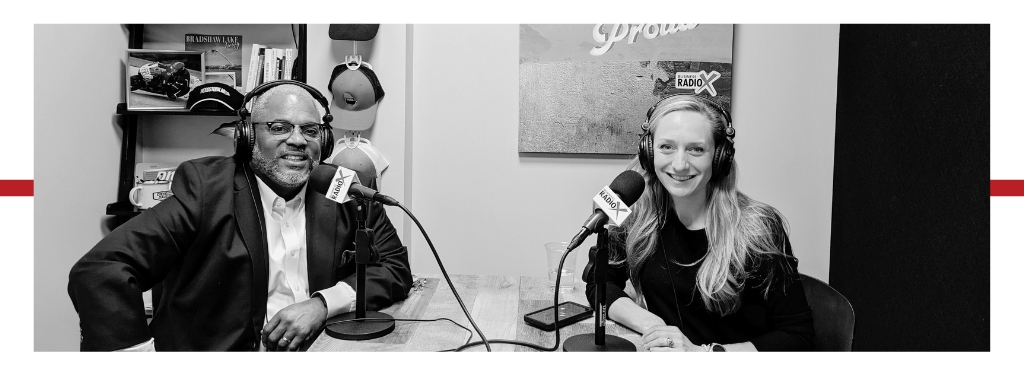
Mike Watkins with The Joy of Business Strategy and Casey Howard with Flourish for Moms


/
RSS Feed
Sponsored by Business RadioX ® Main Street Warriors

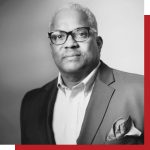 Mike Watkins launched The Joy of Business Strategy in January of 2023. In 2022 Mike capped off 45 years in the broadcast industry, the final 25 years with Cox Media Group.
During those more than four decades Mike enjoyed a diverse career that included roles as a Program Director, Assistant PD, and Sales Marketing Executive. A Pittsburgh PA native and graduate of Ithaca College, Mike’s career includes stints at legendary stations KDKA Pittsburgh, WGCI Chicago, and WSB & WALR Atlanta where he has served as a Marketing Consultant, Sales Manager and Business Development Manager.
Mike’s passion in business is helping decision-makers take a strategic approach to their marketing and developing a strong understanding of consumer behavior. Mike is a skilled facilitator of Brainstorming and Marketing Strategy sessions.
When not strategizing, Mike’s passions include faith, family, and the Pittsburgh Steelers. Mike is married to Joy (Walton) Watkins and has two sons Phillip (Rebekah) and Matthew and a grandson Malachi. Mike is extremely active at Ben Hill United Methodist Church where he has served in a number of leadership.
Connect with Mike on LinkedIn.
 Flourish For Moms helps stressed out moms along their self care journey to create and live their best life. We are a self care product based brand for moms to become the best version of themselves and completely flourish!
We are not just a brand, but also a community for moms to become the best version of themselves and completely flourish in life together! By taking time to help yourself, take a break when needed, implement daily routine self care, and remember to put yourself first, be able to live your best life and completely flourish!
Flourish For Moms is there for you during your self care journey. Our line of self care products, implemented into your daily routine, will totally transform your life.
 The founder of Flourish For Moms, Casey Howard, resides in Canton, GA with her husband Eric and three young children Anna Kate, Millie and Bo ages 6, 4 and 2.
She has always helped moms throughout their journey, since the start of her maternity and newborn portrait studio business and now with the new business, Flourish For Moms.
Helping moms navigate motherhood and the stresses that come along with it is extremely important to her and she wants to share all that she can with every beautiful mother out there!
Follow Flourish For Moms on Facebook.
This transcript is machine transcribed by Sonix
TRANSCRIPT
Intro: [00:00:07] Broadcasting live from the Business RadioX Studios in Woodstock, Georgia. It’s time for Cherokee Business Radio. Now, here’s your host.
Stone Payton: [00:00:24] Welcome to Cherokee Business Radio Stone Payton here with you this morning. And today’s episode is brought to you in part by our local small business initiative, the Business RadioX Main Street Warriors Defending capitalism, promoting small business and supporting our local community. For more information, go to Main Street warriors.org and a special note of thanks to our title sponsor for the Cherokee chapter of Main Street Warriors Diesel David Inc. Please go check them out at diesel. David.com. You guys are in for a real treat this morning. Please join me in welcoming to the broadcast, first up on Cherokee Business Radio this morning with The Joy of Business Strategy head coach Mike Watkins. Good morning, sir. Good morning.
Mike Watkins: [00:01:13] How are you Stone?
Stone Payton: [00:01:14] I am doing well. It is a delight to have you in the studio. I got a thousand questions. I know we’re not going to get to them all, but yeah, I’m thinking a good place to start would be if you could articulate for me and our listeners mission purpose. What what are you and your team really out there trying to do for folks?
Mike Watkins: [00:01:33] Man So thanks so much for asking. Stone and for having me here. It’s really a pleasure to be with Business RadioX the The Joy of Business Strategy. Our mission is to help business owners and leaders make better decisions through strategic, through strategic thinking. And so basically what I like to say, I listen to help you see the one of the biggest challenges really in life. Think about my marriage. If I could always see things through my wife’s lens, that would be awesome. And in business, quite often that’s the big challenge. Business owners don’t see their business through their customer’s lens, through their employees lens. And so having someone with a different perspective kind of watching from the sidelines and saying, Hey, what if you did this? What if you did this? How about this? And much like a head coach would do on a football team or a basketball team, it helps players with great talents become even better. And that’s what we do with businesses. Well, it sounds.
Stone Payton: [00:02:50] Like a noble pursuit to me. And I got to believe, having run my own business for, gosh, 30 plus years now, I don’t think you’re going to run out of market opportunity because we could all get better at making decisions and and seeing things from a from a different perspective. I got to know the backstory, man. How in the world did you find yourself in this line of work?
Mike Watkins: [00:03:11] Well, I’m a radio guy, a former radio guy now. I was in the radio business for 45 years. Wow. In multiple places in Ithaca, New York, Pittsburgh, Pennsylvania, Chicago, Illinois, and here in Atlanta with some of the premier radio stations around the country. First radio station ever in the country, the first radio station in the south. And and so I’ve had a lot of experiences both on the content side as a program director and on the sales side as an individual sales person, as a sales leader, as a business development manager and all of those things. And I loved radio, been a part of some great experiences and at the same time had a plethora of experiences of working with different businesses, different audiences. At the end of the day, it was always about understanding what other people wanted to help bring them, what they wanted. And so it was time to retire. From what I did with Cox Media Group, I was with 95.5 WSB Radio for 25 years, and I had a loved my career there. And and it was just time to move and do some different things. And taking all of those 45 years of in the industry, the collective experiences, what I found in most cases I was really coaching people on what to do differently and what to do better and how to take something that was really good and make it even better. And and so here we are today with the joy of business strategy, because helping people with their strategy is what brings me joy.
Stone Payton: [00:05:08] So where is the most joy for you now that you’ve been at it a while? What are you finding the most rewarding? What are you enjoying the most about this work?
Mike Watkins: [00:05:17] You know what’s really great is to to deliver, whether it’s a nugget. Or a process or a strategy and see it come to formation or see it come to life and see how it benefits somebody. So right now I’m working with a law firm and we’re. I’m sorry.
Stone Payton: [00:05:40] No, I’m kidding.
Mike Watkins: [00:05:43] I’m sorry. Go ahead. Well, here’s here’s the good news. There are plenty of law firms. That’s true. But I’m working with a law firm right now. And and we’re shifting their focus from multiple services to a specific line of work so that they can be focused on that. And we’re really transforming everything down to the way they intake callers. And so that’s one of the things that we’re talking about right now. How does everybody answer the phone? Where do we direct the calls when someone has an inquiry? How do we manage it so that from the very beginning the relationship starts off on a positive note as opposed to simply here’s how much it costs. And so taking that and seeing everybody take hold of that and watching that process, that’s what again. So you see, I light up like that when we talk about that, those kinds of things. That’s what brings me joy.
Stone Payton: [00:06:47] All right. So let’s talk about about the work a little bit. I think it’s great that you landed there on on that and on that. One specific thing that sounds very tangible. It’s something we can see results from. We can throw our hat over the fence, try some things, make some adjustments, see the see the results. Back me up a little bit, like especially early in the relationship and in the in the engagement are you you’re just sitting at the table with the principles of a firm or the leaders of the firm and I don’t know, asking good questions to figure out where they’re hurting. What is the early part of an engagement look like?
Mike Watkins: [00:07:18] I love that. So it starts off with conducting, you know, basically a needs analysis. Everybody does an initial discovery meeting, you know, in just about every business, right. Every situation you’re doing a needs analysis or some type of a discovery moment when we’re understanding what’s important and where is the real pain and we’re narrowing down to the real pain. And and so we do that in some initial meeting or meetings. And really the focus of what generates whether it’s a simple engagement to help you develop a single strategy or an ongoing coaching relationship. The real work takes place when we do what we call a strategic marketing focus session. And that session, it’s about a half a day session where we sit down, we get all of the principal stakeholders, everybody who knows something about the customer. And how the customer interacts with the business. And we spend time, we have a four step process. First of all, we want to talk about who is our target. I like to say you might take money from everybody, but you’re only going to spend money to get your ideal customer profile. All right. So with most businesses, I’ll take business here. I’ll take business there. But this is the customer that I’m most equipped to work with. I’ll do the best job of delivering. And they are that Peralto principle. They’re the 20% of the people who will deliver 80% of our revenue. So we we first of all, we start off with the who are you targeting? Who’s your ideal customer profile? Next, we want to look at what do they want? Probably the biggest mistake most businesses make is that they focus what they sell, what they do, what services they offer on what they like to do. As opposed to what people need.
Stone Payton: [00:09:25] I think I might resemble that remark. Casey, how about you? He’s been reading my mail.
Mike Watkins: [00:09:33] Yeah. Most people think about, Hey, here’s what I do. Well, here’s what I like to do. Yeah. Even in the coaching circuit, you know, I get emails every day from, Hey, could you take on to, you know, more clients? Here’s our strategy, here’s what we do. And I think, well, what if your strategy doesn’t fit with this customer needs. So so the second thing that we talk we talk about who are you targeting, What do they need? What’s most critical when they make a decision to go with the business? What are the things that they got to have? And so we look at that. Then we think about where. Where else can they get the things that they need? So we think about in our own box what we do, but we often don’t really take a look at the competition. And so if I’m trying to sell somebody something, who else is trying to sell them? There’s a great line from the movie Scarface. I love this line. Don’t underestimate the other guy’s greed. That’s one of that’s one of my favorite lines. So so you’ve got to understand what the competition is, what your customer’s competition is, how do they satisfy the things they need? So who are you targeting? What do they want? Where else can they get what they want? And within that, where is the place that you can settle in and find your niche? And then finally, finally, how how do we deliver the message to them that you can satisfy what they need better than anybody else? That’s the big that is probably the most critical thing that we do is spend that that strategic marketing focus session to really from there we do some ideation and develop different concepts to to understand how we can satisfy the need of your ideal customer.
Mike Watkins: [00:11:35] And from there we map out a strategic plan. And then, you know, our motto is plan, focus, win. So once we map out that plan, then my job is to help you as a business owner really stay focused. Mission drift is prevalent in business. I love this plan. But you know what? I just had this customer walk in and this is like, this might be a great customer. It’s not it doesn’t fit my plan, but that might be a great customer for I might actually have to take a loss on the deal to get them. But they’re really a big customer and we just have this mission drift. So my job as a coach is to say, No, I didn’t tell you to run down and out. I told you to run a fly pattern, stay on the course. And so that’s what that’s what we do. And and that relationship ongoing is, is really let’s focus on the plan. Let’s continue to tweak and modify the plan based on the changing environment. And from there, that’s how we win.
Stone Payton: [00:12:45] And by that time, you the group has a common nomenclature. You’re calling the same things, the same things. So you’ve got this common language and the trust that you must personally have to cultivate to be able to work with teams at this level. I mean, you must really pay a great deal of attention to the way you carry yourself from at go. And you’ve got to be talk about cultivating and maintaining trust in a relationship like that, because I got to believe it’s paramount in your work.
Mike Watkins: [00:13:15] Boy, that is a great question. So I earlier referenced that ideal customer profile. And that ideal customer is the people whom you can serve the best, who are really great customers for what you do. I actually have an ideal customer profile.
Stone Payton: [00:13:35] You got to eat your own cooking.
Mike Watkins: [00:13:36] I got to eat my own cooking. That’s right. Yeah. This cobbler’s children tries to have shoes. At least they have crocs. We. What I do is I target business owners. I’ve got a formula. They have to have a desire to win. So a D desire and drive, they have to have ego. You cannot be a business owner without some aspect of ego. Ego gets a bum rap. You know, when ego becomes arrogance, it becomes a negative. But ego is really important because you get kicked every day as a business owner. And in third, you have to have humility. You can’t look at yourself as the smartest person in the room all the time. So if you’re driven, you have ego, but you have enough humility to be coachable. That’s the that’s the makeup of my ideal customer profile. Okay. I’m a relationship guy, and I can tell from the very beginning if we’re going to be able to develop a relationship and if you’ve got those three characters, we’re going to be able to work. I love somebody who’s driven got a little bit of an edge with with with the ego because they want to own it, but at the same time, they’re coachable and they want to hear more. And so we start from the very beginning, understanding relationship. And when you understand what somebody needs, that’s half the battle in developing that relationship because it’s not all about me. It really is about you.
Stone Payton: [00:15:09] So have you had the benefit of a mentor or a coach of your own to help keep you in check the way you were describing helping your clients stay focused? Or do you have to pull all that off by yourself? Well, I.
Mike Watkins: [00:15:22] Mean, there are multiple, you know, multiple coaches that I’ve got, you know, from a personal standpoint and from a professional standpoint, you know, I’ve had over the 45 years of when I was working for someone, I probably had somewhere in the range of 80 different managers or leaders or bosses or bosses bosses thing. And I always found to take something from everyone. And so in doing business, I do a lot of networking. I talk to a lot of people who have been there before who can coach me on certain things. There might be different levels and different aspects of things that I just don’t know because I can’t be the smartest person in the room. One of my best coaches right now is the one who’s working with me on social media. I think he’s 25. He good for you, though? You know, I’ve got. But but that’s what I need. I need someone to call my baby ugly. And help me in every arena there is.
Stone Payton: [00:16:34] So how does the whole sales and marketing thing work for a guy like you? I think it’s marvelous that you get into the boardroom. You’re talking to these folks. Obviously, I can tell just in conversing with you for 10 or 15 minutes, I can see why a lot of people would say, yes, let’s do this. How do you get to have those conversations in the first place? Are you out there shaking trees? Is it all referral? How does it work in a business like yours?
Mike Watkins: [00:17:00] A lot of it is is referral or relationship. You know, anytime I talk to a business owner. What they might do from an advertising perspective to bring in customers is important. But if they’re not telling me their number one source of customer acquisition is referral. That means they have some work to do. So relationships and referrals and those kinds of opportunities are really critical. And then you know what situations where you can offer things to people, where you can offer advice to people, where you can coach. I just just last week I spoke to a business incubator, a group of about 30 entrepreneurs, sharing with them what I call OPM, other people’s mistakes. So we we did a workshop on marketing and much of that workshop was on other people’s mistakes. And, you know, coming out of that have a couple of conversations going on. And, and so it’s just that it’s all of those kinds of things. The more you give, the more you get back and sharing content and sharing ideas and being open to relationships and networking, all of those kinds of things. All of that is what leads to the end goal.
Stone Payton: [00:18:26] Well, in my experience at least, it’s been it comes back to you in some way and maybe not often in a straight line necessarily. When you go help out a, you know, a group of young entrepreneurs or that kind of thing. But it seems to come back in its own way sometimes, you know, tenfold. Just being out there, serve first, serve early, serve often. But even if the only thing that comes from that is just when you articulate those ideas and you’re trying to help someone else with whatever your specialized knowledge is, it helps crystallize your own thinking and make you that much more effective for the next guy that you’re serving who is writing you a check, doesn’t it?
Mike Watkins: [00:18:59] That’s exactly right. When you teach, When you teach, you get better. Yeah. Yeah, that’s exactly right.
Stone Payton: [00:19:06] So you’re obviously clearly it comes through on the airwaves. I’m sure it definitely comes through in the studio game. This guy is passionate about what he’s what he’s doing outside the scope of your of your work, of what we’re talking about. Any other passions that you pursue? My listeners know me. I like to hunt, fish and travel. So it’s no secret anything kind of outside the scope of this that you like to nerd out about and dive into.
Mike Watkins: [00:19:29] Well, what I’m as passionate as I am about being strategic and marketing and helping business owners. My my biggest passion, my biggest two passions are my family and helping people with marriages. And so my wife and I are heavily involved in marriage ministry and we work with couples and we work in a marriage ministry. We we do an ongoing couples groups. And we’ve got a great big old married couples retreat that we do annually. And so that’s really that that’s one of the reasons God placed me here. It’s to work with people in their marriages.
Stone Payton: [00:20:15] I think that’s marvelous. I’m glad I asked.
Mike Watkins: [00:20:18] I’m glad you did, too. All right.
Stone Payton: [00:20:20] Before we wrap, I’d love it if we could leave our listeners with a couple of actionable I’ll call them pro tips. Right. Just to I mean, number one, pro tip gang, if you want to have a conversation about any of this kind of thing, reach out, tap into Mike’s work. I’m sure he’d be glad to have a conversation with you, but maybe something. Someone’s listening. What are some things that they could begin to think about? Maybe start doing stop doing? Maybe a book they could read? Let’s just give them a little something to chew on. If we could.
Mike Watkins: [00:20:47] Have a plan Number one thing. Have a plan. I can’t tell how many times I receive calls about, Hey, I want to advertise on the radio. Great. Tell me about your plan. What’s your. Well, I do X. Okay, so tell me about your plan. Who’s your customer? So have a plan. Know your customer. Know your customer. It is critical. You can’t sell anything to anybody if you don’t know what they want. People buy for two reasons. One, it’s a problem that’s important enough to put money behind. Two, it’s a problem that they either can’t fix or don’t want to expend the resources on their own to fix. So if someone’s going to spend money only for those reasons, so understand what people need, excuse me, and then be focused and remain focused on what they need. Don’t start this way on other things. Squirrel and you get an idea Over here. Hello? That’s me.
Stone Payton: [00:21:54] He caught me again. Casey. That is me.
Mike Watkins: [00:21:57] Yeah, I mean, those are. Those are. Those are some of the biggest. Don’t get persuaded by your. Your competitor or your friend. I have a friend in Saint Louis who’s doing what I do, but they do x. I need to do X. No, you don’t. We don’t have arches in Atlanta, so don’t do what someone else does just because it works for them. Those are probably kind of the biggest rocks that I see. If you’re going to do some advertising, spend what you need for that particular medium. If you don’t have the budget for that medium, do something else or you’re not ready to advertise. You know, there are just some things that folks have done that you want to be careful.
Stone Payton: [00:22:42] Marvelous. Thank you. Sounds like marvelous counsel to me. All right. If someone would like to reach out, have a substantive conversation with you or someone on your team, begin to tap into your work. What are the coordinates? What’s the best way for them to do that?
Mike Watkins: [00:22:54] Easiest way is to go to the website. The Joy of Business strategy.com. The joy of business strategy.com. We’re on LinkedIn we blog on LinkedIn, go to the website. You can find all kinds of information there about what we do. Contact information, reach out, read some of the blogs that’ll give you a sense for who we are, and we’d love to talk to folks.
Stone Payton: [00:23:22] Marvelous. Well, thank you for coming in, man. It has been an absolute delight having you on the show. Keep up the good work. You’re doing Important work, man. And we appreciate you. And we want to keep up with your story as it continues to unfold.
Mike Watkins: [00:23:36] Stone Thanks so much for having me. We love small businesses. We love major businesses. We just love business and and helping them with their strategy. And I appreciate you having me.
Stone Payton: [00:23:45] Well, it’s my pleasure, man. Hey, how about hanging out with us while we visit with our next guest?
Mike Watkins: [00:23:49] I would love to do that because I want to hear what she’s got to say because I’m fired up.
Stone Payton: [00:23:56] All right, gang. Me and Mike are ready for the headliner. I hope you guys are, too. Please join me in welcoming back to the Business RadioX microphone with Flourish for Moms. Ms. Casey Howard, how are you?
Casey Howard: [00:24:09] I’m so good. How are you?
Stone Payton: [00:24:11] I am doing well. What’d you learn in that last segment? Anything touch you there?
Casey Howard: [00:24:15] So many great nuggets there. I mean. Yeah, I just feel like we could all use someone like Mike.
Stone Payton: [00:24:22] There you go.
Casey Howard: [00:24:23] All the other people that come here need his services.
Stone Payton: [00:24:26] Isn’t that the truth?
Stone Payton: [00:24:27] Literally everybody on my logo wall ought to be talking.. Yeah. I’ll put his interview on a CD and sell it to you for $4.95. You know, free. Just pay $4.95 for shipping.
Casey Howard: [00:24:36] Okay. Sounds good.
Casey Howard: [00:24:37] It’s a deal.
Stone Payton: [00:24:38] All right. Tell us a little bit about Flourish for Moms, product services and your mission and purpose. Who are you helping and why?
Casey Howard: [00:24:45] Sure. So Flourish for Moms is a. A product based brand. Where? Basically, we are so long story short, I went on this whole journey kind of late last year where I was just really feeling like crap to say it in the most, you know, layman terms possible. But I just wasn’t feeling that good and I wasn’t sick. There was really nothing that I could pinpoint that was wrong with me. It really just boiled down to the fact that I was not taking care of myself. I’m a mom of three kids and I just let that completely take over me. And so I wasn’t taking care of myself. And when that happens, you end up just not feeling that great physically, not feeling that good mentally. You’re super stressed all the time. So I went down this whole path of starting to implement self care into my daily routine, and I started to feel so much better. Long story short, I’ve kind of always wanted to have some kind of product based business, and it just kind of all seemed like that was the perfect fit. I never really knew, like, what kind of products I wanted to sell these past few years when I had this in my mind. But when I went through my own personal self care journey recently, I was just like the light bulb went off and said, This is what my business is going to be. And so, yeah, I’ve created this brand for moms where they it’s encircles their whole journey of self care.
Casey Howard: [00:26:21] So essentially we’re selling self care products from a journal manifest your best life journal a weighted blanket to help you de-stress and sleep better at night vitamins to help you just make sure you’re taking care of your body. Um, exercise pants to get yourself out and moving. All sorts of things like that. Essential oils. Those are all the initial products I have in my lineup that I’m going to release over this next year. Um, but yeah, it basically encircles this whole entire person and what they will need to take care of themselves as a mom and feel so much better. As moms, we just really we forget about ourselves. Honestly, I would say like 85% of us do. There’s some moms that are really good at making sure after they have babies to just still work out and eat healthy. But most of us, we just kind of were focused on taking care of the kids and we don’t have time for anything else. And it just kind of takes over. So and forgetting about ourselves, you just you really find yourself not feeling that great. And so here I am. I started this whole brand and it’s really exciting. So the first product that we launched just recently over the past few weeks was our journal. So that that’s what’s going on now. And then over the next year’s time, I’ll release the other different products that I mentioned.
Stone Payton: [00:27:55] Well, I’ll tell you, for whatever my opinion is worth, I love it that you’ve launched with something that has these these ladies being introspective and beginning to think about the whole picture and working on their mindset rather than launch with a tangible product. I think that’s a are you finding that you’re beginning to cultivate community and get a tribe around the whole idea and mindset of this work?
Speaker5: [00:28:23] Yes. So…..
Stone Payton: [00:28:23] That’s great.
Casey Howard: [00:28:24] Yeah, it’s really exciting. The The Journal is all about manifesting your best life. Like what do you want as you are a mom, you have kids and that’s great, but you cannot forget about yourself. And so we’re every morning writing down our goals in the journal. Big things, small things and like monthly goal, weekly goal goal for today. And also what is your mantra? All this kind of stuff. It’s really getting back to what do you want and what is your plan and just focusing on yourself. But for the you asked about the community. I do. I did start a Facebook group for moms. So we’re all in that group just kind of interacting together and throwing out, you know, what what are some great tips for some quick exercises you could do today to de-stress your mind? You know, here’s like these are just all examples, like, oh, here’s a picture of my my breakfast this morning, you know, like eating clean and just kind of keeping each other in check.
Stone Payton: [00:29:31] Just communal support, I would think. It’s very important. Be very powerful, right?
Casey Howard: [00:29:34] Yeah. We have a also in the Facebook group, we have a like a early morning accountability group. So I always get up early before the kids so that I have time to. Basically get my head screwed on straight before the kids come at me. Rapid fire. You know, the kids are just like, You have kids, right? Well, they’re grown, but, you know, they just wait.
Stone Payton: [00:29:55] I stand by the product and it’s not me. It’s Holly that made it happen. But I’m still enjoying the fruits of that labor.
Casey Howard: [00:30:01] You wake up if you wake up when the kids do, it’s. It’s too much for me. I can’t take, like, rapid fire questions from three young children without having, like, a moment to myself before they get up. So I’ve been making it this past year at least, a habit to get up before them, do my journaling, have coffee in peace, and just have that moment in time. And so I mentioned that to all the the moms and the Facebook group and they all seemed very interested that they would want to do it too. And so we said, Well, let’s just have an accountability group. And so every morning I just do a quick poll in the group, early morning accountability check in who did it today. And everyone pipes in and there’s a lot of things going on in the group, but the community part is really nice.
Stone Payton: [00:30:50] Well, I think it’s terrific.
Stone Payton: [00:30:51] And I got to tell you, I was teasing my sister in law. She’s staying with us while they build our house in Acworth. And I was up making coffee for everybody. That’s how I contribute around the house. And and I had made mine before I had made hers. And then I was teasing with her. You know, they tell you on the airplane, put that mask on you first and then. Yeah, exactly. But there really is some merit to that on on these more serious right.
Casey Howard: [00:31:15] For for my kids to have a good day you know like I need we set the tone for them so we have to be mentally in a good place before they get up. So we’re setting the tone for them. So I just think it’s really important to get up before they do. If you can. You don’t have to do all the time. I mean, sleep in on the weekends, whatever. But yeah, so the Journal has been the, the first product that we’ve rolled out and other products to follow.
Stone Payton: [00:31:46] Well, again, with that mindset, that ethos and following the kind of counsel that that Mike is describing about, you know, pick a focus, I got to believe the resources, the products, the services, I think they’re just going to continue to pop up for you and then you can make your decisions against. I think Mike would would back up back up this idea against some predetermined criteria. Does it serve these people in this way the way we want? Yeah, I’ll bet you they’re going to continue to crop.
Casey Howard: [00:32:13] Up for you. Yes, I always have all these thoughts in my head about other products I can release for these moms, but it’s really nice because I am my ideal client. I have been through the exact thing that a bunch of other moms out there are going through. So I, I know their their problem. I know their pain points. I know what will help them. And so really, I just I feel lucky that I’ve already gathered this information because this is the most important piece. Before you really, like start your business, you got to find out who your person is. So luckily I am that person I didn’t have to go to of a deep dive. But I. I mean, I feel like I can also really relate to these moms for sure.
Stone Payton: [00:32:55] So say more about what you were doing before this little detour, this little dip and this in this recovery. And are you still serving in that arena as well.
Casey Howard: [00:33:05] Before.
Stone Payton: [00:33:07] Before you started this business? Right, Because because you’ve been here before talking about that work. Are you still doing that work?
Casey Howard: [00:33:14] Oh, yeah. Yeah. That’s still my bread and butter for sure. Okay. So, yeah, I’m a maternity and newborn photographer. My portrait studio is in East Cobb. Okay. Still very much doing that. And so that will never go away.
Stone Payton: [00:33:28] Well you meet a lot of moms.
Casey Howard: [00:33:30] Exactly. I know.
Stone Payton: [00:33:31] Sounds like a funnel to me.
Mike Watkins: [00:33:33] How about you, Mike?
Casey Howard: [00:33:34] Yeah, I just. I just put a sign in my studio the other day that said that let them know about the moms Facebook group that I have created. Let them know to join it. And that’s kind of like my my hopper, you know, get all the moms in there and then kind of let them know about these great things I have for them and send them to the other places where they. But, you know, there’s not too much like selling in the Facebook group, but it’s more of like a community and support type thing. But I did yeah, it’s a good funnel for sure because I, I definitely let all the moms know that come into the studio.
Stone Payton: [00:34:05] Well, it’s got to serve each other, right? Because I got to believe one of the things you can do for yourself is go get pictures that you’re proud of and that you like. So yeah, they feed each other, which I think that’s that’s terrific.
Casey Howard: [00:34:17] Yeah.
Casey Howard: [00:34:18] So it all kind of works together in a weird way. It wasn’t that wasn’t really the plan, but it. Yeah, it seems.
Casey Howard: [00:34:25] To be perfect.
Stone Payton: [00:34:26] You get focused on who you want to serve and why, and you invest in serving early, serving often, I think. I don’t know. I just think it just comes to you.
Casey Howard: [00:34:34] It does.
Casey Howard: [00:34:34] And I always now that I think back, I any time a mom, especially a new mom, would come into the studio to get their newborns pictures taken, I always felt the urge to. Just tell them a few. Not too much because I know it’s annoying for someone to tell you all the things when you’re having babies and you’re like, I know whatever. You don’t want someone to tell you. You know what I mean? Like too much advice, like, relax. But I did just feel the strong urge to to let moms know, like just little things that I discovered along the way that no one told me. Like, make sure you’re still taking care of yourself. And, you know, if something’s not working out for you the way that, you know, everyone says you should do it for your child, then just do what works for you. And, you know, I just always felt the urge to tell these moms advice, I guess. And so here I am. I’ve created a whole
Stone Payton: [00:35:27] Now you’ve got a vehicle for it.
Casey Howard: [00:35:28] Brand to help them. Yeah.
Stone Payton: [00:35:30] All right, let’s talk about me a minute. You know, it’s my show.
Casey Howard: [00:35:33] Yeah, go. Go for it.
Stone Payton: [00:35:35] So I’m a managing partner and and a equity partner in the Business RadioX network, and I’ve got a couple of communities, so I really do want your insight and the benefit of your experience and expertise on on cultivating and serving a community. And I’ve got a couple of different constituencies, one of which is the group of people who are doing every day in their studios, in their markets, in Arizona and Florida and Tennessee exactly what I’m doing here. And so we call them studio partners, right? And they have their own studio. And I just know I’ll take credit for knowing we could do a much better job. And I just lessons learned ideas for for continuing to build that community, support that community and provide value to them. I mean, I’ll take all the help I can get. And of course, the other group is the end user client community who are, you know, they come in here and they host or co-host their own shows or sometimes they let us do the hosting, but they do the other parts. Those are two communities. I feel like we’re serving them well. I know we’re delivering them. Roi right? But I feel like Man Stone, you could be doing such a better job at Stone and Business RadioX of just, yeah, anything you could offer on that front, I’ll take it. Or maybe even if you’ve had some challenges along the way.
Casey Howard: [00:36:53] Community wise. Um. Yeah, I’ve just found that my my Facebook group that I’ve. I mean, that I’ve created just to. I’m really just there to help and I’m not there to, like, try and make money off of.
Stone Payton: [00:37:10] You’re not hammering them, trying to sell them the blanket.
Casey Howard: [00:37:12] I’m not selling anything in there. I’m literally just there to help them and create a good community where we all enjoy interacting and keeping up with each other. So I think you just. Need to make it a point to be providing value for these different groups of people in some form or fashion. I found that the Facebook group is really nice. It’s just an easy way to get people together. So was.
Stone Payton: [00:37:40] There a little bit of.A chicken and egg thing of like, you know, Hey, come join my group. You’re you’re number three or did it or did it.
Casey Howard: [00:37:47] It was it was a little yeah, a little weird at first, like a slow start. But I just initially invited all the moms on my Facebook group that I thought would enjoy being there. And then I did to kind of ramp it up faster. I did tell everyone that had joined the group, you know, tag ten of your mom friends in a Facebook post that you think they would enjoy to be here. And you’ll get entered into a contest to win a $50 Starbucks gift card. So that got a lot of moms to. Yeah, they were all sharing with ten of their friends. So if you have like ten moms share with ten of their friends, then you potentially could get, if everyone joined 100, 100 extra people joining. So I did kind of do something like that at the beginning to get. People to join faster. So that was fun. Yeah.
Casey Howard: [00:38:38] So it’s a work in progress?
Stone Payton: [00:38:40] Well, sure it is. But congratulations on the launch and congratulations on the on the momentum. It may be early to ask, but I’m going to ask it anyway. Share an early win if you can that really sticks out for you. And if you’re open to it and if you experienced it, maybe, you know, a shot in the gut.
Casey Howard: [00:38:59] Okay, Let’s see. Early win. Well, I just recently received the physical sample of the journal that I created. And so shortly after that, I felt like I’m like, Oh, well, I guess now I can start taking pre-sales and take some sales for this journal, you know? And so I did. I threw it out there and I started, I pre launched the journal. So we’re in, we’re taking pre sales right now and I’ve had quite a bit of preorder sales come in so that’s exciting. Like I, I thought of this product, I made it, I designed it, I had a supplier make it for me. They sent it to me and I showed it to everyone. And then now they’re buying it. Even strangers that I don’t know have bought it. So that’s very exciting for me. So it’s just, yeah, got to keep the snowball effect rolling and just, yeah, keep getting more and more sales. So that’s exciting for sure. A punch in the gut, huh? I don’t know. Right now, I really don’t know.
Stone Payton: [00:40:04] Good, I’m glad you can’t think of one. I think that’s fantastic.
Casey Howard: [00:40:08] I’m gonna think about that. I’ll get back to you later.
Stone Payton: [00:40:09] Well, you’ve been in business long enough to know that you’ll get one at some point. Oh, yeah. But you’ve also learned, I suspect, that you’re resilient enough and you have the strategies to work your way through it.
Casey Howard: [00:40:20] Yeah, absolutely.
Casey Howard: [00:40:21] It’s been nice already owning a business and knowing basically what I need to do to get to where I want now. But I mean, the beginning of this business for sure has been kind of difficult. It’s just a lot of the initial start of it all and I think I kind of forgot about. You know how hard the initial stages are because my studio has been up and running for years now. So these past few months and already having a business and starting this business and having three kids and I’m just like, I think I might be like. Yeah, just losing my mind. But then I come back to reality. I’m like, it’s the grind will be over soon. The grind of this new business and I’m going to get it off, you know, and really launched and, you know. It’s not going to be so stressful anymore. So just the initial stages.
Stone Payton: [00:41:09] Yeah.
Stone Payton: [00:41:09] So one nugget I picked up in the victory that you described is pre-sales, right? And I’ll share with you why I kind of zoned in, lasered in on that is it’s not uncommon at all for young entrepreneurs, people who are doing startups, right? And they’ll come to me. And in my case, it’s rarely a formal consulting coaching relationship. In fact, I don’t know if I’ve had one of those in years. It’s often, you know, a beer under the elm tree over there behind Reformation or, you know, something like that.
Casey Howard: [00:41:39] But a good spot.
Stone Payton: [00:41:40] It’s a marvelous spot. That’s where all my best work gets done.
Casey Howard: [00:41:42] Great conversations go down there. I’m sure.
Stone Payton: [00:41:44] You better believe it.
Stone Payton: [00:41:45] And so but so often in their mind, they’re going to they may have without the benefit of some direction from somebody like me or you or Mike going out. Spend X dollars on the journal. Yeah, it’s parked in mom’s garage or, you know, or in their basement and now go out and sell it and you really, especially at this day and age, with so many products and services, go out there and sell it, or better yet, go out and find out what the customer wants. Maybe they don’t want that journal, Maybe they want this journal, you know, or whatever. Yeah. And then pre-sell it and it sounds so simple and straightforward, but I mean people get excited about their ideas but.
Stone Payton: [00:42:26] Right?
Casey Howard: [00:42:27] Yeah. So you don’t always have to. Just. Find out where you’re going to get all this money from to start a business and use all of your own funding to. Buy all the inventory that you need. I just did the reverse and I am taking pre-sale orders now. I’m getting all the money up front and they’re very well aware that the pre-sale period will take several months and you’ll get the journal when it’s ready. They’re just excited that that they’re going to get it. They are have preordered paid their money and once the pre-sales are over then I’ll take that. Capital to go and buy all the journals and and then some some extras with all of that money and ship them out to everyone. And then the rest of the bulk of the inventory will be dispersed to all the different sales outlets.
Stone Payton: [00:43:22] What’s my favorite form of financing? Again, I talked to people trying to get anything from grants to loans like Main Street Warriors. They’re they’re either competing in a contest or winning a grant or a loan or were these startup competitions that we do stuff at. And but my favorite form of financing is customer funding. Yes, that’s the way to run a sustainable business.
Casey Howard: [00:43:42] Getting a loan and all that stuff and using your own money, that’s extremely stressful. So I was excited to figure out the route of going pre-sales, and when I heard that, I’m like, Yeah, bingo, we can start now.
Stone Payton: [00:43:56] It might be a little unfair to ask you on the air.
Casey Howard: [00:43:58] That’s okay,
Stone Payton: [00:43:58] But I’m going to ask it. Do you think you’ll have product available to ship in time for Christmas?
Casey Howard: [00:44:06] Oh yeah. So pre-sales. I’m okay. So pre-sales are supposed to be ending May 20th and then after that I will order everything and that. They’re saying it could take 30 to 60 days, depending on what kind of shipping I select. So. Here In about two months, I will have a bunch of product. So definitely before Christmas.
Stone Payton: [00:44:33] I wasn’t a strategic business question. It was a very selfish question because I want to get Katie one and Kelly one for Christmas.
Casey Howard: [00:44:39] Oh, that’s so sweet.
Casey Howard: [00:44:40] Yes, they’ll definitely be around.
Stone Payton: [00:44:43] They’ll be all over it. Well, Katie will appreciate it. My youngest, Kelly will. She will just jump on it with all fours. She’ll just love it. I don’t even know what it costs. And I just committed to buy two so I can see. I think you’re going to be successful.
Casey Howard: [00:44:56] Go ahead and preorder it now because it’s $5 off during preorder, so do that for sure. It flourished for mom’s dot com in the shop.
Stone Payton: [00:45:04] Well I will jump on that. Anything else that you might be willing to to share with with especially those the the people who are this is their first swing at entrepreneurship. You know maybe they’ve got a corporate job but they’re trying a little side hustle or something. I don’t know. Surprises. A couple of tips, a couple of dos or don’ts. Let’s let’s see if we can, you know, remove a little bit of the friction and shrink the timeline for them.
Casey Howard: [00:45:31] Yeah.
Casey Howard: [00:45:32] Well, so my my studio, my portrait studio that I have that was initially a side hustle where I was taking pictures just on the weekends for people while I worked my corporate job. And I did know in the back of my mind that eventually I want to quit this corporate job and I want to do this full time. And so I was very much this person you’re describing, you know, about five years ago, I would say just to really focus in and and work on it all the time, consistently, consistently posting, never giving up, even if you feel like you’re not really getting anywhere and just if this is what you want to do, just continue on. It’s going to be it’s a little stressful, I guess, at first to get the business kind of started and going. But if this is something you really want to do and you want to eventually leave your corporate job, then just keep up with it because the rewards are so great when you get to work for yourself. I’ve been at both ends of the spectrum. I like I liked where I worked my corporate job. That was a great company. However, I just feel like working for yourself is so rewarding. So if you if you can get there and work for yourself, you’ll you’ll definitely see the benefits for sure.
Stone Payton: [00:46:48] Well, there’s certainly rewards, aren’t there? Yes.
Casey Howard: [00:46:51] I mean it’s very hard, but it’s kind of like the benefits really outweigh the little daily stresses that you might feel sometimes. So.
Stone Payton: [00:46:58] So I stack the deck. I married way up and she’s got a great job, And she’s very supportive. So that’s my first piece of advice to entrepreneurs. If you can marry up.
Casey Howard: [00:47:10] I know, at least have someone who’s supporting you. That is so important, though. You’re right. Like to have my my husband was very supportive of me quitting my corporate job and going out and. No, that’s everything, right? You don’t have that. That’s very sad. And it’s hard to. Yeah. To really continue on and go out on your own if your spouse is saying like, you know, like this is never going to happen. And I have I can’t imagine met people that they were trying to go out on their own. Their spouse is just really not supportive. So have a good support system. If it’s not your spouse, then get in a bunch of Facebook groups full of the people that do what you want to do, or entrepreneur group or a mentoring group, mastermind group, whatever, and be surrounded by that support group for sure.
Stone Payton: [00:47:56] Great advice.
Stone Payton: [00:47:57] And I do I do think it’s been my experience that feeding your mind consistently and maybe making a habit of it, a discipline of it, and maybe for you, it’s an early morning thing. For someone else, it might be a after the kids are in bed thing. But I do think that that discipline of feeding your mind. Yes, over time is anyway, it’s proven helpful to me and it sounds like it has.
Casey Howard: [00:48:18] It is important.
Stone Payton: [00:48:19] All right. So what’s next for you and what can we do to help? And by we, I mean me, Mike, the Business RadioX Network, Cherokee Business Radio, the the community here, which of course, as you well know, in Cherokee County and I mean, just so supportive. What can we do to help?
Casey Howard: [00:48:34] So what’s next for me is I will after pre-sales I’ll be fully launching. Meaning right now I’m just taking pre-sales through my website, but I will be selling my journal through all their bigger sales outlets. So through Amazon I have a Shopify store, so we’ll be going all over the place here towards the end of the year. So that’s what really for anyone that buys the Journal or anyone that has learned my journaling method that I’ve taught you in the Moms Facebook group or wherever you may have seen it, like I really if you could go on to Amazon when I do launch there, I need your reviews. Okay, Amazon reviews to get up there. In the. On the list of sellers. So yeah, reviews are helpful for sure. Yeah. Other than that, just sharing with your friends about my business. There are so many moms out there and so many moms that need to take care of themselves and that aren’t so. Let them know about Flourish or Moms.
Stone Payton: [00:49:43] You got it. And you made two sales this morning.
Mike Watkins: [00:49:46] Probably a lot more than that.
Casey Howard: [00:49:47] I’m excited.
Stone Payton: [00:49:49] All right. So what are the coordinates? What’s the best way for people to learn more or talk to you website, email, LinkedIn, whatever you feel like is appropriate.
Casey Howard: [00:49:56] So the most important thing you want to do is subscribe to our email list. That’s how you will never miss a update or a launch of a product or any, you know, special pre-launch sale that we’re doing. So you first and foremost want to get on our email list. And the way you do that is on our website. It’s pretty direct. You’ll see where you can sign up to subscribe to our email list. So that’s on flourish for moms.com. Go and subscribe to our email list and then also that website flourish for moms.com is where you can find us anything that you might need. And of course we are on Facebook and Instagram as well under flourish for moms and any moms that want to join the moms Facebook group I mentioned that is on Facebook and the group is called Moms De-stressing and Flourishing in Life Together. It’s a long one, but it describes exactly what we want.
Stone Payton: [00:50:47] So there you go.
Stone Payton: [00:50:48] Nobody’s having to question it.
Casey Howard: [00:50:49] Right.
Stone Payton: [00:50:50] Well, thanks for coming in and getting us updated. What an exciting time. We’re excited for you. We want to continue to follow this story and we’re going to try to help any way we can.
Casey Howard: [00:51:00] I’m excited. Thank you so much.
Stone Payton: [00:51:02] Well, it is my pleasure. All right. Until next time. This is Stone Payton for our guests this morning. And everyone here at the Business RadioX family saying we’ll see you again on Cherokee Business Radio.
BRX Pro Tip: 4 Things Professionally Trained BRX Hosts Ask

/
RSS Feed

BRX Pro Tip: 4 Things Professionally Trained BRX Hosts Ask
Stone Payton: [00:00:00] And we are back with Business RadioX Pro Tips. Lee Kantor and Stone Payton here with you. Lee, as you well know, especially early on, when we have a newer host in the Business RadioX system, often they don’t know what to ask. They’re asking us, “Well, what questions am I going to ask during the course of the interview?” Can you speak to that?
Lee Kantor: [00:00:24] Sure. I think it’s important. I know when someone hosts for the first time, they don’t really understand kind of what it means to be a host. And in our world, we look at hosting, not just hosting of the show, but there’s a before the show, a during the show, and an after part of the the show. And we train our hosts to leverage each one of those elements to get the most out of that experience.
Lee Kantor: [00:00:54] So, some of the basics when it comes to before the show, we want to make sure that the host asks how to pronounce the guest’s name, how to pronounce the company name. That’s an important thing. That’s not something you just kind of blow by. If you don’t pronounce their name right, they’re not going to be happy. So, make sure you do that at the very least.
Lee Kantor: [00:01:18] Now, during the show, you want to have some go-to questions. One of the go-to questions I ask in a lot of the interviews is what’s their backstory, how did they get into their business. I like to ask for them to share some advice for a young person that’s just getting into their industry.
Lee Kantor: [00:01:36] And then, after the show, I like to ask if the guest knows any other people that are doing interesting things in their industry that we should be interviewing on a future show. And then, I ask them to make a warm referral if they know anybody.
Lee Kantor: [00:01:53] So, some of these things are just the way that we run our shows, but they’re very helpful to give some structure for that new host to know that before the show, I got to cover this ground; during the show, I want to cover this ground; and then after the show, I want to cover this ground. And so, we want to be able to go into the show prepared and ready for anything. And having this type of structure and having some of these go-to questions are really useful.
Lee Kantor: [00:02:23] Now, when a person is going through our training, they’re going to learn a lot more than that. But this gives you an idea of some of the things that we cover before, during, and after a show.
CodeLaunch 2023
/
RSS Feed
CodeLaunch sponsors and partners put thousands of dollars in professional seed services behind the winners of its national seed accelerator competition. CodeLaunch has become a unique and critical amenity to pre-MVP startups.
At the core of CodeLaunch is an annual seed accelerator competition between individuals and groups who have software technology startup ideas.
Transcripts are machine transcribed by Sonix
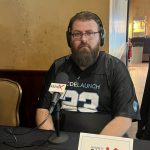 Isaac Carter, Contollo
TRANSCRIPT
Intro: [00:00:07] Broadcasting live from the beautiful Buckhead Theater for CodeLaunch Atlanta 2023. It’s time for Atlanta Business Radio. Now, here’s your host.
Lee Kantor: [00:00:24] Lee Kantor here the place is buzzing. It’s Buckhead Theater, Atlanta, Georgia CodeLaunch, Atlanta 2023. So excited to be talking to my first guest today, Isaac Carter with Contollo, who is a sponsor here today. And he sponsors CodeLaunch around the Country. Welcome, Isaac.
Isaac Carter: [00:00:41] Thanks for having me.
Lee Kantor: [00:00:42] Well, before we get too far into things, tell us about your firm, how you serving folks.
Isaac Carter: [00:00:47] Well, I believe very strongly in that technology should be an opportunity both for the companies that leverage it and for the people that are doing the work there. So we work with universities throughout Latin America, especially in Nicaragua, Honduras and El Salvador, and we train the students there on how to leverage skills in mobile app development and cloud computing and help with internships and then get them jobs with US firms. Allow the US firms to take advantage of really high quality talent and also some cost savings and availability to talent that is just typically really hard to find here in the US.
Lee Kantor: [00:01:25] Well, what’s the genesis of the idea? How did this come about?
Isaac Carter: [00:01:28] So I started doing work with my church group back when I was 12 years old. We actually built an orphanage in Tegucigalpa, Honduras. My dad’s a master electrician and have been staying in touch with these folks through the years and was working with an orphanage down in Managua, Nicaragua, just outside Managua, and was thinking about moving down there and becoming a missionary. And the people there said, Hey, you know, we love our missionaries, but we really need jobs. What can we do to get some jobs here? It’s they were going through some pretty bad political unrest at the time. And so I started interviewing these folks and they had tons of certifications and they were exactly the kind of people talent that we were looking for with our clients up here in the US. So we opened an office down there and started just doing the connections.
Lee Kantor: [00:02:14] So you had a business in the US providing services?
Isaac Carter: [00:02:18] Yeah, I was acting as a big data cloud consultant, but just by myself and started just hiring some folks down in Central America, training them on using big data, things like Databricks, Google Public Cloud, using Looker Studio and BigQuery, and a lot on the Azure framework as well.
Lee Kantor: [00:02:37] So you were taking like skills you knew that folks were hungry for here in the US and you were just saying, Hey, is it possible to train these folks who are motivated and have the desire to do this, but maybe they don’t know exactly what skills to be focusing in on?
Isaac Carter: [00:02:54] At the time, there were people with Azure Cloud certifications working in call centers like they were. They had masters, so they had the.
Lee Kantor: [00:03:00] Right skills, but they just didn’t have no one was connecting the dots to give them the opportunity.
Isaac Carter: [00:03:06] That’s exactly right.
Lee Kantor: [00:03:07] So then when you come in there is were you getting traction like at go? Was this one of those things where you were like, you just unlocked this thing, you know, a treasure that people didn’t realize existed?
Isaac Carter: [00:03:18] Oh, yeah, because that’s how business works.
Lee Kantor: [00:03:20] Well, look, it doesn’t work like that. But you found a pool of people that had the right skills that were probably taking jobs well beneath what they could be making if they lived in the United States.
Isaac Carter: [00:03:32] We were very methodical about it, so we started updating their skills. Maybe they had the skills, but they didn’t have experience. So we started doing our own hackathons and started doing internship programs for these folks. And it was it was a journey. But yes, absolutely. With some strategic growth, we were able to get them in with folks. It was not an overnight success story by any means. But yeah, we were able to bring them in, train them, get them the skills and experience, and then start ramping up with clients.
Lee Kantor: [00:04:01] Well, and when you mentioned earlier that now you’re working with universities.
Isaac Carter: [00:04:05] That’s right, Yeah.
Lee Kantor: [00:04:06] So that was a slight pivot from the initial.
Isaac Carter: [00:04:09] Yeah, absolutely. And then getting with universities, training the professors on what skills were necessary, they were still teaching folks MySQL, which is great, but not for enterprise classes, right? And so teaching, getting the professors to use the right technology stacks and teaching them to use flutter and angular and the modern technology that’s that’s really used and.
Lee Kantor: [00:04:30] Keeping them abreast of everything that’s changing when it changes. So they’re ready instead of lagging.
Isaac Carter: [00:04:35] Yeah. And also really focused on the language skills, because even if you can work in a call center and do tech support for Netflix, that doesn’t necessarily mean that you can communicate accurately with cloud data or mobile technology terminologies.
Lee Kantor: [00:04:51] So your team helps upskill them in those kind of areas that they need in order to be kind of a perfect provider for your clients in the US. That’s right. And then so what has been the biggest challenge? It sounds like you there are a pool of people that fit the bill here if they’re trained properly.
Isaac Carter: [00:05:08] Yeah, yeah. A lot of the challenges at first especially were around language communication skills and then a lot of folks try they work on on site onshore and then they start trying to get. The nearshoring or offshore offshoring and start realizing that they’re just not getting the result that they want. So just learning how to really leverage and maximize the experience with nearshore resources was a challenge for us because you need to know how to turn. Like it’s not like you and I are sitting together right now, and if something’s not right, you can signal me with your hands or with your eyes, and I.
Lee Kantor: [00:05:45] Can point and you.
Isaac Carter: [00:05:46] Can write. You can point or use an iteration from an illustration from a movie that they might not be familiar with. So learning how to communicate and also teach them to communicate more than just the language, but make sure that the the folks know what they’re working on and how to be successful with that. And a lot of companies, even on site, like for the last 15 years, Forbes has said that 78% of all tech projects fail. So if you’re failing when you’re working at the same cubicle with somebody, what are you going to do? If they’re working in a different country.
Lee Kantor: [00:06:19] And they speak another language?
Isaac Carter: [00:06:21] Yeah. Or yeah. So that was that was a challenge. But that’s a challenge that you would face anywhere when you’re sitting next to somebody making sure that you’re working on something that has the business impact that you need is is a skill all on its own. And and that’s.
Lee Kantor: [00:06:36] Why they partner with you because you’re helping kind of minimize some of that and alleviate some of that pain because they’re dealing with you, not them, directly.
Isaac Carter: [00:06:45] Right. I help them devise a strategy myself and I have some other architects that we’ve trained. Right, Your team. Yeah. And we can come in and create a strategy before you even start coding. You get the requirements and then you develop a strategy around how are we going to leverage the cloud? Because a lot of people like to take what they’ve done on site and do the same exact thing in the cloud and next thing you know you’re running $3,000 a day in cloud hosting and you’re spending because there’s.
Lee Kantor: [00:07:10] More efficient ways to do.
Isaac Carter: [00:07:11] Yeah, if you know how to design it that way. So designing the strategy and then designing exactly what your what your protocols and what your best what your practice is accepted practices are. And then you start ramping on your teams either if they’re in the US working on the desk with you or if they’re in Central America or Pakistan or wherever your teams are located, you have to have the strategy first. And that’s where a lot of people historically have been failing, is that they just start working and hope the strategy catches up with them and it doesn’t work that way.
Lee Kantor: [00:07:44] So why was it important for you to partner with Code Launch?
Isaac Carter: [00:07:48] So the last couple of years I’ve been really thinking a lot about how we lack some leadership in our company. And my mentor was talking to me and he said, Hey, what are you doing to foster leadership in your company? So what kind of opportunities are you giving your team to lead besides just giving them a task and expecting them to do it? And especially in Nearshore with managed services, they work for me, but they also are working through a partner for somebody else a lot of the time. So we need our own internal culture and I need the ability to to have something that we can all work on together, even if we’re working on six different projects. So code Launch has just been amazing at giving me the opportunity to bring people I believe in up, give them the opportunity that I’ve got five people here with me from Central America, Nicaragua and Honduras. They led the teams this year. They were face to face with the with the startup. They were taking the requirements. I was here to make sure that it was successful because I’m always going to make sure my team is successful. But they come up, they work together. When we won in Dallas, man, it was huge. We had people begging us to come work. For us, recruiting became a non-issue.
Lee Kantor: [00:08:55] A lot easier, huh?
Isaac Carter: [00:08:56] Yeah. And then we get leads. We’re on target to close a little bit over $2 in sales from our Houston outreach just from that one event through the partnerships and relationships that we made during that event, which is amazing for us. And we see the leadership, we see the culture growing since our coming into the end of 2022. We were concerned because of inflation that we might start losing staff members. And as soon as we won that belt, we we have not had an exit since then in November. And we’ve had people continuously coming in and wanting to be a part of what we’re doing and really engaged and the people that are the most engaged to get the most certifications, they’re the ones that come up and travel and get the.
Lee Kantor: [00:09:40] Right they get the goodies, they.
Isaac Carter: [00:09:42] Get the goodies. We took them to a Braves game yesterday and face to face work with some local companies that are that they work for. They’re on contract with a local company and they met with them, worked with them face to face yesterday. And so it’s just opportunities that because of code launch, it’s helping us grow our internal culture, helping us increase our communication and network and helping us create a more of a leadership and internal culture. That’s just really been amazing for us.
Lee Kantor: [00:10:12] Now, what advice would you give somebody who who hasn’t done code launch but has heard about it? What would you share to them to get the most out of doing it next year.
Isaac Carter: [00:10:22] You mean? From a sponsor or from a contestant.
Lee Kantor: [00:10:25] You you’ve got to sit on both sides of that table. So you tell me. Yeah.
Isaac Carter: [00:10:30] So if you’re coming in as a contestant, know your market, know your edge and know your monetization strategy. I’ve been this is my third event right now that we’re doing. And every event people are here on the stage or coming in wanting to be finalists and they don’t know how to communicate, how they’re going to make money. So if you can’t communicate how you have an advantage over somebody else and the other competitors and you can’t communicate how you’re going to make money in a way that’s believable, and I we can agree with, you’re not going to be successful and you’re not going to be successful in business either. So and then on our side, from the sponsor side, let this be a part of your culture. Let it be an event that you use to reward folks that deserve it. Or if you have people that you want to move into leadership positions, use it for that, use it for man. Every cold launch, our social engagement is through the roof. My LinkedIn profile goes from 50 hits to a thousand hits a day for a whole week. All of our engagement through our websites, through all of our our networking is just through the roof. So make sure you’ve got messaging out there that that allows you to leverage that and then come here, talk to the other the other participants and don’t come here trying to do business, come here trying to meet people. Don’t come here trying to win. We won Dallas. We went to Houston, not ready to win, but just ready to engage. And that engagement has brought us Dallas. We left with the belt. Houston. I left with 12 leads that I converted into four contracts. Right.
Lee Kantor: [00:12:08] And we know which one you want more more of moving forward, right? That’s right. Both So if somebody wants to connect with you and learn more about what you got going on, what’s the website?
Isaac Carter: [00:12:19] It’s cantalo dot net control. L o dot net.
Lee Kantor: [00:12:25] Well, Isaac, thank you so much for sharing your story. You’re doing important work and we appreciate you.
Isaac Carter: [00:12:29] Thanks so much.
Lee Kantor: [00:12:30] All right. This is Lee Kantor Broadcasting live from Code Lounge, Atlanta 2023.
 Taylor Ri’chard, CASTU
TRANSCRIPT
Intro: [00:00:07] Broadcasting live from the beautiful Buckhead Theater for CodeLaunch Atlanta 2023. It’s time for Atlanta Business Radio. Now, here’s your host.
Lee Kantor: [00:00:24] Lee Kantor here broadcasting live from the Buckhead Theater. This is CodeLaunch Atlanta 2023. I am with the winner, the champion of the night, Taylor Ri’chard, and he is with CASTU. Welcome, Taylor.
Taylor Ri’chard: [00:00:38] Thank you for having me. It’s exciting.
Lee Kantor: [00:00:40] I know. Exciting stuff. And have we interviewed before?
Taylor Ri’chard: [00:00:44] I’ve interviewed with Business RadioX before for one of my films, so it’s very good to be back. I like you guys a lot.
Lee Kantor: [00:00:50] We’re good luck. Thank you. We’re good luck. You are. So tell us about cast you. For folks who don’t know, what is it? You have an app that.
Taylor Ri’chard: [00:00:58] Yeah, so cast is a mobile app for people in the industry, entertainment industry. We connect talent with productions. We connect productions with investors. So the idea of cashew is that we allow or help you serve as a one stop shop. If you’re breaking into the industry or even if you’ve been here long, helping you stay employed, helping you find gainful opportunities and really kind of moving the needle for productions who need investment.
Lee Kantor: [00:01:23] So you’re helping the talent find opportunities and you’re helping the people who have productions get the investors. Absolutely. Yep. Kind of complete the loop.
Taylor Ri’chard: [00:01:35] Complete the loop because that’s usually the problem. People will get access to making the films, but they didn’t have to deal with it after. So we’re hoping to make this whole thing a unique circle just to make sure we can help everybody.
Lee Kantor: [00:01:47] So what was the genesis of the idea? How did you come up with this?
Taylor Ri’chard: [00:01:50] So I’m a filmmaker. That is what I do my my day job. And really, we created this idea to solve our problem because we had a problem finding the right talent problem, finding money and those things. So I said, What if we created a uniform app that solved all these problems? I’m sure other filmmakers were struggling with this and it looks like it was true.
Lee Kantor: [00:02:09] So now is the app available here for the Atlanta area?
Taylor Ri’chard: [00:02:13] It’s going to be worldwide. So in six months we have a launch in the United States. And in February 2024, we’ll go international on the App Store and on the I got to learn that the Android marketplace for iPhones.
Lee Kantor: [00:02:28] So now how did you get connected with code launch?
Taylor Ri’chard: [00:02:30] So we were at an event and met Jason Taylor, who told us about code launch and how it was a great way for, you know, startup tech companies to really have a launch pad. And so we applied. I kind of feel like a Cinderella story, to be honest, because this is our first year. And I know some people have been coming back and forth, but we applied and here I sit.
Lee Kantor: [00:02:50] And here you sit. So why do you think that you made it to the top? What was kind of your secret sauce on this?
Taylor Ri’chard: [00:02:57] I think what I did is I focused on the truth, right? Everyone dreams, Everyone believes in magic, right? And so that’s what I focused on. And I just told our story and told the story of so many countless people out there who want opportunity but are barred from access by Hollywood gatekeepers. And so we’re going to put the power in their hands.
Lee Kantor: [00:03:20] So now part of this competition is successful entrance and people who have won have had some monetization plan that was important component. What is your monetization on the app?
Taylor Ri’chard: [00:03:32] So we are going to be free for the users. I’m sorry, free for the production companies because again, we are disruptive, so we want to get the industry to come aboard, put their jobs and put their opportunities at no cost to them. And for low fee, we’re going to charge the users $9.99 to access all that a month.
Lee Kantor: [00:03:49] And then so the users can then go on board. They can create a profile for themselves. Absolutely.
Taylor Ri’chard: [00:03:54] So it works like an Instagram. So think of Instagram meets. Indeed. So it’s a social platform. You can go there, you can post, you can comment, you can put your resume, you can send messages, you can apply to jobs. And if you are on the other side of the house, the industry, the truest saying, but you can source talent, you can find opportunities for you to invest all in the app in a one all all in one stop.
Lee Kantor: [00:04:20] So now if the talent are you defining talent as the actors or this could be a sound person or a videographer, anybody that is is kind of involved with the production is talent.
Taylor Ri’chard: [00:04:33] Absolutely. So it’s talent. It’s below the line. It’s above the line. Directors, writers, grips, pays. And this is just our entry way. Eventually, we want to solve the problem for the entire entertainment industry. So if you’re a sports writer, newscaster all of those things that are defined as media and entertainment, you can find your job in Kasshu.
Lee Kantor: [00:04:53] And then how? So I put my profile in, say I’m an actor, I put my profile in, and then I just hope somebody sees it. Or is there anything I could be doing to kind of pinging people to.
Taylor Ri’chard: [00:05:04] Say, Absolutely. So the good thing is that actors can empower themselves by buying a package and they can advertise so they can post their reels, they can advertise themselves because we have a get discovered section so they can advertise themselves and get discovered where productions will get emails sent to them. Hey, a new entrant, a new talent, something like that. That puts them at the top of the list. So if someone. You know, filters out like I’m looking for an African-American female. You paid for advertising. You’ll be at the top of the list.
Lee Kantor: [00:05:29] And then if I’m a production, I can search for African-American female. And then I will have a.
Taylor Ri’chard: [00:05:35] List spit out to you.
Lee Kantor: [00:05:36] Yep, absolutely. And then, like you said, it’s like Instagram. I can just scroll down and see who catches my eye.
Taylor Ri’chard: [00:05:41] That’s exactly it. That’s the concept.
Lee Kantor: [00:05:43] And then how what was it like with the the partners that you had with launched.
Taylor Ri’chard: [00:05:50] My deaf team. Right. Improving Atlanta. They were amazing. They really latched on in the beginning. They understood what we were trying to. Are you a.
Lee Kantor: [00:05:57] Technologist at.
Taylor Ri’chard: [00:05:58] All? I am not.
Lee Kantor: [00:05:59] So you are a non tech? I am not.
Taylor Ri’chard: [00:06:01] Founder at all.
Lee Kantor: [00:06:03] So you haven’t explained people what you wanted? This is how I want.
Taylor Ri’chard: [00:06:06] I walked them through my loose idea and they framed it up. We went through the hackathon, the hackathon in two days and I felt so good because not only were they excited about getting to work on it, they believe in it and they like it. And so that made all the difference. There was a lot of good energy in that room, so it’s no doubt that we’re able to have that same energy replicated on stage.
Lee Kantor: [00:06:29] And then you’re excited about moving forward?
Taylor Ri’chard: [00:06:31] I am very excited about moving forward, especially with this on my arm, this belt. So I’m very excited.
Lee Kantor: [00:06:36] So if somebody wants to connect with you, learn more about the app, what is the coordinates?
Taylor Ri’chard: [00:06:42] So you can find us on Instagram at Cast W X2, or you can follow me at at Taylor, Richard T LRC Ricard.
Lee Kantor: [00:06:54] Good stuff. Taylor. Congratulations. Thank you so much for sharing your story. You’re doing important work. We appreciate you. Thank you.
Taylor Ri’chard: [00:07:00] I appreciate you guys love it.
Lee Kantor: [00:07:01] All right. This is Lee Kantor back in a few at code launch, Atlanta 2023.
 Lee Mosbacker, Cyrannus
TRANSCRIPT
Intro: [00:00:07] Broadcasting live from the beautiful Buckhead Theater for CodeLaunch Atlanta 2023. It’s time for Atlanta Business Radio. Now, here’s your host.
Lee Kantor: [00:00:24] Lee Kantor here live from the Buckhead Theater CodeLaunch Atlanta 2023. So excited to be talking to the presenting sponsor, Lee Mosbacker with Cyrannus. Welcome.
Lee Mosbacker: [00:00:35] Thank you for having me.
Lee Kantor: [00:00:36] Well, before we get too far into things, tell us about your company, how you serving folks.
Lee Mosbacker: [00:00:41] Well, Serena’s identified some problems early on the last couple of years in VC, where it just seemed that young or unexperienced investors were making mistakes around basic technology. And so I formed Serena’s to be sort of a due diligence blog initially, but now we’ve kind of pivoted to be a due diligence or I guess a rating system for startup ideas and then connect those with qualified investors.
Lee Kantor: [00:01:08] So what is the harder part to find the qualified investors or the vetted ideas?
Lee Mosbacker: [00:01:14] You know, the idea is we one of the reasons why we’re sponsoring Code launch is because we get access to a lot of great ideas. The investors, you know, it depends on the type of investor. If you’re an active investor or you have a fund, you know, you may want to do your own due diligence and that’s fine. The type of investors I look for are individuals that want to syndicate due diligence with the world’s leading edge technologists, with the with the best marketers with imagine you can put together a dream team to evaluate a deal and eventually we want to turn that into an automated system where it’s sort of the the chat GPT for, for venture funds. But it’s kind of easy to find both. You know, we’ve we’ve got 10,000 experts signed up. We’ve got eight VCs that are working with us currently and with with Code launch, we’re getting an access to 3000 ideas a year. So it feels great.
Lee Kantor: [00:02:05] So how long have you been with Code? Long.
Lee Mosbacker: [00:02:07] I’ve been sponsoring code launch for about a year. We’ve done four events. This is our fourth event and we’re signed up to do two more.
Lee Kantor: [00:02:15] Now. When you first started with them, was that something that you you kind of were betting on and hoping and or did you feel pretty confident from Go that this was a good fit?
Lee Mosbacker: [00:02:27] You know, we really aligned. So we did we did a test in Columbus, Ohio, and I got a chance to meet Jason Taylor, who runs runs Code Launch, and him and I have sort of the same idea about what makes a successful business. If you’re a Jordan Belfort and you want to go pump and dump a startup and you’re that type of VC, that’s great. Go do it. You probably won’t last for long. But if you want to build real businesses and you want to invest in good people, hard working people with great ideas, that’s what Code Launch is about. And Jason and I really, really carry that mantra for both Sarantis and Codebench.
Lee Kantor: [00:03:04] But there’s lots of people that do kind of similar events as code launch around the country. Are you working with all of those as well, or are you just kind of locked in on code launch and that’s where you spend your time?
Lee Mosbacker: [00:03:15] Yeah, you know, code launch is interesting because it never takes anything from founders and it only gives the founders. There’s a lot you’re right, there’s a lot of noise in the startup space. But I think the ethos around Code launch matches my own personal like goals around how how America, you know, keeps its lead in the world, how how we fund viable businesses, how we help founders.
Lee Kantor: [00:03:39] So you find that there’s a lot of organizations that are pretending to serve maybe that community, but they’re just taking from it.
Lee Mosbacker: [00:03:48] And yeah, I find like, you know, they they do it through services or they do it through, you know, like or it’s their own thing. They’re taking fees. It’s, you know, to me, like because that.
Lee Kantor: [00:04:00] Group is vulnerable, right? Because they have big hopes and dreams and they might have something. But if somebody is kind of picking at it too soon, too quickly, you can destroy something before it even has a chance to flourish.
Lee Mosbacker: [00:04:13] Agreed. And, you know, I think they’re in six cities now. We’re trying you know, I’m trying to push Jason to put this in to be a worldwide 25 city event. You know, you know, a couple a month. We’re trying to scale this. I know that he’s probably gonna get mad at me for saying that, but, like, I just think that their their focus is to elevate ideas and to help founders. And one of the reasons why I was so anti a lot of the venture capital that’s been going on in the world is that it’s not about helping founders. It’s about how do we how do we how do we create a wealth transfer from A to B and how do I get my 20% or my 2% fee? And to me, with my venture fund cobalt, we don’t take any carry. We don’t take fees. I put my own money in it. And that’s the kind of people we do business with. And Jason and improving and code launch are all together in that same mantra.
Lee Kantor: [00:05:06] Are you getting enough of the founders from these underserved communities or is that part of the equation when you’re doing things like this?
Lee Mosbacker: [00:05:14] You know, I’m a big I’m a big proponent of overlooked founders. And so my venture fund cabal, we focus primarily on on Overlooked. That doesn’t mean that we don’t that we draw lines, you know, around sex or gender or race or whatever. We just look for scrappy founders and they just happen to be female founders. They just happen to be minority founders or they just happen to be founders that, you know, grew up in a in a tough environment. You know, I come from a I come from Appalachia. You know, my my dad passed away from an overdose a year ago. My mom was a single mother on welfare. I was always I grew up extremely poor and I didn’t have an indoor bathroom. Right. So when when I’m out there funding with my success, when I’m out there funding founders, I’m looking for scrappy founders that, you know, some some person that grew up in the Bay Area, a VC that went to Harvard and graduated, he doesn’t know that person exists, probably discounts them. So I’m in it for the little person. Yeah, for sure.
Lee Kantor: [00:06:18] So if somebody wants to connect with you, what is the best way to do that?
Lee Mosbacker: [00:06:23] Just go to arancio or Lee at arancio is my email. I’m happy to to, you know, to respond.
Lee Kantor: [00:06:30] All right, Lee. Well, I appreciate what you’re doing. Thank you so much for sharing your story. You’re doing important work.
Lee Mosbacker: [00:06:36] Thank you. Thanks for having me.
Lee Kantor: [00:06:37] All right. This is Lee Kantor. We’re back in a few at code launch, Atlanta 2023.
 Karen Sammon, Conscious Capitalism
TRANSCRIPT
Intro: [00:00:07] Broadcasting live from the beautiful Buckhead Theater for CodeLaunch Atlanta 2023. It’s time for Atlanta Business Radio. Now, here’s your host.
Lee Kantor: [00:00:24] Lee Kantor here live from the Buckhead Theater CodeLaunch Atlanta 2023. So excited to be talking to my guest right now, Karen Sammon, the CEO with Conscious Capitalism. Welcome.
Karen Sammon: [00:00:36] Thank you. Thank you for having me, Lee.
Lee Kantor: [00:00:38] I am excited to be chatting with you. For the folks who aren’t familiar, can you share a little bit about Conscious Capitalism, what it is and why it’s so important in today’s world? Oh, it’s.
Karen Sammon: [00:00:47] Such a great question. Thank you. So conscious Capitalism is an organization and a movement that is focused on elevating humanity through business. And it is so important in this day and age because we are a big tent and we we bring in CEOs, presidents, founders of businesses of all states and stages to convene and connect around the philosophy of conscious capitalism, which is based on our higher purpose to elevate humanity through business conscious leadership, building really strong, conscious culture. And the fourth tenant is our stakeholder orientation, where the ecosystem is healthy. So we believe in conscious capitalism philosophy that when you focus on the ecosystem, your team members, your suppliers, your customers and your investors, the community, the environment, whoever those stakeholders are in your business, when they’re healthy, the business thrives.
Lee Kantor: [00:01:53] Now it seems like the movement has been, I don’t want to say attacked, but there’s people poking at it from all different fronts that historically hadn’t really been poking at it at all. I mean, when it first came out, it was such a noble gesture. It was eye opening. Everybody was like like it was common sense when I first heard about it. And now it seems like there’s people poking from one side, people who are kind of questioning capitalism and then another side where they’re questioning, should we care, you know, about the community where it’s just about the, you know, shareholders. How how has the movement kind of managed through this turbulence? Yeah.
Karen Sammon: [00:02:34] That is also you know, it’s an area where we focus. And I said that we’re a big tent. We are secured by our tent poles of higher purpose culture, leadership and and stakeholder orientation. We are open to diversity of thought, diversity of ideas. We welcome all leaders regardless of their political orientation, regardless of their race, regardless of anything. If you are aligned with our tent poles, we welcome that diversity. So that’s how conscious capitalism is able to navigate the political, you know, the politicizing of capitalism, of diversity, of ESG, all these all these things that tear us apart. We bring different voices into our community to have real conversation as leaders. We can’t we we shouldn’t we shouldn’t pick and choose who works for our company. We we can’t have we can’t have just one thought process in our organizations. We need to welcome all different worldviews into our organization. And as we do that, when we are when we have a foundation of trust, when we have a foundation of inclusion and belonging that creates creativity and innovation. So it’s we think it’s really important, especially now that conscious capitalism is of the philosophy that should be integrated into businesses.
Lee Kantor: [00:04:04] I agree 100%, and I think that America is uniquely suited to be kind of the place where this happens. Being the melting pot that we are, that we bring together so many diverse groups in one place for a common kind of good. How do you kind of help other people kind of spread the word about this path, about considering, you know, making their organization kind of along the lines of a conscious, capitalistic organization? Is there a ammunition you can give them? Is there research, is there data that supports that businesses that kind of go along this path, you know, have less turnover, you know, more successful things like that?
Karen Sammon: [00:04:45] Absolutely. So so, you know, you mentioned that, you know, conscious capitalism should be adopted, especially in America, where we’re a melting pot. Conversely, conversely, we’re also a nation that is highly polarized when when you look at the Edelman Trust barometer and they they focus on the world, they look at all all, you know, who’s trusted? Business leaders, government NGOs, media CEOs are trusted more than anyone else. So right now, we have this opportunity to be able to bring CEOs, presidents, founders together. And the way that we do, we bring them along is. There’s of course, lots of literature out there. Conscious capitalism, the book was is out and available. The public is written back in 2014 by John Mackey and Raj Sisodia. There’s a a companion book, The Field Guide, which is a kind of a how to but the organization, Conscious Capitalism, brings our community together in different events, whether it’s our CEO summit that’s in October of this year or through our chapter events where we convene locally or through conscious capitalism, senior leader network, where we bring we bring leaders together to have conversation around issues that are impacting our impacting business leaders. So they span from things that you just talked about. So we we’ll we’ll talk about employee engagement and how conscious companies with conscious cultures can outperform and reduce turnover. We talk about longevity and consistency of our customer relationships and how the philosophy has enabled, enabled our community to be be more successful in maintaining, maintaining their customer base without churn. And we, you know, we talk about how they are able to communicate the impact that they’re having both on the both both in terms of their financial reporting and the impact they’re having, whether they focus on sustainability or wherever they’re putting their attention.
Lee Kantor: [00:06:47] Are you finding that young people and maybe some of the leaders of underserved communities are embracing the tenets of conscious capitalism? Is that kind of a good fertile ground for new and up and coming conscious capitalism, you know, people that are believers of that?
Karen Sammon: [00:07:05] I do. I do think that it’s an interesting question because there’s a lot of young people who have kind of turned away from capitalism. So I believe that we have a really important role to be able to demonstrate that there is a better way of doing business, that we can we can because capitalism has lifted so many out of poverty. And that’s that’s why we focus on elevating humanity through business. And so when you bring next generations through, you know, into the conscious capitalism conversation, whether they’re in business school or undergrad or through their their parents, they’re able to see that capitalism can be a force for good. And so our role, our role, our job, what I am doing is working to change the practice and perception of capitalism. And so getting to that tipping point that Malcolm Gladwell tipping point of. Getting to past the center of the bell curve so it becomes the norm of doing well and doing good, right?
Lee Kantor: [00:08:05] They go hand in hand and I would think the young people would embrace that if they were if they could open their mind to capitalism not being a four letter word that is a force for evil when like you said, there’s so much data that supports it. Capitalism is the biggest driver of good in the history of man. It sure.
Karen Sammon: [00:08:24] Is. And when when young people get into organizations where they’re feeling valued, it starts, it starts to the flywheel starts with them, and they start to understand that the companies that can can live their values. But it’s up to the leaders. It’s up to today’s leaders to demonstrate to the next generations of leaders of the ways that we can we can elevate humanity, the way that we can bring bring the next generations through and become the next best leaders for for the world.
Lee Kantor: [00:08:55] So what do you need more of? How can we help you?
Karen Sammon: [00:08:58] Well, we are we are we have a focus on a million conscious capitalist leaders. We feel like when we get to a million conscious capitalist leaders that we will have have the conversation that is very natural and organic. So we are we’re, you know, things like code launch today. This is a way that we can amplify the message of conscious capitalism. Improving is one of our partners in the movement of conscious capitalism, and they have integrated the philosophy through their whole organization. They focus a lot on on how they can they can support their ecosystem, their stakeholders. And through that they they have this code launch, which is an amazing event where they’re they’re showcasing what their company can do and they don’t do it for an expected return. They do this because it is it is going to be able to proliferate what they know is a better way of doing business. And on the back end of that, there will be a better return. And so this is a demonstration. So how you can help is we can do more of these these kinds of discussions. You can I can give you a long list of great leaders to interview so we can learn more about how they bring the management philosophy into their own organizations. And that will help that that helps us all spread the word.
Lee Kantor: [00:10:17] If somebody wants to connect with you or somebody on the team, whether it’s here in Atlanta or anywhere in the country or I guess the world now, what is the website?
Karen Sammon: [00:10:25] Their website is conscious capitalism. One word.org.
Lee Kantor: [00:10:31] Well, Karen, thank you so much for sharing your story. You’re doing important work and we appreciate you.
Karen Sammon: [00:10:35] And Luke, it was great to talk to you.
Lee Kantor: [00:10:36] All right. This is Lee Kantor back in a few at Code Lounge, Atlanta 2023.
 Tim Butler, Fund Hub
TRANSCRIPT
Intro: [00:00:07] Broadcasting live from the beautiful Buckhead Theater for CodeLaunch Atlanta 2023. It’s time for Atlanta Business Radio. Now, here’s your host.
Lee Kantor: [00:00:24] Lee Kantor here live from the Buckhead Theater. So excited to be working with CodeLaunch Atlanta 2023 one more time. And I have with me the judges champion Tim Butler with Fund Hub. Welcome.
Tim Butler: [00:00:40] Thank you so much for having me here. I’m so excited.
Lee Kantor: [00:00:43] Well, congratulations. First and foremost, this big win, judges choice. That’s not the people’s choice. This is the people, the smart money in the room choice.
Tim Butler: [00:00:55] Yes, it is.
Lee Kantor: [00:00:57] So tell us first what Fund Hub is. What’s your service and how you serving folks?
Tim Butler: [00:01:03] Fund Hub is the premier AI powered fundraising platform where we connect grant seekers with both grants and professionally vetted grant writers all in one place. So what we do is we help businesses and nonprofits who are challenged in accessing capital get high ROI funding by focusing on founder education.
Lee Kantor: [00:01:28] So now what was the genesis of the idea? How did this come about?
Tim Butler: [00:01:32] So essentially, I have been a certified grant writer for 20 years and worked historically in nonprofit and education. I felt devalued and decided to just launch out into the deep step out on faith and start my own fundraising and consulting firm. Writing grants started off very small and a spare bedroom in our home on an old funky laptop. Slowest Christmas and we’ve been blessed to level up on our direct services side over six figures and we’re in route to seven figures. So because we are a social enterprise where we value not just profit but purpose, we found that connecting with founders in our ecosystem consistently grants were a recurring thing and we can only do so much as a direct services company serving folks who need grant services. So we got the idea to take tech, marry it to the knowledge that I have in the grant writing space and then automate it and serve the masses.
Lee Kantor: [00:02:38] So let’s educate some folks a little bit about grants. Some people maybe there’s a lot of businesses out there that could benefit from grants that they just even didn’t even know about or didn’t consider. Is that true?
Tim Butler: [00:02:51] That is absolutely true. So, for example, in America, the grant making market is $1.2 trillion annually. So that money is available for businesses and nonprofits. Essentially. The problem is, is less than 10% of all applicants that actually apply get funded any grants. And the main reasons are they don’t know where to find the grants. Their companies or organizations are not grant ready their ask in those grant applications are more often not aligned properly with the funders, and they usually need the help of a professional grant writer because for federal grants specifically, they take on average 125 up to 200 hours just to complete. And then also drawing a comparison, there are approximately 1 million working engineers all across America. There are only 10,000 freelance grant writers nationwide. So finding a good grant writer can be hard. And then you also have the piece that adds insult to injury. For Bipoc founders, they have even more unique funding barriers due to racism in the form of inherent bias. And so we’re trying to address that. And then overall, just in the grant writing space alone is highly fragmented and the tech is very, very outdated. And so our platform solves all six of those pain points.
Lee Kantor: [00:04:28] So now, are you a technologist? Do you get involved in trying to build your own app before you got involved with code launch, or was this something you had an idea, heard about code launch and said, You know what, let me have my dev team handle that, that part of this.
Tim Butler: [00:04:44] No, sir. My, this, this is I cannot take all of the credit for this because this is a joint venture. My wife and I actually are co-founders of our company and I do have a team. We are non-technical founders. So tech was not in our wheelhouse. What the thing that we came to the table with, we knew how to get and keep a customer and make them satisfied, right?
Lee Kantor: [00:05:10] So you had all the brainpower but you didn’t have it in the phone?
Tim Butler: [00:05:14] No. And that’s where our lead UX person Truce and Doherty and other coders on our team come in to take the vision. That we cast and then carry it out with the technology.
Lee Kantor: [00:05:26] So now, was it difficult to build your team because you know that you know there’s not. You said there’s a lot of engineers, there’s not a lot of grant writers. But to find the right match is not that easy. You might have to kiss some frogs before you find the right match there, right?
Tim Butler: [00:05:43] Yes, that is true. We like to take the slow were purposeful approach. So we as a social enterprise first and foremost, we are born again Christians and everything that we do, we know Jesus gives it to us. So for us, we pray about everything. Our business was birthed out of prayer and purpose, and so we prayed about who to connect with and we feel like God brought us the right people to be able to make this happen. One of the things that was that’s universal about everybody on our team, they have a heart for people. It’s never just I just want to make money. It’s always about purpose for this because this is our ministry in the marketplace.
Lee Kantor: [00:06:28] So now how did you even hear about Code Launch? How did that even get on your radar?
Tim Butler: [00:06:32] So in searching for grants for both our company as well as our clients, I come across hundreds, actually thousands of hits as I search Cold Launch came up in the hits. And so I decided to apply for Cold Launch Houston last year. And I well, we made it all the way down to we made it to the semifinalist round, but we were not selected, but we were encouraged to still come back and apply for Atlanta. They felt like it would be a second chance and a better fit. And so after thinking about it, really counting up the cost of it, we decided as a team we were going to do just that. And so we did. And when we lean in, we sink our teeth into something. For example, even though we were not selected to go on stage at Cold Launch Houston, I still committed to exhibiting. And so I drove overnight on a shoestring budget from Tulsa all the way down to Houston, and I slept in my car just so that I could show up and be a man of my word. It was suggested that I come and I’m glad that I did because when I got there, I was able to get the lay of the land, so to speak, and really see from the inside perspective how cold launch runs and what it really does take to win this competition. And that was not something that was unfruitful because voila.
Lee Kantor: [00:07:57] Here I am. Here you are an overnight success, right?
Tim Butler: [00:08:00] No, it has definitely not. Not in it. No, it has not been an overnight thing. But because it has been a four and a half year journey for us in doing this. But I wouldn’t take anything from my journey now.
Lee Kantor: [00:08:12] So now what’s next?
Tim Butler: [00:08:14] Now we are currently developing our clickable prototype. And so once that is ready, later this summer, we’re going to start rolling out our first phase of beta testing. Because one thing about it, I’m not going to try to talk too long, but one thing about whenever you’re building a technology platform, and I would even say this still goes for building any business successfully, you have to be married to the problem and not your solution. So you want to build whatever you’re going to build completely with the customer in mind, making sure you solve their problem. If people are not touched enough by your service or your product to reach in their pockets, grab their cards and be willing to spend money, you need to go back to the drawing board. So we value understanding our clients at a granular level and rendering the utmost highest value that we can to them. So we want to hear their voices, get their input on our tech, you know, look at what they like, what they don’t like, let’s get the bugs out of it. And then after that phase is over, then we will move towards market.
Lee Kantor: [00:09:24] So what do you need more of? How can we help you?
Tim Butler: [00:09:27] So what we need are we have two sides. We have a direct services side in addition to the tech from the direct services side right now is funding the tech. So we need new grant customers or clients. So if you or any folks out there in radio land are in need of any grants or grant writing services, please by all means connect with us. You can find us on LinkedIn, you can find me Tim Butler, Tim Butler. You can also look up Fund hub Tulsa on all social media handles, LinkedIn, Instagram and Facebook and you will be able to connect with us. Another thing that we’re we are still recruiting for beta testers. Beta testers go into our pool and if they’re selected, they qualify to receive free limited grant services. So if you’re interested, reach out to us on social media and we can get you signed up. It only. Takes three minutes. And then last but certainly not least, though, we have been blessed to raise 118 K non-dilutive. We know that we’re still going to be able to connect with VCs and we’re looking to form those relationships because it’s going to make more sense as we continue to grow to look for those types of investments. But we only want to connect with those VCs who both understand and align with our vision, profit and purpose. So we’re looking to connect with social impact investors and start having conversations and more and forming more relationships.
Lee Kantor: [00:11:01] So now you mentioned that you’re open for business for businesses or nonprofits that are interested in grants.
Tim Butler: [00:11:09] Absolutely, because there’s a misnomer for some folks. They think that only nonprofits can qualify for grants. That’s a myth. That has never been the case. Nonprofits historically have had been able to qualify for more grants, but there are grants that are allocated for businesses, and they always have been.
Lee Kantor: [00:11:28] So in order to work with you, they can find you online and they can go to website for.
Tim Butler: [00:11:33] Yes, you can go to our website, Capital fundraising.co. It’s literally spelled exactly how it sounds.
Lee Kantor: [00:11:41] And then they can go there, have a conversation with you, explain their situation and you can is that free to have a conversation with you to kind of see if it’s if there are possible grants for somebody?
Tim Butler: [00:11:52] Yes, it is. It is free. I offer free 20 minute intro consultations with those clients. I do vet and screen clients up front first because I want to make sure from a direct services standpoint, there is synergy first because I get a myriad of requests and some businesses and nonprofits, frankly, are just too early to really get in the crux or the sweet spot that I call where they can really level up and get grants. I would rather them focus on getting grant ready first. From there, if you are further along, at least generally for our direct services side, we work with businesses and nonprofits that are generally two years, at least two years old, up to ten years old because they’ve by that time they’ve already had some market traction in general and they have raised some funding and they’re looking for their next funding milestone. However, our fund hub tech platform is a social enterprise that’s open to everyone. We use our profit to underwrite the cost of the grant match, making it free to everyone. We just charge for the premium features and the upgrades.
Lee Kantor: [00:13:01] Good stuff. Well, congratulations on the victory. Congratulations on the momentum thus far. And one more time, the website. If somebody wants to connect.
Tim Butler: [00:13:09] You’re going to go to capital fundraising.co spelled exactly how it sounds capital fundraising.co. You can also find us on social media at Fund Hub Tulsa Fund Hub is all one word fund Hub Tulsa.
Lee Kantor: [00:13:28] All right, Tim, thank you so much for sharing your story. You’re doing important work and we appreciate you.
Tim Butler: [00:13:32] Thank you for having me.
Lee Kantor: [00:13:33] All right. This is Lee Kantor. Back in a few at code launch, Atlanta 2023.
 John Ruzick, Improving
TRANSCRIPT
Intro: [00:00:07] Broadcasting live from the beautiful Buckhead Theater for CodeLaunch Atlanta 2023. It’s time for Atlanta Business Radio. Now, here’s your host.
Lee Kantor: [00:00:24] Lee Kantor here live from Buckhead Theater. This is CodeLaunch, Atlanta 2023. Another winner here. We have John Ruzick with Improving. Welcome, John.
John Ruzick: [00:00:36] Great to be here.
Lee Kantor: [00:00:37] So exciting. Holding the belt. Feeling pretty good about that. I feel.
John Ruzick: [00:00:41] Great. Repeat champion from code launch Atlanta 2021. So glad to bring it home again here in 2023.
Lee Kantor: [00:00:48] And then you were working with Taylor with Last.
John Ruzick: [00:00:51] Correct? Yeah. Taylor with Cashew. Great bunch of folks. We had a pleasure for a whirlwind 24 hours developing an app for them.
Lee Kantor: [00:00:59] Now, John, when you’re your tell us about your day job at improving.
John Ruzick: [00:01:03] Yes, I’m a principal consultant with improving. So I help clients realize their objectives with application development, infrastructure, architecture, etcetera. So it was just brought in to lead a team on a something that’s a little bit out of my wheelhouse with mobile development, but put together a team that got some kudos on stage and I’m happy to talk about that. And so I’m really excited to be able to deliver for them.
Lee Kantor: [00:01:26] So but you’re part of improving is kind of serving the community through these programs like Code launch and then encouraging the developers to get involved with Code launch. Is that how that.
John Ruzick: [00:01:38] Absolutely. So improving is a big sponsor of conscious capitalism. So we try to give back to the community and code launch is just one of the most visible ways that we do that. So all the developers on the team just donated their time 12 hours on a Sunday, 12 hours again on a Monday to really just put together and hack and code and help one of these startups get from kind of infancy to a product that is closer to release in the market.
Lee Kantor: [00:02:06] So for you personally, is this, you know, part of why you’re part of improving doing things like this? Is this things that you would have done on your own had you not had this opportunity to to work with through code launch like this?
John Ruzick: [00:02:19] Yeah, Improving just really encourages that. They encourage you to lead out in areas that you aren’t necessarily completely comfortable. So I’m a developer, I’m an IT guy. So a lot of times you sit back and just code, right? But these through improving really get you to put yourself out there. And I was able to get together a really good team of folks that again are more behind the scenes but lead out say let’s go put yourselves out there and really give something back to the community. And improving is just amazing and encouraging that for everybody that works for them.
Lee Kantor: [00:02:52] So how do you get connected once you raise your hand and say, I’m in to be involved with the hackathon like this, how do you get paired with cast? Who is that just kind of luck or do you how does that happen?
John Ruzick: [00:03:04] No. So I mean, it is absolutely luck, but I was part of a draft. So there’s a draft. Yeah, absolutely. So so a couple days before the finalist reveal the six dev teams that have signed up to to sponsor the event, donate their time, get a list of in this case, it was 12 finalists. We had six dev teams. And so we got to look at their technology stack, look at what they were trying to accomplish and and draft being the host sponsor, I was last in the draft and it just so a lot of luck in that cast you kind of was still on the draft board if you will.
Lee Kantor: [00:03:43] Excited about when you heard about the concept because Taylor said he’s not a technologist.
John Ruzick: [00:03:49] Yeah, it was. It was the vision and being here local in Atlanta, we see how vibrant the film and entertainment industry is. And I don’t have aspirations or certainly don’t think that I’m going to be a part of it, but this was a way to get into it or get connected with it. So that was really, really attractive to us.
Lee Kantor: [00:04:09] So then you kind of read his vision or see his vision, and then you’re saying, I can add to that. There’s stuff my skill set can really make this come alive. I can create that marketplace that he envisioned.
John Ruzick: [00:04:21] Yeah, absolutely. So there vision is is wide ranging. But at least going into this and I will say this Sunday morning, they had mockups and diagrams. Monday at 9:00, they had an app that they could load on their phone and show some of their functionality. So just the ability to make that quantum leap from nothing to something they can show investors or partners in the industry to generate more excitement. The ability to play some small role in that is just unbelievable. And I relish that opportunity with my team through this through the code launch.
Lee Kantor: [00:05:01] So now how are you seeing technology evolve in your years of being involved to be able to do that in that short period of time? You couldn’t have done that, what, five years ago it been five years ago.
John Ruzick: [00:05:12] Would have been would have been.
Lee Kantor: [00:05:14] Tough, right? It would have been very difficult to to pull off something similar.
John Ruzick: [00:05:18] Absolutely. It would have been it would have been tough. So there’s there’s a lot of resources out there. And I. Was laughing as everyone went through the the presentations, everyone mentioned AI and Chatgpt and all that, and I almost yelled out bingo at one point because I thought everybody had hit the AI buzzword. But absolutely, through the development process, there are tools and technologies that you can use to accelerate that development this day that didn’t even exist. Heck, six months ago.
Lee Kantor: [00:05:47] Really? So you were using things on on his app that weren’t available six, 12 months ago.
John Ruzick: [00:05:54] Just just learning techniques and different ways to get answers to questions and tips. If I don’t know how to do something, there are new ways to find that answer and new resources to go go poll to try to get get you over the roadblock that you’re currently facing in the development process.
Lee Kantor: [00:06:14] Now, how does going through an event that’s this, you know, time compressed? Right. You’re getting a lot done in a short period of time. You know, a lot of time in your work. You’re working on projects that could be months, years in the making and things are slow and grind and it’s hurry up and wait and here you are just like cramming, you know, information and technology into a mobile app as fast as furiously as you can.
John Ruzick: [00:06:37] Yeah, absolutely. So as part of this, there is a showmanship part of this event, the.
Lee Kantor: [00:06:45] Belt and the hat. There was there’s some clues there, some showmanship involved. Exactly.
John Ruzick: [00:06:50] So even even in the development process, when you get there late on the second day of the hackathon, they know they’ve got to be up on stage in front of hundreds of people displaying it.
Lee Kantor: [00:06:59] It’s got to be some jazz hands There is.
John Ruzick: [00:07:02] So the goal when we’re developing this is to set them up foundationally with something that they can build upon. And as you get late in that second day, make conscious decisions of where we’re going to make things look beautiful, right? But when they get their funding, when they get their that venture capital interest, it’s a minor lift to make it 100% functional. It’s not a rewrite of the application. So we have set them up.
Lee Kantor: [00:07:31] With foundationally, you invested a lot of mental energy to give them a strong base to build on.
John Ruzick: [00:07:37] Exactly. Yeah. So the first the first day and a half is setting them up with the technology and infrastructure that right, exactly like you said li to build upon that is not going to put them into a negative space. And then the last day is is make it look beautiful for the event.
Lee Kantor: [00:07:56] Right. Because at the end of the day, that’s what people are voting on, right? They want to see the pretty app do the the cool thing.
John Ruzick: [00:08:02] And even on stage, one of the judges mentioned that the UI looks amazing and beautiful. And so.
Lee Kantor: [00:08:09] So you’re all high fiving in the back, right?
John Ruzick: [00:08:11] We are. And my team, Daniel Brown, Mark Bantog and Nate Short, who’s our UI UX guy, just ran with it as we were building out functionality. He was just making it really look esthetically pleasing and making decisions of how a user would use this from a user experience standpoint that is just going to wow their customers when it hits the app store hopefully very, very soon.
Lee Kantor: [00:08:34] So now how do you take this experience in the belt and leverage that to help your client? You know, you’re paying clients. Is it something that you can take some learnings or maybe next time we can do more with less? Or like how do you kind of take this as a learning block for future endeavors?
John Ruzick: [00:08:54] Yeah, I think it it really shows kind of what we can accomplish in a in a compressed amount of time. But I don’t want to get too far over over her skis with some clients that say, Oh wow, you built this mobile app.
Lee Kantor: [00:09:08] Make me a mobile app tomorrow.
John Ruzick: [00:09:09] Yeah, exactly. I’m about 24 hours and I want this in the store. That’s that’s not it. They are the this is still a kind of long not that far away from being production enterprise ready. But two days doesn’t get you there that being said, it’s really a showcase of the expertise within improving Atlanta and all of the improving enterprises and really shout out to all of the other development teams that partnered with the other startups because the work they did over the same compressed time frame is just amazing. It’s just the capabilities that we have to show. And when you invest and partner with a company like improving and give us more than 24 hours, then the sky’s the limit. Yeah, the sky’s the limit is exactly right.
Lee Kantor: [00:09:51] Now, does it help you when you’re working with a group on a project like this to go, okay, next time when I have a bigger project, I want Mary on my team. She’s killing it. You know, I’m getting to see people in a stressful situation kind of perform or not perform. So you know that in future projects and work, you can build the team that you can trust.
John Ruzick: [00:10:14] Yeah, it was it was an absolute blessing to be able to pick this team. A couple of the folks on the team that I’ve worked with quite a bit. So I. Knew their technical prowess. I’m excited to do it again. And I would pick a completely different team, to be honest with you, because it also depends on technology. Seeing what their goal was in the mobile space and.
Lee Kantor: [00:10:37] The right talent.
John Ruzick: [00:10:38] Exactly. If the next person came in with a data project, I’d pick a different group of folks. Sure. You’d have to. Yeah, you would absolutely have to. That being said, the group that that I have, they’re just it was the willing to run through a brick wall mentality that. Oh, it’s mobile today. Great. I’ll figure it out. Let’s go. And that type of mentality over to make it happen.
Lee Kantor: [00:11:03] You got to have that make it happen mentality.
John Ruzick: [00:11:06] Yeah. Because if somebody walks in three hours in on a 24 hour hackathon and goes, I don’t really know this technology, I’m out. You’re you’re screwed. So I need someone that is going to take a look at it and say, I’ve never done this before, but I’ve got a wealth of experience. I’ll know what I’m doing. Let’s go. Right. And of course, brings a level of professionalism and and experience, like I said, to the project.
Lee Kantor: [00:11:31] So what’s next for you on this? You just go back to work tomorrow like nothing happened or what goes on.
John Ruzick: [00:11:38] Tomorrow won’t be like nothing happened. I’ll probably feel it tomorrow because we’re going to go celebrate a little bit with this win. But yeah, we just go back and reflect on it. I know there’s huge plans for code code launch in 2023 in different different cities around the US and internationally and certainly with 2024, we were blessed to have improving, nearshore, participate as one of the hack teams in this event. Right. And maybe there’s an opportunity that improving Atlanta provides one of the development teams for one of the international events or something.
Lee Kantor: [00:12:12] I wonder who they’ll pick. The two time winner. That person’s got to go. Right?
John Ruzick: [00:12:16] We’ve got a nice we’ve got a nice track record following us. So but I’m willing to put the belt on the line any time because it’s just fun. It’s really good. And like you brought up the conscious capitalism. Everybody wins at this event, getting those people on stage. I’m in the audience. Certainly I’m rooting for my team, but I’m really paying attention to really wowed by all of the startups and their presentations and the problems and industries they’re about to disrupt. So really excited to see what’s coming out of in the future.
Lee Kantor: [00:12:46] So if somebody wants to connect with you at improving or LinkedIn, what’s your best coordinates? Yeah.
John Ruzick: [00:12:50] So John Ruzek or K john.ruzek@improving.com I’m on all the social channels LinkedIn reach out and I’ll get you connected either with stuff that I can personally help with or improving nationally or internationally has resources to cover all of your bases. So get in touch with me. I will get you in the right place and improving. Just it’s amazing place to work and we love being partners with our clients, not just a just a company for hire.
Lee Kantor: [00:13:23] Good stuff, John, thank you so much for sharing your story. Congratulations. You’re doing important things and we appreciate you.
John Ruzick: [00:13:28] Thanks, Lee. Really, really a pleasure to be here. All right.
Lee Kantor: [00:13:31] This Lee Kantor back in a few code launch, Atlanta 2023.
Ingrid Weir with Cornerstone Hospice, Jenny Cantrell with Arbonne and Melissa Pearson with The Barter Company

/
RSS Feed

This week on Charitable Georgia our guests include Jenny Cantrell, a naturopathic doctor and master herbalist. Cantrell’s story of overcoming health challenges and her passion for helping people improve their health through clean eating and natural remedies is truly inspiring. She also sheds light on the crisis of malnutrition and toxicity in America and emphasizes the importance of educating people about making healthy choices.
We also talk with Ingrid Weir with Cornerstone Hospice, who shares her experience of providing compassionate end-of-life care to patients and their families. Ingrid also discusses the challenges faced by the organization and the importance of community support in their work.
Melissa Pearson from A Barter Company talks about the benefits of bartering and how it can help people save money and build stronger communities. She also shares her experiences of working with different businesses and individuals and how bartering has helped them achieve their goals.
 With her family working in real estate, finance, and construction, Ingrid Weir began her career in the areas she knew well. After 14 years of working at the same company in electric radiant floor heating, a twist of fate led her into the field of senior care.
Beginning in home care, she quickly realized that she had an affinity for working with patients and their families and liaising between them and those in the senior care community. After three years working in the for-profit area of home care, she realized her true passion was in hospice and helping those terminal illnesses embrace their lives.
She now spends her time educating the community, patients, and their families and caregivers on the benefits of beginning hospice care early while working for a non-profit hospice. Her main purpose is to educate those under the misconception that hospice is only for the last few days of life. Patients and their caregivers miss out on the many services hospices provides because of the delayed care caused by this myth.
Hospice provides 24/7 on-call nursing and nursing assistants to help with hygiene and bathing while reporting changes back to the medical team several times a week. In addition, medical equipment, supplies such as Depends and bed pads, volunteer and respite services, on-site x-rays and wound care, medical comfort care, bereavement and community support and resources, education on the disease and dying process, and much more are available free of charge when on hospice.
When started at the point that someone has decided to stop medical intervention in the disease process, this potentially saves patients and families thousands of dollars and reduces stress on both parties by assisting throughout the entire process including bereavement support for the caregivers long after the patient has passed.
 Jenny Cantrell has a degree in naturopathic medicine and is a master herbalist. She is a Health and Weight Loss Coach, a Clean Eating Coach and Speaker. She is passionate about changing the health of one person at a time, one family at a time so they can feel great and thrive, not just get through the day and so they can accomplish what they were meant to do and enjoy life
to the fullest!
She is a native of Georgia mother of 2 sons, has a granddaughter, and is a great grandmother to 2 boys, 2 and 4 years old! Her father was a pastor for 40 years and she saw both her parents helping people in many ways. So it naturally followed suit that she would be in a helping business as well. As a young adult, she was interested in nutrition and how our health is affected by what we eat and drink.
In spite of eating healthier than the average person, she found herself losing her energy and found herself very weak and living in pain struggling to get through the day. This led her to seek out naturopathic holistic ways to get her strength back and totally regained her health! She went on to get a formal education from Trinity School of Natural Health to further her knowledge. As she says, “It Matters What You Put on Your Body and What You Put in Your Body!”
You can contact Jenny via email jenny@jennycantrell.com or by phone at 865.405.8861
 Melissa Pearson has a background in Marketing & Advertising. She previously worked for Trader publishing, cars.com and apartments.com. She worked for The Barter Company in 2013, but left to start a Money Mailer Franchise for 5 years and came back in June of 2018.
What she likes most about her position as a Client Growth Specialist is her TBC family, networking in the community, meeting new people and helping businesses reach their highest growth potential. She has a beautiful daughter, 2 precious grand gifts and a fur baby who she adores.
When she is not working or networking, she Loves spending time with family, (especially her grand gifts) friends, the outdoors, hiking, festivals and walking her little dog Izzy.
This transcript is machine transcribed by Sonix
TRANSCRIPT
Intro: [00:00:09] Broadcasting live from the Business RadioX Studios in Atlanta. It’s time for Charitable Georgia. Brought to you by B’s Charitable Pursuits and Resources. We put the fun in fund raising. For more information, go to B’s Charitable Pursuits. Dot com. That’s B’s Charitable Pursuits dot com. Now here’s your host, Brian Pruitt.
Brian Pruett: [00:00:46] Good, fabulous Friday morning. It’s another fabulous Friday. And we’ve got three more fabulous guests. If this is your first time listening to Charitable Georgia, this is all about positive things happening in your community. And I don’t know if I’m if this is a good thing or a bad thing, but I’m the only guy in the studio this morning, so I got my favorite producer, though. Sharon’s back.
[00:01:06] Hello.
Brian Pruett: [00:01:06] Stone is actually on the golf course doing his thing with that. So, Sharon, I’m thankful that you came. And.
[00:01:12] My pleasure.
Brian Pruett: [00:01:12] Like I said, I’m the only guy. So we’ll see if I make it through this. But I do have. You’re brave. Yes. Yes. I do have three great guests, though, this morning. And you’re going to hear some some great stuff. We’re going to start with Miss Jenny Cantrell. So, Jenny, thank you for being here this morning.
Jenny Cantrell: [00:01:29] Oh, thank you for having me.
Brian Pruett: [00:01:31] So Jenny is a naturalpath doctor and a master herbalist, right. So please share your story and why you’re passionate about helping people in their health.
Jenny Cantrell: [00:01:43] Okay. I’m happy to. Well, my story actually starts as a young child. I was born with great hearing loss. And when I was in my 20s, when I went to have my first exam, I was in my late 20s and the audiologist was amazed that I actually worked outside the home, had my own business, and I asked him why he was amazed with that. And he said, because people who have a great hearing loss such as yours really do not do well in life. In fact, they become totally dependent on their parents and never work outside the home. And I said, Well, I never thought about that. I just thought as a child when I was told that I would be deaf by the time I was 20, I just thought, well, you know, I’m just going to have to do the best I can. I’ll just learn sign language. And it never occurred to me not to work or, you know, be productive in society. And so that is really where it started. And I just want to encourage people that no matter what your setbacks are physically, emotionally or whatever, you can overcome that there is something that you can do. Now, one of the reasons I went into sales is because, you know, I’m kind of an old woman. I’m 68 years old. So if you go back in time, a lot of the phones did not have where you could increase the volume. So I knew that I could not do office work if I had to answer the phone. So but I’m a people person and I like to be out.
Jenny Cantrell: [00:03:42] So I just had to choose sales in in order. That was my really my only, only option. So and then later I went into business for myself because I had always been a healthy eater and I did not allow, you know, coats and candy and things like that in my house. But all of a sudden I started losing my energy and I didn’t know why. And I was starting to struggle to get through the day. So I went to the doctor. They couldn’t find anything wrong. They and then I began to live in constant pain, unbearable pain. So I asked the doctors, you know, for help. They couldn’t figure it out. And their only option was pain medicine. And I’m the kind of person I like to get to the root of the problem. I I’m not going to live on pain. I’ve got to find what is causing this. It doesn’t make any sense. So that put me on a path to seek out a naturopathic medicine, alternative means of healing. And so I got in touch with some experts in that field, began to apply clean eating. Now, my my diet was better than the average American, so but I realized I could clean it up even more and make some changes. So I did that, took some, you know, supplements and I put all of that in remission. I mean, I was very, very weak, could hardly walk and in a lot of pain. And after about 5 or 6 months, I began to feel the energy coming back in my body.
Jenny Cantrell: [00:05:38] And so and it all went in remission. And I felt better than when I was a teenager. So I got curious about, well, why these herbs, why this? Why that? What was it in that the chemistry of that that provided healing for my body. And so I just began to study. At the time I was an interior designer, but I started studying this on the side and then I decided to get a formal education. So I got a degree in natural pathic medicine and two certificates of the master herbalist to study, to study the chemistry of herbs. And that put me on a path to share my knowledge. So I didn’t just learn that for me, but to share that knowledge to make a difference in people’s lives. So when I, I do speak and when I speak and whatever organization it is, I want to share information right then that a person can go away, makes them changes. That is going to bring more energy and health in their body. And so that is a passion of mine to change one person’s health at a time, one family’s health at a time. Because we are in a crisis in this country. We are in a crisis with toxicity and malnutrition, and we don’t think of us as being malnourished. We when we hear the word malnutrition, we think of starving children in a foreign country. But most Americans walking around right now are very malnourished. They’re extremely dehydrated, and they are very toxic. And so my passion is educating people so that they can can manage that. Now, we’re not going to get away from a chemicals.
Jenny Cantrell: [00:07:43] We’re just not. But there are some changes that we can make every day that will make a difference because when these toxins get in our body, unfortunately, we can’t just drink water and flush them out. They build up inside of us on a cellular level. So we need to be focused. Being healthy nowadays will not just happen like when I was a kid because I grew up, you know, we were before intensive farming, but when intensive farming began to take control of our country back in the 50s and 60s, everything changed. For the first time in the history of mankind, our food was altered to the point that our bodies do not really and truly vegan. It’s not just what you get inside of you, it’s what you’re able to assimilate and your cells use for nutrition to produce energy for healing and energy for the day. So that’s what I like to teach people and it will make a difference. I’ve done this for well over 25 years and almost every week somebody is texting me and telling me, Oh my gosh, I feel so much better. I’m sleeping better. I don’t have this brain fog. I’m, you know, and it’s just such a joy to be able to share that and know that I’m turning people’s health around because it’s not just them. It might be the woman of the family. Usually the women, you know, kind of control the food in the family, hopefully. And and so it can really make a difference. And that’s what I love to do.
Brian Pruett: [00:09:35] You can tell I like my women’s cooking. So as we shared a couple of weeks ago, I’ve got the keg, as Tara like to say. So I got the 24 pack. Can you can you share just one thing that you mentioned about knowing what you’re eating and stuff like that? Can you just share one tidbit of how you can, you know, the natural part of changing what you eat?
Jenny Cantrell: [00:09:57] I tell you. Your goal every day. My goal every day is how much green food? And I’m not talking about pistachio pudding.
Brian Pruett: [00:10:10] Or green M&ms?
Jenny Cantrell: [00:10:10] Now that that’s not on the list, but green vegetables, When you sit down to eat, half your plate needs to be dark green vegetables or your yellow or your orange. That’s a given because we’ve got to balance the alkalinity with the acid. And so that one thing I’ll give you another tip, we should never drink when we eat.
Brian Pruett: [00:10:38] Why is That?
Jenny Cantrell: [00:10:38] Well, several things. When you eat, your stomach is to release digestive fluids. That’s got all kinds of good stuff. Food, enzymes, hydrochloric acid, other things in there to help break down that food, to assimilate it. So when you crowd your stomach with liquid, there’s not enough room for the digestive fluids to really work on digesting your food. The other thing is you can actually drink so much that you’re flushing what nutrition is in that food. You’re flushing them on out of the body. So those are two important reason. The rule of thumb is drink your water 15 minutes before you eat. That gives it time to go through your stomach and then you can eat. And if you have to, people tell me, well, I have to drink when I eat, well, then you’re eating the wrong thing. So if you’re eating something that’s super dry, what is that? Because vegetables have a lot of liquid in them. You don’t need to drink water when you’re eating vegetables. So those are two tips. But dark green vegetables. And when I have people come and I work with them, I have them write down five days worth of what they’re eating. It’s not for me. I already know what they’re not eating and but this is for them. So I look at and say, we’re going to circle all of the green vegetables that you’ve eaten in the last five days. And it’s shocking because sometimes it may be. The only thing is that that one piece of iceberg lettuce on the hamburger.
Brian Pruett: [00:12:26] I mean, that doesn’t count?
Jenny Cantrell: [00:12:27] No, it does not. There’s no nutrition in that. So anyway. Okay, so.
Brian Pruett: [00:12:34] So can you there might be somebody listening who doesn’t know exactly what a naturopathic doctor is. You shared a little bit. But what exactly is that? And the difference between that obviously in a medical doctor and what you can and can’t do.
Jenny Cantrell: [00:12:48] Right. Well, naturopathic means that there’s healing through natural means without medication. So through your diet, through herbs, through supplements. And that’s what is different. Medical doctors. And I’m not against doctors. We need them. I go to them all the time to help diagnose. I cannot diagnose. And but doctors can do that. That’s what they are trained to do and can legally do. And so they diagnose and they’re trained to then get a medicine to help control that symptom that you’re having. But naturopathic means that you’re you’re really balancing the body on a cellular level so that the body is able to heal itself.
Brian Pruett: [00:13:45] Okay. On the supplements, I’m guessing there could be good and bad supplements. Can you share about supplements?
Jenny Cantrell: [00:13:52] Yes, there are a lot of supplements out there that the bottle is actually more expensive than what’s on the inside. I’ve read lab reports over the years where these are labs that don’t they don’t actually make a supplement or sell a supplement. They’ve gone into health food stores and pulled as many as 50 bottles off the shelf and taken it to the lab to dissect it, to see what was in there. And shockingly. Some of those did not even have anything that it said it had inside of it. Some of them had a little bit and it was mostly fillers and additives. So there is, you know, unfortunately, a lot of fraud in that industry. So it’s important to to know the brand that you are taking and making sure. That’s why I don’t endorse a lot of companies. I just don’t I have to do the research, talk to the people, the scientists in the lab, so that I know I can trust, because when I’m working with people, they’re dependent on me to know. And and it goes a step further, too. You know, you may have the company may have put like if you get a bottle that’s got like 50 ingredients in it, that sounds impressive, but the pressure that it takes to compact all of those nutrients in that tablet make it completely indigestible. I’ve talked to a couple of people that are in the Porta John industry and that’s.
Brian Pruett: [00:15:42] A messy industry.
Jenny Cantrell: [00:15:43] Yeah. So they have said that they see mounds and mounds, piles of supplements that have passed through people’s bodies and you can even read the name brand on the tablet.
Brian Pruett: [00:16:02] Why are you getting that close is what I want to know. But anyway, no, that’s wild.
Jenny Cantrell: [00:16:06] Yeah. So it’s about maybe they they have everything that’s on that label in that tablet, but then it’s completely indigestible to your body. So people have paid the money, taken the time to take it and it’s done them no good. And over the years I’ve had people say well I’ve tried supplements whatever. They don’t help. And and I know why because it for those reasons but it may be that it’s not digestible but it may also mean that they don’t have enough enzymes in their stomach to break things down. So that’s what I try to, you know, figure out with a person what’s going on so that we can get you producing energy. Because if your energy, the lack of energy is the beginning, because your body, if it’s losing energy, you are losing your energy also to assimilate and to heal the body and do what it needs to do.
Brian Pruett: [00:17:14] I’ve always been told that when you’re looking at supplements, there’s I guess a certain label or something of endorsement of a particular I don’t know, that’s supposed to be the best ones, but can you maybe share the one that you would endorse? That would be good.
Jenny Cantrell: [00:17:28] Well, the product that I have researched and checked out are made by a company called Arbonne International, and the other one is nature’s sunshine. I have bought from them for 30 years and I’ve I’m a watchdog because before that I did buy from certain companies, but I saw them making changes, cutting corners to save money. But then they started adding chemicals and whatever. And so I couldn’t endorse them anymore. So I want you want to get what you pay for, you know. But but the labeling laws are so deceptive. It would take me a few minutes to explain that. I don’t want to take up time for that. But the way the FDA sets up how labeling can be, it’s really deceptive. So it’s my job, You know, when I recommend something, it’s my job to know everything about that product. So that because my the people that I’m coaching and helping are dependent on me to know.
Brian Pruett: [00:18:51] So on the herbs, actually, when I was growing up, I always called them Herb. So are you British? No. Well, we all transition, I guess at one point we were, but no, just kidding. Um, on the herbs, is it something that the herbs that you cook with or do you take them as a supplement? Can you share about the, the herbs that you.
Jenny Cantrell: [00:19:08] Yeah, well a lot of the herbs we can cook with and they have medicinal properties just we just have to be careful sometimes in cooking that we don’t cook something to death, meaning that we cook the life out of it. Um, so their herbs have different properties. Some herbs are considered as nutritious, you know, like alfalfa. That. That’s a good one. Kale, Those are considered herbs that are more nutritious and have, you know, lack of food. But then there are herbs that have not really considered a food but have a certain chemistry that will vivo in and support because of the chemical structure of it. It will zero in and support different systems in your body. And so that’s why knowing the chemistry of herbs, you would know which ones. Now all herbs are going to feed your body. Vitamins and minerals may have some fiber in it, phytonutrients in it, a number of things, but it will have different actions on the body. Do you need to take something for an astringent to kind of draw out an infection or something you need to draw out? Do you need one to to add moisture to the body? So they all have different properties, but they will have different nutrients. So that that’s why you would take a specific herb if you’re dealing with the nervous system or the circulatory system.
Brian Pruett: [00:20:59] I don’t think her stuff would work with what we had on the other week with bread. Delicious. Yeah.
Sharon Cline: [00:21:04] Yeah, it looked really good, but I think you’d probably pull out all of it apart and be like, All right, there’s nothing green, right?
Brian Pruett: [00:21:10] I will tell you, Alfalfa was my favorite on Little Rascals, but I think that’s probably different than what you’re talking about.
Jenny Cantrell: [00:21:15] Right? Yeah. Yeah, There are two different things. Okay. All right.
Brian Pruett: [00:21:19] All right. So you do a lot of networking. You’ve been a part of several groups, and that’s how you and I met, actually, years ago. We were part of the same BNI group, and we’re now part of Cartersville Business Club, Acworth Connections. And you’re out there a lot in the community. So other than the reasons why you just share like helping people, why is it important for you to be part of the community?
Jenny Cantrell: [00:21:38] Well, if I’m not part of the community, I will not be in a place that someone might need my help. And there’s not that many people that do what I do. You’ll have people that do sell supplements and so forth, and there’s nothing wrong with that. I had someone just not too long ago asked me to tell them certain herbs that they could take. And I said, Well, that’s that’s not the way to get at the root of the problem. You know, you’ve got to do more. And I want to tell you, because of the malnutrition and the toxicity, you can’t just take a couple of supplements anymore and really get to the root of it and make the changes that you want. You’re going to have to change. We we are what we eat and what we digest. And so you’re going to have to be more focused on making the changes, what I call clean eating, and that that alone will carry so much weight of it. But then there may be some supplements added to that.
Brian Pruett: [00:22:56] So if somebody’s listening out there, whether it’s an organization or somebody just wants to talk to you about your services, how can people get Ahold of you?
Jenny Cantrell: [00:23:05] Well, they can email me at Jenny at Jenny control.com or they can call me at (865) 405-8861 or text me and I. I love to speak to organizations because that’s more than one person that I can influence at a time and make a difference in their life.
Brian Pruett: [00:23:33] Awesome. Well, Jenny, thank you for sharing a little bit of your story. We’ve got a couple other guests that have good, good stories. You mind sticking around because we’re really not done with you. There’s a couple other things I’ll ask you towards the end. So you can’t go anywhere anyway. But you mind sticking around?
Jenny Cantrell: [00:23:46] Okay. No, I’m happy to be here. I want to hear from them, too.
Brian Pruett: [00:23:49] All right. So you guys just heard about some keeping yourself healthy. And this is going to be a weird transition. Maybe, but, Ingrid Weir from Cornerstone Hospice. Thanks for being here.
Ingrid Weir: [00:23:59] Thanks for having me.
Brian Pruett: [00:23:59] You, I guess it takes a special person to to work in your industry as well. But give us a little bit of your story and why you are in the hospice industry.
Ingrid Weir: [00:24:11] Well, I am in the hospice industry. Well, it’s weird. I actually used to work for several years right behind this building selling heated floors.
Ingrid Weir: [00:24:19] And then one day my boss got sick, and then we shut down the company, and I had to kind of. Feel around and figure out where I was going from there. And I actually landed in home care, which is a form of senior care. And while that’s a wonderful thing, not everybody can afford it. So that is what slowly got me over to where I came into hospice, because this way, especially working for a nonprofit, I can help everybody for free. So it’s been very fulfilling.
Brian Pruett: [00:24:53] So do you actually work with patients or are you what is your role within Cornerstone?
Ingrid Weir: [00:24:59] My role is I’m the liaison, so I’m the go between. And then if anything goes wrong after we have them on service, then I’m I’m the bulldog.
Brian Pruett: [00:25:08] So can you share because I’m sure there’s people out there that kind of have an idea of what hospice is. And most people think it’s you know, obviously when somebody is about ready to pass and things of that nature, but share exactly what a hospice organization does.
Ingrid Weir: [00:25:22] Okay. And that is one of the reasons why I’m trying to spread information is it’s not the last five days that you’re alive like it used to be. So it’s anyone with a life limiting illness. We are here to help you embrace what’s left of your life. And we do that by providing medications that are delivered right to your home. We have home health aides that will come and help with bathing and hygiene. And then, of course, we have the medical equipment, hospital beds, wheelchairs and all of that. Then we have the chaplain that can come in. Always optional, of course, non-denominational. And we have social workers that can come in and help with any kind of financial end of life planning, anything like that, and just be there for emotional support for the family as well as the patient.
Brian Pruett: [00:26:13] So hospice can be several different things, right? You can. I know some places actually have a hospice facility. It could be a hospital. It could be in a home. Is that right? That’s right. Share a bit about Cornerstone. You know, this is a nonprofit, which I think is an interesting concept. And that in itself can you share about Cornerstone?
Ingrid Weir: [00:26:29] Well, Cornerstone is a profit, like you said. So we accept anyone, regardless of ability to pay. We go to wherever the patient lives. Now, if symptoms become unmanageable, then we do have settings where we can have 24 hour care. But generally speaking, we’ll have a nurse come once a week and then a CNA or home health aide come out a few times a week and the home health aide reports back to the nurse. The nurse reports back to the doctor as well. But then as symptoms progress and the nurse will actually come out more frequently.
Brian Pruett: [00:27:07] So you’re coming to they’re coming to the home.
Ingrid Weir: [00:27:09] Is that right? We’re coming to the home, yes. But if needed, then we we do have facilities that they can go to and then we will go there and treat them as well.
Brian Pruett: [00:27:17] So Cornerstone being a non profit, is it kind of like any other non profit? Can people get involved and help with that?
Ingrid Weir: [00:27:23] Absolutely. We we have volunteers. We have amazing volunteers that come out and sit with people or they go and walk their dogs, take their dogs to the vets. We also have a program where if somebody can’t afford to pay for vet visits or pet food or anything like that, where our foundation will actually cover that as well, and we’ll actually rehome your animals so nobody has to lose their pet before they lose their life. Wow.
Brian Pruett: [00:27:51] So business can get involved and well and be sponsors, I guess.
Ingrid Weir: [00:27:54] Oh, absolutely. Absolutely. We accept any kind of donations as well.
Brian Pruett: [00:27:59] What all do you guys service? Is it just Metro Atlanta or North Atlanta or North Cobb or. Well.
Ingrid Weir: [00:28:04] We’re in Cobb, North Fulton, Cherokee and Gwinnett currently, and then half of Florida as well. We’ve been in Florida since 1984, so we’re fairly new up here, but we’ve got the backbone down in Florida.
Brian Pruett: [00:28:19] So I’m guessing especially the caretakers. I mean, that would be hard to be working with somebody who, you know, is on the deathbed, literally. Um. I don’t know. You don’t do that part, but can you share a story of somebody that there are things I mean, I can I can remember being in a hospital room when my grandmother passed, and that was awful. But I know that there’s been other people who have been in and it’s kind of a I don’t know, this may sound weird, peaceful transition or whatever, but it’s just kind of a happy time. I don’t know. But are there any stories you can share? The kind of people make people feel good about the hospice and not know that it’s a, you know, oh, no type of thing.
Ingrid Weir: [00:28:59] Actually, I had a I had a family member that we put on service a couple of years back. And first of all, they did not want to go on hospice. They he had brain cancer. It was very clear that he needed our help, but nothing that I could say would convince them until he started having seizures that were uncontrollable and the doctors were just putting up their hands like, you know, we can’t do anything. So I came in, I was like, please let me get my nurse in here. And I was convinced that this entire family was going to just unravel when this man died. And it scared me. And I’ll tell you what it did. But then she finally let my nurse come in. We got the seizures managed, and then our whole team just attacked the whole family. And when he finally did transition, it was so peaceful and calm and the whole family was there. They were prepared. He was comfortable. I could not believe the difference between what they were just a few months earlier. And then the family that they were that they were actually able to enjoy the time they had left with them.
Brian Pruett: [00:30:13] Wow. Wow. Is there I know like when people are they have pre funeral things you can do. Is there something you can do ahead of time for hospice. For services for hospice is that’s something you can you know if you know that there’s a the end is near type of thing can you set that up beforehand or is that something when it actually happens, you do it when it’s when it’s happening.
Ingrid Weir: [00:30:35] Most people do it when it’s happening, but you can actually go through and we have what’s called the Five Wishes program, where it’s this booklet where you go through and you put in all of your wishes as your life comes to a conclusion and you can actually specify things like what hospice you would prefer.
Brian Pruett: [00:30:55] Okay, So you also do the networking piece. You we see you at the Acworth connections in other areas. Why is it important for you to be part of the community?
Ingrid Weir: [00:31:03] Because people don’t know enough about hospice. It’s people don’t realize that this is their right to have this service to help them through it. And I’ve seen families and patients go through this transition without hospice. And the difference is, I mean, it’s really tragic that most people don’t know about it. So I’m just trying to raise awareness.
Brian Pruett: [00:31:27] So give somebody a little tip that that they need to kind of be what do they need to look for when they’re looking for some hospice care?
Ingrid Weir: [00:31:37] I always check the reviews, of course. Also take some of the review reviews with a grain of salt because people are very, very upset during the time of their family transitioning. But, you know, ask around if somebody’s good. People are going to know if people are bad and people are definitely going to know. Look for somebody that isn’t just just now opening somebody that does have the backbone behind them so that, you know, they’re not just going to disappear all of a sudden because the regulations in Georgia are not strong enough. Just about anybody can open a hospice here.
Brian Pruett: [00:32:14] Well, wow. Well, if somebody’s listening and wants to get a hold of you and talk about your services, how can they do that?
Ingrid Weir: [00:32:21] You can call my cell, text me whatever. Six, seven, 85518103.
Brian Pruett: [00:32:27] Awesome. Well, I appreciate you coming on and sharing that little tidbit. We’re going to kind of lighten the mood back up because I know that was a.
Sharon Cline: [00:32:33] But, you know, that’s an important part of I mean, everyone will face has someone in their life or they will be facing it, too. So you’re right, people don’t consider that as being like top of mind, but it will affect everyone at some point. So I get why that’s important.
Brian Pruett: [00:32:47] And I share this with Stone last week, Sharon, you know, people listening to the show and they may think, why in the world is he talking to somebody about hospice that’s not positive or charitable, but it is, you know, I mean, yeah, I mean, you’ve got to be you’ve got to be prepared for one. But you also do want your loved ones to be, you know, have up to the end be as comfortable and live what they can left. And so I don’t care whether you smile at somebody, open the door, say thank you, work for hospice, give somebody the herbs or whatever you’re doing worse. You know, there’s plenty of positivity and charitable things out there. And so it doesn’t have to be that you’re giving somebody money or a nonprofit to be charitable. So. Again, I thank you for coming on and sharing. Do you mind listening to this next story? Absolutely. Uh, Melissa Pearson from the Barter Company. Thanks for being here. Like I said, I don’t know if I’m going to be in trouble or not, because as you can tell, they all like to give each other myself a hard time and I have to give it right back. But I still don’t win. I don’t I don’t understand that. But anyway, Melissa, thank you for having me.
Melissa Pearson: [00:33:53] Really happy and excited to be here.
Brian Pruett: [00:33:56] Yes. So you are passionate about helping people, especially in business, right? But you do have a just a passion for people. Do you mind sharing your story? And then we’ll talk about the barter company when after you share your story? Sure.
Melissa Pearson: [00:34:10] Well, I grew up in a very sheltered family, strict household, went to church every Sunday, went to the best schools and was very shy. I had a dad that was very still, very strong, and he kept moving up the corporate ladder. So we moved like 19 times. So I never had that chance to develop long term relationships. When I turned 19, we had moved 19 times and he moved up the corporate ladder. So when we moved here, he was like, I’m starting my own company. We’re not moving anymore. And it was 10th grade when I moved here, so it was hard to fit in. I was very shy. I didn’t want to talk in front of people or even this is not you know, I know. I know everybody’s shocked to hear that. But I really am. I mean, even our little one minute at Cartersville Business Club, I’m like, oh. So we moved and I went to Lassiter in East Cobb, and I always wanted to be a teacher because my parents were teachers. They met in college. And then I was at a ceramics class and a lady promoted me to be a leasing agent, lease apartments. And I was like, okay. And did that for a while. And she would hand me one day she handed me this book of stuff and a box of fliers and all this stuff. She goes here, go out and talk to businesses.
Melissa Pearson: [00:35:34] And I’m like, What? I was scared to death. And then I was like, Oh, my gosh. And I went into advertising and I worked for Trader Publishing and we flew out to Dallas, Texas. And within ten minutes of being there, we were on stage and being filmed in front of everyone with the old VCR and people were throwing up in the class. It was horrible. We had a before and after, so I had to learn to adjust and talk to people. And from then on I just loved it. And I had this client tell me he goes, Melissa, you just thrive in front of people. And I’m like, Well, yeah, you’re right. I do. I do love people and helping people and connecting people. I had a boss in the in the advertising or before that, I think, leasing. And she said, Melissa, be the go to girl, be that connector you know and you will always have business and people relying on you. And I was like, okay. So I just lived that forward and I do. I love connecting people, helping people give back. I mean, there are so many amazing people out there doing so much for our community and I want to be one of those people and do my part. And that’s what I try to do every day.
Brian Pruett: [00:36:45] So we mentioned you were worth a barter company share about them and what the what their goal and mission is.
Melissa Pearson: [00:36:53] We. Our goal is to get more clients for small businesses and get their business to grow, and they get them in barter dollars rather than nothing. So a restaurant that’s not completely filled or a painter that has gaps in their schedule or like a entertainment place that’s not completely filled, why lose that money and get barter dollars instead of nothing? And a lot of people don’t understand that. They get referrals from other businesses and it spins anywhere in the network. So my boss, Rick Zampatti, started this company 27 years ago, so we’re very well established in Kennesaw. He gives back to the community, must ministries. They call him the Giver. And we’ve all given back and most ministries, and we do a lot for our clients too. We have Casino Night, which Jenny came and a huge Christmas show that’s so much fun. Lots of different meet ups and different client appreciations. So we try to give back to our clients as well and connect them. And I work with just wonderful, amazing people, the brokers in the office, and they are dedicated to give back to their people and find their people business. And it’s just it’s a ton of barter business going on. And we have several people in the $2 Million club and like I think eight now it grows and the $1 million Club. So it’s a huge business and we’re the largest in the Southeast and my boss is always looking for ways to help people and savvy business ideas. So it’s, you know, it’s a great company to work for. I’ve been there since. Well twice now, five years this time and beforehand also.
Brian Pruett: [00:38:43] So if somebody who doesn’t know exactly what barter is and barter dollars, what is that share what that is?
Melissa Pearson: [00:38:49] Well, barter is an alternative currency. You have your regular bank and your barter bank and your barter bank works just like your regular bank. You just can’t see it. So where you you don’t change, you don’t charge more and you don’t charge less, whatever your good or your service product is, is what you charge. And that money goes into your barter bank account and now you have an extra money in your bank account to use wherever in the network. So if you go out to a restaurant, the waitress comes, she puts the check down, you put your barter card, they swipe it and they spew out a receipt. And that money leaves the customer’s account into the restaurant’s account. And now they have an extra, say, 100 bucks in their barter bank account to spend anywhere in the network. Could be hood cleaning flowers, gift, employee incentives. We have pretty much everything you can imagine.
Brian Pruett: [00:39:47] Are there certain industries that are not good for barter?
Melissa Pearson: [00:39:51] Well, we do have industries that we have tapped out and we don’t want to promise them business if we can’t get them business. So we kind of you know, we’re all over the Atlanta area, from Gainesville to Rome to, you know, the Atlanta area. So a Peachtree City Newnan. So if we can’t get someone enough business in a certain area, we will not bring them on. And we have a list of that and we have a top list, too. And if clients are asking for a certain category, we’ll go out and get it for them.
Brian Pruett: [00:40:24] Are there certain are in those categories? Do you have multiples or do you just stick with a couple in that category or do what.
Melissa Pearson: [00:40:33] I’m saying it depends on what it is. A restaurant is so transactional. We’re going to have a lot of restaurants all over the Atlanta area, whereas maybe a counselor, we don’t have as many. You know, it’s not as transactional. So it just depends on what category it is and where it is.
Brian Pruett: [00:40:52] But there’s no exclusivity, right? You don’t know. Okay. All right. So other than the reason of why you shared of being the barter and stuff, why is it important for you to be part of the community? Because you’re everywhere as well.
Melissa Pearson: [00:41:02] Well, I don’t want to be just a taker. I want to be a giver as well. And I want to help people grow. I’ve been in advertising all the time and that’s what I did with numbers. I would help businesses grow and we have a ton of advertising. I think that’s the most brilliant thing people can do, is invest their barter dollars back into advertising. Could be TV, radio, magazines, direct mail. I mean, tons of different things.
Brian Pruett: [00:41:27] So you actually had started a business before, right? You were in between when you did your own business. And I’m going to ask this for you, Jenny, as well, too. But Melissa, first, can you share with somebody who may be thinking about starting their business what they should do.
Melissa Pearson: [00:41:44] Really look at the numbers and investigate it and the trends, too? I kind of I had a money mailer and I could have been successful if I had a mr. Melissa, but it was just me, so I didn’t have that backup. I don’t know.
Brian Pruett: [00:42:01] If we could have the. Mr..
Melissa Pearson: [00:42:02] Melissa You just wait till we get outside.
Brian Pruett: [00:42:07] Brian Jenny, how about you? If somebody is thinking about starting a business because you’ve now obviously been in for a while, what would you tell them?
Jenny Cantrell: [00:42:15] Well, first of all, is there a need if, you know, you may be let’s just use this as an example. Let’s say that you love making cupcakes and that’s your passion and whatever. But if there’s no need for cupcakes, how are you going to sell it? Because you have to be able to sell it and make money to provide for yourself. So there has to be a need. You have to count the cost of really getting detailed about what it’s going to cost you to start up, and you need to have several months advance for when money is not coming in to to take care of yourself and your needs and buy more supplies and so forth. So you’ve got to have some cash flow to carry you until the money is coming in for that. And you have to just if there’s a need and you’ve got the money, then you have to do it in spite of being afraid.
Brian Pruett: [00:43:29] Sharon I like how she gave the example of cupcakes and what she does, and she brings up cupcakes.
Melissa Pearson: [00:43:34] There’s a need to eat them, right?
Sharon Cline: [00:43:37] She balances it out a little bit. Probably is. Okay. Maybe a little.
Jenny Cantrell: [00:43:40] Yeah, that was a bad example, I’m telling you.
Sharon Cline: [00:43:43] Green cupcakes. Green cupcakes.
Brian Pruett: [00:43:45] So, Melissa, if somebody’s listening that has a business and wants to be a part of your barter system, barter company, how can they get Ahold of you?
Melissa Pearson: [00:43:54] They can call me on my cell at (404) 375-9023. Or email me at melissa@bartaco.com. That’s Melissa at barter co.com.
Brian Pruett: [00:44:10] Awesome. Well thank you. I was sharing last week Sharon not Sharon. Sharon sharing. Last week we had Shannon Bowfield on last week as one of the guests and he was he shared what he did at the Castle Business Club on the written written word and how powerful that is. And and one of the things that I also said at the end of the show, too, was that the thank yous are a lost art as well. So I want to thank each of you for not only just coming to be a part of the show, but what you guys do because it does make a difference. You you, the two of you, Jenny and Ingrid are making people in difference lives and you’re making people in difference businesses. So I just thank you for that. So before we wrap this up, I have one more question for the three of you. And I’d like for you guys to share one nugget quote word, just a positive thing that people can take and live today and the rest of 2023 and beyond with. So, Jenny, give me some wisdom.
Jenny Cantrell: [00:45:04] One of my favorite quotes is if it is to be, it’s up to me.
Brian Pruett: [00:45:11] I like that. Awesome. Ingrid.
Ingrid Weir: [00:45:13] My favorite quote is from The Lorax. Unless someone like you cares a whole awful lot, nothing is going to get better. It’s not.
Brian Pruett: [00:45:21] Nice.
Melissa Pearson: [00:45:22] Melissa I have several quotes, but my most recent is Sidewalk Prophets. I heard a song Reason to Smile and that has stuck with me with these times because he wrote it. Just because of that. To look around and be thankful for what you have instead of looking at all the other stuff that’s going on in the world.
Brian Pruett: [00:45:46] All good. Good stuff. So, guys, again, thank you for coming to be a part of the show. Everybody out there listening. Let’s remember. Let’s be positive. Let’s be charitable.
BRX Pro Tip: 2 Ways to Stay Focused
/
RSS Feed
BRX Pro Tip: 2 Ways to Stay Focused
Stone Payton: [00:00:00] Welcome back to Business RadioX Pro Tips. Lee Kantor and Stone Payton here with you. Lee, today’s topic, Staying Focused.
Lee Kantor: [00:00:08] Yeah. Here’s two ways that I use to stay focused. And they might seem like opposites, but they’re really important that you do both of these things.
Lee Kantor: [00:00:17] The first thing that I like to do is eliminate distractions. And the way that I do this is I use something called time boxing, which blocks time on my calendar that I know that I’m not going to be doing anything else except the task at hand. And that turns off all notifications. Sometimes it means put my phone in another room. But whatever the case is, I eliminate as many distractions as possible.
Lee Kantor: [00:00:42] And then, secondly, when I do time boxing like this, I also want to make sure that during those times that I have allocated to do the task is that I have regular breaks. And I don’t want to go more than 20 or 30 minutes at a time focused on one task. I want to really do that deep thinking, do the work. But then, I want to walk away. I want to clear my head. I want to take a walk. I want to do something. And then, I want to get right back to it.
Lee Kantor: [00:01:14] So, the combination of intense focus and then intense rest will help you get more done in less time.
BRX Pro Tip: Do a Systems Check Up
/
RSS Feed
BRX Pro Tip: Do a Systems Check Up
Stone Payton: [00:00:00] Welcome back to Business RadioX Pro Tips. Stone Payton and Lee Kantor here with you. Lee, today’s topic, Do a Systems Checkup.
Lee Kantor: [00:00:09] Yeah. I think it’s really important to do kind of regular maintenance on your systems, and I would recommend doing this at least quarterly, a quarterly checkup on the main drivers of your business. Some of these questions you should be asking yourself, Are you connecting with enough of the right people? Secondly, are you serving all of the constituents of your community? That means your prospects, your referral sources, the industry experts and the influencers. Are you selling enough? How many sales conversations are you having? How many sales are you closing? If you’re not selling enough, then why?
Lee Kantor: [00:00:45] Every system you have needs regular maintenance and checkups, so methodically kind of add it to your calendar and make sure that you’re asking these questions and having these conversations with your team. Because you don’t want, you know, a bad week to turn into a bad month, and a bad month to turn into a bad quarter, and a bad quarter to turn into a bad year. Nip some of this stuff in the bud by regularly checking on them.
BRX Pro Tip: Do You Have These 3 Offerings?
/
RSS Feed
BRX Pro Tip: Do You Have These 3 Offerings?
Stone Payton: [00:00:00] And we are back with Business RadioX Pro Tips. Stone Payton and Lee Kantor here with you. Lee, I know from time to time I often will struggle about exactly what I should be out there offering the people that I’m trying to serve and how to frame it up. Can you speak to that a little bit?
Lee Kantor: [00:00:20] Sure. I think three buckets to put offerings in are a do-it-yourself offering, a do-it-with-you offering, and a do-it-for-you offering. These different types of offerings in terms of services kind of runs the gamut for your community. Having these three offerings means that you can serve people in all kind of parts of the spectrum. These are the people that have more money than time or more time than money.
Lee Kantor: [00:00:50] So, sit down and think about the services that you offer and see if you can take some of them and make it a do-it-yourself, where you give them all the information and then they go and they do all the work themselves. But you’ve given them kind of that thought leadership that helps them along the way.
Lee Kantor: [00:01:08] And then, you have a do-it-with-you, where your partners that maybe you do some of it, they do some of it, but you’re working together and you’re helping them leverage your service.
Lee Kantor: [00:01:17] And then, always have some d-it-for-you offering, where this is a turnkey thing. These are for people that would like an outcome, but they don’t want to do the work. They don’t have the time, but they do have the money to do the work and then you do the work on their behalf.
Lee Kantor: [00:01:32] So, figure out a way that you can kind of build these three offerings with the services that you sell and you’ll find that you’re going to be opening up your services to maybe more folks than you are at this moment.
Brenna and Josh Burkhalter with Burkhalter Realty Group and Mary Win King with Simplicity Home Staging & Design
/
RSS Feed
Sponsored by Business RadioX ® Main Street Warriors
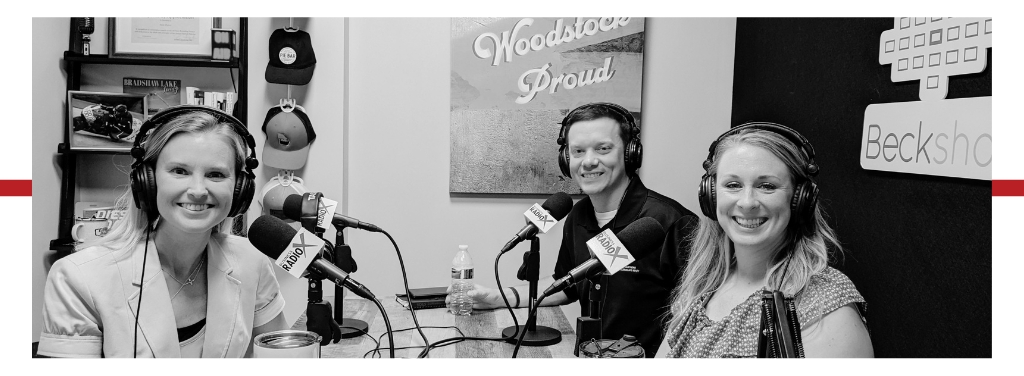
 Burkhalter Realty Group is a husband and wife Real Estate team that helps people buy and sell homes in the Atlanta area.
Our goal is to make the transaction as easy as possible for our clients. We turn clients into friends by helping them realize their real estate dreams.
Connect with Brenna and Josh Burkhalter on LinkedIn.
About Our Co-Host
 Mary Win King grew up in a small town in South Carolina and has been living in Georgia for 12 years with her husband and amazing 11 year old daughter. She is so thankful to be in the Southeast with warmer weather!
Mary and her family love living in Ball Ground on their 13 acre farm enjoying their horses, cats and dog. She has always had a passion for interior design and home staging, so starting Simplicity Home Staging & Design 2.5 years ago, alongside a friend at the time, has been such a blessing.
Mary loves helping clients LOVE their home and turning it into a relaxing “breath of fresh air” when they come home each day.
On the home staging side, she loves being able to help potential buyers see themselves in the home by showing off the great aspects of each room and what the home has to offer.
Currently, we look forward to serving new clients with our new bundle services. The best gift is when we are able to call our clients our new friends!
Follow Simplicity Home Staging & Design on Facebook.
This transcript is machine transcribed by Sonix
TRANSCRIPT
Intro: [00:00:07] Broadcasting live from the Business RadioX Studios in Woodstock, Georgia. It’s time for Cherokee Business Radio. Now, here’s your host.
Stone Payton: [00:00:24] Welcome to this very special edition of Cherokee Business Radio. It is our inaugural episode of our new House to Home series. And today’s episode is brought to you in part by our local small business initiative, the Business RadioX Main Street Warriors Defending capitalism, promoting small business, and supporting our local community. For more information, go to Main Street warriors.org and a special note of thanks to our title sponsor for the Cherokee chapter of Main Street Warriors Diesel David Inc. Please go check them out at diesel. David.com. You guys are in for a real treat. Please join me in welcoming back to the Business RadioX microphone with simplicity, home staging and design. Miss Mary Win King. How are you?
Mary Win King: [00:01:15] Oh, thank you. I am great. I’m so happy to be here and do this for the second time around and have some guests with us and just make the most of it.
Stone Payton: [00:01:23] Well, it is such a delight to have you back in the studio. We had so much fun last time. I learned a ton for the two and a half people in Cherokee County that don’t know Mary Win King, let’s give them a little bit of an overview, a primer about your business and what you’re really out there trying to do for folks.
Mary Win King: [00:01:42] Sure. So I am the owner of Simplicity, Home staging and Design, and we actually just celebrated three years last week. So that is exciting news. And we specialize in helping clients with interior design and home staging. And on the interior design side, typically I would help with residential, but I just got my first commercial client. So working, working on that as well and just growing and learning as we go.
Stone Payton: [00:02:09] It sounds like a great deal of fun. It sounds like a marvelous way to and a platform to to be able to express your creativity and live into that. And I’ve gotten to know you a little bit, so I know that that’s important to you at this point in your career. You’re kind of over that initial hump. You really beginning to get some traction. What are you finding the most rewarding? What what do you like most about the work?
Mary Win King: [00:02:33] Honestly, just listening to my clients, whether it’s home staging or interior design and tailoring, what needs to happen to to their specific needs and really being able to help them with that, listening to them at first and making sure that I understand what the task at hand is that they need accomplished is really my main goal of how to serve them the best.
Stone Payton: [00:02:58] And you are a good listener. I know know I’ve watched you in conversations. I’ve participated in conversations. And when it’s time for you to talk, you talk. But you know, sometimes people are just waiting. They’re not listening. But Mary Win. Right. My other guests that we introduce here in a moment are nodding their head. But you’re genuinely listening. And I can sense you doing that, you know, when you’re out in the field.
Mary Win King: [00:03:19] Definitely. Definitely. It definitely helps me hone in on what is important and and loving on our community that way.
Stone Payton: [00:03:27] Yeah, well, who’d you bring with you today and why?
Mary Win King: [00:03:30] Oh, okay. So I am so excited to have on the show as our special guest, Burkhalter Realty Group based out of Woodstock, Georgia. We have Brenna and Josh, Hi.
Josh Burkhalter: [00:03:42] Thank you for having us. We really appreciate it.
Mary Win King: [00:03:44] Absolutely. They are an awesome married couple that we met about two years ago that will go into that in just a minute. But they are a great local real estate team with the Keller Williams program here. And we would love to hear about how y’all operate in our community and just hear more about your specialties and your background. So we’d love to start with that, if that’s okay, Stone.
Stone Payton: [00:04:12] Works for me. I got a thousand questions. I know we’re not going to get to them all, but I think that’s a great place to start.
Josh Burkhalter: [00:04:17] Sounds good.
Mary Win King: [00:04:18] Yeah. So. So first off, I kind of would love to express to our listeners how Brenna and I met so Brenna, go ahead with that.
Brenna Burkhalter: [00:04:28] Okay. Mary Win I met on social media. Actually, I came across an awesome Instagram account that had some wonderful interior design tips and tricks. And I looked into who the owner of that account was. It turned out it was a girl from Canton, and I reached out to ask about getting coffee and we met at a local coffee shop and all of a sudden it was three hours later and we had become fast friends and future business to come out of that, which was great.
Mary Win King: [00:04:59] Yeah, absolutely. We just I felt an immediate connection. We are similar in age. We both had children, you know, smaller children, but also working hard to make our businesses work and really get ourselves out there.
Josh Burkhalter: [00:05:13] Yeah, I remember when she came home from that meeting and she was like, I just met this awesome lady and she’s really cool. And we sat there and I was like, Why did it take so long? And she was like. Our because we have to live by a calendar. She’s like, well, we just before you know it, it was three hours. So that’s awesome.
Mary Win King: [00:05:29] So that was so fun. And then we were able to kind of progress our friendship through y’all needing some interior design needs and help with like your living room and your home office and some kitchen ideas. So that was really fun when they were able to bring me in and just get some things that were practical for their family, but also some size furniture that was more proportionate for like their space. And also now that I think your home office is more functional, right? Yes.
Josh Burkhalter: [00:06:01] Yeah, We normally would work in two different parts of the house, whether it was an upstairs bedroom that we had or a dining room. And now we have a functional desk that allows us to collaborate together in a space where we don’t feel super cramped anymore. So it was a huge help.
Brenna Burkhalter: [00:06:18] And as as realtors, we see different homes every single day. And it’s so easy to take pieces of different people’s homes and say, I like this, I like this. But then making it cohesive is hard to do in your own home. So Mary Win really helped pull that whole thing together and and make it a space that would be functional and pretty.
Stone Payton: [00:06:39] Yeah. So did you find that you were that self-aware right out of the box and you knew you needed and wanted help, or did you find it a little bit intimidating, either one of you, to have this professional. Come in.
Brenna Burkhalter: [00:06:51] They’re probably a little bit of both. Because I knew what kind of vibe or look we were going for. But it’s hard to do that, I think, in your own home sometimes, especially when you see so many other homes. So it was it wasn’t hard to reach out to her and ask. It was just something. I refer to other people all the time. And you don’t really think you’re going to need it in your own home in this profession, I guess. Yeah.
Josh Burkhalter: [00:07:16] Yeah. I kind of felt the same way. It wasn’t that it was a little different to have somebody because we see so many homes like Brenda had mentioned, that we kind of know what we like, but we hadn’t really applied it as much in our home yet.
Mary Win King: [00:07:29] Yeah, I think a lot of people go through that actually. Yeah, because it takes some time. Yeah. And but what was great in y’all’s instance, which I love doing, is they had some inspirational pieces that they did want to incorporate, like they had a rug for their home office with some colors that we could work off of and things like that. So so that kind of at least gave me the style that you were going for and some colors to play with and just to kind of pull it all together.
Stone Payton: [00:07:56] Well, one of the reasons that this is so such a germane conversation right now is we’re getting a new island, which of course means we’re getting new countertops behind it and which I’m sure translates to recovering or buying a new couch and all that. So this is a very timely conversation around my house. And my wife, too, is very creative. And, you know, she’s got a good eye, I think, for that kind of thing. And but I think she’s self-aware enough that, you know, maybe it makes sense to get a little help, just get a different a different take on it. So. All right. So the very first really work with the with these two was in their own home.
Mary Win King: [00:08:33] Yeah. Yeah. And so that went so well that, you know, a little bit later down the road I kind of was like, okay, Brenna, I really want to help you Home stage. I want you to see the difference that it can make. And I said, Just try it just one time with me. So we we did. And y’all, why don’t y’all elaborate on that scenario?
Josh Burkhalter: [00:08:57] Yeah. Do you do you want to go ahead. So we had a client who a family friend of ours that we had known for years and years. They were moving back to actually my hometown in middle Georgia, and she moved from there to here and empty nester downsized with, you know, all the stuff. She had accumulated a house for 30 years. She’s a very neat, tidy, clean lady. She just had a lot of stuff for like a townhome and small space for smaller space. So we had Mary Wynne come in and I mean, it was night and day how much more of a flow there was. And you could immediately just see yourself in the space, which is exactly what we’re shooting for. When people walk in, we want them to be like, Oh, I can do anything I want in here or leave it just like this. And it would be fantastic. So, I mean, it was amazing what she was able to do in on the property.
Brenna Burkhalter: [00:09:48] And in turn, when it comes to selling it, seeing a space and being able to envision your own things, your own family in that space because it’s been decluttered minimal decorations, people can really envision themselves or their families there. It makes such a difference. And because of that we had multiple offers and our seller was able to choose the offer that worked best for her and her timeline. And that was fantastic. And it was just the best example possible of no matter what price point or size home you’re working with, she can make a difference. And ideally that’s going to sell for more money and faster.
Stone Payton: [00:10:29] Well, how’s that for an endorsement?
Mary Win King: [00:10:31] Yeah, no, I mean, you know, we were laughing about this earlier is recently kind of my new slogan is going to be I want it to be a mary win, win, win win for the client. You know, a win for everybody involved. That’s perfect.
Josh Burkhalter: [00:10:47] Well, I mean, we can attest to it. She came through our house and we do like to try out a lot of our vendors before we refer them out to our clients because we want to make sure that we reputation exactly. So if we refer someone, you know, it’s you said our reputation on the line. And we knew after she came through and helped us out that it was probably going to be okay. And then she, I mean, knocked our socks off with the way that everything went with that deal. So, I mean, it was perfect.
Mary Win King: [00:11:10] Yeah, I heard you really love the curtains.
Josh Burkhalter: [00:11:12] Oh, yeah. I mean, yeah, I was. I had my doubts about some things she suggested in our home. And now I love.
Brenna Burkhalter: [00:11:18] There are some of his favorite pieces.
Josh Burkhalter: [00:11:20] It is. It is. So it’s. Yeah. Just trust her.
Stone Payton: [00:11:23] Well, I can tell you, like curtains would never even occur to me and I would probably love them, you know, once they were in. And if you saw my my side porch, you know, we were talking about hunting a little while ago, maybe it was before we came on the air. But, you know, I’ve got a deer head out on the side porch. You could probably do some stuff with the side porch. And now that I’ve been to Spain and back, I want to have, like, a Spanish flavor. Oh, cool. Yeah, I got ideas that are all.
Brenna Burkhalter: [00:11:48] I think Mary needs to come to your house. I need a win win.
Josh Burkhalter: [00:11:51] Exactly.
Stone Payton: [00:11:52] So is now has it gotten to the point where this is sort of part of the Burckhalter methodology when you’re when you’re listing a home, you’re going to want to bring a stagers that kind of where you’re at?
Brenna Burkhalter: [00:12:02] Fabulous question. Yes, it is, actually. And that’s a newer thing that we’ve been doing. We have added staging to our our listing package. So when we go in to talk with sellers, there are some vital pieces that we offer them that we cover the cost of that really set their house apart. We’re paying for those professional photos and we’re paying for our stager to come in.
Stone Payton: [00:12:26] You’re absorbing Mary Wind services. Okay. Wow.
Brenna Burkhalter: [00:12:29] We’re paying for our stager to come in and walk through the home and give them a very detailed to do list of what to do to get their house ready to sell. So that’s our our goal is to get them ready to sell, get them to sell the most for the most money possible and the least amount of time as possible and make it as seamless and smooth and stress free as you possibly can. Absolutely. And really.
Mary Win King: [00:12:51] Help with. We’ve talked about this. So like sometimes timeline of me coming in. Can be different depending on each client and when they’re going to do photos and list it. So the different varieties, you know, for example, on my website I offer occupied and vacant staging. But within that, Brenna came to me and said, Well, would you by chance even be okay if we did a walk? If you did a walk through and make a list for those clients? Because sometimes it could be that I come two weeks before you know the listing and then they have time to do those on their own. Or I can do hands on staging. So I like a combination of both, but it really just depends. That’s whenever it’s listening to what their needs are and what, you know, Brenna and Josh’s needs are for their timeline of what I can accomplish in different ways of of making that happen.
Stone Payton: [00:13:40] Okay, let’s talk about me some more. It’s my show. No, it occurs to me that, like, Holly and I, we’re thrilled to death with our home. We are remodeling some stuff, upgrading some stuff. But it occurs to me, even when we get it exactly like we want it, it could be perfectly appointed for Stone and Holly for this stage of our lives. And if we chose to put it on the market, it needs to be set up, staged a little differently to maximize the chances of it getting the best offer. Is that accurate? Correct. Yes. Very, very. Okay. Yeah. Yeah. Okay. I want to back up. How in the world did you two get into this business?
Josh Burkhalter: [00:14:16] I or. Yeah, go ahead.
Brenna Burkhalter: [00:14:17] Go ahead. I got into the business a little bit before Josh, We actually bought our home in Woodstock in 2015. We got married in 14, bought our house in 15. I got my real estate license in 2016. We had. Wow. Just boom.
Stone Payton: [00:14:31] Boom, boom. Yeah.
Josh Burkhalter: [00:14:32] We like to do big things. 17 off and had our first kid in 18, so we had a little gap year.
Brenna Burkhalter: [00:14:37] There got to be something big every year, right? But we had a fantastic experience buying our house. It was very smooth. It was fairly stress free. There weren’t really speed bumps along the way, and we enjoyed that experience. And obviously it got us to a place that we love and into a home that we love. So we wanted to be able to give other people that same experience. And so I got my real estate license and jumped in head first and have loved it ever since. And three years after that, Josh joined me in the business too, and now we’re husband, wife, realtor team, which has been awesome.
Josh Burkhalter: [00:15:13] Yeah, we I started my post college career in Inside Sales. I was working in the telecom industry mainly a little bit of time in the finance industry, but got started right after our son was born. We just kind of rip the band aid and let’s do it, you know, join the team. Got licensed in 2019 and actually had my first closing the next day, which was pretty cool. That is so awesome. You are a rock star. So it was thanks to my wife. The Berkhalter.
Stone Payton: [00:15:43] Training methodology.
Josh Burkhalter: [00:15:44] Yes. God, she got to me through the process and we were able to get it done, which was awesome. So the best boss ever? Yeah, she is. That’s what I tell everyone. They’re like, How do you all work together? I’m like, She’s the best boss I’ve ever had.
Mary Win King: [00:15:54] So that’s a huge compliment.
Stone Payton: [00:15:57] Yeah, so you said it. I’m going to take your word for it at face value that it’s been awesome working together. And I’m trying to envision Holly and I in the same business. You know, she has a real job. She works at IBM. I do this, and she’s been so incredibly supportive and I try to be supportive of her. But there’s got to be some additional dynamics when you’re working with your with your spouse. A what’s that like in general? But B is like, do you kind of, I don’t know, divide and conquer may not be the right label, but you each kind of have your own roles, your own strengths. And yeah, we do talk to that a little bit.
Josh Burkhalter: [00:16:31] Yeah. And we do a lot of dividing and conquering and we, we love being together, being around each other. So I think that helps a lot. We have always been I mean, we’ve been together now for what, seven, 16 years. So we yeah, so and, but we do kind of split things up. But really it just depends on the client’s need and if how one of us meshes with a certain person, if we feel like this person should take the lead with this type versus another, that is kind of how we do it. We don’t have set roles as far as me handling the list side of things and her specifically working with all of our buyers. It’s really just who we mesh with best.
Brenna Burkhalter: [00:17:11] And it’s such a relationship based business. It’s so important to even if we are tag teaming and helping that client out, both of us, somebody does most likely take the lead on who meshes best with that person so that we can really be a good fit for their personality and their needs.
Mary Win King: [00:17:28] And one thing that I’ve complimented them on that I just love about their, you know, togetherness and the way that their personalities work, though, is also their background of like Josh is more from the country. And then Brenna is a little bit more from the suburbs. So but like in my personality is both and so I feel like I relate to them at different times on different levels and so many good ways, you know? So I feel like that’s. Great thing that they offer their clients so they can they’re very relatable that way, that they have the background of both.
Stone Payton: [00:18:02] Well, there’s the relationship aspect, which I it makes perfect sense to me. But the level of trust that you must have to cultivate, because these are huge moments in a person’s life, right?
Brenna Burkhalter: [00:18:16] And we do not take that lightly at all.
Josh Burkhalter: [00:18:18] We it can be stressful and emotional and and we embrace the challenge, but we also make sure that we educate people along the process to take out as much stress and emotion as possible because the logic needs to drive the decisions. When we’re talking about massive amounts of money, that especially with the people that we like to work with, like first time home buyers, we make sure that we hold their hand through the process so there’s no speed bumps or hiccups, and they understand that the whole process is going to be smooth.
Brenna Burkhalter: [00:18:48] And they know what they’re signing. Exactly.
Josh Burkhalter: [00:18:51] Good point. That would.
Speaker6: [00:18:52] Be important. Yeah. Yeah.
Brenna Burkhalter: [00:18:53] I mean, that’s really some people just sign their name and we try to make sure that they really, truly understand it. It’s a big purchase. A lot of money. Yes. Yeah, it’s.
Josh Burkhalter: [00:19:02] A big deal. And it’s a big deal to purchase a home at any stage, whether it’s your 15th investment property or your first home. It is a monumental, life changing moment. That is. I mean, it’s when my mom was able to purchase the home that I grew up in when I was ten years old. It was it was structure for my brother and I that we previously didn’t have. So that’s huge. And that’s something that I lean on with first time home buyers that I mean, you’re setting them up for a way to generate wealth for their family for generations.
Brenna Burkhalter: [00:19:32] Yeah, I love that.
Mary Win King: [00:19:33] I love that. And I was hoping that they could share with their listeners like a little bit, even like what they specialize in. I know they mentioned the first time home buyers, but just can you all elaborate on that a little bit?
Brenna Burkhalter: [00:19:44] Absolutely. Like Josh mentioned, we do love working with first time home buyers since we were in that boat, and that’s kind of how I got into this business. We love the chance to educate other people, really help them find the home that’s going to be the right fit for their current setup and ideally be their realtor for life when they’re moving on up. And we we try to when people ask us who’s a great referral for you, we try to think of those people in those big life moments. So it is we love the first time home buyers. We love the first time sellers too, because we’ve worked with a lot of our friends buying their first home. But then when they go to sell their first home, that’s a whole nother experience. You’re on the opposite side of that and you haven’t been there before, So the.
Josh Burkhalter: [00:20:30] Market’s a lot different. I mean, if you unless you buy and sell within a two year period, it’s I mean, it’s going to be substantially different from when you work with your first client seven years ago. So selling now, right? So it’s I mean, there’s a lot that can change. As we know, overnight, a couple of years ago, a lot changed.
Mary Win King: [00:20:45] So so if you walk through them on that first time experience, you’re going to be able to relate back to that so that they can understand better when they’re going to sell it, which I love.
Brenna Burkhalter: [00:20:54] And then we have found over the past year and a half or so, we’ve had a lot of opportunities to work with folks in those end of life stages where they’re going through the probate process and selling a home that was in the family or belonged to a deceased family member, that they’re now responsible for selling that property. So we’ve learned a lot through those experiences. And it’s a big responsibility.
Josh Burkhalter: [00:21:17] Yeah, it’s it’s a different education process because a lot of the probate and estate stuff has to be taken care of prior. And some people don’t know that. Some people do. We’ve kind of had people that were educated along the whole spectrum. It’s also a great. Way to give people closure that they need for whether it was there that makes sense. You know, someone that was really close to them, mom, dad. Or it could be a distant relative that they just happened to acquire a property when they passed away. So it’s it’s challenging, but it’s also very rewarding because you’re able to give them that closure. And a lot of the time that is the last piece is the house is the last thing to really go.
Mary Win King: [00:21:55] And you can tell y’all’s heart’s in it. That’s that’s one reason that I love you too so much is because you’re care for your clients shines through like every transaction and every, you know, reason for doing certain things. And that’s why I love working with them. I appreciate.
Brenna Burkhalter: [00:22:10] That. We want people to feel that. Yeah, sure.
Stone Payton: [00:22:13] So paint a day in the life of the like on a Thursday. And I’m getting the sense that no, Thursday is the same. No.
Speaker6: [00:22:21] That’s why we love this.
Brenna Burkhalter: [00:22:22] It’s never the.
Speaker6: [00:22:23] Same.
Stone Payton: [00:22:24] What are some things that might happen on any given Thursday Thursdays?
Brenna Burkhalter: [00:22:28] We usually have listings. Go live.
Josh Burkhalter: [00:22:30] Yes. Normally we have stuff hit the market on Thursday. Okay. This past I did not.
Stone Payton: [00:22:34] Know that that was not scripted. It’s not in my show notes.
Speaker6: [00:22:37] That just appreciate that.
Josh Burkhalter: [00:22:40] We last Thursday was when I was out of town was pretty busy for Brenna. She got a call from somebody that wanted to see a house and, you know, things changed immediately.
Brenna Burkhalter: [00:22:49] So they are under contract on said House.
Josh Burkhalter: [00:22:51] Yeah. So we had to pivot and make a quick move. And so it can be anything from a listing going live to you know maybe having to show someone that calls on a sign call hey I’d like to check out this property to go and show a buyer a new property. As long as we’re dropping our son at school by 830 and picking him up by six, I think there’s that divide.
Stone Payton: [00:23:10] And conquer thing coming back around.
Speaker6: [00:23:12] So a lot of dividing and.
Josh Burkhalter: [00:23:14] That’s really like Brenna said, what we enjoy about it is that it’s different and no two clients are the same. Yeah, every deal is different. Every day is different. So we, you know, it keeps us on our toes for sure.
Speaker6: [00:23:26] Yes.
Stone Payton: [00:23:27] Well, it seems like there’s so many moving parts. Like, I feel like just the paperwork alone. If I had that much paperwork in my business, I would starve. Right? I’m just not the right.
Brenna Burkhalter: [00:23:37] I’m a control freak. It’s hard for me to let go of things. However, I will say delegating some of those things to an assistant has been the best decision we have ever made. Yeah, we have a contract to close assistant that’s amazing and supports us from when buyers or sellers go under contract until the closing period to help keep all the paperwork in check.
Speaker6: [00:23:56] Yep.
Josh Burkhalter: [00:23:57] Just an extra level of accountability with dates and I mean the whole process, it makes it smoother for everyone. And then we also have an assistant that helps us with a lot of our social media and a lot of our marketing that we do.
Stone Payton: [00:24:08] Because that is so key in this day and age where you have to have a social media presence, right? I’m saying this how we met.
Josh Burkhalter: [00:24:14] I know it’s a testament here. That’s how.
Speaker6: [00:24:16] Yeah.
Josh Burkhalter: [00:24:17] So it’s it’s it’s a challenge. But we have slowly started to leverage some things out and we found that it allows us to do what we’re good at. And like when we bring Mary went into the picture on a listing, we are able to focus on the negotiation and the marketing side of things. And she can handle the staging and the prep side of things. So it allows us to do what we do best and her to do what she does best. So it’s a win win all around. So there’s a.
Stone Payton: [00:24:42] Pro tip not only for other realtors, just other entrepreneurs and business owners in general. Yeah, get that best in class. Help and stay in your lane. Do what you do and yeah, exactly.
Speaker6: [00:24:52] Absolutely.
Stone Payton: [00:24:53] That’s a good reminder. Your arena strikes me it seems like it would be incredibly crowded, competitive. I feel like there are a lot of realty professionals out there, so I am curious how the whole sales and marketing thing works, how you get the new business or even just the new conversations that might lead to new business. How do you.
Brenna Burkhalter: [00:25:15] Yeah, I will say first it’s community over competition. Always. We love where we live. There’s a ton of realtors in this area and there’s enough business for all of us. It is all about the relationships and. Even if one person is looking for a house and they’re choosing between several different realtors, a couple of those realtors may not be a good fit for that person personality wise, goal wise. So while there are a lot of us who you’re working with is so important and and that’s going to be different across the board, if that makes sense. It does.
Speaker6: [00:25:54] Yeah. Yeah. I mean.
Josh Burkhalter: [00:25:55] Like Brenda mentioned, it is a pretty crowded space. I mean, just with our brokerage alone, we have, I think around 400 agents that work out of our Keller Williams Market Center in Woodstock. Oh, that’s just Keller Williams agents. Now, that’s not to say that they all work just in this area. We work all over the place. Then there’s other I mean, you know, you’ve got many, many other brokerages, but like she had mentioned, it’s there’s plenty of business to go around. You just we have to make sure that it’s a win win for everybody on every side of things. And we’re not the best fit for some people and we’re okay with that. I mean, I would rather recommend that up front than have problems in the transaction because we didn’t mesh personality wise and our goals weren’t aligned so well.
Stone Payton: [00:26:37] I love that ethos. I love that mindset of community over competition. And you described it about the the realty world. But my experience here in Cherokee County in general, and particularly here, like in Woodstock, Holly Springs, you know, ball ground, Canton, it’s such a my experience has been it’s such a supportive business community. People will rally around you if you’re willing to share with them what you need and want. And if you’re willing to serve first, serve early, serve often as well. Has that been your experience community wide?
Speaker6: [00:27:10] Yes. Yeah, 100%.
Brenna Burkhalter: [00:27:12] I got Mary Wind to come to Woodstock Business Club with me. Yeah. It’s been a great source of new friendships, business vendors that we need on our vendor list that have been very helpful to our clients. I mean, it’s been a wonderful place of community. And Mary Winds met several other clients and yeah, it’s been.
Mary Win King: [00:27:32] It’s been great and we learn so much. They have some great speakers there that we can learn from and grow from and learn from each other and just share what we do and support each other. So that’s been awesome and it’s something that we can, you know, that it’s pretty consistent. It’s every Thursday at 830 here and so we can plan on it. But yeah, it’s, it’s nice to have those outlets to be able to really go and share success stories and also things that we can really add onto our skill level and, and all of that. So yeah, Brenna and I love to meet up there.
Stone Payton: [00:28:08] So do I. And I enjoy meeting people after like the big meeting, you know, hanging out under the elm tree, grab a cup of coffee and chat. But also, you know, I’m also a consumer, so I have professional service needs as a business. But also, you know, the home services people are there, Alpha and Omega, Lori Kennedy You know, that’s where I take my car to get it done.
Speaker6: [00:28:32] We’ve taken our there. Okay, So.
Stone Payton: [00:28:34] Yeah, I’m gonna send Laurie an invoice, but just, you know, just anything you might need if I were in search of a mortgage, you know, one of the first people I would at least talk to is Darren Hunter. Right. If I were going to organize my next Spain trip, I’m going to talk to Dawn, you know? Yeah. And I feel like that’s someone that I that I know and trust. And and I suspect many of them, if they felt like they were going to use this platform to build relationships for their business, whether they ended up doing it with me or not, I think they would check in with me first and I think they would know. And it’s true. I would try to help them whether they were going to do it with me or not, you know, just and I’ve collaborated with other people in the media. But this this community is so supportive. And Woodstock Business Club in particular has just been a wealth of friends. I mean, I’ll call them family. Yeah, that’s been my experience, too.
Speaker6: [00:29:25] Yeah.
Josh Burkhalter: [00:29:25] I mean, every Thursday when she comes back, she’s like, energized, ready to roll. I mean, and I’m like, wow, okay, I got to. I’m getting some of this vibe.
Speaker6: [00:29:32] Because she’s just good energy. Yeah, it is. It’s great. Yeah.
Brenna Burkhalter: [00:29:36] Being with people in the community that, you know, are happy to help.
Stone Payton: [00:29:38] Yeah. So outside the scope of your work, what passions, if any, do you pursue? I shared with you as we were coming on air that I like to hunt and fish and travel. That’s my thing. What are some things that you nerd out about or really dive into outside the scope of the realty? Yeah, I.
Josh Burkhalter: [00:29:54] Mean, you hit it right on the head. I just got back from Colorado Sunday. We did 750 mile road trip across the state and checked out like six national or state parks and national parks. Amazing. So, yeah, I mean, and I enjoy anything outdoors. We like to hike a lot together, hunt fish. I try to do that as much as I can. The kids are priority number one now, so that’s taking a back seat. But I’m not complaining. I love spending time with the fam, but yeah, I do. Like I said, pretty much anything outdoors. I’ll. I love being outside. I grew up on 100 acres so anytime I can get out of the. Suburbs. I need to kind of get some some good fresh air.
Stone Payton: [00:30:35] It’s nice just being in the woods, whether you harvest anything or not, just being in the woods. My I mean, I just it’s just a marvelous way to decompress and appreciate.
Josh Burkhalter: [00:30:45] I think everybody could use a couple hours.
Speaker6: [00:30:49] He needs to.
Brenna Burkhalter: [00:30:49] Send me out there sometime just because. Just be still and be quiet.
Speaker6: [00:30:52] Yeah, well, and.
Stone Payton: [00:30:54] How about you.
Speaker6: [00:30:55] Or.
Brenna Burkhalter: [00:30:55] I? Do. We do love hiking and getting out there with the kids, too. Just having them be out in the woods as much as possible, too. But I really enjoy swimming. That’s my. My me time where I can just be in my head right and swim laps. And I did that all growing up and through college so that the pool is my happy place. Any kind of water really is my happy place. Yeah, we do love to travel, so I’m glad he got to take this trip recently and a couple other family trips coming up soon.
Stone Payton: [00:31:27] So, Mary, when am I remembering horses? Animals, period. Really? Right.
Mary Win King: [00:31:31] Exactly. Yes. Oh, my daughter and I just got to ride again with all this rain and and her little pony had an injury, so it was just I was in heaven this weekend just being able to get back into horses and enjoy being at the barn and our cats and our crazy dog and yeah, whoever else comes around.
Stone Payton: [00:31:50] Well, we’ve talked before and you were kind enough to offer and we’re going to take you up on it. My wife Holly, just loves horses. She was around them when she was younger and. And she hasn’t. She we’d love to come out and do so. I’m going to come do the horse thing with you. I’m going to go get a tree with Josh. This is what was so great about Woodstock. You meet people, perfect new connections. Was there anything in particular that drew you guys to Keller Williams versus like another brand or brokerage?
Brenna Burkhalter: [00:32:21] Yeah, great question.
Speaker6: [00:32:23] Well, I thought.
Stone Payton: [00:32:23] It took me a minute to get it out. I thought it was a fantastic question.
Speaker6: [00:32:26] Yeah, no, it was. It is.
Brenna Burkhalter: [00:32:29] I’ve been at Keller Williams since I started seven years ago or so. And the culture and the training there is what really pulled me there and has kept me there since. The culture is amazing. They’re very inclusive and accepting of anybody, any type of business that you want to have, whether you want to be doing a few transactions a year or you want to be a mega agent with a huge team so they can encompass all of that. And also their training is just unmatched. I mean, there’s a calendar every single month of amazing training classes, whether it’s taught from people at the office or they bring in outside vendors to teach those classes on those specific subjects.
Josh Burkhalter: [00:33:12] So yeah, I mean, I agree 100%. I think the the culture is huge. I mean, it’s I mean, Thursday, this Thursday, we’re having our annual red day where every Keller Williams agent in the entire world and we’re in, what, 70 countries I think now. Wow takes the day off and serves in the community to some degree. So and that’s that’s just the tip of the iceberg when it comes to all the stuff. I mean, agents in need in our office with health issues get taken care of. I mean, people if you need help with anything, you can ask anyone at the office anytime, which is huge for anybody getting into the industry. That’s new. It’s it’s great to have just a support system. And like Brennan mentioned, there’s a model and a plan for any type of agent at any level that you want to be. So it’s it’s great to be able to go in there and know that you don’t have to reinvent the wheel to be successful. You can just go, Oh, I want to be like this person and do what they do.
Speaker6: [00:34:08] Yeah, Yeah. Well, I’m glad I asked. Yeah.
Stone Payton: [00:34:12] So before we wrap, I’d like to go around around the table and leave our listeners with a pro tip or two, you know, in your domain of expertise. So I’m going to start with Mary Wynn, a number one pro tip gang. If you’re if you’re thinking at all about redoing anything in your home, just reach out and have a conversation with Mary Wynn. But are there some things that people can begin thinking about or just some things they can do on their own just to sort of get in that mode of revisiting the way they’ve got things organized in their home?
Mary Win King: [00:34:43] Sure. I would say for me personally, if I was giving a tip that go through your home and really decide, do you love it? Meaning? Meaning like, okay, if they have a bookshelves, go through each item and say, do I love this or am I just keeping this here to fill space? So if I have something in my home that I don’t love, I would rather have empty space so that then my creative brain can go through as I’m walking through HomeGoods or wherever and say, that’s what I’m picturing for that space. Because in my personal experience and with helping with other clients and even family members walking through their homes with them, it is so much more fun and easier if you get rid of what? You don’t love. Set it in a pile. Maybe you don’t get rid of it yet, but set it in a pile. Off to the side and then be excited about what it could be and the things that you might want to add to your current decor that you do love. That’s my best pro tip for the day.
Stone Payton: [00:35:44] I think it’s a great tip and I like the idea of having that in your mind, like going through that exercise. Then when you’re out playing, no stress, just. But when you’re out and you go to a home goods or like I noticed the other day at a Tuesday morning or something that’s closing down. Yeah. Well now I’ll go in there and walk through but, but instead of walking in cold, you know, Holly and I will have thought about that kind of. What a great tip. So if someone out there listening would like to have a more substantive conversation with you, reach out to you, tap into some of your work, whether it be an individual or, I don’t know, maybe another realtor team that you could team up with, What is the best way for them to connect with you?
Mary Win King: [00:36:22] The best way is to give me a call or text me at (606) 260-0175 or feel free to reach out by email at Simplicity home interiors at gmail.com. And we’re also on Facebook and Instagram, so it’s easy to find us.
Stone Payton: [00:36:41] I got to go check out the Instagram and Facebook. We got to get better at the whole social media thing here at Cherokee Business Radio. All right, Josh, you got a pro tip for us. Those of us thinking about buying and selling whatever.
Josh Burkhalter: [00:36:52] I would just say who you work with matters whether it’s in real estate or your business, but especially in the real estate field like we had mentioned. We know that there’s plenty of business to go around and we’re not just going to force it down your throat if we don’t feel like it’s a good fit and you don’t feel like it’s a good fit, then by all means, you know, go with whoever you’re most comfortable with because it is a huge decision whether you’re buying an investment property, first house selling. Just make sure you’re comfortable with whoever is holding your hand through the process because they’re going to make your life a lot easier.
Stone Payton: [00:37:24] All right, Brenda, you trained him. That was a great tip.
Speaker6: [00:37:27] Was a great. Now you got.
Stone Payton: [00:37:28] To follow that act.
Speaker6: [00:37:30] What do you thinking?
Brenna Burkhalter: [00:37:33] I in relation to that, to the education piece is so important to us. So make sure that the person that you are working with again, going along with the right person for you. Make sure the person you’re working with is explaining things to you because it’s a huge deal. It’s a significant amount of money and it can, you know, make or break a family situation sometimes having this new place to live. So I would say just being educated on what you’re doing, how it’s going to propel you into your your next goal or stage in life is so important. So the education piece, I think, is what we really weigh heavy on.
Stone Payton: [00:38:15] Amen. I love it. All right. What’s the best way to connect with you guys?
Brenna Burkhalter: [00:38:20] We are all over Facebook and Instagram. Yes, you can reach us by phone. We love when people call or text us. My number is (404) 434-3484. Lots of.
Speaker6: [00:38:30] Fours and.
Josh Burkhalter: [00:38:31] I’m (478) 232-0438. Like Brenda mentioned. Call text. Email berkhalter. Realty Group on social media. Check us out. We’d love to, you know, get to know everybody. And thank you for having us. We really appreciate it. It’s been awesome.
Speaker6: [00:38:45] Awesome.
Mary Win King: [00:38:46] Y’all got to come. I love.
Speaker6: [00:38:48] It.
Stone Payton: [00:38:48] It has been an absolute delight having you two in the studio. You know, I knew it was going to be fun having Mary Wynne, but Mary Wynne, thank you for making this happen and thank you all for joining us.
Speaker6: [00:38:59] Absolutely. Appreciate it.
Stone Payton: [00:39:00] My pleasure. All right. Until next time, this is Stone Payton for our guest today. And everyone here at the Business Radio X family saying we’ll see you again on house to home radio.