Please log in to view this content
Kristine Grow with The Coalition for Medicare Choices


/
RSS Feed
 Kristine Grow is a spokesperson with the Coalition for Medicare Choices.
The Coalition is a national grassroots organization of 2 million Americans working together to protect what matters most to us.
With Coalition members in all 50 states, the District of Columbia, and Puerto Rico, we’re working together to protect and strengthen Medicare Advantage.
Resources:
Follow The Coalition for Medicare Choices on Facebook and Twitter.
This transcript is machine transcribed by Sonix
TRANSCRIPT
Intro: [00:00:04] Broadcasting live from the Business RadioX Studios in Atlanta, Georgia. It’s time for High Velocity Radio.
Stone Payton: [00:00:14] Welcome to the High Velocity Radio show, where we celebrate top performers producing better results in less time. This is Stone Payton with you this afternoon. Please join me in welcoming to the broadcast with Coalition for Medicare Choices, Ms. Kristine Grow. How are you?
Kristine Grow: [00:00:34] I am well. How are you today?
Stone Payton: [00:00:36] I am doing great. This is such a timely conversation for me for for reasons that will unveil here in a in a few moments. I’ve got a thousand questions. I know we won’t get to them all, but maybe a great place to start would be if you could articulate for for me and our listeners mission purpose. What are you and the coalition really out there trying to do for folks?
Kristine Grow: [00:01:00] Yeah, thanks very much for that question. So the Coalition for Medicare Choices represents millions of seniors from around the country who come together every year to let their lawmakers in the state and in Washington, D.C., know that Medicare Advantage is important for their health care coverage. It’s a great program that delivers very high satisfaction, very affordable, lots of great benefits, and it deserves to be protected.
Stone Payton: [00:01:26] Well, it sounds like a noble pursuit to me. So now I’ll tell you why it’s so timely. My wife, who has a real job with a little company called IBM, is looking to hang up her cleats before too long and she is 65. We are getting so much in the mail. We’re seeing so much on the television. So I got to tell my listening audience, if you want to get some great insight from some really smart people like Christine, get yourself a radio show. You can you can learn a lot. But maybe, you know, maybe that’s a great place to start is like, you know, the differences in in, you know, original Medicare and Medicare Advantage. And even for me, candidly, like there’s Medicaid and it sounds so similar. Can you just help us with some terms and some distinctions?
Kristine Grow: [00:02:12] Sure. So let’s talk first about the difference between Medicare and Medicaid. Medicare is a health care coverage program offered by the federal government that covers Americans who are 65 years old or older or who have certain illnesses or disabilities. For example, one of the ones that people are most familiar with is if you have end stage renal disease, you’re eligible for Medicare. Medicaid is a state run program. It’s actually a partnership between the federal and state governments that covers low income Americans. So if you have a family or household income that is below a certain threshold, you qualify for Medicaid coverage. Now, it is possible that you could qualify for both programs. You may be over the age of 65, for example, and may have a low household income. And that case you may qualify for both Medicare and Medicaid, which would make you something that we call a dual eligible, which means you are duly eligible for both programs.
Stone Payton: [00:03:16] All right. And so you got original Medicare and you got this Medicare Advantage. Talk about that distinction a little bit.
Kristine Grow: [00:03:24] Sure. So when you become eligible for Medicare, you have a choice. You can choose what coverage you enroll in. Medicare Part A and Part B are both part of what’s called original Medicare, and that is the basic Medicare program. Medicare Part A covers a good chunk of hospitalization costs. Medicare Part B covers a good chunk of many doctor’s services and visits, but they don’t cover everything. For example, they don’t cover prescription drugs. They don’t cover dental hearing or vision. They don’t cover a coordinated care or coordinated special care programs for different chronic conditions such as diabetes or heart conditions or those such things. And that’s why a lot of seniors choose Medicare Advantage, because Medicare Advantage covers what original Medicare does. Plus a whole lot more. So it covers the vast majority of these plans, cover things like prescription drug coverage, dental vision, hearing, preventive care services like screenings and vaccinations for things like the flu. They do coordinated care, which just helps you kind of get all of your doctors and care providers talking to each other so that you get the best of of all that collective insight. Many of them also offer programs to help you manage some of these chronic conditions to help you get better, faster and stay healthier longer. So as a result of all that, what we’re finding today is that more than 30 million seniors and people with disabilities are choosing Medicare Advantage for their coverage. And when our coalition surveys senior voters who choose Medicare Advantage, we find that 94% of them are satisfied with their Medicare Advantage coverage. 93% say they would recommend it to their friends and their family. So this is a really important coverage choice for a lot of Americans. And it’s getting more and more popular. It’s very affordable and it brings them a lot of value.
Stone Payton: [00:05:22] Well, you had me at prescriptions, I got to tell you. So. So take me back to the beginning. What’s the back story on you? How did you get involved in this kind of work?
Kristine Grow: [00:05:33] Well, I’ve been involved in health care for more than a decade now. But, you know, because of this Medicare Advantage program is such an important partnership between the federal government and the private market, the health insurance providers who offer plans that your wife may be familiar with having employer provided coverage. You know, this is a program that encourages innovation. It is competitively bid every year. It encourages the health insurance providers to come up with more creative solutions for improving value, lowering the overall cost for better outcomes. And all of that is just really attractive. And being able to talk about that to an audience and being able to represent the interests of millions of seniors, that’s a pretty exciting opportunity.
Stone Payton: [00:06:20] Yeah. So what are you finding are the most popular benefits? Like what are the seniors most fired up about and really excited about in terms of the benefits here recently?
Kristine Grow: [00:06:32] There are two that they particularly say are very important to them. One is their preventive care services. As I mentioned, it’s things like health screenings, vaccinations, testing for illnesses or other conditions to make sure that they’re identifying illnesses or chronic conditions early and intervening early so that you can get a little bit healthier and avoid hospital visits. Nobody wants to end up in the hospital and nobody wants to end up in a in a clinical setting if they can help it. We find that 9 in 10 of those who have Medicare Advantage are satisfied with their preventive services. Likewise, we find that 9 in 10 senior voters are satisfied with the prescription drug coverage that they get through Medicare Advantage. So when you think about how frustrating the very high cost of prescription drugs can be, that is a really remarkable number. And that’s because these health insurance providers are negotiating lower prices with the pharmaceutical companies. They can represent the individual senior that way, lower their costs, protect them throughout the year as they continue to get different medications. So those are the two that really rise to the top for a lot of seniors.
Stone Payton: [00:07:44] I’ve got to believe you must sleep really well at night knowing that you’re that you’re doing for for these these kinds of things, for these folks. What are you finding the most rewarding? What do you enjoy the most about the work?
Kristine Grow: [00:07:59] I think it’s really hearing from the seniors, what’s important to them and their personal stories. You know, we hear everything from, you know, people who are very well on their wellness journey, and they may take fitness classes, for example, or they may have a very active lifestyle and. And Medicare Advantage plans allows them to continue that very healthy lifestyle and they’re able to do really amazing things. On the other hand, I also get to hear the stories about people who have been very, very sick or have had very serious health conditions in the past, and their Medicare Advantage plans have been able to help them get the care that they need, get the doctors that they need, help them to get better, to recover, to go into remission, you know, and just knowing that their health care coverage is there for them and that they really appreciate that value. I mean, that’s very rewarding. And when they come forward in millions and say that they want this program to be protected, you know, I’m happy to be part of that protection for them.
Stone Payton: [00:08:56] Well, you’ve mentioned, you know, there is a a I guess you would call it a political dimension to this. Right. You have to advocate for this to not only secure the protection that’s been won, but in some cases try to try to expand that, right?
Kristine Grow: [00:09:12] That’s right. And the way that happens is it’s a couple of ways. First, it is a federal government program, which means that every year the federal government and that’s the administration that’s led by the White House, is making decisions about how much the federal government is going to invest in the Medicare Advantage program for the next year. And that happens very early, because then health insurance providers look at that information and they create their plans based on that. So they want to offer these plans for as low cost as possible to seniors with the greatest benefits. This this is a program that has had very strong bipartisan support historically, and the cost of the program are very affordable. The average premium for a medicare Advantage plan is just $18 a month. And a lot of seniors are able to get it for $0 additional premium a month beyond what they pay for original Medicare. So it’s really important. But what we’re finding this year during this time that they’re determining rates for 2024 is that the administration seems to be making cuts to the program, and that means billions of dollars that will not go into the program for next year, which we’re very concerned will mean higher premiums and fewer benefits for seniors and people with disabilities. At a time that the Medicare trustees are projecting that health care costs for Medicare enrollees will go up an average of about 5% in 2024. That’s just the wrong direction. So we’re letting the White House know and the administration know Medicare Advantage deserves to be protected and it shouldn’t be cut.
Stone Payton: [00:10:52] Well, we’re certainly blessed to have you and the coalition working on these issues. What, if anything, can the layperson, you know, like like what can me and Holly and folks like us do? Should we be talking to our local politicians or.
Kristine Grow: [00:11:09] Absolutely. And I would say, Stone, that your voice is more important than mine. And because you have the you are the constituents of the members of Congress and the administration. And what we are encouraging people to do who care about this program is reach out to your members of Congress. Let them know how important Medicare Advantage is to you. Reach out to the White House and let the administration know how important it is to you. Our coalition has some very important tools that allow people to make that kind of outreach very quickly and easily. So if you’re interested in learning more about this and how you can help, we’d encourage folks to visit us on our website at Medicare choices.org.
Stone Payton: [00:11:51] Well, that’s an important resource, I think I confess to you early on. I mean, at this stage, at least prior to this conversation, I got to be candid, Holly and I both I’ll even use the word intimidated, but certainly confused and haven’t really dived into the information, I guess, already, kind of a preconceived notion that we’re going to get misinformation. And I’m sure there is some misinformation, misconceptions floating around out there. But with this centralized resource, I would think that would be incredibly helpful.
Kristine Grow: [00:12:24] Yeah, I would say it’s very important to our coalition that people get trusted, reliable information that helps them make decisions about Medicare coverage. The federal government actually has a really good website at Medicare.gov that provides some very easy to understand and easy to navigate information about how the Medicare program works. They have a tool on there called Medicare Plan Finder that you can use, especially during open enrollment, to help you make a choice that makes sense for you. Our coalition website, I mean, certainly we’re not encourage anybody to make any certain buying decisions. But if you want to hear the stories about the seniors who have chosen Medicare Advantage and just learn more about the general program, we have a lot of stories and resources on our site.
Stone Payton: [00:13:11] Well, that is good to know. And before we wrap, we’re going to make sure that we get those URLs, those websites again, and we’re going to make sure that we publish those when we publish this interview. Another thing I’ll just confess to you here again, real time. You mentioned a figure of $18 a month. I guess one of my preconceived notions was that this was going to be terribly expensive and it doesn’t sound like it is.
Kristine Grow: [00:13:35] Well, it isn’t. And I think that’s a good point because the program is so competitive. You know, these health insurance providers want the business of the seniors and they want to serve them well and they want to make sure that they’re offering seniors a plan that they’re going to value. So because we’ve got so much robust competition in the market, they are working very hard to negotiate the lowest prices and the best benefits of the lowest prices. You know, this is a program that has been working for years. The members of Congress and the administration have designed this program to work really well. It gets better and better every single year for seniors. Now, at a time where we have more people who are aging into Medicare eligibility, you know, it deserves to be protected so that it can continue to deliver that sort of value.
Stone Payton: [00:14:20] I got to tell you, my wife, Holly, rarely listens to any of my shows, and there are plenty to choose from. But I guarantee you she’s going to want to listen in on this interview and go to these websites. All right. Before we wrap, if there are any tips on things we should be reading, not reading. It sounds like we’ve already got two great resources that you mentioned. And let’s make sure that people do have those websites and any any other points of contact ways to connect and tap into this work. That would be incredibly helpful.
Kristine Grow: [00:14:52] Absolutely. So you can reach our coalition at Medicare choices.org. We have a lot of information and tools there available for you to learn more generally about the Medicare program. You can go to medicare.gov and to reach out to have your voice heard on this issue. We encourage you to reach out to your senators offices, reach out to your representatives, and reach out to the White House to let them know.
Stone Payton: [00:15:16] Well, Christine, it has been an absolute delight having you on the show this afternoon. I got to tell you, it’s been one of the the more informative and I’ll even say inspiring segments that we’ve had in a long time. This is incredibly helpful to me personally. Keep up the good work what you and your and your group are doing. It’s so important. And I just I can’t thank you enough for joining us.
Kristine Grow: [00:15:42] Well, thank you so much for having me. I really appreciate the opportunity.
Stone Payton: [00:15:46] Well, it is my pleasure. All right. Until next time, this is Stone Payton for our guest today, Christine Grove with Coalition for Medicare Choices. And everyone here at the Business RadioX family saying we’ll see you in the fast lane.
BRX Pro Tip: Seek Out Opportunities. Don’t Wait

/
RSS Feed

BRX Pro Tip: Seek Out Opportunities. Don’t Wait
Stone Payton: [00:00:00] Welcome back to Business RadioX Pro Tips. Stone Payton and Lee Kantor here with you. Lee, you know, two of our five core values at the Business RadioX Network are speed and action. And this discipline really speaks to that, and I know you’re a big proponent of this, seek out opportunities, don’t wait.
Lee Kantor: [00:00:21] Right. This is one of those things where Business RadioX does solve two problems in one swing here, because we do help our people reach out to folks on a regular basis in a systematic way, and help them meet the people they got to meet, and do it in a way that’s non-salesy. That it’s just super elegant and helps people out.
Lee Kantor: [00:00:42] So, you have to spend time every week doing some type of prospecting. You have to identify the people you need to know better. You have to know who they are. Because if these people can move the needle in your business, you have to figure out a way to connect with them. And then, you have to figure out a way to build a relationship to see if they are a viable partner that can really help your business.
Lee Kantor: [00:01:05] And if you’re not doing this on purpose every single week, how else is it going to happen? Are you just hoping they’re just going to find you just by chance? You have to have some sort of a system or process that puts you in front of the people most important to you.
Lee Kantor: [00:01:21] And, you know, like we were saying earlier, Business RadioX does this every day. This is how we help our clients meet, and serve, and build relationships with the people most important to them. We do this in our system by inviting them on shows. Every week, we have outreach that are helping our clients and ourselves meet the people we need to meet by inviting them on a show to help them tell their story, to put them in a position to give them a voice so that we can help them get the word out about the work they’re doing.
Lee Kantor: [00:01:50] But, also, so we can meet them and know, Are these people worth partnering with? Are these the right fit for us? Is this somebody that we might be able to do business with down the road? Is this somebody who other people that we know should meet?
Lee Kantor: [00:02:05] So, if you’re just waiting to have, you know, people pop into your funnel or your pipeline, it’s not going to work. You have to take action. You have to be doing some activity every single week in order to meet the people you need to meet to grow your business. And if you’re having a problem with this area, if you’re struggling with it and you don’t know how to go about doing it, contact Business RadioX, because we do this every single day, we can deliver measurable results fast.
Negotiating for Talent
Staff Sergeant Raymond Aguilar and Airman Devin Powell with the U.S. Air Force

/
RSS Feed
Today’s Episode is Sponsored By:

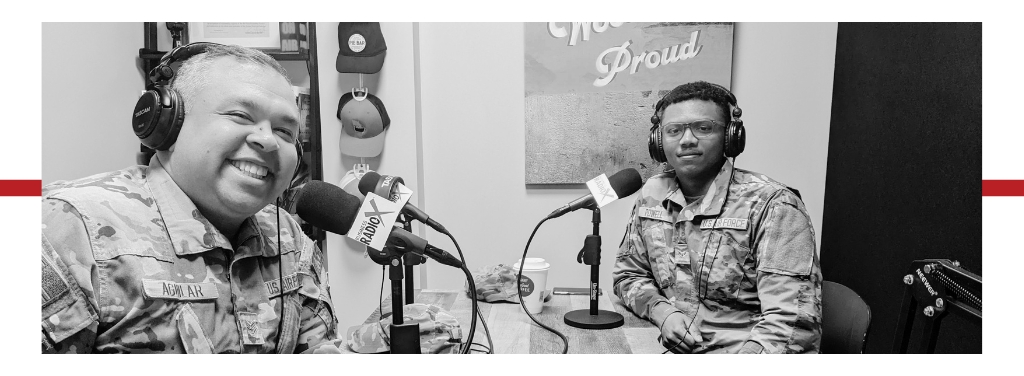
 Staff Sergeant Raymond Aguilar, U.S. Air Force
Airman Devin Powell
This transcript is machine transcribed by Sonix
TRANSCRIPT
Intro: [00:00:07] Broadcasting live from the Business RadioX Studios in Woodstock, Georgia. It’s time for Cherokee Business Radio. Now, here’s your host.
Stone Payton: [00:00:24] Welcome to another exciting and informative edition of Cherokee Business Radio. Stone Payton here with you this morning. And today’s episode is brought to you in part by our local small business initiative, the Business RadioX Main Street Warriors. Defending capitalism, promoting small business and supporting our local community. For more information, go to. Main Street Warriors dot org and a special note of thanks to our title sponsor for the Cherokee chapter of Main Street Warriors, Diesel David Inc. Please go check them out at Diesel. David.com. Please join me in welcoming to the broadcast, no stranger to the Business RadioX microphone,Staff Sergeant with a little organization you may have heard called the United States Air Force, Mister Raymond Aguilar. How you been, man?
Raymond Aguilar : [00:01:16] I’ve been doing good,man. Thank you for having me again.
Stone Payton: [00:01:18] Oh, what a delight to have you back in the studio. For those listeners who did not hear our episode, tell them a little bit about what you’re out there trying to do for folks. What is your mission and purpose in this work?
Raymond Aguilar : [00:01:31] Yeah, so I am an active duty United States Air Force recruiter. I am my office located in Marietta, Georgia, right there on Whitlock Ave next to Marietta High School. And for me, it’s just to promote the United States Air Force as a whole, understanding to where people are trying to change their lives for the good. Some people need structure, discipline, anything like that to just better themselves or just overall goals that they need help achieving. So for me, I try to help them out the best way I can listen to what their concerns are and if they’re a good fit and if their goals are achievable through the United States Air Force. I am a, you know, a shepherd to lead them to the right way. So I try to help them out the best way I can. When it comes to that.
Stone Payton: [00:02:19] It sounds like great work. It’s got to be incredibly rewarding. How did it all get started for you? Were you recruited early? So because you look young to me, man. Yeah.
Raymond Aguilar : [00:02:29] Don’t let the gray hair fool you, I guess, right? Well, like, at first it was just like, okay, so I didn’t join right out of high school because I was like, okay, I just want to, you know, work, go to the workforce and, you know, hang out with my friends because I didn’t want to leave home. And it was always that stipulation like, no, this is where I’m comfortable.
Stone Payton: [00:02:48] Right, Right.
Raymond Aguilar : [00:02:49] And I waited about four years and then I was like, okay, I need to do something. I need a career, something that I feel like a sense of pride, nothing that I mean, I was a waiter, nothing against like people who are waiting tables or anything like that. I just felt like I needed to do something more. I was making good money. I interacted with the groups pretty well, like I had a great time, but again, I needed something more. So I reached out to an Air Force recruiter. It was hard because there’s very few of them out there. They don’t cover a wide range. They cover a wide range of area, but there’s not that many. So the other branches have multiple recruiters in a smaller area. So we’re always competing against that, right? So right. But in high school, I never got the, Uh, let’s say, I got hit up by the Army, the Marines, Navy, everyone but the Air Force.
Raymond Aguilar : [00:03:49] And I thought, did I not qualify? Like, why not? I had the decent scores and stuff, so I’m like, why am I getting, you know, I wouldn’t say ambushed, but why is there more interest than the other branches and not this one? So I went out to the Air Force when I had time just to kind of elaborate things, and I simply just like, Hey, this is what I want to do. The recruiter helped me out and say, Hey, you need to do X, Y and Z. I accomplish all what I needed to do. And then 11 years later, here I am. So was there a point at which you were thinking to yourself and weighing because you were aware of these other opportunities, weighing one branch against the other, and you said, You know what, I’m leaning to the Air Force because I like this or I don’t like this about another branch. Was there like a something that said, Yeah, I’m going Air Force? Or was it because they were hard to get? It was it was really that for me, it was just like, right.
Raymond Aguilar : [00:04:43] Like if I’m good enough for all these, what makes me not good enough for this branch? So for me, it was almost like a challenge. Like now I want to prove to you that, hey, I should be good enough. Like, and it’s not the fact that I was like, good enough as like, No, you’re not good enough. It’s just the fact that there wasn’t that many people or that recruiter was like, Yeah, man, like, I’ll help you out. Like it was. I would say for me, it was the big thing of an opportunity to travel. Education was a big thing because Air Force values education. And then the fact is that you are going into as soon as you sign up for the Air Force, you’re joining you’re enrolled in college right away. Wow. Yeah. So it’s just one of those things that I’m not just joining the military just to join, but I’m also gaining educational benefits from that to be able to at least come away from it because the military is just temporary. I want to make sure I come away with something else as well.
Stone Payton: [00:05:39] So you mentioned a couple of times about the recruiter helping out, and that really is a big part of the job, right, is to help the new recruit navigate and get qualified or talk a little bit about that.
Raymond Aguilar : [00:05:51] So it’s a main thing is like understanding like for someone who was in high school or, you know, a graduate or if they’re not a graduate or if they’re not a US citizen or if they went overseas like they got their education overseas. They’re not from this country. There’s so many things that it’s usually like it’s easier, obviously, if you’re from this country and you are coming right out of high school, you just need driver’s license, Social Security card, birth certificate, high school diploma. If you’re a high school senior, you just need the three. You don’t obviously you don’t have your high school diploma just yet. Right. But to get the process started, you need all these things non US citizens, you know, you need to have you need to have at least your residency card because if they have a visa, I can’t work with that. It’s just not just me. It’s just my hands are tied, right? So overseas education, we have to get overseas education validated through our system. And if it’s not in our system that someone has joined from that school, we have to get it, make sure it’s validated to where it’s under US standards. So it just depends. Let’s see.
Stone Payton: [00:06:56] You kind of help them, at least coach them up on getting physically ready and prepared for that initial training.
Raymond Aguilar : [00:07:02] Yeah, for the most part, it’s like at basic training, like we just have them focus on mile and a half run push ups and sit ups. So that’s for us, that’s what they need to do. So making sure that they’re aware of those things. We also have the late entry program app. So once they are waiting for a job, there’s the delayed entry program app that we’re actually says, you know, if you’re not used to physical activity, it gives you a workout plan to be able to kind of like, yeah, go especially for the time of COVID. Some people weren’t out and about and doing those things. So it does kind of gives you more of a almost like a couch to five K routine to where build up slowly, make sure you’re not hurting yourself, but also take care of yourself for the long term. Yeah.
Stone Payton: [00:07:46] All right. You brought one of your rock stars with you, right, man? Introduce our other guest and let’s get let’s let’s, let’s get it from his perspective. Yeah.
Raymond Aguilar : [00:07:54] So I brought with me Airman First Class Devin Powell. Met him a while back. And like you said, he came back for a recruiter’s assistance program to kind of help me out. It’s been exceptional. And like from the get go, like Devin, if you want to speak about your experience from your from the beginning when we first met.
Stone Payton: [00:08:15] Well, first of all, I got I’m fact checking, man. Has it truly been exceptional? Yes. Or is he just talking about you being exceptional?
Devin Powell: [00:08:22] No, no. It’s been a little bit of both, man. He’s not a bad guy. It’s been an overall very good process. Again, I had to kind of like what he was saying earlier. You know, I never really had Air Force recruiters, you know, reach out to me. I had to, you know, do the investigation myself and look into finding people. And that’s how, you know, this whole process started.
Stone Payton: [00:08:48] So you say when you were had to do the investigation yourself, you must have been motivated, though, at that point already to find out something. Was there was there a catalytic moment in your life or something that said, you know what, I’m really going to consider going into the military, so I’m going to start looking into this.
Devin Powell: [00:09:04] Yeah, So it started when we actually first moved to Georgia. I joined JROTC as a freshman and it actually wasn’t really my choice. I was kind of persuaded by my mom. She shout out to Mom, Way to go, Mom. Yeah, she she’s the one who persuaded me to to join. I was like, Oh, I’ll try it out. But I wasn’t really going for it. And then I actually really liked the program and I stuck through the program for four years and then I went to college for a little bit. But while I was there, I was like, you know, I don’t know if this is really, you know, what I want to be doing. And I always knew the military was kind of like my my second option. And then I made the decision after like a year and a half of in college, you know, I was like, all right, I think I’m going to, you know, join join the Air Force. And I was, you know, working jobs at the time. And I was like, yeah, I definitely don’t want to be working at a at Publix for for, you know, six, seven more, more years.
Stone Payton: [00:10:06] So so there goes my public sponsorship. Thank you very much. So no, in my, you know, my whole frame of reference for all this is the movies. Right. So I figured that that Raymond found you a hustling pool at some pool hall and said, Hey, kid, there’s a better life out there.
Raymond Aguilar : [00:10:23] It wasn’t too bad. It was just like whenever he first reached out, I’m like, okay, fine. He had the support system. I think your mom and your brothers and sisters or your brothers all came in and stuff. So like, I had this whole family come in. I’m like, Oh, this is cool. So for me, I like that. Like, it shows the whole family.
Stone Payton: [00:10:41] Came in the office.
Raymond Aguilar : [00:10:41] Yeah. Yeah. I think your dad was in the waiting room. Yeah. So it was like it was more of like, there’s support there. Like, they encouraged this decision. So for him, he already had the buy in to where it’s like, okay, let me just go see and see if what I could do. His family is so supportive. And I mean. I wish there was other families like that that support, you know, their their child going in because they think the military is scary or at least for the Air Force, they think it’s scary. But I mean, for the most part, it’s just. His his parents trusted me, a total stranger to make sure I take care of them. I do that for anyone that I can. That comes in because I knew at my point I wanted to make sure I’m getting the right information. His family is great. And he has he is he has an awesome support system.
Stone Payton: [00:11:32] Okay. So you have this this family powwow. And then do we commit there or do we go back home over dinner and talk? Talk it over. So keep us going.
Devin Powell: [00:11:41] So what happened was, you know, I kindly like in my mind, I had already made made the decision. You know, in my mind, I was already in the Air Force. But, you know, I still had to, you know, take the steps to get there. Um, so over the course, I think it was about like 4 or 5 months I had to, you know, work out and, you know, meet the weight standards and, you know, take my ASVAB.
Stone Payton: [00:12:04] You have to gain or lose. I had.
Devin Powell: [00:12:07] To lose. Yeah. Okay.
Raymond Aguilar : [00:12:08] I did think it was much, but it was just a little bit to make sure that he was able to ship out. It was more precautionary, but he was he was already doing those things, running and everything. And he informed me that right away. So the motivation was there. So I knew like, okay, let’s let’s keep this motivation going. So.
Stone Payton: [00:12:26] Yeah. All right. So go ahead. So you took the time to start really getting ready?
Devin Powell: [00:12:30] Yeah. And then and I think it was around July, I want to say, when I signed my contract. And then at that point, I was waiting just to receive my job. And it was actually on my youngest brother’s birthday because I have three younger siblings. Sergeant Aguilar called me and he told me the job that I had got. So I was really, really excited about that.
Raymond Aguilar : [00:12:54] Yeah, I think your mom, like, screamed in the background too, because.
Devin Powell: [00:12:57] I think so. I think so, yeah.
Raymond Aguilar : [00:12:58] Because she was like, Yeah.
Stone Payton: [00:13:00] So do you typically find that out before you even get going or is that not always the case?
Raymond Aguilar : [00:13:04] It’s not always the case because it just depends on when the jobs are available. I try to like what we do. We do a list of ten jobs and you’re guaranteed one of those ten jobs. I always advocate for the applicants that are coming in. Do your research. Don’t just take my word for it. The same stuff that I am saying you can find on Google unless there’s certain jobs on like top secret clearance and stuff that they’re not allowed to be on, you know, Google per the, you know, information security. But at the same time, it’s like do the research. It just shows that you are motivated and that’s what you want to do. And it’s an important decision for your life. Yeah. So you should take a little bit of consideration and want to like care about it a little bit. And Devin was doing that ten fold.
Stone Payton: [00:13:51] And so you were happy with the with the job selection?
Devin Powell: [00:13:54] Yes, I actually so going into it, it was refueler bomber, aircraft maintenance and going into it. I wanted to be a bomber. I wanted to work on bombers, specifically the B-1 Lancer. It’s a really it’s a supersonic bomber. And I ended up getting refueler. So, you know, I was like I was kind of bummed out about that. But then when I found out the base that I’m going to is actually back in my home state of Florida. So I’m really happy and blessed that, you know, it all worked out. So yeah.
Stone Payton: [00:14:33] All right. So where are we in the process right now? As of today?
Devin Powell: [00:14:35] So so right now, I actually just graduated tech school. I just left Sheppard Air Force Base in Wichita Falls, Texas, about a week ago now. And, you know, like you said, I’m helping him on on rap. And I just graduated, I guess, from a really basically not knowing anything. So now I have a basic understanding of how my aircraft works. So I’ll get the rest of my training when I go down to Tampa and start actually working on my aircraft.
Stone Payton: [00:15:06] You get to go down to Tampa. Man, it sounds like hard. That’s beautiful. Good for you, man. Sarge got you hooked up, didn’t you?
Devin Powell: [00:15:12] I’m excited. I got I definitely got really lucky with my my base assignment because a lot of my peers, I’m the only one going to Florida in my class. And I want to say from like, the beginning of January, all the way up until like May, I saw a list of names going down to the same base as me, and there was only about like 12 people. And each graduating class has, you know, anywhere from 5 to 7 people. And a lot of people actually end up going to Kansas. So nothing against McConnell, but I’ve never been there and I definitely like Tampa a lot more.
Stone Payton: [00:15:49] It sounds exciting. So military class, what are the differences, if any, in attending military kind of classes and classes like you did in the public school system or other things?
Devin Powell: [00:16:02] So honestly, there really wasn’t much of a difference. It was really similar to my college class, especially in the in basic training, because we do get college credits for some of the classes that we do take, and it’s set up very much the same as it is in college. You know, you want to take notes and study and prepare and stuff like that, but honestly, there’s not not too much of a difference. The only difference is you’re in the Air Force.
Stone Payton: [00:16:29] Yeah. And then the food, do they feed you or are you on your own for food? How’s that part work?
Devin Powell: [00:16:34] So for the for the while I want to say for like the past like six months, it was like I guess automatically, you know, deducted out of my check and we can eat at the defect.
Raymond Aguilar : [00:16:48] The defect is a dining facility that they’re okay.
Devin Powell: [00:16:51] And, you know, that was really nice. I was able to get breakfast, lunch and dinner and basically eat as much as you want. There really wasn’t much of a limit. What was like.
Raymond Aguilar : [00:17:02] A favorite day? Like did they have a certain day that they were like, Oh, this.
Devin Powell: [00:17:05] Food is It was when they had the brisket. They had really good brisket.
Speaker5: [00:17:09] In Texas like you got.
Devin Powell: [00:17:11] Yeah, yeah. The brisket. The brisket was really good. Um, so it.
Stone Payton: [00:17:15] Wasn’t like mashed, you know, again, my whole frame of reference is TV and film, right?
Devin Powell: [00:17:19] Oh, yeah. No, no, it’s definitely. It’s definitely a lot better than what the TV makes it seem, especially being in the Air Force. Like, you know, a lot of our facilities are just up kept to like a higher standard, which I think is pretty cool. You know, it’s nice.
Stone Payton: [00:17:41] And strikes me as a great place to to cultivate some new friendships.
Devin Powell: [00:17:45] Too. Yes. Yes. I actually made a lot of great friends. I now have, you know, friends in Germany, South Korea, Washington. And how old are you? 20.
Stone Payton: [00:17:58] 20 years old. And he’s got friends all over the world.
Speaker5: [00:18:00] Yes. So the fact is that you.
Raymond Aguilar : [00:18:02] Have or know somebody there and be like you get 30 days a year for paid leave. So if you know somebody in Germany, be like, Yo, I’m going to hit you up. Like, we can go kick it and like, you know, spangdahlem or, you know, wherever.
Devin Powell: [00:18:15] Yeah, that’s where that’s where he is. Yeah.
Raymond Aguilar : [00:18:17] Yeah. So it just depends on where you want to go because it’s like you go and travel and just you need somebody to it’s easier when you know, somebody like, Hey, meet me at the airport, show me where to go. You already have somebody not I wouldn’t say almost like local because they already know where to go. So. Sure. I mean, why not?
Stone Payton: [00:18:38] Absolutely. All right. So now you’re you’re you’re hanging out with with with Sarge here and you’re learning the recruiting business and all of that. And then in a few weeks, a few months, you’ll go to Tampa. What’s the timeline? Yeah.
Devin Powell: [00:18:51] So I’ll be going down to Tampa in about like a week and a half.
Stone Payton: [00:18:54] Oh, wow.
Devin Powell: [00:18:55] Pretty soon. Yes, sir. Yep. And, um, yeah, I’ll just start my training in processing all that fun stuff and actually get start working on my aircraft. So for my job, you can either be on the flight line or the back shop. So I actually got the back shop, which is called Inspection Dock. So it’s where they do in-depth maintenance on the aircraft. So that’s usually where they’ll take, you know, take a part, you know, really crucial components of the aircraft take apart the whole landing gear, you know, says for damage cracks and look for things like that. So I’m excited.
Stone Payton: [00:19:30] I would be excited, too. Yeah. And you got. To be excited for him. You must just be beaming with pride. Your chest has to be swollen.
Speaker5: [00:19:36] Yeah, like it’s just like when you.
Raymond Aguilar : [00:19:39] Fine, like the person who wants to do these things and create something for themselves and become independent and stuff, but still have that support system. He is going through this every step of the way. It wasn’t all smooth. I mean, you there were some issues at tech school where he learned his job. He had to go to the hospital and get everything squared away. Ouch. Yeah, not too bad. But he was taking care of. Yeah, it.
Speaker5: [00:20:04] Was. It was.
Raymond Aguilar : [00:20:05] But it was just one of those things that at the end of the day, you knew you’re you’re taking care of. And for him, I’m extremely happy for him. I’m extremely happy for the family. They’re so supportive. I can’t like, I’m telling you, I wish there was more family like that.
Stone Payton: [00:20:20] So, yeah, it sounds to me like one of the things that you seem to be very committed to is before you sort of put them through the process officially, you do everything you can to make sure that that this person is ready, that they’re right for this, that they that they’re going in eyes wide open and that they know what to do to prepare properly. The last thing you want to do is just get another check mark right. And then just send another name.
Raymond Aguilar : [00:20:46] Yeah. Like for me, it was like, I am not about that. I try to help every individual out the best way that I can. And the thing is, like like Devin, he’s his own person. He knows what he wants to do. He wants to do those things. His mindset already, like, keep that mindset. I want to be able to for him to be able to cultivate more ideas, to be his individual self, that could potentially change the Air Force for the future. So why not keep that idea and keep that motivation going and then it could be infectious to other people? So if I see that someone’s motivated and he really loves his job, he’s going to affect other people in the Air Force for the greater good.
Speaker5: [00:21:29] Yeah.
Raymond Aguilar : [00:21:29] So a ripple. A ripple effect.
Stone Payton: [00:21:31] Yeah. All right. So my impression is that there’s tremendous growth opportunity in this kind of environment. So if we get two years down the road, five years down the road, Devin swings through town in his new Corvette or whatever. I don’t. Yeah, Or maybe he flies his own little Cessna in because. Yeah, you never know. He’s going to have a higher rank, higher pay, more responsibility. Talk to me a little bit about. Well, and I’ll do it from your perspective at first, like what could that look like? Or have you already been putting a lot of thought into sort of that map?
Devin Powell: [00:22:04] Yeah. So I actually have so it was around like my sophomore year of high school being in JROTC. At that point, I kind of realized, you know, I want to commission as an officer. So once I did research on that, I was like, okay, you know, this is what I want to do. And I know there’s a lot of different routes to commissioning. And, you know, once I realized that, I was like, okay, you know, this is what I want to do. And then, you know, I was like, all right, you know, I’m going to join the Air Force. And then it’s just one step at a time. Um, and it’s been a lot of a lot of growth in the past, like six months since I’ve about, since, since I’ve joined. Um, so yeah.
Speaker5: [00:22:51] Yeah. So, I mean, yeah, overall is just like. He has a goal.
Raymond Aguilar : [00:22:55] Like when I first met him, like he that was his plan to get his college degree because he did a year and some change in college already. So he has those college credits.
Speaker5: [00:23:03] I do so to be able to like, okay.
Raymond Aguilar : [00:23:06] Transfer that, get his bachelor’s degree or first he’ll be getting his CAF, which is Community College of the Air Force, which is associated science like applied science. Yeah. For his particular engineering degree, he will then transfer that to his bachelor’s degree and continue working on whatever he wants to work on. And then that particular bachelor’s degree will translate to becoming an officer for the United States Air Force. Because at that point, like I said, Devin’s a very motivated guy and, you know, he’s doing this. He’s going to becoming an officer and understanding what enlisted issues are. So him himself, by being a great follower, he will be a great leader in the future as well. And I’ll salute him as soon as he becomes an officer.
Stone Payton: [00:23:47] Is that how that works?
Speaker5: [00:23:48] Oh yeah, yeah, yeah. Oh yeah. I’ll render him a salute for sure.
Stone Payton: [00:23:52] I’ll be doing all right. So it seems like there’s this major point in the timeline when you when you have that that first thing under your belt and now you’re going to it applies to the to the BS, the Bachelor, the bachelor’s degree. And then if you want to, you can you’ve got some broader choices about where to take that field of interest.
Raymond Aguilar : [00:24:13] Yeah, it just depends on what he wants to do later on in life. And then like like I said, all this is paid for. Like, none of this is coming out of his pocket.
Speaker5: [00:24:21] Yes.
Devin Powell: [00:24:21] Yeah, yeah, that’s the that’s the best part. Because I did, you know, even though I was in college for a short amount of time, I did rack up some, you know, student loans. So, you know, I’m so grateful now that I’m in and I joined when I did, it was definitely better that I joined sooner rather than later because, you know, now moving forward, I can take my college classes and I’m not going to have to worry about, you know, racking up any more debt or anything like that.
Stone Payton: [00:24:50] And you are already getting a paycheck or you’re going to get a paycheck soon. Yes. So take it from two old men here. I’m sorry you got a little bit of debt, but take it from two old men going forward, pay cash and only cry once, right? Isn’t that our cash?
Speaker5: [00:25:04] Yeah. I mean, like, it’s.
Raymond Aguilar : [00:25:06] It’s good because you’re like, okay, financially, how do I do this?
Speaker5: [00:25:10] Or. Yeah. To be able to do everything or so.
Raymond Aguilar : [00:25:12] Many to.
Speaker5: [00:25:13] Focus on.
Raymond Aguilar : [00:25:13] So many different avenues of your job, college, social life and stuff like.
Speaker5: [00:25:18] That. Like you said, he, he has the support and then the.
Raymond Aguilar : [00:25:24] To be able to understand where he can go in that avenue to where if he needed help, he knows who he can go to. Like I said, there’s different agencies and stuff on base to make sure. And there’s people that have been in been doing the job longer than him. So there’s always going to be that sense.
Speaker5: [00:25:40] Of.
Raymond Aguilar : [00:25:41] Experience around him. So he’s always going to be taken care.
Speaker5: [00:25:44] Of, at least in the.
Raymond Aguilar : [00:25:45] Workforce. And then he has family in Florida, too. So it’s it’s going to be.
Speaker5: [00:25:49] Great for him.
Stone Payton: [00:25:50] Man The world is your oyster.
Devin Powell: [00:25:52] Devin Yeah, I’m really blessed and I’m happy. Happy.
Stone Payton: [00:25:56] Well, you brought up an interesting point a little while ago, Raymond, because he has lived it or will have lived it. Just how much better of a leader he must he’s going to be because he’s coming from that perspective as opposed to maybe someone who’s never been through those ranks, right? Yeah.
Speaker5: [00:26:13] Because at that point, like, just like.
Raymond Aguilar : [00:26:15] Any business you want to hire.
Speaker5: [00:26:18] Within, right.
Raymond Aguilar : [00:26:19] Right. So you want to promote.
Speaker5: [00:26:20] The people inside. So the fact is that Devin has this idea to where he is going.
Raymond Aguilar : [00:26:27] Enlisted, and then he wants to become an.
Speaker5: [00:26:28] Officer.
Raymond Aguilar : [00:26:29] And then at that point, when he’s leading the people, he’s going to be in charge of the people overall. He’s going to understand their problems, their issues, because he recently just did it.
Speaker5: [00:26:40] Right. Right.
Raymond Aguilar : [00:26:40] So to be able to understand to be that middle man or like, hey, you need to do this or like, hey, we need to advocate more money because he wasn’t able to do that. Understanding the little guy.
Speaker5: [00:26:51] At the end of the day because.
Raymond Aguilar : [00:26:52] Of that person, like he will be in a humble position to where like, okay, I remember when I was struggling.
Speaker5: [00:26:57] In that position, I needed help.
Raymond Aguilar : [00:27:00] Let’s say that he does get the help. It’s not, you know, not saying that he doesn’t now, but by becoming an officer, you understand those little.
Speaker5: [00:27:09] Things that.
Raymond Aguilar : [00:27:10] Enlisted versus officer to different problems.
Speaker5: [00:27:13] So I would say.
Raymond Aguilar : [00:27:14] Because enlisted side you’re you know your your foot soldier in a sense of like okay, we got to, you know, knock this out as an officer, you’re kind of more of a automatically that manager role based on the college degree. But if you come in and you’re like, hey, we need to do this, and then like, okay, let’s well, let’s role play it in a way. So let’s say I’m the officer and I come in and Devin’s working, I’m like, Hey, you shouldn’t be doing that because X, Y, and Z. He’s been working there a while and he understands, like based on his technical order, he needs to do it like this. And I don’t fully understand. Me being an officer, I need to take a step back and really learn those little things that maybe that the enlisted person understands more because they’re more involved with the day to day activities than what the officer would be.
Stone Payton: [00:28:02] So, no, that’s an important lesson, right? Yeah. My brother is a CEO. He’s a chief executive officer of the Florida Homebuilders Association. He’s out of Tallahassee. But he mentioned to me when he was second guy for another association, but now he’s he’s the CEO of this thing. And he told me like six months into that job, he says, Stone, I got to be really careful about what I say. He says, because when I say stuff, it gets done. And so I have to be very measured and really think about what comes out of my mouth because people turn to and get it done. It’s a whole different world when you make that transition.
Raymond Aguilar : [00:28:39] Yeah, it really is. And the fact is that understanding those little things and the thing is like, right, coming with that experience that he or like Devin will have.
Speaker5: [00:28:48] Is right, right?
Raymond Aguilar : [00:28:49] It’s, you know, it’s definitely beneficial for not just.
Speaker5: [00:28:52] Himself but the people around him. So, you.
Raymond Aguilar : [00:28:54] Know, helping out your, your, your fellow coworkers, your peers and stuff like that and just overall increase increasing productivity altogether.
Stone Payton: [00:29:04] All right. So let’s back up a little bit. Let’s create an environment where a young person is thinking about joining the Air Force and they’re coming to you and they’re asking your input and your advice. I’m sure you’ll share some of these great positive aspects that we’ve been talking about today. What are some potential challenges that you might tell them to anticipate or be on the lookout for? You know, because it can’t be all butterflies in unicorns. Unicorns, right. There’s like, what are some things to yeah. On that side of things.
Devin Powell: [00:29:35] So I’d say some of the biggest challenges, if I’m being honest, would be just people. Because, you know, when I got to basic training, you know, that first night I got into my dorm. By the time we finished all the paperwork, it was it was like one 2:00 in the morning, all 5052 of us, you know, we’re all tired, but we all come from different places. So I’d say the biggest challenge is learning how to work, work together with people and, you know, how to understand people and overcome differences without, you know, getting, you know, you know, staying professional at the same time. Because there were a few moments during those first two weeks, you know, our whole dorm, we were kind of like at each other’s throats because, you know, everybody was trying to take control and.
Speaker5: [00:30:29] Some basic training.
Devin Powell: [00:30:30] Yeah, yeah, basic training. You know, everybody’s trying to do their own thing. But, you know, eventually, you know, people will come together. And I’ll say that would be one of the biggest challenges. And to not take things so personal, you know, to let things let things go, you know, because at the end of the day, people are just going to say whatever they want and then they’re going to go on with their day. So you don’t want to like take that, you know, to heart because at the end of the day, they may say that and just walk off and like, they’re not even going to think about it anymore. So like, you don’t want.
Stone Payton: [00:31:03] To let them live in your head, right? Yeah.
Speaker5: [00:31:04] Yeah.
Devin Powell: [00:31:05] Rent free. Yeah. Yeah. You don’t. Yeah, you don’t want to do that. So what.
Speaker5: [00:31:09] Was it?
Raymond Aguilar : [00:31:09] Did you get any leadership positions while you were at basic training?
Devin Powell: [00:31:13] Yeah, So I was actually the the guidon bearer for our flight, so I was in charge of our our staff that had our flight number on it. And that’s a it’s a pretty tough position, if I’m being honest. I only I was able to excel at it and pick up the position so fast because of my JROTC experience in high school. So it made that transition a lot easier, especially when it came to drill. But even then, you know, there was still it was a pretty demanding position because you’re my MTI, which stands for the military training instructor. You know, he was always, you know, he would call my name out and be like, you know, Powell, you know, make sure you’re over here. You’re doing this. Where are you at? You know, and he will call me out. You know, I would make mistakes. And he was quick to call me out on my mistakes. But at the same time, too, you know, when I did do something right, he was also quick to, you know, say good job. Yeah.
Speaker5: [00:32:08] Because it’s not.
Raymond Aguilar : [00:32:09] Always about the the mistakes that you made, but it’s also the lessons that I learned. So that’s always.
Speaker5: [00:32:15] Good.
Stone Payton: [00:32:15] And when you’re leading, I suspect in that environment and certainly been my experience, you know, if someone on the team makes a mistake, it’s also your mistake. And then you got to figure out how to how to navigate that and make sure you return that learning to the organization. And it’s a yeah, there’s a lot to it, isn’t there, even at that level.
Devin Powell: [00:32:34] Yeah, there was a there was a lot of accountability that that sense of really learning what a team is and holding everyone accountable because we actually had our dorm instructor, he told us because somebody didn’t lock their their wall. And, you know, every time you leave your area, it’s basically you can go pretty far. But the rule that we came up with is, you know, if you can’t reach your bed, your wall locker needs to be locked. So if you’re out of that distance, you need to keep it locked. And basically there was this person that, you know, had left it unlocked and he had got disciplinary action for it. But then he said if it happened again, then he would get recycled at that point, which would mean being recycled means you go back two weeks in training. Ouch. Yeah. So and he said if and he also made it a point to everybody else saying that if we see his locker unlocked and don’t tell him anything, then everybody’s going to suffer as well. So, you know, that really kicked in. And then once we all heard that, we all, you know, started double checking, you know, helping each other out, making sure that we all, you know, graduate together. We got there together. We lost two people. But, you know, I don’t think I’m not really sure what their whole situation was. But for the most part, we all want to stick together because we got there at the same time and we want to graduate.
Speaker5: [00:33:54] Definitely that.
Raymond Aguilar : [00:33:54] Teamwork.
Speaker5: [00:33:55] Mindset because we’re.
Raymond Aguilar : [00:33:56] Like he was talking about earlier, like some people.
Speaker5: [00:33:59] Are, you know, from all over.
Raymond Aguilar : [00:34:00] The world.
Speaker5: [00:34:01] Some people are very introverted, some people are extroverted. And the.
Raymond Aguilar : [00:34:05] Thing is, some people may not have been on, you know.
Speaker5: [00:34:08] Sports teams or, you know.
Raymond Aguilar : [00:34:10] Jrotc and understand.
Speaker5: [00:34:12] The leadership or the.
Raymond Aguilar : [00:34:14] Attention to detail where you may need.
Speaker5: [00:34:17] And it’s just that teamwork mindset.
Raymond Aguilar : [00:34:20] It helps everyone out and then it makes life a little bit easier. But the main thing is the MTI or the military.
Speaker5: [00:34:27] Training instructor is.
Raymond Aguilar : [00:34:29] You know, trying to make sure they are working together at the end of the day. So small details like locking his locker is making sure that it’s not just locking your locker. It’s also like the accountability portion, but it’s making sure like, okay, this making sure our locker is locked later down the road, you’re going to make sure our attention to detail on little things where when he gets to his job when he’s responsible for multi-million dollar assets, he knows the attention to detail is key.
Stone Payton: [00:34:56] Well, and I hate it for those two that didn’t make it. But by the same point, in order for the unit to have pride, you know, once you know what the standard is, if you don’t if you can’t meet that standard, I mean, you can’t let you can’t let that slide. Right? You’ve got to enforce the standard.
Raymond Aguilar : [00:35:13] Yeah, you definitely do. But I mean, Devin, I mean, speak on this like zero week, like your first week, like understanding the structure. And I’m sure when you pull up, I mean, just tell, tell.
Speaker5: [00:35:25] Tell us your story.
Devin Powell: [00:35:26] So zero week, so zero week. It’s probably, I would say probably the hardest week out of your whole military career for really any branch because, you know, you have all these people and you’re coming in as just, you know, a regular person and you have to learn so much during that zero week. So you have to understand, you know, who’s in charge, you know, that respect factor and, you know, all these things that, you know, right off the jump, they’re automatically they automatically have high standards for you, even though you’re just a trainee. You know, they have all these, you know, high standards. It’s really chaotic. I don’t really remember much except.
Speaker5: [00:36:06] Yeah, I get the same thing.
Devin Powell: [00:36:08] Yeah, I don’t really remember much besides waiting. There was a lot of standing at attention and just being quiet while, you know, our instructors were planning things or doing things like that. But, you know, and that’s. Yeah, I guess that’s where some of the discipline is as well, because, you know, I think the reason everybody was able to be so quiet is because we were all kind of scared. You know, nobody wanted to like because.
Speaker5: [00:36:35] You’re almost in shock.
Devin Powell: [00:36:37] Yeah, it was really like a wake up call because when you get there, you know, you know, we left the airport and we hopped on the bus and our bus driver, he was like hyping it up. He was like, oh, it’s you know, he was really cool guy. And we were all, you know, we were all pumped. We were all excited, you know, cheering and stuff on the bus. And then, you know, we get off the bus and we’re in the reception room. You know, it’s pretty chill so far. You know, not too much has happened. And then we go outside and we’re sitting down and we’re waiting for our instructors. And I’m over here. We’re all just chatting because we’re like, man, where are where are these? Where are our instructors coming from? And next thing you know, like I remember seeing off in the distance, I just see dark shadows just walking towards me and I see the hat and I’m like, Oh man. I was like, I think he’s going to get serious. Yeah. And then immediately they just started yelling and they’re like, All right, we’re doing Roll Call. And then they just started going down the list yelling each name. And yeah, ever since that day, you immediately learned who your mtis were.
Speaker5: [00:37:33] It’s like you remember your that silhouette, that moment. You see them just coming out of the woodwork and be like, All right, it’s time to work.
Devin Powell: [00:37:40] Yeah, That’s when I knew. I was like, Man, you know, this is really. This is really happening. Yeah. Yeah.
Stone Payton: [00:37:47] It sounds like all of this is none of this is left to chance. This is all very much by design. I mean, the military, the Air Force, these guys know exactly what they’re doing. They have plenty of structure, right?
Speaker5: [00:37:57] Yes. The military instructors are very, very I mean.
Raymond Aguilar : [00:38:01] The training that they get, it’s more psychology work to make sure that.
Speaker5: [00:38:05] Where you’re going from someone who has never had structure in.
Raymond Aguilar : [00:38:09] Their life and tried to understand.
Speaker5: [00:38:11] The little things and why do the little things matter, you know, to detail, to, you know, making.
Raymond Aguilar : [00:38:17] Your bed.
Speaker5: [00:38:17] Some people have. They don’t make their bed. Yeah, yeah.
Raymond Aguilar : [00:38:21] And you want to make sure like even like little things now.
Speaker5: [00:38:24] Like so if.
Raymond Aguilar : [00:38:26] You made your bed and you’re like, oh I didn’t make that good enough. And then someone else sees it, like if like your family or whatever, seeing it and graduation, you’re like, That’s.
Speaker5: [00:38:34] A good looking.
Raymond Aguilar : [00:38:34] Bed. But you could be like, I remember when I graduated.
Speaker5: [00:38:37] I didn’t have I almost had like a little smile at the end.
Raymond Aguilar : [00:38:42] Watch. The smile is like at the edge of the bed. When you tuck everything in and you’re good. You want to make sure everything’s tight and there’s straight line and you don’t want no slack. I could see like.
Speaker5: [00:38:50] A little dip and I’m like, Oh man, I messed that up.
Raymond Aguilar : [00:38:53] And then my family, they were like, Oh, everything looks great. Oh, my God. And I’m like, I messed up. But you don’t see that. But it’s like those little things you just.
Speaker5: [00:39:03] Notice right away. After a while. It’s just like I said.
Raymond Aguilar : [00:39:07] The little things.
Stone Payton: [00:39:08] So now that you have this appreciation for the little things, you have these aspirations to to lead others, do you find yourself outside the scope of the technical training and that kind of thing? Do you find yourself studying, reading stuff about leadership or personal accountability? And if so, like what some of the the stuff that you’re reading now or I’ve read recently that you might recommend to some folks.
Devin Powell: [00:39:34] Yeah. So I did, you know, I started reading a little bit before basic training, but there was I forgot the name of a book, but it was basically saying how you, how you act, basically how you act is what what you’re going to attract. So if you’re always, you know, I guess have a negative outlook on life, you’re going to attract, you know, negative people and negative outcomes versus, you know, having more of an optimistic outlook and, you know, be willing to learn and, you know, just be really open minded to change. Being open minded to change is a is a big one.
Stone Payton: [00:40:15] Oh, yeah. Because I certainly think so.
Speaker5: [00:40:17] Yeah. Because you to think.
Raymond Aguilar : [00:40:18] Not a lot of people manage stress the same way and then change alone in the military is.
Speaker5: [00:40:25] Happens a.
Raymond Aguilar : [00:40:26] Lot. So the thing is being able to be flexible understanding the bigger picture and stuff like that. And the funny that you mentioned like books and.
Speaker5: [00:40:34] Reading, because I just read a book called Who Moved.
Raymond Aguilar : [00:40:37] My Cheese? You ever heard of that?
Stone Payton: [00:40:38] I have heard of it, and I feel like I’ve read some version of it, some years back.
Speaker5: [00:40:43] Yeah. My office partner.
Raymond Aguilar : [00:40:46] He handed me this book just based on.
Speaker5: [00:40:50] You know, change or whatever, because I.
Raymond Aguilar : [00:40:51] Joked around like, ah, I don’t like change.
Speaker5: [00:40:53] Whatever. Just joking.
Raymond Aguilar : [00:40:54] He goes, Read this book and it’s a small story. It’s like 100 pages. So nothing crazy. It’s like an hour.
Speaker5: [00:41:00] Hour read.
Raymond Aguilar : [00:41:01] Like some people will read it like I read it. Me and my daughter read it before we went to bed. So it was like, okay, I’ll read you the story.
Speaker5: [00:41:06] And she enjoyed it.
Raymond Aguilar : [00:41:08] It’s just simply understanding, like. Things are going to happen, you see change occurring. How do you.
Speaker5: [00:41:14] You know, adapt to it. And some people are just afraid to.
Raymond Aguilar : [00:41:18] Be outside their comfort zone, reaching out and doing something. And this book, I was like, I was talking to my daughter. She’s ten, right? She was like, this is a good book for military children. And I’m like. Where do you get this knowledge from? I mean.
Speaker5: [00:41:33] It’s just one of those.
Raymond Aguilar : [00:41:34] Things like she is thinking about those things.
Speaker5: [00:41:35] Right? It’s just.
Raymond Aguilar : [00:41:36] Like being.
Speaker5: [00:41:37] Exposed to change and stuff. That book is I.
Raymond Aguilar : [00:41:40] Definitely recommend for anyone that’s even if they’re not having a rough time or if they’re see the change just going through life. I’m happy for my office partner to be able to, hey, read this book. So I’m like.
Speaker5: [00:41:52] Yeah, so.
Raymond Aguilar : [00:41:53] Who moved my cheese?
Stone Payton: [00:41:55] All right, well, there you have a recommendation and you have, again, two old guys telling you read, read and read and you know, and take what you can from it and on something like that that is timeless. And as classic as that piece is, and there are other books that I would characterize that way. I would say reread them, right? Like go back and read because you’ll you’ll pick up stuff, won’t you?
Speaker5: [00:42:15] Raymond Yeah.
Raymond Aguilar : [00:42:16] When I whenever I was talking to my, my office partner, his name is Sergeant Frederick. He’s at Marietta office as well. I was just saying like, man, this book was pretty good. I was explaining this stuff like I could see like key parts in here in the book. And he was saying that he reads it multiple times throughout because he says, you never know what you know stage in your life that you’re going through. You always interpret it differently.
Speaker5: [00:42:41] Because of what’s going on or certain events in.
Raymond Aguilar : [00:42:44] Your life that could help you.
Speaker5: [00:42:46] Or help others in the long run, right?
Stone Payton: [00:42:48] Yeah, man, you made me. I’m too old now. I think I can do 20 push ups. There you go. But you guys are making me want to join the military. Yeah, they got. They got any radio jobs in the military? There’s some.
Speaker5: [00:43:00] Broadcasting stuff. Yeah, Yeah. Bronchi.
Raymond Aguilar : [00:43:04] Broadcasting and journalism and stuff like that. Yeah. Yeah. You sound pretty. You sound pretty good on radio. You sound like you got some good experience, man.
Stone Payton: [00:43:11] Yeah, they probably wouldn’t let me go home at two and take a nap, though, which is what I plan to do today.
Devin Powell: [00:43:16] Probably not.
Stone Payton: [00:43:17] I’m definitely not as entertaining as the Robin Williams character in that in that movie.
Speaker5: [00:43:22] Oh, yeah. Good morning, Vietnam.
Stone Payton: [00:43:24] Yeah, that was funny. Well, this has been a lot of fun. Devin, thanks for hanging out with us and sharing your experience. Man, this is and oh, gosh, Sergeant Raymond, you must really love your work.
Speaker5: [00:43:36] I really do, man. Like, I.
Raymond Aguilar : [00:43:39] Like I said, like, my story is just.
Speaker5: [00:43:41] More of.
Raymond Aguilar : [00:43:42] What my sister. Was not able to accomplish. And joining in like like I said, she passed away and stuff when she was trying.
Speaker5: [00:43:51] To that whole aspect.
Raymond Aguilar : [00:43:53] But she wanted to join. She was not able to join. She couldn’t find a recruiter to help her out. So that’s always my mindset. I’m like, I want it to be the recruiter that my sister needed. So for me, I never know what.
Speaker5: [00:44:06] The.
Raymond Aguilar : [00:44:06] Applicants truly are going through until I get to know them.
Speaker5: [00:44:10] My job is to get to know my.
Raymond Aguilar : [00:44:12] Applicants, what their goals are, things like that. So for me, if I’m changing or helping someone better their lives for the future, who’s, you know, what ripple effect that would make for me, that’s a.
Speaker5: [00:44:24] Bigger reward than anything. Yeah.
Stone Payton: [00:44:27] All right. Let’s leave our listeners with some contact info for for you. And they can and they can also all be thinking about Devon and wishing him the the best. We’ll try to keep up with his story, but what’s the best way for folks to to connect with you? Oh, so.
Raymond Aguilar : [00:44:39] For me, if people just want to know general information about the United States Air Force, simply just ask the questions of like, you know, what does it take? Or, you know, simple information. You can contact me at (770) 274-8087. That’s my cell. You can either call or text. Email is Raymond Ray Monde, Aguilar aguilar.2@usaf.mil.
Stone Payton: [00:45:08] Well, Raymond, keep up the good work, man. The work you’re doing is so important. You see the impact. You mentioned ripple effect earlier in the conversation. You see the impact you have on this one individual, and Lord only knows how that’s going to continue to multiply as as Devon grows in his sky’s the limit. Sky’s the limit, man. I think it’s fantastic. And Devon, best of luck, man. You don’t need any luck, but just know that we’re all pulling for you, man. And I hope we hear back from you again when you swing back through town. Maybe you’ll come join us. But it’s been a real pleasure having you on the show.
Devin Powell: [00:45:41] Yes, thank you for having me.
Stone Payton: [00:45:43] My pleasure. All right. Until next time, this is Stone Payton for our guest today, Devon Powell and Raymond Aguilar and everyone here at the Business RadioX family saying we’ll see you next time on Cherokee Business Radio.
BRX Pro Tip: Specialize
/
RSS Feed
BRX Pro Tip: Specialize
Stone Payton: [00:00:00] Welcome back to Business RadioX Pro Tips. Stone Payton, Lee Kantor here with you. Lee. I’ve heard you touch on this topic from a variety of perspectives, but in just about every aspect of our business, it often really does pay to specialize, doesn’t it?
Lee Kantor: [00:00:18] Yeah. I think that when you specialize and you become that kind of go to person in one niche or two niches, or no more than just a handful of niches, then you’re going to be a service provider that folks are going to remember and trust, and they’re going to want to work with, rather than the person who does a little bit in lots and lots of different areas. You’re not memorable in any if you do that.
Lee Kantor: [00:00:44] So I think it’s much more powerful, it’s much more impactful to go deeper in fewer things. Get that really good depth of knowledge more than anybody else that those people know, in fewer areas rather than going wider in lots and lots of areas. Even though there might be opportunity in lots and lots of areas, I find it’s much better to have that depth of knowledge and skill in handling meaningful things that will be able to help you serve your clients better in the long run, especially in those areas.
Lee Kantor: [00:01:14] And they know they can trust you in that. It’ll be a lot easier to differentiate yourself. You’ll make a lot more money because you can charge more because you’re a specialist. You’re going to have a lot more impact and you’re going to have a lot less stress because you don’t have to worry about all these other things that other folks are kind of getting bogged down in. You’re going deep in a couple areas and you’re becoming that expert, that go to resource in those areas, and that’s going to make you stand out.
Tommy Thornburgh with Prime Corporate Services

/
RSS Feed
 Tommy Thornburgh, President of Prime Corporate Services, gives all the credit to his team for truly making a difference over the last 10 years he’s been at PRIME. Tommy is the brain and face behind all of the company’s webinars, presentations and events and oversees 50 Corporate Advisors.
Under his leadership, PCS has helped over 100,000 entrepreneurs structure their business properly. Tommy joined the team as one of three Corporate Advisors. Since then, he has grown his team to include 50 people that are helping more than 400 new entrepreneurs a day.
In addition to getting up on stage and presenting, Tommy takes a lot of pride in PRIME’s ability to grow and scale over the last several years. He started his self-employed career knocking doors and selling pest control and learned early on what it’s like to pay way too much money in taxes. Tommy worked in sales at Clearlink before taking on his role at PCS.
Tommy has brought on many friends and family to the team and is proud of fostering the close family culture that exists at PRIME today. In his free team, he loves spending time with his wife and one-and-a-half-year-old daughter and appreciates any chance he can get to play a round of golf.
Follow Prime Corporate Services on LinkedIn, Facebook and Instagram.
This transcript is machine transcribed by Sonix
TRANSCRIPT
Intro: [00:00:05] Broadcasting live from the Business RadioX Studios in Saint Louis, Missouri. It’s time for Saint Louis Business Radio. Now, here’s your host.
Phillip Hearn: [00:00:18] Hello, everybody, and welcome back to Doc’s Discussions. My name is Dr. Phillip Hearn and you are listening to Saint Louis Business RadioX. So I always enjoy the different guests that we’re able to get to hang out with me, talk a bit about what they do, their business, their strategies, and today’s episode is no different. I’ve got Tommy Thornburgh, who’s the president of Prime Corporate Services, joining us for this episode today. Tommy, how are you?
Tommy Thornburgh: [00:00:44] I’m doing great. Thank you for having me. I’m excited about this.
Phillip Hearn: [00:00:47] Yeah, I’ve been looking forward to it. Glad to have you. Thanks for spending some time with us. So before we dig into all of the inner workings, tell our listeners a bit about you. Where’d you come from? How’d you get into this space? Give us a little bit more knowledge about who you are.
Tommy Thornburgh: [00:01:03] Sure. Yeah. Let’s take it all the way back. Why don’t we? So my growing up, my parents split when I was very young and my mom was a real estate agent and my dad owned a real estate brokerage. And I joke now that I’m removed from it and can look back on it that the only thing they agreed upon is that their kids should be self-employed. So if they did anything right, they pushed my sister and I towards self-employment. And she’s actually part of the company with me here as well. So, um, from a very young age, I was introduced to real estate and I always thought that that was the route that I was going to go. And then I turned 18, tried to go the whole college route, went and knocked doors selling pest control. So I live in Salt Lake City, Utah. I drove all the way over to Raleigh, North Carolina, and 19 years old, started knocking door to door selling pest control at 19. In three months, I made about $40,000. Okay. I thought I was king of the castle. I came home, I said, Mom, you can’t tell me anything. Forget it. And then Uncle Sam wanted 10,000 in the form of taxes, right? That money was gone. I’d already spent that money. So I learned a very valuable lesson at a very early age in my business life that it’s not about what you make, it’s what you keep. And now here we are, just over ten years in business with Prime corporate, and that’s what we do. There was a niche in the market for start up entrepreneurs, for solopreneurs that are running their own business or for people that are just getting started looking for a side hustle that don’t have the means or the money to have a corporate financial plan or attorney CPAs. So we help with entity structure, business, credit taxes, as you know. And that’s that’s a little bit about me. Since then I’ve dabbled in real estate and have investments of my own. But Prime Corporate’s been my baby for the last ten years.
Phillip Hearn: [00:03:18] Wonderful. So with that experience, it sounds like that was kind of the early birth of of the idea for prime corporate services. Tell our listeners a bit more about what does what those markets a little bit deeper that they actually do serve.
Tommy Thornburgh: [00:03:34] Sure. I’m a firm believer that everyone in the US should be self-employed to some extent. As you can tell, that’s rooted from my childhood, obviously. But the reason that I say it is because there’s over 70,000 pages of a tax code, right? And the majority of those benefit investors benefit entrepreneurs. So whether it’s a side hustle, a side business or full time self-employment. We try and make it as easy as possible from an entry point for people to feel comfortable, to start to invest or to start what their passion is, to be self-employed and to maximize from a tax savings standpoint, to create financial freedom and time freedom long term.
Phillip Hearn: [00:04:24] That’s awesome. That sounds great. So you mentioned within the services that are offered, you guys have everything from entity creation to the tax to the business credit. Tell us a little bit about, for instance, the entity creation. How does that process work? Kind of a quick synopsis from start to finish. So if somebody calls you and says, Hey, I need an entity done, I’m sure your team’s not just like, great, we’ll just make you an entity. There’s some pieces that go into that, that structure. And I’ve been lucky enough to work with your team on that, and they do a phenomenal job. But take our listeners into what that process may look like.
Tommy Thornburgh: [00:04:57] Sure. We really like to make sure that it’s something that our client understands what they have and what they need, as opposed to it being some papers on a bookshelf or in your email that never get used, right? So fortunately, we’re able to help structure entities in all 50 states. And we really try and break down over 45 minutes to an hour. What are your needs? What type of business are you in? How concerned are you with having an amenity privacy protection? Because not all states are created equal when it comes to corporate law. Right. Delaware. Nevada. Wyoming. Their corporate haven states that have additional privacy and protection that other states don’t offer. So we really try and break down. Is an LLC best for you? Is an S corporation best for you? Do you need an additional holding or parent company for privacy and protection? So it’s not one size fits all. But what we really try and do is make sure you’re aware of what you have and why you have it. And we’re trying to accomplish three things for any of the listeners that take notes. This is for you. Number one is privacy and protection. Number two is tax benefits, profit and loss. And number three is showing yourself as a business not only to your clientele, but to banks and lenders as well for funding long term.
Phillip Hearn: [00:06:31] Yeah, and that’s extremely important to understanding all the pieces. A lot of people just go, Hey, create an entity, start your business. But it sounds like you and your team really take the time to go, okay, if you created here, here are going to be the potential benefits taxable benefit down the line. I know you’re not playing an accountant, so we’ll put that disclaimer in, but your team has enough knowledge to understand those tax laws in each state to be able to explain the process. It sounds like easier to folks who work with you all.
Tommy Thornburgh: [00:07:01] Correct? Yes, absolutely. And that’s I appreciate you saying it. I am not a CPA. I’m not an attorney. As you said, I’m the president of prime corporate. However, I do have. Just about 100 accountants and CPAs total that file all the taxes now and got a full team of attorneys that do all the entity set ups and all the all the estate planning for us as well. So it’s nice to be able to talk to investors and talk to entrepreneurs, but still get the support of the CPAs and the attorneys. And I think that’s where the niche that we’ve created has really done us well over the last ten years.
Phillip Hearn: [00:07:42] So take us into that next step. So now that we’ve created the entity, there’s potentially the opportunity to work with your team on creating business credit and then also taking care of the dreaded taxes at the end of the year. Right. So take us through what that process kind of looks like because it sounds as if you can work through an all in one style solution with your organization and with your team. If I’m hearing that correctly.
Tommy Thornburgh: [00:08:04] That’s the goal. Yeah. I mean, and it’s like I said earlier, not one size fits all. I think it’s important for everyone listening to understand the way that we were introduced was actually a mess up that we had on setup over there. So full transparency. We’re we’re not perfect, but as a as you can see, we’ve been able to mend the relationship by making things right. And if you can have the proper business structure, Mister Benjamin Franklin said it best. Two things that are certain death and taxes. Right all.
Phillip Hearn: [00:08:38] Day long. Yeah.
Tommy Thornburgh: [00:08:39] And neither one are overly exciting to talk about. But if there were two pieces of advice that I could give anyone from a tax standpoint. Yeah. Number one, have a way to track your expenses, whether it’s an Excel spreadsheet, QuickBooks, a tax app of any sort. The best way to beat the IRS and the tax game is kind of like a, you know, death by a thousand paper cuts, right? I ask you this, dude, what did you have for lunch last Wednesday?
Phillip Hearn: [00:09:13] You better know every single thing. I had a burger, I had fries. It was a cheat day, so. Yeah, yeah, I’d better be able to adapt. I had three iced teas. They only charged me for one. Exactly.
Tommy Thornburgh: [00:09:25] What what, what’s business related? Right. And that’s if you’re wondering to yourself, how do I know if something is business related? Ask yourself if it’s ordinary or necessary for your business, and if you can say yes to either one of those, then track those expenses. Number two, have a professional file your taxes. You know, obviously I’m biased. If you’re working with us, great. But if you hire a professional and you were to get audited, they should be able to back you in that audit situation. That’s why you go to the doctor, right, is to make sure that you’re fixing yourself up the right way. And. Track your expenses, hire or hire a professional. And we have a vast. Vast group of professionals that get to work together in all these different industries so that we can get back to our main tagline, which is it’s not about what you make, it’s what you keep, what you can reinvest back into your business. Well, you can put into your own retirement or what? You can throw off a bridge. I don’t care what you do with it, but I want you to be able to make that decision.
Phillip Hearn: [00:10:37] And so that that’s such a key component because as entrepreneurs and a lot of our listeners will be in kind of that bucket. We’re so used to doing things ourselves, right? So it’s just, hey, we got to get it handled. We got to get it handled right now. But it sounds as if having the correct team in this particular case can take a ton of stress or issues or just overall angst about the whole tax process. And you even talked about something as simple as managing your expenses, right? So what are some of the pieces? And again, you’re talking about a 70 000 page tax code, I think you just mentioned. What are some of those pieces that if they’re of course, working for the business and are used for the business, can be construed for tax credits or a write off, What are those things that people may be surprised about when they hear, hey, I can actually use this as a part of a tax credit towards what I’m doing.
Tommy Thornburgh: [00:11:26] I love it. Yeah, absolutely. There’s a real. So one of the things that I’m trying to put together right now and I want to make a YouTube series about this, it’s one of my passions, right, that ever since I’ve got a little two year old daughter and I’ve got another another little baby girl on the way, I don’t even think I’ve told you that.
Phillip Hearn: [00:11:43] Congrats. Yeah, that’s breaking news. See, we break news here. Yeah, absolutely. Yeah.
Tommy Thornburgh: [00:11:48] But here’s here’s one of the things that I’ve become more passionate about since I’ve had my daughter. And that’s generationally how you can change the landscape of the financial future of kids, grandkids, loved ones, whatever that may be. And just to kind of walk you through some of what I’m doing, I pay my daughter $12,900 a year. It’s a deduction for me. She doesn’t have to show it on the taxes because she made under the standard deduction. So if you look it up on YouTube, they talk about paying your kids and all these sort of other areas. But where I’ve changed that is now if I put that 12,900 into a Roth IRA or into some sort of a vehicle where the money compounds, by the time she’s 25, she has $1 million in that account. Now, she can either invest it into a business, she can use it for college, she can buy a house, she can invest in real estate simultaneously. I’m adding her on to some of my credit where she’ll have an 800 credit score by the time she’s 18. So now, as long as I do a decent job helping her understand that life’s about choices, right? You got good choices, you got bad choices, you better not mess this up, because I worked really hard to get you an 800 credit score and $1 million in this account. Right. But I’m going to make that bet that as long as I can educate and help understand where that’s going to come from, hopefully she makes the best decisions possible. But tax tax wise, a lot of you listening to this are probably considered self-employed, home based entrepreneurs. There’s over 250 different deductible expenses, right? Things like your phone, your Internet. Your power, your electric bill. Portions of your rent or your mortgage for those of you that have the designated home office. How can you write off your vehicle? Have you spent money on softwares or on advisory to better your business for the future? Those are all things that can become tax deductible as long as you’re tracking them and you’re tying them back to your business.
Phillip Hearn: [00:14:10] And so that’s huge, too. So again, there’s so much in the tax code, so understanding some of those honestly simplistic ways of looking at it and how the benefit works out as well. And think you also mentioned that this is vertical or industry agnostic, right? So you can find this whether you’re in distribution, manufacturing, real estate, as you mentioned, it doesn’t matter. The industry, you guys, you and your team will work with folks that are in a lot of different industries. Am I hearing that right?
Tommy Thornburgh: [00:14:39] The only thing we try and stay away from is farming.
Phillip Hearn: [00:14:42] Other than to be a farmer. Okay. Well, you just you just made a couple folks mad on the on the off season. A lot of a.
Tommy Thornburgh: [00:14:50] Lot of times farming Here’s depreciation is king when it comes to tax deductions. Right. That’s why so many very wealthy individuals invest into real estate and invest into a lot of these things that they can depreciate on their taxes if you have investment properties in your listening to this. There’s cost segregation studies. We had a client that off of two properties did an accelerated depreciation on a cost seg and it saved them $600,000 in taxes in one year. Now, obviously, this is a high income earner, real estate investments. But the point that I like to make there is even if you are just getting started. The more no one cares about your money more than you do. Correct. So the more that you understand how to protect yourself, how to maximize on your tax benefits, how to build personal credit and business credit, and then be able to reinvest back into different vehicles that will compound your wealth over time. It’s hard to lose if you’re playing the game to win based off of keeping more money in your corner from a tax standpoint.
Phillip Hearn: [00:16:04] And I love that cost seg tool. Right. So basically for folks who don’t know it definitely start to research and look it up. And again, I’m not playing an accountant either, but I have done my research on the cost seg. It’s a beautiful thing in terms of basically speeding up that depreciation schedule where let’s say you can tap into 70 to 80% of that depreciation within the first 5 to 7 years, maybe sooner, depending on programs that are out there. But that concept of no one teaches that, right. You know, so when we were growing up, no one’s teaching, hey, you should look into cost seg if you go buy a property. So that’s one of those things that is it’s it makes the property investment experience potentially so much greater than you might have thought by just looking at a couple hundred dollars in net operating income from rents or something like that. So that’s a huge, huge tool. So let me ask you this. We’ve got an interesting scenario in terms of environment right now, fiscal environment. You’ve got rates going up. You’ve got, you know, all the noise, if you will. How does a company like Prime help their clients cut through the noise? Because there’s so much of it, no matter where you look, interest rates, the Fed, all the decisions being made or not made, what what are you and your team do to help kind of get rid of the noise and keep people on their on their track and their plans?
Tommy Thornburgh: [00:17:22] Yeah, it’s a really it’s a really good question because there is a lot of uncertainty, even for myself, right? If I was to give you my honest opinion, there’s still uncertainty in what that looks like. No one knows. Everyone acts like they know. No one knows what’s going to happen, Right? So what I try and help people understand is there’s a huge difference between what is considered active and ordinary income money that you go and work for that’s taxed between 10 and 37%. And there’s a big difference between investments and long term passive income. Yeah. So the question that I ask even myself is what’s the goal? What’s the plan? What are you trying to do with this business and this income and these interest rates? Because historically, long term, you can’t lose. So if you’re in it for the long term, is a higher interest rate deterring you from the legacy play that you’re after? If it’s a short term, then you really have to be a little bit more calculated than previous years of making sure that you don’t lose. But what I will say is if those decisions for your business are calculated based off of how your taxes are going to impact your business overall, it’s really tough to lose if you understand the tax game. And I’ll give you an example. The last day of 2022. It was a Saturday. And I practice what you preach, I should say, right? I talk about taxes all year round. And here I am on the last day of the year, not planning ahead like I should, and like I preach to everyone else. Sure. You help everyone else before you help yourself.
Phillip Hearn: [00:19:06] Exactly.
Tommy Thornburgh: [00:19:07] So I realized that I’ve got $100,000 of additional tax liability that I didn’t account for. So I called one of my good friends that’s a real estate investor and said. I need you to let me buy into one of your properties. And I bought $100,000 into a fourplex, which was 33% of ownership. We agreed to do a cost segregation study on it, which will accelerate that depreciation. Yep. It should save me 7 to $80,000 in taxes, and it’s a long term wealth play where I’ll be able to create residual income long term. So blindly making that decision, I probably don’t make that decision, but understanding how it’s going to benefit me from a tax standpoint. Calculated Risk says this is a no brainer for me long term.
Phillip Hearn: [00:19:58] Yeah, Yeah. And again, I think you hit it on the head. And the most important nugget that you gave is no one knows all aspects of the future, right? But at least having some idea and understanding and kind of consistent education. So you sound like like me. I’ve always trying to figure out that next what’s coming next, right. As best as you can. But that consistent education and understanding enough to go if I put my funds into this deal at the end of the tax year, I know we’ll try to preplan it better in 23, but at the end of the tax year, here’s then the potential residual benefit now and long term, it’s a beautiful way to think about and again, you being surrounded by all your team members, I’m sure you could also pick up the phone and go, hey, I’ve got this deal I’m looking at. Just double check me before I, you know, go ahead and go after that deal, too. So that that’s a nice advantage that you have. But then also those potential clients of will have when they’re getting toward the end of their tax year, it sounds like to.
Tommy Thornburgh: [00:20:56] This is a shameless plug. This is a biased opinion and this is promoting my company. Full disclaimer here. But one of the things that I love about what we’ve created here at Prime Corporate is having the attorneys and the CPAs under one roof is very, very valuable for this reason. Oftentimes when you ask an attorney a question, you get 100 different variations of the answer and they tell you, Doc, you’re crazy. You’re going to get sued. Don’t you do it. There’s too much liability, right? You ask the accountant or the CPA, they say, Doc, I don’t care what you do, please just track the expenses. So you’re not losing on the taxes. Right. As an investor and as an entrepreneur and anyone that’s watching this, you know that truth is probably somewhere in the middle for you, right? So, yes, I’m an investor. I’m an entrepreneur. I’m a business owner, and I like to take both opinions with a grain of salt and say I want to be protected, but I also want tax benefits and I also want to generate some income. So where can I find that fine line of making the best decision for my future and for my family’s future long term?
Phillip Hearn: [00:22:14] Yeah. Yeah. Well, I’ll give you a second. Shameless plug. You know, we’ve had an opportunity to work with you and your team, and it’s been. It’s been a very good experience. And even when we run into challenges, being able to pick your brain and work through any of those challenges, I highly recommend and I will also make sure that we share our referral link in the transcript at the end of this recording itself too. So there you go. You’re not the only one doing shameless plugs today. How about that?
Tommy Thornburgh: [00:22:41] Appreciate you. Thank you.
Phillip Hearn: [00:22:44] So last question for you and this will be completely off the topic of picks, but you have so much going on, you’re running a full team. You’ve got different divisions within that team. It sounds like there’s some some great growth taking place in 2023. What do you do when you need to recharge and reset to get away from the day to day of business, which it sounds like you’re very passionate about, but what do you do to recharge?
Tommy Thornburgh: [00:23:07] Yeah, it’s a good question. I wish I had a more direct answer, but this is what I’ll tell you I’ve tried to do, but before I had my before I had my kiddo, I really tried to find myself on the golf course as often as I could. Yeah. Ever since having my kid, I’ve really tried to spend time with her. I’ve tried to spend time with my family, whether it’s at the pool, whether it’s getting them into tennis, whether it’s hitting a golf ball in the backyard. And like I told you earlier, this is getting more personable with you. But my my parents split when I was young and I love spending time with my daughter. It’s something that has taken priority over golf, which I thought I would never say in my entire life. So if I can golf, that is my number one thing that I like to do. But ever since having my daughter, that is, that priority has changed to how can I spend time that’s meaningful with my family? And whether it’s sitting at the pool, whether it’s going on a vacation, I have the luxury of being able to get up and get out of town because I’ve worked my tail off and that’s really where it lies for me right now. That’s where the priorities could change tomorrow. But for now, that’s my answer. I’m sticking to it.
Phillip Hearn: [00:24:22] That’s a solid answer. And I also love that you were able to tap into your past to make the adjustments where you need to be now to. I think there’s so many times that as entrepreneurs and just humans in general, we don’t give ourselves enough grace to tap into that and use it as a positive long term. So kudos to you because again, you’ve got a ton of really good stuff going on over at and to be able to take a little bit of time away, although the golf thing, I know you’ll probably get back into it the older that the kiddos get too. So they’ll they’ll be a trade off at some point here just won’t be right away It sounds like that’s okay.
Tommy Thornburgh: [00:24:55] There will be there will be a time I joke I’ve got a very very supportive, amazing wife that I tell her and we joke all the time. Moderation is impossible, right? People tell you, you got to balance, You got to work a lot. I really care a lot about what I do. And having someone that’s supportive of that is I wouldn’t be able to do it without it. And my my word of the not so wise is that I think moderation is fake. If you’re going to do something, you got to do it right and enjoy yourself throughout the process. I genuinely enjoy helping business owners understand how to save money in taxes and how to build and grow a business. So it is a passion of mine that. I’ve enjoyed and I will continue to do so. I really believe that.
Phillip Hearn: [00:25:46] Well, you can just hear the passion you have about the work because it doesn’t even sound like work when you talk about it. Right. And most people would say taxes by themselves or work, let alone creating the right entity and everything else. So kudos to you and your team. How would our listeners find you and Prime Corporate Services? What should they do? Where should they go to check you guys out?
Tommy Thornburgh: [00:26:07] Yeah, great question. It’s prime corporate services on everything and I would recommend to everyone give give us a follow on Facebook or on Instagram. We try and do a tax tip of the week to keep you thinking about taxes throughout the year. To your point, it’s not the most exciting topic, but as I mentioned earlier, no one cares about your money more than you do. And if we can stay in front of you helping you understand what to be aware of, how to track your expenses, giving you a tax tip that’ll resonate with your business to hopefully save you hundreds if not thousands, if not tens of thousands of dollars at the end of the year. That’s ultimately our goal. So prime corporate services, Facebook, Instagram, LinkedIn, and then also, I know we got you a link so that we know where you’re listening from and you can schedule a call to speak with us for a free 45 minute, two hour consultation around your entity structure around how we could potentially save you from a tax standpoint and the other services that we obviously offer.
Phillip Hearn: [00:27:16] Yeah, and again, personally, I highly recommend utilizing that 45 minutes to an hour. It is chock full of a ton of really detailed and solid information, but you’re walking away feeling like you know more about it and it’s not as overwhelming. It’s still overwhelming because it’s taxes and we try to figure it out. But like how you break it down throughout the year. But that 45 minutes to that first hour really gets you going on the right path. So I love it. And again, we’ll make sure that we share that link so our listeners can take advantage of that free session just to kind of get them going and and figure out what’s the best route for them moving forward. So, Tommy, it is always a pleasure to talk with you. I always enjoy the conversations. I now I’m going to have more questions for you because now we got to talk about the new little one and all that. So we’ll talk about that off there, but we’ll keep that conversation going. But our thanks again to Tommy Thornburgh, the president of Prime Corporate Services. You have been listening to Doc’s discussions. I’m Dr. Philip Hearn, and this is Saint Louis Business Radio X. Take care.
About Your Host
 Dr. Phillip Hearn Ed.D. is a results-driven entrepreneur, Senior Executive, Consultant, and Board Member with more than 20 years of success in business acquisition and real estate. His expertise in leveraging extensive experience with expansion, and financing, makes Phillip a valuable asset for companies, particularly in real estate, seeking guidance on growth opportunities and process improvement.
Phillip is the founder of Mid American Capital Holdings, LLC, an acquisition focused company. Current subsidiaries include Phillip Speaks, specializing in coaching, advising and public speaking engagements; Financial Center, consulting business owners on methods to implement business trade lines and credit to grow their operations, and other subsidiaries which continues to expand. Phillip also gives back via his non for profit Center for Communities and Economic Development.
Phillip has obtained an Ed.D. from Capella University and holds an Executive Masters in Health Administration (EMHA) from Saint Louis University; an MA in Marketing and a BA in Media Communication, both from Webster University, and Lean Six Sigma (Black Belt) from Villanova University. He has served as a Board Member for the National Sales Network St. Louis Chapter and Ready Readers, for which he has also served as the Governance Department Chair and President of the Board.
Phillip is a coach, advisor, key note speaker and podcast host on Business RadioX. Audiences benefit professionally and personally through his teachings of leveraging and application. His new book “Life Mottos for Success” exemplifies how positive words and thoughts can transform your life!
John Swolfs with Advisor Circle

/
RSS Feed
 John Swolfs was born and raised in Westchester (but now considers himself a Californian after a decade in San Francisco), where he played soccer for the Somers Express as a left-winger.
He attended the University of Albany, majoring in history and education. John eventually started his career in the front office of the Port St. Lucie Mets, working in the ticket office and as the game day mascot.
After nearly 15 years in the ETF industry in various roles, John left to co-found Advisor Circle, where he spends his time building and developing programs and platforms to help today’s outspoken financial advisors share their voices and views.
When he’s not cooking or out skiing, John enjoys rooting for struggling sports franchises like the NY Jets and Tottenham Hotspurs. He currently resides in London with his wife and two children.
- Register for Future Proof 2023! https://futureproof.advisorcircle.com/
- Twitter: https://twitter.com/FutureProofAC
- Instagram: https://www.instagram.com/futureproofac/
- LinkedIn: https://www.linkedin.com/showcase/futureproof-festival/
- Subscribe to our YouTube Channel: youtube.com/@FutureProofAC
This transcript is machine transcribed by Sonix
TRANSCRIPT
Intro: [00:00:05] Broadcasting live from the Business RadioX Studios in Saint Louis, Missouri. It’s time for Saint Louis Business Radio. Now, here’s your host.
Phillip Hearn: [00:00:18] Hello, great listeners, and welcome to Doc’s Discussions here on Saint Louis Business RadioX. My name is Dr. Phillip Hahn and we always strive to have really fun guests who are inventive and really taking over the leadership mantle in their space. And this episode is no different. So I’ve got with me the Chief Content Officer and co-founder for Advisor Circle, John Swolfs. John, how are you today?
John Swolfs : [00:00:44] I’m doing great, thank you for for having me. Excited to to be joining you today and really looking forward to our conversation.
Phillip Hearn: [00:00:50] I am as well. I’ve been looking forward to this. So thanks for thanks for joining us. So always like to get a background. We know where you are and we’ll talk a bit more about that in the discussion. But tell me more about your background and your upbringing. How did how did we get to the john of today? What does that look like?
John Swolfs : [00:01:06] Yeah, that’s I mean, that’s a great question and probably a super long question. So there’s a couple different ways to to tackle that. You know, probably first and foremost, I grew up outside of New York City, in Westchester, stayed in New York, you know, through through college, went to SUNY Albany, where I studied history. The minor in education kind of had a thinking that that maybe I wanted to be a teacher. My mom was a teacher for 30 plus years, the New York school system. So that was sort of the direction that I had traveled. But through that, I’ve always been a huge baseball fan. Whether that was playing the game, whether that was, you know, working in and around the game. So I decided that after college I wanted to try to become a professional umpire. So I went down to a school down in Florida. The Harry Wendelstedt School of Umpiring took the six week course that they have down there. About 180 folks go down to it. They select about the top 20, 15 to 20 or so, folks. And then you go on to to another level. I unfortunately was not selected while I was down there, so I didn’t get kind of through that that first round. But my my love of baseball and wanting to be a part of the game never diminished. So so come back up from Florida and figure out how I can can work in baseball and was lucky enough to have a family connection that knew the Wilpons who at the time were the the current owners of the New York Mets and they had a minor league team out in Brooklyn.
John Swolfs : [00:02:30] They said, Hey, throw your resume into the pile with everybody else. They’re getting ready to do their seasonal hiring. I was lucky enough to get selected and work a season out in Coney Island for the Brooklyn Cyclones. And while I was there, I just sort of asked the general manager of that squad like, Hey, how do you stay involved in baseball? They said, You got to go down to the winter meetings. I went to the winter meetings and then just through, you know, general connections with the Mets and stuff, they have a their spring training facilities in Port Saint Lucie. The general manager of Brooklyn was close friends with the general manager in Port Saint Lucie. He thought I’d be a good fit for that job, went down and worked for a year for the Mets in Port Saint Lucie, doing everything literally from, you know, selling outfield signs to writing game day agendas to to wearing the mascot suit for slander of the dog driving players to the airport. So you really get this amazing exposure to how businesses run and all of the things that that goes into to trying to make an operation, you know, look like it’s running smoothly to the public when behind the scenes, you know, I forgot to hire a game day staff that day to wear the mascot suit.
John Swolfs : [00:03:39] So so now I’m wearing the mascot suit in those sort of things. So, you know, from there I then, you know, I did that for a year. Long story short, my now wife was in New Jersey. I was down in Florida. Long distance relationship just felt like it was more important for me to be back up in the tri state area. So I went back up, moved to to New Jersey and started working in Merrill Lynch’s Financial advisory Center in Pennington, New Jersey. And then from there, you know, did like a year or two in the call center and then went on to the internal wholesaling job with iShares and BGI and then BlackRock. And from there I joined Index Universe in 2012 where I started writing agendas, writing content, being involved in events. And you know, ten years later, here I am, a co-founder of Advisor Circle, one of the leading events businesses in the industry, creating, you know, awesome types of events. With Futureproof, we helped create the exchange event that ran in February of 2023, a couple of weeks ago, as well as the inaugural one in April of 2022. So long story short, yeah, I started off in baseball and now I’m, you know, creating events for financial advisors so you can see the direct line and how one would end up here.
Phillip Hearn: [00:04:54] Yeah, exactly. It’s a it’s a complete direct line, right?
John Swolfs : [00:04:57] Yeah, absolutely. I’m surprised more people aren’t on the path.
Speaker4: [00:05:00] Yeah. I mean, what are they doing? Feel like they’re being slackers? No, I’m teasing.
Phillip Hearn: [00:05:03] So I did read up about you looking to become a major league. I’m kind of geeking out. So when I was in high school in college, I was an umpire. So I’ve heard of that actual school that you talk about. Harry Wendelstedt school. What? Take me a little bit. Let’s go back a step. Take me a little bit through that experience itself. How did you know you wanted to be an I know you said you had a love for baseball, but most people, when they say they have a love for baseball, they’re going, Hey, I want to be a pitcher or a center fielder or a shortstop, not I want to be the guy behind the plate or calling at the bases. What? Take me through how you got to that particular point.
John Swolfs : [00:05:37] Yeah. So I’ll paint a picture for for your audience. So those that that are unable to see me, I’m closer to 2582262. So one the physical size there to play any and all of those positions you mentioned wasn’t there. So after about sophomore year of high school, I sort of realized like, hey, you’re probably not going to be able to to play this sport sort of professionally. And from there, I just wanted to figure out how I sort of stayed involved with the game. And through that it just kind of became like, Hey, what’s something you can do? And umpiring was something that that became of interest to me. I started doing high school games, I started doing college games. I started doing, you know, summer woodbat men’s and college games, which were really exciting. And I felt that one, I was decent at it and two, I enjoyed it and I didn’t mind being out there. Obviously it does come with a little bit of grief, as we all know. You know, you’re always making 50% of the people upset. 50% of the people are happy with you. But but once you can move on from that and not really worry about it, the more you do it, it just becomes sort of second nature and reflexive. And that’s what I really liked about it. When I got to that point of really doing more of the sophisticated, you know, college games, they’re quick. It’s well played baseball and it’s a lot of fun. And that’s sort of what kind of cemented my interest to want to continue to do it and try to do it professionally.
Speaker4: [00:07:06] That’s amazing. I love it. I love it. Yeah.
John Swolfs : [00:07:08] And you want to hear about your your stories there, You know, What made you give it up or stop. Maybe you still do it.
Speaker4: [00:07:15] No. So I gave it up right after college myself, but I enjoyed it.
Phillip Hearn: [00:07:19] It was fun. So it was one of the summer jobs that I had when I turned 14. So you could be young enough to still be an umpire and an umpire game. So I’ve umpired everything from preschool games all the way through like freshman, you know, fall ball type games. So I enjoyed the process. I was still playing even during that time in high school. But again, I’m a big sports nut. So that was that was an easy job for me. And and they paid me. So I went, oh, okay, I get paid to talk and coach, you know, and umpire baseball. Excuse me. So I was like, this is a no brainer. Let’s do it. So, yeah, but you’re right, that 50% piece is 100% correct. You’re going to make someone mad. So it’s almost like you got a full crash course on conflict resolution, Right? Because someone was upset at almost every call that you made. So, yeah, it was it was definitely interesting, to say the least. So. So what all did you learn, uh, when when you look at baseball and again, you have a natural love for it, right? So growing up in the New York area, you’re a mets fans, not a mets fan, not a Yankee fan. So did pick that up?
John Swolfs : [00:08:27] Any fan? Let that be known. I am a Yankee fan. I think that’s what made it easier to work in baseball was the Mets. And not being a fan of the team. Now I support the Mets, having worked there in that sort of stuff, and I do like the organization. But you know, certainly if they were on the field playing each other, I would be, you know, pulling for the Yankees, you know, wholeheartedly.
Phillip Hearn: [00:08:45] Okay. All right. So, see, that’s interesting because you might be one of the only folks in the tri state area that that likes the Mets but still can root for the Yankees. So with all of your experiences in baseball, how did you take what you learned and that and you talked about that experience in Port Saint Lucie, where you’ve been everything from the game day staff to the mascot, which I’m going to need pictures for that. I’m just saying we’re going to have to keep this time. I don’t know.
John Swolfs : [00:09:10] If there’s any more slide of the dog pictures. And besides, I’d be behind the mask, so you’d never know. But we’ll see if we can dig something up for you.
Phillip Hearn: [00:09:17] Yeah, just to say we knew somebody in the suit, right? Yeah. Very true. So what what did you take from all of those experiences being basically in every position, working with that that minor league team with the Mets? How did you translate that into your passions and your focuses when you talk about business?
John Swolfs : [00:09:37] Yeah, absolutely. So I think there’s a couple things that you can take away from it. One is sort of the the humbling nature of it, right? That, you know, the no matter what the job is or what the role is, if you do it and do it well, it’s helping the organization and it’s helping to advance things. So, you know, don’t think that you’re ever above any sort of job that that may be offered. I mean, some of the jobs are super fun, like, you know, getting to go and, you know, drive a player to the airport. That’s a lot of fun because you’re talking to, you know, a professional baseball player, you know, taking some of the guys to the local elementary schools and those sorts of things. That’s a lot of fun. To do those sort of things. But then, you know, having to to do some of the stuff behind the scenes where, you know, a game starts at 7:00 at night, we worked a typical 9 to 5 and then between 5 to 7 we got ready for the game. So you understand it’s a really long day. So you really hone in on your work ethic. It’s something that you like to do. So it doesn’t always feel like work, even though you’re tired and exhausted. So there was that element that I really kind of as a first job out of college, was super long hours. So it helped establish a pretty strong work ethic from that standpoint.
John Swolfs : [00:10:48] So, you know, in business, anything that you’re doing, it’s going to take time, effort and energy. So you better be committed to that grind. If you’re not, it’s going to show. So that was something that you definitely saw and you saw it even like in taking inspiration from the players that you saw coming in at, you know, 9:00 in the morning to to work out and be around and at the field knowing they didn’t have a game until until 7:00 and what they were doing to grind to try to be a professional. You see that, you know, at every level or no matter what you’re doing that you have to you have to work hard. So there’s the humility part to it. The other thing that I learned from it is like, be excited about what you’re doing as well, right? So you can be humble about it, but you know, be excited. Be be a cheerleader for your own team. Be a cheerleader and try to get folks into the stands. Try to make sure that the folks are having a great time while you’re you’re there. And then the other thing that you take away from that is like the little things matter. So if you can help a fan out that might be having a a rough moment or something didn’t go their way and you can solve their problem no matter how big or small it is. It feels like the world to them.
John Swolfs : [00:11:53] And you’d be surprised, you know, like somebody’s having a bad experience or they thought they were supposed to have tickets here and they’re not together. And you solve that, you know, you’ll see them three weeks later at the game and they’ll come up and say, Hi, how you doing? Thank you again for that and those sort of things. So you understand that, you know, customer service really matters. You understand that if you treat every person and every individual as if their problem right there is the most important thing for you. They feel that. So those were kind of the three things that I really learned in being down in baseball and working there. And the other one is that it rains every day at about 4:00 in Florida. So you better get ready to run out in the field and pull the tarp on to to the field before it floods, which is never my favorite because it had like snakes and mice and stuff all wrapped up in it. And that stuff is not for me, but that’s part of doing the roles and jobs that you may not be all that excited for, but you know, you just got to get out there and do it because that’s what the the job requires. So yeah, a lot, a lot of different things. But most of it is, you know, very core business, basic things and a lot of attitude as well.
Speaker4: [00:12:57] Absolutely. And I love.
Phillip Hearn: [00:12:58] The humility and the customer service aspects that you talk about, too. I think a lot of people, again, would just hear that you worked in baseball, but you were in all the inner workings, including and not not excluding pulling out the tarp. Right? So, yeah, yeah. I don’t know if it’s got snakes and all that stuff in there. I think I’m out too. I think it’d be cool to pull out the tarp once just to say I’ve done it. But yeah, I’m with you. If it’s, if it’s got all that in there, I’m out.
Speaker4: [00:13:23] I’m good. I’d rather not.
John Swolfs : [00:13:25] Absolutely. It does. It does teach you a lot. And what you really learn is minor league baseball is nothing like the the big leagues and that sort of stuff. Like we had a permanent staff of maybe 6 to 7 people. And then we brought in like, you know, 20 plus workers to kind of help us get through the games to like take tickets and do those sort of things and be ushers and that sort of stuff. But it really was about 6 or 7 of us that were were doing a lot of the, you know, the heavy lifting to, to make sure that everything ran the way that it was supposed to, which was, you know, at times, you know, very trying and at times an amazing experience. I guess the one other takeaway I’d have from it is, I think, you know, after doing a season in Brooklyn and then a year in Port Saint Lucie, to me, I think I realized that, hey, if I wasn’t going to be on the field, I’d rather be in the seats and watching the game and being a fan of the game. And I think that’s really important as well because you don’t want to get stuck doing things that you might not enjoy because then those little customer complaints feel like they’re a nuisance to you and you don’t want to tackle them with the same zeal, energy and smile that you would. So it’s not one of those like, Hey, hang on to your dreams type of thing and it’ll come true. To me, it was more like, Hey, I think this is this has had its run and I enjoyed this quite a bit. But you know, the woman I’m in love with is, you know, 1800 miles away up in New Jersey. And I just think, you know, this has run its course type of stuff. And I don’t know that that’s necessarily a business lesson, but it was a very good life lesson for me as well.
Speaker4: [00:15:01] Well, I think that’s important, though, too. I mean, if you’re.
Phillip Hearn: [00:15:03] Losing the zeal, the zest for something and the zeal, as you mentioned, getting out of it when you understand that, I think is an extremely important piece, one that.
Speaker4: [00:15:13] I would say a lot of.
Phillip Hearn: [00:15:14] Maybe missed that.
Speaker4: [00:15:16] That opportunity or almost that calling to move to the next thing. Right. So I think.
Phillip Hearn: [00:15:20] That’s extremely important. So I’m really glad you shared that. So you make the transition from baseball now you head more into fiscally focused jobs, right? So you talked about your time at BlackRock. You talked about your time at Inside ETF. Tell us a little bit more about that transition, what that looked like and.
Speaker4: [00:15:39] What were some of those learning processes after leaving the baseball room?
John Swolfs : [00:15:43] Yeah, absolutely. So the first job I landed was with Merrill Lynch in their financial advisory center, and that was just a huge education and sort of understanding, you know, stocks, bonds, commodities, ETFs, an asset allocation, you know, understanding we’d be taking calls from inbound clients who typically, you know, may have been, you know, with an advisor in a branch that, you know, wasn’t quite the size that the advisor should be focusing on anymore. So, one, you had to learn to kind of ask the right questions, sort of understand what their goals, their objectives were. So I think I got a bit of a crash course in sort of what it was like to to be a financial advisor without having to, you know, go out there and try and grow my own book, but certainly understand a lot of those challenges. So what I learned there again, was one that kind of core investment, you know, time horizon outside of assets, risk tolerance, all of those sort of things. And what was really interesting is that when I went over to to iShares and internal wholesaling position, you know, I was sort of able to put my shoes very much into the or put myself in the shoes of the advisor that I was talking to on the phone and understanding some of the challenges that they may have had in their, their business. And in 2007, when you’re talking to an advisor with, you know, 25 years of experience and you’re telling them sell out of your mutual funds and buy ETFs, you know, they’re laughing you off the phone saying, John, you’re probably younger than my business is old right now.
John Swolfs : [00:17:06] Put my kids through college. What are you going to tell me about investing? And, you know, here we sit 15 years later and, you know, ETFs are gathering assets at record paces every single year, outdoing mutual funds. So it was really cool to be on the innovative side of finance as well and sort of leading the charge for for what is a you know, to some extent in my opinion, my opinion and my view, just a more efficient and better way to be invested in an ETF in general. So that was really interesting. And then you just learn again like, Hey, I covered advisors in the wirehouse in New York City. Then I had an opportunity to move to San Francisco and cover RIAs and understand that those worlds are completely different. So that when I got the opportunity to sit in the seat that I am now, whether that have been, you know, back in the days at Inside ETFs or now with the advisor circle and creating the future proof event is you can really understand the types of content and the types of challenges that those advisors have. And I think that’s one of the things that really helps set advisors circle apart from other traditional events companies, is we’ve had people that have come from the industry that have sat in those seats that understand those real life challenges that advisors are facing and want to provide real solutions rather than just create content.
Speaker4: [00:18:23] Yeah, that’s that’s absolutely.
Phillip Hearn: [00:18:25] Fantastic itself too. And and your unique experience of being in a full leadership position from the from going from that that crazy stretch of 2007 all the way to now. And at that particular point, being a VP and a CEO of Inside ETFs. I mean that that’s an interesting step just because you’ve got a chance.
Speaker4: [00:18:48] To kind of.
Phillip Hearn: [00:18:49] Re-experience what you did in baseball, it sounds like, too, right, in terms of really maximizing all the different components. You understood the business from soup to nuts By the time you got to getting into advisory circle from what it sounds like to me.
John Swolfs : [00:19:03] Yeah, absolutely. Certainly, you know, you know, everything from writing content to sourcing speakers to working with vendors to to everything that that you need to do in order to to bring an event to life. I’ve had the opportunity to, you know, see all of that and experience that in numerous different ways. So it did allow me to sit and in the advisor circle hat that I have now and really have confidence in what we’re doing and what we’re trying to do. And then part of that as a leader is understanding who are the right people to go out and support you, to do those sorts of things and making sure that you have the right team, the right people in place. And I think that, you know, far and away sometimes exceeds the knowledge that might be in one person’s head because, you know, one person can only do so much, but a team can do a whole lot. And I think that’s one of the best things that we’ve been able to do at Advisor Circle is bringing people with a great set of experience, a great set of skills that know and understand our industry as well as being able to complement those folks with the different skill sets that you need, whether that be on a creative side or whether that be on a sales side. Um, or whether that be on a logistical standpoint. You know, we’ve been able to, you know, add complementary pieces across the team over the past, you know, two plus years that we’ve been around now to get to a team of 12 that is a, you know, just one of the best teams in the industry that I can think of and excited to to be working with those guys every day.
Speaker4: [00:20:34] That’s amazing. I love it. So as you then talk.
Phillip Hearn: [00:20:37] About Advisor Circle, tell our listeners a bit more about the mission and the purpose of.
Speaker4: [00:20:43] The company. I know you talked a bit about it through our conversation so far, but we really want to drill down on that and have a better understanding because it sounds like you guys are doing amazing work.
John Swolfs : [00:20:52] Yeah, I think it can be really simplified. So one, we’re a product studio that’s looking to humanize financial services. So, you know, what does that mean? It means that, you know, financial services for for far too long sort of use the the oak desk and jargon to kind of keep a distance between themselves and their clients and making sure that sometimes, whether it be advisors or whether it even be the traditional asset managers, that they kind of kept the seat of authority. And we believe that, you know, the culture around finance is changing. It’s tech driven, it’s more inclusive, it is going in a more human direction. And we just want to bring out that that human connection, whether that be in how you interact at an event, whether that be how you speak at an event, whatever it might be. We want it to feel like it’s part of your DNA, that it’s not forced and that we can help people make this human connection. So I know it probably sounds, you know, a little like pie in the sky and that sort of stuff, But but you’d be surprised how quickly you can humanize something just by being your authentic self. And that’s really what we’re trying to do. And we just want to help financial services get there a little bit quicker.
Speaker4: [00:21:57] Absolutely. That’s fantastic.
Phillip Hearn: [00:21:59] So let me ask you the direct question in your current position. So you’re a co-founder, chief content officer. What motivates you in your current position and responsibilities?
John Swolfs : [00:22:11] Yeah. So one obviously, like I said, is the team that we have, right? Obviously, you know, when you’re a leader, you feel that pressure to not want to let folks down and make sure that you’re doing the best for the business and the best for them. So so that’s that’s motivating. And then I do think that right now we’re we’re in a seat where, you know, folks have seen that we were able to innovate and do something different. So that motivation drives me to make sure that we continue to to widen that moat, if you will, and continue to be the trendsetter, the tastemaker, those that the industry is looking to, to learn from and follow. And that’s really, really motivating from where I sit is, you know, you want to continue to make sure that you you hold your spot as a as an industry leader and that that can really, really wear on you or it can really motivate you. And our team really has a way of using that to motivate ourselves and not let that be a barrier. But, but more of a motivation tool.
Speaker4: [00:23:03] That’s fantastic. That’s really cool. Again, it sounds like you guys have some great things.
Phillip Hearn: [00:23:07] Going and something that’s actually coming up is your next future proof event.
Speaker4: [00:23:11] Can you tell our listeners a bit more about it, the dates, what it all will entail?
John Swolfs : [00:23:16] Yeah, absolutely. So September 10th through the 13th, we’re in Huntington Beach, California. It’s a beautiful setting. It’s all outdoors. So we take over a half mile of a parking lot right next to the beautiful Pacific Ocean and we build all of the facilities outside. So you have this half mile boardwalk, if you will. It’s bright, it’s colorful, it’s airy. It feels like you’re at a festival, not at a B2B event. So it allows folks to be, again, their true, authentic selves. So you saw more people walking around in shorts and a golf shirt than you did in suits. You saw people wearing hats of the college that they went to, you know, or teams that they might support that helped spark some conversation. We created a very open environment that that led to people wanting to share. So, again, it’s September 10th through the 13th in Huntington Beach. You can register at Futureproof Dot Advisor circle.com, go ahead and get your ticket. But we continue to to innovate each year. So I’m currently working on, you know, the set of speakers that we’re going to have this year. We just closed our apply to Speak window.
John Swolfs : [00:24:23] We had over 350 applications come in in about a month window. So I have one the unenviable task of going through all of those. But I also have the amazing task of getting to see just how amazing our community is and just what great thought leaders that we have out there, which is really exciting, I would say. And I don’t want to do a commercial, but we do have a price break that ends on Friday. So I think between now and Friday is the the lowest price ticket you have the opportunity to purchase. So I would suggest that folks go and take care of that right away and get themselves in. Our hotel block will sell out. We take over for hotels. They all face the Pacific Ocean. So they’re they’re all fantastic venues. But we did sell out last year. We expect to sell out this year. We’ll probably have, you know, over 3200 attendees on site as well. So you’re going to want to act quick and get your your ticket and your hotel room before the they’re all gone.
Speaker4: [00:25:17] That’s awesome. No, that’s great information.
Phillip Hearn: [00:25:19] So it sounds like that block runs out or that pre ticket sale excuse me runs out on March 3rd. So here just in a few days from this recording itself, correct?
John Swolfs : [00:25:29] Absolutely. March 3rd. Yes.
Speaker4: [00:25:31] Awesome. Sounds good. Very good.
Phillip Hearn: [00:25:33] So last question for you and really thank you so much for your time. This has been a lot of fun. How do our listeners find you and connect with you? What are those ways that they can reach out and and chat with you if they’re interested in learning more about your organization and more about what you’re doing?
John Swolfs : [00:25:48] Yeah, absolutely. So there is LinkedIn. You can just, you know, John Smoltz, you can find me there. That’s Swolfs for those that that are looking for me. Same thing on Twitter. John Swolfs at Twitter, you can find me there. You can find more about Advisor circle at Advisor circle.com and you can certainly email us all from there. And then again, if you go to futureproof dot advisor circle.com, if you have any questions around the content or anything that we’re creating, there’s email addresses there where you can reach out. It comes directly to me. Like I said, we’re we’re a smaller organization, so we, we, you know, personally get involved in all of these sort of things. So that’s a couple different ways that that folks can can reach out to me. I’m happy to connect you on LinkedIn and Twitter. You know, I don’t want to say all day, every day, but but a few times a day. So won’t take long for me to get back to you.
Speaker4: [00:26:38] That’s awesome. John. It’s been a lot of fun to getting to know more about you.
Phillip Hearn: [00:26:42] And and your rise with with working at Advisor Circle. So thank you so much for your time.
Speaker4: [00:26:47] Really appreciate it.
John Swolfs : [00:26:49] Oh, appreciate it. And I guess one last thing I should mention. I might as well do a commercial while I’m here is this Wednesday at 3 p.m. Eastern. We’ll be doing a live Twitter spaces, sharing updates around Futureproof and just having a really great conversation and giving people an opportunity to see sort of some of the early results and sort of some of the things we’ve been working on as we get to. Of that six month out window from futureproof. So 3 p.m. Eastern. It’s a Twitter spaces hosted by futureproof.
Speaker4: [00:27:19] Absolutely. Yeah. So listeners definitely check that out. This coming Wednesday, 3 p.m. on Twitter spaces. That sounds like it’ll be a very good time. So thank you, John, for sharing.
Phillip Hearn: [00:27:29] And this has been another episode of DAX Discussions. I’m Dr. Philip Hearn and from all of us at Saint Louis Business RadioX, We appreciate it and we’ll see you next time. Thanks.
About Your Host
Dr. Phillip Hearn Ed.D. is a results-driven entrepreneur, Senior Executive, Consultant, and Board Member with more than 20 years of success in business acquisition and real estate. His expertise in leveraging extensive experience with expansion, and financing, makes Phillip a valuable asset for companies, particularly in real estate, seeking guidance on growth opportunities and process improvement.
Phillip is the founder of Mid American Capital Holdings, LLC, an acquisition focused company. Current subsidiaries include Phillip Speaks, specializing in coaching, advising and public speaking engagements; Financial Center, consulting business owners on methods to implement business trade lines and credit to grow their operations, and other subsidiaries which continues to expand. Phillip also gives back via his non for profit Center for Communities and Economic Development.
Phillip has obtained an Ed.D. from Capella University and holds an Executive Masters in Health Administration (EMHA) from Saint Louis University; an MA in Marketing and a BA in Media Communication, both from Webster University, and Lean Six Sigma (Black Belt) from Villanova University. He has served as a Board Member for the National Sales Network St. Louis Chapter and Ready Readers, for which he has also served as the Governance Department Chair and President of the Board.
Phillip is a coach, advisor, key note speaker and podcast host on Business RadioX. Audiences benefit professionally and personally through his teachings of leveraging and application. His new book “Life Mottos for Success” exemplifies how positive words and thoughts can transform your life!
BRX Pro Tip: Teach Someone Like Richard Feynman Did
/
RSS Feed
BRX Pro Tip: Teach Someone Like Richard Feynman Did
Stone Payton: [00:00:00] And we are back with Business RadioX Pro Tips. Stone Payton, Lee Kantor here with you. Lee, you have suggested that we teach someone like Richard Feynman did. Say more about that.
Lee Kantor: [00:00:15] Yeah, Richard Feynman is a scientist who’s very well renowned and everybody should read at least some of his things. He’s a real smart guy that knew a lot about a lot of different things. really interesting scientist who can take something complex and then explain it to somebody in a simple way so they can understand it.
Lee Kantor: [00:00:35] And that’s kind of the basis of this pro tip today. One of his core tenets when it came to teaching was that whenever you’re teaching a new concept, teach it as if you were trying to teach it to an elementary school child. When you do this, this forces you to get rid of all the complexity and all the jargon, and you have to teach it in the simplest way possible.
Lee Kantor: [00:01:00] And if you’re saying, well, that’s it’s too complex. I’m not able to do that. If you’re struggling to teach somebody at that level, then you might not know the concept as well as you think you understand it. And then when you have that kind of a gap, and you’re having a hard time explaining it to somebody, then that’s where you have to go back and relearn something so that you can figure out how to explain it more simply.
Lee Kantor: [00:01:27] And this act of teaching is a great way for yourself to really demonstrate an understanding of something. And it’s a great place to know that you truly understand it if you can teach it to somebody else. So whenever you’re learning something new, try and teach whatever you’ve just learned as quickly as possible to somebody else, and that will help you lock in that learning and it’ll help you get that depth of knowledge to be able to explain it simply. That shows that you really do understand it. So that’s a great way to learn something. And teaching is a great way to learn.