Sponsored by Business RadioX ® Main Street Warriors


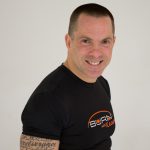 Coach Kevin Kearns has been in the fitness and martial arts world for 45 years now. As the self proclaimed ” True karate Kid ” he is no stranger to life’s challenges.
The first when he was just 12 years old and his father died of alcoholism. His tormentors who bullied him for years made it much worse. ( His first book Always Picked Last” ) It was. not until a close uncle talked him into taking karate at age 13 that his life would change.
Martial arts was his first love then came weight training. This led to a degree in exercise physiology and he started Burn With Kearns in 1990 his wellness transformation coaching company. In the early 2000’s he became involved with the world of UFC and ended up as a conditioning coach for 15 UFC fighters.
Life was going great except at home for his marriage was falling apart to his wife’s alcoholism. This led to a very messy divorce in 2018. The divorce coupled with many other challenges led him down the path to depression and attempted suicide 2 x in 2019.
He woke up on Christmas Eve 2019 in a locked down ward at Mclean Hospital. After several ECT treatments he began to see “There’s Light In the Tunnel” ( his second book) and decided to make it his new mission to help people everywhere recover from mental illness through his books, workshops , fitness programming and his eventual TED Talk. He is a man that is he calls it “RELENTLESS”
Connect with Kevin on LinkedIn, Facebook and Instagram.
This transcript is machine transcribed by Sonix
TRANSCRIPT
Intro: [00:00:04] Broadcasting live from the Business RadioX studios in Atlanta, Georgia. It’s time for High Velocity radio.
Stone Payton: [00:00:15] Welcome to the high velocity radio show where we celebrate top performers producing better results in less time. Stone Payton and Ryan Schlosser are here with you this morning, and today’s episode is brought to you in part by the Business Radio Main Street Warriors program. For more information, go to Main Street Warriors dot org. Ryan we’re we’re rolling up on the weekend, man. You got anything exciting happening this weekend?
Ryan Schlosser: [00:00:41] Oh, man, everything’s new to me here. Just moved to the area about a month ago, so, you know, Have anything going on?
Stone Payton: [00:00:47] Hey, that’s. And that’s the way I roll, man. Somebody rolls into town, I snatch him up, I put him on the team. I do. We’ve got this cadence fair happening. The Reformation is putting on my wife is painting it art on the spot. And there’s still three interviews between this and my first cadence beer. So this is going to be a lot of fun. Guys, you are in for such a real treat this morning. Please join me in welcoming to the broadcast with Burn with Kearns, the man himself, Kevin Kearns. How are you, man?
Kevin Kearns: [00:01:19] Good start. Thanks for having me. And thanks, Ryan. Ryan, I’ll come down and I’ll show you around town to. We’ll just go. Just go smash up the town. How’s that sound?
Ryan Schlosser: [00:01:25] Sounds like a plan. You guys in town checking everything out.
Stone Payton: [00:01:28] So, Kevin, I got 1000 questions. We’re not going to get to them all, but I think maybe a great place to start here would be if you could articulate mission purpose. What are you and your team really out there trying to do for folks?
Kevin Kearns: [00:01:44] Brian, I appreciate that question. Stone So, you know, I’m a wellness transformation coach. What that is, is it’s a new level versus personal trainer. So I was involved with the UFC. I was I trained 15 UFC fighters at one point, turn them into a conditioning system, put that on DVD. It went global. And I’ve spent 37 years and one on one now on Zoom to corporate wellness and public speaking as well. So I’ve got two books in the market, one on anti-bullying, because I was literally the kid that excuse the expression, suck at every sport. Father died of alcohol was when I was 12. Got worse. And I am in martial arts and it saved my life. Going into strength training turned around and got my degree in exercise physiology. Never expected to stop with TRANSCOM and it went global, never expected that. And at the same time, during my career taking off, I was at a very difficult place in my marriage. About 12 years ago, she started drinking and became an alcoholic, which ended up ruining my marriage. And then I fell into a deep depression so bad that I try to literally commit suicide in 2019, which is only three years ago. Twice ended up in McLean Hospital, which actually saved my life, and then turned around and wrote another book called This Light in the Tunnel How to Survive and Thrive With Depression. So my big mission now with my company, Burn with Current, is the three pillars, what we call them proper exercise, proper nutrition, proper mindset programing. So I’m on a mission. Wherever and anywhere I can speak to people about colleges, universities, corporations, about mental health and how to combat mental health and come out of that deep abyss of mental health in depression.
Stone Payton: [00:03:20] So I got to ask you a couple of questions about getting a book out there. So many of our listeners, many of our clients here at the Business RadioX Network, I feel like they have a book in them. They feel like they have a book in them, but maybe they’re a little slow to pull the trigger. What was that experience like? Did some parts of the book come together really easily for you and you struggle with others? Tell us a little bit about what that author experience has been like for you.
Kevin Kearns: [00:03:47] You know, it’s a challenging process. My first book always picked last. I went to a ghostwriter, paid her four grand, and she took notes on my chapter and disappeared. So I got completely disenfranchized with that in 2010. Then another ghostwriter through my fulfillment company for my DVDs that my conditioning system, which I’m relaunching, 2.0 version very soon. And she heard my passion and my vision on this whole thing. And she says, I got to do something with this. She literally kicked Birmingham’s her name. She helped me. She interviewed me every night while my wife was at her ex-wife was at her AA meetings. And it was there was some tough times. She interviewed me and the whole process process was, I want to be in your movie. And I want you to come out of the movie and tell me what’s going on. So every time I write anything, that’s basically the way I kind of people perceive it. And then on the second book, what happened is and I can’t tell you how many people have helped me with the book, like Nick, Pete, my my editor for Fighters Only Train Hi fi Easy. I was I was I’m a C minus and I wrote for five magazines at one point, literally. So like the two magazines, but I wrote for five magazines at one point. I don’t know why people want to listen to me. I don’t know why. It’s kind of funny when I see that.
Kevin Kearns: [00:04:57] And now two books. So a friend said to me to put the first book, I always pick class on audio video. So I had his son, who’s from Ireland, read it and then interview me, and I said, Huh? When I got the idea for the second book, There’s Light in the Tunnel How to Survive and Thrive a Depression. I said, I have an idea. I wrote so much of it. I said, But you know, people want audio and audio and video now. That’s where they’re really into. And I said, What if I conceive of the chapters but filmed myself during some tough moments? So what I did is I actually filmed myself because I’m way better speaking. On. Like we’re doing now or in front of an audience versus writing because it takes longer. And then I took that all those videos gave it to somebody to transcribe this for me, and now I had multiple products. Then I can put it up in Audible. So that’s it is a challenge, but it’s easier than they think. And I would tell anybody, any listeners this, if you have a book that’s a dream. That dream was given to you do it right. Like nobody’s going to read the book, doesn’t matter. Just get it out of you, get it out of you. And it’s very cathartic when you’ve gone through something hard to actually put it on paper.
Ryan Schlosser: [00:06:03] Just a few minutes into the conversation here, Kevin, I can tell you one of the most inspired people that I’ve talked to maybe in my life. So where does all this inspiration come from?
Kevin Kearns: [00:06:16] Wow. That’s a very good question. You know, I’m like, I’m the kid that, like I said, sucked at every sport, got picked on every day. I came from a three family home in Everett. My father died when I was 12. Great guy. Just drank too much and we struggled. You know, my mother was from a depression, so I think I get that from my mother and my father because we really struggle trying to keep us keep the family together. How to put myself through college the whole bit. I’m not I’m not the best student. I’m a this is what I say when I go out to universities in schools, I’m at 2.8 95. I’m a little bit I had a scratch and scrape and fight to get a low B and nothing ever came easy to me. And I think when you go through that, it kind of inspires you to say, okay, who else can I help? Like, I can’t tell you how many people or things I’ve read, like Dale Carnegie, Lester Brown, Dr. Wayne Dyer I’ve listened to that have inspired me. And I go, You know what? Anytime I’ve been through something rough, like when I went through the anti the bullying stuff, I said, You know what? I don’t want any kid to go through this again. My whole mission when the first book was If we can save one kid, if we turn one kid around that doesn’t realize he’s worthless, I’ve made it if we’re on Oprah.
Kevin Kearns: [00:07:26] Great. I’ve got two girls. I got to go to college and I got to pay for it. The second book, going through a depression and suicidal ideation and anxiety is rough. It’s just hard and it’s like a cement overcoat. That’s why I’m working on my first TEDTalk, because if I could reach more people, you can change more life because there’s plenty of people that have changed my life over the years with just a word or a saying or a phone call. And, you know, we’re all interconnected, we’re all human, so we’re here to help each other. So I think my inspiration comes from regular people where they’re like, Hey, man, what you said saved me. Well, how does he know? Saved you if it didn’t save me, like today, when I came forward, the Depression and I put a video up on Facebook. We had 2000 views in a day two years ago. And I said, Now I got to write the book and I’ve saved. I’m not trying to be egotistical on this. I’ve saved 23 people from committing suicide just by talking to them. Some I knew, some I didn’t know.
Ryan Schlosser: [00:08:22] Man. That’s that’s a that’s deep stuff. And that’s an impressive way to use the inspiration you clearly have. What’s what’s been the most challenging aspect of this process for you in the last three, three years?
Kevin Kearns: [00:08:39] Going through a very messy and bloody divorce, not seeing your kids full time wife turned their kids, ex-wife turn the kids against me. I don’t really see them that much. Covid trying to come back from attempted suicide to rebuilding the business. And oh, by the way, here’s a here’s a plague is a pandemic across the globe, which shuts down 80% of your business. I have a certification business, too, where I was traveling to teach people my system from aquariums, my fitness trainer system that shut down. I used to be in England at least twice a year. I traveled to Japan, Canada, you name it, shut down, and then clients aren’t seeing you. So that part of my business, the one on one, the corporate, all got shut down overnight. And then then you turn to something else and then now people are trying to do you can’t. There was no fitness conventions. There was no martial art conventions. So it all got shut down. So I think that’s some of the biggest challenges was life had to go on, the bills have to be paid, but you’re making 80% less money. It’s like, how do you rebound after all that? And there’s an article I think I sent it to Stone this morning from the New York Weekly, did a piece on me. Rock bottom’s a good foundation to stand on, which is solid.
Stone Payton: [00:09:50] Well said. So how does the whole sales and marketing thing work for a guy like you, a business like yours? Do you have a structured process for going out there and getting the new business? How do you get the new the new clients, man?
Kevin Kearns: [00:10:09] That’s a good point. You know, I think I’m going back to old school and you’ll probably appreciate this. Ryan. Sounds like he’s young, but he probably knows this. You really have to network. You really have to get out and do grassroots. You know, the social media, all that stuff is great and that’s all fine and dandy. But if you don’t have a grassroots effort, if you’re not going to Chamber of Commerce meetings, if you’re not going to conventions, if you’re not shaking hands and kissing babies, you’re really kind of screwing yourself. If you’re not going out and publicly speaking, if they don’t have money to do it for free, and then you film whatever you can and post that, you ask for referrals. I really think the attitude of gratitude has to be there where you just give. You know, it’s almost like. Gary Vaynerchuk would say, give, give, give, then ask. So why are you doing it? Like people say to me when I was training all these fighters, why do you still do one on one with clients? And why do you still do this? Why do you still do corporate? I go because it keeps me grounded.
Kevin Kearns: [00:11:02] Because, you know, at the end of the day, I put my pants on one leg at a time. Right. So it doesn’t matter. So I think we’ve lost in the world of social media, we’ve almost lost that personal contact and the world of the pandemic. We’ve lost that personal contact. So I think people want to get back to that. So you go you go to the Chamber of Commerce meeting, you go to the BMI meeting, you go to the the convention. It really is a matter of figuring out. I think at the end of the day, you have to figure out what your target market is and what that niche is and go after it. Like my saying, I think we mentioned this be relentless. Just keep going after it and don’t don’t quit. Dr. Wayne Dyer would say, hold your vision, keep your passion. Well, one of my tattoos says Vision, passion. And the last one is perseverance. If you do not have perseverance, you cannot succeed, whatever it is.
Stone Payton: [00:11:52] So do you feel like there are elements or disciplines or experiences or, gosh, I don’t know, maybe even mentors that have contributed to your ability to to so visibly demonstrate that degree of resilience, that that degree of mental toughness after all this.
Kevin Kearns: [00:12:14] Absolutely. I have to thank my first martial art instructors, Paul Taylor and Charlie McIver, who got me my first black belt. And they taught me something at 17 when I got my first black belt. You’re always white belt. You’re always a beginner. If you don’t think you’re learning, you’re dying. You know, learn and grow what you go through, you grow through. As far as other mentors, you’re talking about Coach Steve Whittier, SPG, East Coast, Mark, Delegate from City Time, one of the best striking coaches in the planet. Dr. David Thomas My my first professor in exercise physiology who told me when I graduated, he said he was proud of me. I’m like, What? You never say that, Dr. Dave. He said, It’s not always the people that get 4.04.0 in grades that do well in life. It’s people like you that have to scratch and scrape and claw to get a B that do well. And I think all along, really what matters is friends along the way, people like Lionel being Craig Rose. You know, you really know who your true friends are when you become vulnerable, who’s going to stick by you? Who’s going to stick by you? I’ve had some of the same friends for 40 years. Other friends. It’s just people that you meet. And I don’t know if you’ve ever explained this, you’re just instantly best friends like Detective Mark Morrissey and his family from Hoboken, from north of New Jersey, where we’ve known each other for years. Nick Pete, my editor, he’s the one that found the first cover for my book, which my first cover was Junk. He designed it, and I’m still friendly with him in the UK all the time. I think, you know, I think to have one mentor, I think you have multiple mentors. It’s like people that you can go to. Definitely people like Dr. Wayne Dyer, Zig Ziglar, Dale Carnegie, All the stuff I’ve read are very, very influential in my life. And then I’m a big yoga person too. So a lot of what I’ve learned from yoga people like Jackie Barnwell all all contributed to my to my world.
Stone Payton: [00:14:05] So let’s talk about the work a little bit, because I get the distinct impression that you have kind of cracked the code on helping people get a handle on nutrition exercise mindset and bring it all together in a way that they can live into as a lifestyle as opposed to, you know, I’m going to do this to get ready for my daughter’s wedding.
Kevin Kearns: [00:14:29] Exactly. Very good. I love that question because it really does have to be know when when, when motivation stops. Okay. Because you can get all motivated. Everybody’s motivated in the New Year, New Year’s, New Year’s resolutions, New Year’s resolution. After that, discipline has to take over. Discipline has to take over. It really does. It really has to take over. So I usually tell clients that we’re going to be one on one. Even corporations give me six months and the first thing they say was all the money. The money. I go, So what? The money? I go, okay, every time you work out is a deposit in your fitness IRA, right? It’s a deposit. The Egyptians figured it out. You can’t take your money with you. So what good is it because you got to stay healthy Now you’re going to stay healthy now. And I think some of the big things we we need to focus on and I work on this daily is instead of focusing on what’s going wrong, focus on what’s going right, you know, you’re either in a problem going to the next problem and coming out of a problem and what is problems, They need to be solved. It’s like math solve the problem. And I think when you’re when you’re really focusing on, okay, when you’ve made up your mind, it’s like Anthony Robbins says, what I must do, I must lose weight, I must be successful, I must be number one in this.
Kevin Kearns: [00:15:42] I must it changes from what you have to to what you must do. Like when I was feeling sick and I got depressed and tried to commit suicide, I literally have a scar on the left side of my neck from trying to slip my own throat. No joke. No joke. And then I found therapy, electroconvulsive therapy. Now, that was a big risk. I knew nothing about it, but I swear my father talks to me and he says, You got to do something different, Kevin. You’ve got to do something different. Usually takes 12 treatments. I started feeling better after three. It was like the sky opens. So I think the way you talk to yourself and the way you talk to other people influences everything. Give an example. If somebody says My bad shoulder, I would say, Your injured shoulder. Why do you say that? When you say bad, it’s a connotation of negativity. When you say injury, injury is temporary. It’s like one of my favorite sayings Pain is inevitable. Pain is inevitable. Suffering is a choice.
Stone Payton: [00:16:36] You know what? I think that’s going to be the quote on the on Stone’s next article. I’ll try to remember to credit you.
Kevin Kearns: [00:16:44] It’s not my quote. I heard it from somebody else, to tell you the truth.
Ryan Schlosser: [00:16:47] Yeah, It’s all about what we do with that, with our suffering. Everyone. Everyone’s got problems they got to deal with. And I love what you said, that motivation or discipline replaces motivation. I can tell that that very instilled in you. How about your customers? Do you do you see that you’re able to get that message in their head and have it stick? What’s what’s that retention process look like for you?
Kevin Kearns: [00:17:12] Well, I’ve had some customers, believe it or not, wine for 23 years. Wow. How about that, huh? And I’ve had fans for and I don’t like the term fans, but people that have been following my DVDs for years. And I think if Stone wants to quote me, this is one of my biggest things. We say what’s called column response. We’ll say hustle equals. And their answer has to be Muscle hustle. You hear me on? I think the biggest one I had was like 300 trainers. I’m like, hustle equals muscle coach. I’m like, That’s right. Think like that. And when you think like that, it’s not just just it’s not just physical muscle. It’s mind muscle. What’s the mind muscle take out could of should have would have just do it. Don’t live with regrets. Who wants to live with regrets? I want to ask them out or I want to ask them out or I want to try for the job. I want to try for. I’m afraid of failure. So one of my talks at schools and corporations is if you took the two year old mine and shoved it into the 40 year old body, you wouldn’t worry about anything, right? You wouldn’t worry about failure. Think about how many times you fail. Think about it. How many times did you fall to walk? But it’s inherently in you. You have to do it. It’s inherently in you. You have to be able to feed yourself. It’s inherently in you that you have to learn how to get home from school. And then what happens is ego takes over. And I was like, and as I say, something told me before, ego is not your amigo.
Stone Payton: [00:18:31] Man. I am taking such copious notes over here. But my whole talk is to be like the Kearns methodology. Your TED talk when you do it is going to be fantastic.
Kevin Kearns: [00:18:42] I hope so. I’m working on it.
Stone Payton: [00:18:45] Before we wrap. I’d love it if we could leave our listeners with with a couple of actionable tips. I’ll call them Pro Tips. And look, gang number one tip on any of these topics is reach out to Kevin and his team, tap into these books. But yeah. Kevin if we could leave our listeners with a couple of things, they could begin thinking about reading, practicing. Let’s leave them with a little something to begin acting on as they come out of listening to this conversation.
Kevin Kearns: [00:19:17] Excellent. I appreciate that. Sure. Action. Step one. Number one. Number one. You matter. Remember that you matter. I don’t care what anybody told you. I don’t care what your family said. I don’t care what your ex-girlfriend, your ex-wife. You matter. Remember that you are important. Number two. Somebody always has it worse.
Stone Payton: [00:19:40] Hmm.
Kevin Kearns: [00:19:41] Number three today is a gift. That’s why they call it the present. Number four, if you’re exercising whatever you’re doing, think of it this way we or you get to do this today. What about those people that can’t? What about those people that are hospitalized? Think of it that way. You get to do this that every time I come out of yoga, I got to do this today. Every time I come out of Tong Muay Thai, I got to do this today. Every time I do my own conditioning from a conditioning, I got to do this today. And you got to do this today. Now, number five, forgive yourself and move on. There’s a great quote and I’ve got a ton of I’m sorry from Mark. I think it was Mark Twain. Forgiveness is the fragrance that is shed by the violet on the heel that has crushed it. I’ll say that again. Forgiveness is the fragrance that is shed by the violet on the heel that has crushed it. Number six, one of my biggest foundations. Be relentless. No matter what it is. I don’t care if it’s an education. I don’t care if it’s playing football. I don’t care if it’s swimming. I don’t care if it’s building a house. I don’t care what it is. Whatever your what is Forget about the how, what’s the what’s the why, whatever it is, be relentless in everything you do. And if you need to reach me, real simple. Brian with Kerns dot com. Kevin at burn with current and I’ll be so bold I hope you don’t mind Stone I answer my phone. 508404 8503.
Stone Payton: [00:21:10] Well, Kevin, it has been an absolute delight having you on the show this morning. Thank you so much for the time and energy that you’ve invested with us to share your insights, your experience, your perspective. And thanks for the work that you’re doing. Man. It is such important work and we so sincerely appreciate you.
Kevin Kearns: [00:21:30] Ryan, Please send me an email because I know Stone has my Kindle version and I’ll send you both whatever you want.
Ryan Schlosser: [00:21:36] Appreciate that. Yeah. Keep, keep. Keep the word going. I love your message. And clearly you’ve got the inspiration.
Stone Payton: [00:21:44] Nicely done, gentlemen. All right. Until next time, this is Stone Payton for my guest host Ryan Schlosser, and our guest today with Burn with Kearns, Mr. Kevin Kearns, and everyone here at the Business Radio X family saying we’ll see you in the fast lane.









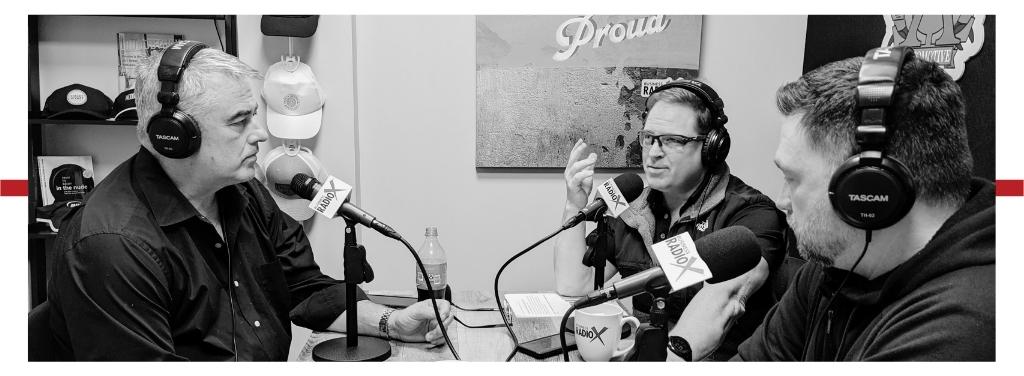
 Stacey Wyatt is a full-time real estate sale professional committed to offering his clients the best service possible. He is not your average agent, he is one of the top producers in Atlanta and he works tirelessly to find his buyers the best deals and provide his sellers the exposure and expertise they need to net the most money in any market.
 Robert Mason is a full-service Real Estate professional, specializing in Sales and Listings as well as Property Management. His 24 years in this business has shown him a variety of situations and He handled them all.

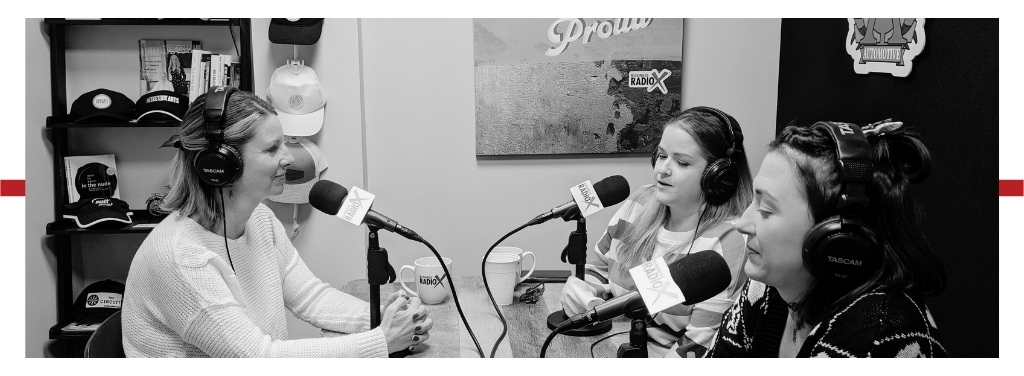
 Shanna Beavers, Owner at