
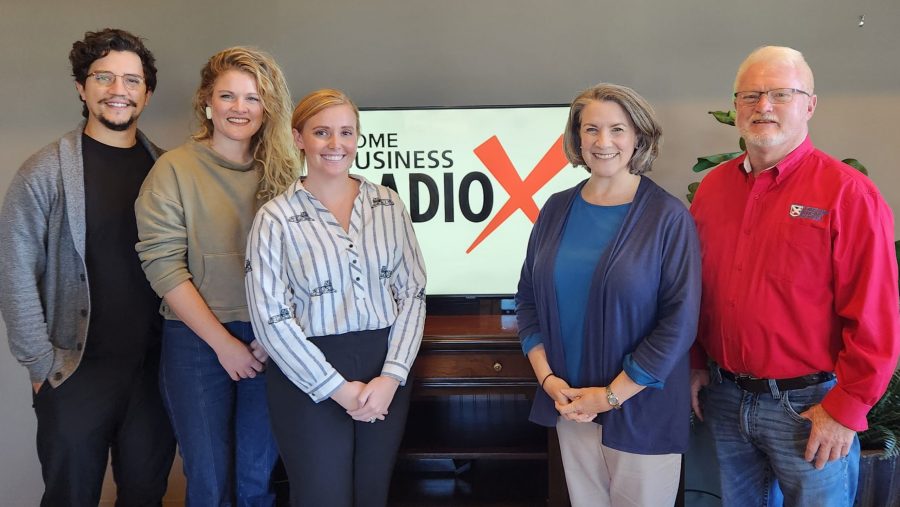
Rome Floyd Chamber Small Business Spotlight – Julie McCluskey and Drew Davidson with Rome Shakespeare Festival, Jennie Cook with Chieftains Museum/Major Ridge Home, and John Cowman with Wings Over North Georgia

/
RSS Feed
Access to this series is restricted to Business RadioX® Studio Partners.

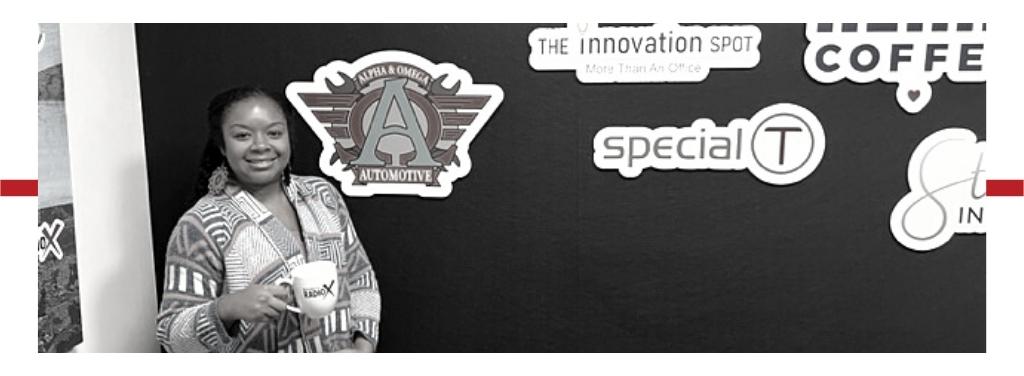
 Kaye Barnwell is the Chief Empowerment Officer for Billiboo Boutique.
Our brand is built on empowering, inspiring, and uplifting girls of all ages, but specifically we focus on girls ages 4-16.
At Billiboo, we understand that empowerment comes when our girls feel well – mentally, physically, and emotionally.
Free to Be You, is our motto, and it’s not just a tagline that you’ll see on our website or on our products, rather it’s how we hope each girl feels when she receives a gift or new item from our shop.
Our hope is that she feels this way long before she ever finds us.
Follow Billiboo Boutique on Instagram.
This transcript is machine transcribed by Sonix
Intro: [00:00:08] Coming to you live from the Business RadioX studio in Woodstock, Georgia. This is fearless formula with Sharon Cline.
Sharon Cline: [00:00:19] And it’s a surprise Tuesday for your list formula here on business Radio WEX, I am your host, Sharon Klein. And in our studio today, we have a boutique owner and their mission is free to be you. Their brand is designed to capture the mindset that every girl has the right to feel and be herself. They believe in wellness, and their products are designed to empower girls to create their own self awareness, their identity and their self care. Please welcome to the studio, Kaye Barnwell of Billiboo Boutique, which is the cutest name in the history of the planet.
Kaye Barnwell: [00:00:56] Hi everyone.
Sharon Cline: [00:00:58] Thank you. Thank you for coming on the show. I’m excited to talk to you for a couple of reasons. One is that this is a fairly new business that you started, and I feel like people who kind of maybe thought they were going to do one thing before the pandemic and wound up doing something else. There are a lot of people out there that have that experience, and I feel like you’re in that group. And so I’m like excited to see how it all happened. You know, people’s lives take turns and you don’t expect it when it happens. It’s like, okay, tell me about your journey.
Kaye Barnwell: [00:01:26] Totally unexpected. And I had no clue. I would start this journey this quickly as quick as I did. I believe it was January one, 2020, when I officially signed on to get the business name Billy Boo trademark.
Sharon Cline: [00:01:42] By the way. It’s like a dream, right?
Speaker3: [00:01:44] It is like a dream. Think about it.
Kaye Barnwell: [00:01:46] It is absolutely like a dream. It was actually something I wasn’t even thinking of thinking of. At the end of the day, I was looking for the right domain name for another wellness business and discovered that Billy Boo was not a registered domain name. And I said, Oh, I have to have it. Whatever I do, you have.
Sharon Cline: [00:02:04] To have it. It’s a great name. It’s catchy.
Kaye Barnwell: [00:02:06] It is named after my daughter Billy. And I’m happy to say that we not only got the domain name, but we officially are trademark or registered trademark brand name. Wow.
Sharon Cline: [00:02:18] I get that.
Kaye Barnwell: [00:02:18] That happened this year.
Sharon Cline: [00:02:20] Wow. Congrats. There’s nothing quite like knowing it’s official.
Kaye Barnwell: [00:02:23] It’s official.
Speaker3: [00:02:25] That’s correct.
Sharon Cline: [00:02:26] So back in January 2020. Yes. Two months before the big change in life, this was just a dream, just an idea of yours. You had kind of like impetus for it. You’re like, at some point I’d really like to build this out. And then the pandemic hits. And so was this sort of like, All right, now I’m really going to put all my time into this or as much as I can into building this.
Kaye Barnwell: [00:02:46] And actually, I should say January 2021, I’m at a loss here, oh, January 2021. So the pandemic had actually already started.
Speaker3: [00:02:53] Oh, okay. Got you.
Kaye Barnwell: [00:02:55] I wasn’t thinking about the name at all, but discovered again that the name The Domain was available, I believe, in May 20, 21, 2020, when I discovered that the domain.
Speaker3: [00:03:05] Name label.
Sharon Cline: [00:03:06] Got you. You still had the idea, kind of like in its baby form, in some form.
Kaye Barnwell: [00:03:11] All in the mind. But it doesn’t really matter until you have it out.
Sharon Cline: [00:03:14] And that’s the story of my life. Everything’s just in my head hanging out. But like you took you took steps.
Kaye Barnwell: [00:03:21] Yes.
Sharon Cline: [00:03:22] What was the next step?
Kaye Barnwell: [00:03:23] Well, I mean, I was working with a life coach, and fortunately for me, you know, I had a lot to talk about. And and that just happened to be one of the things I said, you know, I got this domain name. I’m not sure what I’m going to do with it yet, but we just started working toward the steps. I eventually built a business plan, and when I have that business plan in place is when I started to look for an attorney to trademark the name, because I want it to start with the end of mind. And for me, that was owning the brand name.
Sharon Cline: [00:03:50] It’s really smart. How many people don’t do that? Don’t think about that, that how important that legal part is. You know, very important.
Kaye Barnwell: [00:03:56] It’s very important. And, you know, I even had major name brands like saying, hold on, wait.
Speaker3: [00:04:03] Just a really pause.
Sharon Cline: [00:04:05] Oh, no.
Kaye Barnwell: [00:04:06] Yeah. Yeah. So that was an interesting journey. It took about 18 months to get the registered trademark, but it’s official. We do have two marks under Billy Boo and we are just we couldn’t be happier.
Sharon Cline: [00:04:17] So what were the steps that you took? Did you like what I did for my business? Did you just Google? How do I make a trademark legal or how do I make an actual official trademark?
Kaye Barnwell: [00:04:27] Well, I asked for advice. I love referrals. I’m all about referrals for everything. So when I have an idea and I don’t know something, especially women in business, I am like, go to the women who know, or maybe the woman that I think knows may know.
Sharon Cline: [00:04:43] But it’s so nice because you help each other.
Kaye Barnwell: [00:04:46] Absolutely. And I’m so thankful because, you know, I ran into a number of legal you know, I would say there are a few attorneys that I reached out to. And the one that stood out for me is the one who worked the best to make it happen. And I was just very thankful for that process. It wasn’t easy. There was some moments where I’m like, I. I was like, I can’t pay for this anymore.
Speaker3: [00:05:08] My gosh. Right.
Sharon Cline: [00:05:09] And every.
Speaker3: [00:05:10] Year. Yeah, That’s a business owner. Oh, yeah.
Sharon Cline: [00:05:15] So when you were talking about Billy Bu and you were making your logo, did you already have an idea of what you wanted your your product to be?
Kaye Barnwell: [00:05:23] Yes, I did. I had an assumption. Really? I really thought I was going to start with manufacturing goods under the name brand. In fact, I went to a manufacturing school in North Carolina and took a class because I said, well, hey, that’s the next.
Speaker3: [00:05:39] Step, right? Even during the.
Kaye Barnwell: [00:05:41] Pandemic, you can still go to a class, right?
Speaker3: [00:05:44] That is awesome.
Sharon Cline: [00:05:45] I never thought to do anything like that, but I love that you decide and you actually do it, you know, like even another state. Let’s just.
Kaye Barnwell: [00:05:52] Go. Let’s just go. It didn’t take too long to get there. I think the class was just a couple of days. I met some great people and the one thing that I discovered is that manufacturing in the U.S. is just really expensive. And so my next question was determine how much do people care about items that are produced in the U.S.? Gotcha. And, you know, I think from a business standpoint today, I would say that people do care, but they also want to meet the people who make it. So that has been the upside in the downside of the business. In a way, we primarily buy from women owned brands because we are a girls empowerment boutique and we believe that, hey, these girls are going to turn into women someday. So we want to support them in every way that we can. So that’s been an interesting journey for us. We haven’t manufactured any goods to date, but we primarily own buy from women own brands.
Sharon Cline: [00:06:46] So how challenging was that to stick to those parameters that you put for yourself?
Kaye Barnwell: [00:06:51] Very challenging.
Sharon Cline: [00:06:53] Because when I hear about clothing being manufactured in different countries and I know that it’s very controversial and there are even children doing things, you know, I’m not very versed on it, so I don’t want to speak like I know exactly, but I’ve heard that it’s difficult to continue to make Made in America have a different value. You know, it’s a financial value, but also a value for people to know this is not made on slave labor or something that I would feel bad about in my heart.
Kaye Barnwell: [00:07:21] Absolutely. It’s very tough because when you look at all the major brands they have, you know, products that come from all over the world and we still buy those products. So a lot of times it doesn’t really matter to the consumer. But when you are a shop, local business, when you are a brand that is consumer facing and you expect local dollars to hit your store, you have a real responsibility to see to it that most of the material is really funnels under that brand value that you bring. And so I try to do that.
Sharon Cline: [00:07:55] Really do what are some of the products that you have in your boutique? You have an online boutique, but you also have a physical boutique, which we’ll have to talk about too.
Kaye Barnwell: [00:08:02] Yes, physical boutique. We have an online e-commerce space and a lot of the products we do have a lot of apparel, I will say that. But primarily we sell a lot of girls accessories and gifts, unique items that you haven’t seen before. You may have seen, but they’re very obscure. So when you see them, you’re like.
Speaker3: [00:08:21] Oh, I got to have it.
Sharon Cline: [00:08:24] That’s what you want, right?
Kaye Barnwell: [00:08:25] That’s what you want. I mean, that’s what I really expect from the person that’s thinking of the young girl that they’re buying for, that they found something really unique, such as a treasure that this girl would hold close to our heart. I mean, I’m wearing one of our little fidget rings today, and it’s like it’s just very it’s very small. You wouldn’t even know it’s there, but I know it’s there. And when I’m ready to play with it or I have a little anxiety or I’m nervous about this interview.
Speaker3: [00:08:50] Then I can just.
Kaye Barnwell: [00:08:51] Play with this unique ring that you can find at the Billy Boo’s shop, right?
Sharon Cline: [00:08:54] I have one as well. I’m playing.
Speaker3: [00:08:56] With. See? Yeah.
Sharon Cline: [00:08:57] It’s not as mine is way chunky. Yours is really. I have one around my neck and I have one on my finger. But you know what? How nice for children when they’re in school, right? If they’re having an anxious moment, which was me in school, you know how nice to not have something that just glares. I need something to relieve anxiety that’s really cute to look at.
Kaye Barnwell: [00:09:13] And we have so we have a ton of fidgets in the store. And I will tell you, as a business owner, as a mom, I was very skeptical of fidgets. That is my aha moment in this business.
Speaker3: [00:09:24] This is your hobby.
Kaye Barnwell: [00:09:25] This is my one of my aha moments. There have been many. But because Billy is so young, she’s not even four yet. I am like, we’re not having these fidgets all around the house. I’m like every other parent. Like, No, no, no. You can’t have all those fidgets.
Sharon Cline: [00:09:38] Learn to learn to manage your emotions. I don’t know. That’s what I think. It’s like. Why can’t I just sit and be quiet? It’s like there’s something about the fidgeting, you know?
Kaye Barnwell: [00:09:47] Well, I mean, technology, right? You’re picking up. You pick up your phone every moment. You’re always on technology. Technology is always on. It’s always surrounding you. So this is I feel like these fidget things bring you back to the humanity of it. All right? It brings you back to yourself. And so I didn’t discover that until I bought my first fidget from a woman owned brand. It was a gold chain purse. And I said, if I’m going to have fidgets in the store, they must be highly functional. That is that is a qualifier. It has to be highly functional. And we have had everything from purses to shoes to hats that have fidgets on it rings. Earrings, you name it. We’ve had those types of fidgets in the store. I only buy toy fidgets when it’s around the holiday season. Then I say, okay, we can cut loose a little bit. Let’s bring something in the shop that is, you know, still toy like, but it has a maximum impact. So we have some of those in the store right now, but everything from watches to light up fidgets that you can put on your wall and create a design. You name it, it’s there.
Sharon Cline: [00:10:47] Yeah, that’s amazing. I didn’t know there were so many. Of course there are. That’s that’s awesome. Well, but it’s interesting that you’re kind of hoping that it encourages people to kind of get away from what is so prevalent right now, which is social media and technology, and just kind of center themselves with what they have right in front of them on them. You know, a ring.
Kaye Barnwell: [00:11:06] Absolutely. And actually, it speaks directly to our tagline, which is free to be you. And I always tell moms, if I’m in the shop, I’m like, if they see the sign and they’re like, Huh? And I’m like, Yes, that statement is absolutely wholly rooted in wellness because we want young girls to see that and believe I’m free to be myself. Yes. And our expectation is that girls feel that way like it’s long before they get to Billy Boo. But when you see it, you hopefully will discover that there are some things in there in our shop that speak to you. But just seeing it may change your perspective just a little bit. So that statement, free to be you, is rooted in wellness. That tagline is not going away, but it is the reason why we have these anxiety releasing fidgets in our store.
Sharon Cline: [00:11:52] I love it because you’re giving people permission almost. It’s like you’re normalizing, I guess just everyone. You have to fit into a certain mold in order to find something in your shop that’s going to feel like it belongs to them.
Kaye Barnwell: [00:12:08] Absolutely. And it could be the most you know, the interesting thing, it could be a piece of clothing or it can be we’ve had lots of diaries or unique personalized booklets that you can write. You know, write your life in journals, right? Yeah. So we believe in that as well. Write the story, look at these beautiful items. And, you know, I have to tell this story sharing because I really think sometimes I’m like, Oh, did this get lost in translation? But I don’t really think people know and maybe they shouldn’t know because it’s a personal story to me. One of the reasons why I thought I could do this brand is because I still remember one of the prettiest days I ever had as a little girl. That was I still think about this to this day. I believe I was either eight, no more than ten, and my dad had done my hair. So I have this big pouf on top.
Speaker3: [00:12:59] Of my head.
Kaye Barnwell: [00:13:01] On top of my head. And I just remember, I don’t even know what reason because I don’t remember watching Betty Boop. I’m pretty sure I didn’t watch her growing up.
Speaker3: [00:13:09] But I just love the way she looked.
Kaye Barnwell: [00:13:10] She just always made me so happy. And I remember I was wearing a dress that my dad bought me. It was a Betty Boop dress, and it was just. I just felt the most beautiful that day. And I still remember we were at the lake. And I can remember my hair is a little frayed, probably a lot frayed. And then seeing that my dad did it and I’m wearing the dress that he bought me. And it’s those types of moments that I hope girls have when they receive a Billy Boo product when they they have picked something out just for themselves. I’ve seen girls say, Oh, no, that one’s for me. That’s the one I want. I’m like.
Sharon Cline: [00:13:43] Yes, yes it is.
Speaker3: [00:13:44] That’s for you. That one I love Vivid.
Sharon Cline: [00:13:47] That moment wasn’t Who Knew back. And you know what? When you were ten or whatever that it would impact you even to this moment and how that can impact people. That’s really inspiring to me.
Kaye Barnwell: [00:13:56] It’s amazing because I just think about how much love for myself I felt in that moment, how much pride I felt for having a parent who cared enough to put a bow on my head.
Speaker3: [00:14:08] Regardless of what it looked like.
Kaye Barnwell: [00:14:11] And just, you know, just knowing that I was wearing the one thing that I wanted to wear that day. And that’s what I really try to channel, that I try to channel that energy through to Billy, my daughter now, because I want her to feel like she hoped for, for the day. However she hoped to look, look like that, whatever that thing is that you’re attracted to today, I want you to feel free to be you in that moment, to pick up the things that speak to you, to right, the things that speak to you, to feel your way through this experience. Call it life. Because, I mean, we we only get one us, right?
Speaker3: [00:14:43] I love that you.
Sharon Cline: [00:14:44] Like feeling because what you’re basically saying is whatever you when you go into your store, you’ll feel something. Yeah. That feels like you, you know, whatever that looks like. And it’s wonderful because I think it’s easy for me even today to not feel, you know, like I want to numb myself from when I’m uncomfortable or unhappy or have unhappy memories or any of it, you know? But what you’re encouraging is from the beginning of a kid’s life, child’s life is to feel.
Kaye Barnwell: [00:15:11] So it’s I think one of the reasons why I think we can speak to these groups of young girls is because we’ve all been that young girl who kind of feels a little maybe isolated or. Abnormal or I don’t know. I mean, our brand goes from 4 to 16. Those are the ages that we primarily serve, but we speak to anyone. The products stops. If it stops you in your track, go pick it up. I mean, that’s fine. If you don’t buy it, that’s fine too. But I want you to remember who you are in that moment. Right. And just speaking to your point just now, like, hey, you know, I even sometimes I feel like that that is probably one of those lessons in fearlessness that I’ve had to really sit with lately, which is being vulnerable, vulnerable enough to introduce this brand that I don’t like. I’m like, Why would you care?
Speaker3: [00:16:01] You know, we’re just one of many.
Kaye Barnwell: [00:16:03] Yeah, we’re one of many. We’ve only gotten started. Our physical store didn’t just open a year ago. The website is is what it is. It’s actually one year old today.
Sharon Cline: [00:16:14] 10th anniversary.
Kaye Barnwell: [00:16:15] Thank you. You know, and I’m a one woman show. And so when I have to go and be vulnerable with potential customers and say, hey, you know, check out our page or oh, you like that, come on by. You know, I didn’t realize how vulnerable I really felt or how, you know, shy I really am in those moments because I’m like, oh, how did how did I just do that? Or can I repeat that over and over again? And I’m just getting to that stage where I feel like, okay, maybe I can start to say it more. Billie actually says Billie Boo more than she does.
Speaker3: [00:16:49] Yes, she does. He’s like.
Kaye Barnwell: [00:16:50] Oh, you can get it from the Billy Boost.
Speaker3: [00:16:51] Shop like girl, Thank you. Because, yeah, because you’re three.
Kaye Barnwell: [00:16:55] And you can say that and you know, mom, I’m like, Yeah, you can stop by the Billy Boo shop if you like. Or, you know, here’s a card or, you know, So I’m finding that I am, you know, a lot higher than I thought I would be in this space, you know? And I’m like, opening this big idea up to so many women and saying, Do you agree? You don’t agree? Okay, well, what could I do better? You know, I’m not really asking all of those questions, but that’s the insecurity that you kind of feel as a new business owner, like, am I getting this right? And it is not until a sale happens that you’re like, Oh, wow, they finally bought that one item that’s been stocked forever and oh my goodness, I didn’t think anybody cared or I didn’t think that ever would sell or my goodness, how did they find me online? That’s awesome.
Sharon Cline: [00:17:40] It’s like your instincts being right. There’s like, that’s a wonderful feeling. Like, it’s the same for me. If I ever get booked for voiceovers, I’m always like, Oh my God, it’s working. It’s working. You know? Like, I just I’m so happy. Yes, because it’s so validating. My whole my head is my worst enemy and I live in it all day. So it’s like, have I made the right choice? You know, I am the queen of questioning whether or not I’m making smart decisions. And so it’s very actually normalizing for me to hear that even someone in a different kind of business has the same thoughts, because I’m by myself a lot. But this is something else I wanted to highlight with you is that you have a really strong network of other women business owners. And I, I have yet to really join any other business kind of group other than like a young Professionals of Woodstock, which is one of my favorite groups to go to. But we just chit chat and have coffee. And anyhow, I just I really think that there’s a resource out there that I know I haven’t tapped into. So would you be willing to talk a little bit about your some of the support that you have?
Kaye Barnwell: [00:18:40] Yeah, I mean, like I said, I started this journey with my life coach who I’ve known for years.
Sharon Cline: [00:18:45] Now that you have a life coach.
Kaye Barnwell: [00:18:46] Yes. She’s a really good friend. She focuses on wellness, 360 degrees of wellness. And so I love that mission. But I had to build the confidence to get there, to even walk into that room and say, Yes, I’m a business owner and my confidence is kind of skyrocketed in those places. Now I feel like I have to take it to the individual person that I don’t know who’s walking on the street or who’s just stopping by. And that is the space that I’m.
Speaker3: [00:19:11] Trying to go. I haven’t done that either.
Sharon Cline: [00:19:14] Well, a little bit, but it is very daunting. It’s like, Oh my goodness, do I even know? How do you you don’t know what their energy is going to be like. You don’t know what the reception is going to be like. So how strong do I feel in myself to ask that? Like, do you feel the same?
Kaye Barnwell: [00:19:26] Yeah, well, you know what? Okay, so I will share with you that this is a journey that’s continuing. So the Free to Be you tagline. I keep mentioning this because I’m actually on another journey to make that statement more bold than ever before, and I don’t even know that I’ll get there. But I’m hopeful and I’m putting one foot in front of the other so that I can do the work. And when I introduce it to our brand of our brand value, when I introduce it to customers, they will believe, but it will be a curriculum that is centered around free to be you. So it’s releasing you to just be yourself and discovering how to fall into yourself when you feel insecure or vulnerable or just not quite it today. I mean, I thought about this interview today and I’m like, Am I well enough.
Speaker3: [00:20:16] To do this? I was like, I’m not canceling yet doing that. Thank you. No, not canceling.
Kaye Barnwell: [00:20:23] I will be there.
Sharon Cline: [00:20:25] But you know what? I’m hoping that you’ll find that it’s just a conversation and we’re just kind of sharing it.
Kaye Barnwell: [00:20:30] It’s just a conversation. It really is. And I’m enjoying.
Speaker3: [00:20:33] It. Oh, yeah. Hey. Yeah, that’s a.
Sharon Cline: [00:20:35] Great one for me. Yeah.
Kaye Barnwell: [00:20:36] Thank you. Thank you. I’m serious. Thank you for the invitation. I’ve done just a couple of interviews, and, you know, I mentioned briefly the fraud factor before.
Sharon Cline: [00:20:46] We need to talk about that. But wait, if you’re just joining us, I’m speaking to Kay Barnwell of Billy Boo Boutique. And so we had just mentioned before we got on the air that it was. The fraud factor. And I feel like it sounds to me something like imposter syndrome, because I have that I live in imposter syndrome land. Okay, go ahead. I’m there.
Speaker3: [00:21:09] Okay. It is.
Kaye Barnwell: [00:21:11] It is very true. I said to myself, Oh, my goodness, Do they know how close I am to not doing this anymore? You know? Or do they know the conversation that I just had with my husband about? I’m not sure if that’s going to make that part of the business is going to make it or how do I keep going? Or we have these shows coming up and I’m really hopeful for that. I just don’t know if it’s working kind of deal. So it always makes me feel like, okay, I can’t quite do that interview or I can’t quite go into these spaces yet because I haven’t proven myself. And so the bottom line is, you know, as my husband said, he said, oh, you know, you’re putting that brand out. There it is. Your brand is forward facing. It is already out there. You you just keep doing it. And I have literally heard that in my head over and over again. Keep going, keep going, keep going. So a lot of days I am pushing past this notion that I’m a fraud.
Speaker3: [00:22:03] In some way.
Kaye Barnwell: [00:22:05] And it’s not the question of what qualifies me. It’s the question of why wouldn’t I qualify myself to be in this position? And so I want to answer the question that you mentioned a few moments ago about the strong women that are surrounding me right now. You know, I’m very fortunate to belong to the Roswell Woman’s Club. It has been the reason why I feel like I can speak my own mind and be in a room with other business owners, other women business owners, and feel very strongly about my brand, but feel that it also resonates with people. And even if it doesn’t, maybe they’re curious. And you know, I have very few followers right now, so if you.
Speaker3: [00:22:45] Haven’t.
Kaye Barnwell: [00:22:46] You don’t know who I am. I’m at official Billy Boo on IG.
Speaker3: [00:22:50] I need followers. I will follow you right now.
Kaye Barnwell: [00:22:53] It is crazy because I’m like, oh, these people have hundreds or thousands and I’m like, Oh, I’m itty bitty. And I again, fraud syndrome. But at the end of the day, if I touch one, that’s enough, right? And I think the way that these the network of women business owners or women in general have touched me to feel the confidence of knowing that I belong there, it’s just been astonishing to and it’s been very helpful in motivating me to keep going. One of the people that I actually who was one of my first customers who shouted me out on it, Lauren Owens. Fleming I love you, girl. I’m actually doing an event with her on on Thursday this week at the Painted Tree in Roswell. And I love her because, you know, she said, oh, you know, my daughter, she wore your the sweater that, you know, I just bought her from your shop. And I’m thinking.
Speaker3: [00:23:43] Wow, that’s great. Yes. Somebody actually loves the product.
Kaye Barnwell: [00:23:47] That’s great. And she didn’t know what that that message meant to me at the time. But again, it’s like every day if I’m telling myself, keep going, keep going. And then you have somebody that comes along and they just water that that seed that’s been planted or they give you a high five or they say good word and maybe they don’t buy a single thing, but it just means so much. And that’s what this journey has meant to me, is that knowing that I really do belong, even when the numbers are few on social media, when people haven’t bought a single thing in the shop that day, when I haven’t received an an online order in months, I still belong here. And so if I just keep going, right, if we just keep going, I believe that this journey will satisfy us more than we know.
Sharon Cline: [00:24:31] Wow. I love it because I think for myself, how much is enough? Like, I don’t. I don’t. I don’t know that I can ever be hired enough, you know, to do voiceover work. I don’t know that I could ever be, like, valued enough. Do you know what I mean? Like someone thinking, Oh, you’re great. I don’t know if I can ever hear enough. Oh, my God, that was so perfect, you know? Right. I feel like I’m an endless well of need.
Speaker3: [00:24:56] And so that’s kind of funny, I guess.
Sharon Cline: [00:25:03] But, like, what I think about it, I don’t know that there ever is enough. So what do I define myself as? A successful person, You know, because it’s never enough. I’m never happy enough. I never make enough money on and on and on. So I think for myself, I love that you talk about how it’s really not about how many sales did I make this month or because for me, how many times did I get booked for this or that. It’s more today. How did I do today? You know, Did I do what I promised myself I would do? Or even just having tried it doesn’t have to be end all, be all success. But just almost the competitions with myself.
Kaye Barnwell: [00:25:38] Yes. How did I handle myself today? Honestly, if I can answer that question a truthfully and know that there may be some weak spots that I hadn’t quite noticed. Right. That is the question I love to answer on a day to day basis. How did I handle myself today? Because to your point, we are always searching for something more. And when that more happens, it’s like, has that satisfied us? And the likelihood is no, we’re still searching. Yeah. And so the ability to even go into to oneself and say, okay, but all of these wonderful qualities that I have, all of these things are working. It’s working toward the good of what I’m trying to do and who I’m trying to be. And honestly, Sharon, I just love that you’re in this space because you belong here. First of all, you do you really do you have the voice for it? You have the attitude. You are always glowing and shining. And I get to say that because I know you.
Speaker3: [00:26:35] Quite frankly, I.
Sharon Cline: [00:26:36] Love that you came in today.
Speaker3: [00:26:37] By the way. Yeah, I just came to pump you up. Honey, I’ll be that 20, I promise. You Go.
Sharon Cline: [00:26:45] That’s so nice. Well, it’s fun. And I think what I really love is that everybody wins. It’s like you get to talk about your journey, but anybody else listening hopefully will understand something they didn’t before and take some wisdom from it. I mean, I do. I think that’s part of the impetus of this show is because I let fear decide a lot of things for me. And so listening to someone who moves past the initial impulse of how am I going to know if this is going to how am I going to know that this person’s not going to be like, No, I don’t want to be on your radio show, Some stranger, You know, I’m like, Hey, how do they know to trust me and how might I deal with rejection? It’s just nice when you find someone who can identify with those feelings and have. Here are my tips and tricks. Here’s what I do today. I’ll take it because I need help.
Speaker3: [00:27:27] I need help.
Kaye Barnwell: [00:27:28] That’s right. Listen, let me tell you. But you know what? You remember that meditation stuff that we are doing?
Sharon Cline: [00:27:32] Yes. That’s been helpful, too.
Kaye Barnwell: [00:27:35] That’s been very helpful. It’s been very helpful. And that’s definitely something that we’ll be introducing in the business.
Sharon Cline: [00:27:40] Well, that’s wonderful, because small business owners, I don’t think that’s something that’s ever really been talked about, at least on the show, about how important it is to kind of keep yourself in almost like a not Zen, but sort of grounded.
Kaye Barnwell: [00:27:52] Yeah, State of awareness. I’m aware that I have some weaknesses. I’m aware that I’m vulnerable. I’m aware that today maybe didn’t go as planned. I’m aware of all of these things. Can I be present in those moments when it’s not working? When it’s working well, when I think, aha, I did a really good job. And then when people are like, I can’t. No I’m not, no, I’m not going to pay that much money for that. And when’s the sale come. I won’t even be back. Don’t even worry about it. You know, somebody’s not going to like what you’re doing. And I think you just have to learn to be okay with that. But more importantly, you have to be okay with yourself first. And I think that this journey has definitely taught me more about the need to not undervalue myself in any space, especially this space. This is something that I’ve had the luxury and the ability to create. How dare I undervalue myself in this space, any place else that I would go And you know, a job that pays you, they may get to do that. But how dare you do that to yourself, don’t you even. But you know, that’s how I have to say. I have to sit myself down and tell myself. I mean, even today, you know, how dare you undervalue? I mean, I’m speaking to myself right now.
Kaye Barnwell: [00:29:03] How dare you undervalue yourself in this moment when you have been given the ability and the luxury to create something new, to create something vibrant, maybe it’s not going to speak to everybody. Maybe they couldn’t make it out that day. Maybe they don’t want to pay the shipping and handling. Maybe your prices are too high. Maybe they don’t like what you sell, but you do not have the luxury of undervaluing undervaluing yourself in this moment and this space in time when it’s you that has to keep going. You give yourself the credit of knowing that you have value and you walk in that. And if it doesn’t work today, cool. It may work tomorrow, but the point is to keep going. So I guess that’s the same you know, maybe that’s what’s been in my head that I keep hearing. Keep going, keep going. But in that, the lesson is, don’t you dare undervalue yourself. Now, it is too important that you keep going in this moment and you express the value as it has been given to you. And you walk in that. So you walk in confidence knowing that I’ve been able to create something new and it just may work out. It may work out maybe and I’m speaking to you now, maybe you’re going to do a trailer for a major movie.
Speaker3: [00:30:12] You know, maybe.
Kaye Barnwell: [00:30:14] Maybe you’re going to start speaking. And as I don’t know, maybe I don’t know. You know, we never know what the journey is going to look like. But the importance of showing up and saying, I will give as much value as I have designated in this day to myself, to my brand, to the thing that I’m creating that is more important than anything else. And if we can keep that top of mind, I think we’ll be unstoppable.
Sharon Cline: [00:30:38] That’s so powerful. I just love that you kind of talked about how the things that you’re experiencing kind of can show you some of the weak spots because obviously I, I, I mean, I’m perfect, of course, but I have.
Speaker3: [00:30:50] To.
Sharon Cline: [00:30:52] Know I just mean interesting along the journey that you talk about how different situations can bring up parts of you you didn’t know like you didn’t know that you might feel shy. Yeah. You know where I feel strong in certain areas of my life, but I am very weak in certain areas of my life, you know? So until you experience those things, you may not even know it. And I love that you’re willing to be vulnerable about it, because there’s no the bravado and the look at my amazing brand, it doesn’t resonate. I think, as hard as when you’re like, Yeah, this is hard work, but I believe in it, right? You know, because I think everyone has those feelings. You know, this is hard work.
Kaye Barnwell: [00:31:28] This is hard work. But you know, what’s the opposite of this? Living a life of regret? No. That if no regrets is is the voice that speaks to you. That’s that’s what speaks to me. I’m like, okay, there will be no regrets. So even if this goes on and it doesn’t do what it needs to do, if I have to close up anything, whatever takes place, there will not be any regret. Having done the work to begin with, having completed the journey. If that calls for a refocus or regroup, that’s fine. But I know that I don’t have any regrets in having started a journey that maybe somebody is still in their head.
Speaker3: [00:32:04] Exactly.
Kaye Barnwell: [00:32:04] Things are not in our head anymore.
Speaker3: [00:32:06] It’s out here. It doesn’t it.
Sharon Cline: [00:32:08] Feel cool to create something, though, Like it didn’t exist, what, two years ago and now something does exist? There’s just something so amazing about creating something.
Kaye Barnwell: [00:32:17] Listen, when I hear women in the shop and they’re like, Oh, I have an ima boo, or I call my daughter Natalie Boo, or, you know, and you’re like, What?
Speaker3: [00:32:26] Girl?
Kaye Barnwell: [00:32:26] Okay, so that makes sense. That resonates with people. But I never even thought about the brand in that way. I was just thinking about what we call Billie when she was a baby, you know, Now she’s just Miss Billy.
Speaker3: [00:32:36] But. Oh, miss me, Billy, It’s no Billy Boo there.
Kaye Barnwell: [00:32:40] Maybe we’ll get there, you know, later in life. But, you know, just to hear that it’s an endearing sentiment to to women with their daughters, I was like, man, that even that is powerful because you’re like, man, they thought about their Emma Boo or their Natalie Boo in that day, you know, when they saw the sign or, you know, whatever it may be. But that just capturing the essence of that feeling of endearment, of ownership of self.
Sharon Cline: [00:33:08] And something sweet. It’s so sweet, you know, it’s priceless.
Kaye Barnwell: [00:33:11] It’s priceless. And I didn’t even know what the logo would be, By the way, by the way, when I was thinking of this.
Sharon Cline: [00:33:16] Of the logo. It’s so cute.
Kaye Barnwell: [00:33:17] I had no clue. I had no clue. I didn’t even know how to get there or to who to direct my attention to. But again, just asking people or even looking on YouTube and saying, okay, these are the brands that I follow, you know, what advice would they give? That’s how I discovered these are the spots that I want to be in.
Sharon Cline: [00:33:35] So do you think that you have a moment where you could say this? Like, what was is this a tough question? I don’t always like asking it, but what was what’s something that you could say is one of your biggest mistakes that you’ve learned from? And I don’t know, no way that could help other people.
Kaye Barnwell: [00:33:50] Maybe I listen, I, I have the same low hanging fruit and, you know, I’m like, you just, you know, you see the low hanging fruit. You pick that apple right off the tree and you eat it, you know, And I’m I am quick to make that assessment. And and sometimes it is not low hanging fruit. And the biggest thing that I’ve had to admit to myself in this journey of business is that that shop that’s just down the street from where I live is not low hanging fruit. It’s a lot of hard work. It is a ton of work. It is. And you know, when you’re just starting something, you’re invigorated, You have all this freshness and it’s new and it’s exciting.
Sharon Cline: [00:34:33] It you.
Kaye Barnwell: [00:34:33] Believe it, it’s just and then you get a year out or you get six months out or sales don’t. Come. And then you think that, well, okay, now I got to go pick the low hanging fruit. Oh, there. There are no low hanging fruit. And I’ve had to discover that that low hanging fruit isn’t so low after all.
Sharon Cline: [00:34:51] Interesting. Yeah. Like, you think you kind of understand how something is going to go, or you have an estimation of how it’s going to go. And it’s actually completely different.
Kaye Barnwell: [00:34:59] Completely different.
Sharon Cline: [00:35:00] Tumbling.
Kaye Barnwell: [00:35:00] Isn’t it? It’s very, very humble.
Sharon Cline: [00:35:03] I’m thinking of my own experiences.
Speaker3: [00:35:04] So I’m like, Yeah, I know that.
Sharon Cline: [00:35:06] Feeling.
Kaye Barnwell: [00:35:06] Very humbling because you think, Oh, well, it’s it’s a shop within a shop. It’s it’s under another brand name. It’s all going to work. It’s going to it’s going to be this living thing. All I have to do is just show up, you know.
Sharon Cline: [00:35:17] And they’re going to.
Kaye Barnwell: [00:35:18] Love you and they’re going to. Yes. But you have to do that over and over and over again. So that low hanging fruit, it starts to get out of reach or you realize, oh, a new seed needs to be planted. Oh, we actually have to tear off these branches, or we really do need to do some pruning here and there. And that part is not easy. And even just starting the pruning process is not easy. So I I’m in that process now of like saying, well, these are the things you said you’re going to prune. When are you going to prune it? Because the low hanging fruit, it’s way up there now.
Speaker3: [00:35:49] Right.
Sharon Cline: [00:35:50] So interesting.
Kaye Barnwell: [00:35:51] Yeah. So that that has been one of those moments that’s kind of sit you down. But I also look at it like, okay, but what if I never sat down? What if I always thought that this was going to be just, oh, you just do it. Do it this way. You just yeah, you just keep going. But in the sitting, I’ve had to learn how to adjust my expectations around the definition of success. I’ve really had to tune in. I’ve had to tune in to other business owners. I’ve had to sit back and say, Oh, I have to take that. I need that piece of advice. I need to take that with me or, Oh, look, that part of the business is working or Oh, it’s not so bad after all or that. Keep going. It’s just a phrase because, you know, you have these phrases and you’re.
Speaker3: [00:36:32] Like, Yeah, yeah, yeah. Keep going crazy to say, Yeah, exactly.
Kaye Barnwell: [00:36:37] Exactly. But at the end of the day, people don’t experience your tears. They don’t experience your fears, they don’t experience your not so aha moments that you have with yourself about your weaknesses and insecurities and vulnerabilities and all of those things. But I think that if you can at least understand, okay, well we got here, how do we get there? So it’s a sitting down and it’s sort of this reckoning that you have with yourself. But at the same time, it’s not all bad. It’s it’s good because maybe you wouldn’t have done that otherwise or you would have continued on the same journey just because that’s what’s acceptable. But it’s not wholly who you are. Right. And so this is this is a tough part of the journey.
Sharon Cline: [00:37:18] I’m a spiritual journey.
Speaker3: [00:37:19] Is it is it really?
Kaye Barnwell: [00:37:20] This is the tough part of the journey. And I’ve taken some back seats and I’m like, I’m like, okay, you’re getting further away from the pulpit, honey. Like, you know, or I mean, like, are you in the crowd anymore? What’s going on with you? That’s the piece of it that is really you say, okay, where’s the connection or where’s the disconnection with who I know myself to be or who I created this for or why I even am in this. My story has sort of shifted and it’s changed, you know, throughout this process. You know, I would always tell people, because I work full time, because I have children, because I have a home to keep, I have all these things and some of my wonderful partners that I happen to share the space with, maybe their life isn’t as full, but I always say, you know, I believe God gave me this vision and I didn’t want to sleep on it. I wanted to create this thing, but there is a lot of work in doing so. Having said yes doesn’t eliminate you from the work. It doesn’t eliminate you from the fears or the vulnerability vulnerabilities. If anything, it highlights those things and it’s, you know, now I have to speak to those things and say, well, how are you going to talk about this today? Are you really going to revert back to what’s normal in your mind of what one?
Sharon Cline: [00:38:31] Yes and.
Kaye Barnwell: [00:38:32] Yes. And that is there’s a real fear in moving forward. But what’s the alternative? Regrets? I can’t deal with that.
Sharon Cline: [00:38:41] I have plenty, plenty.
Speaker3: [00:38:42] Plenty of those. No, no, no. We’re wiping those regrets. Those are two in the morning thoughts?
Sharon Cline: [00:38:47] I’m always awake at two in the morning.
Kaye Barnwell: [00:38:49] Two in the morning thought.
Speaker3: [00:38:50] Oh, my goodness.
Sharon Cline: [00:38:51] I’m like, oh, man, back in third grade. You never want to do that. It’s just that’s in the mix. That’s in the soup mix of things, I think. But I but I love that you talk about how it’s an everyday process because some days I feel so strong and Sure. Right. And everything’s working so great that I’m just like, man, I could write a book about this whole industry. And then the next day I’m like, I don’t want to do anything with it. And I don’t even know what the difference is between myself one day and the next day. I don’t know. I don’t know.
Kaye Barnwell: [00:39:18] Why. Well, and I think I think that’s natural to when you want to pull away from something that feels so right. But then you’re like, but is it wrong? Why am I here? Who taught me.
Speaker3: [00:39:28] To do this? I didn’t sign it. Did I say yes? Where? Show me. You know, I agree. But I love.
Sharon Cline: [00:39:35] That you talk about the fact that this kind of. Is a gift, even just in this country. Like sometimes I do sit back and I think, man, I I’m a woman by myself doing this. This industry made my own little, little LLC, Tiny LLC, and but just still did it because I wanted to. You know, it’s just kind of crazy, this moment of just an inspiration. And I’d like to see what happens here. And then the next thing you know, I actually have like a booth and it’s I have a page and it’s a website and it, it is kind of crazy, like there is a gift in it. And I think sometimes I need reminders that it’s not a given for every person on the planet, that they have an idea and then they can take it into fruition. Right. And what I needed that.
Kaye Barnwell: [00:40:18] What I just heard you say is I created a luxury brand and it’s not for everybody. I understand that. And I am willing to make sure that this luxury brand stands out and it sits high on the shelf so that someone will have to ask to pull it down. That’s what I heard you say.
Speaker3: [00:40:35] That’s what I heard you say, right?
Kaye Barnwell: [00:40:36] Like, ooh, luxury brand. I need to I need to run with that. This is how I think in my mind.
Speaker3: [00:40:41] I’m like, Oh.
Kaye Barnwell: [00:40:42] Well, maybe Billy Boot. No, I mean Billy Boots for everybody. But it is at the end of the day, it’s a luxury to even had the, the opportunity to create something that maybe someone is still a thought in their mind because it feels so far away and it feels like such a foreign idea for for somebody you’re already here. And and that’s just so powerful and empowering.
Sharon Cline: [00:41:04] So if you could speak to someone who’s got an idea out there and it’s it’s just in their head, what would you give advice to them? What would you say? How would you give advice to them? I’m not saying this articulately at all, but I just mean they’re this is this is part of the reason I wanted to do this show also is like, what did you do to kind of help yourself get past your own fears of, well, I can’t do this or I don’t know anything about that. That’s 99% of me is saying I don’t know anything about that. Like my mower is not working right now. And that’s really what I think is I don’t know anything like I’m so frustrated. But there are people that do and they are going to come help me. But at the same time, that is the immediate I don’t know anything about that. So I automatically have a bad attitude or a no in front of me.
Kaye Barnwell: [00:41:46] That’s good. I love what you just said. I automatically have a bad attitude or I have no in front of me. But the truth is, is when you start something, when when you start to talk about the possibilities, you ignite the fire in somebody else. Right? And then the people will come, the resources will come. You just start doing and start moving toward that. I think one of the biggest things that I’ve discovered in my own life, and this is since I was a girl, is that how vital communication is with with one another and the people that you know, the people that you don’t know. Because maybe the idea is that you express to someone else they may have something that reignites in you the passion that you always have for a thing. And then you start that journey because you now feel like I can do it where somebody may have told you in the past, No, you can’t do that. Or you’re not you know, you keep talking about that thing. That’s what I would say. First, you keep talking about that thing so that the right person, they’ll come and they’ll listen. They’ll sprinkle that seed that has probably already fallen. You didn’t even know it fell, right? You start writing it down because I was way nervous about writing a business plan. I had wrote one, you know, previously, and I was like, Oh, that’s a failed business. It didn’t work. I did one project and yeah.
Sharon Cline: [00:42:55] But you learned. But I.
Kaye Barnwell: [00:42:56] Learned. I learned that I didn’t want to do that.
Speaker3: [00:42:59] That’s valuable. That’s the lesson that.
Kaye Barnwell: [00:43:02] There’s no need for me to do that.
Speaker3: [00:43:04] Right? Valuable.
Kaye Barnwell: [00:43:05] That is valuable. It really is. And but I think it’s important to tell people what you want to do, because if only you know what you want to do, then how would anybody else know that? That they can be a support to you? Right. So the purpose in communication is that you you make sure those ideas leave your head, so to speak, at first. Then you can write it down and then you invite the resources in. So speak it, write it down and bite the resources and be vulnerable enough to attract the resources. So go to those places, go to the women’s group, go go to the network. Supports that don’t seem like it’s right up your alley, but I need to be in that room because I am a I am a luxury brand, right? I need to be in that room. I need to tell I need to tell more people. I need to continue to speak about this thing. And as I mentioned before, you know, I’m like, oh, I’m feel insecure when I speak to people. But that’s the point of speaking it. Because how will you know if I have a woman that comes up to me and says, Oh my goodness, I love her hip and where does she get it? Billy Boucher But if I never spoke it, she would never know, Right? Right. And so you have to continue to speak about it and then you continue to nurture the ideas. You know, if whenever you get a moment to write those things down or write something down, write something about your own being down so that it progresses you to move forward or move in the direction of establishing that new thing that you hope to to establish. Right? And then you just find a way to start attracting those resources. The people resource the financial resources, those things that are necessary to get a brand set up.
Sharon Cline: [00:44:37] It’s like little. Little things. I feel like I didn’t do it all at once. Sometimes someone will ask me, How did you even get started? And I’m like, How did I get started? Like, you know, what did I do? What was the first thing? Because once it’s rolling, right, you don’t really think so much about what it was like to get it going. But you go through those steps and the next thing you know, it’s you’ve got your LLC, you’ve got your EIC, you’ve got write, you know, your website, it’s like little steps. And the next thing you know, it’s right there. It’s like a physical, something that you look at.
Kaye Barnwell: [00:45:02] Well, and I also think it’s important to reflect, right, Because I know you to be a storyteller. And if you reflect, then you say, Oh my goodness, I actually was telling these stories for other people a little while ago and now I get to tell them for myself. Right. And I think the same thing about my business, I had to recall or reflect that there was a point in time when I graduated from high school that I thought I was going to be a buyer for a major luxury brand. And I said, Oh, I’ll just go to school and I’ll get my degree in that I want to be a merchandizer or a buyer for a major brand. And I had to recall when I started buying products for Billy Boo, the Billy Boo brand, that I am actually a buyer for my own luxury brand, and I’m calling the Lexi brand now, y’all, because I ain’t selling just me now.
Speaker3: [00:45:47] And I was like, Yeah, I know.
Kaye Barnwell: [00:45:50] She didn’t say that, but I was like, It’s a luxury to have created a brand, so I’ll call.
Speaker3: [00:45:54] It luxury.
Sharon Cline: [00:45:55] I love the notion of that because you just give such a different feeling of just being like, Here’s my little business. I always kind of downplay it because it does seem really little, but maybe if I talk about it in a bigger way, I’m putting it out in the world that it’s a bigger business, you know, or chalk it up more, I guess.
Kaye Barnwell: [00:46:10] Right? Or, you know, just speak it. You know, you have to talk it up. Just speak it. Just say, hey, you know, this is what I was able to create.
Sharon Cline: [00:46:16] My.
Kaye Barnwell: [00:46:17] Luxury and my luxury time. Yes, I had the luxury of time on.
Speaker3: [00:46:21] My side, Right? I mean, everybody has that.
Kaye Barnwell: [00:46:24] It is a luxury, I feel like. And Billy is not a luxury brand. It is a it is a wellness brand, quite frankly. And that’s the space that I desire for it to live in. It is a retail brand, but it is a wellness brand first. And, you know, hopefully in the year or two to come because I’ll still keep going. People will be will come to know the brand as more of a wellness brand and we’ll primarily sell accessories and wellness products. And then there will be workshops designed to meet the needs of young girls and young people around the world.
Sharon Cline: [00:46:56] Who knows how, where it’ll go.
Kaye Barnwell: [00:46:57] Who knows.
Sharon Cline: [00:46:58] Where it will go?
Kaye Barnwell: [00:46:59] The point is just to keep going, right?
Speaker3: [00:47:01] You got to keep going so it can go.
Sharon Cline: [00:47:04] Kate Barnwell, thank you for coming in.
Kaye Barnwell: [00:47:07] Thank you for having me.
Sharon Cline: [00:47:08] How can people get in touch with you before we go? I want I want people to be able to go see your boutique or find you online. Where can they how can they do that?
Kaye Barnwell: [00:47:15] Absolutely. So Billy Boot, it’s spelled with two L’s. It’s b i ll ib0. So that is our website Mobile Ibo. You will find our website there and please follow us on IG post a lot there. Fun, authentic stuff there. And it’s at official Billy Boo so at official Billy Boo on IG and please find us on Facebook under the same name. Thank you so much.
Sharon Cline: [00:47:43] You’re welcome and thank.
Kaye Barnwell: [00:47:44] You and see us at the Painted Tree Roswell.
Sharon Cline: [00:47:46] Oh yeah. Bicycle shop there. That’s really amazing. I mean, it’s like a great location. Yes.
Kaye Barnwell: [00:47:51] Right. It yes. Of Woodstock Road in Roswell. It’s a great location. Thousands of people.
Sharon Cline: [00:47:57] Walk by there.
Kaye Barnwell: [00:47:58] Hundreds of shops. Yeah, under one roof. And Billy Boo happens to be set up there. Space 18, Please come and see what we have in store and find us out in the community.
Speaker3: [00:48:07] We love that to you.
Sharon Cline: [00:48:09] And thank you all to you for listening to Fearless Formula on Business RadioX. And this is Sharon Klein again, reminding you that with knowledge and understanding, we can all have a fearless formula. Have a great day.


 Dr. Erin Baker is a self-leadership coach, business strategist, social psychologist, Internal Family Systems practitioner, and bestselling author of Joy-Full AF: The Essential Business Strategy We’re Afraid to Put First.
They hold a PhD from University of Texas at Austin and were formerly in leadership roles at Facebook and Microsoft.
Dr. Erin is known for their infectious energy, unapologetic authenticity, incisive wit, and unflinching commitment to helping their clients create joy-full AF businesses and lives that light them up.
Connect with Dr. Erin on LinkedIn, Facebook and Instagram.
What You’ll Learn in This Episode
This transcript is machine transcribed by Sonix
Intro: [00:00:04] Broadcasting live from the Business RadioX studios in Atlanta, Georgia. It’s time for High Velocity radio.
Stone Payton: [00:00:15] Welcome to the High Velocity Radio show where we celebrate top performers producing better results in less time. Stone Payton here with you. You guys are in for a real treat. Please join me in welcoming to the broadcast self leadership coach, business strategist and best selling author Erin Baker. How are you?
Erin Baker: [00:00:37] I am fabulous, even more fabulous now that I’m here talking to you, Stone.
Stone Payton: [00:00:42] Oh, I have really been looking forward to this conversation. We’re really going to be talking about this topic of joy. I got to ask right out of the box, how would you define joy and what business, if any, does it really have in business?
Erin Baker: [00:01:02] Oh, it has every business in business. So let me start with, if you ask 100 people to define joy, you’re going to get two things. You’re going to have people saying something and then going, Hmm, I’m not sure if that’s right. And you’re going to get all hundred people to say something different. That is something that I have learned through my course of talking to people all over my network, friends, family, colleagues. Joy is this word we all know. We don’t know how to define it. And really, we more so know when we’ve lost it. So what is joy is a tough question, but at the same time, as I have done this research, I have really found this fascinating thing where everybody has their own sort of unique flavor of joy. But there’s some real commonalities. And one of those things is it’s not the same thing as happiness. And we use words like joy, positivity, happiness really interchangeably. But happiness is really that thing that we think we’re going to get when we achieve a milestone, whether it’s we get a revenue goal in a business or we get promoted in a job or we buy that house, happiness is a result of something good happening to us. It’s also something that once that novelty wears off, right, we we all think once we’re going to get that promotion or that house, that we’re going to be happy forever.
Erin Baker: [00:02:34] But we know that actually. Hmm, a few days, few weeks later, that happiness has worn off. Joy, on the other hand, is not something that we need an external circumstance to feel. And you can imagine. Just imagine a time when you felt joyful and you might have been doing nothing. There’s no house, there’s no car. It’s just you’re with your family or you’re experiencing a lovely sunset or you’re just feeling in the groove in your work. And so joy is this thing that you can access any time. And it’s not a fleeting feeling the way happiness is. It’s something that you can kind of grow and cultivate over time. So I can even say to these listeners here, you know. Tap into what it feels like to feel joyful in your body. You know, I feel joyfulness really deep in my belly, whereas when I feel happiness, I feel, oh, it’s somewhere up above my head. And now imagine you can tap into that feeling of joy any moment. So that’s your first question. I know that was a long winded answer, but Joy is a very complicated thing that shouldn’t feel complicated. What does it have to do with business? Well, everything.
Erin Baker: [00:03:59] I’m going to put it to the listeners out there who have businesses. What’s the number one reason you got into business? I’m guessing it has something to do with this word Joy. Whether or not that is in your vocabulary could be freedom, could be autonomy, could be creativity, it could be independence. All of those roads lead back to the sense I want to be joyful in my work. I want to be lit up. I want to be having a good time. I want to be playing to my strengths and doing the things that matter to me. And how many people out there started their business from joy for joy, and then got into the strategies, the tactics, the revenue generation, the milestones that things that we think are going to make us happy, right? All of a sudden the joy is gone and what are we doing? We’re miserable, or maybe not miserable, but we feel like, what? What do I want to do here? So joy is everything. Because if you don’t have joy in your business, you’re not going to be there five, ten, 15 years down the line. And we know that business is hard and many businesses fail all all on their own. Can you imagine showing up miserable for years? I can’t.
Stone Payton: [00:05:18] So was there a catalytic event or was this an evolution for you? How in the the world did you start going down this this path of working with this?
Erin Baker: [00:05:31] Yeah. So I will say out front, you know, we’re talking about joy being this hard to define thing that we all kind of know when we’ve lost it. I didn’t have the word joy in my vocabulary when I started my business. And in fact, I had a friend who is all about joy. He he wants to lead the world joy movement. And this is a guy who has a smile that’s bigger than his face. And I thought, yeah, okay, that joy thing that’s for him but doesn’t resonate for me. And then I started writing a book a couple of years ago, and as I was trying to put together, well, what is it? Do I have to what is it I have to say in this world? What do I have to contribute? I started looking back at my business and I looked at I got colored pencils out and I looked at milestones, you know, when things were going well, I looked at when things weren’t going well. I looked at lessons I learned all along the way, and it took a couple of well, it took about a year to kind of come to realize that what was happening when I looked backwards was when I followed my joy, when I followed what lit me up, what was important to me when I got in touch with how I do things best was my way of doing things.
Erin Baker: [00:06:43] That’s when things got really fun and I got more successful. And it was those times where I lost the joy where I got really trapped in This is what I’m supposed to do or this is what I should do, or This is what good business owners do when I got trapped in or Here’s the goal I’m going to chase because I’ll be happy when I get there. When I got trapped in that, that’s when everything started to fizzle. And so it just was a very personal way of looking at it. And then I just started looking at other clients and other colleagues and found, wow, this is a pattern. It’s the more we can chase our joy, the more we create success. And it’s when we lose the joy that we I mean, there’s failure all the time anyway. But we, we fail more often when we let joy out, when we leak it, when we drain it from ourselves.
Stone Payton: [00:07:30] So let’s talk a little bit about the work. I love the the phrase the term self leadership coach. I don’t know that I’ve run across that before and I’ve had a chance to to visit with a lot of coaches say more about that and the practice itself.
Erin Baker: [00:07:47] Yeah so it’s both a made up term and not a made up term. So, you know, if you look at the coaching world, I’m not surprised that you have encountered probably business coaches, life coaches, executive coaches, leadership coaches, health coaches. Right. One of the wonderful things about the coaching industry, it’s also a dark side, too, but you could basically call yourself any kind of coach and somebody else has probably done the same thing too. And at the core, we’re kind of doing very similar things just in different contexts, right? Whether we’re working in a business or a corporation or working with someone’s health self leadership. So it’s sort of a made up term for a coach. But self leadership is really this idea of how do we learn to lead ourselves through the challenges, the ups and downs of running a business or, you know, it doesn’t have to be a business, it could be a leader in corporate, it could be anything. But there’s so much we have to do internally to show up in the world as leaders, as partners, as friends, as business owners internally. Leading ourselves and being able to manage the, Oh, I just failed. How do I deal with that? Or getting connected with, Wait, how do I want to do this? What’s my way of building this business or what’s my way of getting my name out there? What’s my way of coaching clients? And so it’s all about that sense of like we’re the CEO of our own life and how do we be the CEO and the leader and the manager that we don’t have, especially in business because we are. Oftentimes either the only person or we are at the top of the food chain.
Stone Payton: [00:09:30] Yeah. So so this book did it just sort of burst out of you or was it a real labor to to get it out and frame it and get it out there for folks?
Erin Baker: [00:09:44] Yeah, it’s a great question. I want to be able to tell you that it was just pure joy the whole time it came out of me. It was just perfect. No. It took me two years. And I can tell you, you know, it took me about a year before I landed on the book being about joy. I went through a bunch of different iterations before I felt like, Oh, I’m actually saying what I want to say. But the thing that was so profound is once I realized it was about joy, I said to my I had a book coach I was working with. I said, I have two requirements. One, I have to be joyful while writing it and it has to be a joyful read. And even as I put that, as the requirements, I kept losing the joy over and over and over again. And it was a lot of things like. Perfectionism. What am I saying here? How do I make it sound perfect? I’m a former academic, and so I had to really wrestle with that smart, PhD sounding person. That’s not a joyful way to read a book. And I kept hitting wall after wall of, Well, is this the structure of the book or is this the structure of the book? And what am I saying here and what am I leaving out? And so finally, after multiple iterations, it took me about six months of I kept hitting different walls for different reasons and thinking I’m just going to I’m just going to put this book away.
Erin Baker: [00:11:11] I can’t do it. My book coach and I came up with this really brilliant insight, which is every time I open Microsoft Word, my academic self was coming out and that’s when I lost the joy because I was trying to be FD and defend my ideas and it just didn’t feel fun. And so we realized that actually I love speaking. I have had my own podcasts. I love conversations one on one with people. And so my book coach said, Well, why don’t you just speak the first draft of the book into your phone? And it was brilliant. So I would pick up my phone and be in my office and I would just record these snippets. And what we also said is, if structure is bothering me, let’s break all the all the conventions of structure, just record stuff and we’ll see if a pattern emerges later. And so that’s what I did, is I would get on my phone, I’d pace around my office, I’d record something for 5 minutes, and then I swear, about a month later, I had 70,000 words, which is quite a bit. Words ready for editing and cleaning up and putting into a format. And it was so much fun because I felt like I was talking to my reader rather than, you know, often the void writing this smart academic thing.
Stone Payton: [00:12:26] What a fantastic idea. So what did you end up with? And maybe structure is not the right word, but the flow of the book.
Erin Baker: [00:12:36] Yeah. So it naturally fell into a structure and it started off with, well, let’s just define this thing called joy. What the fuck is it? And so I spent a bunch of I call them conversations instead of chapters, because they really are kind of like sitting and having coffee with me. So a bunch of conversations on, yeah, what is this thing called Joy? Why is it hard to define what are some elements of joy that we can tap into? So I really believe in curiosity, creativity, courage and connection as ways to create joy. So I went into that. Then it was, why are we? I think it was why is it so important? And then why are we afraid to put it first? So I spent a lot of time talking about the beliefs we have around pursuing joy and how hard it can be. It can feel you can feel guilty about pursuing our joy. And then I spent a real long time talking about all kinds of different ways. It sneakily leaks from us. And then finally, I had a bunch of pieces that were all around, Well, how do we get more of this thing? How do we how do we fill up on joy so that we’re, you know, even in times of, you know, uncertainty and strife, which is inevitable both in the world and in our business, is how do we have that joy tank full so we can be resilient.
Stone Payton: [00:13:53] So I think I’m hearing very clearly that your assertion is that joy really can be something we do within ten. It can actually qualify as a strategy or a set of strategies.
Erin Baker: [00:14:07] Yeah, Yes, absolutely. And and I will qualify that with that. Doesn’t mean that we throw out other strategies. Some people will come. That’s sort of one of their. Yeah. Buts. Right. Well if I put joy what about these other tried and true business strategies. Yes. We need to have plans. We have to goal set. We have to look at if we’re marketing, what are the different ways to market. And we if we’re leading teams, we need to be good leaders and we need to make smart decisions. All of that is true. But if you think about Joy as the first strategy. Think about. There are however, many billion people on this planet. I never know the exact number. I’m going to guess it’s around eight right now, but there’s that many ways to build a business. And so coming back to Joy, I can look at, let’s say. Social media is a strategy for me and I can look at how are other people doing social media. I can get some ideas and I might hear someone say, Well, this is the only way to do it if you want to convert clients. I don’t believe that’s true. I can come back to what’s my joyful way of doing it. Which of these things that I’m seeing out there as possibilities feel aligned with me and how I like to do it. Or maybe I don’t see anybody doing it the way I want to do it. How do I do it my way? So in every element of your business, if Joy is the first question, then you get a menu of different options that you can choose from and just say, which one’s the most joyful one for me, which one feels like I will feel energized, it’ll make me come alive. It suits my interests, it suits my my strengths, all of that.
Stone Payton: [00:15:49] You mentioned a moment ago maybe acquiring the joy, you’re getting it, you’re feeling it, and then somehow it just pieces of it or maybe it just sort of slips away. So you’ve seen this maybe in your own life and with your clients as well.
Erin Baker: [00:16:06] All the time. And I will I will say before I talk about some of those ways that happens, I don’t believe we ever get to a place where joy is just on all the time. That would just be a little toxic to be always joyful. And I also will say, I think you can be joyful in times of grief and sorrow. We talk about joy and sorrow going together, but the goal is not to get to I’m always joyful. Everything’s honky dory all the time. We’re going to lose joy. It’s going to happen. It’s natural. It’s human. Part of what I really believe in is learning to notice when it’s gone. Diagnosing why it has slipped away. And then what do you do to get it back? So a few things that really can sap our joy. The word should is so common in our vocabulary, right? I should do this. I should be on social media. I should be writing a weekly newsletter. I should be on radio shows. Any time we’re in a should we’re not necessarily listening to. Is that what I want to do? Is that the joyful strategy for me? And so if we’re hearing and business gurus, experts out there will tell you their way is the way. I cannot tell you how many times I’ve seen if you’re not on podcast, what are you doing? If you’re not on social media, what are you doing? So you get this belief, right? I have to do this.
Erin Baker: [00:17:29] The survival of my business depends on me doing this thing. Not true, but the shoulds the supposed to is that this is what a successful entrepreneur does, can really sap our joy and it can be at the high level of I have to be on social media or it could be this is how I have to do social media. I have to be on Instagram and I have to make pretty graphics and I need to you know, there’s all these rules we make up in our head. So that’s one way. The other is when we follow the blueprints, the formulas, the scripts that business experts give us, very few of those gurus have actually implemented the strategy that they’re asking us to do. It’s a bunch of marketers who’ve decided this is the this is the secret, right? Very few of them have done it. And they don’t know your unique situation, right? They don’t know who you are or what you value, how you operate, what your business is like. Just these formulas are not tailored to you. And so we lose our joy when we decide the formula that’s going to, quote unquote, guarantee success is more trustworthy than our own instincts.
Stone Payton: [00:18:41] So how does the the whole sales and marketing thing work for for someone who has a practice like you and I’ll ask in tandem, is sales and marketing joyful for you at least some of the time?
Erin Baker: [00:18:58] Yes. This is so in the coaching world, and I think this is true in in several businesses. I was just speaking to a massage therapist this morning about business. You can go anywhere from building a business that’s based of word of mouth and referral. That’s what my massage therapist friend has done. Has it marketed at all and has a very full waitlisted business. A lot of coaches do the same thing and I know coaches, I know other business owners, therapists that etc. that don’t have a website, don’t have a business card, but they’re so good at what they do that people just refer them and that’s how they’ve built their business. So when any business owner comes to me and says I have to mark it, my first question is let’s test that assumption. It might be true, it might not be, and for a lot of people. You know, they could build up by word of mouth or referral. They can do in-person networking. I have a former client who’s just a genius at building a network. And just by catching up and having virtual coffees with people, he’s been able to pivot from consulting into coaching really quickly. So again, not marketing all relationship based. Business building. So marketing doesn’t always have to be there.
Erin Baker: [00:20:27] And then with marketing, there’s so many different options in the world. There’s, you know, organic content, there’s social media, there’s podcasts and radio, there’s blogs, you can write a book, then there’s, you know, paid ads. There’s so many different ways to do it. So the first question I always ask myself is which one feels like it could be fun for me? And, you know, I have played with multiple social media platforms. I’ve done blogging. I obviously wrote a book, I’ve done podcasting. So I’ve tried a bunch of different things. And I’ve learned for me that I struggle to have joy on social media. I used to work at Facebook. That’s part of my that’s part of my love hate relationship with social media. But for me, it’s just it’s hard for me to find joy. I am a relationship space person. I love conversations with people, and social media just feels like shouting into a void. And it’s it’s not fun. So I’ve mostly leaned on other methods and, you know, I’ve loved doing podcasts. Back in the day, I just had to pause it because I didn’t have time for it. I do like writing, so I do a weekly newsletter that feels really fun for me. And then on those times I do show up on social media because there is some benefit to people being able.
Erin Baker: [00:21:49] So if they’ve discovered me, kind of look me up and make sure I’m, you know, not a ridiculously crazy human, when I do show up on social media, I ask myself the same question, What’s my way of doing this? What’s the joyful way of doing this? I ask myself, What are the rules? I’m telling myself exist in this space and are they true? And so that’s allowed me to show up when I feel like it. I don’t necessarily have a posting schedule. It’s allowed me to not have to have the pretty Canva graphics all the time. And the more I lean into what resonates for me, the more people come my way. So it’s really going back to that question. It’s marketing doesn’t have to feel painful because there are so many different options. Find the most you one, whatever. It’s everything you love to write, you love to speak, you love to be on video, you love to write, copy, whatever it is. And then once you’ve decided on that, continually ask myself, What are the rules I’m asking or I’m telling myself, exist here? And are they true? Is there a way I can do it my way?
Stone Payton: [00:22:56] I am so glad that I asked. All right. So even as good as I suspect you are at this whole business of joy, surely you know you’ve got to run out of gas now and again. Batteries need recharging. Is there a is there a joy well, or an inspiration source that you go to or do you break away and do like 180 degrees and go do something? Totally. Where do you go? How do you recharge?
Erin Baker: [00:23:26] Yeah. So the first thing is, I just love that you ask this question because one of my things I harp on most with my clients is that we can’t have joy without rest. And rest is really hard for a lot of us because we’re so programed into being productive all the time and grinning through. And when we rest, we start feeling the aches and pains that we’ve been muscling through and we start feeling the feelings that we haven’t, you know, felt in a long time. And so it’s really, really uncomfortable for people to rest. But it is absolutely imperative. Just like an athlete, I have a really good friend who was a professional soccer player and an Iron Man, and he taught me that rest day is a training day because your muscles can’t grow unless you rest. Yeah. And so I think the same way with joy is you’ve got to rest for the joy tank to be replenished. And oftentimes it’s more than you think you need. And you have to battle all of those demons in your mind that are telling you, you know, you’re lazy, you’re no good, get back to work. So I ask myself almost every day, does my body need rest? And that rest could be all day. It could be. I take a walk, it could be anything. And then from there, I do believe we can fill up on joy. I love this idea of a joy tank.
Erin Baker: [00:24:53] And it’s not one that we drain like a gas tank. You know, we wait till we’re on empty to fill it up. It’s more like how we hydrate ourselves, right? Where we kind of need to always have some some water in our system. If we get too dehydrated, filling up is not going to feel good. So I think of there’s these four ingredients of joy that I think are really important. So I’ll repeat them again, which is a connection, which it could be connection to self, could be connection to other people. It could be connection. To, you know, spirit, God, higher power, whatever you believe in. Then there’s curiosity. Creativity and courage. So every day I will ask myself, what’s one tiny act of connection I can do today? So that might be. I meditate, connect to myself. Could be I go on a walk, could be I send a text to a friend and just say, Hey, thinking about you. The next is what’s one tiny act of curiosity I can do today. What can I be curious about? Might be. I wonder what I want to post on social media or I wonder what would happen if I tried something new in my business. What’s one tiny creative thing I can do? And we’re creating all the time. This is not art. It doesn’t have to be, you know, painting, dancing. It could be, you know, I you can create space even you can create, you know, I can write down something that’s I can journal.
Erin Baker: [00:26:24] There’s I can create a single line that is an insight of mine. And then the last one, courage, which courage is oftentimes people look at me funny. Why is courage part of joy? And courage to me is imperative because. We are often avoiding pain in life and we want the easiest route to things. But if you look back on your entire life, the things you’ve been most satisfied by were the things where you overcame an obstacle or you leaned into fear or you took a risk. Right. So we need to step in to courage in order to feel joy. And so I, I think it’s one of the most underrated but important ingredients in this joy equation. So I ask myself every day, what’s one tiny act of courage? What’s one risk I can take? It might be, you know, applying for a podcast that I think I don’t deserve to be on. Or it could be inviting someone to a coffee date or putting out something on social media that seems a little bit risky or out of character. So one tiny act. So it’s one tiny act of connection, one tiny act of curiosity, one tiny act of creativity, and one tiny act of courage. And that’s what helps replenish the joy tank for me every day.
Stone Payton: [00:27:43] What a fabulous set of I’ll call them Pro Tips.
Erin Baker: [00:27:48] Yeah.
Stone Payton: [00:27:49] For us to wrap or that is fantastic. All right. So if our listeners would like to reach out and have a conversation with you or someone on your team, I want to make sure that they can get their hands on the on the book. And so let’s leave them with some coordinates, some points of contact. Whatever you feel like is a is appropriate, whether it’s a website or email or something like that.
Erin Baker: [00:28:10] Sure. So I will give a few things. First of all, my book is available on Amazon and it’s joyful if AF The essential business strategy we’re afraid to put first. If you’re the type that likes to do email or websites, you can find me at Erin M Baker, Tor.com and you can email me at Erin at Erin, M Baker dot com And if you like social media, I do hang out on Instagram at Dr. Erin M Baker And one of the things I love is connecting with people. So if you want to drop me a message and say, Wow, you had this insight, or Hey, I’m struggling with this particular thing in business, can you help send me a message? I really love meeting new people and connecting that way. And it’s connection. It’s part of my joy.
Stone Payton: [00:28:58] Well, Aaron, please stay on the line even as we go out. But I got to say, this has been an absolute joy. I was going to say delight, but I think I’ll say joy. Yes.
Erin Baker: [00:29:09] You are very similar.
Stone Payton: [00:29:11] No, the work you’re doing is so important and we sincerely appreciate you. Thank you so.
Erin Baker: [00:29:17] Much. Well, thanks for having me on. Stone. This was very joyful for me as well.
Stone Payton: [00:29:22] All right. Well, until next time, this is Stone Payton for our guest today, Aaron Baker and everyone here at the Business RadioX family saying we’ll see you in the fast lane.

 Allison O’Kelly, Corps Team
Intro: [00:00:04] Broadcasting live from the Business RadioX studios in Atlanta, Georgia, it’s time for GWBC Radio’s Open for Business. Now, here’s your host.
Lee Kantor: [00:00:18] Lee Kantor here. Another episode of GWBC Open for Business. And we’re broadcasting live at the Georgia World Congress Center for WBENC’s National Conference. I think this is their 25th year of doing this. It’s a great event. The conference floor is humming with people getting set up. And our first guest today is Allison O’Kelly with Corps Team. Welcome, Allison.
Allison O’Kelly: [00:00:41] Hi. Thanks for having me.
Lee Kantor: [00:00:42] You got to get in there, rock star close.
Allison O’Kelly: [00:00:44] Alright. Rock star close.
Lee Kantor: [00:00:45] There you go.
Allison O’Kelly: [00:00:46] Thanks for having me.
Lee Kantor: [00:00:46] Well, I’m so excited to learn what you’re up to. Tell us a little bit about Corps Team. How are you serving folks?
Allison O’Kelly: [00:00:51] Yes. So, we are a professional staffing and search firm, so we help companies find talent, which, as you know, today is kind of difficult to do.
Lee Kantor: [00:01:00] That’s right. So, you’re probably a leading indicator of when the economy is doing great and when employment’s kind of full.
Allison O’Kelly: [00:01:07] You’re absolutely right. We know pretty quickly when our mix of contract labor and direct hire labor starts shifting, it shows that things are happening.
Lee Kantor: [00:01:17] Things are happening. So, where are we at right now?
Allison O’Kelly: [00:01:20] It’s still wild. People are looking for both, contractors and direct hire. And more direct hire than typical, which is a good sign for the economy, but you’re starting to hear a little bit of layoffs, but we haven’t seen any yet.
Lee Kantor: [00:01:37] Now, is it across all industries? Is this kind of industry agnostic growth, or is it kind of, oh, it’s only like you’re coders, you probably never have enough coders in technology, things like that, but is it across the board?
Allison O’Kelly: [00:01:49] It really is across the board. I mean, of course, you had some industries slow with the pandemic, travel, hospitality, that kind of stuff, but other than that, I mean, everything is really taking off. I mean, you are starting to hear of layoffs in the tech sector. We’re not hearing that in our other clients at all.
Lee Kantor: [00:02:10] And then, are you saying the rate that people are being paid, is that increasing a little bit?
Allison O’Kelly: [00:02:17] Very much so, yeah, which is a real struggle for companies, because the pay rates are going up a ton and maybe they haven’t been able to increase their prices as much yet, so it’s a challenge. You hear a lot of hiring managers saying, but this person isn’t worth that amount of money, and you’re like, well, if that’s the going rate, they are worth that amount of money.
Lee Kantor: [00:02:38] Guess what, that’s the new rate
Allison O’Kelly: [00:02:39] That’s right.
Lee Kantor: [00:02:40] Now, what about the work from home? Are you finding kind of push-pull in that regard as well in terms of our people saying, hey, look, I’ll take the job, but I’m working out of my house, like they’re kind of adding that into the negotiation now?
Allison O’Kelly: [00:02:53] Yes and no. I would say companies at this point are pretty much saying what they’re doing, but the more flexible the companies are being, the more talent is going to be interested in their opportunities.
Lee Kantor: [00:03:08] Right. Are people switching to a hybrid? Are you finding that where it’s like they’re making them come in the office for some, but then it’s back and forth?
Allison O’Kelly: [00:03:16] We have a lot of hybrid. Our clients who want all in-office are few and far between at this point. Most have some sort of hybrid or what they’re calling now remote first. Meaning, remote.
Lee Kantor: [00:03:31] Right. Exactly.
Allison O’Kelly: [00:03:31] Yeah.
Lee Kantor: [00:03:32] Because people are like, no, I want to only go in the office, but that’s a short list, right?
Allison O’Kelly: [00:03:36] Where you find it, and this is a challenge, is for people who are newer in their careers, younger people right out of college because they need the training. So, it’s really tough for them to-
Lee Kantor: [00:03:49] Do that remotely.
Allison O’Kelly: [00:03:50] Right. Absolutely.
Lee Kantor: [00:03:51] Now, so what’s it like when you’re working with a client? So, they come to you, they’re like, hey, I need five, blah, blah, blahs, and they’re like, okay, Allison, my team are going to jump in there and find you. Those folks, like how does it work?
Allison O’Kelly: [00:04:03] Those five, blah, blah, blahs?
Lee Kantor: [00:04:05] Right.
Allison O’Kelly: [00:04:05] Yeah, exactly. I mean, it really depends. So, for larger clients, they tend to work through a large staffing firm. And then, we support those large staffing firms for their regular contractor needs. For the smaller and mid-sized growing firms, yes, they’ll come to us and ask for the specific roles, and we’re helping with those.
Lee Kantor: [00:04:26] And then, so you’re just kind of do that—you’re part of their team?
Allison O’Kelly: [00:04:31] Yeah, absolutely.
Lee Kantor: [00:04:32] And then, do you have a specialty, a niche that you’re like, okay, we’re great at this type of person?
Allison O’Kelly: [00:04:38] Everything.
Lee Kantor: [00:04:39] Everything?
Allison O’Kelly: [00:04:39] We do—our history has always been in professional staffing, so that would be your accountants, marketing, HR, strategy, higher-level admin. We don’t do low level, but maybe like an executive assistant. And then, about three or four years ago, we added engineering and IT, which of course, as you can imagine, is our fastest-growing area. So, we do a lot in financial services, we do a lot in logistics, but as far as industry goes, it really doesn’t matter. It’s more the functions within the industry.
Lee Kantor: [00:05:13] Now, how would a candidate stand out to you? Like how do you find those candidates, because a lot of them right now, I would imagine, have jobs?
Allison O’Kelly: [00:05:20] They do. And so, that is why companies are coming to us more now than they had in the past, because people are not applying to jobs as they once had. And if they are applying, sometimes, that’s not a good sign. Why is somebody actively looking for a job at this point unless their company decided to be all in person or whatever? But we are actively sourcing those candidates. So, we have our own talent pool of over 300,000 employees—not employees, candidates who we have access to, as well as all sorts of subscriptions with LinkedIn Recruiter, and CareerBuilder, and Indeed, and Dice, and everything else, so we’re going to go out and actively search for candidates.
Lee Kantor: [00:06:05] So, now, if you’re a candidate out there or you’re working and you’re like, I want to be—I want to know what’s out there, what can I do on LinkedIn specifically to stand out so that Allison and her team call me?
Allison O’Kelly: [00:06:17] Yeah. I mean, there’s a couple of things. Number 1, and this, it all depends if you’re employed, if you want to do this or not, but you can flag yourself as open to work. So, recruiters definitely sort by who’s open to work and who’s not. But again, if you have a job, you might not want to do that. But the biggest thing is keywords. Everything is done by keywords these days. So, if you’re looking for a particular type of job, even if that’s not in your history, putting in your summary, looking for a job in X field, and putting words as often as you can without being completely obnoxious, they’re going to come up.
Lee Kantor: [00:06:54] That helps?
Allison O’Kelly: [00:06:55] Yeah, they’re going to come up in the search.
Lee Kantor: [00:06:56] So, you’re doing a search, like what would be a search term you would look for if you’re looking for somebody?
Allison O’Kelly: [00:07:01] Maybe I’m looking for somebody from a big four accounting firm, right? So, I might look up big four, I might look up audit, I might look up KPMG specifically, and maybe that person really wants to go into finance and that’s not where they were, then they should put in there, seeking financial analyst position, something like that.
Lee Kantor: [00:07:23] Right, because you might search for a financial analyst and that would bubble up.
Allison O’Kelly: [00:07:27] That’s right.
Lee Kantor: [00:07:28] So, now, what brings you to this show? Why is it important for you to be here?
Allison O’Kelly: [00:07:32] Well, we are an Atlanta-based woman-owned business. And so, we have been WBENC-certified for pretty much since our inception 17 years ago. And so, we’re part of the host committee for the Atlanta market, who is bringing this conference.
Lee Kantor: [00:07:49] Right. So, welcome all these people, because this conference is for people all over the country, right?
Allison O’Kelly: [00:07:53] Absolutely. So, part of it is to welcome, and part of it for us is we do a lot of work with large companies, so meeting new large companies and seeing some of our clients as well.
Lee Kantor: [00:08:03] So, now, what has been the biggest impact from being part of GWBC?
Allison O’Kelly: [00:08:09] I think the big thing is events like this where you’re able to meet people in procurement and supplier diversity who are really going to look out for women-owned businesses. I think for us, especially in search and staffing, it’s not as rare as it may be in some organizations, so it gives us a leg up, but it certainly isn’t going to open the doors necessarily, but it helps.
Lee Kantor: [00:08:35] Sure. But they have programs in place that help you kind of have conversations with enterprise-level organizations?
Allison O’Kelly: [00:08:42] Absolutely. Yeah, most of them, and these are the people who are exhibiting here or if they might have a whole supplier diversity department or certainly part of procurement, where they’re looking, if they’re going to do business with 10 staffing companies, they want to make sure a certain percentage of them are women-owned, diverse, whatever else that might be.
Lee Kantor: [00:09:04] And you’re getting conversations, and building relationships, and you can’t have too many of those, right?
Allison O’Kelly: [00:09:08] That’s exactly right.
Lee Kantor: [00:09:09] So, if somebody wants to get a hold of you and learn more about Corps Team, what’s the website?
Allison O’Kelly: [00:09:15] It’s corps like Marine Corps, corpsteam.com.
Lee Kantor: [00:09:20] Well, Allison, thank you so much for sharing your story today.
Allison O’Kelly: [00:09:23] Thanks for having me.
Lee Kantor: [00:09:24] Alright. This is Lee Kantor, broadcasting live from the WBENC National Conference in the GWBC booth.
The Women’s Business Enterprise National Council (WBENC) is a leading non-profit organization dedicated to helping women-owned businesses thrive.
We believe diversity promotes innovation, opens doors, and creates partnerships that fuel the economy. That’s why we not only provide the most relied upon certification standard for women-owned businesses, but we also offer the tools to help them succeed.
The Greater Women’s Business Council (GWBC®) is at the forefront of redefining women business enterprises (WBEs). An increasing focus on supplier diversity means major corporations are viewing our WBEs as innovative, flexible and competitive solutions. The number of women-owned businesses is rising to reflect an increasingly diverse consumer base of women making a majority of buying decision for herself, her family and her business. 
GWBC® has partnered with dozens of major companies who are committed to providing a sustainable foundation through our guiding principles to bring education, training and the standardization of national certification to women businesses in Georgia, North Carolina and South Carolina.


Stone Payton: [00:00:00] And we are back with Business RadioX Pro Tips. Lee Kantor and Stone Payton here with you this afternoon. Lee, today’s topic, think in bets.
Lee Kantor: [00:00:10] Yeah. This is based on a book I recently read by Annie Duke, who is a professional poker player. And she recommends thinking probabilistically and don’t think binary. And what that means is that there’s more gray and less black and white.
Lee Kantor: [00:00:30] So, a simple way to do that is when you’re challenging your beliefs, which you should be doing on a regular basis, don’t think in terms of right and wrong or good and evil. Think in terms of percentages, like what percent right is this or what percent wrong is this? So, when you think in those terms and you don’t think in a binary term, you’re going to see a lot more gray in the world, you’re going to see a lot more nuance, and there’s going to be a lot more opportunity when you think this way. And those are going to be a lot more places for people to compromise and to work together when you think in this way.
Lee Kantor: [00:01:09] So, if you can read her book, Thinking in Bets, she talks about this a lot and she talks about other ways that you can leverage kind of her experiences playing professional poker into your personal life and your business life.

 Dr. Michelle S. Thomas, Your Relationship Surgeon, is an 8X Internationally Best-Selling Author, Certified Life/ Relationship/Business Coach, Motivational speaker, and Multiple business owner.
She serves individuals and businesses by precisely pinpointing what is “infecting” their ability to achieve PEACE, PROSPERITY and PROFITABILITY while placing them on a permanent path of success!
She has spent over 20 years studying, analyzing and healing relationships of all types and within all stages. The journey into truly understanding relationships was birth out of her own determination not allow her “let downs” to become her Legacy.
Connect with Dr. Thomas on Facebook, Twitter and Instagram.
This transcript is machine transcribed by Sonix
Intro: [00:00:07] Broadcasting live from the Business RadioX studios in Woodstock, Georgia. Welcome to Women in Business, where we celebrate influential women making a difference in our community. Now, here’s your host.
Stone Payton: [00:00:30] Welcome to another exciting and informative edition of Women in Business Stone Payton here with you this afternoon, and today’s episode is brought to you in part by the Business RadioX Main Street Warriors program. For more information, go to Main Street Warriors dot org. You guys are in for such a great treat this afternoon. Please join me in welcoming to the broadcast. Author, Speaker, Life and Business Coach. Your relationship surgeon. Dr. Michelle S Thomas. How are you?
Dr. Michelle S. Thomas: [00:01:04] I am amazing. Thank you. Thank you for this opportunity. I’m always that person that especially when we can kind of talk to our ladies about stepping into their greatness. That’s just where my, my, my sweet spot is. So thank you for having me.
Stone Payton: [00:01:23] Well, it’s absolutely my pleasure. We’re delighted to have you on the show here in studio. You and I had a chance to have a conversation a few weeks ago before, and I could I could hear it in your voice. But now I see it in your eyes. The the passion, the exuberance. You really clearly enjoy the work. I got a thousand questions. We won’t get to them all. But you can go back sometime. Maybe a good place to start is if you could share with us kind of in general terms, mission purpose. What are you really out there trying to do for folks?
Dr. Michelle S. Thomas: [00:01:56] So my mission, my assignment, I call it my divinely appointed assignment is to help people in general, but women especially, to be able to reach their level, their decision of their greatness, not what society says, not what your family says, not what your bank account says, but what you know, your level of greatness is. And for us to build a new foundation for the next five generations to come, we got to change the narrative and the dynamics out here of thinking of just now, the here and now we are, whether we want to or not. We are the ancestors of the next four or five generations. And where we lay this foundation is where they’re going to follow. So we got to do what we got to do. And so my job is just kind of that connector, that information guide just to be able to help people to kind of better articulate and walk down their path of greatness.
Stone Payton: [00:03:00] So was there a catalytic moment that led you down the path of doing this work? What’s the back story? How in the world did you end up doing this?
Dr. Michelle S. Thomas: [00:03:11] So long story short, I since the age of three, I knew that I was supposed to help people. I knew that there was something that was in me that I was supposed to help, but I didn’t have a definition for it. I didn’t have a description for it. And so throughout my journey of life, there’s some pivot points that got me to understand where my place was. And most of those pivot points were negative pivot points to get me to clarify that the unicorn in me was necessary. And so my first pivot point was sixth grade. I, my English teacher, asked for us to write a paper about what we wanted to be when we grew up. And so I went home and I always knew that I wanted to help people, but I didn’t know what job description. And so I wrote and I threw away about 50 different versions when I finally landed on the proper job for me, the perfect job for me. And it’s the day that I’m supposed to go and deliver this speech. And I’m ready and I stand up and I say, Hi, my name is Michelle Spears, and I am going to be the president of United States. And my English teacher jumped up, grabbed my paper, took a red pen, and wrote a great big F across. It made me sit down and styling. I’m gonna tell you, I’m gonna sit back there. I’m and I’m trying not to cry. I’m embarrassed and I’m trying to figure out because what my parents will tell you, I’ve always been that y person is probably I stayed in a state of trouble most of the time.
Dr. Michelle S. Thomas: [00:04:46] I didn’t stay in trouble because I did things wrong. I just needed you to explain. Before we go into this punishment, I need you to explain why we’re here. So. So I’m sitting back there, and the rest of the students, I don’t even know what they said. I don’t know what I was focused on. What did I do wrong? And at the end of the class, I went up and I asked her, I said, what did I do wrong? And she said, You didn’t take this assignment seriously. And I said, But I did. I can show you all the drafts that I did, but I did. And there were two criteria for this, this paper. It had to be a real job, and we had to explain how we were going to arrive there. And I had all of it mapped out. I said, But you didn’t give me a chance. And. Here was my first lesson of people. What I love and how we interpret help. This is my first lesson and I want everybody to listen clear because this was a black teacher who looked at me and said, Young lady, in my lifetime, in your lifetime, you will never see a black president. And in my lifetime and in your lifetime, in the next five lifetimes, you will never see a black woman president. And that was a pivot point for me, because she did mean it for harm in her own manner, in her own version of help.
Dr. Michelle S. Thomas: [00:06:09] She was trying to make sure that I wasn’t set up for failure instead, because, again, I’m that unicorn. Y’all learn after you talk to me a few times. I’m a little a little special. But when I wasn’t getting, I got the lesson. But where I interpret or reinterpret her lesson was. I have to change the narrative. I have to expand people’s mind and thought process of what we cannot do. And end to end translate it into what we can achieve. And so during that time, from that moment on, I begin to just learn how to listen to people and the barriers. And a lot of times we think that the way that someone thinks and the way that someone processes is out of negative negativity, but it’s only out of what they know. They can only operate from the information that they know. And so that’s what she did for me. And throughout my journey, I can tell you so many stories of people that I met that intentionally or unintentionally, maybe what they were saying and what they were doing was meant for my harm. But because of how I was built and what my assignment was, I took that information and turned it into a teaching tool. And so it was it’s as I’m going through these, again, negative experiences where people would have given up and people would have stopped. I became a a scholar of people first before any education, before any businesses.
Dr. Michelle S. Thomas: [00:07:55] I began to learn people. And so I take that. And when someone wants to sink into segments and and our own little microcosms of bigotry or discrimination or hold back, I seem to be that neutral person to be able to. Let’s talk about it. Let’s talk about it. And so that’s how we just kind of got into this space of and I’m going to tell you in the beginning, like this wasn’t popular. I just want to clear that for everybody. Don’t let me sit here and make you feel like that. This was a great journey. There were so many times that I looked in the mirror and was like, Now, Jesus, listen, I don’t even know what is happening here. And let me just try to just let me go in here and sit in this little cubicle and do my job, shut my mouth, because my life is tore up. How am I in here trying to speak positivity and somebody else’s world and my life is completely jacked up. What is wrong with me? So, you know, there was times I felt like that. What now is my business? I thought it was a curse. I thought it was something that was wrong with me. Why is it that I look like this and I think like this? But now I learn that a lot of those roadblocks that I went through was building my story. I can’t relate to what you’re going through if I haven’t been through something myself.
Stone Payton: [00:09:16] Yeah. So several domains to your scope of work. One, and maybe it’s really two is is this life and business? Business coaching. Describe that a little bit. What does that look like in the early stages, especially? But then how does that that process unfold?
Dr. Michelle S. Thomas: [00:09:34] So back to when I was at, I used to tell myself to go into that cubicle and do my job. I found myself always speaking life into someone. And so the life coach part of me was kind of a thing that I did without having a certification for it. So when it became popular to get these certifications and when I got my certification to become a life coach, but as I began that life coach, the title, your relationship surgeon was birth, because as I’m doing my life coaching, I’m a business woman. I am straight business. That is what I do and that’s what I love. I begin to recognize that they they were not separate from each other. In order for you to be very profitable and successful in your business, then you also have to have that level of love and success in your life. So your relationship surgeon became the person to let you understand that no longer. 400 years ago, maybe you had to have a separate life. But in this global world and this world of technology, what we have to understand is our business lifeblood functions off of the life of the people that are applicable to our business.
Dr. Michelle S. Thomas: [00:10:55] And until we get that message, until we stop segregating people’s lifestyles, and as a woman, as a mother, as a wife, going through my business career in the beginning, my first management job was at the age of 19. So I’m. Wow, right? I’m the kid sitting at the table and everybody is like, okay, so this one we’re about to make cry. But I had to learn my business acumen. I had to know that when I came and sat down at that table, I needed to know not only equal to what the people at the table was, but I needed to know more and where they were going to be a part of that study in people. And so when I get when I started my life coaching, it organically developed into becoming a business coach because now I go into corporations and I go into businesses and I’m able to talk to them about the human capital that they need to be able to survive. And I have I’m a 25 year old. I’m 25 year old, Right.
Stone Payton: [00:11:57] What I am, she looks great, y’all. We’ll get some pictures posted.
Dr. Michelle S. Thomas: [00:12:02] I am a 25 year vet, air vet. So I understand the legalities and understanding the functions of human capital. But I take my experience of life coaching and I bring it into that business aspect so that that CEO, that vice president, that director, when they’re making decisions, then it is a transparent decision across the board. We got to get rid of the levels. We have to get rid of the big eyes and the big and the little use and post-pandemic. It is really very important right now for businesses, whether you have operated the way that you’ve done for the past 50, 60, 70 years, now that you are post-COVID post-pandemic, there are going to be some shifts and some things that you’re going to have to implement into your business model in order for you to retain the the the qualified candidates that you are seeking. And one of that is you have to understand that they have a life. They have needs. They have emotions. They have. I did a research. I do a lot of research. And one of the market research that came out was during the pandemic. The biggest fear of a lot of workers going back to work was I lose myself again. I lose the ability to feel what I feel. If I need to do what I need to do with my kids, I lose that that capability. And we saw that with the great resigned resignation. We saw people that went back to work because of finances, but then they had to balance it with is it really worth it anymore? So as as corporations, we all have to understand that there’s a shift that we need to do.
Stone Payton: [00:13:56] It must be incredibly rewarding work. What are you enjoying the most? What are some of the things that you just like? Wow, I’m so glad I get to do this.
Dr. Michelle S. Thomas: [00:14:06] People. I get to in my line of work from global speaking and being an author and being in my own businesses. I get a chance to meet people that never would have had the opportunity to meet different backgrounds, different nationalities, different experiences. And that’s what I enjoy. I love sitting in the space where I learn from someone else’s background.
Stone Payton: [00:14:38] Now, even with that level of diversity, do you see some common patterns emerge? And maybe you don’t articulate it out loud, but you say to yourself, Yep, I’ve seen this one before. Yes.
Dr. Michelle S. Thomas: [00:14:50] People don’t recognize. And if you actually take time to think about it, life is a circle and there are trends and things that we do. Sometimes we think we reinvent the wheel. We didn’t. If you ask, you do research. My first lesson with this, my kids and I have seven kids. Wow. Yeah. At one point in time, my house was worse than The Partridge Family. We had seven kids, two dogs, a cat and a partridge in a pear tree. If you looked hard enough, there was a lot going on. But during that time, one of my lessons that I taught my my kids and six on my boys, and so I taught them about music. And so some of our life lessons came through music and I would play whatever was hot at that time, whatever they was over there. And they just, Oh, this the ladies Mom, you got to hear this latest drop. This is it. Okay, so I’m listening. And this is Kanye West. It’s Jay-Z or whatever. And so I remember Jay-Z’s song came out 99 problems. And what happened was I sat the kid, the boy’s on the couch, and I told him, I said, so let’s play nine, nine problems. And all day just over there. This is the latest that Jay-Z has reinvented the world. And then I play top. And they said, Who’s that? Those are the guys behind Jay-Z right now.
Dr. Michelle S. Thomas: [00:16:06] That that that that guitar, that track that was played back in the eighties when they first came out. And they’re like, well, real. Yes, yes. Everything comes and it stems from something. So even in our business, our in our in our in our functions and our micro biases and people have to I’m kind of that that shock factor because I talk about things that most people like to shy away from, whether you want to admit it or not, we all have micro biases. The biases that we have may not be negative or detrimental to someone, but we all have our biases. And our biases stem from exposure where we grow up, what we learn, what we were exposed to creates our biases. And so tall people have this image of short people. Short people have this image of tall people, light people, dark people, people with hair, people with no hair, people with bright hair. All these things are just micro biases that we have. When you go into business is key for you to recognize your own micro bias. So it doesn’t take on the personality of your business. And so my job a lot of times with that coaching is to go and expose the underlying biases that they’re not even recognizing. That is ostracizing a group of people in their business.
Stone Payton: [00:17:41] And you don’t even realize it maybe without the the objective perspective of someone with your specialized knowledge and experience coming in.
Dr. Michelle S. Thomas: [00:17:48] And it’s not and no one’s doing it for harm. But when you’re that interview person, when you’re not hiring manager, what you don’t realize unless you’re unless it’s brought to the forefront of your mindset, you may steer towards a certain client or a certain applicant because your own biases and it comes with gender, it comes with experience. So let me take you back and let’s think back to maybe early 2000s or whatever when it got to the point that even to be the fry cook at McDonald’s, you had to have a degree. Yeah, like everybody housekeeping, everything. There was no job out there. Like in the nineties, if you had a skill and the qualifications, you could get that job and you grew in that job and then all of a sudden we shifted into everyone had to have that degree. Well, what happened was a group of people who had a strong skillset and work ethic became ostracized because of a a piece of paper that became the bias. I don’t even want to hear from you. I don’t even want to know what you can do because you don’t have this piece of paper.
Dr. Michelle S. Thomas: [00:19:01] Well, what happened throughout our life is we begin to learn towards the latter part of the first ten years that we lost a valuable workforce. Ageism, sexism. Those are things that that that when we think that we’re inventing something new. It’s just the circle of what we have experienced just on a different level. Now it’s technology. So if you don’t have that tech knowledge, if you don’t if you’re not savvy with that, when you go sit down to apply for a job that you know that you’re qualified for. When they start throwing out these net and all these dots and all these are the terms and you’re not they don’t even want to hear the rest of the skill set. So post-pandemic. What is forcing us to do is look at our workforce in a different manner. Now it’s about transitional skills. Now, as a company, you have an obligation that if you want to groom someone to become the perfect candidate, you have to have that training, that support to get them there.
Stone Payton: [00:20:12] So how do you get the work? How does the whole sales and marketing thing work for someone like you? It seems like it would be a very competitive field and maybe the people with whom you might have the most impact, the greatest lover might be hard to even get to, much less have a substantive conversation with, even start broaching these topics.
Dr. Michelle S. Thomas: [00:20:33] Yeah. So that is an excellent question. And this is for my entrepreneurs out here. You have to know your strength. And so I positioned myself in places that I am open. The doors are open for me to even have this conversation, a one dimensional piece of paper or a email and listen for social media and that don’t send me no emails because I’m just going to be transparent a minute. Nobody call. Okay? But this is this is what we all have to understand about. Again, that circle of life and business. Social media is great, but it has a place to it. If you have not developed the skill set to be able to walk in someone’s door and have that elevator pitch and sell them on why you are the better candidate than the other Fortune 500 company that does the same things that you do. Then you have to go reskill. Because coaching and business coaching right now, if you go on LinkedIn, it’s about 8000 pages of coaches.
Stone Payton: [00:21:40] Yeah, right.
Dr. Michelle S. Thomas: [00:21:41] And post pandemic, everybody became a coach because everybody sat in their living room or in their bathrooms or whenever, wherever they were, and everybody registered as a coach. But what’s going to happen with the fallout in the separation is the tools that you give. So I’m a great communicator, but I’m a better business person so I can bring you a package that shows you the results. I don’t just go in and talk, and a lot of us entrepreneurs missed that. We think that our skill set is being able to just sell ourselves verbally via social media, but there’s no substance behind that conversation. I coach people to do it the opposite way. Build your packages first. Build your foundation Business comes off of a foundation and fundamentals. I’m a I’m an old school realtor. And and so one of my my goals is to be a a custom home designer. But my father had two daughters. He wanted a son. So I was it I was close to. So while while my friends was at the mall, we was dropping electrical cord down from the the attic and rewiring the house and changing tires. And and yes, millennials back in the day, you had to change spark plugs and actual oils.
Stone Payton: [00:22:58] I remember.
Dr. Michelle S. Thomas: [00:22:59] Those. Yeah. Yeah. You had to jack the car up and figure out what was happening with carburetors. We had real stuff that was on our cars. But what happened was I thought that that was going to be a hindrance because my friends were shopping or whatever that taught me about the work of the surface. The house is is beautiful, the car is beautiful, but it’s the work and the maintenance that you do with it that keeps it going. And so I took that into my business practice. And so when I go and I want to do something, I first always go back to that fundamental now back to that real estate analogy that I give. I tell people you can build a beautiful multimillion dollar home, but if the foundation is cracked, what’s going to happen to that house?
Stone Payton: [00:23:48] Yeah. So is that in a good book says something about that.
Dr. Michelle S. Thomas: [00:23:52] So you’ve got to take that into your saying business practice. Yeah, you can do a social media page and you can do great logos and great business cards or whatever, But if you’re launching a business and you don’t have a strong foundation, then you’re going to that business is going to crumble. And when you and for all of my architects and all of my engineers, they will confirm what I’m saying. You have to have a plan of where you want that business to go, because when you go to build a building, the first thing that your architect is going to at you is how tall and how wide is that building going to be? Because that tells them how deep they have to dig the foundation. So you can’t have a surface level business and expect to scale it and expand upon it with a surface level foundation. Does that make.
Stone Payton: [00:24:47] Sense? It makes all the sense in the world. It certainly does. So let’s shift gears a minute and talk a little bit about the books, the writing. You’ve written several, I think. Tell us about the first one.
Dr. Michelle S. Thomas: [00:24:59] So my first book was at all the titles that I had imagined for myself. Author was never one of them. And so I what happened? And I want everybody to be patient with this because at first you’re going to think this is a very sad story. It’s not a sad story. It is just the truth of my life. What happened out of those seven kids that we had? June 15, 2017, We lost our 19 year old son to a car accident. Mm hmm. And that hits you like a sledgehammer. Wow. That hits you to the point where you have to put sticky notes all over your house to say things like Remember to put shoes on. Remember to brush your teeth because your body and your mind is so in a deep hole you can’t function. And so what I did was I watched every dumb show that I could probably find. I could watch anything because I didn’t want to think. I didn’t want to deal with grief. I didn’t want to think, well, I ran out of series and shows to do. And so I took my laptop out and I started writing stories, little scenarios about my experience of blend in the family because we’re a blended family. And when we were blending the family, I never could find updated information to help me with the stressors that I was experiencing, blending the family. And so I wrote a book on blending. A family wasn’t going to put it out there, just going to be something as my own therapy, my own grief therapy was to write this book, and a friend of mine read it and said, Well, you need to publish it.
Dr. Michelle S. Thomas: [00:26:32] So I’m thinking, okay, that’s fine. My family again, I have seven kids, so ten books I know going to be sold. So seven of my kids don’t buy them because they had no choice but seven of the kids. My husband has to buy them. So that’s number eight. And then my mom and dad are going to have to buy a copy. So that’s listen, that’s ten people. I got ten people locked down and I published this book. And before I knew it, it went international. Wow. I received emails and messages and mail from people that talked about how this book. I had one lady that I put on my website. She said, For 11 years I hated my ex-husband and I read your book. And she said, And I actually called him up and apologized because I finally understood from his perspective. So the book is written in scenarios called Unspoken Real Talk of Today’s Blended Family. And it’s still selling. But what it does is it takes the first story and I really sensationalize it. You guys, when I tell you I was so excited about writing this book, I got so absorbed that I drove my husband crazy because I would come to him and go, Let me tell you what she did. And he was like, Aren’t you the one writing the book? I know, but I’m just saying. So it kind of took on his own little personality.
Dr. Michelle S. Thomas: [00:27:50] But I give you the first side of the of the story. And then in the middle of it, there’s an assignment where you memorialize, you capitalize what you’re feeling, all of that emotion that you’re feeling. I want you to write it down. And then on the other side of it, I give you the same scenario with what actually was happening. And it really trains your mind in relationships to not take the surface of what society tells you. That person is cheating. That person doesn’t like you, that person doesn’t love you. It really trains your brain to look at it from a different perspective. Back to what I was saying. I’ve always been that person to want people to understand how to look at things from a different way. And so and it’s not just about couples. There’s a story in there about a husband and wife that are two divorces that now become husband and wife. The next story is about a mother and a daughter and how that breakdown happens. And then we I talk about drugs and how drugs and alcohol affects the family. And then I finalize it with a story of a breakdown between a mother and a son. But all of it is unspoken. These are unspoken feelings, and I’m teaching you how to bring voice to it. So that was my first book. It was built out of tragedy. But my son that we lost his name was Bryant, and my obligation to him is to make sure that the world still knows and hears his voice.
Dr. Michelle S. Thomas: [00:29:22] Bryant was an amazing kid, like we really had no title when we moved or when we get into a new neighborhood. We were just titled Bryant’s Family, so he must be Bryant’s mom. What it must be Bryant is that biggest personality ever. Never held a grudge. Never got upset with anyone. And during my trials and tribulations, I watched this kid never feel and experience and process things like I did. And so when we lost him, I said, my obligation now is while his mother was waiting to die and not live up to what her expectations was. I had a kid who’s no longer here, so I had to get up. I had a choice. I had to get up and get out of my own way and and decide even if it wasn’t for me, but to carry on that love, that passion, that drive that he had for making sure that other people, especially underserved people, were taken care of. And that forced me to show up in what I’m doing now. And so I, I use that that story. And sometimes what happens in our world, what we think is, is a great loss, sets us on the path of where we’re supposed to be. A never. There’s not a day that I don’t miss my baby. There’s never a day that I would not wish that he was still here. But while I’m still here, I have a job to do and I have to give him voice where he can’t have voice.
Stone Payton: [00:31:00] Wow, I’m so glad I asked. And then you’ve gone on to write several more. Some of them focused on the business clients that you’re trying trying to serve. Have you developed a a methodology, some discipline and rigor to everything from identifying it’s time to write a book, and here’s how we write a book in my shop as it started to become like that.
Dr. Michelle S. Thomas: [00:31:24] Okay, so you can laugh because again, I’m that person. So I usually write three books at one time. Wow. I have them because I write according to where I am at that moment. And I think sometimes a lot of times people get like, I’ve never gotten writer’s block, and I think it’s because I don’t box myself into one section. And so I’ll always in my laptop, I’ll always have. A business book that I’m writing on, a manuscript that I’m writing on. I’ll always have a relationship manuscript that I’m writing on, and then I’ll always have a comedy mystery. I’m a thriller person, so I always got that over here on the side. So whatever mode and mood that I’m in that day, if I have done a training, I can go to that business book and I can add to that manuscript because that’s the mode I’m in. If I’ve done a coaching or done a group class with relationships and now can go to my manuscript and add to that, now if I’m just feeling funny, then that’s where I just go and put my feet up and put on some fuzzy socks and I write and that keeps me flowing. And then once I get to each book tells me when it is done, I don’t decide how many pages I’m going to have. I don’t decide how many chapters.
Dr. Michelle S. Thomas: [00:32:50] My book tells me, okay, this is enough for this time because you have to. There’s a balance when you’re writing where you don’t want to overwhelm your audience with information because it begins to replace that short term memory. It begins to replace what the the point that you’re trying to make because you’ve over inundated them with a bunch of information. And so with that, when that book is done that I, I move it on to my editor and someone else to read it. And then we go back and then we put that book out there. And so I brought you two books. One of my projects that developed was this exceptional woman enterprise. And so within the exceptional woman enterprise, there was two parts to it. The first part that came with the exceptional woman to her back story, all of our kids at a certain amount of time, my my husband requires for them to read the Seven Habits book. And so it was time for the 17 year old in the 19 year old, reluctantly, anybody who got into it just, you know, So my husband put it on the kitchen counter and it stayed on the kitchen counter for about a week. And so they just kept walking past and acting like the book wasn’t there. But for some reason, I’ve seen this book for years because our kids have this huge age span, and so I’ve seen this book for years.
Dr. Michelle S. Thomas: [00:34:11] But this time it, it, it it stopped me in my tracks. And so I kept hearing I got to write a book. And so I’m in again. I’m I’m the unpaid comedian. I was like, okay, now listen, Lord, I got three in the laptop. I’m trying to get them published. Just slow down, okay? And I just kept hearing I got to write a book. I got to write a book. And over about three weeks, I came up with this title of the eight qualities. Well, as I was speaking on stages and things that I needed to do, it dawned on me that I needed to speak to a group of women which were women of color. And so the first project of the exceptional woman was to put out the eight qualities of the exceptional black woman in business and entrepreneurship. Because facts tell us that women of color are the least lended. We don’t really pass the iris sniff test. You know what that is? The iris sniff test. The iris will let you claim everything plus your cat and dog for three years, and you can claim everything in it. But after three years, if you have not turned a profit, then they. They will actually transition your business into a hobby.
Stone Payton: [00:35:25] Hmm. I did not know that.
Dr. Michelle S. Thomas: [00:35:26] So you’re not able you’re no longer able to claim these business claims because now you just consider playing. You’re just a hobby. And so what happens is a lot of times, women of color, we aren’t able to get past that threshold because of lack of funding, because lack of information, because lack of drive, not drive from us, but drive from the community and other businesses to support what we’re doing. And so this book is is is is written as a reference book so that every time that they need to understand some aspect of business, they can just go straight to that chapter. The goal for the book is to put this in colleges and universities and African American studies, even in high school, because it’s not a book about race. I made the title because I need you to be interested in it. I need that to catch your attention. But once you read the book, the first portion of each section gives you the business acumen that every business woman especially needs to know, no matter what your race or color is. And then after that, there are story after stories of women who related to that quality when they felt like they weren’t that quality. So you have a balance where you now have that business knowledge that you need, but then that’s that warm and fuzzies of knowing that what you’re feeling right now. There’s a woman out there that felt exactly what you felt, but this is the blueprint of how she overcame.
Dr. Michelle S. Thomas: [00:37:05] And so that was the eight qualities. Now, what happened? And during this book, I thought I wasn’t gonna have enough information because everybody who did book collaborations always told me they was like, Oh, you’re not going to have to publish the book because, you know, you’re not authors aren’t going to turn the chapters in or whatever. That was not the experience that I had. I had so much information turned into me that I was able to create The Greatness Journal, The Guide to Greatness. And this journal has a space that you kind of record what you’re feeling, but above each section are quotes from these very authors to keep encouraging you on why you are an exceptional woman. And that just kind of came organically. So that’s that was the first step of the exceptional woman enterprise. And that function. The second step was, although I wrote a book that was targeted towards a group of women, women of color, I am a woman and I’m in business. I am here to talk to women across the globe. So that developed and birthed the Exceptional Woman tour. And the exceptional woman tour happens in two parts. Every March, which is Women’s History Month, we focus in on the inner woman and we have speakers and panelists and fireside chats and things that speak to what tends to hold us back as mothers, as wives, as women in general.
Dr. Michelle S. Thomas: [00:38:31] Just those barriers that seem to hold us back internally. And then every August we speak to the external factors of the woman that’s that finances, that’s that professional career, that’s financial aid, that’s education, that’s partnerships. We give them all of the resources and tools, not for them to use six months from now, but when they walk out the door, these are actionable items that they can take to make a shift in their professional career. And then in between that, in between March. So March, we have the Inner Woman Summit, which is always virtual. Last March, we connected with 15 different countries, which I was so proud of. Yeah. And then I built a business platform that after the conference, April, May, June, July, they shift to this business platform that not is not just business, but is where they can connect with those very speakers and a very panelist that they resonated with and connect with their coaching program, be able to buy their products, be able to learn what’s next for that person that carries them to August. Then August, we launched a business conference and then once again, we shift them back to that platform. We’re September, October, November, December, January, February. Once again, we become that accountability partner so our audience doesn’t ever get to that space where they feel like they’re in this battle alone.
Stone Payton: [00:40:03] That is so in. It, isn’t it, to have that accountability partner.
Dr. Michelle S. Thomas: [00:40:08] It’s a great without the judgment.
Stone Payton: [00:40:11] That’s how you are a good accountability partner.
Dr. Michelle S. Thomas: [00:40:14] Accountability doesn’t mean that you beat somebody over the head. Accountability means that I am in the space waiting on you to call on me. And whenever you’re ready, I’m here to cheerlead you on. I’m here to encourage you. I’m here to get you the tools and resources that you need so that when. Because we all do it. Let me just give this is going to be my disclaimer that I’m going to give to everybody. We have a tendency that we look at people through our own lens and we think that what, the grass is greener type of theory. If I had more money, if I had a better, bigger business, if my if my clothes were different, if this was different, we’re always living in this world of if what we don’t realize is. That increase in that bank account, that increase in your responsibility, that increase. You still go back into the same emotional space if you’re not ready for it. If you’re not ready to have those millions of dollars, then you’re not going to be able to maintain those millions of dollars. So we got to get you ready for that. We got to get you ready and responsible and used to the tools and the resources that you need to maintain the 1000 there. Come on, somebody. Everybody’s 1000. Okay, before you become that millionaire, and then once you’re in that millionaire status, then we have a level to help you to get to that billionaire status. But we are here so that it is not a superficial launch.
Stone Payton: [00:41:50] I love it. And we won’t try to dive into all of the books. I don’t know. We’d have to just do a daily show. But you were so kind enough to to bring me this one as well. And it’s relatively new, isn’t it?
Dr. Michelle S. Thomas: [00:42:03] This is new. It hasn’t even come out yet. You are the first one to even see it.
Stone Payton: [00:42:07] Tell us about it, because I’ll be reading it this weekend. I am bigger than my resume.
Dr. Michelle S. Thomas: [00:42:12] Absolutely. And it’s a very quick read. I did that on purpose because now most of my books, you can see, like the quality is most of my books are really thick. Even publishers like, do you know how many pages you have?
Stone Payton: [00:42:23] This one is like an airplane book I call airplane book.
Dr. Michelle S. Thomas: [00:42:26] And the reason that I did it is because at this base, the purpose, the very purpose of I am bigger than my resume is to reach that person in the stages of doubt. And so sometimes you don’t need a bunch of information, you just need task. So at the end of each chapter, there are nine chapters. At the end of each chapter is a challenge, and that challenge helps you to kind of get out of your own way. But the purpose of I’m beginning my resume when I told you, you guys, my my past and all this stuff, there were times in there were portions in my life that other people made me feel like the unicorn that I thought I was, but they made it in a negative way where I didn’t belong. And so they would look at the resume. And again, first of all, I was a single mom. I had three kids, so I didn’t have really time for a career. I had to get jobs. There was the job we need to keep the lights on. So and so. When people looked at my resume, they would always say, Oh my God, you’ve had a lot of jobs. And there was a period there. Stone that I felt embarrassed about that I felt like I didn’t want to show people my resume. What I didn’t know was all of those different industries that I had a job was designed to build for the seven businesses that I run right now because it gave me a tool, a skill set. I’m not that person that only knows one area. It built a repertoire and an information palate that was different than most people. Because I can touch on several different industries from experience, not from reading, but from experience. And so when I got past that embarrassment about my resume, I began on my stages.
Dr. Michelle S. Thomas: [00:44:12] I would have these conversations with people who had degrees, who didn’t have degrees, VP’s or whatever. What I found was the common denominator was no matter what’s that is that they were there was some aspect of people around them that felt like they had to be satisfied. So if you’re a VP, but you decide that you want to be an author, people around you would look and and you know what this sounds like. They always go, Well, why are you doing that? You got a good job. Oh, yeah. You know, you make a lot of money. Why are you over here trying to do all this over here? And it speaks to everyone. Everyone that there is something in you, whether it’s gardening on the side or whether you make the best biscuits out there. And you decided, I want to just sell these biscuits. But I am a CEO of a company. It gives you permission to understand that you can be bigger than that one dimensional piece of paper. You’re bigger than that resume, you’re bigger than your degree, you’re bigger than all of that. You are a person and this teaches you how to pool those beauty in those aspects. And to get past we talk about those micro biases. We talk about generational gaps. I talk about things that help you to find what that light is within you. Because we’ve got one thing that I learned from losing Bryant, and that’s the key that I’m gonna leave everyone with. We got one shot at this. There’s no do overs with life. So if you’re not going to live every day to the fullest, then what are we doing? I’m beginning my resume.
Stone Payton: [00:45:50] I love it. So being an entrepreneur at any level, whatever stage of maturity your business is in, even in being an incredibly successful entrepreneur and living into your purpose, it’s still not all, you know, butterflies and rainbows in. And I know, at least for me personally, you know, sometimes I run out of juice. I got to recharge the batteries. Where do you go? And I don’t necessarily mean a physical place to kind of recharge, get inspired. What? How do you recharge comedy? Yeah.
Dr. Michelle S. Thomas: [00:46:25] Comedy. I, i, I take all of my hats off, and my husband and I will sit on the couch, and you would think if there were people that had cameras in our house, they probably would put us those little hug me vest on because I think something was wrong with us. But we we will sit on and it could be like a 30 minute little sitcom. But I remember there was one show and I can’t even remember the name of the show, but there was a there was a scenario that happened in the beginning of that show. And to my to this day, I can’t remember what it was. We replayed that one section of that show at least eight times, and each time we fell off the couch laughing like the cat was looking like, Do I need to call somebody a day? Okay. But because of all of the businesses and things that we do, that’s our release. Laughter. Even in your relationships, I tell couples all the time, How many times do you laugh together? Because during that time of raising our kids, listen, there was a point there that we all we alternated months of who was going to file for divorce because I can’t I don’t like you and you don’t like me. I can’t do this. We’re not going to make it. But 21 years later, we’re able to tell people that even during those rough times, even when our buckets both were empty and we didn’t want to deal with each other, we could find something that we didn’t have to talk about it. We just sat there and found something funny and we would laugh. So that’s my cure for everything because life is so heavy sometime that you just got to get a real laugh. And so that’s how I refilled my bucket. I and I did stand up. I did stand up. I did circuit. I did, I did.
Stone Payton: [00:48:05] Oh, my.
Dr. Michelle S. Thomas: [00:48:05] Goodness, I did. But as a single mom, that was not paying any bills, y’all. Okay, so you can’t couch I heard Sherri Shepherd talk about when she was starting her her career as a comedian, how she couch surfed. Well, nobody’s going to let you come in with your three kids and your cat. I’m just gonna throw that out. There. Ain’t nobody don’t knock on people’s door and try to couch stuff so you can have your comedy career. But I did. I did my little comedy circuit. I did a stint in broadcasting that was just kind of my my escape of I have to have a job. But during that time of comedy, people would always ask me, Well, who’s your writer? Who? Where did you write this material? I promise you guys, I just told you what happened on Tuesday. That’s just what happens in my life. And I think that became my my defense, my repair for tragic things that happened in my life. I always had a way that I could even as deep as it is, I can have a way that we can have a conversation and laugh about it. So just as like I told you about loss of Brian, I can tell you all the funny stories about Brian. That’s my healing to be able to do that. So comedy is my escape. To be able to go and just let my hair down and just be special.
Stone Payton: [00:49:20] I got to ask you about the professional speaking. Yes. What is that like? I think there are a lot of folks a lot of our listeners are you know, they have jobs of a great deal of responsibility inside large organizations. Several of them are entrepreneurs. Some of them do aspire to speak. Maybe some of them are speakers and authors. What is that life like doing the professional speaking?
Dr. Michelle S. Thomas: [00:49:45] So when I first started speaking, I thought that it was just about the speaking I did. I actually had a coach that was like, What’s your signature speech? What’s your target audience? And this is like my first session. I didn’t have no answers for y’all. I didn’t even know what she was talking about, but I just kind of faked my way through it. And so what I had to learn was I had to learn what the the speaking world really meant. And so I begin to dissect. So if you want to step out into your speaking career, you first have to know what your strengths are. Because even though you want to be a speaker, not all stages and platforms were designed for you. And if you want to not discourage yourself, you have to make sure that you focus in on platforms and stages that fit what you know. I caution people in the speaking business, Please do not ever try to be the expert of all. Because there’s going to be someone in that audience that’s going to know the facts of what you’re talking about. And if you’re winging it, it’s going to damage your career. So stepping out there on that stage in the beginning was very stressful for me. I was almost like that. Like if Webster had a kid. The dictionary. I’m sorry, millennials, and.
Stone Payton: [00:51:04] I don’t even know what you’re talking about.
Dr. Michelle S. Thomas: [00:51:06] So back in the day, we didn’t have the Internet. We had a book that was called Webster. It was written by this. Now they’ve merged and it’s a whole nother name. But anyway, it was the dictionary. And keep you all catch all up. Just catch all up. But anyway, so I thought I had to be that. Like, I almost thought I had know every word that was in the dictionary for me to be able to be successful at this. That wasn’t what my calling was. And so what I learned to do to make my business, my speaking business successful was I had to learn what they needed. The key to professional speaking is not what you need. It’s what your audience needs. So if you’re not if you if you get like and there are some times that I get invited to stages that I probably drive them crazy because my first thing before I step on your stage, I need to know who I’m speaking to. I need to know what our tone is. What is the theme of this event? And once I know that information, then I go back and I take what my knowledge is and what my what my intent, my end result, and I tailor it to fit that audience. And so even though I do comedy and I’m funny, there is some stages and there are some corporations that I step into, they just want the facts. And so I can transition into standing in front of you and giving you a training with just the facts. And I don’t feel like I’m being fake about it or whatever. I just know what my audience needs. And so you plan accordingly. And I watch so many speakers stand on stage that they want the audience to accept them for their personality. And so you get to Tony Robbins place. That’s just not going to happen. But what you do to grow your speaker, your speaking platform, is choose at least two very comfortable stages that you know you can deliver. What what is that audience need? And that’s where you build that muscle and then expand out.
Stone Payton: [00:53:03] Well, that is marvelous, Counsel. Once again, I’m so glad that I asked before we wrap, let’s see if we can leave our listeners with a few actionable kind of pro tips. Number one pro tip is reach out and talk to Dr. Michelle. That’s number one pro tip. But maybe some things they’ve heard the conversation. They’d like to implement a little something. You know what they should be reading and what they should be thinking, questions they should be asking. Just sleep with a couple of things to go ahead and begin acting on, if we could.
Dr. Michelle S. Thomas: [00:53:34] So here’s the first. Deliverable that I want everyone to understand, despite what anyone else tells you, you know exactly what you can do. You are your first resource. If it doesn’t feel right, if it doesn’t fit what your long term plan is for yourself, begin to evaluate what you really want. Back in the day, we used to talk about the wants, the needs and the desires. So let’s dig into and get to know yourself first. A lot of times we want to save the world, but we don’t know who we are. So don’t be afraid to get to know yourself, but also understand that every day you are developing and growing. So whether you are a reader, whether you are an auditory learner, or whether you’re a be a student of encouraging the growth in your life, what does that look like? And second thing, not everybody is going to agree with you. Even the closest people to you, their spouses, their kids, there are people in your life that don’t mean any harm when they don’t buy your book or when they don’t attend your conference or when they don’t support you. It’s not that they don’t like you or they don’t care. They’re just not in that space yet. And so you’ve got to approach things. We’ve got to get back to being humans, humans, brain to humanity, back into everything that we do. If there’s a kid out there, if there’s a person out there that’s being mean, that’s being aggravated by where the pain came from before we judge them. Get back to being human.
Stone Payton: [00:55:19] All right. If someone would like to have a conversation with you or someone on your team, I want to make sure that they can get their hands on these books, connect to a website, whatever you think is appropriate. Linkedin, email. I just want to make sure that folks can connect with you. Absolutely. If they’d like to continue this conversation on their own. So let’s leave them with some coordinates.
Dr. Michelle S. Thomas: [00:55:39] Absolutely. You can always go to my website at michelle. Am i s.H.I.E.L.D. S as in sam thomas t amazon.com. That’s michelle s thomas dot com. If you want to be a part of even learning the speakers, if you want to be a speaker, reach out on our website of exceptional woman tours dot com. Bring us your story. Let us know what you need as a woman from your business through your speaking platform. Let us know if you want to email me. You can always reach anyone on my team at info at Michelle s Thomas dot com and we’ll redirect you into any direction. And I’m always that person. I want everybody to know if you want to know, one characteristic that I have is I am that connector. If I can’t help you, I will find someone that can get you the help and the resource that you need.
Stone Payton: [00:56:37] Well, Dr. Michelle, it has been an absolute delight having you on the show. Thanks so much for coming in. Investing the time with to visit with us. You’re doing such important work and we so sincerely appreciate you.
Dr. Michelle S. Thomas: [00:56:52] Thank you so much. And thank you to your audience. I want to hear from every last person, woman, men, age. I don’t care what age, race, whatever. Let’s talk about it and let’s figure out how we’re all going to get to our greatness.
Stone Payton: [00:57:04] All right. Until next time, this is Stone Payton for our guest today, Dr. Michelle S Thomas and everyone here at the Business RadioX family saying we’ll see you next time on women in business.

Greg Goad’s real estate brand is built on authenticity & community. He strives to build his sphere locally and digitally through video marketing.
Located in Woodstock, GA, Greg services the greater Atlanta area. He is passionate about serving others and having fun doing so.
You can find Greg networking in and around outdoor recreation. He is married to wife Lauren and they have two children, Sage and Lily.
Connect with Greg on LinkedIn, Facebook and Twitter.
This transcript is machine transcribed by Sonix
Intro: [00:00:08] Coming to you live from the Business RadioX studio in Woodstock, Georgia. This is fearless formula with Sharon Cline.
Sharon Cline: [00:00:19] Well, hello for our fearless Formula Friday. Thank you for coming into the studio. I’m so excited to have a realtor, but he’s been in real estate since 2016 with his wife, which is so cool. Moved back to Georgia all the way from Big Sky, Montana, which is a total switch. I’m sure they live in Canton now with their two kids and their doggy Jack. I just it’s so cute. It’s like a wholesome story. He’s a big outdoor enthusiast, really happy to have, like a really positive and happy life and help people find their houses. I would really like to introduce to you Greg Goad of Goat Home Partners at Real Broker.
Sharon Cline: [00:00:58] Hi, Greg.
Greg Goad: [00:00:58] Hey, what’s up, Sharon?
Sharon Cline: [00:01:00] How are you?
Greg Goad: [00:01:01] Awesome.
Sharon Cline: [00:01:02] Good. So listen, I really think your story is cute. It’s like you and your wife having this sort of really happy family business together.
Greg Goad: [00:01:11] So she didn’t come into the business until last year.
Sharon Cline: [00:01:14] Oh, okay. So you started it just yourself.
Greg Goad: [00:01:16] It was just me. Solo agent.
Sharon Cline: [00:01:18] So how did you come from Montana here to Georgia?
Greg Goad: [00:01:21] So I was born and raised in Augusta, Georgia, and I ended up in Atlanta in 2007. And I was actually getting sober and I got sober and my wife and I end up dating and get married. And, you know, she had graduated from Georgia and was looking for somewhere something else to do. And I was like, we should go to Yellowstone and like, work. And she was like.
Sharon Cline: [00:01:43] What has that always called you?
Greg Goad: [00:01:45] You can do that. I’m like, Leave the state. And we did, and we ended up staying in Big Sky. Like after one of the seasons that we worked, I would always wanted to work and live at a ski resort. Like I was like, How do you get good at skiing? You go live at the ski resort, right? It’s natural progression. And we lived there for almost five years and we got married out there, had a fairytale wedding in 2015. We actually just celebrated seven years being married.
Greg Goad: [00:02:11] And literally we had a delayed honeymoon and we were literally coming back from our honeymoon. And I looked over and we were from Bozeman to big skies about an hour, and we were halfway there. And I look over and Lawrence just ugly, crying like just bawling. And she says, I’m homesick. I was like, Oh, no. Right. So, like, my heart sank. I was like, Oh my God, what are we going to do? And, you know, because in my mind, like growing up in Augusta, Georgia, already, I would always dreamed of like living in the mountains and being able to do this, that and the other. You know, growing up in a different environment with a vibrant, different everybody is not about keeping up with the Joneses. Everybody was about having fun and going and skiing this or fishing that or hiking this slightly.
Sharon Cline: [00:02:56] Different feel right than.
Greg Goad: [00:02:58] 100%. Right, right. So when she told me that, I was like, Oh, but then what was cool was I came back here, I had some friends in Atlanta and I came back here and I was at a men’s workshop and outside of Madison, Georgia, at the Forge Camp, Rocky Eagle. And I ran into a friend of mine that he had a year sober when I came in in 2007. So he’s 16 years sober now, and he says, Man, what’d you been up to? I hadn’t seen you in a couple of years. And we start talking and this, that and the other, and.
[00:03:29] Let’s get married.
[00:03:30] Yeah, yeah. Tell him all the things. And then I was like, And my wife just dropped some huge, heavy stuff on me. She wants to move back home. And he looked me dead in the face. He’s like, So move home. He’s like, We need you here. And he’s like, Man, we need you in like this church community. We need you in this recovery community. Like we need you here. And that was like an invitation in a community. And I had never had that before. That was something new and fresh, right? And after I had, like, saying, Yeah, okay, I hear you, but really sweet.
[00:03:58] You cared about your wife’s feelings so well, you know.
[00:04:01] And this is how we got into real estate. He’s like, Where are you going to do when you move back? I was like, Man, I don’t know. He’s like, Well, I’m a broker. I’ve been in real estate for 15 years. You should get your real estate license. Sure enough, 2016, we moved back and I got my real estate license and I worked for him.
[00:04:16] How hard was it to get your license?
[00:04:17] It was the hardest thing I’ve ever done.
[00:04:19] Really? Why? Was it hard?
[00:04:22] They crammed a college semester into two weeks.
[00:04:26] Oh, wow.
[00:04:27] Yeah. And then. And then they give you a test. And I hadn’t taken a test in a decade.
[00:04:34] Was it so strange then to have to kind of go back and think? Because. Because my brain can’t take that much information.
[00:04:39] Head would hurt. I would get back from this like intensive, like eight hour course, and I would just be like, my head hurts. Like I’d never.
[00:04:49] You weren’t used to that. You’re used to Big Sky.
[00:04:51] I was used to skiing and, like, making sure, like, I got the right flies on to catch fish that day. Like, that was it.
[00:04:57] But you know what? This was like a really good time for you to get involved in real estate, right before everything kind of got more difficult with the pandemic?
[00:05:04] Oh, 100%. I’d been in the business for several years before that happened.
[00:05:08] What is your favorite part about being a realtor?
[00:05:11] Helping people. So serving people well, making sure that they are in the right place or need to go to the right place and making it as easy and streamlined as possible. And it’s all about them. It’s about service.
[00:05:28] So how does your recovery play into where you are right now too?
[00:05:32] So. My recovery. So the first people that would even give you an opportunity to sell several hundred thousands of dollars worth of anything was the people I was doing life with. So, you know, first time homebuyers. And like when I got into the business, my broker had a hedge fund that I was working with. So the first two years I bought and sold the hedge fund, you know, I was doing 25 deals out of the gate, so I’d already had that experience. So then once people knew I had that experience, we started to do some retail deals, is what I call them, because it’s normal, like me and you buying things, not a corporate entity, right? And I cut my teeth on. I would tell people like, hey, like, you know, you have your quote unquote AA sponsor, right? Or your Narcotics Anonymous sponsor or whatever. I’m going to be your real estate sponsor. And they took hold of that. And I.
[00:06:25] Take like, where did you get that idea? That’s so smart, you know, you and your brain, maybe it just dropped down. Sometimes they do just drop down from the sky. An idea and inspiration. I mean, that was really smart.
[00:06:36] Yeah. And then so two years ago, my my son was born. He was, like, born two months early. And we were in this, like, crazy, like family, like chaos. Right? And I had this I had been wanting to get into, like, video, right? I had seen other realtors doing listings and different stuff with video marketing, and I was just like, loving, like, I just I want to do it so bad. But I didn’t have a subject property, right, because you have to have a nice listing, right? Well, that was what I thought. Okay. You know, if I, if I could have gone back two years, I would’ve told myself, No, it doesn’t matter. Like, shoot the house, It doesn’t matter. Just shoot it. Just do.
[00:07:15] It. You were waiting for the perfect property.
[00:07:17] I was okay. I would tell anybody. Don’t wait for the perfect property. Just shoot the video.
[00:07:22] This is good to know. This is good advice for anyone, right?
[00:07:24] So I had this beautiful home in Carrollton, Georgia, that was a custom built on 16 acres on stilts. Everything was local. All the wood was sourced local, like custom cabinets, like custom everything. And then it had some history to cite stained glass from churches, all this beautiful stuff. You can look at it on my YouTube channel and Greg go, Best Life Atlanta and check it out is the first video I ever did.
[00:07:49] Sounds amazing. Just listening to it.
[00:07:50] And I shot this video and it exploded. It absolutely exploded. This is actually the second rendition of the video. I had it on my other YouTube site. But when I changed brokerages, I could not take that. Gotcha. So I had to start over. But, you know, such is life.
[00:08:09] What do you think it was about the video that just touched people so much?
[00:08:13] I think it was different. It was unlike anything they had ever seen. Not only like someone presenting a home, but also being charismatic and fun, like with real estate, you know? So many times people in real estate, they kind of like, you know, they have that boring kind of like, hey, like, just sold, just listed, all that kind of stuff. And that can be very not appealing.
[00:08:39] Well, it’s energy, right? You’re talking about putting energy into a property and talking about I can imagine someone like I’m picturing someone come to my house and say, here’s what’s interesting about this one, as opposed to just pictures. You know, the story behind it touches people, I.
[00:08:54] Think, 100%. So it’s storytelling. 101 is what it boils down to, is telling a story about the community. It’s telling a story about the home, what what love has gone into the home, you know, all those types of things. And painting a picture when you’re in the home. Can you imagine this? Can you imagine that?
[00:09:10] So what happened after that? That first big.
[00:09:13] Listing. So that first big listing, funny story because of when it happened, it was like right in the middle of 2020. Okay. It was like, no, this was before the real estate really, like, went off running. Like it just sat and I showed it a bunch of times and it stayed listed for a long time, but we had a ton of traction like on Social, and I was starting to attract more and more people to see like marketing. I was marketing things totally different than what other people were marketing. So we went when we posted that video on Facebook, it got 40,000 views in a week. Holy cow. You think about like, that’s State Farm Arena.
[00:09:51] Wow, That’s true.
[00:09:52] That’s true. It’s a lot of people.
[00:09:53] Put it visually. Yeah, you’re right.
[00:09:55] And then on YouTube, it did 17,000 views. So add that on top of that now, you know, views are different on YouTube than they are on Facebook. So Facebook, you can be there for a millisecond and they’re counted as a view on YouTube. You got to hang out for a minute, 2 minutes, and then the algorithm will count that as a view.
[00:10:13] Got you. So, you know, people are really staying and watching the whole thing.
[00:10:17] Now. Getting someone to shoot that video was probably one of the bigger hurdles.
[00:10:22] Okay.
[00:10:23] So I had to find a videographer to shoot it and like I had to show him my vision. Luckily, I had some mentors that I was looking up to that had content out there that like, Hey, you see this? This is what I want to do, but we want to do it here, right? And I called some of the big, bigger names inside the city limits. And, you know, they kind of gave me the Yeah. Doing Yeah. Or they wanted to charge me an exorbitant amount of money. And at the time I’m like, God, I just had this kid. He’s in the Nike right now. I’ve got this other kid at home. My wife’s not working. Like, I’m just like $3,000 for a five minute video.
[00:11:00] What?
[00:11:01] You know, I’m like, Oh, my gosh. You know? And then and then the other one was like getting someone to call me back. That was the other thing. Like just getting someone to answer the phone and make the call back, you know? And then I kept thinking in my mind, we go to Woodstock City Church, and when I Andy Stanley’s church in the Northpoint Community church scene, and I’ve been in groups and around groups since we moved back, and I remember that one of my friends that I was in a group with his son was volunteering and the production crew and I called him up. I said, Hey, I’ve got this crazy idea. I want to shoot this listening video for this custom home. I’m about to listen. Carlton, do you think your son would be interested? And he said he would be through the moon. Stoked to do this for you. And I was like, Okay. So I called him and he said, Yeah, we can do it. He gave me the price and I was like, Sweet, let’s go.
[00:11:54] Better than $3,000.
[00:11:56] I bet you was 17 years old. Oh, and the guy that helped him was 16. And what they produced was something that, like, you would have thought, like a creative artist that had been doing it for like, decades.
[00:12:08] These young kids these days, seriously, I’ve underestimated and I’m not proud to say that. So no, it’s true. And you I mean, it’s almost a natural extension of them as being able to tell stories even just through their phone, you know, which is kind of amazing. Yeah, well, it kind of worked out then, 100%. Do you do this with all of your houses now?
[00:12:27] I do. Every listing. I get a shoot listing video.
[00:12:29] Do you use the same people or have you?
[00:12:31] So I do and I don’t. They’re in the same what I call stock of people. Right? So they are all in and around that like live production scene because what we do is so different than just a normal setup. A camera with a tripod. Like there’s got to usually there’s cordless microphones, gimbels drones like editing. You know, if the editing is not on par, like it’s.
[00:12:56] Do you do the editing or do.
[00:12:57] I do not. I am not the editor. I can sell them. I can not edit them.
[00:13:02] No, but like you’re giving jobs to people who need them or and are good at that. So and it all works out. It’s kind of nice that you were able to find a person who knew a person. Sometimes it just is that, isn’t it?
[00:13:12] It’s network.
[00:13:13] Yeah, that was what I talk about that with relationships, how important relationships are in the business world, especially as a realtor. Yes. So. All right. So how are you doing now with with your business? Do you feel like you’re in a really good groove now that the pandemic is over?
[00:13:27] And yes, so I have hit what I would call a stride. My business has exploded not just during the pandemic. You know, if you had a real estate license, you sold a ton of homes the last two years. No problem. Well, that stopped about two or three months ago, like the brakes went on it because things normalized, the interest rates from things became difficult. Right. For for what I do, you know, when I come in to list a home, like I charge the same as any other realtor does, but yet you’re going to get a professional video, you’re going to get professional listing photos. I’m going to hold an open house and I’m going to market your property, right? I’m really going to get out there and sell it. I’m going to try to sell it as quick as possible. Right. And I’m going to because it’s knowing who your market is, right? It’s knowing who you’re going to sell it to. You know, it’s it’s imagining like the person that would buy that home. You know.
[00:14:19] That’s a skill, right? Definitely. And it’s something you develop, I imagine, as you’re in the industry. So what are you finding to be the most challenging about your industry?
[00:14:30] Getting someone to answer the phone.
[00:14:33] The basics.
[00:14:34] Yeah, it really is. It’s basic. You know, I’ve got ten active contract right now, right? For a solo agent, that’s a that’s a pretty big amount of contracts going on right now that are in escrow. Luckily, I’ve got a transaction coordinator that helps me with them Once we go under contract, she helps. But, you know, getting an agent to answer the phone on a regular basis. You know, I had two different agents this week that I called and they don’t even have voice mail set up to know who they are. It’s just a number or their voicemail is full. Right. And it’s like, hey, like we’re trying to conduct business. I can’t get in touch with you. I had one that there was a language barrier, right? I couldn’t even get it because she didn’t want to talk to them because she couldn’t, unfortunately, you know, and I tried to text and there was just so much of a language barrier there. I’ve we’ve my client finally was like, I’m I’m done. I’m out. Like we made a full price offer in this market with zero concessions and they still wouldn’t accept it. I just like I was baffled.
[00:15:38] You know, I have I bought a house last year, and one of the reasons my realtor just seemed to be stellar compared to others is, is the time that it took her to respond. And she did talk to me a little bit about that, how important it was and how if you are open with communication, how much that elevates you. It’s a value that you can’t put a real number. Well, I guess you can in the end if you’re not buying a house, 100%. So fascinating.
[00:16:04] So you think about this. So how hard is it when your phone rings and set up answering it that you would shoot a text message back immediately saying, Hey, I’m with another client or I’m with my family? Don’t lie. Just tell them the truth. Like, hey, I’m with my family having dinner. Can I call you back in 20 minutes if they respect you enough and it’s not a911 emergency, you’re going to call them back in 20 minutes and they’re going to be okay with it. Instead, if you didn’t answer and you went to voicemail. Right. And then in an hour you call back. Your clients has been waiting an hour.
[00:16:36] You know, it’s so stressful to wait.
[00:16:38] To or maybe the next day.
[00:16:40] How hard is it to balance your life with being a realtor? Come on, it’s 24 seven. It’s the middle of the night. Someone was scrolling on Zillow or something.
[00:16:49] Yeah, So you get that. So I put my phone on Do not Disturb at 8:00. Right? And then I go into like nighttime with the kids and my wife.
[00:16:58] Son, I wanted to ask.
[00:17:00] He is amazing.
[00:17:02] Thank you.
[00:17:03] Yep. Yep. He stayed in there for 35 days.
[00:17:06] Oh, my goodness.
[00:17:06] Yep. He we found out in the middle of last year at 18 months that he has significant hearing loss, which we didn’t know. So now he has hearing aids and that little man is just crushing it. His motor skills are awesome. Like you can you can see, like he’s jumping and running and like he’s all boy.
[00:17:27] But it’s so great. It’s like, I appreciate that you value your family time enough to want to spend all that time and put your phone on silent when you I don’t know. It must be a challenge. You know.
[00:17:39] It is a.
[00:17:39] Challenge. I was going to say you’re 24 seven industry, so.
[00:17:43] My wife, Lauren, she’ll look at me and she would just like put the phone down Greg and was like, okay, put it down, put it down, put it down.
[00:17:49] But there’s a level of faith, right? Yes. That things work out and you get reached when you should.
[00:17:54] And 100%.
[00:17:55] There’s a lot of, I imagine, intangibles, you know, that you can’t contrive or whatever. Yeah. All right. So I have something else for you. What do you think is your biggest mistake in the industry so far?
[00:18:07] That’s a good question. Biggest mistake? Not shooting video sooner.
[00:18:14] In the beginning because you can see such a.
[00:18:19] Such a huge return.
[00:18:20] I was going to say traffic, I guess, is the word I was going to say.
[00:18:23] So what people think is they think they see all my stuff, whether it be social media, whether it be YouTube or Facebook or whatever it is, whatever. You’ve seen my content. People think I get like direct leads and we do get some of that, but a lot of it is. I mean, think about like you talk about that one video I shot. We 40,000 people saw it. I mean, how can you fill a room of 40,000 people? Right. So, like, if I want to talk about my new favorite coffee shop, you know, I get on there and collaborate them with them, you know, and share with them what they’re doing in the community. You know, I come in your studio and I see all my coffee up here and it’s like, Hey, I collaborate with them all the time. They live I live 5 minutes from their roastery. Like, I love going and hanging out there. You know, Harry and Latisha are awesome. They’re great folks. You know, I love Kelly, too. He’s their marketing director and does all their video content.
[00:19:15] I love that you’re talking about these people because they all are part of our our local community. Correct. And they all care about the people that come in their shop every day. I mean, it’s like I was saying, it’s a relationship. You’ve got relationships with people. I imagine I was talking to another realtor about this, what it’s like to keep relationships with customers or clients in that even though they’ve bought a house today and they may stay for a long time, they may not. Do you want to keep that retention? How hard is that?
[00:19:43] It’s hard because, you know, as business continues and you’re getting busy, right, We you know, we forget, you know, so what I like to do is I like to create such a heavy bond during that time. And it’s funny, we’ll I’ll do a deal with someone. You get used to talking to someone three, four or five times a week or multiple times a day, and then they close and it’s like it’s over. You hear well, you just hear crickets and then you call them like, Hey, I missed you. Like I didn’t talk to you in a week. I just wanted to call and say hi.
[00:20:11] You know, are they a lot of them maintain like, a friendship with you, Do you know what I mean?
[00:20:16] 100%. Especially people that move here and that vibe with me. Because a lot of times the the people that work with me because I’m so different than the average like quote unquote realtor, you know, it’s like, my hair’s long, it’s down to my belly button, you know, like I ride around on my one wheel all over town and like, I shoot these crazy videos and I’m just, you know, I’m different, you know, that attracts a different person, right? And I’m not for everyone and I don’t want to be for everyone.
[00:20:44] You know, you say a different person. What’s the average person that you attract with some of their characteristics?
[00:20:50] Outdoor recreation is number one, family oriented and then easygoing.
[00:20:57] Which is hard in this industry. Mm hmm. Gosh, I didn’t think about that. How important that might be to some. Well, for me, I’m high maintenance, so I have anxiety. So when I was buying my house, I was not, like, super calm. But I imagine if you have an easygoing attitude, pervasive, you know, it will help kind of help people. All right. Well, if you’re just joining us, I’m speaking with Greg Gaudet, good home partners at Real Broker. Can I talk to you a little bit about your recovery? Yeah. All right. So what sort of your history?
[00:21:29] So I had my first drink and I was probably I know this is going to sound crazy. I was like, five years old. Six years old.
[00:21:39] But, you know, parents sometimes will, like, give their kids sips of things.
[00:21:42] So that was kind of what happened.
[00:21:45] I’ve seen it, I guess, is what I’m saying.
[00:21:46] It’s like my parents split up when I was younger and my dad was getting remarried. And I’ve told this story 1000 times. And I remember during the wedding, it was at my my step mom’s like father’s house. And they had the reception and they had a big champagne tower and they just let me have it. And I remember having one and then like having another one. And then I felt a part of I felt loose. I felt good.
[00:22:17] Even at five.
[00:22:18] Years. And then I don’t remember anything. And I remember my grandmother tucking me in. That’s how that’s how like quick it was.
[00:22:23] Even at five, you had these the concept of how you felt different. Wow.
[00:22:27] It was wild. And, you know, it progressed until like, so after that incident, like, I probably didn’t have anything for a long, long time for several years. But then what happens? I developed something where when I was visiting my dad, it was something that was when we went out and did outdoor recreation stuff. You know, he was having a beer and like, I didn’t like beer, but like, I would get like, you know, Woodstock or Woodstock Woodchuck, Amber that kind of tastes like apple juice. Oh, right.
[00:22:58] Oh, it’s like a hard cider kind of thing.
[00:23:00] It’s a hard cider. So stuff like that. And then, you know, and then I realized when I was like 15 that people back where my mom lived and Augusta were like smoking weed and drinking beers and stuff like that. And then it just like, Oh, I had this whole other acceptance. And then I equated fun with those things. And I, I definitely had addiction on both sides. You know, my dad’s struggle with drinking, my uncle struggle with drinking. They’re both sober today, which is cool.
[00:23:31] Wow.
[00:23:32] Yeah. My uncle is going to celebrate 20, 20 years. Yeah. In February, I think. And I’m super stoked for him and my dad. Actually, I’ve got two more years sober than him. Really?
[00:23:44] Congrats. That’s like a huge, huge accomplishment when it’s around you every day. You know, I can’t imagine what’s so interesting to me culturally. Your family kind of set you up to have just a free access to things. You know that in someone’s personality, if you have any, because I do have an addictive personality, like it would be very easy for me to just think, well, if my family is and everyone is well, this is normal. It’s normalized. I can’t imagine what that must have been like.
[00:24:16] Yeah. So what happened was, you know, fast forward into high school. I got my first DUI and I was a junior in high school leaving a dance. And it wasn’t because I was, like, wildly untucked. It is because I was I was simply underage. Like, that was it. I got my second one the summer after I graduated high school and same thing. I was simply underage. I’d gotten a car accident and just because it wasn’t even my fault, but just because I blew, I got a DUI.
[00:24:43] And you weren’t 21.
[00:24:44] Yet, and I was in denial. And then I went off to college, and then I found some other substances that I went wild on. And I ended up back at my mom’s house and was like, hit a bottom. It was like, Hey, I need help. And I went back to them, got help, stayed sober for a while, and then I again end up going back out because I turned 21. And I had thought that like in my mind, like I had reservations, I didn’t think I was a true alcoholic. So I was like, you know, maybe I could like, be an adult and like, I could really do this, right. That was not the case.
[00:25:17] How hard was it to ask for help, though, that first time?
[00:25:21] It was extremely difficult. You know, you have you have to be done right like. Anybody. Everybody was like, What? Just stop. You just. Just stop. You can’t. You know, I had to be able to make my own stop, you know? And and that’s what people don’t understand is, like, you know, as much as you love someone, like they have to be done, you know, you can offer the olive branch, but you can’t make them take it.
[00:25:48] Truth. Well, for myself, I’m very stubborn.
[00:25:51] So.
[00:25:53] If I’m not ready, it won’t happen. Exactly, you know.
[00:25:55] Me too. Still today.
[00:25:59] We can be stubborn on this show talking about stubbornness. I mean, it’s kind of like a superpower in some ways. And that if I’m very determined to do something, I will do it no matter what someone says. But then it also can be something that hurts me, right? You know, but I think that maybe it’s something that helps you propel you forward in your life. You know, 100% success that you have now.
[00:26:20] Yes, 100%. Because what I realize is during my recovery process, I realized that it was community over everything.
[00:26:28] Interesting.
[00:26:28] You know, it was the release yourself. No, absolutely. I can do nothing. I will get drunk every time, but we won’t. You know, what we do is so much greater than what I can do. I can only go so far, but we can go further.
[00:26:45] When you’re alone, do you ever feel vulnerable that way, then?
[00:26:49] No, because that’s how. Where God comes in.
[00:26:51] Oh. So you’ve got some backup plans?
[00:26:56] Oh, yeah, 100%.
[00:26:58] So how important has it been then for you to have your community church? Because clearly it’s had a big impact in your life, it seems.
[00:27:06] It’s had a huge impact on so many different levels and really every aspect of my life and family, how my how my kids are being raised, you know, in in that community, like going to church on Sunday. Those things, you know, I’ve I’m on my fourth, fifth men’s group. You know, I lead a men’s group. I’ve been a high school group leader as well. I did that for four years. And to be able to you really get entrenched in the community. And I’d never done that before. And it it changed me, you know, because I realized how important it was for that community. And when when John asked me that, like, hey, we need you. Like, that was the switch, you know, that I realized I was like, Wow.
[00:27:49] That you have value like that, that you’re needed and wanted.
[00:27:53] Right? And then, like, telling other people the same thing, you know? Right. Whether it’s like, you know, guys just getting sober and they have this, like, crazy story, Like, my story is like a blip on the radar compared to some that I’ve heard. And I’d be like, Hey, the amount of men that you were going to help by you getting and staying sober is going to be unprecedented.
[00:28:16] And, you know, I think about how people have their adversities. I mean, that’s the show is called Fearless Formula for that reason, right? When you have adversities, what do you do to manage them? And then when you come on the show and you talk about it, you can help other people.
[00:28:29] And I talk about it openly. Like, you know, I joined this new brokerage, this national brokerage, almost two years ago. And, you know, that was one of the things, like I told the guy who I came, I signed in under, I was like, listen, this is my story. And we connected on some faith issues, which was great. But when I go to like national conference and stuff, like they know, like I’m the sober guy, you know, and not, not just like the dull, like, boring, like, so, like I’m probably more fun sober than I was when I was getting wild.
[00:28:57] You’re happy you have a peace, right? Yes. Do you feel it through your through all the different parts of your life?
[00:29:03] Yes, I do.
[00:29:04] It must be like kind of an umbrella over your family, you know, and the energy that you have when you have a peaceful spirit, it can permeate everything, I think. So how does that play into your relationships that you make when you’re working with people in in your industry? Do you talk about your your story?
[00:29:26] I do when it comes up, but I don’t press it on anybody. You know, I don’t like go into like I don’t call an agent. I’m trying to get a deal signed with like, hey, so like, I’m an alcoholic. Like, you should sign with me. No, we don’t go to that. But if it comes up, you know, I definitely am not shy to talk about it. And if they impress, you know, certain things, like, I’ll definitely like.
[00:29:46] I was thinking there’s something about being vulnerable when you kind of tell people your, I don’t know, dark, dark sides. Yeah, there’s something about that that can be so disarming. And it, it does create a it’s not a trust, but an intimacy and sort of a willingness to just accept your humanity.
[00:30:05] Yeah. So a lot of what I’ve found is you love somebody well enough for them to be curious on why.
[00:30:12] Huh?
[00:30:13] You know, you just begin to just continue to just love them, right? Not in a romantic way, but, like, just be there. Be graceful, you know, ask good questions, be curious about them, you know, and treat them like first class citizens.
[00:30:29] I’ve never heard that put that way. So I’m trying to process. I love the way that you put that together, because it’s the focus is on them, you know, which I think you can’t quite fake. You know.
[00:30:41] You can’t fake that.
[00:30:43] Yeah, no, but it comes from a genuine caring about other people. So when you compare your previous life and your life now, what are the biggest differences?
[00:30:53] I have a driver’s license.
[00:30:56] It’s the little things. That’s. That’s a big thing, especially in your industry.
[00:31:01] Hey, I mean, you know, so we can talk about that. So when I went to get my license, I passed the test, did all the things well, because I had all these old charges and stuff from DUI. So all my stuff was all from me being drunk and stupid, right? It was just stupid stuff like that. I had to go to every place in the state of Georgia that I’d been arrested at and get a clerk of court letter saying that I had been done with all everything from that charge five years before I applied for the license. Oh, it was exactly five years.
[00:31:30] Was it.
[00:31:30] Really? It took Grech two months to approve my license.
[00:31:34] Oh, really? That’s crazy. The timing.
[00:31:37] Yeah. So when I have guys that are like newly getting sober and they’re like whining about making it to meetings and the that comes from like, listen, I had a MARTA pass and a bicycle. You can get wherever you want to go if you want to go there.
[00:31:49] So no excuses. Right. If you want to sit. So what would you say then to someone who kind of has faced similar circumstances as yourself? In other words, if you could go back to yourself in who you are now, tell your your previous self words of advice, words of wisdom. What would you say?
[00:32:14] Go with your faith. Every time. Faith over fear.
[00:32:19] Faith over fear. I mean, that’s a really good advice when I think about how much the times that I have a true feeling of faith and it is really a feeling like all my anxiety goes away, everything seems to flow so well. But the minute I start to question, it’s like a whole different energy comes. It’s not fun.
[00:32:39] Not at all. And then so what also happens is like, you know, if you’re questioning faith, like when I’m working with someone, say I’m working with somebody in recovery or I’m working with somebody in real estate, I’m like, Do you believe that? I believe. Like, that’s enough.
[00:32:57] It must be so helpful to people to feel like they’re not alone in that space.
[00:33:01] Yes, very much so. That’s why I always impress on everyone like, Hey, who you surround yourself is so, so important. You know, you want to be with people that are going to encourage you and love you and be your biggest cheerleader and allow you to dream big.
[00:33:13] Do you have mentors in this industry?
[00:33:16] Yes.
[00:33:17] Who are your mentors?
[00:33:18] So Bob Thompkins, he’s out of Greenville, South Carolina. He was him and Brad McCallum, or two of the two guys that got me into where I’m at at Real Broker. And they are just so heavy in the video scene. And what they’re doing is. So like seasons ahead of where I’m at, you know, so looking up to them and then locally, you know, I’ve got local folks like John, John, John and I, I don’t work for John anymore technically, but before lunch day, we were on the phone for an hour catching up, you know, because, you know, at the end of the day, like we’re still friends, You know, just because I don’t work for him doesn’t mean I’m not friends with him. Got you. And when I told John that I was leaving his brokerage to go work at this other brokerage, he says, Man, I love you. I can’t believe you haven’t left sooner. I hope you learn something from me. And you always have a spot wherever I’m at. Like there was no hard feelings. It was no like getting upset or angry. It was just like, Hey, man, I love you.
[00:34:16] I always appreciate people who who honor your path, even if it’s not one they want you to go on 100%. That’s so nice. And it feels like, too, that you’ve you’ve surrounded yourself with such a nice group of people that you feel like you could call it any minute if you needed something.
[00:34:31] Oh, absolutely.
[00:34:33] Yes. Hugely important, I think. But even in this industry, I mean, it’s so volatile right now. I was just seeing like interest rates have gone up to like 7%.
[00:34:42] Yeah, no, you’re right. 100%. Yeah.
[00:34:45] So how is it going? Like you said, it’s changed in the past three months. How is it right now out there?
[00:34:51] Well, the people that need to buy and sell are still buying and selling. Right? So that’s what people forget about. Like life is still happening. People’s jobs are changing, their circumstances are changing. You know, they’re getting older, they’re downsizing. Like things are like life doesn’t stop just because the interest rates at seven whatever percent, you know, So to be the face that they come to that they know and trust that like we can get this done.
[00:35:16] I can’t imagine, too, how let’s say there’s someone who’s who thought that they could have even six months ago afford a bigger house. Now they have to kind of just imagine a smaller spot. But how challenging that is for you to still continue on with them?
[00:35:30] Well, some of them, they can’t.
[00:35:32] What do you mean.
[00:35:32] It bumps them out of they can’t afford it anymore.
[00:35:35] Oh, no, I didn’t think about that. I was just thinking it would make them have a smaller place or something. Well, I dealt with this last year.
[00:35:41] Well, for some people, yeah, but the people that are at the bottom like, hey, the bottom of the bracket, you know, like it bumped some of them out.
[00:35:49] What do you think’s going to happen? Do you think it’ll balance out?
[00:35:51] Again, it’s balancing out and I think that interest rate definitely will come down. You know, what’s happening is the the Fed hiked it way high and then ultimately it’s a game. They’re going to bring it back down because we got spoiled at that two and 3% mark that was, you know, falsely low. Like that wasn’t real. They did that on purpose because they didn’t want the economy to stop. Gotcha. They kept it and then they kept it rolling for too long.
[00:36:16] Do you think that’s the biggest misconception of your industry, is that there isn’t someone sort of in the back end kind of making things happen to make it look like it’s a certain way, but it really isn’t. Do you know what I mean? Smoke and mirrors a little bit.
[00:36:29] About what?
[00:36:30] About, like, the interest rate being falsely low?
[00:36:32] Hmm. Yep, definitely.
[00:36:36] I don’t know. I guess I was wondering what it’s like to you. Kind of have the inside information. And if it were me coming to you, you know, you would know that. Well, this isn’t real. None of this is really real.
[00:36:46] I mean, I’ve got a I’ve got a client who I helped him buy a place, you know, back when he had a 1.7 interest rate. Now, granted, that was a 15 year loan. But I mean, that’s just crazy. It’s like free money, you know? So a lot of people took advantage of that. And, you know, the people that did good for them, you know, good for them, like, that’s great.
[00:37:08] I remember back 20, 30 years ago, it was like 11% seemed like a really good deal.
[00:37:13] Right. And now we’re now we’re thinking seven, like, oh, my God, this prospecting. Right.
[00:37:19] So what would you say is like a perfect day for you in the industry? What would be the perfect day for work?
[00:37:26] For work?
[00:37:28] Closing celebration.
[00:37:32] Yeah, closing day is always cool. I don’t like to wear socks. Typically, I wear shoes that don’t require socks, but I have this. This, like, boils over from, like, football days, but, like, I’ve got, like, closing socks.
[00:37:47] They’re special. Yeah.
[00:37:50] I’ve got this trout pattern sock. And my. My mom bought them for me and they’re like my closing socks. And now I’ve got a blue pair in the same pattern. So I’ve got a green pair and a blue pair with little rainbow trout on them.
[00:38:04] In closing days, a big, big deal.
[00:38:06] Closing day is a big deal.
[00:38:07] So is it the biggest challenge for you is is managing their emotions, too?
[00:38:12] You know, 100%. So, ah, in our job as realtors and real estate agents in our industry, you know, we we we can be we’re the salesperson. We’re the friend where the psychologist, we’re the therapist, we’re the financial advisor. Now, granted, I am not those things, but I have to put that hat on for a minute and be like, Hey, like, I’m not officially like this your financial person, but this is my opinion right now. And that’s what I always tell people. This is, this is just my opinion. I’m not the end all. Be all like take, take it is for what it is. But yeah, you know, being able to talk to someone to where they can make a rational decision or even such a.
[00:38:52] Huge amount of money. Right.
[00:38:53] Such a huge amount of money. And then tell, you know, talking to them in a way that maybe pause a decision if they need to pause. Right. Like, hey, you’re really upset whether it be like sad, upset or angry. Upset. Take a few minutes. Call me back in an hour. Call me back tomorrow. Like we don’t have to make this decision right now. You know, and I think knowing, like, what your time times are, you know, like, so when when I go under contract on something, there’s all these timelines. As you know, you just bought a home, you know, you got your due diligence period, you have your appraisal contingency financing contingency like all these different things. Right. And knowing those timelines, right. So like when my transaction coordinator sends out the executed contract, it has all these dates on it, right? Well then she puts them in a Google calendar for me. Oh. So I track all of that stuff, so I know all of our different timelines. Right. And so when we have a decision we need to make or we’re trying to like, you know, go back and forth and negotiate something, whether it’s negotiating a price or repair or something of those natures, or maybe it’s you’re negotiating a temporary occupancy because you know how crazy that was. Did you know, like it’s like six months, Hey, I sold my house. I have no clue where I’m going to go because I can’t get under contract. Right. Right. You’re dealing with that a lot. Last year. So, like last year, I had a relocation and they found me through YouTube.
[00:40:15] Wow.
[00:40:16] Cool. Yeah, Awesome. Brought them here and they rented the house. They bought back to the sellers for six months.
[00:40:25] Wow.
[00:40:26] What? Like, that’s just crazy, you know? But, you know, that’s. That’s where we were at, you know?
[00:40:31] But as a buyer, you’re just praying the right property will come up and you’ll have enough money to be able to compete and right the stress of it. That’s like a peace that they were able to have for six months. I haven’t heard.
[00:40:42] Yeah, well, the funny part about that was too, is we got inside the deal and I realized that the people that were selling the house were friends from church.
[00:40:50] Oh, wow.
[00:40:52] Really? I showed up to the inspection and they were like, What?
[00:40:57] What are you doing here? You’re the.
[00:40:58] Buyer’s agent. Like, I feel so much better about this deal now.
[00:41:00] Oh, that must feel good.
[00:41:02] Yeah, well, I mean, you think about, like, everything that’s at stake here, and this was a nearly million dollar deal to, you know, this was a $800,000 house, and that’s a lot of money.
[00:41:11] Yeah. It’s so stressful.
[00:41:12] Yeah.
[00:41:13] So how important is social media to you? Very. I mean, it sounds like with people finding you on YouTube and all of the.
[00:41:19] So I did not come up with what I’m about to say. I got this from Jesse Peterson. He’s a friend and mentor of mine that works up in Winnipeg, Canada. And he says, make social, social again. Right. So it’s not don’t think of marketing, make it social again, socialize with them. People want to interact. People don’t want you to just leave a heart and an emoji and be done. You know, like converse with them, leave a cool comment, like shoot a.
[00:41:48] Medicine behind that.
[00:41:49] Right? I know. And then like you have local friends and family that own businesses and operate business, collaborate with them, share their stuff. I know I love when people share my stuff, so I try to share as many people’s stuff as I can.
[00:42:02] Do you feel like you’re always having to think about it?
[00:42:05] Not anymore.
[00:42:07] Why is that?
[00:42:08] I have trained my brain. I know. My. My wife’s stinks so hard. My wife’s always like. Because what I’ll do is if I go out, like, for example, my mom was just here from Colorado visiting last week for fall break for Cherokee County, and I worked most of the week, but we took a few days off and we went to Blue Ridge. We rented a cabin, awesome cabin, and it was in between Mocksville and Blue Ridge, and we went to the apple orchard. Right. So instead of trying to post stuff to Instagram, the whole time I was the apple orchard, I just took video and took pictures. Right. And I saved it into the content bank. Right? So people always think, Oh, you got to post it right then. No, save it for later. Like, they don’t need to know that it happened yesterday. Right. Enjoy that moment. Take the photo, take the video. You know, And with with doing video, you can take different transitions and like, you can move the phone in a certain way and make it look really cool. Right? So like when you piece it together tomorrow or later down the road, whether you do a reel or just a regular video or whatever you’re doing, you know, you can piece that together and it’s like, boom, you’ve got content.
[00:43:14] And it looks like it could have been just right. Then in that moment.
[00:43:16] Not really.
[00:43:17] Knows.
[00:43:17] 100%. So, you know, and it’s doing that go into restaurants and people want to see they just don’t want to see like the just clothes anymore. And that’s what I was learning. I was trying to figure social media out in the realm of like, you know, like I wanted to be like the corporate, like just sold, just bought people because it looks so like sexy and streamline and, like, produced. Right? And I’ve quickly realized over the last year that that’s not what people want anymore.
[00:43:45] Really?
[00:43:46] Yeah. People just want authenticity. Authenticity is so big and because they want to be able to trust you, you know, think about you’re buying a home, you know, through you. Like you need to be trustworthy so that authenticity is so big.
[00:44:00] So how did you train your brain to be more amenable to social media?
[00:44:06] I think it’s that creative nature. Like I enjoy creating content. So like when I when I film with my videographer, like I have several different, like staple pieces of content, like listing videos, community series. And then I started doing shorts about a year ago. So whenever I have a community series or a listing video, what we do is we batch content. Okay? So like, I’ll, I’ll take notes of like, hey, I want I want to do this reel, I want to do this short, I want to talk about this place. You know, another one that I’m doing is now, you know, right. So I’m going to different places in and around Cherokee County, and I’m talking about the history. Like, for example, we did the Rock Barn and we talked about the history of the Rock Barn. Right? I did the same thing with the mill, you know. So I went through all these different places and just simply told their history. Right. Under 120 seconds. Right quick. I’m talking. I’m walking. Nice B-roll of that. We’re talking about our community. You know, cool things because you think about it, the mill is an amazing, awesome space to go hang out and experience like downtown Canton. You know, you’ve got the amphitheater, the green space, you got Reformation Brewery, you’ve got the Mexican restaurant, you’ve got Community Burger and Atomic Biscuit, all these new places.
[00:45:20] Antiques.
[00:45:20] And you got the cotton mill, right? And then you’ve got like giggle Monster Donuts is in there. Now shout out to Arturo and Jennifer. I love them. You know, just a little shameless plug for them. I love their donuts. And if you haven’t been there, they’ve got two locations. I got one on Bell’s Ferry that’s on the bridge mill north entrance, and then they’ve got one at the mill.
[00:45:37] Okay, Good to know. What’s nice is I think you would talk about how you before we went on the air, you talked about how you had been part of a competition for is it ticktalk you said?
[00:45:46] Yeah, it was a ticktalk competition.
[00:45:47] Tell me about your Ticktalk competition.
[00:45:49] So I was in a Facebook group and Instagram group called Drunk on Social and Tristen and Amaro and Jeff Fischer. Tristan is a agent in LA and Jeff is a mortgage broker out of Missouri. And they created they Kristen had lab coat agents, which is a huge like several hundred thousand like Facebook group of agents. Right. And this was like a little baby of that And they they coined it drunk on social and it’s all about social media and they’re trying to help agents like grow their social media and what to do with it. Right. So you know and this was Tik tok was still fairly I mean, it’s still new, but it was like really new then, you know, and they had this competition to do 100 tiktoks in 30 days with other realtors nationwide and to tag them throughout the process. And I did. I went from literally I think I had like 20 followers and I grew up to 1300 in 30 days, you know, And that’s that’s a lot. But it’s not a lot either. Like, I know, like, for example, bizarre coffee. Sabrina She’s grown. She’s grown there. Tik tok to 30,000 people.
[00:47:01] I have to follow her.
[00:47:02] Oh, my goodness. Yes. You will be wanting and craving whatever is on the menu.
[00:47:08] So listen, how important is it to kind of indoctrinate yourself that way? Like you make it you normalize it for yourself every day. If you do these tiktoks like you kind of force yourself on a timeline to do them. Now, it’s a very natural thing, right?
[00:47:20] Yeah. So what happens is, you know, with social media, you can fall into what we call the black hole, right? You’re scrolling. You’re scrolling the death scroll.
[00:47:27] That’s what it’s called.
[00:47:28] You’re just scrolling to scroll, right? You’re not going anywhere. You’re just scrolling. Like you’re just like your brain dead. You just like, I just want to scroll and check out, right? Yeah. Well, you’re at that point a content consumer, right? So what you have to do is you have to you have to find a way to become a content creator and not a consumer. So you have to do a little bit of both. Like I go to social to get encouraged to create content. You know, there’s other realtors that I follow nationally that I followed their account because I follow them for inspiration, right? It’s like I’m not following it like verbatim, but like, hey then, now, you know thing, I stole that from Ben Fisher. He is out of Long Beach, California. He’s got a successful business team and his Instagram is awesome. I love his.
[00:48:11] Stuff. I think that’s interesting. It’s like not as if someone can make that their own brand. Like, I there’s not like a one person that says now, you know, anyone could decide to do it. Yeah, I love the entrepreneurial spirit of it. Yeah. Have you learned something really cool?
[00:48:26] Yeah. So, you know, with with doing those, you know, for example, I was going to do one actually, we’re going to shoot it. Yesterday I was with my videographer, but the water was too low. I was going to do one at Rope Mill, the little park here in downtown what’s what’s not in downtown, but it’s close to downtown Woodstock. And they have a canoe and kayak launch. Well, Little River is so low. The thing is, like on the sand right now, you know? So like me, me and Chris, my videographer, like, walked up to the bridge and looked around like, Bro, where’s the water? And we were like, time out. We’re going to wait til the water rises and we’ll reshoot this again. But what I didn’t know is it was legit, like we call it rope mill, but it literally was a mill that produced cotton ropes. Like, I did not know that from the 1800s.
[00:49:14] You can appreciate history when, you know, a little tidbit like that. You know, when you walk around and imagine someone else being there back in the 1800s.
[00:49:22] Crazy.
[00:49:22] I know. Who would have thought Woodstock would be the what? The town it is now. All right. I have a big question for you and we can end on this one. How? What are you not afraid of now? Now that you’ve kind of come on to the other side of some very major challenges in your life.
[00:49:39] Me.
[00:49:41] With Sudeep Sudeep An answer?
[00:49:45] Yeah. You know, not being scared of who I am, but being who I am.
[00:49:50] Like just accepting.
[00:49:51] Yeah, just being authentic and being you in. It took a long time, you know, and I’m still discovering who I am, but I’m more confident in who I am and I can go anywhere and talk to anybody today.
[00:50:02] Because you feel comfortable with who you are. It is. Yeah.
[00:50:05] You’re not. I’m not scared of me anymore because I know me.
[00:50:09] That’s a great answer. I’m not there yet. I would love to be there someday. But I love that answer because I was thinking you would think maybe something more practical. Do you know what I mean? I’m not afraid of, you know, not going through a sale.
[00:50:22] No deals die all the time. That’s what people don’t realize, too. Like, hey, like, I just literally we were supposed to close on a townhome right up the street in ten days, and the buyer decided to back out yesterday.
[00:50:33] Oh, how disappointing.
[00:50:34] Yeah, and they’re buying a new house, so I had to push that closing back.
[00:50:38] Oh, geez.
[00:50:38] And then we had to start from scratch. So we’re doing an open house Sunday and we had to like, relaunch.
[00:50:43] It’s just the nature of the industry, I.
[00:50:45] Guess, is how it works.
[00:50:46] But I like that you’re like, so.
[00:50:48] Well, you know, I could get wrapped up into it and have it consume me, but that doesn’t help anybody, you know, like I need to get this place sold for my client, you know? So I need to like, hey, let’s get let’s get this thing sold. You know, we created a marketing template and I sent it out to 60 agents that who searched pop for that house with the video that we made for it. Right. I called the people on that list, left voicemails, texted them, I’m doing an open house like, hey, like, no, like, let’s get this thing sold. Like, let’s not revel in it. Like, not.
[00:51:19] So let’s just move on.
[00:51:21] I hope somebody comes and looks at the house. No, go beat the concrete, like go make it happen.
[00:51:27] Well, if anyone wanted to reach you, what’s the best way?
[00:51:30] So I am all gas on Instagram right now at Goad Home Partners.
[00:51:36] Go home.
[00:51:36] Partner. Shoot me a DM.
[00:51:38] Great. Thank you for coming in. This has been just a really great conversation.
[00:51:42] Yeah, this is awesome. So thank you. Ray England. I will just put it out there, our mutual friend for putting us in touch and thank you so much. This has been awesome. This has been a fun experience and it’s so good to get that.
[00:51:53] Home for me too. I did. That’s like the goal of mine. I think this is the happiest part of my Friday is being able to come and chat with people.
[00:51:59] Frye Yay.
[00:52:00] Frye Yay. All right. Well, thank you, everyone, for listening. And please tune in next week for another fearless formula. Have a great day.
Stone Payton: [00:00:00] Welcome back to Business RadioX Pro Tips. Stone Payton and Lee Kantor here with you. Lee, here’s some good business advice, just probably good, solid life advice, turn off the news.
Lee Kantor: [00:00:14] Yeah. You’ve got to really understand the business model of the news the way that it is today, and it is not there to help you lead a more productive life. So, by paying a lot less attention to the news or even cutting out completely consuming the news, you’re going to find that, all of a sudden, you’re going to realize, “Hey, I wasn’t missing much.” Because anything that’s pretty important finds a way to you. You don’t need to be reading every news platform to find this information out.
Lee Kantor: [00:00:47] And number two, you’ll feel a lot less stress and pessimism about the world when you stop paying attention to the news. Because the news is business. Their business model, the media’s business model, is built on creating anxiety. That is how they wake up in the morning. That is what they’re trying to create every single day with every single post that they’re doing is to create some level of anxiety in you.
Lee Kantor: [00:01:12] And the more fired up they can get you, they know the more news you’re going to consume. And you’re going to get even more fired up because here’s another example of blah, blah, blah doing blah, blah, blah. And you know how much that bugs you whenever that happens. So, they just bombard you with this kind of negative information that is just built to get you fired up.
Lee Kantor: [00:01:35] And that way they can put more ads and they will sell more ads and they’re going to make more money for themselves. And they don’t care about your mental health. They don’t care about your kind of world view anymore. They just want you to have anxiety, have fear, and create a lot of emotion so they can sell you more ads. It’s just like the food companies put salt and sugar and crunch in food to get you to eat more food that isn’t great for you. It’s built for their benefit, not yours.
Lee Kantor: [00:02:07] And you’ve got to remember, and especially when it comes to news, if you don’t pay for something, then you are the product. If you’re the product of news, that means they are making money off of you by showing up there every day and getting fired up about whatever it is they’re telling you. The traditional news model is broken because it’s based on stirring up these negative emotions so that you keep coming back for more. They don’t care really about you at all. They just need you to show up there so they can sell somebody else an ad that you’re going to see.














