
Business RadioX ®

  • Home
  • Business RadioX ® Communities
    • Southeast
      • Alabama
        • Birmingham
      • Florida
        • Orlando
        • Pensacola
        • South Florida
        • Tampa
        • Tallahassee
      • Georgia
        • Atlanta
        • Cherokee
        • Forsyth
        • Greater Perimeter
        • Gwinnett
        • North Fulton
        • North Georgia
        • Northeast Georgia
        • Rome
        • Savannah
      • Louisiana
        • New Orleans
      • North Carolina
        • Charlotte
        • Raleigh
      • Tennessee
        • Chattanooga
        • Nashville
      • Virginia
        • Richmond
    • South Central
      • Arkansas
        • Northwest Arkansas
    • Midwest
      • Illinois
        • Chicago
      • Michigan
        • Detroit
      • Minnesota
        • Minneapolis St. Paul
      • Missouri
        • St. Louis
      • Ohio
        • Cleveland
        • Columbus
        • Dayton
    • Southwest
      • Arizona
        • Phoenix
        • Tucson
        • Valley
      • Texas
        • Austin
        • Dallas
        • Houston
    • West
      • California
        • Bay Area
        • LA
        • Pasadena
      • Colorado
        • Denver
      • Hawaii
        • Oahu
  • FAQs
  • About Us
    • Our Mission
    • Our Audience
    • Why It Works
    • What People Are Saying
    • BRX in the News
  • Resources
    • BRX Pro Tips
    • B2B Marketing: The 4Rs
    • High Velocity Selling Habits
    • Why Most B2B Media Strategies Fail
    • 9 Reasons To Sponsor A Business RadioX ® Show
  • Partner With Us
  • Veteran Business RadioX ®

Tracy and Anthony Latronica with Ant’s Inspections

August 8, 2022 by angishields

Fearless-Formula-Ants-Inspections
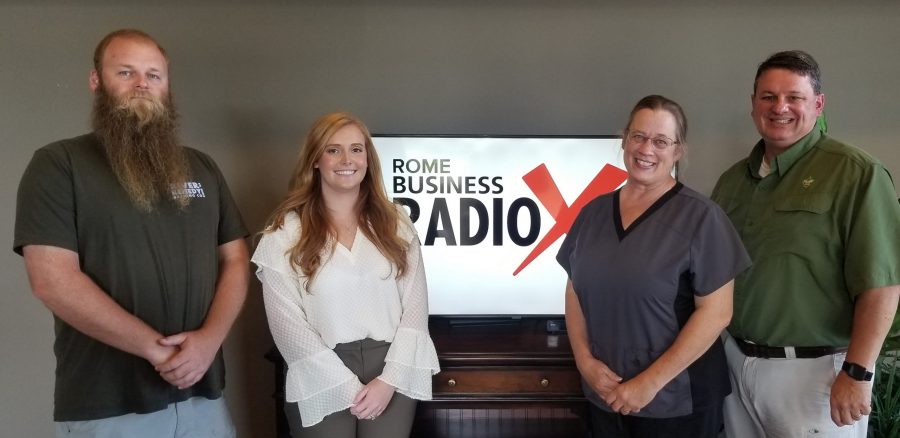
Cherokee Business Radio
Tracy and Anthony Latronica with Ant's Inspections
Loading
00:00 /
RSS Feed
Share
Link
Embed

Download file

Ants-Inspections-Fearless-Formula

Ants-Inspections-logo

Fearless-Formula-bwAnt’s Inspections is owned and operated by Tracy and Anthony Latronica out of Hiram, GA. Our focus is on home inspections as well as mobile crane inspections, however we tend to think of ourselves as “Jack and Jill of all trades” and are currently serving the community with small construction projects such as fence repair, deck and porch construction, residential renovations, etc.

We met in a small town outside Austin, Tx in 2008 and, as cliché as it sounds, it was love at first sight. We immediately started making plans to move to the city where there was more opportunity for work and in 2011, we met that goal and started a new life. Anthony answered a newspaper ad that simply said “operator needed, call Mike” and just like that he entered the world of underground tunnel mining.

Over the next 10 years we followed that career path as he advanced amongst the ranks of a very uniquely skilled group of individuals, landing us here in the Atlanta area in 2016. As rewarding and amazing as that industry was, life presented us with some clear signs that it was time to stop working for “the man” and start working for ourselves. In June we both quit our jobs and took the plunge into small business ownership and have not regrated it for a single moment in the short time since.

We look forward to servicing our community while engaging with our neighbors in charitable efforts whenever we can. Our 17-year-old son designed our logos, we have a close friend currently building our website, our brother (not by blood, but by heart) has been an integral part of developing our business and now here we are sitting down with you, one of our favorite people in the world! THAT is what this is all about- working with your friends, building each other up and celebrating each other’s successes. My mentor used to say, “a rising tide lifts all boats,” and we live by that moto and hope our business exemplifies that sentiment as well.

This transcript is machine transcribed by Sonix

TRANSCRIPT

Intro: [00:00:07] Broadcasting live from the Business RadioX studios in Woodstock, Georgia. It’s time for Cherokee Business Radio. Now, here’s your host.

Sharon Cline: [00:00:24] And welcome to Fearless Formula on Cherokee Radio X, where we talk about the ups and downs of the business world. And I’m your host, Sharon Cline, and our guest in the studio. We actually have two guests in the studio today. It’s a husband and wife team and they are focusing on home inspections as well as mobile crane inspections. And they really think of themselves more of a Jack and Jill of all trades. And they currently serve the community with small construction projects such as fence repair and deck and porch construction. You kind of do it all. This is Tracy and Anthony Latronica. Thank you for coming on the show.

Tracy and Anthony Latronica: [00:00:59] Hi, Sharon. Thank you for doing good.

Sharon Cline: [00:01:01] Welcome. So excited to have two people this the first time I like having to so I’ll have to say like, hey Anthony, let’s answer. Although you probably know it’s Anthony as opposed to Tracy, okay, because you’re a woman and all. But you know, what I think is really great about your story is and it’s kind of different from so many different businesses that are out there right now. And I talk to a lot of different business owners, but you’re in a really unique spot at the moment because you’re just getting started with your company. Can you tell me a little bit about what it’s like to be in the infant stages of creating a whole new business?

Tracy Latronica: [00:01:34] You know, it’s been interesting because we had this instinct to make a change and start doing something for ourselves and open up a small business. And we weren’t really sure what that meant. And with Anthony’s background and his knowledge, it led us into the crane and heavy equipment sector. But as we started to develop that, the home inspections just started to organically become more and more demanded, more and more common, more and more falling into line with what we thought was going to be requested out of our community. So we are still looking to do the mobile crane inspections. He is certified and trained to do so, but the home inspections has kind of had us pivot a little bit and focus more on that as opposed to the equipment.

Sharon Cline: [00:02:20] So with the the industry, the I guess, real estate industry, the way it is right now, has that just been so much on your plate to do inspections? What is that like?

Tracy Latronica: [00:02:31] We’re not sure yet because you’re just getting started. Yeah. So we I make a joke that we’re in the nick you of the of the hospital of the of the, you know, labor and delivery. Division because we are so brand new. We just are. Llc was just established June 30th, so we’re still in the process of establishing and from what we’re hearing from friends and colleagues is there’s a high demand for it, reliable, honest inspectors that have integrity. And the realtors that we’ve spoken to and the people in the real estate community are like, Oh my gosh, if you could just be that person, that go to person. We have so much work for you.

Sharon Cline: [00:03:12] Well, that’s exciting because it feels like you’re going right into a very on demand necessary industry that for like my guest last week is is a real estate agent and we had talked after the show it just about how busy she is. I mean, it’s almost nonstop.

Tracy Latronica: [00:03:27] Yeah. Yeah, exactly. There’s more demand for it than there are people to do it. When you Google home inspections in Atlanta, Georgia. And I was just telling Anthony this today, the whole first page is how to become a home inspector, not how to find one. So the demand for them is clearly present as opposed to the amount that is saturated in the market these days. And if you look around you, I mean, look around you, there’s there’s townhouses and homes and developments and commercial commercial buildings going up everywhere.

Sharon Cline: [00:03:56] Everywhere, even downtown Woodstock. I’m sure when you saw coming in, they’ve got all of this new construction, which it’s exciting and I guess obviously it’s going to be selling if it hasn’t already sold. But it’s it’s must be encouraging to you to see so much, just even right around you.

Tracy Latronica: [00:04:10] Absolutely.

Sharon Cline: [00:04:11] So, Anthony, I wanted to talk to you a little bit about how you got started in in the crane inspection industry. I know that you had mentioned that you answered an ad that said operated operator needed call mic and it could have been anything. What kind of operator you called?

Anthony Latronica: [00:04:26] What happened? So that’s actually where my career changed. I was doing houses in both docks and and all that stuff before that and apartment maintenance, you know, all that kind of stuff. And then one day I found myself in the need of finding another job and I answered, answered that ad. Tracy pushed me to answer the wife. I had some equipment experience, so I, I went in and next thing you know, this guy is telling me, you know, there’s a he’s like, start digging this hole. And I said, How deep? He’s like, just keep digging. I’ll tell you when to stop. Next thing you know, I’m 460 feet down in the ground and going, What are we doing here? But yeah, that’s and then, you know, of course cranes are involved with that and and all that. So that’s pretty much how I ended up in the heavy equipment side of the industry. And it’s a very lucrative business. So I stayed it paid more than houses and now I find myself, you know, I guess the older you get, you don’t want to be in the physical aspect anymore. Inspections is a way to get to retirement without hurting yourself.

Sharon Cline: [00:05:34] Right. Well, you had you had become really specialized kind of in the underground tunnel mining, which I find so fascinating because I don’t know anything about that industry. What was that like?

Anthony Latronica: [00:05:47] Scary, dangerous, but fun. I mean, I learned a lot. It’s a whole different type of construction, very lucrative. And, you know, as I said, you get paid because of how dangerous it can be.

Sharon Cline: [00:06:03] So when you talk about danger, what Steve, I know this is a basic question, but like cave ins, like I’m trying to picture you and all I can picture are like black and white photos and like little kids in, like, scruffy clothes, like, back in the day. That’s what that’s what comes to mind when I think of that. But I know that’s not what it was like for you. But what.

Sharon Cline: [00:06:20] Was what was it.

Sharon Cline: [00:06:23] Like with canaries? You know, like you bring canaries down. Do you know.

Anthony Latronica: [00:06:26] That’s how it was? That’s a real thing. It’s how it was, but not when I entered the industry. Of course they have come a long way as safety wise, although people still do die on a yearly basis in the industry. I’ve been there and witnessed it firsthand with one of my guys passing away and people getting critically injured. So you have things you’re in. You can’t predict what the ground is going to do. How are you going to I can go on up up top here and tell you, hey, the ground’s going to do this if you step on it here. But how do you know what it’s going to do when you’re on the ground?

Sharon Cline: [00:06:59] Do you see that big sinkhole that just opened last week or whatever somewhere? I mean, exactly like in the middle of a road, completely unpredictable. So I can see why maybe you wouldn’t want to stay in that industry for so long. But I guess also I was thinking there are there are things that you’ve worked on here that.

Tracy Latronica: [00:07:14] I’ve it’s Like, is it at the airport? I’m trying to remember I think I heard a story or somewhere along the way that you had worked at something that I was like, Well, I go through there all the time and I never appreciated the work that you did.

Anthony Latronica: [00:07:27] So the airport is the most recent one. We extended the tunnel for the train underground to get to the terminals. Previous to that, I spent four years doing supplying Atlanta with emergency water supply. It was a five mile underground tunnel that was down in a quarry. So we basically dug the tunnel to fill the quarry with water from the Chattahoochee River, which is five miles away. So that was an interesting project as well.

Sharon Cline: [00:08:00] Yeah. And you take all of these different skills that you just learn on all kinds of different jobs wherever they take you. And then now you get to use them in a way where you can say, I really do understand how the earth settles. Right? Is that how you look at it? Kind of like this is this is what I know potentially will happen. From my.

Anthony Latronica: [00:08:17] Experience. It’s all about paying attention to detail and you learn that as you move up in the ranks, right. So if I’m leading a crew underground, I have to be very aware of the ground and what it’s doing. They don’t have to be they have to be focusing on work. It’s my job to be focused on details. And so that’s where inspection comes into play. At the same way, you know, when I go inspect a crane, I have to pay attention to every little detail because the operator, he sees that crane every day. He’s just going to be like, you know, it looks good to me. So and he might overlook something. And that’s where I come in and play. That’s why they require annual inspections on cranes. Some companies require monthly, so as well as homes. I mean, as a housing inspector, you need to have every detail in your mind and be aware of it. So that’s how it kind of plays all together.

Sharon Cline: [00:09:04] What does it feel like to be in this infancy stage? I mean, that’s what Fearless Formula is all about, is like how do you manage the feelings that must be kind of prevalent when you’re starting a business like this?

Tracy Latronica: [00:09:16] I you know, I just feel like there’s no time like the present, right?

Anthony Latronica: [00:09:20] I don’t very well manage the feelings for me.

Tracy Latronica: [00:09:23] I know for Anthony, Anthony’s the day to day. You know, he’s the day to day guy. He’s the one that’s doing the schooling, doing the inspections, putting his boots on the pavement and not more of the bigger picture aspect of the conversation. And, you know, while we’re talking, we were both unhappy with our most recent employment. And instead of looking for another job that would potentially relocate us to another city, state or even country, we’ve moved a lot with Anthony being in the mining industry. You know, a tunnel is over and then they move you to another place. And we just thought, why not? Why not try and do something? And if we were to do it, what would that be? And this was the kind of natural answer to that question. He’s been in various aspects of construction. He he surprises me every day when I witness him on these various job sites. How does somebody know how to build a fence and lay concrete and put a roof on and fix plumbing? And I mean, it’s just he just shocks me with the amount of no. And how accurately and successfully he does the work. And it’s like, how do you bundle all of that knowledge into a business that can carry us further down the road and the stress level of the mining industry is unmatched? You know, the. Danger was absolutely there, which adds to it. But it’s a very intense work environment for him and a very intense spouse environment for me, as well as it was difficult for our children moving and going through this. And how can we de-stress a little bit or focus that stress in a way that’s going to benefit us in the long run instead of having all of the stress benefits somebody else.

Sharon Cline: [00:11:13] I know I love that you guys will be working together. It’s not just your worrying or something. You actually have an active role in in this company together, both of you.

Tracy Latronica: [00:11:21] Right. And we are I mean, you’ve known us for a few years now, and we are very yin yang kind of people. And I think that that’s important in any partnership is what he’s good at. I’m not so much what I’m good at. He’s not so much. And then there’s some things that we both are good at. We both may think we know better, but for the most.

Anthony Latronica: [00:11:41] Part, create an argument.

Tracy Latronica: [00:11:43] Everyone. So a discussion. A discussion.

Sharon Cline: [00:11:45] Nice, nice way to frame it.

Tracy Latronica: [00:11:47] There’s a there’s a clear division of labor that is natural that we didn’t have to talk about. It’s like, okay, this has to happen. That’s clearly going to fall on you and this needs to happen. That’s clearly going to fall on him.

Sharon Cline: [00:11:58] So when you’re looking to start a new in a new business and an LLC, what is the first step that you take? I know there are people out here in the world listening who don’t even know where to start.

Tracy Latronica: [00:12:10] So we had some some insight from a couple of friends that had started their own business. And I’m forever grateful for that personal insight. But honestly, the Internet provides so much information and you don’t have to start an LLC. You can start a business without having that. But what we learned is the LLC allows you to differentiate between your personal life expenses, finances and the business, and that was hugely important to us. So it really was not that difficult. You Google how to start an LLC.

Anthony Latronica: [00:12:44] Maybe for you, we didn’t start out where we were going to plan that. You were going to be doing this with me. It was like, Hey, we’re going to I’m going to start doing this and you’re going to do this. And then all of a sudden you started taking up all this, all my my likings.

Sharon Cline: [00:12:56] And it’s nice.

Sharon Cline: [00:12:58] You all complement each other. Yeah. It’s a perfect partnership that way. Yeah.

Tracy Latronica: [00:13:02] And it’s crazy when you can Google the longest sentence in the world. I’m interested in starting a business in Georgia, and honestly, the wealth of knowledge that is presented to you is is overwhelming. And then you just have to hope that you’re following the right the right guidance. We’ve been given conflicting advice by some people, especially when it comes into the insurance landscape, part of the landscape of having your own business. I feel that we’re getting conflicting advice from a few people that we trust. And then you almost are like flipping a coin. You know, I I’m hoping that this is the right choice. I’m going to go with this kind of policy.

Sharon Cline: [00:13:40] I love that because that’s really what fearless formula is all about, is I have analysis, paralysis and think too hard and too long and don’t do anything and know a lot. Like, I’m not proud of it. I’m I’m trying to work through it, but I really appreciate that you don’t let the not having certitude, I guess, stop you from pursuing a dream. I mean, it’s very easy for me and I’m sure other people out there to just have have that insecurity.

Tracy Latronica: [00:14:08] And you know what I’ve learned and he can be that way a bit, too. He’ll he’ll he won’t want to make that decision until he knows for sure. And what I’ve learned is if you make a mistake 99.9% of the time, you can fix it. It may take a little bit of work, maybe a little bit of money, but if you make an error, it’s going to present itself as a as a poor choice. And then you just take the steps to fix it, and then now you’ll never make that error again.

Anthony Latronica: [00:14:31] Sometimes, if you think it over, it’s common sense. Just plays a huge role in it. Right? Right. If you go to make the just quick judgment, rather than thinking it over a little bit, you’ll end up finding out you think about it and go, Oh, you know what? This is the right way to go.

Tracy and Anthony Latronica: [00:14:45] Instinct comes into play. Yeah, yeah.

Sharon Cline: [00:14:47] What do you think’s been one of the biggest challenges for you getting started?

Tracy Latronica: [00:14:52] I mean money, right? I mean, let’s let’s let’s let’s just put it out there, make.

Tracy Latronica: [00:14:57] The world go.

Tracy Latronica: [00:14:57] Round. So what’s crazy is how much time and energy is it takes putting out at this beginning phase. But you’re obviously not bringing in the revenue yet because you’re still establishing. So you have bills to pay. You still have a refrigerator to fill with very expensive groceries.

Sharon Cline: [00:15:17] I know.

Tracy Latronica: [00:15:18] And so we have those those small jobs that you were talking about earlier. You have to kind of suck it up a little bit and make money where you can and to your roots. Yeah. Don’t turn down any offer and put yourself out there and spend wisely and cut corners because you know, it does. It’s it’s time is money and it takes time to to get going. So there’s some savings depletion that’s a bit painful to watch.

Sharon Cline: [00:15:45] But but that’s that gives me a panic feeling when you say that. Yeah. Oh, no, no, no, no. Like, that’s very important to me. So that’s another thing that I’d be like, Nope, can’t do it because I can’t watch that savings.

Tracy and Anthony Latronica: [00:15:58] We just have to. That’s me too. She’s like, Calm down. We got this.

Tracy Latronica: [00:16:01] We, you know, we set a boundary, right? You know, we allow this to to go into a negative space up to a certain amount. And if we haven’t started to see the come around, which we already have, but then, then that’s when you say we tried and it didn’t work out, we drew a hard line in the sand financially and said we’re we’re willing to spend this much money to get this going. And if we’re not at least angling towards a successful business at this time, then we need to re-investigate. But luckily, so far it doesn’t seem like that’s going to be the case. Luckily, so far it seems to be. Knock on wood.

Anthony Latronica: [00:16:40] Trying not to go back to dig holes.

Tracy Latronica: [00:16:44] But you know what? If you had to.

Tracy and Anthony Latronica: [00:16:45] You would at least I have something to fall back on. It’s not just sitting there waiting to fail and have nowhere to go.

Sharon Cline: [00:16:53] So. Well, I like to that you have a lot of support. You have your your son drew your logo, which is the cutest. Yeah. And I love that you say you’ve got some really good brothers from another mother or whatever you called it. I don’t know. You said you had some fam family, but like people you’ve made your family that are sort of all rallying around and giving you emotional support and website help. And so you’re creating your website now, is that right?

Tracy Latronica: [00:17:18] We are. We just had a meeting with him today and he’s a friend of mine who I’ve known four of hours, who I’ve known for years.

Anthony Latronica: [00:17:25] That’s part of the reason we chose to do it, to stay here, because in Atlanta, we’ve made so many connections and friends we are like, if anywhere is a place to do it, let’s try here. Because all the other places we’ve been, it would have been a total leap without the help that we’ve had.

Sharon Cline: [00:17:40] Yeah. Yeah.

Sharon Cline: [00:17:41] I think that what’s so important too is, is surrounding yourself with good people. Do you find that to be the case as well when you’re starting your business? Because to me, that’s kind of that’s kind of everything.

Tracy Latronica: [00:17:49] It’s integral, it’s, you know, who you can trust. And instead of having to figure it out, we already knew when this person presents something to us. Okay, this is somebody I can trust. Let’s go as opposing to have, have having to navigate. Oh, I don’t know this person. I’m having an awkward first conversation with an insurance broker who I don’t know know. This insurance broker has been recommended to me by a friend and colleague who I’ve known for years and vouches for her. So you can make those leaps of faith. You can take back that fear a little bit because you are trusting that network. The networking is so important in ways people that have helped us are not in any way near the business that we’re in either. You know, some of the support and assistance that we’re getting from friends have nothing to do with construction or inspections or anything. And it’s kind of been interesting to see how far apart we can be in in in our in our goals and in our businesses. But how intermingled in one way or another, we really are.

Sharon Cline: [00:18:52] Well, if you’re just joining us, my guest in the studio, my guests with an S is Traci and Anthony La monica with Antz Inspections. But I think what you were saying is really important in that if someone is out there who sort of doesn’t really have a huge group of people to draw from, what would you recommend for them? Because that’s I know people have started businesses and been had maybe made a choice in a person to go into it with financial backing and it didn’t work.

Tracy Latronica: [00:19:21] And that we definitely leaned on the wrong people before. But, you know, I don’t know I don’t know what this would be like if we didn’t have the people around us that we have that we can call and say, Hey, what did you do in this scenario? Hey, when this government agency gave you a roadblock, how did you overcome it? And we have a multitude of friends that have those answers for us and are eager and willing to help. To have to navigate that alone is a would be a scary thing. Not not to say that it’s impossible, but I guess you would just have to lean on your gut and your own intuition. The advice of others is is invaluable to us. I think right now I don’t know if we would be going as quickly and as positively as we are right now without some of these core people surrounding us, for sure.

Sharon Cline: [00:20:13] So who are some of your mentors? Do you have some mentors that are in in similar industry or. I know. I kind of threw that question out out of the blue, but I didn’t know if you had someone that you’re sort of like, I see how they made this work. I can do it like them.

Anthony Latronica: [00:20:27] I know. A huge one for her is her. Her her old boss.

Tracy Latronica: [00:20:31] Yeah, my old boss, Frank Smith. Yeah, yeah, yeah.

Anthony Latronica: [00:20:34] He taught her a lot about business. He even somehow taught me some stuff about business, and I didn’t even work for the man.

Tracy Latronica: [00:20:41] So and this is a restaurant owner, so that kind of hits the nail on the head about how you don’t have to be. Do we have a home inspector mentor? No, we don’t. Do we have met business mentors? Absolutely.

Sharon Cline: [00:20:53] I think that’s really important for anyone listening that you don’t have to have an inn somewhere. Right. You know, you can kind of dream big and and go back to what somebody else has told you in the past. Right. Which which I think is really important. Like one of your phrases that you talked about is a rising tide weight. Is that.

Tracy Latronica: [00:21:10] Right? When the tide rises, all boats float. Yes, I was going to say it.

Sharon Cline: [00:21:14] There’s a great way.

Tracy Latronica: [00:21:17] Well, there’s a variety of ways of saying it. But, yeah, the premise is, if, if, if and Frank used to say this to me all the time, he would talk about competing restaurants in the neighborhood. And I would be like, Oh, there’s a new restaurant opening up. And I would get all kind of pouty about it, and he’d be like, What great news? And I would say, How could you say, That’s great news, that’s competition? And he would say, When the tide rises, all boats float. And I didn’t understand what that meant. And he would say, listen, the more activity and and foot traffic and thriving your neighborhood is, the better every business in that neighborhood is going to do. So don’t look at somebody else as competition. If they’re doing well, then that means that there’s a potential for you to do well to.

Sharon Cline: [00:22:00] Isn’t that a great way to look at it as opposed to competing? You’re actually just watching someone else succeed, which puts a different energy around all of it, I guess.

Tracy Latronica: [00:22:09] Right. And it keeps you allows you to be positive and cheer for each other instead of trying to bring each other down. And that’s really what we want to do. I mean, if there are.

Anthony Latronica: [00:22:17] I think that goes for life in general.

Tracy Latronica: [00:22:19] Though. I agree.

Anthony Latronica: [00:22:20] Being instead of being jealous because your friend is doing well, you’re be like, hey, man, that’s really great. I’m proud of you.

Tracy Latronica: [00:22:25] And maybe you get inspiration from that. How can I? Maybe I want to be doing something that cool too. But if there’s 20 home inspectors in Hiram, Georgia, that means that there’s a lot of construction going and there’s a lot of building and there’s a lot of progress to require that. So that’s all a good thing. So every carpenter that’s doing well, every electrician, every realtor, every roofer, every road worker is all a part of the same rise of the economy in general that I think we’re all going to benefit from.

Sharon Cline: [00:22:55] I think the same about my voice over industry is that there’s room for everyone. Like if someone got a job that I’m like, Dang, I really wanted that job. Like, I’m not unhappy for them. I’m more like, Wow, you know, good for them. Well, there’ll be another job that someone will think I sound just right for. Like, there’s just there’s a voice for everything. There’s room for everyone. There’s a style, right?

Anthony Latronica: [00:23:15] I think if you’re that person, you might get some of their overflow work if they like you that much because you’ve been supporting them, even though they’re in the same industry as you they might like. Hey, listen, I’m. My hands are full. I’m all tied up. I have this going on. Will you please take this for me? And then you might take that and run with it in a whole nother direction. That might be your opening to whatever.

Sharon Cline: [00:23:35] Do you think faith is? Is how does faith play into this? Because I kind of lean on faith a lot.

Tracy Latronica: [00:23:42] Faith is in as in taking a chance and just just hoping that that it works out. It’s I mean, it’s huge. I mean, it’s it’s really everything, you know, because.

Sharon Cline: [00:23:51] I can’t control I think about this a lot. I have control issues.

Tracy Latronica: [00:23:54] Yeah. So say, did you raise your hand? Oh, I run a company.

Anthony Latronica: [00:24:01] I am so OCD. That’s why I’m going to make good inspector one day. Yeah.

Tracy Latronica: [00:24:06] Yeah.

Sharon Cline: [00:24:06] You can use it to your advantage. It’s a strength in your case. In my case, I’m like, Oh, well, I mean, it’s kind of nice to know I’m in good company because we’re all trying to control this interview. By that.

Tracy Latronica: [00:24:15] You don’t want to jump off a cliff and hope that there’s a soft landing underneath you. You want to look into it and make sure that there’s that soft structure to land on. So faith is I don’t want to say it’s everything because it’s not intellect and and investigation and research and plays a huge part. Yeah. But at the end of the day, this is not a sure thing for anyone. And so you have to take a leap of faith and just say, you know what, let’s just try this and let’s hope for the best. Let’s do our best. And if if we are doing everything we can and putting all of our effort. Into making this work and it doesn’t work, then it wasn’t meant to be. And our life will take a different path.

Anthony Latronica: [00:24:57] Some some comfort for me is to have a fallback plan, have that plan, you know, even if it’s okay, I’m not going to make as much money as I did before or not as much money as if I got this business going. Just have that in the back of your head and that helps me at the end of the day, rest a little like, okay, if this doesn’t work out, this is what I plan to do. And maybe reach out to those people and say, Hey, I’m trying to do this right now, but if it doesn’t, you think you’ve got a spot for me and then, you know, you have something there and that kind of helps you.

Sharon Cline: [00:25:28] It changes the energy, doesn’t it?

Anthony Latronica: [00:25:29] Right. Yeah. Not just faith that you know, that you aren’t going to just go broke and homeless on the side of the road because you’re, you know.

Sharon Cline: [00:25:35] Well, I mean, is that not the ultimate fear? I mean, that’s kind of what I’m talking about. It’s cool to have you on here is because this is really the ultimate scary leap of faith that you’re doing that is it’s admirable.

Tracy Latronica: [00:25:47] But you wouldn’t let it get that far. You know, you would you would you would recognize when you’ve given it your all and it’s just not working out. And then it would be an emotionally difficult process to revert back to what you were doing before. But I mean, there’s there’s jobs out there for everybody.

Anthony Latronica: [00:26:05] I don’t think it’s time to give up on your dream exactly. But maybe fall back to another plan until you can get in the right spot to follow your dream again.

Tracy Latronica: [00:26:14] I love.

Anthony Latronica: [00:26:14] That. Never give up.

Sharon Cline: [00:26:16] I think that’s a really huge theme that I’ve heard in just different interviews that I’ve done, not just recently about how giving up is like. It’s like the Achilles heel. It’s like, Oh, I’m just going to never consider giving up.

Anthony Latronica: [00:26:30] Just say, Hey, I have to have to take another little shortcut to get to where I want to be eventually.

Sharon Cline: [00:26:36] But I think that’s.

Tracy Latronica: [00:26:37] That’s a.

Anthony Latronica: [00:26:37] Long cut, not short.

Anthony Latronica: [00:26:38] Cut.

Sharon Cline: [00:26:40] Long or short, as long as it’s not the end, like a complete no. But that’s huge because that’s kind of what this show is all about, is talking about people who are continuing to navigate ups and downs and backs and forths and setbacks and how do you get yourself out of it. And I also wanted to ask you to what what’s been the most surprising that you’ve kind of figured out in the last six weeks or so? What’s surprised you the most about switching? Switching gears?

Tracy Latronica: [00:27:05] You know, for me, I think what’s been so surprising is the small, detailed aspects of organization that you have to have in order to be successful. You have to track all of your spending, all of your where every penny goes. You know, Anthony is so great about he spent $3 on a new drill bit, let’s say, and he’ll turn in that receipt. And I remember it like kind of rolling my eyes out at first. But it’s so true because $3 a day over the course of 365 days a year, you know, $1,000.

Sharon Cline: [00:27:39] Yeah.

Tracy Latronica: [00:27:40] And so for me, trying to, you know, navigate how to keep that organized has been surprising. I think another thing that has been surprising is how easy it is to be self motivated. I was worried that without having a quote unquote supervisor that, you know, you want to lay in bed till noon and flip through the channels. But the drive of wanting to get your business going is what wakes you up before your alarm goes off. And it is what keeps you going past when you would normally quit. And so it doesn’t feel like work.

Sharon Cline: [00:28:15] It feels like 9 to 5 clock in crank out. It feels like your life. Right, right, right.

Tracy Latronica: [00:28:21] Exactly.

Sharon Cline: [00:28:22] But I feel like that’s kind of the goal is something that kind of marries your your spirit as well as your want to have a financial security. You know, you’re integrating both, I guess. Yeah.

Tracy Latronica: [00:28:34] Yeah.

Sharon Cline: [00:28:34] Well, if you could give advice to someone out there that’s listening right now who would be interested in trying to start their own business, could you give me, like, two or three things that we could tell them?

Tracy Latronica: [00:28:44] I would say research and ask around. You know, one of my buddies, Brian Wojnarowski, is his name and he’s Anthony’s friend as well. And he owns a small business and he’s been a real asset as far as getting business off the ground. He told me for the first nine months he was working 16 hours a day, just all day. Half of his day would be actually doing the business that he’s involved in. And then the other half of the day would be doing the the promotion and the building of the business. And so having a partner like Anthony or Anthony, having a partner like myself allows us to divide that a little bit to where it’s not so cumbersome with time. So, you know, maybe, maybe have that network of people that that network of support so you don’t overdo it. You know, that would be some advice. And then YouTube tutorials, the most basic Internet searches, how to start a small business. It’s crazy what you would see and the stuff on there that you wouldn’t even know to think about. I mean, I didn’t know what an iron number was. I didn’t know what I’d done this number was or how to register with the government as a female owned business. And the way that I found out is by typing on that keyboard. So, you know, just take the time to do some some research and have some savings.

Anthony Latronica: [00:30:09] And a fallback.

Anthony Latronica: [00:30:10] Plan.

Sharon Cline: [00:30:10] Yeah, fallback plan. So if if can you give me a quick rundown of some of the things that if someone were listening right now and they have this house, they’re like, I’d really like to improve something here. What could you say? Here’s what I can do.

Anthony Latronica: [00:30:26] As far as house and home improvement.

Sharon Cline: [00:30:28] Because we talked a little bit about construction. I know when I was reading the intro, I was thinking, man, I could use someone to do a fence for me. We’re going to talk afterwards. But you you don’t just do inspections. You do other other home improvement.

Tracy and Anthony Latronica: [00:30:43] As a project. Oh, yeah. That’s what’s keeping us floating right now is the doing some of the home improvement tasks that I that I know how to do from my past experience.

Tracy Latronica: [00:30:51] What could build the value of somebody’s home? What kind of projects would increase the.

Tracy and Anthony Latronica: [00:30:54] Value of that? Definitely concrete and decking. I mean, a lot of houses adding a deck or some sort of exterior foundations such as concrete slab or whatever, can add value to your home upgrading inside, you know, as far as light fixtures and stuff like that, things that make the house look nicer. You know, there’s there’s lots of things, the open concept, you know, maybe.

Sharon Cline: [00:31:22] If I wanted to change like a wall, I could be like, Anthony, come into my house, fix this, fix that. I’m serious. Like, if you to have someone who’s able to do so many different things, it’s not like you’re just a plumber or you don’t only do fencing, it’s nice that you have skills.

Tracy Latronica: [00:31:37] So yesterday he installed an American flag on the top of a 30 foot commercial building, and today he fixed the toilet. Right. So this is all wall. He’s getting educated and certified in the inspection home inspection sector. That’s going to include mold testing, radon testing, termite inspections. And obviously there’s certifications and licenses that go into that. We’re also delving into drone roof inspections where we can fly a drone over a home that you wouldn’t normally be able to walk on to get a thorough inspection. We will be able to offer that with the use of that technology. So while he’s doing all of this learning and we’re developing the business, we are also doing these renovations or these these jobs, like you just mentioned, if you needed a wall taken out or floors redone or your deck is a little rotted and needs some boards replaced, those are all things that are sustaining us financially as we get to the point where we hope the home inspections will take up our full time.

Sharon Cline: [00:32:40] That’s the dream. That’s the goal. So five years from now, what would you like it to be.

Tracy Latronica: [00:32:45] Five years from now? I’m not I’m sorry.

Sharon Cline: [00:32:47] I know both of you.

Tracy Latronica: [00:32:49] Whichever five years from now, I would like to have employees. Five years from now, I would like to see us where we are running other inspectors who maybe don’t have the wherewithal or the means to do the business part, but they still want to see a lucrative, in-demand job. That is, it’s never going away, no matter what happens in the world with politics or with the economy, when houses are sold, they need to be inspected, period. And so the goal is to have one or two men or women beneath, for lack of a better term. Anthony That would be doing the inspections for ants inspections. And that way we would be able to develop our business that way.

Sharon Cline: [00:33:35] What I like to given that you would know how to fix all of these things, what better person to come in and say, I see that this is wrong, right? You know, I love that not I’m sure not every inspector knows how to fix decks and change walls. And do you know what I’m saying at all?

Tracy Latronica: [00:33:50] His instructor mentioned. He said, You can take this course and have never touched a hammer and you can become a certified home inspector, which is kind of scary to think that you have people coming to your home to do inspections that don’t really know what’s going on. They just memorize some stuff for a test. And with Anthony, like he actually knows he’s seen that failure of that structure, he’s seen that electrical problem, or he’s seen that flooring issue and repaired it in his past. So I do think it gives him a more in-depth ability to give a thorough and honest and genuine inspection when he comes out.

Anthony Latronica: [00:34:24] There and there’s other need for inspectors as far as annual house inspections, if you don’t know much about fixing your house and and you want to have someone come out yearly to point out things that you may or may not know to fix, you know, that there’s a there’s a reason for inspections there. And then there’s for banks, there’s bank door inspections where the bank loans out a certain amount of money at a time per phase of of of a job that’s being built. And you’re supposed to go out and approve. Yes, this part’s done. Now, give them the next drawer. So there’s there’s those there’s need for inspection as well as that. So if you get a good customer base and you did the inspection when they bought their house, you can get get the business from them to come back here and and help them keep up with their house upkeep, inspections.

Tracy Latronica: [00:35:11] And the and the relationship that we plan to develop with the realtors.

Sharon Cline: [00:35:16] Yeah, the relationships to me, I know this business, but business is relationships too. So it’s.

Tracy Latronica: [00:35:20] Really important. I say that all the time. Everything is a relationship. Any interaction you have with somebody else is a is a relationship and there’s trust there and and honesty that’s expected. And we we always want to be the people that can never be accused of letting someone down or do what we say kind of people.

Sharon Cline: [00:35:40] Well, if someone were listening right now and wanted to get more information about you, what would be the best way? Where could they go? I know you’re building your website right now.

Tracy Latronica: [00:35:47] We are. We are. So the website is antz inspections dot com ants like the bug plural inspections dot com. It is in construction right now. So probably more so on social media. We’re on LinkedIn, we’re on Facebook, Instagram, we have we’re on nextdoor. But that’s that’s definitely one of the areas that we need to spend more time on and focus and develop is how to get our name out there. So the first half of our day was spent doing that before we came here to you, and hopefully that website will be up and running in the next two weeks.

Sharon Cline: [00:36:24] Well, I hope this also helps and lands wherever it needs to land, because it’s very exciting to see the very infant stages of a of a business come to fruition and know it’s important. And I think to just supporting each other. I’m happy to be able to support your business in your endeavors. And I’ve really appreciated how honest you are about how vulnerable you kind of need to be a little bit in having faith to build a brand new business in an industry that’s like, to me, I don’t know anything about. So you’ve really helped me to kind of understand a little bit of the backstory of how you get started. Because doing voiceovers, I was just like, Google, I got it. But like this is totally different, a much bigger endeavor. So I appreciate you giving me some time today and thank you. I know it’s been here.

Tracy Latronica: [00:37:11] Hopefully a year from now you’ll have us back. Yeah. And we can be talking about how amazing our first year is and we’ll have some more specific advice.

Sharon Cline: [00:37:20] I know your advice is perfect because really there are a lot of people that have gone through the same thing that you are now, or people that are unsure of how to go through.

Tracy Latronica: [00:37:27] What my advice is. Just do it. Just do it. I mean, just go for it. What is the worst that happens? You give it a go and it doesn’t work out and you go back to doing what you were doing before, but at least you can say you tried, right? Well, everybody has a backup plan. Everybody has a current job.

Anthony Latronica: [00:37:42] Not everybody has that. You got to think you’ve got to think about it.

Sharon Cline: [00:37:46] He’s right, though. There is something to be said about not having a desperate feeling of this has to work or I won’t be, you know, like that desperate energy is a terrible space to be in. So the fact that you’re thinking contingency.

Anthony Latronica: [00:37:58] I mean, it.

Sharon Cline: [00:37:59] Releases the pressure.

Anthony Latronica: [00:38:00] It’s scary. I mean, yes, we’re going to burn a lot of our savings and stuff trying to do this, but it’s not going to leave us in a terrible spot.

Anthony Latronica: [00:38:07] Well, we will.

Anthony Latronica: [00:38:08] We’ll be able to get back to where we were.

Tracy Latronica: [00:38:11] We did work for 25 years to get here. We are not super young people. We’ve worked and saved and put in, you know, four one k’s and percentages into savings and made some wise investments and things in order to get here. So maybe that’s the core advice is before you start thinking about starting a business, start putting a chunk of your money away to.

Sharon Cline: [00:38:33] Go to probably the best advice for any anybody, anybody, any time, any business. Put some money away.

Tracy Latronica: [00:38:38] Put some money on like 10%, 10% makes all the difference in the world.

Sharon Cline: [00:38:43] Well, on that note, thank you. Thanks, Tracy, Veronica, for coming. Thanks for joining us to you on Fearless Formula. And this is Sharon Klein reminding you that with wisdom and understanding and 10% of your savings, we can all we could all have a fearless formula. Have a great.

Sharon Cline: [00:38:58] Day. Thank you.


Tagged With: Ant's Inspections

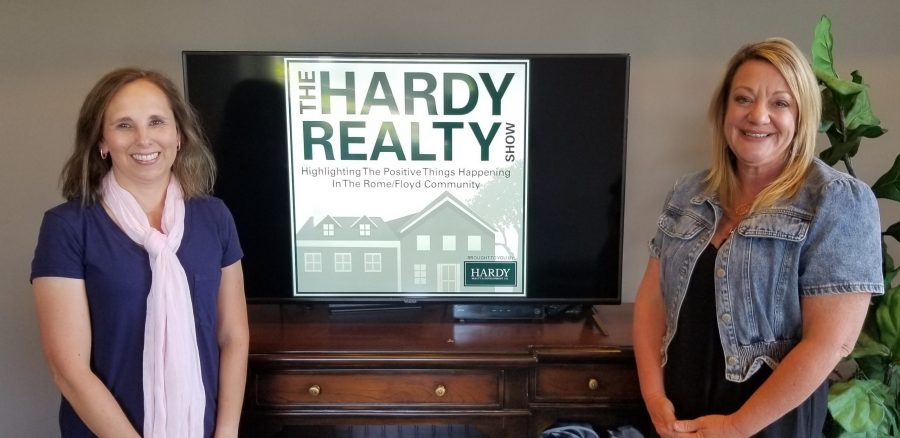
The Hardy Realty Show – Cristin Warden with Brighter Birthdays

August 8, 2022 by angishields

The Hardy Realty Show - Java Joy
The Hardy Realty Show
The Hardy Realty Show - Cristin Warden with Brighter Birthdays
Loading
00:00 /
RSS Feed
Share
Link
Embed

Download file

2022-08-04 hardy realty show pic 1 of 1

Tagged With: Brighter Birthdays, Broad Street, Cristin Warden, Hardy on Broad, Hardy Realty, Hardy Realty Show, Hardy Realty Studio, Melissa Williams, Rome News Tribune

Small Business Broker Joe Vagnone

August 8, 2022 by angishields

Joe-Vagnone-headshot
Buy a Business Near Me
Small Business Broker Joe Vagnone
Loading
00:00 /
RSS Feed
Share
Link
Embed

Download file

Joe-VagnoneSmall Business Broker Joe Vagnone has sold over 387 small businesses and has hosted a live business radio show for 9 years WSIC 105.9fm & 1400am “Local Biz NOW.

Joe’s interest and experience is in helping small business owners sell their businesses in the least possible time. He defines a small business as one with gross sales of $3 million or less.

Because of the unique challenges that come within a small business re-sale, Joe has become very skilled at finding and transitioning buyers where others have had a difficult time making the deal work.

Connect with Joe on Facebook.

This transcript is machine transcribed by Sonix

TRANSCRIPT

Intro: [00:00:07] Broadcasting live from the Business RadioX studios in Atlanta, Georgia. It’s time for Buy a Business Near Me, brought to you by the Business Radio X Ambassador Program, helping business brokers sell more local businesses. Now here’s your host.

Stone Payton: [00:00:32] Welcome to another exciting and informative edition of Buy a Business Near Me. Stone Payton here with you this afternoon. This is going to be a marvelous episode. Please join me in welcoming to the broadcast. Mr. Joe Virginian. How are you, man?

Joe Vagnone: [00:00:49] Thank you so much, buddy. I appreciate you having me on. You know, I’m not I’m quite familiar with with the mic, but I’m not familiar with being on this end of it. So you ask me questions. I’ve got to I’ve got to be honest with you. It’s kind of intimidating.

Stone Payton: [00:01:04] Well, I don’t think it will be in just a moment, because we’re going to have a conversation about we’re going to be in your wheelhouse, man. You clearly have a great deal of specialized knowledge and expertise in this arena of helping folks buy and sell businesses. And I know in a moment I’d like to dive into a few of those tips, if we could, but I well, I’ve got a thousand questions and we will get to all of them either. Sure, but but there are a few that I have, and one that comes to mind immediately for me is how do you and I may not use the right word so you coach me through it. How do you price or value a business properly? And isn’t there maybe sometimes some discrepancy or a little bit of a gap between what a what an owner thinks is baby is worth and what a buyer might feel like is worth.

Joe Vagnone: [00:01:57] Yeah. Yeah. You were generous by saying gap. So. So you are correct. This is a business valuation. We do a lot of what we call market driven valuations. And what I like to tell my clients is, listen, I’m not asking you to agree with me. I’m not asking you to even accept what I’m saying is being accurate. What I’m asking you to agree with is it’s what a buyer thinks. And so that’s really what I’m trying to do is define the expectations for sellers so that they understand what a buyer thinks and how a buyer is going to be valuing their business. And if we’ve done that, then if there are these, you know, divergence of of valuations, at least they both the buyer and the seller know why they’re coming at this from a different standpoint. It also helps with the negotiation. Once we get to a point that we’ve got a target buyer that’s interest. Did that did that answer your question or I can get much more in the weeds if you if you want me to.

Stone Payton: [00:03:00] Oh, no, absolutely. That’s perfect for for now. So in terms of time, timing, it strikes me that it might be very difficult to influence shift a potential buyers perception tomorrow or this month on my business. But if I know that I want to sell my business down the road, surely there are some things that we ought to be thinking about or some things we ought to be looking at so that that perception would be very different when we’re ready to sell. Is that accurate?

Joe Vagnone: [00:03:33] That’s absolutely accurate. And I like to talk people through this process and explain to them, listen, there are multiples for buyers to consider, multiples of sales, multiples of cash flow. Again, we don’t need to get into the to the details of that, but those multiples are attached to your business. Right. If you’re the seller, it’s attached to sales and it’s attached to to the cash flow that you create. So you should be considering these interest, right, these multiple interests when you are operating your business, because it will help in the value of your business once you’re ready to sell. Just a just a broad example. Let’s say that you’ve got a business that buyers like to look at gross sales. That’s how they want to create a a multiple of gross sale. Well, if you’re in the service business, you may agree to some business that increases sales but isn’t really profitable because it ultimately helps with the valuation of your business. On the opposite end of the spectrum, you may be a business that purely cash flow is what buyers are looking for. So you may not try and increase sales so much. You want to make sure the margins of what you’re selling are good so that the cash flow is good. Those are sort of operational choices that decisions you can make on the front end before you ever decide to sell your business.

Stone Payton: [00:04:59] Man, I can hear it in your voice. You must really find this work incredibly rewarding. What do you enjoy the most about it?

Joe Vagnone: [00:05:09] So that’s such a great question. You know, I’ve been doing this for years. I love to tell people I have bought and sold, owned and operated more small businesses than anybody you’re going to meet. And now I know when I say that a guy like you is thinking, oh, I’ll test you on that. And and that’s kind of the idea, right? You know, I’m sure there’s some people out there, this world that have that have done more, but it makes. You think through. Hey, Joe must really know what he’s doing. He’s been around the block enough that he kind of gets this right. And so the reason I’ve been doing it for so long, whether personally for myself or for clients, I just absolutely love it. It is me. You know, I tell people and I’m sure you’ve heard this 100 times, I’ve been self-employed since I’m 17 years old, not because it was my choice. It’s because there’s no way in the world anybody is going to hire Joe. Right. So, so, so because of that fact, it’s just it’s just it really is part of my life.

Stone Payton: [00:06:03] So with that kind of background, was there this this moment, this this catalytic event that compelled you to get involved specifically in this arena?

Joe Vagnone: [00:06:13] Yeah, that’s such a great question. And I’ll try and make it as short as I can. I own the largest closed market environment restaurant concept in the Southeast. I had 40 operations in Charlotte, metro area, 26 in Jacksonville, Florida, and 18 operations in Nashville, Tennessee, 5000 square foot commissaries and all of them and truck drivers and area managers and blah blah blah blah blah. Right. I read a book on how to create a money machine. It was actually a real estate book talking about how to buy a piece of property, get a second mortgage. You know, this is back in the eighties now, right, when you could do that easy. Right. And so I literally built my business by doing that. So for every operation I had, I’d have a small house, residential house that I’d buy and then get a second mortgage on, which is how I would fund the operation. Right. And so that same book talked about how to create a money machine, which is when you sell the business, finance the sale and create a a cash flow. And so it took me about three and a half years and I sold all of those operations myself. Probably 70% of them I sold to the to the managers and created this sort of informal franchise where if they needed some help, in some cases, I literally had to teach some of these women how to how to write checks and that sort of stuff.

Joe Vagnone: [00:07:34] But I created this informal franchise and I love telling people I was making about $7,000 a year less with no operational responsibility. So life was good, right? You know, and that’s when I realized, you know what, I think there’s more money in selling the businesses than there ever wasn’t actually operating them. So it was this natural progression. I got to be pretty good in proficient at selling these businesses, so I just started moving in that direction. And then it seemed to be a natural thing that if I could do it for restaurants, I could do it for other kind of businesses as well. So I created this informal capital investment firm, you know, way back before there was a cool name for it. I was just helping people by business and helping people, you know, taking a piece on the way in, taking a piece on the way out. And so it just became this natural progression for me.

Stone Payton: [00:08:24] Well, you’ve really piqued my interest when you talk about financing, because when it comes to deal financing, we can actually you can get pretty darn creative with it, can’t you?

Joe Vagnone: [00:08:36] Oh, yeah. You just sort of hit on my sweet spot, right? I love to tell people and there’s no real way to measure this. Right. So so every time I make one of these bold statements, I know a guy like you kind of chuckles, right? But I love to say I am the top small business. Please hear the word small, small business broker in North Carolina. And the reason why is I wrote a book on how to buy a small business and the core premises. It’s not about price, it’s about terms and deal structure. And so you hit on it. That really is the core. And if you’re going to buy a small business, you want the business to pay for the business as much as possible. And I’ve done my share of those type of deals, and I certainly help and advise my clients through those those type of structures all the time.

Stone Payton: [00:09:25] So do you find it more complex, more work when you’re working with a business that has multiple owners?

Joe Vagnone: [00:09:35] You know, that’s interesting. Most of the time I won’t even get started until I’ve clearly defined the expectations. So whether it’s five owners or one owner, I want to make sure everybody is on the same page because when I’m speaking for them, I want to make sure I’m speaking with one voice. So most of the time I can get the partners to agree and we can agree on one person that I’m going to communicate with, and then they talk to the partners. I’ll tell you where it gets tricky is with family members. When family members are trying to buy a business where family members are trying to sell a business, getting them all together, it gets really tricky. So family members to me is probably a little bit more emotional and tricky than partners, only because I have learned over the years to get all those partners together on the front end.

Stone Payton: [00:10:27] Yeah, I bet you’re. You’re part therapist sometimes, right? Getting them all singing the same notes.

Joe Vagnone: [00:10:34] Man. Don’t say part. I am. Absolutely. I’ve got I got a sister and brother in law with master’s degree from from Boston University and therapy and I can hold my own with them when we’re having conversations. Right. So there’s no question about it. You know, the statement that you’ve heard many times, you know, it’s it’s just business, not personal. Well, if you’re a small business owner, you know, it is very personal. And so all of this is personal. And most of the choices and decisions small business people make are because of personal interests and motivations. And so you have to get that first so that it makes the actual deal structure much easier to put together.

Stone Payton: [00:11:15] Well, and then there’s the whole sales and marketing aspect to this thing, because if you’re taking my business to market, I’m operating under the impression you must have some some rigor, some discipline, some methodology for doing that effectively. And I don’t know, maybe sometimes I don’t want the the entire market to know that or maybe even my employees. Yeah. To yet speak to that a little bit.

Joe Vagnone: [00:11:40] Yeah. Well you, you, you hit on you kind of there’s, there’s some secret sauce in this, right? So, so I’m going to have to be careful before I let you push it out to your your market. Right. But the truth is, there are some things that I have put together that make us marketing the business very successful. One of them is I have a database of over I haven’t counted in a while. I want to say about 16,000 independent buyers and sellers. People like you and I are small business people. And so that database that we can do a search on, based on how much money they have, what their interest is, that’s the first place we go. So for example, if I’ve got a color, whatever you want, it doesn’t matter what the business is. Let’s say I’ve got a a light manufacturing business. The first thing I would do is do a search in my database for anybody that is inquired on like manufacturing and their finances fit with what I’ve got. And I’ll send them out a a inquiry and give them an exclusive ten day window of opportunity before I go, quote, live to the market. And so I can sell about three or four businesses a year just with that exclusive program, because buyers appreciate that they’ve got this window and it forces them to kind of move fast. And to your point of your question, it’s very discreet. You know, out of 16,000 people, I might be sending a exclusive opportunity to 200, maybe. In some cases, it might be as little as 50. And so that discrete approach is really important. The other thing we do really well is describe these businesses without describing who they are and where they are. And I don’t have to tell you, that’s kind of tricky.

Stone Payton: [00:13:31] So when you were talking earlier about making the shift into this arena, you clearly had the background and the motivation and some knowledge and expertise to pull it off. Did you also have the luxury of a mentor or two that kind of helped you along your way? That’s part one of the question, actually. The second part is, now that you have been at this a minute, have you had an opportunity to to mentor some other folks in this space?

Joe Vagnone: [00:13:59] Yeah, great questions. First of all, you are not successful in business without a mentor in your life or two or three. So I have certainly had mentors and each and every one of the different industries in which I have progressed. And. Right. Because you can you can tell that and it’s in my story is very common to most small business people. And that is, you know, these progressions of it’s one industry and it naturally moves into the next industry. And so I have had some mentors that have been very helpful. To me, one of the things that happened to me years ago, it’s such a special treat. One of my very first restaurants was a small sandwich shop inside of an office building. And so you can imagine it was this this small group of people. And every day around 3:00, these executives would come down for a cup of coffee and a cracker. Right. And tea just to relax for 30 minutes or so before they finish out the rest of their day. And I get to sit and talk with these people and gather so much information. And so I was getting this big business advice for this small sandwich shop for years. And those guys have been friends and have carried me through many years of of different business life cycles that I’ve had.

Stone Payton: [00:15:28] Well, that was my experience as well. When I made the shift from the training consulting arena to this kind of specialized little sandbox where we try to help folks use the platform to to grow their businesses. There’s no way in the world that Lee or I, either one could have could have accomplished what we have to date without the benefit of some mentors. And now we’re enjoying as we have studio partners as we expand the network. I really enjoy, you know, trying to trying to help the next person with what we think we’ve learned over the last eight years.

Joe Vagnone: [00:16:01] You make a wonderful point, which is we have learned over the years they need that information, right? They need that jump start, which is what we got. Right. And so you don’t know what you don’t know. And until somebody gives you that little piece of information, I tell people often, listen, I’m going to tell you what I know. And then once I tell you, you got it right, you know? And so so it’s just one or two pieces of information properly placed with the in the right person’s hands, with the right motivation. And it is such a joy to watch them move forward.

Stone Payton: [00:16:36] So back to the sales and marketing conversation, how does the whole sales and marketing thing work for you? Like how do you get to have that conversation with that light manufacturer or whatever it is? Is that hard? Or have you kind of cracked the code on that too?

Joe Vagnone: [00:16:54] Yeah, well, here’s you know, I’ve been doing this for so long now, right? That, you know, probably my answer today is different than it was ten years ago. Right. But I will tell you this, that the key is trust and credibility. Small business people are always looking for somebody they can trust and they find to be credible. Credible means genuine. And so you remember I was describing myself as, you know, patting me on the back. Right. Is I’m the best guy in the whole world. Right. You know, a small business broker. Right. And I had to clarify small business broker, because genuinely I have operated and owned many different small businesses. None of them have had gross sales over $5 million. So I like to tell people I am an expert. You will have a hard time finding somebody as skilled, as capable as I am at 5 million on down. But I am not the guy that you absolutely need. If it’s something over 5 million, that’s what that’s why I partner with association with Jeff Snell with online business brokerage out of Raleigh, North Carolina, because he handles the businesses above that. You really have to know where you are and you really have to be comfortable in that area.

Joe Vagnone: [00:18:17] So as long as you’re genuine, that’s step one to actually attracting small business people that are interested and doing business with you and they can start to trust the statements that you make. That being said, I have had a small business radio show that I have been putting on now for going on ten years, and it is a wonderful opportunity to invite people. And I don’t think don’t I have to tell you this, right? You already know this. You’ve already cracked that code, right? And that is you and I never met. And now all of a sudden we now know each other because of your program. What a wonderful way to promote and actually network with other people, referral with other people. And it gives you a chance to present me to your listeners that otherwise they may never hear me. And so that platform for me has been very helpful so I can expand my marketing. One of the things I do is take on a co host every month and allow them to bring guests every Friday morning. And so that helps me grow my, my, my database and it helps me grow my marketing and networking. Does that does that answer your question?

Stone Payton: [00:19:40] Well, it not only answers my question, it absolutely lines right up with my experience in using this platform. It’s such a marvelous way to genuinely serve whatever ecosystem is important to you and build real relationships because, you know, you get past the in this frame, you get past the kids in the weather pretty quickly, and you’re giving them this gift of giving them a chance to share their story and promote their work. But the relationships that you build doing this, well, that and it beats the heck out of work and doesn’t it?

Joe Vagnone: [00:20:13] Yeah. Well, I’ll tell you something. One of the things that also does, which is so important in my industry, you know, I’m asking you for a lot of money to sell something. You’ve spent a lot of time developing and. Right. I want to help you sell your biggest asset. And so you really have to trust me. And so if I if you can hear me every Friday morning on the radio and other business people are trusting and respecting me, it allows you to trust and respect me also. So it helps on the credibility side, which is really important.

Stone Payton: [00:20:53] You’re going to have to send me an invoice because I could just play your clip for us to sell our services. But but no, obviously.

Joe Vagnone: [00:21:00] You’re not going to get invoiced, but you are going to get an invitation on my on my radio show. So so you’re going to have to you’re going to have to share your time with me, buddy.

Stone Payton: [00:21:09] Fantastic. Well, I’m looking forward to that. So, for example, if and it’s not really an if, it’s a win, but if Lee and I are looking at selling the business radio network, how far out should we begin that planning begin to build a relationship with a business broker? Does it vary or is there some kind of rule of thumb about when you need to start getting your ducks in a row on that?

Joe Vagnone: [00:21:34] Okay. First of all, I can tell you a sharp business card because you you ask the question knowing sooner or later you’re going to sell your business. Right. It’s it’s not as if you intend on selling it today. You enjoy doing that. Right. But, you know, sooner or later, somebody else will be operating your business. I mean, it’s just, you know, we’re not going to live forever. Right? Right. And so that’s wise of you to know that. So what I like to tell people is if you start thinking about 36 months out, talking to some people, putting your team together, you any problem that you would have had with the organization, you will have time to correct where a buyer may not even know that those things existed. Now, I say that because there are these things you want to do. You want to get your books in order, right? There’s some you know, you want to get some systems in place. You know, we can go through all that stuff, kind of like painting the, you know, the dining room, you know, and cleaning up the bathroom before you sell your home. Right. And so you want to do those things. But the reality is, there are some voids in your business, some mistakes you’ve made, some marketing that was good that you don’t do anymore, you know what I mean? Or if you had more money, things, you would do, all of those things.

Joe Vagnone: [00:23:02] We can detail them out and a buyer really wants to look at those because I tells people all the time, I’m going to value your business based on what you’ve done today, but the buyer is going to buy it based on tomorrow. And so if we’re not only cleaning things up and takes about 36 months to do that. Well, right. We’re also detailing the things we’ve done. Should have done. Could have done. So it’s a package in my world. We put together a confidential memorandum and we have something which we call brokers opinion. And that’s where we drop in what we think the future could look like or some things they could do better to improve the business. So as you’re cleaning things up for those 36 months before you want to sell, you’re also detailing some things you may not want to do, but that another buyer may choose to do. Does that answer your question or did I ramble on that?

Stone Payton: [00:24:02] No, absolutely. That was perfect. In a moment, I am going to ask you for a handful of pro tips to to to help sellers, you know, get their their business ready to sell. But before we go there, I did just enough pre-show stalking research to know that I can ask you about this. I’d love to get your your insights on this whole art skill, practice, discipline, on negotiating.

Joe Vagnone: [00:24:35] Yeah. Yeah. Gosh, where do I start with this? You know, I think you probably can tell I’m pretty good at negotiating. Right? And it’s not because I’m brilliant. And I went to Harvard. Right. It it’s it’s because my experience over time has led me in one direction or another. And so there are areas of negotiating that are really important for us to be able to know and share with our sellers so that sellers know what we’re trying to do or how we’re trying to help them. Because, you know, one of the interesting things that happens when we’re putting our our systems and processes in place, we’re trying to drive a buyer through a process so we can control it. And sometimes that control requires me to be able to manage that process. And so I tell people often, listen, the reason why I want to be in control of this process, not because you have a negotiated half your life just as much as I have all of us. Small business people have negotiated tremendous amounts of stuff. Right. But the point is, as a broker, I can plug myself in and I can read buyers in a way that is much harder for a seller to be able to do. And then I can advise what we call prep a seller for those sooner or later conversations that they’re going to have. So it is it’s an interesting question. I probably could talk for hours on all of the details of negotiation, but the core point is that a broker or any third party person that is experienced, that broker will be able to help you because essentially what they’re doing is they’re plowing the road. So before you even step into the negotiations, there won’t be a conflict. The broker will have already been able to warn you what’s happening. And that’s the core.

Stone Payton: [00:26:47] All right, before we wrap, let’s leave our potential sellers out there with with a handful of of your favorite pro tips for for getting the business ready for sale.

Joe Vagnone: [00:27:00] Okay. So let’s do this. Let me let me give you three of them, if I may say, you know, and shamelessly plug my website stone, if you don’t mind.

Stone Payton: [00:27:10] Absolutely.

Joe Vagnone: [00:27:11] They can go to Jay Wagner, CNN.com. That’s Jay Wagner, CNN.com. And we have all of these tips on there. They also can go to my YouTube channel where we’ve got all of these videos on there, if you like to hear me talk. If you don’t go to the website, you can read it. You know, I’m an acquired taste. I would just say, you know. Right. So so if you go to Joe Wagner and business broker, we’ve got we’ve got these 20 tips videos that you can go to. So I’m just going to touch on three of them. Your finances have to be in order. And the best way to do that is a third party bookkeeping firm, accounting firm, to put it in order, because buyers really appreciate that. And we’re here’s the key word trust that so a third party accounting firm puts your accounting in order is very important. The second thing is you have to be able to have a measurable lead generation source that somebody believes they can duplicate or continue to operate. Lead generation. Tomorrow’s business is why I’m buying your business. I love to say this. Stone Nobody is going to buy your business and write you a check unless they think they can do something better than you. Lead generation is how they think that’s going to happen. So you really need to be able to measure your leads and be able to define for people where they’re coming from. And the third thing is you’ve got to know your customer. And the best way to know your customer is a customer database. Customer profiles are just the core of what buyers are buying nowadays. It’s no longer the the name or the location. It is database and customer base that they’re buying. And the more you tell them what the profile of the buyer is, the more than their mind’s eye. They can come up with other products and services they can sell them, and those three things are going to create great value for your business.

Stone Payton: [00:29:16] What a marvelous and informing and inspiring conversation. I am so glad that we got a chance to visit and I think you and I are probably going to get a chance to visit some more. We may find some other ways to to work and play together. Let’s leave our listeners with some easy ways. You mentioned one, the website. Let’s mention that again. And then any other way for them to reach out and have a conversation with you or someone on your team, whatever you think is appropriate, you know, email, website, LinkedIn. But let’s make sure they can get to you, man.

Joe Vagnone: [00:29:47] Thank you. Yeah, you can email me at Joe at Jay Vagabond or go to my website, Jay Wagner Buncombe and I will be more than happy to send you a lot of this information. I, as you can tell, enjoy having conversations, talking about small business, and I’ll be more than happy to talk to you. There is no cost or obligation or responsibility. Feel free to reach out to me and I’ll be more than happy to talk to you again. That is if you want to email me at Joe at Jay Wagner. Stone Thank you so much, my friend. I really do appreciate you letting me be a part of this.

Stone Payton: [00:30:28] Well, it is absolutely my pleasure, you guys, you’re doing such important work and we sincerely appreciate you, man. So I can’t thank you enough for for joining us this afternoon.

Joe Vagnone: [00:30:39] Now, don’t forget, you’re going to have to return the favor, and I’m going to I’m going to get you on my show soon.

Stone Payton: [00:30:44] Yes, sir. It’s a date. All right. This is Stone Payton for our guest today, Joe Vigneault and everyone here at the Business RadioX family saying we’ll see you next time on Buy a Business Near Me.

Tagged With: Joe Vagnone, small business broker

BRX Pro Tip: Valuing and Allocating Your Time

August 8, 2022 by angishields

BRXmic99
BRX Pro Tips
BRX Pro Tip: Valuing and Allocating Your Time
Loading
00:00 /
RSS Feed
Share
Link
Embed

Download file

BRX-Banner

BRX Pro Tip: Valuing and Allocating Your Time

Stone Payton: [00:00:00] And we are back with Business RadioX Pro Tips. Lee Kantor and Stone Payton. Lee, today’s topic is valuing and allocating your time.

Lee Kantor: [00:00:10] Yeah. This is something that as an entrepreneur, the sooner you realize how valuable your time is, the better and more successful you will become. Because once you realize how valuable your time is, you’re going to better allocate that time to the things that are most important to you.

Lee Kantor: [00:00:29] So, like qualifying leads by carefully curating potential clients can make a real difference in using your time to be effective in growing your business. The clearer you can be on who that perfect client is, then the more effective you can spend your time in marketing and attracting that ideal best fit client. And the value of that best fit client is that that best fit client is going to be better for you because you enjoy working with them and you’re going to be successful working with them. And it’s going to be better for the client because you’re going to be an expert in their niche. You’re going to have deeper understanding of the best practices on how to serve them better.

Lee Kantor: [00:01:07] So, you’re not going to waste your time with clients who you can’t serve optimally and they are going to get a great result because you’re going to have such deep knowledge and really understand the pain that they’re going through and how to solve that. So, the faster that you can get to that point and spend your time with this highly curated group, the more effective you will be, and the easier it will be to reach those people, and the quicker you will become the go-to resource for them. So, understand your time is valuable and understand how to use that time in order to maximize the value you provide to your clients.

How to Reduce Client Churn

August 7, 2022 by angishields

Please log in to view this content

Filed Under: Uncategorized

Don’t be Afraid to be Vulnerable

August 7, 2022 by angishields

Please log in to view this content

Filed Under: Uncategorized

Rome-Floyd Chamber Small Business Spotlight – Renee Blackburn with Free Clinic of Rome, Matt Hart with the Northwest Georgia Council of the Boy Scouts of America, and Justin Shepard with River Remedy Brewing

August 5, 2022 by angishields

RomeFloydChamber
Rome Business Radio
Rome-Floyd Chamber Small Business Spotlight - Renee Blackburn with Free Clinic of Rome, Matt Hart with the Northwest Georgia Council of the Boy Scouts of America, and Justin Shepard with River Remedy Brewing
Loading
00:00 /
RSS Feed
Share
Link
Embed

Download file

2022-08-04 rome chamber pic 1 of 1

Tagged With: Broad Street, BSA, Free Clinic of Rome, Hardy on Broad, Hardy Realty, Hardy Realty Studio, Justin Shepard, Matt Hart, Northwest Georgia Council of the Boy Scouts of America, Renee Blackburn, River Remedy Brewing, Rome Floyd Chamber, Rome Floyd Chamber of Commerce, Rome Floyd County Business, Rome Floyd Small Business Spotlight, Rome News Tribune

BRX Pro Tip: 3 Steps to Documenting Processes

August 4, 2022 by angishields

BRXmic99
BRX Pro Tips
BRX Pro Tip: 3 Steps to Documenting Processes
Loading
00:00 /
RSS Feed
Share
Link
Embed

Download file

BRX-Banner

BRX Pro Tip: 3 Steps to Documenting Processes

Stone Payton: [00:00:00] Welcome back to Business RadioX Pro Tips. Lee Kantor and Stone Payton here with you this morning. Lee, let’s talk about a process for process, three steps to documenting process.

Lee Kantor: [00:00:12] Yeah. I think that documenting your processes is super important and no matter what your business is, there’s no way that you can delegate anything unless you have these processes documented. So, I think that this is one of the main jobs of a business leader in any venture that you have is to create some documentation if you want to grow outside of yourself.

Lee Kantor: [00:00:36] So, here is my simple three-step process to documenting process. Number one, write down the process you are documenting. What is it? What is the outcome you expect from doing it? That’s it. You got to get this down. This is a process. This is why we’re doing this.

Lee Kantor: [00:00:52] Second, flesh out the most important steps of the process to the best of your ability. So, start kind of putting down, okay, this is the goal. This is what I’m trying to accomplish. These are the steps that it takes to accomplish that. And then, as you start doing that, flesh out the most important steps of the process. So, get more granular with each step, adding more and more detail along the way, and then understand that each process is a work in progress. It’s going to change. It should be a living, breathing thing that gets optimized more and more over time.

Lee Kantor: [00:01:27] So, if you just do those three steps, write down what it is, this is the outcome I expect, here are the most important steps, and then getting more granular with each of the steps, over time you will be creating this manual of all the processes in your business. It doesn’t have to be a big hairy deal. It can be simple at first. It can be broad strokes at first, but just start documenting it and just understand that as you do it more and more, you’re going to keep optimizing it and keep adding detail to it over time.

Lee Kantor: [00:01:59] You don’t have to be intimidated by the whole process of documenting these processes or else you’re never going to do it. But as you do them and you flesh them out, you’re creating a more robust manual that’s going to help you at some point to delegate some of these processes. And ultimately, you’ll have a manual on how to do every aspect of your business which you can eventually sell.

Joseph Pergolizzi with Website Closers

August 3, 2022 by angishields

Joseph-Pergolizzi-Website-Closers
Buy a Business Near Me
Joseph Pergolizzi with Website Closers
Loading
00:00 /
RSS Feed
Share
Link
Embed

Download file

Website-Closers-logo

Joseph-Pergolizzi-Website-Closers-headshotFor the past 25 years Joseph Pergolizzi with Website Closers has been an entrepreneur. He solely started three businesses, all bootstrapped, and exited each of them. From brick and mortar business, ecomm business (Amazon) to a 400 franchisee business that spanned over across 5 countries.

Joseph has done strategic work for Airbnb and Burton. All told, he’s worked with over 1,000 entrepreneurs to start, scale, exit and buy businesses. From first timers, all the way up to Steve Jobs and his executive team.

Joseph has a real estate portfolio and invests in early stage companies.

Follow Website Closers on LinkedIn, Facebook, Twitter and Instagram.

This transcript is machine transcribed by Sonix

TRANSCRIPT

Intro: [00:00:07] Broadcasting live from the Business RadioX studios in Atlanta, Georgia. It’s time for Buy a Business Near Me, brought to you by the Business Radio X Ambassador Program, helping business brokers sell more local businesses. Now here’s your host.

Stone Payton: [00:00:32] Welcome to another exciting and informative edition of Buy a Business Near Me. Stone Payton here with you this afternoon. This is going to be a fantastic episode. Please join me in welcoming to the program Exit Coach, Business Broker and advisor Joe Pergolizzi. How are you, man?

Joseph Pergolizzi: [00:00:52] I’m great. I’m great. Stone, nice to talk with you.

Stone Payton: [00:00:55] Well, we are delighted to have you on the show. I’ve got a thousand questions. We won’t get to them all. But before we go there, let’s give the folks a little bit of a primer, mission, purpose. What are you and your folks really out there trying to do for people?

Joseph Pergolizzi: [00:01:12] Yeah, it’s a great question. I put it succinctly, you know, for the business owner, we create life changing events for them. You know, there’s a lot of sweat equity that goes into building a business and and there’s a lot of appreciation that can get built into it. So, you know, that’s sort of their victory lap when they exit a business. And for some business owners, it’s actually a sigh of relief, as we all know. And then for the buyers, you know, that’s their their next big opportunity. The buyers are on the hunt. And so they’re looking for a business that has inherent value and they want to scale it. So, you know, we work both sides. And again, you know, we we like to say we create life changing events and we also help people hunt for their next big opportunity.

Stone Payton: [00:02:01] So let’s talk about time and timing for a moment, partially because I think our listeners will benefit, but also, you know, this kind of this some of this kind of content is really helpful for me. My business partner and I, we’ve got we’ve got a good business. And, you know, I don’t think we’re close to an exit, but when, for example, when should a business owner or a set of partners be sort of trying to get their ducks in a row and be thinking about prepping for a productive exit?

Joseph Pergolizzi: [00:02:32] Yeah. Yeah. To talk about, let’s say, business partners first. It’s important to to be on the same page, right? Because people’s timelines can be a little bit different. Someone might be close to retirement or maybe somebody has plans for another venture. So communication is everything. Sometimes your business partner is really like a second marriage. And, you know, I think just sitting down and start to having the conversations and, you know, keeping things open, what’s your plan or when would you like for this to happen? And, you know, do you want to stick around? And I’m thinking this and sometimes, you know, you have a business partners that will buy out other business partners. So I think for the partnership, the first thing is to start having the conversations yesterday and after you guys have come to some sort of agreement, then the clock is ticking, right? Because what you start to see is some business owners are starting to make decisions a little bit differently if they’re planning, let’s say, for their exit in a year or two. So maybe they’re investing a little bit more money, maybe in initial biz dev or maybe they’re looking at their hiring plan or scaling back. So I think once it starts coming up in your mind, then that’s the best time to start talking to somebody. Because again, one of the biggest things is we deal with is people who, you know, we talk to and they’re like, wow, I wish I spoke to a year ago. I didn’t realize there was so much to think about or I would have done things differently and there’s no pressure. A good broker, it’s all about a relationship. So a business owner should never feel like it’s too soon because it never is. Never.

Stone Payton: [00:04:25] Is that. Yeah. Well, as you were describing that process, I’m trying to envision Lee and I in the same room with a broker. And I wonder if sometimes, you know, you mentioned like a second marriage, you almost have to put your your your therapist hat on. Maybe sometimes as an advisor, do you ever find that’s the case?

Joseph Pergolizzi: [00:04:47] Oh, yeah, absolutely. There’s a fine art to to choosing the right words, to setting the stage, to making everybody feel comfortable about something that could be very personable to them. So absolutely, there’s a finesse. And I think that that gets lost. It’s not really on the radar for for a lot of business owners. But there are some ways where we’re building trust independently and hoping to get everybody to to feel candid about about talking about what their plans are. So, so yeah. And in other situations, too, what we. I do is we might, let’s say, talk to you first, Stone, and have a candid conversation with you and then have a candid conversation with Lee. And then the three of us might get together. So, you know, that’s common to we we’ve done that. Yeah. Yeah, absolutely. It’s a fine art. We you know, we tend to think that sometimes we’re a CPA, sometimes we’re a business coach, sometimes we’re out. We are a therapist, sometimes we’re a confidant. Yeah. The good brokers are really wearing multiple hats. Absolutely.

Stone Payton: [00:06:09] So speak to this this idea, I think the right word is valuation. But figuring out what the true market value, practical market value of your business is, because I can anticipate that sometimes, you know, I mean, this is our baby. You know, we’ve worked on this thing for 18 plus years. I was telling you before we came on the air and I don’t sometimes we may not have the realistic view. Can you just speak a little bit to the valuation process?

Joseph Pergolizzi: [00:06:36] Yeah, absolutely. So the way I’ve grown to learn about valuations is that there’s actually, let’s say, three valuations happening at the same time. And so to to put this more into context, a business owner is selling for one of three reasons. They’ve come to the conclusion that they are burnt out. They’re done. Time is very important to them. It’s not so much the money. A lot of entrepreneurs are thinking about their next venture, and some entrepreneurs are just looking for their price. So sometimes it’s burnout, sometimes it’s on to the next venture, and sometimes they’re just building their business until they get to the price. Now, on the flip side, the market is the second sort of valuation. You know, the market speaks. We always say that I could think what a business is worth. You could think what a business is worth. But at the end of the day, what’s the buyers? What are the buyers going to think? And this is an interesting predicament because sometimes you are exactly the right thing that a company is looking for and or a business owner is looking for, and they’re evaluating, build or buy. So they’ll look at your business and they will actually potentially pay a little bit more of a premium. And then you have other buyers who are just discount shoppers, and they’re going to look for every single way to, let’s say, lower the valuation or I should say lower the value of your company.

Joseph Pergolizzi: [00:08:13] And again, to not to to a broker’s warn. But, you know, we’re always assessing where is this buyer coming from? Who are they? So the buyer is going to have their own valuation. And then there’s the business valuation. And what we look at is historically and what we also look at is what the scalable opportunities are, because that’s the buyer speak. Buyers are always looking for how to build this business back up. And when we look at a business, we’re always looking for what’s the low hanging fruit, what’s the feasibility, what are the opportunities, how do we get the cream to come to the top? So we will look at what the average multiple is. Let’s say on seller discretionary earnings. And seller discretionary earnings are the net revenue bottom line of the business, plus all the, let’s say, fringe benefits that the owner partakes in the cell phone, the travel, the coffee. So those get added back into the bottom line as well as the owner’s salary. So seller discretionary earnings comprised of net revenue depreciation, fringe benefits, owner salary, and then we apply a multiple to it. And multiples can range depending on the type of business you’ll see. You know, the multiples can range from someone who’s desperate, wanting to get out. Maybe it’s around two X, it’s a very good business. You can have 4x5x67x on software companies.

Joseph Pergolizzi: [00:10:00] And you know, the other thing that’s commonly overlooked, Stone, is the deal structure. So a lot of business owners don’t necessarily understand that they’re not going to get a check for their full price at close. And for some, that presents a problem. But if let’s say I listed your business at $1,000,000, someone might come in and offer you 900,000, let’s say, in cash and 100,000. In seller financing. Other people might say, okay, your list price stone is $1,000,000. How about I give you 600,000 cash? But I’m going to ask and I’m going to actually give you I’m going to ask for a 700,000 seller note. I’m going to give you 7%. I’m going to pay you over the course of three years or two years. So now your $1 million business valuation is actually getting $1.2 million because of the structure of the deal. And again, those are just loose numbers. Yeah, but there’s just such a database of of different deal structures that kind of can influence a purchase price. So again, to overview, there’s your timeline, there are your reasons, there’s the market, what they think, what they want. Then there’s the actual financials and the business, the scalability. And then maybe the fourth thing is what the terms are. So yeah, it’s a matrix and a good broker should probably be able to go through this with somebody over the course of 30 minutes an hour. And yeah.

Stone Payton: [00:11:47] Well, it’s it’s such a fascinating arena to me. I got to know the back story, man. How did you end up in this line of work?

Joseph Pergolizzi: [00:11:56] Oh, thanks. You know, I was a studio art major in college, and a small business opportunity came across my plate. It was a business I knew really well, and I think my parents understood that I was a struggling student. And back in 1994, they lent me 15,000 to to buy out this business. And I put my heart and soul into it and it made $30,000 its first month. So I knew I had something. And then about five years later I sold that business. So I had my first exit when I was around 26. And then, you know, I waited around, I knew what opportunity felt like and I started a food franchise. And, you know, when I had that franchise, I was so fortunate. I had a great mentor, the late Ira Noxon. I always say his name incorrectly. I’m looking at a picture of him, and Ira wrote the book on how to buy and sell your business for Entrepreneur magazine. And I learned so much from Ira. He was such a salt of the earth guy. And, you know, you think you think business at a certain high level is all this polish. It’s really not. It really is a little scrappy at the end of the day. And Ira taught me quite a bit and, you know, just life experience dealing with big companies. I’ve worked with Apple, Steve Jobs, I’ve worked with Burton, Airbnb, and just to better understand everything from the first time entrepreneur all the way up to the biggest companies in the world, what’s the fabric? What are the makeups of the people? And I had probably just enough confidence to to think I could do it at a certain point in my career. And then, you know, you take the leap. I’m learning every single day. What I what I know today is very different than my approach. Four years ago, I think, like you said right before the call, we’re always learning. So. So, yeah, I’ve had the colorful career and really, really fortunate. You can only connect the dots going back, as they say, not forward. Yeah.

Stone Payton: [00:14:22] So you mentioned, in my words, you’re working both sides of the equation. You work with buyers and sellers. How does the whole and so I know you’re helping sellers get ready to sell and do well, but how does the whole sales and marketing thing work for you? Like, how do you get to to write new business and and help folks? What is that? That looks to me like it would be a real challenge.

Joseph Pergolizzi: [00:14:52] Are you talking about finding businesses to help sell and also find buyers as well?

Stone Payton: [00:14:58] Yeah, yeah. Particularly finding buyers I would think would be tough, but. Yeah.

Joseph Pergolizzi: [00:15:02] Oh, wow. There’s so many buyers.

Stone Payton: [00:15:04] Oh, okay.

Joseph Pergolizzi: [00:15:04] All right. I have exponentially more buyers right now. And then I do having that. I do have sellers. There’s you know, there’s these are my formulas. I’m giving out my there’s three types of entrepreneurs. There’s the pioneer. Let’s call them the artist, the people that have the creativity. Then there’s the guy that’s into systems and scaling. And then there’s, let’s say, the expert who knows how to turn around a business that’s failing. And you’d be surprised the artists are really in the minority. And there’s so many people who are scholars who are on the hunt that don’t possess the creativity, the artistry, the passion, but they understand operations. So we develop our networks pretty easy because anybody that inquires about a business that’s a pass on a business, they’re abi on any number of businesses thereafter. So if we get 100 leads, 100 bylines on a deal, those are now 100 buyers that are now in my CRM and every buyer I deal with first time entrepreneurs all the way up to private equity and family offices. And those people are really neat to talk to. They’re buying and selling businesses all day long on their own. You know, the hardest thing for a broker is, is can be finding the sellers and cultivating those relationships. And, you know, that’s networking. The best form of networking that we find is referrals from our sellers and spending time with great people like you.

Stone Payton: [00:16:57] Well, thank you for that. But what this is underscoring for me and I mentioned this yesterday, we did an episode in this series. As I’m learning more and doing more interviews in this arena, I’m finding I’m beginning to understand this. This world is far more relationship oriented, relationship dependent, relationship centric than I guess I originally had it framed up in my mind. In my mind it was so transactional. And that’s not the case at all, is it?

Joseph Pergolizzi: [00:17:28] Not? Not. Not at all. Not at all. It there’s so much we have to know and understand. It’s well beyond an MBA. But at the end of the day, like we said in the beginning, it’s somebody’s baby. And and the good brokers, I think, have some form of, let’s say, like moral responsibility to do the right thing for everybody because it’s the gravity of the situation is a big deal. And we have to be able to invest in people. That has to be a genuine relationship. And and, you know, there’s there’s a lot a seller doesn’t know. They don’t know what they don’t know. And we have to tread lightly because at the there’s always curveballs and sometimes we’re a firefighter. And the more transparent, the more trust we have, the more trust there is in a relationship, the easier it is to overcome the unexpected. So it’s both. I think there’s an ethical or moral component to our work, you know, because it is someone’s perhaps, you know, family wealth lineage. We could be creating generational wealth. And and how great is it? How great is that? But it also is for the preservation of of the deal, looking out for everybody’s best interests. And it really counts to have a great rapport, you know, which is I always feel like I’m selling against that, right? Because when I was before I was in brokerage, I used to think brokers were put in the same category as a used car salesman. Right. But, you know, to your point now, I’ve realized I’m a therapist. I’m a psychologist.

Stone Payton: [00:19:38] Now, don’t a lot of sellers and maybe I’m just projecting my own my own bias and preconceived notions. But but don’t some sellers really want to keep the fact that they’re selling the business kind of on the down low like they don’t?

Joseph Pergolizzi: [00:19:51] Absolutely. Yeah, we see that every single day, which is great. It’s best it’s it’s so best to not play that hand if you don’t have to, whether it’s looking out for employee retention or, as I say, putting, putting blood in the water. If you’re a shark to your competitors, you want to be really strategic about that. And to my to your first question, when should you start to look for selling your business? And I said the sooner the better. And that’s because a broker then has time to assess the. Target’s right to have conversations with the sellers to extract as much information as possible. You know, my my food franchise that I sold, I thought someone who was Italian was going to buy my pizza franchise, and it was someone from Sri Lanka who knew. So so yeah, the to answer your question, it’s always best to just hold those cards tight, consult with a broker you trust, have a strategy around that. Sometimes it doesn’t impact a business at all because potentially you have, you know, the next CEO or or operator in the business. But it really helps if a good broker can sort of put out all the cards, put out all the scenarios, weigh them, put them in sequential order on how to approach, what to say, all those things. So hold the cards. Start talking about start talking to a broker yesterday. Yeah.

Stone Payton: [00:21:38] Okay, so let’s, let’s talk about me some more. It’s like one of my favorite topics, but no. And I have talked about we have studio partners, we call them, they’re really our highest level of client. But we we have several physical studios around the country and we have presence in other markets. And one of the thoughts that Lee and I had was selling most or all of the business to that group of people. You know, almost like I don’t know, is that like an internal sale? So is that something you would ever advise on? Do you still is that still kind of the same path? You would still want to seek out a professional to guide us through that process, right?

Joseph Pergolizzi: [00:22:18] Yeah, absolutely. And. I, I would say you have you have identified a really good, let’s say, buyer network. And the strategy that I would impose there would be learning more, let’s say, about your top five. Which ones do you have the best relationship with? Which ones have the best upside to? And, you know, another thing that goes along with the valuation is which transaction is going to give you the least amount of brain damage? Because something that a lot of sellers don’t realize is there’s a period of due diligence and you might think that you sign and know why you’re done. You’re not a good broker is going to assess a buyer and say, well, what are they going to be asking from stone? What kind of financials, what kind of contracts, what kind of consulting contract are they going to really ask you for? What what are their expectations? So there is really something to relationship with a buyer and assessment of who actually is going to close because the buyer can back out at any point in time unless once, of course the APA is signed. So that would be something that I would do. We would do with you is take a step back, look at all the markets, look at identify some targets and then which ones have you had conversations with? Which one are you most friendly with? And by all means, we would still take you to market. And the only caveat I would say to that, though, is if the stars really aligned where you had a really good buyer who you got along with, who’s going to close and you got a good, fair price, just be done, you know, like don’t go back to market for an additional 5%, even 10% just be done because it’s a roller coaster ride. And there is really something to say for eliminating brain damage. That is your question.

Stone Payton: [00:24:39] No, it absolutely did.

Joseph Pergolizzi: [00:24:41] Okay.

Stone Payton: [00:24:42] All right. So before we wrap, let’s if we can, let’s leave some pro tips. I guess you’d call them for some buyers and sellers. I mean, the number one pro tip is reach out to Joe and his team and have a conversation with them. But just some things that they maybe can begin to think about. I don’t know if it’s a book they should read, if it’s something that they should be talking about amongst themselves. But let’s let’s leave him with a few tips to kind of help them begin to think through this kind of thing.

Joseph Pergolizzi: [00:25:09] Yeah, great question. One of the things that we spend a lot of time as brokers on is evaluating your books, and it’s really important to keep as clean as possible. Your books do not have have your own business checking account, have your own business credit card. If you can negotiate some good contracts, that’s first and foremost. Just make sure there’s a clear delineation starting today with your books between personal and business, get separate business accounts, do not co-mingle to businesses under one account, do not. That is just a nightmare. And talk about due diligence. You’re going to run into a lot of problems. So books are first. The second I think is working on your mindset. Do not be fixed either on a price or who’s going to buy your business. Leave that up to the professionals. So many people get in their own way, so start having a flexible mindset. The third is, Oh, just escape me, give me a second. Understand what your motivations are going to be. How much gas do you have left in the tank for something like this? What kind of price would you like for your business? Is something a little bit more attractive? Do not wait to sell your business. If revenues are good, the moment your revenues start to drop, that is the absolute worst time to sell your business. Going level on your revenue is fine, but as soon as you start tailing off in your revenues, it could almost be too late at that point.

Joseph Pergolizzi: [00:27:09] You could be potentially, quote unquote, a distressed asset. That’s why it’s so important. Talk to somebody tomorrow. Understand where your investing. Spins may or might mean may or may not should go in your business. You know, those are the big high level things, mostly around numbers, some around mindset. And, and yeah, I could talk for hours, but those would be sort of the main things to think about a book, you know, maybe, maybe even going back in your own mind and thinking, why did I start this business in the first place? You know, write your own book at that point. One of my favorite books of all time is I believe it’s How to Grow a business or How to Start Your Own Business. It’s a short book. I read it some 25, 30 years ago. Do I have it on my shelf? I do have it on my shelf somewhere. Maybe reading how to start a business book, you know, beginning with the end in mind, you know, playing little mind tricks on yourself like that to start really understanding what you’ve built. What do you want out of it? Yeah, I’m a big fan of reflection, if you can’t tell.

Stone Payton: [00:28:32] Well, I can. And I’m so glad that I asked the question because I think these are absolute pearls. And one of the things that you I don’t know about challenged my thinking, but certainly informed my thinking is apparently you can get a lot more creative with the deal structure than I anticipated as well. And back to that mindset. Be open to different ways to structure that deal 100%.

Joseph Pergolizzi: [00:28:57] I’d say it’s. You know, it’s 30 to 40% of what’s involved on my end is the deal structure. And in my world, if if I’m working with an adjacent buyer, somebody else who’s, let’s say, representing the buyer or seller, that’s that’s what we’re talking about. What deal structure do we need to get this deal done? How much cash does the buyer have or how much cash does the seller want? We always start there and, you know, all of a sudden we could throw down the equity card where equity could be a real good insurance policy for a buyer if they know a seller wants to stay involved, because then they’re sort of still confident in their business. And the seller could be like, Well, I can’t get my full price, but I might be able to retain 25% equity and I could have the option to sell the 25% at a higher price, higher valuation in 3 to 5 years, and still get a little, you know, nice little chunk of change after a year. So, oh, my gosh, you know, the deal the deal can be the deal is in the terms I say that cautiously, but I also say it from experience that the deal could be made in the terms.

Stone Payton: [00:30:30] Oh man, this is great stuff. I can’t thank you enough for investing the time to visit with us this afternoon. This has been an inspiring, informative conversation. You really have stimulated my thinking. I want to make sure that our listeners, if they’d like to reach out and have a conversation with you or someone on your team, let’s leave them with some coordinates, whatever you think is appropriate, a website, a LinkedIn, whatever works for you. But I want them to be able to connect with you.

Joseph Pergolizzi: [00:30:57] Oh yeah. And I would welcome any anybody reaching out, whether you’re planning selling your business yesterday or you want to start talking because you want an exit in two years or just any general questions, just please reach out to me. I love what I do every single day. First and foremost, you can find me on LinkedIn. It’s Joe Pergolesi. The way you spell my last name is P is and Peter is an Edward R as in Roger G is and George O as in Oliver L as in Larry I as in Ivan Z as in Zebra Z as in zebra eyes. And Ivan, so you can find me on LinkedIn at Joe Pergolesi. I’m not the doctor. So there’s a doctor in Florida. I am the execution and business broker. Or if you want to email me, it’s simply J. Pergolesi, which I just spelled out a moment ago. So J pergolesi at website closers dot com.

Stone Payton: [00:31:59] Well, thank you again, Joe. This has been fantastic. You’re doing important work, man, and we really appreciate you.

Joseph Pergolizzi: [00:32:06] Thanks so much for the opportunity. Stone Glad I could be a service to you and your listeners.

Stone Payton: [00:32:11] All right. This is Stone Payton for our guest today, Joe Pergolesi and everyone here at the Business RadioX family saying we’ll see you next time on Buy a Business Near Me.


Tagged With: Website Closers

  • « Previous Page
  • 1
  • …
  • 248
  • 249
  • 250
  • 251
  • 252
  • …
  • 1329
  • Next Page »

Business RadioX ® Network


Our Most Recent Episode

CONNECT WITH US

  • Email
  • Facebook
  • LinkedIn
  • Twitter
  • YouTube

Our Mission

We help local business leaders get the word out about the important work they’re doing to serve their market, their community, and their profession.

We support and celebrate business by sharing positive business stories that traditional media ignores. Some media leans left. Some media leans right. We lean business.

Sponsor a Show

Build Relationships and Grow Your Business. Click here for more details.

Partner With Us

Discover More Here

Terms and Conditions
Privacy Policy

Connect with us

Want to keep up with the latest in pro-business news across the network? Follow us on social media for the latest stories!
  • Email
  • Facebook
  • Google+
  • LinkedIn
  • Twitter
  • YouTube

Business RadioX® Headquarters
1000 Abernathy Rd. NE
Building 400, Suite L-10
Sandy Springs, GA 30328

© 2026 Business RadioX ® · Rainmaker Platform

BRXStudioCoversLA

Wait! Don’t Miss an Episode of LA Business Radio

BRXStudioCoversDENVER

Wait! Don’t Miss an Episode of Denver Business Radio

BRXStudioCoversPENSACOLA

Wait! Don’t Miss an Episode of Pensacola Business Radio

BRXStudioCoversBIRMINGHAM

Wait! Don’t Miss an Episode of Birmingham Business Radio

BRXStudioCoversTALLAHASSEE

Wait! Don’t Miss an Episode of Tallahassee Business Radio

BRXStudioCoversRALEIGH

Wait! Don’t Miss an Episode of Raleigh Business Radio

BRXStudioCoversRICHMONDNoWhite

Wait! Don’t Miss an Episode of Richmond Business Radio

BRXStudioCoversNASHVILLENoWhite

Wait! Don’t Miss an Episode of Nashville Business Radio

BRXStudioCoversDETROIT

Wait! Don’t Miss an Episode of Detroit Business Radio

BRXStudioCoversSTLOUIS

Wait! Don’t Miss an Episode of St. Louis Business Radio

BRXStudioCoversCOLUMBUS-small

Wait! Don’t Miss an Episode of Columbus Business Radio

Coachthecoach-08-08

Wait! Don’t Miss an Episode of Coach the Coach

BRXStudioCoversBAYAREA

Wait! Don’t Miss an Episode of Bay Area Business Radio

BRXStudioCoversCHICAGO

Wait! Don’t Miss an Episode of Chicago Business Radio

Wait! Don’t Miss an Episode of Atlanta Business Radio