Business RadioX ®

  • Home
  • Business RadioX ® Communities
    • Southeast
      • Alabama
        • Birmingham
      • Florida
        • Orlando
        • Pensacola
        • South Florida
        • Tampa
        • Tallahassee
      • Georgia
        • Atlanta
        • Cherokee
        • Forsyth
        • Greater Perimeter
        • Gwinnett
        • North Fulton
        • North Georgia
        • Northeast Georgia
        • Rome
        • Savannah
      • Louisiana
        • New Orleans
      • North Carolina
        • Charlotte
        • Raleigh
      • Tennessee
        • Chattanooga
        • Nashville
      • Virginia
        • Richmond
    • South Central
      • Arkansas
        • Northwest Arkansas
    • Midwest
      • Illinois
        • Chicago
      • Michigan
        • Detroit
      • Minnesota
        • Minneapolis St. Paul
      • Missouri
        • St. Louis
      • Ohio
        • Cleveland
        • Columbus
        • Dayton
    • Southwest
      • Arizona
        • Phoenix
        • Tucson
        • Valley
      • Texas
        • Austin
        • Dallas
        • Houston
    • West
      • California
        • Bay Area
        • LA
        • Pasadena
      • Colorado
        • Denver
      • Hawaii
        • Oahu
  • FAQs
  • About Us
    • Our Mission
    • Our Audience
    • Why It Works
    • What People Are Saying
    • BRX in the News
  • Resources
    • BRX Pro Tips
    • B2B Marketing: The 4Rs
    • High Velocity Selling Habits
    • Why Most B2B Media Strategies Fail
    • 9 Reasons To Sponsor A Business RadioX ® Show
  • Partner With Us
  • Veteran Business RadioX ®

BRX Pro Tip: Selling on LinkedIn

June 11, 2025 by angishields

Tactical Win, Strategic Loss

June 11, 2025 by angishields

Please log in to view this content

Filed Under: Uncategorized

BRX Pro Tip: We Are All Finite

June 10, 2025 by angishields

BRXmic99
BRX Pro Tips
BRX Pro Tip: We Are All Finite
Loading
00:00 /
RSS Feed
Share
Link
Embed

Download file

BRX-Banner

BRX Pro Tip: We Are All Finite

Stone Payton: And we are back with Business RadioX Pro Tips, Lee Kantor and Stone Payton here with you. Lee, you know, I think I work pretty hard. I think I try to stay focused. But I mean there’s only so much of me that can go around, and sometimes I feel like I’m running out of bandwidth. What perspective or insight do you have on that topic?

Lee Kantor: Well, you know I’m knee deep in reading about stoicism and reading books about being a stoic. And I’m a big fan of Ryan Holiday’s Daily Stoic, where he shares a tip about stoicism every day.

Lee Kantor: And one of the tenets of stoicism is that we’re all going to die. So, whether you like to talk about it, admit it or not, we are all finite. And it’s easy to think that we can do it all and that everything is available to us. But the truth is, our time, our energy, and our attention are very limited. And there is an expiration date on everything and everybody.

Lee Kantor: So, recognizing that we’re all finite really does help us make smarter choices about where to focus. And you should be focusing and prioritizing the things that matter most. And you delegate when you can. And don’t be afraid to say no. You have to protect your bandwidth so that you can be able to give your best to the things that truly matter and that really move the needle in your work and in your life.

Lee Kantor: And remember that greatness isn’t about doing everything. It’s about doing the right things well.

BRX Pro Tip: When to be Patient

June 9, 2025 by angishields

BRXmic99
BRX Pro Tips
BRX Pro Tip: When to be Patient
Loading
00:00 /
RSS Feed
Share
Link
Embed

Download file

BRX-Banner

BRX Pro Tip: When to be Patient

Stone Payton: Welcome back to Business RadioX Pro Tips, Lee Kantor and Stone Payton here with you. Lee, not a superpower of mine, but certainly something that we have to think through and be smart about, and that’s this topic of patience.

Lee Kantor: Yeah, being patient, when to be patient, that is a tricky thing for a lot of people. Patience isn’t always just about waiting. It’s also about knowing when waiting may pay off. And in business, being patient to me means that’s about building relationships. That’s about developing new skills or launching a big idea. Those are things that you have to do slowly and build over time. It’s not something that you’re going to get an immediate ROI on the first day you start, because results rarely happen that quickly.

Lee Kantor: So, you have to give your efforts and time to kind of marinate, grow, mature. But always keep in mind that patience isn’t the same as inaction. It isn’t abdicating. Like somebody said to me one time in an interview that I repeated all the time, it’s delegate but don’t abdicate. You have to stay engaged, you have to keep learning, and you have to be ready to pivot and move when the moment’s right.

Lee Kantor: So sometimes, though, the smartest move is to take a breath and wait, but do that strategically.

Alex Green with Radfield Home Care

June 6, 2025 by angishields

FMR-Radfield-Home-Care-Feature
Franchise Marketing Radio
Alex Green with Radfield Home Care
Loading
00:00 /
RSS Feed
Share
Link
Embed

Download file

Alex-GreenAlex Green, Radfield Home Care’s CEO and co-founder, created Radfield alongside his sister.

Both Alex & Hannah grew up in their parent’s care home for older people and Radfield Home Care was created as a direct extension of this family passion for quality care.

Alex also had previous careers in financial services and community media. A director at Reprezent, a youth-media social enterprise and On-The-Level, an EdTech startup working in schools, he previously worked as a consultant for global brands in blockchain technology. Radfield-Home-Care-logo

Alex is passionate about leveraging technology and business to improve society.

Connect with Alex on LinkedIn.

Transcript-iconThis transcript is machine transcribed by Sonix.

 

TRANSCRIPT

Intro: Coming to you live from the Business RadioX studio. It’s Franchise Marketing Radio. Ready to revolutionize your franchise with AI franchise now empowers franchises with advanced AI solutions, automatic processes, and enhanced marketing strategies. From personalized customer interactions to predictive analytics, we help you harness AI to drive growth and efficiency. Transform your franchise with the power of AI. Visit Franchise Now to learn more and take your business into the future. Now here’s your host.

Rob Gandley: Welcome back, everybody to Franchise Marketing Radio, the podcast where we spotlight the visionary shaping the future of franchising. Today’s episode dives deep into the powerful intersection of technology, compassion, and franchising. And we have the perfect guest to explore that with us. We’re joined by Alex Green. He’s the co-founder and director of Radfield Home Care, a franchise brand that’s not only redefining eldercare, but also pioneering some things with the use of AI to humanize and scale the quality of their care. So if you’re a little bit curious about how AI might be transforming franchise operations without compromising values, this conversation is going to be for you. So let me jump right to Alex. Alex, it’s great having you on the call today. Welcome.

Alex Green: Thanks, Rob. Yeah, it’s great to be here. Really looking forward to this conversation.

Rob Gandley: Absolutely. Absolutely I love that I love that, and I always like to start with, you know, how did you wind up being Alex Green, the Alex Green of 2025, this amazing brand. You obviously have done a lot to get here. So why don’t we talk about how it all came to be and the thought of franchising? How did that come to be as well?

Alex Green: Of course. Yeah. So, my sister Hannah and I were were lucky to have a childhood that was quite unique. So my parents in 1982 decided to create to set up a care home, a small care home for around 18 residents. And so we lived there. I was ten, my sister was seven. We grew up in a care home full of lots of lovely older people. And and the thing I think reflecting back now is those guys, the people we lived with, they were Victorians, so they lived under Queen Victoria, which is going back quite a long time. So they were a very different generation to ours. But the lessons that we had in terms of growing up in a care setting, um, from our mum who created all those values, were really invaluable. And that’s what set us on the path to doing what we do now. So Hannah went off and became a doctor. I went off and worked in financial services, ran charities, did some stuff with blockchain and all sorts of craziness, and then we came back together. In 2008, we decided to create Radfield Home Care. So taking the inspiration for the care that we saw our mum give in a care home and then turn that into something that could be delivered at people in people’s own homes, because obviously the world had moved on a little bit. Most people wanted to have care at home. So that’s that’s how we got here. That’s what we do. And then in terms of the franchising, we grew our company owned business for several years learning all the lessons. And then we kind of hit a point where we realized that if we wanted to scale the business and find people who had the same passion for care that we did, franchising was the best way. Not going out looking for employees and doing the company owned way. But if people bought into us and bought into the business, then those guys were the ones we needed to find. And so franchising took off there really. In 2017, we started franchising, and we’ve been growing the franchise network ever since.

Rob Gandley: Wow. So let’s just real quick, I mean that that first part was very unique growing up in a care home scenario. Any lessons learned by being around all those folks? Anything that stays with you today? Um.

Alex Green: Yeah. I mean, one, one lesson is, you know, don’t run up and down the stairs and make a lot of noise because you get shouted up.

Rob Gandley: Yeah, there you go. That might be a feature.

Speaker4: That might be a feature people care about, right?

Alex Green: Yeah. Definitely. Definitely. I mean, the things that I learned, I mean, I think just just that insight into a previous generation, we had one one gentleman who stayed with us, who sat down and told me that he’d, you know, he’d been to Queen Victoria’s funeral and he could tell me what it was like. And this is going back a long, long time. And he told me about his life in the army. And this was during the British Empire. So, you know, quite an incredible life this, this chap had led. Um, so just getting that insight and I think for me, the biggest lesson was learning from our elders. You know, I think we live in a very disposable, youth focused society these days. And, and we lose so much by not valuing our elders in the same way that some other societies do. So I think if there’s one lesson to take forward from that experience is there’s so much to learn from older people.

Rob Gandley: I love that. It gives me hope. All this as I get older, I’m like, I must be getting smarter, right? I must be more for why? But but I but you know, your your words echo for sure. Because ultimately they really land. Because, um, you know, it isn’t just about performance, right? In life. It’s about impact. It’s about who you are and what you represent. And, I don’t know, older folks sometimes have a way of being more comfortable with themselves. They understand themselves a bit better. And and so you learn from that. You learn from that sort of comfortable in your own skin feeling. Right. So I think I think it’s hard to get there. You know, you’re kind of taught, hey, you ought to be this way. Hey, you ought to try that. Hey. So anyways. But but okay, all that being said, I know you and I spoke before the show and we talked a lot about technology and how you like me, you have a, you know, a natural inclination. I mean, maybe it’s partly, hey, I want to grow the business. I want to do well, but it’s also you’ve done some things and I meet a lot of owners and visionaries that that aren’t as focused as you might be. But tell me a little bit. We talked about AI and there’s a lot of innovation, not just AI, but talk to me about how you’re approaching AI right now and still keeping that human centered focus that we’re talking about here. Uh, you know, just tell us a little bit about how you’ve been approaching this idea of this rapidly changing landscape and how will you, you know, prepare your business to kind of evolve with it. What are some of the things you’ve been working on there?

Alex Green: Okay, I think it started because we’ve always been very much tech first in the business. And when we started in 2008, most of our industry in the UK was paper, paper, business. Everything was on paper. Computers were, you know, they were there, but they weren’t being used properly. Um, so we we decided to do things differently. Um, you know, it’s great when you’re new. You can set things up the way you want to go forward. So I think that that discipline has led us down lots of paths. But that’s why we’ve ended up doing I quite quickly in the business, um, because we’ve always been looking for the leverage we can get from technology. Um, so I think, you know, there are some there’s some challenges in what we do in care with using AI. Um, so we have to be careful with it, you know? And that lesson came very much from the last few years where we’ve been testing in-home tech. And I think we may touch on that later. But the lesson is that sometimes the promise of this stuff isn’t really the reality. And you have to be really careful that that, that there isn’t a mismatch there if you’ve got people’s lives at stake, but also that care is a human thing, and we can’t automate the care and the human out of what we’re doing with our clients. So that’s the kind of first principles thinking we go through, is to say everything has to enhance the human experience, not take away from it, But given, you know, having said that, there are lots of areas in any business where you can implement this automation, your marketing is the key example.

Alex Green: So that was the low hanging fruit for us to say, how can how can we use AI to scale and improve our marketing activity? And one of the key things for us is we’re a franchise brand. So as you know, with franchising, you have franchise owners spread across the country. And some of them are fantastic at marketing. Some of them haven’t got a clue. Some of them do load, some of them do none. And what we found with AI is that if we can get people trained up on it, it’s a good way of getting everybody a little bit more productive using these tools. Um, so, so that’s kind of how we’ve we’ve really approached that. But as I say, you know, I think we can see a lot of promise. Um, with AI, we can see a lot of things that are coming down the line. But where we are today, um, it’s quite interesting. I was reading a thing the other day, and it was a study done by University of California at Harvard Medical School about, you know, can ChatGPT be as empathetic as a human doctor. And they studied this and they put put out the sort of they got human doctors to respond to patients and ChatGPT to respond to patients. And 80% of people scored ChatGPT responses as more empathetic, higher and more knowledgeable. And that’s really interesting. So it’s not that I think I can’t be empathetic, it can’t deliver human focused experiences. And as we go on, that will increase and improve. But I think that there is still a huge place for humans that we’ve got to keep really focused on. Yeah, yeah.

Rob Gandley: Well, I think that, you know, that whole idea of ChatGPT being more empathetic, I think what we’re saying is a complete answer that’s personalized and well thought through, much like comparing it to the ability can write an article for me about any topic. When I first discovered that in 2022, it was pretty obvious even back then, which is why we’ve gone leaps and bounds with capability and it will continue to evolve and get better. But even back then, we kind of knew, man, it can write a long article way better than me. I mean, I can edit it and maybe I need to put it back on the rail a little bit, but man, that’s pretty good writing, right? Yeah. And so I had the same experience with a doctor and asked him some questions after a pretty routine surgery for me. And it was, you know, good answers, routine answers. But, you know, he’s standing there thinking, okay, I’ve got to get to my next my next patient. Right. He’s on his rounds. He’s flowing. Right. I’m thinking, I know he can’t just sit here and have a long conversation for too long. Right. He’s going to answer some questions. And so he did. And and I went back and I decided to ask ChatGPT the same questions. And what I felt was a feeling of completeness, like it really understood. It went a little bit further, kind of like it went the extra mile where maybe not people have those extra 15 minutes right now in this world we are currently in.

Rob Gandley: I don’t think it’ll always be that way, because it’s almost like if we give AI some room, we can then have more time. So it’s interesting because we’re not really trying to replace that more human impact that I just mentioned, but yet it does it well. So the question is how much time can we save? And so we can spend more human interaction to give the person the feeling that, hey, this person really cares about me, this doctor, this company, this organization truly cares. So I think it’s just being careful and deliberate about how you’re communicating so people feel cared for. It really doesn’t matter if you use AI as long as they see why you did it that way, because you can care for them better. And I think as long as they see that, they won’t feel like you’re being you know, I’m stepping away because I just don’t want to spend time with you. It’s not about that. It is about, you know, and I did. I felt great, but I and I realized I didn’t wasn’t I didn’t feel anything towards the doctor. Like he didn’t do enough. I just felt like it wouldn’t have necessarily been possible for him to be that thoughtful, right? As as I because of what it means.

Rob Gandley: Right. What it can be done. What can be done with it. So anyway. Cool. That’s exactly it I think so. So with the marketing kind of veering back on the marketing a bit. Um, tell me a little bit about that. Like you mentioned something very profound about, you know, just give everybody on the team the ability to just maybe raise their game a little. What is the one thing they have to do each day that might involve content creation? And then if you give people this ability to be a little more productive with some knowledge than now, everybody across the board is a bit more productive. And that is a big impact. So tell me more about how you’ve zeroed in on marketing capability. What what were the low hanging fruit like, for instance? I’ll tell you, I know in our in this space and I do work in senior care too is it’s about storytelling, right? It really is more about sharing those impact moments with families and children of parents and parents and different things that occur right as you’re helping them. And so you want to be telling those stories, and there’s so many ways to do that. Well, how have you used AI to help with these marketing stories? Right. So tell me that’s how I think of it. But tell me what you guys saw and and how you’ve helped everybody be a little more impactful.

Alex Green: Yes. I think the, the big realization for me was I came back from a meeting with a software developer who was the first person to show me ChatGPT. And I started playing with it, and we were having a conversation in the team here, and we had to build a suite of new web pages for the business. And it was, I don’t know, 30 new pages. Talk about a new service that we were offering. And I was talking to our head of marketing. He was like, oh, it’s going to take me weeks or weeks to create all this content. I was like, okay, fine, that’s no problem. So I went on ChatGPT and I said, right, give me a plan for these 30 pages. Give me the content brief, break it all down. And then I just went through and said, write me the write me the pages one by one, 30 times. And I got it all into a document, and I didn’t know how good it was going to be the first time I’d used ChatGPT, and I gave it to him and I said, what do you think of that? And he looked at me and went, where have you got that from? So I explained, and he took it away, and he came back three days later and said, I’ve done it.

Alex Green: I said, well, how have you done it? You said it was going to take weeks. He said, he said what that did for me was it got me off blank page. It got me off zero. And it gave me something to work with. And it’s much easier to edit something than it is to create from scratch. So we we saved three weeks, got it down to three days and launched a new web pages. So that was the real insight to say, okay, this is one way we can use this. I think the more the more impactful thing is kind of, you know, I’ve had so many conversations with people where they’ve said, oh, ChatGPT, yeah, but it’s rubbish. It writes rubbish. Like, yeah, it does if you if you prompt it with rubbish, you know, garbage in, garbage out, It’s absolutely like that. So we we really took that to heart. So we’ve created, you know, very detailed prompts, libraries of prompts for different scenarios. And one of the ones we did because our franchisees come from all walks of life, you know, and we want them to write great articles because content is so important about selling your business locally.

Alex Green: You know, it’s no good us just spouting off nationally and saying, oh, this is who we are as a brand. They have to do that in their town or their city and their village to say, this is who we are here. We’re here. So we created a prompt in ChatGPT that turned ChatGPT into a journalist. And it was a great, you know, it was several pages of prompting, but all we had to do was just fire that into ChatGPT and suddenly it became a journalist. So we just said to all our franchisees, there you go, use that prompt, stick it in ChatGPT and answer the questions. And what you’ll get at the other end is an article, you know, and so we we refined that. And that really helped because it got people to understand how they could use prompting as well. So, you know, and some of the people really took that off, and they went beyond that and created their own prompting, their own way of creating articles. But some of our offices have managed to really scale up the quality and quantity of content that they’re creating. And I would say, you know, really, really game change, the business game changer in the business for them.

Rob Gandley: Yeah. And it’s amazing that some still hold back. And you know, we we talk a lot in our business when we’re training folks and sharing the idea of using AI that, you know, it’s almost like this process you go through, I compare it to the stages of grief because it seems similar to this old life, this old way of believing we have to do it this way, to this new life, of saying, wait a minute, we have this unexplainable, really capability that kind of came out of the blue, if you will, for anyone not involved in AI and even those involved in AI were pretty surprised. And so you have this capability now, and you often feel like there’s those initial feelings for a lot of people are. I don’t know if it’s good enough. Like you said, the first thing they say, oh, it’s not good enough. It’s not going to write good content. It’s so I better not use it. Right. Or if you do use it, you feel like, well, I don’t know. Did I just spend ten minutes on something that should have taken a week? I almost feel like I cheated. It must not be because I cheated, right? Um, and that’s the process I think people have to go through to understand that, no, what you’re doing is you’re learning at a greater rate not only how to interact with this new capability called AI, but also as you’re interacting with AI, it teaches you at a greater rate.

Rob Gandley: You don’t. The things that it gives back to you are things that, yeah, you might have been able to kind of brainstorm it out of you and write it all out, but now it’s in front of you, and you can quickly learn whatever it is that it’s giving back to you. And you say, wait, I didn’t realize that when I create an article, maybe I should think about it from these perspectives. And all of a sudden now you’re learning this because it gave you that response, it gave you. And a lot of times when it responds, it explains why it responded that way. Right. As we know. And so there’s a meta learning that comes from just doing the prompt input output process. And you can learn quite a few things just because, again, it’ll scour the known knowledge of the internet and then put it together for you. So there’s a great amount of learning that occurs as you’re creating, create and learn at the same time, which I found to be.

Alex Green: Fun and learn from the LM, you know, say to it, how do I write an amazing prompt for you and get it to teach you that, you know, yeah, that’s amazing. That kind of that realization. You can you can get it to teach you anything.

Rob Gandley: Anything right from beginning. Like if you wanted to become a medical write a doctor, literally. I mean, obviously you’d have to learn it, but it would still be that. But it could it could walk you through what does someone like that need to know? Right. And it it is quite amazing. You can self teach self-teach on any topic. So yeah. And you just got to get past that feeling that you’re supposed to be doing it a different way. Or maybe people will look at it differently internally. That’s the other thing. Even as a leader, and I’m sure you know this, you don’t want your folks to be at odds with one another because of this. In other words, some folks using it, other folks looking at it like, why are they almost cheating? Like, all right, fine, I could have done that, if you know what I mean. Almost like almost resenting that others are maybe jumping ahead. It makes them feel uncomfortable. Um, and so you want the team to all be leveled up if they want to go further, fine. But at least you have that foundation. Give everybody that, that, that permission to say, this is the new way you can do your, your role in this, in this company. And I think they need that permission from leaders. So anyway, I’m glad that you’re doing it. But again, if you just leave it up to them then it is sort of this, hey, what’s going on? What are they doing? And, uh, some may be doing nothing and that’s the problem anyways, so operationally, I know that you.

Rob Gandley: So you’ve been diving a little deeper than many brands that I speak to, which is a big again, uh, a compliment to you, uh, because again, it’s pretty straightforward. As you said earlier, they they have been doing studies where they know that if they give, they empower the team, they empower their employees. They know that that that empowered employee becomes an experienced employee with AI. Is similar to an expert with a team. I mean an expert with a team. Someone had no experience, expert with a team. That’s the comparison. That’s the end result of this. This study done by Harvard and Procter and Gamble. And you’re seeing it. You see it firsthand. Like just by the way you’re seeing your teams and how you’ve evolved. But that’s the importance of continually using it across the board. So let’s talk about operations because I know you’re not just thinking about, okay, marketing, content creation. That seems pretty straightforward. And hey, that’s a great place to start. Tell me a little more about how you’ve kind of discovered ways that I can streamline a process or make things a little more efficient for you.

Alex Green: Sure. Um, I think, as I say, the journey with ChatGPT started when we were looking at building software. So as a business, we were looking at building some pretty big software, and the bill was coming back over 1 million pounds, you know, and we were thinking, that’s a big investment. You know, do we want to go down that journey? And then what ChatGPT, I suppose, gave me was the insight that maybe I could build some stuff myself. And yeah, not million pounds worth of software, although that’s probably coming. But at the time I thought, you know, is it possible for someone like me who doesn’t? I’m not a coder. I’m not a developer. I don’t really understand that stuff. Can I build something useful with ChatGPT? So that was the task I set myself, was can I take one of our work processes and turn it into a piece of, you know, functioning software? So I set out to build a sort of troubleshooting piece of software. So before we’d had these diagnostic tools. So for our franchisees, you know, when things aren’t working well in your business, answer these questions and we’ll tell you what’s wrong, and we’ll give you a plan of how to fix it. So I was like, well, can I turn this into a self-service tool? Can I turn this into a kind of just a simple thing where the franchisee fires it up, answers the question themselves, and then ChatGPT creates a report based on their answers and gives them a report says this is what you need to do.

Alex Green: And after a few days of fighting with it, it actually gave me some functioning software, which is quite incredible. Um, and there was a lot of trial and error. Um, but I think what that gave me more than anything was just the insight that, yes, you can do it now, but it’s going to get so much easier. And all that prompting I had to do in fighting with ChatGPT. That is probably going to be one clear prompt is going to give you a functioning piece of software. And I think, you know, even since then, which was probably 12 months ago now, we’re far further along the line of being able to do that. Um, so, yeah, I mean, it was, it was, it was really insightful to be able to understand we can do this ourselves. We don’t need to pay software developers huge amounts of money. The world is going to change very quickly around that.

Rob Gandley: Yeah, it’s going to be more about being able to test things at a greater rate, being able to be more generous with your ideas. Right. Like so many ideas flow through our minds and we just say, well, that’s not possible and push it aside. I feel with AI it’s like almost anything might now be possible within scope, within timing, within budget. Right? It’s just normally you know what I mean. Yeah. So the the idea of piloting new ideas, I think, you know, is increased. It’s the idea that you can move faster, you can learn quicker. And so but tell me, tell me more about. So I know for a lot of franchisors especially in the US and I you know, I know in the UK maybe some differences. But you do have an operations manual which is a key key document. I mean it’s it’s sort of the document in pre-sales that people have to understand thoroughly. Early. It’s part of the agreement. It’s, uh. It’s really the secret sauce of. Of why? You know, you have this proven model or system. And so I know you did some unique things with your operations manual. Maybe you could explain your approach. And we I know a lot of my clients use Google Suite, so Google has just unleashed so much power within their platform that much of us are still using yet. But I know you’ve kind of tapped into something there, so maybe you could explain that.

Alex Green: Yeah, it was around the same time I was trying to build that first piece of software. I was like, I succeeded with that. And I was like, well, what next? What can I build next? And I wanted to build a fully interactive operations manual, because so often our team were getting the phone calls from franchisees. How do I do this? How do I do that? It’s like, well, it’s in the operations mind. If only you’d read it. And they’re like, yeah, but it’s a long document. I don’t have time. So I was like, let’s create something interactive. Um, so I looked at trying to sort of use a ChatGPT API and structure it, and, and I knew it was possible and I could have built it at the time, but I sort of ran out of steam with it. And I thought, actually, you know, I think probably there’s going to be systems created that are going to do this much better than I can. What I build is going to be a bit clunky here. Um, and what’s I suppose what happened off the back of that was within a few weeks of me making that decision.

Alex Green: Google launched Notebook Elm, which again created a product that was exactly what I was trying to build, where you can upload a load of documents and it turns it into a little a little LLM. It understands all those documents. You can ask it anything about those documents, and it’ll even create a fantastic podcast for you to explain those documents for you. So I was like, okay, that’s really interesting. So I stopped all the sort of developing it myself. I think at the time we were looking at it and it was still a beta version, and you couldn’t kind of make it private, you couldn’t secure it. So I think now that is possible. So I think that’s what we’re looking at doing now is comprehensively rolling that out as a fully interactive operations manual, with it all built in into Google LLM. Um, but what we were telling our franchisees, just do this. Take all the ops manuals, stick them into your own version of Google and use it. Why not? Then it’ll give you.

Rob Gandley: Right.

Alex Green: On. Yeah, it’s so easy. So easy. But I think that’s a great lesson as well. And it’s something I hear quite a lot now from people I listen to in podcasts is, you know, if you’re trying to build something today and it’s not out there, the best thing to do isn’t to try and build it is to wait a couple of months because it’ll probably appear, you know, the rate of change and progress is so, so quick at the moment. If it’s not there now, it’ll be there in six months. So just hang on.

Rob Gandley: Yeah. Yeah. I think anything in the digital world that we’ve now created over the last 30 plus years, if you call 1991 the first HTML website, like, think of that. And, uh, that was when when we took the what was then the internet and made it sort of this thing that all of us could maybe use up. And that’s what, 33, 34 years now and pretty much everything we’ve created over that span of time, anything digital, anything valuable that we’ve created now use every day and depend on and have to work with people like myself, you know, technology, people and services. And it we’re transforming all of that into a natural language. It’s almost like speaking. You think of R2-d2 or you think of these robots we’ve had in in popular culture, like having an assistant like that that knows everything you needed to know and can do. Everything in digital you need it to do, can use all the same tools you need to use every day. And now, now, just thinking that capability is right around now, like we’re. And it’s just about society now evolving and getting used to things. But that is sort of what it is.

Rob Gandley: It’s like it’s not limited to anything but what you think and how you communicate. So your natural language, your natural ability to communicate, your ability to be creative and document, and that’s what you want to work on because there won’t be anything you can’t then go and get going. As you said, that first, that first version to kind of get you off that sticking point, but that is kind of mind blowing. Anything, right. Anything we think of can be done digitally just with natural communication. That’s kind of hard to get your head around when you think about it, but it’s almost there. But you’re right. And maybe a year, maybe two, I don’t know. I think at that point you’re focusing a lot on what I said, really having these these strategies and plans well documented and then having I really take that down the road that you need to take it down. But start with that. Don’t don’t start in yourself without I start I first and it’ll take you where you need to go. It’s going to going to get easier as you say.

Alex Green: Absolutely, absolutely.

Rob Gandley: So so with all these innovations and I just said a lot of things as we, you and I know from using it, it sounds like a lot of your franchisees are pretty well versed, or at least getting there. Right. Um, but but still, when you on board or when you bring someone new into the into the culture. Now, how do you. Because I know prior to say AI adoption with technology would be really hard, right? It’s always a challenge for most, most brands. Right. So how how are now? Are you facing this? I know you still have that. It’s not like everything went away. And they don’t have to use software and use certain processes. But how now are you getting people used to using technology with this idea that, hey, I’ve never even heard of AI. I don’t even know. I’m not technical. I have a huge heart I want to serve, but like, how do you get them now on board? No, no, really, you don’t have to be technical, right? Almost like they won’t believe you, but, like. Yeah. How are you now onboarding people into this new world of using AI?

Alex Green: I think it goes back to what you were just saying. It’s about natural language and the thing. So, you know, if you’ve got a really complicated piece of care logistics software, you know, it takes a lot to learn it. There’s so many buttons, so many switches, so many ways of doing it. But the beauty of ChatGPT and all the others is it’s, it’s it’s a it’s a, it’s a natural language interface. You know, it’s like well, and I think this is why it’s going to disproportionately benefit the older generations. You know, everyone will benefit, but it’s so accessible. You know, all you do is you fire up a browser and you start talking. You open your app on your phone, and if you don’t want to type, you just talk to it and it will talk back to you. And that’s the real revelation, is it’s so easy to use. You just have to get people started using it and overcome that initial fear factor of saying, well, what do I say to anything you like? Absolutely anything you possibly want to say. So you can’t make it. You cannot get it wrong. Anything is okay. And I think once people get that into their heads and they understand that and that’s that’s often the key thing. Some of them just go go wild, don’t they? They just go, yay, this is the new world. And um, so I think that’s the key thing. It’s it’s the easiest thing. You can get someone to use it because you just say, talk to it.

Rob Gandley: Exactly. Yeah. And I remember, you know, the, uh, making the comparison to the advertisement that Apple did back in 2003 ish, four ish, whatever, with the iPod. And they had this beautiful picture of an iPod and saying, imagine having a thousand songs in your pocket. Right. That was pretty amazing. The thought of it. And then and then you’re like, and now what we do is we say, imagine having a thousand experts in your pocket. Like anything, you just talk to it. It’ll give you anything you want to know, right? And it’s no judgment. No judgment. You don’t have to, you know, you don’t have to feel uncomfortable. I just don’t think, uh, that level of of sort of, uh, being similar to it being a human assistant, but also this idea that there is no budget, there’s no, hey, I’m taking too much of their time or I’m asking too many questions or, you know, we always have to say to people, there’s no dumb questions. There’s no super quiet. You know what I mean? You always want to encourage questions because people do hold back. They don’t want to kind of think they miss something or, you know, and that’s the truth about AI. No one cares. I don’t care. You can ask 100 ways. 100, you know what I mean? And just get to where you’re understanding. And now you can flow. There’s no judgment. Just do it. Just go learn. And to me, that’s a breakthrough. That’s a breakthrough in and of itself.

Alex Green: It really is. It really is. It’s so important to get that get that through to people. And, and and I think it’s also teaching them how to think. It’s how to ask the questions. If you ask one question, you’re only going to get a limited answer if you if you set that question up, if you give it context, if you give it information, if you explain what you’re trying to do in more detail, you’ll get a much more nuanced, deep answer out. So it’s learning how to actually ask the question, but basically it’s just it’s just learning how to think, learning how to speak and learning how to get the best out of the AI. Right?

Rob Gandley: Yeah, exactly. Yeah. And in doing that, you learn how to communicate better. It’s like there’s there’s no. Yeah, yeah. It’s amazing the way it can. Again meta learning when the more you use AI the smarter you get in my opinion. Um so that’s beautiful. So with with now I know in senior care there’s, there’s other concerns or thinking. Right. So the delivery of the service is very much, again about relationships, about trust, about outcomes, you know, being, you know, working through. And and there’s a lot to be concerned about their safety. And, you know, folks are at home. Mom or dad are at home. You know, we know that there’s some risk sometimes depending on the circumstances. And so how are you seeing AI doing some things that are innovative around home monitoring or, or where do you see things moving there, where you’re kind of helping even provide another level of of comfort to the families and to the to the seniors themselves?

Alex Green: Yeah. I mean, some really interesting developments coming, coming down the line for that stuff. I think, you know, one of the big things we have to be aware of is, is GDPR in the UK and Europe. You know, we have this data protection. You have the same similar in America. Um, but you know, LMS obviously, you know, you start firing confidential patient information into an LLM and that’s not going to end well. Um, so you either have to be using a very secure system if you’re going to be using an LLM at all, or be very careful about making things confidential. So I think there are some challenges around that. But but stuff we’re seeing coming down the line is certainly around the use of big data. So there’s some really interesting things where care providers use software to do care planning. Um, there’s one company in the UK that is developing a system where they, they hope to have a very large data set of all the patients. So they know they will know when that patient was first recorded on a system, what they were presenting with in terms of symptoms, conditions, medications, you know, the home environment. And they will be able to track the progress of that patient over time. And the promise of that, I think, is that once that data set is matured, um, when you go to the system to enter in your new patient data, it will be able to say to you, well, based on 10,000 people that we’ve seen who are presenting with this situation, these are some things you want to watch out for because so many, you know, a higher percentage of patients had these things happen to them.

Alex Green: They may have had a stroke within six months or a fall within six months or whatever else. So that predictive, um, healthcare, um, is huge potential. We’re not there yet. But, you know, there’s a lot of potential and promise coming down the line with that. You can see the benefit, I think, with the with the home monitoring tech. And we’ve been testing systems now for 4 or 5 years. Um, and again, it’s around that kind of, uh, spotting problems before people know that they have problems. The real promise of it is keeping people safer from that sense. So, you know, When patterns of behavior change, it’s usually an indication that there’s something going on. So maybe if someone’s getting up in the night more often to go to the loo, then that could be an indication that there’s something wrong. A urine infection or something like that. And with older people, we know how damaging urine infections can be. Hospitalization, illness, you know, it doesn’t usually end well. So if we can avoid people progressing to the point where they need hospitalization because of some sensors in the home, and we could get antibiotics in sooner and we can cure that UTI quicker, that’s an incredible benefit for the patient. You know, so again, we’ve tested a lot of these systems. Again, I’d say they’re not quite there yet. Um, we haven’t been able to kind of really replicate the benefit, but it shouldn’t be far. It shouldn’t be long before these systems are there. And that’s a real impact for patient safety. Yeah.

Rob Gandley: No doubt. No doubt. Yeah, I know in America there’s some things they’re doing now where they can kind of pick up on certain patterns or and they’re doing it in a secure way and they’re doing it in a safe way. But yeah, just making being at home aging in place safer and easier to do. And I think most anyone wants to do that. Assuming home is a is an established home and place where mom and dad have been a long time. Um, and so, uh, that that is important. So just in everything we shared, we talked a little bit about marketing, a little bit about operations. Um, this obviously affects how when you recruit and you bring people in. Is there any stories that you are starting to think about sharing about I, how I made things easier or made a, you know, a journey for a franchisee a little bit better? Like, man, they learned that quick or wow, they they were able to make that breakthrough happen faster. Is there anything you’d want to share now that that you’ve kind of started to mention to some of the new candidates, or do they ask questions sometimes about about I and where this technology is technology’s going.

Alex Green: Yeah, we’ve integrated it into our training for new franchisees. So it’s become part of the business now. It’s integrated throughout everything we do. So, you know, that becomes part of their induction and training. I think that one of the stories that really comes to mind with with ChatGPT, that’s the one we use most because it’s the one we’ve been using longest, um, was I had a meeting with one of our franchisees who was she was struggling at the time. She was struggling on several fronts, so her business wasn’t doing what it wanted. She wanted it to do. She had lots of personal challenges at home that were, you know, keeping her very distracted. And she felt very much on her own with the business. And so I traveled to speak to meet her and have a chat with her. And we were talking about, you know, how she could turn things around. And I’d been really starting to use ChatGPT, uh, voice mode in my car, and I’d been using it to brainstorm ideas and getting used to that. So I said to her, I said, if you if you use ChatGPT. So I sort of said, well, you know, you might think I’m a bit crazy here, but this is what I do with my car. This is what I was doing when I’m driving to meet you. I was talking to a robot on the internet. You know, she was like, really? What? Sounds interesting. Tell me more. So I, you know, I got the phone out and I said, this is this is it. This is what it does. And I said, you know, fired it up and said, you know, do introductions.

Alex Green: And we started to have a conversation with ChatGPT. And I sort of said to her, you know, how do you think you can help this person? This is the situation. And it started explaining all the ways that it could help her. And she really took to that. And so she she found a way of using it that really helped her have those 1 to 1 conversations. Anonymous. Private. You know, you can share your darkest fears. You can share your biggest hopes and dreams, and it knows all about that stuff. And if you keep doing that over days, over months, it you know, it sort of builds up that understanding of who you are. And the advice gets better, the conversation gets richer, it all becomes a bit deeper and she really talks that it really helped her. Um, it helped her having that that advisor, someone to talk to, someone to go in the car and shout out, you know, whatever, whatever she needed that she wasn’t getting in the real world. She, she could get there. And now she’s, you know, she uses it throughout all of her daily, you know, business and I think probably in her personal life as well. So that was a real moment for me where I saw what this, what this can do, you know, because again, you know, we talk about business, we talk about marketing. But, you know, the other thing ChatGPT knows, it knows all about humans. It knows all about psychology. It knows all about everything you could possibly think about. All you have to do is find a way of getting it to share that with you.

Rob Gandley: Yeah. No. Exactly. And just by giving it some extra guidance, it will go and give you more depth, whether it’s, you know, as you said, psychology. So if you were to say, you know, I’m struggling with this decision and here’s why I believe I am, this is, you know, is there any psychological strategies for this or whatever, like you’re just asking that would get you an answer that’s beyond what you could imagine how? Well, and again, it resonates like for you and I, we’ve used it a lot and you’re sharing stories now, but you know, when it feels right, like, my goodness, that hit me right in the heart and head like I got it. And so that’s the exciting thing about it is it just. But you gotta do it. You gotta start asking. Um, but I love that voice mode. Yeah. We we we do a lot of role play training, a lot of, you know, sort of how do we start conversations about different things, right. Whether, you know, what I mean, if it’s in the business or even if it’s in your personal life. But that role playing is a big thing for anybody in a franchise business getting started. Right, getting used to those conversations. And man, is this an amazing tool. So we yeah, we’ve built a lot of like, hey, here’s a great tool to start conversations. Here’s some great script examples. But you know what? You can just go over and talk to it. And that is probably what you should do, not create a document. Right. But you could after. You know what I mean.

Rob Gandley: It’ll say, hey, after we’ve just spent 15 minutes doing that, would you like a this, this or this? And it’ll give you some choices. Like to help, you know, add some value to what it is you’re doing. So amazing. And it truly is a life assistant and anything that you do. Yeah. Cool. So so listen, you’re the co-founder of this brand and I just real quick before before we wrap things up, I wanted you to again just quickly share the brand. Like what makes you guys unique today. But and I could tell you just for anyone listening, one thing that makes you unique is your eye on innovation, your eye on AI, and your eye on getting that into the business model where it makes sense. And continually looking at that, what you’re telling me you’re right on top of it. And it’s that to me is where leaders should be. So congratulations on your on the way you look at things so good. But so. But I also know guys like you have visionary sort of tendencies. So tell us a little bit about the next five years. I know that’s a little far out. Maybe it’s two years out. I know a lot of people are kind of saying, I don’t have those longer range plans, but what does it look like for this brand for you? The way you see AI being a part of this, any any things that you really always wanted to address, any, any future plans that you just can’t wait for get there? Or what do you’d like to share about the vision for Radfield?

Alex Green: I think a lot of the the future for us is based on where we’ve been as a brand and where we stay as a brand, which is about quality care. Um, one of our early taglines was exceptional care by exceptional people, and we really live with that. Um, you know, we’re all we’re in the business of helping our nation age. Well, that’s what we do. We want to be a positive experience. And I think one of the things that we really focus on is how do we do that? Going ahead with with the promise of, uh, robotics coming into the home. So Tesla with the Optimus robot figure I you see these incredible developments of robots. The price point looks like it’s going to be affordable for a lot of people. Robots in the home doing your chores and housework. Amazing, amazing future lies, you know, lies ahead of us. But I still think that people will need and want care humans in that care journey. And so for us, it’s kind of being really clear about that. And that’s why humans come first for us as a brand. And AI supports us and helps us in the same way that robots will support and help us to deliver human care experiences for people at home. So I can really help us. It can help us do things better, do things quicker, do more of it. But I think ultimately it will never replace that human human touch because it’s so important, you know, we will need that connection. So that’s where we want to stay focused as a brand. Is is continuing that real focus on quality human centered care? Yeah.

Rob Gandley: Now that will not change. And I guess at the end of the day, we’ll keep evolving in terms of our creative way. You know, human beings are very creative. We’ll create services that make sense where humans can be at the center of it, but the capabilities are completely game changing. Therefore, maybe you just do more than than you would used to do, right? Maybe, maybe there is some type of robot centered care that is directed and managed and customized by by a team member, right? It’s hard to say where this all goes, but human centeredness does not leave. And honestly, it has to be an economic decision too. It has to be a financial one. Meaning I think every business has a choice in the coming years. Are we AI centered or are we human centered? You know, so human to the power of AI, right? It’s about humans becoming more or products or services becoming more. And maybe they are not even defined yet. Um, but but it certainly shouldn’t be about replacing people, and my hope is that most businesses find a way to redeploy and reimagine what their current teams are doing, right. Maybe they will slow down the hiring. We’re seeing certain businesses are slowing their hiring down, right. They’ve got plenty of people to work with, and maybe that is how they evolve. But ultimately, that’s how I see it. Definitely not. Hey, we could do it all with robots now. Therefore we don’t need people. You know, like that. That should not be in anyone’s thinking. It should be. What can we what can we do with this resource? Now we have these amazing people that are here to help us expand. So it’ll be interesting, but it’s up to guys like yourself and to me as well. Anyone who’s leading a team or part of a business, it’s it’s about figuring this all out and delivering better. So we’ll get there. I know we will.

Alex Green: We will.

Rob Gandley: Yeah. So before I let you go completely, did you want to share like the best way to get Ahold of you guys website whether it’s interested in care or interested in maybe being part of this business. Um, and any final tips that you might share with somebody that isn’t thinking about you guys? Uh, maybe they’re on the fence. Um, maybe they thought about a business like this. Any final tip you might want to share with a person like that?

Alex Green: Yeah, sure. I think final tips is, is care is an amazing business. Um, it’s it’s not an easy business. You know, there’s far easier ways to make money, but there’s not so many ways to feel as good as you do about the money you make when you’re in care, because every day you make a massive impact on people’s lives. And that really counts for something. So I think that’s that’s the unique experience we all share. All of our franchisees resonate with is, you know, it’s tough some days, but they really, you know, feel good about what they’re doing. So for anyone who wants to feel a real sense of purpose in life, then care is a fantastic business. And we at Radfield are, you know, we’re a growing brand with, you know, lots of focus on the future and technology. So I think there’s are lots of reasons to come and join us, if that’s kind of what you want to do with your future. And finding us is really easy. So you can find me very easily on LinkedIn. Um, and we have our website. So Typekit UK um, is the best place to find us in the UK. Beautiful.

Rob Gandley: I appreciate you for sharing that. And honestly, this has been almost a masterclass right in, uh, in uh, how to integrate AI into a brand. I mean, it’s obviously there was no playbook for this, uh, but you hit all the things I think about, and I’m trying to do this for a living is help brands transform. And it starts with all the kinds of things you were talking about. Doesn’t have to be perfect. You don’t have a massive budget. You just need to maybe a little bit of focus and awareness around it and start implementing. And I think the momentum kind of takes itself from there and it’ll shape things for, for your brand. So definitely share the, uh, if you found it helpful and you listen to to our episode today, I just want to thank you for tuning in. Uh, but please share it. And again, I transformation will affect all of us. And again, Alex, it’s been a pleasure having you on the show. And thanks again.

Alex Green: Thanks a lot, Rob. Great pleasure.

Speaker1: Coming to you live from the Business RadioX studio. It’s Franchise Marketing Radio. Elevate your franchise with franchise now. We tell your brand story on our radio podcast and boost it with powerful content marketing strategies, from blogs and videos to infographics and more. We enhance your brand’s SEO and online visibility. Let Franchise now help your franchise stand out in a crowded market. Visit us today and learn more to start your journey for greater visibility and success. And now here’s your host.


Tagged With: Radfield Home Care

Building a Franchise Empire: Essential Insights for Emerging Brands

June 6, 2025 by angishields

FMR-John-Francis-Feature
Franchise Marketing Radio
Building a Franchise Empire: Essential Insights for Emerging Brands
Loading
00:00 /
RSS Feed
Share
Link
Embed

Download file

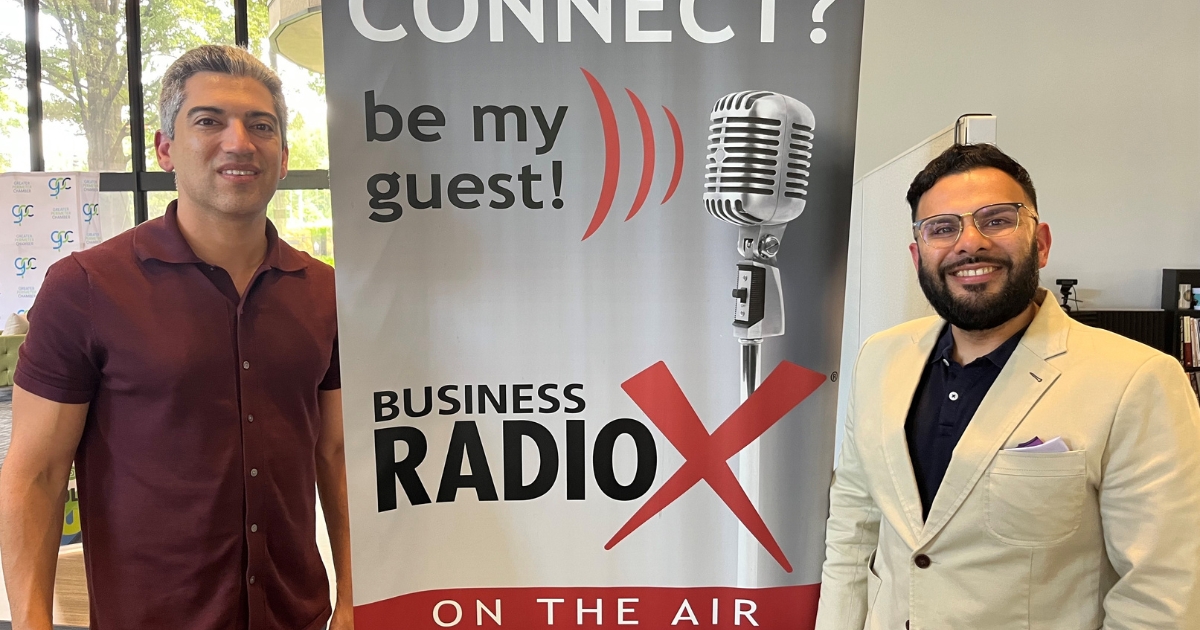
In this episode of Franchise Marketing Radio, Lee Kantor interviews John Francis (Johnny Franchise), who shares his lifelong experience in franchising. Johnny discusses the industry’s evolution, key challenges for franchise owners, and the importance of selecting the right franchisees and building a strong foundation before scaling. He offers practical advice for emerging brands, emphasizing careful growth and effective management. As a consultant, Johnny helps franchises identify gaps and align business goals. The conversation highlights collaboration, strategic planning, and Johnny’s passion for supporting franchise success.

John-FrancisJohn Francis has a LIFETIME of experience in franchising. His exposure to franchising began when he was just a child in his family’s hair salon system, “The Barbers,” which was the 1,000-plus unit, publicly traded and international organization that franchised the brands Cost Cutters, City Looks and We Care Hair. He later joined the family business, playing a major role in the integration and merger of The Barbers into Regis Corporation in 1999.

With more than thirty years of hands-on experience in the franchise industry, John Francis has served as a franchisee, franchisor, investor and Board Member for organizations such as Sport Clips, Cost Cutters, Super Cuts, Inner Circle, Office Pride, Just Between Friends, Dream Maker Bath & Kitchen, Culligan Water, Big Frog T Shirts, DivaDance and the International Franchise Association.

Today, John shares his perspective and expertise as a ZorForum Moderator, Brand Consultant, Board Member, Director and Advisor and Speaker to help franchise systems and professionals “see what they don’t see” and achieve their highest levels of success. You can’t tell John a franchise situation he hasn’t lived or experienced – that experience will help your system! Next-Level-Franchise-logo

Connect with John on LinkedIn, X and Facebook.

Episode Highlights

  • Tips for Franchisors who get stuck or run into growth challenges after start up
  • Top Ten Tips for Franchisee Success
  • ZorForum groups for franchisors and leaders looking for advice

Transcript-iconThis transcript is machine transcribed by Sonix.
 

TRANSCRIPT

Intro: Coming to you live from the Business RadioX studio. It’s Franchise Marketing Radio.

Lee Kantor: Lee Kantor here. Another episode of Franchise Marketing Radio. And this is going to be a good one. Today on the show we have John Francis, better known as Johnny Franchise. He is with Zorforum and Next Level franchise. Welcome, Johnny.

John Francis: Yeah. Thank you Lee. Glad to be here.

Lee Kantor: Well, so excited to learn what you’re up to. Tell us about what you got going on. Sounds like a lot of stuff in the franchise world.

John Francis: Yeah, well, you know, I grew up in franchising. I’ve been in franchising literally my my whole life, my whole career. My my parents had a hair salon franchisor. My dad was a barber and franchise barbershops back in the 60s before I was even born. So I grew up thinking everything was a franchise and everybody worked for work for themselves, and everybody had 2 or 3 businesses because that’s what I grew up with. So I grew up as a franchisor in the salon business, and we built that business over a long time quite nicely. It was a big franchise or multiple brands, every state, multiple countries. Acquisitions international Nasdaq listed back in the 80s and 90s when things were crazy. My parents are in the IFA Hall of Fame, so I grew up in a great environment of franchising. We sold that business in 1999, so about 25 years ago we sold and we had just over a thousand units. So my folks were way ahead of the ahead of the curve, if you will. They were pioneers and leaders, and the things we did with our brand were were innovative and successful. We had a good run, and I worked really hard while I was there. And then I went on to do a few more brands of my own as a franchisor. As a franchisee. As an area developer. And what I learned, Lee, is I, I got I got trained really well when I was young. It was ingrained into me how to be a better franchisor. And so as I started doing my work and kind of doing my own thing after we sold the family business, I got really good at helping other franchise systems scale.

John Francis: You know, they figure out what’s holding them back, break through that, whatever it is, and then show them how to really grow and scale beyond just adding units, but adding staff and structure and accountability. So things really take off. So I’ve been doing this work for a long time, and I just love it when when people do what they’re supposed to do. Right. When franchising is done. Well, Lee, you know, everybody wins. The franchisor does their part, the franchisee does theirs, and the supplier firms do what they’re supposed to do. If everybody does what they’re supposed to do, working together, there’s nothing more powerful than a franchise system. It’s it’s wonderful. And, uh, I’ve seen it. I’ve lived it. I’ve helped other people get there, and, uh, I just want to help other people. So I’m a I’m a I used to be called a reluctant consultant because I really didn’t want to do any work, or I don’t really want to run anything. I don’t want to buy anything. I don’t want to. I don’t want to get involved, you know? But I want to make a difference. I want to make an impact. I want to help others. So Zorforum is a mastermind group. And then next level franchising is board work and coaching work. So I mean, that’s kind of a lot. But that’s that’s what I’m up to.

Lee Kantor: So how have you seen kind of franchising evolve over the decades? Um, I’m sure in the 60s and the 70s and 80s, when this, it was more in the beginning stages. Um, you know, the franchisee was a one off. Maybe they had some multiple locations within their community over time, but nowadays it seems like there’s more and more kind of portfolios of franchises, and people are looking at this more in a corporate manner rather than, I’m just going to have a nice livelihood for my family.

John Francis: Yeah. For sure. Lee, the the industry has changed a lot. I mean, I’ve been around it 50 years, I guess, but, uh, it’s, um, it’s become a lot more professional. Right. When I, when I was growing up, my dad, my mom, you know, we’d go to these conferences. It was founders, entrepreneurs, you know, they were all just trying to figure it out and get it done. And, you know, everybody was was doing what they could. But, uh, you know, things got better and smarter and, and more sophisticated. And then certainly private equity has changed, you know, and I would say raised the bar for a lot of folks to be, uh, you know, just high performers and better structures and better deals and more focused and, and just professionally managed businesses rather than, you know, founder led entrepreneur chaos. So I’ve seen a lot of change and, um, on both sides, the franchisor and the franchisees and frankly, the suppliers too. You know, technology has gone through leaps and bounds of innovation just like any other industry. It’s had a profound impact on franchising and how franchises are sold and how franchises are operated. And and the different tools and systems that we have today. I mean, we could only dream about some of this stuff, you know, back in the old days, but we got it done anyway. You know, franchising is loaded with entrepreneurs and they want to get things done and figure it out. So it’s it’s so much fun that way. But yeah, it’s definitely changed. I’d say it’s gotten better, more sophisticated moves a lot faster. Uh, but I think, you know and and now international I think is a tremendous opportunity. So I see franchising as just bigger and better than ever, really.

Lee Kantor: Now, uh, what kind of conversations are you having with franchisors? What are what are some of the things that are, um, kind of frustrating them that you’re able to help them work through.

John Francis: Yeah, I would say it’s, it’s the, the phases of growth as a franchisor, you know, when they’re new and early stage, they’ve got a lot to learn, and they’re just trying to grow as fast as they can and sell, sell, sell and open, open, open and you know, training and marketing and just chaos. They want to grow so fast. And then then they straighten that out. They get past that that chaos early emerging and then it’s growth mode. And they really got to be smart and careful with what they commit to and the people they hire and the spending. So handling those different phases then as they mature things kind of transition again, the leadership style might change a little bit. The the expectations of the team change a little bit. You go from a lot of generalists now maybe you have some specialists, you know, in the franchisor and franchisees get a little older, more sophisticated. They want different things and they they have expectations. Maybe you’re attracting a bigger, better, more qualified franchise operator. So they’re raising the expectations, you know. So then you go through another level of growth and a change internally of, you know, culture and management and leadership style and accountability. And I would say asset allocation. Right. Time and money. And a lot of times the founder is kind of gets in their own way.

John Francis: You know, they don’t intend to slow things down, but they they wind up becoming a bottleneck. A lot of times I’m coaching people on how to let go or how to how to let go with confidence. You know, how to put in systems and accountability and how to lead and not just manage. And, uh, you know, it’s just different growth curves for people and organizations. And I guess I’ve seen it enough that it’s easier for me to recognize from the outside, I can ask a bunch of questions and kind of assess where they are and start predicting their future, and that that usually freaks them out when I can tell them, I bet you’re dealing with this kind of problem or this kind of problem or or if you haven’t yet, you’re going to start dealing with this. And then they start, you know, their eyes kind of open up like, oh my God, you’ve you’ve been sitting in our meetings, haven’t you? You know. So it’s it’s just fun for me to, uh, to help people recognize that they can get past whatever is holding them back. They just need to figure it out. And I can help usually show them, you know, 3 or 4 different ways to do it. Sometimes, um, there’s more than one right answer, which makes it so much more fun.

Lee Kantor: Now, are you working primarily with B2C franchises, B2B? Um, what’s your sweet spot?

John Francis: Yeah. Really? Any any kind of franchisor, I guess. My, my, my history was retail, storefront, service based franchises. That’s that’s where I’ve spent the most time. Um, but I have clients that are restaurant concepts, um, B2B industrial sales. Commercial sales, uh, virtual, where there is no office and no mobile. You know, where it’s totally virtual. There’s a lot, of lot of interesting ways of getting things done these days. Yeah, I work with, you know, 10 to 15 different brands at any given time and probably another 5 or 10 that I’m, that I’m, uh, either into groups or, or serving on boards and things of that nature. So I get to see a lot of stuff and I get to ask a lot of questions. And, you know, my attitude is I just want to help where I can. Otherwise I want to get out of the way. Right? I’m not trying to hold anything back, but, uh, it’s great just to see how things are, um, are moving and people make decisions, you know, when they’re responsible and their owners, they’re motivated. And, um, you know, those are the best people for me. The ones that really want to get where they’re trying to go and they realize they need some help, you know, and, uh, and I think it’s a mature professional who’s, you know, who takes on a coach or takes on an advisor, or does these kind of things to take their business to that next level.

Lee Kantor: So walk me through what it’s like working with you. So you come into an organization that obviously is frustrated in something, or else they wouldn’t be contacting you. They’re either plateaued or maybe they’re going backwards, but they’re not moving fast enough. Whatever it is. They’re in a a point where they need some help and they’ve raised their hand and said, hey, Johnny, I need some help. Um, what is kind of the initial conversations look like? And then what are some of the systems you put in place to help them get to new levels?

John Francis: Yeah. Great question. Well, I think it starts with just really trying to understand the lay of the land and the cast of characters. I’ll ask a lot of questions about their team, you know, read through the PhD, figure out who’s doing what, why, where, when and how did everybody sort of get there? Uh, what’s the ownership structure? What’s the leadership structure? What’s the management structure? You know, those three things are really separate, even though sometimes it’s very much the same people. Um, and then, you know, asking questions around, you know, performance and budgeting and performance and results and accountability and really, is there any and, you know, planning and, uh, just things of that nature trying to see what they have or what they’ve done or what they’re capable of, and then really identifying what fits what’s missing and what can fill the gap. Um, there’s lots of different management techniques, lots of great resources, easy free stuff that’s out there if you just kind of know where to look and if you can identify the issue, you can usually give them 2 or 3 different ways to solve it. It’s a matter of what else is going on in there, you know, and and really the it starts with the ownership, you know. What are they trying to do? I like to say, you know, let’s create an owner’s plan first, and then let’s make the business plan serve the owner.

John Francis: So the business plan is important, but it comes after the owner’s plan. The owner’s plan is what do you want as the owner? What are you willing to give? What do you expect from the business? How much time and money do you want? And how much time or money will you give? Because it’s going to take a little bit of both. And you know, there’s some people that want to scale and grow and get to the point where they can sell it. Well, that’s that’s great. That’s one, one ambition. But what if you got to the point where you didn’t you didn’t have to sell it. You know, you could you could grow it and not run it, and you could own it and lead it but not manage it, you know, and separate those functions into different, uh, different management tools, ownership tools and leadership tools. So I work with boards. Uh, I work with, uh, systems like iOS and things of that nature. Uh, but there are lots of different approaches that might fit. Um, usually an organization really needs to go through sort of a reality check. And, uh, that’s kind of what I do by asking some, I would say, provocative questions to make people a little uncomfortable and then tease them with what could be, and then let them know that I can help them get there.

Lee Kantor: So let let’s talk about, um, emerging franchises. There are so many brands out there that are just getting started and they’re trying to, you know, grow as fast as possible. Is there any advice for that emerging franchise that maybe they only have a handful of locations just yet and they’re working on, um, you know, attracting that ideal franchisee and they’re working on, you know, having an offering that’s going to work in other environments other than their home environment. So do you have any advice for those emerging Franchise owners?

John Francis: Yeah for sure. The emerging ones are where, you know, everybody starts somewhere. And, um, there’s mostly there at the at the front end of the funnel. Right. It’s it’s crowded and it’s busy. And franchising is not for the meek, right? You should really know what you’re getting involved with. Stay committed. Right. Um, it takes time. It takes work. It doesn’t happen overnight. Even though some people make it look like it happens overnight. It really doesn’t. Uh, my best point of advice for those emerging brands is be selective. The people you bring into your organization are going to make a huge impact because there’s only a few of you, your corporate team, your your corporate staff, your vendors and suppliers. Uh, and then, of course, the franchisees. Right. The first few franchisees set the pace. So you bring in some really strong, high performers, you know, who are great people with great success pattern. You want those kind of winners because they’re going to help you improve the brand and make it even more powerful for the rest of them. But you get a couple of bad actors in the beginning, a bad operator or a bad employee, or even a bad vendor who doesn’t know what they’re doing or can’t see the the facts. You know, they’ll hold you back and they’ll create more drama and headaches. And, you know, they can prevent the good people from coming to you. So it’s all about people, and it’s all about being very selective in the beginning. Be careful and work hard to get the right folks in there. And then, you know, lead that brand.

John Francis: And, um, it takes a lot of time and money. Uh, most people run out of both. So be prepared, I guess. And what are you going to do when you run out of time and or money? Uh, then it’s again, it goes back to people and, um, you know, building that plan and building that business because, uh, I think a lot of the emerging brands underestimate the commitment it takes. It’s it’s, uh, it’s sadly common. I get I get to somebody who’s got, you know, a dozen or whatever, and they’re so far stretched out, they they are, you know, just hanging on by their fingertips. And they’re committed to their franchisees and they love their business and they love everything about it. And they probably have some great people, but, you know, they’re really at risk of just collapsing. And, uh, one small thing that would, you know, upset the apple cart. So then if that’s the case, I start looking for strength. How do we build some strength around this? How do we make it a little bit stronger, more stabilized before we grow and scale? Right. Usually you really got to have a strong base to build from. A lot of brands get way ahead of their skis in terms of development. They sell a bunch of contracts or they try and open a bunch of stores, and then they really don’t have the systems to support it, and things deteriorate quite fast. So I don’t know if that’s typical, but that’s the kind of thing I see a lot of.

Lee Kantor: Now, um, anything you’ve learned when it comes to attracting those right folks, those right franchisees. There are some do’s and don’ts when it comes to, um, you know, doing your biz dev.

John Francis: I think it’s it’s easy to say yes, because especially if you’re struggling to sell franchises and you need those fees, man, you want to say yes. Uh, so be disciplined, right. And spend time to get to know these people. Look at their application, talk to them on the phone, look at their application, talk to them on the phone right more than once. Validate, verify. Make sure you kind of know who they are. Do a background check. Do a credit check. Ask more questions, spend more time with them. Uh, I’m a big believer in the Discovery Day. Bring them in, spend some time. You know, they’re making a big commitment. You’re making a big commitment. You kind of want to know who they are and how they think. And what do they do when things go wrong? Because, you know, it’s been a long time since I sold a franchise. But one of my one of my points in the process was to say, look, uh, you know, this is a business and businesses are complex, and we involve a lot of people, things, things can go wrong. And and when they go wrong, you know, we like to make sure we’re committed to get them right.

John Francis: And we don’t we don’t need to fight things out unless, you know, that’s appropriate. We like to solve problems before we we start blaming each other and things of that nature, trying to see if they fit the culture by asking a lot of questions and just spending time with them. Take them to dinner, take them to lunch, you know, whatever. Get to know them as best you can, because the more you know them, the better decision you’ll make to either bring them into your brand or keep them out of your brand and hopefully the same with them. They’ll get a better vision or clarity around what’s expected as an operator or an employee or or whatever. They become part of your organization. You know you want them to make sure they’re going to fit right in and feel good about it and and align with the rest of the team. And, you know, have some clarity of expectations and and how to get things done. So take your time and get to know those people. That’s that’s the best advice I can give.

Lee Kantor: Now if somebody wants to learn more, have a more substantive conversation with you or somebody on the team, or become part of that XR forum community, what is the best coordinates to connect with you?

John Francis: Yeah, well, my nickname is Johnny Franchise, so, you know, that’s easy to find. Johnny franchise.com. Um, the forum has a website. It’s z o r f o r u m xr forum. Uh, and I’ve got links there from, from my site to, uh, I’m not hard to find. I’m on all the social media. I think, you know, most of the, most of the places you’d expect me to be. I live in the Twin Cities. Um. I’m available. You know, people can schedule, direct or just give me a call. Um, all that stuff is pretty easy to find. If I’m not talking to someone else, I’ll answer the phone, you know? So, uh, I love talking to folks, and I say I’m happy to share some ideas and learn more and see if I can help. And if I can, great. If not, I’ll try to point you in the right direction. You know, I, um, I really just want to be a good resource in the franchise industry. So it’s it’s fun for me to be able to do that.

Lee Kantor: Well, Johnny, thank you so much for sharing your story today. You’re doing such important work and we appreciate you.

John Francis: Yeah. Thank you. Lee, I appreciate the chance to tell my story and, uh, share some ideas with your audience, and I appreciate the chance to be here. Thank you.

Lee Kantor: All right. This is Lee Kantor. We’ll see you all next time on Franchise Marketing Radio.


Tagged With: John Francis, Johnny Franchise

BRX Pro Tip: How Well Are You Protecting Your Brand?

June 6, 2025 by angishields

BRXmic99
BRX Pro Tips
BRX Pro Tip: How Well Are You Protecting Your Brand?
Loading
00:00 /
RSS Feed
Share
Link
Embed

Download file

BRX-Banner

BRX Pro Tip: How Well Are You Protecting Your Brand?

Stone Payton: Welcome back to Business RadioX Pro Tips. Lee Kantor and Stone Payton here with you this afternoon. Lee, I think it’s an important question to ask periodically, how well are you protecting your brand?

Lee Kantor: Yeah. This to me is a critical element of a sustaining and successful business. Great businesses, you can – you know where they stand on important issues and what they do and what they don’t do, and they have non-negotiable things in there that surround them. And, just like we do with our brand, people know that the guest never pays on our brand. You cannot pay to be a guest on a Business RadioX show.

Lee Kantor: We do not cover politics, sports, religion. We’re not an opinion show. We’re a show where we facilitate interviews with professional business people. We’re business people having business conversations with other business people. We’re very clear on that. Our people are very clear on that. And what happens in some brands is that there starts to be a creep where people aren’t clear. They’re kind of making exceptions, and all of a sudden it isn’t non-negotiable anymore. Now, they’re negotiating. “Oh, well, I’ll have this politician on this week because he’s a good guy and I knew him when he had a business.” And, we’re talking about politics when we shouldn’t be talking about politics or a business show talking about business issues.

Lee Kantor: Now, it’s important to stay clear with this, and you’ve got to be relentless. You can’t kind of bend your thinking when it comes to protecting the brand. The brand is at the heart of everything you do. And if people don’t know what you stand for, then you don’t stand for anything. So, make sure you have a true north in your business and make sure that everybody knows where you’re pointing and where you’re going so they can come along for the ride. If you aren’t clear on your true north, then how can your people be clear on what you stand for and why you do the things you do every day?

Caryn Craig with Six Figure Chicks

June 5, 2025 by angishields

HBR-Six-Figure-Chicks-Feature
Houston Business Radio
Caryn Craig with Six Figure Chicks
Loading
00:00 /
RSS Feed
Share
Link
Embed

Download file

Caryn-CraigCaryn Craig is a seasoned real estate professional with over 20 years of experience in the Houston market, known for her strategic approach and unwavering passion for empowering women and small business owners. With an MBA from the University of Houston–Victoria and a dynamic background in owning and operating bars, restaurants, and nightclubs, Caryn offers clients a unique blend of business insight and real estate expertise.

Named Business Woman of the Year by OutSmart Magazine for 11 consecutive years, Caryn has launched and led 10 successful small businesses in Houston. She is deeply committed to supporting women in real estate investing, helping them build wealth and financial independence through smart property decisions.

In her conversation with Trisha Stetzel, Caryn shared her personal journey as a real estate entrepreneur and her involvement in the 6 Figure Chicks book project. She discussed the power of female support systems, overcoming business challenges, and the importance of building strong networks. Caryn also gave a preview of the upcoming book launch in Houston, encouraging other women to find strength, connection, and success through shared experiences and mentorship.

Connect with Caryn on LinkedIn.

Transcript-iconThis transcript is machine transcribed by Sonix.

 

TRANSCRIPT

Intro: Broadcasting live from the Business RadioX studios in Houston, Texas. It’s time for Houston Business Radio. Now, here’s your host.

Trisha Stetzel: Hello, Houston. Trisha Stetzel here bringing you another episode of Houston Business Radio with one of my sisters. Yes, you guessed it. We’re not done yet, so we’ll be talking about that in just a few minutes. I want to introduce you to the most amazing woman sitting right in front of me on zoom. Wink, wink. And I’d love to introduce you to Caryn Craig. She’s a seasoned real estate professional with 20 years of experience right here in Houston. Driven by a passion for empowering women and small business owners. She’s a background that includes owning and operating multiple bars, nightclubs and restaurants. Karen combines her entrepreneurial expertise and an MBA from the University of Houston, Victoria to offer strategic real estate solutions. Her commitment to helping clients thrive in the Houston competitive market is at the heart of her career. Dedicated to supporting women in real estate investing, Caryn provides the knowledge and resources needed to build wealth and achieve financial independence. Karen, welcome to the show.

Caryn Craig: Thank you so much for having me, fellow sister Trisha.

Trisha Stetzel: Absolutely. Isn’t it fun when somebody else reads your bio because they’re so hard to write about yourself?

Caryn Craig: No, not awkward at all.

Trisha Stetzel: No, not at all. But how cool is it to hear all of the amazing things that you’re doing? And, um, I love how we met, which is through this book collab that we’re working on, and we’re going to talk about that in a few minutes. First, I want to tackle who is Karen. So tell us a little bit more about you and the work that you do in the community.

Caryn Craig: So I am, like you said, a commercial realtor and I really love to work with female entrepreneurs because I am one. So again, like you said, I have owned multiple bars, restaurants, nightclubs, and one food truck and that is a story in and of itself. But you know, I and there’s a lot of stories there, bar industry, there’s a lot of stories there. But you know, I take that experience, and all I wanted to ever do was to help small business. And there was nobody really to help me. I learned it, you know, on my own walking the path. And, you know, there’s so many resources out there. And I want to be that resource for other women, other women entrepreneurs and small business owners. And, you know, that’s just it’s my passion project. I prefer to stay in the commercial side of real estate. I’ve done residential for a really long time. It’s like riding a bike. But commercial is great because it’s different every single day. Even if you’re renting the same type of space or selling the same type of space, it’s still to two different businesses, and every business’s needs are different. And I love to look at their goals and to see how I can help them and, you know, surpass them. So that’s a little bit about me. I have two kids. I’m a single mom, lived here for a really long time. It’s hot, it’s getting hotter. And that’s always just such an adventure in real estate is that, you know, you have four Stanley Cups in your car at all times. They’re all full, and at the end of the day, you don’t have any of them full. So it’s so great. At least I’m getting my I’m getting my glasses of water in.

Trisha Stetzel: Well, that is good. Yeah I’m glad to hear that. You have four Stanley Cups.

Caryn Craig: Hydrating hydrating.

Trisha Stetzel: Hydrated. Um, something that Karen might not tell you, but I know about her is that she was voted businesswoman of the Year by Outsmart magazine for 11 consecutive years. That is amazing, Karen.

Caryn Craig: And the amazing thing about that was that my employees did that. So I don’t self-nominate myself or anything, but my, you know, my employees voted on that and that’s great. And so, you know, I’ve, I’ve pretty much left that industry now. But, you know, you circle back to it because real estate circles back to everything. So that’s the most special thing is that my employees thought well enough of me to nominate and support me in that.

Trisha Stetzel: I love that. So, um, I have this conversation with women quite often where we don’t self-nominate I heard you say that like I would never self-nominate myself, my myself for that. Um, it’s really cool. And of course, it’s amazing when other people nominate us for things. So why do you think it is that as women, we’re not as good at self nominating or stepping forward and saying, hey, I did this and I want to be recognized for it?

Caryn Craig: Yeah. You know, it’s kind of funny. And I have a story. So my mom has a PhD in nursing. So she’s retired now for like the third time. But she did medical research after her nursing career was done. So she did medical research and she never really took the credit. It was never doctor Craig did this. It was, oh, this other guy did this. And so, you know, I remember my father who was not a doctor saying, no, doctor Craig did this. But Doctor Craig never really stood up and said, Doctor Craig did this. And mom, I love you. I know you’re going to listen to this, but it was one of those learning lessons for me that maybe I should self-nominate. And you know, I’m going to be honest with you. For me, I just don’t have time. I’m really busy. I don’t even think about it. So when things come my way, I’m like, oh, that’s really nice. How great. But to put myself out there right now, I don’t have time. I mean, right now I have, I think, 11 clients. My kids are out of school. I can’t even think about it right now. But women in general, we all need to be better about putting ourselves out there and about saying, hi, I did this. It’s me. I’m the one that did this. I’m this awesome. I’m this amazing. And I think the six figure chicks movement really helps with that because, you know, the founder of that movement, Mel, is really good. Trisha, you know this at putting it out there. Hey, you need to be promoting this. You need to be putting this on social media. Here’s your bio. Here’s your links, here’s your this, here’s your that. And I haven’t been as good about that because I’m like, I don’t want the attention. I don’t want the attention. But I’ve done all these things. I’m amazing. Just like my mother. We’ve done all these things. We’re amazing. We deserve the attention. Doctor Park is amazing. Karen Craig is amazing, you know.

Trisha Stetzel: And we need to be okay with saying those things out loud and not being embarrassed that we’ve done all of these amazing things. Right. And I think to surrounding ourselves with other women who understand that it’s okay to stand up and say, look at all of these amazing things that I that I’ve done right. And I think Mel has really done something amazing here. Absolutely. Let’s talk about six figure checks if it’s okay to roll right into it. You guys, I know you’ve all heard it from me a few times. The book six Figure Checks Houston Edition Volume one is going to be released on June 14th. So we need all of you to rally around Amazon on June 14th to get your book. Okay. That’s just the bottom line. So, Karen, my first question for you and around six figure checks is why did you say yes?

Caryn Craig: I was actually the first Houston chick. So I’m just going to put that out there. It was me. I was the number one Houston chick. And I had. This is actually kind of a funny story. So Mel and I. And maybe you too. Trisha, are you still in B and I?

Trisha Stetzel: And I’m not still in B and I. But it’s how I met Mel.

Caryn Craig: Yeah. Oh, okay. So B and I, for those who don’t know, is Business Networking International. And I’m the president of my chapter. And we had a newer member who met Mel on, I think, some speed networking online or whatever. And at the time I was getting divorced. And so I was so busy, my head was not in any game other than trying to stay afloat and keep my kids mental health healthy, as healthy as you can be going through something like that. And so this gentleman in my chapter is like, there’s somebody you really need to meet. She’s in Phoenix. And I’m like, yeah, okay, whatever. I don’t have time for this right now. They asked me again, you really need to meet this woman. But I recognize that you’re going through a lot right now. So I’m just going to connect the two of you and Mel. Being Mel kept connecting with me, even though I was like, I can’t be with you. I’m really busy. I haven’t slept in five days. So I finally meet with Mel and it was. I don’t even think she knows this. And it was this, this 1 to 1 meeting where I’m like, I don’t even want to be on this zoom. Why am I on zoom? And then she started talking about the book and about the movement and about the women.

Caryn Craig: And I started to kind of perk up, and I was like, oh, this is really empowering. This is something I could use in my life right now. And so I literally signed up. I think I cut her off. I was like, we’re good. I’m gonna say yes. Don’t talk yourself out of a sale because I’m a salesperson, so just. Shh. Yeah. How do I give you my money? How do I do this? How do I make this? You know, the biggest piece of my marketing for 2025? And so here we are. And that’s what it was. It was something in my life. In my life at that time that I just really needed. I needed that part to say, I have a book coming out next year, I need it. It was kind of like a lifeline pulling me to the surface, and it was so great in my most down moments to say I’m so excited that this is going to happen for me this year, and it was so exciting for me at Thanksgiving to stand up in front of all my family saying, guess what I’m doing? I’m going to write a book this year. And I did.

Trisha Stetzel: And you did. And it’s going to be a bestseller because I already feel it. It’s going to be a bestseller.

Caryn Craig: Our stories are so amazing.

Trisha Stetzel: And they’re all different.

Caryn Craig: And they’re wonderful.

Trisha Stetzel: So I like you. Karen was first in line. I must have been second in line. Uh, Mel and I did meet through a bad connection, so I was in BNI for almost 15 years between two businesses. I bet there are those circles. I have family, right? Um, extended family and all of those circles. So someone I know in Florida who’s in BNI reached out to me and said, I met someone in Arizona that’s in BNI that you need to meet. And I said, okay. And it was Mel and it was amazing. It was absolutely amazing. So B and I is a wonderful tool. I would, if you don’t mind, would you plug your chapter real quick and just let people know where they can find your chapter meetings?

Caryn Craig: Yes. So actually our chapter was awarded the International Culture Award at the National Conference. Yes. Congratulations. We are award winning. We’re number one in the Houston region right now. So we have had you know, we’ve had a great year. We are an amazing group. And we meet every Wednesday morning at 715 at the Rudy’s on Mason and I-10 and Katie. And there’s about 40 to 45 of us. I don’t know exactly what number we’re at right now, but we are an amazing group of people. And I always say it’s the best way to start the middle of my week because it is explosive energy. I have a lot of energy. I run the meetings. And so when you go in there, it’s it’s just electrifying. And it is. It is contagious. Our energy is contagious. And it’s such a wonderful group of people. And they are my family. I mean, there are people there who have carried me through the last few years so bad I is great.

Trisha Stetzel: Congratulations and congratulations on being the president of an amazing award winning chapter.

Caryn Craig: Not that humble about it.

Trisha Stetzel: I’m happy to put the information about your BNI chapter in the show notes as well. So if people are interested and want to connect with you that way or even come to a meeting, then certainly they can do that. So outside of that, Karen, what is the best way to connect with you if folks are interested in having a conversation?

Caryn Craig: So my name is spelled differently. It’s c a r y n. And I like to say I’m a Karen, not a Karen, because the spelling. You can find me on any of the socials at Karen Craig Realtor or on my website at karen.com. Com.

Trisha Stetzel: I love that. Okay, so back to the depths of our conversation. Um, each of us were asked to write a story about how we got where we are today. And before we started recording, you said what you do is different from your story. And then you said, oh, wait a minute, maybe not so much. So do you want to give us a sneak peek? Don’t tell us too much, but just a sneak peek into your chapter.

Caryn Craig: So a sneak peek into my chapter. I have been a six figure chick since I was in my early 20s, and I’ve owned my own business, and I learned so much owning those businesses because I’ve had so many. I’ve had 12, 15, 17. I’ve had so many of them. And I write about leaving my six figure job and starting over literally from rock bottom. And that’s right. That’s what I’m doing right now.

Trisha Stetzel: Thank you for being vulnerable enough to tell your story. I think it’s going to be very, um, moving when people read your chapter, when people read the book and they see the stories of all of these amazing women that Mel has brought together, which I think is really important as well. So you love serving women? Uh, but you’ve been through a lot of stuff, we’ll say, right over your lifetime. Uh, what is so special about the way Mel has brought this project together? Or you even called it a movement. What’s so special about that for you?

Caryn Craig: I think anytime women can get together and be completely supportive is magic. Because society doesn’t really like that. You know, I have a young girl, I have she’s 13, and so she’s just starting to learn Kind of navigating those social roadways. And, you know, sometimes people are not as kind as we need them to be. And my parenting motto has always been lead with kindness, which my children call cringey, but it’s not cringey. It’s this is a life lesson we should always lead with kindness and the six figure chicks. We are all so different. There are doctors, there are, you know, people with that we look different, we act different. We have completely different networks. But we are sisters and we all are brought together in this one way, and it’s very special. There is zero judgment. Zero and its beauty. Its beauty.

Trisha Stetzel: Absolutely. Um, I’ve done a book collaboration before, and it was nothing like this. There was no there was no relationship. There was. I don’t even know who the other authors are. It’s been an interesting ride for me. And there’s nothing wrong with that. It’s it was a fantastic book and it has great chapters in it, but I never got to meet the other people the way I’ve been able to meet you ladies. And you’re right, there’s no judgment. We had a photo shoot. All of us together. Not we didn’t know each other. And we were changing and getting dressed and hair. All the things that we do, right. As women, we’re getting ready for a photo shoot.

Caryn Craig: So I have all these things in my head. Now about that photo. No judging. None. Zero. None. We were we were googling each other’s shoes. It was great. I found those shoes, by the way.

Trisha Stetzel: Oh you did.

Caryn Craig: Oh, those will be featured at our paperback launch. I’m already planning my outfit. I’m so excited. Thank you, Lily, for your shoe inspiration.

Trisha Stetzel: I love that. Well, I think somebody lost some shoes. I left my hat.

Caryn Craig: Oh, yeah, I think I left my glasses there.

Trisha Stetzel: You did? Yes.

Caryn Craig: Yeah.

Trisha Stetzel: This is the environment that that Mel really created for us, which is just bringing women together so that we can support each other as we go through this journey, because writing about yourself is hard. Yeah, I’ll put that out there. It’s very hard to tell, and it’s not your whole story. It’s even just a part of your story. And it’s still hard, right? So tell me more about how your story or how you hope that your story will leave this legacy behind as it’s written in this book.

Caryn Craig: My my biggest wish is for a woman who is in a very difficult marriage, or even any type of difficult relationship, will look at my story and say, I can do it too. And I can leave this very scary situation and have that fear and still know that you can just put one foot in and one foot in front of the other every single day, and eventually you’re going to get to where you want to be as long as you just keep putting one foot in front of the other. It’s the biggest wish I have is, is that somebody will see that, and it will give them the courage to do what they need to do to be okay in life.

Trisha Stetzel: There’s a reason why your stories in this book, because there’s somebody out there looking for it, right?

Caryn Craig: I think so too.

Trisha Stetzel: Yeah. I love what do you think about the idea, um, that Mel’s brought to this group, and it is a movement about mentorship day.

Caryn Craig: Yeah, I love mentorship Day. I absolutely am so excited about the chance to sit with women who are younger than me and say, this is the path that I took in my life. Take from it what you will. What do you want to do? You know, I have a new part of my career that’s starting with, you know, business coaching and business consulting because all I ever wanted to do was help small business. And I’ve done some of that. And it’s amazing through those conversations, how you can kind of weed through and find why people do what they do. And maybe that’s not what they should be doing. Maybe they should actually be doing something else. Yeah.

Trisha Stetzel: Yeah. Find your passion. Work in your passion. Right. That’s great. In the businesses that we’re in, for sure. So, Karen, I think I read in your bio that you’ve owned more owned and operated more than ten businesses.

Caryn Craig: Yeah, it’s it’s ten, 15, 17, something like that. We’ve we’ve had a lot I had a lot.

Trisha Stetzel: And in some hard industries being a restaurateur or a nightclub or a bar owner, like, those are some really hard, like, heavy challenges. So women or anybody who’s listening to us have this conversation right now. You’ve you’ve talked about your story. We want everybody to go get the book on June 14th, because there are some amazing stories in there. But thinking about all of the things that you’ve been through and the people that you could connect with who might almost be going through what You already went through. What would you say to them?

Caryn Craig: I would say that there’s a path to whatever you want to do in life, and you create it. And for me specifically, I was stuck for a very long time, and it was fear that made me stay. There was fear of a lot of things. And you finally get to a point where you’re just done and you’re your will to be done overcomes the fear. The fear is still there. It doesn’t go away. It morphs a little bit, flattens out a little bit so you can walk over it. That’s what I have to say, is that, you know, I think fear is there. It’s there’s biological reasons why it’s there. It keeps us safe. But it’s that. But, you know, we’re smarter than our fear. We’re smarter than our anxiety, our anxiety rule us. And so I think what I’ve been through, those industries were difficult. They’re great industries. All they do is, you know, when you look at a bar or a nightclub, they’re there to make people happy and to connect people. And, you know, there’s, you know, certain aspects to the industry that I don’t particularly enjoy. But as a woman, it was hard to be in those industries because I was generally the only one, and it made me a lot stronger. It made me tough. And I have a very, very tough exterior because now I’m in commercial real estate, which is still male dominated. And, you know, even today, I had a man try to mansplain industrial property and Katie to me and I was like, no, I’m aware. Thank you. Thanks. I’m gonna argue with it. It’s not a point. I’m not scared of him. I would have been at one point in my life. But I think overcoming your fear and just getting to the point where you can do it. Yeah.

Trisha Stetzel: When you’re at your networking circles. You’re so intelligent, sitting on the outside looking in like you’re surrounding yourself with other intelligent people and other people who can support you and have your back and be there when you need somebody, whether it’s through BNI or even now in this book. Collab for six figure chicks. How important is it for us to choose the people or have the right people in our circles?

Caryn Craig: It is the most important thing. You know, they say when you’re bringing up children that it takes a village, but it really takes a village for all of us. That’s not just for, you know, babies and toddlers. It literally takes a village for all of us. When I was getting divorced, one of my dear friends said it was my friends that carried me through my divorce. And I can honestly tell you it was my friends that carried me through my divorce. And part of the reason why I was scared to leave before was because I didn’t have the village surrounding me. And so it is the most important thing. You know, we’re social humans, especially women. We need to have the love and support of others around us. We just do.

Trisha Stetzel: Yeah, absolutely. And working in a male dominated space for so many years, how has that, I want to say, raised you as a woman, right? Or how have you matured as a woman because you worked in this male dominated space?

Caryn Craig: So. My therapist would say the male parts of my personality are very dominant. And that is true. I have a very dominant personality. It it had to be there to work in those environments. You know, I’m not as big as they are. I’m not as you know, I’m not physically intimidating. So certain parts of my personality had to become, especially with the type of personalities that work in the bar industry, but how it. It made me very patient and it made me very understanding. It made me be able to listen. It made me a very good manager, and it made me so grateful when I could be surrounded by women because, you know, people like what they are and people want to recognize what’s around them. And so I just value female friendships and female relationships so much. And, you know, it really is a sisterhood.

Trisha Stetzel: Yeah. It is. Hey. Thanks, Mel. I know you’re listening right now. There are so many of us who wouldn’t have met each other had she not put this together, because we do have different circles and we do come from different places. I have noticed that BNI happens to be one of those things that runs through a majority of us.

Caryn Craig: Yes.

Trisha Stetzel: Yeah. Of the women that are there. And how cool is it to be connected in that way? Um, as we close up today, Karen, what what would you say to the young women? We’ve talked about women and circling ourselves and making sure that we’re supporting each other, especially in the the age groups that we’re in. But what would you say to the young women, the ones that will show up for Mentor Day? Uh, when we bring our stories out, what would you say to them today.

Caryn Craig: To the young women who are coming up behind me? I would say be ready to mentor and get yourself ready to mentor the people coming up behind you. Be ready to put yourself on a podium as the strong, beautiful, smart and intelligent woman that you are. And be that for my daughter and for her friends and eventually their daughters. That’s that’s do do big things and do them well so that others can come behind you and do bigger things.

Trisha Stetzel: I love that and be proud and be loud and loud.

Caryn Craig: I’m always proud and loud, except for right now, because I’m trying to not be out in my office.

Trisha Stetzel: It is all good. I’m so excited about this book collaboration with you. Karen, thank you so much for being on the show. This has been a great conversation. I cannot wait to read your story. I have not looked at anyone else’s story yet.

Caryn Craig: I haven’t either.

Trisha Stetzel: I most of us have not. Which is right? We’re all we’re just save it. We’re just going to save it for when it’s somebody.

Caryn Craig: Somebody wrote about Mount Everest or Kilimanjaro or something. And I was like, not reading it, not reading it, not reading it.

Trisha Stetzel: Don’t read it, don’t read it. Well, I have a sneak peek because Melanie was on the show, so I’m just saying she gave me a tiny sneak peek into her story around Kilimanjaro. Yeah.

Caryn Craig: Oh, really?

Trisha Stetzel: She’s a hiker. So our our whole conversation was really about, um, outdoors and hiking and her dream, and. Yeah, it was really cool. Oh, the stories are gonna be amazing. Amazing. Okay, Karen, thank you so much for being on the show with me today. You guys listening? And, of course, uh, if you’re watching on YouTube, you can grab the show notes and go directly to Karen’s space so that you can connect with her. Karen, will you tell them one more time how how to find you?

Caryn Craig: Sure. Remember, my name is spelled differently, so I’m c a r y n and you can find me at Karen Craig realtor on any of the social platforms and my website at Karen Craig. Com.

Trisha Stetzel: Thank you Karen and June 14th six figure checks Houston volume one I’m super excited. So you guys be on the lookout for the links. They’re going to come from me. They’re going to come from Karen and all the other sisters in the Houston, Greater Houston area. And you guys go buy the darn book. I promise it’s not very expensive. We’re not even going to talk about it. So just when the links go click and buy. Okay, Karen, that’s all the time we have for today and everyone who’s listening. If you found value in this conversation that Karen and I had, share it with a fellow entrepreneur, a veteran or a Houston leader ready to grow. Be sure to follow, rate, and review the show. It helps us reach more bold business minds just like yours. Your business, your leadership and your legacy are built one intentional step at a time. So stay inspired, stay focused, and keep building the business and the life you deserve.


Tagged With: Six Figure Chicks

Simple Strategies for Business Success: Insights from Data Experts and Authentic Leaders

June 5, 2025 by angishields

CRBX-Maggie-Todd-Feature
Cherokee Business Radio
Simple Strategies for Business Success: Insights from Data Experts and Authentic Leaders
Loading
00:00 /
RSS Feed
Share
Link
Embed

Download file

CBRX-Maggie-Todd-Banner

Brought to you by Diesel David and Main Street Warriors

CherokeeSponsorImageDieselDavidMSW

In this episode of Cherokee Business Radio, host Joshua Kornitsky interviews Todd Lessom Founder of Diakonos Management Solutions and The Data Miners Team, about using data-driven strategies to solve business challenges and improve marketing and customer retention. Later, author and coach Maggie Michaels DeCan joins to discuss her book “Humbled on Purpose,” sharing insights on authentic, vulnerability-based leadership and her transition from corporate executive to nonprofit leader. The episode offers practical advice on leveraging data, building strong customer relationships, and embracing authenticity for personal and professional growth.

Diakonos-Management-Solutions-logo

Todd-Lessem-bwTodd Lessem is the owner and president of Diakonos Management Solutions and The Data Miners Team, LLC.

In a prior life, he was a marketing executive during his 20 year career at Comcast. He loves numbers. He loves to coach. He loves to see the improvement. He loves growth. That is why Todd launched Diakonos Management Solutions.

On a personal level, Todd coaches recreational soccer (over 10 seasons now). He loves watching the beginning to end of season growth he sees both individually and as a team. And while opportunities exist to coach more competitively, he’s passionate about “igniting” a love of the game of soccer and teaching kids how to play the game “the right way”.

Todd brings the Fortune 50 experience to the local business owner that is ready and willing to grow. His team submerges themselves into your business, walk along side both you and your teams, and build actionable strategies. Each Diakonos solutions is personalized to your unique business needs. And each is built leveraging the Fortune 50 secrets that made Todd, his team, and Comcast successful.

When Todd isn’t not helping business owners make smarter, faster business decisions with data and equipping them to grow, he’s a husband to his beautiful wife, and a father to his three children. And when he has a few spare minutes, you will find “Coach Todd” chasing trout in a river fly-fishing.

Connect with Todd on LinkedIn.

Maggie-Michaels-DeCan-bwMaggie Michaels DeCan is the author of Humbled on Purpose, an Amazon bestselling, and Good Business award-winning book, about her journey through childhood trauma to corporate America and then nonprofit leadership. She explores how dealing with the implications of her scars from childhood ultimately led her to become a more authentic leader.

Maggie is also a certified executive coach, speaker, consultant and loves pouring into the next generation through volunteer work with her national fraternity; Chi Omega, and alma mater, the University of Michigan. She serves on the board of the Community Foundation of NE Georgia and is active in her church, St. David’s Episcopal. Humbled-on-Purpose

Maggie recently left Roswell’s nonprofit Children’s Development Academy (CDA) where she served as CEO for nearly 8 years. Prior to the CDA, she served as President, COO and CHRO at HoneyBaked Ham for 14 years. She also served in human resources and operations for well-known retailers Circuit City, Belk and Macy’s.

She has been married for 38 years to her high school sweetheart, Bob who was a long-time tennis coach and econ teacher at Etowah High School. They have two grown sons, Brady and Riley (married to Emily) and two dogs.

When not in their Woodstock home, they enjoy time in the Georgia mountains on Lake Nottely.

Connect with Maggie on LinkedIn and Facebook.

Transcript-iconThis transcript is machine transcribed by Sonix.


TRANSCRIPT

Intro: Broadcasting live from the Business RadioX studios in Woodstock, Georgia. It’s time for Cherokee Business Radio. Now, here’s your host.

Joshua Kornitsky: Welcome back to Cherokee Business Radio. This is Joshua Kornitsky professional EOS implementer and your host this morning with my guest in the studio, Todd Lessem, the owner of Diakonos Management Solutions and the Data Miners. Good morning. Todd. How are you?

Todd Lessem: I’m doing great. How are you doing, Joshua?

Joshua Kornitsky: Doing fantastic. So happy to have you in. Uh, I appreciate you taking the time to come in and talk with us. So what can you tell me about what the Data Miners is?

Todd Lessem: Ah, the Data Miners. Well, I think the easiest way to to put it into words is I really help larger companies solve business problems. Um, but through it all, I use a data driven approach. I’m a numbers junkie, but, uh, when I say that it’s trying to make sense of the numbers, trying to draw insights out of the numbers, and make them digestible for business leaders so that they can take action and make smarter, faster business decisions.

Joshua Kornitsky: Okay, so what type of businesses do you work with?

Todd Lessem: Wow. Uh, quite a few. I mean, my background is really with either subscription based businesses and the broadband telecom space. Uh, I’ve worked with other SaaS companies, software as a service. Uh, but I’m actually working for a local government, uh, agency right now, and that’s a lot of fun. And I’m while data is at the core of it, I’m doing a lot of process improvement.

Joshua Kornitsky: Okay. So process improvement. What type of stuff are you doing?

Todd Lessem: You know, honestly, uh, Joshua, it just boils down to some of the basics, um, open and honest communication, making sure that people, the right people, are in the room, communicating with one another and making sure that, um, there’s the right structures in place, uh, whether it’s meetings, whether it’s having technology, like a project management tool, just making sure people are using technology and communication in smart, effective ways and not living and dying via email all day long where things get lost very, very quickly.

Joshua Kornitsky: Okay. So when you talk about the types of data that you work with and the types of organizations that you work with, you said you’re working with a government organization now, what do you do? What type of insight are you helping them gain?

Todd Lessem: Yeah, no, that’s a great question. You know, I think there’s a real fear of data in the business world. And that’s not only in the larger businesses, but also for the local businesses as well. So what I really try to do is to teach business fluency and taking the fear away from data. Trying to make it easy to understand and digestible, um, trying to help people understand the power of data. And this is not to talk about very complex, uh, analytics. This is like this number ties to this driver in your growth of your business, or this can help you save money or make more money. And and really trying to help business leaders understand the value of data, not to be afraid of it and and try to use it in smart, equitable ways.

Joshua Kornitsky: So it’s interesting you had shared with me previously that you had been, uh, an executive retention pioneer at Comcast for 20 odd years. Yep. Right. So that’s a really, really long time to spend in a space. How did you get from there to here?

Todd Lessem: Yeah. So being a pioneer, um, I was a startup guy. So over and over again, I had to prove my value and my team’s value to executives all day long. So every month, and because I was in the startup space, bridging out and embarking on new endeavors, new products, new strategies, um, the best way to justify your existence and your team’s existence is having data and being able to storytell what is happening within the business and the relationship between data and the qualitative activities, the behaviors that occur. And with that, I didn’t have full blown analytics teams. So I had to I had to be scrappy. I had to build it from the ground up.

Joshua Kornitsky: Homegrown.

Todd Lessem: Homegrown. Absolutely. So I was, you know, so because I was at the forefront so often, um, I won, I learned I have a love of numbers. They just jump off the page for me. Uh, and I have a God given gift where I can synthesize really complex concepts and strategies using data in very simple manners so that anyone from an executive to a frontline employee could understand it and execute against it and make decisions.

Joshua Kornitsky: So you speak simple, and I mean that in a complimentary sense. Not not in a, in a negative regard.

Todd Lessem: I do, but I think my wife would disagree with that. But I try I try on during my day job.

Joshua Kornitsky: So I’ll just simply say we all hear things through our own ears. They may not align with what our mouths think they’re saying, but I. But I would never speak ill of any other. Okay. So. But there’s another part to your life. And and that part is, is the marketing side. And, and, you know, it’s easy for everybody to say, oh, yeah, of course it’s data. Data leads to marketing. But I really don’t think that in in it’s obvious from what you’ve shared with us. It’s not obvious. And there’s a lot of people that understand they need data. They don’t understand why they need data. You help them, you bridge that gap and you help, um, act as a Rosetta Stone, as a translator from the complex to the simple for them. But how do you then help them take that into action?

Todd Lessem: Yeah. So during my 20 years at Comcast, I had very robust experience. So for much of my career I was focused on the startup side of the house. But then as we grew and the company became a behemoth, now it’s a fortune 30 company. I became the Fixit guy. So I started getting taking those startup principles and those data driven principles and and moving into unhealthy teams. And one of my last ventures was actually within a marketing communications team here in Atlanta. It’s what actually what brought me to Atlanta. So I was able to come in. And basically, if you saw anything that was on TV, radio, print, billboards, digital direct mail, it came across my desk. That was my team here in Atlanta, all the way from Miami up to Detroit. Wow. So how does it tie to marketing? Well, Specifically, um, as we think about this, uh, the creative teams, the teams that are creating all the content that are creating the advertisements, they were struggling to connect their value that they provided back to the business.

Joshua Kornitsky: Okay.

Todd Lessem: So in addition to building a team from the ground up, rebuilding a team from the ground up, putting in all the processes, the structures, all the boring stuff to make a team work.

Joshua Kornitsky: Um, some of us don’t find at that point.

Todd Lessem: I know, but for most people.

Joshua Kornitsky: Sure. You know, the infrastructure side is, is the less, uh, flashy side. How about that?

Todd Lessem: But it works, as you and I both know. Um, but I was able to bring in a data driven discipline to actually tie in. You know, these are the activities. This is the call volume. These are this is the website visits. These are all the visits that were occurring because of the team and the work that was happening, all the fancy stuff. Sure. Um, and it’s really connecting the dots. I was able to connect the dots and actually we helped improve employee churn because people started, they were able to connect what they were doing on a day by day basis to to actual tangible results. And they and it also increased their business fluency and they got excited about it. So tying it back to how does it tie back to marketing? It’s just, you know, I work with large companies, but I also work with some some smaller mom and pop shops here locally. It’s trying to help them understand don’t just throw money out the window at marketing tactics. Build a strategy, make it data driven, but also track your results and.

Joshua Kornitsky: Track your results. You say.

Todd Lessem: Yes, a novel concept.

Joshua Kornitsky: We just throw pennies in the wind. Yes. Um, so I’m curious because you you made this comment about the impact, right, of of drawing the connection. So what are some of the biggest mistakes that you see on the local level? Let’s let’s step away from the comcasts of the world. Because while I’m sure the board of directors is sitting around listening right now, I hope not. We we also touch a lot of local businesses and let’s help them. So what are some of the mistakes that you see there?

Todd Lessem: Yeah, absolutely. Um, one is and I’m a I’m a local business owner as well. So when I’m speaking about what I’m seeing, I’m also kind of giving myself some therapy and a big slice of humble pie actually, in the process. Um, so we act based off of emotion too often. And we are constantly, as a local business owner, looking to drive growth as quickly as possible without making sure we have that infrastructure in place to make sure we can handle that growth. Um, but the biggest mistakes I see are really trying. It’s really the local business owners that don’t understand marketing, but they, they, they, they believe marketing is just tactics. But it’s so much.

Joshua Kornitsky: More strategy, all tactic, all execution. No planning.

Todd Lessem: Exactly. Exactly. And, um. And, hey, I’m guilty of this, too. But it’s amazing of just what a little bit of strategy will do for your business. Um, from a local perspective.

Joshua Kornitsky: So you and I had talked previously and you had mentioned things about, uh, some, some basic non-negotiables. Yeah. Uh, what are some of those things that a business just needs to have on their radar?

Todd Lessem: Yeah, absolutely. These are the three non-negotiables that every local business owner should have. Just hands down. Number one, a website. Um, why? Because if I’m scrolling through and I’m searching for a business, if I have a problem and I’m going to Google and we’ll get to Google in a second. When I look at the different options that are up on Google, if there’s not a website where I can click through and learn more, I bypass them.

Joshua Kornitsky: Immediately. And is that normal? Asking from a marketing lens, is that typical consumer behavior?

Todd Lessem: It is. It is. And it’s it’s just it’s been established to this point, and it’s a credibility proof point at the end of the day. Um, now, that doesn’t mean you need to go out and spend $12,000 on a new website. There’s a lot of DIY options out there, but it has to be informational about you, your business, and also the products and services you offer. That’s number one. Number two is having an SEO strategy. So what is an SEO strategy? Search engine optimization to simplify it. Do you show up on Google? Yes or no. As simple as possible.

Joshua Kornitsky: So Google’s not just going to list me because I’m in business and I’m selling widgets.

Todd Lessem: Nope. They’re not. And in fact they want to make more money off of you, and they’re going to make it more challenging for you to be found on Google so that they can profit off of you. Because remember, they’re in the data business and they’re also one of the leading advertisers. They they’re they’re battling Washington right now on that front. I won’t go down that pathway. Sure, sure. Um, so number one, have a website. Number two, be found, be findable. Found on Google, found on Bing. I know Bing or Edge whatever it’s changing into. Be searchable.

Joshua Kornitsky: Microsoft’s thing.

Todd Lessem: Yeah. There. Yeah. Microsoft uh and then finally, you know, have a social media presence and I’m going to be the first one to say I hate social media. However, as a business leader, as a marketer, I would challenge every listener to think about social media as the television of the 70s, 80s and 90s. But think about it differently. Think about this. You have an opportunity to have free commercials.

Joshua Kornitsky: Right.

Todd Lessem: On over-the-air TV. It now just translate it to a smartphone device, on Facebook, on Instagram, on LinkedIn, whatever your your wherever your target audience is, that is the that’s the magic sauce out there. And trust me, the amount of time people waste on social media is is mind boggling. It increases more and more and more. If you’re not in the social media space, you’re missing out. You’re missing out on opportunity.

Joshua Kornitsky: Well, so. So would you say they’re leaving money on the table?

Todd Lessem: Absolutely.

Joshua Kornitsky: Okay, so so this leads to the the most obvious question, right. How can you help them?

Todd Lessem: Yeah, absolutely. So these are all the areas where those are the non-negotiables. Um, I’m actually the retention guy. So I really help business leaders think through and understand and execute tactics to nurture and drive growth from their existing customers. So one of the biggest things I see is as a new as a as a local business owner, they’re always chasing new customers. They’re chasing after the shiny object and they’re constantly chasing new, new, new. However, and I’m a part of several networking groups, we’ve shared this in the past. Fast. I’m in a room full of about business leaders that I’m in business for five, ten, 15 years. And I asked them, so what focus do you put on your your existing clients, your former clients? How do you increase purchases from them? And I get a blank stare.

Joshua Kornitsky: No strategy at all.

Todd Lessem: No strategy, no execution, no tactics. And that’s kind of my wheelhouse. I was a pioneer at Comcast. This is what I built. Um, so where I really try to come in and I try to help business leaders, local business leaders, think differently about their marketing approach. I help them build the strategy of, uh, an ecosystem of sorts of existing customer tactics, typically in social media. So I do actually do social media tactics and email communications, but I also tie into, in addition to that, the sales, the sales conversations. I work with their teams to make sure that they are actually talking about products and services. The other biggest mistake I see local business owners make. They spend a bunch of money on marketing and then they don’t answer the phone. They don’t respond to emails. They’re leaving money on the table.

Joshua Kornitsky: One of the things that I work with some of my clients on is simply understanding the the value of the consistency of language. Right. That everybody’s got to call a widget a widget. Everybody’s got to call a lead a lead, or it’s got to be a prospect, but use that same language across the board. And it sounds like you’re echoing that right here. Yeah, that that having everybody singing from the same songbook, so to say, makes a big difference.

Todd Lessem: Absolutely, absolutely.

Joshua Kornitsky: Would you would you share with us something from from your past, maybe a piece of advice or something you’ve received that, uh, that might help people better understand?

Todd Lessem: Yeah. Um, it’s the kiss method. Keep it simple, stupid. I think, uh, and I just wrote about this today. I think sometimes Business leaders, business owners. They go chasing the shiny object and they make they make business. They make growth hard when it doesn’t need to be. And sometimes it’s just the simple interactions, uh, smiling when you’re speaking to a customer over the phone, greeting someone who walks into your office and just acknowledging them. Um, that can be a game changer for a lot of people. And this is not some sophisticated marketing strategy that I’ve developed in the past. These are the blocking and tackling that you can do day in and day out that can help move the needle. And, you know, I think we’ve talked about momentum, right. But, um, you know, it’s just these, you know, everyone, every business leader I’ve talked to you. What’s the silver bullet? Todd. There’s no silver bullet. It’s a culmination of lots of little things, behaviors, tactics that then get momentum. And the next thing you know, It’s a waterfall of growth. Um, but you got to keep you got to keep it simple, stupid, and continue to do the little things well.

Joshua Kornitsky: You mean there’s no shortcut?

Todd Lessem: No. I wish so.

Joshua Kornitsky: Because I keep seeing these ads online.

Todd Lessem: Well, absolutely. You know, and I, you know, we’re in the room here and we’re all above, I would say 40. I’ll make that assessment here. Um, you know, and I and look, there’s scrolling behavior on all the social media platforms and taking business advice from someone who’s maybe 19, 20, 21, um, maybe is not the smartest move for you. Just saying.

Joshua Kornitsky: Maybe there, there there are phenoms out there, but tried and true and consistent tends to bear fruit over and over again.

Todd Lessem: Yeah. And and trust me, I, uh, I know that, but if you’re thinking about long term growth, business continuity, slow and steady wins the race.

Joshua Kornitsky: That’s the rabbit and the hare. The. The hare and the tortoise. Sorry. The rabbit and the hare is a boring race to watch. Um. Well. Thank you. Todd Lessem, owner of Diakonos Management Solutions and the data Miners. What’s the best way, Todd, for people to get in touch with you?

Todd Lessem: Yeah. Um, just shoot me an email. Uh, and I can share it with you. Over.

Joshua Kornitsky: We’ll have all of your info posted on our website so people know how to get to you. Yeah. Uh, your socials will be on there. Everything. Every way that anyone can get to you. But, um, if you have the time, we sure would appreciate it if you’d stay with us during the conversation with our second guest. So joining us in the studio now is Maggie Michaels DeCan, author, coach and consultant of the Amazon number one, uh, release for women in Business. Uh, Humble on Purpose. Maggie, thank you so much for being here with us. I appreciate you taking the time.

Maggie Michaels DeCan: Thanks, Josh. I’m excited to be here today. Nice to meet you, Todd.

Todd Lessem: Nice to meet you. Nice to meet you as well.

Joshua Kornitsky: So I really appreciate you making the drive down. And, um, you know, there’s so much to talk about. I’ve started your book. I brought my copy with me.

Maggie Michaels DeCan: Awesome. I have a copy for both of you.

Joshua Kornitsky: Thank you. Thank you very much, I very much.

Maggie Michaels DeCan: I’ll sign it for them before I.

Joshua Kornitsky: Thank you. So, what made you want to write a book? Tell us. Well, let me back up.

Maggie Michaels DeCan: Okay.

Joshua Kornitsky: Who are you?

Maggie Michaels DeCan: Well, I’m Maggie DeCan. I put my maiden name in there. Just kind of out of deference for who I was growing up, but I was, so I, uh, graduated from the University of Michigan, started in retail, and, uh, rose up through kind of a hard work ethic and some, maybe some negative things that I talk about in the book as well. And was, uh, in 2016, I was the president and chief operating officer at the Honeybaked Ham Company. And um was playing on five tennis teams one summer and pretty close to retiring. Thought I had reached the pinnacle of what I wanted to do, and I wanted. I went to the Canyon Ranch. Um. Oh, no, that’s not right. Let me step back. And then I decided I needed to do something with a little more purpose in my life. So I. I got quit from honeybaked, which is a euphemism. My friend Joanne. Harold, uh, says makes it sound better than being fired. But anyway, I got quit, and I knew that I wanted to do something more purpose filled. And so I actually had to work really hard to find a nonprofit that, um, found my skills transferable, ironically. So I went to be the CEO and executive director of the Children’s Development Academy, and I was planning on doing that for a few years. A few years became eight. Okay. And then I was planning on I was on my five tennis teams one summer, ready to retire, taking a walk in the desert with Joanne Harold, who is like my biggest influencer mentor, and she was had just written a book, was, um, coaching people and doing really fun things that sounded better than working on her back end. And I asked her about it and she said, oh, I’ll just connect you with Andrew Vogel at Ripple’s media. And, um, it’s really not that hard. And I was like, oh, good, okay, easy.

Joshua Kornitsky: And it’s the shortcut to success.

Maggie Michaels DeCan: So I met with Ripple’s media and talked about my book, which was going to just be kind of a leadership memoir about going from the C-suite in corporate America to a nonprofit world. And then I wrote chapter two, which was about losing my mother to suicide early and my father to a heart attack on at 17 on Christmas Eve. And so the book also became about overcoming trauma and perfectionism and lots of things that I at one point I kind of suffered imposter syndrome, and I was like, nobody needs to hear this. Andrew, let’s take out chapter two.

Joshua Kornitsky: A lot of people need to hear that.

Maggie Michaels DeCan: Well, now you sound like Andrew. So he made me really think about it, and we kept it in the book. And I’m glad I did, because a lot of people have said, you know what, if you can overcome all of that and do what you’ve done, I can tell my kids that they can overcome, you know, mean girls, that’s middle school, etc.. So anyway.

Joshua Kornitsky: Sure. And to, to just put it out there, you know, Maggie, one of the things that I think people who are, as Todd was mentioning earlier, joking about 19, 20 year old people that are trying to direct marketing campaigns for multi-millions of dollars, right? It. I have two daughters, 17 and 22. Um, I believe they are brilliant and insightful, but like everyone else, they can fall victim to seeing the curated versions of people’s lives, thinking that every moment is champagne and race cars and airplanes. Maybe not race cars, but you know that one’s for sure. And and in reality, it’s it’s just not that way. So thank you for being vulnerable. And it gives me the opportunity to ask you about a term that I know from your book, which is this scar based leadership, because leadership is something Todd and I both share a great passion for. Obviously, you’ve lived to a much greater extent than the theoretical universe that either of you have been through, or even the practical universe taught or I have been through. But tell us about scar based leadership.

Maggie Michaels DeCan: Sure. So losing my mom, discovering how my mom died at 13, which was not the ideal time to learn about it by reading her obituary. In my basement and then losing my dad, I really became kind of a control the universe perfectionist, and I was going to do everything I could to make sure that nothing bad ever happened to me again by controlling everything. So when I went through the Macy’s executive training program and read the book on management, I decided to just follow it, which made me a very.

Joshua Kornitsky: By the book.

Maggie Michaels DeCan: Non-empathetic by the book manager. So when people called and I write about this in the book with great, um, cringe factor, you know, people would call and say, you know, my child is sick. And I would say, you need to have better backup child care with a straight face, like, seriously? And you know, my my truck isn’t working. Well, you don’t have better backup childcare. Backup transportation. This is before Uber even, like, come on, I and my worst one was I was in Charlotte working for Belk, and, um, the hurricane was headed towards, uh, the Charleston. And we’re in Charlotte, you know, and I’m from the Midwest. And so the people start calling out, and I’m the executive on duty. And so I was like, I’ll just go run the switchboard. And the cosmetics associates are known to be the worst divas in the store. And so they start calling out, and I was like, ladies, we’re four hours from the shore. I’ll see you in the morning. Right? And they’re like, But Maggie and I was like, I’ll see you in the morning. And so at 4 a.m. when I’m in my townhome, shaking in the bathtub, praying I don’t get sucked out through the roof, I’m pretty sure that four hours from the shore is going to be on my tombstone. Sure. And the next morning, seriously, the National Guard is out there with, um, machine guns. It looks like it snowed. Greenery. I didn’t have power for a week. Like, um. Yeah, it was, uh, I and I really didn’t learn until I had my own child how to be a more empathetic leader. But when I was, um, I went into HR in my mid 20s, and I stayed there until my boss at Honeybaked. Uh, Chuck Bengochea said, I really need you to take over the stores. You’re a natural retailer. And so I did that. But. But the stores really thought that kind of friendly, nurturing Maggie was going to run the stores. And I started ranking people and having store visits and leave behinds.

Joshua Kornitsky: Accountability.

Maggie Michaels DeCan: Yes. And and that caused some disconnect. So we had a meeting at Oconee, and I got up on stage and I told them who I was and why they already knew I was a perfectionist. I didn’t need to share that, but I told them why I was a perfectionist. I told them about my mom, and I told them about my dad, and I told them I was going to work harder, to be more empathetic, but that I cared about them too much to walk by mediocrity. And, um, and it really broke down walls. Josh, it, um, my ability to be vulnerable. I mean, when I told them that I found my mother’s obituary and it said that it was written in 1963. So the journalistic standards of the time didn’t say she died in her, you know, of natural causes or it didn’t leave it blank. It said she was found hanging from a gas pipe. And so, like, there was a gasp in the audience and people were like, you know, they they got me for the first time. So I call that scar based leadership. And rather than, Then, you know, leading by trying to tell people how perfect you are and trying to be this version of the perfect Jack Welch CEO. I try and let people know I’m screwed up as quickly as I can in any conversation, because it lets people be themselves also, and you can get to the heart of the matter. And I think women especially need to just open up and be themselves and be authentic and let themselves, you know, if they’re nurturing, be nurturing. Stop trying to wear the man’s suit. Sure. And just so scar based leadership is a big principle that I believe in. It’s about authenticity and vulnerability, and I try to talk about it a good deal.

Joshua Kornitsky: Well, so that opens the door for me to ask you, because it certainly sounds like you’ve gone, uh, on a journey from, let’s say, buy the book to to authentic. Right? You are now your true self. Uh, and I should tell you, though, I’m not a woman, it does resonate with me because I, uh, I too, followed the by the book methodology and the very different path. I was raised in the car business and in the car business. Uh, there was black, there was white, and there was no place in between. And I don’t regret my time there. But I will tell you that it made me unnecessarily harsh for the early part of my career. And and, um, while it’s nice to have thick skin, it turns out that that it’s true about honey and vinegar, right? That you get a lot further being kind than you can be in a jerk.

Maggie Michaels DeCan: And at the end of the day, well, that’s what’s important.

Joshua Kornitsky: Well, and so that that leads me to the question. Right. So we’ve talked about author. We didn’t talk about coach and consultant.

Maggie Michaels DeCan: Right.

Joshua Kornitsky: So how do you take that that scar based leadership forward and help others.

Maggie Michaels DeCan: So that is really what’s bringing me a lot of joy right now. I’m really launching coach Maggie Dixon, not doctor, but, um. So I have. It’s funny. God put some, um, clients in my lap while I was still getting my certification. Almost like to show me this is what I really want you to do now. So. And then I got some paid clients while I was still finishing my certification. And I am also doing a lot of volunteer work that is bringing me great joy. Um, but all of it is about coaching people and leading people and listening to people like learning to listen came kind of late in my career. Um, if anybody that is working for me ever listens to this, they will laugh along with me. But, um, when I talk to people who were coaches, they said, you know, Maggie, you’ve been a you’ve been a CEO, you’ve been a CEO. You don’t need to get coaching certification. I was like, really? Boy, I would have been a bad coach. I would have been a good mentor, but a bad coach. Because coaching is all about listening and the neuroscience of getting people to have it be their idea. So I’m excited to say I love working with young emerging leaders. I’m I’m pretty qualified to work with the C-suite, too. And I like that. But it’s really fun to work with the new generation, because to your point earlier, they really think they know everything from TikTok. But there’s a lot they could still learn, and they really are excited when they’re like, oh, that’s how that works. So it’s, uh, and it’s also good to be able to say, okay, I’m going to take out of my step out of my coaching box and be a mentor to you now. And I’m going to tell you how this worked in my life. So I’m excited to do more coaching. And, um, I’ve had some consulting gigs that are really fun. I’m proud to say the first two they tried to hire me, which.

Joshua Kornitsky: Was.

Maggie Michaels DeCan: Awesome. And, uh, it’s it’s probably, though, because I forget I’m a consultant. And I was like, we have to do this. Oh, wait, you should consider maybe, perhaps trying this strategy. So I’m probably not the world’s best consultant, but I love it.

Joshua Kornitsky: Well, it’s funny, I I’m going to butcher it because I don’t remember the quote exactly, but something like a smart person learns from their mistakes. A wise person learns from other’s mistakes. Right? So, but you have to get to a certain point where you’re willing to be able to learn from someone else’s mistake. Uh, it is it is a common theme that seems to repeat throughout all of our lives that we know better, but we do it anyway. Yes, stick your finger in the light socket type of thing.

Speaker5: That’s so true, Josh.

Joshua Kornitsky: But we do eventually learn. Yes, we do eventually learn.

Speaker5: Oh, if.

Maggie Michaels DeCan: Only I could learn in my 30s, like I learned now.

Joshua Kornitsky: Well, I just always wanted the time machine to go back. But even. But I say that knowing full well that younger me wouldn’t listen to a thing. For all I know, I already did it, and and I just ignored all the guidance.

Speaker5: Anyway, if I could go.

Maggie Michaels DeCan: Back knowing what I know now.

Joshua Kornitsky: That’d be. That’d be a whole different thing. So tell us just a little bit about Humboldt on purpose. Your your number one release for women in business. Uh, indie reader approved and good business award winner. Number one. Uh, in number one in vacation.

Speaker5: Yes.

Maggie Michaels DeCan: I’m really proud of it. It took me about ten months to go from idea to getting it to market. And, um, I have 37, five star reviews on Amazon. I need 13 more to hit this magic algorithm. So, uh, if anybody out there is listening and that they’ve read it, please go on Amazon and review it. I’ll even take a four star just to get another one out there. But, um, it it’s really a work of. Of love to go out there. My family really appreciates having it. Kind of put out there that this is mom’s story. It’s it’s really a leadership memoir. And it’s got a lot of life lessons in it. And people will tell me, oh my gosh, I’ve already laughed and cried three times, and I’m on chapter three on the airplane. Or, um, they’re they’ll tell me this was my favorite part and it will be something I forgot I put in it. Right. And so there’s there’s literally something for everybody in there. Um, big lessons, little lessons, you know, don’t do this, do do this, or I learned a lot like my two favorite bosses, Mark Arensmeyer and Chuck Bengochea. When Mark Arensmeyer told me that just because something is true, Maggie doesn’t mean you have to say it. It was like a light bulb went off.

Joshua Kornitsky: Sorry. That’s very funny. Thank you.

Maggie Michaels DeCan: Um, honest to God, I was like.

Speaker6: But it’s true.

Maggie Michaels DeCan: And I was like, oh, well, Chuck told me. Obviously it didn’t quite sink in because Chuck used to say that could have remained a private thought. And I was like, oh my gosh. So I’m trying. At the ripe old age of 62 to now really embrace that. And I do filter things, but, you know, uh, honest to God, when he said that it was really, really a novel idea to me that if something was true, it shouldn’t be said.

Joshua Kornitsky: It doesn’t have to be said.

Maggie Michaels DeCan: It doesn’t have to be said.

Joshua Kornitsky: I’m going to have this painted like an Instagram sign to hang in my house is what I think I’m gonna do.

Maggie Michaels DeCan: Honest to God, it was such a new idea to me. So anyway, and people coming from the Midwest, I could have had a t shirt that said abrupt because I needed to add words to all my sentences. I spent so much time not bless your heart because that’s just, you know, that’s too that’s too southern. But if you might, would you please consider perhaps because abrupt was my middle name and now I go back to Michigan. I’ve been here since 86, and I do find people just a tiny bit short in their senses. But anyway.

Joshua Kornitsky: That’s very funny. So you said there was something else that your other boss had said.

Speaker6: Oh, that was Chuck.

Maggie Michaels DeCan: And that could have remained a private thought. Same theme. Okay.

Joshua Kornitsky: Well, it certainly sounds, uh, as I said, I started the book and I’m getting on a plane later today, so I brought it with me. Uh, and I’ll be reading it in flight. Um. It’s such a joy to have you share this with me. Thank you. With all of us. Um. May you. What’s the best way for people to reach you? And again, we will have everything on our website.

Maggie Michaels DeCan: Maggie. Com is my website, and I would love to talk to people about coaching, speaking at your rotary meeting, meaning doing your book club. Really, I just am in that time of my life when I’m looking to pour into others. So there’s really just nothing I wouldn’t love to talk to somebody about.

Joshua Kornitsky: That’s just fantastic. Well, I want to thank both my guests. Thank you again. Uh, Todd Lessem from the owner of Diakonos Management Solutions in the data miner. Sorry, I had to find my piece of paper because I always want to say the names. Right? And if anyone’s heard my other shows, I screw up names all the time, so I’m trying very hard not to. And then I got lost. And Maggie Michaels, deacon, author, coach, consultant, thank you both for being here. This has been, uh, Cherokee Business Radio. I am your host, professional EOS implementer Joshua Kornitsky. Thank you. We look forward to you joining us again next time.


  • « Previous Page
  • 1
  • …
  • 35
  • 36
  • 37
  • 38
  • 39
  • …
  • 1319
  • Next Page »

Business RadioX ® Network


Our Most Recent Episode

CONNECT WITH US

  • Email
  • Facebook
  • LinkedIn
  • Twitter
  • YouTube

Our Mission

We help local business leaders get the word out about the important work they’re doing to serve their market, their community, and their profession.

We support and celebrate business by sharing positive business stories that traditional media ignores. Some media leans left. Some media leans right. We lean business.

Sponsor a Show

Build Relationships and Grow Your Business. Click here for more details.

Partner With Us

Discover More Here

Terms and Conditions
Privacy Policy

Connect with us

Want to keep up with the latest in pro-business news across the network? Follow us on social media for the latest stories!
  • Email
  • Facebook
  • Google+
  • LinkedIn
  • Twitter
  • YouTube

Business RadioX® Headquarters
1000 Abernathy Rd. NE
Building 400, Suite L-10
Sandy Springs, GA 30328

© 2025 Business RadioX ® · Rainmaker Platform

BRXStudioCoversLA

Wait! Don’t Miss an Episode of LA Business Radio

BRXStudioCoversDENVER

Wait! Don’t Miss an Episode of Denver Business Radio

BRXStudioCoversPENSACOLA

Wait! Don’t Miss an Episode of Pensacola Business Radio

BRXStudioCoversBIRMINGHAM

Wait! Don’t Miss an Episode of Birmingham Business Radio

BRXStudioCoversTALLAHASSEE

Wait! Don’t Miss an Episode of Tallahassee Business Radio

BRXStudioCoversRALEIGH

Wait! Don’t Miss an Episode of Raleigh Business Radio

BRXStudioCoversRICHMONDNoWhite

Wait! Don’t Miss an Episode of Richmond Business Radio

BRXStudioCoversNASHVILLENoWhite

Wait! Don’t Miss an Episode of Nashville Business Radio

BRXStudioCoversDETROIT

Wait! Don’t Miss an Episode of Detroit Business Radio

BRXStudioCoversSTLOUIS

Wait! Don’t Miss an Episode of St. Louis Business Radio

BRXStudioCoversCOLUMBUS-small

Wait! Don’t Miss an Episode of Columbus Business Radio

Coachthecoach-08-08

Wait! Don’t Miss an Episode of Coach the Coach

BRXStudioCoversBAYAREA

Wait! Don’t Miss an Episode of Bay Area Business Radio

BRXStudioCoversCHICAGO

Wait! Don’t Miss an Episode of Chicago Business Radio

Wait! Don’t Miss an Episode of Atlanta Business Radio