Please log in to view this content
Building Harmonious Workplaces: The Enneagram as a Catalyst for Change

/
RSS Feed
In this episode of the High Velocity Radio Show, Stone Payton talks with Kimberly Collins, an executive coach and Enneagram consultant. Kimberly shares her journey from managing an orthodontic practice to becoming a coach, focusing on the Enneagram’s role in leadership and team dynamics. She discusses the importance of self-awareness, emotional intelligence, and psychological safety in creating harmonious workplaces. Kimberly explains how the Enneagram helps individuals understand different perspectives, improving communication and collaboration. The episode emphasizes the ongoing nature of personal and team development, encouraging leaders to embrace continuous growth and reflection.
 Kimberly Collins is an executive coach, author, blogger, musician, philanthropist, and certified Enneagram and MBTI consultant.
She is passionate about helping individuals, teams, and organizations build stronger connections and create healthier, more productive work environments.
When she’s not working, she enjoys walking, reading, singing, and spending time with her family. 
Connect with Kimberly on LinkedIn, Facebook, X and Instagram.
What You’ll Learn in This Episode
- Using the Enneagram to Build Self-Aware Leaders and More Cohesive Teams
- Emotional Intelligence: The Ceiling for Growth and the Antidote to Burnout
- Transforming Teams Starts with Self-Aware Leadership
- Psychological Safety: The Foundation of High-Performing Teams
- Coaching as a Catalyst for Self-Awareness—and a Lifeline of Support
 This transcript is machine transcribed by Sonix.
TRANSCRIPT
Intro: Broadcasting live from the Business RadioX studios in Atlanta, Georgia. It’s time for High Velocity Radio.
Stone Payton: Welcome to the High Velocity Radio show, where we celebrate top performers producing better results in less time. Stone Payton here with you. Please join me in welcoming to the broadcast with Enneagram Reflections, Kimberly Collins. How are you?
Kimberly Collins: Great. Thanks for having me.
Stone Payton: I have really been looking forward to this conversation. I have heard a thing or two in passing around this whole idea of enneagrams, and so I’m interested to dive into that conversation here in a moment. But before we go there, how would you describe mission? Purpose? What are you really out there trying to do for folks? Kimberly.
Kimberly Collins: Absolutely. You know, what I do comes from a lot of experience in the leadership world and a heart for leaders who, uh, you know, are serving teams or, you know, uh, having to manage large businesses and seeing the amount of pressure that these leaders are put under, um, has inspired me to work a system and my business around supporting these leaders so that they can, uh, not only show up for their teams better, which, of course, is such a wonderful thing, but to show up for themselves better and to feel more fulfilled, uh, by the things that they are doing. So really, my mission is to walk alongside leaders and teams and create a more harmonious workplace so that everybody can feel like they are, uh, working at their best and they’re working with each other and serving their clients the best as well.
Stone Payton: So what’s the backstory? Tell us a little bit about your journey and how you landed here doing this?
Kimberly Collins: Yeah, absolutely. So I am now an executive coach and an Enneagram consultant. But before I started this business, I was part of a co, I was co founded, co owned an orthodontic practice, um, in Minnesota. And I did that for 11 years. And during that time I did everything that didn’t require a doctorate of dental surgery. So I was payroll and 401 K and finance and taxes and HR and hiring and firing. And, um, I found myself it was about six years deep into that 11 year tenure that I found myself really burning out. Um, you know, thousands of patients, 35 employees and three little kids at home. And I thought, you know, uh, it’s something’s got to go. It’s either going to be me or this business. And, um, I was introduced to the Enneagram as a way of kind of managing myself, um, and my emotions and how I show up to the conversation. And I found that it was so helpful for me to manage my own burnout, that I decided to become certified in it, and I started applying it to my team and saw that we had better communication and more harmony and more productive conflict and that, uh, that inspired me to, uh, use it more and also to now do this full time. So now I work with especially small business owners, but I, I work as well with more corporate, uh, groups as well on how they can use the Enneagram, not only for the team, which is a great place, but also for the leaders, which is always, uh, you know, where I think that the most growth comes is working with leaders.
Stone Payton: Yeah. Well, say more about the topics or competencies or the areas where, uh, the Enneagram really can have a have an impact.
Kimberly Collins: Absolutely. So the Enneagram in and of itself is not a growth tool. And I always have to be, uh, you know, super clear about that because people will get into it and they’ll say, wow, now I know what my personality type is, but what do I do with this information? But where it really thrives is improving our self-awareness, which, of course, is the first stop on any personal growth journey, is knowing what are the stories that are driving my life, what are the motivations behind a lot of those patterns of thoughts and behaviors that are make up the majority of my life? And how is this tinting my perspective of the world? So the Enneagram is, you know, of course, in my I’m biased, but of course, in my perspective is the best at giving us a great view of how we’re showing up, um, and giving us a language for an inner experience. From that self-awareness, we’re able to see how we show up, and we can make decisions from there so we can choose better ways of emotional regulation, better ways of communicating and understanding how other people are experiencing us and in improving our conflict. Uh, showing up how we can, uh, disagree, but also how we can communicate in a way that those disagreements lead to something productive.
Stone Payton: As you’re describing this, um, a mental image came to came to me a long, long time ago. Arcade games were different back in my day. But there was this driving game and you could pick between two different views and one. You were sitting in the car and driving, but the other one was like a bird’s eye view.
Speaker4: And oh yeah.
Stone Payton: It seems to me like doing this allows you to to have a bird’s eye view of, uh, how do you put it? Like, uh, how you’re coming to the conversation or how you’re, uh, I don’t know. That’s that’s the mental image I got as you were describing it.
Kimberly Collins: I love that, and absolutely. It’s a way of, uh, like I said, a language for your own inner experience. But like you said, it’s a way of seeing how you’re showing up through this conversation and what you’re bringing to the table and seeing how that’s interacting with other people is really powerful for improving, uh, how you show up and how you interact.
Stone Payton: So a term that I’ve been coming across a lot as we’ve been doing this coaching series is emotional intelligence. Gotta believe that that there’s a lot to be done in that area with this work. Yeah.
Kimberly Collins: Absolutely. I mean, emotional intelligence, uh, in my mind, that’s your ceiling for growth is how how you can improve the soft skills of your job so that you can show up as the leader that you want to show up as. I think that a lot of times when we first start out our careers, we’re heavily leaning on those hard technical skills that maybe we’ve gone to school for. Maybe we’ve had kind of testing or training or whatever it is around that, and then we get to a point where our soft skills are those emotional intelligence skills, and that’s all that emotional regulation, communication conflict, that’s all emotional intelligence that becomes either equal or greater than those hard technical skills. And yet leaders are frequently thrown into leadership positions without any training. And, you know, things that happen from that are one, you know, ineffective leadership, of course, but if you’re the leader, you’re dealing with issues of imposter syndrome. That shame of, I can’t handle the situation. What’s wrong with me? There’s nothing wrong with you. You’re having to rely on a set of skills that have never been developed. Um, and then of course, the issues of burnout, which are just rampant, especially with leaders, there’s so much pressure, uh, to not only manage the position you’re in, the expectations from the company, but now you’re having to make decisions for other people. And if you don’t have a good set of skills around your own self-awareness and how you can fit in that slipstream of, uh, you know, boundaries versus connection, um, as well as improving your communication and conflict. I mean, you’re gonna burn out so fast in these positions.
Stone Payton: I’m getting a pretty clear picture of how of how this might apply to an individual. And for that self-awareness as you’re describing, how does it, uh, how do you utilize it to help entire teams?
Kimberly Collins: Absolutely. And I’m going to cop out a little bit and say the the best place to start for any team is with a leader. Um, the research is in, uh, if you want to improve a team, you go to the leader, the boss, the parent, the teacher. These are the people who make the greatest impact. The smallest. Uh, you know, the biggest bang for your buck is starting with the leader. However, if you want to use it with a team, You know, the Enneagram again, is going to thrive. Even just introducing the topic of showing a team that, hey, there are nine different perspectives of the world that are totally normal. And it just blows up that, uh, it’s like the normal paradox that Chris Voss talks about, where we all think that we’re normal. Um, and then when we encounter someone else who has a different normal, they just drive us nuts, you know? So it’s helping us see that, hey, I, I might see the world through this perspective, but that’s just one of nine ways of seeing the world, and that there’s an infinite number of variations to those perspectives that, uh, is coloring our interaction. And that even just by opening up the eyes to that can be really, really helpful. Of course, you know, if I’m going to work really in depth with a team, I’m going to be focusing on those, uh, big points of contention, communication, how we show up to conflict, how we show up to expectation. And these can really improve just how we see each other when we’re tackling projects or tackling something we disagree with.
Stone Payton: So when you were kind of getting started with this and trying to go out and describe to someone who could write the check and had the authority to bring you in to do this kind of kind of work, was the was the business side of of coaching tough like the whole sales and marketing thing? Was that a bit of a challenge in the early going or did that come pretty easy?
Speaker5: Well, I think.
Kimberly Collins: Anytime you get into a new venture, you’re going to be working with tools you’ve never worked with before. So I come from a small business area and, you know, dental care. So it’s kind of a healthcare. So I was very familiar with all of those laws and regulations and softwares. Um, and then moving into a new space, of course, there’s going to be a lot of learning the new technical things and learning too, about how you want to talk about these topics. And I think it’s a lot of a, um, exposure, uh, exposure therapy or whatever you want to call it, of talking about what you’re passionate about and, uh, being confident that what you are providing is, you know, something that’s really valuable. And, you know, eventually you’ll find those people who see the value in it, and it’ll just kind of click. But, yeah, I mean, of course, anytime you start something new, there’s going to be those hiccups.
Stone Payton: So what are 1 or 2 things? What are some things that people sometimes just get wrong, maybe have a misconception about the nature of this work that that maybe you run into before you have an opportunity to kind of educate them through that.
Speaker4: A lot of times.
Kimberly Collins: Especially when I’m working with the Enneagram, it’s the idea that this is a one and done that. Okay? We, uh, we have the tool. This is great. Our team is exposed to this information, and we’re never going to have issues like this again. And really, you know, the conversation of the Enneagram or the conversation about emotional intelligence, self-awareness, this is a lifelong conversation. Um, this is something that, uh, we’re all we’re always going to be working on as individuals and as teams, and that the work itself is the importance that there’s no solving it. It’s just going through ups and downs and learning from those ups and downs. Um, but I see that a lot of this. Okay, we had the conversation. Let’s move on to the next thing and then, uh, being surprised that those nuggets that they got from the conversation aren’t being carried six months down the line. So it’s something that has to be come back to intentionally, uh, to be able to really improve that, uh, the psychological safety of the team. Long term.
Stone Payton: Psychological safety. I like that phrase. I may I may borrow that one.
Speaker4: Yeah. No, that’s a mouthful.
Stone Payton: Right. And with teams and having the trust and feeling safe and being able to be. Yeah, that makes a lot of sense. So I’m sure the answer to the question is yes, but I’m going to ask about it anyway. Maybe ask you to expound on it a little bit. But, uh, have you had the benefit of one or more mentors along the way to help you navigate this terrain of coaching on these competencies, but also on getting people to write you a check to coach on these competencies?
Speaker4: Absolutely.
Kimberly Collins: I think you always I think if anything, you need to have mentors who are showing those practical sides of things. Of course, you know the how to the where to do this and uh, giving you ideas about software. But I think it’s so much it’s.
Speaker4: Encouragement.
Kimberly Collins: And support for, uh, the individuals starting these things out and just even those little pep talks of, you can do this. Uh, you know, working through this mindset shift that’s really bogging you down is so crucial because, uh, you know, starting any, any new venture, especially if it’s a solo venture, it’s a lonely position, just like leadership is. And and so it’s so important to have people in your life that are also encouraging you when the times get kind of discouraging.
Stone Payton: Well, and you chose to, to become formally credentialed in this enneagram, um, arena and, and in other ways as well. This was a commitment that you made, and it’s my understanding you don’t have to go get these kinds of credentials to hang your shingle out, but, uh, I’m interested. Are you are you glad you did?
Speaker4: Absolutely.
Kimberly Collins: I mean, I am a lifetime learner. I that’s definitely one of the things that I love to do the most is learn, and so it was very natural for me to want to lean in and, uh, you know, get the credentialing so that I felt like I understood things from beginning to end. There’s a lot of information out there, especially about the Enneagram, that can lean into kind of the pop culture side of things, which totally. I love that stuff, too. It’s it’s a party. It’s fun. Um, but I love to know the psychological underpinnings of things, the history behind things, so that when I’m teaching this to teams, I feel like I have a depth to it as well. So for me, uh, that was a no brainer because I love to learn. But definitely you don’t have to be accredited in Enneagram. You don’t have to be accredited in coaching, um, if you don’t want to be. But for me, I feel like having that underpinning of, uh, formal training helps me have confidence in that. What I’m offering to teams and offering to To individuals as an executive coach is helpful and rooted in something more than just culture.
Stone Payton: So in the in the white space, I’ll call it, when you’re not actively engaged in coaching and that kind of thing, you’re probably writing, speaking all that stuff just to continue to educate your, uh, your market. Yeah.
Speaker4: Absolutely.
Kimberly Collins: I, I read I read a lot of books every year. Um, I, and I definitely love to write about them as well. I and then it’s of course keeping up on your industry too. So I have more continuing education that I do every year just to again, keep growing my perspective of what I do so that I can provide even more benefit to my clients.
Stone Payton: So I’m going to shift gears on you for a moment. If I might, I would be interested to know hobbies, interests, pursuits, passions outside the scope of the work. Anything you nerd out about, that’s that’s not this stuff.
Kimberly Collins: Oh, yeah. Absolutely. I’m actually I’m a professional musician as well. I’m a professional singer, and so I, I love to do music stuff, and I am so blessed that I have three little kids, and I have one of them who’s old enough to be into music as well. And so it’s just been such a cool passion to pass some of my music love onto my kids. But, um, I definitely spend a lot of time nerding out about music.
Stone Payton: Oh that’s fun. I’m so glad that I asked. I, I’m learning that asking that question. You really do get to learn a lot about people and you get to.
Kimberly Collins: Oh, yeah. Absolutely.
Stone Payton: The whole person. Right?
Kimberly Collins: Yeah. Yeah, exactly. Yeah.
Stone Payton: Hey, before we wrap, I would love to leave our listeners with a with an idea or two. Sometimes I call them pro tips, uh, for kind of getting their arms around some of what we’ve talked about the Enneagram, this idea of self-awareness. I like the idea of psychological safety. And look, guys, the number one tip is reach out and have a conversation with Kimberly. But, uh, let’s give them a little something to to noodle on between now and then. Kimberly.
Kimberly Collins: Absolutely. Um, I guess one pro tip I would always say is that if you want to start creating psychological safety, either in your teams or let’s say it’s just at home with your with your kids or your family or your spouse, um, it’s always going to start with you. It’s going to start with you becoming more aware of how you’re showing up to that conversation. And when you are given the opportunity to react, choosing to respond instead. The psychological safety is all about, um, providing a space for another person to be themselves. Uh, have differing opinions and differing preferences and not experiencing negative feedback. And that all comes from being in the vicinity of a person who is emotionally regulated and is able to respond instead of react, even when, uh, you know, the tensions get high, it can be out of response that things move forward. So that’s where I would always say is that if you’re interested in creating a better work culture, home culture, friend culture, whatever it is, start with you and how you’re showing up to the conversation and it’ll improve from there.
Stone Payton: Well, that sounds like marvelous counsel to me. What’s the best way for our listeners to reach out, tap into your work, start learning more, maybe have a more substantive conversation with you. Let’s leave them with some coordinates.
Kimberly Collins: Absolutely. So I have a website. It’s Enneagram reflections.com, and it has my email on there. It has my socials. So check it out and you can always contact me for more information or if you have any questions.
Stone Payton: Well, Kimberly, it has been an absolute delight having you on the show. Thank you for your.
Speaker6: Yeah, thanks for having me.
Stone Payton: The work you’re doing is so important, and you are a fresh breath of air. You are really doing good work, and we sure appreciate you.
Speaker6: Yeah. Thanks so much for having me. What a what.
Kimberly Collins: A great opportunity to be on this show with you. Thank you so much.
Stone Payton: My pleasure. All right, until next time. This is Stone Payton for our guest today, Kimberly Collins with Enneagram Reflections and everyone here at the Business RadioX family saying, we’ll see you in the fast lane.
Leading with Heart: Transforming Leadership Through Emotional Intelligence
/
RSS Feed
In this episode of High Velocity Radio, Stone Payton interviews Dr. Julie Donley, a leadership coach, author, and speaker. Dr. Donley discusses her mission to enhance leadership effectiveness and create positive work environments. She shares insights from her latest book, “Leading at the Speed of People,” emphasizing the importance of emotional intelligence, stress reduction, and the “CARE” leadership model—Communication, Appreciation, Respect, and Empathy. The conversation also explores the impact of artificial intelligence on leadership roles and Dr. Donley’s personal journey, including her background in healthcare and her passion for coaching.
 Dr. Julie Donley is a leadership expert, author, and former Director of Nursing with nearly 30 years of experience helping professionals navigate high-stress environments, manage conflict, and lead with emotional intelligence.
With a background in behavioral health and organizational leadership, she specializes in helping leaders shift from emotional reactivity to intentional leadership, fostering stronger teams and healthier workplaces. Dr. Donley holds a Doctorate in Organizational Leadership, an MBA, and is a Professional Certified Coach with the International Coaching Federation.
An award-winning author, her latest book, Leading at the Speed of People, explores the power of self-awareness and emotional mastery in leadership. Through her coaching, writing, and speaking, she provides actionable strategies to help leaders reduce stress, improve communication, and create more productive, people-centered organizations.
Connect with Dr. Donley on LinkedIn and Facebook. 
What You’ll Learn in This Episode
- Self-leadership as the foundation for leading others
- The CARE Leadership Model(TM) –Communication, Appreciation, Respect and Empathy
- Leader’s role in reducing friction and stress
- Navigating conflict with empathy and respect
- The importance of Self-Awareness
This transcript is machine transcribed by Sonix.
TRANSCRIPT
Intro: Broadcasting live from the Business RadioX studios in Atlanta, Georgia. It’s time for High Velocity Radio.
Stone Payton: Welcome to the High Velocity Radio show, where we celebrate top performers producing better results in less time. Stone Payton here with you this afternoon. Please join me in welcoming to the broadcast with Dr. Julie Donley LLC, the lady herself, Julie Donley. How are you?
Dr. Julie Donley: I’m doing great, Stone. Thanks so much for having me. I’m excited to be here.
Stone Payton: Well, I’m excited to have you on the show. I’ve got a ton of questions. Uh, I think I’ll start with this one, though. Uh, how would you describe briefly? Mission. Purpose? What you’re really out there trying to do for folks, Julie?
Dr. Julie Donley: Yeah. So my mission is to help leaders be their best so that they can help other people be their best. Um, I really passionate about developing good and positive leadership experiences. And, you know, so that’s what I’m all about, making the world just a little bit better place.
Stone Payton: So what is the primary medium or mechanism for the work? Are you working with individuals, groups, speaking, writing or a little bit of all of that?
Dr. Julie Donley: Yeah, all of it. Yeah, you nailed it. So I am a leadership coach. I’ve been coaching for 20 years, 20 plus years. And, um, I work primarily with leaders. I also am an author. I’ve written just my third book in about six months ago. It’s called leading at the Speed of People. And, uh, I am excited about that. I have a couple more books up my sleeve, so I’ll be working on those in the coming years. And I do speaking, I do individual coaching and I do group coaching. So it’s exactly what you said. All of the above.
Stone Payton: So I’m getting a little experience here because we’re doing this coaching series, and I guess some of it’s rubbing off on me. At least I know the big the big buckets, I guess.
Dr. Julie Donley: Yeah.
Stone Payton: So I, I really do want to dive into this, uh, third book. But before we go there, I would be interested to know and I know our listeners will as well. What compelled you to write books in the first place, and maybe speak a little bit to the the process of sitting down, committing your ideas to paper, putting it out there for the world to enjoy, maybe poke at what was that process like for you?
Dr. Julie Donley: Yeah. Oh, that’s such a great question, Stone. Um, so for me, my first book, I just felt like I had so much to say. I, I had a really rough time coming out of childhood. My parents divorced at a very pivotal moment in my life, and really, I hadn’t had parenting in several years, so I really had been on my own since I was like 12. Um, in the home with them until my dad left. And so I, you know, childhood was hard. And then coming, coming out of childhood, I should say as a young adult, I had no support whatsoever. And so when I finally kind of got settled and became a nurse and had some career and had some stuff behind my some life experience out there where I kind of had my crap together. Um, I, you know, I’d been writing for publications, so it wasn’t like I hadn’t written, and I just had a lot that I wanted to pull together about, you know, and for that book, that first book, which is called The Journey Called You. It’s really a book about self-awareness. How do you become okay being you in a world that is constantly telling you who to be and how to be and all of that. And so that’s what that book is, um, this latest book. And of course, I’ve been writing for years. I mean, I wrote I have had several columns for publication and a newsletter and, um, so I’m kind of think that way.
Dr. Julie Donley: That’s how my brain works. Uh, this latest book, similar to the first, it was like I have been coaching for over 20 years. I have been I spent almost a decade as a leader in healthcare, as a director of nursing. And so I wanted to pull together a philosophy, my philosophy of leadership, because we seem to have gotten off track with how we function in the workplace, with the levels of burnout and stress. And, you know, people are just so unhappy, and it doesn’t have to be that way. And so, um, so that’s what compelled me to write this book. And again, I have some other books. I have some things I want to say to help people to navigate this life knowing better, more confident about their choices and their path. And so. So that’s what it’s like for me. I can’t speak for anybody else. Um, when I dive into a project, a writing project, I do have a process that I follow. And so, yeah, and that excites me. It I think writing more than any other activity is where I find flow, and flow is, you know, where you just I sometimes feel like I’ve plugged into the universe and there’s just this stream of consciousness working through me, and I love it. I just love it.
Stone Payton: So do you find in your writing and maybe in your speaking, but we’ll confine it to writing for the moment that, while it’s certainly no doubt is serving other people, do you find that going through that exercise also kind of solidifies your thinking, helps you crystallize your thinking, helps you articulate some ideas and you come out of that process, maybe even a better practitioner and even more equipped to serve people, because you took the time to sort of really think it through and explain it in a way that the most people can understand it in the most beneficial way.
Dr. Julie Donley: Yes. Thank you. That is exactly correct. I mean, we write books for ourselves too, because we do change in the process. We change a lot. And, um, so absolutely, it, it, uh, it solidifies your thinking. It makes things come together. All of this stuff that all this information that I’ve collected after all these years, and it just kind of brings all of that together. And if you have a question, I do the research and I find out, um, so yeah. And I just love that process of learning and, and growing and teaching others what I’ve learned.
Stone Payton: Well, I know you’re a life learner because I was, uh, stalking you a little bit earlier in the week, because I knew I was going to get a chance to have this conversation. And you’ve got a doctorate in organizational leadership. You have an MBA. You’re professionally credentialed coach. Uh, I mean, you you are definitely a life learner, aren’t you?
Dr. Julie Donley: Yes, I am, and I the things is, you know, knowing ourselves. Well, I mean, that’s the path that I’m on, right? It was my first book. Um, but I think one of the things that I do is that because I love to learn, I love to know stuff. Um, I’d like to pull all that, those things together and simplify the complex, all that stuff which gives people the gift of clarification. You know, other people are interested in other things. They don’t go to the lengths that I go to to learn what I, you know, am interested in. And I don’t go to the lengths that they do. So I read other people’s stuff. Right. And I think, um, That’s what I feel like is part of my gift, is just clarifying these topics for people and making it more digestible and easy to understand.
Stone Payton: I learned so much in these conversations and I just wrote this down. The gift of clarification. Um, so you may hear that phrase on the air and I’ll try to give you credit, but, you know, over time I might just say, you know, like I always say. No, that’s fantastic. All right. Let’s talk about this book a little bit. What are some of the the key topics that stand out, uh, for you that, that you knew you wanted to include in this because you were seeing it reflected in the work?
Dr. Julie Donley: Yeah. So. Well, there’s a couple, right? Um, the first of which is that, um, people are stressed, and so it, I wanted to find a way to speak to, um, how leaders can make life less lust, or work less stressful for themselves and for those around them. And in the book I speak about that as reducing friction. All of the things that get in the way, or make it difficult for people to just do their greatest work, right. If that’s the mission, is to for leaders to help other people do their best work and unleash their potential, then we have to make it easier for them to do that through training and resources and whatever those things are. Um, but in order to get to that, we I had I started the book talking about the issues of the day. Right. This how we learn how to become leaders, leaders. Leadership is a skill set that we’re often not taught how to do. And if we are taught how to do it, we happen to have a mentor. We still have to do trial and error because what works for one person, we have to adapt it to. We have our own style, but a lot of people are promoted because, hey, that sounds like a good idea. And so we wind up with these huge gaps in our knowledge of how to lead well.
Dr. Julie Donley: And a lot of leadership is I mean, yes, there’s a specific skill set, but it’s also contextual, right? It depends on the context and the industry. And you know, how you adapt to the and the level of leadership you’re in. And so I speak to that as well. Leadership starts with leading yourself. And if you’re not able to lead yourself well then it makes it harder for other people to want to follow you. So so that’s how I start the book. Then I dive into that friction, because that is a big part of we want to eliminate the friction points that we may be contributing to. I do speak to toxic leadership or ineffective leadership and how, um, that creates friction. So part of our job is to make sure that we’re not we’re not contributing to people’s difficult stress and their friction that they’re experiencing at work. And then we move into work environment. In the last part of the book, I introduced the Care Leadership model, which is a model that I actually wrote about like 18 years ago and published. And when I wrote it at the time, I’m like, oh, this is a book. This is good, you know? But the care leadership model is Care is an acronym for communication, appreciation, respect and empathy.
Dr. Julie Donley: And so there’s chapters on each of those things. And um, in order to be a great leader, we have to care to connect. And these are the ways in which we do that we have we have to recognize that we’re not leading, uh, robots. Although today, with artificial intelligence, there’s a lot of that in the workplace. But that does not, um, eliminate our need to recognize that people are people and we’re messy, and we have emotions, and we need to we want to feel a certain way when we come to work. People want to feel seen and valued and they want to be heard. Uh, they want to matter. And so we need to find ways to be much more people centered at work. And that is the goal of the book. So it’s written in a coaching approach. You know, I’ve been coaching for for 20, over 20 years. And when I went back to the workforce full time to be a director of nursing, I brought those coaching skills with me into that leadership role. And, um, that really informed my leadership strategy, because I already understood the idea of using coaching. And, um, you know, as a leader.
Stone Payton: That mental imagery of reducing friction. I find that very helpful because I have to believe, while certainly having an opportunity to practice leadership skills in a safe environment, learn new strategies, and that kind of thing would be incredibly powerful. I have to believe if I did nothing else tomorrow, but just wake up and say, okay, I’m leading this organization. Whatever I do today, I am going to focus it on reducing friction for the people in my organization so they can do the best job possible. I got to believe that would really move the needle just in and of itself. Just the the intent.
Dr. Julie Donley: Yep. Yep. You’re absolutely right. If you did nothing else. Like if you’re having a really bad day and you just want to keep your head down, if you could find one thing to make life easier for the people who work for you, you would be. You make their day. And, uh. And we don’t realize how many things, like, we have these grand visions, we have these grand strategic plans, but it is the simplest of things that can matter the most and make the experience of coming to work every day much more enjoyable. And, um, and they can be more productive if you just take away this one piece, you know, the equipment doesn’t work or, and a lot of this stuff I discovered in my own leadership. So, for instance, I remember one of the nurses, we had several nursing stations on a particular campus. And so one day the nurse comes down and she’s looking for something. I forget what it was, but maybe it was a pulse ox or something. And she’s like, where’s the pulse ox? And they didn’t remember which nursing station had it last. And she’s like, ready to run to the I mean, like, it took her an hour to find. I don’t even remember if she actually found it. And I turned to the lead nurse and I said, you know, make every single nursing station redundant.
Dr. Julie Donley: You should have five. If you have five nursing stations, there should be at least five of those. You know, of any piece of equipment that you need. That’s within reason. If it was really expensive, we might have one local place, but. And she to me, like I had three heads because nobody had given her permission prior to that. And it made sense, but nobody had given her permission to spend the money and do that. I mean, this wasn’t an expensive item, so they did. And over time, they they learned that that was what I was there to do. And that is part of our job as leaders is to because they don’t know. They’re just trying to do the best they can to take care of or do take care of the customer, or in my case, take care of the patients. Right. Um, so I went looking for ways to make life easier. And that was one of the things just making sure each of the nursing stations were properly equipped. So you’re not running all over the place wasting time and energy on just looking for something that you need to be able to provide high quality care. I mean, it was just to me it was a no brainer, but there were so many things like that that it really did make a difference over time.
Stone Payton: This is a little bit of a tangent, maybe, but, uh, it’s it’s it’s on my mind because I was invited to do a prerecorded little segment on utilizing AI to automate workflows for Or podcasting. And you know, I’m not an AI expert by any means. But as I got to talking with Lee, my business partner, and looking at our processes, we’re starting to play around with AI some and it’s already making an impact. Is AI touching your world at all these days?
Dr. Julie Donley: So that’s very interesting. And um, well, yes. Yes. And and a little no. So, um, as a writer, I like coming up with my own ideas, and I like, um, so. And I love to write, but I have begun writing with AI, like, I use AI to help bounce ideas and, um, even edit my work, which is great because it’ll put things in the right places. Sometimes I, you know, but so it saves me a lot of time. However, the big thing about AI where I can help the most is in automating repetitive tasks. Like, I wish we had artificial intelligence when I was working as director of nursing, because we would put together these long job aids to provide instructions. Again, we had I had, what, nine, seven nursing stations across three campuses. I mean, I had to like and then work around the clock to. So how do you train everybody without going to every single person and training them? And so we created job Aids, which you could do. I mean, I could have done that in an hour on using AI. It took us hours to put these together. And so those are the there’s going to be wonderful things happening with AI. But what it will not replace is the human part of work, the emotional labor.
Dr. Julie Donley: So dealing they don’t talk back. There’s no conflict with the machine. So dealing with conflict, any kind of dealing with people, they don’t suffer traumatic reactions. Right. They don’t have emotional outbursts. Well people do. And so all of the even politics at work. Um, so all of those things, growth and development, they still require people to be part of it. So in coaching, we are there are some advancements in, um, artificial intelligence for both therapy that’s new. Um, you know, they’re trying to to see if they can use artificial intelligence as a therapist, like a therapist adjunct. And the same thing is happening with with coaching as well. Um, I’m not involved in that. I haven’t chosen to get myself involved in that. But, um, but I am using I am using some artificial intelligence for the writing and just again, for more editing purposes. Um, you do have to be careful in my line of work because it removes all human emotion. Like it’s not a human. So it just gives you facts and, um, takes away your personality and that kind of thing. So, uh, so that’s what’s happening for me. Yeah.
Stone Payton: You touched on it briefly early in our conversation, but I’d like to dive a little bit deeper if we could. Your journey, your backstory. How did you arrive and end up doing this kind of work?
Dr. Julie Donley: Yeah. So my, you know, so my first job in healthcare, I, I, um, I mentioned that I really didn’t know what I was going to do when I grew up and struggled a little bit coming out of my, um, my youth. And so, um, my first degree was in business. I had no idea what I was doing with my life. And then I decided I was going to become a nurse. And a friend said to me, hey, there’s this new adolescent unit that just opened on this site, in this psychiatric hospital right down the street. And so he said, you should apply. So I did, and that was my first job in healthcare. So I, um, I started in psych and I loved it. I worked with kids and adolescents. Um, and it was wonderful. However, it was a really toxic work environment. It was not good and the leader was like the worst kind of leader you could imagine. And she didn’t communicate well. She was she was not a nurse. She was an administrator of the unit, which probably was part of the problem. She didn’t really understand nursing. And even, you know, the the techs, the people that worked with the nurses and, um, that experience really fueled, um, my desire to learn leadership. So I became a nurse. I went on to leave that place and went to another place. And I was always just fascinated in how leaders impacted the work environment and how that work environment would create results for us, either satisfaction in the, you know, for the employees or, you know, disengagement. And like that first experience. It was we had a lot of turnover. People were very disgruntled. And you know, I, I thought, why are the leaders letting this happen? Like who’s coaching her, you know? But anyway, so that fueled my interest in learning about leadership.
Dr. Julie Donley: I got my master’s, and then I wound up getting laid off three times in a row. And that third time. And I was a single mom back then. And that third time came right after I got my master’s. And that’s during that time period I found coaching. It was in 2001. And so it was a very early, you know, people weren’t coaching was new. And that’s when I started coaching back then. And so that’s sort of how I got interested in in all this stuff. And yeah, both leaders leading and coaching. Coaching was a great match for me because I’d already been in psych. And um, so in psych, you’re dealing with people who have become who have tipped right that that, you know, there’s so many people, um, who are struggling with addiction and depression and anxiety and other mental disorders, right? But they tip and they wind up in a mental hospital. Most people don’t. But because I had that experience, I’ve always been fascinated with people and I’m very compassionate. So I really that was a really good fit for me. And so when I transitioned to coaching, it was great because you’re dealing with people who are functioning, they’re great. They’re out there doing wonderful things and they want to do more. They want to do better and be better. And so it was really a natural progression for me to move from the psychiatric arena into the coaching arena, as a lot of therapists, actually, a lot of therapists do as well, because it’s a it’s a it’s a good fit on that continuum of, you know, just working with people.
Stone Payton: So in the early days of that transition, was the was the business side of coaching a little bit challenging, like just the sales and marketing and getting the business and taking care of all the business stuff. But you’ve also got to get out there and practice your craft. Was that a little tough to navigate in the early going, or did it come pretty easy?
Dr. Julie Donley: Uh, yeah, it still is. You know, but I mean, you know, I did have an MBA. I had a actually a bachelor’s in business and a and a master’s in business. So I kind of understood how to run a business. And you learn. Right. And that certainly that helped me when I became a director of nursing because I was kind of on my own. It was my own department, and I didn’t I didn’t report to a nurse. I reported to an executive director who didn’t know anything about nursing. I mean, you know. Right. So you wind up, um, transferring those skills into your life experience, you know, into your life. So, yeah, I mean, and I think that’s some people who start their business sort of forget. And the way I talk about this is there are three areas of focus. If you want to go into business for yourself, the first of which is you need to be an expert or develop that expertise in whatever it is you’re in, in whatever it is you want to deliver. So if you’re an accountant, you need to be a good accountant, right? If you’re a coach like me, I needed to get trained and I have my certification.
Dr. Julie Donley: I have a lot of certifications. Um, so you need that. But then you also need those business skills. You need to understand marketing and accounting. And how are you going to make those sales and what’s your plan going to be? What’s your strategic plan. All of that good stuff. But the third circle in a Venn diagram, if you wanted to put it together like that, is the, um, your personal development, because you will grow tremendously along the way. You still have to manage yourself. You need to learn how to manage your emotions. How are you going to stay focused? Um, you know, shiny object syndrome. I don’t know if you’ve ever heard that. It’s where we get very distracted from our core business strategies. Businesses do this as well, and it’s not good at all. We don’t want to be distracted. So, um, so all of those things that to develop ourselves, we need to work on as well when we go into business for ourselves.
Stone Payton: So yes, on the definite yes on the shiny object thing. Uh, that is definitely one of my downfalls.
Dr. Julie Donley: Yeah, it’s very easy. And that’s why you asked me about, like, artificial intelligence. Yes. I am learning about artificial AI. I am scanning the environment to know what’s out there, what’s available, and I’m using it in to the extent that I feel appropriate, it’s appropriate for what I want to do. But because my focus is people about dealing with people, um, and, um, there’s not quite the fit for me to invest my time and energy into learning more about, at least not right now. And one of the topics of conversations that I’ve been having recently with leaders and other, um, professionals is this very topic, the the topic of AI. The introduction of AI into the workplace and the stress that people are experiencing with that in relation to that. So, um, yeah, I mean, knowing your limits, knowing what you can, what the organization you’re working for, what they, um, what are their boundaries around the use of AI in the workplace and how are they, um, are they teaching people how to use it, how they want it to be used? But, um, some people are jumping in there and getting excited and trying it out, and other people are scared and people don’t like change. So you have all of these factors. And again, these are people trying to use AI. So this is not an AI thing. You can’t you can’t. This isn’t robots. These are people. And you have all this messiness around around change and around new new processes and how well we’re communicating. And most companies don’t communicate that well. So I’m sure that that is contributing to the messiness of the introduction of AI into the workplace as well.
Stone Payton: Well, I can see one of the reasons you must be so effective in your work. I think your nursing background just had to contribute tremendously. Now, my, um, frame of reference for nursing or healthcare for that matter, is pretty much confined to what I see on on television. But I will say, even with that lens, it looks to me like the perfect breeding ground for stress and, and burnout and, and that kind of thing. I had not thought about a connection between AI and that being a stressor, but having that all that experience must really serve you well.
Dr. Julie Donley: I think so. I it’s one of the best decisions I ever made. One of them was to become a nurse. And, uh, and I loved working in psych. I mean, I’m retired now. I don’t I don’t work in the fields anymore. And I doubt I’ll go back. Um, but, um, it was a great career. And, uh, and today I’m really focused on bringing what I learned in those, um, during those psych years to the forefront. Because, like I said, I think it’s like 1 in 6 Americans struggle with some sort of mental health diagnosis. And there are many, many people struggling with, um, anxiety, depression, addiction, we know is a huge problem. And so, um, yeah, how do we function in our day to day? How do we work in the workplace alongside people who are struggling to they’re struggling as well. And again, AI is not going to fix that for us. We have to do that. That’s part of being human and learning to be good with other humans and navigate that emotional landscape.
Stone Payton: So I’m going to switch gears on you for a moment, if I might, because I’m genuinely interested and I think our listeners probably would be as as well. What do you do when you’re not coaching? Speaking, writing? What passions, interests, hobbies do you pursue outside the scope of this work?
Dr. Julie Donley: Well, I bet you can guess. I love to read.
Stone Payton: Yeah.
Dr. Julie Donley: But, uh. But yeah. So some of my favorite things, uh, besides just hanging out with my husband and family and the dog. Uh, we like to ride motorcycles. I learned to ride a motorcycle about six years ago, so I am loving that at this time of my life. Um, obviously have some kids, and and I just had, um, my one son had a baby, so I’m a new grandmom, and I love that. And, uh. Yeah. And I’m a big Grateful Dead fan. So 40 years. I mean, I’ve been listening to them since I was a teenager, so just got back from Vegas and and seeing the the dead and company in, um, in the sphere, which was so fun. I, uh, yeah, I got my husband into them too. So we have we have a great time doing that. And, you know, we just like to hang out. We like barbecues, we like hanging with our friends, and we love travel. So the more we can do that, we’re we, uh, we’ve really been enjoying that in this time in our lives.
Stone Payton: I love asking that question. You can learn so much about a person when you ask them that question, and it sounds delightful. Uh, before we wrap, I would love to leave our listeners with a little piece of counsel or advice. I call it a pro tip, kind of related to some of these topics that we’ve been talking, uh, about. You know, something for them to be thinking about, maybe it’s it’s reading and looking. The number one pro tip I have for you, uh, if any of this conversation is striking a chord for for you, uh, my pro tip is, uh, pick up the phone or get on the computer. Reach out and have a conversation with with Doctor Julie. But let’s leave them with a little something to chew on.
Dr. Julie Donley: Yeah, well, I think what I, what I would suggest is to look for the friction in your life because that really does lift your spirits. And so if there’s something at work that’s challenging, if there’s something that even someone is doing, you know, there are lots of things that you probably don’t even you’ve just learned to accept as is. But, you know, we don’t need to settle. We can we can. We have a lot more power to create our life experience the way we want it to be. So that would be the tip of the day, I think, given our conversation. And of course, if you’re looking for some assistance with that, you know, pick up a copy of one of my books, the latest of leading at the Speed of People, which, as I mentioned, is a people focused, a people centered approach to leadership. The coaching approach.
Stone Payton: All right. So what is the best way for our listeners to tap into your word. Get their hands on this book. Maybe have that conversation with you website whatever coordinates are appropriate.
Dr. Julie Donley: Yeah. Yeah. Well I kept it simple. It’s just my name. So it’s doctor Julie Donnelly. Comm. Um, email. It’s info at doctor Julie donnelly.com. Just spell the name. Right? Right. It’s, uh, it’s real simple. It’s d o n l e y is my last name. And I’m sure you’ll have that listed, uh, in the, um, in the information for this show, and, um, you know, so visit me online and send me an email and my, my phone number’s on the website, so feel free to reach out if I can be of service or assist you in some way. I’m, um, you can you can reach out for if you’re looking for a speaker as well. So I’m happy to be of service in some way. If you think of something here resonated with you.
Stone Payton: Doctor Julie, it has been an absolute delight having you on the program this afternoon. I’ve learned a ton. I know our listeners have as well. You’re clearly passionate and committed to to serving people, and we sure appreciate you.
Dr. Julie Donley: Oh, thank you so much for having me. It’s really been a pleasure chatting with you today. And, uh, yeah, I’m really excited to make some changes and and help people along the way. So thank you so much for having me and really grateful.
Stone Payton: My pleasure. All right. Until next time. This is Stone Payton for our guest today, Doctor Julie Donnelly and everyone here at the Business RadioX family saying we’ll see you in the fast lane.
BRX Pro Tip: Both And vs. Either Or

/
RSS Feed

BRX Pro Tip: Both And vs. Either Or
Stone Payton: Welcome back to Business RadioX Pro Tips, Lee Kantor and Stone Payton here with you. Lee, what is your operating discipline as you approach a decision, you know, either this or that?
Lee Kantor: In my family, we are and family, not or family. So, we try to create those kind of both and solutions over an either-or solution. So, we try to figure out a way where we can figure out how to get the best of both worlds. So, either-or kind of forces you into a false choice, pick this or that, win or lose.
Lee Kantor: But in business and leadership and real life, a lot of the best ideas are often in the gray area and not in the extreme. So, both and thinking kind of opens you up to more creative solutions, more balance, and more innovation.
Lee Kantor: If you ask yourself, well, what if we could do both, you know, serve the client and protect the team or grow fast and stay true to our values? If you can do both, rather than choose between one or the other, I think that you’re going to open yourself up to more possibilities. So, it’s a mindset that moves you from limitation to possibility, and it turns compromise into collaboration. And because it is such a complex, rapidly moving world, flexible thinkers are going to win.
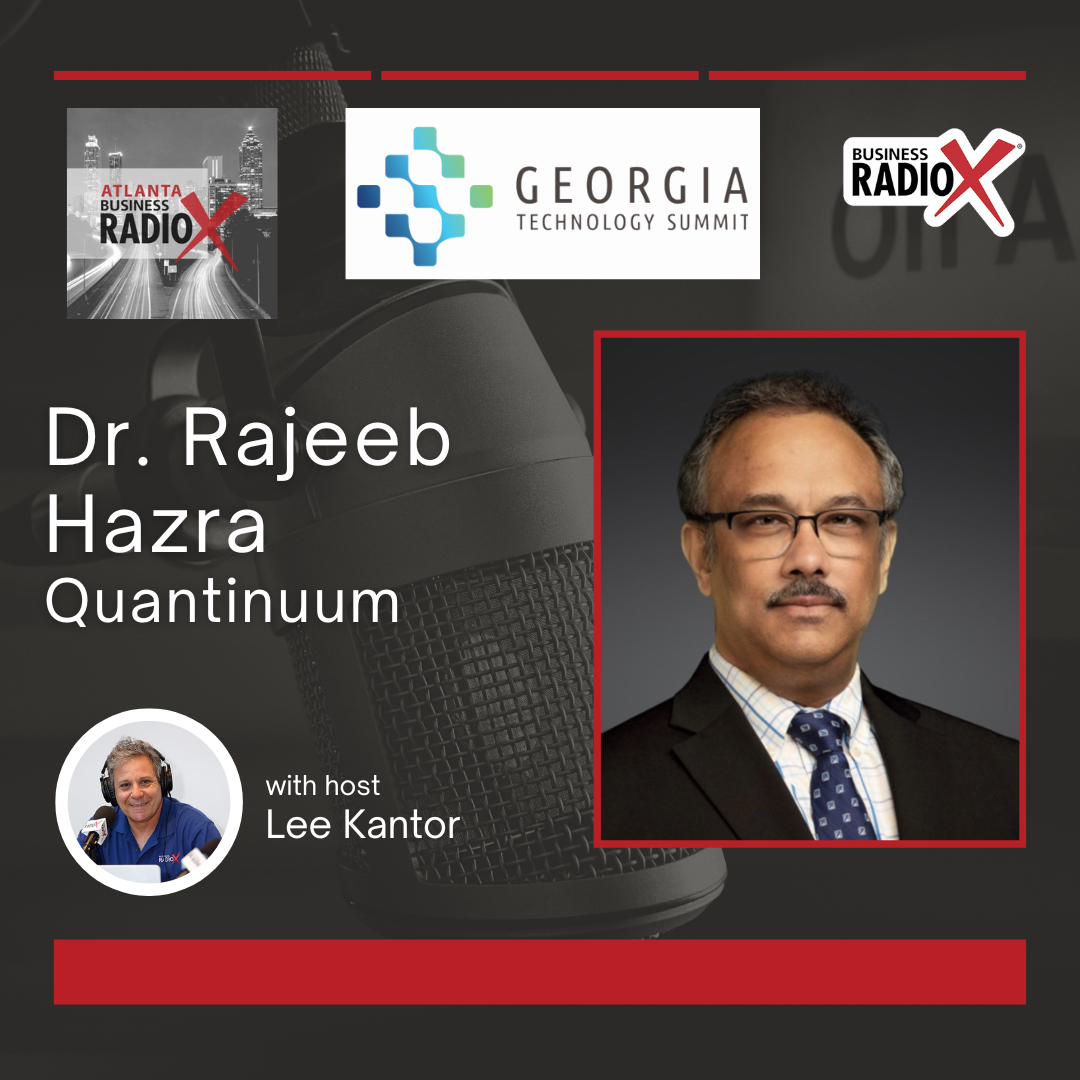
Georgia Technology Summit 2025: Dr. Rajeeb Hazra with Quantinuum
/
RSS Feed

Georgia Technology Summit brings together 1000+ Georgia-focused technologists to network, learn, and engage with the latest trends in Georgia innovation. This year’s summit was held at the Woodruff Arts Center, a stunning and iconic cultural landmark located in the heart of Midtown Atlanta.
 Dr. Rajeeb Hazra has more than three decades of experience in supercomputing, quantum, and technical roles across the globe.
Prior to joining Quantinuum, he served as the General Manager, Compute and Networking Business Unit at Micron Technologies, and spent 25 years at Intel Corporation, leading the Enterprise and Government Group, Technical Computing Group, Supercomputer Architecture and Planning, and Systems Technology Research.
Before joining Intel, Raj was with the Lockheed Corporation based at NASA’s Langley Research Center. He prides himself on building high-performing teams with a growth mindset and a culture of truth and transparency.
Raj has a Ph.D. and Master’s degree in Computer Science from the College of William and Mary in Virginia, U.S., as well as a Bachelor’s degree in Computer Science from Jadavpur University in Kolkata, India, and holds 16 patents.
Connect with Raj on LinkedIn.
This transcript is machine transcribed by Sonix.
TRANSCRIPT
Intro: Broadcasting live from the Georgia Technology Summit 2025 at the Woodruff Arts Center. This is Business RadioX. And now here’s your host.
Lee Kantor: Lee Kantor here broadcasting live at the Georgia Technology Summit 2025. So excited to be talking to my next guest, Dr. Raj Hazra with Quantinuum. Welcome.
Dr. Rajeeb Hazra: Thanks. Thanks for having me.
Lee Kantor: Well, I heard rumor has it you just got off the stage to give the keynote here.
Dr. Rajeeb Hazra: That’s right. I was on stage and I had the pleasure of talking about my most favorite topic. How is quantum computing going to revolutionize the planet and our lives?
Lee Kantor: Well, you know, we had Larry Williams on earlier, and he keeps mentioning quantum, quantum quantum, but he never explained it. Do you mind giving our listeners kind of a one on one 101 version of quantum.
Dr. Rajeeb Hazra: Sure. Quantum computing is computing the way nature does. As you know, nature is computing all the time. Right. Keeps counts, does additions subtractions in its own way to make things happen for us? It uses physical things. Of course, nature does not need semiconductors. It has its own things and physical things like atoms and lights and photons to do its own computing. Quantum computing is trying to compute the way nature computes using physical objects like, again, atoms or photons of light, to implement computing in the style that nature uses computing for. The advantage of that is, you know, nature computes with very low energy. It computes very powerfully using paradigms that we don’t fully understand. And it represents things in a way that is fundamentally different than the human way of approximating them so it can get us to better results, more accurate results, but far more efficient use of resources.
Lee Kantor: So how did this come about? Like who connected the dots to say there’s a better way of doing things?
Dr. Rajeeb Hazra: You know, quantum physics has been around for a while. And, you know, the stalwarts of the quantum mechanics era, like Richard Feynman, once hypothesized that if you can, if nature computes, we should be able to do that as well. And that’s kicked off for many, many years now, this effort to go look at not quantum mechanics or making quantum computers, that is, building computers using the principles of quantum mechanics. That’s been a pursuit, a scientific pursuit. Now it’s become an industrial pursuit that companies such as ours and others actually building, harnessing control over quantum mechanics to build these computers. And these computers have gotten very, very capable and powerful already.
Lee Kantor: So what is kind of, um. What stage are we at now? What can it do that’s different than what a traditional computer can do?
Dr. Rajeeb Hazra: So one of the first things is, you know, quantum computing was created for cryptography because it was such a powerful way to compute that it could encrypt things with much better keys. And, you know, if you didn’t have quantum computers, you could break those keys, um, or break the encryption. But, you know, it’s gone well beyond just cryptography. And the people, dark people do. And, you know, in, in the basements of buildings and stuff like that, it’s gone to where it’s now generating data on how chemical reactions happen, for instance, and simulating those kinds of phenomena that are actually fundamental for us to understand if we are going to use artificial intelligence and AI tools to understand and create and predict behavior. So just think of new ways to deliver drugs into your body, right? Creating new materials to absorb carbon dioxide from the atmosphere. How to generate water from water hydrogen so you can actually build hydrogen fuel cars. Understanding those things at a chemically accurate level, at a biologically accurate level, is what quantum computers can do that classical computers struggle to do, not just because they don’t have enough computing power, because the representation inside a classical computer is an approximation of that quantum phenomena.
Lee Kantor: So are we at a stage that it isn’t just kind of ideas in a person’s head, but it’s actually happening where there are drugs that are now being developed because of their leveraging this?
Dr. Rajeeb Hazra: Absolutely. But we have from 20, you know, last year was kind of a turning point in the in the evolution of quantum computing because we built quantum computers that could not be simulated on classical computers. Up until then, every quantum computer someone had, you could simulate. So you could really not do anything unique for the first time in 2024, we have quantum computers that are generating unique data for the first time that you can generate with classical computers.
Lee Kantor: So if you had the so a classical computer, a traditional computer can’t do the things that are happening in a quantum computer. That’s what you’re saying, that there are now two different things. It’s not one thing that can simulate the other.
Dr. Rajeeb Hazra: So so yeah, that’s exactly it. The classical computers are not because of the computational power, but even the the mathematical framework that runs on it.
Lee Kantor: Is different.
Dr. Rajeeb Hazra: Is different. It’s good for the world we see. Right. We can model streets and bridges and joints and junctions. Right. We can’t model how to hide very complex molecules interact in a reaction.
Lee Kantor: Right. So now with these computers you can do that.
Dr. Rajeeb Hazra: We can do that. And we can add that information as training information for AI agents that are now much smarter. As a result, understanding how chemical reactions actually work and therefore being able to predict new materials or classify. Materials more accurately than you could ever do before.
Lee Kantor: Now is it something that can the person do both? Can you be an expert in the legacy computers and the quantum, or it’s going to require a new kind of mindset in order to leverage quantum.
Dr. Rajeeb Hazra: Quantum computing has its own things that you need to learn.
Lee Kantor: So there’s there its own language, there’s own way of doing.
Dr. Rajeeb Hazra: And own way of even thinking about the problem. What is a quantum algorithm is very different than a classical algorithm, but you raise a very good point. One does not. Quantum computing does not obsolete classical computing, because all of these use cases happen when classical and quantum computers are used together. Just just take the example of a classical AI engine, right. That’s trained with quantum data. So again the quantum computer is the input to the classical computer.
Lee Kantor: But then, is there going to be a time when quantum is going to replace the legacy where the quantum is going to be? The quantum AI is going to be the one dealing with what quantum is originating.
Dr. Rajeeb Hazra: There will be some problems where it will be more advantageous to run it on a quantum computer versus a classical computer. But for the broad, vast scale of things, particularly where AI is the computational agent, we foresee a very, very long time of coexistence of both kinds of computing. It’s the one plus one greater than two. That’s really the magic here.
Lee Kantor: And a very long time in today’s world. Is that a year like what is very long? What’s the what’s a very long time look like in your world?
Dr. Rajeeb Hazra: A very long time is decades, if not centuries.
Lee Kantor: So it’s a long, long time.
Dr. Rajeeb Hazra: It’s a. Yeah, it’s a long, long.
Lee Kantor: Things are moving pretty quick.
Dr. Rajeeb Hazra: Yeah, that is true in technology. Things move very fast. But we’re talking decades, if ever.
Lee Kantor: And then when do you see a time when quantum is going to be just. We won’t be talking about it as this mystical thing that it’s going to be just part of the workflow.
Dr. Rajeeb Hazra: That era is we are at the beginning of that era. As I said, last year was kind of a watershed for both hardware and software to to be at a place where you could start looking at real problems to solve, like designing new drugs, like designing new chemicals. And so I think this will be very much in the next by the end of this decade. Certainly we would have we the general public will be able to say, and that thing was created with the help of a quantum computer and without it couldn’t have been done. So within this decade, we will have its ChatGPT moment.
Lee Kantor: Okay. So we’re not at a ChatGPT moment where the.
Dr. Rajeeb Hazra: We are very close to and have glimpses of. And that’s why companies like us are working 24 over seven, 365 to pull that future in.
Lee Kantor: So you’re just trying to accelerate to get here as fast as possible.
Dr. Rajeeb Hazra: As fast as humanly possible. A quantum leap forward, no pun intended.
Lee Kantor: So now, in your business, um, who is that ideal client? Who is the the, uh, person or the company that needs to be partnering?
Dr. Rajeeb Hazra: So that’s the beauty of quantum computing. It’s not a niche. So my ideal clients are are big companies that are driving at the forefront of transportation, finance, energy, bio and life sciences. These are all companies that are in the discovery of new things. That is what drives their business forward. And that discovery needs a constant fuel of AI plus quantum in order for them to accelerate their business, differentiate their business, and win.
Lee Kantor: And then are you finding that they’re all open to conversations, or are some of them more, you know, are you getting that the typical early adopter laggard kind of model even?
Dr. Rajeeb Hazra: We are certainly seeing a growing interest in quantum across the board. There are certainly folks who are moving faster than others. There are the early adopters. There are the the trailblazers, if you will. But in general, if you saw the industry five years ago, there were literally the Lewis and Clark’s who on any given day you could say, are they wise or foolish? Uh, but today it’s an industry that is accelerating to either lead or catch up.
Lee Kantor: And it’s one of those kind of, uh, points of inflection where you better pick a side if you’re not leading your of a.
Dr. Rajeeb Hazra: It is definitely at a point where if you’re not considering how quantum effects your business, you’re probably late.
Lee Kantor: So you got to pull the trigger. Like this is where you.
Dr. Rajeeb Hazra: Have to pull the trigger. You have to start understanding quantum computing. You have to start building your workforce within the company to understand how to use quantum computing, and then engage with the quantum industry to start doing use cases and experiments to then build your conviction. It is no longer about the next to next business cycle. It is.
Lee Kantor: You can’t wait to see what your competitor’s doing or it’s going to be. That’s right.
Dr. Rajeeb Hazra: That’s right.
Lee Kantor: So there is a cost of inaction.
Dr. Rajeeb Hazra: There’s a cost of inaction. There’s I would say the adoption of quantum and AI is going to be a tectonic decider, shift decider between people who were winners of the last era versus the new winners and those that have aggressively taken on the AI plus quantum mantra, if you will, or challenge have the best shot at being the winners again.
Lee Kantor: And second place it’s going to be it’s almost going to be last place if you’re not going to win this.
Dr. Rajeeb Hazra: Well, yeah, that’s that’s what the last 50 years of technology has taught us. Right. It’s very hard to be it’s very expensive to be a fast follower in this business.
Lee Kantor: Yeah. So, uh, if somebody wants to learn more, where should they go?
Dr. Rajeeb Hazra: Well they’re certainly welcome to come to Quantinuum.
Lee Kantor: Mhm.
Dr. Rajeeb Hazra: And uh, because one of our corporate strategic objectives is not just to build the best hardware and software in the world, but to also ensure that we can help the world educate themselves on quantum. So we run hackathons, we run quantum readiness programs. And our website has a wealth of information on use cases and technologies in the quantum space. Great place to get started. Then, of course, there’s a lot more to do, hopefully hands on.
Lee Kantor: Now, where are you based? Here in Georgia. Where are you based?
Dr. Rajeeb Hazra: We are based. We are a worldwide company. So our headquarters in Colorado, we are. And but we have eight locations all over the world. In three in the US, uh, three in the UK, Germany, Japan. And we are expanding very rapidly. So maybe Georgia is well on the cards.
Lee Kantor: So why was it important for you to come to the Georgia Technology Summit?
Dr. Rajeeb Hazra: It was important to come here because I love the idea of being able to continue to talk about the possibility that quantum computing will have in every industry. And I love talking to those in forums that are looking at where to go next. Not trying to just preserve a legacy, but create the next one. And forums like this is a perfect place where you bring in the companies in a in a collaborative atmosphere. The leaders of these companies thinking about not just what they do well, but what they need to do well next. And being able to have that dialog.
Lee Kantor: Well, Raj, thank you so much for sharing your story today. You’re doing such important work and we appreciate you.
Dr. Rajeeb Hazra: Thank you. Thank you for having me here.
Lee Kantor: All right. This is Lee Kantor. We’ll see you all next time on Georgia Technology Summit 2025.
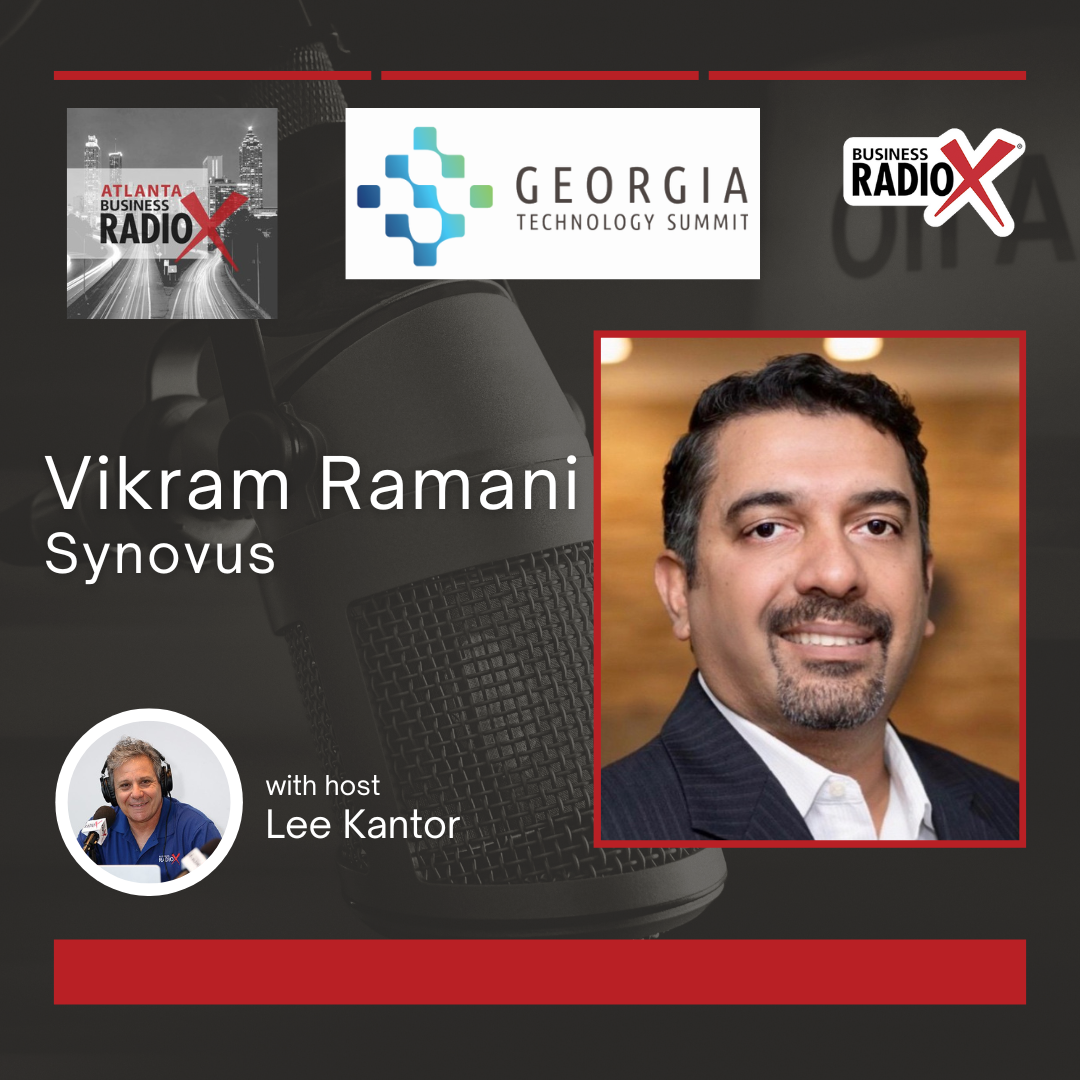
Georgia Technology Summit 2025: Vikram Ramani with Synovus
/
RSS Feed
Georgia Technology Summit brings together 1000+ Georgia-focused technologists to network, learn, and engage with the latest trends in Georgia innovation. This year’s summit was held at the Woodruff Arts Center, a stunning and iconic cultural landmark located in the heart of Midtown Atlanta.
 Vikram Ramani, CIO of Synovus, is a results-oriented leader with an excellent record managing technology organizations. He has the ability to present a vision and to grow an organization in a highly competitive industry as an innovative problem solver, motivator and catalyst for change.
Vikram adds value through challenging established practices and delivering solutions to complex business problems. He achieves results through skilled diplomacy, teamwork, and collaboration.
Vickram is a proven operator known for building scalable processes and teams , as well as successfully delivering multi-million dollar technology programs.
Connect with Vikram on LinkedIn.
This transcript is machine transcribed by Sonix.
TRANSCRIPT
Intro: Broadcasting live from the Georgia Technology Summit 2025 at the Woodruff Arts Center. This is Business RadioX. And now here’s your host.
Lee Kantor: Lee Kantor here broadcasting live at Georgia Technology Summit 2025. So excited to be talking to my next guest. Uh, today we have Vikram Ramani with Synovus. Welcome.
Vikram Ramani: Thank you, thank you. Glad to be here.
Lee Kantor: Well, um, for our listeners, the two people out there who aren’t familiar with Synovus, do you mind sharing a little bit about mission purpose?
Vikram Ramani: Absolutely. So Synovus is a financial corporation. We’re a bank, $16 billion in assets. We’re the largest bank incorporated in Georgia right now. So we do, uh, commercial banking, small business, banking and consumer banking. And along with that we have wealth brokerage trust businesses as well. Uh, traditional bank trying to be, uh, grow, uh, in our area. And we are in the southeast and the five states in the southeast. And, uh, we have a lot of momentum behind us to get to be a bigger bank.
Lee Kantor: So how what’s the the banking kind of, uh, business climate today? There’s so many young people, especially, that are attracted to online only, and they’ve never walked into a bank. They probably never will walk into an actual physical location is part of Cenovus’s roadmap to have more or less, um, you know, actual brick and mortar stores. What how do how do you see that?
Vikram Ramani: It’s it’s it’s going to be a combination. When Covid hit us, we all thought that all the brick and mortars are going to go away. But five years after that, now you see that there’s more growing. And, you know, brick and mortars are becoming more experience centers like the bigger banks are doing, like Chase and so forth. So we will as a bank, as a regional bank, always have a good combination of both. We’re going to have that as well. And especially being a commercial bank, we deal with larger paychecks, larger sizes and so forth. And those, um, customers like to come into the branch to, uh, deal with us. So we’re going to have that. But on the on the other side, where the younger generation, the Gen Zs, who like to do everything out of the mobile, we also have a plan for that in terms of growing our digital footprint and so forth.
Lee Kantor: So how do you kind of view, uh, brick and mortar? Is it like kind of a community center? You want it to be a place where people feel comfortable going and building actual relationships, human to human, with some of the bankers? Like, what’s your view of that? Um, you know how that fits into your marketing?
Vikram Ramani: That is correct. Our operating model has been within the branches. We have relationship managers that really take care of the clients because, uh, cross-selling is very important. You start something, a small business account, you look at the customer, look at their wealth portfolio, try to see if they can kind of embed that into our product suite and so forth. So exactly that we want to kind of build a true relationship with our customers.
Lee Kantor: And then why is it important for Synovus to be part of the Tag community?
Vikram Ramani: So as you know, technology is right in the center of, uh, transformation for any industry, whether it’s manufacturing, financial services, fintech, and so forth. I’ve been in financial services fintech for all through my life over 25 plus years, and I feel that being a part of this organization, I’m also a board member and part of the executive committee. Uh, being part of this organization really puts us not just our bank, but the entire state in a place where we can grow our technology footprint and ecosystem. And that’s important to the bank, because that’s going to be the center of a lot of the transformation work that we’re going to put forward towards.
Lee Kantor: So how do you, as a leader of an organization like Synovus, how do you kind of get the employees to buy into that and want to participate, volunteer, take an active role in an organization, any business organization, but specifically since we’re here, like into Tag?
Vikram Ramani: Yeah. So I have been associated tag, even in my previous, uh, gigs and so forth. And, uh, it’s the art of influencing, right? You’ve got to it’s part of their career path. Networking is a very important thing. Uh, you’ve probably talked to a few of my peers from other, uh, corporations as well. Uh, previously. And just the power of us interacting, collaborating with the other CIO’s, other organizations is very helpful, especially in our industry, in the technology industry, where new things are getting rolled out. Like I, we talked to each other, each other CEOs see what’s working, what’s not working, and so forth. And, uh, that’s a big help. And my organization, the technology organization within Synovus. They are loving it. I bring them over. I think there’s about 5 or 10 people here today as well. And they’re loving the networking opportunity and the and the opportunity to collaborate with other people as well.
Lee Kantor: Are you finding that young people are embracing kind of this human to human, face to face interactions that a tag brings about, or is it are they more comfortable in kind of a digital online virtual interaction rather than, you know, coming here? And I mean, I’ve seen so many people hugging, shaking hands like they haven’t seen each other in a long time. Um, how do you kind of communicate the value of that to a young person who, you know, is a digital native that, you know, they’re best friends they may never have met in person?
Vikram Ramani: Yeah. I think when Covid hit us, I think it kind of just took us in a different way. But I think over the past two years, especially within our bank, where we’re encouraging people to come into the office, I’ve seen a lot more youngsters coming in into the office and wanting to meet people. Learn from the seniors, if you will, on what’s going on and so forth. Water cooler chats. Um, I feel we’re going in that direction right now. It’s kind of flipped. I think 21, 22 people were still kind of happy to stay home because of, um.
Lee Kantor: It’s convenient and Covid like.
Vikram Ramani: And exactly.
Lee Kantor: They were fitting kind of their work around their life. And now they got to fit their life around their work.
Vikram Ramani: Yeah. And I think that human touch is very important. And the, the younger generation probably doesn’t know that we’re really pushing for them to come into the office, work with others. And so far I’ve seen that, um, they want to come in more than, you know, the established, uh, employees and the organizations.
Lee Kantor: I think that there is a misconception about going back to the office and that something that young people, especially if they graduated and then started virtual and then they never got to experience, is that serendipity that happens in an office situation where you can just bump into somebody and get an answer to a question in two seconds. Those little kind of collisions that occur just naturally in the course of your day. I think the young people miss out on that. And there’s a lot of mentoring and opportunities that they’re not going to have because they don’t. They’re not in the room. When something great happens, someone says, see how that person handled that? That’s they can learn and just kind of accidentally that I think they missed out on. They don’t even know they missed out on.
Vikram Ramani: Exactly, exactly. And that’s what we’re promoting and encouraging our employees here. And I think if you look at most of the corporations in Atlanta, they’re going the same trajectory as well, um, to help that happen.
Lee Kantor: So now, uh, tell us about your upcoming speech. What are you talking about today?
Vikram Ramani: Oh, we’re we’re talking about AI. Uh, wow. Surprise is the first person.
Lee Kantor: Exactly AI today.
Vikram Ramani: That’s weird. Uh, I think I’m talking about AI across industries. I’ve got a great group of panelists there. Uh, some of my ex-colleagues as well. We’re just going to talk about AI in terms of how it’s going to be a competitive advantage. The goods and the bads are the scope of improvement that we need within those things as well. Because it’s a new technology. It’s super disruptive. How do you handle that across regulated industries like ours? Because we’re probably the most healthcare and financial services are the most regulated industry. So it’s going to be very interesting. Uh, discussion uh, this afternoon.
Lee Kantor: So any sneak peeks? Is there any spoilers you can give out?
Vikram Ramani: Uh. Nothing much. We’re we’re just, uh, going with the tide. Uh, so it’s, uh.
Lee Kantor: So where’s, uh, from a banking standpoint, where’s kind of the low hanging fruit for AI?
Vikram Ramani: Um, so in banking, because we deal with a lot of loans, deposits and so forth, you know, bringing biases, uh, is a big thing that we need to be very sensitive about. Um, so what we’re doing within financial services and banks is that the low hanging fruit is the operational efficiencies that happen. Happened, right? Um, you read 1000 pages of contracts every day. The legal department reads. I would be a great bet. Does not. Pii information does not. Anything else? We could easily build something that makes their life easier. Things like that. Call centers where people call in to do stuff. If you want to go and do an audit of those things, let’s start using an AI agent. Things like that is what we’re looking at right now. We don’t want to go into the areas where, uh, it could cause bias into lending, loans and so forth. We’re very careful not to touch that part. The, uh, the. And then so we’re focusing on the back end operational efficiencies part right now.
Lee Kantor: So what’s on the roadmap for Synovus over the next few years? What’s your vision of, uh, how big it can be and how how much better it can be?
Vikram Ramani: I think, uh, our journey started about two years back. We built the foundation. We don’t want to miss the bus on this very disruptive technology in AI. So we’ve built the foundation, a customized type of LM that we’ve built for us. And as and when all the boxes check on the areas that we can work on, it’ll start coming into it. I think this this technology is going to be super disruptive. But we’ve got to be careful. We’ve got to be methodical before we start implementing it. And that’s kind of what is going to drive some of my strategy as well going forward for the bank.
Lee Kantor: Now when it comes to growth, um, it’s Georgia based. And then you’re going to expand out from there.
Vikram Ramani: That’s the so so we’re in five states. We’re in Georgia, Tennessee, Alabama, Florida and South Carolina. And um, a growth could happen many different ways. It could be organic growth going into a different state and so forth. It could be M&A and so forth. It’s a bigger discussion. I think this year, probably those type of discussions will uh, there’s a lot of, uh, you know, um, tailwinds. I would say with that, over the past two years, there’s a lot of headwinds in those type of discussions, because what happened to the banking industry with Silicon Valley falling and all that stuff. So this this year there’s going to be a lot of discussions on that. So but we’re focused on organic growth. That has to go on. We’re in the southeast. So um we’re going to continue to focus on that.
Lee Kantor: So how do you kind of compete against kind of these stadium banks that are, you know, plastering their name on, uh, big stadiums? The, the, the ones that are the mega brands. Like what? Where is your niche?
Vikram Ramani: We don’t we don’t really, uh, compete with the big banks like the JP Morgan Chase or the tourists of the world Bank of America and so forth. Regional banking has got its its, uh, place in the US economy. It’s more customer centric. Um, and that’s where we kind of focus on, uh, most regional banks are that way. Community banks are the same way and so forth. The mega banks are in every place, right? And it’s just volume that they have. So, um, that’s where we come in because we’re customer centricity is our model, and that’s where we, um, you know, grow.
Lee Kantor: So customer centric, community centric, really be visible within the community, serve the community, and then just kind of immerse yourself within that and then build the brand from there outward.
Vikram Ramani: That is correct. Yep.
Lee Kantor: So if somebody wants to learn more, uh, about Synovus, what’s the best way to connect?
Vikram Ramani: You can start with me.
Lee Kantor: Uh, start with you.
Vikram Ramani: Yeah, you can start with me, and I can get you there. Obviously, our website’s got a lot of details in it. Um, then we can go from there.
Lee Kantor: All right. Well, Vikram, thank you so much for sharing your story today. You’re doing such important work, and we appreciate you.
Vikram Ramani: Thank you very much.
Lee Kantor: All right. This is Lee Kantor. We’ll be back in a few. At Georgia Technology Summit 2025.
Georgia Technology Summit 2025: John Wilson with Spelman College
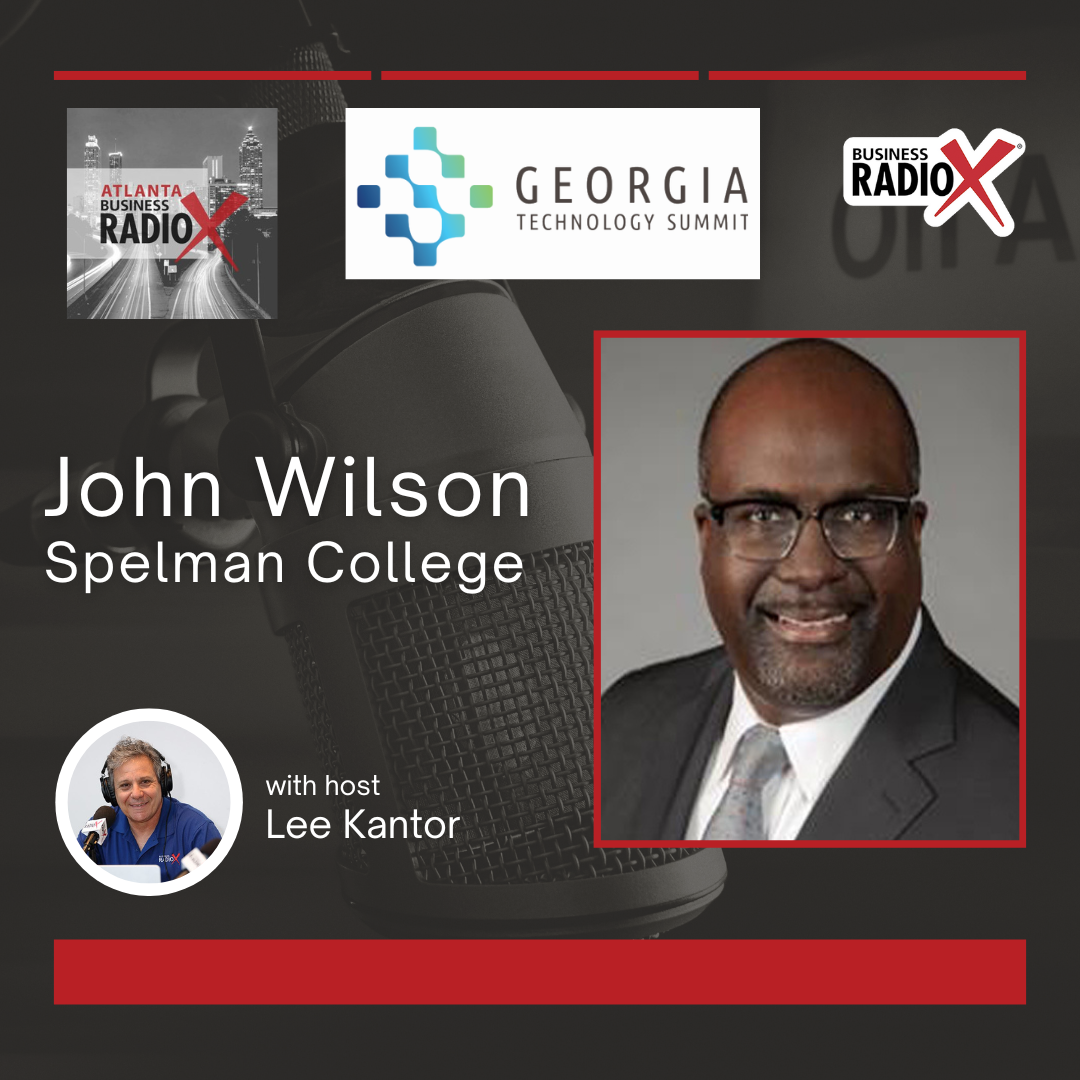
/
RSS Feed
Georgia Technology Summit brings together 1000+ Georgia-focused technologists to network, learn, and engage with the latest trends in Georgia innovation. This year’s summit was held at the Woodruff Arts Center, a stunning and iconic cultural landmark located in the heart of Midtown Atlanta.
 John B. Wilson, vice president and chief information officer for Spelman College, is responsible for modernizing and upgrading the campus technology infrastructure, an essential priority of the strategic plan.
Wilson and his team will partner with administrative units to create and use accessible and effective technology processes to promote innovation and support streamlined business operations and cutting edge technological capabilities, including data analytics, cybersecurity, automation and systems integration.
In addition, Wilson will work to strengthen the teaching and learning experience by collaborating with faculty and students to develop strategies that will impact educational outcomes through innovative technology.
Before joining Spelman, Wilson spent 17 years as a senior information technology manager at Emory University. Following Emory, he directed the enterprise information systems at Georgia Institute of Technology, where he was responsible for strategic planning and operational oversight for a staff of 50 developers, analysts and administrators.
Wilson received a bachelor’s degree in information and decision systems from San Diego State University. He obtained a Master of Business Administration from the D’Amore-McKim School of Business at Northeastern University.
This transcript is machine transcribed by Sonix.
TRANSCRIPT
Intro: Broadcasting live from the Georgia Technology Summit 2025 at the Woodruff Arts Center. This is Business RadioX. And now here’s your host.
Lee Kantor: Lee Kantor here broadcasting live from Georgia Technology Summit 2025. So excited to be talking to my next guest, John Wilson with Spelman College. Welcome, John.
John Wilson: Thank you. I’m glad to be here.
Lee Kantor: Well, um, tell the folks, uh, what’s your role at Spelman?
John Wilson: Um, for about the last five and a half years, I have been the vice president of technology services and chief information officer at Spelman College.
Lee Kantor: So what does that job entail at a university?
John Wilson: So, uh, what? We’re a college. Um, so I basically oversee all technical operations. Everything from cybersecurity. We provide the network, enterprise applications, um, desktop support, all the computer things that you would expect.
Lee Kantor: So what’s your backstory? How did you get involved in this line of work?
John Wilson: Um, I’ve been in higher ed it for about 26 years. Um, I actually started off as a sales person in the private sector. I worked for, uh, Xerox Corporation and Johnson and Johnson. Um, I studied information technology as an undergrad. And then when I had a chance to, uh, go to Polaroid Corporation, um, I started getting into digital imaging and really started going down the IT path that way. Uh, started at Emory University here in Atlanta as a project manager, managing technical IT projects, and, uh, went from there to Georgia Tech and from Georgia Tech to Spelman.
Lee Kantor: So now, um, pretty much every guest we’ve had today has been talking about AI. How does AI fit into your world?
John Wilson: You know, I is very important to, uh, Spelman College and as well as the higher ed space in general. Um, we have the responsibility of ensuring that our students are prepared to go out into the world and compete, uh, for, uh, jobs that will afford them the lifestyle that they want. And I is a skill that you just have to have these days. And it’s going to be more so going forward. So we are in the process of identifying how to bring AI to campus in a way that is, um, safe, responsible, cost effective and adds value to what we do.
Lee Kantor: Now, are you using AI in your work?
John Wilson: I do, um, we have AI that’s embedded in several of our cybersecurity products. Um, it helps us so that we don’t have to manually crawl through logs and identify trends. The software is very helpful in that regard. Uh, we also use it for training. Um, some of the training platforms that are out there are very effective and save us a lot of time, quite honestly. Uh, so we’re using it there. And of course, of course, I use it in my own personal workflow for drafting documents and writing emails, etc..
Lee Kantor: Is it used at all like from a, um, kind of a client services client support manner that, um, a student could use it to help, you know, maybe answer a question or a prospective student.
John Wilson: That is a great question. And that is exactly what we’re working on now. Um, as we know, artificial intelligence requires, um, access to clean, relevant, curated data. And so we’re in the process now of creating our enterprise data store. Um, that will be the back end for our artificial intelligence capability.
Lee Kantor: So any advice for others out there in a similar situation, like how do you go about kind of creating that clean, curated data that the AI needs in order to serve up the right answers when the people ask the right questions.
John Wilson: Yeah. You know, there’s a there’s a bunch of different ways, um, to do it. The approach that that we’re going to take is using some sort of enterprise repository, and that will be populated by legacy systems. So as the data comes out of the legacy system and into the repository, it will be reviewed for accuracy and make sure that it’s harmonized as it goes in. Um, but, you know, there are AI models that actually go against transactional databases or legacy databases. Um, and so that’s an option as well. But I just appreciate the flexibility that comes with having your own, um, data lake, if you will, or Data Lake House.
Lee Kantor: Is there a place for capturing maybe knowledge from alumni and students where where they get it, you know, kind of answer questions out of their own mouth based on their own experiences.
John Wilson: Yeah. Yeah, absolutely. You know, that’s that’s part of our ambitious goal with artificial intelligence is we want to start off as sort of a 24 over seven contact center where students can ask questions about classes and registration and financial aid and those types of things. But we’d also like to build it to the point where it has it contains all of our corporate memory, if you will, and prospects, students and alumni could ask it just about anything, but that’s down the road a bit. But that is the vision.
Lee Kantor: So is that something that it their technology is available today to make that dream come true, or is it something that it’s still in that no one’s figured that out?
John Wilson: No. I you know, I think I think the technology is definitely available. Um, but we have to we have to get the expertise. Um, and it’s a bit of a journey, you know, that’s something that we’d like to potentially manage ourselves. And we just need to, um, start to build that skill set in-house. And that’s why I put it on the roadmap. You know, it’s a few years down the road. We just have to build that skill set.
Lee Kantor: So how do you, um, attack an event like the Georgia Technology Summit? What are you hoping to get out of it?
John Wilson: Um, well, you know, I’m on the board of tag, and so it’s been a great experience for me to come out and just meet vendors. Um, talk to folks in our societies. Uh, meet with my peers. Um, you know, as a technology focused, um, meeting in the state of Georgia, it’s just a tremendous opportunity to meet people from other industries. Um, share ideas, hear how they’re tackling some of the same problems. So it’s something that I look forward to. I’ve participated. I think this is my fifth year in a row, and, um, I really look forward to it and enjoy being here.
Lee Kantor: Now, how would you recommend a young person who’s, um, maybe a potential a Spelman College, uh, student attack, an organization like tag? Like, how would you recommend they, um, get involved and and what areas do you think would bear the most fruit?
John Wilson: You know, that’s a great question. Um, the good thing about tag is we have so many different societies that cover everything from machine learning, artificial intelligence, fintech, uh, you name it, there’s something out there for everyone. So I would just encourage, if you’re interested, to go to tag Online.com, I believe it is uh or org. Org um, and look at the societies and find something that interests you. Um, I believe that the times and locations are listed as well. And just just go and start meeting people and talking to people. And if you think it’s a good fit, then feel free to join tag and take advantage of all that tag has to offer.
Lee Kantor: Now, as, um, do students of Spelman, do they kind of get the heads up about tag like that, or is that something that they’re encouraged to join and be part of.
John Wilson: It is it is. And last year or year before last, we had a pretty good the contingency of students that actually came to us. Um, Georgia Technology Summit, uh, you know, it’s kind of hard with students. They have a lot going on. Um, but I certainly make an effort to make them aware, um, as well as, uh, certain faculty advisers are aware so that they can help, uh, promote the message as well. So, yeah, we definitely want to get our students involved, uh, and get them out as much as possible. It’s just a matter of them finding the time and making the commitment to come.
Lee Kantor: Right. Because the connections are here where they’re going to get their next job is probably in this room right now.
John Wilson: You know, that’s that’s a very true statement. Um, I think these days it’s becoming more and more about networking and really having an opportunity to showcase your skills and your personality. And the best way to do that is really through a face to face meeting.
Lee Kantor: And joining an organization like this, volunteering, taking leadership roles demonstrate what you bring to the table because it’s a competitive, uh, workforce right now.
John Wilson: It really it really, really is. And, um, I think employers like to see folks who take initiative because quite honestly, um, all things being equal, everybody’s smart and ambitious. Um, but I think where you can differentiate yourself is to take the initiative to come out, shake hands, introduce yourself, start to share your narrative. And that’s going to leave an impression.
Lee Kantor: Right? Relationships matter.
John Wilson: Absolutely.
Lee Kantor: So if somebody wants to learn more about Spelman, what’s the website there?
John Wilson: Uh, Spelman 1lspelman.edu. And, uh, there’s a wealth of information on the website. Uh, I would encourage any prospective or anybody who’s interested in coming to go and check it out.
Lee Kantor: Well, John, thank you so much for sharing your story today. You’re doing such important work and we appreciate you.
John Wilson: Thank you for having me. I enjoyed it.
Lee Kantor: All right. This is Lee Kantor back in with you at Georgia Technology Summit 2025.
Georgia Technology Summit 2025: Ron McMurtrie with Honeywell
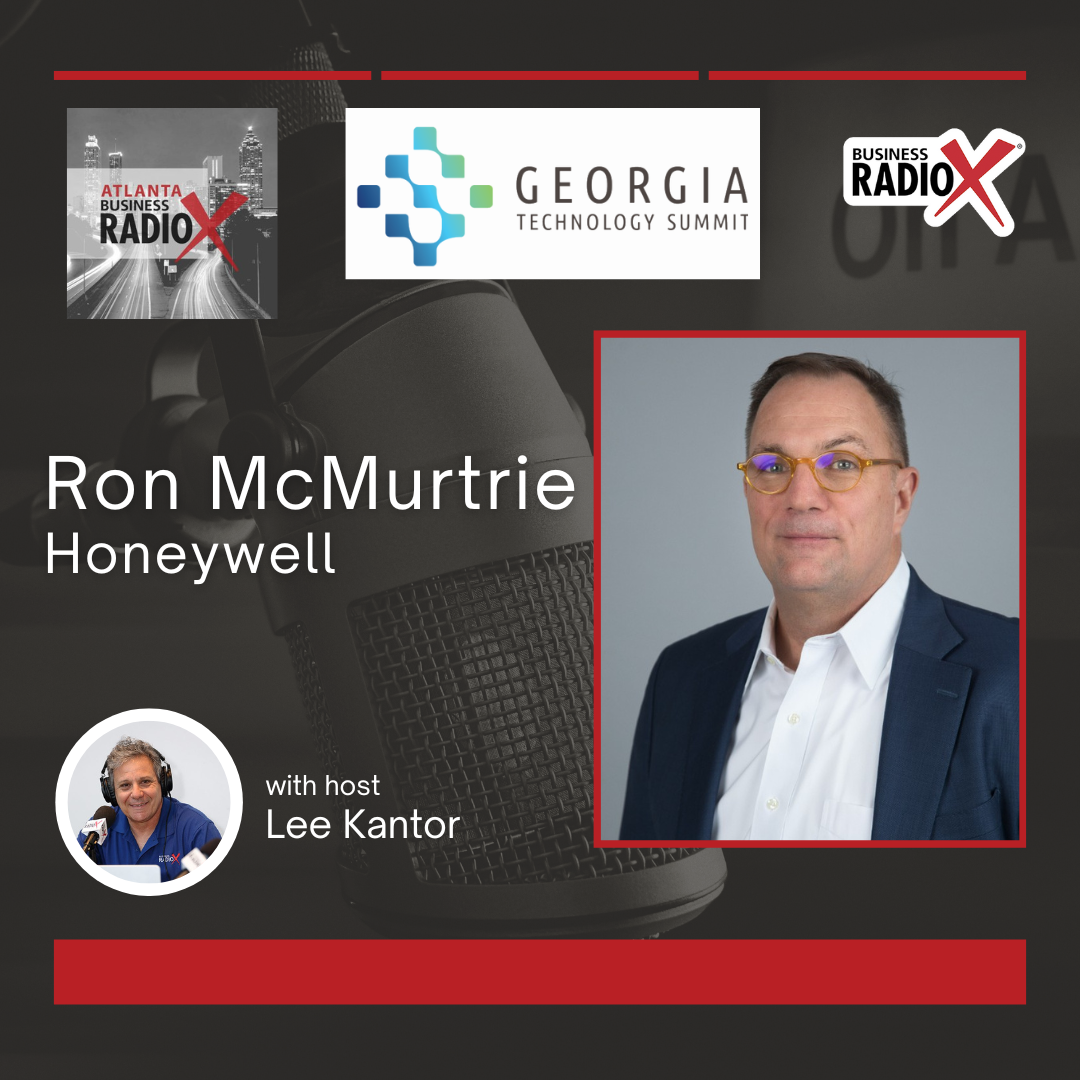
/
RSS Feed
Georgia Technology Summit brings together 1000+ Georgia-focused technologists to network, learn, and engage with the latest trends in Georgia innovation. This year’s summit was held at the Woodruff Arts Center, a stunning and iconic cultural landmark located in the heart of Midtown Atlanta.
 Ron McMurtrie, CMO at Honeywell, is an accomplished results-oriented global business leader with experience at world-class brands in roles that include Group President, Chief Marketing Officer and Senior Vice President Marketing.
A multi-dimensional leader with P&L and personnel responsibility spanning direct sales, marketing, enterprise consulting and professional services in private and public sector markets.
Diverse industry background with expertise leading transformation, turnaround and growth opportunities and specialization across sales and marketing including strategy, direct sales, sales operations, sales effectiveness, communications and all disciplines of marketing.
Connect with Ron on LinkedIn.
This transcript is machine transcribed by Sonix.
TRANSCRIPT
Intro: Broadcasting live from the Georgia Technology Summit 2025 at the Woodruff Arts Center. This is Business RadioX. And now here’s your host.
Lee Kantor: Lee Kantor. We’re broadcasting live at the Georgia Technology Summit 2025. So excited to be talking to my next guest, the diamond sponsor of this whole thing. It is Ron McMurtrie with Honeywell. Welcome.
Ron McMurtrie: Thank you. Thanks for having me.
Lee Kantor: Um, so excited for you to be here. Tell the folks why it was so important for not only to attend here, but to be the diamond sponsor of this great event.
Ron McMurtrie: Look, uh, we’re a member of the community, just like, um, the rest of the sponsors here. And Honeywell has a large presence with our building automation business and our software business, uh, Honeywell Connected Enterprise, uh, right here on Peachtree, and being a part of this is important for us to support the community, have our colleagues be engaged and share our technology. And, uh, for Honeywell, this is our third year in a row being a sponsor at this level.
Lee Kantor: So now as an organization, Honeywell is all over the planet. But how do you typically when you have presence in a community, do you get this involved or is this unusual?
Ron McMurtrie: Now we have um, we are a global organization, of course, and have colleagues in literally hundreds of countries and serve a broad range of industries. But, you know, where we have major colleague hubs in Houston and in Charlotte and in Atlanta and in parts of the Middle East and Asia, we we tend to very much embrace the community. Honeywell is very much a colleague focused organization, and we serve the the same communities that serve us. And wherever we have large locations, our colleagues tend to rally around the environment and the communities that they’re a part of.
Lee Kantor: So when Honeywell decides to get involved to this level, uh, with a tag, how does that trickle down to all the employees in Honeywell here in Atlanta? Is that something that’s encouraged for everybody at Honeywell to say, okay, we need you to be joining Tag. We need you to take leadership roles. It’s no, it’s we’re not just cutting a check. We’re really immersing our team in our culture into tag.
Ron McMurtrie: We, uh, we don’t require anything of that nature. It’s, uh, it’s an opportunity for them. We treat it as, uh, an area for them to those leaders that are looking to develop, develop themselves or get involved or have special interest communities. We you know, we have I sponsor a lot of it in terms of driving engagement with the colleagues as well as the rest of the leadership team, but it’s inclusive of all colleagues within the market, and they want to be a part of it. We we teach them about the societies and how to get involved. If they’re looking on developing leadership skills, we help them get different positions in terms of serving on boards and serving on committees, but it’s strictly volunteer. We all get back in some way, and it not only develops the career, but gives back to the community and this ecosystem we have.
Lee Kantor: So if you were giving advice to a young person, um, how would you kind of recommend that they leverage an organization like Tag.
Ron McMurtrie: Get involved, experiment, uh, volunteer and find an interest that you want to develop or you can contribute to and participate. We do about 120 events a year. It’s a great way to get out to network. And building a network is important. Um, and then developing your own skills. So tag offers a broad range of ways to get involved in the community. Ways to develop leadership and ways to develop your trade. And with each of our colleagues, when I coach them, I talk to them about how they can do that. And in fact, that’s what’s paid off. A lot in my career is my involvement in Tag and the different chances people have given me by me reaching out.
Lee Kantor: So now, um, did you have a chance to speak at this, uh, summit thus far, or are you speaking later?
Ron McMurtrie: I did, as I serve as the chair of the tag board, and I helped kick it off, the program off. I also did, um, a keynote, uh, participating a keynote fireside chat at the opening.
Lee Kantor: Uh, what was the topic?
Ron McMurtrie: It was I, uh, and and, uh, we we had a fireside chat chat and talked about the future of AI and agents and how agents are going to serve, uh, how agents will take AI to the next level.
Lee Kantor: So how what’s that through the lens of Honeywell from.
Ron McMurtrie: Well, Honeywell has been involved with AI for many of our products for some time. We use a lot of deterministic AI, that is things that can help monitor our products so that they’re always operating and have great uptime. And we can help customers know about a challenge or an opportunity before a challenge or an issue before it comes up. Um, but we’re also heavily embraced gen AI and other types of technology that allows us to make sure that we’re serving our customers, and we’re also using as productivity tools within our business. So we’ve we’re all in on AI in terms of transforming, supporting our colleagues, and most importantly, baking it into our products to make them smarter and, and, uh, better serve the the customers that we provide them to.
Lee Kantor: Can you share a story about how you were able to leverage AI within Honeywell system in order to maybe solve a problem, or to take an issue maybe away or to a new level?
Ron McMurtrie: Yeah, we have a, a, a product called Carbon and Energy Management. Uh, that product, uh, is put within it’s a software application that monitors, monitors, building operations, the heating systems, um, all the environmentals and helps them manage their energy in a way that helps, you know, curate environments for the colleagues, but at the same time, make sure it’s comfortable and safe. And at the end, it gives helps them optimize their spend, uh, on those types of capabilities. So it’s both a colleague benefit, particularly with how workforces are on flex time now. Uh, so that’s a that’s a product that we have, uh, that we deploy across a lot of commercial, uh, operations. Uh, and that’s very much AI driven. So it’s using technology to predict experiences load in the environment. Uh, and and then helping operate the, the building uh, management systems. We also use AI internally. Uh, we use it to help our sales force. So as they’re out, we can help them look at their opportunities, pick the next best opportunity to address based on certain characteristics, and use data models to help predict outcomes. Uh, in in that selling process.
Lee Kantor: It seems like AI information is coming fast and furious, but at the same time, this is probably the worst AI is ever going to be, right? It’s only getting better from this point forward. We’re just scratching the surface, right?
Ron McMurtrie: Well, I don’t I don’t I view it as a technology, uh, evolution and a bit of a revolution. I don’t know that it’s worse, but it’s changing rapidly with each day. There’s new technology breakthroughs, there’s new models that come out, and I. I harken it back to when the internet first came out. It was a bit of a Wild West. And then supply supply side got defined, demand side got defined, and innovation really accelerated the same things happening with AI.
Lee Kantor: So are we at that tipping point where innovation is accelerating.
Ron McMurtrie: At at a pace like I’ve never seen? I don’t I don’t think I’ve seen a piece of technology in my career, been in 30 years of tech that has moved as fast as I have, both from experimental, from the return it drives and the pace in which capabilities are being rolled out.
Lee Kantor: So what if you were looking ahead even six months to a year? What do you foresee?
Ron McMurtrie: Look, I, I see businesses building more knowledge, capabilities to help their workers be more productive. I see products having AI baked into the capabilities so that they run better. They are more predictable and they provide better outcomes. So AI is going to touch every function, every type of operations, how legal works, how finance works. Simple audit functions can now be done with AI agents, uh, and provide those answers and those outcomes. You still need technical colleagues to review and do that. But a lot of that that labor intensive work can now be automated, and colleagues can move to higher order activities that help serve their customers.
Lee Kantor: Is the workforce prepared for this disruption?
Ron McMurtrie: I think it’s like any evolution, there are early adopters. There are some that are retooling their skills. Uh, in marketing, I’m the CMO for for Honeywell. Um, our marketers are going through a transition. They’re learning how I can help craft their content. Uh, they’re learning how I can help with graphics production. They’re learning about how I can help with demand Gen. So it’s like any new tool, you learn it, you adapt, you create, and you educate yourself. Um, are. We already know, but we weren’t ready when the internet came on board. We weren’t ready on that when servers were being virtualized, and we weren’t ready on that when telephone lines switched to virtual private networks and things changed. So technology has gone in phases. And as it as it adjusts, people adapt, they take on new skills, new industries get formed. And that’s what’s that’s what’s so amazing about technology.
Lee Kantor: So what’s the problem that, uh, Honeywell customer is having? That Honeywell is the best solution for them.
Ron McMurtrie: Well, um, I’ll give you it. It depends. But if you want your if you’re an industrial automation and you want the best precision, the best uptime and the safest operations, and you come to Honeywell. But Honeywell, uh, is focused on the future of automation, the future of aviation. And we’re focused on creating new energy solutions. So we have three major megatrends that we address. And we have capabilities that serve all of those around the world.
Lee Kantor: And if somebody wants to learn more about Honeywell or have a more substantive conversation with you or somebody on the team, what’s the website?
Ron McMurtrie: It can come to honeywell.com.
Lee Kantor: All right, Ron, thank you so much for sharing your story. You’re doing important work and we appreciate you.
Ron McMurtrie: Yeah. Thank you very much.
Lee Kantor: All right. This is Lee Kantor. We will be back in a few. At Georgia Technology Summit 2025.
Georgia Technology Summit 2025: Larry Williams with Technology Association of Georgia
/
RSS Feed
Georgia Technology Summit brings together 1000+ Georgia-focused technologists to network, learn, and engage with the latest trends in Georgia innovation. This year’s summit was held at the Woodruff Arts Center, a stunning and iconic cultural landmark located in the heart of Midtown Atlanta.
 Larry K. Williams has served as President and Chief Executive Officer of The Technology Association of Georgia (TAG) for almost a decade.
He also leads the TAG Education Collaborative (TAG-Ed) benefiting workforce development across Georgia, and the National Technology Security Coalition (NTSC).
A lifelong leader in economic development, Mr. Williams has worked across the U.S. in policy, programming, finance, government affairs, and international relations.
Williams is a founding member of Fintech Atlanta, and Venture Atlanta, plus serves as a member and supporter of the Metro Atlanta Chamber, Georgia Chamber, Atlanta CIOs Advisory Council, the Partnership for Inclusive Innovation, and the Atlanta Rotary Club.
Connect with Larry on LinkedIn.
This transcript is machine transcribed by Sonix.
TRANSCRIPT
Intro: Broadcasting live from the Georgia Technology Summit 2025 at the Woodruff Arts Center. This is Business RadioX. And now here’s your host.
Lee Kantor: Lee Kantor here broadcasting live from Georgia Technology Summit 2025. So excited to be talking to my next guest, Larry Williams with TAG. Larry, How are you doing?
Larry Williams: Doing great. Lee. How are you?
Lee Kantor: I am doing great.
Larry Williams: Delighted to have you back here again this year as.
Lee Kantor: Well, interviewing so many interesting people. Uh, tell us about the summit. Tell us about your vision for the summit and how it’s going today.
Larry Williams: Gosh, Lee, there’s so much going on here, but I’ll highlight a couple things. One, the summit this year is really focused on a new reality. It’s about AI and the quantum verse. So everyone’s talking about AI. What are the real opportunities that we can have here? Um, but we also have to be looking over the next horizon. And that’s quantum. It’s coming faster than most people think, but it’s going to be the next major disruptor as we really start to get, uh, get AI on the tracks. The thing that I’m really, really proud of and I’m interested in is we’ve got people that are really taking AI and creating commercial and business opportunities and applying it in the real world. There’s so much that we often hear it’s more about the theory or the fear around it, but these are people that have actually taken this wonderful tool that is going to be a major catalyst and a major disruptor for what we do. Um, probably the most transformational technology of our lifetime. And they’re actually putting real world applications, uh, uh, in place for it. For example, Brett Taylor was a keynote this morning. We did a great fireside chat with him. Bret Taylor is, um, he’s the chairman of OpenAI. So if you think ChatGPT, that’s what they do. Um, he is the guy who was thinking about Google Maps back in Google back when it was just creating, when we just called it, you know, machine learning and sort of the infancy of what is now AI. He’s the guy who created the thumbs up. He’s the former co-CEO of Salesforce. He was the former, uh, chair of Salesforce. This guy’s the real deal. And now he’s running a company called Sierra AI, which is focused on customer service and language and, you know, real language modeling. So these are the types of people that are taking these great technologies, bringing it down to the street. How do we improve people’s lives? How do we improve productivity and creating great opportunities out of it? Super thrilled about that.
Lee Kantor: So when you’re, uh, obviously as the leader of Tag and you’re having conversations with people, I’m sure, all over the globe when it comes to the latest technology. You mentioned AI. You mentioned quantum. How do you take kind of all of these things that are at the bleeding edge and then create a path for people here in Atlanta through tag to at least get their feet wet or immerse themselves or get the knowledge they need in order to deliver that back, like you said to their customers.
Larry Williams: So one of the, you know, part of the heart of Tag is connections. So a lot of it is making sure that we’re getting people connected. And so that they can learn that they can share, they can inspire each other about what these particular opportunities are. You know, Lee, I’ve always felt like business will find a way. If there’s an opportunity out there, you get the right people connected and in the right room together and they’ll, they’ll they’ll figure out the rest. Um, but as we think about bringing people together in a relative way, it’s, it’s getting them thinking about how how can we do something? What can we do to collaborate, to actually build the next generation of ingenuity? And that’s what what happens here. The other thing, and, Lee, I think you’ve heard me say this before. One thing about Atlanta and Georgia throughout the state is that we really are a group of people that think about what are the real applications for something. I’ll say that Georgia is where technology meets the real world. It’s not always the, you know, shiniest new gadget or the coolest new social app or the biggest trend. But we’ve got people that are building businesses, creating opportunities that drive revenue more than anywhere else in the world. That’s what happens here. And so I think as you see it, um, the companies that are here, the innovations that come out of here, whether it be through our universities like Georgia Tech or the entrepreneurs, uh, the people that are thinking about next generation of, uh, innovation. That’s what’s happening here. People are building real businesses.
Lee Kantor: So walk us through what happens. Like you hear about I. You hear about quantum, you hear that things are happening. These are the next big things. How do you take those concepts and actually integrate it into tag, so that there are a pathway for businesses to connect and turn into the community that you want them to. So business can find a way in those areas. Uh, you know, it’s one thing business can find a way, but they have to be in the right pond to find that way. And tag is the right pond in a lot of places. But how do you put them in, uh, relationships? And how do you give them the information they need so they can say, okay, quantum is next. That is real. If Larry says that I should be paying attention, I should be paying attention. And who should I meet? And how do you kind of facilitate that? How does it go from your head into the real world?
Larry Williams: You know, it’s it’s interesting because it’s there’s a lot of layers to what you just put out there. Um, and especially when we think about something like AI that really it’s, uh, a lot of people that are implementing things today are pioneers. And so we’re learning. And so what I’m learning here today, and this is a lot about what this conference is, um, when I was thinking about quantum, you know, and I really AI is the first opportunity in front of us right now is things that we’re really implementing and commercializing right now, today. Quantum is really over the next hill. I used to describe last year, I was saying it’s about three hills over. It’s coming fast. So to get back to to you know what we’re saying, I think what people are, are learning here is that there are people that have taken more finite, uh, opportunities. Uh, the example with Brett Taylor and Sierra AI thinking about customer service, and they’re implementing AI in a product that is actually solving a problem, that people have a pain point, so they’re not trying to boil the ocean. They’re trying to do something that is going to help people solve a, you know, or create a solution or solve a problem today. So there are people that are taking it and using it. How do we improve healthcare? That can be a longer cycle because of the regulatory environment. You know, HIPAA laws and things like that that they have to work along.
Larry Williams: But you’ll start seeing it in fintech and people are really taking, you know, pieces, as we say, pieces of the elephant because you can’t eat it all at once. And actually creating solutions will continue to help convene people and connect people throughout Tag. And then we’ll start to see, hey, did application over here for industry for an industry actually help, uh, you know, a seemingly disparate industry over here. But actually the solutions and the challenge was the same. That’s what we’ll continue to make those connections and create those dialogs. Quantum’s going to be the same thing. You know, there’s a you know, I shared a quote on stage a minute ago, said the pace of change has never been faster. The pace of change will never be slower. And that’s what we’re going to see. That’s what we’re seeing with AI, and that’s what we’re going to see with quantum. We’re going to continue to convene those people, connect them and make sure that they can, you know, get together and have great conversations and inspire each other. Another piece of it, there’s two other pieces that we do so much of, you know, people don’t always know about how much we do down at the state House, um, to lobby to make sure that we have good policies. So one things the lens that I look at things on when it comes from a policy point of view is what are the things that are either going to enable or inhibit innovation.
Larry Williams: And that’s how we have to look at the policies. And right now, again, AI is a bit of the wild, wild West. We have to think about what are the policies that will allow this to flourish. But also and I’m an optimist, but we’ve got to make sure that the technologies are flourishing to do good and to help our people. So, you know, to the point that we can, you know, and get it right and we’ll get it right. Then we can put the right parameters in there, you know, to keep the, you know, the bad players at bay and also utilize this great transformational technology to move us forward. The third piece, let me give you one more. And that is the workforce. So our workforce is not to become irrelevant. It’s going to be uh, but we have to make sure they stay relevant and it’s going to be, you know, the relevancy is going to be in a new world, a new reality, as we say here at the at the Georgia Technology Summit. Um, you know, people who master the skills of AI and other technologies that are come on, are still going to be in high demand and and very much needed. So we’ve got to make sure that people are prepared and armed with those skills to be able to operate in, in a new reality with AI and other technologies.
Lee Kantor: Now, I know as a leader, you’re already looking ahead at 2030. Uh, can you talk a little bit about how you see, uh, talent and the partnerships with, uh, some of the educational institutions, whether they be universities, whether they be, you know, kind of ad hoc academies or even, you know, maybe K through 12. How do you see, um, kind of the upskilling of that group in order to be ready for the change that’s going to happen, like you said, at a rapid pace, um, five years from now.
Larry Williams: You know, we just rolled out today on stage our vision 2030, uh, uh, plan. And that’s exactly that’s one of the key components of it. We’ve got to really think about how, you know, continuing to connect as we do promote this great ecosystem, you know, influence through our lobbying. But educate is going to be critical. So we’ve got, you know, nobody’s going to solve this alone. But the demand. Listen, this is a business imperative that we have to make sure that we have the most relevant technology and innovation workforce in the world, and that we have them right here in Georgia. And the way that we’re going to do that is through partnerships. There is going to be a great and a huge role for our to continue to work with our well-known four year universities in four years and beyond. And then we’ve also got to work with our technical college system of Georgia, and we have some great partnerships with them already, helping prepare people for for AI and for other jobs. But the private sector is going to be critical in all of this as well. There’s a lot of programs out there that are helping develop people, and we really got to think about how we make sure that everybody across the state is getting plugged into this great prosperity that we’re experiencing, and it’s all driven by technology. Lee, you know, you know this. Georgia has been ranked number one place to do business 11 years in a row.
Larry Williams: That’s unprecedented. It was unprecedented at seven years in a row. And we keep it going. And it’s not because we sit back on our laurels. I can assure you that we’re always thinking about what’s next. Yesteryear when. When we were coming up, Lee, people used to move to where the jobs are today. The jobs are moving or the employers are moving to where the talent is. People are coming to Atlanta. People are coming to Georgia because they know about the workforce that we have. We’ve got to keep up. And the only way we’re going to keep up with that, man, that demand is to make sure that we’re engaging. It’s all hands on deck. We need all of our smart people across our states and everybody smart. We need them trained, and we need to get them plugged in to the great opportunities, to the great careers. This isn’t just about jobs. These are careers that people can have the ability to advance themselves. And then we need to be able to use every, every avenue that we can, four year universities up our our friends at the Technical college System of Georgia, private, um, educators, other ways to get training, even in house. That’s what we’re doing, and that’s what we’re going to continue to do. And we’re going to make that. I think we have about we have well over 100,000 jobs, new jobs that we’re going to have to fill over the next few years.
Lee Kantor: And we need to have a path for the people who are successfully exiting to stay around here and stick around and kind of fund the next ventures.
Larry Williams: You’re exactly right. So, you know, that’s part of that whole ecosystem. It is about, you know, it’s making sure that our great enterprises have great policies, great tax climate, great business climate to be able to thrive here. But we’ve also got to have the the great ecosystem about how do we, you know, generate new ideas and how do we help those, those those ideas grow and flourish here. I just had a chance to do a fireside chat with Toyota. He’s the founder of Calendly. So you know, Calendly sure. You know, what a, you know, sort of a maybe a simple what you think is a simple problem. But everybody had it. How do I effectively calendar, um, or manage my calendar? He came up with a great solution in about 2014. I believe he has scaled that to be a multi-billion dollar enterprise. So that’s the type of things that we want to continue to encourage here, to be able to connect to previous success people. His success, his connection was with, uh, David Cummings, who was a great entrepreneur, had a great exit with Pardot, created the Atlanta Tech Village. All of these connections have helped create and drive, uh, again, that next generation of innovation. So you’re dead on. We got to get more capital here, and we got to continue to plug them in with that capital.
Lee Kantor: And I hope the South Downtown initiative, um.
Larry Williams: Is that incredible?
Lee Kantor: It’s formative.
Larry Williams: It is transformative. And it’s so funny to hear David tell the story as well, because if you think about where all of the major corporations that were the icons of Atlanta, that’s where they all started. Right, exactly.
Lee Kantor: You know, what’s old is new again, right?
Larry Williams: Exactly. So.
Lee Kantor: So if somebody wants to connect with tag online, what’s the the best way to do that.
Larry Williams: Tag online.org. You you said it. So please look for us on the website and be delighted to talk with you more. And also or look at our events page on there and come to some of our society events. They are all inspiring.
Lee Kantor: Yeah, there’s events for every special interest group, anything, uh, that touches technology, which as you mentioned earlier, is pretty much everything, uh, that’s happening in the economy. Well, Larry Williams, thank you so much for sharing your story, doing such important work. And we appreciate you.
Larry Williams: Thank you. Lee.
Lee Kantor: All right. This is Lee Kantor. We’ll be back in a few. At Georgia Technology Summit 2025.