
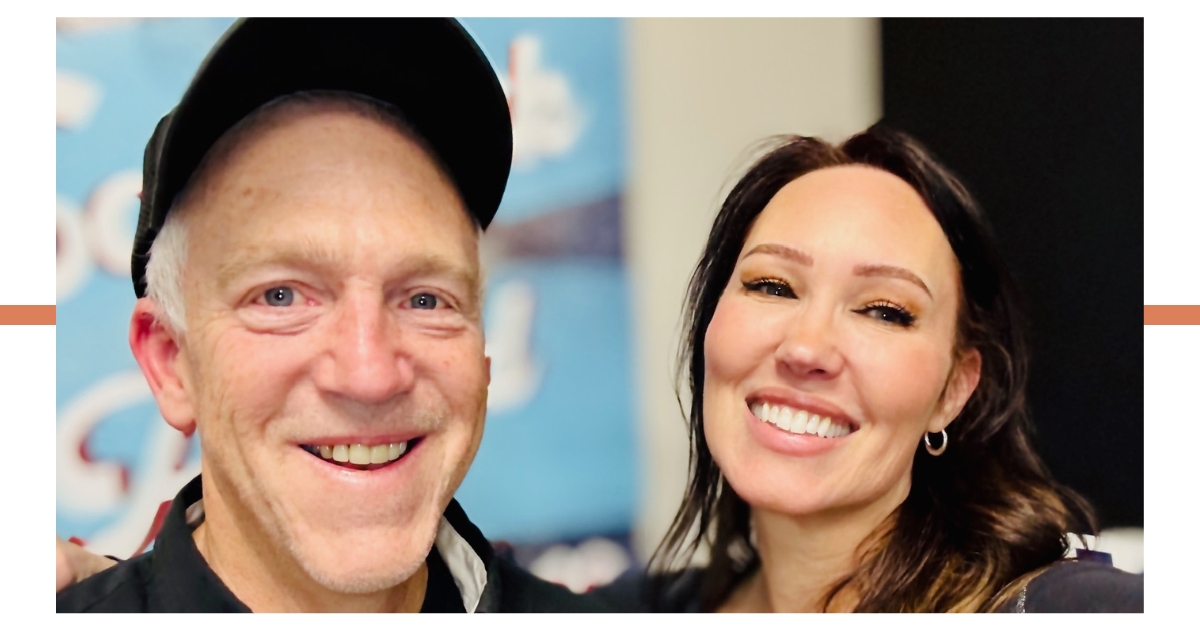
 For over 30 years, Stone Payton has been helping organizations and the people who lead them drive their business strategies more effectively.
Mr. Payton literally wrote the book on SPEED ® : Never Fry Bacon In The Nude: And Other Lessons From The Quick & The Dead, and has dedicated his career to helping others Produce Better Results In Less Time.
Connect with Stone on LinkedIn, Facebook and Instagram.
Websites:
 This transcript is machine transcribed by Sonix
TRANSCRIPT
Intro: Broadcasting live from the Business RadioX studios in Woodstock, Georgia. This is fearless formula with Sharon Cline.
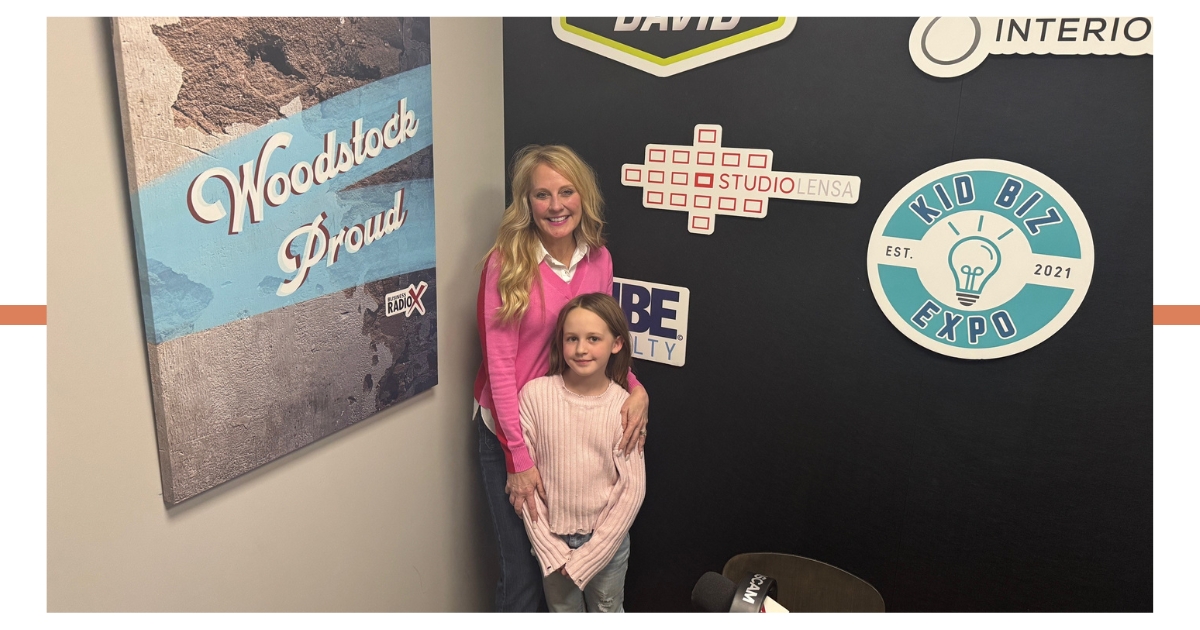
Sharon Cline: Welcome to Fearless Formula on Business RadioX, where we talk about the ups and downs of the business world and offer words of wisdom for business success. On a normal day, that’s what we do. But today is not a normal day. Today is a Tuesday where I get to talk about, well, the founder of everything regarding Business RadioX, one of the founders here in Atlanta, but specifically Stone’s studio here in Woodstock, Georgia. This is Stone Payton. Welcome to the show.
Stone Payton: Well thank you. Maybe we should rename it and call it Stone studio instead of Cherokee Business RadioX Stone studio. A little ring to it, doesn’t it? It does.
Sharon Cline: Look at me. I won’t charge you much for that. I’m so glad to talk to you to you today because we haven’t really sat down and discussed, you know, the the progress of Business RadioX and all of the different initiatives that you have right now, as well as the fact that, like, I don’t even get any personal chit chatty time with you like I used to because we’re both so busy.
Stone Payton: Well, especially you, right? It’s hunting season for me. So that’s part of why I’m busy. But you, you’re all over the place, you’re doing voiceover work, you’re doing radio work, you’re doing TV work. Yeah, commercials, all that stuff. You got a lot going on, lady.
Sharon Cline: Yeah, it all kind of happened at once, really quickly. Like doing this Fatal Attraction show. I’m so excited to do that on Thursday and Friday. And then I’ve got a couple different TV shows that are coming out from things that I filmed last year. They come out in February, so it’ll it’ll seem like a lot at once, but it’s all been in the making over time, except for Fatal Attraction. That was a big surprise. I get to be a detective. I’m so excited. I have lines, it’s the most amazing ever. So I’m so glad to share that with you too, because I always think of you as the person that was so supportive of me getting into radio with you, like almost three almost three years ago.
Stone Payton: So remember that when you start getting the royalty checks. Okay.
Sharon Cline: Oh, is that right? I don’t know if I’m.
Sharon Cline: The little people. I don’t know if I’ll remember that. You know what? No. I will never forget how kind you were to me when I was just like. Do you need someone to say a voiceover for you? Please. Anything.
Sharon Cline: You were so sweet to me. No.
Stone Payton: It’s been a great ride. We’d have a lot of fun together and, uh. And back at you, because a lot of the cool things we have going on here right now were born out of your creativity, your initiative, and your willingness to help me try to get some things off the ground. So it’s been a very, uh, at least fair energy exchange. And I have a feeling that the, the balance of the scales is much more in your.
Sharon Cline: Favor than mine. No.
Sharon Cline: Well, it’s been my pleasure. And everything that you’re doing is to not just help the community, but you really do take some personal one on one, um, interest in people and helping them to grow as well. Which is what’s so great about Business RadioX, because it does help to give people opportunities to, Uh, navigate different industries and and network and everybody wins in that, in that environment. Not only do you get to know new people, but you could also help to grow your own business. And it just grows and grows and grows. So not only do you do things for the community, but you do things individually. And I appreciate that about you.
Stone Payton: Well, thank you. And what you’re describing, that’s certainly consistent with my experience, both for me and the people that we bring into the Business RadioX family. One of the things that I thoroughly enjoy about being part of this thing of ours at this point in my career is it’s real easy to be the nice guy, the guy that knows the guy, and it’s real easy to to serve someone who is never going to write you a check. But with all of that in place, it makes perfect sense for very specific types of people in certain situations that meet, uh, some, some very distinct criteria. It makes all the sense in the world for them to at least have a conversation with us about writing us a check, because we Because we can provide a nice return on that check. But but I can also help a lot of people nonprofits, very small businesses, startups. So it’s it’s a neat place to be in terms of timing in the career and to have this, uh, this platform, this, this thing at my disposal.
Sharon Cline: Right.
Sharon Cline: Exactly. People are always impressed when they come in to see this little studio here. It’s like such a surprise. But it has always provided such a nice, intimate setting to get to know someone’s story in a way that I don’t get to have outside of this room. So I consider it an honor to be part of it.
Stone Payton: So thank you. Well that’s nice. Thank you for saying that.
Sharon Cline: Sure.
Sharon Cline: No problem. Well, let’s talk a little bit about some of the things that Business RadioX is doing right now. We’re actually we’ve talked about Main Street Warriors a couple times in the past, you and I on on air. But what is new with Main Street Warriors that we’ve been working on together?
Sharon Cline: Well, I.
Stone Payton: Think it’s a perfect example of a tenant that I’ve tried to live by, a mentor shared with me years and years Go. If you’re kind of getting mired down and you’re stuck in what you’re doing and you’ve got a problem or a set of problems and you’re just really struggling with it, take a day, take a couple of days, go work on somebody else’s problem, right. And so I was getting mired down in one challenge in that when I opened this studio, we’ve got a very well kind of, uh, baked, uh, well baked strategy methodology process for helping professional services clients who are kind of high end, uh, solve their prospecting problem. You know, a lot of people CPAs, lawyers, coaches, consultants, they may be exceedingly gifted at their craft, but a lot of them have a challenge in prospecting. So at the risk of sounding a little bit immodest, this thing of ours, we can fix that problem and we can really help them grow their business. And the fee structure is, uh, commensurate with that, right? So and you can make a very lucrative living running a Business RadioX studio. So there’s this whole tier of people that we serve, and that’s the way it ought to be. But lo and behold, I moved to Woodstock, Georgia, and very quickly I get to know a lot of people around town. I know every bartender in town, of course, but I know a lot of small business people that, you know, they’re not trying to take over the world or anything.
Stone Payton: They just have a neat little lifestyle business. I don’t care how good my thing works. My fee structure is out of reach, right? And so I’m scratching my head. What’s been almost three years now? Two years plus? I guess I’m scratching my head. How do I help these people? Right. Um, what I do at the at that fee structure makes no sense to them, but I really do want to help them. And so, uh, what what I did with a great deal of help from you to bring it into reality and just help from everybody around the community. Uh, you know, Lee Meyer with the highlight reel, just a whole bunch of people came together to support this. But we created this community partner program, uh, with your help, we called it Main Street Warriors. The very first time I tried to even articulate what we were doing and why. Diesel. David, David, Samuel, he says, well, what would it cost for me? I want to be the title sponsor. And I’m like, uh, I don’t know. And he goes, well, how about this number through his credit card? I’m like, okay. So like like without diesel, David, it never would have happened without you. It never would have had this. All these people came together. But what we created was a way for those all the smaller businesses, all these friends of mine that I see every week at, um, at young professionals of Woodstock.
Sharon Cline: Or Woodstock business meetings.
Stone Payton: There’s a way for them to play, a way for them to engage and do a couple of things. One, they can tap into some of the benefits of being a part of this, this thing where we amplify the voice of business and we give everybody an opportunity to share their story and promote their work. But another challenge that businesses at that level have at that revenue level, uh, they don’t have the resources to contribute to local causes the way they would like to. You know, they can write the $10 check. They can go to the $25 dinner, but they can’t be writing 1000 $5,000 checks to this association and this nonprofit. But as part of the Main Street Warriors program, the whole idea behind that is we’ll take that membership revenue, which is, I mean, very modest, right? I mean, it’s like a 10th of what it would cost if you were like a traditional client. Uh, and, uh, my initial, uh, commitment was we’d take 20% of that money, uh, just between me and you and a house cat and now your millions of listeners, I’m sure millions.
Sharon Cline: We’re actually.
Stone Payton: We’re actually, uh, giving about 120% at.
Sharon Cline: The moment.
Stone Payton: But we’re taking that money and we’re turning around and reinvesting it in the local nonprofits that causes, you know, all of them that, that, that we all support around here. You’ve heard of.
Sharon Cline: All of them, of.
Stone Payton: Course. And, um, and so but now that small business person gets an gets an opportunity to kind of come along for the ride on the traditional promotional marketing aspect of things. You know, maybe they’re a sponsor of a specific episode. Maybe we do a live read for them. Maybe we make it very clear that they are the the sponsor of this series. Stuff that doesn’t cost me a lot of money, right? Gives them some exposure. Uh, gives because they are a sponsor. They have kind of the inside track and inviting other people on Cherokee Business Radio, and they get to be a part of what we do for Wildlife Action Kids Expo, Limitless Disabilities Food Pantry, Next Step Ministries, Circle of Friends, all of these you know, they it’s not stone, it’s the main street.
Sharon Cline: Warriors that get to contribute.
Stone Payton: That got me started on Main Street Warriors. I just I love it.
Sharon Cline: I love that you have a golf cart that you ride around in.
Sharon Cline: Downtown Woodstock, and.
Sharon Cline: You can put, you know, the logos and, and the names of the businesses that are part of the Main Street Warrior program. So they get free advertising kind of.
Sharon Cline: In that way.
Stone Payton: Well, so like Renee Deardorff, she runs up level design studio. She made these magnetic signs. I need to put in another order with her. And she made these foam course signs that you see here in the studio. And I thought it was a really a marvelous idea. And she helped me think that through is we’ve got the steel, you know, that’s magnetic. And so you can just interchange the signs. Right. We’re going to do the same thing on the SS freedom, another project I’ll tell you about where we can do some interchangeable, uh, interchangeable signs. But, uh, yeah, the golf cart is fun.
Sharon Cline: I do have.
Sharon Cline: To say, when you consider the the level of income and the ability to financially contribute in a significant way to any kind of nonprofit, it does feel like, well, I need to be a millionaire or, you know, a six figure income kind of company. And it’s nice to know that you don’t have to have that high level in order to be able to make an impact on causes that you believe in.
Stone Payton: Absolutely. And this is just one vehicle for that. What I have come to to believe sincerely, though, what these different constituencies need and want. They don’t need the grand gesture. If you’ve got 100 grand, write a check for 100 grand, but you know, show up and help them paint the side of the building. Bring some lunch by. Go pat somebody on the back. It’s the it doesn’t have to be a grand gesture, but this particular program does help us kind of aggregate resources and have a big impact on any on any one thing can I talk about. So can I talk about the boat project?
Sharon Cline: Let’s talk about the boat. So I saw.
Sharon Cline: You posted about it.
Sharon Cline: On Facebook.
Stone Payton: I did today. And I’m not a big Facebook poster, but I mean, you must have been 30 people, you know, so like, you know, liked it and commented and all that stuff, which 30 in my world, guys is a big deal. I’m not a social media guy. Really. Uh, so yeah. So what we did, we, uh, we went out and bought the most stripped down pontoon boat we could find. It’s actually a Triton has three of those little thingies under it with the idea that we were we were going to we’re going to build out this boat so that we can get wheelchairs on, on and off easily. And that’s not the only constituency that we plan to serve is not just people in a wheelchair, but I learned through my work with Wildlife Action and doing the disabled hunts, um, and the youth hunts, man, you know, some of these folks, it’s really difficult for them to get out and enjoy the outdoors. I take it for granted, right? Like, if, um, you know, like, tomorrow morning, I’m going to I’m going to it’s the last few days of deer hunting season. I’m going to go hunt in the morning, and I just take that for granted. But, you know, people who are confined to a wheelchair or just even maybe less mobile like, but particularly disabled vets, it’s just it’s tough for them to get out.
Stone Payton: So in conjunction with Wildlife Action and Main Street and Main Street Warriors and design and remodel brothers LG, I mean, there’s a lot of people that have rallied around this are what we’re doing is building out a boat that is not just accessible to so that people can get on the thing, but it’s it’s, um, it’s wheelchair friendly and friendly to folks who are who are less mobile. I can’t tell you how rewarding it is that, you know, I just I, we just sort of had the very beginnings of the idea, you know, I mentioned it to you. I mentioned it to Jim and John, the designer and model brothers. I mentioned it to aunt Sandy, who we all at Young Professionals at Woodstock know who that is, but she’s my sister in law. But I call her aunt Sandy. Aunt Sandy was the first one to stroke a check. Boom! The minute I told her about it and. And the minute I told Jim about it, he said darn well wired everybody. People write checks on behalf of causes for Jim just because he’s Jim. You know, I mean, and, you know, he talked to Wesley, and now, you know, he wrote a check and we got.
Stone Payton: And so now it’s this big deal. Uh, we have a website out by the time this is published is probably going to be some kind of website, but I am so looking forward to just getting people out and think about. Think about the folks like Nick Carberry out there with Nick Step Ministries. You know, some of those folks, you know, are are like not mobile at all unless someone’s pushing them in a wheelchair and they, they really need and want stuff to go out and do. So it’s not just there’s the boat and there’s that project and that accessibility, but there’s also because our mission at Wildlife Action is to provide those experiences is there’s also 27 acres. So just imagine, you know, Nick’s crowd or page read over at Limitless Disability or Veterans, a disabled veterans group or any group coming out. And it’s like a whole experience. You’re cooking the s’mores and the hot dogs at the campsite. Maybe you stayed over last night, and then you’re hopping on the boat and going for a cruise. Or maybe if you were going for a fishing trip. I am so excited about this, I can’t see straight.
Sharon Cline: I wish people really knew more how satisfying and rewarding and and touching it is to see someone experience. Um, I don’t know, have have access to an experience they never had before. And to know that you had a small part in making someone feel that kind of joy. Oh, my. There’s nothing like it. You can’t. You can’t pay to have that feeling.
Sharon Cline: You have to do it.
Stone Payton: And I’m so blessed that I’ve experienced it at like three different levels. I’ve experienced at the level of just at the idea stage, people just, just just corralling around me to get it off the ground. And then I’ve and I’ve experienced at the where everybody just is. I mean, I’m getting calls and emails. What can I do to help? I’m a fabricator. I’m a welder, you know. Do you do you need some help getting the motor running? You know, all these people are coming. So it’s incredibly rewarding to see people around you helping. And then to your point, as we’re talking to people, well, I got to tell you, the initial inspiration for all of this was partially my experience with the disabled hunt, right? I mean, you talk, you take a guy double amputee in a wheelchair, and then you look at that guy with grinning ear to ear when he’s holding the eight point deer that he’s harvested, right. So as partially inspired by that experience doing the disabled hunt for the last couple of years and then but also my buddy Kyle Snowpack over at Young Professionals at Woods. Right. He wanted to go fishing. And candidly, it’s been difficult to work out the logistics and access. And so but that’s just it’s incredibly rewarding even at this stage where they just know it’s coming. But can you imagine how it’s going to feel in like in April, May? You know, we get into the warmer weather and we’re actually out doing it. Oh my.
Sharon Cline: God.
Sharon Cline: There’s so many dark things that happen in this world. I just any opportunity to show that there are people that really do think beyond themselves, that really do give selflessly, that that really do want to see other people genuinely happy with nothing back to themselves just to experience that moment. There aren’t enough opportunities for that in my book. Honestly, I really believe that.
Sharon Cline: Well, we.
Stone Payton: Got to keep creating them, but I’ll share something else that’s come of my experience from this. You talk about like like expecting nothing back. You can’t help it. It does come back. I can’t I’ve written quite a bit of business in the last six weeks that you could kind of tie it back to some of the early serve. First serve often. Methodology, ethos, value, system of Business RadioX. In general, people really appreciate that you’re out there helping other people. So I mean, you’ve heard me say this before, but I you know, I find the more people you help, the more money you make and the more money you make, the more people you help. And then once you get that flywheel going, you can’t you couldn’t stop it.
Sharon Cline: If you if you wanted to.
Stone Payton: So yeah, you can go into it like that. No, no expectation of immediate recompense. And you’re going to get, It, uh, emotional compensation, you know, just.
Sharon Cline: Off the chart.
Stone Payton: But it’s probably going to help your business.
Sharon Cline: Well, it looks like what you’re really doing is is encouraging people to think like you do. It’s not. It is the serving aspect of it. It’s it is not just let me grow my business and let me financially, you know, benefit. It’s more about it’s all of it. Everyone wins in that scenario. And that to me is the best. It’s the win win, the win win.
Stone Payton: The only win that I haven’t achieved yet. And it’s not going to happen because he’s on a whole nother trajectory. As I really wanted Sharon to take over this studio. I just wanted access to it. But she’s like, you know, on a whole nother trajectory.
Sharon Cline: Let’s talk about.
Sharon Cline: Taking over the studio at the.
Sharon Cline: End of this, because I am looking.
Stone Payton: I’m looking for a co-host slash studio person to handle the day to day because we’re busy expanding the network. We’re getting I’m getting more and more involved in the nonprofit cause side of life. Um, and so that really, you know, I know you didn’t mean this to be a recruiting ad, but I am kind of looking for a co-host of Cherokee Business Radio and and someone to run kind of the day to day of this studio.
Sharon Cline: So when you talk about expanding the network, what do you mean what’s going on?
Stone Payton: So right now we, uh, we are in maybe 61, 62 markets in some way. We have 19 of these rooms like this.
Sharon Cline: Around the country.
Stone Payton: Right. And I’m one of the 19. Right. So me and my business partner, Lee Kantor, uh, we own the business radio X network, and, uh, so that’s my day job, right? And then I also run Cherokee Business Radio. Uh, but on the expansion, we want to go from 19 to 1000. We feel like what’s happening here in Woodstock with John Ray is doing such a fabulous job with in North Fulton. Mike Salmon up in Gwinnett, Tom Sheldon out in northeast, bejesus, Georgia. Bowe up in Gainesville, Trisha out in Houston, Karen out in Phoenix. What these people are doing, those in those communities. Uh, well, we more than believe it now. We know it. It’s replicable. This could be happening in so many communities with all everything we’re describing. And so we are actively seeking people in other markets. And I’ll tell you what was it, John? Somebody gave me the word. I think it might have been John Cloonan, like the marketing lingo for the avatar. Oh, right. So I’ll give you the avatar and hope I don’t, uh, the ideal avatar and hope I don’t run into any legal trouble because it’s not a knockout factor if you’re a guy, but established female business coach if and so that’s like the established female business coach. Some additional pluses on the on in uh for that are, uh, credentialed like ICF certified veteran.
Stone Payton: There’s a lot of reasons for that. But it’s a that makes it a good fit for us. Now what makes it a good fit for them and at least them worth having a conversation with us is if they if they have a good established business. But the greatest opportunity for improvement in their practice is the Is the prospecting, right? Like that’s the hardest part. And that’s true for a lot of professional services folks CPAs, lawyers, consultants, coaches. But but it is a lot for for coaches because that’s a gap we know we can fill. We have very, uh, well established proven. It always works. I mean, uh, methodology for filling that gap. So if there’s a female business coach, veteran ICF, uh, credentialed in, you know, San Jose or Pittsburgh or, you know, or Tampa, and it would and she’s, uh, she I want to say she and she really believes me. If I could just get more initial beginning conversations, those initial relationships going. I mean, we probably should team up or we ought to at least have a or at least have a conversation. So my day job and one of the things I’m working on very diligently right now is just having those conversations. Um, now I use some of our own toys and methodology to do that.
Stone Payton: We started I just have have launched a new coaching series under the High Velocity Media Property High Velocity Radio Media property, because that helps me serve first serve early serve often give female business coaches and in some males, but give them an opportunity to share their story, promote their work. But, um, you know, by the time I invite them on the show, have a conversation with them about to get ready for the show, and then have them on the show. I have a great relationship with them. And, you know, it’s, you know, still, eight out of ten of them may not make any sense for us to team up directly, but how many of those people know people we ought to talk to? And then when people are looking at what we’re doing, they’re able to see, okay, these guys are real. They’re just good folks trying to do good work. I don’t, you know, I’m very transparent about what we’re doing. Like, it’s important to me that everybody does win in the equation. So I’m spending a lot of time doing virtual interviews instead of instead of the in-studio interviews, just to have conversations with people. Maybe we should, uh, we should team up with.
Sharon Cline: Well, I mean, it’s so exciting because it really feels like you’ve got momentum going, especially if you said in the last six weeks or whatever, you’ve just like, had more and more people get to know even what radio Business RadioX is about. Yeah. And and just knowing that what the goal is, the win win.
Sharon Cline: It really is. Right.
Sharon Cline: Every everyone does have a moment to where they can feel like they’ve been heard, seen and understood and no one is unhappy to have that kind of.
Sharon Cline: Shine on them.
Sharon Cline: But also they get to have a relationship that starts in that space, and then it grows and grows and grows and their network grows. But it all starts from such good energy and good intentions behind it.
Stone Payton: See why I want her to run the studio?
Sharon Cline: Oh.
Sharon Cline: Um, let’s let’s talk stone.
Stone Payton: We’ll table that. But when you’re ready.
Sharon Cline: Yeah. All right, all right, we’ll talk.
Sharon Cline: You’re hilarious. We’ll see why it’s so fun to work with Stone though, because you are very inspiring and your brain thinks so differently from mine. And I love that it does because I just have me. And sometimes that’s not the best place to be. But like listening to how you consider the different ways all across the country that people can be affected positively. I think here in Woodstock, this is our town and you’re like the world.
Sharon Cline: I’m like, wait.
Stone Payton: Well, and I mean, candidly, if if I would just focus on running this studio and particularly if I had a coaching practice, right, like if I was a sales and marketing coach for training and development people, because I know a few things about how to do that. And if I primarily use this studio just to grow that business and then maybe do a little bit of Business RadioX, I’m sure I’d make a ton more money. But, you know, it’s.
Sharon Cline: Not about it’s it’s interesting too.
Sharon Cline: Because it.
Sharon Cline: Isn’t. Oh, do you really?
Sharon Cline: That’s nice to know. I married up.
Stone Payton: My wife, had a real job. Now, now.
Sharon Cline: Now she’s all retired. Yeah.
Stone Payton: She’s retired. So maybe.
Sharon Cline: Maybe you do need to.
Stone Payton: Be coming to you for a job. Uh, but but no, I mean, and if that’s where a person is in that stage of their life, that’s what they ought to do. And that’s what we coach these, um, coaches to do that we team up with is look, first and foremost, we’re going to share everything we think we know about this. And the first thing we want to do is use it just like you will with your clients. If you really get in the Business RadioX business, let’s just use it to grow your own business. Let’s see, like coaches, uh, what we’re learning about that ecosystem, the, uh, the heartbeat of that is the the discovery calls just having genuine, open, um, authentic conversations with prospective clients because think about how just think about the level of trust one has to endure just to have an initial, you know, it’s not hey, you know, let’s have a cup of coffee. Hey, ho, what do you do? What do I do? A good referral for me? Yeah. No, you’re like a real conversation.
Sharon Cline: Well, it always feels like. What do you do you want from me?
Sharon Cline: You know.
Sharon Cline: What do you need from me? And how can I write you a check of some kind? Like, that’s what it always feels like when you’re in those moments.
Stone Payton: And in our thing that. No, we’re using this to serve. And it’s not like, you know, our methodology is the antithesis of this. So it’s not this. It’s not, hey, come on, my show. And okay, you’ve been on my show and I buy my thing. It’s not that with me talking to somebody in another town that might. And it’s not that at a studio. It’s not that. But it is a great way we have all these relationship building moments in our in our process. You know, just when you’ve experienced this, just reaching out and inviting someone to come in the studio and look in the studio is way beyond doing virtual. But there’s value in both just reaching out and inviting someone to come in the studio and share their story, promote their work, how many genuine relationships and new friends, many of whom will be lifelong friends, have you made just by having the Fearless Formula show right out of here?
Sharon Cline: So true. I was just talking to Doctor Trudy Simmons, who was on the show last week about how she was a stranger when she walked in. Nice to meet you. Shake your hand. We come to the studio. By the time an hour has passed, I. I feel like we’re we’ve I don’t know, we’re like it just quickly moves our friendship forward very quickly to where I feel like I could call her if I needed something, and I really believe she would be be there for me. It’s it’s exponentially quickly. I can’t explain it’s like magical. And I know that sounds I don’t know, I don’t want to talk esoterically.
Sharon Cline: And it’s.
Stone Payton: Not and I want to be clear about this because there are people who market it this way, and I guess they’re making it. It’s not a parlor trick to get a sale. It’s you got to get above all that crap and just go out there and just try to help people.
Sharon Cline: Yeah, because it’s not about it’s not about what you can get from them. It’s really just about sharing their story and and what it’s like to be them for a little while. And, and from a, from a place of genuine curiosity. Not what you can do for me.
Sharon Cline: It’s really.
Stone Payton: Not. And in the same breath, just think if let’s let’s say you did have something to sell for some reason, if you sold office furniture and, and, you know, and she met the criteria for if you called her six weeks from now, six days from now, I’ll bet you she’d take your call.
Sharon Cline: Yes. Right. Yes. She would.
Stone Payton: If you shared with her what you’re up to, I bet you would listen to you about your products and services with an open mind. And if her husband’s brother sold off his furniture, and there’s just no way it’s going to. She could get divorced if she buys office furniture from you. That ain’t going to happen, right?
Sharon Cline: Right.
Stone Payton: She’s still going to try to help you any way she can.
Sharon Cline: She’d find someone or something.
Stone Payton: And, I mean, I got 21 years of that 100,000. Not me personally, but there’s I, I just have that relationship with people and, you know, and I, I utilize it and capitalize on it judiciously. And again, in a, in a serve first manner. But there’s absolutely nothing wrong, at least in my view, to build a relationship with someone. And if you have something that you, um, that you do or that you sell that might serve them, you don’t have to be cagey about it because you’ve got a real relationship with them. Just like I have a real relationship with you. I can I can call you and say, hey, Sharon, I’m selling these new radios that just go great on motorcycles. And you were. I thought of you first. Okay. You’re going to listen to me about, you know.
Sharon Cline: Yes, I because we’ve got all this history. That’s right.
Stone Payton: Does that make sense?
Sharon Cline: It does.
Stone Payton: But I know some people might think, or maybe this is the way they do, that. It’s like a parlor trick to just, you know, to get the lead or whatever, that we’re so far above all that fray with the way we do it.
Sharon Cline: Well, there’s no way to. Okay. How do I want to say this? I would not want someone in the studio and interview them with the with the energy of, now you’re going to hire me to do a do a voiceover, or now you’re going to hire me to do whatever underneath it, because I don’t know. I feel like I could feel that kind of disingenuousness.
Stone Payton: And you can’t be, but and at the same time, how appropriate, organic, authentic, and all of that is if through the process of you being part of the Business RadioX family, providing this opportunity, building the relationship with the inviting, and maybe even having a conversation to help them get ready doing the show. If if either you intentionally and or just sort of comes out that you do voiceover work and they’re getting ready to to do an audio book or whatever, I mean, there’s nothing wrong with it. Like if there’s a it’s it’s perfectly appropriate and organic. And again, a the equation is a win win if you put yourself kind of at that next tier.
Sharon Cline: Right, right. If I were.
Sharon Cline: To say, listen, if you ever hear I’ve had many authors, many voiceover over artists, many actors on the show, which has been really fun because I get to kind of see what their world is like, but it is not with the idea of of please hire me. It’s more of, here’s my side of what it is that you’re doing. What is it like to be you for a while? And we get to talk about very similar things, themes that I don’t get to talk about with a plumber or someone that is in a different kind of industry. But I absolutely if it’s supposed to work out, it will work out. And that is just the way I look at it. I never expect anything from anyone. It’s just here’s what I do. If you like how I sound, great, but if you don’t, I might know someone in the voiceover world who could work for you better. And it just is a there’s room for everyone. There’s success for everyone out there. It does not have to be me controlling the whole world. I feel like things land the way they’re supposed to, and they and they work out the way they’re supposed to.
Sharon Cline: Well, two.
Stone Payton: Observations on that. It wouldn’t surprise me one bit to learn that some of those folks have you top of mind. They’re out there doing their thing and somebody needs or wants or they hear it and they believe, oh, you know, oh, you need someone who can do a British accent and sounds really cool. And I tell you who you ought to talk to is Sharon. I bet that happens. Wouldn’t surprise me at all. Um, if that happens. But it also reminds me of another thing that a mentor of mine shared with me years and years ago. And one of the things that this firm did so well, they were so far above in their positioning, everybody else in the space. And it just you didn’t have to sell it. You just had to do the work and be gracious and generous and providing the the counsel and the thought leadership. But what he told me, he said, Stone, serve your competition and you won’t have any. Oh, and that has proven itself over and over and over and over again. So like, for example, anyone who is out there trying to use like toys like these that we’re surrounded with right now in this.
Sharon Cline: Platform, the RODECaster and the.
Stone Payton: Computer and the microphone and the, uh, and the, uh, the, the distribution pipeline of all these third party podcasting platforms. There’s a ton of people doing that kind of stuff, and they’re all out there trying to to help folks. These people are not threatening my lifestyle or what I’m trying to do at all. And, um, in a lot of cases, someone will come to me and I’ve kind of, you know, determined a niche in doing these kinds of things at that high tier and these kinds of things over here with the Community Partner program. And there’s this big swath in the middle of like, more production services and marketing services associated with producing a podcast, distributing a podcast, leveraging all that stuff. And I mean, I’m on the phone. Hey, Sharon, do you want to take a look at this? Hey, you know, Tim, do you want to take a look at this? Logan? Um, anyway, for whatever that’s worth, it might be worth what you paid for it, but I will repeat it. Serve your competition, and you won’t have any.
Sharon Cline: I love it because that is such a theme of mine. Is that, like I was saying, there’s room for everyone in the voiceover world. There’s room for everyone in whatever their dream is. It’s not. I can’t own anything anyway. I can’t control anything anymore.
Sharon Cline: And a bad one’s.
Stone Payton: A wash out. The bad the market will the market will take care of the ones that are that are charlatans or don’t deliver good work or whatever.
Sharon Cline: But I would agree with that. I didn’t think about that.
Stone Payton: Anyone of substance, there’s there’s room for all of those folks. Well, we’ll never run out of people who need the help. And then it’s up to us to be creative. Okay. You know, maybe not everybody can write a $30,000 check every year to help them grow their business, but anybody can write a $2,500 check a year, if you know what I mean.
Sharon Cline: Like, you can help them all.
Stone Payton: And somewhere in between all that. Okay, then let me find somebody that can.
Sharon Cline: What would you what who would be sort of. How can you explain Main Street Warriors for a local business right now? Like what would what would be the different tiers that they could be involved in.
Stone Payton: So and I’m going to simplify it down to just one plain tier for the Main Street warriors. And right now there’s there’s a couple of different tiers. But if you’re that, you know, person with an idea on a cocktail napkin and you’re out there networking, you’re getting your thing off the ground, um, then then there’s something there for you. Or, you know, if you got a business that’s doing 150 grand a year or 50 grand a year, but you a little bit of promotion and you want to be associated with, uh, giving to the community, and you want to be you want to tap into some of that. If you’re a main Street warrior, there’s some things that that we can do that we’re going to be doing anyway. And it’s just you don’t want to pretend like I’m this great hero philanthropist, but, you know, like, right now, we could have opened the show. You know, today’s episode is brought to you in part by Marietta marine or, you know, or up level design studio. Please go check them out at bumpity. Bump.com. We could have made, uh, the we could have put, like a logo there. So when people go listen to it, they hear that and they see the line. And then and then Renee over at over at uplevel could send out a thing.
Stone Payton: Hey, you know, we just sponsored this latest episode, but as a main Street warrior, to me, the greatest benefit is you. You get, you get to do some of the stuff that are that are high end, premium fee clients get to do. If you’re a main Street warrior, you’re and we have several chapters now because we’ve kind of replicated. But if you’re a Cherokee chapter of Main Street Warriors, if you’re a main Street warrior, you can legitimately, legitimately and as truthful, you can go out into the marketplace and you’re talking to somebody instead of doing that, hey, ho, let’s get a cup of coffee. You know, here’s my business card. You can have a genuine conversation with them for a moment that don’t talk about you at all. It talks about them. Hey. Sounds interesting. I don’t know if you knew this or not, but I’m a sponsor of Cherokee Business Radio, and I think you’d be a good guest on the show. If you’d like to. Come on, I’ll send you a booking link. And, and and when they send the booking link. They are the ambassador, right? They are the. So now I know that it’s Renee or David or, you know, Andrew or whoever has sent them over here.
Stone Payton: So I know depending on what else is going on that day, I can I can give them all that, all that love. But forget about all that digital promotional stuff. Just the fact that now you’re out there in the community and you’re we’re giving you a vehicle, we’re giving you a method to express what you want to express you. Now, you’ve put that we’ve put that Main Street warrior in a position to serve first, serve early, serve often. And they get a lot of the benefits of the it’s it’s just a marvelous relationship building moment. And you know, they can follow they can listen to it either live or on demand. They can follow back up with that person. It’s just, again, it’s all built on on real relationship, you know, and you’re talking you know, actually I think right now it’s 1250 a year. We’re going to change. It may be a little bit more than that when this gets published, but it’s not going to be more than $2,500 a year, so I don’t even know what that is. There’s just, you know, it’s it’s if you don’t do it, it’ll be because you don’t. You’re not buying into what we’re doing because of the money.
Sharon Cline: You know what I mean?
Stone Payton: You’re spending that on something stupid already.
Sharon Cline: Lip gloss is what I say. My favorite thing, what I like, too, is Business RadioX has got this just this established, legitimate name that really does add a little bit more credibility to what you’re doing if you’re just on your own.
Stone Payton: Yeah. Well, part of I mean, we’re a 21 year overnight success story.
Sharon Cline: Right? Overnight?
Stone Payton: No, it’s taken a long time to get it where it is. And it’s not Lena. It’s the we’re doing this on the back of this. Our studio partners are marvelous. Our guests, you know, because of this is what it is. When you get a guest in here that has a compelling story to share and they have substance and, you know, 99.9% of them do they share it with their extended network. And so, yeah, over the 21 years, we have remarkable, You know, all the jazz, the domain authority, the brand equity, all that marketing stuff. And so it passes this like if you if you are a guest on the Business RadioX network and part of your marketing strategy this year is to go get on other shows. At the risk of sounding a little bit immodest, if you send them a link and they may not even go to it, but if you send them a link to your Business RadioX interview, it ain’t going to hurt you.
Sharon Cline: You know what I mean? It’s so true.
Stone Payton: It will help you.
Sharon Cline: Well, I love it because it really feels like, um, the things are growing. I mean, it’s 2025 and it’s January, and already there’s, like, such momentum.
Sharon Cline: It’s exciting.
Stone Payton: It is exciting. It’s a lot of fun. I still right now, the thing that’s the biggest twinkle in my eye right now.
Sharon Cline: Is the.
Stone Payton: Boat is the boat.
Sharon Cline: Thing is the boat. It really.
Stone Payton: Is. So it’ll be something else six weeks from now. But it is right now.
Sharon Cline: Will you talk a little bit about wildlife action?
Sharon Cline: Yeah.
Stone Payton: So this is the most marvelous organization. I’m on the board, and the mission is preservation and conservancy conservancy. So the people we interact with a great deal are often people that don’t have that opportunity to do the hiking, the canoeing, the fishing, the camping, the hunting, the fishing, all that stuff. And so we’re able to provide those opportunities for them. And I mean, like for 60 bucks a year, you could your whole family can be a member.
Sharon Cline: Where is it located?
Stone Payton: It’s located on Kellogg Creek.
Sharon Cline: Okay. And Woodstock.
Stone Payton: And so it’s actually technically Acworth, but. Yeah, but if you go to Bells Ferry and hang a left on Kellogg or coming from here, hang a left on Kellogg. It’s there’s Kellogg day use area. And right before you get there, it’s a wildlife action. And since.
Sharon Cline: We’re mentioning it.
Stone Payton: We’ll put the address 27 acres facing Kellogg Creek.
Sharon Cline: Wow.
Stone Payton: And so right there on the lake. And it’s just it is beautiful. We have Pioneer Village, which Boy Scout troops? Some group not even when it’s warm, but always when it’s warm. But I mean, last weekend. In this coming weekend, a group will rent Pioneer Village and. And we have these Adirondack huts that they can stay in. But I mean, we also I mean, there’ll be 30 tents there and we do all kinds of activities like, uh, the week before Halloween, we had instead of calling it Pioneer Village, we called it Haunted Village. And so families each took one of these, uh, like, huts and it was a trick or treat station. Earlier that day, we had pumpkin carving. All right. And then a couple weeks later, we had a youth and disabled turkey hunt. And so they’re not shooting turkeys, but they’re, uh, like a turkey target. Right?
Sharon Cline: Gotcha.
Stone Payton: Everybody goes home with a turkey.
Sharon Cline: Every kid.
Stone Payton: So again, envision you got an eight year old girl sitting on her granddaddy’s lap. She’s been shooting a BB gun or a crossbow or a bow. And I mean, again, grinning ear to ear with granddaddy. And she’s holding. She can barely hold it. She’s holding up the turkey. But just think of that experience. And so and then you got all the people surrounding you out there cooking their hamburgers. Uh, and then, uh, you know, you got the folks who are going to do the disabled hunt out there proving to the RV ranger that they won’t shoot themselves in the foot, you know. So it’s like this kind of safety orientation thing, but again, incredibly rewarding. And so so we have Pioneer Village and then we have this lodge. Oh my God, it’s gorgeous. You got to come out and see the property. And it faces Kellogg Creek and the lake. We have weddings, funerals, memorial services. Uh, there’s a there’s a church called Rolling Thunder that comes out. We have a chaplain outside chapel, and sometimes they rent the lodge and they’ll come out there several Sundays over the. But it’s.
Sharon Cline: Beautiful.
Stone Payton: It’s absolutely gorgeous. Great fishing. We have a whole area where you clean the deer and all, but you also clean fish. We have a whole nother education building at the top. We have a nature trail that goes through the. On the other side of the gravel road is 3 or 400 acres of acres of Army Corps land that you can get a permit to archery hunt, which I do in several of my buddies do. But there’s a nature trail that you can walk that when it’s not hunting season. There’s so much to do out there.
Sharon Cline: What do you think? If you can compare and contrast what it’s like to be in that environment and be kind of connected to nature and, and your community in that way. And then what most people and specifically children do these days, which is very much indoors and very much online and with their phones. There has to be some kind of disconnect that they’re not experiencing. You know, they don’t have that experience of being so present and grounded in the world.
Stone Payton: Well, in so many, I didn’t realize it because I grew up kind of in the country, you know, and all that. And then, uh, and I’ve always liked to hunt and fish, but there’s a whole group of people, a whole population that just haven’t been. Once they’re exposed, they come back. That’s the neat thing about it. Once, once the kids come, they they want to want to come back and play in the creek. They want to go fishing. They want to go swimming, you know, all that kind of stuff. I can tell you it is incredibly rewarding to, to to help all kids enjoy it and families enjoy it, but it is particularly rewarding. Like during our summer adventure camp, we have a day camp, uh, to watch kids that just don’t get out much. You know, they’re used to being on the video games and the phone and all that. And, you know, they get out there and fish for an hour. I mean, that’s all they want to do, you know, or swim and that kind of thing. And so that’s a great deal of fun for me personally. And it wasn’t all a product of being part of wildlife action, but it is all a product of being outdoors. I find a that I just thoroughly enjoy the experience itself while I’m having the experience, but I swear to you, I’m a better husband, father, radio host, business partner. I’m you’re balanced aspect of my life is better because in my case, I case, I went and sat in a tree for a couple of hours last Friday or this Friday is the last day of hunting season. I guarantee you I am a better person in all of those roles, because that is a part of my of my life.
Sharon Cline: So I metal detect as you know, this my.
Sharon Cline: Like, oh, wow.
Sharon Cline: My nerdy hobby. So yeah. Um, so anyway, I love being outside for that reason. It’s there is a balance that happens to me when I get to experience just something physical like that out in nature and breathe, you know, clean air and dig in the dirt a little bit. And it’s hours that I can do it because it’s like such focused energy and I love it. But I am different when I come back inside and have to go onto my computer. My brain doesn’t. It just functions differently. It balances me out. And I think that’s what you were talking about, being kind of more of a balanced person. And I think that there must be something, um, that they can even, um, detect through, uh, brain scans what, a child who doesn’t really get outdoor activity and what it would be like for a child that does. There’s got to because you can feel a change in yourself. So I think even now when I think about kids going out and playing like, you know, like we used to do, it seems less safe for some reason to just like go out and play in a yard and.
Sharon Cline: Like, come back in for dinner. Maybe it.
Stone Payton: Is in a lot of environments and that’s nice that you can come to a safe.
Sharon Cline: Place. Exactly.
Sharon Cline: That’s what I’m thinking is you’ve got a very controlled environment, but you also get that same freedom.
Sharon Cline: Yeah, freedom. Feel freedom.
Stone Payton: And it’s yet another outlet for me. There’s something going on every week. We’re serving like, you know, we got the polar plunge, we got the poker run, we got the disabled hunt. We got the adventure camp. We got the camping, the all of that, uh, stuff going. So for me personally, it is. And I think this too is good for the brain chemistry and all that is to always have that thing I was telling you about earlier, something where it’s not even working on somebody else’s problem, but just go help somebody else and just get off of your thing for a little bit.
Sharon Cline: So I had like kind of a tough holiday season, but one of the things that’s helped me so much is actually that very notion is to get out of my own head and to think about other things, someone else that needs attention. It it shifts something in myself. Helping someone else does help me too. But it’s that’s not why I’m doing it. It’s just kind of to cope. But knowing that I’m helping someone else does give me a sense of self esteem, which actually helps me in my ability to deal with something difficult.
Stone Payton: If that makes all the sense in the world. And how much fun is it when you do that? And you and you swim at that end of the pool, you not only bump into, but you become great friends with and build terrific relationships with the likes of, you know, Dan Thrailkill and Joe.
Sharon Cline: Since I can’t see Dan and Joe, a.
Sharon Cline: Front porch advisors.
Sharon Cline: Right?
Stone Payton: And Jim and John at Design Remodel Brothers, and Nick Carberry and Paige Reid and you just all these, you know, and Ashley over at LG Credit Union in Wesley. I mean, just just look at the Jacob Schluter The people you’re hanging out with are just good. Mo just hanging out with people like that. It makes your life better.
Sharon Cline: It does. And recently I had a tree fall in my backyard. I posted it on Facebook. It was so upsetting because the only thing I have in that backyard is, I mean, there’s like a little field that has nothing.
Sharon Cline: Right, right.
Sharon Cline: And then there’s like this little fire pit area, and this tree was so long and ginormous, and it just landed right in the one spot I didn’t want it to, which was where everything was. It broke everything, which it’s fine. But I did post about it on Facebook, like, okay, and I cried. I was so touched at how many people offered to help fix this for me, and it was some of the people that you were just mentioning, you.
Sharon Cline: Know, and I.
Sharon Cline: Don’t like being on the receiving end of help because I like to help.
Sharon Cline: I do just to just to.
Stone Payton: Set the record.
Sharon Cline: Straight. I love.
Stone Payton: Being on the receiving.
Sharon Cline: End. Well, then you’ve got a.
Sharon Cline: Good friend in me because I’ll help.
Sharon Cline: You all.
Sharon Cline: Day. But I never want to be the person that needs help. I’d much rather help, but oh my goodness, I was touched. I can’t even tell you. And it happened right around like the holidays where I was kind of struggling with some things. But anyway, that helped me to realize how many good people are out there in the world, and that not only do I get to help people in that opportunity, you know, have opportunities for that, and I get to help someone feel the way I got to feel when when they help me. Oh my goodness. I just loved it. And I think the same for you is like, if most people were out in the world experiencing what that genuine intention is for, they would do it more often because it really is something that is is on a special level.
Stone Payton: Yeah. And in their defense, I, you know, I’m at a I’m at a point in my life where a lot of things are comfortable, maybe too comfortable. And I understand you kind of, you know, you got to make the mortgage and you got to get the kids to soccer practice. I, I realize, you know, it’s maybe comes a little easier for me right now, but man, to whatever degree you can make that an important aspect of your being, I think. I think it’ll come. I think you’ll find it very rewarding.
Sharon Cline: Well, if someone wanted to find out more about wildlife action, how could they do that?
Stone Payton: So I should know better about how to contact Wildlife Action. I was I will study up on that man if you’ll reach out to me. I’m not great about answering the phone. I work mostly on scheduled calls, but I’m good about seeing text and get back to you. So my direct line and my text is (770) 335-2050 and my email is stone s t o n e at Business RadioX dot com. And it’s it’ll be up before too long because Jim and John are helping us in ash Davenport over to ash is setting up a SS freedom org if you want to hear about that.
Sharon Cline: Oh my gosh, so exciting.
Sharon Cline: Yeah. Also, and anyone who’s interested in Main Street Warrior program, they can contact you for that as well.
Sharon Cline: Right. And you can.
Stone Payton: Go to Main Street Warriors. Org I need to update that. You I told you earlier, I can take all the help I can get.
Sharon Cline: I got so.
Stone Payton: Many irons in the fire. You know, just. I’ll just tell Sharon and she’ll get it figured out. But Main Street warriors.org ss freedom org Business RadioX dot com or you know shoot me an email at stone at Business RadioX dot com or text me (770) 335-2050. Uh, you know, I’ll interview you if that’ll serve you. We’ll have a beer under the elm tree.
Sharon Cline: Uh, Reformation across the street.
Stone Payton: And all the above.
Sharon Cline: Well, it’s so exciting to see what’s happening, and I’m.
Sharon Cline: I’m proud to be part of it.
Sharon Cline: Of course. Is there anything else you’d like to say before we kind of close out everything?
Sharon Cline: You know what?
Stone Payton: I’ve talked more than enough. But I promise you, if we do have a beer, we will talk more about you than me. It’s just. Sharon set this up so that I did a lot of talking, because she’s really good at that. But I really am interested in you and what I can do to help you.
Sharon Cline: That sounds perfect.
Sharon Cline: That’s kind of how I feel with business. I mean, with Fearless Formula two. How can I serve you? So, yeah, if anyone who would like to get in touch with any of us, there are lots of methods out there. Sharon Cline on Facebook.
Sharon Cline: And yeah.
Stone Payton: Tell them how to get.
Sharon Cline: To you. Oh, yeah.
Sharon Cline: Well, yeah. I mean, okay. On Facebook, Instagram I Sharon Cline dot com my website. Um, but Stone, it has been a pleasure to chit chat with you. This has been sorely needed.
Sharon Cline: It has. Yeah. I’ve really missed you.
Stone Payton: We should have like the Stone. No, you should get top billing. The Sharon.
Sharon Cline: Stone chat.
Sharon Cline: The Sharon and Stone chat. Oh, how cute is that? Well, who knows what’ll come in the future. Maybe I’ll be owning the studio.
Sharon Cline: I hope so.
Stone Payton: I’ll sell it to you.
Sharon Cline: For a dollar.
Sharon Cline: Oh, nice. Okay. You heard it here first. That’s legal, I’m sure. All right, everyone, thanks for listening again to Fearless Formula on Business RadioX. And again, this is Sharon Cline and Stone Payton, reminding you that with knowledge and understanding, we can have our own fearless formula. Have a great day.


 Todd Jackson (TJ), is Manager, Supplier Diversity with
  Dr. Pamela Williamson, President & CEO of