Please log in to view this content
BRX Pro Tip: Create a Get To Do List


/
RSS Feed

BRX Pro Tip: Create a Get To Do List
Stone Payton: [00:00:00] Welcome back to Business RadioX Pro Tips. Lee Kantor and Stone Payton here with you. Lee, I know in my day-to-day work, I make a lot of lists, a list of priorities, to-do list, that kind of thing. But your counsel is to craft a get-to-do list.
Lee Kantor: [00:00:18] Yeah. I think if you reframe a half-to-do list into a get-to-do list, it’s kind of a change in mindset. Instead of trying to force your will into the universe, how about try just accepting what is happening to you with some humility and appreciation? And instead of thinking, I have to wait – like here’s something. Instead of thinking I have to wait in this long line, you can reframe it into, I get to work on my patience and practice mindfulness as I wait in this long line.
Lee Kantor: [00:00:52] Like, it isn’t – some of these things that you’re kind of feeling victim to and feeling like this is not fair or it’s sabotaging you, if you reframe this into looking at what is the gift that this opportunity is giving you, I think you’re going to find a lot more happiness and a lot less stress.
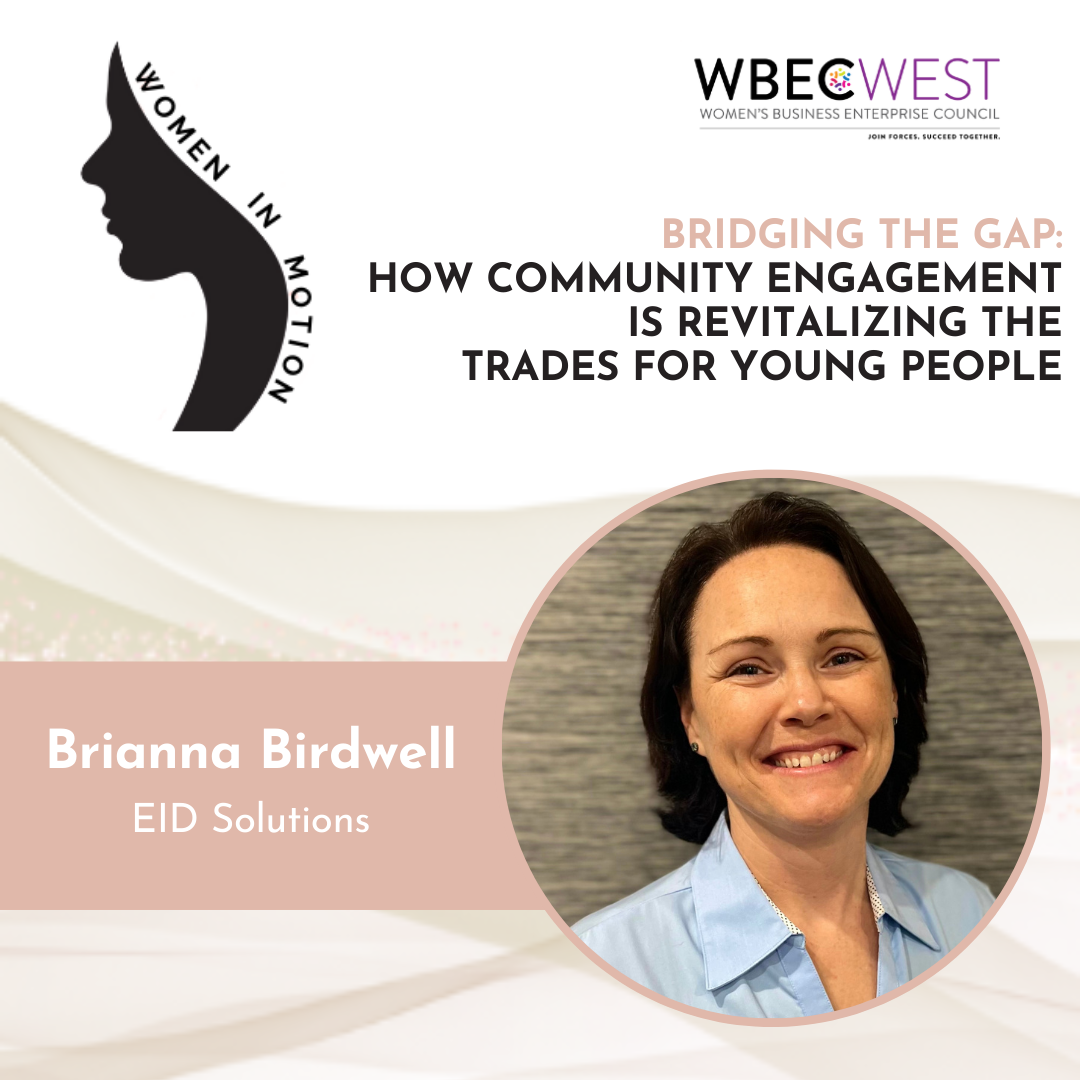
Bridging the Gap: How Community Engagement is Revitalizing the Trades for Young People
/
RSS Feed
In this episode of Women in Motion, Lee Kantor talks with Brianna Birdwell from EID Solutions. Brianna shares her journey from e-commerce to leading a professional services company focused on environmental sustainability, construction management, and people development. She discusses the challenges of being a woman in a male-dominated industry and her role in asset recovery, particularly in the utility sector. Brianna also highlights her commitment to community impact through the San Diego Competitive Edge Program, which provides workforce development and mentorship for young people entering the construction industry.

 Brianna Birdwell is the President and CEO of EID Solutions, a certified woman-owned and LGBT-certified professional services firm based in San Diego, California. With two decades of entrepreneurial experience, Brianna has built a reputation for delivering innovative and sustainable solutions across diverse sectors. Her expertise spans IT asset disposition (ITAD), investment recovery, sustainability consulting, construction management, and business development.
Under Brianna’s leadership, EID Solutions is known for its commitment to ethical practices, transparency, and delivering customized, environmentally responsible services. Her mission is to empower organizations by optimizing waste management, improving operational efficiency, and minimizing environmental impact. While sustainability is at the heart of EID Solutions, the firm also excels in construction management, effectively bridging the gap between sustainable practices and seamless project execution.
Brianna’s background in business development and workforce training highlights her dedication to fostering growth for both clients and the communities she serves. Passionate about making meaningful impacts, she emphasizes workforce development to uplift the communities in which EID Solutions operates.
Her leadership goes beyond daily operations as she actively engages with clients to tackle complex challenges. With an approach that harmonizes business objectives and environmental stewardship, Brianna ensures that EID Solutions consistently stands out in the professional services industry.
Follow EID Solutions on LinkedIn.
Music Provided by M PATH MUSIC
 This transcript is machine transcribed by Sonix
TRANSCRIPT
Intro: Broadcasting live from the Business RadioX Studios, it’s time for Women In Motion. Brought to you by WBEC-West. Join forces. Succeed together. Now, here’s your host.
Lee Kantor: Lee Kantor here, another episode of Women In Motion and this is going to be a good one. But before we get started, it’s important to recognize our sponsor, WBEC-West. Without them, we couldn’t be sharing these important stories. Today on Women In Motion, we have Brianna Birdwell with EID Solutions. Welcome.
Brianna Birdwell: Good morning. Welcome. Thank you. Thanks for having me.
Lee Kantor: Well, I’m so excited to get caught up and learn. For the folks who aren’t familiar, can you share a little bit about EID Solutions? How are you serving folks?
Brianna Birdwell: Well, Lee, thanks for asking. EID Solutions is a multifaceted professional services company. Now, multifaceted is kind of a big word, we manage everything from environmental sustainability to construction management, even all the way up to people development. So, those are a few of the services that we offer as a whole.
Lee Kantor: So, what’s your backstory? How did you get involved in this line of work?
Brianna Birdwell: Well, back in 2005, after I had just completed graduating dive school to be a commercial diver, I know in a women’s industry, you don’t see a lot of women out there in the dive industry, but I had my goal set on becoming a diver. And lo and behold, Katrina had just happened, so when I completed my training, I asked my instructor, I got all these job offers coming from New Orleans, and he said don’t do it. He said, they’re breaking people out too soon, meaning they were putting them in the water without enough training and people were dying.
Brianna Birdwell: So, I had to adjust quickly. Living in San Diego, of course, we all know it’s expensive here. I had to adjust quickly to determine what I was going to do to stay in San Diego, so I started hustling, I guess, is a good word for it. My brother had mentioned something about eBay, and so I started developing myself on eBay and learning what that was and e-commerce as a whole. And I put an ad on Craigslist and I said let me help you sell your items on Craigslist. And I had zero experience, so I sat behind a desk in my garage for about three years working with a business partner way before smartphones, where he would call and he’d ask me, What is the value of this? How do we sell it?
Brianna Birdwell: And about three years of that, I really developed a skillset that I could walk into any organization, and I could point out their entire assets, and then I could show them how to recover all the value from those assets after they deemed those assets no longer useful. And I just kept following down that trail until I turned it into a business.
Brianna Birdwell: My first business was Pro Transactions. We did that for a while really successfully, but I could only get so far. So, I decided to go consult for businesses and to support them doing what I was doing. And in that, I worked in a nationwide company where I learned to train and develop people all over the nation on how to do what I do, which is recover value, and I did that for four years.
Brianna Birdwell: And then, I met with my current business partner, Karl Miller, and he mentioned that they had a lot of challenges as it relates to managing meter recycling or managing transformer recycling. What do they do with all of these assets once they’ve completed their use? So, I stepped in and said let’s start a business. But I don’t want to start a business anymore just to make money. I want to start a business that I can actually make a difference in the community.
Brianna Birdwell: And Karl had mentioned that he had a program called the San Diego Competitive Edge Program, which was a workforce development initiative here in San Diego meant to diversify the workforce here on the construction sites in San Diego, as well as bring in some youth. And then, lo and behold, EID Solutions was created out of that meeting. And we’ve just been hitting the ground running with supporting all sorts of organizations with their sustainability initiatives, investment recovery, as well as construction management, project management, QA, QC. As well as now I get to lead their San Diego Competitive Edge Program, which I think is the biggest goal I could have ever reached was to be able to make a difference in the community, and I’m there now making that difference.
Lee Kantor: Now, how is it different doing this type of asset disposition work at the level you’re doing it now compared to, you know, when you were doing it at the eBay level when you first started, is it philosophically similar? It’s just you have different resources you use?
Brianna Birdwell: It’s not philosophically similar. It’s wildly different. I’ll give you an example. On eBay, my assets were selling between $100 and 500 all the way up to $1,000 each. Now, we’re looking at assets where I walk in and advise on projects. A company will say, “What do I do with all these meters?” And I said, “Well, this is worth $2.5 million.” Of course, I’m the only woman standing there, and they look at me like I got three heads and telling me this is not possible. So, I give them a name of a company that will support them with it, with their project, and they call them.
Brianna Birdwell: So, they call me back the next week and they say, “Well, they’re going to give us this $2 million.” And I said, “Well, I know.” And they said, “Yeah, but you’re not getting the big picture.” And I said, “Well, what’s the big picture?” They said, “Well, we already put 5 million in set aside in an escrow account to have to recycle this product, and you’re telling us now it’s worth something.” So, it was a $7 million upside. The value of the equipment and the size and scale has grown from being an eBay, e-commerce person to now a large scale investment recovery organization.
Lee Kantor: But the activity that you’re doing in terms of assessing the value, is that similar in any way? I mean, I’m sure you’re looking at different places to find the value for these assets, but is it kind of similar in any way at all?
Brianna Birdwell: It’s similar to some sense. We know that all equipment has value in my world. I look at everything all the way down to what’s the value of the equipment as a raw commodity. So, it’s similar but not similar in the sense, one side is investment recovery recycling and one side is investment recovery reuse. So, there are some distinct differences in the material.
Lee Kantor: And they’re hiring you because you have an expertise of being this kind of high level matchmaker when it comes to assets like that?
Brianna Birdwell: High level matchmaker and high level investment recovery vision. So, a project we’re working on right now in Austin, we’re decommissioning two transformers. And most companies look at this product and they go, “Get this out of my space. It’s a problem for me.” And I say, “Well, I could turn this problem into a $100,000. Let me show you how.”
Lee Kantor: So, the people who own the asset, they’re not even aware, like they don’t know what they don’t know. But you can come in kind of with fresh eyes and see what they see, but just in a totally different way.
Brianna Birdwell: Exactly. I’m looking all the way down to the commodity level of what is in a transformer. I know that transformer has a coil. That coil is made out of X amount of copper. I know that copper is $4 to 6 a pound. So, how can we recover that value to offset having to rent the crane to actually lift that transformer and put it onto a vehicle? So, I support them in offsetting the cost by identifying all of the present value in the equipment.
Lee Kantor: And then, you also have to have the resources that can execute kind of your vision on how to get rid of it or to repurpose it?
Brianna Birdwell: Exactly. And we can provide the resources to perform the work or we can simply advise on how to get the work done.
Lee Kantor: Now, when you were starting out, was there any challenges coming into a project? Like you said, you entered into a room and you’re telling them you’re sitting on $2 million and they’re looking at you like, you know, what are you talking about? This can’t be possible. Any challenges on having to educate people on things that you see, you know, crystal clear?
Brianna Birdwell: Well, some of the challenges that I interact with daily is when some larger organizations look at their waste management strategies, I’ve been told that’s so low on our budget line item that it doesn’t even matter to us. And that’s when I have to pull in, if it doesn’t matter to you, I could definitely make 5 million here, and you could take all that 5 million and put it back into your community. Now, would that matter to them?
Brianna Birdwell: And so, I have to pose them with those questions of, you know, if it doesn’t really matter to you, how can it matter to someone else? And that’s one of the hurdles that I have to get over with organizations, as well as being a woman in this industry, there’s not a lot of women waving the flag of, hey, let me just get in there and get dirty and show you exactly what you can do with this. There’s not a lot of women around me that are fighting this battle with these organizations the way that I’m kind of interacting with them.
Lee Kantor: Well, it sounds like you can clearly see something of value where they’ve kind of dismissed it as something that’s not a value. I mean, you can go in and say, I’ll take this off your hands, you know, like you’re doing them a favor, and then do what you do. But you’re going in with a heart of service and saying, look, I’m going to help you get the most out of this if you can just open your mind and listen to me.
Brianna Birdwell: Right. When I first started out, Lee, I would just drive around to the local nonprofits and recycling centers here in San Diego. And back then it was the wild, wild west. I mean, there were no contracts. You could buy equipment for $0.50 a pound and turn around and sell all of that equipment for $5,000 each, just each asset on the pallet. And so, early on, all I did was drive around and talk to folks and say, “Well, you’re going to send this over to the recycling yard, what are they going to pay you for it?” And they pay them pennies on the pounds. And I say, “Well, you know that pallet is worth 10,000, give it to me and I’ll be back next week with a check.”
Brianna Birdwell: And so, for a long time, people just did the right thing because there was money at the end of the agreement. Now, I’m really pressing to do the right thing so that we can take that money and make a difference in the community.
Lee Kantor: And when you’re talking to them, how open to this are they? Because it sounds like a big mindset shift that they really have to see things in a different way to really appreciate all the value you’re bringing to them.
Brianna Birdwell: So, what was the question again, Lee?
Lee Kantor: How do you kind of communicate this, because I would think this is a mindset shift for them. They’re seeing this as something that has little or no value and is even a hassle in some ways, where you’re giving them this gift, so how to kind of educate in that manner?
Brianna Birdwell: The mindset shift really comes with getting connected to, well, what kind of difference does that organization want to make? And how can I align myself with their goals and their visions, and then support them by identifying areas where they could recover value so that they can make that type of difference?
Lee Kantor: Now, is there a story you can share where you kind of blew them away that this was something that just – I know you mentioned one earlier, but I don’t know if you have another one that is – go ahead.
Brianna Birdwell: That was probably my biggest one because it took me all of about 20 minutes to produce. So, that’s when I early on realized in my career that it couldn’t be just about making money anymore because it was so simple. It’s so simple for me to identify and show organizations how to recover this value, that it now has to be about making a difference. So, shifting their mindset is getting connected to what kind of difference does that organization want to make.
Lee Kantor: Now, are there certain industries or certain types of companies that they’re just kind of sitting on gold and they don’t know it?
Brianna Birdwell: Well, I work a lot with the utilities. And in the utilities, a lot of those jobs are multi-million dollar projects. And so, when they look at having to decommission something, it always occurs as just get that junk out of here because we’re focused on building the project. We’re not focused on dealing with the aftermath of a previous project.
Lee Kantor: And then, is this falling in the hands of the sustainability folks at the organization?
Brianna Birdwell: It sure does. I talked to a lot of sustainability folks. One project that we did here locally in San Diego, we identified their vegetation waste. So, they had a vegetation waste goal of being completely landfill diversion by 2030, and they’re currently sitting at 50 percent. So, they engaged with us and they said, “Can you look at this challenge and what can we do here?”
Brianna Birdwell: So, my team engaged with every community in San Diego that dealt with any sort of vegetation mass, so they would take it and recycle it and turn it into compost so they could give it back to the community. So, our team went out, located those vendors, and then presented them to the clients so that the client could then determine what other vendors do we want to associate ourselves with so that we can divert this vegetation waste from the landfill. So, that’s one project.
Lee Kantor: Now, in your business, I would imagine you have a lot of partnerships with a variety of different organizations. How do you kind of identify the ones that are kind of aligned from a value standpoint with yourself and your team?
Brianna Birdwell: Well, I talk to everybody about sustainability and investment recovery and doing the right thing, and then how to invest all of that investment recovery back into our community so that we can continue the difference with those assets. Does that kind of answer the question?
Lee Kantor: Well, I’m just trying to get an idea because I would imagine in the world that you’re in, there’s some people that you would want to work with and some that maybe aren’t philosophically aligned with you and your mission. And then, you’ve done a great job of identifying certain groups that you work with that are really collaborators in the sense that you have a deeper relationship than maybe a transactional relationship with them.
Brianna Birdwell: Yeah, that’s definitely going to be the sustainability departments of every organization. Those are my key targets. I know that I can make a difference with those folks. And then, it really takes the other key stakeholders to buy-in on the difference that we can develop. So, it’s definitely the sustainability departments of all organizations.
Lee Kantor: Now, you mentioned the importance of kind of giving back to your community, can you talk about some of the relationships you have when it comes to mentoring and to helping kind of that next generation?
Brianna Birdwell: Yes. So, one key role that I play is being a facilitator for the San Diego Competitive Edge Program, and we source 20 candidates annually from the community, and we put them through paid training for six weeks. We provide breakfast and lunch. We’re giving them a tech package. We’re giving them PPE. And we’re training and developing them to be able to go out and work on construction sites.
Brianna Birdwell: And my role in the program, in the training development is specifically geared towards their soft skills. A lot of the folks that I interact with, they may not have had mentorship growing up. They may not know what direction that they want to go in. And there’s a lot of confidence building that I put into training and development with the candidates so that they can go into an interview and say, “You know what? I’m the right person for this job. You need to hire me. When can I start?”
Brianna Birdwell: Folks that I interact with, their interpretation of a job is I’ll do whatever I can do. I just need to make money. And I’m squarely focused on how do I get you to do what you want to do so that you’re happy to show up to work? Because I could teach anyone to swing a hammer, but who are they going to be at the end of the hammer when they show up at work? And the Competitive Edge Program is the way that I have found to be able to give back to my community and make a significant difference in young people’s lives.
Lee Kantor: Now, do you find that young people are kind of looking for these types of opportunities, or is it a struggle to find the right young person to be part of the program?
Brianna Birdwell: It’s kind of both. It’s hard to find the candidate, specifically because they don’t know what they don’t know. They see all these people out on construction sites, and then they say, “Well, I wonder how they do that.” But we don’t have people at home talking about the trades as a viable source of income and, really, a career trajectory for these folks, then nothing’s going to shift. So, we go out and talk to folks all day long about what it would look like to work in the trades and the difference that this type of career could make in their life and their family’s life, so on and so forth. It’s a trickle down effect when you support someone getting into a role that can turn into a career.
Brianna Birdwell: The biggest challenge that we faced was a lot of folks think that this program is too good to be true. That they’re going to pay me and they’re going to give me breakfast and lunch, and they’re going to have me sit there for six weeks and learn. And I just have to show up with integrity and just pay attention, and I’m going to get a job. A lot of folks don’t want to believe that that could be true, but that is the case.
Lee Kantor: So, when they’re done with the program in six weeks, they’re hirable? There’ll be opportunities for them to get work?
Brianna Birdwell: Yes, that is true. At the end of the program – not at the end of the program, but during the program, we sit them down with our contractor partners here in San Diego, and they get an opportunity to interview them. And I think right now we’re running 65 percent of the candidates that did our program this year have been placed within the trades, within other construction companies.
Lee Kantor: Wow. I mean, I would imagine for you it must be frustrating being this kind of best kept secret.
Brianna Birdwell: Yes and no. The challenge that we’re faced with after we train and develop these young people is that we have to make sure that there’s jobs there for them when they complete the program. Because nothing worse than boosting someone’s ego and getting them all the way up to the plate and then there’s no one even pitching, so they’re kind of left with, “Well, now what?”
Brianna Birdwell: So, we continue our mentorship far beyond a year, and we’re engaging with the candidates of the program every week to check in on them, to see how they’re doing, are there any struggles that they’re facing that we could support them overcoming, or are they not happy in their current role, would they like a new role. I believe the ongoing mentorship and community aspect of this program really pulls for something unique here in San Diego.
Brianna Birdwell: I was talking with a contractor, a utility company in California, and they said, “Well, how do you do this program?” And I said, “Well, we just enroll our community in hiring these candidates, and we enroll our community in leading the program.” And the woman said to me, “Well, how do you get them to do it?” And I said, “It’s just a good idea.” We just set forth a good idea here, and we have everyone hire from our good idea. There’s no contracts. There’s no you have to do this by this date. It’s just a good idea.
Lee Kantor: Yeah. I mean, it makes so much sense. They’re training their people, basically. You’re training them for them to get them into their business with the right attitude and the right skills they need to be successful in their business, that they’re helping to craft the curriculum for them. I mean, it just makes sense.
Brianna Birdwell: Correct. This is our third year that we’ve produced the program and next year will be our fourth. And the first year was a little rough. They paid an outside company to come in and lead it, and it was upwards of $18,000 a candidate. We’ve brought that down to $8,000 a candidate, because my perspective on it was, well, if this is a community program, why don’t we have the community lead it? And if X company says, “Well, I’m looking for this type of candidate,” I say, “Well, come on in and why don’t you teach a full day curriculum on your job, on what your expectations are. And, one, give you an opportunity to engage with the candidates and it’s like a full interview session. And, two, you can prepare them for being ready to work on your job site, so there’s no, well, what am I doing here kind of thing.
Brianna Birdwell: So, the community engagement, I think, by far has been one of my biggest successes in the program because we have a financial literacy expert come in and do a program, and then we have well-being, and then I lead all personal development. So, it’s really just a good idea.
Lee Kantor: Yeah, and that’s the beauty of doing it with the community’s help, you’re not doing it for them, you’re doing it with them. So, they’re getting input and authorship and they’re more invested in the outcome, so it’s a win-win-win all the way around.
Brianna Birdwell: Correct. And the beauty about it is now that my partner, Karl Miller with Jingoli Power, they’re EPC, so now any new jobs any new work that we get anywhere in the United States, we get to host a Competitive Edge Program there, sourcing from their community there. And then, above and beyond that, we can write into our subcontractor agreements that if you’d like to work with us and be our subcontractor, we’d like you to take one or two of the graduates.
Lee Kantor: Right. So, it just kind of builds upon itself.
Brianna Birdwell: Correct. It’s really beautiful. And I’m really proud of my partners for putting this program together and allowing me the opportunity to be able to facilitate and lead and make a difference in the community.
Lee Kantor: Well, the power of the community is real. And speaking of community, why was it important for you to become part of the WBEC-West community?
Brianna Birdwell: Funny story, so, Lee, some time ago, probably about 2016, Jaymee Lomax came by. She had been working at SDG&E during that period, came by to one of my offices and said, “Hey, why aren’t you registered as a woman-owned business?” And I said, “Nah, that’s not for me. My business is doing great. I don’t need that.” So, she invited me to participate in a program with SDG&E on elevating your business. And it was, I think, maybe a six or ten week program where we would meet one day a week for a full day and just go over curriculum on how to run your business better.
Brianna Birdwell: Out of that, I got up there to pitch my business, Lee, and I couldn’t even tell people what I did. I just was like, “I sell stuff for folks. Yeah, just technology. I just sell things.” And I couldn’t articulate for myself what was really authentically there, which was the difference I really wanted to make with people around their investment recovery initiatives. And most folks didn’t even have investment recovery initiatives. So, through that class, I developed myself enough to be able to give my pitch.
Brianna Birdwell: And I walked back to the back of the classroom at the time and I said, “Jaymee, all right. I’m joining this organization. I could see that I need development, and I can see that I need my community.” And my first conference, she gave me a pass to the first conference. And I got so much business out of that conference. And I was like, how could this be the best kept secret and I’m just now learning about it? So, of course, I signed up right away, became a member, and it’s been so amazing since then.
Brianna Birdwell: There’s so much empowerment at these conferences where everyone’s got your back. I could just throw a stone and find a professional that I need to do X just within this network. And it really supports me in focusing on my own development. And now, how can I now give that back to other women who may not have their voice the way that I didn’t have my voice standing up in front of that room the first day.
Lee Kantor: Now, what do you need more of? How can we help you?
Brianna Birdwell: I think, you know, doing this podcast is one thing, just getting our voice out there. And just keep doing what you’re doing to empower women, because I’m meeting so many more women in the space, really, that I could align my values with, that we could joint venture on projects, and we’ll just keep growing.
Lee Kantor: Now, before we wrap, any advice for that emerging entrepreneur out there?
Brianna Birdwell: For the emerging entrepreneur, my son asked me this question just yesterday. He said, “Mom, what am I going to major in college?” as we were driving by the campus here. And I said, you know, “Do what makes you happy. What makes you happy?” And he’s like, “Math.” I was like, “Well then, do math. But don’t do anything just for money.” It can’t be about the money. It’s really got to be about what difference are you going to make, and what do you love to do. Because if you do what you love to do, then somebody is going to pay you, so just keep doing what you love to do.
Lee Kantor: Before we wrap, what is the best way to connect with you? If somebody wants to learn more, have a more substantive conversation with you or somebody on your team, what is the way to do that? Is there a website? Is there a way to connect?
Brianna Birdwell: Sure, yeah. You can visit our website at www.eidsolutions.com. There is a contact link at the bottom of the page there, you can reach out to us. Or you can email me directly at brianna.birdwell@eidsolutions.com, and I’d be happy to speak with you.
Lee Kantor: Well, thank you so much for sharing your story today. You’re doing such important work and we appreciate you.
Brianna Birdwell: Thank you, Lee. I appreciate the time.
Lee Kantor: All right. This is Lee Kantor, we’ll see you all next time on Women In Motion.
From IT Sales to Acting: Mastering the Art of Authentic Communication
/
RSS Feed
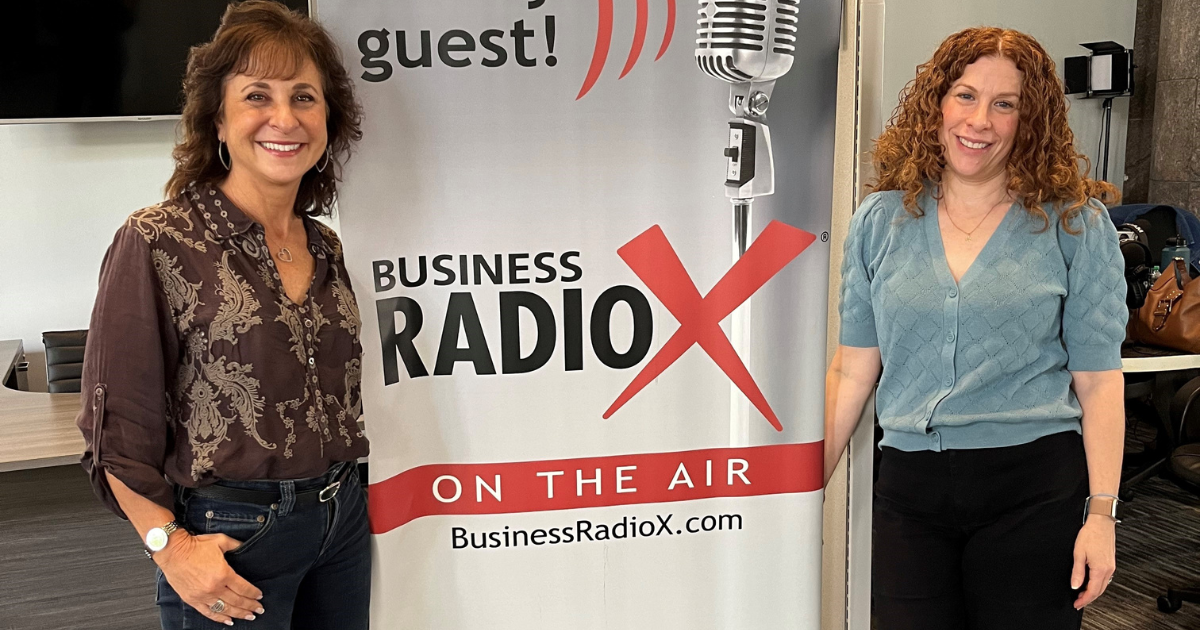
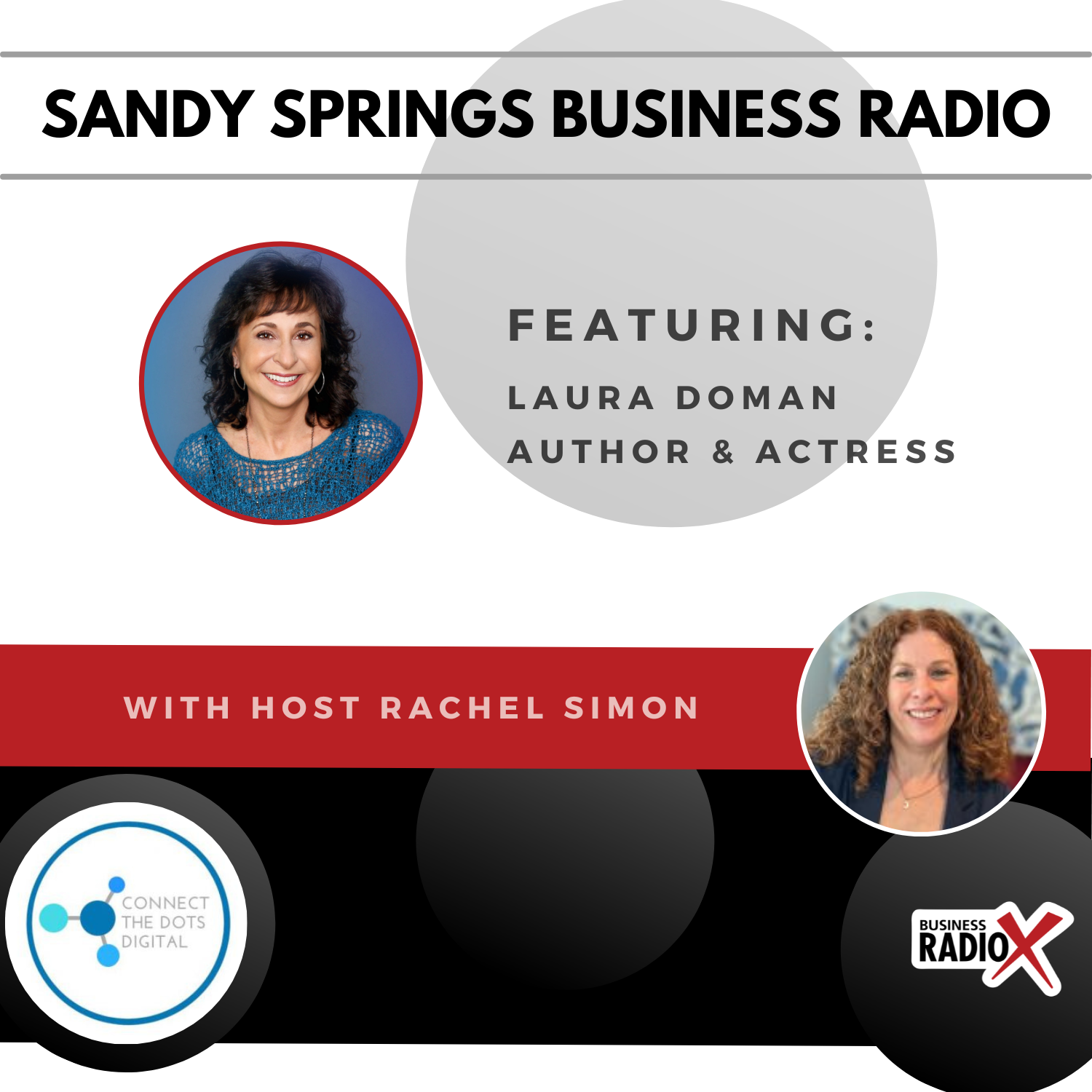
On today’s Sandy Springs Business Radio, Lee Kantor and Rachel Simon chat with Laura Doman, a former IT sales professional turned actor. Laura now helps corporate leaders improve their on-camera presence and communication skills. The discussion covers Laura’s career transition, the importance of authenticity in leadership, and practical tips for effective communication. Laura emphasizes active listening, personal storytelling, and embracing vulnerability to build trust and engagement. She also addresses overcoming camera anxiety and the significance of dynamic delivery in video content, particularly on platforms like LinkedIn.
 Laura Doman is a former tech industry sales exec turned actress, voice over artist, author, and public speaker. She appears regularly in films, TV, commercials, corporate industrials, and print, and voices everything from commercials to corporate and training videos to animated characters for film.
Additionally, Laura coaches business professionals and entrepreneurs who need to become more comfortable and charismatic on camera themselves for videos, Zoom presentations, and other online appearances. Her On Camera Confidence program integrates the best of business sales practices and entertainment techniques to help her clients create videos that “stop the scroll.”
Connect with Laura on LinkedIn, X and Facebook.
This transcript is machine transcribed by Sonix.
TRANSCRIPT
Intro 00:00:07 Broadcasting live from the Business Radio studios in Sandy Springs, Georgia. It’s time for Sandy Springs Business Radio. Now, here’s your host.
Lee Kantor 00:00:24 Lee Kantor here with Rachel Simon in another episode of Sandy Springs Business Radio. And this one is brought to you by Connect the Dots Digital. When you’re ready to leverage LinkedIn to meet your business goals, go to Connect the Dots dot digital. Rachel, what a show we got planned for today.
Rachel Simon 00:00:42 Yeah, we’re going to have a fun conversation. I’m really happy to have actually a friend of mine joining us today that we met through good old fashioned networking. So always fun when you get to meet your, you know, networking and LinkedIn pals in person. But I’m very happy to welcome Laura Doman here to join us. Hi, Laura.
Laura Doman 00:01:03 Hi, Rachel. Thank you so much for having me.
Rachel Simon 00:01:06 we’re thrilled to have you here. And you have such a fun story. So let’s start with your background. So you used to be a IT sales professional, and you transitioned into professional acting, helping corporate leaders show up on camera with confidence.
Rachel Simon 00:01:24 So tell us a little bit about how do you get from point A to point B?
Laura Doman 00:01:28 Yeah, it’s a bit of a right turn in there, isn’t there? Well, you start off with somebody who loves two very different things business and entertainment. I was the kid that was always putting on the shows, and I was behind the mic in high school reading the morning announcements. But I love business, and my parents weren’t crazy about any kind of a career in the entertainment industry. In fact, they went so far as saying, we’re not putting you through college to be an actor. So I followed the business route and I enjoyed it. I always liked tech and I liked sales, marketing, finance, and I put it all together and I did that for a number of years. But on the side, if I ever could sneak out of a sales meeting, I was doing a commercial or I was doing, you know, a little film role in the weekends, I would be doing some stage.
Laura Doman 00:02:19 The big turn happened when I had my first child. I thought that I would be traveling around with a little kid on my back and no problem. And reality hit because I had a travel job ten states. There was no way I was going to ever be home, and I just decided I’m going to be a stay at home mom. And which I did, and I did other work on the side. But when it came time to realize it, I got a lot of ambition left over. I want to do something. I want my own business. I decided, you know, I think I’m going to follow my passion. I’m going to turn things on the head. Instead of having all my theatrical flair supporting a sales career, I’m going to have that business acumen supporting an entertainment career. So I launched into acting on screen, followed by voiceover. And then when I realized that there are a lot of business people out there who need to use videos and to show up as uniquely human and be engaging and get comfortable, oh, there we go.
Laura Doman 00:03:14 Brainstorm. Let’s see what I can do to help them too.
Rachel Simon 00:03:17 That’s I love that story. And I think that, you know, it’s interesting when you kind of let your passions, but also the things you’re really good at kind of help push you down a certain path. And obviously, you know, our listeners can tell you’ve got a great voice we can hear, you know, you could absolutely picture you, and I always listen for commercials of like, could that be Laura on there? so yeah, it’s great. I know you’re going to share lots of good tips for the audience today. So let’s talk about why it’s so important for leaders, for business leaders to be able to show up authentically. And we use that word, you know, in the online space all the time, and sometimes it has lost a little bit of its meaning. But realistically, why is it so important to be able to show up and be able to connect with your target market?
Laura Doman 00:04:10 Well, I think essentially everybody’s BBS meters have ratcheted up ten levels or more.
Laura Doman 00:04:17 We are inundated with all kinds of schemes and scams and come ons, people we don’t know telling us, oh, our LinkedIn profile needs help and our SEO is failing and this or that. And the other thing, and there are very few true professionals like yourself who can really help people. And people are on the defense. They are not sure what is real, what isn’t. You see all kinds of things being done with technology. You see, I what is written by human, what is authentically coming from somebody else. And so we have our guards up. We don’t know what’s true and what isn’t. Now, what are some of the best ways to show that you are a real person. That is through video. There’s also the audio component. Now some people will say, I is getting awfully good with AI voices, but they yet cannot show that human spirit behind it. The emotion, the connection to the material, to the person who’s sitting, let’s say, right across the table from you.
Laura Doman 00:05:17 But on video, and I think LinkedIn shows this better than anything else. That is how you’re going to really forge a relationship. That’s how you’re going to communicate. And it’s not just outward facing to your leads or your clients, but it’s even inward to your own employees. Let’s say that you are a corporate executive, and you have a staff, and you are trying to get them to adopt some new initiatives, or there’s a change of mission. They don’t want to see a talking head, somebody who seems disconnected. They’re just up in their ivory tower. They have no idea what it’s like for us. But if you know how to use video properly and show that you’re a real human being with real concerns, and you do care for them, and I certainly hope that they do. That comes across in the same thing is true whether you’re dealing with the outside world or with people in your own work area.
Lee Kantor 00:06:10 Now, in your work in sales, can you explain maybe some of the low hanging fruit or the tactics that you use, like to bridge acting and communicating as an actor that a sales person might be able to utilize when they’re talking to a prospect or a customer?
Laura Doman 00:06:29 Oh, absolutely.
Laura Doman 00:06:30 Because the fear and the anxiety permeate, no matter what type of public speaking you’re doing. And face it, when you’re in sales, that’s publicly speaking to another human being or a group of people. So how do you come across as a real person and not somebody who’s just going to be very, very stiff and and disconnected? First of all, relate to the other person. Now when you’re in sales, hopefully you’ve done a little bit of homework and you understand the company and you understand the business and the role they have? Talk to them from their perspective. What are the problems that they are facing? What are the challenges? And most people love anybody who listens. Asking good questions is always paramount. And then you take in what they’re saying and you could capitalize it and offer some suggestions. Now, when I was with IBM, we learned the art of the consultative sale. That’s not your used car salesman saying buy this, buy that, buy, buy, buy, buy, buy. It’s listening to where somebody is seeing where they want to go.
Laura Doman 00:07:31 And maybe there is a way that we can help you go and bridge from one to the other. So I would say careful listening. Talk to somebody else. And when you are talking to somebody, really listen. Don’t think about the next thing you’re about to say. Look at their eyes. Get some cues, don’t be fake and say, oh, I see a picture of the family there, or let’s talk about sports. I mean, that’s a nice way to start off, but the real connection is when you get to understand why you’re meeting and you let them know you understand that too.
Rachel Simon 00:08:04 I would imagine, too, that like the ability again as a using the acting skills to pick up on non-verbal cues can be very informative in those conversations as well.
Laura Doman 00:08:15 Acting is reacting. That’s really all it is. They don’t want somebody going out there just performing and they’re all in their own head and it’s over the top. Just like when you’re talking to an individual or group of people, they don’t want presentational.
Laura Doman 00:08:32 The goal is to be more conversational, which is where everything is going in voiceover right now, so that you feel like you’re hearing somebody talking to you like a best friend. And again, you’re listening and you’re caring, so you’re not so much concerned with yourself. You’re focused in on the message. You don’t worry so much whether you’re talking to a person in sales or whether you’re going to be doing a voiceover or putting together a video and you’re on camera. Do not worry about how do I look? How do I sound? you know, worrying about me. Me? Me. What am I going to say next? React to what they have to say and might take you off to a different tangent, but you might find it much more effective.
Lee Kantor 00:09:13 Now, is that kind of a mistake? You see, maybe younger people or newer people to sales make is they’re so focused on memorizing every feature and that the product or service has that they’re just kind of focused in on that rather than doing that active listening and understanding the problem that your prospect has.
Lee Kantor 00:09:32 So you can possibly provide a solution rather than just kind of spew out a bunch of facts and figures.
Laura Doman 00:09:39 If we want somebody to regurgitated, we can just program Rosie the robot set her off, and she could probably say it very articulately and just as quickly as you want. Or you could pick up a brochure and see the same thing. I can read what’s in front of me. Just like people, If you’re ever giving a presentation, please do not put the words on the slides and read from the slides. Nobody likes being read to unless maybe you’re five years old and there’s a fairy tale involved there. It doesn’t work. You have to put it in your own experience. So whether you’re talking to a sales prospect or people you don’t even know who’ll be watching you, take the information and think about it. How I can serve you. This is your issue. Now let me repackage it. But don’t go reading down a whole list. And as far as memorization, that’s helpful when you’re training so you really understand what your company’s products and services are.
Laura Doman 00:10:30 But you’ll be so busy trying to remember every single word that you’re going to lose connection with the person. You’re going to lose the context that it makes sense. And all it is does sound like is a long, long recitation. In fact, I would even say for actors, when you have super long monologues and you are self taping an audition, which is the way it works in film and TV these days. You can hold that script, know it very, very well if you want to memorize it, fine, but you can still speak from your own experience and have your eyes glanced to make sure you’re following along and you haven’t missed an important point that is true. Whether you’re going to be talking to somebody across the table and you have your papers, you can look down, oh, look. Yeah, see, this is what we have and you can point to it. Or if you’re giving a presentation that you’re going to be able to speak from your knowledge and just refer to a few key phrases up there, or have something on hand that you can look at as well.
Rachel Simon 00:11:26 Let’s no, that’s really helpful. And I think it’s so important to kind of again, remember that we’re trying to build trust in those conversations. And so if you’re just worrying about saying the next thing that you’re supposed to say that does not, does not help build that, the the level of trust that you need to get to that. Yes. I want to shift a little bit to, to the leaders. And, you know, when you’re working with your your clients, your C levels who want to show up better, what is the barrier? What is scaring them about video or just being more confident when speaking?
Laura Doman 00:12:09 Well, it depends on the individual and where they’re coming from. And you’d be surprised by how many executives have forgotten the art of in-person networking and conversation. and you have to keep that in mind when you’re speaking on camera as well. I think a lot of them think that I have these bullet points to cover, and they forget about showing the human element. Sometimes they’re more focused on getting all the words right instead of with the meaning.
Laura Doman 00:12:37 And maybe they are nervous. And so you have people who use a lot of filler words, and you could tell what they are by generation, like, like, like before that you had, you know, you know, every other word. And before that was
Rachel Simon 00:12:51 Mine is so.
Laura Doman 00:12:54 So that I know there’s all kinds of stuff you could throw in, and it’s a matter of slowing down if you really want to be effective. Take your time. Have you noticed I’m using pauses? Most people, like even hunting, are going to lean and say. Now what? You don’t have to be overly dramatic, but don’t get all those words out in a spew. Nobody needs a torrent thrown at them. Give people time to process it. You can also vary your pacing and even your volume. A lot of executives are afraid to allow their personal stuff, their emotion, to come through. People love to see the human being behind the facade, especially if you’re in a position of power, which is why you’re going to see.
Laura Doman 00:13:40 And I hate to bring it up because we just finished the selection political season where they are going to show their real people, just like you and me. Whatever it is, hopefully it’s real and not Contrived a people like to see the real human being, and they feel then that this is somebody I can relate to. If you’re talking about authenticity, about being genuine, about being human, you want to be a little vulnerable. Now, that doesn’t mean you have to share your secrets with your spouse or any of the major problems you’re dealing with, but you can just kind of say, yeah, like I was talking to my daughter or we just saw this movie, little things like that. Don’t be afraid to be a real human being, because especially with the younger generations, they want somebody that they can trust. You know, you say the know, like and trust. Sometimes that trust has to come first before they want to get to know you, before they decide they like you, and whether or not you’re credible in their minds.
Rachel Simon 00:14:37 That’s so interesting. Do you think that there’s any, challenge, again, with leaders getting so concerned about making sure they’re hitting all their corporate communication talking points? Because I know it The larger you get in a, you know, size company, the more control often marketing wants over the the messaging, but then it kind of makes it harder to personalize and make more engaging.
Laura Doman 00:15:06 And that’s where I would say throwing a little personality. If you’ve got somebody who’s got a natural sense of humor, as long as it’s good natured and well-intentioned, a little humor can be quite disarming. You do have to get your talking points in. And I was, in fact, speaking to a group of executives back last spring, and it was very much on this subject. Don’t be afraid to put in a little personal story. don’t be afraid to call out other people in a positive way. Give credit to those who are supporting you. They often work ignored or they’re relegated to the back. And maybe they are the credits at the final bottom of some story.
Laura Doman 00:15:47 But say, look, for example, let’s talk about John and what he’s done to bring his department from 10%, up to 12% greater efficiency. Or I want you to hear the story of, you know, Eloise who joined us, and now look where she is. Recognize your people. That’s also a sign of good management. But bring them into the conversation. They don’t have to be physically on the call with you or on the video with you, but let them know that they’re included and there for other people will see that you do care about your people, whether you’re an employee or a client, and that you’re thinking beyond yourself. And you can still include all those talking points. Just keep them there in front of you. But don’t be afraid of thinking. I only have ten minutes and I’m going to be in and out like that and boom, that’s the end they’re going to see of me. That’s that’s not good. Take the time, especially with these younger generations.
Lee Kantor 00:16:39 Now, what challenges your next client having right now where you’re the best solution for them? Is it that they have a talk they have to give? Is it they just had a talk and it didn’t go the way they wanted.
Lee Kantor 00:16:51 Like, what is kind of the mindset right before they hire you?
Laura Doman 00:16:56 I see people coming to me for all different reasons. And I’ll just give you one example, a small business owner who needs to be on social media and needs to promote, let’s say, her business, but doesn’t have a great budget to do it. What I would do is, first of all, saying, I can walk you from soup to nuts. If you ever have done any videos before, let’s take a look at what you’ve got. How can that be improved? What are you doing right? What? You know, maybe we want to tweak a little bit and then find out. How comfortable are you on social media? How comfortable are you in front of the camera? Do you need to know how to set it up for yourself? Do you know basic editing? There are ways of being able to do this very inexpensively, and while there’s some outstanding video production companies out there, you don’t need to spend a fortune.
Laura Doman 00:17:42 In fact, the best videos going on right now are the short vertical ones that you see in stories or reels, and these are 60 to 90s. They can even be only 10s. I prove my point by creating a video series I call mom isms. There are these little sayings when you walk into a gift shop and you see them on towels and cocktail napkin, silly things like and I act them out like I’m a mom in the kitchen making a chocolate cake, and I’ll look up at the camera and say, good moms let you lick the beater. Great moms turn them off first. It gives you a chuckle, but it makes you memorable and it doesn’t have to be very long. So whatever their strength or weakness is, we can work around that. They don’t even have to be the person speaking on camera. They don’t even have to be the person on camera. But if they are, then I’m going to help them figure out what is your core message and how can we get it across in a unique, memorable way? Because 80% of all content out there pretty much is video, or at least that’s what people are watching.
Laura Doman 00:18:42 LinkedIn has its own video feed now of vertical. If you’re going and wondering why we’re not seeing more television shows in movies. That is because most people in the Gen Z and even young millennial are going to YouTube for their content, and they’re going to Instagram and they’re going to TikTok. And guess what? If you’re making up something that’s memorable and interesting, that’s what they will see. That’s what they will remember. The commercials, the ads I’m in tend to be humorous because they want to grab people’s attention. So I will help people understand that when you’re making a video, you have to hit it right out of the gate. You’ve got 3 or 4 seconds, maybe tops, to get their attention. It doesn’t have to be whiz bang, but you’ve got to get right to what they are wanting to know at the very, very beginning. And people need to learn how to do it. You also have to look like you’re comfortable on camera. So there are a lot of people who just say, like my sister, oh my gosh, I don’t even want to be on a zoom call.
Laura Doman 00:19:41 I sit there with the camera off and I hope they don’t call on me. There are ways of getting comfortable beforehand with the food, the beverages that you’re drinking or not drinking. how you can even relax into your body with some exercises, vocal warmups? There are all kinds of things like that. And then understanding how to use the camera itself. A lot of people want to know, how is that different from just talking, let’s say, to Rachel across here. Well, small is big when you’re looking on camera. Take a look at your movie theater where somebody’s face fills up the whole screen, and you never know what they’re going to see you on. It could be a cell phone. It could be a giant TV screen. So I help people understand the media and be able to conquer any problems they might have, like using filler words and stumbling, shifting weight, not knowing where they should be looking. moving out of frame so I can take them anywhere and then I can. I love to focus on dynamic delivery, how to really be able to pace yourself, how to make people lean in and listen.
Laura Doman 00:20:43 Not just what you say. That how you say it. So it’s bringing a lot of acting techniques right to the business world.
Rachel Simon 00:20:51 Yeah. The there’s so many things that you said, I mean, to unpack there. So, you know, I love the tips of hitting it out of the gate because so many people start their video and go, hi, it’s me, Rachel Simon with blah blah, blah. And like, you’re wasting people’s attention, right? Just get into the topic. but I know for myself personally, like video is challenging. It is not my favorite medium. looking at this iPhone camera is it’s not so easy.
Rachel Simon 00:21:24 To like, where exactly am I supposed to look? It is not that easy nor intuitive now for for our generation, not for our kids. They know what they’re doing. so just being able to have those tips can be, I can imagine is tremendously useful.
Laura Doman 00:21:42 Yeah. Can I give you one tip for everybody out there that will save you a lot of aggravation when you are talking to the camera, talk to one person because it’s a very intimate environment.
Laura Doman 00:21:55 Usually you are watching a video on your own and you are seeing somebody close up, and if you talk to somebody like they’re sitting in front of you and it’s a friend or somebody who’s really supportive of you, you’re going to come across so much better than if you were just speaking from a script and just getting the words out. You could tell the difference in the tone. There’s warmth and emotion versus, all right, this is what I’m going to cover and I can’t wait to be done. That kind of attitude.
Rachel Simon 00:22:20 That’s a really good tip. That’s a really good tip. I do want to ask your opinion on the videos on LinkedIn because I, and if you’re not aware of what we’re talking about on your mobile app, there’s a video tab now. So similar again to vertical videos you can scroll through. I personally have found them to be tremendously dull, and not and there’s a lot of like, this is a day in the life of a project manager, blah blah blah. what do you think of those videos? And, like, how can we improve them?
Laura Doman 00:22:53 Well, they’re not going to stop the scroll, are they? I just go past them and if I see too many of them, I’m not going to want to bother with that video feed.
Laura Doman 00:23:01 But if I see something where somebody is doing something different and unusual and they get to the point and they tell me something I want to know within a few seconds that made my time worthwhile, because we only have so much time. And personally, I like to gather information or I want to be entertained. I just don’t need somebody who’s just dithering about what they had for dinner. I mean, that’s one reason I have my mom isms out there, and I hope they make the feed because it’s just like a quick little laugh. Boom. And five seconds later you’re on your way. They are.
Rachel Simon 00:23:31 Entertaining. I will watch the ones if I recognize a friend who’s on there, but most of them so far have been uninspiring, to say the least.
Lee Kantor 00:23:39 Now, do you have a feel for how many videos a person should be releasing and what rhythm should they be releasing them?
Laura Doman 00:23:46 It depends on what they’re doing it for. now, if you want to grow your LinkedIn presence, Rachel’s the expert, and she might just tell you that you want to be posting or at least appearing online on LinkedIn at least three times a week, 2 to 3, whatever you could do if you can only do once a week, fine.
Laura Doman 00:24:06 Don’t scare yourself, or put yourself with a bar so high that you’ll never attain it. Or worse, never even get started. You do what’s comfortable. Now, if the important thing is to do it consistently and to have a regular schedule. So if you only want to do like one longer video maybe once a month, that’s fine. If you want to do a short video once a week or once every two weeks, that’s okay too. But know what you’re going to be speaking about. Set yourself a schedule and your audience will know to look for you. The other thing I would tell people is to keep a YouTube channel handy. It is an enormous repository for everything you’re doing, you could create your playlist. And furthermore, YouTube is the number two search engine after Google. Incidentally, Google owns YouTube and they will find you both for short and for long videos there. And it’s a way to repurpose your content. So if it’s scary to put out a video and you only want to do it, let’s say once a week, once every two weeks, know that it can be used in multiple places and you don’t have to reshoot it.
Laura Doman 00:25:11 Just when you post it on LinkedIn, you’re going to give it a business slant. When you’re going to be putting it on TikTok, you’re going to give it more of an entertainment one. It’s geared to your audience, wherever they might be.
Lee Kantor 00:25:22 Now, when you’re saying long and short, what is kind of the time window of long and what’s the time window of short?
Laura Doman 00:25:27 Typically long would be anything that’s more than one minute. I think short videos pretty much now have kind of bled into that. Short videos have always been considered under one minute because that’s how, let’s say, Instagram would cap it. You only had one minute to create a vertical short video. Now they’re extending it to 90s. So a long video is typically, let’s say, a couple minutes to ever long. You want it, but just keep in mind that you don’t want to make anything overly long, because if you want to do well, and if you want your videos to be pushed out, be aware of the analytics.
Laura Doman 00:26:03 And the analytics look good when people see as much of that video as possible. All of it if you can. And if you could take a big subject and divide them up into two shorter videos, each one will get more eyeballs. You’ll have more consistency and presence, and chances are people will watch it to the end. Furthermore, if you make them very short and people are interested, the thing will recycle and you’re going to get extra numbers where somebody might have end up watching it 2 or 3 times. So it’s a matter of what you’re trying to explain, and each type fits a particular purpose.
Rachel Simon 00:26:38 Yeah, nothing is like a.
Laura Doman 00:26:41 One size fits all.
Rachel Simon 00:26:42 Well, that’s true, but I was going to say nothing makes me kind of just keep scrolling on LinkedIn than if I see a video of just somebody talking and the timestamp is three, 4 or 5 minutes long, like, no, I’m not gonna watch it.
Laura Doman 00:26:55 Our attention spans are way too long, which is why I’ve been experimenting to see how short I can get it, to still make it valuable without a sounding rushed, because I tend to pack a lot of value into things.
Laura Doman 00:27:05 And I’ve looked over some of my older stuff for one minute videos and it’s like I’m just, you know, spitting it all out. And I probably could have broken that into 2 or 3 instead and taken more time and had more fun with it.
Rachel Simon 00:27:16 But the trends change over time, right? And, you know, the functionality changes. So now we have, you know, automatic, captions on LinkedIn that we didn’t used to have auto captions. You know, the other thing I get, oh, God, I keep saying, you know, now I’m like, so aware of it. not double captioning your videos as well, because that is very distracting.
Laura Doman 00:27:41 It is. It’s double vision visioning, that’s for certain. In fact, I was just uploading a video last night to LinkedIn. And make sure you always turn off that captions. Now, I personally prefer captioning it outside of LinkedIn or outside of a tool, just because I’m a stickler for accuracy. And I don’t like to see some of these automatic captioning tools, misspelling people’s names or taking a word wrong.
Laura Doman 00:28:05 And there are so many great tools out there. In fact, for my super short ones, I’ll even use Instagram because I can use different styles or cap cut is great.
Rachel Simon 00:28:13 Yeah, I use Instagram if I do a video because I like the look of the captions on there, and then just I don’t post it on Instagram because I don’t do much on there, but we’ll download it and then upload it to LinkedIn.
Laura Doman 00:28:24 That is the trick. If you’re going to use Instagram or TikTok or anything else for that kind of captioning, download it before you post it so you don’t get their watermark. But they have fun little stickers and little gifts that you could put in there. They even had a font for Halloween. So when I had a Halloween themed Theme video. It looks spooky.
Rachel Simon 00:28:43 Yeah, I mean, it is a lot easier to make nice looking videos today than even 2 or 3 years ago, I think.
Laura Doman 00:28:52 Absolutely. And just keep in mind how people will look at it on their phones, or if they’re going to be putting it on the desktop, make sure that it still translates well for the mobile device.
Laura Doman 00:29:03 So if you’re going to be creating a video, it’s very important to have an attractive thumbnail. That’s a picture that’s like a placeholder for it and a title, and you want to use keywords, but you want to make it attention grabbing and make the words. If you’re having words, show up on that thumbnail large so people can see it at a glance. And don’t overdo it with too many words on a thumbnail.
Rachel Simon 00:29:27 And you can create that thumbnail in Canva or something.
Laura Doman 00:29:29 Absolutely. That’s what I do. Or you can even grab a screenshot of a video, use that and then overlay it with some text.
Rachel Simon 00:29:37 That’s a great tip. Great tip. well, we covered a lot of ground here. Lots of really fantastic tips and guidance for again showing up more confidently. The video video is not going to go anywhere. I think we’re only going to see more and more, focus and dependence on video content, for many, many reasons. But the trust factor, I think is, is a big one of those, reasons to expedite that relationship with our audience.
Rachel Simon 00:30:09 So thank you for all of your tips.
Laura Doman 00:30:11 My pleasure. Thank you for having me.
Lee Kantor 00:30:14 Now, if somebody wants to learn more, have a more substantive conversation with you. Is there a website? Is there a best way to connect? There sure.
Laura Doman 00:30:21 Is. My website is Laura Domain.com. they can also find me on LinkedIn at Laura Domin and I even have a YouTube channel. Laura Domin so I try to go for consistency here.
Lee Kantor 00:30:35 And that’s dumb and dumb. And like.
Laura Doman 00:30:38 Roman. Yeah, like Roman with a D. Very good. Yeah. LA radio man and I even have a free offer if anybody would like to have that. if you go to my website and you can even do at the end of law Domain.com slash consulting, or you can find it on the tabs if you just go to the main website, I’m offering a couple of things. One, you can download a PDF of my top ten tips for looking great on camera for being dynamic. And also, if you’ve got a question or you just like to explore and see how I can help you, I am offering a free 15 minute consult.
Laura Doman 00:31:14 We can assess the current video, talk about something you’re dealing with or whatever you like, even about the acting and voiceover industry.
Rachel Simon 00:31:21 That’s great. And those are two fantastic resources I would highly encourage people to take advantage of, and I love the idea of being able to come to you with a video and say, what worked here, what didn’t work, and how can I improve it?
Lee Kantor 00:31:36 Now, Rachel, usually we do a LinkedIn tip. Do you think we got one in there or. Sure. I mean, we talked a lot of video.
Rachel Simon 00:31:43 We got a lot. I would suggest my tip is, challenge yourself to try video if you’ve never done it before. We all have these studios in our hands with our, you know, mobile phones. And, I’ll make a deal. I’ll do it if you do it. Because I don’t love making videos, but I will make a video. so I’m going to challenge the audience to do it as well. And if you do, tag me on LinkedIn, right.
Lee Kantor 00:32:09 They tag you, and then you’ll make another one. Right?
Rachel Simon 00:32:12 I’ll just keep doing it.
Lee Kantor 00:32:12 Keep doing it until you keep tagging her or.
Laura Doman 00:32:15 Tag me and I’ll nudge her.
Lee Kantor 00:32:17 There you go. Good stuff. Well, thank you, Laura, for sharing your story today. You’re doing such important work, and we appreciate you.
Laura Doman 00:32:23 Oh, thank you so much.
Lee Kantor 00:32:24 All right. This is Lee Kantor for Rachel Simon. We’ll see you all next time on Sandy Springs Business Radio.
About Your Host
 Rachel Simon is the CEO & Founder of Connect the Dots Digital. She helps B2B companies close more business by leveraging the power of LinkedIn.
Rachel works with professionals, both individuals and teams, to position their authentic brand on LinkedIn so they can connect organically with ideal clients, attract the best talent, and stand out as a leader in their industry.

Connect with Rachel on LinkedIn.
BRX Pro Tip: 4 Habits That Separate Doers from Dreamers
/
RSS Feed
BRX Pro Tip: 4 Habits That Separate Doers from Dreamers
Stone Payton: [00:00:00] And we are back with Business RadioX Pro Tips. Lee Kantor and Stone Payton here with you. Lee, let’s talk about some of the key habits that really separate the doers from the dreamers.
Lee Kantor: [00:00:09] Yeah. This is something that I read recently from Bill Gates. And I thought that it had a lot of relevance for the folks that we deal with and a lot of the entrepreneurs or the aspirational entrepreneurs that we run into on a regular basis. What Bill Gates said that four habits that separate doers from dreamers. Number one is, doers cultivate curiosity. There has never been an easier time to learn new things. Right now we have access to so much information. So, you should be always kind of nurturing that side of your brain. It’s just keep learning new things.
Lee Kantor: [00:00:44] Another thing that doers do that dreamers don’t is that, they empower the people around them. Great leaders watch the back of their community. It’s not about me. It’s about we. Another thing doers do is doers delegate their weaknesses. So, they try to focus on their super powers and then they delegate the rest. And that’s why it’s critical in any community to have great teammates whose strengths are your weaknesses so that the whole community can benefit and move forward.
Lee Kantor: [00:01:15] And, finally, doers focus on the things that matter most. They’re great at prioritizing. They are great at identifying what that most important thing is that their unique talents should be focusing on. And getting that done should be their focus every single day. Those are four tips or four habits that might help you move from dreamer to doer.
What is Your Client Testimonial Strategy?
Building a Culture of Respect: Lessons from Home Depot’s Leadership Team
/
RSS Feed

In this episode of High Velocity Careers, Stone Payton facilitates a discussion with Tom Devaney, Michael Cabe, Paterson G. Nya , and Diana Fonseca Wilkinson. Tom, the Executive Director of Kennesaw State University’s Executive MBA program, discusses the program’s impact on leadership and organizational culture. Michael, a senior manager at Home Depot, shares insights on developing leadership skills among 45,000 company leaders. Paterson, from Home Depot’s HR software side, emphasizes respect and training, while Diana, a retail professional, highlights the importance of understanding workplace perceptions. The episode underscores Home Depot’s commitment to internal talent growth, respect, and community involvement.
 Michael Cabe is the Senior Manager of Learning Strategy, specializing in Ongoing Leadership Development at The Home Depot. With over 15 years of experience in leadership development across higher education, healthcare, and retail industries, he has a proven track record of creating impactful off-the-shelf and enterprise-wide programmatic development initiatives for leaders at all levels.
He holds undergraduate degrees in Sociology and Psychology, as well as a master’s degree in Human Resources and Organizational Development from the University of Georgia. Michael currently resides in Atlanta, where he continues to drive innovative learning strategies and foster leadership growth.
Connect with Michael on LinkedIn.
 Paterson G. Nya, MBA has over a decade of experience at The Home Depot, where he started as a Java Developer and held roles of increasing responsibilities.
Today, as a Software Engineering Manager at The Home Depot, he leads a team of software developers primarily focused on projects involving UKG Dimensions, a workforce management solution that optimizes employee scheduling, timekeeping, and labor analytics to enhance workforce productivity and ensure compliance.
In addition to his role at The Home Depot, Paterson is a co-founder and COO at TréoFinancial Inc., a startup whose flagship product, TréoWallet, is a digital wallet app designed to simplify money management.
TréoWallet offers features such as budgeting, payments, and expense tracking, catering to users seeking seamless financial solutions. At Tréo, Paterson leverages his leadership and operational expertise to ensure smooth and efficient operations. His commitment to building exceptional teams is instrumental in driving Tréo’s mission to provide top-tier financial services to Africans in the diaspora.
Outside of work, Paterson is a dedicated son, husband, and dad who enjoys spending time with his family.
Connect with Paterson on LinkedIn.
 Diana Fonseca Wilkinson is a seasoned Merchandising, Sales, and Marketing Executive with a proven track record in omni-channel business strategy and execution. With extensive experience in negotiation, financial analysis, and category innovation, Diana has successfully led high-performing teams across notable retail giants.
Currently serving as a Director in Merchandising for the Power Tools Department at The Home Depot, Diana oversees a robust portfolio, managing Nailers, Collated Fasteners and Air Tools partnering with the largest, and most innovative, exclusive power tool brands in the industry. Her leadership has driven significant sales growth, through innovative strategies such as the launch of a personal safety customization experience on Home Depot.com.
Before joining The Home Depot, Diana was an Omni-Channel Senior Buyer at Bed Bath & Beyond, where she managed seasonal merchandising programs. Her strategic initiatives, including the introduction of new seasonal categories and a groundbreaking import buying process, yielded substantial profit increases and reinforced vendor partnerships.
Diana’s earlier roles include Vice President of Trade Channel Marketing at ArtSkills, Inc., where she elevated brand visibility through effective marketing strategies, and Senior Buyer positions at Walmart Stores, Inc., where she led cross-functional teams to achieve multi-million-dollar sales growth in various departments.
Diana holds an Executive MBA from Kennesaw State University and a Bachelor of Science in Business Marketing and Management from Centenary University, complemented by a minor in Psychology. She is a committed member of Lions Club International and the Network of Executive Women, and actively engages in professional development through leadership training programs.
Recognized for her exceptional contributions to the industry, Diana has received numerous accolades, including the prestigious Buyer of the Year award and the Sam Would Be Proud Award, reflecting her dedication to excellence in merchandising and team leadership.
With her dynamic skill set and passion for innovation, Diana Fonseca Wilkinson continues to make a significant impact in the retail sector, driving growth and inspiring her teams to achieve their fullest potential.
Connect with Diana on LinkedIn.
About Our Co-Host
 Thomas F. Devaney, MBA, CPA, is the Executive Director of the EMBA Program and a Senior Lecturer of Accounting and Finance at Kennesaw State University. With over 30 years of experience in both public and private accounting, Tom brings a profound depth of knowledge to his role as an educator and leader.
Prior to academia, Tom had a distinguished 25+ year career in public accounting at the principal/partner level, serving small and mid-sized entities (SMEs) and affluent individuals. His extensive business consulting experience includes tax planning, preparation, and representation, mergers and acquisitions, business planning and development, transaction due diligence, and operational consulting. Additionally, Tom has broad experience in financial accounting and reporting, encompassing the design and implementation of management information systems, manufacturing and construction cost accounting, and budgeting and forecasting functions.
Tom earned his Bachelor of Science degree in Accounting from SUNY-Oswego and his MBA in Accounting from Kennesaw State University. He holds active CPA licenses in California, New York, and Georgia. He is a member of the American Institute of Certified Public Accountants (AICPA), the Institute of Management Accountants (IMA), and the Georgia Society of Certified Public Accountants (GSCPA).
As the founder and senior partner of Devaney & Associates, Tom has demonstrated leadership and a commitment to excellence in accounting. His professional journey and academic contributions make him an invaluable asset to Kennesaw State University and the broader accounting and finance community.
Connect with Tom on LinkedIn.
This transcript is machine transcribed by Sonix
TRANSCRIPT
Stone Payton: Welcome to another exciting and informative edition of High Velocity Careers. Stone Payton here with you this morning. And of course, my buddy Tom Devaney, the Executive Director of the Kennesaw State University’s Executive MBA program. How ya been, man?
Tom Devaney: Been well? How about yourself?
Stone Payton: I’ve been good. It’s great to have you back in the studio. I have so thoroughly enjoyed producing this series. I’ve learned a ton, I’ve met some marvelous people, and I’ve really been looking forward to this one. You and I even got on a zoom call with Michael Cabe trying to plan this some time ago. We finally herded the cats. We’ve got them in here. I got a ton of questions for all of you. We may not get to them all, but I am really looking forward to this. Michael, it’s good to see you again, buddy.
Michael Cabe: Hey, thanks for having me. Good to be here.
Stone Payton: Maybe a good place to open up. Would you share with with me and our listeners your role in the organization and maybe a little bit about your career path, because you just have the coolest job. I think at one of the coolest places that I’m aware of, I love it.
Michael Cabe: So I work for The Home Depot, and I’m currently a senior manager of Learning strategy, and what that means is I help figure out what our leaders need to have. So if you think about the population that we have at the Home Depot that is considered people leaders, that’s 45,000 people that have direct reports. That’s the size of most large businesses in this country. So my job, in all honesty, is how do we keep those folks growing? How do we keep them developing? How do we keep them building leadership skills? And how do we make sure that we’re reinforcing the behaviors that we want them to see? Because if you think about those 45,000 people leaders, those people have to go home. So they also are working with their associates who have to go home. So how do we make sure that they are creating environments for themselves and their associates that when they go home, we leave them better than they came into the business. So that’s what my job is. How do we make sure that we have great leaders? We have the best leaders in retail out there, and it’s really awesome just to keep them on their toes and on their games. That’s what I do, uh, career wise, start out in higher education. So I worked there for several years, moved over into healthcare, where I helped build some pipeline development programs, and then came over into The Home Depot eight years ago, where I started off in our executive development program. So started with our most senior leaders helping them develop and grow. And I think that’s very unique in the fact that our senior leaders do the same thing that all of our leaders do. They’re always looking for growth. They’re always looking for ways to come in and do their jobs better. And we are pushing that throughout the organization. So that’s what I get to do every day. I get to work with our associates and help them understand, you know, how do I show up better today? Better than yesterday.
Stone Payton: So, eight years in, what’s the. What are you finding the most rewarding? What’s the most fun about the work these days for you?
Michael Cabe: I think the impact that we get to see, you know, we are doing some really cool things. I think, you know, I think there’s a misconception that at Home Depot, we just sell hammers. Yeah, we do a lot more than that. And when I talk with peers out in retail, we’re we’re not sitting here just saying, hey, here’s the best way to sell a hammer. We’re saying, how do you think about this? What do you think about the business? How do you build your business better? And in doing so and enabling you to do so, are the people that you work with every single day. So how do you grow them? How do you develop them? And Home Depot is notorious for building internal pipelines and building internal talent. And that’s what gets me excited every single day, is I get to see these folks day in and day out, grow and develop, and we get to be a little part of that. That’s that’s what keeps me up and what gets me up every day.
Stone Payton: So also filling out this all star lineup we have with us Paterson. Paterson, you’re in the software side of the of the work. Is that accurate? That’s correct. Yeah. So tell us a little bit about how you landed it. Because I could tell how much you enjoy your job. We had a chance to drink some coffee before we came in the studio, and it was obvious that you could see it in his eyes. You could hear it in his voice, the passion he has for the work. Tell us a little bit about the work and how one gets to do this kind of job.
Paterson G. Nya: Yeah, well, I started at a Home Depot a little under a decade ago, I believe it was on the 2nd of September, 2014. I still remember that date very, quite vividly. So when I started, I was a contractor basically working in our store systems. So we were working on resolving some of the issues that were coming from the store and all, and eventually got hired as a full time in HR. So I was responsible of multiple applications. I worked on things like I-9 compliance, and most recently I was working on the workday implementation. Uh, Home Depot was switching to start working, uh, just to have our users use workday. So I was part of that project. And, uh, while in the MBA program, I got a promotion which led me to a whole different side of the of the company still in HR, but this time around on Ukg dimensions. So I’m leading a team of nine people there, and we are doing great things for our store associates.
Stone Payton: How’s that for an endorsement, Tom? We got to carve that out, right? Make a promo out of it. I went to this thing that Tom is running and, uh, got a promotion. I think we’re done here. We’re good, we’re good.
Tom Devaney: It happens in every cohort, and almost 80% of our students get promotions while still in the program.
Stone Payton: Fantastic. And our headliner, Diana. How are you doing? Hi.
Diana Fonseca Wilkinson: Nice to meet you.
Stone Payton: And what are you doing? And how did you get there?
Diana Fonseca Wilkinson: Uh, so I’m a merchant for Home Depot. The home depot. I’ll go back to what Michael said. And how did I get there? I actually was hired in 2020 during the pandemic. June 22nd. I remember my first day to Paterson. I get it. And, um, during the pandemic, was hired as a.com merchant. And I was buying all of hardware for Home Depot. And so when you talk about hammers, I was buying all of the fasteners nails, screws and then, um, hinges, you name it, door locks. So all of the hardware for Home Depot for.com and just tremendous growth there. I did that for four years, and shortly after graduating, I actually moved over to the core side of the business and now I purchase all of. I purchase and sell because we’re merchants. We buy and sell all of the nailers and compressors and air tools for Home Depot, including the collated nails. And so it’s been quite a journey. I’ve really enjoyed it, I love it, and the program had a lot to do with my success.
Stone Payton: And if you buy it online, Diana bought it first. That’s right. That’s right. What do you like the most? What’s the most fun about to work for you?
Diana Fonseca Wilkinson: Oh, gosh. Um, the most fun about the work. The challenge of making sure that you’re taking care of not just the end user and the customer who gets it in their hand. Number one, getting it to them however they want to receive it, and then giving them the information that they need, whether it’s through.com or on packaging or any of those avenues, but also helping the store or our field, our store associates get the information that they need to sell it and take care of our customer. And so just so fun to see when you find an item, how many can you sell? And then knowing that a lot of the product that we sell help people in. You know, the thing about Home Depot is we’re there for them and some of their best times, right? When they buy a house, and they’re just so proud that they’ve been able to buy a house and to protect their family and provide. And then also we’re there for them. Sometimes when things are at its worst and something happens and the, you know, there’s a leak in the ceiling, or unfortunately, if there’s a natural disaster and being there for them. And so that is the most satisfying to know, is that we’re there for them during those times and be part of it.
Stone Payton: So we’re going to swing back around to Michael here in a little bit and probably get a far more detailed answer, but I would love to get some insight from this perspective on this topic from you and Paterson. First, I want to talk a little bit about culture at Home Depot and part of what is, um, the catalyst for asking this question. I’ve had a string of very positive experiences at the Home Depot, one of which is it’s really easy to get to and get back from my house. So thank you for putting it where you did right there on 92 and 575. But the most recent one really stands out for me because I went in. It was a younger person and I don’t even remember what I was asking for, but I was asking for the item and a little bit of advice on it. And you know what he did? He said, I don’t know, but I know who does. Come with me. And to me that you talk about a reflection of leadership and culture and leadership. To me, that was the epitome of a really strong leadership development employee development program, because rather than try to fan it off or whatever, he just flat out said, I don’t know, but I know who does follow me. And we got it and we got it handled. So I’m interested. How would you describe the The Home Depot culture?
Diana Fonseca Wilkinson: Uh, I came to the Home Depot because of the culture. I. A lot of people don’t know this, but when I started, when I started interviewing, um, I actually got an offer from Lowe’s the night before, and people at Home Depot don’t know that. But I guess now they do know.
Stone Payton: I guess they do now. All right. There’s edit mark, edit number one, but we just we refer to it as the blue brand and it’s way across the street. It’s hard to get to.
Diana Fonseca Wilkinson: We refer it to probably across the street. Um, and I didn’t I purposefully didn’t pick Lowe’s. And the reason for that was because of the culture that exuded when I was going through the interview process and the leadership that interviewed me and the people that interviewed me, it just came. It shined through. It was a no BS. Uh, we want to make sure that we take care of our people. The values that we have, we have an upside down pyramid where the CEO is at the bottom of our pyramid and at the top of our pyramid are our store associates, and we have our culture wheel. Our value wheel. And, you know, doing the right thing is on there. Creating shareholder value is on there. There’s just the it just resonates with me. And what’s great about our culture is that and what I could tell from the interviews is it’s not just something that they put on the walls. When you walk into the store support center, our home office is called the Store Support Center. Oh, wow. It’s not corporate office. It’s it’s the store support center. And when you walk in, it’s not just something that’s on the walls. I mean, people live it. We live it. We mean it.
Stone Payton: We mean it. I’m so glad I asked. And I believe you, and I believe that you believe it. Paterson I’m sorry you have to follow that answer, but you got any you got anything to say? About what? Can I answer.
Paterson G. Nya: So yeah, talking about the culture at Home Depot. It’s it’s really something that stands out, right? Just. Just like Diane says, the inverted pyramid, which you mentioned is part of the training. Like when when we come in, when you’re doing the different trainings that you’re doing, you have to take care of the customers, right? Us working at the store support center, we have to make sure that we are taking great care of our store associates because they are the front. They are the front line taking care of those customers. So if the store support center is not taking good care of those associates, that associate that told you that, I don’t know, but I know who can help you would probably give you a different answer. Right. So everything is goes back to the training. And Gabe mentioned earlier about the training that he’s giving to the executives and all. It kind of flows down. Right. But but one thing that I love a lot about working at the Home Depot is also the respect, right? There is a lot of respect, be it from the leaders downwards to the to the their direct reports or from their direct reports going upward. They are all about respect, and it’s one of the things that we values.
Diana Fonseca Wilkinson: On our value wheel. Wheels.
Paterson G. Nya: And for me, that’s even my personal life. Respect is very, very important. So I got into Home Depot ten years ago. I haven’t left since. I haven’t thought of leaving. I don’t know what the future holds, but yeah, I’m still here.
Diana Fonseca Wilkinson: So let me I’m going to share a story with you. Please. Um, when it comes to our culture and what we do, first of all, I’ll share this. We just had a fundraiser. We have something called the Homer Fund, and we also have a foundation. And the Homer Fund is, um, money that the company raises the associates within donate in order for if there’s something that happens to another associate in their time of need, that we can give them a grant or we can, you know, help them. We just raised internally at the Store support Center, just from the merchandizing division, $215,000 to donate that we just raised. And since the hurricanes, we’ve had a lot of associates that have been affected. We’ve donated over $500,000 to our associates in need just to make sure that they’re safe. I mean, our company, we we build buckets with equipment and, you know, water and food, and we have gas trucks that go to the stores to where the associates are located to make sure that they have gas, that we we fill up tank tankers of gas and send it out to those disaster areas. It is just absolutely incredible. And the thing is, is that we build stuff and, you know, the other foundation that we have our our foundation that we do.
Diana Fonseca Wilkinson: And, um, a lot of that money goes to veterans, but we don’t just donate money and equipment to veterans. We get out there and we build veteran homes. We go out and we help people build their houses that are in need. We’ve done it for Atlanta. Habitat for humanity. We work with our vendors. We don’t just get the supplies like we’re not just sending money. Like I have, I have swung a hammer. I have framed out a house. I have built a deck, I have, I have you name it, I’ve done it. You want to know how to do a project? We get out there and we get our hands dirty and we roll up our sleeves. Every single one of us at the store support center. And frankly, also our associates in store and anywhere in the distribution centers, we roll up our sleeves, we get out there and we do it. And I don’t know of any other company that can actually say that they do that. So yeah, I can pull my wallet out and give you some money, or I can go out there and actually build you something. And that’s what we do.
Stone Payton: I love it, Michael. Yeah. Go ahead. Yeah.
Michael Cabe: I was actually going to say last Thursday we had 175 folks from the HR team actually go out, and we worked in Atlanta on four veteran homes where it ranged from exactly what you’re saying from we’re replacing the entire home, helping them renovate it to a ramp to get into their house, to just painting, to cleaning up the yard. So 175 folks from H.R. took the day and went into our neighborhood and worked and swung hammers and cleaned up yards and painted. And that is the mission behind the Home Depot is we’re not just here to sell you something here. We’re here to take care of you. We’re in your neighborhood. We are your neighborhood, and we are your neighbors. So that’s a big thing you feel at the Home Depot, and we.
Diana Fonseca Wilkinson: Don’t just come in and do, like the easy job of, like, sometimes, you know, painting is a little bit easier. I mean, I have I have hammered in Hardie board, I have put in siding on a house. We, we build.
Stone Payton: And that’s how you know, you’re selling good product, right. Because that’s what you’re buying the good hammer and your stuff.
Diana Fonseca Wilkinson: That we sell. That’s right.
Stone Payton: So Diana’s field testing this stuff. That’s fantastic to know. So, Michael, say more about this, this value wheel and this upside down pyramid. You know, if it’s not too proprietary, you don’t don’t share any secrets you don’t want to, but.
Michael Cabe: Well, it’s not proprietary, because if you walk into any store and y’all can’t see it where I am right now, but I am holding an apron that every single associate has and over their heart is actually our value will. Ah, and so you actually get to see these and we tell our leaders every single day, we tell our associates that as long as you are making decisions and you have run it through the lens of the value wheel, then you’re doing the right thing and you’re taking care of the customer and you’re taking care of our associates. So that is huge for us. And the other piece, you know, Diana mentioned here just a minute ago about the inverted pyramid. We believe in servant leadership. And there are there are some times at our high watermark. 500,000 plus associates at the Home Depot. There are thousands of job descriptions. There are thousands of titles. But at the Home Depot there’s only two roles. You are either selling a product or service to a customer, or you’re supporting someone who does. So there’s only two roles at the Home Depot. So if you think of that, our job every single day is to make sure that our customers are first, and then our front line associates have everything they need every single day to take care of all of the issues that our customers come in. So if you think about it, a customer doesn’t come in to the Home Depot just to walk around and peruse. This isn’t Macy’s, this isn’t another. They’re not coming just to look. Whoa whoa.
Diana Fonseca Wilkinson: Whoa. I was going to say I.
Tom Devaney: Do all the time.
Diana Fonseca Wilkinson: I walk down the hand tools aisle and tell me how many people you see going, oh, I’m wife’s just looking. I’m just looking.
Tom Devaney: Wife says it’s my. It’s my candy store. Yeah.
Michael Cabe: Well, um, we got. We’ll talk later. Uh, but, you know, we do have those, uh, but for the bulk of it, if someone walks in our doors, um, they’re either looking to fulfill a dream or solve a problem.
Diana Fonseca Wilkinson: Mhm. That’s right.
Michael Cabe: And if they walk out of those doors empty handed and they’re not Tom, then we failed them. Right. So the culture here is how do we serve that customer. How do we make sure they are taken care of. And that starts with making sure that everyone knows what their job is. They’re either selling a product or service directly or supporting someone who does. And when you line up behind that mission, you understand we’re all going in the same direction. You know, we’re all sitting here working to make sure that we are removing roadblocks and ensuring that our folks have what they need to be successful. And that’s the culture. The culture is take care of those that have been put in your charge. Make sure they can live up to their highest potential, and make sure they can bring their best self to work every single day. That’s what Home Depot does. As we take care of people in the process, we build communities.
Stone Payton: Tom I find this inspiring on the one hand. And then if I were in your shoes, I would find it very intimidating. How do you help a company that has got. I mean, they’ve cracked the code on this thing. What is it exactly that the MBA program can bring here? That’s that’s actually adding value? Because I’d be a little intimidated going into this environment and saying, you know, I think we can help.
Tom Devaney: Well, really, in an executive MBA, we focus heavily not just on business acumen, but on leadership skills development, conflict resolution, how to deal with team members in a positive way to help grow them rather than cut them down. Listening to Michael, it’s inspiring because, you know, most big organizations have silos, and those silos turn into big barriers and they inhibit you from getting your job done. It makes it so complicated or gives me so many barriers to do something as simple as get someone hired to get get through personnel or make some type of change where you hear Michael explain it so simply, we got two roles. I love that. I love that you got you got how many thousands, hundreds of thousands of employees. And you say we got two roles. I mean, that really resonated. And I never heard something articulated that that concisely. And that message is easy to understand. Okay. But, um, two of them in the room going through the program and it’s good question for them rather than me, as how did the curriculum help them better achieve those objectives with their teammates, with people in other functional areas of the organization that they support, you know, handle them in a way that is in line with their culture, which is obviously pretty positive culture.
Michael Cabe: I want to throw something in there real quick, and it’s something I’ve noticed over my eight years. And then what I really would love to do is maybe to throw it to our our rock stars here. Just to really kind of emphasize this is Home Depot is a place where you can have a lot of careers, you can do a lot of jobs, you can do a lot of roles. You look at Ann Marie Campbell, who is one of the most incredible humans in the world. She runs all operations, y’all. She started as a part time cashier.
Stone Payton: Whoa.
Michael Cabe: What Home Depot does is we don’t like to share talent. We don’t. We like to grow talent. We like to keep it in house. And you’ll find that the top of our senior leadership, those folks came from working those hourly roles. So what I would say Home Depot really does is we’re really great at knowing who is the great talent, who is the right culture fit, and who we think can help move the needle forward and move the business forward, and then investing in them. And then they invest in themselves. And the two people you have sitting here in front of you are exact images of that. They were given an opportunity to invest in themselves. They did so and Home Depot said, thank you. Let’s leverage that. Let’s leverage you because you belong here. We need you to grow the company. So we want to help you grow your career. So oftentimes we have people that move into roles, and then we help them develop the skills that they need. And then sometimes it’s the other way. Sometimes they develop the skills that they need.
Michael Cabe: And we move them into that right role because we want to keep them in here. You know, these are incredible humans that are orange blooded. They get the culture, they know what’s going on. Now. They know a little bit more. Let’s leverage that and let them move forward. So you’ve got two incredible examples of how when you invest in yourself, the company will invest in you as well. What I did was I did a certificate program with Kennesaw, and I worked and I did a program where I kind of got the appetizer version. Yeah, and got to take some courses to understand what was out there. Uh, toying with the idea of coming in for an MBA. So, Tom, don’t don’t send me an application just yet. A little busy, uh, but, you know, I’ve got to experience KSU and what they’ve been able to deliver. And for me, it opened my eyes on business areas that I needed. But you’ve got two alumni here that are prime examples of investing in yourself. And then Home Depot rewards that.
Stone Payton: So I’ll ask you, Diana, what what made you pull the trigger on this thing? What made you decide to do it?
Diana Fonseca Wilkinson: Um, for me, I always wanted to get my MBA program. And it’s funny, when I started in retail, um, I had an executive who was like, you don’t need an MBA. This is an MBA. This retail thing, this company that you work for is an MBA. And, um, they weren’t completely wrong. But what the program did for me is it helped me gain confidence. It allowed me to be able to have the confidence to sit at the table and know that I understand what’s going on. Now, when I hear my earnings call and I hear competitors earnings call, or I hear a vendor manufacturers earnings call and what’s happening in their business, and how does that affect The Home Depot, our purchases. And then in the long run, our customer. And um, that was really important to me. But more than anything, what the program helped me do was understand where my strengths were and where I needed to lean in, and also how to control some of them, Because sometimes, sometimes your strengths can also be your weaknesses.
Stone Payton: That is an excellent point.
Diana Fonseca Wilkinson: And so I’m a very passionate person. If you can’t tell. And so you know sometimes passion sometimes there sometimes there actually can be a little bit too much passion. And you need to be able to just reel it back a little bit. The program at KSU and the MBA program was fantastic in helping me understand who I am, why the whys of how I think, the whys of how other people think, how to communicate and interact with them so that we can have I can share the vision, and we can have the direction and the vision to move in the same path together in order for us to accomplish our goals. It’s just a remarkable program. And what I also loved about it is It. You know, the executive MBA program doesn’t start at square one. We didn’t take accounting 101 all over again. It really says, hey, let me teach you. We’re going to brush over the fundamentals and give you a reminder, and we’re going to take you right to what you need to learn. And so in statistics, for example, yes, you know, we we did a couple of assignments or small assignments running um running analysis. But what they taught us isn’t you don’t need to really understand how to run all of these analyzes. You need to understand how to read it because you’re going to be at the table and someone’s going to bring a regression analysis to you. And you need to understand how to read that regression analysis. And so that you can make the decision that you need to make, unless you want to be a statistician and actually go do that, then go be in that field. Yeah. And so I loved that. And like I said, it just gave me so much confidence to be able to sit at the table, to have the conversations, but to know myself, to know others, and how to influence and how to unlock people’s talents and how to unlock my own extremely just, just extremely well spent.
Stone Payton: Now, Paterson, there’s a pretty heavy experiential learning. Is that the right there’s there’s a lot of like, really applying what you’re doing to some cases. Right. And having to interact with other people in my accurate about the curriculum. Did you find yourself working in teams and being part of a team? Yeah.
Paterson G. Nya: So so for me, going into going into the program from from the onset. Right. Uh, earlier in my career, I’ve always wanted to go into management. Right. So I didn’t want to do an MBA or a master’s degree immediately after I came out of college with a computer science degree. So my idea was, I’m going to go into the work field and see if I actually want to do this management thing, or if I’m going to be a gig and just keep going into technology. So, uh, six, eight years down the road, I decide that, oh, I really want to go into management. Right? And so I start looking and saying, oh, I’m an alumni. It used to be a Southern Poly, which is now Kennesaw took part of that. So, uh, it was an easy choice for me to go to Kennesaw State for the executive MBA. Right. And I selected the executive program because of the flexibility, the fact that the way it was sold to me, they said, well, you’re going to come to school once a month and just during the weekend. So I saw it as not impacting my, my work life. Well, uh, that, that that was not a very good calculation because you have to put a lot of time to, to, to, to go through the program. But, but but I digress. Right.
Paterson G. Nya: The most important thing that I took from the program for me was the ability, as Diane was saying, to understand my strengths was the ability to learn on those soft skills. Right. Because me coming from a me being an IT guy is usually just you and your computer, right? You you have to build something. You boom. They tell you this is what you’re building. You go, you can go in a silo or maybe you can pair program with someone else. But understanding working in a group of, say, ten people and understanding how different people are behaving or why they are doing what they are doing, how you are able to convince, are you able to convince people to go in a particular direction or not? Right. That is the value that I took from the executive MBA. So I don’t get me wrong. Prof. Devinney the financial part was good because I remember once one of my senior managers came and he said, hey, you’ve been doing this program for some months now. What? What have you been learning? And I remember it was after one of those earnings calls and I told him that, hey, look, you see those financial statements that are sending I can read them and really follow the money. I can understand what they’re talking about. He was like, oh yeah, maybe you should do a, a, a, a session where you’re explaining to people what it’s about.
Paterson G. Nya: I said, oh yeah, maybe sometime. Right. So it sheds light on a lot of things like the finance is good and all, but for me the most important thing was understanding myself, the people aspect of it, those soft skills, those that is what I was lacking in and that is what made me move forward. Right? One other thing that I got from the program was just tapping from different people’s experience, because the cohort is not just you’re not just sitting there with, you’re sitting with people that are at the top of their game in different industries. Right. And so every Saturday, every Sunday when we went to that class, me sitting there and listening to people talk about their experiences in their fields, like you have people that are top executives in their companies, and they’re explaining a problem that they may be faced. Right. You learn a lot from that. Me sitting in the at the back of the class saying, oh, I want to be a manager. I want to be a senior manager. I want to get into this management stuff. And I’m listening to these guys saying that, oh, when I was back there, this is what I did, this is how I did it. And all those are the kind of invaluable things that I took from from the program.
Stone Payton: Michael, clearly these two are life learners and if I understand the least little bit about this value, will the upside down pyramid, their journey is nowhere near over in terms of their professional development. Tell us what they might expect, what we might expect if we had them back in the studio two years from now, five years from now, there’s plenty for them to to do and to gain through your professional development curriculum, right?
Michael Cabe: Yes. And what I would also say is that Home Depot fully believes in investing in our leaders. So we’ve got two amazing examples of that right now. And you know, they’re leading great teams. So one of the things that Home Depot is going to continue to do for you all is we believe that learning doesn’t stop when you get the title. Learning doesn’t stop when you hit the goal. And that learning is something that you’re going to be doing all day, every day on the job and through your people. So we have programs for our people, leaders, and even for, uh, everyone else who’s not a people leader that says, hey, listen, here’s how we continue to develop you. We have ongoing leadership programs that happen that every six months or each half, we focus in on certain leader behaviors. So we have programs that are our leaders are getting exposed to. They’re practicing leadership behaviors. They’re learning something new. We even throw in some of that functional skill there. But if you think about the different roles that we have, the functional development has to be very siloed.
Michael Cabe: It has to be very specific. Leadership doesn’t. Leadership. We understand what we’re seeing, what what we as a company can do better. And so we love what our what our associates go out and they invest in themselves. They get these great skills. And then what we want to do is we want to say, listen, that’s amazing. Let’s keep you growing, keep you a lifelong student. Let’s keep moving that needle forward for you. And you know, Paterson, one of the things I love that you, you said is learning from other people. And we want to be able to do that. We have programs where most of the learning, if not 95% of the learning, is sitting around a table, just like we’re doing right now, saying, what keeps you up at night? How can I help? What can we do differently? And that is a keystone to The Home Depot. Success is we like looking around corners. We like understanding what’s happening out there. And development doesn’t stop with the promotion, the goal reaching or the degree. It’s constant.
Stone Payton: Your responsibilities, Michael, strike me as broad and deep. I’m trying to get my arms around. What a day in the life of Michael might. Might be like. Can you describe, like, a day or a week? Because you got a lot going on and I’m sure you’ve got some great people, people helping you.
Michael Cabe: But I work on an amazing team and there isn’t a typical day in the life. Uh, what I would say is there are seasons, and what that looks like is we are consistently out there talking to our leaders. What’s working? What’s not working? Where do you need help? And that has to be not just our store support. That has to be in our field and our stores. We have to be out in our supply chain. We have to be the folks that are listening at all, every single corner of the business. So every single day I’m doing some form of listening and that’s the coolest part of my job. I just spent three days in a classroom listening, and I have so much passion and energy to go back and do work. So what we do is we focus six months. Well, I focus currently six months at a time. What can we do for six months for that half on a leadership behavior? Where can we focus? Where can we move the needle? What can the entire organization look at. And then we validate that and then we measure that. And so a season really is what do you need right now. What is the business need. And then how can we help move the needle for our leaders. So it’s more seasonality. You know what. Yeah. What do you need today. Because what you needed six months ago. And if these folks in front of me can probably tell you, you know, we’ve had more change in retail in the past five years than the past 50 years combined. So for me to go and say, in two years, we’re going to be focused on X, Y, or Z. I can’t do that because we might have George Jetson’s car out there in two years from now with how fast things are changing. And so it’s always, what do you need right now? How can we help you be successful today? How can we make sure that in the next half, in the next year, you can win and get you those skill sets? So it’s all about just listening and then delivering what they need.
Stone Payton: So you mentioned a couple of terms that in my experience, not all leadership development, talent development people are super excited to talk about. But I have a feeling maybe you would be. You talked about validating and measuring. So you really are staying on top of this, seeing what’s working, what’s not tweaking it. Can you speak a little bit more to to incorporating that into a leadership development program? Absolutely.
Michael Cabe: So we have a survey that goes out to every single one of our associates. The voice of the associate. A lot of you all out there probably know it’s an engagement survey and we ask our associates, how are you doing? Is everything going well? What’s working for you? What’s not working for you? And what can we be doing better? These are long surveys that you’re open to. Comments. We get a lot of comments and then we break it down. We say you know you know is this the benefits issue? Is this a leadership issue. Things along those lines. And we break leadership down at the Home Depot into four main behaviors. And Paterson hit one of them. So respect, celebrate, develop and inspire. If you do those four things well you’re going to have a great team. So we are measuring those four leader behaviors. We have multiple questions that ask about that. And our goal is to always do a little bit better every half on those four behaviors. And where we see ourselves starting to slip, we go right back into them because we have the saying and you all have probably heard this. We take care of our associates. They take care of the customers. Everything else will take care of itself. So if we live those four leader behaviors, and we teach people how to show those and role model them every day, then we’re going to win. We’re going to continue winning. But we got to keep a pulse on that. Where are we slipping? Where do we need to be a little bit better? Where can we dive back in? Where can we reinforce. And so we measure that because if those four leader behaviors are strong, our cells are directly tied to that. We know that at the end of the day, we sell better when we have fully engaged associates, because those engaged associates take care of the customers. And if we take care of the associates, it all takes care of itself.
Stone Payton: One of the things that I’m really inspired by in hearing you speak specifically is, I guess the best word for it is simplicity. Or maybe it’s it’s focus. I got to believe that those four things lead to retention. Those four things lead to other specific green dollar results that everybody needs and wants to to generate. But I I’m inspired by the way at least you but it sounds like maybe it’s a product of the culture to are able to articulate in very simple terms that provide for some, some immediate and ongoing focus on the things that are really important.
Michael Cabe: Everyone wants to be respected. They want to feel developed. They want to be inspired to come to work, and they want to be celebrated for their wins. That’s four things we can in the leadership environment, focus on a million different things. You look, you know, we use Korn Ferry leadership. That’s over 30 competencies. I can try and have you be great at 30 competency competencies. You know Diana was saying this earlier. She’s like, listen, I know where my strengths are. I know where my opportunities may be and I know where to kind of take care of that. But if as a leader, you have so many things to do every single day, if I say there’s only four things you need to do to be a great leader, and if you’re good at those four things, the rest will take care of itself. So you have to drive that simplicity. We aren’t in a simple business. We’re not. We’re in a very complex business. If you think of what happens with our talent when you work at another retailer. So let’s say you’re working at a company like target. That’s a very different job than when you’re working at Home Depot. People don’t go into target and say, how do you how do you plumb a toilet? They don’t do that, but they come into our associates and they say, how do you plumb a toilet? And you mentioned it earlier. Someone says, well, I don’t know, but let’s find someone who does. Yes. And our associates deal with a level of complexity that a lot of other folks don’t, Do. We also work in warehouses? There are forklifts out there. There’s a lot of complexity that our associates have to deal with. So if we don’t lead with simple and very applicable, it gets lost in the noise. There’s just too much else to do.
Stone Payton: In just a few moments, I’m going to go around the table and get a little piece of advice, a pro tip about that you might offer based on your experience, your education, your experience within the Home Depot, for people who may be seeking a career or seeking to advance their career. Because I have a feeling you guys could drop some really powerful nuggets, so maybe be thinking about that. But before we before we go there, I am genuinely curious. And I’m going to start with Diana interest, pursuits, hobbies, passions completely outside the scope of what we’ve been talking about, about the work. Most of the people that listen to shows that I produce or co-hosts know that I like to hunt, fish, and travel. Anything you like to nerd out about that doesn’t have anything to do with this.
Diana Fonseca Wilkinson: Um, well, I think we were talking about it earlier. I’ve got two little girls, and so, uh, outside of Home Depot, my world really revolves around them. And my husband and I’m a soccer mom. I never thought I would be saying that, but I am. I’ve often thought about strapping a GoPro to my head and seeing if I could make a reality show. Out of all of the other soccer parents out there. Sometimes, um,
Michael Cabe: I would watch that.
Stone Payton: I would too.That’s funny.
Michael Cabe: Real Housewives with the soccer field.
Diana Fonseca Wilkinson: Yeah, exactly.
Tom Devaney: Do you drive a, uh, SUV?
Diana Fonseca Wilkinson: I do. I drive a Jeep, I drive the L so that it can have the third row.
Tom Devaney: I got it.
Diana Fonseca Wilkinson: Oh, yeah. Um, and we just got a new puppy. His name is Jersey. Uh, originally from new Jersey. It just happened that way. The the the people who owned him prior had named him Jersey, but. So, yeah, I mean, my world revolves around the girls and doing things with them. And I’m a big socialite, so I like to go out and I’m a foodie. I love to have good food. I’m lucky I’ve married a fantastic husband who cooks a lot. And so I got really lucky. And so that’s that’s really what I do. I’m very family oriented. My parents still live in new Jersey. They fly in all the time. Oh, neat. Um, and I mentioned earlier, I’m Cuban, so we’re again, that’s all very social fun. Dancing, eating, drinking. Family.
Michael Cabe: Way to call her out.
Diana Fonseca Wilkinson: Maybe a maybe a little rum and coke every now and then. Yeah.
Stone Payton: And, Paterson, you’re from a little east of Cuba, aren’t you?
Paterson G. Nya: Oh, no no no, no. So I’m from Cameroon, central Africa.
Stone Payton: All right. So what are you into, man, when you’re not doing the software thing?
Paterson G. Nya: Uh, more software out of Home Depot.
Paterson G. Nya: So together with some friends, in addition to the family and everything. But together with two of my friends we are creating. We’ve created started this startup in Cameroon. So it’s, um, we we are trying to, uh, give the possibility to ask people in the diaspora to be able to manage their money back home. So because we’ve had we constantly have this issue where, let’s say you have a business back home and, uh, you, you, you want to get money from customers or you want to send money back home and all. So you have to pass through third parties, right? Let’s say your mom, your brother and all. And if your mom spends that money, there’s nothing you can do about it, right? Uh, if your brother spends that money, there’s nothing you can do about it. You can’t sue your brother back. It’s going to be like a big family meeting, and they’re going to say, hey, what the hell are you doing? So. So our app is, uh, we want to use this app to, to make sure that the diaspora is able to take care of that. Right. So we are currently working on that. Working on getting the different licenses and all. Tough job. So thank you David for all those financial.
Stone Payton: Stuff really coming in handy over there too.
Paterson G. Nya: I’m not I’m not using it at work. But and I was going to mention that that’s one other thing that I got from the program. Right. Because on this startup we had three software engineers. So we were always thinking about the product, about how to develop better, about how to use the best technologies. Right. Then I started the MBA and I come back and I tell my two business partners, my two friends, and I’m like, look, we are spending too much time on the product. We need to work on the business and not in the business like we need to make sure that we are working on getting the business out there like this technology, we can spend the whole time and develop the best app, but if we don’t have a good business plan, if we don’t have proper financial statements, if we don’t really explain to investors that this is where what we’re going to do with your money, or this is where the money is going to be going. We’re not going to make it like so, so different perspective that I got from the program, right. So me coming back and being like, look, I’m not going to touch the product anymore. We need to start thinking about different things. But yeah, that’s one of the things that I do outside of work. But also most importantly is I’m a big family man, right? I do have two little girls just like Diane. And, uh, they really mean the world to me. Uh, I’m also very lucky to be married to a very capable, uh, wife, Monique. Small anecdote. She takes great care of the kids. Uh, just a little thing here. Last time I was passing in the living room and I saw my daughter. She was reading and aloud, and I’m like, turn to my wife. And I’m like, she reads.
Paterson G. Nya: She’s like what do you think I’ve been doing with her? Every afternoon when she comes back from school? I’m like, oh no, that is nice. That’s nice. And then I go back to my office and work some more. So so so but but yeah, I’m very grateful for that. But, um, hobbies I do love. Uh, I was going to say soccer, but I call it football.
Paterson G. Nya: It’s football. It’s football.
Paterson G. Nya: So I do love football. Right. The one. The real football. The real football. Kick with your legs.
Stone Payton: With the foot.
Paterson G. Nya: So yeah, that’s that’s that’s a big hobby of mine. Like I mentioned at the beginning of the show tomorrow I’m going to be watching the classical, so. Oh, very big on football. Yeah.
Stone Payton: So Michael, I don’t know when or where or how you’d find the time, but anything that you’d like to do outside the scope of the work we’ve been talking about.
Michael Cabe: Well, Paterson saving the world. So this is a really terrible have to follow. Uh, so, you know, um, huge wine nerd here. So I spent a lot of time in traveling for wine, going out and exploring it, seeing what’s out there. You know, it’s tons of fun to, you know, that’s something you can always learn something new about. And it’s so outside of my world of what I do every single day that you’re sitting here and you’re learning about agriculture and you’re learning about weather patterns and you know how just slight tweaks and changes can make a product just so wildly different. So that’s a lot of fun. So wine and traveling like Dana, you know, I love going out there and exploring. Atlanta has a crazy good food scene. And so getting out there exploring it, uh, one of my favorite things to do, in all honesty, is to try to rip off a restaurant. So out there and try something I’ve never tried before, and then go home and spend a couple of weeks just trying to make it.
Diana Fonseca Wilkinson: Oh, I’m glad you explained that.
Stone Payton: Yeah. Me too. At first I’m like, what is he doing?
Paterson G. Nya: I was going to say, that’s not….
Michael Cabe: I’m not a dine a dasher. So I pay my bills. But it’s, you know, you get a dish and you’re like, this is amazing. I think I can make this. And then you go home and you practice it, and you then it teaches you something different. It teaches you a new style of cooking, a new a new way of cooking. So, you know, love doing that, trying to myself and learning cooking from different parts of the world. That’s what I do. I have a.
Diana Fonseca Wilkinson: Question for you. Yes. Do you spit the wine when you’re in your wine tastings?
Michael Cabe: I’m not a quitter.
Michael Cabe: I mean, no.
Diana Fonseca Wilkinson: Just wanted to make sure you were enjoying it.
Michael Cabe: No. Always. Always. No, you don’t need one of those spitting buckets. No spitting buckets for me. I will make sure it’s handled.
Diana Fonseca Wilkinson: Okay. All right. Good.
Michael Cabe: If I don’t like it, I’ll just be like, thank you. And, you know, usually someone in our group does like it, so you can, you know, have your, your sip and then pass it to a friend.
Diana Fonseca Wilkinson: I like it. Sharing sharing sharing is caring. I love it. Absolutely.
Stone Payton: Tom, I know you’re 24 over seven helping people and making money, but I also know you got you have a couple of toys and you’ve got one parked out there right now. Are you into any new hobbies I don’t know about?
Tom Devaney: Not really, but I am getting ready to, uh, really start to slow down. Yeah. As you know, uh, I sold my CPA practice of January 1st of last year. The majority of it. Um, I took on the executive director role of the MBA program three years ago, while I’m still a full time professor. Across the studio is located in the innovation spot, which me and my wife run, and we have other businesses where entrepreneurs together. She’s amazing. Um, and I had a lot of eye openers last year, and I decided that it is time for me and Lori to enjoy life. Our youngest is 21 years old, bought a new Winnebago Navion 25 footer. The little the little Harley out in the parking lot. Our tow vehicle. She wouldn’t she wouldn’t get on two wheels with me anymore. So I had to sell my big two wheel bike and get a trike so that she’ll be back. She says, I’m too old. I might drop it. And I said, you know what? You’re right. So.
Michael Cabe: So you went back to training wheels?
Tom Devaney: Yes, I did.
Tom Devaney: Just as long as I don’t go back to diapers. I’m okay. Uh, you know so well. Well, so we are we’re we’re going to we’re going to really start enjoying life come next year. I am stepping down as the executive director January 1st, so I will continue in my faculty role. And I love teaching. And, you know, Michael’s an educator. You can you can hear his his enthusiasm about it and what drives us every day. I say it very simply, you know, in like three words, I change lives. And we literally do, you know, people come in so uncomfortable with some of the subject matter we teach and we’re like, you got this. This is not that hard. Just and take them to a level that they have the confidence that Diane talked about. And that is the most rewarding thing. I’ve had lots of businesses, I had lots of business successes, but there’s nothing greater than seeing someone else grow. And knowing you played a role in that, that is that’s that’s my drive in life and that’s what I love to do.
Stone Payton: Fantastic. All right, before we wrap, let’s get our our panel here to drop a little wisdom on us and we’ll just go around. We’ll start with your. With you. Michael, a pro tip, uh, anything to those pursuing a career, you know. Wanting to advance in their career. Drop some wisdom on a man.
Michael Cabe: I always believe in. We’ve all heard of the 80 over 20 rule, but I like to twist it a little bit. When you’re looking to make a change in your career, when you’re looking to grow. Your career, make a move or anything along those lines. For the most part, employers are willing to make a 20% investment in you as long as you have 80% of the skills that are ready. So as you’re thinking about what your next role is going to be, what your next job is going to be, what the problems are you want to solve. Make sure you have at least 80% of those skills that you can say, I got it. But if you’ll wager 20% on me to learn and grow in this role, I’ll learn it. But you got to tell them how you’re going to learn it. So the 8020 rule for me is if you’re looking out there, take a big swing. Make a change. Some people think it’s a massive change. You have to go from one industry to the next. It’s not. It’s that you’ve got to make incremental steps to learn where you’re going. Learn the skills that you need, get 80% of that well founded at least, and then folks will wager 20% on you as long as you tell them how you’re going to get that other 20%. So don’t look to do I’m going to do everything brand new. I’m going to learn everything brand new, and all of it’s going to be brand new. That’s too big of a risk. But figure out where your 8020 is and then start making slow pivots to the job you want to be. But always looking. How do I get that 80%, at least 80% skill set in the bank?
Stone Payton: Paterson. Again, I apologize for putting you in between two very passionate, articulate folks, but I know you might have a piece of counsel or two to offer. You had to follow Diana on another one. Now you got to follow Michael. Michael.
Paterson G. Nya: So for me, one thing I tell my mentees and most of my team and I got this from the program as well. Right? There are three things that you need in your career, right? If if you are going to want to grow and all, you cannot do it yourself. You need to get yourself a coach, right? You need a coach. You need a mentor. And if possible, you need a sponsor. Ah, it’s extremely important if you are going to grow in anything you do. Because we have kids, right? Our kids need us to to move in life, to do a lot of things professionally. Make sure you get yourself a coach, a coach. And what is it like? A coach is someone that listens to you and asks you tough questions and brings you to get to a solution yourself, right? A mentor is someone through whom you are going to learn, right? Through those experiences, you can learn to avoid some mistakes, right? And the last one, if you are capable of getting it. If you you can get it is a sponsor, and it’s usually someone who has power and is willing to use it for you.
Diana Fonseca Wilkinson: Great advice.
Stone Payton: And our headliner, Diana.
Diana Fonseca Wilkinson: You know, it’s funny, I have I have two things I would say when it comes to career one, and I know that people say this all the time, but find what you love to do and make money doing it so that you don’t feel like you’re going to work every day. And you know when you ask, what are my hobbies outside of work? My husband jokes all the time, but I can talk retail for hours. I just, I love it, I can talk about the economy, the things that are happening, the things that are happening out in the government and how that’s going to affect retail. I constantly I have retail brew on my phone, so I’m looking there. I want to know about, you know, what other retailers are doing, what they’re doing. Well, why is the a customer shopping that store? I am obsessed with retail. I love it, I love it that much. So I would say there’s for everything that people do. People love to do certain things, go make money doing what you love to do. And then the other thing that I would say professionally that has helped me in my career, from the day I walked into my professional long term career in retail is other people’s perception is your reality. And a lot of time, um, we say, well, you know, they think that this is what it is, or, you know, you’re trying to learn leadership skills or you’re trying and people have they they just don’t understand me or this is how I am.
Diana Fonseca Wilkinson: Other people’s perception is your reality. So how are you going to change other people’s mind about you? And for me, when I first started in in a corporate office, in retail, I would work from 7 a.m. in the morning until 10 or 11:00 at night. But the rest of the office was there at 6 a.m. in the morning and would leave by 5:00, maybe 530. No one saw me there late at night, and so the perception was that I wasn’t a hard enough worker. I started to wake up at 4:00 in the morning. I’d get into the office. I would run everyone’s reports and have it on everybody, including my leadership’s desk, by 6:15 a.m. so that when they walked in, they had a fresh report of what was going on on their desk. And and I would leave at night at with when they left. And just doing that, I remember the day that my boss walked in and said, gosh, I really appreciate you working so hard. All I did was change my hours. I didn’t change my personality, I just changed my hours. And like that, my the perception about me changed and suddenly I became a whole a hard worker. Other people’s perception about you is your reality and you need to figure out how to change their perception.
Stone Payton: Amen.
Stone Payton: Tom, thank you for putting this conversation together, man. You got to be beaming with pride to be hanging out with these, with these folks, and to know that you’ve had an impact on on their lives. Thank you for what you’re doing with the executive MBA program. Guys, I have thoroughly enjoyed. This has been such a marvelous way to invest a Thursday morning. I appreciate your insight, your perspective. Keep up the good work.
Diana Fonseca Wilkinson: Thank you for having us. Now we’re just going to I’m going to just sit here for a little bit and try to convince Michael to go into the MBA program at KSU, because I just I just feel it.
Stone Payton: You know, under the guise of a radio show, this is actually an intervention for Michael.
Michael Cabe: Wouldn’t be the first one.
Stone Payton: Guys, thank you so much. This has been a blast. Alright, until next time. This is Stone Payton for our guests today and everyone here at the Business RadioX family saying we’ll see you again on High Velocity Careers.
BRX Pro Tip: Community vs Audience
/
RSS Feed
BRX Pro Tip: Community vs Audience
Stone Payton : [00:00:00] Welcome back to Business RadioX Pro Tips. Lee and Kantor Stone Payton here with you this afternoon. Lee, so many of us involved in the media ecosystem, we strive for larger audiences. The client wants that. We want to be able to provide that. But there’s also this aspect of community. Can you speak to community versus audience?
Lee Kantor: [00:00:31] Yeah. There was a time when audience building and audience size was the most important metric, and that was how people kept scoring. The bigger the audience, the better it was. But these times have changed. The media is so fragmented nowadays and there are so many media properties for just really narrow niches and verticals that it’s way more important to have an engaged community rather than a large kind of anonymous audience. And the way that we help our clients create these engaged communities is by helping them kind of create real relationships with real people and nurture that over time rather than build an impersonal audience that’s filled with unengaged, transactional, anonymous listeners.
Lee Kantor: [00:01:29] So, today I think that you want to be a grassroots community builder. That’s really what most professional services, organizations, and small firms need to be doing. They have to kind of immerse themselves in the community. They have to be seen as a leader, a supporter, a person who is celebrating the success of the community. The size of the audience is so much less important if you’re in that space because you don’t need that many more clients. You’re not – this isn’t a mass – we’re not a good fit for mass products that need a mass audience. We are fantastic fits for those kind of niche-oriented businesses, the boutique firms that are really trying to serve a small group and really they care about the group, they care about the community.
Lee Kantor: [00:02:27] Our tool, the Business RadioX platform, is a great way to demonstrate the care and service to these kind of groups. We help make our sponsor or our studio partner an authentic influencer in that space by supporting and celebrating the work that is happening in that niche that they’re serving, whether it’s a geography or whether it’s a vertical in an industry.
Lee Kantor: [00:02:55] At Business RadioX, our sponsors are linchpin members of their community, and they would be missed if they stopped sharing the stories of the niche that they serve. That’s what makes our platform so powerful, and it’s because at the heart of this that we are focusing way more on community building than we are in audience building.
Stone Payton : [00:03:18] It’s such a timely conversation. I’m telling you, as recently as yesterday I was having a very similar conversation over a cup of coffee, and I don’t know if this ever happens to you, but often the people I’m talking to end up being more articulate or eloquent about the topic than I am. And so, I was sharing some of the same things you were talking about. And he says, “Hearts and minds over eyes and ears.” And I said, “Yeah, that.”
The CEO’s Playbook: Mastering Growth Challenges in Mid-Market Companies
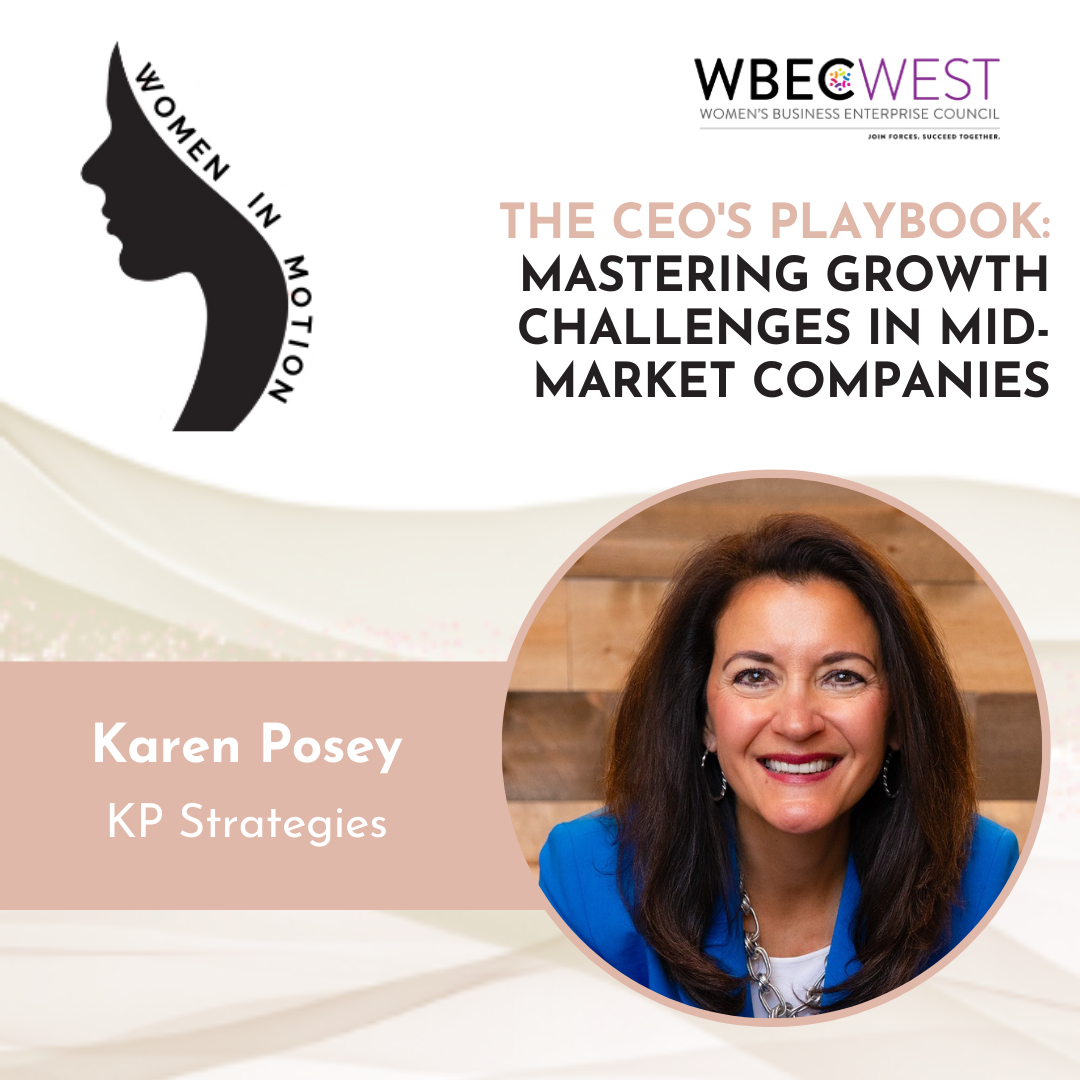
/
RSS Feed
In this episode of Women in Motion, Lee Kantor interviews Karen Posey, CEO and Managing Partner of KP Strategies. Karen shares her journey from working in sales and operations for Fortune 500 companies to consulting for mid-market organizations. The discussion focuses on the unique challenges faced by mid-market CEOs and the importance of strategic planning. Karen introduces the “six things that only a CEO can do,” which include vision clarity, first team dynamics, stakeholder engagement, strategic organizational alignment, effective board management, and personal effectiveness.
 Karen Posey is the CEO and Managing Partner of KP Strategies, a management consulting firm dedicated to helping mid-market CEOs tackle the tough challenges that stand in the way of predictable and rapid growth.
Before founding KP Strategies, Karen launched four successful organizations, led a regional turnaround for an IT infrastructure company, served as a Senior Consultant at a management consulting firm, held the role of VP of Strategy and Consumer Experience for a $12 billion healthcare payer, and served as CEO of a MedTech wound care company.
Throughout her career, Karen has been recognized multiple times for her high-performance leadership and ability to deliver winning strategies and growth for Fortune 100 companies.
Karen and KP Strategies offer mid-market CEOs proven best practices through tailored approaches designed for busy executives. KP Strategies provides project-based consulting and a distinctive virtual CEO Accelerator, which empowers CEOs to focus on what only they can do to drive growth. The program also supports the CEO’s senior leadership team through a peer-based community that enhances accountability and fosters growth. 
As a certified woman-owned business, Karen is committed to supporting women in business and serves as the Forum Chair for the Women’s Business Enterprise Council West in Colorado. Her passion for helping CEOs succeed extends to her roles as a judge for the Titan CEO 100 and as a mentor for aspiring entrepreneurs through the Denver Economic Development Organization and the Colorado Women’s Chamber of Commerce.
Connect with Karen on LinkedIn.
Music Provided by M PATH MUSIC
This transcript is machine transcribed by Sonix
TRANSCRIPT
Intro: Broadcasting live from the Business RadioX studios, it’s time for Women In Motion. Brought to you by WBEC-West. Join forces. Succeed together. Now, here’s your host.
Lee Kantor: Lee Kantor here. Another episode of Women In Motion. And this is going to be a good one. But before we get started, it’s important to recognize our sponsor, WBEC-West. Without them, we couldn’t be sharing these important stories.
Lee Kantor: Today on Women In Motion, we have Karen Posey, who is the CEO and managing partner of KP Strategies. Welcome.
Karen Posey : Thank you. Great to be here.
Lee Kantor: Well, I am so excited to learn what you’re up to. Tell us about KP Strategies. How are you serving folks?
Karen Posey : Yes, I work with mid-market CEOs helping them drive growth, and I do that through a lot of strategic planning, business planning, as well as helping them do the six things that only they, the CEO, can do.
Lee Kantor: Now, what’s your backstory? Have you always been involved in this line of work?
Karen Posey : I’ve had my business for eight years. And then prior to that, I worked for a previous management consulting firm, and in my last corporate role, I was vice president of strategy and consumer experience for a $12 billion payer, so have had a lot of experience working with Fortune 500 companies when I was in a previous management consulting role, and I’ve just spent a lot of time. I’ve had – I’ve run my own wound care company as a CEO and turned around an IT infrastructure company.
Karen Posey : So I had a lot of experience kind of in that role of either starting businesses from scratch or turning around businesses. So this was just a natural progression for me to start my own business eight years ago and to really work with CEOs, you know, helping them solve the biggest challenges they face because there’s so much that gets in the way of them driving growth.
Lee Kantor: Now, when you began your career, was it – or are you coming at this from an operations side, a sales side, a management side? Like what is kind of the lens of business, you know, that you started out with?
Karen Posey : Yeah. Great question. I started out in sales and sales leadership. So I was in the sales role for probably three years. And then I moved into leadership and never looked back. So I was in sales for the first 20 years of my career and then was a general manager of an IT infrastructure company, and that’s really where I honed my operations skills.
Karen Posey : So I would say that, you know, my real strength, although I certainly understand sales and can help organizations, it’s really helping them drive growth through not only strategies that they use, but also I’m very strong in the operations side.
Lee Kantor: So now that you work with so many organizations, are you seeing common threads that CEOs, maybe mistakes that they’re making?
Karen Posey : Yeah. You know, that’s why I talk a lot about the six things that only a CEO can do. I think, you know, it’s so hard, and especially in the middle market. So when I define middle market, I’m really talking about CEOs. You know, Google’s definition is 10 million to a billion. That’s a pretty big range. But I tend to work – my sweet spot is between 30 million and 300 million. And I would tell you, you know, based on those CEOs, typically what got them where they are today isn’t going to help them get to the next level. Right?
Karen Posey : And so, you know, a lot of them by the time – my business is heavy referral and by the time I’m referred to them, they’re typically frustrated. They’re stuck. They’re really struggling. You know, being a CEO is a lonely job. Matter of fact, you know, loneliness, CEOs that are lonely, 61% of them say that it affects their performance. That’s a McKinsey stat, by the way. But, you know, it’s real.
Karen Posey : And so, you know, really helping these CEOs really overcome what’s getting in the way of growth for the company. A lot of times I find it’s the first team, what I call their first team, which is their senior leadership team. But it also can be, you know, sometimes it’s that they’re growing. I’m working with one CEO right now. They’re growing so rapidly that actually their operations haven’t been able to keep up. And so I’ve really been doing a deep dive with operations. And I did a level of discovery first with employees and key stakeholders to really know where we needed to focus. But I’m really helping them scale up their operations because it was woefully behind.
Lee Kantor: Now, you’ve mentioned a couple of times the six things that only a CEO can do. Do you mind sharing those six things?
Karen Posey : Happy to share it. I talk about it all the time. So, first and foremost is vision clarity. And what I mean by vision clarity, it’s one thing to have a vision, and vision should be at least ten years out. And I think even with the vision, I think CEOs struggle a lot of times.
Karen Posey : You know, when I first start working with them, their vision is that, hey, they want to be the premier this or the best this or number one that. And what I really work with them on is I help them go to the future to see the future and make sure they have the insight they need to really come up with the right vision.
Karen Posey : Because, you know, let’s put it this way, if Netflix would have said that they wanted to be, 20 years ago, the number one DVD company in America, where would they be today? Right? Thank goodness Reed Hastings, their former CEO, really was able to dream out 20 years and had an amazing vision for the company that they’re fulfilling today.
Karen Posey : But that’s the vision piece. The vision – the clarity piece comes in to once you have a great vision, does everyone in the organization know what it is? And honestly, 78% of employees feel like their leaders don’t have a clear direction for the company. Well, I would argue a lot of them, they have a clear direction. They might have a great vision and strategic priorities and core values. The problem is they don’t have vision clarity. All the employees from entry level up don’t know what they are. I mean, I find that all the time and that’s a big problem.
Karen Posey : And if you have vision clarity, here’s why that matters. I just did a keynote last week in Atlanta, in front of 120 high-tech CEOs at the Best of Breed Conference, and I talked a little bit about vision clarity. But when you have vision clarity, companies that have that have 58% greater revenue, 32% higher profits, as well as their employee engagement is 16X, and they retain customers 2 to 1. It’s incredible, the difference.
Lee Kantor: It’s because everybody knows what the kind of the True North is. If they buy into the True North, then every activity they’re doing is towards that end. But if there isn’t clarity, you know, you’re missing slightly and that just, you know, compounds.
Karen Posey : 100%. So vision clarity is first and foremost. And these aren’t – these don’t have to be in order, but vision clarity your – what I call your first team which is your senior leadership team. And this is – the reason I call it the first team is this is another area where CEOs really struggle, is because they have a senior leadership team but they don’t work as what I call a first team. In other words, they all lead functional areas.
Karen Posey : So for example, if you’re CFO, Chief Marketing officer, CMO, you have functional teams you’re responsible for, but the first team should be your priority and they should be working on the biggest challenges the company faces. And a lot of times, they’re not doing that. And so, I really work with the CEO, helping them on the team composition, team practices, and really their operating rhythm because they get that down and they have their priorities. And if they’re fortunate enough to all be in the same location, which is rare these days, but they even need to sit together because that first team should absolutely be their top priority in solving the biggest challenges the company faces today. Right?
Lee Kantor: Now, does that activity – let me interrupt you for one second. That activity – so you’re the senior leadership team. You have a first team, but each of your reports has a first team. And that should trickle down. These same best practices should work throughout the whole entire organization. Right?
Karen Posey : Well, to clarify, the first team is the folks that report directly to the CEO. That’s really what I call the first team. And it shouldn’t necessarily trickle down. The whole point of the first team is that they truly are focused on the biggest challenges that the company faces and that they can work effectively together with the CEO. That’s really the key. They’re functional groups.
Karen Posey : So for example, if you’re the CFO, their functional group might be finance. And yes, they’re responsible for finance, but that truly is their second priority. Their first priority is to that senior leadership team or that first team in the CEO. Does that make sense?
Lee Kantor: Yeah. So that your first team is kind of – they’re the main drivers of change in the organization. That’s where the leadership is taking place.
Karen Posey : Yeah. Well, the leadership should be trickling down to all leaders in the organization. But yes, this is – the first team is the key, what I call linchpins, for driving change in the organization. Because if they haven’t bought into the vision, if they haven’t bought into the core values, if they haven’t bought into the strategic priorities, and they’re not also communicating that throughout the organization, then you don’t have vision clarity. Right? So the CEO needs to do it but so does the first team.
Lee Kantor: Right. So they all – right. They’re all singing from the same song sheet.
Karen Posey : 100%. So the first, the vision clarity. The second is first team. The third is really engaging stakeholders out there. So the CEO is responsible for those key stakeholders in the industry, making sure they know who your company is. They spend time with key opinion leaders so that they’re not only involved, and they keep up with what the industry trends are and the biggest movers and shakers, but those movers and shakers, those key opinion leaders also know what your organization does. So important.
Karen Posey : The fourth – excuse me – is strategic organizational alignment. So that is culture, it’s talent, and it’s organizational design. And that’s very important. And, you know, so many organizations struggle today with culture just because there’s, you know, we’re all – a lot of them are so spread out. So culture plays a big role.
Karen Posey : And even when we talk about talent, the CEOs are responsible for all talent. In the mid-market, they should have a vice president or chief human resource officer, or VP of HR that’s responsible for talent. But where the CEO is responsible is for the highest-value roles in the organization. So strategic organizational design really focuses on talent, culture, and organizational design, which is so important. So that’s the fourth.
Karen Posey : The fifth is having an effective board. You know, it’s interesting there’s a stat out there from PwC recently that 70% of CEOs rate their boards as poor. Oh, my gosh, 70%. And so, there’s a big opportunity really looking at what does an effective board looks like. So there’s a lot to be said there. So that’s the fifth.
Karen Posey : And the final is personal effectiveness. And I leave that as last because I spent a lot of time with CEOs also on their personal effectiveness. So in other words, they need to know themselves. What gives them energy? What depletes their energy? The things that deplete their energy, they need to be giving those tasks to others in the organization. They need to be focused on those high-energy, high-value things, and they need to surround themselves with people in the organization that is protecting their time.
Karen Posey : The other thing is under personal effectiveness is really understanding their leadership model and perspective. So in other words, thinking about what do they stand for? What won’t they tolerate? What’s the legacy they want to leave for their organization? Right? So that’s leadership perspective. And it’s important that people, their leaders, their first team specifically understand that about them.
Karen Posey : And the third under personal effectiveness is their brand. And the brand is so important. For a CEO to stay humble, show gratitude, and really understand who they are and what they’re portraying is vitally important.
Lee Kantor: Now, you mentioned – you mentioned that 70% of CEOs think their boards are ineffective. Doesn’t that speak to their own personal effectiveness?
Karen Posey : Some of it does. You know, honestly, I find – it’s interesting. CEOs, when they first take over the role, they think that if they have a board that yeah they’re going to need to spend 10% of their time or some time with the board. But I will tell you, that is the biggest thing, that is an eye-opener – I wouldn’t say the biggest, just one of the biggest eye-openers for CEOs, the board really takes, on average, about 25% of their time, and they’ve really got to work that board and help the board understand their role versus the role of the CEO and the first team. Because also there’s another stat. A follow-up stat to the 70% is that 40% of board members are confused on their role versus the role of the CEO in their first team.
Karen Posey : So, yeah, there’s a lot of reasons for dysfunction. It can happen just, you know, not having board members that aren’t engaged; they’re not focused on the right objectives, not having clear charter, not having clear processes. There’s a lot of reasons that that can happen. But the CEO needs to really devote time to making sure they have the right board members and that they’re really helping them guide them on the strategy, not developing the strategy, not involved in the strategic plan, but helping them, you know, just guiding them on the strategy. And the other big part of the board, quite frankly, is hiring and succession planning for the CEO.
Lee Kantor: Right. Well, that’s what’s surprising to me, because isn’t the board the one that hires the CEO? And if they’re not on the same page at go, I mean, neither one of them is doing their job.
Karen Posey : Yes, yes, yes. And you know what tends to happen honestly? It kind of -it happens over time. It’s not like it happens overnight. You get board members sometimes that have been on there for a long time. They’re not engaged anymore. You also find that a lot of times when I first start working with the CEO, their board is just a reporting board, right? So getting that right structure and the right board members is so important.
Lee Kantor: Now, sometimes the board hires you to kind of fix the CEO, or is this something that the CEO is saying, “Look, we’re struggling here and the board is part of the problem”?
Karen Posey : Yeah, it’s I would say most of the time it is the CEO that is engaging me. But I have been engaged twice now by board members saying, hey, we’d love your help. We’re not, we’re not, we’re not confident in the direction of the organization. We’d like you to come in and help them with their strategic plan. And let’s really look at their yearly operations plan. And, you know, let’s make sure we’ve got the right vision for the company. So, yeah.
Lee Kantor: So, now a lot of the listeners here are aspiring mid-market companies, but maybe they’re a little smaller. Is there any kind of advice or low-hanging fruit you can give to an aspiring mid-market organization in order for them to get to a new level?
Karen Posey : Yes. You know, there are – there’s lots of great tools. If you’re a $3 to $5 million organization, you know, and you’re trying to get a strategic plan done, go out. EOS is a tremendous program. It’s really perfect for companies under 50 employees. Leverage that program. Think about your vision, really, you know.
Karen Posey : Some of these principles of the six things that work for mid-market companies would work for smaller companies. The ones that would specifically work for smaller organizations are definitely get your vision down, get your vision clarity down. Make sure everybody in the organization knows where you’re going, what your strategic priorities are, and your core values.
Karen Posey : The second one would be work with your first team. Make sure that your senior leadership team, you’ve got the right team composition, you’ve got the right team practices and operating rhythm for that first team. So important.
Karen Posey : I would say also of the six, focus on your own personal effectiveness. You know, a lot of times I find with smaller organizations, I have kind of mentored startups over the years through the Entrepreneur Center in – I’m originally from Ohio, so I worked with two of the entrepreneurial centers there and worked with a lot of startups. And the personal effectiveness of the CEO is vitally important. It’s always important, but it’s vitally important when you’re smaller because, candidly, a lot of times it’s the CEO that might be the roadblock to a lot of growth or expansion because traditionally they know their widget, but they don’t know how to grow a business.
Karen Posey : So, you know, I always refer back to what investors say. They would rather have an amazing CEO and an amazing first team. So in other words, an amazing senior leadership team and a mediocre strategy versus an amazing strategy and a mediocre team. So, that would be my advice for a smaller organization.
Lee Kantor: Now, what is kind of the pain that these middlemen, middle market companies are having where they – what are some of the leading indicators that, hey, maybe we do have a problem? Is it kind of a plateauing sale? Is it maybe we’re having a hard time hiring or keeping our people? Like, what are kind of some of the symptoms that maybe things are a little off?
Karen Posey : Yeah, some of the symptoms are they’re all rowing in different directions. Excuse me. The CEO is spending too much time, what I call, in the business and not on the business, focused on more of the strategic aspects of the business. When I talk about the first team not working together, you know, everybody’s rowing in a different direction. They’re really struggling with execution. That’s a big piece.
Karen Posey : What other are the common things I see? I also see that, you know, they, you know, it’s interesting. They’re struggling with their first team. They’ve lost confidence in some of their first team members. And, you know, that’s their senior leadership team. I equate a first-team like a family. Every family has a level of dysfunction. You love them, but they have a level of dysfunction.
Karen Posey : The first team is the same way. And making sure you really have a first, a solid, high-performing first team is so important. And a lot of times when I first start working with the CEO, they think they’ve got a pretty strong first team. I get in there and I start working with them and we uncover some things that help them realize that sometimes, and this is specifically in the middle market, what got them here isn’t going to get them to the next level. And they have a lot of aspirations for growth. And sometimes they outgrow people. And that’s hard. It’s super hard. But they’ve got to be able to make those tough choices and make those bold decisions.
Karen Posey : So another thing I see a lot is CEOs lack that confidence to make the bold decisions because maybe they don’t have good vision clarity. They haven’t identified why it’s happening, but they just – they lose confidence in their decisions and they’re afraid to make those bold moves. And I got to tell you, successful CEOs, the great CEOs make bold moves early and they make them often because you have to. Otherwise, you’re not going to – it’s hard to compete. It’s hard to grow. There’s a lot of things pulling at a CEO every day.
Lee Kantor: Well, I would imagine that that’s one of the really maybe an unintended benefit of working with an organization like yours, where you can kind of give them the confidence to make the bold move and, like, you’re kind of taking some of the heat as the bad guy instead of them. Like, this is, you know, maybe they’re afraid, maybe it’s some team member that’s been around since the beginning and they’re, you know, they’re hesitant to, you know, punish, not punish, but kind of there’s a loyalty there that is overriding maybe an effectiveness.
Karen Posey : Well said. I think the other thing too is that, you know, I talked about loneliness earlier. Loneliness, seriously, it’s real. And being a CEO is a lonely job. There’s things you can’t talk to your first team about. You want to be close to them, but you also need to keep your distance. There are decisions you have to make that only you can make. You can’t run a company by, you know, a group decision. There are some big decisions that sometimes the CEO by themself has to make.
Karen Posey : And that’s where I also spend a lot of time. I really help the CEO. I’m kind of – they call me and run those things by me, the things that they can’t share with their first team because they need a coach to guide them on some of those big, bold decisions that they need to make. And they’re hard.
Lee Kantor: Right.
Karen Posey : And that’s a big role I play.
Lee Kantor: Right. And also, it’s kind of your – they can vet maybe the, quote-unquote, dumb idea that might sound crazy, but it might be the one that needs to be made and they might be hesitant to share that with everybody. You’re a safer place for them to share.
Karen Posey : Yeah. And the other thing they know for sure. Here’s the other challenge. The bigger your company gets, it happens – it’s not intentional. But what happens is you start getting filtered information. The bigger you get, the more filtered the information is that you receive.
Karen Posey : Your first team sometimes tells you what you want to hear because it’s in their best interest a lot of times to do that, so you really don’t get a clear-eyed view of reality. And what I give to my CEOs is I tell them the truth. That’s the only way I know how to work with them. That’s why they’re paying me. And that’s the value I bring, is that their first team, even if they ran it by their first team, their first team might have told them it was a great idea.
Lee Kantor: Right.
Karen Posey : And they share it with me. And I’m like, “Well, here’s some things you might want to think about.” Right? “Here’s some holes I see in that.” And they need someone that can be totally honest and transparent with them.
Lee Kantor: Now, why was it important for you to kind of become part of the WBEC-West community? And what were you kind of thinking when it was time to join?
Karen Posey : You know, I am originally from Ohio. I’ve only been out in Colorado here three years, and I actually had clients of mine that came to me and said, “Karen, we are a part of, you know, Women Business Enterprise National Council. You need to join. Here’s the benefits.” I looked into it and I’m like, “Wow! What an amazing organization.”
Karen Posey : Well, when I moved to Colorado, one of the first things I did because I didn’t know anyone out here was I made contact with Jaymee Lomax and said, “How can I get involved?” I really want to get involved in WBEC-West, and specifically in Colorado, because I want to help. I’m very passionate about not only helping CEOs but specifically female CEOs. I want to see all women rise.
Karen Posey : And so, I was very fortunate that at the time there was an opening coming up in Colorado. This was three years ago. And I’ve been fortunate enough, and it’s been my honor to be forum chair for WBEC-West here in Colorado. So it’s been fantastic. I’ve met so many amazing people; just Pamela – what Pamela Williamson is doing for WBEC-West and the people she has aligned herself with and her board members. It’s truly an honor to serve because I love where they’re headed and the great things they’re doing for women every day.
Lee Kantor: So who is that ideal middle market organization for you to work with? Do you have a niche in terms of industry, or are you kind of industry agnostic?
Karen Posey : I’m industry agnostic, but I will tell you my background is health care, high-tech IT. And actually, I do a lot for people that work with the government, so any government contractors just coming from Ohio. I have a lot of background working with, you know, Air Force Research labs, NASA, and whatnot. But I can work with all industries. But yeah, that’s been my background.
Lee Kantor: And if somebody wants to learn more and connect with you or somebody on the team, what is the website? What is the best way to connect?
Karen Posey : Thank you. Yes, it’s www.kpstrategies.net.
Lee Kantor: All right. Well, Karen, thank you so much for sharing your story today. You’re doing such important work and we appreciate you.
Karen Posey : Thank you so much. Really enjoyed my time today.
Lee Kantor: All right. This is Lee Kantor. We’ll see you all next time on Women In Motion.