Business RadioX ®

  • Home
  • Business RadioX ® Communities
    • Southeast
      • Alabama
        • Birmingham
      • Florida
        • Orlando
        • Pensacola
        • South Florida
        • Tampa
        • Tallahassee
      • Georgia
        • Atlanta
        • Cherokee
        • Forsyth
        • Greater Perimeter
        • Gwinnett
        • North Fulton
        • North Georgia
        • Northeast Georgia
        • Rome
        • Savannah
      • Louisiana
        • New Orleans
      • North Carolina
        • Charlotte
        • Raleigh
      • Tennessee
        • Chattanooga
        • Nashville
      • Virginia
        • Richmond
    • South Central
      • Arkansas
        • Northwest Arkansas
    • Midwest
      • Illinois
        • Chicago
      • Michigan
        • Detroit
      • Minnesota
        • Minneapolis St. Paul
      • Missouri
        • St. Louis
      • Ohio
        • Cleveland
        • Columbus
        • Dayton
    • Southwest
      • Arizona
        • Phoenix
        • Tucson
        • Valley
      • Texas
        • Austin
        • Dallas
        • Houston
    • West
      • California
        • Bay Area
        • LA
        • Pasadena
      • Colorado
        • Denver
      • Hawaii
        • Oahu
  • FAQs
  • About Us
    • Our Mission
    • Our Audience
    • Why It Works
    • What People Are Saying
    • BRX in the News
  • Resources
    • BRX Pro Tips
    • B2B Marketing: The 4Rs
    • High Velocity Selling Habits
    • Why Most B2B Media Strategies Fail
    • 9 Reasons To Sponsor A Business RadioX ® Show
  • Partner With Us
  • Veteran Business RadioX ®

Blake Canterbury With Purposity

December 2, 2022 by Jacob Lapera

Atlanta Business Radio
Blake Canterbury With Purposity
Loading
00:00 /
RSS Feed
Share
Link
Embed

Download file

PurposityBlake CanterburyBlake Canterbury is a social entrepreneur dedicated to good and the founder of Purposity. Purposity is building the future of generosity. Blake founded his first company based on social media in 2009: Beremedy. Beremedy was named one of the “3 best Twitter usages worldwide” by CNN (3/20/11). It was also one of the leading organizations in bringing aid to Haiti after the earthquake.

Blake’s work over the last 10+ years has been dedicated to building innovative ways to leverage technology for good. It’s spanned across building mobile apps to tv ads, and he is sought out to speak about a variety of topics. His work has been featured internationally and most recently in Forbes, People Magazine, Today Show and CNN.

Connect with Blake on LinkedIn and follow Purposity on Facebook.

What You’ll Learn In This Episode

  • Blake’s journey to founding Purposity and WHY he founded this organization
  • Why generosity is crucial in the workplace
  • Why should businesses and business execs prioritize generosity in the workplace
  • Tangible ways businesses and business execs in Atlanta can give back this holiday season
  • The 2022 Purposity holiday mission to meet 5,000 needs in ATL

This transcript is machine transcribed by Sonix

TRANSCRIPT

Intro: Broadcasting live from the Business RadioX studios in Atlanta, Georgia. It’s time for Atlanta Business Radio, brought to you by on pay. Atlanta’s new standard in payroll. Now, here’s your host.

Lee Kantor: Lee Kantor here another episode of Atlanta Business Radio, and this is going to be a good one. But before we get started, it’s important to recognize our sponsor on pay. Without them, we couldn’t be sharing these important stories. Today on the Atlanta Business Radio, we have Blake Canterbury with Purposity. Welcome, Blake.

Blake Canterbury: Yeah, thanks for having me.

Lee Kantor: I’m so excited to learn what you got going on. Tell us about Purposity. How are you serving folks?

Blake Canterbury: Yeah. So, look, capacity is building the future of generosity. So most people want to do good in the world. They just don’t know where to start. And so we believe that maybe millions of people would live more generously if it was simply easier, more fun and more transparent. So essentially, you can download our app, you can see real time needs of individuals around you. Everything’s vetted by local schools and local nonprofits. As you scroll through, maybe you see a single mom needs formula for a newborn baby, or maybe a first grader needs a new pair of shoes. And our belief is there are thousands of people that would buy that kid a pair of shoes if they only knew they needed it. So you can hit one button on our app, purchased a pair of shoes. It’s on their doorstep in 24 to 48 hours and you get notified in real time when it’s delivered on their doorstep. Being bringing transparency to both sides of the equation.

Lee Kantor: Now, what was the genesis of this idea? When did you realize this is a problem that you could be the one to solve?

Blake Canterbury: Yes, I was actually working at a creative agency at the time, so we were building mobile apps, TV ads for major brands, and a homeless liaison at a school district sent an email and her email literally said, Blake, kids are walking into classrooms with holes in their shoes and they’re going home. Hungry can help solve this problem. And so I called some buddies. We built a basic version of this. We gave it to this one school district and just walked away. And three months later they called back and said, Look, you fundamentally solve this issue for us. Every school district in the country is facing this. Almost every nonprofit is facing this. And we knew we didn’t fully solve the problem, but we knew we found a felt need in the world. And it was convicting enough to to where three months before I got married, I quit my job and went full steam into developing this.

Lee Kantor: Now is what makes this powerful, the individual component where you’re seeing an actual human being and you see their challenge and that you know that, Oh, I can solve that problem as an individual. It doesn’t require like a bunch of bureaucracy or a bunch of infrastructure. It’s just a human helping a human.

Blake Canterbury: That’s exactly right. Look, it’s you know, most most people generally have a sense to do good in the world. Most of us just don’t know where to start. And I think purposely allows you to rally around the common belief that if you knew your neighbor didn’t have food to eat or if you knew that there was a kid that literally just needed a $50 pair of shoes, most people would go help. There’s just no way to know that they need it. And so this gives you a simple way to directly put shoes on people’s feet, clothes on somebody’s back, and then be notified that what you purchased actually got delivered. You get tax receipts, you can track your impact, but that’s it. It’s directly helping one person.

Lee Kantor: Now, when did you I know you did this test with that school, but when did you realize, hey, this is something that really could get some traction and can really be scaled Like what were was there an individual story that was that aha moment for you? Or was it just the fact that that school was so gung ho about it?

Blake Canterbury: Yeah. So there were a couple of things. One, once we got the notification from the school district that, Hey, this really works for them, we just started conducting massive user research and everybody we interviewed, it didn’t matter age, religion, gender said, Hey, at some level I’d like to get to do good in the world. And most ways that they said that they had to do good in the world was some form of writing a check and walking away. Maybe I volunteer somewhere. And then when we looked at the data, it said that $500 Billion a year is given to charity in America by individuals. And so when you look from a business perspective and say, well, there’s a market size that’s incredibly large, but the people are kind of like every every industry in the world has been disrupted by tech except for this one. So when you see a market size that big, you see a business opportunity. You say, okay, we can actually do good in the world, we can drive business. And then kind of the last piece of the equation, like you said, we scaled from one school district to the first ten school districts in every need that was being submitted was being met within 48 hours. And so that we thought we had product market fit. And so when we looked at that test case of ten different school districts needs getting that fast a problem in the world, we said, okay, that’s something we can really get behind. And we should invest everything we have into solving that problem in the world.

Lee Kantor: Now, how is a capacity different than some of those micro-lending platforms?

Blake Canterbury: Yeah, so micro-lending is just a version of giving somebody really a loan, if you will, and then they’re going to repay it. And purpose is just saying, look, there’s somebody that needs shoes or clothes or food and you’re directly just donating the money to purchase those items for them. And so this is just a way to directly impact your neighbor versus giving a loan and getting a return. And there’s a lot of beliefs on charity. But, you know, I’m a big fan of, hey, I want to do good, wanting nothing in return. And so this is an opportunity to do that. Maybe the other differentiator would be compared to, say, a go fund me or crowdfunding. Again, this isn’t you’re not biting off a piece of a pie. You’re you’re feeling really good that you actually bought this kid a pair of shoes. And the other side is that it’s fully vetted. So you don’t have to worry about fraud. In our system, everything is inside a verified 500 1c3 or a school district. And there are a lot of measures in the user agreements to make sure that fraud is almost impossible to happen inside this platform.

Lee Kantor: When you were coming up with the plan to roll it out, how high on the list of challenges was kind of solving the fraud problem?

Blake Canterbury: Well, it was really high because we believe that building this on trust, transparency and great technology were the fundamental pieces of this. And so the transfer, the transparency side of it, we believed if we could bring that to the equation, then we could build the trust. And so probably the biggest problem with a lot of the ways that people give is one that hasn’t really evolved other than writing a check, but not being transparent with where your money goes. And the transparency honestly raises more questions. Most nonprofits are doing amazing work. They’re doing they’re solving very complex problems. They’re trying to solve big challenges in the world. And so people are really skeptical of, hey, is my money going? How do I make direct impact? And so as we looked at all of these issues, we said, wait, we can actually bring transparency, build trust in a technology, but also drive more impact back to these local organizations. And so it really checked all three boxes that we were looking at and said, wow, if we can really bring trust and transparency to this, this is probably a place that people would lean into versus other options.

Lee Kantor: Now, is the the way that an individual gives or is generous, is it this one on one or is it can I. Is there a way to leverage it from the individual donor standpoint or is there a way for me to support 100 kids at a time rather than go on and click a 100 individually?

Blake Canterbury: Yeah. So we’ve just implemented a give Now button, which you’ll see. So if you go to a nonprofit or a school districts page, you’ll see a green button and it says give. Now you can give any amount of money that you want to in that give now and we’ll wipe out every need that that organization has. And if you surpass the amount of needs that they currently have, what we’ll do is as soon as they submit needs, it won’t even go live in the system. We’ll just immediately begin to wipe out the next ones, which really is a key factor in what we call urgent needs, which are the essentials of maybe a family becomes foster care parents in the middle of the night and they don’t really have time to submit a story and wait for the shipping to arrive. We can wipe those needs out as soon as they arrive locally. You know, family. Maybe a single mom needs formula for her newborn baby. You know, she can’t wait 48 hours to get her formula. So we will take other measures to wipe these needs out and then we’ll add cards. And we’ve got we’ve got a lot of things on the roadmap. And our vision, to your point, is that you would turn to Facebook for friends. Google for information and pomposity would become your home for good in the world. So as we we’ve used this word generosity, we believe that generosity is time, money, items. And so we’ll see a lot of things evolve in our roadmap to encompass everything under living a generous lifestyle.

Lee Kantor: Now, prior to purposely, how does the typical individual give? Do they normally just pick a cause and then they donate a certain percentage of money? Do they do it through their, you know, faith based entity that they’re part of? How does giving work right now?

Blake Canterbury: Yeah, it’s to your point, it’s. It’s all over the place, honestly, and it’s very fragmented. So some people that have a bent towards it, maybe for religious reasons or just personal conviction, they may have a plan to give and so they may have written down, we would like to give a percentage or a dollar amount, or maybe it’s just purely based on tax deductions. They may have a general plan. But what we found is most people don’t really have a plan. And you see very wealthy folks have entire foundations still developing a plan to be generous. The other problem is most people, the average person just wakes up and doesn’t. The priority list isn’t how do I do good today? And so what we wanted to do was offer a way to just intersect your life with a way that you could. And if you happen to wake up tomorrow and say, Well, I would like to do good, just take the city of Atlanta, for example, you may find a list of 500 organizations all worthy of your money. And then you have to decide, Well, what really breaks my heart? What cause do I actually want to give to? And then if you’ve been there it down to there, there may be 30 organizations trying to solve that problem.

Blake Canterbury: And so you can go through nine nineties and you can go through all these documents and websites. And so our place was saying, wait, look, let’s, let’s break down the barriers to generosity and let’s say, look, come to one place that’s trusted, it’s validated, it’s transparent and it’s easy and it’s actually even fun. And so why don’t we allow this to be your starting place to do good in the world versus being fragmented anymore? And you can find any organization, any cause, and you may, after you’ve met a couple of needs in capacity, actually learn what breaks your heart is you go back and read these stories and realize, Wait, you know what? The last five needs I met were actually for foster care, or they were for women who had been sex trafficked and escaping that. Or maybe they’re for homeless. And so there’s really interesting insights when you just begin to help your neighbor and then you realize, wait, maybe these are things that actually break my heart and then you can develop a really easy plan from there.

Lee Kantor: Now, as part of the challenge, kind of getting purposely in the hands of these nonprofits and school systems.

Blake Canterbury: Yeah. So school systems typically see it and understand it really quickly. Profits will see it and understand it quickly, but they’re typically understaffed. And so we find the nonprofits that are really pushing innovation, ones that may even have a younger employee base can say, Oh, wait, I can pull out my cell phone and operate this force and attract a whole new donor base. So, yes, the nonprofits are a little slower coming around to it, but school systems adopt it really quickly and it’s all been organic word of mouth to this point. And so doing this interview is honestly hopeful that we could populate three different sides of the equation that maybe the nonprofits and school districts that might be listening, hopefully they would sign up. We hope individuals would sign up. And then we also have a pretty cool opportunity for businesses and employees to come together and do good under the ESG or CSR conversation we could get into if we want to. But we have ways for groups of people to come together and do collective impact, and so there’s a lot of ways to get involved.

Lee Kantor: So you’re looking I mean, this is in essence a marketplace and you’re you need to feel both sides of the marketplace.

Blake Canterbury: That’s exactly right. It’s a two sided marketplace. And so we study what Uber and Lyft and Airbnb have done really closely to understand how that we’re going to approach building this ecosystem.

Lee Kantor: So right now it’s the holiday season. You’re looking, I’m sure, to make an impact this holiday season and maybe alleviate some pain for some folks here in Atlanta. Can you talk about that?

Blake Canterbury: Yeah. So as you can imagine, this time of year, we get needs that just begin to pour, pour in. And so we’re launching a campaign to unleash over 5000 gifts of generosity over the next two and one half weeks. And part of this is to get ahead of the shipping deadlines and make sure people have what they need. And so part of these 5000 items are just Christmas wishes. You know, it’s maybe for the family that, you know, they’re kids asking for a toy. And it’s really hard for the parents to justify spending money on a toy this year. They’d rather spend it on a heating bill or maybe making sure that they have food on the table and Christmas. So some of the items are going to be for Christmas wish lists for kids. The other part are going to be essentials for these families that just need dinner on the table. It could be something as simple as toilet paper. It may be clothes. It may be just really basic things for around the house. And so we’re just simply hoping that people would jump in and maybe personally meet a couple. Needs. Maybe invite a friend and rally their their company or coworkers to get involved with this. It’s a really easy way to locally help people.

Lee Kantor: So now though, the things I mean, I don’t want to speak for you, but it’s my understanding the things you need more of, you need businesses. Maybe the ESG component of the business wants to share this with their employees so they can give more. You need school systems to give more, to get them to take the app and use it to benefit their students. And you need nonprofits to, you know, put it out there as as one of the ways that they serve their, you know, the people that are important to them. Is that.

Blake Canterbury: The that’s.

Lee Kantor: The biggest need.

Blake Canterbury: Exactly right. That’s exactly right. And from a company standpoint, we have ways that you can just offer matches for employees. You could just write a check to wipe out needs and put that in at ESG report. One report that a company has sent out, they had over 2 million brand impressions for good. They save schools and nonprofits. Over $500,000 in salaries helped over 10,000 students across 61 different school districts. And so that’s just one example of how we can partner with a company and help them really do good in the holidays or any time during the year.

Lee Kantor: And if somebody wants to learn more, it’s an app in the app stores or it’s a website. How does someone connect with purpose?

Blake Canterbury: Yeah, Purpose sitcom will have everything that you need. It’ll take you directly to needs. And if you hit about, you can find a link for companies, for individuals, for influencers, any way that you want to get involved. You can find it at Papa sitcom.

Lee Kantor: And that’s pure pos i.t dot com.

Blake Canterbury: That’s right.

Lee Kantor: And thank you so much Blake, for sharing your story, doing such important work and we appreciate you.

Blake Canterbury: Yeah. Lee, thanks so much for having us and telling our story.

Lee Kantor: All right. This is Lee Kantor. We’ll see you all next time on Atlanta Business Radio

About Our Sponsor

OnPay’sOnPay-Dots payroll services and HR software give you more time to focus on what’s most important. Rated “Excellent” by PC Magazine, we make it easy to pay employees fast, we automate all payroll taxes, and we even keep all your HR and benefits organized and compliant.

Our award-winning customer service includes an accuracy guarantee, deep integrations with popular accounting software, and we’ll even enter all your employee information for you — whether you have five employees or 500. Take a closer look to see all the ways we can save you time and money in the back office.

Follow OnPay on LinkedIn, Facebook, and Twitter

Tagged With: Blake Canterbury, Purposity

Stéphane Frijia With Northeast Indiana Regional Partnership

December 2, 2022 by Jacob Lapera

Stephane Frijia
Association Leadership Radio
Stéphane Frijia With Northeast Indiana Regional Partnership
Loading
00:00 /
RSS Feed
Share
Link
Embed

Download file

Stephane FrijiaA dynamic, strategic and innovative economic development leader, Stéphane Frijia joined NEI to serve as President and CEO in October 2021. He is responsible for leading the economic development strategy for the 11-county region represented by NEI, including the task of increasing business investment and regional prosperity through ongoing collaboration with local, regional, private, and public partners and organizations.

For over 10 years, He honed his craft in the fast-paced, competitive and politically complex environment at one of the top economic development organizations in the country. In his previous role as the senior vice president of strategy for the Greater Phoenix Economic Council, he attracted billions in new investment and thousands of new jobs to the region.

He has served as an advisor to c-suite and policymakers regarding market intelligence, public relations, international relations, policy and foreign direct investments.

He was responsible for continually improving internal processes to gain actionable market and industry intelligence, to drive traditional deal-flow and economic diversification. He has a proven track record for developing and managing regional cluster-based industrial attraction strategies to catalyze investment into new industrial parks across the region.

Additionally, he led the creation of new consortia of public, private, university and community partners to create a new smart region framework to develop and help scale solutions rooted in connectivity, mobility, equity and sustainability.

Stéphane earned a Master’s degree in Urban and Environmental Planning and a Bachelor’s degree in Aeronautical Management Technology from Arizona State University.

He was recognized in 2019 as top 40 under 40 in the economic development industry by Development Counsellors International (DCI), a national leader in marketing places.

Connect with Stéphane on LinkedIn.

What You’ll Learn In This Episode

  • The Northeast Indiana Strategic Development Commission’s strategic plan, trends, challenges, and opportunities

This transcript is machine transcribed by Sonix.

TRANSCRIPT

Intro: We’re broadcasting live from the Business RadioX studios in Atlanta, Georgia. It’s time for Association Leadership Radio. Now, here’s your host.

Lee Kantor: Lee Kantor here, another episode of Association Leadership Radio. And this is going to be a good one. Today on the show, we have Stephane Frijia with the Northeast Indiana Regional Partnership. Welcome.

Stephane Frijia: Thank you. Happy to be on the show.

Lee Kantor: Well, I’m so excited to learn about is it NEA? Is that what you call it NEI. So tell us about the Northeast Indiana Regional Partnership. How are you serving folks?

Stephane Frijia: Yeah. And the partnership in the eye now. We’ve been running now for over 16 years. I think like many other organizations in our space, we’re created to help bring communities together. We cover territory about 11 counties. And sometimes it’s you know, it’s hard to to collaborate. And I think this was the truth in the early 2000. So an effort was initiated to kind of bring all the parties together to start working together on a on a joint strategy and joint objectives. And that was a very noble and needed effort that ultimately, fast forward 16, 17 years led us to a lot of great success here in northeast Indiana.

Lee Kantor: And then so when you talk about a partnership, it’s a partnership between public private universities. It’s the whole kind of it’s the whole team. Right? All the constituents.

Stephane Frijia: Yes. Yeah. Public, private. That’s a good way to kind of start. But the it involves more than that. We have close ties with the business community that are kind of key funders of ours. We work very closely with the various units of government, both local and state. We convene a network of university colleges across across Northeast so they can all kind of work together and, you know, knowledge about each other’s build trust and collaboration because you never know when the opportunity calls or a challenge arises. And you’ve got to be able to look at your fellow partner across the table and say, you know, what can we do together about it? And I think that was the kind of core premise that allowed the formation of the of the partnership. Now, as an organization, you know, our core mission is to attract investments into the region. That’s what the partnership was created to do in its original form. And it still is the core mission. But before you can talk to external partners and convince them that this is the right place for them to call home, that place for them to bring their business, you’ve got to really work on yourself, investing in yourself, building those networks so that you then you have something tangible to to share with others that you invite to to the party. So you’ve got to fix the house first, so to speak, before you become a host. And I think the organization and leadership across the region has spent significant time doing just that. Many people across the state look at Northeast as a as a model on how things should be done.

Stephane Frijia: A little bit of a gold standard, you know, here in the Midwest for the size of the market that we are, we’re not a huge market. And so collaboration, you know, was has been an intentional part of the DNA of the partnership of Northeast Indiana. And many are looking at us to see how is it done and how we were able to kind of bring all those very disparate interests in very different interesting times and conflicting in some occasion to to come to the same table in a professional and and really kind of trust based approach on how we move forward as a region, how we grow it, how we make it welcoming and frankly, how we’ve bucked the trend. I don’t know if the Northeast and as well as the rest of the Midwest in general for a for a long time. You know, the there were a little bit of bleeding, so to speak, you know, as people and businesses were looking for warmer weather. But if you look at what’s happening in more recently over the last five years, this is a come back. The Midwest is coming back. And Northeast definitely has been one of those regions that has turned around being one of the fastest growing region in the in the Midwest in a couple of years in a row. Now, the first number one, now number second. So I think there’s been interesting to watch this kind of turnaround and reinvestment renaissance story that we’ve been experiencing here in Northeast.

Lee Kantor: Now, how do you kind of foster that culture of collaboration rather than looking at everything as a zero sum game of me winning and you losing? I mean, you’re dealing with a variety of interests, all with their own agenda. How do you kind of bring them all to the table for this kind of collective good?

Stephane Frijia: Well, it starts with a dialog. You’re absolutely right into some regards. At the end of the day, it’s still a zero sum game and everyone understands that. But besides the the finality, whether a business goes into one town or a different city or one county or another, there is new understanding that, you know, the way things really work. It’s about labor shared, it’s about regions. It’s a much larger than a single town, and that the people have understood that a rising tide lifts all boats, you know, especially with the geography where there’s the natural movement that in our case even extends beyond our own state line. There’s natural affinity. Even West Ohio, people live in Ohio and actually commute into northeast Indiana in a four hour work opportunity and vice versa as well. So you got to start from an understanding of how things really work in the real world and then open a dialog about not what divides us, but what brings us together. So what is a shared agenda that unifies us, that allows us to become stronger together? And you developing you can focus on making those threads stronger and stronger. Recently, we, as the Partnership and I, we just released our three year plan on what we’re going to be doing specifically on behalf of the region. So giving people kind of clear sight of not just day to day, but down the line so that people can align and then bring different voices to the table to contribute to that vision.

Stephane Frijia: I was part of an effort over the last nine months that was technically funded by the state to create a five year plan for for the region and how we bring more resources, state resources to our region to put them to work and create a true ROI back to region and definitely back to the state. So those are things where again, those are problems that are not really unique to our region or to a state, but we’ve got to figure out what’s our flavor of the solution, What is the solution that fits Northeast fits Indiana fits the type of problem and the and our circumstances. And when you do that and you open those dialog, you’ll be amazed. And then you do find those common grounds. And then after that is a matter of execution, because a plan is all great until you actually get get going and doing it. And that’s where back to a point earlier where trust, you know, makes all the difference. You have a great plan and you have players that trusted each others that we’re going to support one another. That’s really when execution. Then comes reality.

Lee Kantor: So what’s your back story? Have you always been involved in this kind of economic development work?

Stephane Frijia: I’ve been doing this for more than ten years and now 12 to be exact. The and I aligned into this field by as probably many in my profession, you know, by accident. People don’t go to school to become developers, unfortunately. You know, people go for urban planning or traditional kind of focus things. And that was was my path, you know. But the once you get in into an experience of what economic development, the breadth and the depth that really makes up and you kind of get hooked. And if you’re like the deal making and and the opportunity to work on very complex challenges, that’s a very rewarding career that allows people to to have actual lifelong experiences doing this type of work. It’s a mission, It’s a passion. You need to be an individual and the truly going to believes on on the greater good that is looking for this opportunity to how we make more competitive, how we can better ourselves, how we can make it better for not just for the people that are new coming into town, but the people that already live here. It’s you’re always thinking right. You’re always trying to figure out the next new angle and the next opportunity for people to collaborate, come together again, build upon that trust and doing something new.

Lee Kantor: And the impact is real. I mean, with the right leader, you can make a tremendous difference not just in the region, but, like you said, down to the families that live there.

Stephane Frijia: You’re absolutely right. I mean, today we’re talking about real families, real jobs. When we bring in new a new company in investment that’s new payroll, that’s new taxes being generated that ultimately pays for additional services, whether it’s from police and firefighters or a community splash pad for kids, it’s interlinked. People don’t realize that all those ripples affect how far they go. At the same time, that allows us to keep our community more resilient. Businesses go in, are created, and they go under every day. It’s part of the economy. It’s part of the fabric of our society is built in. So be able to always cultivate that fertile ground so that new businesses can be created grow. It’s crucial because in the moment that we’re not moving forward, we automatically sliding back. There is no a parking gear in the in the life of a city, in the life of a region. It’s two steps either moving forward or you’re starting back. And the moment you realize this, then that becomes part of the motivator that allows you to think, okay, what can I do to move forward and how can we do? What decisions can we take today that will make it better for the people today, but also have a positive impact five, ten, 15 years from now? The it’s amazing. People don’t realize the the longevity of decision making that some elected officials at the local level deal with on a daily basis. So that collaboration, that support, that dialog is very, very important because we believe in those decisions for a very long time. And sometimes there is risks. Sometimes the decision can be unpopular because people don’t have all the details, the facts of that decision, so that how we bring together business community to support decision making or to really help us think through the pros and cons of a decision and allow then our officials to make the right call. That’s that’s the kind of development in its essence. So it’s fascinating and definitely get tell that I love what I do and I would encourage anyone that is curious to to get more involved.

Lee Kantor: Now, is there a sweet spot in terms of industry in your region? Do you kind of have a lot of a certain type of industry or you’re kind of open for business for anybody who’s looking for a good place to plant as a business?

Stephane Frijia: First of all, must know we’re a welcoming community to anyone, any type of business, and we’re never going to say not to anyone. Now, then, on the on the on the flip side, the industry works in clusters. So there are certain clusters of industry that are already here. They provide specific benefits to to other kind of affiliated companies or affiliated industries. For us, you know, we are a manufacturing hub. Indiana is a state overall. It’s as a manufacturing hub for for the country. The weather is automotive for us is a very strong medical device. Industries, orthopedics extremely strong for us, the technology associated with the vehicle overall. It’s anything about about making things. So really that speaks to the DNA of the region. But we also a farming community and that goes to the history of the Midwest. So you when you walk around and drive around, there’s a lot of technology and farming that gets deployed. There’s a lot of production as well. So those are I would say, the when it comes to like a sweet spot, you know, based on historical strengths that our region typically shines the best. But frankly, you know, any type of company would do extremely well in the Northeast, extremely well in Indiana and the Midwest. So and I think anyone that cures, you know, off to do it, just give us a call and we’ll be more than happy to address any questions they have.

Lee Kantor: Now as we approach 2023. Are there any trends you’re looking to take advantage of? Are there any opportunities that you see at the four that you’re ready to kind of pounce on?

Stephane Frijia: Most definitely. Actually, yesterday, you know, the our secretary of state, Secretary of commerce sorry, Secretary Chambers provided a keynote here in Fort Wayne about the 20 $22 Billion were invest in the state in 2022. And the ambition for the governor is to run into 2023 with 23 billion. So kind of playing out with the with the numbers. This is a reality. We’re at the cusp. You know, we’re in the middle of a trend for the US, you know, with a lot of manufacturing coming back to our to be on US soils or nearby supply chain and being restored. And we’re talking billions if not trillions of opportunities over the next five, six years. So we’re at the beginning of, say, innings of this kind of short game. You know, then we talk about five, six years is not a very long game, but that will kind of redefine the manufacturing production and the future of this country. So our hope and desire is the same as the the governor and and the administration is we want to make sure we got our fair share and and be a good partner with industry that they can take advantage of the assets that we do have available on the quality of life and the grit and work ethics of the people. Hoosiers. Right. That live here in the Northeast.

Lee Kantor: Now, any advice for other association leaders when it comes to building trust to constituents that require kind of a long term vision? Because the deals you’re you’re getting done they’re aren’t they don’t happen overnight. These are things that are planned out for months, if not years. And you’ve got to court people for a long time in order for them to kind of land on your doorstep. Can you share some of the strategies you use to build trust and patience with your constituents?

Stephane Frijia: Yes. I mean, I think it boils down to a fundamental understanding that any investor out there, either the personal level or a corporation investing in a new facility, the you always say there’s there’s never a risk free investment. Everything has risks. So as we know, record companies and other folks in around the country, the same thing. It’s about risk mitigation and as much as possible. So if a community is get to a point where we trust each other’s, we have each other’s back, we’re working through the same plan. What we’re doing is basically we’re de-risking those transactions because we say to the newcomers or new investors, look. You know, you’ve got goals to achieve. You know, you have a lot on the line. You got some real dollars. We are going to be part of the solution. We are a team that can work together across, you know, community lines, across jurisdictions, across organizations, because we do a long time and we’re going to be part of a solution that helps you de-risk your transaction. That’s the core message. So until you and I say you as the the committee, the committee doesn’t get to a point where they can firmly stand and say that we are that that that team that can the risk of transaction, then there’s work to be done because again the company investors are not looking for a to join you know leverage a team that doesn’t talk to one another. There is fights between the city and the counties or among different parties that that actually adds more risk profile and definitely doesn’t doesn’t speak well to the final score. So on that on on that potential transaction. So understanding really how as a community, what can you do to make it easier? And that’s part of the fundamental question that in in drive that in my mind should drive my colleagues and other community to think about how we do business and how we present our charters in understanding the the business needs of a company that is profiles and and how we can be good partners.

Lee Kantor: Now, if somebody wants to learn more about the opportunities to get on your calendar or learn more about the region, is there a website for any I.

Stephane Frijia: Yeah. This Indiana you know dot com and the Indiana dot com it used to find us just a simple email or a phone call and be more than happy to share what we learned over the years you know the talk about the advantages you know and and provide an honest broker to you know, to what we have to offer. And when you do it right and you do it with confidence, you’ll realize that sometimes, you know, the the community next door may be in a better because a better asset, you know, trust expense to and honesty to even the larger the larger the larger communities. The other day, you know, I will never want to see a community sorry, a company or individual pick a community under a false sense of understanding and then having to fold. That’s a that’s a double black eye. It’s a black eye for the company that made the wrong decision. It’s a black eye for the community that spend a lot of time and resources to even get to that point. So to me, it’s like, you know, you know, de-risking, being transparent, being honest and upfront with folks, that’s really ultimately the key to success.

Lee Kantor: Well, congratulations on all the success and you’re doing important work and we appreciate you.

Stephane Frijia: Well, thank you. Opportunity to share what we’re doing.

Lee Kantor: All right. This is Lee Kantor. We’ll see you next time on Association Leadership Radio.

Tagged With: Northeast Indiana Regional Partnership, Stephane Frijia

Hank McLarty With Gratus Capital

December 2, 2022 by Jacob Lapera

South Florida Business Radio
Hank McLarty With Gratus Capital
Loading
00:00 /
RSS Feed
Share
Link
Embed

Download file

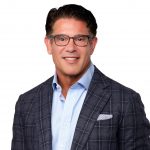
DTLLogo-Blue-Bannerv2GRATUS CAPITALHank McLarty, Founder and CEO of Gratus Capital.

His obsession with truly knowing his clients and their unique needs led him to start Gratus in 2005 and remains the firm’s driving value. A thought leader in the industry, sought-after speaker, and recipient of numerous awards and accolades throughout his wealth management career, Hank has been recognized by Forbes on its annual Top Wealth Advisors list from 2016-21.

Connect with Hank on LinkedIn.

What You’ll Learn In This Episode

  • Gratus’ commitment to community service
  • Team growth at Gratus over the years and during the pandemic

This transcript is machine transcribed by Sonix

TRANSCRIPT

Intro: Broadcasting live from the Business RadioX studios in South Florida. It’s time for South Florida Business Radio now. Here’s your host.

Lee Kantor: Lee Kantor here another episode of South Florida Business Radio. And this is going to be a good one. Today on the show, we have Hank McLarty with Gratus Capital. Welcome, Hank.

Hank McLarty: Well, thank you, Lee. It’s good to be here.

Lee Kantor: Well, I’m excited to learn what you’re up to. Tell us a little bit about Gratus Capital, how you serve in folks.

Hank McLarty: Yeah. Lee So I started the firm in 2005. So we are in 17 years and we’re a full service wealth management firm. So we do asset management and tax strategy, trust and estate. We built a. What I believe to be a highly qualified team of wealth management professionals. And so we we really focused in a lot on business owners, individuals that have built a company over time and are preparing for a liquidity event or have already had a liquidity event. We work with clients from across all different spectrums, but our one of our areas of expertise and really specialty and where an awful lot of a high percentage of our clients come from is those entrepreneurs that have built a business and I have built this team over the last 17 years to provide the expertise and and know how to deal with those specific situations from a planning perspective and then also from a from a long term investment perspective.

Lee Kantor: Now, there’s a lot of players in this space, the big players with names that a lot of people are familiar with. Can you talk about what it was like to say, You know what, I think I’m going to start my own thing in this space and I’m going to do something different. I’m going to be kind of a better solution to this, even though there’s a lot of big players in this market.

Hank McLarty: Sure. That’s a great question. I appreciate you asking that. You know, I spent 15 years prior to starting Gravis Capital at Merrill Lynch and Morgan Stanley, so I know exactly what you’re referring to. And I was very successful there. But I just saw a need for a more boutique kind of feel extra attention. That’s not all about that. When I was at those firms, there was a lot of emphasis on kind of pushing the products of those firms and all about who’s doing the most revenues and who’s bringing in the most accounts. But there really wasn’t a measurement tool for how successful are you actually being with your clients. And there’s a lot of resources that are necessary for ultra high net worth individuals and families. And what I mean by that is investing the stocks and the bonds and the private investments and other aspects of a portfolio is very important. But also what’s really important is making sure all of these assets are set up the correct way and making sure that the client is educated on the most tax efficient ways to sell their business, the most tax efficient ways to transition assets from one generation to another. And we just didn’t have those resources at the big firms. And so when I started this firm, the whole idea was to have experts on my team and trust in estate experts and real estate experts and tax all of these other areas that kind of complete the whole cycle of wealth management, in my opinion. And so I spent the last 17 years recruiting and bringing in expertise and all of those areas because my goal was to make sure that our clients, no matter what their need, was under the wealth management umbrella, that we had expertise on our team that can handle that and be kind of one team that our clients could turn to. So we build a team with our clients, CPAs and their attorneys. We work very closely with them and we’re kind of the glue that pulls all these different advisors together in addition to managing the client’s assets, if that makes sense.

Lee Kantor: Now, when you’re working with an entrepreneur that’s heads down, working in their business on paper, sometimes that person doesn’t look like, Oh, that’s a great wealth management client today. But in, you know, when they exit, they’re going to be fantastic. And a lot of firms don’t want to invest in that person at that earlier stage. Is that something that you have to educate your people about on how to really serve those people? Because when that entrepreneur is going through that journey and goes to that next level of exit, it requires different kind of skills and a different kind of mindset.

Hank McLarty: Yeah. That transition, that transition from being an entrepreneur to now relying on a team of people to manage those assets, manage cash flows, especially when someone’s used to being in charge of all of that for, for their career. You know, they grow the company, they make more money, they control all aspects of the cash flows and they’re used to being in a control position. So handing that over to a team like ours and saying, okay, now I trust this team to handle all the aspects of things that I have traditionally had my finger on the pulse of my whole life. That’s a big transition for people. And so leading up to that, I think it definitely helps to build the relationship over time. If we have time to build that relationship before the transaction ever takes place and kind of coach and mentor. On how things with the company should be set up and get them to to build a confidence and a trust in our team so that when that transaction does happen, they’re able to relax and have confidence that they’re with the right people and they can trust the decision making and things of that nature makes it much easier for that already difficult transition to happen.

Lee Kantor: Now when you’re working with your team at Gratis, is that something you have to kind of educate and train them on? Because it doesn’t sound like it’s something that is kind of common knowledge in the industry.

Hank McLarty: Yeah, I would agree with that. But but I also think when you’re when your primary focus is on a subset of people like entrepreneurs that have built a company or have ownership in a company, they don’t necessarily have to be the founder of the CEO, but if they have ownership in the company, I think when you have a history of working with that type of people, it’s a general understanding. But I also think the values and the culture of our firm kind of lend towards that. And it’s something that just kind of happens through osmosis. I mean, we don’t really train people, Hey, you need to go work with people before they start approaching this transaction. It’s just kind of part of the process and we get an awful lot. Almost all of our new clients come from referrals from others who know who we are and know what we specialize in and where our expertise lies. So when they get referred to us, sometimes it’s several years before they’re even approaching a transaction. Sometimes the transaction is next week or next month and they’re scrambling. And sometimes it’s it’s already happened and they’ve been frustrated with whoever they’re working with. But regardless of where they are in the cycle, almost all of our clients get sent to us by somebody else who has heard of us or an existing client who’s had a good experience and told a friend or someone else they know that they should be working with us now.

Lee Kantor: Is there any advice you would give that entrepreneur to maybe become more prepared to have the conversations they need to be having with you at the time of Exit? Is there some homework you wish that they had done or is there some information or misconception you wish that they had hadn’t learned? Or maybe you have to educate them on that? I would. Yeah.

Hank McLarty: I would say the number one thing there is that traditionally business owners are if they’re successful and they’ve built a great company, they’re obviously amazing at what they do and they obviously know their business better than anybody else and they know exactly how to make that company grow. They know exactly about the products that they’re generating and so forth. And so that is their whole focus. And many of them going into a transaction are so focused on keeping their business growing and looking at who they should be working with to sell their business and things of that nature, that they kind of have a tendency to put off some of the key planning aspects that can really make a huge difference in tax and the structure of the transaction. They put those things off and say, I’ll deal with all of that. Once we get the transaction done, I’ll figure out who’s going to manage my money later. Let me just get the transaction done and get the business sold for the maximum price and then I’ll deal with that later. But there are many, many things that they can do to avoid significant amount of taxes that if you wait until right before the transaction or after, it’s too late to do it. And so the biggest thing I would say is, is whether it’s us or another firm or a really good CPA attorney team that they’re already working with, they need to engage that process and start thinking about structure, tax strategy, all of the different aspects of tools that can be used to minimize the tax. Because if you get a huge number on the sale, but you end up paying ten, 15, 20% more on tax than you could have paid, then that extra money you earn on the sale is all for naught. So making sure that you’re prepared for that is really important.

Lee Kantor: Now, when you’re working with the entrepreneur, are you helping them with some of the strategies to maximize that selling price, or does your work begin at that time when they have the check in their hand?

Hank McLarty: Well, we’re not working with them to maximize the selling price because they’re typically working with an investment banker or some kind of banker that’s helping them find the right solution for their situation. So what we’re doing oftentimes is helping them to determine what’s the best structure, because there’s an all out sale, there’s a merger, there’s an ESOP, there’s all kinds of different ways for them to dispose of their company, either to their employees or to another company in some kind of merger, or just an all out cash or cash and stock sale. So we can help them talk through that and think through what the best approach for them to do is. But then there’s also all kinds of ways that we can use trust and estate strategies to reduce the tax burden, get some of these assets potentially out of the estate prior to the transaction. So both in advising on how the transaction might go and kind of going through the pros and cons of the different avenues, that’s one thing we can do. The other thing we can do, as I said, is kind of come up with trust and estate type aspects of using LLCs and other trusts to minimize the tax burden that may arise from just an all out cash sale without any prior planning.

Lee Kantor: Now, how does that trusted advisor team work with the entrepreneur like we have you as the financial advisor person, you have accountants, you mentioned there’s probably consultants in there, lawyers. There’s a lot of people that have opinions about how it should go. How does that kind of are you all in a room together? What does that look like? You know, when when it’s time to do the deal?

Hank McLarty: Well, I’m the CEO of the firm, so I don’t actually work with clients. When I first started the firm, I was the only advisor, financial advisor here. But we have 13 advisor teams here now. So a lot of what you’re referring to is if we look at a client situation, we say, okay, this client is about to have X amount of assets that are going to come post transaction. They’ve got complexities. If they were going to do an ESOP, then I have a team at my company that is really, really good at working with ESOPs. If they were going to do a cash and stock transaction, I have another team that is really, really good at digging in to all the tax strategy for that. So and on that team and that particular team, we have an attorney and a tax expert. And so each one of these teams that I have at my firm are different. And so I kind of look at the client situation, get an understanding of what their needs are, and I help determine which one of the teams in our firm would be best suited for that client’s circumstances, if that makes sense.

Lee Kantor: Right. So you’re ready pretty much for anything, because you’ve been doing this for a hot minute and you’ve seen where kind of some of the landmines are. So, you know, to deploy the right team at the right time.

Hank McLarty: That’s correct. That’s right.

Lee Kantor: Now, as you’ve been growing and as you’ve been expanding over time, you’ve been winning a lot of awards. Can you talk about that and how that’s come about in terms of your growth? Because, you know, you’ve achieved a lot in in the time you’ve been working in this space, and it must be very rewarding.

Hank McLarty: Yeah, that is. It has been really rewarding, probably I mean, definitely the most rewarding award or recognition that we’ve gotten was, I guess about six weeks ago, Forbes named us the number four investment management firm in the US. And having started this company 17 years ago and gone through the journey that we’ve gone through and to the most prestigious award in our business is the Forbes recognition. So there’s all kinds of lists and kind of recognitions out there, but the one that still stands head and shoulders above everything else is if you get named by Forbes, that’s a big deal. And so they named the top 100 investment managers nationwide. And we were fortunate enough to get the ranking of number four, which I as the CEO and I was very proud of. And because we go through a lot, they actually do due diligence on the firm and they look at client turnover and they look at all the compliance records of everybody at our firm. And so they spend a lot of time doing the due diligence on the firms that they rank, whereas most of the other lists just look at what are your assets that you manage and how many people just basic kind of spreadsheet type stuff. It’s not qualitative, it’s just looking at data and ranking on data. Whereas Forbes actually interviews the firms spends time, you have to submit extremely long applications and then go through an interview process and provide all the compliance and client information on client satisfaction and so forth. So when you get ranked by for just the real deal. And so that’s that’s the most we’ve gotten all kinds of accolades and recognition, but that’s definitely the one that we’re the most proud of.

Lee Kantor: Now, when you started the journey 17 years ago, is this how you imagined it would go?

Hank McLarty: You know, 17 years ago when I started the journey, it was just let’s just build an amazing firm. I really didn’t have, like a vision for where the firm was going to go. I set the vision in 2018, and I think I set an unusual vision, and that was that we were from 2018 forward, we were going to ten x the firm and in addition to ten exiting the firm. The key qualitative measures I wanted was I wanted our client experience, which was always it’s always been one of the highest rated client experience the way we do our net promoter scores. That’s how we kind of rank ourselves in terms of how our clients are experiencing working with us. It’s always been very high in the eighties, which is the highest ranked firm in the world, is Tesla at 94. So we’re in the eighties. Most companies in our business are in the high twenties to low thirties in terms of their net promoter score ranking from their clients. So we’ve always had a high one, but I wanted to ten. The firm was the vision and I wanted to make sure that our client experience actually improved while we were growing, which is very difficult to do. And then I wanted to make sure that everybody on our team bragged about being a part of this company and was raving fans of our culture and so forth. So ten Exiting the firm is one thing doing that while your team loves where they work and your clients are very, very happy with the experience they’re having. That’s a that’s a tough journey to be on and one that I think is going to take every bit of leadership skills that I have and then some. So that’s why I set that challenging vision in 2018 and we’re on track to do all of those things. But I didn’t have a concrete vision for I just wanted to build an amazing firm and and grow and have fun growing it. But now I have a much more kind of aggressive vision that involves the quality of the time with the clients and the team members here.

Lee Kantor: Now, what is that ideal gratis capital client look like? You know, if you were if you want if you wanted to clone your best clients today, what would you want more of them to look like?

Hank McLarty: Well, I mean, the easy way to describe that is just in terms of the size of them. Right. But as I mentioned to you before, we have 13 advisor teams here. So, you know, our largest client. Has over $500 Million with us, and then our smallest client may have as little as $1,000,000 with us. And every one of them are very important and every one of them work with the appropriate team that they work with. But I think the ideal client is. You know, someone that’s brilliant at their business has worked really hard and appreciates hard work. And I find that first generation wealth, what I mean by that is people that have earned their wealth, they built it themselves, not been handed to them, first generation wealth or the favorite people for me and our firm to work with because they’ve worked really hard to build what they have. And when they see how hard we work for them, they really appreciate it. Somebody that hasn’t worked. Hard to earn their money. There’s a sense of entitlement, and then at times there is a lack of appreciation for how hard we work for them. And so our team responds best to those people that have had other experience with other wealth managers or have built their own business. And they recognize hard work and they really appreciate what we’re doing. So regardless of the amount of money, it’s that that first generation wealth that have that have worked hard for it, that appreciate what we do for them.

Lee Kantor: And then so if they’re out there listening right now, what’s the best way to connect with you? Is it a matter of just going to your website and, you know, a contact form or is it best to.

Hank McLarty: I think that’s the best overall way. We have a really a really great way for someone to express interest in our firm by going to our site and just expressing interest on the on the potential client information or request information. So that’s just w w w dot gratis capital and that’s g r a t u s. And just a quick little blurb, the way I came up with that name was when I left Morgan Stanley and I started this firm. I wanted the firm to be kind of founded on the principles of humility, appreciation and just a sense of gratitude. And that’s kind of the culture that we’ve built here. And so rather than naming the firm something involving my name or some typical Wall Street name or whatever gratis means is a Latin word for grateful. And so I thought that was the perfect word to name our company.

Lee Kantor: Well, it speaks of your values and culture and it obviously working. So congratulations on all the success and thank you so much for sharing your story today. You’re doing important work and we appreciate you.

Hank McLarty: I appreciate you, too. And I really do appreciate the opportunity to talk with you today and answer a few questions and hope it does some good.

Lee Kantor: All right. Is Lee Kantor. We’ll see you all next time on South Florida Business Radio.

Tagged With: Gratus Capital, Hank McLarty

Michelle Canale With Florida Association of Nurse Anesthesiology

December 2, 2022 by Jacob Lapera

Association Leadership Radio
Michelle Canale With Florida Association of Nurse Anesthesiology
Loading
00:00 /
RSS Feed
Share
Link
Embed

Download file

MichelleCanaleDr. Michelle Canale is the President of the Florida Association of Nurse Anesthesiology, as well as the USF Nurse Anesthesiology Program Director. Her passion is professional advocacy and educating future CRNA professional leaders. She models evidence-based advanced nursing practice, service, scholarship, and leadership to her graduate students.

Connect with Michelle on LinkedIn and follow FANA on Facebook.

What You’ll Learn In This Episode

  • Certified Registered Nurse Anesthetists – who we are, what we do
  • Veterans Care and Wait Times
  • ICAN Legislation
  • CRNAs in the Military

This transcript is machine transcribed by Sonix.

TRANSCRIPT

Intro: Broadcasting live from the Business RadioX studios in Atlanta, Georgia. It’s time for Association Leadership Radio. Now here’s your host.

Lee Kantor: Lee Kantor here another episode of Association Leadership Radio and this is going to be a good one. Today on the show we have Michelle Canale with the Florida Association of Nurse Anesthesiology. Welcome, Michelle.

Michelle Canale: Thank you so much. Lee Thanks for having me.

Lee Kantor: Well, I am so excited to learn about your association. Tell us about FANA. How are you serving folks?

Michelle Canale: Well, Fana was founded in 1936. It is the professional association for 5400 Certified Registered Nurse Anesthetist in Florida. We advocate for patients and members in legislative and governmental affairs and serve as a resource for CNAS, the nursing and medical profession, hospitals, health care facilities and other interests, other people that are interested in anesthesia care.

Lee Kantor: So what’s your backstory? How did you get involved in association work?

Michelle Canale: Well, I have been a member of Fana since I was a student in my anesthesiology training program, and after that I just started serving on a committee. I first served on the Government Relations Committee of Fana and then ran for an office. So I became a director and I served in that capacity for a couple of years and then just kind of progressively took the next steps. I served as vice president for a year and then president elect, and now I am the current president of Fana.

Lee Kantor: Now, when you started your career, was this something you aspired to be doing or is this work that as you started kind of getting more and more involved, that just became a passion area for you?

Michelle Canale: Well, I think I was inspired during my education and training in anesthesiology. My mentors in my academic program really highlighted the importance of professional involvement and advocacy, something that I modeled to my own students today. And I think that that’s where it all started. And I just became very passionate about advocating for our profession and for patients.

Lee Kantor: Now, are you seeing young people also following that path, or is this something that you wish more young people would kind of go down that that road?

Michelle Canale: We are absolutely seeing our up and coming future seniors involved in advocacy. Fana does a tremendous job of involving our student registered nurse anesthetists in advocacy. They’re meeting with legislators and educating the public on what Sierra’s are, who we are and what we do. Of course, we always welcome more membership and more involvement, and there’s plenty to do on our committees as well as in our office positions.

Lee Kantor: Can you talk a little bit about the RNAs in the military? How has that role changed maybe over time?

Michelle Canale: Yeah, So syringes were the original anesthesia experts providing anesthesia for more than 150 years as far back as on the battlefield of the Civil War. They are educated and trained to practice independently on day one coming out of their program, just as their physician counterparts are. They’re the only providers of anesthesia on the battlefield in forward surgical teams still today, whereas physician anesthesiologists are not deployed into combat zones like CNAS are, They practice in every setting in which anesthesia is administered, including traditional hospitals, labor and delivery suites, interventional pain management, critical care units and ambulatory surgery centers. And they are able to care for patients before, during and after their procedures as their sole anesthesia professionals in rural hospitals and medically underserved areas. So they really play a critical role in maintaining access to care all across the US. And 100% of Sierra’s are board certified.

Lee Kantor: Now, is there something that you would like to share regarding maybe some misconceptions of Sierra names? Or maybe there’s something the public needs to know about the importance of this? You mentioned how how critical their services. Is there a shortage of them? Do you do we need more of them?

Michelle Canale: Well, we really don’t have a shortage of anesthesia providers. We have a shortage of providers that are performing anesthesia. In many instances, the anesthesia services are duplicated where a physician anesthesiologist supervises a certified registered nurse anesthetist, when in fact, the RNAs are trained to the full scope of anesthesiology services and can practice independently on day one. So that is a very common misconception about anesthesia care in the US. It does vary by state law, but over. All Sierras can practice independently and create a very cost effective and high quality way to deliver anesthesia care.

Lee Kantor: So that’s something that’s happening. It’s almost like a duplication of services sometimes.

Michelle Canale: Yes, exactly. It’s a duplication of services. The supervision is often superfluous and is not really required. For example, in the Veterans Health Care Administration, there’s a lot of supervision of certified registered nurse anesthetist, which is causing a delay in care and decrease access to care for our veterans.

Lee Kantor: And that’s something that could easily be alleviated by just having more C.R.A. kind of do that kind of work, rather than wait for the one physician who’s probably in charge of a whole bunch of stuff.

Michelle Canale: Exactly. So interestingly, 23% of veteran households report delays in getting VA health care appointments and surgical procedures, and 88% of veteran health households strongly support legislation granting veterans direct access to seniors in the VA health care system. So the VA is currently considering a proposal to give veterans direct access to CNAS, but that is likely to take years. And as you know, our veterans are waiting for care right now. They’ve already sacrificed so much for our country, and they really shouldn’t have to sacrifice their health waiting for surgical care that they deserve. There are currently 1000 Syrians currently serving in the VA health care system today. And so the glaring question for policymakers remains what changes when crowds leave the battlefield and come home to work in the VA health care administration? Why are these autonomous, independent, qualified providers able to be independent in the most difficult situations but then need antiquated supervision when they’re here practicing in the VA health care administration?

Lee Kantor: Is that a situation where kind of a bureaucracy has just taken hold and it’s hard to kind of get rid of some of the status quo of this is the way we’ve always done it. So this is the way we do it.

Michelle Canale: Yes, that is part of the issue. Another part is just the lack of understanding of the public. And, you know, C.R.A. provide most of the anesthetics around the country. But we are called the best kept secret in health care because our patients are asleep while we’re taking care of them. And patients don’t often remember or they don’t realize that a CRNA even exists. But we’re often the ones who are in the surgical suite or in the labor and delivery suite taking care of the patient the entire time.

Lee Kantor: Right. It’s I don’t think anybody aspires to be a best kept secret. Like, there’s always. That’s not. And it’s a backhanded compliment.

Michelle Canale: Yes. If you’ve ever had surgery or for those who are listening, who have ever had a baby, you were most likely taken care of by a CRNA.

Lee Kantor: Right. And like you said, they’re allowed to be in in a combat situation and nobody blinks at that. And then they go into a, you know, a hospital here in America, a VA hospital, and then all of a sudden they’re kind of put on the bench and it just doesn’t make any sense. I mean, if they can handle that chaos in a crisis mode every day, why can they just handle what’s happening inside of a VA hospital on American soil?

Michelle Canale: That’s exactly right. And additionally, C.R.A. have been working on the front lines during the COVID pandemic. They were leading their have been leading the critical response efforts, working in some of the most difficult situations. And for the last two and a half years, Medicare has temporarily waived practice barriers, allowing serenades to practice to the full scope of their education and training.

Lee Kantor: Yeah, I think this is one of those times where, I mean, when it was good enough for a crisis, why isn’t a good enough or when there’s not a crisis? I mean, if it’s already been proven and it’s successful there, I mean, it just the red tape has got to stop. I mean, it’s just we’re hurting ourselves by not leveraging the skills of these talented cronies.

Michelle Canale: That’s exactly right.

Lee Kantor: Now, for you as a leader of an organization, is this something that, you know, you just got to get the word out for the general public to understand? Hey, you don’t have to tolerate this. You know, we’re going to there’s a better solution here. You don’t have to wait for the one physician. There’s there’s a bunch of qualified and skilled is just waiting here to speed up that wait time so you don’t have to wait any longer is that you need. Kind of a ground up kind of approach to get more and more people clamoring for this so that policy can change.

Michelle Canale: Yes, that’s true. We are constantly needing to educate policy makers, both at the federal level, the state level, as well as the local level and even at the facility level about who C.R.A. are and what we do. Again, it’s sort of a big secret that Sierra’s even exist. And even though we we were the original anesthesia providers, even before anesthesia became a medical specialty. So we are constantly engaging in grassroots efforts to educate our legislators. We continue to educate, educate, educate. And when they term out, we start educating their replacement. And it’s a constant process to try to educate stakeholders about who we are and what we do. And it’s a big misconception that somehow the care is inferior to that provided by a physician anesthesiologist, when in fact there are multiple landmark studies out there showing that the care is equal to that provided by a physician anesthesiologist and at about a 25% reduced rate.

Lee Kantor: Right. Like, it doesn’t make any sense on multiple level. Not only will it be more affordable, it’s you’re getting the same outcomes and it just doesn’t make any sense. I mean, this is what frustrates people with bureaucracy, you know, where there’s a better solution, just clear as day in front of you and then it still can’t be implemented because of a bunch of red tape.

Michelle Canale: Yeah. The good news is, is that there is the I Can Act, which stands for improving care and access to nurses. It’s legislation that will ensure access to health care for millions of Americans by removing unnecessary barriers to high quality health care services. Specifically, it will provide access to syringe services under Medicaid and remove illusory and superfluous physician supervision of CNAS. This will help health care facilities avoid costly duplication of services and use their resources to further improve patient care in other ways. This legislation is consistent with the recommendations from numerous health care stakeholders, including the National Academy of Medicine. In their report titled The Future of Nursing 2020 to 2030 Charting a Path to Achieve Health Care Equity. The National Academy of Medicine recommends that all state, federal and private organizations enable nurses to practice to the full extent of their education and training by removing practice barriers to improve health care access, quality and value.

Lee Kantor: Now, is this something that it’s. Have they voted on this or it’s it’s they’re still debating this or looking at this, but a vote hasn’t occurred yet to put this in place?

Michelle Canale: That’s correct. A vote has not occurred yet. It is simply been legislation that’s been introduced and sponsored by several legislators. It’s important to note that this is a bipartisan legislative effort that has sponsors on both sides of the aisle.

Lee Kantor: So that’s encouraging. Is this one of I guess this is where an opportunity and a frustration is as a leader of an organization like this is that you can see the finish line. It’s just a matter of getting people just to kind of take the ball into the end zone here. It just requires probably relentless, tenacious work on your part in order to get people to take action.

Michelle Canale: It does. And as you can probably imagine, there is our physician counterparts are constantly doing the same thing from the other side and trying to make a case for why physician anesthesia is somehow better, even though the research does not show that. So it’s a constant battle, know the physicians have a lot of money to be able to fight the battle. So, you know, it’s just about continuing to educate those and providing the real research and, you know, showing them how we are the answer to quality care at a cost effective price.

Lee Kantor: Yeah. And let’s let’s see them get in the front lines. Let’s see him line up for that part of the equation.

Michelle Canale: Yes. And there’s plenty of work to go around.

Lee Kantor: I’m sure there is. There’s no shortage.

Michelle Canale: Yes, we need them in the operating room doing cases as well so that we have greater access to care for all of our patients.

Lee Kantor: Right. It’s an and it’s not nor.

Michelle Canale: Exactly.

Lee Kantor: Yeah. Sometimes you know, you get into. These zero sum games. And it just it doesn’t help the consumer at the end of the day.

Michelle Canale: Right.

Lee Kantor: Now, what can we be doing more for you? It sounds like this is a battle that’s been going on for a hot minute and it just requires kind of tenacity to to get this done.

Michelle Canale: Well, so listeners can contact their legislators and ask them to support the icon legislation that is currently being sponsored in a bipartisan fashion from both sides. It’s a win win for patients, for health care costs, for reducing the strain on the health care system, for health care equity. It’s a win win for everybody. So if those who are listening want to help with this, they can contact their legislators and ask them to help with the I Can Act legislation that’s at a federal level. Now, you can also contact your state legislators, your senators and representatives on the state level to ask them to to support CRNA practice at the state level as well.

Lee Kantor: Now, any advice for other leaders of associations when it comes to this type of advocacy where it’s a it’s a battle that’s, you know, takes a while and to just stay the course and to stay focused. Is it a matter of just getting as much data and research as possible to make your case? Like, how do you keep everybody engaged and committed to something as important as this over a long period of time?

Michelle Canale: So I can tell you that Fana works very, very hard at this all the time. We are just one state, one member state in the American Association of Nursing Anesthesiology, which is the national professional organization. The AMA was founded back in 1931, just five years earlier than Fana, and it represents nearly 59,000 Sierra’s and student registered nurse anesthetist nationwide. We work together with our mother organization, if you will, at the national level, the ANA, and they provide a plethora of resources to help the states and the state associations with educating legislators, with monitoring upcoming legislation, efforts that may be for or against our our mission. So I would advise other state organizations to look to the ANA for assistance. They’re incredibly helpful. They have a lot of resources, and they’ve been a huge help to the Florida Association of Nurse Anesthesiology.

Lee Kantor: Well, if somebody wants to learn more, what’s the website? What’s the best way to get ahold of you or somebody on the team?

Michelle Canale: Well, you can reach us at our website, Fana dot org a and a dot org. And there’s a bunch of resources there as well. You can learn all about the different nurse anesthesiology programs in Florida. There are announcements posted from time to time about different legislation that’s going on or resources Q&A, things like that on the website. It’s it’s really there’s a lot of information there for anybody who wants to go to Fana dot org.

Lee Kantor: Well, Michelle, thank you so much for sharing your story today. You’re doing such important work and we appreciate you.

Michelle Canale: Thank you so much, Lea.

Lee Kantor: All right. This is Lee Kantor. We’ll see you all next time on Association Leadership Radio.

Tagged With: Florida Association of Nurse Anesthesiology, Michelle Canale

Madison Long With Clutch

December 1, 2022 by Jacob Lapera

Madison-Long
Startup Showdown Podcast
Madison Long With Clutch
Loading
00:00 /
RSS Feed
Share
Link
Embed

Download file

Madison LongMadison Long is the CEO and Co-Founder of Clutch where she drives the company’s vision of building a world where authentic, engaging work supports a more sustainable, equitable lifestyle.

Her passion for entrepreneurship and helping the next generation thrive began in childhood including spending her high school summers creating a math mania programmatic instruction class for middle school students in need and working with youth advocacy programs in college.

Prior to Clutch, Madison was a Program Development & Analytics Lead at Lean In where she led multiple initiatives including the foundation’s 2020 Women in the Workplace report along with their first project focused on empowering youth girls.

She was a Finance Rotation Program Analyst at Microsoft prior to her time at Lean In. Madison’s overall goal is to create opportunities for the next generation to thrive in life and work.

Connect with Madison on LinkedIn and follow her on Twitter.

What You’ll Learn In This Episode

  • Gen-Z
  • Creator economy
  • How Tiktok is transforming digital marketing for small businesses
  • Crowd-sourcing talent platforms and the future of work

This transcript is machine transcribed by Sonix

TRANSCRIPT

Intro: [00:00:04] Welcome back to the Startup Showdown podcast, where we discuss pitching, funding and scaling startups. Join us as we interview winners, mentors and judges of the monthly 120,000 pitch competition powered by Panoramic Ventures. We also discuss the latest updates in software Web three, health care, tech, fintech and more. Now sit tight as we interview this week’s guest and their journey through entrepreneurship.

Lee Kantor: [00:00:38] Lee Kantor here another episode of Start Up Showdown podcast, and this is going to be a good one. But before we get started, it’s important to recognize our sponsor Panoramic Ventures. Without them, we couldn’t be sharing these important stories. Today on Startup Showdown, we have Madison Long with Clutch. Welcome, Madison.

Madison Long: [00:00:57] Thank you. Thank you so much for having me.

Lee Kantor: [00:00:59] Well, I’m excited to learn what you’re up to. Tell us a little bit about Clutch. How are you serving folks?

Madison Long: [00:01:03] Shortly. Yes. At Clutch, we’re elevating emerging brands, digital marketing presence by connecting them to next gen creators. Our creators specialize in graphic design, social media and video content creation. And as we know, the fractional workforce is rapidly growing. So with Clutch, we’re really creating opportunities for both emerging brands and young creators to thrive within it.

Lee Kantor: [00:01:27] So what was the genesis of the idea? How did this come about?

Madison Long: [00:01:31] Oh, yes. Well, we’ve actually been working on this idea for about a little over two years and actually pivoted quite a bit. But it always has had the initial focus on empowering the next generation. We know that there is a massive opportunity to lean into the future of remote work and doing work that is more joyful and more aligned with who you are as a person. And so now that clutch has evolved and what we’ve been able to bring to market not only propels that goal and vision, but also really resonates with both sides of our audience.

Lee Kantor: [00:02:06] So when you have a two sided marketplace like you’re working right now, how do you kind of build up both sides simultaneously? You have to have the creators right. There has to be kind of a good variety of creators. And also you need the people with the money that are hiring them.

Madison Long: [00:02:22] Absolutely. Yeah. And it’s tricky. And I think that’s a huge testament to Marketplace founders who’ve come before to be able to hack that. But what we first noticed was that the supply side of the market was the creators with the talent, and they were coming in droves. We were able to get thousands of sign ups on our waitlist within 12 weeks. We still have about 400 creators coming into our pipeline and applying every time we post something every single like in just under a week. And so we luckily have a really great pipeline to go on board and find fantastic creators on the other side of the spectrum that the business is looking for this digital marketing help and looking for these resources, they often do require a little bit more cold outreach, and we’ve been able to do that successfully as well as most of our businesses have come in through organic channels. And as we continue to hack on our growth and customer acquisition, we are intently focused on channel partnerships and other opportunities to grow the client side of the platform at the same scale as the creator side.

Lee Kantor: [00:03:37] So what is kind of the ideal channel partner look like?

Madison Long: [00:03:42] Yeah, we think it can look a lot of different ways, but we’re actually partnering with some marketing agencies right now. A lot of times marketing agencies struggle when it comes to expanding into new digital marketing offerings, namely Tik Tok. But they know that their clients and the businesses they represent are desperately earnest to expand their reach and go out of the scope of just Instagram and traditional Facebook advertisements to also building a presence on Tik Tok. But Tik Tok requires first person point of view, authentic and very active and daily engagement with that audience to really have a presence. And so that requires resources and talent that it has that time, has that ability and can come in at a capital efficient point, cost point. And so that’s where we think being able to partner with folks like those running marketing agencies and wanting to expand their offers and product line to their clients could be a really great opportunity to introduce them to dozens of our creators.

Lee Kantor: [00:04:47] Now, when this occurs, have you had like what stage are you at or do you have these interactions happening right now? Or are there marketing agencies, you know, reaching out to these creators and they’re doing business? And you have do you have success stories in that regard at all?

Madison Long: [00:05:05] Absolutely. So this is something that we only started really exploring in the last month. Just for context, we launched this business model with Klutch in January and really wanted to understand our ideal end user and our customer persona there before looking for partnerships just so we know exactly who we’re partnering with. So at the top of the second half of the year, in June, we decided to start broaching this conversation with marketing agencies and do have partnerships in the works with three. One of them is already onboarded and is starting to work with students directly and the other two, we’re in the process of bringing them on board. Why we think this is so unique is because these the small brands we represent directly on Clutch, they might not be household names, but the marketing agencies we’re working with are representing products that we all. Have in our home and use regularly. And that’s really fun for these creators to be able to work with and create content for. So it’s it’s really been well received by both sides. But yes, we’re definitely testing it and our starting with a small cohort of agencies.

Lee Kantor: [00:06:10] So what’s your background in startups? Is this your first startup or have you been doing this for a bit?

Madison Long: [00:06:16] I have one experience running a startup and it is this, but I would say in running this one startup, it’s taken life three different times and so I feel like I have quite a breadth of experience so far, but I’m very, very green and learning every day. Prior to running the startup full time, I worked at Microsoft in a financial rotation program where I was able to not only like travel and see different parts of the business, but learn different skill sets that helped with the tool kit before starting clutch. And then after that, I actually went to a nonprofit run by the former CEO of Facebook, Sheryl Sandberg, called Lean In, where we were able to where I was able to learn how to scale projects and launch global initiatives and research in a way that required massive partnerships and collaboration. And that also allowed me to feel even more equipped to be able to go out on my own and do clutch full time, which I’ve been doing for a little over a year.

Lee Kantor: [00:07:15] So now when you made the leap to entrepreneurship and a startup, was that kind of like culture shock, like, oh, you know, when you were with these larger organizations, you know, there’s a lot of support, there’s a lot of team members. Everybody kind of knows the deal. But when you’re doing this, you got to kind of build your own team. You got to get other people excited about your dream. Was that transition difficult?

Madison Long: [00:07:38] Yeah, I think that’s why I actually left Microsoft to join Lean In, even though it is a nonprofit, many nonprofit organizations in the Bay Area are truly run like startups. Most of the employees are Xstrata employees or have a startup themselves. And in a lot of ways that really equipped me to being in this position where the culture shock wasn’t so severe.

Lee Kantor: [00:08:04] So you were able to kind of make that transition pretty easily?

Madison Long: [00:08:09] Yeah, I think that was that middle step of working at the nonprofit helped with that transition. Now, is it still there? Is it still a shock every day just how different this world is? Absolutely. But at least from an internal operations perspective, I do feel like that experience right before this equipped me to be ready.

Lee Kantor: [00:08:28] Now, any advice for other founders out there? When you’re building a team, how do you kind of transfer your passion and your vision, you know, to other people?

Madison Long: [00:08:39] Yeah, I think that can be very difficult and I think it’s twofold. I think, one, having realistic expectations that when they’re applying and going through that process, their passion might not be 100%, and that’s okay. But are they showing kind of that intellectual curiosity and deep desire to be able to get on the same page? And if the answer is yes, then I say take the take the leap, bring them in the fold, especially if they have all the qualifications. Obviously, that’s a no brainer. But what I’ve seen is. We lead by example here at Clutch. No matter what you see on the marketing website or what you might read in an article until you’re on the team internally or until you’re even a creator on our platform, we want you to feel our values, and our values are balanced safety and transparency. And I think the future of work requires more balanced safety and transparency in what we and what occurs, and that is how we operate internally and with the people that operate on our platform. And so knowing that, you might need to continue to convince new employees of why it’s such a great place to work, but being open to that and being vulnerable with them and letting them get on board as they are onboarding, I think is the best strategy and we’ve seen that work really effectively.

Lee Kantor: [00:10:04] Now, is there a habit or a trait or characteristic of you and your makeup that is a superpower that you think separates you from others?

Madison Long: [00:10:14] Yeah, I think there’s two. One of them is the fact that I’m very, very, very open to feedback. We’ve pivoted three times because we are constantly listening to our customers, listening to experts in the industry and listening to the market conditions and doing research on what we think our solution is and what the solution actually needs to be. And so having taking the ego out of the way of being a founder is essential for me and my co-founder, because we’re not building a solution to make ourselves feel great. We’re building a solution to really change the world. And that can happen with or without my co founder at the helm of it. But we need to make sure we’re fully equipping that solution to be what it needs to be to be able to operate independently as a full fledged startup. The other thing is a characteristic of delayed gratification. I think that I have from a young age, I was a long distance runner and just even how I grew up with my parents and stuff, there was always an emphasis on. You know, you really can’t have your cake and eat it too. And some things are better appreciated when waited for. And so the sacrifice that comes with being a founder and understanding that it’s worth it in the end is something that I am very comfortable with. And so this transition to being a founder and everything else has been tough. But I always know that the bigger goal on the other side will be worth it once we get there.

Lee Kantor: [00:11:45] Now, you mentioned pivoting several times in this journey. What are some of the clues you have now that you’re on the right path and that your startup is going to be one of the ones that make it?

Madison Long: [00:12:01] Yeah, I think that the fact is we when we pivoted the last time, we pivoted from students to connecting the other students with their side hustles. So let’s say you need a student to take your grad photos. You could connect with another student to actually opening it up to those local small businesses and emerging brands. Things started happening organically, rapidly, rapid organic growth. The word of mouth has been phenomenal for us. We’ve even had customers who were like, Hey, I just have a short little project, you know, maybe one month of work for a creator to do. We set them up on that. But that client for the last six months has introduced us to three or four new clients who are doing 4 to 6 month long projects with these creators. So it’s such a massive testament to the fact that we are meeting a really, really tough pain point for people. And as we all know, like Google’s coming out with a lot of data and HubSpot about how short video content creation is truly the future of marketing. And young people are making 40% of their buying decisions based on Tik Tok before they go to Google. So it’s really a this sense of urgency when it comes to being able to keep up with the digital marketing trends that I think people are desperately looking to solve.

Lee Kantor: [00:13:28] So how did you hear about start up Showdown and Panoramic?

Madison Long: [00:13:32] Absolutely. So I’m actually part of the capital factory network, which is the largest active investor in Texas, and they expanded to Houston last year and we got looped in into the fold and became a portfolio company and capital factory and panoramic partnered on the startup show Showdown in Austin. And the yeah the network I have with Capital Factory, they put it on my radar and I was like, Oh, this would be great. And I reached out directly to learn more and then was able to apply and become a finalist.

Lee Kantor: [00:14:05] So what do you find was the most beneficial aspect of going through that process?

Madison Long: [00:14:11] Yeah, I think that there is a couple, but I think the biggest one is being able to really refine my pitch with the coaching that I got directly from the partner. We had a call prior to a few days before the pitch competition actually happened, and the way that he walked me through my pitch deck was just, you know, with the pure intent of just making sure that I was clearly articulating what our business does and how effectively we do it right before presenting to that big audience. And I feel like a lot of feedback that you get on pitch decks can vary, but I’ve never had feedback that was just so specific and detailed and swift for what we needed in the moment. And that was really, really helpful.

Lee Kantor: [00:14:58] Now, any advice for other startup founders out there since you seem to have your finger on the pulse of digital marketing and especially tick tock maybe on how to leverage tick tock?

Madison Long: [00:15:10] Yeah, I think that the first thing to do is start whether there’s a lot of data out there that says both or B2B companies actually have a higher ROI using tick tock than even B2C companies. But we already know B2C companies definitely need to have a presence on all social media platforms. So just for context, any sort of startup, in my opinion, should have a presence there, whether it’s just showing off your internal team to build up a rapport with your audience who maybe want to eventually work there or actually showing talking about your product or service, I’d say just get started. There’s a whole slew of startups that I see on TikTok that are just educating the public. Maybe they’re an insurance tech startup, but they don’t focus on selling you that technology. They focus on educating you on insurance trends and how to make sure you’re fully covered in the ways you need to be. And then eventually customers will come in and look to them as a resource and guide and eventually turn into customers. And so the fact that people are using short term video content as a way for information and news and culture and everything else means that any business could thrive by using the platform.

Lee Kantor: [00:16:24] And if any business needs help in this area, they may want to get on to clutch and find some creator that can do it for them.

Madison Long: [00:16:31] With and that’s clutch. Com Don’t forget it. Yes. Because it does take almost daily content to really be able to beat the algorithm. And that’s not a good use of your time as a founder unless you’re, you know, really, really like strapped for cash. But because our creators are college age young, 18 to 25, their rates are super affordable and reasonable for even the smallest business to be able to start getting out there.

Lee Kantor: [00:16:57] Well, Madison, if somebody wants to learn more, have a more substantive conversation with you or somebody on the team, what is the website?

Madison Long: [00:17:06] Yes, of course. So it’s that’s clutch to a it’s clutch. Tc And you can also reach out to me directly on LinkedIn at Madison Long and of course follow me on Twitter and everything else that Madison Long and long is spelled L, zero and G because regular Madison, Wisconsin. Well, get in.

Lee Kantor: [00:17:30] Touch. Well, Madison, thank you so much for sharing your story today. You’re doing important work and we appreciate you.

Madison Long: [00:17:35] Thank you so much, Lee. Thanks for having me.

Lee Kantor: [00:17:37] All right. This is Lee Kantor. We’ll see you all next time on Startup Showdown.

Intro: [00:17:42] As always, thanks for joining us. And don’t forget to follow and subscribe to the Startup Showdown podcast. So you get the latest episode as it drops wherever you listen to podcasts to learn more and apply to our next startup Showdown Pitch Competition Visit Showdown vs That’s Showdown dot B.C. Alright, that’s all for this week. Goodbye for now.


Tagged With: Clutch, Madison Long

Tamela Blalock With NCBA CLUSA

November 30, 2022 by Jacob Lapera

Tamela Blalock
Association Leadership Radio
Tamela Blalock With NCBA CLUSA
Loading
00:00 /
RSS Feed
Share
Link
Embed

Download file

NCBA CLUSATamela BlalockTamela Blalock serves as the VP, of Cooperative Relations with the National Cooperative Business Association CLUSA International, where she enhances engagement and impact with the trade association among the cooperative leadership community.

She has served several Washington institutions including the Central Intelligence Agency, Washington D.C. NFL Football Team, The Washington Post, and George Washington University. Prior to joining NCBA CLUSA, Tamela most recently served as the Executive Director of the Academy of Pelvic Health Physical Therapy, and the Senior Director, Membership Services for the National Association of Wholesalers-Distributors.

She has served on the PCMA Board of Directors and is an alumnus of the ASAE 2016-2018 class of DELP Scholars. She has a B.S. in Marketing from Georgetown University and an M.B.A. from The George Washington University.

Connect with Tamela on LinkedIn.

What You’ll Learn In This Episode

  • Sponsorship vs. Mentorship
  • Intentional careers in trade associations
  • Bandwith management, staff burnout, EI & team motivation
  • Being a change agent while serving on the SLT/ELT

This transcript is machine transcribed by Sonix

TRANSCRIPT

Intro: Broadcasting live from the Business RadioX studios in Atlanta, Georgia. It’s time for Association Leadership Radio. Now here’s your host.

Lee Kantor: Lee Kantor here another episode of Association Leadership Radio and this is going to be a good one. Today on the show we have Tamela Blalock with the National Cooperative Business Association. Welcome.

Tamela Blalock: Oh, my gosh. Thank you so much for welcoming me.

Lee Kantor: I am so excited to learn what you’re up to. Tell us about NCBA. How are you serving folks?

Tamela Blalock: Okay, so NCBA, we are the National Cooperative Business Association. We are the Apex Trade Association for all cooperatives. Cooperatives are organizations that are owned and governed for their users, which are their members, and good examples that everybody is aware of cooperatives and that every credit union is a cooperative. So that’s an example of cooperatives. There are a lot of famous ones that people don’t realize. Our cooperatives, like the Associated Press, Land O’Lakes, RTI, Organic Valley, Blue Diamond, etc. So there are a lot of wonderful cooperatives out there. Most of the ones that people encounter would probably be grocery cooperatives.

Lee Kantor: Now, what is the thinking behind an organization structuring themselves as a cooperative as opposed to a more traditional, you know, whatever the normal corporate structure would be an LLC or a subchapter S or C?

Tamela Blalock: It’s a great question. I’d say what’s happened in business education is that cooperatives are just no longer taught or shared in that. What makes cooperatives unique is that nearly every co-op that existed didn’t start as a way to become wealthy or become rich or secure. The bag cooperatives were created to solve a need to fix a problem in the community. Having financial resources that can fund new ventures or even small ventures are why a lot of credit unions were created. If you live in a rural or exurban area. Your utilities are usually serviced by a rural electric cooperative. You may not even think of it that way. For example, Mutual. If it’s a mutual insurance company, then it is also a cooperative and is there for disaster recovery and support for entities that did not have access to that. A lot of cooperatives are at least 50 plus, in some cases over 100 years old. My organization is like 106 years old, so that’s why coppers are created. The real question is why are they not as superfluous as they should be when you consider particularly their value ties to millennials and Gen Z? And that’s because it’s no longer taught and it’s not promulgated as a solution to leverage the economy, to create inclusive economies that are owned by the members.

Lee Kantor: Now, for something that’s been around for so long, like you said, it’s not being taught, but there are some organizations like B Corp have kind of bubbled up recently that have this kind of mission associated with it. Is that something that is I don’t want to say in competition, but has kind of taken some of the attention away from cooperatives as this new type of way to do? Well, by doing good, by being a B Corp?

Tamela Blalock: A, B, B Corp benefits from having an excellent marketing branding campaign. I, you know, I and with cooperatives, that’s something that has been a concern and a challenge. And I look at it as an opportunity for know how better to tell the message and what can happen with organizations particularly that are so values based like cooperatives, is that there’s a desire to fully evangelize and get like a full heart commitment and to the organization and to the cooperative community, you know, rather than focusing on conversion awareness right in that space. So let’s say a focus that we have for the next five years is to look more at. At making it very accessible for people to come to enter into cooperative communities, either as an entrepreneur or entrepreneur or in membership, or also to be able to shop cooperatives more intentionally. And whether it’s casual, like the same way that I started to go to Trader Joe’s, because I heard about it and not necessarily because I knew exactly what all entailed. A trader Joe. Same thing can happen with cooperatives. You might start going to a grocery cooperative that is near you for a host of reasons, and then that learned that the dollar recycles 10 to 15 times within a community. When you do it within a cooperative, that if you were to, for example, go to a Trader Joe’s, where it might recycle at most five types within a community.

Lee Kantor: Now, in your work with the CBA, are you how do you go about serving the membership? Is it more to give them tools to become just more efficient and better at at being a cooperative? Or is it to spend some investment into educating the outside world about why this might be something for them to consider?

Tamela Blalock: That is a great question. We are a 506 trade association where Apex Trade Association. So just like the National Restaurant Association and National Association Manufacturing, our mission is the same as to develop a brand to protect the cooperative enterprise. Our vision statement is to build a better world and a more inclusive economy that empowers people to contribute, to share prosperity and well-being for themselves and future generations. Like most of the trade associations in our country, a lot of it was started around government, government relations and advocacy. It’s having a regulatory and legislative system that protects, defends and advances cooperatives so that GI advocacy is our primary focus within that. For membership support, a key opportunity when you are apex association is collaboration with partners and not competitors. There are seven cooperative principle. The six cooperative principle is cooperation among cooperatives.

Lee Kantor: It’s like Russian Russian nesting dolls.

Tamela Blalock: And that, I would say, is a chief focus there because cooperatives, of course, want to work most with each other. But the number one opportunity to do so is to know where the other cooperatives are in your state or in your region, or that is in the vertical that is related to what they’re doing. And that is, I would say, a chief area of focus and interest for our current members and new members is to meet each other and also find activations that they can work with each other to further create inclusive economies and to solve for their needs in their communities by working with each other.

Lee Kantor: I’m sorry to get in the weeds with this is just I’m fascinated by it. I’ve run across, obviously as I interview lots and lots of business people. I’ve run across some people who are part of cooperatives, but it’s such the minority. And each time I’m talking with that person, it’s very interesting. And I always wonder like, how is this just not more of this out there when it’s such a it seems very congruent with the values of today.

Tamela Blalock: We’ve done research on like an ABCs of cooperatives, and about one out of 12 Americans is probably more so now you are involved with the. They may not realize it. For example, I’ve only been for credit unions my entire life. A lot of that has to do with the fact that my family is multigenerational military. But. There are if you are involved, if you’re a member of a credit union, if you’ve gotten a home or car loan from credit union, you are engage in a cooperative. If you’re with Nationwide Insurance, you know you are part of a cooperative. If you have organic valley in your fridge, if you’ve ever been to a Piggly Wiggly, you can engage. But the cooperatives may not be aware of it. If you read the Associated Press or follow them on social media, you like, you’re connecting and engage with the cooperative. It just may not be in your face.

Lee Kantor: Right. But you’re not. As I mean, let me reframe my situation is that I talked to business people that have started business entrepreneurs, all kinds of business people every day. That’s what I do. And I don’t hear a lot of talk of, hey, I’m structuring my business as a cooperative that’s not on their radar, even though they might have a business that would be appropriate and might thrive and might benefit from structuring in that manner.

Tamela Blalock: But the way I see that that is a focus that we are having there, and that’s really through co-op conversions. And that’s like transitioning a business into a cooperative. An example is Ace Hardware, which is a cooperative. So the individual stores, maybe owned by a few people or a family. And what the retirement, you know, it can convert into like a major big chain or the workers can purchase it through a conversion and start a workers cooperative. There also are different types of cooperatives that. Would include the vision that current entrepreneurs have now, a great example of that are purchasing cooperatives. So Ace Hardware, I said, is a cooperative. It’s also a purchasing cooperative. And actually Yum Foods that does like KFC and Taco Bell, they do their purchasing for their purchasing cooperative. And that’s where. Independent businesses, they don’t have to be cooperatives. Usually they are not. Create a cooperative to purchase share. Good and often are able within that to create other services for their members. From health care to admin training. It expands now depending on the industry and they’re all over in others. One for VC, they are those for boats, you know, for veterinary clinics. So. My personal belief and bias is that probably purchasing cooperatives. Which used to be one of the more covert cooperatives might be the most accessible type of cooperative to create for the current entrepreneurial spirit that exists right now.

Lee Kantor: So let’s talk a little bit about your backstory. How did you get involved in association work?

Tamela Blalock: Like so many of us, it’s never I never knew. That’s what I always wanted to do was to be an association executive. A lot of it started actually. I had Dan Snyder, of all people, to thank for entering the association world while I was in grad school getting my graduate business degree. You know, I had the goal that I was going to be the first woman and first black person to be general manager of an NFL team. And at that time I was with I guess they’re now the Washington commanders while I was in grad school and. Well, I mean, people have read the news on that. The environment is, as it’s been written about in major publications. And in looking at that, there are only 32 NFL teams and it’s like, why would I limit my career to 32 teams, of which six of them had relatively healthy environments. At that same time, Destination DC had lunch or breakfast for people who were in my program and I went and I actually ended up in a CVB job right after that. But while working in CVB Convention Visitors Bureau, I realized I was more in love with what my clients were doing than what I was doing. And then that’s how I transitioned into trade associations and have been there ever since. I would say my favorite is anything in supply chain for sure, but where businesses or organizations are members. I just love that space because it’s about advancing an industry. It’s about innovation within an industry and the impact it has not only to the employees but the communities that those organizations serve is just so vast and just so impactful that I just I love what I do.

Lee Kantor: Yeah, I think it’s a wonderful career path. And like you said, a lot of people kind of accidentally kind of stumble onto it rather than plan a career to be in it. Any advice for the young person out there that’s listening or might be at a point of deciding what career path to go on? Can you kind of maybe evangelize to that person about the value of going into association work? Because I think it is so important for young people to at least consider that as a path for them, because I think it’ll be rewarding and the impact is real and you can really accelerate your career by going into this direction.

Tamela Blalock: Yes. Before I evangelize that group, I want to evangelize to my fellow association leaders and that we need to continue to do very good jobs recruiting and visiting our colleges and high schools and trade schools. Talk to our military veterans if if that’s the case, what have you, and create more interesting demand for talent, for amazing talent, for what we do and the impact that you can have, and that there are a very strong and healthy income range that’s in our space. So I encourage us to be more open to create internships and externship and those type of opportunities to actively recruit.

Lee Kantor: So you say you think that the association leadership might not be framing the opportunity, right? Or they’re not looking as broadly as they could be. They’re kind of going to the same old places to get the same old results.

Tamela Blalock: I don’t I have not seen, like, sustained continual effort. You know, that there are some independent associations that are doing it on their own. And I don’t in terms of future planning, I don’t see a sustained effort to really educate on what it is that we do. Like, I always have this really governance nerd thing that I do when I always speak up about nonprofit industry because 500 1c3 is doing an amazing job, you know, recruiting. You know, people may think nonprofit, they exclusively think 5c3 is a lot of us are C, C sixes, but they’re also like C fours and C sevens and C eights out there. Like credit unions are viable. Want a lot of them are C ones, you know, and even like that bit of education helps them understand like what their possibilities are in a nonprofit world and and that it’s not only C three, C three some amazing work and you know that they’re even within C six. We have the professional societies and the trade associations know so there’s so much wealth and nuance there. And similar to cooperatives like you are aware of associations like you just don’t think about it. Like if you brush your teeth with toothpaste, like the ADA, you know, on the back of the label. So you’re aware of associations, like you’re aware that lawyers are there, certification for American Bar Association, you’re aware that doctors are licensed, and that’s usually through the AMA, like you’re aware of it. Is it that you haven’t thought about it as a career and job opportunity? So I would love for us to do that and for usually the message I use when I go to my alma mater, Georgetown Hoyas, is that it’s a mission driven organization where you can have an amazing impact and you also can have be able to have a healthy enough income to have a good life. So it’s like there’s not any area of passion, desire in your life or the sacrifice that you get to focus on a mission and create a good life for your members, their community, their industry, and also your family.

Lee Kantor: Now, do you find that associations as part of their mission is to help their members obviously become more successful? Is this an area where they can be helping educate their members on how to leverage the association better, like how to include, you know, maybe members of their of their team at all levels rather than maybe just the executives, but to just use the association as kind of that lever to immerse their employees into the industry, into the mission, into the kind of the bigger picture, and give that employee the opportunity to show leadership by volunteering and to get involved deeper and and then by extension, would become more active in that association.

Tamela Blalock: Oh, yes, absolutely. That is one of the things I’m focusing on with our members and that we definitely need engagement from. Senior level executives, because for us, the whole organization needs to join, which means it’s usually a decision. Between the CEO and the CFO in most cases. Uh, so if you definitely need their buy in, however, you also need stickiness. The. Metaphor that I use is like holding a pit in your hand. Like if you’re only connections with one employee, that’s like trying to hold on to the pin with the finger. If you lose that connection, then it drops as many fingers You can wrap around that pin. It’s the stickiness that you have with your members, and that is getting them engaged not only on a senior leadership level, but also as far into the organization as you can reasonably consistently support. So if that many staff members of that organization are engaged in your Association for Professional Development, I think volunteer leadership is be. Um. Best ROI that we have and that so many of us learn governance. So many of us learn leadership. So many of us have the opportunity to practice and develop their skill sets through those roles. And it’s also contributing to the health of the industry in doing that. That is the best ROI that we have and also for what we’re doing, the work we’re doing within the association. Having that volunteer bandwidth allows us to give a bigger return to not only our members but to the industry as well.

Lee Kantor: Right. To me, it’s that righteous circle of winning, winning and winning all the way around. Everybody benefits the the volunteer benefits by showing off leadership to people that they may not have been and might not have known. And they get practice and they get skills. And the the association benefits obviously by having more warm bodies out there helping and getting the word out and helping accomplish whatever it is mission that they’re working on at the moment. And then the business wins by having a more successful, robust association and more skilled employees. Like it’s just everybody wins at every turn.

Tamela Blalock: Absolutely. I could not be more evangelical about that. And also it helps to destigmatize board service and the stigma being that it’s very hard to do. Only a few people can do that. It’s a very accessible and necessary leadership organization. And I think more people should be enthusiastic about looking for volunteer leadership positions, but also board service, because we do need a plethora of different experiences on board.

Lee Kantor: Right. And that’s also from the association standpoint, it’s important to, you know, cast a wider net and to not have the same people doing the same thing. And a lot of the times it’s because they’re the only ones who raise their hand to help and you need more people to raise their hand.

Tamela Blalock: Right? I don’t remember which organization I really want to say it was AC, but I could be wrong. Now that found that like over 70% of volunteers, the number one reason why they did it is because someone asked them to. I’m one of those folks that but it’s effective. So like recruiting it’s I think so many people who. It’s not that they haven’t consider it. I think they are intimidated that they won’t be accepted. But when you’re invited to apply or when you’re invited to a position like it has a whole different disposition. We are creating more volunteer opportunities in my organization and the response to inviting people to become a co-chair. It’s like, you think I’ve given them a Grammy, you know. So but it’s also amazing to me on the other side of that, you know, part and what great leadership will come from emanate from those people in their network because we’re doing that. So.

Lee Kantor: Yeah, it’s funny that it’s the framing matters a lot, you know, where it’s like if it’s just an email that goes, Hey, we’re looking for help. You know, people might ignore it, but if you go, Bill, we need your help. Bill will probably say, okay.

Tamela Blalock: Right. It becomes very different, you know, and also what we’re doing for co-chairs because it’s a new council, is that nearly every council has four co-chairs, which seems like a lot. But when you think about what people are managing, if it’s two co-chairs and they’re both really busy at the same time, you have no co-chairs, right? It’s unlikely that four people are at the same level of busy at the same time. So that ensures that you should have at least two co-chairs who are operating there. And then within themselves they create like a tight sibling group. I’ve noticed watching them bond so that it’s really great. And it has another benefit, which wasn’t even my intention when we designed it as such, which is that it spans how many leaders that we have already for creating these councils.

Lee Kantor: Right. And and for those people who get the opportunity to lead for the first time, that could be helping the acceleration of their career.

Tamela Blalock: Exactly.

Lee Kantor: Now, can you share a little bit? I know this is an area of passion for you. Explain the difference between sponsorship and mentorship. A lot of people use those words maybe interchangeably and they’re really, really different.

Tamela Blalock: Yeah. I thank you for asking, actually. I was writing a small group of people where I send out what used to be daily affirmations. Now I did it on Monday, Wednesday and Friday, and today I really happen to be writing about that in context of the recent passing of Irene Cara. A lot of people may recognize a name from a theme song to Flashdance. What a feeling. And also from the soundtrack to the movie fame. And when people pass away, you know, pretty much like every interview they ever did comes to light. And from hers, it was essentially how the music industry, which is heavily deregulated, made it really difficult for her and that she essentially kind of blacklisted out for a long period of time. And she came up during a time where there wasn’t SoundCloud, other ways to get your music published and to develop a relationship with that audience and I like that is a perfect example of what would have happened or what could have been different if she were sponsored and not just mentored and mentoring. It’s not that it doesn’t have value, it’s just that. We are in a place where we need a lot of impact and mentoring. The only requirement of it is information, given. It’s very passive, so it’s words only and no action.

Tamela Blalock: Sponsorship is action driven. If you get any advice through sponsorship, that’s an additional benefit. But sponsor sponsorship is using your leveraging your privilege, your access, your network to achieve a result for someone. It’s not telling them about an organization, it is leveraging what we can to see if we can get them the first interview or if you know someone who’s a port has to appoint a board member. It’s putting their name in there. It’s getting them in to an opportunity or. At least. Negotiating that they can get as quick, as close to an opportunity as possible through actions and not only giving that person individual advice. Because I long for the day that started with the United States that we actually have a true meritocracy. But the reality is that it’s really structured. Like oligarchy, where there’s a central group that has most of the access to privilege and power. And it’s. Finding your way to be connected to that that we have. That we get access ourselves. So the more people that we can put into that oligarchy, the more we actually start. We’ll start to see a meritocracy. And the most impactful way and lasting way that happens is through sponsorship, which is leading through action. And not only just giving people advice.

Lee Kantor: Right. And it’s risking political capital for someone else.

Tamela Blalock: Absolutely. Absolutely. So sponsors definitely choose their responses to dishes judiciously. However, when you see major things happen, like particularly when you see people who are able to achieve things that are young, like a big faux pas, something that I think is just a bad form, you know, when people have success stories and their success stories only involve them achieving everything by themselves, like it’s it’s it’s a lot easier to pull yourself off higher bootstraps. So all of us have achieved success through help, especially if we’ve been able to do it at a younger age, wherever that help came from. So I encourage us to name our help and to identify that, because it’s also people who. Decided to leverage their political power or what have you to achieve our success. And that’s the way things happen. That preparation is met with opportunity and a sponsor who made that sure that opportunity was successful.

Lee Kantor: But also the sponsor has kind of taken in action and demonstrated value to make that sponsor a lot more confident, to sponsor them to whatever the position that they want. So it’s not something that I think that people can just wait for and hope happens. They can be taking actions like volunteering, they can be getting involved and doing things that make other people aware of how talented and and valuable they are. So they would be willing to risk that political capital on their behalf.

Tamela Blalock: Absolutely. But I will say sponsorship is also a lot like volunteerism. Very few potential sponsors will have the idea on their own to become a sponsor. All my sponsors and all the sponsor relations I’ve seen have started with the sponsor asking the sponsor. And sometimes it’s like selling Girl Scout cookies. You know, they’ll be you’ll find everyone who wants Thin Mints, or you just have to find that one person who wants to smoke. So you have to. You know, be strategic and ask, but it may take a while before you find sponsors. And sponsors have the same thought about sponsors the way we have about mentors. You don’t have just one. You have several that you have. Right. Similar to what you’re saying is that you also have to realize that it is a mutual beneficial relationship. So also look at ways where you also can support your sponsor as well.

Lee Kantor: Yeah, but I think that that is the it’s like the old saying it’s not what you know, it’s who you know, the who, you know, part is extremely important in the process. And the more people, you know, you’re increasing your odds of that building that right relationship with the sponsor, that’ll help get you to a next level faster.

Tamela Blalock: Yes. Another thing I have to say about sponsorship is a mistake. Some people make are looking for sponsors that have obvious, I would say, visual cues to who you are, like someone who looks just like you or someone whose story is just like yours. A lot of my sponsor relationships, you know, we may have something in common. Like, for example, I’m from Ohio, I am in the Ohio State Band and yes, I am very much in mourning today after the events of this past weekend. I definitely look for people who seem that they are different than you, because I’ve noticed in sponsoring, you know, there is an interest in they’re looking at their legacy and, you know, to have helped a wealth of people and not necessarily people who are the carbon copies of themselves. And another way that you’ll stand out is that if a lot of people around them are carbon copies of themselves, I mean, you will stand out that way. But I will encourage in looking for sponsors, don’t look for a carbon copy of yourself. Look for people who seem like they may be different than you are, because also that’s different networks, different circles, no different focuses in there. So when you look for sponsors, like diversify that list as much as you can.

Lee Kantor: Right? And don’t be afraid to make the first move and take action.

Tamela Blalock: Absolutely. And when you do request for a meeting like 15 minutes, what they want, I think about myself now, like if you want to meet me for half an hour, like I already cringe at the thought, let’s have a 15 minute chat. Right.

Lee Kantor: And you better be organized. You better have some agenda. Kind of worked out already.

Tamela Blalock: Yes, absolutely.

Lee Kantor: Well, if somebody wants to connect with you, I’ll learn more about NCBA. What’s the website? What’s the best way to have a conversation with you or somebody on your team?

Tamela Blalock: Oh, I love that. So our website is n, c, b, a, Clutha, c USA Co op co-op, and then I am t Blaylock t b as in boy le LOC k at NCBA co op.

Lee Kantor: Well, thank you so much for sharing your story today. You’re doing such important work and we appreciate you.

Tamela Blalock: Well, thank you for the opportunity to be able to talk associations and call us at the same time. All right.

Lee Kantor: Well, this is Lee Kantor. We’ll see you all next time on Association Leadership Radio.

Tagged With: NCBA CLUSA, Tamela Blalock

Tony Kitchens With ARK Enterprises

November 23, 2022 by Jacob Lapera

Tony Kitchens
Atlanta Business Radio
Tony Kitchens With ARK Enterprises
Loading
00:00 /
RSS Feed
Share
Link
Embed

Download file

Tony Kitchens Ark EnterprisesTony KitchensTony Kitchens, owner of ARK Enterprises

Tony is the author of a book entitled “The Gift of Pain”, an entrepreneur and philanthropist. The companies Tony founded have generated more than $100 million in revenue and serviced the largest multinational corporations in the world. Tony is on a mission to help as many people around the world through the wisdom he shares using his various platforms. Tony Kitchens has experienced highs and lows in both his personal life and his business. He believes that everyone can change their perspective on fear, pain and current circumstances and use them as fuel to create an amazing life.

Connect with Tony on LinkedIn and follow him on Facebook.

What You’ll Learn In This Episode

  • The Gift of Pain

This transcript is machine transcribed by Sonix

TRANSCRIPT

Intro: [00:00:04] Broadcasting live from the Business RadioX studios in Atlanta, Georgia. It’s time for Atlanta Business Radio, brought to you by on pay. Atlanta’s new standard in payroll. Now, here’s your host.

Lee Kantor: [00:00:25] Lee Kantor here another episode of Atlanta Business Radio, and this is going to be a good one. But before we get started, it’s important to recognize our sponsor on pay. Without them, we couldn’t be sharing these important stories. Today on Atlanta Business Radio, we have Tony Kitchens with ARK Enterprises. Welcome, Tony.

Tony Kitchens: [00:00:43] Hello, Lee. How are you doing today? Thanks for having me.

Lee Kantor: [00:00:45] I am doing well. I’m so excited to learn what you’re up to. Tell us about your practice. How are you serving folks?

Tony Kitchens: [00:00:52] Thank you very much for that. I’ve been an entrepreneur for 31 years. I’m 51 right now, so you can see the majority of my life I’ve been in business. Currently, I’m taking all of the life experiences I’ve had and the wisdom that I’ve gained from mentorship and coaching and business partners and taking that information and sharing it with whomever is looking to start a business or people who are in emerging businesses, meaning they recently started businesses and they’re looking for guidance and perspective throughout their journeys. And I’m helping people through speaking engagements. I do that nationally and internationally as well as one on one strategy sessions with entrepreneurs. Beyond that, I offer free content on YouTube and LinkedIn and Instagram, various platforms, just to get information to people and to help them along their journey.

Lee Kantor: [00:01:50] So what is your back story? What you mentioned a long history. What what were you doing during those years?

Tony Kitchens: [00:01:58] Absolutely. Right out of college, I started technology firm, and throughout those 29 years of having that firm, we had hundreds of employees. We work with some of the largest technology companies on the planet, and that was really geared toward large corporate customers as well as government agencies. I also had a charter boat business down in the Caribbean. We lived in Puerto Rico for nine years. We had a charter boat that sailed in the Spanish and US Virgin Islands, as well as the United Kingdom, Tortola in that area. And during that time, I’ve just learned a lot about myself as an individual and what it takes to succeed and the lonely times that you have, as well as the times that you have, where you can be very generous and charitable to other people and other organizations. So I’ve developed myself a lot over those years through hard knocks. I think one one important thing to remember for all of the listeners is whenever you’re going to achieve a goal, whenever you’re striving to dream big and reach those goals, the end result really doesn’t satisfy you. It’s the journey. People probably hear that all the time, but that’s where you learn who you are and what’s important to you. That’s where the magic happens in the journey. There really isn’t an exit point where your dreams are just all of a sudden going to bring this bliss and utopia. It’s the journey, the ups and downs.

Lee Kantor: [00:03:31] Now, throughout your career, you’ve obviously had a variety of roles. When did you kind of pivot to this role as author, speaker and not? I mean, I’m sure you’re running your own business now, the author, speaker business, but from having kind of a business where you had employees and you had a product or service to, now you are the product and service.

Tony Kitchens: [00:03:55] Great question. And I don’t want to say it was a midlife crisis, but it was back in 2019 and right before COVID hit. And it was, you know, I felt this urge to really take what I knew and share it in a more organized manner. And I would often get people, especially friends and family members, who had questions about business and things of that nature. And I actually sat down during COVID and wrote a book, and it was really more of a healing process for me, more of a journal. But I looked at all of the things that I had to overcome in life, and I put those in the book as opposed to talking about the success and the things that you accumulate during that time. So it’s really in 2019 when I sat down, everybody else around the world was was, you know, we were all stay ordered to stay home in early 2020. And it was a reflective time where I got to look inside and figure out what I really wanted to do. And I didn’t want the responsibility that came with hundreds of employees and hundreds of vendors and all of that. I didn’t want that anymore. I had that for so long. I knew what it was, but it just wasn’t fulfilling. So the fulfilling thing for me is really seeing these young entrepreneurs, not just young and age, but young in the phase of their life where they’re starting businesses and that energy and that passion and just tuning in to that and being able to help and to provide some guidance, it’s this is probably one of the happiest points of my life out of all of my business life, because now the work is meaningful. Before it was transactional, but now it’s meaningful from a heart to heart connecting standpoint.

Lee Kantor: [00:05:54] Now you’re talking about your book, The Gift of Pain. Can you talk a little bit about kind of what does that mean, the gift of pain?

Tony Kitchens: [00:06:04] Absolutely. Again, it was it was in late 2019. I was just going through a tough time. I just shut down that business that I have for 29 years, didn’t really want to, but it just it had run its course. And I remember being outside and and just thinking to myself how difficult the time was for me personally. And I just thought I thought about, you know, the pain at that particular point. And and I told my wife, I said, the gift of pain. It just it it gives you a burning fuel, the cleanest burning fuel that you can ever imagine in life and in business is pain. Whether you trying to avoid it or whether you’re in the middle of it. But it gets you up early in the morning. It keeps you up late at night. It forces you to do the things that you’re uncomfortable doing. So it’s a gift. And then in the book, I talked about a lot of different scenarios, you know, throughout my life where there was pain there, whether it’s the loss of my parents at a certain point. Again, business ups and downs and just different things. And as I look back on those things in retrospect, at the time I wrote the book, there were so many gifts that came from that pain at the moment. During the process, I didn’t feel that it was a gift, of course, but later in life I realized the endurance, the stamina, the friendships and relationships that are built out of some of the toughest pain that we do, we deal with. So I chose to change my perspective on pain and then look at it now as a place of hurt. I looked at it as a place of possibilities.

Lee Kantor: [00:07:58] That’s an interesting point about reframing pain. And instead of looking at as something maybe to avoid, it’s something that when you’re going through anything and there is pain, that’s something that maybe you embrace. And then you look at it, look at it as part of a growth process, the beginning of a growth process rather than some penalty or seeing yourself as a victim of it.

Tony Kitchens: [00:08:26] Absolutely. And it makes you a better person when you can get to a point where when things happen that you aren’t necessarily happy about or excited about. The thing that I keep in my mind now is this too shall pass that it’s not going to be here forever. And in the moment, I think there’s a lesson here, and I may not learn that lesson for a year or two years or down the road, but let me not have a very negative outlook. And don’t sit in misery and don’t sit and wallow. Continue to move forward knowing that whatever lesson I should learn throughout this particular time, during this pain, it’s going to propel me so much further down the road toward my goals and dreams because it’s going to give me probably a level of resilience that I didn’t have before it. So the book is not a dark book at all. As a matter of fact, there are a bunch of funny, interesting stories in there and very motivational and uplifting, and it shows people what an average person can do. I know you and I have probably heard a thousand times people say, Well, I’m just the average person next door. I truly am just an average guy. A little boy from the South side of Chicago who had dreams at a certain point. And if you would have told me then that I would have exceeded those dreams far more than I ever imagined. I probably would have said, okay, that sounds good, but. And I was able to and everyone else listening to this can do the same. You just have to be around people Surround yourself with people who can get you to where you want to go, and they’re not going to be in your life for your entire span of life. But there are times and seasons where people come in and out of your life and they are there to help you and to push you along towards your journey.

Lee Kantor: [00:10:31] Now, I believe that mentorship is important along the way. I’m sure you’ve had people, whether they’re actual people that were in your life physically or they were authors of books or podcasts or blogs that you have read or encountered throughout your life that helped you along the way. I see you on this journey that you’re on to share the lessons that you learned, maybe some the hard way with others that you can learn from a lot of different people and a lot of different ways. Is there some people in your life that you look to as mentors or have mentored you, whether it’s in person, you know, human to human or through a book or through some other means?

Tony Kitchens: [00:11:17] Absolutely. As a matter of fact, I was just on a call a few days ago with one person in my book, George Gower, and he was a marketing rep at IBM when I first interned at IBM. And, you know, we hadn’t spoken in a little bit, but we went back, you know, 20 something years and we kind of relived how it all started. And he would take me. He showed me how to dress for the corporate world. He told me how to talk to clients, and he showed me so much. And I just really appreciate him. Besides people that I’ve met in my life, I’ve read a ton of biographies and autobiographies. I’m attracted to people and their stories of how they went from a place of of mediocrity being an average people to extraordinary in whatever it is that they do. Extraordinary husbands and fathers and business people and leaders. And I’m just fascinated with how they went from A to Z. So, you know, I’ve read a ton of books. I continue to read books at least one a week. And there are people who are my mentors from afar who would probably never know because I may not have the opportunity to meet them. But in today’s world, there is so much more access to mentors, There’s so much more access to the stories of people who have done exceptional things.

Lee Kantor: [00:12:52] Now, you mentioned that helping kind of the next generation is important to you. Can you talk about some lessons from the book that maybe a young person can incorporate in their life today? What some low hanging fruit for any young person if they want to lead a life, a successful life like you have?

Tony Kitchens: [00:13:12] Great question, Lee. The one thing that I would tell you about success or this business family, whatever it is, it really is a mindset. It’s an attitude. It is a it’s an understanding that no matter what’s going on around you, that to build something that’s sustainable takes a very strong foundation. There are no shortcuts, although society today kind of tells you that there are, especially with social media, I would tell a young person there are no shortcuts. Start out. You have to invest in yourself. By taking classes. You have to invest in yourself by reading. Have to invest in yourself by spending time with mentors and coaches. And you have to be the best that you can be in any particular area. I would also say you have to have a level of focus to block out the distractions when you are starting in a new endeavor, and that can include friends and family who don’t see your dream. They don’t see what’s in your heart. And they may not see what it’s going to turn into. And you want to isolate yourself from people like that early on, because people can talk you out of your dreams and tell you what isn’t possible.

Tony Kitchens: [00:14:34] So I would tell the young people, focus, get a mentor right away as soon as you can. Read about people who have done what you’re looking to do, particularly in this space, the area that you’re that you’re interested in. When I was young, I read a lot about Bill Gates. Like him or not. He built an exceptional company that’s still here today that all of us use and one of their products somehow, someway, all of us do. And I learned a lot about him when his mom passed and how his father was there for him throughout the years when he first started his company. And that inspired me. But it’s the mindset. It’s the understanding that nothing comes quickly. Those are the things that young entrepreneurs, again, young and age and young and in phase in their life should really be grounded, knowing that if it doesn’t happen in a month or six months or even a year, continue to work toward it because it will happen as long as you don’t give up.

Lee Kantor: [00:15:37] Now, any advice in and around resilience of how to take that punch in the face and keep going and not letting a setback be the end of the journey and knowing when to just keep putting one foot in front of the other and just keep going boldly forward.

Tony Kitchens: [00:15:57] Absolutely your dreams, whatever is in your heart. Will not go away. It’s either going to be continued to be a dream and you’re going to pursue it or it’s going to be a nightmare later in life. Meaning that. If you give up on your dreams. They don’t give. They don’t go away. Your dreams don’t give up on you. You can only give up on them. And later in life, you’re going to have this little feeling in your stomach, down in your gut. And it’s it’s going to be there reminding you. That. There’s something that you’re called to do. There’s something that you want to do, and it’ll eat you up if you don’t pursue it. So as far as motivation and inspiration is concerned, I would say that in resilience is. If you get hit in the face, you know, you got to keep going. If you get knocked down, get up and keep going. That’s the mindset of of of what it takes to be successful. Don’t look at it as being something personal, although it will happen to you personally. Right. But it happens for you. It doesn’t happen to you. Any financial challenge that you may have, any business challenging may have any challenge in your life. When you really look at it and I view things as tests and when you’re faced with a situation I look at and say, okay, this is a test.

Tony Kitchens: [00:17:26] It’s a test of my attitude. Am I going to remain positive? It’s a test of my resilience. Am I going to continue to follow my dream? Although something is happening right now that is uncomfortable for me, and you have to keep going. You have to think of riding a bike. As soon as you stop, you fall. As soon as you stop. The same thing is true in life and true and business. Wake up every day. Take three steps toward your goal. You want to be a better parent. Every day you wake up and ask yourself, How can I be a better parent? Every day you wake up. What can I do today? Give me three things I can do today that are going to help me with my business. I need to make more calls. I need to send more emails. I need to connect with three prospects. So resilience is nothing more than being faced with the challenge in not sitting down. And giving up. It’s moving forward. Is that is that for momentum? And that’s really all it is at its core.

Lee Kantor: [00:18:38] Now, what do you need more of? How can we help you?

Tony Kitchens: [00:18:42] I would love to connect with anybody who’s considering being in business, who is in business, and who may not necessarily. Know how to navigate some of the obstacles that they’re dealing with today. I can definitely help with that. I love to talk about business and again, life, because life and business are intertwined. You can’t be a very successful business person. If you don’t have your personal life in order. And what I mean by that is, is you have to know who you are as an individual. What’s your moral and your ethical values are. So I’m looking to connect with anyone in your audience who is looking to achieve their goals, achieve their dreams in life. What is business or just life goals?

Lee Kantor: [00:19:34] And if somebody wants to learn more, get a hold of you. Learn about the book and your work. What’s a website?

Tony Kitchens: [00:19:41] The website is Tony. Or as in Robert Kitchens dot com. So Tony, are kitchens.

Lee Kantor: [00:19:49] Well, Tony, thank you so much for sharing your story today. You’re doing such important work and we appreciate you.

Tony Kitchens: [00:19:54] Thank you. Lee. You are as well. I really appreciate you and the station and all that you’re doing to help the community.

Lee Kantor: [00:20:00] All right. This is Lee Kantor. We’ll see you all next time on Atlanta Business Radio.

About Our Sponsor

OnPay’sOnPay-Dots payroll services and HR software give you more time to focus on what’s most important. Rated “Excellent” by PC Magazine, we make it easy to pay employees fast, we automate all payroll taxes, and we even keep all your HR and benefits organized and compliant.

Our award-winning customer service includes an accuracy guarantee, deep integrations with popular accounting software, and we’ll even enter all your employee information for you — whether you have five employees or 500. Take a closer look to see all the ways we can save you time and money in the back office.

Follow OnPay on LinkedIn, Facebook, and Twitter

Tagged With: ARK Enterprises, Tony Kitchens

Dr. Halee Fischer-Wright With MGMA

November 23, 2022 by Jacob Lapera

Dr.Halee Fischer
Association Leadership Radio
Dr. Halee Fischer-Wright With MGMA
Loading
00:00 /
RSS Feed
Share
Link
Embed

Download file

MGMA

Dr.Halee FischerHalee Fischer-Wright, MD, MMM, FAAP, FACMPE, is the President and CEO of Medical Group Management Association (MGMA), a national organization that has been leading change in the business of healthcare and medical practice management since 1926. Representing more than 55,000 members across the nation, MGMA helps its members improve profitability and sustainability, develops new business solutions and advocates on their behalf regarding regulatory and policy issues.

Prior to her current role with MGMA, Halee was a practicing pediatrician, the owner of a medical practice, the leader of a medical group, President of Rose Medical Group, Chief Medical Officer within Centura Health, and a consultant on culture and innovation. She is a frequent public speaker at business and healthcare conferences around the nation, and the recipient of multiple awards for leadership in innovation, health care, business and women’s leadership.

Halee is the author of two national bestsellers Back to Balance: The Art, Science, and Business of Medicine, which presents a unique prescription for solving America’s health care woes based on her 30 years of experience as a physician and health care leader, and Tribal Leadership, a New York Times bestseller about leveraging natural groups to build a thriving organization.

Halee holds a bachelor’s degree and an M.D. from the University of Colorado, a master’s degree in medical management from the University of Southern California and a certificate in executive leadership coaching from Georgetown University. She currently lives in Denver, Colorado. Learn more at www.drhalee.com

Connect with Dr. Halee on LinkedIn and follow MGMA on Facebook and Twitter.

What You’ll Learn In This Episode

  • The main challenges in healthcare today
  • What do associations need to do to survive the next decade
  • How products like Data Dive helped practice leaders navigate the industry
  • MGMA bucking trend with its focus on product innovation

This transcript is machine transcribed by Sonix

TRANSCRIPT

Intro: [00:00:02] Broadcasting live from the Business RadioX studios in Atlanta, Georgia. It’s time for Association Leadership Radio. Now here’s your host.

Lee Kantor: [00:00:19] Lee Kantor here another episode of Association Leadership Radio and this is going to be a good one. Today on the show, we have Dr. Halee Fischer-Wright with the Medical Group Management Association. Ama, welcome.

Dr. Halee Fischer-Wright: [00:00:34] Thank you, Lee. I appreciate the invite.

Lee Kantor: [00:00:37] Well, I’m so excited to learn what you’re up to. Tell us a little bit about MGMA. How are you serving folks?

Dr. Halee Fischer-Wright: [00:00:42] We are a 95 year old health care association where one of the institutional brands up there with the American Medical Association and American Hospital Association. But we represent the business of the medical practice as an organization. We focus on the care delivered in the medical practice and how to derive business from that. And we touch about half of the health care delivered in the United States.

Lee Kantor: [00:01:13] So 95 years ago, it probably looked a little different, huh?

Dr. Halee Fischer-Wright: [00:01:18] Yeah, 95 years ago when this organization was founded. And basically what ended up happening was a group of office managers got together in Wisconsin and decided to share best practices. So it was really more, I think, of a probably men getting together to have a fun weekend than anything else. And that has evolved over 95 years to one of the preeminent health care associations in the country.

Lee Kantor: [00:01:50] Now, since you’re kind of on the front lines of this health care situation today, can you share a little bit to the audience about some of the challenges that health care is facing? I find I interview business people every day, so health care comes up, but it’s not always health care. It’s health care insurance. You know, I think there’s a conflation between health care and health care insurance, and maybe you can share some of your thoughts on that.

Dr. Halee Fischer-Wright: [00:02:16] Absolutely. As I mentioned, M.G. May is the intersection between business and care. And so we’re when we talked to business leaders in the United States, we’re often talking about kind of high level leaders. Where we intersect is actually at that front line in care. And what we’ve seen over the past 2 to 3 years is really a almost transformation of how businesses practice. And by business I mean patient comes into a medical practice. We’ve seen a transformation as far as expectations, what kind of care they receive during COVID, the willingness of the patient to come in and receive care, especially after two years of a global pandemic. And then the other thing that we’re seeing on the business end is our staff, meaning our front line staff are back, office staff are exhausted, and our providers, meaning our physicians and allied health professionals are also exhausted. And so the irony in this entire situation is we’re about to go into this fall. We’ve already heard people talking about the triple demic of influenza RSV and COVID. We’re starting to see that impact on practices. They’re already overwhelmed, exhausted and at a breaking point.

Lee Kantor: [00:03:46] And then from the consumer standpoint, they’re just kind of there’s like a fatigue of. Absolutely. Of when is this going to end? You know, it doesn’t seem like there’s something happening, but it does seem like there’s just so much information and confusion out there. It’s just I think everybody’s frustrated.

Dr. Halee Fischer-Wright: [00:04:08] Agreed. And I think health care is not unique in that regard. But I think health care is probably as a result of the pandemic is really on the brink. And then add in, you mentioned the consumer’s role in all of this health care. We are just starting to see the impact of consumerism and consumer expectations on the patient care delivery model in health care. And we’re still struggling on what does a consumer friendly model at a time that our providers are exhausted and burnt out look like. And so having to navigate that, I mean, it really is a time of change in health care.

Lee Kantor: [00:04:55] And it’s one of those situations where other associations, you know, obviously touch a lot of different people. But your your world is life or death like this. The stakes are the highest that they can be in anything. So how do you handle that as a leader to kind of manage all of the. Who wins in this chaotic, complex environment that you’re leading?

Dr. Halee Fischer-Wright: [00:05:22] You know, that’s a great question, Leigh. I think the so it’s going to sound a little strange, but I think the best way to approach this is with rigorous empathy, meaning that there’s an awareness that the stakes are incredibly high because we’re navigating the business of health care, not health care itself. The it is the business consequences of life and death decisions, but we need to make sure that we’re providing some business practice so that we can provide that life saving care. And so it’s with the empathy of meeting people where they are, not where we think they should be, that I think leadership is the most effective right now. I think there’s an acknowledgment that not just the people in health care, but everybody is exhausted and burnt out at this point in time. And so asking people for their discretionary effort without clear reasons why and without a break, you know, we we use the metaphor of we’ve been pushing basically standing on the gas pedal for two years. And so we need to be able to pull our foot off a little and coast for a little and then push and kind of get back to a more normal cadence, if you will, in the business domain. But I really think it is about empathy at this point in time. What I talk about in my own organization is empathy with outcomes.

Lee Kantor: [00:06:59] And how do you deal with the burnout of some of the medical professionals that are out there that have just said, okay, you know, two years, I’m enough is enough. You know, when is enough enough? You know, and I’m just I’m done. And then how do you attract kind of this younger generation to take the baton and continue to fight the good fight?

Dr. Halee Fischer-Wright: [00:07:24] Yeah, I think there’s generational norms that both help and hinder in this. So our baby boomer physicians who are on the cusp of retirement prior to COVID. Covid has kind of pushed them into strongly considering retirement. So it’s not necessarily early retirement, but for those physician band between 60 and 70 that may have practiced for a couple extra years, they have been they really have chosen to retire probably a few years sooner than they would have the financial markets when the stock market was gaining 15 to 20% a year. That encouraged people to retire early. That has changed in the last six months. We’re not quite seeing the mass exodus of retirement that we were, let’s say a year ago. But the best way to look at how you navigate burnout is looking at what you can control. And a lot of burnout is based on lack of autonomy and lack of independence because we feel like things are being done to us or forcing the situations. So from our perspective at MDM, we’re really looking at where are the domains that we can decrease the burden of management operations that add to burnout to individuals. So I think there’s a huge role in health care where we acknowledge that there’s 15 to 30% waste in in health care. There’s a huge role in lessening the burden that is present that in the management operation domain, kind of all the regulatory and insurance and things like that, the duplication of things, having the right staff member do the right level of work. One, when we are effective at really looking at the workflows and management operations is when we see burnout lessen in medical practices.

Lee Kantor: [00:09:32] Now, are you seeing a trend in the right direction when it comes to using all of the data efficiently and effectively? In one hand, the data has to be protected, obviously from a privacy standpoint. And then you also want to balance that with making wise decisions with the information that’s out there that maybe can affect a community. How do you kind of thread that needle in terms of managing the data efficiently and effectively and helping your your practice managers, you know, not get burnt out by this overwhelm and the, you know, having to, like you said, kind of have duplication of efforts, you know, multiple times in. In a process.

Dr. Halee Fischer-Wright: [00:10:17] Yeah. So. So where the days of practice managers have long gone, we’re now looking at practice executives that have really complex responsibilities and a much higher level, much more sophisticated executives. So do we use data? Absolutely. And we use it in ways that I think are really innovative and far different than we would have five years ago. I think the business and clinical systems have significantly improved over the past couple of years. I think one of the cardinal sins, though, that we are still navigating is we like to add things, but we forget to subtract things. So we’ve added this tremendous muscle of data analytics and practice practice analytics, executive really executive oversight of complex business entities. What we have not done is strip out the things that no longer serve us. So on one hand, we’re really, really effective at looking at where we can apply data to really drive successful business outcomes. But in any practice, I think that we haven’t really been effective at culling out those things that don’t add value. And I think that’s probably our next business opportunity as an association.

Lee Kantor: [00:11:54] And that’s I mean, that’s across the board and a lot of association, a lot of industries. The pruning is the challenge, the, you know, getting rid of some of the status quo. You know, that’s that’s tricky politically.

Dr. Halee Fischer-Wright: [00:12:07] Absolutely. And, you know, it’s funny, I’ve been CEO for almost eight years, and I would say people fight much harder to keep things in place than to put new things in place. In other words, there’s much more of an emotional sense of loss to eradicate something that’s been longstanding than there is any type of emotional backlash to add new things to an organization. And I think that’s also true in almost every industry. It’s what it’s it’s what, you know, versus the unknown, right?

Lee Kantor: [00:12:44] I mean, that goes back to an individual human being. I think that’s how they feel as an individual, that their loss is more painful than, you know, a possible gain.

Dr. Halee Fischer-Wright: [00:12:55] Exactly.

Lee Kantor: [00:12:57] So now what is kind of the most rewarding part of you leading this mission? Is it is it something that, you know, when you started what you said eight years ago, is it how you imagine it to be?

Dr. Halee Fischer-Wright: [00:13:12] Oh, gosh, no. I don’t think any leader, if they’re really honest, says eight years later, it’s what you thought. You know, I went into medicine over 30 years ago because I wanted to make an impact and I practiced for almost 19 years. And what I figured out for myself as an individual is that that what I wanted to do is make impact on a larger scale. The thing that has attracted me to energy me and keeps me reengaged and re-energize is as time goes on, the scope and the amplitude of our impact continues to increase. And that’s when you ask me, Is it what I thought it would be eight years ago? No, I think the the level of game that we’re playing in right now is so much bigger than I ever imagined when I took this position. And in a great way that we’re making meaningful impact to little over half of health care. I mean, and that’s not me as an individual. That’s that’s the organization and all the members and all the individuals, our vendors, our entire communities are making that impact. And to me, that is somewhat awe inspiring. Sometimes I try not to think about the scale of what we’re doing because it becomes a little overwhelming.

Lee Kantor: [00:14:43] Now, when the pandemic was in its full swing and things had you had to make kind of drastic moves, did that propel you forward in a way that you think that that’s that you’re more optimistic about a future? Or was it something that you’re like, Oh, wow, this exposed some things that now we got to you know, I’m less optimistic how you know, now that as we’re hopefully coming out of it. I know you were mentioning some other challenges, but hopefully the the really, really bad. Stuff is behind us. Are you more optimistic that that change and disruption caused or are you more cautious?

Dr. Halee Fischer-Wright: [00:15:23] So let me put this. I think this says more about me than my organization. I love disruption. I love change. And what I mean by that is that I’ve always when I was a management consultant, one of the things I would talk about in the books that I’ve written, I talk about that crisis is a time of imminent change. It doesn’t necessarily have a negative connotation. The pandemic was a crisis and the I would say the muscles that we were building at MGM, the infrastructure that we had spent five years building. It was like the perfect timing, the perfect storm that we were able to execute at the onset of the pandemic. And so not to minimize anyone’s suffering or pain because of the pandemic, nor the financial consequences that we’re going to experience as a country for generations to come. But it was incredibly good for MGM. It was we were able to execute against everything that we had been planning for years and years in a very high velocity, high quality way. And it created new opportunities for us. So not only am I optimistic, I think the number one thing that keeps me up at night as CEO of MGM used to be, what is our relevance? And now the thing that keeps me up is how do we continue to deliver on the promise that we made during COVID?

Lee Kantor: [00:17:01] So it sounds like you were the perfect person to be leading the organization during that crisis.

Dr. Halee Fischer-Wright: [00:17:08] I don’t I don’t know about that. What I would say is during during the first eight weeks of the crisis, medical practices shut down across the country and we were suffering. A lot of it was forecasted that 60 to 70% of medical practices could have gone bankrupt had there not been a governmental intervention. So I don’t think there was an assessment of was I the right person? What I would say is we had everything already underpinned, that we could provide the real time information. We have an amazing advocacy arm that was able to really communicate the needs of health care in a way that could be heard. And so I think what I would say is I was proud to be the leader of an organization that was so influential during that time.

Lee Kantor: [00:18:12] And then now moving forward, what are some of the initiatives that you’re looking forward to implementing or that you’ve implemented that you’re looking forward to kind of continue to grow?

Dr. Halee Fischer-Wright: [00:18:22] Sure. I think one of the things that has come out of the pandemic well, first of all, what I’ve talked about for the last three years is there is not two years. There’s no trend in health care that showed up during the pandemic that wasn’t present before the pandemic. But what happened is the velocity dramatically increased. So now one of the things and I mentioned at the beginning of this interview is the rise of consumerism. We’re definitely seeing the impact of consumerism in how individuals intersect with medical practice. And we see that as a massive opportunity to recreate a patient care model that is more effective, more efficient and much more rural, higher quality and higher satisfaction, both for the patient and the provider. So we view that as a massive opportunity. Number two, we’re always looking at how we can decrease administrative burden. And as we look at how we can remove costs from the health care system, that administrative burden is really where we have our eyes fixated to decrease costs within health care. And then the other thing, which is very counterintuitive for for health care in particular, is we’re looking at how do we socialize a business model that is not a zero sum game. So traditionally, when you look at and you mentioned insurance, insurance contracts at the top of this interview, how we look at insurance contracts, is there winners or losers now that we’re moving into a much more value based care type compensation model for the future? How do we create win wins as opposed to winners and losers? And so we’re we’re excited to be at the Nexus. Of those conversations and really driving those outcomes for American health care.

Lee Kantor: [00:20:21] Now, are you seeing young people wanting to still be doctors and being involved in health care?

Dr. Halee Fischer-Wright: [00:20:27] You know, there it was funny, we were seeing a trend prior to COVID with a decrease in applications to medical school. We’ve now seen that increase over the last two years. So I think particularly this Gen Z that’s coming in is much more interested in being caregivers, whether that be allied health professionals or physicians, doctors, nurses, etc.. That being said, I think their expectations of what it means are very different than, let’s say, physicians of my generation, and we’re going to have to navigate those expectations as time goes on.

Lee Kantor: [00:21:07] Are you finding that those younger people are looking more like an American rather than just some subset of of what an American looks like?

Dr. Halee Fischer-Wright: [00:21:20] If you’re talking to me about D-ii. Absolutely. And that trend in medicine started about 20, 25 years ago. But I think medical schools are being much more thoughtful to really look for candidates that reflect the communities they’re going to serve.

Lee Kantor: [00:21:41] So what do you need more of? How can we help as we move into 2023?

Dr. Halee Fischer-Wright: [00:21:47] You know, I think my request is we’re looking for we’re always looking to expand our audience. And what I mean by that are people who are aligned with what we’re talking about. We want to talk with them. We want to share experiences. We want to learn from each other. So please feel free to reach out to our organization. And then the other thing that I always encourage people who listen to me in interviews is my request of person to person is to really be better health care consumers. I think that’s the next leg. I think we I mean, my generation Gen X was socialized that you had health insurance and health insurance will take care of you. I think as more and more costs for health care are being shifted to the patient, the one thing we haven’t done very well is educate people on how to be good consumers and be good stewards of their health care dollar. So my recommendation is to take that on. I think it will really enrich, not like I think it will. I use the term enrich. I think it’ll really enrich your understanding and improve your relationship with your health care provider. But I also think it’ll have a financial outcome that most people will appreciate.

Lee Kantor: [00:23:09] Well, if somebody wants to learn more about Magma, what is the coordinates to go there and maybe connect with somebody on your team?

Dr. Halee Fischer-Wright: [00:23:19] Absolutely. So you can reach us on our website at w w w dot MGM a dot com. And you can also follow us on Facebook, Twitter, LinkedIn, Instagram, and at gmail.com.

Lee Kantor: [00:23:39] Well, thank you so much for sharing your story today. You’re doing such important work and we appreciate you.

Dr. Halee Fischer-Wright: [00:23:45] Thank you, Lee. I appreciate your time as well and great questions.

Lee Kantor: [00:23:49] All right. This is Lee Kantor. We’ll see you next time on Association Leadership Radio.

Tagged With: Dr. Halee Fischer-Wright, MGMA

Amber Lawrence With Mortgage Bankers Association

November 22, 2022 by Jacob Lapera

Amber Lawrence
Association Leadership Radio
Amber Lawrence With Mortgage Bankers Association
Loading
00:00 /
RSS Feed
Share
Link
Embed

Download file

MBAAmber LawrenceThe Mortgage Bankers Association appointed Amber Lawrence as Associate Vice President of Diversity, Equity and Inclusion, responsible for advancing DEI programs for the association and overall real estate finance industry.

Previously, Lawrence served as Associate Director of Career Development Programs. In that role, she was a core member of MBA’s education leadership team, where she managed its professional certification and designation programs. Notably, she managed the Certified Mortgage Banker (CMB®) program, responsible for candidate matriculation, curriculum development and the examination process.

In addition, she was responsible for the management of the Certified Residential (CMS) and Commercial Certified Mortgage Servicer (CCMS) designations; Certified Residential Underwriter (CRU) designation; and Accredited Mortgage Professional (AMP) designation. She also provided oversight on facilitation of several MBA Education courses, including MBA’s premier classroom program, the School of Mortgage Banking (SOMB). She is also an active participant in MBA’s DEI internal and external efforts, and serves on MBA’s DEI Advisory Committee.

Lawrence holds a Bachelor of Arts in legal communications from Howard University.

Connect with Amber on LinkedIn.

What You’ll Learn In This Episode

  • MBA’s DEI Leadership Award Process
  • MBA’s DEI Playbook
  • Other MBA DEI Activities

This transcript is machine transcribed by Sonix

TRANSCRIPT

Intro: [00:00:02] Broadcasting live from the Business RadioX studios in Atlanta, Georgia. It’s time for Association Leadership Radio. Now here’s your host.

Lee Kantor: [00:00:18] Lee Kantor here another episode of Association Leadership Radio and this is going to be a good one. Today on the show, we have Amber Lawrence with the Mortgage Bankers Association. Welcome.

Amber Lawrence: [00:00:29] Amber Thank you. Lee Thank you for having me.

Lee Kantor: [00:00:32] I’m so excited to get to learn more about your association and tell us a little bit about Mortgage Bankers Association. How are you serving folks?

Amber Lawrence: [00:00:39] Sure. So we represent both the single family and commercial Multifamily Industries Trade Association, leading in educational and professional development. And from the seat in which I sit, I help with our strategic initiatives with regards to diversity, equity and inclusion. I myself have been with the organization for about 16 years now.

Lee Kantor: [00:01:03] Now, how have you seen DTI evolve over those years?

Amber Lawrence: [00:01:07] Quite a bit, honestly. But from the inside of the association as well as externally, the members in which we serve, the communities in which our members are placed, there’s a demographic that’s changing and it’s our part of our responsibility to be on the forefront of that change. And so I’ve seen it evolve in the sense of one of the initiatives in which we’re hyper focused on, in which we’re bringing those who look like the communities we serve into the industry and helping develop them through leadership positions and also changing our strategies and our focus to better serve those customers.

Lee Kantor: [00:01:43] Now, are you seeing the association kind of leading the way here or are you seeing some of the members that are kind of doing innovative things to help the cause?

Amber Lawrence: [00:01:54] I see it both. I see it as a partnership, honestly. But obviously our members are are leading in the communities in which they’re serving us kind of at the top level, being able to see all and bring those members together. While some are in competing spaces, we do understand there’s a lot that we can do when we’re together, and that’s essentially the message that we’re that we’re spreading, that we’re better together. So while again, yes, our members are leading a lot of the initiatives within their own communities in which they have a presence, the MBA is bringing all of that thought leadership together at the top levels.

Lee Kantor: [00:02:34] Now, what are some of the things that MBA is doing to help those members kind of maybe accelerate the pace of change?

Amber Lawrence: [00:02:42] Sure. And it’s very timely. Much of what I want to talk about right now is our DEI playbook. We’ve been in development with it alongside of a consultant to Juan Williams and her team at Williams Consulting, and we provide a comprehensive guide for our members that provides detailed instructions and resources for creating, developing and growing internal DEI programs, as well as providing strategies for products, as well as initiatives within the community and across the country.

Lee Kantor: [00:03:17] Mm hmm. Now, what’s maybe can you share a little bit of that playbook? Is there any low hanging fruit that any association could benefit from learning about?

Amber Lawrence: [00:03:26] Sure. Not just associations. It’s. It’s really a touchpoint for everyone within the process. Even if you are a practitioner within an organization or someone who is tasked with leading initiatives or someone who just maybe has a passion or is interested. So it touches out points, entry points from a foundational level. So we have basic definitions. What is diversity, what is equity, what is inclusion all the way up to recruitment and development and retention of an internal workforce, fostering workplace culture, reputational equity, a lot of strategy. So it’s all encompassing and it’s a very robust how to guide, if you will.

Lee Kantor: [00:04:13] But are there things like any organization that maybe has been considering this or maybe hasn’t said, I’m ready to take the leap into this world just yet, but what are some of the kind of foundational things they can do to start at least to get the ball moving a little?

Amber Lawrence: [00:04:31] Yeah, So exactly. So we understand that a lot of our members may not have an opportunity to employ someone who will lead DEI initiatives. So that’s where the NBA in this playbook comes in. So it helps assess if your current systems are improving or impeding your organization’s progress helps you evaluate what your current DEI competency is and your own position in that journey. So again, it’s not just for those top level executives, it’s also for those who may be at an entry point or just have a passion for it and not really tasked with doing anything specific. And then, like I said, all the way up to creating a scaled and purposeful strategy. So it helps you on your journey at each step of the way from the beginning and all the way through an ongoing development. Because DEI is a journey and not kind of the end point in which we’ll find a final solution. So we have to be able to evolve and be able to pivot whenever we have changes within an organization.

Lee Kantor: [00:05:30] Now, is there any research that kind of backs up the hypothesis that this is not just something that’s nice to do, this is something that’s good for the business as well, or the association in that, especially in this competitive landscape when it comes to hiring, that you want to look everywhere and you don’t want to exclude anybody. It’s just in the best interest of the organization.

Amber Lawrence: [00:05:53] Oh, absolutely. And I think that that’s something that is you can find in pretty much any data set that’s been put out there. I don’t have anything specific to point to. But the messaging is that it’s a business imperative and not just the right thing to do, as you mentioned. And the data is tell us data tells us that it’s crucial. And within that, data sets are real people. So the employees within an organization saying that working for an organization that not only professes to promote inclusivity and belonging, but also is walking the walk is imperative. And also the data tells us that the connection between DEI and business success is basic. Almost every leader wants to improve employee engagement, attraction and retention. And there are also the ways that leaders saw their efforts contributing to the success of their business and their bottom line. So what that says to me is that DEI initiatives and programs is not, again, not just the right thing to do, but organizations will be more profitable while workplace culture improves and flourishes.

Lee Kantor: [00:07:00] And I think the opposite is true, too. If you’re not really leaning into this, you’re really hurting your organization.

Amber Lawrence: [00:07:07] Oh, absolutely. I concur with that 100%.

Lee Kantor: [00:07:10] Now, let’s talk a little bit about the MBA’s Leadership Award process. Can you share about that?

Amber Lawrence: [00:07:16] Absolutely. We actually just wrapped up our 2022 residential D-I award, D-I leadership award cycle. We highlight members who are within a few categories. We do we highlight those who are proficient and very successful within their own organizational culture is where well, as those who have a strong emphasis and strong presence with within their market. So that market outreach, strategy, culture. And then also we have a category in which we highlight those who are in the non lending and servicing space, so vendors. And so for this year, if you’ll give me an opportunity, I’ll I’ll, I want to highlight those who did win. We have Synovus mortgage. We have new American funding Embrace home Loans, Experian, JLL and our commercial multifamily space. And those are just to name a few.

Lee Kantor: [00:08:17] Now, how long has this award been going on?

Amber Lawrence: [00:08:21] I believe, since about 2017 or 16. So we’ve had it evolve since then. We’ve had more categories added. We’ve had significant, more members participate in that process. And what we’ve seen throughout the course of the years in which we’ve highlighted our member companies is that we’ve seen real data that shows success and how they’re able to implement initiatives that really forward progress throughout their organization and not just internally, but also within the communities that they serve.

Lee Kantor: [00:08:54] Now, when you started out doing these awards and you’ve been doing them obviously over the years, is this something that you’re kind of bubbling up, these best practices that some of these organizations are willing to share, that is kind of then gets to be disseminated throughout everybody in the industry so then everyone can learn from what kind of the people that have got some things figured out or doing.

Amber Lawrence: [00:09:18] Oh, absolutely. So we have various touch points throughout the year. Most recently at our annual convention, we did have a success story panel in which we highlighted all of our winners from the 2022 residential awards cycle. But we also have webinars throughout the year in which we do feature those members and have them come on and we have them talk about their programs, we have them talk about what works, what didn’t work, some of the things that they’re seeing. And so yeah, we definitely share that across our membership base.

Lee Kantor: [00:09:49] Now are you finding that this DIY community that’s being formed here is very collaborative? Is it is it a situation where everybody just wants everybody to win so they’re trying to help out in this area? Or is it competitive that, hey, this is our secret sauce so we’re not sharing it? How do you how do you find the the community?

Amber Lawrence: [00:10:12] It’s highly collaborative. And what I’ll say is for any competition, it’s it’s it’s a very jovial, competitive space in which not only are they feeding off of each other, they want to see each other succeed. Our members want to see each other succeed. So if anything, there’s no negative competition in which no one’s trying to keep their own secret sauce. As you mentioned to themselves, people are willing to share it. But I think what happens is that it encourages participation and it encourages other members to say, you know what, hey, let me get in the game. Let me figure out what will work for our organization, what would work for our constituents and our customers. So it just fuels kind of that positive competition, if you will.

Lee Kantor: [00:10:59] Now, how do you feel that the real estate finance industry is doing as an industry compared to other industries out there that are, you know, working in this space?

Amber Lawrence: [00:11:10] Well, I think across the board, a lot of industries are struggling with some of the same things hiring, retention, some of the things that you hear about kind of from a general national speak. But what I’m finding with our industry is that when there are economic hardships in times where volume is low and when we’re struggling to keep a customer base and when there isn’t a lot of inventory and housing, I think that’s the right time to really dig in and focus on internal culture. Not that we can be hiring all the time and not that we can be promoting all the time. So I think being able to be agile and be able to see where you can really focus when times aren’t necessarily positive or when volumes again aren’t high. That’s the really that’s the best opportunity to really focus on your internal. A culture and those who are already within your organization so that you can elevate your initiatives and your strategies with the people that you have in place. But ultimately, I think what’s important is making sure that we have people within the industry that represent the communities and the customer base. So that’s always going to be something that Mbaye is passionate about and looking to see our members collaborate on.

Lee Kantor: [00:12:36] Is there a story you can share about maybe the something that’s been rewarding or impactful since doing this kind of work where you’ve seen real change? You don’t have to name the name maybe of the organization, but maybe, maybe share what they what their challenge was and how they were able to overcome this and lean into this and then maybe take their organization to a new level.

Amber Lawrence: [00:13:03] I’m not sure I was prepared for that particular one. But what I’ll say is this What I think I find most rewarding is that and this kind of replicates itself across the industry and not just one specific organization. And mentioning that we’re looking to foster a very diverse workforce. We get an opportunity to work with students, those at campuses, historically black colleges and universities, HBCUs or Hispanic serving institutions, or even predominantly white organizations and universities where there’s large students, large populations of students of color, and being able to see kind of on the ground before they enter into the industry the excitement and building that awareness. A lot of students don’t have any idea what the mortgage finance industry is. They know that there’s houses and they know that there’s commercial buildings, but not really seeing up close and personal how they can enter and how they can affect change. And so being able to see that kind of upfront and up close and personal and I’ve seen our members interact with students and just be really encouraged by a lot of what’s coming out of those campuses. There’s a lot of dedication, there’s a lot of bright stars, there’s a lot of a lot of students who are looking to get into it to really affect change and to really be that catalyst to drive our industry forward.

Lee Kantor: [00:14:27] Well, you’re doing important work and it must be very rewarding to see that change starting to happen.

Amber Lawrence: [00:14:35] Oh, absolutely. Absolutely.

Lee Kantor: [00:14:38] Now, if somebody wants to learn more about the D-I leadership Award moving forward or maybe just to learn who’s been winning, is there a website? What’s the best way to connect with you or somebody on the team?

Amber Lawrence: [00:14:52] Sure, absolutely. We have a whole website, a web page dedicated to all of our strategies, our awards. We offer a scholarship as well, a path of diversity scholarship. So that’s emba dot org forward slash d. E i.

Lee Kantor: [00:15:09] Well, Amber, thank you so much for sharing your story. It’s I mean, you’re doing such important work and we really appreciate you.

Amber Lawrence: [00:15:17] My pleasure. Thank you for having me on today, Lee.

Lee Kantor: [00:15:20] All right. This is Lee Kantor. We’ll see you next time on Association Leadership Radio.

Tagged With: Amber Lawrence, Mortgage Bankers

  • « Previous Page
  • 1
  • …
  • 44
  • 45
  • 46
  • 47
  • 48
  • …
  • 117
  • Next Page »

Business RadioX ® Network


Our Most Recent Episode

CONNECT WITH US

  • Email
  • Facebook
  • LinkedIn
  • Twitter
  • YouTube

Our Mission

We help local business leaders get the word out about the important work they’re doing to serve their market, their community, and their profession.

We support and celebrate business by sharing positive business stories that traditional media ignores. Some media leans left. Some media leans right. We lean business.

Sponsor a Show

Build Relationships and Grow Your Business. Click here for more details.

Partner With Us

Discover More Here

Terms and Conditions
Privacy Policy

Connect with us

Want to keep up with the latest in pro-business news across the network? Follow us on social media for the latest stories!
  • Email
  • Facebook
  • Google+
  • LinkedIn
  • Twitter
  • YouTube

Business RadioX® Headquarters
1000 Abernathy Rd. NE
Building 400, Suite L-10
Sandy Springs, GA 30328

© 2025 Business RadioX ® · Rainmaker Platform

BRXStudioCoversLA

Wait! Don’t Miss an Episode of LA Business Radio

BRXStudioCoversDENVER

Wait! Don’t Miss an Episode of Denver Business Radio

BRXStudioCoversPENSACOLA

Wait! Don’t Miss an Episode of Pensacola Business Radio

BRXStudioCoversBIRMINGHAM

Wait! Don’t Miss an Episode of Birmingham Business Radio

BRXStudioCoversTALLAHASSEE

Wait! Don’t Miss an Episode of Tallahassee Business Radio

BRXStudioCoversRALEIGH

Wait! Don’t Miss an Episode of Raleigh Business Radio

BRXStudioCoversRICHMONDNoWhite

Wait! Don’t Miss an Episode of Richmond Business Radio

BRXStudioCoversNASHVILLENoWhite

Wait! Don’t Miss an Episode of Nashville Business Radio

BRXStudioCoversDETROIT

Wait! Don’t Miss an Episode of Detroit Business Radio

BRXStudioCoversSTLOUIS

Wait! Don’t Miss an Episode of St. Louis Business Radio

BRXStudioCoversCOLUMBUS-small

Wait! Don’t Miss an Episode of Columbus Business Radio

Coachthecoach-08-08

Wait! Don’t Miss an Episode of Coach the Coach

BRXStudioCoversBAYAREA

Wait! Don’t Miss an Episode of Bay Area Business Radio

BRXStudioCoversCHICAGO

Wait! Don’t Miss an Episode of Chicago Business Radio

Wait! Don’t Miss an Episode of Atlanta Business Radio