Business RadioX ®

  • Home
  • Business RadioX ® Communities
    • Southeast
      • Alabama
        • Birmingham
      • Florida
        • Orlando
        • Pensacola
        • South Florida
        • Tampa
        • Tallahassee
      • Georgia
        • Atlanta
        • Cherokee
        • Forsyth
        • Greater Perimeter
        • Gwinnett
        • North Fulton
        • North Georgia
        • Northeast Georgia
        • Rome
        • Savannah
      • Louisiana
        • New Orleans
      • North Carolina
        • Charlotte
        • Raleigh
      • Tennessee
        • Chattanooga
        • Nashville
      • Virginia
        • Richmond
    • South Central
      • Arkansas
        • Northwest Arkansas
    • Midwest
      • Illinois
        • Chicago
      • Michigan
        • Detroit
      • Minnesota
        • Minneapolis St. Paul
      • Missouri
        • St. Louis
      • Ohio
        • Cleveland
        • Columbus
        • Dayton
    • Southwest
      • Arizona
        • Phoenix
        • Tucson
        • Valley
      • Texas
        • Austin
        • Dallas
        • Houston
    • West
      • California
        • Bay Area
        • LA
        • Pasadena
      • Colorado
        • Denver
      • Hawaii
        • Oahu
  • FAQs
  • About Us
    • Our Mission
    • Our Audience
    • Why It Works
    • What People Are Saying
    • BRX in the News
  • Resources
    • BRX Pro Tips
    • B2B Marketing: The 4Rs
    • High Velocity Selling Habits
    • Why Most B2B Media Strategies Fail
    • 9 Reasons To Sponsor A Business RadioX ® Show
  • Partner With Us
  • Veteran Business RadioX ®

Jonathan Wilson, FinCEN Report Company

May 23, 2022 by John Ray

North Fulton Business Radio
Jonathan Wilson, FinCEN Report Company
Loading
00:00 /
RSS Feed
Share
Link
Embed

Download file

FinCEN Report Company

Jonathan Wilson, FinCEN Report Company (North Fulton Business Radio, Episode 457)

Jonathan Wilson, a practicing business attorney and Founder and CEO of FinCEN Report Company, joined host John Ray to share critical information for business owners about new regulations on the horizon for reporting Beneficial Ownership Reports under the Corporate Transparency Act. Jonathan explained what the law is, the reporting that will be required, why it affects thousands of companies nationwide (even single-member LLCs), how FinCEN Report Company is addressing the needs of business owners under this new law, and much more.

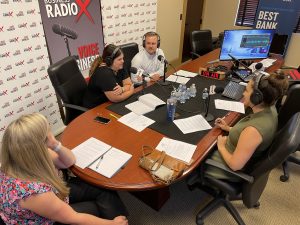
North Fulton Business Radio is broadcast from the North Fulton studio of Business RadioX® inside Renasant Bank in Alpharetta.

FinCEN Report Company

FinCEN Report Company was founded by corporate lawyers and experienced technology company executives to help companies file beneficial ownership reports with FinCEN, the U.S. Treasury Department’s Financial Crimes Enforcement Network.

Backed by investors that include senior partners at major U.S. law firms, the Company is preparing the first-to-market secure data storage and collaboration solution for the Corporate Transparency Act.

Their CTA Compliance Hub will allow companies and their attorneys to create free accounts for their individual data and then collaborate securely to prepare beneficial ownership reports. Each reporting company will pay a subscription fee at the time it files its initial beneficial ownership report. That annual subscription fee will cover the initial report and any subsequent amendments the company may make in the following year.

Company Website |LinkedIn | Twitter

Jonathan Wilson, Founder and CEO, FinCEN Report Company

Jonathan Wilson, Founder and CEO, FinCEN Report Company

Jonathan B. Wilson is an experienced business lawyer who enjoys solving complex business and transactional problems for clients. He applies his more than 25 years of experience as an in-house lawyer, business adviser and strategist to help business executives and owners achieve negotiated solutions to technology and financial transactions.

Mr. Wilson was the general counsel or chief legal officer of Interland Inc., Web.com Group Inc. and EasyLink Services International Corp., where he advised senior management and the boards of directors on U.S. Securities and Exchange Commission (SEC) reporting, NASDAQ compliance, Sarbanes-Oxley matters, corporate governance, governmental affairs, contracts, litigation, intellectual property and mergers and acquisitions.

Mr. Wilson led Web.com’s legal department through its growth and merger with Website Pros Inc. in September 2007, at various times acting as the corporate secretary and the executive in charge of corporate development.

Mr. Wilson spent the first 10 years of his career in private practice with large Atlanta law firms, including a leading international firm and one of the nation’s most prestigious corporate firms.

Mr. Wilson has represented both large and small companies in outsourcing, patent licensing, software licensing, distribution, and strategic alliance agreements.

In 2009, Mr. Wilson founded the Renewable Energy Committee of the American Bar Association’s Public Utility Section, and he chaired that committee, writing and speaking frequently on renewable energy and clean technology development through 2015.

LinkedIn

Questions and Topics in this Interview:

  • The new Corporate Transparency Act will dramatically change the way companies and their investors interact.
  • This new law is meant to give the U.S. Treasury greater power to prevent and to prosecute money laundering.
  • Under the CTA, 25 million U.S. companies will need to file a beneficial ownership report with FinCEN – the Financial Crimes Enforcement Network of the U.S. Treasury Department.
  • Each beneficial ownership report will need to disclose personally-identifiable information about the lawyer who formed the company and each of the company’s beneficial owners.
  • Complying with this law will be a challenge for business lawyers and their lawyers.
  • FinCEN Report Company is the only online compliance solution that enables secure data storage, collaboration, and report filing.

North Fulton Business Radio is hosted by John Ray and broadcast and produced from the North Fulton studio of Business RadioX® inside Renasant Bank in Alpharetta. You can find the full archive of shows by following this link. The show is available on all the major podcast apps, including Apple Podcasts, Spotify, Google, Amazon, iHeart Radio, Stitcher, TuneIn, and others.

RenasantBank


Renasant Bank has humble roots, starting in 1904 as a $100,000 bank in a Lee County, Mississippi, bakery. Since then, Renasant has grown to become one of the Southeast’s strongest financial institutions with over $13 billion in assets and more than 190 banking, lending, wealth management and financial services offices in Mississippi, Alabama, Tennessee, Georgia and Florida. All of Renasant’s success stems from each of their banker’s commitment to investing in their communities as a way of better understanding the people they serve. At Renasant Bank, they understand you because they work and live alongside you every day.


Special thanks to A&S Culinary Concepts for their support of this edition of North Fulton Business Radio. A&S Culinary Concepts, based in Johns Creek, is an award-winning culinary studio, celebrated for corporate catering, corporate team building, Big Green Egg Boot Camps, and private group events. They also provide oven-ready, cooked from scratch meals to go they call “Let Us Cook for You.” To see their menus and events, go to their website or call 678-336-9196.

Tagged With: A&S Culinary Concepts, corporate governance, Corporate Transparency Act, FinCEN, FinCEN Report Company, Jonathan Wilson, money laundering, North Fulton Business Radio, renasant bank

Trading a Corporate Job for One in Your Own Business

May 23, 2022 by John Ray

Trading a Corporate Job for One in Your Own Business
North Fulton Studio
Trading a Corporate Job for One in Your Own Business
Loading
00:00 /
RSS Feed
Share
Link
Embed

Download file

Trading a Corporate Job for One in Your Own Business

Trading a Corporate Job for One in Your Own Business

As you’re building your professional services business, it can sometimes feel like all you’ve done is trade your corporate job for one in your own business. This episode addresses how and why this happens, and charts a way out of this terrible feeling.

The Price and Value Journey is presented by John Ray and produced by the North Fulton studio of Business RadioX®.

TRANSCRIPT

John Ray: [00:00:00] Hello again. I’m John Ray on The Price and Value Journey. I receive a lot of feedback from this podcast and from what I write, much of it is private which I understand, who wants to talk about their own frustrations, disappointments, stress, and failures which come from inadequate pricing. I know this firsthand.

John Ray: [00:00:23] Here’s a note I received from a consultant with her own practice in response to something I had posted on LinkedIn, and I’m using this with full permission. “Thank you for sharing that article about pricing. When I took on my first few clients, I was over delivering and under charging. I had learned that I shouldn’t do this because I was more stressed than when I had a job. Once I learned that I could walk away from a client and say no, I felt more confident. But as I learn more about selling contracts, et cetera, it is all about the solutions you provide to the client. It is about how you can make their business and emotional impact better. Thank you for sharing and offering your guidance with your content.”

John Ray: [00:01:17] There’s so much here that this person wrote that’s valuable. But the comment about being more stressed than when she had a job stood out for me. When I speak with a professional services provider about their practice, one of the red flags which indicates a pricing problem is working too hard for too little money. It’s a terrible feeling.

John Ray: [00:01:42] Maybe you’ve left a large professional services firm because you want independence and flexibility. Maybe you’ve left corporate because you are tired of their backstabbing rat race, which has no respect for your family and your personal life. You start your practice and everything is fresh and hopeful. You pull in a few clients and start to get some momentum. You may know that you’re under charging, but that’s part of the dues you think you have to pay to get going. Or maybe you think you have to start out with a lower fee in order to build your business.

John Ray: [00:02:19] After a while, you aren’t getting any sleep, you’re frazzled. You resent your clients who you are busting your butt for. And your significant other is telling you that you made a big mistake. That proud moment when you became a business owner, that euphoric feeling when you were holding the metaphoric glass trophy over your head, it’s now laying on the floor, shattered, because you don’t own a business. You own a job.

John Ray: [00:02:47] There’s a pronoun problem in what I just described. It’s all about I and me. There’s nothing here about the clients I’m working with, whose businesses I’m straightening out and whose lives I’m changing.

John Ray: [00:03:00] My friend who wrote this note points to one of the biggest problems services providers have with their practice. They haven’t spent nearly enough time developing a deep understanding of the needs, problems, hopes, and goals of the target tribe of clients they want to serve. Their description of a client need involves something functional, like filing a tax return or developing digital advertising. Those functions are just the means to a bigger and deeper end, which clients are looking for, solutions which permanently change their business and personal lives for the better.

John Ray: [00:03:42] It doesn’t matter whether they are bakery owners, farmers, attorneys, truck drivers, or programmers. When you’re able to get under the skin of the members of the tribe you want to serve, you end up having more substantial conversations with your clients. They feel like you understand them, and your confidence rises because of that. You’re prescribing remedies which meet long held needs and dreams, not just for the business, but for the business owner, their significant other, and their family. You’re making, as my friend indicates in her note, an emotional impact, not just a financial one.

John Ray: [00:04:22] And the door opens for your pricing to change for the better because you are pricing based on client outcomes, not some silly measure like your timesheet. And you’ve regained ownership of your business.

John Ray: [00:04:38] I’m John Ray on the Price and Value Journey. Past episodes of this series can be found at pricevaluejourney.com or on your favorite podcast app where you can subscribe, and we would be honored if you do that. If you would like to send me a note, john@johnray.co is my email address. Thank you for joining me.


About The Price and Value Journey

The title of this show describes the journey all professional services providers are on:  building a services practice by seeking to convince the world of the value we offer, helping clients achieve the outcomes they desire and trying to do all that at pricing which reflects the value we deliver.

If you feel like you’re working too hard for too little money in your solo or small firm practice, this show is for you. Even if you’re reasonably happy with your practice, you’ll hear ways to improve both your bottom line as well as the mindset you bring to your business.

The show is produced by the North Fulton studio of Business RadioX® and can be found on all the major podcast apps. The complete show archive is here.

John Ray, Host of The Price and Value Journey

John Ray The Price and Value Journey
John Ray, Host of “The Price and Value Journey”

John Ray is the host of The Price and Value Journey.

John owns Ray Business Advisors, a business advisory practice. John’s services include advising solopreneur and small professional services firms on their pricing. John is passionate about the power of pricing for business owners, as changing pricing is the fastest way to change the profitability of a business. His clients are professionals who are selling their “grey matter,” such as attorneys, CPAs, accountants and bookkeepers, consultants, marketing professionals, and other professional services practitioners.

In his other business, John is a Studio Owner, Producer, and Show Host with Business RadioX®, and works with business owners who want to do their own podcast. As a veteran B2B services provider, John’s special sauce is coaching B2B professionals to use a podcast to build relationships in a non-salesy way which translate into revenue.

John is the host of North Fulton Business Radio, Minneapolis-St. Paul Business Radio, Alpharetta Tech Talk, and Business Leaders Radio. house shows which feature a wide range of business leaders and companies. John has hosted and/or produced over 1,300 podcast episodes.

Connect with John Ray:

Website | LinkedIn | Twitter

Business RadioX®:  LinkedIn | Twitter | Facebook | Instagram

Tagged With: corporate job, John Ray, Price and Value Journey, pricing, professional services, professional services providers, solopreneurs, trading jobs, value, value pricing

Ben Albert, Balbert Marketing

May 20, 2022 by John Ray

Ben Albert
Business Leaders Radio
Ben Albert, Balbert Marketing
Loading
00:00 /
RSS Feed
Share
Link
Embed

Download file

Ben Albert

Ben Albert, Balbert Marketing

Ben Albert, CEO of Balbert Marketing, was the guest on this episode of Business Leaders Radio. Ben talked with host John Ray about his tough childhood, the shift that helped him find his passion in marketing, and how he built his business through podcasts. He also shared his philosophy about podcasting as a marketing tool, his services at Balbert Marketing, who he likes to work with, marketing as a commodity, and much more.

Business Leaders Radio is produced and broadcast by the North Fulton Studio of Business RadioX® in Atlanta.

Balbert Marketing, LLC

Balbert Marketing was founded by Ben Albert and provides a full range of marketing services, including websites, SEO, social media marketing, copywriting, direct mail, and video. They also offer marketing consultation.

Your online presence is vital to your business, and Balbert makes sure you are represented at your best. They work will businesses with growth potential.

Another part of Balbert Marketing is Real Business Connections, a network of Podcasts, Real Conversations With Extraordinary Business People. They are on a mission to move the needle on 1 million careers one conversation at a time.

Company website | LinkedIn

Ben Albert, Founder and CEO, Balbert Marketing, LLC

Ben Albert, Founder and CEO, Balbert Marketing, LLC

When Covid hit, Ben was furloughed from work. He found himself down and out, staring at an empty handle of Jim Bean Whiskey. He was unemployed, depressed, and felt unworthy.

Hesitantly, he opened this very laptop he is typing this bio on right now and started reaching out to strangers on Linkedin. This spearheaded his entrepreneurial journey. 

The rest is history. 

Now Ben hosts a network of 5 podcasts called “Real Business Connections,” runs a massively successful marketing firm, Balbert Marketing, and has replaced his sales executive income in just over a year. Ben found his way.

You can do all this too!

It lights Ben up to help people, just like you, find YOUR way. Ben loves to help businesspeople find the essence of who THEY are and empower them and their companies to make their mark in this world. None of us deserve to feel small, unworthy, or invisible.

This is why Ben chose a career in marketing. Ben has found in marketing. He has a unique opportunity to empower business people to reach the RIGHT community, the RIGHT clients, and the RIGHT partners, who share the same beliefs and values as YOU. So you can scale above your highest potential, in turn, filling up your pockets AND your soul.

LinkedIn

Questions and Topics

  • How you got into your work
  • Learning through Podcasts
  • Podcasts as a business development tool
  • Marketing as a commodity
  • The role of a website
  • Who you work with

Business Leaders Radio is hosted by John Ray and produced virtually from the North Fulton studio of Business RadioX® in Alpharetta.  The show can be found on all the major podcast apps and a full archive can be found here.

Tagged With: b2b podcasting, Balbert Marketing, Ben Albert, Business Leaders Radio, John Ray, marketing, podcasting, Real Business Connections

William Barrett, Mandelbaum Barrett

May 20, 2022 by John Ray

William S. Barrett
Dental Business Radio
William Barrett, Mandelbaum Barrett
Loading
00:00 /
RSS Feed
Share
Link
Embed

Download file

William S. Barrett

William Barrett, Mandelbaum Barrett (Dental Business Radio, Episode 30)

William Barrett, CEO of Mandelbaum Barrett and author of The DSO Decision: Winning Answers from Every Angle, was Patrick O’Rourke’s guest on this edition of Dental Business Radio. He covered considerations for practice owners who are considering selling their practice to a DSO or creating a DSO themselves. Bill and Patrick also discussed getting proper legal counsel, misclassification of independent contractors, practice brokers, partnerships, and much more.

Dental Business Radio is underwritten and presented by Practice Quotient: PPO Negotiations & Analysis and produced by the North Fulton studio of Business RadioX®.

William Barrett, Chief Executive Officer, Mandelbaum Barrett

William Barrett is the Chief Executive Officer of Mandelbaum Barrett. He has over 20 years of experience representing a wide range of businesses with a unique specialty in mergers and acquisitions. He provides strategic advice to companies of all sizes from formation to dissolution and every stage in between. He is known for the personal attention that he gives his clients and the energy he brings to every deal. Bill has a reputation as a deal maker who knows how to be creative and get things done.

Bill often serves the role as outside general corporate counsel to his clients and advises them on issues concerning contracts, employment law compliance, developing policies, executive compensation programs and agreements, as well as business succession and related tax planning. His representative clients include commercial organizations and entrepreneurs in the areas of manufacturing, industry, service, banking, finance, insurance, construction, real estate development, as well as healthcare professionals of varying disciplines and organizations. Throughout his career, Bill has successfully managed the purchase or sale of hundreds of businesses, professional practices, and facilities.

In the healthcare space, Bill is well recognized nationally as a transactional lawyer in dental and medical practice transitions, practice sales and purchases, associate buy-ins, start-ups, and the structuring of dental services organizations (DSOs) and management services organizations (MSOs). Bill represents clients throughout the country and is well versed in the specific rules and regulations that govern the healthcare industry.

William S. Barrett (Bill) is the author of Pain-Free Dental Deals: An Entrepreneurial Dentist’s Guide to Buying, Selling and Merging Practices and The DSO Decision: Winning Answers from Every Angle. He has authored many articles addressing the legal and business needs of licensed professionals and facilities. He regularly speaks on a wide variety of topics to professional tradeshows, associations, study groups, societies, as well as students and residents at dental and medical schools across the country. In 2018, Bill appeared on Howard Farran’s well-regarded show Dentaltown to talk about practice transitions. Hear what he and Howard spoke about here.

LinkedIn

Mandelbaum Barrett

Since its founding in 1930, Mandelbaum Barrett has been committed to providing its clients with the highest level of personal, hands-on attention to their legal needs. They take a proactive approach in representing our clients; from the board room to the courtroom. Mandelbaum Barrett attorneys are zealous advocates, treating their clients’ concerns as though they were for their own family.
They take the time to get to know their clients. The better they know them, the better they can anticipate their needs and potential legal issues before they arise. That’s why they invest the time to learn about clients’ industries and competitors. That’s also why they provide informative seminars on various business, economic, and legal topics. They are in this together as their client’s partner for success.
Their business clients are diverse and include organizations of all sizes in various industries with national and international interests, such as banks, governmental entities, real estate developers, public and private institutions, biotech companies, manufacturers, health care providers and facilities, as well as individuals and families. Clients say they choose Mandelbaum Barrett because an experienced attorney is both effective and efficient.
Company website | LinkedIn


About Dental Business Radio

Patrick O'Rourke
Patrick O’Rourke, Host of “Dental Business Radio”

Dental Business Radio covers the business side of dentistry. Host Patrick O’Rourke and his guests cover industry trends, insights, success stories, and more in this wide-ranging show. The show’s guests include successful doctors across the spectrum of dental practice providers, as well as trusted advisors and noted industry participants. Dental Business Radio is underwritten and presented by Practice Quotient and produced by the North Fulton studio of Business RadioX®. The show can be found on all the major podcast apps and a complete show archive is here.


Practice Quotient

Dental Business Radio is sponsored by Practice Quotient. Practice Quotient, Inc. serves as a bridge between the payor and provider communities. Their clients include general dentist and dental specialty practices across the nation of all sizes, from completely fee-for-service-only to active network participation with every dental plan possible. They work with independent practices, emerging multi-practice entities, and various large ownership entities in the dental space. Their PPO negotiations and analysis projects evaluate the merits of the various in-network participation contract options specific to your Practice’s patient acquisition strategy. There is no one-size-fits-all solution.

Connect with Practice Quotient

Website | LinkedIn | Facebook | Twitter

Tagged With: Dental Business Radio, dental practices, Mandelbaum Barrett, Pain-Free Dental Deals, Patrick O'Rourke, PPO Negotiations & Analysis, Practice Quotient, selling a dental practice, The DSO Decision, William Barrett, William S. Barrett

Prospects Who Check References

May 20, 2022 by John Ray

Prospects Who Check References
North Fulton Studio
Prospects Who Check References
Loading
00:00 /
RSS Feed
Share
Link
Embed

Download file

Prospects Who Check References

Prospects Who Check References

What indication can you draw from prospects who check references? What does checking references reveal about a client’s price sensitivity or their orientation toward value? The episode explores those questions.

The Price and Value Journey is presented by John Ray and produced by the North Fulton studio of Business RadioX®.

TRANSCRIPT

John Ray: [00:00:00] Hello. I’m John Ray on the Price and Value Journey. I once spoke with a client about better discerning prospects whose sole concern is price. His experience led him to the belief that when a prospect doesn’t check with references, which have been provided, then that’s an indication that the prospect is exclusively focused on price.

Now, I hadn’t thought of this before, but the idea makes sense to me. If a prospect checks your references, they’re interested in the how of what you do, how you work with a client generally, your responsiveness, your ability to explain difficult concepts in plain English or other intangibles, which they value. They may sense you possess these intangibles they’re looking for because of the conversations that the two of you have had up until that point, but they want to confirm them.

Further checking with references takes time. The effort involved in emails, going back and forth with phone calls, all that can be tedious. And a client’s willingness to make this investment is probably a reliable indicator of a client who is not just serious but one more concerned with a decision to buy grounded and perceived value instead of price.

My client’s hypothesis, I think, rings particularly true in an extraordinarily complex service offering, where a client is particularly uncertain in deciding and where the cost of selecting the wrong provider is high. It could be, on the other hand, that a prospect doesn’t check your references because you’ve got stellar testimonials so thoroughly documented that there’s no need to make a phone call. Such a circumstance is probably rare, though, as most professional services providers really don’t spend that much time at all cultivating and documenting effective testimonials.

So, what’s the point? The point is that you’re better off in your practice spending time with prospects interested in making a value-oriented decision. Those are the clients willing to pay a price that’s reflective of the value that they perceive, and they’re the ones that are much easier for you to work with. So, how do these thoughts apply to your own business?

I’m John Ray on the Price and Value Journey. This series can be found at PriceValueJourney.com or on your favourite podcast app. And we’d be honored if you would subscribe to the series. If you’d like to connect directly, you can email John@JohnRay.co. Thank you for joining me.


About The Price and Value Journey

The title of this show describes the journey all professional services providers are on:  building a services practice by seeking to convince the world of the value we offer, helping clients achieve the outcomes they desire and trying to do all that at pricing which reflects the value we deliver.

If you feel like you’re working too hard for too little money in your solo or small firm practice, this show is for you. Even if you’re reasonably happy with your practice, you’ll hear ways to improve both your bottom line as well as the mindset you bring to your business.

The show is produced by the North Fulton studio of Business RadioX® and can be found on all the major podcast apps. The complete show archive is here.

John Ray, Host of The Price and Value Journey

John Ray The Price and Value Journey
John Ray, Host of “The Price and Value Journey”

John Ray is the host of The Price and Value Journey.

John owns Ray Business Advisors, a business advisory practice. John’s services include advising solopreneur and small professional services firms on their pricing. John is passionate about the power of pricing for business owners, as changing pricing is the fastest way to change the profitability of a business. His clients are professionals who are selling their “grey matter,” such as attorneys, CPAs, accountants and bookkeepers, consultants, marketing professionals, and other professional services practitioners.

In his other business, John is a Studio Owner, Producer, and Show Host with Business RadioX®, and works with business owners who want to do their own podcast. As a veteran B2B services provider, John’s special sauce is coaching B2B professionals to use a podcast to build relationships in a non-salesy way which translate into revenue.

John is the host of North Fulton Business Radio, Minneapolis-St. Paul Business Radio, Alpharetta Tech Talk, and Business Leaders Radio. house shows which feature a wide range of business leaders and companies. John has hosted and/or produced over 1,300 podcast episodes.

Connect with John Ray:

Website | LinkedIn | Twitter

Business RadioX®:  LinkedIn | Twitter | Facebook | Instagram

Tagged With: checking references, John Ray, Price and Value Journey, pricing, professional services, professional services providers, prospects, references, solopreneurs, value

Eric Togneri, Neri Capital Partners and Rob Margeton, Ryco Advisors

May 19, 2022 by John Ray

Ryco Advisors
North Fulton Studio
Eric Togneri, Neri Capital Partners and Rob Margeton, Ryco Advisors
Loading
00:00 /
RSS Feed
Share
Link
Embed

Download file

Ryco Advisors

Eric Togneri, Neri Capital Partners, and Rob Margeton, Ryco Advisors (The Exit Exchange, Episode 14)

Eric Togneri, Managing Partner with Neri Capital Partners, and Rob Margeton, Co-Founder of Ryco Advisors, joined the show to discuss critical elements and considerations in selling a business. They discussed the increasing attempts of equity groups to consolidate industries, the role of business valuations, current issues such as price increases in labor and product, the conversations to assist sellers to improve valuations, encouraging business owners to reduce their role, and much more.

This episode of The Exit Exchange was co-hosted by Bob Tankesley and Maria Forbes and is produced virtually from the North Fulton studio of Business RadioX® in Alpharetta.

Neri Capital Partners

Neri Capital Partners was founded in 2006 with headquarters in Atlanta, Georgia. Our firm is an investment bank for family-owned and privately-held small and midsize businesses with a strong history and clear path to growth. Neri Capital provides merger, acquisition, and related advisory services.

Neri Capital Partners’ entrepreneurial and transactional experience and expertise has positioned the firm as uniquely qualified to offer advisory services for business owners to successfully Determine, Build and then Realize the value they have created. Regardless of where our clients are in their business life cycle, Neri Capital services are designed to add value to liquidity.

Company website  | LinkedIn

Eric Togneri, Managing Director, Neri Capital Partners

Eric Togneri, Managing Director, Neri Capital Partners

Eric Togneri is a Lower-Middle Market Investment Banking professional providing Investment Origination and M&A Advisory.  He is also a Consumer Goods Team Leader for Sales, Shopper Marketing, Trade Promotion, Trade Finance, and Business Analytics.

Eric is currently serving as Managing Director of Neri Capital Partners focused on providing Business Owners the path to Determining, Building, and Realizing the Value of Companies; Also, providing Deal Origination expertise for Private Investors to achieve Quality Deal Flow.

Prior to Neri Capital, Eric was an accomplished Consumer Products Department Head and National Team Leader with Fortune 100 consumer organizations such as L’Oréal, Pfizer, and Sanofi; Also, a Sr. Consultant at Neri Consumer and a Principal in the Category Management Association.

LinkedIn

Ryco Advisors

Ryco Advisors is an Atlanta-based, independent advisory firm focused on the sale of small and lower-middle-market owner-operated companies.

The professionals at Ryco not only have extensive financial and transactional experience, but they’ve also been business owners just like you.

They have run their own operating businesses and understand firsthand what it’s like to make the decision to sell and which steps to take to achieve a profitable sale. They leverage their perspective as business owners, coupled with years of experience working with major Wall Street firms and consulting companies, to achieve superior results for our clients.

They have advised numerous clients – both large and small – on sale and transfer transactions, and treat every business they sell as if it were their own.

Company website | LinkedIn

Rob Margeton, Co-Founder, Ryco Advisors

Rob Margeton, Co-Founder, Ryco Advisors

Robert (Rob) Margeton has over 15 years of experience working in the financial services industry and running his own business. Prior to co-founding Ryco Advisors, Mr. Margeton served as a Managing Director at Capstone Advisory Group, a New York middle-market restructuring, and financial advisory consulting firm. During his tenure there, he advised clients on over 50 transactions across a diverse set of industries. Mr. Margeton also has extensive experience running and managing his own business.

Together with Lindsay Margeton, he acquired the flagship Fleet Clean location in 2013 and oversaw a successful sales process in 2018. During their tenure at Fleet Clean, the company’s revenues and EBITDA grew by over 75% and 95%, respectively. They managed over 30 employees and serviced more than 150 clients throughout Metro Atlanta, including many Fortune 500 companies. Ryco Advisors assists owner-operating businesses in the lower middle market space on sell-side engagements. Businesses typically have revenues between $5 million and $50 million.

LinkedIn

The Exit Planning Exchange Atlanta

The Exit Planning Exchange Atlanta (XPX) is a diverse group of professionals with a common goal: working collaboratively to assist business owners with a sale or business transition. XPX Atlanta is an association of advisors who provide professionalism, principles, and education to the heart of the middle market. Our members work with business owners through all stages of the private company life cycle: business value growth, business value transfer, and owner life and legacy. Our Vision: To fundamentally changing the trajectory of exit planning services in the Southeast United States. XPX Atlanta delivers a collaborative-based networking exchange with broad representation of exit planning competencies. Learn more about XPX Atlanta and why you should consider joining our community: https://exitplanningexchange.com/atlanta.

The Exit Exchange is produced by John Ray in the North Fulton studio of Business RadioX® in Alpharetta. The show archive can be found at xpxatlantaradio.com.

John Ray and Business RadioX are Platinum Sponsors of XPX Atlanta.

Tagged With: Eric Togneri, mergers & acquisitions, Neri Capital Partners, Rob Margeton, Ryco Advisors, selling a business, The Exit Exchange, XPX Atlanta

LIVE from RISKWORLD 2022: Gerry Stanley and Mark Moore, Harvard MedTech, LLC

May 19, 2022 by John Ray

Harvard Medtech
Minneapolis St. Paul Studio
LIVE from RISKWORLD 2022: Gerry Stanley and Mark Moore, Harvard MedTech, LLC
Loading
00:00 /
RSS Feed
Share
Link
Embed

Download file

Harvard Medtech

LIVE from RISKWORLD 2022: Gerry Stanley and Mark Moore, Harvard MedTech, LLC

Gerry Stanley and Mark Moore with Harvard MedTech spoke with host Jamie Gassmann LIVE from RISKWORLD 2022 about their mission and the technology developed by Harvard MedTech. Their innovation involves virtual reality headsets combined with behavioral health interventions which assist claimants in dealing with workplace trauma. Gerry and Mark talked with Jamie about the specifics of how this technology works, the types of claimants that can benefit from the approach, its use in pain management, and more.

Workplace MVP is underwritten and presented by R3 Continuum and produced by the Minneapolis-St.Paul Studio of Business RadioX®.

This show was originally broadcast from the RIMS 2022 RISKWORLD Conference held at the Moscone Center in San Francisco, California.

Harvard MedTech, LLC

Gerry Stanley is Senior Vice President and Chief Medical Officer, and Mark Moore is Senior Vice President, Market Partnerships, for Harvard MedTech, LLC

Harvard MedTech is committed to Smart Device Technology for in-home patient care. Its mission is to push the frontier of capabilities and create or find the most innovative smart technologies from around the world. These technologies may be devices, systems, or elements that expand an extraordinary human experience.

They are also committed to home-based therapies to facilitate greater compliance by – and a higher quality experience for – the patient. Their dedicated behavioral health clinicians train patients on how to use smart equipment and technologies, and provide oversight, motivation and encouragement.

What most makes HMT stand apart is our unmatched ability to integrate technology with behavioral science in a way that produces faster, safer and better outcomes for patients, increased convenience for providers, and lower costs for payers.

Company website | Linkedin | Gerry LinkedIn | Mark LinkedIn

About Workplace MVP

Every day, around the world, organizations of all sizes face disruptive events and situations. Within those workplaces are everyday heroes in human resources, risk management, security, business continuity, and the C-suite. They don’t call themselves heroes though. On the contrary, they simply show up every day, laboring for the well-being of employees in their care, readying the workplace for and planning responses to disruption. This show, Workplace MVP, confers on these heroes the designation they deserve, Workplace MVP (Most Valuable Professionals), and gives them the forum to tell their story. As you hear their experiences, you will learn first-hand, real-life approaches to readying the workplace, responses to crisis situations, and overcoming challenges of disruption. Visit our show archive here.

Workplace MVP Host Jamie Gassmann

Jamie Gassmann, Host, “Workplace MVP”

In addition to serving as the host to the Workplace MVP podcast, Jamie Gassmann is the Director of Marketing at R3 Continuum (R3c). Collectively, she has more than fourteen years of marketing experience. Across her tenure, she has experience working in and with various industries including banking, real estate, retail, crisis management, insurance, business continuity, and more. She holds a Bachelor of Science Degree in Mass Communications with special interest in Advertising and Public Relations and a Master of Business Administration from Paseka School of Business, Minnesota State University.

R3 Continuum

R3 Continuum is a global leader in workplace behavioral health and security solutions. R3c helps ensure the psychological and physical safety of organizations and their people in today’s ever-changing and often unpredictable world. Through their continuum of tailored solutions, including evaluations, crisis response, executive optimization, protective services, and more, they help organizations maintain and cultivate a workplace of wellbeing so that their people can thrive. Learn more about R3c at www.r3c.com.

Company website | LinkedIn | Facebook | Twitter

TRANSCRIPT

Intro: [00:00:02] Broadcasting Live from RISKWORLD 2022 at the Moscone Center in San Francisco, it’s time for Workplace MVP. Brought to you by R3 Continuum, a global leader in helping workplaces thrive during disruptive times. Now, here’s your host.

Jamie Gassmann: [00:00:21] Hey, everyone. Your host, Jamie Gassmann here. And I’m broadcasting from RISKWORLD 2022 in the expo hall and our show sponsor’s booth, R3 Continuum. And joining me is Gerry Stanley and Mark Moore from Harvard MedTech. Welcome, gentlemen.

Gerry Stanley: [00:00:38] Hey, thanks for having us.

Mark Moore: [00:00:39] Thanks for having us.

Jamie Gassmann: [00:00:40] Yeah. So, tell me a little bit about what Harvard MedTech does.

Mark Moore: [00:00:45] Gerry’s got this.

Gerry Stanley: [00:00:47] So, we’re a virtual reality company that couples virtual reality with behavioral health interventions to treat the effects of workplace trauma. So, as opposed to looking at pain, depression, anxiety or PTSD as the actual problem itself, we really look at that as a constellation of symptoms that we want to treat to give a very holistic, biopsychosocial approach to how we’re treating patients.

Jamie Gassmann: [00:01:08] Wonderful. So, tell me a little bit about – so, like if – are you – from a risk insurance perspective, if they have a client, you know, what types of situations from a trauma perspective are you seeing most commonly that their employee would benefit from your solution?

Gerry Stanley: [00:01:23] So, we really focus on claimants that are, I would say, in the most volatile state. And if you really look at the data on that, most of those patients have some sort of an underlying psychosocial issue that’s driving it. So, it’s really not a functional biologic issue. It’s something else in their life, an underlying issue at home, a history of depression or anxiety. Those are all the things that really derail recovery for patients. What we want to do is say, “Let’s address them holistically. Let’s treat the person as a person, not just as a disease or a traumatic event.”

Jamie Gassmann: [00:01:52] So, tell me a little bit about how does that virtual reality work? Like what is that claimant experience when they’re in that virtual reality?

Gerry Stanley: [00:02:01] So, what will happen is we call the claimant; and as part of that, we’re going to do some assessments on the patient and match them with one of our personal clinicians. We, then, mail the virtual reality headset to the patient’s home, so they can engage in it as much as they’d like. From there on, every week, we have our personal clinician engage with the patient. So, every week we’re adjusting what they’re doing in the headset. We’re going to adjust when they do it, how often they do it, how long they do it, and what types of programs that they’re doing.

So, our program is designed to have four – what we call – experiences. okay? Those are the categories. So, we have knowledge, meditation, distraction and escape. And what the escape is, it’s escaping. It’s going to see the towers of London, swimming with dolphins. It’s taking an injured worker from the safety of their home to let them go transcend that and go into the world. The meditation is very basic eye control, breath control, body awareness, meditation. But because they’re in a virtual reality headset, it’s incredibly immersive. So, it’s very simple meditation done at a very high level. The knowledge pieces are much more simple. It’s education and empowerment, because most workers will say, “I really didn’t get a lot of education from my clinician. Like the doctor doesn’t tell me what’s going on.” So, we really want to empower our patients to be active participants in their care and let them know that it’s not realistic, that you’ve had an injury, that you will always have a little bit of pain. Pain is normal. That’s a normal part of the healing process. So, having zero pain is not how you get back to work. We have to get to a point to where that’s realistic.

And then, we also have a distraction phase where if we’ve got patients that are experiencing pain, we know that we can put them into these modules, and in 3 to 5 minutes, we can get a 44 to 50% reduction in their pain immediately. And that pain will last anywhere from 2 to 3 hours with a legacy pain relief. So, if you think about that in terms of pharmacology, that’s what we’re seeing with somebody takes a Percocet, or a Vicodin, or one of the opiates that people talk about, that’s what you’re hoping for is a 50% reduction in pain that’ll last 2 to 3 hours. We’re seeing that in a completely non-pharmacological way just by using virtual reality.

Jamie Gassmann: [00:03:52] Interesting. So, the ideal claimant is somebody who suffered some type of a traumatic injury that’s causing them ongoing pain. And so, this could be used as kind of a pain management tool for them basically, correct?

Gerry Stanley: [00:04:04] Definitely an adjunct for some of the pain. So, we really focus on areas where we see the greatest pain. So, we focus on shoulder surgeries, back surgeries, foot and ankle surgeries, amputations or specific injuries that we know have really the lowest return to work, highest post-operative complication, highest opioid addiction – the surgeries that are going to have the most likelihood of having a complication. But then, we also like to identify claimants based on some of their underlying psychosocial issues. So, they may have issues that are driving that. Like I said, maybe they’re caring for a child at home, maybe they’re caring for an aging adult or a parent. We’re seeing that a lot more. We have multigenerational families in the home. So, we want to make sure that we’re addressing these folks, saying, “What’s going on in your life?” So, that it’s not just give this to everybody, but let’s really identify the high risk claimants early on to give them that extra level of support, so that (1), they can get better; (2), they can be whole. And then from the insurance industry side, we really want to be able to close that claim.

Jamie Gassmann: [00:04:57] Now, I know you had an interview earlier today. So, Mark, do you want to talk a little bit about some of the things that the journalist was asking you on the interview that you had?

Mark Moore: [00:05:09] Oh, it wasn’t me that had the interview.

Jamie Gassmann: [00:05:10] Oh, okay.

Mark Moore: [00:05:11] It’s not allowed at the table.

Jamie Gassmann: [00:05:12] Yeah. Oh, wow. But you got — you were allowed at my table. So, you get to talk about it.

Mark Moore: [00:05:16] No. I was at a client meeting. So, Gerry was the one that actually was there [crosstalk].

Jamie Gassmann: [00:05:18] Oh, got it. Okay. Yeah. So, tell us a little bit about that interview because that was — you were pretty excited about that, so.

Gerry Stanley: [00:05:27] Well, it kept me from running the 5K this morning.

Jamie Gassmann: [00:05:28] I know, you missed out.

Gerry Stanley: [00:05:30] So, that is excitement in itself.

Jamie Gassmann: [00:05:30] Yeah.

Gerry Stanley: [00:05:31] They’re outside running in the cold. I’m inside on TV. So, life was good.

Jamie Gassmann: [00:05:34] But it had amazing views.

Gerry Stanley: [00:05:36] It was — you know, it was a lot of fun. It was Best TV. They were just kind of looking at different innovators in the industry. And they brought us in to talk about advances in telemedicine and some of the new –I would say we’re a little bit revolutionary bringing virtual reality into the space. So, how we’re disrupting the space and what we’re doing to really bring technology to health care or really adjust where care is received. For the most part, care has always happened in the clinic or in the hospital. Now, we want to do it in patients’ homes. Like, “Let’s actually go where the patient lives instead of having the patient go to where the care has historically lived.” So, it’s really that paradigm shift of going to where people live and meeting them where they are, so that we can really try to find the right care for the right person at the right time.

Jamie Gassmann: [00:06:16] Yeah. And you know, when you think about it like the shift over the last couple of years where telehealth and people being able to, you know, have appointments right off their phone to diagnose them, you know, this is a really prime opportunity in time where people are starting to get used to that care in the home. So, that’s great.

Gerry Stanley: [00:06:33] So, we’ve talked about telemedicine for probably a decade, but patients didn’t like it and doctors hated it. So, you’ve got this great idea that nobody wants to utilize in the pandemic. That’s really kind of the blessing of the pandemic, is it forced us to get out of that comfort zone. And now, people love it. I know doctors that have moved straight to just all virtual practices because it’s so convenient. It’s just less disruptive to everybody’s life. So, it’s-

Intro: [00:06:56] Yeah.

Gerry Stanley: [00:06:57] It’s been fun just to see that evolution in such a short period of time.

Jamie Gassmann: [00:07:00] Yeah. And what I like about, you know, your virtual reality and trying to help that pain management is that shift away from having to take a narcotic, you know, an opioid to treat a backache. You know, and you hear so much about the opioid crisis. I mean, I know I haven’t heard as much about it. I think COVID kind of silenced a little bit, but I don’t think it went away. And so, you know, this is really a great kind of alternative to those who are like, “I really don’t want to take something to handle my pain. I’d really like to have some type of a solution that allows me an alternative options.” So, that’s great.

Gerry Stanley: [00:07:34] It’s been really great. It’s a lot of fun to be doing something so innovative and still helping people.

Jamie Gassmann: [00:07:39] Yeah, that’s fantastic. And I know you guys are exhibitors here at the conference. So, you know, tell me a little bit about some of the traffic and the conversations you’ve been having. What are — how are people responding to you?

Mark Moore: [00:07:50] It’s new, it’s novel. So, for us, as an organization, it’s something that’s not been in the marketplace. Everybody’s talked about the biopsychosocial pieces that go into the claim. We’re actually putting an appliance with that, with therapy. So, it’s having a lot of, “What are you guys doing? Oh, can I try that on?” And they take it as an Oculus. They look at it as a kids’ game or something along those lines. And once they actually sit down and get immersed in the system within the VR headset, they then see the difference of what that can have for the patient. And hearing the story that goes along with that and the science has been brought to fruit, we’re having tremendous amount of traffic and a lot of people kicking the tires and saying, “There is a solution here. How do we apply this in our organization and for our claims?”

Jamie Gassmann: [00:08:30] Yeah, that’s fantastic. I can imagine. It’s always great to see something new and innovative that, you know, maybe somebody hadn’t thought of or maybe they thought it needed to have a solution there. And you guys kind of brought it to market. So, it’s fantastic.

Gerry Stanley: [00:08:43] Thank you.

Jamie Gassmann: [00:08:43] So, if somebody wanted to get a hold of you and learn a little bit more about what you’re doing, how would they do that?

Mark Moore: [00:08:49] Well, you can go to HarvardMedTech.com. There are places that you can send a referral in, ask for information.

Gerry Stanley: [00:08:56] You can go to info@harvardmedtech.com. That’s a great place. Send an e-mail to that, and we’ll be able to communicate with you directly. We also have referrals at HarvardMedTech.com if you’re an adjuster, or a patient care provider, or doctor, or nurse practitioner, PA saying, “Hey, I’d really like to try this for one of my patients,” feel free, you can send send that in directly to us.

Jamie Gassmann: [00:09:14] Wonderful. Well, it’s been great having you both on the show. Thank you so much for stopping by.

Mark Moore: [00:09:18] Hey, thank you.

Gerry Stanley: [00:09:19] Thank you.

Outro: [00:09:22] Thank you for joining us on Workplace MVP. R3 Continuum is a proud sponsor of this show and is delighted to celebrate most valuable professionals who work diligently to secure safe workplaces where employees can thrive.


Tagged With: Gerry Stanley, Harvard Medtech, Jamie Gassmann, R3 Continuum, Smart Device Technology, telemedicine, vitual reality, wearable technology, Workplace MVP

Decision Vision Episode 169: Should I Have My Business Valued Every Year? – An Interview with Doug Marshall, Marshall+Viliesis, LLC

May 19, 2022 by John Ray

Doug Marshall
Decision Vision
Decision Vision Episode 169: Should I Have My Business Valued Every Year? - An Interview with Doug Marshall, Marshall+Viliesis, LLC
Loading
00:00 /
RSS Feed
Share
Link
Embed

Download file

Doug Marshall

Decision Vision Episode 169: Should I Have My Business Valued Every Year? – An Interview with Doug Marshall, Marshall+Viliesis, LLC

Doug Marshall, Partner at Marshall+Viliesis, LLC, joined host Mike Blake to cover the process of having a business valuation done, and whether doing a valuation every year is advisable. They discussed the factors which impact a business’s value, ways it can be valued, reasons to do it annually, whether it should be done in-house or independently, and much more.

Decision Vision is presented by Brady Ware & Company and produced by the North Fulton studio of Business RadioX®.

Marshall+Viliesis, LLC

Marshall+Viliesis, LLC is a firm dedicated to helping owners Value & Protect their largest and most important asset.

Business Value Protection Planning™ is a proprietary system developed by Marshall+Viliesis to help owners through the planning process with speed and accuracy. It guides them through the four critical areas of Succession, Retirement, Estate and Key Stakeholder. Planning.

Starting with a valuation Business Value Protection Planning™ has the ultimate goal of planning which is Current, Complete and Coordinated. Business owners think differently than the wealthy affluent and deserve a better planning experience designed for them.

Company website | LinkedIn

Doug Marshall, Founding Partner, Marshall+Viliesis, LLC

Doug Marshall, Founding Partner, Marshall+Viliesis, LLC

Doug Marshall is a founding partner at Marshall+Viliesis, LLC. He is focused on helping owners get the planning they deserve to protect the wealth, income, and legacy of their business.

Along with his partner Peter Viliesis he created Business Value Protection Planning™, a system designed to deliver planning that starts with a valuation of the business. Knowing the current value of a business helps an owner make better decisions for the business. It helps the owner make better decisions for growth, decisions for protecting the business value, and decisions to help unlock business value.

Previously Doug has worked with Nationwide, Manulife/John Hancock in the Corporate Products division where he developed and marketed Corporate-Owned and Bank-Owned Life Products. He has been associated with Penn Mutual on the brokerage side as well.

He is located in Seattle Washington where the state is home to over 400 Craft Breweries. Much of his focus is working with Brewery Owners, a fascinating manufacturing industry. If you are ever in Seattle he will be more than happy to take you on a tour!

LinkedIn

Mike Blake, Brady Ware & Company

Mike Blake, Host of the “Decision Vision” podcast series

Michael Blake is the host of the Decision Vision podcast series and a Director of Brady Ware & Company. Mike specializes in the valuation of intellectual property-driven firms, such as software firms, aerospace firms, and professional services firms, most frequently in the capacity as a transaction advisor, helping clients obtain great outcomes from complex transaction opportunities. He is also a specialist in the appraisal of intellectual properties as stand-alone assets, such as software, trade secrets, and patents.

Mike has been a full-time business appraiser for 13 years with public accounting firms, boutique business appraisal firms, and an owner of his own firm. Prior to that, he spent 8 years in venture capital and investment banking, including transactions in the U.S., Israel, Russia, Ukraine, and Belarus.

LinkedIn | Facebook | Twitter | Instagram

Brady Ware & Company

Brady Ware & Company is a regional full-service accounting and advisory firm which helps businesses and entrepreneurs make visions a reality. Brady Ware services clients nationally from its offices in Alpharetta, GA; Columbus and Dayton, OH; and Richmond, IN. The firm is growth-minded, committed to the regions in which they operate, and most importantly, they make significant investments in their people and service offerings to meet the changing financial needs of those they are privileged to serve. The firm is dedicated to providing results that make a difference for its clients.

Decision Vision Podcast Series

Decision Vision is a podcast covering topics and issues facing small business owners and connecting them with solutions from leading experts. This series is presented by Brady Ware & Company. If you are a decision-maker for a small business, we’d love to hear from you. Contact us at decisionvision@bradyware.com and make sure to listen to every Thursday to the Decision Vision podcast.

Past episodes of Decision Vision can be found at decisionvisionpodcast.com. Decision Vision is produced by John Ray and the North Fulton studio of Business RadioX®.

Connect with Brady Ware & Company:

Website | LinkedIn | Facebook | Twitter | Instagram

TRANSCRIPT

Intro: [00:00:02] Welcome to Decision Vision, a podcast series focusing on critical business decisions. Brought to you by Brady Ware & Company. Brady Ware is a regional, full-service accounting and advisory firm that helps businesses and entrepreneurs make visions a reality.

Mike Blake: [00:00:21] Welcome to Decision Vision, a podcast giving you, the listener, clear vision to make great decisions. In each episode, we discuss the process of decision making on a different topic from the business owners or executives’ perspective. We aren’t necessarily telling you what to do, but we can put you in a position to make an informed decision on your own and understand when you might need help along the way.

Mike Blake: [00:00:42] My name is Mike Blake, and I’m your host for today’s program. I’m the Managing Partner of Brady Ware Arpeggio, a data-driven management consultancy, which brings clarity to owners and managers of unique businesses facing unique strategic decisions. Our parent, Brady Ware & Company is sponsoring this podcast. Brady Ware is a public accounting firm with offices in Dayton, Ohio; Alpharetta, Georgia; Columbus, Ohio; and Richmond, Indiana.

Mike Blake: [00:01:07] If you’d like to engage with me on social media with my Chart of the Day and other content, I’m on LinkedIn as myself and @unblakeable on Facebook, Twitter, Clubhouse, and Instagram. I also recently launched a new LinkedIn group called Unblakeable’s Group That Doesn’t Suck, so please join that as well if you would like to engage.

Mike Blake: [00:01:25] Today’s topic is should I have my business valued every year? And this is a topic that I have avoided. It has been suggested to me that I really should be doing more valuation stuff, because at least nominally, that’s the field that I’m in. But to be perfectly candid, I’ve been reluctant to do it, because I didn’t know how to do it in a way that just wasn’t completely self-serving. And those of you who know this podcast, who have hung around and listened to a few of these, you know that I have no interest in turning this thing into an infomercial.

Mike Blake: [00:02:04] We put information out there that we hope and believe is useful to our audience. We bring experts on that can talk about the topic and just sort of let it go at that. But the fact of the matter is that valuation of a business is important, and it’s important for a lot of reasons, whether you’re thinking of selling your business, you’re positioning it to be transferred to a family member or somebody else, there are tax planning implications, all kinds of reasons why you ought to know or at least have some idea as to the value of your business should you decide to sell it or another business should you decide to buy it.

Mike Blake: [00:02:49] But I didn’t want to get on here and basically just do a monologue, and again, be sort of Ron Popeil selling the Ronco Rotisserie Showtime grill, which, by the way, as an aside, is fantastic. I’ve had one for like 15 years. I got one as a Christmas present for my mother, and I thought, for sure, this is going to be one of these things that goes into the attic with like 25 years of fruitcake, but I’ll tell you, the damn thing works. It actually does make the best tasting chicken and turkey we’ve ever had. So, they’re not a sponsor of the show, and as far as I know, Mr. Popeil, I actually think, passed away about 10 years ago. But anyway, that’s a sort of an aside there. If you’re thinking of getting one, go ahead and get one, because I think they’re pretty neat.

Mike Blake: [00:03:34] So, helping me out here to make sure that this isn’t an infomercial, and frankly, just to sort of keep me in line is my friend joining us from Washington State, Doug Marshall, who is a founding partner in Marshall|Viliesis, LLC. He’s focused on helping owners get the planning they deserve to protect the wealth, income, and legacy of their business. Along with his partner, Peter Viliesis, he created Business Value Protection Planning, a system designed to deliver planning that starts the valuation of a business.

Mike Blake: [00:04:03] Knowing the current value of a business helps an owner make better decisions for the business and helps the owner make better decisions for growth, for protecting the business value and decisions to help unlock business value. And I think that second part is very important and is very overlooked, especially when times are good, but protecting value is so important, and I think that it’s not as sexy as growth or profit, but, boy, building resilience into your business, or as Nicholas Taleb would say, antifragility into your business, I think that it is an incredibly important concept that maybe we’ll dive more deeply in another show.

Mike Blake: [00:04:48] Previously, Doug has worked with Nationwide Manulife John Hancock in the Corporate Products Division, where he developed and marketed corporate-owned and bank-owned life products. He has been associated with Penn Mutual on the brokerage side as well. He’s located in Seattle, Washington, with a status home to over 400 craft breweries. Much of his focus is working with brewery owners, a fascinating manufacturing industry. That’s something that we have a guy in our practice who owns Sizemore, does a bunch of as well. If you’re ever in Seattle, he’ll be more than happy to take you on a tour. So, with that, I’d like to welcome Doug Marshall to the Decision Vision podcast.

Doug Marshall: [00:05:25] Thank you, Michael. It’s a pleasure to be here. Really appreciate the opportunity.

Mike Blake: [00:05:30] So, explain to our list, and of course, I know the answer to this question, but most of our listeners don’t, what is a business valuation?

Doug Marshall: [00:05:41] Well, it doesn’t come with a set of steak knives, so we definitely are not doing an infomercial here. But I think that most business owners have a notional value of what their business is worth, because they talk to other business owners, right? Yet, at the same time, very few go through the formal process of getting a valuation, of having somebody take all of their financial data, look at what the business is expected to do over the next few years, and come up with a number that says, this is what your business is worth, and having that knowledge is rather important.

Doug Marshall: [00:06:23] So, in your practice, in my practice, what we will do when we’re working with the business owner is we’ll collect three, maybe five years of historical financial data. We’ll do an interview and we’ll find out what the business owner is about and what’s going on with the business, and we’ll do a projection of what the expected cash flows are to be, and we’ll come up with a number.

Doug Marshall: [00:06:46] And there are a number of different valuation numbers. There’s equity value, and I don’t expect that we’ll go into all of this detail now, but there’s equity value, asset sale value, enterprise value, liquidation value, book value. So, there are a number of different measures and a number of different ways to look at the value of a business, but it’s important for an owner to know. Did I answer the question alright for what we wanted to do?

Mike Blake: [00:07:10] Well, I think so. So, at the end of the day, evaluation, it sounds like, is a third-party, and I think importantly, an independent view as to what the business is, at least, ostensibly worth. Let me ask this. I’m very curious to get your view on this. In your experience, do you think that more business owners are likely to think their business is more than it’s actually worth, what it would likely sell for, or less than what it would likely sell for? In other words, are business owners too optimistic or too pessimistic?

Doug Marshall: [00:07:50] I think it’s 50-50, and I think it also depends on their mood. They could have come off a crappy week, and they could say, well, I’m not that optimistic that anybody’s interested in my business, I don’t know how to transfer it, my kids aren’t interested in it. So, they don’t really know. And then, they’ll be with their buddies. I mean, business owners tend to hang with business owners, and I know this is true in the brewery business, but they’ll say, my business is worth a certain multiple of earnings or EBITDA and there will be this rule of thumb in there, but it’s not necessarily what their business is worth, and I also want to make sure that everybody understands that I can value a business for $10 million and it sells for $13 million, but that was kind of a strategic purchase, possibly.

Doug Marshall: [00:08:42] So, just because I come up with a range of value, you come up with a range of value doesn’t mean that that’s what the business is going to sell for. So, ultimately, if somebody’s looking to sell a business, which is usually why people think that they should get a valuation, they’re in a position where they may or may not get that number, but I think it’s all over the map.

Mike Blake: [00:09:05] Yeah. And I think that that point is very important, in that defining value is actually deceptively hard. And Warren Buffett would say where price is what you pay, value is what you get, we know the technical definitions of value in terms of buying and willing informed seller and buyer, and the fact of the matter is that most of the time, an asset, particularly if it’s not on a liquid public market, an asset trades for, it’s something that can be quite far from what you and I might say is fair value, and that’s because the markets aren’t all that efficient.

Doug Marshall: [00:09:51] Right. Because it’s very limited and people don’t really pay attention to that, but you also might be a minority shareholder, so your value is less. You might not have marketability of your stock, so your value is less. You might have controlling interest, so your value is more. Yeah, but lack of marketability really creates a problem to get a true value for an owner. That’s why I think it’s so important to know the value well in advance of any event that takes place so that you’re not caught off guard.

Mike Blake: [00:10:23] Now, in your practice, what is involved in a business valuation? You talked about reviewing and analyzing historical financial data up to five years, but I imagine it’s much more than that. Can you share with our audience kind of what other processes and procedures enter into a business valuation process?

Doug Marshall: [00:10:45] Well, I know that we’re going to get to this question later, but predominantly, I’m using an online algorithmic system called BizEquity. And the reason for that is that I’m trying to not have the valuation process get in the way of the answer that the business owner really, really needs. And that is approximately, how much is my business worth? And this is well in advance of when they’re looking to sell it, so that the business owner can put in three years of financial data, we can do some projections out, and we come up with a report that will give them insight into the different valuation numbers for them.

Doug Marshall: [00:11:22] And it’s important to know, because if you’re going to do a buy-sell agreement with a partner, you want to know that that business is approximately worth seven-and-a-half million dollars, and you want to know that if I need to buy out my partner, it’s going to cost me three-and-a-half, if that’s what we agreed to. So, our process is relatively simple, because we want fast, inexpensive, and non-intrusive.

Doug Marshall: [00:11:51] Typically, and a lot of the work that you do, Mike, entails a lot of time and a lot of expense, and you’re worth it, but that’s because you’re trying to grind down the numbers so that you can support it legally from a tax standpoint, or you might have a litigation matter, or you’re doing something that’s highly subjective, saying, I don’t know what the future holds, so here’s this range, if anybody knows about your practice and the things that you do.

Doug Marshall: [00:12:20] I think one of the primary reasons, that I think there are two primary reasons why business owners don’t typically get a valuation. And the first reason is time and expense. It’s just like, it’s too much time, and owners, they have drive and discipline to grow their business, they’re not looking to spend time doing this other stuff that’s not directly growing their business. And to be quite honest, since more than 90% don’t keep valuations current, 90% of business owners don’t keep valuations current, business has gotten along fine without having formal valuations done on a regular basis, right? I mean, it’s not like we’re seeing businesses collapse, because they haven’t done these valuations.

Doug Marshall: [00:13:02] You know what I mean? If they need valuations to succeed, the business would be thriving and we’d have more than 10,000 professionals doing valuations throughout the country, but that’s not the case. So, normally, and I think owners also think that the only time that I really need a valuation is when I’m contemplating doing something like a gifting program, which that’s required. Like if I’m going to sue somebody, that might be required. If I’m going to transfer ownership, that’s going to be required. So, they’re only doing it when they’re required to do it, and I think having that knowledge well in advance makes a lot of sense for them, though.

Mike Blake: [00:13:39] And you mentioned the reasons why business owners don’t do valuations, I actually think there’s a third, and I’d love to get your view on it, and that is that I think that our profession has a little bit of a credibility problem. I think that, and for some reason, our profession largely is kind of okay with this. I think we have too much of a sense of humor about it, but I think we’re too willing to cave in to the argument that value is what somebody is willing to pay for it, which I’m not going to off-ramp onto that.

Mike Blake: [00:14:13] There’s a Freudian slip there, because I could easily rant on that for an hour, but I do think that a lot of people don’t know that there are people who do what we do, and I think our profession, frankly, has done a poor job of explaining to people, to the public what goes into a business valuation or appraisal, and I think there’s a distinction there that you’re kind of illustrating very nicely, actually. And I think that our profession hasn’t done enough to say, look, actually, there is some method to the madness here, really isn’t just shaking a magic eight ball, but there is some rigor that can lead you to make better decisions if you allow it.

Doug Marshall: [00:15:03] Oh, by all means. I always talked to owners about if an unexpected opportunity comes along, how are you going to measure that opportunity if you don’t really know the value of your business, for your business? Is that going to positively or negatively impact the value of my business? And should I be keeping—sometimes, what we’ll do with owners is we’ll do what ifs.

Doug Marshall: [00:15:28] We’ll say if you change this cash flow, if you reduce this expense, if you add this payroll, how much additional revenue is that going to create? How much risk is that creating for you, the owner? How much opportunity is that creating for you with growing your wealth? And you have to be really careful with the business, because you mentioned this before, it’s an illiquid and concentrated asset, it’s unlike anything else that somebody owns on the personal side, and that creates a lot more risk. So, knowing the value does make a lot of sense.

Mike Blake: [00:16:05] So, we touched on it, but I want to make sure we hit this clearly, because I think it’s central to the conversation, and that is, what exactly are the reasons why a company would want to have a valuation of their business done on a regular basis, whether it’s annually, semi-annually, biannually? What are the reasons for that?

Doug Marshall: [00:16:27] Yeah. Even if the business is not growing, it’s just pretty steady in sales, it’s doing $10 million of sales a year, its expenses remain relatively the same, I think just the very discipline of going through the process and establishing the value for the business, which might have a little bit of variation because of external factors, the economic climate and interest rates, of course, but just being able to show that this is something you were paying attention to, I mean, it’s not too different from showing that you’ve got good books and you can account for the money over the past 5 to 10 years.

Doug Marshall: [00:17:06] That shows that you are a disciplined business person and that your business has some value based on that. You want to show that you are a well-run business. So, knowing the value also puts you in that position of just being able to make better decisions on a regular basis, and then you also understand what drives the value. Very often, we will talk about, okay, what’s your equity value and what’s your liquidation value?

Doug Marshall: [00:17:33] I think those are two important numbers for a business owner to understand when it comes to protecting the value of your business, and this is a practical matter. So, your business value might be worth $10 million as a going concern, but only 2 or $3 million if you just have to shut the doors, because you haven’t done any proper planning or you become illiquid. So, that’s the amount that’s at risk, and I think facing that risk every year motivates someone to do some planning to make sure that that’s protected.

Doug Marshall: [00:18:05] Our buddy, Chris Mercer, he talks about the 1% solution, and he talks about, you should take 1%, or thereabouts, 1% of the value of your business and carve that off as a budgeted item to pay for your attorneys, and your CPAs, and your wealth advisors, your insurance people to make sure that you are doing the planning that is protecting the wealth, helping to unlock that wealth, ultimately, of that business, and not pay more taxes. There are all sorts of ways in which you can lose money in the ultimate transaction of transferring the value, because you’re paying too much in taxes, you’re not getting as much as you should for the business, because you were disorganized in the process and you haven’t positioned the business correctly to be sold.

Mike Blake: [00:18:58] And I think one of the things you said is really smart, which is I think that in a valuation process, the why is much more important, or at least as important, but I would argue more important than the what. We’re giving you numbers in round figures—giving a client a number, I should say, your business is worth $1,000,000, the end. I mean, yeah, that’s nice, but on the other hand, your business is worth $1,000,000, but it could be worth more, because of these five—if you do these five things, which, by the way, some of them may not be very hard to do at all. That’s easily worth a multiple of the fees that were invested in the valuation in the first place.

Doug Marshall: [00:19:40] Exactly.

Mike Blake: [00:19:42] So, let me get to some of the mechanics here. I think for many people, especially if they’re approaching business valuation for the first time and they may or may not have heard of people like us that do this for a living, they probably will turn to their CPA first. And there’s a rationale to it, right? They’re financially oriented. Some CPAs are, in fact, professional business appraisers or valuation analysts. Some do it a lot, some dabble. And of course, there’s an institutional knowledge of the company, most likely, at least for some period of time. Should the first place or should a company just sort of default to turning to their CPA to do the valuation of the company for them?

Doug Marshall: [00:20:34] Well, one, if the CPA does have experience in doing valuations and has really taken the time to learn how to do it, I would say, sure, that’s not a bad place to turn, yet at the same time, I think getting a secondary objective opinion on the value of the business, the range of value on the business does make sense. Another difficult thing, and this is nothing against the CPA profession, but they’re very seasonal. And so, they go through seasons where they are 100% unavailable because of the workload. And then, there are other times when they’re available. So, it’s not really in their business model to be doing valuations. And in your firm, I mean, you’re not doing tax work anymore, right?

Mike Blake: [00:21:25] No, I never was.

Doug Marshall: [00:21:29] And Owen, so I mean, you have a different side. So, I wouldn’t object to a CPA firm that had a valuation arm in it, I don’t think that’s a problem, but here has to be that relationship and there has to be experience in doing valuations for the particular type of industries, right? So, if you’ve never done a brewery before, you’ve got a learning curve as a valuator.

Mike Blake: [00:21:56] Now, what if the company is large enough that they have a CFO or a controller, is it a good idea maybe to say, hey, you’re a CFO, I’m paying you to do finance stuff, you tell me what the business is worth?

Doug Marshall: [00:22:10] Mm-hmm. I mean, once again, they can give you a general version, the idea of what the business is worth, but then you have to look at, what is the level of objectivity here? I don’t want, as the CPA, to be the person who should be telling the owner, that you think it’s worth 20, but it’s really worth 15. I’m not sure I really want to be put in that position. And then, with people in value, people that do valuations full time, even they’re going to come with their certain set of—they’re going to have bias in how valuation should be done. They’re going to have bias toward industry.

Doug Marshall: [00:22:52] And there are the human factors that you want to get as much out of the human factor as possible. If I wake up on Monday morning and start evaluation and I did not have a very good weekend, that might color my world a little bit to where my process is going to be different. And I think the same thing can happen to a CFO, so it’s better to have somebody to come in and do something objective. I don’t think having your CFO give an estimate is a bad idea, but I also wouldn’t take the CFO off of CFO type of stuff to go through a full-blown valuation, because that is going to take time.

Mike Blake: [00:23:39] And you mentioned something that I think is really important, and that is the independence. In the CPA example, can you really trust your CPA to tell you that your baby is ugly, or are they going to be a little concerned that in doing that, that the fees for their other services might be in jeopardy, or the CFO might be concerned that his or her job might be imperiled if you come back and say, your baby is ugly, this company isn’t really worth very much?

Mike Blake: [00:24:16] And candidly, that’s something that I address here at Brady Ware. When we receive an internal referral from an existing client, one of the first questions I—the first question I ask is, is there any scenario under which the answer that we come up with would make the client mad at us? And if the answer is yes or even if it’s supposedly infinitesimally small, and it probably isn’t, it’s probably bigger than we think it is, then even I’ll refer it out, because it’s just not worth it.

Doug Marshall: [00:24:52] I hear you on that. And I’m not trying to be self-serving for the two of us saying, you shouldn’t use your CPA, you shouldn’t use your CFO, I’m saying, as is good practice, there’s a lot of reasons to look outside to get that information.

Mike Blake: [00:25:08] So, I think the most common or maybe most accessible thesis for this is to have a valuation done annually, because you’re in a mode now where this might be the year that you’re going to sell, either you just decide that you want to throw it in, or this is the year that somebody calls you on the phone and makes an offer that you don’t hang up on them on. Are there other reasons to do it annually other than just be ready for a proposal to sell?

Doug Marshall: [00:25:40] I think it’s going to be easier if you do it on an annual basis. It might not be as costly, because a lot of the information is already there, and you just have to check and see what has changed. I think the habit of it is going to make it easier if you do it every five years. It’s like, you might say, ah, we can wait another year. But doing it every year probably makes the most sense, because then, I can quickly look at a company’s financials, and say, not much has changed here, so we’re probably not going to come up with too far of a different result, but it’s good to know.

Doug Marshall: [00:26:16] And I also might want to ask, why haven’t you grown, or why did your sales fall off, or why did your expenses go higher? What’s really fascinating about a valuation is that when you look at your accounting statements, your cash flow, your net cash flow statement, your gross revenue, your balance sheet, you can kind of pick and choose what numbers you focus in on to make yourself feel better as a business owner, and we’re just human, right? But the valuation puts together all of that stuff and comes out with one number. So, it throws it all in the mix, does all the calculations, looks at the future cash flow, and it acts as a barometer. So, it doesn’t allow the owner to kind of cheat themselves by telling them a story that’s not necessarily true.



Mike Blake: [00:27:12] And you touched on something that I think is worth pausing on for a minute, which is, again, the why, and even if your business likely has remained static in value over a year or two years, whatever, in the financial markets, they have a concept called performance attribution, and I think that applies here as well, in that why the business value has changed or not changed I think is important. Is it because you did something great or not as great, or some function of your company did something great or not as great, or were you bailed out by or were you hurt by simple market movements? And that’s just something that’s environmental and it doesn’t necessarily mean that you did anything right or wrong.

Doug Marshall: [00:28:08] Mm-hmm. And I’ve had owners that have said, “How much cash should I leave in my business?” And I don’t have a specific answer for them, but they say, “If I leave this million, how does that impact the value, as opposed to taking out 750,000?” We can do a quick calculation, so they can see what happens there, and then we can kind of talk about, does it make sense to leave it in the company or take it out of the company and redeploy it in other ways? So, there are forensic things that you can do and pro forma things that you can do in valuation to do what ifs, which helps in planning for future events.

Mike Blake: [00:28:51] Now, as you’ve touched upon, sometimes, companies will need to engage a valuation or an appraisal for something that is compliance-related. It could be for a gifting event, could be for, I don’t know, stock options, 83(b) elections, something having to do with gap, take your pick. Can a client simply take a document like that or a valuation, and then rely on that as the same document for strategic positioning?

Doug Marshall: [00:29:23] Yes and no, and I don’t want to be elusive on that because every valuation has a purpose and a goal. So, if you are doing something for a state planning purposes and gifting purposes, you might want to have to be able to justify a certain value for that gifting program. That might not be the same value that you would want if you were going to go sell the company or you are going to make a strategic decision. So, I mean, the number shouldn’t be that far off, but you have to keep in mind that if you had a different purpose for the valuation, the numbers might be a little bit different.

Mike Blake: [00:30:05] Now, our term of art that we use is something you and I, meaning, and others like us is we apply what’s called a standard of value, which really just means. It’s a definition of value or a context of value. And of course, for most tax things, it’s fair market value. For most accounting things and some litigation, it’s fair value. For transactional work, it might be something called investment value or synergistic value. But when we’re talking about having a valuation done as a strategic planning document, what standard or definition of value do you typically recommend, and why?

Doug Marshall: [00:30:46] I am more going toward the neutral fair market value, because there’s a lot less baked in. Now, I mean, now, what you can do from there is you can say from the fair market value, if the valuation is 10 million, maybe there is a strategic play out there that’s 15 million, but it’s only that 15 million because there’s somebody on the other side that has a different motivation than you do possibly for keeping it.

Doug Marshall: [00:30:46] So, I just kind of stick with the fair market value, because that’s the basic. I also think that one important point that we need to keep in mind is that since there are these different standards of value in a buy-sell agreement, now, this is going a little bit off the beaten path, it is important in your legal documents to establish which standard of value you’re going to use, because those numbers can be widely varied. And if you have not defined those things, then we start to get into the litigation process between business partners, and that’s one thing that we want to avoid by doing the valuations every year.

Doug Marshall: [00:32:06] Chris Mercer talks about having a single appraiser do a—select the appraiser at the beginning of the year, value the business at the beginning of the year, and all of the partners, if there are multiple owners, agree what the price would be for a buy-sell, what the price would be if somebody wanted to get out, rather than waiting for the event, going through the process of hiring an appraiser at that point in time, and then having them come up with a number that’s a complete surprise. So, being proactive on the valuation side definitely makes a lot of sense.

Mike Blake: [00:32:43] Yeah. Let’s pause on that, and for the record, I’m a big fan of Chris Mercer’s work on that. I’ve had his book in my library for years. I’ve expanded a little bit upon what he’s written, at least in that edition, but it really is an outstanding book. And I agree, if you can agree on a single appraiser and get rid of these sort of dueling appraiser things, processes, I think that’s really a fantastic way to go. But interestingly, you bring up a scenario that I have not encountered as much, I haven’t thought of as much, frankly, and that is the business partner scenario.

Mike Blake: [00:33:23] And I want to pause on that because I’ve done my share, I’m working on my share of resolving buy-sell agreements, and as I think through a lot of those assignments, boy, a lot of them could have been resolved much more easily had there simply been a trusted party by both or more, by all stakeholders involved to perform an independent appraisal, and then that number is just sort of there, as opposed to waiting. And then, like you said, the surprise that when you get a surprise valuation that you don’t like, that’s when the next call is to the lawyers, then you’re off to the races.

Doug Marshall: [00:34:01] And now, you’re talking significant money. So, I mean, you and I own a business for $5 million. We agree that the price is 5 million. If something happens to you, I agree to buy out your spouse for two-and-a-half, and if something happens to me, you agree to buy my portion out for two-and-one-half million dollars. And so, we each have to ask ourselves the question, am I satisfied with getting two-and-a-half or having my estate get two-and-a-half million, and am I satisfied with having to pay out two-and-a-half million? But I’m dealing with that ahead of time, rather than at the time that the event occurs.

Doug Marshall: [00:34:37] So, we can—and you and I might decide, well, that’s going to be a little too rich for our blood. I constantly run into owners that do have that situation to say, “Man, our business grew fast, but I don’t think that I have the liquidity to buy out my partner.” And now, they have to plan for, what can we do? And they might structure their buyout over a period of time, because it’s going to take them a period of time. And you can go back and look at the controlling documents and save people a lot of pain if they know what the dollar number is going to be.

Mike Blake: [00:35:18] Yeah. And I also think that perhaps having an independent appraisal done or valuation done regularly on a partnership like that eliminates or greatly reduces partner arbitrage. And what I mean by that is I think, in particular, when you have buy-sell agreements that call for either a formula or a specific price at which a buyout would occur, eventually, it becomes clear to one party or the other that they would benefit very much from being on one side or the other of a buyout. And there’s at least a financial incentive, ethics aside, there’s a financial incentive to manipulate that buyout, because there’s a substantial financial benefit to you. With an independent valuation or appraisal, I think a lot of that goes away and provides for a more kind of transparent and ultimately harmonious partnership.

Doug Marshall: [00:36:24] 100% agree on that.

Mike Blake: [00:36:27] So, when you get the valuation done, who should have access to it? Right? There’s a document, a work product, usually, of some kind produced, who should have access to that?

Doug Marshall: [00:36:45] Well, I think all key stakeholders that are responsible for driving the company. And I mean, maybe that doesn’t go all the way down to the bottom, but anybody that should know and should understand that this is now being used as a strategic document to guide us forward into the future, they need to understand what that is, whether they are an owner or not. So, you could have several key people where the owner says, “I just did a valuation of my company and it’s $9 million, and my goal is to get it up to $15 million in a certain period of time, and we need to work toward that goal.” So, anybody who’s a key stakeholder in that fashion needs to understand, I think the attorney needs to understand, the accountant should have that information, family members should also have that information as well.

Mike Blake: [00:37:44] And probably, the owner’s wealth advisors as well, I would imagine.

Doug Marshall: [00:37:48] Yeah, I meant to say that. Yes, of course.

Mike Blake: [00:37:54] And that work product, is that something that the business owner should be walking these people through? Should the provider be walking people through it to make sure everybody understands? Because despite our best of intentions, some of these documents can be quite hard to read, especially if you don’t have a lot of economics and finance training. Should the owners sort of set aside time to make sure that they understand and all the other stakeholders understand them?

Doug Marshall: [00:38:30] I think it’s worth taking the time. I don’t necessarily think it is the owner’s responsibility to put that together. I don’t think it’s that hard to put together a two-page summary of the valuation, what was done, the conclusions that were drawn, and some of the major factors that influenced the valuation of that, and what it means. So, it shouldn’t be in Greek, in a difficult to explain language, but I don’t necessarily think it’s the owner’s responsibility to do that, maybe it would be the CFO’s responsibility if the company is large enough to have one.

Mike Blake: [00:39:08] Now, I don’t know if you’ve encountered this, but I encounter a number of people who already “know” at least the multiples for being paid for companies in their market. They may get that from industry associations. They may get it from bankers. They may get it from competitors who may or may not be lying to them. They may get on the golf course. With people like that. What do you say to people like that that think that they kind of know their market multiples? What’s the argument that they may want to have a valuation done anyway?

Doug Marshall: [00:39:47] Well, before I answer that question, I would say, if you’re a franchise, you probably have a pretty good idea based on how the franchise works, especially if it’s a large one. So, I think the rules of thumb multiples in those particular situations are fairly accurate. The problem that I have with general rule of thumb multiples is that they end up becoming a self-fulfilling prophecy, and that’s not good, because the valuation is still the economics of the company, how much cash flow is expected to generate, how much discretionary cash flow is available to the owner, and what’s the projected increase in the growth in that cash flow, and what’s the risk that that is not going to happen? Right?

Doug Marshall: [00:40:34] Those are the basics, right, Mike? And so, you could have a rule of thumb multiple that doesn’t make sense as it relates to the cash flow, because over time, that multiple has eroded into a self-fulfilling prophecy. And it may be to the detriment of the owner. It might say—the multiple might be telling the owner that your business is worth less, that your business is worth more. So, I think that the rule of thumb can be used after you understand the value of your company and you have something professionally done.

Mike Blake: [00:41:17] I’m talking with Doug Marshall on the topic, as should I have my business valued every year? One question I want to ask, I want to make explicit, we kind of danced around it, but I want to kind of nail it, and that is once you have a valuation in your hand, as a business owner or executive, what do you do with it? What are the next steps after you have that document?

Doug Marshall: [00:41:47] One, I would say, is, are you happy with the number? I might go to a business broker, and say, this is the valuation that I have, just in general terms, you think I could sell my company for that? That you could go to your attorney, your tax attorney, and say, hey, my business is worth this, is my estate plan in order based on the value of this business?

Doug Marshall: [00:42:19] You could go to your accountant, and say, hey, this is the value of my company, but I think that I could be a little bit more tax efficient, what could we be doing with that? So, I mean, anybody that’s going to help you make decisions about what to do for your personal planning and your business planning, you can use that document as something to stimulate some conversation and also give some insight into the conversation.

Mike Blake: [00:42:48] So, when we talk about an annual valuation, should it be treated as an update of an existing valuation or should it be considered almost a brand new blank sheet of paper kind of valuation every year? And I can see the arguments for both. The argument for one is obviously cost and efficiency, and institutional knowledge. On the other hand, the argument for sort of a de novo valuation would be to reduce the risk of bias materially impacting or influencing the valuation. Where do you fall on that?

Doug Marshall: [00:43:31] I don’t think that you have to do a brand new, clean slate every year, but maybe every five years, I would. Just say, let’s tear it all up and see what we’ve got. Let’s look at this whole thing all over again.

Mike Blake: [00:43:51] Does an annual valuation make sense for everybody? For example, are there cases where you’ve spoken to somebody and maybe they think they want an annual valuation or they’ve been told they should get one, and you sort of say, you know what, no, I don’t really think this is right for you? Has that ever happened, or what is the case—who shouldn’t necessarily have a valuation done every year?

Doug Marshall: [00:44:17] Well, if the business too much depends on one person, I don’t think that you can really get a clean, accurate valuation. And so, you’re talking about a smaller company. But I think once you get into a larger company size, where it is beyond one particular owner, I think having that knowledge is important. And I mean, I’m not trying to do the infomercial here, but I think that there is a legitimate place for the online algorithmic valuations that are kept up to date.

Doug Marshall: [00:44:47] And as long as the operator understands how these things are working and what can possibly go wrong by getting bad data into it, you can have a relatively good piece of information. I mean, you even have large accounting firms that now use independent valuation tools that are online just to confirm the stuff that they do and also to bring the cost of the valuation down for some of their clients that might not want to spend a five figure number to get a valuation on an annual basis.

Mike Blake: [00:45:21] So, here’s part of the hardest question I’m going to ask in the interview, and it’s pretty much coming at the end, if you or I do provide a valuation for a company, and then it sells for a price that’s materially different from what our conclusion was, does that mean that we are wrong?

Doug Marshall: [00:45:45] No, not in the slightest, unless you hired me to evaluate what you could sell your company for in the market conditions that exists today, but I think that’s more the role of a business broker or somebody in the M&A field, because they have connections with those people who might want to buy, who might want to pay a premium or might want to find a value in the marketplace. So, once again, our valuations are going to have a range of valuations that might differ by 20%.

Doug Marshall: [00:46:26] You might say your business is worth between 10 and $12 million. And so, if it doesn’t sell—we had one recently where the company sold for almost a third more, but a lot of that was because it had fully depreciated equipment that with the supply chain problems, they would not be able to replace that equipment. So, the equipment had significant value in addition to the company itself, the company’s ability to generate revenue. Does that make sense?

Mike Blake: [00:47:00] Yeah, it does. And it’s important, I think, and sometimes, I think it’s overlooked that nowhere in the professional standards does it say that the object of what we do is to get the right number, because as a recognition, I think one of the things our profession does well, there’s a humble recognition that there isn’t necessarily a right number to get, but one that’s credible and reliable.

Mike Blake: [00:47:29] But market conditions are idiosyncratic, and you may be selling a company under duress, for example, if it’s under a buy-sell, or there are so many things that can go wrong that aren’t—or right, frankly, that aren’t considered under the laboratory conditions of a conventional appraisal that even under the best of circumstances, I think what we do should be considered a starting point, not necessarily an ending point.

Doug Marshall: [00:47:58] And business owners deal with uncertainty all the time, so delivering them a number that is not necessarily going to be black and white, the same way that you expect their accounting to be black and white, right? I expect accounting to account for every dollar down to the penny, but we can’t do that, because there’s so much uncertainty out there in the world, but there is also a way to kind of predict what is the range of the value that is likely to be there for you at some point in time in the future or right now.

Mike Blake: [00:48:31] Doug, we’re running out of time, this has been a great conversation, but I’m sure there are questions that either some of our listeners wished that I would have asked or wish we spent more time on, if somebody wants to follow up with you about any of the topics we’ve covered today, can they do so? And if so, what’s the best way to do that?

Doug Marshall: [00:48:49] I am always happy to either have a conversation about this, answer any questions, they can email me at dougm, Doug Marshall, M is my last initial, @marshallviliesis.com, or feel free to call me on my cell, talk, text, it’s 206-605-4695.

Mike Blake: [00:49:16] That’s going to wrap it up for today’s program. I’d like to thank Doug Marshall so much for sharing his expertise with us. We will be exploring a new topic each week, so please tune in so that when you’re faced with your next business decision, you have clear vision when making it. If you enjoy these podcasts, please consider leaving a review with your favorite podcast aggregator. It helps people find us so that we can help them.

Mike Blake: [00:49:37] If you would like to engage with me on social media with my Chart of the Day and other content, I’m on LinkedIn is myself and @unblakeable on Facebook, Twitter, Clubhouse, and Instagram. Also, check out my LinkedIn group called Unblakeable’s Group That Doesn’t Suck. Once again, this is Mike Blake, our sponsor is Brady Ware & Company, and this has been the Decision Vision podcast.


Tagged With: Brady Ware & Company, business valuation, business valuations, Decision Vision, Doug Marshall, ebitda, Marshall+Viliesis, Mike Blake, valuation

Tim Evans, Evans General Contractors

May 18, 2022 by John Ray

Tim Evans
Business Beat
Tim Evans, Evans General Contractors
Loading
00:00 /
RSS Feed
Share
Link
Embed

Download file

Tim Evans

Frazier & Deeter’s Business Beat: Tim Evans, Evans General Contractors

Tim Evans, Founder and Chairman of Evans General Contractors, joined the show for a wide-ranging conversation, starting with the beginnings of Evans General Contractors to the work he does today to improve the lives of so many Georgians. He and Frazier & Deeter Alpharetta Office Managing Partner Roger Lusby discussed the founding and growth of Evans General Contractors, the need for a succession plan, Tim’s work in the community, how he sees the economy changing because of the pandemic and its implications on education in Georgia, his appointment to the Georgia Board of Regents, and much more.

Business Beat is presented by Alpharetta CPA firm Frazier & Deeter and is produced by the North Fulton studio of Business RadioX®

Evans General Contractors

Evans General Contractors is a National/International Design/Build firm focused on projects in the fields of Pharmaceutical Industry, Advance Technology, Manufacturing, Logistics, and Distribution and Healthcare. Evans has six offices in the United States and one in Germany. The company’s annual revenues are approximately $1.5 Billion.

As a national/international design-build, general contracting, and construction management firm, Evans provides cost-effective solutions and comprehensive project development to clients across a broad spectrum of markets. Whether the requirement is for cold storage, a state-of-the-art distribution center, a high-performance additive manufacturing plant, a mission-critical data center, or an ISO level cleanroom, they create solutions and provide turn-key facilities to some of the best minds and companies in their industries.

They focus our efforts on specific markets including – Manufacturing – Life Sciences – Office & Corporate Environments – Food & Beverage – Healthcare – Distribution & Logistics/Cold Storage Within each market segment, Evans provides the following core services to its clients: – Project Development – Preconstruction & Technical Services – General Contracting & Construction Safety and integrity are guiding principle at Evans.

Evans protect employees, sub-contractors, and facilities by implementing one of the most aggressive safety programs in the industry. Their personal and professional integrity serves as the basis for all business transactions – it is the foundation upon which we build successful long-term client relationships.

Company website | LinkedIn | Facebook

Tim Evans, Chairman and Founder, Evans General Contractors

Tim Evans, Chairman and Founder, Evans General Contractors

Tim is the chairman and founder of Evans General Contractors.

Tim is a Georgia native and graduated from Dunwoody High School in 1976.  He attended UGA and Georgia State and graduated in 1981 with a BBA in Economics. He started construction, working as a laborer and carpenter in 1978 full time while attending college. He graduated and continued working over the next 20 years for four regional General Contractors.

Tim started Evans Contractors in February 2001 and maintained his position as President until February 2020. He stepped down as President and took the role as Chairman.

RT Evans, his son, took over as President. Tim is married to Ellen Evans and his two children, Sarah Evans Rothwein and RT Evans are directly involved with the company.

Tim enjoys hunting, pickleball, golf, and fishing.

Frazier & Deeter

The Alpharetta office of Frazier & Deeter is home to a thriving CPA tax practice, a growing advisory practice and an Employee Benefit Plan Services group. CPAs and advisors in the Frazier & Deeter Alpharetta office serve clients across North Georgia and around the country with services such as personal tax planning, estate planning, business tax planning, business tax compliance, state and local tax planning, financial statement reviews, financial statement audits, employee benefit plan audits, internal audit outsourcing, cyber security, data privacy, SOX and other regulatory compliance, mergers and acquisitions and more. Alpharetta CPAs serve clients ranging from business owners and executives to large corporations.

Roger Lusby, Partner in Charge of Alpharetta office, Frazier & Deeter
Roger Lusby, Partner in Charge of the Alpharetta office of Frazier & Deeter

Roger Lusby, host of Frazier & Deeter’s Business Beat, is an Alpharetta CPA and Alpharetta Office Managing Partner for Frazier & Deeter. He is also a member of the Tax Department in charge of coordinating tax and accounting services for our clientele. His responsibilities include a review of a variety of tax returns with an emphasis in the individual, estate, and corporate areas. Client assistance is also provided in the areas of financial planning, executive compensation and stock option planning, estate and succession planning, international planning (FBAR, SFOP), health care, real estate, manufacturing, technology, and service companies.

You can find Frazier & Deeter on social media:

LinkedIn | Facebook | Twitter

An episode archive of Frazier & Deeter’s Business Beat can be found here.


Tagged With: Alpharetta, Board of Regents, Business Beat, commercial construction, Evans General Contractors, Frazier and Deeter, Roger Lusby, Tim Evans

  • « Previous Page
  • 1
  • …
  • 134
  • 135
  • 136
  • 137
  • 138
  • …
  • 275
  • Next Page »

Business RadioX ® Network


Our Most Recent Episode

CONNECT WITH US

  • Email
  • Facebook
  • LinkedIn
  • Twitter
  • YouTube

Our Mission

We help local business leaders get the word out about the important work they’re doing to serve their market, their community, and their profession.

We support and celebrate business by sharing positive business stories that traditional media ignores. Some media leans left. Some media leans right. We lean business.

Sponsor a Show

Build Relationships and Grow Your Business. Click here for more details.

Partner With Us

Discover More Here

Terms and Conditions
Privacy Policy

Connect with us

Want to keep up with the latest in pro-business news across the network? Follow us on social media for the latest stories!
  • Email
  • Facebook
  • Google+
  • LinkedIn
  • Twitter
  • YouTube

Business RadioX® Headquarters
1000 Abernathy Rd. NE
Building 400, Suite L-10
Sandy Springs, GA 30328

© 2026 Business RadioX ® · Rainmaker Platform

BRXStudioCoversLA

Wait! Don’t Miss an Episode of LA Business Radio

BRXStudioCoversDENVER

Wait! Don’t Miss an Episode of Denver Business Radio

BRXStudioCoversPENSACOLA

Wait! Don’t Miss an Episode of Pensacola Business Radio

BRXStudioCoversBIRMINGHAM

Wait! Don’t Miss an Episode of Birmingham Business Radio

BRXStudioCoversTALLAHASSEE

Wait! Don’t Miss an Episode of Tallahassee Business Radio

BRXStudioCoversRALEIGH

Wait! Don’t Miss an Episode of Raleigh Business Radio

BRXStudioCoversRICHMONDNoWhite

Wait! Don’t Miss an Episode of Richmond Business Radio

BRXStudioCoversNASHVILLENoWhite

Wait! Don’t Miss an Episode of Nashville Business Radio

BRXStudioCoversDETROIT

Wait! Don’t Miss an Episode of Detroit Business Radio

BRXStudioCoversSTLOUIS

Wait! Don’t Miss an Episode of St. Louis Business Radio

BRXStudioCoversCOLUMBUS-small

Wait! Don’t Miss an Episode of Columbus Business Radio

Coachthecoach-08-08

Wait! Don’t Miss an Episode of Coach the Coach

BRXStudioCoversBAYAREA

Wait! Don’t Miss an Episode of Bay Area Business Radio

BRXStudioCoversCHICAGO

Wait! Don’t Miss an Episode of Chicago Business Radio

Wait! Don’t Miss an Episode of Atlanta Business Radio