Business RadioX ®

  • Home
  • Business RadioX ® Communities
    • Southeast
      • Alabama
        • Birmingham
      • Florida
        • Orlando
        • Pensacola
        • South Florida
        • Tampa
        • Tallahassee
      • Georgia
        • Atlanta
        • Cherokee
        • Forsyth
        • Greater Perimeter
        • Gwinnett
        • North Fulton
        • North Georgia
        • Northeast Georgia
        • Rome
        • Savannah
      • Louisiana
        • New Orleans
      • North Carolina
        • Charlotte
        • Raleigh
      • Tennessee
        • Chattanooga
        • Nashville
      • Virginia
        • Richmond
    • South Central
      • Arkansas
        • Northwest Arkansas
    • Midwest
      • Illinois
        • Chicago
      • Michigan
        • Detroit
      • Minnesota
        • Minneapolis St. Paul
      • Missouri
        • St. Louis
      • Ohio
        • Cleveland
        • Columbus
        • Dayton
    • Southwest
      • Arizona
        • Phoenix
        • Tucson
        • Valley
      • Texas
        • Austin
        • Dallas
        • Houston
    • West
      • California
        • Bay Area
        • LA
        • Pasadena
      • Colorado
        • Denver
      • Hawaii
        • Oahu
  • FAQs
  • About Us
    • Our Mission
    • Our Audience
    • Why It Works
    • What People Are Saying
    • BRX in the News
  • Resources
    • BRX Pro Tips
    • B2B Marketing: The 4Rs
    • High Velocity Selling Habits
    • Why Most B2B Media Strategies Fail
    • 9 Reasons To Sponsor A Business RadioX ® Show
  • Partner With Us
  • Veteran Business RadioX ®

Dr. T. Ramon Stuart, President of Clayton State University

November 5, 2021 by John Ray

Clayton State University
North Fulton Business Radio
Dr. T. Ramon Stuart, President of Clayton State University
Loading
00:00 /
RSS Feed
Share
Link
Embed

Download file

Clayton State University

Dr. T. Ramon Stuart, President of Clayton State University (North Fulton Business Radio, Episode 409)

Dr. T. Ramon Stuart, recently installed as President of Clayton State University, joined host John Ray to offer his vision for Clayton State University, the students it serves, and the broader Laker Nation. Dr. Stuart also shared the inspiration for his education journey he received from his mother, some of the high points from his recent “State of the University” address, and much more.  North Fulton Business Radio is broadcast from the North Fulton studio of Business RadioX® inside Renasant Bank in Alpharetta.

Clayton State University

Clayton State University is a public university in Morrow, Georgia. Clayton State University is a part of the University System of Georgia. The campus is located fifteen minutes from Hartsfield-Jackson Atlanta International Airport. The University has 208 full-time faculty and 356 full-time staff.

The institution was founded in 1969 and was originally known as Clayton Junior College. When the school became a four-year institution in 1986, the institute took on the name Clayton State College. In 1996, the Georgia Board of Regents renamed many higher-ed institutions, with Clayton State becoming Clayton College & State University. In 2005, the name was changed to Clayton State University.

University Website | LinkedIn | Facebook | Twitter

Dr. T. Ramon Stuart, President, Clayton State University

Dr. T. Ramon Stuart, President, Clayton State University

Dr. T. Ramon Stuart assumed the role of Clayton State University’s fifth president on July 1, 2021. As the first African American to hold this position, Dr. Stuart joins the university after serving as the provost and vice president of Academic Affairs at Fort Valley State University (FVSU) in Fort Valley, Georgia.

During his six-year tenure at FVSU, Dr. Stuart led the academic colleges and degree programs, aspects of enrollment management such as retention, and other major administrative areas that included a sponsored research portfolio that was the fifth-largest among 26 institutions within the University System of Georgia (USG).

Under Dr. Stuart’s guidance, FVSU witnessed an average retention rate of 75%, increased enrollment, improved the graduation rate by 15% over a two-year period, and led the USG in the number of first-time, full-time freshmen who enrolled in at least 15 credit hours per semester.

Prior to joining FVSU, Dr. Stuart was a faculty member and administrator at West Virginia State University in Institute, West Virginia. His accomplishments there included developing an engineering 2+2 program, aiding in increasing retention by almost 10% over four academic years, serving on the self-study reaffirmation steering committee responsible for achieving a 10-year reaffirmation of accreditation, and helping to increase overall enrollment.

Dr. Stuart is known for his commitment to student success in the classroom and beyond. At the age of 24, he began teaching computer science at West Virginia State Community and Technical College also located in Institute, West Virginia. He excelled in this role and during his second year, peers named him Professor of the Year. Later that year they unanimously elected him to serve as the faculty senate president making him the youngest person to hold that position in the history of the institution. He held that post for two consecutive terms.

Raised in the small coal-mining town of Welch, West Virginia, Dr. Stuart realized at a very young age the transformative impact that education could have on one’s life, one’s family, and ultimately one’s community. That realization has been the driving force behind his motivation to provide opportunities for students to not only obtain their degrees but to excel in their chosen fields.

While serving at FVSU, Dr. Stuart secured over $4 million in grants and scholarship funding to reduce the cost of expenses for students and to help prepare them for careers in coveted STEM fields such as genome engineering, computational data science, and biotechnology.

Identifying the need for talent in the local multi-million dollar film industry and recognizing a shortage of financial technology professionals, Dr. Stuart developed minors in those fields to equip students with the skillsets needed to quickly fill voids in the workforce.

Committed to enhancing community partnerships, Dr. Stuart collaborated with Robins Air Force Base to develop an employment pipeline for students majoring in supply chain management; established an agreement with Georgia Power to create a 100-acre solar farm with a 9,000 square foot demonstration center that serves as a living laboratory for FVSU students and professors; fostered an articulation agreement with Grand Valley State University to offer an engineering transition program; developed 13 articulation agreements with Georgia Technical College System institutions; and worked with Atrium Health Navicent, Houston Healthcare and Phoebe Putney Hospitals to launch health science degrees.

In addition to enhancing their classroom experience, Dr. Stuart recognizes the value in providing students with mentorship and academic coaching to help them overcome challenges which lead to a 6.8% increase in the institution’s six-year graduation rate.

With a focus on the university’s strategic priorities, all steeped in the mission of providing an exceptional student experience, Dr. Stuart increased the number of full-time faculty by 20%, established training to help more than 50% of the university’s faculty develop online courses that met or exceeded Quality Matters requirements and created a Center for Teaching and Learning which increased the number of faculty development opportunities by 127%.

Dr. Stuart received his education in McDowell County Public Schools before going to West Virginia University where he earned undergraduate and graduate engineering degrees from the Benjamin M. Statler College of Engineering and Mineral Resources where he was a National Institute for Occupational Safety and Health Fellow. He later went on to earn his doctorate in higher education administration from the Gladys W. and David H. Patton College of Education at Ohio University where he was the institution’s first Southern Regional Education Board Fellow.

It was from his humble beginnings in McDowell County that Dr. Stuart learned the power of the words that reminds us that to whom much is given, much is expected. Those words stuck with him throughout the years and are at the root of his commitment to student success, in and out of the classroom.

Many who encounter Dr. Stuart quickly recognize his dedication to helping others to be their best selves. A true servant leader, Dr. Stuart embodies the American dream, the belief that regardless of where you are born, you can determine and attain your own version of success.

Dr. Stuart resides in south Atlanta with his wife Jamilah, a graduate of Howard University and general manager of a Hilton Hotel in Macon, Georgia, and their daughter, Kayleigh Grace.

LinkedIn

Questions and Topics Discussed in this Episode

  • Why did you choose to lead Clayton State University?
  • How does Clayton State aim to help students find solutions to challenges?
  • What did you learn in the listening journey of your first 100 days?
  • Give a sense of what you presented in your State of the University address.
  • Speak to how Clayton State has evolved since its beginning.
  • Talk about the students you serve.
  • How can businesses support the work of Clayton State University?

North Fulton Business Radio is hosted by John Ray, and broadcast and produced from the North Fulton studio of Business RadioX® inside Renasant Bank in Alpharetta. You can find the full archive of shows by following this link. The show is available on all the major podcast apps, including Apple Podcasts, Spotify, Google, Amazon, iHeart Radio, Stitcher, TuneIn, and others.

RenasantBank


Renasant Bank has humble roots, starting in 1904 as a $100,000 bank in a Lee County, Mississippi, bakery. Since then, Renasant has grown to become one of the Southeast’s strongest financial institutions with over $13 billion in assets and more than 190 banking, lending, wealth management and financial services offices in Mississippi, Alabama, Tennessee, Georgia and Florida. All of Renasant’s success stems from each of their banker’s commitment to investing in their communities as a way of better understanding the people they serve. At Renasant Bank, they understand you because they work and live alongside you every day.


Special thanks to A&S Culinary Concepts for their support of this edition of North Fulton Business Radio. A&S Culinary Concepts, based in Johns Creek, is an award-winning culinary studio, celebrated for corporate catering, corporate team building, Big Green Egg Boot Camps, and private group events. They also provide oven-ready, cooked from scratch meals to go they call “Let Us Cook for You.” To see their menus and events, go to their website or call 678-336-9196.

Tagged With: A&S Culinary Concepts, Clayton State University, Dr. T. Ramon Stuart, John Ray, North Fulton Business Radio, renasant bank, University

Dawn Cook Causey, DayBreak Enterprises, LLC

November 5, 2021 by John Ray

Dawn Cook Causey
North Fulton Business Radio
Dawn Cook Causey, DayBreak Enterprises, LLC
Loading
00:00 /
RSS Feed
Share
Link
Embed

Download file

Dawn Cook Causey

Dawn Cook Causey, DayBreak Enterprises, LLC (North Fulton Business Radio, Episode 408)

Executive coach Dawn Cook Causey joined host John Ray to define emotional intelligence (EQ) and explain why sharpening your EQ is so vital to business sucess. Dawn also offered practices for developing self-awareness, how she coaches her executive and business leader clients, and much more. She also shared a new e-book, Every Day is an Interview, which debuts soon.  North Fulton Business Radio is broadcast from the North Fulton studio of Business RadioX® inside Renasant Bank in Alpharetta.

DayBreak Enterprises, LLC

DayBreak’s mission is to help organizations drive profits by developing their people.

They believe that better emotional intelligence (EQ) leads to better leaders which lead to better business performance. Research shows that leaders and teams with high EQ perform at a higher level, contribute to increased corporate earnings, enjoy higher morale and experience lower turnover. They like proving that research is accurate.

Although DayBreak is based in Alpharetta, Georgia and many of our clients are in Atlanta, we provide executive coaching and leadership development world-wide. Raising the bar for leadership has no limits.

DayBreak offers a variety of tools and assessments to enable you and your team to improve your success.

Developing your team drives business results by increasing skill and motivation. Superstar performance comes from individual contributors leveraging each other’s strengths in addition to their own.

Training your team to increase leadership skills will be six times more effective when it is supported by a strong framework that includes laser-focused objectives, highly engaging content and management-supported follow-up.

Dawn assists clients, teams, and organizations in increasing self-awareness, self-management, social awareness and relationship management so they are EQuipped to bring about change in themselves and their organizations.

Company website | LinkedIn | Instagram

Dawn Cook Causey, Executive Coach, DayBreak Enterprises, LLC

Dawn Cook Causey, Executive Coach, DayBreak Enterprises, LLC

Dawn Cook Causey is an Executive Coach working with leaders and teams to improve their leadership bench strength, increase the speed/reduce cost of doing business through better work relationships and deliver better results.

Her mission is to help organizations drive profits by developing their people. Better emotional intelligence (EQ) means better leaders which means better business performance. Research shows that leaders and teams with high EQ perform at a higher level, contribute to increased corporate earnings, enjoy higher morale and experience lower turnover. She likes proving that research time and time again. Those ‘touchy feely’ competencies are touching and feeling bottom lines everywhere.

Dawn helps leaders who are intellectually bright and technically strong, yet struggle to maximize their own or their team’s potential because they fail to maximize the power of emotions. Her ideal client is the one who is as passionate about developing themselves as she is about helping them do it. She has an excellent track record helping leaders who need to better balance their strong, results-oriented nature with leveraging relationships.

If you or your executives are in any of these positions, Dawn can help you:

– Executive who blew the doors off their competition and rose quickly to the top, but now having to manage and motivate others is a challenge,

– Chief Information Officer responsible for technical types with ‘black and white’ thinking who need their communication styles to be as scalable and efficient as their enterprise solutions,

– Chief Engineering Officer who recognizes that their engineers need to design a better system for relating to non-engineering folks, or

– VP of Human Resources looking for ways to impact the bottom line through higher employee engagement and morale, lower turnover and recruiting costs,

LinkedIn

Questions and Topics Discussed in this Episode

  • There are lots of coaches out there, we’ve interviewed several on this show. What is your niche or what makes you unique?
  • How did you get into coaching? What’s your journey?
  • Who do you coach? Describe your clients and the types of things you coach with them on.
  • In your bio, you say your motto is, “It’s your choice. Make it count.” Tell me about that.
  • And how does making a choice tie to emotional intelligence, since that is your specialty?
  • Can you give us an example of how you’ve worked with a client to make better choices?
  • You call yourself an Executive Coach. Do you ever do Life Coaching?
  • How has the pandemic affected your coaching business?
  • How can people connect with you if they want to start making better, more emotionally intelligent choices?

North Fulton Business Radio is hosted by John Ray, and broadcast and produced from the North Fulton studio of Business RadioX® inside Renasant Bank in Alpharetta. You can find the full archive of shows by following this link. The show is available on all the major podcast apps, including Apple Podcasts, Spotify, Google, Amazon, iHeart Radio, Stitcher, TuneIn, and others.

RenasantBank


Renasant Bank has humble roots, starting in 1904 as a $100,000 bank in a Lee County, Mississippi, bakery. Since then, Renasant has grown to become one of the Southeast’s strongest financial institutions with over $13 billion in assets and more than 190 banking, lending, wealth management and financial services offices in Mississippi, Alabama, Tennessee, Georgia and Florida. All of Renasant’s success stems from each of their banker’s commitment to investing in their communities as a way of better understanding the people they serve. At Renasant Bank, they understand you because they work and live alongside you every day.


Special thanks to A&S Culinary Concepts for their support of this edition of North Fulton Business Radio. A&S Culinary Concepts, based in Johns Creek, is an award-winning culinary studio, celebrated for corporate catering, corporate team building, Big Green Egg Boot Camps, and private group events. They also provide oven-ready, cooked from scratch meals to go they call “Let Us Cook for You.” To see their menus and events, go to their website or call 678-336-9196.

Tagged With: A&S Culinary Concepts, Dawn Cook Causey, DayBreak Enterprises, emotional intelligence, EQ, executive coach, executive coaching, John Ray, Life Coach, North Fulton Business Radio, renasant bank, self-awareness

Employee Embezzlement

November 5, 2021 by John Ray

EmployeeEmbezzlementDLREpisode24Album
Dental Law Radio
Employee Embezzlement
Loading
00:00 /
RSS Feed
Share
Link
Embed

Download file

EmployeeEmbezzlementDLREpisode24Album

Employee Embezzlement (Dental Law Radio, Episode 24)

While industry statistics indicate about 40% of all dental practices are embezzled, Stuart Oberman believes the actual number is 60% or more, based on his work with clients and his conversations with other industry experts. So what are the most common employee embezzlement schemes, and how do you protect your practice? Stuart has answers in this episode. Dental Law Radio is underwritten and presented by Oberman Law Firm and produced by the North Fulton studio of Business RadioX®.

TRANSCRIPT

Intro: [00:00:02] Broadcasting from the Business RadioX Studios in Atlanta, it’s time for Dental Law Radio. Dental Law Radio is brought to you by Oberman Law Firm, a leading dental-centric law firm, serving dental clients on a local, regional and national basis. Now, here’s your host, Stuart Oberman.

Stuart Oberman: [00:00:26] Hello, everyone, and welcome to Dental Law Radio. Today’s topic is not a pleasant topic, but we are seeing a rise. Now, I have not talked about this topic in probably a couple of years because there has not been a necessarily need to but now it is rearing its ugly head.

Stuart Oberman: [00:00:48] Employee embezzlement. That’s right, folks. Employee embezzlement. And, the reason why I have not talked about this in a couple of years is because [inaudible] COVID-19. Our guys got hit number-wise. But we’re seeing an enormous rebound in our practices. Many, many, many of our practices, I’m going to say about 80% of our dental practices, had a record year. They’re busy. They’re having staff problems. They can’t keep up with the work. And, what happens is they’re simply losing track of what in the world they’re doing internally. I don’t have any other, I had no other explanation for it, is that they have no idea and can’t keep track what they’re doing internally.

Stuart Oberman: [00:01:33] So, employee embezzlement, and I will make this general statement. If you think your employees are not stealing from you, you are grossly mistaken. I’m going to give you some statistics, then I’m going to give you sort of what I think the real world is. Statistically, 40% of all dental practices are going to be embezzled, 40%. I’m going to tell you right now I believe it’s 60 to 70%. From what I’m seeing, from what I discover, when I talk to our consultants and industry experts, it’s about 60%. So, the average embezzlement statistically is about $110,000.

Stuart Oberman: [00:02:18] Now, I will tell you that statistically our average embezzlement that we handle is about 200,000 and has actually gone up to $500,000. Folks, if you don’t know where $500,000 is going, you’ve got a huge problem. You got a huge, huge problem.

Stuart Oberman: [00:02:46] So, the question is, you know, how, again, this is a relatively short podcast. This is a two-day seminar on the how’s, the why’s, the what’s, the reasons, and what you are not doing for employee embezzlement.

Stuart Oberman: [00:03:04] So, let’s take a look at some basic things here, without getting into white-collar crime to a great extent, numerous ways employees may embezzle. Take petty cash, [inaudible] you just shouldn’t have, you just shouldn’t have cash laying around. Altering deposit statements, where your deposit ticket is going. Do you even know what is being deposited in the bank?

Stuart Oberman: [00:03:32] Practice writing checks. Your practice writing checks for personal expenses. Your employees are paying their own credit cards with your money. Your office manager is writing fictitious invoices and diverting payments. And, let me tell you this, I will not give this speech, this podcast, this information to any organization that has dental office managers in it. Because that’s, I’m going to go very broad on this statement, but that is where most of the embezzlement is taking place on the management side because of the trust. So, I am not going to give this speech to that kind of audience.

Stuart Oberman: [00:04:21] So, you got phony bank accounts in a practice name and diverting payments, issuing fake refunds and taking refunds, paying their own medical expenses, bills, labs, supplies, drugs under the patient’s name. Do you even know what is being issued check-wise? So, those are just a few scenarios.

Stuart Oberman: [00:04:47] So, you know, how do you prevent this? You got to have a system in place. First and foremost, you have to have a system in place. The days are gone where you’re just running willy-nilly, you’re not paying attention and you’re trusting everyone under the sun that they’re not going to steal you blind.

Stuart Oberman: [00:05:08] So, how do you prevent it? First and foremost, you’ve got to screen your employees. In today’s world, in today’s tight labor market, our doctors are hiring bodies. Now, there are some agencies that will allow you to post for employment. Our doctors will go on those websites. And, I will guarantee you that if you pick 10 names today, and in a year you go back and say, I wonder what those employees are doing. Probably a good percent of them are going to be back looking for a job because our doctors don’t screen employees. They don’t have a hiring package. They don’t do background checks, which you have to have. For $100, your life can be very, very easy as far as background checks. They don’t check credit references. That’s a whole another area of fraud. You don’t verify information.

Stuart Oberman: [00:06:14] Good friend of mine has a recruiting agency for dental staffing. Amazing statistic, 70% of all application information, résumés are fraudulent. Seventy. You got to have procedures in place. You’ve got to implement internal controls. That’s going to vary practice to practice. But I would urge you to take a look at your system.

Stuart Oberman: [00:06:44] So, how do we prevent this? One thing you have to start doing is you’ve got to encourage employees and mandate employees to take days off for vacation because what happens is employees who are embezzling do not want to take time off because that’s where problems develop. They don’t take vacation days because that’s when problems develop. That’s when it seems to hit the proverbial fan if you will.

Stuart Oberman: [00:07:10] Rotate jobs among your employees. You want to cross-reference job descriptions. You want to have multiple people. Now, you’re going to have everyone under the sun have access to confidential information, your financials for sure, but cross-train. Enforce your regular hours. Why in the world is a team member in your office coming in at 6:00 in the morning and leaving 9 o’clock at night on a Friday or Monday through Thursday? And, why is your employee coming in on Saturdays and Sundays? And, are you checking your alarms for access? Are you checking your logs? Who’s coming in, who’s coming out? You may want to cross-reference and divide your financial responsibilities.

Stuart Oberman: [00:07:58] For goodness sakes, check your bank statements. If you are a solo practitioner, recommendation would be to have those sent to your home. After you look at them, then you could give them to the team member, or if you’re a small practice, you’re the sole owner, maybe multiple locations, have them sent to your house or your P.O. Box.

Stuart Oberman: [00:08:19] I said before eliminate petty cash. So, we could just question, you know, Stuart, you know, how do we know? What are the signs that employees may be embezzling? Flag giveaway. Failure to receive financial information in a timely manner. Let me tell you this. It’s not your employees are too busy, they don’t want to give you information. You’re asking, you’re asking and you’re asking for information, you’re not getting it. There’s a really good reason why in the world you are not getting your financials.

Stuart Oberman: [00:08:53] Employees resist change to an accounting system. Bingo. Accountability. We run into this a lot when our younger doctors who are all tech, all tech, are buying well-established practices who are not as tech. The well-established employees in those practices are kicking and screaming to change the accounting system. Why? It’s not because they don’t like you. It’s because they’re stealing their doctor blind.

Stuart Oberman: [00:09:30] Unexplained accounting adjustments. Let me tell you this. You better check, you better audit your files once a month. I don’t care if it’s 25 or 50. You better understand adjustments. Why are adjustments being made or do we make it for? Is it because Aunt Sarah was a great customer or is it because your employee, the front desk, is stealing you blind by adjustments?

Stuart Oberman: [00:09:55] In today’s world we used to say, well, you know, our collections have slowed if you’re drilling and feeling like no tomorrow, and all of a sudden you’re figuring out where your revenue’s at. Your billing cycle is good, you’ve got a huge problem.

Stuart Oberman: [00:10:10] So, what do you do? What do you do? What do you do? What do you do? First and foremost, you never, ever, ever confront the employee. You’re going to say, are you stealing from me? What are they going to say? Yes, I’m stealing you blind. So, you never confront the employee. First and foremost, hire a counselor who understands employee embezzlement on the dental side. And then, get a forensic accountant that understands auditing, that understands the Dentrix, that now understands open-source systems under today’s technology world. Do they understand the software? Do they understand Eaglesoft? So, those are just things you have to keep in mind.

Stuart Oberman: [00:11:00] Spot audit if you suspect there’s employee embezzlement. Take 25, take 30 files. Audit those files like there’s no tomorrow. Where’s the money going? Where’s the money staying? Is it coming into credit card accounts? Do you even know where your money is going? Are you looking at your EOBs? Are you reconciling your day sheets, your credit cards? What are you doing? How are you looking at it?

Stuart Oberman: [00:11:24] I will tell you, your CPA has absolutely no clue regarding embezzlement. If you think that you’re relying on your CPA to catch your embezzlement, you are grossly and sadly mistaken. Your CPA, on average the general CPA that does dental work has absolutely no clue regarding employee embezzlement or how to handle it.

Stuart Oberman: [00:11:48] So, what do you do? First and foremost, again, obtain legal counsel. Get a strategy. Work with an outside CPA or on a forensic audit. Figure out what you have, what you don’t have, and then confront. If you suspect embezzlement, everyone in your office is in play including, I’m going to say this and I’m sorry ladies and gentlemen, but your spouses. Your spouses. That is right, your spouse.

Stuart Oberman: [00:12:19] I will never forget. One of our doctors was missing about 60 to $80,000 in funds. Come to find out, the doctor was having an affair and the wife was stealing off the top to build a war chest for divorce. And then, that’s where our doctor’s 60 to $80,000 went. You can’t buy this information. So, everyone is in play, including your partners, spouses, partner’s spouses, the longtime assistants. You cannot believe who will be stealing from you.

Stuart Oberman: [00:13:00] So, overall, if you suspect that there is employee embezzlement, chances are you’re probably correct. Start with an internal audit. Start with what don’t I know. Get help immediately. Get access to information quickly. And then, formulate a game plan before you confront the employee who’s never ever in their life going to tell you, yeah, I’m stealing you blind.

Stuart Oberman: [00:13:33] And, if you think for one second that your local police department is going to help you recover 2 or $300,000, guess again. One, they’re under enormous pressure. Our police departments on a local level are under enormous pressure. They’re understaffed. During a working environment that I’ve never seen before in my life, they’re dealing with gangs, murderers, rapists, large-time thieves. Do you think they, I’m not going to say they don’t care but they don’t have the time to worry about a dentist who’s had a couple of $100,000 stolen from them.

Stuart Oberman: [00:14:19] So, again, it’s a five-hour broadcast that I could talk with all day. Take a look at what you have. If you suspect you have embezzlement, your gut instinct is probably right. Take the steps on what you need to do to get it under control and move forward.

Stuart Oberman: [00:14:36] Folks, thank you very much for joining the podcast on employee embezzlement. If you have any questions or concerns, please feel free to give us a call, Oberman Law Firm. My name is Stuart Oberman, 770-886-2400, or email me at stuart, S-T-U-A-R-T, @obermanlaw.com. Thanks for joining us and have a fantastic day.


About Dental Law Radio

Hosted by Stuart Oberman, a nationally recognized authority in dental law, Dental Law Radio covers legal, business, and other operating issues and topics of vital concern to dentists and dental practice owners. The show is produced by the North Fulton studio of Business RadioX® and can be found on all the major podcast apps. The complete show archive is here.

Stuart Oberman, Oberman Law Firm

Oberman Law Firm
Stuart Oberman, host of “Dental Law Radio”

Stuart Oberman is the founder and President of Oberman Law Firm. Mr. Oberman graduated from Urbana University and received his law degree from John Marshall Law School. Mr. Oberman has been practicing law for over 25 years, and before going into private practice, Mr. Oberman was in-house counsel for a Fortune 500 Company. Mr. Oberman is widely regarded as the go-to attorney in the area of Dental Law, which includes DSO formation, corporate business structures, mergers and acquisitions, regulatory compliance, advertising regulations, HIPAA, Compliance, and employment law regulations that affect dental practices.

In addition, Mr. Oberman’s expertise in the health care industry includes advising clients in the complex regulatory landscape as it relates to telehealth and telemedicine, including compliance of corporate structures, third-party reimbursement, contract negotiations, technology, health care fraud and abuse law (Anti-Kickback Statute and the State Law), professional liability risk management, federal and state regulations.

As the long-term care industry evolves, Mr. Oberman has the knowledge and experience to guide clients in the long-term care sector with respect to corporate and regulatory matters, assisted living facilities, continuing care retirement communities (CCRCs). In addition, Mr. Oberman’s practice also focuses on health care facility acquisitions and other changes of ownership, as well as related licensure and Medicare/Medicaid certification matters, CCRC registrations, long-term care/skilled nursing facility management, operating agreements, assisted living licensure matters, and health care joint ventures.

In addition to his expertise in the health care industry, Mr. Oberman has a nationwide practice that focuses on all facets of contractual disputes, including corporate governance, fiduciary duty, trade secrets, unfair competition, covenants not to compete, trademark and copyright infringement, fraud, and deceptive trade practices, and other business-related matters. Mr. Oberman also represents clients throughout the United States in a wide range of practice areas, including mergers & acquisitions, partnership agreements, commercial real estate, entity formation, employment law, commercial leasing, intellectual property, and HIPAA/OSHA compliance.

Mr. Oberman is a national lecturer and has published articles in the U.S. and Canada.

LinkedIn

Oberman Law Firm

Oberman Law Firm has a long history of civic service, noted national, regional, and local clients, and stands among the Southeast’s eminent and fast-growing full-service law firms. Oberman Law Firm’s areas of practice include Business Planning, Commercial & Technology Transactions, Corporate, Employment & Labor, Estate Planning, Health Care, Intellectual Property, Litigation, Privacy & Data Security, and Real Estate.

By meeting their client’s goals and becoming a trusted partner and advocate for our clients, their attorneys are recognized as legal go-getters who provide value-added service. Their attorneys understand that in a rapidly changing legal market, clients have new expectations, constantly evolving choices, and operate in an environment of heightened reputational and commercial risk.

Oberman Law Firm’s strength is its ability to solve complex legal problems by collaborating across borders and practice areas.

Connect with Oberman Law Firm:

Company website | LinkedIn | Twitter

Tagged With: Dental Law Radio, dental practice management, dental practices, embezzlement, Employee Embezzlement, employee theft, Oberman Law Firm, Stuart Oberman

Tammy Wolcott, LBMC W Squared

November 4, 2021 by John Ray

LBMC W Squared Tammy Wolcott
Nashville Business Radio
Tammy Wolcott, LBMC W Squared
Loading
00:00 /
RSS Feed
Share
Link
Embed

Download file

Tammy WolcottTammy Wolcott, LBMC W Squared (Nashville Business Radio, Episode 36)

Tammy Wolcott and her sister founded W Squared sixteen years ago to offer fractional business process services. Now as a part of LBMC, the firm provides an integrated financial, accounting, and procurement suite of services which cure back-office headaches and support the growth needs of a wide range of small to medium-sized companies. Tammy joined host John Ray to discuss her passion for her work, client success stories, how she and her LBMC W Squared team work with clients, and much more. Nashville Business Radio is produced virtually from the Nashville studio of Business RadioX®.

LBMC W Squared

LBMC is a Forbes Best Accounting Firm and Accounting Today Top 50 Firm in the nation serving approximately 10,000 clients with diverse needs across a spectrum of industries. Named a 2021 Best Workplace in Consulting & Professional Services, LBMC has more than 750 team members, with offices in Chattanooga, Nashville (Brentwood), and Knoxville, TN, and Charlotte, NC.

At W Squared, they take a collaborative, goal-oriented approach to work with you and your business. They want to be a cornerstone for their clients’ success by partnering to deliver optimal integrated solutions for accounting, finance, and procurement, that provide scalability, efficiency, and value.

Whether you are a start-up looking for a speedy solution or an established business concerned with the impact of growth on internal culture, W Squared offers a comprehensive, blended solution from the top down—from strategy and leadership to simple transactions.

With an appreciation of the importance of sensitivity, assimilation and seamless integration, W Squared takes the posture of your organization and behaves as an internal department, not an external consultant. Their relationships are built on trust and focus on definitive outcomes rather than mere recommendations. Through a collaborative, goal-oriented approach, they mobilize and energize companies of all types and sizes – from start-ups to enterprise organizations.

The W Squared model of business process partnering continues to be borne out with repeat customers and a strong track record over a range of industries, including healthcare services, technology, medical devices, retail, social media, and SAAS. Success breeds success, and they are constantly proving it.

Company website

Tammy Wolcott, Chief Executive Officer, LBMC W Squared

Tammy Wolcott, Chief Executive Officer, LBMC W Squared

Tammy Wolcott co-founded W Squared in 2005, which became part of the LBMC Family of Companies through acquisition in 2017. Tammy currently serves as President and Chief Executive Officer of LBMC W Squared, growing the company and providing guidance to all of the core infrastructure service offerings with particular emphasis on Finance, Accounting and Procurement. LBMC W Squared leverages scalable Finance & Accounting systems, people, and processes typically in place for large companies in a fractional outsourced model for small to medium-sized businesses. LBMC and W Squared have been recognized with multiple awards, including the Chamber of Commerce Future 50, Nashville Entrepreneur of the Year Finalist, Best in Business Finalist and Inc. Magazine’s fastest-growing private companies.

Prior to founding W Squared, Tammy served as Vice President, Corporate Controller and Treasurer of CHD Meridian Healthcare (predecessor to the Take Care division of Walgreens). During her six years with the company, she was responsible for the Corporate Finance function as it grew to over $200M in revenue. Her responsibilities included consolidation of 36 legal entities, management of required reporting for senior lenders, oversight of centralized payroll for 1,800 employees, management of the company’s cash concentration and investment strategies, and the integration of internal processes to provide improved cash flow and efficient use of personnel. Tammy was also responsible for establishing both internal management reports and external public reports to comply with SEC guidelines and the review of internal controls and processes to comply with the Sarbannes-Oxley Act.

Before joining CHD Meridian Healthcare, Tammy served as National Director of Human Resources and as Assistant Controller Surgical Care Affiliates, Inc. and was instrumental in growing the company from three to 60 surgery centers during her nine-year tenure. Tammy played a key role in standardizing the accounting process and training for business managers, developing a consolidated cash management program, and creating a national benefits program for 1,500 employees.

Tammy has served on the Board of the Nashville Healthcare Council, the Board of Visitors for the Lipscomb University College of Business, the Harpeth Hall School Board of Directors and has been a presenter/panelist at business and start-up company forums with the Nashville Entrepreneur Center, Smart Business Dealmakers, the Social Enterprise Alliance, Baker Donelson, Vanderbilt University Owen Graduate School of Management and Lipscomb University College of Business.

A Nashville native, Tammy graduated from the Harpeth Hall School, attended the University of North Carolina–Chapel Hill and received her BS in Accounting from the University of Tennessee. Her charity passions include Nations Ministry which assists refugee families in Nashville, Warner Parks, the Land Trust for Tennessee and the Harpeth Hall School. She currently works with On the Avenue which provides job training in the arts and creative endeavors to people with disabilities.

LinkedIn

Nashville Business Radio is hosted by John Ray and produced virtually from the Nashville studio of Business RadioX®.  You can find the full archive of shows by following this link. The show is available on all the major podcast apps, including Apple Podcasts, Spotify, Google, Amazon, iHeart Radio, Stitcher, TuneIn, and others.

Tagged With: business processes, LBMC, Nashville, Nashville Business Radio, outsourced accounting services, outsourced administrative services, procurement services, Tammy Wolcott, W Squared, W Squared and Procurement Solutions

Toseima Jiles, Creative Arts International, Inc.

November 4, 2021 by John Ray

Toseima Jiles
North Fulton Business Radio
Toseima Jiles, Creative Arts International, Inc.
Loading
00:00 /
RSS Feed
Share
Link
Embed

Download file

Toseima Jiles

Toseima Jiles, Creative Arts International, Inc. (North Fulton Business Radio, Episode 407)

Creative Arts International, Inc., founded by Toseima Jiles, brings performing arts to companies for team-building and strengthening company culture. Toseima joined host John Ray in the studio to discuss her journey, her business consulting practice, the need for arts to support people and business, her work in the community with children who have experienced abuse, and much more. North Fulton Business Radio is broadcast from the North Fulton studio of Business RadioX® inside Renasant Bank in Alpharetta.

Creative Arts International, Inc.

Creative Arts International is an arts consulting firm founded by Toseima Jiles. They use performing art alongside business consulting to help companies improve not only the lives of their employees but their bottom line as well. CAI starts with a discovery process and applies art processes, coaching, and training to meet the client’s goals.

Company website | LinkedIn | Instagram

Toseima Jiles, Consultant, Creative Arts International, Inc.

Toseima Jiles, Consultant, Creative Arts International, Inc.

Toseima Jiles is the Master Consultant with Creative Arts International Inc. and has been a lover of the arts her entire life. For over 27 years, she has dedicated her life to the love of the arts and alongside the pursuit of that passion, business development consulting has comfortably landed as her business equivalent of ‘Beyonce’ and ‘Sasha Fierce’. She has accepted the fact that providing the experience of both has afforded a great opportunity to impact the lives of people in an authentic and unique way.

As with most people in the world, since the impact of COVID 19, recent events have forced a closer evaluation of ‘why’ in life and that inevitably allows the most essential answers to lead the Creative Arts Consulting team forward. Teaching performing arts alongside business consulting for nearly three decades has been more enriching than could ever have been imagined.

Hundreds of companies over the years have been helped, consulted, and inspired to produce more tangible results within their goals and that is truly what it’s all about.


LinkedIn

Questions and Topics Discussed in this Episode

  • How did Creative Arts International Inc. come to be?
  • What makes your consulting firm unique?
  • Describe a typical Arts Consulting Service in your firm.
  • Describe a typical Business Consulting Service in your firm.
  • What is the most creative thing you have done for a client?
  • What is your greatest success story as a consulting business?
  • Why is community involvement so meaningful to you?
  • Where can people learn about events, partnerships, and ways to connect?

North Fulton Business Radio is hosted by John Ray, and broadcast and produced from the North Fulton studio of Business RadioX® inside Renasant Bank in Alpharetta. You can find the full archive of shows by following this link. The show is available on all the major podcast apps, including Apple Podcasts, Spotify, Google, Amazon, iHeart Radio, Stitcher, TuneIn, and others.

RenasantBank


Renasant Bank has humble roots, starting in 1904 as a $100,000 bank in a Lee County, Mississippi, bakery. Since then, Renasant has grown to become one of the Southeast’s strongest financial institutions with over $13 billion in assets and more than 190 banking, lending, wealth management and financial services offices in Mississippi, Alabama, Tennessee, Georgia and Florida. All of Renasant’s success stems from each of their banker’s commitment to investing in their communities as a way of better understanding the people they serve. At Renasant Bank, they understand you because they work and live alongside you every day.


Special thanks to A&S Culinary Concepts for their support of this edition of North Fulton Business Radio. A&S Culinary Concepts, based in Johns Creek, is an award-winning culinary studio, celebrated for corporate catering, corporate team building, Big Green Egg Boot Camps, and private group events. They also provide oven-ready, cooked from scratch meals to go they call “Let Us Cook for You.” To see their menus and events, go to their website or call 678-336-9196.

Tagged With: A&S Culinary Concepts, Aflac, arts consulting, Creative Arts International, John Ray, North Fulton Business Radio, renasant bank, Toseima Jiles

Decision Vision Episode 141: Should I Hire a Copywriter? – An Interview with Maria Constantine, Mindmaven

November 4, 2021 by John Ray

Copywriter
Decision Vision
Decision Vision Episode 141: Should I Hire a Copywriter? - An Interview with Maria Constantine, Mindmaven
Loading
00:00 /
RSS Feed
Share
Link
Embed

Download file

Copywriter

Decision Vision Episode 141:  Should I Hire a Copywriter? – An Interview with Maria Constantine, Mindmaven

Knowing how a copywriter can help you, Maria Constantine notes, is the first step in deciding whether to hire one or not.  Copywriters make business communications easier, more effective, and build relationships through the emails and marketing pieces they write. Maria discussed with host Mike Blake how a copywriter enhances a brand presence, how they write in a client’s “voice,” how hiring one frees up the client’s time, when to hire a copywriter with a particular expertise, how to know whether they’re good at what they do, and much more.  Decision Vision is presented by Brady Ware & Company.

Mindmaven

Mindmaven is an executive coaching firm that’s spent the last 12+ years working with 100’s of leaders at companies like Reddit, Thumbtack, and Roblox, as well as heavy hitters in the tech startup world such as Sequoia Capital, Andreessen Horowitz, Benchmark, and First Round Capital.

Mindmaven helps leaders drive greatness by unleashing three key executive superpowers: Leverage, Intent, and Fellowship. With Leverage, you’ll free up 8-10 hours of your time each week by fundamentally changing how you work with your EA/Chief of Staff. With Intent, you can become more proactive and highly focused on growth, mastery, and the things that matter most. With Fellowship, you’ll learn how to build an irrationally loyal following of people (both within your company and greater network).

Company website | Twitter

Maria Constantine, Head of Educational Partnerships & Programs, Mindmaven

Maria Constantine, Head of Educational Partnerships & Programs, Mindmaven

Maria Constantine is an educator turned marketing generalist with a background in ed tech, entrepreneurship, and copywriting. As the Head of Educational Partnerships & Programs for Mindmaven, Maria partners with CEO peer groups and organizations to host educational workshops on how to free up 8+ hours/week—through reimagining the role of an EA—and how to become a leader people are proud to follow.

LinkedIn


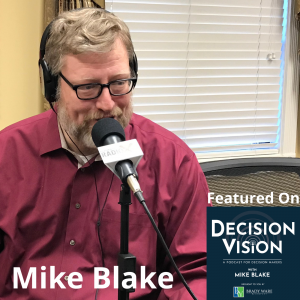
Mike Blake, Brady Ware & Company

Mike Blake, Host of the “Decision Vision” podcast series

Michael Blake is the host of the Decision Vision podcast series and a Director of Brady Ware & Company. Mike specializes in the valuation of intellectual property-driven firms, such as software firms, aerospace firms, and professional services firms, most frequently in the capacity as a transaction advisor, helping clients obtain great outcomes from complex transaction opportunities. He is also a specialist in the appraisal of intellectual properties as stand-alone assets, such as software, trade secrets, and patents.

Mike has been a full-time business appraiser for 13 years with public accounting firms, boutique business appraisal firms, and an owner of his own firm. Prior to that, he spent 8 years in venture capital and investment banking, including transactions in the U.S., Israel, Russia, Ukraine, and Belarus.

LinkedIn | Facebook | Twitter | Instagram

Brady Ware & Company

Brady Ware & Company is a regional full-service accounting and advisory firm which helps businesses and entrepreneurs make visions a reality. Brady Ware services clients nationally from its offices in Alpharetta, GA; Columbus and Dayton, OH; and Richmond, IN. The firm is growth-minded, committed to the regions in which they operate, and most importantly, they make significant investments in their people and service offerings to meet the changing financial needs of those they are privileged to serve. The firm is dedicated to providing results that make a difference for its clients.

Decision Vision Podcast Series

Decision Vision is a podcast covering topics and issues facing small business owners and connecting them with solutions from leading experts. This series is presented by Brady Ware & Company. If you are a decision-maker for a small business, we’d love to hear from you. Contact us at decisionvision@bradyware.com and make sure to listen to every Thursday to the Decision Vision podcast.

Past episodes of Decision Vision can be found at decisionvisionpodcast.com. Decision Vision is produced and broadcast by the North Fulton studio of Business RadioX®.

Connect with Brady Ware & Company:

Website | LinkedIn | Facebook | Twitter | Instagram

TRANSCRIPT

Intro: [00:00:01] Welcome to Decision Vision, a podcast series focusing on critical business decision. Brought to you by Brady Ware & Company. Brady Ware is a regional, full-service, accounting and advisory firm that helps businesses and entrepreneurs make visions a reality.

Mike Blake: [00:00:23] Welcome to Decision Vision, a podcast giving you, the listener, clear vision to make great decisions. In each episode, we discuss the process of decision making on a different topic from the business owners’ or executives’ perspective. We aren’t necessarily telling you what to do, but we can put you in a position to make an informed decision on your own and understand when you might need help along the way.

Mike Blake: [00:00:44] My name is Mike Blake, and I’m your host for today’s program. I’m a director at Brady Ware & Company, a full-service accounting firm based in Dayton, Ohio, with offices in Dayton; Columbus, Ohio; Richmond, Indiana; and Alpharetta, Georgia. My practice specializes in providing fact-based strategic and risk management advice to clients that are buying, selling, or growing the value of companies and intellectual property. Brady Ware is sponsoring this podcast, which is being recorded in Atlanta per social distancing protocols.

Mike Blake: [00:01:12] If you’d like to engage with me on social media with my Chart of the Day and other content, I’m on LinkedIn as myself and @unblakeable on Facebook, Twitter, Clubhouse, and Instagram. If you like this podcast, please subscribe on your favorite podcast aggregator and please consider leaving a review of the podcast as well.

Mike Blake: [00:01:31] Today’s topic is, Should I hire a copywriter? According to statistics published by Real Business – and I have no idea, by the way, how real Real Business is or not, but it sounds good. And it’s on the internet, so what could possibly go wrong? – 59 percent of people would actually avoid buying from a company who made obvious spelling or grammar mistakes in their copy. Which, I can understand. That sort of drives me crazy as well.

Mike Blake: [00:01:56] And I think many firms are faced with a decision as to whether or not they should hire a copywriter because writing has actually taken on a much greater level of importance. I think that it ever has in human history. And this is with all due respect to LinkedIn videos, and YouTube, and everything else, and videos out there, certainly, is an important platform.

Mike Blake: [00:02:25] But there’s so much written content out there and everybody now has connection and access to a global marketplace and a global audience that, you know, I’m old enough where I can remember my first emails were written on a digital emulated VT100 VAX terminal in the bottom of a computer science lab that I had to get special permission to use. And back then, email was pretty easy, right? Nobody is ever going to see it. We didn’t know yet that all caps meant that you were shouting at people. In fact, I think our terminal didn’t even have a caps button. Everything was all caps.

Mike Blake: [00:03:10] And, now, we’re in a world that has exploded where, whether we realize it or not, we’re writing all the time. We don’t do phone calls nearly as much as we do. We text. The only way I can communicate nowadays with my 19 year old son, I try to actually talk to him in a real conversation or have him pick up the phone. Forget it. He’s had a phone for five years. I don’t even think he’s set up his voicemail, so I know that that’s not a winning proposition. But if I send him a text, I’ll get something right back.

Mike Blake: [00:03:41] So, whether it’s texting, whether it’s social media, whether it’s newsletters – and we’ve had an episode not long ago about whether you should have a newsletter – writing is just so endemic now. And I think there’s some real questions as to whether we, as decision makers, should be writing as much as we are. Is it a good use of our time? Are we qualified to write on behalf of our companies our information ourselves?

Mike Blake: [00:04:14] And if you want to exhibit A as to the cautionary tale, look no further than the National Football League. We’re seeing ten-year-old emails that are being dug up, in really only tangentially related legal matter that have so far gotten a National Football League coach fired. And are now having Congress calling to potentially subpoena – I don’t know the legal grounds, I’m no lawyer – basically, years of emails involving the Washington Football Team.

Mike Blake: [00:04:45] And so, writing is just more important than I think, frankly, it’s ever been when you think about it. And because it’s so important, the question really boils down to, can we afford to to leave writing to amateurs like ourselves?

Mike Blake: [00:05:04] And joining us today to help us understand this question and talk about it is Maria Constantine, who’s head of Educational Partnerships and Programs for Mindmaven, and has also been a freelance copywriter for the past, nearly, seven years.

Mike Blake: [00:05:20] Maria is an educator turned marketing generalist with a background in educational technology, and entrepreneurship, and, of course, copywriting. Maria partners with chief executive officers, peer groups, and organizations to host educational workshops on how to free eight or more hours per week through reimagining the role of an executive assistant and how to become a leader people are proud to follow.

Mike Blake: [00:05:45] Mindmaven is an executive coaching firm that has spent the last 12 plus years working with hundreds of leaders at companies like Reddit, Thumbtack, and Roblox, as well as heavy hitters in the tech startup world such as Sequoia Capital, Andreessen Horowitz, Benchmark, and First Round Capital.

Mike Blake: [00:06:03] Mindmaven helps leaders drive greatness by unleashing three key executive superpowers: leverage, intent, and fellowship. With leverage, you’ll free up eight to ten hours of your time each week by fundamentally changing how you work with your chief of staff. With intent, you can become more proactive and highly focused on growth mastering the things that matter most. And with fellowship, you learn how to build an irrationally loyal following of people both within your company and greater network. Maria, welcome to the program.

Maria Constantine: [00:06:33] Thank you, Mike. It’s wonderful to be here.

Mike Blake: [00:06:36] So, let’s start off because it may not be obvious to everybody in the audience. What exactly is a copywriter? And what do people like you and your copywriting persona, what do you guys do?

Maria Constantine: [00:06:51] Yeah. The best way I can describe what a copywriter does is by giving you a little story. So, first of all, a copywriter, I would say, is to words, as a master painter is to paint. They can take the most basic, most regular, even most boring ideas and turn them into something that’s compelling, something that is a masterpiece.

Maria Constantine: [00:07:14] As I was thinking about this podcast, it’s really interesting, actually, just this week, I bought a bed frame from a company that I used a couple of years back, probably about six years ago now. And when I was looking for this bed frame that I just bought this week, I remembered this company from six years ago. Because when I ordered from them the first time, I got this welcome packet along with the bed frame. The bed frame was great, by the way.

Maria Constantine: [00:07:40] But what stuck out to me was the welcome packet, because the copywriter who created this welcome packet invited themselves into my life. They congratulated me on this piece that was turning a house into a home. They made me feel like they were a friend that knew me that was part of this journey with me. It was a little bit cheeky. There were some puns in there. I laughed. I took pictures of it and sent it to my friends.

Maria Constantine: [00:08:08] And this connection that I had with this person I’ll never meet and never know who wrote that is exactly why, six years later, when I was comparing models and I could go with the same company that I went with six years ago or a new company that had a cheaper bed frame – exactly the same, but cheaper – I went with the more expensive bed frame because I love these people. I feel like they’re part of my home buying journey. And that right there is the magic of a copywriter.

Mike Blake: [00:08:38] So, do copywriters only serve marketing needs? Or are there other needs that copywriters serve?

Maria Constantine: [00:08:45] That’s a great question. So, of course, typically they work in marketing but, especially in Mindmaven, we think about copywriting pretty uniquely. We have this role called an engagement manager, which is like an executive assistant, but upgraded, who works to support the office of the CEO, but also can work with a leadership team to actually increase how many opportunities come from the leadership’s network.

Maria Constantine: [00:09:16] So, if you think about it, every time you send an email, you’re building a relationship with someone, right? So, a copywriter can help actually craft that email for you – or with you, rather. We do something where we’ll have the executive dictate an email, so it’s still a genuine expression of what they’re doing, it’s still coming from them. But then, you have an engagement manager who often has some kind of copywriting experience come in and wordsmith that to really bring an extra level of intention and help the exact to really connect with people in a meaningful way. So, that’s another way that a copywriter can support a business.

Maria Constantine: [00:09:56] Also, copywriters can help sales teams. They can help you craft outreach emails or follow up emails. And even social media is under marketing, but it’s not. Sometimes there’s actually an overlap between customer service and social media. That was something I did in one of my jobs where my role was a social media manager. But a lot of times, I just spent a lot of time writing answers to customers. People would ask us questions, I would answer, but then also engage with them to, again, try to form that relationship with them. So, there’s a lot of different ways that a copywriter can support a business.

Mike Blake: [00:10:37] Yeah. You know, it occurred to me that we see, of course, the gaffe email that a company sends out. But I think the most damaging internal communications, not just emails, are ones that are internal because they don’t see the light of day, they aren’t intended to see the light of day. And, therefore, I wonder if sometimes the authors feel a little bit more careless about them. But that internal email or internal communication can be disastrous. It can be demoralizing. It can set you up for liability. It can undermine your brand. The wrong communication can send, like, five very valuable people over to indeed.com looking for their next job, right?

Maria Constantine: [00:11:35] Yeah. Absolutely.

Mike Blake: [00:11:38] And so, you know, it just gets back to at least my point – I want to pat myself in the back – it does go back to the point where we’re just writing so pervasive. And so pervasive, we don’t even think about it. And when you don’t think about it, that’s when you get killed.

Maria Constantine: [00:11:54] Yeah. Yeah. Absolutely. And actually this is the concept of good to great. That’s something that a lot of people are familiar with. One area where leaders can really shine is in their personal communications. When you send an email, you can be the person who sends two liners that are quick, short to the point, not a lot of fluff. Maybe as a follow up email to someone that you’ve met with, you want to just kind of quick grab the things that you both agreed on, you throw it into an email, you send that out.

Maria Constantine: [00:12:27] Or you can spend 30 extra seconds wordsmithing that with the support of a copywriter. And then, you leave this impact on the person you’ve met with where, again, it’s the relationship building. They’re going to feel like, “Wow. I really like this person. I’m walking away from this meeting feeling really good about this.” And a lot of that is because you took 30 extra seconds on the follow up email that you sent them.

Mike Blake: [00:12:55] So, what are some signs that a company could see that would lead them to the conversation or the question, “Hey, maybe you need to think about hiring a copywriter? What are the warning signs?”

Maria Constantine: [00:13:07] Yeah. I would say a big thing is, if your leadership team, if you are the CEO, or in the senior leadership team, and you spend more than 20 minutes wordsmithing one particular thing, I would say that is a sign that you should be hiring a copywriter. Because at the end of the day, that’s opportunity cost. As the leader of a company, you can outsource this, you can outsource copywriting. There are brilliant, talented people who do this. But there’s not a lot of people you can outsource the leadership of your company to. That is your role.

Maria Constantine: [00:13:43] And if your very valuable time is being taken up trying to figure out exactly what to say in an email or even on a newsletter or in a blog, those are things that you can do in a much more effective way while being supported by a copywriter. So, that’s a big thing.

Maria Constantine: [00:14:02] I would say, if you feel some hesitancy around this, I think it’s really common for leaders to feel like they have control over their messaging when they do the copywriting. If you are the one typing the words out, that gives you a sense of control over that, some ownership. And it feels good to have that. But if you feel yourself resisting, that you want to hold on to that for longer, that’s actually a sign. It’s probably time to let that go because that’s not your core objective as the leader.

Maria Constantine: [00:14:36] Again, there are so many other things that you can use your time for. And being able to bring in someone new is going to help you connect with your audience more, because you’re going to get some fresh perspective in there, you’re going to be able to pump out content in a much higher rate. And it’s just going to be better for you to be able to have that support to do so many more things that are really going to push the needle forward.

Mike Blake: [00:15:01] Now, of course, the name of the game with marketing is engagement. It’s one thing to write something. It’s another thing to have somebody actually care about what you wrote and read it. How can a copywriter improve engagement?

Maria Constantine: [00:15:18] Yeah. So, this, again, comes back to relationships. If a copywriter is good at what they do, they are going to give the reader the sense that you have a relationship with them. One of these funny things that we love to think that people are rational. We like to think that we make decisions based on facts and data. But we don’t. No one does. We make decisions based on how we feel, how someone else makes us feel.

Maria Constantine: [00:15:47] An example of this, actually, I subscribe to a lot of different tech newsletters. That’s a big part of our clientele. So, I’m on a bunch of newsletters, but I get busy, so I don’t read very many of them. I’ll admit I can’t keep up with all of them.

Mike Blake: [00:16:02] No, you can’t.

Maria Constantine: [00:16:02] But the one that I do keep up with is TechCrunch. And it’s not because it’s particularly better than the others – maybe some would argue it is – but it’s because the editor is a riot. Every time they write their newsletter, it starts with some personal note from the editor that has me cracking up. It is so fun and I feel like I have this connection with the editor who writes the TechCrunch weekly newsletter. And so, right there is an example of this very talented copywriter is bringing me back because of the relationship that I feel that I have with that writer on the other end of this newsletter.

Mike Blake: [00:16:44] So, it’s a very interesting theme that you’re kind of coming back to, which I hadn’t considered but it makes sense now that you bring it up, which is writing is relationships. If that’s where most of our communication is taking place and the thing about writing is that it is permanent. When we were kids who are always warned that something was going to go into our permanent record. And now that we’re adults, everything we write, it goes into our permanent record, whether we like it or not.

Maria Constantine: [00:17:09] Yeah. Exactly right. And the fun thing is that, unlike in-person communication where maybe there’s other emotions happening, of course, you want to communicate well in-person as well, but there’s not as much time, there’s not as much space to really craft the communication the way you want. In writing, the amazing thing about it, is that, you have as much time as you need. I mean, you have the opportunity, you have that space to really craft. It’s like a gift that you’re giving someone. That communication is an opportunity to make them feel good, to make them feel connected to you, to make them feel good about themselves. Every time you right something to someone else, you have that opportunity.

Mike Blake: [00:17:57] So, I think what we’re learning here is there can be an impression that you might hire a copywriter just because you don’t write well. And there is some of that, right? Not everybody can be a good writer. And I wonder if writing is kind of like driving, we all think we’re better at it than we actually are. But if you hire a copywriter, it’s not necessarily kind of admitting that you think you’re a bad writer. It’s not just for people that struggle with, you know, grammar and vocabulary.

Maria Constantine: [00:18:29] Yeah. Absolutely right. And, actually, I would say that if you have strong copywriting skills, if that’s just a natural skill of yours, it’s actually going to be easier for you to find and really leverage a copywriter. Because one skill that, at least, good copywriters will have is that they’re going to be able to emulate a tone, especially someone with agency background or who’s done freelancing similar to what I’ve done. They need to be able to switch hats really quickly and slip into the tone and the branding of whatever account that they’re working on.

Maria Constantine: [00:19:07] So, that means, if you have a really strong brand, if you have a really strong voice already, your copywriter is going to be able to hit the ground running because they don’t have to start from scratch creating a voice. They can just learn from what you’ve done that you really like. And then, again, increase the amount that they can output.

Mike Blake: [00:19:28] So, I’ve heard an argument – and please tell me if I’m wrong. Although, you’re welcome to tell me if I’m right, if I happen to be – there’s benefit to hiring a copywriter simply to gain some distance from the topic. You talked about, for example, in your answer to the first question about adding excitement. You know, if I’m working, I’ll just cop to this. I’ve been doing business appraisals and strategic advisor for 15 years. It sometimes can be hard to summon up the excitement for one more piece of collateral material, because I’ve been doing it for so long. Somebody who’s encountering it for the first time, I’ve been told, can bring a different energy, a different level of excitement that somebody who’s in the weeds every day isn’t necessarily going to be able to summon. Is that fair?

Maria Constantine: [00:20:21] Yeah. I think that’s totally fair. And thinking about this, you know, in terms of there are different sort of industries where I would say having someone with familiarity is really important. If you have a very technical business, if you have something very technical that you’re trying to communicate – because copywriters, again, you can do that outward facing like marketing copywriting, but you can also do product descriptions, technical instruction books, those kinds of things, all of that can be done by a copywriter.

Maria Constantine: [00:20:55] So, depending on what you’re looking for this copywriter to do, if it’s more technical, of course, having someone in the industry with experience is really essential, really important. But if you’re looking for that marketing spark, if you’re looking for someone to bring an excitement to reinvigorate the brand, and even to see your product from the perspective of an audience member who’s seeing it for the first time, if you think about that, if you’ve been doing this for so long, you have certain blinders because you know what to expect, you know this inside and out.

Maria Constantine: [00:21:35] But someone from the outside is coming at your product, coming at your service, the way your target client would for the first time. They’re going to find the things that make them excited, which is probably going to be similar to what’s going to get your audience excited.

Mike Blake: [00:21:52] So, is there a typical model in that? Let’s narrow this down. We’ll talk about for our audience. Most of our audience is comprised of owners or executives and businesses with, say, $100 million of annual revenue or less. For businesses like that, are they more likely to find it beneficial to hire somebody full-time? Or are they more likely to find a beneficial to outsource it?

Maria Constantine: [00:22:21] Yeah. That’s a great question. So, freelancers are amazing. You can get some incredible work from finding folks on places like Upwork or Fiverr. There’s a lot of talented copywriters out there. One thing that you want to know if you’re going to be doing a freelance position with a copywriter is that, every time you find someone new, every time you find a new freelancer, you are paying them to learn your brand. So, there’s a cost to that.

Maria Constantine: [00:22:51] A really good copywriter can do that quickly. But there is a learning time, where if you give them a deadline and say, “I need something by the end of today,” it might be a stretch for some freelancers where they say, “Well, you just brought me on. I need time to get to know your brand first, to get to know your product first.” If you have someone that’s on your team as a full time copywriter, you should definitely look for someone who can really help you in other areas of marketing as well.

Maria Constantine: [00:23:24] Most people who have in-house copywriters, especially for smaller businesses, they don’t only do copywriting. When I was a full-time marketing specialist, I was a copywriter, a social media manager, and I ran interviews, actually, for our sales and training team. So, they found areas where they could plug me in, where, “All right. You’re good at words. Here are the places where we need someone who’s good at words.”

Maria Constantine: [00:23:49] So, if you’re going to have someone full time, really think big. And when you hire that person, think about where your needs are and look for overlaps. Because there’s, like I said, a lot of copywriters who overlap with funnel building, copywriters who overlap with social media. So many different marketing channels that you can get out of someone who’s a copywriter, if you choose to do that, bring them on board full time.

Mike Blake: [00:24:16] So, if you are going to go the outsourced route – and I suspect many companies will do that if they’re using a copywriter for the first time to sort of try before they buy – where do you find them? Where do they hang out? How do you identify people that are identifying themselves as being capable in that area? How do you find them?

Maria Constantine: [00:24:36] You know, there’s a couple of different ways. Upwork is the obvious one. They’re a huge hub for copywriters. I would say, actually, maybe an unconventional one is Instagram. One thing about Upwork or even Fiverr, Elance, places like that, is that, the copywriter is going to be a little bit mad because part of their pay goes to Upwork, goes to the other platform. So, they have to charge you more, but you’re not actually paying them that much. So, there’s a disconnect there, where it doesn’t feel as good as a copywriter to know I’m worth this number, but I have to give part of that to this platform.

Maria Constantine: [00:25:19] But if you can go directly through Instagram or even Facebook, maybe LinkedIn, I would say Instagram is a big one where more and more copywriters are starting to create their branded profiles on there. I have a couple friends that I follow. A Cup of Copy is one example where she’ll just highlight some incredible freelance copywriters that are out there. I think she now doesn’t do freelance work. But she still will highlight freelancers.

Maria Constantine: [00:25:51] And if you can find someone directly, it’s better for you because you don’t have to pay them as much because they don’t have to bump up their rate to compensate for that charge from Upwork or whatever else. But then, Instagram is a great place to see their portfolio. A good copywriter will know how to market themselves as well and have a lot of great examples for you to look through.

Mike Blake: [00:26:17] Yeah. And that actually brings us back to what you touched on that I want to make sure that I addressed, are there copywriters that are industry specialists that tend to do most of their work in one or two verticals? And if so, is there a benefit to that? Is it worth looking for somebody that already has deep or at least deep-ish industry knowledge is somebody that you select for that role?

Maria Constantine: [00:26:43] Yeah. So, I would say, definitely, if you’re doing a freelance sort of set up, you should look for copywriters who have some experience in the industry where you’re working. The reason for that is, again, it’s going to shorten that learning curve.

Maria Constantine: [00:26:58] I remember I did a freelance arrangement once where I was writing for, it was like a scientific journal about fishing. And, you know, I’ve gone fishing with my dad a couple of times as a kid. But beyond that, my knowledge of fishing, technical tools, or even the type of fish, I had to do a lot of research to be able to talk about this as an expert. So, they were very happy with the product in the end, but they paid me for the research that I did. If you had someone who has a lot of experience in your technical field, then you’re able to pay more just for the actual writing and not so much for that research bit.

Mike Blake: [00:27:43] So, there’s a train of thought and I do think that there’s some value to it that suggests that companies, or individuals, executives, owners, should do as much writing as possible as they can themselves because that’s the only way to capture their authentic self. It’s got to sound like your voice, your hand, your fingers, your keyboard, whatever. How much weight do you place in that argument? How do you strike a balance? Or is it a non-issue? Maybe good copywriters are really good at capturing your voice. That’s a spurious argument. But what’s your take on that?

Maria Constantine: [00:28:27] Yeah. I would say, especially for smaller businesses where your relationship with your customers is a big part of your brand, where they feel like they’re connected with you, they feel like they’re working with you because of the ownership, because they know the owner, there is value in making sure your genius is captured whatever your authentic tone is. But the thing is, you do not have to type it up in order to do that.

Maria Constantine: [00:28:59] So, at Mindmaven, we teach people to use dictations for everything that you possibly can. We actually talk about rather than hiring a copywriter first, we tell people to hire an engagement manager first, that executive assistant plus. And all of our executives, all of our senior leadership team will dictate, whether it’s a blog or an email or anything, anything that you would have typed, you can dictate to your engagement manager. And then, they type it up and publish it for you. So, it’s still your voice, it’s still your authentic experience, and even just your personality will still come through. But you have a copywriter, especially who’s good at editing.

Maria Constantine: [00:29:42] If you’re going to go that direction, if you’re looking for an engagement manager and want someone with a copywriting experience, you look for someone who has some editing experience who really loves the details, very detail-oriented, so that they can polish that for you, so that when it goes out, you’re not worried about grammar mistakes or spelling mistakes. Also, it goes so much faster. You can talk like four times the speed you can type for most of us. And then, you have that ability, again, to leverage a copywriter but still capture your authentic contribution.

Mike Blake: [00:30:17] My question is this, is it reasonable to look for a copywriter that has the capability to write with SEO in mind?

Maria Constantine: [00:30:29] SEO is incredibly important for any business. I would say, you know, if you only are going to hire one person for SEO, if that’s all that you have in your budget, then, yes, your copywriter should have some experience with SEO. What you should know about SEO is that there are very, very technical bits of it that you have the writing side of it, which any copywriter should be able to do. But then, the technical side of SEO, really, it’s not quite fair to expect that from a copywriter. Those are like two very different skills.

Maria Constantine: [00:31:06] So, actually, as an example, here at Mindmaven, we work with an amazing firm called White Hat Ops, and they do our technical side of SEO. But then, our writing team, our copywriting team will implement the insights that we get from our technical SEO support. So, you don’t necessarily have to hire someone who has all of the magical SEO skills because it’s kind of a unicorn. That person doesn’t really exist. Either you have someone who’s an incredibly talented creative writer or you have someone who’s incredibly skilled at the technical side of things.

Maria Constantine: [00:31:41] Just starting with the writing is a great place to start. If you want to go really deep into SEO, it’s worth at least talking to an SEO expert and really considering all the bits that go into really making your website and your content optimized for search engines.

Mike Blake: [00:32:02] Okay. So, Maria, where do copywriters come from? I don’t know that people necessarily grow up saying, “Hey, I want to be a copywriter when I grow up.” I mean, I didn’t say I want to be a business appraiser when I grew up either. It’s not a criticism. It’s just the way it works. Is there a common path that people take to become copywriters?

Maria Constantine: [00:32:28] That’s a great question. I actually love that. It made me think back on my own journey getting into copywriting, and it’s fun. So, for me, personally, I always wanted to be a writer as a kid. But I had two accountants as parents. So, when I told them I wanted to be a writer, then like, “Oh yeah. That’s nice. Who’s going to feed you? Who’s going to pay for the heat in your home when you’re an adult?” Like, “Okay.” So, writing is not a career, I guess, that my parents encouraged. My parents are wonderful and encouraged all my dreams. But, you know, they like to keep me nice and pragmatic too.

Mike Blake: [00:33:04] Some dreams more than others.

Maria Constantine: [00:33:06] Exactly. Especially the dreams that pay the bills, you know? So, I went into teaching. I taught English. I taught writing, creative writing and drama. And that was a really fulfilling way to use my love of writing. But I found pretty quickly that it wasn’t enough. I wanted to do more. And somehow, I don’t even know, I think it was a friend who needed help ghostwriting their dissertation, it was something like that. That was my first freelance project. And, suddenly, I was making better money than I ever had before doing something that I loved.

Maria Constantine: [00:33:43] Freelancing can be tricky because it’s hard to be a full-time job. You’re just constantly spending a lot of time looking for jobs, which isn’t very fun, I’ll admit. So, for my copywriting journey, it’s something I enjoy on the side, but it wasn’t something I wanted to pursue full-time. I think a lot of people who end up in copywriting have a love of human behavior. People who notice things, who watch, who like to tell stories, there’s a lot of different tracks into copywriting. And I guess, I’m really focusing on the more creative copywriters because there are also, like I mentioned, more technical copywriters who will help.

Maria Constantine: [00:34:26] Actually, that dissertation project is a perfect example, a ghostwriter on a very technical dissertation. That would be a copywriter job, but someone with a very specific technical skillset. And they’re probably going to get into it because they’re just in the industry, because they have that expertise and they maybe want to make a little money on the side, they want to give back to this industry that they love. So, there’s a lot of different tracks into copywriting.

Maria Constantine: [00:34:53] I think the creative copywriters tend to be folks who love storytelling in one way or another and want to contribute to that connection that we feel when you read some good copy. Really thinking about how do I move people to action? You know, there’s a lot of power in that. That’s a really exciting thing to be able to inspire people or help people. And that drive, I think, is what is behind at least the best copywriters. I’ll say it that way.

Mike Blake: [00:35:27] An observation that I have is what you’re describing in terms of the mindset of the copyrighter very closely resembles how I’ve heard comedians describe.

Maria Constantine: [00:35:39] Hmm, interesting.

Mike Blake: [00:35:41] Because I mean, they observe the world, and they’re creative, and they have a story that they want to tell. Every comedian comes up with a series of stories that they’re trying to tell. And, you know, I wonder if there’s two sides really to the same coin. And maybe that’s why there are a lot of people who write for comedians that are effectively copywriters.

Maria Constantine: [00:36:04] Yeah. Yeah.

Mike Blake: [00:36:05] Jimmy Fallon doesn’t just show up and write jokes, right? He has a whole team of people that are writing content for him all day. So, I wonder if there’s a common thread there.

Maria Constantine: [00:36:14] Yeah. I think that makes a lot of sense. And we see humor is a huge tool in marketing. If you can get a copywriter who has the ability to write jokes, to write some good humor into your content. The amazing thing about humor is that it’s based in an understanding of the human condition. Humor is only funny because we all get it. We all recognize something in it. And that’s what the best marketing is, too, you read a piece of marketing and you say, “I see myself in that.” Or, “I didn’t even know there were words for this thing I was feeling. Now, I’m compelled to do something about it.” That’s what really good copywriting is at its core.

Mike Blake: [00:36:59] I’ll bet you’re funny. I don’t know you very well, but I’ll bet you can tell a joke or two and hold an audience. I’ll bet you got some funny stories. I’m not going to put you on the spot to say something funny. That’s idiotic. But I can tell that resonates with you because I’ll bet you in a social setting, you’re probably pretty funny. Your friends would say, if I ask them, that you’re funny.

Maria Constantine: [00:37:22] I do like making people laugh. That’s something my poor teachers in school didn’t love it because I was a bit of the class clown. But I worked hard, too, so, it was okay. I balanced it out.

Mike Blake: [00:37:36] So, I think I know the answer to this, but I don’t want to assume. Do copywriters get better over time by working for the same client or with the same company? Is there sort of like a break-in period? Maybe the first couple of pieces are good. But after developing a relationship with the company, the people, the brand, they internalize it, do they get better? So, is this sort of like a break in period or ramping up period with copywriters? Or should you expect them to just be awesome right off the bat?

Maria Constantine: [00:38:10] Yeah. I would say a really good copywriter will show you how good they are within the first week. So, a really good copywriter should be able to slip into your tone, into your brand, and produce excellent content within a week. Now, that being said, I think there’s a lot of benefit to having continuity with a copywriter because, of course, as they get to know you more, as they get to know your audience more, really, it’s almost like they build traditions with your audience, whether that’s through a specific type of spotlight content or maybe it’s the newsletter having a specific style of how you start the newsletter. You need continuity for that.

Maria Constantine: [00:38:59] It’s much harder, I should say. I won’t speak in absolutes there, but it’s much harder to do that if you have a different copywriter doing your newsletter every quarter or so. And building that long term relationship is something that is easier if you have someone there to really go deep with your audience.

Maria Constantine: [00:39:19] One thing really that comes out of that as well is kind of like what I mentioned with the social media, sometimes the copywriter is on the frontline to actually consume feedback from your customers. Maybe because your customers are responding to the emails that they wrote. Maybe it’s because they’re reaching out on social media or engaging in comments and your copywriter is responding. So, they’re really as a forward facing person to your audience. And having them around for a while allows you to have really valuable insights from your audience, but it also allows your copywriter to then write with that insight in mind.

Maria Constantine: [00:40:01] And a lot of what copywriters do is hard to translate or to, like, capture in a best practice. Sometimes it does come down to your copywriter generally feels they have a connection with your audience and so that comes out. There’s a little bit of magic there that’s – so let me backtrack. Because I said they’re going to write good content for you in the first week. They’re going to do great work for you there. But you’re not going to have that magic until they find their legs a little bit more. And that’s maybe a little bit of a difference here if we’re talking about, “Yeah. It’s okay to expect excellent things from them right off the bat.” But if you’re expecting magic right off the bat, give them a little bit of time to actually learn your audience and your product a little bit deeper.

Mike Blake: [00:40:52] We’re talking with Maria Constantine of Mindmaven. And the topic is, Should I hire a copywriter? Have you found that copywriters are more effective or less effective in certain industries? Do they work well in one particular industry versus another? Or can they work well across the board? Is there such a thing as an industry that doesn’t lend itself well to working with copywriters?

Maria Constantine: [00:41:19] No. I would say, if you are a business that sells a product, service, or experience, which is every business I have ever heard of, then you can benefit from a copywriter. Because your copywriter is going to take whatever you are selling, whatever you are giving back to the world, and connect it to your audience. Whether that’s super technical, whether it’s very emotional, relationship driven, your copywriter is your mouthpiece to the world. And getting an audience, getting more attention to what you are creating is the goal of any business. So, there’s no field that wouldn’t benefit from a copywriter.

Maria Constantine: [00:42:01] And like we were talking about earlier, even technical pieces, like your instruction books, sometimes people will kind of use those as a throwaway opportunity. They just get someone to write out something that’s basic, straightforward, no bells or whistles. And maybe that’s okay, you know, it doesn’t have to be shiny and fancy every time. But if you have a copywriter who takes care of any piece of writing that your company puts out, people are going to notice, people are going to feel connected to you.

Mike Blake: [00:42:38] I mentioned at the top of our program, videos are now sort of riding shotgun along with writing in terms of being the preferred communication. And as much as I love podcasts, I mean, podcasts are a little bit behind that. That’s fine. You know, I’m dabbling in video now and I’m predictably terrible at it. But the one thing that strikes me I wanted to ask you was, can copywriters help write scripts for people that are going on video?

Mike Blake: [00:43:14] My wife, has a skill that she doesn’t appreciate how good that is. She can turn the camera on, look in the camera, talk for several minutes and sound intelligent. Me, if I do that, I sound like I’m in the middle of a hostage tape, basically. And so, I’ve got to have a script or it’s going to be beyond terrible. And so, my question is, are copywriters now providing services to help people write scripts for their videos?

Maria Constantine: [00:43:43] Absolutely. Yeah. I did a freelance gig for a company that had only two products, if you will. They created SEO rich websites and they created videos sponsored by cities to attract tourists. That was all they did. And they had two teams of writers for both products. They had a team of writers that did SEO and they had a team of writers who created the scripts. And more than that, they created the storyline of the video. Because at the end of the day, a good video is a storytelling tool.

Maria Constantine: [00:44:18] If your video has a beginning that captures you, a middle that has some kind of conflict that you’re resolving, and an end that wraps up and makes you feel good or like you want to know more, then that video is successful. That is an amazing storytelling tool. So, to have a writer support you on creating scripts for videos makes so much sense.

Maria Constantine: [00:44:42] And even better, I’ve actually done some work in my freelance career where I wrote the storyline of the video. I wrote the copy that actually showed up on screen. And I created the video. I have a little bit of video experience, so I did the whole thing for them. So, you can find copywriters who have a really rich experience in video creation or even editing.

Mike Blake: [00:45:08] So, we’ve learned, ladies and gentlemen, that Maria is a triple threat here.

Maria Constantine: [00:45:13] I don’t know about that. I find problems and I solve them, you know?

Mike Blake: [00:45:19] So, Maria, this has been a great conversation. We’re running out of time and I’m sure there are questions that I might have asked and our listeners would have liked me to ask that we didn’t get two or maybe a question that they would have liked us to go into more depth with. If somebody wants to follow up with you on this conversation, can they? And if so, what’s the best way to contact you?

Maria Constantine: [00:45:39] Absolutely. You can find me on LinkedIn as myself, Maria Constantine. I’m also behind the Mindmaven Twitter, @mindmavenHQ. You can also email me, maria.c@mindmaven.com. And then, you can also always reach out on our website, mindmaven.com.

Mike Blake: [00:46:02] That’s going to wrap it up for today’s program. I’d like to thank Maria Constantine so much for sharing her expertise with us.

Mike Blake: [00:46:09] We’ll be exploring a new topic each week, so please tune in so that when you’re faced with your next business decision, you have clear vision when making it. If you enjoy these podcasts, please consider leaving a review with your favorite podcast aggregator. It helps people find us so that we can help them. If you would like to engage with me on social media with my Chart of the Day and other content, I’m on LinkedIn as myself and @unblakeable on Facebook, Twitter, Clubhouse, and Instagram. Once again, this is Mike Blake. Our sponsor is Brady Ware and Company. And this has been the Decision Vision podcast.


Tagged With: Brady Ware & Company, Content writing, copywriter, copywriting, Decision Vision podcast, Maria Constantine, marketing, Mike Blake, Mindmaven, writing

The R3 Continuum Playbook: Workplace Stress and Burnout

November 4, 2021 by John Ray

Burnout
Minneapolis St. Paul Studio
The R3 Continuum Playbook: Workplace Stress and Burnout
Loading
00:00 /
RSS Feed
Share
Link
Embed

Download file

Burnout

The R3 Continuum Playbook: Workplace Stress and Burnout

Stress and burnout, says Dr. Tyler Arvig, Associate Medical Director at R3 Continuum, affects not just the health of employees but that of the overall organization. With numerous surveys and studies revealing that employee stress and burnout have risen dramatically over the past year, Dr. Arvig discusses signs to watch for and resources that can be employed to address these conditions. The R3 Continuum Playbook is presented by R3 Continuum and is produced by the Minneapolis-St.Paul Studio of Business RadioX®. R3 Continuum is the underwriter of Workplace MVP, the show which celebrates heroes in the workplace.


TRANSCRIPT

Intro: [00:00:00] Broadcasting from the Business RadioX Studios, here is your R3 Continuum Playbook. Brought to you by Workplace MVP sponsor, R3 Continuum, a global leader in workplace behavioral health, crisis, and security solutions.

Tyler Arvig : [00:00:15] Hi. My name is Dr. Tyler Arvig, Associate Medical Director at R3 Continuum. Over the past two years, we’ve seen a dramatic increase in stress and burnout in employees. Stress and burnout, if left unaddressed, can have a significant impact on the mental health and overall wellbeing of our employees and our organization. There are a handful of challenges that surround stress and burnout in the workplace. Stress and burnout affect every level of an organization, from the executive level on down.

Tyler Arvig : [00:00:51] Stress and burnout affect people really on three different levels, personal, professional, and organizational. They are also often multifactorial, which can make finding the root cause a challenge. Employees have been through a lot over the past two years. While it may seem like working from home, practicing social distancing, masking, temperature checks, and the like, are just second nature these days. Many impacts on employees have yet to be fully realized.

Tyler Arvig : [00:01:26] Over time, stress and burnout can slowly erode employees until that level of stress that they’re feeling just becomes normal to them. And, often, when that happens, it’s simply quite unhealthy. In a recent webinar by R3 Continuum, we asked our audience if they felt an increase in stress due to work over the last year. We’ve received over 800 responses, 94 percent of which indicated they felt an increase in stress over the last year due to work. In that same webinar, we asked our audience if they’ve experienced any form of burnout over the last year. Again, those same 800 respondents, 84 percent said they have.

Tyler Arvig : [00:02:19] We can see just based on these numbers – and by the way, there are several other studies out there that show essentially similar findings – the stress and burnout are real and they’re having significant impact on employees in all industries. Having a better understanding of stress and burnout and knowing different ways to address these are critical to maintain the mental health and wellbeing of our employees and also, parenthetically, ourselves.

Tyler Arvig : [00:02:54] There are many different signs or key indicators of stress or burnout. If you noticed early these individuals, what they’re experiencing can be drastically reduced. Having keen observation skills can help identify some of the signs in employees, such as unusual changes in mood, difficulty getting stuff done, increased cynicism, having constant negative thoughts, or a negative attitude, having difficulty concentrating, sleeping too much or not getting enough sleep, concerns about substance use or abuse, and feelings of hopelessness. If you see these things, that may indicate an employee who is struggling with some level of stress or burnout.

Tyler Arvig : [00:03:50] If you do observe the above in your colleagues or you notice them in yourself, it’s important to recognize and to try and address these things. When it comes to supporting coworkers, there are numerous approaches we can take. But one of the most important and also easiest to do is simply to stay in touch. Communication and having a positive attitude is really important. And positive attitude, in particular, can be infectious and help rub off on others.

Tyler Arvig : [00:04:29] Help a coworker take a break from a project, because that’s also going to help them to have a little bit of a break from the stress they might be experiencing. When connecting, it’s important to not ask invasive questions. But if the coworker is beginning to open up or share, share your own experiences with them if you’ve had a similar situation. This will help them to validate the feelings they might be experiencing and to feel less alone or isolated in what they’re experiencing.

Tyler Arvig : [00:05:02] Make time to connect with others also outside of work. Letting that coworker take a break from work interactions and unwind is also a good way to help support them. But be mindful in any of these things to maintain professional boundaries and, certainly, to keep any information that’s shared privately, private.

Tyler Arvig : [00:05:27] As mentioned earlier, stress and burnout can affect anyone in the organization. Whether you’re at an executive level or you’re an intern, self-care needs to be a priority. Take some time to step back from your work and recognize when you’re feeling stressed or when you’re feeling burned out. This is key to being able to be effective at work and also help those around you.

Tyler Arvig : [00:05:54] Leaders often feel stress and burnout and never address it because they’re too busy supporting others. However, if an executive is no longer feeling motivated or a passion for the organization, that will trickle down through the workplace and through the workforce. Ensuring executives know the importance of addressing mental health for themselves and their employees is a really good way to make sure that your organization is supported from the top down.

Tyler Arvig : [00:06:26] There are many resources available, some through your organization and others that are more open sourced. Your workplace will probably have an employee assistance program or EAP. Most EAPs offers several no cost counseling sessions available for situations just like we’re discussing. Your H.R. department may also have resources available. I would recommend that people consider also engage in psychotherapy if they are struggling.

Tyler Arvig : [00:07:03] It is easier than ever to utilize psychotherapy as telehealth has made it possible to engage in therapy with your computer or even your smartphone. You don’t even need to leave your home or your desk. There are also other options such as free apps you can get on your phone or your computer that might help provide some basic skills or tips for managing stress, anxiety, or depression. You could also consider mutual support groups. An example of this that everyone might be aware of are Alcoholics Anonymous or Narcotics Anonymous. But these are groups were, essentially, people that are going through similar situations can help support each other. There’s lots of them out there, so utilize that. They don’t cost anything.

Tyler Arvig : [00:07:51] The point here is, you have many different options and nobody should hesitate to use anything and everything that’s available to them. Understanding the impact that stress and burnout can have on employees and knowing how to address these things properly can and does make a quantifiable difference on the health of your people and your organization.

Tyler Arvig : [00:08:17] R3 Continuum can help your organization support the wellbeing of your employees in many ways, including a service we call Proactive Wellness Outreach. To consult with an expert regarding your unique situation or to learn more about our custom solutions, you can contact us at www.r3c.com or reach out by email at info@r3c.com. Thank you very much.


Show Underwriter

R3 Continuum (R3c) is a global leader in workplace behavioral health and security solutions. R3c helps ensure the psychological and physical safety of organizations and their people in today’s ever-changing and often unpredictable world. Through their continuum of tailored solutions, including evaluations, crisis response, executive optimization, protective services, and more, they help organizations maintain and cultivate a workplace of wellbeing so that their people can thrive. Learn more about R3c at www.r3c.com.

R3 Continuum is the underwriter of Workplace MVP, a show which celebrates the everyday heroes–Workplace Most Valuable Professionals–in human resources, risk management, security, business continuity, and the C-suite who resolutely labor for the well-being of employees in their care, readying the workplace for and planning responses to disruption.

Connect with R3 Continuum:  Website | LinkedIn | Facebook | Twitter

Tagged With: burnout, Dr. Tyler Arvig, employee mental health, R3 Continuum, stress, Workplace MVP, workplace wellness

Culture and the Potential of Your Business, with Bill McDermott, Host of ProfitSense

November 3, 2021 by John Ray

Corporate Culture
North Fulton Studio
Culture and the Potential of Your Business, with Bill McDermott, Host of ProfitSense
Loading
00:00 /
RSS Feed
Share
Link
Embed

Download file

Corporate Culture

Culture and the Potential of Your Business, with Bill McDermott, Host of ProfitSense 

“Culture eats strategy for breakfast” is a frequently quoted line from management guru Peter Drucker. Citing an example from a client’s employee event he attended, ProfitSense host Bill McDermott shared his thoughts on the value of corporate culture to the success of the business. ProfitSense with Bill McDermott is produced and broadcast by the North Fulton Studio of Business RadioX® in Alpharetta.

Bill’s commentary was taken from this episode of ProfitSense.

About ProfitSense and Your Host, Bill McDermott

Bill McDermott
Bill McDermott

ProfitSense with Bill McDermott dives into the stories behind some of Atlanta’s successful businesses and business owners and the professionals that advise them. This show helps local business leaders get the word out about the important work they’re doing to serve their market, their community, and their profession. The show is presented by McDermott Financial Solutions. McDermott Financial helps business owners improve cash flow and profitability, find financing, break through barriers to expansion and financially prepare to exit their business. The show archive can be found at profitsenseradio.com.

Bill McDermott is the Founder and CEO of McDermott Financial Solutions. When business owners want to increase their profitability, they don’t have the expertise to know where to start or what to do. Bill leverages his knowledge and relationships from 32 years as a banker to identify the hurdles getting in the way and create a plan to deliver profitability they never thought possible.

Bill currently serves as Treasurer for the Atlanta Executive Forum and has held previous positions as a board member for the Kennesaw State University Entrepreneurship Center and Gwinnett Habitat for Humanity and Treasurer for CEO NetWeavers. Bill is a graduate of Wake Forest University and he and his wife, Martha have called Atlanta home for over 40 years. Outside of work, Bill enjoys golf, traveling, and gardening.

Connect with Bill on LinkedIn and Twitter and follow McDermott Financial Solutions on LinkedIn.

Tagged With: Bill McDermott, corporate culture, Peter Drucker, ProfitSense, strategy, The Profitability Coach

Mark Hutchins, Silverton Mortgage

November 2, 2021 by John Ray

Silverton Mortgage
North Fulton Business Radio
Mark Hutchins, Silverton Mortgage
Loading
00:00 /
RSS Feed
Share
Link
Embed

Download file

Mark Hutchins

Mark Hutchins, Silverton Mortgage (North Fulton Business Radio, Episode 406)

The residential real estate market has been moving fast, and Mark Hutchins of Silverton Mortgage provided great guidance on this episode on how to address your mortgage needs. Mark joined host John Ray to discuss renting vs. buying, getting prepared to buy, investment properties, and much more. North Fulton Business Radio is broadcast from the North Fulton studio of Business RadioX® inside Renasant Bank in Alpharetta.

Silverton Mortgage

At Silverton, they understand that one size does not fit all. Let them help you find the right loan program for your dream home.

Buying a home can be overwhelming. There are so many financing options, offered by so many different banks, lenders, and brokers. Don’t stress yourself out trying to find the perfect product and perfect rate on your own – that’s what Silverton is here for. Contact them today to start a conversation about which loan option is right for you.

They believe that communication is the key to success, which is why Silverton puts communication at the core of their full-service mortgage lending company. Keeping everything in-house keeps them accountable to you through every step of the transaction.

Company website | LinkedIn | Facebook

Mark Hutchins, Mortgage Loan Originator, Silverton Mortgage

Mark Hutchins
Mark Hutchins, Mortgage Loan Originator, Silverton Mortgage

Mark is a firm believer that offering compassionate care towards service and providing a win-win result for all parties is the best way to do business. He’s passionate about the portfolio of products that he offers and is happy to discuss which option is best for each of his clients. He is dedicated to educating those that he works with on the complex financial issues that they may be facing as well as the options available to best serve their needs. Nothing beats the personal satisfaction that he gets in helping homeowners enjoy the life they deserve.

Mark is honored to work for Silverton Mortgage, one of the most respected firms of its kind in the country, and appreciates how they care for the needs of their clients. As your loan originator, he is more than happy to guide borrowers through a smooth process that a client deserves. His clients receive the education and knowledge to make the best financial decision for their mortgage. He looks forward to serving and helping you experience a better life.

LinkedIn


Questions and Topics Discussed in this Episode

  • Cost of Waiting
  • Renting vs Buying
  • How Student loans are considered in Debt To Income Ratio
  • Investment Properties and Second Homes
  • Advantages offered with tools and reports that you can share with Real Agents, Financial Planners and Borrowers

North Fulton Business Radio is hosted by John Ray, and broadcast and produced from the North Fulton studio of Business RadioX® inside Renasant Bank in Alpharetta. You can find the full archive of shows by following this link. The show is available on all the major podcast apps, including Apple Podcasts, Spotify, Google, Amazon, iHeart Radio, Stitcher, TuneIn, and others.

RenasantBank


Renasant Bank has humble roots, starting in 1904 as a $100,000 bank in a Lee County, Mississippi, bakery. Since then, Renasant has grown to become one of the Southeast’s strongest financial institutions with over $13 billion in assets and more than 190 banking, lending, wealth management and financial services offices in Mississippi, Alabama, Tennessee, Georgia and Florida. All of Renasant’s success stems from each of their banker’s commitment to investing in their communities as a way of better understanding the people they serve. At Renasant Bank, they understand you because they work and live alongside you every day.


Special thanks to A&S Culinary Concepts for their support of this edition of North Fulton Business Radio. A&S Culinary Concepts, based in Johns Creek, is an award-winning culinary studio, celebrated for corporate catering, corporate team building, Big Green Egg Boot Camps, and private group events. They also provide oven-ready, cooked from scratch meals to go they call “Let Us Cook for You.” To see their menus and events, go to their website or call 678-336-9196.

Tagged With: buying a home, home mortgage, John Ray, Mark Hutchins, mortgages, North Fulton Business Radio, residential mortgages, residential real estate, Silverton Mortgage

  • « Previous Page
  • 1
  • …
  • 165
  • 166
  • 167
  • 168
  • 169
  • …
  • 275
  • Next Page »

Business RadioX ® Network


Our Most Recent Episode

CONNECT WITH US

  • Email
  • Facebook
  • LinkedIn
  • Twitter
  • YouTube

Our Mission

We help local business leaders get the word out about the important work they’re doing to serve their market, their community, and their profession.

We support and celebrate business by sharing positive business stories that traditional media ignores. Some media leans left. Some media leans right. We lean business.

Sponsor a Show

Build Relationships and Grow Your Business. Click here for more details.

Partner With Us

Discover More Here

Terms and Conditions
Privacy Policy

Connect with us

Want to keep up with the latest in pro-business news across the network? Follow us on social media for the latest stories!
  • Email
  • Facebook
  • Google+
  • LinkedIn
  • Twitter
  • YouTube

Business RadioX® Headquarters
1000 Abernathy Rd. NE
Building 400, Suite L-10
Sandy Springs, GA 30328

© 2026 Business RadioX ® · Rainmaker Platform

BRXStudioCoversLA

Wait! Don’t Miss an Episode of LA Business Radio

BRXStudioCoversDENVER

Wait! Don’t Miss an Episode of Denver Business Radio

BRXStudioCoversPENSACOLA

Wait! Don’t Miss an Episode of Pensacola Business Radio

BRXStudioCoversBIRMINGHAM

Wait! Don’t Miss an Episode of Birmingham Business Radio

BRXStudioCoversTALLAHASSEE

Wait! Don’t Miss an Episode of Tallahassee Business Radio

BRXStudioCoversRALEIGH

Wait! Don’t Miss an Episode of Raleigh Business Radio

BRXStudioCoversRICHMONDNoWhite

Wait! Don’t Miss an Episode of Richmond Business Radio

BRXStudioCoversNASHVILLENoWhite

Wait! Don’t Miss an Episode of Nashville Business Radio

BRXStudioCoversDETROIT

Wait! Don’t Miss an Episode of Detroit Business Radio

BRXStudioCoversSTLOUIS

Wait! Don’t Miss an Episode of St. Louis Business Radio

BRXStudioCoversCOLUMBUS-small

Wait! Don’t Miss an Episode of Columbus Business Radio

Coachthecoach-08-08

Wait! Don’t Miss an Episode of Coach the Coach

BRXStudioCoversBAYAREA

Wait! Don’t Miss an Episode of Bay Area Business Radio

BRXStudioCoversCHICAGO

Wait! Don’t Miss an Episode of Chicago Business Radio

Wait! Don’t Miss an Episode of Atlanta Business Radio