Business RadioX ®

  • Home
  • Business RadioX ® Communities
    • Southeast
      • Alabama
        • Birmingham
      • Florida
        • Orlando
        • Pensacola
        • South Florida
        • Tampa
        • Tallahassee
      • Georgia
        • Atlanta
        • Cherokee
        • Forsyth
        • Greater Perimeter
        • Gwinnett
        • North Fulton
        • North Georgia
        • Northeast Georgia
        • Rome
        • Savannah
      • Louisiana
        • New Orleans
      • North Carolina
        • Charlotte
        • Raleigh
      • Tennessee
        • Chattanooga
        • Nashville
      • Virginia
        • Richmond
    • South Central
      • Arkansas
        • Northwest Arkansas
    • Midwest
      • Illinois
        • Chicago
      • Michigan
        • Detroit
      • Minnesota
        • Minneapolis St. Paul
      • Missouri
        • St. Louis
      • Ohio
        • Cleveland
        • Columbus
        • Dayton
    • Southwest
      • Arizona
        • Phoenix
        • Tucson
        • Valley
      • Texas
        • Austin
        • Dallas
        • Houston
    • West
      • California
        • Bay Area
        • LA
        • Pasadena
      • Colorado
        • Denver
      • Hawaii
        • Oahu
  • FAQs
  • About Us
    • Our Mission
    • Our Audience
    • Why It Works
    • What People Are Saying
    • BRX in the News
  • Resources
    • BRX Pro Tips
    • B2B Marketing: The 4Rs
    • High Velocity Selling Habits
    • Why Most B2B Media Strategies Fail
    • 9 Reasons To Sponsor A Business RadioX ® Show
  • Partner With Us
  • Veteran Business RadioX ®

Workplace MVP LIVE from SHRM 2021: Donna Fitzgerald, ProSymmetry

September 24, 2021 by John Ray

Donna Fitzgerald
Minneapolis St. Paul Studio
Workplace MVP LIVE from SHRM 2021: Donna Fitzgerald, ProSymmetry
Loading
00:00 /
RSS Feed
Share
Link
Embed

Download file

Donna Fitzgerald

Workplace MVP LIVE from SHRM 2021: Donna Fitzgerald, ProSymmetry

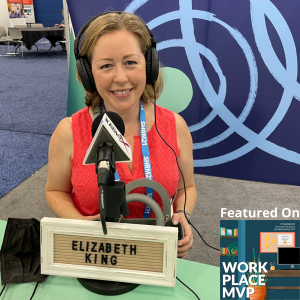
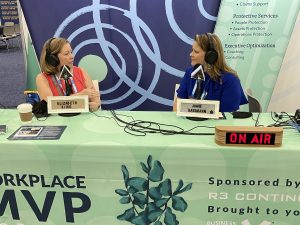
Donna Fitzgerald, Chief People Advocate at ProSymmetry, joined Jamie Gassman at the Workplace MVP Booth at SHRM 2021 to discuss resource management and how to adapt to current conditions to get strategy executed.  Donna presented at the Strategies and Innovation Theater during the conference. Workplace MVP is underwritten and presented by R3 Continuum and produced by the Minneapolis-St.Paul Studio of Business RadioX®.

This show was originally broadcast live from the 2021 SHRM Annual Conference held at the Las Vegas Convention Center in Las Vegas, Nevada.

Donna Fitzgerald, Chief People Advocate, ProSymmetry

Donna Fitzgerald
Donna Fitzgerald, Chief People Advocate, ProSymmetry

After advising PPM clients for ten years at Gartner, Donna’s only goal was to find a company whose mission matched her own. Her future employer of choice had to develop software that solved real-world problems and improved employees’ working life. When Prosymmetry hired her to write a white paper, she knew she’d found the right company. An additional advantage of working for Sean is that Donna now has the work-life balance to enjoy buying beads and making jewelry in her spare time.

LinkedIn


Tempus Resource by ProSymmetry

Tempus Resource has reshaped resource management for the world’s leading companies. Tempus Resource is a purpose-built resource forecasting and capacity planning solution. It is a standalone platform for all resource management and strategic decision-making activities.

Company website

About Workplace MVP

Every day, around the world, organizations of all sizes face disruptive events and situations. Within those workplaces are everyday heroes in human resources, risk management, security, business continuity, and the C-suite. They don’t call themselves heroes though. On the contrary, they simply show up every day, laboring for the well-being of employees in their care, readying the workplace for and planning responses to disruption. This show, Workplace MVP, confers on these heroes the designation they deserve, Workplace MVP (Most Valuable Professionals), and gives them the forum to tell their story. As you hear their experiences, you will learn first-hand, real-life approaches to readying the workplace, responses to crisis situations, and overcoming challenges of disruption. Visit our show archive here.

Workplace MVP Host Jamie Gassmann

Jamie Gassmann, Host, “Workplace MVP”

In addition to serving as the host to the Workplace MVP podcast, Jamie Gassmann is the Director of Marketing at R3 Continuum (R3c). Collectively, she has more than fourteen years of marketing experience. Across her tenure, she has experience working in and with various industries including banking, real estate, retail, crisis management, insurance, business continuity, and more. She holds a Bachelor of Science Degree in Mass Communications with special interest in Advertising and Public Relations and a Master of Business Administration from Paseka School of Business, Minnesota State University.

R3 Continuum

R3 Continuum is a global leader in workplace behavioral health and security solutions. R3c helps ensure the psychological and physical safety of organizations and their people in today’s ever-changing and often unpredictable world. Through their continuum of tailored solutions, including evaluations, crisis response, executive optimization, protective services, and more, they help organizations maintain and cultivate a workplace of wellbeing so that their people can thrive. Learn more about R3c at www.r3c.com.

Company website | LinkedIn | Facebook | Twitter

TRANSCRIPT

Intro: [00:00:04] Broadcasting live from the SHRM 2021 Conference at the Las Vegas Convention Center, it’s time for Workplace MVP. Brought to you by R3 Continuum, a global leader in workplace behavioral health, crisis, and security solutions. Now, here’s your host.

Jamie Gassmann: [00:00:22] Hello, everyone. Jamie Gassmann here, your host of Workplace MVP, and we are broadcasting from the SHRM 2021 Conference here in Las Vegas, Nevada. And with me today is Donna Fitzgerald. She’s Chief People Advocate from ProSymmetry. Now, Donna, I understand you also have another title. Can you share that title with us and talk to us a little bit about how you came into this role?

Donna Fitzgerald: [00:00:49] I’d be delighted to. So, my other title is Chief Product Evangelist. But what I found with the H.R. space is that it just implied I was only interested in pushing a product, and that is – anyone who knows me that’s so not me. Because the reason, after I retired from Gartner, the reason I came back to work was because I really felt that no one was taking a look at the fact that people weren’t liking their jobs. The engagement rate was – disengagement rate was going up, and we’ve got great work and great jobs, but we’ve got to clean up some of the mess so that we can get the right people in the right place at the right time. And, the best way to do that was software. And, software in this case really has changed the world, and people need to stop looking at it as we’re shilling something, but more saying now with SaaS, you could buy something for very inexpensive comparatively, and it’s going to let you do things you’ve never even dreamed to do it.

Jamie Gassmann: [00:01:55] Interesting. So, you came out of retirement.

Donna Fitzgerald: [00:01:58] Out of retirement.

Jamie Gassmann: [00:01:59] And joined ProSymmetry. And so, now, are you, and I understand you’re working with a product, Tempus Resource. So, are you kind of part of the development of that? What’s your role with that?

Donna Fitzgerald: [00:02:11] Well, so, I worked for Gartner for 10 years. I was a research vice president, and one of the things that the team at ProSymmetry wanted was not only my years and years of knowledge in what we could do to help people better get to the right work, how we could make strategy get executed. So, I’m not really working as a product manager, which I’ve done before, but more as a chief advisor and somebody talking to our clients because clients have business questions. And, I spent 10 years on the phone answering those questions at Gartner.

Jamie Gassmann: [00:02:51] Right. Well, there’s so much power in talking with your client directly, right, and hearing what their challenges are and what they’re experiencing. So, now, I understand – so we’re here in the expo and I know you presented at the Strategies and Innovation Theater.

Donna Fitzgerald: [00:03:04] Yes.

Jamie Gassmann: [00:03:04] So, talk to me about what was your presentation on.

Donna Fitzgerald: [00:03:07] So, one of the things, and I think it’s really important for everybody to understand, is if we want to get strategy executed, which is what we have to do in the post-COVID world, we can’t just keep pretending it’s business as usual. We’ve got to keep looking at what’s the right thing to do right now knowing that an event might happen and we’re going to have to change our minds. So, we’ve got to be agile. We’ve got to be flexible. We’ve got the knowledge to do this today, what we need, and this was the important message. We need finance, we need H.R., we need the PMO, and we need resource managers to all get-together and work together to solve the strategy to execution pipeline and not burn people out.

Jamie Gassmann: [00:04:02] Yeah.

Donna Fitzgerald: [00:04:04] H.R. brings something to this. That the typical, you know, let’s just look at projects [inaudible] because it starts reinforcing career growth. It starts making sure that people get reskilled and upskilled, but not in an onerous sense, in a sense where they can say, “God, I really want to do that for a living,” or “I really want to learn that.” And, that’s what gets me excited.

Jamie Gassmann: [00:04:27] Like helping them find their passion almost.

Donna Fitzgerald: [00:04:28] Absolutely.

Jamie Gassmann: [00:04:29] Yeah. Because you get a different caliber out of your employee when you’re putting them in something that they really enjoy.

Donna Fitzgerald: [00:04:37] I’ve been privileged to actually manage quite a few programs and projects in my life, and I’ve had such incredible creative teams. And, now, when I talk to people that they’re burnt out and they’re quitting, and now if you burn out a software developer, they leave the profession. And, we can’t afford that.

Donna Fitzgerald: [00:05:01] So, I’m going, “Why do we want burnout, unhappy people when I worked with people who loved what they did and knocked it out of the park?” And the same caliber of people. So, what’s the difference?

Jamie Gassmann: [00:05:15] Yeah. Interesting. From your perspective, in the conversations you’ve had with clients, in the research you’ve done on this topic, what do you think are some of the reasonings for the burnout? Is it workload? Is it just the balancing of home and life? What’s driving that?

Donna Fitzgerald: [00:05:33] It is the workload, but not for the reason people think.

Jamie Gassmann: [00:05:39] Interesting.

Donna Fitzgerald: [00:05:40] So, I talk to lots of people who say, “Well, you’re on this for 25%, you’re on this for 25%, you’re on that for 15%. And then, you know, I will kind of find something else for you to do because, oh my god, you’re underutilized.” And, the answer is no, you’re being driven to distraction. Because if you have to do brain work and software development and engineering, which is really the areas I focused in, that’s brain work. You kind of can do two things, maybe, in a day if you can break for lunch.

Donna Fitzgerald: [00:06:21] I talked to clients who tell me, “Oh, well, we have an estimate of a thousand hours,” and I go, “Is that a thousand hours of work by one person over a certain period of time?” “No. Maybe, we’ll assign four people.” “Well, do you realize if you assign four people, that’s 1700 hours worth of work mathematically?” And, they go, “Ha? Ha?”

Donna Fitzgerald: [00:06:47] And, yet we could prove it. We have the hard data. We understand the way the brain works. And, yet people keep doing it, and that’s why we get burnout.

Donna Fitzgerald: [00:06:58] So, when I was younger, people worked on a product, they worked on a project, and this is what Agile’s trying to do. But Agile has a hidden problem. That they’re just letting people randomly pull things down off the backlog that may have nothing to do with the same product. They may be helped tickets, they may be this. And, again, you’re not actually working to complete a body of work, and it’s the completion that makes people fulfilled.

Jamie Gassmann: [00:07:35] Oh, absolutely. Like, they’ve conquered something. You know, seeing that product come to conclusion makes a huge difference. You know, if it sits idle or it continues to just, you know, extend out, people tend to feel almost defeated and overwhelmed.

Donna Fitzgerald: [00:07:50] I wouldn’t be able to recite it full, but there’s something from the Tao Te Ching that talks about governance. And, it says that if the emperor does it right and quietly, at the end people will stand up and say we made this.

Jamie Gassmann: [00:08:11] Wow.

Donna Fitzgerald: [00:08:12] And, that to me says why would we take that away from people, especially when it’s cheaper, faster, better?

Jamie Gassmann: [00:08:23] Yeah. Interesting. So, with your product and that strategy, you know, from the kind of almost like that full kind of pipeline or the chain that you were mentioning, you know, talk me through what – how does that help an individual, like a business that’s trying to manage this or get to a better place? What are some of the things they can help them to solve?

Donna Fitzgerald: [00:08:43] Well, fundamentally, the first thing you look at is resource capacity planning. So, I take companies. You tell me what your strategy is. Now, most companies according to H.B.R. have between three and five strategies. So, let’s figure out how much of people’s time, because people are the scarcer resource than money in today’s economy so that’s critically important to understand. So, how much in terms of people hour do you want to put into each of those strategies?

Donna Fitzgerald: [00:09:17] So, when you have the people hours, you can say, “All right. How much work can we do with assigning people to get things done?” We don’t need 15 projects starting in January, all running scattered with people all over. And then, something will go wrong. It’s the first rule of project management. One of those ideas is going to be a disastrously wrong thing, which we all do.

Donna Fitzgerald: [00:09:48] Well, then the house of cards doesn’t work. But if we say we’re going to do this and then we’re going to do this and then we’re going to stop. The reason I fit in the Agile Movement since the beginning, basically the ’90s, and the reason we who advocated Agile were advocating it was because every time you ship software, you change the nature of reality. Fundamentally, software is evolutionary.

Donna Fitzgerald: [00:10:20] So, that says, if you tell me I want something that does a, b, c, and then I want d, e, f, and I tell you, no, I’ll give you a, b, c, then you lived with it for a month or so, and then I’ll give you d, e, f. They’ll never ask you for d, e, f. They will never – they might ask for f. But they’ll ask you for two other things because once they lived with it and see it, they realize, “Oh, well, now that I can do that, this is what’s really important and I didn’t see that.” And, I can see this because I’ve been basically around software for the last 42 years.

Jamie Gassmann: [00:11:00] Wow. Wow.

Jamie Gassmann: [00:11:02] And, this rule has never been violated in my work and career.

Jamie Gassmann: [00:11:06] Interesting. So, you’ve kind of watched it, like, evolve into – now, I mean, obviously, software is, you know, large industry and lots of different types of software, and you’ve got A.I. and all these other technologies coming into play. So, this really could help from that project management perspective in ensuring you’re assigning resources appropriately.

Donna Fitzgerald: [00:11:26] It really does. And, it makes everything a community approach. So, it’s not just, I’m going to dump something on a user group so to speak. It’s we’re all co-creating. Because having started 42 years ago, we were rolling the dice on everything and I knew the people who wrote the general ledger system at the company I worked with and they’re telling me about swapping things in and out of 16K of memory. Now, most of our listeners will have no idea what I’m talking about. No idea at all.

Donna Fitzgerald: [00:12:09] But we were all in constant co-creation. Now, we’ve made a god out of process and it’s can we do it faster, faster, faster? And the answer is no, we probably shouldn’t do it faster, maybe we should just stop doing it.

Jamie Gassmann: [00:12:29] Interesting.

Donna Fitzgerald: [00:12:29] Maybe, it doesn’t make any sense. Maybe, it’s the wrong thing. So, I want to help people get some of the noise out of their system, and really say, “Is this working?”

Donna Fitzgerald: [00:12:46] A friend of mine in Australia talks about outcomes. Look at where you want to be when you think it’s going to work and then slowly, incrementally, walk one step, check is it still working? You may have to go 30 degrees to the left or right. That’s life. Why would we try to pretend it’s anything else? And people are wired to do that. That’s what human beings innately can do.

Jamie Gassmann: [00:13:17] Right. Almost like a pivoting act in a way.

Donna Fitzgerald: [00:13:19] It is.

Jamie Gassmann: [00:13:19] Yeah. It’s kind of, you know, over the last year pivoting has been like our nature.

Donna Fitzgerald: [00:13:25] Well, your point is so fantastic because, “Oh, we can’t support people from work working from home.” “Excuse me, what was the average 30-60 days?”

Jamie Gassmann: [00:13:36] Yeah, right?

Donna Fitzgerald: [00:13:37] How fast can we move? That’s who people really are.

Jamie Gassmann: [00:13:42] Yeah, amazing. Well, from your presentation, you know, it sounds like there was some great content in there. If there were like three takeaways, thinking of how you presented, three things that you wanted that audience to be left with that they take back and kind of either it affirms what they’re doing or it changes their perspective on something, what would those three things be?

Donna Fitzgerald: [00:14:06] Well, I guess one of the things would be that strategy execution isn’t just a process of people working really hard. It’s part of living so that if I’m on a project, I’m there because I’m good at it or I want to get good at it, and I’ll work on something else. We can continuously evolve. If we’re careful, we structure it. We’re constantly checking. Is this what we want?

Donna Fitzgerald: [00:14:44] So, I want people to know that it’s not just a financial work process. I want them to understand all of it has to do with everybody touching it and we should be co-creating it together. I know that’s kind of fuzzy words, especially for an ex-CFO. But I’ve seen it work.

Jamie Gassmann: [00:15:07] Yeah. Well, there’s power in co-creation.

Donna Fitzgerald: [00:15:10] There really is.

Jamie Gassmann: [00:15:10] That collaboration of allowing the different thought processes to come into play.

Donna Fitzgerald: [00:15:15] Well, and I use the word co-creation because I want to always be focusing on outcome. I do not have a, you know, touchy-feely bone in my body. I am really results-driven. We are going to get there or we will know the reason why, and that the reason why may truly exist. Failure is an option if we made a mistake.

Jamie Gassmann: [00:15:42] Right. Very interesting. Well, it sounds like your listeners at your presentation got some great content from you and definitely some food for thought as they leave this conference. Thank you so much for joining us, Donna.

Donna Fitzgerald: [00:15:55] Well, thank you. It’s a pleasure and a privilege.

Jamie Gassmann: [00:15:58] Absolutely. So, if our listeners wanted to get a hold of you and learn a little bit more about the concepts you shared or a little bit more even about Tempus Resource, how would they go about doing that?

Donna Fitzgerald: [00:16:09] Well, probably the easiest way is just to email me at dfitzgerald@prosymmetry.com. And, I always have time. You know, reach out to me on LinkedIn. I’m quite visible there. And, I’m very lucky that our CEO makes sure I have time to answer questions for people. I do spend a lot of time on the phone doing this, so no one should feel they’re imposing. I would be delighted to talk.

Jamie Gassmann: [00:16:39] It’s wonderful. Well, our listeners, I’m sure, will be happy to hear that, especially with the nuggets of great information you left them with today.

Donna Fitzgerald: [00:16:45] Well, thank you. It was a pleasure.

Jamie Gassmann: [00:16:47] Thank you so much.

Jamie Gassmann: [00:16:49] And, for those listening, join us at our booth 4076 and check out the podcast. And, while you’re there, learn a little bit about R3 Continuum, our show sponsor. We’d love to see you. Talk to you then.


Tagged With: Donna Fitzgerald, Jamie Gassmann, ProSymmetry, R3 Continuum, Resource management, Tempus Resource, Workplace MVP

Irritable Bowel Syndrome (IBS)

September 24, 2021 by John Ray

IBS
North Fulton Studio
Irritable Bowel Syndrome (IBS)
Loading
00:00 /
RSS Feed
Share
Link
Embed

Download file

IBS

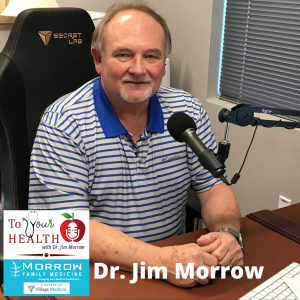
Irritable Bowel Syndrome – Episode 61, To Your Health with Dr. Jim Morrow

On this episode, Dr. Morrow covers Irritable Bowel Syndrome (IBS), its symptoms, and treatments. He also shares a personal story of his wife’s TIA (mini-stroke) experience, which he believes is related to a breakthrough Covid infection. To Your Health is brought to you by Morrow Family Medicine, which brings the care back to healthcare.

About Morrow Family Medicine, A Member of Village Medical

Morrow Family Medicine, a Member of Village Medical, is an award-winning, state-of-the-art family practice with offices in Cumming and Milton, Georgia. The practice combines healthcare information technology with old-fashioned care to provide the type of care that many are in search of today. Two physicians, three physician assistants and two nurse practitioners are supported by a knowledgeable and friendly staff to make your visit to Morrow Family Medicine, A Member of Village Medical one that will remind you of the way healthcare should be.  At Morrow Family Medicine, a Member of Village Medical, we like to say we are “bringing the care back to healthcare!”  The practice has been named the “Best of Forsyth” in Family Medicine in all five years of the award, is a three-time consecutive winner of the “Best of North Atlanta” by readers of Appen Media, and the 2019 winner of “Best of Life” in North Fulton County.

Village Medical offers a comprehensive suite of primary care services including preventative care, treatment for illness and injury, and management of chronic conditions such as diabetes, congestive heart failure, chronic obstructive pulmonary disease (COPD) and kidney disease. Atlanta-area patients can learn more about the practice here.

Dr. Jim Morrow, Morrow Family Medicine, and Host of To Your Health with Dr. Jim Morrow

Covid-19 misconceptionsDr. Jim Morrow is the founder and CEO of Morrow Family Medicine. He has been a trailblazer and evangelist in healthcare information technology, was named Physician IT Leader of the Year by HIMSS, a HIMSS Davies Award Winner, the Cumming-Forsyth Chamber of Commerce Steve Bloom Award Winner as Entrepreneur of the Year and he received a Phoenix Award as Community Leader of the Year from the Metro Atlanta Chamber of Commerce.  He is married to Peggie Morrow and together they founded the Forsyth BYOT Benefit, a charity in Forsyth County to support students in need of technology and devices. They have two Goldendoodles, a gaggle of grandchildren and enjoy life on and around Lake Lanier.

Facebook: https://www.facebook.com/MorrowFamMed/

LinkedIn: https://www.linkedin.com/company/7788088/admin/

Twitter: https://twitter.com/toyourhealthMD

The complete show archive of To Your Health with Dr. Jim Morrow addresses a wide range of health and wellness topics, and can be found at www.toyourhealthradio.com.

Dr. Morrow’s Show Notes

Covid-19 Update

“Check my antibodies” – says nothing about immunity – need a vaccine anyway.

Variants – vaccine works well so far against these new and increasingly important viruses. Previous infection does nothing to prevent infection by these variants.

“The vaccine is not a vaccine, it is gene therapy.”

“I don’t want people to get the vaccine if they live with me because then I can get the virus from them.”

HCQ has been in the news again recently. Some REPORTS, not STUDIES, said that it might help those on a ventilator.  So far, All of the SCIENCE says that it does not stop this virus.

What is Irritable Bowel Syndrome (IBS)?

Irritable bowel syndrome (IBS) is a gastrointestinal (GI) disorder. It describes a group of symptoms that affect your large intestine with no known cause. IBS is common and occurs most often in women. People with a family history of IBS are more likely to have it.

Symptoms of Irritable Bowel Syndrome

Common symptoms of IBS include:

  • Abdominal pain and cramping that usually comes and goes, with relief after a bowel movement
  • Bloating and gas
  • Constipation and/or diarrhea
  • Feeling like you need to have a second bowel movement right after finishing one (often with no results)
  • Mucus in your stool

IBS symptoms vary for each person. You may have some or all of the symptoms listed above. You may even have normal bowel movements some days. Most people have mild symptoms, but some symptoms may be severe enough to affect your daily life.

What causes Irritable Bowel Syndrome?

There is no exact cause of IBS. Doctors believe that a mix of problems with your GI tract can lead to IBS. Health problems that are known to cause or worsen IBS include:

  • A breakdown in how your brain sends signals to your intestines
  • Trouble processing food through your GI tract
  • Abnormal nerves in your GI tract that are more sensitive than normal
  • A bacterial infection in your GI tract
  • An increase or change in bacteria in your small intestine
  • Reactions to certain foods or drinks
  • Mental health issues, such as depression and anxiety
  • Extreme stress

How is Irritable Bowel Syndrome diagnosed?

  • There aren’t any tests that detect IBS. However, your doctor can look for a pattern in your symptoms. Also, your doctor can order tests to rule out other problems. These tests may include a blood test, a stool test, a colonoscopy, or X-rays of your lower GI tract.
  • Your doctor will perform an exam of your abdomen. They will check for bloating, pain, tenderness, or unusual sounds. Your doctor will ask you:
  • If your pain improves or gets worse after a bowel movement
  • How often you have a bowel movement
  • What your bowel movements look like
  • You may be diagnosed with IBS if you’ve had symptoms weekly for 3 months and your symptoms started at least six months ago.

Types of IBS

There are three main types of IBS.

IBS with constipation (IBS-C)

On days with at least one abnormal bowel movement, you have:

  • Hard or lumpy stools at least 25% of the time
  • Loose or watery stools less than 25% of the time

IBS with diarrhea (IBS-D)

On days with at least one abnormal bowel movement, you have:

  • Hard or lumpy stools less than 25% of the time
  • Loose or watery stools at least 25% of the time

Mixed IBS (IBS-M)

On days with at least one abnormal bowel movement, you have:

  • Hard or lumpy stools at least 25% of the time
  • Loose or watery stools at least 25% of the time

Can Irritable Bowel Syndrome be prevented or avoided?

Since there isn’t a single cause for IBS, you can’t prevent or avoid it.

Treatment for Irritable Bowel Syndrome

The best way to treat IBS is to make lifestyle changes. Treatment is different for everyone. You may need to try several options to find the one that works for you. Your doctor will guide you in which options to try. They may suggest you:

Visit with a dietitian for tips on foods that are easy to digest. You may need to avoid caffeine, dairy, some fruits and vegetables, spicy and fatty foods, and foods made with gluten. Gluten foods include cereal, pasta, and processed foods.

  • Eat small meals throughout the day.
  • Increase your fiber a little at a time.
  • Reduce your stress level.
  • Get enough sleep.
  • Exercise regularly.
  • Try meditation or therapy.
  • Take medicines. Your doctor will advise you about which ones may work for your type of IBS.

Living with Irritable Bowel Syndrome

IBS is an ongoing problem. It can subside or flare up, based on your lifestyle. IBS does not require surgery, and it won’t shorten your life. If you have IBS, talk to your doctor about how to manage it. Symptoms often get better with treatment.

Tagged With: Breakthrough Covid Infection, COVID-19, Dr. Jim Morrow, IBS, Irritable Bowel Syndrome, mini-stroke, Morrow Family Medicine, TIA, Village Medical

Alan Rosenbaum, Dream Vacations

September 24, 2021 by John Ray

Alan Rosenbaum
North Fulton Business Radio
Alan Rosenbaum, Dream Vacations
Loading
00:00 /
RSS Feed
Share
Link
Embed

Download file

Alan Rosenbaum

Alan Rosenbaum, Dream Vacations (North Fulton Business Radio, Episode 392)

What’s happening with cruises and cruise travel right now? Are cruises safe? Are resorts a desirable alternative? Veteran travel authority Alan Rosenbaum has the experience needed in an unpredictable travel environment, and he joined host John Ray to answer these questions and much more. North Fulton Business Radio is broadcast from the North Fulton studio of Business RadioX® inside Renasant Bank in Alpharetta.

Dream Vacations

Alan Rosenbaum has been planning vacations since 2003. In 2003, Dream Vacations was known as CruiseOne because virtually all bookings were cruises. However, over the years they added almost everything related to vacations, so in April of 2016, they re-branded to Dream Vacations. In the past, Alan served on the CruiseOne Advisory Board. He has been quoted numerous times in trade publications and he frequently mentors new franchise owners.

Dream Vacations is a travel agency specializing in vacation destinations. This can range from a simple 3-day cruise to a custom tour of the world. Agents book destination weddings, honeymoons, and anniversaries. They also plan for groups of all kinds including celebrations, reunions, and fundraising cruises. Dream Vacations offers company incentive travel for organizations that seek to reward their best performers. Knowing clients can buy a vacation from hundreds of places, the most important aspect of the travel agency is its excellent service.

Company website

Alan Rosenbaum, Vacation Specialist, Dream Vacations

Alan Rosenbaum, Vacation Specialist, Dream Vacations

Originally from New York, Alan is now a resident of Johns Creek, GA after first having established a CruiseOne/Dream Vacation franchise in San Jose, CA.

He is a husband and the father of two grown daughters.  He has enjoyed cruising for over 25 years and I have over 13 years of experience as a Vacation Specialist.

Whether you’re considering a short 3-day getaway or a world tour, Alan looks forward to sharing his excitement and enthusiasm for cruising while providing valuable information and advice.

LinkedIn | Facebook

North Fulton Business Radio is hosted by John Ray, and broadcast and produced from the North Fulton studio of Business RadioX® inside Renasant Bank in Alpharetta. You can find the full archive of shows by following this link. The show is available on all the major podcast apps, including Apple Podcasts, Spotify, Google, Amazon, iHeart Radio, Stitcher, TuneIn, and others.

RenasantBank


Renasant Bank has humble roots, starting in 1904 as a $100,000 bank in a Lee County, Mississippi, bakery. Since then, Renasant has grown to become one of the Southeast’s strongest financial institutions with over $13 billion in assets and more than 190 banking, lending, wealth management and financial services offices in Mississippi, Alabama, Tennessee, Georgia and Florida. All of Renasant’s success stems from each of their banker’s commitment to investing in their communities as a way of better understanding the people they serve. At Renasant Bank, they understand you because they work and live alongside you every day.


Special thanks to A&S Culinary Concepts for their support of this edition of North Fulton Business Radio. A&S Culinary Concepts, based in Johns Creek, is an award-winning culinary studio, celebrated for corporate catering, corporate team building, Big Green Egg Boot Camps, and private group events. They also provide oven ready, cooked from scratch meals to go they call “Let us Cook for You.” To see their menus and events, go to their website or call 678-336-9196.

Tagged With: Alan Rosenbaum, cruise vacations, cruises, customized travel, Dream Vacations, John Ray, North Fulton Business Radio, resorts, travel agent, vacations

What You Need to Know When You Terminate an Employee

September 24, 2021 by John Ray

TerminateEmployeeDLREpisode21Album
Dental Law Radio
What You Need to Know When You Terminate an Employee
Loading
00:00 /
RSS Feed
Share
Link
Embed

Download file

TerminateEmployeeDLREpisode21Album

What You Need to Know When You Terminate an Employee (Dental Law Radio, Episode 21)

In Stuart Oberman’s experience with clients, the biggest problem he sees with employee terminations is the absence of a plan, and more specifically, lack of documentation. In this episode of Dental Law Radio, Stuart outlines what a solid employee termination process should include to avoid the significant long-term costs caused by emotional, seat-of-the-pants actions. Dental Law Radio is underwritten and presented by Oberman Law Firm and produced by the North Fulton studio of Business RadioX®.

TRANSCRIPT

Intro: [00:00:02] Broadcasting from the Business RadioX studios in Atlanta, it’s time for Dental Law Radio. Dental Law Radio is brought to you by Oberman Law Firm, a leading dental-centric law firm, serving dental clients on a local, regional and national basis. Now, here’s your host, Stuart Oberman.

Stuart Oberman: [00:00:25] Hello, everyone, and welcome to Dental Law Radio. Well, this is going to be sort of part two. Last week, we spoke about how to hire an employee and some of the things that you need to include in the new hire package. And I mentioned then that it’s easy to get married; it is tough to get divorced. Well, today, we’re going to get divorced. We’re going to talk about what you need to know when you terminate an employee.

Stuart Oberman: [00:00:57] And we get these calls all the time. What do I need to know? What do I need to do? How do I need to do it? And where are my pitfalls? And I will tell you, your biggest pitfall is not having the documentation upfront, and then not having a plan when you plan to terminate. And in today’s world, firing an employee is complex and challenging. You have a lot of scenarios, wrongful termination, discrimination issues, willful termination, quitting, resigning. So, before you even think about firing an employee and will not take you long to figure out that you need to fire an employee when you make up your mind to do it, there are signs, a lot of times, already there.

Stuart Oberman: [00:01:55] So, again, the process is complex and challenging. And then how to end the termination is often the most difficult part. But I want to take a look at some key steps that you need to look at when you involuntarily terminate. Not a resignation, not those kinds of things, but when you’ve got to make the hard decision, is “I’m cutting you loose. Now, I’m going to make a plan to do it.”

Stuart Oberman: [00:02:23] So, first and foremost, you’ve got to document the process. You have to create a plan. What is your strategy for termination? We’re going to get into that. Who do you communicate the termination to with your key staff members? There are some people in your office you never want to tell you’re terminating someone because that person will find out in 15 minutes. So, you have to understand who and what positions you notify. And then, one thing you have to do is notify your IT administrator or your provider. And we’re going to go into that in a little bit because that is a key process.

Stuart Oberman: [00:03:09] So, documenting the separation of an employment process is very difficult. And I will always say, and I’ve said it in the past, when I talk to the dental schools, talk about things in writing, if it’s not in writing, it never happened; if it was not in writing, it was never a procedure; and if it was not in writing, it was never a processed. So, what happens is when you compile detailed documentation, it shows you followed the company policy through the discipline and termination process, you were already ahead of the game.

Stuart Oberman: [00:03:44] Now, that’s assuming that you have a process. So, if we’re talking about all this, and you don’t have an employee manual or process for terminating, that’s your first step. What does your employee manual say? How detailed is it? If you have an employee manual that has no instructions, it’s 20 pages, I would urge you to shred it. Call us and get you another employee manual because that is a key denominator in this whole process here.

Stuart Oberman: [00:04:14] So, you have to figure out what your effective date of the termination and record it. What day did this happen? I do not want you to rely on text. “Well, we have a text message that says they were fired on August 1st.” No, no, no, no, no, no, no. That’s not going to get it. Did you document the termination? Supporting details. Did you have performance reviews? Did you have a warning and discipline, action or process? Did you provide an official termination letter to the employee, including the date of termination? And did you outline the benefits?

Stuart Oberman: [00:04:58] Now, I’m not talking about a 36-page letter to the employee, but something in your file documenting that they received notice, and here is the separation notice, and then here is what’s going to take place benefit-wise. So, one key area is that when you fire an employee, you got a void. Who’s going to fill that position void? “Well, we’ll get around to it.” You can’t do that. You already got to have a plan in place once that employee is fired. And when you make the plan, you’ve got to outline the process and functions of that employee’s responsibility. Who’s going to take over that? Because statistically, you, as a dental practice owner, spend more time in the chair with the patient contact-wise than any other profession, face to face. You do not have the time to do this as an afterthought.

Stuart Oberman: [00:05:57] So, what happens is that when you terminate, again, you’ve got to figure out what are the key steps that I’m going to talk to my employees about? Do you have an HR reporting process? Who is that person they’re going to talk to? What is the procedure? Do you have a benefits person? Do you have a CFO who they need to talk to?

Stuart Oberman: [00:06:23] One of the most important things I want to mention right now is your IT person, whether they are in-house or whether they are a third party. When you make the decision to terminate an employee, one of the first people you’re going to call or should call and sit down with and talk to is your IT person. You’ve got to outline what access that employee has; what access they will not have; how do you cancel the computer; how do you get their phone systems back to the office, if you will; what is on their cell phone; how do you disable passwords; how do you block access? So many employees in today’s world have access after hours. How do you block that record? How do you determine whether or not that employee has downloaded your confidential information?

Stuart Oberman: [00:07:26] Again, you must have a nondisclosure agreement and a confidentiality agreement, like we discussed in part one of this podcast. How do you delete two phone messages off their phone? Where do you go with the data? That’s absolutely critical. This is one of those important steps that you can do because as soon as you terminate that employee, there are times you’re going to have to do it over the phone. There are some cases, there’s just no way around that. And I will tell you, when that person hangs up on the other end that you’ve terminated, I will tell you, they’re going to go right to their computer, and you need to shut off access immediately.

Stuart Oberman: [00:08:12] Now, what protocols do you follow? Well, how many protocols? You got to have protocols. What’s the separation package look like? Do you have a termination letter? What are the benefits? What’s related paperwork? Who is going to be their contact in HR? Do you want that former employee calling you and asking you for information? Of course not.

Stuart Oberman: [00:08:40] One of the things you’ve got to take a look at also critically from a employment law standpoint is what money do you owe them or bonuses after they are terminated? I hear so many times. “Well, Dr. Smith did some really, really, really bad dental work. I’m going to withhold about $4000 from his pay because I know there’s going to be recalls, redos, remakes.” Wrong. You can not hold money like that.

Stuart Oberman: [00:09:13] Now, if you have an employment contract that states that you can withhold a certain amount of money for a certain period of time, that’s a different scenario versus you’re a lousy employee, you’re going to cause me money after you leave, and I’m just going to withhold money from your paycheck. That will get you in trouble really quick with the Federal and State Department of Labor. So, on that employee’s final paycheck, my strong recommendation is you evaluate the final amounts, and you determine what that final amount is. If you’re going to withhold any type of compensation, you better have a really, really good reason.

Stuart Oberman: [00:10:01] Now, one thing to consider also from a benefits standpoint, does your policy manual say that they’re entitled to unused vacation, sick time, PTO time? What does your manual say? “Well, it doesn’t say anything. I don’t have that information.” That is a very, very poignant sticking point. And when that person retires, all that has to be outlined. You cannot wait to do this, or decide this or make a sort of unrushed decision after they’re terminated. So, before that employee is terminated somehow, someway, you need to make sure you’ve got their updated contact information.

Stuart Oberman: [00:10:51] One thing that absolutely drives me crazy is that employees or doctors, a lot of times will have a — I’ll use the words Gmail accounts, Yahoo accounts, Comcast account, and it’s not to single out any of those companies, but what happens is, is that the employees have their own accounts. And what happens is, also, they change their passwords without telling our doctors or employers on those accounts.

Stuart Oberman: [00:11:27] From an IT standpoint, once that termination takes place, I will tell you point blank, you’re going to lose access to that employee’s email address because they’ve changed the password. And now, you are at their ransom. What’s going to happen if that employee somehow puts the Facebook account in their name? Is there a procedure for that? What does your IT company say? Do you even have an IT company? These are the things that you’ll be long litigating items after the termination process if you do not have it squared away. Now, I would urge you to have an email address that is tied to your website and not separate Gmail accounts. Again, there’s nothing wrong with Gmail accounts, but it is very difficult if everyone has their own separate island in a dental practice or any kind of employment.

Stuart Oberman: [00:12:35] So, you’ve got to start notifying patients that this person is no longer there. And they’re going to ask why, and you’ve got to develop the company policy as to why they are not there, which is very short, sweet, to the point. You never ever give away details, You never tell exactly why. I don’t care what the situation is, but it’s got to be across the company lines.

Stuart Oberman: [00:13:06] So, one of the things we also need to take a look at is keeping employee records. You must have a secure, centralized HR to house the employee records. Never, ever, ever in your lifetime do you have employees that have control of their own personnel files because what’ll happen is when they leave, I will guarantee you that those files are gone. So, do you have backup files? Who has access to your backup files? Are you using iCloud storage? Are these records safe from interruption, natural disasters, fires? Whatever it may be, these are all contingencies. And again, I cannot stress this enough where you have to have total, total strict confidentiality with this documentation as to who the employees who are concerned.

Stuart Oberman: [00:14:11] So, those are just really a couple of things that we want to do as far as the termination process. It is very complex. Do you want to have a severance? That’s a whole another conversation. That’s a whole another day. How much do you want to pay? “Well, I don’t want to pay anything.” I will tell you, there are sometimes where it is cheaper to get rid of employees with a monetary substance and a full release of liability, and a separation notice, depending on their age. It will depend on what kind of document that looks like meets the requirements. But again, it is so much easier to get married than it is divorced, and you’ve got to have these records in order to ensure a smooth transition in the termination process. And it can get rocky, folks. As a firm, we’re on both sides of that fence. We will represent employees, and we will represent employers. So, we get really both sides of that avenue. So, we’ve got a pretty good look as to what should be there and should not be there.

Stuart Oberman: [00:15:19] Well, folks, thank you for joining us today. Two-part series, hiring checklist and what you need to know to terminate employees. Critical steps, you need both. Thank you again. If you need to reach out to us, please feel free to reach out to me at stuart@obermanlaw.com. 770-886-2400. And we will see you soon on the radio.


About Dental Law Radio

Hosted by Stuart Oberman, a nationally recognized authority in dental law, Dental Law Radio covers legal, business, and other operating issues and topics of vital concern to dentists and dental practice owners. The show is produced by the North Fulton studio of Business RadioX® and can be found on all the major podcast apps. The complete show archive is here.

Stuart Oberman, Oberman Law Firm

Oberman Law Firm
Stuart Oberman, host of “Dental Law Radio”

Stuart Oberman is the founder and President of Oberman Law Firm. Mr. Oberman graduated from Urbana University and received his law degree from John Marshall Law School. Mr. Oberman has been practicing law for over 25 years, and before going into private practice, Mr. Oberman was in-house counsel for a Fortune 500 Company. Mr. Oberman is widely regarded as the go-to attorney in the area of Dental Law, which includes DSO formation, corporate business structures, mergers and acquisitions, regulatory compliance, advertising regulations, HIPAA, Compliance, and employment law regulations that affect dental practices.

In addition, Mr. Oberman’s expertise in the health care industry includes advising clients in the complex regulatory landscape as it relates to telehealth and telemedicine, including compliance of corporate structures, third-party reimbursement, contract negotiations, technology, health care fraud and abuse law (Anti-Kickback Statute and the State Law), professional liability risk management, federal and state regulations.

As the long-term care industry evolves, Mr. Oberman has the knowledge and experience to guide clients in the long-term care sector with respect to corporate and regulatory matters, assisted living facilities, continuing care retirement communities (CCRCs). In addition, Mr. Oberman’s practice also focuses on health care facility acquisitions and other changes of ownership, as well as related licensure and Medicare/Medicaid certification matters, CCRC registrations, long-term care/skilled nursing facility management, operating agreements, assisted living licensure matters, and health care joint ventures.

In addition to his expertise in the health care industry, Mr. Oberman has a nationwide practice that focuses on all facets of contractual disputes, including corporate governance, fiduciary duty, trade secrets, unfair competition, covenants not to compete, trademark and copyright infringement, fraud, and deceptive trade practices, and other business-related matters. Mr. Oberman also represents clients throughout the United States in a wide range of practice areas, including mergers & acquisitions, partnership agreements, commercial real estate, entity formation, employment law, commercial leasing, intellectual property, and HIPAA/OSHA compliance.

Mr. Oberman is a national lecturer and has published articles in the U.S. and Canada.

LinkedIn

Oberman Law Firm

Oberman Law Firm has a long history of civic service, noted national, regional, and local clients, and stands among the Southeast’s eminent and fast-growing full-service law firms. Oberman Law Firm’s areas of practice include Business Planning, Commercial & Technology Transactions, Corporate, Employment & Labor, Estate Planning, Health Care, Intellectual Property, Litigation, Privacy & Data Security, and Real Estate.

By meeting their client’s goals and becoming a trusted partner and advocate for our clients, their attorneys are recognized as legal go-getters who provide value-added service. Their attorneys understand that in a rapidly changing legal market, clients have new expectations, constantly evolving choices, and operate in an environment of heightened reputational and commercial risk.

Oberman Law Firm’s strength is its ability to solve complex legal problems by collaborating across borders and practice areas.

Connect with Oberman Law Firm:

Company website | LinkedIn | Twitter

Tagged With: dental practice management, firing employees, Oberman Law, Oberman Law Firm, Stuart Oberman, terminate employee

Decision Vision Episode 135: Should I Create an Email Newsletter? – An Interview with Michael Katz, Blue Penguin Development

September 23, 2021 by John Ray

Miichael Katz
Decision Vision
Decision Vision Episode 135: Should I Create an Email Newsletter? - An Interview with Michael Katz, Blue Penguin Development
Loading
00:00 /
RSS Feed
Share
Link
Embed

Download file

Miichael Katz

Decision Vision Episode 135:  Should I Create an Email Newsletter? – An Interview with Michael Katz, Blue Penguin Development

Do you need an email newsletter? How long should it be? What should you write about? Although written off quite a few times, email is still not dead. Mike Blake’s guest Michael Katz, email newsletter authority with Blue Penguin Development, discusses the strategy of email newsletters, how to make them effective, how to make the most of the content, and much more. Decision Vision is presented by Brady Ware & Company.

Michael Katz, Chief Penguin, Blue Penguin Development

Michael Katz, Chief Penguin, Blue Penguin Development

Blue Penguin Development Inc is a marketing and advertising company based out of Hopkinton, Massachusetts.

An award-winning humorist and former corporate marketer, Blue Penguin founder and Chief Penguin, Michael Katz, specializes in helping professional service firms and solos talk and write about their work in a way that is clear and compelling.

Since launching Blue Penguin in 2000, Michael has been quoted in The Wall Street Journal, The New York Times, Business Week Online, Bloomberg TV, Forbes.com, Inc.com, USA Today, and other national and local media.

He is the author of four books and over the past 20 years has published more than 500 issues of “The Likeable Expert Gazette,” a twice-monthly email newsletter and podcast with 6,000 passionate subscribers in over 40 countries around the world.

Michael has an MBA from Boston University and a BA in Psychology from McGill University in Montreal. He is a past winner of the New England Press Association award for “Best Humor Columnist.”

Company website | LinkedIn

Mike Blake, Brady Ware & Company

Mike Blake, Host of the “Decision Vision” podcast series

Michael Blake is the host of the Decision Vision podcast series and a Director of Brady Ware & Company. Mike specializes in the valuation of intellectual property-driven firms, such as software firms, aerospace firms, and professional services firms, most frequently in the capacity as a transaction advisor, helping clients obtain great outcomes from complex transaction opportunities. He is also a specialist in the appraisal of intellectual properties as stand-alone assets, such as software, trade secrets, and patents.

Mike has been a full-time business appraiser for 13 years with public accounting firms, boutique business appraisal firms, and an owner of his own firm. Prior to that, he spent 8 years in venture capital and investment banking, including transactions in the U.S., Israel, Russia, Ukraine, and Belarus.

LinkedIn | Facebook | Twitter | Instagram

Brady Ware & Company

Brady Ware & Company is a regional full-service accounting and advisory firm which helps businesses and entrepreneurs make visions a reality. Brady Ware services clients nationally from its offices in Alpharetta, GA; Columbus and Dayton, OH; and Richmond, IN. The firm is growth-minded, committed to the regions in which they operate, and most importantly, they make significant investments in their people and service offerings to meet the changing financial needs of those they are privileged to serve. The firm is dedicated to providing results that make a difference for its clients.

Decision Vision Podcast Series

Decision Vision is a podcast covering topics and issues facing small business owners and connecting them with solutions from leading experts. This series is presented by Brady Ware & Company. If you are a decision-maker for a small business, we’d love to hear from you. Contact us at decisionvision@bradyware.com and make sure to listen to every Thursday to the Decision Vision podcast.

Past episodes of Decision Vision can be found at decisionvisionpodcast.com. Decision Vision is produced and broadcast by the North Fulton studio of Business RadioX®.

Connect with Brady Ware & Company:

Website | LinkedIn | Facebook | Twitter | Instagram

TRANSCRIPT

Intro: [00:00:02] Welcome to Decision Vision, a podcast series focusing on critical business decisions. Brought to you by Brady Ware & Company. Brady Ware is a regional full-service accounting and advisory firm that helps businesses and entrepreneurs make visions a reality.

Mike Blake: [00:00:21] Welcome to Decision Vision, a podcast giving you, the listener, clear vision to make great decisions. In each episode, we discuss the process of decision making on a different topic from the business owners’ or executives’ perspective. We aren’t necessarily telling you what to do, but we can put you in a position to make an informed decision on your own and understand when you might need help along the way.

Mike Blake: [00:00:42] My name is Mike Blake, and I’m your host for today’s program. I’m a director at Brady Ware & Company, a full-service accounting firm based in Dayton, Ohio, with offices in Dayton; Columbus, Ohio; Richmond, Indiana; and Alpharetta, Georgia. My practice specializes in providing fact-based, strategic, and risk management advice to clients that are buying, selling, or growing the value of companies and intellectual property. Brady Ware is sponsoring this podcast, which is being recorded in Atlanta per social distancing protocols.

Mike Blake: [00:01:09] If you like to engage with me on social media with my Chart of the Day and other content, I’m on LinkedIn as myself and @unblakeable on Facebook, Twitter, Clubhouse, and Instagram. If you like this podcast, please subscribe on your favorite podcast aggregator and please consider leaving a review of the podcast as well.

Mike Blake: [00:01:27] Our topic today is, Should I create an email newsletter? And in doing this topic, I almost think like what’s old is new again, back to the future, retro, however you want to call it. Email newsletters, I think, have been declared dead more times than your typical cat or Rasputin, take either one.

Mike Blake: [00:01:52] First, it was spam blockers. And the next was social media. Of course, social media was going to obviate the need for email newsletters. And then, of course, everybody told us, if we don’t send people things in the analogue world and handwrite them, then nobody’s ever going to read it. And the list goes on and on.

Mike Blake: [00:02:12] And to coin a phrase from, about, five years ago, “And yet they persist”. And I think they persist for very good reason, is that, they’ve taken all kind of all comers. And in spite of that, in spite of many attempts and ongoing attempts to disrupt that world, email newsletters continue to thrive. And perhaps the best indicator of that is the fact that Atlanta’s own homegrown startup Mailchimp was just bought by Intuit for $12 billion. Mailchimp basically exists to help people and companies publish email newsletters.

Mike Blake: [00:02:53] Now, why does a tax company want a newsletter company? I’m not sure. I was going to say I’m not in that business. But I guess working for a CPA firm, I technically am, but I’m not. And I don’t even do my own taxes although I’m a CPA. And I don’t understand the strategic rationale for that deal or the price that they paid. But, you know, good for Ben Chesnut and his team, they’ve worked hard on that company for a very long time. They certainly deserve to see the fruits of that labor. And that’s a big feather in the cap for those of us who believe in the Atlanta startup ecosystem as I do.

Mike Blake: [00:03:33] And so, you know, I think that this is a topic that requires and I think many of us will benefit from this discussion. And helping us with this is is Michael Katz, who’s an award-winning humorist and former corporate marketer and Founder and Chief Penguin of Blue Penguin. And he specializes in helping professional services firms and solos talk and write about their work in a way that is clear and compelling.

Mike Blake: [00:04:01] Since launching Blue Penguin in 2000, Michael has been quoted in The Wall Street Journal, The New York Times, BusinessWeek Online, Bloomberg TV, Forbes.com, Inc.com, USA Today, and other national and local media. And you can tell that he had nothing to do with my introductory comments. He is the author of four books. And over the past 20 years has published more than 500 issues of The Likeable Expert Gazette, a twice monthly email newsletter and podcast with 6,000 passionate subscribers in over 40 countries around the world.

Mike Blake: [00:04:33] Michael has an MBA from Boston University – I grew up in Boston. A B.A. in Psychology from McGill University in Montreal – home of my favorite actor and yours, William Shatner, or at least birthplace. He is a past winner of the New England Press Association Award for Best Humor Columnists. Michael, welcome to the program.

Michael Katz: [00:04:52] Great to be here. Thanks for having me.

Mike Blake: [00:04:55] So, you know, there’s so many ways to communicate in the written word now with our intended audiences. And I actually think it is helpful, it may sound like the most inane question in the world, but I do think that the definitions have been blurred and it is important. In your mind what makes a newsletter a newsletter? And what separates it from other forms of written – I’m going to say – mass communication. I probably cringe at saying that, but it is sort of a one-to-many kind of communication model. What makes a newsletter a newsletter?

Michael Katz: [00:05:31] Well, I think it is pretty blurry. I mean, I always think of it, it’s just a glorified email sent to more than one person. Maybe the email that Target sends to you telling you you’ve got 30 percent off and the email that your accounting firm sends with useful information, they’re both technically newsletters and people pretty much use them interchangeably. So, you know, the definition really hasn’t gotten any clearer over the years. It sort of depends what business you’re in, but I think it applies when you send it by email to a number of people and generally not personalized beyond, you know, dear name.

Mike Blake: [00:06:12] You know, it’s interesting, even I would not have thought of the Target virtual flyer being a newsletter. But I guess it is, right? And that definition between advertisement, newsletter, blog post, something else, I think, has been blurred. And I guess I’ll follow up with this question, is that distinction even meaningful?

Michael Katz: [00:06:41] I think the distinction is, is this a thing that lands in your inbox or is it somewhere else, social media, video, all that? So, you know, I think as you were saying, Mike, earlier, it’s written and it shows up in your email. And so, that then becomes the question. So, is that still valuable or not? But I think all those things, I suppose, are the same species, email and newsletter.

Mike Blake: [00:07:05] Okay. So, those of us who are listening to this podcast, they may well be hearing newsletter and wondering, “Oh, my gosh. Do I have to basically now become a professional writer? I didn’t like writing five page essays in school. And, now, I got to do something every week or maybe more than that.” Is there an ideal length in your mind for a newsletter? Can newsletters be short? Do they need to be long form? They need be very long form? What’s best practices in determining just how much content goes into a newsletter?

Michael Katz: [00:07:41] Yeah. I always say one word is perfect. However, you have to get over two bars at least, again, in the world that I live in. So, again, I’m not doing the Target 30 percent off. I work exclusively with small professional service firms, financial planners, consultants, recruiters, coaches. So, these are all people who are selling themselves or their small firm, essentially. And so, those kind of newsletters are information-based. They’re not about an event. They’re not click to buy kinds of things, like click here and buy it. They’re really about – and we’ll talk more about it – getting in front of a group of people. So, yes, shorter is better because I can get your stuff sooner.

Michael Katz: [00:08:26] However, two things. One is, you have to tell me something that I will read it and have learned something. So, I’m always saying, you’re looking for me to read it and go, “Oh, there’s something I just learned about accounting, legal, management, consulting, whatever.” The second thing is, I think you want your newsletter to be long enough that you include some of your personal voice story experience. Because if it’s just information, well, I can get information by Googling it.

Michael Katz: [00:08:56] So, if you can say something that includes something useful and enough story – which I know we’ll talk about – then I think that’s good. I would say that for most people then, you’re talking 500 to 800 words to get that in there. But even among my own clients, there’s variations there.

Mike Blake: [00:09:18] So, how do you decide what goes in? And I’ll preface this with kind of my experience with this podcast, and you’ve done a lot more of these things than I have, so God bless you, I don’t know how you do it. But the question I’m asked most frequently is, how do you decide on the topics and how do you kind of keep it fresh? And my answer to them is, “Well, for me, I just keep a running note in every note. And every time something pops in my head, I write it down. And then, if I’m really stuck, I’m not afraid to revisit something if I think somebody else can bring a different voice to the same topic.” How do you decide what goes into your newsletter?

Michael Katz: [00:10:06] So, my point of view is, I’m trying to help my readers not need to hire me, which sounds counterintuitive. But what I mean is that – and this is true for any profession that I’m working with – help them learn not to need you. So, if you took a very simple example, suppose you’re a carpenter. Your newsletter should be about how to use a hammer, how to buy wood, how to climb a ladder. It’s very simple stuff. And, yes, if I got and received and retained a thousand newsletters like that, I suppose I would know as much as my carpenter.

Michael Katz: [00:10:42] But the truth is, you’ll never give away your business with those 500 or 700 word tidbits. But it has to be useful so that I read it like everybody thinks about what do I say to promote my business. Which is fine, that’s why we’re doing it. But your readers don’t care about your business. They are only going to read it, and stay with you, and tell other people about it if they find it useful.

Michael Katz: [00:11:06] So, that’s the sort of basis of it always, you have to match up to the audience that presumably would hire you by giving them something that will make them live their lives better or do their jobs better instead of running out of information. I mean, I’ve written 500 newsletters. I have, like, 30 ideas. So, it’s funny, I mean, I don’t republish them. And, by the way, that’s where stories come in.

Michael Katz: [00:11:30] But I’ll address a similar topic with a slightly different angle or something. Nobody says, “Wait a second. Four years ago in April, you said the same thing.” It’s sort of like, you know, if you have a personal trainer at the gym, the guys told you a thousand times to keep your back straight when you do pushups. You don’t say, “Wait a second. You already told me that.” So, people need repetition anyway. That’s fine.

Michael Katz: [00:11:56] The other thing is, even your most loyal readers will probably read every other one, so it’s fine. You’re trying to be out in front of a particular population over and over again with useful information and some personality because, again, your goal is that they refer you or maybe they hire you. So, it’s sort of easier than you think. I always say, if you know enough to be in a profession, you’ll never run out of content. My longest running client, an attorney, we’ve been doing a newsletter for 18 years and still publishing.

Mike Blake: [00:12:29] You know, you bring up that topic of what’s the likelihood that somebody’s going to remember a topic? I guess that’s right. In fact, I would love it if somebody has actually listened to this podcast with enough intentionality and frequency that they could spot any kind of repetitive material. And, frankly, I think I might actually buy a steak dinner if you sort of organically did that. Because I don’t think I have the kind of following like somebody, a dragon con, who shows up and questions one of the actors like, “In episode 192, how do the physics work when the spaceship went from galaxy to galaxy?” I don’t think I have that kind of following.

Mike Blake: [00:13:09] So, it probably is okay to kind of recycle stuff. And if you put a slant on it, so much the better. But you’re right, the portion of the population that’s going to have encyclopedic recall of all of your newsletters is a pretty small one. And if they are, you’ve probably already got them hooked anyway.

Michael Katz: [00:13:27] Right. I agree.

Mike Blake: [00:13:29] So, I’m going to go off script a little bit because your narrative brings to mind what I think is a really innocent question. And that is, can you recall the most memorable newsletter you either received or published? Either one you’re really proud of, or one you helped somebody publish because I know that’s what you do, or one that you received that maybe you said, “I really got something great out of that newsletter that I still use. I got it ten years ago. I still use that today.”

Michael Katz: [00:14:01] That’s a good question. And my answer is no, but here’s why. Because the value of a newsletter is a cumulative event. It’s like if I said to you, “Can you remember the best work you ever had?” You’re like, “How do I know?” Like, “Oh, yeah. It was like a Tuesday five years ago.” It’s the same thing. And I often have to talk people down from this, even people who are thinking of hiring me to say, “Look. It’s not a Super Bowl ad. You’re not going to publish a newsletter and have your phone ringing off the hook.”

Michael Katz: [00:14:34] And I do always use the exercise metaphor, that, exercising five times, you may as well not do it at all. But without question, if you exercise regularly for six months, you’ll get results. The same thing, it’s an ongoing event where people start to know you. They start to remember what you’re writing about. And then, one day, somebody needs what you’re selling. So, one important thing about a newsletter in its regularity is, it takes timing out of the equation.

Michael Katz: [00:15:04] So, the problem with advertising is you have to keep doing it. Because if you see a car ad today and you just bought a car last week, you have zero interest. Or if you’re planning to buy it in a year, zero interest. So, the reason that car people, for example, have to advertise constantly is because there’s always a slice of the population that’s ready to buy a car. So, they waste a ton of money on everyone else who isn’t.

Michael Katz: [00:15:26] Well, the newsletter, and particularly if you’re a small professional service firm, you don’t have advertising money, this is putting you in front of people over and over again. And so, one day they’re tired of their financial planner, their accountant doesn’t return their phone calls, whatever. They say, “Do you know anybody who could help me with this?” The newsletter acts as that constant prompt in front of them. So, visibility is a big part of what’s going on.

Mike Blake: [00:15:53] I think that’s really smart. And I actually kind of want to pause a little bit on that, because I’ve talked to many people, for example, in the podcast – I don’t have a newsletter. I eventually have to come out with one, but I don’t have one yet. But I think with the podcast it’s the same – I’m frequently asked, “How much business have you gotten out of it?” And my answer is, “Frankly, I have no earthly idea.” Because nobody is going to listen to my podcast and then pick up the phone and say, “Hey, I need you to do an appraisal of my company.” It’s just not going to happen. And podcasts, in particular, really don’t work that way.

Mike Blake: [00:16:32] But it’s the cumulative reminding people that you’re out there, that you have this expertise, you have that service so that it’s much more likely that that need is going to meet availability. And so, it’s about impact. It’s not so much about it’s important and it’s urgent. But there’s a third dimension out there about impact. And when you do a newsletter consistently, I think there’s a very similar philosophical ingredient to it or foundation to it that it’s not about the newsletter that you published today. It’s the aggregate of newsletters that you have published and continue to publish over an extended length of time.

Michael Katz: [00:17:13] Right. In fact, I’d even say, the person who calls you because they heard one podcast is suspect. That’s not a good client. That’s like, “What can I say to a woman in a bar to get her to marry me?” Nothing. Anyone who would say yes is bad. You want someone who’s listened to your podcast for a year. Because, first of all, you’ve screened out all the people who would actually hate you if they hired you. Because they’re like, “I like this guy.” And the people who don’t, go away.

Michael Katz: [00:17:46] Because my entire business is based on my own newsletter. No one ever gets in touch with me who isn’t kind of pre-qualified. So, it’s very effective in that way. And the best clients are the ones who’ve been listening for a while and finally say, “Hey, we’re ready to hire you.” I mean, it’s the easiest sales call you’ll ever get, an inbound call like that.

Mike Blake: [00:18:08] So, as I said in my introduction, newsletters, they’ve been declared dead a lot. And they’re still here and you’re still here. You don’t look dead to me. You don’t sound dead. So, why have they survived? Why do they continue to thrive? And I think they thrive, see if you agree with me. Why do they continue to thrive where there’s so much competition now for our attention?

Michael Katz: [00:18:38] Yeah. Well, you’re right. I mean, it’s so interesting how much it’s changed. So, I started doing newsletters in 2001. And the biggest objection I received from potential clients was that not enough of their clients and customers had email. And, like, blogs came out. That was going to kill it. Then, it was the whole spam thing. I mean, it’s amazing to think that Congress got together and passed a CAN-SPAM Act. That spam was so bad that there was a law passed about it. And then, social media came.

Michael Katz: [00:19:14] And I have to say about, maybe, whatever it was, ten years ago when social media sort of started, I was concerned. Like, you know, I don’t want to be so selling this thing that’s like a dinosaur. And so, paying very close attention what’s the next thing, looking around. And I think a couple of things. One is, nobody is in charge of email.

Michael Katz: [00:19:37] So, the problem with social media – and there have even been some very high profile examples – they can kick you off if they want. They run the whole thing. Like, nobody knows what the algorithm on LinkedIn is or Facebook to get you in front of different people. It’s a secret. So, you could be very popular on LinkedIn, and tomorrow they change the algorithm, and now it drops.

Michael Katz: [00:19:59] So, you don’t own the real estate if you build a business on any of the social media platforms. There’s somebody in between you and the recipient. Email is a completely distributed system. Nobody is in charge of email. So, the only people who decide whether my newsletter is read and opened are the people on the list. So, that’s very powerful.

Michael Katz: [00:20:21] Secondly, it shows up in your inbox. So, it’s funny, sometimes if I’m talking to you a live group, I’ll say, “Okay. Raise your hand if you’ve checked LinkedIn today.” And you get, like, half the group. “Raise your hand if you’ve checked email.” Everybody. So, as much as email is dead, it’s sort of like the day you can sign up for a social media account without an email address, I believe it’s dead. It still is the default in our life. It’s not even do you have email anymore. There’s things you can’t do. I can’t make a doctor’s appointment anymore without an email address. So, even though I’ve been wondering will it die, it still continues to be very compelling.

Michael Katz: [00:21:05] And, again, because my newsletter will sit in your inbox until you delete it, I think that’s also more powerful than a post on LinkedIn, which in the time we’ve been talking, if somebody posted, it’s already gone. You know, it’s pushed down. So, it’s funny, it’s like skinny ties – for no good reason, but if you wait long enough, I guess – I don’t know if something will replace it. But I’ve never found anything that says effective in all the ways we’ve been talking about is email, so still a lot.

Mike Blake: [00:21:39] Yeah. That’s a really interesting description. I hadn’t thought of either of those things. But it’s right to me. Social media, we don’t own the real estate. We don’t control who sees our thing, who sees our content. And we try to read the tea leaves in terms of what’s going to to gather the most, first of all, visibility, and then engagement, which is entirely a different animal. But then, this notion that, in a way, email has become like broadcast television. The way that you described it, I think that’s so smart.

Mike Blake: [00:22:26] And I guess it resonates to me because several years ago we cut the cord. No cable T.V. But we still do subscribe to the Netflix, Hulu. I have no idea if we’re saving money. We’re probably not, if I’m totally honest about it. But one of the the reason we still do that is because you can’t just sort of turn on Netflix and a program appears. You have to be with the modern television model. You have to be intentional about what you want to watch. Unless you do cable and then you can do that. That’s what we want to do.

Mike Blake: [00:23:02] Email is kind of the same thing, right? It’s so ingrained. Like you said, you cannot make a doctor’s appointment, you can’t do almost anything you want to do in life. The phone book has been replaced by email in some regard. And so, if you’re a functional adult in the society, you are actively managing and looking at an email account. And that’s the way in to everybody is through that channel. And I had not thought about that until you raised that before. That’s really interesting and that’s really important.

Michael Katz: [00:23:33] I think it does somewhat depend on the population, too. So, you know, everyone I work with is – I don’t know – 40 or older. Whereas, you know, I have a 22 year old son, I have to text him to tell him to check his email, even though he has an email account. It is possible if you’re talking to that audience – and who knows the sort of next generation that it moves on – at least for now, you know, my people are the middle aged and older, we’re still very much tied to email.

Mike Blake: [00:24:06] Yeah. I’m with you. I’m on the older side of Gen X myself. So, email is going to be my primary conduit. And I have a teenager and I kind of do the same thing. But what he’s finding is that texting amongst themselves and his friends is fine. But for the really important stuff, he misses a lot if he doesn’t check email. For what it’s worth for now, you and I are still controlling the world. In 20 years, it maybe different, but we still rule the world with an iron fist.

Mike Blake: [00:24:39] So, let me switch gears here, and it’s a little bit more the how. So, there are services out there, as you know, where you can send out a newsletter that’s basically canned content. Somebody writes it for you and then you put your name on it, you say that it’s yours. What do you think of those? Is there any value to those in your mind? Is there a value case to a certain kind of customer? Are they really valuable? What’s your view there?

Michael Katz: [00:25:08] I think there’s value there. I mean, again, because the option of not doing that is you’re invisible. So, even if I never open your email, but you show up once a month or whenever, and I, for whatever reason, don’t unsubscribe, at least I know you’re alive. So, that’s better than nothing.

Michael Katz: [00:25:33] There’s a few things missing, though. The problem is, you know, back in the day when it was print emails, and the insurance industry was famous for this, where you could get your photo and your contact information onto something they mailed. Well, back then, it was valuable to have someone give you some information about buying insurance, for example. Today, I can get any piece of information I want on anything in a minute with Google. So, if all you’re sending me is canned information, number one, it’s not unusual in any way. And number two, it’s not even your point of view.

Michael Katz: [00:26:10] So, this sort of funny thing going on, people sign up for your newsletter because they want the information. But what I’m trying to do is get them to know who I am or who my clients are. Because if you’re selling a professional service, the problem is the people who are your prospects and even your clients cannot tell how good you are relative to the other options.

Michael Katz: [00:26:31] It’s like you don’t have the slightest idea how medically capable your own doctor is. You don’t even know where he or she went to medical school. You’re like, “I don’t know.” And if I said, “Do you like your doctor?” So, again, I often will say to an audience, “Raise your hand if you like your doctor.” You get a lot of hands going up. “Keep your hand up if you know where your doctor went to medical school.” Nobody. So, why do you like your doctor then, or your accountant, or your auto mechanic? “I like the way they talk to me. I like their point of view. I like their personality.”

Michael Katz: [00:26:59] It has nothing to do with their capability. Yes, you have to be capable. But everybody who’s worth worrying about is capable. In fact, if you’re in an industry like yours, Mike, that’s where certification is required, CPA, medical school, you know, whatever. It’s actually harder to distinguish yourself because I know as long as I hire a CPA, I got somebody who’s over the bar. So, the differentiator is not capability. Again, you have to be good enough. It’s all this soft, squishy, non-professional business stuff.

Michael Katz: [00:27:35] And so, to me, what a newsletter ought to be is story and personality wrapped around useful information. Because over time, people get to know you. What’s funny is when I write a newsletter, let’s say, for myself, I’ll write about my family just took a trip to Colorado. Nine out of ten of the comments I get relates to someone else who went to Colorado. It’s not about the business thing. If I only wrote a newsletter and just told you about a family trip, you don’t subscribe.

Michael Katz: [00:28:05] But when I wrap this around the useful information, the soft stuff is what they notice. And, ultimately, I think that’s why you hire me versus somebody else or don’t hire me because you don’t like me. But again, I’m happy about that. You’re better off if we wouldn’t get along to go elsewhere.

Michael Katz: [00:28:24] So, it’s a really weird thing, but it’s extremely powerful because that’s really how word of mouth works anyway. People just passing other people around. And the newsletter done this way is just a very scalable way to do this, you know, to network, essentially.

Mike Blake: [00:28:43] And, you know, that’s interesting how you bring the individual voice into that, and I agree with that. And you’re right, it is in the accounting industry very challenging for people to separate themselves. And you ought to be really careful and say I’m the best accountant in the world. That’s a hard position to sustain or quantify. But you can always make yourself different. But you can’t make yourself different unless you’re actually communicating with somebody that they can see how you’re different. And I don’t think it’s all that effective to just say, “Well, I’m different.” You have to lead people to their own conclusion that you’re different by acting differently.

Mike Blake: [00:29:30] So, I want to get to creating a content in a second, but I do want to cover another model for newsletters, which is not a canned service per se, but maybe a newsletter that’s based on curating somebody else’s content. Like, you’re a big reader and you’re doing a service for your readers who don’t have as much time to read and gather information as much as you do. So, you’re going to kind of aggregate information on behalf of somebody else. In your mind, how effective is that kind of newsletter content strategy?

Michael Katz: [00:30:05] So, I think of it as a long a continuum. So, all the way to one side is, I never publish anything. As far as you know, I’m dead. Next step is, here’s a newsletter where it’s got my picture on it and my contact information, but it’s totally candid and I had nothing to do with it. But way better than nothing. I mean, because, I think half the game is showing up.

Michael Katz: [00:30:25] The curated one is one step further because, now, at least you’ve had input into what you decided is important. The downside is, you’re hosting other experts, essentially. So, I don’t know anything about how you think. I don’t know anything about your voice, your story, your personality. I just know, “Okay. He or she said these things matter.” What I want to get to is one step beyond that, which is, this is my point of view.

Michael Katz: [00:30:48] Again, if you’ve been a CPA for 20 years, you know a lot of stuff. And the other thing is people will think, “Oh, so I have to write something that’s never been said before in the world of accounting? I mean, we all have one or two things, maybe, and that’s it.” You got to remember your audience. If I’m a reader of your newsletter, I don’t know anything about accounting. I don’t want to know a lot about accounting. I just want a little insight that goes, “Blah, blah, blah. Here’s what you need to do.” It’s accounting 101. It’s embarrassingly simple.

Michael Katz: [00:31:21] Again, in that carpentry example, how to buy wood. Another carpenter would be like, “Well, no kidding.” But to me, as a homeowner, I don’t know. So, super simple. A little nugget that makes me go, “Oh. Okay. I just learned something. I’ll come back next month.” And, again, if you include that with some personal story, which, by the way, the only unique thing you have in terms of information is your story. Like, nobody can tell the story I told about going to Colorado with my family. I’m the only one on Earth who can do it. Anyone could have told the insight – whatever it was, I don’t really remember – that came with it.

Michael Katz: [00:31:56] So, it’s the more custom, I think, the better. Because, again, you’re trying to not just be known as an accountant. You’re trying to be known as that guy, Mike, that I like. And maybe one day I will hire him because I’m kind of sick of our accounting for whatever reason.

Mike Blake: [00:32:12] So, when I think of newsletters – this probably reveals my age. Again, I’m a Gen Xer. That’s the way it is – I think of newsletters that have maybe three or four articles in them and they have sort of a professional publishing format and so forth. Is that best practices now? Does a newsletter have to talk about three or four different things to kind of be worthy of the name? Or can you send out a newsletter that, in effect, is one message?

Michael Katz: [00:32:46] So, now, we’re getting into stuff where it’s like I don’t think there’s a must be this way or must be that way. As long as you satisfy useful information wrapped inside personality, I think you’re there. Because the other question is, should I make them click to read it or should I put the whole thing in the email? Pluses and minuses on both sides. It’s funny how in the same breath people will say, “Nobody has time to read anything. Should I have five articles?”

Michael Katz: [00:33:15] I mean, I wasn’t kidding when I said one word is the best. Because although I don’t think length equals quality, there’s reality that if your newsletter is too long, I think people stockpile them, which kind of adds up to never read them.

Michael Katz: [00:33:30] I have a friend/client, the only person I’ve ever met who can satisfy the useful information and personality in 300 words. I don’t know how he does it. But his newsletter is so short that when it arrives, I read it right away because I know it’s going to be short.

Michael Katz: [00:33:47] So, I think it’s okay to have the several stories. But, again, my goal isn’t to be a publisher. It’s to generate business. So, I just want to make sure I tick the box of useful and story. And so, I’m inclined towards the main article. There’ll be some tidbits like, “Hey, you know, we just won this award.” Or, you know, again, with my clients, that might be another section. Or I have someone who does, like, a book of the month that she reads, she’s an attorney. But there’s that one main article, and I find that works pretty well and it gets read as a result.

Mike Blake: [00:34:27] So, you talked about – and I agree – that it’s important for a newsletter, if possible, to reveal as much of the voice of the creator of the newsletter as possible. What do you do if you’re not a particularly good writer? Some people are good at math, some people are good at writing, some people want to be good at writing, and others couldn’t care less. Are newsletter just sort of closed off to you? Or is it a massively hard slog if you just don’t fancy yourself as a writer?

Michael Katz: [00:35:04] Okay. So, I’m going to use another exercise analogy.

Mike Blake: [00:35:09] Please.

Michael Katz: [00:35:09] So, like, ten years ago, I had knee surgery. I had my ACL replaced. And afterwards the physical therapist said, “Okay. You’ve got to go to the gym and get on an elliptical machine because you can’t run for a while.” And I never used an elliptical machine but I did belong to a gym. So, I go in there and I looked, and there’s, like, four different kinds of elliptical machines.

Michael Katz: [00:35:31] And so, I go up to the front desk and there’s the guy, and it’s huge muscle guy with just tiny little T-shirt reading a muscle magazine. He doesn’t even look up at me. And I go, “Hey. Which of these elliptical machines is the best one?” And he said what I believe is, like, the most wisdom I’ve ever heard, without looking up, he goes, “Whichever one you’ll stay on the longest.” The reason we have multiple machines is because some people like this one and some people like that one. The point of exercise is more of it too.

Michael Katz: [00:36:05] It’s sort of the same thing that you’re trying to do something you don’t hate. So, I can talk all day about why newsletters are great. But if you’re going to do it yourself without help and you hate writing, you’re not going to do it. So, find something else. Maybe you’re a good talker and so podcasts is better for you. Maybe you’re good on camera and video or social media, whatever. You have to pick marketing tactics that you, at least, can tolerate – the same thing, some people hate running, some people like swimming – or you’ll never do it.

Michael Katz: [00:36:41] Because the rest is really sort of nuance. Is a podcast better than a newsletter? I don’t know. The point is, keep showing up. Keep doing it. I don’t think you have to be a great writer, though, as long as you’re willing to do it. It’s funny, I’ve had so many people over the years say, “I’m a terrible writer.” No one has ever said to me, “I can’t talk to other people. What do I do?” It’s sort of the same thing. This isn’t like you’ve got to be Stephen King here.

Michael Katz: [00:37:08] In fact, I spent a lot of time unteaching people to stop writing like they’re writing marketing. Like, they get into this mode of it’s either a super formal or it’s like, “Hey, dude. Let’s kill it,” and the guy is, like, 60. I think your newsletter – because, again, it is an email – it’s inherently informal. So, your newsletter, I think, should sound like you speaking, as close as that as you can get. And since most people can speak coherently, if you do that, you’re good. Now, you may need an editor because you don’t want it to look unprofessional with punctuation or misused words, but that’s okay.

Michael Katz: [00:37:52] Most of my clients, the arrangement is some people I interviewed them and they never touched a keyboard, that’s fine. But I have other people where after we’ve figured out all this voice and, you know, it’s the design and the Mailchimp set up and all that, every month we talk about, “Okay. What’s the topic going to be?” We’ve already identified a bunch of areas. We go back and forth on, “Well, yeah, I think that sounds like three topics. What if you did this one?”

Michael Katz: [00:38:19] They write the first draft badly. I always say, “I don’t need you to write it well. I just need the raw material. Give me enough information that I can do it.” I don’t do any research. And, by the way, neither do they. Because, again, you don’t need to do accounting research. You could talk forever. And then, I fix it. So, I’m essentially a writer.

Michael Katz: [00:38:40] But as long as they just give me the blah, I then take it and fix it. But, again, whereas there’s other professionals I know who do the whole thing themselves. So, you can do it. But you’ve got to do it. It’s like you can’t go to the gym twice. You’ve got to keep going.

Mike Blake: [00:38:57] Has the advent of mobile devices changed at all how you do, or how you create, or think about newsletters as a medium?

Michael Katz: [00:39:05] Yeah. I mean, you know, when it starts to become a thing – I don’t know – five or six years ago, we had to get rid of the newsletters with the side column, which was sort of the standard, because it has to look good on a phone. And then, there’s this term responsive, meaning your newsletter response to whatever device it’s on. So, the same newsletter will work on a computer or a tablet or a phone. And, you know, the Mailchimps of the world have made that automatic, so you don’t have to worry about it.

Michael Katz: [00:39:35] But half of the world, at least, is opening email on a phone. I don’t know what percent will actually read it there. But you have to make sure you know the font is big enough, that you don’t have graphics that don’t work on a phone, so you just test it. But it’s not a problem, but you certainly have to account for it.

Mike Blake: [00:39:56] So, I want to switch gears here. An important driver of success in a newsletter, I would imagine, is having an audience to send it to. And it seems to me that building an email list – well, I’m getting ahead of myself. I’m sure there are listeners who are listening to this right now that think, “You know what? Newsletter sounds great. I don’t know who I’m going to send it to.” Is there a special order of operations? Or how do you come up with a mailing list? Or are there tips? Do you think about building a mailing list really quickly? And then, how you do that? Any content? I mean, is the newsletter only a game, I guess, for somebody that already has a big mailing list?

Michael Katz: [00:40:46] No. Because, again, I’m working with professional service providers. No. None of those people have mailing lists. But you’re mailing lists are the people you know. I define people you know as, if you call them up, you wouldn’t have to introduce yourself. So, it’s not everybody you went to college with. It’s not the membership list of your professional organization. That’s spam. But it’s the humans on Earth you know. I find like the average middle aged person knows, like, 400 or 500 people. They always say, “Oh, I only know 50”. But now we sit down, it’s your college roommate, it’s your brother-in- law, it’s former clients. We’ll talk about what’s the value of your brother-in-law here?

Michael Katz: [00:41:26] So, people make two mistakes. One is, they just get every email they can get and now they’re seen as a spammer. Don’t do that. The other is they think, “Who might hire me? They only have, like, 15 people.” It’s a word of mouth game. So, the way I get hired as a marketing consultant, yes, sometimes it’s a potential client. But more often than not, you know, four out of five, it’s somebody else. My brother-in-law who reads my newsletter and finally knows what I do for a living after how many years, and a friend.

Michael Katz: [00:41:58] If you think about how word of mouth works, it’s two people sitting in Starbucks and somebody goes, “I’m just so sick of my accountant. He never calls me back, blah, blah, blah.” And then, the other guy goes, “Look at this guy’s newsletter, call him.” What’s funny is when people refer professionals like that, they don’t even necessarily know how the professional works, what they charge, how good they are. If I said, “I need a guitar teacher,” your brain goes, “Who do I know? Call this guy.”

Michael Katz: [00:42:27] So, if you take those 500 people, your brother-in-law, your college roommate, colleagues, more business people, and you’re in front of them every month, talking, whatever it is you do, what happens is they refer you. So, when I start a newsletter with a new client, I’m like, “Give me those people. Again, only people you know.” The first time you publish, out of 500, 50 of those people are going to unsubscribe. And, yes, you’ll get one person maybe.

Michael Katz: [00:42:51] Although, it doesn’t even happen anymore, who’s angry that they’re on the list. It happened ten years ago and when everybody was like, “Spam. Don’t spam me.” Now, for whatever reason, like when was the last time you heard somebody complain about spam? It’s not even a thing anymore. But, now, you’re off and running with your 450 people. And, yes, it’s good to add people because it’s a leaky bucket. Every month, people move or whatever. But you don’t need to, like, aggressively grow your list. In fact, I don’t know a way to do that that isn’t spam.

Michael Katz: [00:43:19] But I practice what I call aggressive opt in. When I meet somebody, I go, “Hey, can I do my list?” And we connect. So, I’m adding onesies, twosies all the time. You will get some people who wandered over to your website and sign up. But not a lot if you’re the average professional person. So, you have to kind of work it intentionally. But what’s amazing is, you only need, like, 500 people you know. Yes, if you’re selling products, you need 50,000 people. If you’re selling professional services, I mean, if I get 20 new clients a year, it’s all I can handle.

Michael Katz: [00:43:54] So, the numbers are small. And, again, it works very well for this population, which is different than if your target needs to do all kinds of stuff like this. It’s really not a list size thing. It’s a quality thing. Quality of the list.

Mike Blake: [00:44:09] Is there an optimal frequency for publishing newsletters?

Michael Katz: [00:44:12] Everyday. I think, again, for a professional service newsletter – once again, just to say – it varies. If you owned a bar, it’s probably once a week on a Thursday afternoon. But in my world, almost everybody I work with, it’s once a month. So, it’s only 12 times a year. And I say only, because it has to be manageable. I publish my newsletter every two weeks, which I think is perfect in terms of effectiveness. But most people can’t sustain that because they have real jobs. Once a month is a nice rhythm to that. It gives you time to get it ready, publish it, and then get some breathing room for a couple of weeks and start again.

Michael Katz: [00:44:57] It’s funny, like, 18 years ago, I would say to people, “Once a month, and your troubles are over.” Now, I say, “The least you can do it, I think, is once a month because there’s so many other things out there that you’ll be invisible if you back up to the default, which is quarterly.” I don’t think that’s enough anymore. But it’s more than enough – well, it’s enough. I mean, again, all my clients do it that way, mostly. And they all regularly, because people share their success stories, like, “Hey, I just got a new client. They read some of my newsletter.” You know, it happens all the time. So, it’s a good pace.

Mike Blake: [00:45:30] So, we’ve talked a little bit about, in effect, a long tail of newsletters and how you measure performance. But it also seems to me that one of the benefits of newsletters is that, unlike podcasts, for example, there’s a lot of data out there that can give you insight in terms of who’s opening it and who’s reading it, that sort of thing. Are those metrics that you follow? Do they matter to you? And if so, what do you really pay attention to? What do you use? And maybe what’s overhyped too?

Michael Katz: [00:46:02] Well, I think newsletter data is overhyped, because the only thing you can measure is opens and clicks and bounces. So, because that’s the only thing you can measure, that’s what we measure. But the truth is, if I’m not selling sneakers or something, what’s the difference how many clicks there were? It doesn’t matter. What matters is, has anyone ever said, “I called you because of your newsletter”? And I’d say even there, yes, you get these direct connects, which are great. I love when a client tells me that or I get that. My favorite call is somebody goes, “Hi. We’ve been reading your newsletter for two years and want to talk to you.” That’s a client coming up right there.

Michael Katz: [00:46:47] But people like to measure stuff. The thing is, with opens is, first of all, it’s inaccurate in many ways. And, by the way, Apple just made a change to their privacy policy. So, every Apple device is going to look like it opened your newsletter, so everybody is going to become even more irrelevant. But we’re not in a click to buy world. We’re in a relationship building world. So, it’s almost like if you went to a networking event and measured how many hands you shook, it kind of relates to did you make your way around the room. But it’s not really what you’re measuring.

Michael Katz: [00:47:21] So, although I do provide data to my clients, and people ask about it often or usually before they hire me, I’m not even sure they even look at it after they’re up and running. There’s a certain leap of faith, though, because it’s relationship building. It’s hard to connect A to B.

Michael Katz: [00:47:40] Part of the reason I work only with small firms now – I used to work with big companies – is because I got tired of having to defend it. Because if you’re the marketing guy in a big company – because I used to be – you got to defend everything you spent to the CFO. If you owned the business, I don’t need to explain to you the value of relationship building. So, I’d much rather work with someone who goes, “Yeah, I get it.”

Mike Blake: [00:48:03] So, we’re talking with Michael Katz. And the topic is, Should I create an email newsletter? Does the time of day that you send an email newsletter out matter?

Michael Katz: [00:48:19] Not anymore. I mean, back in the day when we all closed our computers at 5:00 on Friday and didn’t look at them until Monday morning, I think so. But it’s very much a 7 by 24 thing now. I try and avoid the times people are in heavy delete mode. So, even though it’s 7/24, people do sleep. So, you wouldn’t want to send a newsletter overnight.

Michael Katz: [00:48:40] Like, my wife wakes up, reaches for her phone, and starts deleting. She’s trying to clear the day so when she gets in front of her desk, she’s got less stuff. You don’t want to be in that pile because the bar is higher. I also avoid Mondays, because even though, yes, it’s 7/24, we do sort of slow down.

Michael Katz: [00:48:57] So, to me, a newsletter, any time between, like, 9:00 in the morning or 8:00 in the morning, I try to do in the morning rather than in the afternoon. But I have no data for that. And then, you know, Tuesday through Friday, again, for a business newsletter. But I have never found a difference in any measurable way that says, you know, middle of the week, middle of the day is better. But this kind of stuff, I don’t think matters.

Mike Blake: [00:49:26] One piece of advice you hear pretty frequently when engaging in digital marketing is to reuse that content if you can. If you’ve got a newsletter article, make it into a YouTube video, podcast, whatever, do you – no pun intended – subscribe to that theory? Or do you think that content needs to be more kind of siloed?

Michael Katz: [00:49:49] I totally agree. In fact, the best thing that happened to email newsletters is social media. I mean, when I first started doing a newsletter, you’d send the thing out and then it evaporated, it was email. So, if you subscribed to my newsletter 30 seconds after I sent it out, not only did you not get that one, you didn’t get any of the other ones because it was in the days before WordPress, where you could easily put the thing on your website. So, initially ,it was just email, send it, gone.

Michael Katz: [00:50:18] Then, the blog is invented. Now, you could send it, but also post it on your website, same content, though. But the nice thing is it now lives on your website, Google likes it, people can check it out after the fact. So, that was the state of the world for another five or six years.

Michael Katz: [00:50:34] Now, in social media, for example, with my newsletter. I put it on my website before I send it, now it’s a blog. Then, I send it, then I record it, now it’s a podcast. I don’t interview people like you’re doing, I just record it. But there’s a lot of sight impaired people, people who prefer to listen. What do I care? It adds 30 minutes to the process. So, now, I have a podcast. It’s on my website. It’s on iTunes. Then, I take it and I chop up little pieces of it.

Michael Katz: [00:50:59] And for the next year, I cycle it through my social media – which, for me, is almost entirely LinkedIn – with all my other newsletters. And then, it expires in a year. It’s just a little bit of a segment of it, an image, and I link it back to the thing on my website. So, I’m getting people who missed the first one. I mean, even your best readers, you know, if you’re open rate is north of 35 percent, you’re doing well. So, that means two out of three people don’t read each one at best. So, they see it on social media. I published a book, it was just 29 slightly changed newsletters.

Michael Katz: [00:51:38] So, it’s great. The hard part is writing it once. Then, how many different ways can you just spray this around over and over again? And, yes, I suppose – as I was joking earlier – there are some people who are like, “Hey, wait a second. I read this before.” But most people don’t. And this way you get way more mileage for your hard work of writing it once.

Mike Blake: [00:52:01] Michael, this has been a great conversation. We’re running out of time and I want to be respectful of yours. There are probably questions that we didn’t cover that somebody would have asked or didn’t go as deeply as somebody would have liked. If someone wants to contact you for more information about this topic, can they do so? And if so, what’s the best way to do that?

Michael Katz: [00:52:19] My website is just michaelkatz.com, and they can subscribe to my newsletter or contact me there.

Mike Blake: [00:52:27] Well, great. That’s going to wrap it up for today’s program. I’d like to thank Michael Katz so much for sharing his expertise with us.

Mike Blake: [00:52:35] We’ll be exploring a new topic each week, so please tune in so that when you’re faced with your next business decision, you have clear vision when making it. If you enjoy these podcasts, please consider leaving a review with your favorite podcast aggregator. It helps people find us that we can help them. If you’d like to engage with me on social media, with my Chart of the Day and other content, I’m on, LinkedIn as myself and @unblakeable on Facebook, Twitter, Clubhouse, and Instagram. Once again, this is Mike Blake. Our sponsor is Brady Ware & Company. And this has been the Decision Vision podcast.


Tagged With: Blue Penguin Development, Brady Ware & Company, Decision Vision podcast, email marketing, email newsletter, marketing, Michael Katz, Mike Blake, professional services marketing

Jim Barnish, Orchid Black

September 22, 2021 by John Ray

Orchid Black
Business Leaders Radio
Jim Barnish, Orchid Black
Loading
00:00 /
RSS Feed
Share
Link
Embed

Download file

Orchid Black

Jim Barnish, Orchid Black

High-growth technology firms often experience a plateau in their growth, and that’s where Jim Barnish and the Orchid Black team come in. As Jim discussed with host John Ray, Orchid Black helps technology companies get “unstuck.” Their work turns high-level strategic objectives into actionable plans which produce demonstrable and significant increases in company valuations, examples of which Jim shared. Business Leaders Radio is produced virtually from the Business RadioX® studios in Atlanta.

Orchid Black

Orchid Black partners with tech-forward companies to build smarter, better, game-changing businesses. Orchid Black ensures clients hit bigger milestones and see greater returns faster. You could say we’ve cracked the code.

Human capital is their greatest asset.

Their differentiator is their team. Behind Orchid Black’s customized assessments, strategy and effective execution is its people. They are skilled problem solvers, operators, and entrepreneurs. They get it.

They use their collective business intellect, insights, and experience to interpret client company data and give it insight. Then, with this knowledge, their operators clear a path to alignment, healthy growth, and results-driven success.

Orchid Black’s formula for success starts with their Team who combines Data and Insights in their Value Creation Assessment. Learn more at www.orchid.black.

Company website | LinkedIn

Jim Barnish, Co-founding Managing Partner, Orchid Black

Jim Barnish, Co-founding Managing Partner, Orchid Black

Jim is a strategic change leader with over 15 years of leadership experience in global and integrated operations, M&A, and strategic go-to-market planning. Drawing on deep operational and investment experience at startup and scale-up businesses, he has created and curated a collection of proven, data-driven processes and methodologies to help companies build scalable and fundable VC-ready solutions—accelerating organic growth.

LinkedIn


Business Leaders Radio is hosted by John Ray and produced virtually from the North Fulton studio of Business RadioX® in Alpharetta.  The show can be found on all the major podcast apps and a full archive can be found here.

Renasant Bank has humble roots, starting in 1904 as a $100,000 bank in a Lee County, Mississippi, bakery. Since then, Renasant has grown to become one of the Southeast’s strongest financial institutions with over $13 billion in assets and more than 190 banking, lending, wealth management and financial services offices in Mississippi, Alabama, Tennessee, Georgia and Florida. All of Renasant’s success stems from each of their banker’s commitment to investing in their communities as a way of better understanding the people they serve. At Renasant Bank, they understand you because they work and live alongside you every day.

Tagged With: Business Leaders Radio, high growth, High-Tech, Jim Barnish, John Ray, Orchid Black, strategic planning, technology companies

Workplace MVP LIVE from SHRM 2021: Josh Rock, Nuss Truck Group, and Jessica Miller-Merrell, Workology

September 22, 2021 by John Ray

Josh Rock
Minneapolis St. Paul Studio
Workplace MVP LIVE from SHRM 2021: Josh Rock, Nuss Truck Group, and Jessica Miller-Merrell, Workology
Loading
00:00 /
RSS Feed
Share
Link
Embed

Download file

Josh Rock

Workplace MVP LIVE from SHRM 2021:  Josh Rock, Nuss Truck Group, and Jessica Miller-Merrell, Workology

Josh Rock, Talent Acquisition Manager at Nuss Truck Group, and Jessica Miller-Merrell, CEO of Workology, had a lively conversation with host Jamie Gassmann about connecting with talent, going where the talent is, global HR issues as the workforce is remote, the Workology podcast, and much more. Workplace MVP is underwritten and presented by R3 Continuum and produced by the Minneapolis-St.Paul Studio of Business RadioX®.

This show was originally broadcast live from the 2021 SHRM Annual Conference held at the Las Vegas Convention Center in Las Vegas, Nevada.

Josh Rock, Talent Acquisition Manager at Nuss Truck Group Inc.

Josh Rock, Talent Acquisition Manager at Nuss Truck Group Inc.

After nearly a decade in recruiting with healthcare companies, Josh Rock moved the Nuss Truck Group as their Talent Acquisition Manager.

Josh holds a degree from the University of Minnesota-Duluth and is an active alum. He is the recipient of the 2001 Sieur du Luth Award Winner, given for the highest level of involvement and service to the university community.

LinkedIn | Twitter

Nuss Truck Group

With eight locations in the midwest, Nuss Truck & Equipment is proud to carry the best lines of trucks, trailers, and construction equipment. Their sales and service teams are highly trained to deliver and maintain the right truck or machine for your application to ensure maximum productivity and efficiency. You and your business can rely on Nuss.

Company website | LinkedIn

Jessica Miller-Merrell, SHRM-SCP, SPHR, CEO & Founder, Workology

Jessica Miller-Merrell, SHRM-SCP, SPHR, CEO & Founder, Workology

Jessica Miller-Merrell is the Founder of Workology, a workplace resource for HR, recruiting professionals and business leaders. The site was listed twice as a top 75 career resource by Forbes Magazine. Jessica is the president and CEO of Xceptional HR, a human capital strategy and consulting agency, and a published author of Tweet This! Jessica is listed by Forbes as a top 50 social media power user. Because of vast industry expertise and knowledge, Jessica’s professional opinions and expertise are sought after and sourced by publications and media including: the Economist, Forbes, CIO Magazine, CBS, Entrepreneur Magazine, and SHRM’s HR Magazine.

LinkedIn | Facebook | Twitter | Instagram

Workology

Workology is a destination for the disruptive workplace leader discussing trends, tools, and case studies for HR, recruiting professionals, and business leaders. The site and community are designed for those who are tired of the status quo and are compelled to change and transform not just their organization but the world of work and the human capital industry. If you are interested in contributing, please click here. If you are interested in advertising, click here.

We reach a half-million HR and Recruiting leaders each month with our website, newsletters, and podcasts. Workology and its community are founded and managed by XceptionalHR Consulting. XceptionalHR Consulting is a workplace consulting company focused on developing resources, training, and content for HR, Recruiting, and Workplace Leaders.

Workology and Xceptional HR Consulting is led by our Founder and Chief Innovation Officer, Jessica Miller-Merrell. She’s available for speaking, consulting, writing and research opportunities. If you are interested in advertising opportunities, visit our advertising page.

Company website | LinkedIn | Twitter | Instagram

About Workplace MVP

Every day, around the world, organizations of all sizes face disruptive events and situations. Within those workplaces are everyday heroes in human resources, risk management, security, business continuity, and the C-suite. They don’t call themselves heroes though. On the contrary, they simply show up every day, laboring for the well-being of employees in their care, readying the workplace for and planning responses to disruption. This show, Workplace MVP, confers on these heroes the designation they deserve, Workplace MVP (Most Valuable Professionals), and gives them the forum to tell their story. As you hear their experiences, you will learn first-hand, real-life approaches to readying the workplace, responses to crisis situations, and overcoming challenges of disruption. Visit our show archive here.

Workplace MVP Host Jamie Gassmann

Jamie Gassmann, Host, “Workplace MVP”

In addition to serving as the host to the Workplace MVP podcast, Jamie Gassmann is the Director of Marketing at R3 Continuum (R3c). Collectively, she has more than fourteen years of marketing experience. Across her tenure, she has experience working in and with various industries including banking, real estate, retail, crisis management, insurance, business continuity, and more. She holds a Bachelor of Science Degree in Mass Communications with special interest in Advertising and Public Relations and a Master of Business Administration from Paseka School of Business, Minnesota State University.

R3 Continuum

R3 Continuum is a global leader in workplace behavioral health and security solutions. R3c helps ensure the psychological and physical safety of organizations and their people in today’s ever-changing and often unpredictable world. Through their continuum of tailored solutions, including evaluations, crisis response, executive optimization, protective services, and more, they help organizations maintain and cultivate a workplace of wellbeing so that their people can thrive. Learn more about R3c at www.r3c.com.

Company website | LinkedIn | Facebook | Twitter

TRANSCRIPT

Intro: [00:00:03] Broadcasting live from the SHRM 2021 Conference at the Las Vegas Convention Center, it’s time for Workplace MVP. Brought to you by R3 Continuum, a global leader in workplace behavioral health, crisis, and, security solutions. Now, here’s your host.

Jamie Gassmann: [00:00:17] Hey, everyone. Jamie Gassmann here, your host of Workplace MVP. And we are broadcasting our episode today from the SHRM 2021 Conference in Las Vegas, Nevada. And I have two wonderful guests with me today. I’ve got Josh Rock from Truck & Equipment. He’s the Talent Acquisition Manager. And from Workology, I have Jessica Miller- Merrell, Founder and Chief Innovation Officer. Welcome to the show you two.

Josh Rock: [00:00:48] Thanks, Jamie.

Jessica Miller- Merrell: [00:00:49] Awesome to be here.

Jamie Gassmann: [00:00:50] So, I’m going to start out by talking with Josh, because I know you’ve kind of waited a little bit to connect with us on our show.

Josh Rock: [00:00:57] We’ve been chatting here and hanging out, and talking with your guys online via Twitter, you know, here at the show, just having a good time.

Jamie Gassmann: [00:01:02] Awesome. So, tell us a little bit about your background, how you got into talent acquisition, and just share with our audience a little bit more about you.

Josh Rock: [00:01:10] So, if any of your listeners are familiar with the cartoon Family Circus, where the kids would walk around a lawn and the whole yard and they have the dotted line, that’s how I fell into H.R. I started going to school for law, of all things. I fell into advertising for 16 years. And through that, I did ten years of recruitment advertising and trying to be a trusted advisor to H.R. professionals across the country and across the globe. And left that organization and went to work for my clients to teach them what I was doing outside but then within their walls, give them back control, back their budget, back to the power, instead of putting it in the hands of agencies. And I’ve been doing it ever since.

Josh Rock: [00:01:47] I went to work for a couple of health care organizations. I recently left a 36,000 employee health care group out of Minneapolis to join a truck dealership of nine locations, with now almost 400 employees. So, a huge paradigm shift, not only in the industry, but employee size, to lead their talent acquisition efforts and just have a good time every day.

Jamie Gassmann: [00:02:08] Yeah. Wow. And, obviously, now, hiring concerns and issues, how has that impacted the truck industry that you’re in?

Josh Rock: [00:02:17] You know, there’s impact. There’s not enough students going into the heavy duty diesel programs. And so, connecting with the schools, helping build curriculum to make that a more profitable venture for not only the schools, but the students, obviously. So, that way, we can continue to drive great business for us and then our customers. So, it’s going full cycle. It’s not just opening up a requisition, posting it on Indeed or any other partner just to wait for candidates to come in. We’ve had to be more holistic in our approach of finding, acquiring, and hiring great talent.

Jamie Gassmann: [00:02:51] Right. And so, talk to me a little bit about that approach. Are you going out to actual universities? You live in the St. Cloud area, I know there’s a big university in St. Cloud. I know I’ve been talking to you a little bit already. I know you’re a big Duluth.

Josh Rock: [00:03:06] Go Bulldogs.

Jessica Miller- Merrell: [00:03:07] Go bulldogs.

Josh Rock: [00:03:08] Shane here from R3, he’s also a UMD Bulldog. We connected on Twitter because of our alumni association with UMD. So, yeah, I mean, I actively go out. Even in a post-pandemic world, I’m out visiting colleges already. I was down in Dallas recently. I was down in Denver. I’m now here going out and talking to students about how their careers could go well in diesel truck repair. And, you know, finding great ways about, not only who we are, what we do, and how they can grow with us, and set themselves up and maybe their families up for great success through careers in this venture. So, it’s fun.

Jamie Gassmann: [00:03:45] Yeah. Absolutely. And that’s such an impressionable age, right? I’m guessing you’re really looking at all students. But, you know, when you’ve got somebody who’s going through their program and they’re trying to figure out what they want to be when they get older, you can really have an impact. So, if another employer was looking at taking that same approach, you know, what are some kind of your advice, if you will, on how you would approach that?

Josh Rock: [00:04:13] You know, for me, it’s all about engagement. And engagement comes in different forms. Through active questioning of the people that you’re talking to, whether it’s a student or a student’s parents, about where do they want to take their career, where do they want to go, what do they want to achieve. You know, those things, layering those questions in to create a picture, a painting, of what that could be. And then, finding your organization – like mine here at Nuss – where that resonates. For some, it’s time off. For some, it’s paid. For some, it’s advancement.

Josh Rock: [00:04:46] You’re going to find those threads just in genuine conversation and questions with those students or alumni from the schools or parents looking at how do I help set my child up for a successful career. And then, just finding those threads. It doesn’t have to be, “Hey, we’re offering a $10,000 sign on bonus and you can start tomorrow.” It’s more about what do you want? And then, finding that lane of the value proposition from your organization and going through that.

Jamie Gassmann: [00:05:15] Yeah. Well, and it’s interesting you mentioned, like, finding that lane and kind of having that engagement opportunity. Because, you know, I’ve read job descriptions over my career. I think we all have.

Josh Rock: [00:05:25] Unfortunately.

Jamie Gassmann: [00:05:25] And sometimes you’re left going, “I don’t get it. I don’t know. Maybe I like this job, but there was one word that kind of threw me off.” So, it’s almost like how can that employer step out of that job description. How can they empower themselves to take that different approach? What’s worked for you?

Josh Rock: [00:05:43] So, a great story. I had a local – or, actually, a national job board reach out to me and say,” Hey Josh. You need to invite people through our portal to apply for your positions.” And I told him he was wrong. Straight up I said, “You know what? Actually, what I need to do is when somebody voices interest in one of our jobs through your portal, I’m going to call them. I’m going to text them and say, ‘Hey, you know what? I found your information. I want to talk about where your career is going and what we can do together.'”

Josh Rock: [00:06:14] Because my job is not a gatekeeper. There’s a lot of recruiters, unfortunately, in the United States that act like gatekeepers. Actually, what you should be doing is being dance partners. Helping them navigate to their career within your organization. And so, instead, what I told this vendor, I said, “What I’m going to do is you guys are going to bring me information. I’m going to digest that information. I’m going to actively reach out to them on my own, through my own information, my own tools and technology and say, ‘Hey, I’m interested in you because. Now, I want you to join me because.'” Instead of saying, “Hey, do this for me, do this for me.” Because they’re getting the information. They’re holding the power. No.

Jamie Gassmann: [00:06:52] No. I need to hold the power, right?

Josh Rock: [00:06:53] Exactly. Exactly. I’m the customer. I need to do what works for me. Not what works for you and your technology. And what you can then put on your advertisement to say you had this many candidates to customers. That doesn’t matter to me. What matters to me is that Paul Alexander from Sheboygan, Wisconsin applied for my position, has an interest in my role, was in the U.S. Military, now wants to come work for me. I want to get him on the phone as quickly as I can and find a way that maybe this is an opportunity for him to drive his career forward.

Jamie Gassmann: [00:07:24] And so, you’re very active on social media with the Twitter, because that’s how you found us.

Josh Rock: [00:07:30] Kind of. Yeah.

Jamie Gassmann: [00:07:31] So, talk to me how do you leverage Twitter or how do you leverage LinkedIn? How do you empower even Facebook, potentially, I’m guessing, could be a really good avenue for you? How do you leverage that in a way that’s helped you to get good candidates to reach out to?

Josh Rock: [00:07:45] So, in my current industry in transportation, I’m not going to find a ton of diesel technicians on Twitter. It’s just not going to happen. I can do it on Facebook. I can do searches by putting in diesel technology. I can look for trucking. I can do keywords to find people that have similar similarities or have posted something about it, and then reach out to them that way.

Josh Rock: [00:08:07] In my previous industry in health care, I could do it much easier. Because I could go on to Pinterest and find a female in Atlanta, Georgia looking at recipes for something. But she also posted on her Pinterest wall scrubs that she really liked.

Jamie Gassmann: [00:08:25] Interesting.

Josh Rock: [00:08:25] And I can say, “Oh, I see you’re a nurse. We’ve got opportunities here in Minnesota. What’s your specialty? Are you an ED? Are you in transplant?” Strike up a conversation, say, “Hey, you know what? I work for this organization. We have this many openings. I’ve got these many hospitals, depending upon the kind of community you want to be in.” I can do those types of things that way.

Josh Rock: [00:08:40] You can do a lot of different things on social channels based on what somebody is interested in. It doesn’t have to be just the resume on LinkedIn or that they’re looking for a job that they posted on Twitter. That stuff’s easy. You can do that really quickly. But sometimes it’s just as simple as finding that moment in time post about what they liked and then find the correlations. It takes time. It’s sourcing. It’s active sourcing. But you can find really good talent.

Jamie Gassmann: [00:09:07] Yeah. And sometimes going out of the script of, like, this role helps you to kind of get that engagement that you’ve been mentioning.

Josh Rock: [00:09:15] Well, you talked about social media so a great story about SHRM. We’re sitting here in Las Vegas. We all flew here Tuesday, Wednesday, Thursday. And I’m on the flight from Minneapolis here and I’m sitting by four people in my row. I’m like, “Hey, are any of you guys going to the SHRM Conference?” All four of them said yes. I said, “Anybody staying at Resorts World, the new Conrad Hotel?” It’s where I’m staying. By the way, if you haven’t been to Las Vegas’s brand new hotel, it’s fantastic. There’s their plug. I love those guys. It’s good.

Josh Rock: [00:09:45] But this young man, his name is Ethan. He’s from Minneapolis. He was sitting with his mom. And they’re like, “Yeah. We’re staying there too.” I said, Well, why don’t we ride share? Save each other some money. Maybe we could put it on gambling, or food, or something like that later on.” Come to find out he’s a senior at a local college back in Minnesota looking to, you know, build upon his career. And I said, “Are you on social media?” “Well, yeah. I’m on Twitter.” I said, “Well, here. We’re going to do something while we’re in the car.”

Josh Rock: [00:10:08] So, I took a photo, tagged him in a post. I said, “Hey, all my SHRM social influencers, I want you to meet Ethan. All H.R. leaders here at SHRM, I want you to meet Ethan. He’s looking to start his career in the next year. Let’s connect with him, and help build him, and get to network with him, and connect with him.” He has over 50 followers now. When I talked to him, he was at 18 on the flight. He’s over 50. And these are all H.R. leaders. These are people that could offer him an opportunity, could give him tips towards connecting with other leaders. It’s endless.

Josh Rock: [00:10:36] We’re walking through the hall and I run into Ethan. We’re sitting with the other students. I said, “Hey, Ethan. How’s it going for you so far?” “It’s great. I met these people. I got invited to these dinners. I’m going to this social. All because you shared who I am at this conference.”

Josh Rock: [00:10:50] And there’s this young lady from University of Tennessee, Knoxville, sitting behind me. Her name is Stephanie. And I said, “Stephanie, can we blow you up on Twitter too?” “Sure.” The next thing you know, people are following Stephanie. Her dad followed me on Twitter yesterday and said, “Thanks for expanding my daughter’s networking world.” These are the things that we do.

Jamie Gassmann: [00:11:09] I love that.

Josh Rock: [00:11:09] You know, it may not benefit me as a recruiter at Nuss. But if I can give back, I’m happy to do it. And that’s part of the reason of one of the things we talked about earlier before coming on the show was #JobHuntChat. We’ve been doing a job advice chat on Twitter for over 11 years every Monday night. I don’t do it because I’m getting paid off it. I do it because I enjoy it. I love to give back, because if one little bit allows somebody to leverage their career, provide for themselves or their family, good karma for the day.

Jamie Gassmann: [00:11:36] Yeah. Absolutely. And engagement is the key. Not being afraid to strike up that conversation and start just, you know, getting to know people. I mean, it’s amazing what you can find out and what you can learn, which is obviously what we’re doing today, which is great.

Josh Rock: [00:11:48] Exactly.

Jamie Gassmann: [00:11:48] Well, thank you so much, Josh. It has been great chatting with you. I’m going to shift over to our next guest from Workology, Jessica Miller-Merrell. Welcome. She’s the Founder and Chief Innovation Officer. Talk to us, Jessica, how did you get into this?

Jessica Miller- Merrell: [00:12:03] I started a blog. I started a blog in 2005. It was a job search blog originally called Blogging for Jobs. And I was an H.R. director at a Fortune 200 company, and I was trying to fill inside/outside sales positions and supporting roles. And I started the blog to be able to build a pipeline of candidates. And it’s now became a business. I have a team of 11 and we provide resources, information, support, and training for H.R. And workplace leaders. We reach over 800,000 every single month. It’s amazing.

Jamie Gassmann: [00:12:37] That is amazing. Fantastic. So, now, you’re here at SHRM, obviously, probably been here multiple times. How do you leverage this conference for building on maybe your content or learning about what’s kind of trending within the H.R. space?

Jessica Miller- Merrell: [00:12:53] So, it’s my first conference in – what? – two-and-a-half years or whenever the world stopped, right? So, it’s been great to hug people, shake hands, masked of course. But just connect in person and have a conversation that doesn’t involve screens. I mean, my business is predominantly online, and the work that we do is mostly digital. But it’s nice to just be able to randomly connect with somebody on Twitter or in a session and then learn more about what they’re doing and what’s important to them.

Jessica Miller- Merrell: [00:13:27] I have a lot of access to different resources information in people. And so, for me, it’s all about connecting those people to other people or those other resources. And sometimes the best way to do that is in crazy atmosphere like this, where we’re all kind of the same, but we’re all different, but we all have that thing in common which is working and loving the human resources industry.

Jamie Gassmann: [00:13:49] Absolutely. And so, for content, I mean, you mentioned it’s kind of a resource hub. You’ve got different elements that help H.R. leaders. I got to imagine you’ve just been pushing a ton of content out over this last year helping them with how to guide through the pandemic and others. So, how do you create that and how are they accessing it?

Jessica Miller- Merrell: [00:14:09] So, predominantly, there’s four different ways that H.R. leaders get access to our resources. We do have a number of trainings. We provide H.R. certification prep for HRCI and SHRM certification resources that’s all digital and on demand. And then, we also have a membership that allows H.R. leaders to get access to our library of resources, connect with me, connect with others. And then, be able to just have aggravated customized content delivered to them or training or information. So, training is number one.

Jessica Miller- Merrell: [00:14:39] And then, we also have a newsletter that reaches over 500,000 H.R. leaders at Workology every single week. And we organize and deliver similar stuff – like, the Biden press conference will probably be on our next newsletter – just providing information to help them do their jobs better and to spend less time searching the internet for it, like we just deliver it out for them. So, I’m like their trusted friend that knows all the things over cocktails or coffee that’s like, “Here’s everything that you need.”

Jessica Miller- Merrell: [00:15:09] We also have a podcast ourselves. It’s called the Workology Podcast, over seven years going. So, that’s been a lot of fun. And then, of course, my blog, and we have over 8,000 articles and information there. It’s this living embodiment and a testament to how vast, and interesting, and amazing the human resource industry really is.

Jamie Gassmann: [00:15:30] Yeah. Well, there’s so many different facets. You know, there’s the legal side, regulation, talent and acquisition that we talked about, and there’s also the hiring part of it. So, one part of HR that’s your favorite that gets you just all giddy, what would that be?

Jessica Miller- Merrell: [00:15:48] Right now, I’m really fascinated with the evolution of the chief human resources and the chief people officer. I was telling Nicole as we were waiting that we have been doing a podcast series, really, since the beginning of the pandemic that’s just focused on talking to CHROs, and understanding what has their attention right now, maybe an initiative or program. What’s their HR organization like? How do they talk to their executive team? And it has been amazing. We’ve talked to companies that are, you know, Fortune 5 CHROs. And then, we’ve talked to companies that have 57 employees that are chief people officers in their organization.

Jessica Miller- Merrell: [00:16:29] So, it’s really interesting to see how that’s evolving and changing. And then, the kinds of resources that we need as CHROS, regardless of the company size, need, tools, information technology is really evolving. And it definitely has increased in the speed with the pandemic, because we have to be able to be more flexible and pivot and agile. And that’s different than it ever has before because we don’t know – well, we always didn’t know what tomorrow is going to be. But we really don’t know what tomorrow is going to be in the workplace.

Jamie Gassmann: [00:17:02] Yeah. Even still today, right?

Jessica Miller- Merrell: [00:17:04] Yeah. Every single day, it’s changing. And, especially if you’re a global H.R. leader, if you have a global organization, maybe you’re in the U.S., maybe you’re in India, maybe you have a team in Pakistan or Mexico, you have to be able to lead not just to your core team or your team in the U.S., but you have to be able to support those employees everywhere.

Jessica Miller- Merrell: [00:17:25] And now that so many people are remote, you might have Susan who decides to move to Portugal and now you’re faced with a whole another challenge as the head of HR. Like, how do I set a payroll and taxes and all these things for Susan who didn’t tell me for the last eight months that she relocated to Portugal. And this is happening a lot. I’m seeing it. I’m getting emails, DMs, text messages of, you know, freaked out H.R. personnel like, “I need help.” And I have been drowning for the last two years. And now here’s another just pivot or thing that we have to become an expert on and support the organization and our employees in.

Jamie Gassmann: [00:18:06] That’s fascinating. Because when they move, everything changes in terms of their employment. So, I mean, how an employee doesn’t share that with them, but you know [inaudible].

Jessica Miller- Merrell: [00:18:15] Well, they wanted to work remotely. I think the pandemic, like for me, I’ve had to really sit back and think about my life. And I think a lot of people have taken stock, like what is really important, what matters. And I hope that if you haven’t done that as an H.R. leader, you are doing that. And then, also, thinking about who you want to be in 18 months, two years or five years. Not just who you want to be as a person to your family and your friends, but as a leader in an organization supporting the business.

Jessica Miller- Merrell: [00:18:44] And employees are making decisions and saying, “Hey, you know what? YOLO. I’m moving to Portugal. And right now everybody’s working from home, so nobody knows because I can do it over Zoom.” But they are just thinking about, “Okay. My boss, I just want to show them, him or her, that I can do this here. Or, you know, they’re probably never going to know.” They’re not thinking about the things that we have to deal with as H.R. leaders, employment laws, payroll, taxes, all the fun things. And, now, it’s not just somebody moving from Texas to Minnesota, it is somebody moving from Texas to Portugal or, you know, wherever else.

Jamie Gassmann: [00:19:21] So, quick question, because I had not heard that yet, but it makes total sense when you bring that up that an employee would do that because why not, right? How can an employer be proactive in saying, “If you’ve got ideas of doing this,” I mean, is there a way they can gently put that out there without maybe showing that they’re encouraging, but maybe is there communication that can be done?

Jessica Miller- Merrell: [00:19:44] It starts with a culture of trust and conversation. So, H.R. leaders – and they should be. And I know we have got a lot on our plate, so I hear you because you’re going to groan when I make this recommendation – you need to be investing as much time as you can talking to your people. And I don’t mean your managers and your frontline managers and your executive team. I mean, your actual people. And so, that means popping into Zoom calls, scheduling appointments, scheduling meetings, in-person or remote, however you’re going to do it. But the majority of your time should be spent with the people in the organization, and building that trust, and leading by example.

Jessica Miller- Merrell: [00:20:23] So that when Susan decides to relocate to Portugal, she sees us as a human being, Josh or Jessica, “I might need to let my boss or Josh or Jess know what’s going on.” Just to check in.

Jessica Miller- Merrell: [00:20:38] I think a lot of times we just look at someone who is in a position of management or leadership as a logo, not necessarily a person. So, as H.R. leaders, we need to lead with the humanity side of things. Go out there and build those relationships, set the tone for the rest of the organization.

Jessica Miller- Merrell: [00:20:57] So that when Susan has a question because she’s probably just like, you know, no news is good news, right? So, she hasn’t heard anything about it, so she thinks it’s okay. But then, we can start to have those conversations because if there’s one person that’s done it in your organization, I guarantee you, there’s probably 15, 25, 45 more.

Jessica Miller- Merrell: [00:21:17] I mean, personally, my goal is to move to Belize. I want to be, like, part time. I want to be in Texas. I want to be in Belize and wherever. My husband, he’s a little bit different. He just wants to relocate to wherever my daughter goes to college. Which I’m like, “Okay. We can own a house. But I’m moving to the Caribbean somewhere. I’m going to be snorkeling on my days off and when I’m not podcasting or speaking.”

Jamie Gassmann: [00:21:41] Like, this is going to happen.

Jessica Miller- Merrell: [00:21:41] Yeah. And I think a lot of other people are wanting to do this. But if we don’t plan or prepare or at least consider this might be happening, because if it’s not moving to Belize or Portugal, it is mental health conversations or PTSD, or I’m having a lot of financial problems right now, or other things. This year has been hard for so many people, and so they’re just grabbing onto the one thing that brings them some happiness and just fills up their cup. And for Susan, that’s moving to Portugal. For me, it is Belize. And I’m going to talk about it on every podcast. I am moving there because I’m going to manifest and make it happen.

Jamie Gassmann: [00:22:21] Yeah. And then, you’ll do a podcast on living in Belize.

Jessica Miller- Merrell: [00:22:24] Yeah. There’ll be a whole blog and a business. It’s going to be a whole thing.

Jamie Gassmann: [00:22:26] I can see it now. Fantastic. No, I’m glad we’re having that conversation, and I know you said people will groan at that. But you’re not the first person that I’ve talked to at the show that has mentioned that, about that senior, that executive level leadership needing to have more visibility kind of with employees. And that is a struggle, right? Because some of them are feeling the burn. They’re trying to balance all the shifts and turns and keep that organization strategically running forward.

Jessica Miller- Merrell: [00:22:52] It’s the reason that I’m here to connect with the H.R. community. Because I’m providing resources just like H.R. leaders are providing their employees and organizations resources. If I don’t invest the time, like H.R. leaders are not investing time in their people, I might go somewhere else and start writing about Alaska when I should be writing about Belize or whatever resource that I’m providing. I want to make sure that we’re connected together and that I’m able to do my job and what my superpower is.

Jessica Miller- Merrell: [00:23:22] Just like as H.R. leaders, we need to be able to do that. And that’s really that human connection piece that people focus first. That is so important right now in moving forward, because we will continue to be a hybrid workplace, whether our organizational leaders want it or not. The employees are speaking, and they are walking out of jobs, and making decisions, or moving to Portugal and not telling their organization because it is such an important thing. It doesn’t mean that working remotely is less productive, but it allows for some work-life flexibility that they maybe didn’t have in the same way before.

Jamie Gassmann: [00:24:03] Yeah. And are so appreciating that aspect over the last year of that work-life, you know, they don’t want to give that up so they’re really holding on to it.

Jessica Miller- Merrell: [00:24:10] As someone who has worked remotely for over 12 years, it’s good and bad. I do like going to the office because I can leave my work at work.

Jamie Gassmann: [00:24:22] Yeah. Yeah. Absolutely. Well, if anybody wanted to get a hold of you, Jessica, how would they do that? Or how would they access Workology so they can get those great resources that you talked about?

Jessica Miller- Merrell: [00:24:34] workology.com is the best place to go. If you want to connect with me one-on-one, all the places and all the social medias. Facebook is great. Twitter is excellent. Linkedin, you can connect with me there as well. You can also send me an email, you know, if you’re not on the social medias. And that’s jessica@workology.com. I’m here to support H.R. leaders and help empower them to be better at their jobs and also better at just life. I mean, this is all that we have. That’s one opportunity. So, we should make the best of it.

Jamie Gassmann: [00:25:09] Absolutely. I love that. And, Josh, if they wanted to get in touch with you, how would they get in touch with you?

Josh Rock: [00:25:14] Easy. You can find me on LinkedIn, just like many other H.R. pros that are here. Twitter, JRock96, the hockey number follows me everywhere I go. But if you’re looking for a job or seeking advice, you can always check out #JobHuntChat Monday nights 8:00 p.m. Central, we’ll be there. And you can contribute if you’re an H.R. pro and you want to help job seekers. Or if you have other job seekers that want to know more, tell them to jump on Twitter and follow us along.

Jamie Gassmann: [00:25:43] Awesome. Well, thank you both for joining us. It’s been great to chat with you.

Josh Rock: [00:25:46] Awesome. Thanks, Jamie.


Tagged With: find talented people, hiring, Human Resources, Jamie Gassmann, Jessica Miller-Merrell, Josh Rock, Nuss Truck Group, SHRM 2021, talent acquisition, Workology, Workplace MVP

Workplace MVP LIVE from SHRM 2021: Nicole Roberts, MVAH Partners and John Baldino, Humareso

September 22, 2021 by John Ray

Humareso
Minneapolis St. Paul Studio
Workplace MVP LIVE from SHRM 2021: Nicole Roberts, MVAH Partners and John Baldino, Humareso
Loading
00:00 /
RSS Feed
Share
Link
Embed

Download file

Humareso

Workplace MVP LIVE from SHRM 2021: Nicole Roberts, MVAH Partners and John Baldino, Humareso

Nicole Roberts with MVAH Partners and John Baldino with Humareso joined host Jamie Gassmann on this live edition of Workplace MVP. Nicole spoke to the steps her company took to support their workforce, employee, and HR burnout, and how to be there for each other. John Baldino shared his work at Humareso, the HR consulting firm he founded, the unprecedented pace of change in compensation, and much more. Workplace MVP is underwritten and presented by R3 Continuum and produced by the Minneapolis-St.Paul Studio of Business RadioX®.

This show was originally broadcast live from the 2021 SHRM Annual Conference held at the Las Vegas Convention Center in Las Vegas, Nevada.

Nicole Roberts, SHRM-CP, PHR, Vice President of People & Culture, MVAH Partners

Nicole Roberts, VP of People & Culture, MVAH Partners

Nicole Roberts is Vice President of People & Culture for MVAH Partners. She started in March, 2020, three days before the pandemic affected their business. She went right to work figuring out how to help employees feel supported and finding solutions such as Support Link, a 14 touch point EAP service to employees.

Nicole started in human resources in 2004.

LinkedIn

MVAH Partners

MVAH began developing affordable housing in 1993. Since then they have developed more than 7,000 affordable housing units ranging across a broad spectrum of housing types: multi-story apartment properties for families and seniors, villas, single-family developments, rehabs, adaptive reuse of existing buildings in large and small communities. MVAH has a singular focus on developing quality affordable housing for those who need it most. This includes over 100 affordable housing properties in 15 states.

MVAH provides development services for their own long-term ownership as well as for other companies. MVAH values long-term partnerships and relationships with non-profits and public agencies and will continue to try to build relationships like those with others.

Company website

John Baldino, MSHRD SPHR SHRM-SCP, President, Humareso

John Baldino, MSHRD SPHR SHRM-SCP, President, Humareso

John is an SPHR, SHRM-SCP certified professional with 25+ years of HR experience in strategic planning, organizational development, coaching, leadership development, training, curriculum development, compensation analyses, employee relations, policies & procedures, business development, payroll & benefits administration.

He delivers keynote addresses across the US and in the international community. John was the 2012 Delaware Valley (Philadelphia Metropolitan Area) HR Person of the Year.

John started Humareso in 2012. He has a Master’s in Human Resource Development from Villanova.

LinkedIn

Humareso

Humareso is able to strategize with your company and develop plans to manage talent, recruit for skill gaps based on employee inventories, assess markets for growth, develop long-range succession plans and influence a culture of enthusiastic buy-in. Humareso handles all facets of employee engagement and business development. Humareso provides HR solutions and administration for small businesses trying to manage budget and growth.

Humareso sits strategically to support an organization’s vital talent needs. Talent is what they believe in cultivating. They look to drive organizational health through true employee engagement, strategic workforce planning and invested management training. Having a culture that values people, policy, and performance in the right measures is the differential needed to stand apart from other organizations. Whether your organization has 10 or 100,000 employees, dynamic human resources will build corporate strength and recognize talent contribution.

Company website | LinkedIn


About Workplace MVP

Every day, around the world, organizations of all sizes face disruptive events and situations. Within those workplaces are everyday heroes in human resources, risk management, security, business continuity, and the C-suite. They don’t call themselves heroes though. On the contrary, they simply show up every day, laboring for the well-being of employees in their care, readying the workplace for and planning responses to disruption. This show, Workplace MVP, confers on these heroes the designation they deserve, Workplace MVP (Most Valuable Professionals), and gives them the forum to tell their story. As you hear their experiences, you will learn first-hand, real-life approaches to readying the workplace, responses to crisis situations, and overcoming challenges of disruption. Visit our show archive here.

Workplace MVP Host Jamie Gassmann

Jamie Gassmann, Host, “Workplace MVP”

In addition to serving as the host to the Workplace MVP podcast, Jamie Gassmann is the Director of Marketing at R3 Continuum (R3c). Collectively, she has more than fourteen years of marketing experience. Across her tenure, she has experience working in and with various industries including banking, real estate, retail, crisis management, insurance, business continuity, and more. She holds a Bachelor of Science Degree in Mass Communications with special interest in Advertising and Public Relations and a Master of Business Administration from Paseka School of Business, Minnesota State University.

R3 Continuum

R3 Continuum is a global leader in workplace behavioral health and security solutions. R3c helps ensure the psychological and physical safety of organizations and their people in today’s ever-changing and often unpredictable world. Through their continuum of tailored solutions, including evaluations, crisis response, executive optimization, protective services, and more, they help organizations maintain and cultivate a workplace of wellbeing so that their people can thrive. Learn more about R3c at www.r3c.com.

Company website | LinkedIn | Facebook | Twitter

TRANSCRIPT

Jamie Gassmann: [00:00:07] Well, I think you hire veterans. I’m going to totally play off of that. So, I watch for my little clues of good convo.

Nicole Roberts: [00:00:17] I love it.

Jamie Gassmann: [00:00:17] Awesome.

Male Speaker: [00:00:18] So, let’s do a real quick soundcheck. I want to make sure we’re good. Nicole, pull that mic in, if you will, just a little bit. Awesome. And, these are directional mics, meaning if you’re back here or off to the side, you can hear the difference. So, we want you in there loud and proud. So, Nicole, just give your name and company affiliation.

Nicole Roberts: [00:00:36] Nicole Roberts.

Male Speaker: [00:00:38] Perfect. John?

John Baldino: [00:00:39] John Baldino.

Male Speaker: [00:00:42] Awesome. Okay. I think we’re ready to go.

Jamie Gassmann: [00:00:45] I think we are.

Male Speaker: [00:00:45] Okay.

Jamie Gassmann: [00:00:46] Awesome.

Male Speaker: [00:00:46] Here we go. You all have fun.

Intro: [00:00:53] Broadcasting live from the SHRM 2021 Conference at the Las Vegas Convention Center, it’s time for Workplace MVP. Brought to you by R3 Continuum, a global leader in workplace behavioral health, crisis, and security solutions. Now, here’s your host.

Jamie Gassmann: [00:01:12] Hello, everyone. Jamie Gassmann, your host here for Workplace MVP. And I am broadcasting from SHRM 2021 in Las Vegas, Nevada. And really exciting. I have three guests for this episode. So, I’m going to start out with our first guest, Nicole Roberts, who’s Vice President of People & Culture from MVAH Partners. Welcome to the show, Nicole.

Nicole Roberts: [00:01:34] Thank you very much.

Jamie Gassmann: [00:01:35] So, why don’t we start out with you telling us a little bit about your H.R. background, how you came into H.R., and a little bit about MVAH partners?

Nicole Roberts: [00:01:45] Sure. So, I started in H.R. in 2004 and started out in benefits and then moved into employee relations and was a department of one a couple of times and really just moved into more amplified roles throughout my career until I got into, you know, executive leadership and building and developing teams. And, currently, my role as vice president at People & Culture, I am able to set the strategy and be really intentional in how we want to show up and how we want to take the best care of our people and to really be intentional with our culture.

Jamie Gassmann: [00:02:24] Awesome. So, over the last year and looking at going now into 2021 and I know it’s hard to not talk about over the last year because H.R. has been impacted so much. And, from a cultural perspective, what have been some of the challenges that you’ve seen that you’ve had to get really strategic and kind of overcome over that last year?

Nicole Roberts: [00:02:42] So, when I started with MVAH partners, my first day was March 9 and as we know the kind of beginning, so to speak, of the impact of the pandemic on our cultures and on our workplaces was March 11. So, the traditional aspect and the traditional approach of, you know, get in, learn the culture, learn the people, all that, like all of that went out the window. And it was, what is most important to the business? How can we best support our people?

Nicole Roberts: [00:03:12] We are in 15 states and we have 100 locations. And, because we’re affordable housing, it’s essential that people have a place to live. So, we have not stopped through the entire pandemic. And so, our major focuses were making sure that our people who were working, you know, at front lines, so to speak, really felt supported and that we see you and we understand and we acknowledge that you are right there public-facing.

Nicole Roberts: [00:03:40] And, one of the things that we’ve done recently is we implemented Core Links…. It’s called SupportLink. And, what it is is it is what I would call an EAP on steroids. And, it is a 14-touchpoint EAP program. So, it really just meets people where they are if it’s an app, a phone number, a website. And, it really just was one of those benefits where we looked at it and we said we really can’t afford not to do this.

Jamie Gassmann: [00:04:13] Yeah. It’s almost like giving them access to something in the way that they want to receive that information. And, what kind of difference have you seen within the employees, maybe from a utilization perspective, by implementing something different like that?

Nicole Roberts: [00:04:25] So, one of the main things is during the pandemic, there were so many people that were reaching out and saying, “Hey, does our benefit program cover mental health? Do we have tech support? Do we have phone calls? How many visits is it?” And all of that.

Nicole Roberts: [00:04:41] And so, even before our renewal of 10/1, I started to talk to our broker and, like, what can we do? What solutions are out there? And so, we looked at four or five different companies and we decided that SupportLlink was perfect for us because it met people where they were and we’ve gotten so much positive feedback from that that not only do you have access to the care, but it is a licensed professional that you speak to the first time that you call.

Jamie Gassmann: [00:05:09] Right. So, they’re more accessible. Fantastic. So, you know, as you kind of look at it towards the end of this year, are there any things that you’re seeing now that we’ve kind of seen this increase in cases again? You know, are there challenges that are resurfacing that you’re having to navigate? And, what is that looking like for your organization?

Nicole Roberts: [00:05:27] Well, for us, so we went through, you know, state-by-state, and in some states, it was municipality-by-municipality, where the guidance was different. The regulations were different. And, there was kind of this feeling like, okay now we can breathe and then right back into it. So, for us, it’s really just making sure that, you know, the compassion fatigue doesn’t get to a point of complete burnout and exhaustion, and that people, you know, feel supported and that there’s – our biggest thing really is making sure that they have as much information as possible so that there’s not that additional stress of the uncertainty to go with it.

Jamie Gassmann: [00:06:13] Right. Well, and isn’t compassion fatigue and burnout becoming some of the most common things we’re hearing across multiple industries but particularly that frontline, kind of, essential worker, like here we go again kind of environments.

Jamie Gassmann: [00:06:28] So, when how – and I know you’ve got this program. But are there other things that you’re seeing with that compassion fatigue and burnout? And, are there ways that employers or H.R. people can be looking at and doing things to help out?

Nicole Roberts: [00:06:41] I think one thing that we really need to pay attention to as well is it’s not just our employees, it’s H.R. I mean, part of how you build resilience is you have that period of rebuilding and we just aren’t having that in this case. I mean, some of us have been, you know, just full steam ahead for so long that we haven’t even stopped to feel authentically how this actually is for us.

Nicole Roberts: [00:07:10] And so, I think from that aspect, we just need to really grant each other a lot of grace and we need to make sure that we’re caring for one another coming into situations with that positive intent, that benefit of the doubt, and asking, how are you? Not just what do you need and what can I get for you? And, you know, from a benefit perspective or anything like that. But really at the personal level, how are you? How are you dealing with this? Do you have kids that all of a sudden have been sent back home? Or, you know, what’s going on with you? And, I think that the biggest thing that we can do as H.R. is to not only be there for our employees but for each other.

Jamie Gassmann: [00:07:51] Oh, that’s a fantastic way, and SHRM is a great place to be able to do that. Reconnect with colleagues you probably haven’t seen for a while. Well, thanks, Nicole.

Jamie Gassmann: [00:08:00] We’re going to go into our next guest here, John Baldino from Humareso.

John Baldino: [00:08:06] Excellent.

Jamie Gassmann: [00:08:06] Did I say it right?

John Baldino: [00:08:08] Yes. Humareso.

Jamie Gassmann: [00:08:09] I tried really hard to punch that up for you.

John Baldino: [00:08:12] You did a great job. Fantastic.

Jamie Gassmann: [00:08:13] So, John, why don’t we start out with you introducing yourself, telling us a little bit about your background, tell us a little bit about Humareso, and kind of give us a little bit of background on you.

John Baldino: [00:08:22] Sure. So, I’m one of the old ones here at SHRM. Yes, I’m getting head nods. This month actually is my 30th year in human resources. And, I started out in personnel because that’s kind of what we used to be known as. And, I started out in the retail world and my career just, you know, evolved from there and leadership development and organizational design and development and H.R. stuff right over the past 30 years.

John Baldino: [00:08:51] And so, Humareso is my H.R. consulting firm that I began a little over nine years ago. And, it’s been a great ride. I mean, really, it’s been a lot of fun because we do a lot of great work with organizations of various sizes across the country, a little bit international. And so, from startups, which is really exciting, right, to watch all the startups trying to get things going, but also to organizations that are enterprise, multistate, multilevel organizations that have some of the same problems that startups have and trying to figure out a way to be customized in the approach to handle those problems because of their specific details. But there’s a lot of similar applications, right. So, it’s fun for our team to get to be a part of those things.

Jamie Gassmann: [00:09:32] Yeah. And, I imagine as a consulting firm, you see everything.

John Baldino: [00:09:34] I mean, unfortunately.

Jamie Gassmann: [00:09:37] Like everything.

John Baldino: [00:09:37] Everything. And videos. Yes.

Jamie Gassmann: [00:09:40] Okay, so everything.

John Baldino: [00:09:41] Thank you. Yes.

Jamie Gassmann: [00:09:41] Have to add that, right. So, talk to me. What are some of the, you know, kind of, you know, from the – I’m looking at the last year because I think that that’s really top of mind for a lot of people. But, you know, what are some of the things that you’ve seen in the consulting world that have been growing, kind of trending concerns or challenges that H.R. teams or employers have faced?

John Baldino: [00:10:01] Yeah. I mean, obviously, and then Nicole just did a great job talking about COVID response and you can’t ignore that. But there’s some residual in that as well. And so, we’re seeing some difficulty when it comes to talent management and talent acquisition. And, we’re also seeing difficulty when it comes to compensation management. How much do we pay people now? You know, the rate of pay is changing so quickly. I just was sharing this with somebody else.

John Baldino: [00:10:25] You know, again, I’ve been doing this a long time. There’s some great data that’s done from a compensation analytics standpoint that for the first time with some of the large providers of compensation data, they’re putting their hands up and saying, “We are so sorry. We’ve never experienced this kind of turnover in comp data. We can’t keep up.”

Jamie Gassmann: [00:10:46] Wow.

John Baldino: [00:10:47] And, that’s absolutely unusual. Like, never have I seen this before.

John Baldino: [00:10:52] Yeah. Well, in the rate of change, just in the worlds, I mean, you know, constant in terms of what people are needing.

John Baldino: [00:10:59] Yes.

Jamie Gassmann: [00:11:00] So, it’s very interesting. Have you seen, you know, obviously, from your experience, in nine years of doing consulting, are there some trends that might have been starting prior to COVID? So, you already saw the writing on the wall, but due to COVID just completely sped up the rate of the change.

John Baldino: [00:11:18] Yeah. You know, I know that we’ve talked a lot about work from home obviously over the past year. And, what I would say is, pre-pandemic there already were organizations trying to figure out how to be a bit more nimble and flexible. And so, this concept, I mean, even in my own organization in Humareso, not everyone came into the office every day, not every – and they weren’t hired in the city where the corporate offices are.

John Baldino: [00:11:41] So, we already had a sense of that. But, obviously, when COVID hit and that became much more of the conversation, for some organizations, it was, you know, a little too late. They could have been planned a bit better when it came to flexibility. But for some, they really saw this as the push to make things cleaner when it comes to employee experience and to finding talent. I mean, we’re seeing organizations that are – so, our corporate offices are in the Philadelphia area and we’re seeing companies, for example in Philadelphia, that are hiring their first employees this past year in San Francisco, in Chicago, in Austin, Texas, and, you know, Topeka, Kansas, because they can.

Jamie Gassmann: [00:12:28] Yeah.

John Baldino: [00:12:29] Right? And that’s kind of exciting.

Jamie Gassmann: [00:12:30] Right. Your candidate pool just expanded across the globe, basically.

John Baldino: [00:12:33] And, it needed to.

Jamie Gassmann: [00:12:34] Yeah. Absolutely.

John Baldino: [00:12:34] We needed it, too.

Jamie Gassmann: [00:12:35] But on top of that, though, how does that impact compensation? I know you mentioned the compensation numbers are off the charts. But when you live like, let’s say you have, you know, your offices are in somewhere remote Nebraska, but you’re trying to hire somebody in San Francisco. I mean, that rate of pay is like a night and day. How how does an employer navigate that?

John Baldino: [00:12:54] It’s a great question. I’m going to say they navigate it not very well and usually –

Jamie Gassmann: [00:13:00] And they need to hire you, right? Yeah. They need to call John.

John Baldino: [00:13:05] And, you know, then you get into – there’s a couple of different ways to approach it. There is a philosophy around the job is worth what the job is worth. Because that’s what you’re paying for is the skill sets and knowledge to be applied to get that work done. And that is worth X, whatever that is.

John Baldino: [00:13:21] Some organizations will do that as sort of a baseline, but then you have sort of cost of living add-ons put onto it to say, you know, living in San Francisco, as an example, or San Diego, it’s a lot different than living in Lincoln, Nebraska, right? It’s a little different for a variety of reasons. But compensation being one. And so, we can do the offset from a cost of living adjustment if we needed to. This way you’re not committing yourself to something beyond.

John Baldino: [00:13:46] But I will say there are employers that are, I hope, listening, right, who have put themselves in a corner to say we will never hire anybody from California because we don’t want to pay X, Y, or Z, we don’t want to do this and that. And I get that. But I would also say we’re in a time where talent is at a premium. So, you can’t afford to be that snotty about where you’ll take people, right. It’s not someone’s fault that they grew up in California. That’s where they are.

Jamie Gassmann: [00:14:14] It’s where they live. And then, the question comes to is with the shortage of employers or employees, right, that strain on employers trying to find that talent, you know, to your point, you know, sometimes they can’t really be overly picky, but, you know, how – they got to get into a certain mindset. So, if you were going to coach somebody and can kind of consult on how they should be approaching that, especially in today’s hiring world, what would be some of those key things you would remind them to do?

John Baldino: [00:14:42] Yeah. That’s really a good question. So, one of the things that I like to do and our team does is the hiring manager or executive who is having these thoughts. We try to say to them, okay, we’re going to take out a piece of paper, right old school, grab a pen, old school, and write down the top 10 tasks that you have in your job. Your job.

John Baldino: [00:15:05] And, you know, we’ll watch them write these 10. And, I’ll say, “When you started here, could you do these 10?” And, really have a heart-to-heart about – right. Well, I could do six out of 10 of these. I couldn’t do all six as well as I do them now, but I had an understanding. Okay. If I had your resume today, you wouldn’t let me hire you for that job. Right?

Jamie Gassmann: [00:15:28] That just got deep.

John Baldino: [00:15:29] Right.

Jamie Gassmann: [00:15:30] That’s awesome.

John Baldino: [00:15:31] You’re welcome. But you caused them to have a reality check. Like, you’ve been in your role, maybe for six years. You’re very comfortable. You know what you’re doing. You’ve had job enlargement and enrichment and have grown with it. You are not looking at it with those same eyes anymore to remember. You need to do that for this person who is bringing – you know, one of the things, and I know that this is going to come up probably a little bit later, too. But when you put out these job postings with these qualifications or what’s there, we have some people in our country who will look at these qualifications and self-select out.

John Baldino: [00:16:04] The statistics are off the chart about that. Look, if there are 10 bullet points of what you need and you’re a dude, you’ll do, too. If I have two out of 10, I’m 100% qualified for this job. That’s what you think. Women will be somewhere between seven and eight bullet points, and so they’ll self-select out of. And, if you’re in the military, the statistics are almost 10 out of 10.

John Baldino: [00:16:23] Come on, right. So, what are we doing that’s precluding people from thinking that they can be a part of it? Take a look at what you’re advertising, which you’re asking for a little bit deeper. And, remember, you can grow into some things. It’s not a day one.

Jamie Gassmann: [00:16:37] Right. And I love that perspective because that’s so true. And, I’ve heard that before, where men, you know, sometimes are, “Yeah, I’m fully qualified. I’m applying for it.” And, women tend to kind of take a step back.

John Baldino: [00:16:48] Yes.

Jamie Gassmann: [00:16:48] And so, if you were going to give advice to a candidate, you know, what – you know, who is looking at those job descriptions and going, “Oh my gosh, can I do this? Can I not do this?” What would be some of the advice you would give to them that helps them to identify that “No, you can do that.” You know, you may need to grow into some of these skills. But how should they present themselves or how should they kind of build up maybe some of that confidence?

John Baldino: [00:17:10] I think that when you look at it from a talent sourcing standpoint, finding people and connecting with someone to exactly your point, and saying and listening to someone say, “You know, I can’t do this. I see what you sent me. I can’t do this,” I’ll often say, “Oh, this is just, you know, a barometer of some of what’s needed. Let me ask you a question.” And then, I’ll ask something that seems disconnected and I’ll listen to someone share success that they’ve had and how they’ve been rewarded for that success. And, I’ll say fascinating. By doing whatever that is, X, the skills you demonstrated were a B and C. Funny how that will likely apply to these couple of areas that you’re saying I don’t have that. You have it all over the place, especially, I mean, again, something that might be common to some people listening is returning. If you’ve made a choice as a woman to take some time off to raise kids and you want to come back into the workforce and you say, “Well, I haven’t been working.” “Well, what have you been doing at home? I’d like to know?” Right? Because I have three kids and I know, right?

Jamie Gassmann: [00:18:18] I am a mom. I know.

John Baldino: [00:18:20] But you know what I mean?

Jamie Gassmann: [00:18:21] Yes. Absolutely. And to be able to say to you, “Did you manage the household? How about a budget?” Right? “Did you plan menus? Like, did you get your kids where they needed to be on time?” You know, maybe they weren’t dressed, but they were there on time. Like, whatever it is to just sort of laugh with it, be a little tongue in cheek about it, but remind them you demonstrated skill sets just in a different arena.

Jamie Gassmann: [00:18:42] Yeah, but they’re transferable.

John Baldino: [00:18:43] And, they are totally transferable.

Jamie Gassmann: [00:18:45] Yeah. Yeah. And so, one additional question because I am just kind of thinking about it. You know, in today’s candidate market and to some of the points you made about when people are reading those job descriptions and kind of self-selecting out, you know, do you think some of that comes down to how employers are writing that job description and how can they write them better that helps the candidates understand, “No, I can do that job,” or that may not be required on day one but we’re going to be looking for you to expand into that. I mean, is there’s something that they can be doing to maybe kind of get a little bit more innovative so candidates understand?

John Baldino: [00:19:20] Absolutely. I mean, I think there are a couple of things that come to mind. Number one, stop going to Google and, you know, downloading a job description, for Pete’s sake. I mean, I appreciate the accessibility but it’s the wrong way to approach it, right. Should I go on Google for your job description? You know, CEO, CFO, because you may not make it. Because it depends on the one that I’ll download.

Jamie Gassmann: [00:19:44] Right, right.

John Baldino: [00:19:45] The other thing I would say is, be creative in the way in which you can vet for qualifications. Use video. Use Facetime, right? You can do pre-records. You can do lives. We should be a lot more comfortable with those things as a result of this past year, right, to your point, earlier, like what has changed. Be creative in that way, too.

John Baldino: [00:20:05] I recently was working on a marketing specialist at our organization and the key to entry was, where’s your link to your portfolio, your online portfolio? Just send the link. I don’t – well, I have to get my resume together. No, thank you.

Jamie Gassmann: [00:20:21] Yeah. I want to see actual work.

John Baldino: [00:20:23] Right. No thank you. I’ll get the resume later. I need your name and email address. Can I just have the link to your – are you sure? Yeah. Actually, I know, I run the company. I’m pretty sure. Just sent it to me. It’s okay.

Jamie Gassmann: [00:20:36] Are you questioning me? Are you questioning me? Really?

John Baldino: [00:20:40] And, you do that and someone is – the interesting thing about that in that particular role is that’s their bread and butter.

Jamie Gassmann: [00:20:47] Yeah.

John Baldino: [00:20:48] The creative, innovative approach to design and development. So, start with the best foot forward. Why wouldn’t you want to?

Jamie Gassmann: [00:20:55] Yeah. What is your LinkedIn look like and is you have a picture on it? I mean, that’s –

John Baldino: [00:20:59] Right.

Jamie Gassmann: [00:20:59] Honestly, I mean, that’s going to be – you’re going to be expected to do that and so –

John Baldino: [00:21:03] Right.

Jamie Gassmann: [00:21:03] Fantastic. Yeah.

John Baldino: [00:21:03] So, to have that kind of different approach, I would say for employers, look at the job, and I know we’re going to hear some more about that from a talent acquisition standpoint. But what does this job ask for? Is there are different ways that you can find out that information than just a sheet of paper?

Jamie Gassmann: [00:21:15] Yeah. Fantastic. Well, thanks so much for joining us, John.

John Baldino: [00:21:18] Thank you.

Jamie Gassmann: [00:21:21] So, yeah, thank you for joining us. Sorry, I just got a little bit distracted from the show floor here. Lots of people coming by. Very exciting. But we’re going to – if anybody needs to get a hold of you, John, how would they do that if they wanted to get in touch with you and reach out for more information?

John Baldino: [00:21:37] So, certainly the website @humareso.com, H-U-M-A-R-E-S-O .com. And you can connect with me there, or I’m on Twitter all over the place @bjalive, like not dead, but alive, jbalive.

Jamie Gassmann: [00:21:51] Fascinating. Well, it’s been great to have you on the show. Thank you so much. And, thanks to Nicole as well who did have to step away because obviously, these are working, you know, H.R. folks trying to get all their education here at the show. And, if you are in the area, stop by Booth 4076 and check out R3 Continuum’s booth, our show sponsor. And, thank you again. Have a great day.


Tagged With: Affordable housing, HR Consultant, Human Resources, Humareso, Jamie Gassmann, John Baldino, MVAH Partners, Nicole Roberts, R3 Continuum, SHRM 2021, Workplace MVP

William Lorentz, Wiz Graphics

September 22, 2021 by John Ray

Wiz Graphics
Minneapolis St. Paul Business Radio
William Lorentz, Wiz Graphics
Loading
00:00 /
RSS Feed
Share
Link
Embed

Download file

Wiz Graphics

William Lorentz, Wiz Graphics (Minneapolis-St. Paul Business Radio, Episode 19)

If you own a home service or some other business with vehicles on the road every day, there’s a proven way to make your phone ring:  eye-catching vehicle graphics! William Lorentz and his team prove it with the work they’ve done on countless vehicles in the state of Minnesota. William joined host John Ray to discuss the extensive corporate branding experience he brings to his work with small and medium sized businesses, why he prefers to work with owner-operated firms, success stories, and much more. Minneapolis-St. Paul Business Radio is produced virtually by the Minneapolis St. Paul studio of Business RadioX®.

Wiz Graphics

Have your logo designed by a professional- it’s important.  Your logo says a great deal about your company and will be the central theme to your branding for years to come.Wiz Graphics
Wiz Graphics knows what a quality logo needs to accomplish, and we understand the science of how things like color and copy affect perception.  They give you a simple 7 question survey which they use to create the initial concepts to run by you.  When they’re done, you get a style guide complete with different treatments of your awesome new logo.
If you’ve already got your branding in place and just need someone to arrange elements, just send us your resources and have your work done at a fraction of the cost of design!
Sometimes your logo just needs a little TLC, and their wizards are here for you.  They recreate, redraw, and reimagine logos for their customers all the time.
Is your logo dated?  Is it low-quality?  Does it represent your company or product poorly?  This is a serious issue that needs to be addressed but don’t worry.  They recreate, redesign, update and fix logos with issues all the time.
It could be your logo is decent but needs a little tweak to reach its potential.  Or maybe it is just time for a fresh start.

Company website | LinkedIn | Facebook

William Lorentz, Owner & Head Lizard, Wiz Graphics

William Lorentz, Owner and Head Wizard, Wiz Graphics
William Lorentz has worked in the advertising industry for his entire adult life.  His first art job came in high school when his art teacher recommended him to the people at the local hockey arena who needed someone to paint sponsors’ logos on Plexiglas lightbox faces.  He pursued a degree in graphic design and parlayed that into a 25+ year career in commercial graphics that culminated in the creation of Wiz Graphics – the ultimate graphics shop.
He preaches an ‘objective-based’ design approach in which a design’s aesthetic, copy, imagery, colors, and message all revolve around accomplishing a goal.  This design approach took off like wildfire because, well, it just works.  William is great at writing copy, communicating ideas visually, and understanding the art of subtext in advertising.  Today his work can be seen in stadiums, at the Mall of America, at convention centers, at trade shows, in businesses, and on countless vehicles.

LinkedIn


Minneapolis-St. Paul Business Radio is hosted by John Ray and produced virtually from the Minneapolis St. Paul studio of Business RadioX® .  You can find the full archive of shows by following this link. The show is available on all the major podcast apps, including Apple Podcasts, Spotify, Google, Amazon, iHeart Radio, Stitcher, TuneIn, and others.

Tagged With: Branding, design, graphic design, Minneapolis St Paul Business Radio, vehicle wraps, William Lorentz, Wiz Graphics

  • « Previous Page
  • 1
  • …
  • 172
  • 173
  • 174
  • 175
  • 176
  • …
  • 275
  • Next Page »

Business RadioX ® Network


Our Most Recent Episode

CONNECT WITH US

  • Email
  • Facebook
  • LinkedIn
  • Twitter
  • YouTube

Our Mission

We help local business leaders get the word out about the important work they’re doing to serve their market, their community, and their profession.

We support and celebrate business by sharing positive business stories that traditional media ignores. Some media leans left. Some media leans right. We lean business.

Sponsor a Show

Build Relationships and Grow Your Business. Click here for more details.

Partner With Us

Discover More Here

Terms and Conditions
Privacy Policy

Connect with us

Want to keep up with the latest in pro-business news across the network? Follow us on social media for the latest stories!
  • Email
  • Facebook
  • Google+
  • LinkedIn
  • Twitter
  • YouTube

Business RadioX® Headquarters
1000 Abernathy Rd. NE
Building 400, Suite L-10
Sandy Springs, GA 30328

© 2026 Business RadioX ® · Rainmaker Platform

BRXStudioCoversLA

Wait! Don’t Miss an Episode of LA Business Radio

BRXStudioCoversDENVER

Wait! Don’t Miss an Episode of Denver Business Radio

BRXStudioCoversPENSACOLA

Wait! Don’t Miss an Episode of Pensacola Business Radio

BRXStudioCoversBIRMINGHAM

Wait! Don’t Miss an Episode of Birmingham Business Radio

BRXStudioCoversTALLAHASSEE

Wait! Don’t Miss an Episode of Tallahassee Business Radio

BRXStudioCoversRALEIGH

Wait! Don’t Miss an Episode of Raleigh Business Radio

BRXStudioCoversRICHMONDNoWhite

Wait! Don’t Miss an Episode of Richmond Business Radio

BRXStudioCoversNASHVILLENoWhite

Wait! Don’t Miss an Episode of Nashville Business Radio

BRXStudioCoversDETROIT

Wait! Don’t Miss an Episode of Detroit Business Radio

BRXStudioCoversSTLOUIS

Wait! Don’t Miss an Episode of St. Louis Business Radio

BRXStudioCoversCOLUMBUS-small

Wait! Don’t Miss an Episode of Columbus Business Radio

Coachthecoach-08-08

Wait! Don’t Miss an Episode of Coach the Coach

BRXStudioCoversBAYAREA

Wait! Don’t Miss an Episode of Bay Area Business Radio

BRXStudioCoversCHICAGO

Wait! Don’t Miss an Episode of Chicago Business Radio

Wait! Don’t Miss an Episode of Atlanta Business Radio