Business RadioX ®

  • Home
  • Business RadioX ® Communities
    • Southeast
      • Alabama
        • Birmingham
      • Florida
        • Orlando
        • Pensacola
        • South Florida
        • Tampa
        • Tallahassee
      • Georgia
        • Atlanta
        • Cherokee
        • Forsyth
        • Greater Perimeter
        • Gwinnett
        • North Fulton
        • North Georgia
        • Northeast Georgia
        • Rome
        • Savannah
      • Louisiana
        • New Orleans
      • North Carolina
        • Charlotte
        • Raleigh
      • Tennessee
        • Chattanooga
        • Nashville
      • Virginia
        • Richmond
    • South Central
      • Arkansas
        • Northwest Arkansas
    • Midwest
      • Illinois
        • Chicago
      • Michigan
        • Detroit
      • Minnesota
        • Minneapolis St. Paul
      • Missouri
        • St. Louis
      • Ohio
        • Cleveland
        • Columbus
        • Dayton
    • Southwest
      • Arizona
        • Phoenix
        • Tucson
        • Valley
      • Texas
        • Austin
        • Dallas
        • Houston
    • West
      • California
        • Bay Area
        • LA
        • Pasadena
      • Colorado
        • Denver
      • Hawaii
        • Oahu
  • FAQs
  • About Us
    • Our Mission
    • Our Audience
    • Why It Works
    • What People Are Saying
    • BRX in the News
  • Resources
    • BRX Pro Tips
    • B2B Marketing: The 4Rs
    • High Velocity Selling Habits
    • Why Most B2B Media Strategies Fail
    • 9 Reasons To Sponsor A Business RadioX ® Show
  • Partner With Us
  • Veteran Business RadioX ®

A Checklist for Hiring New Employees

September 17, 2021 by John Ray

ChecklistforHiringDLREpisode20Album
Dental Law Radio
A Checklist for Hiring New Employees
Loading
00:00 /
RSS Feed
Share
Link
Embed

Download file

ChecklistforHiringDLREpisode20Album

A Checklist for Hiring New Employees (Dental Law Radio, Episode 20)

You’ve hired that new employee. Now what? As host Stuart Oberman discusses, there should be an onboarding process which involves an offer letter, a well-written employee manual (not the 20-page version downloaded from the internet), consent forms, and much more. Missing steps and inadequate documentation here sow the seeds of costly problems later. Dental Law Radio is underwritten and presented by Oberman Law Firm and produced by the North Fulton studio of Business RadioX®.

TRANSCRIPT

Intro: [00:00:01] Broadcasting from the Business RadioX studios in Atlanta, it’s time for Dental Law Radio. Dental Law Radio is brought to you by Oberman Law Firm, a leading dental-centric law firm serving dental clients on a local, regional and national basis. Now, here’s your host, Stuart Oberman.

Stuart Oberman: [00:00:26] Hello, everyone, and welcome to Dental Law Radio. So, this topic, today’s topic, a checklist for hiring new employees. I will tell you, I said this before on previous podcasts, we are very fortunate. As a law firm, we have clients in approximately 30 states all the way from California, Maine to Florida. And we do a substantial amount of HR work. Now, what does that mean, HR, human resources? So, we work with our clients on hiring, firing, internal operations, documents, non-competes, nondisclosures, non-solicitations. And one of the things that we have found out that our doctors do not – do not – onboard properly, they don’t have the processes in place, they don’t understand how to onboard, they don’t have a checklist, and they have absolutely no process in place because, at some point, without a good hiring process, if that employee does not work out your firing process, which we will cover in a subsequent podcast, will be an absolute disaster.

Stuart Oberman: [00:01:45] So, let’s take a look at a couple of things that we’ve run into. First and foremost, before that employee starts, day one, you have to have a series of forms and onboarding documents. What does that look like in your practice? You probably think, “Well, I don’t have an onboarding process.” So, then next step is you better get one because you have to have one. So, I would encourage you – encourage you – to have a new hire checklist. If you don’t have one, I’ll give you information on how to get one at the end of this podcast.

Stuart Oberman: [00:02:25] So, first and foremost, when you interview – and we covered interviewing on our previous podcasts – the proper way to interview. So, let’s assume you hire the employee. Now what? Every position that you hire has to have … or I say has to, should have an offer letter. Now, that doesn’t mean one paragraph, that means a formal offer letter, which should include a couple of things. A job description: What department are they working in? What’s their work schedule? Now, you maybe thinking, “Well, I’m going to give them an employment contract.” No. In many cases, an employment contract will get you in more trouble than not having one. So, it depends on your position within the dental practice or for those that are listening that do not own a dental practice, within your organization.

Stuart Oberman: [00:03:26] So, again, first and foremost, offer letter, job information, title, department, what is the work schedule, how long are they going to be there, what’s the compensation, what’s the benefits, what are the employer responsibilities? So, with a caveat to that, the employee benefits, assuming it’s employer’s responsibilities, should already be outlined in your employee manual.

Stuart Oberman: [00:03:56] So, we see a lot of problems with employee manuals. We have doctors that will come up to us and say, “Hey, you know what? I got an employee manual for my friend, and it’s about 25 pages.” My first thought on that is you probably need to shred it. It’s just going to get you in more trouble than not. And what are the termination conditions? It is easy to get married; it is hard to get divorced.

Stuart Oberman: [00:04:24] So, then is next step is what forms do you need from a governmental standpoint to classify and compensate employees with? And it is amazing to me how many CPAs will ask us for this information, which is, a lot of times, very basic. Again, you should have all this prepared, especially in today’s market where turnover is rampant. Of course, you got to have a W-4; for contractors, W9. It is a key concept to have your workers classified as employees or independent contractors. That’s a whole another discussion on classifications. You’re I9s, your state and federal withholdings. What are you going to do when you have multiple practices that are in multiple states? Each one is different. Do you fall for a foreign entity in that particular state, even though that is not your home base? Your E-system verification. Again, those are your basic forms. You should already have those prepared and ready to roll from day one.

Stuart Oberman: [00:05:40] So, your internal forms are a little bit different and they’re relationship-based. So, these are more what I call your protectionary forms, which every practice – and again, for those that are listening that are not dental-related – every business should have. Now, depending on your position, whether or not that is a key employee position, you will want to have a non-compete. “Well, non-competes are not enforceable.” They are absolutely enforceable. It depends on the extent. As a general rule, depending on your state, it has to be geographically specific, it cannot be overly broad, and you can’t say, “I will not allow this employee to do this anywhere in the country or in the world.” That is a recipe for disaster.

Stuart Oberman: [00:06:33] Non-disclosure forms. Every – every employee should sign a nondisclosure. What happens in your place of business must and should stay in your place of business. “Well, they won’t sign one.” Then, they should not be working in your office. Every employee signs one, including social media, cell phone, and internet policy. And I would encourage you not to get those forms off of the internet. They’re very complex employment law forms.

Stuart Oberman: [00:07:06] So, then, an employee acknowledgement handbook. So, I can’t tell you how many times I say, “What’s your employee manual say?” “Well, you know, we really did give it to him,” or “We gave it to him.” “Great! Where’s the acknowledgement form that they received it?” “Well, I don’t think they ever gave back to us.” So, honestly, unless your employee really signs an acknowledgment form, in all likelihood, you probably should assume that they did not get it.

Stuart Oberman: [00:07:34] Next, drug and alcohol consent forms for testing. Now, what are you going to do if you have a state that has legalized marijuana? That is a whole another topic for another day. That is special considerations.

Stuart Oberman: [00:07:57] Employee equipment list. Lot of our doctors, a lot of our employers will provide laptops, cellphones, equipment. You better log those in because once that employee leaves, good luck getting them back unless you inventory it. Confidentiality agreements, an absolute must. Again, what stays in the practice — what happens in practice stays in the practice.

Stuart Oberman: [00:08:24] So, then, let’s take a look at a couple of other things. These are just basic things that you really should have. So, then, in the offer letter, an employee benefits documents. You need to give the employees documents regarding life and health insurance. You can’t wait 60, 90, six months, a year later to give the employees this particular set of documents.

Stuart Oberman: [00:08:54] Cellphone plan. What is your cellphone plan? It is amazing in today’s world what employees will keep and store on their cellphones. What happens when that employee leaves and all of your data, because they downloaded it at your request, is on their cellphone? Do you have a policy to delete that? Do you have a policy that will certify from your employees when they leave that that will be deleted? Do you have an app on your phone that will essentially self-destruct the employment information that you’ve sent over to your employees? If you look at the text messages and everything else that you sent over to your employees on a daily basis, it will be amazing what data is on there, and it will be also amazing what happens if that phone is hacked, and where the data goes. Then, I would strongly recommend you specify paid vacation, time off, paid holidays, sick leave. Do not assume that your employees will know that. That’s got to be in writing.

Stuart Oberman: [00:10:07] Then, the next final data is emergency information. People move. Numbers change. Do you know how to get in touch with relatives should something happen at your office place? Now, you’ve got to be really careful with this because in some instances you’re talking about the ADA, American Disabilities Act, and EEOC. Have you obtained a brief medical history in an employment application? Again, we got to take a look at EEOC issues, especially in this world of COVID. We have to take a look at GINA Title II as far as DNA information goes. So, there’s all kind of regulatory matters we need to take a look at, whether it’s food allergies. I mean, in today’s world, we don’t know what employee problems are.

Stuart Oberman: [00:11:05] So, this is a very, very, very brief, brief summary as to what you need on a new hire checklist. And I’ll tell you, we discovered this when our doctors go through an insurance or third-party governmental audit, and they want personnel files for the last five or seven years, they want ID information, they want application information, they want checks as to whether or not those employees were checked off as far as whether or not they’re eligible to provide treatment or see patients that are on the governmental payer list, if you will.

Stuart Oberman: [00:11:50] So, those are all the things that we really want to take a look at that are absolutely mandatory because when you get a governmental order from attorney general’s office or the DOJ on a federal level, and all of a sudden, they are asking for a personnel file, you’ve got a problem if all this is not in there. And all you do is have one photograph and a one-page application process, that’s an absolute recipe for disaster on a audit.

Stuart Oberman: [00:12:18] So, hopefully you’ll take away a couple of things. Take a look at your personnel file, which should always be kept separate from all the other records, especially regarding COVID-19 shot information. That should be absolutely separate from all the other personnel files and should be maintained separately. So, in summary make sure your new hire process is in place, it’s implemented because it is so easy to get into a relationship plan-wise; it is absolutely devastating to, at times, get out of these relationships.

Stuart Oberman: [00:12:59] So, thank you for joining us today. Hopefully, you picked up a couple of good ideas. If you would, feel free to reach out to us. My name is Stuart Oberman, stuart@obermanlaw.com. 770-886-2400. And please follow us on our podcast. And I always say, if you just pick up one bit of information from each podcast, it is a fantastic day. Thanks for joining us. And we will talk to you soon.

About Dental Law Radio

Hosted by Stuart Oberman, a nationally recognized authority in dental law, Dental Law Radio covers legal, business, and other operating issues and topics of vital concern to dentists and dental practice owners. The show is produced by the North Fulton studio of Business RadioX® and can be found on all the major podcast apps. The complete show archive is here.

Stuart Oberman, Oberman Law Firm

Oberman Law Firm
Stuart Oberman, host of “Dental Law Radio”

Stuart Oberman is the founder and President of Oberman Law Firm. Mr. Oberman graduated from Urbana University and received his law degree from John Marshall Law School. Mr. Oberman has been practicing law for over 25 years, and before going into private practice, Mr. Oberman was in-house counsel for a Fortune 500 Company. Mr. Oberman is widely regarded as the go-to attorney in the area of Dental Law, which includes DSO formation, corporate business structures, mergers and acquisitions, regulatory compliance, advertising regulations, HIPAA, Compliance, and employment law regulations that affect dental practices.

In addition, Mr. Oberman’s expertise in the health care industry includes advising clients in the complex regulatory landscape as it relates to telehealth and telemedicine, including compliance of corporate structures, third-party reimbursement, contract negotiations, technology, health care fraud and abuse law (Anti-Kickback Statute and the State Law), professional liability risk management, federal and state regulations.

As the long-term care industry evolves, Mr. Oberman has the knowledge and experience to guide clients in the long-term care sector with respect to corporate and regulatory matters, assisted living facilities, continuing care retirement communities (CCRCs). In addition, Mr. Oberman’s practice also focuses on health care facility acquisitions and other changes of ownership, as well as related licensure and Medicare/Medicaid certification matters, CCRC registrations, long-term care/skilled nursing facility management, operating agreements, assisted living licensure matters, and health care joint ventures.

In addition to his expertise in the health care industry, Mr. Oberman has a nationwide practice that focuses on all facets of contractual disputes, including corporate governance, fiduciary duty, trade secrets, unfair competition, covenants not to compete, trademark and copyright infringement, fraud, and deceptive trade practices, and other business-related matters. Mr. Oberman also represents clients throughout the United States in a wide range of practice areas, including mergers & acquisitions, partnership agreements, commercial real estate, entity formation, employment law, commercial leasing, intellectual property, and HIPAA/OSHA compliance.

Mr. Oberman is a national lecturer and has published articles in the U.S. and Canada.

LinkedIn

Oberman Law Firm

Oberman Law Firm has a long history of civic service, noted national, regional, and local clients, and stands among the Southeast’s eminent and fast-growing full-service law firms. Oberman Law Firm’s areas of practice include Business Planning, Commercial & Technology Transactions, Corporate, Employment & Labor, Estate Planning, Health Care, Intellectual Property, Litigation, Privacy & Data Security, and Real Estate.

By meeting their client’s goals and becoming a trusted partner and advocate for our clients, their attorneys are recognized as legal go-getters who provide value-added service. Their attorneys understand that in a rapidly changing legal market, clients have new expectations, constantly evolving choices, and operate in an environment of heightened reputational and commercial risk.

Oberman Law Firm’s strength is its ability to solve complex legal problems by collaborating across borders and practice areas.

Connect with Oberman Law Firm:

Company website | LinkedIn | Twitter

Tagged With: checklist for hiring new employees, dental practice management, employees, Oberman Law Firm, Onboarding new hires, Stuart Oberman

Kathy French, Ameris Bank

September 16, 2021 by John Ray

Ameris Bank
North Fulton Business Radio
Kathy French, Ameris Bank
Loading
00:00 /
RSS Feed
Share
Link
Embed

Download file

Ameris Bank

Kathy French, Ameris Bank (North Fulton Business Radio, Episode 391)

Kathy French, Vice President of Ameris Bank at the Hembree Road branch, is a long-standing presence both at the bank and in Roswell. She and host John Ray discussed her banking career, what makes Ameris different, the personal service she and her team deliver, her community work as well as that of the bank itself, her passion for visiting U.S. National Parks, and much more. North Fulton Business Radio is broadcast from the North Fulton studio of Business RadioX® inside Renasant Bank in Alpharetta.

Ameris Bank

Ameris Bank manages more than $22 billion in assets and more than 200 financial centers across the Southeast. Headquartered in Atlanta, Ameris Bank is fiercely committed to bringing financial peace of mind to the communities it serves.

A subsidiary of Ameris Bancorp (NASDAQ: ABCB), Ameris Bank offers a full range of financial services, including traditional banking and lending products, treasury and cash management, wealth management, insurance premium financing, and mortgage and refinancing solutions. Learn more about Ameris Bank and its full range of financial services at www.amerisbank.com.

Company website | LinkedIn

Kathy French, Vice President, Ameris Bank

Ameris Bank
Kathy French, Vice President, Ameris Bank

Kathy French started in banking over 39 years ago, took one detour, and went right back. She enjoys banking and building relationships. She started in 1984 with Fidelity Bank (now Ameris Bank) as a teller and worked her way up. She is currently the Branch Manager and has been in this position for the past 20 years. She is an experienced business development officer, consumer lender, and small business lender. She listens to her customer’s needs and finds the best solution to help them achieve their financial goals. Kathy is dedicated to working in her3 community where she volunteers with our local chamber and Kiwanis Club.

Kathy loves to be outdoors and enjoys nature and our national parks.

LinkedIn


North Fulton Business Radio is hosted by John Ray, and broadcast and produced from the North Fulton studio of Business RadioX® inside Renasant Bank in Alpharetta. You can find the full archive of shows by following this link. The show is available on all the major podcast apps, including Apple Podcasts, Spotify, Google, Amazon, iHeart Radio, Stitcher, TuneIn, and others.

RenasantBank


Renasant Bank has humble roots, starting in 1904 as a $100,000 bank in a Lee County, Mississippi, bakery. Since then, Renasant has grown to become one of the Southeast’s strongest financial institutions with over $13 billion in assets and more than 190 banking, lending, wealth management and financial services offices in Mississippi, Alabama, Tennessee, Georgia and Florida. All of Renasant’s success stems from each of their banker’s commitment to investing in their communities as a way of better understanding the people they serve. At Renasant Bank, they understand you because they work and live alongside you every day.


Special thanks to A&S Culinary Concepts for their support of this edition of North Fulton Business Radio. A&S Culinary Concepts, based in Johns Creek, is an award-winning culinary studio, celebrated for corporate catering, corporate team building, Big Green Egg Boot Camps, and private group events. They also provide oven ready, cooked from scratch meals to go they call “Let us Cook for You.” To see their menus and events, go to their website or call 678-336-9196.

Tagged With: Ameris Bank, banking, business banking, John Ray, Kathy French, North Fulton Business Radio, Roswell, roswell ga, small business banking, US National Parks

Workplace MVP LIVE from SHRM 2021: Brandee Izquierdo, SAFE Project

September 16, 2021 by John Ray

Brandee Izquierdo SAFE Project
Minneapolis St. Paul Studio
Workplace MVP LIVE from SHRM 2021: Brandee Izquierdo, SAFE Project
Loading
00:00 /
RSS Feed
Share
Link
Embed

Download file

Brandee Izquierdo SAFE Project

Workplace MVP LIVE from SHRM 2021:  Brandee Izquierdo, SAFE Project

About 10 years ago, Brandee Izquierdo was sitting in a jail cell, struggling with a substance abuse disorder. Brandee joined Workplace MVP host Jamie Gassmann to talk about her long-term recovery, her work at SAFE Project, addiction in the workplace, and how her organization battles the U.S. addiction epidemic.  Workplace MVP is underwritten and presented by R3 Continuum and produced by the Minneapolis-St.Paul Studio of Business RadioX®.

This show was originally broadcast live from the 2021 SHRM Annual Conference held at the Las Vegas Convention Center in Las Vegas, Nevada.
Brandee Izquierdo, Executive Director, SAFE Project

Brandee Izquierdo SAFE Project
Brandee Izquierdo, Executive Director, SAFE Project

Brandee Izquierdo’s drive and determination are built on making an impact within behavioral health, promoting long-term recovery, and ensuring communities are educated and have the tools necessary to combat the addiction epidemic. Before leading the SAFE Project team, Brandee worked for Faces & Voices of Recovery as the Director of Advocacy and Outreach. In addition, she served as the Associate Director of Special Populations with Behavioral Health System Baltimore and as the Director of Consumer Affairs for the state of Maryland’s Behavioral Health Administration. In these leadership roles, Brandee has led advocacy efforts to expand access to behavioral health services and recovery support services while providing technical assistance both nationally and internationally, empowering others within the recovery movement. Her ability to build relationships and bridge gaps within behavioral health, community services, and criminal justice have been a catalyst for global peer expansion.

As a subject matter expert with Center for Social Innovation, Policy Research Associates, SAMHSA, and the International Certification and Reciprocity Consortium (IC&RC), Brandee has made vast contributions within behavioral health and within the recovery movement around public policy, outreach, and workforce development. Additionally, Brandee has made a significant impact within the judicial system, advocating for access to treatment and recovery and is the principal investigator of Maryland’s integrated-Forensic Peer Recovery Specialist curriculum.

Brandee’s passion for service work and knowledge of recovery support services extends beyond behavioral health. With a master’s degree in Public Administration and a bachelor’s degree in Government and Public Policy, Brandee is currently working on her Doctorate in Public Administration with a specialization in Administration Justice.

SAFE Project

SAFE Project was founded in November 2017 by Admiral James and Mary Winnefeld, following the loss of their 19-year old son Jonathan to an accidental opioid overdose. Read more about Jonathan Winnefeld.

The Winnefelds immediately channeled their grief into action, hoping to save more families from the pain of loss. Whether it was seeking treatment, getting answers, or understanding the nature of the disease – they knew there needed to be a different solution to help other families facing the same journey with substance use disorder.

They swiftly built our SAFE Project team of experts who strive for meaningful action through our programs, and lead efforts that are unifying, non-partisan and evidence-based. SAFE seeks meaningful metrics that strengthen our interdependent six lines of operation, and ultimately aim to achieve SAFE Communities, SAFE Campuses, SAFE Workplaces and SAFE Veterans across the nation.

About Workplace MVP

Every day, around the world, organizations of all sizes face disruptive events and situations. Within those workplaces are everyday heroes in human resources, risk management, security, business continuity, and the C-suite. They don’t call themselves heroes though. On the contrary, they simply show up every day, laboring for the well-being of employees in their care, readying the workplace for and planning responses to disruption. This show, Workplace MVP, confers on these heroes the designation they deserve, Workplace MVP (Most Valuable Professionals), and gives them the forum to tell their story. As you hear their experiences, you will learn first-hand, real life approaches to readying the workplace, responses to crisis situations, and overcoming challenges of disruption. Visit our show archive here.

Workplace MVP Host Jamie Gassmann
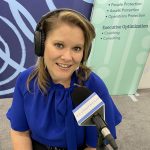
Jamie Gassmann, Host, “Workplace MVP”

In addition to serving as the host to the Workplace MVP podcast, Jamie Gassmann is the Director of Marketing at R3 Continuum (R3c). Collectively, she has more than fourteen years of marketing experience. Across her tenure, she has experience working in and with various industries including banking, real estate, retail, crisis management, insurance, business continuity, and more. She holds a Bachelor of Science Degree in Mass Communications with special interest in Advertising and Public Relations and a Master of Business Administration from Paseka School of Business, Minnesota State University.

R3 Continuum

R3 Continuum is a global leader in workplace behavioral health and security solutions. R3c helps ensure the psychological and physical safety of organizations and their people in today’s ever-changing and often unpredictable world. Through their continuum of tailored solutions, including evaluations, crisis response, executive optimization, protective services, and more, they help organizations maintain and cultivate a workplace of wellbeing so that their people can thrive. Learn more about R3c at www.r3c.com.

Company website | LinkedIn | Facebook | Twitter

TRANSCRIPT

Intro: [00:00:03] Broadcasting live from the SHRM 2021 Conference at the Las Vegas Convention Center, it’s time for Workplace MVP. Brought to you by R3 Continuum, a global leader in workplace behavioral health, crisis, and security solutions. Now, here’s your host.

Jamie Gassman: [00:00:21] Hey, everyone. Jamie Gassman here, your host of Workplace MVP, broadcasting again from our SHRM 2021 Conference in Las Vegas, Nevada. And with me today I have Brandee Izquierdo.

Brandee Izquierdo: [00:00:34] Very good.

Jamie Gassman: [00:00:35] Did I say that right? All right. And, she is the executive director for Safe Project. Welcome to the show.

Brandee Izquierdo: [00:00:40] Thanks, Jamie. I appreciate it.

Jamie Gassman: [00:00:42] So, tell me a little bit about your career journey and how you kind of came to be as part of Safe Project.

Brandee Izquierdo: [00:00:49] Wow. What a journey it’s been. I’d like to first start by saying I am the executive director of Safe Project. However, I’m also a person in long-term recovery. So, my journey has been, needless to say, it’s been very complex and I think right now, especially with this radio station and the behavioral health component of things, the conversation is extremely timely.

Brandee Izquierdo: [00:01:12] I will tell you from my own personal journey and my own personal perspective, I work in the behavioral health field now, but that is not the trajectory of my career or where I thought it was going to be. During my active addiction stages or days, for example, I worked in the corporate world and, you know, what a timely conversation to have because I found myself, you know, really faced with a lot of challenges in terms of mental health and substance use. And quite often in the workplace environment, we don’t have those conversations as candidly as we need to.

Jamie Gassman: [00:01:46] Yeah. Absolutely. So, from your perspective, those conversations, you know, and we can probably get into that. But, like, how does an employer open up those environments? So, from somebody who’s actually gone through that, what would you’ve wanted at that time from your employer?

Brandee Izquierdo: [00:02:02] Yeah. I think safety, safety first, a safe space to actually have those conversations. I think quite often, especially in the world of human resources, there’s a lot of fear around mental health conversation, substance use conversation. We’re afraid of legal issues, maybe overstepping our bounds. If I would have had some of those conversations early in my career when I was in the corporate world, I may have recognized that I had a problem.

Brandee Izquierdo: [00:02:33] You know, we talk about employee retention. We talk about job performance. We talk about all of that from a business standpoint. But we don’t talk about the why. Why are organizations having a hard time retaining employees? Why are organizations having a difficult time, you know, keeping employees or making sure their own time or their performances is up to par? And a lot of times, if you start to ask that why and create that safe space in a workplace environment, you’re more likely for individuals to come out and say, “Hey, I need help.”

Jamie Gassman: [00:03:10] Yeah. You got to make it comfortable for them to be able to – that they’re not going to be penalized or treated differently, right. Because when you talk a lot about stigma with mental health in the workplace, you know, from your perspective, was that some of what held you back, maybe from talking about it was just that fear as an individual?

Brandee Izquierdo: [00:03:28] Absolutely. I mean, even if you take a look at my family dynamic, for example, you know, there was a lot of substance use in my earlier years and my youth years and I didn’t want to be one of those people. And, it wasn’t until, you know, the disease of addiction is very cunning and baffling.

Brandee Izquierdo: [00:03:45] So, we don’t know what’s going to hit us. And, once it does, you’re in those grips and then you become those people and you perpetuate the stigma and the shame, both internally and externally. So, you’re not as free or feel as free or liberated to actually talk about that.

Brandee Izquierdo: [00:04:02] And, I think from an employer standpoint also, you know, quite often we don’t think it’s our problem. You always hear, especially with the addiction epidemic that’s going on now, we’re losing 93 American – 93,000 Americans, over 250 individuals a day, and we deem it as a public health crisis. But it’s more than that. It is definitely more than that. And, I think corporations and businesses need to invest in their people and in their communities, and this is one way to do it.

Jamie Gassman: [00:04:30] Yeah. Well, [inaudible] a corporate or business level, you know, really, that can be sometimes the first places that you see that. I mean, you hear it with, like, schools and children that’s their outlet and that’s usually where people can see that somebody needs help. You know, if an employer is more open to seeing some of that or has education around the signs, they might be able to help them in being able to give an extension to their employee of help and support that maybe they aren’t able to get that outside of the workplace.

Jamie Gassman: [00:04:59] Absolutely. I mean, we look at America and our work habits. You know, for me, for Safe Project, I really try to build a culture of safe space or a judgment-free zone. We’re with individuals in our workplace for more than eight hours a day. If we say that we typically work 40 hours, we’re probably lying. We’re probably working more than that. So, we’re around other individuals in terms of colleagues, professionals, vendors, you know, just to name a few. So, we really need to understand the signs and symptoms of addiction and invest in our employees rather than just doing away with them because, you know, perhaps that’s a liability. We talk a lot of stuff as far as, “Oh, I care about my employees.” But do you really care about your employees? And if you do, start talking the talk and walking the walk.

Jamie Gassman: [00:05:51] Absolutely. So, Safe Project, tell me a little bit about your nonprofit and the work that you do.

Jamie Gassman: [00:05:55] Sure. So, again, as I mentioned, Safe Project was founded by Admiral Winnefeld and his wife, Sandy, who lost their son to an accidental overdose in 2017, actually on a college campus. So, their heart is in the collegiate space, but more importantly the community space as well.

Brandee Izquierdo: [00:06:13] So, we work with different stakeholders whether it be college campuses, communities, safe workplaces, and safe veterans. So, in working with those different stakeholders, we know that we need to create collaborative partnerships to ensure that we are providing the best resources, education, and knowledge around substance use and mental health challenges that we possibly can throughout the nation.

Brandee Izquierdo: [00:06:38] And that’s what we do. We meet communities and our stakeholders where they are and start to move them in the right direction. I kind of call it the Monty Hall approach, kind of old school. You know, let’s pick door one, two, or three. Door number one, for example, may be something as simple as let’s provide some preventive measures. We’re here with Detarra, for example, as one of our partners in drug disposal bags, in-home drug disposal bags. Or, we may want to go a little bit deeper and say, hey, how can we start developing these initiatives in these programs in your workplaces, not only to encompass a holistic wellness approach but also tackle, you know, the stigma associated with addiction and mental health.

Jamie Gassman: [00:07:19] Yeah. And I’ve heard that from some statistics that, you know, with people being home over this last year, substance abuse, addictions are on the rise because they’re doing it at home and there’s nobody to be able to, kind of, catch some of that stuff. Has your work increased, or what kinds of things have you guys put into place in kind of response to that?

Brandee Izquierdo: [00:07:43] Absolutely. It has increased. We are really taking off. We launched our Safe Workplaces initiative not too long ago, probably about six months ago. It’s been in development for a little bit over a year. But when COVID hit, what we’ve realized is that we need to start communicating with individuals because you can’t compartmentalize. It’s not your daily routine where you go to work, you work in an environment, and then you come home. You can really, you know, move back and forth in the substance use arena as far as your use is concerned and hide it very well.

Brandee Izquierdo: [00:08:17] But there are also a lot of different aspects of mental health. You’re dealing with being a mom, perhaps a teacher, trying to keep your kids together, yourself together, and there’s no clear disconnect when it comes to work and your home environment.

Brandee Izquierdo: [00:08:34] So, we’re seeing a lot in terms of mental health on the rise – people – but I’m also seeing some good stuff too. I’m seeing telehealth coming into play. I’m seeing individual organizations and businesses, really, saying, “Hey, how do we maintain the health and well-being of our employees?” But it’s pretty interesting. We can lead quite often with the mental health side of things. People are a little more accepting of that. They’re not as accepting of the substance use side. So, I think we need to really shine some light on that and that it is happening and it affects everyone.

Jamie Gassman: [00:09:08] Yeah. So, we’re here at SHRM, obviously an HR-focused work conference. If you were going to give advice to these H.R. leaders that are here at this conference from your own personal perspective, what would you want to leave them with?

Brandee Izquierdo: [00:09:22] I think I’d want to leave them with invest in your employees, not only from a work performance perspective but also from a well-being perspective. Start having those conversations and start to build a culture that creates judgment-free safe zones. You know, again, we’re saying that we can’t retain employees. We need to start investing in them as people. We don’t stop at the door and drop our bags off when we’re talking about our problems or issues or challenges in our home life. So, we need to start recognizing that and really just invest in our people and kind of get back to old school, you know. Care.

Jamie Gassman: [00:10:03] Yeah. Just care. Awesome. And creating that environment of safety.

Brandee Izquierdo: [00:10:06] Right.

Jamie Gassman: [00:10:07] Very cool. Well, thank you so much for joining us. If somebody wanted to get in touch with you or get more information about Safe Project and the work that you’re doing, how would they go about doing that?

Brandee Izquierdo: [00:10:16] Sure. They can visit us on our website at www.safeproject.us and I’m all about emailing me directly, which is brandee, B-R-A-N-D-E-E, @safeproject.us.

Jamie Gassman: [00:10:29] Wonderful. Well, thanks again, Brandee, for joining us. Thanks for sharing your story. Thank you for providing an opportunity for H.R. leaders to kind of hear another perspective and also kind of be more aware of ways that they can help support their employees that maybe are dealing with some substance abuse. Thanks for joining us.

Brandee Izquierdo: [00:10:45] Thank you so much for having me. I appreciate it.


Tagged With: addiction, addiction epidemic, addiction in the workplace, addiction recovery, behavioral health, Brandee Izquierdo, employee behavioral health, Jamie Gassmann, Las Vegas, long-term recovery, R3 Continuum, SAFE Project, SHRM 2021, SHRM21

How Employee Work Teams Improved Decision Making in Our Organization, with Sheri Foster, Atlanta Community Food Bank

September 16, 2021 by John Ray

Atlanta Community Food Bank
North Fulton Studio
How Employee Work Teams Improved Decision Making in Our Organization, with Sheri Foster, Atlanta Community Food Bank
Loading
00:00 /
RSS Feed
Share
Link
Embed

Download file

Atlanta Community Food Bank

How Employee Work Teams Improved Decision Making in Our Organization, with Sheri Foster, Atlanta Community Food Bank

Sheri Foster: [00:00:00] The big thing about the work teams is the variety of perspectives. I’ve had the opportunity to work with many of these teams, and they have great, creative ideas, and they definitely see things from a different perspective than I do. So, there is an opportunity to be able to get ideas and to see things through a different lens, which is really important.

Sheri Foster: [00:00:23] I think that our leadership team is very accessible, and we all do get a lot of feedback from our employees, but employees also spend a lot of time talking to each other. So, our work team members are able to bring that information and protect it through our discussions, and that has also made a difference.

Sheri Foster: [00:00:43] I have a really good example of that. I had referenced one of the work teams that we have is our employee development work team. And so, that team is charged with helping us to create a real robust employee development, sort of career coaching framework. That, again, was feedback from our employee survey. And one of the things that they told me was we need to create a skills repository as part of our employee development effort framework. They said, “We need managers, employees to be able to have these really open, candid conversations about knowledge, skills and abilities, and to be able to track systematically the skills and proficiency levels,” and that sort of thing. And use that to create development plans, but also for the leadership team to be able to have a view and to the development of these people, so that they can consider them for next-level assignments.

Sheri Foster: [00:01:47] And so, they had told me that probably a year ago. So, we had our employee survey at the end of 2020, and one of our key outcomes from that survey related to employee development and our survey tool, which automatically generates action recommendations, the recommendation from that survey tool was that we create a skills repository. So, I thought, “Wow! I could have saved money on the employee survey and just ask the employees.”

Listen to Sheri’s full Workplace MVP interview here. 


The “One Minute Interview” series is produced by John Ray and in the North Fulton studio of Business RadioX® in Alpharetta. You can find the full archive of shows by following this link.

Renasant Bank has humble roots, starting in 1904 as a $100,000 bank in a Lee County, Mississippi, bakery. Since then, Renasant has grown to become one of the Southeast’s strongest financial institutions with over $13 billion in assets and more than 190 banking, lending, wealth management and financial services offices in Mississippi, Alabama, Tennessee, Georgia and Florida. All of Renasant’s success stems from each of their banker’s commitment to investing in their communities as a way of better understanding the people they serve. At Renasant Bank, they understand you because they work and live alongside you every day.

Tagged With: Atlanta Community Food Bank, Improved Decision Making, work teams

Decision Vision Episode 134: Should I Sell to a SPAC? – An Interview with David Panton, Navigation Capital Partners

September 16, 2021 by John Ray

SPAC
Decision Vision
Decision Vision Episode 134: Should I Sell to a SPAC? - An Interview with David Panton, Navigation Capital Partners
Loading
00:00 /
RSS Feed
Share
Link
Embed

Download file

SPAC

Decision Vision Episode 134: Should I Sell to a SPAC? – An Interview with David Panton, Navigation Capital Partners

In 2020, roughly half of all companies which went public did so through a SPAC, or a Special Purpose Acquisition Company. How does a SPAC work, and what are the pros and cons of going public through a SPAC as opposed to the traditional IPO route? How risky are SPACs? David Panton, whose firm invests exclusively in SPACs, joined Decision Vision host Mike Blake to answer these questions and much more. Decision Vision is presented by Brady Ware & Company.

Navigation Capital Partners

Navigation Capital Partners (NCP) is an Atlanta-based private equity firm focused exclusively on investing in a diverse portfolio of Special Purpose Acquisition Companies (SPACs). The principals of NCP formerly founded and managed Mellon Ventures, the private equity investment partnership of Mellon Financial Corporation. With the backing of Goldman Sachs Private Equity Opportunities Fund LP, NCP acquired the private equity portfolio of Mellon Ventures in December 2006.

In 2019, NCP launched its SPAC Operations Group which builds on the NCP legacy of transforming relatively small, high-growth companies into medium-sized ones and selling them to larger private equity firms to take them to the next level. In the 15 years since its inception, NCP has invested $399 million in 51 portfolio companies, including nine SPACs.

Company website | LinkedIn | Twitter

David Panton, Managing Partner, Navigation Capital Partners

David Panton, Managing Partner, Navigation Capital Partners

David Panton is a Managing Partner of Navigation Capital’s SPAC Operations Group, which makes equity investments in Special Purpose Acquisition Companies (SPACs).

David is also a co-founder of Navigation Capital Partners LP, an Atlanta-based private equity firm that has made growth and buyout investments in middle-market operating companies. In partnership with Goldman Sachs, its portfolio has included investments in 40+ operating companies representing equity investments (including co-investments) of approximately $800 million.

David is also the Chairman of Panton Equity Partners, a private family office, which he founded in 2012, and is an Adjunct Professor in the Faculty of Finance at Emory University’s Goizueta Business School. David has served as a Board Member on over 15 companies, including Brand Bank (sold to Renasant Bank), Track Utilities (sold to CIVC Partners), SecureWorks (sold to Dell Technologies), and Exeter Finance (sold to Blackstone).

David is a co-founder and former Chief Strategy Officer of American Virtual Cloud Technologies (Nasdaq: AVCT), which previously raised $310 million in July 2017 as Pensare Acquisition Corp., and completed an acquisition of Computex Technology Solutions in April 2020. AVCT is a portfolio company of SPAC Opportunity Partners LP.

Between 2003 and 2006, David was a Vice President at Mellon Ventures (now Navigation Capital Partners), a $1.4 billion private equity firm, where he focused on growth capital and buyout investments. Previously, he co-founded and served as Managing Director of Caribbean Equity Partners, a private equity firm focused on investments in the Caribbean and Latin America. Prior to that, he was an Associate at Morgan Stanley in New York City, where he focused on mergers and acquisitions in Latin America and the Caribbean.

David also served as CEO of CMP Industries, a publicly traded company in Kingston, Jamaica, and is a former Senator in the Upper House of Parliament in Jamaica. David was named by Buyouts Magazine as “One of Eight Buyout Pros Under 40 to Watch” in 2009 and by the Atlanta Business Chronicle as one of the “40 Under 40” Rising Stars in 2011. He is a member of the Atlanta Chapter of the Young Presidents Organization (YPO) and is a former member of the Atlanta Group of Tiger 21 and Leadership Atlanta (Class of 2012). He is Chairman of the Jamaican-American Chamber of Commerce of Atlanta, a former member of the Board of the Michael C. Carlos Museum of the Arts, and is a former Trustee of Holy Innocents’ Episcopal School in Atlanta, GA.

David holds a Master Professional Director Certification from the American College of Corporate Directors. David received a Doctorate in Management Studies from Oxford University, where he was a Rhodes Scholar, a J.D. (with honors) from Harvard Law School, where he was elected President of the Harvard Law Review, and an A.B. (with high honors) in Public Policy from Princeton University.

Born and raised in Jamaica, he resides in Atlanta, GA.

LinkedIn

Mike Blake, Brady Ware & Company

Mike Blake, Host of the “Decision Vision” podcast series

Michael Blake is the host of the Decision Vision podcast series and a Director of Brady Ware & Company. Mike specializes in the valuation of intellectual property-driven firms, such as software firms, aerospace firms, and professional services firms, most frequently in the capacity as a transaction advisor, helping clients obtain great outcomes from complex transaction opportunities. He is also a specialist in the appraisal of intellectual properties as stand-alone assets, such as software, trade secrets, and patents.

Mike has been a full-time business appraiser for 13 years with public accounting firms, boutique business appraisal firms, and an owner of his own firm. Prior to that, he spent 8 years in venture capital and investment banking, including transactions in the U.S., Israel, Russia, Ukraine, and Belarus.

LinkedIn | Facebook | Twitter | Instagram

Brady Ware & Company

Brady Ware & Company is a regional full-service accounting and advisory firm which helps businesses and entrepreneurs make visions a reality. Brady Ware services clients nationally from its offices in Alpharetta, GA; Columbus and Dayton, OH; and Richmond, IN. The firm is growth-minded, committed to the regions in which they operate, and most importantly, they make significant investments in their people and service offerings to meet the changing financial needs of those they are privileged to serve. The firm is dedicated to providing results that make a difference for its clients.

Decision Vision Podcast Series

Decision Vision is a podcast covering topics and issues facing small business owners and connecting them with solutions from leading experts. This series is presented by Brady Ware & Company. If you are a decision-maker for a small business, we’d love to hear from you. Contact us at decisionvision@bradyware.com and make sure to listen to every Thursday to the Decision Vision podcast.

Past episodes of Decision Vision can be found at decisionvisionpodcast.com. Decision Vision is produced and broadcast by the North Fulton studio of Business RadioX®.

Connect with Brady Ware & Company:

Website | LinkedIn | Facebook | Twitter | Instagram

TRANSCRIPT

Intro: [00:00:01] Welcome to Decision Vision, a podcast series focusing on critical business decisions. Brought to you by Brady Ware & Company. Brady Ware is a regional full-service accounting and advisory firm that helps businesses and entrepreneurs make visions a reality.

Mike Blake: [00:00:22] Welcome to Decision Vision, a podcast giving you, the listener, clear vision to make great decisions. In each episode, we discuss the process of decision making on a different topic from the business owners’ or executives’ perspective. We aren’t necessarily telling you what to do, but we can put you in a position to make an informed decision on your own and understand when you might need help along the way.

Mike Blake: [00:00:43] My name is Mike Blake, and I’m your host for today’s program. I’m a director at Brady Ware & Company, a full -service accounting firm based in Dayton, Ohio, with offices in Dayton; Columbus, Ohio; Richmond, Indiana; and Alpharetta, Georgia. Brady Ware is sponsoring this podcast, which is being recorded in Atlanta per social distancing protocols. If you like to engage with me on social media with my Chart of the Day and other content, I’m on LinkedIn as myself and at @unblakeable on Facebook, Twitter, Clubhouse, and Instagram. If you like this podcast, please subscribe on your favorite podcast aggregator, and please consider leaving a review of the podcast as well.

Mike Blake: [00:01:23] And before we start on that note, I’d like to take this opportunity to thank all of you who are listening to the program and are clearly telling other people about this program so that we can, frankly, help other people. I was delighted to learn last week that we have passed 27 million cumulative downloads of this program since launching it 30 months ago. And we’ve also actually passed a very important milestone a while ago, we’re at 40,000 downloads for each new episode within the 30 days of publishing a new episode, which puts us firmly in the top one percent of all business related podcasts.

Mike Blake: [00:02:03] And I cannot thank you enough, not just for downloading, but clearly you’re listening, clearly you’re telling other people that they would benefit from listening to this program. And this is why I do it. You know, we don’t have commercials on this. I’m not monetizing this in any way. This is just a way that we, as the Decision Vision team, give back and try to share some wisdom, and some advice, and counsel, maybe even some infotainment along the way to help you become better or more confident in the decisions that you’re making. And so, I just like to take a moment to thank you for all your support of the program, and I hope that we’ll justify your support in the future.

Mike Blake: [00:02:45] I’d like to thank Brady Ware, who has given me the time and resources to do this podcast. I could not do it without them. I could not do it without Business RadioX. And, of course, we couldn’t do it without all of our guests. Because if I were doing this podcast by myself, it would be two episodes, probably the intro and then the final episode, because I don’t know enough to carry a show on my own. So, without the guests who donate their time and expertise throughout the program, this really wouldn’t be much of a program at all.

Mike Blake: [00:03:14] So, without further ado, I’ll introduce today’s topic, which is, Should I sell or form to a Special Purpose Acquisition Company or SPAC? And you may be familiar with SPACs or you may not, it really depends on how tied you are with the financial markets. And we don’t do a lot of hardcore finance on the program. But every once in a while we do because there will be something that comes up that, I think, warrants us covering it. If nothing else that you’re aware of what that financial vehicle, that financial decision is out there, and you may find yourself with that decision.

Mike Blake: [00:03:52] And so, our guest will come on and tell us exactly what a SPAC is. But if you found that you’ve been hearing about them a lot, it’s not by accident. You know, a SPAC is, in effect, a poor person’s IPO. Some people say a rich person’s IPO. But our guest will talk about that. But in 2016, there are about 20 SPACs, Special Purpose Acquisition Companies, that were formed in 2016. And in 2020, there are over 400, with an average size of $300 million in capital raised per transaction.

Mike Blake: [00:04:24] That’s a big deal, right? Four hundred times $200 million will be $12 billion of capital. That’s a lot of capital out there. And that’s why you’re hearing a lot about it. And even if you’re not necessarily going to be taking a company into an exit, into a public liquidity event or quasi public liquidity event, you probably still want to know what a SPAC is. And you may find yourself in the position of asking yourself, “Is this something that we could do with our company?” And finding out whether or not that’s a realistic or desirable path is what we’re all about here on the Decision Vision program, is to help you understand what it is and what kind of decision might you have to make, and what is a good framework in which you might make that decision.

Mike Blake: [00:05:08] So, joining me today is our guest, David Panton, who is a Cofounder of Navigation Capital Partners LP. They’re long standing, one of the premier investment banking, private equity, and merchant banking houses in Atlanta. They’ve been around since I’ve been in Atlanta, which is at least 20 years. And they’ve made growth and buyout investments in middle market and operating companies. In partnership with Goldman Sachs, their portfolio has included investments in over 40 operating companies representing equity investments of approximately $800 million.

Mike Blake: [00:05:39] David is a managing partner of Navigation Capital SPAC Operations Group, which makes equity investments in the special purpose acquisition companies. In 2019, Navigation Capital Partners or NCP launched their SPAC Operations Group, which builds on their legacy of transforming relatively small, high growth companies in the medium sized ones and selling them to larger private equity firms to take them to the next level. In the 15 years since its inception, NCP has invested $399 million dollars in 51 portfolio companies, including nine SPACs. And for more information, you can visit navigationcapital.com.

Mike Blake: [00:06:18] In addition to his professional roles, David is a former senator in the Upper House of the Parliament in Jamaica. He was named by Buyouts Magazine as one of the Eight Buyout Pros of Under 40 to Watch in 2009 and by the Atlanta Business Chronicle as one of its 40 Under 40 Rising Stars in 2011. He is a member of the Atlanta Chapter of the Young Presidents’ Organization and is a former member of the Atlanta Group TIGER 21 and Leadership Atlanta Class of 2012. The second best class ever, second only to the Class of 2014. And if you’re in the Leadership Atlanta Group – he’s laughing – you know exactly what that means.

Mike Blake: [00:06:53] David received a Doctorate in Management Studies from Oxford University, where he was a Rhodes Scholar; a JD with Honors from Harvard Law School, where he was elected president of the Harvard Law Review; and an AB with High Honors in Public Policy from Princeton University. David, welcome to the program.

David Panton: [00:07:09] Thank you so much, Mike. Great to be here.

Mike Blake: [00:07:11] So, David, SPAC is a fairly technical concept. And in some ways, I think kind of a subtle one. So, I’d like to ease our audience in a little bit. Can you describe what a SPAC is?

David Panton: [00:07:25] Sure. So, let’s start with the acronym SPAC, it stands for Special Purpose Acquisition Company. And that describes in broad part, so let’s just break it down. Well, let’s start with the company part. So, the first is it’s a company. So, it’s not any newfangled instrument. It’s not an NFT. It’s not bitcoin. It’s just a company. And it’s a company that is publicly traded.

David Panton: [00:07:55] So, typically, you will have a sponsor for a SPAC, Special Purpose Acquisition Company. They will form a company. That company will be taken public. And through the traditional process, known as the IPO process, Initial Public Offering. So, a sponsor pay for the costs of taking a company public. The company is now public. But unlike traditional public companies which have operations, SPAC has one asset, and that asset is cash. So, it raises capital. As you said, the average amount raised in SPAC so far this year is around 300 million.

David Panton: [00:08:35] And by the way, let me just correct you on the math there. You mentioned 400 SPACs, 300 million. It’s not 12 billion. It’s 120 billion.

Mike Blake: [00:08:43] I knew it. I thought it was off by a zero and I couldn’t do a lot of talking in the microphone. So, thank you for bailing me out there.

David Panton: [00:08:49] So, there is 120 billion raised in SPAC. So, these are public offerings by these companies, which raise so far this year $120 billion. So, they have one asset which is cash. Then, the SPAC sponsor has a certain time period, which is usually 24 months, but it could be 18 months, it could be 12 months, in which to find an operating company. So, think of a SPAC as a blank check company, it’s what it’s known as, or a special purpose vehicle with cash, whose objective is to find an operating company that can acquire or merge into within a certain period of time, typically 24 months or two years.

David Panton: [00:09:31] At the end of that two year period, if the sponsor has not found a company, then this is a very unique element of SPAC, which really doesn’t exist in any other investment category that I know of. The sponsors have to give the money that was invested by the investors in the IPO back to the investors. That’s known as a redemption. So, there’s a redemption rite that investors in SPAC IPOs have.

David Panton: [00:09:57] When the company is found, the sponsors have to go back to the investors and get it approved by the investors in the SPAC IPO or whoever the shareholders are in the company at that time. And when that is done, if the shareholders approve the deal – and the good news is that happens almost all of the time – then the operating company, which is now merged into the SPAC becomes the new publicly traded company.

David Panton: [00:10:24] So, the last thing I’ll say on this is that, effectively what a SPAC is, is a company with cash with a certain time period in which to merge with an operating company, typically a private company, that makes that private company public. So, it’s a mechanism of doing effectively a reverse merger of a private company into the public SPAC that was raised. And then, after that, that company is straight way public company.

David Panton: [00:10:55] So, Hostess, as an example – we’ve all seen Hostess Twinkies – was a company owned by a private equity firm. Someone set up a SPAC, another firm called Gores. That SPAC approached Hostess and said, “Hostess, we want to effectively take you public.” They negotiated a transaction, and Hostess did a reverse merger into the special purpose acquisition company. They changed the name to Hostess. And today, Hostess is just a publicly traded company. It was a mechanism for Hostess to go public.

Mike Blake: [00:11:27] I knew some of the Hostess story. I guess they must have been effectively bought out of bankruptcy to get into a SPAC?

David Panton: [00:11:35] So, I want to be clear on that. In fact, I don’t think a single SPAC has bought a company out of bankruptcy. So, I don’t want people to think that this is just a mechanism to buy companies out of bankruptcy. In fact, SPACs are not good for that. Hostess did go through a bankruptcy. They were bought by a private equity firm, actually two private equity firms. Those private equity firms are growing the company, and they were trying to exit from their investment. And a SPAC approached them and said, “Why don’t you merge your now rehabilitated company and growing company with less debt into a public vehicle?” And that’s what they did. And it’s actually even a very good investment.

David Panton: [00:12:15] Burger King, by the way, was also a SPAC. It didn’t go through a bankruptcy. Just a good company owned by a private equity firm. It was seeking a mechanism to exit or, actually, to facilitate liquidity.

David Panton: [00:12:28] And one important thing – and I think this may be important for your listeners who are all entrepreneurs, executives – the vast majority of SPACs, the shareholders of the company, the private company, become the majority shareholders of the public company. So, it really is largely a mechanism if you are the owners of a private company and want to go public, it’s just a mechanism of going public.

David Panton: [00:12:54] So, you have options if you’re a private owner. You could sell to private equity. You could go public in the traditional IPO process. Or if you want to exit, you could use a SPAC route. So, think of it as a mechanism if you’re the owner of a company of taking your company public, but through a SPAC, not through the traditional IPO process.

Mike Blake: [00:13:18] So, the way you described it is interesting. Let me come back to you. First of all, I guess one of the object lessons, any time you think of a Twinkie now you can think of a SPAC. It’s, “I’m eating Twinkies. Remember a SPAC is making that possible.”

David Panton: [00:13:29] Or if you’re eating a Whopper, that was a SPAC.

Mike Blake: [00:13:32] Or a Whopper. Exactly. You know, Whopper. Exactly. But the fact that the owners of the company themselves are providing the capital, is it fair to say in a way this is a mechanism for a company to kind of take itself public as opposed to making an offering to external shareholders and hoping that they buy?

David Panton: [00:13:53] Yes and no. And I do want to clarify one thing that you said. You said the owners of the company are providing capital. The SPAC is providing the capital. So, if you were an owner of a company, why would you choose a SPAC over a traditional IPO? Maybe that’s one way of thinking about it. And there are reasons why some companies go public through SPACs and there are reasons why they go through the traditional process.

David Panton: [00:14:18] Last year, in 2020, half of the IPOs in America or more than half were SPAC IPO. So, half of the cases, owners of companies chose the SPAC process over the traditional IPO process. And there are pros and cons of each, and let’s just go through them quickly.

David Panton: [00:14:35] The biggest advantage of a SPAC, number one, you actually are merging into an entity which, typically, has a board and has individuals in place who typically know that industry. So, most SPACs are industry focused. And there isn’t just an advantage, especially if you’re a smaller company that’s growing, and just having a strategic partner, and a board of directors or people who can add value to you.

David Panton: [00:14:59] That doesn’t apply in a traditional IPO. If you’re doing a traditional IPO, you’re just going public. I mean, you could add people to your board, but you don’t really have a strategic partner. That’s one advantage of a SPAC.

David Panton: [00:15:10] The second advantage is you have built in capital. And that capital is typically the capital that was raised in the IPO. Now, there’s a risk that that capital can go away. So, that’s a negative of a SPAC, which is the capital may be there or it may not be there. But the SPAC market has effectively created a way to ensure that the capital is there. And that mechanism is something known as a PIPE. So, when you think of SPACs – I know there’s lots of acronyms – Special Purpose Acquisition Companies, don’t think of SPAC without a PIPE. SPAC is on the front end, PIPE on the back end.

David Panton: [00:15:44] What does a PIPE stand for? PIPE stands for Private Investment in a Public Entity. And all that is, is a private placement at the time that the SPAC has identified a target company with which it wants to merge. And then, they go to investors, typically long term fundamental investors, in public companies to say, “Listen, why don’t you participate in this company and give us additional capital?” Or if not new capital, a backstop against the redemptions from the capital that was raised in the initial IPO.

David Panton: [00:16:16] And so, that gives some certainty because that capital is fully committed capital that the company which is going public through this SPAC process will actually have capital that’s needed. So, it is a mechanism for the owners of the company to either take some cash off the table because they want to get some cash and/or to have new cash going into the company on the balance sheet, which is more likely in most recent SPACs and most of the SPAC transactions that have occurred this year. So, it provides capital.

David Panton: [00:16:51] And then, the third advantage is certainty, more certainty than an IPO. In an IPO, you may or may not go public. It may or may not work. In a SPAC transaction, you’re negotiating a merger. And once you’ve negotiated that merger, and especially if you put a PIPE in place, there’s a very, very high likelihood the deal is going to get done. In the IPO market, it may happen, it may not happen.

David Panton: [00:17:18] And one of the reasons actually that SPACs boomed last year is that the IPO market, because of what happened with COVID, et cetera, sort of declined. The market was jittery. But because SPACs have committed capital or have a pool of capital available to them and they do these mergers, it made it easier for SPAC transactions to get done.

David Panton: [00:17:42] And then, the final advantage, I would say, about a SPAC IPO versus a traditional IPO – and there are several others, but these are the primary ones. I mean, speed is another reason. You can probably do a SPAC IPO in a much shorter time than the traditional IPO – the last one I would focus on is the ability to set the valuation of the company.

David Panton: [00:18:10] And what I mean by that is, you’ve probably seen that when other companies have gone public, you’ve seen that they go public and save $10 a share. And then, you hear that there was a big pop and it went from 10 to 20, or 30, or 40. And that sounds great for the investor, but it’s actually terrible for the owners of the company. Because if they could have gone public at 40, then they should have gone public at 40.

Mike Blake: [00:18:33] The last 30 bucks a share on the table.

David Panton: [00:18:35] They left 30 bucks a share on the table. And that is a huge, huge issue. In a SPAC transaction, you basically value it at, say, 40 or 30 or whatever the number is, and that’s the price. It’s very, very rare that you see this big pop. So, you’re able to maximize the valuation of a company in a SPAC transaction because it’s a negotiated transaction with another party and a merger as opposed to just going to the market.

David Panton: [00:19:01] And, you know, listen, I work with investment banks. I love investment banks. I don’t want to say anything negative about investment banks. But investment banks are in the business of making money and they’re in the business of helping their friends. And the investment banks were the underwriters of IPOs and SPACs. So, we work with investment banks all the time.

David Panton: [00:19:19] They have, historically, gone and given IPO allocations to their friends and institutional investors that they like and said, “Hey, we’ll get you in at a certain price.” They’ll typically negotiate the price that’s relatively low because everyone wants the price to go up. And, therefore, the investors do very well. But the actual owners of the company, typically, leave a lot of money on the table in a traditional IPO, and SPAC IPOs avoid that. And that amount, by the way, billions and billions of dollars, so it’s not an insignificant consideration.

Mike Blake: [00:19:54] Yeah. I’ve been in the investment banking business and I know exactly what you’re talking about. I don’t disagree with it. I could easily divert the podcast that way, but maybe we’ll have you back on, we’ll talk about that in another episode.

David Panton: [00:20:06] That’s a different story.

Mike Blake: [00:20:08] But, you know, you brought something up that I want to make sure that I covered, which is, we’re hearing a lot about SPACs now, but they’ve actually been around for quite some time. They’re actually not a new vehicle. They’re just new to a lot of people. And granted, COVID has, perhaps as so many things, given a lot of momentum to things that are already taking place. But why have SPACs suddenly become so popular in the last few years?

David Panton: [00:20:36] Well, that’s a great question. My view – and this is just my view – is that it really came down to one transaction. And that one transaction was a SPAC raised by two of the legends in the SPAC world, a guy named Jeff Sagansky and Harry Sloan. And they raised the SPAC called Diamond Eagle Acquisition Corp. Almost every SPAC has the name acquisition corp. at the end. They raised it in May of 2019, and they raised $400 million. Their underwriter was Goldman Sachs, where Goldman Sachs helped raise $400 million from a large number of institutional shareholders.

David Panton: [00:21:16] The investors in Diamond Eagle, who invested the $400 million received units. Those units – which is one of the differences between a traditional IPO and a SPAC IPO. You’ll see units rather than just shares – include a bundle of securities, which includes typically one share. And then, very importantly, they received a warrant or a-half-a-warrant or a-third-of-a-warrant. That warrant is another security like a share, which gives them a right to buy shares in the future.

Mike Blake: [00:21:51] It’s an option effectively.

David Panton: [00:21:52] It’s an option. That’s exactly right. So, an option to participate if the price goes up in the future. And, typically, almost all SPACs go public at $10 per share. And the options are typically priced at 11.50. So, that’s what’s known as the strike price of the option. So, if the stock goes up to 11.50, then the warrant/option is valuable. And if the price goes down, it doesn’t have value.

David Panton: [00:22:16] But because there’s potential value, these options/warrants trade. They trade separately from the shares. There’s an option market. You can buy these options. A lot of hedge funds invest in these options. And they have a value, and they’re typically around $0.50. So, $0.50 on a $10 investments by the investors in the IPO works out to be a five percent return. It’s pretty good, actually, especially in a market where interest rates are relatively low. And you still have the shares if the price goes up.

David Panton: [00:22:48] And, by the way, the vast majority of investors – which you should know and your listeners should know – in SPAC IPOs are hedge funds because this is a financial instrument. It’s not an operating company. And hedge funds love financial instruments.

Mike Blake: [00:23:05] Yes, they do.

David Panton: [00:23:07] Downside protection and upside potential. So, the investor is invested in Diamond Eagle. Majority of the investors were, in fact, hedge funds. They gave $400 million to Diamond Eagle. And within a very short period of time, they identified not one, but two companies that they could put together to take public. The two companies, one of them you would know probably fairly well, the other one you probably wouldn’t know. The one you would know is called DraftKings, and DraftKings is an online gaming company.

Mike Blake: [00:23:42] Daily fantasy sports.

David Panton: [00:23:44] Exactly right. Fantasy sports, et cetera. And as you know, many states are decriminalizing online gaming. It used to be illegal, now less so. And there was a Supreme Court case which has made it almost impossible to ban online gaming. They’re a huge, huge business. Unprofitable business, by the way, but fast growing. It wasn’t that large. We’re talking about 300 million in revenues. They wanted to put it together with another company. And the name of that company is called SBTech, which actually was an Israeli company, which provided the technology platform for gaming, not just for DraftKings, but for other companies as well.

David Panton: [00:24:25] The combined two companies had about 400 million in revenues, maybe a little less. And were valued at $3 billion, a very high multiple of revenues. They’re both unprofitable. But the reason they have that valuation is because of the growth rate. They announced the deal in December of 2019. And the price didn’t move much from $10. As most announcements, price moves a little bit but not much. They then went onto the market and went out to long term investors and said, “You should invest in DraftKings.” And a lot of people were interested in it.

David Panton: [00:25:04] And they had an analyst day, which very few companies have done and then they did something. And one huge difference between SPACs and a traditional IPO – I should have said this earlier actually – is that in a SPAC IPO, you are able to provide forward looking projections, which you cannot do in a traditional IPO. So, in the case of DraftKings, even though the company was unprofitable today, they could say, “We are planning to grow the company to a billion dollars of EBITDA in the future.” And that’s what they said. Now, if you did that in a traditional IPO, the SEC would say, “No, no, no. You can’t do that. You can’t say what you’re going to do in the future.

Mike Blake: [00:25:46] Which is bizarre, by the way.

David Panton: [00:25:48] It’s little bit bizarre.

Mike Blake: [00:25:50] It’s bizarre they’re not likely to do that, by the way. But go ahead.

David Panton: [00:25:52] You know, you’re right, it is a little bit bizarre and it really is just a result of a loophole, right? And the loophole is that, a SPAC is really a merger, not an IPO. And if you’re doing a merger, you have to show the numbers that you are basing the merger on to all the investors. So, you’re right, it is a little bit unusual.

David Panton: [00:26:12] So, anyway, they put these projections and the deal closed in April of 2020. Now, understand, in January 2020, there was no huge upswing in SPACs. It didn’t happen in February. It didn’t happen in March. It didn’t happen in April. When DraftKings was announced and closed, the deal closed in April – so it was announced in December of 2019, closed in April of 2020 – the stock price doubled from $10 to $20. It was the first time that a SPAC at close had doubled in price. It never happened before because of that certainty issue I spoke about.

David Panton: [00:26:49] So, all the investors who had invested less than a year before, who had warrants, saw that the value of their investment, $10, was worth almost $30 because of the warrant. So, the price went from 10 to 20, so the shares were worth two times. And then, you add the warrants, they were worth close to $10 dollars. That’s another $10, almost $30. So, in less than a year, investors in a public security made three times their money.

David Panton: [00:27:14] And if it had not done well, they would have gotten their money back plus a return. And a lot of investors woke up to the fact that, hold on a second, there is an instrument out there where you can make three times your money in less than a year with basically no or very little downside risk. Where do we get into this game?

David Panton: [00:27:36] And in May and then in June, you saw an uptick, a number of people getting into the space. And so, you saw a very significant growth. And so, we went from in 2019 only about 14 billion raised, to 2020 over 80 billion or close to 80. And then, in 2021, this year, in the first quarter we did over 100 billion and we’re now at 120. Now, I should point out this was too much money, too fast, too soon.

David Panton: [00:28:09] And there’s been a significant correction over the past few months. And so, the amount of new offerings in SPACs has diminished quite significantly. Last week, there were about six. So, the number has come down, but they’re still, as you pointed out, over 400 SPACs that have gone public this year that have raised over $120 billion. And so, lots of SPACs are out there. But I think it’s because of DraftKings, ultimately, where people saw that value.

Mike Blake: [00:28:39] So, you know, what you’re describing, I think, probably has a lot of people interested in a SPAC. They’re learning about it. They’re learning about the benefits. If I’m in a company right now, I own the company or I’m in the C-suite, I’m a CFO, how can I tell if my company is a good or viable SPAC candidate or not?

David Panton: [00:29:02] Now, that’s a great question. And I do want to be clear because most of what I’ve said is very positive. Like, the SBTech, actually, the majority owner today is a billionaire who just joined the Forbes list. The stock has gone significantly, I don’t know where it is today, but it went as high as $60 from $10.

Mike Blake: [00:29:23] I promise I’ll give you a chance to talk about risk. I have that question coming up. So, don’t worry.

David Panton: [00:29:27] Okay. We’ll talk about it. All right. So, the question is, how do you know whether you’re viable? Here is the best way to think about viability. The best way to think about viability, first issue is size. The reality is not everyone should be a public company. Small companies should not be public.

David Panton: [00:29:41] So, unfortunately, I’m sure a lot of your listeners who are entrepreneurs or executives in companies that are below a certain amount of revenue are unlikely to be good targets for a public company. You need a certain size, and that size typically is around $100 million of revenues or more. And the higher the better. Some people would argue that even a 100 million is too small. You need 200 million. You need 500 million. You need a billion.

David Panton: [00:30:09] Now, I do want to caveat that with one thing, which is that, there were many companies that have emerged into SPACs that had zero revenue at all. And why did that happen? And how did that happen? It happened because of the second reason after size, which is size of industry, what’s known as TAM. There are lots of acronyms in the SPAC world, so SPAC and PIPE, the next one is TAM. TAM stands for Total Addressable Market size.

David Panton: [00:30:40] So, there are certain industries which are very large and growing. Like, for example, the electric vehicle industry. We all know that at some point in the future, the vast majority of cars are going to be electric cars. That’s one of the reasons Tesla has a valuation that it does, which is staggering. It’s like bigger than all the major car companies, because they’re in the right industry, which is huge.

David Panton: [00:31:03] And there are EV companies, for example, that went public because people figured at some point they will grow. So, even though they don’t have the size to be, this is a bet on the future. And remember, I said that SPACs can show projections into the future, which traditional IPOs can’t. If you can show in five years or six years, you’re going to be a billion dollar company then people are willing to pay for that value today. So, the second is TAM.

David Panton: [00:31:28] The third is growth. You’ve got to show a high growth rate. So, if you’re in a traditional state industry, not such a great thing. You know, you want to be in an industry which is growing or your company within that industry is growing.

David Panton: [00:31:41] The fourth is margins. You want to show that you have attractive margins. And by margins, I mean gross profit margins and EBITDA margins, Earnings Before Interest, Taxes, Depreciation and Amortization, which is the most common metric that public companies trade on. Although many of these companies trade on revenues because they don’t have EBITDA.

David Panton: [00:32:01] So, if you’re thinking about going public, do you have a size either today in terms of revenues or visibility into revenues? If you’re in a large TAM, large Total Addressable Market, that you have growth historically or you think will happen in the future. And you have pretty decent margins today or you expect to have decent margins in the future. Those are the main elements sort of threshold questions.

David Panton: [00:32:27] And then, if you meet those threshold questions, you think you have the size and the growth rate to be attractive to public company investors because that’s what you need to have, then the most important variable is, do you have the numbers? Because you have to actually have the financial system in a SPAC. You have to do what’s known as – here’s another acronym. This is the longest one – PCAOB audit.

David Panton: [00:32:55] So, every private company that merges into a SPAC has to have, typically, two and oftentimes three years of PCAOB audits. What does PCAOB stand for? Well, you’re an auditor so you probably know or you’re in the space. It stands for Public Company Accounting Oversight Board. So, after the 2008 issues, the government set up, basically, a public-private partnership which is an oversight organization, the Public Company Accounting Oversight Board, which provides certain metrics on how accounting firms should audit publicly traded companies. And there are certain things that they have to do or cannot do. They have to be independent, et cetera. And they have to have certain financial systems in place in a company. And not all companies can meet the PCAOB requirements.

David Panton: [00:33:51] So, the final thing I’d say, you know, for especially the CFOs who are listening, is you’ve got to make sure that your systems are strong and your reporting system, the financial system, so that when you do an audit, which is required, that you can meet the PCAOB standards.

Mike Blake: [00:34:10] And generally speaking, PCAOB means that it’s going to be a national accounting firm. It’s not going to be your local two person CPA shop. And it’s going to be expensive and it’s going to be involved. Like, even my firm, we have 150 people, we don’t do PCAOB audits. It’s just a different skill set. It requires a different, different scale of personnel in order to do that competently.

David Panton: [00:34:33] That’s right. You’re absolutely right. It’s more expensive and there are only a few people who do it. And it’s a long difficult process.

Mike Blake: [00:34:42] So, I hinted on this a second, but I do want to give you a chance because I know you don’t want to oversell SPACs. What are the risks? Where can SPACs go wrong? Maybe you know of some cases where they have gone wrong and why?

David Panton: [00:34:57] Yeah. So, you know, the biggest negative of SPACs – and SPACs have critics. There are many people who don’t like SPACs – the biggest sort of criticism is related to what is known as the sponsor promote. So, people who invest in SPACs – and we invest in SPACs – we receive a very lucrative promote. And that promote is, typically, 25 percent of the amount of money raised. So, if you do a $100 million dollar IPO, you get 25 million in stock. And if you add the 25 million in stock to the 100 million, then that becomes 25 of 125, so it’s now 20 percent. So, it’s 25 percent pre-money, 20 percent post-money, so 20 percent fully diluted.

David Panton: [00:35:53] And that’s a very [inaudible] dilution to everyone. It’s a dilution to the company that you merge with, because there is these extra shares out there. It’s a dilution to public company investors as you go forward. And so, that dilution creates a misalignment of incentives, which is the second problem. So, there is a cost to SPACs, which is that you’re giving up a large percentage of shares to the sponsor, which is dilutive to the original owners. They don’t like it.

David Panton: [00:36:26] There are ways to fix that. You can negotiate to get some of those sponsor shares, which has happened in transaction. You can get the sponsor to give up some of those shares, which has happened. You can get the sponsor to put those shares into an earn out, which has also happened. In the vast majority of cases, there are some modification to that SPAC sponsor promote, which is quite significant. So, the biggest negative is the dilution associated with the sponsor promote.

David Panton: [00:36:50] And then, the second is this misalignment of interests. Because the sponsor is, basically, coming into a $10 stock at a fairly low price, around a-buck or a-buck-50, and it’s at $10. So, if the stock price falls from 10 to 6 or 7, they’re still making a lot of money. But for new investors who want to come in the company, they want the stock to go above 10, typically, if they come in at 10 or PIPE investors. And so, it does create a little bit of a misalignment of interest.

David Panton: [00:37:22] And so, understanding that is important. And so, the issue is not that it’s a bad thing per se. If you can get alignment of interest, if you can negotiate correct terms, if you’re an owner or an entrepreneur, then it’s a good deal. And that has happened many times, which is why, you know, half the time that has occurred.

David Panton: [00:37:43] The last thing I would say is that, there is an inherent challenge associated with SPACs in terms of investor participation. Remember I said that the vast majority of investors in SPACs are hedge funds. Hedge funds, for the most part, are short term oriented, financial metric driven. They’re not really interested for the most part in long term growth companies.

Mike Blake: [00:38:06] They’re overgrown day traders. Brought us about it, right? They’re overgrown day traders.

David Panton: [00:38:12] You said it. I didn’t. So, there is a real challenge in that your shareholder base, you know, SPAC is not the shareholder base you want for a company for the long term. You actually want long term fundamental investors. You want people like Fidelity, and Wellington, and T. Rowe Price, and Neuberger, and long term fundamental investors.

David Panton: [00:38:34] And there’s a challenge in shifting your investor base from the short term hedge fund oriented financial arbitrage guys into longer term players. And that process can be hard, difficult, complicated. And it can affect your price. One of the reasons that recently the number of SPAC exit transactions has declined is because of this very issue, which is that, the stock price of SPACs has not been that high because a lot of these hedge funds are dumping stocks in SPACs across the board, regardless of what it did.

David Panton: [00:39:11] So, even good companies, there’s dump in stock. Which is great for people like me who are like, “We’ll buy them.” But not so good for the owners of the company, et cetera. So, that third issue of the transition from short term investors to longer term investors is oftentimes a challenge.

Mike Blake: [00:39:28] Yeah. And I guess that also does create some short term volatility that may or may not be connected to the fundamentals of the company.

David Panton: [00:39:35] Correct. That’s exactly right. Whereas, if you do a traditional IPO, you’re almost 100 percent certain that the participants in that stock, the vast majority of participants, are long term fundamental. Not always. And we’ve seen – which is worth mentioning since you mentioned day traders – this Robin Hood effect. And I should also add that that Robin Hood effect was a part of the explanation for the increase in 2020.

David Panton: [00:40:00] So, Robin Hood, as you know, it’s an online site, effectively an app, I guess, where people can invest. People who typically didn’t have access to traditional brokerage accounts could invest easily online. And these are people who invested in GameStop, et cetera.

David Panton: [00:40:17] And what happened is a lot of people invested in SPACs. It became very hot. A lot of them lost money and they went away. So, easy come, easy go. And so, retail participation or the lack of retail participation then pulling back from the market has also contributed to some of the decline in the market. And, you know, do you want to be associated with that necessarily?

David Panton: [00:40:42] And, by the way, that doesn’t necessarily happen with SPACs only. It could happen with traditional IPOs. But because SPACs are already trading, you know, SPACs were more likely to be recipients of – what I call – hot money from retail investors under that Robin Hood effect. And that’s another issue that people should know.

Mike Blake: [00:41:05] So, I’ve been reading and hearing that the government, the U.S. government in particular, the SEC, is taking a hard look at SPACs and evaluating whether or not they require their own set of regulations, more stringent oversight or some combination of the two. Are you hearing the same thing? And if so, do you think that’s likely to actually happen? And if so, do you think that’s going to take sort of some of the momentum out of the SPAC movement?

David Panton: [00:41:37] Well, you know, the SEC has expressed concerns about SPACs and the rapid increase in SPACs. And the single biggest reason that SPACs declined in volume is because of an action taken by the SEC earlier this year, where they questioned how the SPACs were pricing their warrants, how they were treating their warrants from an accounting perspective. So, this is something you and I very eagerly can talk about.

David Panton: [00:42:05] But are these warrants equity or debt is basically the question. The vast majority of SPACs have treated those warrants as equity. Which sort of makes sense because they are, in fact, an equity instrument. But as a technical matter, they can be treated as debt because they are an obligation of the company that the company may have to pay for in cash. So, there’s very arcane rules around that.

David Panton: [00:42:30] And I actually don’t think the SEC cared very much. The SEC just wanted a mechanism to stop the rapid increase in SPAC IPOs. And by saying to every single SPAC out there, “You have to tell us how you’re treating your warrants, every single person.” It led to a chilling effect, where it slowed it down. It slowed the market down. And there are some people who said, “I just too much headache.” And maybe the SEC doesn’t like SPACs.

David Panton: [00:43:02] I have a very different view. I actually think SEC participation and regulation SPAC is a great thing. In fact, the example that I use is that, before 2015, SPACs were not really accepted by many law firms, by many investment banks. Goldman Sachs as an example, which is a very large underwriter of SPACs today, wouldn’t touch SPAC with a ten foot pole before 2015.

David Panton: [00:43:30] The SEC, basically, changed the rule. And that rule was that the right to get your money back before 2015 was tied to the vote on the transaction. So, if you wanted to get your money out of the trust account, if you’re an investor in the IPO or SPAC IPO, you have to vote against the transaction. If you voted no, you got your money back. So, that resulted in a lot of SPACs failing because people wanted their money back. And they were like, “I don’t care about the deal.” A lot of hedge funds got the money back.

David Panton: [00:43:58] The SEC said, “You should be able to get your money back no matter what, whether you vote yes or no.” And so, by separating the vote from the right to redeem, several things happened. One is the percentage of SPAC transactions that were approved shot up to 100 percent, and it’s been 100 percent since 2015. There’s not been a single transaction which has not been approved, which makes sense because whether you think it’s a good deal or a bad deal, you want it to happen just to have the option if the price does go up.

David Panton: [00:44:30] Two is the failure rate has fallen. So, the number of SPACs which have failed has dropped dramatically. In fact, in the last two years, it’s been zero percent. Now, that’s going to increase. And I want to be clear on that, and that’s a risk in the future because there’s too many SPACs and too many people who should not be doing SPACs that are not going to find a deal in two years and they’re going to fail. So, the failure rate is going to increase. But for the past two years, it’s been very low. And since 2015 it’s under four percent.

David Panton: [00:44:55] The third thing that happened is that new people came into the space, people like Goldman Sachs and others who wouldn’t touch SPACs. So, today, SPACs are a well-established class. The SEC is responsible for that, in my mind. And I think protecting investors is a good thing. There have been a couple SEC actions this year. One was a finding of a SPAC who was a cannabis SPAC that I know they’re going to buy a space company owned by some Russians. The the U.S. Government didn’t approve Russians owning a space company. And the the SEC said, “You got to be diligent. You should have known this was a risk.” The nationality, which is like, “Duh. Of course, you should have.” And they were appropriately fine.

David Panton: [00:45:41] And so, the SEC is acting against bad actors, in my mind. And that’s a good thing because they’re acting against bad actors. It takes out the bad actors and leaves good quality people. So, there is a flight to quality. So, I believe that, yes, the SEC regulation oversight is going to happen and will continue to happen, and they’re going to ask for greater disclosure. But I think that’s all a good thing because by protecting investors, if you have high quality management teams buying high quality companies, that is a good thing. You shouldn’t have to be worried. The people who should be worried are the ones who are not doing the right thing.

Mike Blake: [00:46:17] I think we can see examples where the government stepping in to regulate actually does add legitimacy to a particular transaction or asset class. I think the government paying a lot more attention is starting to regulate cryptocurrency, and nonfungible tokens, and so forth, I think, has actually helped those two asset classes, again, if you bother to regulate it, then it must be real.

David Panton: [00:46:47] I will say one very quick thing, just a factual point. So, there is a firm called Pershing Square, which did the largest SPAC app. They raised the $4 billion SPAC. And they were recently sued by a former commissioner of the SEC and a very well-known law professor, who said that SPACs effectively – I mean, this is my jargon here – is a violation of an act known as the Investment Company Act. That a SPAC really should be regulated under the Investment Company Act. And they’ve filed the action against Pershing Square saying that he was effectively engaged in fraud.

David Panton: [00:47:28] For the first time that I’ve ever heard of, almost 50 law firms got together and wrote a letter to the SEC to say that that argument was nonsense. It was balderdash. It doesn’t make any sense that SPACs are a different investment category, are a separate investment category, they do not fall under the Investment Company Act, and that the legal theory behind that was unacceptable. And these almost 50 law firms are the largest law firms in the world and, certainly, the largest in the United States.

David Panton: [00:48:04] And what that did was, that reaffirms, in my mind, the institutionalization and establishmentization of SPACs. Almost every major investment bank in the United States – in fact, every major investment bank, I don’t think of any – has a SPAC desk. Every major law firm represent SPACs in some capacity. I mean, SPACs are here and they’re here to stay. They’re a very real and valuable mechanism for helping private companies go public. Can they be improved? Sure. Can we improve investor protection? Sure. Can we improve disclosure? Sure. Will that happen? Absolutely. Am I glad it’s going to happen? Yes, because it strengthens it.

David Panton: [00:48:48] But SPACs are not bitcoin. Which sort of like, what’s the backing? And they’re not NFTs. They’re not cryptocurrency. This isn’t some unique, weird thing. This is just a publicly traded company that’s helping a private company go public.

Mike Blake: [00:49:05] We’re talking with David Panton, and the topic is, Should I form or sell my company to a Special Purpose Acquisition Company or SPAC? David, we’re very grateful for the time that you’ve given us. I just have time for just a couple more questions and I’ll let you get back to helping other people with SPACs and other transactions.

David Panton: [00:49:24] One question I wanted to make sure to get to is, what is the timeline for a SPAC looks like? If I’m leading a company, I decide that I want to go down the road, and I think that my company qualifies in terms of revenue and TAM and so forth, what does a timeline look like from deciding I want to do a SPAC to actually executing one?

David Panton: [00:49:45] Oh, that’s a great question. So, one of the advantages that I mentioned earlier about SPAC versus a traditional IPO is the speed. That you can actually do a SPAC in a shorter time period than a traditional IPO.

David Panton: [00:49:58] There is a company here in Atlanta called Intercontinental Exchange, ICE. They own a company, actually a crypto company, I guess, or a crypto exchange called Bakkt, B-A-K-K-T. And it was a subsidiary. They’ve had investments from all the folks. And they’re trying to decide what to do with it. And a SPAC approached them and said, “Let’s take it public.” And they said, “Oh, that’s interesting.” And from the day they were approached to the day when they announced a deal was less than three months.

David Panton: [00:50:25] So, in three months, they were able to do their PCAOB audits. They were able to negotiate the deal, structure the deal, get it done, which is unheard of in the traditional IPO world. Traditional IPOs take a year or two years from beginning to end. Now, three months is on the the shortest end of the spectrum. I can’t imagine a SPAC deal from beginning to end being done less –

Mike Blake: [00:50:52] Well, the result is not typical.

David Panton: [00:50:54] That’s right. Not at all typical. What is more typical is four months, five months, six months, seven months. It could take as much as a year. But in SPACs, I would say three to six months is a reasonable time in order to get everything done. Because, remember, they’re on a clock. They typically have 24 months in which to do a deal. So, there’s a huge incentive to move quickly. And as a result, that is one of the advantages. And so, timing, I’d say, minimum three months. It could be as much as a year, more likely six to eight months.

David Panton: [00:51:25] And in terms of activity, what needs to be done, is really focus on making sure that these PCAOB audits are done is the most important element. But, also, putting together your projections and, you know, being able to tell the story of the business.

Mike Blake: [00:51:44] So, one question I’m very curious about is, celebrities and high profile investors seem to like SPACs. Why is that? Is that a fashion thing? Is it particularly well suited to very high net worth individuals? Why is that?

David Panton: [00:51:59] It’s a great question. I can’t say for sure why that is. But here is my answer. One is that, actually, SPACs are a relatively easy way to get into the capital markets. With a relatively small amount of money, the sponsor capital can be $100 million, $2 or $3 million. You’re able to be the CEO of a publicly traded company, which is $100 hundred million or $200 million dollars to invest.

David Panton: [00:52:35] And let me tell you what’s wrong with having $200 million to invest. Not a single thing. So, if you can afford to do it, you know, that makes a lot of sense. And a lot of celebrities have a few million dollars, which they can leverage. So, they like the leverage ability. They like the relatively low cash. And then, of course, the return is huge. You’re investing a few million dollars and you’re getting a huge chunk, so returns make sense.

David Panton: [00:53:00] And then, I’d say the final thing is that, there is a proven track record of wealth creation in public companies through celebrity participation. So, in the DraftKings example I told you earlier, one of the things they did was after they went public, they brought on as an advisor a guy by the name of Michael Jordan. Who, if you think about sports and gambling, the best known spokesperson who’s really known for gambling, it’s Michael Jordan. So, Michael Jordan being associated with the stock literally went up 20 or 30 percent by his announcement.

David Panton: [00:53:40] So, celebrities actually do add value. And there are other examples, Weight Watchers brought on Oprah Winfrey, stock went up. You know, there have been a number of celebrities associated with brand. Maybe look at people like Rihanna who has Fenty, the value of Fenty is very high because of her celebrity status. P. Diddy has Ciroc vodka, which used to be number 10 or 15 vodka. Now, it’s a top three vodka because of P. Diddy’s celebrity status.

David Panton: [00:54:11] So, celebrity status does actually add significant value or can add significant value to certain products and certain companies. And there is value in that. So, you’re able to not just get the financial returns because investing relatively little and getting the upside of the sponsor promote, but you’re also able to leverage your status to, in theory, generate even more returns because of the celebrity status. So, that’s my thesis.

Mike Blake: [00:54:42] David, we could go on a long time. SPACs are obviously very complicated. They’re very in depth. But there’s only so much free advice I can impose on you to give to our listeners. You know, there are probably questions we didn’t get to or questions that we could have gone into more depth on, if one of our listeners wants to contact you for more information about this, maybe they’re interested in selling imto a SPAC, can they contact you? And if so, what’s the best way to do so?

David Panton: [00:55:09] Yeah. Absolutely. And the best way to contact me is by email. And it’s dpanton, D as in David-P-A-N-T-O-N, P as in powerful-A as in athletic-N as in nice-T as in tall-O as in outstanding-N as in nice, dpanton@navigationcapital.com.

Mike Blake: [00:55:28] I like that. That’s going to wrap it up for today’s program. And I’d like to thank David Panton so much for sharing his expertise with us.

Mike Blake: [00:55:35] We’ll be exploring a new topic each week, so please tune in so that when you’re faced with your next business decision, you have clear vision when making it. If you enjoy these podcasts, please consider leaving a review with your favorite podcast aggregator. It helps people find us that we can help them. If you’d like to engage with me on social media and with my Chart of the Day and other content, I’m on LinkedIn as myself and @unblakeable on Facebook, Twitter, Clubhouse, and Instagram. Once again, this is Mike Blake. Our sponsor is Brady Ware & Company. And this has been the Decision Vision podcast.


Tagged With: Brady Ware & Company, David Panton, Decision Vision, going public, IPO, Mike Blake, Navigation Capital Partners, Panton Equity Partners, private equity, SPAC

What Does It Take to Be an Inspiring Woman Leader? – An Interview with Lori Kaiser, Kaiser Consulting

September 15, 2021 by John Ray

Kaiser Consulting
Inspiring Women PodCast with Betty Collins
What Does It Take to Be an Inspiring Woman Leader? - An Interview with Lori Kaiser, Kaiser Consulting
Loading
00:00 /
RSS Feed
Share
Link
Embed

Download file

Kaiser ConsultingWhat Does It Take to Be an Inspiring Woman Leader? – An Interview with Lori Kaiser, Kaiser Consulting (Inspiring Women, Episode 36)

To get to where you want to go, says Lori Kaiser of Kaiser Consulting, you must push out of your comfort zone and into the roles you know you need to fill to reach your goals. Lori joined host Betty Collins on this edition of Inspiring Women to discuss what it takes not just to lead and succeed but inspire others while doing so. Inspiring Women is presented by Brady Ware & Company.

Betty’s Show Notes

For me, an inspiring woman is simply a woman who can fill somebody with the desire or urge to do something worthwhile.

It’s someone who lives their life every day, based on the core of what she believes. And it influences me to be open, and maybe even change.

So, it’s someone who creates a better world. They have to live their lives on their terms. There’s something very motivating about that.

We’re all inspired differently, so take some time to think about it. How can you inspire?

I need to have others around me, who are better, and have different insights, so I can be better. I challenge you to dig deep and realize that you have a role to play in that.

You need to figure it out, and then do it.

Become that inspiring woman leader.  I assure you that someone needs to see it and be influenced by you. And by the way, you might already be influencing other women and you don’t even know it.

With me on this episode is Lori Kaiser. She is a chief executive, corporate leader, visionary, and business strategist with a proven track record in assessing risk and creating solutions for Fortune 500 Company C-Level Executives and Boards.

As CEO of Kaiser Consulting, Lori provides clients’ value-based services that allow organizations to navigate transitions and successfully execute critical projects.

Women need to take more risk and be braver in career decisions. Lori gives us insight on that. Her passion about this subject shines throughout the episode.

Her advice to women on how to become an inspired leader. Ask yourself what is YOUR version of success.  Be bold, take risks.  Be a lifelong learner.  And last, but not least, connect with interesting people.

Mentioned in the podcast was Shonda Rhymes and her book Year of Yes.

How Women Rise by Sally Helgesen and Marshall Goldsmith.

And the podcast How I Built This.

This is THE podcast that advances women toward economic, social and political achievement. Hosted by Betty Collins, CPA, and Director at Brady Ware and Company. Betty also serves as the Committee Chair for Empowering Women, and Director of the Brady Ware Women Initiative. Each episode is presented by Brady Ware and Company, committed to empowering women to go their distance in the workplace and at home.

For more information, go to the Resources page at Brady Ware and Company.

TRANSCRIPT

So, today, what does it take to be an inspiring women leader? How we need that, how women are looking for that every day, we’re looking out there to see, who can be that person? And I’ve been really fortunate, I’m in the Columbus, Ohio area, and we have so many really good women’s groups. We’re going to have a podcast on three of them tomorrow. And I’m just fortunate that I’ve seen quite a bit of women around me.

[00:00:30] Betty Collins
And who is that inspiring woman in your life? Thank them. Think on why they inspire you. Who do you inspire then? Because you have a role to play in this as well. So, women are not all the same, and what inspires you may not inspire me, but nevertheless, we all need someone who inspires us. And as a woman business owner, a leader, and and someone whose passionate; I’m passionate about the marketplace; I’m very purposeful about empowering women, and supporting the organizations that do that.

[00:01:11] Betty Collins
For me, an inspiring woman is simply a woman who can fill somebody with the desire or urge to do something worthwhile. It’s someone who lives their life every day, based on the core of what she believes. And it influences me to be open, and maybe even change. So, it is someone who creates a better world, and you just, you watch them do it. Inspiring women for me, they have to live their lives on their terms. That’s something that motivates me.

[00:01:42] Betty Collins
Again, we’re all inspired differently, so take some time to think about it. How can you inspire? And get on it and go, and who’s inspired you? And thank them. For me, I need to see other women who have been there and done that, it’s important. I need to be inspired on days when I just feel like giving up. Maybe just a little bit of affirmation. Okay, probably Betty Collins needs way too much affirmation, but sometimes just that simple nudge.

[00:02:12] Betty Collins
And I need to have others around me, who are better, and have have different insights, so I can be better. I challenge you to dig deep and realize that you have a role to play in that. You need to figure it out, and then do it. Become that inspiring woman leader. And yes, you, because I assure you that someone needs to see it and be influenced by you. And by the way, you might already be influencing and you don’t even know it. So, make it a stretch goal, that goal that stretches you.

[00:02:42] Betty Collins
It’s a pretty simple concept. So, today I have a woman who inspires anyone and everyone she knows. She certainly has done that with me. She’s extremely respected and admired, especially in Columbus, Ohio, I can tell you, and outside of that, she knows what it takes to live, and be a professional. She’s a CEO, but a wife and a mother. She’s an expert, she’s successful. She’s even a trendsetter, which we’re going to talk about, just the way she does her business plan.

[00:03:12] Betty Collins
And she’s a pilot and a speaker. That’s a pretty amazing woman in itself. You are inspiring, Lori, and you live it through starting this business, that lets people, mostly women, lead great lives, and allocate more time to get to do the things that are important to them outside of their careers. And of course, I love it, because when you tell your story about it, you talk about, “When many people told me it wouldn’t work, I was going to make sure it did.”

You’ve had things that win in the best place to work for five years award, with employee engagement, over 95 percent. That’s just huge. You have many large clients, and yet a lot of small ones. But you have Honda nationwide, Ohio State, Cardinal. These are big places, L brands, Huntington, and going on 30 years with nonprofits, donating $300,000 of services each year. And I know a lot of those are geared to women. I think this is a really big thing, you gave the commencement address at Miami’s University’s Farmer School of Business.

[00:04:22] Betty Collins
Seven thousand people were there, and I think you even thought maybe you were a little intimidated, right? Teaching at the Ohio State University in their MBA program. You’ve done things, always taking the time to meet and call a woman who reaches out to you, just like when I had this request for you to come and be on my podcast, you were right on it. And you’ve done a lot of hard work and slow work of advocating for social change for women and minorities. And you’ll talk a little bit about some of those groups that you’ve been on.

[00:04:53] Betty Collins
So, Lori Kaiser, welcome to my podcast. I am so glad that you’re here to share with my audience. We would love to get more insight from you as an inspiring woman, so I’m going to start with some questions. And the first one is, I have talked a little bit about you, but just tell me a little bit about you, your husband, those things. If you can just do that first, and then we’ll get into questions.

[00:05:18] Lori Kaiser
Well, first of all, Betty, thank you for inviting me on your podcast.

[00:05:21] Betty Collins
Sure.

[00:05:21] Lori Kaiser
That was quite an introduction, so I hope I can meet expectations. Let’s see. So, I went to Miami University for my undergrad, and then I started my career at KPMG. And I loved being an auditor. I loved, oh, going to different clients, and working on different teams, and having different bosses. And it was a great job until it wasn’t a great job, when I decided to start my family. I didn’t really want to travel more than 50 percent of the time. So, I quit my job without a plan, and I’m not sure I’d recommend that.

[00:06:01] Lori Kaiser
Freaked my husband out a little bit. But my plan was that I was going to get a plan. And while I was figuring it out, I had some former clients call and say, “Hey, will you come out and do project work for us? You can work whatever days and hours that you’ll schedule, but you know us, and we know you, and we think it’d be great.” And so, that’s really how I started my business. Shortly, thereafter, within a year, I had way more work than I could do myself.

[00:06:30] Lori Kaiser
And so, I started hiring other people that looked just like me; had had a great career, didn’t really want the high number of hours and the travel, and public accounting. And this is early ’90s. So, they pretty much quit, because back then there was full-time work, and stay at home, and really not much in between. So, that’s how I started my business. And now, we have a company of about 80 people, and everybody at our company gets to pick the days and hours they want to work, so that they can have great lives and great careers.

[00:07:09] Betty Collins
I always love hearing it when you’ve told that at NAWBO events, or the Women’s Funds, things like that. Because in the ’90s, you’re right, it was one or the other, and there wasn’t balance. 2020, it’s like, “Oh, we have balance now. We’re at home, we’re at work.” It’s like that’s not what you were talking about, but you really gave women an opportunity to have some flexibility, yet contribute, and by the way, have a great career.

[00:07:37] Betty Collins
So, it’s why when I thought about inspiring women, you were definitely on that, because I know people who work for you and love it. So, talk a little bit about, though, you said, “My husband had a little heartburn,” maybe those are my words, but because you quit your job, and the plan was to get a plan. I’d like you to talk about women and risk-taking, because that was a lot of risk. Women need to take more risk and be braver in those career decisions. Can you just give us insight on that? Because I know you’re passionate about this.

[00:08:11] Lori Kaiser
Yeah, I am passionate about it. I think one of the reasons that there’s a wage gap between men and women, is that men feel more confident raising their hands and taking on a new role, that maybe they don’t tick the box and have every skill, but they’re willing to take that risk to get ahead. And women, generally, want to be more qualified, be able to tick every box, and be 100 percent sure they’re going to be successful. And so, therefore, men are constantly stretching and reaching for higher goals, and getting there.

[00:08:47] Lori Kaiser
And so, I think women need to have more of that risk-taking, because it’s holding us back from getting the next raise or promotion. I think I always tell women that I mentor, who would you rather take a risk on? You’d rather take a risk on yourself. So, take jobs outside your comfort zone, and say yes to things you’re not 100 percent sure that you can do, but you’ll work really hard to make sure you get there.

And when you see yourself get somewhere that you never thought you would get, your confidence builds. And then you’re like, “Well, man, I can really do this.” Betty Collins is that story, when I came to Brady Ware as a CPA, an accountant, and then all of a sudden, I’m in women’s groups, I’m doing podcasts, I’m growing my business right and left, and I’m doing it in my terms, and on my way. And it was a big risk, going to a big firm, when you’re a generalist, and you’re not an expert, per se. You loved auditing, right?

[00:09:54] Lori Kaiser
I did like auditing.

[00:09:55] Betty Collins
That’s okay. I know about auditing, I know about- but it might- you just build confidence, the more risk you take, because you can see you do it.

[00:10:06] Lori Kaiser
Yeah, and I think you can start out small. I like to tell the story, when people first started asking me to speak in public, I would say, “Oh, that sounds really interesting, send me an email with all the specifics.” And then an email would come and I’d see the date, and I’d set up an internal meeting, so that I was busy, and I would email back, “Oh, my calendar is busy. I can’t make that.” Because the whole idea of speaking in public was really intimidating to me.

[00:10:36] Lori Kaiser
And so, I decided that I needed to get over that, if I wanted to grow my firm, and be a subject matter expert. So, I really started out very small. I called up my son’s high school, and I said to the accounting teacher, “Hey, do you want somebody to come and talk about careers in accounting?” And, of course, they said yes. And I thought, “Okay, first of all, it’s a high school, so they’re not going to be listening, probably. And if they are, they won’t know if what I say is right or wrong. So, that’s a very low-risk place to start.”

[00:11:10] Betty Collins
Great strategy.

[00:11:11] Lori Kaiser
And so, yeah, I built up from there, to small groups, to 100, 200. And like you said, I did 7000 people last year.

[00:11:20] Betty Collins
That’s awesome. Caroline Worley, who you know, she got me to public speak, and I was petrified, just petrified. I thought, “What would I possibly have to say?” And there was an energy to it when I started it then. I’m still nervous to this day when I public speak, but it’s something- it’s a risk every time you get out there to do it. But there’s an energy to it, and a reward.

[00:11:45] Lori Kaiser
And the more you do it, the better you get.

[00:11:48] Betty Collins
It becomes a natural thing, maybe, or it becomes something that you could do it. And I’ll go to this next question, because when you start being able to be out there, and you could be on stage, you can be those things, you can have impact in a different way in your community, besides your work, besides your profession. It definitely has a big- it’s a big deal in community, and serving in organizations. So, your community involvement with organizations has been inspiring.

[00:12:17] Betty Collins
You’ve given your time, talent and treasure, as we always talk about. And part of that’s why people do, really, inspire and look up to you, and see you as that person. So, share the ‘why’ of NAWBO and the Women’s Fund. Tell us about these two organizations, and the importance of giving. Because it’s a role of an inspiring woman, is, we want more women to do these things.

[00:12:43] Lori Kaiser
So, I first got involved in NAWBO when I knew that I needed to build more of a network and grow my firm. I was a little nervous. I didn’t really want to take on that role, I really liked just doing client work. But again, you have to push yourself out of the role you feel comfortable with, and lean toward the role that you need to grow into. So, I chose NAWBO, and I started attending meetings, and NAWBO was super welcoming to me.

[00:13:18] Lori Kaiser
From the very first meeting that I walked into, it was a group of people that were supportive, who wanted to see you succeed, who were willing to share, not only the things that had helped them be successful, but also share mistakes. And I found that that was a great way for me to start what I considered my stage of working on my business, and not in my business. And then, so, I actually joined NAWBO, pretty quickly, I went on the board there and became the treasurer, and was involved on the board for several years. And that was great.

[00:13:56] Lori Kaiser
When my board term was up, I moved on to the Women’s Fund of Central Ohio. I’m very passionate about women and girls’ leadership, making sure that they’re as economically stable. There’s a lot of families in central Ohio, where they don’t know where their next meal is coming from, and there are- women who head up those families need help. And I’m still very upset about the fact that women still only make 78 cents for every dollar a man makes. So, I wanted to be able to work on social change, and really move some of those barriers.

And it’s so important for women to understand that you just don’t go to NAWBO and become the president. You go to NAWBO, and organizations like it, or you join the Women’s Fund, and organizations like that, partially, yes, for self-development and business development. But you really do go there because we need to inspire women. And so, it’s just part of being that inspiring leader that you are and others could be. It’s a huge, important role that you played in both of those organizations, and that other women can do it, and they need you. So, who, Lori Kaiser, inspired you? Who influenced you? I’m sure there’s more than one person, but who would come to your mind?

[00:15:33] Lori Kaiser
Yeah, many people, for sure. So, my dad was an entrepreneur. He started many businesses when we were growing up. So, he’s always somebody that I saw as willing to do something that other people weren’t willing to do. And that definitely helped me when I decided to turn my consulting into a real business, and even after people told me that it wouldn’t work. And then, also, my mom; my mom was a lifelong learner. She went back and got her undergraduate degree when I was in elementary, and her Master’s when I was in high school, and she was getting her PhD when I was in college.

[00:16:10] Betty Collins
I felt like I was really the King of the Hill when I got my four-year degree and my CPA license. Never going beyond that.

[00:16:19] Lori Kaiser
But you know what? You continue to keep your CPEs up, learning new skills. I think it doesn’t matter if you’re earning a degree. There’s so many ways now that you can grow your skill set, with LinkedIn learning and all sorts of webinars. And learning and growing has never been easier with all the things that are available on the Internet.

[00:16:43] Betty Collins
And also, the whole learning aspect, and I’m sure that you find this as well. As you go to prepare a speech, or you are on a podcast, or you, Betty Collins, start a podcast, what I have learned over three years of doing this podcast, is just, all this perspective from other women that I’ve interviewed. And that in itself is, again, you’re putting yourself out there, but it’s a way you learn without getting a degree, and then you, again, just go, “I could be more. I can do more. I can have more impact.”

[00:17:17] Betty Collins
But I like, always, hearing that, when people can talk about their mom and dad, that those were definitely people that inspired you. With all the challenges of today’s world, no, we’re not going to talk about COVID, and we’re not going to talk about politics and all the things that are going on. What advice do you have to women on becoming that inspired leader?

[00:17:39] Lori Kaiser
I would just share what has worked for me, and some of my core values. But I think that each woman has to decide what her version of success is. So, that you know what you’re aiming for. Some women, it might be, “I want to make more per hour, so I can work part- time and be home with my family.” Some people, it might be, “I want to switch careers or industries,” or it might be just to get that next promotion. So, you’ve got to decide what it is that you want out of your career. And then I also think you need to be bold and take some of those risks we talked about earlier.

[00:18:17] Lori Kaiser
I think that it’s helped me to be a lifelong learner, and be curious. And also, I’m really interested in people; I always want to hear somebody’s story, how they got where they are today, where they want to go. And I would say, be open to the things that you’re most interested in, and let them guide your choices. And I always like to say that I’m super persistent. If you don’t like where you are, then you’re really not done, just keep at it. And be grateful for all the things that your life has brought you.

[00:18:55] Betty Collins
Very nice. Very good. That’s for anybody, what you just said. Whether you want to lead or not, but we all lead in a different way. So, I cannot thank you, sure, for being here today, taking time to do this, and sharing your perspective. I’m truly, truly grateful. I have two questions, one is, where can we find you on social media? Where’s the best place? We are going to have things attached to this podcast about you, but is there anywhere you would want to direct the audience in regards to your business?

[00:19:28] Lori Kaiser
So, you can find my business at kaiserconsulting.com. And we’re always looking for more talented people that like our model, the part-time flexible work model. And then I’m mostly on LinkedIn. I don’t do a whole lot of other social media, other than that. But I’m pretty active there.

[00:19:47] Betty Collins
And then what podcast or book would you recommend to my audience today?

[00:19:53] Lori Kaiser
One that’s really impacted me recently was Shonda Rhimes book; Year of Yes. It’s a very interesting book where Shonda Rhimes goes and spends Thanksgiving with her sisters, and she’s in the kitchen, and they’re all making the food, and she’s bragging about all the things that she’s been invited to do, and parties that she’s been invited to. And one of her sisters says, “Well, you need to stop bragging, because you’re never going to do any of that.” And she went home and she thought about it, and she realized that they were right, that she was letting her fear control the things that she did in her life. And so, she had a whole year where she said yes to everything. And I read that book, and I was really inspired, and I decided that I was going to have a year of yes.

I have not heard of that, I will have to definitely research that. Thank you, definitely, for sharing that. That’s the one I haven’t heard of. So, very good.

[00:20:51] Lori Kaiser
And then there’s a book that I like right now, that I’ve been talking a lot about, called, How Women Rise. And it’s basically about habits that women have that might have been helpful for getting men to where they are in their career, but might be holding them back from getting to the next level. I also like a lot of entrepreneurial podcasts, like How I Built This, and Masters of Scale.

[00:21:17] Betty Collins
I’ve heard, How I Built This. I have not used it though, or I have not listened to it. But you’ve inspired me to do that. So, great, great choices. Thank you so much.

[00:21:28] Betty Collins
Well, I am Betty Collins, and I’m so glad that you have joined me today. Inspiring women, it’s what I do and I leave this with you; being strong speaks of strength, but being courageous speaks to having a will to do more and overcome.

Automated transcription by Sonix www.sonix.ai

Betty Collins, CPA, Brady Ware & Company and Host of the “Inspiring Women” Podcast

Betty CollinsIW8-2021square is the Office Lead for Brady Ware’s Columbus office and a Shareholder in the firm. Betty joined Brady Ware & Company in 2012 through a merger with Nipps, Brown, Collins & Associates. She started her career in public accounting in 1988.

Betty is co-leader of the Long Term Care service team, which helps providers of services to Individuals with Intellectual and Developmental Disabilities and nursing centers establish effective operational models that also maximize available funding. She consults with other small businesses, helping them prosper with advice on general operations management, cash flow optimization, and tax minimization strategies.

In addition, Betty serves on the Board of Directors for Brady Ware and Company. She leads Brady Ware’s Women’s Initiative, a program designed to empower female employees, allowing them to tap into unique resources and unleash their full potential.  Betty helps her colleagues create a work/life balance while inspiring them to set and reach personal and professional goals.

The Women’s Initiative promotes women-to-women business relationships for clients and holds an annual conference that supports women business owners, women leaders, and other women who want to succeed. Betty actively participates in women-oriented conferences through speaking engagements and board activity.

Betty is a member of the National Association of Women Business Owners (NAWBO) and she is the President-elect for the Columbus Chapter. Brady Ware also partners with the Women’s Small Business Accelerator (WSBA), an organization designed to help female business owners develop and implement a strong business strategy through education and mentorship, and Betty participates in their mentor match program.

She is passionate about WSBA because she believes in their acceleration program and matching women with the right advisors to help them achieve their business ownership goals. Betty supports the WSBA and NAWBO because these organizations deliver resources that help other women-owned and managed businesses thrive.

Betty is a graduate of Mount Vernon Nazarene College, a member of the American Institute of Certified Public Accountants, and a member of the Ohio Society of Certified Public Accountants. Betty is also the Board Chairwoman for the Gahanna Area Chamber of Commerce, and she serves on the Board of the Community Improvement Corporation of Gahanna as Treasurer.

“Inspiring Women” Podcast Series

This is THE podcast that advances women toward economic, social and political achievement. The show is hosted by Betty Collins, CPA; Betty is a Director at Brady Ware & Company. Betty also serves as the Committee Chair for Empowering Women, and Director of the Brady Ware Women Initiative. Each episode is presented by Brady Ware & Company, committed to empowering women to go their distance in the workplace and at home. For more information, go to the Resources page at Brady Ware & Company.

Remember to follow this podcast on Apple Podcasts and Google Podcasts. And forward our podcast along to other Inspiring Women in your life.

The complete “Inspiring Women” show archive can be found here.

Tagged With: Betty Collins, Inspiring Woman Leader, Inspiring Women with Betty Collins, Kaiser Consulting, Lori Kaiser, Women in Business, women leaders

How I Live in Costa Rica and Work with U.S. Clients, with Maria Joyner, FounderScale

September 13, 2021 by John Ray

FounderScale
North Fulton Studio
How I Live in Costa Rica and Work with U.S. Clients, with Maria Joyner, FounderScale
Loading
00:00 /
RSS Feed
Share
Link
Embed

Download file

FounderScale

How I Live in Costa Rica and Work with U.S. Clients, with Maria Joyner, FounderScale

Maria Joyner: [00:00:00] So, I think when I first moved down here, I did. So, one of the clients I currently have, I’ve been working with since 2015, and he has been totally understanding of the internet problems, and it’s been a great working relationship. One of the clients that I had when I moved down here, they were fairly stressed with the internet issues. I got a lot of pressure from them to move to the city and try to find somewhere that had better internet. And I think that one of the benefits of consulting for so many years is it becomes really easy to know the red flags and be aware of the questions that could cause friction after contract sign and avoid that.

Maria Joyner: [00:00:43] So, one of the things that I — I’m very open and upfront with clients when I talk to them. Even though I do have great internet, I mean, there’s power outages here. I mean, there’s there’s plenty of things that are out of control in a way that may maybe wouldn’t be out of control in the States. And so, I’m very upfront with clients and I let them know, like, “Hey, I don’t always have great internet. Sometimes, we may not be able to connect via video. Sometimes, we may not be able to connect at all.” So, I give them a lot of those expectations, but then I kind of go a step further now and I’m like, “Hey, I may be out two hours a day going on a hike,” or “I may be up two hours a day surfing,” just so there’s an expectation of that I’m not always on, always available, so that’s just not an expectation.

Maria Joyner: [00:01:27] And so, living here has helped really identify like what my clients need to know to feel that they can always contact me. But more than all of that, I’ve set really freaking awesome work all the time. And then, my location is never an issue. Like that’s really the secret. I think so many people come to Costa Rica and they ask me, “How do you make it work? How do you get clients? How do you stay here?” And I mean, getting clients, fortunately, I have a great network in Atlanta that has just worked through referrals since I moved down here. So, that has been a blessing, but keeping clients is just doing awesome work. And if you do awesome work, no matter where you are, the client really isn’t going to care about your location.

Listen to Maria’s full Decision Vision interview here. 


The “One Minute Interview” series is produced by John Ray and in the North Fulton studio of Business RadioX® in Alpharetta. You can find the full archive of shows by following this link.

Renasant Bank has humble roots, starting in 1904 as a $100,000 bank in a Lee County, Mississippi, bakery. Since then, Renasant has grown to become one of the Southeast’s strongest financial institutions with over $13 billion in assets and more than 190 banking, lending, wealth management and financial services offices in Mississippi, Alabama, Tennessee, Georgia and Florida. All of Renasant’s success stems from each of their banker’s commitment to investing in their communities as a way of better understanding the people they serve. At Renasant Bank, they understand you because they work and live alongside you every day.

Tagged With: founderscale, Maria Joyner

Growing Your Practice Through Effective Leadership, with Eric Morin, Tower Leadership

September 10, 2021 by John Ray

EricMorinDLREpisode19Album
Dental Law Radio
Growing Your Practice Through Effective Leadership, with Eric Morin, Tower Leadership
Loading
00:00 /
RSS Feed
Share
Link
Embed

Download file

EricMorinDLREpisode19Album

Growing Your Practice Through Effective Leadership, with Eric Morin, Tower Leadership (Dental Law Radio, Episode 19)

In a few years, Eric Morin argues, few dental practices will have less than $1 million in revenues. In this era of consolidation, what enables a practice to acquire other practices and scale effectively? In this conversation with host Stuart Oberman, Eric argues that the answer gets down to great employees, and he discusses the management and leadership fundamentals needed to attract those people. Dental Law Radio is underwritten and presented by Oberman Law Firm and produced by the North Fulton studio of Business RadioX®.

Eric Morin, Founder and CEO, Tower Leadership

Eric J. Morin, Founder and CEO of Tower Leadership, is an MBA and an experienced successful financial and business consultant, Eric truly is an innovative thought leader and powerful dynamic speaker. His words compel you to grow your business, live optimally, and make a transformative impact on this world.

For over a decade, Eric J. Morin has left a successful track record in the dental consulting industry. Hundreds of Dental Practices are now thriving in wealth, work environment, and community impact.

Eric founded Tower Leadership with the sole purpose of keeping dentistry in the hands of dentists by equipping them with the knowledge and tools they need to run a flourishing practice where everyone on the team benefits.

Connect with Eric on LinkedIn.

DLR-2021-08-2710.52.58 DLR-2021-08-2711.22.04

TRANSCRIPT

Transcript
Intro: [00:00:02] Broadcasting from the Business RadioX Studios in Atlanta, it’s time for Dental Law Radio. Dental Law Radio is brought to you by Oberman Law Firm, a leading dental-centric law firm serving dental clients on a local, regional, and national basis. Now, here’s your host, Stuart Oberman.

Stuart Oberman: [00:00:26] Welcome, everyone, to Dental Law Radio. Usually, I’m given a couple items on a podcast, but today we’ve got an extraordinary special guest in the studio, Eric Morin, Tower Leadership. And the reason why I wanted to talk to Eric – and he and I have done some projects and clients along the way for many years now. And I know Eric has clients all the way from Washington to probably Maine, probably to Florida, and probably some internationals. Who knows? – I wanted to really get Eric’s sort of feedback, if you will, what’s going on in the industry, where things are at. I know he’s got the the pulse of the industry and what’s going on at the practices, whether you have one practice or, I think, we’re working on a project now that we’re probably going to get him to about 30 practices at some point, if we can keep him on track, keep him on track.

Eric Morin: [00:01:23] It’s a big one.

Stuart Oberman: [00:01:23] But I think, really, Eric, you did a great job getting your guys through COVID-19. I know that was a very difficult spot. And I know that you and I did a seminar together that we had to go to a very remote location in a winery because no one else with houses. And you were on the forefront of a lot of areas, and I know that if your doctors listened to you when you were giving advice in March and April, they were well on the way to succeed. But I wanted to get, you know, your conversational sauce.

Stuart Oberman: [00:01:58] We’re going to cover a couple of things today, because you’re right on the front on this. You’re way out in front of this. Everyone’s scaling, scaling, scaling. You know, the questions we have are, how do you keep associates without giving up equity? One other area we want to take a look at is where are we at on the change of the business environment as we sort of revisit COVID, if you will, and all this coming with that. We’re seeing things that are already going into the first quarter of 2022.

Stuart Oberman: [00:02:33] So then, we want to take a look at, you know, leadership. And I’ve heard you talk and I take notes when you talk and implement when you say things. And God forgive me, but you introduced me to the sigmoid curve. I couldn’t even spell sigmoid curve until I actually listened to you talk when we were giving a little seminar.

Stuart Oberman: [00:02:57] But great to be here. Thank you, my friend. You are amazing in what you do. And I will tell you and I’ll tell listeners, every time you speak and every time I hear you, I learn something. Whether it’s one thing or a handful, I learn something. So, I want to talk about, really, what Tower Leadership is doing. Then, I want to get into some very specific industry topics that I know you’re out in front of. But tell us a little about Tower Leadership and what you guys do.

Eric Morin: [00:03:24] Well, first, thank you for having me. I’m glad to be here today. This is a lot of fun. I’ve been looking forward to it. As you said, you and I have worked on a lot of projects together, a lot of conversations. We’ve dealt with a lot of clients. You know, we really experienced a lot of issues together. This is a great time to have this conversation. There are so many changes. And then, all this thing called the Delta variant comes out.

Eric Morin: [00:03:48] So, just when we think that everything is settled and we can get back to business as usual, winter comes again. We don’t know. There’s uncertainty. And I think that’s business as a whole is there’s always uncertainty in the marketplace, and I think preparing for that. And then, what do you do when that happens?

Eric Morin: [00:04:04] And I think that’s one of the conversations you had brought up, which is when COVID happens. I think in the show we’ll talk through that is what were the differences during that time? Because one of the things I’m seeing now is, when we go back and we look at the time period, some people say we won’t count 2020 and some people say 2020 was a great launching point.

Stuart Oberman: [00:04:26] Best year they ever had.

Eric Morin: [00:04:27] That’s right. So, what was the difference? I think it’s really important in this podcast to identify those things. As a company, Tower Leadership, I’ve been in the consulting dental space for approximately 20 years. I’m married to a dentist. And I was consulting for companies outside of dental. And then, she said, “Will you help me start a dental practice?” I always tell people that my best asset was that I didn’t know anything about dental. And so, I just started growing and scaling this dental practice and hiring doctors. And I thought that was normal until someone told me it wasn’t.

Eric Morin: [00:05:01] But then, my career, I ended up getting investment licenses so that I could see also the investments that doctors were making. Tower Leadership came from this idea of, after all my years of experience, you can have great management systems, you can have great training, you can have all these things in place. But if you don’t have great leadership within the business, and leadership encompasses a lot of things, and there’s certainly some great things you need in management and leadership.

Eric Morin: [00:05:31] But the idea of Tower Leadership was, let’s create a business that shows doctors that if you invest, if you grow and you scale, yes, you can have all the financial rewards, but you can also impact a lot of people, too. And as idealist as that sounds, we’ve been able to do that. And it’s a fun pursuit of passion. And we get to see the changes in our clients lives, which is a lot of fun.

Stuart Oberman: [00:05:54] So, one of the big things now is, our doctors are sort of in a quandary where they really don’t want to give up leadership or ownership, but they don’t want to work 80 hours a week. So, the question is, in today’s tight market, tight, tight associate market – and we get this question all the time. And I know you get the question. You had a big conference on this recently – how do you keep associates in today’s world where you’re only as good as your last paycheck and your last patient without giving up equity? That’s probably a 17 day topic in a four year span. But, you know, how do our doctors do that? And what are you seeing on that side? You know, how do you keep these associates without giving up equity? That’s a loaded question.

Eric Morin: [00:06:50] You’re right. I mean, we could sit here and talk about this for a long time. I think it’s very important for people to know that a lot of times that associates feel that that’s being successful. But let’s unwind it a little bit more. The idea of ownership – and a lot of it actually, believe it or not, and all the conversations, I mean, I’ve had conversations with thousands of associates – it’s always that, “I want to be able to have a say in the practice. I want to be able to have leadership.” That’s the hard part to get over, right? Because you could give somebody equity.

Eric Morin: [00:07:19] Let’s just say that you gave up 30 percent or even 40 percent or 50 percent of your practice. But if someone’s whole goal is to be able to have a leadership conversation, to be able to contribute, and they’re not able to do that, of course, then they still won’t be happy. So, I think the first thing it goes down to is, what does the person ultimately want?

Eric Morin: [00:07:38] Because I think the marketplace in the past had said to this person, let’s take an associate, highly educated, highly competitive. Dentists tend to be competitive people by nature. And we say, “Here’s what I want you to do. I want you to come in. I’m going to figure out how to pay you as little as possible. I’m going to give no say on my dental practice.” And I love it if you just stay a really, really long time and no equity. I mean, none of us would go into that conversation to go, “This sounds like a win-win long term.””

Stuart Oberman: [00:08:04] It happens every day.

Eric Morin: [00:08:05] And so, I think that if you look, this is not what happens in other industries, by the way. This is kind of a way, a paradigm, that was in the dental market space for so long. And so, I will tell you that before we even get to a financial model or talk through those types of models, I think it’s more important to say, can this person contribute to the practice? Are they allowed to contribute? Because these are intelligent people.

Eric Morin: [00:08:30] And by the way, if doctors want to pull back, I might want to pull on that part of their skill set and have them be part of the practice as far as the ability to contribute to a leadership team or contribute to the management of the practice. So, it’s really important that we talk about that first in that component because they want to be part. They want to feel like they’re part of something. Don’t we all, though? I mean, don’t we all want to feel like we’re part of something? And I think the way we’ve treated associates in the past is wrong, I’ll say that first.

Eric Morin: [00:09:04] The other part is, what does it mean to get ownership? I think we have to unwind that. What does that actually even mean? Equity. What is equity? Equity, first of all, until you sell it, it’s just something filed with the state. I mean, it doesn’t really mean anything. You can say, “Well, it means distributional equity. So, I get some distributions.” But I think what do those distribute – distributions?

Stuart Oberman: [00:09:30] You’re the financial guy. You’re asking a lawyer?

Eric Morin: [00:09:30] I know, right. I think one of those distributions will be long term. So, I think it’s one of those mean long term. And I think it’s creating an asset. You know, what we have found is, by allowing someone to be part of a leadership team, to have some say in what’s happening in the practice, and then by giving them an asset, showing them that they could have a multimillion dollar asset without having equity, then they say, “Okay. Hold on. Let me get this right. So, I could work four days a week, not deal with H.R., not have to do with marketing, not deal with all the headaches and complexities, and I could have a multimillion dollar asset?” The answer is yes.

Eric Morin: [00:10:16] And so, actually, believe it or not, I’ve had partnership agreements that the partners have unwound the agreement to do a deferred compensation or some type of other program, because they see clearly financially. I’ve had people take that type of an arrangement and put it in front of their lawyers, their accountants, their financial advisers, and they have come back and said, “Wow, this is pretty amazing. And it’s actually better financially.”

Eric Morin: [00:10:44] So, what happens is, when the associates end up in dental school, they tell them the natural progression is you’re going to get out, you’re going to work for a few years. Oftentimes and nowadays, it’s for corporate for years. And then, they’re going to go buy a dental practice. But even that market’s changing, isn’t it? I mean, we’re starting to see the complexities. And I’m shifting a little bit here, but as the marketplace changes, the complexity around owning a dental practice is getting much harder.

Stuart Oberman: [00:11:11] It’s getting harder. Individual, not when you got numbers on DSOs.

Eric Morin: [00:11:15] It is. Even in the last ten years, Stuart, I mean, we got to think about –

Stuart Oberman: [00:11:21] And days.

Eric Morin: [00:11:21] Right. So, we think about this and say, even five years ago. I argue that five years from now, there’ll be very few practices that are operating under a million dollars in revenue. Independent dentists that are thriving outside of, maybe, a small boutique type cosmetic firm. And if you look at the medical space, you’ll see the same thing. I mean, in the medical space, you’ve got dermatologists and you’ve got plastic surgeons. And for the most part, they stayed out of groups. But the vast majority of medicine, you know, MDs are now all part of groups.

Eric Morin: [00:12:00] So, when we look at the marketplace and the way it’s shifting, we say even the people who might have bought a practice, it’s going to cost you a lot more to get into them because – and we’re seeing this and you’re seeing this, too – it might cost you $2 or $3 million now to get into a practice where it would have cost you 400. And then, you’ve got to have the business acumen to be able to compete in that space.

Eric Morin: [00:12:19] So, when we’re retaining associates, what we have to think about first is the environment. Are we providing a world class environment? Are we providing a place where they can thrive? Can their career grow? Can they be excited? All those traditional things in any other industry we will look at. Let’s say you and I started to create another firm, we would want to take care of our C-suite, our top players.

Stuart Oberman: [00:12:44] We don’t sleep as it is.

Eric Morin: [00:12:47] [Inaudible]. What a side note. So, I think that we can keep unwinding this. The truth is that, no matter where you are, this marketplace is changing. And I actually think there’s a lot of it that’s good news. And the marketplace is changing and we can kick and scream, but it is. And I think that the more we adapt to that marketplace, the more we can thrive. I think if you look at large corporations, or private equity, or DSOs, or however you want to call it in this space, they are not handing over equity to these practices. And I think that people have been telling people for a long time that you need to hand over equity.

Eric Morin: [00:13:29] But in the case that you had mentioned from coast to coast, I was working with a doctor recently. And if he had given up half his practice, he would have taken a 50 percent pay cut. But that pay cut literally would have made it so he could not pay his bills, literally. And so, I sat down with the associate. I said, “Do you care about this doctor?” And the associate said, “Yeah. I’m just trying to take care of my family, but I also want him to be taken care of.” I said, “Well, if we do this deal long term, this is going to fall apart.”

Eric Morin: [00:14:03] And so, we would do the math with the associate. And we were able to put a really good agreement in place where the associate had a long term asset. Also, had some leadership say in the practice, was able to thrive. And this was a few years back, actually. And, now, I mean, they are just just doing so well together. So, I love to see that you do not have to just hand over equity. That is a paradigm that is changing. It will continue to change. And I think it’s really important in this marketplace.

Eric Morin: [00:14:37] Maybe you do want to sell back. Maybe you want a partner. I’m not saying you never should. I’m just saying that if that is not your game plan, you should not be forced into that game plan, or strategic direction maybe is a better way to say that. I think you have to think through why you’re doing this, and who it benefits, and what your long term vision is.

Stuart Oberman: [00:14:55] Does this go hand in hand when a doctor says to you, “I want to get out of the chair.” Does that go hand in hand on or is that a before conversation that would get to the associates? Is it, “I want to get out of the chair, how do you figure it out? Then, what do I need to do with an associate?” Is that a first conversation when when a doctor says that to you? How do we get out of the chair?

Eric Morin: [00:15:19] I have to tell you, this is like my happy place. Can we make this show five hours? We got to like [inaudible]. We can do this for a long time.

Stuart Oberman: [00:15:27] How do I get out of the chair? How do I get out of the chair? How many times have you heard that, how do I get out of the chair?

Eric Morin: [00:15:33] So, here’s a thought, so what happens is, is just like any other position. Sometimes we put a square peg in a round hole. Look, we oftentimes will bring in this associate that does not meet the business model. It does not meet the vision. For instance, the person who says this doctor does not want to give up equity long term, wants to build a team, wants to do some type of other business or economic model to provide an asset for the associate. And this associate walks in, stomps their feet and says, “No. I will not do anything but take ownership.” So, the doctor says, “Okay. Fine. I’ll hire many. How many?” They’ll change their mind.

Eric Morin: [00:16:16] That’s your hiring process. There’s a thought process between selection and recruitment. Selection is that you’ve sort so many candidates coming into the position that you can pick the right person and select them. We always want to select people. So, if you have multiple candidates, you get to select. Recruiting is almost that last minute thing where you’re like, we really need a body or we really need an associate right now, so we just put whoever comes into that position, we just say, “We’re going to hire you. We’ve seen this with front desk.”

Stuart Oberman: [00:16:49] Is that more prevalent in today’s market because they can’t find good associates or they’re just filling bodies?

Eric Morin: [00:16:55] See, I would push back against can’t find good associates. It’s interesting, the reason I say that is because the doctors who have built an amazing environment to work in, doctors hang out with doctors. I don’t know how many times someone has said to me, I’ve recruited two or three people from my class to come work for this doctor, because if you create an amazing environment to work where somebody can do well, can take care of their family, and have an asset, it’s going to attract other people.

Stuart Oberman: [00:17:27] Build it and they will come.

Eric Morin: [00:17:28] Yeah. Sometimes I say to people, it’s like the harsh truth. But sometimes when someone says, “I can’t find anyone.” I say, “It’s you.” And that’s kind of a harsh truth. And let me kind of back that up.

Stuart Oberman: [00:17:42] It’s true, though.

Eric Morin: [00:17:43] Sometimes it’s like I have not built the environment to attract people. Someone said to me this one time, Stuart, this person said to me, “You can’t find any good people in Atlanta.” I was like, “Wow. An entire city. I’m sure it’s the entire city.”

Stuart Oberman: [00:18:00] You can’t find one person out of six million.

Eric Morin: [00:18:02] That’s right. So, I pushed back and and said, “Well, let’s talk about the environment.” We’ve always had this idea that dental is different, but it’s not different. The business acumen, the business principles always apply is you’ve got to create an environment. No matter who you are, every study shows, people still don’t come to work for money. We say, “Well, yes, they do.” Somebody can always pay them more. There’s still all these other intangibles that you have to make it a place that’s great to work.

Eric Morin: [00:18:32] Now, obviously, somebody wants to get paid their value. They want to have the ability to increase their income. All those things are true. And I’ll give you an example of what I mean by that. There is a young doctor. She is one of the most amazing doctors that I’ve ever had the pleasure to spend time with. She took a job out of GPR residency. And what she did was she went up to Indiana. She gets up there. She gets a practice who’s going to pay her more money. And it ends up being a really bad environment for her to work in. And we’ve had a business relationship.

Eric Morin: [00:19:10] And she says, “Hey, Eric. I need some help. I’m in this practice. They pay me a lot of money, but I’m so miserable.” And here’s here’s the thing, going back to my earlier point, “They will not let me have any say. They will not let me contribute. They tell me just to shut up and see patients.”

Eric Morin: [00:19:24] And what happened was she quit there, is now working for one of my clients. She is running the entire location. This entire location she runs. She’s learning advanced procedures. And the doctor there, he goes, “She’s a unicorn. I don’t know if I’d ever find another one of her.” And yet this other doctor had her. Now, the other doctor that lost her is probably saying, “It was her. You know, you can’t find good people.”

Stuart Oberman: [00:19:49] Has an attitude. Lack clinical skills.

Eric Morin: [00:19:50] Right. All these things. It was like, “No. It was you.” And so, I do think it’s important that we all look at our business and say, “Do we have the environment to attract top talent?” All businesses have to do that. Can we attract top talent? Would they want to stay here? Do they have a say? And by the way, that’s not just doctors, it’s your entire team. Hygiene is no different, right? We are in a tough, tough market to find hygienists. Hygienists talk to hygienists. If you had a great place to work, other hygienists will say, “You got to come work for here.” So, that’s just something to consider.

Eric Morin: [00:20:26] So, yes, at Tower Leadership, we’re a financial firm in many ways and we do plans around retaining associates. But I would still argue that if you don’t have the foundations of strong business management, then it’s not going to work anyhow.

Stuart Oberman: [00:20:47] That’s why there’s one practice or 20. It’s all the same.

Eric Morin: [00:20:49] That’s right. And I say management leadership, one thing I’ll say on the show that I think it’s important. Sometimes you scroll through LinkedIn and I see some amazing post by Stuart Oberman, so I’m scrolling through.

Stuart Oberman: [00:21:04] I got good people. I got good people. I got much smarter people than me, I could tell you that.

Eric Morin: [00:21:09] Well, they’re doing great. It’s looking good. So, as I’m scrolling through, I always see these posts that pop up. And they’ll say something to the idea of, “Leadership is when you care. Management is just a number.” And it’s silly because it’s not true. Look, all great businesses need leadership and management. Management doesn’t mean that you don’t care? You have to have strong management because you can be a great leader. But if you have bad management, then the company is going to fall apart. You can train people, but if you don’t have a way to have standard operating procedures, you cannot continue to manage the business to grow. So, you do need both.

Eric Morin: [00:21:54] By the way, if you just have management but no leadership, that’s not good either. So, I think it’s important to understand, you have to have strong leadership within a business, the visionaries, the the visionary leader, the people that are driving the show and looking at direction and inspiring people. But I think there’s another side that says, “Do I have strong management?” And by the way, I think associates play a crucial role in both of those.

Stuart Oberman: [00:22:19] So, you know, it’s amazing what’s changed in the last three years, maybe 36 hours, we got scaling, we got corporate coming in, and we’ve got DSOs, we’ve got growth, we got no growth, we got COVID. I would say with COVID, it’s got to be something else. If it’s COVID today, it’s Delta tomorrow, and it’s something else down the road.

Eric Morin: [00:22:42] The Foxtrot variant.

Stuart Oberman: [00:22:44] Yeah. It just keeps going. So, from a practice standpoint, how do our doctors adapt to the change in this new business environment? And it changes, like, everyday it seems like.

Eric Morin: [00:23:02] Three words, access to capital. I’m serious. Let me tell you what I mean by that, you can look at business over business over business outside of dental as well. And you and I talked about this actually during COVID. I said, you got to have access to capital. One of the things that the federal government provided was access to capital. Had that not happened, then what would have happened? Have we not have PPP and EIDL, what would have happened to the dental market space?

Eric Morin: [00:23:32] And so, I think when we look at the future, first of all, one of the ways we insulate ourselves from those types of things is access to capital.

Stuart Oberman: [00:23:40] And what does that mean? Access to capital, what does that mean?

Eric Morin: [00:23:42] It means that either you have credit lines you can pull from. It means that you might be able to have money in the bank. You have access to be able to borrow money.

Stuart Oberman: [00:23:54] Is that what they call good debt?

Eric Morin: [00:23:56] Here’s what I always tell people, there’s two things you cannot get when you need them, credit lines and insurance. Okay? So, those things are really cheap and you could get it really easy when you don’t need them. The second you need them, they’re gone. Also, you’re about to go to bankruptcy and you’re like, “Can we get a lot of credit?” NO. It’s not happening. You get diagnosed with something, you can’t get insurance.

Eric Morin: [00:24:15] So, I think it’s important for us to know that, as businesses, we have to start projecting. We have business winters. One of the things I said before – COVID now – I certainly did not know it was going to be COVID, but I was telling people, “Listen, this is a great economic time.” Take 2021, we would argue that 2021 – I think everybody can see – it’s a great business year. We can talk about all the reasons why, and that’s maybe for another show. But it’s a great economic year for most businesses. So then, are you taking that money and are you making sure that you have capital?

Eric Morin: [00:24:45] Let’s play this Delta variant, or something changes, or the economy changes. We saw the dental marketplace change in 2008, 2009, 2010. People are doing procedures now that they weren’t doing before. They’re getting checks from the government. So, what happens if you had a 20 percent drop in revenue, I’m just saying, play that scenario out. In business, we call that pessimistic modeling. Hey, what if we weren’t to grow at this rate? Well, what if something was to happen? Do we have the ability to pay our bills for some period of time? Do we have the ability to get capital? And maybe that’s capital for expansion. It doesn’t have to be a negative thing. It doesn’t necessarily need to be something that’s going down.

Eric Morin: [00:25:22] But you always have to have access to capital. Businesses go under because they don’t have access to capital, which is the whole saying cash is king. And so, I would argue that businesses have to have that. So, the first primary thing I would say is – by the way, this is like a business school 101 – profitability doesn’t keep the lights on. Cash flow does. Do you have enough cash flow to get through or the ability to get capital to get through a difficult time? I think it’s very important that any business owner assess that at any given time.

Stuart Oberman: [00:25:54] Wow. So, the practices that want to scale, how do they get access to capital?

Eric Morin: [00:26:04] Wow. This is just so exciting. So, we can, first of all, say, right now for a dentist to get leverage – otherwise known as debt – it’s not that hard, right? I mean, as long as your financials are in pretty good order, you can go to a bank and get a loan and buy another practice, as long as the financials make sense. They’ll look at your personal, obviously, financial statement and see if you are a good, qualified buyer. But that’s only to a certain point, right?

Eric Morin: [00:26:35] There’s going to be at some point where the banks go, “We have taken enough of risk here.” And then, we start to get to the point where we go into getting capital that’s outside of a bank, which that could be bringing another partner, it could be mergers and acquisitions, it could be pulling in private equity. And that’s a good thing for you to look at in your long term vision.

Eric Morin: [00:27:00] If you have a dental practice, and let’s just play the scenario that you’re two locations and you say, “I really love to go to 30 million.” You and I were talking about this process of moving drastically. And so, we’ve seen that. But what happens is, is you have to say, what is my plan for getting capital in the future? When the banks cut me off – and they will at some point –

Stuart Oberman: [00:27:22] They will.

Eric Morin: [00:27:23] .. you have to say, “What is my plan -” you can’t wait and then start making phone calls. You have to think now – “at the point at which the banks cut me off?” So, let’s just say it was a certain revenue, or four locations, or whatever that is in your head. And by the way, your banker can help you with that. And you can –

Stuart Oberman: [00:27:41] I’m going to allow you to purchase one practice a year.

Eric Morin: [00:27:44] See. So, that’s something I wasn’t aware of. And so, I think it’s important to get that information. And then, if that’s the case, then, what is my – going back to number one thing – access to capital? What is my next step to get capital? If I can no longer get any more capital, how else will I get it? Do I want to bring in an equity partner?

Eric Morin: [00:28:07] Because there isn’t an old saying and I love this saying. When I heard it, I thought it was brilliant. Some people will say partnerships don’t work. It’s just not true. They just have to be running in the same direction. And so, do I want to own 20 percent of a watermelon or 100 percent of a grape? Depending on what your long term strategy is, it might make sense to earn 20 percent of a watermelon. You know, everyone’s situation is different.

Eric Morin: [00:28:32] But if you’re trying to become a large dental group, I think you have to understand, in business, the number one thing is, what’s my vision? Where am I going? What do I want long term? How does this impact my family? What does this do to my legacy? I think you have to write all those things out first.

Eric Morin: [00:28:48] I’ll tell you a story. Years ago – I want to say about seven years ago – I had a group come to me.

Stuart Oberman: [00:28:55] When we were young.

Eric Morin: [00:28:59] I had a group come to me, they had nine locations, has four partners. And they had flown up to see me and I sat down with them and I asked them that same question. I said, “Where are we going? What are we trying to get accomplished?” And they said, “We want to be a $100 million dental practice. And we heard you were the guy to get us there.” And I looked at them and I just said, “Why? Why do you want to be $100 million? What does that do? Why do you want that?” And their answer was, “I don’t know. It sounded good.” It sounds like a good round number.

Stuart Oberman: [00:29:33] I heard it at a seminar.

Eric Morin: [00:29:33] That’s right. I heard it at a seminar. It’s not like we couldn’t do that. So, I said, “Let’s talk through that more.” And it’s interesting, because I told them, “If I was a bank -” sometimes when I’m speaking to a doctor or any business, I would say, “Let’s play that I’m your investor. Explain to me why I should give you money.” “-if you came to me and said you were trying to grow, but you don’t know why, you just had no reason, and you didn’t have an economic model, I probably won’t give you the money.” So, believe it or not, it took about four hours to finally get to their why.

Stuart Oberman: [00:30:08] I believe it.

Eric Morin: [00:30:08] And then, when we got there, here’s what they said, “We want one location with 24 hours.” I thought, “We should have figured that out eight locations ago.” So, we just wasted time and money and energy.

Stuart Oberman: [00:30:18] Or four hours ago.

Eric Morin: [00:30:19] And interestingly enough, you know, part of the story is one of the partners was actually diagnosed with a heavy disease at the time. And I thought, “Gosh. You guys have spent so much time in the wrong direction. So, I think that the first part is always, where are we going and why?” And one of the reasons why I try to get people at the dental chair is, I think that some people love dentistry. Stay in the chair if you want to. But have the ability to pull back. Have the ability to spend time with your family and do the things you want to, which is one of the reasons why we start a business.

Stuart Oberman: [00:30:54] So, you talk about this a lot and this could probably interject into every scenario you just mentioned, leadership. You guys talk about that a lot. You groom it. You touch base on it. You figure out how to get better at it. How much of a role does leadership play in a successful practice, whether it’s one or 20 practices? And you talked about this a lot during COVID. How leadership, really, will take you through the storm and put you on top of the mountain. So, tell me about leadership and doctors and what you see what they don’t do. I know that’s a whole day’s conversation.

Eric Morin: [00:31:37] No. There’s this old saying, you find out who your friends are during the difficult times. And I think that we also saw what people were made up from a leadership standpoint during the difficult times.

Stuart Oberman: [00:31:54] And we’re not out of there yet.

Eric Morin: [00:31:56] Right. But I think what I was saying during that time is – and we have doctors that send everybody home. And when I say we, I mean the industry. Doctors not even communicate with their team for 45 days. And I said, “These people are scared.” By the way, they’re going to start looking for a job because if you don’t take care of them now – and by the way, that’s what’s happened for a lot of people, because it was a great time for people to reflect and say, “Is this where I want to work long term? Does this person actually care about me?” During that time, people were scared. Everybody was scared.

Eric Morin: [00:32:26] And I said doctors play a huge role in this. It doesn’t matter whether you’re a medical doctor or not. Not just within your own team. But what do you look like in your community? Are you communicating with your community? Are you communicating with your team? Are you talking them through it? I mean, our team started working, you know, 20 hour days just to support teams. We had team members on the phone and started having financial conversations with them. We worked through each doctor. I think we spent so much time working through that time. But so many people in that time were attracted. And that was the worst thing they could have done. I said, you know, “This is a time when they need you.”

Stuart Oberman: [00:32:58] I remember you talking about that.

Eric Morin: [00:32:59] They need you. They need their leader at this point to look at them and say, “We’re going to be okay. We’re going to make it through. I’m going to make sure we’re all taken care of.” And sometimes that didn’t happen. And we see in a lot of practices what the consequences of that, you know, ended up being. As the marketplace, by the way, let’s look at hygienists again, as it becomes more competitive, they’re like, “Do I want to work here long term?” And so, I think leadership, this is one of those ones where we have to get outside of dental marketplace and just look at business. Great business leaders attract great people, and it is difficult.

Eric Morin: [00:33:40] I want to give some knowledge-ment to the fact that, being in a chair all day long, and seeing patients all day long, and trying to lead, and trying to manage is very, very difficult. Which is why you need to lead and build an amazing team. Because you can’t do it all. But building a leadership team and building a team around you, but to get them there – one of the things I was just saying to you before we went on air was one of the reasons we do this large leadership retreat every year. And one of the reasons I do it is when they say, “Well, Eric, I don’t communicate like you communicate. So, would you tell my team what you just said.”

Stuart Oberman: [00:34:13] You send them an email.

Eric Morin: [00:34:16] That’s right. And the other thing is, “But I want to get the team inspired on my why.” When I say my why, I mean your why as a doctor, why are you there? What’s the purpose? What are you trying to get accomplished? How do you impact their lives? I think that you have to get the team to understand why they should care. Because if it’s like, I think, we get to this place where we’re always like, “Well, I’ll just pay them more money. I’ll just pay them more money.” Somebody can always pay them more. So, why should they follow you? We see it all the time.

Eric Morin: [00:34:41] One of the things I’ve done at Tower is, I’ve brought people on and I’ve asked them to come on for like, literally, a 30, 40 percent pay cut from what they were getting paid. And I’ll tell you why. That wasn’t to cut anyone out of money, by the way. It was to say, “Are you willing to commit to the vision that’s here? And if you are, actually, you’re income will increase. But I want you to buy into the vision of what Tower is trying to do.” So, the same thing I would say, is, if people aren’t inspired by you as a leader and they don’t see you as a leader or somebody they want to follow, people will take a pay cut just to be with a great leader, to be with a great organization.

Eric Morin: [00:35:14] You might say, “Well, Eric. I don’t have time to do all that.” “Okay. Then, bring in somebody who can.” If we’re trying to go to 5 locations, 10 locations, 20, you can’t do that without great leadership. You can’t do that without great management. And so, why I think it’s so crucial is, business is littered with stories of great leaders and poor leaders. And we work on leadership, and we inspire, and motivate, and drive people towards a direction. And that sounds idealistic. I know it’s like, “That sounds idealism,” but it’s just true.

Stuart Oberman: [00:35:48] It’s true though.

Eric Morin: [00:35:48] And it’s like, how much time in the last 12 months have you spent on growing your leadership skills and leadership teams, inspiring people? And I think that’s got to be a focus if you’re going to, especially if you’re going to grow and you’re going to compete in this market. Because what I am seeing is a lot of DSOs that are private equity. They’re not focused on leadership. And it gives you a competitive place in this market. I mean, it really does. It allows you to differentiate yourself. I’m not saying DSOs don’t care. That’s not what I said. But I’m saying that, if it’s all about money, you get what you measure. And if they’re focused just on money, well, then I’m telling you, they’re going to take their eye off of leadership. And that’s a place where you can dominate and attract top talent.

Stuart Oberman: [00:36:29] Amazing. Amazing. You know, again, I don’t even know where to start. I think we’ve been just about 45 minutes. I’m trying to think how much I could take back myself and say, “Okay. Here’s my office.” But as usual, it’s amazing conversation. I was looking over and trying to figure out what do we even call this. I mean, we’ve touched on so many things, but we’ll come up with a great name. So, tell me what you got going on. Do you got some events coming up? Where are you going to be at? When you sell out Phillips is what I want to know.

Eric Morin: [00:37:06] Well, we haven’t sold out our September and October foundation.

Stuart Oberman: [00:37:09] [Inaudible] Phillips.

Eric Morin: [00:37:12] We’re blessed to have some amazing doctors. We get to work with some of the best in the industry. And work with some of the best people to team up with, like yourself.

Stuart Oberman: [00:37:21] You know, you do work with the best. I mean, I could tell. We’ll also hear the guys that we work with together are at a different level. You know, the clients [inaudible]. They’re at a different level. They got a whole separate different vision where they’re going. And at times, they’re a little bit hard to corral in. Sometimes I just wanted to get to Marietta, not necessarily Nebraska.

Eric Morin: [00:37:47] I just give you the difficult stuff, Stuart. You know, you and I worked on some really complex stuff together and some great things. And that’s why it’s such an honor to work with you as well, because I know that the clients that have these sophisticated issues, the clients that need help, and need great guidance. I know you take care of them, which is why you and I have worked together on so many of these cases.

Stuart Oberman: [00:38:09] It’s like, “Why is Eric calling me at 8:30? I’m taking that call. There’s got to be a reason.”

Eric Morin: [00:38:13] I think I called you on Sunday once a week. Don’t call Stuart on Sunday.

Stuart Oberman: [00:38:18] It’s not to watch cable TV, I could tell you that. So, tell us what next event is coming up. What is it? Tell us about it?

Eric Morin: [00:38:24] What we do is an introductory – two days initially – as to what we do. And what we do is, we talk about the financial. So, it’s financial and its leadership and its management. Which is, what do I need to do if I want to build an organization that grows and scales? If I want to pull back from the chair, how do I have a business that runs without me? What does this mean financially? How do I make investments? One of the things that’s missing in this industry is people don’t know where to invest the practice. We talk about where to invest, what’s the ROI, where’s the best place to put money, how does that pay off debt. All those two days worth of concept.

Eric Morin: [00:39:00] So, we do those once a quarter. We’ve actually sold out September so we’ve added some more. And we get this leadership retreat we’re doing in November. And it’s a large, large event. We have practices from all over the country. And it’s really about that message, which is, how do we get our teams inspired? If we’re going to build scalable businesses, how do we get our teams inspired, motivated, and ready to tackle head on 2022?

Stuart Oberman: [00:39:28] If anyone got any questions, how do you get hold of you?

Eric Morin: [00:39:31] Towerleadership.com. I think it’s the best place. We’ve got a lot of information. And then, right there who wants to send email, info@towerleadership.com. And our team is ready and waiting. We’ll be more than happy to help you. They are excited to talk to you and excited to help. And, really, you know, we see the spectrum, as you know, and so it doesn’t matter where you are, it doesn’t matter if you’re just beginning this journey and you’re questioning what do I need a buyer or investor do.

Eric Morin: [00:40:00] I mean, a doctor years ago had said to me, they gave me their pro forma going into a practice. And I said, “Who gave this to you? It’s wrong. Trust me. We’re going to move all this around.” He had seven options, these seven options are going to be gone in 12 months. He said, “No way.” They were.

Eric Morin: [00:40:17] Even on the frontend or the person who’s trying to go, “We’re working with a lot of organizations that are going to 3, 4, 5, 10, 20, 30 locations.” So, no matter where someone’s at, no matter what the complexity is, we can coach you through how, where, and why.

Stuart Oberman: [00:40:36] Get there. Fantastic. Fantastic. Fantastic. I can’t even begin to write down any information. I’m going to have to listen to this myself and figure out where I’m at.

Eric Morin: [00:40:45] I appreciate the honor to be your guest, sir. This has been a great time. I literally think we could go for 18 hours nonstop. And this has been such a pleasure to be here. I really do. It means a lot. I’m glad to be part of it.

Stuart Oberman: [00:40:58] My pleasure. My pleasure. Thank you. I sure appreciate it. Eric Morin, Tower Leadership. It’s always a pleasure.

Eric Morin: [00:41:03] Thank you, sir.

Stuart Oberman: [00:41:05] For those that want to reach out Dental Law Radio, my name is Stuart Oberman. Reach us at stuart@obermanlaw.com. Thank you for listening. Please listen to this podcast multiple times because you will pick up multiple bits of information every time you do. Have a great day and we’ll talk to you soon.

About Dental Law Radio

Hosted by Stuart Oberman, a nationally recognized authority in dental law, Dental Law Radio covers legal, business, and other operating issues and topics of vital concern to dentists and dental practice owners. The show is produced by the North Fulton studio of Business RadioX® and can be found on all the major podcast apps. The complete show archive is here.

Stuart Oberman, Oberman Law Firm

Oberman Law Firm
Stuart Oberman, host of “Dental Law Radio”

Stuart Oberman is the founder and President of Oberman Law Firm. Mr. Oberman graduated from Urbana University and received his law degree from John Marshall Law School. Mr. Oberman has been practicing law for over 25 years, and before going into private practice, Mr. Oberman was in-house counsel for a Fortune 500 Company. Mr. Oberman is widely regarded as the go-to attorney in the area of Dental Law, which includes DSO formation, corporate business structures, mergers and acquisitions, regulatory compliance, advertising regulations, HIPAA, Compliance, and employment law regulations that affect dental practices.

In addition, Mr. Oberman’s expertise in the health care industry includes advising clients in the complex regulatory landscape as it relates to telehealth and telemedicine, including compliance of corporate structures, third-party reimbursement, contract negotiations, technology, health care fraud and abuse law (Anti-Kickback Statute and the State Law), professional liability risk management, federal and state regulations.

As the long-term care industry evolves, Mr. Oberman has the knowledge and experience to guide clients in the long-term care sector with respect to corporate and regulatory matters, assisted living facilities, continuing care retirement communities (CCRCs). In addition, Mr. Oberman’s practice also focuses on health care facility acquisitions and other changes of ownership, as well as related licensure and Medicare/Medicaid certification matters, CCRC registrations, long-term care/skilled nursing facility management, operating agreements, assisted living licensure matters, and health care joint ventures.

In addition to his expertise in the health care industry, Mr. Oberman has a nationwide practice that focuses on all facets of contractual disputes, including corporate governance, fiduciary duty, trade secrets, unfair competition, covenants not to compete, trademark and copyright infringement, fraud, and deceptive trade practices, and other business-related matters. Mr. Oberman also represents clients throughout the United States in a wide range of practice areas, including mergers & acquisitions, partnership agreements, commercial real estate, entity formation, employment law, commercial leasing, intellectual property, and HIPAA/OSHA compliance.

Mr. Oberman is a national lecturer and has published articles in the U.S. and Canada.

LinkedIn

Oberman Law Firm

Oberman Law Firm has a long history of civic service, noted national, regional, and local clients, and stands among the Southeast’s eminent and fast-growing full-service law firms. Oberman Law Firm’s areas of practice include Business Planning, Commercial & Technology Transactions, Corporate, Employment & Labor, Estate Planning, Health Care, Intellectual Property, Litigation, Privacy & Data Security, and Real Estate.

By meeting their client’s goals and becoming a trusted partner and advocate for our clients, their attorneys are recognized as legal go-getters who provide value-added service. Their attorneys understand that in a rapidly changing legal market, clients have new expectations, constantly evolving choices, and operate in an environment of heightened reputational and commercial risk.

Oberman Law Firm’s strength is its ability to solve complex legal problems by collaborating across borders and practice areas.

Connect with Oberman Law Firm:

Company website | LinkedIn | Twitter

Tagged With: dental law, Dental Practice, dental practice acquisitions, DSO, Eric Morin, Leadership, Oberman Law Firm, scaling the business, Stuart Oberman, Tower Leadership

Workplace MVP: Broadcasting LIVE from the 2021 SHRM Conference

September 9, 2021 by John Ray

SHRM 2021
Minneapolis St. Paul Studio
Workplace MVP: Broadcasting LIVE from the 2021 SHRM Conference
Loading
00:00 /
RSS Feed
Share
Link
Embed

Download file

SHRM 2021

Workplace MVP: Broadcasting LIVE from the 2021 SHRM Conference

Broadcasting LIVE from the SHRM 2021 Annual Conference at the Las Vegas Convention Center, Workplace MVP  host Jamie Gassmann and R3 Continuum Marketing Specialist Shane McNally discuss R3 Continuum’s presence at this year’s conference. Workplace MVP will be broadcasting live interviews with conference speakers and attendees during the conference. If you’re at #SHRM21, come on over to Booth 4076 and see us! Workplace MVP is underwritten and presented by R3 Continuum and produced by the Minneapolis-St.Paul Studio of Business RadioX®.

R3 Continuum

R3 Continuum is a global leader in workplace behavioral health and security solutions. R3c helps ensure the psychological and physical safety of organizations and their people in today’s ever-changing and often unpredictable world. Through their continuum of tailored solutions, including evaluations, crisis response, executive optimization, protective services, and more, they help organizations maintain and cultivate a workplace of wellbeing so that their people can thrive. Learn more about R3c at www.r3c.com.

Company website | LinkedIn | Facebook | Twitter

About Workplace MVP

Every day, around the world, organizations of all sizes face disruptive events and situations. Within those workplaces are everyday heroes in human resources, risk management, security, business continuity, and the C-suite. They don’t call themselves heroes though. On the contrary, they simply show up every day, laboring for the well-being of employees in their care, readying the workplace for and planning responses to disruption. This show, Workplace MVP, confers on these heroes the designation they deserve, Workplace MVP (Most Valuable Professionals), and gives them the forum to tell their story. As you hear their experiences, you will learn first-hand, real life approaches to readying the workplace, responses to crisis situations, and overcoming challenges of disruption. Visit our show archive here.

Workplace MVP Host Jamie Gassmann

In addition to serving as the host to the Workplace MVP podcast, Jamie Gassmann is the Director of Marketing at R3 Continuum (R3c). Collectively, she has more than fourteen years of marketing experience. Across her tenure, she has experience working in and with various industries including banking, real estate, retail, crisis management, insurance, business continuity, and more. She holds a Bachelor of Science Degree in Mass Communications with special interest in Advertising and Public Relations and a Master of Business Administration from Paseka School of Business, Minnesota State University.Workplace MVP:
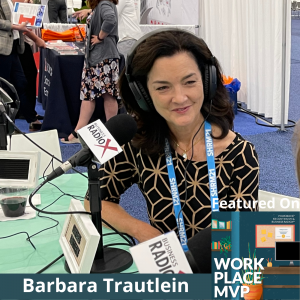
Tagged With: Jamie Gassmann, Las Vegas, R3 Continuum, Shane McNally, SHRM 2021, Workplace MVP

  • « Previous Page
  • 1
  • …
  • 174
  • 175
  • 176
  • 177
  • 178
  • …
  • 275
  • Next Page »

Business RadioX ® Network


Our Most Recent Episode

CONNECT WITH US

  • Email
  • Facebook
  • LinkedIn
  • Twitter
  • YouTube

Our Mission

We help local business leaders get the word out about the important work they’re doing to serve their market, their community, and their profession.

We support and celebrate business by sharing positive business stories that traditional media ignores. Some media leans left. Some media leans right. We lean business.

Sponsor a Show

Build Relationships and Grow Your Business. Click here for more details.

Partner With Us

Discover More Here

Terms and Conditions
Privacy Policy

Connect with us

Want to keep up with the latest in pro-business news across the network? Follow us on social media for the latest stories!
  • Email
  • Facebook
  • Google+
  • LinkedIn
  • Twitter
  • YouTube

Business RadioX® Headquarters
1000 Abernathy Rd. NE
Building 400, Suite L-10
Sandy Springs, GA 30328

© 2026 Business RadioX ® · Rainmaker Platform

BRXStudioCoversLA

Wait! Don’t Miss an Episode of LA Business Radio

BRXStudioCoversDENVER

Wait! Don’t Miss an Episode of Denver Business Radio

BRXStudioCoversPENSACOLA

Wait! Don’t Miss an Episode of Pensacola Business Radio

BRXStudioCoversBIRMINGHAM

Wait! Don’t Miss an Episode of Birmingham Business Radio

BRXStudioCoversTALLAHASSEE

Wait! Don’t Miss an Episode of Tallahassee Business Radio

BRXStudioCoversRALEIGH

Wait! Don’t Miss an Episode of Raleigh Business Radio

BRXStudioCoversRICHMONDNoWhite

Wait! Don’t Miss an Episode of Richmond Business Radio

BRXStudioCoversNASHVILLENoWhite

Wait! Don’t Miss an Episode of Nashville Business Radio

BRXStudioCoversDETROIT

Wait! Don’t Miss an Episode of Detroit Business Radio

BRXStudioCoversSTLOUIS

Wait! Don’t Miss an Episode of St. Louis Business Radio

BRXStudioCoversCOLUMBUS-small

Wait! Don’t Miss an Episode of Columbus Business Radio

Coachthecoach-08-08

Wait! Don’t Miss an Episode of Coach the Coach

BRXStudioCoversBAYAREA

Wait! Don’t Miss an Episode of Bay Area Business Radio

BRXStudioCoversCHICAGO

Wait! Don’t Miss an Episode of Chicago Business Radio

Wait! Don’t Miss an Episode of Atlanta Business Radio