Business RadioX ®

  • Home
  • Business RadioX ® Communities
    • Southeast
      • Alabama
        • Birmingham
      • Florida
        • Orlando
        • Pensacola
        • South Florida
        • Tampa
        • Tallahassee
      • Georgia
        • Atlanta
        • Cherokee
        • Forsyth
        • Greater Perimeter
        • Gwinnett
        • North Fulton
        • North Georgia
        • Northeast Georgia
        • Rome
        • Savannah
      • Louisiana
        • New Orleans
      • North Carolina
        • Charlotte
        • Raleigh
      • Tennessee
        • Chattanooga
        • Nashville
      • Virginia
        • Richmond
    • South Central
      • Arkansas
        • Northwest Arkansas
    • Midwest
      • Illinois
        • Chicago
      • Michigan
        • Detroit
      • Minnesota
        • Minneapolis St. Paul
      • Missouri
        • St. Louis
      • Ohio
        • Cleveland
        • Columbus
        • Dayton
    • Southwest
      • Arizona
        • Phoenix
        • Tucson
        • Valley
      • Texas
        • Austin
        • Dallas
        • Houston
    • West
      • California
        • Bay Area
        • LA
        • Pasadena
      • Colorado
        • Denver
      • Hawaii
        • Oahu
  • FAQs
  • About Us
    • Our Mission
    • Our Audience
    • Why It Works
    • What People Are Saying
    • BRX in the News
  • Resources
    • BRX Pro Tips
    • B2B Marketing: The 4Rs
    • High Velocity Selling Habits
    • Why Most B2B Media Strategies Fail
    • 9 Reasons To Sponsor A Business RadioX ® Show
  • Partner With Us
  • Veteran Business RadioX ®

Sonya Howard, ActionCOACH

August 24, 2021 by John Ray

ActionCOACH
North Fulton Business Radio
Sonya Howard, ActionCOACH
Loading
00:00 /
RSS Feed
Share
Link
Embed

Download file

ActionCOACH

Sonya Howard, ActionCOACH (North Fulton Business Radio, Episode 381)

Business coach Sonya Howard joined John Ray to discuss her in-depth approach to coaching business owners, why they need to be willing to be coached, why she chose to work through ActionCOACH,  the multiple strategies she offers, and much more.  North Fulton Business Radio is broadcast from the North Fulton studio of Business RadioX® inside Renasant Bank in Alpharetta.

ActionCOACH

ActionCOACH has been helping people and businesses to work through these kinds of issues for over 15 years.ActionCOACH

The knowledge and systems developed over that time have brought significant improvements to hundreds of thousands of businesses around the world.

When you’re ready to massively improve your business, your income, and your lifestyle, call to arrange a complimentary consultation. You and Sonya will explore the possibilities for you and your business.

Company website | LinkedIn | Facebook | Instagram

Sonya Howard, ActionCOACH

Sonya Howard, Business Coach, ActionCOACH

Sonya Howard coaches business owners and business executives to help them reach their goals with finances/cash flow, building better teams, creating better processes and systems, time management, and much more. Sonya can work with business owners at any phase of their business and offer several options for coaching, seminars, workshops, and classes.

LinkedIn


Questions and Topics in This Interview

  • What is ActionCoach and why did you join them?
  • What makes you a good business coach?
  • What options do you offer for coaching business owners?
  • What is your process at ActionCoach, to determine how to coach a business owner?
  • Give me an example of how you have helped a business owner in their business?

North Fulton Business Radio is hosted by John Ray, and broadcast and produced from the North Fulton studio of Business RadioX® inside Renasant Bank in Alpharetta. You can find the full archive of shows by following this link. The show is available on all the major podcast apps, including Apple Podcasts, Spotify, Google, Amazon, iHeart Radio, Stitcher, TuneIn, and others.

RenasantBank


Renasant Bank has humble roots, starting in 1904 as a $100,000 bank in a Lee County, Mississippi, bakery. Since then, Renasant has grown to become one of the Southeast’s strongest financial institutions with over $13 billion in assets and more than 190 banking, lending, wealth management and financial services offices in Mississippi, Alabama, Tennessee, Georgia and Florida. All of Renasant’s success stems from each of their banker’s commitment to investing in their communities as a way of better understanding the people they serve. At Renasant Bank, they understand you because they work and live alongside you every day.

Tagged With: actioncoach, business coach, business coaching, John Ray, North Fulton Business Radio, small business coaching, Sonya Howard

The Primary Security Threat to Organizations Worldwide, with Andy Davis, Trident Manor Ltd.

August 23, 2021 by John Ray

Trident Manor Limited
North Fulton Studio
The Primary Security Threat to Organizations Worldwide, with Andy Davis, Trident Manor Ltd.
Loading
00:00 /
RSS Feed
Share
Link
Embed

Download file

Trident Manor Limited

The Primary Security Threat to Organizations Worldwide, with Andy Davis, Trident Manor Ltd.

Andy Davis: [00:00:00] I think around the world, globally, cyber is the biggest threat. It’s impacting all organizations. I mean, there’s just been the attack on the pipeline that’s happened on the east coast of the USA. Look at the hundreds of millions of dollars worth of impact that must have had. But that happens to individuals. It happens to organizations. And it happens on a daily basis. There were some statistics that came out and actually showed that, on average in the U.K., every individual is attacked once every seven minutes. Which, if you think about, that’s statistically looking at people.

Andy Davis: [00:00:49] So, cyber is a constant and it’s there because it’s information that the companies need to operate and to function correctly. There are other threats. There has been an increase in protests. The protests have directly impacted retail, hospitality, museums, public services. But the primary threat that I see at the moment globally is from cyber.

Andy Davis, CEO, Managing Director, Trident Manor Limited

Andy Davis is an international security, risk, and crisis management expert based in the United Kingdom. Following time spent undertaking investigative and intelligence activities within British security organizations. Andy joined the UK foreign service as a security risk management specialist responsible for the protection of embassies, personnel, families, and information. This took him around the world and in charge of all security activities in countries such as Uganda, Colombia, Saudi Arabia, and Pakistan.

Following a commercial job offer he joined the corporate world as the Head of Security (Safety & Insurance) for a Middle Eastern organization with assets of over $40 billion. This involved strategic oversight of all security and safety activities, designing and implementation of protective policies and the development of collaborative emergency and crisis management plans requiring engagement with emergency services, the intelligence community, and government officials.Andy Davis is an international security, risk, and crisis management expert based in the United Kingdom. Following time spent undertaking investigative and intelligence activities within British security organizations. Andy joined the UK foreign service as a security risk management specialist responsible for the protection of embassies, personnel, families, and information. This took him around the world and in charge of all security activities in countries such as Uganda, Colombia, Saudi Arabia, and Pakistan.

In 2013 Andy left the corporate world and established Trident Manor Limited as a specialist security, risk, and crisis management consultancy dedicated to supporting others from individuals through to global organizations in the protection of their assets. He has operated in over 30 countries delivering advice and guidance and has responded to crisis situations where deployments into crisis situations have taken place to protect client’s operations and assets.

In 2020 during the COVID crisis, he devoted time, effort, and energy to create Trident Manor Training Academy which provides specialist training programs that concentrate on the protection of individuals, the protection of staff, and the protection of organizational assets, including their reputation.

He holds a Master of Science degree in security and risk management, is board certified by ASIS International and CPP (Certified Protection Professional), he is a Chartered security professional, a Fellow of the Security institute and chairs a number of professional safety and security organizations.

Andy is passionate about supporting cultural and heritage organizations as well as those humanitarian organizations that operate in difficult or hostile environments. He lectures around the world and has written numerous articles for professional or trade magazines.

LinkedIn

Listen to Andy’s full Workplace MVP interview here.


The “One Minute Interview” series is produced by John Ray and in the North Fulton studio of Business RadioX® in Alpharetta. You can find the full archive of shows by following this link.

Renasant Bank has humble roots, starting in 1904 as a $100,000 bank in a Lee County, Mississippi, bakery. Since then, Renasant has grown to become one of the Southeast’s strongest financial institutions with over $13 billion in assets and more than 190 banking, lending, wealth management and financial services offices in Mississippi, Alabama, Tennessee, Georgia and Florida. All of Renasant’s success stems from each of their banker’s commitment to investing in their communities as a way of better understanding the people they serve. At Renasant Bank, they understand you because they work and live alongside you every day.

Tagged With: security, Trident Manor Ltd.

Jim Kerlin, Blackwood Impact Group

August 20, 2021 by John Ray

Blackwood Impact Group
North Fulton Business Radio
Jim Kerlin, Blackwood Impact Group
Loading
00:00 /
RSS Feed
Share
Link
Embed

Download file

Blackwood Impact Group

Jim Kerlin, Blackwood Impact Group (North Fulton Business Radio, Episode 380)

Jim Kerlin with Blackwood Impact Group joined host John Ray to discuss why small and medium-sized businesses benefit from consulting, the mistakes businesses make in sales implementation, why a service mentality is vital in effective selling, and more. Jim also explained the business lessons one can take from the Alabama-Auburn rivalry.  North Fulton Business Radio is broadcast from the North Fulton studio of Business RadioX® inside Renasant Bank in Alpharetta.

Blackwood Impact Group

Chief Revenue Officer (CRO) Consultancy Helping You Align Sales, Marketing, and Operations To Maximize Revenue Growth.Blackwood Impact Group

Founded in 2018, Blackwood Impact Group has one mission, to help businesses achieve success. That mission is fueled by a passion to serve, a passion to solve, and a passion to systematize.

Their entrepreneurial leaders understand the hindrances of inefficient processes, the devastating effects of poor communication, and what a lack of collaboration between departments can do to a small business.

With proven, strategic steps, Blackwood Impact Group guides organizations on the path of implementing solid procedures and resolving performance pitfalls. Blackwood helps small businesses develop processes and personnel shifts that not only drive the bottom line but further develop the purpose and the passion of the business itself.

By creating a seamless synergy between strategy and execution, they empower small business owners to take their business to a new level without the stresses of hiring an entire C-Suite. When you work with Blackwood Impact Group, you get the benefit of having a Chief Revenue Officer (CRO) on your team for a fraction of the cost.

Blackwood provides more than a plan on paper. What makes Blackwood Impact Group different is their as-needed consulting, solution-focused phases of implementation, and holistic, organization-wide results.

Blackwood Impact Group was founded on the principle of understanding the struggles in business and how to implement resolutions to those issues. Their bottom line is simple: we help businesses make the right sales and marketing decisions, improve efficiency, and increase revenue.

Company website | LinkedIn

Jim Kerlin, Sales Consultant, Blackwood Impact Group

Jim Kerlin, Sales Consultant, Blackwood Impact Group

Jim brings over 30 years of experience in sales, management, and leadership to Blackwood Impact Group in Duluth GA. Over his career, he has been an entrepreneur and worked in privately held and large corporations.

He earned a business degree from Auburn and master’s degree in marketing from The University of Alabama. He serves as adjunct faculty at Troy University where he teaches sales and marketing courses online.

He and his wife Deborah live in south Alabama and have two children and three grandchildren in Georgia.

LinkedIn

Questions and Topics in This Interview

  • Why do small and medium-sized businesses benefit from consulting?
  • When do most business leaders realize it’s time to invest in SALES consulting?
  • What factors impact a salesperson’s ability to consistently achieve or exceed sales goals?
  • What are a few common mistakes businesses make in sales implementation?
  • Tell me about a success story.
  • Give some examples of sales offerings you typically provide.

North Fulton Business Radio is hosted by John Ray, and broadcast and produced from the North Fulton studio of Business RadioX® inside Renasant Bank in Alpharetta. You can find the full archive of shows by following this link. The show is available on all the major podcast apps, including Apple Podcasts, Spotify, Google, Amazon, iHeart Radio, Stitcher, TuneIn, and others.

RenasantBank


Renasant Bank has humble roots, starting in 1904 as a $100,000 bank in a Lee County, Mississippi, bakery. Since then, Renasant has grown to become one of the Southeast’s strongest financial institutions with over $13 billion in assets and more than 190 banking, lending, wealth management and financial services offices in Mississippi, Alabama, Tennessee, Georgia and Florida. All of Renasant’s success stems from each of their banker’s commitment to investing in their communities as a way of better understanding the people they serve. At Renasant Bank, they understand you because they work and live alongside you every day.
Tagged With: Alabama-Auburn rivalry, Blackwood Impact Group, CRO, Jim Kerlin, sales consulting

Annie Qaiser, Silk Road Wellness

August 20, 2021 by John Ray

Silk Road Wellness
Minneapolis St. Paul Business Radio
Annie Qaiser, Silk Road Wellness
Loading
00:00 /
RSS Feed
Share
Link
Embed

Download file

Silk Road Wellness

Annie Qaiser, Silk Road Wellness (Minneapolis-St. Paul Business Radio, Episode 18)

Silk Road Wellness is the first fully halal skincare and wellness brand in the USA, and Annie Qaiser, Founder and CEO, joined host John Ray to tell her story of how she started the business. Annie clarified what halal products are, the need for them in the marketplace, various products they carry, how they’ve attracted a large non-Muslim customer base, and much more. Minneapolis-St. Paul Business Radio is produced virtually by the Minneapolis St. Paul studio of Business RadioX®.

Silk Road Wellness

Silk Road Wellness is a bold fusion of Eastern and Western herbal knowledge. As the first fully halal skincare and wellness brand in the USA, it is a unique combination of traditional healing systems, prophetic wisdom, and modern beauty standards. There is an abundance of natural ingredients out there and they continue to discover and implement these ingredients into their expanding line of luxurious halal skincare and wellness products.

Silk Road Wellness is a family-operated business. Their quest for a natural holistic lifestyle led them to create a natural skincare line that focuses on many South Asian home remedies and prophetic traditions that they heard about as children.

Once they perfected our all-natural body lotion, they weren’t going to keep it to themselves. Whoever experienced their natural body lotion couldn’t stop asking for more. This is when they decided to reach out to anyone and everyone whose body deserves the gentle and natural touch of their all-natural quality products. This is also when they applied the same formula of building from scratch to our all-natural face masks, lip balms, and face serums.

They are honored yet humbled by the joy they are able to bring with their natural products. They live by this simple rule: “life is too short, live it well.”

Company website | LinkedIn | Facebook

Annie Qaiser, Co-founder & CEO, Silk Road Wellness

Silk Road Wellness
Annie Qaiser, Co-founder and CEO, Silk Road Wellness

Annie Qaiser is the co-founder and CEO of Silk Road Wellness – the first natural skincare and wellness brand in the USA, inspired by Islamic traditions and halal principles. Their luxurious handcrafted products are halal-certified and alcohol-free, designed to accommodate the personal beliefs of the largest overlooked market in the multi-billion-dollar beauty industry.

LinkedIn


Questions and Topics in this Interview

  • Can you tell us the motivation & background behind starting Silk Road Wellness?
  • What does halal mean, and why do you want people to know about it?
  • And you mentioned that you are the first Halal Certified beauty and skincare business in the US?
  • What kind of ingredients do you use?
  • Is there a market for Halal products out there?
  • Where are you selling your products right now?
  • Where do you plan on selling your products in the future?

Minneapolis-St. Paul Business Radio is hosted by John Ray and produced virtually from the Minneapolis St. Paul studio of Business RadioX® .  You can find the full archive of shows by following this link. The show is available on all the major podcast apps, including Apple Podcasts, Spotify, Google, Amazon, iHeart Radio, Stitcher, TuneIn, and others.

Tagged With: Annie Qaiser, halal skincare, halal wellness products, Minneapolis St Paul Business Radio, Silk Road Wellness

Covid 19 – Delta Variant Mandates & Legal Liability

August 20, 2021 by John Ray

DeltaVariant16DSOsAlbum
Dental Law Radio
Covid 19 - Delta Variant Mandates & Legal Liability
Loading
00:00 /
RSS Feed
Share
Link
Embed

Download file

DeltaVariant16DSOsAlbum

Covid 19 – Delta Variant Mandates & Legal Liability (Dental Law Radio, Episode 16)

Do you require all your employees receive the Covid-19 vaccine? How do you deal with employee resistance? What are reasonable accommodations, mandated in federal law, and how do you navigate them? There’s a lot to think about before you dive in with a poorly thought-out policy, and Stuart Oberman sorts out the issues in this episode. Dental Law Radio is underwritten and presented by Oberman Law Firm and produced by the North Fulton studio of Business RadioX®.

TRANSCRIPT

Intro: [00:00:01] Broadcasting from the Business RadioX studios in Atlanta, it’s time for Dental Law Radio. Dental Law Radio is brought to you by Obermann Law Firm, a leading dental-centric law firm serving dental clients on a local, regional and national basis. Now, here’s your host, Stuart Oberman.

Stuart Oberman: [00:00:26] Hello, everyone, and welcome to Dental Law Radio. The hot topic, that is on a national basis. We’re going to talk, in a multipart series, we’re going to first cover COVID-19 Delta variant mandates and legal liability. Then, we’re going to jump into a couple other areas on the next subsequent podcasts, such as must-have policies and employer job interviews.

Stuart Oberman: [00:01:00] So, there’s been enormous amount of buzz in our office and across the country as to what is going on and required with employees COVID-19 testing, non-testing, mandates, no mandates. So, we’re going to cover some areas on this multipart series. First, I want to take a look at the complex governmental oversight, which it’s all pretty much federal based. So, one of the things driving the mandates is you’ve got federal law, of course. You’ve got OSHA, you’ve got the CDC, the EEOC, the EEO, and the FDA. And if that is not enough acronyms for you, we could probably think of some more.

Stuart Oberman: [00:01:56] So, when all these regulatory matters come out, and the government pushes all these mandates, they’re literally encompassing all these laws, and it is a trap for the unwary, as we say. And I know I’ve said this before in our podcast, but you cannot, under any circumstances, delegate these kind of oversight matters to just anyone in your office. These are very specific guidelines, very specific procedures, and they have to be taught, learned by your staff, and they have to know where to go for this advice.

Stuart Oberman: [00:02:39] So, let’s jump into the topic. So, employee resistance, now what? Okay. So, employees are vaccinated, great, everyone’s happy. But the problem is anywhere from probably 10 to 30 percent of our dental practices have employees, 10 to 30 percent of dental practices, the employees are not vaccinated. So, now, what do you do? So, you’re thinking to yourself, “Okay, I’ll mandate it.” Great. That’s a problem, because now you’ve got to seek guidance from the American Disabilities Act, the EEOC. So, you’re thinking, “Well, how in the world is the Americans with Disabilities Act even come into play for this?” So, under the ADA, it outlines guidelines for employers who refuse to get vaccinated. Employers must have and provide reasonable accommodations. That is a very nebulous term, and there is a lot of moving pieces.

Stuart Oberman: [00:03:41] So, then you say, “Well, what do you do if employees have disabilities?” So, now, you go back under the ADA that says you cannot impose an undue burden on an employer. So, now, you’ve got sort of a dichotomy. Well, we have employees that do not want to get vaccinated, and they have disabilities, and you’ve got to accommodate them. So, then, on the other side of the fence, you say, “Well, employees have disabilities. I cannot, as an employee, impose an undue burden on an employer. So, what exactly is a reasonable accommodation?” It’s all over the map. So, you have job restructuring, part-time remodify job schedules. You’ve got acquiring or modifying equipment. That is just the tip of what the complex governmental matters oversight look at.

Stuart Oberman: [00:04:37] So, now, we say, “Well, I’m going to mandate.” All right. So, now, we say great, mandates. What should be in a vaccination policy that’s mandated? That is a whole different world. So, we’re going to walk through a couple scenarios. This whole topic that we’re talking about today can literally be an eight-hour topic, but we’re going to have to drill it down and piecemeal it over certain segments.

Stuart Oberman: [00:05:10] So, the policy should clearly identify that employees – this is mandatory policy now, employees will be required to demonstrate proof of vaccination. Now, here’s a critical point. Any employee files regarding vaccination, non-vaccination requirements, accommodations, whatever it is, have to be kept separate from a personnel file. So, first and foremost, employees should never have control of their own personnel files. That is a recipe for disaster. So, then, you have to say, “Well, I have employees who do not choose to get vaccinated.” So, then, they’ve got to provide religious or medical reasons. So, any mandatory policy should clearly set forth process by which employees can request an exemption or accommodation.

Stuart Oberman: [00:06:12] You’re thinking, “Well, I have no policy.” That is problematic, and you probably need to call your lawyer, because if you’re trying to mandate these policies, and implement certain things, and push certain procedures and you don’t have a written policy, which we’re going to cover a little bit, else you’ve got some problems.

Stuart Oberman: [00:06:35] So, what do you do if employees choose not to get vaccinated? So, there’s got to be a medical or religious reason, you got to set forth the exemption. And what if an employee declines because of a medical condition? What do you do? Or as we say, sincerely-held religious belief, what do you do? These are all exemptions. So, at a minimum. Any policy you have should identify which employees should notify or should be notified regarding receiving accommodation. How do you request one? How do you request one?

Stuart Oberman: [00:07:14] Now, ultimately, what happens is, is that under no circumstances, and you have any retaliatory measures whatsoever, if you have an employee or employees who refuse to get vaccinated, you cannot retaliate against them under federal law. That is a whole different set of problems.

Stuart Oberman: [00:07:36] Now, if employees are required to be mandated for vaccinations, they have to substantiate an exemption, and you also have to supply an exemption process as far as forms go. And we’re going to cover that a little bit later. Because otherwise, you have no reasonable basis for determining whether or not an exemption exists. So, the policy should be very clearly stated that anyone who fails to become vaccinated by a certain deadline will face certain consequences. You cannot arbitrarily do that. You’ve got to set that out in writing.

Stuart Oberman: [00:08:22] Okay. So, now, we cover two areas. And in this segment, we’re going to cover one more area. So, the first area we covered is that this complex governmental oversight. Then, you have, of course, employee resistance, and now what? So, I want to touch base a little bit on policy mandates. Under the particular mandates, we’re going to go into a deep dive on the next segment as to mandatory/non-mandatory, mandatory vaccination policies, non-mandatory vaccination policies, accommodation procedures, requests for medical exemptions, accommodations related to the vaccination, and request for religious exemptions and accommodations.

Stuart Oberman: [00:09:17] So, those are must-have policies that you have to have in place. And we’re going to go into a little bit of a deep dive on this on our next segment. But for now, take a look at what your policies are, what mandates that you have, what you do and do not want to mandate, whether or not you want to set a deadline as far as mandates go. For this segment, that is all for Dental Law Radio. And I will say this, my friends, always heed this legal advice, keep your friends close, your lawyer closer in this environment. Thank you, guys. Have a great day. And we will see you at our next segment.


About Dental Law Radio

Hosted by Stuart Oberman, a nationally recognized authority in dental law, Dental Law Radio covers legal, business, and other operating issues and topics of vital concern to dentists and dental practice owners. The show is produced by the North Fulton studio of Business RadioX® and can be found on all the major podcast apps. The complete show archive is here.

Stuart Oberman, Oberman Law Firm

Oberman Law Firm
Stuart Oberman, host of “Dental Law Radio”

Stuart Oberman is the founder and President of Oberman Law Firm. Mr. Oberman graduated from Urbana University and received his law degree from John Marshall Law School. Mr. Oberman has been practicing law for over 25 years, and before going into private practice, Mr. Oberman was in-house counsel for a Fortune 500 Company. Mr. Oberman is widely regarded as the go-to attorney in the area of Dental Law, which includes DSO formation, corporate business structures, mergers and acquisitions, regulatory compliance, advertising regulations, HIPAA, Compliance, and employment law regulations that affect dental practices.

In addition, Mr. Oberman’s expertise in the health care industry includes advising clients in the complex regulatory landscape as it relates to telehealth and telemedicine, including compliance of corporate structures, third-party reimbursement, contract negotiations, technology, health care fraud and abuse law (Anti-Kickback Statute and the State Law), professional liability risk management, federal and state regulations.

As the long-term care industry evolves, Mr. Oberman has the knowledge and experience to guide clients in the long-term care sector with respect to corporate and regulatory matters, assisted living facilities, continuing care retirement communities (CCRCs). In addition, Mr. Oberman’s practice also focuses on health care facility acquisitions and other changes of ownership, as well as related licensure and Medicare/Medicaid certification matters, CCRC registrations, long-term care/skilled nursing facility management, operating agreements, assisted living licensure matters, and health care joint ventures.

In addition to his expertise in the health care industry, Mr. Oberman has a nationwide practice that focuses on all facets of contractual disputes, including corporate governance, fiduciary duty, trade secrets, unfair competition, covenants not to compete, trademark and copyright infringement, fraud, and deceptive trade practices, and other business-related matters. Mr. Oberman also represents clients throughout the United States in a wide range of practice areas, including mergers & acquisitions, partnership agreements, commercial real estate, entity formation, employment law, commercial leasing, intellectual property, and HIPAA/OSHA compliance.

Mr. Oberman is a national lecturer and has published articles in the U.S. and Canada.

LinkedIn

Oberman Law Firm

Oberman Law Firm has a long history of civic service, noted national, regional, and local clients, and stands among the Southeast’s eminent and fast-growing full-service law firms. Oberman Law Firm’s areas of practice include Business Planning, Commercial & Technology Transactions, Corporate, Employment & Labor, Estate Planning, Health Care, Intellectual Property, Litigation, Privacy & Data Security, and Real Estate.

By meeting their client’s goals and becoming a trusted partner and advocate for our clients, their attorneys are recognized as legal go-getters who provide value-added service. Their attorneys understand that in a rapidly changing legal market, clients have new expectations, constantly evolving choices, and operate in an environment of heightened reputational and commercial risk.

Oberman Law Firm’s strength is its ability to solve complex legal problems by collaborating across borders and practice areas.

Connect with Oberman Law Firm:

Company website | LinkedIn | Twitter

Tagged With: COVID-19, Delta Variant Mandates, dental law, Oberman Law Firm, Stuart Oberman

Dave Daniels, Dave Daniels Consulting

August 19, 2021 by John Ray

Dave Daniels Consulting
North Fulton Studio
Dave Daniels, Dave Daniels Consulting
Loading
00:00 /
RSS Feed
Share
Link
Embed

Download file

Dave Daniels Consulting

Dave Daniels, Dave Daniels Consulting (The Exit Exchange, Episode 8)

Dave Daniels of Dave Daniels Consulting says a strong diversity, equity, and inclusion (DEI) approach is far more than staffing and retention; it needs to be integrated into all aspects of a business. Dave joined “The Exit Exchange” to discuss why an effective DEI initiative not only strengthens company culture, competitive advantage, and the bottom line, but also pays off when it comes time to sell or transition the business. This edition of The Exit Exchange is co-hosted by David Shavzin and Bob Tankesley and is produced virtually from the North Fulton studio of Business RadioX® in Alpharetta.

Dave Daniels Consulting

DDC (Dave Daniels Consulting) is a dynamic organization that focuses on producing outcomes and impact for organizations of all sizes in the DEI space.Dave Daniels Consulting

Additionally, Dave Daniels is an accomplished Executive Coach who is certified in the leadership assessment called the IDI (Intercultural Development Inventory) that focuses on improvement with Inclusion skills.

Company website | LinkedIn

Dave Daniels, President, Dave Daniels Consulting

Dave Daniels Consulting
Dave Daniels, President, Dave Daniels Consulting

Dave is an accomplished Senior Business and Human Resource executive with a proven track record of developing, implementing, and delivering upon both short and long-term results. He has held management and executive-level positions with companies large and small throughout the United States. Dave has managed his career in a way that provides him with an exceptional breadth of experience and capacity to contribute to improving brand and financial results for his employer in every capacity he has served.

His business approach is intended to exceed financial objectives by requiring and inspiring exceptional capabilities on the part of all team members. He is an accomplished facilitator and leader of results-oriented cross-functional teams. He is most thankful and proud of his tenure as part of McDonald’s Corporate Diversity team where he was recognized for his positive impact by being selected as an Accelerated Executive candidate. This profound contribution led to his tenure as the Sr. Regional Manager in Nashville, the fourth largest Region in the domestic system at that time. His extensive travels have contributed immensely to his understanding of diversity in a very broad sense.

An appreciative product of the community college system, he holds a Bachelor of Arts degree from the University of Michigan, as well as a Master of Arts degree from Eastern Michigan University. Dave has lived throughout America while developing a background that includes significant P&L responsibility as well as nearly 25 years in the human capital arena. Additionally, he ran his own business for 6 years in Michigan, Indiana, and New Mexico.

Dave is an operationally-focused team builder committed to developing human capital and executing business initiatives that drive organizational success. He is passionate about creating an atmosphere of continuous improvement. His conviction that Human Capital is a top three (3) strategic differentiator for any organization has propelled his career success.

His consulting business of Diversity/Inclusion and the Entrepreneur Operating System (EOS) has allowed him exposure to top-tier companies, most recently Subway Corp. Dave believes in giving back to the communities where he resides. He has been a BOD member of several Non-Profits including founding an entity in St. Charles with 2 other acquaintances. He served as the VP of this group. He has always been a very active board member taking on very successful major fund-raising projects.

LinkedIn

The Exit Planning Exchange Atlanta

The Exit Planning Exchange Atlanta (XPX) is a diverse group of professionals with a common goal: working collaboratively to assist business owners with a sale or business transition. XPX Atlanta is an association of advisors who provide professionalism, principles and education to the heart of the middle market. Our members work with business owners through all stages of the private company life cycle: business value growth, business value transfer, and owner life and legacy. Our Vision: To fundamentally changing the trajectory of exit planning services in the Southeast United States. XPX Atlanta delivers a collaborative-based networking exchange with broad representation of exit planning competencies. Learn more about XPX Atlanta and why you should consider joining our community: https://exitplanningexchange.com/atlanta.

The Exit Exchange is produced by John Ray in the North Fulton studio of Business RadioX® in Alpharetta. The show archive can be found at xpxatlantaradio.com. John Ray and Business RadioX are Platinum Sponsors of XPX Atlanta.

Tagged With: Bob Tankesley, Dave Daniels, Dave Daniels Consulting, David Shavzin, DEI, Diversity Equity Inclusion, Diversity in the Workplace, Exit Exchange, exit planning, IDI

How to Write Emails Customers React and Respond To, with Copywriter Sarah L. Parker

August 19, 2021 by John Ray

Sarah L. Parker
North Fulton Studio
How to Write Emails Customers React and Respond To, with Copywriter Sarah L. Parker
Loading
00:00 /
RSS Feed
Share
Link
Embed

Download file

Sarah L. Parker

How to Write Emails Customers React and Respond To, with Copywriter Sarah L. Parker

Sarah L. Parker: [00:00:00] Yeah. So, I think email marketing has sort of a bad name. I think it can be associated with the old direct response copywriting, you know, by now, by quickly sort of spam that you get in your inbox. But email marketing can be just totally mind blowing. So, I’ve got some stats, actually. So, it is 40 times more effective at acquiring new customers than Facebook or Twitter. And segmented campaigns, so that’s when you’ve asked specifically for a certain person who might buy a certain persona, we call it. Drive a 760 percent increase in revenue. And personalization increases open rates by 26 percent. So, they’re, like, astonishing statistics for email marketing.

Sarah L. Parker: [00:00:49] But I think most people – certainly true the first time I sent a cold email – are sort of terrified of pressing the send button because of that association with sort of spamming cheesy salesmanship. But cold email can really work. And it’s about going back to those conversion principles that we were talking about and how they work on websites. They’re thinking about who is your reader. So, what is their problem? How can you solve it for them? And why should they care? And then, it’s about a very light call to action. So, not, “Call me now and give me your credit card details.” But more like, you know, “Let me know if you’d like more information.” Something that doesn’t put a huge burden on the reader or ask too much of them.

Sarah L. Parker: [00:01:36] So that, for them it’s very much about resonating with their problems, and then feeling that you really understand them, and tailoring it to what they specifically need. Doing quite a lot of background research into a company, where the company is, where it needs to go. And just understanding all those drivers so that you’re not copying and pasting the same thing to a thousand people. You’re actually saying, “I really want to work with these five companies because they’re awesome. And I’m going to do a lot of research and try and resonate with them.”

Sarah L. Parker, Seasoned Copywriter

Sarah Parker is a seasoned copywriter who helps B2B technology companies generate revenue from copywriting. Business owners want powerful copy that comes from an understanding of their niche, product, or industry. Often copywriters don’t get a brand’s tone, style, or objectives. With Sarah Parker, clients get a marketer who increases leads and revenue.

Outsourced copywriters stay outside the team. That costs extra work, lost time, and reduced quality. Sarah works with clients to deliver a messaging hierarchy that drives business goals. She is a seasoned technology copywriter who can ramp up to the technical aspects of a client’s software.  She will talk to a client’s existing and prospective customers to back up all her recommendations with data and convert a business’s audience into buyers.

Sarah delivers a scientific process based on research, testing, and validation.

Sarah’s website

Listen to the full Business Leaders Radio interview here. 


The “One Minute Interview” series is produced by John Ray and in the North Fulton studio of Business RadioX® in Alpharetta. You can find the full archive of shows by following this link.

Renasant Bank has humble roots, starting in 1904 as a $100,000 bank in a Lee County, Mississippi, bakery. Since then, Renasant has grown to become one of the Southeast’s strongest financial institutions with over $13 billion in assets and more than 190 banking, lending, wealth management and financial services offices in Mississippi, Alabama, Tennessee, Georgia and Florida. All of Renasant’s success stems from each of their banker’s commitment to investing in their communities as a way of better understanding the people they serve. At Renasant Bank, they understand you because they work and live alongside you every day.


Tagged With: copywriter, Sarah L. Parker

The R3 Continuum Playbook: Understanding Your Employee’s Fears About a Return to the Workplace

August 19, 2021 by John Ray

return to the workplace
Minneapolis St. Paul Studio
The R3 Continuum Playbook: Understanding Your Employee's Fears About a Return to the Workplace
Loading
00:00 /
RSS Feed
Share
Link
Embed

Download file

return to the workplaceThe R3 Continuum Playbook: Understanding Your Employee’s Fears About a Return to the Workplace

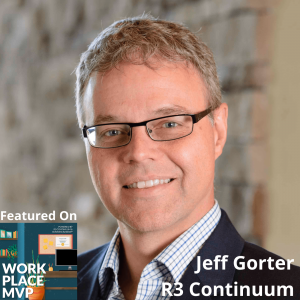
As employers make decisions about requiring employees to return to the workplace and what form that takes, Dr. Tyler Arvig says they need to consider the concerns and fears employees are having about it as well.  He offers ways employers can approach this decision and support their employees’ wellbeing.  The R3 Continuum Playbook is presented by R3 Continuum and is produced by the Minneapolis-St.Paul Studio of Business RadioX®. R3 Continuum is the underwriter of Workplace MVP, the show which celebrates heroes in the workplace.

TRANSCRIPT

Intro: [00:00:00] Broadcasting from the Business RadioX studios, here is your R3 Continuum Playbook. Brought to you by Workplace MVP sponsor R3 Continuum, a global leader in workplace behavioral health, crisis and security solutions.

Dr. Tyler Arvig: [00:00:15] Hello. My name is Dr. Tyler Arvig, the Associate Medical Director at R3 Continuum. As many organizations are beginning to make decisions about going back into the workplace or even deciding if they should return to remote work, I want to provide some information on how to handle the fears that some employees might be feeling at this time. It’s been nearly two years since we heard of the COVID-19 outbreak across the world, and it’s continuing to impact the lives of all of us.

Dr. Tyler Arvig: [00:00:50] While it’s tough to think about now, certain aspects of pre-pandemic life that seemed unimaginable when the virus struck now seemed possible again. As the world continues to evolve and change, businesses are beginning to think about making decisions regarding return to work in the office, going for a hybrid approach or utilizing work-from-home environments. When pondering these decisions, leaders should take a step back and think from the mindset of your typical employee. How are they feeling about their current situation? Are they feeling anxious or distressed? Are they concerned for their safety? What can they expect when they return to the office? And ask yourself if you asked your employees any of these questions or heard their concerns.

Dr. Tyler Arvig: [00:01:49] Over the past 16 months or really more, everything has changed. Most people have transitioned to working from home; and if not, the workplace has drastically changed over that time with health and safety measures being put in place. Those who are parents have had to work through having kids at home and helping teach them in some capacity. As changes in your work, personal and likely financial situations have occurred, this has probably also led to increases in stress. A study done by the Centers for Disease Control in 2020 mentioned that the rate of depression in adults increased almost four times, and the rate of anxiety increased almost three times since the start of the pandemic. Therefore, the pandemic and everything that’s taken place in between has definitely taken its toll.

Dr. Tyler Arvig: [00:02:52] While this may change over time, we are currently seeing a new world or rather a new old world. In most places in the US, masks are no longer required. You might be walking into your convenience store not wearing a mask, while some folks still are. That’s the new old world. For a lot of people, wearing a mask has become part of their day-to-day life. On the topic of walking into a convenience store, we are beginning to see more organizations remaining open again, flights being fully booked, concerts are happening and more. While we are seeing things like this changing back, everyone continues to be hopeful, but also somewhat tentative. As we are getting near the end of summer and vaccination has become more widely available, many employees are starting to think about returning to the office; while, some have already made their decisions and are needing to reanalyze those decisions.

Dr. Tyler Arvig: [00:04:01] As an employee, there are a lot of questions that remain. From the personal side of things they may be asking themselves, how will going back into the office affect my children? What will need to be adjusted in order for me to take care of my family? How’s the commute going to be? And how will it impact my day-to-day life again? Will I be able to maintain a work-life balance. And from a work perspective, a lot of employees are wanting to know things like, will my employer care about my challenges? How will the transition back to work even go? And will it be successful after working from home for so long? Lastly, and not insignificantly, will I be safe at work?

Dr. Tyler Arvig: [00:04:56] As a leader, making this decision for your employees isn’t easy. Whether you decide to have employees returned to the office, go back to working remotely, or continue working remotely, here are some good tips to be sure that you’re providing to your people. To start, be sure to utilize the employee assistance program that you might have. A lot of employees are unaware that they have access to an EAP. Make sure you’re communicating to your employees how they can access your EAP and let them know more information about it. Explore some applications that could potentially help with mental health. There are numerous smartphone apps that can be used to help with things like stress management, anxiety and depression. Do some research and maybe provide some options to your employees. In fact, your EAP might even have something like this. This is something you can do over email, or with links or employees can really access this in whatever way meets their needs. It’s something that you may not have thought of that you can provide.

Dr. Tyler Arvig: [00:06:14] Provide employees with resources from your HR department. HR departments often have different resources they can provide to help employees to support their well-being. Utilize what you already have and be sure to communicate and reach out to your employees about those things. Communication is really key in all of this. While this might seem like a daunting task, I’m reminded of something that’s attributed to Dr. Martin Luther King, the saying that goes, “You don’t need to see the whole staircase. Just take the first step.” The quote is powerful in this day and age as we move forward to the next normal, one step at a time.

Dr. Tyler Arvig: [00:07:02] While there are likely a lot of questions about the future, it’s important for leaders to not only feel prepared to help your employees through these difficult times, but also to support yourself. R3 Continuum can help by providing proactive efforts to maintain the psychological and physical support for your organization. R3C’s tailored solutions can help your organization with crisis prevention and preparedness, crisis response and recovery, proactive employee wellbeing outreach and more. Learn more about our custom solutions and contact us at www.r3c.com or contact us directly by email at info@r3c.com Thank you very much.


Show Underwriter

R3 Continuum (R3c) is a global leader in workplace behavioral health and security solutions. R3c helps ensure the psychological and physical safety of organizations and their people in today’s ever-changing and often unpredictable world. Through their continuum of tailored solutions, including evaluations, crisis response, executive optimization, protective services, and more, they help organizations maintain and cultivate a workplace of wellbeing so that their people can thrive. Learn more about R3c at www.r3c.com.

R3 Continuum is the underwriter of Workplace MVP, a show which celebrates the everyday heroes–Workplace Most Valuable Professionals–in human resources, risk management, security, business continuity, and the C-suite who resolutely labor for the well-being of employees in their care, readying the workplace for and planning responses to disruption.

Connect with R3 Continuum:  Website | LinkedIn | Facebook | Twitter

Tagged With: COVID-19, covid-19 crisis management, Dr. Tyler Arvig, empathy in the workplace, playbook, R3 Continuum, workplace culture, Workplace MVP

Decision Vision Episode 130: Should I Forgive? – An Interview with Brandon Lee, FunnelAmplified

August 19, 2021 by John Ray

FunnelAmplified
Decision Vision
Decision Vision Episode 130: Should I Forgive? - An Interview with Brandon Lee, FunnelAmplified
Loading
00:00 /
RSS Feed
Share
Link
Embed

Download file

FunnelAmplified

Decision Vision Episode 130:  Should I Forgive? – An Interview with Brandon Lee, FunnelAmplified

Shouldn’t this question be addressed in a personal or spiritual context instead of on a business podcast? No, says Brandon Lee, CEO of FunnelAmplified, because forgiveness is integral and essential not just to our personal lives but in business as well. In a riveting conversation, Brandon and Decision Vision host Mike Blake discussed Brandon’s own stories of forgiveness, what forgiveness is and isn’t, the impact on his professional and personal life, and much more.  Decision Vision is presented by Brady Ware & Company.

FunnelAmplified

FunnelAmplified is the first digital and social engagement platform for sales teams.

It was built for the enterprises designed to work with your existing tools to amplify sales and marketing efforts for your organization by enabling and facilitating social selling. The system amplifies social selling content, reach buyer enablement, and it does it with today’s modern buyer journey in mind.

Company website | LinkedIn

Brandon Lee,  Founder &. CEO, FunnelAmplified

FunnelAmplified
Brandon Lee, Founder & CEO, FunnelAmplified

Brandon’s passion is helping sales reps and teams use their digital presence and behavior on social media to build influence, establish trust, generate a large network, and use all of that to create conversations that lead to business opportunities.

When he is not working, Brandon is chasing his wife, Megan, around. They’ve been married for 22 years and have five children. Their kids are growing into young adults and it’s been an amazing time of life. Their fifth is a bit younger than the others so they will truly never be empty nesters. That’s okay. Brandon’s family is some of his favorite people in the world.

LinkedIn

Mike Blake, Brady Ware & Company

Mike Blake, Host of the “Decision Vision” podcast series

Michael Blake is the host of the Decision Vision podcast series and a Director of Brady Ware & Company. Mike specializes in the valuation of intellectual property-driven firms, such as software firms, aerospace firms, and professional services firms, most frequently in the capacity as a transaction advisor, helping clients obtain great outcomes from complex transaction opportunities. He is also a specialist in the appraisal of intellectual properties as stand-alone assets, such as software, trade secrets, and patents.

Mike has been a full-time business appraiser for 13 years with public accounting firms, boutique business appraisal firms, and an owner of his own firm. Prior to that, he spent 8 years in venture capital and investment banking, including transactions in the U.S., Israel, Russia, Ukraine, and Belarus.

LinkedIn | Facebook | Twitter | Instagram

Brady Ware & Company

Brady Ware & Company is a regional full-service accounting and advisory firm which helps businesses and entrepreneurs make visions a reality. Brady Ware services clients nationally from its offices in Alpharetta, GA; Columbus and Dayton, OH; and Richmond, IN. The firm is growth-minded, committed to the regions in which they operate, and most importantly, they make significant investments in their people and service offerings to meet the changing financial needs of those they are privileged to serve. The firm is dedicated to providing results that make a difference for its clients.

Decision Vision Podcast Series

Decision Vision is a podcast covering topics and issues facing small business owners and connecting them with solutions from leading experts. This series is presented by Brady Ware & Company. If you are a decision-maker for a small business, we’d love to hear from you. Contact us at decisionvision@bradyware.com and make sure to listen to every Thursday to the Decision Vision podcast.

Past episodes of Decision Vision can be found at decisionvisionpodcast.com. Decision Vision is produced and broadcast by the North Fulton studio of Business RadioX®.

Connect with Brady Ware & Company:

Website | LinkedIn | Facebook | Twitter | Instagram

TRANSCRIPT

Intro: [00:00:01] Welcome to Decision Vision, a podcast series focusing on critical business decisions. Brought to you by Brady Ware & Company. Brady Ware is a regional full service accounting and advisory firm that helps businesses and entrepreneurs make visions a reality.

Mike Blake: [00:00:21] Welcome to Decision Vision, a podcast giving you, the listener, clear vision to make great decisions. In each episode, we discuss the process of decision making on a different topic from the business owners’ or executives’ perspective. We aren’t necessarily telling you what to do, but we can put you in a position to make an informed decision on your own and understand when you might need help along the way.

Mike Blake: [00:00:42] My name is Mike Blake, and I’m your host for today’s program. I’m a director at Brady Ware & Company, a full service accounting firm based in Dayton, Ohio, with offices in Dayton; Columbus, Ohio; Richmond, Indiana; and Alpharetta, Georgia. Brady Ware is sponsoring this podcast, which is being recorded in Atlanta per social distancing protocols. If you would like to engage with me on social media with my Chart of the Day and other content, I’m on LinkedIn as myself and @unblakeable on Facebook, Twitter, Clubhouse, and Instagram. If you like this podcast, please subscribe on your favorite podcast aggregator, and please consider leaving a review of the podcast as well.
Mike Blake: [00:01:18] Today’s topic is, Should I forgive? A simple topic to state, not an easy one to cover. And you might be thinking, “Why are we covering something like this? This doesn’t sound like a hard core business topic.” And, you know, maybe you’re right. And trust me, I’m not turning this into the spiritual karma podcast. There are plenty out there that do a much better job than I’ll ever do. And, honestly, if I’m the least, I’m not that overly a spiritual person.

Mike Blake: [00:01:55] But, you know, I do sort of have a personal mantra, which I’ve had for a long time, which is care, serve, and forgive. And I found that if I do those three things, then not only does that help me be successful, it helps other human beings be successful, it helps me be centered and feel good about what I’m doing at any given point in time, particularly when things get tough.

Mike Blake: [00:02:21] And forgive is in there and it’s on this podcast because unless you’ve been in business for a grand total of 6 minutes and 19 seconds, something has happened to you and your professional career for which you have an opportunity to forgive someone. Somebody may have wronged you intentionally. Somebody may have wronged you unintentionally. Somebody may have given you their perception that they’ve wronged you, and that may or may not ultimately be true and you may or may not have closure on that.

Mike Blake: [00:02:58] But as somebody in my position where I don’t do litigation, but I do dispute resolution, I mediate disputes, I can’t tell you how many companies are broken up, how many families are broken up simply because one or multiple parties we’re just unable to find it in themselves to forgive. And often things that, to me, sounded really in the greater scheme of things relatively trivial. And I don’t want to trivialize anybody’s pain, that’s not the point. But, also, when a third party examines a fact pattern, there’s a different perception of the fact pattern, and the impact of that fact pattern than if you’re sort of in there and living it in the moment.

Mike Blake: [00:03:55] And I think that’s why forgiveness is so difficult. There’s the saying, to err is human, to forgive divine. For a long time, humanity has understood that the act of forgiveness is one of the most important and one of the most difficult and challenging things that we can do. And, you know, as I think our guest will touch on, I think – I have some idea of how this conversation is going to go, but I can’t tell you that I know exactly we’re going to talk about how and when.

Mike Blake: [00:04:24] But one thing that I think is going to come out is that there is a cost to not forgiving. I mean, there’s a cost to forgiving, too. But it’s a different kind of cost and the cost, frankly, is front loaded. But there’s a cost to not forgiving. And, frankly, I’m not sure if the younger you are, the greater the cost is or the older you are, the greater the cost is. I think you can make a case for either one. But the point is, is that, chances are, somebody in your business life has given rise to an opportunity for forgiveness.

Mike Blake: [00:05:04] And there’s a very good chance that something like that has occurred in the last 18 months as we’re in this – I used to call it the trans-pandemic period. I now call it the inter-pandemic period because it looks like we’ve left one or entering at least one more, unfortunately. Times are tough. People are not necessarily at their level best all the time. I’m certainly not. I’ve certainly done and said things that I wish I could take back and I’ve sought forgiveness. And other people have done the same with me. But it is not easy.

Mike Blake: [00:05:34] And, you know, I just hope that a conversation like this and talking to our guest, who really has just such a compelling story, and such an air of class about how he tells it, and his willingness to kind of not filter, and kind of really be raw about it is going to help gain more insight than I could ever provide or even attempt to provide on my own.

Mike Blake: [00:05:59] And so, joining us to help us with this topic is Brandon Lee, who’s Founder and CEO of FunnelAmplified, also a bunch of other companies. But I know he doesn’t want me to do a big intro. But I will say that FunnelAmplified is the first digital and social engagement platform for sales teams. It was built for the enterprises designed to work with your existing tools to amplify sales and marketing efforts for your organization by enabling and facilitating social selling. The system amplifies social selling content, reach buyer enablement, and it does it with today’s modern buyer journey in mind.

Mike Blake: [00:06:35] Brandon’s passion – I think he has multiple ones – is helping sales reps and teams use their digital presence and behavior on social media to build influence, establish trust, generate a large network, and use all of that to create conversations that lead to business opportunities. When he is not working, Brandon is chasing – and he used that in his LinkedIn profile, so I think I have implicit permission – his wife, Megan, around. I assume in a positive way. They’ve been married for 22 years and have five children. Their kids are growing into young adults and it’s been an amazing time of life. Their fifth is a bit younger than the others so they will truly never be empty nesters. That’s okay. Brandon’s family is some of his favorite people in the world.

Mike Blake: [00:07:18] When you connect with Brandon, just mention anything about parenting, awesome marriages, the English Premier League, Oregon Pinot Noir – so I guess he’s a big Erath fan – or great cigars and you will capture his attention for a fun conversation. He is also a man that seeks to love God and be loved by God. And he’s cohost of the Social Your Sales podcast. Brandon Lee, welcome to the program.

Brandon Lee: [00:07:43] Mike, thank you so much for having me. I appreciate being here.

Mike Blake: [00:07:47] So, you know, let’s dive into it. I asked you to be on this podcast because you posted such an awesome story about forgiveness on LinkedIn. Not Facebook, but on LinkedIn. We normally don’t see that stuff. We’re not supposed to really open the emotional kimono to show people who we are. It’s all supposed to be buttoned up and sterile. You don’t talk about politics, religion, any of that stuff. And you put it on LinkedIn. But I can’t do justice to it. Can you tell us about your forgiveness story, please?

Brandon Lee: [00:08:24] Yeah. Absolutely. And before I jump into that, I’ll tell you that that post has been my most engaged post in the past month. It’s, you know, up over 15,000 views. It’s like 100 and almost 200 likes and pushing to a hundred comments. And I think it’s because there’s a big need for this conversation. And I do find that it is a hard conversation. It is a hard topic. And I’ve had so many direct messages from people that want to share their own story, and deal with it, and parent issues, and whatnot. And it just shows me that, you know, social media is a great place for us to be able to have complete conversations, not just, you know, put our title out there, but to actually be a human being.

Brandon Lee: [00:09:20] So, my forgiveness story started young and, you know, I’m very careful the way that I explain this, because I do start it with my dad had a harder dad relationship than I did. And so, this isn’t a point fingers blame and be a victim. For me, over time, it just became the reality that there was a lot of pain. There was a lot of hurt. There was a lot of brokenness. There was a lot of just crap, to be honest, that I picked up, I adopted, I incorporated into my life. And the way that I was going to get rid of those things that affected me and made me be a person I didn’t always want to be started with forgiveness.

Mike Blake: [00:10:18] So, I like to delve into that, because, you know, you highlighted something that I passed on very briefly. You know, the cost of not forgiving can be pretty insidious, can’t it? Because it creates this burden. And I get the sense from you that it carried a very powerful burden on you, and then by extension, maybe on people that you cared about.

Brandon Lee: [00:10:45] Yeah. I mean, it affected all areas of my life. It affected the way I showed up with my wife in our marriage, and with my kids, and, of course, in business, and with my team, with customers, with the industry. I didn’t realize for so long because I just thought, “Oh, you know, this is just the way life is. This is the way I am.” That I had a choice. I didn’t have to be that way. And I had some hardness. I had some walls. I had some hardness. I had some areas that I didn’t like the way I reacted or I didn’t like the way I showed up. I didn’t like how defensive I got and how defensiveness turned me into more aggressive. And there’s never been physical abuse or anything with my wife and I.

Brandon Lee: [00:11:38] It was just attitude for my part and a lack of forgiveness and taking things personal. And, you know, when people behave in a certain way – and it doesn’t matter if it’s a customer, if it’s a vendor, if it’s a spouse, if it’s children – my tendency, because of the stuff that I carried, adopted, and lead me, I took a lot of stuff personal. Like, they were personal attacks, or personally making decisions to harm me, to whatever against me. And the reality is it’s just not true.

Brandon Lee: [00:12:17] Like, everybody carries their own stuff in life and they make decisions for their different reasons. And, you know, 99.9 percent of the time people make decisions. Yeah, they may influence me and they may influence me negatively, but they’re not making it to be negative to me. But that was something that I carried for a lot of years. And I know that it influenced, as I say, the way I showed up.

Brandon Lee: [00:12:43] And, you know, I’m a technology guy. And so, when I became aware of this, I started looking at Brandon 1.0 needed an upgrade. And I wanted to take a look at what did I need to do to create that upgrade and continual upgrades. And when I unpeeled and got into a lot of things, I realized that there was a lot of anger, there was a lot of bitterness, there was a lot of frustration, there was some victim thinking. And these were all things that didn’t serve me well. And they were, if you will, pieces of code that couldn’t go into 2.0. Like, they had to be stripped out because 2.0 wasn’t going to function the way I wanted it to function with that garbage code in there.

Mike Blake: [00:13:32] So, I mean, that’s a fascinating way to put it. One, I noticed you said it’s 2.0, not 1.1.

Brandon Lee: [00:13:38] Good jumps. You have to take good jumps.

Mike Blake: [00:13:38] That implies a wholesale version change, not simply a series of upgrades and DLC. But, also, my experience with scenarios such as yours is, you know, people who do grow up in an abusive environment naturally do have those psychological outcomes. It’s a natural way that your brain is wired because of fear, because of the lack of validation that we need from our parents, at least from time to time. I do agree there’s a line between validation and enabling, but that’s a different podcast. But you can also be very clearly on one side of the line or the other. Not every case is grey. Some cases are clearly, you know, black and white.

Mike Blake: [00:14:38] And the question I want to ask you is this, which is, in some cases, some people deal with that through spirituality, right? They find it in God, they find a new universe, nature, whatever their belief system is. Some people find it through, frankly, self-medication of some kind. Some people find it through self-help or psychological therapy. And I don’t know to what extent any of those were involved in your life, and you can choose to share that or not.

Mike Blake: [00:15:18] But you took a path of, I think, confronting. Confronting the root cause, which is, I think, extremely hard, because you’re not just forgiving, but you’re actually also confronting something which historically have been very threatening. And being able to do that ain’t easy. And there are probably other options – I’m not a professional psychologist – available to you to kind of address or rewrite that code to Brandon 2.0. Why did you choose the path of forgiveness versus others? Or did you choose others as well? Was it sort of a package deal?

Brandon Lee: [00:16:04] Yeah. That’s a great question. So, it was definitely a package deal for me. But forgiveness, for me, I feel like it was the door that led to the other areas for me. I have a friend of mine who has a nonprofit on forgiveness. And I’ve been on his board and I’ve learned a lot from him. You know, I encountered him later after I was in this journey. And that’s why I was drawn to it, because I had already experienced the value of forgiveness for myself.

Brandon Lee: [00:16:44] But he’s got this great story that he tells, which is, when you don’t forgive, you’re walking around with a backpack that’s filled with crap, like stinky, smelly, rotten crap. And it affects every conversation that you have. Because when you walk up, there’s a stench, if you will. And when we don’t deal with our own forgiveness, it influences the way that we show up, the way that we respond, the things that we say, the willingness to give people the benefit of the doubt, so many things like that.

Brandon Lee: [00:17:26] So, for me, forgiveness was a door that had to be opened. And then, once I opened it, I started to realize a lot of the things that I say I adopted through the situations that I was in as a kid. And those things that I adopted were, you know, you’ve got to defend yourself. I mean, I did. I grew up with a lot of fear. And so, when things felt attacking, my response was to attack back. And it didn’t lead to great decisions. A lot of times that response hurt me more than it could help me. And it added a bunch of emotion. It added a bunch of anger, and frustration, and stress, and things that don’t serve anybody well.

Brandon Lee: [00:18:19] So, you know, the root of mine was spiritual. I do consider myself a man of faith. I do consider myself somebody who tries to do my best to first let God love me, because I think that’s really hard for a lot of people to even think about being worthy of that. And then, secondly, to respond to that by being a forgiving, loving, kind, supportive, encouraging person to other people. And that’s all rooted in my faith in Christ.

Brandon Lee: [00:18:54] And I don’t mean to downplay my faith as much as it didn’t end there. You know, it’s not like you become a believer in some whatever religion and all of a sudden it’s all hunky dory. It’s just not true. It took a lot of digging. It took a lot of work. It took a lot of reflection. And that’s, where you’re saying, the hard work. And it sucks. It’s freaking hard.

Brandon Lee: [00:19:18] Like, looking at things and going, “Okay. Why do I respond this way?” And when you start unveiling things like, “Well, it makes me angry.” “Okay. Why does it make you angry?” And you go, “Well, it feels like a personal attack. It feels this way. It feels that way.” And when I came to the conclusion and realized that I can choose my feelings, that was a big eye opener for me that I didn’t have to choose. There’s a lot of responses I could have. And I could choose joy. I could choose peace. I could choose encouragement and loving. I could be kind to people. I didn’t have to choose those negative responses.

Brandon Lee: [00:20:02] It started to change the way I saw things first. And then, it put me on a path of going, “Okay. Now, I’ve got to rework my go-to behaviours.” Our human brain wants to be efficient. And we learn how to respond to things. That’s like stereotypes and just learned behavior, “If this happens, I do this.” And it’s really hard to take a step back and go, “I don’t want to respond that way anymore. So, how do I do this?” And there’s a lot of failure in that. There’s got to be a lot of forgiveness with yourself. There’s got to be a lot of grace with yourself. And realize that there’s a lot of times I’ve had to go up to people in my family, especially, and outside my family and say, “You know what? I really screwed up.” And not I’m sorry, but the humility of saying, “Will you forgive me?” took it to a level for me that had a ton of changes.

Mike Blake: [00:21:05] What a fascinatingly powerful thing to say. On a superficial level, the difference between I apologize and will you forgive me is conveying the same sentiment. But on the other hand, one is a much more vulnerable position. I apologize takes ownership, which is fine. In some cases, that may be sufficient. But then, asking for forgiveness, that’s really interesting. That’s a fascinating spiritual question we could talk a whole hour on. I just want to point that out, because I think that’s a really important sort of bullet point here.

Brandon Lee: [00:21:50] Yeah. And you know why I think it’s important, and maybe I’m getting too philosophical here, but this is what I thought through, when you ask someone for forgiveness, there’s a humility to it and there’s a respect for the other person. And I feel like respect has gotten pushed to the side in our culture. There’s actually a lot of disrespect. If I disagree with you, it gives me a right to disrespect you. And, unfortunately, it’s one of the downsides of social media and the Internet.

Brandon Lee: [00:22:25] But to humble ourselves to a point of saying, “Hey, I wronged you.” and to say, “Will you forgive me?” And, you know, we have a rule in our family, and the rule was, “Don’t say yes unless you really mean it.” And if you need more time, that’s okay. You can say, “I hear you. I understand. And I’m just not ready to forgive you yet.” And to be okay with that because everybody’s got a process and deal with this stuff in their own way. And, you know, what I’ve learned inside my family is that I can be okay with letting it sit until they’re ready to forgive me, because I know it’s going to happen. But it may not happen right now. And I used to take it as, “Well, if you’re not going to forgive me, then I’m going to go back on the attack.”

Mike Blake: [00:23:18] Right. Which is, I mean, when you sort of step back, that’s a very selfish position to take, right? If you’re not going to give me instant gratification, I don’t want it anyway. I mean, it completely undermines the genuineness of the request.

Brandon Lee: [00:23:37] Sorry. Go ahead.

Mike Blake: [00:23:37] No. Go ahead. I want you to talk. Not me.

Brandon Lee: [00:23:40] No. I was going to say that I talk a lot about in my personal life with my wife, my kids, close friends. But it has a direct impact in our business life and how we respond to people in business. You don’t act one way at home and then act totally different at work. You can act somewhat different, but the roots are the same. And when you want to respond by feeling attacked or you want to attack when attacked, it’s going to play out in other areas of our lives.

Brandon Lee: [00:24:14] And it doesn’t serve us well in that environment either, especially where you’re around people that are less likely to forgive you because they’re not your family. They don’t have to live with you every day. They can say, “You know what? Forget you, write you off, and you’re done.” Or you’re the one that says, “You know what? Forget you, write them off, and you’re done.” And that doesn’t do anyone any good.

Brandon Lee: [00:24:35] I mean, the core of our businesses is our influence, our network, the quality of that network and the influence. And if we have a path of destruction behind us, it means we’re limiting our own network, our own influence, our own ability to go back to somebody in three years or two years or six months and go, “Hey, we had a great experience together and now I’m doing this.” You know, either, (A) Will you introduce me to this person? Or (B), Would you take a look at it and give me feedback? Or whatever it may be. You blew that bridge up.

Brandon Lee: [00:25:14] And if you blow that bridge up, it hurts your business. And it all hurt because you’re carrying hurts and pains and tendencies to act in a certain way because you haven’t dealt with the underlying stuff, which is, “You know what? I got dealt bad cards. It sucked. Now, I have a choice of either getting a new deck and showing up differently or letting the hand that I was dealt continue to cause destruction in my life.”

Mike Blake: [00:25:45] When you approach this forgiveness plan – after this question, we’re going to get into some of the specifics that, I think, the timeline is really important – I am curious, I want to ask this before I forget. And that is, can you make a habit of forgiveness? Does forgiving once on something make it easier to forgive things that are completely unrelated just because you start to adopt a forgiveness mindset that that’s just now on the table?

Brandon Lee: [00:26:13] That’s a really good question. I think it does. I mean, it’s not always a one plus one equals two world, right? It’s two steps forward, one back; Two forward, three back. You know, there’s different triggers. There’s different places of our persona that we want to protect, that when they’re attacked, we respond differently. But I do think that what I’ve noticed is, once I started to be aware of taking that backpack off and not showing up with the stench of attack when attacked that so many different situations just played out better.

Brandon Lee: [00:27:06] I mean, a lot of times people act in a certain way because of their own brokenness. And they don’t even realize or see the influence it had on you or the effect that it had on you. And if you respond in attack mode, all of a sudden, you’re both duked up protecting yourself and neither one of you really know what the heck started it in the first place. I mean, if you want, you can go down that path of like, “Oh, well. He did -” But it just doesn’t do any good. And I mean, I’m going to throw this curveball out there because this is probably going to be – and maybe I’m just cutting you to the chase, and I’m sorry if I do that. Will you forgive me, Mike?

Mike Blake: [00:27:49] I will. There’s nothing to forgive. Just keep talking. You’re saying awesome things. Just keep talking, man.

Brandon Lee: [00:27:54] Yeah. I have a business partner now, who in a previous business 15 years ago had embezzled from me.

Mike Blake: [00:28:07] No kidding.

Brandon Lee: [00:28:09] And over time, as we both went down our own paths separately and came to a place of – and what I realized was there was a lot of stuff that was driving his behavior, and his decisions, and his own insecurities, and his own stuff that it wasn’t about money. It was about other things. And I don’t want to get too deep and tell someone else’s story. But, you know, years later, it started with an ask of, “Hey, I screwed up. I did you wrong. Will you forgive me?” And it was, “Absolutely. What’s happened in your life? What’s going on?”

Brandon Lee: [00:28:59] And there was a share of these are some of the things that I’ve learned about myself, and some of the behavior that I had, and what I did, and how it played out. And it wasn’t, like, immediately. We didn’t just jump right into it. But about three years later, after working on restoring the relationship, rebuilding trust, getting to know each other as a new, you know, I’m working on 2.0 version, I got to the point where I thought, “You know what? We did good together before. Yes. I know I’m opening myself up to a potential issue again. Fool me once, shame on you. Fool me twice, shame on me.” But you know what? I think that life and people calls for second chances.

Brandon Lee: [00:29:47] And, you know, he is one of my partners in a current business, and I’m excited. I’m really excited when this business gets to a point that has, you know, maybe more popularity, more recognition, that one of the stories we’re going to share is about our own story of forgiveness. Because here’s the thing, I had to ask him for forgiveness, too, because my response to his behavior wasn’t good either. And I had to own my response to it no matter what he did. I wasn’t proud of my response, my behavior, my attack, my attacking his character, and other things because that’s not who I want to be. And so, I’m excited for that.

Brandon Lee: [00:30:35] And I’m sure there’s a lot of people shaking their heads. There’s a lot of people thinking that’s really unwise, stupid, ignorant, whatever. But you know what? I guess part of being an innovative technology guy means I can be innovative with forgiveness, too. And, you know, so far it’s been a good five, six years and things are going well.

Mike Blake: [00:30:59] Well, I mean, what a fascinating story. I did not know any of that until you just said it. But it’s illustrative of why I wanted to talk about this in the podcast, because you do have opportunities to forgive people in a business context that can be very meaningful to your career. And it sounds like you’re very happy with that partnership 2.0, and the cost of being unable to forgive, and I guess seek forgiveness as well would have been the missed opportunity to enter into that partnership. And both you and I have been around the block once or twice. We both know that finding a good business partner is not easy. It is not a commodity.
Brandon Lee: [00:31:43] Right. Well, I mean, here’s the other thing we all got to think about, do you, as an individual – and I’m speaking to myself as well – do you want to be known for the worst decision you made, for the worst behavior you made? Or would you appreciate and be grateful for people to forgive you because you recognized later that it was a bad decision. You shouldn’t have done it. And a genuine sense of remorse or a genuine sense of, “I want to grow from this.” Not just a, “Hey. I’m sorry. Can we move on?” You know, there’s a difference there. And that’s why, I mean, it was three years of rebuilding, rebuilding trust and other relational debt.

Brandon Lee: [00:32:36] And when I thought about it for me, like, I made some stupid decisions in life. I’ve done some stupid things. And I don’t want to be remembered for those things. And I hope that people don’t hold those things against me for the rest of my life because maybe I was a different person back then or I hadn’t grown up yet, I wasn’t as mature, whatever it may be.

Mike Blake: [00:32:59] Well, don’t we also want to be remembered and known as somebody who offers forgiveness. You know, sort of the hard headed one and done kind of mentality plays well, I think, on TV and Hollywood. And I think it plays well because in those stories, actors are basically avatars for the aggressions of the people watching. But when it comes right down to it, don’t the best people want to work for somebody like you in that regard, that you have the space to screw up, basically. And there’s some reasonable path to redemption as opposed to one and done.

Mike Blake: [00:33:52] And don’t you want that person having your back? Don’t you want that person being your vendor, your supporter, your adviser, whatever it is? And I suspect this wasn’t really explicit in your mindset. This is more of an internal conversation. But there’s nothing wrong with forgiveness also having sort of collateral benefits elsewhere, right?

Brandon Lee: [00:34:20] Yeah. Absolutely. I mean, life is integral, right? None of this stuff sits in its own little compartment.

Mike Blake: [00:34:33] It’s integral. And to that extent, it’s also nonlinear. That’s the other part that’s really important.

Brandon Lee: [00:34:40] Yeah. And, you know, I’ve got a story with somebody that worked for me years ago. A good guy. You know, this is pre-social media days. And he was responsible for marketing. And we had a brochure that we were creating. And it went through all the editing routes and, you know, grammar check and spell check and all that. And the first go around, we get the printed brochures and there were two big typos. And the original final file didn’t have the typos. He had sent the wrong file. And go through it all, printer didn’t do a mistake. It was our mistake.

Brandon Lee: [00:35:27] So, you know, we owned it and we had a conversation. He wasn’t fired. It was an expensive mistake. But we said, “Okay. What do we need to do operationally to make sure this doesn’t take place again and blah, blah, blah.” And I think he was really, really nervous I was just going to come in and go, “You’re fired. Get the hell out of here.” And then, you know, six, seven months later, we went to reprint and, unfortunately, he sent the wrong file again. And that time I did fire him. But it wasn’t, “Get the hell out of here.” It was, “Hey, we put operations in place. This is the second time. You’re not paying attention to detail. We’re now 40 grand into mistakes and there’s just no room for it.” And, of course, nobody likes to get fired and say, “Oh, I get it. You’re right, I’m wrong.” There was frustration. There was fear. There was, you know, how am I going to provide for my family type stuff going on.

Brandon Lee: [00:36:34] But several years later, I got a message from him on LinkedIn and said, “Hey, would you be willing to jump on a call with me?” I said, “Absolutely.” We had a great conversation. He just said, “Hey, you know, I want you to know when I left, I was pissed. But I also want you to know now that you did the right thing. I totally get it. And that situation helped me become a better person. And here’s some things that have taken place in my work life, blah, blah, blah.” And he’s like, “I just want to thank you for that, for how you handled it. Not for firing me, but how you handled it.”

Brandon Lee: [00:37:09] And you know what? This may sound very cheesy. This may sound very Pollyanna. But I carry that conversation with him a lot, especially on hard days. And, you know, being an entrepreneur, being a business owner, it’s freaking hard and frustrating and all those things. But it’s some of those life experiences I have that make me proud, to be honest. They make me keep moving forward, keep wanting to treat people well, because you never know what is going on in their lives and you never know what impact you’re going to have on them. And then, therefore, their relationships and their family. It’s like that, you know, throwing the rock in the lake and watching all the the waves go out.

Mike Blake: [00:38:00] So, I think an interesting object lesson from that anecdote – and by the way, I think it’s really fascinating. I’m guessing in a way with some distance, he probably thought you did him a favor in the long run.

Brandon Lee: [00:38:19] And that was the conversation. Yeah.

Mike Blake: [00:38:21] Yeah. But there’s a difference between forgiveness and absence of consequence.

Brandon Lee: [00:38:29] Absolutely.

Mike Blake: [00:38:31] And just because you impose a necessary consequence, that doesn’t preclude forgiveness. You can still say I forgive you, but this isn’t about forgiveness. It’s about my business cannot afford to sustain this kind of error because it has a real monetary cost that imperils the business for everybody, and nonmonetary.

Brandon Lee: [00:38:57] Right. And nonmonetary. But, I mean, here’s the other thing, if we get back to forgiveness at the core, is, I’ve heard this said before, I mean, not forgiving somebody is like taking poison yourself and hoping that it hurts them. It festers inside of us. I mean, there’s a lot of data, there’s a lot of science around the lack of forgiveness, and bitterness, and anger, and what it does to our bodies and our life expectancy. I mean, all those things, they’re not doing us any good.

Brandon Lee: [00:39:34] So, if we don’t learn and figure out a way of forgiving – doesn’t mean forgetting – there’s still consequences, there’s still boundaries of things. You know, people don’t just, “Oh, yeah. Okay. You said I’m sorry. Let’s get back to normal.” Because they’re probably going to do it again in that circumstance. But, you know, forgiveness is as much for us and even more for us, I think, than it is for the other person.
Mike Blake: [00:40:03] I think that’s right. You know, I think you’re apt of sort of the manure laden backpack. The only thing I would add to it is, it also probably contains about 75 pounds of lead in addition to everything else. It is toxic because, to some extent, when you’re not ready to forgive, it’s a necessary defense mechanism. So, necessarily, it’s a protection from continuing to allow yourself to be injured to some extent. But then, you do reach a point at which that that protection is no longer necessary.

Mike Blake: [00:40:44] And, now, you’re simply, as you’ve described, sort of carrying this burden around that’s only costing you. That person that you let go has already moved on. They found another job. They’ve learned a lesson. Maybe they found a new job or a job they’re just better at that maybe is less detail oriented, whatever it is. But you’re still carrying that. And then, as you said, when you carry something like that that’s emotional, it’s very rare that it doesn’t leak out and impact other people because very few human beings can compartmentalize themselves to that extent.

Brandon Lee: [00:41:27] Yeah. Yeah. I think that’s well said, Mike.

Mike Blake: [00:41:32] So, we’ve completely gone off the script, which is fine. So, I’m just sort of carrying this conversation as we go on, which is great. In your mind, is there such a thing as conditional forgiveness? Or does all forgiveness have to be just unconditional?

Brandon Lee: [00:41:57] Well, I think there’s some semantics there that would need to be unpacked a little bit. Because I think there’s a process in forgiveness, too. And, I mean, there’s some really horrible things that have happened to people in the world that make it extremely difficult for them to forgive. And I’m not trying to make it light that, “Oh, everybody just go out and forgive the people who have done the most horrible, horrific things to you by any means.”

Mike Blake: [00:42:32] And if you don’t do that work, by the way, you’re not really forgiving, you’re just suppressing.

Brandon Lee: [00:42:36] Right. Absolutely. So, I think there is a process that people will go through. Some may go through it faster than others. Man, Mike, I don’t know how to answer that conditional versus unconditional. I do believe in boundaries. I do believe in protecting ourselves from repeat harm. Absolutely. I don’t think that forgiveness means people are right back where they were by any means. I think it’s the internal process of a person to say, “What am I still holding on to? How is it influencing my life?” Because at that point, it’s about you being healthy, not worried about them. It’s about you healing and moving forward in the best version of yourself possible. Because life throws some really crappy stuff at us.

Mike Blake: [00:43:49] We’re talking with Brandon Lee. And the topic is, Should I forgive? Let me ask you this, is there a downside to forgiveness?

Brandon Lee: [00:44:02] You know, I think there can be. I think forgiveness is, in my opinion, improperly defined is forgive, forget, and move forward. I think there can be a big downside to that. Man, it’s such a complex topic in everybody’s situation and where they came from, what circumstances, what was done to them, what’s their own ownership in it. It makes it extremely complex. You know, Mike, I don’t know if I’m qualified to answer that question. It would really make me worry to answer that question.

Mike Blake: [00:44:54] Well, yeah. I’m definitely not qualified. But this is the Internet, so that’s not going to stop me. Let me offer your position and I’ll just ask you to react to it.

Brandon Lee: [00:45:08] Okay.

Mike Blake: [00:45:08] I think that forgiveness can be harmful when it’s actually cloaking something else. For example, if forgiveness is really just a way of suppressing something, then I think that that does come. I think that may even be more harmful in certain cases. Or if forgiveness is attempting to trivialize a meaningful transgression or a meaningful crime, not from a civil code, but just a crime that somebody has inflicted upon you, a real harm, that if somebody trivializes that and attempts to make excuses for it in the name of helping you cope, I think that kind of forgiveness can be very damaging because I think that’s what sets you up for exploitation over time.

Brandon Lee: [00:46:10] Yeah. I think there’s a lot of wisdom in that, Mike. I think that, you know, I guess the question for me would be, is that truly forgiveness? Or is that, as you said, kind of masking what else is there? I think we, as humans, we make a lot of decisions to go the easiest route. And sometimes it’s easier just to say we forgive to try and get life back to where it was before or believe it’s where it was before. And I guess in that case, it’s not truly forgiveness, but it’s pretend forgiveness and that can be very harmful. I agree with you.

Mike Blake: [00:46:57] And then, to me, I think there is a risk to forgiveness. I mean, talk about your business partner, forgiveness could expose you to, basically, having the same thing happen to you again.

Brandon Lee: [00:47:12] Yeah. Yeah. It definitely can be played,

Mike Blake: [00:47:16] Yeah. As a finance guy, of course, I express everything in terms of that because it’s all I know. And the universal law of finance is that return potentially comes with high risk. And if you want that return, that’s just a risk that you have to take. And if you’re not willing to take that risk, you’re just not going to get that return.

Brandon Lee: [00:47:39] Yeah. Yeah. And there’s also wisdom in putting systems in place that have checks and balances and things like that. In my case, you know, more on the financial side. But in all circumstances, there’s the ability to forgive and move forward. And, also, to have it, you know, some cautiousness there. And then, I think a lot of that has to lead to ability to have a more honest, direct conversations. Because I think a lot of things that go bad start with – and, again, there’s so many things that people need to look at of whether they’re willing to forgive. And so, this is hard to make it a blanketed statement.

Brandon Lee: [00:48:25] But in a lot of relationships, there may have been behavior that wasn’t great, that wasn’t horrible, that somebody didn’t like, but they let it continue because they didn’t have the courage or the security to take it head on and say, “Okay. This isn’t inappropriate,” because they have their own fears or “If I say this, what would happen?” You know, there’s so many layers to it that it’s so hard, I can really share from my own experiences, but getting into some of those things, I just worry that I’m going to say something that sounds like, “Well, in my circumstance, it doesn’t make sense.” And they’re probably right.

Mike Blake: [00:49:11] Well, you know, it could be. I think our listeners understand at the end of the day, this is two guys talking and we may not know a darn thing. But I do think we have –

Brandon Lee: [00:49:21] I have a degree in this.

Mike Blake: [00:49:23] But I do think we’ve covered some interesting ground. And so, the last comment I’ll make, I’ll ask you to respond to and then we’ll let you go. We really put you through the intellectual wringer here. But, you know, you mentioned a system in your last response, and I think over time I’ve developed in a way a forgiveness system coming from Stephen Covey in The 7 Habits of Highly Effective People. Is it habit two? Whatever it is. One of the habits is, first seek to understand. And that whole concept changed my relationship with forgiveness.

Mike Blake: [00:50:09] Because, for me, only when I could put myself in the position of the transgressor and truly empathize with them, it’s really hard for me to forgive without that. But then, getting into the habit of that or having a system where I say, “Why did this happen? Was it truly personal? What might have been going on to let them do this?” It could be as simple as being in Atlanta and somebody cuts you off. You don’t know if that person just had a fight with her husband and just stormed out. Or if she’s late for work for six minutes and she’s going to lose her job. Or just a lousy driver. Not everybody can be at the far end of the bell curve when you’re a great driver. So, for me, that sort of became my forgiveness system.

Brandon Lee: [00:51:02] You know, a little anecdote on that, when I was in grad school and I was in Texas, I was actually out on a date. And I got off the highway and as I came up to the red light, I looked over and there’s this guy in a car next to me just going nuts. And, you know, I don’t know if I was thinking or what. I rolled my window down and he’s like, “You, blah, blah, blah. You cut me off, blah, blah, blah.” Like, “Oh, I am so sorry. I didn’t realize I did that.” And he keeps yelling and saying all this stuff. And I finally just stopped and I said, “Dude, I said I’m sorry. I didn’t see you. It wasn’t intentional. What do you want?” And he just kind of stopped and looked at me and left a final kind of eff you and rolled up his window and left.

Brandon Lee: [00:51:52] Then, I remember sitting there thinking, going, “I didn’t do it on purpose. I didn’t even realize. Like, I must have made a mistake. I didn’t see him. I cut him off. You know, I was on a date. I was probably distracted. Sorry, other driver.” But that had a big impact on me moving forward. And realizing that there’s a lot of times that people do things they don’t even realize they’re doing. And I have a big emotional response. And they’re oblivious to the fact that their behavior caused or was the cause of my response.

Mike Blake: [00:52:30] Yeah. And for all you know, that person years after reflecting says, “You know, I really overreacted. I wish I could say sorry to that guy.” For all you know, right?

Brandon Lee: [00:52:40] Yeah. Yeah. Exactly.

Mike Blake: [00:52:43] Brandon, this has been a fascinating conversation. I will say it is by far the most metaphysical one we’ve had on the show. And that’s not a criticism, by the way. It’s just a distinguishing feature. So, in the keywords, we’ll just put hash tag metaphysics, I guess.

Brandon Lee: [00:53:00] There you go.

Mike Blake: [00:53:00] But, you know, I think you have so much to teach people here. I suspect we’ve only scratched the surface. If there’s a part of this discussion that we didn’t touch upon, it didn’t go deep enough, can somebody contact you if they want to start a conversation with you? And if so, what’s the best way to do that?

Brandon Lee: [00:53:19] Yeah. Absolutely. So, LinkedIn is probably the best way. You can find me – and I want to change this – it’s Brandon Lee Social Selling is my LinkedIn handle. And as I’ve told you before, I hate the term social selling. But it’s been there for a while.

Mike Blake: [00:53:38] But there it is. Okay. Well, that’s going to wrap it up for today’s program. And I’d like to thank Brandon Lee so much for sharing his expertise with us.

Mike Blake: [00:53:46] We’ll be exploring a new topic each week, so please tune in so that when you’re faced with your next business decision, you have clear vision when making it. If you enjoy these podcasts, please consider leaving a review with your favorite podcast aggregator. It helps people find us that we can help them. If you like to engage with me on social media with my Chart of the Day and other content, I’m on LinkedIn as myself and @unblakeable on Facebook, Twitter, Clubhouse, and Instagram. Once again, this is Mike Blake. And our sponsor is Brady Ware & Company. And this has been the Decision Vision podcast.


Tagged With: Brady Ware, Brady Ware & Company, Brandon Lee, Decision Vision, forgiveness, FunnelAmplified, Mike Blake, power of forgiveness

  • « Previous Page
  • 1
  • …
  • 178
  • 179
  • 180
  • 181
  • 182
  • …
  • 275
  • Next Page »

Business RadioX ® Network


Our Most Recent Episode

CONNECT WITH US

  • Email
  • Facebook
  • LinkedIn
  • Twitter
  • YouTube

Our Mission

We help local business leaders get the word out about the important work they’re doing to serve their market, their community, and their profession.

We support and celebrate business by sharing positive business stories that traditional media ignores. Some media leans left. Some media leans right. We lean business.

Sponsor a Show

Build Relationships and Grow Your Business. Click here for more details.

Partner With Us

Discover More Here

Terms and Conditions
Privacy Policy

Connect with us

Want to keep up with the latest in pro-business news across the network? Follow us on social media for the latest stories!
  • Email
  • Facebook
  • Google+
  • LinkedIn
  • Twitter
  • YouTube

Business RadioX® Headquarters
1000 Abernathy Rd. NE
Building 400, Suite L-10
Sandy Springs, GA 30328

© 2026 Business RadioX ® · Rainmaker Platform

BRXStudioCoversLA

Wait! Don’t Miss an Episode of LA Business Radio

BRXStudioCoversDENVER

Wait! Don’t Miss an Episode of Denver Business Radio

BRXStudioCoversPENSACOLA

Wait! Don’t Miss an Episode of Pensacola Business Radio

BRXStudioCoversBIRMINGHAM

Wait! Don’t Miss an Episode of Birmingham Business Radio

BRXStudioCoversTALLAHASSEE

Wait! Don’t Miss an Episode of Tallahassee Business Radio

BRXStudioCoversRALEIGH

Wait! Don’t Miss an Episode of Raleigh Business Radio

BRXStudioCoversRICHMONDNoWhite

Wait! Don’t Miss an Episode of Richmond Business Radio

BRXStudioCoversNASHVILLENoWhite

Wait! Don’t Miss an Episode of Nashville Business Radio

BRXStudioCoversDETROIT

Wait! Don’t Miss an Episode of Detroit Business Radio

BRXStudioCoversSTLOUIS

Wait! Don’t Miss an Episode of St. Louis Business Radio

BRXStudioCoversCOLUMBUS-small

Wait! Don’t Miss an Episode of Columbus Business Radio

Coachthecoach-08-08

Wait! Don’t Miss an Episode of Coach the Coach

BRXStudioCoversBAYAREA

Wait! Don’t Miss an Episode of Bay Area Business Radio

BRXStudioCoversCHICAGO

Wait! Don’t Miss an Episode of Chicago Business Radio

Wait! Don’t Miss an Episode of Atlanta Business Radio