Business RadioX ®

  • Home
  • Business RadioX ® Communities
    • Southeast
      • Alabama
        • Birmingham
      • Florida
        • Orlando
        • Pensacola
        • South Florida
        • Tampa
        • Tallahassee
      • Georgia
        • Atlanta
        • Cherokee
        • Forsyth
        • Greater Perimeter
        • Gwinnett
        • North Fulton
        • North Georgia
        • Northeast Georgia
        • Rome
        • Savannah
      • Louisiana
        • New Orleans
      • North Carolina
        • Charlotte
        • Raleigh
      • Tennessee
        • Chattanooga
        • Nashville
      • Virginia
        • Richmond
    • South Central
      • Arkansas
        • Northwest Arkansas
    • Midwest
      • Illinois
        • Chicago
      • Michigan
        • Detroit
      • Minnesota
        • Minneapolis St. Paul
      • Missouri
        • St. Louis
      • Ohio
        • Cleveland
        • Columbus
        • Dayton
    • Southwest
      • Arizona
        • Phoenix
        • Tucson
        • Valley
      • Texas
        • Austin
        • Dallas
        • Houston
    • West
      • California
        • Bay Area
        • LA
        • Pasadena
      • Colorado
        • Denver
      • Hawaii
        • Oahu
  • FAQs
  • About Us
    • Our Mission
    • Our Audience
    • Why It Works
    • What People Are Saying
    • BRX in the News
  • Resources
    • BRX Pro Tips
    • B2B Marketing: The 4Rs
    • High Velocity Selling Habits
    • Why Most B2B Media Strategies Fail
    • 9 Reasons To Sponsor A Business RadioX ® Show
  • Partner With Us
  • Veteran Business RadioX ®

The Backstory of Luring Employees Back to Work, with Mike Blake, Brady Ware & Company

July 19, 2021 by John Ray

Brady Ware
North Fulton Studio
The Backstory of Luring Employees Back to Work, with Mike Blake, Brady Ware & Company
Loading
00:00 /
RSS Feed
Share
Link
Embed

Download file

Brady Ware

The Backstory of Luring Employees Back to Work, with Mike Blake, Brady Ware & Company

Mike Blake: [00:00:00] Are we going to lure people back to work? Are we going to force them back to work? So, the topic of the day now is, people are not coming back to the workforce. And that’s the chart that I have from the St. Louis Federal Reserve on Unemployment Level and Job Openings. It shows that the number of job openings exceeds the number of unemployed people in the United States. Why are people not taking them?

Mike Blake: [00:00:30] Well, before I go directly and answer that question, this chart is really important, and if you look at no other chart and look at this one – and it also is from the St. Louis Federal Reserve and it’s the Labor Force Participation Rate. And the labor force participation rate means the percentage of adult Americans who are working, or available to work, want to work, or in the labor force – you’ll notice that the American labor force has been declining since 2000, particularly since, say, late 2008, 2009. And it recovered a bit, I think a statistical noise. Really dropped during the COVID pandemic, and has come back a little bit.

Mike Blake: [00:01:22] And I say that because it provides some useful framework around understanding the nature of unemployment and the nature of people pursuing jobs. And that is, that we have been running up against a shortage of workers for two decades now. We haven’t noticed it, for whatever reason, because we’ve had enough people, more or less, to take jobs. But that gravy train may have come to an end, but we’ll see. Like I said, economics is a slow science.

Mike Blake: [00:01:55] And, frankly, I don’t know the story yet. I don’t know whether unemployment benefits are too high and people are kicking back on the extra 300 bucks a month. You know, I cannot imagine that myself. I can’t imagine $1,200 being meaningful enough to me that I would simply stop working and be on welfare. But I acknowledge I’m not everybody. I just don’t know a portion of the population that is.

Mike Blake: [00:02:23] And I do think people have awakened, and changed priorities, and are willing to give up income for a different lifestyle. I think, you know, there’s nothing like 600,000 people dying over the course of 18 months to remind people how short and precious life is. I do think that people have discovered they’d rather live on less and would rather have more of what they expect their lives to be from a personal perspective and spiritual perspective.

Mike Blake, Brady Ware & Company

Michael Blake is the host of the Decision Vision podcast series and a Director of Brady Ware & Company. Mike specializes in the valuation of intellectual property-driven firms, such as software firms, aerospace firms, and professional services firms, most frequently in the capacity as a transaction advisor, helping clients obtain great outcomes from complex transaction opportunities. He is also a specialist in the appraisal of intellectual properties as stand-alone assets, such as software, trade secrets, and patents.

Mike has been a full-time business appraiser for 13 years with public accounting firms, boutique business appraisal firms, and an owner of his own firm. Prior to that, he spent 8 years in venture capital and investment banking, including transactions in the U.S., Israel, Russia, Ukraine, and Belarus.

LinkedIn | Facebook | Twitter | Instagram

You can find the complete Decision Vision interview here. 


The “One Minute Interview” series is produced by John Ray and in the North Fulton studio of Business RadioX® in Alpharetta. You can find the full archive of shows by following this link.

Renasant Bank has humble roots, starting in 1904 as a $100,000 bank in a Lee County, Mississippi, bakery. Since then, Renasant has grown to become one of the Southeast’s strongest financial institutions with over $13 billion in assets and more than 190 banking, lending, wealth management and financial services offices in Mississippi, Alabama, Tennessee, Georgia and Florida. All of Renasant’s success stems from each of their banker’s commitment to investing in their communities as a way of better understanding the people they serve. At Renasant Bank, they understand you because they work and live alongside you every day.

Tagged With: Brady Ware & Company, employees, unemployment benefits

Anna Palumbo, Red Triangle Interior Design

July 16, 2021 by John Ray

Red Triangle Interior Design
Nashville Business Radio
Anna Palumbo, Red Triangle Interior Design
Loading
00:00 /
RSS Feed
Share
Link
Embed

Download file

Red Triangle Interior Design

Anna Palumbo, Red Triangle Interior Design (Nashville Business Radio, Episode 24)

Red Triangle Interior Design grew out of the joys of home and art in Anna Palumbo’s childhood. She uses her unique way of designing space to transform homes, backyard offices, and retail spaces. Anna joined host John Ray to share her work, success stories, and much more. Nashville Business Radio is produced virtually from the Nashville studio of Business RadioX®.

Red Triangle Interior Design

Red Triangle Interior Design believes there are three elements to every project: the designer, the client, and the space. In the center of these three parts is the relationship that is built and the story that brings the project to life.

Red Triangle Interior Design works with you to express your personal story by creating a space and design that is unique to you and your lifestyle. Believing in giving the client a space that is not only beautiful and relevant but also comfortable and livable. Building a relationship between us and you provides a design that you, your family, and friends will enjoy for years to come. A place where you will continue to add chapters to your story.

What is Red Triangle Interior Design? The lead designer, Anna, grew up about an hour outside of Philadelphia, Pennsylvania in a little town called Chalfont. She grew up in an old stone farmhouse set far back from the road, with a long driveway leading up to the house. Not wanting the kids to be waiting for the bus out in the rain and bad weather, her dad built a large red triangle for the kids to sit in at the bottom of the driveway. Seeing that red triangle always meant coming home safe and sound. A home, and a place of meaning. Their designers want to help you build your own red triangle, that has meaning for you and your family – to help you build a home that’s unique to you.

Company website | LinkedIn | Instagram

Anna Palumbo, Principal, Red Triangle Interior Design

Red Triangle Interior Design
Anna Palumbo, Principal, Red Triangle Interior Design

Anna grew up in the suburbs of Philadelphia, Pennsylvania. Being one of six kids, she was always trying to find and create her own spaces, whether changing a closet into her own art studio or constantly rearranging the bedroom that she shared with her sisters. For her 12th birthday Anna got a drafting table, her own area away from her siblings that she could be creative and it ignited the artistic fire in her.

Anna started as a fine arts major in college but switched to Art History and received her BA in 1998. After college she started teaching pottery and selling pottery. She taught and sold her work for 14 years. During that time, she got married, had three kids and went through one dog and a couple cats.
She and her family moved to Nashville in 2015. Having only lived in the Philadelphia area her whole life, Anna was given an opportunity to reinvent herself. She sold her kiln and wheel and went back to school. She graduated with an Interior Design degree from O’More School of Design at Belmont University in 2019.

She currently lives in Franklin with her husband, 3 kids, two dogs and 1 fat cat.

Anna won the ASID Legacy Scholarship in 2016 and she also is the Save a Sample, Tennessee State winner for 2017.

LinkedIn


Questions and Topics in This Interview

  • How the company got its name
  • How Anna became an interior designer
  • Backyard offices
  • How she uses evidence-based design in my interior design
  • Her “why”
  • Her biggest goal

Nashville Business Radio is hosted by John Ray and produced virtually from the Nashville studio of Business RadioX®.  You can find the full archive of shows by following this link. The show is available on all the major podcast apps, including Apple Podcasts, Spotify, Google, Amazon, iHeart Radio, Stitcher, TuneIn, and others.

Tagged With: Anna Palumbo, backyard offices, evidence based design, home office, home office setup, interior design, interior designer, interior designer in Nashville, makeover my home office, Nashville Business Radio, Red Triangle Interior Design

David Shavzin, The Value Track, and Bob Tankesley, Neri Capital 

July 16, 2021 by John Ray

Neri Capital
North Fulton Studio
David Shavzin, The Value Track, and Bob Tankesley, Neri Capital 
Loading
00:00 /
RSS Feed
Share
Link
Embed

Download file

Exit Planning

David Shavzin, The Value Track, and Bob Tankesley, Neri Capital (ProfitSense with Bill McDermott, Episode 23)

Host Bill McDermott is joined by David Shavzin of The Value Track and Bob Tankesley of Neri Capital. David and Bob advocate that the seller of a business must take the perspective of the prospective buyer. By doing so, a seller will better understand business valuation, planning for a successful exit, and how the sale process will unfold. ProfitSense with Bill McDermott is produced and broadcast by the North Fulton Studio of Business RadioX® in Alpharetta.

David Shavzin, President,  The Value Track

Exit Planning
David Shavzin, President, The Value Track
The Value Track helps business owners sell their companies, maximize value, and create an exit on their own terms. Business owners too often get so caught up in the day-to-day that they lose sight of the key to making that future happen – building value – and are unprepared when the time comes to put their transition into action. The Value Track partners with their clients to build transferrable value and sell their companies. Whether a single owner, a family business, or simply multiple partners – whether their exit planning timeline is one year or 10 years – we take our clients through The Value Track’s 7 steps to ensure success.
Company website | LinkedIn

Bob Tankesley, Principal, M&A Advisor, Neri Capital

Bill Tankesley, Principal, M&A Advisor, Neri Capital

Neri Capital Partners, a boutique investment bank and advisory firm, consists of seasoned transactional professionals and offers a variety of investment banking services to privately held lower mid-market businesses. Our team has in-depth experience with businesses in the manufacturing, business-to-business, industrial, and healthcare market sectors. Neri Capital has closed over 150 transactions with a total enterprise value of $1.3 billion. Services include:
1. Seller representations
2. Business value estimates
3. Exit planning and strategies
4. Buyer representations
5. Corporate and capital formation

Company website | LinkedIn


About ProfitSense and Your Host, Bill McDermott

Bill McDermott
Bill McDermott

ProfitSense with Bill McDermott dives into the stories behind some of Atlanta’s successful businesses and business owners and the professionals that advise them. This show helps local business leaders get the word out about the important work they’re doing to serve their market, their community and their profession. The show is presented by McDermott Financial Solutions. McDermott Financial helps business owners improve cash flow and profitability, find financing, break through barriers to expansion and financially prepare to exit their business. The show archive can be found at profitsenseradio.com.

Bill McDermott is the Founder and CEO of McDermott Financial Solutions. When business owners want to increase their profitability, they don’t have the expertise to know where to start or what to do. Bill leverages his knowledge and relationships from 32 years as a banker to identify the hurdles getting in the way and create a plan to deliver profitability they never thought possible.

Bill currently serves as Treasurer for the Atlanta Executive Forum and has held previous positions as a board member for the Kennesaw State University Entrepreneurship Center and Gwinnett Habitat for Humanity and Treasurer for CEO NetWeavers. Bill is a graduate of Wake Forest University and he and his wife, Martha have called Atlanta home for over 40 years. Outside of work, Bill enjoys golf, traveling, and gardening.

Connect with Bill on LinkedIn and Twitter and follow McDermott Financial Solutions on LinkedIn.

Tagged With: Bill McDermott, Bob Tankesley, business transition, business valuation, David Shavzin, exit planning, Neri Capital, Profit Sense, profitability coach, Succession Planning, The Profitability Coach, The Value Track

Chris Miller, North Fulton Wills, and Andrew Walker, Brady, Ware & Company

July 16, 2021 by John Ray

North Fulton Wills
Family Business Radio
Chris Miller, North Fulton Wills, and Andrew Walker, Brady, Ware & Company
Loading
00:00 /
RSS Feed
Share
Link
Embed

Download file

North Fulton Wills

Chris Miller of North Fulton Wills and Andrew Walker with Brady, Ware & Company (Family Business Radio, Episode 22)

Both Chris Miller of North Fulton Wills in law and Andrew Walker in accounting with Brady, Ware & Company developed a passion for their respective disciplines starting in high school. They shared how they enjoy using their expertise to serve individuals, families, and businesses with host Anthony Chen. Chris Miller discussed probate and what happens when a business owner passes away, either with or without proper planning. Andrew expounded on the current state of the construction industry, prices, the impact of the pandemic on business, and much more. Family Business Radio is underwritten and brought to you by Anthony Chen with Lighthouse Financial Network.

Chris Miller, Owner, The Law Offices of J. Christopher Miller

J Christopher Miller, Owner at Law Offices of J. Christopher Miller, PC (North Fulton Wills)

The Law Offices of J. Christopher Miller, known in the community as North Fulton Wills, is a team of three attorneys and a highly skilled office manager. Its mission is to provide capable legal representation in a welcoming atmosphere.

Whether guiding clients in starting their business, helping form special needs trusts, or helping surviving spouses and family members through the grief of losing a loved one, they are there for their clients every step of the way.

North Fulton Wills helps guide clients throughout their decision-making process and walk them step by step through often difficult decisions. The ultimate goal is to make sure that all clients understand how their documents will carry out their wishes.

J. Christopher Miller focuses his time in the areas of trusts and estates, taxation, and business law. His experience with all angles of estate administration informs his common-sense style of practicing law and helps him to form estate plans that suit each client’s situation.  Chris has helped to broker reasonable settlements in a number of intra-family disputes and has successfully guided clients through estate tax filings and audits.

Chris enjoys his work in the special needs community, regularly discussing the use of Special Needs Trusts at the seasonal conferences of the Down Syndrome Association of Atlanta.   He also serves on the faculty of several CLE seminars regarding Georgia’s probate code and its Limited Liability Company (LLC) Act.  He uses his experience in counseling small businesses as a basis for workshops on drafting strong, flexible Operating Agreements for use in a variety of family business and commercial situations.  In 2014, he wrote a chapter titled “Asset Protection Planning” for a guidebook written for physicians and healthcare professionals.

Chris resides in Johns Creek with his wife, Sharon, and a 7-year-old daughter.

Chris has been recognized as one of Georgia Trend’s Legal Elite in the field of Taxes, Estates, and Trusts both in 2009 and in 2014.

Chris was also voted best attorney in the North Fulton Family Life 2014 “Best of life” contest.

Company website | LinkedIn

Andrew Walker, CPA, MBA, Brady Ware & Company

Andrew Walker, CPA, MBA, Brady Ware & Company

Brady Ware & Company has guided clients through complex financial and tax issues since the early 50s. They combine unparalleled tax, audit, and advisory expertise with industry-specific knowledge. And they work with you collaboratively and efficiently to create the custom financial solutions that fit your needs. Brady Ware’s solutions keep you compliant, minimize your tax burden, improve operations, and free up the capital your business needs to grow.

Andrew joined Brady Ware in 2012 and has over 10 years of experience in public accounting and private industry.

Andrew specializes in audit, review, and advisory services for small to medium sized construction companies, contractors and EPC’s looking to grow and increase profitability.

Company website | LinkedIn

Anthony Chen, Host of Family Business Radio

family owned craft breweries
Anthony Chen

This show is sponsored and brought to you by Anthony Chen with Lighthouse Financial Network. Securities and advisory services offered through Royal Alliance Associates, Inc. (RAA), member FINRA/SIPC. RAA is separately owned and other entities and/or marketing names, products or services referenced here are independent of RAA. The main office address is 575 Broadhollow Rd. Melville, NY 11747. You can reach Anthony at 631-465-9090 ext 5075 or by email at anthonychen@lfnllc.com.

Anthony Chen started his career in financial services with MetLife in Buffalo, NY in 2008. Born and raised in Elmhurst, Queens, he considers himself a full-blooded New Yorker while now enjoying his Atlanta, GA home. Specializing in family businesses and their owners, Anthony works to protect what is most important to them. From preserving to creating wealth, Anthony partners with CPAs and attorneys to help address all of the concerns and help clients achieve their goals. By using a combination of financial products ranging from life, disability, and long term care insurance to many investment options through Royal Alliance. Anthony looks to be the eyes and ears for his client’s financial foundation. In his spare time, Anthony is an avid long-distance runner.

The complete show archive of “Family Business Radio” can be found at familybusinessradioshow.com.

Tagged With: Andrew Walker, Anthony Chen, Brady Ware & Company, estate planning, Family Business Radio, J Christopher Miller, North Fulton Wills, wills and estates

Decision Vision Episode 125:  Should I Take Over the Family Business? – An Interview with Dan Erling, Accountants One, Inc.

July 16, 2021 by John Ray

Accountants One
Decision Vision
Decision Vision Episode 125:  Should I Take Over the Family Business? - An Interview with Dan Erling, Accountants One, Inc.
Loading
00:00 /
RSS Feed
Share
Link
Embed

Download file

Accountants One

Decision Vision Episode 125:  Should I Take Over the Family Business? – An Interview with Dan Erling, Accountants One, Inc.

Dan Erling became CEO of Accountants One suddenly when his father died in 2010. As the sales director, Dan was embedded in the business but without a plan to take over. He and host Mike Blake chart the course of Accountants One from that point, and Dan shares his insights on what it takes to inherit a business, lucky breaks, things he would have done differently, how the business eventually flourished, and much more. Decision Vision is presented by Brady Ware & Company.

Accountants One, Inc.

Accountants One is a full-service accounting and finance recruiting firm specializing in direct hire and contract placements.Accountants One

Since 1973, they have been recognized as industry experts who align as trusted staffing partners with the organizations we serve. Their relationship-driven focus consistently leads to the highest rate of placement success in the industry. Headquartered in Atlanta, Georgia, Accountants One has the infrastructure in place to serve clients across the Southeast.

The CEO of Accountants One, Dan Erling, wrote the book on hiring – literally.  The book is called MATCH: A Systematic, Sane Process for Hiring the Right Person Every Time. The book details uniqueness of our approach.

Key points include:
Recognizing that a great hire is 75% culture fit, 25% skill fit. What this means for you: they get to know you and the unique culture of your company. They find candidates who not only have the right skills, they are also the right fit for your department and company.

Finding the right person requires a coordinated project management team. What this means for you: evaluating stacks of resumes, interviewing candidates, testing them, checking references, preparing them, following up – they utilize an entire team to work on your job order.

Understanding that mis-hire can cost a company up to 15 times their salary. What this means for you: they’re objective. They get to know you, and they know their candidates. They’ve interviewed thousands of people. They’re not fooled by someone who is great at interviewing but doesn’t have what it takes to work for your company. They have the highest success rate in the industry for a reason: they have the tools to match candidates with clients.

Working a consistent, proven process ensures success. What this means for you: the right process allows them to move forward methodically and ensures that all the angles are covered, so by the time the candidate gets to you, there are no surprises. No one ‘slips through the cracks.’

Developing meaningful long-term relationships with both clients and candidates makes the difference. What this means for you: They invest in getting to know you so that they can understand the intangibles – those qualities that go beyond an email or job write-up. They are your partner. They are with you for the long haul.  They develop the same deep relationships with our candidates; they have access to excellent people who work with them exclusively and confidentially on their job search.

Company website | LinkedIn | MATCH

Dan Erling, President, Accountants One

Dan Erling is the President of Accountants One. He is in the Georgia Association of Personnel Services (GAPS) Million Dollar Hall of Fame and was recognized as one of Atlanta’s Up and Comers by the Atlanta Business Chronicle. Under Dan’s leadership, Accountants One was named one of Atlanta’s Best Places to Work. Dan is the creator of the Search for the South’s Funniest Accountant. This combination fundraiser/stereotype debunker has become an annual favorite in the accounting community – consistently bringing in over 800 people to cheer for Funny Accountants. Through the Search Accountants One has helped raise over a quarter of a million dollars for Junior Achievement of Georgia.

He earned a Bachelor of Science in Mathematics from Georgia State University and his Masters from Emory University. Before joining Accountants One, Dan was an inner-city math teacher for 8 years. In 1996, he was named the Academic Achievement Incentive Teacher of the Year for Middle Schools. In 1998, Dan had the opportunity to join his father, Bert Erling, at Accountants One. This followed several summers of working as an IT Project Manager for the firm. While Dan unexpectedly lost his dad on May 2, 2010, he considered the opportunity to work with his dad as one of the highlights of his life.

Dan’s wife, Michelle, is an art educator and painter (she painted the two pieces that hang in the lobby of the main office). He has two sons that he is very proud of. Dan’s personal interests include abstract art and music. While dedicated to working a recruiting desk, Dan spends a great deal of time consulting with companies on Hiring Best Practices. The result of this work led to his book: MATCH, A Systematic, Sane Process for Hiring the Right Person Every Time. The book was published in December 2010 by Wiley Publishing and is available wherever books and ebooks are sold. You can learn more about Dan’s philosophy of hiring as well as read his blog by visiting www.danerling.com.

Dan is on the board of Junior Achievement of Georgia. Through this non-profit, he is able to be part of making a difference in the lives of children. Something that remains incredibly important to him. Dan is also on the board of the Georgia State Panther Athletic Committee. As a Georgia State University alum, he is incredibly proud of what is going on with Panther Sports. The impact of the sports community on the downtown area also inspires him. The opportunity to serve people and bring value in an authentic way continues to motivate and inspire Dan every day. He truly loves his job.

LinkedIn

Mike Blake, Brady Ware & Company

Mike Blake, Host of the “Decision Vision” podcast series

Michael Blake is the host of the Decision Vision podcast series and a Director of Brady Ware & Company. Mike specializes in the valuation of intellectual property-driven firms, such as software firms, aerospace firms, and professional services firms, most frequently in the capacity as a transaction advisor, helping clients obtain great outcomes from complex transaction opportunities. He is also a specialist in the appraisal of intellectual properties as stand-alone assets, such as software, trade secrets, and patents.

Mike has been a full-time business appraiser for 13 years with public accounting firms, boutique business appraisal firms, and an owner of his own firm. Prior to that, he spent 8 years in venture capital and investment banking, including transactions in the U.S., Israel, Russia, Ukraine, and Belarus.

LinkedIn | Facebook | Twitter | Instagram

Brady Ware & Company

Brady Ware & Company is a regional full-service accounting and advisory firm which helps businesses and entrepreneurs make visions a reality. Brady Ware services clients nationally from its offices in Alpharetta, GA; Columbus and Dayton, OH; and Richmond, IN. The firm is growth-minded, committed to the regions in which they operate, and most importantly, they make significant investments in their people and service offerings to meet the changing financial needs of those they are privileged to serve. The firm is dedicated to providing results that make a difference for its clients.

Decision Vision Podcast Series

Decision Vision is a podcast covering topics and issues facing small business owners and connecting them with solutions from leading experts. This series is presented by Brady Ware & Company. If you are a decision-maker for a small business, we’d love to hear from you. Contact us at decisionvision@bradyware.com and make sure to listen to every Thursday to the Decision Vision podcast.

Past episodes of Decision Vision can be found at decisionvisionpodcast.com. Decision Vision is produced and broadcast by the North Fulton studio of Business RadioX®.

Connect with Brady Ware & Company:

Website | LinkedIn | Facebook | Twitter | Instagram

TRANSCRIPT

Intro: [00:00:01] Welcome to Decision Vision, a podcast series focusing on critical business decisions. Brought to you by Brady Ware & Company. Brady Ware is a regional full service accounting and advisory firm that helps businesses and entrepreneurs make visions a reality.

Mike Blake: [00:00:21] Welcome to Decision Vision, a podcast giving you, the listener, clear vision to make great decisions. In each episode, we discuss the process of decision making on a different topic from the business owners’ or executives’ perspective. We aren’t necessarily telling you what to do, but we can put you in a position to make an informed decision on your own and understand when you might need help along the way.

Mike Blake: [00:00:42] My name is Mike Blake and I’m your host for today’s program. I’m a director at Brady Ware & Company, a full service accounting firm based in Dayton, Ohio, with offices in Dayton; Columbus, Ohio; Richmond, Indiana; and Alpharetta, Georgia. Brady Ware is sponsoring this podcast, which is being recorded in Atlanta per social distancing protocols. If you would like to engage with me in social media with my Chart of the Day and other content, I’m on LinkedIn as myself and @unblakeable on Facebook, Twitter, Clubhouse, and Instagram. If you like this podcast, please subscribe on your favorite podcast aggregator and please consider leaving a review of the podcast as well.

Mike Blake: [00:01:18] So, today’s topic is, Should I take over the family business? And before I get into this, I apologize for publishing this a day later than we normally do. Just some, frankly, scheduling difficulties. Now, that everybody is allowed to go back on vacation, I took for granted the fact that people basically had nothing better to do – literally, nothing better to do than to come on my podcast. And I got into a habit of not being aggressive enough in scheduling. And so, this is coming out a day later than we normally do. I would normally just blame it on technical difficulties, but I’m just going to own it and say I got into some bad habits. But this should be the only one that gets published late. It’s only a day late, so I’m sure everybody survived.

Mike Blake: [00:02:02] But today’s topic is, Should I take over the family business? And, you know, this topic is kind of interesting from a timing standpoint. About 15 years ago, we read all over the place that there was going to be a massive wave of baby boomers handing off their businesses to Generation X and – gasp – millennials. And we thought for sure that that was going to happen. And everybody said business brokers, M&A people, investment bankers, they’re going to make a killing. Business appraisers – like myself – are going to make a killing. There was going to be this massive transfer of wealth.

Mike Blake: [00:02:45] And kind of something interesting happened was really that nothing happened. I mean, it’s still happening on an ad hoc basis. But this wave of businesses that are being transferred just really has not happened 15 years later. And I think that’s happening for a lot of reasons. I think it’s happening, one, because people had a lot of ground to make up after the wealth they lost in the ’08, ’09 recession. And I think the other thing that’s happened is because healthcare and nutrition have become so good, is that a lot of people, frankly, have a lot of juice, they have a lot of gas left in the tank at age 65. And they don’t necessarily want to go off into the sunset unless their health just starts to prevent it.

Mike Blake: [00:03:33] But the reality is – and I’m a big advocate for this – you know, this notion of retiring at 65, if you want to do it, can do it, great. But our healthcare technology and nutrition is able to keep people viable for much longer. And that’s happening with businesses. And so, the transfer of a business from one generation to another, I think, is still a very special event and it’s an important event. It’s an important event because, you know, companies that are multigenerational, they’re hard to come by because they’re hard to do. And the track record of multigenerational businesses, frankly, is not all that awesome.

Mike Blake: [00:04:17] There’s a term called shirtsleeves to shirtsleeves, that wealth that’s transferred in generation one is 90 percent gone on average by generation three. And so, the numbers are really stacked against generational wealth really being successful. And that’s why when I see a scenario under which generational transfer is somewhat successful, I think that’s something to be highlighted because there are probably lessons that we can learn from it.

Mike Blake: [00:04:49] And joining us today is a friend of mine who I’ve known a lot of years before he took over his company, actually, is Dan Erling of Accountants One, which is a full service accounting and finance recruiting firm specializing in direct hiring and contract placements. Since 1973, they have been recognized as industry experts who aligns trust and staffing partners with the organizations they serve. Their relationship driven focus consistently leads to the highest rate of placement success in the industry.

Mike Blake: [00:05:21] Headquartered in Atlanta, Georgia, Accountants One has the infrastructure in place to serve clients across the southeast. Dan Erling is the President of Accountants One. He is the Georgia Association of Personnel Services Million Dollar Hall of Fame, and was recognized as one of Atlanta’s Up and Comers by the Atlanta Business Chronicle. Under Dan’s leadership, Accountants One was named one of Atlanta’s best places to work.

Mike Blake: [00:05:44] And I can see that. The things I observe him doing with his company are so fascinating, and groundbreaking, and authentic. I’m not surprised. In fact, I steal a lot of his ideas.

Mike Blake: [00:05:56] Dan is the creator for the Search for the Souths Funniest Accountant. This combination fundraiser stereotype debunker has become an annual favorite in the accounting community, consistently bringing in over 800 people to cheer for funny accountants. So, the Search for Accountants One has helped raise over a-quarter-of-a-million dollars for junior achievement of Georgia.

Mike Blake: [00:06:16] I’ve got to do that one year. I’m not technically an accountant, but I’m sort of accounting adjacent. And the funny thing is, by the way, for those of you who are listening, you think accountants to be funny. Well, Bob Newhart started as an accountant, actually. He was a CPA before he moved over into that. Bob Newhart, even today, is still a laugh. I mean, when he’s on the Big Bang Theory, I sit up and take notice.

Mike Blake: [00:06:37] Dan wrote the book on hiring, literally. The book is called Match: A Systematic, Sane Process for Hiring the Right Person Every Time. The book details the uniqueness of their approach. And, finally, Dan is a member with me of the Swedish American Chamber of Commerce. I think he’s a Swedish descent. I am not. I’m just an interloper, but I like meatballs. Dan, welcome to the program.

Dan Erling: [00:06:58] Oh, my gosh. Thank you so much. What an honor to be here today. I feel very, very lucky to be talking with one of Atlanta’s cultural icons, the legend, Mike Blake.

Mike Blake: [00:07:15] Well, we’ll change your mind halfway through the podcast.

Dan Erling: [00:07:17] All right. You got it.

Mike Blake: [00:07:17] But I don’t think you’re too much of a flight risk. So, Accountants One was founded in 1973. I didn’t realize it was that old. Tell me the origin story. What’s the lore of the history of Accountants One?

Dan Erling: [00:07:33] All right. Quick story, my dad’s a jazz musician. He has me, he says, “Boy, I need to do something where I can make money.” And so, he becomes an accountant. Rides up the org chart, really works for mostly the same company as he went from senior accountant to regional controller. And then, said, “You know, I really am an entrepreneur at heart. I am that jazz musician.” So, when I was in high school, he bought a two person bookkeeping search firm, started doing controller searches, and ran it for years. So, there’s your origin story of Accountants One.

Mike Blake: [00:08:22] And I forgot that your father was a jazz musician. I can see that. Typically jazz musician is not the fast way to wealth. What did he play? Was it saxophone?

Dan Erling: [00:08:34] No. His stand up bass. He was a bass player.

Mike Blake: [00:08:36] Stand up bass, okay. The upright bass. Yeah. And bass players don’t make a lot in any event.

Dan Erling: [00:08:42] Oh. No. No.

Mike Blake: [00:08:43] Unless you’re Getty Lee of Rush. That’s pretty much the only one I think so.

Dan Erling: [00:08:48] That’s a good one. Sure.

Mike Blake: [00:08:48] When did you start to work in the business?

Dan Erling: [00:08:50] All right. So, in my previous life, I’ve had two jobs. I was an inner city math teacher. I was the middle school teacher of the year at APS, and loved the kids, loved that experience. I was there for eight years. But along the way, I recognized that I belonged in an entrepreneurial world, and was working summers with my dad at the three person recruiting staffing firm.

Dan Erling: [00:09:24] And one summer, when I knew it was starting to become time where I went out and established myself, I went to him and said, “Hey, Dad. You know, I’d like to join you. Can I come to Accountants One next year after I finish this group of children I had promised that I would come back?” And he said, “Yeah. But there’ll be no nepotism here.”

Dan Erling: [00:09:49] And so, in 1998 with a two year old and a four year old, I joined Accountants One. And I’ve been here ever since. It’s been a great experience. And I quickly became our top sales guy. And, now, I’m very lucky that I’m the CEO.

Mike Blake: [00:10:13] I’m fascinated by the transition. I can see why you’d be a teacher who would resonate with kids and, of course, that explains your junior achievement.

Dan Erling: [00:10:21] Yes. Oh, absolutely. I still want to give back, especially we’ve created a fund or a nonprofit to serve inner city youth. Yes.

Mike Blake: [00:10:32] I mean, that’s a big change, from APS into accounting and recruiting firm. What was it that you saw from outside and said, “You know what? I want to do that. I want to drop what I’m doing,” that clearly had a lot of meaning for you. You’re clearly very dedicated, I can tell by your voice. I just don’t know how you’re wired. What did you see from afar that made you want to get involved in that?

Dan Erling: [00:11:01] I’ve never looked at sales as trying to control people. I don’t like the manipulative aspect of sales. But I did think, “You know, if I can sell inner city kids on math and coming in here and being excited about doing math and that’s fulfilling, what can I do from a sales standpoint in terms of bringing value to people as they change jobs?” And so, it was that sales aspect and the best use of sales in terms of motivating people and helping them to achieve more and bringing true value that motivated me.

Mike Blake: [00:11:53] So, I’m going to go off the script here because I think that’s so fascinating. I speculate – and you tell me if I’m wrong – I think when you’re going to teach math to kids in APS, unless they’re unusually motivated, I mean, isn’t there a sales job in there somewhere, too, to get them engaged and get one to do the work and do hard things and grow nerve endings?

Dan Erling: [00:12:16] Yeah. Oh, this job is a lot easier than the job at APS. I mean, selling math to inner city kids, that’s a lifetime achievement. And I really, really respect teachers and always want to give back, because trying to make that happen is not only so important for our society, but it’s also so difficult and hard to do on a day to day basis. So, bless those teachers that do it. I only did it for eight years.

Mike Blake: [00:12:50] Now, most people I know who do what you do, that is recruiting and accounting, have an accounting background, I think, anyway. Is that accurate? And if so, was it hard for you to kind of get in and learn the vocabulary? Or maybe being an outsider made it easy? I don’t know. You tell me.

Dan Erling: [00:13:08] So, we’re about half and half. We’ve got Big Four CPAs on the team and we’ve got people who really never did accounting or finance. But in my case, I grew up with it, listening to my dad, understanding what he did. And, you know, if you do this long enough – I mean, you do not want me to do your books, but we probably can have a pretty deep conversation about mergers and acquisitions, and we play CFOs all the time – you learn about how it all fits together, even though you’re probably not an expert in doing.

Mike Blake: [00:13:52] So, how long did you work in the business until you started to have thoughts of, “You know what? I’d like to make a go of this when it’s my dad’s time to hang them up and move on?”

Dan Erling: [00:14:05] All right. So, I thought a lot about this interview, and I decided that if people were going to get value out of this, I needed to come clean and to tell the real story. So, I hope that I don’t later on regret anything that I’m about to say. Because if I can be of help to anybody that’s listening to this, I would be delighted.

Dan Erling: [00:14:34] So, the answer to your question as to how did I make that decision was, I absolutely did not. And if I can help anybody to be prepared for that decision, then I would feel great. And I’d be delighted to talk to anybody who’s in this space. So, in 2010, I became the CEO for the worst reason, and that is that my dad passed away. I mean, he was mowing the grass, he had a heart attack, and the paramedic said he was dead in 30 seconds.

Dan Erling: [00:15:12] So, I went from sales manager to CEO in a day. With, we had just landed a major, major account, which had a hundred contractors. And my dad was working with a bank on how to figure that out. And this is 2010, which, things were upside down economically, we just had a collapse, the banks were falling apart, they were trying to figure out how to hold themselves together. And I wound up inheriting the company at just the worst time that one could ask for.

Mike Blake: [00:16:01] And so, I want to come back to that, because I knew part of that story, I didn’t know he literally just passing away mowing the lawn. With the reason I should never mow my lawn again.

Dan Erling: [00:16:16] It’s a great reason to not mow your lawn, definitely love that.

Mike Blake: [00:16:19] Especially in the Atlanta heat. But if you’d had to do over differently, what might you have done in terms of planning? Or what did you wish might have been done in advance that would have saved headaches down the road?

Dan Erling: [00:16:37] So, the timing for this was perfect, because what I am doing right now is what I wish that I would have done back then with my dad, which is clarifying everything. It is working with a lawyer. It is working with a CPA firm. It is discussing how the transaction should happen, the tax implications, getting people that are much smarter than I. And right now, I’m working with a financial coach. My goal is that, by the end of the year – and we’re in a transition right now. Let me explain that in a moment, because I think this is important. It’s important to do it now and it’s important to do it in three years because the company will be in a much different spot.

Dan Erling: [00:17:35] But I have set a goal of delivering to my financial coach, my CPA firm, my lawyer, and key people on the Accounts One team so that they’re hearing what exactly our wishes are, how things are going to be turned over if I happen to pass away mowing my grass. This is what I wish that my dad and I would have done. I wish we would have been more disciplined to have gone through that process so that we had a documentation in place. So that it was clear, instead of me inheriting all of these problems, all of these questions on top of the stress of losing your dad.

Dan Erling: [00:18:26] And I just wanted to add that, we also have plans for doing this in three more years, because if your company is growing – I mean, if my company wasn’t growing, I probably would be fine for a ten year plan. But we’ve already put into place some things where we know where we are now. We’re going to have to relook at this again in three years as the company changes.

Mike Blake: [00:18:55] So, knowing that story, I kind of reorganized my thoughts here a little bit. Was it clear that you would be the one taking it over when that happened? In other words, was there anybody else in the company who thought, “I mean, Dan’s great, but he’s just in sales. And I’m the one who has been here for 30 years or something. I really should be running the firm. I should be the obvious successor. I’ve been the number two.” Frankly, were there other pretenders to the throne?

Dan Erling: [00:19:30] No. No.

Mike Blake: [00:19:33] Good. That made it easier then.

Dan Erling: [00:19:33] Well, in this case, because nobody would have wanted that responsibility. And I told you, I was going to tell the truth. My dad was an awesome businessman. He died at the wrong spot. Again, I went into this saying I’m going to share some things that are embarrassing. But if somebody can learn from them, I’m fine with it. Because I’m just going to say my dad was a guru businessman. I love my dad. He was an excellent dad and a great business partner. But because of the time that he died, and he was the sole owner of the company, he had some real estate that was underwater because of 2010 – it didn’t have anything to do with him – that was connected to the business.

Dan Erling: [00:20:38] So, what I wound up inheriting – isn’t this a wonderful inheritance? – is a major debt. Because it’s just like concrete galoshes here that are pulling you down. But I think it is funny, the one disagreement that my dad and I ever had in business was, “I don’t want to be an owner of property. If you want to do it, go ahead.” We did not think through the fact that if he died, what was going to happen was if those buildings were underwater, they would start to sink the company. My lawyer, my wonderful lawyer said, “Dan, you should declare bankruptcy.”

Mike Blake: [00:21:22] No kidding.

Dan Erling: [00:21:23] “Because this isn’t your fault. This is just the way things are. It’s tied to those buildings.” So, the answer to your question is, nobody else would have been crazy enough to have wanted to inherit that organization at that time.

Dan Erling: [00:21:41] Which, by the way, I’m going to throw this out here right now, my dad would be incredibly proud of us. In fact, I would say that I was very honored – I’m going to say this because I want you to know where we started. And I’m a modest person, I won the award for Most Admired CEO in Atlanta in Accounting through the Atlanta Business Chronicle. And I say that because I want you to know where we’ve come from, to where we’ve gone to, and how proud my dad would be of that change.

Dan Erling: [00:22:22] I don’t know many scenarios that could have been worse than the one that I’m painting. And if you fight through them, then you can make it. But we would have been so much better off if we would have had more planning in place for the loss of my dad.

Mike Blake: [00:22:43] So, that brings me to something I really want to get into with you, and that is that, I suspect and other clients I’ve advised, they feel sort of a push and pull of how much do you want to keep out of respect for the traditions of the firm? And how much do you want to make change, because I’m younger, I’m closer to the younger generation, I have new ideas that maybe the older generation was either reluctant to implement or really didn’t even think about? Did you have that tug of war? And if so, how did you make peace with that?

Dan Erling: [00:23:24] I think that it is critical that best idea wins whether you’re the son of the owner or not. And I think that that’s the rule of our firm. And I think that as a leader in the firm, whether you’re the CEO or not, that it is imperative in a family business to make it clear that the one rule of the business is that even the son or the daughter can be fired if they’re not good at their job. And if that’s not in place, then you wind up with a weaker organization that can be dragged down by dumb ideas that are owned by somebody who has clout because they’re a family member versus a great idea that brings value regardless of who you are.

Mike Blake: [00:24:28] So, I just thought of the question I should have asked, so I’m going to ask it now, which is, you paint a pretty bleak picture of the business when you had it fall in your lap for better or worse, right?

Dan Erling: [00:24:41] Right.

Mike Blake: [00:24:44] Why did you take it over? Was there an alternative of declaring bankruptcy, trying to sell it, doing something else with it? Why did you take it over? What was in your decision calculus to get you to that point?

Dan Erling: [00:24:57] There’s two reasons. Number one, I love the job. Now, in fairness to me, I was the sales manager. That was the responsibility that I wanted. I had two kids that I wanted to spend time with. I didn’t want to be the CEO. So, I love the job. I just didn’t have all of that responsibility. That was my dad’s thing. So, there was never any reluctance in terms of loving the job.

Dan Erling: [00:25:29] And then, the thing that really motivated me to want to keep it going was the people that this organization serves. And as I looked at myself and the others, I knew it was the right thing to do to keep it going. So, passion for the job and then love of people motivated me to keep it going. And, gosh, there’s very few people that were here then that aren’t here now.

Mike Blake: [00:26:05] So, what were some of the changes that you’ve made as a result of you taking this over and running it? Did you resist making changes? First of all, was it hard to make changes?

Dan Erling: [00:26:25] Well, especially when you didn’t have any money, yes, yes. It’s a lot easier to make changes when you’ve got some money in the bank. It’s so much easier, because you can afford to make mistakes, too, right? That is one of the benefits of having some money in the bank. But, I mean, this was a wonderful, flexible job that had great earning potential and the ability to be flexible, to match with my my schedule as I was taking care of my family.

Dan Erling: [00:27:04] What happened after I became the CEO was, I realized that in order to scale it up, it needed more processes. So, we added a COO, we added structure to the organization, we added a controller, we have a director of recruitment now. So, a lot of structural changes. The biggest change would be the addition of a COO. That was our first executive that wasn’t a salesperson.

Dan Erling: [00:27:36] And the impact that Tom Kapish, our COO, has had on the organization has been huge. And he’s been just a great partner. And the reason that over the past five years, we’ve increased three fold. We’re now up to 40 people on the team. All of that has to do with Tom in some of the structures that he’s put into place. But then, also, just adding great people to support the organization as a whole.

Dan Erling: [00:28:06] I’ll give you one one cool thing that we’ve added to the organization as you’ve had to get more sophisticated. Back in the day, when we would get a job, it would be a nice siloed recruiter working on that role. Now, we have a whole project management system, where multiple people, you have marketing, and sourcing, and a junior recruiter, and a senior recruiter, how all of those people are interconnected. We have daily scrum meetings on our searches so that we can identify where we are. That was unheard of in 2010, it wasn’t because we were unsophisticated. It was just a simple system of an individual recruiter being able to meet the needs of multiple clients. We’ve come a long way because of the growth.

Mike Blake: [00:29:12] So, you know, again, going back to the circumstances under which you literally inherited the company, did you have any kind of mental fights with yourself in terms of, you know, can I do this? Should I do this? Because I think you were so unprepared for it mentally. How could you have been otherwise? Was it hard to mentally wrap your head around the magnitude of the responsibility you are now taking on and the learning curve that you had in front of you?

Dan Erling: [00:29:47] You know, I think I’m not a very smart person, which helps a lot in situations like this. You have no idea what you’re getting yourself into. So, I think that was one of my strengths. If I would have known what I was doing, I would never have done it. But it did. I will tell you this, I now am such a better business leader because of all of the lessons that were learned through this and embracing those lessons. And I’m just going to say, wonderful team that I could rely on when things got really tough, wonderful family situation.

Dan Erling: [00:30:33] My wife was very, very supportive. I, to this day, remember her saying, “Well, the worst thing that could happen is we would lose the house and we’d have to move into some kind of an apartment somewhere, but we’d still be together.” When your wife says that, man, that gives you all of the intestinal fortitude needed to go fight the battle the next day.

Dan Erling: [00:30:57] And I learned a lot about deep breathing exercises. I’m serious, that saved my butt. So many times I’m like, I’ve got the bank calling me. I’ve got clients calling me. I’ve got problems. All of these things, what do you work on? I learned how to do some deep breathing exercises that would get me through that and then emerge from that exercise and know, “Okay. Let’s just go solve this one problem.”

Mike Blake: [00:31:35] So, when you took over the business, did you feel like it was your business right away? Or did you go through any kind of period where you felt like, you know, “I’m sort of a caretaker.” And if there was that sort of transition, how long did it take for you to really feel like the business was yours?

Dan Erling: [00:31:56] It took me five years to rid myself of the debt. After the five years, I felt it was mine. Because I knew how to read a financial, kind of, when I inherited the business. I sure do know how to read a financial now. And just big shoutout to my CPA firm who really came in. CPA firms are so much help in cases like this. This guy just really, really helped me to organize myself and run the business from an accounting standpoint.

Mike Blake: [00:32:37] So, you know, you mentioned that you changed some things, the team oriented process. What about things like branding? And actually more to the point, here’s the right question to ask, how long did it take for people to get comfortable looking at you as the face of Accountants One CEO and not kind of referencing your father?

Dan Erling: [00:33:04] Yeah. That’s a good one. I hope this doesn’t sound like I’m bragging, but I was the sales leader of the organization already.

Mike Blake: [00:33:18] That probably helped a lot.

Dan Erling: [00:33:19] It helped a lot. Exactly. Because I’m not a one dimensional sales CEO by any means. Meaning that, some CEOs, it’s all about sales. For us, it’s about many things. And sales is critical. I mean, you can’t run a business without sales. But coming out of the loss of my dad, sales was the most important thing. That was the thing that was going to keep our payroll running. It was going to keep us moving forward. So, the fact that I was an expert in sales really helped with that transition from my dad being the CEO to me now being a CEO, because I knew what buttons to push on the sales side.

Mike Blake: [00:34:17] Yeah. And I don’t want to use the term – it sounds lucky, but that’s not quite the right term. I think that somewhere along the line there is just a good match that you happen to be what your company needed most because it was underwater from a debt standpoint. Revenue is the most important thing. That wouldn’t be the case in every scenario. If you’ve been a manufacturing company, operations might have been much more paramount. Or in some other area, like if you’re running a software company, it’s writing code or might be writing code that’s paramount.

Mike Blake: [00:34:59] And I don’t know if this is by design or by fate or maybe just a subconscious match, but it sounds like, I mean, a lot of ways you have the right skillset in the right place at the right time. Whereas, maybe if you’ve been a CEO as opposed to a market facing person, it might have been a much more difficult path.

Dan Erling: [00:35:20] So, you said it. I’m going to just agree with you wholeheartedly. Complete luck.

Mike Blake: [00:35:27] That’s why you’re my favorite guest, but thank you.

Dan Erling: [00:35:30] But luck, I can’t believe how lucky we were. So many times, there could have been things that happened that would have taken us down. I have no idea how we made it through. There was several lucky things that all came together. But, you know, I talked to a lot of people in business that have been through tough times. Luck matters. I think Jim Collins talks about this all the time, the fortitude of luck. And I happen to be the right guy with the right amount of energy to get us through. And we’ve become an incredibly strong true organization now because of what we’ve been through.

Mike Blake: [00:36:18] You know, I like that. And I’ve been a big proponent of the role of luck in business as well. In fact, Scientific American published a great blog about two years ago that talked about an Italian research paper that talks about the role of luck in business and economic outcomes. That doesn’t absolve you of the responsibility to try to manufacture a better outcome. But the reality is, is that, who you’re born to may give you a head start or not. The country you’re born in, are you born in a stable economy that respects the rule of law and capitalism versus – I don’t know – Somalia, the war zone. There’s luck involved in that. You can’t deny there’s luck involved in that.

Dan Erling: [00:37:06] So, I really like the fact that you acknowledge that because I think, candidly, it shows a lot of self-awareness. And I think that’s probably a big reason why you’ve become the – not to suck up to you but that’s documented – admired CEO that you are is an acknowledgement that it’s really not about you and your brilliance. And, you know, by sheer force of will, with my bare hands, like Paul Bunyan, I took the thing. I think that humility of the limitations of all our abilities, you know, I think that probably played a big role.

Dan Erling: [00:37:44] Thank you.

Mike Blake: [00:37:47] Let me ask you this, I mean, you know, since your father had run that business – I’m doing the math in my head – 37 years, were there any clients, were there any people resources that simply couldn’t accept you as the new CEO and decided that they needed to change their relationship with the firm?

Dan Erling: [00:38:10] You know, you asked earlier what changes we made at Accountants One. One change that we never have made is this is a relationship driven firm. And so, the good thing, again, probably in the luck category, is that, we still have clients today that I knew when I was in high school because of the way my dad treated his clients and his candidates. So, I don’t think we lost a single client during that transition. Because most of my friends, they watched me grow up. So, that was the benefit of my dad, and that is still the culture. And the thing that we talk about all the time, we still have Bert’s office here, we still remember Bert, we still talk about the way he did business.

Dan Erling: [00:39:06] We’ve just added some levels of sophistication in how we deal with people, but we never forget that this is the people business. This is about connecting individuals and making a difference in their lives. And that was what my dad brought every day. And I was just lucky enough to be around. And so, when it came time to me inheriting those relationships, it was really easy because I knew him and they were my friends.
Mike Blake: [00:39:35] So, I mean, first of all, it’s really cool you still actually maintain his office.

Dan Erling: [00:39:39] Oh, yeah.

Mike Blake: [00:39:40] That’s great. You know, I think it’s helpful. I’ve been to other offices where they’ve maintained the founder’s office even after he’s left, either retirement or passing away. And I think that’s important to sort of maintain that continuity. That’s a good decision for what it’s worth.

Dan Erling: [00:39:59] Thank you.

Mike Blake: [00:40:06] You said something a couple of times, and I’m going to go back and I’m going to offer an alternative viewpoint, because you said that you’d done no preparation, you weren’t prepared to take over the business. But as you described your experience leading up to it, I actually disagree with you. You may not have had, “In case my dad dies of a heart attack, mowing the lawn, break glass plan.” Number one, I’m sure he made good on his promise that he was not going to be easy on you because you’re his kid. But number two, because he gave you the role or because you assumed the role that you did, you are getting on the job training for that role. You probably just didn’t necessarily realize it as such at that point.

Dan Erling: [00:40:51] I’m going to agree with you. I am not going to be a difficult host. I’m going to agree with you whole heartedly and say you are right. And probably the most important thing is, preparing you for – look, I’ve seen a lot of companies where the son inherits the company and is a terrible leader. Gosh, I didn’t mean to paint myself as different than that. But I’m just going to say, I think that the thing that my dad taught me day to day the important parts of business.

Dan Erling: [00:41:31] And, certainly, my message to anybody listening is, work with an organization like Brady Ware, work with professionals like Mike, to help prepare. Because it’s already hard enough when that inheritance happens, so the documentation, the tax implications, how the entity moves through the loss, and how that succession planning works, it’s so important to talk through with professionals and it will just make the job easier. So, even somebody who is prepared as I was in the nuts and bolts of the business, I had a very difficult time working through that because those pieces, the documentation, the clarity was not there. Does that make sense? Did I make my point well?

Mike Blake: [00:42:29] Yeah. It does. It does. And a much different outcome, I mean, they don’t really have mailrooms anymore, but if they did, if you’ve been working in the mailroom just to give you a job, you really would not have had any preparation and probably a different outcome.

Dan Erling: [00:42:49] We’re talking with Dan Erling, who is President of Accountants One. And the topic is, Should I take over the family business? And I want to ask you something about your title. Because I noticed that it’s not CEO. I noticed that it’s not managing partner, whatever, grand poobah. Is your dad still the CEO in your mind and you’re president? Or am I getting too psychological here?

Dan Erling: [00:43:15] I think, yes. I think I’m the president and the CEO. And I think Bert would be extremely, extremely proud that I’m wearing that.

Mike Blake: [00:43:26] So, given what you’ve learned, I know you’re doing some long term strategic planning, so good for you. And your firm, obviously, will, of course, benefit from that. In your strategic planning, are you thinking now about your children potentially being involved in the family business and paving the way or a path for them to assume your role as owner, co-owners, what have you, when that time comes?

Dan Erling: [00:43:54] That’s a great question. My philosophy with my kids was to allow them the space to make their own decisions. And they’ve both done just an exceptional job, one is a nuclear engineer and the other one is an underwater welder. And so, I don’t see them coming back, which is fine. I love them dearly, and I just wish them the best, and want them to establish themselves as they want to define themselves. So, I’ve never given them any pressure and never have I expected them to want to be part of the organization.

Mike Blake: [00:44:48] Dan, this has been a great conversation, but I want to be respectful of your time. In case somebody wants to ask a question that we didn’t ask or go deeper on something that we did, would you be willing to make yourself available if they want to follow up with you? And if so, what’s the best way for them to contact you?

Dan Erling: [00:45:05] Probably the best way to get in touch with me is through LinkedIn, and it’s just Dan Erling. I enjoy the LinkedIn format and I will certainly respond. And I would be delighted to start conversations there. Or you can reach me at dan@accountantsone.com or call me at the office, 770-395-6969.

Mike Blake: [00:45:30] Thank you, Dan. That’s going to wrap it up for today’s program. And I’d like to thank Dan Erling so much for sharing his expertise with us today.

Mike Blake: [00:45:37] We’ll be exploring a new topic each week, so please tune in so that when you’re faced with your next business decision, you have clear vision when making it. If you enjoy these podcasts, please consider leaving a review with your favorite podcast aggregator. It helps people find us that we can help them. If you would like to engage with me on social media with my Chart of the Day and other content, I’m on LinkedIn as myself and @unblakeable on Facebook, Twitter, Clubhouse, and Instagram. Once again, this is Mike Blake. Our sponsor is Brady Ware & Company. And this has been the Decision Vision podcast.


Tagged With: Accountants One, Brady Ware & Company, Dan Erling, Family Business, family business transition, family run business, MATCH: A Systematic Sane Process for Hiring the Right Person Every Time, Mike Blake

Anti-Harassment Complaint Procedures

July 16, 2021 by John Ray

Anti-HarassmentDLREpisode9DSOsAlbum
Dental Law Radio
Anti-Harassment Complaint Procedures
Loading
00:00 /
RSS Feed
Share
Link
Embed

Download file

Anti-HarassmentDLREpisode9DSOsAlbum

Anti-Harassment Complaint Procedures (Dental Law Radio, Episode 12)

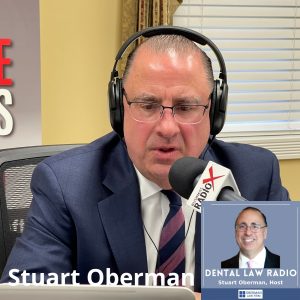
You’ve opened a certified letter from the EEOC or from an attorney representing an ex-employee who is alleging sexual harassment. Now what? You’ll be able to navigate this demanding situation much more effectively if you have written anti-harassment procedures. If not, as host Stuart Oberman explains, you may be in for an expensive and time-consuming quagmire. Dental Law Radio is underwritten and presented by Oberman Law Firm and produced by the North Fulton studio of Business RadioX®.

TRANSCRIPT

Intro: [00:00:01] Broadcasting from the Business RadioX Studios in Atlanta, it’s time for Dental Law Radio. Dental Law Radio is brought to you by Oberman Law Firm, a leading dental-centric law firm serving dental clients on a local, regional, and national basis. Now, here’s your host, Stuart Oberman.

Stuart Oberman: [00:00:26] Hello everyone, and welcome to Dental Law Radio. We’re going to talk a little H.R. today. Big, big growth in this area, lots of headaches, lots of problems that our doctors need to know about. So, the dental industry as a whole has sort of a reputation that is not good regarding harassment in the workplace. So, what we’re seeing is that more and more H.R problems are developing in this particular area, whether it’s EEOC, whether it is relationships.

Stuart Oberman: [00:01:09] So, what I want to do is, I want to talk a little bit anti-harassment complaint procedures. So, it does not matter to me from a legal standpoint whether you are a one-doctor practice or you have 12. In today’s H.R. world – we’re going to get into some scenarios – you have to have a written antiharassment complaint procedure. It could be part of your employee manual. It could be a separate policy and procedure. But you have to have an antiharassment complaint procedure.

Stuart Oberman: [00:01:52] So, what does that exactly mean? Does that mean that you have to have a complaint process? That means that if you get any complaint whatsoever, you must have established filing procedure internally how to handle that. Well, I get this question “Well, you know, Stuart, it’s not illegal.” It does not matter if it is illegal. Harassment is harassment. It doesn’t matter whether it is in a sexual nature or an annoyance nature. You have to address these complaints on an individual basis as a whole, legal and nonlegal matters.

Stuart Oberman: [00:02:39] So then, what do you do? The key is you have to appoint someone as a multiple point of contact. Now, what happens is, in the real world, a lot of our doctors have their spouses, their husbands, their wives, the hygienists, the assistants, the front desk, everyone’s a contact point. You have a complaint, go talk to the office manager, my spouse, no matter who it is, male or female. You have a complaint, go talk to the hygienist. She’s also our bookkeeper. She’s also our front desk. She runs our calendaring, our scheduling, she’s our H.R. person. She knows everything. Or go to talk to the commercial vendors, our payroll people that handle our H.R. No, they don’t. Half the time they have no clue what’s going on.

Stuart Oberman: [00:03:30] So, you need a direct contact point, not multiple sources, but who is that person going to. So then, you have to figure out before you even can get to that point, you have to have a written outline of absolutely prohibited conduct. Well, we’re not sure what that is. Then, you need to implement a procedure that fits the culture of your office, which has to be strict. You have to specifically outline and should outline in enormous detail the conduct that gives rise to the complaint.

Stuart Oberman: [00:04:16] And I don’t care if it is in the office or company-sponsored events. What happens when you take your staff out of the country? What happens when you take your staff to a ballgame? What happens when you take your staff to a holiday party? What happens when you take your staff to a great lunch? You need specific conduct protocols in the office and out of the office, social events. It does not matter. If they are required to be at a marketing event for your local fair and, all of a sudden, there is harassment within that booth at the local 4th of July parade, if you will, you have a problem.

Stuart Oberman: [00:05:09] I can’t raise this enough, there needs to be a specific policy in place for romantic relationships within the office. I’m talking about affairs. I’m talking about calls. I’m talking about text messages. I’m talking about obscene pictures being shown in [inaudible]. Ladies and gentlemen, you can’t believe what happens in these dental offices. I should write a book. I mean, the stories that I could tell are beyond comprehension. Yes, you need a protocol as to what the members of your staff can see on people’s cellphones. Yes, we are in that day and age.

Stuart Oberman: [00:06:02] What are you going to do if you have a worker – I’m talking male, female. I don’t really care – that’s harassing one another? What is the policy? What is the termination process? What’s the discipline? I assure you, if you let this go on, you’ll be getting a nice lawyer letter, an EEOC letter, and a wrongful termination if you complain and don’t address these particular issues.

Stuart Oberman: [00:06:34] In today’s world, it is amazing what is being demonstrated in dental offices. It doesn’t matter whether it’s one office or 40. It’s a culture that has to be curtailed. And, now, we’re talking about harassment also from customers, patients, vendors, and suppliers. We’re seeing outside resources that are harassing our staff members. Do you have a policy in place if your customers, patients, vendors, or suppliers are verbally harassing your staff?

Stuart Oberman: [00:07:20] Let me give an example, this is an honest to goodness case came out of our office. What are you going to do if you got a member of the Rotary Club, a good friend of yours, and then probably touches your hygienist? What are you going to do? And that’s your best friend at the Rotary Club. And your staff member complains to you. What are you going to do? Ignore it? Is there a policy in place for that? You better. Because if not, you’re going to get a nice little letter either from the government or lawyer. So, those are all the things that happen every day, every day. Are you prepared to discharge your patient in a chair the minute improper conduct occurs? And it does occur, I assure you.
Stuart Oberman: [00:08:16] So, in today’s social media world, harassment comes in a lot of forms. I’m talking Facebook, social media, online, Internet, emails, text messages, all within the range of conduct that has to be curtailed on a staff level, doctor level. I’m talking top down, guys. I’m talking top down. You’ve got to follow your own protocols. Is your procedure in place on what you can and can’t say or your employees can and can’t say on the Internet about your office, about your staff? Are improper pictures being shown on your server? How are text messages being relayed? Is there a text message policy as to what can be communicated internally?

Stuart Oberman: [00:09:08] Again, I’m not talking about illegal conduct, we all get that. But it’s the other conduct that is so closely, closely watched. So, the points of today are H.R., in today’s world, has got to be looked at in our dental offices. Again, I don’t care if it’s one office, 20 offices, 40 offices. It doesn’t matter. There’s got to be policy in place. One of the biggest complaints we’re having right now is harassment issues across the board, text messages, emails, pictures. There’s got to be policy in place. If not, you are opening yourselves up to a recipe for disaster. I can’t stress that enough.

Stuart Oberman: [00:09:49] Get your point person. Get your systems in place. Get everything in writing. Get your employees to sign it. Are your employees signing nondisclosure agreements? Are they telling everything on the world? What happens when they go home? It’s a risk. It’s a risk. H.R. is getting tougher in dental practices every single day, and we realize that, and we face this every day. So, I can’t stress that enough. Get your policies in place. Get everything in order. Avoid the problems. Avoid headaches.
Stuart Oberman: [00:10:20] If you got any questions, let us know. We do it every day. If you have any questions, please feel free to give us a call at 770-886-2400. My name is Stuart Oberman, you can reach me at stuart, S-T-U-A-R-T, @obermanlaw.com. Thank you very much. And we hope that this has been of some value. And we will see you in the next podcast. Have a great day.


 

About Dental Law Radio

Hosted by Stuart Oberman, a nationally recognized authority in dental law, Dental Law Radio covers legal, business, and other operating issues and topics of vital concern to dentists and dental practice owners. The show is produced by the North Fulton studio of Business RadioX® and can be found on all the major podcast apps. The complete show archive is here.

Stuart Oberman, Oberman Law Firm

Oberman Law Firm
Stuart Oberman, host of “Dental Law Radio”

Stuart Oberman is the founder and President of Oberman Law Firm. Mr. Oberman graduated from Urbana University and received his law degree from John Marshall Law School. Mr. Oberman has been practicing law for over 25 years, and before going into private practice, Mr. Oberman was in-house counsel for a Fortune 500 Company. Mr. Oberman is widely regarded as the go-to attorney in the area of Dental Law, which includes DSO formation, corporate business structures, mergers and acquisitions, regulatory compliance, advertising regulations, HIPAA, Compliance, and employment law regulations that affect dental practices.

In addition, Mr. Oberman’s expertise in the health care industry includes advising clients in the complex regulatory landscape as it relates to telehealth and telemedicine, including compliance of corporate structures, third-party reimbursement, contract negotiations, technology, health care fraud and abuse law (Anti-Kickback Statute and the State Law), professional liability risk management, federal and state regulations.

As the long-term care industry evolves, Mr. Oberman has the knowledge and experience to guide clients in the long-term care sector with respect to corporate and regulatory matters, assisted living facilities, continuing care retirement communities (CCRCs). In addition, Mr. Oberman’s practice also focuses on health care facility acquisitions and other changes of ownership, as well as related licensure and Medicare/Medicaid certification matters, CCRC registrations, long-term care/skilled nursing facility management, operating agreements, assisted living licensure matters, and health care joint ventures.

In addition to his expertise in the health care industry, Mr. Oberman has a nationwide practice that focuses on all facets of contractual disputes, including corporate governance, fiduciary duty, trade secrets, unfair competition, covenants not to compete, trademark and copyright infringement, fraud, and deceptive trade practices, and other business-related matters. Mr. Oberman also represents clients throughout the United States in a wide range of practice areas, including mergers & acquisitions, partnership agreements, commercial real estate, entity formation, employment law, commercial leasing, intellectual property, and HIPAA/OSHA compliance.

Mr. Oberman is a national lecturer and has published articles in the U.S. and Canada.

LinkedIn

Oberman Law Firm

Oberman Law Firm has a long history of civic service, noted national, regional, and local clients, and stands among the Southeast’s eminent and fast-growing full-service law firms. Oberman Law Firm’s areas of practice include Business Planning, Commercial & Technology Transactions, Corporate, Employment & Labor, Estate Planning, Health Care, Intellectual Property, Litigation, Privacy & Data Security, and Real Estate.

By meeting their client’s goals and becoming a trusted partner and advocate for our clients, their attorneys are recognized as legal go-getters who provide value-added service. Their attorneys understand that in a rapidly changing legal market, clients have new expectations, constantly evolving choices, and operate in an environment of heightened reputational and commercial risk.

Oberman Law Firm’s strength is its ability to solve complex legal problems by collaborating across borders and practice areas.

Connect with Oberman Law Firm:

Company website | LinkedIn | Twitter

Tagged With: Anti-Harassment Complaint Procedures, dental law, Dental Law Radio, sexual harassment

Preventing Falls and Fractures

July 15, 2021 by John Ray

preventing falls and fractures
North Fulton Studio
Preventing Falls and Fractures
Loading
00:00 /
RSS Feed
Share
Link
Embed

Download file

Falling

Preventing Falls and Fractures – Episode 59, To Your Health with Dr. Jim Morrow

On this episode of To Your Health, Dr. Jim Morrow discussed preventing falls and fractures associated with those falls. The risks associated with falls go beyond the fall itself and can lead to other health and mobility problems, particularly for the elderly.  To Your Health is brought to you by Morrow Family Medicine, which brings the care back to healthcare.

About Morrow Family Medicine, A Member of Village Medical

Morrow Family Medicine, a Member of Village Medical, is an award-winning, state-of-the-art family practice with offices in Cumming and Milton, Georgia. The practice combines healthcare information technology with old-fashioned care to provide the type of care that many are in search of today. Two physicians, three physician assistants and two nurse practitioners are supported by a knowledgeable and friendly staff to make your visit to Morrow Family Medicine, A Member of Village Medical one that will remind you of the way healthcare should be.  At Morrow Family Medicine, a Member of Village Medical, we like to say we are “bringing the care back to healthcare!”  The practice has been named the “Best of Forsyth” in Family Medicine in all five years of the award, is a three-time consecutive winner of the “Best of North Atlanta” by readers of Appen Media, and the 2019 winner of “Best of Life” in North Fulton County.

Village Medical offers a comprehensive suite of primary care services including preventative care, treatment for illness and injury, and management of chronic conditions such as diabetes, congestive heart failure, chronic obstructive pulmonary disease (COPD) and kidney disease. Atlanta-area patients can learn more about the practice here.

Dr. Jim Morrow, Morrow Family Medicine, and Host of To Your Health with Dr. Jim Morrow

Covid-19 misconceptionsDr. Jim Morrow is the founder and CEO of Morrow Family Medicine. He has been a trailblazer and evangelist in the area of healthcare information technology, was named Physician IT Leader of the Year by HIMSS, a HIMSS Davies Award Winner, the Cumming-Forsyth Chamber of Commerce Steve Bloom Award Winner as Entrepreneur of the Year and he received a Phoenix Award as Community Leader of the Year from the Metro Atlanta Chamber of Commerce.  He is married to Peggie Morrow and together they founded the Forsyth BYOT Benefit, a charity in Forsyth County to support students in need of technology and devices. They have two Goldendoodles, a gaggle of grandchildren and enjoy life on and around Lake Lanier.

Facebook: https://www.facebook.com/MorrowFamMed/

LinkedIn: https://www.linkedin.com/company/7788088/admin/

Twitter: https://twitter.com/toyourhealthMD

The complete show archive of To Your Health with Dr. Jim Morrow addresses a wide range of health and wellness topics, and can be found at www.toyourhealthradio.com.

Show Notes

Preventing Falls and Fractures

  • A simple thing can change your life—
    • like tripping on a rug or slipping on a wet floor.
    • If you fall, you could break a bone,
      • like thousands of older men and women do each year.
      • For older people, a break can be the start of more serious problems,
      • such as a trip to the hospital, injury, or even disability.
    • If you or an older person you know has fallen, you’re not alone.
      • More than one in three people age 65 years or older falls each year.
        • The risk of falling—and fall-related problems—rises with age.


Many Older Adults Fear Falling

  • The fear of falling becomes more common as people age,
    • even among those who haven’t fallen.
    • It may lead older people to avoid activities such as
      • walking,
      • shopping,
      • or taking part in social activities.
  • But don’t let a fear of falling keep you from being active.
    • Overcoming this fear can help you stay active,
      • maintain your physical health,
      • and prevent future falls.
    • Doing things like
      • getting together with friends,
      • gardening,
      • walking,
      • or going to the local senior center helps you stay healthy.
      • The good news is, there are simple ways to prevent most falls.


Causes and Risk Factors for Falls

  • Many things can cause a fall.
    • Your eyesight,
    • hearing,
    • and reflexes
      • might not be as sharp as they were when you were younger.
    • Diabetes,
      • heart disease,
      • or problems with your
      • thyroid,
      • nerves,
      • feet,
      • or blood vessels
        • can affect your balance.
        • Some medicines can cause you to feel dizzy or sleepy, making you more likely to fall.
        • Other causes include safety hazards in the home or community environment.
      • Scientists have linked several personal risk factors to falling,
        • including muscle weakness,
        • problems with balance and gait,
        • and blood pressure that drops too much when you get up from lying down or sitting (called postural hypotension).
        • Foot problems that cause pain
          • and unsafe footwear, like backless shoes or high heels,
            • can also increase your risk of falling.
  • Confusion can sometimes lead to falls.
    • For example, if you wake up in an unfamiliar environment, you might feel unsure of where you are.
    • If you feel confused, wait for your mind to clear or until someone comes to help you before trying to get up and walk around.
  • Some medications can increase a person’s risk of falling because they cause side effects like dizziness or confusion.
    • The more medications you take, the more likely you are to fall.


Take the Right Steps to Prevent Falls

  • If you take care of your overall health,
    • you may be able to lower your chances of falling.
    • Most of the time, falls and accidents don’t “just happen.”
    • Here are a few tips to help you avoid falls and broken bones:
      • Stay physically active.
        • Plan an exercise program that is right for you.
        • Regular exercise improves muscles and makes you stronger. I
        • t also helps keep your joints, tendons, and ligaments flexible.
        • Mild weight-bearing activities,
          • such as walking
          • or climbing stairs,
            • may slow bone loss from osteoporosis.
  • Have your eyes and hearing tested.
    • Even small changes in sight and hearing may cause you to fall.
    • When you get new eyeglasses or contact lenses, take time to get used to them.
      • Always wear your glasses or contacts when you need them.
      • If you have a hearing aid, be sure it fits well and wear it.
  • Find out about the side effects of any medicine you take.
    • If a drug makes you sleepy or dizzy, tell your doctor or pharmacist.
  • Get enough sleep.
    • If you are sleepy, you are more likely to fall.
  • Limit the amount of alcohol you drink.
    • Even a small amount of alcohol can affect your balance and reflexes.
    • Studies show that the rate of hip fractures in older adults increases with alcohol use
  • Stand up slowly.
    • Getting up too quickly can cause your blood pressure to drop.
    • That can make you feel wobbly.
    • Get your blood pressure checked when lying and standing.
  • Use an assistive device if you need help feeling steady when you walk.
    • Appropriate use of canes and walkers can prevent falls.
      • If your doctor tells you to use a cane or walker,
        • make sure it is the right size for you and the wheels roll smoothly.
        • This is important when you’re walking in areas you don’t know well or where the walkways are uneven.
        • A physical or occupational therapist can help you decide which devices might be helpful and teach you how to use them safely.
  • Be very careful when walking on wet or icy surfaces.
    • They can be very slippery!
    • Try to have sand or salt spread on icy areas by your front or back door.
  • Wear non-skid, rubber-soled, low-heeled shoes, or lace-up shoes with non-skid soles that fully support your feet.
    • It is important that the soles are not too thin or too thick.
    • Don’t walk on stairs or floors in socks or in shoes and slippers with smooth soles.
  • Always tell your doctor if you have fallen since your last checkup, even if you aren’t hurt when you fall.
    • A fall can alert your doctor to a new medical problem or problems with your medications or eyesight that can be corrected.
    • Your doctor may suggest physical therapy, a walking aid, or other steps to help prevent future falls.


What to Do If You Fall

  • Whether you are at home or somewhere else, a sudden fall can be startling and upsetting.
    • If you do fall, stay as calm as possible.
  • Take several deep breaths to try to relax.
    • Remain still on the floor or ground for a few moments.
    • This will help you get over the shock of falling.
  • Decide if you are hurt before getting up.
    • Getting up too quickly or in the wrong way could make an injury worse.
  • If you think you can get up safely without help,
    • roll over onto your side.
    • Rest while your body and blood pressure adjust.
    • Slowly get up on your hands and knees,
      • and crawl to a sturdy chair.
    • Put your hands on the chair seat and slide one foot forward so that it is flat on the floor.
    • Keep the other leg bent so the knee is on the floor.
    • From this kneeling position, slowly rise and turn your body to sit in the chair.
  • If you are hurt or cannot get up on your own,
    • ask someone for help or call 911.
    • If you are alone, try to get into a comfortable position and wait for help to arrive.
  • Carrying a mobile or portable phone with you as you move about your house could make it easier to call someone if you need assistance.
    • An emergency response system, which lets you push a button on a special necklace or bracelet to call for help, is another option.


Keep Your Bones Strong to Prevent Falls

  • Falls are a common reason for trips to the emergency room and for hospital stays among older adults.
    • Many of these hospital visits are for fall-related fractures.
  • You can help prevent fractures by keeping your bones strong.
    • Having healthy bones won’t prevent a fall,
      • but if you fall, it might prevent breaking a hip or other bone,
        • which may lead to a hospital or nursing home stay, disability, or even death.
        • Getting enough calcium and vitamin D can help keep your bones strong.
        • So can physical activity.
        • Try to get at least 150 minutes per week of physical activity.
  • Other ways to maintain bone health include
    • quitting smoking
    • and limiting alcohol use,
      • which can decrease bone mass and increase the chance of fractures.
    • Also, try to maintain a healthy weight.
    • Being underweight increases the risk of bone loss and broken bones.
  • Osteoporosis is a disease that makes bones weak and more likely to break.
    • For people with osteoporosis, even a minor fall may be dangerous.
    • Talk to your doctor about osteoporosis.

Credit:  cdc.gov

Tagged With: Dr. Jim Morrow, elderly, fractures, Morrow Family Medicine, Preventing falls, To Your Health, Villagel Medical

Bipolar Disorder in the Workplace, with Jacqui Chew, iFusion, and Colton Mulligan, FoxFuel Creative

July 15, 2021 by John Ray

Mental Health
Minneapolis St. Paul Studio
Bipolar Disorder in the Workplace, with Jacqui Chew, iFusion, and Colton Mulligan, FoxFuel Creative
Loading
00:00 /
RSS Feed
Share
Link
Embed

Download file

Mental Health

Workplace MVP:  Bipolar Disorder in the Workplace, with Jacqui Chew, iFusion, and Colton Mulligan, FoxFuel Creative

On this edition of Workplace MVP, Jacqui Chew, iFusion, and Colton Mulligan, FoxFuel Creative, each share their stories on working with a bipolar disorder with host Jamie Gassmann. Jacqui and Colton discuss how leaders can foster psychological safety in the workplace so that employees can be open about their mental health. It’s essential listening for HR and other workplace leaders. Workplace MVP is underwritten and presented by R3 Continuum and produced by the Minneapolis-St.Paul Studio of Business RadioX®.

Jacqui Chew, Managing Director, iFusion, and Licensee, Curator at TEDxAtlanta

Mental Health
Jackie Chew, Managing Partner, iFusion, TEDxAtlanta

iFusion is a storytelling consultancy that deploys the power of narrative design to create brand stories for companies and social impact initiatives that resonate and inspire action.

Jacqui works at the intersection of storytelling, innovation and business. She deploys the power of narrative design in reframing an organization’s brand story for resonance and to inspire action.

Described as a “Lara Croft of Problem-solving,” Jacqui is a seasoned business operator with a passion for building inclusive teams, and working cross-functionally to bring disparate groups together toward a common goal.

As the curator and licensee of TEDxAtlanta, Jacqui is always on the lookout for change-makers and innovations that are solving for the challenges of today and those just around the corner. Under her leadership, first of TEDxPeachtree from 2009 to 2018 and presently of TEDxAtlanta, Atlanta has grown in recognition within the global TEDx community as an innovation hub for technology, healthcare and social impact initiatives.

She is resourceful, tenacious and well networked in the Atlanta business, social impact and technology communities.

Website | LinkedIn | Jacqui’s TEDx video | Brain Babel

Colton Mulligan, CEO, FoxFuel Creative

Colton Mulligan, CEO, FoxFuel Creative

FoxFuel Creative produces effective outcomes for brands and people through design, content, and technology. The company helps consumer goods and products, healthcare, music and entertainment, finance, and real estate brands speak genuinely and effectively to their audience.

Their specialties include brand and marketing strategy, consumer insights, content development, creative ideation and execution, advertising concepts, and website development.

At FoxFuel, Colton Mulligan serves as CEO and is responsible for client relationships, guiding the discovery process through brand strategy into early creative concepting.

With 15+ years of branding and marketing experience, Colton has worked to develop brand and marketing strategies for TSA Pre-Check, Hilton Hotels/Home2Suites, Ben Folds, Fiesta Grande, Chip and Joanna Gaines, Pinnacle Bank, HarperCollins, Narus Health, Lifepoint, HCA, and Community Health Systems.

He also speaks at various events on Digital Marketing, Healthcare Marketing, Entrepreneurship, and the relationship between mental health and creativity. He lives in Nashville with his lovely wife Aly, and Goldendoodle JT.

Company website | LinkedIn

R3 Continuum

R3 Continuum is a global leader in workplace behavioral health and security solutions. R3c helps ensure the psychological and physical safety of organizations and their people in today’s ever-changing and often unpredictable world. Through their continuum of tailored solutions, including evaluations, crisis response, executive optimization, protective services, and more, they help organizations maintain and cultivate a workplace of wellbeing so that their people can thrive. Learn more about R3c at www.r3c.com.

Company website | LinkedIn | Facebook | Twitter

About Workplace MVP

Every day, around the world, organizations of all sizes face disruptive events and situations. Within those workplaces are everyday heroes in human resources, risk management, security, business continuity, and the C-suite. They don’t call themselves heroes though. On the contrary, they simply show up every day, laboring for the well-being of employees in their care, readying the workplace for and planning responses to disruption. This show, Workplace MVP, confers on these heroes the designation they deserve, Workplace MVP (Most Valuable Professionals), and gives them the forum to tell their story. As you hear their experiences, you will learn first-hand, real life approaches to readying the workplace, responses to crisis situations, and overcoming challenges of disruption. Visit our show archive here.

Workplace MVP Host Jamie Gassmann

In addition to serving as the host to the Workplace MVP podcast, Jamie Gassmann is the Director of Marketing at R3 Continuum (R3c). Collectively, she has more than fourteen years of marketing experience. Across her tenure, she has experience working in and with various industries including banking, real estate, retail, crisis management, insurance, business continuity, and more. She holds a Bachelor of Science Degree in Mass Communications with special interest in Advertising and Public Relations and a Master of Business Administration from Paseka School of Business, Minnesota State University.

TRANSCRIPT

Intro: [00:00:04] Broadcasting from the Business RadioX Studios, it’s time for Workplace MVP. Workplace MVP is brought to you by R3 Continuum, a global leader in workplace behavioral health and security solutions. Now, here’s your host, Jamie Gassmann.
Jamie Gassmann: [00:00:25] Hi, everyone. Your host, Jamie Gassmann, here. And welcome to this episode of Workplace MVP. According to a recent study performed by Mental Health America, only five percent of employees surveyed indicated that they strongly agree that their employer provides a safe environment for employees who live with mental illness.

Jamie Gassmann: [00:00:44] With the increased availability of workplace resources and tools for ensuring the psychological safety of their employees, along with the increase in conversations globally about reducing the stigma of mental health, particularly in the workplace, this stat seems to indicate that there’s still a level of discomfort with employees being open and honest with their employers about their mental health in a large majority of workplaces.

Jamie Gassmann: [00:01:08] Which leads to the question of how can leaders within organizations help their employees to feel psychologically safe and to create work environments that invite open dialogue about how employees are truly feeling. Are there ways to create an environment that invites vulnerability, creates a feeling of safety for being open and honest with leadership, breaking down those walls of fear that so many employees are likely still having?

Jamie Gassmann: [00:01:33] Well, today, we have two wonderful MVP’s that will share from their perspective, personal experiences and approaches for how organizational leadership can create a psychologically safe work environment. And with that, the benefits it can have on the employee, leader, and organization overall. With us is Colton Mulligan, CEO of FoxFuel Creative, and Jacqui Chew, Entrepreneur and Mental Health Advocate. Welcome to the show, Jacqui and Colton.

Jacqui Chew: [00:02:03] Thanks for having us.

Colton Mulligan: [00:02:04] Glad to be here.

Jamie Gassmann: [00:02:06] So, we’ll start off with our first Workplace MVP, who is Jacqui Chew, Entrepreneur and Mental Health Advocate. Share with us, Jacqui, a bit about your background and how you came to be a mental health advocate.

Jacqui Chew: [00:02:20] Thank you, Jamie, for having me. I have been on this journey since being diagnosed in 2005, it’s been a long time. And so, I was diagnosed at a time where mental health/mental illness was not discussed. There was still a heavy, heavy stigma around it. For the first few years, I’ve lived in silence, and in fear, and in shame with what I had. I was diagnosed with bipolar disorder in 2005.

Jacqui Chew: [00:03:03] And at the time, I owned my own business. I had a marketing consultancy. And my main clientele were and they still are high growth startups that are either angel backed or venture capital backed. And those cultures tend to have a very hard charging, high performance base type culture. And I didn’t realize it at the time, but those are definitely stressors. They are conditions that exacerbate my illness.

Jacqui Chew: [00:03:49] So, today, though, happily after years of psychotherapy and I continue my treatment protocol, I am managing my condition quite a bit better. And here I am.

Jamie Gassmann: [00:04:06] Great. Yeah. Great to hear kind of some personal experience that you’ve worked through. So, from your perspective, taking that personal experience into account, when you look at the stat that only five percent of employees strongly agree that their workplace is a safe environment for those with a mental illness. What are your thoughts on that?

Jacqui Chew: [00:04:27] You know, sadly, the stigma behind mental health and just the dialogue around it, I mean, there’s still such shame. I recently had a conversation, actually, just a-week-and-a-half ago with a young professional who was very concerning. She had an anxiety, she felt anxious, she had already been diagnosed with depression, and she was very, very afraid of losing her job. And there were so many stresses going on with her job that it sort of exacerbated her symptoms and she had no one to talk to.

Jacqui Chew: [00:05:16] And her situation is really very common. It’s still really difficult to talk about, say, your depression, or your bipolar disorder, or your recent manic episode, and how it’s affecting your job to your supervisors, your managers, because there’s this fear that, “Oh, my gosh. I don’t want to tell my manager about it, but yet I know I’m not performing to my usual level. And I know I’m going to be evaluated. My quarterly MBOs are coming up.” And all of this just builds and it’s a cumulative effect that just exacerbates all the symptoms of someone with bipolar disorder or depression.

Jacqui Chew: [00:06:09] And it is very common, unfortunately. And it’s quite unfortunate, with COVID and the isolation that we have all had to go through, of being alone, of being locked down, even for those of us who don’t have a chemical brain imbalance, there are many everyday folks who are being diagnosed with clinical depression. So, this sort of thing is more and more common.

Jacqui Chew: [00:06:46] But, unfortunately, the sense of safety that we can talk about it at work, just as we could talk about our blood pressure or our heart condition, or how we’re doing better now because our blood pressure is better, because we’re taking better care of ourselves, we’re exercising, and so on and so forth. We can talk about that but, yet, we still can’t talk about our mental wellness or the lack thereof. And that’s a real issue.

Jacqui Chew: [00:07:14] And that’s what that five percent statistic is all about, is, there is so much misinformation, disinformation, and misconception around mental illness. And workplaces, I don’t believe are doing enough to bring their managers and their supervisors to detect symptoms or signs of distress in an employee, which is unfortunate.

Jamie Gassmann: [00:07:49] Yeah. And, you know, you bring up a good point about kind of leaders doing enough. And when we connected previously, you mentioned that it was important that leaders educate themselves on mental illness. Can you talk a little bit about how that would be helpful in a work environment? And particularly on some of the things that you brought up, like with rising diagnoses from the COVID, working remote last year, how would that education be able to help these leaders to create more of an open environment for their employees?

Jacqui Chew: [00:08:27] That’s a really good question. I think, you know, this pandemic has really created an interesting dynamic, because depression or diagnosis of depression and anxiety is so widespread now that the managers themselves are being diagnosed. And so, not only are the folks who are individual contributors who may have been diagnosed prior to the pandemic, but the managers who may be fine prior to that, but because of the pandemic – depression being one of the effects or anxiety being one of the after effects of the lockdown – they’re being diagnosed.

Jacqui Chew: [00:09:13] I think that it has increased the sensitivity to want to understand. Because when you are a manager and you are all of a sudden diagnosed with something that you do not have to think about or not have to even be basically be educated on, you, all of a sudden, are faced with a whole range of symptoms yourself and you’re getting the treatment protocols and et cetera, et cetera. And I think that makes you more empathetic to folks at the workplace, to the people that you manage, the people on your team.

Jacqui Chew: [00:09:58] And, I mean, perhaps this is rather Pollyanna-ish of me, but I would hope that this would make leaders, managers, supervisors more empathetic and more sensitive to the signs and the symptoms because they themselves are going through treatment. They themselves are wrestling with the many challenges that come their way as someone who had been diagnosed with depression or bipolar disorder or anxiety disorder.

Jacqui Chew: [00:10:29] So, I truly believe that people in that power dynamic who are themselves going through treatment and are being educated because they have to be are going to be leading the way at work in creating a safer workplace, if you would, for these kinds of issues to be discussed. Just as you would discuss teamwork and team collaboration, you think about your work team is your support team for the project. Well, part of that support system could be key members that are understanding the person who is perhaps not having a good day, not having a good week, and being more empathetic and understanding about that.

Jamie Gassmann: [00:11:27] And I suppose with a leader who has their own diagnosis, they can be a lot more open with their team as well, which can create some of that breakdown, some of that vulnerability, or create that environment to be more vulnerable, and allow people to feel like they can be more open and bring things to their leader that maybe they wouldn’t have before because there’s a level of understanding. Would you agree with that?

Jacqui Chew: [00:11:54] Yes. Absolutely. There’s a heightened awareness, I believe, because more and more people are getting their diagnosis. They’re being diagnosed. And so, that is, certainly, I think, raising the level of conversation around mental illness.

Jamie Gassmann: [00:12:13] So, you also shared in that previous conversation that we had that it was important that a leader not assume that every person with a mood disorder is going to have the same cognitive disability. Can you talk through the impacts that that could have if an employer just assumed that it was like a one size fits all with the diagnosis and why they should be looking at it more kind of on an individual basis?

Jacqui Chew: [00:12:39] Certainly. So, it’s not a project, but we actually know more about space and getting into space or extra space than we know about the way the brain works, unfortunately. Two people could be diagnosed with bipolar disorder – there are two versions, bipolar 1 and bipolar 2. And they could both be diagnosed with bipolar disorder 2, but they could exhibit very, very different symptoms. And the severity could be very, very different as well.

Jacqui Chew: [00:13:29] So, for myself, I am the bipolar 1, that is my diagnosis. But, generally, I’m really high performing. I can perform at a very high level so long as I get my sleep and I am eating well and exercising, I am fine. But then, there are others who have a really tough time managing the symptoms, even with the exercise and the diet and the sleep. And so, it affects people very differently. And, once again, I’m not a doctor, but I do know that this is a chemical imbalance in the brain that causes at least bipolar disorder. And it affects people very differently because everyone’s physiology is just a little different.

Jacqui Chew: [00:14:31] And so, for a manager to assume that, say, if two people on their team have, say, anxiety disorders or depression, that they are going to be the same way, they’re going to have the same symptoms, and such, would just be, really, sort of a bad assumption. And it could lead to very inaccurate type of assessment of a person’s performance, or a person’s behavior, or attitude, or things like that.

Jamie Gassmann: [00:15:07] And we’re talking a lot about, you know, creating that open dialogue and showing that empathy to employees who may have a mental health diagnosis. There’s going to be probably some listeners going, “Yeah. But we can’t ask those questions. We’ve got regulations we have to follow. There’s certain H.R. rules that are applied here. We can’t discuss their medical condition.” So, from your perspective, how can a leader show support for their employee that has been open about their mental illness without violating those H.R. rules and regulations so that they can show that empathy, create that open environment, but do so in a way where they’re not putting that employer at risk?

Jacqui Chew: [00:15:53] Sure. That’s always a tricky scenario. As a manager, what I had done is, when someone is struggling, say, at work, just as a rule of thumb, regardless of their diagnosis, regardless of whether they’ve been diagnosed or they’ve disclosed, I basically say, “Hey, it seems like you’re really having a tough day. How about taking a long weekend?” So, sometimes just being human and being empathetic to someone who’s clearly having a tough day or a tough week, and we all have those regardless of whether we’ve been diagnosed or not. Just letting them know that they’re allowed, that they can take a day off, take a weekend, take a long weekend.

Jacqui Chew: [00:16:59] The other thing is, you know, most companies – the companies that I’ve been a part of – have as part of the healthcare benefits, employees have access to talk therapies as part of the package. And so, for instance, if someone has disclosed that they’ve just lost a close family member, it’s really, really common for someone with a traumatic life experience to experience clinical depression, I mean, that is a trigger or a known trigger. And so, for something like that, I mean, there’s no H.R. rule – you wouldn’t be violating any rule to say, “Hey, we have available this particular benefit. And I just want to make sure that you are aware that it’s available to you should you need it.” And that is a caring and a responsible thing for a leader or a manager to do.

Jamie Gassmann: [00:18:11] And that also is a great way to show that empathy and that support. And through education and understanding, what might be a trigger for that employee helps you to be able to spot that when you need to pull some of those other approaches that could be helpful in that moment without bringing up the actual diagnosis. That’s great feedback and approaches to use.

Jamie Gassmann: [00:18:37] So, looking at your career, what is something that you would say you were just most proud of within your career overall?

Jacqui Chew: [00:18:48] Gosh. Well, apart from the obvious, since I work with startups, it’s always fantastic when the startups that I work with thrive – more than survive but thrive – and they grow and they scale. But, actually, this might sound a little strange, but I am most proud of feeling empowered and strong enough to fire asshole clients. I have no asshole rule – and I’m not sure if I’m supposed to say that on a podcast, but I’m sure y’all can bleep that out.

Jacqui Chew: [00:19:32] But I think drawing boundaries, and having boundaries, and learning to identify as someone with a bipolar disorder diagnosis, working with all kinds of personalities is a trigger. Certain kinds of behaviors are triggers. And certain kinds of situations that these types of personalities tend to create are stressors. And over time, they can bring on some very, very severe episodes for me. And I had that happen. And so, I have essentially a no asshole rule. Whereby, there are certain types of personalities that I will not work with. And if a client exhibits those behaviors and continues to exhibit those behaviors, despite my conversation with them, I just won’t work with them anymore. And I see it as self-preservation.

Jamie Gassmann: [00:20:45] And it probably took you a little bit to get there, but I could see where that could be a really proud moment for yourself to have that empowerment and strength to be able to say what you’re willing to put up with or put yourself through. So, great example. So, if our listeners wanted to connect with you, what is the best way for them to do that?

Jacqui Chew: [00:21:10] So, you can reach me at jacquichew.com, that’s an easy way. And I have started a community driven organization called Brain Babel, B-A-B-E-L. It’s in its infancy. So, I’m on Instagram as Brain Babel, so that is where I’ll be sharing tips and I’ll be sharing the latest research and trends sort of demystified and in layman’s terms for caregivers as well as folks who are dealing with mental illness, and as well as parents who are taking care of children who’ve been diagnosed with a variety of mood disorders.


Jamie Gassmann: [00:22:04] Great. So, we’re now going to move to our next Workplace MVP, so joining us is Colton Mulligan. He’s the CEO of FoxFuel Creative. Colton, can you share a little background with us in how you came to be the CEO of FoxFuel?

Colton Mulligan: [00:22:22] Sure thing. In 2014, I was working at another agency with two people that had basically become my best friends. We looked around and realized there was an opportunity to leave the agency because we were the ones effectively managing half of the agency on the creative services marketing side. So, we went to the owners of the business and we want to buy out our non-compete contracts, start our own agency, and ask some clients to go with us. They said okay, and threw out a number that was way more than the three of us had. So, I took a second mortgage out of my house. I cleaned out my investments. I borrowed money from my grandmother, doctor friend, and dad, and the partners all scraped money together.

Colton Mulligan: [00:23:06] And so, we bought out our contracts, and on January 1st, 2015, we started FoxFuel Creative in my basement. And, yeah, that was the beginning of it. So, I was the CEO and I had two business partners that manage the digital side and then also the creative side of the business. And that same month, I was diagnosed with type 1 bipolar disorder.

Jamie Gassmann: [00:23:27] Was it difficult to get that diagnosis in that first month? Or did it answer questions? Or how did you feel in that moment?

Colton Mulligan: [00:23:41] I mean, it definitely answered a lot of questions. And kind of in my little story there, I skipped past a lot of the events of 2014 that led me to that point. But, yeah, I think it was relieving. Almost exactly one year prior, I’d been diagnosed with generalized anxiety disorder, ADHD, and major depressive disorder. Bipolar is commonly misdiagnosed in the first or second pass. So, it was definitely relieving.

Colton Mulligan: [00:24:06] It was a fun dinner with my two partners when I was like, “Hey, update. I know we just formed an LLC and bought a whole bunch of money and we’re starting this new thing. Update, I’ve got bipolar disorder.” I mean, my two business partners, unbelievably supportive, said, “Hey, you know, understanding the symptoms kind of tracks out with your manic energy and all that stuff.” I was pretty good at hiding the downside. But it’s damn near impossible to hide the upside, the energy, just all the passion that comes with that.

Jamie Gassmann: [00:24:36] And it’s great that they took it very much with open arms and probably helped to answer some questions that they had as well. And just love that support that they provided to you from the story that you’ve told me or that I have seen on some of the documentaries that you’ve done. So, from your perspective, why do so many employees still lack a feeling of psychological safety in their work environment?

Colton Mulligan: [00:25:03] I think it’s probably a couple of factors. Thing one, is probably, like, it’s just awkward for most people. And, you know, we’re not a super corporate environment. But thing two, I would assume that there’s all these gray areas within ADA compliance and H.R. regulations and, “Oh, no. Once they disclosed, is there a whole bunch of new protocols I have to have?” So, I would almost say there’s one, like, the lack of clarity for a lot of professionals in the H.R. space what you’re supposed to do.

Colton Mulligan: [00:25:33] And then, there’s also, like, the personal side of it. It’s just, you know, among just humans in general, it’s a weighty thing a lot of folks just aren’t prepared for. Like, how do I go through that conversation saying something beyond, “Oh, I’m so sorry. Let me know how I can help and I’ll pray for you.” Outside of those two things, most people are just like, “I don’t know what to say.”

Jamie Gassmann: [00:25:55] So, if you were in that situation, like, what would you have them say? From your perspective, like with your two partners, if you could have the ideal response from somebody, what would that sound like?

Colton Mulligan: [00:26:15] I mean, that’s an interesting question and it’s one that I get asked commonly. Like, I wind up doing a lot of coffees and meet ups with folks where they just ask, “Hey, my brother got diagnosed, or I have this employee, or whatever, what should I do?” And there’s an odd way to say it, which is like, if you don’t have a framework or sandbox or an ongoing conversation/relationship with that person where you have regular check ins on headspace or a depth in your relationship, you’re kind of behind the eight ball on that. So, you can start fostering that.

Colton Mulligan: [00:26:49] But like with our employees, I’m in a comfortable space, like, I’ve had employees disclose to me, “Hey, Colton. I want to let you know I’m trying a new antidepressant.” “Hey, I’m going back to my therapist. I haven’t seen him in three years, but I’m going through some stuff personally, et cetera.” Fortunately, we already have a regular cadence and rhythm where as part of our check ins on their career goals and stuff like that. There’s space where they go, “I just want to know, like as you enter this week -” it’s like Monday, Tuesday “- what’s your headspace? Are you a five? Are you an eight? What’s going on?” And that provides the employee the space where like I’m not saying, “Hey, do you have a recent mental health diagnosis? Quick question. Just wanted to throw that out there.”

Colton Mulligan: [00:27:26] But it gives them the opportunity to share what they want, and they don’t have to. I can read between the lines. But I know, hey, there are five this week and that gives me space to I don’t have to ask personal questions, but I can say, “Hey, what do you need from me?” Rather than saying, “Hey, let me know if you need anything.” That’s a really crap answer. A really great answer is, “What do you need from me? Can I be like a support and kind of a listening ear right now? Do you want to talk through some of your brain space? And maybe I can help sort priorities and share from my own experience. Hey, I know when I’m overwhelmed. Or if I feel anxious or if I do whatever, I know and I just speak from personal experience.”

Colton Mulligan: [00:28:04] Sometimes if I just talk through what I got to do the day or this week, I can kind of figure out what’s important and what I should focus on, you know. And, normally, I can try and share in that way. It’s not always perfect. But for me, personally, I love it when somebody gives me the options, “Do you need advice right now? I’m happy to help. But likewise, I can be a sounding board.” Or, “Let’s just sort through what you got going on.” I love that.

Jamie Gassmann: [00:28:26] Yeah. A little bit more, probably, natural feeling and kind of true response in that regard as opposed to just kind of, “Oh, can I help you with something or let me know?” I think it’s probably like a default maybe that they don’t know what to say, so they go to that.

Jamie Gassmann: [00:28:43] So, at FoxFuel – and you were kind of getting to this, too – you have a great approach to ensuring that your employees feel psychologically safe. Can you share how you have created a culture that welcomes vulnerability and openness? And I know you kind of touched on it a little bit, but you have, like, a specific meeting that you’re doing with your team and individuals each week and doing different approaches. So, can you kind of dive into that a little bit and share kind of some of those approaches that you’ve done?

Colton Mulligan: [00:29:13] One hundred percent. I just feel the need to disclose upfront, I am not an H.R. professional. And don’t get me wrong, there are probably past employees or people, like, “Colton was terrible at this. I can’t believe you’re talking about culture.” I like to think that over time we’ve cultivated, it’s by no means perfect.

Colton Mulligan: [00:29:29] But at least I feel better when I explain this by talking about the fact that we’ve been around seven years, and in year four, maybe five, our longest running employee that have been with us from the beginning, like, we were on a road trip and we were talking about something that came up. She was like, “You’re a really crap manager.” And she was great. She was just like, “I’ve been looking for a mentor and I had all the stuff. And you were clear that you don’t like to micromanage or manage. You just want to lead, which was great for a while, but like, we need more.”

Colton Mulligan: [00:29:57] And so, then from that, we went to StrengthsFinder conferences and I read The One Minute Manager and It’s The Manager from StrengthsFinder and Gallup and all them. And we went to emotional intelligence workshops and we had a consultant come through, so all of that. And then, I would find the threads that I noticed a lot of different areas picked up on. And one of those was a very personal check in that went hand in hand with the other times you check in with employees.

Colton Mulligan: [00:30:26] And so, as part of that, a regular cadence we have now that, at least, I think it bears fruit. Every Tuesday with my team, we manage accounts and we would normally say, “Hey, what are you looking at this week? What do you need to prioritize, like professional things?” And then, there’s always a question in there that said, “Hey, you know, how ever much you want to share with your headspace, what’s going on with you now?” And that has created a space that has helped me, I like to think, as a manager because someone can say, “I had a really rough conversation with my mom this weekend and I do not feel real confident just being honest going into this week.”

Colton Mulligan: [00:31:02] And that would let me take pause throughout the week if we left a client meeting, or there was feedback I had to share, or I realized, “Man, this person needs a win.” And I’m not always great about praising folks. And so, that would always give me a prompt, it’s like, “This week I’ve got to look for something to let a Cathy or a Lauren, you know, let them really feel accomplished and celebrated by the team.” I’m making up these names real quick because I want to scrub it. So, we’ve never employed a Cathy, but I’m just throwing these things out there.

Jamie Gassmann: [00:31:32] And I love your share of that, which is why I brought it up, because I think you touched on a little bit of what Jacqui was sharing earlier in the show about the human side of that employee leader relationship. You know, you’re really getting to know those employees at a level that they feel comfortable being able to come to you with what they might be going through and vice versa. You’re able to pick up on maybe some of those cues. I think it was just such a great example of just a tactic that’s clearly worked for you in your leadership style.

Jamie Gassmann: [00:32:06] And so, we talked a little bit about the focus internally on supporting employee wellbeing and trying to, you know, be aware of when they might need that when or when they might need that little bit of extra support. You also shared an example where FoxFuel helped its clients to do the same, I think it was regarding over the last year with COVID. Can you share that example with the audience about what you did and kind of some of the unique approaches that you took that kind of bared fruit for them?

Colton Mulligan: [00:32:43] We have a healthcare client across, basically, 22 counties. They’ve got 10,000 or 11,000 employees. They’ve got ten hospitals. And when COVID hit, you can imagine how slammed all these hospitals were. You’re terrified. You have no idea how deadly this disease is. Yet they’ve got to show up to work. They’ve got to wear all this new equipment. There are pieces of their facility that are locked down and taped over with plaster. It was terrifying. And on top of that, you have a staffing shortage, and those that are showing up are overworked, they’re working a long time. Like, you want to talk about an incredibly negative impact on culture. And then, you know, with the economy tanks and people are then worried about their jobs. And this company did so much to try and help.

Colton Mulligan: [00:33:36] So, during that time, what was great, we’d spun up a video series because a lot of these employees don’t check email, et cetera. But we tried to make a really accessible way where every week we would release one of two kinds of videos. One, a video from leadership. So, from the CEO that was looking and speaking directly to all of his employees, not with, like, platitudes, but just saying, “I appreciate you. I appreciate the effort that you’re putting in.” And we would get him on the video to name specific things, “I know at home, you’re dealing with kids trying to do, you know, virtual learning. And I know that it’s scary.” And I think he was just very honest in just saying, “I appreciate so much what you’re doing in the impact on patients.”

Colton Mulligan: [00:34:27] So, we did that and we would produce these videos, put them out via email, put them on Facebook, all that stuff. And then, likewise, just inspiring stories. So, we would come through and don all the PPE equipment. And I would interview folks off camera and we would try to highlight the inspiring stories of what was going on. So, folks of, like, excellent care that was happening, people that had best friends on their team that they still got to show up to work with. So, I don’t like to think that it was silver lining everything. It was just reminders of what you do matters and hearing from leadership that I appreciate what you’re doing and what you’re going through.

Jamie Gassmann: [00:35:03] Yeah. It’s a great example. And sometimes those little reminders can go such a long way. So, in your opinion, what are some ways that organizations can better connect with their employees? And are there some out of the box or alternative approaches you feel can make a difference in helping to better connect with employees? Because you mentioned email, that is tough, I think, in any organization. If you think of the mass amount of email that most employees get, you know, there’s got to be different approaches that a leader can consider when trying to get important communication. Like, “Here’s where support is accessible to you.” Or, you know, “Here’s a quick update on how this person did this really well.” But just that other ways of being able to connect.

Colton Mulligan: [00:35:49] People connect via story, that’s something true long before companies and technology and all the stuff, right? And that’s what FoxFuel tries to lean into with our clients or whatever. Hey, there’s email, but, now more than ever with our clients, I try to focus on the fact that story is your driver. And whether you are trying to get your employee to feel something or your prospect or client or whatever it is, I now don’t think of email or Facebook or anything as the solution. I think of it is like the medium or the conduit where you can take these stories. So, whether they’re written stories or whatever, and we’re pushing video just because it’s accessible. By and large in any community you’re in now, you got your phone, you’re surrounded by screens.

Colton Mulligan: [00:36:33] So, if you can move to video, you can tell someone a story that will actually move them with everything that you can do there in two to three minutes versus a five page blog. And it’s very accessible. And like what you guys are doing here with podcasts and stuff, making it accessible where it doesn’t interrupt their day. So, that’s thing one that I would say things that folks can do.

Colton Mulligan: [00:36:55] And then, the second thing is a much longer burn, but it’s just investing, I think, in the management styles of your folks. The leaders are the ones that really hold the power at signaling what is psychologically safe. And so, for me, I like to think that our team feels more comfortable when they hear me say, “It’s a five. And I’m not going to go into it, but, you know, I had this fight or this incident.” Or, “I had this thing.” Or, “I’m low energy this week.” And things like that signal that it’s A-OK for you to share the same, thing one, encouraging folks to do that.

Colton Mulligan: [00:37:33] And then, thing two, is just equipping everybody with common language, I think. So, we’ve used all kinds of stuff. But, you know, the common language that we’ve used is things like radical candor or letting people use an Enneagram or StrengthFinder or Myers-Briggs. All of that just gives people common language where they can admit, “Hey, one of my strengths is not presenting. One of my strengths is not working in data.” And then, it gives people some more psychological safety that they can own what they’re bad at and then share that with a manager, so they don’t have to pretend to be a jack of all trades without a weakness. And displaying and naming weakness is like the definition of vulnerability, which creates psychological safety.

Jamie Gassmann: [00:38:20] Great. And so, similar to what I asked Jacqui, what is something that when you look at your career, what are you most proud of?

Colton Mulligan: [00:38:34] I’ll try to rattle off because Jacqui gave a great answer and I loved it. And so, I didn’t want to, like, say, “Yeah. Me too.” But to go through some real quick because I’m trying to think about this, but we just had most recently a recent thing, like, we had an employee that just left because, you know, she’s ready for the next chapter in her career and we’re excited for her. And when she left, she cried in telling clients in meetings about it. She cried in her exit interview and all that stuff. Because what she wants to do professionally is great and managing teams like that. Like, FoxFuel kind of has an intentional angle to stay a small entrepreneurial group of 9, 10, 11 folks.

Colton Mulligan: [00:39:14] But what was great was in the exit interview and some words that we exchanged via email, et cetera, she talked about she went through a rough time in her life and she said, “I came in and I am leaving FoxFuel an entirely different person, how confident I am, my approach to life, my approach to relationships, standing up for myself.” To me, there’s a lot of stuff you can look back.

Colton Mulligan: [00:39:34] But when I think about the kinds of impact that we have on folks, I like the idea that people won’t say, “Oh, yeah. I was an AE at FoxFuel and then I did this.” But on the inside, I love to think that we have folks come through our doors that may be with us for a couple of years or however long – you know, don’t get me wrong, you got your ups and downs. And I’m far from a perfect manager. I’m probably a crap manager on some days – that someone that leaves overall and says, “Man, it was a time where I felt supported and I grew personally in that time,” that means the world to me.

Jamie Gassmann: [00:40:08] That’s a great example. It’s always great that you know that you had that positive mark on somebody’s life and career. So, if our listeners wanted to connect with you, what’s the best way for them to do that?

Colton Mulligan: [00:40:20] You can email me, colton@foxfuelcreative.com, or hit me up on LinkedIn, or whatever. Or if you go to our website, foxfuelcreative.com, there’s a thing that’s going to pop up and say, “Hey, quit snooping. Grab drinks with Colton,” or something like that. So, yeah, any of those.

Jamie Gassmann: [00:40:35] Great. So, now, we’re going to hear a word from our sponsor. Workplace MVP is sponsored by R3 Continuum. R3 Continuum is a global leader in providing expert, reliable, responsive, and tailored behavioral health crisis and security solutions to promote workplace wellbeing and performance in the face of an ever changing and often unpredictable world. Learn more about how R3 Continuum can tailor a solution for your organization’s unique challenges by visiting our r3c.com today.

Jamie Gassmann: [00:41:06] So, now, I’m going to bring both of our MVP’s together and ask some questions to the both of you. So, the first question is, how can leaders create a work environment that is psychologically safe? Now, I know you both have touched on a few different components of that. But if there was one particular way, what would you say? And let’s go ahead and start with you, Colton.

Colton Mulligan: [00:41:31] I’d go back to what I said before, hands down, leaders can find spaces to (A) make it clear that they can share their vulnerabilities and share their headspace. And then, (2) create the regular rhythm of an ongoing conversation. Not like, “Hey, can I check in on your mental health diagnosis.” But instead, “Hey, can you share with me, like, what’s your headspace like this week? How confident do you feel? I’d love to talk about that to see how I can support you.”

Jamie Gassmann: [00:41:58] Perfect. And how about you, Jacqui?

Jacqui Chew: [00:42:00] Sure. There are, believe it or not, H.R. modules now, where – and I’m forgetting the name of it, gosh – basically, it incorporates this sentiment aspect of performance of work, sort of a touch base, if you would. And so, I agree with Colton this idea of a cadence, so that if you’ve established a cadence of meetings where the discussion is around the work as well as sentiment, so, how are you feeling, how are you feeling about work, about your work, it’s more accessible than, to Colton’s point, “how’s your mental health”.

Jacqui Chew: [00:42:56] And so, there are actually sort of like – gosh, I forget. Gosh. I was actually a part of an organization that had this that was quite interesting because it was a weekly check in. And as a manager, we check in with each member of my team every week where, as part, they would complete a module or web module that basically says what their five priorities were or their four priorities were for the week, how they felt about themselves and their priorities. And then, we would talk about it.

Jacqui Chew: [00:43:37] So, there was this confluence of the work as well as the self. And I thought that was really helpful and useful to them because, say, if they had a bad week, they could talk about it from the perspective of these were things that I didn’t think that I felt that I did very well at all. I had a couple of nights where my baby was crying or kept me up all night or whatever. So, it just allowed for more human conversation to happen in a corporate environment.

Jacqui Chew: [00:44:19] Now, Colton, your wonderful because you have a workplace that is accessible, it’s friendly, it’s safe. In a large organization of even 50 or 100 people, when you start having department heads and when there is a talent organization, when there’s an employee handbook – that’s basically my litmus test. When a company has an employee handbook, then, I think, that managing and leading becomes a little less human and a little more robotic. But it doesn’t have to be so. And I think and I hope that we will, as a workplace, as businesses, be more like yours, Colton, than the large sort of thousand person corporations that are out there.

Colton Mulligan: [00:45:22] Thank you very much. That’s very sweet. I don’t know that all my employees would say that, but I like to think so. So, that’s great.

Jamie Gassmann: [00:45:31] So, looking at these employers and kind of to your point, it’s almost like what you’re saying, Jacqui, when the employer gets a little bit bigger, they almost have to be more intentional about making that a cultural priority with their organization. As opposed to, you know, like it has to be kind of embedded in their handbook of how they’re going to approach that.

Jamie Gassmann: [00:45:53] So, if you were looking at employers, what do you want them to know when it comes to mental health with their employees? Like, what would be kind of, you know, the message you would want them to be aware of? If they haven’t educated themselves, if they’re being told by an employee they have this diagnosis, what message would you send to them?

Jacqui Chew: [00:46:15] Gosh. Be less afraid of litigation and more concerned about the person. I didn’t mean to rhyme, that was not intentional. But large companies, they’re about risk mitigation. I mean, I hate to say this, but every H.R. department that I’ve come into contact with has been about risk mitigation, and liability, and managing liability. At the end of the day, we are people, we are humans. And if we led and managed by just being human with compassion and empathy, I truly believe that those activities, those behaviors will naturally fall into place. It’s the humane thing to do.

Jacqui Chew: [00:47:15] If you see someone in distress, what do you do? You want to help. What makes being at the workplace any different? Well, it’s the fear of a lawsuit. So, I truly believe that if corporations can slowly retreat from this fear of litigation mindset and more of a compassion mindset of a positive versus subtractive mindset, I think we we will see more healthy workplaces. We will see healthier employees all around.

Jamie Gassmann: [00:47:55] How about you, Colton?

Colton Mulligan: [00:47:58] I’d lean into one of the things that Jacqui said, I would say a very clear and intentional investment into emotional intelligence, that umbrella. She used the word empathy, which, to me, is the largest thing more than finding just the right curriculum or mental health check in, et cetera. Investing in that at the individual level is the ongoing effort to keep finding the resources and things and spot the small elements.

Colton Mulligan: [00:48:24] To give an example, I spun up a small group that I ran for seven years on mental health where folks would get together. And there were ridiculous things I realized now that H.R. was rolling out all these wellness programs and things. And I realized that for those with eating disorders, all of the wellness campaigns right now that healthcare companies push that do weight loss challenges and stuff, are ridiculously triggering. Where you manage as a team, and you’re losing weight and pounds, and the language, and the things that are celebrated, there’s no real clear curriculum that would do that. That’s a checklist.

Colton Mulligan: [00:48:56] The biggest thing is if you invest in emotional intelligence, your team and your folks, it’s the ability to dynamically look at things in an ongoing way and exercise a greater degree of empathy, which, to me, is the solve more so than a book everybody reads together, whatever. It’s a continual emotional intelligence improvement.

Jamie Gassmann: [00:49:16] Those are both great points. I hadn’t even thought about that with the weight loss challenge, and you see that quite often, especially after The Biggest Loser came out. The biggest loser challenge is everywhere. That’s very interesting.

Jacqui Chew: [00:49:27] Sorry, Jamie. I do want to add – I completely forgot and they’re so important – there’s another whole group of people or population, they would be Founders of Color. So, startup Founders of Color faced a whole new layer of stressors, especially when they are raising funds. There was trauma for Founders of Color when they’re raising funds. This may not be the case this year or the last, maybe, two years, but I can tell you, so we have a startup circle, sort of a wellness circle where founders – primarily Founders of Color – would come together to talk about more of their personal and health issues.

Jacqui Chew: [00:50:26] But what services often is, it’s the microaggressions that happen on a daily basis when they’re raising funds from primarily non-person-of-color venture capitalists. And the questions are different, the tone is different, the assumptions that these venture capitalists make are different.

Jacqui Chew: [00:51:03] I’ll give you an example. There is this now prominent African-American female founder of a startup that also has a social group, social good sort of mission. And one of her investors actually said to her thinking that he was being so nice, he said, “Wow. I’m really glad I listened to my wife who suggested that I invested in your startup to ensure that we were being inclusive. I’m so glad that your startup is doing so well and I just wasn’t expecting the return.” I’m paraphrasing. But that is the microaggression and it caused her to doubt herself. Like, “Did my startup get funded because it was a good idea and we have a strong team and there’s a business here? Or did we get funded because I’m Black?” And so, that’s the good story.

Jacqui Chew: [00:52:19] But the bad story, this happened at TechCrunch. TechCrunch, they used to have twice a year this huge confab where they would have a startup alley of sorts. And the founders, a whole bunch of Black founders that I know of who’s ever been to those wherein the investors were primarily non-African-American, non-persons-of-color would actually physically avoid the booths of this Founders of Color. And there’s no reason for this, except for it is pure discrimination and this is what they have to deal with.

Jacqui Chew: [00:53:08] So, we, in these conversations in the support circles – we call them – I mean, these are the additional stressors that Founders of Color go through that are quite different. And to exacerbate the issue there, the percentage of psychologists/psychiatrists who look like them, a very small percentage, which is difficult as well. So, that is one of those little known challenges and issues that still plague sort of the mental health specter and category.

Jamie Gassmann: [00:53:49] So, it sounds like there could be a lot of different kind of triggering events and different things that might lead to some of those mental health concerns in all varieties of different businesses, whether startup or – it’s a very interesting point.

Jamie Gassmann: [00:54:04] So, if you were going to leave one advice on the table for a leader who’s listened to this podcast that you want them to just take with them – and if they do something with it, fantastic – but if there’s just one thing that you could leave that would help to make a difference in their work environment – and we’ll start with Colton – what would that be? What would that one piece of advice that you want to leave to that leader?

Colton Mulligan: [00:54:30] No pressure, right? What’s the one way to improve mental health in your thousand person organization? I am torn between, like, the one that’s really tactical and easy is, just go create your cost center line item, whatever for emotional intelligence training, is thing one. The other thing that’s harder is, just the idea of encouraging vulnerability between your leaders and those that they’re supporting.

Jamie Gassmann: [00:55:02] Great. And how about you, Jacqui, if there was one piece of advice?

Jacqui Chew: [00:55:06] Sure. It was a thing that I had my husband do. So, I figured if it’s good enough for him, it’s good enough for the rest of us. Pick up Mental Health for Dummies, the book. Get educated.

Jamie Gassmann: [00:55:23] Yeah. Get educated. I love it. So, thank you both for being on the show, for sharing your personal experiences, sharing approaches you’ve used, your expertise around this topic, and for letting us celebrate you by being on the show. And we really appreciate the advice and suggestions you left the listeners. We appreciate you, and I’m sure your organizations, and staff, and co-workers, and friends, and everyone else involved into your lives do, too.

Jamie Gassmann: [00:55:55] We also want to thank our show sponsor, R3 Continuum, for supporting the Workplace MVP podcast. And to our listeners, thank you for tuning in. If you’ve not already done so, make sure to subscribe so you get our most recent episodes and other resources. You can also follow our show on LinkedIn, Facebook, and Twitter at Workplace MVP. If you are a workplace MVP or know someone who is, we want to know, email us at info@workplace-mvp.com. Thank you all for joining us and have a great rest of your day.


Tagged With: Bipolar disorder, Brain Babel, Colton Mulligan, FoxFuel Creative, iFusion, jacqui chew, Jamie Gassmann, mental health, Nashville, R3 Continuum, TEDxAtlanta, workplace mental health, Workplace MVP

Developing Resilience: How to Bounce Back from Challenges and Changes – An Interview with Dr. Farideh Bagne, Magnolia By The Lakes

July 14, 2021 by John Ray

Farideh-Bagne-Inspiring-Women
Inspiring Women PodCast with Betty Collins
Developing Resilience: How to Bounce Back from Challenges and Changes - An Interview with Dr. Farideh Bagne, Magnolia By The Lakes
Loading
00:00 /
RSS Feed
Share
Link
Embed

Download file

Farideh-Bagne-Inspiring-Women

Developing Resilience – How to Bounce Back from Challenges and Changes, An Interview with Dr. Farideh Bagne, Magnolia By The Lakes (Inspiring Women, Episode 34)

After successfully selling the largest privately-owned conglomerate of cancer centers in the United States, Dr. Farideh Bagne wasn’t done. In this interview with host Betty Collins, Dr. Bagne discussed a unique senior living concept she has developed: a winterless senior resort complex for states with harsh winter. Dr. Bagne discussed the challenges she has faced and overcome in her entrepreneurial journey, balancing life as a business owner and mother, and much more. Inspiring Women is presented by Brady Ware & Company.

Betty’s Show Notes

I speak with Farideh R. Bagne, Ph.D.,JD. She’s one of the most brilliant, successful and hardworking people that I’ve ever met. She has an amazing story, with some great insight on resilience. And she’s built this really cool bridge at Magnolia by the Lakes, the gold standard of senior living, a luxury Independent and Assisted Senior Village on the shores of Cass Lake, overlooking Sylvan Lakes in Oakland County Michigan. I think you’re going to want to hear about the story about this for sure.

As Dr. Bagne states…

You know that thing when you look challenge in the eye and you don’t blink and you even have a smile on your face. That’s what we’re going to talk about. So don’t miss out. My advice to you again is, number one, belief in yourself and do not have a defeatist attitude. Always remember that race, national origin, gender had nothing to do with business, science, medicine or whatever endeavor you are planning to do. It is not what others think of you. It is what you think of yourself. And with that attitude, believe that you should have that axiom of your life that truly everything happens for the best. And at the moment that disaster happens. You don’t know what the best is, but believe that somehow it will be and will become one of the best events of your life unless you follow these three acts and you’ll really become successful throughout your life.

Coming up on July 30th is the 7th annual Brady Ware Women’s Leadership Conference.  Each year, 100% of the proceeds go to support women initiatives through non profit organizations within Ohio. This year our supporting non profits are the Better Business Bureau and the Women’s Small Business Accelerator.

Many months ago when we began planning for this year’s conference, we felt it best to err on the side of safety, so this year’s conference will be held virtually. While this may not be the most ideal situation, it does allow for us to offer participants speakers that are nationally recognized as well as locally recognized women leaders.

We’re excited to be able to present keynote speaker, Peggy Klaus, author of ‘Brag! How to toot your own horn without blowing it’. We’ll start the morning with a lively discussion with a panel of women business owners and leaders.

And to add to the excitement of the day, you’ll be able to network, visit exhibitor tables and win wonderful prizes throughout the day!

I would like to personally invite you to join us on July 30th. Just go to Columbus Women’s Leadership and complete a simple form. We’ll do all the rest!

Don’t miss this opportunity to expand your knowledge! Register now!

Hope to see you there!

This is THE podcast that advances women toward economic, social and political achievement. Hosted by Betty Collins, CPA, and Director at Brady Ware and Company. Betty also serves as the Committee Chair for Empowering Women, and Director of the Brady Ware Women Initiative. Each episode is presented by Brady Ware and Company, committed to empowering women to go their distance in the workplace and at home.

For more information, go to the Resources page at Brady Ware and Company.

Remember to follow this podcast on Apple Podcasts and Google Podcasts.  And forward our podcast along to other Inspiring Women in your life.

TRANSCRIPT

[00:00:00] Betty Collins
So, today, we’re going to talk about developing resilience. And developing resilience, how do you bounce back from challenges and change? And my guest today is very familiar with this topic. She had to live it to have the success that she has. So, developing resilience is key to having success in your life at all levels in circumstances. For me, personally, resilience is the ability to recover from those difficulties and those everyday life challenges.

[00:00:32] Betty Collins
Certainly, 2020 was that, and 2021 is going to be probably that. But prior to 2020 and after, it will still be needed, because life isn’t a matter of if, it’s a matter of when. So, resilience, to me, when I try to define it, is looking at challenges in the eye and not blinking. But some days, it takes everything you have to not blink. It depends on how bad you want to overcome the challenge. And are you willing to look at that challenge in the eye and not blink?

[00:01:02] Betty Collins
It’s very hard to do, right? But this is my life every day as a leader, whether I’m doing accounting or podcasting or whatever it is. But what makes you a leader is that people will follow. So, they need leaders in people in business. You need to be resilient and completely confident in it. And by the way, when you can blink with a smile on your face, it’s even better. So, let me encourage you to be resilient for something that’s worth it, that’s impactful and it makes a difference.

[00:01:32] Betty Collins
Too many times, we’re resilient, giving it all for nothing. Instead, be resilient for a world who need you, like your family, your business, partners, your employees or causes. So, today, this is a first. The podcast is going to be sponsored by ICS Tax, and I’m honored- I’ll start that over. And I’m very honored to introduce to you, Michelle Mackerdichian of ICS Tax. We partner together on all kinds of issues. There’s a lot of aspects to tax.

[00:02:07] Betty Collins
And so, they do some things that are very unique and very good, and they do a fantastic job. And it’s been great to work with the firm, especially her. From the beginning of knowing her, it was really more than business. We just have similar personalities and we’re interested- just connected in the same things. And it was not long after knowing Michelle, that she talked about our guests with such awe. So, Michelle, tell us a little bit about ICS Tax and then introduce our special guest, who will tell her story.

[00:02:42] Michelle Mackerdichian
Thank you so much, Betty, for the beautiful introduction. You are an inspiration for all women, and it has been an absolute pleasure working with you and your team ay Brady Ware. ICS Tax is a specialty tax consulting firm that provides innovative tax planning strategies. We collaborate with tax payers and their tax professionals to identify credits and incentives that reduce tax liabilities and increase profitability. Our services include cost aggregation studies, mixed asset reviews, R&D tax credit and green building tax incentives.

[00:03:16] Michelle Mackerdichian
We serve business owners in numerous industries, including construction and real estate, manufacturing, hotels and lodging, retail and numerous others. Our team brings decades of combined industry experience, assuring great depth of knowledge and expertise. We have offices across the nation with two in Ohio. I work in our Columbus office and our president, Alex Bagne, office is in Cleveland. Today, Betty Collins will be interviewing our president’s mother, Dr. Bagne, who is someone all of us here at ICS have the greatest admiration and respect for. Dr. Farideh R. Bagne is one of the most brilliant, successful and hardworking people I know.

[00:04:00] Michelle Mackerdichian
She founded and operated the largest, privately-owned conglomerate of cancer centers in the United States, which included seven radiation oncology centers in Oakland, McCombe, and throughout counties in Michigan. Ditched into radiation oncology, Dr. Bagne also owned and operated gynecological, oncology surgery, internal medicine and medical oncology clinics. She is indeed a true visionary. After selling all of the medical centers to Century 21st Oncology, a publicly-traded company, Dr. Bagne created a unique concept in senior living, a winterless senior resort complex for states with harsh winter.

[00:04:43] Michelle Mackerdichian
Dr. Bagne’s background is just as impressive. She received her bachelor’s degree with high honors in physics and mathematics at Michigan State University and her Master’s and Doctorate degrees in nuclear physics from the University of Pennsylvania. Dr. Bagne was the first and only female recipient of the National Institute of Health Scholarship in radiological [INAUDIBLE] University. She also has a law degree with magna cum laude from Wayne State University, and is a licensed attorney in the state of Michigan.

[00:05:16] Michelle Mackerdichian
She has been a professor at Duke Medical Center, Dartmouth Medical School, Medical College of Ohio and Wayne State Medical School. Not only is Dr. Bagne highly accomplished and successful, she has a wonderful and close-knit family; two sons, two daughters-in-law and seven grandchildren, whom she is extremely proud of.

[00:05:34] Betty Collins
Thank you, Michelle, and most certainly, thank you and welcome, Dr. Bagne. It’s such a pleasure to have you in here. Going to hear your story, get some perspective and certainly, tie developing resilience. How does it fit into all this? I’m pretty sure that resilience is in your DNA, so let’s get started. So first again, welcome. Could you tell our audience a little background about you and your education, your degrees, family, a simple overview of your career?

[00:06:06] Farideh Bagne
First of all, Betty and Michelle, thank you for inviting me to participate in your wonderful podcast. And I’m truly honored to be on this program. I will be happy to respond to any questions you have and also, go over my past career, present career, as well as my educational background. I received in my bachelor’s degree in two years from Michigan State University and followed that by a Master’s degree and Ph.D. through a scholarship. And after that, it is rather a funny story.

[00:06:53] Farideh Bagne
I was at the University of Pennsylvania Physics Department. It’s a very large physics department, and I was the only female and my first name is not really masculine or feminine. Farideh could be either one because it’s a sort of unfamiliar name. And when I applied to NIH- actually, the chairman of the department applied for me. They didn’t know I was a female, so they accepted me as the first recipient and they were very surprised when they found out that I was a female.

[00:07:33] Farideh Bagne
And so, I got my Ph.D. and I received my scholarship and did my residency at Thomas Jefferson University. And then I started my career at Dartmouth Medical School and I became the director there. And after that, I went to Duke University and did the same. Now, you may wonder why I received also, a law degree and why I’m a licensed attorney. Well, what happened was that after I was about 32, 33 years old and I was a full professor at the Medical College of Ohio, and I felt I couldn’t go any further.

[00:08:27] Farideh Bagne
So, what should I be doing? And at that time, I was the acting director of the therapeutic radiology department at the medical college, and a priest came home, we had treated for cancer, and he asked to meet with me. And I met with him and he said, “I’m a poor priest. I don’t have that much money. You’ve done an excellent job. Because of my birthday, my family and my parishioners have given me $300. And I would like to give this to you, to the department, to medical college and the hospital, and I would like to have- for you to buy a large crystal ball and then routinely fill it up with candies.”

[00:09:24] Farideh Bagne
Now, at the time, at the hospital, there would not be any coffee, any candy, cookies, anything, for cancer patients or for the loved ones that would bring them. And so, he thought that that would be a good idea. So, I took his check, went to meet with the president of the hospital and explained to him. And he looked at me and said, “What? We’re not going to spend money on candies and cookies for people.” But he did take the check.

[00:10:02] Farideh Bagne
So, at that time, I decided that really working in the academics is not what I want to do. And at that point, I decided to go to law school. And so, during daytime I worked at my routine job and at night, I would go to law school at Wayne State University, and that’s how I got my law degree. And also then, I passed the bar exam, and I have been a licensed attorney ever since.

[00:10:42] Betty Collins
Wow, what a background. My goodness. And I’m glad that you could have some insight to say, “I’m not going to do this because you can’t even buy candy and cookies for people- someone asking and sacrificing and giving us money for that.” I’m glad you saw bigger than that but … What an impressive background and education. I’m a little overwhelmed. In reading about you, you’ve been a business owner and built a very successful businesses. In fact, more than one. But you also have a wonderful family as I’ve met your son. How did you manage family and careers, without sacrificing either?

[00:11:25] Farideh Bagne
Well, this is very interesting because when I started going to law school, both my sons were teenagers. And first of all, I asked their permission to go to law school and they both said, “That’s okay.” And every time I went to law school, I learned something. Obviously, being in physics and mathematics and sciences, I had no idea about the law. And so, everything I learned was interesting to me. So, when I would come home, I would sit down and tell them about what I’d learned and discussed it with my sons.

[00:12:14] Farideh Bagne
And the interesting part is that both of them have gone and have gotten their law degrees, and they both are licensed attorneys. But it’s not so much the time you spend with your children, it is the quality that you spend with them and the quality of time you give them and the respect that they give to your kids. And whatever I always did, I asked permission from my kids to make sure that it was okay with them.

[00:12:55] Farideh Bagne
And that respect and that feeling of importance made them part of the whole success of me, and just as much as I am proud of their success, they are proud of my success. And that is what I would like to instill in the young mothers and young fathers, for that matter, that respect your kids and don’t treat them as little pets. Treat them as little adults and always get permission with them, discuss what you’re doing and listen to what they have to say.

[00:13:41] Betty Collins
That is phenomenal advice. And that’s a great way, I guess, of how you did balance all of that going on. And the fact that they both became attorneys, that’s pretty cool show that you had a lot of influence and a great relationship over the years, as you guys shared in all of that. So, that’s phenomenal. You started cancer centers. What motivated you to do that? And how did resilience play a role in that?

[00:14:12] Farideh Bagne
Well, the resilience is very important in this case because I live in, and I still do, in Michigan and I was the director at Medical College of Ohio, which is in Toledo, Ohio. So, every day, I had to travel back and forth and then at night, I would be going to law school. And the resilience was that every time I would become tired or discouraged or felt like there was too much pressure on me, I always looked forward.

[00:14:57] Farideh Bagne
In other words, I always look at any obstacle in life as a temporary obstacle that you jump over it. You go through it and you don’t let it block your progress towards the future. And I had a lot of those, first of all, having two teenagers at home. And we always had homemade food, so I had to cook during the weekend and make sure that we always had fresh fruit and fresh food and never buy frozen dinners. At the same time, making sure that I am there at 7:30 in the morning at my work, because the president of the hospital had a rule that you had to live in Ohio in order to practice and to actually work at the medical college.

[00:16:06] Farideh Bagne
And I didn’t want to move to Toledo, so I explained to him what I was doing and he said, “If you’re late one time, then you have to move to Toledo.” So, that was our bet. And regardless of how bad the weather was or what was going on, I was the first person that would be in the conference room. Every morning, we had a patient review conference. I was there before anybody else, just to make sure that I could live in Michigan and I could have my sons go to the schools they had been going all along.

[00:16:51] Betty Collins
Well, that takes a lot of resilience for certain, as I’m just hearing you. You played a role in these cancer centers. You played a role in building businesses, raising kids and on your terms of, “I’m going to live in Michigan.” But you were there and on time, so they never had a reason to to back you in a corner, I guess. That’s awesome. So, you had your cancer centers and you sold them. And then what- but then you started a very unique senior community after you sold your practices. Again, how did resilience play a role in your starting something all over again when really, you probably could be spending a lot of time on a beach, you know?

[00:17:34] Farideh Bagne
Yes. Well, what happened was that when I sold my cancer centers and all my practice in 2007, it was end of 2007, they had a non- compete agreement with me that I could not practice, I could not own, I could not operate, I could not be on the board. I had- I could not have anything to do with any field of medicine. The only thing I could do was to be a consultant for them. And here I was, trying to figure out, what am I going to do with the rest of my life.

[00:18:17] Farideh Bagne
Yes, I had plenty of money, but what am I going to be doing? And at the time, my sons were gone, they had their own life. And I guess all my life, I had worked, I had gone to school, I had 12 to 16 hours a day doing something else. What was I going to do? So, I decided, well, during the time that I had my cancer centers, I came to respect and love seniors a great deal, particularly for their patience, for their experience and for somewhat, their innocence, compared to the younger people that look at others with a lot of suspicion and- it’s a different world.

[00:19:15] Farideh Bagne
And so, I thought, “Well, if I can’t do anything in medicine, nobody prohibits me from having a senior facility. And that’s when, this was again, in 2007, I started looking around and at first, I started in Michigan. And the standard I had set for myself was I would want to create a place that I, myself, would go. Just the same way that when I started the cancer centers, at the time, there were only two types of cancer centers.

[00:20:02] Farideh Bagne
One were the hospitals that had their radiation therapy in the basement of the hospital, next to the morgue, next to the kitchen or they used little cobalt machines in a tiny little clinics. And at the time, I decided that, I don’t want to have either one of these. I want to create something new to bring in the medical school experience, quality assurance and knowledge of the staff, and combine it with the ease of having a clinic which has windows and doors, and you can park right in front. And that’s how I started building freestanding clinics.

[00:20:48] Farideh Bagne
And now, if you go anywhere, you will see that hospitals all have freestanding cancer centers. They no longer have them in the basement. They no longer have these little cobalt machines. They all have very sophisticated linear accelerators and they all are in freestanding, beautiful clinics. And so, I thought the same thing about the- any incentives that I wanted to have somewhere that if I had to go, I would feel good about it. So, I started in Michigan and I didn’t like anything that I saw here.

[00:21:31] Farideh Bagne
And also at the time, I was, as I mentioned, a consultant for 21st Century Oncology and their headquarters in Fort Myers, Florida. And so, I bought a condo in Naples, Florida. It was a beautiful condo on the Gulf of Mexico, and I get to know a lot of these residents that were there and the majority of them were seniors. And when I would talk with them, “Why did you leave Michigan, New York, Wisconsin, Pennsylvania to come here?” Every one of them would say, “Look at the weather. Look at that beautiful water. Look at the sunset.”

[00:22:20] Farideh Bagne
And at the same time, the next day, they would complain about the fact that they miss their loved ones back at home. They miss the Christmas trees. They they miss the snow and the fireplace. So, I started thinking that the only way that you can be extremely successful in building a senior community is number one, not to have the winter weather affecting the seniors. Number two, have water; to be on the body of the water. And number three, have a beautiful sunset. So, I started looking in Michigan where to find all of that.

[00:23:07] Farideh Bagne
Of course, northern Michigan has beautiful lakes, but it’s very, very cold, and not many people would move up north to go to a senior community. So, I live in Bloomfield Hills and I looked at Birmingham’s Bloomfield Hills area. There are no lakes there. As a matter of fact, it was with Alex, my son, that we were driving around and there was this tiny little town, they call it the city of Keego Harbor, with a population of 3000 that was sitting on two lakes.

[00:23:45] Farideh Bagne
Cass Lake, which is the largest and deepest lake in southeast Michigan, with beautiful sunset and Sylvan Lake, which a beautiful, calm lake that has sunrise every morning. Beautiful. And so, I decided, “Well, that’s where I want to be.” But then I looked around, there are all these little fishing cottages and vacation cottages and little stores. How am I going to find enough property to have my senior community?

[00:24:26] Farideh Bagne
At that time, I knew the mayor of Keego Harbor, Mayor Sidney Rubin, who was a visionary himself. And I talked to him and said, “Well, what do I do?” He said, “Well, just sit tight,” and as you say, “Be resilient and to start buying.” So, I built an office, three-story that two story of it was just dirt, floor, and then the third story was my office, overlooking both lakes. And I was just watching what’s going to happen.

[00:25:05] Farideh Bagne
Well, unfortunately, as well as fortunately for Magnolia, the recession hit in 2008 and everybody was selling. So, I would be just looking around and I had a real estate agent that I said, “Any time you see anything in Keego Harbor, let me know,” and we would buy it. My other son, Stephon, was also an attorney, he’s a partner at Clark Hill law firm. He then would go and we’d just pay the asking price and we buy it. So, I got enough land in Keego Harbor.

[00:25:49] Farideh Bagne
However, there is a major road that belongs to the county, it’s called Cass Lake Road that runs between Cass Lake and Sylvan Lake, and the properties I had bought were on both sides of that street, that road. So, I went back to the mayor and say, “Mayor Rubin, what do I do?” He said, “Well, why don’t you put a bridge over it?” And I said, “How am I going to build a bridge over this?”

[00:26:19] Betty Collins
It’s a great idea.

[00:26:21] Farideh Bagne
And we’ll go to the county. So, I went to the county and I said, “I would like to put a covered bridge over Cass Lake Road, between the two giant parcels. Now, they both were giant because I had bought all these little cottages, businesses, etc., and by the way, that took many years. Now, we’re talking, I started in 2007, this is 2013.

[00:26:54] Betty Collins
Wow.

[00:26:54] Farideh Bagne
And anyway, with my son Stephon as my attorney, we went back and forth and it cost me a million dollars to put a temperature- controlled, beautiful, private bridge between the two parcels and then they started building. And so, Magnolia North, which is the assisted living, was built and completed in 2015- 2014, 2015, and then in end of 2017, we built a five-story building for Magnolia South independent living. So now, we are the only private group that has a major bridge over a major road that is not open to the public.

[00:27:57] Betty Collins
I love it. I love it.

[00:27:59] Farideh Bagne
So, here we are with the most beautiful views in Michigan for our seniors that can enjoy life in the autumn of their lives.

[00:28:12] Betty Collins
Well, I just can’t help but hear resilience through this whole story; from how you raised your kids, how you got your education, how you changed how cancer centers are are put together, built and seen, to now- I love Naples Beach, Florida, I will tell you. But to be at a senior place like that in Michigan, and I will have to come and see it because it just sounds amazing.

[00:28:41] Farideh Bagne
Definitely.

[00:28:41] Betty Collins
I definitely want to come there. So, you have shown and defied- defined resilience your entire career, and I love that. Plus, just the impact that people are having. I want to cross that bridge. I definitely want to do that, so. But looking back and it’s our last question, looking back, I can see where the resilience with the mayor, he was definitely helpful, and you had to weigh time. It wasn’t instant and it was probably a lot of- more money than you thought. But what advice would you give my audience on developing resilience?

[00:29:19] Farideh Bagne
My advice to your audience is number one, believe in yourself and do not have defeatist attitude. Always remember that race, national origin, gender have nothing to do with business, science, medicine or whatever endeavor you are planning to do. It is not what others think of you. It is what you think of yourself. And with that attitude, believe that, and you should have that axiom of your life, that truly, everything happens for the best.

[00:30:06] Farideh Bagne
And at the moment that disaster happens, you don’t know what the best is, but believe that somehow, it will be and will become one of the best events of your life. And if you follow these three axioms, you’ll really become successful throughout your life. That is my advice to particularly, the young people.

[00:30:35] Betty Collins
Great advice. And I’m a young 57, so I’ll still take that advice, so. But again, resilience is looking those challenges in the eyes and not blinking. We’ve obviously heard that from an amazing lady today. And sometimes, you may not have that in you to do it, but you just, how bad you want to overcome and challenge and how are you- how much are you willing to look that challenge in the eye and not blink and make it happen? Because it’s definitely was worth it for this wonderful woman example.

[00:31:11] Betty Collins
Especially for those people who got to enjoy the senior center that- or the senior retirement community that they’re in now, as well as those cancer centers, and then raising two fine young men who I know one of them who is impacting their world as well. So, I thank you for spending time with us today. You’ve given us a lot to think about. Great story; I always loved the story. And I would have never had this opportunity to meet with you if it was not for Michelle and of course, ICS Tax. So, I want her to close out the podcast with just something about ICS and then I’ll close with my saying. So, go ahead, Michelle.

[00:31:50] Michelle Mackerdichian
Thank you so much, Betty. ICS Tax loves being part of the Women’s Inspiring podcast today, as well as partnering with Brady Ware.

[00:31:59] Betty Collins
Well, we thank you guys for just being a great partner with us as well. So, I’m Betty Collins and so glad that you joined us today. Inspiring Women, it’s what I do and I will leave you with this; being strong speaks of strength, but being courageous speaks to having a will to do more and overcome.

Betty Collins, CPA, Brady Ware & Company and Host of the Inspiring Women Podcast

Betty Collins is the Office Lead for Brady Ware’s Columbus office and a Shareholder in the firm. Betty joined Brady Ware & Company in 2012 through a merger with Nipps, Brown, Collins & Associates. She started her career in public accounting in 1988. Betty is co-leader of the Long Term Care service team, which helps providers of services to Individuals with Intellectual and Developmental Disabilities and nursing centers establish effective operational models that also maximize available funding. She consults with other small businesses, helping them prosper with advice on general operations management, cash flow optimization, and tax minimization strategies.

In addition, Betty serves on the Board of Directors for Brady Ware and Company. She leads Brady Ware’s Women’s Initiative, a program designed to empower female employees, allowing them to tap into unique resources and unleash their full potential.  Betty helps her colleagues create a work/life balance while inspiring them to set and reach personal and professional goals. The Women’s Initiative promotes women-to-women business relationships for clients and holds an annual conference that supports women business owners, women leaders, and other women who want to succeed. Betty actively participates in women-oriented conferences through speaking engagements and board activity.

Betty is a member of the National Association of Women Business Owners (NAWBO) and she is the President-elect for the Columbus Chapter. Brady Ware also partners with the Women’s Small Business Accelerator (WSBA), an organization designed to help female business owners develop and implement a strong business strategy through education and mentorship, and Betty participates in their mentor match program. She is passionate about WSBA because she believes in their acceleration program and matching women with the right advisors to help them achieve their business ownership goals. Betty supports the WSBA and NAWBO because these organizations deliver resources that help other women-owned and managed businesses thrive.

Betty is a graduate of Mount Vernon Nazarene College, a member of the American Institute of Certified Public Accountants, and a member of the Ohio Society of Certified Public Accountants. Betty is also the Board Chairwoman for the Gahanna Area Chamber of Commerce, and she serves on the Board of the Community Improvement Corporation of Gahanna as Treasurer.

Inspiring Women Podcast Series

This is THE podcast that advances women toward economic, social and political achievement. The show is hosted by Betty Collins, CPA; Betty is a Director at Brady Ware & Company. Betty also serves as the Committee Chair for Empowering Women, and Director of the Brady Ware Women Initiative. Each episode is presented by Brady Ware & Company, committed to empowering women to go their distance in the workplace and at home. For more information, go to the Resources page at Brady Ware & Company.

Remember to follow this podcast on Apple Podcasts and Google Podcasts. And forward our podcast along to other Inspiring Women in your life.

The complete Inspiring Women show archive can be found here.

Tagged With: Betty Collins, Brady Ware & Company, Brady Ware Women's Leadership Conference, Columbus Women’s Leadership, Developing Resilience, Farideh Bagne, Magnolia by the Lakes, senior living, senior living community

  • « Previous Page
  • 1
  • …
  • 184
  • 185
  • 186
  • 187
  • 188
  • …
  • 275
  • Next Page »

Business RadioX ® Network


Our Most Recent Episode

CONNECT WITH US

  • Email
  • Facebook
  • LinkedIn
  • Twitter
  • YouTube

Our Mission

We help local business leaders get the word out about the important work they’re doing to serve their market, their community, and their profession.

We support and celebrate business by sharing positive business stories that traditional media ignores. Some media leans left. Some media leans right. We lean business.

Sponsor a Show

Build Relationships and Grow Your Business. Click here for more details.

Partner With Us

Discover More Here

Terms and Conditions
Privacy Policy

Connect with us

Want to keep up with the latest in pro-business news across the network? Follow us on social media for the latest stories!
  • Email
  • Facebook
  • Google+
  • LinkedIn
  • Twitter
  • YouTube

Business RadioX® Headquarters
1000 Abernathy Rd. NE
Building 400, Suite L-10
Sandy Springs, GA 30328

© 2026 Business RadioX ® · Rainmaker Platform

BRXStudioCoversLA

Wait! Don’t Miss an Episode of LA Business Radio

BRXStudioCoversDENVER

Wait! Don’t Miss an Episode of Denver Business Radio

BRXStudioCoversPENSACOLA

Wait! Don’t Miss an Episode of Pensacola Business Radio

BRXStudioCoversBIRMINGHAM

Wait! Don’t Miss an Episode of Birmingham Business Radio

BRXStudioCoversTALLAHASSEE

Wait! Don’t Miss an Episode of Tallahassee Business Radio

BRXStudioCoversRALEIGH

Wait! Don’t Miss an Episode of Raleigh Business Radio

BRXStudioCoversRICHMONDNoWhite

Wait! Don’t Miss an Episode of Richmond Business Radio

BRXStudioCoversNASHVILLENoWhite

Wait! Don’t Miss an Episode of Nashville Business Radio

BRXStudioCoversDETROIT

Wait! Don’t Miss an Episode of Detroit Business Radio

BRXStudioCoversSTLOUIS

Wait! Don’t Miss an Episode of St. Louis Business Radio

BRXStudioCoversCOLUMBUS-small

Wait! Don’t Miss an Episode of Columbus Business Radio

Coachthecoach-08-08

Wait! Don’t Miss an Episode of Coach the Coach

BRXStudioCoversBAYAREA

Wait! Don’t Miss an Episode of Bay Area Business Radio

BRXStudioCoversCHICAGO

Wait! Don’t Miss an Episode of Chicago Business Radio

Wait! Don’t Miss an Episode of Atlanta Business Radio