Business RadioX ®

  • Home
  • Business RadioX ® Communities
    • Southeast
      • Alabama
        • Birmingham
      • Florida
        • Orlando
        • Pensacola
        • South Florida
        • Tampa
        • Tallahassee
      • Georgia
        • Atlanta
        • Cherokee
        • Forsyth
        • Greater Perimeter
        • Gwinnett
        • North Fulton
        • North Georgia
        • Northeast Georgia
        • Rome
        • Savannah
      • Louisiana
        • New Orleans
      • North Carolina
        • Charlotte
        • Raleigh
      • Tennessee
        • Chattanooga
        • Nashville
      • Virginia
        • Richmond
    • South Central
      • Arkansas
        • Northwest Arkansas
    • Midwest
      • Illinois
        • Chicago
      • Michigan
        • Detroit
      • Minnesota
        • Minneapolis St. Paul
      • Missouri
        • St. Louis
      • Ohio
        • Cleveland
        • Columbus
        • Dayton
    • Southwest
      • Arizona
        • Phoenix
        • Tucson
        • Valley
      • Texas
        • Austin
        • Dallas
        • Houston
    • West
      • California
        • Bay Area
        • LA
        • Pasadena
      • Colorado
        • Denver
      • Hawaii
        • Oahu
  • FAQs
  • About Us
    • Our Mission
    • Our Audience
    • Why It Works
    • What People Are Saying
    • BRX in the News
  • Resources
    • BRX Pro Tips
    • B2B Marketing: The 4Rs
    • High Velocity Selling Habits
    • Why Most B2B Media Strategies Fail
    • 9 Reasons To Sponsor A Business RadioX ® Show
  • Partner With Us
  • Veteran Business RadioX ®

Workplace MVP: Robyn Hussa Farrell, Sharpen, and Nancy O’Brien, Experience Happiness

April 22, 2021 by John Ray

Experience Happiness
Minneapolis St. Paul Studio
Workplace MVP: Robyn Hussa Farrell, Sharpen, and Nancy O'Brien, Experience Happiness
Loading
00:00 /
RSS Feed
Share
Link
Embed

Download file

Experience Happiness

Workplace MVP: Robyn Hussa Farrell, Sharpen and Nancy O’Brien, Experience Happiness

Host Jamie Gassmann welcomes Robyn Hussa Farrell of Sharpen and Nancy O’Brien with Experience Happiness, both of whom lead innovative companies working to improve mental health and wellness in the workplace. “Workplace MVP” is underwritten and presented by R3 Continuum and produced by the Minneapolis-St.Paul Studio of Business RadioX®.

Robyn Hussa Farrell, CEO, Sharpen

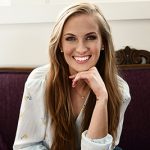
Robyn Hussa Farrell, Sharpen

Robyn Hussa Farrell, MFA, E-RYT, Founder and Chief Executive Officer for Sharpen, extends knowledge in building large-scale initiatives to listen closely to the stakeholders, individuals with lived experience and clinicians to ensure all voices have been incorporated into prevention of mental illness and substance use disorders. For nearly two decades, Robyn has been building collaborative relationships between state agencies, educational systems, public health, and researchers across the U.S. to increase connectedness and primary prevention for communities.

Hussa’s tiered model for teaching mental health, population health, and prevention in schools has been published in peer-reviewed medical journals. She has built mindfulness-based stress reduction initiatives that incorporate trauma-informed Resilient Schools frameworks in the state of South Carolina. Robyn served as an advisory committee member for Way to Wellville/Rethink Health Community Engagement and Listening Campaign and served as SC Youth Suicide Prevention Spartanburg County coordinator through the SC Department of Mental Health Office of Suicide Prevention. She founded four companies, first an award-winning NYC theatre company, Transport Group, which earned the prestigious Drama Desk award its first 7 years of operation and celebrates its 20th anniversary.  Robyn and her husband Tim met as award-winning artists in NYC almost 30 years ago and have directed over 3,000 films, live events and educational programs through Sharpen and their production company, White Elephant Enterprises.

Sharpen

Healthy communities are made up of healthy individuals. Sharpen provides a cost-effective and flexible platform that: Provides easy access to research-based, standards-aligned, and award-winning content for mental wellness, enhances, extends, and expands the reach of therapists or counselors. connects and coordinates local and regional community resources, provides data to improve resource utilization, and builds individual, family, and community capacity, competence, and confidence to navigate successfully in these uncertain times and in the future.

IMPACT:
– 15 years research
– Suicide prevention focus
– Trauma-informed
– Self-guided CBT available 24 hours a day
– Evidence-based
– Highly customizable
– 200+ experts in 450 modules

Company website| LinkedIn |Facebook | Twitter

Nancy O’Brien, Experience Happiness

Experience Happiness
Nancy O’Brien, Experience Happiness

Nancy is passionate about researching, developing and sharing innovative tools to enhance and measure well-being. Prior to co-creating The Happiness Practice, Nancy spent years on the leading edge of massive innovation and change, serving on the IBM change team to transition the global business from manufacturing to services. She has also shared her deep experience design and management expertise with many clients by helping them develop and implement bespoke strategies.

LinkedIn

Experience Happiness

Experience Happiness was born out of the recognition that unhealthy stress and burnout—a virtual epidemic in today’s fast-paced global marketplace—is impairing people’s ability to embrace change, cope with challenging situations, feel truly happy or even take on One. More. Thing. We help people and organizations thrive through happiness. They offer The Happiness Practice (THP) to empower leaders to proactively cultivate individual and organizational happiness while measuring Return On Happiness (ROH) at the individual, team, and organizational levels. THP is a transformative life practice proven to simultaneously reduce stress/burnout, increase happiness, and build engaged, high-performance cultures of wellbeing that are strategically empowered to attract, retain, and optimize talent.

Company website | LinkedIn

TRANSCRIPT

Intro: [00:00:04] Broadcasting from the Business RadioX Studios, it’s time for Workplace MVP. Workplace MVP is brought to you by R3 Continuum, a global leader in workplace behavioral health crisis and security solutions. Now, here’s your host, Jamie Gassmann.

Jamie Gassmann: [00:00:27] Hi, everyone. Your host, Jamie Gassmann, here. And welcome to this edition of Workplace MVP. In March of 2020, many workplaces faced a major disruption when they shifted from onsite to remote work. At the time, many likely felt this was going to be a short term change and they would be back to normal in no time. Little did we know, a year later, we would still have remote workers. And, now, looking at what our back to the workplace work environment will look like.

Jamie Gassmann: [00:00:56] Leaders are again faced with making unchartered challenging decisions that will inevitably have an impact on their organization and people. Do they stay remote, come back into office fully, or take a hybrid approach? And then, there is the behavioral impact of changing how we have interacted with coworkers over the last year, from being in isolation to now in-person. This shift that workplaces are facing creates yet another disruption for workplaces as they navigate these changes and the challenges within. In particular, the challenging of supporting employee wellbeing in this new work environment and what the impact will be on the role of the leader.

Jamie Gassmann: [00:01:37] Today, we have two wonderful MVPs to celebrate who are going to help provide some insight on this topic, Robyn Hussa Farrell, CEO and Co-Founder of Sharpened Minds, and Nancy O’Brien, Co-Founder of Experience Happiness. So, our first Workplace MVP is Robyn Hussa Farrell, CEO and Co-Founder of Sharpened Minds. Welcome to the show, Robyn.

Robyn Hussa Farrell: [00:02:01] Thanks so much for having me, Jamie.

Jamie Gassmann: [00:02:02] So, let’s start off with you telling me a little bit about yourself and your company, Sharpened Minds.

Robyn Hussa Farrell: [00:02:11] I am the Founder and CEO of Sharpened, which is an evidence-based platform that improves behavioral health outcomes for communities. We created this after working in the trenches for 15 years in research. And we’re just so excited to be here and grateful to you all.

Jamie Gassmann: [00:02:29] Wonderful. And you have a very interesting career journey. Can you share with us how you’ve moved from entertainment industry into the behavioral health industry?

Robyn Hussa Farrell: [00:02:38] Yeah, it’s quite a segue. My career began in New York City Entertainment in the theater, where I actually produced a rock musical about a family going through a really difficult mental health disorder. And that led into working in K-12 schools with an interest in primary prevention of mental health disorders. And I saw an alarming number of students and families revealing they were struggling with very little resources to manage it.

Robyn Hussa Farrell: [00:03:05] So, I started connecting with researchers in public health and prevention to use the craft of storytelling to connect more evidence-based programs to schools and families. And that ultimately led me to building a platform to connect the content to specific audiences and use data to inform the decisions we use in terms of behavioral for health in communities.

Jamie Gassmann: [00:03:29] Great. And, now, these programs that you built, I know you’ve mentioned K through 12, but there’s some other groups that you build those for, like within businesses and also certain kind of industry specific areas as well. Can you tell me a little bit more about those different programs and how they operate when somebody is utilizing them?

Robyn Hussa Farrell: [00:03:49] Yeah. So, there’s kind of two elements to the programmatic feature within Sharpened, they’re the tech component and then there’s modular content. So, I’ve been working with my husband, who’s also from the media world in New York City, to develop evidence-based modular content. And we do that with robust partnerships. So, it’s all about increasing access to the evidence-based best practices, but also featuring those documentary styles, race of resilience, that we know decrease [inaudible] stigmatization barriers that often prevent an individual from connecting to treatment.

Robyn Hussa Farrell: [00:04:27] So, the Modular Content Library, not only documentary style films, but all 15 different elements that we’ve published in peer reviewed medical journals has shown to increase engagement with appropriate treatment, but also community connection. So important to normalize that conversation and increase connectedness. And so, our system sort of does all of these different components using primary prevention best practices.

Jamie Gassmann: [00:04:58] Great. And in looking at those, you know, when you say the documentary – I know when you and I connected before – you mentioned that they have a very peer focused support. And I know we kind of shared specifically, like, veterans that might be dealing with like a PTSD or other mental health concerns, that they’re built to specifically kind of address that with individuals that have either gone through it or understands the world. So, in your opinion, how does that help to enhance the behavioral health support that they’re receiving? And that engagement part of it that you talked about, how does that make a difference in how people respond to it?

Robyn Hussa Farrell: [00:05:39] Well, Jamie, we’ve seen actually through research that, we have gathered over 80,000 response forms from both parents, from educators, from individuals with lived experience. So, we know through data that by sharing stories of resilience that decreases that shame. It helps an individual know that they’re not alone. It kind of normalizes the conversation around mental health. But it’s also a safe and appropriate way to connect that individual to care.

Robyn Hussa Farrell: [00:06:11] And so, with your example that you gave of the veteran focused content, we worked with a clinical psychologist from the VA who developed over the course of four years peer-to-peer veterans stories of resilience. And what we saw through our research with the veteran population was, not only that the veterans wanted to engage more with treatment after they saw another veteran, but more importantly, the spouses or the care providers. So, when we built out certain content streams that were spouses and veterans sharing in a safe and protected environment their stories, we saw an increase in connectedness. And those are best practices for not only building resilience and mental health, but also for suicide prevention.

Jamie Gassmann: [00:06:56] Yeah. Definitely. And looking at, obviously, over this last year and in any time frame, really, and looking at kind of trends and shifts, is there anything in particular that you’re seeing with your clients or within the industry that you serve that you’ve identified in your research that leaders should be aware of?

Robyn Hussa Farrell: [00:07:19] So, overall, of course, in the last year, we’ve seen an uptick in consuming best practice interventions on mindfulness, mindfulness-based stress reduction, anxiety, understanding the conversation around the neuroscience around anxiety, but also childhood trauma and maltreatment. We’re talking a great deal and seeing a great deal around adverse childhood experiences. So, naturally, those, on a broad brush stroke, have been what we’ve seen in terms of our data.

Robyn Hussa Farrell: [00:07:48] But we also know that individuals are not only interested in accessing care for themselves, but they need support for their family members. So, ensuring we have age appropriate and audience appropriate content for the family member has been something that we’ve seen, especially in the last year.

Robyn Hussa Farrell: [00:08:06] And then, in our medical student vertical, we actually saw really interesting data point where medical students were actually seeking out directed content on a more regular basis. So, we learned through medical students that, for example, you’re in the throes of a mental health disorder or a substance disorder, you may be less likely to be seeking than earlier on. So, the earlier we can screen and intervene, we’re seeing their success.

Jamie Gassmann: [00:08:37] Great. So, in looking at that earlier intervention, what can leaders be looking for? How would they be able to spot, is their proactive measures that they can take to be monitoring for that?

Robyn Hussa Farrell: [00:08:52] Yeah. So, leaders should know first and foremost that you’re not alone and you don’t have to do this alone. Right? The news has been highlighting — in the last year, especially with this mental health pandemic. But just know that there’s been research and best practices over the course of five decades, at least, in the world of neuroscience. And there are systems and frameworks in place that can support you. So, that’s number one, know that there are folks that can support you.

Robyn Hussa Farrell: [00:09:18] And to that end, we have collaborated with R3C and with Nview to offer consultation to leaders of larger corporations, so that they can actually understand the benefits of early identification screening, primary prevention work that can actually support their employees in the long term.

Jamie Gassmann: [00:09:40] And so, looking at that, in that preparation of the leaders, as they’re starting to look at this new work environment, you know, what are some things from your opinion that they should be considering and building into that preparation approach?

Robyn Hussa Farrell: [00:09:53] I think that it’s about increasing community connections as much as it is increasing access to treatment like mental health counseling. So, there are all kinds of ways that you can do that in following best practice. We can also start normalizing the conversation on a daily basis. So, driving content on a more scheduled – again, following best practice guidance, those are ways that increase resiliency, it decreases the stigma, it engages everyone kind of into a normalized conversation that mental health is as important, if not more important, than our physical health.

Jamie Gassmann: [00:10:36] Now, I’m sure there’s a lot with that career journey that you just explained to us and then also looking into the great work that you’re doing at Sharpen that you’re proud of. But what are you most proud of within your career when you look back?

Robyn Hussa Farrell: [00:10:50] When I look back, I think that it’s the partnerships. It’s the people doing the grass work, research and interventions for families. I’ve had the great honor of working greatly in a resilient schools community, working with foster families, working with experts and researchers in childhood maltreatment. And I am so grateful for those community partnerships and for the professional collaborations that we have. So, I mean, there’s so many things I’m grateful for, but those partnerships really mean the world to me.

Jamie Gassmann: [00:11:26] Wonderful. And if somebody wanted to get in contact with you, how could they go about doing that?

Robyn Hussa Farrell: [00:11:32] Sure. I’m on LinkedIn. I’m also sharpenedminds.com. You can access us there and please reach out, we would love to collaborate.

Jamie Gassmann: [00:11:41] Awesome. Thanks, Robyn. Our next Workplace MVP is Nancy O’Brien, Co-Founder of Experience Happiness. Welcome to the show, Nancy.

Nancy O’Brien: [00:11:51] Oh, thank you, Jamie. And thank you, Robyn. It’s a pleasure to be here with you both this morning.

Jamie Gassmann: [00:11:57] Great. And just like with Robyn, why don’t you start off with telling us a little bit about yourself and your company, Experience Happiness.

Nancy O’Brien: [00:12:04] Yeah. Like Robin, I didn’t plan on this to be part of my career. Unlike Robyn and other entrepreneurs, my dear friend and business partner at Experience Happiness literally set out to save our lives. My first job out of college was with IBM, and I was one of the two females that were hired in the Omaha, Nebraska office that were not secretaries. So, you could imagine. And then, I was also part of the change team at IBM when we were moving from manufacturing to services. And that was really interesting, that was an 11 year change plan, we got there at nine. And nobody but Dow Jones and Nasdaq can tell you when you get there.

Nancy O’Brien: [00:13:00] And then, when I was still at IBM, I got introduced to this idea of customer employee experience design and experience management. I’m like, “Oh, finally. That’s me.” And then, through the course of life, I ended up really becoming an expert in experience design and experience management. And what I learned was, you can’t have a really great customer experience unless you have a really great employee experience. So, that kind of shifted some things.

Nancy O’Brien: [00:13:33] And when my dear friend and I sat down for lunch one day, we could check all the boxes on wellbeing. I mean, at the Gallup Well-Being Index Work would have been out, we would have gotten an A-plus. We were doing purpose driven careers. We had flushed 401Ks, if anybody remembers those days. We were so healthy that, for me, my physician actually said, “I don’t want to see you for five years because this is a sick care system, not a well-care system. Like, stay out of here.” I was Volunteer of the Decade at my kid’s school. And I had plenty of friends and family.

Nancy O’Brien: [00:14:16] But the reality is, my friend and I looked across the table from each other and we realized that we were suffering from suicidal ideation. And we were doing everything right. We were going to yoga. We were meditating. We were healthy. We were happy. And what we know now that we didn’t know then is, we were suffering from the 16 signs and symptoms of burnout.

Nancy O’Brien: [00:14:45] And, really, I remember the day I got off the plane one evening, like, at midnight, there’s not that many people that are in the airport at midnight. But I was one of them. And I remember calling my boss at the time and I just said, “I’m done. I can’t do this anymore.” So, really, we needed to heal ourselves. We weren’t getting counseling. We were getting some therapy. And if anybody gave us another gratitude journal, there was going to be a situation.

Nancy O’Brien: [00:15:19] And I want to be clear because Robyn just spoke so eloquently about mental health. So, I just want to be clear, we’re talking about mental wellness. We are not in the mental health. Our solution called the Happiness Practice is an evidence-based behavioral health solution that helps people no matter kind of where they are on the spectrum. And I think we’re all on a spectrum of some sort. I don’t think any of us are exempt, and most of us will go undiagnosed. But we can always improve our behavioral health and our mental wellness. So, really, Jamie, we set out to save ourselves,

Jamie Gassmann: [00:16:00] And it took you on an incredible career journey and took you to creating the Experience Happiness, which is now you have that ability to help other organizations. So, can you tell me a little bit about how those programs work within an organization?

Nancy O’Brien: [00:16:17] Yeah. And I’ll give you just a little bit of context. So, you know, Lyn and I are kind of innovators, researchers, and strategists. So, the first thing we did is, we needed to redefine happiness because we had it out there. I’ll be happy when the kids get the grades, right? We get this next contract. I get this promotion. My husband remembers my birthday. I mean, whatever it is.

Nancy O’Brien: [00:16:43] And so, the first thing we did – and I’m going to invite your listeners to try this on – is we redefined happiness, which is this, happiness is our innate ability to locate and cultivate our serenity and our excitement about our life, regardless of outside forces. And there’s a lot of outside forces. So, we redefined happiness and then we kind of like, “Well, that’s happiness.” And it’s inside of each of us how do we cultivate it. And then, we came up with the five principles of happiness, and blah, blah, blah.

Nancy O’Brien: [00:17:24] And now, what we offer to people of all walks of life in education settings, in corporate settings, in community settings is the Happiness Practice. And it’s essentially called a practice. It’s not a program. It’s a practice. Just like brushing your teeth is a practice or yoga is a practice, what not. And you learn and practice each of the five principles for 30 days because that’s the time it takes to create new neuropathways. And simply put, by practicing this practice, you become more open minded and more open hearted. And you travel the longest journey we all take, the 18 inches from our head to our heart. And in doing so, we are physically, emotionally, mentally, and spiritually more optimized.

Jamie Gassmann: [00:18:19] And I can see in an organization having more of that openness as like a team probably builds collaboration, understanding probably a little bit more grace for each other. Is that typically what you see when you’re working with that?

Nancy O’Brien: [00:18:32] Like, we worked with the fabulous emergency department at Hennepin Health Care on the heels of a gang shooting. So, we not only had burnout, but we had trauma there. And it was really interesting because one of the nurse leaders said, “You know what? We used to be good at teaming, but now we have each other’s back.” Because like Robyn was saying about Sharpened Mind, you learn this life practice at community. Right? And so, you start to see that no one is exempt. Like, stuff has happened to everybody all the time, no one’s exempt.

Nancy O’Brien: [00:19:13] And what you learn in this community is that, we’re all students and teachers of life and you learn to apply the five principles of happiness to Thanksgiving dinner, your sixteen year old, your work colleagues. And having that sense of, “Oh, my God. We are all human beings doing the best we can.” And you start to walk this path of self-love and self-worth together.

Nancy O’Brien: [00:19:46] And as you know, Jamie, it was so great because we’re so thrilled to have R3 Continuum being one of our partners. When your leaders offered the Happiness Practice to all of your employees as a gift – really, it was a gift – 80 percent of you and your colleagues engaged in that. And we have the only evidence-based behavioral health system that has a measurement applied to it. So, we actually measure and track shifts at an individual level. But, two, also department and organizational KPIs. So, your leadership was able to see since the burnout went down and the happiness went up, revenue improved, operational expenses were reduced, and net income was improved. So, this is a business case, right? I mean, all of the businesses really, at the end of the day, are the humans in it.

Jamie Gassmann: [00:20:48] Absolutely. And we’ve connected earlier, so kind of piggybacking off of that point about people and businesses, you know, looking at the last year, some of the things that we talked about previously, you mentioned that within the last two months, you’ve seen a shift that you’ve noticed within organizations. Can you share with me that shift that you and the potential impact that organizations might have from that?

Nancy O’Brien: [00:21:19] Thank you. And, really, Jamie and Robyn, chime in here if you’d like to. But you mentioned something earlier, Jamie, about leaders. So, here’s what I’m feeling and seeing out there, is, there’s three major shifts happening that really are shifting leadership’s role in this new world. Because we have five simultaneous crises happen. So, this is a whole new world order for us.

Nancy O’Brien: [00:21:51] So, leaders have three new responsibilities that they need to really step into. One of that is really making employee wellbeing one of their top priorities, and it’s a shared responsibility. Unlike employee wellness, which is, “We’ll offer weight loss. We’ll offer smoking cessation. We’ll offer EAP.” That’s an individual, like, I have to choose if I want to quit smoking or lose weight or blah, blah, blah. Wellbeing is a shared responsibility. You’ve got to have the environment where people feel safe and belonging. And you also have to offer a variety of programs, if you will, because no two people are the same and no two people are in the same place on the journey.

Nancy O’Brien: [00:22:36] The other thing that leaders really have to do is, help people adjust to the accelerated rate of change. Like, what we were doing Monday is not what we’re doing on Thursday, and that’s the new reality. And, now, the nice thing about people who are authentically happy, they respond to change more quickly and more easily. So, again, we’ve got to optimize the human beings, so that we don’t have a major crash to our human system.

Nancy O’Brien: [00:23:16] And then, the third thing is, there’s going to be a lot of upskilling and reskilling that takes place. I mean, aren’t you ready for your robot? I mean, really, I think we’re all going to have our personal robot in the next year. And AI is going to come on and all these things. And it’s like, “We’re going to have to learn how to program our robots.” You know, that’s just one example of the type of new skills we’re all going to have to develop, no matter where we are in our career.

Nancy O’Brien: [00:23:49] And leaders aren’t used to doing those three things. They’re used to putting the burden on upskilling. “Well, you get the degree then apply for the job.” No. I mean, the degree and the education system, it’s not going to keep up with the new skills that an employee needs now to respond and react to a work situation. And I think the other thing leaders need to make over arching is, leaders don’t have to have the answers anymore. They have to keep leaning into the question, what works now, what’s the problem, but what’s the opportunity.

Nancy O’Brien: [00:24:28] And so, I think it’s a really exciting time. I think if leaders lead into these three shifts, they’re going to feel more fulfilled. Because aren’t leaders all about lifting people up anyway and helping people be their best? And aren’t organizations about creating wonderful opportunities for their employees? Everything else is just kind of like noise.

Jamie Gassmann: [00:24:56] Yeah. Definitely. And you can see that in organizations and some of the other, you know, news articles and media that you’re seeing in that area in terms of helping employees, empowering employees, supporting them. So, definitely you can see that with organizations in that new work environment. So, the same question that I asked Robyn as well, I mean, you’ve had, obviously, an incredible journey. In looking back over your career, what are you most proud of?

Nancy O’Brien: [00:25:30] Oh. That I made the shift from being a human doing to a human being. That has been everything. That has made me a better mother, a better friend, a better colleague. Like, when I ask you how are you, I want to know. And that, I’m most proud of that.

Jamie Gassmann: [00:26:06] Wonderful. And if somebody in our listener pool wants to connect with you, how can they go about doing that?

Nancy O’Brien: [00:26:12] Yes. So, it’s easy, nancy@experiencehappiness.biz. And you can also go to our website, experiencehappiness.biz And we have a free and confidential happiness and burnout assessment you can take. So, check in with you. Take a moment and see how you are.

Jamie Gassmann: [00:26:36] Great. Thanks so much, Nancy. So, we’re going to take a moment and just have a word from our sponsor. Workplace MVP is sponsored by R3 Continuum. R3 Continuum is a global leader in providing expert, reliable, responsive, and tailored behavioral health crisis and security solutions to promote workplace wellbeing and performance in the face of an ever changing and often unpredictable world. Learn more about how R3 Continuum can tailor a solution for your organization’s unique challenges by visiting www.r3c.com today.

Jamie Gassmann: [00:27:13] So, now, what I’d like to do is bring the two of you back together and I have some questions for the both of you. So, starting out with you, Nancy, you shared that employee wellbeing has to or is moving to a new territory of being a shared responsibility. So, from your perspective – and then, Robyn, I would like to get your thoughts on this as well – how might that look within an organization? So, what are some things that might need to change or be incorporated to allow for that to happen?

Nancy O’Brien: [00:27:46] So, I think one of the big shifts we’re experiencing right now is, we’re shifting from paying attention to employee engagement, how do employees feel about the company, to employee wellbeing and having the organization understand, really, how well are their people. And then, needing to sense and respond to that. Like, you can’t just do the one size fits all anymore. You’re going to have to dial-in individually. So many things are becoming personalized, we know this as consumers. Employee wellbeing for organizations is going personal as well. Like, my challenges and my opportunities for growth and expansion are different than the two of yours. And it’s changing, literally, daily.

Nancy O’Brien: [00:28:41] So, employee wellbeing, it’s tempting to put it in the H.R. bucket as an organization. But I really encourage it to be a C-suite driven initiative. Because at the end of the day, the most important asset an organization has is their people. And, now, that we’re in this hybrid, if you will, work environment, you’re going to have to have this be a shared responsibility. Because the organization can make sure that their spaces are physically safe, make sure everybody’s got the technology they have. But the humans have accountability to be able to check in with themselves, to say, “Should I go into the office today or should I stay home?”

Jamie Gassmann: [00:29:36] Yeah. Definitely. Robyn, how about from your perspective?

Robyn Hussa Farrell: [00:29:41] Now, we just did a couple of days ago this week, a focus group with some H.R. executives on global wellbeing and resilience in the workplace. And one piece of data that I think is relevant to this conversation – and to everything, Nancy, that you have said. Yes, I’m a huge fan. I’m so excited about this idea of really giving presence to our employees from the C-level all the way throughout – the challenge in the piece of data from the focus group this week was simply how can [inaudible] our executive, possibly, with 50,000 employees be there and be present and be able to do it on their own? And the answer is, of course, they can’t.

Robyn Hussa Farrell: [00:30:32] So, creating a community, not only from the C-level, but throughout the culture of these enterprise companies where we’re asking each other, how are we doing? Getting the conversation started around mental wellbeing, but just life wellbeing. What are you doing today to do an uptick on your self-care? What are you doing in our world? We measure all of this through a resiliency scale that’s validated against perceived stress outcomes. So, how are you doing with stress? How you do management? It doesn’t mean you need to go talk to a licensed clinician, per se. There are folks in between that can on a daily level, we can just actually have these conversations.

Robyn Hussa Farrell: [00:31:15] And I love Nancy’s point about making sure the leadership are modeling that, right? If we see it, we are going to be more likely to do it, not only at the workplace, but at home with our kids and with our loved ones.

Jamie Gassmann: [00:31:28] Great. And so, from the work that the two of you do, what are some of the changes that you feel employers should be readying themselves for? What that new workplace is going to be like post-COVID? And the employees, really, looking at it from like the employees that are coming back to that work environment, what are some things that they should be doing to ready themselves for that? And maybe we’ll start with you, Robyn.

Robyn Hussa Farrell: [00:31:53] I think, number one, first and foremost, we want to be mindful of risk mitigation and doing it in a way that actually gets this conversation going. So, employers can do the assessment and the screen that Nancy was referencing. Knowing the baseline of how your employees are when they come back to work, whether it’s in office or hybrid, checking in with them. And of course, there are evidence-based ways to do that.

Robyn Hussa Farrell: [00:32:23] We partner with the gold standard screening company Nview Health. They run over 17,000 clinical studies around this. So, there are ways to do it that are appropriate and safe that helps you get a baseline. And then, doing some type of daily or weekly intervention, meaning mindfulness-based stress reduction, all of the literature around improving happiness outcomes. We call it building protective factors. So, we focus on eight primary protective factors. Certainly, mindfulness and resiliency are within that. But there’s all kinds of ways that you can deploy safe and appropriate content as an intervention that supports all of the wellbeing of the employees that you’re working with. So, those are just two ideas right off the top of my head.

Jamie Gassmann: [00:33:12] And how about you, Nancy?

Nancy O’Brien: [00:33:13] Well, I love everything that Robyn is suggesting. And, now, I have to put my experience design hat on for just a moment. Because it’s really interesting for me to see a dozen articles a day on return to the office, return to work. And the thing is, we’re already in the shift. There’s no return happening. We are evolving to the new reality right now. And we are social-emotional creatures, and mental health is an epidemic and loneliness and a sense of belonging are the key symptoms that we’re seeing.

Nancy O’Brien: [00:33:59] And so, from an experience design perspective, I would say, if you’re scheduling an hour Zoom call, schedule 90 minutes. Because what we’re missing is when we see somebody walking to and from the lunchroom or the coffee nook, we’re missing that, “Oh, my God. What happened to you? You’ve got a cast on your arm.” And we’re missing the story of, “I fell down, you know, carrying a bag of groceries,” or whatever because we’re only getting above the heart. So, we’re missing most of the data we count on as human beings for only getting 10 percent of the data we need.

Nancy O’Brien: [00:34:49] So, what we need to do is spend that extra 30 minutes, if you will, 15 minutes before a call and 15 minutes later, “How are you doing? What’s going on?” Because that’s what we’re doing at Experience Happiness – we just had an all team call this morning. We got people in Finland and, you know, people in Oklahoma and California. We’re doing all the time zones – the first thing we do is, “How are you? And how is your practice?”

Nancy O’Brien: [00:35:17] And it really helps each other to say, “You know what? I’m working on principle number three, release control to be empowered.” It helps us understand where you are. And sometimes the agenda that we plan for the meeting changes based on what we’re learning about the humans that have come together in this time. And then, the other thing we’re missing on the back end is, you know, how if you have a meeting, you walk out with a couple of people and say, “Hey, let’s follow up on this. Let’s follow up on that.” We’re not doing that.

Nancy O’Brien: [00:35:48] So, what we need to do is bring back those human needs that we have and create the space for them in this wonderful reality that we actually know now that that myth of work life balance was always a myth. And no matter who we are, we’re bringing all of that to every aspect of our life. We bring our work to the situation with our kids. We bring our kid’s situation to work or community environment. And I think we have to acknowledge our humanness and how humans operate as social-emotional creatures. We’re the only species on the planet that has a conscious.

Jamie Gassmann: [00:36:49] Interesting. So, for the both of you, just one final question, for all the leaders that are listening out there today, if there was one takeaway action item that you wanted to leave them with that they should start doing now, if they haven’t already, for this new work environment or just even in general, what would that take away be? I’ll start with you, Robyn.

Robyn Hussa Farrell: [00:37:18] Okay. So, I’m going to bring this to a level of conversation that speaks very close to home. I direct the Suicide Prevention Task Force for three counties in the state of South Carolina. I’ve been doing that work for four years with researchers. I mentioned a focus group we had with H.R. executives from global companies. The conversation around suicide is a real thing and it’s a scary thing. And, now, executives are faced with, “My goodness. There’s a whole host of mental health and substance use challenges that are staring all of us in the face.”

Robyn Hussa Farrell: [00:37:55] I want to go back to the point I made earlier, which is, there are best practice ways of getting those conversations started. To Nancy’s really great point about encouraging your employees to share their stories, this resonates so much with me as both a storyteller and someone who thrives on helping individuals tell their stories. There is a model that’s evidence-based for suicide prevention and it is called Stories of Strength.

Robyn Hussa Farrell: [00:38:23] And one easy, quick, awesome way that you can actually engage your employees in the conversation is to ask them who are the sources of strength in your life? Let’s talk about them, call on them, perhaps even contribute a video of one way that they overcame adversity during COVID. And what were the sources of strength that pulled them through these crazy times that we’re in. So, leaning into it rather than letting fear be your guide and, again, following the best practices that exist because they’re out there.

Jamie Gassmann: [00:38:59] Beautiful. How about for you, Nancy?

Nancy O’Brien: [00:39:03] So, just like the flight attendants on the airlines would say, “Put your own mask on first so you can help each other,” I would invite you to really understand that as a leader. No matter if you’re an untitled leader, but you’re still a leader in your community or your home or whatnot, you cannot pour from an empty cup. Take care of you so you can take care of others well. There is data out there that says that 90 percent of leaders are suffering from burnout. And burnout unaddressed, unacknowledged, unmedicated can lead to suicidal ideation and suicide.

Nancy O’Brien: [00:39:55] So, I think the most important thing that leaders can do is model the desired behavior that we are all accountable and responsible for cultivating our mental wellness. And, you know, there’s about to be eight billion of us on the planet. Here is a nice thing, if we were supposed to do life alone, there wouldn’t probably be eight billion of us.

Nancy O’Brien: [00:40:23] So, you know, it was really interesting. I really spent the last year in Detroit with my son, who a year ago – and I won’t go into details – everything you read about is what he was experiencing. I thought, “Well, he doesn’t need to be alone. I could get in my car and I could go there.” And thank goodness I had my own practice. Thank goodness I was able to love and support him, but knowing it’s his own journey.

Nancy O’Brien: [00:40:57] And it was interesting because last week, I just happened to reconnect with, like, six people I didn’t talk to you for a while. And they said, “Well, what’s the last year been like?” And I, basically, shared with them what my year has been like in this wonderful journey with my son that I’m so privileged to be part of. And they’re like, “Me, too. Me, too. Me, too.” Every one of the six people I talked to had a 20 year old child who was going through something similar.

Nancy O’Brien: [00:41:29] And so, Robyn, to your point of sharing, an old version of me, the human doing, would probably not have shared that. But the human being, I shared here’s what’s going on in my life. You know, it might look like I’m put together because I happened to shower today, but I got this stuff going on. And it was so interesting to realize that my experience was really no different than these good friends and colleagues of mine.

Jamie Gassmann: [00:42:09] Yeah. Great.

Nancy O’Brien: [00:42:11] So, share your story. And it doesn’t have to be a pretty one.

Jamie Gassmann: [00:42:18] I love that advice. I think that’s a great one, because I think through those stories, we’re able to learn a little bit more about each other, which gives us the ability to have a little bit more understanding and grace for each other as well. So, thank you both for letting us celebrate you, and for sharing your stories, and your great advice, and your insights with our listeners. We appreciate you. And I’m sure your organizations and staff do as well, as well as your clients that you work with.

Jamie Gassmann: [00:42:48] And we also want to thank our show sponsor, R3 Continuum, for supporting the Workplace MVP podcast. And to our listeners, thank you for tuning in. If you’ve not already done so, make sure to subscribe so you get our most recent episodes and other resources. You can also follow our show on LinkedIn, Facebook, and Twitter @Workplace MVP. And if you are a Workplace MVP or know someone who is, we want to know about them. Email us at info@workplace-mvp.com. Thank you all for joining us and have a great rest of your day.


About “Workplace MVP”

Every day, around the world, organizations of all sizes face disruptive events and situations. Within those workplaces are everyday heroes in human resources, risk management, security, business continuity, and the C-suite. They don’t call themselves heroes though. On the contrary, they simply show up every day, laboring for the well-being of employees in their care, readying the workplace for and planning responses to disruption. This show, “Workplace MVP,” confers on these heroes the designation they deserve, Workplace MVP (Most Valuable Professionals), and gives them the forum to tell their story. As you hear their experiences, you will learn first-hand, real life approaches to readying the workplace, responses to crisis situations, and overcoming challenges of disruption. Visit our show archive here.

“Workplace MVP” Host Jamie Gassmann

In addition to serving as the host to the Workplace MVP podcast, Jamie Gassmann is the Director of Marketing at R3 Continuum (R3c). Collectively, she has more than fourteen years of marketing experience. Across her tenure, she has experience working in and with various industries including banking, real estate, retail, crisis management, insurance, business continuity, and more. She holds a Bachelor of Science Degree in Mass Communications with special interest in Advertising and Public Relations and a Master of Business Administration from Paseka School of Business, Minnesota State University.

Tagged With: Experience Happiness, Jamie Gassmann, mental health, mental wellness, Nancy O'Brien, R3 Continuum, Robyn Hussa Farrell, Sharpen

Decision Vision Episode 113: Should I Disclose My Mental Illness? – An Interview with Jacqui Chew, iFusion and TEDxAtlanta

April 22, 2021 by John Ray

Jacqui Chew
Decision Vision
Decision Vision Episode 113: Should I Disclose My Mental Illness? - An Interview with Jacqui Chew, iFusion and TEDxAtlanta
Loading
00:00 /
RSS Feed
Share
Link
Embed

Download file

Jacqui Chew

Decision Vision Episode 113:  Should I Disclose My Mental Illness? – An Interview with Jacqui Chew, iFusion and TEDxAtlanta

Diagnosed with bipolar disorder in 2005, Jacqui Chew seeks to normalize the conversation around mental illness. In a candid and open conversation with host Mike Blake, Jacqui discussed the journey to her diagnosis and how she’s learned to manage it. She also offered advice to HR directors and the rest of us who are approached by an employee or friend who discloses their mental illness. “Decision Vision” is presented by Brady Ware & Company.

Jacqui Chew, iFusion and TEDxAtlanta

Jacqui Chew is an award-winning marketing and business executive with more than two decades of experience delivering creative, data-driven strategies for venture-backed, high-growth companies. A proven positioning expert, brand builder, and innovation thought-leader with P/L experience, her programs contribute to MQL growth.

A creative problem solver and convener, Jacqui believes in the potential for ideas to change the world. As licensee of TEDxAtlanta, one of the largest TED affiliates in the region, she galvanizes a team of volunteers to produce the annual TEDxAtlanta show. Under her leadership, tickets for nine of the 11 sold out weeks before. This must-attend event has become the platform for tomorrow’s leaders playing host to renowned bioethicist Paul Root Wolpe, hunger eradication entrepreneur Jasmine Crowe, and Ryan Gravel, the “father” of the Atlanta Beltline.

Jacqui served as senior vice president of marketing at Avertium, an award-winning cybersecurity firm founded from a three-company roll-up. She led brand marketing, demand generation, social media, PR, sales enablement, analytics, marketing operations, and communications. During her tenure, Jacqui spearheaded the company’s successful repositioning, messaging and rebranding and, its CRM/marketing automation platform integration. She also worked cross-functionally to support the acquisition of a fourth company during this period.

Previously, as CMO-in-residence at the Advanced Technology Development Center at Georgia Tech (ATDC), a globally ranked business incubator, she worked with the 170+ companies to develop their go-to-market and product strategy. During her tenure, she also developed and taught the incubator’s first strategic marketing curriculum.

Prior to ATDC, Jacqui founded iFusion, a fractional CMO consultancy for high-growth venture-backed companies. Primary client projects: positioning, messaging, customer journey mapping, marketing plan development and marketing and sales alignment. The company led the launch of more than two dozen companies/products and contributed to $100+m in funds raised.

Jacqui served in executive marketing roles at PeopleSoft (acq by Oracle), Stonesoft (acq by McAfee now Intel), Silverpop(acq by IBM) and worked, on the agency side, with IBM Global Services, The Weather Channel, KontrolFreek, MessageGears, Preparis, Venture Atlanta, EarthLink and eBay.

Website | LinkedIn | Jacqui’s TEDx Video

Mike Blake, Brady Ware & Company

Mike Blake, Host of the “Decision Vision” podcast series

Michael Blake is the host of the “Decision Vision” podcast series and a Director of Brady Ware & Company. Mike specializes in the valuation of intellectual property-driven firms, such as software firms, aerospace firms, and professional services firms, most frequently in the capacity as a transaction advisor, helping clients obtain great outcomes from complex transaction opportunities. He is also a specialist in the appraisal of intellectual properties as stand-alone assets, such as software, trade secrets, and patents.

Mike has been a full-time business appraiser for 13 years with public accounting firms, boutique business appraisal firms, and an owner of his own firm. Prior to that, he spent 8 years in venture capital and investment banking, including transactions in the U.S., Israel, Russia, Ukraine, and Belarus.

Brady Ware & Company

Brady Ware & Company is a regional full-service accounting and advisory firm which helps businesses and entrepreneurs make visions a reality. Brady Ware services clients nationally from its offices in Alpharetta, GA; Columbus and Dayton, OH; and Richmond, IN. The firm is growth-minded, committed to the regions in which they operate, and most importantly, they make significant investments in their people and service offerings to meet the changing financial needs of those they are privileged to serve. The firm is dedicated to providing results that make a difference for its clients.

Decision Vision Podcast Series

“Decision Vision” is a podcast covering topics and issues facing small business owners and connecting them with solutions from leading experts. This series is presented by Brady Ware & Company. If you are a decision-maker for a small business, we’d love to hear from you. Contact us at decisionvision@bradyware.com and make sure to listen to every Thursday to the “Decision Vision” podcast.

Past episodes of “Decision Vision” can be found at decisionvisionpodcast.com. “Decision Vision” is produced and broadcast by the North Fulton studio of Business RadioX®.

Connect with Brady Ware & Company:

Website | LinkedIn | Facebook | Twitter | Instagram

TRANSCRIPT

Intro: [00:00:02] Welcome to Decision Vision, a podcast series focusing on critical business decisions. Brought to you by Brady Ware & Company. Brady Ware is a regional full-service accounting and advisory firm that helps businesses and entrepreneurs make visions a reality.

Mike Blake: [00:00:21] Welcome to Decision Vision, a podcast giving you, the listener, clear vision to make great decisions. In each episode, we discuss the process of decision making on a different topic from the business owners’ or executives’ perspective. We aren’t necessarily telling you what to do, but we can put you in a position to make an informed decision on your own and understand when you might need help along the way.

Mike Blake: [00:00:40] My name is Mike Blake and I’m your host for today’s program. I’m a Director at Brady Ware & Company, a full service accounting firm based in Dayton, Ohio, with offices in Dayton; Columbus, Ohio; Richmond, Indiana; and Alpharetta, Georgia. Brady Ware is sponsoring this podcast, which is being recorded in Atlanta per social distancing protocols. If you would like to engage with me on social media with my Chart of the Day and other content, I’m on LinkedIn as myself, and @unblakeable on Facebook, Twitter, Clubhouse, and Instagram. If you like this podcast, please subscribe on your favorite podcast aggregator, and please consider leaving a review of the podcast as well.

Mike Blake: [00:01:15] Today’s topic is, Should I be open about my mental illness? One in five U.S. adults report that they suffer with some sort of mental illness, and an estimated two-and-a-half percent of U.S. adults experience bipolar disorder at some point in their lifetimes, 7.1. percent of U.S. adults are characterized as having major depression. And these are numbers that go back to 2019. And in case you haven’t heard, most of us had kind of a rough year in 2020. We had a combination of a once in a century global pandemic. We had unprecedented, massive social upheaval. And in some places in the country, we had murder hornets.

Mike Blake: [00:01:59] And, you know, for a lot of us, it’s been a rough ride, a lot rougher than usual. And most of us, I’m sure, have heard, many have read, and seen many stories of the mental toll that the pandemic has taken on many of us, ranging from job loss to being cooped up at home, to having to take on home roles that we were not prepared for. For example, I am the world’s lousiest Spanish teacher for home schooling our son, which is not necessarily our plan. We can only hope we can order a Taco Bell because I think that’s the only thing I’m qualifying him to do. But his ten, he might grow out of it.

Mike Blake: [00:02:39] And, you know, you think about mental illness, and I’m hoping that kind of one good thing that comes out of the pandemic is, I hope it makes us more aware of mental illness and it kind of give it its due. You know, years ago, I served on the board of a nonprofit called Care and Counseling Center of Georgia, whose mission was to provide mental health care services to low income folks. And they did a really good job of it in spite of my being on the board.

Mike Blake: [00:03:13] But one of the things you learn about mental health and mental – you will actually learn about two things. Number one is, your mental health is still sort of taken a backseat to so-called physical health. And, you know, you grow up and you talk about people who are either tough or they’re not tough. And some people of faith will claim that that makes them impervious to any kind of mental illness and so forth. Even to the point where, you know, it wasn’t that long ago, I think a lot of people thought that mental illness was a choice.

Mike Blake: [00:03:51] And secondly, I think people are understanding now that not only does it need to be destigmatize, but the thing on mental health is that if you don’t have mental health, a lot of bad downstream things happen. They can happen at the micro level where it impacts your job, it impacts your personal relationships, it impacts your ability to be a fully engaged, fully actualized member of society, fully actualized person. And in very extreme cases, particularly the United States where gun ownership is plentiful, mental illness that is either undiagnosed, untreated, unmonitored, simply not paying enough attention to, can have, frankly, catastrophic results.

Mike Blake: [00:04:38] And I can’t help but wonder how different might our world be if we gave, frankly, mental illnesses its due. And I think now as we are entering this this trans-pandemic phase where, you know, many of us are becoming vaccinated and we’re starting to kind of wrestle with returning to work, we’re wrestling with returning to restaurants, going back to baseball games, and so forth. And, you know, the mental health issues aren’t going away. In fact, you could argue that there are more mental health issues that are going to be created by sending people back to the office.

Mike Blake: [00:05:18] And I think and I hope that one thing is abundantly clear that, you know, mental health simply cannot be ignored anymore. It’s not the moral thing to do. And I would argue it’s not the business correct thing to do. Because if you have even a small business of 25 people, statistically speaking, five of those people are really struggling with a diagnosable disorder. And one of them probably has something akin to bipolar disorder. And they’ve just done a very good job of hiding it or we’ve done a very good job of not seeing it.

Mike Blake: [00:05:57] And so, therefore, I wanted to cover this topic. It’s not an easy topic. I’m certainly not a physician, but I think it’s so important. I think we have to equip ourselves. Statistically speaking, again, there are thousands of listeners listening to this that are struggling with this question. And then, for people like me, who at least I don’t believe that I have a diagnosable mental illness, others may disagree, but I don’t believe that I do.

Mike Blake: [00:06:22] But I do want to make sure that every resource is available in my network and my company – of which I’m a shareholder – that if there are folks – again, statistically speaking, there are a number of people – that are struggling with mental illness of some kind that we, as a company, do the right thing. That we are compassionate, that we are accommodating, and that we stand up for them, and we don’t abandon them. We don’t try to force them into the shadows. And so, I hope that that thesis makes sense to use as we kind of go through, I think, what is a very challenging and necessary topic.

Mike Blake: [00:07:01] And joining us today to help us talk about this is Jacqui Chew. Jacqui works at the intersection of storytelling, innovation, and business. And I’ve known her for a long time. In fact, I took over her office once. She deploys the power of narrative design and reframing an organization’s brand story for resonance and to inspire action. Described as the Lara Croft of problem solving, Jacqui is a seasoned business operator with a passion for building inclusive teams and working cross-functionally to bring disparate groups together towards a common goal.

Mike Blake: [00:07:33] As the curator and licensee of TEDxAtlanta, Jacqui is always on the lookout for change makers and innovations that are solving for the challenges of today and those just around the corner. Under her leadership, first of TEDxPeachtree from 2009 to 2018 and presently of TEDxAtlanta, Atlanta has grown in recognition within the global TEDx community as an innovation hub for technology, health care, and social impact initiatives. And I’m a big fan of TEDx. I watch three to four TEDx videos a week. And I’ve watched Jacqui’s video as well, we’ll refer to that in our conversation. Jacqui is resourceful, tenacious, and well-networked in the Atlanta business, social impact, and technology communities. Jacqui Chew, welcome to the program.

Jacqui Chew: [00:08:16] Thank you for having me, Mike.

Mike Blake: [00:08:21] So, Jacqui, I brought you on because you’ve chosen to hold yourself out there as a person that has bipolar disorder and has figured out how to navigate life with that particular disorder. So, you know, I’ve read about bipolar disorder. Thank God I don’t have it. I don’t have a family member that has it. I have a couple of friends that have. But explain to the audience in your kind of best terms, how would you describe bipolar disorder to somebody?

Jacqui Chew: [00:08:54] So, first of all, I would call it a mood disorder, because the symptoms manifests itself in extremes in mood changes. And this isn’t to be confused with a person who is “moody.” But mood changes from the standpoint of severe depression to the point where you would lose interest in what you normally enjoy. Or you have a really severe depressive episode would be if you are unable to sleep and you find yourself crying uncontrollably at absolutely nothing, severe fatigue. So, these are severe manifestations of depression. So, there’s that aspect of it.

Jacqui Chew: [00:09:50] At the worst in terms of depression, the worst manifestation of a symptom on the depression side is suicide, thoughts of self-harm and, in some cases, self-harm. So, that’s that part of it. The other side of the equation or the other end of the pendulum is mania and manic episode. So, mania is generally characterized as severe anger to the point of violence. So, for instance, this individual that I know from our support group sessions, when he is in mania, he specifically does not drive. He actually specifically has stopped driving because there are certain types of traffic situations that trigger the symptoms and cause him to act out in violence.

Jacqui Chew: [00:10:59] Other expected symptoms of mania is excessive shopping. You know, maxing out your credit cards. And then, yet another is hypersexuality, which can be really, really hard. Now, I’m not a doctor. These are sort of observations and sharings over the years since – gosh – I’ve been going to support group sessions and since 2005. So, over the years, these are some of the experiences that my fellow attendees have shared with the group. And so, these are some of the symptoms. It’s generally two opposite extremes experienced by an individual, and each of those extremes could be experienced by the person for a couple hours, a couple of weeks.

Jacqui Chew: [00:11:59] I’ll give you an example. There was a point in time when I wasn’t diagnosed, which I remember staying up for three days and going through a complete cleaning of my house. Now, I did end up with a very clean condo, but I didn’t realize at the time that I was experiencing mania and that I wasn’t able to sleep. I was hyperactive. There was just a lot of energy. And I was probably a lot blown up. I was testier and quicker to anger than normal. And this went on for a couple weeks, as I recall. Now, looking back after my diagnosis in 2005, I recognized through my therapy sessions that these moments in time or periods in my life that I had dismissed as just me being the eccentric me that I am were actually symptoms. I was experiencing episodes. That was a very long explanation.

Mike Blake: [00:13:13] Well, I think it deserves it. And for the audience listening at home, too, I think bipolar disorder until recently was more commonly known as manic depressive disorder. Correct?

Jacqui Chew: [00:13:26] Yes. Correct.

Mike Blake: [00:13:27] That’s sort of the new or maybe that’s the clinical. I’m not sure why the name change. But if it sounds like manic depressive disorder, the answer is, yeah, because it is. So, you know, I watched your video and you described a time which I guess is 15, 16 years ago when you kind of came to a crisis point effectively where you sought specific medical attention, and I want to come to that.

Mike Blake: [00:13:56] But before I get to that particular moment, I’m curious, before you got to that moment, was there a gradual kind of trail of breadcrumbs, if you will, of increasingly frequent or severe symptoms that led you to that point where, “Man, this is not right. This is not what most human beings have to go through.” Or as is the case with something like schizophrenia, did one day all of a sudden or in a very short period of time, you simply became bipolar. Does it work one of the two ways? Did you have one of those two experiences?

Jacqui Chew: [00:14:34] I can’t speak for, you know, my peers. But I can tell you, for me, I had no idea that anything was wrong with me. That period of time of three days where I stayed up and cleaned my loft, I think that was back in 2004. And I wasn’t diagnosed until towards the end of January of 2005. And the reason why I know this is because – and I talk about this in my TED talk – it was an evening, I was watching Jeopardy, and then I was prompt while I was watching Jeopardy, which is not something that you would normally do. Though, I didn’t think very much of it, actually, which is kind of strange in and of itself now in hindsight.

Jacqui Chew: [00:15:30] And the next day going into work, I found myself, essentially, just staring at a document for a very long time. It didn’t seem like a very long time, but it turned out to be a very long time and then realizing that I wasn’t processing any of the words that I was looking at. And that was when it was like a stroke of panic. It was a surge of panic where I knew something was wrong, I didn’t know what was wrong. So, I called my regular doctor and it was an emergency. I called him and I explained what had happened. I didn’t explain the night before and the crime, but I just explained to him that I really couldn’t understand anything that I was reading.

Jacqui Chew: [00:16:27] He was clearly concerned and he gave me the names of three doctors and phone numbers. Now, that in and of itself was a little strange because I could write numbers and read numbers, but I couldn’t really write the names of the doctors and read it back to myself. I don’t really know how to explain that. So, I had to remember, so I, essentially, just remembered the first name and wrote down the first number, because that’s all that I could process at the time. And so, I was very fortunate.

Jacqui Chew: [00:17:06] Now, I called that particular doctor, that psychiatrist. Now, he couldn’t see me for a-month-and-a-half. I mean, that kind of tells you, 2005, our health care system was just not geared toward helping people with mental health challenges. So, unless, of course, had I said to my doctor that I thought about killing myself, I had thoughts of self-harm, that would have been a whole different ball of wax.

Mike Blake: [00:17:38] Right. You have to move to the front of the line at that point.

Jacqui Chew: [00:17:40] Pretty much. And there’s another story about that. I’ll explain that in a second. So, there wasn’t a slot in time for six weeks. I made the appointment. I wrote down the date. And then, I was very fortunate because a few days later the office called me. The doctor’s office called me and said, “Hey, we have a cancellation. Would you like to come in? Are you available to come in?” And I did. So, that was super fortunate for me because, at that point in time, I was starting to hallucinate. And I knew I was hallucinating because there’s no way that I was hanging off of the rafters on my loft with a noose around my neck. I knew that wasn’t happening. So, I knew I was hallucinating. So, that began my journey until today. That was how it all began.

Mike Blake: [00:18:48] So, when you were first diagnosed, did you feel that you had to hide your condition? Did you feel like you sort of had to tell the whole world? Did it not make an impact if you felt like it’s just like being told I have arthritis? How did you kind of emotionally react to that?

Jacqui Chew: [00:19:12] Well, so you have to remember, this is 2005, before people could talk about these things, before it was normal. I mean, ADHD in your kid was something to be ashamed of, still, at the time. Or people would talk about their kids in [inaudible] like, “Oh, my child has autism.” Just none of this was okay to talk about. And so, I’m thinking about becoming an evangelist or raising awareness. I wasn’t. I had no idea, first of all, what this is all about.

Jacqui Chew: [00:19:56] First of all, I wasn’t diagnosed with bipolar disorder. My original diagnosis was schizophrenia. Which, you know, there are similarities in symptoms. I mean, the fact that I was seeing myself hanging from the rafters and I was hearing voices, that is classic schizophrenia symptoms. So, I was diagnosed that way and I was prescribed medication for that. And along with going into therapy with my psychiatrist, he also recommended that I go to a support group on a regular basis. So, I didn’t know that it was a lifelong condition. That there is no cure. I had no clue. And it was one of those, like, eye for an eye. So, if I take my meds, I do all the things that my doctor wanted me to do, I’m going to be okay. All of this will stop. And I can just move on. So, this is 2005, and I did.

Jacqui Chew: [00:21:15] And then, for the longest time, I just assumed that I was fine. [Inaudible]. Now, we did find out six weeks later or two months later that the schizophrenic diagnosis was incorrect. It was bipolar disorder because my hallucinations receded once I was putting into place some of the sleep hygiene, the official term. Like, taking the television out of your bedroom. By the way, you cannot or should not, no one should be watching television and go to sleep. It’s really bad for you. I can’t tell you the science behind it, it was explained to me, I forget. But it’s really bad.

Jacqui Chew: [00:22:03] And so, just practicing good sleep hygiene, getting eight hours of sleep, ensuring that it’s deep REM restful sleep. Those were the measures that I took. When I went back to my sixth week visit, it was hallucinations that got away. Some of the other symptoms still persisted. And he was able to give me a correct diagnosis of bipolar disorder and then we went from there. So, I was in no way thinking about telling people. It was more about getting well. How do I get well? How do I ensure that I can cognitively process reading works?

Jacqui Chew: [00:22:55] I’m a knowledge worker. It’s what I do for a living. I’m a writer. I tell stories. I read messaging. I help entrepreneurs with their positioning. And if I’m unable to be on my game from a cognitive function point of view, then I don’t have a way to be self-sufficient. It’s Maslow’s Hierarchy of Needs. You first have to take care of your bare essentials. And because I was living on my own, my family is still 10,000 miles away. I essentially was my own person, my own provider, and I had to take care of myself. So, that was the sole focus.

Jacqui Chew: [00:23:46] I have to tell you that this erroneous notion that bipolar can be cured. And after a period of time, I can just go back to doing all the things that I used to do. You know, that’s not even good for me, was a really bad thing and catastrophic because I had a relapse and a really severe episode of 15 months starting February-ish of 2008. And I didn’t come out of it until July, August of 2009.

Mike Blake: [00:24:20] And, you know, that’s something I think is very underappreciated, maybe unappreciated, about mental illness. I’m not a doctor either, but I’m not aware of any mental illness that is considered curable. I’ve never heard a psychiatrist say, “I cured somebody of X or Y.” Right now with the current state of the art science, it’s all about treatment and management. Right? Again, unless there’s a radical shift in technology, it ain’t going away. And if you’re afflicted in some way like that, then it’s just going to be your companion.

Jacqui Chew: [00:25:01] Right. Well, you know, it’s amazing. We know we have gone so far or come so far in terms of technological advancements. Advancements in all kinds of areas. But scientists are still somewhat mystified by the brain and how it works. They do know that it’s a chemical imbalance. It is truly a chemical imbalance. They’re not entirely sure what causes it altogether. They know that some types of bipolar disorder, and there are four types. Some types are triggered by damage to the hippocampus part of the brain. Some of it has to do with the neurotransmitters not firing the right way. So, there’s not a lot of clarity.

Jacqui Chew: [00:26:10] And then, of course, there’s environmental factors as well. There are theories that it’s genetic – actually, it’s not a theory. They’ve done experiments with twins and they’ve seen that mood disorders, there’s a genetic underpinning to mood disorders. And environmental factors like stress or death in family or substance abuse, those factors could trigger symptoms.

Mike Blake: [00:26:50] So, yes. I want to kind of seize on that a little bit, grab a hold of that for a little bit, because you mentioned in your video that you had to implement a certain rule. Because there’s one certain work trigger that you highlighted. So, I was wondering if you could talk about that and has it worked?

Jacqui Chew: [00:27:10] You are referring, like, to the no asshole rule.

Mike Blake: [00:27:15] I am indeed. Thanks for coming on the podcast anyway. I hope you’re alright.

Jacqui Chew: [00:27:23] You know, I think so. So, in mood disorders, like for me, there are stressors and there are triggers. So, stressors are conditions that kind of exacerbate that gives me a heightened sense of stress – hence, stressors – which then triggers a certain emotion. Triggers are, literally like for me – I can’t speak for the rest of my peers here – there are certain behavior, certain personality types, and, sometimes, in some cases certain phrases that trigger me to anger, to behave in a certain way that I have no control over. And they also trigger such an overwhelming sense of doubt and fear and shame, even, that I have no control over. It’s completely irrational and I have no control over it.

Jacqui Chew: [00:28:38] And so, the no asshole rule has everything to do with a certain kind of personality that, unfortunately, is quite persistent in the technology, I dare say, in this –

Mike Blake: [00:28:54] There’s no shortage of assholes. Yeah. Yeah.

Jacqui Chew: [00:28:59] Yes.

Mike Blake: [00:28:59] And we make more.

Jacqui Chew: [00:29:01] So, when I say asshole, what I mean is there are certain traits. Like, people who always demand more and they move the goalpost. I think we’ve all experienced coworkers or managers like that, who they demand without ever providing positive reinforcement. And when a certain goal had been attained, instead of taking a moment to acknowledge or appreciate, they move the goalpost just a little bit further. And for me, that sort of personality is a trigger for me. And so, I’ve tried very, very hard to steer away from working with people like that. And in many cases, I’ve had to develop coping mechanisms. So, you hear that a lot if you come to my group support sessions. We talk about coping mechanisms.

Mike Blake: [00:30:25] I’m sure you do.

Jacqui Chew: [00:30:26] And just techniques to moderate the impact of certain kinds of behavior that trigger us. Because in many cases, in the workplace, you can’t always remove yourself from personalities like that. You just have to find ways of reducing and minimizing the exposure to personalities like that.

Mike Blake: [00:30:53] So, I’d like to talk about that because I think that’s a very important subject and starts to intersect with the business part of it, if you will. And what I’d like to ask about that, first of all is this, is that, given that you know these things about yourself, do you entirely take it upon yourself to minimize your exposure to these triggers? Or do you kind of try to work with the people that you’re involved with and say, “Hey, look. You know, I sort of have this thing going on and these four things are really not good. And I’d like to try to avoid those in this environment as much.” can you have conversations like that? Am I just sort of off the reservation?

Jacqui Chew: [00:31:45] If I care enough about the person and respect the person enough, quite honestly, Mike, I’ll take the trouble to do that. Because honestly – let me give you an analogy and perhaps this would become clear. If someone is being abusive or discriminatory toward me, it is not my responsibility to tell them that they are and to teach them some other way. I don’t think it’s my responsibility. And I don’t want to carry that burden. That’s me personally. I know other people would.

Jacqui Chew: [00:32:25] However, if I care and I respect the person enough, and want to continue to have a relationship with that person, an ongoing sustainable relationship with that person, then I would because I want a sustainable ongoing relationship. Then, the amount of investment that I would have to make that the outcome warrants the investment. Because it’s a big investment. It is very difficult. So, first of all, that person has to have some semblance of empathy.

Mike Blake: [00:33:04] Yeah. That it’s a nonstarter, right?

Jacqui Chew: [00:33:08] Correct. One of the primary reasons why assholes are assholes, Mike, is because they lack empathy and self-awareness. And I, in my years, have come to the conclusion that some people just can’t help themselves. And who am I to help them stop being an asshole? So, I’m just going to work with them as best as the situation calls for it to get the job done, to accomplish the goal, and move on. That’s how I feel. That’s my coping mechanism. It would take too much energy for me to manage my disorder and try to change these people.

Jacqui Chew: [00:34:00] The situation is quite different if a person is exhibiting these behavior traits, these less desirable behavior traits, but has some semblance of empathy. They just don’t know it. They don’t know what they’re doing. But if they did, if I thought that if they did know what they were doing, and it’s the impact of their behavior on others that they would consider a different way. If I detected that and I wanted a sustainable relationship with these people, I would make the investment.

Jacqui Chew: [00:34:39] And yes, I would absolutely say, “Look -” and I would train it to the standpoint of I have a mood disorder. And that, too, is a very self-centric thing and that’s just not my style. I would make the standpoint of, “Look, when you say these kinds of things in this sort of a situation, you may not mean it this way.” But let me tell you how it’s being perceived. And if this is not the way you want it to be perceived, then let’s find a better way of articulating your thoughts. And that’s how I do it.

Mike Blake: [00:35:20] So, beyond this particular approach, which is a very sort of – let’s call it – individualized or even a non-scalable approach, because that’s been focused to one person at a time. And I think that’s part of where the ROI equation comes in that you’re describing. Are there other things that you need to do to kind of protect yourself? For example, I would imagine because you said that a good sleep schedule is essential to managing your condition. To me, that says it would be very difficult for you to be in a culture that thrives on the all-nighter. It sounds like that’s something that could be not only suboptimal, but potentially even dangerous for you.

Jacqui Chew: [00:36:05] Yes. And, actually, when I violate my no asshole rule and I allow myself to be consumed by let’s work an all-nighter type of culture is when I get into trouble. I literally get myself very sick. And so, yes, there’s a measure of protection that I have to put around my boundaries. So, this is where boundaries come in. And people without the bipolar disorder have boundaries.

Jacqui Chew: [00:36:41] Now, what is really interesting, I think, in my situation that I think is worth noting for your listeners who may find themselves in a similar situation is, I am naturally a high performance, hard charging individual. That is my nature.

Mike Blake: [00:37:04] Yeah. I’ve seen it.

Jacqui Chew: [00:37:04] Unfortunately, my nature is hurtful to my condition. So, I have to fight my default and learn a new default. And so, what I’ve done is learning a new default – perhaps, old dogs can’t learn new tricks, as the saying goes. Learning a new default has proven to be too difficult. So, what I’ve done is I’ve created extensions to the default. So, it’s like home improvement. I’ve added extensions and caveats to the default where, yes, when it is absolutely necessary, I will work the 80 hour week. But I will not work the 80 hour week, I would work for a week, maybe two, at most. And then, I have to go back to a 40, 50 hour week, which is a normal week for me. Or I take a mental health game – you hear people say that all the time – where you take a Friday and you just switch it up.

Jacqui Chew: [00:38:18] Now, I have learned as a coping mechanism to turn off my phone and go off grid one day out of every weekend. You have Saturday, you have Sunday, so I either pick a Saturday or Sunday – usually it’s a Sunday – where I completely go off grid and I do not check phone, emails, nothing. So, it’s kind of like an electronic detox or digital detox.

Mike Blake: [00:38:51] Well, you know, I mean, a lot of the things you’re describing sound like they’re probably pretty useful for people that aren’t fighting bipolar disorder, frankly. I can tell you something, I’ve started to become very mindful of my own sleep schedule, because when you can operate in short sleep, it’s a blessing and a curse. It’s a blessing because it allows you to to do more. But for me, Parkinson’s Law just takes over. And all it does, it allows me to outwork my mistakes. And that’s not really an optimal place to be anyway. So, you know, the way you described these sort of parameters in a way that I think are consistent with kind of best practices for mental maintenance anyway.

Jacqui Chew: [00:39:39] Indeed. So, many of the measures that I’ve taken, anyone and everyone, really, should take regardless of what sort of a workspace they’re on, it really doesn’t matter. And so, I’ll be very specific. If you have a television in your bedroom, remove it. This is probably the hardest one for most people, because a lot of people I know have televisions in their bedrooms. It’s terrible. Eight hours of sleep? Now, some people need eight. I need six hours of sleep. Six good hours of sleep is sufficient for me. It’s the quality sleep more than the quantity of sleep.

Jacqui Chew: [00:40:31] So, for me to process problems, I need to be doing something else. So, this is the other thing about corporate America is, it’s not always forgiving about extracurricular activities. There are some cultures that they don’t condone a person, an employee, having nonprofit work or volunteer work or anything like that, when they want you and all of you and all of your time.

Jacqui Chew: [00:41:06] So, I stay away from cultures like that because that is not how I operate ultimately. My optimal goal is the ability to problem solve at work, but I’m on problem solving whilst I’m doing other things, other activities that are not work related, like organizing TEDxAtlanta. That actually is invigorating. It’s a very renewing process of organizing that endeavor. And it helps me process the other kind of work problems that I have, the revenue generating problems that I have that I’m helping to overcome and add value to. That is my mode.

Jacqui Chew: [00:41:47] So, I think people have to find what works for them. I’m describing what actually works for me in this instance. The whole sleep hygiene thing, absolutely, that works for everybody. That applies to everybody. The hours, that’s individualized. Everyone has a sweet spot. And then, finally – gosh – a lot of what happens that may not be obvious is that people with bipolar disorder, when there is an episode and there’s a true multi-week, multi-month episode of depression, what it does is, it also completely obliterates your self-confidence. And one of the ways to rebuild self-confidence is to do volunteer work.

Jacqui Chew: [00:42:43] So, when I experienced the very long episode from February 2008 to 2009, July, August, was the way I slowly came back to the world, so to speak, was beyond the talk therapy, beyond the medication, beyond the group support sessions every two weeks, every month. I also began to volunteer at, actually, St. Vincent de Paul in this case, where something as simple as stocking shelves at the food bank. So, rebuilding a sense of confidence is really, really important in the recovery process as well. And engaging in activities that reinforce your sense of self when you’re not in an episode, when things are being managed, when your condition is being managed is also very important.

Mike Blake: [00:43:58] So, one question I want to make sure to get to is – and I’m curious about this for myself, because as a manager, as a leader, I may encounter this – if somebody that were in my charge were to approach me and sort of close the door and just say, “Hey, look. I’ve got this issue. I’ve got this issue of bipolar disorder. And I just want to let you know about it, because some things you may not expect to happen, might happen. Or I may have specific needs, I need help manage it.” What’s the best way for me to react to that? Should I react to it? Do I hit them off to H.R.? I mean, how can I engage constructively in that conversation?

Jacqui Chew: [00:44:50] Well, that’s a tough one, Mike, because you’re now wandering into labor laws and H.R., all of that. That’s the difference. So, I’ll tell you how I react in the past to team members who come to me whose work performance had visibly, obviously fallen off. And I’ve had this composition, I initiated a conversation. And then, they told me that there has been a series of deaths in the family and they were just not feeling well. It’s months apart. So, first of all, regardless of what your H.R. policy is about this, I think it’s important to just listen. Sometimes the best action is no action. And sometimes the person may just want to be heard.

Jacqui Chew: [00:45:50] People have to consider that. I mean, there may not be an action necessarily. The person, they just want to be heard. Because it’s very lonely when you’re experiencing symptoms. You feel like you’re the only one in the world feeling it when it’s not true. But your brain is telling you that you’re the only one. So, just being an ear and not committing to anything, not saying anything, and just understanding and showing kindness and empathy, that sometimes can be enough.

Mike Blake: [00:46:34] I really like that. And, you know, it reminds me actually of a quote from Art of War that suggests that one of the hardest things to do but the best thing to do is simply nothing. I’m paraphrasing. It’s really, one of the hardest things to do in battle is wait. But, you know, it translates very well there that sometimes the best thing to do is just nothing. And for somebody like me who prefers to be proactive and, frankly, would like to help, if somebody comes to me with something like that, my first instinct is how can I help? Even though I am patently unqualified to help somebody. I don’t have that condition. I’ll have medical training. You know, I read what I read on the Internet, half of which is probably wrong. But I think that’s a really good piece of advice. I really do. And it’s surprisingly hard.

Jacqui Chew: [00:47:32] Yes, it is. So, being heard is often times the best answer for the person across the table who is sharing something that is very difficult for them to share. Making sure that they feel heard is possibly the best gift that you can give them as manager. Now, I think, though, the situation would be different if you are sensing that they could possibly hurt themselves. It could be in that state. You never know. So, first of all, you never know. But if you even have a glimmer of that, then it’s time to have a conversation with your H.R. to better understand all the different angles.

Mike Blake: [00:48:32] We’re talking with Jacqui Chew, and the topic is, Should I be open about my mental illness? And that conversation is adjacent to something that I started a conversation in our company, about, three years ago – not long after I joined, actually. And this is in the wake of the Ohio State scandal where one coach was abusing his wife, and other coaches knew, and apparently didn’t do anything. Certainly, not enough to kind of intervene in that. And the question I ask and still ask – because there’s really no great answer – is, as an employer, as a leader, if I hear something like that in my firm, what are my obligations, both ethical and legal? What are my constraints, both ethical and legal? And I think what you just described is actually quite adjacent to that.

Mike Blake: [00:49:32] So, we need to wrap up here. We could do this for a lot longer, but we have limited time. I want to be respectful of the rest of your day. But I am curious about about one thing, you know, in the 15, 16 years that you’ve struggled with this and have become an advocate for awareness, do you think that as a society we’ve gotten better at acknowledging the importance, severity, and impact of mental illness?

Jacqui Chew: [00:50:03] Unequivocally, yes. And it’s been accelerated by the onset of COVID. Ironically, COVID has affected such a large swath of the population in terms of the social distancing and isolation having such a profound impact on a person’s psyche and for many people. That it has given those of us who were diagnosed before, who have diagnosed condition, it’s given us a broader audience. There’s more empathy. There’s less likelihood of the other person, saying, “Oh, it’s all in your head.”

Mike Blake: [00:50:51] Right. It’s a stupid thing to say.

Jacqui Chew: [00:50:57] Well, people say it.

Mike Blake: [00:50:59] There’s no shortage of stupid things for people to say. But go on.

Jacqui Chew: [00:50:59] There you go. Or this notion that, if you take a pill, if you take a series of pills, and you go to your doctor, you’ll be fine. Because the pandemic has affected so many people in so many different ways that there’s a really good chance if you talk to your neighbors, they know someone in their family or they know someone in their second ring of peers or friends and associates who’ve been affected by the pandemic from a mental health point of view.

Jacqui Chew: [00:51:37] So, my point is, mental health issues are more prevalent as a result of the pandemic. And, therefore, the conversation around it is just more mainstream. COVID has mainstreamed mental health, and the challenges, and the symptoms, and the problems. And there’s a distinct level volume of conversation that’s happening on social media, on Clubhouse, and on Twitter.

Jacqui Chew: [00:52:14] I mean, even at Ted, I spent my lunch time listening and watching a whole panel of iconic TED speakers as part of this thing that Ted puts together. And Monica Lewinsky was there. She’s a huge advocate for mental health and normalizing the conversation around mental health. She shares my vision and my wish that – gosh – I wish that it could be a dinner table conversation, just like diabetes. Like, talking about how’s your dad’s diabetes coming along? How’s he managing it? Is he exercising? I wish we could talk about how’s your brother’s mood disorder coming along? Is he getting his weekly needs? I mean, I would love to see that happen. And I think we are closer. We’re not there, but we’re closer because of the pandemic.

Mike Blake: [00:53:10] I think that’s a great place to put a pin in this and wrap it up. And maybe we’ll do a part two at some point. I only got through about half the questions, but that’s fine. How can people contact you for more information about this, maybe just to share their journey or get your advice?

Jacqui Chew: [00:53:28] Sure. So, I’m active on Facebook. It’s just Jacqui Chew. I’m also active on LinkedIn, also Jacqui Chew. And I have a website, jacquichew.com.

Mike Blake: [00:53:39] Yeah. As you can tell, Jacqui is not an introvert. She is not hard to find. And that’s going to wrap it up for today’s program. I like to thank Jacqui so much for joining us and sharing her expertise with us. And on a side note, frankly, just for having the courage to be this advocate, I am confident that it has helped a lot of people over the way. And I’m equally confident is going to help at least a few listeners to this program.

Mike Blake: [00:54:05] We’ll be exploring a new topic each week, so please tune in so that when you’re faced with your next business decision, you have clear vision when making it. If you enjoy these podcasts, please consider leaving a review with your favorite podcast aggregator. It helps people find us that we can help them. If you like to engage with me on social media, with my Chart of the Day and other content, I’m on LinkedIn as myself and @unblakeable on Facebook, Twitter, Clubhouse, and Instagram. Once again, this is Mike Blake. Our sponsor is Brady Ware & Company. And this has been the Decision Vision podcast.


Tagged With: atdc, Bipolar disorder, Brady Ware, Brady Ware & Company, iFusion, iFusion Marketing, jacqui chew, Mental Illness, Mental illness stigma, Michael Blake, Mike Blake, schizophrenia, TEDxAtlanta

Georgia Dental Association: President Dr. Louvenia Annette Rainge, Rainge Family Dental, and President-Elect Dr. Zach Powell, Powell Dentistry Group

April 21, 2021 by John Ray

ZacharyPowellLouveniaRaingeDBRAlbum
Dental Business Radio
Georgia Dental Association: President Dr. Louvenia Annette Rainge, Rainge Family Dental, and President-Elect Dr. Zach Powell, Powell Dentistry Group
Loading
00:00 /
RSS Feed
Share
Link
Embed

Download file

Georgia-Dental-Association-Dental-Business-Radio

Georgia Dental Association: President Dr. Louvenia Annette Rainge, Rainge Family Dental, and President-Elect Dr. Zach Powell, Powell Dentistry Group (“Dental Business Radio” Episode 18)

Georgia Dental Association leaders joined host Patrick O’Rourke on this edition of “Dental Business Radio.” GDA President Dr. Louvenia Annette Rainge and President-Elect Dr. Zach Powell discussed the work of GDA during the pandemic, the organization’s advocacy work, encouraging a new generation of dentists in Middle and South Georgia, and much more. “Dental Business Radio” is underwritten and presented by Practice Quotient: PPO Negotiations & Analysis and produced by the North Fulton studio of Business RadioX®.

Special Note:  During the show, Drs. Rainge and Powell discussed the Dentists for Rural Areas Assistance Program administered by the State of Georgia. This program assists in paying any debt incurred for tuition, fees, and other expenses associated with the completion of degrees for dental practitioners who agree to practice full-time in an underserved, rural county in Georgia with a population of 50,000 or less. More information on that program can be found here.

Georgia Dental Association

The Georgia Dental Association is the premier professional organization of dentists in the state committed to improving oral health in Georgia and continuously promoting the highest standards of dentistry through education, advocacy, and professionalism.

Website | LinkedIn | Facebook | Twitter | Instagram

Rainge Family Dental PC

Rainge Family Dental PC is a privately owned dental practice that is family oriented. It provides dental care in a warm and friendly environment. Their motto is “We Care.”

Louvenia Rainge, Owner, Rainge Family Dental PC

GDA President Dr. Louvenia Annette Rainge

Dr. Louvenia Rainge is currently serving as the President of the Georgia Dental Association. She is a graduate of the Medical College of Georgia School of Dentistry. She also serves as an adjunct faculty member of the Dental College of Georgia at Augusta University. She is a general dentist and she has been practicing in Augusta for 31 years. She attended Georgia Southern University and was named Alumnus of the Year for the College of Science and Mathematics. She was also chosen as the Alumnus of the Year for the Dental College of Georgia.

Dr. Rainge is also a Fellow of the American College of Dentists, the International College of Dentists, and the Pierre Fauchard Academy. She is currently serving as the Section Chair of the Pierre Fauchard Academy.

Dr. Rainge is very active in the community and gives back through donations for back to school in the rural areas of the state. She also donates to needy families during Thanksgiving as well as providing free dental care through the Pampered Smiles Project for victims of domestic violence.

Powell Dentistry Group

The Powell Dentistry Group specializes in practice management, consultation, transitions, and acquisitions. Dr. Powell serves as the company’s CEO. PFD has owned and managed twelve dental offices in 20 years.

Currently it encompasses four practices throughout southeastern Georgia: Dentistry in Redfern, serving Saint Simons Island and Sea Island; Brunswick Smiles, serving Glynn and MacIntosh Counties including Brunswick and the Golden Isles; Blackshear Family Dentistry, serving Pierce, Wayne, and Ware Counties; and Alma Family Dentistry, serving Bacon and Douglas Counties.

Dr. Powell himself practices on Saint Simons Island in Redfern Village where his business offices are also headquartered. The Powell Dentistry Group employees 35 team members, including a CFO, COO, and five dentist associates.

Dr. Zachary Powell, DMD, Owner, Powell Dentistry Group

GDA President-Elect Dr. Zach Powell

Dr. Zachary Powell is a general dentist specializing in comprehensive, implant, and family dentistry. He is a Georgia native and graduated from both the University of Georgia and the Medical College of Georgia (now Augusta University). He has been in private practice for 23 years and owned multiple offices.

Dr. Powell is deeply dedicated to his profession and enjoys treating patients of all ages, from all walks of life, all over the great state of Georgia. Additionally, he works as a dental and business consultant throughout the state and has extensive experience in medical/dental office and real estate development. He possesses 25 years of leadership experience in both a professional and civic capacity.

His professional service experience includes positions held in local, state, and national levels and he currently serves as the President-Elect of the Georgia Dental Association. Dr. Powell is an honorary fellow with both the Pierre Fauchard Academy and the GDA and has been named to the University of Georgia’s Bulldog 100 twice. Dr. Powell serves on several boards including the Affinity Bank Dental Advisory Board. His commitment to ethics, patient advocacy, and grassroots organized dentistry are the hallmarks of his career.

Connect with Dr. Powell on LinkedIn and follow Powell Dentistry Group on Facebook.

About Dental Business Radio

Patrick O'Rourke
Patrick O’Rourke, Host of “Dental Business Radio”

“Dental Business Radio” covers the business side of dentistry. Host Patrick O’Rourke and his guests cover industry trends, insights, success stories, and more in this wide-ranging show. The show’s guests include successful doctors across the spectrum of dental practice providers, as well as trusted advisors and noted industry participants. “Dental Business Radio” is underwritten and presented by Practice Quotient and produced by the North Fulton studio of Business RadioX®. The show can be found on all the major podcast apps and a complete show archive is here.

Practice Quotient

“Dental Business Radio” is sponsored by Practice Quotient. Practice Quotient, Inc. serves as a bridge between the payor and provider communities. Their clients include general dentist and dental specialty practices across the nation of all sizes, from completely fee-for-service-only to active network participation with every dental plan possible. They work with independent practices, emerging multi-practice entities, and various large ownership entities in the dental space. Their PPO negotiations and analysis projects evaluate the merits of the various in-network participation contract options specific to your Practice’s patient acquisition strategy. There is no one-size-fits-all solution.

Connect with Practice Quotient

Website | LinkedIn | Facebook | Twitter

Tagged With: Dr. Louvenia Annette Rainge, Dr. Zach Powell, GDA, Georgia Dental Association, Patrick O'Rourke, Powell Dentristry Group, PPO Negotiations & Analysis, Practice Quotient, Rainge Family Dental PC

Frazier & Deeter’s Business Beat: John Marsh, The Bristol Group

April 21, 2021 by John Ray

John Marsh, The Bristol Group
Business Beat
Frazier & Deeter's Business Beat: John Marsh, The Bristol Group
Loading
00:00 /
RSS Feed
Share
Link
Embed

Download file

John Marsh, The Bristol Group
John Marsh, The Bristol Group, and Roger Lusby, Frazier & Deeter

Frazier & Deeter’s Business Beat: John Marsh, The Bristol Group

John Marsh of The Bristol Group joined host Roger Lusby to discuss his business brokerage practice, the current environment for selling a business, how a business owner should prepare for a sale, and much more. “Business Beat” is presented by Alpharetta CPA firm Frazier & Deeter.

The Bristol Group

The Bristol Group is a trusted national Business Brokerage and Merger & Acquisition Firm focused on providing professional sell-side representation and mergers and acquisition services to lower middle market clients across the United States. This segment of the market is underserved by experienced and professional business brokers. The Bristol Group is here to transform the transactional nature of business brokerage by using a holistic and consultative approach and strongly believe in developing relationships built on trust.

John Marsh, Managing Broker, The Bristol Group of Greater Atlanta

John Marsh, The Bristol Group

Prior to founding the Bristol Group of Greater Atlanta, John served as a corporate executive with experience leading and strengthening finance, accounting, and operations organizations. He has held a variety of executive-level roles including CFO, VP of Supply Chain and Planning, and EVP of Finance and Operations during his 17-year career.

In those roles, John served as an integral part of the leadership team that scaled a medical device company that was sold to a private equity firm for $162M. John led integration efforts and was a part of due diligence on all the company’s acquisitions. In total, John participated in over $360M in transactions in his executive roles.

John started his career with the accounting firm, Ernst and Young in Atlanta, GA, and has worked with both start-ups and large private equity-owned companies. He leverages his significant mergers and acquisition experience to help entrepreneurs successfully transition business ownership.

John graduated from the University of Georgia with a BBA in Accounting and holds an MBA from Kennesaw State University. He currently lives in Marietta, with his wife and two daughters.

Company website | LinkedIn

Frazier & Deeter

The Alpharetta office of Frazier & Deeter is home to a thriving CPA tax practice, a growing advisory practice and an Employee Benefit Plan Services group. CPAs and advisors in the Frazier & Deeter Alpharetta office serve clients across North Georgia and around the country with services such as personal tax planning, estate planning, business tax planning, business tax compliance, state and local tax planning, financial statement reviews, financial statement audits, employee benefit plan audits, internal audit outsourcing, cyber security, data privacy, SOX and other regulatory compliance, mergers and acquisitions and more. Alpharetta CPAs serve clients ranging from business owners and executives to large corporations.

Roger Lusby, Partner in Charge of Alpharetta office, Frazier & Deeter

Roger Lusby, host of Frazier & Deeter’s “Business Beat,” is an Alpharetta CPA and Alpharetta Office Managing Partner for Frazier & Deeter. He is also a member of the Tax Department in charge of coordinating tax and accounting services for our clientele. His responsibilities include a review of a variety of tax returns with an emphasis in the individual, estate, and corporate areas. Client assistance is also provided in the areas of financial planning, executive compensation and stock option planning, estate and succession planning, international planning (FBAR, SFOP), health care, real estate, manufacturing, technology and service companies.

You can find Frazier & Deeter on social media:

LinkedIn  | Facebook | Twitter

An episode archive of Frazier & Deeter’s “Business Beat” can be found here.

John Marsh, The Bristol Group

Tagged With: Bristol Group, business broker, Frazier & Deeter's Business Beat, Frazier Deeter, John Marsh, Mergers and Acquisitions, Roger Lusby

Richard Morgan, Morgan and DiSalvo

April 20, 2021 by John Ray

Morgan DiSalvo
North Fulton Business Radio
Richard Morgan, Morgan and DiSalvo
Loading
00:00 /
RSS Feed
Share
Link
Embed

Download file

Morgan DiSalvo

Richard Morgan, Morgan and DiSalvo (North Fulton Business Radio, Episode 348)

An expert in estate planning, Richard Morgan of Morgan and DiSalvo joined host John Ray to explain particular issues business owners must be aware of, the impact of potential tax law changes, the challenges involved with blended families, and much more. “North Fulton Business Radio” is produced virtually from the North Fulton studio of Business RadioX® in Alpharetta.

 Morgan and DiSalvo, P.C.

Morgan and DiSalvo is a full service, high-end, estate and tax planning law firm. Their planning is individualized for their clients and clients are not shoved into pre-existing form documents. Service is a high priority, and they treat clients like family. Life changes, and Morgan and DiSalvo helps clients plan for it.

Their areas of specialty are estate planning, special needs planning, probate and administration, and dispute resolution.

Company website | LinkedIn | Facebook

Richard Morgan, Attorney, Morgan and DiSalvo

Morgan DiSalvo
Richard Morgan, Attorney, Morgan and DiSalvo

Richard M. Morgan has been practicing law in Georgia since 1987. Richard founded the award-winning Alpharetta law firm of Morgan & DiSalvo, P.C. in 1995 to help individuals and families plan and prepare for the many changes that life brings. Morgan & DiSalvo is recognized as a U.S. News & World Report and Best Lawyers.com “Best Law Firm” since 2013. Morgan & DiSalvo received the highest “Tier 1” rating in Trusts and Estates Law, a distinction held by only 23 law firms in Georgia.

Richard prides himself on bringing peace of mind to individuals and families by helping them prepare for significant life events. In addition to the primary practice areas of the firm, Richard also specializes in finding creative solutions for clients in the areas of estate & tax planning, estate & trust dispute resolution, business succession planning, planning for special needs beneficiaries, creditor protection, charitable gift planning and tax controversies.

Richard’s work is differentiated by his level of service and attention to detail. His technical and analytical capabilities and problem-solving approach are unique among attorneys. A leader in his field, Richard is past president of the Taxation Sections of both the Georgia and Atlanta Bar Associations, the Estate Planning & Probate Section of the Atlanta Bar Association, the North Georgia Estate Planning Council and the Georgia Planned Giving Council. Richard serves on the Executive, Legislative and Georgia Trust Code Revision committees of the Fiduciary law section of the Georgia Bar Association. Richard also serves on a 2 member sub-committee of the Fiduciary Law Section to propose a Technical Corrections Bill to improve the 2017 Georgia Uniform Power of Attorney Act.

In 2014, Richard was elected as a Fellow in The American College of Trust and Estate Counsel (ACTEC). This is the most prestigious group of Trusts and Estates attorneys in the country, with only 59 Fellows in the State of Georgia. ACTEC membership is only offered to those who have provided substantial contributions to the field of trusts and estates law. Richard has used his charitable gift planning expertise over the years by serving as the chairman or member of professional advisory committees of several large Atlanta organizations including the Jewish Federation of Greater Atlanta, Jewish Family & Career Services, the Community Foundation of Greater Atlanta and YMCA of Metropolitan Atlanta.

Richard received his B.B.A. in Accounting, cum laude, and his J.D. degree, cum laude, from the University of Georgia. He received his LL.M. in Taxation from Emory University. Richard is a frequent speaker on estate and tax planning, charitable gift planning and other tax related topics.

Richard loves life and all that it has to offer, but his greatest accomplishments have all related to his wonderful and loving family, including his incredible wife and three children, and of course, now two Goldendoodles.

LinkedIn

Questions and Topics in this Interview:

  • What is estate planning and why is it important for everyone?
  • What is the particular importance to business owners?
  • Most people are concerned with how assets pass, can you explain the options?
  • Tax changes are on the horizon, what do you see as major changes and how should we plan now for those changes?
  • What are some of the extraordinary circumstances, such as a special needs child, which affect estate planning?

“North Fulton Business Radio” is hosted by John Ray and produced virtually from the North Fulton studio of Business RadioX® in Alpharetta. You can find the full archive of shows by following this link. The show is available on all the major podcast apps, including Apple Podcasts, Spotify, Google, Amazon, iHeart Radio, Stitcher, TuneIn, and others.

Renasant Bank has humble roots, starting in 1904 as a $100,000 bank in a Lee County, Mississippi, bakery. Since then, Renasant has grown to become one of the Southeast’s strongest financial institutions with over $13 billion in assets and more than 190 banking, lending, wealth management and financial services offices in Mississippi, Alabama, Tennessee, Georgia and Florida. All of Renasant’s success stems from each of their banker’s commitment to investing in their communities as a way of better understanding the people they serve. At Renasant Bank, they understand you because they work and live alongside you every day.

Tagged With: estate planning, Morgan and DiSalvo, richard morgan, tax law

Conversion Copywriting for Business Growth, with Sarah L. Parker

April 16, 2021 by John Ray

Sarah L. Parker
Business Leaders Radio
Conversion Copywriting for Business Growth, with Sarah L. Parker
Loading
00:00 /
RSS Feed
Share
Link
Embed

Download file

Sarah L. Parker

Conversion Copywriting for Business Growth, with Sarah L.  Parker

Sarah L. Parker is an experienced, results-driven copywriter. She joined host John Ray to discuss conversion copywriting, what makes it different than traditional copywriting, and why conversion copywriting is crucial to make a website effective and profitable. “Business Leaders Radio” is produced virtually from the Business RadioX® studios in Atlanta.

Sarah L. Parker, Seasoned Copywriter

Sarah L. Parker
Sarah L. Parker, Copywriter

Sarah Parker is a seasoned copywriter who helps B2B technology companies generate revenue from copywriting.
Business owners want powerful copy that comes from an understanding of their niche, product, or industry. Often copywriters don’t get a brand’s tone, style, or objectives. With Sarah Parker, clients get a marketer who increases leads and revenue. Outsourced copywriters stay outside the team. That costs extra work, lost time, and reduced quality. Sarah works with clients to deliver a messaging hierarchy that drives business goals. She is a seasoned technology copywriter who can ramp up to the technical aspects of a client’s software.  She will talk to a client’s existing and prospective customers to back up all her recommendations with data and convert a business’s audience into buyers. Sarah delivers a scientific process based on research, testing, and validation.

Sarah’s website

Questions/Topics Discussed in this Show

  • Why did you set up your copywriting business?
  • What is the difference between conversion copywriting and traditional copywriting?
  • How do you make sure a website is set up to convert?
  • What is the most common reason websites don’t convert?
  • How do you write a great hero section?
  • What roles does the customer play in copy review?
  • What are the biggest mistakes that copywriters make?
  • How do you write emails that customers read and react to?
  • What kind of copywriter should I look for?
  • Should small businesses hire a writer or train their team to write?

“Business Leaders Radio” is hosted by John Ray and produced virtually from the North Fulton studio of Business RadioX® in Alpharetta.  The show can be found on all the major podcast apps by searching “Business Leaders Radio.”

Renasant Bank has humble roots, starting in 1904 as a $100,000 bank in a Lee County, Mississippi, bakery. Since then, Renasant has grown to become one of the Southeast’s strongest financial institutions with over $13 billion in assets and more than 190 banking, lending, wealth management and financial services offices in Mississippi, Alabama, Tennessee, Georgia and Florida. All of Renasant’s success stems from each of their banker’s commitment to investing in their communities as a way of better understanding the people they serve. At Renasant Bank, they understand you because they work and live alongside you every day.

Tagged With: B2B technology, conversion copywriting, copywriting, Sarah L. Parker, technology copywriter

How Do I Know If I Have Heart Disease?

April 15, 2021 by John Ray

Heart Disease
North Fulton Studio
How Do I Know If I Have Heart Disease?
Loading
00:00 /
RSS Feed
Share
Link
Embed

Download file

Heart Disease

How Do I Know If I Have Heart Disease? (Episode 54, To Your Health with Dr. Jim Morrow)

On today’s show, Dr. Morrow outlined who is at risk for heart disease and who should consider getting a Coronary Artery Calcium Scoring scan. “To Your Health” is brought to you by Morrow Family Medicine, which brings the care back to healthcare.

About Morrow Family Medicine, A Member of Village Medical

Morrow Family Medicine, a Member of Village Medical, is an award-winning, state-of-the-art family practice with offices in Cumming and Milton, Georgia. The practice combines healthcare information technology with old-fashioned care to provide the type of care that many are in search of today. Two physicians, three physician assistants, and two nurse practitioners are supported by a knowledgeable and friendly staff to make your visit to Morrow Family Medicine, A Member of Village Medical one that will remind you of the way healthcare should be.  At Morrow Family Medicine, a Member of Village Medical, we like to say we are “bringing the care back to healthcare!”  The practice has been named the “Best of Forsyth” in Family Medicine in all five years of the award, is a three-time consecutive winner of the “Best of North Atlanta” by readers of Appen Media, and the 2019 winner of “Best of Life” in North Fulton County.

Village Medical offers a comprehensive suite of primary care services including preventative care, treatment for illness and injury, and management of chronic conditions such as diabetes, congestive heart failure, chronic obstructive pulmonary disease (COPD), and kidney disease. Atlanta-area patients can learn more about the practice here.

Dr. Jim Morrow, Morrow Family Medicine, and Host of “To Your Health with Dr. Jim Morrow”

Covid-19 misconceptionsDr. Jim Morrow is the founder and CEO of Morrow Family Medicine. He has been a trailblazer and evangelist in the area of healthcare information technology, was named Physician IT Leader of the Year by HIMSS, a HIMSS Davies Award Winner, the Cumming-Forsyth Chamber of Commerce Steve Bloom Award Winner as Entrepreneur of the Year and he received a Phoenix Award as Community Leader of the Year from the Metro Atlanta Chamber of Commerce.  He is married to Peggie Morrow and together they founded the Forsyth BYOT Benefit, a charity in Forsyth County to support students in need of technology and devices. They have two Goldendoodles, a gaggle of grandchildren and enjoy life on and around Lake Lanier.

Facebook | LinkedIn | Twitter

The complete show archive of “To Your Health with Dr. Jim Morrow” addresses a wide range of health and wellness topics and can be found at www.toyourhealthradio.com.

Dr. Morrow’s Show Notes

Do YOU Have Heart Disease

·      Age

  • Men older than 45 years of age and women older than 55 years of age (or who have gone through menopause) are at greater risk for heart disease.
  • Also, the rates of heart attack over the last 20 years have been increasing for women 35 to 54 years of age.

·      Family history

  • It is important for you to know what diseases and conditions run in your family and to tell your doctor.
  • Talk to your parents, grandparents, siblings, aunts, and uncles.
  • Ask them who in your family has had a heart attack, stroke, or other serious health problem.
  • With this information, your doctor can recommend the best kinds of screening tests and preventive treatments.

·      Cholesterol

  • If you don’t know your cholesterol level, ask your doctor if you should have it checked.
    • There are good (HDL cholesterol) and bad (LDL cholesterol) types.
    • To reduce and prevent high levels of bad cholesterol, eat a healthy diet and exercise regularly.
    • Some people who have high cholesterol levels may also need to take medicine to keep their levels under control.

·      Blood pressure

  • If your blood pressure is high, there are things you can do to lower it.
    • Try:
      • Losing weight.
      • Not smoking.
      • Cutting down on sodium (salt).
      • Cutting down on alcohol.
      • Many people may also need to take medicine to control their blood pressure.

·      Smoking

  • Quitting smoking is the single best change you can make for your health.
    • Talk to your family doctor about how to quit and stay tobacco-free.
    • If you live with a smoker, breathing his or her smoke can also affect your health. Encourage the smoker to quit.

·      Diet

  • A healthy diet includes vegetables, fruits, lean meats, fish, beans, whole grains, and healthy fats.
    • Limit the amount of
      • processed foods (such as hot dogs),
      • white flour (such as crackers and white bread),
      • and sweet or sugary foods (such as soda and dessert foods) you eat.
    • You may also need to avoid foods that are high in sodium, which can increase blood pressure.
      • Sodium is found in table salt and many prepared foods, especially canned foods.
    • Although some research suggests alcohol can help protect against heart disease, moderation is the key.
      • Limit how much alcohol you drink.
      • This means no more than one alcoholic drink per day for women, and two alcoholic drinks a day for men.

·      Weight

  • Being overweight puts extra strain on your heart and blood vessels.
    • A healthy diet with portion control, wise food choices, and regular exercise can help you lose weight gradually and safely.
      • It can also help you keep it off.
      • Talk to your doctor about the best ways for you to lose weight.

·      Exercise

  • Exercise can help prevent heart disease and many other health problems.
  • You’ll also feel better and help keep your weight under control if you exercise regularly.
  • If you haven’t exercised for a while or have health problems, talk to your doctor before you start an exercise program.
  • Exercising 30 to 60 minutes, 4 to 6 times a week is a good goal, but any amount is better than none.


Coronary Artery Calcium Scoring

·       Why Get This Test?

  • The calcium that the scan is looking for is part of plaque.
  • This is not the stuff you get on your teeth,
    • but a different kind found in your arteries.
    • It’s made partly of fat and calcium, and it’s not good for your heart.
  • Plaque is waxy at first, and it builds up slowly.
    • But over time, it can harden.
    • You may hear doctors call this “calcified” plaque.
  • It’s a problem for two reasons.
    • First, hard plaque in your arteries is like a clog in a pipe.
      • It slows your blood
      • That means some parts of your body don’t get enough of the oxygen they need.
      • If plaque collects in your heart’s arteries, you may feel chest painand discomfort, called angina.
    • Second, that plaque can break open, which can lead to a blood clot.
    • That could cause a heart attack.
  • The coronary calcium scan tells you how much calcified plaque is in your heart’s arteries.
    • You and your doctor can take the results and decide if you need to make any changes to your medicine or lifestyle.

·       When Would I Get This Scan?

  • The coronary calcium scan isn’t for everyone.
  • Your body is exposed to radiationduring the test.
  • Because of that, you want to get this scan only if it can tell you something useful.
    • First, you need to know how likely you are to get heart disease.
  • Your doctor has ways to figure this out based on:
      • Your age
      • Your blood pressure
      • Your cholesterol level
      • Whether you smoke
      • Your gender
  • Heart scans make the most sense if you have a moderate, or medium, chance of heart diseasebased on these things.
  • If you have only a low chance, the test isn’t likely to show any calcium.
    • If you have a high chance, you won’t learn anything more that can help you.
      • In both of these cases, you’d be exposed to extra radiation for no good reason.
    • But if you have a medium chance, you may be able to take steps to avoid heart diseasebased on the scan results.
    • Insuranceusually doesn’t cover this kind of scan. So it’s a good idea to check on that before you get the test. The cost is usually around $100 to $400.

·       What Do the Results Mean?

  • The scan gives you a number called an Agatston score.
    • Your doctor may get your results the same day of the test, but it can take longer.
  • Zero means the test didn’t find any calcium.
    • The higher the number, the more important it is for you and your doctor to come up with a plan.
    • Your doctor can help you understand what your score means for you. Based on the results, you may need more tests. You might also make changes in:
        • How much exercise you get
        • What medicines you take
        • What you eat
  • Keep in mind that a high score doesn’t mean you’re sure to have a heart attack.
    • But it does signal you may need to make some heart-healthy changes to your lifestyle or consider starting a new medication.


Top three take-home points from the guideline 

  • When to consider CAC testing?

    • In intermediate-risk or selected borderline-risk adults,
      • if the decision about statin use remains uncertain,
      • it is reasonable to use a CAC score in the decision to withhold, postpone or initiate statin therapy.
    • Emphasis on “power of zero:” use of CAC testing to identify low risk patients.
      • As opposed to risk enhancers and screening tools that may be used to identify higher risk patients,
        • CAC testing is now mostly used for identifying lower risk patients among those who would otherwise be candidates for statin therapy but who have a preference to avoid such therapy.
    • Not everyone benefits from CAC testing: selective use encouraged.
      • Many individuals can be treated with statin therapy and do not require CAC testing.
      • However, when there is uncertainly about patient risk or a desire to defer statin therapy,
        • CAC testing may be used to enhance shared decision making.
    • CAC may also be useful in older individuals.
      • The new guideline also supports the utility of CAC measurement in identifying the absence of atherosclerotic plaque in older adults.
        • Specifically, the guideline states that in adults 76 to 80 years of age with an LDL-C level of 70 to 189 mg/dL, it may be reasonable to measure CAC to reclassify those with a CAC score of zero to avoid statin therapy.

·      Results

  • The score reflects the total area of calcium deposits and the density of the calcium.
      • A score of zero means no calcium is seen in the heart.
        • It suggests a low chance of developing a heart attack in the future.
    • When calcium is present, the higher the score, the higher your risk of heart disease.
      • A score of 100 to 300 means moderate plaque deposits.
        • It’s associated with a relatively high risk of heart attack or other heart disease over the next three to five years.
    • A score greater than 300 is a sign of very high to severe disease and heart attack risk.


References: mayoclinic.org and familydoctor.org

Tagged With: Coronary Artery Calcium Scoring, Dr. Jim Morrow, heart disease, Jim Morrow, Morrow Family Medicine, Village Medical

Beth Miller, Executive Velocity; Matt Hyatt, RocketIT; and Uli Dendy, TrueLanguage (Profit Sense with Bill McDermott, Episode 20)

April 15, 2021 by John Ray

TrueLanguage
North Fulton Studio
Beth Miller, Executive Velocity; Matt Hyatt, RocketIT; and Uli Dendy, TrueLanguage (Profit Sense with Bill McDermott, Episode 20)
Loading
00:00 /
RSS Feed
Share
Link
Embed

Download file

TrueLanguage

Beth Miller, Executive Velocity; Matt Hyatt, RocketIT; and Uli Dendy, TrueLanguage (Profit Sense with Bill McDermott, Episode 20)

Host Bill McDermott welcomed Beth Miller to discuss leadership development, Matt Hyatt with commentary on IT services and cybersecurity, and Uli Dendy to discuss her translation and language services business. “ProfitSense with Bill McDermott” is produced and broadcast by the North Fulton Studio of Business RadioX® in Alpharetta.

Beth Miller, Leadership Development Advisor and Executive Coach, Executive Velocity

Beth Miller, Founder, Executive Velocity

Executive Velocity is a leadership development advisory firm committed to ensuring the success of top-level executives, business leaders and high potential employees. We are dedicated to helping companies hire great people, develop leaders and have solid succession plans for future success. EV leaders maintain certifications in such assessment tools as Myers-Briggs, Business DNA and Hogan Assessments.

In 2006, Beth founded Executive Velocity as an outlet for her trademark enthusiasm and energy for assisting clients with their most valuable asset – their people. Through her proven approaches, she provides expert advice on leadership capabilities and builds succession plans for organizational continuity.

Beth served as a Chair with Vistage, the most prestigious CEO and business owner peer advisory organization in the world for 13 years. As a Vistage Chair, Beth facilitated peer advisor meetings and coached business owners and executives to grow and develop in their roles and careers.

Company website | LinkedIn | Facebook

Matt Hyatt, CEO, RocketIT

Matt Hyatt, CEO, RocketIT

Rocket IT is the outsourced IT department for all kinds of businesses, providing the strategy, security, and support needed to help organizations thrive. The organization virtually manages all of its clients’ day-to-day technology requirements for a flat monthly fee, with no contracts to tie them down.

With businesses becoming more dependent on technology every day, it’s almost impossible for companies to keep up with all the complexity. It’s more than one internal IT person can handle, and it requires more strategic insight than most IT support companies offer. That’s where Rocket IT comes in.

Rocket IT’s unique three-pronged approach includes 1) services built around the people instead of technology, 2) real strategic foresight, not just break/fix hindsight, and 3) a better way to ensure trust and accountability.

Rocket IT gives small businesses the capability of a full IT department, with a 98% client satisfaction rate and a 25- year track record of helping people thrive. Since 1995, Rocket IT has helped businesses meet their goals through the effective use of technology. Today, the organization actively supports a long list of growing companies in diverse industries including finance, healthcare and manufacturing.

Company website | LinkedIn | Facebook

Uli Dendy, CEO, TrueLanguage

TrueLanguage
Uli Dendy, CEO, TrueLanguage

At TrueLanguage, Uli Dendy leads a dedicated team of experts in providing the full spectrum of language services, from translation and proofreading to desktop publishing, typesetting, subtitling and dubbing, and more. Uli and her team have a deep understanding of the value of clear, complete and consistent communication. They support a broad portfolio clients on the world stage with the latest in quality assurance solutions, centralized project management, and the best expert resources available, in any language, in any medium.

TrueLanguage is an ISO 9001:2015 and WBENC-certified business, and its team has accumulated more than 50 years of professional experience in the language industry. They are also proud to support the American Society for Testing and Materials (ASTM) in lobbying the US Government for greater national recognition and establishment of standards for the language industry.

Company website | LinkedIn

About “ProfitSense” and Your Host, Bill McDermott

Bill McDermott

“ProfitSense with Bill McDermott” dives into the stories behind some of Atlanta’s successful businesses and business owners and the professionals that advise them. This show helps local business leaders get the word out about the important work they’re doing to serve their market, their community and their profession. The Show is presented by McDermott Financial Solutions. McDermott Financial helps business owners improve cash flow and profitability, find financing, break through barriers to expansion and financially prepare to exit their business. The show archive can be found at profitsenseradio.com.

Bill McDermott is the Founder and CEO of McDermott Financial Solutions. When business owners want to increase their profitability, they don’t have the expertise to know where to start or what to do. Bill leverages his knowledge and relationships from 32 years as a banker to identify the hurdles getting in the way and create a plan to deliver profitability they never thought possible.

Bill currently serves as Treasurer for the Atlanta Executive Forum and has held previous positions as a board member for the Kennesaw State University Entrepreneurship Center and Gwinnett Habitat for Humanity and Treasurer for CEO NetWeavers. Bill is a graduate of Wake Forest University and he and his wife, Martha have called Atlanta home for over 40 years. Outside of work, Bill enjoys golf, traveling, and gardening.

Connect with Bill on LinkedIn and Twitter and follow McDermott Financial Solutions on LinkedIn.

Tagged With: Beth Miller, Bill McDermott, executive coaching, Executive Velocity, it services, leadership development, matt hyatt, ProfitSense with Bill McDermott, RocketIT, The Profitability Coach, transcription, TrueLanguage, Uli Dendy

Get Known, Get Connected, Get Ahead – An Interview with Michelle Tillis Lederman (Inspiring Women, Episode 31)

April 15, 2021 by John Ray

Michelle-Tillis-lederman-album
Inspiring Women PodCast with Betty Collins
Get Known, Get Connected, Get Ahead - An Interview with Michelle Tillis Lederman (Inspiring Women, Episode 31)
Loading
00:00 /
RSS Feed
Share
Link
Embed

Download file

Michelle-Tillis-lederman-album

Get Known, Get Connected, Get Ahead – An Interview with Michelle Tillis Lederman (Inspiring Women, Episode 31)

On this edition of “Inspiring Women with Betty Collins,” Michelle Tillis Lederman speaks with Betty about why relationships are so vital to success, the seven mindsets of connectors, a mindset of abundance, and much more. “Inspiring Women” is presented by Brady Ware & Company.

Betty’s Show Notes

Michelle Tillis Lederman is a people expert who inspires organizations and individuals to build real relationships and get real results.

We live in a network economy – – it’s all about who you know, who knows you, and what they know about you. But in this remote working, socially distant period in time, connecting has taken on new challenges.

She would be the first to say she is “a recovering CPA,” and now has a company called Executive Essentials. And she has written several books.

We focus on one in particular, The Connector’s Advantage. Connectors think and act a certain way that makes things happen faster, easier, and often with a better result. In the book, and in this is episode, we cover the 7 Mindsets to Grow Your Influence and Impact.

We go in depth on #3, The Abundant Mindset.

She talks about some great key points about why it’s important to keep this mindset, including,

  • stop comparing yourself to others
  • envy and jealousy are normal, and don’t let it take over
  • feel grateful, practice gratitude

Michelle Tillis Lederman

Michelle Tillis Lederman is a people expert who inspires organizations and individuals to build real relationships and get real results. Having worked with organizations large and small, she’s identified the common struggle… it’s people challenges.

Michelle began her journey to training and speaking when she became disheartened by the lack of leadership and communication she experienced in corporate America. She is a recovering CPA who spent over a decade in finance. Michelle’s shift began when she wanted to teach hedge fund advisers how to convince her to invest. Michelle realized she was a teacher at heart, and began designing her own ideal career. It was this change that led her to found Executive Essentials, a training company that provides communications and leadership programs, as well as executive coaching services, to enable others to excel professionally.

Michelle is an accomplished speaker, trainer, coach, and author of four books including The Connector’s Advantage, The 11 Laws of Likability, Heroes Get Hired and Nail The Interview – Land The Job. Named by Forbes as one of the 25 Professional Networking Experts and also a former NYU professor, financial executive, and recovering CPA. She teaches from experience and shares what she learned during her extensive career. Michelle’s clients range from government to academia to non-profit to Fortune 500 companies including Madison Square Garden, Citi, Johnson & Johnson, Ernst & Young, Deutsche Bank, Michigan State University, Columbia Business School, Target, Sony, the NYC Department of Environmental Protection, and The Museum of Modern Art.

Michelle received her BS from Lehigh University, her MBA from Columbia Business School, and her PCC accreditation from the International Coaching Federation. She is certified in the Marshall Goldsmith Stakeholder Centered Coaching method.

Michelle lives in New Jersey with her husband, two sons, and two rescued dogs.

Website | LinkedIn | Twitter | YouTube

TRANSCRIPT

[00:00:00] Betty Collins
Today, we’re going to talk about connection and how do you do that in the world today that has been experiencing and still is experiencing this pandemic? I promise you that we are not going to talk about COVID-19, but I am going to talk with a guest who will leave you inspired to leverage the benefits of this virtual environment, so you can create a personal connection and thrive because we all crave that. There are days I think, by June, we’ll be at events again. Then some days, I go, I don’t know that’s going to be June. We’ve got to learn to do it virtually. We’ve got to learn to still have connection. This guest, I think, is going to do that.

[00:00:39] Betty Collins
I personally struggled … For me, I’m a people person. I get energized when I am around others, whether it’s with work, peers, my family, friends, church, all of that. I love the buzz of my office, especially when it’s full, and everything’s going. Now, I will tell you, I still treasure and very much want to be out there with live events, but we’ll do that in time. I also have learned in the last year, for sure, that I can be energized by an empty house, and a slower pace.

[00:01:13] Betty Collins
Today, we’re just going to talk about how do we make connection? I want to do that. I have an amazing guest today, Michelle Tillis Lederman. She is a people expert who inspires organizations, and individuals to build real relationships, and then get results from that. Having worked with organizations large, and small, she’s identified the common struggle. It’s people challenges. Imagine that.

[00:01:38] Betty Collins
A former pastor of mine used to say his job would be so much easier – imagine, as a pastor – if he didn’t have to deal with people. Well, he wouldn’t be much of a pastor, then, right? Of course, he was kidding, but it was a struggle for him in how did he connect? There’s those of us who are people, and then, there’s people who have to be that, based on what they do.

[00:02:00] Betty Collins
Well, Michelle began her journey to training and speaking when she became disheartened by the lack of leadership, and communication she experienced in corporate America. I am a CPA. She was smarter. She is a recovering CPA who spent over a decade in finance. Michelle’s shift began when she wanted to teach hedge fund advisors how to convince her to invest. Michelle realized that she was a teacher at heart and began designing her own ideal career.

[00:02:28] Betty Collins
It was this change that led her to start Executive Essentials, a training company that provides communication, and leadership programs, as well as executive coaching, and services to enable others to excel professionally. She’s highly respected and endorsed. Michelle lives in New Jersey with her husband, and two sons, and two rescue dogs, which I saw on her website. They’re beautiful. She’s authored a book, The Connector’s Advantage, as well as three others.

[00:02:56] Betty Collins
Today, I want to focus on making the most of this new normal. Michelle, welcome to the program. Thank you for your time today, for being with us. My audience, and I are honored that you’re here to share, give us perspective, and inspire us. First, just give us a little- tell us a little bit about you.

[00:03:14] Michelle Tillis Lederman
Well, thank you for having me on. You already mentioned I’m an animal lover, especially of those rescues. I’m a travel, and adrenaline junkie. I have been to, I think, about 70 countries, at this point, and my kids have already been to 20, and they’re still in their early teenage years.

[00:03:34] Betty Collins
Wonderful.

[00:03:34] Michelle Tillis Lederman
What else about me? I’m 4’10” [crosstalk] piece of information. I love to share those aspects about myself because I always say that people don’t connect about what we do, but what we like to do. If there are scuba divers out there, or anybody’s ever jumped out of a plane, or if you have always had a dream of bottle-feeding a Siberian tiger, which I have, and you can see the pictures on my Facebook page, then we have something to talk about. When somebody says, “Tell me about you,” I don’t tell you about what I do, but I tell you about what I love to do.

[00:04:14] Betty Collins
I always like to start with that question because I want to get the audience to have exactly what you’re talking about. This is who I am; this is what I love to do. I’m also a travel junkie. Love it. I don’t know how many countries I’ve been in, but I absolutely love it. Didn’t get to start til I was about 40. Thankyou for sharing that with us. You’re a recovering CPA. Good for you. Tell us why you went from the CPA to the company – I talked a little bit about it, but let me hear it from your side.

[00:04:46] Michelle Tillis Lederman
It’s interesting, one of the mindsets of a connector that we’ll talk about is abundance. The opposite of abundance is scarcity. Everyone has experienced scarcity in some way, or form, in some part in their life. For me, growing up, there was financial scarcity. We tend to make decisions about our lives as an anecdote to something that was missing, whether it’s like, “Oh, I had a boyfriend that wasn’t affectionate,” then, you get the boyfriend that’s super affectionate, or whatever it might be.

[00:05:13] Michelle Tillis Lederman
For me, going into finance was financial security. There was always going to be a job there. It was good pay, but itwas really about what I was looking for in my life, and what I was good at, but not what I was passionate about. I think a lot of us make those types of decisions, but I was pretty good at it.

[00:05:36] Michelle Tillis Lederman
I was the only woman on a trading floor. I was the only woman on a global venture capital team. It was an interesting place to be, but as the only woman on the trading floor, I was witness to a lot of poor communication, and even worse management. I had people pitching me that they wanted me to invest in hedge funds. I’m sitting there going, “That’s not how you getmy money!”

[00:06:03] Betty Collins
Very good.

[00:06:06] Michelle Tillis Lederman
Really, it started because I was the one who said, “Let me go on recruiting for my accounting firm, and let me teach, and onboard the new hires. I’ll do a class on capital asset pricing model for the newcomers,” because those are the things I loved, and I was trying to fit them into where I was. I think what we need to do, and probably what a lot of your listeners are doing, is designing their ideal.
They’re creating the careers, and the businesses that fulfill that passion.

[00:06:33] Betty Collins
Right, and I can relate to exactly what you’re saying because I went into accounting because I had to choose a major by year three. I’d taken all my classes, and I’m like, “Oh, my goodness.” Accounting was just a job for me, and it could be a good job, and on, and on. So, I can relate to taking the secured path.

[00:06:55] Betty Collins
It took me til I was almost probably 45 to 50 to go through this shift of, no, I’d like to inspire women business owners, and I would like to have a podcast; which, if you told me that 20 years ago … We didn’t really have them … I relate to what you’re saying, in the terms of I’m going to follow a passion; I’m going to go because something in my life happened like lack of communication.

[00:07:19] Michelle Tillis Lederman
The great thing is that you figured it out, and you did it. I figured it out and didn’t do it. I figured it out when Iwas 19, in my sophomore year of college, that I didn’t like it, but I was like, “Oh, it’s too late to change.”

[00:07:31] Betty Collins
Nope, too late … Oh, my goodness. I did figure it out because I went through just a time in my life where I said I want to do something that has impact, and this isn’t it, so I just went down some other path; still stayed in accounting. Fortunately, I’m with a company that allows me to do it. I do understand always taking on something else in accounting that most people don’t want to take on, like, “Can you can you do a podcast for our company?” Most of my CPA people are going to go, “No …”

[00:08:06] Michelle Tillis Lederman
Isn’t that fascinating?

[00:08:07] Betty Collins
It is.

[00:08:08] Michelle Tillis Lederman
You are actually embodying some of the connectors’ mindsets, because I did the same thing when I was still in finance. I went to the CEO of the company and said, “Hey, I’m going to be doing this on the side. I just got appointed to NYU as an adjunct professor.
Here’s the classes they offered me. Which do you prefer I take?”

[00:08:30] Michelle Tillis Lederman
It’s that communication, that relationship, that connection that you had with the organization that allowed you to have the flexibility to do what you want to do and still have that soft landing, that safety net, as you’re building it out. I applaud you for for figuring out that that communication, that relationship can make that difference. For those people who are out there listening, and thinking, “I want to do that. I want to do that, and I’m scared.” Well, what would be your ideal, and how can you make that happen?

[00:09:00] Betty Collins
Right. I’m sure we’ll talk about this as we flow into connection, which, by the way, I bought five of your books on Amazon, on connection, because they treat me so well, and I’m going to give them out to people in my office for our women’s initiative. When I shifted, and decided I’m going to do things that are more about what I would be good at, or like, one of the things was how can I make a connection to my partner, who is this great big audit guy, and tax guy, and they’re energized by the IRS code? How do I make a connection with them?

[00:09:32] Betty Collins
I think that’s why I was really attracted to this subject matter that you have addressed and obviously built a wonderful company on. I don’t really want to talk about COVID-19. Everyone’s tired of talking about it, but it’s a reality. We have this new normal, which has really affected connection, so I would love to open up- just give us some of that insight on this new normal in connection. How did you deal with that over this last year?

[00:10:00] Michelle Tillis Lederman
Absolutely. Social isolation is so detrimental. It is actually more detrimental on your health, and mortality than obesity, or smoking. As you put it out there, it feels like we are all isolated, but I actually think there’ve been some really positive outcomes of this pandemic on connection because, for those that are working, and they’re working virtually, what we have happen is we are getting a window into people’s full lives.

[00:10:34] Michelle Tillis Lederman
A lot of times, we have our work person, and our personal person, and they don’t cross. They have to cross now. There’s no way that they can’t cross. I actually think it’s going to create more empathetic, and more connected cultures in organizations, when we are back in person, because you can’t keep the cat off your keyboard, and the dog from barking, and the kids from all of a sudden … My son came into my husband’s office after being outside for an hour in the freezing cold, and put his hands right on my husband’s face while he was on camera.

[00:11:05] Betty Collins
Of course. It’s what kids do.

[00:11:09] Michelle Tillis Lederman
He didn’t know it … He was just like, “Ahh! I’m going to get him!” There’s this beautiful thing where we have this window, and it is making us feel more connected to those that we work with. We are opening up, and sharing, and being more understanding, so I think there are some really great things that have come out of it.

[00:11:31] Michelle Tillis Lederman
Now, there are, of course, challenges because I’m like you, I am energized by other people. I find that this time has given me the excuse to reach out to those that we haven’t been in touch with, or that we’re tentative to reach out to because it’s pretty simple to just say, “Hey, how you holding up? How’s it going for you?” It might not create a long conversation and maybe it will, but either way, you have just rekindled that connection. I will tell you, I’ve had more backyard, socially distanced barbecues with my friends from college, and my neighbors, and all these people because we’re all seeking that opportunity.

[00:12:17] Betty Collins
Don’t you find that you appreciate it more when you do have interaction, and connection because of this time? I definitely am like, “Oh, my gosh, I get to see you today,” and it’s a bigger deal. I’ve also been more particular about who I see, or even connect with on Zoom. Do you find that that’s a positive thing, that I would narrow down my connection, so I have a better one. Is that a good thing, or a bad thing?

[00:12:47] Michelle Tillis Lederman
There is no good, or bad, really. I don’t want people to think there’s one right way to do things. If what you are doing is working for you, then I applaud it. As long as you are staying connected, then you’re good, if it’s working for you. There is the idea of going deep in certain relationships, or going wide, and it’s a matter of what you need, or want in the moment.

[00:13:13] Michelle Tillis Lederman
When we think about the connector spectrum … Just to give the framework for your listeners, there is a spectrum of connection. You can be a non-connector, emerging, responsive, acting, or you can get to the upper echelons of connectors, people who really prioritize relationships in everything that they do, to the super connector, niche connector, and global super connector.

[00:13:38] Michelle Tillis Lederman
If you want to get to the top, you have to have not just deep connections, but broad connections because it’s that breadth that gives you access to different thinking, up, and down the ladder, and across industry, and across demographics, and geographies. Really, you will find that you can be more innovative with access to varied thinking.

[00:14:04] Betty Collins

Awesome. I love that. I’ll have to think on that. I love the way you said that. Now, let me ask you this. How do we leverage the benefits of a virtual environment to create personal connection in a thriving network?

[00:14:21] Michelle Tillis Lederman
Because the virtual world is just one more channel. When we think about connection, there are so many channels we can connect over. Yes, we have the face to face; we have the large group networks; we have the phone; we have text, and instant messaging, and Instagram, and social media, and we have Zoom, and FaceTime. There’s tons of channels.

[00:14:42] Michelle Tillis Lederman
Really, in this time, we’ve lost a few of those face-to-face options, but we still have all the other channels. I always say the more channels you connect over, the stronger the roots that connection will bind. Let’s use the channels that we have accessible to us. Honestly, the virtual video chat channel, whether you use Skype, or Zoom, or Teams, or FaceTime, the video component is so valuable.

[00:15:13] Michelle Tillis Lederman
I’ve had clients that I’ve coached for six months, never met in person, and have had strong, successful relationships. I had a person working for me – she still works for me; we’re probably going on five years – never met her in person, and she’s like a little sister. It’s because we will connect on screen. We might not be in the same space, but we are in each other’s space, and we’re in each other’s face.

[00:15:39] Betty Collins
Yes. I’ve done this probably almost seven years. I’ve had a women’s conference; Brady Ware has sponsored a women’s conference. We started the first year with 135, and I thought, man, I did such an awesome job, but by year six, we had had 350 people, a national speaker. The whole point of the day – it was about a day and a half – was the connection you got. It was that one on one; it was all my four offices coming to the event, as well as national speakers. You got to meet the panels, you got to do all that thing.

[00:16:16] Betty Collins
When COVID hit in March, we had such an amazing lineup of speakers, and panels, and we had to cancel. That was my defining moment meltdown of I don’t want to do a virtual conference because the connection is the thing, when you’re there – the energy in the room. I really had to learn about how do I leverage the benefit of this time, and moment because we’re going to do the conference this year because it’s too important to do.

[00:16:47] Betty Collins
I’m not going to get to do it in the same way, but I’m going to use the benefits, right now, that we can around us, but it’s hard to do that. It’s so hard for me, but I got to do it because the conference is more important to have than how I want to have it. Does that make sense?

[00:17:04] Michelle Tillis Lederman
I totally get that. I feel you. Let’s put a little twist on it.

[00:17:11] Betty Collins
Okay.

[00:17:11] Michelle Tillis Lederman
I agree. There’s nothing like face to face, and the organic way that connections form, when you’re just mulling about a space, or getting coffee, or in the ladies room line because you always meet people in the ladies room line.

[00:17:25] Betty Collins
Absolutely. Best relationships, right?

[00:17:28] Michelle Tillis Lederman
Oh, my God. I hired somebody at the dog park, but [inaudible] supermarkets, and bathrooms, I meet people all the time. What I would say is there is an advantage to doing it in this virtual format that can really help some people that struggle in those environments, where they find it overwhelming to attend these events, to go up to strangers.

[00:17:51] Michelle Tillis Lederman
When you have to just force them into a breakout room, they don’t have to do it for themselves. When you give them a topic to discuss in that breakout room, when you call on them, you give them a floor, and an opportunity that they don’t necessarily raise their hand to take themselves, but will step into when offered.

[00:18:08] Betty Collins
No, that’s great. Again, thank you for helping me see that. I don’t know why I haven’t seen that side … You are right. Plus, the other thing is I’ll be able to have people from Pennsylvania could be on if they wanted to, versus just central Ohio.

[00:18:25] Michelle Tillis Lederman
Absolutely. That’s another awesome thing is that now people have access so far and wide. I gave a keynote in Australia one day, and I did a keynote in Britain like literally seven hours later.

[00:18:37] Betty Collins

Oh, wow. Of course [crosstalk] you and I still would rather have gone to Australia, right?

[00:18:43] Michelle Tillis Lederman
Oh, for sure. I said next time I’m coming in person, and the whole family’s coming, just saying … It was really fun. I did something in Canada … We’re still being able to bring people together in ways that we weren’t doing it before.

[00:18:59] Betty Collins
That’s a great, great communication to my audience because think of the benefits that are there because of the virtual environment. We have to get our mind set to that. Some of these things will continue on, and we’ll be better for it.

[00:19:13] Betty Collins
In your book – you’ve written a book … Actually, you have four books – The Connector’s Advantage, you talk about the seven mindsets to grow your influence, and impact, and you say it is the strength of your relationships that lead to your success. Let’s talk about those seven mindsets and that strength that you’re talking about. Can you give us insight on that?

[00:19:36] Michelle Tillis Lederman
Absolutely. I can probably talk on this for an hour on its own, so I’ll stop every once in a while, so you can jump back in.

[00:19:43] Betty Collins
Okay, I will.

[00:19:46] Michelle Tillis Lederman
First of all, let me define what I mean by “the connector’s advantage.” Whatever it is that you’re working on, whether it is new job, promotion, starting a business, getting a referral, getting a new client, even health, and happiness, you are going to get there faster, easier, and better through relationships. That’s what the advantage is – faster, easier, better results. Anybody can adopt these attitudes, and mindsets of a connector to reach that same advantage. The seven mindsets are- I’ll list them, and you can tell me which ones you want me to dive into.

[00:20:18] Betty Collins
Okay.

[00:20:18] Michelle Tillis Lederman
Connectors are open, and accepting. They have a clear vision. They come from a place of abundance. Connectors trust. They are social, and curious. They’re conscientious, and they have a generous spirit.

[00:20:32] Betty Collins
Well, I’d like you to do them all, and we could just have an hour together. How’s that? I definitely like the generous spirit, when you said that … What was the first one you said?

[00:20:44] Michelle Tillis Lederman
Open and accepting. Clear vision.

[00:20:46] Betty Collins
Open, and accepting. Let’s talk about open, and accepting. That hit me right off, so let’s talk there.

[00:20:53] Michelle Tillis Lederman
This the foundation is to be open, and accepting. By the way, these seven mindsets are not linear. It’s not like you have to do one, and then you can do the next. They enable each other. To be open, and accepting is not just open and accepting of somebody else. We have a tendency to form conclusions very quickly. That’s a natural thing. It’s not a judgment. It is a necessity because we’re taking in so much information, our minds have to process, and form conclusions very quickly.

[00:21:26] Michelle Tillis Lederman
To be open is to stay open to being wrong. It is to slow your thinking down enough to allow additional information to come in to continue to form before conclusions are made. There’s four questions that I had people ask themselves. By the way, you don’t have to ask all four questions, but if any one of these questions come in your mind, it will slow your thinking down. What I call it is staying in a place of curiosity versus conclusion.

[00:21:52] Michelle Tillis Lederman
The four questions: what don’t I know? If something happens, some situation happens, somebody says something, what don’t I know? The second question is what could be another way to interpret that, or what could be another reason for that? Sometimes, it’s coming up with crazy reasons like why were they late? Well, the obvious ones are they were irresponsible, or they don’t care. The crazy ones could be the body snatchers came and took them the in the pod, and the pod wouldn’t open, and they couldn’t get back in time [crosstalk]

[00:22:25] Betty Collins
That sounds like social media today … Yeah, go ahead.

[00:22:30] Michelle Tillis Lederman
Sometimes, coming up with the crazy reason will slow your thinking down, and say, okay, wait, I don’t know the answer. Let’s see if I can get more information before I decide.

[00:22:41] Betty Collins
Yeah.

[00:22:42] Michelle Tillis Lederman
The third is what if I’m wrong? What’s the impact to the relationship, or to the work? The last one is what am I trying to do right?

[00:22:50] Betty Collins
I’ve come to the conclusion in this last year that I ask more questions than I do just rambling. I ask questions so I’ll have answers, and I love the way those questions flow. You had me at slowing down your thinking. That is a crucial skill set to me. I wish I had that. How do I slow that down so I can make not a judgment, but maybe conclusion’s a better word. That’s just huge-

[00:23:22] Michelle Tillis Lederman
That’s what we do. We just need to slow it down, and that will keep us open. When I do talk about open, and accepting, I’m not just talking about being open and accepting of others. I’m talking about being open, and accepting of ourselves, and of our unique charms, as I call them.

[00:23:40] Betty Collins
I love the fact that you’re almost … I can visualize myself asking these questions in my mind before I say something. I don’t know if that’s-

[00:23:52] Michelle Tillis Lederman
You don’t have to ask them all. Honestly, one, or two of those will slow your thinking down enough to say, “Maybe I need to pose a question to take more information in.”

[00:24:00] Betty Collins
I love that. Now, let me ask you – I know you said, “Tell me the mindsets you want to talk about.” I’m going to ask it this way- what’s the mindset that you probably struggle with the most from your seven?

[00:24:14] Michelle Tillis Lederman
Personally, for me, it’s abundance.

[00:24:17] Betty Collins
Okay, let’s talk about that.

[00:24:19] Michelle Tillis Lederman
Well, we started talking about it a little bit earlier about that anecdote to our life. Because I grew up with scarcity, we tend to be very protective, and defensive. That is a scarce mindset. It was very challenging for me to shift out of that, and it continues to be challenging. It’s a practice to adopt an abundant mindset. Now, let me be clear. An abundant mindset is not Pollyanna. “Everything’s great!” Abundance is about the possibility of it being better than it is, and not even the possibility, but the probability, and to work towards that likelihood.

[00:24:59] Michelle Tillis Lederman
It is a belief. It is about not comparing yourself against other people. That’s one of the habits, and the practices of abundance mindset because there’s somebody who’s always going to do better, and there’s somebody who is always going to do worse, but you really want to compare yourself against what you are working towards, and your goals. It is about understanding that envy, and jealousy are normal feelings, and you’re allowed them.

[00:25:28] Michelle Tillis Lederman
I remember somebody who, she had worked for me, and she got this amazing sports client that I was like, “I am so jealous!” I could have been beating myself up with, “Why didn’t I do that? How come I didn’t get them? How did she get access …?” I could’ve gone down the rabbit hole of beating myself up mentally and being almost resentful. Instead, I was like, “Okay, how can I learn? How did you do that? Do you need somebody else to help you?” I could be happy for her. It doesn’t mean the jealousy wasn’t there, as well, but it had its space, and it didn’t take over.

[00:26:07] Michelle Tillis Lederman
There’s one other habit that has really helped me maintain an abundant mindset, especially during this time of COVID. I know we don’t want to stay on there, but it is a challenging time, and it’s very easy for us to be negative. It’s very easy for us to say this is awful, and that’s awful, and this is going wrong. When people say, “How are you doing?” For the last year, I would exhale – because there is a lot of weight with everything going on – and then, I would say, “Feeling grateful.”

[00:26:35] Betty Collins
Very good.

[00:26:37] Michelle Tillis Lederman
I would list all the reasons why I was feeling grateful, because, you know what? I have kids that are old enough that they can actually help manage their virtual school. I have a space where each kid can be in a closed room and do school, and Ican do my work. We have good internet connection. I have two dogs that are keeping us from being only in the house. I would just list off all those things, and that practice of gratitude is a really great way to adopt that abundant mindset.

[00:27:11] Michelle Tillis Lederman

I’ll give a technique that everybody can adopt, whether you’re in COVID, or not. It’s a little small habit, and there’s two ways to implement it. It’s basically a daily question. You can do it at the dinner table with other people. You can say, “What was the best part of your day,” or “What was the highlight of your day?” Anything like that? I actually have a sign in my son’s room because he tends to be negative. It says, “Today might not be a good day, but there is good in every day.”

[00:27:37] Betty Collins
I like that.

[00:27:38] Michelle Tillis Lederman
My question to him would be, “What was the good in today?”

[00:27:40] Betty Collins
Very good. Boy, I’m so mesmerized listening to you, but I’m supposed to be interviewing you. I’m mesmerized, going, “Yeah, that’s good. That’s good.” How does your son respond when you do that to get that mindset? How does he respond?

[00:27:58] Michelle Tillis Lederman
Well, I stopped asking for highs, and lows, and I stopped asking, “How was your day?” Because he would only tell me the bad stuff. It became a habit of, “Tell me something good first, then, you can tell me everything else,” but just to start with the good. Again, it is a practice. These things don’t necessarily come naturally. We are wired a certain way. That daily question to yourself … It could be other questions. One question I would ask is did I make somebody smile today, or how did I make somebody smile today, or what one kind thing did I do today? Because I would feel good if I did something nice.

[00:28:32] Betty Collins
Very good. Well, I hate the fact that we’re already wrapping up because I could talk to you for a long time. I love where you’re coming from. I’m glad I ordered the book. I’m really excited about it. Learning, just developing the mindsets. I know for myself, through 2020 and going into 2021, which my first podcast of the year was, “It’s 2021. So What?” You know, it’s still the same day, but I’ve learned to separate branches, and twigs.

[00:29:00] Betty Collins
Branches have life rooted to a tree. There’s life there. Twigs are for burning on the fire, and temporary. I’ve learned to separate those, so that I have the right mindset. It’s just worked- it’s worked well for me. I really want to dive into your seven mindsets with the book. Let’s wrap up this way – I’d love for you to give just one takeaway to my audience that you would want them to hear that they will, because hopefully they’ve made it through this long, and they’ll just take that away and chew on it. What would it be?

[00:29:31] Michelle Tillis Lederman
To keep connecting and to keep connected because it will make that difference in not just your professional success, but just how you feel on a daily basis of knowing that you have a network of people there to support you. I will share with you that my family is going through some health issues, and the support that poured in from my community brought me to tears. Build it because- not because you need it, but because it is going to make you happier, and it’s going to make you healthier, and it’s going to be there if ever you do need it.

[00:30:13] Betty Collins
Wonderful. Well, Michelle, I certainly appreciate you coming on today, your time. You’re very busy, but you were so willing to be here with my audience. Again, we are grateful. I did buy your book on Amazon. You do have three other books. Can you give me the titles real quick?

[00:30:32] Michelle Tillis Lederman
Sure. Really, the two books to focus on – my first book was called “The 11 Laws of Likability,” and “The Connector’s Advantage” is actually a follow up to that book, so they go well together. I also wrote two books on interviewing. One is just for veterans. It’s called “Heroes Get Hired.” It’s actually free. Any veteran or their spouse can get that on Amazon, or on my website. The other one’s called “Nail the Interview – Land the Job.”

[00:30:56] Michelle Tillis Lederman
I would love to hear from your audience. They can always find me at my website, which is Michelle Tillis Lederman, and it’s L-E-D-E- R-M-A-N, dot com (MichelleTillisLederman.com) On that site, you can get a free quiz to figure out what level connector you are. I have lots of fun giveaways. If you join my community, you will get a video series; you’ll get free chapters from the books; you’ll get a branding exercise. Got lots of fun stuff. I love to hear how you found me.

[00:31:29] Betty Collins
We will have your bio, and your resources, and your social media places. We’ll have that all connected to this podcast, so that you can learn more about Michelle, and what she does. I am Betty Collins. I’m so glad you joined me today. Inspiring women – it’s what I do, and I leave you with this – being strong speaks of strength, but being courageous speaks to having a will to do more and overcome.

 

Betty Collins, CPA, Brady Ware & Company and Host of the “Inspiring Women” Podcast

Betty Collins is the Office Lead for Brady Ware’s Columbus office and a Shareholder in the firm. Betty joined Brady Ware & Company in 2012 through a merger with Nipps, Brown, Collins & Associates. She started her career in public accounting in 1988. Betty is co-leader of the Long Term Care service team, which helps providers of services to Individuals with Intellectual and Developmental Disabilities and nursing centers establish effective operational models that also maximize available funding. She consults with other small businesses, helping them prosper with advice on general operations management, cash flow optimization, and tax minimization strategies.


In addition, Betty serves on the Board of Directors for Brady Ware and Company. She leads Brady Ware’s Women’s Initiative, a program designed to empower female employees, allowing them to tap into unique resources and unleash their full potential.  Betty helps her colleagues create a work/life balance while inspiring them to set and reach personal and professional goals. The Women’s Initiative promotes women-to-women business relationships for clients and holds an annual conference that supports women business owners, women leaders, and other women who want to succeed. Betty actively participates in women-oriented conferences through speaking engagements and board activity.

Betty is a member of the National Association of Women Business Owners (NAWBO) and she is the President-elect for the Columbus Chapter. Brady Ware also partners with the Women’s Small Business Accelerator (WSBA), an organization designed to help female business owners develop and implement a strong business strategy through education and mentorship, and Betty participates in their mentor match program. She is passionate about WSBA because she believes in their acceleration program and matching women with the right advisors to help them achieve their business ownership goals. Betty supports the WSBA and NAWBO because these organizations deliver resources that help other women-owned and managed businesses thrive.

Betty is a graduate of Mount Vernon Nazarene College, a member of the American Institute of Certified Public Accountants, and a member of the Ohio Society of Certified Public Accountants. Betty is also the Board Chairwoman for the Gahanna Area Chamber of Commerce, and she serves on the Board of the Community Improvement Corporation of Gahanna as Treasurer.

“Inspiring Women” Podcast Series

This is THE podcast that advances women toward economic, social and political achievement. The show is hosted by Betty Collins, CPA; Betty is a Director at Brady Ware & Company. Betty also serves as the Committee Chair for Empowering Women, and Director of the Brady Ware Women Initiative. Each episode is presented by Brady Ware & Company, committed to empowering women to go their distance in the workplace and at home. For more information, go to the Resources page at Brady Ware & Company.

Remember to follow this podcast on Apple Podcasts and Google Podcasts. And forward our podcast along to other Inspiring Women in your life.

The complete “Inspiring Women” show archive can be found here.

Tagged With: Betty Collins, Brady Ware, Brady Ware & Company, connectors, Executive Essentials., Michelle Tillis Lederman, relationships, The Connector’s Advantage

  • « Previous Page
  • 1
  • …
  • 198
  • 199
  • 200
  • 201
  • 202
  • …
  • 275
  • Next Page »

Business RadioX ® Network


Our Most Recent Episode

CONNECT WITH US

  • Email
  • Facebook
  • LinkedIn
  • Twitter
  • YouTube

Our Mission

We help local business leaders get the word out about the important work they’re doing to serve their market, their community, and their profession.

We support and celebrate business by sharing positive business stories that traditional media ignores. Some media leans left. Some media leans right. We lean business.

Sponsor a Show

Build Relationships and Grow Your Business. Click here for more details.

Partner With Us

Discover More Here

Terms and Conditions
Privacy Policy

Connect with us

Want to keep up with the latest in pro-business news across the network? Follow us on social media for the latest stories!
  • Email
  • Facebook
  • Google+
  • LinkedIn
  • Twitter
  • YouTube

Business RadioX® Headquarters
1000 Abernathy Rd. NE
Building 400, Suite L-10
Sandy Springs, GA 30328

© 2026 Business RadioX ® · Rainmaker Platform

BRXStudioCoversLA

Wait! Don’t Miss an Episode of LA Business Radio

BRXStudioCoversDENVER

Wait! Don’t Miss an Episode of Denver Business Radio

BRXStudioCoversPENSACOLA

Wait! Don’t Miss an Episode of Pensacola Business Radio

BRXStudioCoversBIRMINGHAM

Wait! Don’t Miss an Episode of Birmingham Business Radio

BRXStudioCoversTALLAHASSEE

Wait! Don’t Miss an Episode of Tallahassee Business Radio

BRXStudioCoversRALEIGH

Wait! Don’t Miss an Episode of Raleigh Business Radio

BRXStudioCoversRICHMONDNoWhite

Wait! Don’t Miss an Episode of Richmond Business Radio

BRXStudioCoversNASHVILLENoWhite

Wait! Don’t Miss an Episode of Nashville Business Radio

BRXStudioCoversDETROIT

Wait! Don’t Miss an Episode of Detroit Business Radio

BRXStudioCoversSTLOUIS

Wait! Don’t Miss an Episode of St. Louis Business Radio

BRXStudioCoversCOLUMBUS-small

Wait! Don’t Miss an Episode of Columbus Business Radio

Coachthecoach-08-08

Wait! Don’t Miss an Episode of Coach the Coach

BRXStudioCoversBAYAREA

Wait! Don’t Miss an Episode of Bay Area Business Radio

BRXStudioCoversCHICAGO

Wait! Don’t Miss an Episode of Chicago Business Radio

Wait! Don’t Miss an Episode of Atlanta Business Radio