Business RadioX ®

  • Home
  • Business RadioX ® Communities
    • Southeast
      • Alabama
        • Birmingham
      • Florida
        • Orlando
        • Pensacola
        • South Florida
        • Tampa
        • Tallahassee
      • Georgia
        • Atlanta
        • Cherokee
        • Forsyth
        • Greater Perimeter
        • Gwinnett
        • North Fulton
        • North Georgia
        • Northeast Georgia
        • Rome
        • Savannah
      • Louisiana
        • New Orleans
      • North Carolina
        • Charlotte
        • Raleigh
      • Tennessee
        • Chattanooga
        • Nashville
      • Virginia
        • Richmond
    • South Central
      • Arkansas
        • Northwest Arkansas
    • Midwest
      • Illinois
        • Chicago
      • Michigan
        • Detroit
      • Minnesota
        • Minneapolis St. Paul
      • Missouri
        • St. Louis
      • Ohio
        • Cleveland
        • Columbus
        • Dayton
    • Southwest
      • Arizona
        • Phoenix
        • Tucson
        • Valley
      • Texas
        • Austin
        • Dallas
        • Houston
    • West
      • California
        • Bay Area
        • LA
        • Pasadena
      • Colorado
        • Denver
      • Hawaii
        • Oahu
  • FAQs
  • About Us
    • Our Mission
    • Our Audience
    • Why It Works
    • What People Are Saying
    • BRX in the News
  • Resources
    • BRX Pro Tips
    • B2B Marketing: The 4Rs
    • High Velocity Selling Habits
    • Why Most B2B Media Strategies Fail
    • 9 Reasons To Sponsor A Business RadioX ® Show
  • Partner With Us
  • Veteran Business RadioX ®

Hal Schlenger, Great South Benefits Group

March 19, 2021 by John Ray

Hal Schlenger
North Fulton Business Radio
Hal Schlenger, Great South Benefits Group
Loading
00:00 /
RSS Feed
Share
Link
Embed

Download file

Hal Schlenger

Hal Schlenger, Great South Benefits Group (North Fulton Business Radio, Episode 340)

Hal Schlenger maintains that the health insurance industry is broken, and he joined John Ray to consider how business owners can rethink the way they offer health insurance to their employees. “North Fulton Business Radio” is produced virtually from the North Fulton studio of Business RadioX® in Alpharetta.

Great South Benefits Group

Great South Benefits Group was founded in 1989 by David Combs and Jack Tester. Back when they first founded the company their goal was to educate the larger market (employers with 100 or more employees) on the power of self-funding their insurance. They were able to help large employers save millions on their health insurance premiums. Since the implementation of the Affordable Care Act in 2010 they have now begun to offer services to employers with as little as 5 employees.

Company Website | LinkedIn

Hal Schlenger, Director of Business Development / Client Services, Great South Benefits Group

Hal Schlenger
Hal Schlenger, Great South Benefit Company

The healthcare system is broken. Premiums continue to climb. There’s no price transparency. It’s complex, complicated, frustrating. And then there are surprise bills. To lower your premiums, that’s what Hal fixes with creative and transformative health insurance and employee benefits. His personal attention designing and then supporting groups and individuals is an extension of his highly effective, client-recommended client/account management roles.

Hal believes that small/mid-size businesses & individuals are key to our country’s economic success, so he is passionate about finding ways to support them.

Keys to his success are facilitating discovery sessions, listening to clients’ needs, and aligning products with what is valued, and regularly educating his clients.

Prior to being a benefits broker, Hal worked in Silicon Valley as well the Northeast US in technology with innovative companies including Earthlink and DISH Network. In Atlanta for more than 20 years, Hal is also a sailing instructor, active in the religious interfaith community, a member of the Technology Assn of Georgia, and with his wife, recently fostered their 94th rescued golden retriever. Hal is married to Alison, has one son, and graduated from ‘the other Orange school,’ Syracuse University.

LinkedIn

Questions and Topics in this Interview:

  • Why should a business offer health insurance?
  • What are the biggest pain points these business leaders are feeling when it comes to navigating these options?
  • What are some of the biggest misconceptions that small and mid-sized business leaders have about the healthcare options that are available to them?
  • What evidence is that that the health insurance system in the US is broken?
  • What is the biggest reason why the healthcare system is so broken?
  • What should businesses do to attract and retain good employees while protecting the company’s bottom line?

North Fulton Business Radio” is hosted by John Ray and produced virtually from the North Fulton studio of Business RadioX® in Alpharetta. You can find the full archive of shows by following this link. The show is available on all the major podcast apps, including Apple Podcasts, Spotify, Google, Amazon, iHeart Radio, Stitcher, TuneIn, and others.

Renasant Bank has humble roots, starting in 1904 as a $100,000 bank in a Lee County, Mississippi, bakery. Since then, Renasant has grown to become one of the Southeast’s strongest financial institutions with over $13 billion in assets and more than 190 banking, lending, wealth management and financial services offices in Mississippi, Alabama, Tennessee, Georgia and Florida. All of Renasant’s success stems from each of their banker’s commitment to investing in their communities as a way of better understanding the people they serve. At Renasant Bank, they understand you because they work and live alongside you every day.

Tagged With: Great South Benefits Group, Hal Schlenger, health insurance, Healthcare

Why I Started the Amicable Divorce Network, with Tracy Ann Moore-Grant, Patterson Moore Butler, LLC

March 18, 2021 by John Ray

NFBRTracyAnnMooreButler
North Fulton Studio
Why I Started the Amicable Divorce Network, with Tracy Ann Moore-Grant, Patterson Moore Butler, LLC
Loading
00:00 /
RSS Feed
Share
Link
Embed

Download file

NFBRTracyAnnMooreButler

Why I Started the Amicable Divorce Network, with Tracy Ann Moore-Grant, Patterson Moore Butler, LLC

Tracy Ann Moore: [00:00:00] I really did a lot of reflection and I realized that the problem that I was having in my family law cases was not my clients. I absolutely expect them to be upset to be going through an incredibly stressful time. The problem I was having was with the opposing counsel in my cases, where they were really driving up conflicting cases, just being very nasty in a way that was not needed, doing things in cases that were unnecessary and causing my clients to expend unnecessary funds. You know, the ugly truth is, it’s an industry, right? Attorneys make money based on conflict.

Tracy Ann Moore: [00:00:46] But it just didn’t fit with my personality to see all this unnecessary work being done. And so, I thought – well, selfishly – how can I control who I work with? I want to work with good attorneys on the other side. You know, when I get a call and they say, “Hey, I saw you represent this person and I’ve been hired on the other side,” where I breathe a sigh of relief and say, “Gosh, we’re going to get this done for these parties and this is going to be a good result.” There are attorneys like that out there. How do I identify them for the public? You know, if this is the type of divorce that you want, that is going to be lower conflict, lower cost, how can I show the public who these individuals are?

Tracy Ann Moore: [00:01:29] So, we actually started a rather small organization in Forsyth County where we were going to work together as sort of a pod of a group of attorneys, a group of mental health professionals, a group of financial professionals. That, if any of us got a good case, we would try to refer one of the others as the opposing counsel, as much as you can try to guide the other party on who to hire. And it actually exploded.

Tracy Ann Moore: [00:01:58] We had one meeting, and after that meeting, I mean, people were just contacting me to be a part of this group. And so, what started out as being sort of Forsyth County only in 2019, we now service 26 counties in Georgia with a ton of professionals from all different industries. And our goal and sort of our motto is, you know, lower cost, lower conflict, and a personalized process for the parties. So, that’s what the Amicable Divorce Network is all about.

Tracy Ann Moore-Grant, Partner, Patterson Moore Butler

Tracy Ann Moore-Grant has practiced exclusively in the area of family law in the North Georgia area since 2002. She has focused her practice on all issues related to families including amicable divorce, child custody, child support, and contempt issues. She regularly handles matters which may be low conflict such as an uncontested divorce or complex family law matters such as cases involving psychological custody evaluations and small business and retirement division.

Ms. Moore has a client-driven focus with her approach to the practice of law and believes in treating each case as a partnership with the client and takes steps to accomplish a client’s goals. She has begun to focus her practice on uncontested, cooperative, and respectful divorces to assist the parties in navigating the court system in a low conflict manner. Ms. Moore is also a registered mediator and arbitrator as well as a trained guardian ad litem and parent coordinator.

Ms. Moore-Grant enjoys being involved in her community and has received several awards and recognitions over the years. She was given the AV Preeminent Rating by Martindale-Hubble in 2018 which is the highest rating an attorney can receive for legal ability and ethical standards.

Company Website | Personal LinkedIn | Instagram

Listen to Tracy’s full North Fulton Business Radio interview here. 


The “One Minute Interview” series is produced by John Ray and in the North Fulton studio of Business RadioX® in Alpharetta. You can find the full archive of shows by following this link.

Renasant Bank has humble roots, starting in 1904 as a $100,000 bank in a Lee County, Mississippi, bakery. Since then, Renasant has grown to become one of the Southeast’s strongest financial institutions with over $13 billion in assets and more than 190 banking, lending, wealth management and financial services offices in Mississippi, Alabama, Tennessee, Georgia and Florida. All of Renasant’s success stems from each of their banker’s commitment to investing in their communities as a way of better understanding the people they serve. At Renasant Bank, they understand you because they work and live alongside you every day.

Tagged With: Amicable Divorce Network, Patterson Moore Butler

Annemarie Cross, Podcasting With Purpose

March 18, 2021 by John Ray

Annemarie Cross
Business Leaders Radio
Annemarie Cross, Podcasting With Purpose
Loading
00:00 /
RSS Feed
Share
Link
Embed

Download file

Podcasting With Purpose

Annemarie Cross, Podcasting With Purpose

Recognized as “The Podcast Queen,” Annemarie Cross joined host John Ray to discuss how to know you’re NOT ready to launch a podcast, using a podcast to build recognition as a trusted authority, developing leads and clients from a podcast, and much more. “Business Leaders Radio” is produced virtually from the Business RadioX® studios in Atlanta.

Podcasting With Purpose

Podcasting With Purpose specializes in helping service-based businesses (specifically coaches and consultants) build their reach, their reputation (as a trusted authority) and their revenue with their thought leader podcast. With their signature program: 90-Day ‘Idea to Launch’ Your Podcast, clients are guided and supported step by step in launching a podcast that enables them to nurture listeners into leads, enquiries and ultimately paying customers from their very first episode.

Annemarie Cross, Founder, Podcasting With Purpose

CEO and Founder of Industry Thought Leader Academy, Annemarie Cross is a Personal Branding Strategist and Business Coach, Speaker, Author, and Host of the Internationally syndicated award-winning podcast – The Ambitious Entrepreneur Show.

Recently cited as one of the Top 20 Business Coaches in Melbourne – Australia, Annemarie works with ambitious entrepreneurs, executives, consultants, and coaches helping them create compelling message and program offerings so they can build their reach, reputation as a Trusted Authority, and their revenue.

Legendary among Annemarie’s diverse client base are executives securing elusive interviews, fast-tracking job offers, and maximizing salaries for their dream jobs, with one client reporting a 70% boost to his salary—a direct result he cites through working with Annemarie.

Another one of Annemarie’s clients – an entrepreneur, doubled her income (for the entire prior year) in just four months after implementing key steps that Annemarie teaches on how to transform hours-for-dollars coaching and consulting into lucrative information products and packages through her Core Business Foundations Program.

Annemarie is also the Founder of The Ambitious Entrepreneur Podcast Network and author of: Industry Thought Leader: How to go from Invisible to Influential (and profitable) with a Podcast.

Dubbed ‘The Podcasting Queen’ Annemarie is an award-winning podcast host, and is recognised as a pioneer in the podcasting space having started her first co-hosted podcast in 2008.

Over the last 12 years she has interviewed thousands of guests, won multiple awards in both podcasting and personal branding, has been listed among the Top Podcast Lists for Entrepreneurs and small business worldwide, with her podcasts being syndicated on both National and International Radio.

As a Personal Brand, Business & Podcast Strategist she continues to work with businesses who feel like the world’s best kept secret. She helps them cut through the noise, build their reach and their reputation as an Authority, as well as their revenue as they begin to nurture listeners into leads, enquiries and ultimately paying clients from their very first episode.

Company website | LinkedIn | Facebook | Twitter

Note:  As she mentioned on the show, Annemarie has a new Podcasting Masterclass starting in April 2021 To find out more and to register, go to https://podcastingwithpurpose.com/masterclass/.

Questions/Topics Discussed in this Show

  • Key indicators you’re NOT yet ready to launch a podcast – yet, and what you should focus on FIRST
  • 3 common things most businesses become fixated on when starting their podcast – and why they shouldn’t if they want their podcast to generate real ROI
  • Key Podcasting Principles for service-based businesses to optimize their chances of building their reach, their reputation as a trusted authority, and their revenue
  • The Podcast Positioning Quadrant and what you need to have in place to position yourself as a trusted authority in your industry
  • The one simple (yet powerful) unknown tactic that’ll enable you to nurture listeners into leads, enquiries, and ultimately customers from your very first episode.

“Business Leaders Radio” is hosted by John Ray and produced virtually from the North Fulton studio of Business RadioX® in Alpharetta.  The show can be found on all the major podcast apps by searching “Business Leaders Radio.”

Renasant Bank has humble roots, starting in 1904 as a $100,000 bank in a Lee County, Mississippi, bakery. Since then, Renasant has grown to become one of the Southeast’s strongest financial institutions with over $13 billion in assets and more than 190 banking, lending, wealth management and financial services offices in Mississippi, Alabama, Tennessee, Georgia and Florida. All of Renasant’s success stems from each of their banker’s commitment to investing in their communities as a way of better understanding the people they serve. At Renasant Bank, they understand you because they work and live alongside you every day.

Tagged With: Annemarie Cross, business coach, personal branding, podcasting, Podcasting Queen, Podcasting With Purpose, trusted authority

Decision Vision Episode 108: Should I Have My Employees Return to the Workplace? – An Interview with Employment Attorney Jonathan Hyman and Physician Dr. Jim Morrow

March 18, 2021 by John Ray

Dr. Jim Morrow
Decision Vision
Decision Vision Episode 108: Should I Have My Employees Return to the Workplace? - An Interview with Employment Attorney Jonathan Hyman and Physician Dr. Jim Morrow
Loading
00:00 /
RSS Feed
Share
Link
Embed

Download file

Dr. Jim Morrow

Decision Vision Episode 108:  Should I Have My Employees Return to the Workplace? – An Interview with Employment Attorney Jonathan Hyman and Physician Dr. Jim Morrow

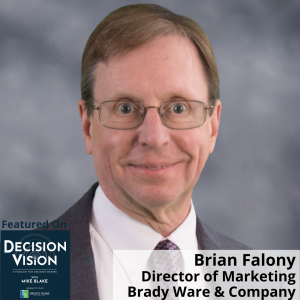
Jonathan Hyman, an attorney with Wickens Herzer Panza, and Dr. Jim Morrow of Morrow Family Medicine join host Mike Blake to consider “return to workplace” issues such as requiring a Covid-19 vaccination, safety-related accommodations, and other concerns both employers and their employees are currently wrestling with. “Decision Vision” is presented by Brady Ware & Company.

Jonathan Hyman, Attorney, Wickens Herzer Panza

Jonathan Hyman, Wickens Herzer Panza

Mr. Hyman is a member of the Firm’s Litigation Department and Employment & Labor practice group and serves on the Board of Directors. He focuses his practice on management-side labor and employment law, providing businesses proactive solutions to solve their workforce problems and reactive solutions when they find themselves litigating against an employee or group of employees.

Proactively, Mr. Hyman serves as outside in-house counsel for businesses. He is the voice on the other end of a phone when a business needs advice on firing an employee, a policy or agreement drafted, guidance on a leave of absence, disability accommodation, or internal complaint or investigation, or information on any number of other issues that plague human resources professionals and businesses daily. Mr. Hyman also has extensive experience on more specialized labor and employment law issues, such as wage and hour compliance, social media, cybersecurity, and other workplace technology concerns, affirmative action compliance, and union avoidance and labor relations.

Reactively, Mr. Hyman represents businesses in employment and labor litigation, including discrimination, retaliation, harassment, and claims, non-competition and trade-secret misappropriation disputes, wage-and-hour class and collective actions, and union certification and decertification matters.

He is also the author of the renowned and award-winning Ohio Employer Law Blog (www.ohioemployerlawblog.com, an American Bar Association Blawg Hall of Fame inductee), which he updates daily to provide businesses and human resources professionals breaking news and other updates on the ever-changing landscape of labor and employment law.

Wickens Herzer Panza has been committed to providing sound legal guidance to businesses of Lorain & Cuyahoga Counties since 1932. Wickens Herzer Panza provides legal counsel to family- and privately-owned businesses in the areas of Business Organizations & Tax, Probate & Estate Planning, Elder Law and Business Litigation. We’re more than legal counsel, too. We’re a business partnership, an advocate for our clients and advisors who support, give advice and protect those we work with. We are our clients’​ trusted advisor and make it our mission to be responsive, accountable, proactive and client-centered. Our Firm has offices in Avon, Ohio, and Sandusky, Ohio.

Mr. Hyman joined Wickens Herzer Panza in March of 2021, and was previously with Meyers, Roman, Friedberg & Lewis in Cleveland, Ohio. (Note:  this show was taped prior to Mr. Hyman’s change of firms.)

Wickens Herzer Panza website | Hyman LinkedIn

Dr. Jim Morrow, Morrow Family Medicine

Dr. Jim Morrow
Dr. Jim Morrow, Morrow Family Medicine

Dr. Jim Morrow was the first physician to practice on the Northside Hospital Forsyth campus in Cumming, Georgia. Opening the practice in November, 1998, his practice quickly became a “go-to” practice for Forsyth County residents.

As with that practice, Morrow Family Medicine will be known for its open access policy, same-day appointments and very popular morning walk-in hour. Dr. Jim Morrow’s special areas of interest in medicine are sports medicine, episodic care (care of acute problems and illnesses), chronic disease management and urgent care. He has served as team doctor for various high schools in his many years of practice, most recently at North Forsyth High School and Forsyth Central High School in Cumming.

Dr. Morrow graduated from Clemson University and the University of South Carolina School Of Medicine. He completed his residency in Family Medicine in Anderson, South Carolina in 1985. A 2004 winner of the Healthcare Information Management Systems Society’s (HIMSS) Davies Award for Excellence in EMR Implementation, he was also recognized as the 2006 Physician IT Leader of the Year by HIMSS. He served four years as a commissioner on the Certification Commission for Healthcare Information Technology (CCHIT). Dr. Morrow serves as Vice-Chairman of the Board of Directors of the Georgia Health Information Exchange (GHIE) and is a member of the Advisory Board for Health for the Technology Association of Georgia (TAG-Health). In 2014, Dr. Morrow was awarded the Steve Bloom Award by the Cumming-Forsyth Chamber of Commerce as Entrepreneur of the Year, and he also received a Phoenix Award from the Metro Atlanta Chamber as Community Leader of the Year.

Founded by Dr. Jim Morrow, Morrow Family Medicine, a Member of Village Medical, is an award-winning, state-of-the-art family practice with offices in Cumming and Milton, Georgia. The practice combines healthcare information technology with old-fashioned care to provide the type of care that many are in search of today. Two physicians, three physician assistants, and two nurse practitioners are supported by a knowledgeable and friendly staff to make your visit to Morrow Family Medicine, A Member of Village Medical one that will remind you of the way healthcare should be.  At Morrow Family Medicine, a Member of Village Medical, we like to say we are “bringing the care back to healthcare!”

Dr. Jim Morrow also hosts “To Your Health with Dr. Jim Morrow” on the Business RadioX® network, a radio show/podcast that addresses a wide range of health and wellness topics. It can be found at www.toyourhealthradio.com.

Company website | Facebook | LinkedIn | Twitter

Mike Blake, Brady Ware & Company

Mike Blake, Host of the “Decision Vision” podcast series

Michael Blake is the host of the “Decision Vision” podcast series and a Director of Brady Ware & Company. Mike specializes in the valuation of intellectual property-driven firms, such as software firms, aerospace firms, and professional services firms, most frequently in the capacity as a transaction advisor, helping clients obtain great outcomes from complex transaction opportunities. He is also a specialist in the appraisal of intellectual properties as stand-alone assets, such as software, trade secrets, and patents.

Mike has been a full-time business appraiser for 13 years with public accounting firms, boutique business appraisal firms, and an owner of his own firm. Prior to that, he spent 8 years in venture capital and investment banking, including transactions in the U.S., Israel, Russia, Ukraine, and Belarus.

Brady Ware & Company

Brady Ware & Company is a regional full-service accounting and advisory firm which helps businesses and entrepreneurs make visions a reality. Brady Ware services clients nationally from its offices in Alpharetta, GA; Columbus and Dayton, OH; and Richmond, IN. The firm is growth-minded, committed to the regions in which they operate, and most importantly, they make significant investments in their people and service offerings to meet the changing financial needs of those they are privileged to serve. The firm is dedicated to providing results that make a difference for its clients.

Decision Vision Podcast Series

“Decision Vision” is a podcast covering topics and issues facing small business owners and connecting them with solutions from leading experts. This series is presented by Brady Ware & Company. If you are a decision-maker for a small business, we’d love to hear from you. Contact us at decisionvision@bradyware.com and make sure to listen to every Thursday to the “Decision Vision” podcast.

Past episodes of “Decision Vision” can be found at decisionvisionpodcast.com. “Decision Vision” is produced and broadcast by the North Fulton studio of Business RadioX®.

Visit Brady Ware & Company on social media:

LinkedIn:  https://www.linkedin.com/company/brady-ware/

Facebook: https://www.facebook.com/bradywareCPAs/

Twitter: https://twitter.com/BradyWare

Instagram: https://www.instagram.com/bradywarecompany/

TRANSCRIPT

Intro: [00:00:01] Welcome to Decision Vision, a podcast series focusing on critical business decisions. Brought to you by Brady Ware & Company. Brady Ware is a regional full- service accounting and advisory firm that helps businesses and entrepreneurs make visions a reality.

Mike Blake: [00:00:20] Welcome to Decision Vision, a podcast giving you, the listener, clear vision to make great decisions. In each episode, we discuss the process of decision making on a different topic from the business owners’ or executives’ perspective. We aren’t necessarily telling you what to do, but we can put you in a position to make an informed decision on your own and understand when you might need help along the way.

Mike Blake: [00:00:39] My name is Mike Blake, and I’m your host for today’s program. I’m a director at Brady Ware & Company, a full-service accounting firm based in Dayton, Ohio, with offices in Dayton; Columbus, Ohio; Richmond, Indiana; and Alpharetta, Georgia. Brady Ware is sponsoring this podcast, which is being recorded in Atlanta per social distancing protocols. If you like this podcast, please subscribe on your favorite podcast aggregator, and please consider leaving a review of the podcast as well.

Mike Blake: [00:01:06] So, this week’s topic is, Should I have my employees return to the office? And we’re getting to a point now here, March 2nd of 2021, and this is about the time when everything really started to change. I was just noting that the last time I was in a restaurant was actually St. Patrick’s Day of last year. And in retrospect, I probably should not have done that. But I got away with that. But I have not been to a restaurant since. And in the interim, we’ve had this pandemic as a riding shotgun in our lives in some fashion for the last year. And it has had profound effects on families, our economy, and society, politics as everybody listening to this podcast, I think, knows. But there’s not a light at the end of the tunnel.

Mike Blake: [00:02:08] Now, four companies have had vaccines approved. I think three are in production. One is about to start. I think that’s the one with Johnson and Johnson, if I’m not mistaken. One of our guests who’s an actual doctor may correct me on that. But, you know, we’re seeing a light at the end of the tunnel. As of this date, something on the order of about 60 million Americans have received at least dose one of the vaccine. And the United States is currently fourth among all countries in terms of vaccinations per thousand people. So, in spite of a lot of the doom and gloom that’s been hanging over this issue, you know, we are making progress. And so, I don’t know when the pandemic is going to be behind us. I don’t know if it’s going to be behind us. So, I don’t know if I’m going to use the term post-pandemic decision or a trans-pandemic or co-pandemic decision, meaning that, you know, it’s taking place along either the transition or just, you know, the pandemic sort of being here to stay.

Mike Blake: [00:03:16] But we are coming to a point now where we have new tools to manage the pandemic. And, also, new tools are coming on to treat the pandemic for those of us who fall ill with it. I believe a brand new antiviral cocktail was approved by the FDA either last week or two weeks ago that is showing good promise. So, you know, we’re better treating this as well. Not there out of the woods, but it is appropriate to start thinking about what does this whole thing sort of look like after or as we move into this new phase of the coronavirus pandemic?

Mike Blake: [00:03:56] And one of those topics is, should I have my employees return to the office? And this is such a tricky question. You know, the whole notion of our relationship with labor, I think, to some extent has been called into question. And we’ve discussed this before on the podcast a little bit, what constitutes an essential worker? Should workers be paid hazard pay? And that issue is cropping up, you know, even at this late stage in the pandemic. You know, some employers were adding a hazard pay bonus early in the pandemic and some of them have stopped. And I’m not going to offer an opinion as to one way or the other. That’s just the facts of what’s happening.

Mike Blake: [00:04:51] Some companies have been very aggressive in effectively telling their employees, “Go away. I don’t want to see you at the office. It’s not open.” Others have not let their employees leave because they are not comfortable with their ability to manage such employees remotely. And then, there’s been some hybrid in between. At Brady Ware, for the most part, we’re observing at least our interpretation of best practices from a medical standpoint to keep our employees safe. But we’re also making the office – and we’re certainly providing everything we think is reasonably possible to enable our employees to work from home or some other place they deem safe. But we’ve also kept the offices open for people that want to come into the office. Some people really struggle with working from home. You know, imagine if you’re a single parent, have school aged children, and your schools are closed, and you live in an apartment, and you’re trying to get meaningful work done. I thank God that I am not in that particular position and I have nothing but admiration for anybody who is able to manage that.

Mike Blake: [00:06:00] But, now, we’re in a position where returning to the office is going to become a viable option sometime, I would guess, in the next six months or so, if not sooner. And this is a multifaceted question. I think, two facets in particular. And so, we’re going to have two guests today. One facet of this is, what are the legal ramifications of return to work? For those of us who work in offices, we historically have not had to think all that much about worker safety. Our main concerns would be drink bad coffee, or do we get a million papercuts. Or, worst case scenario, does a disgruntled employee or former employee come back to the office and start making trouble? But, now, we have this virus and people that could be working in close contact in a closed air circulation system that’s going to lead to its own challenges.

Mike Blake: [00:07:06] And then, on the medical side, you know, where do best practices from a medical side mesh with, interact with, or perhaps even contradict what is legally required? So, this is a multifaceted discussion. And there are business issues as well that we could get into. But we’re not going to have the time. But we do have a mini panel of two that can help us at least unwind this in the legal perspective and the medical perspective.

Mike Blake: [00:07:38] So, in no particular order, first joining us today is Jon Hyman, who is a partner at Meyers Roman Friedberg and Lewis up in Ohio. Jon is a nationally recognized author, speaker, blogger, and media source on employment and labor law. Jon’s legal practice provides proactive and results driven solutions to employer’s workforce problems. He also works with businesses to help position them to best combat the ongoing risks of cyber crimes. Jon serves as the outside in-house counsel role for businesses. In this role, he drafts policies and handbooks, audit human resources and technology practices and procedures, advise companies on day-to-day human resource issues, and successfully litigate employee disputes.

Mike Blake: [00:08:21] Jon has written two books, The Employer Bill of Rights: A Manager’s Guide to Workplace Law and Think Before You Click: Strategies for Managing Social Media in the Workplace. Jon has appeared in the Fox Business Network, National Public Radio and, locally, on WEWS – I think that’s in Cleveland. But Jon will correct me. He has also been quoted on workplace issues in publications such as The Wall Street Journal, National Public Radio, MSNBC.com, Business Insurance Magazine, Crain’s Cleveland Business, and The Cleveland Plain Dealer. Finally, Jon appeared on a November 1999 episode of Who Wants to Be a Millionaire? But sadly lacked the fastest fingers. Jon, welcome to the program.

Jon Hyman: [00:09:02] Thanks. It’s great to be here. Thanks for having me.

Mike Blake: [00:09:05] Also, joining us is Dr. Jim Morrow, and I will use the honorific of doctor only once per Jim’s request. Jim was the first physician to practice on the Northside Hospital Forsyth campus in Cumming, Georgia. Opening the practice in November 1998, his practice quickly became a go-to practice for Forsyth County residents. His special areas of interest in medicine are sports medicine, episodic care, i.e. care of acute problems and illnesses, chronic disease management, and urgent care. He has served as team doctor for various high schools in his many years of practice.

Mike Blake: [00:09:39] Jim graduated from Clemson University and the University of South Carolina School of Medicine. Does Clemson University have a football team? I think I’ve heard of them. In 2014, Jim was awarded the Steve Bloom Award by the Cumming-Forsyth Chamber of Commerce as Entrepreneur of the Year. And he also received a Phoenix Award from Metro Atlanta Chamber as Community Leader of the Year. Since 2015, Morrow Family Medicine has been voted Best of Forsyth in Family Medicine every year. The Milton location has been named best of North Atlanta every year since it opened. Jim is also host of the To Your Health podcast, a biweekly podcast produced by Business RadioX. Jim, also welcome to the program.

Dr. Jim Morrow: [00:10:17] Thank you very much. I’m glad to be here.

Mike Blake: [00:10:19] So, gentlemen, I think a question that’s on everybody’s minds, I think, is a subject to a lot of debate. And I’m probably leading off with the most unfair question I could possibly think of, but here it goes, it’s the Internet. How close do you think we are to mass return to offices or at least an option to return?

Jon Hyman: [00:10:42] That’s a hard question.

Mike Blake: [00:10:44] I told you it’s going to be unfair.

Jon Hyman: [00:10:47] I hate to give the stock lawyer answer, which is it depends, but I think it largely does. Because I think every business, I think, has to decide what’s right for it in its particular circumstances, with what its needs are, how it best operates, and what its employees are comfortable doing or not doing under the circumstances. So, I think for the, you know, run of the mill kind of white collar business office where people have been productively and effectively working remotely since the world shut down a year ago, the answer may be much further off in the future if ever the people return to the office full time. For the kind of widget maker manufacturer that needs to get people on a line in order to put out product and sell product and turn a profit, I think it’s a much different type of answer with a much different set of legal issues that business has to consider.

Mike Blake: [00:11:45] Jim, what do you think? As a physician, I’m sure you get asked this all the time. You know, one of our listeners has an office that’s been largely closed or skeleton staffed. How far along do we need to be in this vaccination program before you think it might be medically advisable? Or what condition need to be met for it to be medically advisable to open the gates and allow more people in?

Jim Morrow: [00:12:10] Well, as you started at the beginning talking about vaccines, we’re very fortunate now to have vaccines available. And I think that really is the thing that’s going to make all this possible. But the problem is, most of the people that are doing the work that you’re talking about are not old enough to get a vaccine yet. So, they’re not yet vaccinated. So, they are no different from what they were basically a year ago in that regard. But I think what we’ve got to do is get enough people vaccinated so that we can have herd immunity around the workplace. And that 75 percent of people probably vaccinated or with antibodies – and the problem with the antibodies from illnesses is it just doesn’t last long enough to give you much coverage.

Dr. Jim Morrow: [00:12:48] So, with Johnson and Johnson’s vaccine being approved over the weekend, we suspect that by the end of July, every American who will take a vaccine will have an opportunity to get one. And I think that’s what it’s going to take to get people back in offices, especially like the widget factory that you’re talking about, because, you know, they are next to each other. They are in close contact. They can’t close the door to their office in most cases and separate themselves. So, I think getting some form of immunity through a vaccine is what it’s going to take. I think by fall we’ll be there. I think we’ll be able to do that.

Jon Hyman: [00:13:26] I think the complicating factor is going to be how quickly we can get a vaccine approved for kids. Because part of the issue of getting people back to work is getting parents back to work, particularly if they’re at home managing younger children. And if those children can’t be vaccinated, it makes it difficult for the parents possibly to peel away from the home if schools aren’t open or there’s no child care otherwise available for the kids that they’re comfortable putting the kids in. So, I think part of the equation – I think an important part – is going to be just how quickly we can close out the clinical trials for the vaccines for teens and down so that they can get vaccinated, too, so schools can open up full time, daycare centers can open up full time, which allows kids to get back out of the house full time, which then allows their caregivers/parents to then get out of the home and return to work without worrying about who’s caring for their kids during the day.

Dr. Jim Morrow: [00:14:25] No doubt. And the trials for peds has really just barely started. So, I’m not sure when we’ll have that data. I think, it’s going to be a while now. And that certainly would push things for those people out past the end of the summer.

Mike Blake: [00:14:40] So, I’d like to get both your perspective on the following question, obvious to the seats to what extent they match up or not. When workers do start to return on mass – I understand that’s an amorphous term, but let’s roll with it anyway. When workers do return sort of in sufficient numbers, how would you advise offices to look or change in order to maximize safety or at least balance safety with the business objectives of the business?

Jim Morrow: [00:15:18] From a health standpoint, if you think about the company that has an entire floor – an office building full of cubicles – it makes me wish once again that I’d been in the plexiglass business when this thing started – because I can just envision plexiglass from the top of the cubicle to the ceiling or at least another five feet up and creating a cocoon where these people will sit. I don’t know that that’s something that’s going to be feasible. I don’t know that it’s something that companies are going to want to do or be able to do. And I could just see employees balking at the whole idea. They’re going to be sticking their head around the cubicle, talking to Joe next door. So, the company is going to be wondering why they spend these thousands of dollars on all this stuff? But I think that’s something you may very well see in that situation. I don’t know how you can bring people back into that until you do have the vaccines. I don’t know that you can really prepare for that.

Dr. Jim Morrow: [00:16:18] In the factory setting, the same thing. I mean, you’re not going to put plexiglass between all these people. It’s just not going to happen. And, again, if you did, they would, you know, ignore it pretty much, I’m sure. So, I think, really, it comes down to getting people immune. I don’t see any good way to change things in the work environment that’s going to allow this to happen without people being immune.

Jon Hyman: [00:16:46] I think we’ll be living with masks for a while as well. I think that we will be seeing masks in public, in general, and on a smaller scale in the workplace for the foreseeable future until we have – I’m not sure if there’s ever going to be a magic switch where the CD says, “Masks off today.” So, I think gradually over time, we’ll see a reduction in use. But I think for now, in the foreseeable future, at least through the end of this year, for certain, masks is just something we’re just going to have to to deal with, particularly as people are coming back to work.

Jim Morrow: [00:17:21] Or the employees are going to push back on that and say, “You can’t make me wear a mask.”

Jon Hyman: [00:17:25] I’ll tell them, “You don’t have to work here then.” I mean, we’re at will employees and so my rules. You know, “Go find a job somewhere else.” And there are lots of stories over the last year of employees who have pushed back on that or employers who have pushed back on it, who have had – there was a story I read just the other day of a beer hall in Columbus that had all of their employees walk out in masks. They said, “We feel this is an unsafe workplace. You’re not taking COVID seriously. You’re not protecting our safety adequately.” And every employee quit and they’ve been shut down since.

Jon Hyman: [00:18:07] So, I think one of the lasting stories, I think, that’s going to come out of the pandemic will be, sadly, we know that not every business is going to survive COVID. Some will never reopen. What I hope is that, if karma and the universe works the way I think it should work is that those businesses that don’t survive the pandemic and don’t reopen are the ones that didn’t take COVID seriously, denied that it was a reality, bosses who called it the China virus, didn’t enforce mask rules, didn’t enforce social distancing. Otherwise, didn’t do everything that they needed to do to protect the health, safety, and welfare of their employees, their customers, people they interacted with their business on a day-to-day basis, they’ll be the ones that close. And the ones that are able to open up and thrive in a post-COVID world, whenever that is, are the ones that took the virus seriously and did the things necessary to protect the health and safety of their employees.

Jim Morrow: [00:19:11] And I agree that the masks are going to be around to some degree for the rest of my life probably. But, you know, if just masking was going to be enough to get these people back to work, we could have done that before. So, I think the combination of being smart, getting a vaccine, being smart, wearing a mask, acting like you care about the people around you, and that kind of thing – which is a huge part of this – just that little bit, I think if we can find a way to get those things in combination together, I think, people could go back to work.

Jon Hyman: [00:19:45] Yeah. I agree. That’s the other lasting lesson of this whole thing is just how freaking selfish people are. It’s just appalling the selfishness that this has exhibited in people.

Jim Morrow: [00:19:56] People tell me all the time, you know, “You can’t make me wear a mask. I have a right not to wear a mask.” And I tell them, “Your right stops when your spittle hits me in the face.”

Jon Hyman: [00:20:05] Exactly right. Exactly right.

Mike Blake: [00:20:08] Well, Jon, I want to pause on that because I’m curious. Where is the law right now in terms of does it tend to favor employees right now, or employers, or is it all over the map? What is the posture of the law right now in terms of responsibilities of employers versus freedom to operate versus at will employment?

Jon Hyman: [00:20:37] Yeah. It’s a bit all over the map. There has not yet been a uniform national standard that’s been issued to govern COVID safety in the workplace. OSHA, the Occupational Safety and Health Administration, the federal agency that governs workplace safety, has not issued a uniform national standard on COVID or pandemic safety. They have issued a series of kind of informal best practice guidance to say this is what we think you should be doing in order to provide a safe and healthy workplace for your employees. Employers, even without a COVID standard, have under OSHA a general duty to provide a safe and healthy workplace for their employees.

Mike Blake: [00:21:31] And so, a lot of people, including myself, interpret that general duty as encompassing kind of the best practices that OSHA says employers should do, which is, you know, masking, social distancing, not coming to work when you’re sick, sanitizing surfaces, and things like that. All the things that we think of when we think about COVID safety in public spaces. But there isn’t a uniform national standard. State rules are all over the map. Some states have, for example, uniform masking requirements. Some states don’t. And some states are in the middle.

Jon Hyman: [00:22:12] And then, I think what is really driving a lot of what employers are doing or a lot of what is protecting employees is the PR hit that businesses are suffering when they get called out for not doing this the right way. When the employees quit in masks, when the employee complains about, you know, you’re allowing people to come in without masks, and they complain, and then they’re fired. And then, they hire a lawyer and the lawyer files a lawsuit and issues a press release. And now, you know, that employer has the scarlet letter for not taking COVID seriously. So, a lot of it is PR driven or reputationally driven. Some of it is driven by lawsuits that employees can file for things like, you know, whistleblower protections when they’re fired for raising safety issues. And a lot less of it is driven by what the government has said employers must do, because those rules are, frankly, kind of fuzzy.

Mike Blake: [00:23:07] And what about protections for people that are specifically vulnerable? I had an idea or thought, and I say this as completely a non-lawyer so I’m probably entirely off the reservation. But could we see something along the lines of where employees start to claim that they’re covered effectively under the Americans with Disabilities Act because of their particular vulnerability to COVID and, therefore, employers have a duty to go to extraordinary lengths to protect such individuals, particularly if coronavirus is going to be one of these things like the flu which is going to be with us for a long time.

Jon Hyman: [00:23:44] You’re in the ballpark. You’re in the ballpark. Yes, employees who are at high risk for complications from COVID-19 are protected by the Americans with Disabilities Act. The employer’s obligation is, once they become aware that an employee may need a reasonable accommodation, and that’s the standard. The standard is a reasonable accommodation, not extraordinary lengths. So, once the employer becomes aware of the employee’s need or potential need for a reasonable accommodation for a physical or mental impairment, the employer has to engage in what the law refers to as an interactive process with the employee. That’s a dialogue, a discussion, a conversation. Talk to the employee about how can we accommodate your medical issue.

Jon Hyman: [00:24:34] And then, the accommodations can really run the gamut as long as it’s reasonable and doesn’t impose an undue hardship on the employer. So, it could be a work from home arrangement on a temporary basis. It could be, we will put you in a different work area where you’re not near people, where you’re more isolated from people or where you might not be exposed to the virus from other people. It might be, we’re going to get you a different – instead of a mask, we’re going to get you a respirator or some other kind of gear to wear that’s going to better protect you from an airborne virus.

Jon Hyman: [00:25:09] It may be that the only accommodation you can offer someone is a temporary unpaid leave of absence. And so, you know, there’s no way to restructure your job. We have nowhere else to put you. This isn’t something that can be done remotely. So, the best we can do for you is say go sit on the sidelines for 30 day increments and we’ll revisit this in 30 days. And we’ll see if, at that point, we’re in a situation where you feel comfortable coming back. And in that case, it’s not an indefinite leave. It’s kind of short term temporary. And it may ultimately result in that employee no longer being employed because this thing is just stretching out. Now, it’s stretched out for a year. If somebody went on a temporary leave of absence a year ago because they were at high risk for COVID complications, if they contracted the virus, the employer’s responsibility to accommodate that employee would have expired months ago.

Mike Blake: [00:26:04] So, gentlemen, let me turn back to the medical side. Somebody has an employee that is at particular risk, whatever reason, maybe they’re diabetic, maybe they have one of the other comorbidities. From a medical standpoint, what would be your advice? And let’s assume that working from home is not an option. And I imagine the easiest thing to do is just send people home. We get that. But if sending somebody home to work is not a viable option, in your mind, what are some reasonable and effective steps that emplacing an office environment might be able to take to protect that employee?

Jim Morrow: [00:26:48] That’s really tough because I don’t know that there is a really good way to protect them. Going back to something I said earlier, I think if people could protect them, they would have been working all along. So, if you were going to do anything, I think isolating them, Jon mentioned putting them in a different part of the office or something like that where they’re not around everybody else, if that’s feasible, that can be good. They still got to get in and out of the building without spending much time conversing so that could be a problem.

Jim Morrow: [00:27:18] But, again, in a in a masked world, if everybody is wearing a mask in that situation, it shouldn’t be too bad. But I think isolation, basically, or separation is probably the only way to go about doing that. I can’t think of how else you’d pull that off.

Mike Blake: [00:27:38] Let me ask another question about the vaccines, because the vaccines are great. They’re, in many ways, a miracle of modern medicine. We weren’t supposed to be able to make vaccines like this in a short period of time. Literally, I think that it rivals the moonshot in terms of a technological advance. It’s that big a leap forward in that short period of time. But the numbers I’m seeing is that, the vaccine promises something on the order of 90 percent immunity. And, to me, 90 percent immunity is great. But that’s not a get out of jail free card. That’s not the same thing as a vaccine for measles or polio, which have a much higher immunity, right? And I’m curious, (A) do you see the same data that I do? And (B) do you agree that that requires an additional level of caution that 90 percent is great, but that doesn’t mean you just get a jail free card and go back to normal?

Jim Morrow: [00:28:50] No, it doesn’t. And people don’t think about that a lot of times. The Pfizer and Moderna report 94 or 95 five percent. But that’s still five or six percent chance of getting it. And if you’re in that group of people who could have a really terrible outcome, although anyone can, that you might expect a bad outcome, then that’s a pretty decent risk. And with the J&J vaccine that was just approved, they really show closer to 60 percent preventing infection, but above 90 for preventing severe illness and hospitalization, that kind of thing, which is very important, obviously. But it’s important to remember that this is not 100 percent. And that’s why we still have to distance. We still have to mask. We still have to be smart, use hand sanitizer, and do the things that we don’t like doing that we’ve gotten kind of accustomed to doing. And that’s going to, hopefully, take care of the other five percent of that. But it’s very true that these people are still going to be at risk to some degree. And so, they’re going to have to be careful.

Mike Blake: [00:29:51] I think about that from a personal standpoint. I’m a big baseball fan. I used to go to a lot of Gwinnett Stripers games. And you know, if you’re only 90 percent immune, if you’re surrounded by thousands of people, statistically speaking, that virus is still there, right?

Dr. Jim Morrow : [00:30:09] That’s exactly right.

Mike Blake: [00:30:09] And then, you’re banking on your nine shots out of ten or 19 shots out of 20 that you’re not going to get it. And to me, as much as I love baseball, the numbers don’t add up. If I did 20 games a year, my expected infection rate is one time a year just going to 20 games.

Jon Hyman: [00:30:34] And the numbers add up even worse when we consider that there’s a large percentage of the population that say they’re not going to get the vaccine anyway, what’s available to them. So, when we start adding vaccine hesitancy into the equation, that 95 percent number might be 95 percent for you, but it’s not going to be 95 percent among the population, because 100 percent is not going to get the vaccine. And so, if we’re looking at north of 75 or 80 percent to reach herd immunity, but 40 percent say they’re not going to get the vaccine, there’s going to be a huge gap that may prevent us from ever reaching herd immunity, particularly as these variants ramp up and the virus might becoming more virulent and more contagious. It’s a legitimate concern as we try and navigate our way out of this thing.

Jim Morrow: [00:31:19] Well, more virulent – I mean, more contagious but no sign yet that it’s more virulent.

Jon Hyman: [00:31:24] Correct. Correct.

Jim Morrow: [00:31:25] And that’s been a blessing. That’s been a blessing.

Mike Blake: [00:31:28] So, Jon, you jumped in to a question I want to make sure that I cover. And I think it’s going to be one of the hardest questions in the podcast. And that is, as an employer, can I make you showing proof of vaccination a condition of continued employment for the sake of my other employees or just for the sake of the continuity of my own operations?

Jon Hyman: [00:31:50] The short answer is yes. But the longer answer is, it’s yes, but you must make allowance for those people that cannot get the vaccine either because they have an underlying physical or mental impairment or disability for which the vaccine is contraindicated. They say, “I have a medical issue, so you need to provide me an accommodation for that medical issue to your mandatory vaccination policy.” Or, for an employee that holds a sincerely held religious belief observance or practice for which they can’t get a vaccine, an employer has to consider an accommodation for that as well.

Jon Hyman: [00:32:36] And, you know, in both those cases, the accommodation doesn’t have to be and probably shouldn’t be, “Come to work anyway. We’re requiring proof of vaccination to work. You know, come to work even though you can’t meet this policy.” But you have to go through the same interactive process, as we talked about earlier, talk to the employee, figure out what accommodation you can make. And the accommodation, at the end of the day, might be, “We just can’t accommodate this because we have a legitimate business interest in protecting our other employees from the vaccine. And you just can’t come back to work.” But you have to at least go through the process with the employee to figure out whether there is an accommodation you can make.

Jon Hyman: [00:33:23] But let me also add, I think, what uncomplicates the equation is, I don’t think the question is as easy as, can you require vaccine or proof of a vaccine as a condition of employment? Because I think just because you can do it – the law says you can – doesn’t necessarily mean that you should. I think if you look at the data that’s out there, as I mentioned earlier, we know about 60 percent say they will absolutely under every set of circumstances get the vaccine when they’re able to do so. There’s another 20 percent or so that say they will not get the vaccine, whether it’s because of a medical issue, or a religious belief, or because they wear tinfoil on their heads and they think the government is implanting 5G trackers in them through the vaccine, or for whatever reason.

Mike Blake: [00:34:11] Bill Gates doesn’t have enough money, right? He needs to track what I’m doing here in Chamblee, Georgia.

Jon Hyman: [00:34:16] Exactly. And then, there’s 20 percent that are kind of undecided on the fence. And, to me, I think if an employer has a mandatory policy, “Thou shalt get the vaccine when you can,” I think you are going to lose the 20 percent that are never going to get the vaccine, whether the reason is legitimate or illegitimate. You’re going to lose them as employees. You’re going to risk alienating some percentage of your employees are going to get the vaccine anyway because they’re going to view you as too intrusive, up in their medical business, invading their privacy, what have you. So, you risk alienating a percentage of employees that are going to get the shot anyway.

Jon Hyman: [00:34:54] And so, what I think employers should be doing is, rather than pissing off a whole bunch of your employees and, at the end of the day, not changing any of their behaviors, what you should be focusing on is that 20 or so percent in the middle. And arm them with education, resources, information as to the safety and efficacy of the vaccine and why it’s in theirs and everybody’s best interest for them to get the vaccine. And try and push some of them over to the, “Yeah. We’re going to get vaccinated” side of the equation.

Mike Blake: [00:35:25] Okay. Good. That segues nicely. So, Jim, you know, we all know there’s a big anti-vax movement. It existed before coronavirus, like so many things as just swamped it up. You’re a medical educator as well as a practitioner of medicine, and I’m sure you run into this directly. What have you found is the best way to educate people about vaccines so that, at least, they remain open minded to it? Or conversely, in your experience, once people walk in, they say they’re anti-vax, that conversation’s already over, and you move on?

Jim Morrow: [00:36:09] Well, I think it’s very clear cut. There are very little gray area that I’ve seen in having that conversation. If you’re talking to a patient and they’ve never done vaccines and they certainly aren’t going to do this one, that was developed in one year, which, like you said, is a world record in many, many ways. I don’t think there’s anything that I’m going to say to these people that’s going to convince them to get a vaccine. They’re not going to walk into my office totally against it and me say anything at all that’s going to make them leave and they’re thinking it’s a good idea to go get this. I can’t imagine. I’ve never turned anybody around yet, whether it was about tetanus, diphtheria, it didn’t matter. And I don’t think it’s going to be about this.

Jim Morrow: [00:36:53] And if it were going to be about a vaccine, it wouldn’t be about a vaccine that came out in 12 months. So, I don’t think that’s a problem. But I do think that education is the key to all of this. And all I can do and what I try to do is to let them understand the science as I understand it. And explain it to them as best I can. And then, they leave and don’t get the vaccine anyway.

Mike Blake: [00:37:19] So, an idea might be, maybe a turn around. If we accept the fact that there is going to be a material portion of the population that simply will not get the vaccine, end of discussion. Right? Is instead then maybe the educational path to educate those who are vaccinated, or even those who aren’t vaccinated, to just enable people to protect themselves. At least if you’re not going to get the vaccine, if you’re going to do something that runs against medical advice anyway, at least stack the cards in your favor as much as you can, even though you’re making a decision that is questionable from an evidence based perspective.

Jon Hyman: [00:38:16] Although I would bet you that the anti-vaxxers have a pretty substantial overlap with the anti-maskers, so that’s my gut anyway. I haven’t looked at any data. But my gut tells me the anti-vaxxers and the anti-maskers, if they’re a Venn diagram, it’s going to be pretty close to a circle – just one circle.

Mike Blake: [00:38:33] Well, I do think there’s a lot of overlap. There is certainly a lot of overlap. But, for example, as we just talked about, these vaccines, while miraculous, are only 90 or 95 percent effective. And when I say that, it reminds me, I used to work in Russia and I had a friend who worked for Brink’s in Russia. Brink’s is the armored car company. He told me that, you don’t realize how little of your body a bulletproof vest protects until you put one on. And you don’t realize how little a vaccine protects you until you kind of run the math and you see what 90 or 95 percent is. Now, I get a jail free card.

Mike Blake: [00:39:12] So, maybe the education process is, the people who are not going to mask, who are not going to vaccinate, have simply made a choice. Have simply made a choice that they’re just going to run that risk. And for good or ill, you can judge them if you want, but they’re going to make that choice on behalf of other people that they encounter too. Rightly or wrongly, that’s just the mechanics. We’re not going to lock up 30 million Americans. We don’t have the capacity to do it.

Mike Blake: [00:39:42] So, is then the best ROI and education to just continue to educate the people that are willing to abide by the protocols and listen to advice to say, “Hey, look. This is out there.” Just keep wearing the mask, and keep putting up barriers, and keep socially distancing, and keep being OCD about washing your hands. Is that the path to education that has a chance of being effective?

Jim Morrow: [00:40:10] I think it is. And like Jon mentioned, you’ve got that group that you need to continue to educate and try to push towards a vaccine. But the whole thing is, we’ve got this huge inoculum of coronavirus floating around us. And if we do get a ton of people – whatever percentage it is – vaccinated, then we’re going to reduce that entire inoculum. And so, the amount of virus being spewed at the Gwinnett Stripers game – and they really could have come up with a better name than that, I do think.

Mike Blake: [00:40:40] A different podcast. But I like the Gwinnett Braves as they were.

Jim Morrow: [00:40:46] I did too. But the whole inoculum of virus floating around you is less at that ball game. And that’s what this is all about, it’s about trying to be exposed to this virus. And so, if we can get people to do it, the ones we need to concentrate on, I think, are the ones that have a little bit of a chance are going to get it. And I think it’s enough of a percentage that we’re going to be able to be safe doing things, albeit potentially with masks in the future.

Mike Blake: [00:41:14] So, Jim, a question I have from a legal and business standpoint is, it occurs to me that employers might be a little bit of a no win situation. Because you can’t make people vaccinate. Frankly, I think if you’re really trying to force them, they’ll just falsify the documentation. If it really came down to that, they’d print out something on the Internet. You have no way of verifying it. They’ll say, “Yeah. I’m vaccinated. I’m good.”

Mike Blake: [00:41:42] So, employers have a duty to protect the minority. They have a duty to protect all their employees to some extent. But make special accommodations and also protect, for lack of a better term, human rights. I mean, where’s the part of that Venn diagram where they’re safe? I mean, if I’m an employer, I’m kind of thinking, “You know what? Shut the whole damn thing. Then, everybody can work from home or Starbucks or do whatever we do. And then, we’ll get together for an outdoor picnic once a year if we need to.” I mean, as an employer, where do you find that safe harbor?

Jon Hyman: [00:42:18] I can’t disagree with you. I mean, what I preach to at least my clients that listen to me over the last year is, being as flexible as possible, meeting employees where they are, and just doing the best you can with, you know, being as flexible as you can. And in that case, you might be right. It might be shut the whole thing down if you can shut it down and having people work remote. And then, whenever the CDC says pandemic over, we can talk about how we kind of put the remote genie back into the bottle, if that’s what businesses want to do. Otherwise, I think in large part, it’s never going to go fully back in.

Jon Hyman: [00:42:58] But I think you’re right, employers are in a very tough spot here in terms of, you know, no mandate from the government in terms of what to do or largely no mandates. A lot of employees who are scared to death to come in to work and businesses need to operate if you can operate without operating in person. I see very little downside of doing that, at least in the short term.

Mike Blake: [00:43:25] So, in addition, I mean, are there other kind of tools that companies can manage this? I mean, one of the things has been exposed in the insurance industry – I know you do some work there – is, does a pandemic lead to a legitimate business interruption claim, for example? Is that risk potentially insurable? Does it go through workmans’ comp? Does it go through something else? Get to buy a special kind of insurance? Do you self-insure the captive? Are there financial tools available to do this? Or is that still a work in progress? Or is that just crazy talk?

Jon Hyman: [00:44:06] No. It’s a work in progress. I think the insurance companies will spend, you know, hundreds of millions or billions in legal fees over the next half decade to decade sorting out the issue of to what extent COVID closures fall under business interruption policies. Because there’s a ton of those claims out there. It’s largely unknown. And it’s going to take the court years to sort it out with lawyers. Really, the only ones who get rich in that equation trying to answer that question.

Jim Morrow: [00:44:38] On the workers’ comp side, while a workplace exposure of someone got sick from COVID and they could prove that they got it at work, that would be a coverable claim under workers’ compensation insurance for the employee. But I question, how do you prove that something happened at work? Well, if you look at how widespread this virus is in the community, we’re only at work so many hours a day. They should presumably have protective measures in place in the workplace. And so, you know, if somebody gets sick, how do you establish that that exposure happened at work? Such you can establish the causal connection for purposes of establishing one’s eligibility to collect workers’ compensation.

Jim Morrow: [00:45:19] And so, you know, maybe if there’s 20 people in a conference room and all 20 of them come down with COVID in the span of a couple of days or a week, maybe that’s easier from a causation standpoint. Maybe not. But just the employee who gets sick and then says, “Well, I was at work last week and so-and-so had COVID a week ago. And, now, I have COVID and so I got it at the workplace. But I was also at the grocery store, in Starbucks, at my kid’s little league game. And then, I went to Target three times last week too.” You know, how do you prove where that exposure came from to establish the causation necessary to collect workers’ compensation? So, there’s really no easy answers here, unfortunately.

Mike Blake: [00:46:03] So, I mean, that leads into another question. We’re talking with Jim Morrow and Jon Hyman. And the topic is, Should I have my employees return to the office? Jim, is contact tracing something that, in an ideal world, would be advisable for companies to encourage and implement? Let’s just take Amazon, for example, they certainly have the capacity to build a contact tracing app if they chose to. You know, should companies have a contact tracing app that might help them identify exactly what Jon is discussing? Where is the vector of an infection into an office to establish did it come from the office or someplace else?

Jim Morrow: [00:46:49] I think contact tracing is one of the most important parts of trying to control this entire thing. I’m glad I don’t have to answer the legal question of how do you do that without infringing on people’s rights, and I’ll leave that to Jon. But if you look at the way that we can control the spread is testing and contact tracing. And if we’re doing that right – if we have done that right nine months ago – then we’d have had a lot lower cases and fewer deaths and so forth. I think contact tracing is critical, whether it’s in the work environment or school environment or wherever it might be. I think it’s one of the most important part.

Jim Morrow: [00:47:28] So, we need to be able to do that. People need to allow that to happen. Because this pandemic is really a training ground for the next pandemic. Because it might not be in my lifetime – I’d like to think I’d still be here for the next one. But I don’t want to be here for the next one. If you know what I mean? Kind of a double edged sword there. But I think contact tracing is everything when it comes to trying to control this.

Mike Blake: [00:47:57] So, Jon, again, the hard question to you, if I’m asking my employees to return to the office, but I say, “You can only do it if you agree to put in this contact tracing app,” that at least it’s going to track you while you’re in the office – or maybe not, I’m not sure – is that something a company can impose?

Jon Hyman: [00:48:16] They can and a lot have. As long as it’s done with disclosure and consent. There’s really no privacy concerns. The employee can always choose not to have the app installed and then not return to the office. And if it’s 100 percent in-person work environment, that might mean they’re looking for work elsewhere. But in a country that has at will employment, that’s just the name of the game. So, perfectly within an employer’s right to require it. An employee’s right to agree to accept it or not accept it. And then, live with the consequences that flow from that decision.

Mike Blake: [00:48:52] And we are running out of time and we could easily have made this a two parter or even a three parter. So, obviously, it’s a multilayered question but, you know, the answers are difficult and evolving. If people would like to contact you, maybe those questions that we didn’t cover or follow up, can they do that? And what’s the best way to do that? Jon, let me let you go first.

Jon Hyman: [00:49:14] The best way to find me is through my blog, which really kind of collects all my contact info. I’m not really hard to find. You could just Google Jon Hyman, Employment Lawyer, and you’ll find me everywhere, on Twitter, and LinkedIn, and my law firm, and everywhere else. But if people want information or how to contact me, they can just go to ohioemployerlawblog.com and all the information is collated there.

Mike Blake: [00:49:40] Jim?

Dr. Jim Morrow [00:49:41] You can get me, probably, email is the better way to do it. That’s drjim@toyourhealth.md. Or on Twitter, @ToYourHealthMD.

Mike Blake: [00:49:52] That’s going to wrap it up for today’s program. I’d like to thank Jon Hyman and Jim Morrow so much for joining us and sharing their expertise with us. We’ll be exploring a new topic each week, so please tune in so that when you’re faced with your next business decision, you have clear vision when making it. If you enjoy these podcasts, please consider leaving a review of your favorite podcast aggregator. It helps people find us that we can help them. Once again, this is Mike Blake. Our sponsor is Brady Ware & Company. And this has been the Decision Vision podcast.


Tagged With: COVID-19, Dr. Jim Morrow, employment law, Jonathan Hyman, Morrow Family Medicine, Village Medical, Wickens Herzer Panza, workplace law

Dr. Larry Gard, Hamilton-Chase Consulting (The Exit Exchange, Episode 3)

March 18, 2021 by John Ray

Dr. Larry Gard
North Fulton Studio
Dr. Larry Gard, Hamilton-Chase Consulting (The Exit Exchange, Episode 3)
Loading
00:00 /
RSS Feed
Share
Link
Embed

Download file

Dr. Larry Gard

Dr. Larry Gard, Hamilton-Chase Consulting (The Exit Exchange, Episode 3)

Selling or transitioning out of a business isn’t all about dollars and cents. Acknowledged or not, psychological and emotional issues come into play, and those considerations must be navigated by business owners and their advisors. On this edition of “The Exit Exchange,” Dr. Larry Gard covers the four psychological mistakes business owners make as they approach an exit. This edition of “The Exit Exchange” is co-hosted by David Shavzin and Bob Tankesley and is produced virtually from the North Fulton studio of Business RadioX® in Alpharetta.

Hamilton-Chase Consulting

Hamilton-Chase Consulting offers pre-hire assessments to ensure that the people you hire are a good fit for the job, executive coaching and 360-degree feedback to help your key staff perform at their best. They specialize in career coaching and pre-retirement consulting to foster a positive, smooth transition to your next chapter. Find your retirement transition readiness score here: https://assess.coach/donewithwork.

Dr. Larry Gard, Consulting Psychologist, Hamilton-Chase Consulting

Dr. Larry Gard is a consulting psychologist and president of Hamilton-Chase Consulting in Chicago.  From hiring to retiring, Dr. Gard’s work centers around the concept of goodness-of-fit, ensuring that people are engaged in activities that are well-suited for their personality.  He teaches firms how to refine their selection process so that hiring decisions are more accurate and the right candidates are chosen.  Larry also works with late-career professionals and business owners, offering brief coaching to help them prepare emotionally for a satisfying transition to their next chapter. Dr. Larry Gard

He is the author of “Done with Work: A dozen perspectives on the decision to retire”.

Company website | LinkedIn | Facebook

Questions and Topics in this Interview

  • What led you to focus on psychological preparation for a business owner getting ready to sell?
  • What mistakes have you seen people make?
  • When business owners aren’t emotionally ready to retire, what consequences have you seen?
  • What specifically will affect business owners in the lower middle market that our XPX members can take into account when advising their clients?
  • How can we, as advisors, best raise this topic with our clients?
  • Why are you a member of XPX?

The Exit Planning Exchange Atlanta (XPX) is a diverse group of professionals with a common goal: working collaboratively to assist business owners with a sale or business transition. XPX Atlanta is an association of advisors who provide professionalism, principles and education to the heart of the middle market. Our members work with business owners through all stages of the private company life cycle: business value growth, business value transfer, and owner life and legacy. Our Vision: To fundamentally changing the trajectory of exit planning services in the Southeast United States. XPX Atlanta delivers a collaborative-based networking exchange with broad representation of exit planning competencies. Learn more about XPX Atlanta and why you should consider joining our community: https://exitplanningexchange.com/atlanta.

“The Exit Exchange” is produced by John Ray in the North Fulton studio of Business RadioX® in Alpharetta. The show archive can be found at xpxatlantaradio.com. John Ray and Business RadioX are Platinum Sponsors of XPX Atlanta.

Tagged With: Bob Tankesley, business transition, David Shavzin, Done With Work, Dr. Larry Gard, exit planning, exit planning advisors, Hamilton-Chase Consulting, psychologist, selling a business, XPX Atlanta

Frazier & Deeter’s Business Beat: Kyle Wingfield, Georgia Public Policy Foundation

March 17, 2021 by John Ray

Georgia Public Policy Foundation
Business Beat
Frazier & Deeter's Business Beat: Kyle Wingfield, Georgia Public Policy Foundation
Loading
00:00 /
RSS Feed
Share
Link
Embed

Download file

Georgia. Public Policy Foundation

Frazier & Deeter’s Business Beat: Kyle Wingfield, Georgia Public Policy Foundation

Kyle Wingfield, Georgia Public Policy Foundation, joined host Roger Lusby to discuss the state’s budget, education funding, the impact of federal Covid relief, and much more. “Business Beat” is presented by Alpharetta CPA firm Frazier & Deeter.

Georgia Public Policy Foundation

A trusted, independent resource for voters and elected officials since its founding in 1991, the Georgia Public Policy Foundation provides actionable solutions to real-life problems by bringing people together. The Georgia Public Policy Foundation was created on the belief that good public policy is based upon fact, an understanding of sound economic principles and the core principles of our free enterprise system – economic freedom, limited government, personal responsibility, individual initiative, respect for private property and the rule of law.

State-focused, independent, non-partisan and market-oriented in its approach, the Foundation conducts scholarly research and analysis of state public policy issues, and works to educate citizens, policy-makers and the media.

Company website | LinkedIn | Facebook | Twitter

Kyle Wingfield, President and CEO

Georgia Public Policy Foundation
Kyle Wingfield, President and CEO, Georgia Public Policy Foundation

Kyle Wingfield is a native of Dalton and a graduate of the University of Georgia. He joined the Foundation as president and CEO in April 2018 after spending nine years as an opinion columnist for The Atlanta Journal-Constitution. He has also worked for the Wall Street Journal, based in Brussels, Belgium, from 2004 to 2009, and for the Associated Press, based in Atlanta and Montgomery, Ala., from 2001 to 2004.

At the AJC, Kyle wrote often about state politics and policy, focusing especially on education and school choice, transportation, health care, and state and local taxation. He is a frequent guest on GPB’s “Political Rewind” show and was a finalist for the Reason Foundation’s Bastiat Prize for Journalism in 2013. Kyle’s weekly column continues to appear in 10 newspapers around the state.

Kyle received the UGA Grady College’s John E. Drewry Young Alumnus Award in 2006, was named to the UGA Alumni Association’s 40 Under 40 Class of 2012 and is a member of UGA’s Board of Visitors. He is a member of Leadership Georgia’s Class of 2018 and, as an Eagle Scout, remains an active volunteer in Scouting.

LinkedIn

Questions and Topics in this Interview:

  • An overview of the 2021 Georgia legislative session.
  • An overview of reforms under consideration that would affect education in Georgia.
  • A look at the budget picture for the state.
  • How the new federal COVID relief bill will affect Georgia (as well as how past relief bills have affected the state).
  • How the pandemic might affect healthcare in Georgia moving forward.

Frazier & Deeter

The Alpharetta office of Frazier & Deeter is home to a thriving CPA tax practice, a growing advisory practice and an Employee Benefit Plan Services group. CPAs and advisors in the Frazier & Deeter Alpharetta office serve clients across North Georgia and around the country with services such as personal tax planning, estate planning, business tax planning, business tax compliance, state and local tax planning, financial statement reviews, financial statement audits, employee benefit plan audits, internal audit outsourcing, cyber security, data privacy, SOX and other regulatory compliance, mergers and acquisitions and more. Alpharetta CPAs serve clients ranging from business owners and executives to large corporations.

Roger Lusby, Partner in Charge of Alpharetta office, Frazier & Deeter

Roger Lusby, host of Frazier & Deeter’s “Business Beat,” is an Alpharetta CPA and Alpharetta Office Managing Partner for Frazier & Deeter. He is also a member of the Tax Department in charge of coordinating tax and accounting services for our clientele. His responsibilities include a review of a variety of tax returns with an emphasis in the individual, estate, and corporate areas. Client assistance is also provided in the areas of financial planning, executive compensation and stock option planning, estate and succession planning, international planning (FBAR, SFOP), health care, real estate, manufacturing, technology and service companies.

You can find Frazier & Deeter on social media:

LinkedIn | Facebook  | Twitter

An episode archive of Frazier & Deeter’s “Business Beat” can be found here.

Tagged With: Alpharetta CPA firm, COVID relief bill, Frazier & Deeter's Business Beat, Frazier Deeter, Georgia Public Policy Foundation, Kyle Wingfield, Partner at Frazier & Deeter, Roger Lusby, Roger Lusby CPA

What You Need to Know About the Paycheck Protection Program and Employee Retention Credits, with Justin Elanjian, Aprio, LLP

March 16, 2021 by John Ray

North Fulton Business Radio
What You Need to Know About the Paycheck Protection Program and Employee Retention Credits, with Justin Elanjian, Aprio, LLP
Loading
00:00 /
RSS Feed
Share
Link
Embed

Download file

Aprio

What You Need to Know About the Paycheck Protection Program and Employee Retention Credits, with Justin Elanjian, Aprio, LLP (North Fulton Business Radio, Episode 339)

Aprio Partner Justin Elanjian joined John Ray to discuss the Paycheck Protection Program (PPP) and Employee Retention Credit (ERC), why many businesses don’t know they’re eligible for ERC, and how business owners can maximize the benefits of these complicated programs. “North Fulton Business Radio” is produced virtually from the North Fulton studio of Business RadioX® in Alpharetta.

Aprio, LLP

Aprio is a premier full-service, CPA-led business advisory firm that advises clients and associates on how to achieve what’s next.

AprioAprio’s associates work as integrated teams across advisory, assurance, tax, outsourced accounting solutions and private client services, bringing the best thinking and personal commitment to each client. Across practices, Aprio brings together proven expertise, deep understanding, and strategic foresight for industries including Manufacturing and Distribution; Non-Profit and Education; Professional Services; Real Estate and Construction; Retail, Franchise and Hospitality; and Technology and Blockchain.

Headquartered in Atlanta, Georgia, Aprio has grown to over 700+ team members. To serve clients wherever life or business may take them, Aprio’s teams speak more than 30 languages and work with clients in over 50 countries.

Company Website | LinkedIn | Facebook | Twitter

Justin Elanjian, CPA, Partner-in-Charge, PPP & ERC Services, Aprio, LLP

Justin Elanjian, CPA, is the Partner-in-Charge of Aprio’s Paycheck Protection Program (PPP) & Employee Retention Credit (ERC) Services. As a national PPP expert, prominent speaker and strategic business advisor, Justin helps both lenders and borrowers navigate the complexities of the PPP.

He helps his clients realize benefits from other stimulus package programs, such as the ERC, and is committed to strengthening his clients’ balance sheets and helping them achieve what’s next.

Justin also leads a team of more than 50 professionals who share his passion for helping businesses maximize their liquidity by leveraging the benefits of these COVID legislative programs.

LinkedIn

Questions and Topics in this Interview:

  • About Aprio and Justin Elanjian
  • How Aprio pivoted during COVID to offer relief-based services such as the Paycheck Protection Program and Employee Retention Credit
  • How to plan for 2021 Paycheck Protection Program & Employee Retention Credit benefits
  • How to leverage the Employee Retention Credit pre-and post- PPP Loan Forgiveness
  • How to know when your business needs the help of an advisor

North Fulton Business Radio” is hosted by John Ray and produced virtually from the North Fulton studio of Business RadioX® in Alpharetta. You can find the full archive of shows by following this link. The show is available on all the major podcast apps, including Apple Podcasts, Spotify, Google, Amazon, iHeart Radio, Stitcher, TuneIn, and others.

Renasant Bank has humble roots, starting in 1904 as a $100,000 bank in a Lee County, Mississippi, bakery. Since then, Renasant has grown to become one of the Southeast’s strongest financial institutions with over $13 billion in assets and more than 190 banking, lending, wealth management and financial services offices in Mississippi, Alabama, Tennessee, Georgia and Florida. All of Renasant’s success stems from each of their banker’s commitment to investing in their communities as a way of better understanding the people they serve. At Renasant Bank, they understand you because they work and live alongside you every day.

Tagged With: Aprio, Employee Retention Credit, ERC, Justin Elanjian, Paycheck Protection Program, PPP loan forgiveness, PPP loans, reporting requirements of PPP

James Connelly, Results Rehab, Lisa Sretenovic, Visionating, LLC, and Phillip Williams, P & P Business Solutions (Family Business Radio, Episode 18)

March 16, 2021 by John Ray

Lisa Sretenovic
Family Business Radio
James Connelly, Results Rehab, Lisa Sretenovic, Visionating, LLC, and Phillip Williams, P & P Business Solutions (Family Business Radio, Episode 18)
Loading
00:00 /
RSS Feed
Share
Link
Embed

Download file

Lisa Sretenovic

James Connelly, Results Rehab, Lisa Sretenovic, Visionating, LLC, and Phillip Williams, P & P Business Solutions (Family Business Radio, Episode 18)

Host Anthony Chen was joined by Lisa Sretenovic, Visionating, LLC, who discussed her advisory and tax work with business owners. James Connelly, Results Rehab, also joined the show to profile his physical therapy practice, and Phillip Williams, P&P Business Solutions, discussed how he helps family business owners in their transition and succession issues. “Family Business Radio” is underwritten and brought to you by Anthony Chen with Lighthouse Financial Network.

Dr. James Connelly, PT, DPT, OCS, Owner, Mobile Concierge Physical Therapist, Results Rehab

James Connelly, Results Rehab

Results Rehab strives to provide top-quality physical therapy by utilizing evidence-informed practice and client values to best meet their needs.

James Connelly views his Mobile, Concierge Physical Therapy practice as a tool to serve his clients so that they can return to the life that they love and enjoy. He wants to give his clients the confidence to move freely, without fear of injury, to gain long-term success and happiness in their everyday lives.

Company website | LinkedIn

Lisa Sretenovic, CPA, CGMA, CITP, CAAS, Founder, Visionating, LLC

Lisa Sretenovic
Lisa Sretenovic, Visionating, LLC

Visionating – [verb] act of continuously pursuing your business passion.

Lisa loves seeing professional practice owners with enough passion, drive, and belief in themselves to launch their own business. However, there are way too many of them flying by the seat of their pants, not knowing where their cash is going, and chasing after every sale, all while spending way too much time at the office.

She is on a mission to help these business owners understand they don’t have to give up their dream business. They can have a thriving company and spend time with their family. Not by getting better at their functional skills, but by focusing on three often neglected steps.

Sherlock Holmes is one of her favorite childhood heroes because he is known as a master of deduction and observation. Inspired by these skills, she takes pleasure in sleuthing through small businesses to optimize their costs and maximize their growth. Watching the mindset change of a practice owner go from defeated and burned out to joyful and inspired brings a smile to my soul. The thrill of deducing ways to ensure they have timely information is exhilarating. Having data allows her and her clients to collaborate efficiently, thus ensuring a positive, rapid change of direction. She hates seeing struggling owners, fatigued with the stress of money in their business, and lack of time with their loved ones, flounder by continuing to keep doing what they’ve always done. Lisa delights in explaining evidence to them because she knows how powerful the transformation will be.

Company website | LinkedIn

Phillip Williams, CEPA, President, P&P Business Solutions

Phillip Williams, P and P Business Solutions

P&P Business Solutions tackles the financial concerns that small businesses like yours face: Improving cash flow and profitability
Securing financing to fund capital projects
Generating working capital to fund business growth
Developing a successful exit strategy in preparation for retirement.

If wondering how you’d benefit from their guidance in navigating your finances, then simply contact P&P Business Solutions for a private consultation.

Company website | LinkedIn

Anthony Chen, Host of “Family Business Radio”

family owned craft breweries
Anthony Chen

This show is sponsored and brought to you by Anthony Chen with Lighthouse Financial Network. Securities and advisory services offered through Royal Alliance Associates, Inc. (RAA), member FINRA/SIPC. RAA is separately owned and other entities and/or marketing names, products or services referenced here are independent of RAA. The main office address is 575 Broadhollow Rd. Melville, NY 11747. You can reach Anthony at 631-465-9090 ext 5075 or by email at anthonychen@lfnllc.com.

Anthony Chen started his career in financial services with MetLife in Buffalo, NY in 2008. Born and raised in Elmhurst, Queens, he considers himself a full-blooded New Yorker while now enjoying his Atlanta, GA home. Specializing in family businesses and their owners, Anthony works to protect what is most important to them. From preserving to creating wealth, Anthony partners with CPAs and attorneys to help address all of the concerns and help clients achieve their goals. By using a combination of financial products ranging from life, disability, and long term care insurance to many investment options through Royal Alliance. Anthony looks to be the eyes and ears for his client’s financial foundation. In his spare time, Anthony is an avid long-distance runner.

The complete show archive of “Family Business Radio” can be found at familybusinessradioshow.com.

Tagged With: Anthony Chen, James Connelly, Lisa Sretenovic, P&P business Solutions, Phillip Williams, results rehab, Visionating

How Attention to Key Performance Metrics Strengthened My Business, with Mike Holden, Nextgen Pest Solutions

March 15, 2021 by John Ray

Mike-Holden-OMI-Album
North Fulton Studio
How Attention to Key Performance Metrics Strengthened My Business, with Mike Holden, Nextgen Pest Solutions
Loading
00:00 /
RSS Feed
Share
Link
Embed

Download file

Mike-Holden-OMI-Album

How Attention to Key Performance Metrics Strengthened My Business, with Mike Holden, Nextgen Pest Solutions

Bill McDermott: [00:00:00] So, a result of COVID and some of the challenges, how have those challenges made your organization stronger?

Mike Holden: [00:00:09] It’s became one of the things that we look at as more focused, more flexibility. How do we move faster yet not move too fast. You know, everybody always talks about growth and you’ve got to be careful with growth, that double edged sword. But it’s one of the things where we went through and done a really good job as a company to mature.

Mike Holden: [00:00:29] And data is the key. So, if we go through and we look at our numbers and we understand all the different variables with all the different things that go on, it’s amazing how they speak to you and how you can go through. And even people that have never seen anything in their career metrics go through and talk to them about it and they didn’t go through an impact. So, it’s been amazing for the organization as a whole. It’s been extremely exciting taking people that never have really had the opportunity to look and see how they can personally get back in a lot of different ways. And it’s been awesome. And, definitely, we came out of 2020 a much better organization than we started 2020. So, I can say that probably.

Mike Holden, Nextgen Pest Solutions

Nextgen Pest Solutions’ core mission is to provide jobs for veterans of the armed forces after their military careers. They strongly believe that it is important to create careers that give veterans a chance to continue to protect us even after their service is complete.

They also provide the training, competitive pay, and benefits that give them a life-long career. They also have the ability to learn new skills that will help them advance in the organization. Nextgen Pest Solutions is a full-service residential/commercial pest control company in the greater Atlanta metro area, Birmingham Alabama, Clearwater, and South Florida. Each service center is able to treat, remove, or prevent essentially any type of pest, bedbug, rodent, and wildlife issue. They use the latest technology in pest management practices to restore your peace of mind that your home is protected. Throughout their markets, they specialize in hard-to-treat pests for homes, apartments, and hotels.

Nextgen even provides a free guide on how to get rid of various pests for anyone’s use. These include Ants, Roaches, Bed Bugs, Possums, Raccoons, bats, fleas, silverfish, ants, beetles, spiders, mosquitos, and snakes currently. Their wildlife services including raccoon removal, squirrel removal, bat removal, snake removal, possum removal, bee and wasp removal, and other types of wildlife common to Florida and Georgia. While in some cases animals are beneficial, some are nuisances, others represent real emergencies.

They want you to feel protected and know that you have a partner with your pest control service provider. It is these factors that set them apart and these missions that help them protect your property and family. They also GUARANTEE their services, so if you are ever unsatisfied or you find pests that should have been eliminated, they will always come back to solve the problem.

Company website | LinkedIn

Listen to Mike’s full ProfitSense interview here. 


The “One Minute Interview” series is produced by John Ray and in the North Fulton studio of Business RadioX® in Alpharetta. You can find the full archive of shows by following this link.

Renasant Bank has humble roots, starting in 1904 as a $100,000 bank in a Lee County, Mississippi, bakery. Since then, Renasant has grown to become one of the Southeast’s strongest financial institutions with over $13 billion in assets and more than 190 banking, lending, wealth management and financial services offices in Mississippi, Alabama, Tennessee, Georgia and Florida. All of Renasant’s success stems from each of their banker’s commitment to investing in their communities as a way of better understanding the people they serve. At Renasant Bank, they understand you because they work and live alongside you every day.

Tagged With: NextGen Pest Solutions

  • « Previous Page
  • 1
  • …
  • 202
  • 203
  • 204
  • 205
  • 206
  • …
  • 275
  • Next Page »

Business RadioX ® Network


Our Most Recent Episode

CONNECT WITH US

  • Email
  • Facebook
  • LinkedIn
  • Twitter
  • YouTube

Our Mission

We help local business leaders get the word out about the important work they’re doing to serve their market, their community, and their profession.

We support and celebrate business by sharing positive business stories that traditional media ignores. Some media leans left. Some media leans right. We lean business.

Sponsor a Show

Build Relationships and Grow Your Business. Click here for more details.

Partner With Us

Discover More Here

Terms and Conditions
Privacy Policy

Connect with us

Want to keep up with the latest in pro-business news across the network? Follow us on social media for the latest stories!
  • Email
  • Facebook
  • Google+
  • LinkedIn
  • Twitter
  • YouTube

Business RadioX® Headquarters
1000 Abernathy Rd. NE
Building 400, Suite L-10
Sandy Springs, GA 30328

© 2026 Business RadioX ® · Rainmaker Platform

BRXStudioCoversLA

Wait! Don’t Miss an Episode of LA Business Radio

BRXStudioCoversDENVER

Wait! Don’t Miss an Episode of Denver Business Radio

BRXStudioCoversPENSACOLA

Wait! Don’t Miss an Episode of Pensacola Business Radio

BRXStudioCoversBIRMINGHAM

Wait! Don’t Miss an Episode of Birmingham Business Radio

BRXStudioCoversTALLAHASSEE

Wait! Don’t Miss an Episode of Tallahassee Business Radio

BRXStudioCoversRALEIGH

Wait! Don’t Miss an Episode of Raleigh Business Radio

BRXStudioCoversRICHMONDNoWhite

Wait! Don’t Miss an Episode of Richmond Business Radio

BRXStudioCoversNASHVILLENoWhite

Wait! Don’t Miss an Episode of Nashville Business Radio

BRXStudioCoversDETROIT

Wait! Don’t Miss an Episode of Detroit Business Radio

BRXStudioCoversSTLOUIS

Wait! Don’t Miss an Episode of St. Louis Business Radio

BRXStudioCoversCOLUMBUS-small

Wait! Don’t Miss an Episode of Columbus Business Radio

Coachthecoach-08-08

Wait! Don’t Miss an Episode of Coach the Coach

BRXStudioCoversBAYAREA

Wait! Don’t Miss an Episode of Bay Area Business Radio

BRXStudioCoversCHICAGO

Wait! Don’t Miss an Episode of Chicago Business Radio

Wait! Don’t Miss an Episode of Atlanta Business Radio