Business RadioX ®

  • Home
  • Business RadioX ® Communities
    • Southeast
      • Alabama
        • Birmingham
      • Florida
        • Orlando
        • Pensacola
        • South Florida
        • Tampa
        • Tallahassee
      • Georgia
        • Atlanta
        • Cherokee
        • Forsyth
        • Greater Perimeter
        • Gwinnett
        • North Fulton
        • North Georgia
        • Northeast Georgia
        • Rome
        • Savannah
      • Louisiana
        • New Orleans
      • North Carolina
        • Charlotte
        • Raleigh
      • Tennessee
        • Chattanooga
        • Nashville
      • Virginia
        • Richmond
    • South Central
      • Arkansas
        • Northwest Arkansas
    • Midwest
      • Illinois
        • Chicago
      • Michigan
        • Detroit
      • Minnesota
        • Minneapolis St. Paul
      • Missouri
        • St. Louis
      • Ohio
        • Cleveland
        • Columbus
        • Dayton
    • Southwest
      • Arizona
        • Phoenix
        • Tucson
        • Valley
      • Texas
        • Austin
        • Dallas
        • Houston
    • West
      • California
        • Bay Area
        • LA
        • Pasadena
      • Colorado
        • Denver
      • Hawaii
        • Oahu
  • FAQs
  • About Us
    • Our Mission
    • Our Audience
    • Why It Works
    • What People Are Saying
    • BRX in the News
  • Resources
    • BRX Pro Tips
    • B2B Marketing: The 4Rs
    • High Velocity Selling Habits
    • Why Most B2B Media Strategies Fail
    • 9 Reasons To Sponsor A Business RadioX ® Show
  • Partner With Us
  • Veteran Business RadioX ®

Becky Berry, MAD! Workspace for Women

March 8, 2021 by John Ray

MAD! Workspace
North Fulton Business Radio
Becky Berry, MAD! Workspace for Women
Loading
00:00 /
RSS Feed
Share
Link
Embed

Download file

MAD! Workspace

Becky Berry, MAD! Workspace for Women (North Fulton Business Radio, Episode 334)

MAD! Workspace for Women Founder and Owner Becky Berry is meeting women’s desires for a coworking space offering more than just an away-from-home place to work. She joined host John Ray to discuss how her space offers community and connection highly valued by women in business. “North Fulton Business Radio” is produced virtually from the North Fulton studio of Business RadioX® in Alpharetta.

MAD! Workspace for Women

MAD stands for Manifest All Day. MAD! Workspace for Women is by women and for women. At MAD! Workspace they are committed to themselves and to their work.  MAD! is more than a traditional coworking space. MAD! is the energy of like-minded women working both independently and together to bring visions to life.MAD! Workspace

Their safe, comfortable, boutique coworking space is nestled between Alpharetta and Roswell. They offer Hot Desk, Dedicated Desk, and Office Rental Memberships.

At MAD! women come together to do, connect, and manifest. When women gather to work, connect, and create their best work, they also find the courage to do the things they’ve always wanted to do.

The MAD! Workspace is complying with all WHO and CDC guidelines for physical distancing, including wearing masks in common areas and extra cleaning procedures.

Company website | LinkedIn | Facebook

Becky Berry, Owner, MAD! Workspace for Women

Becky is a native of Roswell and Alpharetta. She’s a career coach and serial entrepreneur with a work history that includes owning a software company, social entrepreneurship, magazine publishing, special education teacher, and a 12-year stint as a stay-at-home mom.

After spending many hours in traditional coworking spaces, she created MAD! Workspace for Women as a place for women to work around other women in a fierce female environment. And, in these times, women are working for a safe place to get away from home and work in a productive environment.

From a member of our community: “MAD! Workspace is special. You know it as soon as you enter and you feel it as soon as you’re greeted by the women who’ve made it their home base. They move through the world with equal parts intuition, openness, and ambition. If you’re looking for a place to expand your work while nourishing your soul, this is it.”

LinkedIn

Questions and Topics in this Interview:

  • What’s a coworking space?
  • How has the workplace changed in the past year and why are coworking and shared workspace options more important than ever?
  • What is MAD! Workspace’s value proposition?
  • Who comes to MAD! Workspace?
  • What does your coworking space look like in Covid times?
  • What types of workspaces do you have at MAD?
  • How can people see the space?

North Fulton Business Radio” is hosted by John Ray and produced virtually from the North Fulton studio of Business RadioX® in Alpharetta. You can find the full archive of shows by following this link. The show is available on all the major podcast apps, including Apple Podcasts, Spotify, Google, Amazon, iHeart Radio, Stitcher, TuneIn, and others.

Renasant Bank has humble roots, starting in 1904 as a $100,000 bank in a Lee County, Mississippi, bakery. Since then, Renasant has grown to become one of the Southeast’s strongest financial institutions with over $13 billion in assets and more than 190 banking, lending, wealth management and financial services offices in Mississippi, Alabama, Tennessee, Georgia and Florida. All of Renasant’s success stems from each of their banker’s commitment to investing in their communities as a way of better understanding the people they serve. At Renasant Bank, they understand you because they work and live alongside you every day.
Tagged With: Becky Berry, coworking, MAD! Workspace, meeting space, meeting space in Alpharetta

Shavonne Reed, OPUA Technologies

March 8, 2021 by John Ray

OPUA Technologies
North Fulton Business Radio
Shavonne Reed, OPUA Technologies
Loading
00:00 /
RSS Feed
Share
Link
Embed

Download file

Opua Technologies

Shavonne Reed, OPUA Technologies (North Fulton Business Radio, Episode 333)

Shavonne Reed with OPUA Technologies joins host John Ray to discuss marketing and health communications, social impact initiatives, and much more. “North Fulton Business Radio” is produced virtually from the North Fulton studio of Business RadioX® in Alpharetta.

OPUA Technologies

The mission at OPUA is to provide strategic marketing services specifically focused on corporate responsibility and social impact initiatives. They work with governments, banking and financial services, education, and healthcare.Opua Technologies

OPUA Technologies has strong partnerships within the healthcare industry to shape purpose strategies and programs. They offer a harmonized approach to multi-channel campaigns in order to engage and create dynamic experiences.

Skilled consultants guide, manage and advocate with the client to enhance and protect their reputation. OPUA goes above and beyond minimum requirements delivering shared value.

Company website | Company LinkedIn | Facebook | Twitter

Shavonne Reed, Founder & CEO, OPUA Technologies

Shavonne Reed is a marketing and communications expert with more than 20 years of multi-media and marketing experience. She uses emotional intelligence and the happiness advantage principles to facilitate communications skills to develop effective leaders.

Shavonne is an unapologetic leader who shows up authentically and is very impactful through her vulnerable style of storytelling. She helps clients author their own narratives, set strategies, and develop confidence.

LinkedIn

Questions and Topics in this Interview:

  • Tell us about OPUA Technologies
  • What exactly is health communications?
  • What makes you the authority in this space?
  • What is your goal with starting this agency?
  • Who are some ideal clients you would like to work with?
  • What is a recent discovery you are proud of?
  • What would you tell your younger self?
  • What are ways you are practicing self-care and health prevention in your personal life?

North Fulton Business Radio” is hosted by John Ray and produced virtually from the North Fulton studio of Business RadioX® in Alpharetta. You can find the full archive of shows by following this link. The show is available on all the major podcast apps, including Apple Podcasts, Spotify, Google, Amazon, iHeart Radio, Stitcher, TuneIn, and others.

Renasant Bank has humble roots, starting in 1904 as a $100,000 bank in a Lee County, Mississippi, bakery. Since then, Renasant has grown to become one of the Southeast’s strongest financial institutions with over $13 billion in assets and more than 190 banking, lending, wealth management and financial services offices in Mississippi, Alabama, Tennessee, Georgia and Florida. All of Renasant’s success stems from each of their banker’s commitment to investing in their communities as a way of better understanding the people they serve. At Renasant Bank, they understand you because they work and live alongside you every day.

Tagged With: health communications, healthcare industry, marketing, Opua LLC, Opua Technologies, Shavonne Reed

Dr. Nathan Kupperman, NAK Dental Group

March 8, 2021 by John Ray

Nathan-Kupperman-DBRAlbum
Dental Business Radio
Dr. Nathan Kupperman, NAK Dental Group
Loading
00:00 /
RSS Feed
Share
Link
Embed

Download file

Nathan-Kupperman-DBRAlbum

Dr. Nathan Kupperman, NAK Dental Group (“Dental Business Radio” Episode 15)

In a conversation with host Patrick O’Rourke, Dr. Nathan Kupperman of NAK Dental Group discusses the growth of his multi-office dental provider organization, why smaller cities and towns often offer better opportunities, and why he bought a coffee truck to help with his marketing. (Yes, you read that right.) “Dental Business Radio” is underwritten and presented by Practice Quotient: PPO Negotiations & Analysis and produced by the North Fulton studio of Business RadioX®.

NAK Dental Group

NAK Dental Group is a Dental Provider Organization founded in 2018 by Dr. Nathan Kupperman. NAK Dental currently supports 5 dental locations across Northwest Florida. We offer a variety of management services from their administrative headquarters in Tallahassee, Florida, in addition to Affiliation and Partner Ownership opportunities for Dentists across the United States.

Dr. Nathan Kupperman, Founder and CEO, NAK Dental Group

Dr. Nathan Kupperman decided to expand the reach and services of NAK Dental in order to fulfill his purpose of helping transition ownership of dental practices. This is accomplished by providing Dentists wanting to transition out of their ownership stakes with flexibility and options to do so, and by providing long-term associate positions and equity Partner opportunities to Doctors joining the NAK platform.

Connect with Dr. Kupperman on LinkedIn and follow NAK Dental Group on Facebook.

About Dental Business Radio

“Dental Business Radio” covers the business side of dentistry. Host Patrick O’Rourke and his guests cover industry trends, insights, success stories, and much more in this wide-ranging show. The show’s guests include successful doctors across the spectrum of dental practice providers, as well as trusted advisors and recognized industry participants. “Dental Business Radio” is underwritten and presented by Practice Quotient and produced by John Ray and the North Fulton studio of Business RadioX®.

Practice Quotient

“Dental Business Radio” is sponsored by Practice Quotient. Practice Quotient, Inc. serves as a bridge between the payor and provider communities. Their clients include general dentist and dental specialty practices across the nation of all sizes, from completely fee-for-service-only to active network participation with every dental plan possible. They work with independent practices, emerging multi-practice entities, and various large ownership entities in the dental space. Their PPO negotiations and analysis projects evaluate the merits of the various in-network participation contract options specific to your Practice’s patient acquisition strategy. There is no one-size-fits-all solution.

Connect with Practice Quotient:

Website

LinkedIn

Facebook

Twitter

Tagged With: dental practices, dental provider organization, Dr. Nathan Kupperman, NAK Dental Group, northwest florida, Patrick O'Rourke, PPO Negotiations & Analysis, Practice Quotient, Tallahassee

The Ethical Dilemma of Using the Clubhouse App, with Brian Inkster, Inkster Solicitors

March 8, 2021 by John Ray

BLRBrianInksterAlbumpng
North Fulton Studio
The Ethical Dilemma of Using the Clubhouse App, with Brian Inkster, Inkster Solicitors
Loading
00:00 /
RSS Feed
Share
Link
Embed

Download file

BLRBrianInksterAlbumpng

The Ethical Dilemma of Using the Clubhouse App, with Brian Inkster, Inkster Solicitors

Brian Inkster: [00:00:00] I mean, I can’t comment on the loss of North America, the United States, or Canada, or other countries in the world, for that matter, but my understanding is that maybe privacy laws are a little bit stricter in Europe than they are in North America. Whether that’s the case or not, I do not know, but certainly we’ve got the GDP and other laws that regulate how you can share and give out information that relate to other people. And I would have thought that immediately sharing your address book and all the contact details with Clubhouse would probably be immediately a breach of European rules.

Brian Inkster: [00:00:51] Who’s then responsible for that? If you’ve breached a law, is it Clubhouse that’s breached that law, or if you done it as an individual? Interestingly — I mean, obviously, Clubhouse has encouraged you to do that, and maybe made you do it almost inadvertently, because I think a lot of people will click on the button that results in sharing that address without really fully realizing that they’ve just done that.

Brian Inkster: [00:01:17] And there’s an indemnity clause in the terms and conditions where Clubhouse says that you indemnify Clubhouse against anything you might do. And if you read that full clause, the import of that would effectively be arguably that if Clubhouse have breached a privacy law, effectively, you’re indemnifying them. So, you, as a user, are taking on the responsibility for that privacy breach, even though it was maybe one that was encouraged by Clubhouse and when Clubhouse has all that information, rather as you having it. Otherwise, you already had it, but you’ve given it to Clubhouse. And effectively, by giving it to Clubhouse, other people within Clubhouse are seeing some of that information.

Brian Inkster, CEO, Inksters Solicitors

Brian Inkster is the founder and CEO of the Scottish law firm Inksters Solicitors. Brian obtained the distinction of being named Solicitor of the Year at the Law Awards of Scotland in 2006. He was called “a one-man Scottish legal institution” in the Recommended Law Firm Guide 2010. At the Law Awards of Scotland in 2014 he was recognised as Managing Partner of the Year.

Brian is actively expanding Inksters’ reach throughout Scotland with the aim to make his firm a pre-eminent force in the Scottish legal market. Technology is an important part of this drive with Inksters being completely cloud-based and having a Legal Process Engineer to make the firm a very process-oriented one. However, Brian is a legal realist who knows the limitations and actual usefulness of technology. He expresses his views in this regard on his blog about the past, present and future practice of law called The Time Blawg.

Company website | LinkedIn | Twitter

Listen to Brian’s full Business Leaders Radio interview here. 


The “One Minute Interview” series is produced by John Ray and in the North Fulton studio of Business RadioX® in Alpharetta. You can find the full archive of shows by following this link.

Renasant Bank has humble roots, starting in 1904 as a $100,000 bank in a Lee County, Mississippi, bakery. Since then, Renasant has grown to become one of the Southeast’s strongest financial institutions with over $13 billion in assets and more than 190 banking, lending, wealth management and financial services offices in Mississippi, Alabama, Tennessee, Georgia and Florida. All of Renasant’s success stems from each of their banker’s commitment to investing in their communities as a way of better understanding the people they serve. At Renasant Bank, they understand you because they work and live alongside you every day.
The Amicable Divorce Network, with Tracy Ann Moore-Grant of Patterson Moore Butler

March 4, 2021 by John Ray

Amicable Divorce Network
North Fulton Business Radio
The Amicable Divorce Network, with Tracy Ann Moore-Grant of Patterson Moore Butler
Loading
00:00 /
RSS Feed
Share
Link
Embed

Download file

Amicable Divorce Network

The Amicable Divorce Network™, with Tracy Ann Moore-Grant of Patterson Moore Butler

Tracy Ann Moore-Grant, Patterson Moore Butler, chose family law as a profession because she enjoyed helping people. She took it one step further by founding the Amicable Divorce Network, a coalition of service providers dedicated to low conflict divorce. Tracy Ann joined host John Ray to discuss why a low conflict process is better for all parties and less costly as well. “North Fulton Business Radio” is produced virtually from the North Fulton studio of Business RadioX® in Alpharetta.

Tracy Ann Moore-Grant, Partner, Patterson Moore Butler

Tracy Ann Moore-Grant has practiced exclusively in the area of family law in the North Georgia area since 2002. She has focused her practice on all issues related to families including amicable divorce, child custody, child support, and contempt issues. She regularly handles matters which may be low conflict such as an uncontested divorce or complex family law matters such as cases involving psychological custody evaluations and small business and retirement division.

Ms. Moore has a client-driven focus with her approach to the practice of law and believes in treating each case as a partnership with the client and takes steps to accomplish a client’s goals. She has begun to focus her practice on uncontested, cooperative, and respectful divorces to assist the parties in navigating the court system in a low conflict manner. Ms. Moore is also a registered mediator and arbitrator as well as a trained guardian ad litem and parent coordinator.

Ms. Moore-Grant enjoys being involved in her community and has received several awards and recognitions over the years. She was given the AV Preeminent Rating by Martindale-Hubble in 2018 which is the highest rating an attorney can receive for legal ability and ethical standards.

Company Website | Personal LinkedIn | Instagram

The Amicable Divorce Network™

The Amicable Divorce Network is a group of Georgia attorneys, mediators, psychologists, financial professionals, and other professionals with experience in family law who have come together to assist parties seeking a respectful divorce process. We are currently only serving the Atlanta Metro & North Georgia area. Professionals in the network have made a commitment to respect the amicable divorce process to help parties navigate divorce while providing experienced advice and services along the way.Amicable Divorce Network

The Amicable Divorce Network™ is both an organization for professionals who work in a divorce-related industry AND an Amicable Divorce Process™ whereby the parties to the divorce, and their selected professionals, are committed to settling their matter in a low conflict and efficient matter. A divorcing couple agrees to use members of the network for their case so that everyone involved has the same amicable mindset and has received the appropriate training on the process.

Website | Instagram | Facebook

Questions and Topics in this Interview:

  • Background on Tracy Ann and her firm, Patterson Moore Butler
  • Why Tracy Ann chose family law
  • Why she started the Amicable Divorce Network
  • Why the Amicable Divorce Network process is better for clients
  • What it is better for family law attorneys and other services providers
  • How it is different from a traditional divorce
  • Being awarded the Georgia Legal Award for Distinguished Leadership in 2020
  • How the Amicable Divorce Network is growing into a national and international network

North Fulton Business Radio” is hosted by John Ray and produced virtually from the North Fulton studio of Business RadioX® in Alpharetta. You can find the full archive of shows by following this link. The show is available on all the major podcast apps, including Apple Podcasts, Spotify, Google, Amazon, iHeart Radio, Stitcher, TuneIn, and others.

Renasant Bank has humble roots, starting in 1904 as a $100,000 bank in a Lee County, Mississippi, bakery. Since then, Renasant has grown to become one of the Southeast’s strongest financial institutions with over $13 billion in assets and more than 190 banking, lending, wealth management and financial services offices in Mississippi, Alabama, Tennessee, Georgia and Florida. All of Renasant’s success stems from each of their banker’s commitment to investing in their communities as a way of better understanding the people they serve. At Renasant Bank, they understand you because they work and live alongside you every day.
Tagged With: amicable divorce, Arbitration, Divorce Attorney, Divorce Mediation, Family Law, mediation, Patterson Moore Butler, The Amicable Divorce Network, Tracy Ann Moore-Butler

The Roadmap to a Successful Acquisition Strategy, with Rick Murphy, Cogent Growth Partners

March 4, 2021 by John Ray

ATTRickMurphypng
North Fulton Studio
The Roadmap to a Successful Acquisition Strategy, with Rick Murphy, Cogent Growth Partners
Loading
00:00 /
RSS Feed
Share
Link
Embed

Download file

ATTRickMurphypng

The Roadmap to a Successful Acquisition Strategy, with Rick Murphy, Cogent Growth Partners

Rick Murphy: [00:00:00] My two partners and myself – Bruce and George, my two partners, one here in Atlanta, my other partner’s in New Jersey – they and I take what we call discovery calls with the candidate company, so we can greet them, and talk to them, and listen, and see if there’s an opportunity. Again, why. We’re using the whole why phrase. Should we introduce you to one of our clients and vice versa? And we do the same thing with our clients. So, that’s the discovery process, meeting a company.

Rick Murphy: [00:00:31] Once we get them introduced and they start talking, it’s really important to be able to do the initial due diligence to make intelligent decisions instead of just knee jerking around money or even the issues or what have you, which a lot of people do. First thing they think about and talk about is money, and price point, and multiples. And we go, you know, “Our mantra, if you will, is opportunity first, money last.” Talk about why should you do this at all. So, we coach them through that process. And along the way, once they’re comfortable, we have a proprietary financial modeling system – we call it our transaction analysis model – that we’ve been developing since day one in the company. And it’s constantly morphing and improving.

Rick Murphy: [00:01:14] So, we do a lot of intensive – intensive is the wrong word – granular due diligence and protecting the information of our candidate company. So, we redact all the customer names, we redact all the employee names and information. But we know their title, and what they get paid, and so forth. And we know what kind of client it is and, generally, where they are in terms of being able to share that information early with our buyer, but we’re protecting the candidates’ information from day one. And it’s all about building trust between the buyer and the seller or potential seller.

Rick Murphy: [00:01:47] And so, our modeling helps us be very granular with the potential seller, our candidate company, understanding their business soup to nuts. You’ll see what they look like. They get to see what they look like in the mirror. We share the model with them, and walk through the whole bits and pieces of their company that they’ve probably never seen this way before. And I guarantee you, they’ve never seen their company this way before. They see that what their company looks like and, also, helps us underpin rationale for how we might structure a transaction. So, it helps us deal with structure and so forth.

Rick Murphy: [00:02:19] So, by the time we get to doing a letter of intent, which is really so that engagement, we’re getting engaged to be married, and then that’s where the purchase price and the structure has to be outlined, and people need to agree to it. We’ve done a significant amount of due diligence before that, and we have a plus 90 percent LOI to close ratio as a result of that preliminary work.

Rick Murphy, CEO, Cogent Growth Partners

Rick Murphy is an innovative entrepreneur with deep merger & acquisition experience in the technology space and is the founding CEO and Managing Partner of Cogent Growth Partners, LLC. Since the company’s inception in 2010, Cogent has closed 130+ acquisition transactions for the firm’s buy-side clients in the Information Technology sector across the USA.

Expert at conceiving, planning, and leading comprehensive acquisition strategies to transform and enrich IT Service businesses, Murphy leads the Cogent team throughout the transaction life-cycle, from initial candidate recruiting, through due diligence, financial modeling, valuation, deal negotiation, and transaction structuring, to the creation and negotiation of all transaction documentation and the thoughtful consultation with all parties that is always needed to see a deal through to a successful closing.

LinkedIn

Listen to Rick’s full Alpharetta Tech Talk interview here. 


The “One Minute Interview” series is produced by John Ray and in the North Fulton studio of Business RadioX® in Alpharetta. You can find the full archive of shows by following this link.

Renasant Bank has humble roots, starting in 1904 as a $100,000 bank in a Lee County, Mississippi, bakery. Since then, Renasant has grown to become one of the Southeast’s strongest financial institutions with over $13 billion in assets and more than 190 banking, lending, wealth management and financial services offices in Mississippi, Alabama, Tennessee, Georgia and Florida. All of Renasant’s success stems from each of their banker’s commitment to investing in their communities as a way of better understanding the people they serve. At Renasant Bank, they understand you because they work and live alongside you every day.

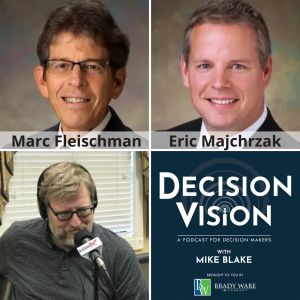
Decision Vision Episode 106: Should We Think Outside the Box for Our Next Chief Executive? – An Interview with Marc Fleischman and Eric Majchrzak, BeachFleischman

March 4, 2021 by John Ray

BeachFleischman
Decision Vision
Decision Vision Episode 106: Should We Think Outside the Box for Our Next Chief Executive? - An Interview with Marc Fleischman and Eric Majchrzak, BeachFleischman
Loading
00:00 /
RSS Feed
Share
Link
Embed

Download file

BeachFleischmanDecision Vision Episode 106:  Should We Think Outside the Box for Our Next Chief Executive? – An Interview with Marc Fleischman and Eric Majchrzak, BeachFleischman

When choosing a new CEO, should you consider unconventional options? How do you transition the CEO role to a non-founder? Marc Fleischman and Eric Majchrzak are in a management succession like this at their firm, BeachFleischman, and they joined host Mike Blake to discuss their own experience. “Decision Vision” is presented by Brady Ware & Company.

BeachFleischman PC

BeachFleischman PC is Arizona’s largest locally-owned CPA firm and a “Top 200” largest CPA firm in the U.S. The firm has over 200 client service and administrative professionals and provides accounting, assurance, tax, and strategic operations & advisory services to businesses (U.S. and foreign-based), organizations and individuals. The firm serves clients doing business domestically and internationally and specializes in a variety of Industry-related practice areas, including cannabis, construction, healthcare, real estate, manufacturing, hospitality, technology, nonprofit and professional service businesses. BeachFleischman has subsidiaries, including Pinnacle Plan Design LLC, a national provider of qualified retirement plan consulting, design, administration and actuarial services; MOD Ventures LLC, a virtual client accounting services and consulting firm; and Contempo HCM LLC, a payroll and human capital management company. Offices are in Tucson (headquarters) and Phoenix.

Company website | LinkedIn | Twitter

Marc Fleischman, CEO, BeachFleischman PC

BeachFleischman
Marc Fleischman, BeachFleischman PC

Marc Fleischman is a founding shareholder and current CEO of BeachFleischman PC, an accounting and consulting firm with offices in Tucson and Phoenix Arizona founded in 1990. The firm has approximately 200 office and remote employees. Marc retires at the end of 2021 and is currently mentoring his replacement to share knowledge and experience.

Eric Majchrzak, Chief Strategy Officer, BeachFleischman PC

Eric Majchrzak, BeachFleischman PC

Eric Majchrzak is a shareholder and chief strategy officer of BeachFleischman PC. He is also the firm’s appointed CEO-elect and will assume the role in 2022. He joined BeachFleischman in 2012 and is responsible for the firm’s overall strategic growth initiatives, including innovation, service line development, M&A, joint ventures, institutional firm branding, market alignment, and community outreach.


Mike Blake, Brady Ware & Company

Mike Blake, Host of the “Decision Vision” podcast series

Michael Blake is the host of the “Decision Vision” podcast series and a Director of Brady Ware & Company. Mike specializes in the valuation of intellectual property-driven firms, such as software firms, aerospace firms, and professional services firms, most frequently in the capacity as a transaction advisor, helping clients obtain great outcomes from complex transaction opportunities. He is also a specialist in the appraisal of intellectual properties as stand-alone assets, such as software, trade secrets, and patents.

Mike has been a full-time business appraiser for 13 years with public accounting firms, boutique business appraisal firms, and an owner of his own firm. Prior to that, he spent 8 years in venture capital and investment banking, including transactions in the U.S., Israel, Russia, Ukraine, and Belarus.

Brady Ware & Company

Brady Ware & Company is a regional full-service accounting and advisory firm which helps businesses and entrepreneurs make visions a reality. Brady Ware services clients nationally from its offices in Alpharetta, GA; Columbus and Dayton, OH; and Richmond, IN. The firm is growth-minded, committed to the regions in which they operate, and most importantly, they make significant investments in their people and service offerings to meet the changing financial needs of those they are privileged to serve. The firm is dedicated to providing results that make a difference for its clients.

Decision Vision Podcast Series

“Decision Vision” is a podcast covering topics and issues facing small business owners and connecting them with solutions from leading experts. This series is presented by Brady Ware & Company. If you are a decision-maker for a small business, we’d love to hear from you. Contact us at decisionvision@bradyware.com and make sure to listen to every Thursday to the “Decision Vision” podcast.

Past episodes of “Decision Vision” can be found at decisionvisionpodcast.com. “Decision Vision” is produced and broadcast by the North Fulton studio of Business RadioX®.

Visit Brady Ware & Company on social media:

LinkedIn:  https://www.linkedin.com/company/brady-ware/

Facebook: https://www.facebook.com/bradywareCPAs/

Twitter: https://twitter.com/BradyWare

Instagram: https://www.instagram.com/bradywarecompany/

TRANSCRIPT

Intro: [00:00:01] Welcome to Decision Vision, a podcast series focusing on critical business decisions. Brought to you by Brady Ware & Company. Brady Ware is a regional full service accounting and advisory firm that helps businesses and entrepreneurs make visions a reality.

Mike Blake: [00:00:20] Welcome to Decision Vision, a podcast giving you, the listener, clear vision to make great decisions. In each episode, we discuss the process of decision making on a different topic from the business owners’ or executives’ perspective. We aren’t necessarily telling you what to do, but we can put you in a position to make an informed decision on your own and understand when you might need help along the way.

Mike Blake: [00:00:39] My name is Mike Blake, and I’m your host for today’s program. I’m a director at Brady Ware & Company, a full service accounting firm based in Dayton, Ohio, with offices in Dayton; Columbus, Ohio; Richmond, Indiana; and Alpharetta, Georgia. Brady Ware is sponsoring this podcast, which is being recorded in Atlanta per social distancing protocols. If you like this podcast, please subscribe on your favorite podcast aggregator, and please consider leaving a review of the podcast as well.

Mike Blake: [00:01:08] Today’s topic is, Should we think outside the box for our next chief executive? And this is, I think in some respects, a hot topic, I think more companies are thinking outside the box in terms of retaining their next chief executive, because industries are finding that their markets are changing so rapidly. And this is even before we get into a coronavirus discussion, which has, basically, just yanked the tablecloth and everything sort of come crashing down wherever it’s going to come down. But, you know, we’re seeing this before.

Mike Blake: [00:01:46] And it’s an interesting conversation. If you look at Ford, right? They got rid of Mark Fields, he was a lifer inside the company and all he knew was making cars – I don’t mean to trivialize that. Knowing how to make cars is hard, just ask Elon Musk, especially doing it at scale. But they replaced him with a software guy – a woman, actually, from Silicon Valley – because they have decided that the future of driving is on autonomous vehicles. General Motors has done something similar because they are making a pretty all in bet on electrification.

Mike Blake: [00:02:32] Now, sometimes it doesn’t necessarily go as well. Those of us who are old enough may remember when Steve Jobs was forced out of Apple in the late 1980s. They hired a Pepsi executive to replace him. And they brought out products such as the Apple Newton, and if you’ve never heard of it, there’s probably a reason for that. But, basically, that was sort of the Neanderthal iPad and it was ten years too early before the the supporting technology was really ready to to support that kind of device.

Mike Blake: [00:03:08] So, it doesn’t necessarily all work out. But it is an interesting and a courageous decision and, I think, in particular as we’re in an interesting time where demographics are dictating turnover. And in my world where I live and I do a lot of transaction advisory, we tend to think that that is going to lead to a change in ownership, where people are going to be selling their companies because they feel like they’re too old to run them. Interestingly enough, we’ve thought that for the last ten years, we thought there was going be a massive turnover of companies. And that actually really hasn’t happened the way that we thought it was going to be, because it turns out that, you know, a lot of people still have their marbles at age 70 and can run their company. And there’s also a lot of data to suggest that the least healthy thing you can do is retire. But that’ll be a subject maybe for another podcast.

Mike Blake: [00:04:04] But it also brings to mind another issue, which is at the forefront even of Brady Ware, which is succession. That ownership is necessarily going to turn over at some point. And in professional services, one of the big tests of staying power and, frankly, whether the firm has value is, whether or not you’re able to have a successful transition of power, basically, and still retain the things about the firm that make it useful and valuable today while still positioning itself for the new challenges and opportunities that exist for that firm at the time that the succession is taking place.

Mike Blake: [00:04:51] And so, you know, for those reasons, I think this is an interesting topic. I think it will resonate with a lot of people, whether you’re in that succession plan yourself, whether you are maybe subject to that succession plan, or maybe you’re thinking that’s five to ten years away. And if there’s anything I’ve learned about succession, I’m not sure it’s ever too early to start thinking about it. Certainly, ten years is not too early because as Yogi Berra is famous for saying, it gets late early.

Mike Blake: [00:05:19] So, joining us today are Marc Fleischman and Eric Majchrzak, who are the current and future CEOs of BeachFleischman PC out in Arizona. So, we’re going to get a really interesting kind of perspective here of the full spectrum of transition, if you will.

Mike Blake: [00:05:40] Marc Fleischman is a founding shareholder and current CEO of BeachFleischman PC, an accounting and consulting firm with offices in Tucson and Phoenix, Arizona. Founded in 1990, the firm has approximately 200 office and remote employees. Marc is retiring at the end of 2021 – this year – and is currently mentoring his replacement to share knowledge and experience. And that replacement is Eric Majchrzak, who is a shareholder and chief strategy officer of BeachFleischman. He is also the firm’s appointed CEO-elect, and will assume that role at the start of 2022. He joined BeachFleischman in 2012, and is responsible for the firm’s overall strategic growth initiatives, including innovation, service line development, mergers and acquisitions, joint ventures, institutional firm branding, market alignment, and community outreach.

Mike Blake: [00:06:32] BeachFleischman PC is Arizona’s largest locally owned CPA firm and a top 200 largest CPA firm in the United States. The firm has over 200 client service and administrative professionals and provides accounting assurance, tax, and strategic operations and advisory services to business, U.S. and foreign based, organizations and individuals. The firm service clients doing business domestically and internationally and specializes in a variety of industry related practice areas, including cannabis, construction, health care, real estate, manufacturing, hospitality, technology, nonprofit, and professional service businesses. BeachFleischman has subsidiaries including Pinnacle Plan Design, LLC, a national provider of qualified retirement plan, consulting design administration and actuarial services; MOD Ventures, LLC, a client accounting services and consulting firm; and Contempo HCM, LLC, a payroll and human capital management company; offices are in Tucson and Phoenix. Marc and Eric, welcome to the program.

Marc Fleischman: [00:07:33] Thank you for having us.

Mike Blake: [00:07:35] So, lots of ground we can cover today. And although we have a general direction where we’re going to go, we’ll see if it stays that way. But the thing that I think is going to be helpful for the listener and myself to understand the context is, what are the circumstances leading to this transition? Marc, since you’re the one who’s currently in the seat and you’re leaving, I’ll ask you to kind of answer that first. What’s happening that’s leading to this change?

Marc Fleischman: [00:08:09] I’m happy to. Under our governance policy, at age 67 – which I’ll be this coming December – I need to sell my shares back. So, I will no longer be a shareholder in the corporation. As a result, we deemed it not appropriate for me to remain as CEO. And quite honestly, you mentioned earlier about retirement maybe not being good, I’m going to find out how good it is or how good it isn’t. And plan on, maybe, staying on as an advisor to the firm and helping where they need it, if they need it. But, basically, getting out of the way and allowing Eric and the team to lead into the future.

Mike Blake: [00:08:48] So, I’d like to pause on that for a moment, because, one, 67 is interesting to me because it’s a little older than I normally see accounting firms have. At Brady Ware, it’s 65. Other places I’ve worked, it’s 65. But can you answer for me – and Eric might be able to chime in too – why do a lot of professional services firms have a mandatory retirement age?

Marc Fleischman: [00:09:12] I think it relates primarily to succession and the ability to allow, number one, the relationships that have been fostered for a number of years. We have to transfer those relationships to new people, younger people. Otherwise, the client will no longer have a service provider that they feel comfortable working with. So, it’s necessary to start early. You talked about succession, maybe ten years is long enough or not long enough. Basically, here, we believe in continuous succession. Whereby, we are constantly attempting to – I’m going to use the term – pushdown client relationships, transferring them to younger people, giving them an opportunity so that there is a continuing success of the firm going forward.

Eric Majchrzak: [00:10:06] I would add, Marc just addressed the client side of things, which is very relevant. On the talent side of things, on the internal side, it creates more space for future leaders to step up. And it’s a great way to retain top talent is to have that succession plan in place so that others can step up and lead a practice, lead a division, become a future leader. And that’s always been part of our culture here. So, both on the client side and on the internal talent side, both very important.

Mike Blake: [00:10:40] So, I’d like to go back in time then to the point at which you decided or where you arrived at the point where you needed to name that successor. How long ago was that? Was that six months ago, a year ago, two years ago? How long has that transition practice been in place?

Marc Fleischman: [00:10:59] We started the process back in July of 2019, so we’re talking over a-year-and-a-half ago.

Mike Blake: [00:11:06] Okay. And then, how long has it been known that Eric is going to be the next person up?

Marc Fleischman: [00:11:13] Well, we made the announcement internally this November, but actually the selection was a full year before that. The shareholders and the committee that selected him knew of it, but everybody else did not.

Mike Blake: [00:11:28] Okay. So, it sounds like that it’s going to be 2020 or maybe even 2019 BC, before coronavirus. And think back to that time when you were deciding who was the right person to take on this role and this challenge, talk to me about about how you viewed your own firm. I love to hear about when you took inventory of its strengths and weaknesses. What did those kind of look like to you?

Marc Fleischman: [00:12:00] Well, from my standpoint, I think we were a successful firm, having been founded in 1990. We had a one long term CEO that that served that position almost 25 years. And then, I replaced him naturally. I mean his name was Beach. My name is Fleischman. It was a natural for me to take over after that. And I guess, I would say, that having been involved with my partner and my good friend since I got out of college many, many, many years ago, I was Avis to his Hertz. And I was always practicing to become number one.

Marc Fleischman: [00:12:42] So, in 2019, we were still in a growth mode as we are today. We were considering rolling out new opportunities, new service lines, and realized that it would probably would make sense to spend a fair amount of time with regards to being able to mentor our new CEO in that role. Because Mr. Beach and myself had been really co-drivers of this practice for a number of years as far as running it. And no one else had really had too much opportunity to fulfill those duties. And so, it was going to take a long time to transition, regardless of whether it was a practice partner or a nonpractice partner.

Mike Blake: [00:13:30] And so, it sounds like this is the first time that a nonpractice partner is really somebody not named Beach or Fleischman is going to be in that seat.

Marc Fleischman: [00:13:38] Exactly right.

Eric Majchrzak: [00:13:40] No pressure. No pressure, right, Mike?

Mike Blake: [00:13:42] Well, and that’s why I want to ask you about, you know, does that change your calculus about how you approach the job? Did it give you any pause in taking the job? Because, you know, as they say in coaching, you don’t want to be the guy that follows a guy. You want to be the guy that follows the guy that follows the guy. You know, did that give you any pause?

Eric Majchrzak: [00:14:05] You know, only to the extent that both Bruce and Marc are loved within the firm, significant shoes to fill, so the bar was set very high. And that’s never necessarily a position you want to walk into, where the bar is so high already to begin with, right? But I have to say, I think it’s a blessing because they have created a firm and a culture that’s committed to growth, that’s committed to clients, committed to our own people internally. And I can’t think of a better circumstance to step into this role than what we have here.

Eric Majchrzak: [00:14:45] During the time when we were going through the search process and the transition process back in the second half of 2019, there was significant change happening here. I mean, we have launched two of our new ventures, two brand new subsidiaries or two companies. We’re going through a lot of transformation on the technology side. We’re shifting our business model away from the hourly billing model. We’re entering new markets. So, there was just so much change happening. And, with change comes opportunity, of course. So, that was kind of the environment that we were looking at.

Eric Majchrzak: [00:15:29] And by the way, we’re no different than any other firm. Other firms are grappling with the same issues of innovation and disruption and that, so I just feel we’re in a really good spot to navigate through this.

Mike Blake: [00:15:45] Well, we certainly are. But what’s interesting in how you described the state of the firm, if you will, as the succession decision was taking place, everything you described to me was a business issue that could impact any business, whether it is an accounting or whether it was in manufacturing paper clips.

Eric Majchrzak: [00:16:07] Agree.

Mike Blake: [00:16:07] And I wonder and I suspect that that’s one of the reasons that may bring somebody in who’s not a practitioner of accountancy or one of the specific services as a viable, maybe even an optimal fit, because you weren’t trying to figure out how to get tax returns out more efficiently or figure out how to manage audit risk or whether you can take on public company audits or something. It is much more kind of – I hate to say garden variety – but really garden variety business stuff.

Eric Majchrzak: [00:16:38] Yeah. And in my case – and maybe the committee and Marc thought about this – the firm is my only client. I get to work on the business 100 percent of my time, because I don’t have a client list. I’m not serving clients externally. I get to work on the business. And I think because of the fast pace of change, that’s a good spot to be in where I can dedicate all of my time on anticipating change, anticipating our needs, and not being reactive.

Mike Blake: [00:17:14] I suspect – and I’d love you to comment – I think there are a lot of positives about that. One, you’re not distracted by a book of business. Two, you don’t have to worry about trying to regain that book of business if you then leave that role but want to stay in the firm, as can happen with CEOs. And, you know, something I talk about philosophically and it doesn’t always meet with a lot of receptivity, you know, I think partners should have the fewest billable hours in the firm anyway because you need that time to work on the business, and you’re set up in a way. So, I can’t fill out somebody’s tax returns anyway, so I may as well go work and make the firm more valuable.

Eric Majchrzak: [00:18:00] I know. That’s a great point. And Marc can, maybe, comment on the conversations that were happening internally at that time about just that, about wanting to have that person ultra focused on the business of the firm and where the accounting profession was headed. And what we need to do, the decisions today that we have to make that are going to align with the future exploration, and what that looks like.

Marc Fleischman: [00:18:31] It was kind of interesting the way we went about it. I mean, we created a committee of about eight shareholders from different disciplines, all of whom had decided that they didn’t want to put their name in the hat. We then asked for people to put their name in the hat. We had them go ahead and write us a little narrative about why they felt they were qualified. We went ahead and did some psychological testing to see how they matched up with myself and Mr. Beach, what their strengths and weaknesses might have looked like in comparison to ours. We went ahead and had an interview process with each one of them. And from my standpoint, it wasn’t even a question as to who was the most qualified and why.

Marc Fleischman: [00:19:25] Eric shined compared to my other partners, who I love very much. And they are my partners, so I am married to them from a financial sense. But I realized that Eric’s background and what he does every day made him uniquely qualified to take the position, number one. And number two, from the CPA firm standpoint, it wasn’t going to be we have to transition $1 million or 2 million book of business to somebody else to handle so that the next CEO would be able to have fewer billable hours and focus on running the business.

Mike Blake: [00:20:03] So, in those internal discussions with that committee, was there expressed any concern that, you know, “But Eric’s not a practitioner”. You know, was there any concern?

Marc Fleischman: [00:20:19] Oh, yes. Absolutely. I mean, we, as CPAs, we know everything and we know it best, right? And we work on our clients. We know how to do it better than anybody else. How could somebody who doesn’t do that understand what we do? But Eric’s been in the CPA profession, just not working on a multitude of clients, but one client, whether it’s with us or his predecessor firm, his whole accounting firm career. So, you know, he does understand what we do. We’ve developed a process here over the last – what will be – over two years of him learning more about what his partners do on a day-to-day basis, providing excellent quality service to clients and being involved with the community, and also training the new leaders of the firm that are going to come up behind him and everybody else.

Mike Blake: [00:21:21] So, if I understood you correctly, it sounds like you considered exclusively candidates that were already in the BeachFleischman house.

Marc Fleischman: [00:21:32] That is correct. We preferred to do that because we believe we have a culture that we want to be able to be easily sustained and built on. And feeling that if we brought an outsider in, we just don’t know what the ramifications might be. They could be great, but they could also be destructive. And to the extent we could find a qualified individual that’s already living under our roof, we were very happy with that possibility that being the decision.

Mike Blake: [00:22:02] And I think that’s an important point, because, you know, how far you go in terms of bringing in an “outsider” and Eric is kind of a tweener, sort of an inside outsider or an outside inner – I’m not sure which way I’d go with that. But, you know, as I mentioned a couple of examples in the intro, there are some firms that just decided they’ve got to go really outside. And I think what’s driving that is because they feel like there’s some massive trend upon which they must capitalize. Or there’s some massive existential threat that just cannot be handled with the internal firm culture. You know, with you, it seems like you prized quite a bit of continuity. And I want to be clear, some people may hear that and think that means complacent. I don’t think that’s what it means. It means exactly what it means, which is that continuity of culture is important.

Marc Fleischman: [00:22:55] Well, I think that, honestly, for success in a business like ours, culture is key. And if you disrupt it, you create earthquakes that you don’t know what buildings you may have built that are going to fall because of disrupting your culture.

Mike Blake: [00:23:15] So, I like both of you to kind of answer this next question if you can, because I think you both have different perspectives on the same thing. And that is, Marc, as the firm was considering Eric for this role and as Eric was considering taking it, was there a particular skill set or area of expertise that, Eric, you did have that made you sort of the right person for this role at this time?

Marc Fleischman: [00:23:45] Well, I’ll go first, and he may echo what I say. But, you know, marketing is key. We cannot live on our laurels. We have to be able to grow. And as a growth leader and a strategy leader, he had the the natural areas that we were looking at to be able to move the firm forward as we go into the unknown abyss of what the world is going to look like going forward, right? With all the transition and the fast growth that’s taking place in our particular world here of accounting firms, it’s necessary to be able to be a forward thinker and look towards what the future can bring before the future brings it to you. And so, I think he had this natural perspective being in the marketing area to be able to have those skills and traits and be able to exhibit it and lead the firm forward.

Eric Majchrzak: [00:24:50] Yeah. And I have a broad definition of marketing, which is perhaps even textbook, but there are 4Ps to the marketing mix. And so, it’s not just about promotion, and advertising, and social media, and lead generation, but there’s also product and service development, pricing, and business model. There is placement replace, which is about distribution channels and how you deliver that service. And, really, I’ve been working on all 4Ps of the marketing mix for my career.

Eric Majchrzak: [00:25:20] So, I think maybe some firms consider marketing just that fourth P, promotion. And along with that comes, you know, competitive pressures. You’re looking at disruption. You’re looking at trends in technology. I’ve done my best to stay in tune with where the profession is headed and what the risks are, and articulate that to the folks in my firm. So, I think that’s what I brought to the table, because everybody in our profession is talking about how firms now need to diversify, we need to get away from compliance, how we need to be consultants, how we need to be launching new practices and service lines and industry groups. And that stuff that I do every day working with my colleagues here, and so I have a level of comfort dealing with discomfort. Which I think is something that future leaders are going to have to get used to, is being uncomfortable a good amount of the time.

Mike Blake: [00:26:33] So, that’s a very interesting word, and a word with a lot of depth to it. So, I like to follow that up then with this question, do you agree with me, you are accepting a place that is not necessarily all that comfortable. There’s some comfort level, I get it, you have a history with the firm. You understand the firm. Obviously, you have the blessing of the leadership. But it’s not the same thing as, say, a lateral move to take another role that’s like yours, maybe let’s say, a bigger company. Is that fair to say?

Eric Majchrzak: [00:27:08] Yeah. I would say that’s fair, for sure.

Mike Blake: [00:27:11] So, how did you get comfortable as a candidate? As someone who is, obviously, a responsible steward of your own career that this was the right move? And in doing so – and I don’t want to be specific. I wouldn’t be that prying. It’s not necessarily be that specific – I’m curious, did that lead you to think about your terms of employment in a different way than you might have thought about your terms of employment had the move been more, you know, within the typical comfort zone?

Eric Majchrzak: [00:27:51] That’s a good question. I’ll address the earlier portion of your comment about being uncomfortable. I don’t know that even at this stage that I’m comfortable with the idea of being CEO. But I know it needs to happen. I know that the firm is going to be going through change that’s going to make a lot of people uncomfortable. I just feel it’s a job to do. I already felt the burden of a lot of these issues we’re talking about, about sustainability, about growth. So, it just seemed to be a natural transition for me to go from chief marketing and strategy officer to chief executive officer in terms of, you know, is it the right move for my career?

Eric Majchrzak: [00:28:45] You know, I feel like with a solid team in place, great people around me, a common vision, it’s going to make it that easier. In terms of having a special kind of agreement in your employment arrangement, I think that’s probably more relevant to, like we mentioned before, when you have an accountant or a partner that has a book of business with clients and they have to transition those clients away. I don’t have that. But what I do have, and I think there’s a general understanding, is, I am still going to be directing the strategic growth and marketing initiatives of the firm even as CEO. So, that is essentially my fallback where a lot of accountants would have some limited client where I’m still going to be working on guiding the firm where we need to be in the future, launching new growth initiatives, institutional branding, that kind of thing. So, I just gave you a lot to ponder there, but those are the things that kind of go through my head.

Mike Blake: [00:29:57] Yeah. I mean, that’s good. I mean, that’s exactly the kind of information we try to get on this podcast. So, I appreciate you giving us a lot. And I asked you a really hard question, so it’s fair that the answer is hard too. So, you’ve been in this transitional role, I’m guessing, for about 18 months, give or take. So, in that role, how have you found sort of the practical on the ground reception? Have people been wary? Have they been welcoming? Have there been areas of even obvious resistance? What has that looked like? What have you picked up either from direct cues or even informal body language, nonphysical cues? How’s that going?

Eric Majchrzak: [00:30:46] I mean, I feel I have been welcomed into the room. I certainly feel supported and I am being supported. I think there’s certainly no shortage of ideas and opinions, which I get a lot of those coming my way nowadays, maybe even more so than I did in my chief marketing and strategy role. And it’s good, because it’s all the things that – some of the things we need to be thinking about, having a holistic approach to governing the firm.

Eric Majchrzak: [00:31:21] You know, there’s a lot of folks commenting about how things aren’t so linear anymore and that competition is coming from all different angles. So, almost like an asymmetrical kind of approach to governing a firm. And I think that’s in our dialogue, we’re talking about it a lot. It’s in the language that we use. So, in that sense, I feel that the firm is identifying and my colleagues are identifying the issues at stake, which makes me feel pretty good. I don’t feel isolated in that sense. I do feel like we’re on the same page. Now, we may disagree with how to get there. But I think all in all, we have the same common vision, we have the same understanding of the issues at stake. And I think that’s important.

Mike Blake: [00:32:16] So, how are you two working together now, Eric and Mark? I mean, is it a de facto? I can see a lot of ways it’s working. Is it a de facto dual CEO role right now until the end of 2021? Is it still more of a master-apprentice kind of relationship? Something else that doesn’t come to mind that you describe differently? What does that look like between the two of you right now?

Marc Fleischman: [00:32:42] I would describe it as a mentor-mentee relationship, where I’m available to Eric 24/7, seven days a week, whenever he wants to reach out, whatever he wants to talk about, I’m there. I try to include him in in meetings where I think this is something maybe he hasn’t been exposed to, whether it’s dealing with insurance issues, banking issues, setting goals for partners. We had our goal setting session last month and he sat in all of the goal setting sessions that I would typically sit through with the partners, whether it’s the tax partner-in-charge or the A&A partner-in-charge also sitting in there.

Marc Fleischman: [00:33:29] So, he’s involved in everything I do other than a little bit of client work that I do, which no one wants to be involved in because it’s divorce work. So, you’ve got to be crazy to do what I do, and another reason that 67 is a good time to retire, because 65 probably would have been good, too, to get out of that type of work.

Marc Fleischman: [00:33:51] But in any case, I think that it is more mentor-mentee than anything else. I still sign the important stuff as necessary for the firm. But I think everybody is accepting that Eric is in his master’s degree program, and soon he’ll go through a quick doctorate, and then he’ll be ready to take on the world.

Eric Majchrzak: [00:34:16] And there is some structure behind that arrangement – and by the way, that’s a great place to be – and, Marc, literally, does have an open door policy. And I knock on his door several times a day to go in there and ask him his perspective on something, or ask him a question, or just to do an update. But we’ve had for a while now a standing recurring meeting where we meet on a regular basis, I did take the opportunity to kind of map out what I thought the transition should look like. Marc gave me his feedback on that. I attend an external managing partner, CEO Bootcamp, that I’m in right now. I am also making an effort to talk to CEOs and managing partners of other accounting firms and other businesses that are not related to accounting and just having a sounding board and a network of support and people that I can count on. And so, it’s all of that. And it’s been great. I couldn’t be happier with that process.

Mike Blake: [00:35:25] Eric, I think what you just said is interesting. And for it’s worth for me, I think it’s really smart, the fact you’re going outside and looking for different perspectives, both within the industry and outside. What is the most frequent question you find yourself asking? Or if that doesn’t jump to mind, what’s the most frequent piece of advice you’re hearing?

Eric Majchrzak: [00:35:49] Boy, that is a good question. You know, a lot of people are commenting and I agree with this, that, you know, you really have to govern with a shared set of core values and beliefs, so mission, vision, values. And I strongly believe in that. So, using those elements as the core tenets of who we are, the purpose of our firm, which will help us and help me make decisions in the future there’s a fork in the road and we’re not sure which way to go. I think part of that is going to be my job and part of that is going to be, you know, understanding what we’re all setting out to accomplish, and then choosing the path that gets us there. But the top down approach, the tone from the top is very important. So, I’ve been hearing a lot about that.

Eric Majchrzak: [00:36:49] I’ve also been getting some advice just about taking care of myself, making sure that I stay healthy, that I exercise, that I can have moments to clear my mind, and to think, and to do that kind of thing. So, I’ll have to work a little bit harder with that. And there’s a few other things in there. But, I would say, those are the main bits of advice that I’ve been receiving.

Mike Blake: [00:37:21] So, so far, you’re 18 months into this journey and, give or take, you’ve got about ten-and-a-half months left in the transitional part of the journey. What have both of you learned along the way that might be good advice to our listeners who may be thinking about a similar model to their executive succession?

Marc Fleischman: [00:37:40] Well, I would say to the CEOs out there that are going to be transitioning out, don’t be afraid of what the future is going to bring, embrace it. And be open to the ideas of your successor, because their ideas are extremely important to even your final education in your role. There’s nothing better, from my standpoint, to be able to say, “When I leave here, I have no fear of the success of this organization, because I’ve done everything I can and look forward to the next steps of whatever that brings for me.”

Marc Fleischman: [00:38:28] As far as Eric is concerned, I think what I’ve learned so far is we made the right choice. We’re lucky to have had an opportunity to have somebody like that internally in our organization. And I also would say that I never thought I’d be able to be a teacher. And, now, I’m finding that it comes easy and it’s fulfilling to be able to share ideas and then hear what comes back from Eric, because, obviously, his upbringing was different than mine as far as professional services are concerned. And I love hearing his perspective on things.

Eric Majchrzak: [00:39:08] Yeah. Thanks for those comments, Marc. I’ve learned a bunch of things. One is, that we have to give each other a lot of latitude on the pace and empathy during the transition process. So, just really identifying with each other, I think, is a challenging time for both of us, actually, maybe for different reasons. The other thing I learned, that by going through this process, it’s actually a bit of an opportunity to document and develop a transition process. You know, Marc mentioned, he was the likely and the logical successor to Bruce Beach. Me, being the first non-founder CEO, we got to map out what the transition process looked like. And I think we can leave it behind for the transition I’m going to go through in another 15 years down the road. So, there’ll be a framework there for people to follow.

Eric Majchrzak: [00:40:17] And I would also say, just looking at all the things that we’ve been covering in this process, it helps you identify opportunities. I mean, Marc, think about all the opportunities that we’ve identified just for things that we can be doing helps us address, maybe, some challenges. So, all in all, I just think it’s a great process to kind of redefine and agree upon what we want to be. And that’s always a good thing to go through.

Mike Blake: [00:40:49] We’re talking to Marc Fleischman and Eric Majchrzak of BeachFleischman PC. And the topic is, Should we think outside the box for our next chief executive? A question I want to get to, I’m curious, has anything about this process surprised you? Is there something that you thought this would be like going in and it turned out to be different than what you were expecting?

Marc Fleischman: [00:41:15] I guess, I didn’t have any preconceived notion of what this was going to look like going in. I think, maybe, what surprised me the most was how easy it’s going. You know, change is hard, always. Sometimes, you know, especially if it’s change you don’t want, it’s brought upon you. I won’t say that I don’t want to be able to move on to whatever life is going to look like post being the CEO of BeachFleischman. But it wasn’t something that I may have necessarily chosen to do, but it’s the right thing to do. So, here, I think that it’s been really quite a pleasure to be able to experience this with Eric and the rest of our management team, which we pretty much run our organization as a team. We have a leader, but many decisions are made collaboratively and collectively. So, I’m happy that it’s been so painless up until now.

Eric Majchrzak: [00:42:19] Yeah. I have to agree with that. Knowing a lot of firms out there and transitions that other firms have been through, doing a lot of reading, I know that these can be really trying times and they can be difficult transitions. And, you know, maybe I have that in the back of my head that there’s going to be much more friction than what there actually is. And so, I just think that would probably be the biggest surprise. But it’s been enjoyable. It’s been a great learning opportunity. And I think other people are excited, too. So, all in all, it’s been a great experience to go through this. And, gosh, but the documents kind of the process as we go along, I think is going to be helpful for a way that a future succeeding CEO can go through the process.

Mike Blake: [00:43:24] So, I’d like to offer an observation that I love your comment on, because one thing, this transition that you’re doing is a pretty long one, I think, by most standards, right? It’s not British royal throne long, I mean, Prince Charles has been waiting about 50 years or so to become King Charles III of England. I don’t know if they’ll ever do that. But to be sort of in the wings for two-and-a-half years when all is said and done, that’s a long time to kind of wait and kind of get that seat where you get to take the training wheels off and really run the job that you’re training for. And, to me, it speaks to a certain level of humility. It speaks to a certain level of, at least, being able to subordinate your ego, if not outright just not having a big one. And I wonder if that’s either explicitly or sort of backdoor implicitly part of the process as to why you have such a high level of confidence this is going to work. Or if I’m just playing amateur psychologist and I should just shut up and never say things like that again.

Marc Fleischman: [00:44:39] Well, I guess from my standpoint, you know, I think you’ve got to check your ego at the door. And this, I think, goes through being able to have a successful partnership or relationship in any professional services firm. Of my 45 years of observing law firms, accounting firms, architects and engineering firms, regardless of the leader, everybody thought they were a leader and everybody thought they were the most important person in the firm. And, often, that’s what breaks them up. That’s what we try to avoid here as much as we always can to make sure that your ego doesn’t get in the way of decision making. And so, although, it probably has in my past and probably will again maybe tomorrow, I try my best to not let that get in the way of anything we do here. And I think that is – you know, Eric is the one that’s waiting in the wings, so his comment is probably much more relevant than mine.

Eric Majchrzak: [00:45:43] Yeah. I think, definitely you have to be mindful of the trappings of ego. It’s not about me, it’s not about Marc, it’s about the future of the firm. And so, we just have to find a way to work together, to collaborate, to put our firm in the best position moving forward. And you know what? A two year transition is not going to work for every company and it’s certainly not going to work for every accounting firm. I’ve seen transitions that were, you know, six months out, a year out. I don’t know what the answer is, but, for us, this seems to be working and it’s a way to do it.

Mike Blake: [00:46:31] Guys, we’re running out of time, but there’s more ground that we could cover than we realistically have time for. And I realized that I’m taking up not just one, but two chief executive’s time here effectively. If people want to learn more about this topic, get your insight, ask a question I didn’t have a chance to ask, can they contact you to follow up? And if so, what’s the best way for them to do that?

Eric Majchrzak: [00:46:57] Sure. I mean, Marc and I are both on LinkedIn, they can definitely search us there. Beachfleischman.com has a Contact us form, you can request a conversation through that form. You can also message us on Twitter, we’re @BeachFleischman. And we have a Facebook page. So, really, there’s many ways you can get a hold of us. Marc, I don’t know if you want to add to that.

Marc Fleischman: [00:47:31] I’m very old fashioned, I still use a phone. My direct dial number, 520-618-7918. Call and leave a message if I don’t pick up.

Mike Blake: [00:47:43] That’s so retro. People actually use smartphones to make and receive telephone calls. That’s extraordinary.

Marc Fleischman: [00:47:49] I know. I haven’t learned not to do it.

Mike Blake: [00:47:52] I want to see if there’s an app that will let me convert my keypad to an old rotary dial phone, like a virtual rotary dial, just to mess with my kids.

Mike Blake: [00:48:04] Well, thanks, guys. That’s going to wrap it up for today’s program. I’d like to thank Marc Fleischman and Eric Majchrzak so much for joining us and sharing their expertise with us. We’ll be exploring a new topic each week, so please tune in so that when you’re faced with your next business decision, you have clear vision when making it. If you enjoy these podcast, please consider leaving a review with your favorite podcast aggregator. It helps people find us that we can help them. Once again, this is Mike Blake. Our sponsor is Brady Ware & Company. And this has been the Decision Vision podcast.


Tagged With: BeachFleischman, Brady Ware, Brady Ware & Company, CEO, Chief Executive Officer, CPA firm, Eric Majchrzak, management succession, Marc Fleischman, Michael Blake, Mike Blake

Human Papilloma Virus (HPV) – Episode 51, To Your Health with Dr. Jim Morrow

March 3, 2021 by John Ray

Human Papilloma Virus
North Fulton Studio
Human Papilloma Virus (HPV) - Episode 51, To Your Health with Dr. Jim Morrow
Loading
00:00 /
RSS Feed
Share
Link
Embed

Download file

Human Papilloma Virus

Human Papilloma Virus (HPV) – Episode 51, To Your Health with Dr. Jim Morrow

The most common sexually transmitted disease (STI) is the Human Papilloma Virus, or HPV. On this edition of “To Your Health,” Dr. Morrow reviews the symptoms, causes, and treatments for HPV, as well as how to live with it. “To Your Health” is brought to you by Morrow Family Medicine, which brings the care back to healthcare.

About Morrow Family Medicine, A Member of Village Medical

Morrow Family Medicine, a Member of Village Medical, is an award-winning, state-of-the-art family practice with offices in Cumming and Milton, Georgia. The practice combines healthcare information technology with old-fashioned care to provide the type of care that many are in search of today. Two physicians, three physician assistants and two nurse practitioners are supported by a knowledgeable and friendly staff to make your visit to Morrow Family Medicine, A Member of Village Medical one that will remind you of the way healthcare should be.  At Morrow Family Medicine, a Member of Village Medical, we like to say we are “bringing the care back to healthcare!”  The practice has been named the “Best of Forsyth” in Family Medicine in all five years of the award, is a three-time consecutive winner of the “Best of North Atlanta” by readers of Appen Media, and the 2019 winner of “Best of Life” in North Fulton County.

Village Medical offers a comprehensive suite of primary care services including preventative care, treatment for illness and injury, and management of chronic conditions such as diabetes, congestive heart failure, chronic obstructive pulmonary disease (COPD) and kidney disease. Atlanta-area patients can learn more about the practice here.

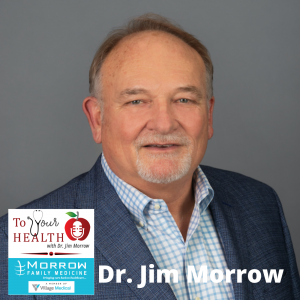
Dr. Jim Morrow, Morrow Family Medicine, and Host of “To Your Health with Dr. Jim Morrow”

Covid-19 misconceptionsDr. Jim Morrow is the founder and CEO of Morrow Family Medicine. He has been a trailblazer and evangelist in the area of healthcare information technology, was named Physician IT Leader of the Year by HIMSS, a HIMSS Davies Award Winner, the Cumming-Forsyth Chamber of Commerce Steve Bloom Award Winner as Entrepreneur of the Year and he received a Phoenix Award as Community Leader of the Year from the Metro Atlanta Chamber of Commerce.  He is married to Peggie Morrow and together they founded the Forsyth BYOT Benefit, a charity in Forsyth County to support students in need of technology and devices. They have two Goldendoodles, a gaggle of grandchildren and enjoy life on and around Lake Lanier.

Facebook: https://www.facebook.com/MorrowFamMed/

LinkedIn: https://www.linkedin.com/company/7788088/admin/

Twitter: https://twitter.com/toyourhealthMD

The complete show archive of “To Your Health with Dr. Jim Morrow” addresses a wide range of health and wellness topics, and can be found at www.toyourhealthradio.com.

Show Notes

Human Papilloma Virus

●      Human papillomavirus (HPV) is a common sexually transmitted virus.

o   It is the most common sexually transmitted infection (STI) in the United States.

o   There are more than 100 types of HPV.

o   Some types don’t cause any symptoms.

o   Other types cause genital warts.

o   More aggressive kinds of HPV can cause cancer in both women and men.

▪       This includes cancer of the cervix, vagina, vulva, anus, penis, and throat.

●      HPV is passed between people through genital or skin-to-skin contact.

o   Both men and women can get HPV and pass it on.

o   Often, they don’t know they have it, so they don’t realize they are passing it to other people.

o   Nearly all people who have had sex will get HPV at some point in their lives.

Symptoms of HPV

●      In most cases, HPV—including the kinds that cause cancer—does not have symptoms.

●      The main symptom people see with some types of HPV infection is genital warts.

o   Genital warts can be small or large, flat or raised.

o   Sometimes they are described as looking like cauliflower.

o   There can be just one, or they can appear in groups.

o   They can appear on the anus, cervix, scrotum, penis, groin, or thigh.

●      Another type of HPV can cause warts to develop on other parts of your body,

o   such as your hands and feet.

o   The types of HPV that cause warts generally do not cause cancer.


What causes HPV?

●      Infection from HPV happens when the virus gets into your body.

o   This most often happens during vaginal, anal, or oral sex with a person who is already infected.

o   HPV is spread through skin-to-skin contact, not through bodily fluids.

How is HPV diagnosed?

●      If you think you have warts in your genital area,

o   call your family doctor.

o   He or she will be able to diagnose it with an examination.

●      For women, diagnosis of HPV often starts with abnormal results from a routine Pap test.

o   When you have a Pap test (or “smear”), the doctor will take a sample of cells from your cervix.

o   The sample is sent to a lab and looked at under a microscope.

▪       If abnormal cells are found, your doctor may do another Pap test and include a cervical HPV test.

▪       This test can identify many of the HPV types that can cause cervical cancer.

▪       This is the only HPV test approved by the FDA.

●      If you have a type of HPV that can cause cancer, your doctor may want to perform a colposcopy.

o   In this test, he or she will use a special magnifying lens to get a closer look at your cervix.

o   If the tissue looks abnormal, they will cut out a small bit to perform a biopsy.

o   This test will check for signs of cancer.

●      There is no FDA-approved test for HPV for men.

Can HPV be prevented or avoided?

●      Because HPV is such a common virus,

o   it is hard to avoid it completely.

o   But there are steps you can take to lower your risk.

▪       Have few sex partners.

▪       Avoid sex with people who have had many sex partners.

▪       Use condoms consistently and correctly, though they may not cover all areas of skin where the virus lives.

●      HPV often shows no symptoms.

o   Sometimes symptoms show up weeks or months after you’ve been infected.

o   This makes it harder for you to not spread the infection.

▪       It is less common for men to develop complications from HPV.

▪       But they can spread the virus to women, where cancer from the virus is more common.

▪       So it is important to do your best to avoid HPV.

HPV vaccine

●      There is an HPV vaccine available that can protect against diseases caused by HPV, including cancers. It is approved by the FDA.

●      The Centers for Disease Control and Prevention (CDC) says girls and boys between the ages of 11 and 12 should get the vaccine.

o   It is most effective when the person is vaccinated before becoming sexually active.

o   Teenagers and young adults can get the vaccine, too.

o   It is approved for anyone between 9 years and 26 years of age.

●      The vaccine is given in multiple doses (shots) over 6 to 12 months.

o   Children age 9 to 14 receive 2 doses.

o    Those 15 or older receive 3 doses.

o   It’s important to get all of the doses to make sure you or your child are getting the most protection from HPV infection.

●      Without health insurance, vaccines can be expensive.

o   The CDC’s Vaccines for Children (VFC) program provides free vaccines for some families.

o   If you have low income and don’t have insurance for vaccinations, you might qualify.

HPV Treatment

●      There is no cure or treatment for the virus itself.

o   In many men and women, the Human Papilloma Virus goes away on its own without causing any health problems.

▪       There are treatments for the conditions the virus causes.

▪       These include genital warts,

▪       precancerous cells,

▪       and cancer.

●      Genital warts must be treated by your doctor.

o   Do not try to treat the warts yourself.

o   Don’t use over-the-counter wart-removal products.

▪       These chemicals are not supposed to be used for genital warts.

▪       They can irritate the skin.

●      If precancerous cells are found,

o   the abnormal tissue is removed so it doesn’t turn into cancer.

▪       If cancer is found, treatment will vary.

▪       It will depend on

▪       the type of cancer,

▪       the stage,

▪       and the patient’s age.

Living with Human Papilloma Virus

●      You may test positive for HPV without having signs of cancer or genital warts.

o   Your doctor will likely want you to get a repeat Pap test every 4 to 6 months until the infection is gone.

▪       This could take up to 2 years.

●      Most women who get their routine Pap tests and follow their doctor’s advice will not get cervical cancer.

o   It takes a long time to develop,

▪       and regular check-ups help find issues early, before they get more serious.

info courtesy of www.familydoctor.org

Tagged With: Dr. Jim Morrow, HPV, Human Papilloma Virus, Morrow Family Medicine, Village Medical

The Future of Remote Work, with Kaleem Clarkson, Blend Me, Inc.

March 2, 2021 by John Ray

Remote Work
North Fulton Business Radio
The Future of Remote Work, with Kaleem Clarkson, Blend Me, Inc.
Loading
00:00 /
RSS Feed
Share
Link
Embed

Download file

Remote Work

The Future of Remote Work with Kaleem Clarkson, Blend Me, Inc. (North Fulton Business Radio, Episode 331)

In a fascinating and timely interview with host John Ray, Kaleem Clarkson of Blend Me, Inc. discusses the remote work experience, why issues of trust and responsibility weigh heavily on both employers and employers, the tension between companies and employees which will exist as the pandemic eases, and much more. “North Fulton Business Radio” is produced virtually from the North Fulton studio of Business RadioX® in Alpharetta.

Blend Me, Inc.

Founded in 2013, Blend Me, Inc. helps location-independent startups and small businesses improve the remote employee experience, from onboarding to offboarding. By taking a collaborative approach we assist clients with the journey each remote employee takes by being a member of your organization. Our solutions and services range from Onboarding Strategy and Design, Inclusion and Diversity, Employee Research and Engagement, Internal Marketing, and Communications.Remote work

Kaleem Clarkson, COO, Blend Me, Inc.

Kaleem is a husband, father, remote work advocate, people operations professional, and speaker. He is the Chief Operating Officer of Blend Me, Inc a remote employee experience consultancy that helps startups and small businesses onboard, engage and retain their remote teams. With nearly 20 years of strategic operations and event planning experience, he helps leadership implement people operations solutions that increase productivity and engagement for both internal and external stakeholders.

Kaleem was born and raised in Bangor, Maine, the home of Stephen King. He graduated from Worcester State University and was recently featured in Harvard Business Review and named one of the top 15 Remote Work Advocates and Leaders by All American Speakers Bureau.

Kaleem currently resides in Atlanta, Georgia with his family. When he is not working, you can find him mountain biking on the trails of Georgia with his headphones, blasting a little hard rock music.

Company Website | Personal LinkedIn | Company LinkedIn | Personal Twitter

Questions and Topics in this Interview:

  • Why did you start Blend Me, Inc ?
  • What is the remote employee, work from home experience?
  • Why issues of trust and responsibility are so important
  • What is the future of remote work?
  • The tension between employer and employee remote work expectations after the pandemic eases
  • Why are some companies going to require people to come back to the office?
  • What are the biggest challenges companies are facing with remote work?

North Fulton Business Radio” is hosted by John Ray and produced virtually from the North Fulton studio of Business RadioX® in Alpharetta. You can find the full archive of shows by following this link. The show is available on all the major podcast apps, including Apple Podcasts, Spotify, Google, Amazon, iHeart Radio, Stitcher, TuneIn, and others.

Renasant Bank has humble roots, starting in 1904 as a $100,000 bank in a Lee County, Mississippi, bakery. Since then, Renasant has grown to become one of the Southeast’s strongest financial institutions with over $13 billion in assets and more than 190 banking, lending, wealth management and financial services offices in Mississippi, Alabama, Tennessee, Georgia and Florida. All of Renasant’s success stems from each of their banker’s commitment to investing in their communities as a way of better understanding the people they serve. At Renasant Bank, they understand you because they work and live alongside you every day.

Tagged With: Blend Me, Kaleem Clarkson, remote work, remote workforce, work from home

  • « Previous Page
  • 1
  • …
  • 204
  • 205
  • 206
  • 207
  • 208
  • …
  • 275
  • Next Page »

Business RadioX ® Network


Our Most Recent Episode

CONNECT WITH US

  • Email
  • Facebook
  • LinkedIn
  • Twitter
  • YouTube

Our Mission

We help local business leaders get the word out about the important work they’re doing to serve their market, their community, and their profession.

We support and celebrate business by sharing positive business stories that traditional media ignores. Some media leans left. Some media leans right. We lean business.

Sponsor a Show

Build Relationships and Grow Your Business. Click here for more details.

Partner With Us

Discover More Here

Terms and Conditions
Privacy Policy

Connect with us

Want to keep up with the latest in pro-business news across the network? Follow us on social media for the latest stories!
  • Email
  • Facebook
  • Google+
  • LinkedIn
  • Twitter
  • YouTube

Business RadioX® Headquarters
1000 Abernathy Rd. NE
Building 400, Suite L-10
Sandy Springs, GA 30328

© 2026 Business RadioX ® · Rainmaker Platform

BRXStudioCoversLA

Wait! Don’t Miss an Episode of LA Business Radio

BRXStudioCoversDENVER

Wait! Don’t Miss an Episode of Denver Business Radio

BRXStudioCoversPENSACOLA

Wait! Don’t Miss an Episode of Pensacola Business Radio

BRXStudioCoversBIRMINGHAM

Wait! Don’t Miss an Episode of Birmingham Business Radio

BRXStudioCoversTALLAHASSEE

Wait! Don’t Miss an Episode of Tallahassee Business Radio

BRXStudioCoversRALEIGH

Wait! Don’t Miss an Episode of Raleigh Business Radio

BRXStudioCoversRICHMONDNoWhite

Wait! Don’t Miss an Episode of Richmond Business Radio

BRXStudioCoversNASHVILLENoWhite

Wait! Don’t Miss an Episode of Nashville Business Radio

BRXStudioCoversDETROIT

Wait! Don’t Miss an Episode of Detroit Business Radio

BRXStudioCoversSTLOUIS

Wait! Don’t Miss an Episode of St. Louis Business Radio

BRXStudioCoversCOLUMBUS-small

Wait! Don’t Miss an Episode of Columbus Business Radio

Coachthecoach-08-08

Wait! Don’t Miss an Episode of Coach the Coach

BRXStudioCoversBAYAREA

Wait! Don’t Miss an Episode of Bay Area Business Radio

BRXStudioCoversCHICAGO

Wait! Don’t Miss an Episode of Chicago Business Radio

Wait! Don’t Miss an Episode of Atlanta Business Radio