Business RadioX ®

  • Home
  • Business RadioX ® Communities
    • Southeast
      • Alabama
        • Birmingham
      • Florida
        • Orlando
        • Pensacola
        • South Florida
        • Tampa
        • Tallahassee
      • Georgia
        • Atlanta
        • Cherokee
        • Forsyth
        • Greater Perimeter
        • Gwinnett
        • North Fulton
        • North Georgia
        • Northeast Georgia
        • Rome
        • Savannah
      • Louisiana
        • New Orleans
      • North Carolina
        • Charlotte
        • Raleigh
      • Tennessee
        • Chattanooga
        • Nashville
      • Virginia
        • Richmond
    • South Central
      • Arkansas
        • Northwest Arkansas
    • Midwest
      • Illinois
        • Chicago
      • Michigan
        • Detroit
      • Minnesota
        • Minneapolis St. Paul
      • Missouri
        • St. Louis
      • Ohio
        • Cleveland
        • Columbus
        • Dayton
    • Southwest
      • Arizona
        • Phoenix
        • Tucson
        • Valley
      • Texas
        • Austin
        • Dallas
        • Houston
    • West
      • California
        • Bay Area
        • LA
        • Pasadena
      • Colorado
        • Denver
      • Hawaii
        • Oahu
  • FAQs
  • About Us
    • Our Mission
    • Our Audience
    • Why It Works
    • What People Are Saying
    • BRX in the News
  • Resources
    • BRX Pro Tips
    • B2B Marketing: The 4Rs
    • High Velocity Selling Habits
    • Why Most B2B Media Strategies Fail
    • 9 Reasons To Sponsor A Business RadioX ® Show
  • Partner With Us
  • Veteran Business RadioX ®

Workforce Development Taskforce, with Misty Fernandez, Georgia Power, and Samir Abdullahi, Select Fulton

March 1, 2021 by John Ray

Misty Fernandez
North Fulton Studio
Workforce Development Taskforce, with Misty Fernandez, Georgia Power, and Samir Abdullahi, Select Fulton
Loading
00:00 /
RSS Feed
Share
Link
Embed

Download file

Workforce Development

Workforce Development Taskforce (GNFCC 400 Insider, Episode 58)

The Greater North Fulton Chamber’s Economic Recovery Task Force was created to connect businesses and jobseekers to much-needed resources. Misty Fernandez, North Fulton Area Manager for Georgia Power serves as the Chair of the Chamber’s Workforce Committee. Samir Abdullahi is the Deputy Director of Economic Development for Select Fulton and also serves on the Workforce Committee.

Misty and Samir joined the host of “The GNFCC 400 Insider,” GNFCC CEO Kali Boatright, on this edition of The GNFCC 400 Insider, presented by the Greater North Fulton Chamber of Commerce and produced by the North Fulton studio of Business RadioX®. John Ray and North Fulton Business RadioX served as the media sponsor for this event.

Samir Adbullahi, Deputy Director, Select Fulton

Workforce Development
Samir Abdullahi, Select Fulton

Samir Abdullahi is Deputy Director of Economic Development at Select Fulton.  It is Fulton County, Georgia’s economic and workforce development initiative that drives collaboration among public and private partners in order to generate inclusive growth, opportunities, and prosperity for the Metro Atlanta region.

Select Fulton does this by fostering the creation of middle and high-skill jobs in our key industries, preparing our residents for those opportunities, and accelerating the growth of connected and sustainable commercial development. Additionally, Select Fulton provides collaborative economic development leadership to promote a globally competitive, prosperous, and growing Fulton County economy to improve the wellbeing of our residents and communities.

Company website, LinkedIn

Misty Fernandez, Georgia Power

Misty Fernandez
Misty Fernandez, Georgia Power

Georgia Power is the largest subsidiary of Southern Company, one of the nation’s largest generators of electricity. The company is an investor-owned, tax-paying utility, serving 2.3 million customers in 155 of 159 counties in Georgia. Georgia Power’s rates remain well below the national average.

Misty Fernandez is an energy industry professional with 20+ years of experience across the customer service, environmental compliance, and charitable giving arenas. As an Area Manager for Georgia Power Company, she collaborates with business and community leaders in lifting and growing the communities where they live, work, and serve.

Company website, Select Georgia website, LinkedIn

About GNFCC and “The GNFCC 400 Insider”

Kali Boatright, President and CEO of GNFCC

“The GNFCC 400 Insider” is presented by the Greater North Fulton Chamber of Commerce (GNFCC) and is hosted by Kali Boatright, President and CEO of GNFCC. The Greater North Fulton Chamber of Commerce is a private, non-profit, member-driven organization comprised of over 1400 business enterprises, civic organizations, educational institutions and individuals.  Their service area includes Alpharetta, Johns Creek, Milton, Mountain Park, Roswell and Sandy Springs. GNFCC is the leading voice on economic development, business growth and quality of life issues in North Fulton County.

The GNFCC promotes the interests of our members by assuming a leadership role in making North Fulton an excellent place to work, live, play and stay. They provide one voice for all local businesses to influence decision makers, recommend legislation, and protect the valuable resources that make North Fulton a popular place to live.

For more information on GNFCC and its North Fulton County service area, follow this link or call (770) 993-8806. For more information on other GNFCC events such as this North Fulton Mayors Appreciation Lunch, follow this link.

For the complete show archive of “The GNFCC 400 Insider,” go to GNFCC400Insider.com. “The GNFCC 400 Insider” is produced by John Ray and the North Fulton studio of Business RadioX®.

Tagged With: Georgia Power, GNFCC, Kali Boatright, Misty Fernandez, Samir Abdullahi, Select Fulton, Select Georgia, Workforce Development

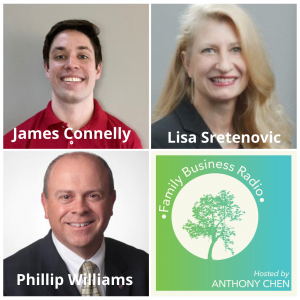
Lee Jamison, Jamison Advising, Evan Zebley, The Sign Store Macon, and Bruce Gaynes, Kitchens Kelley Gaynes (Family Business Radio, Episode 17)

March 1, 2021 by John Ray

Kitchens Kelley Gaynes
Family Business Radio
Lee Jamison, Jamison Advising, Evan Zebley, The Sign Store Macon, and Bruce Gaynes, Kitchens Kelley Gaynes (Family Business Radio, Episode 17)
Loading
00:00 /
RSS Feed
Share
Link
Embed

Download file

Kitchens Kelley Gaynes

Lee Jamison, Jamison Advising, Evan Zebley, The Sign Store Macon, and Bruce Gaynes, Kitchens Kelley Gaynes (Family Business Radio, Episode 17)

On this edition of “Family Business Radio,” host Anthony Chen welcomed Evan Zebley of the Sign Store Macon to discuss what he’s learned both as an owner and also as an employee of a sign business. Attorney Bruce Gaynes of Kitchens Kelley Gaynes and CPA Lee Jamison of Jamison Advising also joined the show to discuss their advisory work with entrepreneurs and their businesses. Anthony closed the show by asking each of these business leaders what differentiates the most successful business owners they know. Family Business Radio” is underwritten and brought to you by Anthony Chen with Lighthouse Financial Network.

Lee Jamison, Jamison Advising

Lee Jamison, Jamison Advising

Jamison Advising is a full-service CPA firm that provides tax, accounting, and business advisory services to small and medium-sized businesses.

Lee Jamison is the Founder and brings 10 years of experience as a CPA that includes experience in public accounting and financial planning.

Company website

Evan Zebley, The Sign Store Macon

Evan Zebley, Sign Store Macon

The Sign Store is a design, build, and install firm focused on the physically produced components of a brand’s visual marketing. The Sign Store manufactures and installs sign products such as lit cabinets, channel letters, LED message centers, pylons, monuments, ADA-compliant signage, banners, wide-format graphics, fleet graphics, and more!

Company website

Bruce Gaynes, Shareholder, Kitchens Kelley Gaynes

Kitchens Kelley Gaynes
Bruce Gaynes, Kitchens Kelley Gaynes

Kitchens Kelley Gaynes, P.C. has been providing experienced legal representation for clients in virtually all areas of industry and commerce since 1985. They work closely with their clients to form long-term relationships based on top-quality work and realistic legal advice. Their clients trust them to listen to them, understand their businesses, and craft reliable legal strategies that will help them achieve their goals. Every client, no matter the size, receives the same quick, efficient and effective response.

Company website


Anthony Chen, Host of “Family Business Radio”

family owned craft breweries
Anthony Chen

This show is sponsored and brought to you by Anthony Chen with Lighthouse Financial Network. Securities and advisory services offered through Royal Alliance Associates, Inc. (RAA), member FINRA/SIPC. RAA is separately owned and other entities and/or marketing names, products or services referenced here are independent of RAA. The main office address is 575 Broadhollow Rd. Melville, NY 11747. You can reach Anthony at 631-465-9090 ext 5075 or by email at anthonychen@lfnllc.com.

Anthony Chen started his career in financial services with MetLife in Buffalo, NY in 2008. Born and raised in Elmhurst, Queens, he considers himself a full-blooded New Yorker while now enjoying his Atlanta, GA home. Specializing in family businesses and their owners, Anthony works to protect what is most important to them. From preserving to creating wealth, Anthony partners with CPAs and attorneys to help address all of the concerns and help clients achieve their goals. By using a combination of financial products ranging from life, disability, and long term care insurance to many investment options through Royal Alliance. Anthony looks to be the eyes and ears for his client’s financial foundation. In his spare time, Anthony is an avid long-distance runner.

The complete show archive of “Family Business Radio” can be found at familybusinessradioshow.com.

Tagged With: Anthony Chen, Bruce Gaynes, Evan Zebley, graphics, Jamison Advising, Kitchens Kelley Gaynes, Lee Jamison, Lighthouse Financial Network, signs, The Sign Store

Atlanta’s Booming Esports Industry, with Todd Harris, Skillshot Media

March 1, 2021 by John Ray

Todd-Harris-OMI-Album
North Fulton Studio
Atlanta's Booming Esports Industry, with Todd Harris, Skillshot Media
Loading
00:00 /
RSS Feed
Share
Link
Embed

Download file

Todd-Harris-OMI-Album

Atlanta’s Booming Esports Industry, with Todd Harris, Skillshot Media

Todd Harris: [00:00:00] But at the end of the day, it is very big business. So, we have such a great film and TV business here in Georgia, but gaming, that is the video game industry, it’s larger than all of box-office movies and all of music put together. So, that’s kind of the first just level setting for people, is it is by far the biggest entertainment industry, that is video games.

Todd Harris: [00:00:28] And the fastest growing area of the video game industry is e-sports. So, people watching other people play video games. So, nationally, if you watch on a platform like Twitch, which is where most people will watch other people play video games, there’s more people watching daily and monthly than are watching ESPN or watching CNN already. And we’re just kind of getting started.

Todd Harris: [00:00:56] So, that’s the impact. And locally here in Georgia, gaming is about a $900 million impact already, thanks to companies like a Hi-Rez Studios, like a Blue Mammoth that was acquired by Ubisoft, like a Tripwire. These are all home grown Georgia companies that are making games. So, it’s very big economically here. And we’re just kind of getting started because Metro Atlanta has a lot of the ingredients that it takes to put this ecosystem together.

Todd Harris: [00:01:33] Just to to orient everyone to the different businesses, there are publishers that make games. An example would be Hi-Rez sStudios or Blu Mammoth. There are professional teams just like your Falcons or your Braves, and we have many in Atlanta that play those games. There are event organizers like my new company, Skillshot Media, that put on leagues and games. And then, those are, of course, supported by distribution, where people watch the games and also buy brand sponsors. So, a Coca-Cola might sponsor a team, so that consumers watch it on a platform like Twitch. So, there’s a lot of different companies involved, and we’re fortunate that we are seeing all of these companies be present in Metro Atlanta.

Todd Harris, Founder and CEO of Skillshot Media

Todd Harris (@toddalanharris) is an accomplished entrepreneur who has been leading video game and esports businesses for 15 years and involved with technology product startups for 25 years. Todd co-founded Hi-Rez Studios, one of the largest video game studios in the Southeast and is currently Founder & CEO of Skillshot Media, a leading esports infrastructure and production company, President of the North American Scholastic Esports Federation (NASEF), and co-owner of esports professional team Ghost Gaming.caption id=”caption-attachment-137308″ class=”wp-caption-text”>

Skillshot connects leading brands to engaged esports fans.  The company has hosted thousands of esports tournaments, paid out over $10M in prizing for competitive video games, and delivered over 1 billion views of esports content.  Skillshot also powers the National Association of Collegiate Esports (NACE) competition with member universities awarding over $16M in esports scholarships.

Ghost Gaming is an Atlanta-based professional esports team and gaming lifestyle brand that has won 13 tournament championships and cultivated a fan base of over 5 million.

NASEF is the leading scholastic esports solution for high school students, providing opportunities for all students to use esports as a platform to acquire critical communication, collaboration, and problem-solving skills.

Throughout his career, Todd has garnered industry recognition including “2019 Most Admired CEO” by the Atlanta Business Chronicle as he works with partners toward advancing the esports industry.

Listen to Todd’s full interview on GNFCC 400 Insider here.


The “One Minute Interview” series is produced by John Ray and in the North Fulton studio of Business RadioX® in Alpharetta. You can find the full archive of shows by following this link.

Renasant Bank has humble roots, starting in 1904 as a $100,000 bank in a Lee County, Mississippi, bakery. Since then, Renasant has grown to become one of the Southeast’s strongest financial institutions with over $13 billion in assets and more than 190 banking, lending, wealth management and financial services offices in Mississippi, Alabama, Tennessee, Georgia and Florida. All of Renasant’s success stems from each of their banker’s commitment to investing in their communities as a way of better understanding the people they serve. At Renasant Bank, they understand you because they work and live alongside you every day.
The Keys to Recovery for the Craft Brewing Industry in 2021, with Jason Sleeman, United Community Bank

February 25, 2021 by John Ray

Jason-Sleeman-OMI-Album
North Fulton Studio
The Keys to Recovery for the Craft Brewing Industry in 2021, with Jason Sleeman, United Community Bank
Loading
00:00 /
RSS Feed
Share
Link
Embed

Download file

Jason-Sleeman-OMI-Album

The Keys to Recovery for the Craft Brewing Industry in 2021, with Jason Sleeman, United Community Bank

John Ray: [00:00:00] And hello again, everyone. This is John Ray with Business RadioX. And I’m here with Jason Sleeman. Jason is with United Community Bank, and he is also an authority on the craft brewing industry. Jason, my question for you is, what are the keys to recovery for the craft brewing industry in 2021?

Jason Sleeman: [00:00:22] So, after 2020 not being such a great year for a lot of breweries, mainly because people couldn’t come and see them in the tap rooms, they’re focused on probably three things in 2021 to see that recovery. The first is watching their margins. So, because a lot of the beer that was sent out in 2020 was through package that was going out to retailers, they’re going to want to focus on trying to get some of that back into their tap room. So, selling the more profitable beer across their bar, and really trying to have people buy to go beer, and just really kind of support them at the source of manufacturing.

Jason Sleeman: [00:01:01] They’re also going to want to continue to focus on the quality beer. As people have more and more choices in 2021, the more quality that they can provide and the more unique varieties, people are going to really be flocked to their brand, and they’re just going to be really happy with what they’re going to do.

Jason Sleeman: [00:01:18] And lastly, I think they want to focus on the community. The craft beverage industry really is about camaraderie and people working together. And there’s so much industry cross collaboration that what they’re really trying to do is have the families out on the weekends and Saturdays as weather gets warmer, and really try and create that family environment. So, what they’re trying to do is really just put those three things together. They’re trying to create high profit, high quality, family-friendly environment. And that’s what’s going to be the key for their recovery in 2021.

Jason Sleeman, United Community Bank

Like many in the craft beverage business Jason Sleeman, VP of Craft Beverage Lending with United Community Bank, is following his passion. He has worked on many brewery, winery, and distillery projects, developing an understanding of the specific needs of these businesses and what roadblocks can happen in the lending process. No matter the stage, start-up, expansion, or acquisition Jason can help you deliver on your lending needs.

United Community Bank has a full service SBA and conventional lending group. They can assist with franchises, 504 lending, and general SBA 7a lending.

Jason works with his clients to be a true banking advisor, finding a win-win solution that addresses their financial needs. He introduces partners in his network to his clients, providing executive insight, strategic planning, and discussion to add value to the company.

This bio is Jason Sleeman’s personal profile; his views and opinions are his own and not that of UCBI.

Connect with Jason on LinkedIn.

Listen to Jason’s full interview on Family Business Radio here. 


The “One Minute Interview” series is produced by John Ray and in the North Fulton studio of Business RadioX® in Alpharetta. You can find the full archive of shows by following this link.

Renasant Bank has humble roots, starting in 1904 as a $100,000 bank in a Lee County, Mississippi, bakery. Since then, Renasant has grown to become one of the Southeast’s strongest financial institutions with over $13 billion in assets and more than 190 banking, lending, wealth management and financial services offices in Mississippi, Alabama, Tennessee, Georgia and Florida. All of Renasant’s success stems from each of their banker’s commitment to investing in their communities as a way of better understanding the people they serve. At Renasant Bank, they understand you because they work and live alongside you every day.

Tagged With: craft brewing, Jason Sleeman

Decision Vision Episode 105: Should I Enter Into Mediation to Resolve a Dispute? – An Interview with Ellen Malow, Malow Mediation and Arbitration

February 25, 2021 by John Ray

Mediation
Decision Vision
Decision Vision Episode 105: Should I Enter Into Mediation to Resolve a Dispute? - An Interview with Ellen Malow, Malow Mediation and Arbitration
Loading
00:00 /
RSS Feed
Share
Link
Embed

Download file

Mediation

Decision Vision Episode 105: Should I Enter Into Mediation to Resolve a Dispute? – An Interview with Ellen Malow, Malow Mediation and Arbitration

Ellen Malow of Malow Mediation and Arbitration joins host Mike Blake to discuss how mediation and arbitration can be used to resolve business disputes. “Decision Vision” is presented by Brady Ware & Company.

Ellen Malow, President, Malow Mediation and Arbitration

Malow Mediation is an alternative dispute resolution company that assists companies and individuals in resolving conflicts. A wide range of cases is handled including complex business, employment, construction, personal injury, and other areas of the law. Arbitration matters are also handled where Ellen serves as the judge on similar matters.

Company website

Mike Blake, Brady Ware & Company

Mike Blake, Host of the “Decision Vision” podcast series

Michael Blake is the host of the “Decision Vision” podcast series and a Director of Brady Ware & Company. Mike specializes in the valuation of intellectual property-driven firms, such as software firms, aerospace firms, and professional services firms, most frequently in the capacity as a transaction advisor, helping clients obtain great outcomes from complex transaction opportunities. He is also a specialist in the appraisal of intellectual properties as stand-alone assets, such as software, trade secrets, and patents.

Mike has been a full-time business appraiser for 13 years with public accounting firms, boutique business appraisal firms, and an owner of his own firm. Prior to that, he spent 8 years in venture capital and investment banking, including transactions in the U.S., Israel, Russia, Ukraine, and Belarus.

Brady Ware & Company

Brady Ware & Company is a regional full-service accounting and advisory firm which helps businesses and entrepreneurs make visions a reality. Brady Ware services clients nationally from its offices in Alpharetta, GA; Columbus and Dayton, OH; and Richmond, IN. The firm is growth-minded, committed to the regions in which they operate, and most importantly, they make significant investments in their people and service offerings to meet the changing financial needs of those they are privileged to serve. The firm is dedicated to providing results that make a difference for its clients.

Decision Vision Podcast Series

“Decision Vision” is a podcast covering topics and issues facing small business owners and connecting them with solutions from leading experts. This series is presented by Brady Ware & Company. If you are a decision-maker for a small business, we’d love to hear from you. Contact us at decisionvision@bradyware.com and make sure to listen to every Thursday to the “Decision Vision” podcast.

Past episodes of “Decision Vision” can be found at decisionvisionpodcast.com. “Decision Vision” is produced and broadcast by the North Fulton studio of Business RadioX®.

Visit Brady Ware & Company on social media:

LinkedIn:  https://www.linkedin.com/company/brady-ware/

Facebook: https://www.facebook.com/bradywareCPAs/

Twitter: https://twitter.com/BradyWare

Instagram: https://www.instagram.com/bradywarecompany/

TRANSCRIPT

Intro: [00:00:01] Welcome to Decision Vision, a podcast series focusing on critical business decisions. Brought to you by Brady Ware & Company. Brady Ware is a regional, full service accounting and advisory firm that helps businesses and entrepreneurs make visions a reality.

Mike Blake: [00:00:20] Welcome to Decision Vision, a podcast giving you, the listener, clear vision to make great decisions. In each episode, we discuss the process of decision making on a different topic from the business owners’ or executives’ perspective. We aren’t necessarily telling you what to do, but we can put you in a position to make an informed decision on your own and understand when you might need help along the way.

Mike Blake: [00:00:41] My name is Mike Blake, and I’m your host for today’s program. I’m a director at Brady Ware & Company, a full-service accounting firm based in Dayton, Ohio, with offices in Dayton; Columbus, Ohio; Richmond, Indiana; and Alpharetta, Georgia. Brady Ware is sponsoring this podcast, which is being recorded in Atlanta per social distancing protocols. If you like this podcast, please subscribe on your favorite podcast aggregator, and please consider leaving a review of the podcast as well.

Mike Blake: [00:01:07] Today’s topic is, Should I enter into mediation? And, you know, this is a really interesting topic to me from a dispute resolution perspective, because, as we’re going to learn, it has a lot of layers to it. And as we record this podcast on February 9th, 2021, we’re still in the midst of this whole pandemic thing. And only a small fraction of us have been vaccinated. I have not because I’m too young. And at my age, it’s nice actually still to fall into a category where I’m too young for something. That does not happen often anymore. So, I’m going to take that as a silver lining.

Mike Blake: [00:01:48] But, you know, in this time, we’re in a period right now where if you’re in a legal dispute, it is difficult to get on a court calendar. And we had, very early on in the podcast, a couple of folks come on and talk about, you know, should I sue, how do I make a decision to sue somebody, and so forth. But a lot of that is now kind of warped. A lot of those, at least, advice kind of warped because, you know, the courts are not functioning the same way that they did. In some cases they’re not functioning at all. Can you imagine in a time of COVID, and now we have more virulent strains that have been unleashed upon us, you know, how do you sit 12 jurors for a multiday case and not, like, kill two of them, basically? It’s nearly impossible.

Mike Blake: [00:02:46] So, you know, I think alternative dispute resolution avenues, such as arbitration and mediation, and there may be others as well – hopefully, not dueling pistols at dawn. I like to think that one out with the 19th century – these methods, I think, they have to receive more attention than they once did. Maybe they’re being revisited by parties that had once rejected them, because, otherwise, frankly, you might be stuck in the mud. I’ve got a client that on the one hand, I think, is desperate to sue somebody. But on the other hand, you’re looking at a two to three year period before you’re going to get in front of a judge, if that. And that’s assuming no continuances and so forth.

Mike Blake: [00:03:35] So, I think there should be a lot more interest in this topic, and I think that there will be. And so, helping us out today as an expert is Ellen Malow, who is the President of Malow Mediation and Arbitration. She is a former trial attorney who practiced law for 13 years. She started her company 17 years ago and has been a full-time mediator and arbitrator since that time. She received her undergraduate and law degree from the University of Texas at Austin. She’s a member of several professional organizations. She has had numerous speaking engagements for many law firms and other groups. She has also authored several articles and serves as an arbitrator on certain matters. Malow Mediation is an alternative dispute resolution company that assists companies and individuals in resolving conflicts. A wide range of cases are handled, including the complex business – I’m sorry – complex business, employment, construction, personal injury, and other areas of law. Ellen Malow, welcome to the program.

Ellen Malow: [00:04:39] Thanks, Mike. I had myself on mute so as not to interfere with you.

Mike Blake: [00:04:44] Well, that’s all right. You know what? We’re just going to call that a dramatic pause and then move on from there. So, Ellen, thanks again for coming on the show. Great to see you. It’s been a long time. With the show, I like to start to make sure everybody understands kind of what we’re talking about. What is a mediation?

Ellen Malow: [00:05:07] A mediation is basically a facilitated negotiation where the mediator works with the parties to try to come up with some sort of solution to their issues. It basically comes up with ways to look at it that they may not have considered before.

Mike Blake: [00:05:24] And what does that process look like? If we’re considering mediation or maybe you’re consulting with somebody and they just want to know kind of what that process looks like, what is that?

Ellen Malow: [00:05:39] So, the format is awhat we call a general [indiscernible] where we all meet together and the mediator goes over the mediation agreement. And, really, the key thing there is confidentiality. And then, each lawyer on each side has the opportunity to give, basically, an opening statement. And if they want, their client can make comments as well. And then, I separate them and they have a caucus room. And then, my role is to go in between the caucus rooms for the whole process and try to get to a deal. So, there’s some fluidity to the process. So, sometimes I may take one of the lawyers aside away from his or her client and try to say, “Hey, what’s the roadblock here?” And maybe we can break through it. Sometimes I take all the lawyers in a separate caucus room. Sometimes we come back together. But as a practical matter, it’s really the way I describe it to begin with.

Mike Blake: [00:06:35] So, I’ve never been in a mediation, candidly. I’ve been in arbitration. I’ve been in trial. But it’s interesting, you know, this facilitated negotiation, it sounds like you start with a position of keeping the parties physically separate, is that accurate?

Ellen Malow: [00:06:53] So, there’s some controversy now as to if it makes more sense to start out separate. I think starting out together makes more sense. And sometimes when you’re mediating, you haven’t even met the other side, sometimes you haven’t even met your opposing counsel. You may be early on. So, it’s an opportunity to set the stage for that conversation.

Ellen Malow: [00:07:17] Some people, if it’s a highly contentious – like I have one on Friday, it’s a non-compete, non-solicit case where they’re accusing the former employee of stealing documents. They don’t want to be in the same room together. So, we will start out separately.

Mike Blake: [00:07:33] So, I guess some of that is reading the room, for lack of a better term. I guess you have to have some feeling as to how hostile, maybe even how emotional, the parties are and whether or not being in the room can be constructive or destructive.

Ellen Malow: [00:07:51] Exactly. The thing I try to do is talk to the lawyers in advance to find out what the dynamics are with their clients, with opposing counsel, with the opposing party. But like I mentioned, people want to skip this part completely. And when you’re trained in the process, it is a critical part, so I will encourage them. I mean, unless we’re talking about a sexual assault case or something that’s so outrageously emotional, I just think it makes sense to meet the other side, set the stage, let them hear your position without going into a full blown opening argument. Because if you skip it, you’re already polarized.

Mike Blake: [00:08:30] You know, I’m going to go off script here, but it reminds me of a practice that the litigation section of the Atlanta bar used to encourage, which was, take your opposing counsel out to lunch. And I’m not an expert. I’m a lousy expert witness, that was why I don’t do it. But I always thought that that practice, I think, is just constructive. You know, if you just get people talking and if you get two attorneys who are truly interested in resolving a dispute, you know, magical things can happen if you take them out of having the spotlight on them and the pressure of “performing” in front of their client in a certain way. You just let them kind of do their thing. Good things, I think, can happen from that.

Ellen Malow: [00:09:23] I totally agree. And I actually use that same example when I give speeches to law firms. I mean, that’s it. Like, you don’t have to be adversaries. You do have to be an advocate for your client. But it doesn’t have to be this butting heads scenario. It’s challenging because there’s that fine line between zealous advocacy and trying to come up with a compromise.

Mike Blake: [00:09:45] Yeah, for sure. So, you mentioned lawyers being in the room, but I wanted to clarify something because it’s an important point that I think is often overlooked, you don’t necessarily need to have legal counsel representing you in a mediation, do you?

Ellen Malow: [00:10:02] No. I mean, you can have a mediation before you even have a lawsuit. I’ve done some with a shopping center dispute where you’ve got kind of an urgent issue, where a landlord is trying to get a tenant out or whatever that might be, and so they can meet with a mediator without counsel. The challenge is sometimes you’ll have one side with counsel and the other side without and they feel like it’s not an even playing field. But I’ve definitely done cases with business people. I’ve actually done even divorce cases where the husband and wife don’t want to pay for lawyers. So, you can definitely do it.

Mike Blake: [00:10:37] That instance where one side brings legal counsel, the other side does not, that’s got to make it tricky, too, because of bar ethics rules, I would imagine, right? I mean, not that I’m a lawyer, but I work with them enough, you know, attorneys don’t necessarily like kind of going lawyer to layperson in a legal conversation, right?

Ellen Malow: [00:10:57] True. And I also don’t like to be put on the spot to be their lawyer because I am a lawyer. But my role as a neutral is to be just that. So, it’s difficult because they’ll lean on you to give some opinion or advice and you have to really be careful not to cross that line.

Mike Blake: [00:11:16] So, another alternative dispute resolution mechanic, arbitration, is often kind of set in the same breadth as mediation. If I’m not mistaken, I think you’re also a qualified arbitrator – and correct me if I’m wrong. What is the difference between those two? Or rhat are the differences? There’s probably not just one difference.

Ellen Malow: [00:11:36] Right. So, arbitration, as an arbitrator, I’m a judge. So, when people say arbitration, they don’t really necessarily understand that it’s the exact same thing as if you filed a case in State Court or Superior Court. So, I’m sitting in the role of a judge. I’m just not getting paid by the government, by the taxpayers. I’m privately being paid. And there are a lot of reasons why people want to select arbitration. Most of the time you’ll see, it’s in a lot of contracts between parties. If it’s a business dispute, it’ll say in the event of a dispute, this is what we’re doing. So, as the arbitrator, I’m making a ruling. Whereas, as a mediator, I’m trying to bring the parties to their own agreement. I can’t force an agreement on them as a mediator. But as an arbitrator, there’s evidence, it’s a trial, it’s a full blown deal.

Ellen Malow: [00:12:28] The difference between arbitration and a trial – the main difference is, an arbitration is totally confidential. So, if there’s a bad decision or good decision, whatever, it’s not public. And the other thing is, it’s binding and you can’t appeal it. So, if you think about trials that you hear about, they could go on forever because you could get a great result, and then the other side appeals it. Now, we’re two or three years later, then it’s kicked back for new trial, whatever happens. So, it’s much more streamlined. It takes way less time. There is a cost, too, because you’re paying this private arbitrator.

Ellen Malow: [00:13:05] And the other thing, Mike, that I think is the reason people really like it is, you can get an arbitrator that has subject matter expertise. Because you could go try a case and you might have a judge that’s well versed in criminal law but doesn’t really know much about this business dispute. So, it has a lot, a lot of advantages. People don’t like it because you could get stuck with a bad decision. It’s not a jury. So, there are downsides to it.

Mike Blake: [00:13:36] Now, my understanding is that you don’t necessarily need to have legal training to become a mediator or an arbitrator. Is that correct?

Ellen Malow: [00:13:46] It is. I mean, I have some certifications. But I think a lot of successful mediators and arbitrators have subject matter expertise and that is what enables them to get a lot of business.

Mike Blake: [00:13:59] Now, I’ve been in arbitrations where there have been multiple arbitrators, does that happen in mediation as well? Or is it typically just one mediator that’s running the show?

Ellen Malow: [00:14:10] In 30 years of both practice and mediation, I’ve only had one case that we had co- mediators, and it was a huge, massive, toxic tort case with thousands of plaintiffs. So, it’s rare. At least I have not experienced it. It may be nice because it’d be great to bounce something off of someone, but you just don’t have that luxury.

Mike Blake: [00:14:34] Interesting. So, when do most parties go to mediation? And then, I have sort of a twin question with that, when should they go to mediation? In other words, do people tend to go too early, too late? How do most people do it? And then, what would you recommend?

Ellen Malow: [00:15:00] Can I back up one step to the arbitration?

Mike Blake: [00:15:03] Please.

Ellen Malow: [00:15:03] Okay. The only thing I want to say is, so you can have either a three-person panel or a sole arbitrator, and there’s a benefit to each. The benefit to a three-person panel is that, you’re not stuck with one person’s decision. There has to be a consensus. Usually with an arbitration with a three-person panel, each sides picking one, so they’re sort of in their camp, potentially. And then, those two are picking the third one. So, that person may actually be a little bit more neutral. So, the sole arbitrator, you could have that risk of just that one person’s opinion not being the way you want to be.

Ellen Malow: [00:15:40] Okay. So, timing, that does have some layers to it. So, I would say more and more I’m doing what we call pre-suit mediations, where they haven’t even filed a lawsuit. I think the earlier the better. Because what happens is, the further along in the process, the more invested people become and the sunk costs are already there. And it becomes less likely for them to just say, “Okay. Let’s resolve it.” They’re so far down the road, they think, “Well, let’s just go ahead and try it.”

Ellen Malow: [00:16:11] So, at the outset, you don’t have all that yet. You haven’t spent the money on attorneys fees and court reporters and all that stuff. The downside of too, too early is you may not have all the information. So, I do a lot of employment cases, typically the employer has everything or most everything and the employee may have next to nothing. So, in that instance, it might be too early to do a pre-suit. But sometimes they still work there, so you’re trying to figure out almost a severance and it makes sense to try to mediate it early. So, I think probably, maybe, the best stages are right after they’ve exchanged documents – what we call written discovery – and before you get into depositions, because that’s when the expense really happens.

Mike Blake: [00:16:56] And I wonder, too, I mean, it’s not just the expense, but I wonder if kind of the longer you’re locked in battle, the more you emotionally invest in the notion of a victory, in particular an unconditional victory. And, you know, that may be achievable, but it’s typically difficult to achieve. Because if you’re trying to achieve unconditional surrender, then the party on the other side is going to fight like counsel. They have no other alternative to avoid that because there’s no upside to surrendering early. So, interestingly, somebody is going to do that.

Mike Blake: [00:17:34] Now, what about your cases where, you know, lawsuits have been filed. You’ve gotten through the discovery phase and you’re getting to the point now where the judge is now starting to get involved. It’s probably still pretrial, but you’re talking to the judge or filing motions more and more frequently. My understanding is, judges will often send cases into mediation in some fashion. Is that your experience as well? And why do they do that?

Ellen Malow: [00:18:06] Well, typically, at some point they’re going to order you to mediation. If they don’t order you, one side is going to ask the judge to order you. And the main reason they do it is because they’re flooded with cases, and now more so than ever. So, they’re trying to avoid – you know, I don’t mean wasting resources – using resources that will be taken up, whether it’s the time of the jurors or the time of the court.

Ellen Malow: [00:18:29] And I would also say, probably, 95 percent of all cases settle. It doesn’t seem that way because the papers or the news or social media will show things that are outrageous and happening as if it happens all the time. So, if it’s going to settle, their thought process is “Let’s get it settled”. So, I do know there are a couple of counties where I’m on the roster and I’ll hear the lawyers say, “We’re too early. This judge ordered us to mediation. We haven’t done X, Y and Z. This isn’t the best time to mediate.” So, some of those may not be as successful, but the courts want these off their dockets. And like you said at the beginning, with COVID, they are buried.

Mike Blake: [00:19:10] So, a mediation, to me, sounds like a complex animal because, as opposed to a trial or an arbitration, which is a trial that’s privately held, there’s no guarantee of an outcome in a mediation, is there?

Ellen Malow: [00:19:30] Well, no. The parties can decide to settle or not settle.

Mike Blake: [00:19:33] Yeah. Exactly. So, I think that’s an interesting distinction. And so, I have to imagine you see this a lot, but I don’t want to put words in your mouth. I mean, do you see parties that, you know, maybe are being ordered into time out, they’re being ordered to mediation, maybe, frankly, very much against their will. Even in that case, is there something constructive that can come out of a mediation that doesn’t have a resolution?

Ellen Malow: [00:20:01] So, I think a couple things can come out. One is just information, sharing things that may not have been disclosed yet that ultimately have to be disclosed. The other thing I think is beneficial is to have a neutral person give their impressions on the strengths and weaknesses of the case, because you’re now hearing from someone who has no investment in the case what they think could happen. I mean, my decisions is not binding, their opinions aren’t binding like they are as an arbitrator, but I think they’re informative. So, you know, you can also start engaging in negotiations that maybe you haven’t started and get the momentum going. So, even though that may not be the day it settles, it could resolve sooner than later.

Mike Blake: [00:20:49] Yeah. And, you know, the part you brought up about getting sort of what seems to be a sneak preview of how an independent legal expert kind of evaluates the case for both sides. You know, that seems to me to be extremely valuable so that it can inform kind of both parties, “Look, if you do kind of press this into the next step, you may be a favorite or you might be an underdog.” And I have to imagine that’s very important information.

Ellen Malow: [00:21:22] I think, so the challenge with the court ordered ones, like you said, Mike, is sometimes they’re closed minded just checking a box. I had one recently that was court ordered – so, there’s two different types of mediation styles. One is facilitative and one’s evaluative. And I’m more evaluative, so I’m not just shoveling numbers. Well, that lawyer on that case who was ordered to be there, her thing was, “Well, what’s her number?” “Well, don’t you want to hear anything else besides their number?” And she was just walled off.

Ellen Malow: [00:21:56] Courts say that when you mediate under a court order, you need to be there in good faith. You need to have all the people that are the decision makers. And you need to be there with an open mind, willing to listen. So, when you have someone who’s not doing that, I can’t be subpoenaed to testify, that’s one of the protections I have. So, I’m not going to go to the court and say, “This lawyer did X, Y and Z.” So, it’s a little challenging because then it means the other lawyer has to go complain to the judge.

Mike Blake: [00:22:25] So, I want to ask about that good faith part, because it strikes me that when you’re a mediator, you’re also part kind of therapist or counselor, I would imagine, right? There’s got to be some overlap there. And I kind of wonder how often do you encounter it, where the the party’s goal of the mediation is to, basically, show the other party just how wrong they’ve been the whole time, and that’s their primary goal. And if you see that often, in your mind, does that constitute bad faith? And if there’s bad faith – I know this is a long question – is there any recourse to take if somebody has kind of put you through the motions of mediation when there’s really no intent to even attempt to have a useful outcome?

Ellen Malow: [00:23:18] Well, I think the very last part ties into what I said, that probably the only recourse is to go back to the court. And what is the court going to do? The court may assess attorney’s fees. “Listen, you showed up, the other side had to show up. They spent X amount getting ready and attending.” So, it’s just a weird scenario because you’re typically going to come up against the same lawyers over and over and it’s a small community, even though we’re in Atlanta.

Ellen Malow: [00:23:44] The part about the emotions, it’s interesting because I do so many different areas, you would think the emotions would be in a personal injury case or a divorce case. I’ve had some nasty business disputes, where what I get throughout the process is it’s the principle of it. It’s right or wrong. I’m going to teach them a lesson. And so, I get so much emotion. I mean, construction cases, you’re criticizing the other side’s work. Employment cases, someone has worked there for 20 years and now they’re out on the street. So, the the level of emotion and sort of the therapist role, I think it’s there in all types of disputes.

Mike Blake: [00:24:24] So, does your training as a mediator include having to address those emotions to try to de-escalate a scenario? Or is that outside of your purview?

Ellen Malow: [00:24:37] So, I’m a psychology major, so I feel that helps me be a good mediator. One of the things they do teach you in training is about listening. So, so much is letting them vent and tell their story. And you’ll see the shift during the mediation, at some point during the day, they start letting that go enough to start considering a deal.

Mike Blake: [00:24:59] You talked about, you know, being qualified and your training and so forth, what is a typical or, even, is there a standardized qualification set or certification to become a mediator? Do you have to be licensed? Can anyone hang up their shingle and do it? What does that process look like?

Ellen Malow: [00:25:22] So, in Georgia, there is a Georgia Office of Dispute Resolution. And in order to get certified by the State, you have to have this coursework and get a certain number of hours. And what that entitles you to is the ability to be on court rosters. So, I’m on the Gwinnett Roster, the Cobb Roster. I had been on Fulton, but they don’t really pay anything, so I got off of that one. So, if I were not certified by the Georgia Office of Dispute Resolution, I could not be on those rosters. I could still be what we call a private mediator. So, there are mediators that have probably never taken training, but they’ve done a thousand mediations as an advocate.

Mike Blake: [00:26:01] So, you said something that was interesting I did not know. When you’re a mediator or, I guess, you’re a court appointed mediator, is it the court that pays your fee?

Ellen Malow: [00:26:11] Yes. It’s the county.

Mike Blake: [00:26:13] Interesting. I didn’t know that.

Ellen Malow: [00:26:14] Wait a minute. Sorry. That’s not the case in every county. So, on the counties I am on the roster, the parties are paying it. But like Fulton County, it’s a flat fee and the county pays it. It’s a free program, and Cobb is the same way. So, it is county to county.

Mike Blake: [00:26:36] Got it. Okay. So, in your particular case, what kind of certifications do you have to be a mediator? And what does that entail in terms of coursework, exams, continuing education, that sort of thing?

Ellen Malow: [00:26:52] So, when I started 17 years ago, what I was required to do is a 25 hour – what we call – civil training. I did a 40 hour domestic training and I did a six hour arbitration training, which is so bizarre to me because being an arbitrator is far harder than being a mediator. Anyway – and then I did some advanced training at the Pepperdine Institute – Pepperdine University Straus Institute many years ago. So, I have those certifications but, like I said, even if I didn’t re-up it, I could still mediate.

Mike Blake: [00:27:28] Sure. So, you talked about there are people that are subject matter experts, and I guess that ranges from the nature of the law, whether it’s family law or employment law, elder law, civil business disputes. Does it also help or should it matter if there’s a subject matter expert that maybe is a field expert? For example, if it’s a financial dispute, if somebody has a financial background, or if it involves fraud, somebody with forensic background, or if it involves some sort of engineering case, you should want an engineer. Does that factor into how a mediator is chosen and should it?

Ellen Malow: [00:28:11] I think it does and I think it should. What’s interesting is, you know, because I think you do a lot of expert witness work is, a lot of times you’ve already retained an expert who’s either issued a report or given a deposition. So, the lawyers have the benefit of that testimony or that expertise, so they’re not necessarily needed in their mediators. So, from my perspective, the benefit of a mediator is to look at risks and weaknesses, and why negotiation and settlement makes sense. And whenever you do that, I can do that analysis on any type of case. Now, certainly it helps if I can say I tried complex business cases, but I don’t have to be an expert-expert. I will say the one area I don’t do because I have no expertise is intellectual property. And I do think you’d want a mediator with that expertise because it really is very nuanced.

Mike Blake: [00:29:10] Well, yeah, I think that’s important. And, you know, in my practice, there are certain things that I don’t take on. You know, unless it’s really simple, I don’t take on health care, I don’t do extractive materials like mining rights or forestry rights. Those are such different animals that I’m like, “Man, I could do this but I’d probably do it badly. So, here’s three other people that actually know what they’re doing.”

Mike Blake: [00:29:32] As a mediator, I’m curious, can you call on outside resources as you’re mediating a case? Could you, in effect, phone a friend if you had a question? Or are you allowed to kind of Google things and look things up so you can mediate a case from a more informed perspective? Or are you limited to whatever is kind of contained within the the four physical walls of the mediation exercise?

Mike Blake: [00:29:59] I will say that one of the things I’ll do is research some laws. So, you say to me, “Here’s the case on point. This completely proves our position.” And while you’re then kicking me out of the room or when I’m doing something else or I’ve got a minute, I’ll pull up a case or I’ll look at the case they gave me or some statute. So, there are things like that. I can’t really phone a friend – I wish I could – because it’s all confidential. So, if I were to phone a friend, I would have to be really, really broad and not say anything that would reveal anything confidential.

Mike Blake: [00:30:33] Right. So, can a mediation process – I think I know the answer to this, but I want to make sure because I don’t want to assume. But can a mediation process impact – assuming that it fails to achieve a resolution – in any way a subsequent arbitration or trial?

Ellen Malow: [00:30:56] Well, I mean, it impacts if it settles, right? Because the others go away. If it doesn’t settle it, it shouldn’t because everything discussed in the mediation is confidential. So, it should protect, for example, the judge or the jury from knowing anything other than the judge would know it didn’t settle. And this may or may not go directly to your question, but I think it can impact the case. One thing that people say is, you can set a floor and a ceiling for future negotiations and so it could impact the ability to get it settled. I think, also, the other way could impact the ability to open up further discussions. But I don’t think it really impacts the trial or the arbitration other than, I mean, because of the confidentiality.

Mike Blake: [00:31:49] Right. So, one thing that you and I have in common is, I do find myself in an informal mediation of disputes, typically when there’s a buy-sell or some kind of built in dispute resolution, a shareholders, or an operating agreement where, you know, there’s a dueling appraiser issue. Two appraisers are going to do their own appraisals, the third is then going to decide which of the two they like more, that sort of thing. So, it’s a quasi mediation thing, which I enjoy. And in that scenario, one of the stickiest parts is, who do you pick to actually do that? Aside from a court appointed mediation where the parties don’t have a choice, presumably, or limited choice, how do parties come to pick you? And how do you convince them that, you know, you’re basically not working for the other side?

Ellen Malow: [00:32:49] Well, it’s interesting because some lawyers have the view that they just want the other lawyer to pick. And the reason they want that is because they think if the other side picks, that side is going to listen to what the mediator says when the mediator comes down hard on them. Typically, what will happen is, both sides have to agree to the mediator. And so, you would propose three names. I would propose three names. And then, someone in those list is going to overlap and that becomes our mediator, so it’s kind of like picking a jury. It’s a process of elimination, not selection. But at this stage in my career, after 17 years, people know me, you know, they’re going to say, “Oh, yeah. We used Ellen. We’re good with her.” And it goes back to the subject matter expertise because there are certain mediators that do employment law like I do. And then, there are others that do domestic. And you’re not going to pick a domestic mediator.

Mike Blake: [00:33:46] Does the timeline for mediation differ from the timeline for an arbitration or trial? I mean, for most matters it’s rare to see a trial last for more than a couple of days. It’s not like a murder trial. But you’re not going to mediate a murder matter. So, I’m curious, you know, do mediation’s last roughly as long, longer, or less long? What does that look like?

Ellen Malow: [00:34:13] So, most mediations are only one day. It’s rare to have a mediation that’s longer than a day. I will say that I recently did a case with three separate plaintiffs and we lined them up to have one at 9:00, and one at 12:00, and one at 3:00. And we were very unrealistic because the first one lasted 13 hours. So, in that instance, we’re really mediating three cases, but they arose out of the same facts. But, typically, it’s just a day. Like, a business dispute, it’s probably just a day.

Mike Blake: [00:34:43] I mean, that has to be so exhausting to do a mediation. I mean, I’m thinking about 13 hours, 13 hours doing anything is a long time. But the mental energy that is required to be spent, not just for the mechanics of the mediation of the case, but managing the emotions involved. After one of these things completes, I mean, you got to be ready for bed, I’m imagining.

Ellen Malow: [00:35:12] It is very draining. And a lot of it is because of the emotions. And it’s not necessarily just the party’s emotions, but it could be the lawyer’s emotions. So, I might be getting it from every direction. I’d like to think I’ve learned not to absorb other people’s emotions in that setting. I mean, obviously, in real life, it’s hard not to absorb someone’s emotions. But it’s tough. I mean, I think it’s very draining. But I like it. I love it. It’s fun.

Mike Blake: [00:35:43] Yeah. Well, you obviously do. You’re doing it for a long time and been successful. We’re talking with Ellen Malow of Malow Mediation. And the topic is, Should I enter a mediation? Let me switch gears here, are there scenarios under which mediation is not a good idea? Are there conditions where, you know, you just look at the matter, you look at the parties, you look at something and say, “You know what? I would love to help you, but this probably isn’t going to work the way that you like. And this may not be a good use of your time and fees.”

Ellen Malow: [00:36:17] Well, I always think it’s a good idea. There’s no instance where I don’t. But the the knock on it that I hear is, “We’re, potentially, too early. We need more information. We don’t want to show our cards. We don’t have to show our cards.” Like, there’s some cases that until you’re in the lawsuit and the court requires you to disclose – it could be an insurance policy, for example – they don’t want the other side to know that yet. So, it’s more about kind of playing poker from their side.

Mike Blake: [00:36:49] Interesting. Okay. So, have you run into any scenarios under which a matter is mediated more than once? Maybe they try mediation, they go away, and then more stuff happens. And then, they decide, “You know, let’s give this thing another try.” Can that happen?

Ellen Malow: [00:37:09] Yes. And sometimes what will happen is, they mediate with one mediator, it’s not successful. And then, they pick me later or they do come back. I will tell you what I do often is stay involved in what I would call an informal mediation process. So, if we don’t settle that day, I calendar two weeks from now. I call you up and say, “Where are we?” You say, “We’re not paying a nickel.” Then, I calendar another two weeks and you say, “Well, you know, we might pay a dime.” So, it can happen at different – it may not be a formal mediation.

Ellen Malow: [00:37:43] Interesting, the one with the three parties was kind of fascinating because I’ve never done this. As I told you, we had the three lined up. We couldn’t get to the other two. So, rather than doing two full blown mediations for the last two, we did – what I would call – a settlement conference where we didn’t even have the parties. So, I facilitated conversations between the lawyers in different breakout rooms and it worked.

Mike Blake: [00:38:07] So, we’re running up against our time limit here. But I do want to get a couple more questions. And before we take off, one question here is, is the decision to engage in mediation and has the process itself changed because of the pandemic? Is the thought process around in mediation, has that been changed because of the pandemic and its impact on the legal system?

Ellen Malow: [00:38:39] Absolutely. And it goes right back to what you said at the beginning, the opportunity to get in front of the judge or a jury is becoming more and more remote. I’ve had seminars I’ve attended where some of the judges have said maybe 2022, maybe 2023. And the real issue is, all the criminal cases come first because they have a right to a speedy trial. So, you’ve got all those people that need to be heard. Then, you’ve got the backlog from before the pandemic. And, now, you have this unknown answer as to when it’s going to happen. And like you said, you know, when are you going to put 12 people in a box? Well, they’re trying to come up with ways to be creative, but then you’ll have an outbreak at the court. And then, all of a sudden, that plan gets squashed.

Ellen Malow: [00:39:25] One of the things that judges are offering are bench trials. So, you just try it to the judge and you don’t get a jury. But a lot of people don’t want to try it to a judge. So, I think my business is busier. I mean, it’s hard to tell exactly but I’m seeing more and more cases now, I think, than I did two years ago. And I think it will get busier.

Mike Blake: [00:39:47] Are there any risks to entering into mediation that somebody listening to this program may need to know about? Are there things that can go wrong, haywire, unexpected, you know, that could materially impact their matter?

Ellen Malow: [00:40:02] I don’t see it at all just, again, because it’s confidential. But it goes back to some of the other things I mentioned about showing your hand, and maybe setting a floor and a ceiling, and maybe the other side saying the mediator said X, Y, Z. So, you should lower the value of your case. So, I see those types of things, which a lot of those are kind of psychological things.

Mike Blake: [00:40:30] Ellen, this has been a great conversation. I learned a lot. I’m confident our listeners have learned a lot. Would you be willing to let people ask you questions, send you an email or something to follow up? And if so, what’s the best way to do that?

Mike Blake: [00:40:44] Absolutely. So, my email address is Ellen, E-L-L-E-N, @malow, M-A-L-O-W, mediation.com. Only one Ellen Malow. And then, my website is malowmediation.com, there’s more information there. And I’m on LinkedIn. I’m trying to get really tech savvy, but I’m not quite there yet with Twitter and the other forms of social media.

Mike Blake: [00:41:11] Well, I don’t understand, if you don’t have social media, how do you know who to get mad at?

Ellen Malow: [00:41:17] I’ve got my head in the sand, Mike.

Mike Blake: [00:41:19] Well, that explains why you seem very well-balanced, so good for you. That’s going to wrap it up for today’s program. I’d like to thank Ellen Malow so much for joining us and sharing her expertise with us.

Mike Blake: [00:41:32] We’ll be exploring a new topic each week, so please tune in so that when you’re faced with your next business decision, you have a clear vision when making it. If you enjoy these podcasts, please consider leaving a review with your favorite podcast aggregator. It helps people find us that we can help them. Once again, this is Mike Blake. Our sponsor is Brady Ware & Company. And this has been the Decision Vision podcast.


Tagged With: alternative dispute resolution, Arbitration, arbitrator, Brady Ware, Brady Ware & Company, business dispute, dispute consulting, dispute resolution, Ellen Malow, Malow Mediation, mediation, mediator, Michael Blake, Mike Blake

Nermin Jasani, We Are Wildly Successful, LLC, David Peterson, PNC Bank, and Mike Holden, Nextgen Pest Solutions (ProfitSense with Bill McDermott, Episode 18)

February 24, 2021 by John Ray

Nextgen Pest Solutions
North Fulton Studio
Nermin Jasani, We Are Wildly Successful, LLC, David Peterson, PNC Bank, and Mike Holden, Nextgen Pest Solutions (ProfitSense with Bill McDermott, Episode 18)
Loading
00:00 /
RSS Feed
Share
Link
Embed

Download file

Nextgen Pest Solutions

Nermin Jasani, We Are Wildly Successful, LLC, David Peterson, PNC Bank, and Mike Holden, Nextgen Pest Solutions (ProfitSense with Bill McDermott, Episode 18)

On this edition of “ProfitSense,” host Bill McDermott welcomed Nermin Jasani to discuss her consulting work with medical and legal practices. Bill was also joined by David Peterson of PNC Bank, who offered tips on how business owners should work with their banker. Army veteran Mike Holden, owner of NextGen Pest Solutions, told the story of his company’s founding and growth into multiple states, and why veterans are a vital aspect of his strategy. “ProfitSense with Bill McDermott” is produced and broadcast by the North Fulton Studio of Business RadioX® in Alpharetta.

Nermin Jasani, We Are Wildly Successful, LLC

Nermin Jasani, We Are Wildly Successful, LLC

We Are Wildly Successful, LLC is an Atlanta-based consulting group that works with doctors and lawyers on having a wildly successful law practice.
Success is different for every business owner, and executing the strategy for success is what We are Wildly Successful does.

Company website | LinkedIn

David Peterson, PNC Bank

David Peterson, PNC Bank

PNC Bank is a financial services company headquartered out of Pittsburgh, PA, and operates in 21 states and DC.  The bank is currently the 7th largest financial institution in the US as measured by asset size. PNC provides retail and commercial banking, asset and wealth management, residential mortgage, investment banking, and estate and fiduciary services.

Company website | LinkedIn

Mike Holden, Nextgen Pest Solutions

Nextgen Pest Solutions
Mike Holden, Nextgen Pest Solutions

Nextgen Pest Solutions’ core mission is to provide jobs for veterans of the armed forces after their military careers. They strongly believe that it is important to create careers that give veterans a chance to continue to protect us even after their service is complete.

They also provide the training, competitive pay, and benefits that give them a life-long career. They also have the ability to learn new skills that will help them advance in the organization. Nextgen Pest Solutions is a full-service residential/commercial pest control company in the greater Atlanta metro area, Birmingham Alabama, Clearwater, and South Florida. Each service center is able to treat, remove, or prevent essentially any type of pest, bedbug, rodent, and wildlife issue. They use the latest technology in pest management practices to restore your peace of mind that your home is protected. Throughout their markets, they specialize in hard-to-treat pests for homes, apartments, and hotels.

Nextgen even provides a free guide on how to get rid of various pests for anyone’s use. These include Ants, Roaches, Bed Bugs, Possums, Raccoons, bats, fleas, silverfish, ants, beetles, spiders, mosquitos, and snakes currently. Their wildlife services including raccoon removal, squirrel removal, bat removal, snake removal, possum removal, bee and wasp removal, and other types of wildlife common to Florida and Georgia. While in some cases animals are beneficial, some are nuisances, others represent real emergencies.

They want you to feel protected and know that you have a partner with your pest control service provider. It is these factors that set them apart and these missions that help them protect your property and family. They also GUARANTEE their services, so if you are ever unsatisfied or you find pests that should have been eliminated, they will always come back to solve the problem.

Company website | LinkedIn

About “ProfitSense” and Your Host, Bill McDermott

Bill McDermott

“ProfitSense with Bill McDermott” dives into the stories behind some of Atlanta’s successful businesses and business owners and the professionals that advise them. This show helps local business leaders get the word out about the important work they’re doing to serve their market, their community and their profession. The Show is presented by McDermott Financial Solutions. McDermott Financial helps business owners improve cash flow and profitability, find financing, break through barriers to expansion and financially prepare to exit their business. The show archive can be found at profitsenseradio.com.

Bill McDermott is the Founder and CEO of McDermott Financial Solutions. When business owners want to increase their profitability, they don’t have the expertise to know where to start or what to do. Bill leverages his knowledge and relationships from 32 years as a banker to identify the hurdles getting in the way and create a plan to deliver profitability they never thought possible.

Bill currently serves as Treasurer for the Atlanta Executive Forum and has held previous positions as a board member for the Kennesaw State University Entrepreneurship Center and Gwinnett Habitat for Humanity and Treasurer for CEO NetWeavers. Bill is a graduate of Wake Forest University and he and his wife, Martha have called Atlanta home for over 40 years. Outside of work, Bill enjoys golf, traveling, and gardening.

Connect with Bill on LinkedIn and Twitter and follow McDermott Financial Solutions on LinkedIn.

Tagged With: Bill McDermott, David Peterson, Employing Veterans, hiring veterans, McDermott Financial, McDermott Financial Solutions, Mike Holden, Nermin Jasani, NextGen Pest Solutions, pest control, PNC Bank, profitability coach, ProfitSense, ProfitSense with Bill McDermott, veteran owned, Veteran Owned Business, We are Wildly Successful LLC

Robert Steele, Steele Financial Group (North Fulton Business Radio, Episode 330)

February 24, 2021 by John Ray

Steele Financial Group
North Fulton Business Radio
Robert Steele, Steele Financial Group (North Fulton Business Radio, Episode 330)
Loading
00:00 /
RSS Feed
Share
Link
Embed

Download file

Robert Steele

Robert Steele, Steele Financial Group (North Fulton Business Radio, Episode 330)

Robert Steele, Steele Financial Group, joins host John Ray to discuss health insurance alternatives that significantly reduce costs for business owners. “North Fulton Business Radio” is produced virtually from the North Fulton studio of Business RadioX® in Alpharetta.

Robert Steele, CEO, Steele Financial Group

Robert Steele has 40 years of Insurance, Employee Benefits, Healthcare, and Technology experience as a sales and marketing executive. Robert’s biggest asset is his ability to take companies in transition and turn them around when sales, marketing or product development was causing financial or operational bottlenecks.

He has taken four companies that were all facing growth problems with a different underlying problem at each company and created new opportunities for growth, financing, or product development and enhancement. Robert loves challenges. He is adept at dealing with C-Suite executives where a trusted advisor relationship becomes the difference between making a sale and losing a sale is a key to his success. His innate ability to ask key questions, at the right time, to get executives engaged in the process has led Robert to close six, seven, and eight-figure deals.

Robert’s passion is helping teams re-invent themselves to a level of excellence in their sales activity and exceeding objectives. He has mentored peers, colleagues, and even competitors to think differently about themselves and their approach to problems that have been plaguing their sales challenges.

His diverse set of skills earned him the title of Top Sales performer with $25 million in Total Contract Value (TCV) in a single year. Robert has closed more than $750 million in TCV in his career with his largest single sale being $90 million. He is a published author and has written for numerous publications and is working on his next book about insurance and healthcare issues currently causing consumers to find themselves either confused, frustrated or angry about the current state of their financial situation.

Robert is also a “pay it forward” person that sees the value in investing in the future development of people wanting a career in sales. He founded the Steele Center for Professional Sales at the University of North Alabama, his alma mater. This program places 100% of its’ graduates, earning a degree in Professional Sales, into positions with some of the largest companies operating in the US today. The students are widely recruited and compete in numerous national competitions against universities all over the country.

Connect with Robert on LinkedIn


North Fulton Business Radio” is hosted by John Ray and produced virtually from the North Fulton studio of Business RadioX® in Alpharetta. You can find the full archive of shows by following this link. The show is available on all the major podcast apps, including Apple Podcasts, Spotify, Google, Amazon, iHeart Radio, Stitcher, TuneIn, and others.

Renasant Bank has humble roots, starting in 1904 as a $100,000 bank in a Lee County, Mississippi, bakery. Since then, Renasant has grown to become one of the Southeast’s strongest financial institutions with over $13 billion in assets and more than 190 banking, lending, wealth management and financial services offices in Mississippi, Alabama, Tennessee, Georgia and Florida. All of Renasant’s success stems from each of their banker’s commitment to investing in their communities as a way of better understanding the people they serve. At Renasant Bank, they understand you because they work and live alongside you every day.
Tagged With: employee benefits, health insurance, Robert Steele, Sales, Steele Center for Professional Selling, Steele Financial Group

Wellstar Chamber Luncheon Series: Esports Industry Impact, with Todd Harris, Skillshot Media and Brennen Dicker, Creative Media Industries Institute at GSU

February 23, 2021 by John Ray

Skillshot Media
North Fulton Studio
Wellstar Chamber Luncheon Series: Esports Industry Impact, with Todd Harris, Skillshot Media and Brennen Dicker, Creative Media Industries Institute at GSU
Loading
00:00 /
RSS Feed
Share
Link
Embed

Download file

Skillshot Media

Wellstar Chamber Luncheon Series: Esports Industry Impact, with Todd Harris, Skillshot Media and Brennen Dicker, Creative Media Industries Institute at GSU (GNFCC 400 Insider, Episode 57)

Metro Atlanta–and North Fulton specifically–are home to a thriving esports industry, and all the necessary ingredients are in place for continued growth, according to panelists speaking at this GNFCC Wellstar Chamber Luncheon series. Todd Harris, founder of Skillshot Media, and Brennen Dicker of Creative Media Industries Institute, joined moderator Asante Bradford, Georgia Department of Economic Development, to discuss the dynamics of the region’s esports industry and why its future is bright.

The host of “The GNFCC 400 Insider” is GNFCC CEO Kali Boatright, and the show is presented by the Greater North Fulton Chamber of Commerce and produced by the North Fulton studio of Business RadioX®. John Ray and North Fulton Business RadioX served as the media sponsor for this event.

Asante Bradford, Moderator

Asante Bradford, Georgia Department of Economic Development

Asante Bradford is Project Manager for Digital Entertainment and Emerging Media for the Georgia Department of Economic Development, the sales, and marketing arm for the State of Georgia.

The Global Commerce Division conducts extensive business development, sales, marketing, and promotional activities in order to attract entertainment projects and businesses to the state. The division’s team also assists the local, national and international entertainment industries with information, expertise, and resources.

Asante helps promote the growth of the digital media industry as well as identify initiatives that will help grow businesses for the state of Georgia in interactive entertainment and eSports. He also helps educate potential prospects and provides clients with information about the Georgia Entertainment Industry Incentives Act.

His area of concentration with the Global Commerce office is to increase the impact of interactive entertainment for the State of Georgia as well as being a dedicated liaison to assist with promotions, logistics, and business development for attracting digital media companies outside the state to relocate in Georgia.

Esports is becoming an economic driver for Atlanta with Fortune 500 companies, a thriving tech center, film, TV, and videogame tax incentives all play into the mix. Georgia esports is also a sanctioned activity at the local high school level with a focus on STEM exposure.

Company website

Todd Harris, Founder and CEO of Skillshot Media

Skillshot Media
Todd Harris, Skillshot Media

Todd Harris (@toddalanharris) is an accomplished entrepreneur who has been leading video game and esports businesses for 15 years and involved with technology product startups for 25 years. Todd co-founded Hi-Rez Studios, one of the largest video game studios in the Southeast and is currently Founder & CEO of Skillshot Media, a leading esports infrastructure and production company, President of the North American Scholastic Esports Federation (NASEF), and co-owner of esports professional team Ghost Gaming.

Skillshot connects leading brands to engaged esports fans.  The company has hosted thousands of esports tournaments, paid out over $10M in prizing for competitive video games, and delivered over 1 billion views of esports content.  Skillshot also powers the National Association of Collegiate Esports (NACE) competition with member universities awarding over $16M in esports scholarships.

Ghost Gaming is an Atlanta-based professional esports team and gaming lifestyle brand that has won 13 tournament championships and cultivated a fan base of over 5 million.

NASEF is the leading scholastic esports solution for high school students, providing opportunities for all students to use esports as a platform to acquire critical communication, collaboration, and problem-solving skills.

Throughout his career, Todd has garnered industry recognition including “2019 Most Admired CEO” by the Atlanta Business Chronicle as he works with partners toward advancing the esports industry.

Company website

Brennen Dicker, Executive Director, Creative Media Industries Institute

Brennen Dicker, Creative Media Industries Institute

Brennen Dicker, a film and television professional with 25 years of experience, is Executive Director of the Creative Media Industries Institute at Georgia State University. Before joining Georgia State, Brennen was the General Manager for SIM International (Post) Atlanta. SIM provides production and post-production services for many episodic television series and feature film productions, including; “Stranger Things”, “Watchmen”, “The Gifted”, “Dynasty”, “Good Girls”, “True Detective” S3, as well as the blockbuster “Get Out”.

Brennen previously served as Director of Post Production Sales at Crawford Media Services, has broad experience in all aspects of film and television production, and deep ties to Atlanta’s production community. He worked with networks – National Geographic, HGTV, and Discovery and also with series “The Walking Dead” and “Vampire Diaries” while at Crawford.   Earlier in his career, he was executive producer and principal of American Mongrel Productions (Chicago). He was the Pennsylvania Council on the Arts Fellowship Recipient in 2001, and 2018 inaugural Women in Film and Television ( WIFTA – Atlanta) Gallantry Award winner.

Brennen is a current member of the Georgia Chamber of Commerce Screen Coalition Committee and is on the board for the Atlanta Esports Association (AEA). He chairs the CMII Working Group which is comprised of leaders in film, television, gaming, and music for the state of Georgia. He also serves on the Board of Directors for The Atlanta Jewish Film Festival.

He has served as Chair of the Savannah College of Art and Design (SCAD) Atlanta Advisory Council, and as Chair of Gov. Relations with the Georgia Production Partnership (GPP) board, and was the Chair for the 2018 and 2019 Atlanta Jewish Film Festival. He has also served on the board as Vice Chair for The Frazer Center and served on the Executive Board for the DeKalb Chamber of Commerce.

Institute website

About GNFCC and “The GNFCC 400 Insider”

Kali Boatright, President and CEO of GNFCC

“The GNFCC 400 Insider” is presented by the Greater North Fulton Chamber of Commerce (GNFCC) and is hosted by Kali Boatright, President and CEO of GNFCC. The Greater North Fulton Chamber of Commerce is a private, non-profit, member-driven organization comprised of over 1400 business enterprises, civic organizations, educational institutions and individuals.  Their service area includes Alpharetta, Johns Creek, Milton, Mountain Park, Roswell and Sandy Springs. GNFCC is the leading voice on economic development, business growth and quality of life issues in North Fulton County.

The GNFCC promotes the interests of our members by assuming a leadership role in making North Fulton an excellent place to work, live, play and stay. They provide one voice for all local businesses to influence decision makers, recommend legislation, and protect the valuable resources that make North Fulton a popular place to live.

For more information on GNFCC and its North Fulton County service area, follow this link or call (770) 993-8806. For more information on other GNFCC events such as this North Fulton Mayors Appreciation Lunch, follow this link.

For the complete show archive of “The GNFCC 400 Insider,” go to GNFCC400Insider.com. “The GNFCC 400 Insider” is produced by John Ray and the North Fulton studio of Business RadioX®.

Tagged With: Asante Bradford, Brennen Dicker, Creative Media Industries Institute, eSports, Esports industry, gaming, Georgia Department of Economic Development, Hi-Rez Studios, Kali Boatright, Skillshot Media, Todd Harris, virtual gaming

Amol Nirgudkar, Patient Prism

February 22, 2021 by John Ray

Patient Prism
Dental Business Radio
Amol Nirgudkar, Patient Prism
Loading
00:00 /
RSS Feed
Share
Link
Embed

Download file

Amol-Nirgudkar-Patient-Prism

Amol Nirgudkar, Patient Prism (“Dental Business Radio,” Episode 14)

Amol Nirgudkar, CEO of Patient Prism, joins host Patrick O’Rourke to discuss how his firm uses AI to train and inspire patient-facing practice personnel, reengage lost sales opportunities for their dental practice clients, increase their revenue and bottom lines, and much more. “Dental Business Radio” is underwritten and presented by Practice Quotient: PPO Negotiations & Analysis and produced by the North Fulton studio of Business RadioX®.

Patient Prism

Patient Prism’s software shows which marketing investments generate the highest-value phone calls from potential new patients. The use of AI technology enables busy practices to convert more of these callers into patients. Dental offices can increase their revenue growth without necessarily spending more on marketing. Dentists and practice managers can do so without spending hours listening to recordings of entire phone calls.

Patient Prism holds five utility patents issued by the USPTO and is the only call tracking company that leverages artificial intelligence and human call coaching validation to deliver patients directly to dental practices.

Follow Patient Prism on LinkedIn and Facebook.

Amol Nirgudkar, CEO, Patient Prism

Amol-NirdudkarAmol Nirgudkar helps dentists grow their practices and reach their goals.

He is in an unusual position to offer practical insights. As a certified public accountant, business consultant, author, entrepreneur, and former owner of several dental practices, he has 20 years of experience working with dental practices, both large and small.

Through the three companies he founded, Amol has served more than 1,000 dentists across the United States. Through his work, Amol saw firsthand a growth challenge that all dental practices face. No matter how successfully they may market their practice, almost 50% of new patient calls don’t end in a booked appointment.

To help solve that problem, he founded Patient Prism in 2015. The Patient Prism service uses both A.I. and American call coaches to evaluate the way dental offices handle phone calls, identify the callers that didn’t schedule, and teach the team how to win them back – all within 30 minutes of the failed call.

Amol co-invented the patented technologies used in Patient Prism. One eliminates the need to listen to recorded phone calls by providing the information visually. The other technology details specific words spoken by the patient during the call so dentists and managers know which services callers are requesting and the revenue opportunity associated with each call. Amol continues to PatandAmolonDBRwork with artificial intelligence and machine learning to empower dental teams to deliver a better patient experience and build even more successful practices.

Amol has also written several articles and e-books, and published a paperback book called Profitable Niches in General Dentistry (2014).

Connect with Amol on LinkedIn.

Questions/Topics Discussed Include:

  • How is AI affecting our life and why it matters
  • How Patient Prism uses AI to deliver new patients to dental offices
  • Why speed matters
  • What an average practice should expect when signing up with Patient Prism
  • Additional insights Patient Prism provides to dental offices besides scheduling percentage
  • The best way to learn more and sign up for Patient Prism
TRANSCRIPT

Intro: [00:00:03] Live from the Business RadioX Studio in Atlanta, it’s time for Dental Business Radio. Brought to you by Practice Quotient. Practice Quotient bridges the gap between the provider and payer communities. Now, here’s your host, Patrick O’Rourke.

Patrick O’Rourke: [00:00:20] Hi there, friends of Dental Business Radio. This is your host, Patrick O’Rourke, on a sunny day with my friend, Amol. Amol Nirgudkar.

Amol Nirgudkar: [00:00:32] You got it almost.

Patrick O’Rourke: [00:00:34] Well, we’ll try again later.

Amol Nirgudkar: [00:00:35] Yes, sir.

Patrick O’Rourke: [00:00:36] So, Amol, my friend that I met originally down in Tampa on Harbor Island one day for lunch, who is a generous and smart individual, a numbers guy with a CPA background. He’s also an author and the founder of Patient Prism. Patient Prism holds many different patents that we may or may not get into, I don’t know. But when somebody asks you on an elevator and they say, “What is Patient Prism?” What do you tell them?

Amol Nirgudkar: [00:01:07] Well, if it’s a short elevator ride then I’ll tell them, we taught a machine how to understand the nuance of dental conversations, so that we could understand what prevents a new patient from moving forward to schedule an appointment on the phone. And we help dental practices basically improve their sales ability to convert more of those leads into scheduled appointments. That’s a short elevator ride, depending what floor I’m coming from.

Patrick O’Rourke: [00:01:37] All right. So, now, we’re stuck on an elevator, our metaphorical elevator, and I go, “That is interesting. Tell me a little bit more.”

Amol Nirgudkar: [00:01:44] Yeah. I mean, what’s happening in dentistry is this, right? Over the last 10 to 15 years, dentistry has shifted from how dentists acquire new patients. In the past, in the 70s and 80s, even early 90s, patients used to show up from some referral source. There’s not a lot of advertising and marketing going on. In clear choice. dental implant centers came about in the early 2000s and they really changed the game, where, now, you are starting to advertise actively or became a B2C model where you’re actually actively advertising to get new patients.

Amol Nirgudkar: [00:02:20] Now, when you’re actively advertising to get new patients, one of the fundamental things that needs to happen, you get the phone to ring. You have to make sure that every time a phone rings, number one, you answer it – super important. You’re open for business.

Patrick O’Rourke: [00:02:37] Answering phone is important.

Amol Nirgudkar: [00:02:40] Answering the phone is important.

Patrick O’Rourke: [00:02:41] Okay. Hold on. I’m writing this down.

Amol Nirgudkar: [00:02:42] That’s right. Answer the damn phone. Number two, you’ve spent money driving that lead in, spending Google, Facebook, whatever, what not. You want to make sure that lead, that new patient – we call it prospect. They’re not a customer yet. They are prospect.

Patrick O’Rourke: [00:02:57] Sure. They’re thinking about it.

Amol Nirgudkar: [00:02:58] And they’re a pretty hot lead because they’ve called you. They’re not a warm lead or a cold lead. They’re a hot lead, because they called you. You want to make sure that patient feels comfortable booking that appointment on that first attempt. What was happening across dentistry since the 70s is that, that booking rate was around 60, 65 percent. So, we were missing so much of the opportunities right there on the phone because what happened in dentistry – we’re still in the elevator, probably in the 15th floor – was that, we hired people to work in dentistry, especially at the front office who are answering phones, to be order takers. We didn’t tell them to be salespeople. And sales, somehow, is considered a bad word. But it’s not as long as you’re moving people from a bad spot to a good spot. In most instances in dentistry, what we’re doing in dentistry is we’re taking patients with bad health, a suboptimal health and moving them to good health.

Amol Nirgudkar: [00:03:57] So, we have to really train our people to be salespeople at the front. And that is why Patient Prism was developed, is to enable better sales conversations between prospects that are coming from marketing – I mean, from all these different sources – and getting them scheduled by leveraging AI. AI, you know, is a buzzword these days.

Patrick O’Rourke: [00:04:20] Artificial intelligence is what that stands for, right?

Amol Nirgudkar: [00:04:24] It is. And so, we use this subset of our AI called Natural Language Processing, where we took spoken words and we analyze them really quickly. And if the patient decided not to move forward in that journey, on that phone call to schedule an appointment with you, we analyze that conversation really quickly and notify the office within 20 minutes now or 20 or 25 minutes saying that, “Hey, this is what went wrong.” You didn’t have to actually listen to the whole conversation. “This is what went wrong, you didn’t offer them financing.” Or, “You didn’t discuss the insurance options properly.” Or, “You diagnosed what the patient needed when you couldn’t have diagnosed it in the first place.” And so, here’s the information 20 minutes after a patient decides to hang up with you.

Amol Nirgudkar: [00:05:07] And, now, you have that second chance to make that first impression. You call the patient back and saying, “Sir, you called us earlier, you need a dental implant. You know what? I understand you had no insurance and we figured out to give you some important information about financing options we have available. So, come on back in. We’ll get you on our schedule. We have an appointment available for 9:30 tomorrow and we’ll get you free examine X-rays. Come on in. We love new patients. Our doctor is one of the best in the country, has placed over 5,000 implants.” Now, you’ve turned the conversation around. You’ve given that patient the ability to come back in your office. And what we’ve seen with Patient Prism is 25 percent of those patients actually come back on the second try.

Amol Nirgudkar: [00:05:53] So, Patient Prism basically leverages AI to understand the problem that occurred on the phone that prevented the patient from moving forward. Once you understand the problem, we communicate that problem within 20 minutes to the dental office. So, they can actually have that second chance of getting the patient back. And sometimes, you know, it’s one or two patients extra per month could make or break your office. Or it could make your office, right? I mean, you know after a certain point, you can make a big impact.

Patrick O’Rourke: [00:06:23] And it’s about the right kind of patients too. You know, anybody who’s a student of sales – which I think, you know, I would consider myself to be a student – follow up in sales is key. So, you have to follow up, follow up, follow up. One of the things that, frankly, my organization, I don’t have any sales people so we don’t do any follow up and we probably missed out on a lot of stuff. But we’re a little bit different type of business, we’re referral based. It’s 100 percent referral based. So, you’re only calling us if somebody said certain nice things.

Patrick O’Rourke: [00:07:02] And when you state, “Hey, this is sales and prospects,” I get that. But, to me, what you just described is an education process. And it’s a training process of helping the front lines or the face of these dental practices be more welcoming, use active listening techniques, and clearing the pathway making people comfortable and educating them, assuming that they are the best solution or they have the best solution, kind of like the implants we just described for that specific patient. Versus, being, “We don’t take Blue Cross.”

Patrick O’Rourke: [00:07:45] And then, you’re doing it – and I’m going to try to get into the numbers because I was kind of doing them in my head – in a way that’s quantifiable. And the dentist/ owners are not having to listen to phone calls or train people. It’s all done. It’s proven. And so, if, let’s say, we’re converting on a 65 percent ratio, that means we’re not converting on 35 percent. And so, you’re then able to get one quarter of that 35 percent back. I think that that’s really important to track, because in my conversations, still to this day, it seems to me that what’s tracked is how many new patients am I getting a month. Does that make sense?

Amol Nirgudkar: [00:08:36] And, you know, it’s easy to say, “I need to spend more money on marketing to drive new patients.” But sometimes, let’s understand, we might be getting enough leads in our offices. We just need to convert them. So, why spend more? The easy button to press is, let’s spend more money on marketing.

Patrick O’Rourke: [00:08:57] Well, I can tell you that outside of the larger groups, spending money on marketing is not something that’s high on the priority list of most dental practices and specialty practices. Let’s include in that category, you know, sometimes you talk to folks and you’re like, “Well, how much money do you spend on marketing?” They’re like, “Marketing? Nah. We did some mailers, like, back in 1994. It didn’t work.”

Amol Nirgudkar: [00:09:22] You know, as professional management comes into dental practices and private equity comes into DSOs, one of the things – and they’re super analytical, right? – that we talk about in our business, as well as any business you talk about, is, what does it cost to acquire a customer? It’s called a CAC, acquisition cost.

Patrick O’Rourke: [00:09:47] Client acquisition cost.

Amol Nirgudkar: [00:09:47] So, client acquisition cost or customer acquisition cost, whatever that is. And we have to really understand that concept really well if you want to run the practice of dentistry as a business – as we’re in Business Radio right now – we want to understand what does it cost to acquire a customer.

Amol Nirgudkar: [00:10:04] Now, you’re spending, let’s say, $2,000 in a Google Adwords campaign, let’s say, to attract Invisalign patients, and you want to do Invisalign. And, let’s say, from that Google AdWords, ten people actually call us. Now, if ten people call us and we only schedule five, that’s $400 cost of acquisition. But if we schedule all ten, that’s only $200 cost of acquisition. And that’s what Patient Prism really helps you understand and then compress that cost. Because if your $2,000 can get you, you know, five patients worth $4,000 a piece, that’s $20,000. Or if we can get you eight patients, that’s $32,000. That’s what we see the lift happen, right? Because we’re already spending the money to drive the leads in. We’re spending money upwards of a $100 a lead sometimes, some of them are $200 a lead – Google is expensive, Adwords are expensive – to drive those type of high value customers into your office.

Amol Nirgudkar: [00:11:07] And somehow our receptionist says, “By the way, we have nothing available for the next three weeks,” and the patient goes away. Or the receptionist says, “You know, it’s really going to cost you $5,000. But you might need a root canal before that, it’s going to cost you six grand.” And we’re driving people away from the offices to come in. Because at the end of the day – Patrick, you’ve been in dentistry for a very long time. And we’re not dentists. Both of us are not – but one thing we know for sure, nobody knows what you need inside your mouth unless you open your mouth and the dentist looks at it with their loops or whatever it is and examines the teeth. You can’t really diagnose that over the phone and tell the patient, “Oh, you might need this, that’s going to cost you a $1,000.” There’s two barriers – main barriers –

Patrick O’Rourke: [00:11:52] Does that happen a lot?

Amol Nirgudkar: [00:11:53] It happens a lot. It happens a lot. People start talking about, “Hey, what’s it going to cost me?” “Oh, well, the crown is $1,200 but the build up is going to be another $300. And then, we don’t know whether you might need a root canal, that can be another $1,000.” So, the patients here are looking at some special thinking that, you know, it’s maybe about a $1,000 and the insurance is going to cover whatever percentages is. And, now, they have this idea that, “Oh, my God. I have to spend another $1,500 on this?” You have no idea. How do you know the patient might need a build up or a root canal? But, somehow, our folks, they create all these barriers. Barriers for patients to make an appointment.

Patrick O’Rourke: [00:12:32] Right. And they think they’re trying to be helpful, probably, right? So, it’s sort of like you just said, we’re business folks. I’m from the insurance business, but I know more about – you know, I started in dental and the Lord knows this is where I’m still making my hay. So, I know more about it than I care to brag about. I know what an apicoectomy is and I know how to spell it. But can I do it? Now, sometimes, because people know that I do something in dentistry but they don’t know exactly what, then, they’re like, “Hey, Pat. Blah, blah, blah.” I’m like, “Look, I’m not a dentist. I don’t know. Don’t open your mouth over your dragon breath.”

Patrick O’Rourke: [00:13:13] And even though I probably do know more than, you know, most folks, well, I would never try to get out of my [indiscernible] much to diagnose. And it’s the same thing for the front desk, they know a lot about it. But you’re still not licensed to diagnose, right?

Amol Nirgudkar: [00:13:30] And it’s not physically possible to diagnose unless somebody opened their mouth and you’ve looked inside. Because somebody thinks they need a crown. How do you know they need a crown? And then, you’re quoting prices on that. And then, you’re not even – then on top of that, so there’s two barriers that patients face when they call a dental office. And nobody likes to call the dental office, we know that, right? There’s 40 percent of people actually only go to the dentist, 60 percent of America doesn’t even go to a dentist.

Patrick O’Rourke: [00:13:59] I like going to the dentist.

Amol Nirgudkar: [00:14:00] So, somebody who calls a dentist, they have overcome significant inertia to actually call the dental office. And they have called us. Now, they have two concerns, “How much is it going to hurt me physically?” Because there’s fear of dentistry, how much pain and all that stuff. And, “How much is it going to cost me?” So, fear and cost are two big barriers. And then, the third barrier also is that, “Have I called the right place? Are these the good people? Are they competent?”

Amol Nirgudkar: [00:14:30] And all we’ve got to do on the phone is, make them feel safe, make them feel that they have called the right place, make them feel that this is going to be an affordable treatment for them, and make them feel that it’s going to improve their life. And if we can communicate that, we don’t need to communicate a lot more. We have to actively listen, empathy. That’s just a couple of things we do at Patient Prism, we analyze things like active listening. Did you ask about discomfort? Did you mention financing? Did you discuss insurance options correctly? What if somebody was out of network? We look at that. How do you have the conversations around that?

Patrick O’Rourke: [00:15:05] So, have you ever seen the study? There’s multiple of them, actually, that said the number one reason why people don’t go to the dentist is because they don’t have dental insurance. Number two reason is, because they don’t know how much it’s going to cost, whether they have dental insurance or not. Because dental insurance is kind of a funky financial instrument, if you will.

Amol Nirgudkar: [00:15:26] Right. It is.

Patrick O’Rourke: [00:15:26] Right. Funky is a nice word.

Amol Nirgudkar: [00:15:28] But you’re right. Absolutely. And that all derives from the idea, how much is it going to cost? Can I afford it? And how much is it going to hurt me? And it’s simple things. It’s the soft skills. People do business with people, especially with doctors. And, obviously, we’re in health care. First and foremost, you’ve got to feel safe, that you’ve called the right play.

Patrick O’Rourke: [00:15:51] Especially these days.

Amol Nirgudkar: [00:15:52] Obviously. More so in COVID environment than ever before. But all of us desire safety. Any place we are in, we’re always looking for safety. And safety is a big part of what we need to impart to a prospective patient that, “Yes, you’re safe. You’ve called the right place. We care. We have empathy. We can make this affordable. It can change your life. We have an appointment available. You’re special.” So, those are some of the things.

Amol Nirgudkar: [00:16:24] Right now we’re so busy, right? Most dental offices you’ve been to, the front is super busy. They’re doing all sorts of things. They’re checking out patients. They’re doing insurance verifications. And sometimes they’re cleaning things. They’re doing all sorts of things. And sometimes what happens in that busy environment, we forget to talk. We forget to have time for the most important function, talking to our customer or our client, our patient. And if we forget that, no matter whether it’s an existing patient or new patient, you know, people don’t want to do business with you if you appear to be too busy and not caring about their concerns. Because people care what they care about. And you’ve got to care about what the patient’s care about. Your stuff can wait. Right. You’ve got to do stuff. I understand you got to do paperwork, you got to call the companies, all that stuff. That’s great. But the most important person in that dental office is the patient. And we’ve got to respect that, whether it’s on the phone, whether it’s in person, whether it’s anywhere else. Because that is what drives revenue, it’s the patient.

Patrick O’Rourke: [00:17:26] Right. It’s in my head. I like analogies and to use other things, it’s like walking into Macy’s or Nordstrom’s and you’re like, “I’m trying to buy a suit and, you know, I like to have help.” But when I buy a suit, I like to wear nice stuff. And then, somebody is like, “I’m too busy. I’m too busy folding the clothes over here. I can’t help you.” And I’m like, “Well, fine. I’ll find somebody who can help me then.”

Amol Nirgudkar: [00:17:50] That’s a great analogy. Actually, I’ve had situations, just two weeks ago, a patient called one of her clients – and sometimes we get these crazy alerts because if things go crazy wrong – and the patient called at 4:55 p.m. Eastern Time and said, “You know, I’ve been thinking about this for a long time. I really need a full mouth extraction and get those implants aborted dentures.” Pretty penny, $30,000 to 50,000 depending on where you go to. And at 4:55, the person at the front sounded very hurried and like, “Sir, we’re about to close in five minutes. Could you call back tomorrow?”

Amol Nirgudkar: [00:18:37] So, how do you do that? Like, how do you do that? And that call got elevated to my attention because, you know, it’s so egregious, right? You’re literally telling a patient who could potentially spend $40,000 in your office telling them, “Could you call me tomorrow because it’s 4:55?”

Patrick O’Rourke: [00:18:55] So, that brings an alarm on your phone?

Amol Nirgudkar: [00:18:59] It does brings the alarm on our side, we call it escalation call. Or somebody is really rude or racist or something like that, it escalates that because our AI listens too. Because we don’t think every human being needs to be treated with the utmost kindness and respect and compassion, regardless of what they sound like, regardless of how much money you think they have, or whatever their circumstance might be. But this was egregious because, obviously, $40,000 opportunity, 4:55, it’s not even 5:00. Even if it was 5:00 –

Patrick O’Rourke: [00:19:28] Is this almost like a drowning kid – though metaphorically, you know, not that serious – but this is where you go and save this drowning prospect that’s lost. It’s about to wash away with the tide. And you’re going to go in there and pull it right out. And this makes Patient Prism the hero that Patient Prism is.

Amol Nirgudkar: [00:19:49] And we got back. We sent that to the CEO of this group. They called the patient the next morning, offered them a free set of a CT scan and a free whitening kit. They just come in. And, you know, I’ve had situations where we have recommended to our DSO customers and dental customers that, “You know, if you have a case like that, send a Uber. Let them in. Let them in.” You know, there’s Uber Corporate, as long as you can figure out the insurance stuff.

Amol Nirgudkar: [00:20:21] We’ve got to figure out – and telling them, “We’re closed. Call tomorrow,” that’s not acceptable. And we had to have a conversation with the receptionist. I’m like, your number one job in dentistry is to improve people’s health. This procedure, yes, it would make us a lot of money. But at the end of the day, you’ve got to think about that patient has finally taken the step to call a dental office to get all their teeth removed and put nice shiny pearly whites in them. So, not only they will have a great smile, but they will have great health. And you’ve got to remember that’s a responsibility that we have in dentistry to improve, not only people’s oral health, but overall health, as we know that the connections obviously are established very well now.

Patrick O’Rourke: [00:21:09] Did you listen to the show with Marc Cooper, the dental business rating?

Amol Nirgudkar: [00:21:13] Marc’s amazing. It’s on my list to listen to. But the oral systemic connection is absolutely established. And so, one of the things we educate, as part of Patient Prism – and we’re a software company and people think, “Oh, my God. They just do AI and everything else.” But at the end of the day, we’re in the people business. We want to inspire our teams to be better. We want to inspire our teams in the front office to feel that they are making an impact on health care in America. We’re changing the lives of people by getting them in the office. It’s not about revenues. Revenues are a side effect of us treating people right. And so, our values are going to create value in our organization. Our value are, we care for patients. We know dentistry is going to change their life. We know dentistry, giving them the right teeth or whatever, fixing their stuff, a regular cleaning.

Amol Nirgudkar: [00:22:05] Today, there was a study done that I read that periodontal cleaning, periodontal disease, obviously, has a direct impact. But it has a direct impact, apparently, on people who got sick with COVID. People with high amounts of periodontal disease had a higher chance of dying from COVID-19.

Patrick O’Rourke: [00:22:27] Yeah. That’s true.

Amol Nirgudkar: [00:22:28] And so, we are in the business of changing and saving lives. And I think once we get that into the minds of the team members, whether they’re at the front or the middle of the back, it doesn’t matter, and once they believe that it’s a calling, dentistry as a calling. It’s a business, great. We’re in Business Radio, that’s great. At the end of the day –

Patrick O’Rourke: [00:22:47] Right. You serve their purpose. You know, I have to roll out of bed every day thinking I’m helping people. If I don’t think I’m actually helping people, I’m going to go fishing.

Amol Nirgudkar: [00:22:56] Correct. Correct. Or, you know, I’m going to do something else that I love to do. But I get up every morning and think about why I’m here working like a maniac and talking to people in dentistry. Because this is such a beautiful profession. It literally changes people’s lives in so many ways. And if we can improve access to care using this AI technology by allowing more patients to book an appointment, then we are getting America healthier. We’re getting more people to have this function and the aesthetics. It changes relationships too.

Patrick O’Rourke: [00:23:39] More confidence. At least, were more aesthetically pleasing. Please don’t tell me you’re trying to bring smiles to the universe though. That’s an insurance cover. They already got the trade. They already got that slogan, like, trademarked. And then, they told me that one time with a straight face. And I was like, “Really?”

Amol Nirgudkar: [00:23:57] Smiles to the universe.

Patrick O’Rourke: [00:23:57] “So, you want to bring golden small smiles to the entire country, is what you’re doing?” “Okay. Well, how about this? How about instead of dental insurance, here’s what we’ll do. We’ll have all the docs. We’ll work for free.” They’ll just go out there and they’ll do all the work and they’ll handle it and they’ll bring smiles to the whole country and the whole universe for free. And so, guess what we don’t need if that’s the case? A financial vehicle to pay for it. So, we don’t need insurance, so then you don’t have a job buddy. Is that going to make you happy? It’s not going to make you smile, is it? True story.

Amol Nirgudkar: [00:24:31] That comment sounds like one of those social media memes. They sound interesting, they sound funny, but they’re so simplistic. They don’t reflect reality. It sounds funny. You laugh at them, right?

Patrick O’Rourke: [00:24:46] Oh, yeah. You must never even ever worked in an insurance company before.

Amol Nirgudkar: [00:24:50] Yeah. I have not. I have not. I have not.

Patrick O’Rourke: [00:24:53] Yeah. The marketing department is very creative. They come up with all kinds of stuff and I’m like, “Listen guys, you can call it apple or bicycle all day long, but it’s still apple, you know.” You know, with all due respect to you guys, you have to get creative with the products that are not so creative. But, anyway, I digress into the insurance. But trust me, I bet you somebody has the copyright on, “We’re bringing smiles to the universe.”

Amol Nirgudkar: [00:25:18] Right. Bring smiles to the universe. Right.

Patrick O’Rourke: [00:25:20] If not trademarked.

Amol Nirgudkar: [00:25:22] We’re bringing smiles to Baby Yoda over there on – I don’t know what island he’s on right now. Tatooine? I don’t know. I’m not sure what planet is on. But Mandalorian, Star Wars –

Patrick O’Rourke: [00:25:34] I haven’t started that yet.

Amol Nirgudkar: [00:25:35] Mandalorian is good.

Patrick O’Rourke: [00:25:36] Yes?

Amol Nirgudkar: [00:25:36] You got to watch both.

Patrick O’Rourke: [00:25:38] So, are you Star Trek or Star Wars guy?

Patrick O’Rourke: [00:25:40] I’m a Star Wars guy. Star Wars guy. But Mandalorian is great. My son, who’s ten, got me into it.

Patrick O’Rourke: [00:25:47] My son’s ten.

Amol Nirgudkar: [00:25:48] And I’ve learned a lot about all the different galaxies and systems.

Patrick O’Rourke: [00:25:54] It seems like it’s gotten a lot more complicated than the first three.

Amol Nirgudkar: [00:25:59] Yeah. Absolutely, the side stories are interesting. This is right in between when Yoda is dead and, you know, it’s right in between before the other episodes that come out. But, anyway, that’s the –

Patrick O’Rourke: [00:26:13] Yeah. My son’s in Florida where it’s warm.

Amol Nirgudkar: [00:26:18] Mandalorian is excellent. But they’re bringing smiles to the –

Patrick O’Rourke: [00:26:23] So, Mandalorian, they’re not bringing smiles to the universe. But Amol and Patient Prism are bringing smiles to the universe. I’m not going to mention any names, I know you guys are listening to the show, so you know who you are. Hugs and kisses.

Patrick O’Rourke: [00:26:40] So, now, artificial intelligence, my wife says I have artificial intelligence because I think I’m smart, but I’m not. That’s what she says. But AI is a real thing that Patient Prism is moving. Now, how easy is it to plug this thing? The first time I met you, by the way, you were telling me about this, I’m like, “I’ve never heard of that. That sound pretty awesome. This sounds like it’s going to be hard to do. You got to do a bunch of stuff and plug in computers and, you know -” Walk me through the process.

Amol Nirgudkar: [00:27:11] It’s a simple thing. The process is, you’re a patient, you’re driving on I85.

Patrick O’Rourke: [00:27:17] No, no, I’m a doc. Let’s say, I’m a doc, you know, and I’m like, “Oh, that sounds interesting. All right. Go. Put that stuff in my system.”

Amol Nirgudkar: [00:27:27] Right. So, the process is simple. We insert ourselves directly in your phone system so that we are monitoring your phone calls. We record the phone calls, so what the AI does, it really understands who this person is. Is this a new patient?

Patrick O’Rourke: [00:27:46] So, like, if John Ray over here calls, it’s going to be like, John Ray, North Fulton. And it’s going to say everything about John. It’s going to have his age, his background. The fact that he likes purple Corvettes.

Amol Nirgudkar: [00:28:03] No. Not really. It’s not that creepy. It’s not that creepy. But John Ray, if John Ray calls and says, “You know, I’ve been thinking about getting some veneers and I’ve not been to a dentist in a long time, do you guys do veneers?” And they say, “Yes. We do the veneers and stuff.” So, the AI will actually listen to a transcript of John Ray’s recording and says, “You know, I think John Ray, the probability of him being a new patient in this office is about 95 percent.” Because John Ray said that, you know, I’m looking to get some veneers. He didn’t say I’m a brand new patient.

Amol Nirgudkar: [00:28:38] So, what AI does, really, is, it takes the audio conversation, transcribes it into text, and it looks at patterns in text. Not just in John Ray’s conversation, but it looks at millions of patterns and puts them together to understand, first, who John Ray is. John Ray worked for Henry Shine and says, “Hey, when can I deliver the cotton gauze or cotton balls?” And the AI is going to say, “You know what? John Ray, it looks like this is just a general call. This is not a patient.” And to be able to figure that out quickly, AI can do because it recognizes patterns. And it takes unstructured data, makes it structured data, and analyzes it. The first step is figuring out who John Ray is. And now we’ve determined he’s a new patient. Now, the conversation goes on and everything else. And if John reaches the end of the conversation, “I’m going to think about it. I’ll call you guys back.”

Amol Nirgudkar: [00:29:36] Based on those patterns, the AI has figured out that John Ray did not book that appointment. Now, we have identified very quickly, within ten minutes of him hanging up the phone, we’ve identified that John Ray wanted some veeners worth. $5,000, has decided not to schedule an appointment, and here’s what happens. That piece, AI sends it back to our Tampa call center, which they look, they confirm, where a human in the loop AI, which means the humans are there. And then, that information gets curated. Our human being sitting in Tampa says, “Okay. Let’s put some of the things in perspective of all the things that didn’t happen in that conversation.” And that information is packaged in a bow that, “Hey, maybe our receptionist did not give John Ray financing options to clear credit that could have made it cheaper for him. And they didn’t discuss that.”

Amol Nirgudkar: [00:30:32] And all that information goes to somebody’s phone and email within 20, 25 minutes to say that, “We just lost John Ray worth $5,000 of veneers or $10,000 of veneers. And let’s hear some training videos around it. Here’s how you talk when somebody calls and thinks it’s very expensive, and when somebody is really price shopping,” let’s say he was price shopping. So, AI has figured out that John Ray was a price shopper and he was concerned about cost. And there is a training video around that. So, all that goes back to the office, you look at it like, “Okay. Well, I should call John Ray back.” Now, the doctor’s office manager says, “All right. Well, let’s do this. So, we’ve understood Patient Prism has told us we’ve lost a $9,000 opportunity with John Ray. Let’s call them back and tell him, ‘John Ray, you called us earlier but we forgot to give you some important information. One, that we have an appointment available to see you tomorrow or the day after. We’ve got really creative financing available that can make this into, like, a couple hundred dollars a month.'”

Patrick O’Rourke: [00:31:40] You got to get creative with his finances, that’s for sure.

Amol Nirgudkar: [00:31:42] Exactly. “And why don’t you come in? We would love new patients. And, you know, we want to make sure that we’re treating this correctly and we want you to get the smile you deserve. Because our doctor is amazing at smile makeovers.”

Patrick O’Rourke: [00:31:59] At veneers.

Amol Nirgudkar: [00:32:00] Smile makeovers.

Patrick O’Rourke: [00:32:00] He is the Picasso of veneers. And so, if you want to veneer, you need to get in here.

Amol Nirgudkar: [00:32:07] Correct. Correct. And John Ray is like, “You know what? I am really pleasantly surprised that a health care practitioner provider cares enough to call me back.” And then, he’s like, “All right. I’m going to come in.” And that’s the process.

Patrick O’Rourke: [00:32:23] That’s it. That’s what I love about this. For the first time you explain it, because this is Dental Business Radio, I’m a numbers guy and you’re a numbers guy.

Amol Nirgudkar: [00:32:31] I’m a numbers guy.

Patrick O’Rourke: [00:32:32] I like numbers guys and girls. I like numbers people, data people. Because I’m always like, “All right. Well, how do you quantify that? Like, what does that mean and how much money?” And so, this seems like it’s very easy for you to go to any client and go, “Here’s what we just did. We just found you these – what? – ten, I don’t know, 20 different opportunities and they can easily run a report. Well, it’s $100,000 a year.”

Amol Nirgudkar: [00:33:01] At the minimum. At the minimum.

Patrick O’Rourke: [00:33:03] So, this is why you’re very popular.

Amol Nirgudkar: [00:33:06] We’re popular because we care, I think. We really believe that –

Patrick O’Rourke: [00:33:11] You can care all day, but if you don’t make me money –

Amol Nirgudkar: [00:33:14] Correct. Correct. Absolutely. Yeah. I mean, you don’t have to wait. That’s another reason, right? You don’t have to wait to find out. Within 30 days, you’re going to find out. We saved two patients and three patients, and those patients ended up spending 20 grand with us directly as a result of what Patient Prism did. If we had not found out, this patient, John Ray called and he needed $9,000 veneers, we had not known by the time – imagine we had to call a recording service and we had deployed people to listen to calls. Number one, who’s got the time? Number two, how do you figure out which calls to listen to? Let’s say you figured this out, it would take you hours and hours and hours of listening to find out. By that time, John Ray, his nimble fingers on the keyboard have already found five other doctors that he can call upon, so he’s already gone. The prospect is gone to one of your competitors who is going to, basically, treat them –

Patrick O’Rourke: [00:34:13] Right. Roll out the red carpet, right.

Amol Nirgudkar: [00:34:15] Correct. And that’s what we want to prevent, right? We want to prevent – you, you’ve driven that lead in. We want to make sure that that prospect, that patient, comes into your office and spends money with you guys and you get to impact his health.

Patrick O’Rourke: [00:34:29] Right. And you want to welcome them. You want to make them feel warm. And you want to give them the path of least resistance into the treatment that they are looking for and need. That’s pretty easy.

Amol Nirgudkar: [00:34:40] Correct. Absolutely.

Patrick O’Rourke: [00:34:42] The other cool thing about the platform is the education component. The education component in which, you know, as somebody who’s talked to – I don’t know – thousands of different owner doctors across this country, they don’t have the time and, certainly, they’ve never trained on a high level like Nordstrom training on how to answer calls appropriately. Maybe they took a weekend course or something, but maybe you know how to do it even. Maybe you know how to do it but how are you going to train it? I know I do a lot of stuff, but, you know, training, like, do I have time to train, I mean, personally? The answer is no.

Amol Nirgudkar: [00:35:24] It’s tough, right? It’s tough.

Patrick O’Rourke: [00:35:25] And so, the cool thing about it is that, you have this whole library of things that then pinpoint and go, “You need to do X.” And then, it’s like, what’s the average video?

Amol Nirgudkar: [00:35:37] Submitted? Two minutes long. It’s quick.

Patrick O’Rourke: [00:35:38] Right. Boom. Here you go. And so, it’s on the spot training. So, it’s like having a training team. And that’s how I got started my career in operations management, I’ve trained a lot of people in my time. It’s hard.

Amol Nirgudkar: [00:35:52] It is very hard. And you know what? Sometimes we’ve seen people learn better in chunks. You tell somebody who calls in – and let’s take an insurance example – and they’re like, “Well, we don’t take Blue Cross.” Well, you’re out of network. What kind of conversation do you need to have with the patient who’s out of network? We’ve got a video on that. And what happens to a patient who’s a price shopper? We have a video on that. What happens to somebody who is anxious, afraid, somebody who is really wanting all the details, somebody who wants all the information about what dental implants are like?

Amol Nirgudkar: [00:36:36] There’s all sorts of videos. We have almost 350 of them that relate to what questions patients may have in the phone that you can answer. And those are a minute or two minutes long recorded by some of the industry experts in the industry that we know of. And then, they get attached specifically to every problem that occurs. If a patient calls and doesn’t schedule an appointment because he was a price shopper, that alert that goes out will have the price shopper video right there, which is beautiful, right? Because now you’ve not only told these guys what they did wrong, but you’ve given them the tools to listen to that video before they called the patient back. And that’s powerful.

Amol Nirgudkar: [00:37:15] Now, You do that enough times over a period of 42 days – Charles Duhigg wrote the book The Power of Habit – what we’re doing is we’re changing habits one call at a time. And when you encounter these things and when you’re nudged in the right direction, we’re not Big Brother watching here. We’re not Big Brother watching. What we call ourselves are we’re coaches. Front office is a position. Hygienist is a position. Doctor is a position. The doctor is, let’s say, the quarterback. But there’s a position if you have the sports analogy. For an office position, every position has a coach. We are the front office coach, we want to make sure that we are going to facilitate your greatness by allowing you to understand the things that you’re doing that could make the patient experience better or the things that you’re doing that are making the patient experience worse. And we’re optimizing that journey for you.

Patrick O’Rourke: [00:38:08] I love that, actually. So, the front office coach –

Amol Nirgudkar: [00:38:12] It is a front office coach.

Patrick O’Rourke: [00:38:14] And as that they are the face of the franchise, so to speak. It’s pretty important. But I think that going back to our elevator thing, that’s what you guys do. You’re the front office coach, you know, if it’s a dental conference radio, right?

Amol Nirgudkar: [00:38:31] Although, we are accelerating your new patient acquisition rate. We’re accelerating your new patient growth. It’s important, right? It’s important. We’re accelerating a new patient growth without spending more money on marketing. It’s not about spending more money. It’s about really understanding, making sure that everybody who calls can get scheduled now after that happens. Sorry.

Patrick O’Rourke: [00:38:50] Yeah. You’re preserving your marketing investment.

Amol Nirgudkar: [00:38:54] Absolutely. We’re reducing your cost of customer acquisition. Your cost of customer acquisition and reducing that. And, obviously, by providing exceptional customer service on the phone. You know what happens, Patrick? It translates into the entire journey of the patient. If you feel good about somebody, when you go in, and that optimal Ritz-Carlton experience continues throughout the process. The front office gives you coffee, like John Ray offered me today. And then, the hygienist comes in, the system comes in, and everybody is delivering this exceptional care and compassionate service through communication. That, eventually, leads to higher case acceptance rates and then leads to higher referrals.

Amol Nirgudkar: [00:39:46] That’s what we want in dentistry to happen. We want that entire customer journey from the time they find you – when they have the need, they find you, they Google you, they find you on Google Maps, ads, whatever it is. The entire experience, we want to map that and make sure that every handoff that happens, every time a patient encounters your website or your people, the communication is so optimal that they feel that this is the right place. This is where I want to get my treatment done. This is who I want to refer my friends and family to. And we are just one of the pieces, which is on the phone, which is the first interaction with the doctor’s office is the phone.

Amol Nirgudkar: [00:40:28] And, now, people do it through chat and everything else, but on the phone. And if you can make them feel welcome, if you can make them feel safe, if you can empathize with them, you can alleviate their concerns about cost and fear, they are going to come in and you’re going to do, obviously –

Patrick O’Rourke: [00:40:48] So, it’s kind of a no brainer to me. So, you know, just frankly, I’m puzzled when people would say, “Why would somebody not do this?”

Amol Nirgudkar: [00:40:57] Well, for a variety of reasons. And I’ll tell you, I’m very open and candid about our failures as much as our successes.

Patrick O’Rourke: [00:41:05] I like candor.

Amol Nirgudkar: [00:41:06] And who does it fail with? If you’ve got a small office that just doesn’t receive any phone calls from new patients, it’s not going to work for you because you ain’t got nothing to analyze. Number two, if you have a reluctant team that, “Son, I have been doing dentistry since you’re wearing diapers. I don’t need any training.” Well, if you’ve got those kind of people, well, that’s not going to work for them. But, now more and more so, if you are a growth minded dentist who is actively looking for new patients, advertising, marketing through whatever means you’re doing, digital, non-digital, you’re driving leads in, it’s going to work for you. Or unless you have like Dale Carnegie’s at your front office that know exactly how to say everything perfectly, they never have a bad day, and every time they’re booking 100 percent, I haven’t seen yet. There are people who are great. So, it does work for those type of practices.

Patrick O’Rourke: [00:42:01] I don’t know if you remember what I told you the first time you told me about this, I was like, “Can I get that for my company?”

Amol Nirgudkar: [00:42:06] I wish we could.

Patrick O’Rourke: [00:42:07] Why would I not do that? That doesn’t make any sense. Because even me, even myself, I guess I’m the face of the franchise. I don’t know. I certainly talk to a lot of people. But, yeah, could I use coaching? Probably. My staff certainly won’t tell me anything. John Ray is over there chuckling. What are you chuckling about, Chucklehead?

Amol Nirgudkar: [00:42:29] You know, the new industry in Silicon Valley today is sales enablement. And sales enablement is, are we having the right conversation with our customers? And there’s lots of companies out there in other verticals that look at conversational intelligence. It’s what we’re talking about, conversational intelligence, right? At the end of the day, people don’t care about what you’re selling. People don’t care about how you’re selling it. People care about why you’re doing what you’re doing, as Simon Sinek says. People will buy stuff from you as long as they can trust you. And trust can be only established with optimal communication.

Patrick O’Rourke: [00:43:10] Right. You have to build rapport and you have to do so in a very short amount of time.

Amol Nirgudkar: [00:43:14] A very short amount of time. And you have, like, on the website, Google says you’ve got – what? – eight seconds to sometimes 12 seconds to impress somebody to make the next step, which is call you. And on the phone, a patient can tell if you’re having a bad day when you answer the phone. A patient can tell if you don’t care. One of the things, you know, a lot of these coaches advice, like, keep a mirror in front of you when you’re talking on the phone and make sure you’re smiling, because somebody can tell you’re smiling.

Patrick O’Rourke: [00:43:49] This is true actually. This is not just dentistry. This is corporate America. I tell my staff that and they’re like, “Why are you so corny?” And I’m like, “Look, I’m telling you, you can say, ‘Listen, you’re an effing a-hole.’ As long as you’re smiling, you know, then people are like, ‘Ah.'”

Amol Nirgudkar: [00:44:10] As human beings, we have an inherent tendency to relate. And you’ve got to be able to relate to the patient. Relating to the patient means you are putting yourself in their shoes. That’s the beautiful word in the English language, empathy. You’re putting yourself in their shoes and asking about, “Hey, did you watch the Super Bowl?” I don’t know if you’re in Tampa.

Patrick O’Rourke: [00:44:30] I did watch the Super Bowl, Tampa won. And you know what? Tampa, where your call center is, where they are doing the curating, Tampa, I’ve heard is a tiny little town, the championship city. Shoutout to everybody in Tampa.

Amol Nirgudkar: [00:44:43] That is correct. I mean, it’s been a wonderful year, a wonderful season, football, baseball, hockey. And even soccer, they went to the finals, the Rowdies. So, go, Tampa Bay.

Patrick O’Rourke: [00:44:55] That’s right. I recognized I might have to go down there, it’s a lot warmer right now. But I couldn’t walk out of this episode without giving a shoutout there. Now, going back, maybe I need more empathy. Maybe I need an empathy coach, because as you’re describing this and I’m like, well, if we have this filter, if we’re understanding that John Ray is a price shopper, and if we’re understanding that John Ray is maybe very fearful, he’s an anxious guy, he’s not comfortable with people putting fingers in his mouth, or John Ray wants to follow his insurance. We have all of this stuff. Is there something that can tell us that John Ray is an a-hole and we don’t want him in our office?

Amol Nirgudkar: [00:45:38] Well, in our view, every customer, regardless if they’re a-holes, you can unbook every single one of them. But 90 percent of people or 95 percent of people, you can absolutely. Even if they’re a-holes, it’s because it’s something going on in their life that’s making them be that way. You can absolutely get John Ray to calm down a little bit by talking about what’s important to John Ray.

Patrick O’Rourke: [00:46:04] I’ll just slap the bejesus out of them. That’s what I do.

Amol Nirgudkar: [00:46:07] Well, you cannot do that over the phone. You cannot do that over the phone. But you can. I mean, the thing is, there is situations where we have seen that very angry patient. We’ve seen the discourses that are really, really provocative. And you want to make sure that at the end of the day, we are a dental office, we’re a health care provider, we are doing everything in our power to make that patient feel welcome. If they disrespect us, obviously, it’s on them, it’s not on us. But to tell you the truth –

Patrick O’Rourke: [00:46:44] I’m only half kidding here, by the way.

Amol Nirgudkar: [00:46:47] I know you are. I know are.

Patrick O’Rourke: [00:46:49] Because the thing is, is that, my business a little bit different, but if you’re going to be difficult and challenging for me to deal with, and if I think you’re rude to me – and I think I’m fairly polite. You know, I’m a nice guy most of the time – then I know you’re going to be rude to my staff. And that’s not something I’m going to tolerate. And so, I’m half kidding. But because you probably don’t have something on there, because that’s really not what it’s geared to do. And then, internally, like, everybody has their own a-hole filter or they’re like, “Yeah. We don’t need that person in our office very likely.”

Amol Nirgudkar: [00:47:34] Absolutely not. I mean, but you know what? For the most part, people are nice. For the most part, people just are anxious. In our job, our job is to make sure that the patient who calls in is able to just come in. Come into the office and see the beautiful staff, and the hygienist, and assistants, and the doctor, and get the treatment they deserve. That’s it. We’re not trying to be anybody else.

Patrick O’Rourke: [00:48:02] Right. No, I get it. Why does speed matter?

Amol Nirgudkar: [00:48:06] Yeah.

Patrick O’Rourke: [00:48:07] Ricky Bobby.

Amol Nirgudkar: [00:48:08] Speed matters because, imagine knowing in real time what you did wrong and to be able to fix it, it’s like having the ability. And the quicker you know what you did wrong – and nobody wants to suck at anything. Nobody wants to suck at their job.

Patrick O’Rourke: [00:48:25] I agree with that. Right.

Amol Nirgudkar: [00:48:27] And imagine, like, you had a coach. Imagine some guy hovering over your head and watching everything you do, and kind of letting you know quickly that, “Hey, Patrick. That little proposal that you gave earlier, that presentation, I think you forgot to mention, like, two or three things that could have really sealed the deal.” And knowing that in 15 minutes, before you’ve even left that building, going back to the customer and saying, “By the way, I did forget to mention three other things that make me better than everybody else in the planet in the world of dental insurance. I forgot to give you about this. We’ve got a special deal with this. And we can negotiate this.” Imagine having that. Imagine how many deals could you close if you knew immediately. And somebody was actually looking at the stuff and figuring out what the best practices are.

Amol Nirgudkar: [00:49:19] So, speed matters, because now you have a second chance to make a first impression. You have a second chance. AI is giving you a second chance to revisit the customer, fix your mistakes, and try to get the deal back before it’s dead, before somebody else gets it who is less competent than you are. And you know what? You are one of the best and maybe the best in this business. So, that’s what it is. Speed matters because it allows us to fix what we just broke and do it again.

Patrick O’Rourke: [00:49:48] That’s critical.

Amol Nirgudkar: [00:49:49] And that’s what AI allows you to do. That’s why Patient Prism is the most innovative and powerful tool in dentistry, because the speed at which we get the information in an accurate way to the dental office, to be able to fix that problem that occurred 20 minutes ago or 25 minutes ago, allows us to bring back that customer and revive somebody that leave. They’ve already gone. And 25 percent of those people come back because of speed. All my competitors, I love them. I would never say anything bad about any of them. But they haven’t approached this as a sales problem. They’ve approached this as a marketing attribution problem. They just want where did their customer came from and let’s record the calls.

Amol Nirgudkar: [00:50:33] But at the end of the day, we have to know quickly why that patient didn’t move forward. And if we can know it and say, “Oh, my God. We forgot to offer them the financing option or we didn’t offer them the discount plan that we have.” And just quickly knowing that, “Yes, we should have offered that.” And that allows us to really, really optimize everything that we’re doing. That’s why speed matters. Speed matters. And the only thing, if AI didn’t exist, the way you would do this is, you would have a group of people listening to all these phone calls, it would take forever.

Patrick O’Rourke: [00:51:07] And they have to become subject matter experts and then they would have to do training sessions at least once a week over and over and over and over again with these folks.

Amol Nirgudkar: [00:51:17] By the time they get to it, they have listened to the calls, it’s too late.

Patrick O’Rourke: [00:51:21] Right. John Ray is in his purple Corvette, getting veneers in Mexico.

Amol Nirgudkar: [00:51:26] And gotten a speeding ticket already. He got a speeding ticket. He’s already driven past and he’s gone to San Diego and he’s gone into a Baha. And he’s getting the veneers right there on the corner – on the corner strip right there.

Patrick O’Rourke: [00:51:42] He just puts the top down or maybe his T-top. So, I like that. I think that it’s one of the coolest things I’ve heard about. And, you know, I get around. I know you get around too. You get around more than I do, actually. And I admire that about you. And you’re a numbers guy and you’re genuine. You know, I think people should use speed and call you guys up and, you know, access Patient Prism, assuming that you are open, to having your front office get new patients.

Patrick O’Rourke: [00:52:20] So, if somebody who’s listening to the show wanted to get a hold of Patient Prism and ask some questions, I’m sure that your front office is warm and welcoming and will guide them along the path that they need should this solution be in their interests. How would our listeners do that?

Amol Nirgudkar: [00:52:38] Well, all they would have to do is visit our website, www.patientprism.com. Go there and schedule a demo. There’s an orange button on the top right hand corner, it says Schedule a Demo. And somebody will call you that will give you a demo. And the one thing that I can guarantee you that they will do for you is, they will do an honest assessment whether you actually need us or not. If you don’t need us, we will tell you that maybe you need to fix something else. For example, “So, I get only three new patients a month.” “Well, Patient Prism is not the right solution for you. And we will be honest enough. One of the things I talk about is “people before profits”. I mean, you’ve seen my shirts everywhere. You’ve seen my hats and jacket.

Patrick O’Rourke: [00:53:15] Yeah. That’s why I like you.

Amol Nirgudkar: [00:53:17] We do believe that we’re not going to force the solution down your throat, but we can help most dental practices. Contact us, follow us on Facebook, LinkedIn, follow us on YouTube. We have lots of amazing content we’ve created with some of the best minds in dentistry. And schedule a demo. Our sales team will connect with you, schedule a demo. And diagnose, do you really need this? If you need it, then we can get you in and give you really immediate results within the first 30 days, sometimes within the first day.

Amol Nirgudkar: [00:53:53] We had a pediatric group last week came on board, first day on Patient Prism ,booked a family of four. First day, we recovered four patients day number one.

Patrick O’Rourke: [00:54:03] It feels good, doesn’t it?

Amol Nirgudkar: [00:54:05] It feels amazing. Amazing. And that guy sent us a video testimonial like, “Oh, my God. I got Patient Prism starting Monday, a family of four called. They couldn’t in the first time. We got the RELO alert.” We call it RELO, Reengage Lost Opportunity alerts. “We got the letter from Patient Prism. We called them back and got the whole family booked.”

Patrick O’Rourke: [00:54:22] That’s awesome.

Amol Nirgudkar: [00:54:23] And that was beautiful. And we have these stories, Patrick, every single day of the week. Every single day we found out, “Oh, this practice got this patient back. This practice got this all four case back. These practice got a whole family coming into this office because what of we did.” And it’s tremendously fulfilling to know that we’re adding patients to all our clients offices. New patients every single day by just by training people in how to become better communicators, and AI is helping us in that process.

Patrick O’Rourke: [00:54:57] That’s awesome. That’s fantastic. Amol, I want to thank you for being on the show. It’s always a pleasure to see you. I’m glad you came up here. We are broadcasting live out of Atlanta, more specifically, Innovation in downtown Woodstock, where all the cool kids are. With the producer, the unofficial mayor of North Fulton, John Ray, who I’d also like to thank. And I want to give a special thank you to the show’s sponsor, Practice Quotient, PPO analysis and negotiation. It’s a top tier compensation, top tier representation for top tier providers. And so, if you are a top tier provider and are not being compensated as such, you may want to speak with Practice Quotient. And you can reach them at www.practicequotient.com. Not to be confused with Patient Prism. It’s Patient Prism and Practice Quotient. It’s not Practice Prism and Patient Quotient. That would be wrong.

Amol Nirgudkar, Patient Prism: [00:55:56] That is correct.

Patrick O’Rourke: [00:55:58] Practice Quotient. You know, everybody calls it PQ. I thought the name was very clever. My wife thinks it’s silly. But whatever.

Amol Nirgudkar, Patient Prism: [00:56:07] I like the name a lot. And you’re doing great work in this business. You’re super analytical. And, you know, people are leaving money on the table. And just like we are in the business of like, “Oh, my God. Don’t leave all this money on the table.” And you’re doing the same exact thing, you’re not leaving money on the table.

Patrick O’Rourke: [00:56:23] I have to say I’m a little jealous, because you’re able to do it in 30 days. Ours takes a little longer. But thank you to Practice Quotient and all the people at Practice Quotient who makes the organization as stellar as it is. So, from Florida all the way to Georgia, thanks to Practice Quotient. Thank you to Amol. Thank you to John Ray. And thank you to you, dear listener. If you like the show, please be sure to give it a five star rating and thumbs up, nice Google review, all of that stuff. I promise you good karma will come from it. All right. That’s a guarantee from your friend and host, Patrick O’Rourke. Until next time.

 

About Dental Business Radio

“Dental Business Radio” covers the business side of dentistry. Host Patrick O’Rourke and his guests cover industry trends, insights, success stories, and more in this wide-ranging show. The show’s guests will include successful doctors across the spectrum of dental practice providers, as well as trusted advisors and noted industry participants. “Dental Business Radio” is underwritten and presented by Practice Quotient and produced by John Ray and the North Fulton studio of Business RadioX®.


Practice Quotient

“Dental Business Radio” is sponsored by Practice Quotient. Practice Quotient, Inc. serves as a bridge between the payor and provider communities. Their clients include general dentist and dental specialty practices across the nation of all sizes, from completely fee-for-service-only to active network participation with every dental plan possible. They work with independent practices, emerging multi-practice entities, and various large ownership entities in the dental space. Their PPO negotiations and analysis projects evaluate the merits of the various in-network participation contract options specific to your Practice’s patient acquisition strategy. There is no one-size-fits-all solution.

Connect with Practice Quotient:

Website

LinkedIn

Facebook

Twitter

Tagged With: AI, Amol Nirgudkar, dental offices, dental practices, Pat O'Rourke, Patient Prism, Patrick O'Rourke, PPO Negotiations & Analysis, Practice Quotient, Sales, sales enablement, sales opportunities

  • « Previous Page
  • 1
  • …
  • 205
  • 206
  • 207
  • 208
  • 209
  • …
  • 275
  • Next Page »

Business RadioX ® Network


Our Most Recent Episode

CONNECT WITH US

  • Email
  • Facebook
  • LinkedIn
  • Twitter
  • YouTube

Our Mission

We help local business leaders get the word out about the important work they’re doing to serve their market, their community, and their profession.

We support and celebrate business by sharing positive business stories that traditional media ignores. Some media leans left. Some media leans right. We lean business.

Sponsor a Show

Build Relationships and Grow Your Business. Click here for more details.

Partner With Us

Discover More Here

Terms and Conditions
Privacy Policy

Connect with us

Want to keep up with the latest in pro-business news across the network? Follow us on social media for the latest stories!
  • Email
  • Facebook
  • Google+
  • LinkedIn
  • Twitter
  • YouTube

Business RadioX® Headquarters
1000 Abernathy Rd. NE
Building 400, Suite L-10
Sandy Springs, GA 30328

© 2026 Business RadioX ® · Rainmaker Platform

BRXStudioCoversLA

Wait! Don’t Miss an Episode of LA Business Radio

BRXStudioCoversDENVER

Wait! Don’t Miss an Episode of Denver Business Radio

BRXStudioCoversPENSACOLA

Wait! Don’t Miss an Episode of Pensacola Business Radio

BRXStudioCoversBIRMINGHAM

Wait! Don’t Miss an Episode of Birmingham Business Radio

BRXStudioCoversTALLAHASSEE

Wait! Don’t Miss an Episode of Tallahassee Business Radio

BRXStudioCoversRALEIGH

Wait! Don’t Miss an Episode of Raleigh Business Radio

BRXStudioCoversRICHMONDNoWhite

Wait! Don’t Miss an Episode of Richmond Business Radio

BRXStudioCoversNASHVILLENoWhite

Wait! Don’t Miss an Episode of Nashville Business Radio

BRXStudioCoversDETROIT

Wait! Don’t Miss an Episode of Detroit Business Radio

BRXStudioCoversSTLOUIS

Wait! Don’t Miss an Episode of St. Louis Business Radio

BRXStudioCoversCOLUMBUS-small

Wait! Don’t Miss an Episode of Columbus Business Radio

Coachthecoach-08-08

Wait! Don’t Miss an Episode of Coach the Coach

BRXStudioCoversBAYAREA

Wait! Don’t Miss an Episode of Bay Area Business Radio

BRXStudioCoversCHICAGO

Wait! Don’t Miss an Episode of Chicago Business Radio

Wait! Don’t Miss an Episode of Atlanta Business Radio