Business RadioX ®

  • Home
  • Business RadioX ® Communities
    • Southeast
      • Alabama
        • Birmingham
      • Florida
        • Orlando
        • Pensacola
        • South Florida
        • Tampa
        • Tallahassee
      • Georgia
        • Atlanta
        • Cherokee
        • Forsyth
        • Greater Perimeter
        • Gwinnett
        • North Fulton
        • North Georgia
        • Northeast Georgia
        • Rome
        • Savannah
      • Louisiana
        • New Orleans
      • North Carolina
        • Charlotte
        • Raleigh
      • Tennessee
        • Chattanooga
        • Nashville
      • Virginia
        • Richmond
    • South Central
      • Arkansas
        • Northwest Arkansas
    • Midwest
      • Illinois
        • Chicago
      • Michigan
        • Detroit
      • Minnesota
        • Minneapolis St. Paul
      • Missouri
        • St. Louis
      • Ohio
        • Cleveland
        • Columbus
        • Dayton
    • Southwest
      • Arizona
        • Phoenix
        • Tucson
        • Valley
      • Texas
        • Austin
        • Dallas
        • Houston
    • West
      • California
        • Bay Area
        • LA
        • Pasadena
      • Colorado
        • Denver
      • Hawaii
        • Oahu
  • FAQs
  • About Us
    • Our Mission
    • Our Audience
    • Why It Works
    • What People Are Saying
    • BRX in the News
  • Resources
    • BRX Pro Tips
    • B2B Marketing: The 4Rs
    • High Velocity Selling Habits
    • Why Most B2B Media Strategies Fail
    • 9 Reasons To Sponsor A Business RadioX ® Show
  • Partner With Us
  • Veteran Business RadioX ®

The Status of Covid-19 Vaccines – Episode 45, To Your Health With Dr. Jim Morrow

November 30, 2020 by John Ray

Covid-19 Vaccines
North Fulton Studio
The Status of Covid-19 Vaccines - Episode 45, To Your Health With Dr. Jim Morrow
Loading
00:00 /
RSS Feed
Share
Link
Embed

Download file

The Status of Covid-19 Vaccines – Episode 45, To Your Health With Dr. Jim Morrow

Three different Covid-19 vaccines are in late stage development, and the companies who have developed them may be seeking approval for distribution very soon. On this edition of “To Your Health,” Dr. Morrow examines each of these vaccines and discusses whether they are safe and effective. “To Your Health” is brought to you by Morrow Family Medicine, which brings the CARE back to healthcare.

About Morrow Family Medicine and Dr. Jim Morrow

Morrow Family Medicine is an award-winning, state-of-the-art family practice with offices in Cumming and Milton, Georgia. The practice combines healthcare information technology with old-fashioned care to provide the type of care that many are in search of today. Two physicians, three physician assistants and two nurse practitioners are supported by a knowledgeable and friendly staff to make your visit to Morrow Family Medicine one that will remind you of the way healthcare should be.  At Morrow Family Medicine, we like to say we are “bringing the care back to healthcare!”  Morrow Family Medicine has been named the “Best of Forsyth” in Family Medicine in all five years of the award, is a three-time consecutive winner of the “Best of North Atlanta” by readers of Appen Media, and the 2019 winner of “Best of Life” in North Fulton County.

Dr. Jim Morrow, Morrow Family Medicine, and Host of “To Your Health With Dr. Jim Morrow”

Covid-19 misconceptionsDr. Jim Morrow is the founder and CEO of Morrow Family Medicine. He has been a trailblazer and evangelist in the area of healthcare information technology, was named Physician IT Leader of the Year by HIMSS, a HIMSS Davies Award Winner, the Cumming-Forsyth Chamber of Commerce Steve Bloom Award Winner as Entrepreneur of the Year and he received a Phoenix Award as Community Leader of the Year from the Metro Atlanta Chamber of Commerce.  He is married to Peggie Morrow and together they founded the Forsyth BYOT Benefit, a charity in Forsyth County to support students in need of technology and devices. They have two Goldendoodles, a gaggle of grandchildren and enjoy life on and around Lake Lanier.

Facebook: https://www.facebook.com/MorrowFamMed/

LinkedIn: https://www.linkedin.com/company/7788088/admin/

Twitter: https://twitter.com/toyourhealthMD

The complete show archive of “To Your Health with Dr. Jim Morrow” addresses a wide range of health and wellness topics, and can be found at www.toyourhealthradio.com.

Dr. Morrow’s Show Notes

How Vaccines Work

  • The Immune System—
    • To understand how vaccines work, it helps to first look at how the body fights illness.
    • When germs, such as bacteria or viruses, invade the body, they attack and multiply.
    • This invasion, called an infection, is what causes illness.
    • The immune system uses several tools to fight infection.
    • Blood contains red blood cells, for carrying oxygen to tissues and organs, and white or immune cells, for fighting infection.
      • These white cells consist primarily of macrophages, B-lymphocytes and T-lymphocytes:
        • Macrophages are white blood cells that swallow up and digest germs, plus dead or dying cells.
          • The macrophages leave behind parts of the invading germs called antigens.
          • The body identifies antigens as dangerous and creates antibodies to attack them.
        • B-lymphocytes are defensive white blood cells.
          • They produce antibodies that attack the antigens left behind by the macrophages.
        • T-lymphocytes are another type of defensive white blood cell.
          • They attack cells in the body that have already been infected.
        • The first time the body encounters a germ, it can take several days to make and use all the germ-fighting tools needed to get over the infection.
          • After the infection, the immune system remembers what it learned about how to protect the body against that disease.
          • The body keeps a few T-lymphocytes, called memory cells, that go into action quickly if the body encounters the same germ again.
          • When the familiar antigens are detected, B-lymphocytes produce antibodies to attack them.

Current State

  • In the United States, there is not yet an authorized or approved vaccine to prevent coronavirus disease 2019 (COVID-19).
    • The federal government, through Operation Warp Speed, has been working since the pandemic started to make one or more COVID-19 vaccines available as soon as possible.
    • Although CDC does not have a role in developing COVID-19 vaccines,
      • CDC has been working closely with health departments and partners to develop vaccination plans for when a vaccine is available.
    • With the possibility of one or more COVID-19 vaccines becoming available before the end of the year, here are some things you need to know about where those plans currently stand.
      • The safety of COVID-19 vaccines is a top priority.
        • The U.S. vaccine safety system ensures that all vaccines are as safe as possible.
      • Many vaccines are being developed and tested, but some might be ready before others—CDC is planning for many possibilities.
      • At least at first, COVID-19 vaccines might be used under an Emergency Use Authorization (EUA) from the U.S. Food and Drug Administration (FDA).
      • There may be a limited supply of COVID-19 vaccines before the end of 2020, but supply will continually increase in the weeks and months that follow.
        • The goal is for everyone to be able to easily get a COVID-19 vaccine as soon as large quantities are available.
          • The plan is to have several thousand vaccination providers available, including doctors’ offices, retail pharmacies, hospitals, and federally qualified health centers.
        • If there is limited supply, some groups may be recommended to get a COVID-19 vaccine first.
        • Experts are working on how to distribute these limited vaccines in a fair, ethical, and transparent way.
      • At first, COVID-19 vaccines may not be recommended for children.
        • In early clinical trials for various COVID-19 vaccines, only non-pregnant adults participated.
          • However, clinical trials continue to expand those recruited to participate.
          • The groups recommended to receive the vaccines could change in the future.
        • Cost will not be an obstacle to getting vaccinated against COVID-19.
          • Vaccine doses purchased with U.S. taxpayer dollars will be given to the American people at no cost.
            • However, vaccine providers will be able to charge administration fees for giving or administering the shot to someone.
            • Vaccine providers can get this fee reimbursed by the patient’s public or private insurance.

The Possibilities

  • Pfizer and Moderna used the same basic design to build their vaccines. Both vaccines contain a genetic molecule called messenger RNA, which is wrapped in an oily bubble. The bubble can fuse to a muscle cell and deliver the RNA. Encoded in that molecule are instructions for building a single coronavirus protein called spike protein. When a vaccinated cell releases copies of the spike protein, the immune system learns to make antibodies against it.
  • While scientists have investigated mRNA vaccines for years, no vaccine has yet been licensed as safe and effective to use in people. When Moderna and other vaccine makers began designing mRNA vaccines for coronaviruses, skeptics wondered how well they would work. The two preliminary reports from both Moderna and Pfizer suggest this type of vaccine may work very well. Neither trial has uncovered serious side effects from the vaccines, although studies on their safety are continuing.

 Moderna Vaccine

  • Covid-19 can lead to a mild illness, or it can lead to a severe case that requires hospitalization and oxygen support. Out of the 95 people who got sick in the Moderna study, 11 experienced severe disease. None of those 11 people were vaccinated. In other words, the five vaccinated people who got sick experienced only mild symptoms, and all of the severe cases were participants from the placebo group.
  • “It couldn’t be a more favorable split,” said Natalie Dean, a biostatistician at the University of Florida.
  • The split suggests that Moderna’s vaccine doesn’t just block the virus in most cases, but also shields the people who do get sick from the worst outcomes of the disease. It also eases concerns that a vaccine for Covid-19 may make the disease worse, not better.
  • Moderna took a billion dollars from Operation Warp Speed.
  • Pfizer did not take money from OWS, but they do have a distribution agreement with the government.

Pfizer – BioNTec Vaccine

  • The drug maker Pfizer said on Wednesday that its coronavirus vaccine was 95 percent effective and had no serious side effects — the first set of complete results from a late-stage vaccine trial as Covid-19 cases skyrocket around the globe.
  • The data showed that the vaccine prevented mild and severe forms of Covid-19, the company said. And it was 94 percent effective in older adults, who are more vulnerable to developing severe Covid-19 and who do not respond strongly to some types of vaccines.
  • Pfizer, which developed the vaccine with its partner BioNTech, said the companies planned to apply to the Food and Drug Administration for emergency authorization“within days,” raising hopes that a working vaccine could soon become a reality.
  • The trial results — less than a year after researchers began working on the vaccine — shattered all speed records for vaccine development, a process that usually takes years.

Astra Zeneca – Oxford Vaccine

  • AstraZeneca’s vaccine is a different type. It uses a virus from chimpanzees, an adenovirus, to carry protein into the cells to make them produce spike proteins.
  • Developed by the University of Oxford, this vaccine is effective at stopping people developing Covid-19 symptoms, a large trial shows.
  • Interim data suggests 70% protection, but the researchers say the figure may be as high as 90% by tweaking the dose.
  • The results will be seen as a triumph but come after Pfizer and Moderna vaccines showed 95% protection.
  • However, the Oxford vaccine is far cheaper, and is easier to store and get to every corner of the world than the other two.
  • So, the vaccine will play a significant role in tackling the pandemic, if it is approved for use by regulators.

The Bottom Line

  • A vaccine is on the way.
    • It will be safe when released and
    • apparently will be much more effective than we first thought it might be.
    • People need to have an open mind about this and realize that politicians did not make these vaccines.
    • When the time comes, and you are offered the vaccine, TAKE IT!

Source:  www.cdc.gov

Tagged With: Astra Zeneca, BioNTec Vaccine, COVID-19, Covid-19 vaccine, Covid-19 vaccines, Dr. Jim Morrow, Moderna vaccine, Morrow Family Medicine, Oxford Vaccine, Pfizer, To Your Health With Dr. Jim Morrow, vaccines

Decision Vision Episode 93: Should I Be Thankful?, with Mike Blake, Brady Ware & Company

November 26, 2020 by John Ray

Should I Be Thankful
Decision Vision
Decision Vision Episode 93: Should I Be Thankful?, with Mike Blake, Brady Ware & Company
Loading
00:00 /
RSS Feed
Share
Link
Embed

Download file

Decision Vision Episode 93:  Should I Be Thankful?, with Mike Blake, Brady Ware & Company

It’s been a long, tough, pandemic-affected year, and host Mike Blake takes a moment to reflect on the question of “should I be thankful?” “Decision Vision” is presented by Brady Ware & Company.

Mike Blake, Brady Ware & Company

Mike Blake, Host of the “Decision Vision” podcast series

Michael Blake is the host of the “Decision Vision” podcast series and a Director of Brady Ware & Company. Mike specializes in the valuation of intellectual property-driven firms, such as software firms, aerospace firms, and professional services firms, most frequently in the capacity as a transaction advisor, helping clients obtain great outcomes from complex transaction opportunities. He is also a specialist in the appraisal of intellectual properties as stand-alone assets, such as software, trade secrets, and patents.

Mike has been a full-time business appraiser for 13 years with public accounting firms, boutique business appraisal firms, and an owner of his own firm. Prior to that, he spent 8 years in venture capital and investment banking, including transactions in the U.S., Israel, Russia, Ukraine, and Belarus.

Brady Ware & Company

Brady Ware & Company is a regional full-service accounting and advisory firm which helps businesses and entrepreneurs make visions a reality. Brady Ware services clients nationally from its offices in Alpharetta, GA; Columbus and Dayton, OH; and Richmond, IN. The firm is growth-minded, committed to the regions in which they operate, and most importantly, they make significant investments in their people and service offerings to meet the changing financial needs of those they are privileged to serve. The firm is dedicated to providing results that make a difference for its clients.

Decision Vision Podcast Series

“Decision Vision” is a podcast covering topics and issues facing small business owners and connecting them with solutions from leading experts. This series is presented by Brady Ware & Company. If you are a decision-maker for a small business, we’d love to hear from you. Contact us at decisionvision@bradyware.com and make sure to listen to every Thursday to the “Decision Vision” podcast.

Past episodes of “Decision Vision” can be found at decisionvisionpodcast.com. “Decision Vision” is produced and broadcast by the North Fulton studio of Business RadioX®.

Visit Brady Ware & Company on social media:

LinkedIn:  https://www.linkedin.com/company/brady-ware/

Facebook: https://www.facebook.com/bradywareCPAs/

Twitter: https://twitter.com/BradyWare

Instagram: https://www.instagram.com/bradywarecompany/

Show Transcript

Intro: [00:00:01] Welcome to Decision Vision, a podcast series focusing on critical business decisions. Brought to you by Brady Ware & Company. Brady Ware is a regional full-service accounting and advisory firm that helps businesses and entrepreneurs make visions a reality.

Mike Blake: [00:00:21] And welcome back to Decision Vision, the podcast giving you, the listener, clear visions to make great decisions. I’m going to record a slightly different podcast today. We have a different format because the guest today is me. And the subject we’re covering today is, Should I be thankful? And I think this is a poignant question this year, because I think for many of us, we can’t see 2020 leave fast enough. You know, people ask me who I am -they definitely ask me who I am – but how I am. And, you know, I tell them tongue in cheek – but also hoping to get a laugh out of people because I think that’s important is to laugh as well – you know, if you put aside a global pandemic, massive social upheaval, a constitutional crisis, and murder hornets, I’m actually doing pretty well. But, unfortunately, a lot of us can’t put these things aside. Some of us are much more impacted than others. And I hope that most of us can find things to be thankful for.

Mike Blake: [00:01:35] We’re seeing, of course, present at the time that nobody listening to this podcast doesn’t know already. But I want to acknowledge everybody for their courage and their will in trying to combat this pandemic and everything else that’s going on. We’re now wrestling also with massive social questions that we have not wrestled with for 50 years. I’ve never wrestled with them. I’m only 50. I was born shortly after the heat of the civil rights movement. And, you know, you read a lot now about how to cope with stress because we can’t do the things that we used to do. We can’t just go out to eat, generally. Some people are doing that, and that’s fine. It’s not a choice I would make, but others are making that choice.

Mike Blake: [00:02:22] When we’re not in our state, we may not have that choice to make as, you know, lockdowns seem increasingly likely as we have this second or third wave of COVID. But I hope that in the midst of having unprecedented burdens, whether it’s homeschooling for us. You know, for example, we’re homeschooling our nine-year-old, and that is tough. And, you know, structures that we’re used to having child care has either become prohibitively expensive or shut down entirely. The ability to freely and ad hoc socialize with friends is more challenging. And we’re homebound in many cases. And when we’re not homebound, the statistics are fairly clear that the consequences of that tend to be swift. They tend to be severe. And they tend to be fairly pervasive.

Mike Blake: [00:03:13] So, I’d like to encourage everybody to think about things that you can be thankful for. And I’d like to take this opportunity to use my platform to be thankful, to express my thanks for a lot of things. I’d like to express thanks for, you know, my family. I’m now spending a lot more time with them than I ever have. And it wasn’t necessarily by choice, but I’m glad that I have had the opportunity to do that because I’ve learned things about my family that I did not know. Some good, some things that needed improvement, some things that I needed to improve in terms of interacting with my family.

Mike Blake: [00:03:48] I would like to thank my terrific team at Brady Ware. I’m an introvert and I’ve worked from home, basically, for the last 12 years or so, often whether my employer really liked it or not. But for other people who are more social animals, this is very difficult. And, you know, not everybody has the luxury of living in, you know, a sizeable home and having a standalone separate home office the way that I do. And working under conditions of having life go around you can be extremely challenging. And so, I’d like to thank my staff that works directly for me and with me at Brady Ware for their resilience, their ability to adapt. And I’d like to express gratitude to the whole of Brady Ware for, you know, putting, at some point, our employees first and making some hard decisions.

Mike Blake: [00:04:42] But I’m proud of one thing. We have not had to lay anybody off during the entire pandemic. So, people’s jobs for the moment have been secure. I’m not going to get here and gone here to commit to the future, but I’m very proud of the fact that we’ve kept everybody. It hasn’t meant that our profits have been the best in the world, but we’ve kept our staff and I’m thankful for that. And I’m thankful to Brady Ware for sponsoring this podcast. This requires a lot of my time, which is expensive. And requires a lot of cash outlay because of the work that business radio action genre put into this. This ain’t cheap. And while it is a labor of love, it’s an expensive labor of love. And I’m thankful that I have this platform to do it.

Mike Blake: [00:05:29] And I will say this, too, and you probably guessed this because you’ve guessed I’m not a mouthpiece for Brady Ware. Brady Ware has never come on and told me not to do a topic. It has never told me to edit something. They’ve given me complete freedom to produce in terms of the content of this podcast the way that I see fit. And I hope that you, as the listeners, have enjoyed that, continue to enjoy that and benefit from it.

Mike Blake: [00:06:01] And I want to thank our guests. Our guests, particularly the ones that came on. I, basically, said, “Hey, look. I’m starting this podcast. Nobody’s listening. Do you want to spend an hour of your time and put yourself out there on the internet?” And every single one of them said yes. And, you know, since now we’ve gotten a little bit of a listener base and it’s easier for me to convince people to come on, because I can say that we’ve got 12 million or so downloads since February, which I’m told is a big number. I don’t know that, but I’m told that. I don’t know how to measure podcasts. But, you know, each host has brought something different to the table, a different knowledge, a different experience, a different tone. And each podcast a little bit different. That’s because the guests that have come on and have been willing themselves to be vulnerable. You know, for the most part, they have not come on and try to just sort of sell what they do, but rather just get inside their head and share their expertise freely. Sometimes that expertise, frankly, is valued thousands of dollars per hour. And, you know, I’m not going to sit here and be like Rush Limbaugh where I do a three-hour show by myself every day. I’ll be hoarse and I’ll be boring. So, thank you very much for the guests that have come on and done this.

Mike Blake: [00:07:08] And then, thank you to you guys, the listeners. I can speak into a microphone any time I want. It’s much more fun when it’s turned on, it’s being recorded, and people are listening to it. And the emails that I get and the engagement that we get on social media is fun. It’s nice to hear that when you do something like this that you’re making an impact. And many of you have written to me or called me, tweeted me, @Unblakeable, and told me that what we do makes an impact. This helps you make some tough decisions, helped you avoid some, what might have been, terrible mistakes. And that’s really awesome.

Mike Blake: [00:07:47] And I’m thankful for, knock on wood, my health. I have not been stricken with coronavirus. Nobody, as far as I know, in our family has. That has not been the case for everybody. And this is a scary disease. I believe that it’s real. I believe that it is scary. And we still don’t know what the long term effects are. Some people get better, some people don’t. And that is terrifying to me. So, whatever your ideology is, whatever your chosen path is, you know, I want you to be safe. And I hope you’ll be safe. Because, frankly, I mean, you can’t listen to the podcast if you’re not around. So, I need all the listeners I can get. I can’t have you guys dying off on me because you got the coronavirus.

Mike Blake: [00:08:33] And I’m thankful to the pharmaceutical companies, that a great expense, are developing new vaccines. And we seem to have three or four now that appear to be likely to be available first quarter of next year. And they’ve poured unprecedented resources into this. And they are not all going to make their money back, right? There are something, like, 20 candidate vaccines out there, if even half of them come to market, are they all going to make their money back? I’m not certain that they are. I think a lot of them are doing this from a sense of an obligation to humanity that this is kind of their time to step up and help out. And, you know, I’m thankful to all the individuals and companies that have worked tirelessly and have given up time from their families in order to develop these vaccines that can finally, maybe, put this pandemic away.

Mike Blake: [00:09:26] And, of course, we have to be thankful to the health care workers, and doctors, nurses, orderlies, everybody who is part of our health care architecture. You know, you are right now the folks that are running towards danger rather than running away from it. I’m a running away from it kind of guy, which is why I don’t do those sorts of things. And we’re grateful that you guys, under very difficult conditions, under dangerous conditions, stand there in the face of those conditions, sometimes without a whole lot of gratitude from the public, which is frustrating to see. But for what it’s worth on this one particular podcast that you’ve probably never met, you have my gratitude and appreciation for what you do.

Mike Blake: [00:10:14] And then, finally, I would like to thank our society. You know, our society has been put under immense pressure defining who we are over the last couple of years. Some of it political, some of it environmental, some of it from other places. And our society has had a lot of opportunities to breakdown. I’m not sure they’re out of the woods yet, but I’m very grateful that it hasn’t. And not every society would survive the pressures that this one has. And I’m grateful every day that we do have a society that, it seems no matter what sort of burden we place upon it, we survive. And it’s ugly sometimes. It’s often frustrating. There are winners and losers from it. But it does endure.

Mike Blake: [00:11:08] And I also want to thank my friends out there in the marketplace and the clients of mine who, for 20 years, have entrusted their businesses, their livelihoods to me and to my team. And I thank God. I thank the universe. I thank whatever you think I should be thanking every day for you to be out there. That you do entrust us with this work. And, you know, it does sustain my livelihood but also gives me a life purpose. I don’t have any other skills to feed, clothe, shelter, or heal anybody. I’m a danger to myself and others when I try. But the opportunity to help you, whether you’re a client or whether you’re somebody that simply comes to my office hours at Tech, Alpharetta, or at the Downwind. And we’re going to crank those up as soon as it’s safe to do so. You know, I’d like to thank you for the opportunity to serve you and then for the option to serve you over, in many cases, a long period of time.

Mike Blake: [00:12:17] So, I don’t want to make too big a deal of this. I’ve probably went on longer than I had intended. But it turns out that when I really started thinking about being grateful, there is a lot to be grateful for. So, again, I can’t tell you if you should be grateful or not. You may be in a really tough spot. And I’m not going to sit here and tell you that you have to be grateful to everything that happens to you. And I’m not a motivational speaker. I’m not the guy that’s going to get up on the stage like Tony Robbins and have you do jumping jacks or walk on coals or whatever it is that he does to tell people they can change their lives. Only you can determine to the extent to which that is possible.

Mike Blake: [00:12:56] But I can, again, express my gratitude. And if you’re feeling low, if you’re feeling isolated, if you’re feeling like the cards are kind of stacked against you right now, I hope you can find something positive in your life to be thankful for. I certainly can. I hope all of us can. And if you can’t find that in your heart today, then I wish you all the best in terms of getting to a place where you can do that.

Mike Blake: [00:13:24] So, I wish you a very happy Thanksgiving, if you choose to celebrate it. And, you know, all the best. And here’s looking forward to an upswing in the last part of 2020 and better times ahead in 2021. Thank you.

Tagged With: Brady Ware, Brady Ware & Company, gratitude, Michael Blake, Mike Blake, thankful

Dr. Ted Smith and Dr. Phillip Allison, Park Cities Dental Group

November 23, 2020 by John Ray

Park-Cities-Dental-Group-Album
Dental Business Radio
Dr. Ted Smith and Dr. Phillip Allison, Park Cities Dental Group
Loading
00:00 /
RSS Feed
Share
Link
Embed

Download file

Park-Cities-Dental-Group-Album

Dr. Ted Smith and Dr. Phillip Allison, Park Cities Dental Group (“Dental Business Radio, ” Episode 9)

Dr. Ted Smith and Dr. Phillip Allison, Chief Doctors and Partners in Park Cities Dental Group, join host Patrick O’Rourke to share their journey in buying and building their practice, working together as partners, their experience with the Pankey Institute, what’s happened with their practice during the pandemic, and much more. “Dental Business Radio” is underwritten and presented by Practice Quotient: PPO Negotiations & Analysis and produced by the North Fulton studio of Business RadioX®.

Park Cities Dental Group

Since 1982, the friendly and experienced staff at Park Cities Dental Group has accommodated all of the cosmetic and general dentistry needs of our clients in a warm and inviting setting in the heart of Dallas, overlooking the Katy Trail. Come in and you will find a group of highly trained dentists and staff that will provide the dental care services you need with the personal attention you’re looking for.

Dr. Ted Smith, DDS, FICOI

Dr. Ted Smith provides general and cosmetic dentistry services such as crowns, bridges, dental implants, porcelain veneers and fillings, as well as extractions and TMJ treatment. He is also a Certified Provider of Invisalign orthodontics.

Dr. Smith completed post-doctorate education at The Pankey Institute and earned his Fellowship in the International Congress of Oral Implantologists after training at the renowned Misch Institute. With an emphasis on patient comfort, artistic craftmanship and post-procedural care, this advanced training puts him as one of the top in the nation and one of only a few cosmetic dentists in Dallas to have earned this distinction.

A native of Austin, Dr. Smith graduated from Westwood High School and The University of Texas at Austin. He went on to earn his Doctor of Dental Surgery from Baylor College of Dentistry. Dr. Smith joined Park Cities Dental Group immediately after graduation and continued his education with post-graduate training in cosmetic, restorative and implant dentistry. His mission is to provide exceptional dental health services to his community and the surrounding Dallas area. He lives in University Park with his wife and four daughters.

The entire team at Park Cities Dental Group thanks you for taking the time to learn about our dental practice. Cosmetic dentistry is a big decision and we offer free consultations to answer any questions you may have so you feel comfortable and knowledgeable about your visit.

Dr. Ted Smith is a member of The American Academy of Cosmetic Dentistry, American Dental Association, Texas Dental Association and Dallas County Dental Society and holds himself to the highest standards of the practice of dentistry.

Dr. Phillip Allison, DDS

Dr. Phillip Allison provides general and cosmetic dentistry services such as crowns, bridges, dental implants, porcelain veneers and fillings, as well as extractions and TMJ treatment. He is also a Preferred Provider of Invisalign orthodontics. He is committed to the best possible dental care for his patients.

Born and raised in Midland, Texas, Dr. Allison graduated from Midland High School. He attended The University of Texas at Austin, where he earned a Bachelor of Arts degree in Biology before moving to Dallas to attend Baylor College of Dentistry. Dr. Allison graduated from Baylor in 1999 and immediately began work as an associate dentist for a local practice. In 2002, Dr. Allison established his own practice in Dallas, and for the next 11 years he built a thriving business.In the fall of 2013 Dr. Allison partnered with Dr. Smith at Park Cities Dental Group. Dr. Allison and Dr. Smith are longtime friends and classmates from Baylor College of Dentistry.

Dr. Allison has dedicated numerous hours to continuing education and professional development since he began his dental career. He is certified by the prestigious Pankey Institute in Key Biscayne, Florida and is a member of the distinguished ITI (International Team for Implantology), a worldwide collaborative focusing on clinical excellence in implant dentistry. Dr. Allison is one of a few Preferred Providers of Invisalign Orthodontics in the Dallas Metroplex. He also partners with area orthodontists to ensure his patients receive the best and most comprehensive orthodontic care available.

Dr. Allison is a member of the American Dental Association, Texas Dental Association and Dallas County Dental Society. He lives in University Park with his wife and two children.

Show Transcript

Intro: [00:00:03] Live from the Business RadioX studio in Atlanta, it’s time for Dental Business Radio. Brought to you by Practice Quotient. Practice Quotient bridges the gap between the provider and payer communities. Now, here’s your host, Patrick O’Rourke.

Patrick O’Rourke: [00:00:19] Hi there, friends of the dental industry. This is Patrick O’Rourke, your host of Dental Business Radio. And we want to thank you for joining us today. If you do like the show, please remember to rate it what we deserve. And we  want to thank our sponsor, Practice Quotient. They’re a national firm that specializes in PPO negotiations and analysis.

Patrick O’Rourke: [00:00:43] And I am thrilled to welcome some folks from Texas. So, we have Ted Smith and Phillip Allison. This is going to be the Ted and Phillip Show – all right – featuring these gentlemen that are out of Dallas, Texas but, more specifically, Park Cities. They’re with Park Cities Dental Group. And Park Cities is a bit of a special place, I’m told. Ted, would you like to elaborate? Tell me why Park Cities is a special place.

Ted Smith: [00:01:15] Sure. Park Cities, I mean, it’s truly Dallas, but it’s little bubble right in the middle of Dallas, right by SMU, if anybody knows Dallas. But we’re fortunate to have friends and patients come from all over Dallas and, really, all over Texas. But Park Cities, Phillip and I’s lids have gone to the schools here in the Park Cities, and we live 10 minutes away from the practice. Big fan of a short commute. And so, it’s a big city but still got the small-town vibe to it in the Park Cities.

Patrick O’Rourke: [00:01:56] Gotcha. And Phillip, anything else to add about Park Cities? I would imagine, there’s pretty cool parks there or might just need flipping.

Phillip Allison: [00:02:08] A lot of parks. A lot of parks, yeah. It’s pretty residential. It’s small. I mean, I think there’s two towns. And maybe total between the two, 30,000 to 40,000 people, but it’s right in the middle of the city. So, we’ve got our own school district. So, there’s not a lot of population growth but we’re kind of right on the edge of it. And there’s two business centers, commercial centers. Everything else is home. So, our practice is on one of the major freeways, just off of it. So, we can draw from this. It’s a pretty tight knit community. A lot of referrals from within because the schools drive the whole place. But then, we’re right on the freeway between the bedroom areas and downtown. So, people coming in and out of work, that’s an easy pit stop for them one way or the other.

Patrick O’Rourke: [00:03:04] Gotcha. And you guys are involved too in the civic community or you must be popular because you’ve won some awards that’s voted on by residents in that area and some of the local publications as Top Doc or Favorite Dentist of the magazine. How does that happen?

Phillip Allison: [00:03:27] Well, you know-

Patrick O’Rourke: [00:03:29] Charm? Charm and good lucks, Phillip?

Ted Smith: [00:03:31] Sure, I’ll go with that.

Phillip Allison: [00:03:31] Well, yeah. I think from my end, we’re general dentistry. And so, we really don’t do specialist procedures. We’ve got a great group of specialty offices that we work with. And a lot of that voting is done by peers. So, we kind of hand it over to the rest of the folks around that we work with. And I think, they have recognized us and us them because Dallas is pretty big. There’s a lot of dentists up here. So, we try to keep a good relationship with the specialists. I think that helps with our visibility.

Patrick O’Rourke: [00:04:16] There’s got to be other general dentists too that are voting, and you guys are still winning. That says a lot. So, this is not necessarily even a patient thing. This is like a peer-reviewed award in some respects. It’s what it sounds like.

Ted Smith: [00:04:34] Yeah, the magazine is strictly peer reviewed. And that makes it special, obviously, when your peers, your colleagues think highly of you.

Patrick O’Rourke: [00:04:45] That’s awesome.

Ted Smith: [00:04:45] And like Phillip mentioned, we developed relationships and networks with our specialists that are great. And the patients, they love going to them and have confidence in them. And we’ve been around 21 years. So, you just learn over the years, and try to just treat people the way you’d want to be treated.

Patrick O’Rourke: [00:05:08] Right. Do it. Do attack this way. So, how did you guys end up become as business partners?

Ted Smith: [00:05:16] So, we were classmates in dental school, class of ’99. We went to Baylor College of Dentistry here in Dallas. And then, Phillip was practicing up the highway a couple miles, and I had two older partners. And one retired in 2013 and the other one a couple of years later, but in 2013. So, we had this opportunity because we’d always been great friends, and classmates, and buddies ever since. And we’re like, “It makes sense to partner up.” I think Phillip can speak more about being a solo. And I had the group practice and saw the dynamics that can happen there, the benefits of having more than one provider in the place. And so, it made perfect sense. And seven years later, it’s been fun. It’s fun to work with your buddies.

Patrick O’Rourke: [00:06:16] Yeah, for sure. It’s important. Partnerships, it’s like a marriage in a lot of ways.

Ted Smith: [00:06:23] Absolutely.

Phillip Allison: [00:06:23] Yeah.

Patrick O’Rourke: [00:06:24] So, Phillip, care to expand on that, kind of going at it on your own versus the collegial type atmosphere?

Phillip Allison: [00:06:32] Oh, yeah. I mean, it’s a real contrast. I mean, I’ve seen both sides. And in their current setup, it probably couldn’t have happened earlier. I mean, we had both looked for other places to practice, and the timing just kind of ended up being right. I’ve kind of done all of them. I started out, I was an employee associate right at a school. And then, I worked to man the office of a guy who owned the practice but didn’t work there after that. Then, I finished out a space, started a practice from scratch after that. That was when I was ready to go out on my own.

Phillip Allison: [00:07:23] And I learned a lot about construction, not a lot about dentistry. About six months into it, a broker called me and said, “Hey, I’ve found a practice for you.” Timing was not good because I had just finished installing stuff. The carpet was still fresh. And so, I’ve got this practice but didn’t have patients in it. So, I said, “Okay, I’ll buy that instead.” These days the stories are of the new dentists that every stop along their path would have been a new practice that they had acquired or started up. I was really just hopping from one to the next.

Phillip Allison: [00:08:01] So, I sold my newly finished out spot, went over to this practice that have been around for several years. And that’s where I really sat. So, that was still solo, one office. I have one of each, one hygienist, and one assistant, one front desk, and worked there for about twelve years. And everything’s got pros and cons, but after a while I just saw the cons. Just some based on the growth that I wasn’t seeing, and just the other stresses. Like you could you could really fine tune the place when it’s so small and run well. But when there’s a kink, when your front desk is is on vacation, and you got to get a cordless phone to answer the phone when it rings or lock the front door because people will walk in without knowing, you start looking for another way to do stuff.

Phillip Allison: [00:08:56] And that’s just the tip of a very large iceberg of reasons why Ted’s practice was like, you can’t really just go get into a partnership with anyone. That’s the key. So, it’s not necessarily great advice to just say, “Hey, find someone and buddy up with them,” because that part’s got to work more than just the numbers. And so, when this came up, it was kind of like one in a million. And practices sell under the cloak of darkness. The staff is kind of like, “Why is everything getting counted? And what are all these phone calls?” And you can’t really be open with it, and you can’t tell your patient base as much. And it’s like, “Boom!” And I just showed up one day, and it was just like the place just exploded. My chairs, while my charts to cut rolls, it’s all filling the halls. They must have been dying when I showed up. So, it settled out. It was a little bit of a time but it was the path that it was the way it should be. I’m super happy that it happened.

Patrick O’Rourke: [00:10:08] Sure, transitions are tricky. I probably have this conversation on a daily basis with folks, and they’re like, “All right. Well, I just started a practice that morning, and we need to be credentialed, and we want, really, this scheduled by Monday.” And that’s not going to happen. And then, I have to to do, explain kind of the birds and the bees. There’s always turbulence in any type of transition. So, let’s go back to when you’re the solo dentist, I got a kick out of that though. Locking your door and buying the cordless phone, they didn’t teach you that in dental school.

Phillip Allison: [00:10:48] No, no. There were some logistics that were kind of overlooked. And so, yeah. And that was in a strip center. And so, it was fine. I mean, sometimes, we just get people to come in there, and they want a place to hang out for a while, and maybe they’re not even shopping. So, maybe they just want to sit there. And I’ve had grocery carts in the lobby of the office. I mean, what it needed was growth, and that’s the one thing I wasn’t getting. And so, I would fantasize and say, “Man, if I get my production numbers to keep going and get the mix of procedures that I really like, then the place is so manageable. Wouldn’t it be awesome?” Well, I mean, it would be but it just didn’t happen. So, I gave it good college try and realized. And that was really about the time where the shift from there was monarch, which I don’t know how nationwide they stressed. It’s a publicly traded-

Patrick O’Rourke: [00:12:03] Group practice, yeah.

Phillip Allison: [00:12:03] Yeah. So, that was it. There are some kind of interesting approaches to multi … like clinics. They’re just clinics. Either, it’s you or the clinic. And so, this is the beginning of people starting to pair up, and partnerships, and the idea of DSOs and all that where maybe it’s not so great to just be you and three other people. And so, we all kind of realized that at the same time, like, “Wait a second, there might be a better way to do this.”

Patrick O’Rourke: [00:12:38] Absolutely, it’s tough. When you’re an entrepreneur, you’re either the butcher, the baker, or the candlestick maker, you’ve got to answer the phone, lock the door, do all your numbers, HR, plus to set the strategy, understand your profit and loss. And oh, you guys have to be clinicians too. So, that that’s quite the balancing act. So, care to comment on that, Ted?

Ted Smith: [00:13:06] Oh, yeah. I think it’s just too much work for one person. So, our practice, we’ve never had an office manager. And Phillip and I are, like, doing the management on our own. And there’s nothing wrong with having an office manager. I’ve heard some stories of some people kind of losing control of the practice, or you always hear about somebody getting embezzled and stuff, so they don’t have their thumb on every aspect of the business. And to be able to share those labors as duties is really nice and just economy at scale. We have an associate. Phillip and I have young kids. I think you can hear my three-year-old girl in the background. But we don’t want work Fridays after 21 years. Most people probably don’t work Fridays in general dentistry. Now, the oral surgeons that are listening are probably jealous right now.

Patrick O’Rourke: [00:14:04] Right. But [crosstalk].

Ted Smith: [00:14:04] So, we have an associate there on Fridays.

Patrick O’Rourke: [00:14:08] They’re not jealous on Wednesdays when they’re playing golf.

Ted Smith: [00:14:11] Yeah, it’s true.

Patrick O’Rourke: [00:14:13] We have 11 operatories. So, we wanted the practice to be open on Fridays. So, we’ve always had an associate. And those 11 operatories are like gates at the airport. It doesn’t make sense to just running a business four days a week and have those gates empty on Fridays.

Patrick O’Rourke: [00:14:35] Sure, absolutely. And so, how did you [crosstalk] right now-

Phillip Allison: [00:14:38] Talk about Saturdays [crosstalk].

Patrick O’Rourke: [00:14:38] How busy are you [indiscernible]?

Ted Smith: [00:14:45] We’re busy.

Patrick O’Rourke: [00:14:46] Right now.

Ted Smith: [00:14:46] Yeah, we have a very brisk pace. I mean, the day goes by fast. We’ve just been blessed to always be very busy.

Patrick O’Rourke: [00:14:55] COVID mentioned, even in the COVID times, the interesting thing to me, I have heard of ADA, I’ve heard several folks that are like, “It’s slowly down,” and da-da-da. And anecdotally, that’s not happening with our clients. And our clients tend to be more established folks like yourself, right, just by the very nature of our business. And so, I talk to them, and they’re like, “We’re slack. We’re booking out. Six months of hygiene docs, booking out a month.” And I’m like that, “That’s too long” because there was some pent-up demand. But it seemed to me, I have a theory, but I’d like for you guys just real briefly on how are you addressing that?

Phillip Allison: [00:15:50] Well, I mean, at first, there was the great unknown. When we were shut down in Texas until May 1st, from middle of March to May 1st. And so, there’s a little bit of uncertainty as to what we’re expecting. We really didn’t think hygiene would come back at all. We were planning on it not just being there. And figure there’d be a lot of dental work to do because we got calls all the time about broken teeth that we weren’t allowed to fix. But when we started up, it was just straight to the walls. Like we were packed. And it’s the change. The people that showed up at first, obviously, they didn’t care. They’re just ready to get on, get out of the house, even if it means going to the dental office. And then, it all kind of evened out. So, now, we got people. Now, they are reluctantly coming up, even though they would rather be in their houses. And so, between those two groups of people, we haven’t dropped off really at all. I mean, I think it’s about the same. But like you said, it’s an old practice. So, we’re drawn on a pretty deep patient base. So, we’re really fortunate to have had that. We need more space, actually.

Patrick O’Rourke: [00:17:07] So, have you experienced an influx of new patients for any reason? That they feel more comfortable coming to your practice, for some, because I heard about it from a friend. Like, is your busyness coming from your existing patient base or are you getting an influx of them? There’s no right or wrong answer. I’m just curious.

Phillip Allison: [00:17:32] Both.

Ted Smith: [00:17:32] We’re about 50/50. I think we’re about 50 percent individual referral. And then, about 50 percent of people wanting to stay in network, and they’ll obviously cross-reference with Google and whatnot. And so, we’re probably … I think, we see around one hundred new patients a month. So-

Patrick O’Rourke: [00:18:00] That’s awesome. That’s amazing. And I’m just curious and I think our listeners would be curious, like how much marketing effort are you guys putting into that?

Ted Smith: [00:18:13] We don’t really do a whole lot of marketing. Just the local schools is really our only area that we kind of focus on. Both our kids go to the schools. And obviously-

Patrick O’Rourke: [00:18:28] Not a billboard up with your patients on it?

Ted Smith: [00:18:31] No, no.

Phillip Allison: [00:18:32] No.

Ted Smith: [00:18:33] Still contemplating that one.

Phillip Allison: [00:18:35] We can’t get the headshot to be just right.

Patrick O’Rourke: [00:18:38] No, they’re too big.

Phillip Allison: [00:18:39] So, we’ve got a fine football stadium and. Yeah, nothing. I mean, let’s put our logo on a t-shirt sleeve of the local sports that the kids are involved in. That’s it. I mean, that’s it. I think we have a Facebook page, but we didn’t know it. So, I guess, people check in or something but none of the other stuff. But I mean, you could say that we take PPOs, and we’re published on the PPO rosters. So, the people that do come in that aren’t from friends of friends, they see us on PPO fee schedule. I mean, on their company plan and will list, that is why they came in. That, coupled with the location. So, I think you got to check up probably some of our PPO networks as our marketing cost.

Patrick O’Rourke: [00:19:35] Sure, absolutely. I think that in a metropolitan area that’s fairly managed care-friendly like Dallas, PPOs, they can be quite useful. They’re just outsourced marketing costs. And so, we need to help manage that cost. I think that there’s certainly good partnerships to be had there. It just needs to be equitable between the provider and the payer. There’s no reason by award-winning Top Docs like yourselves should be taking 50 cents on the dollar. It’s just doesn’t make sense if your overhead is 65. That’s our philosophy and [indiscernible] probably preach us for a while.

Patrick O’Rourke: [00:20:21] But that was for all of you out there in whisperland for what it’s worth, but there’s not really a one size fits all solution. I think you guys, on a scale of one to 10 from your network participation, I think you’re probably a solid eight, if not at nine. You’re not doing an APH, you’re not doing any APS, you’re not doing any Medicaid. And you’re, certainly, relevant in the Dallas market. And so, you’re on good carrier partners that are equitable and allow you to provide the type of care that your patients expect and that they very likely deserve.

Phillip Allison: [00:21:10] Yeah.

Patrick O’Rourke: [00:21:10] I would think.

Phillip Allison: [00:21:11] And another, like going back to the Park Cities, what makes it good? I mean, Dallas, in general, the business climate in Dallas is fantastic and for most industries. And you see the cranes up everywhere, and the apartments, and the suburbs expanding. And every day, there’s a new company relocating. And so, we get a lot of new patients from that. And they’re usually big employers. And so, they bring their insurance with them, and then they spread the word in their office. And we are on the drive between downtown and the houses. So, I think that just really being in Dallas is not a slam dunk for a company to succeed, but it’s a good place to do business. And we see patients all the time that they move in. It used to be locals. And now, it’s from out of state all the time. And they’re relocating here because the taxes, the climate, if they travel a lot, they’re centrally located, stuff like that. So, I think we could take advantage of that as much as we can.

Patrick O’Rourke: [00:22:19] I would move to Dallas in a heartbeat. I love Atlanta, don’t get me wrong, but I love Texas in general. But I’m originally from Florida. And so, I can get back to the different coast of Florida pretty easily. Atlanta certainly has its advantages. I think Georgia and Texas are fairly similar just as far as my kind of attitude of the population, and open and friendliness. And I see you guys booming, for sure. And do you think that the folks coming from high-tax environments, like California, I mean, we’re getting them from Connecticut, Jersey, coming down into Atlanta. Not so much California, but definitely if I was in California, and I don’t want to pay 12 percent anymore, this would be a good spot, I think. And so, I’m just curious.

Ted Smith: [00:23:25] Yeah, we’ve had a lot of California companies relocate to the Metroplex. I think, Toyota, Liberty Mutual.

Phillip Allison: [00:23:33] Schwabb

Ted Smith: [00:23:34] It’s built on a humongous center on Southlake right now, relocating all other people. A lot of AT&T people moving in from Jersey in New York, Chicago, a lot of Illinois, California, New Jersey, Illinois. So, yeah. Want to get away from the high taxes, for sure.

Patrick O’Rourke: [00:23:58] Yeah. And no, I would imagine. Shout out to everybody up north, you guys are under some snow right now. I understand. I take calls from all over the place all week long, and I’m like, “Oh, it’s chilly. It’s like 50.” And they’re like, “It’s 10.”

Phillip Allison: [00:23:58] Right.

Patrick O’Rourke: [00:24:17] And I’m like, “Oh!” Yeah.

Phillip Allison: [00:24:19] That’s not good.

Patrick O’Rourke: [00:24:23] Not good. That’s not cool as it actually get there either, isn’t it? Like this is just the beginning. And they’re like, “Don’t rub it in, Pat.”

Phillip Allison: [00:24:30] Right.

Patrick O’Rourke: [00:24:34] So, now, Ted, did both of you guys do Pankey or had to do this Pankey?

Ted Smith: [00:24:41] We actually do things together with a couple buddies of ours or brothers in dental school. One was in our class and one was a class right underneath ours. And their dad was a dentist in East Texas, and he had gone to Pankey back in the day. And so, four of us went out there in the early 2000s. What was it? 2001 or 2002?

Phillip Allison: [00:25:06] Yeah, 2001.

Patrick O’Rourke: [00:25:06] For our listeners that are not dentists and that are not familiar with Pankey, and I’m going to count myself as one of them actually, I understand there’s some prestige there. But can you guys, in your own words, kind of … And Phillip, we’ll go with you first. And then, Ted. Articulate to the listeners what makes Pankey Pankey.

Phillip Allison: [00:25:38] Well, when you leave dental school, you have a foundation but there are a lot of different directions that you can go. And probably right out of school is a good enough time to go over there. The Pankey Institute is trying to gear you towards a little bit of the diagnostic side, trying to get a little deeper into the root cause of common problems. So, it’s a continuum of classes, and you do it over a year, and they hook you up with a mentor. And it’s pretty intensive. You’re there for a week, and it’s all day.

Phillip Allison: [00:26:22] But it’s when we did it, found out there’s a lot of stuff that was never touched on in dental school. And some of it is applicable broadly. And some of it, I think, as you get to the higher levels kind of your practice would reflect your training. And so, it’s a niche type of practice that you would develop in a very complete dentistry and very good. I mean, I think there’s an emphasis on quality. And I think that we’re able to take away some stuff. We didn’t end up going through the whole thing in terms of being the career students there, but it was a good place to get started, I think we were at a good point in our careers when we’re open and want to really learn and find a direction. So, it was good for that.

Patrick O’Rourke: [00:27:21] Gotcha. So, it’s kind of like a higher caliber … I don’t want to say continuing education but-.

Phillip Allison: [00:27:31] Instead of learning how to do a good filling or a good crown, it’s kind of like how can you take someone who has suffered from decades of grinding their teeth down, and they don’t really have it functional, how do you fix that? Bigger problems, stuff that you would feel like you need to refer to a specialist? Maybe, how do you treat that stuff?

Patrick O’Rourke: [00:27:55] And that’s a big deal, right? Having to smile is important. It’s important to your self-confidence. It’s important to your self-image. I had our last show at Dental Business Radio with Jesse Jakubowski. He said to me and told me I had a beautiful smile, which I appreciated, it’s a soothing flattery, while he was telling me about how you could do implants in the same day. And he’s like, “Aren’t you coming down there?” I definitely get it. I do. I think it’s killing, especially for anybody that’s in the public eye. Are you seeing more or less of kind of grinding issues, TMJ issues, jaw?

Ted Smith: [00:28:43] Yeah, especially with the COVID. People are breaking teeth right and left right now with stress. So, when we got back on May 1, about the last three or four weeks locked down, we’re reaching four or five calls a day of people just break teeth, and we’re able to tell them, “You got to hang in there.” We’re just slammed fixing a backlog of broken teeth in May. But then, throughout the year, everybody’s just so stressed, they’re breaking teeth right and left, clenching and grinding. Yeah, have really seen an uptick in fractured teeth for sure. And people are just saying them. Probably didn’t going to tell I’m super stressed out.

Patrick O’Rourke: [00:29:29] Yeah, there’s a lot of noise these days for everybody, for sure.

Phillip Allison: [00:29:35] Yeah. It sounds cliche to say the grinding war but, I mean, the numbers of the procedure mix kind of really reflects. We’re doing night guards all the time. It’s really interesting to see that. Well, and that, and I’m surprised that the amount of cosmetic work has gone up dramatically. That and Invisalign, a lot more like markedly different than, say, this time last year. And I don’t know really what drives that, but people have been asking for that more. Some people said they do Invisalign because you get a mask on. It’s like who would see it anyway. But the goal is to not need a mask. I’m sure Invisalign would say you didn’t need a mask to start with.

Ted Smith: [00:30:26] Yeah, I have a lot of patients say they had been thinking about doing Invisalign. But now that they’re wearing a mask, they just decided nobody could see. We can’t see them anyway. But I guess that last little hang up, it’s like I’m wearing a mask now, so I just decided to go ahead and get started.

Patrick O’Rourke: [00:30:40] And I don’t think we’re going to be wearing masks forever, hopefully. I mean, we’ve got some positive news just this week, not to get all into COVID, but I think it is a good time for folks. I’ve been thinking about it myself. And I have had people because I’m known as like the dental dork in my circle where or my neighborhood or my family. They don’t know exactly what I do, but they’re like, “Something with insurance and he knows a lot about dentistry.” So, people are like, “Well, what do you think about this?” And I’m like, “I’m not a dentist.” And so, they’re like, “Well, is Invisalign good?” And I’m like, “Yeah, it’s pretty awesome assuming you’re a good candidate.”

Patrick O’Rourke: [00:31:29] I’m not a clinician, again, but you get to put this in your mouth in. It’s not like you’re putting these braces on, and you’re tightening them, and you have to go back. It’s not like that at all. So, is it worth exploring? Yeah. Yeah, absolutely. Do you want to make an investment into another [indiscernible] or do you want to have perfect smile for the rest of your life? Your call. So, that’s what I tell folks, and then send them depending on where they’re at. If somebody was in Dallas, it would be like [indiscernible]. Hopefully, they can fit you in because they’re busy over there.

Phillip Allison: [00:32:12] Make it happen.

Patrick O’Rourke: [00:32:12] If you drop my name, yeah, I hope you guys would send them in.

Phillip Allison: [00:30:40] Absolutely.

Ted Smith: [00:32:22] Make room.

Patrick O’Rourke: [00:32:24] I’d appreciate that. You have to give him a warm blanket or something. So, what other things do you guys do to make your office special? What do you think stands out?

Ted Smith: [00:32:30] Well, we have a good team. So, counting Phillip and I, there’s 19 of us. So, we’ve got six hygienists. And we mentioned earlier, we have an associate. So, it’s a big team. It feels fast-paced. So, the day goes by fast. And everybody likes each other, and gets along well with each other, and complements each other.

Patrick O’Rourke: [00:32:58] Good culture. And then, the schedule-

Ted Smith: [00:33:00] Good culture.

Patrick O’Rourke: [00:33:00] I’m a busy professional. I don’t want to be waiting around. I come in, you get in, you do what you got to do, give you some nitrous, tell me a funny joke, get me out.

Phillip Allison: [00:33:11] Yeah, yeah. I think it’s almost like we’re not really trying that hard to craft the experience. We don’t have a lot of other things like massages, like a menu of really anything. There’s not TVs to look at. It’s just pretty straight forward. Like really, people are coming there to get their teeth fixed. They don’t really want the spa effect or some people do, and they try us out, they go somewhere else because there are some great practices that do stuff like that. But we just kind of we’re mindful of your time, we don’t run late. Although we’re super busy, I think we got the scheduling down pretty well. So, you’re not sitting in the waiting room. And you just come in there.

Phillip Allison: [00:34:00] And like Ted said, the culture reflects. I mean, you can always hear people, there’s a lot of chatter, a lot of laughter because the ops are pretty close. It’s cozy. And so, you can hear a lot of stuff going on. And you can only go into a medical office, and you can tell like there’s some unhappiness going on, they’re kind of sulkier. You can just tell the mood is not good. The moods usually-

Ted Smith: [00:34:23] It’s really good.

Phillip Allison: [00:34:24] Yeah. And so, between doing that and just getting them in and out, I mean it’s sort of a relief to not have to feel like we got to lean on selling extra products or the décor, which we do try a little bit on that. We just want to have a solid product.

Patrick O’Rourke: [00:34:50] Right, absolutely. You do a quality job. And then, people feel safe. They trust you guys. And then, they refer their friends, family, church, congregation, et cetera. And it’s obviously working out quite well for you. As a business owner myself, sometimes, it’s just like you got to keep it simple. It’s about just what you do. Do what you say and that’s it. And one foot in front of the other, do a quality job, and keep it basic, and just be really, really good at what you do. That’s some of my advice sometimes to other folks that are starting a business in our industry or out really. So, what are some of the business challenges that you guys have overcome that maybe you would like to share some tips or insights with some of our younger audience members or folks that are in dental school, or about to graduate, or just graduated?

Ted Smith: [00:35:56] I think the group model was a recipe for success. I really do. If I need to take a vacation, we don’t have to close the whole shop down. If Phillip needs to go on vacation, I hold the fort down. Being able to divide the duties and labor of running a business, I would say, to a young person and full-blooded, you can’t just get into a partnership with anybody but the right partnership in a group setting, I kind of see being the future of dentistry. I think that the days of the solo practitioner are probably behind us. It’s just such a high overhead business and a lot of work. You got more and more regulations every year. So, instead of somebody just starting from scratch, I would try to recommend to them to maybe consider a group practice situation that’s the right set up for them.

Phillip Allison: [00:37:03] And when you have-

Ted Smith: [00:37:04] I’d add-

Phillip Allison: [00:37:06] Go ahead. Go ahead, Ted.

Ted Smith: [00:37:09] Well, I think the other thing that helps our practice, so we’re conservative and people like that. We like conservative treatment ourselves when we see medical or dental professionals. And the word of mouth, conservative works. That’s what people want.

Patrick O’Rourke: [00:37:29] Amen. Amen. So, Phillip, do you recommend trying out like five different models before they settle?

Phillip Allison: [00:37:36] Well, just call me, and I can tell you which ones is good. And I’ll save you some time because I think that the hardest part when you first start out is, let’s say, you got one of each – front desk, hygienist, and assistant – when do you add someone else? Like when do you say, “Okay, I’m going to finish out another room, and I’m going to add an assistant. That’s going to be X dollars for equipment. And then, my payroll is going to go about this,” or a hygienist, “I’ve got this many patients,” because when you add that next hygienist, that’s a big jump in your payroll.

Phillip Allison: [00:38:21] And with me, especially, just being kind of timid about if you want to grow, you kind of grow, and if you’re grown organically just from your location, you kind of have to throw it out there first and then grow to it. You got to have a staff increase, and then grow to it. You can’t really just wait till you’re overcrowded and suffering to finally throw in staff. So, growth is hard. There is a risk tolerance that you got to accept. Or else, it’s never going to happen. So, if you’re real timid, you’re going to have a hard time meeting your goals.

Phillip Allison: [00:39:02] So, to that point, I think that there’s a lot to be said for finding a practice that’s a target and growing by acquisition rather than just finding a new ad campaign and just marketing yourself out, which can work for sure. And you have to know the market. I mean, the towns are so varied that the one thing is going to work better somewhere than somewhere else. But if you’re able to find something and you buy it, then you’ve already crossed the staff threshold. You’ve got more hygienist, you got more space, you do have to manage the debt on it, but it’s a whole different thing to manage multiple people as opposed to manage growth. And I think it’s easier. So, I would be looking at refine your clinical skills, and find a good target, and try to buy it.

Patrick O’Rourke: [00:39:58] That’s a really interesting point that you made actually. The choice could be what’s easier for you. Is it easier to manage growth or is it easier to manage people?

Phillip Allison: [00:40:10] Right.

Patrick O’Rourke: [00:40:11] And you answered that question for yourself. But for the listeners, maybe something that you may want to ponder that’s not likely part of the curriculum at school. With all due respect to all the schools, you do a great job teaching how to be a clinician. There’s just not a whole lot of business aspects to it. And any business owner, myself and my partner included, we’re like Frick and Frack. Our personalities are totally different but we want exactly the same thing. And even having a partner, we still have advisors. So, you have to have some people there that you totally trust, that have eyeballs maybe on because you can’t see everything.

Patrick O’Rourke: [00:40:58] And so, how do you find those advisors? I mean, personally, that’s been part of the journey as well because you’re bringing people in to something that’s very like your baby. It’s your family. It’s your kids. It’s like your business. And so, to find people that can add value that you trust implicitly. I mean, we have a small circle of our board of advisors, and I’d like to thank all of them that are listening. We appreciate you. What do you guys think about that? How do you guys seek counsel? I’ll just leave it open ended. So, Ted, we’ll go with Ted first, and Phillip second. How how do you feel you guys seek quality counsel? How are you able to attain that? And not only just us. I mean, just in general.

Ted Smith: [00:41:56] Well, to be honest with you, I’d say that you all probably have been one of our best advisers. I guess, Phillip alluded to earlier, we knew we had a problem, we just didn’t really know exactly what the problem was, let alone how to fix it. And so, you’re at one of those. When I refer people to you all, that’s probably the best advice I can give them. So, I mean-

Patrick O’Rourke: [00:42:24] I really appreciate that.

Ted Smith: [00:42:25] … their pwn accountants and their own attorneys, and there’s no shortage of those guys but-

Patrick O’Rourke: [00:42:30] For sure.

Ted Smith: [00:42:31] … there’s not a lot of people in your space, and you all have gained our trust, and done amazing job for us. So, I’m extremely happy to share a referral with a colleague because I know it’s just going to help our practice.

Patrick O’Rourke: [00:42:49] That’s awesome. And for the record, I did not pay you to say that.

Ted Smith: [00:42:55] That is true, although you can.

Patrick O’Rourke: [00:42:55] You’re definitely on my Christmas card list, for sure. Phillip, do you have any comments kind of on that? And again, kind of more geared to folks that are like they’re listening to the podcast because they’re trying to learn. And so, if you’re like, “Here is kind of what you need to think about,” what would you say as far as those kids then?

Patrick O’Rourke: [00:43:23] And let me preface. I didn’t want to totally preface the question, but I personally feel like there’s a lot of noise out there right now. And for some reason, Facebook is a source of information. Just because you read it on Facebook doesn’t mean much. And there’s some folks out there that are advisers. To be Georgia polite, I raise an eyebrow. And so, how do you work through that noise? Or how would you advise some folks to filter?

Phillip Allison: [00:44:05] So, it kind of goes back to what I was saying about when it’s time to grow, there’s a certain amount of risk tolerance. You have to have a team of professionals to help you out – legal, CPA, and such. But they might not be the best for you, and there’s really no way to know. So, you have them, you ask your friends, which is pretty much the only way you can tell with professional services is get feedback from people that you know. So, starting out your network, go to the meetings, go to your alumni meetings, and get on the internet forums and stuff like that. And take your best guess and just jump in.

Phillip Allison: [00:44:52] But if it doesn’t work out, you got to understand that you can part ways with some of these people and just move on. And you’ll find that patients are going to leave you even though you really like them. And you realize that it’s not a forever relationship. So, you got to be able to say, “You’re not taking me in the direction I need to go. Let’s find someone else.”

Phillip Allison: [00:45:19] And same with there are million consultants that can help you out, and some can really help you and can give you insight, and others can’t. And if you do nothing, you should expect nothing in return. So, the question is, are your decisions right or not? And you can’t go look that stuff up, but make some movements and find some people to work with, but tell them we’re moving on if it doesn’t work. I have known several people that have just been stuck in a rut and saying, “Gosh, I’m really not happy with where things are going,” but they won’t ever make a call to say, “I’m going to end my relationship and move on something else.”

Phillip Allison: [00:46:03] So, that hurts to see that because you can you can get really in neutral in a dental practice because we’re different where the management is basically nonexistent, and we’re on the assembly line. And so, you can get bogged down. And how good your shades, you have porcelain, and the margins, and the chemical stuff, and that’s great and important, you got to have a good product, but you got to spend some quality time on the management side and how are you going to grow because, really, the growth management questions and the things I’ve struggled with in the years past were completely different than now because Ted and I, we’re not looking to add four or five more offices or anything like that. And so, we have different priorities and different goals with our questions when we talk about the future of the practice, and recognize that the time and your career changes your priorities, and you can’t always be looking at the same stuff. But then, you got to recognize it’s time to change your direction. And that might mean a change of crew helping out.

Patrick O’Rourke: [00:47:16] Yeah. No, that’s a really good commentary. And I was driving down to Florida today, I was listening to a different podcast, The Bulletproof Dentist. I don’t know if you guys have heard it. And they were talking about Balance is a Myth. And it has to do with, really, kind of your cycle of life, and you just have to be okay with sometimes, you’re walking; and sometimes, you’re jogging; and sometimes, you’re sprinting. And I thought that that was a really good, candid, honest conversation that I really like to shout out to those guys. And so, before we leave today, is there anybody that you would like to shout out, give thanks to, or mention publicly on this particular radio show, Ted?

Ted Smith: [00:48:06] I would like to shout out to my beautiful wife, Nicole.

Patrick O’Rourke: [00:48:14] Very good. Nicole Smith, big shout out. You’re famous now. You’re welcome. Phillip?

Phillip Allison: [00:48:22] Well, I hate to sound repetitive but, I mean, you all have really been that group that has helped us the most. I mean, tailoring real specific needs and specific instruction with specific results. You overlook the fundamentals like that a lot of times, and you all are at the top of the list. We’ve been thrilled.

Patrick O’Rourke: [00:48:50] Hats off. Well, I appreciate you saying that. I almost thought you were going to say, “Well, I hate to sound repetitive,” and then say Ted’s wife too.

Phillip Allison: [00:48:57] I know.

Ted Smith: [00:48:57] I was thinking the exact same thing.

Phillip Allison: [00:48:59] I was going to be [crosstalk].

Ted Smith: [00:49:00] I was wondering why you had the mailman outfit in his office.

Patrick O’Rourke: [00:49:13] All right. Well, with that, I’m going to give a shout out to Mayor John Ray, the unofficial mayor of North Fulton and everybody at Business RadioX. We appreciate all of your time and your expertise. I’d also like to give a shout out to the entire team over at Practice Quotient – Rachel, Jordan, Nicky, Scott, Tony, Donald, and that guy Patrick who keeps talking, he’s an alright guy though. But Practice Quotient, PPO analysis and negotiation, thank you so much for sponsoring our show. Thank you, Phillip. Thank you, Ted. Park Cities Dental Group, if people want to find you, how do they get in touch with you?

Ted Smith: [00:49:52] Parkcitiesdentalgroup.com.

Patrick O’Rourke: [00:49:56] Very good. Excellent. All right. So, with that, we’re going to wrap up this show. And I hope everybody has a terrific weekend. Thank you so much, Phillip. Thank you so much, Ted. I appreciate you.

Ted Smith: [00:50:09] Thank you.

About Dental Business Radio

“Dental Business Radio” covers the business side of dentistry. Host Patrick O’Rourke and his guests cover industry trends, insights, success stories, and more in this wide-ranging show. The show’s guests will include successful doctors across the spectrum of dental practice providers, as well as trusted advisors and noted industry participants. “Dental Business Radio” is underwritten and presented by Practice Quotient and produced by the North Fulton studio of Business RadioX®.

Practice Quotient

“Dental Business Radio” is sponsored by Practice Quotient. Practice Quotient, Inc. serves as a bridge between the payor and provider communities. Their clients include general dentist and dental specialty practices across the nation of all sizes, from completely fee-for-service-only to active network participation with every dental plan possible. They work with independent practices, emerging multi-practice entities, and various large ownership entities in the dental space. Their PPO negotiations and analysis projects evaluate the merits of the various in-network participation contract options specific to your Practice’s patient acquisition strategy. There is no one-size-fits-all solution.

Connect with Practice Quotient:

Website

LinkedIn

Facebook

Twitter


Tagged With: cosmetic dentistry, Dr. Phillip Allison, Dr. Ted Smith, general dentistry, Park Cities Dental Group, Patrick O'Rourke, PPO Negotiations & Analysis, Practice Quotient

How I Integrate My Faith with My Business, with Soumaya Khalifa, Khalifa Consulting

November 23, 2020 by John Ray

Khalifa Consulting
North Fulton Studio
How I Integrate My Faith with My Business, with Soumaya Khalifa, Khalifa Consulting
Loading
00:00 /
RSS Feed
Share
Link
Embed

Download file

Khalifa Consulting

How I Integrate My Faith with My Business, with Soumaya Khalifa, Khalifa Consulting

Soumaya Khalifa: [00:00:00] I think each and every one of us has a moral compass. And that moral compass is the faith tradition that we adhere to, right. And whether we realize it or not, it kind of helps us navigate through things. For instance, holding true to your word, keeping the individual, valuing the customer, valuing yourself, telling the truth. And I don’t think this is just to Islam, but I think it’s many faith tradition, treating people with dignity and respect, not cheating people, et cetera, et cetera. And again, this is in Islam, as well, I’m sure, as Christianity, and Judaism, and other faith traditions as well. So, it is my moral compass. It’s probably unconscious, but it’s there. It’s how I’m kind of wired. And again, I believe that that’s not just particular to me, but it’s to everyone else.

Soumaya Khalifa, Khalifa Consulting, Inc.

Soumaya Khalifa founded Khalifa Consulting, a strategic intercultural and leadership consulting firm, in 2007. Her career spans more than 25 years in human resources, management, business management and ownership, non-profit and entrepreneurship. Khalifa Consulting specializes in helping executives and organizations succeed when doing business across cultures by providing them the most relevant, practical and up to date cross cultural coaching and training. In addition, Khalifa Consulting offers training and coaching on global virtual teams. Soumaya and team apply this work to a broad range of clients, from large established national and global organizations to startups.

Prior to founding Khalifa Consulting, Soumaya served in several leadership roles in U.S.-based Fortune 100 companies in human resources, leadership development and diversity and inclusion. An alumnus of the University of Houston and Georgia State University, Soumaya is a board member of the Society of Intercultural Education, Training and Research (SIETAR) and the Atlanta Interfaith Broadcasters (AIB). She is also an adjunct professor at Emory University Center for Continuing Education and at the Federal Executive Institute. Soumaya is the author of Diversophy Egypt and has contributed to several publications.

Along with a group of Atlantans, Soumaya launched the Islamic Speakers Bureau (ISB) of Atlanta in August 2001. As the current Executive Director of ISB, she serves the Muslim and wider community by building bridges of understanding, creating interfaith partnerships, developing community leaders, and creating spaces for mutual understating and respect. Under Soumaya’s leadership, the ISB has developed its core programming and launched other key initiatives, including ISB Leadership Institute (ISBLI), 100 Influential Georgia Muslims, and 40 Under 40 Georgia Muslims.  In 2017, Soumaya created a partnership with the Atlanta Mayor’s Office to host the ISB’s first ever Ramadan Iftar hosted at Atlanta’s City Hall and in 2018, the second Atlanta Mayor’s Iftar was attended by over 250 people.

Soumaya has received many awards and recognitions for her work with the ISB, including:

  • 2019 Academy of Women Achievers, YWCA
  • 2018 Arab American High Achiever Award, Alif Institute
  • 2017 City of Atlanta Phoenix Award, presented by Mayor Kasim Reed
  • 2012 FBI’s Community Leadership Award
  • Citizen Diplomat for the U.S. State Department
  • 2012 Invited to the annual White House Iftar hosted by President Barak Obama
  • 2015 Inducted into the College of Ministers and Laity

To learn more on Khalifa Consulting, follow this link.

Listen to the complete Decision Vision interview with Soumaya’s here. 


The “One Minute Interview” series is produced by John Ray and in the North Fulton studio of Business RadioX® in Alpharetta. You can find the full archive of shows by following this link.

Renasant Bank has humble roots, starting in 1904 as a $100,000 bank in a Lee County, Mississippi, bakery. Since then, Renasant has grown to become one of the Southeast’s strongest financial institutions with over $13 billion in assets and more than 190 banking, lending, wealth management and financial services offices in Mississippi, Alabama, Tennessee, Georgia and Florida. All of Renasant’s success stems from each of their banker’s commitment to investing in their communities as a way of better understanding the people they serve. At Renasant Bank, they understand you because they work and live alongside you every day.
Which Social Media Platforms to Use for Your Business, with Stephanie Sokenis, SmallBiz Ally

November 19, 2020 by John Ray

stephanie-sokenis
North Fulton Studio
Which Social Media Platforms to Use for Your Business, with Stephanie Sokenis, SmallBiz Ally
Loading
00:00 /
RSS Feed
Share
Link
Embed

Download file

stephanie-sokenis

Which Social Media Platforms to Use for Your Business, with Stephanie Sokenis, SmallBiz Ally

John Ray: [00:00:00] And hello again, everyone. I’m John Ray with Business RadioX. And I’m here with Stephanie Sokenis, and she is the CEO of SmallBiz Ally. And Stephanie, my question for you is, what are the factors a business should consider when they are considering what social media platforms to use?

Stephanie Sokenis: [00:00:22] Well, thanks, John. I think the most important thing for a business to consider – small business, startup, otherwise – is always you really need to be where your customers are going to be. Most people make the biggest mistake of trying to be everywhere, and they don’t need to be everywhere. Most important thing is find out where your target or who your target audience is, and find the platform that has them as their audience, and get on there and do that platform well. Don’t try to do everything. Do something well. And even more importantly, do it consistently.

Stephanie Sokenis: [00:00:54] So, if you find you have consumers, Facebook might be your platform. You don’t need to be everywhere else. Get on Facebook and do it well, build up a following, show yourself as a subject matter expert there where your clients are and your prospects are. And I hope that helps satisfy the problem of, how can I do everything with limited time?

John Ray: [00:01:13] Sounds great. Thanks, Stephanie.

Stephanie Sokenis, SmallBiz Ally

As an Accredited Small Business Consultant, Certified Grant Writer, and small business owner herself, Stephanie Sokenis brings a passion for small businesses, as well as an empathetic perspective of the day-to-day challenges faced by an entrepreneur, to her professional services every day.

Through her company, SmallBiz Ally, Stephanie has conducted hundreds of small business consultations and spent the past fifteen years driving programs for regional organizations from NY to the GA, to equip entrepreneurs with the essential business skills they need to start properly and grow strategically.

Listen to the complete North Fulton Business Radio interview with Stephanie here. 


The “One Minute Interview” series is produced by John Ray and in the North Fulton studio of Business RadioX® in Alpharetta. You can find the full archive of shows by following this link.

Renasant Bank has humble roots, starting in 1904 as a $100,000 bank in a Lee County, Mississippi, bakery. Since then, Renasant has grown to become one of the Southeast’s strongest financial institutions with over $13 billion in assets and more than 190 banking, lending, wealth management and financial services offices in Mississippi, Alabama, Tennessee, Georgia and Florida. All of Renasant’s success stems from each of their banker’s commitment to investing in their communities as a way of better understanding the people they serve. At Renasant Bank, they understand you because they work and live alongside you every day.

Decision Vision Episode 92: Should I Pivot? – An Interview with Brandon Cooper, Aphid

November 19, 2020 by John Ray

should I pivot
Decision Vision
Decision Vision Episode 92: Should I Pivot? - An Interview with Brandon Cooper, Aphid
Loading
00:00 /
RSS Feed
Share
Link
Embed

Download file

Decision Vision Episode 92:  Should I Pivot? – An Interview with Brandon Cooper, Aphid

The question of “should I pivot?” is not just a question for a pandemic, but one businesses are often confronted by as markets grow, target customers change, and competition arises. In this edition of “Decision Vision,” Aphid Founder & CEO Brandon Cooper tells host Mike Blake the engaging story of his company’s pivots and what he’s learned along the way. “Decision Vision” is presented by Brady Ware & Company.

Brandon Cooper, CEO, Aphid

Aphid is a financial technology company and ecosystem that specializes in Internet-related services and products utilizing Artificial Intelligence and Blockchain technologies.

Brandon has over 15 years of experience in Information Technology, graphic design, and over 6 years of chat support. His specialty is in machine learning, and blockchain technology. Cooper has been featured on Steve, NBC, MTV, FOX, and more.

He holds a degree from Michigan State University in Marketing and Merchandising Management.

LinkedIn

Company Website

Company LinkedIn

Mike Blake, Brady Ware & Company

Mike Blake, Host of the “Decision Vision” podcast series

Michael Blake is the host of the “Decision Vision” podcast series and a Director of Brady Ware & Company. Mike specializes in the valuation of intellectual property-driven firms, such as software firms, aerospace firms, and professional services firms, most frequently in the capacity as a transaction advisor, helping clients obtain great outcomes from complex transaction opportunities. He is also a specialist in the appraisal of intellectual properties as stand-alone assets, such as software, trade secrets, and patents.

Mike has been a full-time business appraiser for 13 years with public accounting firms, boutique business appraisal firms, and an owner of his own firm. Prior to that, he spent 8 years in venture capital and investment banking, including transactions in the U.S., Israel, Russia, Ukraine, and Belarus.

Brady Ware & Company

Brady Ware & Company is a regional full-service accounting and advisory firm which helps businesses and entrepreneurs make visions a reality. Brady Ware services clients nationally from its offices in Alpharetta, GA; Columbus and Dayton, OH; and Richmond, IN. The firm is growth-minded, committed to the regions in which they operate, and most importantly, they make significant investments in their people and service offerings to meet the changing financial needs of those they are privileged to serve. The firm is dedicated to providing results that make a difference for its clients.

Decision Vision Podcast Series

“Decision Vision” is a podcast covering topics and issues facing small business owners and connecting them with solutions from leading experts. This series is presented by Brady Ware & Company. If you are a decision-maker for a small business, we’d love to hear from you. Contact us at decisionvision@bradyware.com and make sure to listen to every Thursday to the “Decision Vision” podcast.

Past episodes of “Decision Vision” can be found at decisionvisionpodcast.com. “Decision Vision” is produced and broadcast by the North Fulton studio of Business RadioX®.

Visit Brady Ware & Company on social media:

LinkedIn:  https://www.linkedin.com/company/brady-ware/

Facebook: https://www.facebook.com/bradywareCPAs/

Twitter: https://twitter.com/BradyWare

Instagram: https://www.instagram.com/bradywarecompany/

Show Transcript

Intro: [00:00:01] Welcome to Decision Vision, a podcast series focusing on critical business decisions. Brought to you by Brady Ware & Company. Brady Ware is a regional, full-service accounting and advisory firm that helps businesses and entrepreneurs make vision a reality.

Mike Blake: [00:00:20] Welcome to Decision Vision, a podcast giving you, the listener, clear vision to make great decisions. In each episode, we discuss the process of decision making on a different topic from the business owners’ or executives’ perspective. We aren’t necessarily telling you what to do, but we can put you in a position to make an informed decision on your own and understand when you might need help along the way.

Mike Blake: [00:00:42] My name is Mike Blake, and I’m your host for today’s program. I’m a Director at Brady Ware & Company, a full-service accounting firm based in Dayton, Ohio, with offices in Dayton; Columbus, Ohio; Richmond, Indiana; and Alpharetta, Georgia. Brady Ware is sponsoring this podcast, which is being recorded in Atlanta per social distancing protocols. If you like this podcast, please subscribe on your favorite podcast aggregator and please consider leaving a review of the podcast as well.

Mike Blake: [00:01:10] So, the topic today is Should I Pivot My Business? And in one sense, you might look at this topic and think, “Well, doesn’t everybody pivot my business?” Our producer, John, and I were talking a little bit before we started the program and, well, doesn’t everybody’s business pivot? Because there are not many businesses that are static throughout their existence, right? Maybe if you’re an electrical utility, maybe if you’re in some kinds of real estate, maybe if you’re in some kinds of mineral industries, maybe that’s true. But for the most part, most businesses do find themselves in what they would think is a pivot every day.

Mike Blake: [00:01:55] But I’m not talking about that. I’m putting my startup hat back on today. And I don’t put it on often because I want the show to be more of a generalized business show and not just focused on startups, but this is something that I think is more applicable to startups. And in the coronavirus environment, I think that this topic should be, at least, thought about or on the radar screen of even established companies.

Mike Blake: [00:02:25] And so, what I mean by a pivot, to not put too fine a point on it, is you’re in one business one day, and then the next day, you come to the realization that the business you’re in is no good. And it’s most likely no good because the need that you thought was in the market just isn’t there or, at least, not in the manner that you can effectively address it. Or if you’re in the coronavirus timeframe, your business Feb. 1 looked great. And then, by June, your business doesn’t look great, right?

Mike Blake: [00:03:06] If you’re a restaurant, and I know restaurants are places that we will never do takeout, right? Well, that restaurant did one of two things. They either pivoted to take out or they weren’t a restaurant anymore unless they had a big pile of cash they’re sitting on. Hotels are are pivoting. They’re renting out their rooms now, not to people who are traveling, but they’re renting them out to people like me who are working from home, and then come to the realization that if they stay at home one more day, they’re going to get either fired or they’re going to go crazy because of their family. And people are sort of taking these refugees and that’s what hotels are catering to.

Mike Blake: [00:03:51] So, even in a conventional industry, companies are are pivoting, for sure. I would even argue, Apple Computer back in 2007 pivoted from being a computer company to a mobile device, and software, and media service and sales company. They started that pivot. And now, they’re well along the road. General Motors is very much pivoting towards becoming an electric vehicle company because they see the handwriting on the wall, like it or not, gas-powered cars are going away sometime in our lifetimes. At least, new ones will be. And the list goes on and on.

Mike Blake: [00:04:33] Well, if you’re in a startup, the necessity to pivot, at least, the potential is a way of life. And some startups have to pivot multiple times, and we’ll talk about that. But what you find is nobody really talks about pivoting because pivoting is not really sexy. Pivoting is necessary. It’s often ugly. It’s a survival mode. And you find out who your friends really are in the pivot. And then, after you successfully emerge from the pivot, everybody’s your friend again. Everybody wants to interview you again, and you’re the darling of the startup world.

Mike Blake: [00:05:08] So, it’s a topic I really want to sink my teeth into. And you know what? It’s hard to find a guest that wants to talk about a pivot because it is tough. You have had to admit a setback to your business. And so, it takes somebody that has a willingness to be vulnerable, that has a lot of emotional intelligence that is willing to come out and publicly talk about the pivot. And fortunately, found somebody great who’s going to talk about that with us. And that person is Brandon Cooper, who is joining us from California. And he is the CEO of Aphid.

Mike Blake: [00:05:43] Aphid is a financial technology company and ecosystem disrupting the 9:00 to 5:00 workforce, using artificial intelligence and blockchain technology. And they’re preventing what’s called the singularity, meaning that robots take human jobs, and robots basically think independently and become sentient artificial life forms. From Detroit, Michigan, Brandon is a serial entrepreneur and inventor. He’s an expert in blockchain and machine learning, has over 15 years of experience in information technology and graphic design, and over six years in client support. He specializes in machine learning and blockchain technology. Brandon’s been featured on Steve, NBC, MTV, Fox and more. He owns a Degree from Michigan State University in Marketing and Merchandising Management. Brandon Cooper, thanks for coming on the program.

Brandon Cooper: [00:06:36] Thank you for having me. Glad to be here, Mike.

Mike Blake: [00:06:39] So, Brandon, did I get it right when I described what a pivot is? Do you think I got that description right? Is there something you want to add or change?

Brandon Cooper: [00:06:47] No, you’ve hit the nail right on the head. That’s exactly what it is. Basically looking at businesses and deciding to take a turn down a different street.

Mike Blake: [00:06:59] So, let’s go to pre-pivot days. How long ago did you do your pivot?

Brandon Cooper: [00:06:59] I’ll completely unveil everything, and these are things that I don’t talk about. But as you know, a lot of people don’t like to talk about pivot. As you said, it isn’t sexy. But we had the company a long time ago. This is when I was just really just trying to conceptualize something. It was AphidByte, and we were trying to prevent the piracy protection. So, we would put these Easter eggs hidden encryption into music songs and, also, into video files, so when people were streaming it, midway, we’ll cut them off and say, “Hey, go to iTunes.” Hey, go to whatever outlet it is to actually buy it, right? And these big companies were going to pay us money. We just flood the internet with all of these things.

Brandon Cooper: [00:07:54] I mean, I’m tired running into these aphids. And then, I said, “Yeah, that’s a great business for large enterprises and movie companies like Universal and Warner Brothers, but people are going to hate us.” So, that was short-lived, and we dropped it. And then, I saw that streaming was coming into effect. I knew that Spotify was going to change that. That’s what Sean Parker really wanted to do with Napster anyway, but just did not formulated him and Shawn Fanning. But I saw the streaming was coming, so I knew that there was no business there. So, I really just shelved the company and didn’t do anything with AphidByte any more at the time.

Brandon Cooper: [00:08:34] And in the midst of that time, I did different ventures, just trying to find my way, just looking for different projects to try to work on them. And I’m naturally an inventor. I worked on a project called Proximity that, basically, can show anyone in a room nearby, and you can get all that information with one button as long as they allow it to be seen. So, it destroys business cards. So, different projects like that I worked on. And then, I resurrected AphidByte in about 2017-2018. We were looking at the creative economy, seeing there are a lot of media people who aren’t making much money in the industry. These companies take a big chunk out of the record companies that take a lot of money. So, I was just looking at how to use blockchain technology and things like that with AphidByte.

Brandon Cooper: [00:09:23] So, we made two pivots. And as you’ve mentioned, we’ve changed everything over to AI and that’s the final pivot. This is what we are. I wanted to make sure when we went to market that we established our identity with automation and artificial intelligence. So, I pull back on the marketing and made a tough decision. There are people in the company at that time who didn’t really like the pivot, and they wanted to kind of stick with what we had, and I made a decision, and people left the company, and they’re great people. I’m sure that they didn’t leave because they didn’t believe in the pivot. They probably just got a little exhausted on the change, but I did what was best for the company. So, now, we have Aphid. No Byte, just Aphid.

Mike Blake: [00:10:08] So, I want to talk a little bit about the times leading up to those pivots, either one or both, however you want to answer this. But you tell me if I’m wrong, but I imagine that there was some sort of struggle, if you will, for lack of a better term, to kind of make that business work, right? I would imagine you would have thought that if you tweak X and Y, or change A and B a little better, then the core business is still potentially viable. So, if that’s true, what were the kinds of things that you tried and, I guess, ultimately, didn’t work that, then, led you to the conclusion that that business just was not going to be viable?

Brandon Cooper: [00:10:54] For the initial business premise, streaming was coming into effect. So, I knew that it was going to be dead in the water, where piracy is not going to matter as long as people are paying $10 a month to use Apple Music and TIDAL, or whatever to use. So, that’s when I knew that business model was dead in the water. And then, in terms of the creative economy, it definitely works, it’s just more expensive.

Brandon Cooper: [00:11:18] So, just leading into to that, it’s great to have it as a feature in the future as a future phase, but having that as a business is very expensive. Music industry, streaming, data, I mean SoundCloud is still trying to raise money just to stay profitable. They might make $100 million, but their expenses are $100 million because they ultimately become the YouTube of audio. So, things like that I did a lot of R&D on and realized that artificial intelligence was the future anyway. So, that’s when I knew.

Mike Blake: [00:11:54] So, I think it’s really interesting that you saw … I mean, it sounds like that you saw soon streaming came on, it came on the scene, that things like iPods were just not going to matter anymore, things like stored music were not going to matter anymore, that everything is just going to go online to this virtualized streaming model where there’s not even a transfer of ownership of media anymore for the most part. It’s really just everybody rents them, which is interesting.

Brandon Cooper: [00:12:24] Yeah.

Mike Blake: [00:12:25] I think, frankly, that’s extraordinary because a lot of founders would have denied it, but they would have gone through sort of the stages of grief, and they would have hung on to denial, and said, “No, streaming is not going to be all that. Maybe it’ll have our role alongside it,” right? Netflix was doing streaming and DVDs, parallel for a long time. There’s still going to be a role. We can still make a go of it. What was it that you saw or is it something about you and your makeup that you said, “No, there’s no reason pulling with it. Let’s just look at this with ice-cold clarity. Call it for what it is and get out in front of it before we get run over by it.”

Brandon Cooper: [00:13:10] It’s a tough decision to make because of all the work that’s put into it. And I said I stayed up, I mean, ultimately, you know, at least a year and a half to two years into it and worked just to say everything has been done, just throw it in the trash, or just throw it on the shelf for later or someone else, right? A lot of founders cannot make that decision because of prior issues, because of the amount that they put in opposed to just making the right decision that’s best for the team members and the company.

Brandon Cooper: [00:13:47] So, I saw that piece. I definitely don’t want to get in my own way. A lot of founders can get in their own way, get in their own head, and get emotional, and there’s no room for emotion in business unless you’re like your Steve Jobs putting the spirit into the company and everything. But you can’t be too emotional of something that doesn’t make business sense. It doesn’t make sense to be the SoundCloud in the SoundCloud predicament. We’re not profitable, right?

Mike Blake: [00:14:21] Now, when you’ve had either those two incarnations of your company, have you taken outside money for them?

Brandon Cooper: [00:14:30] Yes, very small. Very, very minute. Small thousands. So, no big angel or venture money. It’s really, really small. And most of that was just for legal information, just structuring LLC, things like that.

Mike Blake: [00:14:48] And do you think that made the pivot easier because you didn’t? Or maybe I’m assuming something. I mean, did that make the pivot easier that you didn’t have large institutional capital in it? Or did you still have to say a lot of uncomfortable conversations where you’re based upon time of death on the investment and saying, “Look, this is what’s happening. I don’t know. We’ll see what will happen next. You may or may not get your money then.” How hard was that?

Brandon Cooper: [00:15:18] It’s a lot easier when it is not big money and you know who the investor is. If it is VC level, they try to control a lot of it. I’m a bigger fan of angel investment because of that reason, unless you have a really, really good VC. But yes, it definitely made it a lot easier to make a pivot. And one of the investors understood the pivot and was supportive of it. And because of the results, they feel better about the pivot even now because there was no worry in their mind. They trust me as a leader to make the best decision. And because of the results that we’ve merited, they’re happy that that has occurred. If there’s no results, then, of course, there’s blame. You made a bad decision. That’s all people care about is results. So, they put money in behind me or into the company. Then, I have to make the best decision for their money and not get emotional myself.

Mike Blake: [00:16:21] You brought something up a couple of times, and I think it’s worth kind of spending a beat on. And that is the emotions of pivoting and being able to look at a company almost like an assassin, if you will, that whatever you spend today, you can’t get it back. It’s gone. And the only thing you can change is from this moment on, what is the future going to look like? And I guess how do I take whatever resources I have left, and then redirect them towards something that has a chance of being successful?

Mike Blake: [00:17:00] But, boy, that’s so hard, especially with that first venture because you really think you’re on to something, you’re getting traction, and then boom, the market just changes. In that case, there  was no bad decision there. It was just bad luck that somebody came out with streaming, and that wasn’t necessarily visible. That emotional mind set to be able to cut the loss, and be decisive, and absorb uncomfortable conversations, if nothing else, with your employees, that is such an important leadership quality in order to execute a pivot and do it in time to actually save the company.

Brandon Cooper: [00:17:43] Yes. I talk about that emotional piece. If you think in terms of relationships, how many people do we know that are in mediocre relationships, but they stay in them just because they’ve been dating them for so long but it’s no longer serving them, right? Look, we’ve been together. I’ve known him since high school, or we’re eight years in, and all the time we put in but it’s no longer serving them. Or even a close friend who is supportive of your business or they want to see you do good, but not better than them, but they’ve been your friends your whole life, and you keep them in your circle even though you know they’re toxic and they’re cancerous to your vibration and your energy. So, if you think in terms of that, that should be applied to business too. And especially when you have people believing you, in the team, and investors.

Brandon Cooper: [00:18:30] And also, an added point for me is with Aphid, we didn’t actually go live. So, that did make the pivot easier as well. These were things that we were just working on. It’s one thing to launch as McDonald’s and you say, “Hey, we’re selling tacos.” That’s not going to work. It doesn’t matter what McDonald’s tries to do. If they start delivering pizzas, I mean that they’re not going to have much success. It’ll probably tank. I have this where they did a joke or whatever, and they called it International House of Burgers.

Mike Blake: [00:19:04] Yeah, I remember that.

Brandon Cooper: [00:19:05] And people went crazy on Twitter about it because they’ve set an identity. So, that was a key piece in my decision of looking at what is your identity. Once you get out here and really start getting the mass press, what is going to be your identity when they see that Aphid? Is it going to be automation or is it going to be this over here? And luckily, we were able to pivot before we actually “got out here.”

Mike Blake: [00:19:31] You said something that, again, I want to latch on to because it is so true that a failing business itself can be very toxic. I’ve been in a failing business before, and it was so toxic and so demoralizing on so many levels that the business itself can almost become a bully. And being able to pivot, this is really interesting, I’m learning something really interesting is that being able to pivot is so much dependent on the emotional state of mind that I’d be willing to bet you that every reason you think of not to pivot is probably, really, just an emotional facet to yourself trying to put up a barrier to making the hard decision.

Brandon Cooper: [00:20:25] Yeah, no question because it’s the work that you put in to it. If you build a house halfway up, no one wants to knock it down and start from the first brick again. And they would rather just continue to build a mediocre house and get mediocre results, but that’s never been me. I’d rather knock it down and start from scratch if that’s what it takes.

Mike Blake: [00:20:48] When you decide to pivot either one or both times, I mean, you talk about what were you able to salvage from the previous businesses or reuse from the previous businesses to help the next incarnation of the business be more successful? It could be anything. It could be physical assets. It could be lesson learned. It could be labor, skills that you could transfer over. Whatever it is, but were you able to salvage from the first incarnation to try to make the likelihood of the next incarnation would be more successful that much more likely?

Brandon Cooper: [00:21:25] It’s definitely putting time into people and understanding delegation. And the terms of order of importance is the idea itself. How scalable is it? Is this something that’s going to be here five years, 10 years, 20 years? And I try to do my best to anticipate the next 15 to 20 years. General Electric, it’s here for how long, right? Ford has been here for how long? And even though they make strides in there, but they’ve created businesses that don’t necessarily shift based upon fads or flip of a switch that can change things. So, that was important for me to say, “Okay. Well, ideas first.”

Brandon Cooper: [00:22:11] And then, the next one of things that I’ve salvaged and I’ve learned to answer your question is bringing in people that had the strengths that I didn’t have. So, whatever my weaknesses were, I brought with me and got out of the way. With this current team with Aphid, there are people on the team who have domain expertise in their particular department. I tell everyone on our team, you’re the CEO of your own position. I don’t micromanage them. They go in and they handle their own thing on their own on autopilot. And the previous team, there were people in a team, there was a lot of retention. People were always managing people in terms of babysitting, not just general managing, but babysitting them.

Brandon Cooper: [00:22:56] And if I have to tell you to do something, then it’s taking away time for me that’s stressing me out. So, I learned that to have people on your team that don’t require you every waking hour is a very, if not the most vital thing to the success of a company because Steve Jobs and all these people got a lot of credit, but there are so many people in the back end that helped these people. Even in sports, everyone gives praise to Aaron Rodgers and these kind of players in the NFL, but they have ball boys, coaches, nutritionists. These are all people who make LeBron James who he is and Tom Brady who he is, right? It is no different in business, whether that’d be a performance coach or your colleagues. I learn from my team. Even though they work with me and look up to me, it works both ways.

Mike Blake: [00:23:49] So, in your mind … I mean, we’ve talked about pivoting. Now, at any point, an option could have been to simply shut down and build something entirely new. Did that thought ever occur to you? And if so, why did you choose to go the way that you did as opposed to just blowing everything up, shutting it down and starting entirely new?

Brandon Cooper: [00:24:15] What occurred? It really was something universal and divine, to be honest with you, because an aphid is an insect that can clone itself. As I mentioned, the original premise was to just flood the internet full of these encrypted files, right?

Mike Blake: [00:24:33] Yeah.

Brandon Cooper: [00:24:33] And then, it would just reproduce at a really high rate. But it just so happened that when I was thinking about artificial intelligence and the reason for creating Aphid was because I was so tired of working for the company I was working for, I said, “Man, I wish I could just clone myself.” I’m so exhausted. I was stressed out. I had a therapist. I took a lot of leave of absence just because. And I worked from home. And I was in my pajamas, and still, just, it wasn’t for me. I just felt there was something pulling me, some energy field pulling me.

Brandon Cooper: [00:25:08] And because I said I wish I could just clone myself, I looked at AphidByte at the time, and I said, “Man, how can I have artificial intelligence work for me?” And I looked at it and I saw AphidByte. And I said, “Let’s just drop the Byte and make it Aphid.” Like there’s Apple, let’s just do Aphid. And it ended up working. Otherwise, it would have just been a different company name, but it fits so perfectly divine that I kept the name.

Mike Blake: [00:25:38] So, talk about your thought process, how you came across the current incarnation of artificial intelligence, and maybe tell the audience too because I did a very high level and probably bad job of describing the company. What’s Aphid doing now and how did you come across that idea that that’s what you’re going to put the new direction?

Brandon Cooper: [00:26:02] Yeah, I was looking to see how can something be at work for me, and make money for me, and I don’t have to be there, where I could spend more time with my family. Typically, we go to work and we get a paycheck every two weeks or some people get paid every week, but typically, it’s biweekly, right? So, I said, “Well, how can we make this go from horse and buggy to the electric car overnight?” And that’s basically creating a digital version of ourselves.

Brandon Cooper: [00:26:28] So, what we’ve created is a mechanism that allows people to earn from the efforts of bots. And what that means is we create a network of chatbot solutions for websites, and we basically take the digital version of yourself, put them on those sites as sales agents. And when it makes sales, you get a commission. So, now the Michael Bot or the John Bot goes on to those websites. If it sells an iPad or refrigerator, you as the controller of your bot, we call aClones, you get a commission. So, now, you’re in your sleep, you wake up, Michael Bot has sold five items. You’ve installed a plug-in for the Michael Bot to trade artificial intelligence, stock trading, or cryptocurrency trading. You can install those plug-ins to your bot, you can train it up to sell different things to people who want to license out your decision trees in terms of the artificial intelligence mechanism in our ID, which is our development system environment.

Brandon Cooper: [00:27:28] But yeah, it’s creating time leverage, right? Time is our biggest asset and we’re losing it every day. If you were to go into a job, and you started a job at 20, or let’s just say 23 out of college, and you’re working at Pfizer or whoever, just pick any company name, and they say, “All right. Well, here’s your 40-year plan,” and then they put how many hours you’re going to work and they time the hour and say, “Here’s your 63,000 hours that you have to work.” Walk to the company, saw on the wall every day, you will lose your brain looking up seeing 61,000. It will feel like you’re in prison. But we don’t look at it that way because the time is diced up and it’s hidden under the table.

Brandon Cooper: [00:28:11] But I know that. We know that it doesn’t work because we see the older people at Walmart, no disrespect, greeting people and everything. They say they’re tired, but the truth is they ran out of money because the system is technically a joke. So, we’re preventing the singularity, saying, “Hey, don’t be afraid about robots taking your jobs.” A robot taking our job is the only way we’re going to be able to spend more time with our family. We just need to pick those machines to a human. And when they work, you get paid. So, we’re going to start off on the internet with the chat bots, the digital agents, and then we’re eventually going to go into IoT and smart cities.

Mike Blake: [00:28:51] So, what’s been the timeline of this whole thing? How long is it taken you to get from starting AphidBytes to this current incarnation of Aphid?

Brandon Cooper: [00:29:03] We’ve done this in about a year and a half.

Mike Blake: [00:29:07] Okay. So-

Brandon Cooper: [00:29:07] Just like about on paper and everything that we’ve accomplished, it looks like about five years of work. We have a large team. Since the pivot, we’re now at almost 30 people in the company without funding.

Mike Blake: [00:29:22] So, without funding. So, just as an aside, I’m curious, how has that happened? Do you have your own funds to bankroll this thing or are you generating revenue now that’s able to support it? How is that working?

Brandon Cooper: [00:29:35] It’s all bootstrapped. And we’re working on our pilots now. So, everyone that’s in the company, believe it or not, has joined the company, they’re equity holders, and then they’re contracting people out as well. But they all believe in the project and glad to be on board. So, I can’t really explain to you how these many crazies have believed in the vision but they see it, and going to be a part of it, and have a piece of that pie. Yeah.

Mike Blake: [00:30:04] I have a feeling we may be coming back to ask you for another podcast because of what you’re describing sounds remarkable. That’s a major accomplishment in and of itself.

Brandon Cooper: [00:30:15] Thank you.

Mike Blake: [00:30:15] How quickly have you seen validation in your decision to pivot?

Brandon Cooper: [00:30:24] I think it only took, I would say, roughly about eight months is what it took for everything to really because we had to formulate the technology behind it, how it’s feasible economically, the tokenomics and the cryptocurrency, the digital asset that we’re creating takes a lot of work. So, I would definitely say at least 18 months.

Mike Blake: [00:30:50] And when you started this thing, you were originally in Atlanta. That’s how we know each other. And you moved out to California. Was the move part of that pivot process?

Brandon Cooper: [00:31:03] Yeah, a big part of the move was I felt like I exercised as much as I could for raising funds and the opportunity of what’s going to be best for the company. Silicon Valley is great, but I didn’t want to go there. I wanted a little bit of a nightlife too just in between. So, I came to LA and like second to third in terms of raising funds for technology with kind of back and forth between here and Austin, Texas beyond Silicon Valley. So, I saw that and said, “All right. Well, that’s a better opportunity for us.” I think the innovation in Atlanta is really stifled because there are people who don’t invest into real innovation. They play it safe. And to me-too companies, nice B2B companies and things like that, but there’s no real innovation. I love Atlanta. There’s no disrespect Atlanta and everything that Atlanta did for me, but the resources just weren’t there. And I honestly felt my presence wasn’t felt in Atlanta in terms of what I was doing with proximity and things like that. So, the pivot towards AI was made once I came to California.

Mike Blake: [00:32:21] Now, along the way, were there other people or resources that you withdrew upon that made the pivots easier than they otherwise might have been? Were their advisers? Were there sources of information? Networks? Anything like that that you kind of leaned on to help make this happen?

Brandon Cooper: [00:32:43] Not at all. It really was just the instinct and the gut. The advisers, at the time, wanted me to stay.

Mike Blake: [00:32:49] Really?

Brandon Cooper: [00:32:50] Yeah, they actually wanted me to stay, and I went against it. And I listened very well to the team and to the advisers, but I looked at the past, I just didn’t want to recreate that past into our future. And I saw the desert, and I had to go to uncharted waters to see what was out there and see what’s here. So, we’ve made great connections. And since I’ve moved out here, the press is night and day.

Mike Blake: [00:33:22] So, what do you attribute what appears to be a great calmness, at least, externally anyway? Where do you get this sort of calmness to pursue a pivot and the way you pursued your venture, the way that you have, frankly, without panicking because I think a lot of people in your position would panic? Where does that come from in your mind?

Brandon Cooper: [00:33:51] Knowing that one day, we’re all going to die and everything, in my opinion, is an illusion, some type of a test to see how bad you want it. But even though the failures occur and things don’t go your way, it’s just a test. It’s a grand test. And I want to be here to make history and just choose a business model that’s going to allow to, not from egotistical point, but just as a company, as the camaraderie of our culture and our company, that’s the most important.

Mike Blake: [00:34:33] So, a lot of businesses right now – just have time for a couple more questions here, but one I want to get to is a lot of businesses are pivoting in a certain extent the way AphidByte pivoted and that there’s an external event that was not foreseeable, that is just overnight rendering certain business models not just obsolete but, in some cases, physically dangerous. And their businesses are very much in jeopardy. Regardless of industry, if somebody were to ask you, “Brandon, I’ve got this business, but I just don’t think in the post-COVID, it’s going to be relevant anymore,” what would be the first couple of pieces of advice or maybe the questions you’d ask them, either one or both, about helping them think through that pivot and giving it a chance to be successful?

Brandon Cooper: [00:35:32] I would always say definitely get what’s changed before change gets with you because at that point, you become [bored with first books]. You become a blockbuster. And if you don’t know how to predict or try to forecast these changes in business or your industry, you probably don’t know your industry, and you have to look in the mirror, ask yourself, do you really know your industry or is this something that you just want to make some money, and you want to make an exit and sell it off because you know it’s a fad, it’s it’s a snuggy, or is this something that you want to pass down to your kids? And I think that’s the first question to ask.

Brandon Cooper: [00:36:12] And then, for the people who don’t know how to forecast or what that looks like in the near future or long-term future is to get a mentor, someone who sees it and knows the business. And you have mentors from afar. You can go on YouTube and see people, Gary V that these people will talk about. You have resources that are free. You don’t have to go to a conference and pay $2000 to get this information. We have the internet.

Mike Blake: [00:36:38] For sure.

Brandon Cooper: [00:36:39] You can piece it together and save yourself a lot of money and learn this information. But the wrong thing to do is to act as if you are a master of your business and you’re not. You have to be learning at all times and always be a student. If you’re not a student at all times, then you’re egotistical. And then, when you’re egotistical, the door’s going to smack you right in the face when you least expect it. You start in yourself. So, that’s really, really important. That would be my advice to that person.

Mike Blake: [00:37:14] Brandon, this has been a very helpful conversation. And I love how vulnerable you’re willing to be. I love how raw you are here. If there’s a question we haven’t covered that one of our listeners would like to ask, can they contact you? And if so, what’s the best way to do that?

Brandon Cooper: [00:37:33] Certainly. The company’s website is aphid.io. That is A-P-H-I-D-dot-I-O. And our social media is @aphidfs. FS is for free society. That’s our slogan, our motto. A-P-H-I-D-F-S, that’s on Instagram and Twitter, and as well as Facebook. And then, me personally is @brandonc00per, the Os in Cooper are zeroes. And that’s on Instagram and Twitter. I’m also on Facebook as well. Yeah.

Mike Blake: [00:38:08] Okay. Well, thank you for that. That’s going to wrap it up for today’s program. I’d like to thank Brandon Cooper so much for joining us and sharing his expertise with us today. We’ll be exploring a new topic each week, so please tune in, so that when you’re faced with your next executive decision, you have clear vision when making it. If you enjoy this podcast, please consider leaving review with your favorite podcast aggregator. It helps people find us, so that we can help them. Once again, this is Mike Blake. Our sponsor is Brady Ware & Company. And this has been the Decision Vision Podcast.

Tagged With: Aphid, artificial intelligence, blockchain, Brady Ware, Brady Ware & Company, Brandon Cooper, Machine Learning, Michael Blake, Mike Blake, pivoting your business

WellStar Chamber Luncheon Series: Connected Vehicles, with Kerry Armstrong, Atlanta Regional Commission, Bryan Mulligan, Applied Information, and Brad Stertz, Audi America

November 18, 2020 by John Ray

Audi America
North Fulton Studio
WellStar Chamber Luncheon Series: Connected Vehicles, with Kerry Armstrong, Atlanta Regional Commission, Bryan Mulligan, Applied Information, and Brad Stertz, Audi America
Loading
00:00 /
RSS Feed
Share
Link
Embed

Download file

WellStar Chamber Luncheon Series: Connected Vehicles, with Kerry Armstrong, Atlanta Regional Commission, Bryan Mulligan, Applied Information, and Brad Stertz, Audi America (GNFCC 400 Insider, Episode 52)

Guests for this GNFCC WellStar Chamber Luncheon included Kerry Armstrong of the Atlanta Regional Commission and Bryan Mulligan, Applied Information, broadcasting from the new Infrastructure Automotive Technology Laboratory. They were joined by Brad Stertz, Audi America, and the three of them discussed new safety technology connecting vehicles with their environment. These capabilities are already in Alpharetta fire trucks, are planned for school zones and school buses, and are being tested in passenger cars by Audi.

The host of “The GNFCC 400 Insider” is GNFCC CEO Kali Boatright and the show is presented by the Greater North Fulton Chamber of Commerce and produced by the North Fulton studio of Business RadioX®. John Ray and North Fulton Business RadioX served as the media sponsor for this event.

Kerry Armstrong, Chairman, Atlanta Regional Commission

Kerry Armstrong, Atlanta Regional Commission

Kerry Armstrong has served on the Atlanta Regional Commission since 2008, and is currently serving his second term as the ARC Board Chairman. During his tenure on the ARC Board he served on numerous Commission Committees and as Co-Chair of the Atlanta Regional Workforce Development Board.

Professionally, as a Managing Director – Development Partner with Pope & Land Real Estate, Mr. Armstrong is involved in the development, marketing, leasing, and management of commercial real estate investments. He joined Pope & Land in 2012, and his commercial real estate career spans three decades

He is also actively involved in numerous civic, educational, and charitable organizations. He is the Chairman of the North Fulton Community Improvement District, and was recently appointed by the Speaker of the House of the Georgia General Assembly to serve on the State of Georgia’s Partnership for Public Facilities and Infrastructure Act Guidelines Committee. He serves as a Director and Past Chair of the Council for Quality Growth, as a Director and Past Chair of the Gwinnett Chamber of Commerce and is a Director for the Greater North Fulton Chamber of Commerce. Mr. Armstrong also serves on the board of the Gwinnett Medical Center Foundation, The ATO Foundation and the Richmond Property Group. He is the current Chairman of the Administrative Council and serves on the Finance Committee of his church.

Bryan Mulligan, President, Applied Information, Inc.

Bryan Mulligan, Applied Information

Bryan Mulligan is the President and Founder of Applied Information, which he established in 2011 to meet the need for a technology company that can apply the new wireless, Internet-of-Things, cloud computing, and connected vehicle technologies into modern solutions for the transportation sector. Applied Information has established technologies in multiple sectors in transportation, including intersection management, connected vehicle priority/preemption systems, pedestrian safety, mobile data acquisition, parking, and ITS management.

Bryan continues to provide leadership in the US and international transportation industries through his continued chair, and leadership, of the NEMA 3TS Transportation Section. NEMA (the National Electrical Manufacturers Association) is the leading US trade association in the transportation sector, and is one of the co-owners of the NTCIP suite of standards. Bryan is also a member of the NTCIP Joint Committee and the NEMA Head of Delegation.

Applied Information is a leading developer of connected, intelligent transportation system (ITS) solutions designed to improve safety, reliability, and mobility. Applied Information’s Glance Smart City Supervisory System™ platform allows cities to manage all their traffic and ITS assets on one web-based application. This includes 5 key areas: Traffic Intersections, School Beacons, Parking Guidance System, Mobile Vehicle Assets, and ITS devices. AI’s Glance TravelSafely™ smartphone app connects drivers, cyclists, and pedestrians for a safer commute.

Brad Stertz, Director of Government Affairs, Audi America, Co-Founder and Chair, Partners for Automated Vehicle Education (PAVE)

Audi America
Brad Stertz, Audi America

Brad Stertz is Director of Audi America Government Affairs in the Washington D.C. office. He represents Audi interests on a range of rapidly evolving topics, including automated vehicle testing and deployment, electric vehicles and charging infrastructure, connected vehicle technologies, safety, cybersecurity, emissions regulations, and trade. Notably, he has framed early public perceptions of automated driving, including the first opportunity journalists had to experience hands-free performance at highway speeds during a January 2015 test drive from Palo Alto, CA to Las Vegas. Currently, he is co-chair of Partners for Automated Vehicle Education (PAVE), a coalition of diverse innovators and mobility stakeholders uniting to better equip the public and policymakers about the transportation revolution ahead. He has been instrumental in furthering partnerships between Audi and leading technology innovators, while remaining closely aligned with the AUDI AG global government affairs and technical development teams in Ingolstadt, Germany.

In 2008, Stertz joined Audi to lead Corporate Communications. In that role, he was responsible for building awareness about the progressive strides made by Audi advanced technologies. Before joining Audi, Stertz held a variety of management, editing, and reporting positions at prominent U.S. newspapers. He was a senior manager with Tribune Company, led award-winning coverage as assistant managing editor in charge of news, Washington bureau chief, and automotive editor at The Detroit News. His extensive experience with the automotive industry began with his stint as a staff reporter in the Wall Street Journal’s Detroit bureau.

Mr. Stertz is the co-author of the best-selling book Taken for a Ride: How Daimler-Benz Drove Off With Chrysler. Fortune magazine counted this account of the ill-fated DaimlerChrysler merger among history’s 75 “Smartest Books We Know.” Mr. Stertz graduated with a bachelor’s degree from the University of Kansas. He lives with his family in Purcellville, VA.

About GNFCC and “The GNFCC 400 Insider”

Kali Boatright, President and CEO of GNFCC

“The GNFCC 400 Insider” is presented by the Greater North Fulton Chamber of Commerce (GNFCC) and is hosted by Kali Boatright, President and CEO of GNFCC. The Greater North Fulton Chamber of Commerce is a private, non-profit, member-driven organization comprised of over 1400 business enterprises, civic organizations, educational institutions and individuals.  Their service area includes Alpharetta, Johns Creek, Milton, Mountain Park, Roswell and Sandy Springs. GNFCC is the leading voice on economic development, business growth and quality of life issues in North Fulton County.

The GNFCC promotes the interests of our members by assuming a leadership role in making North Fulton an excellent place to work, live, play and stay. They provide one voice for all local businesses to influence decision makers, recommend legislation, and protect the valuable resources that make North Fulton a popular place to live.

For more information on GNFCC and its North Fulton County service area, follow this link or call (770) 993-8806.

For the complete show archive of “The GNFCC 400 Insider,” go to GNFCC400Insider.com. “The GNFCC 400 Insider” is produced by John Ray and the North Fulton studio of Business RadioX®.

Tagged With: applied information, Atlanta Regional Commission, Audi America, Brad Stertz, bryan mulligan, connected vehicle technology, connected vehicles, GNFCC, Greater North Fulton Chamber of Commerce, Kali Boatright, Kerry Armstrong

Frazier & Deeter’s Business Beat: B.J. Pilling and Tim Barchie, GoFan and Huddle Tickets

November 17, 2020 by John Ray

GoFan
Business Beat
Frazier & Deeter's Business Beat: B.J. Pilling and Tim Barchie, GoFan and Huddle Tickets
Loading
00:00 /
RSS Feed
Share
Link
Embed

Download file

Roger Lusby, B.J. Pilling, and Tim Barchie

Frazier & Deeter’s Business Beat: B.J. Pilling and Tim Barchie, GoFan and Huddle Tickets

GoFan is the leading digital ticketing solution for high school events, helping school administrators drive revenue and better control operating costs. CEO B.J. Pilling and CFO Tim Barchie join host Roger Lusby to discuss the company’s development as a fintech enterprise. “Business Beat” is presented by Alpharetta CPA firm Frazier & Deeter.

GoFan and Huddle Tickets

GoFan is the leading digital ticketing solution for high school events. Led by innovative technology and unmatched support, GoFan provides schools a turnkey platform to manage season, online, and at-event ticket sales. GoFan is a product of Huddle Tickets, which has provided over 2 billion complimentary event tickets to 10,000+ schools since 2001. Serving over 2,000 high schools and 37 state associations, GoFan provides fans frictionless access to high school events across the country.

It started with one client and a simple concept: how to deliver value through schools, engage with communities, and support local franchisees. Huddle Tickets was born out of this concept in 2001 with Wendy’s Old-Fashioned Hamburgers as client number one. And so was Huddle. For 20 years, Huddle has stayed true to its original mission of serving schools by offsetting operational costs, driving revenue and adding value to teachers, students, athletes, and families.

Connect with GoFan

Company Website

Company Profile on LinkedIn

B.J. Pilling, CEO on LinkedIn

Tim Barchie, CFO on LinkedIn

Frazier & Deeter

The Alpharetta office of Frazier & Deeter is home to a thriving CPA tax practice, a growing advisory practice and an Employee Benefit Plan Services group. CPAs and advisors in the Frazier & Deeter Alpharetta office serve clients across North Georgia and around the country with services such as personal tax planning, estate planning, business tax planning, business tax compliance, state and local tax planning, financial statement reviews, financial statement audits, employee benefit plan audits, internal audit outsourcing, cyber security, data privacy, SOX and other regulatory compliance, mergers and acquisitions and more. Alpharetta CPAs serve clients ranging from business owners and executives to large corporations.

Roger Lusby, Partner in Charge of Alpharetta office, Frazier & Deeter

Roger Lusby, host of Frazier & Deeter’s “Business Beat,” is an Alpharetta CPA and Alpharetta Office Managing Partner for Frazier & Deeter. He is also a member of the Tax Department in charge of coordinating tax and accounting services for our clientele. His responsibilities include a review of a variety of tax returns with an emphasis in the individual, estate, and corporate areas. Client assistance is also provided in the areas of financial planning, executive compensation and stock option planning, estate and succession planning, international planning (FBAR, SFOP), health care, real estate, manufacturing, technology and service companies.

You can find Frazier & Deeter on social media:

LinkedIn
Facebook
Twitter

An episode archive of Frazier & Deeter’s “Business Beat” can be found here.

Tagged With: B.J. Pilling, digital ticketing, Frazier Deeter, GoFan, Huddle Tickets, Roger Lusby, Tim Barchie

Thomas Heaton, Commercial Finance Group

November 17, 2020 by John Ray

Commercial Finance Group
North Fulton Business Radio
Thomas Heaton, Commercial Finance Group
Loading
00:00 /
RSS Feed
Share
Link
Embed

Download file

Thomas Heaton, File Photo, 2019

Thomas Heaton, Commercial Finance Group (North Fulton Business Radio, Episode 309)

Commercial Finance Group’s Thomas Heaton joins host John Ray to explain how his firm helps small and medium-sized businesses with alternatives to bank financing. “North Fulton Business Radio” is produced virtually from the North Fulton studio of Business RadioX® in Alpharetta.

Thomas Heaton, Vice President Business Development, Commercial Finance Group

Founded in 1974,  CFG yields more than 40 years of experience in providing working capital solutions to clients who are unable to obtain adequate bank financing. The foundation of financial strength they have built has allowed them to flourish in the credit-restricted small business lending environment that has existed since the financial crisis of 2008.

During four decades in business, CFG has developed a sound approach to our business model that has enabled them to maintain steady performance and facilitated solid growth. Among Senior Management, operations, and sales staff, there is more than 250 years of combined experience in the asset-based lending industry.

CFG’s experience and diverse and flexible approach to small business lending has enabled them to provide alternative financing solutions to fit the needs of many types of companies. CFG provides lending solutions across the United States and Canada.

Company website

LinkedIn

Questions/Topics Discussed in this Show

  • What does CFG do? Who is a target customer?
  • How are you different from a bank?
  • What sets CFG apart?
  • What is the best way to contact you?

North Fulton Business Radio” is hosted by John Ray and produced virtually from the North Fulton studio of Business RadioX® in Alpharetta. You can find the full archive of shows by following this link. The show can be found on all the major podcast apps by searching “North Fulton Business Radio.”

Renasant Bank has humble roots, starting in 1904 as a $100,000 bank in a Lee County, Mississippi, bakery. Since then, Renasant has grown to become one of the Southeast’s strongest financial institutions with over $13 billion in assets and more than 190 banking, lending, wealth management and financial services offices in Mississippi, Alabama, Tennessee, Georgia and Florida. All of Renasant’s success stems from each of their banker’s commitment to investing in their communities as a way of better understanding the people they serve. At Renasant Bank, they understand you because they work and live alongside you every day.
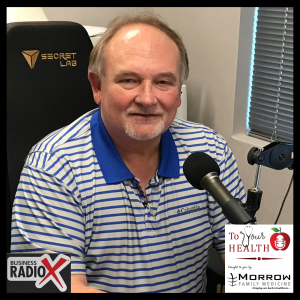
Tagged With: Commercial Finance Group, small business lending, Thomas Heaton, Tommy Heaton, working capital

  • « Previous Page
  • 1
  • …
  • 215
  • 216
  • 217
  • 218
  • 219
  • …
  • 275
  • Next Page »

Business RadioX ® Network


Our Most Recent Episode

CONNECT WITH US

  • Email
  • Facebook
  • LinkedIn
  • Twitter
  • YouTube

Our Mission

We help local business leaders get the word out about the important work they’re doing to serve their market, their community, and their profession.
We support and celebrate business by sharing positive business stories that traditional media ignores. Some media leans left. Some media leans right. We lean business.

Sponsor a Show

Build Relationships and Grow Your Business. Click here for more details.

Partner With Us

Discover More Here

Terms and Conditions
Privacy Policy

Connect with us

Want to keep up with the latest in pro-business news across the network? Follow us on social media for the latest stories!
  • Email
  • Facebook
  • Google+
  • LinkedIn
  • Twitter
  • YouTube

Business RadioX® Headquarters
1000 Abernathy Rd. NE
Building 400, Suite L-10
Sandy Springs, GA 30328

© 2026 Business RadioX ® · Rainmaker Platform

BRXStudioCoversLA

Wait! Don’t Miss an Episode of LA Business Radio

BRXStudioCoversDENVER

Wait! Don’t Miss an Episode of Denver Business Radio

BRXStudioCoversPENSACOLA

Wait! Don’t Miss an Episode of Pensacola Business Radio

BRXStudioCoversBIRMINGHAM

Wait! Don’t Miss an Episode of Birmingham Business Radio

BRXStudioCoversTALLAHASSEE

Wait! Don’t Miss an Episode of Tallahassee Business Radio

BRXStudioCoversRALEIGH

Wait! Don’t Miss an Episode of Raleigh Business Radio

BRXStudioCoversRICHMONDNoWhite

Wait! Don’t Miss an Episode of Richmond Business Radio

BRXStudioCoversNASHVILLENoWhite

Wait! Don’t Miss an Episode of Nashville Business Radio

BRXStudioCoversDETROIT

Wait! Don’t Miss an Episode of Detroit Business Radio

BRXStudioCoversSTLOUIS

Wait! Don’t Miss an Episode of St. Louis Business Radio

BRXStudioCoversCOLUMBUS-small

Wait! Don’t Miss an Episode of Columbus Business Radio

Coachthecoach-08-08

Wait! Don’t Miss an Episode of Coach the Coach

BRXStudioCoversBAYAREA

Wait! Don’t Miss an Episode of Bay Area Business Radio

BRXStudioCoversCHICAGO

Wait! Don’t Miss an Episode of Chicago Business Radio

Wait! Don’t Miss an Episode of Atlanta Business Radio