Business RadioX ®

  • Home
  • Business RadioX ® Communities
    • Southeast
      • Alabama
        • Birmingham
      • Florida
        • Orlando
        • Pensacola
        • South Florida
        • Tampa
        • Tallahassee
      • Georgia
        • Atlanta
        • Cherokee
        • Forsyth
        • Greater Perimeter
        • Gwinnett
        • North Fulton
        • North Georgia
        • Northeast Georgia
        • Rome
        • Savannah
      • Louisiana
        • New Orleans
      • North Carolina
        • Charlotte
        • Raleigh
      • Tennessee
        • Chattanooga
        • Nashville
      • Virginia
        • Richmond
    • South Central
      • Arkansas
        • Northwest Arkansas
    • Midwest
      • Illinois
        • Chicago
      • Michigan
        • Detroit
      • Minnesota
        • Minneapolis St. Paul
      • Missouri
        • St. Louis
      • Ohio
        • Cleveland
        • Columbus
        • Dayton
    • Southwest
      • Arizona
        • Phoenix
        • Tucson
        • Valley
      • Texas
        • Austin
        • Dallas
        • Houston
    • West
      • California
        • Bay Area
        • LA
        • Pasadena
      • Colorado
        • Denver
      • Hawaii
        • Oahu
  • FAQs
  • About Us
    • Our Mission
    • Our Audience
    • Why It Works
    • What People Are Saying
    • BRX in the News
  • Resources
    • BRX Pro Tips
    • B2B Marketing: The 4Rs
    • High Velocity Selling Habits
    • Why Most B2B Media Strategies Fail
    • 9 Reasons To Sponsor A Business RadioX ® Show
  • Partner With Us
  • Veteran Business RadioX ®

Decision Vision Episode 73: Should I Sell to the Government? – An Interview with Sean Mahoney, Maston Space Systems

July 9, 2020 by John Ray

sell to the government
Decision Vision
Decision Vision Episode 73: Should I Sell to the Government? - An Interview with Sean Mahoney, Maston Space Systems
Loading
00:00 /
RSS Feed
Share
Link
Embed

Download file

sell to the government

Decision Vision Episode 73:  Should I Sell to the Government? – An Interview with Sean Mahoney, Maston Space Systems

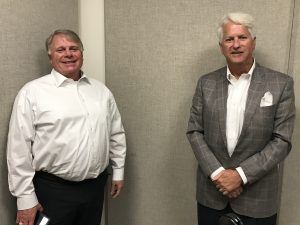
If I decide to sell to the government, what are the challenges my business will face? Sean Mahoney of Maston Space Systems offers an experienced perspective on this question in this interview with host Mike Blake. “Decision Vision” is presented by Brady Ware & Company.

Masten Space Systems

Masten Space Systems is a private company founded in 2004 by CTO David Masten and has its headquarters in Mojave, CA.

Masten’s focus on reusable rocket technology is driven by the goal of enabling space transportation and reliable planetary landers for the Earth, Moon, Mars, and beyond. They are a passionate company of inventors, creators and builders with goals that include landing our own vehicle on the moon.

Masten competed in the NASA and Northrop Grumman Lunar Lander Challenge X Prize in 2009 with Xombie (model XA-0.1B). Xombie came away from the lunar lander challenge with an average landing accuracy of 6.3 inches qualifying it for Level One second prize of $150,000 on October 7th, 2009. The Xoie VTVL won the $1,000,000 Level Two prize of the Lunar Lander Challenge on October 30th, 2009 with an average landing accuracy of about 7.5 inches.  Masten’s future vehicles have improved this performance and landing accuracy to provide EDL and testbed flight services to customers through NASA’s Flight Opportunities program.

Sean Mahoney, CEO

Sean Mahoney is the CEO of Masten Space Systems, an aerospace R&D and flight services company that creates and deploys reliable, reusable rocket vehicles and components. Since joining Masten in 2010 as Director of Business Operations, Sean has focused on building a sustainable, customer-funded business. He has been instrumental in establishing Masten as one of the rising stars in the New Space movement. He served as COO during 2011-2012 and was named CEO in 2013.

Sean has over 15 years of corporate and technology industry experience, having founded and led a number of technology start-up ventures, and raised multiple rounds of private funding. Sean began his career overseeing technical sales and building internal organizations as a manager at AT&T’s Enterprise hosting division.

Sean received his MBA from Emory University’s Goizueta Business School and serves in a leadership capacity for a number of entrepreneurship and environmental non-profit organizations.

Michael Blake, Brady Ware & Company

Mike Blake, Host of the “Decision Vision” podcast series

Michael Blake is Host of the “Decision Vision” podcast series and a Director of Brady Ware & Company. Mike specializes in the valuation of intellectual property-driven firms, such as software firms, aerospace firms and professional services firms, most frequently in the capacity as a transaction advisor, helping clients obtain great outcomes from complex transaction opportunities. He is also a specialist in the appraisal of intellectual properties as stand-alone assets, such as software, trade secrets, and patents.

Mike has been a full-time business appraiser for 13 years with public accounting firms, boutique business appraisal firms, and an owner of his own firm. Prior to that, he spent 8 years in venture capital and investment banking, including transactions in the U.S., Israel, Russia, Ukraine, and Belarus.

Brady Ware & Company

Brady Ware & Company is a regional full-service accounting and advisory firm which helps businesses and entrepreneurs make visions a reality. Brady Ware services clients nationally from its offices in Alpharetta, GA; Columbus and Dayton, OH; and Richmond, IN. The firm is growth minded, committed to the regions in which they operate, and most importantly, they make significant investments in their people and service offerings to meet the changing financial needs of those they are privileged to serve. The firm is dedicated to providing results that make a difference for its clients.

Decision Vision Podcast Series

“Decision Vision” is a podcast covering topics and issues facing small business owners and connecting them with solutions from leading experts. This series is presented by Brady Ware & Company. If you are a decision maker for a small business, we’d love to hear from you. Contact us at decisionvision@bradyware.com and make sure to listen to every Thursday to the “Decision Vision” podcast.

Past episodes of “Decision Vision” can be found at decisionvisionpodcast.com. “Decision Vision” is produced and broadcast by the North Fulton studio of Business RadioX®.

Visit Brady Ware & Company on social media:

LinkedIn:  https://www.linkedin.com/company/brady-ware/

Facebook: https://www.facebook.com/bradywareCPAs/

Twitter: https://twitter.com/BradyWare

Instagram: https://www.instagram.com/bradywarecompany/

Show Transcript

Intro: [00:00:02] Welcome to Decision Vision, a podcast series focusing on critical business decisions. Brought to you by Brady Ware & Company. Brady Ware is a regional full-service accounting and advisory firm that helps businesses and entrepreneurs make visions a reality.

Mike Blake: [00:00:23] Welcome to Decision Vision, a podcast giving you, the listener, a clear vision to make great decisions. In each episode, we will discuss the process of decision making on a different topic from the business owner’s or executive’s perspective. We aren’t necessarily telling you what to do, but we can put you in a position to make an informed decision on your own and understand when you might need help along the way.

Mike Blake: [00:00:42] My name is Mike Blake and I’m your host for today’s program. I’m a director at Brady Ware & Company, a full-service accounting firm based in Dayton, Ohio, with offices in Dayton; Columbus, Ohio; Richmond, Indiana; and Alpharetta, Georgia. Brady Ware is sponsoring this podcast, which is being recorded in Atlanta for social distancing protocols. If you like this podcast, please subscribe on your favorite podcast aggregator. And please consider leaving a review of the podcast as well.

Mike Blake: [00:01:08] So, today’s topic is, should I sell to the government? And, you know, this is a topic I’ve wanted to do for a while. And I think it’s even more important now given the state of our economy. And again, the slow-moving horror movie continues that we hope we’re kind of reaching at least the final act of this thing. And, you know, I think that most companies, most business owners have thought about, you know, can I sell to the government? Should I sell to the government? And it’s certainly worth thinking about because I read somewhere that, in fact, the government does buy about 20 billion dollars of stuff every day. And that $20 billion of stuff includes things from pencils to laptops, to cars to airplanes. And as it also happens, spacecraft. More on that in a minute.

Mike Blake: [00:02:10] But I think many owners then don’t pursue the notion or the idea of selling to the government because they have some concept, or some preconceived notion, or some misapprehension of what it’s like to sell to the government and do business with the government. And maybe some of those things are true. Maybe some of those things are not. So, I think we’re going to do, maybe, today is do a little bit of myth busting. Because if you could afford to not try to sell to the government before, I think most companies now are in a position where you can’t afford to walk away from clients, even if they force you, maybe, to leave your comfort zone a bit in order to conclude a sale.

Mike Blake: [00:02:57] And to help us with that, I am bringing on a guest that I wanted to bring on for a while. He’s been harder to catch without a Taser and a butterfly net because he’s been busy building his company. But he’s a guy that I’m so excited to bring on. And I’m excited to really talk to him any opportunity I get because I’ve known him for a long time. I’ve known him since he’s been with his company. And, you know, I can tell you that right now – knock on wood. I don’t want to jinx him – but his company is enjoying some success. Believe me that the road to that success has been paid with broken glass. And he has crawled it both ways up and down the hill, however you want to express it.

Mike Blake: [00:03:45] And throughout that, I know that it’s been mentally, emotionally, physically challenging as an entrepreneur to do what he has done. And quite candidly, I think lesser men would have been broke and they would have given up. And he deserves all the credit. And he’s just – you know, through all that, he’s been authentic, he’s been nice, he’s been humble, and continues to be that way. And he’s just one of the most awesome dudes you’re ever gonna deal with. And just such an easy guy to root for. And when you listen to this, you’re going to hear that in his voice. So, you know, plan to take notes. If you’re listening to this while you’re driving, jogging, whatever, don’t take notes while you’re doing that. But plan to listen to this later. Or plan to go download the transcript, which is going to be on our website, bradyware.com. But this is going to be a good one.

Mike Blake: [00:04:46] And so, it is my absolute pleasure to introduce my friend, Sean Mahoney, who is the CEO of Masten Space Systems. It’s an aerospace research and development and flight service company that creates and deploys reliable, reusable rocket vehicles and components. Since joining Masten in 2010 as director of business operations, Sean is focused on building a sustainable, customer funded business. He has been instrumental in establishing Masten as one of the rising stars in the new space movement. He served as chief operating officer during 2011 and 2012. And was named chief executive officer in 2013. Sean has over 15 years of corporate and technology industry experience, having founded and led a number of technology startup ventures and raised multiple rounds of private funding.

Mike Blake: [00:05:33] Sean began his career overseeing technical sales and building internal organizations as a manager at AT&T’s Enterprise Hosting Division. Sean received his MBA from Emory University’s Goizueta Business School. And serves in a leadership capacity for a number of entrepreneurship and environmental non-profit organizations. Sean, thank you so much for coming on the program.

Sean Mahoney: [00:05:54] Mike, a real pleasure. Thanks to you for all of your support over the years. And thanks to folks there at Brady Ware for sponsoring this podcast and giving us a platform to talk about all this cool stuff, a little bit of space, a little bit of government, and a lot of sales. So, this is really cool. And I really appreciate the introduction. I hope to live up to the hype.

Mike Blake: [00:06:18] I think you will. This is not going to be a Batman movie for sure. But, you know, I would like – I don’t do it justice. And, in fact, I probably only know 30 percent of what you’ve gone through. But can you take a couple of minutes and sort of tell the Masten story? And I’ve hinted at your success. But, A, I want to do it justice. And B, I want to give you the opportunity to kind of express it. What is the Masten story and where are you guys now?

Sean Mahoney: [00:06:51] Yes. I will endeavor to give you a version of that that’s shorter than the 16-year history of the company. Let me just do one thing. I will tell you all about Masten, but I want to make sure just in case someone only listens this far. The one key takeaway for this whole government sales thing is, unlike perhaps other things where you just need to have someone who wants to buy a thing and they have the money to pay you, government sales requires having a third thing, which is the contract vehicle. There need to be a way to pay you that thing they want to buy. And if nothing else, maybe folks can take that away. But now, we’ll come back and explain what all that means. I just want to get that plugged in upfront.

Sean Mahoney: [00:07:46] So, I first encountered Masten hanging out down around Georgia Tech, the Technology Square. And honestly, it was a true networking breakfast that I attended on a fairly regular basis hosted by Stephen Fleming, who used to run ATDC and a bunch of stuff there in Tech Square. And the conversations in this open breakfast were really just about anything. It was about different startups and what they were doing. And there was usually some football talk and usually some Georgia Tech rivalry stuff, some politics.

Sean Mahoney: [00:08:28] And then every Monday morning, this conversation would eventually turn to the topic of discussing space. And there would be a 15-minute conversation about space policy. Because there were some space, not only enthusiasts, but people who were active in the space world. Stephen Fleming, Mike Mealing, Colin Ake, and others that we’re interested in working in space. And I used to believe it was the funniest thing. I would tell people the weirdest part of my week is the 15 minutes every Monday morning where I get to have a real conversation about space policy. And it’s not a joke. Like, it’s a real conversation. At that time, I had no idea that I would wind up working in the space industry for Masten or even running it. But for years I would tell that stories. Like, “Oh, my God. You should come to this breakfast. It’s the coolest thing.” And we have this odd conversation.

Sean Mahoney: [00:09:25] So, at that time, Masten was competing for an XPRIZE. It was the Northrop Grumman NASA Centennial Challenge Lunar Lander Challenge sponsored by XPRIZE. I think I got all of them in there. And this was phenomenal, I sat in another one of those cafe down there near Tech Square and watched on a friend’s laptop as the company competed for this big XPRIZE. And what the company was doing with the prize was, was demonstrating the ability to take off and land like you would do from a lunar orbit to the surface, refuel, then do it again.

Sean Mahoney: [00:10:07] That team with Masten Space Systems at the time was a dark horse. No one expected for them to win. There was an anointed big-name company that was going to win. And Masten Space Systems won that contest. And there’s phenomenal stories about the vehicle burning up on the pad the day before it flew and won first place. All this stuff, it’s phenomenal.

Sean Mahoney: [00:10:36] And my story with the company starts to come in after that win. Six months after they won a million dollars, the folks that I knew were like, “Hey, we need to raise the money because a million dollars doesn’t get you that far.” Which is true in space. But it’s also true – for any aspiring entrepreneurs, you think a million dollars, if you think about it in your bank account, it sounds like a lot of money. If you think about it in the operating account for paying for salaries and everything else, it’s really not that much money.

Mike Blake: [00:11:15] Payroll really changes that equation.

Sean Mahoney: [00:11:17] It turns out it does. And so, that was how I kind of started getting involved to help bring some of the – it was the decision science background and kind of structuring some of the payload opportunities and the sales opportunities and helping structure things. And that was how I first got involved with the company. And the challenge at that point was we had won an XPRIZE. The other company that had won an XPRIZE before us had turned into this company called Virgin Galactic. So, SpaceShipOne and the $10 million Ansari XPRIZE had turned into Virgin Galactic. Masten wins a $1 million XPRIZE, we’re trying to figure out what do we turn it into. And so, I honestly came in to figure that out – to help figure that out. And it was one of those things that we really didn’t know what it was going to be. And to state it bluntly, we didn’t have a big runway. We didn’t have a billionaire.

Sean Mahoney: [00:12:30] My first day on payroll, there were 42 days of cash in the bank. And some of my advisers that I still respect to this day had said, “This is a terrible idea, Sean. You’ve gone through enough of these different startups.” And they’re just, you know,” You got to find something that’s going to stick. This one is the craziest one yet.” And when I present this period of time of different crazy business ideas, it absolutely is the craziest. Hands down. But Masten had three things that I was personally looking for. I was looking for an emerging market that was transitioning from the domain of deep experts to a broader audience. Kind of, like, think internet business, internet video, green tech. They were moving from deep expertise to a broader application.

Sean Mahoney: [00:13:34] I was looking for working technology because I know how hard it is. It seems so easy to take that idea and get a prototype. But getting the prototype is really important. So, I went looking for companies that were working technology and has got a good team. Like, a good place to work. A good team to work with. And Masten fit that bill and has throughout these ten – even when there were some challenges, it has fit that screen. And so, I keep working at it.

Sean Mahoney: [00:14:10] So, what the heck do we do? So, we have this vehicle that can land, a rocket powered lander. Yes, there are other big rockets that lands now. But back then, it had been done by large government programs in this competition, of which there were only two that actually made it all the way to the final competition.

Sean Mahoney: [00:14:34] And so, “Okay, Well, how do we take this and turn this into a business?” And the big idea – and I’m going to fit in this kind of government sales thing – is that the large vision of space was that this is going to move from being government to being commercial. And people are going to buy their ticket and they’re going to go to space. Or they’re going to buy cargo and things are going to go and everyone is going to be using space. And we’re going to open use of space to everyone because it’s going to be commercial. And that is a great vision of the future. It was not the reality of the customer in 2010. It is not the reality of the customer in 2020.

Sean Mahoney: [00:15:24] And so, understanding the difference between “I’m going to solve this problem for this industry by getting away from government” might be the right answer. But be careful about confusing this ideal future state with the states you have to be to get from here to there. So, what we focused then on is the thing that we had that worked. I had a rocket powered lander. Who needs a rocket powered lander? It’s a very small market. But the thing that we found that resonated was, we had a rocket powered lander that you could come fly on. And I can offer rocket flights as a service instead of selling vehicles or selling programs that can cost, you know, 30 million or 50 million. And for less than a million dollars, we can test your thing out.

Sean Mahoney: [00:16:33] And so, we’ve figured out that there was a market for doing these terrestrial test flights. And it wasn’t because of a business case analysis. And it wasn’t because I spent a bunch of time studying market reports. The reason we are successful today is because there were people working for NASA, government employees, that saw the value we could provide. And the need that they saw existing within the agency. And they brought them together. And so, first up, the idea that it’s industry versus NASA for space or any of these things, that it’s industry versus the government, is far too great a simplification. And probably, absolutely incorrect.

Sean Mahoney: [00:17:38] So, what we did then is we took a service, a rocket powered landing test bed, which – and I’ve described it from a business perspective, I’ll say, “It does precisely what nobody needs.” Like, “Wait. What?” It does not. Our service to this day does not meet the desires of the testing community. It doesn’t meet their high-level objectives. What it does is exist. So, because I have a thing that I can do, the people are willing to use it and build up until some point we will have that higher capability. And it’s weird because if you ask – if you did a market survey, and said, “Okay. Well, what does the industry wants?” You would say, “Okay. Well, it wants all these things and we can’t do that, so therefore we need to invest. We need to build the next thing, yadda, yadda, yadda.” But that’s not a business plan that would close.

Sean Mahoney: [00:19:04] So, using the thing we have, working with the customers to meet needs they have right now is kind of the thing that we did for years. Now, along with that, we were trying to take – and we were taking the technology and spreading it out into other applications. So, we are working on technology development. Working with government agencies to develop some technologies. And then taking what we had for that low-level vehicle and applying it to other markets. And there were two that we had identified.

Sean Mahoney: [00:19:42] And Dave Masten, the founder and now CTO, had from the get go the idea of reusable launch vehicle. He, along with a couple other people that you’re probably familiar with, had the same idea. And were similarly mocked for that idea. So, what you can do with the reusable rocket is I can reduce my costs of operation if I reuse the vehicle. And then to a certain degree, the payload doesn’t care, right? If I’m buying delivery to orbit, I just need to get to orbit. I don’t care how you get me there. I just want to get there.

Sean Mahoney: [00:20:34] So, one angle to the business was launch and using reusability and launch. The other one is, where is a rocket powered lander uniquely suited to meet a need? And there are places where planes and helicopters can’t go. Places where you don’t have runways. Places where you don’t have air. Places where the air is too thin. Places that are too dangerous. So, you have a whole series of things there. But the moon is one of those places. You’re not going to land with a parachute. You’re not going to land with – you have pretty much two options to land on the moon. You either crash into it or you do some sort of propulsive landing. So, we knew those were the things. But much like the adage of, you know, can you stay liquid longer than the market can stay irrational?

Mike Blake: [00:21:38] John Keynes.

Sean Mahoney: [00:21:42] So, we had big correct ideas but the timing wasn’t right. So, part of the through broken glass has been stringing together customers creating value as some of these large trends turnover in time. And so, it’s – and I don’t know if this version of the story speaks to the decision makers that are potentially listening in. But it’s hard to know what’s the difference between grit and perseverance versus being stubborn. They are largely indistinguishable except through the lens of history. And maybe there’s – I don’t know – maybe you’ve got another guest who can speak to discerning those ones. But we have been able to persist focused largely on revenue. And I can talk about the trend to raise money in the space world and all of that stuff. But this is more about the customer side of things.

Sean Mahoney: [00:23:01] And in order to support ourselves off of revenue, realized revenue, actually getting a thing done, giving someone the value that they’re paying for, that customer or the pair for us has largely been government. And even those deals and projects and things that we have worked that are not a government entity that are commercial customer, a lot of their business is for the government. And so, either directly or indirectly, I came finally to realize, “I should stop thinking about the market in terms of what could be. And focus on what is.” And so, we’ve been able to be successful building and flying rockets. We’ve had a big DARPA program a couple of years ago. Three companies were selected to design a reusable booster, Masten Space Systems and then two other companies no one has heard of, Boeing and Northrop Grumman.

Mike Blake: [00:24:12] Oh, yeah. Those has-beens.

Sean Mahoney: [00:24:15] Yes. Yeah. And you’ll also note there’s a bunch of other companies that did not win that way. So, we had that contract that was phenomenal. I learned a lot. We grew a lot. But the market for that had turned a little crazy. And I had to make the – this was a decision point. I decided to put our launch – applying our technology to a launch solution and put it on ice. Because everyone of our brother had started a launch company. And I can’t. I was burdened with the reality of understanding how hard some of this stuff is. And I could not lie and just say, “Oh, yeah. We can do this. This will be easy.” I know it’s not going to be easy. And so, some people had the benefit of idealism and enthusiasm. Or maybe they were ten times smarter than us. But I know enough to know some of the bold proclamations of what you’re gonna do aren’t going to pan out.

Sean Mahoney: [00:25:27] So, fortunately, by the time that happened, the other piece of what we’re expecting to come around was growing. And we had been quietly working for that last decade on the lunar lander side of things. But what I didn’t do was bother talking about it. Why? Well, there was a Google Lunar XPRIZE competition going on that we had supported companies, but we were not directly competing in. And I felt that the market wasn’t real yet. I did not see the ability to actually get dollars committed and flowing. That was anticipated to change. It did change.

Sean Mahoney: [00:26:14] And now, as of today, not only do we have government buying delivery of payloads to the moon, similar to they buy payload delivery to the National Space Station. Masten has not only the broad general contract, but a specific task order. And so, we’ve been selected to deliver a series of instruments for NASA. And now, it’s time to put all of this decade in my case, a-decade-and-a-half in Dave’s case, to work delivering payloads to the moon for the government, for NASA, for other government agencies, and for commercial markets as well. So, I get to serve all of them.

Mike Blake: [00:27:03] I want to interject a little bit because hat one decision point you talked about where you had to decide if you’re going to be on a launch business or the landing business, I think was really important. And tell me if I’m wrong, but I suspect there are kind of two big factors at work. Number one is that, I don’t think you have the resources really to pursue both. You kind of have to make a decision and just put all your chips in the one square. And then second, it occurs to me – not that I want to understate the difficulty – but let’s face it, there have been a lot more spacecraft that have been launched than have been landed. So, isn’t a trick of a soft landing –

Sean Mahoney: [00:27:52] Oh, God. Yeah.

Mike Blake: [00:27:54] … isn’t that kind of a more rare thing?

Sean Mahoney: [00:27:59] Yes. Yeah. So, let me address the technology piece of it. First, absolutely going up is easy. We’ve kind of known how to do that for a long time. Coming down is even easier. Even longer amount of time we figured out how gravity works. It’s that controlled landing that is the really hard part. And so, yes. Absolutely. Now, what I can tell you is that, with that understanding, Dave started out focused on the hardest part first. And that’s why the company has – we have more flight operations. We have done more rocket landings than anyone.

Sean Mahoney: [00:28:47] But we’re not bringing it back from space. We had focused on – think of it as doing more diverse stuff rather than altitude. And there was a decision point earlier on where I was like, “Okay. Do we focus on going higher and faster or do we focus on doing more and refining more of the landing?” So, the landing stuff, I feel pretty good about. I feel like we have decent enough understanding. I know there’s things that we know. I know there’s things that we don’t know. Because we actually thought we had the whole thing figured out. And then we found out we didn’t.

Sean Mahoney: [00:29:25] And so, you know, we’ve gone through that iteration. That was the landing part is the thing that has really been a core assets of ours. And it’s not just – and this is in a lot of industries and especially in space. We really like the superlatives of saying first. But first is nice for a press release. Repeatable, reliable is what you need for the business. And so, just because you did something first doesn’t mean squat if it never goes anywhere, right? If it never gets you anywhere.

Sean Mahoney: [00:30:05] And a lot of times, because of the long timelines, people are grasping – they’re seeking something to differentiate themselves and say, “Aha. Look, I did this.” And that’s great. But I am less interested – personally, as to the business side of things, I don’t care about your feet of rocketry of technical performance. What I care about is, are you creating value for your partner? Are you helping make them rock stars inside their organization? Are you helping find ways to make someone else’s life better today? And so, yes, the landings part is hard. That was not actually the problem.

Sean Mahoney: [00:30:50] I have spent a lot of time obsessing over this question of diversification versus focus, diversification versus focus. The best practice for entrepreneurship is laser like focus. Pick a thing and do that. I understand and I agree. However, that’s not exactly what we’ve done. And we were keeping multiple things open at the same time. And here’s the reason why. For space, there are a few – it’s a small N on statistics. A few big events that happen infrequently. So, I could choose, “We’re gonna be all in on the moon. Great.” And if that had been the decision in 2011, that had been fine. But we would have run out of money and gone out of business. I could’ve said we’re all in on launch. And then when launch dried up and we weren’t selected for the next DARPA phase, we could have been them out of business there.

Sean Mahoney: [00:32:11] And so, it is a difficult thing that I’ve grappled with because I understand the best practice and yet have chosen a different approach. And so, right now, the way I frame it is, delivery to the moon is our flagship. That is the thing that is very clear. That is the big thing that gains people attention. And I can show you how the other work that we’re doing aligns with providing value to the people who want to get access to the surface of the moon. And so, our terrestrial flights.

Mike Blake: [00:32:54] Sorry about that.

Sean Mahoney: [00:32:54] No. No. It’s okay.

Mike Blake: [00:32:54] But what I take out of that is, I think, a couple of very important points. Is that one misconception is that selling to the government is fundamentally different from selling to private sector clients. But what you’re telling me is, at the end of the day, it’s still about providing value even if value might be defined somewhat differently. And it’s about making your customer somehow better. And along the way, while you talked a little bit in your story about, you know, there are some strong advocates from Masten because they know they got a technically, and I presume, decided to become advocates. And that tells me that somehow you were able to develop a relationship with the government or something in the government.

Mike Blake: [00:33:54] And I think a lot of people wouldn’t expect that that’s something you could do, at least not in a typical way. When we think about relations with the government, frankly, we think about lobbyists and we think about having your senator make a well-placed phone call to somebody. But we don’t think of it necessarily in terms of just good old-fashioned garden variety, people to people relationships. But it sounds like that that actually does – that actually is present.

Sean Mahoney: [00:34:27] Yeah. And by the way, working in space has this problem is that it oftentimes is so cool that it distracts us from whatever other conversation we’re having. So, here we’ve talked all this stuff about Masten and haven’t really addressed some of the government part.

Sean Mahoney: [00:34:44] So, yeah, first of all, the government, you do not sell to the government. No organization is actually monolithic. And that’s a mindset. Like, you’re not selling into a faceless blob. No matter what, whether you’re selling to a small company or a big company, the government. You are selling to individuals. And that is a key thing I think some people don’t quite understand. It’s not like you’re just throwing in a proposal and then someone throws money at you. There’s someone on the other side of that. That is a person that has things that they’re trying to accomplish.

Sean Mahoney: [00:35:37] And just like if you’re selling to a local mom and pop shop and you’re selling them something. The same thing applies if you’re selling something to the government. You’ve got to understand as best you can what they’re trying to do. And it’s not maybe as easy as going in. But it’s also not impossible. And it’s not necessarily as hard. So, the perception that it’s only for the bigs is not accurate. And it’s demonstrably not accurate, like, there are some specific things that are clear that our federal government has interests in working with small business.

Sean Mahoney: [00:36:23] I will tell you that there is this thing called industry capture, where any industry that is selling to the government often has a lot of influence in what the government asks for and wants to buy. It is not necessarily these whole arms, like the ideal maybe that the government chooses to acquire things and companies have to propose against it. But oftentimes the thing the government asked for is influenced and shouldn’t be influenced by what the market can provide.

Sean Mahoney: [00:37:04] And so, it is an interesting challenge. Because from the government standpoint, their risk posture is different. It’s sometimes very similar to a large organization. It used to be – and every industry has the saying, no one gets fired for buying blank industry leader. No one gets fired for buying from IBM. It doesn’t matter if it’s a good deal or a bad deal, or whatever. It doesn’t matter. They’re the industry leader. So, you’re not going to get in trouble if you buy from them.

Mike Blake: [00:37:38] Well, right now, I’d imagine in your world, nobody gets fired for buying from Grumman or Raytheon or –

Sean Mahoney: [00:37:44] Correct.

Mike Blake: [00:37:45] … Boeing, right? And I have to imagine that at least crossed your mind –

Sean Mahoney: [00:37:50] Oh, yeah.

Mike Blake: [00:37:51] … as pertaining to these things, right?

Sean Mahoney: [00:37:54] Absolutely.

Mike Blake: [00:37:54] Did it turn out that that was a legitimate fear?

Sean Mahoney: [00:38:01] Yes.

Mike Blake: [00:38:01] Or once you got in, did you find out that maybe they even kind of root for the little guy?

Sean Mahoney: [00:38:07] There are –

Mike Blake: [00:38:10] It’s not monolithic, right? It depends.

Sean Mahoney: [00:38:12] It’s not. Right. Yeah. It’s not. Yeah. So, I don’t know if it makes sense to do the negatives. Let me start with the negatives because it’s better to start there. There is an awful lot of process that is designed to prevent government fraud, waste, and abuse. There is a lot of things that exist to prevent the government from doing bad, stupid, fraudulent things. And you know what? On principle, everyone says, “Yeah, of course. We want the government to reduce fraud.”

Sean Mahoney: [00:38:53] There is a point, however, where you get diminishing returns. And so, there is an information asymmetry for you to this particular industry. And the incumbents who have mature processes and systems. And that becomes right there is the kind of the key difference. That information asymmetry means that you don’t know about the federal acquisition requirements. And if you don’t know how to quote them chapter and verse, you may wind up getting yourself into some difficulty because you have this extra burden, this extra cost of compliance. So, that favors larger companies.

Sean Mahoney: [00:39:41] Now, I will flip to the opposite side and say, “Yes.” And the government aware of that. And there are specific initiatives that have been around for a long time. And new ones where people on the government side are trying to find ways to reduce or circumnavigate those burdens of doing business with the government. And the first one is to point out the SBIR program, Small Business Innovation and Research. And then there’s an STTR, which is – oh, I don’t know. I forgot the acronym.

Mike Blake: [00:40:13] Science and Technology Transfer –

Sean Mahoney: [00:40:13] Yeah. R –

Mike Blake: [00:40:20] … Research, something like that. Yeah.

Sean Mahoney: [00:40:20] The idea there is that this is federally mandated to be a percentage of federal agency budget across, I think, 11 different agencies. And it is money that they have to spend on small businesses. Small businesses is defined as less than 500 people. So, this is obligated money that they have to push this away. The question is, how do you go about tapping into it. And how do you make sure that this is something that’s not going to just bog you down?

Mike Blake: [00:40:59] Let’s dive into that. So, how do you – I mean, what’s the first step, right? When you’ve figured out that NASA ought to be an important customer, I mean, do you just do you just call NASA up and say, “Hey, I’ve got this landing system. And, hey, you might want to use it to land on Mars, the moon, or whatever?” How do you start?

Sean Mahoney: [00:41:22] Yeah. “Dear NASA, please buy my rocket stuff.”

Mike Blake: [00:41:27] Door to door? I mean, “Hey, bud. Do you want to buy my landing system?”

Sean Mahoney: [00:41:31] The first thing to do is not to build a rocket. The first thing to do is go talk to people and understand their pain points. And so, I will refer you to the customer discovery model, and the iCore, and Steve Blank. And understand the pain in the market first. And then build a solution to it. How do you understand a pain in the market? Well, there are a lot of things that are available.

Sean Mahoney: [00:42:18] Number one, go look at the previous SBIR solicitations and the topics that are there. And you can read through what has been selected. And you can call those companies, you can call those sponsors. Most government officials probably have phone numbers and contact information available publicly that you don’t have to pay for because it’s probably required one way or another. So, you can actually pick up the phone and call people and say, “Hey, I saw the solicitation was out last year. Do you guys get what you need? Or are you looking for something different? What’s coming up in the future?” Ask the questions.

Sean Mahoney: [00:43:02] Reading industry papers. The scientists and the engineers that write industry trade papers, whatever that is, look them up, call them up. I can tell you they love talking about those papers that they wrote. And I will also tell you most people don’t read those papers and don’t refer to them. And you will immediately – if you have a topic and you actually, like, pick up and read their thing, they’ll be thrilled to talk about the thing that they spent their time writing the paper on. And can help guide you into, “Okay. Well, here’s a pain point that I know somebody has.”

Sean Mahoney: [00:43:40] And then the other one is just show up and be useful. Go to conferences, volunteer. If you’re trying to get into an industry, find an industry group. Volunteer to serve on a panel, to do a thing, to take tickets, and whatever. Become part of the community. Become a known entity. And that way you can help work your way in.

Sean Mahoney: [00:44:11] So, I know I had just kind of networked your way into the government. It sounds kind of odd. But again, it’s not the government. It is, probably, an agency. And more particularly a director. And more particularly a group. And more particularly a set of, you know, 50 to 100 people that work in and around whatever domain you have interest in. So, how to get in, that’s my recommendation for that. It is kind of pick up the phone, but start with the questions.

Mike Blake: [00:44:49] Now, let me ask you this, how did you find the government or NASA? I guess, they are not monolithic. So, I’ll ask you to talk about what you’ve actually done. How you found NASA or whatever specific office you are dealing with in NASA in terms of their responsiveness? You know, I think many of us – I don’t want to be ideological here – but many of us, when we think of the government, we basically think of the DMV. And everybody’s a DMV. And not everybody is a DMV. I don’t think the DMV could launch vehicles into orbit. But the perception is that they’re slow as molasses. And it’s going to be a nightmare in terms of length of sales cycle. And they can’t make a decision. How has your experience been relative to that perception?

Sean Mahoney: [00:45:42] Spot on.

Mike Blake: [00:45:45] Really?

Sean Mahoney: [00:45:45] In some cases, spot on. And it’s important to realize the different objectives and the different world that your government partner lives in. And it’s one thing to say, “Well, it’s crazy that this thing takes 18 months.” They might know that it’s crazy. But it also might be the way things are. And to a certain degree, some of this is a gravity problem. And this is not a space thing. A gravity problem is one of those ones that is not worth getting upset about because it’s just there. And government bureaucracy, like, if you want to skip the bureaucracy and want to just take straight payments from someone, feel free. However, you’re likely to have then have to pay the price when someone says, “Hey, how come you didn’t follow procedures and yadda, yadda, yadda.” Right?

Sean Mahoney: [00:46:52] So, yes, there are some things that are absolutely infuriating. A sales cycle for some of these things, even small amounts of money, can be 18 months easily. And if you want to go all the way back to the beginning and having the conversation with a person you want to sponsor a topic that you then apply to, that you then get selected for, then you negotiate a contract for them, and start executing on, you know, two years for a small business? I don’t know about you, but my lifestyle, like, were fruit flies. I live week to week, day to day, month to month.

Mike Blake: [00:47:37] Now, the sales cycle requires – go ahead. Sorry.

Sean Mahoney: [00:47:40] No. It’s an entirely different thing. And it’s not worth railing against it to say, “Oh, it’s not fair. It’s not right.” You know what? It’s not fair and it’s not right and it doesn’t matter. It is. And so, play the game. Play the field. Understand that it’s going to take that long. And figure out, maybe, the choice is you don’t wanna do it.

Sean Mahoney: [00:48:05] Let me also flip around the other side and say, doing a project with the Air Force – and I’m not kidding you on this – we submitted a proposal. We were contacted nine days later on a Saturday telling us we’d been selected. And we had a contract a week after that. That is unheard of. That was only 50K, but it doesn’t matter. That is the speed and why are they moving that fast? Because DOD realized that they had made it so difficult to work with. That the best and brightest are busy building, you know, the next Uber app and are not even engaging with the government. I don’t need to bother with your process and your BS and all the rest of it. I am just going to sell my stuff to someone who can pay me. And I don’t have to deal with the FAR and they don’t have to deal with all this other crap.

Sean Mahoney: [00:49:07] So, there are pieces that are in effect. Sometimes they’re referred to as Other Transaction Authority, OTA. And this can be a program if it’s set up that way. Whether the government can have reduced amount of certification, all of this other stuff that goes on. But you’ve got to have someone that’s willing to find and exercise those things.

Sean Mahoney: [00:49:38] And let me just real quick, because I talked about SBIR and I talked about the long sales cycle and how much of a pain on the butt it is. And for $125,000, it just doesn’t make sense. But this is the thing. And you have to add even more time to get to this point. Phase one might be 50, might be 150K. Not a whole lot. Phase twos might be half-a-million to a-million-and-a-half. That’s better, right? You do successful. But yield on an SBIR, depending upon the agency, 15 percent, sometimes less. Phase one to phase two, maybe 50 percent. But once you have completed an SBIR successfully, phase one, now you have a contract vehicle that will allow someone in the government to sole source a contract to you as long as it relates to that topic.

Sean Mahoney: [00:50:51] And so, I’m going to bring it back to what I said at the very beginning, someone wanting to buy the thing you’re selling, the service or product, having the budget and the money to pay for it. And you need a way for them to be able to get that to you. If you think about your business and you set it up so that you are building customers, and building budgets to support, and building a portfolio of contracts that can be used to send business to you, it can open this whole world up. So, it is a big wall in the front, but can be very beneficial once you get through it.

Mike Blake: [00:51:39] So, we’re talking with Sean Mahoney of Masten Space Systems. I think a takeaway from that is that if you are personally or institutionally impatient, selling to the government is probably not for you.

Sean Mahoney: [00:51:54] It does require – yeah.

Mike Blake: [00:51:59] I mean, again, there is a nine-day contract and so forth. But let’s face it, if you’re just the impatient type –

Sean Mahoney: [00:52:04] Yeah. Or find someone to partner with who will take half the value of the contract or more and handle all that stuff for you. Right?

Mike Blake: [00:52:17] Okay. Yeah.

Sean Mahoney: [00:52:17] If you’re really impatient, but you’ve got something that’s really valuable, don’t complain about giving up a whole – “Oh, well. I did all this work.” Yep. But you can’t sell to anybody so it doesn’t matter. Right? But yeah, it is not for the impatient. But then again, I would say entrepreneurship is not for the impatient. It takes time. You need to move extraordinarily quick every day. But then, also, it’s a marathon. So, you got to do both. You got to sprint every day in a marathon and keep your wits about you. Then it’s phenomenal, but it’s not easy, to say the least.

Mike Blake: [00:53:06] So, we’re running out of time and there are a couple more questions I want to try to sneak in here if I can. One question is about cost sensitivity. On the one hand, you hear about the government that they always go to the lowest bidder. On the other hand, you hear about $500 toilet seats. So, in your experience, what’s the reality there?

Sean Mahoney: [00:53:31] Different types of contract. So, you have a cost plus contract where the government will choose a vendor. And then, basically, you do change orders to keep adding things on. Or you then have firm fixed price contracts, which is this is the thing, you deliver it regardless. Now, in an ideal world, things that are mature would be that firm fixed price because you know your cost of production. You know, you’re selling pencils to the government. Fine.

Sean Mahoney: [00:54:06] In reality, things have kind of become inverted. And so, Masten, as a small research company, is doing from fixed price contracting for highly uncertain projects because of our R&D. I’m willing to take that risk. I have to build my pricing to the government sufficiently to cover my risk. They would be willing to allow a given contract to put me under. Does the government care about price? Yes and no. I wish I could say it’s one single answer. It’s not.

Sean Mahoney: [00:54:54] I will say to the entrepreneurs, selling on price is very difficult. And it can kill you. If you think I will cut my rate to the government in order to win this contract but you can’t pay yourself, then you will die because you’re not hitting enough. And the same in symmetry as I talked about earlier can bite you here. I am a strong advocate for the idea of SBIR programs. Basically, just coming up with a standard deduction on your tax form. They should have a standard rate and say, “We’re going to pay 200 bucks an hour on an SBIR,” or whatever it is.

Sean Mahoney: [00:55:50] In reality, you have to submit your pricing even on a firm fixed. Then you have to go through negotiations. My recommendation is use Bureau of Labor Statistics numbers. Use those industry numbers that you can. And do not allow the fact that you are taking less than market salary. And then passing that direct benefit on into an SBIR program. Because then you’ll never get yourself out of it. Right?

Sean Mahoney: [00:56:30] And so, that’s one of the things, I did not agree to price our services at the obscenely lower rate that we pay ourselves divided by 2,000 hours and say, “Okay. You can buy one hour at one/2,000ths of our salary.” No. That is not a sustainable business. So, I’m not saying government is going to buy gold plated stuff. But I am saying don’t sell on price. Because regardless if you’re selling to the government or anything else, selling on price is a bad idea.

Mike Blake: [00:57:16] Sean, there’s a lot of stuff we could still cover, but I also know you’re really busy. But if somebody wants to ask you more about selling to the government, you’re experience with it, how can people contact you? Can people contact you? And if so, how could they do it?

Sean Mahoney: [00:57:32] Yes. You can absolutely contact me, smahoney@masten.aero, A-E-R-O. That’s my email. I can not guarantee you that I’m going to be able to catch every single one. But what I’d be happy to do, if there are folks that are interested from this conversation, I’m happy to pull folks together and do another kind of seminar, Q&A sort of thing. We’re a little bit busy. I am trying to get us on our way to the moon. But I absolutely believe in making sure we’re taking others with us.

Sean Mahoney: [00:58:17] I have benefited from your advice and guidance and from others in the Atlanta area, throughout the space industry, and honoring the support they have given us. I’m doing the same. It doesn’t have to be space related. We’re absolutely trying to make sure that we don’t pull at the ladder behind us. And share some of the things that we’ve learned to help others. So, drop me an email and we’ll make sure we set something up. If you get hammered with questions about this stuff, I’m happy to do a second round less about the space stuff and more about some of these crazy contracting stories which I’m happy to share as well.

Mike Blake: [00:59:01] Very good. Well, that’s going to wrap it up for today’s program. And I’d like to thank Sean Mahoney of Masten Space System so much for joining us and sharing his expertise. We’ll be exploring any topic each week. So, please tune in so that when you’re faced with your next decision, you have a clear vision when making them. If you enjoyed these podcasts, please consider leaving a review with your favorite podcast aggregator. That helps people find us that we can help them. Once again, this is Mike Blake. Our sponsors, Brady Ware & Company. And this has been the Decision Vision podcast.

Tagged With: Brady Ware, Brady Ware & Company, government contracting, Government Contracts, Masten Space Systems, Michael Blake, Mike Blake, sales cycle, Sean Mahoney, sell to the goverment, technology transfer

ProfitSense with Bill McDermott, Episode 11: Nancy Pridgen, Pridgen Bassett Law and Bill Foley, Foley Design

July 8, 2020 by John Ray

Nancy Pridgen
North Fulton Studio
ProfitSense with Bill McDermott, Episode 11: Nancy Pridgen, Pridgen Bassett Law and Bill Foley, Foley Design
Loading
00:00 /
RSS Feed
Share
Link
Embed

Download file

Nancy Pridgen

ProfitSense with Bill McDermott, Episode 11: Nancy Pridgen, Pridgen Bassett Law and Bill Foley, Foley Design

Host Bill McDermott welcomes Nancy Pridgen, Pridgen Bassett Law, to discuss her firm’s employment law and ERISA litigation work, while Bill Foley, Foley Design, discusses his integrated architecture, land planning and interior design firm. “ProfitSense with Bill McDermott” is broadcast by the North Fulton Studio of Business RadioX® in Alpharetta.

Nancy Pridgen, Founding Member/Partner, Pridgen Bassett Law

Nancy Pridgen
Nancy Pridgen, Pridgen Bassett Law

Pridgen Bassett Law is an employment law and ERISA litigation boutique firm in Atlanta, providing nationwide representation for their wide-ranging clients. Their attorneys have spent many years at Alston & Bird and King & Spalding representing sophisticated top-tier clients in complex ERISA litigation and employment matters. Pridgen Bassett Law was created to make that experience accessible to a wider range of clients. ERISA and employment matters require knowledge and experience. Employees, executives, businesses, plan sponsors, and fiduciaries should have access to that resource — no matter the size of the matter or the size of the business. Pridgen Bassett Law is that resource.

ERISA is a comprehensive but exceedingly complex statutory enactment, and as such, is rife with the potential for disputes between plan participants/ beneficiaries and plan sponsors/fiduciaries. Pridgen Bassett Law distinguishes itself by understanding both sides of ERISA. They have counseled both employers and employees about ERISA, as well as litigated on their behalf. Pridgen Bassett Law’s comprehensive approach to ERISA litigation ultimately benefits our clients because it both enhances our ability to see a case from all sides and requires us to stay up to date on all of the latest legal developments in ERISA disputes.

The same applies to Pridgen Bassett Law’s handling of employment law matters, both for employers and employees. They firmly believe that having a well-rounded understanding of federal and state employment laws benefits all parties potentially involved in workplace disputes. They provide employment law representation to employees, typically executives or key employees, who have specific questions relating to their employment contracts, rights, and/or who are transitioning from one job to the next. Additionally, one of the most important services that Pridgen Bassett Law’s attorneys provide is ongoing employment counseling. When human resources questions arise regarding onboarding, separations, employee handbooks, grievance procedures, new requirements or other policy matters, the attorneys provide answers to ensure your company or your HR department is complying with current requirements under applicable federal and state employment laws.

More information is available on their website, or call 470-333-7472.

Bill Foley, President, Foley Design

Bill Foley, Foley Design

Foley Design integrates the disciplines of architecture, land planning and interior design, assuring a complete and fully coordinated project with design consistency throughout. This sole source responsibility eliminates the need for clients to intervene between consultants. Awarding-winning projects by Foley Design Associates include country clubs, fitness & tennis centers, guest properties, sports facilities, senior living communities, health care facilities, office buildings and development planning for residential and commercial parks. It is the integration of all three design disciplines, supported by the expertise of our staff, which allow us to provide design excellence and personal service to our clients.

Foley Design has been in business since 1991. Working with local and national developers they have been privileged to work with the United States Golf Association on their National Headquarters, designed one of the first senior living campuses in the Cypress of Hilton Head, and designed and help develop some of the largest and most influential Movie and Television studios in the world.

Today they continue as leaders in the design of senior, health care, studio, and hospitality design, surviving the 1993, 2008, and current impacts on the economy, creating designs of value for the development community.

For more information, visit the Foley Design website or call 404 200 1911.

About “ProfitSense” and Your Host, Bill McDermott

Bill McDermott

“ProfitSense with Bill McDermott” dives in to the stories behind some of Atlanta’s successful businesses and business owners and the professionals that advise them. This show helps local business leaders get the word out about the important work they’re doing to serve their market, their community and their profession. The Show is presented by McDermott Financial Solutions. McDermott Financial helps business owners improve cash flow and profitability, find financing, break through barriers to expansion and financially prepare to exit their business. The show archive can be found at profitsenseradio.com.

Bill McDermott is Founder and CEO of McDermott Financial Solutions. After over three decades working for both national and community banks, Bill uses his expert knowledge to assist closely held companies with improving profitability, growing their business and finding financing. Bill is passionate about educating business owners about pertinent topics in the banking and finance arena.

He currently serves as Treasurer for the Atlanta Executive Forum and has held previous positions as board member for the Kennesaw State University Entrepreneurship Center and Gwinnett Habitat for Humanity and Treasurer for CEO NetWeavers. Bill is a graduate of Wake Forest University and he and his wife, Martha have called Atlanta home for over 40 years. Outside of work, Bill enjoys golf, traveling and gardening.

Connect with Bill on LinkedIn and Twitter and follow McDermott Financial Solutions on LinkedIn.

Tagged With: architecture, Bill Foley, employment counseling, employment law, employment matters, ERISA litigation, Foley Design, health care design, hospitality design, HR, interior design, land planning, Nancy Pridgen, Pridgen Bassett Law, studio design, workplace disputes

Ken Davis, Renasant Bank

July 8, 2020 by John Ray

North Fulton Business Radio
Ken Davis, Renasant Bank
Loading
00:00 /
RSS Feed
Share
Link
Embed

Download file


Ken Davis Renasant BankKen Davis, Renasant Bank (North Fulton Business Radio, Episode 254)

During the PPP loan application crush, Renasant Bank took a community approach, accepting and approving loan applications from both current customers and non-customers alike. By serving their community in a crisis, Ken Davis and his team endeared themselves to scores of business owners. Ken joined the show to discuss this work and how it reflects Renasant’s long-held philosophy of service. The host of “North Fulton Business Radio” is John Ray, and the show is produced virtually by the North Fulton studio of Business RadioX® in Alpharetta.

Ken Davis, Renasant Bank, North Georgia Region Community & Business Banking President

Ken Davis has 30+ years of experience in the finance and banking industry. After graduation from college and serving six years in the U.S. Army, Ken returned to his hometown of Atlanta to begin his banking career. Prior to joining Renasant Bank, Ken served as an executive banker at other regional banks with responsibility to increase both commercial and consumer loan and deposit share in North Metro Atlanta. Davis earned a Bachelor of Arts degree from Wake Forest University and is a graduate of the American Bankers Association Stonier Graduate School of Banking.

Active in the community, Ken is a member of the Rotary Club of Roswell and serves as President of Roswell Economic Development & Tourism, Inc. In addition, he currently serves on the Board of Directors for the North Fulton Community Charities and the Gwinnett Chamber of Commerce. He has served as past Chairman of the Board of Directors of the Greater North Fulton Chamber of Commerce and is a graduate of Leadership Gwinnett.

He has served on the boards of Georgia Ensemble Theatre, North Metro Miracle League, March of Dimes of North Fulton, the Ed Isakson Alpharetta YMCA and the Chattahoochee Nature Center.

Ken and his wife, Miriam, have three grown daughters and two grandchildren.

Renasant Bank

Thirty years before Elvis Presley’s birth put Tupelo, Mississippi, on the map, a group of prominent businessmen from Lee County joined together to form The Peoples Bank & Trust Company, which would one day become Renasant Bank. Through perseverance, leadership, and commitment to their communities, Renasant Bank has withstood the Bankers’ Panic of 1907, the 1929 National Bank Holiday” along with many economic cycles. In 2010 and 2011, Renasant acquired Crescent Bank and Trust of Jasper and American Bank and Trust of Roswell through FDIC banking transactions. This gave Renasant 13 locations in the North Georgia and suburban Atlanta markets. In 2016, Renasant acquired KeyWorth Bank and in 2018 Renasant acquired Brand Bank.

Today, Renasant Bank has 30 branches in North Georgia and more than $3 Billion in assets. Renasant operates more than 200 locations in Mississippi, Alabama, Tennessee, Georgia and Florida and has approximately $13.9 Billion in assets. Their vision is to be the financial services advisor and provider of choice in each community they serve.

Point of Contact for Ken Davis

Company website

Email

Questions/Topics Discussed in this Show

  • Overview of Renasant Bank and its Georgia operations
  • Ken’s role as President of North Georgia
  • PPP loan program and Renasant’s community banking philosophy in that program
  • Across the company, Renasant funded 10,5000 PPP loan apps totaling $1.3 billion (as of June 22)
  • This amount represents roughly 10% of the assets of the entire company.
  • PPP loan forgiveness
  • The community banking approach taken by this large regional bank
  • Ken’s advice for business owners now

North Fulton Business Radio” is produced virtually from the North Fulton studio of Business RadioX® in Alpharetta. You can find the full archive of shows by following this link. The show is available on all the major podcast apps, including Apple Podcasts, Spotify, Google, iHeart Radio, Stitcher, TuneIn, and others.

Renasant Bank has humble roots, starting in 1904 as a $100,000 bank in a Lee County, Mississippi, bakery. Since then, Renasant has grown to become one of the Southeast’s strongest financial institutions with over $13 billion in assets and more than 200 banking, lending, wealth management and financial services offices in Mississippi, Alabama, Tennessee, Georgia and Florida. All of Renasant’s success stems from each of their banker’s commitment to investing in their communities as a way of better understanding the people they serve. At Renasant Bank, they understand you because they work and live alongside you every day.
Tagged With: banking, community banking, community service, John Ray, Ken Davis, Kenneth E. Davis, North Fulton Business Radio, North Georgia Region, PPP loan forgiveness, PPP loans, regional bank, renasant bank, small business

Mark Stiving, Impact Pricing

July 7, 2020 by John Ray

Mark Stiving
North Fulton Business Radio
Mark Stiving, Impact Pricing
Loading
00:00 /
RSS Feed
Share
Link
Embed

Download file

Mark Stiving

Mark Stiving, Impact Pricing (North Fulton Business Radio, Episode 253)

Mark Stiving, Impact Pricing, joins host John Ray to discuss his lifelong fascination with pricing, using what he calls “the value table,” placing a value on intangibles, and much more. If pricing is your problem (and Mark says for just about every company, it is), then this show is for you. “North Fulton Business Radio” is produced virtually by the North Fulton studio of Business RadioX® in Alpharetta.

Mark Stiving, Chief Pricing Educator, Impact Pricing

Mark Stiving has a Ph.D. in Pricing, wrote a book on pricing, taught pricing at Ohio State, led pricing initiatives at two major semiconductor companies, has blogged on pricing since 2010, has a podcast on pricing, and currently teaches and mentors on pricing. You could say Mark knows pricing.

Mark is an educator at heart and a pricing enthusiast by education and experience. While teaching pricing, he realized the key problem is companies don’t understand value, what it is and how much they deliver to their customers.

For over 25 years he has studied, led and coached businesses through the lens of pricing, a radically different approach from other business experts. He knows that every person inside your company affects the price a buyer is willing to pay. The prices you achieve ultimately indicate how well the entirety of your company operates.

Mark has driven company-wide pricing initiatives worth hundreds of millions of dollars in incremental profit. He started and sold three companies, improving his championship pricing skills in each one.

Mark’s passion is teaching the power of pricing. He evangelizes pricing at major conferences and has conducted over 400 days of corporate training around the globe. Mark’s Price class maintains a net promoter score (NPS) of 81, higher than Apple’s.

Mark also writes about pricing. His book, Impact Pricing: Your Blueprint for Driving Profits, is a highly readable and practical manual (4.9 stars on Amazon).

Mark will change the way you and your team think about pricing and business as a whole.

Point of Contact for Mark Stiving

Company website

Champions of Value (Online Community)

Impact Pricing podcast

LinkedIn

Questions/Topics Discussed in this Show

  • How Mark got started in pricing
  • The purpose of Mark’s firm:  education on value and pricing
  • pricing and value for B2B vs. B2C companies
  • Value table:  Problem, Solution, Result, Value
  • How to place a dollar value on intangible value (using LinkedIn Sales Navigator as an example)
  • Why companies should be talking about problems and results vs. solutions
  • “Value capture gap”
  • Characteristics of a company which has a pricing problem
  • Customer segmentation and price segmentation
  • What is a value conversation?
  • Most companies are not equipped to have a value conversation
  • Value based pricing
  • Pricing in a pandemic
  • Creating a “culture of value” in a company
  • Subscription pricing

North Fulton Business Radio” is produced virtually from the North Fulton studio of Business RadioX® in Alpharetta. You can find the full archive of shows by following this link. The show is available on all the major podcast apps, including Apple Podcasts, Spotify, Google, iHeart Radio, Stitcher, TuneIn, and others.

Renasant Bank has humble roots, starting in 1904 as a $100,000 bank in a Lee County, Mississippi, bakery. Since then, Renasant has grown to become one of the Southeast’s strongest financial institutions with over $13 billion in assets and more than 190 banking, lending, wealth management and financial services offices in Mississippi, Alabama, Tennessee, Georgia and Florida. All of Renasant’s success stems from each of their banker’s commitment to investing in their communities as a way of better understanding the people they serve. At Renasant Bank, they understand you because they work and live alongside you every day.
Tagged With: B2B pricing, culture of value, customer segmentation, Impact Pricing, John Ray, LinkedIn Sales, Mark Stiving, North Fulton Business Radio, price segmentation, pricing, subscription pricing, value, value based pricing, value capture gap, value pricing, value table

Cordelia Blake, Koala Commerce

July 6, 2020 by John Ray

Koala Commerce
North Fulton Business Radio
Cordelia Blake, Koala Commerce
Loading
00:00 /
RSS Feed
Share
Link
Embed

Download file

Koala Commerce

Cordelia Blake, Koala Commerce (North Fulton Business Radio, Episode 252)

Koala Commerce CEO Cordelia Blake joins host John Ray to discuss both mistakes and success stories of brands selling on Amazon. Cordelia explains the problem in navigating the “unwritten rules” for Amazon merchants and much more. It’s “must listen” for anyone selling on Amazon. “North Fulton Business Radio” is produced virtually by the North Fulton studio of Business RadioX® in Alpharetta.

Cordelia Blake, CEO, Koala Commerce

Cordelia Blake has been a successful business owner in the fields of technology and e-commerce for over 20 years. Her diverse skill set spans systems administration, web development, training, training development, customer service, and e-commerce. She started her own e-commerce product selling company in 2013. She also consults with businesses on Amazon strategy, is a public speaker, community leader, and teacher.

She is a partner at Koala Commerce in e-commerce product development, sales and consulting and CEO of Scanner Society – Amazon sellers knowledge share and training. She is a New York native who happily transplanted with her family to Atlanta after living in just a few places (5 states, 2 countries). She resides with her husband, 2 sons, black lab, and 2 cats in Chamblee, Georgia.

Point of Contact for Cordelia Blake

LinkedIn: Cordelia Blake

Facebook: Cordelia Blake

YouTube 

Questions/Topics Discussed in this Show

  • Amazon brand management
  • Why some brands do better than others on Amazon
  • Pros and cons of selling your product on Amazon
  • How selling e-commerce products can enhance any business
  • Local e-commerce vs national e-commerce: Plan & Profit
  • Evolving E-Commerce

North Fulton Business Radio” is produced virtually from the North Fulton studio of Business RadioX® in Alpharetta. You can find the full archive of shows by following this link. The show is available on all the major podcast apps, including Apple Podcasts, Spotify, Google, iHeart Radio, Stitcher, TuneIn, and others.

Renasant Bank has humble roots, starting in 1904 as a $100,000 bank in a Lee County, Mississippi, bakery. Since then, Renasant has grown to become one of the Southeast’s strongest financial institutions with over $13 billion in assets and more than 190 banking, lending, wealth management and financial services offices in Mississippi, Alabama, Tennessee, Georgia and Florida. All of Renasant’s success stems from each of their banker’s commitment to investing in their communities as a way of better understanding the people they serve. At Renasant Bank, they understand you because they work and live alongside you every day.

Tagged With: Amazon.com, Cordelia Blake, e-Commerce, e-commerce businesses, e-commerce products, John Ray, Koala Commerce, North Fulton Business Radio, selling on Amazon

“Managing People in a Crisis,” An Interview with Chris Mixon, Synovus Bank

July 2, 2020 by John Ray

Chris Mixon
North Fulton Business Radio
"Managing People in a Crisis," An Interview with Chris Mixon, Synovus Bank
Loading
00:00 /
RSS Feed
Share
Link
Embed

Download file

Chris Mixon

“Managing People in a Crisis,” An Interview with Chris Mixon, Synovus Bank (North Fulton Business Radio, Episode 251)

As a pandemic hit, Chris Mixon’s loan operations team suddenly was scattered and working remotely, followed quickly by literally thousands of PPP loans which had to be processed. The inspiring response of Chris and his team to these challenges is the subject of this edition of “North Fulton Business Radio” with host John Ray.  “North Fulton Business Radio” is produced virtually by the North Fulton studio of Business RadioX® in Alpharetta.

Chris Mixon, Sr. Director of Loan Operations, Synovus Bank

Chris Mixon is a career banker who has worked in a variety of different roles. Most recently, Chris was the Market Executive for Synovus in Northeast Atlanta but in 2019 accepted a role as the Senior Director of Loan Operations for the company.

He has temporarily retired from coaching youth football, but has recently obtained his level 3 certification as a Girls US Lacrosse coach. Chris lives in Alpharetta with his family and is involved in GNFCC, North Point Community Church, and the Alpharetta Lacrosse Feeder Programs.

Synovus Financial Corp. is a financial services company based in Columbus, Georgia, with approximately $51 billion in assets. Synovus provides commercial and retail banking, investment, and mortgage services through 300 branches in Georgia, Alabama, South Carolina, Florida, and Tennessee. Synovus Bank, a wholly owned subsidiary of Synovus, has been recognized as one of the country’s “Most Reputable Banks” by American Banker and the Reputation Institute. Synovus is on the web at synovus.com, and on Twitter, Facebook, LinkedIn, and Instagram.

Questions/Topics Discussed in this Show

  • What does a director of loan operations do in your bank?
  • And is that done in North Fulton?
  • PPP Loan Program: Timing, clients served, dollars loaned
  • So operationally, what did your team have to do to achieve this?
  • Who was doing the actual work in the program?
  • What are you most proud of about Synovus’ PPP campaign?
  • More on the results of Synovus’s PPP loan activity can be found here.

North Fulton Business Radio” is produced virtually from the North Fulton studio of Business RadioX® in Alpharetta. You can find the full archive of shows by following this link. The show is available on all the major podcast apps, including Apple Podcasts, Spotify, Google, iHeart Radio, Stitcher, TuneIn, and others.

Tagged With: Chris Mixon, John Ray, loan operations, loan processing, North Fulton Business Radio, PPP, PPP loans, Synovus Bank

Decision Vision Episode 72: Should I Leverage Blockchain in my Business? – An Interview with Linda Goetze, Blockchain Chamber of Commerce

July 2, 2020 by John Ray

blockchain in my business
Decision Vision
Decision Vision Episode 72: Should I Leverage Blockchain in my Business? - An Interview with Linda Goetze, Blockchain Chamber of Commerce
Loading
00:00 /
RSS Feed
Share
Link
Embed

Download file

blockchain in my business

Decision Vision Episode 72: Should I Leverage Blockchain in my Business? – An Interview with Linda Goetze, Blockchain Chamber of Commerce

How can blockchain lower my costs? What’s the risk? On the other hand, how does blockchain lower my risk? Linda Goetze, President of the Blockchain Chamber of Commerce, answers these questions and much more with “Decision Vision” host Mike Blake. “Decision Vision” is presented by Brady Ware & Company.

The Blockchain Chamber of Commerce

The Blockchain Chamber of Commerce, Inc. (BCC) is an international association supporting the emerging blockchain, distributed ledger technologies, and crypto currency industries. BCC is a membership-based organization comprised of professionals, individuals, corporations, blockchain companies, vendors, partners, non-profits and government agencies.

MISSION: “Awareness – Adoption – Advocacy” Their mission is to raise awareness, facilitate adoption, and insipire advocacy in 3 core areas: a) blockchain for commerce b) blockchain for consumers c) blockchain for careers

CHALLENGES (SOLUTIONS):

1) AWARENESS: Blockchain technology and crypto currencies are new and are cumbersome to understand. The mainstream community is entering into this market and needs to be aware of the risks, challenges, and rewards. (EDUCATION, EVENTS, COACHING, NEW CHAPTERS)

2) ADOPTION: Millions of individuals and new companies will join the blockchain ecosystem; new startups, new careers, or investors. Standards and best practices are needed.

3) ADVOCACY: a) Blockchain industry needs a proper balance of regulations for technological advancements, prevention of market scams, and protecting individual and corporate privacy/rights. (SMART REGULATIONS, INDUSTRY ORGANIZATION, DECENTRALIZED SOLUTIONS)

The https://blockchainecosystem.io/ platform is an initiative of the Chamber and a place for the community to organize, be seen, and collaborate.

Linda Goetze

Linda Goetze, M.Ed., is the President and CEO of the Blockchain Chamber of Commerce and has served on the Blockchain Association Board of Directors. An educator and connector, Linda has been engaged with blockchain technology since 2012. A member of Mensa and CEO of Balancing Health, Linda helped establish the Atlanta Neurotherapy Institute after spending 13 years as an award-winning educator. An advocate for the safe mass adoption of blockchain and cryptocurrencies, she led the team that launched the BlockchainECOsystem.io platform to give the community a place to get rewarded for their contributions in a synergistic environment (where privacy is respected.) Proud mother of twins birthed as the Bitcoin whitepaper was completed, she is passionate about cutting edge technologies, her family and her favorite charity, BloomintheDark.org.

Michael Blake, Brady Ware & Company

Mike Blake, Host of the “Decision Vision” podcast series

Michael Blake is Host of the “Decision Vision” podcast series and a Director of Brady Ware & Company. Mike specializes in the valuation of intellectual property-driven firms, such as software firms, aerospace firms and professional services firms, most frequently in the capacity as a transaction advisor, helping clients obtain great outcomes from complex transaction opportunities. He is also a specialist in the appraisal of intellectual properties as stand-alone assets, such as software, trade secrets, and patents.

Mike has been a full-time business appraiser for 13 years with public accounting firms, boutique business appraisal firms, and an owner of his own firm. Prior to that, he spent 8 years in venture capital and investment banking, including transactions in the U.S., Israel, Russia, Ukraine, and Belarus.

Brady Ware & Company

Brady Ware & Company is a regional full-service accounting and advisory firm which helps businesses and entrepreneurs make visions a reality. Brady Ware services clients nationally from its offices in Alpharetta, GA; Columbus and Dayton, OH; and Richmond, IN. The firm is growth minded, committed to the regions in which they operate, and most importantly, they make significant investments in their people and service offerings to meet the changing financial needs of those they are privileged to serve. The firm is dedicated to providing results that make a difference for its clients.

Decision Vision Podcast Series

“Decision Vision” is a podcast covering topics and issues facing small business owners and connecting them with solutions from leading experts. This series is presented by Brady Ware & Company. If you are a decision maker for a small business, we’d love to hear from you. Contact us at decisionvision@bradyware.com and make sure to listen to every Thursday to the “Decision Vision” podcast.

Past episodes of “Decision Vision” can be found at decisionvisionpodcast.com. “Decision Vision” is produced and broadcast by the North Fulton studio of Business RadioX®.

Visit Brady Ware & Company on social media:

LinkedIn:  https://www.linkedin.com/company/brady-ware/

Facebook: https://www.facebook.com/bradywareCPAs/

Twitter: https://twitter.com/BradyWare

Instagram: https://www.instagram.com/bradywarecompany/

Show Transcript

Intro: [00:00:02] Welcome to Decision Vision, a podcast series focusing on critical business decisions brought to you by Brady Ware & Company. Brady Ware is a regional full-service accounting and advisory firm that helps businesses and entrepreneurs make visions a reality.

Mike Blake: [00:00:22] And welcome to Decision Vision, a podcast giving you, the listener, clear vision to make great decisions. In each episode, we discuss the process of decision making on a different topic from the business owner’s or executive’s perspective. We aren’t necessarily telling you what to do, but we can put you in a position to make an informed decision on your own and understand when you might need help along the way.

Mike Blake: [00:00:42] My name is Mike Blake and I’m your host for today’s program. I’m a director at Brady Ware & Company, a full service accounting firm based in Dayton, Ohio. With offices in Dayton, Columbus, Ohio, Richmond, Indiana, and Alpharetta, Georgia. Brady Ware is sponsoring this podcast, which is being recorded in Atlanta for social distancing protocols. If you like this podcast, please subscribe on your favorite podcast aggregator. And please consider leaving a review of the podcast as well.

Mike Blake: [00:01:09] So today’s topic is showing leverage blockchain in my small business. And blockchain, I think, has been on everybody’s radar screen to some extent for, I’m going to say, at least the last five years or so, maybe a little bit longer, depending on how much the bleeding as you are in terms of technology. And blockchain so far seems to be one of these things that’s always on the horizon. We haven’t really hit that inflection point where a blockchain appears to be everywhere. Although, I’ll bet you, it is more prevalent than we realize. It’s just not one of those things that you drive by somebody’s office building and say, “Hey, they’ve got a blockchain.” So it’s not necessarily all that visible, right?

Mike Blake: [00:01:55] And the media’s attention only lasts for so long, right? They’re only going to really get behind and publicize something for so long. And they don’t really like gradual improvements or gradual incarnations or intrusions upon the status quo. They like to report the Big Bang because that’s kind of what grabs headlines and click-throughs and so forth. But it’s a mistake to think that blockchain, I think, has gone away. It’s not going away. It is, I believe, much more prevalent in Europe and Asia. And in fact, there’s increasing regulation that is requiring blockchain to accomplish certain things in Europe that we do not have in the United States yet.

Mike Blake: [00:02:47] But I promise you, all of the big four accounting firms, all the major consulting firms, continue to have blockchain on their radar screen and continue to train their people on not just the tactical implementation of blockchain, but also that the strategic implications and opportunities that blockchain provides. Because it is coming. But this is one of these things that’s gonna be, I think, top down because the level of knowledge is so specialized. And also because, I think, frankly, blockchain has the biggest monetary impact on large businesses. When you think about one of the applications, say, smart contracts of blockchain, blockchain becomes a lot more interesting if you have 10,000 contracts than if you’re a small business that has four of them. So the fact that you have something that makes four contracts more efficient, “Nuh,” right? That’s not going to get your attention. At least not yet, especially, if it’s a five or ten percent increase of efficiency.

Mike Blake: [00:03:53] But eventually that’s going to become – it’s either going to become law. You’re either going to see either legal ramifications or, in certain cases, large suppliers and customers saying, “I want to do this in blockchain and we just can’t do business together.” Or the cost benefit relationship is going to change. And maybe the cost savings instead of ten percent or 90 percent. And that’s going to have an impact on small businesses wanting to flip over to blockchain.

Mike Blake: [00:04:31] So now, of course, I understand we’re recording this on May 21st, 2020. This likely is not going to be published, I think, until a month later. So mid to late June, if everything kind of holds up. And I understand that everybody here is still, in some way or another, responding to coronavirus. And we’ve published a number of podcasts. I think we’ll do one or two more that talk about specific tactical responses to blockchain. And if you haven’t listened to these, I’d encourage you to do so. We’ve done about five or six of this special episode. And you may find that even now they give you some helpful tips.

Mike Blake: [00:05:16] But a lot of people, whether you agree with it or not – and I know there’s a lot of disagreement out there – are ready, frankly, to put coronavirus behind them and get back to some semblance of normalcy. And I’m not going to comment on whether that’s the right thing or not. I’m not an expert. I can’t tell you whether that’s the right thing or not.

Mike Blake: [00:05:39] But what I do know or, at least, I strongly believe, is that there are a lot of companies that are chomping at the bit to get back to business as usual. To not think about masks, and infection vectors, and vaccine, clinical trials, and constant sanitation, which turns everybody into an OCD patient. But get back to kind of the strategic elements that that make business interesting and stimulating and in some cases fun. And, really, COVID has been fun for, I think, exactly zero people. And so, with respect to this topic, this is sort of a small step in that direction as well.

Mike Blake: [00:06:25] So, I’m well read on blockchain, but I’m hardly expert. And if you’re a listener to this program with any regularity, you know that what we do is we bring in experts. And boy, we’ve got a good one. So, today, joining us is Linda Goetze. Linda is President of the Blockchain Chamber of Commerce. The Blockchain Chamber of Commerce is leading the grassroots effort to bring collaborative connectivity throughout the blockchain ecosystem in order to raise awareness, facilitate adoption, and inspire advocacy for commerce, consumers, and professionals building careers in blockchain technology. Linda, thanks for joining us on the program.

Linda Goetze: [00:07:03] My pleasure, Mike. Happy to be here.

Mike Blake: [00:07:06] So, before I get to the first question, we’re going to have question zero instead of question one because I just thought of something. How long has the  Blockchain Chamber of Commerce been around?

Linda Goetze: [00:07:15] We were established the end of 2017. And if you know your blockchain history, that was right at the peak of the hype cycle. And Abraham Xiong actually was the ideator of the Chamber. And he was actually educating about blockchain technology and cryptocurrencies to people who are coming to classes that he was doing through the Government Contractors Association. And he found that there was a real dearth of good information.

Linda Goetze: [00:07:43] And if you know anything about hype cycles, you know that that’s a lot of people putting out as much noise as they can to get you to look at them and invest in their token, their coin. That was happening in spades in 2017. And because Abe saw that and he was trying to provide quality education to the community that was connecting with him through the Government Contractors Association, he’s like, “Something needs to change. We need to have some trust in source. Some resource base to be able to come to a place for the community to gather.” And that’s how the the Blockchain Chamber of Commerce was born.

Mike Blake: [00:08:20] So, I’m glad you used that term. I didn’t want to use the hype cycle because I didn’t want to, frankly, be pejorative. But I think –

Linda Goetze: [00:08:30] Were very open about it. No worries.

Mike Blake: [00:08:32] But I certainly give – that’s fair. And I think in some ways I wonder if the hype cycle maybe hurt blockchain a little bit because it raised expectations well ahead of where blockchain could reasonably be expected to penetrate industry.

Linda Goetze: [00:08:49] Yeah. The hype cycle is just a natural sequence of events that’s happened in the adoption of just about every new technology. So, it is really part of the adoption cycle. And when you have things hyped up that aren’t true value ads, then, yes, it’s detrimental. Absolutely. But it’s just part of the process. And one of the good things of having a hype cycle and then having, I guess, they called it crypto winter after the 2017, 2018 timeframe it roots out the bad actors. And it shows them for what they are. And then the people that are really doing good things with the technology that continue moving forward and continue building are able to showcase the end result of their work.

Linda Goetze: [00:09:35] And so, the hype cycle is just part of the process of mass adoption. And we’ll have another one, basically, run by the increasing price of Bitcoin that will fundamentally bring a greater adoption. And the goal is to have mass adoption through education. Not through the fear of missing out. Just to share my perspective, we’ve had an issue where fear has been the major driver. And at first, it’s fear of the unknown. People experience that with every new technology. They don’t understand  it. They don’t know it.

Linda Goetze: [00:10:16] Remember when people first used credit cards on the internet? Like, “Wow.” You can just read all the commentaries around that, right? But as people got comfortable with it, then you had mass adoption occur. The same thing, we have fear of the unknown with blockchain. And the only thing that has pushed people past the fear of the unknown is the fear of missing out. So, we actually have two fears at play here. And that’s what drives the hype cycle. People see their buddy 10x-ing in their money and they’re like, “I don’t want to miss out on that.” They don’t have a clue about the technology but they jump in. They’re like, “I’m just gonna get my piece of this action.” And that’s been what we’ve seen.

Linda Goetze: [00:10:55] But I believe that education is truly the key to help us go into mass adoption. Not necessarily having to have the fear of missing out being the motivator. Actually, having people educated about what blockchain is, what value-add it can bring to their business, what level of diversification it can help them bring to their portfolio. There’s so many different value-adds and potential pain points that people need to be educated around, so that they can make informed decisions. And we can have a smoother mass adoption cycle.

Mike Blake: [00:11:32] Yeah, in fact, I would speculate – and you tell me if I’m wrong, but I would speculate that when a FOMO or fear of missing out person jumps into blockchain and then it doesn’t work out, as it probably won’t because they don’t really know why they’re doing it or how to maximize the value once they’re in there. That’s even more damaging to the reputation. Because then you have one person and is, “Ah. You know what? I put X number of thousand dollars into blockchain or a cryptocurrency.” We’ll get into that distinction in a second. “And it didn’t work out, the whole thing is vaporware,” which is grossly unfair, right?

Mike Blake: [00:12:08] That’s like saying, “Well, I got into a plane. I sat in the cockpit. And it didn’t go anywhere.” Well, because you don’t know how to fly. But Bombardier is going to take the hit. So, let’s dive in and sort of level set here. Because blockchain, I’m sure to you it’s second nature. But it is a little bit of a complex concept to somebody, especially if they’re not kind of really into technology, if you know what I mean. I’m sure you know there’s nobody better to define this. So, what’s sort of the simplest, kind of easiest layman’s way to convey blockchain and its value to somebody listening to this podcast?

Linda Goetze: [00:12:50] Well, that’s a great question. And I’m going to assume that the majority of people on this call will have heard or participated in, let’s say, a group text. So, you think about you get a group text. And you can look at it. You can see it. You can forward it. But you can’t pretend that something was sent in that group text that wasn’t actually sent. You can’t make one person think that that was – say, you send – like, you take the text and you switch it around and then you send it to someone who was in the group text previously. And say, “Hey, this is really what happened.” They can look back  at their previous text and go, “You’re totally spinning this. And that’s not what happened.” Anyone in that group text can validate the actual sequence of messages that were sent in that group text. And you can’t pretend it was any different.

Linda Goetze: [00:13:58] So, that’s a little bit what the value of blockchain is, is you have data and it can be transactions, it can be hashes of songs, or evidence that you are the creator of a piece of content. And once it is put into one of these blocks – and I am going to use a kind of a generalized blockchain because there are literally thousands of different blockchains. And they all have variances in how they function. So, I don’t want anyone to hear what I’m saying and be like, “No. That’s not how the theory of blockchain works.” Because they very well may be right. It may not be how the Bitcoin blockchain works.

Linda Goetze: [00:14:42] But the overarching aspect of what makes blockchain blockchain is that there are a series of blocks where each one has the hash of the previous block in it. And there’s a lot of nuances that can go into that. But if you try to change something in any of the previous transactions, everybody who’s in that group text, everyone that’s a node or a validator on that blockchain can say, “Nuh-uh. That’s not correct. That didn’t really happen.” And your attempt to change the past is invalidated and the blocks continue forward.

Linda Goetze: [00:15:25] One of the things that’s a potential pain point is you can put faulty data in to a block when it is originally formed. Okay? So, when I say faulty data, I’m saying, for instance, with the Bitcoin blockchain, one of the first things that was put on it was an article that was talking about the 2008 meltdown. And you could have had someone, instead of putting something that was real news, put in a piece of fake news. And that fake news would have been held immutably in the Bitcoin blockchain for the last 11 plus years. So, it’s an immutable record.

Linda Goetze: [00:16:06] It is a way for multiple parties to interact with each other without having to know or trust each other. They trust the code and how it works. And they work within the rules of that blockchain. So, I don’t know if that was a good explanation or not. But if you understand a group text and you know that, “Hey, everybody knows what really happened and can look back to see it,” that’s kind of how it is with blockchain.

Mike Blake: [00:16:32] I think the group text is a great analogy, right? Because you can’t erase all the records of history. And that’s really the key is that, there’s no one single point of failure that would enable you to call and to question the veracity of the reliability – yeah – the reliability of the information. It’s just there.

Linda Goetze: [00:16:57] The reliability of the information that it’s there. Not necessarily the reliability of the information.

Mike Blake: [00:17:02] Yes. That is there.

Linda Goetze: [00:17:04] The cool thing about that, though, is it gives a really high level of accountability. Because if you are the one that put that information there and it gets proven out as being false, then you can’t pretend you didn’t put it there. It’s on you. So, it does create a level of trust, and accountability, and responsibility within the ecosystem.

Mike Blake: [00:17:32] So, we talked about cryptocurrencies a little bit, what is the difference between blockchain and cryptocurrency such as Bitcoin? I hear those terms often used interchangeably. And I’m not sure that’s right.

Linda Goetze: [00:17:45] Yeah. One of the first things I learned was that blockchain was not spelled B-I-T-C-O-I-N. And that’s a very important distinction to draw. But the Bitcoin blockchain was the first iteration of something built on blockchain that the majority of people have heard about.

Linda Goetze: [00:18:07] There may be some deep devs that might have heard of blockchain previous to that. But that was the first instance that the majority have been exposed to. So cryptocurrencies need blockchain to function. Like, they function on blockchains. But blockchain as a technology does not require cryptocurrencies to exist or to do its job of having an immutable record.

Mike Blake: [00:18:40] If a dollar is a currency, and then we have the Fed and we have the U.S. Mint, is blockchain more like the Fed or is it like the Mint? Just pick one.

Linda Goetze: [00:18:50] I really don’t want to get political on this answer.

Mike Blake: [00:18:54] Well, no. It’s not political. It’s not a question of what they should do. But a question of what their current function is. Right? I mean, they’re not regulating it. But the blockchain effect really issues it and just sort of keeps track of who has what, right?

Linda Goetze: [00:19:10] Right. The blockchain is just the record. Right? So, you can have a blockchain that one person can take. And issue a billion coins on that blockchain. You can have a blockchain like the Bitcoin blockchain that its design enables a deflationary aspect. So, with the Fed, we have an institution that can print dollars at will. With the Bitcoin blockchain, that’s impossible. The code just mandates that only 21 Bitcoin will ever exist.

Linda Goetze: [00:20:03] And we just had the happening that occurred where the block reward that’s given to minors for supporting the Bitcoin blockchain went from 12.5 Bitcoin every ten or so minutes to 6.25. So, it’s actually a deflationary supply that is being provided over time. And that’s something that is just inversely – I mean, it’s so, I guess, polar opposite is the best way to describe it compared to how we’ve seen the U.S. dollar function and the inflation that has occurred with that. It’s a staggering difference.

Mike Blake: [00:20:53] Okay. So, I think when most people think of blockchain, of course, they think of cryptocurrency as the application. Let’s set that aside for the moment. What are some of the more common applications of blockchain aside from a cryptocurrency?

Linda Goetze: [00:21:12] Yeah. That’s a great question, because we have loads of them. There is, in FinTech, a lot of implementations. And to a certain extent you might say that still includes cryptocurrencies because you’re transferring value digitally, quickly using cryptocurrencies. But those can be stable coins. There’s a lot that’s been done in the financial services sector. So, that’s a huge vertical that has been impacted just by the use of the technology, but also using the cryptocurrency side of things.

Linda Goetze: [00:21:48] In agriculture. we actually just did an event the Chamber hosted where AgriLedger was one of the guests. Gen Leveille, I believe, is the CEO’s name, a beautiful lady. That has just worked with Haitian’s to bring their mangoes to market using blockchain technology. And it doesn’t use cryptocurrency at all. But what it effectively did is took farmers that we’re getting about two percent of the value of their mangoes back to them, to getting 20 percent of the final value of the mangoes back to them. Huge positive impacts. Supply chain is a really huge vertical that we’ve seen fantastic impact through blockchain implementation.

Linda Goetze: [00:22:43] And just going digital with the bills of lading is a really key reducer in cost. And really raises transparency and allows for a lot more seamless interaction between parties that may not know each other well or trust each other. You can have smart contracts in place that just put rules around the transaction that if you don’t meet them, then you don’t get paid. And it’s just built into the code. It’s not something that you have to go chase somebody across the world and try to get your money back or force them to pay you. It’s just executed automatically through a blockchain. So, yeah, those are just a couple of avenues. But there’s a lot that I can talk about.

Mike Blake: [00:23:40] So, what was the mechanism? I’m curious about this Haitian mango trade. What’s the mechanism by which blockchain enable the farmers to capture more of their value? Is it because it took the need away for intermediaries? Is that what happened?

Linda Goetze: [00:23:55] The intermediary aspect of it was huge. Yes, they were able to disintermediate the intermediaries. But yeah, it allowed for the payment to everybody in the supply chain at the time of the final purchase. So, if you can imagine how that is a value add. It also was set up in the smart contract to penalize different parts of the supply chain that didn’t meet the requirements that they were supposed to. And there’s certain, like, temperature and timeframes that are mandated by the FDA in regards to food that can be sold in the U.S.

Linda Goetze: [00:24:36] So, any piece in the supply chain that did not manage the temperature effectively or deliver in a timely manner had a penalty that actually gave back to the farmer directly. So, even if their mangoes couldn’t go to market, they at least got that two percent that they would have made in the traditional flow of supply chains. So, to be able to guarantee that you’re going to get at least your two percent, but then have the potential to get 20 plus percent over, it’s going to change a lot of farmer’s lives.

Mike Blake: [00:25:19] So, where are you seeing blockchain? Again, putting cryptocurrency aside. So, I think this is just sort of a different animal. Where are you seeing blockchain have the most impact in the U.S. or, if you prefer, maybe among your Chamber of Commerce members?

Linda Goetze: [00:25:37] I would point to supply chain. Right now, we have – and this is gonna be showcased probably three weeks before this show comes out. The last Thursday of this month, which is May. We are going to be showcasing DFM Data Corp., which is a member of the Chamber.

Linda Goetze: [00:25:55] And a fun story there, you have Michael Darden, who is the president and CEO of that organization. He’s been a member of the Chamber for about a year. But the story starts back in 2004 when he wrote a patent. And that patent defined digital freight matching. It’s been cited over 100 times and it has – I mean, the Walmart’s, the Uber freight’s, the big boys that are doing digital freight matching now all reference back into that patent. And he wrote it after he actually managed the logistics for Coca-Cola during the 1996 Olympics. So, he has an interesting background in supply chain starting with his work with Coke.

Linda Goetze: [00:26:42] And that coming forward, interestingly, he wrote the patent while working for another company. And because he did, the company held that patent. But right at the time, I was initially meeting him a little over a year ago, that patent was reacquired by Michael. And so, it’s one of those things that at the time that he wrote it, there weren’t even cell phones in people’s cars. And he envisioned a time where every driver would have a digital device that could showcase where they were that could allow them to get information about where they should go to pick up their load.

Linda Goetze: [00:27:23] And blockchain really wasn’t a thing that he was aware of. But what he’s come to recognize – and it was neat being part of the process with him – is that he can use blockchain technology to really bring together a brand new marketplace and facilitate the most efficient digital freight matching. And the numbers that we’ve seen, I think we’re going to be able to see a reduction of about 30 percent of carbon emissions by empty trucks on the roads. So, that’s carbon that shouldn’t be being burned. And having efficient matching of those loads to the available drivers that have the certifications for that specific type of load and have the license for the different states and all of that. Those complexities can be managed by the code. And you can have consistent matching of the most efficient combination of driver, tractor, trailer, load. And, yeah, blockchain enables that.

Linda Goetze: [00:28:23] So, it’s definitely one of those if you want to say, “Where have you seen this potential?” I think that’s one of the biggest areas that you’re going to really see a lot of benefit and value add, both for the drivers, for the companies, and for the environment.

Mike Blake: [00:28:45] So, this is probably an unfair question, but I’m in the unfair questions business. And that is, can you think of an application of blockchain that has surprised you? Maybe somebody has done something with blockchain who said, “You know what? Huh. I don’t think that would be something you’d use blockchain for.” But there they are and they’re kind of making a go of it. Is there anything like that out there that you can think of?

Linda Goetze: [00:29:14] Your listeners can look up SpankChain and have an idea of some of the things that have shocked me.

Mike Blake: [00:29:19] Okay. It sounds like we’ll just leave it at that.

Linda Goetze: [00:29:22] I would. Yes, sir.

Mike Blake: [00:29:25] Maybe not do it from your work computer it sounds like. In your observation, what industries are being disrupted the most by blockchain?  I guess supply chain logistics. And if that would be your answer, is there a particular part of supply chain? Is it freight management? Is it something else? What industry is really having to undergo or is undergoing a sharp change because blockchain has come on the scene?

Linda Goetze: [00:29:57] As much as I’d love to point back to the supply chain side of things, because that’s our focus this month at the Chamber. I really have to point to financial services and banks. And the good thing is they have been disrupting themselves. They have recognized what this implementation of blockchain through cryptocurrencies, through almost instant value transfer for not even pennies. Like hundreds of pennies per transaction. They realized that that was going to just what it does, shake up their model of charging.

Linda Goetze: [00:30:40] I’ve heard ridiculous numbers. But you send a hundred bucks, it ends up costing you 30 dollars to get it to where you want it. That just is untenable. When I can take my digital wallet and send it to the digital wallet of anybody in the world in seconds for almost nothing. So, the banks saw that they would be disrupted. And they are also established institutions. They have relationships, they have reputations, some positive, some not. And they realized that they would have to shift.

Linda Goetze: [00:31:18] The majority – it’s very interesting. I think Bank of America probably has the most blockchain patents of any organization I’m currently aware of. And that may have changed since I saw those numbers. But we have a lot of banks that have put a lot of effort into figuring out how they could use blockchain technology for their benefit and for the benefit of their customers. And really try to stay ahead of this adoption cycle, so that they weren’t the ones disintermediated.

Mike Blake: [00:32:00] Is there an emerging application? I’m going to go back, I just want to react  It’s interesting how banks – the thing you said how banks have really taken a lead in blockchain adoption. Because they are not known for being the most forward thinking, an industry that’s willing to self-disrupt. So, that’s interesting that they have embraced this. To me, that means that they see that the economics are quite compelling. That has to be it, right?

Linda Goetze: [00:32:28] Well, absolutely. And I mean, the JP story, Jamie Dimon, basically, threatened that he would fire anybody who bought Bitcoin that was on his staff. And then next thing you know, JP Morgan is leading the charge. And the story that I heard was that it was an internal – I think it was a VP that showcased the power of blockchain in some transactions. I believe it was with the Royal Bank of Scotland. And when they saw the reduction in fees that was possible based on making it a blockchain transaction, I think that won over the administration. So, it was a very interesting transition. And now, obviously, they’re leading in a lot of different aspects there and building network.

Linda Goetze: [00:33:17] And yeah, I mean, they saw the writing on the wall against their will in many cases. But you can’t deny that it’s a disruptor. And then, you either just say, “Hey, like Polaroid. We’re just going to keep making this film.” Or you go, “Hey, we’re going to bring out a better digital camera.” So, anyway, I think it’s a good thing. But it hasn’t been an easy road necessarily during this transition time.

Mike Blake: [00:33:53] How important is regulation for a blockchain adoption? And how important do you think it’s going to be?  Is widespread – I mean, aside and fair, is increased blockchain adoption going to continue to be led by the private sector in the U.S. just simply seeing the value of adopting it and maybe some customers forcing their providers to adopt it? Or do you think regulation has a significant role to play here?

Linda Goetze: [00:34:23] I think we’re in a really, really interesting time in history. And COVID-19 is playing part of the role of making this even more interesting. But we’ve seen a lot of RFPs coming from government, both on the national and state level. And not just here in the U.S. India, Australia. There’s been a lot of outreach from government into the private sector looking for blockchain based solutions to help deal with the current issues.

Linda Goetze: [00:34:52] That said, there needs to be kind of a catch up done with the regulatory and legislative side of things to make sure that the things that are in place are not going to – I mean, just think about when being able to have a digital signature was a big deal. And was it valid? Would it stand up in court? We’re getting that same stage now with blockchain-based technologies. Is you signing with your private key tantamount to you validating personally and then you’re legally responsible for that? Those are the questions that need to be answered.

Linda Goetze: [00:35:33] And there’s standards bodies. GS1 has been working towards bringing standards to bear our global standards. I think they’re right around now completing the blockchain and supply chain standards. And it’s a process. And because the technology is so nascent and because there’s so many iterations of it, building a standard that actually speaks to all of the possibilities is challenging. And we’re moving in to the graph of things timeframe. And that’s a whole another way of the world working that’s almost going past blockchain and enabling digital agency.

Linda Goetze: [00:36:24] And digital agency is something that another one of the members of the Chamber is bringing to the table. And they have a phenomenal technology stack. Just to give you a quick awareness point, Charlie Northrup is the gentleman that owns the technology stack. And he’s the guy that saw an instance of the internet when it was just in between universities. And his buddy was a professor. Charlie sees this and he said, “That’s gonna be commercialized.” And his buddy is like, “No. Man, this is just how we share research.” Charlie went home and wrote ten patents that defined e-commerce.

Linda Goetze: [00:37:01] And I got to sit at lunch with him a couple of months ago when he was hanging out with the guys who had helped broker the sale of his first patent stack. And one of them said, “Hey, Charlie. Did we tell you about that email we got from the winning broker after the bids got wrapped up?” And Charlie is like, “No. What did it say?” And it was in response to the broker’s request for how much more he could bid. And the email said, “Whatever it takes.” And it was signed Bill Gates. And so, that’s the start point. And the winning bid basically has been what has funded the development of this new technology stack.

Linda Goetze: [00:37:43] And at that same lunch table, Charlie said, “You know what? My current patent stack will dwarf my first one.” And I believe it will. He has a way of approaching digital identity and provisioning people into the digital space, into the digital world, into digital ecospheres and ecosystems that is unique and is empowered by digital agents that are a brand new form of A.I..

Linda Goetze: [00:38:16] So, I mean, it can be spun up on a raspberry pie. This isn’t, like, super complex tech, but it’s 500,000 lines of code that empower his digital agent. And that agent can learn. And it can learn nouns, verbs, and modifiers. And it is going to, I believe, usher in the fourth industrial revolution and empower us, as humans, to actually have agency in the web, in the digital world. And right now, what do we do? We provision ourselves into someone else’s website using a username and password. We get tracked all our activities by cookies while we’re on that site. And then that information that’s gleaned from our activities is then sold to sell us more. And we don’t benefit from that.

Linda Goetze: [00:39:12] I’m really happy that because my daughter searched up something on my phone, I start getting advertising for slime or whatever the little 10, 11 year old thing is that she’s looking at. That’s not the way we should have our data managed, for us as human beings, to be able to take control of our data and be able to provision it at our own benefit to whoever we think it’s most appropriately provisioned to, I think, should be part of our digital rights.

Mike Blake: [00:39:51] We’re talking with Linda Goetze, who is President of the Blockchain Chamber of Commerce. And one thing I want to make sure we get to for this interview is, there’s a concept of a private blockchain and a public blockchain. What are the differences between the two?

Linda Goetze: [00:40:10] Yeah. Private blockchain is nodes are spun up by, say, an institution. It could be – I don’t want to name names – but you guys know the big boys. They can spin up 20 nodes. And they can provision them to other companies that are in their trusted network. And it’s distributed. But it’s not decentralized. So, DLT stands for Distributed Ledger Technology. And that’s blockchain and DLT get thrown back and forth, usually as synonymous but there are variances. So, you have this distributed ledger that is shared by multiple trusted parties. That’s a private blockchain.

Linda Goetze: [00:41:00] And one central entity is responsible for determining the governance of the blockchain. And sometimes that central entity can actually be a consortia. So, there’s a group of companies that are in the decision making process, but it’s centralized. Nobody from anywhere can just tap into it and interact on it.

Linda Goetze: [00:41:25] But a public blockchain does have the capacity for anybody, like for instance, the Bitcoin blockchain. You could spin up a Bitcoin node today if you wanted to participate in the blockchain. You can go purchase Bitcoin on public exchanges. It’s not only reserved for an elite group of people to transact on their specific business implementation blockchain instance.

Linda Goetze: [00:41:59] So, the main difference is, one is publicly accessible and is distributed to the public. And anybody can go and look at the blockchain. So, you can use a block explorer and go see all of the different wallets and how much they hold. And have an awareness of what’s happening on a public blockchain in a way that you can’t unless you’re provisioned into a private blockchain. So, it’s the provisioning into it, who is able to do that provisioning, who has the right to see the data. That’s very different in a public and private blockchain.

Mike Blake: [00:42:38] Are there used cases in small businesses today? And we’ve talked about supply chain a little bit  We’ve talked about banks, I don’t think are necessarily small businesses. But the main street kind of businesses that we think of in terms of retail, restaurants, bars, things of that nature, is there a use case or creative firms, consulting firms? Is there a use case for blockchain for firms like that?

Linda Goetze: [00:43:11] There are multiple use cases. And one of the things that we’re seeing in the ecosystem at large is the building out of platforms that are low code or no code. And they’re basically taking the business functions that a blockchain could make better, faster, cheaper. And allowing a small business to take advantage of those functions without having to create their own blockchain, spin up all their own nodes to participate. So, that’s happening more and more.

Linda Goetze: [00:43:44] So, it’s going to be how creative do you want to get. And which of your business processes do you think would benefit from the automation of a blockchain implementation. But for businesses in general, anybody can benefit from starting to engage with cryptocurrencies. Taking payment in cryptocurrencies, paying their suppliers. You reduce costs across the board. You’re not having to pay, possibly, a MasterCard or a Visa one to three percent on every transaction.

Linda Goetze: [00:44:23] It can reduce costs for anybody who’s willing to say, “Hey, I’m interested in starting to explore this. I’m interested in a deflationary currency rather than an inflationary currency. I’d like to diversify.” There’s a lot of ways to approach it. But I believe every business and any human being gets value from diversification. And that’s what I see both the cryptocurrency side of things and the blockchain implementation. It’s diversifying. It’s saying, “All my eggs aren’t in the same basket. I’m not dependent on just one way of doing business. I am making the choice to diversify.” And I think diversification is going to determine our destiny. And that’s as individuals and as companies.

Mike Blake: [00:45:18] So, we’re running out of time. But I have a couple more questions I do want to get to. And one is, in your view – and I’ll bet you see this a lot – how is blockchain most frequently misunderstood?

Linda Goetze: [00:45:38] How is it most frequently misunderstood?

Mike Blake: [00:45:43] Yeah. Is there a common misconception around what blockchain can do or can’t do that you find yourself having to or needing to educate people about?

Linda Goetze: [00:45:54] I think probably saying that it is a trustless way of doing business is something that’s just saying that it’s confusing. But the way that some people take that and say, “Hey, if it’s on the blockchain, it’s immutable and it’s correct.” And it’s like, “No. No. That doesn’t necessarily mean it’s correct.” Going back to the example I gave near the beginning around the fake news. If you put fake news on any blockchain, it’s still fake news. And it doesn’t engender trust. And the fact that it is immutable does give a responsibility point to whoever posted it. But it doesn’t make it truth and it doesn’t make it trustworthy. So, that’s something that has been a kind of scratch your head when you hear people talking about that aspect of blockchain.

Mike Blake: [00:47:01] Okay. I think that’s a great point. And I would agree with that. I think that is the most widely misunderstood other than blockchain and Bitcoin being the same thing. I think the other misunderstood part is that because it’s blockchain, therefore it’s true. When, in fact, it’s only as true as the veracity of the data when it was first entered into the blockchain ledger. It was false to begin with. It’s false all the way through.

Linda Goetze: [00:47:27] Yeah. And it’s provable that somebody put it in false.

Mike Blake: [00:47:30] Yeah. That’s right.

Linda Goetze: [00:47:30] And that’s a value add for sure.

Mike Blake: [00:47:32] There is that accountability that you’re talking about, right?

Linda Goetze: [00:47:36] Absolutely.

Mike Blake: [00:47:36] So, there’s no dilution there. Linda, this has been great. There’s more to this topic than we can possibly cover in an hour. How can people contact you for more information?

Linda Goetze: [00:47:47] Yeah. Blockchainchamber.org is our website. The blockchainecosystem.io platform is another one I’d like to welcome all of your listeners to come to. It’s a great place to connect with people. I don’t like calling people experts, but experienced contributors to blockchain technology can be found there. And I would be happy to have anyone reach out to me. I’m on LinkedIn. My name is spelled G-O-E-T-Z-E. So, Linda Goetze. I’m one of the few on there. I don’t think you’ll have any trouble finding me. So, I would be happy to connect with your audience and the community that’s listening to this podcast today.

Mike Blake: [00:48:30] Well, thanks very much. That’s going to wrap it up for today’s program. I would like to thank Linda Goetze of Blockchain Chamber of Commerce so much for joining us and sharing her expertise with us. We’ll be exploring a new topic each week. So, please tune in, so that when you’re faced with your next executive decision, you have clear vision when making it. If you enjoy this podcast, please consider leaving a review with your favorite podcast aggregator. It helps people find us that we can help them. Once again, this is Mike Blake. Our sponsor is Brady Ware & Company. And this has been the Decision Vision podcast.

Tagged With: Bitcoin, blockchain, Blockchain Chamber of Commerce, Brady Ware, Brady Ware & Company, cryptocurrencies, cryptocurrency, Linda Goetze, Michael Blake, Mike Blake, Supply Chain

WellStar Chamber Luncheon Series: Recognizing the 2020 Leadership North Fulton Class, Keynote Speaker Kevin Scott, ADDO

June 30, 2020 by John Ray

Leadership North Fulton
North Fulton Studio
WellStar Chamber Luncheon Series: Recognizing the 2020 Leadership North Fulton Class, Keynote Speaker Kevin Scott, ADDO
Loading
00:00 /
RSS Feed
Share
Link
Embed

Download file

WellStar Chamber Luncheon Series: Recognizing the 2020 Leadership North Fulton Class, Keynote Speaker Kevin Scott, ADDO (GNFCC 400 Insider, Episode 45)

Kevin Scott, Co-Founder of ADDO, is the keynote speaker as the Chamber recognizes the 2020 graduating class of Leadership North Fulton.  The host of “The GNFCC 400 Insider” is GNFCC CEO Kali Boatright and the show is presented by the Greater North Fulton Chamber of Commerce and produced by the North Fulton studio of Business RadioX®. John Ray and Business RadioX was the media sponsor for this event.

Leadership North Fulton Class of 2020

KimberlyAllredBusiness Development, Retail and Events SpecialistRoswell Inc
DonBarbourRegional Director – External AffairsAT&T Georgia
JasonBinderCouncilmanCity of Alpharetta
TonyaByrdDirector of OperationsWellStar Health System
JasmineCockfieldManager, Internal Communications & Special ProjectsRheem Manufacturing Company
LindaCoyleBusiness Development OfficerLGE Community Credit Union
MistyFernandezArea ManagerGeorgia Power Company
KyleFoxTax Senior AssociateFrazier & Deeter
MikeFullerDirector Digital Experience/CX/UXState Farm
AlexGirrbachDirector of Accounting & OperationsGreater North Fulton Chamber
KarimGodamunneHospital Chief  Medical OfficerWellstar North Fulton
BrendaHallDirector of AdmissionsThe Cottage School
KayHowellPresidentPatsy’s Closet Foundation
StaciHuttoArea CoordinatorTroy University
VictorJonesUnderwriting Team ManagerState Farm Insurance Companies
GloriaMatteiOwnerNothing Bundt Cakes- Alpharetta
DarwinNewtonHead of Operations, Electrical ServicesSiemens Smart Infrastructure
FrankO’BrienBusiness Development OfficerIberiabank
JuliPaladinoAccounting ManagerBlazej Accounting and Bookkeeping
RobynRotunda
GarrettRowlandAssistant Branch ManagerRenasant Bank
AnneSimpsonFinancial PlannerOdyssey Personal Financial Advisors
PabelTrocheBattalion Chief of Special Operations and TrainingCity of Roswell
DarleneTurkDirector of Volunteer ServicesNorth Fulton Community Charities
AndrewWalkerManager, CPABrady Ware and Company
AndyWilliamsExecutive DirectorVisit Roswell

Kevin Paul Scott, Co-Founder, ADDO

Kevin Paul Scott has traveled to six continents and spoken to leaders from more than 100 countries.  Kevin co-founded the leadership consultancy ADDO, which is Latin for “Inspire.” In addition to working with businesses and brands, ADDO has developed the national Chick-fil-A Leader Academy program, the Atlanta Braves Leadership Institute, and other leadership programs from cradle-through-career.
Kevin is the author of three books, including his latest The Lens of Leadership. In consecutive years, Kevin was named to the “40 under 40′ lists for Georgia Trend and then the Atlanta Business Chronicle. Kevin is a frequent guest on numerous media outlets, including Fox News, CNN, and MSNBC. He lives with his wife and son in Marietta, Georgia.
Find out more about ADDO at their website.

About GNFCC and “The GNFCC 400 Insider”

North Fulton Mayor's Roundtable
Kali Boatright, President and CEO of GNFCC

“The GNFCC 400 Insider” is presented by the Greater North Fulton Chamber of Commerce (GNFCC) and is hosted by Kali Boatright, President and CEO of GNFCC. The Greater North Fulton Chamber of Commerce is a private, non-profit, member-driven organization comprised of over 1400 business enterprises, civic organizations, educational institutions and individuals.  Their service area includes Alpharetta, Johns Creek, Milton, Mountain Park, Roswell and Sandy Springs. GNFCC is the leading voice on economic development, business growth and quality of life issues in North Fulton County.

The GNFCC promotes the interests of our members by assuming a leadership role in making North Fulton an excellent place to work, live, play and stay. They provide one voice for all local businesses to influence decision makers, recommend legislation, and protect the valuable resources that make North Fulton a popular place to live.

For more information on GNFCC and its North Fulton County service area, follow this link or call (770) 993-8806.

For the complete show archive of “The GNFCC 400 Insider,” go to GNFCC400Insider.com. “The GNFCC 400 Insider” is produced by John Ray and the North Fulton studio of Business RadioX®.

Tagged With: ADDO, GNFCC, GNFCC Leadership North Fulton, greater north fulton chamber, Greater North Fulton Chamber of Commerce, Kevin Paul Scott, Kevin Scott, Leadership North Fulton

J.D. Grogan and Terri Etheredge, intHRaction

June 29, 2020 by John Ray

intHRaction
North Fulton Business Radio
J.D. Grogan and Terri Etheredge, intHRaction
Loading
00:00 /
RSS Feed
Share
Link
Embed

Download file

 intHRaction

J.D. Grogan and Terri Etheredge, intHRaction (North Fulton Business Radio, Episode 250)

Performance reviews are typically dreaded within most organizations by both managers and employees alike.  J.D. Grogan and Terri Etheredge, Co-Founders of intHRaction, have launched a SaaS-based service which turns performance reviews into a crowd-sourced, collaborative, and continuous process providing real-time feedback. “North Fulton Business Radio” is produced virtually by the North Fulton studio of Business RadioX® in Alpharetta.

intHRaction

intHRaction is a company crowd sourced data platform that captures the day to day interaction of employees and provides visibility to all levels of an organization. It is a quantum shift in the Performance Management process. Engagement, Objective and Career metrics paired with intHRaction feedback from connected members of an organization provides critical information to proactively and frequently assess and communicate employee and organizational performance. It’s the tool that every employee deserves!

intHRaction gathers daily real-time information about employee performance by capturing small data points at the completion of meetings or intHRactions with peers regarding meeting participation and collaboration.

This information is in turn used to periodically gather performance information about employees through goal and objectives feedback from their co-workers.  It simplifies the information gathering and reporting associated with the traditional Performance Review process and ensures that all members of an organization provide feedback on the individuals they intHRact with.

Employees, Managers, Human Resources and Senior Leaders all have the ability to see real-time feedback and gauge where everyone stands within the organization. Managers have the ability to understand the intHRactions that are taking place in daily meetings and use that information in 1 on 1’s, Coaching Sessions and Performance Reviews.

Goal and Objective tracking paired with feedback from all members of the organization that an employee intHRacts with provides the critical information needed to proactively and frequently assess and communicate employee performance.

To learn more, visit the company website.

J.D. Grogan, Co-Founder and CEO

 intHRaction
J.D. Grogan

J.D. Grogan is the C0-Founder and CEO of intHRaction. An experienced and successful entrepreneur, business developer, IT leader and mentor with significant experience in systems and process design and development, process automation, financial services, fin-tech, risk management, field-force automation, sales and sales force management, marketing, vehicle remarketing, data center management, business re-engineering and value creation. A dynamic and visionary force for change, innovation and growth.

J.D. is currently building intHRaction, a collaborative performance management platform striving to make the Performance Management process fair and easy for all through a subscription based SaaS model. The platform addresses the needs of employees, managers, HR and leadership to provide realtime feedback addressing the needs of all users in the organization.

Prior to the founding of intHRaction, he was a senior executive with DataScan, located in the city center of Alpharetta. Prior to joining JM Family Enterprises / DataScan in 2013, J.D. co-founded both Launch Technologies and Field-Logic located in the Crabapple Business District. Both companies focused on Risk Management in the Wholesale Finance Industry. Launch built Floorplan Audit Technologies and Field-Logic provided Floorplan Audit Services with a company employed nationwide field force. Launch was started in 2005 and Field-Logic in 2007. In December of 2013, DataScan purchased both Launch Technologies and Field-Logic. As part of the transition, J.D. served as Assistant Vice President of Field Services overseeing operations of both DataScan Field Services and Field-Logic’s Floorplan Audit Services. Early in 2015, J.D. was asked to take responsibility for DataScan’s Technology Operations and Wholesale Management System’s development as the Vice President of Technologies.

In 1998, J.D. served as the co-founder and President of AutoVIN, The Automated Vehicle Information Network, which provides floorplan auditing and vehicle inspection services to banks, wholesale finance companies, automotive OEMs and wholesale auctions. J.D. maintained overall responsibility for AutoVIN from 1998 until 2004. Under his direction, AutoVIN became the leading provider audit and inspection services in North America, serving more than more than 20 nationally recognized customers with a staff of 250 employees. In 2000, AutoVIN was sold to ADESA Auto Auctions.

Prior to the creation of AutoVIN, J.D. served as Director of Operations for Aucnet USA, where he held a number of management positions over a five-year period. Aucnet USA was a satellite-based wholesale auto auction company that originated in Japan. J.D. began his professional career in Los Angeles as a Real Estate Manager for Shimizu Development Corporation, a Japanese International Construction and Development Company.

Terri Etheredge, Co-Founder and President

intHRaction
Terri Etheredge

With over 20 years of experience in the HR profession, Terri Etheredge is driven to elevate the value-add capabilities of Human Resources.  Areas of expertise include Strategic WorkForce Planning, Organizational Design, Organizational Effectiveness, Strategic Consulting, Leadership Development, Talent Planning, Change Management and Performance Management.  Professional highlights include Mergers, Acquisitions, Organizational Transformations, Risk Mitigation, Technology Implementations and multiple ROI Human Capital Initiatives.

Her HR career includes 18+ years at Atlanta-based Coca-Cola Enterprises and 10 years at Fortune ranked, JM Family Enterprises ($16.3 billion diversified automotive company-  2019 Fortune rankings include Top 100 Companies to Work For (#17), Best Workplace for Millennials (#29), Manufacturing & Production (#2), Women (#42), Parent (#28), Diversity (#23). She is an active SHRM-ATL and SHRM-National member, a mentor for HR professionals and leads a Women In Leadership team.

She has supported operations teams in all 50 States, as well as all Provinces in Canada.  Her experiences in all levels of HR are what helped create the intHRaction product you will come to love!  From an HR Business Partner to an HR Manager to an HR Strategist, she understands the work of HR, the value of HR, the challenges of HR and the potential of HR.

Terri’s inspiration for Co-Founding intHRaction began with the idea that we are “more” in our work-lives than what can truly be captured by traditional performance review processes and we have hindered our ability as Business Leaders to maximize the skills, abilities and talents of our Greatest Competitive Advantage- Our People- due to a lack of performance data!


North Fulton Business Radio” is produced virtually from the North Fulton studio of Business RadioX® in Alpharetta. You can find the full archive of shows by following this link. The show is available on all the major podcast apps, including Apple Podcasts, Spotify, Google, iHeart Radio, Stitcher, TuneIn, and others.

Renasant Bank has humble roots, starting in 1904 as a $100,000 bank in a Lee County, Mississippi, bakery. Since then, Renasant has grown to become one of the Southeast’s strongest financial institutions with over $13 billion in assets and more than 190 banking, lending, wealth management and financial services offices in Mississippi, Alabama, Tennessee, Georgia and Florida. All of Renasant’s success stems from each of their banker’s commitment to investing in their communities as a way of better understanding the people they serve. At Renasant Bank, they understand you because they work and live alongside you every day.
Tagged With: employee performance, HR, hr strategy, Human Resources, intHRacts, J.D. Grogan, John Ray, North Fulton Business Radio, performance management, performance reviews, Terri Etheredge

  • « Previous Page
  • 1
  • …
  • 229
  • 230
  • 231
  • 232
  • 233
  • …
  • 273
  • Next Page »

Business RadioX ® Network


Our Most Recent Episode

CONNECT WITH US

  • Email
  • Facebook
  • LinkedIn
  • Twitter
  • YouTube

Our Mission

We help local business leaders get the word out about the important work they’re doing to serve their market, their community, and their profession.

We support and celebrate business by sharing positive business stories that traditional media ignores. Some media leans left. Some media leans right. We lean business.

Sponsor a Show

Build Relationships and Grow Your Business. Click here for more details.

Partner With Us

Discover More Here

Terms and Conditions
Privacy Policy

Connect with us

Want to keep up with the latest in pro-business news across the network? Follow us on social media for the latest stories!
  • Email
  • Facebook
  • Google+
  • LinkedIn
  • Twitter
  • YouTube

Business RadioX® Headquarters
1000 Abernathy Rd. NE
Building 400, Suite L-10
Sandy Springs, GA 30328

© 2025 Business RadioX ® · Rainmaker Platform

BRXStudioCoversLA

Wait! Don’t Miss an Episode of LA Business Radio

BRXStudioCoversDENVER

Wait! Don’t Miss an Episode of Denver Business Radio

BRXStudioCoversPENSACOLA

Wait! Don’t Miss an Episode of Pensacola Business Radio

BRXStudioCoversBIRMINGHAM

Wait! Don’t Miss an Episode of Birmingham Business Radio

BRXStudioCoversTALLAHASSEE

Wait! Don’t Miss an Episode of Tallahassee Business Radio

BRXStudioCoversRALEIGH

Wait! Don’t Miss an Episode of Raleigh Business Radio

BRXStudioCoversRICHMONDNoWhite

Wait! Don’t Miss an Episode of Richmond Business Radio

BRXStudioCoversNASHVILLENoWhite

Wait! Don’t Miss an Episode of Nashville Business Radio

BRXStudioCoversDETROIT

Wait! Don’t Miss an Episode of Detroit Business Radio

BRXStudioCoversSTLOUIS

Wait! Don’t Miss an Episode of St. Louis Business Radio

BRXStudioCoversCOLUMBUS-small

Wait! Don’t Miss an Episode of Columbus Business Radio

Coachthecoach-08-08

Wait! Don’t Miss an Episode of Coach the Coach

BRXStudioCoversBAYAREA

Wait! Don’t Miss an Episode of Bay Area Business Radio

BRXStudioCoversCHICAGO

Wait! Don’t Miss an Episode of Chicago Business Radio

Wait! Don’t Miss an Episode of Atlanta Business Radio