Business RadioX ®

  • Home
  • Business RadioX ® Communities
    • Southeast
      • Alabama
        • Birmingham
      • Florida
        • Orlando
        • Pensacola
        • South Florida
        • Tampa
        • Tallahassee
      • Georgia
        • Atlanta
        • Cherokee
        • Forsyth
        • Greater Perimeter
        • Gwinnett
        • North Fulton
        • North Georgia
        • Northeast Georgia
        • Rome
        • Savannah
      • Louisiana
        • New Orleans
      • North Carolina
        • Charlotte
        • Raleigh
      • Tennessee
        • Chattanooga
        • Nashville
      • Virginia
        • Richmond
    • South Central
      • Arkansas
        • Northwest Arkansas
    • Midwest
      • Illinois
        • Chicago
      • Michigan
        • Detroit
      • Minnesota
        • Minneapolis St. Paul
      • Missouri
        • St. Louis
      • Ohio
        • Cleveland
        • Columbus
        • Dayton
    • Southwest
      • Arizona
        • Phoenix
        • Tucson
        • Valley
      • Texas
        • Austin
        • Dallas
        • Houston
    • West
      • California
        • Bay Area
        • LA
        • Pasadena
      • Colorado
        • Denver
      • Hawaii
        • Oahu
  • FAQs
  • About Us
    • Our Mission
    • Our Audience
    • Why It Works
    • What People Are Saying
    • BRX in the News
  • Resources
    • BRX Pro Tips
    • B2B Marketing: The 4Rs
    • High Velocity Selling Habits
    • Why Most B2B Media Strategies Fail
    • 9 Reasons To Sponsor A Business RadioX ® Show
  • Partner With Us
  • Veteran Business RadioX ®

IT Help Atlanta with Rick Higgins:  Warren McClellan, McClellan & Associates CPAs

May 29, 2020 by John Ray

McClellan & Associates CPAs
IT Help Atlanta
IT Help Atlanta with Rick Higgins:  Warren McClellan, McClellan & Associates CPAs
Loading
00:00 /
RSS Feed
Share
Link
Embed

Download file

McClellan & Associates CPAs
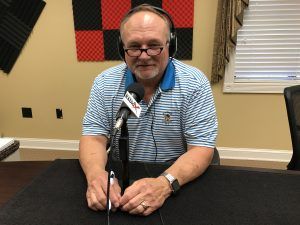
Left to Right: Rick Higgins and Warren McClellan

IT Help Atlanta with Rick Higgins:  Warren McClellan, McClellan & Associates CPAs

McClellan & Associates CPAs Founder Warren McClellan joins host Rick Higgins on “IT Help Atlanta” to discuss his firm’s special work with booster clubs and school systems, using the cloud to get client work done in a pandemic, and much more.  “IT Help Atlanta” is brought to you by TeamLogic IT, your technology advisor.

Warren McClellan, McClellan and Associates, CPAs

Warren McClellan

Warren McClellan is the Founder and CEO of McClellan & Associates CPAs. He has been a Certified Public Accountant for over 30 years, many of which he spent working with an international CPA firm providing services to a number of Fortune 100 companies. Warren observed the high demand for small CPA businesses that could access their accounts on a daily basis, like the largest companies could. This led him into creating McClellan & Associates CPAs.

​McClellan & Associates CPAs LLC was created in 1992 to provide reliable accounting services to individuals and corporations across all industries. The firm offers a wide range of services, many of which most accounting firms are unwilling or unable to provide. The professionals at McClellan & Associates strive not only to provide exceptional tax and accounting services, but to also build lasting client relationships through one-on-one guidance and counseling. The firm is a small team of CPAs, an Enrolled Agent, and financial experts who are always willing to go the extra mile for their clients’ accounting needs.

When Warren is not in the office or visiting clients, he will most likely be traveling with his wife, bike-riding, or grilling his infamous barbecue ribs. Warren also enjoys spending time with his children and grandchildren.

Visit the McClellan & Associates website to learn more.

About the Show

“IT Help Atlanta” profiles small to mid-market businesses and highlights how those companies use technology to succeed. An archive of previous shows can be found here.

About Your Host

Rick-Higgins-2019Rick Higgins is Owner and President of TeamLogic IT of Dunwoody, GA. Rick’s firm is part of a national network of locally-owned service businesses, providing comprehensive IT services to the small-medium sized business market.

They offer managed service for networking, cyber security, data and email, as well as hardware and software support in addition to a variety of consultation and preventative maintenance services. Rick’s personal and corporate philosophy is simple: Stand up, be bold, and tell the truth.

Connect with Rick on LinkedIn and Twitter, and follow TeamLogic on Facebook.

Show Transcript

Rick: Welcome everyone to the “IT Help Atlanta” radio show, the show that profiles small, and mid-market businesses and highlights how those companies use technology to succeed. “IT Help Atlanta” is brought to you by TeamLogic IT, your managed services technology advisor. Specializing in cybersecurity, cloud, and business continuity solutions, TeamLogic leverages cutting-edge technology to solve all types of business problems. Go to ithelpatlanta.com for audio archives of this radio show and to learn more about our sponsor, TeamLogic IT. I’m your host Rick Higgins. And today’s honored guests is Warren McClellan, the owner and founder of McClellan & Associates CPAs, located in Duluth and Johns Creek, Georgia. Welcome, Warren. How are you?

Warren: I’m great, Rick. Thank you so much for having me today.

Rick: We’re really glad you’re here. And we really appreciate you making time to come spend some time with us on the show. Warren, tell us who you are and what do you do?

Warren: Well, I’m Warren McClellan, I’m a CPA and have a practice that’s located in Duluth and Johns Creek. And it’s really a small business firm that’s focused on consulting in tax for individuals that own the businesses and individuals with complicated tax situations.

Rick: That’s great. Warren, give us a success story, maybe something that would be interesting of how you solved a tricky problem or how you helped someone. It doesn’t have to be anything recent or something that comes to mind that you’re really proud of.

Warren: Yeah, Rick, thank you. I mean, one of the things that we do is we work with a lot of nonprofit organizations as well as businesses and individuals. And we work with school systems around the state. And they hire us to speak to their booster clubs, and help the parents and it’s one of the things I’m very proud of what we do is that we help the parents to…well, along with a partner of mine help the parents to provide the extra stuff that the school systems can’t provide. And nonprofits are very complicated, and we try to break that down and help them establish and maintain those booster clubs. And we’ve had a lot of success in that area. And one of the things that I like is how it affects the children in their sports and in their extracurricular activities. So we do a lot of that and I feel like, because we do it so much around the state, we’ve made quite an impact on these children. Of course, right now with COVID this year, there’s not been a lot of activity in the spring, but I’m sure that as life gets back to normal, that will crank back up as well.

Rick: Warren, definitely I wanna circle back around and, you know, dive deeper on talking about COVID and how that’s affected your business. But can we unpack a little bit more about this new thing that you’re doing with nonprofits, because that’s not your main line of business, right? This is something that you’re dealing with another partner, in addition to your main CPA firm, correct?

Warren: Yeah, Rick, it really is. And basically what happened was my partner, Steve Kosmala and I, we’re parents. And we had kids and a new school didn’t have a booster club. And we looked around as to how to establish this thing right for their activity. And we started looking around, and we realized that a lot of people weren’t doing it right. And so we set it up properly, organized the parents, and developed a really good booster club and got that started and got the attention of Gwinnett County public schools and they started getting us to help them speak with their booster parents and help them work with that. And now it’s kind of gotten attention of a lot of people around the state.

We also help people with other nonprofits. And it’s kind of expanded and morphed to that, and we do a good bit of speaking as well, on governance, on how to be a board member. What you need to know before you go on to a board, and what you should really expect if you’re on a board, and in many ways is to give back to the team. [inaudible 00:05:32] obviously, we get paid in most situations, but really, we feel like it’s a huge impact for the community and it’s had an impact on the tax practice as well because a lot of these nonprofits come back to the tax practice and a lot of CPA firms don’t really operate that much in the nonprofit arena. They do it because they have to. They have a kid on the booster club as we did and they dabble in it, but my staff has kind of embraced it. And we do a lot of nonprofit accounting as well as significant corporate and individual accounting and tax.

Rick: I see why you’re proud of it, man. I understand it. And by the way, for the listening audience, full disclosure, Warren and McClellan & Associates is a client of ours at TeamLogic IT. I wanted to disclose that. So I do know a little bit about this line of work and this area of expertise, and it’s really a specialty. I don’t know anybody else that’s doing what you guys are doing in that area, Warren, do you?

Warren: I really don’t. Thank you, Rick. And a comment on being a client of yours, we have been a very happy client now for several years and that’s made a big impact on our firm. We’ve actually gone paperless under your assistance and it’s made a big impact on our being able to continue to operate this spring through what we all went through with COVID-19. So thank you very much.

Rick: Thanks Warren, for saying that one, appreciate it. So yeah, so here we are. It’s May 27th of 2020. We’re some 12 odd weeks into the, I guess the forced shut down or shelter in place rules and laws and whatnot. And strangely enough, these 12 weeks of…actually, maybe more, like, 14 or 15 weeks has been right in the height of the CPA busy season and busy time of the year. So I think more than anybody else, I’m hoping and I believe you’ve got a really interesting story to tell us about how COVID has affected your business. Did it really hit you at the most awkward time of all, didn’t it?

Warren: Oh, it really did. It was kind of a bizarre timing, not only for us, but for everyone. But our story with it is in mid-March was about where it hit, our firm as far as the corporate deadline had basically passed on March 15th. And so now we were looking full speed ahead at April 15th. And we have a deadline of about the end of the third week of March for our clients to get their information and it’s just not possible to adequately staff to do all the returns in the first two weeks of April. So we asked that our clients and through years we’ve helped them organize, get us everything that’s possible by about the third Friday in March. And that was about the time all of this hit. So we had everything in place that we were going to get done for the season.

Some of our employees went home and worked from home. Thanks to Rick and his team being able to make that possible and jumped through the hoops for us. But there were some of us working here. We didn’t allow clients in the office and we just worked away and finished our tax season pretty close to normal. Now what was really different was two things that happened. One was normally, the second week in April we would spend trying to get extensions for people. Well, that sounds pretty easy. You know, you just file the extension and you’re done. But for most of our clients, it’s a lot more complicated than that because the extension extends the time to file but not the time to pay. So you have to spend a good bit of time helping people organize and come up with a reasonable estimate of what they need to pay, communicate back and forth to get that information. Obviously, during that time, we don’t have the information. And so we’re working back and forth to do the best we can, communicate back to the client, help them figure out what they can pay and how they can pay. And that actually went away this year, and we’re working on it now. And a lot of those returns I think will be filed by the July 15th. So that was really the first thing that was the big change, was that second week in April not being so horrendous, jumping the hoops to get the extensions done.

Rick: Got you.

Warren: The second thing that had such a big impact on that was all the new legislation. And in particularly the PPP loans, and that’s really ongoing now. So first of all, we had to help our clients or we were asked to help our clients, many of them gathered the information to file for the PPP loans. We were kind of a central focus of information on this bank’s doing this, the bank’s doing that, how do we do it? You know, who got what and when? And then came down the, “Oh, do you really need it?” You know, if you don’t need it, you shouldn’t have got it. Maybe you should pay it back. Well, most of our clients, ultimately that came out and that if your loan was under $2 million, you have a safe harbor on that. Of course, you needed it. If your loan was over $2 million, then you’re going to have to do some serious justification and perhaps you should consider giving the loan back. So that made it very complex. So then we know there’s forgiveness of these loans if they’re spent right.

Well, they were required to give us the regulations from the SBA and the Treasury, within a month of when that loan was signed, which would have made that due about April 26th. So we got that information, very timely on about May 15th or so. So there were a lot of people that had eight weeks to spend the money and then it was really unclear as to how to spend that money in order to effectively get it forgiven.

And so now many of our clients are in certainly the second half of that eight-week period, I think most of them are. And so are there things that they need to do to appropriately spend that money so they can ensure forgiveness? And what are the calculations of the forgiveness? Which, again, we just really got last week. So we’re going through our clients and helping them do preliminary calculations based on what they’re spending and what they’re doing to make sure that they get that forgiven. So that along with all the new retirement rules that are out there, and all the other things, as well as the stimulus checks, where’s my stimulus check? All of those things, we were taking a million calls. So that actually made it very exciting. And while we didn’t always have the answer, we tried to maintain the latest information, so that when people called, we could help them and help them get on top of that. And so it certainly made it a very exciting year for us and hopefully, business gets back to normal and we’re all back to living our normal lives.

Rick: Well, everything that you just said, the thing that I just can’t get my mind wrapped around is how much of a moving target everything was that you were involved in, in your area of expertise and service to your clients. I mean, you were fielding calls non stop yet the answers were, again, a moving target almost constantly, right?

Warren: Absolutely. It really was. And my staff did great too. We would sit, and we would meet, we would talk things through. We watched videos from lots of law firms. We studied this thing. And again, it was very much a moving target and we were working during tax season. And some people were at home and some people were here. And so the good thing about it was, there really wasn’t much else to do during that time but work. So we all just buckled down and worked. And all the people talking about being bored, we just didn’t have that problem.

Rick: Well, good for you. And I guess the million dollar question then is do you think that the target’s done moving at this point? Is there going to be more guidance coming out with respect…I guess I’m focused on the PPP with respect to that question. Do you think that we’ve settled down on…?

Warren: No. I think we’re close on what we have on the PPP loans, but Congress is now considering making some changes that hopefully are just good changes and helpful changes, like considering changing the length of time to spend it from 8 weeks to 16 weeks. Again, that’s only a consideration. It is not a fact yet, but I think there will be some more things happening and, you know, I wouldn’t be surprised if there were more loans. I think that would be very helpful to small business. I think it was a very good law, at least for PPP loans because the clients that I’ve been involved with, were able to keep people employed during a very difficult time. Medical practices, for instance, have really struggled because, okay, they could do video appointments and people were putting things off. And I think overall, most people really their revenue was down, and the PPP loans enabled them to pay the rent, pay their utilities and most importantly pay their employees. So I’m a big fan of what was done there.

Rick: Okay, great. Switching gears with you a little bit, you had mentioned about going paperless. And I’m not sure if you mentioned cloud or not. I would like to dive a little bit into that because the, you know…part of our focus on the show is to talk about how small businesses use technology to succeed. Can you talk about, say life before the cloud solution and then life now with the cloud solution? What that means to you and what it’s been able to facilitate for you, whether it’s, you know, working from home or whatever?

Warren: Oh, absolutely. Rick, I appreciate the question. I honestly admit that has meant and means so much more to us than being able to work from home. Obviously, that’s a big deal, but being a CPA firm, we’ve just been all about the paper. And to say that we’re 100% paperless today is not really true. We’re certainly still paperless-ish and we may never be 100% paperless. But it certainly…

Rick: I like that one.

Warren: Thank you.

Warren: It’s certainly been a big boon to our business. So we’ve had a huge file room that’s actually a double office, but the room, the wall between was taken out and that the huge file were in here, and it has just been absolutely full, and we can keep about four years’ worth of information. And we had also offsite storage, dramatic offsite storage, some of it going back 25 years. And so ultimately, we were able to scan all of that into the cloud and appropriately shred, dispose of it. And now we get rid of the offsite storage. And we get rid of the file room, although we’re still scanning a little bit in there, but it’s going away, freeing up two more office spaces in our office, which is nice. But the movement of information, the being able to wake up on Saturday morning and say, “You know what, I’d really like to work and I don’t wanna drive into the office,” I can go in there, you can pull up everything, being able to work on a client site. We go to a lot of corporate clients, and we have to take a big box of physical files and sit there to be able to open up everything. I go in now, with my laptop, get on the cloud, and I’ve got everything, I’ve got my desk there. So I can look at everything and work with the client. It’s so much easier to have this tiny, little laptop that I take everywhere and I can just go and get what I want. I do not have to worry about somebody packing my bag, and, “Oh, they forgot this tax return or they forgot to pack this for me.” If it’s all there, I can just go and get it.

I think the step up here has made us much more efficient. Obviously there have been inefficiencies through the years of getting there, but now that we’re there, our automation is so much better. And I think that we’re exploring the possibility of going to even further automation where when somebody brings us a 1099, there’s software and sometimes 1099s are 50 pages because they have brokerage statements, and so to be able to automate that and actually pull the information off the 1099 and put it directly to the tax return. And we were exploring that. And obviously, even when that’s done automatically, all that we will take out of it is the data process, the professional effort will still be there, but they won’t be spending their time [inaudible 00:21:25] 50 pages worth of data into a tax return. And so the efficiencies that we’re gaining allow us to be so much more consultative and less data crunches for people. And so we can help get the returns prepared and help our clients understand it and have the information to make good decisions.

Rick: More strategic and less tactical, I guess.

Warren: Exactly.

Rick: That’s great. Warren, thanks for that. That was a deep dive. That was just really a great answer to an interesting question. I have a couple more questions for you. We’ve got a little bit of a time limit, but we’ve got plenty of time if you’re willing to go into a couple more questions here. One that I always like to ask…

Warren: Absolutely, Rick, thank you.

Rick: Okay, thank you. Thank you. One that I always like to ask on every show is a special question is, what is an aspect about your business that people don’t tend to think about, that you wish people would ask you about?

Warren: Rick, what I’d really like people to ask me is how can I better understand my business or my personal situation? How can I…? What do I need to know, Warren, about the tax aspects, the accounting aspects that allow me to have better discernment and make better decisions? So for instance, when I got started maybe 25 years ago, I left a very large firm and started this firm. And so I started working with companies at that point. QuickBooks was brand new. And it was a new program and I embraced it very quickly and started helping clients get set up. And those days, most everybody had a computer, at least on a desk in their office, and they would use it to create invoices and do mailings. And I’m like, “Let’s upgrade this. If we’re gonna use QuickBooks, let’s have it at your site and have good real-time information,” because the environment that I come out of, which was Fortune 500, Fortune 100 companies I was working with in those days had real time information. So the idea was to help them get up-to-date data. And what was happening with a lot of them, they kept a check book with invoices, send it off to some bookkeeping practice who would send them back financial statements, they didn’t understand, they didn’t know how to read. They meant nothing to them, but they were done because they had to have them. And so it’s like, “Wait, let’s use this as a tool.” So I started working with several people and helping them to automate their accounting in house with support from me and from my staff. Then I started working with the owners and helping them to understand what they had, to be able to read the financial statements, and to be discerning about them, and to make management decisions out of that. So that’s really what I really like to do and what my staff likes to do is help our clients to understand the information. And many of those people that I work with so many years ago are still clients, and have been highly successful. And I would like to think and I think many of them would say that my firm contributed to that by helping them have a good foundation and helping them get the accounting system started right and helping the owners to understand and to be able to use the accounting information that they had.

Rick: You know, one thing that we say in our business at TeamLogic is that you can’t manage something unless you can measure it. And I know we didn’t come up with that. That’s probably something that one of your CPA predecessors or something back in time came up with. That’s the essence of what you’re talking about, right?

Warren: Right. Exactly.

Rick: You’ve got to be able to measure it to manage it. Great, great answer. Thank you. One more question, then we’re gonna give you a chance to talk a little bit about how folks can find you. But before we do that, it’s my favorite question of all time. And that is that, you know, 25 years in business as a founder and a small business owner, what do you like best about being a small business owner?

Warren: I really like and I’m most turned on about making a difference for people. I truly think that… And it’s a surprise. I set out to start a business and I didn’t really anticipate that. But now with so many clients, so many people through the years, I’ve been able to see and told of the impact that we make. And that is probably the biggest thing. And especially going back to even the booster clubs, the parents, being able to see people comfortably being able to do that. The school systems, understanding and having comfort that their parents have the information that they need. The small businesses, helping them to make good decisions, helping them to have a good base. And the individuals that we serve, with their accounting and financial planning, helping them to do that and to have good information and make good decisions and feel like that their accounting is a good base for them. So I think that’s the biggest thing. And again, it was not something I anticipated but it truly turns me on to help people and make a difference.

Rick: That’s great, Warren. I just really, really love asking that question and that may be the best answer that I’ve ever gotten from anybody on that. Thank you for that. Thank you for…

Warren: Thank you for that.

Rick: So, we’re gonna go ahead and wrap up but before we do, tell the audience how to find you. How do we get in touch with you? How do we find McClellan & Associates CPA?

Warren: Well, probably the easiest way, the first thing is the website. And the website is fairly easy, and that it’s just mcclellancpa.com. But there are about 100 different ways to spell McClellan. So if you’ll let me do that I’ll put that out there so that you can find me and it is, mcclellancpa.com. That’s certainly the first place is to go to the website. If you’ll allow me I’ll also add our main telephone number as well. And we do our best to still answer the telephone. I can’t say that 100% of the time and during COVID we may have struggled with that but we try to answer it. Rather than dial 387 for this person, we try to get you a person at least on business days between 9:00 and 5:00. And that main phone number and it is for both offices is 770-497-9525. Again, 770-497-9525.

Rick: Thank you, Warren. Thank you for your appearance and time with us today. Folks, that’s a wrap. “IT Help Atlanta” is brought to you by TeamLogic IT, your managed services technology advisor, specializing in cybersecurity, cloud, and business continuity solutions. TeamLogic leverages cutting-edge technology to solve all types of business problems. Go to ithelpatlanta.com for audio archives of this radio show and to learn more about our sponsor, TeamLogic IT. Go to mcclellancpa.com, mcclellancpa.com to learn more about Warren’s wonderful company, McClellan & Associates CPA. For my guest, Warren McClellan, I’m Rick Higgins and join us next time on “IT Help Atlanta.”

Tagged With: Accounting, cloud computing, CPA firm, cpa's, enrolled agent, IT Help Atlanta, McClellan & Associates CPAs, Rick Higgins, TeamLogic IT, Warren McClellan

GNFCC North Fulton Banking Forum

May 28, 2020 by John Ray

North Fulton Banking
North Fulton Business Radio
GNFCC North Fulton Banking Forum
Loading
00:00 /
RSS Feed
Share
Link
Embed

Download file

Clockwise: Ken Davis, Anna Brumby, Andrew Bell, Danielle Cheung

GNFCC North Fulton Banking Forum (“GNFCC 400 Insider,” Episode 40)

The North Fulton banking industry has been in overdrive the past few months, processing PPP loans and generally tending to customers. Four experienced North Fulton financial professionals offer insights on recent SBA economic recovery loans and advice on how business owners should manage this environment. Renasant Bank sponsored this forum. The host of “The GNFCC 400 Insider” is GNFCC CEO Kali Boatright, and the show is presented by the Greater North Fulton Chamber of Commerce and produced by the North Fulton studio of Business RadioX®. Business RadioX is the Media Sponsor for this series of Economic Recovery Forums.

Moderator:  Ken Davis, Renasant Bank

Ken Davis

Ken Davis is the President of the Georgia Region for Renasant Bank. Ken is extremely active in the North Fulton community, including serving on the Executive Committee of GNFCC and formerly as Chairman.


Forum Panelists

Anna Brumby, UGA Small Business Development Center

Anna Brumby

Anna Brumby has 15+ years of experience as an influential business leader with a history of designing and executing successful marketing, branding and business development strategies. As a consultant for the SBDC, her areas of expertise include building business growth strategies, designing marketing strategies, competitive intelligence analysis, product development, go-to-market sales strategies and brand design.


Danielle Cheung, Bank of America

Danielle Cheung

With over two decades of experience in commercial banking, Danielle Cheung is Senior Vice President and Market Executive for Metro Atlanta Business Banking at Bank of America, which focuses on delivering financial solutions to middle market companies. Danielle is accountable for business strategy/execution, sales performance and revenue growth.


Andrew Bell, Affinity Bank

Andrew Bell

Andrew Bell is Vice President of Business Development with Affinity Bank. He has a 17+ year career in banking and has held jobs which include regional retail branch management over 12 branches, District Sales Manager for merchant services covering the states of Georgia, Alabama, and Florida, and most recently serving as a Commercial Banker in the North Fulton and Forsyth  County markets.


About GNFCC and “The GNFCC 400 Insider”

North Fulton Mayor's Roundtable
Kali Boatright, President and CEO of GNFCC

“The GNFCC 400 Insider” (formerly “North Atlanta’s Bizlink”) is presented by the Greater North Fulton Chamber of Commerce (GNFCC) and is hosted by Kali Boatright, President and CEO of GNFCC. The Greater North Fulton Chamber of Commerce is a private, non-profit, member-driven organization comprised of over 1400 business enterprises, civic organizations, educational institutions and individuals.  Their service area includes Alpharetta, Johns Creek, Milton, Mountain Park, Roswell and Sandy Springs. GNFCC is the leading voice on economic development, business growth and quality of life issues in North Fulton County.

The GNFCC promotes the interests of our members by assuming a leadership role in making North Fulton an excellent place to work, live, play and stay. They provide one voice for all local businesses to influence decision makers, recommend legislation, and protect the valuable resources that make North Fulton a popular place to live.

For more information on GNFCC and its North Fulton County service area, follow this link or call (770) 993-8806.

For the complete show archive of “The GNFCC 400 Insider,” go to GNFCC400Insider.com. “The GNFCC 400 Insider” is produced by the North Fulton studio of Business RadioX®.
Tagged With: Affinity Bank, Andrew Bell, Anna Brumby, Bank Of America, banking, Danielle Cheung, economic recovery loans, Ken Davis, PPP, renasant bank, SBA, SBDC, uga sbdc

Decision Vision Episode 67: How Do I Pivot My Marketing in a Covid-19 World? – An Interview with Branden Lisi, Object 9

May 28, 2020 by John Ray

pivot marketing covid-19
Decision Vision
Decision Vision Episode 67: How Do I Pivot My Marketing in a Covid-19 World? - An Interview with Branden Lisi, Object 9
Loading
00:00 /
RSS Feed
Share
Link
Embed

Download file

pivot marketing Covid-19
Branden Lisi, Object 9

Decision Vision Episode 67:  How Do I Pivot My Marketing in a Covid-19 World? – An Interview with Branden Lisi, Object 9

What are the marketing challenges presented by a Covid-19 world? What hasn’t changed? Brand strategist Branden Lisi joins “Decision Vision” to discuss these questions and much more with your host, Mike Blake. “Decision Vision” is presented by Brady Ware & Company.

Branden Lisi, Object 9

Branden Lisi is a Partner and Brand Strategist with Object 9. Object 9 was founded in 1992, at the dawn of the internet age. Over time, they’ve developed a unique set of experiences which enable them to balance the demands of traditional marketing and sales channels while staying ahead of the ever-changing digital landscape.

Their primary customers are manufacturers and franchise brands—both of which require a steady flow of new customers to be successful.

For more on Object 9 and their work, go to their website.

Michael Blake, Brady Ware & Company

Mike Blake, Host of the “Decision Vision” podcast series

Michael Blake is Host of the “Decision Vision” podcast series and a Director of Brady Ware & Company. Mike specializes in the valuation of intellectual property-driven firms, such as software firms, aerospace firms and professional services firms, most frequently in the capacity as a transaction advisor, helping clients obtain great outcomes from complex transaction opportunities. He is also a specialist in the appraisal of intellectual properties as stand-alone assets, such as software, trade secrets, and patents.

Mike has been a full-time business appraiser for 13 years with public accounting firms, boutique business appraisal firms, and an owner of his own firm. Prior to that, he spent 8 years in venture capital and investment banking, including transactions in the U.S., Israel, Russia, Ukraine, and Belarus.

Brady Ware & Company

Brady Ware & Company is a regional full-service accounting and advisory firm which helps businesses and entrepreneurs make visions a reality. Brady Ware services clients nationally from its offices in Alpharetta, GA; Columbus and Dayton, OH; and Richmond, IN. The firm is growth minded, committed to the regions in which they operate, and most importantly, they make significant investments in their people and service offerings to meet the changing financial needs of those they are privileged to serve. The firm is dedicated to providing results that make a difference for its clients.

Decision Vision Podcast Series

“Decision Vision” is a podcast covering topics and issues facing small business owners and connecting them with solutions from leading experts. This series is presented by Brady Ware & Company. If you are a decision maker for a small business, we’d love to hear from you. Contact us at decisionvision@bradyware.com and make sure to listen to every Thursday to the “Decision Vision” podcast. Past episodes of “Decision Vision” can be found here. “Decision Vision” is produced and broadcast by the North Fulton studio of Business RadioX®.

Visit Brady Ware & Company on social media:

LinkedIn:  https://www.linkedin.com/company/brady-ware/

Facebook: https://www.facebook.com/bradywareCPAs/

Twitter: https://twitter.com/BradyWare

Instagram: https://www.instagram.com/bradywarecompany/

Show Transcript

Intro: Welcome to Decision Vision, a podcast series focusing on critical business decision, brought to you by Brady Ware & Company. Brady Ware is a regional, full-service, accounting and advisory firm that helps businesses and entrepreneurs make visions a reality.

Mike Blake: And welcome to Decision Vision, a podcast giving you, the listener, clear vision to make great decisions. In each episode, we discuss the process of decision making on a different topic from the business owner’s or executive’s perspective. We aren’t necessarily telling you what to do, but we can put you in a position to make an informed decision on your own and understand when you might need help along the way.

Mike Blake: My name is Mike Blake, and I’m your host for today’s program. I’m a director at Brady Ware & Company, a full-service accounting firm in Dayton, Ohio, with offices in Dayton; Columbus, Ohio; Richmond, Indiana; and Alpharetta, Georgia. Brady Ware is sponsoring this podcast, which is being recorded in Atlanta per social distancing protocols. If you like this podcast, please subscribe on your favorite podcast aggregator, and please consider leaving a review of the podcast as well.

Mike Blake: So, today, we’re discussing the topic of should I change my my marketing approach or maybe should I pivot my marketing? Maybe that’s a better way to describe this. But as we’re recording this, it is now May 12th. And we are, depending on where you live, I guess maybe zero weeks to six or seven weeks and to this mass house arrest that we are quasi-voluntarily imposing upon ourselves, thanks to the slow moving horror movie, that is the coronavirus. And as we all know, in an effort to save society that, frankly, to some extent, we’ve sacrificed parts of the economy in order to do that but, thankfully, more and more thought is now turning to how do we then help the economy get off the floor after the stroke punch that we’ve given it?

Mike Blake: And we’re thinking about that on a micro level as well. I think I think more and more people, especially by the time you wind up listening to this, are going to be thinking about, “Okay, we’ve done the sheltering in place. We’ve flattened the curve. It’s time to go back to work in whatever format work looks like going forward.” And that’s, of course, like the virus itself, going to be evolving and is going to differ based on what you do for a living and where you do it.

Mike Blake: And I think kind of at the top of that hierarchy is marketing and sales because in my view, and we’ll see if our guest agrees, marketing and sales are going to have to change. They have to change for a couple of reasons. They’ve got to change because, to some extent, ways in which we are used to marketing simply are not on the table anymore. If you’re the kind of person that is used to going to a corporate function or conference and collecting 50 business cards, then following up on with lunches, and cocktails, and golf outings, and baseball games and so forth, that’s just not on the table. You got to do something else.

Mike Blake: And second, I think, almost every customer is thinking about how they buy in in a different way, right? And we’re going to have a later podcast to talk about that. and the working title is Meet Your New Customer, which is your old customer but under COVID. And this is an evolving topic, and it’s going to evolve every day, and people are having to learn new ways of doing things, new philosophies, new approaches. And I’m actually doing a webinar tomorrow. It will have been several weeks ago by the time you listen to this, but I’m about to do a webinar that talks about restarting that marketing mojo in a COVID/post-COVID/COVID-adaptive world. I really don’t know what the vocabulary is anymore. I give up.

Mike Blake: And so, I hope you are of like mind that you’re now starting to think of the future and how do we get this thing going again because regardless of your ideology, it’s inarguable that remaining dormant for years is economically and financially unsustainable. So, how do we jumpstart this thing? And so, I’ve I’ve invited, and I’m very grateful he has accepted, a longtime friend of mine that, frankly, I do not talk to enough and it’s my loss. But his name is Branden Lisi, who’s founder of Object 9. He’s run and owned Object 9 for 28 years and has really paralleled the world’s migration towards a digital economy, starting with more of an old school marketing bent to, then, evolving along with the rest the economy to developing and implementing expertise in the 21st Century digital side.

Mike Blake: His work with consumer brands, specialty manufacturers and franchises offers insights into the many challenges and opportunities facing today’s corporate leaders. In addition to Object 9, Branden also owns a candy store located in Columbus, Georgia. And I’m going to pause there for a second. And that’s really cool, not only because I like candy, and I do but if you’ve listened to this podcast for any amount of time, you know that I’ve had a lot of friends come on, longtime friends, and I’m very blessed and fortunate to have the kind of network that I have people that are interesting enough to interview and actually want to come on this thing. But I would say one out of three, I read the bio, and I learn something that I did not know about them. And that ranges from people who’ve written books and didn’t bother to tell me. And I think one of them, at some point, was Prime Minister of Tasmania. But there’s always some sort of secret life that comes out of these things, which is really cool. So, maybe we’ll have time to ask Branden about that.

Mike Blake: But anyway, when Branden is not solving some marketing problem, he can usually be found serving his community while wearing a scout leader’s uniform. Just like my wife, she’s a troop leader. And finally, on a personal level, he’s been happily married for over 23 years to a talented artist, Margaret, who is lovely. I’ve had the privilege of meeting her. And together, they’re busy raising two good sons. And Branden is also an accomplished musician in his own right. And someday, when this whole thing breaks down, we can get back together and jam again. Branden, thanks for coming on the program.

Branden Lisi: Thanks for having me, Mike.

Mike Blake: So, Branden, I want to get a very banal question out of the way first because I think there’s a lot of misconception about the nature of marketing. And I think, in particular, it frustrates marketing people that the question is still out there. But I think it’s extremely important because I see the mistake being made all the time. And that is, what is the difference between a marketing function and a sales function?

Branden Lisi: Well, I think the simplest answer is the job of marketing is to figure out what the customer wants or needs, and then help that company deliberate. Sales is a way of promoting the fact that you have it. It’s just one channel, just like social media is a channel, just like public relations or traditional ads or whatever it might be. Or a marketing speak level, the job of the marketing team is to figure out what differentiates or adds value to the customers’ lives in some meaningful and relevant way. It’s the job of the salespeople to go tell people about it. So, one function, marketing is more strategic in nature, and the other function is more tactical in nature. Now, salespeople will argue with you that what they do is very strategic, but the reality is their job is to communicate that value proposition through their channel.

Mike Blake: Well, it doesn’t have to be an either or, right? I mean, you can sort of have a slider, if you will, that’s a combination of the two.

Branden Lisi: Yeah.

Mike Blake: Go ahead.

Branden Lisi: Most people, I mean, Marketing 101, man, is find a need and fill it. It’s that way for thousands of years and it’s not going to change because of COVID-19. The channels will change, the customer behavior will change, the tools will change, the talent level of the people around you, whether it’s in-house or external, will change. But the simple premise that I’ve got to figure out what people need, and I’ve got to figure out a way to get it to them is not going to change. It’s been that way for a long, long, long time, and it’s going to be that way of a long, long time before.

Branden Lisi: The challenge, I think, for a lot of people and a lot of entrepreneurs, business leaders, corporate leaders is people come into a job, come into a role with a set of skills, and it’s very, very difficult to maintain current skills or evolve your skill sets while you’re trying to do your job at the same time. And most people that are productive and successful stay quite busy doing the job for which they were hired. The challenge is, whether you’re in marketing, or you’re in sales, or public relations, or advertising, or accounting, or whatever it might be is the tools keep changing, the channels keep changing, the customer mindsets keep changing it. If you’ve got to spend time thinking about all those changes and incorporating that change into your team, to your team skills, your team actions, then it’s just easy for people to fall behind.

Branden Lisi: You saw that back in 2008-2009. Everybody started cutting expenses and cutting headcount, just like they’re doing now. Things still had to be done. The machine keeps rolling on. If you’re into digital marketing, you have to produce content, and you have to distribute it, and you have to manage it, and you have to track it, and you have to process it. And that just gets spread out across a smaller group of people who have even less time to evolve their skill sets. So, it’s part of the challenge, I think, with marketing and the challenge with sales is just keeping up with that rate of change.

Mike Blake: So, you referenced the ’08-’09 recession. That’s a good segue because I want to talk about that. And maybe if you can remember back that far, the dot com bubble of 2000, two big recessions we had before this. Can you remember kind of how did marketing change then and other parallels or important contrast between how marketing changed in the wake of those recessions versus this one? This one truly is different an animal has a lot of us maybe think it is.

Branden Lisi: Well, 2000, I was still in Louisiana. I started my business in ’92. We’re founded in Baton Rouge. We had a lot of industrial manufacturing clients down there. And that section of the world is very much tied to the oil patch. And so, financial metrics around the dot com didn’t impact Louisiana and East Texas quite as much as they did, I think, here in Atlanta. Living through 2008-2009 though, the parallels between those two things is both cases, I would say there was a massive acceleration of the migration of digital. And the digital tools, the digital technologies, and the digital channels as people were trying to figure out how to get technology to generate more leads, create more opportunities or make more connections, or automate those connections with customers because they didn’t have the headcount, because in both cases, you just lost a lot of people that were doing things.

Branden Lisi: And that’s what’s happening today. We have many clients in the world of manufacturing or franchising because of kind of where we’ve built our client base that are using this opportunity to grow. Though they cut headcount, they still have to achieve the same goals or try to achieve the same goals, which means doing the same things, if not more of the things that need to be done. And whether it’s 2000 or 2008-2009, the same kind of dynamics have played out as the expectations have come down a little bit, but not necessarily in line with reality. So, people are just trying to figure out how to get it all done and trying to figure out how to cobble these tools together on top of everything else they’re doing.

Mike Blake: That’s really interesting. I hadn’t thought of that, but that observation makes a lot of sense to me that, at least, in the last recession, you did see an accelerated migration of technology, and you’re doing it here, and you may see it even more widespread because, now, as our food supply chain is being impacted, there’s going to be even more of a clamor to automate because machines don’t get sick and they don’t contaminate food. But that’s really interesting. And are you seeing that now too? And I guess we are, right? We work from home, maybe additional automation by the marketing side. Are you seeing that, too, where there’s now another push to see what can be automated or what can be leveraged in terms of marketing activities and technology?

Branden Lisi: Well, and the core function of marketing, it’s digital marketing, lead generation, which is generally how we get out. If someone says, “I want to get more business and I’m not happy with my sales team’s results, I need to augment that. I want to feed those beast some leads. And I need to figure out how to use digital technology, paid search, paid social, display, whatever it might be to try to get more eyeballs on my brand, start more conversations.” All that’s been done remotely for years and continues to be done remotely.

Branden Lisi: I think in the short term, what some of our manufacturing clients and franchise clients are dealing with is their salespeople can’t go out and do their job. I mean, I think you’re dealing with this as a salesperson or business development guy. I deal with that. You can’t get someone on the phone. You can’t get kneecap to kneecap with people anymore. So, you really are forced to use some technologies that right now, for the most part, is replacing face-to-face, which is the Zoom stuff that we’re using or GoTo Meeting or whatever the platform is. But the underlying marketing technologies behind paid search, paid social display, or if you’re into the long-term game of SEO content marketing or whatever, that’s not really changed.

Branden Lisi: I think where I see this particular crisis affecting the marketing piece is actually on the product development front. And people can’t pivot within six weeks or whatever, but I think where you see innovation is in the product portfolio around touchless, right? It’s not just the marketing stack that we’re talking about. It’s how do we deliver experiences where people don’t necessarily have to touch physically each other or touch things? And those businesses that are so dependent upon a group experience, a restaurant, or amusement park, or a live concert, or a sporting event are really struggling to figure out how to do this and involve the customer experience in a way that keeps people safe because in the past, the crisis was financial. People were going to lose their jobs. People lost their jobs. People-

Mike Blake: They lost wealth.

Branden Lisi: The financial hit, right?

Mike Blake: Yeah.

Branden Lisi: This is a hit where they’re still trying to figure out like who’s going to get sick and how many people are going to die? And six weeks ago, I told my entrepreneur group, I’m part of the EO network, which I know you’re familiar with, I predicted that there would be 20,000 to 50,000 people dying in the next couple of months, and I missed my mark. I predicted that, I think, on March 22nd. And I undershot that. We were over at 80,000 today, right? So, I think the challenge for, not just the marketers, but the companies that the marketers represent or work for is, how do we evolve our product mix to meet the needs of the customer?

Branden Lisi: Because a lot of times marketing gets kind of pigeonholed as – going back to our discussion with your marketing sales – as a marketer, my job is to figure out what we can deliver that people want. And how I communicate that are the tools that everybody assumes marketing. That’s what marketing is. It’s advertising, or sales, or whatever. But really, the job is, as I said, find a need and fill it in. The need now is to be able to create products and experiences where people don’t have to touch stuff. Or products or services that demonstrate or deliver real value.

Mike Blake: Well, let’s touch upon that too. I’m going to kind of rip up the script a little bit because I think that’s a really important point is the word, the term essential business came into the lexicon six weeks ago, right? And I can only imagine if, all of a sudden, the government, and by extension, I guess society, I’m going to keep the ideology out of it, just said you’re a non-essential business, right? And we’re seeing that Elon Musk is already pretty pissed off about this. He’s threatened to move out of California. And as of this podcast, he’s basically given the middle finger to the California government and opened his factory anyway. So, we’ll see what happens there.

Mike Blake: But the notion of what’s essential, right? I think that’s something that now requires a lot of thought. I think it requires a lot of thought not just in what are you offering to the market. And as you’re saying, let me kind of paraphrase back to you, you tell me if I’m crazy, but at the end of the day, you can only market well something that does, at least, some fundamental demand for the market, right? If nobody wants or needs it, the best market in the world, and I don’t know who is in the marketing hall of fame, maybe you or I don’t know, right? But even then, they’re not going be able to do that much with it.

Mike Blake: And I was thinking about this yesterday because I’m starting to write a paper on working capital and. And one of the things that I’m thinking about and I think you’re seeing is companies are also simplifying their product lines. You can’t afford to keep the marginal products going just because, now, you feel like that’s what creates … or at least I think this way, that creates a complete product line. I think, now, in terms of preserving working capital, in some cases, sort of cutting off the limb in order to save the body, it’s not just about staff reductions, but it’s also got to be about product reductions that that product that generates one percent of your process but consumes 10 percent of your time of working capital, that’s part of the equation too, isn’t it?

Branden Lisi: It is. I think so much of that though varies from company to company and culture to culture. In smaller companies, where there is a lot of emotional attachment to the product, for example, it’s your baby, it’s hard to let it go, it’s hard to pivot. Sometimes, it’s hard to see the forest for the trees. In larger companies, sometimes, there’s just momentum that you’re fighting. And also, fear. And I would say that’s kind of, I think, the biggest driver right now that I look at and see that paralyzes people is the fear of uncertainty and doubt about if they make the wrong decision about pivoting. And so, they just don’t do anything. And so, if they kill that product, and then someone else become successful with that product line, it makes them look bad, right? It’s a little sort of fallacy of sunk cost. I think this plays into it, use a gambling analogy.

Branden Lisi: But really, it varies so much from client to client to client in terms of what drives that. But I would agree with you and say companies have to take a hard look at what they’re manufacturing, are they actually making stuff that people want. I used to use this analogy of kind of trying to explain differentiations. You can make the best green grams on the planet, but if everybody wants to draw fire engines, someone’s going to buy your green gram, right? People want to buy what they want to buy. And the types of wealth and luxury and excess, they’ll buy more things than they would when times get lean.

Branden Lisi: And regardless of what’s going to happen in the next year or two, I think you’ve been around long enough to know and lived long enough life to know that this is really unparalleled, right? I don’t think that this is even close to being a 2008-2009 kind of thing or certainly a 2000 dot.com kind of thing because it’s hitting everything, right? It’s not one or two sectors. It’s literally every aspect of your life is being changed and it’s introducing not just product discussion issues, but risk discussion issues.

Mike Blake: Yeah. It’s World War II, the Great Depression, and the Spanish Flu Pandemic all rolled into one nice little burrito.

Branden Lisi: Yeah. And he other part of it too, and I mean, I’m old enough to live through the early stages of AIDS because I graduated high school in 1984. And back then, I mean, nobody really knew what caused it, how you get it. It had some pretty horrible ramifications. It turns out being sexually transmitted or through blood transfusions, it wasn’t this very virulent. But there is the fear that I’m going to get this thing, the fear that my children, as a parent, that’s my big fear, my kids are going to get this and get sick.

Branden Lisi: And then, balancing that with the fear of, “Okay, I have a business. I have multiple businesses to run. And what’s the risk that I want to take on? Do I want to have my businesses open and take on the risk of health? Or do I want to keep my businesses closed and take on the risk of going out of business, which means everybody’s out on the street looking for a job, and has no health care, or whatever it might be? So, I mean, I made my decision a long time ago on all of this stuff because I’m not going to live my life in fear. But I think a lot of people are still grappling with those two very challenging things. I know I’ve gone off on a little bit of a tangent there, Mike. Sorry about that.

Mike Blake: Well, but I think it’s wrong. And it actually does segue into next question, which is I think what I’m wondering as a business owner and as an advisor is as I look at what’s going on today, how much of this is temporary? And there is a rubber banding. And how much of this, whatever this is, I’m being deliberately vague, is permanent, right?. And talking, now, back about marketing, pivoting, how do you tell or how do you make … You don’t tell. How do you make an educated guess that you can kind of live with that that says, “Okay, here are the three things that we’re probably just never going to do again. And let’s let’s kind of just move forward. Burn the ships and move forward. And here are the three things that we’re just gonna kind of put on ice or gonna put in the freezer for a year or two, but it’s gonna come back. So, we’re not going to completely forget about it. We’re just gonna move in the background because we don’t need it right now”? Does that make any sense?

Branden Lisi: Yeah, yeah. Off the top of my head, I think the uncertainty timeline is gonna be tied to, when can I go in and get a shot or take a pill and take away the threat of death, right? When does the fear go away?

Mike Blake: Right.

Branden Lisi: The thing that … and I have always been a student of history. Had I made a different choice in my life, I probably would have been a history professor. I mean, I still read a lot of history. One of the truths about all of this stuff that nobody really talks about is that the threat has always been there. This isn’t a new threat. In fact, millions and millions and millions of people are still dealing with the threat of malaria, and cholera, and dysentery, and dengue fever, and all of these other diseases. We’ve just been sort of this intellectually safe, financially safe health care bubble in the US for a long time thinking that we were invulnerable to all of this stuff. And Mother Nature reminded us that we’re not.

Branden Lisi: So, from the very beginning of all of this stuff, which I should say the first week as I thought through this, I always believed that if I lived hundreds of years ago, I would have been on one of those guys on one of those ships that would have been sailing to try to find the new world. And that had a hell of a lot more risk associated with it than this. I think, what people are going to realize the next … and people are already doing this. People have made the decision that they’re going to agree with Aristotle in philosophy that luck is when the arrow hits the guy next to you, and that they’re all immortal, and they’re going to go out, and they’re going to live their life, and that they’re not going to get sick, and they’re going to take their chances.

Branden Lisi: And that’s not driven … for some people, it’s gonna be driven by some political ideology. But I think for most people, it just comes with a rational, fundamental decision that it’s like, “I got to go live my life. I got to provide for my family,” just like every other generation of humanity has had to do going back to cavemen, right? It wasn’t a rational decision to go out with a spear and try to kill something. It was a risk. So, we’re still doing that.

Branden Lisi: I think in the short term, people who are afraid, going back to the fear issue, I think they’re going to stay away. They’re going to make different decisions. I think the people who’ve lost their jobs, 30 million people, ain’t that what it is right now, that’s a massive chunk. It’s 10 percent of the population of the US just lost their jobs.

Mike Blake: Right. 20 percent of the working population.

Branden Lisi: Lumping all the kids in, right?

Mike Blake: Yeah, well. And so-

Branden Lisi: How many more are not productive right now?

Mike Blake: Yeah. Well, yeah.

Branden Lisi: But going back to try to answer your question about the timeline and what’s going to be put on the shelves, I think, eventually, people are going to want to get back together again and do things together because we’re social animals. We always have. And we’re eventually going to feel more comfortable over time. There’s a lot of fear that’s being pushed out through the channels that people watch. There’s a lot of misinformation being pushed out through the channels that people read, which is also an interesting marketing case study in its own right now.

Mike Blake: Yeah.

Branden Lisi: And eventually people are going to have to make a decision based on what’s right for them. And I think people are going to go back to restaurants. I think people are going to go back to rock concerts. And I think people are going to go back and do the things they always used to do. But I don’t think, personally, it’s going to happen for the next couple of years to a regular degree until there is a magic pill because that’s kind of how Americans operate, at least. I can’t speak for the rest of the world. Americans will take a magic pill.

Mike Blake: So, it sounds like that you’re in the camp that we’ve got what we’ve got now, but this notion that we’re kind of never going back to that doesn’t sound like something you agree with. So, don’t completely cut off those marketing tools because at some point, you are going to want to go back into the attic, open up the chest, dust them off them, and come out again.

Branden Lisi: Yeah, I do. I think companies are going to want to go back, want to present their products in the most efficient way. And some of those people are going to go to trade shows to present their products to buyers. I think people are going to want to go back and live their life to a certain degree the way they’ve always lived their lives because it was a pretty good life. And if you believe the math, which math is all over the place but it’s somewhere around the neighborhood of 97 percent, maybe 95, maybe 98.3, I don’t know, bit the vast majority of people are not going to be substantially impacted by this if you believe the models. The reality, going back to your comment about flattening the curve, is for a percentage of people, they are going to be susceptible to this, and it’s going to be a bell curve within that group of people who go from being really sick to dying.

Mike Blake: Now, let’s say that, and I imagine you probably have clients that are facing this, if you have historically had success with a high, physical touch marketing approach, right, maybe it’s been through conferences and trade shows, maybe it’s not-.

Branden Lisi: Product sampling.

Mike Blake: What’s that?

Branden Lisi: Product sampling.

Mike Blake: With product sampling, right?

Branden Lisi: A lot of food and beverage in my day, right?

Mike Blake: Yeah. And now, that’s off the table.

Branden Lisi: Yeah.

Mike Blake: What are you telling your clients about transitioning? What are you telling your clients to do now?

Branden Lisi: Well, so, most of the clients that we work with right now are manufacturing companies. some sell direct B2B. Others go through distribution outlets or retail outlets and whatnot.

Mike Blake: Yeah.

Branden Lisi: Because you can’t go to a trade show, you have resources, you have budget, you have allocations. You can go online where people are, go find the eyeballs where they are, and start driving more traffic to your website, and investing more in a digital strategy. That’s not just because we do digital marketing. That’s where the eyeballs are. That’s where the customers are today. That’s one of the things I always advise clients is they want to spend their money where it makes the most sense.

Branden Lisi: So, for clients, the challenge when clients need to touch it or feel it, some equipment companies, these guys are engineers or construction people, they want to feel it, they want to touch it. . Right now, all you can do is create virtual experiences, and that’s not always going to be as easy. But it doesn’t mean that you can’t begin to build the pipeline and start working towards that. And that’s what a number of our clients have been doing is using this time to build the pipeline and establish relationships with people who may not be able to close everybody, but you can build the relationships, generate the lead, so to speak. The pipeline might be a little bit longer, but you could sure as heck make the top of the funnel fat right now, especially if you do some digital marketing because there are a lot of people out there trying to figure things out.

Branden Lisi: We have one client whose primary value proposition right now is that they can save you money on IT maintenance. Every company out there that’s got a massive IT spend is looking to save money. So, the value proposition of that particular company is excellent right now. We have another client that sells so much …  it is very dependent, historically dependent upon their retail distribution outlets. They’re using this opportunity to pivot more to a direct to consumer strategy.

Branden Lisi: And one of the things that they’ve balanced, I see this a lot, especially with manufacturers that sell through retailers, they’re afraid … or distributors, they’re afraid of upsetting that revenue cart and angering the money, and they don’t want to put their revenue at risk. But now, because that revenue has been inherently put at risk because people aren’t going into those retail stores, it’s given them an opportunity to go direct. And they’re not a client, but there’s been an interesting development recently. I don’t know if you pay attention to the movie industry, but some of the movies have been able to go direct to consumer now in terms of launching their movies through0.

Mike Blake: I saw that. AMC in particular, was really not happy about that. They went out of their way to attack one of the movie studios.

Branden Lisi: Right. And so, I’m a movie studio or I’m this person that manufactures a product, it’s like, “Well, you can’t sell this for me. I’ve got to take care of my core business. There are people out there that want my product. They’re not going to find it through you. So, I got to go find another way, right. Find a need and fill it. I can’t fill it that same way. I got to fill it a different way.” And that’s going to disrupt a lot of industries. I think the unsettling of established traditional distribution channels, retail and some of those experiential channels are going to take a big hit.

Branden Lisi: And I’m not going to say I’m predicting this exactly this way but while I like going to a movie theater and seeing certain movies, there is only a handful of movies that I really go, “I’m glad I went to the theater and saw that.” There’s a whole bunch of other movies out there that I’m perfectly happy to sit at home in my lovely home theater, and watch it, and pause it when I need to pause it or whatever I need to do. And I could see five years from now, movie theaters, being a little bit like the record stores in the late ’80s and early ’90s, one of those things that is just sort of a relic of a bygone day.

Branden Lisi: It’d be sad for somebody who enjoys going to movies occasionally, but for a movie theater or a movie company to be able to bypass that middleman, and save all that money, and go direct to consumers, and market directly to the consumer, and hit all those desktops and devices, or sell through Netflix or HBO or whatever might be is probably a heck of a lot more profitable. And so, I think, for a lot of customers right now in our space, both … well, let’s just stick with manufacturing, how to go directly to their customers and look at valuating the middleman is a big discussion point. And I see that happening not just in our business, but other businesses where people are beginning to question the middleman because in the margins that they really add value.

Mike Blake: We’re talking with Branden Lisi of Object 9 about changing marketing in a COVID environment. We’ve only got time for a few more questions. So, I want to pick the ones I think are of highest value at this point. And one I want to throw out there is that I think there’s a temptation on the part of many companies to pare back their marketing strategies because there’s a sense of, “Well, nobody’s buying. So, why should we bother selling?” Can you make an argument that this is a time that you could actually go, you could kind of go against the grain or go against the trend, and maybe spend more on marketing while your competitors are retrenching, and maybe strengthen your brand, relatively speaking, and gain some market share? What do you think about that thought?

Branden Lisi: I think you could spend more or you could just spend differently. It’s not a binary choice. Going back to what I said earlier about building the pipeline, you may not always be able to close every deal, but you could set yourself up so that when the economy does start moving again and people start making decisions, you’re in the catbird seat, so to speak, in terms of being the one with the relationship with the people ready to spend.

Branden Lisi: So, for those companies that really haven’t figured out how to do digital, instead of spending the money on some of their traditional venues, i.e. trade shows or whatever it might be, that are going to really bear fruit right now, reallocating that same amount of money towards building out the digital stack that you need or maybe adjusting the staffing resources and skill sets that you have or the mix of internal and external resources, the answer might not be you need to spend more money, though that certainly could be the case. But you certainly should be spending your money differently. And that’s where I think a lot of people struggle because they may not always know how to make those decisions. And that’s where people like us come into play.

Mike Blake: Now, social media, obviously, by necessity/default, is now dominating a lot of the marketing landscape necessarily. There are a set of best practices that were widely accepted and followed, say, prior to February 15th? In your mind, have any of those best practices changed or evolved now in the COVID world? Social marketing, is the best way to use it and leverage it any different now than it was?

Branden Lisi: Well, one of the things I’ve seen, which is … and I feel like maybe it’s just me because it’s getting a little overdone is the whole communicate with empathy strategy. So many people are focusing this message around compassion, and empathy, and whatnot that they’re not even communicating their value proposition of why people should care and buy. So, one one thing I would say is if you are engaged in social media, don’t forget the reason that you’re doing it, if you’re doing it for marketing purposes, is to drive traffic to your website to engage people. So, give them something to engage with and have a call to action, not just tell them that you can sympathize with the fact that they’re stuck at home taking care of their kids. So, that’s one best practice that I would say people need to get back to because I see a lot of marketing material that will not work, man. . It’s just it’s like there’s no way that this is actually going to be effective. But it might be making people feel good to put those messages out.

Branden Lisi: I think one thing that I would also say about social media, the best practice that I want everybody to take from all of this is if you can’t answer the question of who is on the other end of the communication very, very specifically, then you need to stop spending money on your social media. In fact, really, on all your marketing. And really figure out who your primary and secondary customers are. All the marketing, going back to finding a need and filling it, is understanding who that customer is. And I see way too many people, especially in the franchising space, throwing away money trying to attract franchisees, and prospects, and customers without really even understanding who the primary audiences are. And the more nichey, your business is in terms of B2B or whatever, the more specific and more targeted you need to be.

Branden Lisi: So, again, the answer, going back to your comment about should you be spending more, you should be spending more wisely and maybe you need to be spending differently. But absolutely, you need be doing it in a more targeted way.

Mike Blake: Branden, we’re running out of time, but I’m sure there are folks that are listening that had a question that we weren’t able to get to today. Assuming you’re willing to make yourself available, how can people contact you if they want to ask your question directly?

Branden Lisi: They can always reach me through LinkedIn. It’s spelled B-R-A-N-D-E-N L-I-S-I. It’s a good way to get me. You can get me via email that branden@object9.com, or you can go to object9.com and reach me that way. We have a contact form. Those are three really good ways to get all of.

Mike Blake: All right. Well, thanks so much for the conversation, I think there’s a lot of information our listeners are going to find helpful. That’s going to wrap it up for today’s program. I’d like to thank Branden Lisi of Object 9 so much for joining us and sharing his expertise with us. We’ll be exploring a new topic each week, so please tune in, so that when you’re facing your next executive decision, you have clear vision when making it. If you enjoy this podcast, please consider leaving a review with your favorite podcast aggregator. It helps people find us, so that we can help them. Once again, this is Mike Blake. Our sponsor is Brady Ware & Company. And this has been the Decision Vision Podcast.

Tagged With: Brady Ware, Brady Ware & Company, brand strategy, branden lisi, Covid-190, Decison Vision, marketing strategy, Michael Blake, Mike Blake, Object 9, pivot marketing strategy

Neeti Dewan, Global Platinum AdvantEdge

May 27, 2020 by John Ray

Neeti Dewan
North Fulton Business Radio
Neeti Dewan, Global Platinum AdvantEdge
Loading
00:00 /
RSS Feed
Share
Link
Embed

Download file

Neeti Dewan
Neeti Dewan, Global Platinum AdvantEdge

Neeti Dewan, Global Platinum AdvantEdge (North Fulton Business Radio, Episode 238)

Neeti Dewan joined the show to discuss her work as an outside CFO and business advisor, and also how she helps business owners themselves as an “Executive Yogi.” The host of “North Fulton Business Radio” is John Ray and the show is produced virtually by the North Fulton studio of Business RadioX® in Alpharetta.

Neeti Dewan,  CEO, Global Platinum AdvantEdge

Neeti Dewan
Neeti Dewan

Neeti Dewan, The Executive Yogi, is the author of the innovative and revolutionary business book, From Executive to Yogi in Sixty Seconds. The book has been hailed by one top executive “as the tool Corporate America has been waiting for to help motivate and retain its best employees”, while another has said that her book “teaches executives how to lead with passion and engagement towards profitability. ” Her next book will be out later this year, entitled High Level Leadership, Low Level Stress – How to win in business without losing your mind.

A community leader, Ms. Dewan is the Chair of the Atlanta Women on Boards 2020, serves on the Board at Harvard University, Kennedy School (WLB), and has served on the Board of the National Association of Women Business Owners as CFO. She was recognized by the Los Angeles Business Journal as a “Woman Making A Difference”, and by the National Diversity Council as “Most Influential and Powerful Women” in Pennsylvania and Atlanta.  As the CEO of her own consulting firm, she received the “Small Business Accountant Advocate of the Year Award.”

A world-renowned efficiency, productivity, and work-life balance expert, who has worked for over two decades inside some of the nation’s top corporations like PricewaterhouseCoopers, KPMG, Ryan, and Aramark Corporation, Ms. Dewan is widely regarded as a top performer in a highly demanding profession.

Global Platinum AdvantEdge, LLC

With over 30 years of experience, Global Platinum AdvantEdge offers CFO, Accounting, and Tax Services and Business Transformation.

Visit their website or email Neeti for more information.


North Fulton Business Radio” is produced virtually from the North Fulton studio of Business RadioX® in Alpharetta. You can find the full archive of shows by following this link. The show is available on all the major podcast apps, including Apple Podcasts, Spotify, Google, iHeart Radio, Stitcher, TuneIn, and others.

Renasant Bank has humble roots, starting in 1904 as a $100,000 bank in a Lee County, Mississippi, bakery. Since then, Renasant has grown to become one of the Southeast’s strongest financial institutions with over $13 billion in assets and more than 190 banking, lending, wealth management and financial services offices in Mississippi, Alabama, Tennessee, Georgia and Florida. All of Renasant’s success stems from each of their banker’s commitment to investing in their communities as a way of better understanding the people they serve. At Renasant Bank, they understand you because they work and live alongside you every day.

Tagged With: efficiency, Executive Yogi, Global Platinum AdvantEdge, John Ray, Neeti Dewan, North Fulton Business Radio, productivity, work-life balance

To Your Health With Dr. Jim Morrow:  Episode 33, Covid-19 Hard Truths and Science, with Dr. Manny Rodriguez, Infectious Disease Services of Georgia

May 27, 2020 by John Ray

Infectious Disease Services of Georgia
North Fulton Studio
To Your Health With Dr. Jim Morrow:  Episode 33, Covid-19 Hard Truths and Science, with Dr. Manny Rodriguez, Infectious Disease Services of Georgia
Loading
00:00 /
RSS Feed
Share
Link
Embed

Download file


Infectious Disease Services of Georgia

To Your Health With Dr. Jim Morrow: Episode 33, Covid-19 Hard Truths and Science, with Dr. Manny Rodriguez, Infectious Disease Services of Georgia

Dr. Morrow discusses some Covid-19 hard truths and science with Dr. Manny Rodriguez, a Cumming-based infectious disease specialist. Myths on wearing face masks, a second wave, school reopening in the fall, are just a few of the topics covered in this episode. “To Your Health” is brought to you by Morrow Family Medicine, which brings the CARE back to healthcare.

Dr. Manny Rodriguez, Infectious Disease Services of Georgia

Infectious Disease Services of Georgia
Dr. Manny Rodriguez, Infectious Disease Services of Georgia

Dr. Manuel D. Rodriguez received his Bachelors of Science degree in Psychobiology in 2000 from Florida Atlantic University. He continued on and received his Master’s degree in Biomedical Science from Barry University in 2002. In 2006, he obtained both his Doctor of Osteopathic Medicine and Master’s of Public Health from Nova Southeastern University in South Florida. After completing his Osteopathic internship at Palmetto General Hospital in Hialeah, Florida in 2007 he moved to Mobile, Alabama where he completed his residency at University of South Alabama in 2010 and stayed on as Chief Medical Resident for an additional year. In 2011, he and his family moved to Washington, DC where he completed his fellowship in Infectious Diseases at The George Washington University in 2013.

Throughout his training he has received numerous teaching awards, and since joining IDSGA has been asked to lecture on Infectious Disease topics at both local and state conferences. He is currently Board Certified in Infectious Disease and Internal Medicine and has professional affiliations with the Alpha Omega Alpha Medical Honor Society, the American College of Physicians where he serves as a member of the Council of Young Physicians, the American Osteopathic Association, and the Infectious Disease Society of America.

In his spare time, he enjoys cooking, reading, hiking and spending time with his family.

More information is available at the Infectious Disease Services of Georgia website.

Questions/Topics Discussed in this Episode:

  • Mitigation as opposed to complete shut-down
  • On re-opening, what do you anticipate as far as the almost inevitable bump in cases?
  • What might a “second wave” look like?
  • Masks and social distancing
  • Dr. Fauci seems to go against the grain, if you can believe what you see on social media and YouTube.
  • Hydroxychloroquine
  • Remdesivir
  • Antibody testing
  • Saliva for testing?
  • Mutations versus Strains
  • Man-made or a Lab Accident?
  • Could this have been prevented?
  • What do you predict for schools in the fall?
  • Touching on the issue of so many unknowns

About Morrow Family Medicine and Dr. Jim Morrow

Morrow Family Medicine is an award-winning, state-of-the-art family practice with offices in Cumming and Milton, Georgia. The practice combines healthcare information technology with old-fashioned care to provide the type of care that many are in search of today. Two physicians, three physician assistants and two nurse practitioners are supported by a knowledgeable and friendly staff to make your visit to Morrow Family Medicine one that will remind you of the way healthcare should be.  At Morrow Family Medicine, we like to say we are “bringing the care back to healthcare!”  Morrow Family Medicine has been named the “Best of Forsyth” in Family Medicine in all five years of the award, is a three-time consecutive winner of the “Best of North Atlanta” by readers of Appen Media, and the 2019 winner of “Best of Life” in North Fulton County.

Dr. Jim Morrow, Morrow Family Medicine, and Host of “To Your Health With Dr. Jim Morrow”

Dr. Jim Morrow is the founder and CEO of Morrow Family Medicine. He has been a trailblazer and evangelist in the area of healthcare information technology, was named Physician IT Leader of the Year by HIMSS, a HIMSS Davies Award Winner, the Cumming-Forsyth Chamber of Commerce Steve Bloom Award Winner as Entrepreneur of the Year and he received a Phoenix Award as Community Leader of the Year from the Metro Atlanta Chamber of Commerce.  He is married to Peggie Morrow and together they founded the Forsyth BYOT Benefit, a charity in Forsyth County to support students in need of technology and devices. They have two Goldendoodles, a gaggle of grandchildren and enjoy life on and around Lake Lanier.

Facebook: https://www.facebook.com/MorrowFamMed/

LinkedIn: https://www.linkedin.com/company/7788088/admin/

Twitter: https://twitter.com/toyourhealthMD

The complete show archive of “To Your Health with Dr. Jim Morrow” addresses a wide range of health and wellness topics, and can be found at www.toyourhealthradio.com.

Tagged With: antibody testing, COVID-19, Dr. Jim Morrow, hydroxychloroquine, infectious disease, Infectious Disease Services of Georgia, infectious diseases, Jim Morrow, masks, mitigation, Morrow Family Medicine, Remdesivir, saliva testing, second wave, social distancing, To Your Health, To Your Health With Dr. Jim Morrow

WellStar Chamber Luncheon Series: Education with Dr. Mike Looney, Fulton County Schools

May 26, 2020 by John Ray

Dr. Mike Looney, Fulton County Schools
North Fulton Business Radio
WellStar Chamber Luncheon Series: Education with Dr. Mike Looney, Fulton County Schools
Loading
00:00 /
RSS Feed
Share
Link
Embed

Download file

Dr. Mike Looney, Fulton County Schools

WellStar Chamber Luncheon Series:  Education with Dr. Mike Looney, Fulton County Schools (GNFCC 400 Insider, Episode 39)

Dr. Mike Looney, Superintendent of Fulton County Schools, briefed attendees of the WellStar Chamber Luncheon Series on fall school reopening scenarios, lessons learned this past spring, and much more. It’s must listen for parents, students, businesses, and all stakeholders in Fulton County Schools. The host of “The GNFCC 400 Insider” is GNFCC CEO Kali Boatright and the show is presented by the Greater North Fulton Chamber of Commerce and produced by the North Fulton studio of Business RadioX®. John Ray and Business RadioX was the media sponsor for this event.

Dr. Mike Looney, Fulton County Schools Superintendent

Dr. Mike Looney joined Fulton County Schools after serving as Superintendent of Williamson County Schools in Tennessee, where he was named 2015 Superintendent of the year by Tennessee Organization of School Superintendents (TOSS).

He earned his Bachelor’s Degree in Business Management and Master’s degree in Education from Jacksonville State University in Alabama. Dr. Looney earned his Educational Specialist Degree and Doctorate in Educational Leadership from the University of Alabama.

Dr. Looney’s work has been presented for regional and national audiences on a wide range of educational and leadership topics.

He has served on several distinguished panels including President George W. Bush’s National Reading Leadership Panel in Washington D.C.

Dr. Looney also served as Superintendent of the Butler County School District in Alabama. Under his leadership the school district realized significant student achievement gains, improved the graduation rate, and established the district’s first magnet school. In recognition of his work there, he was selected as Greenville, Alabama’s Citizen of the Year in 2008.

Before arriving at Butler, he was Assistant Superintendent for Curriculum and Instruction in Montgomery Public Schools. Under his leadership, the district of 61 schools and 31,000 students received national notoriety for its improvement in reading achievement scores.

Dr. Looney, a public educator since 1994, has also served in the roles of classroom teacher, assistant principal and principal. During his tenure as principal, his school was recognized for closing the achievement gap for underprivileged and minority students. His school was highlighted at both the state and national levels and was named a National Title I Distinguished School.

Prior to entering the field of education, he served as finance manager for a privately-held corporation with fifty employees in Anniston, Alabama. His responsibilities included corporate finance, marketing, and human resource management.

Dr. Looney is a military veteran having served for seven years in the United States Marine Corps before being honorably discharged with a service-related injury. His military service was distinguished by four meritorious promotions which included his being selected as the Marine of the Year for MCRS Montgomery serving Alabama, Mississippi and Florida. In addition to other medals and ribbons, Dr. Looney was the recipient of the Navy and Marine Corps Achievement Medal. His military duties took him all over the world and included a six-month tour on the USS Raleigh with the 2nd Marine Division, II Marine Amphibious Force. He is the father of four grown children.

About GNFCC and “The GNFCC 400 Insider”

North Fulton Mayor's Roundtable
Kali Boatright, President and CEO of GNFCC

“The GNFCC 400 Insider” is presented by the Greater North Fulton Chamber of Commerce (GNFCC) and is hosted by Kali Boatright, President and CEO of GNFCC. The Greater North Fulton Chamber of Commerce is a private, non-profit, member-driven organization comprised of over 1400 business enterprises, civic organizations, educational institutions and individuals.  Their service area includes Alpharetta, Johns Creek, Milton, Mountain Park, Roswell and Sandy Springs. GNFCC is the leading voice on economic development, business growth and quality of life issues in North Fulton County.

The GNFCC promotes the interests of our members by assuming a leadership role in making North Fulton an excellent place to work, live, play and stay. They provide one voice for all local businesses to influence decision makers, recommend legislation, and protect the valuable resources that make North Fulton a popular place to live.

For more information on GNFCC and its North Fulton County service area, follow this link or call (770) 993-8806.

For the complete show archive of “The GNFCC 400 Insider,” go to GNFCC400Insider.com. “The GNFCC 400 Insider” is produced by John Ray and the North Fulton studio of Business RadioX®.

Tagged With: Dr. Mike Looney, Fulton County School System, Fulton County Schools, GNFCC, greater north fulton chamber, Greater North Fulton Chamber of Commerce, Kali Boatright, North Fulton, North Fulton Schools, WellStar, Wellstar North Fulton

GNFCC North Fulton HR Forum: Re-engaging Employees

May 21, 2020 by John Ray

GNFCC HR Forum
North Fulton Business Radio
GNFCC North Fulton HR Forum: Re-engaging Employees
Loading
00:00 /
RSS Feed
Share
Link
Embed

Download file

GNFCC North Fulton HR Forum: Re-engaging Employees (“GNFCC 400 Insider,” Episode 38)

The pandemic-induced business environment has created a host of unique HR challenges, including managing work at home employees, interviewing and hiring virtually, and providing a safe environment for employees returning to the workplace. Five leading North Fulton-based HR professionals contributed to a GNFCC HR Forum panel discussion on these topics and much more. The host of “The GNFCC 400 Insider” is GNFCC CEO Kali Boatright, and the show is presented by the Greater North Fulton Chamber of Commerce and produced by the North Fulton studio of Business RadioX®. Business RadioX is the Media Sponsor for this series of Economic Recovery Forums.

Moderator:


Misty Fernandez, Georgia Power

HR Professionals Featured in this Forum:

Michael Young

Michael Young
HR Site Head – JCM/JCD, R&D Quality & AVS
Alcon

Michael Young’s passion has been to connect with people by connecting to the hearts and minds of all those that he encounters.  As a child Michael always knew he wanted to be an Educator, he chose the corporate route where he finds fulfillment in Human Resources by connecting people with opportunity.  From his days in High School to now he has directed camp programs for Inner City Youth, served on boards for institutions that focus on education, and taught at Vacation Bible School.

In the corporate world, after developing talent in support of several departments across several industries, Michael began working with Alcon in 2016. Today Michael is the HR Site Head for John’s Creek where he continues to connect opportunity to Alcon’s vast talent pool to serve our patients to See Brilliantly.

Julie Smith

Julie Weith Smith, MBA-HRM, SHRM-SCP, SPHR
President and CEO
Custom Human Resource Solutions (CHRS)

Custom Human Resource Solutions (CHRS) was founded in 2007 and provides HR strategy and practitioner services to small and medium sized business across the country.  Julie Smith is the President and CEO of CHRS and has been practicing human resources for more than 30 years. She has earned a bachelor’s of science degree in business management and an MBA with a concentration in Human Resources Management, and holds a Professional in Human Resources (PHR-practitioner) and Senior Professional in Human Resources (SPHR-strategist) designation which identifies depth and breadth of HR knowledge on a national level. Julie’s high-level HR competence is credited through the Society of Human Resources Management (SHRM) through her achievement of the SHRM-SCP designation (Senior Certified Professional).

Julie has been recognized for industry achievements throughout her career including such honors as being named Top HR Professional and recognized as a Business Rising Star and top Women in Business – San Fernando Valley Business Journal. She also provides industry commentary on multiple media channels such as CNN Online, Georgia Public Broadcasting (GPB) and NPR. Julie was featured in Voyage Atlanta Magazine in their Trending category for 2017 and in the Atlanta Journal Constitution for Best of Atlanta 2018.

Jim Cichanski

Jim Cichanski
President and CEO
Flex HR,  Inc.

Jim’s experience includes operational HR management knowledge globally in 32 countries and has merged or transitioned well over 350 companies. 

Jim also spent 26 years in the Army National Guard achieving the rank of Colonel, was inducted into the Officer Candidate School Hall of Fame, and received numerous awards including the Legion of Merit.  Jim has served or is serving on several boards, was an inside board member of 17 companies and is an angel investor is start-up in several Atlanta firms.  

Jim was recognized by the North Fulton Chamber of Commerce as the Small Businessperson of the year and was also listed in Catalyst Magazine as 1 of 18 Companies, CEO’s in Atlanta would like to own. Outsourcing Gazette magazine listed Flex HR as the “Top Most Promising HR & Staffing Service Vendors of 2015”. Inc. Magazine in September 2008, 2012 and 2013 recognized Flex HR, Inc. as an Inc 5000 “Fastest Growing Privately Held Companies in America”. Jim is married to his wife for 47 years, has two daughters and 4 grandchildren.

In the past 2 months Jim conducted over 30 COVID-19 Zoom Webinars touching more then 5,000 small companies in helping direct the Human Capital aspects of this epidemic. 

Sonya Buckley

Sonya Buckley
Chief People Officer
Hire Dynamics

Sonya is a Staffing Industry Professional with over 20 years of experience in the Atlanta market. She brings a wealth of knowledge in Senior Executive leading Talent Acquisition, Leadership Development,Human Resources, retention strategies and building a best place to work culture. Sonya has a proven track record in professional recruitment, management, leadership development and succession planning.

Sonya specializes in “Top Grading” methodologies. She has built and transformed a talent acquisition organization resulting in an industry leading retention rate. She has built several innovative initiatives to build leadership depth and entry level apprentice programs. Sonya’s top human capital metric is attracting, engaging and retaining top talent.She has led leadership development and spearheadedEmerging, Growing and Transformation leadership programs to support the growth of Hire Dynamics.

With Hire Dynamics tripling in size over the past three years, she has been instrumental in building a best place to work culture in all the markets they serve.In addition, she works with clients to develop their leaders and culture.At Hire Dynamics, our believe is that “Every Experience Matters”. Her greatest success is building a workforce that delivers consistently a great experience for over 62,000 talent placed in 2019 and over1500 clients served. For the past 10 years, Hire Dynamics has been ranked in the top 2% in the staffing industry clearly rated net promoter program.

Sonya is active in the American Staffing Association (ASA) taking leadership roles inWomen in leadership and Staffing as a career. She served as President of the Georgia Staffing Association and was on the board for 5 years. She is a Penn State graduate.

Mark Bryan

Mark Bryan
Director, Field and Segment Marketing
Verizon

Mark Bryan is director – Field and Segment Marketing – Verizon Business Group for Verizon, the largest wireless provider with the nation’s largest 4G LTE network. In his role, Bryan is responsible for Marketing activities supporting the $12B Business Markets organization.

During his 14 years with Verizon, Bryan has held positions in the company’s Indirect Sales, Business Sales and Marketing channels as well as its Business Transformation organization.  Bryan is a member of the Greater North Fulton Chamber of Commerce’s Board of Directors and is the Chairman of the Board for Haiti Outreach.  He holds a Bachelor of Business Administration degree in Finance from Mercer University and is a certified Lean/Six Sigma Black Belt.

About GNFCC and “The GNFCC 400 Insider”

North Fulton Mayor's Roundtable
Kali Boatright, President and CEO of GNFCC

“The GNFCC 400 Insider” (formerly “North Atlanta’s Bizlink”) is presented by the Greater North Fulton Chamber of Commerce (GNFCC) and is hosted by Kali Boatright, President and CEO of GNFCC. The Greater North Fulton Chamber of Commerce is a private, non-profit, member-driven organization comprised of over 1400 business enterprises, civic organizations, educational institutions and individuals.  Their service area includes Alpharetta, Johns Creek, Milton, Mountain Park, Roswell and Sandy Springs. GNFCC is the leading voice on economic development, business growth and quality of life issues in North Fulton County.

The GNFCC promotes the interests of our members by assuming a leadership role in making North Fulton an excellent place to work, live, play and stay. They provide one voice for all local businesses to influence decision makers, recommend legislation, and protect the valuable resources that make North Fulton a popular place to live.

For more information on GNFCC and its North Fulton County service area, follow this link or call (770) 993-8806.

For the complete show archive of “The GNFCC 400 Insider,” go to GNFCC400Insider.com. “The GNFCC 400 Insider” is produced by the North Fulton studio of Business RadioX®.

Tagged With: Alcon, CHRS, Custom Human Resource Solutions, Flex HR, GNFCC, Greater North Fulton Chamber of Commerce, hire dynamics, HR, HR Forum, Jim Cichanski, Julie Smith, Kali Boatright, Mark Bryan, Michael Young, Sonya Buckley, Verizon

Decision Vision Episode 66: Should I Fire My Underperforming Employee? – An Interview with Peter Rosen, HR Strategies & Solutions

May 21, 2020 by John Ray

fire underperforming employee
Decision Vision
Decision Vision Episode 66: Should I Fire My Underperforming Employee? - An Interview with Peter Rosen, HR Strategies & Solutions
Loading
00:00 /
RSS Feed
Share
Link
Embed

Download file

fire underperforming employee

Decision Vision Episode 66: Should I Fire My Underperforming Employee? – An Interview with Peter Rosen, HR Strategies & Solutions

If I decide to fire my underperforming employee, how should I go about it? How do I mitigate the risks? Experienced HR professional Peter Rosen joins “Decision Vision” to discuss these questions and much more with Host Mike Blake. “Decision Vision” is presented by Brady Ware & Company.

Peter Rosen, HR Strategies & Solutions

fire underperforming employee
Peter Rosen

Peter Rosen is the Founder and President of HR Strategies & Solutions. Known for his ability to quickly build trust and credibility with his clients and colleagues, Peter Rosen, a thoughtful and practical human resources executive and consultant, has a unique capacity to understand and assimilate into a variety of corporate cultures at different stages of the corporate lifecycle. With over 25 years of experience in both domestic and international companies, he is able to tailor his approach to specific HR situations and translate his larger corporate experience into start-up and growing environments. His contagious enthusiasm and optimism make working with him a pleasurable experience. Peter’s easy-going manner and hands-on approach helps him connect with people, understand their needs, and gain buy in for strategies that strengthen both organizations and individuals.

Peter uses a practical, business-focused approach to HR issues based on both theory and experience. He has built human resources capability and the infrastructure to support it in a variety of environments, from start-ups to Fortune 500 companies in the financial services, consumer products, technology, healthcare, and staffing industries. He has held strategic roles in established companies like The Coca-Cola Company, SmithKline Beecham Clinical Laboratories, Norrell Corporation, Alexander and Alexander, Capital One Financial Services and TeamStaff. As the founder and owner of a boutique human resources consulting firm, he now focuses on helping growing companies establish and implement HR infrastructure and works with their senior executives on strategic HR issues.

An expert in strategic planning, employee relations, independent investigations of employee complaints, executive coaching, business development, culture building, and team building, Peter has made significant contributions to companies throughout his career and has enhanced both individual and team effectiveness. He has developed and executed strategic human resources action plans, improved executive teams’ communication and performance, led the successful integration of acquisitions, worked collaboratively with dozens of labor unions, designed and gained acceptance for new departmental organizational structures, created and implemented new benefits programs, and successfully led change initiatives.

Peter’s reputation is one of integrity, trust, innovation, and common sense, backed up by solid experience, a strong educational background, sound business judgment, and self-awareness. He possesses a Bachelor of Science in Industrial and Labor Relations from Cornell University and a J.D. from St. John’s University School of Law with an emphasis on employment law. Peter is a member of the New York and Georgia Bars and is certified in the Marshall Goldsmith Executive Coaching Process, the Prosci Change Management Process and Tools, and the Myers-Briggs Type Indicator.

Michael Blake, Brady Ware & Company

Mike Blake, Host of the “Decision Vision” podcast series

Michael Blake is Host of the “Decision Vision” podcast series and a Director of Brady Ware & Company. Mike specializes in the valuation of intellectual property-driven firms, such as software firms, aerospace firms and professional services firms, most frequently in the capacity as a transaction advisor, helping clients obtain great outcomes from complex transaction opportunities. He is also a specialist in the appraisal of intellectual properties as stand-alone assets, such as software, trade secrets, and patents.

Mike has been a full-time business appraiser for 13 years with public accounting firms, boutique business appraisal firms, and an owner of his own firm. Prior to that, he spent 8 years in venture capital and investment banking, including transactions in the U.S., Israel, Russia, Ukraine, and Belarus.

Brady Ware & Company

Brady Ware & Company is a regional full-service accounting and advisory firm which helps businesses and entrepreneurs make visions a reality. Brady Ware services clients nationally from its offices in Alpharetta, GA; Columbus and Dayton, OH; and Richmond, IN. The firm is growth minded, committed to the regions in which they operate, and most importantly, they make significant investments in their people and service offerings to meet the changing financial needs of those they are privileged to serve. The firm is dedicated to providing results that make a difference for its clients.

Decision Vision Podcast Series

supplier diversity program“Decision Vision” is a podcast covering topics and issues facing small business owners and connecting them with solutions from leading experts. This series is presented by Brady Ware & Company. If you are a decision maker for a small business, we’d love to hear from you. Contact us at decisionvision@bradyware.com and make sure to listen to every Thursday to the “Decision Vision” podcast. Past episodes of “Decision Vision” can be found here. “Decision Vision” is produced and broadcast by the North Fulton studio of Business RadioX®.

Visit Brady Ware & Company on social media:

LinkedIn:  https://www.linkedin.com/company/brady-ware/

Facebook: https://www.facebook.com/bradywareCPAs/

Twitter: https://twitter.com/BradyWare

Instagram: https://www.instagram.com/bradywarecompany/

Show Transcript

Intro: Welcome to Decision Vision, a podcast series focusing on critical business decisions. Brought to you by Brady Ware & Company. Brady Ware is a regional, full-service accounting and advisory firm that helps businesses and entrepreneurs make vision a reality.

Mike Blake: And welcome to Decision Vision, the podcast giving you, the listener, clear vision to make great decisions. In each episode, we discuss the process of decision making on a different topic from the business owner’s or executive’s perspective. We aren’t necessarily telling you what to do, but we can put you in a position to make an informed decision on your own and understand when you might need help along the way.

Mike Blake: My name is Mike Blake and I’m your host for today’s program. I’m a Director at Brady Ware & Company, a full-service accounting firm based in Dayton, Ohio, with offices in Dayton; Columbus, Ohio; Richmond, Indiana; and Alpharetta, Georgia. Brady Ware is sponsoring this podcast, which is being recorded in Atlanta per social distancing protocols. If you like this podcast, please subscribe on your favorite podcast aggregator, and please consider leaving a review of the podcast as well.

Mike Blake: So, today’s topic is, Should I fire my Underperforming Employee? And we’re getting back to a little bit to normal topics. We still do have a couple of COVID-related business topics that are along the way. But every once in a while, it is nice to, at least, sort of pretend that we’re back to normal. And at some point, this whole thing is going to end. We are going to return to work. We are going to reopen restaurants, and cafes, and bars, and hotels. And God help us, so to actually get back on cruise ships as well.

Mike Blake: But we do have businesses to run. And although something like a quarter of the economy, maybe almost a third has an effect and had the pause button put on on it, that still means that two-thirds or three-quarters of the economy is still running in some fashion. And my hope is that most of you that are listening are in that two-thirds to three-quarters that are still functioning. But if you’re not, we certainly wish you a speedy transition to whatever positive outcome awaits you over the horizon.

Mike Blake: And speaking of positive outcomes, today’s topic is, Should I Fire My Underperforming Employee? And why do I say that that’s a positive outcome? Well, we’re going to learn just how important it is to make a decision as to whether or not an employee is going to make it because one of the things you learn as you as you hire and manage people is that certain underperforming employees represent a disproportionate draw of management, time and energy, employee morale, and overall organizational effectiveness.

Mike Blake: And it actually reminds me of a verse from an Elton John song called Empty Garden, which was put out in 1982 as a song about the assassination of John Lennon. And one of the lyrics that song written by Bernie Taupin is “It’s funny how one insect can damage so much grain.” And an underperforming employee can indeed damage a ton of grain. If you have a hundred employees, and one person is just not making it, it’s more than a 1% in overall effectiveness of the organization.

Mike Blake: And this topic is is particularly poignant today because as I sit here recording this, or we sit here recording this on April 10th, we have seen something on the order of 12 million people in the last four weeks declare themselves unemployed. And that’s probably undercounting because the phone lines are jammed up like a talk show host basically, and you can’t get in. So, all of a sudden, the music stopped, and we found out there are a lot fewer chairs than there are people that want to fill them.

Mike Blake: And then, it’s hard to ignore the reality that almost four years ago, we elected a president, whether you love him or not love him, the fact of the matter is his claim to fame in the last 20 years has been the catchphrase, “You’re fired,” right? And I think that has created a lot of mystique around him and really shows just how important it is to fire people, the right people at the right time because I think a lot of the appeal of that catch phrase and the show, The Apprentice, is that everybody has worked with somebody in their career that just is desperately begging to be fired.

Mike Blake: And when they’re not, and when it takes a long time for that person to be fired, if they ever are, I mean, the Peter Principle would say that they’re promoted, but that person can be so toxic to the organization. And people who’ve had to live with, work around accommodates somebody who just is not a constructive part of the team, whether it’s due to personality, temperament, professional competence, or some cocktail of the three, that makes life miserable for people who come to a job every day that they otherwise like.

Mike Blake: And I think it’s that visceral connection with having to put up with somebody who doesn’t belong in the organization, but the people who are running the organization may not necessarily be as be close to that situation. And so, that scenario is allowed to fester. And therefore, when you see that play out on TV, I think there are a lot of people that sort of stand up and cheer. Now, I’ve never actually seen the show. I’m sort of going on on what I’ve heard about it, but I do think there’s something to that mindset and, we’ll see how it goes.

Mike Blake: Joining us today to help us kind of work through this is is Peter Rosen. And I’m so glad we have him on. And now I’ll introduce him formally in a second. But firing an employee is a traumatic experience, right? Even though it’s necessary. I think any cancer patient – and I have not been one, thank God – will tell you that that exercising and removing a tumor, particularly if it’s of any size, is a traumatic experience. It is painful. It can take a long time to recover from that. And even though it is necessary for the ongoing health of the body, it is still a difficult thing to do.

Mike Blake: And it probably should be a difficult thing to do. I don’t think it’s a good idea for businesses or employers to take a cavalier attitude to firing people. That’s not a good idea either because it creates a highly politicized environment in the organization. It leads to mistrust. It leads to management by fear. And management by fear can work for a small amount of time, but it generally does not work well in the long run. And I’m highly suspicious of anybody who claims that they’re very comfortable firing people. It usually means they’ve done that a lot. And if people find they have to fire employees a lot, the problem may not lie with the employees. But we’ll get to that in a second.

Mike Blake: So, joining us today is my friend, Peter Rosen, who is President of HR Strategies and Solutions, a boutique consultancy firm addressing the unmet human resource and organizational needs of companies from startups to large organizations. Human Resources Strategies and Solutions provides human resources, leadership and expertise. They enable growth, improve efficiency, and prevent problems. From human resource strategy development to human resource recruitment, they do it all. Their clients recognize the importance of having a strong culture resulting in an aligned, motivated and engaged workforce. They’re committed from the very top to doing the right thing and to doing doing things right.

Mike Blake: Known for his ability to quickly build trust and credibility with his clients and colleagues, Peter Rosen, a thoughtful and practical human resource executive and consultant, has a unique capacity to understand and assimilate into a variety of corporate cultures at different stages of the corporate lifecycle. With over 25 years of experience in both domestic and international companies, he’s able to tailor his approach to specific HR situations and translate his larger corporate experience into startup and growing environments. His contagious enthusiasm and optimism make working with him a pleasurable experience. Peter’s easygoing manner and hands-on approach helps them connect with people, understand their needs, and gain buy-in for strategies that strengthen both organizations and individuals. But he’s going to bring the goods today. Peter, thanks so much for coming on the program.

Peter Rosen: Oh, you’re very welcome. Thanks for mentioning that. I wasn’t going to miss this for for anything.

Mike Blake: So, before we get started, I noticed something today as I was preparing for the show. You and I have something in common, and that we are both big east guys. You actually hold a Law Degree from St. John’s University, do you not?

Peter Rosen: I do.

Mike Blake: So, you and I harken back to the days of big east basketball actually meant something. I’m a Hoya myself. So, we go back to the days of Chris Mullin and Patrick Ewing battling it out in the Big East. Later, Alonzo Mourning and so forth. But that was a different time. So, do you find that your law degree comes into play at all anymore with what you do in human resources?

Peter Rosen: Yes, absolutely. It was interesting because when my career got started, I was actually a trial attorney down here with the federal government, with the Equal Employment Opportunity Commission.

Mike Blake: Oh.

Peter Rosen: And I was a litigator. In a sense, litigating charges of discrimination brought by employees of companies like Georgia Power Company, a lot of the big organizations back at the time. And unbeknownst to me, there was another large corporation here called the Coca-Cola Company who was beginning to experience some of the strains of discrimination, affirmative action, and they were looking to start, at at the time, it was called an EO department. And somebody reached out to me, and I interviewed, and I got hired in the position, ended up being in the HR department, not the legal department. So, over the years, I have always kept up my legal knowledge. And I was a member – I’m, now, I’m inactive member of the bar because I get a lot of referrals from employment lawyers. And so, I don’t compete with them whatsoever. But I think my last five years at Coca-Cola, I was the head of HR for Europe and Africa. So, that’s how I got into the human resource piece of things.

Mike Blake: Well, I’ll say I did not know that. So, I’m glad you brought some color to that. So, you’re a bigger expert than I thought. So, again, thanks for coming on the program. The first question, I want establish kind of a foundation here for the rest of our conversation. And so, let’s start off with this. Why do companies find or managers find that they have to fire people?

Peter Rosen: You have about two hours for me to list the reasons why companies could decide to fire somebody.

Mike Blake: I’ve got the time if you do. It’s not like there’s a restaurant we can go get lunch at.

Peter Rosen: That’s why I have my coffee right here next to me. It could be anything from performance, a bad hire. The company made a mistake in hiring. It could be the person is a total jerk, which, by the way, is very often, the reason why companies would fire somebody. They could be toxic. They could be a bully. They are violating company policy. They could be sexually harassing. So, there are just so many reasons why a company would want to or choose to fire somebody.

Mike Blake: And the common thread among all those things is that they pose an effective, clear and present danger to the ongoing viability of the companies. Is that a fair way to wrap that up?

Peter Rosen: Yes. And the smaller the company, the bigger the impact. With larger companies, a lot of these toxic employees or poor performers may be in a particular department, the accounting department, marketing department. So, that’s the group that typically would be impacted, but it’s not the whole corporation.

Mike Blake: So, most the people that I interface with, work with, worked for, to a person, thankfully, I think they find it very difficult to fire people. We’ll come back to why that isn’t necessarily the best thing in the world. But does anybody find firing easy?

Peter Rosen: I would hope not, first of all. I would hope nobody finds firing-

Mike Blake: I am going to guess it’s the odd psychopath out there that just sort of just likes firing people, I guess. But I think people approach firing from a place of a lot of consternation, right?

Peter Rosen: A very insecure boss or ego-driven person, actually, would probably enjoy it. but it’s their only way to avoid conflict or avoid challenge because they’re insecure. That’s when they may like doing it.

Mike Blake: So, for those of us who are maybe – I don’t want to say those of us. It gets misinterpreted. What are the dangers or risks of firing somebody? I want to ask this sort of a two-dimensional perspective. One is, what do most people think the dangers and risk of firing someone is or are? And then, what are they in actuality?  Are the risks and dynamics of firing somebody, in actuality, do they meet up with kind of the anxiety that somebody feels before they’re going to pull the trigger on that?

Peter Rosen: It really depends on how the firing occurs. And there are risks to firing somebody. There are probably greater risks to not firing somebody if, in fact, it’s appropriate. And we can get into it later, the different ways you can accommodate somebody that you want to fire. But given our legal environment and the risks of that, there are ways to address it to minimize but not eliminate the risks.

Mike Blake: So, there’s a widely used expression of hiring slowly and firing quickly. I think I heard it coined out in Silicon Valley, but that may not necessarily be the origin. But can you describe kind of what that means? I’m sure you’re familiar with the expression. And do you agree with that philosophy?

Peter Rosen: I am familiar with the expression. I generally do agree with it. The most important thing is the hiring process. And I work with a lot of my clients on developing a more robust hiring process to really better assess candidates, to really understand what you are looking for for a person to bring to the organization. And we don’t slow it down, but we make it very robust. And I’m actually involved in the final interviews with a lot of my clients. And I also make it very clear that the CEOs and business owners agree that the hiring manager is the one that’s actually responsible for the decision to hire. What the process is doing is giving them more information and more data on which to make their decision. And they’re not doing it based on they just like the person or they’re referred by somebody. So, it’s a very thorough process.

Peter Rosen: So, that’s where the term comes, “Hire slow, fire quick.” Now, fire quick seems a little – I’m not sure I agree with that terminology, but I have been a student of terminations and firings pretty much my whole career. And there are studies out there too where when any time there’s a big change in an organization, or you ask a business owner or a CEO, “Okay, you’ve had a great career. What would you have done differently in your career? What would be one of the biggest mistakes or things you would have done differently?” And inevitably, it’s, “I should have gotten rid of certain people a lot quicker.”

Mike Blake: Now, interesting. On the hiring practice, I thoroughly agree with that practice. Even when I bring in somebody that is as junior, very junior in our organization, I still do like to have them meet a lot of people. And so, my colleagues do look at me like I’m an escaped mental patient when I’m using partner time to have them interview and spend a day for what is in effect an entry level position. But I agree with your observation. Just having different perspectives, different information, lots of information, I think makes the likelihood of a successful hire so much greater.

Mike Blake: And you also you also learn something about an applicant to when you take a slow hiring process, I think. And maybe this will be a different topic in a program, but I think you learn a little bit about how committed the employee is to pursuing the process, your learn about their patience, you learn about their mental toughness and their mental stamina, you learn about their emotional stability. And I think you correctly point it out, it’s not about hiring slowly but it’s about hiring thoroughly. But hiring thoroughly necessitates slowing things down just a little bit, I guess.

Peter Rosen: Yes. And again, it becomes very logistical. You can move fairly quickly because I have found, again, for the hiring manager, the debriefing sessions because, also, I am a big advocate of what I call group interviews – more than two, or three, or four people from the company interviewing the candidate at the same time. [1], that’s more efficient. [2], it avoids a candidate going from person to person being asked the same questions by people that are not really very good at interviewing. And that could turn off a good candidate to the company.

Peter Rosen: The other thing too is that there’s an exercise we can get in to later that I work with my business owners and executives. It’s called the ABC Exercise. But let’s just, for now, an A player is your top player, he person that represents the culture, they’re performing, everybody loves working with them. The only people you want in interviews are your A players because the B and C players are going to end up being threatened by good – and it comes across. It’s amazing how it comes across in an interview where they start challenging the person, and it becomes very uncomfortable. So, setting up the hiring process is the key to reducing the need to fire people.

Mike Blake: So, I think in most cases, and we’ll talk about the other scenario in a second, but in most cases, the decision to fire, usually, comes. And, again, we’re talking about firing somebody for underperformance, not because of economic necessity that just creates a mass layoff scenario but for performance. Most companies do try to give an employee an opportunity to make corrections before firing them. Part of that, I think, is a legal consideration. Part of that, I think, is a good business practice. In your experience, how much time or, for lack of a better term, how much rope should you give an employee to make those corrections before you decide, “Well, this just isn’t going to work out. We got to make a change here”?

Peter Rosen: It really depends on the performance issue. Let’s use an example of somebody that is just has a history of getting things, projects, or whatever part of a project they’re working on late. They’re late in getting things done. They don’t meet deadlines. That is worth confronting directly saying, “From now on, if you’re not going to meet a deadline, you need to let us know,” because they hadn’t been letting them know, and you’re basically on final warning ’cause we can’t afford. It’s not fair to anybody else. You give them the chance. You give them whatever meager, 30 days. And the first time during that 30 days, if they’re late, you say, “Listen, we already warned you. It’s time to move on.”

Mike Blake: So, that brings to mind, the depends, I think, brings to mind different scenarios. One scenario, it seems like, is there’s an issue of performance in terms of how you go about your business. That’s sort of behavioral, right, whether it’s time management, whether it’s communication, as you point out here. And then, there can be underlying issues where maybe the person has good “work habits,” but maybe they don’t have quite the skill set that you thought they did when you interviewed them and they walked through the door, right? Maybe there’s a flaw in interviewing, or bad job description, or something happened, right? And maybe the issue is … or maybe it is a behavioral issue but training is required. Does that timeline get altered perhaps if it’s an issue that you think might be remediated with training versus, “Hey, this is not going well. Fix it”?

Peter Rosen: If it is a particular process or skill set that training could lend itself to, as long as the person has a good attitude, it’s worth trying it. But if the company made a mistake in hiring the person, they thought the … and this happens a lot in smaller companies. They thought they were really looking for this when, in fact, they really needed that. And if they made a mistake, what you do is you sit down with the employees and, “Listen, this is not working out. We want to be fair to you. We’ll give you 30 days of severance to help you look for another role, but we do need to part ways.”

Mike Blake: So, let’s go back to the first issue where there’s a fundamental issue. It’s not necessarily a hiring mistake, but it’s something that is fundamental to the way the employee approaches their job. And if you’ve done things right, you’ve issued some kind of warning. There’s been some kind of review process that makes it known to the employee that there’s, I guess, for lack of a better term, an effect on notice. I’m curious, in that scenario, how often is it that employees actually then take that and are able to make the meaningful corrections that stick versus once you get to that point, do a lot or most employees really kind of never make it? Does that question make any sense?

Peter Rosen: Yeah. Well, I think statistically, and I will not swear to this, but statistically, for my experience, I would say more employees don’t make it than make it. And again, I work with-

Mike Blake: That’s my belief too.

Peter Rosen: And I think, probably, if there’s data out there, and there probably is, it’s going to support that. With performance reviews, and I work with a lot of my companies too, and there are a lot of good performance reviews systems out there or HR systems that have performance reviews built into them. And one in particular, which I really like, but it includes quarterly peer feedback, and it is so eye opening to hear the peers talk about it. You sit down, you’d be subtle and be discreet. You can say, “Hey, Bob said this about you,” but it gives the manager, “Hey, wait a second. This person has really not been working well with the graphics department,” or this and that. And then, you have to deal with that. And if it’s not addressed, then, again, I think most times, it’s not. I mean, it’s addressed but not corrected, then you have the documentation and the reason to make the move.

Mike Blake: And I want to touch upon something that you mentioned because I think this is very important. When it becomes necessary to fire an employee, and if he can’t look back and do a postmortem, if you will, or after-action analysis, how often is it that the employee may well have been fine, but the employer just simply made the wrong hire? Maybe they made a poor evaluation, they didn’t ask the right interview questions, or maybe they just tried to take shortcuts. Talking again about hiring too quickly. Maybe they didn’t do the diligence, such as checking references. How often is it the company’s fault that they’ve got a square peg in the round hole?

Peter Rosen: I would say it happens frequently.

Mike Blake: And do you agree that that happens frequently because … is it because … I mean, a few reasons. And sometimes, I see this, there’s a danger of, even in my own firm. I’m not going to tell you that it’s actually true, but I know there’s a danger here.  Does it happen because when you feel like you’re understaffed that people think about just sort of the warm body, and we’ll figure it out, or do employers have underdeveloped talent acquisition  skills or some other systemic issue within the firm that leads to these outcomes?

Peter Rosen: I would say that there is a lacking of recognizing the importance of doing it right. I mean, a lot of the type, especially in professional service firms like you, like your firm, there are a lot of people, a lot of consultants, and I worked for Capital One for a number of years, and they were made up of all these McKinsey and Boston Consulting Group people that got paid to be right. And when the hiring decision, when somebody in a professional services firm, they just trust their own judgment rightfully or wrongfully. “I’m right. I made my assessment,” and that value, the input that they would get from so many other sources. They just want to get it done. And then, when it’s on the back end, that’s when the problems occur. And another benefit of having a little more robust hiring process is you give the candidate more time to really see the culture in the organization. So, they ultimately can make a better decision for themselves.

Mike Blake: I think there’s a lot too. I think there’s there’s a lot to that self-selection. I think it comes in two places. One, if you’d like a candidate to kind of withdraw if they see that there is not a good fit in advance. And I also think, going back to the negative review,  I would like an employee, particularly if the employee thinks are doing a good job, right, and then you tell them that they’re not, I would like to see an employee then kind of put their resumé out on the street at that point because it’s one thing. And the people who can’t be self-aware and you say, “Hey, look. You’re not doing things one, two and three. You need to fix them.” And there are people that will deny and say, “No, I’m doing a great job.” No, you’re out of order. But on the other hand, there are people that say, “I think I’m okay. But this, really, is a warning shot. And maybe I’m just going to make everybody’s job easier and find a better fit for myself.” Do you think there’s something to that?

Peter Rosen: Yes, it happens very often. And I have a couple of clients, those owners or the CEO will work with somebody and say, “Listen, you’re a good person. This is just not working out,” they’ll start looking for a job. Maybe we’ll limit their function a little bit because we don’t want them to continue where they’re not performing and do the right thing. And especially when other employees in that organization really know that this person has been trying hard, they’re a decent person because every time you fire or don’t fire a person, there are a lot of repercussions within the organization.

Mike Blake: Yeah. And in our industry in accounting, we have a term called counseling out. For the most part, we try to avoid the Dr. Evil scenario where you push a button and the person just adheres through a trapdoor on the floor, and there’s fire that sort of burns them on the way out, but we try to have that conversation and say, “Look, for whatever reason, it’s not working out, but let’s do this discreetly and give you some time to find something new,” ’cause it’s easier to find a job when when you already have one. And it doesn’t mean the person’s a bad person.

Mike Blake: In our industry, public accounting is hard. And public accounting, particularly for a busy season, the mental and physical rigors of 55 plus billable hours from January 1st to April 15th, that is not for everyone. And for some reason, entry level, you may think you’re ready for it, but you don’t know if you’re ready for it until it actually happens. And for other people, maybe you’re ready for it when you’re aged 23. But then, you’re aged 27, you’re married, and you have a kid, life changes, right? And maybe you have decided that accounting is not going to be your thing. You don’t want to take part. It doesn’t make you a bad person. It doesn’t make you incompetent. It just means that a mismatch has developed from the demands of the job versus what you’re able and willing to provide to it. And so, I think that model of counseling people out, I think, is one that works well for us.

Peter Rosen: There is so many different ways to have a person leave. And that’s why it becomes so situational and so dependent on the organization, the culture, the person. And you remember, I know you remember Jack Welch.

Mike Blake: Yeah.

Peter Rosen: And Jack Welch had this matrix. Yeah, I think it was called the Culture Performance Matrix. And like if you have an employee that was performing really well, and they were really a great guy that they lived the culture, that’s a no-brainer, that person, you need to figure out a way to keep them. Then, you have, on the other hand, the person that’s totally underperforming and they’re a jerk, that also becomes very simply, you get rid of them. The questions, the difficulty becomes the person that is – and this happens very often in sales, they’re a rainmaker, performing like gangbusters, but they are abusive, they’re toxic, they have high turnover. I mean, I don’t find it that difficult, by the way, to make that decision, but a lot of business owners who’s dependent on the revenue would have some difficulty making that decision. And then, there is the person that is really, again, lives the culture, accepts the values, everybody loves working with them, but they’re just in the wrong job. That’s the person you give another shot to to try to find another role for them.

Mike Blake: Yeah, essentially, you’re bringing up the sales role because it’s so hard to walk away from revenue, right? The key worry, I think, in every business leader’s mind is, “Am I going to be generating enough revenue?” The thing that I wake up every morning worried about is, do I have enough projects to keep my people busy, and engaged, and to generate ROI of our department? The thing worry about when I wake up in the morning, the thing I worry about before I go to sleep at night. And in addition, because it’s so hard to hire a competent salesperson, I do think that employees probably wind up giving salespeople a lot more leeway than, perhaps, they should because of the perceived scarcity of that skill set of someone who can actually sell and wants to do it.

Mike Blake: But that other part of the matrix brings a question up that I want to ask anyway. So, it’s a great segue, which is what about the employee that isn’t an obvious fire, right? That’s in the lower-left hand quadrant, but it seems like a worthwhile person has sort of the right attitude, is smart, are there realistic alternatives to firing that person? Maybe it’s finding him a new job. Maybe it’s additional training. Maybe it’s something else, right? Are there other alternatives that can be looked at, so that you can salvage that asset?

Peter Rosen: The answer is yes and no. On my website in one of my articles, and I didn’t write the article, but I’ve contributed towards it, it was called the Transfer Trap. And back in the old day, and I think it’s still occurring now, if somebody was an issue, they just moved him to a different department and let that other department deal with it. That’s usually in larger corporations. That’s the transfer trap. And that person, because they didn’t want to fire him because they were uncomfortable, conflict-avoidant, or fearful of legal risks, whatever the reason may be, all you’re doing is taking a toxic particle and exposing it to more parts of the organization.

Mike Blake: Yeah. So, just shifting a problem from one person to another, basically. And maybe because you don’t have the guts to pull the trigger yourself.

Peter Rosen: And back in the day, and I hope it’s not done as much anymore, but the receptacle for problem employees was HR.

Mike Blake: Yeah.

Peter Rosen: And if you remember, during the FBI issue, I don’t know, three years ago, it was struck or something, one of them was taken out of his role and was assigned to the human resources department.

Mike Blake: Really?

Peter Rosen: Yes. So, I guess it still occurs.

Mike Blake: Interesting. So, one of the things that I think most business owners and executives are familiar with, at least, is the need for some kind of documentation prior to firing an employee, right? Because there is some legal exposure that we have to be aware of. You’ve been on the prosecuting end of some of that as I just learned at the start of this interview. How much documentation do you need to protect yourself prior to firing an employee?

Peter Rosen: The most documentation that you need is consistent for every employee that gets terminated. The amount of documentation also decreases the higher up you are in the organization. If somebody is performing more day-to-day tasks that can be measured, then you need to document not getting things in on time and things like that. But as long as you end up letting the person know, and you’re consistent in how you apply it through all your organizations with all your people, you should be fine. That doesn’t mean you’re not going to get a charge or a lawsuit against you, but the point is you’re just doing it the right way. And the higher you are, usually, it’s a personality issue, it’s a bullying issue, it’s communications issue, it’s more interpersonal the higher you go, typically.

Mike Blake: So, now, in an ideal world, you want to kind of have some sort of documentation that presumably describe … again, you’re talking about having a consistent firing process. I imagine, also, there’s some documentation to document that you have communicated concerns about performance prior to firing somebody, right?

Peter Rosen: Yes.

Mike Blake: And it’s important to point out that a lawsuit is always … I think a lawsuit is always a risk, right? Because at the end of the day, all you need to levy a lawsuit is a lawyer and a judge is willing to take the case. And if you get those two things, it can be a lawsuit regardless of the merits of the case. It’s rare to get them dismissed. But what if you don’t have the documentation? And that may arise for a number of reasons, and I want to get to one in a minute, but maybe you’re just a small organization or maybe you just, frankly, are not that great at HR, or you’ve expanded very rapidly and, again, you just don’t have the documentation, does that mean that the problem employee gets a free pass because you don’t have the documentation to back it up, or you have to wait until documentation can catch up? And if you’re in that position, what is that decision process look like now?

Peter Rosen: Okay. Well, since the company put themselves in that position, you have to adapt. And one way to adapt is saying, “Okay, do I want a lawsuit or an EEOC charge, whatever it may be – age, race, sex, whatever it may be, or do I want to pay some severance pay and offering this person knowing that, ‘Hey, I screwed up as a company, therefore it’s going to cost me, but it’s going to cost me a lot less than if I have to deal with a lawsuit?'” So, you just have to pay for it in a different way.

Mike Blake: So, I want to ask a question about a so-called zero tolerance policy. And I think we’ve heard that term a lot in the in the Me Too Movement, but you hear that you hear the term pop up a lot elsewhere. And the question I want to ask is this is, is a zero tolerance policy truly sustainable or more than anything, is that just sort of a buzzword that, in reality, gets nuanced somewhat?

Peter Rosen: Probably. Now, there is a niche of my business that I had not mentioned, which is I do a third-party, independent investigations of employee complaints.

Mike Blake: Oh.

Peter Rosen: Because of my background and whatever, I’m brought either by the employment lawyer themselves or by the company. So, as you mentioned, zero tolerance. If there is an allegation, zero tolerance can go as far as an allegation of can you get rid of them. But that, to me, is a horrible culture of the organization. What you do is you take an allegation seriously. You have it investigated either internally or through somebody like me. And then, I would end up making a recommendation, a third-party recommendation, because very often you’re going to find out that this was an isolated incident or there’s a pattern of it. So, you’re really not dealing with zero tolerance. Actually, the investigation is enabling you to dig deeper into the pattern or lack of pattern. So, I don’t agree. I don’t support in any way zero tolerance. But if somebody is found to have done something egregious after you’ve investigated it, then I would definitely support termination.

Mike Blake: Peter, so, what you’re talking about is interesting because I hadn’t I really thought about it this way, but I think it makes sense. When companies use the term zero tolerance policy, what they really mean is presumption of guilt on the part of the person that’s accused. And that’s not the same thing necessarily. I mean, I guess it is a zero tolerance policy but it’s a hyper zero tolerance policy as opposed to a much more more constructive application of zero tolerance policy in which there’s an actual fact-finding process and trying to ascertain whether or not there actually is merit to the accusations rather than just simply assuming they’re true and firing somebody, creating exposure that you don’t necessarily need to do.

Peter Rosen: It’s a company that is committed to taking employee complaints or allegations very seriously, but yet, at the same time, will bring in an independent investigator to dig deeper and provide the company with the facts that they need to know the weather on how they’re going to respond.

Mike Blake: So, we’re going to wrap up here. We’re running out of time. I want to be respectful. I know you have a lot of other things you got to do today. But a question I want to make sure that I sneak in here is, should you fire an employee for one mistake? We’ve seen the TV shows, somebody makes one mess up, and they wind up getting let go. Does that happen? Is there a case for that to happen in the real world? Or is that just something that makes good TV theater?

Peter Rosen: It’s like anything else, it depends. But generally, my answer would be we all make mistakes. Now, if somebody makes a mistake, and it’s an obvious mistake, and they don’t have the emotional intelligence, or the self-awareness to accept the fact that they made a mistake and learned from it, that’s a whole other issue. So, I would generally say no, firing for one mistake. Again, it’s an outburst where somebody punches somebody in the workplace, that is probably a determination for one mistake is appropriate.

Mike Blake: Yeah. So, as we have this interview on on April 10th, 2020, we’re in an unprecedented economy and unprecedented labor market, and one that there’s a lot of imbalance. As I mentioned at the outset, we have a lot of people that suddenly found themselves jobless through no fault of their own or even their businesses. And on the other hand, if you’re in the right industry, you cannot hire people fast enough and there’s a perception that maybe you do need just sort of warm bodies. In that kind of environment, does that change the firing dynamics in any way? Does an underperforming employee perversely have unusual leverage because you just sort of have to have a pair of hands doing things? So, what’s your view on that?

Peter Rosen: I would be consistent to the culture that you’ve been wanting to have in your organization. And again, it varies. The answer to that question really varies on the level of the employee. Now, if you were talking about a customer service rep that is maybe not as fast or as efficient as you would like because it’s so difficult to find people, then maybe you put up with it for a while. But if you have a manager of a call center or a manager of customer service reps that is not a very good manager and causing turnover, I would still you act and you address that situation.

Mike Blake: Peter, it has been a great conversation. I think our listeners are going to get a lot out of it. Everybody wrestles with this problem from from time to time. The only people who doesn’t is somebody who’s never managed, or fired or hired somebody. If somebody was to learn more about this topic, maybe get some advice from you, how can they contact you?

Peter Rosen: Well, there are two ways. The two best ways would be my email address, which is peter.rosen@hrsas.com. And my website is hrsas.com.

Mike Blake: So, that’s going to wrap it up for today’s program. I like to thank Peter Rosen of HR Strategies and Resources so much for joining us and sharing his expertise with us. We’ll be exploring a new topic each week. So, please tune in, so that when you’re making your next executive decision, you have clear vision when making it. If you enjoy this podcast, please consider leaving a review with your favorite podcast aggregator. It helps people find us, so that we can help them. Once again, this is Mike Blake. Our sponsor is Brady Ware & Company. And this has been the Decision Vision Podcast.

Tagged With: Brady Ware, Brady Ware & Company, firing, firing employees, HR, HR Strategies & Solutions, hr strategy, Human Resources, Michael Blake, Mike Blake, Peter Rosen, terminating an employee

Jeff Lovejoy, Action Coach, and David McDonough, Modern Image

May 20, 2020 by John Ray

Jeff Lovejoy
North Fulton Business Radio
Jeff Lovejoy, Action Coach, and David McDonough, Modern Image
Loading
00:00 /
RSS Feed
Share
Link
Embed

Download file

Jeff Lovejoy

Jeff Lovejoy, Action Coach and David McDonough, Modern Image (North Fulton Business Radio, Episode 237)

Business coach Jeff Lovejoy joins the show to discuss issues businesses are facing in the pandemic, and David McDonough talks document and photo scanning. The host of “North Fulton Business Radio” is John Ray and the show is produced virtually by the North Fulton studio of Business RadioX® in Alpharetta.

Jeff Lovejoy, Action Coach

Jeff Lovejoy
Jeff Lovejoy, Action Coach

As one of Atlanta’s leading business coaches, Jeff teach business owners how to run the kind of business they want and deserve. He gets them working ON the business —focusing on marketing, finance, leadership, service delivery—rather than working solely IN their business. And along the way, we achieve dramatic results.

In small and medium size businesses, strategy is frequently lacking but is a cornerstone to success. If you don’t have a strategy or don’t have a strategy that is working, call Jeff. You’ll start with a business growth plan that will be customized with the strategies and techniques that will get you started on what’s needed to launch you towards your vision.

These are the kinds of transformations Jeff’s clients achieve:

–Significant increase in your take-home income from your business, achieved by getting you to spend more time focused ON your business

–Dramatic increase in efficiency, achieved by installing processes that result in your business running more efficiently and smoothly

–Superior team, achieved by building an empowered team to help you achieve your goals

–Make better use of your time, achieved by developing plans, setting goals and holding you accountable

You can visit Jeff’s website, email him directly, or call 404-444-1836.

David McDonough, Modern Image

David McDonough, Modern Image

Modern Image is a local document and photo scanning company. They convert files, photos and media to digital format for compliance policies, easier sharing, enhanced security, or just to get it out of the way! No job is too big or too small and all work is done in-house, locally.

The owner, David McDonough is a native of New Orleans and had a business and family there, during Hurricane Katrina. Having seen the devastation that results from losing business records, personal papers and photos – can be overwhelming. Many businesses closed due to lost records – many people’s entire personal photo collection was lost – as was David’s family. They also offer photo organizing workshops, bootcamps and 1-1 work.

Email David for a DIY guide on how to get started, or visit the Modern Image website.


North Fulton Business Radio” is produced virtually from the North Fulton studio of Business RadioX® in Alpharetta. You can find the full archive of shows by following this link. The show is available on all the major podcast apps, including Apple Podcasts, Spotify, Google, iHeart Radio, Stitcher, TuneIn, and others.

Renasant Bank has humble roots, starting in 1904 as a $100,000 bank in a Lee County, Mississippi, bakery. Since then, Renasant has grown to become one of the Southeast’s strongest financial institutions with over $13 billion in assets and more than 190 banking, lending, wealth management and financial services offices in Mississippi, Alabama, Tennessee, Georgia and Florida. All of Renasant’s success stems from each of their banker’s commitment to investing in their communities as a way of better understanding the people they serve. At Renasant Bank, they understand you because they work and live alongside you every day.

Tagged With: Action Coach, business coaching, DAvid McDonough, document scanning, Jeff Lovejoy, John Ray, Modern Image, North Fulton Business Radio, photo scanning, small business coaching, strategy

  • « Previous Page
  • 1
  • …
  • 233
  • 234
  • 235
  • 236
  • 237
  • …
  • 273
  • Next Page »

Business RadioX ® Network


Our Most Recent Episode

CONNECT WITH US

  • Email
  • Facebook
  • LinkedIn
  • Twitter
  • YouTube

Our Mission

We help local business leaders get the word out about the important work they’re doing to serve their market, their community, and their profession.

We support and celebrate business by sharing positive business stories that traditional media ignores. Some media leans left. Some media leans right. We lean business.

Sponsor a Show

Build Relationships and Grow Your Business. Click here for more details.

Partner With Us

Discover More Here

Terms and Conditions
Privacy Policy

Connect with us

Want to keep up with the latest in pro-business news across the network? Follow us on social media for the latest stories!
  • Email
  • Facebook
  • Google+
  • LinkedIn
  • Twitter
  • YouTube

Business RadioX® Headquarters
1000 Abernathy Rd. NE
Building 400, Suite L-10
Sandy Springs, GA 30328

© 2025 Business RadioX ® · Rainmaker Platform

BRXStudioCoversLA

Wait! Don’t Miss an Episode of LA Business Radio

BRXStudioCoversDENVER

Wait! Don’t Miss an Episode of Denver Business Radio

BRXStudioCoversPENSACOLA

Wait! Don’t Miss an Episode of Pensacola Business Radio

BRXStudioCoversBIRMINGHAM

Wait! Don’t Miss an Episode of Birmingham Business Radio

BRXStudioCoversTALLAHASSEE

Wait! Don’t Miss an Episode of Tallahassee Business Radio

BRXStudioCoversRALEIGH

Wait! Don’t Miss an Episode of Raleigh Business Radio

BRXStudioCoversRICHMONDNoWhite

Wait! Don’t Miss an Episode of Richmond Business Radio

BRXStudioCoversNASHVILLENoWhite

Wait! Don’t Miss an Episode of Nashville Business Radio

BRXStudioCoversDETROIT

Wait! Don’t Miss an Episode of Detroit Business Radio

BRXStudioCoversSTLOUIS

Wait! Don’t Miss an Episode of St. Louis Business Radio

BRXStudioCoversCOLUMBUS-small

Wait! Don’t Miss an Episode of Columbus Business Radio

Coachthecoach-08-08

Wait! Don’t Miss an Episode of Coach the Coach

BRXStudioCoversBAYAREA

Wait! Don’t Miss an Episode of Bay Area Business Radio

BRXStudioCoversCHICAGO

Wait! Don’t Miss an Episode of Chicago Business Radio

Wait! Don’t Miss an Episode of Atlanta Business Radio