Business RadioX ®

  • Home
  • Business RadioX ® Communities
    • Southeast
      • Alabama
        • Birmingham
      • Florida
        • Orlando
        • Pensacola
        • South Florida
        • Tampa
        • Tallahassee
      • Georgia
        • Atlanta
        • Cherokee
        • Forsyth
        • Greater Perimeter
        • Gwinnett
        • North Fulton
        • North Georgia
        • Northeast Georgia
        • Rome
        • Savannah
      • Louisiana
        • New Orleans
      • North Carolina
        • Charlotte
        • Raleigh
      • Tennessee
        • Chattanooga
        • Nashville
      • Virginia
        • Richmond
    • South Central
      • Arkansas
        • Northwest Arkansas
    • Midwest
      • Illinois
        • Chicago
      • Michigan
        • Detroit
      • Minnesota
        • Minneapolis St. Paul
      • Missouri
        • St. Louis
      • Ohio
        • Cleveland
        • Columbus
        • Dayton
    • Southwest
      • Arizona
        • Phoenix
        • Tucson
        • Valley
      • Texas
        • Austin
        • Dallas
        • Houston
    • West
      • California
        • Bay Area
        • LA
        • Pasadena
      • Colorado
        • Denver
      • Hawaii
        • Oahu
  • FAQs
  • About Us
    • Our Mission
    • Our Audience
    • Why It Works
    • What People Are Saying
    • BRX in the News
  • Resources
    • BRX Pro Tips
    • B2B Marketing: The 4Rs
    • High Velocity Selling Habits
    • Why Most B2B Media Strategies Fail
    • 9 Reasons To Sponsor A Business RadioX ® Show
  • Partner With Us
  • Veteran Business RadioX ®

Decision Vision Episode 60, “How Can My Business Survive the Covid-19 Crisis?” – An Interview with Tommy Marsh, Brady Ware

April 14, 2020 by John Ray

Survive the Covid-19 Crisis
Decision Vision
Decision Vision Episode 60, "How Can My Business Survive the Covid-19 Crisis?" – An Interview with Tommy Marsh, Brady Ware
Loading
00:00 /
RSS Feed
Share
Link
Embed

Download file

Survive the Covid-19 Crisis
Tommy Marsh, Brady Ware & Company

Decision Vision Episode 60, “How Can My Business Survive the Covid-19 Crisis?” – An Interview with Tommy Marsh, Brady Ware & Company

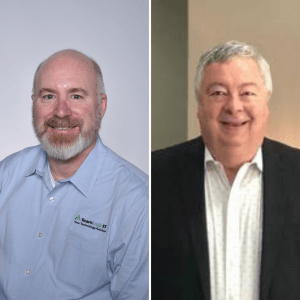
Many business owners right now are asking “how can my business survive the Covid-19 crisis?” In this episode of “Decision Vision,” veteran CPA Tommy Marsh addresses the various SBA relief programs of the CARES Act, how they help business, and much more. The host of “Decision Vision” is Mike Blake, and this series is presented by Brady Ware & Company.

Tommy Marsh, Brady Ware & Company

Tommy Marsh has more than 25 years’ experience in public accounting. Prior to joining the Brady Ware family, he was a tax partner with Marsh & McConnell for 21 years.

Tommy’s responsibilities include general business consulting, strategic planning and tax and audit services. He also specializes in Federal and State income tax laws and regulations as they relate to closely held corporations and partnerships, as well as personal and financial, income and estate planning. He has significant experience in obtaining IRS ruling requests, approval for changes in tax accounting methods, and tax issues relating to problems that arise in connection with complex business transactions.

Tommy is a member of the Greater North Fulton Chamber of Commerce, the American Institute of Certified Public Accountants, as well as the Georgia Society of CPAs.

To get in touch with Tommy, you can email him or call him directly at 678-350-9503.

Michael Blake, Brady Ware & Company

Michael Blake is Host of the “Decision Vision” podcast series and a Director of Brady Ware & Company. Mike specializes in the valuation of intellectual property-driven firms, such as software firms, aerospace firms and professional services firms, most frequently in the capacity as a transaction advisor, helping clients obtain great outcomes from complex transaction opportunities. He is also a specialist in the appraisal of intellectual properties as stand-alone assets, such as software, trade secrets, and patents.

Mike has been a full-time business appraiser for 13 years with public accounting firms, boutique business appraisal firms, and an owner of his own firm. Prior to that, he spent 8 years in venture capital and investment banking, including transactions in the U.S., Israel, Russia, Ukraine, and Belarus.

Brady Ware & Company

Brady Ware & Company is a regional full-service accounting and advisory firm which helps businesses and entrepreneurs make visions a reality. Brady Ware services clients nationally from its offices in Alpharetta, GA; Columbus and Dayton, OH; and Richmond, IN. The firm is growth minded, committed to the regions in which they operate, and most importantly, they make significant investments in their people and service offerings to meet the changing financial needs of those they are privileged to serve. The firm is dedicated to providing results that make a difference for its clients.

Decision Vision Podcast Series

“Decision Vision” is a podcast covering topics and issues facing small business owners and connecting them with solutions from leading experts. This series is presented by Brady Ware & Company. If you are a decision maker for a small business, we’d love to hear from you. Contact us at decisionvision@bradyware.com and make sure to listen to every Thursday to the “Decision Vision” podcast. Past episodes of “Decision Vision” can be found here. “Decision Vision” is produced and broadcast by the North Fulton studio of Business RadioX®.

Visit Brady Ware & Company on social media:

LinkedIn:  https://www.linkedin.com/company/brady-ware/

Facebook: https://www.facebook.com/bradywareCPAs/

Twitter: https://twitter.com/BradyWare

Instagram: https://www.instagram.com/bradywarecompany/

Show Transcript

Intro: [00:00:05] Welcome to Decision Vision, a podcast series focusing on critical business decisions. Brought to you by Brady Ware & Company. Brady Ware is a regional, full-service accounting advisory firm that helps businesses and entrepreneurs make vision a reality.

Mike Blake: [00:00:25] And welcome to Decision Vision, a podcast giving you, the listener, clear vision to make great decisions. In each episode, we discuss the process of decision making on a different topic from the business owners’ or executives’ prospective. We aren’t necessarily telling you what to do, but we can put you in a position to make an informed decision on your own and understand when you might need help along the way.

Mike Blake: [00:00:45] My name is Mike Blake, and I’m your host for today’s program. I’m a Director at Brady Ware $ Company, a full-service accounting firm based in Dayton, Ohio, with offices in Dayton; Columbus, Ohio; Richmond, Indiana; and Alpharetta, Georgia. Brady Ware is sponsoring this podcast, which is being recorded in Atlanta per social distancing protocols. If you like this podcast, please subscribe and your favorite podcast aggregator and please consider leaving our view of the podcast as well.

Mike Blake: [00:01:12] This is the fifth of a subseries of topics regarding how to address the coronavirus crisis. And specifically, we’re discussing managing and leading companies in a shutdown shelter-in-place world. And we’ve gone pretty granular for the first four topics, ranging from data security, to managing remote teams, to being an effective remote worker. And by the time this is published, we may or may not have also published addressing your real estate obligations in a shutdown world.

Mike Blake: [00:01:51] But I want to sort of draw back a little bit and look at this from a 30,000-foot perspective because in addition to managing the very granular aspects of managing a company through a crisis, there is also the broad discussion of just how do you run a company in this environment and how do you lead. And let’s kind of put our cards on the table right now. We are collectively living inside of a horror movie, with the exception of we don’t have the don’t-open-that-door kind of thing. But we’re living in an unprecedented environment. And unless you’ve had – I don’t know – bomb diffusing training or something like that, none of us have specific training in how to handle a scenario like this.

Mike Blake: [00:02:53] And I think the best teacher for this kind of thing, quite candidly, is experience because, again, I don’t think there’s a course that Harvard is offering that is the Coronavirus and You: How to Manage your Company in a World That’s Being Afflicted with a Pandemic. And I think there are just sort of broad questions and conversations that as leaders, as decision makers, we would like to have, we’re trying to have, and maybe we have something in our region, in our network, or our ecosystem that can have that with us; maybe we don’t.

Mike Blake: [00:03:33] And what I want to do with the show is I want to make available too, quite candidly, one of the wisest business people I know and one of the guys you want to be in a foxhole with. And full disclosure, he is technically my boss. So, as a listener, you can decide if I’m sucking up to him or not, but if you’ve known me for more than five minutes, you know I’m not a suck-up guy. But I’ve taken an instant liking to Tommy Marsh ever since I joined the firm almost two and a half years ago. And in the short period of time, he’s become something of a mentor that I wish I’d had much earlier in my career and rarely did have. He just got a common sense to him and a way of cutting through the bullshit, but a way of addressing it with a level of humanity and compassion that you don’t see all that often, including in the accounting industry. And I think you’ll enjoy the next 45 minutes we’re going to spend with him as much as I’ve enjoyed being able to learn from him over the last two years.

Mike Blake: [00:04:45] Tommy has more than 25 years of experience in public accounting and is the managing director of our Alpharetta, Georgia office. Prior to joining the Brady Ware family, he was a tax partner with a firm called Marsh McConnell for 21 years, which, of course, that’s his name. He was co-owner and he was running that, running and owning that firm. Tommy is an involved in general business consulting, strategic planning and tax audit services. He specializes in federal and state income tax laws and regulations. They relate to closely held corporations and partnerships, as well as personal financial income and estate planning, does all this accounting stuff, yada, yada, yada. He’s a member of the Greater North Fulton Chamber of Commerce, AICPA, and the Georgia Society of CPAs.

Mike Blake: [00:05:32] But most importantly, what he does on a daily basis, I think he would tell you himself, he doesn’t do all that much raw accounting stuff anymore. He’s the guy that clients come to when they just got problems, and they’ve got major issues with their company that are potentially company or career-threatening, and they come to him for advice. And that’s the kind of guy that you want involved, that you want to ask these kinds of questions because every business, I don’t care even if you’re making N95 masks and you’re making ventilators, this environment, if you don’t navigate correctly, is an existential threat to us all. And so, great advice is it’s never been more important. And I’m so delighted I could convince Tommy to take some time off the tennis court and join us today. Tommy, welcome to the program.

Tommy Marsh: [00:06:33] Mike, thank you so much. I learned a couple of things about myself in that introduction, and it’s much appreciated. I will leave my ring on your desk because we got to have six feet apart, but I will leave it on your desk in order for you to pay the proper homage. But in all seriousness, Mike, thank you for the introduction, and I’m proud to be your partner. So, job well done.

Mike Blake: [00:07:01] So, Tom, let’s get into some background. When we say that you’re with Marsh & McConnell for 21 years. Were you the owner or and owner of that firm for all 21 years?

Tommy Marsh: [00:07:13] Yes, I’ve been in public accounting for about 38 years. And you sort of sharpen your teeth on the early years, I was with a regional farm. And then, once, I was traveling a lot. And when I started having children, I wanted to be in Atlanta versus being on a plane traveling and consulting. But I hooked up with a guy named Bob Humberstone, and myself, and Margaret McConnell, bought him out eventually. And therefore, I became an owner at about, probably, I don’t know, 20 some odd year, maybe 25 some odd years ago. So, I wasn’t a partner/of Marsh & McConnell for the 20 plus years you’ve indicated.

Mike Blake: [00:08:02] And in your career, how many financial crises have you had to weather, either as a business owner or as an executive that has to make these tough decisions?

Tommy Marsh: [00:08:14] Well, obviously, the two that come to mind, and I’m going to throw you a third one, but basically in 2008, that was the “Great Recession days” that that we all experienced. It was pretty much in the real estate world, but it also impacted banking, and financing, and a lot of industries across the board. That was a tough, tough time for a lot of people, a lot of businesses. So, that was probably the major one. The second one is what we’re experiencing today. I have never seen something like this before. So, this has got to be one of the major financial issues that are facing us today.

Tommy Marsh: [00:09:05] Now, being a CPA for a small practice and in the Marsh & McConnell years, I believe the other financial crisis that we had is with clients. When a client of yours loses a key employee, or they lose a bank funding, or they lose a line on a distributorship, I believe that I’ve had crises along the way. Nothing of magnitude as the 2008 or 2020 crisis that we’re going through today, but I can’t even tell you how many I’ve experienced of that on the front lines with clients.

Mike Blake: [00:09:48] Is this the worst crisis you think you’ve experienced in your career?

Tommy Marsh: [00:09:56] Absolutely. And I think when you talk about the 2008 Great Recession, it’s now behind us. It’s in the rearview mirror. When you talk about the 2020 coronavirus pandemic, we’re still living it. As you said, when we first started talking this morning is that we’re living it, we’re in the middle of it. And my experience has been that I believe that the unknown, most of the time, is worse than the known. And so, we’re still in the unknown part of this, whether it’s a health issue that you’re worried about, a loved one, or your children, or your spouse, or what have you from a health issue, but you’re also in a situation to where from a business owner, what’s going to happen? And so, that’s why I think for right now, it is absolutely terrifying on some stages.

Tommy Marsh: [00:10:55] However, we all know that the unknown is worse than the known. So, hopefully, in the next — and I’m not trying to put a deadline on this, but at the same token, we need to get back to work. Is that 30 days? Is that forty five? Is that 60 or 90? Only time will tell. So, yes, this is absolutely the worst situation I’ve seen in my career.

Mike Blake: [00:11:24] In the past, let’s go back to the ’08-’09 Great Recession, you and I were both advising clients back then. What advice have you given to clients in the past from financial stocks that came to you and said, “Tommy, what’s going to happen? The economy is obviously going to take a massive turn for the worse.” And they’re saying, “What do I do? What do I have to be doing?” What piece of advice that you find yourself most commonly giving out?

Tommy Marsh: [00:11:56] Well, obviously, advice is pretty much client-specific. You may have one client that really has not been impacted. So, our advice to them is, hey, it’s the general discussion and the general consulting that we do on a daily basis. Other clients typically have specific advice, but the over ending advice that I give clients is it is going to be okay. I may not know 100% what it looks like, but I believe with my experience and as much as I’ve been through the last 38 years in my industry, it’s all going to be okay. It may not look like it was prior to this, but at the end of the day, it’s all going to be okay. If we can hang in there long enough, and be healthy, and survive all of this, which I believe we will, we’ll come out the other side, and it’s all going to be okay.

Tommy Marsh: [00:12:59] Way back in my career. I would get nervous, I guess is the word, that if a client got in trouble or one of my largest clients declared bankruptcy, as a business owner, you become nervous, and what’s going to happen next, and am I going to survive and feed my family, and what have you? The reality is at the end of the day, it’s the human spirit that’s going to overcome, and we’re going to come out the other side better. Maybe a little bit different, but we’re going to come out the other side. I’m always betting on me, and you, and the clients, and the human spirit to get through this. And I believe it’s all going to be okay. So, that’s probably the 30,000-foot specific advice is it’s all going to be okay.

Mike Blake: [00:13:54] So, I know you, as I have, have fielded calls and have taken meetings with with clients about this. What are the most common worries that they’re expressing to you right now?

Mike Blake: [00:14:10] Well, it depends on the industry. So, one of the first, about the middle of March when this really was starting to shape up to where the economy was going to get shut down for whatever reason, it really depends upon what industry that you’re at. One of my trade show vendors called up and said, “When will this be over?” And I said, “Well, I’m not sure.” But if you know anything about the trade show industry, they didn’t postpone their trade shows, they canceled them. So, his worry was, “When will it get back to normalcy?” And he thinks it’s going to be in the fall. So, all the planning that we have done is for the fall.

Tommy Marsh: [00:15:01] A charity event client of mine suffered the same type of situation to where, overnight, all of his charity events that he supports were canceled. And right now, they’re pushing to have them in the fall again. So, his biggest concern and his biggest worry was, “I have assembled the best team that I’ve ever put together. How can I keep them all together? How can I keep my my great team together?”

Tommy Marsh: [00:15:33] A project company called me up, and he manufactures large displays for whether it’s a large construction client here in town or what have you. His revenue went from $7 million down to zero. “How am I gonna pay for the rent? How can I keep my my team together? How am I going to survive this and pay for my bills?” So, at the end of the day, even the hair salon that we represent, she called me up and said, “Hey, I closed the shop, sent everybody home. Will unemployment benefits be enough to take care of my team that I’ve had for the last 10 or 15 years?”

Tommy Marsh: [00:16:23] All four of those examples happened within about two and a half days of each other in the middle of March because they saw what was coming, and they were looking at what was gonna happen economically. So, at that point, most of them were just really, really, really worried, not only about their business but really about the people that work with the small business owner that they care about. So, really, it’s specific of what industry that you’re in, but you can give a sampling and a taste of what people are worried about going forward. So, those are some true-to-life examples. Obviously, I could give you probably 10 more. But then we went from 45 minutes to about an hour and fifteen, and I’m not sure we want to do that.

Mike Blake: [00:17:13] So, we, along with the rest of our industry, is scrambling to understand how the recently passed CARES/Payroll Protection Program Act is going to operate. And I think we’re starting to get a handle on it. But the interpretations are still a work in progress. But at the end of the day, I know a lot of, in particular, small businesses are looking at that as a potential savior. In your mind, how helpful do you think that is going to be for small businesses? And are you telling people to, “Yeah, this is going to be great, and it is a true lifeline,” or are you telling them that, “Maybe you should manage your expectations? This is great, but it’s not going to solve the whole thing”? Where do you kind of come down on that?

Tommy Marsh: [00:18:13] Well, that is a great question. So, a couple of comments on the frontend are, is that from about the middle of March and even to the end of March, we kept hearing about the SBA programs, and the CARES Act, and the TPP loans, and what have you. The way I see the world is that there’s really two groups of the CARES Act that is available or you could use it to your benefit.

Tommy Marsh: [00:18:45] The first part of it is your typical, what they call as the EIDL loan. It stands for economic injury disaster loan. And that is an SBA program that you go online and you apply for, which is truly a disaster loan to be able to borrow money from the federal government in order to keep your business open. You have to use the money for overhead, but that’s okay, right? In other words, if we have a good business, and we’re going to come out the other side, this is a great, great means for businesses to borrow money. And this disaster loan is no different than when a tornado hits a small town, they need relief, or a flood, they need relief, or a drought. You’re trying to loan moneys to businesses in order to survive. So, from that first part of this CARES Act, I think that’s very, very, very powerful and very, very good for the government to provide that. So, I highly recommend that. We have a lot of our clients applying for it. And hopefully, we’ll hear success stories of them funding it, and we’re starting to get that right now, is that we’re hearing clients are getting to receive the money.

Mike Blake: [00:20:13] Yeah. Go ahead.

Tommy Marsh: [00:20:16] Go ahead, Mike.

Mike Blake: [00:20:16] I was just going to say I’ve also started to see things trickling through our own internal communications and elsewhere that the money is actually starting to flow. So, in spite of the fact that I think the banks are taken a little bit by surprise that they’re going to be the frontend of processing this, and they’re scrambling to develop intake procedures and capacity. It looks like they’re actually starting to rise to the occasion fairly quickly.

Tommy Marsh: [00:20:43] And they have. And what’s interesting is up until about, again, three days to a week ago, the CPAs, not only myself but other CPAs around the country, are on the frontlines of answering questions that they really don’t know the answers to yet. So, I know it’s frustrating to some clients, but we can only do the best we can with the information that we have.

Tommy Marsh: [00:21:08] However, the other side of it is, of the CARES Act, is really it’s a separate, for lack of a better word, a bucket. And the other bucket, there’s really three things going on in this proverbial bucket that I’ve described. And basically the CARES Act, I believe, and this is my personal opinion, is trying to provide relief to people to survive two and a half months. And the reason I say that is if you break it down further, then the two and a half months, you’ll hear about the stimulus checks that individuals are getting 1200 bucks if your income is under $75,000. If you’re married jointly, you’re getting 2400 bucks. I’m not saying that everybody’s going to survive two and a half months on that kind of money, but from the stimulus side of the government, they are providing these stimulus checks, I believe, to individuals to try to weather the storm for a period of time.

Tommy Marsh: [00:22:15] The second thing that they’re doing is, is that they are maintaining in the CARES ACT, is that an employer that keeps their payroll in place, there are great credits available to them against future payroll taxes, which benefits people to keep their payroll and their team in place. So, that is a great opportunity. See your accountant to help you calculate those credits.

Tommy Marsh: [00:22:45] And then, the last would be the infamous PPP loan, which is the Paycheck Protection Program Loan. And that’s the one that’s getting the most press because if you maintain your payroll for two and a half or two months, you can borrow up to two and a half times your average monthly payroll. But if you can survive the two months of paying your regular payroll, I believe it’s in hopes that the economy gets started again and things get back to normal. So, when you look at the CARES Act, a lot of it is, “Hey, let’s see if we can survive the next two and a half months,” which we will, which we will, but that’s a that’s a high-level summary of the CARES Act in order for businesses to consider to keep going for two and a half months.

Mike Blake: [00:23:42] I agree with that. The math I did was that this is a $2.5 trillion rescue package, and the non-government piece of our national GDP is about $16 trillion of GDP, right? And so, when you work through the math, that does turn out to be 10 weeks or so of GDP in effect that the government is now replacing, right? Give or take what’s being produced by elsewhere in the economy. So, I think you’re right.

Tommy Marsh: [00:24:16] That’s very well put and that’s a great point, I believe, that whatever they’re trying to do and, again, what we’re hearing success stories that clients are now beginning to get some money, but if you think about it, there’s two things going on. What can the government do to help the citizens and small business out to get to the next event to where we’re back outside and we’re not on shelter-in-place type of things, which is under Georgia and what have you? So, that’s the first part of it. The second part of it is that, all of a sudden, we’re going to have this trillion dollar debt, but in my opinion, today, we’re just trying to make it two and a half months, right? I mean-

Mike Blake: [00:25:05] We are.

Tommy Marsh: [00:25:05] Yeah, exactly. So, I believe that the stimulus package and the CARES is really just trying to get businesses and people to, “Let’s figure this out. Let’s give us two and a half months of survival.”

Mike Blake: [00:25:20] So, tax return deadlines have been pushed back. I think it’s to July, I should know this more, but I’m not an accountant. How many full do you think that is for most business owners? Do you think that that’s appreciated – just to take one thing off their plates, they can focus on what’s right in front of them?

Tommy Marsh: [00:25:37] Well, Mike, to be very blunt with you. I think it’s the greatest law ever invented because I’m a public accountant CPA. So, I think it’s very meaningful if you want to know the truth of the matter. Now, on a serious note, it did give us a break because what was interesting was as we all know historically how important the April 15th deadline is, you have all the cartoon characters of the accountant in the white shirt with the 10 key, and the green hat on, and the visor on, and cranking out the numbers, and all that’s true.

Tommy Marsh: [00:26:14] So, what was little disturbing on the front end was we kept hearing about these SBA loans and big breaks given to other businesses, but they really didn’t take their foot off the gas pedal until later on to where they passed it to where CPA firms could defer the filing or actually taxpayers with CPAs are part of helping them prepare their taxes until July 15th. So, you and I know, Mike, because we sent our staff home, right?

Mike Blake: [00:26:47] Yeah

Tommy Marsh: [00:26:47] On a Monday, we sent everybody home to work from home because we didn’t want anybody getting sick or trying not to get them sick. But it was a great, great relief to get the filing deadline. And they’ve just recently come out with more rules to state that a lot of the filings that are normally done between now and July 15th have pretty much all been extended. So, from that aspect from a CPA firm, it was huge.

Tommy Marsh: [00:27:17] Now, from a general business type of client, really, it helps them if they owe tax, right? So, in other words, if you owe tax and you’re trying to survive the next two and a half months, they’re probably not going to make their tax payments anyway because they’re trying to keep the doors open and keep their employees in place. At that moment, it is a huge benefit for the government not to charge the typical 1% interest rate from April 15th until July 15th. They have waived that. So, from that aspect, if you are owing money, that is a great, great benefit and very meaningful to those people who just picked up the interest carry on that.

Tommy Marsh: [00:28:08] If you have a refund, obviously, the group that have refunds are still pressuring the CPAs to get the returns done. And Brady Ware is continuing to do that. We’re still in full production in order to continuously serve the clients that we have. It’s just being done a little bit differently since everybody’s at home. But yeah, in order to get refunds, you should have to file. And we are in the process of doing that. So, from a huge meaning, I think the SBA loans and the CARES package was probably more meaningful than just the “July 15th” filing date. If you want to know the truth of the matter, well, that’s my opinion. That’s totally my opinion.

Mike Blake: [00:28:58] And I’ll say for an aside here, as a shameless plug, but as a semi-outsider because I’m not in the accounting side, my busy season is fourth quarter, not second quarter or first quarter. We’ve done a fantastic job, in spite of this disruption, getting through the workflow that we’ve had to get through. And my impression is that not only has our productivity not dropped, I think it’s actually improved. I don’t know if that sort of industry wide, but that’s my perception.

Tommy Marsh: [00:29:38] Well, and that’s great of you to say because your taxes in his fourth quarter of what you do. But at the same token, I’ve got to give it to our team here. Our leadership here, the managers and the offices, the the staff, the professionalism exhibited by our team has been second to none. And I’m sure CPA firms around the country feel the same way. But right now, our team is still taking phone calls, and e-mails, and production, and reviewing, and I’ll probably at least a handful of tax returns this afternoon and keep the ship going in the right direction. But I got to give it to our team, Mike. We have a great group of of team members here that carry the buckets of water uphill. So, I don’t get credit for that. The managers that put it in place get credit for it.

Mike Blake: [00:30:38] They’ve responded very well. And again, as a clause outside because I’m not doing that stuff, it’s been impressive. So, let’s touch upon this. What have you had to change? I mean, you’re still responsible for our office of 36 people. I know you want us to be safe. I know you want us to be engaged. We also still have a job to do. We still have the public trust to serve. We still have clients that got to get stuff done, especially ones that that have refunds, because they really need those refunds. How are you adapting to changing to this new this new reality?

Tommy Marsh: [00:31:27] Well, you know me pretty well, Mike. And you can tell I’m smiling when I say this, but when we sent our team—let me back up further than that. Even prior to sending our team to work from home, you were on the front lines of this, we were in the process of saying, “Hey, team members, with the Atlanta traffic, why don’t you work one day from home, and just stay in touch, and we’ll see how it works,” right? I mean, for an accounting firm or for me, that was a big change, right, because I’m old school, and let’s get in here, and let’s get your hours done, and the chargability, and all the things that go with that.

Tommy Marsh: [00:32:09] So, for me, personally, I believe sending everybody home has changed, I’m not going to say a lot. Maybe it changes the way I look at it because our team, given the chance to be professionals without being in the office professionally, they have risen to the occasion. So, from that aspect, when we sent everybody home that Monday, I got up on Tuesday, Mike, and the sky hadn’t fallen. I went to my car, the sky was still up in the sky. I couldn’t believe it. I figured we’d be all over the parking lot. But no, the sky did not fall with us sending everybody home.

Tommy Marsh: [00:32:51] Now, that’s a little tongue in cheek because as you know, Brady Ware takes great pride with our IT, and you can log in anywhere, and the things that we do. We were already ahead of the curve of that, in my opinion. But just from a from a leadership viewpoint, obviously, it’s been harder. As you know, if you’re here on a Friday, sometimes – and again, this is rumor – you may have a fireball Friday walking around. So, what’s happened? Rumor has it there may be some virtual happy hours. So, from a leadership viewpoint, what’s happening is, I believe, everyone is incredibly professional. I also believe from a leadership viewpoint that people, our team misses the social interaction of our office. And people are coming in. I’m actually at the office today. Don’t tell Governor Kemp. But I guess I’m essential, though. So, I guess I’m good there.

Mike Blake: [00:33:54] You are essential, Tommy.

Tommy Marsh: [00:33:56] Thank you, Mike. I appreciate that. And so, what’s happening is, I think, people are coming, and they’re missing the social aspect of it, but you still got to run a business, you still got to look at the timesheets, you still got to look at production, you still got to return emails. And we’re still doing the 101 stuff, and the blocking, and tackling that we we need to do in order to take care of our clients.

Mike Blake: [00:34:21] And you’re right about that social interaction. Out of the Atlanta office, at least, we’re doing a virtual happy hour on Friday. And last Friday, half the office participated, which was remarkable. All we were doing was staring at people on the screen. Even one guy who is on vacation dialed in. I mean, I I think we need to get him counseling, but the gesture was nice. You’re right. I mean, it does show that the team has some resilience because they do miss each other. And you do have people like me on one end of the spectrum that will wander into the office once every two weeks or so just to remind people that I need a paycheck. But then, you have other people that really like to be in the office and get a good vibe from there.

Mike Blake: [00:35:11] And this segue nicely to my next question. Maybe one of the lessons, one of the good things that’s going to come out of this is we realize the sky doesn’t fall. We realize that we have hired well. We’ve always thought we hired well. We always thought we hired people that we could trust to be adults. But now, it’s been combat tested and it’s been proven victorious. And one of the things we’ve learned is that we can do this and we don’t need to focus on butts and seats anymore so much as productivity, which can maybe unleash some other good downstream effects down the road.

Tommy Marsh: [00:35:50] I totally agree. I think Brady where can look in the mirror a little bit because as I advise my clients, “Hey, why don’t you use this time to look at your business and to look at what changes you need to make, so when you come out the other side, what did we learn from it? What decisions needed to be taking place to get us to the other side? As well as once we get to the other side, then  what kind of culture and firm can you improve upon in order to be a better firm?” And that’s what I’ve been telling most clients or all clients, “Hey, look in the mirror and look at your business to see what needs to happen.”

Mike Blake: [00:36:36] And that segues, I think, into maybe the most important question I have in this interview. One of my previous interviews with a gentleman out in Silicon Valley named Shane Metcalf, and he runs basically an employee engagement software firm out there in Silicon Valley. And the thing that struck me from that interview – we just published that by the way – was he immediately looked at or turned the conversation to, how are we going to be better after all of this? And true Silicon Valley perspective, it was, “Yeah, yeah, yeah, okay. We got the virus thing going on. It’s going to do its thing. It’s going to visit tragedy among people and families. And we’re doing the best we can. But from a business perspective, it’s also creating disruption, which also means that it creates opportunity.” Very Silicon Valley way of thinking, which I have now blatantly stolen from him because I think it’s the right way to think about it.

Mike Blake: [00:37:47] And I think you think about these things the same way too, right? You’re saying we’re going to come out of this. We don’t know when. We don’t know exactly how. Although I think companies should be planning now for what that looks like, what the restart process is. How do you think companies are going to — you can make this Brady Ware specific if you would like or make it more general. How do you think companies are going to be better? Or maybe how do you think you’re going to be better professionally from all this?

Tommy Marsh: [00:38:19] Well, great question. I’m one of the best tax guys in the city because every answer, it depends, right? So, you can always answer it that way.

Mike Blake: [00:38:29] You’ll make a great economist.

Tommy Marsh: [00:38:30] Yes, exactly. So, to me, it’s a two-step process. And the first step is that like what clients are asking me today, “Hey, what about this?” and “Hey, what can I change?” and “Hey, Tommy, I need your help.” Well, the reality is I took a real estate course at college and it taught me three things, right? Location, location, location, right? We all know that old real estate joke.

Mike Blake: [00:38:59] Yeah.

Tommy Marsh: [00:38:59] Well, what’s happening today is in the coronavirus environment is really it’s cash flow, cash flow, cash flow because we need to figure out the cash flow to get us to the other side. And part of that cash flow analysis is, what moneys do I have coming in. Whether it’s from sales, or SBA loans, or fat claim, or whatever you’re going to do, that’s the first aspect of it is to say, “Hey, what money do I have coming in?

Tommy Marsh: [00:38:59] The second tier is  typically—and again, every business is a little bit different, but a lot of our clients, one of their largest expenses is, obviously, salaries. So, do you rank your owner as number one and everyone else down to number 20 or whatever? And the theory behind it is, hey, if my sales have gone down 30%, do I need to look at 30% of my salaries? That is a question mark, by the way. It’s not a rule out there.

Mike Blake: [00:40:09] Yeah.

Tommy Marsh: [00:40:09] But once you look at it in good times. Mike, what happens? You don’t really address the problem employee. You don’t really hold them accountable like you should hold them accountable because things are good, and why do I have to rock the boat to a degree? Well, when things aren’t good, it is forcing people, companies to look at their business and make those tough decisions. So, once you do that, and you have to say, “You know what, my business is down 30%, I’ve got to get rid of 30% of my workforce in order to survive,” right? We’re trying to get the cash flow to get the other side. Then, at that moment, it’s really easy to let the problem employee go or the team member who really isn’t carrying the water uphill because it’s survival.

Tommy Marsh: [00:41:02] And then, the last thing is that once you do that, you analyze your overhead. And that’s a little bit easier approach because it’s easier to to tell the specialty water person that we can no longer use their services in the break room because it’s not essential. But once you do all of this, and you get to the other side, I believe all businesses are going to be stronger, including Brady Ware. Maybe we have work anywhere policies, maybe we only meet on Mondays, or Tuesdays, or something because it’s been proven if Brady Ware so far that we have a great professional staff without having to repeat all of. that.

Tommy Marsh: [00:41:46] So, to answer your question, what it’s going to look like? I don’t know, Mike, but what it’s going to look like they’re still writing the book while we’re reading it. But I think we’re going to come out the other end a lot stronger in leadership and more trustworthy. Not that we weren’t before, but we’re going to be more professional and let our team grow and blossom where they can grow and blossom.

Mike Blake: [00:42:11] Tommy, this has been a great conversation. We could easily have it go another hour. But I know you got a lot to do, and you got ants in your pants anyway. But if we haven’t covered something that somebody else had a question about or maybe they’d want to follow up on something that we have covered, is it okay if they contact you? And if so, how best can they do that?

Tommy Marsh: [00:42:35] Two ways. The first is  my e-mail address, which is tmarsh@bradyware.com. So, tmarsha@bradyware.com or my direct line is 678-350-9503. Please call.

Mike Blake: [00:43:03] That’s going to wrap it up for today’s program. I would like to thank Tommy Marsh of Brady Ware so much for joining us and sharing his expertise with us today. We’ll be exploring a new topic each week or maybe even more frequently as we do these special episodes, but please to announce that when you’re faced with your next executive decision, you have clear vision when making it.

Mike Blake: [00:43:23] If you enjoy these podcasts, please consider leaving a review with your favorite podcast aggregator. That helps you will find us, so that we can help them. Once again, this is Mike Blake. Our sponsor is Brandy Ware & Company. And this has been the Decision Vision Podcast.

Tagged With: Brady Ware, Brady Ware & Company, CARES Act, COVID-19, covid-19 crisis management, Michael Blake, Mike Blake, SBA, survive the Covid-19 crisis, Tommy Marsh

Finding a Job in a Crisis Environment, with Patrick Lynch, CMP

April 13, 2020 by John Ray

Patrick Lynch
North Fulton Business Radio
Finding a Job in a Crisis Environment, with Patrick Lynch, CMP
Loading
00:00 /
RSS Feed
Share
Link
Embed

Download file

Patrick Lynch
Patrick Lynch, CMP

Finding a Job in a Crisis Environment, with Patrick Lynch, CMP (North Fulton Business Radio, Episode 216)

Suddenly there are millions of job seekers who a couple of months ago weren’t expecting to be looking for work. Patrick Lynch joins “North Fulton Business Radio” to talk directly to these individuals about the current job market, the outlook for hiring, furloughs, video interviews, and much more. As President-Elect of the Society for Human Resource Management’s Atlanta (SHRM-Atlanta) chapter, Patrick is an ideal guest for this topic. “North Fulton Business Radio” is hosted by John Ray and due to social distancing directive is broadcast virtually through the North Fulton studio of Business RadioX® in Alpharetta.

Patrick Lynch, CMP

Patrick Lynch is President of the CMP Southeast region. CMP is a talent and transition firm in the business of developing people and organizations across the full talent lifecycle. In doing so, the firm combines decades of experience with a contemporary approach to building people and teams.

Patrick is responsible for strategy, marketing, and leadership at CMP. He also provides executive coaching to a wide range of senior leaders, helping them develop their strategic leadership skills, servant leadership, organizational engagement, emotional intelligence, and their ability to change themselves and others. Patrick is President-Elect for the Atlanta chapter of  Society for Human Resource Management. Known as SHRM-Atlanta, it is one of the largest SHRM chapters in the U.S.

Prior to CMP, Patrick held senior leadership roles in marketing and sales with leading consumer product companies, such as Georgia Pacific, Kao Brands, Kraft/General Foods, and The HON Company. His certifications and training include The Birkman Method, MBTI, and the Adele Lynn EQ Leadership Institute. Patrick is also a basketball coach for the Special Olympics, a mentor for Year Up, and a board member of Special Pops Tennis: a non-profit that offers an adaptive tennis program specifically designed to share the sport with children and adults with intellectual disabilities.

To get in touch with Patrick, you can email him or call directly at 770-906-4113.  To learn more about CMP, visit their website. You can find out more about SHRM-Atlanta here.

Questions and Topics in this Interview:

  • undertaking a job search today
  • how to conduct a job search in today’s economic crisis
  • outlook for hiring
  • furloughs and layoffs
  • using LinkedIn
  • video interviewing

Patrick Lynch


North Fulton Business Radio” is broadcast from the North Fulton studio of Business RadioX®, located inside Renasant Bank in Alpharetta. Renasant Bank has humble roots, starting in 1904 as a $100,000 bank in a Lee County, Mississippi, bakery. Since then, Renasant has grown to become one of the Southeast’s strongest financial institutions with approximately $12.9 billion in assets and more than 190 banking, lending, wealth management and financial services offices in Mississippi, Alabama, Tennessee, Georgia and Florida. All of Renasant’s success stems from each of their banker’s commitment to investing in their communities as a way of better understanding the people they serve. At Renasant Bank, they understand you because they work and live alongside you every day.


Tagged With: CMP, finding a job, furloughs, job search, John Ray, layoffs, LinkedIn, North Fulton Business Radio, outlook for hiring, Patrick Lynch, SHRM Atlanta, undertaking a job search, using LinkedIn, video interviewing

ProfitSense with Bill McDermott, Episode 8: Charlie B. Lewis, Jr. of Lewis Contracting Services

April 13, 2020 by John Ray

North Fulton Studio
North Fulton Studio
ProfitSense with Bill McDermott, Episode 8: Charlie B. Lewis, Jr. of Lewis Contracting Services
Loading
00:00 /
RSS Feed
Share
Link
Embed

Download file

Lewis Contracting Services
Charlie Lewis and Bill McDermott

ProfitSense with Bill McDermott, Episode 8:  Charlie B. Lewis, Jr. of Lewis Contracting Services,LLC

Lewis Contracting Services’ Charlie Lewis joins host Bill McDermott to talk about his company’s growth, surviving the 2008 recession, the challenging projects his firm takes on, developing key talent, and much more. It’s an inspiring story! “ProfitSense with Bill McDermott” is broadcast from the North Fulton Studio of Business RadioX® in Alpharetta.

Charlie B. Lewis, Jr.,  Operations Manager, Lewis Contracting Services, LLC

Lewis Contracting Services
Charlie Lewis, Lewis Contracting Services

Lewis Contracting Services is one of the leading site development contractors in the Southeast.

It is a full service, heavy civil contracting company. They provide a comprehensive range of commercial construction services to various business, government, and educational sectors.

They specialize in clearing and grubbing, grading, excavation, utilities and drainage construction, paving, site clean-up, pump stations, force main retention and detention ponds, collector sewers, and underground piping.

Visit their website to learn more or contact Charlie at 404-522-1538.

About Your Host, Bill McDermott

Bill McDermott

Bill McDermott is Founder and CEO of McDermott Financial Solutions. After over three decades working for both national and community banks, Bill uses his expert knowledge to assist closely held companies with improving profitability, growing their business and finding financing. Bill is passionate about educating business owners about pertinent topics in the banking and finance arena.

He currently serves as Treasurer for the Atlanta Executive Forum and has held previous positions as board member for the Kennesaw State University Entrepreneurship Center and Gwinnett Habitat for Humanity and Treasurer for CEO NetWeavers. Bill is a graduate of Wake Forest University and he and his wife, Martha have called Atlanta home for over 40 years. Outside of work, Bill enjoys golf, traveling and gardening.

Connect with Bill on LinkedIn and Twitter and follow McDermott Financial Solutions on LinkedIn. The complete show archive for ProfitSense with Bill McDermott” can be found at profitsenseradio.com.

Lewis Contracting Services


Tagged With: Charlie Lewis, commercial construction, Construction, contracting, Lewis Contracting Services, ProfitSense, ProfitSense with Bill McDermott

Jay Litton and Katherine Simons, RUMC Job Networking

April 10, 2020 by John Ray

RUMC Job Networking
North Fulton Business Radio
Jay Litton and Katherine Simons, RUMC Job Networking
Loading
00:00 /
RSS Feed
Share
Link
Embed

Download file

RUMC Job Networking

“North Fulton Business Radio,” Episode 215: Jay Litton and Katherine Simons, RUMC Job Networking

RUMC Job Networking has touched literally thousands of lives in the well over two decades of its existence. Jay Litton and Katherine Simons, co-leaders of this ministry of Roswell United Methodist Church, join the show to talk about how they have morphed their programming to a virtual platform, advice they’d offer job seekers in this economic climate, and much more. The host of “North Fulton Business Radio” is John Ray and the show is produced virtually from the North Fulton studio of Business RadioX® in Alpharetta.

RUMC Job Networking

For over 25 years RUMC Job Networking has been providing employment workshops, ‘mini’ job fairs, and evening dinners with keynote speakers to those in need of employment or job readiness. RUMC Job Networking exists to teach job seekers how to begin and sustain a job search while providing emotional support and encouragement. They provide this support through mentoring, community prayer partners (all faiths and denominations), and support groups.

Since 2010, they have been training on job readiness while making states and other countries aware of the need for Job Networking including: Holland, Singapore, Portugal and London. The impact of this program has reached the attention of ABC World News, Fox 5 News, the Wall Street Journal, and the Atlanta Journal. Their interview on National Public Radio discussed how a community works together to help the unemployed. They have developed close relationships with the state and federal departments of labor and have attended events hosted by the White House and the Community Partnerships for Faith Based Programs. They have reinforced that we are filling a gap they cannot serve.

RUMC Job Networking meets the 2nd and 4th Mondays of the month. During the coronavirus pandemic they have gone virtual, still meeting on the 2nd and 4th Mondays of the month, so they can stay engaged with job seekers during their job search.

To connect with RUMC Job Networking, visit their website to find their next meeting and agenda.

Jay Litton

RUMC Job Networking
Jay Litton

Jay Litton is a Senior Enterprise Account Executive at Sumo Logic. He is a seasoned enterprise sales/sales management executive with a track record of success as both an individual contributor and in sales leadership roles. During his career, Jay has achieved top performing status during at both start ups and multi-billion dollar organizations.

He has been providing career advice at RUMC Job Networking since inception of the ministry. With Katherine Simons, he co-leads a team of over 300 volunteer professionals who donate their time with an eight-hour agenda twice each month. Jay is also known as the creator of the WoW! Interview™ having taught over 10,000 professionals in career transition.

Jay previously appeared on Business RadioX® in 2017; you can find that episode here.

Katherine Simons

RUMC Job Networking
Katherine Simons

Katherine Simons is the previous owner of DDS Staffing Resources specializing in the temporary and permanent staffing of medical and dental staff . She also partnered with her son-in-law Tim Rush, in ownership of a Healthcare Job Board, Healthcare Staffing Innovations, LLC which features www.advancedpracticejobs.com, the largest and most successful job board highlighting nurse practitioners and physician assistants.

In addition to co-leading RUMC Job Networking with Jay, Katherine has served as Chairperson for New Members and Assimilation at Roswell United Methodist Church, a 6000 member congregation, She serves on the Board of Directors for the Greater North Fulton Chamber of Commerce and on the HomeStretch Board of Directors.

Katherine is author of Loving Your Neighbor, A Faith Community’s Response to the Unemployment Crisis, written in 2010, but so timely in our current environment.

Show Notes from Jay and Katherine:

  • Stay Positive, Move Forward and Keep the Faith…
    Stay Positive by…..
    1.  Keep your energy level high through diet, exercise, rest, and positive thinking
    2.  Surround yourself with friends who have a good story to tell.  Stay away from “downers”
    3. Trust that God has a Plan for your life and it is up to you to see and hear it.  Be willing to try new things.  It could lead to his plan.
    4.  Be like Thomas Edison….see every “no” as that much closer to a “yes” answer.  Learn from the “no’s”
    5.  Go places where you find positive people .  Today, there are many ways to connect with positive ideas on-line.
    6.  Be ready everyday for a virtual interview.  Be dressed.  Look the part.
    Move Forward by…
    1.  Continuing to learn and try new job search techniques
    2.  Connecting with people in your industry
    3.  Practice and prepare for company interviews PPQ
    4.  Track how many calls you need to make to accomplish a result.  A result may be a conversation, an introduction, a new direction, an interview.  Once you know how many calls it takes to get to one of these results, schedule every day to make the necessary calls.
    5.  Treat the process like an Adventure.  You never know what’s around the next corner.
    6.  Keep a notebook of all successes and lessons learned.
    7.  Clear up conflicts that would cause references to be less than stellar.  Never give reference for a job without calling person first to ask and explain the opportunity.  A positive or negative reference can make or break the next step.
    Moving Forward…
    1. Learn LinkedIn like never before.
    2. Learn Zoom – interview yourself on camera with a free Zoom subscription
    3. Research – Get daily emails from the Atlanta Business Chronicle and other information rich sources that are locally based.
    Keep the Faith by…..
    1. We believe that you should not do your job search alone. God should included through prayers.
    2. Take our Crossroads Career class which covers 7 steps of the job search and shows how God is in every step.
    3. Consider taking a bible study via a free Zoom subscription with a few friends.
    4. See God work in other people by listening to others and see where you can help.
     
    Final comments…
    1. Notice that people are being hired. We just received an email on Wednesday from an excited job seeker that attended one of our recent mini job fair.
    2. Believe it is not “if” but “when” you will go on next interview
    3. Continue to stay in shape….work head, heart, and body muscles
    4. Where can you volunteer your time…even virtually to help others or a nonprofit group that helps others.
    5. Biggest surprise? Lots of layoffs but companies are hiring.
    6. Biggest concern? The layoffs mean quality people are hitting the market. You need great job search skills and persistence to win.
    Taking Action!
    1. Attend our virtual RUMC Job Networking meeting on Monday, April 13th and our upcoming meeting agenda. Visit the RUMC Job Networking website for details.
    2. Subscribe to our email Groups called Groups.io. to get the job leads submitted to us by employers and volunteers.

RUMC Job Networking

North Fulton Business Radio” is produced virtually from the North Fulton studio of Business RadioX® in Alpharetta. You can find the full archive of shows by following this link. The show is available on all the major podcast apps, including Apple Podcasts, Spotify, Google, iHeart Radio, Stitcher, TuneIn, and others.

Renasant Bank has humble roots, starting in 1904 as a $100,000 bank in a Lee County, Mississippi, bakery. Since then, Renasant has grown to become one of the Southeast’s strongest financial institutions with over $13 billion in assets and more than 190 banking, lending, wealth management and financial services offices in Mississippi, Alabama, Tennessee, Georgia and Florida. All of Renasant’s success stems from each of their banker’s commitment to investing in their communities as a way of better understanding the people they serve. At Renasant Bank, they understand you because they work and live alongside you every day.

Tagged With: Jay Litton, job networking, job search, Katherine Simons, LinkedIn, networking, RUMC Job Networking, virtual interview

Andrew Traub, A&S Culinary Concepts

April 10, 2020 by John Ray

A&S Culinary Concepts
North Fulton Business Radio
Andrew Traub, A&S Culinary Concepts
Loading
00:00 /
RSS Feed
Share
Link
Embed

Download file

A&S Culinary Concepts

A&S Culinary Concepts, Andrew Traub, Chef & Owner (North Fulton Business Radio, Episode 214)

Because of “shelter in place” directives, Johns Creek-based culinary studio A&S Culinary Concepts pivoted to offering oven ready gourmet dinners delivered curbside. The host of “North Fulton Business Radio” is John Ray and the show is produced virtually from the North Fulton studio of Business RadioX® in Alpharetta.

A&S Culinary Concepts

A&S CulinaryA&S Culinary Concepts is a culinary studio, offering cooking classes for private groups or open classes on line, team building for businesses and corporations, and provide corporate catering. They are a culinary partner with the Big Green Egg, so A&S offers many different type of Big Green Egg classes from grilling to all day boot camps. A&S are farm to table and deal with local vendors as much as possible. Most of their food is made on premises from scratch from mayonnaise to ice cream and pickles. They have a pastry chef on premise, so all of their pastries are made from scratch. Their menus are guidelines, they like to work with the customer to personalize what they want, this way you also know everything is made fresh for you. They invite anyone to come and see the studio at any time.

Due to the recent troubles the world over, they have had to adapt to continue to provide delicious food, now available for curbside delivery from Monday through Friday. This is a temporary business adaptation as they look forward to the day that they can once again serve our treasured corporate clients. So get it while you can!

Each oven-ready meal will feed 4-6 people with an entrée, salad, and your choice of two side dishes.  Rolls & delicious cornbread and fabulous desserts are available as add-ons.

Pricing is on each day’s menu. Simple heating instructions will be sent with your order confirmation.

A&S Culinary is located at 9945 Jones Bridge Road, Suite 303; Johns Creek, GA 30022.

For more information, go to their website (https://asculinaryconcepts.com/) or call 678-336-9196.

Andrew Traub, Chef and Owner

Andrew Traub, A&S Culinary

When Andrew Traub was 15, his mother requested he go out and find a job. So he went down the block to the local Italian steakhouse and asked if they needed help. Luckily they did, and he was hooked into the world of food and beverage. That experience cemented his desire to become a chef and led him to choose a culinary school in the Catskill Mountains of New York for his college education. Andrew gained invaluable experience working in the enormous kitchens in the Catskill resort hotels while earning his degree. Recruited right out of school by Marriott Hotels and Resorts, Andrew was asked to be a member of the opening management team of the New York Marriott Marquis in Times Square. After moving his way up the culinary ladder and winning several culinary awards along the way, from culinary shows to corporate events, he left Marriott.

Andrew partnered with his college friend and opened Love at First Bite Catering in Manhattan. Clients included Radio City Music Hall, the Luxembourg Consulate, the Pace Collection and Fordham University. After selling Love at First Bite, Andrew and his wife, Sue, followed a dream and traveled around the United States for six months, sampling the cuisines of the various regions of our great country along the way.

Upon returning to New York after their travels, Andrew was offered a position as Executive Chef at a corporate catering company in Manhattan. Ten months later, Marriott came calling again and Andrew was offered a position as Executive Sous Chef at the Marriott Marquis in Atlanta, Georgia. He accepted the position at the Marquis, which was the host hotel for the 1996 Olympic Headquarters.

After three years, Andrew was offered the opportunity to become Executive Chef of the Memphis Marriott Downtown Hotel and Convention Center. After a couple of years, Atlanta once again beckoned, and his next promotion was the position of Executive Chef of the Atlanta Evergreen Marriott Conference Resort in Stone Mountain, Georgia.

Andrew was at Evergreen for 14 years. During that period, he served on several Advisory Boards, notably Avendra (the purchasing company for Marriott, Hyatt and several other hotel companies); Lakeview High School in DeKalb County; and Grayson Technical Culinary Arts Program. The board position he is most honored to hold for thirteen years is on the Advisory Board of the Atlanta Community Food Bank and he is proud to continue to serve.

With his extensive professional contacts–many who have become friends–and his knowledge of the local culinary scene, he is ready to share his experience with you through his food studio, A&S Culinary Concepts.


North Fulton Business Radio” is produced virtually from the North Fulton studio of Business RadioX® in Alpharetta. You can find the full archive of shows by following this link. The show is available on all the major podcast apps, including Apple Podcasts, Spotify, Google, iHeart Radio, Stitcher, TuneIn, and others.

Renasant Bank has humble roots, starting in 1904 as a $100,000 bank in a Lee County, Mississippi, bakery. Since then, Renasant has grown to become one of the Southeast’s strongest financial institutions with over $13 billion in assets and more than 190 banking, lending, wealth management and financial services offices in Mississippi, Alabama, Tennessee, Georgia and Florida. All of Renasant’s success stems from each of their banker’s commitment to investing in their communities as a way of better understanding the people they serve. At Renasant Bank, they understand you because they work and live alongside you every day.

Share
Tweet
0Share

Tagged With: A&S Culinary Concepts, Andrew Traub, Big Green Egg, corporate catering, culinary studio, curbside delivery, Farm to Table, North Fulton Business Radio, oven ready gourmet meals

To Your Health With Dr. Jim Morrow:  Episode 30, Distracted Driving with Molly Welch, A Second Later

April 9, 2020 by John Ray

Molly Welch
North Fulton Studio
To Your Health With Dr. Jim Morrow:  Episode 30, Distracted Driving with Molly Welch, A Second Later
Loading
00:00 /
RSS Feed
Share
Link
Embed

Download file

Molly Welch
Molly Welch, A Second Later, with Dr. Jim Morrow, Host of “To Your Health”

To Your Health With Dr. Jim Morrow:  Episode 30, Distracted Driving with Molly Welch, A Second Later

On this special edition of “To Your Health,” Dr. Jim Morrow welcomes Molly Welch, A Second Later, to discuss her life-changing auto accident, her recovery, and her passion for warning others on the dangers of distracted driving. Dr. Morrow also offers an update on the coronavirus pandemic. “To Your Health” is brought to you by Morrow Family Medicine, which brings the CARE back to healthcare.

About Morrow Family Medicine and Dr. Jim Morrow

Morrow Family Medicine is an award-winning, state-of-the-art family practice with offices in Cumming and Milton, Georgia. The practice combines healthcare information technology with old-fashioned care to provide the type of care that many are in search of today. Two physicians, three physician assistants and two nurse practitioners are supported by a knowledgeable and friendly staff to make your visit to Morrow Family Medicine one that will remind you of the way healthcare should be.  At Morrow Family Medicine, we like to say we are “bringing the care back to healthcare!”  Morrow Family Medicine has been named the “Best of Forsyth” in Family Medicine in all five years of the award, is a three-time consecutive winner of the “Best of North Atlanta” by readers of Appen Media, and the 2019 winner of “Best of Life” in North Fulton County.

Dr. Jim Morrow, Morrow Family Medicine, and Host of “To Your Health With Dr. Jim Morrow”

Dr. Jim Morrow

Dr. Jim Morrow is the founder and CEO of Morrow Family Medicine. He has been a trailblazer and evangelist in the area of healthcare information technology, was named Physician IT Leader of the Year by HIMSS, a HIMSS Davies Award Winner, the Cumming-Forsyth Chamber of Commerce Steve Bloom Award Winner as Entrepreneur of the Year and he received a Phoenix Award as Community Leader of the Year from the Metro Atlanta Chamber of Commerce.  He is married to Peggie Morrow and together they founded the Forsyth BYOT Benefit, a charity in Forsyth County to support students in need of technology and devices. They have two Goldendoodles, a gaggle of grandchildren and enjoy life on and around Lake Lanier.

Facebook: https://www.facebook.com/MorrowFamMed/

LinkedIn: https://www.linkedin.com/company/7788088/admin/

Twitter: https://twitter.com/toyourhealthMD

The complete show archive of “To Your Health with Dr. Jim Morrow” addresses a wide range of health and wellness topics, and can be found at www.toyourhealthradio.com.

Dr. Morrow’s Show Notes

Distracted Driving

• Each day in the United States, approximately 9 people are killed and more than 1,000 injured in crashes that are reported to involve a distracted driver.
• In 2015, 391,000 people were injured in motor vehicle crashes involving a distracted driver
• In 2016, 3,450 people were killed in crashes involving a distracted driver.
• Drivers under the age of 20 have the highest proportion of distraction-related fatal crashes.
• In 2017 9% of all teen motor vehicle crash deaths involved distracted driving.
• In 2017, 42% of high school students who drove in the past 30 days reported sending a text or email while driving.
o Students who reported frequent texting while driving were:
 Less likely to wear a seatbelt.
 More likely to ride with a driver who had been drinking.
 More likely to drink and drive.
• Distracted driving is
o driving while doing another activity that takes your attention away from driving.
o Distracted driving can increase the chance of a motor vehicle crash.

What are the types of distraction?

• There are three main types of distraction:
o Visual: taking your eyes off the road;
o Manual: taking your hands off the wheel; and
o Cognitive: taking your mind off of driving.

Distracted driving activities

• Anything that takes your attention away from driving can be a distraction.
o Sending a text message,
o talking on a cell phone,
o using a navigation system, and
o eating while driving are a few examples of distracted driving
• Any of these distractions can endanger the driver and others.
o Texting while driving is especially dangerous because it combines all three types of distraction.

When you send or read a text message,
• you take your eyes off the road for about 5 seconds, long enough to cover the length a football field while driving at 55 mph.

Thanks to www.cdc.gov

From Molly Welch, A Second Later

Molly Welch
Molly Welch, A Second Later

• A Second Later is a 501c3 organization created to promote the message against distracted driving.

o I use my first hand experiences to discuss the hardships I face on a daily basis and telling others not to give up after my own distracted driving accident.

A Second Later changes lives for the better. It continues to grow and expand as it touches different communities and places.
Twelve years ago, I was involved in a distracted driving accident – a head-on collision with a pick-up truck. I was a Junior at Auburn University when the accident occurred.  It took me an extra 3 years, but I did finally graduate!

As a result of the accident, I sustained Traumatic Brain injury. I was in a coma for a month and have spent years in therapy.
As a result, the routine tasks everyone else tackles effortlessly became challenging and time-consuming process:
• Getting dressed, showered, brushing my hair and my teeth to more necessary things like walking and simply getting around.
• For over a decade, I have balanced re-learning these tasks with regular therapy for walking, talking, and all the tasks most people take for granted.
• I’ve undergone years of physical, occupational and speech therapy at Shepherd Center and various other places in an effort to gain some level of normalcy.

Several years ago, I put my energy into founding the non-profit I mentioned earlier called A Second Later.
• All my time and energy is now focused on developing A Second Later into “that” voice of reason that inevitably stops distracted driving.
• I seek out opportunities to speak to youth – the most at risk group for distracted driving accidents – in their schools, churches, and clubs.
• I also aim a voice at civic leaders in these same venues.
• I testified before the GA legislators on distracted driving prior to the adoption of today’s hands-free legislation.

These people are the policy makers defining acceptable behavior within the law.
o The message against distracted driving is talked about.
o Also, never giving up for high school student/adults.
o The most important age for me to target is high school students and I spoke to several mock traffic crashes at those schools .
o I’ve been on TEDx Emory and at the Medical Association of Atlanta.
o My future was permanently altered twelve years ago with my accident.

That brief moment of distraction and ……”A Second Later” ….. my life was altered.  It affected not only the days immediately following the accident, but my life today, my life tomorrow, and perhaps forever.

Tagged With: distracted driving, Dr. Jim Morrow, Molly Welch, Morrow Family Medicine, texting accidents, texting while driving, To Your Health, To Your Health With Dr. Jim Morrow

Heather Rogers, Simply Organized

April 9, 2020 by John Ray

Simply Organized
North Fulton Business Radio
Heather Rogers, Simply Organized
Loading
00:00 /
RSS Feed
Share
Link
Embed

Download file

Simply Organized
Heather Rogers, Simply Organized

Heather Rogers, Simply Organized (North Fulton Business Radio, Episode 213)

Simply Organized Owner Heather Rogers tackles a problem most of us seem to have:  owning too much “stuff” and trying to keep it all organized. Heather discusses how she and her team help give people the peace of organization, and can do so even virtually in this era of social distance. She also discusses her company’s packing and unpacking services.  The host of “North Fulton Business Radio” is John Ray and the show is produced virtually from the North Fulton studio of Business RadioX® in Alpharetta.

Heather Rogers, Owner of Simply Organized

Simply Organized
Heather Rogers, Simply Organized

Simply Organized was founded to help people simplify their lives. Their typical client usually feels overwhelmed in their home or office, or wants more time in their day and less stress in their lives.

They specialize in helping people who work from home, anyone who is getting their home ready to sell, needs packing or unpacking help and in time and routine management coaching. We serve the Atlanta metro area, including Cherokee, Cobb, Dawson, North DeKalb, Forsyth, North Fulton, Gwinnett and Hall.

The Simply Organized team has the training and skills to help you organize everything from your hectic schedule, family, home and office in all metro Atlanta areas. We only hire experienced professional organizers so you can be certain anyone from Simply Organized knows how to de-clutter, sort, pack, unpack, pre-stage and help with spatial planning.

Heather Rogers is a professional organizer, owner of Simply Organized and author of A Simplified Life:  How to Achieve Order and Calm So You Can Reclaim Time, Energy, & Control. A Georgia native, Heather has worked in the insurance and financial services industries, as well as in customer service and sales. She has a passion for helping people and a keen sense of spatial planning and organizing. Ironically, she earned a bachelor’s degree in risk management from the University of Georgia. (Isn’t being disorganized one of the greatest risks in life?) She is the President of the Georgia chapter of the National Association of Productivity and Organizing Professionals (NAPO) and frequently speaks to groups about the benefits of time management and the costs of disorganization.

Visit Simply Organized on their website or Facebook, or call Heather directly at 404-825-2105.

Questions and Topics in this Interview:

  • organizing homes and business
  • certified professional organizer
  • National Association of Professional Organizers, or NAPO
  • Heather’s service as President of the Georgia Chapter of NAPO
  • packing and unpacking services

North Fulton Business Radio” is produced virtually from the North Fulton studio of Business RadioX® in Alpharetta. You can find the full archive of shows by following this link. The show is available on all the major podcast apps, including Apple Podcasts, Spotify, Google, iHeart Radio, Stitcher, TuneIn, and others.

Renasant Bank has humble roots, starting in 1904 as a $100,000 bank in a Lee County, Mississippi, bakery. Since then, Renasant has grown to become one of the Southeast’s strongest financial institutions with over $13 billion in assets and more than 190 banking, lending, wealth management and financial services offices in Mississippi, Alabama, Tennessee, Georgia and Florida. All of Renasant’s success stems from each of their banker’s commitment to investing in their communities as a way of better understanding the people they serve. At Renasant Bank, they understand you because they work and live alongside you every day.

Tagged With: Georgia Chapter of NAPO, Heather Rogers, napo, National Association of Professional Organizers, North Fulton Business Radio, packing, packing services, professional organizer, Simply Organized, unpacking

Decision Vision Episode 59, “How Do I Work at Home Effectively?” – An Interview with Shane Metcalf, 15Five

April 9, 2020 by John Ray

Decision Vision
Decision Vision
Decision Vision Episode 59, "How Do I Work at Home Effectively?" – An Interview with Shane Metcalf, 15Five
Loading
00:00 /
RSS Feed
Share
Link
Embed

Download file

how do I work at home effectively
Shane Metcalf, 15Five, and Mike Blake, Host of “Decision Vision”

Decision Vision Episode 59, “How Do I Work at Home Effectively?” – An Interview with Shane Metcalf, 15Five

Because of “shelter in place” directives, millions of employees are now working at home for the first time and asking themselves, “how do I work at home effectively?” In this edition of “Decision Vision,” host Mike Blake explores various aspects of this question with Shane Metcalf, 15Five. “Decision Vision” is presented by Brady Ware & Company.

Shane Metcalf, Co-Founder and Chief Culture Officer of 15Five

how do I work at home effectively?
Shane Metcalf, 15Five

Shane Metcalf is the Co-Founder and Chief Culture Officer of 15Five. 15Five is a leading provider of people management software that not only guides employee growth and development but empowers people to become their best selves. Through strategic weekly check-ins, 15Five delivers everything a manager needs to maintain visibility and impact employee performance, including continuous feedback, objectives (OKR) tracking, recognition, 1-on-1s, and 360° reviews. 15Five is a top-rated performance management software on G2 and has won top culture and workplace awards, including ranking #3 Best Workplace in the nation on Glassdoor. Over 2,200 forward-thinking companies use the solution to bring out the best in their people. To learn more, please visit: https://www.15five.com/.

Michael Blake, Brady Ware & Company

Mike Blake, Host of “Decision Vision”

Michael Blake is Host of the “Decision Vision” podcast series and a Director of Brady Ware & Company. Mike specializes in the valuation of intellectual property-driven firms, such as software firms, aerospace firms and professional services firms, most frequently in the capacity as a transaction advisor, helping clients obtain great outcomes from complex transaction opportunities. He is also a specialist in the appraisal of intellectual properties as stand-alone assets, such as software, trade secrets, and patents.

Mike has been a full-time business appraiser for 13 years with public accounting firms, boutique business appraisal firms, and an owner of his own firm. Prior to that, he spent 8 years in venture capital and investment banking, including transactions in the U.S., Israel, Russia, Ukraine, and Belarus.

Brady Ware & Company

Brady Ware & Company is a regional full-service accounting and advisory firm which helps businesses and entrepreneurs make visions a reality. Brady Ware services clients nationally from its offices in Alpharetta, GA; Columbus and Dayton, OH; and Richmond, IN. The firm is growth minded, committed to the regions in which they operate, and most importantly, they make significant investments in their people and service offerings to meet the changing financial needs of those they are privileged to serve. The firm is dedicated to providing results that make a difference for its clients.

Decision Vision Podcast Series

“Decision Vision” is a podcast covering topics and issues facing small business owners and connecting them with solutions from leading experts. This series is presented by Brady Ware & Company. If you are a decision maker for a small business, we’d love to hear from you. Contact us at decisionvision@bradyware.com and make sure to listen to every Thursday to the “Decision Vision” podcast. Past episodes of “Decision Vision” can be found here. “Decision Vision” is produced and broadcast by the North Fulton studio of Business RadioX®.
Visit Brady Ware & Company on social media:

LinkedIn:  https://www.linkedin.com/company/brady-ware/

Facebook: https://www.facebook.com/bradywareCPAs/

Twitter: https://twitter.com/BradyWare

Instagram: https://www.instagram.com/bradywarecompany/

Show Transcript

Intro: [00:00:02] Welcome to Decision Vision, a podcast series focusing on critical business decisions, brought to you by Brady Ware & Company. Brady Ware is a regional, full-service accounting and advisory firm that helps businesses and entrepreneurs make visions a reality.

Michael Blake: [00:00:22] Welcome to Decision Vision, a podcast giving you, the listener, clear vision to make great decisions. In each episode, we discuss the process of decision making on a different topic from the business owners or executives’ perspective. We aren’t necessarily telling you what to do, but we can put you in a position to make an informed decision on your own and understand when you might need help along the way.

Michael Blake: [00:00:40] My name is Mike Blake, and I’m your host for today’s program. I’m a Director at Brady Ware & Company, a full-service accounting firm based in Dayton, Ohio, with offices in Dayton; Columbus, Ohio; Richmond, Indiana; and Alpharetta, Georgia. Brady Ware is sponsoring this podcast, which is being recorded in Atlanta per social distancing protocols. If you like this podcast, please subscribe to your favorite podcast aggregator, and please consider leaving a review of the podcast as well.

Michael Blake: [00:01:05] This is the third of a sub series of topics regarding how to address the coronavirus process. And specifically, today, we’re going to talk about, really, sort of the front line end user, if you will, of remote work. And that is the employee themselves. We’ve had a show on managing cybersecurity risk by moving outside of the enterprise firewalls and into the home. And we’ve had a discussion on how to lead and manage teams remotely, but I think it’s important that we don’t forget about the fact that the vast majority of people who are impacted by working from home are the people who are actually doing the work themselves.

Michael Blake: [00:01:48] And as it happens, I happen to be somebody that’s been working from home more or less the last 10 years. So, from my perspective, I’m not necessarily noticing that much of a difference, but I know that from talking to other people and reading other people’s experiences, it’s actually been quite jarring. And I hope that this podcast will help serve as a field guide to help people make that transition more easily.

Michael Blake: [00:02:15] So, in spite of the fact that I’ve been working at home for a good amount of time, I certainly do not consider myself an expert on the topic. And as we always do in this podcast, we bring in an expert of our own. And joining us today is Shane Metcalf, who is the CEO and Co-founder of 15Five, which is a leading provider of people management software that not only guides employee growth and development, but empowers people to become their best selves. Through strategic weekly check-ins 15Five delivers everything a manager needs to maintain visibility and impact employee performance, including continuous feedback, objectives tracking recognition, one-on-ones, and 360 degree reviews. 15Five is a top-rated performance management software on G2, and has won top culture and workplace awards, including ranking number three Best Workplace in the Nation on Glassdoor. Over 2200 forward thinking companies use the solution to bring out the best in their people. To learn more, please visit www.15five.com. Shane, thanks so much for coming on the program.

Shane Metcalf: [00:03:19] Michael, thanks for having me. What an unprecedented moment we’re in. And I think that it presents a lot of real challenges. And I think it also presents real opportunities. And, fundamentally, I think that we, as a business community, we kind of need to take a note at Darwin’s book. We need to adapt. I think this is really happening. We don’t know how long this is going to be the case, but I do know that the world won’t be the same. Even if some of the social distancing protocols get lifted, and we’re able to return to offices. I really don’t think that we’re going to be seeing the world that we saw before.

Michael Blake: [00:04:00] So, before we get started, if you can comment because you’re in San Francisco, at least, the San Francisco area, and we’re in Atlanta. California is effectively on what we would consider a lockdown, is that correct?

Shane Metcalf: [00:04:13] Yeah, that is correct. Yeah, only essential businesses are open, and everyone is highly discouraged from leaving the house. So, yeah. I think we were in the first state in the nation to go towards this. And hopefully, it’s working. It does seem to be flattening of the curve.

Michael Blake: [00:04:28] So, from a personal perspective, what’s that like for you, sort of, day-to-day? Most of our listeners I don’t think are in California or, thank God, not in a lockdown state; although, we do have quite a few in Ohio because of our offices there. On a personal level, before we get into the interview, how are you dealing with that?

Shane Metcalf: [00:04:45] Yeah. Well, I have a somewhat unique circumstance. I, typically, would work in the office four to five days a week. And little contacts. So, 15Five, we’re a couple hundred people. And we’ve actually been a semi-distributed team from the beginning. We have about 50% of our people working out of offices in North Carolina, and New York City, and the Bay Area. And the other half are throughout different states and different countries in Europe. And so, in some ways, this has actually been a somewhat seamless transition for us because we already had the infrastructure and the mindset for working remotely. And I think that’s something that I’m going to get into because so much of working remotely, and being effective, and being a successful experience comes down to mindset shifts from both the employer and the employees. And for me, I was actually already at home for the last couple of months because I just had my first kid, and I’ve been on this blissful paternity leave. And I lead the company, and everything’s great, and I disappear, and the whole world falls apart. I’m like, “Man, I really should have stayed, I guess.”

Michael Blake: [00:05:51] Right. I leave for two months, and what happens.

Shane Metcalf: [00:05:54] Yeah, come on. But so, it’s an interesting one for me because there’s, of course, challenges and opportunities inherent to it for me because on the one hand, it’s really great because as I’m getting back to work, I get to stay home and spend more time with my daughter. I don’t have to waste the time of commute. I get to be there and help in between meetings. And on the other hand, that’s okay, not only am I not working from home, I’m also working from home with a kid and a screaming baby and all of the challenges that that presents. And so, it is a really fascinating balancing act. And I think that fundamentally, we need to have compassion and flexibility for all of each other right now.

Shane Metcalf: [00:06:39] And I’m speaking. A lot of my perspective is coming out as a founder, as an executive at a company that is leading and managing the team, but I’m also the employee. And really, I am more certain than ever that this is the opportunity we’ve been waiting for to bring those empathy muscles, those compassion muscles, that humanity that we have been talking about as an essential component to building great companies and to building great culture, this is the moment where the rubber meets the road because you look at Maslow’s hierarchy, everyone isn’t just focused on work right now. As much as we’d like to think that, “Okay, , great. Well, all my employees are now at home working,” and they just flipped off the humans switch and flipped on the employee switch. Now, people are are very concerned. They don’t know if they’re going to get laid off. They don’t know if the economy is going to recover. They don’t know if they have enough food. They are inundated with a lot of uncertainty right now. And so, we, as employers, can actually say, “Hey, we get it. We’re human too. And we recognize your humanity. And we’re in this together. And there’s space for all of it. And we can still be a high-performing team.”

Michael Blake: [00:08:00] Because there’s nothing quite like having to try to be productive when you’re literally in the middle of what might be a horror movie.

Shane Metcalf: [00:08:05] Yeah, you’re right. That doesn’t work. We need to actually — and that’s where I think companies can actually play a role is if you look at the triune brain, this idea that we have kind of three different brains. We have our reptilian brain, our mammalian brain, and our cortex, our human brain. And survival is happening in the amygdala, in the reptilian brain. And we need to recognize that, create a little space for people to have their feelings and to be seen in the process of this because when that happens, okay, cool. I don’t have to cover my ass and pretend that I’m not freaked out right now or pretend that I’m not like trying to jump, ditch out between meetings to run to Costco because I don’t have any toilet paper, And shit, there’s no more toilet paper at Costco. And oh, my God, what are we going to do? We need to have allowance for the entire human experience.

Shane Metcalf: [00:09:10] And there’s certain ways that I think we can actually structure that. But fundamentally, I believe that it starts with a shift in mindset where instead of making people earn trust, we grant people trust. We say, “We know what we need to accomplish as a company. I’m going to grant you the trust that you’re going to accomplish that. And I’m not going to be there looking over your shoulder. I’m not going to be checking your logs to see what you’re searching for on your computer, because that’s a big problem with people of the fear of allowing people to work remotely is, what if they don’t work? What if they just slack off? And that can be a corrosive to a remote culture.

Michael Blake: [00:09:58] Well, true; although, I would argue. I would argue that that attitude is corrosive, whether you have a remote working paradigm or architecture or not.

Shane Metcalf: [00:10:09] Absolutely, absolutely.

Michael Blake: [00:10:09] So, it’s just to amplified.

Shane Metcalf: [00:10:12] And that’s a cool thing is that, actually, this entire coronavirus thing is, it’s an opportunity for every single company in the world to upgrade their culture, to upgrade their value system, to upgrade the operating system with how they think about the people in their company, because you know what, this whole paradigm of human resources, just the words, my humans are our resources, they’re lumps of coal I’m going to throw in the furnace and get a little steam at it. And actually, we’re human beings. We’re fully fledged human beings with thoughts, feelings, emotions, fears, dreams, hopes, desires. And if we can start to actually recognize the humanity of our people in the workplace, pretty incredible things start to happen.

Michael Blake: [00:11:03] So, at the start of this conversation, you talked about the mindset. So, I’d like to start with that in terms of the formal kind of content here. And although it’s hard, I think it’s instructive. Put coronavirus aside for a second, because coronavirus or not, regardless of the circumstances, one day, you’re in the office; the next day, you can’t go in even if you want to. And you can’t go to Starbucks, you’re at home.

Shane Metcalf: [00:11:35] Well, lucky you if you can-

Michael Blake: [00:11:35] What mindset-

Shane Metcalf: [00:11:36] … go to Starbucks. Although, you can’t work at Starbucks.

Michael Blake: [00:11:39] Right. There, you can’t work there. Yes, you can get a coffee, right? But you can’t open up your laptop. I guess she could sit outside, but that would be weird. But talk about the mindset. As an employee, what is the mindset shift that you have to be prepared to embrace and pursue as you move from cubicle to home desk, or kitchen table, or couch, or wherever it is that you’re going to be working from?

Shane Metcalf: [00:12:05] Well, start by making a list of all the pros of working from home. Just get present to the reality of what the opportunity actually is. I don’t have to commute. I don’t have to deal with the crowded train. I don’t have to, you know, waste all that time. I get to not be less distracted. I have a higher chance of being able to enter deep, deep work flow states. I mean, open offices, it’s proven. It’s like they’re very economical, and they’re great for the social connections, but they are disastrous for deep work.

Michael Blake: [00:12:40] Right, they’re brutal.

Shane Metcalf: [00:12:41] Constant people flooding your space. And so, all of a sudden, “Ha! No one’s around. I can actually get some real work done.” And so, you have to make that list yourself. You have to personalize it. You have to look at, okay, look, this is a crazy situation, but what is good about this, and focus on the good. And then, the second thing is optimize your environment. Now, this is challenging. I mean, we have employees who — I have a — one of my guys is in New York City and in an apartment with three kids. A one-bedroom apartment with three kids or something. And there’s not really space for him to work at home. And so, those are challenging situations. And I have a lot of compassion and empathy for the people who don’t have home environments that are easily pivoted to being dedicated workspaces.

Shane Metcalf: [00:13:38] In those situations, I think that’s when you really want to start off utilizing technology – noise-canceling headphones. There’s a cool app that I’ve been playing around with, Krisp.AI. And it’s a noise canceling software. It’s not hardware, it’s a software that cancels all the noise coming from your background. Things like that are where you want to start optimizing the tools you’re using and the environment. For people who can create more of a home office space, optimize that. Create it. Put a little attention on it, clean it up, make it feel good. Our environment, that’s why we spend billions of dollars on designing cool office spaces is because our built environment affects our psychology. And so, don’t just neglect your home office.

Michael Blake: [00:14:35] There’s a variance in kind of cultural point, cultural in terms of American culture point that comes to mind just through this conversation. When I think Silicon Valley and I think California, I think of a mindset generally that looks at all disruption as an opportunity, right? And I don’t think everybody is necessarily hardwired for that. But I think it’s really interesting, the first words out of your mouth are not that this is going to be lousy but, rather, what is the opportunity this disruption provides? I think that’s really interesting.

Shane Metcalf: [00:15:11] Well, yeah. And I think that that’s part of what helps call the amygdala because we were in a fight or flight or freeze state, what we can start to do to shift, that is actually start focusing on what we’re grateful for. What is the positive element of that? And then, actually, start to change our brain chemistry. Now, know this from neuroscience, like, if you’re in a heightened state of survival, just saying, “I’m afraid, but I’m also grateful that I’m still alive,” or “I’m afraid that I might lose my job, but I also don’t know if that’s going to happen, and I’m grateful that I have a job right now,” it actually starts to change our neurology and opens up more creative thinking opportunities. And so, yeah. Look, this is an opportunity. I mean, there is an enormous hardship that we’re gonna be going through.

Shane Metcalf: [00:16:10] And what’s remarkable, it’s not just an American crisis. It’s not just an Italian crisis. It’s not just a Chinese crisis. It is a human crisis. I’ve never been alive in a time where all of humanity was experiencing the same collective crisis and that we actually took it seriously.

Michael Blake: [00:16:31] Yeah, nor have I. And I think you’d have to go back to the Cuban Missile Crisis. And that’s before, even a little before my time. But, yeah, I think you’re right about that.

Shane Metcalf: [00:16:39] And not just the potential of a crisis.

Michael Blake: [00:16:39] What-

Shane Metcalf: [00:16:44] And I mean, I do believe there is going to be enormous surge of companies that get created to fulfill the demands of this moment. And I mean, people are having to pivot their business models. And wait, this is more, I guess, from the entrepreneurial perspective, but there are enormous problems. And anytime there’s a problem, there are opportunities to build companies and products that service that problem.

Michael Blake: [00:17:13] What do you think is the most common misperception about working from home for somebody that hasn’t done it, really hasn’t experienced it? What do people perceive about working from home versus the reality?

Shane Metcalf: [00:17:27] Well, I think that people, when you’re confronted with that prospect of working from home that there’s gonna be no emotional connection to the other people in the company, that there’s not going to be any kind of the watercooler talk, just the random social interactions that really contribute to a sense of well-being at work. And now, that’s not necessarily the default, but what you can do is it’s not rocket science to start doing some social engineering to create opportunities for that kind of social interaction. Every Friday at our company, we do this thing called Question Friday. It’s never been more valuable. And what we do is we take a half an hour, everybody gets on a Zoom call, there’s a question master for the month, and they ask a kind of a random non-business related question, an ice breaker question. And then, we break out into Zoom rooms of 10 to 20 people each, and everybody goes around and answers.

Shane Metcalf: [00:18:28] And what’s so cool as you get this deep perspective. You learn about your colleagues at pretty deep levels. And all of a sudden, you’re actually having this human connection. And I would say that practice alone is one of the reasons why we’ve been ranked number three best place to work in the country by Glassdoor, that we do things to encourage the non-business-related human connection. And that’s more important than ever. We began all of our all-hands meetings with five minutes of every Monday, we do a five-minute gratitude meditation. Now, it’s not just immediately, “Okay, here’s the business numbers, people. Here’s how we’re tracking on our objectives.” That’s important too but, also, just a little little micro doses of connection that remind us that we’re actually all just human beings doing the best that we can.

Michael Blake: [00:19:28] So, you’re put in this position now as a remote worker. What of the most important habits that you need to focus on developing right away in order to make this a success?

Shane Metcalf: [00:19:40] Yeah. Well, look, don’t just throw your whole routine out the window now that you’re not coming into the office. Create a sense of, “Okay, great. Well, what’s my mornings look like? What does my morning practice look like? How do I get prepared for the day?” Don’t necessarily just wear sweat shirt, sweat pants, and t-shirts. Our clothing actually affects our psychology. So, put on a button up shirt, get dressed up, see how that actually changes your psychology around this. You want to ensure that there is an abundance of communication.

Shane Metcalf: [00:20:18] In the absence of information, people often go negative. When we aren’t hearing from each other, when we don’t know what we’re working on, without systems of accountability built in, it’s easy to just be like, “Oh, I don’t know if anyone is actually working.” And so, you want to create systems and processes that encourage an abundance of of good communication. And so, that’s where asynchronous check-ins come in, asking the questions like, “How are you feeling? What’s going well? Where are you stuck? What do you need help with?” is insanely valuable because it allows people to share their real experience and the truth of what’s actually happening for them – the wins and the challenges. And then, that allows for you to have really productive one-on-ones.

Shane Metcalf: [00:21:12] And I mean, also, I mean, there’s a lot of fundamentals. And what I would actually encourage our readers to do,w e just released an article that is everything we know about remote working, everything that we’ve learned in eight years of doing this and building an award-winning culture, and we’ve put that all into a pretty meaty medium article, and we can link to it in the show notes, but it has all of our best advice.

Michael Blake: [00:21:40] So-

Shane Metcalf: [00:21:42] Yeah. And other habits, I think that you want to engage in an appropriate amount of kind of — we use Slack and Zoom for everything. Like our three essentials are Zoom, Slack, and 15Five because that allows for video connection, which is really important, video over everything. Don’t minimize the phone calls. Turn on video for your calls. It’s really important to still see each other, to see that, yeah, I’m not just a disembodied voice. I’m actually the human. And the micro expressions that happen with the whole body. I mean, we know that something like 70% of communication actually happens nonverbally. And so, when we go virtual, we miss a lot of that. And video is the closest we can get to it until we have holograms or something.

Michael Blake: [00:22:37] Yeah, that’s a good point. Now, of course, one subtle but important difference in our current environment is that many remote workers didn’t necessarily work from home, right? And working from home is a subset of working remotely, but that presents its own kind of unique challenges, doesn’t it?

Shane Metcalf: [00:23:00] Yeah. Look, the home can be an non-predictable, and chaotic, and demanding place. I used to prefer not to work from home because when I work from home, it’d be like, “Oh, you know what, I got to take the trash out.” And my wife would be like, “Yeah, you’ve got to take the trash out, buddy.” I go, “I got to go do a little maintenance on that thing.” And there are a lot. There can be more distractions at home. And so, it, fundamentally, becomes also a process and a practice of self-discipline.

Shane Metcalf: [00:23:32] And so, if you can start to get clear, “Well, what does my ideal day of working from home look like?” and maybe that is that involves creating some — I don’t know if you can hear it, but my baby’s crying right now. And my kids are with my wife, and I can hear it, and I’m like, “Oh, man. Okay. I’m doing this podcast. And maybe the crying baby’s gonna get picked up by mic. And now, that’s on the recording of the podcast.” And you know what? I just have to be okay with that. Like we have to have a little more allowance for some of the unpredictable elements that get introduced to our business meetings. And being okay with a little bit more integration between the personal and the professional.
Shane Metcalf: [00:24:22] So, get clear on what you actually need to be productive at home. And part of this comes down to setting boundaries of saying, “Look, honey, I know that I’m home, but I’m not going to be able to help with the kids between these hours. Like, I need to go lock myself in the room and get into deep focus.” And so, personal discipline and boundary setting is more important than ever if we’re gonna be successful at working from home.

Michael Blake: [00:24:52] I think that boundary setting, I think that’s a really good point, that it’s worth pausing and spending some time on because it likely is also not going to be something that simply happens organically. If you just assume, “I’m gonna be okay, and the other person’s gonna be okay picking up whatever it is I’m not picking up. There’s no communication. That’s a recipe for disaster.

Shane Metcalf: [00:25:12] That’s expectations, which guarantee will lead to disappointment?

Michael Blake: [00:25:17] And I’m not putting myself in the position of a marriage counselor. I don’t want to put you in that position unless you want to. But it does sound to me like that needs to be a very intentional discussion in order for an arrangement to be tenable.

Shane Metcalf: [00:25:32] Yeah. Well, look, like at the office, we have, hopefully, a series of explicit agreements around how we’re gonna behave. If you’re going to go take a conference room, there’s usually a social agreement that you need to sign up for that conference room. Otherwise, there’s no guarantee you’re gonna get actually get it. There’s a social contract that you’ll clean your dishes after you use them in the office, things like that. There’s a multitude of agreements that we have in our working environments.

Shane Metcalf: [00:26:02] It’s no different at home. We need to take things out of implicit expectations and into explicit agreements with the other people that we live with or even with ourselves. Like I’m going to make an agreement that I’m not going to sleep in, and I’m actually going to get up, and I’m going to shave, and I’m going to get dressed, and I’m going to make my coffee, and I’m going to be sitting down at whatever hour, and start my day on a positive note.

Michael Blake: [00:26:35] So, one challenge, you sort of touched on this, but I want to hit it explicitly is, unless you happen to be like you or me, where we’ve had kind of this lifestyle for a while, your home isn’t set up to be an office, right? Like you said, homes are chaotic. And I think to my mind, my own personal experience, I never realized how chaotic home is until I actually worked here.

Shane Metcalf: [00:26:59] Yes.

Michael Blake: [00:27:01] You get a different perspective than if you’re just sort of home kind of part time, you sort of see how the sauces, and see all the answer [indiscernible], whatever analogy you want to have. So, I think many people then walk back into a chaotic environment. Are there any other tips you can think of that can help an employee kind of gain control over that chaos? You’ll never stamp all of it out but, at least, manage the chaos, so that you can get things done, meet your obligations professionally, and not lose your sanity.

Shane Metcalf: [00:27:38] Yeah. Well, look, I think that it starts with, well, what’s your vision for your home? I mean, this is a great opportunity for people to upgrade their home environments. If there’s a lot of chaos, well, what is controllable? Is it that you need to repurpose a room that’s, right now, used for something else and you say, “You know what, this is now my home office, and I’m going to paint the walls, and I’m going to go ask my employer if I can go steal a desk from the office and bring it home.”

Shane Metcalf: [00:28:09] And so, what you really want. Like, actually, open up in Word Doc, and write out a vision for what you want your home to look like, and what your experience of working at home can be. And then, come up with some strategies. Like vision and strategy. It’s no different than writing the business plan. Like, what’s the vision? What do we really want to create here? I want to have uninterrupted flow states at home. I want to feel good about the space that I’m in. I want a beautiful environment. I want to get the right technology. And then, my strategy is, “Okay, great. I’m going to go, I’m going to procure a desk. I’m going to borrow one from the office, or go get one myself, or order one. I’m going to set it up.” I mean, this this room I’m in, this is the first time I’ve set up. This is my home office. And I’m actually pretty stoked. I’m like, “Oh, wow, I’m digging this.”

Shane Metcalf: [00:29:08] And so, come up with this strategy. But again, work. Human beings are so incredibly resourceful and creative. And so, apply that, get to liberate because one of my big messages around culture is the culture happens regardless of whether you’re deliberate about it or not. And if you’re not deliberate about it, then it’s going to it’s going to reflect some of your worst unconscious habits and conditioning. If you’re deliberate about your culture, you have an opportunity to create something to reflect your highest values, your best self. And so, it’s the same thing with creating your home culture.

Michael Blake: [00:29:48] A great resource that if you need kind of ideas, and I have to confess, over time, I’ve become sort of addicted to this is, is there are desk setup tours you can see on YouTube where influencers talk about their workspaces, and they have envious — somehow you can’t see a cable, and I don’t know how they do that. They must spend weeks hiding cables, right? But they have beautiful spaces that are a joy to behold. And if you can kind of replicate that, it does become an island of serenity. You can get ideas through Pinterest as well, where people kind of put up their desks setups. And you don’t have to spend $25,000 to do that, but I’ve found that it does kind of give me some ideas in terms of placement and energy and-

Shane Metcalf: [00:30:32] All of that.

Michael Blake: [00:30:32] And even colors and lighting.

Shane Metcalf: [00:30:34] We don’t need to just be like, “Well, I’m working from home, so I’m going to just plop on the couch all day.” Actually, let this be inspirational. Get some inspiration. I love that. I’m probably going to, right after this, go look up to desk stories on YouTube. And yeah, like make this fun. I know that it’s hard to even think about fun right now, but if you can insert little bits of creativity, little bit of proactive creation, it goes a long way to feeling confident, and seeing the possibility in this crisis.

Michael Blake: [00:31:16] And it’s a sense of control, right? I mean, why are people buying toilet paper? They’re grasping for control. It’s not because we go to the bathroom more often, right? It’s a desperate attempt to grab control. And I found that if you can take this opportunity, as you’ve put it, to make a workspace kind of a home with a work home within the home, I found that helpful for myself as well, even though I’ve been doing this for a while, but as an opportunity to revisit this and kind of make it my own kind of mission control, it does give me some sense that I’ve turned this into an opportunity. So, I’ve taken command, at least, a little piece of the environment that I can control.

Shane Metcalf: [00:31:59] Absolutely, absolutely.

Michael Blake: [00:32:02] So-

Shane Metcalf: [00:32:02] The other thing I think that I want to mention, as an remote worker, I think that, often, the fear is will they know that I’m actually working? Do they trust that I’m being productive? And again, I’ll just reiterate that the communication, having some systems of structure and accountability that can create some transparency around what you’re working on really goes a long way for knowing that that you’re seen for the work that you are doing, and that’s where goal tracking, and check-ins, and things like that are super valuable in this process because you don’t just leave it up to chance whether your boss thinks you’re productive. You can actually communicate and demonstrate on a regular cadence.

Michael Blake: [00:32:57] I think one of the things that we touched upon is a little bit, but I think it’s important, one of the things that I think a lot of remote workers are now adjusting to, and myself included, because this has not been that big a part of the tech world, at least, where I am is webcams and video calls. And video calls have been the thing of the future since the 1962 World’s Fair with AT&T, and we’ve resisted, we’ve resisted. And now, everybody is now having to do it to some extent, right? It’s just unavoidable. And I think people feel a little bit uncomfortable. I don’t love it ’cause I consider myself very photogenic. So, I have to I have to kind of work on that emotionally. But as important now as those video cues are, we talked about dressing the part. You don’t just kind of walk around without pants, even if you’re just going to have a neck up view because you never know if you have to get up. And that could be uncomfortable for everybody involved.

Shane Metcalf: [00:34:06] Right.

Michael Blake: [00:34:06] What are the things you have to do to adapt to a video cam culture?

Shane Metcalf: [00:34:10] Yeah. Well, listen. Look, again, opportunity. This is a good chance to get better on video. This is a chance for all to work on whatever issues, whatever thoughts and things come up when we’re like, “Oh, I don’t really want people to see my house.” You know what? Clean your house up then. It’s like-

Michael Blake: [00:34:29] Yeah, you’re right.

Shane Metcalf: [00:34:31] It’s like uplevel your home experience. Comb your hair. And another really good trick is don’t just look at the face of the person on the video. Look at the camera.

Michael Blake: [00:34:43] Yeah, that’s hard. I’m struggling to do that right now because I have an over-sized monitor. But you’re right, it’s hard to do.

Shane Metcalf: [00:34:49] Yeah, it’s really tempting to think that I’m looking at you because it feels like I’m looking at you and I’m looking in your eyes. You’re not actually. Just practice looking at the camera when you’re speaking. And that can go a long way. And so, it’s these tricks of like, how do I actually turn this into a practice where I can get better at video? For personal use, I love the app, Marco Polo for mobile, and it’s just asynchronous video messages. And I love it because it’s great to stay connected with friends, but, also, it’s really good practice for how do you get better showing up on video?

Michael Blake: [00:35:30] Huh.

Shane Metcalf: [00:35:31] We all need to get really good if work — look, we know that communication, and presentation skills, and storytelling is one of the most valuable skills in business. We’re now entering a domain where all those things are still true, but we need to do it with the added complexity and added weight of transmitting that energy through video and audio. And so, it’s all just practice. Like we’re going to come out of the other side of this all way better at talking on video.

Michael Blake: [00:36:07] Yeah. And there’s good reasons to do that too. And it’s not just because more direct communication is going to happen on that but, also, video is becoming so important on social media now. And what some people do, I know that they’ve walked into this as rank amateurs but, now, they look like multi-million dollar productions out of the home studio.

Shane Metcalf: [00:36:28] Yeah.

Michael Blake: [00:36:28] And a lot of that, I think, is because, simply, they’ve practiced. How do you become a great chef? Make a lot of lousy food.

Shane Metcalf: [00:36:34] Yeah, right. Like, one time, a coach, and I was working with her on video, they’re like, “Look, the first hundred videos you make are going to suck. No way around it. But you got to do it. You’ve just got to put in the time, and put into practice, and look at yourself, cultivate a growth mindset around it, and just go forward. We can only go forward as a community. There’s no reverse. We need to just go forward. The past was what it was. And maybe we need to grieve the world pre-coronavirus. But then, we need to move forward. We need to pull up our big boy, big girl pants, and just accept that this is the new normal for now. And we don’t know. We don’t know how long. It could be summer. It could be next year.

Michael Blake: [00:37:25] So, what do you consider as kind of the most important tech that you can have in your house to give yourself or in your home to give yourself the best work-from-work experience and opportunity?

Shane Metcalf: [00:37:41] Well, I think that a good pair of noise canceling headphones is essential. Because of the chaos of home and same with an office, being able to block the world out and move into a more focused state whether with music or not, with music, with noise canceling headphones is really good. Zoom is awesome. Zoom, Eric Yu from Zoom is probably doing pretty well. And I’m sure Zoom is doing some pretty good business right now. And I know there’s some other video chat apps out there. We love Zoom. We use it. We’ve been using it for everything for a long time. And we’re continuing to use it for everything.

Shane Metcalf: [00:38:25] Slack or some other kind of chat app is really useful. And make it fun. Just stick to the facts. And that’s one of the big dangers of remote work, is that, “Okay. Well, I’m working remotely, so I just need to only focus on work.” No, bring in some of your personality. Throw in gifs, thrown appreciations, throw in just some of your own thoughts and reflections into channels like the Watercooler. We have a lot variety of channels in Slack. We have a gratitude channel where people just go in and post what they’re grateful for that’s connected to the Monday gratitude meditations that we do. The pets of 15Five, we have. And nothing is better than going and looking at your colleagues’ dogs and cats and goats. We have some goats in the family, which is pretty cool.

Shane Metcalf: [00:39:17] Okay, Zoom, Slack. And then, it’s not just a pitch of our product, but we really do rely on our own’s platform for the more structured asynchronous communication. Getting an insight into what’s really going on with people and being able to ask questions. Like I can go in, and I can ask a question for all 200 people in my company of, what are your biggest concerns around coronavirus. In a week or in a couple of days, I get all of the answers. And as the Chief Culture Officer of the company, I get to go through, and I get to read those, and I get to respond to them, and I get to have unparalleled access to the heart parts of my people, and what’s really going on, and figuring out how to problem solve, and how to be of service, and how to contribute to people that are struggling right now.

Shane Metcalf: [00:40:11] And then, another really important piece in in this moment right now is let people know they’re appreciated. We have a tool called High Fives in our app where every week, you’re prompted to give people high fives for contributions they made to you and for things that they did. And building that culture of gratitude and appreciation is the antidote to a culture of fear and stress.

Michael Blake: [00:40:44] The other benefit to headphones too is psychological. When you wear them, people are less inclined to bother you.

Shane Metcalf: [00:40:53] Yes, absolutely. It works.

Michael Blake: [00:40:55] Even if you don’t even have them turned on, people, there’s a barrier. Some people are happy to cross a barrier, but it does sort of preclude a lot of would-be interruptions.

Shane Metcalf: [00:41:06] I wonder if that holds true for spouses. If the spouse just doesn’t see that barrier.

Michael Blake: [00:41:12] Well, not not as much. And that’s the one issue I have with noise canceling headphones at home because if she is trying to get a hold of me, and I’m not hearing her, and she has to come down two floors to come find me, the cure may be worse than the disease in that particular case.

Shane Metcalf: [00:41:28] Yeah. I’ve been having that same thought of like I’d love to put on my headphones right now. But then, I’m not going to be able to hear the baby cry while mom is trying to get some R&R. Then, I’m going to be in trouble. So, I’m going to just go with low volume air pods today.

Michael Blake: [00:41:42] Yeah, I think you have to live with that. That’s good. I know you’re a rookie father, but you’re obviously catching up quickly. So, good for you. Any other advice you could offer that we haven’t covered yet? I want to be respectful of your time. So, we only have another couple of questions ago.

Shane Metcalf: [00:41:58] Well, listen, I think that we do need to be looking at the opportunities here that, yes, this is a very serious crisis that humanity is facing, and there is opportunity to upgrade the operating system. We can build healthier cultures where we’re valued and respected as human beings, not just as resources. We can build cultures where we grant trust and freedom; where instead of saying you need to be in the office all the time, we’re saying, “Hey, actually, as long as you’re getting your work done, we’re going to loosen some of the chains around how and when you need to work. We’re going to start granting more autonomy.”

Shane Metcalf: [00:42:44] And if you look at the research on the difference between intrinsic and extrinsic motivation, one of the highest intrinsic motivators is autonomy. It’s feeling like I’m being given the autonomy to get the job done in the best way that I see fit. That doesn’t mean that we can’t get coaching, and support, and that accountability, but if we were never given autonomy, were leaving money on the table. And look, like, it’s not like there isn’t room for improvement in the global workforce. 70% disengagement. What if this is one of the things that we discover is, actually, we can start to flip that. So, it’s 70% engagement. That’s our vision of the world is that companies start to seek out building high performance by helping people become their best selves, by tapping into intrinsic motivation, by tapping into psychological safety. Yeah, I mean, that’s a whole other conversation that we need to be having right now is, how do we create high psychological safety amidst times of great uncertainty?

Michael Blake: [00:43:56] Shane, this has been great. It’s terrific to have an opportunity to have an expert of your profile here on this program. I’m sure people have a lot of questions we have not been able to cover. How can they contact you if they want some more advice? Maybe they just want to learn more about your 15Five platform.

Shane Metcalf: [00:44:16] Yeah. Well, listen, you can go to 15Five.com. That’s 15Five.com. You can also check out the resource, the medium article, where we lay out everything we know about remote working. It’s a 37-minute read. It’s not a snack, it is definitely a meal, but it really gives you a ton of our best practices for building high-performing remote teams. Follow me on LinkedIn too. I’m pretty active on LinkedIn. I’m posting videos and content there pretty regularly. That’s the best place to find me.

Michael Blake: [00:44:52] Well, that’s going to wrap it up for today’s-

Shane Metcalf: [00:44:54] One other thing. We are giving away 15Five to two teams of under 50 people until, I think, some time something like mid-June or something. We want to support people in this transition. And so, we are giving the product away for free for now.

Michael Blake: [00:45:12] Okay. Well, I might check that out. Our Atlanta office has exactly 39 people. So, we’ll qualify for that.

Shane Metcalf: [00:45:18] Excellent. Excellent. Yeah. Well, and I’d love to hear what you think because part of how we’re also thinking about this is, “Okay, cool. We know that our platform supports virtual teams really well. But how can we innovate? How can we listen to what is needed? And then, build products and services.” And that’s what I think everyone should really be thinking about. Don’t just operate on the same mindset that you were two months ago. Think about what has changed. How can I actually create value for this new world that we’re in?

Michael Blake: [00:45:56] So, that’s going to wrap it up for today’s program, I’d like to thank Shane Metcalf, who’s Chief Culture Officer – I said Chief Operating Officer before. That was a mistake – Chief Culture Officer and Co-founder of 15Five so much for joining us and sharing his expertise with us today. We’ll be exploring a new topic each week. So, please tune in, so that when you’re faced with your next executive decision, you have clear vision when making it. If you enjoy this podcast, please consider leaving a review at your favorite podcasts aggregator. It helps people find us, so that we can help them. Once again, this is Mike Blake. Our sponsor is Brady Ware & Company. And this has been the Decision Vision Podcast.
Tagged With: Brady Ware, Brady Ware & Company, Michael Blake, Mike Blake, Shane Metcalf, work at home, work at home effectively, workplace culture

Noah Valens and Shourya Seth, Pluto Delivery

April 8, 2020 by John Ray

Pluto Delivery
North Fulton Business Radio
Noah Valens and Shourya Seth, Pluto Delivery
Loading
00:00 /
RSS Feed
Share
Link
Embed

Download file

Pluto Delivery
Noah Valens and Shourya Seth, Pluto Delivery

“North Fulton Business Radio,” Episode 212:  Noah Valens and Shourya Seth, Pluto Delivery

Pluto Delivery is a food delivery startup founded by five Alpharetta High School students. As the company was ready to launch its core service, the coronavirus pandemic hit, and Pluto saw an opportunity to help with delivery of vital medical supplies to healthcare providers. Noah Valens and Shourya Seth join “North Fulton Business Radio” to tell their fascinating story. The host of “North Fulton Business Radio” is John Ray and the show is produced virtually from the North Fulton studio of Business RadioX® in Alpharetta.

Noah Valens and Shourya Seth, Pluto Delivery

Pluto Delivery
Noah Valens, Pluto Delivery

Noah Valens is the CEO of Pluto Delivery. He is a student at Alpharetta High School and President of the Future Business Leaders of America, Alpharetta High School Chapter.

Shourya Seth is the Chief Business Development Officer of Pluto. Shourya is also a student at Alpharetta High School, an FBLA officer, and a committee member for the National Science Honor Society.

Noah, Shourya, and their other three co-founders (also Alpharetta High School students) founded Pluto Delivery in January 2020. Pluto is a food delivery company which makes food delivery affordable. Their edge has been to work on perfecting multi-route delivery, the crux of last-mile delivery everywhere. Using their routing technology, Pulto has decreased the cost of direct to consumer delivery to one-third that of other nationally known food delivery companies such as Uber Eats or DoorDash.

Pluto Delivery
Shourya Seth, Pluto Delivery

While working on the launch of their core business, the coronavirus pandemic hit. Pluto’s founders saw an opportunity to contribute to the community, thanks to their growing driver network:  they started picking up donated medical supplies for delivery to hospitals and other healthcare providers. In only two weeks, they have delivered over 3,000 PPE’s (personal protective equipment) to hospitals across Atlanta. To do this, they activated a student donation network that has grown to include both organizations and manufacturers in Georgia who have donated to the cause.


Pluto now plans to roll out their core full food delivery launch to the public on April 20, where Alpharetta locals will be able to support local restaurants by having their food delivered directly to their front door for significantly less than other platforms.

In the meantime, they are still accepting donations of needed medical supplies from across Georgia, so if you have usable medical supplies (masks, gowns, disinfectant wipes and thermometers), please find pickup route information at pluto.delivery/donations.

For more information, go to their website or email them directly.

Questions and Topics in this Interview:

  • FBLA at Alpharetta High School
  • food delivery in North Fulton
  • COVID-19 response
  • delivery of PPEs and other medical supplies

North Fulton Business Radio” is produced virtually from the North Fulton studio of Business RadioX® in Alpharetta. You can find the full archive of shows by following this link. The show is available on all the major podcast apps, including Apple Podcasts, Spotify, Google, iHeart Radio, Stitcher, TuneIn, and others.

Renasant Bank has humble roots, starting in 1904 as a $100,000 bank in a Lee County, Mississippi, bakery. Since then, Renasant has grown to become one of the Southeast’s strongest financial institutions with over $13 billion in assets and more than 190 banking, lending, wealth management and financial services offices in Mississippi, Alabama, Tennessee, Georgia and Florida. All of Renasant’s success stems from each of their banker’s commitment to investing in their communities as a way of better understanding the people they serve. At Renasant Bank, they understand you because they work and live alongside you every day.

Tagged With: Alpharetta, Alpharetta High School, coronavirus, COVID-19, Doordash, FBLA, food delivery, food delivery in North Fulton, food delivery services, Future Business Leaders of America, Noah Valens, pandemic, Pluto Delivery, PPE, Shourya Seth, Uber Eats

  • « Previous Page
  • 1
  • …
  • 238
  • 239
  • 240
  • 241
  • 242
  • …
  • 273
  • Next Page »

Business RadioX ® Network


Our Most Recent Episode

CONNECT WITH US

  • Email
  • Facebook
  • LinkedIn
  • Twitter
  • YouTube

Our Mission

We help local business leaders get the word out about the important work they’re doing to serve their market, their community, and their profession.

We support and celebrate business by sharing positive business stories that traditional media ignores. Some media leans left. Some media leans right. We lean business.

Sponsor a Show

Build Relationships and Grow Your Business. Click here for more details.

Partner With Us

Discover More Here

Terms and Conditions
Privacy Policy

Connect with us

Want to keep up with the latest in pro-business news across the network? Follow us on social media for the latest stories!
  • Email
  • Facebook
  • Google+
  • LinkedIn
  • Twitter
  • YouTube

Business RadioX® Headquarters
1000 Abernathy Rd. NE
Building 400, Suite L-10
Sandy Springs, GA 30328

© 2025 Business RadioX ® · Rainmaker Platform

BRXStudioCoversLA

Wait! Don’t Miss an Episode of LA Business Radio

BRXStudioCoversDENVER

Wait! Don’t Miss an Episode of Denver Business Radio

BRXStudioCoversPENSACOLA

Wait! Don’t Miss an Episode of Pensacola Business Radio

BRXStudioCoversBIRMINGHAM

Wait! Don’t Miss an Episode of Birmingham Business Radio

BRXStudioCoversTALLAHASSEE

Wait! Don’t Miss an Episode of Tallahassee Business Radio

BRXStudioCoversRALEIGH

Wait! Don’t Miss an Episode of Raleigh Business Radio

BRXStudioCoversRICHMONDNoWhite

Wait! Don’t Miss an Episode of Richmond Business Radio

BRXStudioCoversNASHVILLENoWhite

Wait! Don’t Miss an Episode of Nashville Business Radio

BRXStudioCoversDETROIT

Wait! Don’t Miss an Episode of Detroit Business Radio

BRXStudioCoversSTLOUIS

Wait! Don’t Miss an Episode of St. Louis Business Radio

BRXStudioCoversCOLUMBUS-small

Wait! Don’t Miss an Episode of Columbus Business Radio

Coachthecoach-08-08

Wait! Don’t Miss an Episode of Coach the Coach

BRXStudioCoversBAYAREA

Wait! Don’t Miss an Episode of Bay Area Business Radio

BRXStudioCoversCHICAGO

Wait! Don’t Miss an Episode of Chicago Business Radio

Wait! Don’t Miss an Episode of Atlanta Business Radio