Business RadioX ®

  • Home
  • Business RadioX ® Communities
    • Southeast
      • Alabama
        • Birmingham
      • Florida
        • Orlando
        • Pensacola
        • South Florida
        • Tampa
        • Tallahassee
      • Georgia
        • Atlanta
        • Cherokee
        • Forsyth
        • Greater Perimeter
        • Gwinnett
        • North Fulton
        • North Georgia
        • Northeast Georgia
        • Rome
        • Savannah
      • Louisiana
        • New Orleans
      • North Carolina
        • Charlotte
        • Raleigh
      • Tennessee
        • Chattanooga
        • Nashville
      • Virginia
        • Richmond
    • South Central
      • Arkansas
        • Northwest Arkansas
    • Midwest
      • Illinois
        • Chicago
      • Michigan
        • Detroit
      • Minnesota
        • Minneapolis St. Paul
      • Missouri
        • St. Louis
      • Ohio
        • Cleveland
        • Columbus
        • Dayton
    • Southwest
      • Arizona
        • Phoenix
        • Tucson
        • Valley
      • Texas
        • Austin
        • Dallas
        • Houston
    • West
      • California
        • Bay Area
        • LA
        • Pasadena
      • Colorado
        • Denver
      • Hawaii
        • Oahu
  • FAQs
  • About Us
    • Our Mission
    • Our Audience
    • Why It Works
    • What People Are Saying
    • BRX in the News
  • Resources
    • BRX Pro Tips
    • B2B Marketing: The 4Rs
    • High Velocity Selling Habits
    • Why Most B2B Media Strategies Fail
    • 9 Reasons To Sponsor A Business RadioX ® Show
  • Partner With Us
  • Veteran Business RadioX ®

Alpharetta Tech Talk: Tom Berger, RDK Consulting, Inc.

March 6, 2020 by John Ray

Tom Berger, RDK Consulting
Alpharetta Tech Talk
Alpharetta Tech Talk: Tom Berger, RDK Consulting, Inc.
Loading
00:00 /
RSS Feed
Share
Link
Embed

Download file

Tom Berger, RDK Consulting
John Ray and Tom Berger

“Alpharetta Tech Talk,” Episode 12: Tom Berger

Tom Berger, RDK Consulting, joins “Alpharetta Tech Talk” to discuss his mentorship of entrepreneurs and startups, his comprehensive web resource, CxO Atlas, lessons learned along the way, and much more. The host of “Alpharetta Tech Talk” is John Ray and this series is broadcast from the North Fulton Business RadioX® studio inside Renasant Bank in Alpharetta.

Tom Berger, RDK Consulting, Inc.

Tom Berger, RDK Consulting
Tom Berger

After over four decades of corporate and venture-backed small company experience, Tom Berger gives back by mentoring entrepreneurs and CxOs of startups and private companies. Although his direct experience has been in technology, Tom has found that his “lessons learned” and work experience is equally applicable to all business sectors. All of the variables in the “Business Success Equation” are the same. Different variables need special attention at different times.

Tom formed his business consulting firm, RDK Consulting, Inc., in 1999. For the past several years, Tom has operated on a pro bono basis, helping entrepreneurs and startup companies by providing guidance on a wide variety of business issues.

In addition to provide in-person mentoring in and around North Georgia, Tom has authored a website, CxO Atlas, which includes over 620 short, single subject articles on a wide variety of business-related subjects. The articles are divided into Volumes, Chapters, and Sections. Articles are about 800 characters long and occupy two pages. Each can be read in any order and take about three minutes to read. There is absolutely no charge for accessing or download any of the website content.

To learn more, go to the CxO Atlas website, or email Tom directly.

Tom Berger, RDK Consulting


About “Alpharetta Tech Talk”

“Alpharetta Tech Talk” is the radio show/podcast home of the burgeoning technology sector in Alpharetta and the surrounding GA 400 and North Fulton area. We feature key technology players from a dynamic region of over 900 technology companies. “Alpharetta Tech Talk” comes to you from from the North Fulton studio of Business RadioX®, located inside Renasant Bank in Alpharetta.

Past episodes of “Alpharetta Tech Talk” can be found at alpharettatechtalk.com.

Renasant Bank has humble roots, starting in 1904 as a $100,000 bank in a Lee County, Mississippi, bakery. Since then, Renasant has grown to become one of the Southeast’s strongest financial institutions with approximately $12.9 billion in assets and more than 190 banking, lending, wealth management and financial services offices in Mississippi, Alabama, Tennessee, Georgia and Florida. All of Renasant’s success stems from each of their banker’s commitment to investing in their communities as a way of better understanding the people they serve. At Renasant Bank, they understand you.


Tagged With: Entrepreneurs, mentoring entrepreneurs, mentoring startups, RDK Consulting, startups, Tech Alpharetta, tech startups, Tom Berger

Decision Vision Episode 54: Should I Fire My Attorney? – An Interview with Jeff Berman, Berman Fink Van Horn, PC

March 5, 2020 by John Ray

should I fire my attorney?
Decision Vision
Decision Vision Episode 54: Should I Fire My Attorney? – An Interview with Jeff Berman, Berman Fink Van Horn, PC
Loading
00:00 /
RSS Feed
Share
Link
Embed

Download file

should I fire my attorney?
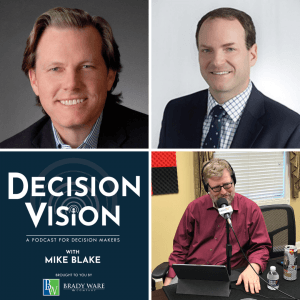
Mike Blake and Jeff Berman

Decision Vision Episode 54: Should I Fire My Attorney? – An Interview with Jeff Berman, Berman Fink Van Horn, PC

“Should I fire my attorney?” is a question a lot of business clients consider, particularly in emotionally-charged situations such as litigation. “Decision Vision” host Mike Blake explores different aspects of this question with veteran business attorney Jeff Berman of Berman Fink Van Horn PC. “Decision Vision” is presented by Brady Ware & Company.

Jeff Berman, Berman Fink Van Horn, PC

should I fire my attorney?
Jeff Berman

Berman Fink Van Horn is a full-service law firm that provides legal services to a diverse group of clients in the areas of business and real estate litigation; non-compete and trade secrets; mergers, acquisitions and corporate finance; labor and employment; banking & creditors’ rights; commercial real estate; and general legal services for mid-market companies, family-owned businesses and entrepreneurial/start-up endeavors. Their attorneys take great pride in delivering results-driven, high quality experience based on knowledge, expertise and a personal touch unique to Berman Fink Van Horn.

A Shareholder at Berman Fink Van Horn, Jeff Berman leads the firm’s corporate and business practice. In addition to day-to-day business matters, this practice includes mergers and acquisitions for middle market companies, employment agreements, succession and estate planning for business owners, commercial real estate and contracts and agreements of all kinds. In the community, Jeff serves on the Jewish HomeLife Board of Directors and as Chair of the Business and Strategic Planning Committee. He is a Georgia native, having grown up in Augusta. Jeff graduated from the University of North Carolina at Chapel Hill and Emory University School of Law.

For more information, go to the firm’s website.

Michael Blake, Brady Ware & Company

Mike Blake, Host of “Decision Vision”

Michael Blake is Host of the “Decision Vision” podcast series and a Director of Brady Ware & Company. Mike specializes in the valuation of intellectual property-driven firms, such as software firms, aerospace firms and professional services firms, most frequently in the capacity as a transaction advisor, helping clients obtain great outcomes from complex transaction opportunities. He is also a specialist in the appraisal of intellectual properties as stand-alone assets, such as software, trade secrets, and patents.

Mike has been a full-time business appraiser for 13 years with public accounting firms, boutique business appraisal firms, and an owner of his own firm. Prior to that, he spent 8 years in venture capital and investment banking, including transactions in the U.S., Israel, Russia, Ukraine, and Belarus.

Brady Ware & Company

Brady Ware & Company is a regional full-service accounting and advisory firm which helps businesses and entrepreneurs make visions a reality. Brady Ware services clients nationally from its offices in Alpharetta, GA; Columbus and Dayton, OH; and Richmond, IN. The firm is growth minded, committed to the regions in which they operate, and most importantly, they make significant investments in their people and service offerings to meet the changing financial needs of those they are privileged to serve. The firm is dedicated to providing results that make a difference for its clients.

Decision Vision Podcast Series

“Decision Vision” is a podcast covering topics and issues facing small business owners and connecting them with solutions from leading experts. This series is presented by Brady Ware & Company. If you are a decision maker for a small business, we’d love to hear from you. Contact us at decisionvision@bradyware.com and make sure to listen to every Thursday to the “Decision Vision” podcast. Past episodes of “Decision Vision” can be found here. “Decision Vision” is produced and broadcast by the North Fulton studio of Business RadioX®.

Visit Brady Ware & Company on social media:

LinkedIn:  https://www.linkedin.com/company/brady-ware/

Facebook: https://www.facebook.com/bradywareCPAs/

Twitter: https://twitter.com/BradyWare

Instagram: https://www.instagram.com/bradywarecompany/

Show Transcript

Intro: [00:00:02] Welcome to Decision Vision, a podcast series focusing on critical business decisions, brought to you by Brady Ware & Company. Brady Ware is a regional, full-service accounting and advisory firm that helps businesses and entrepreneurs make visions a reality.

Mike Blake: [00:00:20] Welcome to Decision Vision, a podcast giving you, the listener, clear vision to make great decisions. In each episode, we discuss the process of decision making on a different topic from the business owner’s or executive’s perspective. We aren’t necessarily telling you what to do, but we can put you in a position to make an informed decision on your own and understand when you might need help along the way.

Mike Blake: [00:00:40] My name is Mike Blake, and I’m your host for today’s program. I’m a Director at Brady Ware & Company, a full-service accounting firm based in Dayton, Ohio, with offices in Dayton; Columbus, Ohio; Richmond, Indiana; and Alpharetta, Georgia, which is where we are recording today. Brady Ware is sponsoring this podcast. If you like this podcast, please subscribe on your favorite podcast aggregator and please consider leaving a review of the podcast as well.

Mike Blake: [00:01:04] So, today, we’re going to talk a little bit about a somewhat contentious topic, which is, should I fire my lawyer? And I want to address this topic because as a business advisor, I’m asked to frankly opine on whether or not a client is getting good representation from their lawyer and maybe why that is. And now, I’m not an attorney. I don’t opine on matters of law. I have no idea if somebody is getting good legal advice or not. But I think what we’re going to find is that the legal advice itself is a fraction of what goes into a constructive or a non-constructive client-lawyer relationship.

Mike Blake: [00:02:04] And I like this topic because I think as a service provider myself, with some of our clients, we do go through our ups and downs. Sometimes, it’s something that I wish I would have done differently. Sometimes, it’s really nobody’s fault of their own. And sometimes, you find that maybe that isn’t a relationship that’s working, and it really is best for both parties to kind of go their separate ways. And in other cases, it’s actually an opportunity to kind of strengthen the relationship.

Mike Blake: [00:02:40] But a lawyer, legal counsel is one of the most important and intimate relationships you can have in business. I think that, particularly, in United States, because we have such a highly developed legal culture and the nature of a lawyer as a business advisor I think is as strong here as it is in any place in the world. And it’s really hard to do business well and the long term if you don’t have great legal advice. And if you’re really not getting the kind of relationship that you want, then maybe you should think about changing.

Mike Blake: [00:03:15] But I think the part where I caution my clients on making a change is understand what is it exactly that you’re unhappy about, right? Understand what is it that that your legal counsel can reasonably impact versus maybe they’re getting you the best out of a suboptimal situation. And in fairness, in about a month or so, we’ll record a podcast, and should I fire my CPA, too. So, this is not taking a shot at lawyers.

Mike Blake: [00:03:50] It’s really trying to walk through what I think is a healthy process that when you have people in your circle who are trusted advisors, I think it is critical that, every once in a while, you take a step back, and you reassess, “Is that trusted advisor relationship working as well for me as it can and should? And if it’s not, what is the remedy? Is the remedy to, then, make the relationship better or is the remedy to terminate the relationship and do something else?” But spoiler alert, it’s not, “I’m pissed off today. And so, I’m just going to fire everybody and move on.” That’s usually not the right—sometimes, it’s the right answer but, usually, it’s not. And we’re going to kind of walk through that today.

Mike Blake: [00:04:41] And joining us today to talk about this topic is my pal, Jeff Berman, who’s a partner and co-founder of Berman Fink Van Horn. Berman Fink Van Horn is a full-service law firm that provides legal services to a diverse group of clients in the areas of business and real estate litigation, non-compete agreements and trade secrets, mergers, acquisitions and corporate finance, labor and employment, banking and creditors rights, commercial real estate and general legal services for mid-market companies, family-owned businesses and entrepreneurial startup endeavors. Their attorneys take great pride in delivering results-driven, high-quality experience based on knowledge, expertise and a personal touch unique to Berman Fink Van Horn.

Mike Blake: [00:05:24] A shareholder at Berman Fink Van Horn, Jeff leads the firm’s corporate and business practice. In addition to day-to-day business matters, the practice includes mergers and acquisitions for middle-market companies, employment agreements, succession and estate planning for business owners, commercial real estate and contracts and agreements of all kinds. In the community, Jeff serves on the Jewish HomeLife Board of Directors and is Chair of the Business Strategic Planning Committee. He’s a Georgia native, having grown up in Augusta, Georgia, graduate of the University of North Carolina at Chapel Hill and Emory University School of Law. Jeff Berman, thank you for coming to the program.

Jeff Berman: [00:05:59] My pleasure. Thank you, Michael, for having me.

Mike Blake: [00:06:01] And really thank you because I think it’s brave to talk about this topic. And frankly, that’s why I reached out to you because I don’t think everybody would have the courage to talk about this this topic. Because it is sensitive and it requires, I think, vulnerability and introspection and self-reflection to some extent. Because I won’t put words in your mouth, but I’ll put myself up out there, you know, not every client relationship I’ve had in my career has lasted forever and has been happily ever after. And sometimes, it’s appropriate for that relationship to end.

Mike Blake: [00:06:43] But there are a lot more people, frankly, who have legal counsel in their circle than some idiot valuation guy like me. And so, I think there’s a much wider appeal to this discussion. So, again, kudos to you for being willing to address it, though I’m not at all surprised. So, let me dive right into it. You know, how often do clients fire their lawyers? Is that a fairly common occurrence? Is that rare? Is it all over the board? What’s your experience in that regard?

Jeff Berman: [00:07:13] I think my experience and I think it’s different from, say, a litigation practice, a lawyer that practices litigation and a lawyer that’s in a transactional corporate practice, which is what I’m in. And I think a lot of it depends upon the type of practice. For instance, a lawyer that handles divorces. Those lawyers are probably attuned to people are going to fire them because people do not like their divorce lawyers.

Mike Blake: [00:07:46] And talking about an emotionally-charged situation anywhere where you’re probably walking in mad.

Jeff Berman: [00:07:50] Correct. I’ve had family lawyers, divorce lawyers tell me that they are reluctant to even referred their clients to, say, a financial adviser because by the time the relationship between that divorce lawyer and their client end, the client hates the lawyer. So, therefore, they’re going to hate the financial advisers. So, they know, going in, there’s a lot of risk. PI lawyers, probably a high-

Mike Blake: [00:08:17] Personal injury.

Jeff Berman: [00:08:17] Yeah, personal injury lawyers probably a high risk also. Generally, though, people do fire their lawyers. And as a lawyer and I know we’ll talk about as we go on today, that’s fraught with a lot of anxiety. And many times, it’s fraught with making a mistake. So, I know as we go on, we’ll delve into that a little bit more. It does happen and probably, it happens pretty frequently. We’re fortunate in my firm that it doesn’t happen a whole lot.

Mike Blake: [00:08:54] Yeah.

Jeff Berman: [00:08:54] And I think it’s the way we deal with clients that prevents it from happening with us.

Mike Blake: [00:09:01] Yeah. And sometimes, this is not necessarily something—the relationship goes both ways necessarily and interestingly, I think to this day, our most popular podcast is on the topic, should I fire a client? And that was the second one that we did. And that one just sort of blew up and put us on the map. I did not think it would have been that popular, but it was. But, you know, sometimes, I think lawyers do fire their clients as well, right?

Jeff Berman: [00:09:27] Absolutely. When I was very early in my practice, n older attorney said to me, “Jeff, don’t take every client that walks in the door.” And that is advice to live by. Most law firms should have engagement letters. And those engagement letters typically would explain the reasons why a lawyer may terminate the relationship. For instance, our engagement letter says that if a client insists upon us presenting a claim or a defense that isn’t warranted by law, and we don’t think there’s a reasonable expectation that the law could change. That’s one reason we would fire a client.

Jeff Berman: [00:10:13] If the client wanted us to pursue some illegal activity, that would be a reason we would say we need to terminate this relationship. If the client doesn’t pay us, that’s a big one, of course. We are a business and that’s how we earn our living. But if a client doesn’t pay us, that is grounds for us to terminate our relationship. And generally, if the client just fails to cooperate. If we need to have a conversation about a particular matter and we need to have it today or tomorrow and the client just disappears, we’re not going to be able to provide the service the client wants. They’re going to be unhappy. That’s a reason to terminate a relationship.

Mike Blake: [00:10:56] In my own experience, one thing, I think, at which I have improved, I’m certainly not perfect, now, I like to think it’s one of the benefits of aging and having gray hair and two arthritic ankles is, I’ve learned when to fire clients as well, and walk away from clients. And doesn’t mean that they’re bad people, but one thing I’ve observed in my life, in my career is that I can tell you the letter, every client that I regretted taking, there’s not a single client I can identify that I regretted walking away from.

Jeff Berman: [00:11:36] Agreed.

Mike Blake: [00:11:37] Right.

Jeff Berman: [00:11:37] Yes.

Mike Blake: [00:11:37] There wasn’t, “Why did I do that?” Right? But every time I’ve walked away from one, like yeah, that was the right decision.

Jeff Berman: [00:11:45] And we still talk about those type of clients all the time in our office as a learning experience. This was a reason it didn’t work. Avoid this in the future.

Mike Blake: [00:11:53] The cautionary tales. Not for us, just for us, our partners and our younger associates, right?

Jeff Berman: [00:11:57] Absolutely.

Mike Blake: [00:11:57] “Don’t do it the way that I did it.”

Jeff Berman: [00:11:59] Correct.

Mike Blake: [00:12:00] So, you know, I hadn’t thought of this, but to me, it’s intuitively right that certain kinds of law, I think, are more prone to changing legal counsel. And probably, the more emotionally-charged the matter is, the more likely it is, I guess, you’re going to change, which implies to me that the decision to change legal counsel is largely or a very heavily emotionally-charged decision.

Jeff Berman: [00:12:23] Yes.

Mike Blake: [00:12:23] Is that fair?

Jeff Berman: [00:12:24] I think yes.

Mike Blake: [00:12:25] And so, is emotion a big driver then behind that decision? And if so, what are the emotions you think that kind of take charge or lead that decision process?

Jeff Berman: [00:12:39] I think that a lot of lawyers or if clients are going to leave lawyers, there’s probably a litany of reasons. And emotion is a very big driver in that. It’s important that a lawyer communicates with their client. And communication is certainly sending emails, sending text, making phone calls when there’s something really important. You don’t want to send a client a really important matter or issue by email, call them.

Jeff Berman: [00:13:12] Communication is also, you want that client to be involved in decisions. You want the client to be engaged. You want them to be involved in their case. And if they’re not, they’re going to drift away. In litigation, again, to separate that from, say, a transactional practice, in litigation, if a matter is in court and a motion is lost, something that the client is asking the court to do, and the court disagrees, clients take that hard. And emotionally, they are very unhappy.

Jeff Berman: [00:13:50] If the attorney had communicated, had explained the risk, had explained that they could lose, but it’s worth the risk, then the client is much more likely to stay. I think clients hate to bring up billing again, but billing is one of those reasons that clients may leave. They may not understand clearly the billing process. So, it’s incumbent upon the lawyer to explain that early, early, early in the process. And for instance, in addition, at at our firm, our bills are extremely detailed. We believe clients pay more attention to our bill than they made to anything else they get from our law firm.

Mike Blake: [00:14:31] Right.

Jeff Berman: [00:14:31] And if you just simply say work performed $X, that doesn’t tell them what you’re doing. So, that’s a form of communication for us. Also, if a lawyer is unprofessional, the lawyer doesn’t show up on time for a meeting, doesn’t appear to be prepared, that may be grounds to at least start thinking about, “I may need another lawyer.” Sometimes, clients don’t agree with how a matter is being handled. And again, you want to communicate with your client, explain why. But if the client’s unhappy, then they may well terminate the relationship. If the lawyer seems incompetent and sometimes, that’s difficult for a client to tell because we’re the lawyers, they’re not. They’re seeking advice from us.

Jeff Berman: [00:14:31] And if you’re talking to your lawyer and that lawyer just does not have answers to probably issues that you would think they should, then maybe they’re not the right lawyer. And that should be a reason to consider moving on to another attorney. And maybe finally, just incompatible styles. Some lawyers are bulldogs, some lawyers are not. That doesn’t make one better than the other. But if you’re a client that want somebody just to go beat the other side over the head and your client’s not that bulldog, it’s a relationship that’s prone to be unsuccessful. So, that would be a reason, I think, that a client would move on to another to another lawyer.

Mike Blake: [00:16:03] Let me sink my teeth in that last one a bit because I think that’s really interesting. I don’t do litigation. I’m not a particularly good or enthusiastic expert witness. But I know enough about the process. I can talk about it intelligently. And when I’m asked for a referral to a litigation attorney, I often will counsel my clients to hire somebody that is the direct opposite of who they are emotionally, right? In other words, if I have a client who I sense is a passive type that I think has a bias towards conciliation, then I think a more aggressive attorney serves them well because that attorney’s going to counterbalance that and make sure they’re not leaving opportunities on the table that they should be more aggressive in pursuing.

Mike Blake: [00:16:03] Conversely, if I have somebody that I know is loaded for bear and they’re very combative and they just want to run to the courtroom, I tend to refer to them an attorney that I know is going to oppose them, I think, you know, that likes to negotiate, that likes to try to settle things and find that middle ground where appropriate to help manage expectations, for example, that you’re not going to have two people charging in, thinking they got a slam-dunk case when, in fact, that they don’t. I’m curious what you think about that about that mindset.

Jeff Berman: [00:17:34] Michael, I know that the advice you’re suggesting is well-meaning, but I tend to disagree with it.

Mike Blake: [00:17:42] Good.

Jeff Berman: [00:17:43] I think that if a client is looking for someone to just pound away and be extremely aggressive, if you pair that client with a more reasonable attorney, reasonable is probably not the best word, but calmer, more deliberate attorney, that client’s going to get incredibly frustrated. It happens. I’ve seen it. Likewise, if you are a client that is calm, is thoughtful, wants to be sure they’re making the right decision and wants a lot of interaction with the lawyer and explanations on why things are being done the way they are, I think that that client will work better with the lawyer that provides that kind of service. Litigation is incredibly stressful for everybody, including the lawyers.

Mike Blake: [00:18:41] Yeah.

Jeff Berman: [00:18:41] And if that relationship is not a relationship that you can sit down and have a beer with the person, you talk through the issues, it’s just not going to be a good relationship.

Mike Blake: [00:18:54] Interesting. Okay. So, I’m going to leave that there. I’m going to go back and process that.

Jeff Berman: [00:19:01] Okay.

Mike Blake: [00:19:03] One other thing that you brought up that I think is important and underrated is on billing, right? Yeah. I think my experience is that most clients are perfectly willing to pay for value, but they would like some transparency in it. And I’m delighted to hear that it sounds like you tend to be on the side of being overly detailed rather than undetailed in your billing. Is that a fair characterization?

Jeff Berman: [00:19:29] Very fair, yes.

Mike Blake: [00:19:30] And I discovered only recently in our firm, we’re the exact opposite. You know, when we sent bills out, I don’t always see kind of the final version as it goes out. I only learned that we don’t send out a lot of detail, which we are now going to fix.

Jeff Berman: [00:19:48] Good. Good.

Mike Blake: [00:19:48] Because I really don’t like that. I’m candidly surprised that we haven’t heard more objections from our clients over that, right? Even when we have a fixed fee, is mostly my model, I still think it’s important that the client understand kind of, you know, there was time spent and where was that spent and who spent it, right? I just think that’s a reasonable thing for a client to expect. And lack of transparency leads to lack of trust, which lets imaginations run wild, which then creates other problems in the relationship.

Jeff Berman: [00:20:19] And again, detailed bills also allow a client to see exactly what is going on so that it’s just another way to communicate with the client as to what’s going on in the case.

Mike Blake: [00:20:33] So, lawyers aren’t cheap, for the most part.

Jeff Berman: [00:20:37] Correct.

Mike Blake: [00:20:38] And most CPAs are not cheap either. Is it unreasonable to demand perfection?

Jeff Berman: [00:20:44] That’s a tough question to answer. I would start the answer by, to a client, what is perfection? Is perfection in a transaction asking in an employment agreement if you’re going to be the employee to get two years severance? And as a lawyer, you know, the employer is not going to give two years severance. If the client wants that and that’s perfection to them, then I’m not going to provide perfection because I can estimate that the employer’s not going to give that.

Jeff Berman: [00:21:24] So, understanding from the client what they think is perfection is important. On the litigation side, if you have a case and there are certain amount of damages that you believe you’re entitled to, and at the end of the day, you don’t get that, is that a failure of perfection or is it just a matter of the facts that you came to the lawyer with would not allow for the result exactly like you wanted? So, yes, you want a lawyer to do a really good job for you. And I think that’s the best we can provide. To anticipate perfection is going to lead you to being disappointed.

Mike Blake: [00:22:13] So, I want to expand upon that a little bit, especially in litigation. You know, I believe and please tell me if I’m wrong, you know, you can try a great case and still come up short.

Jeff Berman: [00:22:27] Absolutely.

Mike Blake: [00:22:28] Because you don’t control all of the outcomes, right? Even assuming for the moment, the client gives you everything you need, which isn’t always the case, but assuming the client even gives you everything that you need, judges make mistakes, juries make mistakes. I believe, anyway, you may not want to go on record saying that, but I firmly believe judges and juries make mistakes. I think they do it. I think they do it a lot because they’re human beings.

Jeff Berman: [00:22:53] And that’s why we have appeals courts. We have a process that if a mistake is made or perceived mistake, that there is a higher court typically that can review it.

Mike Blake: [00:23:05] Right. But it’s, you know, most lawyers don’t exist in a world in which they control every avenue, right? Even state lawyers don’t control everything. There’s always a probate court. There’s an unknown error, there’s something, there’s some variable out there that, you know, is just not reasonably foreseeable by any practitioner, right?

Jeff Berman: [00:23:30] Right.

Mike Blake: [00:23:30] And so, I think the way you responded to this question is really interesting because it’s really about understanding what is the standard of perfection, right?

Jeff Berman: [00:23:40] Yes.

Mike Blake: [00:23:41] And I guess what we’re really getting to is, the standard of perfection is, are you doing your best? Do you have a command of the facts and the law and have the capacity to put in the mental energy and focus required to be that vigorous advocate for your client?

Jeff Berman: [00:24:03] Correct. And it’s also, you need to set reasonable expectations for your client.

Mike Blake: [00:24:09] Yeah.

Jeff Berman: [00:24:09] And as long as you’re setting reasonable expectations and you can come close to those reasonable expectations, then arguably, that’s perfection.

Mike Blake: [00:24:21] Yeah.

Jeff Berman: [00:24:21] You’ve done what you said you could do and if you don’t accomplish it, as long as the client understands, you know, you’ve done the best you could.

Mike Blake: [00:24:32] So, if somebody decides they do want to make a change, what are they facing? What is the to-do list or the process look like? And I guess it probably differs, I guess, in the nature of the law that you’re practicing. So, answer this however you feel the most comfortable.

Jeff Berman: [00:24:48] Sure.

Mike Blake: [00:24:49] But what’s involved in changing legal counsel?

Jeff Berman: [00:24:51] It is very different from, say, a transactional lawyer, a corporate lawyer and a litigation lawyer or dealing with a litigation matter. A transaction lawyer can be fired on the spot and the client can walk in or send an email or text and say, “You’re fired.” And that’s the end of the relationship. You have to deal with, how do you move the file to a new attorney? But that, again, can be a pretty simple process. From the litigation side, it is much more cumbersome.

Jeff Berman: [00:25:25] From the litigation side, the attorney has to actually file something to withdraw. And that would be just the attorney wanting to withdraw. The client and the attorney could agree to a withdrawal. In both cases, a court has to approve it. Sometimes, new counsel and the client would enter what’s called a notice of appearance, where the lawyer is saying, “I am stepping in now to replace another lawyer.” So, in the litigation setting, it’s more cumbersome. For lawyers, they do it. But it’s still more steps. Whereas again, on the transactional side, it’s very easy to accomplish. The results of that change, you know, are not as simple as the actual change itself.

Mike Blake: [00:26:19] Right. Well, let’s talk about the transaction side here because that’s the area, I guess, where I feel most comfortable talking about. And I can appreciate, you know, on one level, you can sort of change attorneys and you don’t need anybody’s court permission, right? Pay the outstanding invoice. I imagine there’s some process that maybe is governed by bar ethics, I guess, in terms of turning over work files and doing so in a prompt fashion, I guess, you can comment on that. But even that isn’t necessarily costless. If you’re involved in a transaction, let’s say, and, you know, if I’m negotiating a deal with a party and then, midway through, the party changes attorneys, that can be pretty jarring to the discussion as well, can’t it?

Jeff Berman: [00:27:07] It can be very jarring. And you mentioned about at the termination of a relationship, paying fees and/or getting the file transferred. Ethically, we need to turn over the file. We can also say, “Wait a minute, we’re going to hold the file until you pay us.”

Mike Blake: [00:27:27] Yeah.

Jeff Berman: [00:27:27] The standard is if we are really negatively affecting the client by not turning over the file, whether we’ve been paid or not, that’s really the standard. And if we are going to be negatively impacting the client, then we need to go ahead and turn the file over and hopefully get paid later. Changing lawyers in mid-course, and I will talk as you want to in a transaction setting, I think the first thing that would say to me, if the other side changes lawyers in the middle is something’s wrong with that client or something is going on between the client and the attorney. The client may be being very unreasonable.

Mike Blake: [00:28:12] Yeah.

Jeff Berman: [00:28:12] So, that’s not a good look. Also, once you’ve got an attorney that’s got that institutional knowledge and ideally knows all of the facts because they’ve been involved from the beginning, a new attorney in the matter, I believe, is just going to have a really difficult time catching up with all the nuances. And plus, the cost for that attorney to catch up to those nuances is going to be very expensive. So, you are probably not doubling the fees you would have paid all in, but you’re certainly increasing them by 30% to 50%. So, there are those risks. It’s the appearance and the cost factor. And at the end of the day, will you get the result you want potentially because something gets missed, not purposefully, but just by virtue of the change.

Mike Blake: [00:29:07] So, yeah, I can imagine that as an attorney trying to jump in mid-deal, it may be hard to find attorneys that would even be willing to take the case. I guess depends on how busy they are, frankly, right? But you’re really asking somebody to jump on a treadmill going full speed from a dead stop.

Jeff Berman: [00:29:27] Yes.

Mike Blake: [00:29:27] And that’s hard.

Jeff Berman: [00:29:28] It’s very hard and they’re different places.

Mike Blake: [00:29:31] And there’s risk in that, too, right?

Jeff Berman: [00:29:33] Yes.

Mike Blake: [00:29:33] It’s not just about not looking incompetent, but like jumping on a treadmill, you get that wrong, next thing you know, you got a busted ankle.

Jeff Berman: [00:29:42] Absolutely. There may be something you didn’t know that you missed in the final document or you know, the question is always, are you taking on exposure somehow because the prior lawyer didn’t do something and you didn’t know that it should or should not have been done? So, are you taking on risk that the prior counsel didn’t do the job that they should have done? So, that’s always a risk also by taking the case in the middle.

Mike Blake: [00:30:13] And that’s something I hear a lot. When lawyers are approached about taking a case, taking some sort of matter midstream like that is, you know, they’re often reluctant because what don’t I know, especially, you know, the legal field, particularly if it’s local, tends to be a small world, right? So, you have a sense as to who you think the good attorneys are and the not-as-good attorneys are, at least the ones you kind of think, you know, “I wouldn’t necessarily practice law in that way.” We’ll just leave it at that, right? And in particular, if they fire somebody that you think is a pretty good attorney and now, they’re coming to you thinking they got a different result, it may be difficult to hire somebody as good a caliber as what they had going in, right?

Jeff Berman: [00:31:03] Yes.

Mike Blake: [00:31:04] Because, you know, there’s no law that says you have to take the case.

Jeff Berman: [00:31:08] And I think it’s very difficult, ultimately, for a client to truly appreciate the quality of an attorney. They’re just so many nuances that we have to deal with and so much gray area. And some attorneys may handle it one way, some attorneys may handle it another. And it doesn’t make it right or wrong, but, you know, I look at clients sometimes and think, do you really understand what we’re talking about here? Because it’s complicated.

Mike Blake: [00:31:39] Yeah.

Jeff Berman: [00:31:39] And there may been law school classes that taught about that particular subject, in here, the clients being asked to grasp it in 15 minutes. So, it’s hard. It’s very hard. And I think, you know, dangerous isn’t the right word when you’re changing attorneys, but there is certainly risk involved.

Mike Blake: [00:32:01] You definitely have to sort of pick your way around the landmines for sure, right?

Jeff Berman: [00:32:04] Yes.

Mike Blake: [00:32:04] And I think in that way, your profession and mine are actually quite similar because they’re highly technical. In most cases, we are working with clients that would find it very hard independently to evaluate the strength of our work. And often, the only objective in their mind, view in terms of how good a job we’re doing, is, are we meeting their expectations on the way in?

Jeff Berman: [00:32:34] Yes.

Mike Blake: [00:32:35] But, you know, things change. And in my world, you know, I can tell you right now, a client’s going to be happy if I determine or appraise a company at roughly the number they thought I was going in, which when that happens, terrifies me, right? Because it ought to be at least a little bit different, right? And if it’s not the number they thought, then I’m just a hack, right? And it takes a little bit of work to kind of get through that. And so, maybe I’m a hack, but let’s just assume I’m not for a minute and kind of walk through kind of what we did. I think the law sort of works that way, too, because, again, it’s not all up to you. Sometimes, you have to work within a set of constraints that may or may not provide that straight and clear path to the desired result, right?

Jeff Berman: [00:33:25] And things are in negotiation.

Mike Blake: [00:33:27] Right.

Jeff Berman: [00:33:27] Assuming you’ve got competent counsel on the other side, a client that I’m representing is not going to get everything they want. It’s just a given. So, it’s a negotiation. Again, setting client expectations is key. One thing I need to point out that I think we missed or not, didn’t point out, in terms of changing lawyers, it’s different if you are a company. If a company engages a lawyer and then, that company terminates the lawyer, particularly in litigation, a company cannot represent itself. Like an individual can be pro se. They could go into court and not have an attorney. A corporation, a company has to have an attorney. That’s just one of the rules.

Mike Blake: [00:34:18] Okay. I didn’t know that.

Jeff Berman: [00:34:20] So, anybody listening that is thinking of changing an attorney and you are part of a company that’s doing that, you need to have another lawyer ready to go immediately.

Mike Blake: [00:34:30] So, your in-house counsel cannot represent you.

Jeff Berman: [00:34:32] Correct. You have to have an attorney, an outside counsel who is performing the legal services for you.

Mike Blake: [00:34:39] Okay. Interesting. So, here’s another question. It’s not on the script, but I think it’s important. As new counsel coming in, whether it’s litigation or some other matter, A, are you allowed to talk to the prior counsel? Are they allowed to talk to you? And if so, is that something that you would do as the new attorney, is your due diligence as to whether or not you’d want to take on that case?

Jeff Berman: [00:35:06] Absolutely. And I would hope that the client would approve that. And I think it really comes down to, will the client authorize prior counsel to talk? That’s really the way that it would need to proceed. And if for no other reason than cost savings, I can sit and review a 60-page purchase and sale agreement, I can talk to the first lawyer and that lawyer can likely help me understand what’s in those 60 pages a lot quicker than I can pick it up by reading those 60 pages. Still need to read them, but if I’ve got the insight prior to reading it, it will help me and ultimately help the client and also save costs. So, I would hope that a client would say, “Yes, you can talk to the prior attorney.”

Mike Blake: [00:35:59] Now-

Jeff Berman: [00:36:01] If you say no, it’s kind of a red flag. If the client says no, it’s kind of a red flag also. What’s that attorney going to say?

Mike Blake: [00:36:08] Well, yeah. And that’s what I wanted to get in because you answered that question a little bit differently than I thought you would, but it’s still a good answer. But I’ll ask it differently because of another piece of information I want to tease out. If I was the potential new attorney coming in on the matter, before I took on the case, I would just want to talk to the attorney and say, “Why didn’t that relationship work out?” Right? “Is this person a lunatic?” Maybe it’s something benign, maybe that you suddenly discovered that you had a conflict or for whatever reason. But I would think, if you can, you’d want to learn that initially to get that post-mortem, right?

Jeff Berman: [00:36:49] I think you could. You can get high-level information like you’ve described. Is that person a lunatic or not? But in terms of anything substantive, I think you really need the client’s permission for that to happen.

Mike Blake: [00:37:03] But would you ask for that permission-

Jeff Berman: [00:37:06] Absolutely.

Mike Blake: [00:37:07] … even before you’re engaged to kind of vet that, right?

Jeff Berman: [00:37:10] Yes. Yeah. Just part of our due diligence on whether we should take that client or not.

Mike Blake: [00:37:16] Yeah.

Jeff Berman: [00:37:16] And I mentioned due diligence. I would encourage clients to do due diligence on their lawyers.

Mike Blake: [00:37:24] Yeah.

Jeff Berman: [00:37:24] You know, whether that’s talking to other people, whether that’s talking to other lawyers, whether that’s going online and searching. One of my pet peeves, though, is even though you can search online and there are all kinds of awards that lawyers seem to have, I’m not sure those awards are always truly indicative of the legal competence of the lawyer. That’s probably speaking out of school a little bit. Not many lawyers would like to hear that. But that’s the way I’d look at it. So, it’s really doing your due diligence, sitting down, talking with the attorney, making sure that it is a good relationship, that it’s a person you can get along with because it’s a very close relationship. And if you can’t get along with each other, that should be a red flag.

Mike Blake: [00:38:14] So, a follow-up question I want to ask on this because I think given where this is going, this is really important, given what I’m learning today, if somebody is in a position to think they might want to change an attorney, I think one of the piece of advice I would give him is, “If you decide to change legal counsel, this needs to be your last change for a long time.”

Jeff Berman: [00:38:41] Ideally, yes. Going to a third lawyer, you’re going to have a tough time finding that third lawyer.

Mike Blake: [00:38:48] Right. Right. That’s going to be some of the most likely desperate for the business, right?

Jeff Berman: [00:38:54] Yes.

Mike Blake: [00:38:54] One change, okay. Things didn’t work out. Maybe there’s just a bad connection or that lawyer in that particular case didn’t do a good job, but man, you’re going to change twice in the same matter or more, you know, that just streams warning, Will Robinson, that kind of thing, right?

Jeff Berman: [00:39:13] Yes.

Mike Blake: [00:39:14] So, part of that calculus is, you know, if you’re going to make that change, be sure that person is going to follow you, that that’s going to be the person because you’re probably not going to have an opportunity to make that change again and improve your situation realistically.

Jeff Berman: [00:39:29] So, you’re really reinforcing the idea of when you are looking for an attorney, do your absolute best to be sure the first when you engage is someone that’s going to be able to handle the case like you want it to be handled or handled the transaction like you want it to be handled. Of course, if the lawyer is unprofessional, turns out to be incompetent, misses deadlines, that those kinds of reasons would make it easier to go to a second lawyer. That second lawyer would understand and appreciate that.

Mike Blake: [00:39:58] Right.

Jeff Berman: [00:39:59] But again, going to a third lawyer at some point, people aren’t going to want to take your case for fear that you’re going to leave them and go to try to find a lawyer number four.

Mike Blake: [00:40:11] Right. At some point, it’s not everybody else, it’s you.

Jeff Berman: [00:40:14] Correct.

Mike Blake: [00:40:14] So, here’s a potentially unfair question, but I like unfair questions, should you fire a lawyer over one mistake?

Jeff Berman: [00:40:25] Again, that gets back similar to the discussion about perfection.

Mike Blake: [00:40:30] Yeah.

Jeff Berman: [00:40:31] It’s identifying the mistake, for one thing. But again, early in my career, and this goes back many years, an older attorney at that time told me that, “Jeff, all attorneys make mistakes. The good ones get out of them.” And I think that there is truth to that.

Mike Blake: [00:40:52] Yeah.

Jeff Berman: [00:40:52] And, you know, again, keep in mind, lawyers are humans. Humans, probably somewhere in the definition says we make mistakes. So, mistakes can be somewhat anticipated, but it’s the impact of the mistake.

Mike Blake: [00:41:08] Yeah.

Jeff Berman: [00:41:08] You know, if a paragraph gets left out of a purchase and sale agreement or an employment agreement and the client picks up on that and says, “Hey, you forgot this paragraph and I want it in there” or “I want this particular term, I want this particular amount for severance”, and the lawyer puts the incorrect number or forgets to put it, that’s a mistake. Is that a mistake worthy of firing the attorney? To me, no. Again, as long as the relationship otherwise is really strong.

Mike Blake: [00:41:42] Right.

Jeff Berman: [00:41:43] There are mistakes like missing a deadline. You have to have an answer filed in court by April 1 and the lawyer misses that. That’s a pretty serious mistake. And that’s certainly a mistake worthy of thinking about, should I change lawyers? And I would encourage somebody in that position, a client in that position, to really sit down with the lawyer and understand why it happened and what the impact is going to be and how do we get out of it? Because, again, the lawyer may have—I hate to say a valid excuse because I’m not sure there is really a good excuse for missing a deadline, but sitting down, talking with a lawyer, understanding it may be the preferred way to go as opposed to jumping to another lawyer because of all of the issues related to jumping to another lawyer.

Mike Blake: [00:42:34] Right. Okay. So, sometimes, the thought process of changing counsel may be prompted by another legal counsel suitor jumping in that would like that business. And I’m curious. It’s even awkward to ask the question because it’s hard to ask it in a way that doesn’t make me sound like a gold-plated jerk. But I already mentioned that, so I’ll just thought out there anyway. You know, is it common, I guess, in your profession where maybe someone’s kind of nipping at the heels, trying to displace you, for example, as legal counsel because they would like that client?

Mike Blake: [00:43:17] Is that considered ethical? Is it gray business. Is it something that you encounter all the time? And if so, if a client sort of hears that, saying, “You know what, Jeff’s a great guy, but I think I can do a lot better. Let’s meet and review your case and see if we can get a better result than maybe, you know, what Jeff is getting for you guys.” There’s a question in there somewhere if you can kind of parse as you process this. How do you react to that kind of scenario?

Jeff Berman: [00:43:45] We think in my firm that other lawyers are always looking to poach clients, that it’s a given. Any client or any person out in the community potentially is going to run across other lawyers, and you can’t help but talk about your case somewhat, so you’re going to get opinions. There are also those lawyers who are just really looking to poach clients, particularly if it’s a corporation that’s a significant client.

Jeff Berman: [00:44:19] So, we do our best, again, going back to what we talked about earlier, of keeping clients informed, giving bills that make sense, being fair and reasonable in our billing. So, it clearly happens. I would suggest to clients to be careful because I don’t know how or it’d be very difficult to say I can get a better result for you than another attorney because probably at that point, we don’t know what the result is anyway.

Mike Blake: [00:44:51] Right.

Jeff Berman: [00:44:51] So, how do you measure “I can do better”? There may be times, however, that if you’re dealing with a lawyer that really doesn’t have the experience in the area and you talk to another lawyer and that lawyer seems to have much more knowledge about the kind of law you’re dealing with, then maybe the poach is a good thing. It clearly happens. We try to avoid letting it happen. It’s not unethical.

Mike Blake: [00:45:24] Okay.

Jeff Berman: [00:45:24] Whether it’s gray, maybe so. But it’s a competitive industry.

Mike Blake: [00:45:30] Okay.

Jeff Berman: [00:45:30] A lot of good lawyers out there, lot of lawyers that aren’t as good, but it clearly happens.

Mike Blake: [00:45:37] Interesting. Okay. So, just because somebody is kind of making a pitch for the business, that doesn’t necessarily mean they’re a bad person or a person of questionable ethics. That’s just what happens in a competitive business, I think is what I’m hearing you say.

Jeff Berman: [00:45:51] It is. And I mean, in my firm, I don’t think we would aggressively try to convince a client to leave an attorney.

Mike Blake: [00:46:00] Yeah. Yeah. And as a matter of personal practice, I generally don’t do that either. I typically will tell a client, you know, “If you’re happy with what you’ve got going on, great. If you have a question, happy to take the call.” But I generally won’t go further than that. But maybe I’m a sucker.

Jeff Berman: [00:46:18] And, you know, you mentioned earlier that there are a lot of lawyers in Atlanta and in the metro area, but it’s still a pretty small community.

Mike Blake: [00:46:26] Yeah.

Jeff Berman: [00:46:26] And if you get the reputation of being somebody that’s poaching clients, probably, to me, that’s not a reputation you want to have.

Mike Blake: [00:46:38] So, we’re running out of time here, but last question I want to get in here before we wrap up is, if you’re thinking about changing a lawyer, what are the three or four things that are most likely to represent a reasonable basis for changing counsel?

Jeff Berman: [00:47:01] Lack of communication.

Mike Blake: [00:47:04] Okay.

Jeff Berman: [00:47:04] We believe that you return emails daily as soon as you can. You just do it. You take phone calls. You keep clients informed of what’s going on in their matter. Failure to do those things are going to lead clients away from you. So, if your lawyer just doesn’t communicate with you, that’s just not a person you necessarily want to deal with in any relationship, especially one that is as tension-filled and as difficult as a relationship with a lawyer and a client. Again, if the lawyer just comes across as incompetent, yeah, you probably should start looking around.

Mike Blake: [00:47:52] And incompetent means not knowing answers to what ought to be fairly basic questions, obviously missing filing dates. To me, that’s borderline malpractice. You know, things of that nature might speak to the competence or lack thereof.

Jeff Berman: [00:48:06] Correct. Just again, an example, in any M&A transaction, there’s going to be due diligence where one side wants to look at all the information about the other side. And if you’re talking to a lawyer about an M&A deal, and they really don’t have a handle on due diligence, that’s probably not the lawyer you want to use because that’s almost as basic as you can get. And that’s probably an extreme example, but it’s still an example of where you expect lawyers to have some good knowledge of the transaction and to be able to walk you through it and explain to you what’s going to be involved. And if they can’t do that, that should be a red flag.

Mike Blake: [00:48:49] So, Jeff, we’re going to wrap up. There’s a lot more that we could have talked about today, but didn’t. But I do want to underscore that I think a key takeaway from this conversation is, if somebody is thinking about changing legal counsel, it’s not something to be taken lightly, right? And in some cases, that may be the result of a poor decision on the client’s part rather than anything that the lawyer necessarily did, has done, is doing. But it’s obviously a very complex decision. If somebody would like to learn more and maybe, you know, they’d like to get your expert insight into that thought process, can they contact you? And if so, what’s the best way to do that?

Jeff Berman: [00:49:33] Absolutely. Yes. Probably the best way to get in touch with me is through our website or through my email address, which is jberman@bfvlaw.com. I’d be very happy to talk to people and listen to why they are considering leaving or moving to another attorney and certainly giving my opinion, understanding it’s only my opinion, is that a good reason, a valid reason? And will a new attorney understand those reasons as valid reasons?

Mike Blake: [00:50:14] So, that’s going to wrap it up for today’s program. I’d like to thank Jeff Berman so much for joining us and sharing his expertise with us today. We’ll be exploring a new topic each week. So, please tune in so that when you’re faced with your next executive decision, you have clear vision when making it. If you enjoy these podcasts, please consider leaving a review with your favorite podcast aggregator. It helps people find us so that we can help them. Once again, this is Mike Blake. Our sponsor is Brady Ware & Company. And this has been the Decision Vision podcast.

Tagged With: corporate attorney, fire attorney, Michael Blake, Mike Blake

Alpharetta Tech Talk: Ben Cagle, Cagle Consulting Partners

February 28, 2020 by John Ray

Alpharetta Tech Talk
Alpharetta Tech Talk: Ben Cagle, Cagle Consulting Partners
Loading
00:00 /
RSS Feed
Share
Link
Embed

Download file

Ben Cagle, Cagle Consulting Partners
Ben Cagle

“Alpharetta Tech Talk,” Episode 11: Ben Cagle, Cagle Consulting Partners

Ben Cagle, Managing Partner at Cagle Consulting Partners, joins “Alpharetta Tech Talk” to talk about his work in assisting companies with technology-related disruption, the technology ecosystem in Atlanta generally and Alpharetta specifically, and much more. The host of “Alpharetta Tech Talk” is John Ray and this series is broadcast from the North Fulton Business RadioX® studio inside Renasant Bank in Alpharetta.

Ben Cagle, Cagle Consulting Partners

Ben Cagle, Cagle Consulting Partners
Ben Cagle

Ben Cagle is Managing Partner of Cagle Consulting Partners (CCP), an advisory firm focused on accelerating growth, driving innovation, and building/scaling organizations in technology, professional Services, and other industries.

Cagle Consulting Partners currently serves global enterprise, mid-market, and technology startup clients.

Prior to founding CCP, Ben served on the executive leadership team for a Global 100 Enterprise with full P&L responsibility for a $450M global business unit and led an industry consolidation initiative (with McKinsey & Company).

Transitioning from “industry” into global management consulting, Ben served in various Consulting Partner, Practice/Industry Leader, Solution Innovation, and Thought Leadership roles. Ben’s global enterprise consulting leadership experience includes positions at HP Enterprise (formerly EDS), DXC Technology (formerly CSC Consulting), and Hitachi Consulting.

Ben also has led various NASDAQ, VC-backed Software/SaaS, and entrepreneurial companies focused on advanced data analytics, market insights, and brand/marketing strategy.

Ben graduated from the Georgia Institute of Technology and currently resides in Alpharetta, Georgia with his wife, Sara.

You can find more on Cagle Consulting Partners at their website or call 770-331-0925.

Ben Cagle, Cagle Consulting Partners

About “Alpharetta Tech Talk”

“Alpharetta Tech Talk” is the radio show/podcast home of the burgeoning technology sector in Alpharetta and the surrounding GA 400 and North Fulton area. We feature key technology players from a dynamic region of over 900 technology companies. “Alpharetta Tech Talk” comes to you from from the North Fulton studio of Business RadioX®, located inside Renasant Bank in Alpharetta.

Past episodes of “Alpharetta Tech Talk” can be found at alpharettatechtalk.com.

Renasant Bank has humble roots, starting in 1904 as a $100,000 bank in a Lee County, Mississippi, bakery. Since then, Renasant has grown to become one of the Southeast’s strongest financial institutions with approximately $12.9 billion in assets and more than 190 banking, lending, wealth management and financial services offices in Mississippi, Alabama, Tennessee, Georgia and Florida. All of Renasant’s success stems from each of their banker’s commitment to investing in their communities as a way of better understanding the people they serve. At Renasant Bank, they understand you.


Tagged With: Tech Alpharetta, Tech in Alpharetta, tech talk, technology in Alpharetta

To Your Health With Dr. Jim Morrow: Episode 27, The Importance of Sleep

February 27, 2020 by John Ray

Dr. Jim Morrow
North Fulton Studio
To Your Health With Dr. Jim Morrow: Episode 27, The Importance of Sleep
Loading
00:00 /
RSS Feed
Share
Link
Embed

Download file

the importance of sleep
Dr. Jim Morrow

To Your Health With Dr. Jim Morrow: Episode 27: The Importance of Sleep

On this edition of “To Your Health with Dr. Jim Morrow,” Dr. Morrow discusses the importance of sleep, common sleep disorders, and ways to get better sleep. “To Your Health” is brought to you by Morrow Family Medicine, which brings the CARE back to healthcare.

About Morrow Family Medicine and Dr. Jim Morrow

Morrow Family Medicine is an award-winning, state-of-the-art family practice with offices in Cumming and Milton, Georgia. The practice combines healthcare information technology with old-fashioned care to provide the type of care that many are in search of today. Two physicians, three physician assistants and two nurse practitioners are supported by a knowledgeable and friendly staff to make your visit to Morrow Family Medicine one that will remind you of the way healthcare should be.  At Morrow Family Medicine, we like to say we are “bringing the care back to healthcare!”  Morrow Family Medicine has been named the “Best of Forsyth” in Family Medicine in all five years of the award, is a three-time consecutive winner of the “Best of North Atlanta” by readers of Appen Media, and the 2019 winner of “Best of Life” in North Fulton County.

Dr. Jim Morrow, Morrow Family Medicine, and Host of “To Your Health With Dr. Jim Morrow”

Dr. Jim Morrow is the founder and CEO of Morrow Family Medicine. He has been a trailblazer and evangelist in the area of healthcare information technology, was named Physician IT Leader of the Year by HIMSS, a HIMSS Davies Award Winner, the Cumming-Forsyth Chamber of Commerce Steve Bloom Award Winner as Entrepreneur of the Year and he received a Phoenix Award as Community Leader of the Year from the Metro Atlanta Chamber of Commerce.  He is married to Peggie Morrow and together they founded the Forsyth BYOT Benefit, a charity in Forsyth County to support students in need of technology and devices. They have two Goldendoodles, a gaggle of grandchildren and enjoy life on and around Lake Lanier.

Facebook: https://www.facebook.com/MorrowFamMed/

LinkedIn: https://www.linkedin.com/company/7788088/admin/

Twitter: https://twitter.com/toyourhealthMD

The complete show archive of “To Your Health with Dr. Jim Morrow” addresses a wide range of health and wellness topics, and can be found at www.toyourhealthradio.com.

The Importance of Sleep

Dr. Morrow’s Show Notes

The Importance of Sleep

  • According to the Sleep Foundation, nearly 40 million Americans suffer from sleep disorders. 
    • In addition, growing older is often accompanied by “normal” changes in sleeping patterns, such as becoming sleepy earlier, waking up earlier, or experiencing less deep sleep. 
    • That means more than 40 million people are waking up tired every day and experiencing other symptoms related to not getting enough sleep. 
    • For example, it’s long been known that sleep affects your hormones, mood, cognitive skills, and even your ability to maintain a healthy weight. 
    • But if you’ve ever experienced sleep issues, you don’t need statistics to tell you that sleep is critical to your physical and mental health. 
    • And the truth is everyone can benefit from more sleep, including children and teens.
  • Americans report, on average, 2 nights/week of insufficient sleep, and 39.5% of Americans get 6 hours of sleep or less per day.  
    • Studies report that sleep symptoms are exceedingly common among patients presenting for medical visits.  
    • This finding is troubling because many physicians do not ask their patients about sleep.  
    • Only 43% of primary care physicians routinely inquire about sleep vs the 80% who discuss exercise and 79% who address healthy diet. 
    • Despite this discrepancy, only 16% believed that counseling patients on sleep is not as important as counseling on diet and exercise. 
    • Thus, asking about sleep problems would address a common concern that is underappreciated
  • There are two types of people in the world: 
    • sleepers and non-sleepers. 
    • If you are not a sleeper, you need to see your doctor and do whatever you have to do to become a sleeper.
  • Insomnia is a condition you have to control. Most meds we use for this are not addicting.

Key Sleep Disorders

  • Insomnia
    • Insomnia is characterized by an inability to initiate or maintain sleep. 
    • It may also take the form of early morning awakening in which the individual awakens several hours early and is unable to resume sleeping. 
    • Difficulty initiating or maintaining sleep may often manifest itself as excessive daytime sleepiness, which characteristically results in functional impairment throughout the day. 
    • Before arriving at a diagnosis of primary insomnia, the healthcare provider will rule out other potential causes, such as other sleep disorders, side effects of medications, substance abuse, depression, or other previously undetected illness. 
    • Chronic psychophysiological insomnia (or “learned” or “conditioned” insomnia) may result from a stressor combined with fear of being unable to sleep. Individuals with this condition may sleep better when not in their own beds. 
    • Health care providers may treat chronic insomnia with a combination of use of sedative-hypnotic or sedating antidepressant medications, along with behavioral techniques to promote regular sleep.
  • Narcolepsy
    • Excessive daytime sleepiness (including episodes of irresistible sleepiness) combined with sudden muscle weakness are the hallmark signs of narcolepsy. 
    • The sudden muscle weakness seen in narcolepsy may be elicited by strong emotion or surprise. 
    • Episodes of narcolepsy have been described as “sleep attacks” and may occur in unusual circumstances, such as walking and other forms of physical activity. 
    • The healthcare provider may treat narcolepsy with stimulant medications combined with behavioral interventions, such as regularly scheduled naps, to minimize the potential disruptiveness of narcolepsy on the individual’s life.
  • Restless Legs Syndrome (RLS)
    • RLS is characterized by an unpleasant “creeping” sensation, often feeling like it is originating in the lower legs, but often associated with aches and pains throughout the legs. 
    • This often causes difficulty initiating sleep and is relieved by movement of the leg, such as walking or kicking. 
    • Abnormalities in the neurotransmitter dopamine have often been associated with RLS. 
    • Healthcare providers often combine a medication to help correct the underlying dopamine abnormality along with a medicine to promote sleep continuity in the treatment of RLS.
  • Sleep Apnea
    • Snoring may be more than just an annoying habit – it may be a sign of sleep apnea. 
    • Persons with sleep apnea characteristically make periodic gasping or “snorting” noises, during which their sleep is momentarily interrupted. 
    • Those with sleep apnea may also experience excessive daytime sleepiness, as their sleep is commonly interrupted and may not feel restorative. 
    • Treatment of sleep apnea is dependent on its cause. 
    • If other medical problems are present, such as congestive heart failure or nasal obstruction, sleep apnea may resolve with treatment of these conditions. 
    • Gentle air pressure administered during sleep (typically in the form of a nasal continuous positive airway pressure device) may also be effective in the treatment of sleep apnea. 
    • As interruption of regular breathing or obstruction of the airway during sleep can pose serious health complications, symptoms of sleep apnea should be taken seriously. 
    • Treatment should be sought from a health care provider.
  • Sleep and Chronic Disease
    • As chronic diseases have assumed an increasingly common role in premature death and illness, interest in the role of sleep health in the development and management of chronic diseases has grown. 
    • Notably, insufficient sleep has been linked to the development and management of a number of chronic diseases and conditions, including type 2 diabetes, cardiovascular disease, obesity, and depression.
Short sleep
(<7 hours)
Sufficient sleep
(≥7 hours)
Chronic condition%%
Heart attack4.83.4
Coronary heart disease4.73.4
Stroke3.62.4
Asthma16.511.8
COPD (chronic obstructive pulmonary disease)8.64.7
Cancer10.29.8
Arthritis28.820.5
Depression22.914.6
Chronic kidney disease3.32.2
Diabetes11.18.6

Reference cdc.gov

Tips for Better Sleep

  • Good sleep habits (sometimes referred to as “sleep hygiene”) can help you get a good night’s sleep.
    • Some habits that can improve your sleep health:
      • Be consistent. Go to bed at the same time each night and get up at the same time each morning, including on the weekend
      • Make sure your bedroom is quiet, dark, relaxing, and at a comfortable temperature
      • Remove electronic devices, such as TVs, computers, and smart phones, from the bedroom
      • Avoid large meals, caffeine, and alcohol before bedtime
      • Get some exercise. Being physically active during the day can help you fall asleep more easily at night.

What Should I Do If I Can’t Sleep

  • It’s important to practice good sleep habits, but if your sleep problems continue or if they interfere with how you feel or function during the day, you should talk to your doctor. 
  • Before visiting your doctor, keep a diary of your sleep habits for about ten days to discuss at the visit.
  • Include the following in your sleep diary, when you—
  • Go to bed.
  • Go to sleep.
  • Wake up.
  • Get out of bed.
  • Take naps.
  • Exercise.
  • Drink alcohol.
  • Drink caffeinated beverages.

Benefits to Better Sleep

  • Better productivity and concentration
    • There were several studies that scientists did in the early 2000s that looked at the effects of sleep deprivation.
    • What the researchers concluded is that sleep has links to several brain functions, including:
      • Concentration
      • Productivity
      • Cognition
  • A more recent 2015 study in the Journal of Child Psychology and Psychiatry showed that children’s sleep patterns can have a direct impact on their behavior and academic performance. These include:
    • Better calorie regulation
      • There is evidence to suggest that getting a good night’s sleep can help a person consume fewer calories during the day.
      • For example, one study in the Proceedings of the National Academy of Sciences of the United States of America says that sleep patterns affect the hormones responsible for appetite.
      • When a person does not sleep long enough, it can interfere with their body’s ability to regulate food intake correctly.
  • Greater athletic performance
    • Getting a sufficient amount of sleep can boost a person’s athletic performance.
    • According to the National Sleep Foundation, adequate sleep for adults is between 7 and 9 hours a night, and athletes may benefit from as many as 10 hours. 
      • Accordingly, sleep is as important to athletes as consuming enough calories and nutrients.
    • One of the reasons for this requirement is that the body heals during sleep.
    • Other benefits include:
      • better performance intensity
      • more energy
      • better coordination
      • faster speed
      • better mental functioning.
  • Lower risk of heart disease
    • One risk factor for heart disease is high blood pressure. 
      • According to the Centers for Disease Control and Prevention (CDC), getting adequate rest each night allows the body’s blood pressure to regulate itself.
      • Doing so can reduce the chances of sleep-related conditions such as apnea and promote better overall heart health.
  • More social and emotional intelligence
    • Sleep has links to people’s emotional and social intelligence. 
    • Someone who does not get adequate sleep is more likely to have issues with recognizing other people’s emotions and expressions.
      • For example, one study looked at people’s responses to emotional stimuli. 
        • The researchers concluded, similarly to many earlier studies, that a person’s emotional empathy is less when they do not get adequate sleep.
  • Preventing depression
    • The association between sleep and mental health has been the subject of research for a long time. 
      • One conclusion is that there is a link between lack of sleep and depression.
    • One study examines patterns of death by suicide over 10 years. 
      • It concludes that lack of sleep is a contributing factor to many of these deaths.
  • Lower inflammation
    • There is a link between getting adequate sleep and reducing inflammation in the body.
      • For example, one study suggests a link between sleep deprivation and inflammatory bowel diseases that affect people’s gastrointestinal tract.
      • The study showed that sleep deprivation can contribute to such diseases — and that these diseases, in turn, can contribute to sleep deprivation.
  • Stronger immune system
    • Sleep helps the body repair, regenerate, and recover. 
      • The immune system is no exception to this relationship. 
      • Some research shows how better sleep quality can help the body fight off infection.
    • However, scientists still need to do further research into the exact mechanisms of sleep in regards to its impact on the body’s immune system.


Sleep recommendations

  • Sleep needs vary from person to person, depending on their age. As a person ages, they typically require less sleep to function properly.
    • According to the CDC, the breakdown is as follows:
      • Newborns (0–3 months): 14–17 hours
      • Infants (4–12 months): 12–16 hours
      • Toddler (1–2 years): 11–14 hours
      • Preschool (3–5 years): 10–13 hours
      • School age (6–12 years): 9–12 hours
      • Teen (13–18 years): 8–10 hours
      • Adult (18–60 years): 7-plus hours
      • Adult (61–64 years): 7–9 hours
      • Adult (65+ years): 7–8 hours
  • As well as the number of hours, the quality of sleep is also important.
  • Signs of poor sleep quality include:
    • Waking in the middle of the night.
    • Still not feeling rested after an adequate number of hours sleep.
  • Some things a person can do to improve sleep quality are:
    • Avoiding sleeping in when you have had enough sleep.
    • Going to bed around the same time each night.
    • Spending more time outside and being more active during the day.
    • Reducing stress through exercise, therapy, or other means.

Summary

  • Sleep is a vital, often neglected, component of every person’s overall health and well-being. 
    • Sleep is important because it enables the body to repair and be fit and ready for another day.
    • Getting adequate rest may also help prevent excess weight gain, heart disease, and increased illness duration.

Tagged With: Deep sleep, Dr. Jim Morrow, insomnia, Morrow Family Medicine, restless legs syndrome, sleep apnea, sleep disorders, To Your Health, To Your Health With Dr. Jim Morrow

Decision Vision Episode 53: Should I Join a Chamber of Commerce? – An Interview with Deborah Lanham, Alpharetta Chamber of Commerce

February 27, 2020 by John Ray

should I join a chamber of commerce
Decision Vision
Decision Vision Episode 53: Should I Join a Chamber of Commerce? – An Interview with Deborah Lanham, Alpharetta Chamber of Commerce
Loading
00:00 /
RSS Feed
Share
Link
Embed

Download file

should I join a chamber of commerce
Mike Blake and Deborah Lanham

Decision Vision Episode 53: Should I Join a Chamber of Commerce? – An Interview with Deborah Lanham, Alpharetta Chamber of Commerce

Should I join a chamber of commerce? How should I maximize the benefit of my chamber membership? Answers to these questions and much more come from host Mike Blake’s interview with Deborah Lanham, President and CEO of the Alpharetta Chamber of Commerce. “Decision Vision” is presented by Brady Ware & Company.

Deborah Lanham, Alpharetta Chamber of Commerce

should I join a chamber of commerce
Deborah Lanham

Deborah Lanham is the President and CEO of the Alpharetta Chamber of Commerce.

The mission of the Alpharetta Chamber of Commerce is to promote a vibrant business climate and economy while enhancing the quality of life within our surrounding community.

The Alpharetta Chamber of Commerce was established in November 2013 by a group of business leaders who wanted to build a business identity for Alpharetta much like the Chambers in Johns Creek, Sandy Springs, and Roswell Inc. do for their cities. The goal was to create an organization that Alpharetta businesses would be proud to be a member of, and use to grow its current and prospective business base.

For further information on the Alpharetta Chamber of Commerce, go to their website.

Michael Blake, Brady Ware & Company

Mike Blake, Host of “Decision Vision”

Michael Blake is Host of the “Decision Vision” podcast series and a Director of Brady Ware & Company. Mike specializes in the valuation of intellectual property-driven firms, such as software firms, aerospace firms and professional services firms, most frequently in the capacity as a transaction advisor, helping clients obtain great outcomes from complex transaction opportunities. He is also a specialist in the appraisal of intellectual properties as stand-alone assets, such as software, trade secrets, and patents.

Mike has been a full-time business appraiser for 13 years with public accounting firms, boutique business appraisal firms, and an owner of his own firm. Prior to that, he spent 8 years in venture capital and investment banking, including transactions in the U.S., Israel, Russia, Ukraine, and Belarus.

Brady Ware & Company

Brady Ware & Company is a regional full-service accounting and advisory firm which helps businesses and entrepreneurs make visions a reality. Brady Ware services clients nationally from its offices in Alpharetta, GA; Columbus and Dayton, OH; and Richmond, IN. The firm is growth minded, committed to the regions in which they operate, and most importantly, they make significant investments in their people and service offerings to meet the changing financial needs of those they are privileged to serve. The firm is dedicated to providing results that make a difference for its clients.

Decision Vision Podcast Series

should I join a chamber of commerce“Decision Vision” is a podcast covering topics and issues facing small business owners and connecting them with solutions from leading experts. This series is presented by Brady Ware & Company. If you are a decision maker for a small business, we’d love to hear from you. Contact us at decisionvision@bradyware.com and make sure to listen to every Thursday to the “Decision Vision” podcast. Past episodes of “Decision Vision” can be found here. “Decision Vision” is produced and broadcast by the North Fulton studio of Business RadioX®.

Visit Brady Ware & Company on social media:

LinkedIn:  https://www.linkedin.com/company/brady-ware/

Facebook: https://www.facebook.com/bradywareCPAs/

Twitter: https://twitter.com/BradyWare

Instagram: https://www.instagram.com/bradywarecompany/

Show Transcript

Intro: [00:00:02] Welcome to Decision Vision, a podcast series focusing on critical business decisions brought to you by Brady Ware & Company. Brady Ware is a regional full-service accounting and advisory firm that helps businesses and entrepreneurs make visions a reality.

Michael Blake: [00:00:20] And welcome to Decision Vision, a podcast giving you, the listener, a clear vision to make great decisions. In each episode, we discuss the process of decision making on a different topic from the business owners’ or executives’ perspective. We aren’t necessarily telling you what to do, but we can put you in a position to make an informed decision on your own and understand when you might need help along the way.

Michael Blake: [00:00:39] My name is Mike Blake and I’m your host for today’s program. I’m a director at Brady Ware & Company, a full-service accounting firm based in Dayton, Ohio, with offices in Dayton, Columbus, Ohio, Richmond, Indiana, and Alpharetta, Georgia, which is where we’re recording today. Brady Ware is sponsoring this podcast. If you like this podcast, please subscribe on your favorite podcast aggregator and please consider leaving review of the podcast as well.

Michael Blake: [00:01:01] So, we’re recording here in Alpharetta on February 14th and you’re probably going to be listening, somewhere around Leap Day, probably, something like that. So, it’s odd because of the time delay we have here. I’m dressed in red. Others in the studio are dressed in red. So, I feel awkward if I don’t wish people a happy Valentine’s Day, even though by the time somebody listens to this, it will be irrelevant. But it’s the internet, so we can play fast and loose with this, assuming.

Michael Blake: [00:01:33] Today, we’re going to talk about chambers of commerce. And should your company consider joining one or staying in one? And I chose this topic, because as most of our listeners know, I hang out a lot with entrepreneurs, have long been fascinated with startups. I’ve done a share of startups. And, you know, one of the things that you read a lot when you read some advice on, you know, what do you do when you start your business, start marketing?

Michael Blake: [00:02:03] One of the things they tell you as a go-to item is, well, make sure you find out what your chamber of commerce says and join it. And I think, you know, larger companies, I kind of do that as a matter of course and we’ll talk about the varying motivations. You know, some do it because there’s a direct path to business. Others do it because they feel like it’s the right thing to do as a corporate citizen. And there are other kind of kind of motivations.

Michael Blake: [00:02:30] But, you know, chambers of commerce are not all alike, and not everybody’s experience are alike. And I think if you talk to a lot of people that have either participated in chambers of commerce or at least have studied chambers of commerce with any level of depth, you’re going to get a wide range of answers in terms of how useful an exercise that is. And frankly, there is no simple answer. I live in a town called Chamblee, Georgia, which is a suburb about 10 miles north and east of Downtown Atlanta.

Michael Blake: [00:03:09] And we have a chamber of commerce. It’s fine. I just never go. But they’re very active. They meet, they’ve been around for about three, four years, split off from Dunwoody. But that particular chamber of commerce just doesn’t do the things that I particularly find of interest and doesn’t really have a client base for me. But my company, Brady Ware is a member, I believe, of the Greater North Fulton Chamber of Commerce, I’m not sure for member of Alpharetta. I have to find out about that.

Michael Blake: [00:03:37] But the point is that this is something that comes up, I think, often. And so, I hope you’ll find this to be an interesting topic. I know that that I will. And since I’m doing the interview, I guess I get to decide that. But joining us today is my friend, Deborah Lanham, I’ve not seen in ages. But she is the brand-new CEO or president, I guess, for the Alpharetta, Georgia Chamber of Commerce. And Alpharetta is a city about 20 miles north of Downtown Atlanta.

Michael Blake: [00:04:06] It’s one of the fastest growing cities, not just in the state, but in the country, actually. And the Alpharetta Chamber is also relatively new. Established in 2013, has a mission of promoting a vibrant business climate and economy while enhancing the quality of life within the surrounding community. Deborah served as a top executive with the Greater North Fulton Chamber of Commerce for nearly eight years, the last four as vice president of business development.

Michael Blake: [00:04:29] During her successful tenure at the Greater North Fulton Chamber of Commerce, she promoted diversity and inclusion in all levels of the organization while achieving record-breaking growth in individual business and corporate memberships. She also helped expand business-focused programs and services in the areas of technology, women in business, and young business professionals. After leaving the Greater North Fulton Chamber of Commerce in 2018, Deborah launched Sufficient Imagination, LLC, a successful business development consultancy that assisted a number of startup and established companies in launching, expanding, and growing new revenue opportunities.

Michael Blake: [00:05:05] Born in Arizona and raised in Michigan, Deborah worked in Metro Detroit before relocating to the Alpharetta area 22 years ago. She has decades of business, volunteer, and community experience in Metro Atlanta. She currently sits on the Technology Association of Georgia North Metro Advisory Board and has served on the Tech Alpharetta Board of Directors, United Way of Greater Atlanta, North Fulton Advisory Board, and North Fulton Mental Health Collaborative. Deborah, thanks for coming on the show.

Deborah Lanham: [00:05:31] Oh, my goodness. Thank you so much. Great to be with you today.

Michael Blake: [00:05:35] I didn’t realize that you’ve really moved around a lot.

Deborah Lanham: [00:05:38] I have.

Michael Blake: [00:05:38] Arizona and Michigan and here to the greater Atlanta area, you’re almost at that magical 25-year point where people actually consider you non-transient.

Deborah Lanham: [00:05:49] It’s kind of scary.

Michael Blake: [00:05:50] Right. So, congratulations.

Deborah Lanham: [00:05:51] Thank you.

Michael Blake: [00:05:52] I’m at 17 years, so I have eight more years to go before I get that medal.

Deborah Lanham: [00:05:55] Well, thank you, Michael. And you are my friend as well. And it’s great to be with you. It has been a bit of time since we’ve been together and converse. But thank you for having me on your show today.

Michael Blake: [00:06:05] So, we’ll get into the formal interview for a second. But I’m curious. You left the chamber of commerce game after a long, successful tenure doing that. You did your own thing. And now, you came back as a brand—January 1st, I think, was your first day. So-

Deborah Lanham: [00:06:22] Yeah, January 15.

Michael Blake: [00:06:23] January 15.

Deborah Lanham: [00:06:24] I was in the door.

Michael Blake: [00:06:24] Right. So, it has the new job smell and everything, right?

Deborah Lanham: [00:06:28] It does.

Michael Blake: [00:06:28] So, why did you come back into this industry?

Deborah Lanham: [00:06:32] Great question. And when the opportunity presented itself to me—and let me back up a little bit. Sufficient Imagination, I just love that name. And it was really, you know, wanting to spend more time with creatives and helping creatives in the area of business development. So, in a-year-and-a-half after leaving the Greater North Fulton Chamber, I had the opportunity be a part of some business development teams and found myself working with global technology companies who were also developing not necessarily startups, maybe four or five years already at it, but just learned a ton in a-year-and-a-half.

Deborah Lanham: [00:07:11] And then, the call came that there was an opportunity at the Alpharetta Chamber. And because there was more than one call and it was my peers in the community that were saying, “Take a look at this. And would you consider?” And in doing so, I found that this would be too hard to pass up. And I actually went to my sons. They’re all grown, but we have a lot of conversation. And I said, “What do you guys think”, you know? And one of my sons, Trent, said, “Mom, it just seems as though you weren’t done yet in what you were able to accomplish in the industry.” And so, here I am. I’ve accepted this position. I’m excited. And it’s the Alpharetta Chamber of Commerce that has Alpharetta in the name. So much possibility.

Michael Blake: [00:07:53] And I’m grateful for it, because now that I work for Brady Ware and I’m at least in the office one or two times a week, this is now sort of my second home. So, I’m sure we’re going to get a chance to work more together. So, you’ve been in the chamber game for a long time, probably almost a decade, really, all combined. So, I don’t think there’s anybody better qualified to answer this question. What is a chamber of commerce? We hear of a chamber commerce, what exactly is it? And generally speaking, if you can talk about that, what are they supposed to do?

Deborah Lanham: [00:08:28] Yeah. Great question. And basically, a nonprofit organization that is member-driven and to promote and provide resources and tools for business in a particular community.

Michael Blake: [00:08:42] And so, what are some other broad themes of the kinds of tools and facilities and resources that most chamber of commerce does have in common in terms of their offerings?

Deborah Lanham: [00:08:53] I think so. Really understanding that we are going to be, you know, bringing in those community partners to help us deliver some of this, because we have score here. We have our Small Business Administration housed in Atlanta. And we also, you know, have the universities and colleges that are here that provide some offerings of, you know, tools, resources as well to help businesses. So, we will put all of this community partners together and create what we think.

Deborah Lanham: [00:09:24] And I say we, chambers have different partners themselves and can decide what they want for Alpharetta. It would be working with a SCORE. And these are free tools and coaches that are the experts that come in and volunteer their time to teach and provide those resources and tools. Besides those partnerships, I was going to say, also then and kind of start walking down the aisle of, you know, programming and the kinds of events we plan, then that’s also considered part of those resources to put businesses first.

Michael Blake: [00:10:00] And SCORE is Service Corps of Retired Executives, correct?

Deborah Lanham: [00:10:03] Exactly.

Michael Blake: [00:10:04] Right. And as I recall, that is also a nonprofit of retired folks that serve on a pro bono basis as mentors to small business people, budding entrepreneurs, that sort of thing.

Deborah Lanham: [00:10:17] Exactly.

Michael Blake: [00:10:18] Okay.

Deborah Lanham: [00:10:18] Right here and right in Alpharetta and housed in local business and here and available to coach.

Michael Blake: [00:10:25] So, I can sense that you’re very excited about having this, being Alpharetta Chamber of Commerce and separate from Greater North Fulton, right? Which historically, Greater North Fulton sort of encapsulated Alpharetta. So, I’m going to go off the script a little bit. But why are you so excited that there’s an Alpharetta Chamber of Commerce? Why is it important that a Chamber of Commerce have a local flavor to it?

Deborah Lanham: [00:10:49] Well, it’s, again, a great question, because here we are, almost seven years old now in the community, but it’s the way we see the growth in the city alone. What has happened in Alpharetta? You mentioned earlier, I came down from Detroit 22 years ago. We moved into kind of Alpharetta township, because there there wasn’t the City of Milton, which now exists, the City of Johns Creek. So, we’ve seen the formation of cities all around the area. And Alpharetta has been here for many years and has a rich history. But it didn’t have a downtown epicenter. It didn’t have a place for businesses or the community to really gather.

Deborah Lanham: [00:11:28] And that’s the transformational activity that has taken place in the 22 years I’ve been here. And I mentioned I have sons. They went through—the Milton High School was right Downtown Alpharetta. There wasn’t anywhere they could walk after school to go enjoy, you know, fellowship with their friends. And now, we see this transformation. So, I am excited, because the tech industry alone has brought over 700 businesses in the Alpharetta’s, you know, lineup. And it’s just incredible what has happened. So, I think this is a perfect time for local to be a superstar.

Michael Blake: [00:12:08] Okay. So, I want to give you a chance to address this, because it’s such a unique opportunity, given that you’re just starting this role, walking in, giving your creative proclivities, what is your vision for that Alpharetta Chamber walking in?

Deborah Lanham: [00:12:25] It really needs to be that premier local chamber of commerce. And again, the name Alpharetta, it means, something now. And so, when we start to launch our new marketing strategy, it will involve the name Alpharetta. And someone came up to me the other day and said, you know, I had a sweatshirt on that said Alpharetta, I was walking through an airport in Dallas and I was stopped, “Oh, are you from Alpharetta, Georgia? We’ve heard about Alpharetta. That’s exciting.” So, my vision is to not only get us in position. So, that means some internal strategy and organization to be as efficient as possible. We’re small-staffed, but then, the plan to grow. And it really can be that premier chamber of commerce that will be a gathering of business in the city.

Michael Blake: [00:13:16] So, small business owners are going to be encouraged to join a chamber of commerce. What does that mean? Does that mean the same thing to everybody in every case?

Deborah Lanham: [00:13:31] Small business?

Michael Blake: [00:13:32] Yeah.

Deborah Lanham: [00:13:34] Well, I think the businesses that we serve, that business category that all chambers of commerce serve best would be the small businesses. They seem to be the ones that have the most need. And I would say, and encourage small business. The minute you decide to start a business, open a restaurant, you should absolutely be thinking about joining the chamber of commerce, because you don’t want to wait until now, the revenue isn’t coming in. You’re having a hard time finding employees. And now, you join your chamber and expect that this is going to turn things around for you.

Michael Blake: [00:14:11] Right.

Deborah Lanham: [00:14:11] So, it should be a plan as a part of and we teach SCORE to also like walk them over to us. We want to make sure that if you’re getting them first, that they understand the value of a chamber of commerce. And certainly, for small business. There are levels, too. And when you’re joining, you start and have a pretty reasonable rate as a small business to come in. But then, we also think about the other side of that, where we need those strong supporters that will allow us to do even more to strengthen our community, where the small business will benefit from that investment as well.

Michael Blake: [00:14:45] So, if I decide that I’m going to join the chamber of commerce, whatever it is, I pay my annual due, presumably, that’s how most of them work, I think, right? Is that where the commitment and engagement end or as a member of the chamber, do I need to be doing other things?

Deborah Lanham: [00:15:05] Well, that’s a great question, because it shouldn’t end there. Yes, you’re going to invest, but there’s an engagement meeting we would have with every single member joining. And that is to share what this pathway now looks like to come into the chamber and how to navigate your way through and how to make the most out of that membership and to see a return on that investment. And so, yeah, as a small business coming in, we’re going to make sure that you’re educated and that—you know, we we say you need to be engaged. You need to attend events. But you also need to be realistic about the kind of time you can devote to that membership.

Deborah Lanham: [00:15:46] Because what we don’t want to see happen is someone saying, “I can never get there”, and not make a commitment. So, we will help you walk through, navigate your way, and find those events that are most meaningful to you and that the connections and relationships you desire not only to help you grow your business, but also to be referring business to you. That’s what it’s all about. So, I think that that has to happen or you’re not going to feel at the end of a year that you got anything out of that membership.

Michael Blake: [00:16:16] So, it’s more than just having a plaque on your wall or a little badge on your website that says, “Proud member of the Alpharetta Chamber of Commerce”, right? There’s a time and energy commitment. There’s a personal investment that has to be made.

Deborah Lanham: [00:16:29] I think that’s important. But at the same time, there are those that would rather be a part of a chamber of commerce than be noted on a Better Business Bureau, because that usually is seen maybe of businesses in trouble and companies call the Better Business Bureau to investigate or to see how this business is scoring.

Michael Blake: [00:16:48] Yeah.

Deborah Lanham: [00:16:48] It’s important to align yourself with an organization that is pro-business and is going to promote your business. And we even do something like exchanging logos. You know, we’ll put your logo on our website and you should be putting your chamber of commerce logo on your website showing the association. That’s powerful when the outside world is looking in to see what it is you do and how are you rated, you know, in your community as a business owner or a business, in general.

Michael Blake: [00:17:19] So, you talked about one piece of advice you’ve already given, is when you’re starting a business or when the first opportunity arises, join the chamber of commerce early, right? And I get that. And to me, the philosophy there is don’t wait until you’re hungry to start planting seeds, right?

Deborah Lanham: [00:17:39] Exactly.

Michael Blake: [00:17:39] Because it’s going to take too long. As a business owner or executive and I’m weighing in my mind whether I should join a chamber of commerce, what are realistic objectives that I should have in mind as I contemplate joining a chamber?

Deborah Lanham: [00:17:58] Well, again, it’s going to be growing your network. I feel that if you’re a leader, you’re an executive, you should have a circle of influence. You should have a leader quality network. And if you don’t, if that’s lacking, a chamber of commerce is going to help you develop that network. So, that’s one objective. The other would be that you are promoting your business. We’re here to help you promote. And there’s a variety of ways we can do that.

Deborah Lanham: [00:18:21] And it may cost a little in terms of an investment in a sponsorship, that kind of thing, but those are real returns that when you’re out there and you’re the expert in the room and people see that of you and your business is in the front supporting the work of a chamber of commerce at whatever event it might be, that’s another great way for you to get the recognition and then, to also get those leads that will help you turn, you know, into business.

Deborah Lanham: [00:18:47] So, not only network promoting and then, also, I would say refining. We talked about the small business. A lot of times, they just need to refine the business plan, refine the marketing strategy, enhance those strategies. And so, we are going to, as a chamber of commerce, also provide that. And that’s very important. Especially in the day and age now with social media, some business owners haven’t, even today, engaged in much of that. And we will show you how to become more relevant as a business.

Michael Blake: [00:19:20] So, one of the things that I think we’re teasing out here and I want to make sure that we underscore this, because I think it’s such an important point, is yeah, there’s business to be generated through a chamber of commerce, but there’s also learning and educational opportunities, right? And for small business people or even for somebody like myself, I’ll divert here a little bit, because I think it’s instructive, as it turns out, I hold an MBA. And I had my own shingle for a couple of years or so. And that company did fine before Brady Ware acquired it.

Michael Blake: [00:19:58] But one of the things that struck me was, you know, most MBAs do not train you on how to be an independent small business person. They’re great at having you work for McKinsey or Bain or someplace in Wall Street and look at billion-dollar deals, right? But working out of your basement and guerilla marketing and how do you get clients when you have a marketing budget of 500 bucks a month, right? That is not something they put in a Harvard Business School case study, right? Things like joining chambers of commerce. I think even for somebody who thinks they have a pretty strong business education, I think help a lot with that sort of thing, the tactical roll your sleeves up, day-to-day running of a business. Is that fair?

Deborah Lanham: [00:20:41] It is fair. And, you know, what’s beautiful about chambers of commerce, again, is it’s the partnerships that a chamber is going to surround itself. So, for example, you mentioned I served on the Tech Alpharetta Board and I’m now on the Technology Association of Georgia’s North Metro Advisory Board. Well, I have the ability to meet and connect with those experts. And I can bring them into the chamber. They’re probably already members of our organization. But it’s collaborative. Now, suddenly, I am surrounded by those individuals who are in the business to educate business.

Michael Blake: [00:21:21] Yeah.

Deborah Lanham: [00:21:21] And I have in my past and will be doing this at the Alpharetta Chamber, is bringing in that kind of content to events, where you are learning and you’re also networking and then, you’re just in community with one another. So, that is fair. And, you know, you think about college students go and they get, like you were mentioning, your MBA. You go and you get a great education, but they’re coming out of there and unable to do their own finances. And so, we find that even in business, we are going to have financial experts, are going to help you get your business in line.

Deborah Lanham: [00:21:55] I can’t tell you how many businesses are not yet using—not a plug for QuickBooks, but QuickBooks Online is an amazing tool and some are still using the desktop version. So, it’s not something to be afraid of, but to embrace. And so, that’s just one small example of how we collaborate with those experts and provide that training, that education for businesses of all sizes to be able to continue to grow not only as a business, but as an individual and a professional. So, come on over, Michael.

Michael Blake: [00:22:27] All right. I will. You can count on it. But let’s now talk about the flip side. Not everybody who joined the chamber of commerce stays until the end of time, right? And people do sort of leave and they leave, because obviously, they feel like for whatever reason, they’re not getting value out of that particular membership, at that particular period of time. So, my question is this, are there expectations that some members or potential members might have of a chamber of commerce that are not realistic, right?

Michael Blake: [00:23:05] For example, you talked about the time to join the chamber of commerce is not when you’re starving for customers or clients, but, well, in advance, right? So, it seems to me that an unrealistic expectation is you join your chamber of commerce, you pay $500, $1,000, whatever it is and then, there’s just this fire hose of clients that just comes your way. That seems unrealistic, right? So, A, is that true? And then, you know, B, are there other kind of expectations that some folks may have of a chamber of commerce that are unrealistic and maybe there are other resources they need to look at instead or in conjunction with being a member?

Deborah Lanham: [00:23:43] And you’re articulating that well. I think the conversations that I have had in the past provides me the knowledge and how to do a better job going forward, because chambers try to be all things to every business member that comes in there. And it’s just not possible. We are a nonprofit organization and that usually translates into, you don’t have a large staff to get all of this done. So, that’s why you provide committee opportunities for service board. You know, all of that engagement is important.

Deborah Lanham: [00:24:15] And so, I think on those levels, especially your executive board and your board of directors, it is engaging businesses that really are committing to the chamber and the work of the chamber and the community that they’re in business in. And so, that means longevity. But I have had conversations where a business will come in, sit down with me in a conference room and say, “Oh, yeah, yeah, that’s all great”, because we go over the membership information. “That’s all. Okay. I need the short cut.”

Michael Blake: [00:24:40] Right.

Deborah Lanham: [00:24:42] “I need the short cut.”

Michael Blake: [00:24:42] Right.

Deborah Lanham: [00:24:42] And I, you know, answer politely, “There isn’t a shortcut.” But we also are in community together with other organizations. And there are many. And there’s many options. And it’s friendly. If this isn’t a good fit for you, then find what is, but it’s important that you are belonging to something. You know, you can join a country club and belong to a club and you enjoy that. You’re going to invest, you’re going to spend money, and you understand what that club is going to offer you.

Deborah Lanham: [00:25:12] You’re going to play a great round of golf. You’re going to have some food. And you’re going to sit around with other club members and enjoy those contacts and engagement. Chambers of commerce are the same way. You’re engaging in a membership that provides you those things that are going to be known. What are those programs and events? What are the business tools and resources I’m going to be getting? And what is this network like? And is it valuable?

Deborah Lanham: [00:25:35] And is it, you know, enhancing my business, because I am not only getting business out of it, but I have people that I know and trust that I can go to and tell them, “I’m having a particular problem in this area and they’re going to, you know, work on my behalf to find and provide a solution”? So, I hope that answers what your thought and question is, but we’re okay if you come and say, “Look, this didn’t work out so well for me. No offense, I’m going to move on.” And we say, “Let us help you. What is it that you really are needing that we weren’t able to provide?”

Deborah Lanham: [00:26:08] But I will tell you this, across this nation, if you don’t like change as a chamber of commerce, you’re going to need to love irrelevance, because you need to be relevant and you need to change your lineup as a chamber of commerce to what those needs are. And it’s changing. And part of that change is embracing our young professionals. And that’s a big part of what we’re doing now, is these are our next leaders. And so, we’re working hard to make sure, yes, we’ve got our established business centers, but we’ve young professionals that are now interested and are coming in and we’re embracing them as well.

Michael Blake: [00:26:42] Well, let’s talk about that. I’m going to pull a Tom Keenan, Bloomberg and sort of rip up the script here for a second. Because I think that’s a really interesting point.

Deborah Lanham: [00:26:51] Sure. I love it.

Michael Blake: [00:26:51] So, a funny thing happened and that is I’m starting to get old and decrepit. And by becoming old and decrepit, millennials are suddenly not skateboard-riding, pot-smoking hipsters that have 9,000 participation trophies in a box someplace. But they’re now becoming decision makers and executives and business owners, right?

Deborah Lanham: [00:27:19] Exactly.

Michael Blake: [00:27:19] And they’re in that smartphone, always-on, remote relationship, 10,000 Facebook friends or TikTok or Instagram generation.

Deborah Lanham: [00:27:29] Yes.

Michael Blake: [00:27:29] All right.

Deborah Lanham: [00:27:29] Yes.

Michael Blake: [00:27:30] And I won’t say struggle, we’re grappling with this at Brady Ware, right? How do we serve our traditional clients and how do we serve this new wave of clients who want entirely different client and customer experience? Entirely different. You must be facing that same thing. So, what are some of your thoughts walking in? You had a clean slate at Alpharetta Chamber of how you’re going to address that market. I think that’s really interesting, because, you know, quite frankly, the younger people are the more likely to be listening to a podcast.

Deborah Lanham: [00:27:59] Yeah. And I have a millennial that is on staff, Caitlin. Amazing. And young and talented. And that’s what I looked to. And she is leading our young professionals, Alpha Pro or Alpha Professionals Group and that’s exciting.

Michael Blake: [00:28:15] I love that.

Deborah Lanham: [00:28:15] Yeah.

Michael Blake: [00:28:16] I love that name.

Deborah Lanham: [00:28:17] Yeah. Alpha Professionals.

Michael Blake: [00:28:17] Sounds so testosterone. Alpha Pro.

Deborah Lanham: [00:28:20] Alpha Pro. Yeah. That’s a good name. We better use that. I like that too. But that’s what you do as an organization. You allow your young professionals to gather those other young professionals, their peer group. And then, you weigh in, you know, in those informative meetings as you’re putting together whatever the programs are. But that’s the way I address it and how I’m approaching it. And certainly, being a part of a larger organization and being involved in that work, it’s important that, you know, as it relates to the skill gaps, the work gaps, the employment issues that we know we’re having, it takes all of us.

Deborah Lanham: [00:28:58] And so, I don’t want to see a room full of unemployed 50 and 60-year olds who are viable and still some, you know, experts that we need to lean into. How do we get them employed? Because they’re out there and they don’t want to be unemployed at this stage. And yet, also embracing our young professionals who have a lot to offer. And so, there are companies that we have listened to that are doing both. They’re not only keeping their senior employees, but they are hiring the young and they’re bringing them all together.

Deborah Lanham: [00:29:31] And they’re finding. And this, you know, comes to the diversity and inclusion piece that it’s more of a business opportunity. Not so much about the diversity of us in our color and our background and all of that, it’s our business diversity and it makes these teams more successful and more productive. And it’s a business opportunity in terms of revenue, because you have all of those individuals in place that weigh in on whatever the particular, you know, strategy is or work that needs to get done. Much more effective.

Michael Blake: [00:30:07] So, I’m actually reading a book right now called Super Forecasting. And it’s a book that talks about—and I’m not all the way through it, but the first half of what I’m through, I like and I think had some interesting things to say. And one of the things that they talk about, the authors have run experiments on forecasting and what creates sort of sort of super people who are better at forecasting than others. And one of the drivers that seems to produce superior forecasting outcomes are crowd-sourced forecasting.

Michael Blake: [00:30:41] And the more diverse range of opinions, viewpoints, experiences you have in the room, the more likely that the average forecast is going to wind up being accurate in the long-term, right? And the reason for that is because it gets rid of the confirmation bias. You always have someone in the room saying, “Well, what if you’re wrong? And I think that’s one of the biggest benefits you get from diversity, is somebody’s going to say, “What if you’re wrong?” And just asking that question, it turns out, leads to much better predictive outcomes. But I digress.

Deborah Lanham: [00:31:17] Excellent. And I wrote that down. I want to read that book. It sounds very interesting.

Michael Blake: [00:31:20] Yeah, so far so good.

Deborah Lanham: [00:31:20] Excellent.

Michael Blake: [00:31:22] But as far as I know, the butler did it. But-

Deborah Lanham: [00:31:25] Well, I think about attending a tag event and the speaker was with GE and just talk about how technology was a disruptor. We’ve heard that word a lot over the last few years. But because it was such a gigantic organization and to move it, it was just slow in moving that, the technology leak fraud. And it’s just so hard to catch up. And we are so aware now of what we are embarking on with our young professionals coming out of millennials. And we see it with every generation.

Deborah Lanham: [00:31:59] You know, there another name for the next generation. But we absolutely do need to look like the community we serve. So, the Alpharetta Chamber will be very engaged with our young professionals, because they’re here and they’re eager and they have a lot to offer. But I’m serious, we need to make sure that we are getting our 50-plus year experienced professionals back to work, too. And that’s our challenge.

Michael Blake: [00:32:27] So, one thing I suppose has got to be something that you’re then thinking about, is that it seems to me that as this younger generation takes hold and becomes more important, I’ll bet your location becomes less important. One of the things at Metro Atlanta Chamber of Commerce, which I think dates back to pre-Civil War. I’m not sure, but I think it’s one of the old chambers in the United States. They had, you know, downtown, next to Centennial Park, that huge building for forever, right? And they finally did vacate it. And I think that’s always been kind of one of the trappings of “real chamber of commerce”, you had your own dedicated facility, event space, things like that. I would have to imagine that has to shift now. That can’t be quite as important, as attractive now that, you know, in particular, younger generations embrace a virtual relationship pattern.

Deborah Lanham: [00:33:26] Interesting. You know, I answer that this way, in touring an office a couple of years ago down in midtown and walking around beanbag chairs and young professionals with iPads and the room was darkened and there were no offices. And, you know, I was really amazed that you could get anything done.

Michael Blake: [00:33:51] Yeah. Yeah.

Deborah Lanham: [00:33:52] That wouldn’t be how I needed to have my environment for me to be able to get my work done, but it works. And I don’t know with the explosion of even e-sports and just seeing how there’s just so much out there and more tools available. And it is technology-driven that, you know, that’s where we’re at. But does it work for everybody? No. And is that what the future continues to look like? I don’t think so. I think it’s ever-changing and we continue to learn.

Deborah Lanham: [00:34:22] I think the virtual piece, you know—one thing that I mentioned in my first board meeting with the Alpharetta Chamber is that we need to embrace the technology and use everything that we have, you know, access to right now, just because we’re in Alpharetta and it’s the tech hub of the south. And let’s just make sure that we’re embracing it, but not embracing it just for the sake of embracing it and following a trend, but that it’s meaningful and our, you know, businesses are successful as a result. Otherwise, it just weighs you down and there’s no point in it.

Michael Blake: [00:34:59] Yeah. So, now, I don’t know if that’s the case for Alpharetta, you can tell me, but many chambers have events that are open to members and to non-members, right? So, I mean, to be perfectly blunt, you can, to a certain extent, freeload, right? You can go to events as a non-member. Maybe you pay more to attend that event. That’s usually the model, right?

Deborah Lanham: [00:35:22] Exactly. Yeah.

Michael Blake: [00:35:22] But certainly, you can collect some of the benefits of chamber association without actually being a member, right? So, in your mind, what’s the value proposition of stepping up from being a non-member participant to actually then committing to becoming a member?

Deborah Lanham: [00:35:40] Great question. Well, again, I talk about belonging and being a part of something. People know when you’re not a member. And, you know, when you’re with the members and you, yet, had not made that decision. Not to mention I strong-arm you. I make sure I see you continue to come. No. Everyone is welcome. They do pay that non-member rate. But, you know, I think that individual that business knows that, “I am on the fence and I need to make a decision one way or the other.” Because really, you do want to be a part of what’s happening and be a member. But, you know, there are going to be those individuals that can’t commit.

Deborah Lanham: [00:36:15] And so, they’re welcome to come. I just don’t think there’s a way to really regulate that other than to say it’s important. And the value of being a member is far greater because you are belonging. It means something to be a part of this association. And your investment allows us to continue to do what we do in our community as a business organization. And we are going to help you when it comes to connecting with city hall and the leaders in the community. And there are a lot of nonprofits in our community and people care about that work as well. And so, it’s just a good thing to do. And the value comes in that you feel like you are being a responsible, you know, business center in your community.

Michael Blake: [00:36:59] A common concern or even criticism or yeah, downside of joining a chamber of commerce is I might look at it and say, “You know what”, and this is for trade associations, too, “I’m just going to run into a bunch of my competitors”, right? Most chambers of commerce are not exclusive. Don’t just have one accounting firm, for example. You know, why do I want to hang out with a bunch of my competitors, potentially even help a competitor? What is the argument to that? What is the response to that?

Deborah Lanham: [00:37:31] It’s true. And I do hear that from time to time. I think that there are certain industries, there’s many professionals that are in that industry, whether they’re entrepreneurs or out on their own or they’re a part of an organization that has like, for example, an insurance or financial services, wealth management, that kind of thing, real estate. But again, that that is where you get to excel and explain what is the difference. I have to do that as a team chamber executive.

Deborah Lanham: [00:37:59] What’s the difference between your organization and the organization, you know, down the street or in another community? Professionals need to do that, too. And I think having that variety is important. I also feel it’s important in my responsibility to make sure that I look at the business categories and the members that are in this organization. And that’s what I’m doing right now, is taking this 90-day audit of the chamber and how we look all through our work, including the membership.

Deborah Lanham: [00:38:27] If I’m lacking in a particular category of industry of business, it’s important, because it exists in the community and it’s a part of the Alpharetta business community that I invite them to come in and be a part of that and join. Because it makes then that overall networking more successful and more valuable. Because we’ve taken the time to make sure, hey, are we reaching out to X company or X industry and getting them in here?

Michael Blake: [00:38:51] So, not all chambers are alike. And, you know, just in our area, you could plausibly join a dozen or more chambers, right? If you live and work in Alpharetta, you could join the Alpharetta Chamber, plus you could join Greater North Fulton, you could join the Metro Atlanta Chamber, you could join the Georgia Chamber, the American Chamber of Commerce. The list goes on and on. How do you decide which one—you can’t do them all. Most people can’t do. Well, some people, they can, but they’re probably clinically insane. How do you choose which one is right for you?

Deborah Lanham: [00:39:27] I think you’re right. And the reason you can’t be a part of all of them is budget won’t allow you to be a part of all of them. Where budget isn’t necessarily an issue for an organization, then they have the ability to be very strategic about where they put their people. And so, they may join all of their large county chambers. You have, you know, the Metro Atlanta Chamber, you have Cobb and Gwinnett. And then, we have, you know, the Georgia Chamber of Commerce, our large state chamber.

Deborah Lanham: [00:39:55] So, that is a great smart thing to do as a business organization to assign your people and usually has to do with where do they start their day or end their day, because we know it’s difficult for my employee to get all the way over into Cobb and then, drive all the way back home over into Forsyth County. So, I think that’s a strategy that a business would come up with. If you’re in a community and it’s, you know, a small company or a mid-sized company, and Alpharetta is your home, Alpharetta is where your business is located, then it makes sense to be a part of your Alpharetta Chamber.

Deborah Lanham: [00:40:29] And it’s not taxing on your time or on your budget. And it makes sense, because there is value and you’re going to grow your business. And let me just add, the partnerships that chambers have with one another. You know, I’m very connected to the Georgia Chamber. I’ve known Hala Moddelmog as a part of the Metro Chamber and worked with Jack Murphy there. And obviously, the Greater North Fulton Chamber of Commerce right here in our footprint as well, a regional chamber over the North Fulton region. And so, these are important strategic partnerships that we have one another.

Deborah Lanham: [00:41:06] I worked very closely with Vince DeSilva over at the Gwinnett Chamber, who’s now with TAG. And it’s great to see him in a new role with the Technology Association of Georgia. But these are relationships that you have with individuals and it strengthens the work in it’s whole. And that’s why I think it’s important that these organizations are aligned and working together and our partners for the greater good of not only our communities, but our state. And we have such a wonderful state with all of this business coming to Georgia right now. It’s just been incredible.

Michael Blake: [00:41:39] So, we’re running out of time. We’ll just have time for a couple more questions here. But one I want to make sure I ask is, I do not know if this is true for Alpharetta, but most chambers have varying levels of membership, right? And there’s usually some form of metal, right? Ranging from zinc, I guess, to platinum. And I guess my question is, how do you decide if you want to kind of step up your membership to that more precious metal, if you will, right? What’s the value proposition that’s being offered there?

Deborah Lanham: [00:42:15] We do. We have multiple levels to join. And I’m going to be simplifying some of that right now. So, what you would see on my website will be enhanced or changed in some way or form. But still, there’s an entry level for small business and it’s, you know, one or five employees and then, you start at that $300 level. But yeah, I have a $10,000 visionary level, which is special for that business, that professional who wants to engage on our board, who wants to be a part of the life of the chamber and the community it serves and wants to get more involved in Alpharetta, for example, for us.

Deborah Lanham: [00:42:54] And so, I would say, you know, when we look at those levels and the members that are at these different levels, there may be an opportunity to talk to someone whose mid-grade membership might be able to be enhanced. And then you start applying some of the—for example, at a $10,000 or even a $5000 chairman circle, now, you’re going to be able to roll in the costs of the breakfast every month or rolling costs so that you’re paying one time and then, you’re able to, in that membership, enjoy events, some sponsorship possibly, and even serve on our board.

Deborah Lanham: [00:43:31] So, those are things that we like to discuss individually with each member. But those opportunities are available for those businesses who do want to. I would say at that visionary level, that’s very special. That’s a business that’s saying we really want to engage in the Alpharetta Chamber, in our community and have more of a presence here and want, for the greater good of our community, support and advance your work as a chamber of commerce.

Michael Blake: [00:43:57] Deborah, we’ve learned a ton over the 45 minutes or so. We could do another hour, as is the case with most of these episodes, so this is no exception. But if people want to learn more about whether it’s the Alpharetta Chamber of Commerce or maybe they live in Nebraska and they just are curious about the Omaha Chamber of Commerce and is joining a chamber right for them, can they contact you? And if so, how could they do that?

Deborah Lanham: [00:44:20] Absolutely. I would love to hear from you and email is a great way to connect with me. It’s deborah, D-E-B-O-R-A-H, @alpharettachamber.com. And would love to hear from you. And I know people in Omaha.

Michael Blake: [00:44:37] Okay. Very good. So, that’s going to wrap it up. Maybe Warren Buffett is listening. So, that’s going to wrap it up for today’s program. I’d like to thank Deborah Lanham so much for joining us and sharing her expertise with us today. We’ll be exploring a new topic each week. So, please tune in so that when you’re faced with your next executive decision, you have clear vision when making it. If you enjoy this podcast, please consider leaving a review with your favorite podcast aggregator. It helps people find us so that we can help them. Once again, this is Mike Blake. Our sponsor is Brady Ware & Company. And this has been the Decision Vision podcast.

Tagged With: Deborah Lanham, Mike Blake, networking, promoting business

Soumaya Khalifa, Khalifa Consulting

February 25, 2020 by John Ray

Soumaya Khalifa, Khalifa Consulting
North Fulton Business Radio
Soumaya Khalifa, Khalifa Consulting
Loading
00:00 /
RSS Feed
Share
Link
Embed

Download file

Soumaya Khalifa, Khalifa Consulting
John Ray and Soumaya Khalifa

North Fulton Business Radio, Episode 198: Soumaya Khalifa, Khalifa Consulting, Inc.

On this edition of “North Fulton Business Radio,” Soumaya Khalifa, President and  Founder of Khalifa Consulting, Inc. discusses her firm’s work in cultural and diversity training for businesses and executives, why diversity matters, her work as a leader in the Atlanta Muslim community, and much more. “North Fulton Business Radio” is hosted by John Ray and is broadcast from the North Fulton Business RadioX® studio inside Renasant Bank in Alpharetta.

Soumaya Khalifa, Khalifa Consulting, Inc.

Soumaya Khalifa, Khalifa Consulting

Soumaya Khalifa founded Khalifa Consulting, a strategic intercultural and leadership consulting firm, in 2007. Her career spans more than 25 years in human resources, management, business management and ownership, non-profit and entrepreneurship. Khalifa Consulting specializes in helping executives and organizations succeed when doing business across cultures by providing them the most relevant, practical and up to date cross cultural coaching and training. In addition, Khalifa Consulting offers training and coaching on global virtual teams. Soumaya and team apply this work to a broad range of clients, from large established national and global organizations to startups.

Prior to founding Khalifa Consulting, Soumaya served in several leadership roles in U.S.-based Fortune 100 companies in human resources, leadership development and diversity and inclusion. An alumnus of the University of Houston and Georgia State University, Soumaya is a board member of the Society of Intercultural Education, Training and Research (SIETAR) and the Atlanta Interfaith Broadcasters (AIB). She is also an adjunct professor at Emory University Center for Continuing Education and at the Federal Executive Institute. Soumaya is the author of Diversophy Egypt and has contributed to several publications.

For more information visit the Khalfia Consulting website, or call 678-523-5080.

Soumaya Khalifa, Khalifa Consulting

North Fulton Business Radio” is broadcast from the North Fulton studio of Business RadioX®, located inside Renasant Bank in Alpharetta. You can find the full archive of shows by following this link.

Renasant Bank has humble roots, starting in 1904 as a $100,000 bank in a Lee County, Mississippi, bakery. Since then, Renasant has grown to become one of the Southeast’s strongest financial institutions with over $13 billion in assets and more than 190 banking, lending, wealth management and financial services offices in Mississippi, Alabama, Tennessee, Georgia and Florida. All of Renasant’s success stems from each of their banker’s commitment to investing in their communities as a way of better understanding the people they serve. At Renasant Bank, they understand you because they work and live alongside you every day.

Tagged With: consulting, diversity, diversity and inclusion, executive coaching, intercultural training, Khalifa Consulting, Muslim-owned businesses, North Fulton Business Radio, Soumaya Khalifa, Study Abroad in Egypt

Phil Van Gelder, Atlanta Office Technologies, and Shashank Honavar, S-square D-square LLC

February 25, 2020 by John Ray

Atlanta Office Technologies
North Fulton Business Radio
Phil Van Gelder, Atlanta Office Technologies, and Shashank Honavar, S-square D-square LLC
Loading
00:00 /
RSS Feed
Share
Link
Embed

Download file

Atlanta Office Technologies
John Ray, Phil Van Gelder, Shashank Hanovar

North Fulton Business Radio, Episode 198: Phil Van Gelder, Atlanta Office Technologies, and Shashank Honavar, S-square D-square, LLC

On this edition of “North Fulton Business Radio,” Phil Van Gelder, Atlanta Office Technologies, discusses copiers and other office equipment. Shashank Hanovar of S-square D-square also joined the show to talk about his company’s data analytics services for businesses.  “North Fulton Business Radio” is hosted by John Ray and is broadcast from the North Fulton Business RadioX® studio inside Renasant Bank in Alpharetta.

Phil Van Gelder, Atlanta Office Technologies

Atlanta Office Technologies
Phil Van Gelder

Phil Van Gelder is a partner with Atlanta Office Technologies in Norcross, Georgia.

Atlanta Office Technologies, Inc. (AOT) is a world-class company that specializes in creating exceptional customer experiences by providing quality products, solutions and service to our clients. AOT was formed by experienced industry professionals that understand people are the most important product.

AOT is a full-service office equipment provider. Their products and services include copiers, printers, wide format, software, and audio/visual solutions.

To get in touch with Phil, call (770) 415-1720 or go to the company website.

Shashank Honavar, S-square D-square, LLC

Shashank Hanovar

Shashank Honavar is the founder and S-square D-square LLC, based in Milton, GA. S-square D-square provides fractional CXO services and other business management consulting.

The company has 2 business verticals – one serving the needs of large corporations (annual revenues over $10MM) and another serving the needs of SMB enterprises (annual revenues less than or equal to $10 MM).

For large corporations, the company provides services within the GRC (Governance, Risk Management and Compliance) space. The company offers co-sourcing/staff augmentation and turnkey project management and delivery services related to internal audit and data analytics initiatives.

For small to mid-size businesses, S-square D-square provides ”cradle-to-grave” services to the business owner. The company is driven by a single-minded focus to unshackle the business owner from mundane, non-revenue generating, but time-consuming activity, so that they can focus on what they know and do best. All this, while S-square D-square takes care of HR, Payroll, Accounting, Taxation, Legal/Compliance/Audit/Regulatory, Data Analytics, Risk Management, Business Continuity Planning/Disaster Recovery, Long-term Sustainability, Financing, and Marketing Strategy.

To contact Shashank, visit the website or call (404) 993-9237.

Atlanta Office Technologies

North Fulton Business Radio” is broadcast from the North Fulton studio of Business RadioX®, located inside Renasant Bank in Alpharetta. You can find the full archive of shows by following this link.

Renasant Bank has humble roots, starting in 1904 as a $100,000 bank in a Lee County, Mississippi, bakery. Since then, Renasant has grown to become one of the Southeast’s strongest financial institutions with over $13 billion in assets and more than 190 banking, lending, wealth management and financial services offices in Mississippi, Alabama, Tennessee, Georgia and Florida. All of Renasant’s success stems from each of their banker’s commitment to investing in their communities as a way of better understanding the people they serve. At Renasant Bank, they understand you because they work and live alongside you every day.

Tagged With: copiers, data analytics, North Fulton Business Radio, office equipment, Phil Van Gelder, S-square D-square, Shashank Honavar

Alpharetta Tech Talk: Sharad Varshney, OvalEdge

February 21, 2020 by John Ray

Sharad Varshney, OvalEdge
Alpharetta Tech Talk
Alpharetta Tech Talk: Sharad Varshney, OvalEdge
Loading
00:00 /
RSS Feed
Share
Link
Embed

Download file

Sharad Varshney, OvalEdge

“Alpharetta Tech Talk,” Episode 10: Sharad Varshney, OvalEdge

Sharad Varshney, CEO of OvalEdge, discussed the importance of data cataloging and governance for enterprise companies, how OvalEdge helps clients find unexpected actionable insights in their data, and much more. Sharad’s advice to startups on “vitamins” vs. “painkillers” is alone worth the listen. The host of “Alpharetta Tech Talk” is John Ray and this series is broadcast from the North Fulton Business RadioX® studio inside Renasant Bank in Alpharetta.

Sharad Varshney, OvalEdge

OvalEdge
Sharad Varshney, OvalEdge

Sharad Varshney is the Co-Founder and CEO of OvalEdge. OvalEdge was founded in 2013, with the goal of democratizing data and making it accessible to all. The founders believed that employees – from marketing, sales, IT, human resources, and other departments – could do their jobs better if the could develop insights from data across the organization. But they didn’t have the tools to find the data, nor create insights themselves.

Enter OvalEdge: a data catalog and a data governance tool that virtually centralizes all of a company’s data into a single repository or catalog. Plus, it empowers anyone with Excel skills to understand trends, identify opportunities, and gain deeper perspectives. Sophisticated users can even build recommendation or predictive engines.

In 2018, OvalEdge was successfully acquired by FutureTech Holding Company (FTH) a firm with strategic holdings in the financial, technology and healthcare sectors. It’s still run by the same team that has made it successful for over 6 years.

For more information, you can visit the OvalEdge website, or email Sharad.

Sharad Varshney, OvalEdge

About “Alpharetta Tech Talk”

“Alpharetta Tech Talk” is the radio show/podcast home of the burgeoning technology sector in Alpharetta and the surrounding GA 400 and North Fulton area. We feature key technology players from a dynamic region of over 900 technology companies. “Alpharetta Tech Talk” comes to you from from the North Fulton studio of Business RadioX®, located inside Renasant Bank in Alpharetta.

Past episodes of “Alpharetta Tech Talk” can be found at alpharettatechtalk.com.

Renasant Bank has humble roots, starting in 1904 as a $100,000 bank in a Lee County, Mississippi, bakery. Since then, Renasant has grown to become one of the Southeast’s strongest financial institutions with approximately $12.9 billion in assets and more than 190 banking, lending, wealth management and financial services offices in Mississippi, Alabama, Tennessee, Georgia and Florida. All of Renasant’s success stems from each of their banker’s commitment to investing in their communities as a way of better understanding the people they serve. At Renasant Bank, they understand you.


Tagged With: data analytics, data cataloging, data governance, OvalEdge, Sharad Varshney

Decision Vision Episode 52: Should I Have a Veterans Hiring Program? – An Interview with Jason Jones, CRESA

February 20, 2020 by John Ray

veterans hiring program
Decision Vision
Decision Vision Episode 52: Should I Have a Veterans Hiring Program? - An Interview with Jason Jones, CRESA
Loading
00:00 /
RSS Feed
Share
Link
Embed

Download file

veterans hiring program
Mike Blake and Jason Jones

Decision Vision Episode 52: Should I Have a Veterans Hiring Program? – An Interview with Jason Jones, CRESA

What benefits does employing veterans as part of a veterans hiring program bring to my company? What are some of the unique skills and perspectives veterans will bring to my company? Former Naval Flight Officer now technology and telecommunications advisor Jason Jones answers these questions and much more in this episode of “Decision Vision.” The “Decision Vision” series is hosted by Mike Blake and presented by Brady Ware & Company.

Jason Jones, CRESA

veterans hiring program
Jason Jones

Raised in Atlanta, GA, Jason Jones attended Duke University in Durham, NC on a Navy ROTC scholarship. After graduating from Duke in 1991 with a degree in political science, he traveled to Pensacola, FL and enrolled in naval flight school. In 1993 upon moving to Virginia Beach, VA, he learned to fly the A-6E Intruder as a Bombardier/Navigator and was subsequently assigned to a fleet squadron, deploying on the USS Enterprise.

In 1997 Jason left Virginia Beach to begin a tour of duty as a navy medical recruiter in Phoenix, AZ while attending Arizona State University’s Evening M.B.A. program. After leaving the Navy in 1999 he worked for one and a half years as a civilian headhunter recruiting senior executives for health insurance companies.

Upon finishing his M.B.A. in August of 2000 and before entering the business world full-time, Jason departed on a 15-month world trip on September 18th, 2000, returning to the United States on December 18th, 2001. He later documented his travels in the book Nomad:  Letters From a Westward Lap of the World.

After returning from his trip, Jason entered the commercial real estate industry, ultimately landing at Cresa.

Jason leads Cresa’s technology infrastructure advisory service line, C3, which assists clients with Communications (voice), Connectivity (Internet) and Cloud services – especially during a relocation. Choices for phones, Internet and cloud services are endless and constantly changing, leaving companies little time to stay on top of current options and put together the best solutions. C3 helps clients navigate the confusion caused by evolving and disruptive technologies and ensures coordination between the real estate and IT departments. IT leaders benefit from C3’s experience analyzing technologies from a vendor-neutral perspective and selecting best in-class solutions to match their specific needs. Solutions include hosted VoIP, SD-WAN, cloud hosting and cybersecurity.

To contact Jason, follow this link.

For more information on Hire Heroes, which Jason mentioned during the show, follow this link.

Michael Blake, Brady Ware & Company

Mike Blake

Michael Blake is Host of the “Decision Vision” podcast series and a Director of Brady Ware & Company. Mike specializes in the valuation of intellectual property-driven firms, such as software firms, aerospace firms and professional services firms, most frequently in the capacity as a transaction advisor, helping clients obtain great outcomes from complex transaction opportunities. He is also a specialist in the appraisal of intellectual properties as stand-alone assets, such as software, trade secrets, and patents.

Mike has been a full-time business appraiser for 13 years with public accounting firms, boutique business appraisal firms, and an owner of his own firm. Prior to that, he spent 8 years in venture capital and investment banking, including transactions in the U.S., Israel, Russia, Ukraine, and Belarus.

Brady Ware & Company

Brady Ware & Company is a regional full-service accounting and advisory firm which helps businesses and entrepreneurs make visions a reality. Brady Ware services clients nationally from its offices in Alpharetta, GA; Columbus and Dayton, OH; and Richmond, IN. The firm is growth minded, committed to the regions in which they operate, and most importantly, they make significant investments in their people and service offerings to meet the changing financial needs of those they are privileged to serve. The firm is dedicated to providing results that make a difference for its clients.

Decision Vision Podcast Series

veterans hiring program“Decision Vision” is a podcast covering topics and issues facing small business owners and connecting them with solutions from leading experts. This series is presented by Brady Ware & Company. If you are a decision maker for a small business, we’d love to hear from you. Contact us at decisionvision@bradyware.com and make sure to listen to every Thursday to the “Decision Vision” podcast. Past episodes of “Decision Vision” can be found here. “Decision Vision” is produced and broadcast by the North Fulton studio of Business RadioX®.

Visit Brady Ware & Company on social media:

LinkedIn:  https://www.linkedin.com/company/brady-ware/

Facebook: https://www.facebook.com/bradywareCPAs/

Twitter: https://twitter.com/BradyWare

Instagram: https://www.instagram.com/bradywarecompany/

Show Transcript

Intro: [00:00:01] Welcome to Decision Vision, a podcast series focusing on critical business decisions brought to you by Brady Ware & Company. Brady Ware is a regional full-service accounting and advisory firm that helps businesses and entrepreneurs make visions a reality.

Mike Blake: [00:00:20] And welcome to Decision Vision, a podcast giving you, the listener, clear vision to make great decisions. In each episode, we discuss the process of decision making on a different topic from the business owners or executives’ perspective. We aren’t necessarily telling you what to do, but we can put you in a position to make an informed decision on your own and understand when you might need help along the way.

Mike Blake: [00:00:38] My name is Mike Blake and I’m your host for today’s program. I’m a director at Brady Ware & Company, a full-service accounting firm based in Dayton, Ohio, with offices in Dayton, Columbus, Ohio, Richmond, Indiana, and Alpharetta, Georgia, which is where we are recording today. Brady Ware is sponsoring this podcast. If you like this podcast, please subscribe on your favorite podcast aggregator and please consider leaving a review of the podcast as well.

Mike Blake: [00:01:03] So, the question and decision point that we’re talking about today is should I put in a veteran hiring program? And, you know, this topic is one that comes up every once in a while, but I think it’s particularly timely, because we are in an economy, at least, by some measures of unprecedented growth. It’s inarguable that we’re at historic lows in terms of unemployment. And I’m not going to debate on this podcast what that means or does not mean.

Mike Blake: [00:01:38] I’m sure there’s an economics podcast out there you can listen to if you really want to get in the weeds of that. But the fact of the matter is that, you know, it’s pretty easy to find a job and it’s pretty hard for employers to find qualified people to fill those slots at just about any level. And we are seeing some indications that wages at all levels of the labor force, including at the so-called unskilled or bottom end of the wage scale are creeping up.

Mike Blake: [00:02:07] So, that’s telling you there’s some tightness in the marketplace as we record this on January 10, 2020. And one of the things that then comes to my mind and gets me thinking is, you know, are we, as an economy, hiring everybody that we could? Are we leaving, you know, stones unturned? And there are two groups in particular that interest me in this area. I mean, everybody talks about, you know, people who have been out of the workforce a long time and now, they’re being pulled back in, talk about moms or even potentially stay-at-home dads that are coming back into the labor force.

Mike Blake: [00:02:44] But two groups that are getting, I think, now more attention are people with criminal records. That’s a topic I definitely want to approach. And I’ve got a guest that I’m eventually going to track him down and get him to come on, but we’re not going to do that today. And then, veterans, not that I would put them in the same group, but there are two groups that I think are historically neglected for, you know, whatever reason.

Mike Blake: [00:03:08] And, you know, I hear a lot of stories where, you know, veterans perform their service to our country for some period of time, whether it’s, you know, a brief enlistment or whether it’s a long career up until retirement. And then, they find that the civilian work environment is not particularly welcoming for veterans that are making that transition. And so, I think it’s interesting to kind of explore why that is and also interesting then to talk about, you know, what is the case for hiring a veteran.

Mike Blake: [00:03:43] And full disclosure, I think some of the best business leadership books I’ve ever read have been written from a military perspective. One of them is called Semper Fi. And I read this, I’m going to say, about 15 years ago. And it talks about the application of US Marine Corps team building methods, particularly, when they train recruits from day one until they get through the crucible. And I think that’s an outstanding book.

Mike Blake: [00:04:11] Not that we’re necessarily going to have accountants that are climbing rope ladders and so forth and staying out in the woods for 72 hours of food or water, but there are a lot of things there that I think are useful. And then, another one, by a guy named Michael Abrashoff, retired captain of the US Navy, called it, It’s Your Ship. And it’s a story about how he turned around the USS Benfold, which was the worst performing ship in the US Pacific fleet into the second highest performing ship with only a two-year tour of duty.

Mike Blake: [00:04:45] And I heard him speak on that, fascinating, read the book, learned a ton. So, you know, to me, you know, the military has a lot to offer in terms of skills that can translate into business. I find it perplexing that employers, sometimes, find themselves hesitant to hire veterans. So, I want to talk about that. And as you know, from our show, I don’t talk about these things myself, because I don’t know anything about it, so we’re going to bring in people who do know something about it.

Mike Blake: [00:05:18] And joining us today is a longtime friend, Jason Jones. Jason leads a C3 service line at Cresa, the world’s most trusted occupier-centric commercial real estate firm. C3 stands for communications, connectivity, and cloud. And helps information technology leaders navigate the decisions that lie at the intersection of real estate, finance, and information technology. And, you know, as an aside, that’s an interesting place to be, because not that long ago, we thought that information technology was going to obviate our need for real estate and real estate is going to go away, and it’s turned out to be the exact opposite just like we thought paperless technology gets rid of paper.

Mike Blake: [00:05:59] Information technology leaders benefit from Jason’s experience selecting best in class infrastructure service providers who can match each firm’s specific needs. Cresa is an international commercial real estate firm headquartered in Washington, D.C. Cresa represents tenants and provides real estate services, including corporate services, strategic planning, transaction management, project manager, facilities management, workforce and location planning, portfolio lease administration, capital markets, supply chain management, sustainability, sublease, and distribution.

Mike Blake: [00:06:29] Formed in 1993, Cresa now has more than 60 offices and 900 employees. In addition to Jason’s information technology consultation and real estate experience, Jason brings lessons learned during his military career. His naval service included flying A-6 Intruder attack jets off of aircraft carriers. While planning and flying tactical missions, he developed a talent for communicating details with concise, mission-oriented focus.

Mike Blake: [00:06:56] Jason has successfully turned his disciplined approach as a naval aviator into a methodical approach for helping companies optimize their corporate real estate and information technology services. After departing the Navy, Jason earned an MBA from Arizona State University and complete a 15-month solo trip around the world about which he wrote and published a book, which I believe is called, NOMAD: Letters from a Westward Lap of the World.

Mike Blake: [00:07:21] His military travel and academic background give him the depth and character to guide his clients to the most effective solutions. Since then, Jason has been active as an advocate to help companies understand the benefits of hiring military veterans and coaching veterans in how to prepare themselves for civilian employment. Jason’s affiliations include the Atlanta Commercial Board of REALTORS, Million Dollar Club, Buckhead Church member, Starting Point leader, and Duke’s C-Level graduates of Duke University and is a founder.

Mike Blake: [00:07:50] He is a flight school Top Gun recipient. And that’s not exactly what you may think it means. We’ll ask Jason to explain that. It’s still good, it’s just not the movie. Published the book that we just talked about. He’s a CoStar Power Broker from 2005, ’07, ’08, Volunteer of the Year, and two-time recipient of the Forever Duke Award. Jason, thank you for coming on our program and thank you for your service to our country.

Jason Jones: [00:08:16] Michael, it is a pleasure to be here. And I just want to say, I’m so glad that I’m at the right podcast. I got a little nervous when you talked about the criminal records and I thought, “Well, maybe that’s the one I should have supposed to do.” But showed up with the right one. I’m glad this is the right fit.

Mike Blake: [00:08:30] You did show up at the right one, yes.

Jason Jones: [00:08:32] Thank you.

Mike Blake: [00:08:32] Yes. Now, when we do that other one, we’ll—no, Jason is about as squeaky clean as it comes. And it’s because of people like Jason that shrieking cowards like me can post anything they want on Facebook. So, thank you for that. So, before we get into this, as I was telling you, you know, before we actually hit the record button, you know, when I invite people on the show, some people are people I’ve known a long time, something about meeting for the first time on the show, you and, I have known each other for, I think, a decade now.

Jason Jones: [00:09:03] Yeah, a

Mike Blake: [00:09:03] t least. And I did not know that you were a Top Gun recipient. What does that mean?

Jason Jones: [00:09:08] Sure. Well, when I was going through flight school, it’s a very challenging time. As I mentioned, this was back in the early-’90s. And the key to flight school is you only get to select the jet that you want to fly, is if you graduate number one in the class. And so, there’s a lot of incentive and we’re naturally competitive people anyways.

Mike Blake: [00:09:36] Yeah.

Jason Jones: [00:09:36] And the award that they give to that person is called the Top Gun award. So, that was what that was.

Mike Blake: [00:09:42] Interesting. So, you chose the A-6 Intruder?

Jason Jones: [00:09:45] I did.

Mike Blake: [00:09:45] Why?

Jason Jones: [00:09:46] You know, I was a bombardier navigator. I was a naval flight officer, which means that I ran systems on the aircraft. I help navigate the aircraft to help do all the mission planning and the strike planning and the bomb weaponeering, et cetera. And out of all the jets that were available for that type of position in the fleet, the one that I found most attractive is the one that was really at the center piece of the carrier battle group. And when you think about it, the aircraft carriers are made to put bombs on target.

Mike Blake: [00:10:17] Yeah.

Jason Jones: [00:10:17] Ultimately, it’s to project power. The jet that does that and the person who is putting crosshairs on the target and planning those missions is the bombardier navigator in the A-6 Intruder. So, that’s the one place I wanted to be.

Mike Blake: [00:10:31] Okay.

Jason Jones: [00:10:31] It was a great ride.

Mike Blake: [00:10:33] And so, you published a book. I was aware of your trip around the world, did not realize you published a book, so that’s going to go into my Kindle reading list. Tell me-

Jason Jones: [00:10:41] Well, really quick, as I like to tell people, when you read it, remember, it’s not Hemingway, it’s Jones. So, set your expectations.

Mike Blake: [00:10:52] Well, the good news, I’ve not been able to get through a Hemingway book in my entire life.

Jason Jones: [00:10:55] There you go.

Mike Blake: [00:10:55] So, I actually think that’s a positive. But tell us a little bit about the book and what drove you to write that book?

Jason Jones: [00:11:04] Yeah. Sure. Well, you know, I’ve always had a love of adventure. And I think that’s part of what attracted me to naval aviation. And so, when I got out of the Navy, after an eight-year tour of service, I decided to travel around the world by myself on a backpacker’s budget, $40 a day. And as I traveled, I kept a journal, as I was taught as a young child on family vacations, to always keep a log or journal. So, I did that. And then, I started drafting e-mails to friends and family, letting them know what I was doing, where I was.

Jason Jones: [00:11:43] And as I kept doing that, going from country to country to country, because this was a 15-month trip, I went to approximately 25 countries. And we’re not talking about Europe, where everything’s real close to each other, we’re talking about Africa and South America and it’s a pretty long distance. So, I covered some ground. But I got the idea, I’m going to share this with other people. I’m going to encourage especially Americans to contemplate to consider international travel. I think that’s a good thing for those people and also, just for relations between people in different countries.

Mike Blake: [00:12:18] Yeah.

Jason Jones: [00:12:18] And that’s why I made the effort to put it together into a book.

Mike Blake: [00:12:22] I could not agree with you more. You know, as you know, I’ve lived abroad early in my career and in Russia. And one of the more striking things from that era was that I worked in a building in Minsk that was a bomb shelter, right? And then, you realize those bombs are supposed to be coming from my home country, right?

Jason Jones: [00:12:45] Yeah.

Mike Blake: [00:12:45] And that’s a point, for me, I realized, you know, they have a different economic system-

Jason Jones: [00:12:50] Yeah.

Mike Blake: [00:12:50] … but they’re afraid of this. You know, they’re every bit as afraid of us as we were of them.

Jason Jones: [00:12:54] Yes.

Mike Blake: [00:12:55] Right?

Jason Jones: [00:12:55] Yeah.

Mike Blake: [00:12:55] And all concerned and everything else. And, you know, unless you go there and you see that and you touch it, you just never experience that. And, you know, I’ll also take that option to brag on one of my cousins. She also was a naval aviator.

Jason Jones: [00:13:11] Oh, nice.

Mike Blake: [00:13:11] Was flying—whatever the term is with the person who operates the radar.

Jason Jones: [00:13:18] Okay.

Mike Blake: [00:13:18] I believe it’s called a Hawkeye aircraft, surveillance kind of-

Jason Jones: [00:13:20] Yeah, E-2C Hawkeye.

Mike Blake: [00:13:22] There you go.

Jason Jones: [00:13:22] Sure.

Mike Blake: [00:13:23] But she was recently admitted into the Monterey Foreign Language School, where she’s now learning Arabic.

Jason Jones: [00:13:30] Yeah.

Mike Blake: [00:13:30] So, her goal was to get stationed over there. And-

Jason Jones: [00:13:32] Yeah.

Mike Blake: [00:13:32] … you know, what a great opportunity, right? Again, there is no danger of my joining the military, but there’s one part of which I was envious, that language school, it’s the finest language structure the world and she’s going to take that opportunity to learn about the Arabic world, right?

Jason Jones: [00:13:49] That’s right.

Mike Blake: [00:13:49] Which is so very different. And Jennifer, you’re awesome. So, if you’re listening to this podcast, you heard it here over the internet. All right. So, you know, you’ve been successful, you joined The Million Dollar Club, which I assume has something to do with doing something that’s worth a million dollars.

Jason Jones: [00:14:09] Somewhat.

Mike Blake: [00:14:09] Somewhat, right?

Jason Jones: [00:14:10] Yeah.

Mike Blake: [00:14:10] So, how, in your mind, has your military service helped you get to that point?

Jason Jones: [00:14:18] You know, I think what the military and specifically, I’ll speak to naval aviation.

Mike Blake: [00:14:25] Yeah.

Jason Jones: [00:14:25] Because that’s what I come from.

Mike Blake: [00:14:26] Yeah.

Jason Jones: [00:14:26] Tactical aviation, launching off the aircraft carriers. It ingrained in me deeply sort of three character traits or qualities. One is I became very detail-oriented, I became process-driven and mission-focused. Those three things, detail-oriented, process-driven, mission-focused. And as I break each of those down, you know, in the Navy, when you’re flying jets and you’re dropping bombs, you really do need to pay attention to the details, okay?

Mike Blake: [00:15:00] I guess so. That makes sense to me.

Jason Jones: [00:15:02] And a little tiny detail, I’ll give you one example, so you might get a couple of sea stories here on this podcast.

Mike Blake: [00:15:08] That’s what I’m hoping.

Jason Jones: [00:15:09] Okay? I had an instructor in flight school who was doing some practice bombing runs in a training exercise. And you have some settings on the armament control unit that will determine the distance that the bombs will hit the ground or the time interval between release of bombs and those two are related. And then, you have another number that’s the number of bombs you’re going to release. And the A-6 could carry 24, 25 500-pound bombs. Typically, we only carried, you know, 12 or so and then, maybe a missile or two.

Jason Jones: [00:15:50] But in this case, they were going through the practice area, they were running out of their time on target on station and they said, “Well, let’s do one more run through and let’s run up the number to clear all of our bombs off of our jet.” The problem with that was their settings for the timing in between the release of bombs was too short of a time for safety. It was only good for dropping one at a time. So, when they dialed up the number of bombs and there was a little note in the weaponeering that said, “Do not drop more than one bomb at a time”, under the settings.

Jason Jones: [00:16:29] So, they were under pressure. They need to get these bombs off. They need to get out of the target area, because you got some other jets that are coming in. They dialed it up, had a bomb-to-bomb collision under the jet, it exploded, and they had to eject. So, that’s a sort of a real-life story. And it’s not that in the business world, we have, you know, situations where, you know, the cost of a missed detail is your life, but you certainly learn it with that level of intensity when you’re in the military. And I think that can roll over into being a really good employee who pays attention to the details.

Mike Blake: [00:17:06] And, you know, business being more forgiving, right? Very few people die.

Jason Jones: [00:17:10] Yes.

Mike Blake: [00:17:10] It might be embarrassing. You might even lose a job, right?

Jason Jones: [00:17:12] That’s right.

Mike Blake: [00:17:13] But nobody’s going to die from it. By definition, that makes it more forgiving, right?

Jason Jones: [00:17:18] That’s right.

Mike Blake: [00:17:18] So, if you have a mental kind of fault tolerance of that military, you know, you make mistakes, people die kind of thing-

Jason Jones: [00:17:25] Precisely.

Mike Blake: [00:17:27] … then it must seem like almost like child’s play-

Jason Jones: [00:17:30] Yeah.

Mike Blake: [00:17:30] …in a more forgiving environment.

Jason Jones: [00:17:32] You’re right. It’s more forgiving. But the second part of that, so I mentioned being process-driven. And my sea story there that I think is kind of somewhat humorous in how it applies to the private sector is I had a squadron mate who was taking off of the aircraft carrier. And naval aviation and the military, in general, but certainly, naval aviation is really big on checklists. All of aviation is, for that matter.

Mike Blake: [00:18:04] Right. My dad was a pilot. Even up until the day he couldn’t fly anymore, 30 years, always had the same checklist.

Jason Jones: [00:18:10] Yes, precisely. It’s a process. It helps with error avoidance and increasing efficiency. So, he was taxiing around the deck of the aircraft carrier. And as you taxi, you know, you have your rudders, are your steering wheel. So, that changes with the nose gear points. You also tap your brakes. So, he pulls up into the catapult and, you know, gets hooked up to the carrier, then he goes into what’s called tension, which is where you go to full power, but they haven’t shot you off the front end yet. And now, you do a quick checklist. You check your flight surfaces are moving properly with your stick. You check that the weight that you have communicated to the catapult officer is correct, because they’re going to set the pressure of the steam to launch you based on what your weight is. They don’t want to do too fast, don’t want it too slow, it’s got to be just right.

Mike Blake: [00:19:10] Yeah.

Jason Jones: [00:19:10] So, you’re cross-checking that. And the other thing that you check is that your feet are off the brakes and you say it out loud, “Feet off the brakes.” So, he goes through his checklist, salutes the catapult officer. Catapult officer fires the button to send him down the front. And we hear this loud boom, boom. That was his two main mounts, his tires blowing, because they didn’t roll, because he still had his feet on the brakes. So, guess what his call sign is for the rest of his career? Boom-Boom. So, it’s just a-

Mike Blake: [00:19:45] He’s lucky he still had a career.

Jason Jones: [00:19:47] Yeah. Well, precisely, but there is some forgiveness for things like this.

Mike Blake: [00:19:50] Yeah.

Jason Jones: [00:19:50] And he was fairly young and new. But the whole point of that is there’s a process. And that process, it sometimes includes a checklist. It increases efficiencies in error avoidance. And that’s a good thing in the private sector also.

Mike Blake: [00:20:07] And I thought for sure you’re going to give us some story about landing on an aircraft carrier, which, to me, has got to be one of the hardest and most terrorizing things to do. I mean, talk of something that needs precision and discipline.

Jason Jones: [00:20:20] Precisely. And, you know, kind of depends on the weather and time of day. Nighttime, bad weather, not so fun.

Mike Blake: [00:20:29] Oh, no.

Jason Jones: [00:20:29] Daytime, good weather, actually fun.

Mike Blake: [00:20:32] Okay.

Jason Jones: [00:20:32] Could be a good time.

Mike Blake: [00:20:33] Okay.

Jason Jones: [00:20:35] But, you know, that’s a process also. And the more consistently you can do the processes and trust the process, take the time to think about what should be the right process, the better success that you’re going to have, the fewer errors you’re going to have, the greater efficiencies you’re going to have. And again, all of that translates into a good employee, someone who has an appreciation for details, for process. And then, my third one was mission-focused. And that’s sort of the X factor that I think has helped me in my career.

Jason Jones: [00:21:08] It’s not getting lost in details, understanding that there’s a bigger picture, and that we’re going to accomplish the mission. That’s the thing about somebody coming out of the military, is if you give them a goal, if you give them a mission, that’s what feeds them. They want to accomplish the mission and they’ll do whatever it takes when you have their loyalty and you tell them that you’ve got their back. So, I think that’s another key attribute of, A, what helped me in the private sector and I think what the benefit is of hiring someone and having a veteran-hiring program.

Mike Blake: [00:21:43] So, you know, it certainly sounds to me like you credit your military service pretty heavily with the success that you have been able to achieve and sustain. Is that why you’re so passionate about sort of helping other veterans find their place and helping other companies find, you know, a great employee?

Jason Jones: [00:21:59] Yes. So, it’s a couple of things. One is, I do see the benefit it gave to me and how that parlays itself into the benefits to my company that I work for and the clients that I work for. But there’s also just a sense of having walked a mile in those shoes of making that transition and it can be a very difficult time for someone coming out of the military. And when you’ve been through that crucible, you naturally want to help people get through it as well.

Mike Blake: [00:22:35] And was it hard for you?

Jason Jones: [00:22:36] It was very hard.

Mike Blake: [00:22:37] What about it was so hard?

Jason Jones: [00:22:38] You know, it was one of those things where, A, I didn’t know exactly what I wanted to do. So, I needed some help there, some guidance as to what’s the right fit for me, so I can be a good fit for the company I work with ore a good fit for the clients that I work with. So, I needed some help there. It happened to be a terrible economy when I was getting out. This was not too long after 9/11 and that was a terrible time to try to get hired by anybody, particularly a 100% commission only-based job in commercial real estate, where most people are older and have more experience and that’s how they get hired. But thankfully, I had an angel that flew into my life who hired me. And we’ve been partners for 19 years. So, it can work out to hire someone fresh out of the military.

Mike Blake: [00:23:30] Oh, there’s that loyalty, too, right?

Jason Jones: [00:23:32] And, you know, that’s another thing that I was going to say. I described attributes for me as a naval aviator, as a tactical aviator, I also think there are three characteristics of anyone coming out of the military, just generally speaking, that they’re going to have their benefit to the private sector, to companies hiring them. And you hit on one of them. But I would say it is, they have a tremendous work ethic, they’re extremely loyal, and they have a sense of personal responsibility.

Jason Jones: [00:24:09] So, tremendous work ethic, extremely loyal, and a strong sense of personal responsibility. Those three characteristics go a long way. I mean, you can do a lot with that raw talent, those raw materials. You just have to have a program to capture that talent, to bring it into your organization and then, you’ve got to have some degree of training to help. And that would be the case with anyone coming into an organization now. But I think that’s the investment that’s worth making by private sector companies.

Mike Blake: [00:24:46] And that last part about not giving up and, you know, making sure that you complete your task, as I’ve read books on military leadership, I think that’s something that they do exceptionally, exceptionally well. They’re so good at team building.

Jason Jones: [00:25:05] Yeah.

Mike Blake: [00:25:06] Because ultimately, you have to be able to rely on those people in combat, ultimately, right? So, there’s just no F-ing around at that point, I have to imagine.

Jason Jones: [00:25:15] Right.

Mike Blake: [00:25:15] And, you know, one thing that struck me about the Marine training program, you know, that one of the ways they trained people, I don’t know if it’s the same way in the Navy, but basically, if somebody in the platoon screws up, the entire platoon suffers, right? And to my mind, I think that’s about as effective a motivator as anybody. It’s one thing if you suffer all the time when you screw up.

Jason Jones: [00:25:39] Yeah.

Mike Blake: [00:25:39] But then, you see that other people are going to pay a price when you screw up, which is exactly what they’re trying to do, right?

Jason Jones: [00:25:43] Yeah.

Mike Blake: [00:25:43] You screw up, they die.

Jason Jones: [00:25:44] That’s right, yeah.

Mike Blake: [00:25:45] I think that is immensely effective. But then, it produces somebody whose focus is not even on the dollars, right?

Jason Jones: [00:25:52] Right.

Mike Blake: [00:25:52] Once you’re on that team, you’re just like, “I don’t want to be the weak link.”

Jason Jones: [00:25:56] That’s right.

Mike Blake: [00:25:56] Period.

Jason Jones: [00:25:57] Well, you reckon, A, there’s that sort of comradeship and being a part of something larger than yourself are great qualities for any organization. And you also have, again, that sense of personal responsibility, that accountability to each other. And I’ll give you a good example of the kind of accountability that’s expected in the military. And I think, gosh, this is the kind of person that I would want to have in my organization. There was someone I knew, he was a Marine Corps officer, and he was stationed for a period of time at the Pentagon.

Jason Jones: [00:26:36] So, he’s living in Arlington, I believe it was. And he’s got to drive in the next morning. It’s his day to do what’s called stand the duty. So, every command has a duty officer, someone who answers the phone. If there’s some type of emergency, they would be the one that’s in charge. And it’s a typically a shift during the day. You’re the squadron duty officer for that day or whatever the case may be. There was a terrible snowstorm and ice everywhere on the roads. He couldn’t make it in to stand the duty the next morning.

Jason Jones: [00:27:14] It happened overnight. So, he calls up to his boss and he says, “Hey, look, as you know, there’s this terrible snowstorm or ice storm, I can’t get in to stand the duty.” Well, the response from his boss was, “Why didn’t you drive in last night?” You saw that the weather report said, “There might be—your job is to be here and we don’t shut down, we don’t not go to war, we don’t not do our duty just because it snowed or there was ice on the roads.

Mike Blake: [00:27:47] Yeah.

Jason Jones: [00:27:47] You should have come in, set up a cot, and slept here overnight. That’s the level of accountability that I’m talking about. Now, am I saying that we really need to go that far in the private sector? Not really. But boy, wouldn’t you want somebody who comes from that type of mentality working in your organization?

Mike Blake: [00:28:06] And the underlying texts of that are our time management-

Jason Jones: [00:28:09] Yeah.

Mike Blake: [00:28:09] … and contingency planning.

Jason Jones: [00:28:12] Correct.

Mike Blake: [00:28:12] Right?

Jason Jones: [00:28:13] Yes.

Mike Blake: [00:28:13] And contingency planning and making sure that you control the outcome.

Jason Jones: [00:28:19] Right.

Mike Blake: [00:28:20] Right. What happened in that case is that that individual allowed nature to control the outcome-

Jason Jones: [00:28:26] Right.

Mike Blake: [00:28:26] … which is not—like you said, you know, the military doesn’t just take days off.

Jason Jones: [00:28:31] Right. “Oh, it snowed today.”

Mike Blake: [00:28:32] That’s a great way to get bombed. So-

Jason Jones: [00:28:35] That’s right.

Mike Blake: [00:28:37] So, why do you think veterans have had trouble finding places in—actually, I’m going to come back to that because I want to go back to something that I think is so important to your transition. It’s better than any of the questions that I wrote down-

Jason Jones: [00:28:54] Okay.

Mike Blake: [00:28:54] … which is you talked about that difficulty transitioning from military into civilian life.

Jason Jones: [00:29:02] Yes.

Mike Blake: [00:29:03] What was it that made the transition possible? So, an angel came down, gave you a shot.

Jason Jones: [00:29:09] Yes.

Mike Blake: [00:29:09] 19 years later, you’re still there.

Jason Jones: [00:29:11] Right.

Mike Blake: [00:29:11] I want to drill down more into the micro there, right? They hired you, but you knew how to navigate and how to drop bombs on people.

Jason Jones: [00:29:21] That’s right.

Mike Blake: [00:29:23] As far as I’m aware, that’s not part of the Cresa job description. You’ve never mentioned either of that coming up when you’re selling at least to a data center.

Jason Jones: [00:29:29] Right.

Mike Blake: [00:29:30] Right?

Jason Jones: [00:29:30] That’s correct, yeah.

Mike Blake: [00:29:31] So, what was that process like to get you from that to where you are? Did they have to train you a ton? Was it learning by doing? Was it formal training? Was it mentoring? Something else I can’t even think, dumb luck, what was it?

Jason Jones: [00:29:48] Grit. Grit. I mean, this is the other thing, it’s that I mentioned the mission-focused and just doing whatever it takes to get the job done. One of the things that—A, I love to learn, so that’s convenient. But as soon as I-

Mike Blake: [00:30:10] You don’t go to Duke if you’re a rotten student.

Jason Jones: [00:30:13] My application got put in the wrong pile, I’m telling you. I don’t know how I got in there, but I just feel like, you know, someone took a chance, so to speak, on me, because they saw raw talent. And then, I had the grit to persevere and teach myself to a large degree, but thankfully, I had the grit and the humility to go to people and learn from them and ask for help. And that’s really what I did. It took me 90 job interviews to get that job.

Mike Blake: [00:30:50] Ninety?

Jason Jones: [00:30:51] Ninety.

Mike Blake: [00:30:52] Wow.

Jason Jones: [00:30:52] I counted it out. Now, these job interviews were not all interviews for a specific job, it was all informational interviews.

Mike Blake: [00:30:58] Right.

Jason Jones: [00:30:58] But I counted it up and it was 90 people in the commercial real estate industry in Atlanta. Number 90 hired me and hired me on the spot. But I kept learning along the way. And then, once I got that position, I kept those interviews going with, now, people inside the organization so that I could learn. And it was all on the job training and that’s part of what was tough about the transition. But what I sensed coming out of the military is it gives you all of these raw material qualities that put you in a position for success and to really contribute significantly to whatever organization does themselves a favor, in my opinion, and hires you.

Mike Blake: [00:31:45] So, you know, that’s interesting. So, a learning point that I’m getting out of this is that, you know, if you’re an employee and you’re looking at a veteran and most of the time, you’re going to look at somebody that does not have a directly translatable skill, right? Some of them are. You know, I have another cousin who is in information security and satellite communications. He’s a major in the army. He’ll transition to civilian business.

Jason Jones: [00:32:09] Yeah.

Mike Blake: [00:32:09] Just in fact, he may just stay in the same place, change his uniform-

Jason Jones: [00:32:13] Yeah.

Mike Blake: [00:32:13] for a suit, basically, or khakis. But I think what I’m learning is that as a hirer, I need to evaluate a little differently, right? Because, you know, most people are not going to walk in, “Oh, I have five years of experience in accounting”, right? Or, “I have four years of experience in law”, you know, whatever, real estate. But the X factor is that a lot of civilian candidates, if they don’t have that, it’s a wild card as to whether or not they’ll be able to get there from there to here.

Jason Jones: [00:32:53] Correct.

Mike Blake: [00:32:53] Right? With a military person, with the military background or a veteran, that sounds like that’s a lot less of a wildcard.

Jason Jones: [00:33:01] Correct.

Mike Blake: [00:33:02] Because again, now, here’s new mission, right? And it doesn’t even enter your mind that this isn’t going to work out, you just figure it out.

Jason Jones: [00:33:13] We’re going to burn the ships and we’re going to make it happen.

Mike Blake: [00:33:15] We’re going to burn the ships and we’re going to make it happen.

Jason Jones: [00:33:16] Yeah.

Mike Blake: [00:33:16] So, you know-

Jason Jones: [00:33:16] And also, one thing I’ll add is you also tend to get, particularly, if you’re hiring into a junior position, which really, sort of needs to be for a lot of folks that are, you know, four to eight years out of either college or high school and they’re now transitioning into the private sector for the first time, they’re not going to go straight into an advanced position.

Mike Blake: [00:33:38] Yeah.

Jason Jones: [00:33:38] It’s going to be entry level. And they understand that they’re going to rise up quickly and they’re going to want to. And I think you should give them that opportunity. But the thing that you get is you get maturity. This is someone who’s not straight out of college, who’s not straight out of high school. They’ve got some life experience under their belt. And that has to translate into greater productivity, better culture, all these things as you want that, really, you talk about culture, that’s an X factor. And when you have someone who is detail-oriented, process-driven, mission-focused, extremely loyal, tremendous work ethic, understands personal accountability, that’s the kind of person I want in my culture.

Mike Blake: [00:34:15] And, you know, think about how old were you when you were flying, right? It’s even A-6.

Jason Jones: [00:34:18] It would’ve been from the ages of, you know, graduate college when you’re 21 to 28.

Mike Blake: [00:34:26] So, at that age, you’re in charge of, say, a $20-million aircraft? $15-million, 20-million asset?

Jason Jones: [00:34:32] Easily.

Mike Blake: [00:34:33] Right?

Jason Jones: [00:34:33] Yes.

Mike Blake: [00:34:33] How many 22-year-olds are in charge of a $20-million balance sheet?

Jason Jones: [00:34:37] Well, it’s not only that, you’re in charge of where your bombs go.

Mike Blake: [00:34:42] Right. Yeah. Right. Yeah.

Jason Jones: [00:34:43] And that can be a lot more expensive.

Mike Blake: [00:34:45] And as we’ve learned, not all at once. Wherever they go, don’t do it all at once, right?

Jason Jones: [00:34:50] Yeah. Or, just pay attention to the details and do them in the right amount and the right settings, yeah.

Mike Blake: [00:34:55] Yeah. Okay. So, you brought up culture, which is great because that segues exactly to the question I want to go to next, which is, I think an interesting thing about the military, I don’t know if it’s good or bad, but it’s a fairly uniform culture by design. I’m sure there are different leaders, other different styles, but at the end of the day, you’re in the US military or you’re not, right? And if I’m wrong, please correct me, because, again, I don’t know anything, just the movies talking basically and having beers with my cousins.

Jason Jones: [00:35:29] Keep going.

Mike Blake: [00:35:32] You’re not going to see that in the business world, right? You’re going to see a wide gamut of cultures, some of which are highly ordered and regimented, some of which are highly decentralized, some of which may seem flat-out insane, right? I’m thinking of Silicon Valley startups, something like that, right? Are there certain cultures that you think veterans are going to gravitate more naturally towards or are veterans more of a Swiss Army knife, where they can adapt and succeed in whatever culture in which they happen to find themselves.

Jason Jones: [00:36:06] So, I think that is an excellent question and I’m so glad you asked it, because it gives me the opportunity to dispel a preconceived notion or just the wrong notion about the military and its culture.

Mike Blake: [00:36:26] Good.

Jason Jones: [00:36:26] So, what I’m going to say is counter-intuitive. The culture where someone from the military will probably not do well would be a highly regimented, militaristic culture.

Mike Blake: [00:36:41] Huh?

Jason Jones: [00:36:42] So, here’s why. What folks don’t realize is the culture of any type of military service, particularly those that are combat services, those that are going to require someone to go into combat, require that person, by definition, to operate in a dynamic environment. They have to be a decision maker. They need the freedom to make decision. So, what you do as a good leader for combat services is you explain the big picture, you tell them what the mission is.

Jason Jones: [00:37:20] And then, you leave it up to them to figure out how to do it, because you never know what happens in the haze of combat, where the circumstances are going to change. They’re going to have to call an audible. They’re going to have to adapt to the circumstances. But as long as they know the big picture and the ultimate goal, they’ll be able to make those changes in that rapidly changing dynamic environment to accomplish the mission.

Mike Blake: [00:37:48] That reminds me of something I think is attributed to Eisenhower, who said that every battle plan is great until the first shot is fired.

Jason Jones: [00:37:57] There you go.

Mike Blake: [00:37:57] Or, something like that, right?

Jason Jones: [00:37:59] That’s right.

Mike Blake: [00:37:59] You think about D-Day, there are so many things that went wrong in the invasion of D-Day. And to a certain extent, one of the reasons the Allies prevail was more things went wrong for the Germans, but it was not a flawless-

Jason Jones: [00:38:09] Whatever it takes.

Mike Blake: [00:38:10] Yeah, it was not a flawless-

Jason Jones: [00:38:11] No, of course not.

Mike Blake: [00:38:12] … operation, people landing where they weren’t supposed to.

Jason Jones: [00:38:16] Exactly.

Mike Blake: [00:38:16] Those poor guys crossing the British Channel, they’re fed like a 3,000-calorie breakfast. And, you know, you could predict how that worked out. Again, sort of best-laid plans. You’re right. It is counter-intuitive, because the stereotype is I’ve got to have almost a Marine boot camp-style of management to let somebody from the military really flourish. But in point of fact, where the military succeeds is when they have to think for themselves.

Jason Jones: [00:38:44] It’s-

Mike Blake: [00:38:44] Because you’re not always going to have somebody telling you what to do.

Jason Jones: [00:38:47] That’s what all of the training is about in the military, is putting that person in position to be able to think creatively for themselves, yet keep the bigger picture mission in mind. I can think of no better employee that I would want to hire.

Mike Blake: [00:39:05] Yeah.

Jason Jones: [00:39:05] Right?

Mike Blake: [00:39:06] Yeah.

Jason Jones: [00:39:06] That’s what you call, to some degree, this is a little slang, is a fire-and-forget-type employee.

Mike Blake: [00:39:15] Yeah.

Jason Jones: [00:39:15] Okay? And I got this from one of the guys who used to work for Buddy’s Copycat. And this person, when Scott was describing him as a mutual friend of ours, he said, “Oh, yeah, that guy’s fire-and-forget.” And what he means by that is there are anti-tank missiles, this is just one example where when you shoot that missile at the tank from a shoulder-fired launcher, there’s a little wire that uncoils, but it’s connected to that missile and you guide it all the way to the tank. That’s a guided-all-the-way-to-the-tank missile. But fire-and-forget would be that anti-tank missile can lock on to the heat signature of that tank or in some other way where it no longer requires guidance once you fire it out of the tube. So, it’s fire and forget. You see what I’m saying?

Mike Blake: [00:40:08] Yeah.

Jason Jones: [00:40:08] So, that’s the kind of employees you want and that’s where the culture, back to your original question, where someone from the military is going to thrive is when you give that person as much leeway, as much freedom as possible, build the walls that they have to operate in very high, but make them very, very wide and say, “Go get it done.” And then, you’re going to let the horses out of the gate and they’re just going to do amazing things for you.

Mike Blake: [00:40:37] So, all these sounds fantastic and as an aside, we actually have a Marine that is starting in our group starting on Monday. So, I’m really happy about that.

Jason Jones: [00:40:53] Yeah.

Mike Blake: [00:40:53] With all this that’s going for veterans, why does it seem like they have trouble getting hired?

Jason Jones: [00:40:59] Well, those that may have trouble and so, I don’t know what the statistics are or what have you, but I think there’s a couple of things. One is their preparation for transition. I can only speak to my experience.

Mike Blake: [00:41:14] Yeah.

Jason Jones: [00:41:14] I got out of the Navy in 1999 so that was a long time ago. It wasn’t a really great process for preparing me for that transition. So, I think preparation is one challenge, but the other challenge is, and that’s why I’m so glad to have an opportunity to do this podcast, is awareness on the business side, in the private sector of how to translate their experience, their character traits, the qualities that they bring to their organization, being able to have the vision of—the employer, having the vision of how can I plug this great talent into my organization. What type of veteran-hiring program can I put in place that’s going to attract that talent and then, how do I train it? And so, I think that that piece is a little bit missing. And there are some organizations out there that are dedicated to helping bridge that gap between those two sides.

Mike Blake: [00:42:15] You know, what it seems to me the way you’re describing it, it’s kind of a shift of cost, right? If I take somebody out of college who also has little civilian work experience and maybe they even do have work experience, the issue, I may have some comfort on the direct skill set translation side and the place that I’m going to wind up spending most of my time is on building culture, discipline, work ethic, the desirable, ironically, the soft things that make an employee long-term successful, right? If I hire a veteran, I may have to invest more, a little bit more in the skills training side, but those other things, in terms of showing up to work on time and following company procedures and getting along with people and stuff-

Jason Jones: [00:43:06] Being able to think creatively.

Mike Blake: [00:43:08] Yeah.

Jason Jones: [00:43:08] Keeping in the mission-focused.

Mike Blake: [00:43:09] Fire and forget.

Jason Jones: [00:43:09] Yes.

Mike Blake: [00:43:10] Right. That’s done. All right. I can check off the box and I can forget about it, right? And in the long run, it’s probably cheaper, easier, and more effective to train the execution skill than it is to train the person in terms of how they’re going to be as an employee and a team player, because the military’s already done that for you.

Jason Jones: [00:43:30] The execution skill piece, you know, that’s a repeatable process.

Mike Blake: [00:43:33] Yeah.

Jason Jones: [00:43:34] And the soft-side stuff, it’s more difficult.

Mike Blake: [00:43:40] And you may not know the answer to this question, so, you know, I’m going to give you a pass anyway, but I’m curious-

Jason Jones: [00:43:46] I can always pretend.

Mike Blake: [00:43:48] Yeah, well, there you go. So, one question I’m curious about, if somebody were to apply for a job at my organization, can I call the military and ask for a reference or is there a military record, something that I can access as a matter of public record? How do check somebody’s background the same way I might check a civilian applicant?

Jason Jones: [00:44:09] Yeah. My only answer to that that I’m aware of is that you can, at a minimum, ask the former service member for what’s called their DD 214.

Mike Blake: [00:44:22] Okay.

Jason Jones: [00:44:22] Department of Defense Form 214, which is your exit paperwork, which basically says, “Were you given an honorable discharge, a dishonorable discharge, a bad conduct discharge?” And that will at least let you know that standing. There may be more, Mike, but that’s the only one that I’m aware.

Mike Blake: [00:44:43] Okay, fair enough. So, this has been great, I’ve learned a ton. I think one last question I want to ask before we wrap up here is, is there a difference—you’ve talked a lot about, because I think this your direct experience, you know, you retired from the military relatively early in your life on the right side of 30, as they say, but there are others who go into the workforce that have had a full, is it 20 or 25-year retirement.

Jason Jones: [00:45:15] Twenty years.

Mike Blake: [00:45:15] Twenty years, right?

Jason Jones: [00:45:16] Yeah, in all of these.

Mike Blake: [00:45:17] And so, they’re going to, you know, have retired and they’re going to have someone coming, because they’ve earned it, is there any kind of—but a lot of them want to kind of have that second career, right? They’re only 45-ish and a lot of life left, right? Maybe you’re not ready to play golf for the next 50 years or so.

Jason Jones: [00:45:39] I’m over that number and I got a lot of life left.

Mike Blake: [00:45:41] There you go. God willing, right? So-

Jason Jones: [00:45:43] Right.

Mike Blake: [00:45:43] But is there a difference in your mind, do you think, in hiring somebody that’s had that full military career and is going for Chapter 2 as opposed to somebody who is relatively young and maybe, there’s a different kind of life priority? Am I making any sense with that question?

Jason Jones: [00:46:00] Yeah, I think the idea is how motivated are they going to be, really?

Mike Blake: [00:46:05] Yeah.

Jason Jones: [00:46:05] What kind of effort are they going to put in? How much initiative do they have, really? My thought there is, you know, let’s take a look at some private sector folks that never spent a day in the military and had a career change.

Mike Blake: [00:46:27] Okay.

Jason Jones: [00:46:27] So, for instance, let’s take one example. You’re familiar with David Cummings.

Mike Blake: [00:46:30] Sure.

Jason Jones: [00:46:31] Right? So, for those listening who don’t know, David Cummings is a highly successful entrepreneur, a serial entrepreneur-type. So, he had an exit, a big one with a company called Pardot. He had to be in his early-30s, I’m not sure, but he was young. When he sold out and made his gajillion-figure number and he came to you and he said, “Mike, you know, I’ve got an idea. I’ve got some ideas. I want to go to work”, would you hire that guy?

Mike Blake: [00:47:06] I think I would find a way to hire him, yes.

Jason Jones: [00:47:08] I think I’d find a way. David, if you want a job, if you’re listening, let us know. I’ll get you in touch with our HR person.

Mike Blake: [00:47:14] Right. He left that big exit, which was a barely big number, and, you know, bought a building and started a startup community.

Jason Jones: [00:47:25] Yeah.

Mike Blake: [00:47:25] The Atlanta Technology Village.

Jason Jones: [00:47:26] And a fund and-.

Mike Blake: [00:47:27] And, you know, all sorts of things. So, it’s less about, are you at the end of one career and how motivated are you, because you finished up this career and maybe you have a pension, it’s really about the person. How hungry is that person? I just think the fact that they were in the military and they hit a retirement age is really irrelevant. It might be something, okay, we need to ask this question, but that doesn’t mean that they’re not going to have initiative and not be motivated, et cetera. Plenty of life left in somebody who is now in their mid-40s and ready for the next thing.

Mike Blake: [00:48:08] All right. Well, we’re running out of time and it’s time to wrap up, but there probably lots more questions that could be asked and our listeners are going to think of. If someone wants to reach out to you to maybe ask a question about maybe they’re a veteran looking for some help or they’re considering hiring a veteran or putting in a veteran employment program, can they contact you if they want some advice and guidance?

Jason Jones: [00:48:28] Yeah, sure. I think there’s two things that I would say. Number one, very easy to find me. The easiest way is just my name and you can Google it with the word Atlanta, because that’s where I live. You Google Jason Jones, Atlanta, my profile on my bio for my company, Cresa.

Mike Blake: [00:48:48] Yeah.

Jason Jones: [00:48:48] Right? All folks with voice communications and network connectivity will come up, top of the page, amazingly. We must have a really good marketing person who’s working on the search engine optimization. But the other thing that I would say is there’s one organization that I do want to mention that as I mentioned earlier, you know, there’s two sides to the coin of a veteran getting hired. One is the veteran being prepared and being able to translate what their skill set is to the private sector. And the other is the private sector company understanding. And one nonprofit that actually is headquartered here in Atlanta, although they do work all over the world is called Hire Heroes.

Jason Jones: [00:49:28] And you can obviously just Google that. Hire Heroes, they have job boards, where companies can post their position and veterans can go to take a look at what’s available. Obviously, these are people who are interested in the benefits of hiring a veteran or having a veteran employment program. They do employer training, which is where they will train your HR staff on veteran hiring and retention. They’ll do virtual career fairs. They’ll have talent sourcing where you get pre-screened e-mails, direct your inbox. So, I think that would be a good organization to look into if you have an interest in veterans.

Mike Blake: [00:50:03] All right. Very good. Little information nugget at the end. Thank you so much. That’s going to wrap it up for today’s program. And I’d like to thank Jason Jones so much for joining us and sharing his expertise with us today. We’ll be exploring a new topic each week, so please tune in so that when you’re faced with your next executive decision, you have clear vision when making it. If you enjoy these podcasts, please consider leaving a review with your other favorite podcast aggregator. It helps people find us so that we can help them. Once again, this is Mike Blake. Our sponsor is Brady Ware & Company. And this has been the Decision Vision podcast.

Tagged With: CRESA, Cresa Atlanta, Employing Veterans, Hire Heroes USA, hiring veterans, Michael Blake, Mike Blake, military veterans, veterans hiring program

  • « Previous Page
  • 1
  • …
  • 242
  • 243
  • 244
  • 245
  • 246
  • …
  • 273
  • Next Page »

Business RadioX ® Network


Our Most Recent Episode

CONNECT WITH US

  • Email
  • Facebook
  • LinkedIn
  • Twitter
  • YouTube

Our Mission

We help local business leaders get the word out about the important work they’re doing to serve their market, their community, and their profession.

We support and celebrate business by sharing positive business stories that traditional media ignores. Some media leans left. Some media leans right. We lean business.

Sponsor a Show

Build Relationships and Grow Your Business. Click here for more details.

Partner With Us

Discover More Here

Terms and Conditions
Privacy Policy

Connect with us

Want to keep up with the latest in pro-business news across the network? Follow us on social media for the latest stories!
  • Email
  • Facebook
  • Google+
  • LinkedIn
  • Twitter
  • YouTube

Business RadioX® Headquarters
1000 Abernathy Rd. NE
Building 400, Suite L-10
Sandy Springs, GA 30328

© 2025 Business RadioX ® · Rainmaker Platform

BRXStudioCoversLA

Wait! Don’t Miss an Episode of LA Business Radio

BRXStudioCoversDENVER

Wait! Don’t Miss an Episode of Denver Business Radio

BRXStudioCoversPENSACOLA

Wait! Don’t Miss an Episode of Pensacola Business Radio

BRXStudioCoversBIRMINGHAM

Wait! Don’t Miss an Episode of Birmingham Business Radio

BRXStudioCoversTALLAHASSEE

Wait! Don’t Miss an Episode of Tallahassee Business Radio

BRXStudioCoversRALEIGH

Wait! Don’t Miss an Episode of Raleigh Business Radio

BRXStudioCoversRICHMONDNoWhite

Wait! Don’t Miss an Episode of Richmond Business Radio

BRXStudioCoversNASHVILLENoWhite

Wait! Don’t Miss an Episode of Nashville Business Radio

BRXStudioCoversDETROIT

Wait! Don’t Miss an Episode of Detroit Business Radio

BRXStudioCoversSTLOUIS

Wait! Don’t Miss an Episode of St. Louis Business Radio

BRXStudioCoversCOLUMBUS-small

Wait! Don’t Miss an Episode of Columbus Business Radio

Coachthecoach-08-08

Wait! Don’t Miss an Episode of Coach the Coach

BRXStudioCoversBAYAREA

Wait! Don’t Miss an Episode of Bay Area Business Radio

BRXStudioCoversCHICAGO

Wait! Don’t Miss an Episode of Chicago Business Radio

Wait! Don’t Miss an Episode of Atlanta Business Radio