Business RadioX ®

  • Home
  • Business RadioX ® Communities
    • Southeast
      • Alabama
        • Birmingham
      • Florida
        • Orlando
        • Pensacola
        • South Florida
        • Tampa
        • Tallahassee
      • Georgia
        • Atlanta
        • Cherokee
        • Forsyth
        • Greater Perimeter
        • Gwinnett
        • North Fulton
        • North Georgia
        • Northeast Georgia
        • Rome
        • Savannah
      • Louisiana
        • New Orleans
      • North Carolina
        • Charlotte
        • Raleigh
      • Tennessee
        • Chattanooga
        • Nashville
      • Virginia
        • Richmond
    • South Central
      • Arkansas
        • Northwest Arkansas
    • Midwest
      • Illinois
        • Chicago
      • Michigan
        • Detroit
      • Minnesota
        • Minneapolis St. Paul
      • Missouri
        • St. Louis
      • Ohio
        • Cleveland
        • Columbus
        • Dayton
    • Southwest
      • Arizona
        • Phoenix
        • Tucson
        • Valley
      • Texas
        • Austin
        • Dallas
        • Houston
    • West
      • California
        • Bay Area
        • LA
        • Pasadena
      • Colorado
        • Denver
      • Hawaii
        • Oahu
  • FAQs
  • About Us
    • Our Mission
    • Our Audience
    • Why It Works
    • What People Are Saying
    • BRX in the News
  • Resources
    • BRX Pro Tips
    • B2B Marketing: The 4Rs
    • High Velocity Selling Habits
    • Why Most B2B Media Strategies Fail
    • 9 Reasons To Sponsor A Business RadioX ® Show
  • Partner With Us
  • Veteran Business RadioX ®

Decision Vision Episode 52: Should I Have a Veterans Hiring Program? – An Interview with Jason Jones, CRESA

February 20, 2020 by John Ray

veterans hiring program
Decision Vision
Decision Vision Episode 52: Should I Have a Veterans Hiring Program? - An Interview with Jason Jones, CRESA
Loading
00:00 /
RSS Feed
Share
Link
Embed

Download file

veterans hiring program
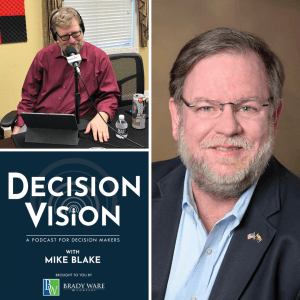
Mike Blake and Jason Jones

Decision Vision Episode 52: Should I Have a Veterans Hiring Program? – An Interview with Jason Jones, CRESA

What benefits does employing veterans as part of a veterans hiring program bring to my company? What are some of the unique skills and perspectives veterans will bring to my company? Former Naval Flight Officer now technology and telecommunications advisor Jason Jones answers these questions and much more in this episode of “Decision Vision.” The “Decision Vision” series is hosted by Mike Blake and presented by Brady Ware & Company.

Jason Jones, CRESA

veterans hiring program
Jason Jones

Raised in Atlanta, GA, Jason Jones attended Duke University in Durham, NC on a Navy ROTC scholarship. After graduating from Duke in 1991 with a degree in political science, he traveled to Pensacola, FL and enrolled in naval flight school. In 1993 upon moving to Virginia Beach, VA, he learned to fly the A-6E Intruder as a Bombardier/Navigator and was subsequently assigned to a fleet squadron, deploying on the USS Enterprise.

In 1997 Jason left Virginia Beach to begin a tour of duty as a navy medical recruiter in Phoenix, AZ while attending Arizona State University’s Evening M.B.A. program. After leaving the Navy in 1999 he worked for one and a half years as a civilian headhunter recruiting senior executives for health insurance companies.

Upon finishing his M.B.A. in August of 2000 and before entering the business world full-time, Jason departed on a 15-month world trip on September 18th, 2000, returning to the United States on December 18th, 2001. He later documented his travels in the book Nomad:  Letters From a Westward Lap of the World.

After returning from his trip, Jason entered the commercial real estate industry, ultimately landing at Cresa.

Jason leads Cresa’s technology infrastructure advisory service line, C3, which assists clients with Communications (voice), Connectivity (Internet) and Cloud services – especially during a relocation. Choices for phones, Internet and cloud services are endless and constantly changing, leaving companies little time to stay on top of current options and put together the best solutions. C3 helps clients navigate the confusion caused by evolving and disruptive technologies and ensures coordination between the real estate and IT departments. IT leaders benefit from C3’s experience analyzing technologies from a vendor-neutral perspective and selecting best in-class solutions to match their specific needs. Solutions include hosted VoIP, SD-WAN, cloud hosting and cybersecurity.

To contact Jason, follow this link.

For more information on Hire Heroes, which Jason mentioned during the show, follow this link.

Michael Blake, Brady Ware & Company

Mike Blake

Michael Blake is Host of the “Decision Vision” podcast series and a Director of Brady Ware & Company. Mike specializes in the valuation of intellectual property-driven firms, such as software firms, aerospace firms and professional services firms, most frequently in the capacity as a transaction advisor, helping clients obtain great outcomes from complex transaction opportunities. He is also a specialist in the appraisal of intellectual properties as stand-alone assets, such as software, trade secrets, and patents.

Mike has been a full-time business appraiser for 13 years with public accounting firms, boutique business appraisal firms, and an owner of his own firm. Prior to that, he spent 8 years in venture capital and investment banking, including transactions in the U.S., Israel, Russia, Ukraine, and Belarus.

Brady Ware & Company

Brady Ware & Company is a regional full-service accounting and advisory firm which helps businesses and entrepreneurs make visions a reality. Brady Ware services clients nationally from its offices in Alpharetta, GA; Columbus and Dayton, OH; and Richmond, IN. The firm is growth minded, committed to the regions in which they operate, and most importantly, they make significant investments in their people and service offerings to meet the changing financial needs of those they are privileged to serve. The firm is dedicated to providing results that make a difference for its clients.

Decision Vision Podcast Series

veterans hiring program“Decision Vision” is a podcast covering topics and issues facing small business owners and connecting them with solutions from leading experts. This series is presented by Brady Ware & Company. If you are a decision maker for a small business, we’d love to hear from you. Contact us at decisionvision@bradyware.com and make sure to listen to every Thursday to the “Decision Vision” podcast. Past episodes of “Decision Vision” can be found here. “Decision Vision” is produced and broadcast by the North Fulton studio of Business RadioX®.

Visit Brady Ware & Company on social media:

LinkedIn:  https://www.linkedin.com/company/brady-ware/

Facebook: https://www.facebook.com/bradywareCPAs/

Twitter: https://twitter.com/BradyWare

Instagram: https://www.instagram.com/bradywarecompany/

Show Transcript

Intro: [00:00:01] Welcome to Decision Vision, a podcast series focusing on critical business decisions brought to you by Brady Ware & Company. Brady Ware is a regional full-service accounting and advisory firm that helps businesses and entrepreneurs make visions a reality.

Mike Blake: [00:00:20] And welcome to Decision Vision, a podcast giving you, the listener, clear vision to make great decisions. In each episode, we discuss the process of decision making on a different topic from the business owners or executives’ perspective. We aren’t necessarily telling you what to do, but we can put you in a position to make an informed decision on your own and understand when you might need help along the way.

Mike Blake: [00:00:38] My name is Mike Blake and I’m your host for today’s program. I’m a director at Brady Ware & Company, a full-service accounting firm based in Dayton, Ohio, with offices in Dayton, Columbus, Ohio, Richmond, Indiana, and Alpharetta, Georgia, which is where we are recording today. Brady Ware is sponsoring this podcast. If you like this podcast, please subscribe on your favorite podcast aggregator and please consider leaving a review of the podcast as well.

Mike Blake: [00:01:03] So, the question and decision point that we’re talking about today is should I put in a veteran hiring program? And, you know, this topic is one that comes up every once in a while, but I think it’s particularly timely, because we are in an economy, at least, by some measures of unprecedented growth. It’s inarguable that we’re at historic lows in terms of unemployment. And I’m not going to debate on this podcast what that means or does not mean.

Mike Blake: [00:01:38] I’m sure there’s an economics podcast out there you can listen to if you really want to get in the weeds of that. But the fact of the matter is that, you know, it’s pretty easy to find a job and it’s pretty hard for employers to find qualified people to fill those slots at just about any level. And we are seeing some indications that wages at all levels of the labor force, including at the so-called unskilled or bottom end of the wage scale are creeping up.

Mike Blake: [00:02:07] So, that’s telling you there’s some tightness in the marketplace as we record this on January 10, 2020. And one of the things that then comes to my mind and gets me thinking is, you know, are we, as an economy, hiring everybody that we could? Are we leaving, you know, stones unturned? And there are two groups in particular that interest me in this area. I mean, everybody talks about, you know, people who have been out of the workforce a long time and now, they’re being pulled back in, talk about moms or even potentially stay-at-home dads that are coming back into the labor force.

Mike Blake: [00:02:44] But two groups that are getting, I think, now more attention are people with criminal records. That’s a topic I definitely want to approach. And I’ve got a guest that I’m eventually going to track him down and get him to come on, but we’re not going to do that today. And then, veterans, not that I would put them in the same group, but there are two groups that I think are historically neglected for, you know, whatever reason.

Mike Blake: [00:03:08] And, you know, I hear a lot of stories where, you know, veterans perform their service to our country for some period of time, whether it’s, you know, a brief enlistment or whether it’s a long career up until retirement. And then, they find that the civilian work environment is not particularly welcoming for veterans that are making that transition. And so, I think it’s interesting to kind of explore why that is and also interesting then to talk about, you know, what is the case for hiring a veteran.

Mike Blake: [00:03:43] And full disclosure, I think some of the best business leadership books I’ve ever read have been written from a military perspective. One of them is called Semper Fi. And I read this, I’m going to say, about 15 years ago. And it talks about the application of US Marine Corps team building methods, particularly, when they train recruits from day one until they get through the crucible. And I think that’s an outstanding book.

Mike Blake: [00:04:11] Not that we’re necessarily going to have accountants that are climbing rope ladders and so forth and staying out in the woods for 72 hours of food or water, but there are a lot of things there that I think are useful. And then, another one, by a guy named Michael Abrashoff, retired captain of the US Navy, called it, It’s Your Ship. And it’s a story about how he turned around the USS Benfold, which was the worst performing ship in the US Pacific fleet into the second highest performing ship with only a two-year tour of duty.

Mike Blake: [00:04:45] And I heard him speak on that, fascinating, read the book, learned a ton. So, you know, to me, you know, the military has a lot to offer in terms of skills that can translate into business. I find it perplexing that employers, sometimes, find themselves hesitant to hire veterans. So, I want to talk about that. And as you know, from our show, I don’t talk about these things myself, because I don’t know anything about it, so we’re going to bring in people who do know something about it.

Mike Blake: [00:05:18] And joining us today is a longtime friend, Jason Jones. Jason leads a C3 service line at Cresa, the world’s most trusted occupier-centric commercial real estate firm. C3 stands for communications, connectivity, and cloud. And helps information technology leaders navigate the decisions that lie at the intersection of real estate, finance, and information technology. And, you know, as an aside, that’s an interesting place to be, because not that long ago, we thought that information technology was going to obviate our need for real estate and real estate is going to go away, and it’s turned out to be the exact opposite just like we thought paperless technology gets rid of paper.

Mike Blake: [00:05:59] Information technology leaders benefit from Jason’s experience selecting best in class infrastructure service providers who can match each firm’s specific needs. Cresa is an international commercial real estate firm headquartered in Washington, D.C. Cresa represents tenants and provides real estate services, including corporate services, strategic planning, transaction management, project manager, facilities management, workforce and location planning, portfolio lease administration, capital markets, supply chain management, sustainability, sublease, and distribution.

Mike Blake: [00:06:29] Formed in 1993, Cresa now has more than 60 offices and 900 employees. In addition to Jason’s information technology consultation and real estate experience, Jason brings lessons learned during his military career. His naval service included flying A-6 Intruder attack jets off of aircraft carriers. While planning and flying tactical missions, he developed a talent for communicating details with concise, mission-oriented focus.

Mike Blake: [00:06:56] Jason has successfully turned his disciplined approach as a naval aviator into a methodical approach for helping companies optimize their corporate real estate and information technology services. After departing the Navy, Jason earned an MBA from Arizona State University and complete a 15-month solo trip around the world about which he wrote and published a book, which I believe is called, NOMAD: Letters from a Westward Lap of the World.

Mike Blake: [00:07:21] His military travel and academic background give him the depth and character to guide his clients to the most effective solutions. Since then, Jason has been active as an advocate to help companies understand the benefits of hiring military veterans and coaching veterans in how to prepare themselves for civilian employment. Jason’s affiliations include the Atlanta Commercial Board of REALTORS, Million Dollar Club, Buckhead Church member, Starting Point leader, and Duke’s C-Level graduates of Duke University and is a founder.

Mike Blake: [00:07:50] He is a flight school Top Gun recipient. And that’s not exactly what you may think it means. We’ll ask Jason to explain that. It’s still good, it’s just not the movie. Published the book that we just talked about. He’s a CoStar Power Broker from 2005, ’07, ’08, Volunteer of the Year, and two-time recipient of the Forever Duke Award. Jason, thank you for coming on our program and thank you for your service to our country.

Jason Jones: [00:08:16] Michael, it is a pleasure to be here. And I just want to say, I’m so glad that I’m at the right podcast. I got a little nervous when you talked about the criminal records and I thought, “Well, maybe that’s the one I should have supposed to do.” But showed up with the right one. I’m glad this is the right fit.

Mike Blake: [00:08:30] You did show up at the right one, yes.

Jason Jones: [00:08:32] Thank you.

Mike Blake: [00:08:32] Yes. Now, when we do that other one, we’ll—no, Jason is about as squeaky clean as it comes. And it’s because of people like Jason that shrieking cowards like me can post anything they want on Facebook. So, thank you for that. So, before we get into this, as I was telling you, you know, before we actually hit the record button, you know, when I invite people on the show, some people are people I’ve known a long time, something about meeting for the first time on the show, you and, I have known each other for, I think, a decade now.

Jason Jones: [00:09:03] Yeah, a

Mike Blake: [00:09:03] t least. And I did not know that you were a Top Gun recipient. What does that mean?

Jason Jones: [00:09:08] Sure. Well, when I was going through flight school, it’s a very challenging time. As I mentioned, this was back in the early-’90s. And the key to flight school is you only get to select the jet that you want to fly, is if you graduate number one in the class. And so, there’s a lot of incentive and we’re naturally competitive people anyways.

Mike Blake: [00:09:36] Yeah.

Jason Jones: [00:09:36] And the award that they give to that person is called the Top Gun award. So, that was what that was.

Mike Blake: [00:09:42] Interesting. So, you chose the A-6 Intruder?

Jason Jones: [00:09:45] I did.

Mike Blake: [00:09:45] Why?

Jason Jones: [00:09:46] You know, I was a bombardier navigator. I was a naval flight officer, which means that I ran systems on the aircraft. I help navigate the aircraft to help do all the mission planning and the strike planning and the bomb weaponeering, et cetera. And out of all the jets that were available for that type of position in the fleet, the one that I found most attractive is the one that was really at the center piece of the carrier battle group. And when you think about it, the aircraft carriers are made to put bombs on target.

Mike Blake: [00:10:17] Yeah.

Jason Jones: [00:10:17] Ultimately, it’s to project power. The jet that does that and the person who is putting crosshairs on the target and planning those missions is the bombardier navigator in the A-6 Intruder. So, that’s the one place I wanted to be.

Mike Blake: [00:10:31] Okay.

Jason Jones: [00:10:31] It was a great ride.

Mike Blake: [00:10:33] And so, you published a book. I was aware of your trip around the world, did not realize you published a book, so that’s going to go into my Kindle reading list. Tell me-

Jason Jones: [00:10:41] Well, really quick, as I like to tell people, when you read it, remember, it’s not Hemingway, it’s Jones. So, set your expectations.

Mike Blake: [00:10:52] Well, the good news, I’ve not been able to get through a Hemingway book in my entire life.

Jason Jones: [00:10:55] There you go.

Mike Blake: [00:10:55] So, I actually think that’s a positive. But tell us a little bit about the book and what drove you to write that book?

Jason Jones: [00:11:04] Yeah. Sure. Well, you know, I’ve always had a love of adventure. And I think that’s part of what attracted me to naval aviation. And so, when I got out of the Navy, after an eight-year tour of service, I decided to travel around the world by myself on a backpacker’s budget, $40 a day. And as I traveled, I kept a journal, as I was taught as a young child on family vacations, to always keep a log or journal. So, I did that. And then, I started drafting e-mails to friends and family, letting them know what I was doing, where I was.

Jason Jones: [00:11:43] And as I kept doing that, going from country to country to country, because this was a 15-month trip, I went to approximately 25 countries. And we’re not talking about Europe, where everything’s real close to each other, we’re talking about Africa and South America and it’s a pretty long distance. So, I covered some ground. But I got the idea, I’m going to share this with other people. I’m going to encourage especially Americans to contemplate to consider international travel. I think that’s a good thing for those people and also, just for relations between people in different countries.

Mike Blake: [00:12:18] Yeah.

Jason Jones: [00:12:18] And that’s why I made the effort to put it together into a book.

Mike Blake: [00:12:22] I could not agree with you more. You know, as you know, I’ve lived abroad early in my career and in Russia. And one of the more striking things from that era was that I worked in a building in Minsk that was a bomb shelter, right? And then, you realize those bombs are supposed to be coming from my home country, right?

Jason Jones: [00:12:45] Yeah.

Mike Blake: [00:12:45] And that’s a point, for me, I realized, you know, they have a different economic system-

Jason Jones: [00:12:50] Yeah.

Mike Blake: [00:12:50] … but they’re afraid of this. You know, they’re every bit as afraid of us as we were of them.

Jason Jones: [00:12:54] Yes.

Mike Blake: [00:12:55] Right?

Jason Jones: [00:12:55] Yeah.

Mike Blake: [00:12:55] And all concerned and everything else. And, you know, unless you go there and you see that and you touch it, you just never experience that. And, you know, I’ll also take that option to brag on one of my cousins. She also was a naval aviator.

Jason Jones: [00:13:11] Oh, nice.

Mike Blake: [00:13:11] Was flying—whatever the term is with the person who operates the radar.

Jason Jones: [00:13:18] Okay.

Mike Blake: [00:13:18] I believe it’s called a Hawkeye aircraft, surveillance kind of-

Jason Jones: [00:13:20] Yeah, E-2C Hawkeye.

Mike Blake: [00:13:22] There you go.

Jason Jones: [00:13:22] Sure.

Mike Blake: [00:13:23] But she was recently admitted into the Monterey Foreign Language School, where she’s now learning Arabic.

Jason Jones: [00:13:30] Yeah.

Mike Blake: [00:13:30] So, her goal was to get stationed over there. And-

Jason Jones: [00:13:32] Yeah.

Mike Blake: [00:13:32] … you know, what a great opportunity, right? Again, there is no danger of my joining the military, but there’s one part of which I was envious, that language school, it’s the finest language structure the world and she’s going to take that opportunity to learn about the Arabic world, right?

Jason Jones: [00:13:49] That’s right.

Mike Blake: [00:13:49] Which is so very different. And Jennifer, you’re awesome. So, if you’re listening to this podcast, you heard it here over the internet. All right. So, you know, you’ve been successful, you joined The Million Dollar Club, which I assume has something to do with doing something that’s worth a million dollars.

Jason Jones: [00:14:09] Somewhat.

Mike Blake: [00:14:09] Somewhat, right?

Jason Jones: [00:14:10] Yeah.

Mike Blake: [00:14:10] So, how, in your mind, has your military service helped you get to that point?

Jason Jones: [00:14:18] You know, I think what the military and specifically, I’ll speak to naval aviation.

Mike Blake: [00:14:25] Yeah.

Jason Jones: [00:14:25] Because that’s what I come from.

Mike Blake: [00:14:26] Yeah.

Jason Jones: [00:14:26] Tactical aviation, launching off the aircraft carriers. It ingrained in me deeply sort of three character traits or qualities. One is I became very detail-oriented, I became process-driven and mission-focused. Those three things, detail-oriented, process-driven, mission-focused. And as I break each of those down, you know, in the Navy, when you’re flying jets and you’re dropping bombs, you really do need to pay attention to the details, okay?

Mike Blake: [00:15:00] I guess so. That makes sense to me.

Jason Jones: [00:15:02] And a little tiny detail, I’ll give you one example, so you might get a couple of sea stories here on this podcast.

Mike Blake: [00:15:08] That’s what I’m hoping.

Jason Jones: [00:15:09] Okay? I had an instructor in flight school who was doing some practice bombing runs in a training exercise. And you have some settings on the armament control unit that will determine the distance that the bombs will hit the ground or the time interval between release of bombs and those two are related. And then, you have another number that’s the number of bombs you’re going to release. And the A-6 could carry 24, 25 500-pound bombs. Typically, we only carried, you know, 12 or so and then, maybe a missile or two.

Jason Jones: [00:15:50] But in this case, they were going through the practice area, they were running out of their time on target on station and they said, “Well, let’s do one more run through and let’s run up the number to clear all of our bombs off of our jet.” The problem with that was their settings for the timing in between the release of bombs was too short of a time for safety. It was only good for dropping one at a time. So, when they dialed up the number of bombs and there was a little note in the weaponeering that said, “Do not drop more than one bomb at a time”, under the settings.

Jason Jones: [00:16:29] So, they were under pressure. They need to get these bombs off. They need to get out of the target area, because you got some other jets that are coming in. They dialed it up, had a bomb-to-bomb collision under the jet, it exploded, and they had to eject. So, that’s a sort of a real-life story. And it’s not that in the business world, we have, you know, situations where, you know, the cost of a missed detail is your life, but you certainly learn it with that level of intensity when you’re in the military. And I think that can roll over into being a really good employee who pays attention to the details.

Mike Blake: [00:17:06] And, you know, business being more forgiving, right? Very few people die.

Jason Jones: [00:17:10] Yes.

Mike Blake: [00:17:10] It might be embarrassing. You might even lose a job, right?

Jason Jones: [00:17:12] That’s right.

Mike Blake: [00:17:13] But nobody’s going to die from it. By definition, that makes it more forgiving, right?

Jason Jones: [00:17:18] That’s right.

Mike Blake: [00:17:18] So, if you have a mental kind of fault tolerance of that military, you know, you make mistakes, people die kind of thing-

Jason Jones: [00:17:25] Precisely.

Mike Blake: [00:17:27] … then it must seem like almost like child’s play-

Jason Jones: [00:17:30] Yeah.

Mike Blake: [00:17:30] …in a more forgiving environment.

Jason Jones: [00:17:32] You’re right. It’s more forgiving. But the second part of that, so I mentioned being process-driven. And my sea story there that I think is kind of somewhat humorous in how it applies to the private sector is I had a squadron mate who was taking off of the aircraft carrier. And naval aviation and the military, in general, but certainly, naval aviation is really big on checklists. All of aviation is, for that matter.

Mike Blake: [00:18:04] Right. My dad was a pilot. Even up until the day he couldn’t fly anymore, 30 years, always had the same checklist.

Jason Jones: [00:18:10] Yes, precisely. It’s a process. It helps with error avoidance and increasing efficiency. So, he was taxiing around the deck of the aircraft carrier. And as you taxi, you know, you have your rudders, are your steering wheel. So, that changes with the nose gear points. You also tap your brakes. So, he pulls up into the catapult and, you know, gets hooked up to the carrier, then he goes into what’s called tension, which is where you go to full power, but they haven’t shot you off the front end yet. And now, you do a quick checklist. You check your flight surfaces are moving properly with your stick. You check that the weight that you have communicated to the catapult officer is correct, because they’re going to set the pressure of the steam to launch you based on what your weight is. They don’t want to do too fast, don’t want it too slow, it’s got to be just right.

Mike Blake: [00:19:10] Yeah.

Jason Jones: [00:19:10] So, you’re cross-checking that. And the other thing that you check is that your feet are off the brakes and you say it out loud, “Feet off the brakes.” So, he goes through his checklist, salutes the catapult officer. Catapult officer fires the button to send him down the front. And we hear this loud boom, boom. That was his two main mounts, his tires blowing, because they didn’t roll, because he still had his feet on the brakes. So, guess what his call sign is for the rest of his career? Boom-Boom. So, it’s just a-

Mike Blake: [00:19:45] He’s lucky he still had a career.

Jason Jones: [00:19:47] Yeah. Well, precisely, but there is some forgiveness for things like this.

Mike Blake: [00:19:50] Yeah.

Jason Jones: [00:19:50] And he was fairly young and new. But the whole point of that is there’s a process. And that process, it sometimes includes a checklist. It increases efficiencies in error avoidance. And that’s a good thing in the private sector also.

Mike Blake: [00:20:07] And I thought for sure you’re going to give us some story about landing on an aircraft carrier, which, to me, has got to be one of the hardest and most terrorizing things to do. I mean, talk of something that needs precision and discipline.

Jason Jones: [00:20:20] Precisely. And, you know, kind of depends on the weather and time of day. Nighttime, bad weather, not so fun.

Mike Blake: [00:20:29] Oh, no.

Jason Jones: [00:20:29] Daytime, good weather, actually fun.

Mike Blake: [00:20:32] Okay.

Jason Jones: [00:20:32] Could be a good time.

Mike Blake: [00:20:33] Okay.

Jason Jones: [00:20:35] But, you know, that’s a process also. And the more consistently you can do the processes and trust the process, take the time to think about what should be the right process, the better success that you’re going to have, the fewer errors you’re going to have, the greater efficiencies you’re going to have. And again, all of that translates into a good employee, someone who has an appreciation for details, for process. And then, my third one was mission-focused. And that’s sort of the X factor that I think has helped me in my career.

Jason Jones: [00:21:08] It’s not getting lost in details, understanding that there’s a bigger picture, and that we’re going to accomplish the mission. That’s the thing about somebody coming out of the military, is if you give them a goal, if you give them a mission, that’s what feeds them. They want to accomplish the mission and they’ll do whatever it takes when you have their loyalty and you tell them that you’ve got their back. So, I think that’s another key attribute of, A, what helped me in the private sector and I think what the benefit is of hiring someone and having a veteran-hiring program.

Mike Blake: [00:21:43] So, you know, it certainly sounds to me like you credit your military service pretty heavily with the success that you have been able to achieve and sustain. Is that why you’re so passionate about sort of helping other veterans find their place and helping other companies find, you know, a great employee?

Jason Jones: [00:21:59] Yes. So, it’s a couple of things. One is, I do see the benefit it gave to me and how that parlays itself into the benefits to my company that I work for and the clients that I work for. But there’s also just a sense of having walked a mile in those shoes of making that transition and it can be a very difficult time for someone coming out of the military. And when you’ve been through that crucible, you naturally want to help people get through it as well.

Mike Blake: [00:22:35] And was it hard for you?

Jason Jones: [00:22:36] It was very hard.

Mike Blake: [00:22:37] What about it was so hard?

Jason Jones: [00:22:38] You know, it was one of those things where, A, I didn’t know exactly what I wanted to do. So, I needed some help there, some guidance as to what’s the right fit for me, so I can be a good fit for the company I work with ore a good fit for the clients that I work with. So, I needed some help there. It happened to be a terrible economy when I was getting out. This was not too long after 9/11 and that was a terrible time to try to get hired by anybody, particularly a 100% commission only-based job in commercial real estate, where most people are older and have more experience and that’s how they get hired. But thankfully, I had an angel that flew into my life who hired me. And we’ve been partners for 19 years. So, it can work out to hire someone fresh out of the military.

Mike Blake: [00:23:30] Oh, there’s that loyalty, too, right?

Jason Jones: [00:23:32] And, you know, that’s another thing that I was going to say. I described attributes for me as a naval aviator, as a tactical aviator, I also think there are three characteristics of anyone coming out of the military, just generally speaking, that they’re going to have their benefit to the private sector, to companies hiring them. And you hit on one of them. But I would say it is, they have a tremendous work ethic, they’re extremely loyal, and they have a sense of personal responsibility.

Jason Jones: [00:24:09] So, tremendous work ethic, extremely loyal, and a strong sense of personal responsibility. Those three characteristics go a long way. I mean, you can do a lot with that raw talent, those raw materials. You just have to have a program to capture that talent, to bring it into your organization and then, you’ve got to have some degree of training to help. And that would be the case with anyone coming into an organization now. But I think that’s the investment that’s worth making by private sector companies.

Mike Blake: [00:24:46] And that last part about not giving up and, you know, making sure that you complete your task, as I’ve read books on military leadership, I think that’s something that they do exceptionally, exceptionally well. They’re so good at team building.

Jason Jones: [00:25:05] Yeah.

Mike Blake: [00:25:06] Because ultimately, you have to be able to rely on those people in combat, ultimately, right? So, there’s just no F-ing around at that point, I have to imagine.

Jason Jones: [00:25:15] Right.

Mike Blake: [00:25:15] And, you know, one thing that struck me about the Marine training program, you know, that one of the ways they trained people, I don’t know if it’s the same way in the Navy, but basically, if somebody in the platoon screws up, the entire platoon suffers, right? And to my mind, I think that’s about as effective a motivator as anybody. It’s one thing if you suffer all the time when you screw up.

Jason Jones: [00:25:39] Yeah.

Mike Blake: [00:25:39] But then, you see that other people are going to pay a price when you screw up, which is exactly what they’re trying to do, right?

Jason Jones: [00:25:43] Yeah.

Mike Blake: [00:25:43] You screw up, they die.

Jason Jones: [00:25:44] That’s right, yeah.

Mike Blake: [00:25:45] I think that is immensely effective. But then, it produces somebody whose focus is not even on the dollars, right?

Jason Jones: [00:25:52] Right.

Mike Blake: [00:25:52] Once you’re on that team, you’re just like, “I don’t want to be the weak link.”

Jason Jones: [00:25:56] That’s right.

Mike Blake: [00:25:56] Period.

Jason Jones: [00:25:57] Well, you reckon, A, there’s that sort of comradeship and being a part of something larger than yourself are great qualities for any organization. And you also have, again, that sense of personal responsibility, that accountability to each other. And I’ll give you a good example of the kind of accountability that’s expected in the military. And I think, gosh, this is the kind of person that I would want to have in my organization. There was someone I knew, he was a Marine Corps officer, and he was stationed for a period of time at the Pentagon.

Jason Jones: [00:26:36] So, he’s living in Arlington, I believe it was. And he’s got to drive in the next morning. It’s his day to do what’s called stand the duty. So, every command has a duty officer, someone who answers the phone. If there’s some type of emergency, they would be the one that’s in charge. And it’s a typically a shift during the day. You’re the squadron duty officer for that day or whatever the case may be. There was a terrible snowstorm and ice everywhere on the roads. He couldn’t make it in to stand the duty the next morning.

Jason Jones: [00:27:14] It happened overnight. So, he calls up to his boss and he says, “Hey, look, as you know, there’s this terrible snowstorm or ice storm, I can’t get in to stand the duty.” Well, the response from his boss was, “Why didn’t you drive in last night?” You saw that the weather report said, “There might be—your job is to be here and we don’t shut down, we don’t not go to war, we don’t not do our duty just because it snowed or there was ice on the roads.

Mike Blake: [00:27:47] Yeah.

Jason Jones: [00:27:47] You should have come in, set up a cot, and slept here overnight. That’s the level of accountability that I’m talking about. Now, am I saying that we really need to go that far in the private sector? Not really. But boy, wouldn’t you want somebody who comes from that type of mentality working in your organization?

Mike Blake: [00:28:06] And the underlying texts of that are our time management-

Jason Jones: [00:28:09] Yeah.

Mike Blake: [00:28:09] … and contingency planning.

Jason Jones: [00:28:12] Correct.

Mike Blake: [00:28:12] Right?

Jason Jones: [00:28:13] Yes.

Mike Blake: [00:28:13] And contingency planning and making sure that you control the outcome.

Jason Jones: [00:28:19] Right.

Mike Blake: [00:28:20] Right. What happened in that case is that that individual allowed nature to control the outcome-

Jason Jones: [00:28:26] Right.

Mike Blake: [00:28:26] … which is not—like you said, you know, the military doesn’t just take days off.

Jason Jones: [00:28:31] Right. “Oh, it snowed today.”

Mike Blake: [00:28:32] That’s a great way to get bombed. So-

Jason Jones: [00:28:35] That’s right.

Mike Blake: [00:28:37] So, why do you think veterans have had trouble finding places in—actually, I’m going to come back to that because I want to go back to something that I think is so important to your transition. It’s better than any of the questions that I wrote down-

Jason Jones: [00:28:54] Okay.

Mike Blake: [00:28:54] … which is you talked about that difficulty transitioning from military into civilian life.

Jason Jones: [00:29:02] Yes.

Mike Blake: [00:29:03] What was it that made the transition possible? So, an angel came down, gave you a shot.

Jason Jones: [00:29:09] Yes.

Mike Blake: [00:29:09] 19 years later, you’re still there.

Jason Jones: [00:29:11] Right.

Mike Blake: [00:29:11] I want to drill down more into the micro there, right? They hired you, but you knew how to navigate and how to drop bombs on people.

Jason Jones: [00:29:21] That’s right.

Mike Blake: [00:29:23] As far as I’m aware, that’s not part of the Cresa job description. You’ve never mentioned either of that coming up when you’re selling at least to a data center.

Jason Jones: [00:29:29] Right.

Mike Blake: [00:29:30] Right?

Jason Jones: [00:29:30] That’s correct, yeah.

Mike Blake: [00:29:31] So, what was that process like to get you from that to where you are? Did they have to train you a ton? Was it learning by doing? Was it formal training? Was it mentoring? Something else I can’t even think, dumb luck, what was it?

Jason Jones: [00:29:48] Grit. Grit. I mean, this is the other thing, it’s that I mentioned the mission-focused and just doing whatever it takes to get the job done. One of the things that—A, I love to learn, so that’s convenient. But as soon as I-

Mike Blake: [00:30:10] You don’t go to Duke if you’re a rotten student.

Jason Jones: [00:30:13] My application got put in the wrong pile, I’m telling you. I don’t know how I got in there, but I just feel like, you know, someone took a chance, so to speak, on me, because they saw raw talent. And then, I had the grit to persevere and teach myself to a large degree, but thankfully, I had the grit and the humility to go to people and learn from them and ask for help. And that’s really what I did. It took me 90 job interviews to get that job.

Mike Blake: [00:30:50] Ninety?

Jason Jones: [00:30:51] Ninety.

Mike Blake: [00:30:52] Wow.

Jason Jones: [00:30:52] I counted it out. Now, these job interviews were not all interviews for a specific job, it was all informational interviews.

Mike Blake: [00:30:58] Right.

Jason Jones: [00:30:58] But I counted it up and it was 90 people in the commercial real estate industry in Atlanta. Number 90 hired me and hired me on the spot. But I kept learning along the way. And then, once I got that position, I kept those interviews going with, now, people inside the organization so that I could learn. And it was all on the job training and that’s part of what was tough about the transition. But what I sensed coming out of the military is it gives you all of these raw material qualities that put you in a position for success and to really contribute significantly to whatever organization does themselves a favor, in my opinion, and hires you.

Mike Blake: [00:31:45] So, you know, that’s interesting. So, a learning point that I’m getting out of this is that, you know, if you’re an employee and you’re looking at a veteran and most of the time, you’re going to look at somebody that does not have a directly translatable skill, right? Some of them are. You know, I have another cousin who is in information security and satellite communications. He’s a major in the army. He’ll transition to civilian business.


Jason Jones: [00:32:09] Yeah.

Mike Blake: [00:32:09] Just in fact, he may just stay in the same place, change his uniform-

Jason Jones: [00:32:13] Yeah.

Mike Blake: [00:32:13] for a suit, basically, or khakis. But I think what I’m learning is that as a hirer, I need to evaluate a little differently, right? Because, you know, most people are not going to walk in, “Oh, I have five years of experience in accounting”, right? Or, “I have four years of experience in law”, you know, whatever, real estate. But the X factor is that a lot of civilian candidates, if they don’t have that, it’s a wild card as to whether or not they’ll be able to get there from there to here.

Jason Jones: [00:32:53] Correct.

Mike Blake: [00:32:53] Right? With a military person, with the military background or a veteran, that sounds like that’s a lot less of a wildcard.

Jason Jones: [00:33:01] Correct.

Mike Blake: [00:33:02] Because again, now, here’s new mission, right? And it doesn’t even enter your mind that this isn’t going to work out, you just figure it out.

Jason Jones: [00:33:13] We’re going to burn the ships and we’re going to make it happen.

Mike Blake: [00:33:15] We’re going to burn the ships and we’re going to make it happen.

Jason Jones: [00:33:16] Yeah.

Mike Blake: [00:33:16] So, you know-

Jason Jones: [00:33:16] And also, one thing I’ll add is you also tend to get, particularly, if you’re hiring into a junior position, which really, sort of needs to be for a lot of folks that are, you know, four to eight years out of either college or high school and they’re now transitioning into the private sector for the first time, they’re not going to go straight into an advanced position.

Mike Blake: [00:33:38] Yeah.

Jason Jones: [00:33:38] It’s going to be entry level. And they understand that they’re going to rise up quickly and they’re going to want to. And I think you should give them that opportunity. But the thing that you get is you get maturity. This is someone who’s not straight out of college, who’s not straight out of high school. They’ve got some life experience under their belt. And that has to translate into greater productivity, better culture, all these things as you want that, really, you talk about culture, that’s an X factor. And when you have someone who is detail-oriented, process-driven, mission-focused, extremely loyal, tremendous work ethic, understands personal accountability, that’s the kind of person I want in my culture.

Mike Blake: [00:34:15] And, you know, think about how old were you when you were flying, right? It’s even A-6.

Jason Jones: [00:34:18] It would’ve been from the ages of, you know, graduate college when you’re 21 to 28.

Mike Blake: [00:34:26] So, at that age, you’re in charge of, say, a $20-million aircraft? $15-million, 20-million asset?

Jason Jones: [00:34:32] Easily.

Mike Blake: [00:34:33] Right?

Jason Jones: [00:34:33] Yes.

Mike Blake: [00:34:33] How many 22-year-olds are in charge of a $20-million balance sheet?

Jason Jones: [00:34:37] Well, it’s not only that, you’re in charge of where your bombs go.

Mike Blake: [00:34:42] Right. Yeah. Right. Yeah.

Jason Jones: [00:34:43] And that can be a lot more expensive.

Mike Blake: [00:34:45] And as we’ve learned, not all at once. Wherever they go, don’t do it all at once, right?

Jason Jones: [00:34:50] Yeah. Or, just pay attention to the details and do them in the right amount and the right settings, yeah.

Mike Blake: [00:34:55] Yeah. Okay. So, you brought up culture, which is great because that segues exactly to the question I want to go to next, which is, I think an interesting thing about the military, I don’t know if it’s good or bad, but it’s a fairly uniform culture by design. I’m sure there are different leaders, other different styles, but at the end of the day, you’re in the US military or you’re not, right? And if I’m wrong, please correct me, because, again, I don’t know anything, just the movies talking basically and having beers with my cousins.

Jason Jones: [00:35:29] Keep going.

Mike Blake: [00:35:32] You’re not going to see that in the business world, right? You’re going to see a wide gamut of cultures, some of which are highly ordered and regimented, some of which are highly decentralized, some of which may seem flat-out insane, right? I’m thinking of Silicon Valley startups, something like that, right? Are there certain cultures that you think veterans are going to gravitate more naturally towards or are veterans more of a Swiss Army knife, where they can adapt and succeed in whatever culture in which they happen to find themselves.

Jason Jones: [00:36:06] So, I think that is an excellent question and I’m so glad you asked it, because it gives me the opportunity to dispel a preconceived notion or just the wrong notion about the military and its culture.

Mike Blake: [00:36:26] Good.

Jason Jones: [00:36:26] So, what I’m going to say is counter-intuitive. The culture where someone from the military will probably not do well would be a highly regimented, militaristic culture.

Mike Blake: [00:36:41] Huh?

Jason Jones: [00:36:42] So, here’s why. What folks don’t realize is the culture of any type of military service, particularly those that are combat services, those that are going to require someone to go into combat, require that person, by definition, to operate in a dynamic environment. They have to be a decision maker. They need the freedom to make decision. So, what you do as a good leader for combat services is you explain the big picture, you tell them what the mission is.

Jason Jones: [00:37:20] And then, you leave it up to them to figure out how to do it, because you never know what happens in the haze of combat, where the circumstances are going to change. They’re going to have to call an audible. They’re going to have to adapt to the circumstances. But as long as they know the big picture and the ultimate goal, they’ll be able to make those changes in that rapidly changing dynamic environment to accomplish the mission.

Mike Blake: [00:37:48] That reminds me of something I think is attributed to Eisenhower, who said that every battle plan is great until the first shot is fired.

Jason Jones: [00:37:57] There you go.

Mike Blake: [00:37:57] Or, something like that, right?

Jason Jones: [00:37:59] That’s right.

Mike Blake: [00:37:59] You think about D-Day, there are so many things that went wrong in the invasion of D-Day. And to a certain extent, one of the reasons the Allies prevail was more things went wrong for the Germans, but it was not a flawless-

Jason Jones: [00:38:09] Whatever it takes.

Mike Blake: [00:38:10] Yeah, it was not a flawless-

Jason Jones: [00:38:11] No, of course not.

Mike Blake: [00:38:12] … operation, people landing where they weren’t supposed to.

Jason Jones: [00:38:16] Exactly.

Mike Blake: [00:38:16] Those poor guys crossing the British Channel, they’re fed like a 3,000-calorie breakfast. And, you know, you could predict how that worked out. Again, sort of best-laid plans. You’re right. It is counter-intuitive, because the stereotype is I’ve got to have almost a Marine boot camp-style of management to let somebody from the military really flourish. But in point of fact, where the military succeeds is when they have to think for themselves.

Jason Jones: [00:38:44] It’s-

Mike Blake: [00:38:44] Because you’re not always going to have somebody telling you what to do.

Jason Jones: [00:38:47] That’s what all of the training is about in the military, is putting that person in position to be able to think creatively for themselves, yet keep the bigger picture mission in mind. I can think of no better employee that I would want to hire.

Mike Blake: [00:39:05] Yeah.

Jason Jones: [00:39:05] Right?

Mike Blake: [00:39:06] Yeah.

Jason Jones: [00:39:06] That’s what you call, to some degree, this is a little slang, is a fire-and-forget-type employee.

Mike Blake: [00:39:15] Yeah.

Jason Jones: [00:39:15] Okay? And I got this from one of the guys who used to work for Buddy’s Copycat. And this person, when Scott was describing him as a mutual friend of ours, he said, “Oh, yeah, that guy’s fire-and-forget.” And what he means by that is there are anti-tank missiles, this is just one example where when you shoot that missile at the tank from a shoulder-fired launcher, there’s a little wire that uncoils, but it’s connected to that missile and you guide it all the way to the tank. That’s a guided-all-the-way-to-the-tank missile. But fire-and-forget would be that anti-tank missile can lock on to the heat signature of that tank or in some other way where it no longer requires guidance once you fire it out of the tube. So, it’s fire and forget. You see what I’m saying?

Mike Blake: [00:40:08] Yeah.

Jason Jones: [00:40:08] So, that’s the kind of employees you want and that’s where the culture, back to your original question, where someone from the military is going to thrive is when you give that person as much leeway, as much freedom as possible, build the walls that they have to operate in very high, but make them very, very wide and say, “Go get it done.” And then, you’re going to let the horses out of the gate and they’re just going to do amazing things for you.

Mike Blake: [00:40:37] So, all these sounds fantastic and as an aside, we actually have a Marine that is starting in our group starting on Monday. So, I’m really happy about that.

Jason Jones: [00:40:53] Yeah.

Mike Blake: [00:40:53] With all this that’s going for veterans, why does it seem like they have trouble getting hired?

Jason Jones: [00:40:59] Well, those that may have trouble and so, I don’t know what the statistics are or what have you, but I think there’s a couple of things. One is their preparation for transition. I can only speak to my experience.

Mike Blake: [00:41:14] Yeah.

Jason Jones: [00:41:14] I got out of the Navy in 1999 so that was a long time ago. It wasn’t a really great process for preparing me for that transition. So, I think preparation is one challenge, but the other challenge is, and that’s why I’m so glad to have an opportunity to do this podcast, is awareness on the business side, in the private sector of how to translate their experience, their character traits, the qualities that they bring to their organization, being able to have the vision of—the employer, having the vision of how can I plug this great talent into my organization. What type of veteran-hiring program can I put in place that’s going to attract that talent and then, how do I train it? And so, I think that that piece is a little bit missing. And there are some organizations out there that are dedicated to helping bridge that gap between those two sides.

Mike Blake: [00:42:15] You know, what it seems to me the way you’re describing it, it’s kind of a shift of cost, right? If I take somebody out of college who also has little civilian work experience and maybe they even do have work experience, the issue, I may have some comfort on the direct skill set translation side and the place that I’m going to wind up spending most of my time is on building culture, discipline, work ethic, the desirable, ironically, the soft things that make an employee long-term successful, right? If I hire a veteran, I may have to invest more, a little bit more in the skills training side, but those other things, in terms of showing up to work on time and following company procedures and getting along with people and stuff-

Jason Jones: [00:43:06] Being able to think creatively.

Mike Blake: [00:43:08] Yeah.

Jason Jones: [00:43:08] Keeping in the mission-focused.

Mike Blake: [00:43:09] Fire and forget.

Jason Jones: [00:43:09] Yes.

Mike Blake: [00:43:10] Right. That’s done. All right. I can check off the box and I can forget about it, right? And in the long run, it’s probably cheaper, easier, and more effective to train the execution skill than it is to train the person in terms of how they’re going to be as an employee and a team player, because the military’s already done that for you.

Jason Jones: [00:43:30] The execution skill piece, you know, that’s a repeatable process.

Mike Blake: [00:43:33] Yeah.

Jason Jones: [00:43:34] And the soft-side stuff, it’s more difficult.

Mike Blake: [00:43:40] And you may not know the answer to this question, so, you know, I’m going to give you a pass anyway, but I’m curious-

Jason Jones: [00:43:46] I can always pretend.

Mike Blake: [00:43:48] Yeah, well, there you go. So, one question I’m curious about, if somebody were to apply for a job at my organization, can I call the military and ask for a reference or is there a military record, something that I can access as a matter of public record? How do check somebody’s background the same way I might check a civilian applicant?

Jason Jones: [00:44:09] Yeah. My only answer to that that I’m aware of is that you can, at a minimum, ask the former service member for what’s called their DD 214.

Mike Blake: [00:44:22] Okay.

Jason Jones: [00:44:22] Department of Defense Form 214, which is your exit paperwork, which basically says, “Were you given an honorable discharge, a dishonorable discharge, a bad conduct discharge?” And that will at least let you know that standing. There may be more, Mike, but that’s the only one that I’m aware.

Mike Blake: [00:44:43] Okay, fair enough. So, this has been great, I’ve learned a ton. I think one last question I want to ask before we wrap up here is, is there a difference—you’ve talked a lot about, because I think this your direct experience, you know, you retired from the military relatively early in your life on the right side of 30, as they say, but there are others who go into the workforce that have had a full, is it 20 or 25-year retirement.

Jason Jones: [00:45:15] Twenty years.

Mike Blake: [00:45:15] Twenty years, right?

Jason Jones: [00:45:16] Yeah, in all of these.

Mike Blake: [00:45:17] And so, they’re going to, you know, have retired and they’re going to have someone coming, because they’ve earned it, is there any kind of—but a lot of them want to kind of have that second career, right? They’re only 45-ish and a lot of life left, right? Maybe you’re not ready to play golf for the next 50 years or so.

Jason Jones: [00:45:39] I’m over that number and I got a lot of life left.

Mike Blake: [00:45:41] There you go. God willing, right? So-

Jason Jones: [00:45:43] Right.

Mike Blake: [00:45:43] But is there a difference in your mind, do you think, in hiring somebody that’s had that full military career and is going for Chapter 2 as opposed to somebody who is relatively young and maybe, there’s a different kind of life priority? Am I making any sense with that question?

Jason Jones: [00:46:00] Yeah, I think the idea is how motivated are they going to be, really?

Mike Blake: [00:46:05] Yeah.

Jason Jones: [00:46:05] What kind of effort are they going to put in? How much initiative do they have, really? My thought there is, you know, let’s take a look at some private sector folks that never spent a day in the military and had a career change.

Mike Blake: [00:46:27] Okay.

Jason Jones: [00:46:27] So, for instance, let’s take one example. You’re familiar with David Cummings.

Mike Blake: [00:46:30] Sure.

Jason Jones: [00:46:31] Right? So, for those listening who don’t know, David Cummings is a highly successful entrepreneur, a serial entrepreneur-type. So, he had an exit, a big one with a company called Pardot. He had to be in his early-30s, I’m not sure, but he was young. When he sold out and made his gajillion-figure number and he came to you and he said, “Mike, you know, I’ve got an idea. I’ve got some ideas. I want to go to work”, would you hire that guy?

Mike Blake: [00:47:06] I think I would find a way to hire him, yes.

Jason Jones: [00:47:08] I think I’d find a way. David, if you want a job, if you’re listening, let us know. I’ll get you in touch with our HR person.

Mike Blake: [00:47:14] Right. He left that big exit, which was a barely big number, and, you know, bought a building and started a startup community.

Jason Jones: [00:47:25] Yeah.

Mike Blake: [00:47:25] The Atlanta Technology Village.

Jason Jones: [00:47:26] And a fund and-.

Mike Blake: [00:47:27] And, you know, all sorts of things. So, it’s less about, are you at the end of one career and how motivated are you, because you finished up this career and maybe you have a pension, it’s really about the person. How hungry is that person? I just think the fact that they were in the military and they hit a retirement age is really irrelevant. It might be something, okay, we need to ask this question, but that doesn’t mean that they’re not going to have initiative and not be motivated, et cetera. Plenty of life left in somebody who is now in their mid-40s and ready for the next thing.

Mike Blake: [00:48:08] All right. Well, we’re running out of time and it’s time to wrap up, but there probably lots more questions that could be asked and our listeners are going to think of. If someone wants to reach out to you to maybe ask a question about maybe they’re a veteran looking for some help or they’re considering hiring a veteran or putting in a veteran employment program, can they contact you if they want some advice and guidance?

Jason Jones: [00:48:28] Yeah, sure. I think there’s two things that I would say. Number one, very easy to find me. The easiest way is just my name and you can Google it with the word Atlanta, because that’s where I live. You Google Jason Jones, Atlanta, my profile on my bio for my company, Cresa.

Mike Blake: [00:48:48] Yeah.

Jason Jones: [00:48:48] Right? All folks with voice communications and network connectivity will come up, top of the page, amazingly. We must have a really good marketing person who’s working on the search engine optimization. But the other thing that I would say is there’s one organization that I do want to mention that as I mentioned earlier, you know, there’s two sides to the coin of a veteran getting hired. One is the veteran being prepared and being able to translate what their skill set is to the private sector. And the other is the private sector company understanding. And one nonprofit that actually is headquartered here in Atlanta, although they do work all over the world is called Hire Heroes.

Jason Jones: [00:49:28] And you can obviously just Google that. Hire Heroes, they have job boards, where companies can post their position and veterans can go to take a look at what’s available. Obviously, these are people who are interested in the benefits of hiring a veteran or having a veteran employment program. They do employer training, which is where they will train your HR staff on veteran hiring and retention. They’ll do virtual career fairs. They’ll have talent sourcing where you get pre-screened e-mails, direct your inbox. So, I think that would be a good organization to look into if you have an interest in veterans.

Mike Blake: [00:50:03] All right. Very good. Little information nugget at the end. Thank you so much. That’s going to wrap it up for today’s program. And I’d like to thank Jason Jones so much for joining us and sharing his expertise with us today. We’ll be exploring a new topic each week, so please tune in so that when you’re faced with your next executive decision, you have clear vision when making it. If you enjoy these podcasts, please consider leaving a review with your other favorite podcast aggregator. It helps people find us so that we can help them. Once again, this is Mike Blake. Our sponsor is Brady Ware & Company. And this has been the Decision Vision podcast.

Tagged With: CRESA, Cresa Atlanta, Employing Veterans, Hire Heroes USA, hiring veterans, Michael Blake, Mike Blake, military veterans, veterans hiring program

The GNFCC 400 Insider: Leadership North Fulton and Emerging Leaders – An Interview with Dr. Joe Hutto, Gwinnett Technical College, and Chris Miller, Law Offices of J. Christopher Miller

February 19, 2020 by John Ray

Leadership North Fulton
North Fulton Studio
The GNFCC 400 Insider: Leadership North Fulton and Emerging Leaders - An Interview with Dr. Joe Hutto, Gwinnett Technical College, and Chris Miller, Law Offices of J. Christopher Miller
Loading
00:00 /
RSS Feed
Share
Link
Embed

Download file

Leadership North Fulton
Dr. Joe Hutto, Kali Boatright, and Chris Miller

“The GNFCC 400 Insider,” Episode 33, GNFCC Leadership Programs:  An Interview with Dr. Joe Hutto, Gwinnett Technical College and Leadership North Fulton, and Chris Miller, Law Offices of J. Christopher Miller and the Emerging Leaders Program

Leadership North Fulton and the Emerging Leaders Program are arguably the region’s most established, in-depth leadership programs. On this edition of “The GNFCC 400 Insider,” LNF Committee Chair Dr. Joe Hutto and ELP Committee Chair Chris Miller join host Kali Boatright to discuss these programs and enrichment opportunities each offers to their participants. The “GNFCC 400 Insider” is presented by the Greater North Fulton Chamber of Commerce.

Dr. Joe Hutto, Gwinnett Technical College and Leadership North Fulton Chair

Leadership North Fulton
Dr. Joe Hutto

Dr. Joe Hutto is the Director of Student Affairs at Gwinnett Tech. Gwinnett Tech, a unit of the Technical College System of Georgia, is a public two-year college which serves the communities of Gwinnett and North Fulton.

In his role overseeing Student Affairs, Joe has responsibility for the departments of Enrollment Management, Recruitment, Testing and Assessment, Veteran’s Affairs and Customer Service.

Joe chairs the Leadership North Fulton committee at GNFCC. Leadership North Fulton (LNF), has been the region’s signature leadership development program for more than 30 years. Each year, graduating participants join the ranks of more than 500 LNF alumni and continue to invest in our communities through their time and talent. Pillars of the program include promoting community awareness, instilling civic responsibility, and building relationships. Participants engage civic leaders through program class days, and many alumni have gone on to serve in government or community-based organization staff roles and as elected officials. The relationships that are forged through participation and investment in LNF by business and nonprofit partners continue to affirm the program’s foundational role in community leadership development. LNF projects continue to impact the region in a lasting way, most notably, through the founding of The Drake House in 2004, founding of the Emerging Leaders Youth Program in 2009, and establishment of The Drake House Young Professionals Advisory Council in 2017.

.For more information on Leadership North Fulton, follow this link.

Chris Miller, Law Offices of J. Christopher Miller and Emerging Leaders Program Chair

Leadership North Fulton
Chris Miller

Chris Miller owns and operates the Law Offices of J. Christopher Miller, PC. His team of lawyers and legal staff guide their clients through difficult times when a loved one passes away. They also work with clients to plan for the future with Wills, Trusts, Powers of Attorney, and Health Care Directives. Chris has experience in forming and working with Special Needs Trusts. His over two decades of practice in Alpharetta have taught him how to walk clients through and around probate in Georgia.

Chris chairs the Emerging Leaders Program Committee at GNFCC, which offers a unique opportunity for area high schoolers who wish to develop leadership skills, identify and address community issues and interact with local leaders. This is accomplished through a combination of interactive lectures, discussions, site visits, community service, and networking opportunities.

Each class focuses on topics such as public safety, government, interviewing skills, personal finance, nonprofits, and leadership skills.

The mission of Emerging Leaders is to provide students with an understanding of the concept of leadership, and provide skills and knowledge to become effective leaders in our communities.

.For more information on the Emerging Leaders Program, follow this link.

About GNFCC and “The GNFCC 400 Insider”

Kali Boatright, President and CEO of GNFCC

“The GNFCC 400 Insider” (formerly “North Atlanta’s Bizlink”) is presented by the Greater North Fulton Chamber of Commerce (GNFCC) and is hosted by Kali Boatright, President and CEO of GNFCC. The Greater North Fulton Chamber of Commerce is a private, non-profit, member-driven organization comprised of over 1400 business enterprises, civic organizations, educational institutions and individuals.  Their service area includes Alpharetta, Johns Creek, Milton, Mountain Park, Roswell and Sandy Springs. GNFCC is the leading voice on economic development, business growth and quality of life issues in North Fulton County.

The GNFCC promotes the interests of our members by assuming a leadership role in making North Fulton an excellent place to work, live, play and stay. They provide one voice for all local businesses to influence decision makers, recommend legislation, and protect the valuable resources that make North Fulton a popular place to live.

For more information on GNFCC and its North Fulton County service area, follow this link or call (770) 993-8806.

For the complete show archive of “The GNFCC 400 Insider,” go to GNFCC400Insider.com. “The GNFCC 400 Insider is produced by the North Fulton studio of Business RadioX®.

Leadership North Fulton


Tagged With: Dr. Joe Hutto, GNFCC, GNFCC 400 Insider, GNFCC Leadership North Fulton, greater north fulton chamber, Greater North Fulton Chamber of Commerce, gwinnett tech, Gwinnett Technical College, Kali Boatright, leadership development, Leadership North Fulton, North Fulton, The Greater North Fulton Chamber of Commerce

Frazier & Deeter’s Business Beat: Mary Hester, LAN Systems

February 18, 2020 by John Ray

Mary Hester, LAN Systems
Business Beat
Frazier & Deeter’s Business Beat: Mary Hester, LAN Systems
Loading
00:00 /
RSS Feed
Share
Link
Embed

Download file

Mary Hester, LAN Systems
Roger Lusby, Mary Hester, and Adele Erdman

Show Summary

Mary Hester, CEO of LAN Systems, talks about her journey as a woman in technology, running her own IT services firm, what enables her firm repeatedly to win awards as a top place to work, and much more. Roger Lusby, CPA is the host of “Business Beat” and the series is presented by Alpharetta CPA firm Frazier & Deeter.

Mary Hester, CEO, LAN Systems

Mary Hester, LAN Systems
Mary Hester

Being a Top 10 Best Place to Work in Atlanta for six years running is a source of great pride for everyone at LAN Systems. For 2019, #2 Best Place to Work in Atlanta, in 2018 the #8 Best Place to Work in Atlanta, #9 Best Place to Work in Atlanta in 2017, #1 Best Place to Work in Atlanta in 2016 and #3 Best Place to Work in Atlanta in 2015 and 2014 says much about our company.

At LAN Systems, all they do is IT. They are technology experts and each day dedicate themselves to providing an unparalleled experience for you and your company. Their clients enjoy working with them. They find the LAN Systems team to be professional, patient, knowledgeable and extremely helpful.

The LAN Systems professionals will show you how to grow your company by implementing SMART IT. They work with you to implement solutions that fit your specific needs. They use the solutions that they recommend, so they deeply understand how the latest advancements in technology increase productivity and maximize efficiency.

LAN Systems is a full-service IT solutions provider. They offer managed IT services, best practice alignment reviews and customized consulting services. Their on-site and remote services include full network monitoring with auto-remediation as well as assistance with desktops, applications, network and servers. Whether you are looking to solve an immediate IT problem or develop your strategic IT plan, LAN Systems can help you get the most from your IT investment.

To find out more on LAN Systems, go to their website or LinkedIn company page, or you can call 770-662-0312.

Frazier & Deeter

The Alpharetta office of Frazier & Deeter is home to a thriving CPA tax practice, a growing advisory practice and an Employee Benefit Plan Services group. CPAs and advisors in the Frazier & Deeter Alpharetta office serve clients across North Georgia and around the country with services such as personal tax planning, estate planning, business tax planning, business tax compliance, state and local tax planning, financial statement reviews, financial statement audits, employee benefit plan audits, internal audit outsourcing, cyber security, data privacy, SOX and other regulatory compliance, mergers and acquisitions and more. Alpharetta CPAs serve clients ranging from business owners and executives to large corporations.

Roger Lusby
Roger Lusby, Partner in Charge of Alpharetta office, Frazier & Deeter

Roger Lusby, host of Frazier & Deeter’s “Business Beat,” is an Alpharetta CPA and Alpharetta Office Managing Partner for Frazier & Deeter. He is also a member of the Tax Department in charge of coordinating tax and accounting services for our clientele. His responsibilities include a review of a variety of tax returns with an emphasis in the individual, estate, and corporate areas. Client assistance is also provided in the areas of financial planning, executive compensation and stock option planning, estate and succession planning, international planning (FBAR, SFOP), health care, real estate, manufacturing, technology and service companies.

You can find Frazier & Deeter on social media:

LinkedIn: https://www.linkedin.com/company/frazier-&-deeter-llc/
Facebook: https://www.facebook.com/FrazierDeeter
Twitter: https://twitter.com/frazierdeeter

An episode archive of Frazier & Deeter’s “Business Beat” can be found here.

Mary Hester, LAN Systems

ProfitSense with Bill McDermott, Episode 5: Donna Manuels, Brady Ware & Company, and Dr. LaRonta Upson Rush, Healthy Minds Psychology Associates

February 13, 2020 by John Ray

Healthy Minds Psychology Associates
North Fulton Studio
ProfitSense with Bill McDermott, Episode 5: Donna Manuels, Brady Ware & Company, and Dr. LaRonta Upson Rush, Healthy Minds Psychology Associates
Loading
00:00 /
RSS Feed
Share
Link
Embed

Download file

Healthy Minds Psychology Associates
Bill McDermott, Dr. LaRonta Upson Rush, and Donna Manuels

ProfitSense with Bill McDermott, Episode 5: Donna Manuel, Brady Ware & Company and Dr. LaRonta Upson Rush, Healthy Minds Psychology Associates

On this edition of “ProfitSense with Bill McDermott,” host Bill McDermott discusses the accounting needs of small businesses with Donna Manuel, Brady Ware & Company, and executive functioning challenges with Dr. LaRonta Upson Rush of Healthy Minds Psychology Associates. “ProfitSense with Bill McDermott” is broadcast from the North Fulton Studio of Business RadioX® in Alpharetta.

Donna Manuels, Brady Ware & Company

Donna Manuels
Donna Manuels

Donna Manuels is a Senior Accountant with Brady Ware & Company.

Located in Alpharetta, Georgia—with additional offices in Dayton, Ohio; Columbus, Ohio; and Richmond, Indiana—Brady Ware has assembled a team of more than 140 qualified and dedicated professionals to serve clients across the region. They serve many clients who operate in our office geographies, across the country and throughout the world. Brady Ware earned its reputation for providing superior client service by never losing sight of why we exist—to provide results that make a difference for our clients. We believe it is our job to keep our clients informed of issues that may affect their businesses as well as to be a source for ideas that help improve their operations.

For more information visit the Brady Ware website. You can reach Donna by email or phone, 678-350-9536.

Dr. LaRonta Upson Rush, Health Minds Psychology Associates

Healthy Minds Psychology Associates
Dr. LaRonta Upson Rush

Our Director is Dr. Laronta Upson Rush. Dr. Rush is a licensed psychologist that specializes in psycho-educational and psychological evaluation of neurodevelopmental disorders in children as well as learning and emotional disorders in adults. Dr. Rush has particular clinical expertise in the evaluation and diagnosis of dyslexia and other learning disabilities, ADHD/ executive functioning difficulties, as well as anxiety and mood disorders.

Healthy Minds Psychology Associates is a group practice providing comprehensive mental health services, including psychological and educational assessments, individual, family and couples counseling, and training and supervision. We strive to provide our patients with a superior experience and this means selecting well-trained clinicians and ensuring the highest quality of service to our patients. Our patient-centered approach is critical to our success and we pride ourselves on excellence in every form.

For more information visit the Healthy Minds website. You can reach Dr. Rush by email or phone, 404-293-0127. Also connect with Dr. Rush on LinkedIn.

About Your Host, Bill McDermott

Bill McDermott

Bill McDermott is Founder and CEO of McDermott Financial Solutions. After over three decades working for both national and community banks, Bill uses his expert knowledge to assist closely held companies with improving profitability, growing their business and finding financing. Bill is passionate about educating business owners about pertinent topics in the banking and finance arena.

He currently serves as Treasurer for the Atlanta Executive Forum and has held previous positions as board member for the Kennesaw State University Entrepreneurship Center and Gwinnett Habitat for Humanity and Treasurer for CEO NetWeavers. Bill is a graduate of Wake Forest University and he and his wife, Martha have called Atlanta home for over 40 years. Outside of work, Bill enjoys golf, traveling and gardening.

Connect with Bill on LinkedIn and Twitter and follow McDermott Financial Solutions on LinkedIn. The complete show archive for ProfitSense with Bill McDermott” can be found at profitsenseradio.com.


Tagged With: Donna Manuels, Dr. LaRonta Upson Rush, executive functioning, Healthy Minds Psychology Associates, mental health, ProfitSense, ProfitSense with Bill McDermott, small business accounting

Decision Vision Episode 51: Should Married Couples Be in Business Together? – An Interview with Carol and Steve Docalavich, yourLTL

February 13, 2020 by John Ray

yourLTL
Decision Vision
Decision Vision Episode 51: Should Married Couples Be in Business Together? - An Interview with Carol and Steve Docalavich, yourLTL
Loading
00:00 /
RSS Feed
Share
Link
Embed

Download file

Carol and Steve Docalavich, yourLTL

Decision Vision Episode 51:  Should Married Couples Be in Business Together? – An Interview with Carol and Steve Docalavich, yourLTL

On this special Valentine’s Day edition of “Decision Vision,” Carol and Steve Docalavich of yourLTL share their journey as a married couple in business together. It’s a great episode with lots of laughs and wisdom. The host of “Decision Vision” is Mike Blake and the show series is presented by Brady Ware & Company.

Carol and Steve Docalavich, yourLTL

yourLTL
Steve and Carol Docalavich

Carol and Steve Docalavich are Co-Founders of yourLTL.

yourLTL is a completely transparent freight intelligence solution, providing direct relationships with carriers supported by our expertise in rate negotiations and proprietary cloud-based transportation management solution (TMS). They provide the most advanced TMS available, to not only find and compare carrier rates for LTL shipments, but they also allow customer specific pricing for the freight needs of their clients, not just transactional rates. There is no contracts or extra fees. They guarantee Fairness & Accountability in Rates (F.A.I.R.). It’s straight forward and transparent!

Their scalable technology helps simplify the life-cycle of the shipping process allowing multiple departments to access the same shipment from the yourLTL platform regardless of the size of your business. Their simple-to-understand user interface make it easy to find, book, and track shipments in only a few clicks.

yourLTL is a certified woman-owned and controlled business.

For more information on yourLTL, you can find their website here.

yourLTL

Michael Blake, Brady Ware & Company

Mike Blake, Host of “Decision Vision”

Michael Blake is Host of the “Decision Vision” podcast series and a Director of Brady Ware & Company. Mike specializes in the valuation of intellectual property-driven firms, such as software firms, aerospace firms and professional services firms, most frequently in the capacity as a transaction advisor, helping clients obtain great outcomes from complex transaction opportunities. He is also a specialist in the appraisal of intellectual properties as stand-alone assets, such as software, trade secrets, and patents.

Mike has been a full-time business appraiser for 13 years with public accounting firms, boutique business appraisal firms, and an owner of his own firm. Prior to that, he spent 8 years in venture capital and investment banking, including transactions in the U.S., Israel, Russia, Ukraine, and Belarus.

Brady Ware & Company

Brady Ware & Company is a regional full-service accounting and advisory firm which helps businesses and entrepreneurs make visions a reality. Brady Ware services clients nationally from its offices in Alpharetta, GA; Columbus and Dayton, OH; and Richmond, IN. The firm is growth minded, committed to the regions in which they operate, and most importantly, they make significant investments in their people and service offerings to meet the changing financial needs of those they are privileged to serve. The firm is dedicated to providing results that make a difference for its clients.

Decision Vision Podcast Series

“Decision Vision” is a podcast covering topics and issues facing small business owners and connecting them with solutions from leading experts. This series is presented by Brady Ware & Company. If you are a decision maker for a small business, we’d love to hear from you. Contact us at decisionvision@bradyware.com and make sure to listen to every Thursday to the “Decision Vision” podcast. Past episodes of “Decision Vision” can be found here. “Decision Vision” is produced and broadcast by the North Fulton studio of Business RadioX®.

Visit Brady Ware & Company on social media:

LinkedIn:  https://www.linkedin.com/company/brady-ware/

Facebook: https://www.facebook.com/bradywareCPAs/

Twitter: https://twitter.com/BradyWare

Instagram: https://www.instagram.com/bradywarecompany/

Show Transcript

Intro: [00:00:01] Welcome to Decision Vision, a podcast series focusing on critical business decisions brought to you by Brady Ware & Company. Brady Ware is a regional full-service accounting and advisory firm that helps businesses and entrepreneurs make visions a reality.

Mike Blake: [00:00:20] And welcome to Decision Vision, a podcast giving you, the listener, a clear vision to make great decisions. In each episode, we discuss the process of decision making on a different topic from the business owners or executives’ perspective. We aren’t necessarily telling you what to do, but we can put you in a position to make an informed decision on your own and understand when you might need help along the way.

Mike Blake: [00:00:39] My name is Mike Blake and I’m your host for today’s program. I’m a director at Brady Ware & Company, a full-service accounting firm based in Dayton, Ohio, with offices in Dayton, Columbus, Ohio, Richmond, Indiana, and Alpharetta, Georgia, which is where we are recording today. Brady Ware is sponsoring this podcast. If you like this podcast, please subscribe on your favorite podcast aggregator and please consider leaving a review of the podcast, as well.

Mike Blake: [00:01:02] So, the topic that we’re going to do today, and if all goes well, this is going to be released right before or on Valentine’s Day, is couples that going to business together. And I find this an interesting topic. And as it happens, my wife actually came in earlier today to do another interview on selling over Amazon as a retail channel, where, you know, she’s very good at that and I know nothing. But, you know, early in our married life, every time that we tried to have our business lives intersect with one another, it was usually ending up with one of us doing an internet search for divorce attorney.

Mike Blake: [00:01:02] It did not work particularly well. And we both recognized that and we tried to stay away from that. Over time, it’s gotten a little bit better. She’s like, “Yeah, now, you can ask me about how the business is going if you want.” That’s about it. And you probably won’t have to sleep on the couch. And I’ll kind of be on the same way. You can ask me about the business if you want and I may or may not decide to sleep on the couch. So, I have admiration for people who are able to do that.

Mike Blake: [00:02:15] It doesn’t mean that I think our marriage is bad, we’re 20 years together and she hasn’t thrown me out yet. And every day I go home and the key works as a blessing for me. But I do think that I’ve noticed there are couples that have that capacity to work together. And I know that I’m not the only person that’s curious about that, especially in today’s world where, you know, the nature of jobs is different and people going into business for themselves, it’s really never been easier.

Mike Blake: [00:02:44] I think we’re seeing that, you know, more and more and more. But how do you manage the dynamic of a romantic relationship being intertwined with a business relationship? So, as I said, this is not something that I am, at all, an expert on, except that I know that for my personality type, we’re staying away from that. So, we’ve brought in people who can talk about that with us because they appear to have been doing it successfully. And if not, maybe there’ll be some radio drama instead.

Mike Blake: [00:03:13] So, either way, this is going to be a win for the listener. Joining us are Carol and Steve Docalavich, who are co-founders of yourLTL, LTL or less than truckload software platform that provides a visual dashboard of shipping cost allocations, load manifests, shipment tracking, and discrepancy alerts. yourLTL is cloud-based and is continuously enhanced to improve the customer experience dedicated to simplicity and return investment for your less than truckload shipping. They’re also co-founders of Vestra Logistics, a freight brokerage company.

Mike Blake: [00:03:47] And both firms are located just down the road here in Alpharetta. And they also do some real estate management and investing together. Carol, in particular, is a serial entrepreneur, having launched several businesses in coffee, tea import/export, franchise advisory, property management. And Steve comes from a background of having been an air traffic controller for 23 years. So, thank you for making sure I landed safely all those times.

Steve Docalavich: [00:04:12] You’re welcome, Mike.

Mike Blake: [00:04:13] Carol and Steve, thanks for coming on the program.

Carol Docalavich: [00:04:16] Yeah, thanks, Mike.

Mike Blake: [00:04:17] So, how long have you been married and how long you’ve been in business together?

Steve Docalavich: [00:04:23] Eight years on the 14th. Eight years on the 14th.

Mike Blake: [00:04:27] Of this month?

Steve Docalavich: [00:04:29] Yeah.

Carol Docalavich: [00:04:29] Yeah.

Mike Blake: [00:04:29] Well, congratulations. That’s great.

Carol Docalavich: [00:04:32] Yeah.

Mike Blake: [00:04:32] And so, I mean, which came first?

Carol Docalavich: [00:04:37] Match.

Steve Docalavich: [00:04:38] Yeah. So-

Carol Docalavich: [00:04:39] match.com.

Mike Blake: [00:04:40] No kidding?

Steve Docalavich: [00:04:40] Yeah. That’s because Tinder wasn’t around at the time.

Mike Blake: [00:04:45] Well, you know, timing is everything, right?

Steve Docalavich: [00:04:47] Yes, that’s right.

Mike Blake: [00:04:47] So, you found each other on Match. And at that point, did you start to realize that both of you kind of had an entrepreneurial bat that you needed to be, wanted to be in business for yourselves or-

Steve Docalavich: [00:05:00] No.

Mike Blake: [00:05:00] So, how did that evolve?

Steve Docalavich: [00:05:03] Not at all. She was already in business for herself. Actually, we had met. I was an air traffic controller in California and we didn’t meet, meet, but we met only through one of her businesses. I moved from California to Washington Center, which is in Northern Virginia. And when I moved, the FAA moved me and the movers broke or scratched every piece of furniture I had. And so, I called the moving company and I said, “Hey, what I do about this?” Said, “Don’t worry about it, we’re going to send over a van.” This guy, he’s magical. So, they sent over a van and it was called Furniture Medic. I didn’t know what that was. Well, he came in, an hour later, everything was perfect. I was like, “This is amazing.” I never forgot about it, because that was in 1996, I met her in 2012, and she is the founder of Furniture Medic.

Mike Blake: [00:05:55] Oh, no kidding?

Steve Docalavich: [00:05:56] Yeah.

Carol Docalavich: [00:05:57] Yeah.

Mike Blake: [00:05:57] So, how did you get to meet the owner then? I mean, were you such a pain in the ass-

Steve Docalavich: [00:06:02] No, no, no.

Mike Blake: [00:06:02] … that you basically said, “I want to speak to the owner, this is unacceptable.”

Steve Docalavich: [00:06:05] What I’m saying is I surreptitiously, I figuratively met her through her business.

Mike Blake: [00:06:11] Okay.

Steve Docalavich: [00:06:11] And then, in 2012, we actually were out on a date. So-

Carol Docalavich: [00:06:16] Now, we sold that business to—I’m trying to think which company that was with Landmark—but no, Service Master is who actually bought that business. And so, that was much before his time. So-

Steve Docalavich: [00:06:32] Yes, I was controlling airplanes, I was making sure you’re safe, Mike.

Carol Docalavich: [00:06:35] Yeah.

Mike Blake: [00:06:35] Thank you for that.

Steve Docalavich: [00:06:36] You’re welcome.

Carol Docalavich: [00:06:37] And a few businesses more a divorce. And then, we met on Match. You hate when I tell the story, but we actually met in June-

Mike Blake: [00:06:48] This is the internet.

Carol Docalavich: [00:06:49] … before we officially started dating in November. He sent a couple emails and apparently, I didn’t respond. So, I must not have been interested at the time. But now, we met in November just before Thanksgiving and we married six-and-a-half weeks later.

Steve Docalavich: [00:07:08] So, this is an example of how she has to win, Mike. So, she has to say, preemptively, that, “I ignored his e-mails before I acknowledged his e-mails.” So, that’s something.

Mike Blake: [00:07:20] But it certainly turned out all right. And a pretty quick turnaround, six-and-a-half weeks.

Carol Docalavich: [00:07:26] Yeah, six-and-a-half.

Mike Blake: [00:07:27] So, I guess as an entrepreneur, you’re just used to making important decisions fast.

Carol Docalavich: [00:07:30] That’s right. Absolutely.

Steve Docalavich: [00:07:32] And since I’m an air traffic controller, I just make bad decisions?

Mike Blake: [00:07:35] Well, if I’ve learned anything from pushing 10, you definitely to make decisions quickly, too, there, right? So-

Steve Docalavich: [00:07:41] Absolutely. Absolutely. And drink.

Carol Docalavich: [00:07:43] So, I was in the real estate business at the time just after the crash. And, you know, I’d been flipping homes and doing rental homes, about 30 or 40 a month at the time. And so, we got married and I said, “Look, you know, why don’t you join the company after you retire”, and, you know, that sort of thing. So, we kind of, you know, went down that path. And so, he started working with me when he could. You know, he’d not retired yet. So, he soft-stepped into it.

Steve Docalavich: [00:08:18] It just so happened, I lost my medical right around that time, so I had to retire. Either retired or got an office job, so I just said, “I’ll retire.” And then, I got an office job with her. So-

Mike Blake: [00:08:28] You lost your medical, meaning you lost your medical clearance to do that job?

Steve Docalavich: [00:08:31] Right. Right. Exactly.

Mike Blake: [00:08:31] Okay. I didn’t know that.

Steve Docalavich: [00:08:32] Yeah.

Mike Blake: [00:08:32] Okay.

Steve Docalavich: [00:08:32] That’s why I was only in there for 23 years instead of 30.

Mike Blake: [00:08:36] I figured you’re just burned out.

Steve Docalavich: [00:08:38] Yeah, I was burned at 15.

Mike Blake: [00:08:39] There’s got to be some burnout in that job.

Steve Docalavich: [00:08:40] I was burned out at 15. So-

Mike Blake: [00:08:43] And at that point, I mean, interestingly then, you didn’t have any hesitation about joining the business and basically being around involved with each other all the time, because not every married couple honestly wants or thrives doing that.

Steve Docalavich: [00:08:59] Well, I mean, it was new.

Mike Blake: [00:09:01] Yeah.

Steve Docalavich: [00:09:01] I didn’t know what that would be like. It seemed to me I want to spend all of the time with her, I could, so hey, why not? Let’s work together. And when we were doing this, there was a property management company in Atlanta that it was managing thousands of homes. They were doing it for one of these—I think it’s Blackstone.

Carol Docalavich: [00:09:26] No, they were doing it for—it was Key.

Steve Docalavich: [00:09:27] It was Key.

Carol Docalavich: [00:09:27] But they were at the time, and there’s still a lot of this around, but, you know, investment companies were selling properties to overseas investors. And so, they were managing these overseas investors and they got bought out, you’re right, by Blackstone.

Steve Docalavich: [00:09:43] Right.

Carol Docalavich: [00:09:44] So, all the ones that weren’t owned going to be owned by Blackstone, they said, you know, “Let’s go find other management.” So, we took over a chunk of about 300 houses at one time for this management.

Steve Docalavich: [00:10:00] And we didn’t even have a business at the time for managing that. We had to build one immediately to do it.

Carol Docalavich: [00:10:05] We did it in about two weeks.

Steve Docalavich: [00:10:07] Oh, my gosh. It was incredible. And I quit. I mean, that’s one of the businesses we did. And I said, “Look, I can’t. You and I can’t do this together”, because it was the most negative business I’ve ever seen.

Mike Blake: [00:10:20] Why? What about it is so negative?

Carol Docalavich: [00:10:23] Nobody’s happy. Owners aren’t happy. Renters aren’t happy.

Steve Docalavich: [00:10:26] Yeah. So, all the owners are international, right? So, everything that goes wrong, they’re mad about.

Mike Blake: [00:10:30] Yeah.

Steve Docalavich: [00:10:30] And the houses, you know, that these people were renting were, you know, they’d have problems and, you know, they were mad. So, it was—I think we built it to 500, 600 houses and sold it. I mean, she was already selling to all these international buyers anyway, so she had that relationship. So, we kind of sold that portion of the business and kept the houses.

Carol Docalavich: [00:10:53] Yeah, our houses.

Steve Docalavich: [00:10:54] Yeah, our houses.

Carol Docalavich: [00:10:54] Yeah, our houses.

Steve Docalavich: [00:10:55] Yeah.

Carol Docalavich: [00:10:55] And then, sold those off separately. Actually, the Blackstone was who bought our portfolio. So-

Steve Docalavich: [00:10:59] Thank you, Blackstone.

Carol Docalavich: [00:11:00] … he came back on board after that.

Steve Docalavich: [00:11:02] Yeah.

Carol Docalavich: [00:11:02] So, he retired for just a second.

Steve Docalavich: [00:11:04] Yeah. That was about it.

Mike Blake: [00:11:05] Like one of the Brett Favre retirements.

Steve Docalavich: [00:11:07] Yeah.

Carol Docalavich: [00:11:07] Yeah.

Steve Docalavich: [00:11:07] It was a month. And then, I went to the Eagles.

Mike Blake: [00:11:11] So, Steve, let me start with you then, because you’re transitioning from air traffic control, a government job, I guess, right? I think it’s all government-

Steve Docalavich: [00:11:21] It’s all government.

Mike Blake: [00:11:22] … jobs, right? And now, you’re going to be an entrepreneur in the real estate business.

Steve Docalavich: [00:11:28] Right.

Mike Blake: [00:11:28] Do you know anything about real estate? Were you any good at Monopoly, at least?

Steve Docalavich: [00:11:30] Define know anything. No.

Mike Blake: [00:11:33] Were you any good at Monopoly? Do you notice once they got the blue properties and-

Steve Docalavich: [00:11:36] Yeah, Park Place and Boardwalk.

Mike Blake: [00:11:37] Yeah.

Steve Docalavich: [00:11:37] Absolutely. It was easy. I mean, all you had to do was lean on her and she, you know, I went and got a cup of coffee for her every once in a while, and made some copies. And I came up, I’m an idea guy, Mike.

Mike Blake: [00:11:50] Okay. Yeah.

Steve Docalavich: [00:11:50] So, I get a lot of good ideas. I think today was an idea of mine. It was probably a mistake. But no, it’s easy when you get somebody who knows what they’re doing. So, she’s taught me a lot over the last eight years.

Mike Blake: [00:12:05] Now, how about you? You’ve got an independent streak to you, right?

Carol Docalavich: [00:12:10] Just a little.

Mike Blake: [00:12:11] Which is why you’ve been in business for yourself as long as I can kind of track your career, right?

Carol Docalavich: [00:12:17] Yeah.

Mike Blake: [00:12:17] And now, here comes this interloper-

Carol Docalavich: [00:12:18] Yeah.

Mike Blake: [00:12:18] … that’s going to come in and sort of share the wheel with you. Was that hard or is it scary maybe? Was there any concern about that or-

Carol Docalavich: [00:12:29] Yeah, I guess probably at first. You know, I figured if you can direct hundreds of airplanes at one time, you probably can handle pretty stressful situations with-

Mike Blake: [00:12:37] That’s fair.

Carol Docalavich: [00:12:39] You know? So, I figured the stress he could endure and the rest of it was just, you know, he’s a pretty intelligent guy. He likes to say, “I don’t know”, because then, that just gets you a lot to do and stuff, right? Like, you know, that’s your—

Mike Blake: [00:12:52] That’s my go-to, yeah.

Carol Docalavich: [00:12:52] … pat answer. Right. Exactly.

Mike Blake: [00:12:55] Yeah.

Carol Docalavich: [00:12:55] But no, he really caught on really quickly. And, you know, I used to say, “This is not a government job, you know, we like work really long hours and get paid for just a few of them.” So, unlike government, where, you know, they work 40 hours and step out. No, he was really game. And he does really good at letting me take the lead. He does really good with that.

Steve Docalavich: [00:13:20] Can I talk now?

Carol Docalavich: [00:13:21] Yeah, go.

Steve Docalavich: [00:13:21] Okay. So—

Mike Blake: [00:13:22] Speaking of which.

Steve Docalavich: [00:13:25] It’s called fake it until you make it, Mike, is what, you just look confident and stand in the corner. And then, she basically tells me what to do. But-

Carol Docalavich: [00:13:33] That’s so not true.

Steve Docalavich: [00:13:35] Well, I mean-

Carol Docalavich: [00:13:36] Not now.

Mike Blake: [00:13:38] Even to a certain extent, though, I mean, there was a learning process for you, right?

Steve Docalavich: [00:13:41] Oh, absolutely.

Mike Blake: [00:13:42] And not everybody can walk into that and be vulnerable and say, you know, “I don’t know. I don’t know what I’m doing.” And men have a harder time with that than women, I think.

Steve Docalavich: [00:13:52] I don’t have a problem with that. Actually, I’ve been doing that my whole career as an air traffic controller. But now, we would go out and we go look at houses and we purchase that, I go, you know, “I didn’t know what was good and what wasn’t good to buy.” So, it was an evolution there and it was fun. It wasn’t-

Carol Docalavich: [00:14:11] That business was really fun.

Steve Docalavich: [00:14:13] It was. It’s not technical, was not difficult, it’s simply, there’s a house, buy it, don’t buy it. Put somebody in it, flip it.

Carol Docalavich: [00:14:24] Yeah.

Steve Docalavich: [00:14:24] Yeah, that kind of thing. So, that was fun. I mean, what we’re doing now has been an absolute learning-

Carol Docalavich: [00:14:32] That’s been a learning curve for both of us, yeah.

Steve Docalavich: [00:14:33] Yeah, but it’s been fun.

Carol Docalavich: [00:14:35] Yeah.

Steve Docalavich: [00:14:36] It’s been fun, because it’s like it goes from one thing to another to another.

Carol Docalavich: [00:14:40] We’re never bored.

Steve Docalavich: [00:14:40] We’re never bored. We’re always together. And I talked about this with you last week, I think I said-

Carol Docalavich: [00:14:46] Before we knew about your questions.

Steve Docalavich: [00:14:49] Yeah. And I don’t even think about spending time other than playing golf.

Carol Docalavich: [00:14:55] Yeah.

Steve Docalavich: [00:14:55] I mean, I want her to play golf with me and she won’t, because she doesn’t want to embarrass herself.

Carol Docalavich: [00:14:58] I would not have time to learn.

Steve Docalavich: [00:14:59] Right. Well, exactly. But I mean, if she could go play golf with me, I’d love to take her playing golf. That’s what I think is, some people can do that, some people can’t. But, you know, she could be with me all the time as far as I’m concerned.

Mike Blake: [00:15:12] As an aside, I remember when my wife and I were in our 20s, she said, you know, “You really got to think about taking up golf, it would really help your career.” And I said, “Let’s watch a game of golf and see if you still think that”, right? And, you know, as you know, a game of golf is not like a game of darts, it’s not over in 20 minutes. It’s like, you know, a game of golf is an all-day event. And to be any good at it where it does help your career, because you’re shooting 298, that’s not going to help your career if every other ball is in the pond-

Carol Docalavich: [00:15:44] Sure.

Mike Blake: [00:15:44] … or hurt somebody. So, you know, “If you really want this, I’m out one day every weekend while it’s warm until I get sort of good.” She’s like, “Never mind, your career is just fine.”

Carol Docalavich: [00:15:59] Yeah, he does try to play just about every weekend. And so, we do have time apart then.

Mike Blake: [00:16:04] Yeah.

Carol Docalavich: [00:16:04] And, you know, I mean, we’re like most couples, we separate. You know, like I go read and he watches a foreign film or some, you know, documentary or-

Steve Docalavich: [00:16:12] We don’t sit in the same office anymore.

Carol Docalavich: [00:16:14] No, we don’t sit in the same. We did for a long time, though.

Steve Docalavich: [00:16:16] We did, yeah.

Carol Docalavich: [00:16:16] We sat in the same office.

Steve Docalavich: [00:16:18] And then, she let me have my own.

Carol Docalavich: [00:16:21] I didn’t have to listen to every conversation there.

Mike Blake: [00:16:26] Well, I’m curious, what was the dynamic that warranted you to have the same office? My wife and I share the same office at home, which means I’m normally out at Starbucks when she’s working. But what made you want to do that? And then, what changed that made you decide you didn’t want to do that anymore?

Steve Docalavich: [00:16:41] She’s on the phone constantly.

Mike Blake: [00:16:43] Yeah.

Carol Docalavich: [00:16:43] Yeah.

Steve Docalavich: [00:16:44] And I’m just getting up and leaving and finding another desk-

Mike Blake: [00:16:48] Right.

Steve Docalavich: [00:16:48] … with a computer and work from there. So, we had that.

Carol Docalavich: [00:16:51] That’s fair.

Steve Docalavich: [00:16:51] You know, she is never not on the phone and I’m never on the phone.

Carol Docalavich: [00:16:56] Yeah. Well, the first thing is when we started this business, you know, we just went into a space. We didn’t know what we needed yet. You know, we didn’t know what size. We didn’t know how many employees. We had no idea. And so, we just kind of rented a small space. And, you know, it was like, “Okay, we know we need accounting in one, you can lock that door”, you know, those sorts of things. “So, look, there’s one office left. Okay, we can put two desks in it, we can share it.”

Mike Blake: [00:17:22] Okay.

Carol Docalavich: [00:17:22] And I think was a good learning curve for you, too, to be able to hear a lot of that. And then, there are times that I have to kick him under the table, so there’s certain, you know-.

Steve Docalavich: [00:17:31] She’s done that twice already.

Carol Docalavich: [00:17:32] So, there’s certain conversations that I still have to say, you know, like there’s certain jokes or we’ll say, “No, he can’t go to that meeting.”

Steve Docalavich: [00:17:40] Okay. So-

Carol Docalavich: [00:17:41] Or, for sure-

Steve Docalavich: [00:17:41] … I don’t know.

Carol Docalavich: [00:17:43] No.

Steve Docalavich: [00:17:43] What?

Carol Docalavich: [00:17:43] You’re not going to tell that joke.

Steve Docalavich: [00:17:44] I’m not going to tell the joke, but I’ll give the—so anyway, no matter what, and this is strategic, so I don’t have to go to meetings, is there’s always a dead hooker joke-

Carol Docalavich: [00:17:55] Somewhere.

Steve Docalavich: [00:17:57] … somewhere in the meeting. And she’s like, “You can’t come.” “That’s okay. Great. That’s fine”, you know. But I’m not in sales. I’m not in sales, I’m more operational, I’m not marketing, I’m not into those things, I work with the people in the office more than I do people outside the office.

Mike Blake: [00:18:09] I don’t know how much mileage I can get by threatening to do a dead hooker joke.

Steve Docalavich: [00:18:12] It works.

Mike Blake: [00:18:13] I’m going to try that.

Carol Docalavich: [00:18:14] He actually almost went to jail over that, so there’s-

Mike Blake: [00:18:16] Really?

Carol Docalavich: [00:18:16] … real story there.

Steve Docalavich: [00:18:18] Yeah. Well, I was on the phone with an attorney a couple of months ago.

Carol Docalavich: [00:18:24] It’s true.

Steve Docalavich: [00:18:24] And he was talking about our terms and conditions and he was—

Carol Docalavich: [00:18:28] Really negotiating it.

Steve Docalavich: [00:18:30] Yeah. And he was talking about—I can’t remember what it was. So, I threw the dead hooker at him.

Mike Blake: [00:18:34] This is your attorney.

Steve Docalavich: [00:18:37] Right. I said, “Look, we don’t because-” No, it’s not my attorney. He was another company.

Carol Docalavich: [00:18:41] He was a client’s attorney.

Mike Blake: [00:18:43] The other side’s, okay.

Steve Docalavich: [00:18:43] That was doing our terms of conditions, they want to do business with us.

Mike Blake: [00:18:45] Okay.

Steve Docalavich: [00:18:45] But they had a problem with something in there saying, you know, the liability part. And I was like, “Look, it’s not like all these truckers have dead hookers in the back and they’re running in a busload of nuns. I said, we got that covered. We have insurance for that. You don’t have to worry about that.” And there was silence and our business partner, Chase, was jumping up and down, screaming silently at me, right?

Carol Docalavich: [00:19:07] So true.

Steve Docalavich: [00:19:07] Because he was mad. And then, the guy on the other end of the phone just started laughing.

Carol Docalavich: [00:19:11] It was one of those delayed like, you don’t know exactly what’s coming.

Mike Blake: [00:19:15] Right. Chirp, chirp, chirp.

Steve Docalavich: [00:19:15] I knew it was coming. I knew it was coming.

Carol Docalavich: [00:19:18] Yeah. So, there are-

Steve Docalavich: [00:19:18] I used to do it all the time.

Carol Docalavich: [00:19:20] … certain times he can’t get go to me.

Mike Blake: [00:19:23] So, I’ve observed two things about you guys, because, you know, we’re doing some things together a little bit. And one is that every time I’ve interacted with you as clients, you’re always together.

Carol Docalavich: [00:19:38] Yeah.

Mike Blake: [00:19:38] Which is interesting. Is that by design? Is that a business strategy or it’s because eight years later, you’re still newlyweds and you can’t get enough of each other? What is that?

Carol Docalavich: [00:19:49] I think it’s somewhat both. I mean, we even run errands together.

Steve Docalavich: [00:19:53] Yeah.

Carol Docalavich: [00:19:53] Yeah. And I think that’s why we married. So, to back up just a minute, when we got married, I mean, you know, when we said we were getting married, my family was like, “What the heck? Like you plan-” Everything’s a plan for me, like, you know, and they were like, “No, no. If you love him in a year, you know, we can, you know, hold off.” And, you know, I was like, “No, I know what I don’t want. And he’s none of those things.

Mike Blake: [00:20:18] Okay.

Carol Docalavich: [00:20:18] So I’m going to go for this.” You know, I was in my 40s, had been married 20-plus years the first time. So, you know, I was like, you know, “No, we’re going to do this.” But I think a lot of that has to do with we just enjoy each other’s company. Sometimes, he’ll go to work like this morning and it’s like, we didn’t do it today, but sometimes, he’ll leave and I won’t see him and we’ll end up in the same color, like we’re going to work and I’ll go, “Oh, my God. We both were blue. This is so stupid. How do we do this?” But yeah. I mean-

Mike Blake: [00:20:49] Oh, it means then there is an old name practice, right?

Carol Docalavich: [00:20:50] Yeah, exactly. I mean, we’re in sync sometimes just like that.

Steve Docalavich: [00:20:54] We look like old people-

Carol Docalavich: [00:20:56] Yeah, we do.

Steve Docalavich: [00:20:57] … with those. I remember seeing my grandparents in a picture one time, they’re both wear the same jacket with those barrel buttons.

Carol Docalavich: [00:21:03] No, we don’t do that.

Steve Docalavich: [00:21:04] No, I know, but I’m like, “How did they do that?” But I can see how it happens.

Carol Docalavich: [00:21:07] Yeah, I really can.

Mike Blake: [00:21:09] Now, the other thing I’ve noticed is you guys laugh a lot.

Carol Docalavich: [00:21:13] Yes. So-

Mike Blake: [00:21:13] And that’s not just an act, is it?

Carol Docalavich: [00:21:14] No. And that was probably, I would say, the first night that we had dinner together.

Steve Docalavich: [00:21:21] Whoa, whoa, whoa, where are you going with this?

Carol Docalavich: [00:21:22] Oh, stop it.

Mike Blake: [00:21:24] She said dinner.

Carol Docalavich: [00:21:25] First night we had dinner together-

Steve Docalavich: [00:21:27] Yeah.

Carol Docalavich: [00:21:28] … we laughed the entire—I mean, it was constant the whole two hours that we had dinner together.

Steve Docalavich: [00:21:35] I’m a funny guy.

Carol Docalavich: [00:21:36] That’s true.

Steve Docalavich: [00:21:37] Next question, Mike.

Carol Docalavich: [00:21:37] You won the lottery.

Mike Blake: [00:21:40] No. And I’m not trying to put anybody on the couch here, but that laughter, I think, is indicative of the kind of humor that you need to overcome the obstacle, right?

Carol Docalavich: [00:21:54] Yeah, absolutely.

Mike Blake: [00:21:54] Because not everything has gone exactly the way that you wanted it to in business, correct?

Carol Docalavich: [00:21:59] For sure, this last six years. But yeah. Yeah.

Mike Blake: [00:22:02] So talk about a crisis in business that you guys faced together.

Carol Docalavich: [00:22:09] Oh, God. Which one?

Mike Blake: [00:22:13] Well, you-

Carol Docalavich: [00:22:13] You want to pick a subject?

Steve Docalavich: [00:22:14] No.

Mike Blake: [00:22:15] I mean, the juicier, the better.

Carol Docalavich: [00:22:17] Yeah, I’m sure.

Mike Blake: [00:22:17] If there is a dead hooker involved, if you guys revisit that, go.

Steve Docalavich: [00:22:20] Well, Mike, I know I’ve told that joke to you in one of our meetings. I know for a fact-

Carol Docalavich: [00:22:24] Do not tell it.

Steve Docalavich: [00:22:25] I know, but I just know I told it to him and he’s acting like he’s so surprised, you never heard this before.

Carol Docalavich: [00:22:29] I’m sure you haven’t brought it up at Brady Ware.

Steve Docalavich: [00:22:30] Oh, my God. How many times have we had meetings?

Carol Docalavich: [00:22:34] Too many.

Mike Blake: [00:22:35] A lot.

Steve Docalavich: [00:22:36] We’ve had the same meeting 15 times, don’t tell me about it. I mean, because we come in there with same issue all the time.

Carol Docalavich: [00:22:42] Oh, God, so many crises. So, this has been the toughest business I’ve ever tried to learn to run.

Steve Docalavich: [00:22:49] Which one?

Carol Docalavich: [00:22:51] Being in transportation, period.

Mike Blake: [00:22:52] Okay.

Carol Docalavich: [00:22:53] You know, a lot of people that do this, they are brokers who worked for another broker who leave with a book of business. And pretty much even with my first husband, everything we did, we pretty much pioneered. They were, you know, new ideas or there wasn’t maybe just a couple of different companies doing it, but they were relatively pioneered industries. And so, this one, we were like, this one over here said, “Well, how hard could this be?” Yeah, famous last words.

Steve Docalavich: [00:23:21] I said that.

Carol Docalavich: [00:23:21] Yeah.

Mike Blake: [00:23:21] Right up there with, hold my beer, right?

Steve Docalavich: [00:23:23] Oh, yeah.

Carol Docalavich: [00:23:23] Yeah, exactly.

Steve Docalavich: [00:23:25] Absolutely.

Carol Docalavich: [00:23:25] So, I think, you know, very first load we moved on the truckload side was a $40,000 claim. You are not prepared for that. I mean, you have no idea. We had no idea what we were doing. And my mentor said, “Good god, girl, can’t you started A, B and C, did you have to jump all the way to S?” You know, I mean, we literally, immediately, our first official day of business. I mean, we kind of been doing it for like a month trying to build up to getting business. So, I mean, that was the first one. And that was a real crisis, because you don’t know if you’re on the hook for that. And we didn’t know, are we on the hook for the 40 grand or, you know-

Steve Docalavich: [00:24:01] I knew.

Carol Docalavich: [00:24:02] God. But you did. You stepped us through all that. You figured out-

Steve Docalavich: [00:24:09] It wasn’t very difficult. I mean, the-

Carol Docalavich: [00:24:10] At first.

Steve Docalavich: [00:24:10] … carriers, you know, they’re the primary behind that. And it turned out fine. But yeah, we’ve had plenty of times in these two businesses that something hits the fan or whatever and you just got to deal with it. It’s a lot easier. I mean, I lean on her a lot. And then, you know, I’m the strong, silent type, because I don’t have much smart to say. And, you know, she appreciates that. You know, “Wow, you just-”

Mike Blake: [00:24:39] That didn’t stop me.

Steve Docalavich: [00:24:41] No. Yeah, yeah, yeah. So, I mean, she’s like, “Wow, you’re just such a rock and I can count on you to be-“, you know. I’m like, “I’m not saying anything because I don’t know what to say.” But she’s great at handling that kind of stuff and she points in the right direction and, you know, we go that way. There are no bones about who is the brains in the family. And I don’t want to say short bus, but I’m on a bus going somewhere. But no, you know, going back to what we’re talking about here, I enjoy being around my wife. We’re best friends and I don’t think that that’s going to change anytime soon.

Carol Docalavich: [00:25:19] Yeah. And I mean, you know, anytime you start a business, I mean, you know, like at any time in whether you buy one, whether you started from scratch or, you know, whatever you do, you know, there’s small crises almost every day, right? So, we deal with a lot of that. But, you know, he plays that part really well. But, you know, he is the person I go to and say, “All right. Hear me out. What do you think?” You know, he calls them at 3:00 o’clock in the morning, like I’ll say, “Are you up?”

Steve Docalavich: [00:25:51] That’s exactly what it is.

Carol Docalavich: [00:25:51] I’ll say-

Steve Docalavich: [00:25:51] That’s exactly what it is.

Carol Docalavich: [00:25:54] “Go make the coffee.”

Mike Blake: [00:25:55] “Are you up?”

Carol Docalavich: [00:25:56] “Are you up? Go make the coffee.” And it’s usually somewhere between 2 and 3 o’clock in the morning. We’ve had lots of those. You know, as you talk yourself through this and what you’re going to do and directions and he’s an excellent sounding board. And I usually come away from those talks with feeling really confident about the decision we’re going make. So-

Mike Blake: [00:26:18] And I got to imagine that air traffic control, everything else just must sort of pale in comparison, right? It’s about working processes.

Steve Docalavich: [00:26:27] Yeah. But, you know, it’s something that—the thing about that is it’s not the same every day, but, you know, it’s proceduralized to a point and then, there’s weather and then, there’s bad rides and then, there’s 9/11, right? There’s something. But otherwise, 99% of the time, it’s pretty proceduralized. You got guys coming in from here, they’re going there. There’s a profile that you need to create in your mind to keep them away from these guys that are going here, landing there, right? So, basically, everybody who’s entering your airspace is separated before they get there, because you have a plan. Not so much in the business world. I mean, it changes every day. You can proceduralize anything you want, but you can’t stop the wind from blowing, right?

Mike Blake: [00:27:11] Yeah.

Steve Docalavich: [00:27:11] It just depends.

Carol Docalavich: [00:27:13] Especially transportation.

Steve Docalavich: [00:27:14] Yeah, especially transportation. It’s a-

Carol Docalavich: [00:27:15] I mean, it’s a combustible engine and a human being, you know. And I mean, we have little to-

Steve Docalavich: [00:27:22] Nothing could go wrong.

Carol Docalavich: [00:27:23] Yeah, nothing can go wrong. But, you know, I don’t know that there’s any one crisis that like jumps out. There’s just been, you know, you go left, you go right, you go left, you go right. You know, there isn’t really a day that I go home and go, “Oh, well, that was so smooth today.” And-

Steve Docalavich: [00:27:42] It’s all about the people you employ.

Carol Docalavich: [00:27:44] Yeah.

Steve Docalavich: [00:27:44] It really is in this business.

Carol Docalavich: [00:27:46] Yeah.

Steve Docalavich: [00:27:46] You know, people you don’t have to keep watching, right?

Mike Blake: [00:27:49] Yeah.

Steve Docalavich: [00:27:49] You can trust them, do your job.

Carol Docalavich: [00:27:51] And we do a pretty good job, I think, of bringing on solid people that support us.

Steve Docalavich: [00:27:56] Yeah.

Mike Blake: [00:27:58] So, let me switch gears here, has there ever been a point at which one of you has offered the other constructive criticism in the business area?

Carol Docalavich: [00:28:09] Oh, when we got here today.

Steve Docalavich: [00:28:11] Mike, that, no.

Mike Blake: [00:28:13] No?

Steve Docalavich: [00:28:13] The answer is no, I don’t, yes, she does.

Mike Blake: [00:28:16] Okay.

Steve Docalavich: [00:28:16] Yes, it’s not constructive, it’s destructive. No, I’m just kidding.

Mike Blake: [00:28:22] No. But that’s going to come up, especially because I imagine it’s gone initially from you, Carol, to Steve, because you were new to business generally and new to her businesses, where she’s a veteran, right? And there’s the kick under the table. But besides the kicking under the table, I imagine there’s a debriefing like, “You understand why I kicked you under the table”, right?

Carol Docalavich: [00:28:41] Oh, absolutely.

Steve Docalavich: [00:28:42] Well, I know before she does it that she’s going to do it. I’d block her. Now, she’ll call me into our office and shut the door. I mean, she’ll call me into her office and shut the door.

Carol Docalavich: [00:28:51] Oh, boy.

Steve Docalavich: [00:28:52] So, I’m just saying, what other couples do that? “Honey, I want you to come in my office. Shut the door.” What would your wife say to you if you did that to her? She goes, “Uh, no.”

Mike Blake: [00:29:03] Even on the end, you know, I should not say that.

Steve Docalavich: [00:29:06] Exactly. Exactly. I know you have a bleep button there. I was almost going to make you use it. But I do that. I understand that I don’t understand. You know, there are some things that I’m pretty good at and there’s some things that she’s really good at. And sometimes, she needs to talk to me about things that she’s good at.

Mike Blake: [00:29:27] And where do you think you complement each other most? What do you guys think the other one brings to the table that maybe you don’t bring to the table as well on your own?

Steve Docalavich: [00:29:39] She brings hard work, integrity, smarts, know-how, experience, and good cooking.

Carol Docalavich: [00:29:49] Not necessarily in that order.

Steve Docalavich: [00:29:50] Not necessarily in that order. Right. Not to mention the other stuff, right?

Carol Docalavich: [00:29:55] I think where he really complements me is first of all, I keep it light all the time. 99% of the time, he’s always in a good mood. I mean, I would say, you know, he’s rarely not laughing. He’s rarely not making a joke.

Steve Docalavich: [00:30:11] A joke, yeah.

Carol Docalavich: [00:30:11] And, you know, he’ll keep it where—you know, a lot of times I’ll spiral, you know. Entrepreneurs, you know.

Mike Blake: [00:30:18] It’s a very lonely place.

Carol Docalavich: [00:30:20] Yes, it is. We’re almost that, you know, that whole like cyclical, up and down.

Mike Blake: [00:30:25] Manic depressive, you know?

Carol Docalavich: [00:30:26] Yeah, I was trying not to say that word, but yeah, we are. And he’ll bring me out of those lows. That’s one of the things he where he really complements me. And he should’ve been a lawyer. He’s really excellent with understanding legal documents and-

Steve Docalavich: [00:30:42] I watch a lot of TV.

Carol Docalavich: [00:30:45] Play one on TV?

Steve Docalavich: [00:30:46] Yeah. And I watch a lot of TV.

Mike Blake: [00:30:46] Yeah. But I don’t remember William Shatner doing a lot of contract work on Boston Legal, so I’m not sure that you’ll love from there.

Steve Docalavich: [00:30:51] I’ve loved him on Boston Legal.

Mike Blake: [00:30:52] I do, too.

Steve Docalavich: [00:30:53] It’s awesome.

Mike Blake: [00:30:54] Full disclosure, I’m in the tank for William Shatner. I tell you, and I like Star Trek 5, but the reason I’m in the tank for William Shatner, he doesn’t run away from who he is, right?

Carol Docalavich: [00:31:05] Yeah.

Mike Blake: [00:31:05] I don’t think he ever expected, certainly, not the last 40 years, never expected to earn an Oscar or an Emmy or whatever it is they give, right? But all he does is just consistently gets work, right?

Steve Docalavich: [00:31:17] He is hilarious. You know, he went from being a tough guy, right? Earlier on because he has like the John, everyone was a tough guy.

Mike Blake: [00:31:23] Yeah.

Steve Docalavich: [00:31:23] And now, he’s just kind of an old soft guy with. you know, opinions.

Mike Blake: [00:31:28] Yeah.

Steve Docalavich: [00:31:28] And that they’re funny. I love it.

Carol Docalavich: [00:31:31] So, there’s really not a contractor he handles all the legal side, most of the attorneys. You know, not you guys. I don’t let him do the finance side.

Steve Docalavich: [00:31:42] No. Wait a minute. Before you screw this whole thing up, we have attorneys, okay? We use a lot.

Carol Docalavich: [00:31:46] We do.

Steve Docalavich: [00:31:46] We use attorneys. She just brings stuff to me for my opinion and then, I work with the attorneys. But-

Carol Docalavich: [00:31:51] I said handle that.

Steve Docalavich: [00:31:51] Yeah. But I mean, there are things that I enjoy about that part of the work that it makes sense to me. It’s fun.

Carol Docalavich: [00:31:58] And that’s a big relief for me.

Mike Blake: [00:32:00] So, let’s talk about that, because sounds like you do divide and conquer a little bit.

Carol Docalavich: [00:32:03] Yeah, we do.

Mike Blake: [00:32:04] What are some areas where you divide and conquer? Saying, you know, Carol, you’re going to take A, B and C on, you’re going to take Q, R, and S on.

Steve Docalavich: [00:32:12] She made me fire people.

Mike Blake: [00:32:14] You’re the hatchet man.

Steve Docalavich: [00:32:16] So, you know, I was an air traffic controller for so long. And I was in management. I was a supervisor and I was like, “God, I just wish that we could fire somebody.” Yeah, I think it’s the worst attitude. But, you know, when I was a controller, I had the worst attitude in the world. So, if I was my supervisor, I would want to fire me. So, I made this remark to her and she goes, “Fine. Well, you’re going to fire someone.” And I fired somebody. I’ve never felt so bad in my life.

Mike Blake: [00:32:38] Okay.

Steve Docalavich: [00:32:38] And now, if anybody needs to be fired, I don’t fire them. We give that to somebody else.

Mike Blake: [00:32:43] Really?

Steve Docalavich: [00:32:44] Yeah, I got what I asked for and it’s no fun.

Carol Docalavich: [00:32:46] No, it’s no fun.

Steve Docalavich: [00:32:47] It’s no fun.

Carol Docalavich: [00:32:49] No. Well, it’s not like that happens a lot, but-

Steve Docalavich: [00:32:52] No, no, no. I’m just saying, you made me fire people-

Carol Docalavich: [00:32:54] Well, you said you wanted to.

Steve Docalavich: [00:32:54] … just to show me what it felt like to fire people.

Carol Docalavich: [00:32:57] Yeah, like it’s-

Steve Docalavich: [00:32:57] It is not any fun.

Carol Docalavich: [00:32:58] No, you’re changing people’s lives.

Steve Docalavich: [00:32:59] Yeah, you are. Yeah.

Carol Docalavich: [00:33:00] So, I mean, you pretty much run anything that has to do with the truckload side.

Steve Docalavich: [00:33:06] Yeah.

Carol Docalavich: [00:33:08] So, he takes over especially all the operational side of that, not the sales side.

Steve Docalavich: [00:33:13] I’m the visionary, you’re LTL. I started all that.

Carol Docalavich: [00:33:15] Actually was your idea.

Steve Docalavich: [00:33:16] That’s right. It’s all my idea.

Carol Docalavich: [00:33:18] It goes back to you saying you don’t-

Steve Docalavich: [00:33:18] I just don’t know how to implement it. Like I said, I’m an idea guy.

Mike Blake: [00:33:21] Ok

Steve Docalavich: [00:33:21] ay. We’re going to the moon next week, building a rocket.

Carol Docalavich: [00:33:27] You know, his transparency, all, you know, the stuff we talked to you about. You know, the whole transparency truly being-.

Steve Docalavich: [00:33:32] If there are any shippers out there, we are the only transparent-

Carol Docalavich: [00:33:34] Broker.

Steve Docalavich: [00:33:36] … 3PL-

Carol Docalavich: [00:33:37] Yeah, 3PL.

Steve Docalavich: [00:33:37] … in the nation. So, there you go.

Carol Docalavich: [00:33:39] But yeah. And I think probably, I run the business, I do all the finance side, salespeople, you know, that sort of thing. And I think we know our roles. You know, we come in, it’s not like every day like he comes to me and says, “What do I do today?” He gets to work three hours before I do. So, yeah, I think now, it’s more or less, we just kind of know what we’re going to do.

Mike Blake: [00:34:07] Yeah.

Carol Docalavich: [00:34:07] I think at first, he really looked for direction, “What do you need me to do? What he needs me to do? What do you want me to take care of?” He doesn’t do that now. I mean, he acts like he, you know, comes to me for direction, he does not. He comes to me after he’s done it and I got to clean it up.

Mike Blake: [00:34:21] After eight years, you know what it’s going to be, right?

Carol Docalavich: [00:34:23] Yeah.

Mike Blake: [00:34:24] It’s unlikely you’re going to walk in and say, “You know what, I need you to kill somebody today. I need you to kill a man”, right? You’re not sort of expecting that kind of pivot, right?

Carol Docalavich: [00:34:34] No.

Mike Blake: [00:34:34] So, did anything surprise you about working together as co-founders, co-entrepreneurs, either on the positive or negative side?

Steve Docalavich: [00:34:43] She has less respect for air traffic controllers now, I think, is-

Carol Docalavich: [00:34:45] I would say that’s probably-

Mike Blake: [00:34:45] Right. She won’t be flying anymore?

Steve Docalavich: [00:34:48] We take the bus everywhere and rightly so.

Carol Docalavich: [00:34:51] Yeah. So, after I met him and I met a bunch of his friends, which I love, if you knew, you guys are listening, you know I love you.

Steve Docalavich: [00:34:57] They’re not listening to this one though.

Carol Docalavich: [00:34:59] But we left and I was like, “Holy crap, I don’t want to get on an airplane.”

Steve Docalavich: [00:35:07] I was down in Atlanta Center in Hampton and I would let her come to—and that’s the largest aircraft trove solely in the world, busiest, biggest, and all that stuff. I wouldn’t bring her there until after we were married. And she said, “Why?” And I said, “Because they’re all a bunch of jerks and they’re all going to make up stories and tell you, you know, I dated dudes and stuff and, you know, it’s just going to be a terrible experience and I want to be married to you before that happens.”

Mike Blake: [00:35:36] They’re going to talk to you about the time that you landed two 747s naked, basically.

Carol Docalavich: [00:35:40] Yeah, exactly.

Steve Docalavich: [00:35:40] Well, that happened.

Mike Blake: [00:35:42] Okay.

Steve Docalavich: [00:35:42] That’s true. Yeah.

Mike Blake: [00:35:42] How truth is stranger than fiction sometimes.

Steve Docalavich: [00:35:45] Yeah.

Carol Docalavich: [00:35:45] Yeah, true.

Steve Docalavich: [00:35:46] Yeah.

Carol Docalavich: [00:35:47] But yeah. So, I mean, I don’t know, really. You’re better at the storytelling than I am.

Steve Docalavich: [00:35:53] I don’t remember what you’re talking about, what was it?

Mike Blake: [00:35:55] No, it doesn’t matter.

Steve Docalavich: [00:35:55] What was the direction, yeah.

Mike Blake: [00:35:56] Doesn’t matter.

Steve Docalavich: [00:35:57] Yeah.

Carol Docalavich: [00:35:57] You always go off on a story about you.

Steve Docalavich: [00:35:58] Well, I almost went to a dead hooker joke, but-

Mike Blake: [00:36:04] So, everybody, you’re listening to the Dead Hooker podcast and we’re here with Carol and Steve.

Steve Docalavich: [00:36:09] That’s right. If you like, subscribe and thumbs up.

Mike Blake: [00:36:11] Yeah, at deadhooker.com.

Steve Docalavich: [00:36:13] That’s right. I got that, by the way.

Mike Blake: [00:36:15] Do you really?

Carol Docalavich: [00:36:15] Don’t.

Steve Docalavich: [00:36:15] No, it’s deadhooker.co, because somebody else has it.

Mike Blake: [00:36:17] So, you know, somebody is listening and they’re now typing, “I got to see if that domain is available.” I can only get deadhooker.biz.

Steve Docalavich: [00:36:23] That’s right.

Mike Blake: [00:36:24] Oh, man. That’s the lamest one.

Steve Docalavich: [00:36:27] Yeah.

Mike Blake: [00:36:27] Are there any mistakes you made early on that you need to learn from?

Carol Docalavich: [00:36:33] I mean, my list would be really long. You mean as a married couple or just-

Mike Blake: [00:36:36] Yeah, as a married couple in business. I mean, we don’t need to get into the personal stuff, but-

Carol Docalavich: [00:36:39] No, I meant like business-

Steve Docalavich: [00:36:39] Opening up the property management company to bring on those international buyers because we’re just selling to them. You know, that was probably—only because of the way that it happened. It was not a great transition. You know, we got 300 and something houses and we didn’t know who was in them. We didn’t know if they had agreements. We didn’t know where they were. I mean, the-

Carol Docalavich: [00:37:02] We didn’t know if they had mold.

Steve Docalavich: [00:37:03] … turnover, and a lot of them didn’t, some of the houses weren’t even there, was not orderly. It was painful, to say the least.

Carol Docalavich: [00:37:15] Very painful.

Steve Docalavich: [00:37:15] It took us six months to get our feet up under us. I mean, they just said, “Here you go.” And none of it was correct. There’d be different people in houses. We had squatters. I mean, it was horrible. That was one big thing. So, we should have just kept selling them stuff instead of trying to manage their stuff.

Carol Docalavich: [00:37:33] Yeah. I don’t know. As far as where it relates just to a married couple working together, I mean, the first year was tough.

Mike Blake: [00:37:40] Why?

Steve Docalavich: [00:37:41] Because my wife was alive, my ex-wife, I’m sorry. My ex-wife was alive and she had a telephone.

Carol Docalavich: [00:37:47] I’m talking about-

Steve Docalavich: [00:37:48] And she would call-

Carol Docalavich: [00:37:48] I’m not talking about that.

Steve Docalavich: [00:37:49] Okay. Never mind. Disregard that last.

Carol Docalavich: [00:37:52] I was talking about as a married couple working together, not personal stuff.

Steve Docalavich: [00:37:56] Okay. Sorry.

Carol Docalavich: [00:37:57] That’s not what he wants to know about.

Mike Blake: [00:37:57] Yeah, we’re not putting you on the couch.

Steve Docalavich: [00:37:58] Nobody’s listening to this. Go ahead.

Carol Docalavich: [00:38:01] Well, you know, he’s a big personality, as you might have noticed.

Steve Docalavich: [00:38:05] No, I’m not.

Carol Docalavich: [00:38:05] And I have a pretty big personality.

Mike Blake: [00:38:08] Yeah.

Carol Docalavich: [00:38:08] And he did not take direction very well the first year.

Steve Docalavich: [00:38:15] So, you’re saying I’ve learned?

Mike Blake: [00:38:16] So, at some point, did you ever say to him, “Is it that you can’t learn or that you won’t learn?”

Steve Docalavich: [00:38:23] That was that was outside just a few minutes ago, yeah.

Carol Docalavich: [00:38:26] Yeah, there was several of those conversations. It was like, “Look, you know, if you want to do this, you really got to take direction. And I know you don’t-” You know, I mean, his mother told me, “This one doesn’t mind. He doesn’t do well.” I said, “It’s not about minding.” I need him to just understand the process. And he would just, you know, go off on his own and make a decision and-

Mike Blake: [00:38:48] Right.

Carol Docalavich: [00:38:48] Remember the one renter?

Steve Docalavich: [00:38:50] I got a story after this. That’s where you beat me up. Go ahead. Go ahead. No. Have at it.

Carol Docalavich: [00:38:55] So, that was really it. He just really couldn’t take direction very well.

Mike Blake: [00:38:59] Okay.

Steve Docalavich: [00:38:59] Yeah. Yeah.

Carol Docalavich: [00:38:59] That took a while.

Mike Blake: [00:38:59] Okay.

Steve Docalavich: [00:39:00] Okay.

Carol Docalavich: [00:39:00] All right. Go ahead. What’s your story?

Steve Docalavich: [00:39:01] I don’t have one. I was just kidding.

Carol Docalavich: [00:39:02] Yeah, exactly.

Steve Docalavich: [00:39:02] It was a threat. It was a baseless threat.

Mike Blake: [00:39:05] Okay.

Carol Docalavich: [00:39:05] So, there is a quick renter story. So, when we first started, he was like, “Oh, I’m going to handle the renters, I think you’re a little hard, you know, a little harsh on them.” And I said, “Okay.” So, he, you know, calls her and she gives him the story, right? Like I-

Steve Docalavich: [00:39:20] Okay. First, that was a terrible setup for the story. So, the story is-.

Carol Docalavich: [00:39:24] See, that’s what he does, takes it.

Steve Docalavich: [00:39:25] Yeah. Yeah. So, the story is that, you know, we had not that many houses, but we had some renters that were a little bit late with their rent and we took over. So, I said, “Why do we have a management company? We’ll do it ourselves. We’ll manage.” So-

Carol Docalavich: [00:39:35] Yeah, “How hard can this be?”

Steve Docalavich: [00:39:36] Yeah. So, we were managing all her houses and this one lady, “Oh, well, my dog just died and everything, you know, everybody died.” And I said, “Honey, we can’t kick her out. Everything just died. I mean, her plants died, her dog. We can’t do that.” So, come to find out her dog was fine, her plants were fine, she just didn’t want to pay. And so, it just took a little longer to evict her than them, but I was just a soft touch.

Carol Docalavich: [00:40:01] Oh, God.

Steve Docalavich: [00:40:01] Because I didn’t think anybody ever lied.

Carol Docalavich: [00:40:03] Yeah.

Steve Docalavich: [00:40:04] Right?

Carol Docalavich: [00:40:04] Yeah. I’m not quite—and so-

Mike Blake: [00:40:06] Not in real estate.

Carol Docalavich: [00:40:08] No.

Steve Docalavich: [00:40:08] No. No, not renters.

Carol Docalavich: [00:40:10] But what was really funny is we were in the car, on the phone, going down to look at houses.

Steve Docalavich: [00:40:14] Yeah. I remember that, yeah.

Carol Docalavich: [00:40:15] Yeah. And I said-

Steve Docalavich: [00:40:16] I was almost crying at her story, I swear.

Carol Docalavich: [00:40:20] He was literally-

Steve Docalavich: [00:40:20] I said, “Honey, we can’t kick her out. All these things just died.”

Carol Docalavich: [00:40:24] And I said, “Honey, I want to show you something.” I said, “This is the second month her dad has died.” And he said, “Oh, my God.”

Steve Docalavich: [00:40:31] You need the bleep button again.

Carol Docalavich: [00:40:33] Like literally. He goes, “I just fell for that.” And I’m like, “Yeah, but-”

Steve Docalavich: [00:40:37] I’m such a sucker.

Carol Docalavich: [00:40:39] He was a sucker.

Steve Docalavich: [00:40:39] Yeah.

Carol Docalavich: [00:40:39] So, that was some of the stuff that was tough.

Mike Blake: [00:40:41] He’s a softy.

Carol Docalavich: [00:40:42] Yeah, he is.

Steve Docalavich: [00:40:42] Yeah, I am a big softy.

Carol Docalavich: [00:40:45] Yeah.

Steve Docalavich: [00:40:45] But we did evict the hell out of her.

Mike Blake: [00:40:48] Well, at least, there was a happy ending to the whole story.

Steve Docalavich: [00:40:50] Yes, there was a happy ending in this. Right. We kicked her out and her children.

Mike Blake: [00:40:53] Good.

Steve Docalavich: [00:40:54] And I think we killed her dog, I’m not sure. I’m just-

Carol Docalavich: [00:40:56] No, we didn’t. No.

Mike Blake: [00:40:56] One way or the other, something was dying.

Steve Docalavich: [00:40:59] No, I love dogs.

Carol Docalavich: [00:41:00] Yeah.

Steve Docalavich: [00:41:00] But her kids, they were out.

Carol Docalavich: [00:41:03] Yeah.

Steve Docalavich: [00:41:03] I love dogs.

Carol Docalavich: [00:41:03] But he’s good at taking direction now.

Steve Docalavich: [00:41:05] Yes, ma’am.

Mike Blake: [00:41:08] Guys, this has been a great interview. We’re running out of time. We needed to get you onto your weekend, but-

Steve Docalavich: [00:41:13] Mike, if you have to leave, we’ll continue. I don’t know, you know-

Mike Blake: [00:41:16] Oh, well, you know what-

Steve Docalavich: [00:41:17] Yeah.

Mike Blake: [00:41:17] … you ask me questions. Now, we do need to wrap it up and let you guys get back to your businesses and your lives and your weekend, but I can’t thank you enough for agreeing to come on. If somebody is kind of thinking about this, that they’re thinking of going into business as a married couple, I mean, it sounds like you guys are a great example of what to do, can they contact you guys for advice?

Carol Docalavich: [00:41:42] Yeah, absolutely.

Steve Docalavich: [00:41:42] They can call Carol. Her number is—it’s carol@-

Carol Docalavich: [00:41:49] Which one?

Steve Docalavich: [00:41:50] I don’t know. Which one?

Carol Docalavich: [00:41:50] Yeah, seriously, they can, I mean, use my carol@yourltl.com or the office number is 619—what is it? I always give my cell phone, because I’m always on the phone. 619-.

Steve Docalavich: [00:42:05] 678.

Carol Docalavich: [00:42:05] … 678-

Steve Docalavich: [00:42:07] Follow this, 678-619-4316 and then, follow the prompts to Carol.

Carol Docalavich: [00:42:13] There you go.

Mike Blake: [00:42:14] There you go.

Steve Docalavich: [00:42:14] Steve is not on there.

Mike Blake: [00:42:16] And you may have to put on a little prompt in your IVR for marriage counselling.

Steve Docalavich: [00:42:20] Yes.

Carol Docalavich: [00:42:20] Yeah, exactly.

Mike Blake: [00:42:20] Press 7.

Carol Docalavich: [00:42:21] Yeah, exactly.

Steve Docalavich: [00:42:23] Yeah.

Mike Blake: [00:42:23] That’s going to wrap it up for today’s program. I’d like to thank Carol and Steve so much for joining us and sharing their expertise with us. We’ll be exploring a new topic each week, so please tune in so that when you’re faced with your next executive decision, you have clear vision when making it. If you enjoy these podcasts, please consider leaving a review with your favorite podcast aggregator. It helps people find us so that we can help them. Once again, this is Mike Blake. Our sponsor is Brady Ware & Company. And this has been the Decision Vision podcast.

Tagged With: married couples in business, Michael Blake, Mike Blake, Steve Docalavich, transporation management solution

To Your Health With Dr. Jim Morrow: Episode 26, Novel Coronavirus

February 12, 2020 by John Ray

novel coronavirus
North Fulton Studio
To Your Health With Dr. Jim Morrow: Episode 26, Novel Coronavirus
Loading
00:00 /
RSS Feed
Share
Link
Embed

Download file

novel coronavirus
Dr. Jim Morrow

To Your Health With Dr. Jim Morrow: Episode 26:  Novel Coronavirus

On this edition of “To Your Health with Dr. Jim Morrow,” Dr. Morrow discusses the 2019 Novel Coronavirus (2019-nCoV), a potentially fatal respiratory virus which originated in Wuhan, China. “To Your Health” is brought to you by Morrow Family Medicine, which brings the CARE back to healthcare.

About Morrow Family Medicine and Dr. Jim Morrow

Morrow Family Medicine is an award-winning, state-of-the-art family practice with offices in Cumming and Milton, Georgia. The practice combines healthcare information technology with old-fashioned care to provide the type of care that many are in search of today. Two physicians, three physician assistants and two nurse practitioners are supported by a knowledgeable and friendly staff to make your visit to Morrow Family Medicine one that will remind you of the way healthcare should be.  At Morrow Family Medicine, we like to say we are “bringing the care back to healthcare!”  Morrow Family Medicine has been named the “Best of Forsyth” in Family Medicine in all five years of the award, is a three-time consecutive winner of the “Best of North Atlanta” by readers of Appen Media, and the 2019 winner of “Best of Life” in North Fulton County.

Dr. Jim Morrow, Morrow Family Medicine, and Host of “To Your Health With Dr. Jim Morrow”

novel coronavirus
Dr. Jim Morrow, Morrow Family Medicine and Host of “To Your Health”

Dr. Jim Morrow is the founder and CEO of Morrow Family Medicine. He has been a trailblazer and evangelist in the area of healthcare information technology, was named Physician IT Leader of the Year by HIMSS, a HIMSS Davies Award Winner, the Cumming-Forsyth Chamber of Commerce Steve Bloom Award Winner as Entrepreneur of the Year and he received a Phoenix Award as Community Leader of the Year from the Metro Atlanta Chamber of Commerce.  He is married to Peggie Morrow and together they founded the Forsyth BYOT Benefit, a charity in Forsyth County to support students in need of technology and devices. They have two Goldendoodles, a gaggle of grandchildren and enjoy life on and around Lake Lanier.

Facebook: https://www.facebook.com/MorrowFamMed/

LinkedIn: https://www.linkedin.com/company/7788088/admin/

Twitter: https://twitter.com/toyourhealthMD

The complete show archive of “To Your Health with Dr. Jim Morrow” addresses a wide range of health and wellness topics, and can be found at www.toyourhealthradio.com.

Dr. Morrow’s Show Notes

The 2019 Novel Coronavirus

• 2019 Novel Coronavirus (2019-nCoV) is a virus (more specifically, a coronavirus) identified as the cause of an outbreak of respiratory illness first detected in Wuhan, China.
◦ Early on, many of the patients in the outbreak in Wuhan, China reportedly had some link to a large seafood and animal market, suggesting animal-to-person spread.
◦ However, a growing number of patients reportedly have not had exposure to animal markets, indicating person-to-person spread is occurring.
◦ At this time, it’s unclear how easily or sustainably this virus is spreading between people.

How It Spreads

• Much is unknown about how 2019-nCoV, a new coronavirus, spreads.
◦ Current knowledge is largely based on what is known about similar coronaviruses.
◦ Coronaviruses are a large family of viruses that are common in many different species of animals, including camels, cattle, cats, and bats.
◦ Rarely, animal coronaviruses can infect people and then spread between people such as with MERS, SARS, and now with 2019-nCoV.
• Most often, spread from person-to-person happens among close contacts (about 6 feet).
◦Person-to-person spread is thought to occur mainly via respiratory droplets produced when an infected person coughs or sneezes, similar to how influenza and other respiratory pathogens spread.
◦ These droplets can land in the mouths or noses of people who are nearby or possibly be inhaled into the lungs.
◦ It’s currently unclear if a person can get 2019-nCoV by touching a surface or object that has the virus on it and then touching their own mouth, nose, or possibly their eyes.
• Typically, with most respiratory viruses, people are thought to be most contagious when they are most symptomatic (the sickest).
• It’s important to note that how easily a virus spreads person-to-person can vary.
◦ Some viruses are highly contagious (like measles), while other viruses are less so.
◦ There is much more to learn about the transmissibility, severity, and other features associated with 2019-nCoV and investigations are ongoing.
◦ While research has just begun, scientists have estimated that each person with the new coronavirus could infect somewhere between 1.5 and 3.5 people without effective containment measures.
 That would make the virus roughly as contagious as SARS, another coronavirus that circulated in China in 2003 and was contained after it sickened 8,098 people and killed 774.

◦ Respiratory viruses like these can travel through the air, enveloped in tiny droplets that are produced when a sick person breathes, talks, coughs or sneezes.
 These droplets fall to the ground within a few feet.
 That makes the virus harder to get than pathogens like measles, chickenpox and tuberculosis, which can travel a hundred feet through the air.
 But it is easier to catch than H.I.V. or hepatitis, which spread only through direct contact with the bodily fluids of an infected person.

How far viruses travel 

• Coronaviruses can travel only about six feet from the infected person. Itʼs unknown how long they live on surfaces.
• Some other viruses, like measles, can travel up to 100 feet and stay alive on surfaces for hours.
• If each person infected with the new coronavirus infects two to three others, that may be enough to sustain and accelerate an outbreak, if nothing is done to reduce it.
• Here’s how that works.
◦If 5 people with new coronavirus each infected 2.6 others … there could be 52 people sick after 3 cycles.
 Compare that with a less contagious virus, like the seasonal flu.
 People with the flu tend to infect 1.3 other individuals, on average.
 The difference may seem small, but the result is a striking contrast:
• Only about 45 people might be infected in the same scenario.
• But the transmission numbers of any disease aren’t set in stone.
◦They can be reduced by effective public health measures, such as isolating sick people and tracking individuals they’ve had contact with.
◦ When global health authorities methodically tracked and isolated people infected with SARS in 2003, they were able to bring the average number each sick person infected down to 0.4, enough to stop the outbreak.
• So far, the number of cases outside China has been small.
 But in recent days, cases have turned up in several countries, including the United States, with people who have not visited China.
 And the number of cases within China far surpassed the rate of new SARS cases in 2003

Symptoms and Complications

• For confirmed 2019-nCoV infections, reported illnesses have ranged from people with little to no symptoms to people being severely ill and dying.
◦ Symptoms can include:
 Fever
 Cough
 Shortness of breath
• CDC believes at this time that symptoms of 2019-nCoV may appear in as few as 2 days or as long as 14 after exposure.
◦ This is based on what has been seen previously as the incubation period of MERS viruses.

How deadly is the virus?

• Itʼs hard to know yet. But the fatality rate is probably less than 3 percent, much less than SARS.
◦ This is one of the most important factors in how damaging the outbreak will be, and one of the least understood.
◦It’s tough to assess the lethality of a new virus.
 The worst cases are usually detected first, which can skew our understanding of how likely patients are to die.
 About a third of the first 41 patients reported in Wuhan had to be treated in an I.C.U., many with symptoms of fever, severe cough, shortness of breath and pneumonia.
 But people with mild cases may never visit a doctor.
 So there may be more cases than we know, and the death rate may be lower than we initially thought.
• At the same time, deaths from the virus may be underreported.
◦The Chinese cities at the center of the outbreak face a shortage of testing kits and hospital beds, and many sick people have not been able to see a doctor.
• There’s still a lot of uncertainty about what this virus is like and what it is doing.
• Early indications suggest the fatality rate for this virus is considerably less than another coronavirus, MERS, which kills about 35 percent of people who become infected, and SARS, which kills about 10 percent.
◦ All of the diseases appear to latch on to proteins on the surface of lung cells, but MERS and SARS seem to be more destructive to lung tissue.
• Among 17,000 people who were infected in China,
◦ 82 percent had mild infections,
◦ 15 percent had severe symptoms and
◦ 3 percent were classified as critical,
◦Less than 2 percent of the people with confirmed infections had died.
◦ Many of those who died were older men with underlying health problems

• Pathogens can still be very dangerous even if their fatality rate is low
◦For instance, even though influenza has a case fatality rate below one per 1,000, roughly 200,000 people end up hospitalized with the virus each year in the United States, and about 35,000 people die.

Prevention and Treatment

• There is currently no vaccine to prevent 2019-nCoV infection.
◦The best way to prevent infection is to avoid being exposed to this virus.
 However, as a reminder, CDC always recommends everyday preventive actions to help prevent the spread of respiratory viruses, including:
• Wash your hands often with soap and water for at least 20 seconds, especially after going to the bathroom; before eating; and after blowing your nose, coughing, or sneezing.
◦ If soap and water are not readily available, use an alcohol-based hand sanitizer with at least 60% alcohol.
 Always wash hands with soap and water if hands are visibly dirty.
◦ Avoid touching your eyes, nose, and mouth with unwashed hands.
◦ Avoid close contact with people who are sick.
◦ Stay home when you are sick.
◦ Cover your cough or sneeze with a tissue, then throw the tissue in the trash.
◦ Clean and disinfect frequently touched objects and surfaces using a regular household cleaning spray or wipe.

What Should the Public Do?
• While the immediate risk of this new virus to the American public is believed to be low at this time, everyone can do their part to help us respond to this emerging public health threat:
◦ It’s currently flu and respiratory disease season and CDC recommends getting a flu vaccine, taking everyday preventive actions to help stop the spread of germs, and taking flu antivirals if prescribed.
◦ If you are a healthcare provider, be on the look-out for people who recently traveled from China and have fever and respiratory symptoms.
◦ If you are a healthcare provider caring for a 2019-nCoV patient or a public health responder, please take care of yourself and follow recommended infection control procedures.
◦ For people who have had close contact with someone infected with 2019-nCoV who develop symptoms, contact your healthcare provider, and tell them about your symptoms and your exposure to a 2019-nCoV patient.

Recently Returned Travelers from China

• To slow the spread of 2019 novel coronavirus into the United States, CDC is working with public health partners to implement new travel procedures announced in a Presidential Proclamation on Novel Coronavirus
• In summary:
◦ Foreign nationals who have visited China in the past 14 days may not enter the United States.
◦ American citizens, lawful permanent residents, and their families who have been in China in the past 14 days will be allowed to enter the United States, but will be redirected to one of 11 airports to undergo health screening.
 Depending on their health and travel history, they will have some level of restrictions on their movements for 14 days from the time they left China.
• If you are a US citizen and are traveling to the United States:
◦ Your travel will be redirected to one of 11 U.S. airports where CDC has quarantine stations.
◦ You will be asked about your health and travel.
◦ Your health will be screened for fever, cough, or trouble breathing.
 Depending on your health and travel history:
• You will have some restrictions on your movement for a period of 14 days from the time you left China.
• These actions are being taken to protect your health, the health of other travelers and the health of U.S. communities from the new coronavirus that is spreading from person-to-person in parts of China.

• Travelers who have been in Hubei Province in the past 14 days:
◦ If you have fever, cough, or trouble breathing:
 CDC staff at the airport will evaluate you for illness.
• You will be taken to a medical facility for further evaluation and care.
• You will not be able to complete your travel itinerary.
◦ If you do not have symptoms (fever, cough, trouble breathing):
 You will be placed under a federal, state or local quarantine order for a 14-day period from the time you left China.
 You may not be able to complete your travel itinerary until the 14-day period has elapsed.
• Travelers from other parts of China (outside Hubei Province) in the last 14 days:
◦ If you have fever, cough, or trouble breathing:
 CDC staff at the airport will evaluate you for illness.
 You will be taken to a medical facility for further evaluation and care.
 You may not be able to complete your travel itinerary.
• If you do not have symptoms:
◦ You will be allowed to reach your final destination.
◦ After arrival at your final destination, you will be asked to monitor your health for a period of 14 days from the time you left China.
◦ You will receive a health information card that tells you what symptoms to look for and what to do if you develop symptoms.
◦ During that time, you should stay home and limit interactions with others as much as possible.
◦ Your state or local health department will contact you for further follow up.

How effective will the response be?

• The W.H.O. has praised Chinaʼs efforts, but critics fear lockdown measures may not be enough.
◦ In addition to closing off transportation, officials shut down a market in Wuhan selling live poultry, seafood and wild animals, which was thought to be the origin of the coronavirus, and later suspended the trade of wild animals nationwide.
◦ Schools have been closed, Beijing’s Great Wall is off limits and tourist packages from China have been halted.
◦ World Health Organization officials have praised China’s aggressive response to the virus.
• But the measures have also had unintended effects.
◦ Residents in Wuhan who are unwell must walk or cycle for miles to get to hospitals.
◦ There, many complain that they are being turned away because of shortages of hospital beds, staff and supplies that have been made worse by the lockdown.
• Until recently, researchers abroad were also concerned by the fact that China was not admitting experts who could help track the virus and prevent its spread.
◦ On Thursday, the W.H.O. declared the outbreak a global health emergency, acknowledging that the disease represents a risk beyond China.
◦ The United States and Australia are temporarily denying entry to noncitizens who recently traveled to China, and several major airlines said they expect to halt direct service to mainland China for months.
◦ Other countries — including Kazakhstan, Russia and Vietnam — have temporarily restricted travel and visas. But critics fear that these measures will not be enough.

How long will it take to develop a vaccine?

• A vaccine is still a year away — at minimum.
• A coronavirus vaccine could prevent infections and stop the spread of the disease.
◦ But vaccines take time.
• After the SARS outbreak in 2003, it took researchers about 20 months to get a vaccine ready for human trials.
◦ The vaccine was never needed, because the disease was eventually contained.
◦ By the Zika outbreak in 2015, researchers had brought the vaccine development timeline down to six months.
• Now, they hope that work from past outbreaks will help cut the timeline even further.
◦ Researchers have already studied the genome of the new coronavirus and found the proteins that are crucial for infection.
◦ Scientists from the National Institutes of Health, in Australia and at least three companies are working on vaccine candidates.

Prevention and Protection for Yourself

• CDC does not recommend travelers wear masks to protect themselves from the new coronavirus.
◦ You may choose to wear a mask, but it is more important that you take the following steps.
• We recommend that everyone follow everyday prevention practices:
◦ Avoid close contact with people who are sick.
◦ Avoid touching your eyes, nose, and mouth with unwashed hands.
◦ Wash your hands often with soap and water for at least 20 seconds, especially after going to the bathroom; before eating; and after blowing your nose, coughing, or sneezing.
◦ If soap and water are not readily available, use an alcohol-based hand sanitizer with at least 60% alcohol. Always wash hands with soap and water if hands are visibly dirty.
◦ Stay home when you are sick.
◦ Cover your cough or sneeze with a tissue, then throw the tissue in the trash.
◦ Clean and disinfect frequently touched objects and surfaces using a regular household cleaning

Sources:  World Health Organization (https://www.who.int) and Center for Disease Control (https://www.cdc.gov)

Tagged With: coronavirus, Cumming, Dr. Jim Morrow, Milton, Morrow Family Medicine, Novel Coronavirus, To Your Health

Family Business Radio, Episode 7: Cappi Arneson, Foster & Witmer Insurance Agency; Jim Kubicek, PhoneOne; Kris Seguin and Bill Parent, Alpharetta Property Inspections

February 12, 2020 by John Ray

Alpharetta Property Inspections
Family Business Radio
Family Business Radio, Episode 7: Cappi Arneson, Foster & Witmer Insurance Agency; Jim Kubicek, PhoneOne; Kris Seguin and Bill Parent, Alpharetta Property Inspections
Loading
00:00 /
RSS Feed
Share
Link
Embed

Download file

Alpharetta Proerty Inspections
Kris Seguin, Bill Parent, Jim Kubicek, Cappi Arneson, and Anthony Chen

Family Business Radio, Episode 7:  Cappi Arneson, Foster & Witmer Insurance Agency; Jim Kubicek, PhoneOne; Kris Seguin and Bill Parent, Alpharetta Property Inspections

Insurance, modern voice communications, and property inspections were covered in this edition of “Family Business Radio” as Cappi Arneson, Foster & Witmer Insurance Agency; Jim Kubicek, PhoneOne; Kris Seguin and Bill Parent, Alpharetta Property Inspections, joined the show. “Family Business Radio” is presented and hosted by Anthony Chen and broadcast from the North Fulton Studio of Business RadioX®.

Cappi Arneson, Foster & Witmer Insurance Agency

Cappi Arneson

Cappi Arneson is the Owner of Foster & Witmer Insurance Agency. Foster & Witmer is an independent insurance agency representing many different companies for your insurance needs. We carefully selected our carriers in order to provide you with the best level of service, price and coverage without being restricted to the rules and rates of just one company. Serving the Atlanta area since 1976 means we have developed the relationships with companies and underwriters that make it possible to get things done.

Foster & Witmer Insurance Agency strives to educate the community on the best options for their insurance needs. We can provide an assessment of your insurance needs with a choice of which package fits you best. If you have been cancelled, non-renewed or simply looking for best choice for your insurance needs, we are here to help.

We are dedicated to providing our customers in Georgia with the best coverage at competitive rates. Just make one call to our agency, and we can shop your coverage through many top rated companies. Our professional staff can be your liaison with the insurance carrier in the event of a claim or an issue.. We work for you, not the insurance company.

For more information, visit the Foster & Witmer website.

Jim Kubicek, PhoneOne

Jim Kubicek

Jim Kubicek is the President of PhoneOne, LLC. PhoneOne provides clean and clear voice communications, and makes unifed commications easy. Presence, fax and voice mail to email, web conferencing and instant messaging are child’s play for PhoneOne.

With the integrated softphone and smartphone clients, users automatically get access to advanced unified communications features, without needing to learn separate software.

PhoneOne’s business voice plans offer the quality, leading-edge features, and cost savings your business needs to succeed. All backed by a 30-day money back guarantee!

To learn more, follow this link to the PhoneOne website.

Kris Seguin and Bill Parent, Alpharetta Property Inspections

Alpharetta Property Inspections
Kris Seguin and Bill Parent

Kris Seguin and Bill Parent are the owners of Alpharetta Property Inspections.

Alpharetta Property Inspections is a local, family owned residential home inspection company. They offer a full service of inspection products and technology that help us provide their clients with the best information so they can make a smart and sound home buying decision. They are certified by the International Association of Certified Home Inspectors (InterNACHI), and are fully insured. They provide unique services such as arial drone photography, and thermal imaging on all of our inspections. They also guarantee our inspection reports within 24 hours or less. Our main focus is on educating our clients about the systems and components of their home, as well as how to maintain them so their home investment is a lasting one.

For more information, go to their website or call 770-913-6214.

Anthony Chen, Host of “Family Business Radio”

Anthony Chen

This show is sponsored and brought to you by Anthony Chen with Lighthouse Financial Network. Securities and advisory services offered through Royal Alliance Associates, Inc. (RAA), member FINRA/SIPC. RAA is separately owned and other entities and/or marketing names, products or services referenced here are independent of RAA. The main office address is 575 Broadhollow Rd. Melville, NY 11747. You can reach Anthony at 631-465-9090 ext 5075 or by email at anthonychen@lfnllc.com.

Anthony Chen started his career in financial services with MetLife in Buffalo, NY in 2008. Born and raised in Elmhurst, Queens, he considers himself a full-blooded New Yorker while now enjoying his Atlanta, GA home. Specializing in family businesses and their owners, Anthony works to protect what is most important to them. From preserving to creating wealth, Anthony partners with CPAs and attorneys to help address all of the concerns and help clients achieve their goals. By using a combination of financial products ranging from life, disability, and long term care insurance to many investment options through Royal Alliance. Anthony looks to be the eyes and ears for his client’s financial foundation. In his spare time, Anthony is an avid long-distance runner.

The complete show archive of “Family Business Radio” can be found at familybusinessradioshow.com.

Alpharetta Property Inspections


Tagged With: Family Business Radio, foster & witmer insurance, Kris Seguin, PhoneOne, property inspections, real estate inspections

Judy Cook, Skyline Properties Group, and Janet Ponichtera, Family Life Publications

February 12, 2020 by John Ray

Skyline Properties Group
North Fulton Business Radio
Judy Cook, Skyline Properties Group, and Janet Ponichtera, Family Life Publications
Loading
00:00 /
RSS Feed
Share
Link
Embed

Download file

Skyline Properties Group
Janet Ponichtera and Judy Cook

North Fulton Business Radio, Episode 197: Judy Cook, Skyline Properties Group and Janet Ponichtera, Family Life Publications

On this edition of “North Fulton Business Radio,” Judy Cook discusses the pitfalls of do-it-yourself property management, and Janet Ponichtera talks about the benefits of hyper-local publications. “North Fulton Business Radio” is hosted by John Ray and is broadcast from the North Fulton Business RadioX® studio inside Renasant Bank in Alpharetta.

Judy Cook, Skyline Properties Group

Judy Cook, Skyline Properties Group
Judy Cook

Judy Cook is Director of Marketing for Skyline Properties Group.

Founded in 2004, Skyline has been managing residential and commercial properties throughout the Metro Atlanta area. They strive for excellence in this industry by always using cutting-edge technology and consistently improving the way they do things with one goal in mind — to make our rental owners and tenants happy that they chose to do work with Skyline.

For more information, visit the Skylines Property Group website. You can also email Judy directly, or call 678-978-1858 Ext. 208.

Janet Ponichtera


Janet Ponichtera

Janet Ponichtera is the Sales and Marketing Director for Family Life Publications. Every month, each of Family Life Publications’ three titles reaches 30,000 homes and businesses, with over 28,000 direct-mailed copies. The remaining copies are placed in strategic rack locations to engage the community and grow businesses.

Family Life Publications has the largest monthly circulation of direct-mailed community magazines. Woodstock Family Life is the only community magazine that reaches the highest demographic homes and businesses in downtown Woodstock and Towne Lake.

Canton Family Life the highest demographic homes and businesses in Canton — including downtown Canton, the Sixes/BridgeMill area, Holly Springs, Hickory Flat, and Waleska.

North Fulton Family Life is the only direct-mailed monthly community magazine in the north Fulton area, reaching the highest demographics in Roswell, Alpharetta, and Milton centering on the Rucker Road/Crabapple area.

Family Life Publications also offers complimentary social media presence to advertisers. We have over 4,800 digital subscribers each month, give our half- and full-page advertisers a complimentary digital ad on our website, share our advertisers’ Facebook posts, and spotlight one advertiser each week on our Facebook page.

For more information, visit the Family Life Publications website. You can also email Janet directly, or call 770-213-7095.

North Fulton Business Radio” is broadcast from the North Fulton studio of Business RadioX®, located inside Renasant Bank in Alpharetta. Renasant Bank has humble roots, starting in 1904 as a $100,000 bank in a Lee County, Mississippi, bakery. Since then, Renasant has grown to become one of the Southeast’s strongest financial institutions with over $13 billion in assets and more than 190 banking, lending, wealth management and financial services offices in Mississippi, Alabama, Tennessee, Georgia and Florida. All of Renasant’s success stems from each of their banker’s commitment to investing in their communities as a way of better understanding the people they serve. At Renasant Bank, they understand you because they work and live alongside you every day.

Inspiring Women, Episode 18: Darla King, King Business Interiors

February 12, 2020 by John Ray

Darla King, King Business Interiors
Inspiring Women PodCast with Betty Collins
Inspiring Women, Episode 18: Darla King, King Business Interiors
Loading
00:00 /
RSS Feed
Share
Link
Embed

Download file

Darla King, King Business Interiors
Betty Collins, Brady Ware & Company, and Darla King, King Business Interiors

Inspiring Women, Episode 18:  Darla King, King Business Interiors

Darla King joins “Inspiring Women” to talk about the journey of building her thriving office furniture business, lessons learned along the way, encouraging other women business owners, and giving back. The host of “Inspiring Women” is Betty Collins and this series is presented by Brady Ware & Company.

Darla King, King Business Interiors

Darla King, King Business Interiors

Darla King is the President and Owner of King Business Interiors. After more than a decade in the furniture business, Darla started the company in 1998 and serves as the company’s Owner and President. Early on, the vision was clear: King Business Interiors will always be more than a furniture vendor.

Today, King serves hundreds of clients in numerous markets and industries. Along with being a Haworth furniture preferred dealer, King represents 300 product lines, operates a full service commercial flooring division, offers inventory and warehousing and provides total move management services. In all that King does, King is dedicated to a single goal: providing customer’s with a “Zero Punch List.”

A commitment to going the extra mile for clients has enabled King to grow from a small five person start up into an established multi-million dollar business with 50+ employees. According to Columbus Business First, King ranks second among area office furniture and supply companies, and ranks ninth in the top 50 women-owned businesses.

King is a proud, family-owned business with a strong focus on their employee’s family lives. Two of the passions at King are “kids come first” and “never miss a ball game.”

King is also a certified woman-owned business, and Darla is active with the National Association of Women Business Owners (NAWBO), Columbus Chapter. Darla takes pride in mentoring fellow women leaders throughout the Ohio community.

Through Darla’s leadership, King is very active in giving back to the community, particularly through an innovative recycling program, Connecting the Dots. This initiative takes reusable furniture and connects the items with nonprofits, startups and charitable organizations throughout Central Ohio.

For more information on King Business Interiors, follow this link.

Betty Collins, CPA, Brady Ware & Company and Host of the “Inspiring Women” Podcast

Betty Collins, CPA

Betty Collins is the Office Lead for Brady Ware’s Columbus office and a Shareholder in the firm. Betty joined Brady Ware & Company in 2012 through a merger with Nipps, Brown, Collins & Associates. She started her career in public accounting in 1988. Betty is co-leader of the Long Term Care service team, which helps providers of services to Individuals with Intellectual and Developmental Disabilities and nursing centers establish effective operational models that also maximize available funding. She consults with other small businesses, helping them prosper with advice on general operations management, cash flow optimization, and tax minimization strategies.

In addition, Betty serves on the Board of Directors for Brady Ware and Company. She leads Brady Ware’s Women’s Initiative, a program designed to empower female employees, allowing them to tap into unique resources and unleash their full potential.  Betty helps her colleagues create a work/life balance while inspiring them to set and reach personal and professional goals. The Women’s Initiative promotes women-to-women business relationships for clients and holds an annual conference that supports women business owners, women leaders, and other women who want to succeed. Betty actively participates in women-oriented conferences through speaking engagements and board activity.

Betty is a member of the National Association of Women Business Owners (NAWBO) and she is the President-elect for the Columbus Chapter. Brady Ware also partners with the Women’s Small Business Accelerator (WSBA), an organization designed to help female business owners develop and implement a strong business strategy through education and mentorship, and Betty participates in their mentor match program. She is passionate about WSBA because she believes in their acceleration program and matching women with the right advisors to help them achieve their business ownership goals. Betty supports the WSBA and NAWBO because these organizations deliver resources that help other women-owned and managed businesses thrive.

Betty is a graduate of Mount Vernon Nazarene College, a member of the American Institute of Certified Public Accountants, and a member of the Ohio Society of Certified Public Accountants. Betty is also the Board Chairwoman for the Gahanna Area Chamber of Commerce, and she serves on the Board of the Community Improvement Corporation of Gahanna as Treasurer.

“Inspiring Women” Podcast Series

“Inspiring Women” is THE podcast that advances women toward economic, social and political achievement. The show is hosted by Betty Collins, CPA, and presented by Brady Ware and Company. Brady Ware is committed to empowering women to go their distance in the workplace and at home. Other episodes of “Inspiring Women” can be found here.

Show Transcript

Betty Collins: [00:00:00] Well, today, I am really fortunate to have a guest with me, Darla King, with King Interiors. Guests are always phenomenal. People love the story. They love to hear how they did things, how they didn’t do things, and some insight from them. Darla King, and King Interiors is kind of a big deal in Columbus, Ohio. She probably … She’s laughing already, but it’s true. Everyone knows them, and Darla is just- they founded this with her and her husband in 1988. The philosophy was, “We will be more than furniture.” So, we’re going to talk a little bit about that today.

Betty Collins: [00:00:39] I know Darla because of NAWBO Columbus. I joined that in 2014 and, of course, the board and the players in Columbus that are part of NAWBO, which is the National Association of Women Business Owners, we’re just a fun group. I liked it from the beginning. She was on the board and became president. Then, I got on the board because, you know, we always need a treasurer, and that’s what CPAs do. So, I got there, and one day, we were all trying to figure out who should be the next role, the next leaderships. She’s looking at me, saying, “You should be president!” I’m shaking my head, “No, I am not doing that ever!” But what it did was it planted a seed in my head that maybe I could do this because NAWBO Columbus is a pretty big honor to be on that board and to be on that track. It’s also about what NAWBO does, and I’m passionate about it.

Betty Collins: [00:01:33] That’s how we kind of got to know each other, and we’re both involved with women’s things all over Columbus. A lot of times, either we’re writing the checks, or we’re sponsoring, or we’re opening up our office, and trying to make this because we believe in all of this. We have that common vote. But we also believe in the business and the marketplace. I know her through NAWBO. She’s a member and she has, of course, been in leadership. She’s also in the Women’s Business Enterprise National Council, and WPO, which is Women’s President Organization.

Betty Collins: [00:02:05] She’s really done some amazing things for women, as well as run a business. Without the marketplace, our country doesn’t do well. So, the marketplace has to have success in it, and we have to give those people that have an idea, a passion, and then, all the sudden, they’re an employer, which means you’ve got households that form communities … The marketplaces, the success, we get to experience every day in our country. I love it, and I love that I get to be a CPA and be part of that venue. Even though it’s depreciation, and GAAP things, and all that, it’s important. We’re going to go on a journey. So, first of all, Darla, can you just kind of tell us a little bit about King Interiors; what you guys do? You are family business.

Darla King: [00:02:50] Yeah.

Betty Collins: [00:02:51] That’s a whole ‘nother dynamic we’ll talk about a little bit today but tell us a little bit about King Interiors. It goes back to 1988.

Darla King: [00:02:57] Actually ’98, but [crosstalk] We’ve been in business 22 years. It’s King Business Interiors, under King Business Centers. Believe me, we struggled with the name, in the beginning, saying, “What should it be?” I worked out of my dining room for the first three months trying to get things rolling. But, I look at … We had a pretty good start, as far as I was already in the industry. I was getting things going for just two or three customers, and I let them tell me how to set it up, like, “What do you need? What do you need?” They really guided me to say, “Nothing’s going to change.” They’re going to have the same national account agreement with the furniture line that we represented.

Darla King: [00:03:43] At that time, we were the third Haworth dealer in Columbus. That happens in places like New York City and maybe San Francisco, but not Columbus, Ohio, because we’re like a secondary market. But slowly, that eliminated … One bought the other and ended up filing bankruptcy. Then, we were the only- King was the only Haworth dealer, which is a major brand; like number two in our industry.

Betty Collins: [00:04:08] Sure. Okay.

Darla King: [00:04:09] Anyways, when we started, we had four partners because I really felt like I needed a whole crowd of people to help me. I look at that today, and I think that’s one of my biggest mistakes was just not believing in myself, but also not understanding what four partners- and even number … Relying on everybody to do what I thought we could do. Slowly, I had to eliminate one partner, and I had to eliminate a second partner. My husband was not one either one of them, so-

Betty Collins: [00:04:38] That was good.

Darla King: [00:04:40] Dave and I- yeah, that’s good. Dave and I’ve been married now 40 years-

Betty Collins: [00:04:43] Very nice.

Darla King: [00:04:44] -but in business 22 years. I think it’s a classic. We’re opposites. He’s very much on the numbers. He’s very black and white. He takes all the details in. That’s not me at all.

Betty Collins: [00:04:56] Yeah. It’s necessary. You gotta do it [crosstalk] right?

Darla King: [00:05:00] Yeah, so I look at that, and I think that was one thing that – back in the early days – was I needed the expertise around me; someone that knows how to start a business. I needed somebody that knew how to build a culture. Those were the two partners early. After a year, year and a half, we made those changes. Then, slowly, it grew. Our kids, at that time, were very young.

Betty Collins: [00:05:22] Sure.

Darla King: [00:05:24] So, there was no intention of them having to get into the business or forced to get in the business. But my daughter did go through O.U., and interior design. Then Chris, our son, he’s 37, and he went to Ohio State for American history, and so-

Betty Collins: [00:05:39] So, he started selling furniture.

Darla King: [00:05:43] Yeah. Actually, he … The best thing is both of them have worked in the business, somewhere along the line. Chris did a lot on weekends, and summers at the warehouse, and with the installers, when he was in school and in college. Then he first came on and was in the accounting department and was in accounts receivable. A couple of years went by, and he said, “Mom, people … I don’t like this job. People lie!” [crosstalk]

Betty Collins: [00:06:05] Really? They don’t want to pay us? Okay.

Darla King: [00:06:05] They got excuses. He’d go, “I got notes here. They were gonna pay; the check was in the mail.” It’s like, “Okay …” He goes, “Can I do something else?” He ended up showing some interest in sales, and he has been in sales since.

Betty Collins: [00:06:17] Good, good.

Darla King: [00:06:17] He’s been with us a quite a while. Chelsea’s been with us seven years, and with her design background, she brought a new look to it. Even when we interviewed at O.U., the counselor asked me to step out of the room, and he asked Chelsea, specifically, “Is your mom forcing you to get in this business because she’s in it?” Chel said, “No, I kinda like it. I wanna do this.” So, everybody’s watching out for is it going to be a family business? Is it a forced issue? Is it [crosstalk] It wasn’t for either one of them. They have worked hard. They’re there every day, and they have great interest in how we’re going to find the next customer, and where we’re spending our advertising money, and all the things that a business owner needs to think about.

Betty Collins: [00:07:02] Right.

Darla King: [00:07:03] So, yeah, now we’re up to 81 employees.

Betty Collins: [00:07:06] Very good. Very good. That’s a lot.

Darla King: [00:07:09] Yeah, and a lot of families, and a lot of kids, and now, a lot of grandkids.

Betty Collins: [00:07:12] Wow. Right.

Darla King: [00:07:13] There’s not a day goes by that I don’t think about the day four people walk walked in; and now we’ve got 81. Everybody’s busy. The Columbus market right now is fantastic.

Betty Collins: [00:07:25] It’s hot.

Darla King: [00:07:26] It is.

Betty Collins: [00:07:27] It’s hot.

Darla King: [00:07:28] Everybody’s got their job to do. They work as a great team; in small teams, too. We’re very fortunate to have some customers that have been with the whole 22 years.

Betty Collins: [00:07:38] Wow. Very nice.

Darla King: [00:07:39] They’re very dedicated to helping us understand better how to get better. Some, I’ve been with for 30 years, but they’ve changed personnel in their businesses, and we’ve kind of been their steady; their facilities partner. Not just selling the next chair, but really understanding their buildings. As we grew, the one thing customers kept saying to us is, “I need warehouse. Can you get a little warehouse?” Well, now we’re at 150,000 square foot of warehouse-

Betty Collins: [00:08:08] That’s a lot.

Darla King: [00:08:08] -because customers don’t build their buildings to have a big basement in the bottom or some storage space. The larger customers, the more product they need, the more churn they have, there are more needs for having inventory readily available. That’s kind of how we’ve grown is through [crosstalk]

Betty Collins: [00:08:26] -it’s a great story. Great path. Not an easy path, for sure. As a CPA, I’ve seen the generations. You have that original generation … I had a grandmother who started a nursing home at the age of 63.

Darla King: [00:08:45] Wow!

Betty Collins: [00:08:46] In her home, which, at that time, you could do that. It was- 12 people could fit- could stay in her home. Today, the third generation is running that. Her secret to success, and I want you to talk about this, was if you want to work at this nursing home, you’re going to do dishes, you’re going to cook food, you’re going to learn to do personal hygiene for people; you’re going to learn how to meet with a family.

Darla King: [00:09:11] Right.

Betty Collins: [00:09:12] I’m sure- and that was what they had to do first.

Darla King: [00:09:15] That’s amazing.

Betty Collins: [00:09:15] It wasn’t because they were, “a King,” they got to be there, right?

Darla King: [00:09:19] Right.

Betty Collins: [00:09:19] Talk a little bit about the dynamics that you’ve experienced with that; because they’ve got to really have an entrepreneurship heart. They’ve got to have a passion for the business. Do you feel like you guys have done that well as a family?

Darla King: [00:09:36] You know, I have learned a lot from them. They’re both millennials. They both have a different perspective on it. For me, being in the business 30 years, I’ve had a lot of my customers retire, and the new face shows up that’s a person that’s going to be running and controlling that company’s facilities, and they needed to talk to somebody at their age.

Betty Collins: [00:09:59] Right. That’s perfect.

Darla King: [00:09:59] They needed to be able to relate to them. It’s like I needed- there were obvious spots where I needed to get out of the way and let them start their conversation. Not that they knew it all by then, but the new person at the facility didn’t either, and it was like, they just want to be heard. They just want to know how to find the solutions. Come back, and let’s talk about it, and let’s pull the team together. We really have four generations in our group, right now.

Betty Collins: [00:10:29] That’s awesome.

Darla King: [00:10:30] So, there’s a lot of people that can help them.

Betty Collins: [00:10:32] What do you feel like the biggest challenges a family-owned business – then we’ll move on to other things – but, for you, because our audience is going to have a lot of family-owned people, and they’re sometimes trying to get through those dynamics. What’s really the biggest challenge that probably will never go away – maybe it has gone away – that you deal with?

Darla King: [00:10:51] Just to avoid competition. We all stay in our own lanes.

Betty Collins: [00:10:56] Yeah. Good.

Darla King: [00:10:56] Dave’s in finance. I’m in sales and marketing. Chelsea is in design and works with architects and designers and goes out after folks that are specifying our products. Chris stays on national accounts and handling the sales side of it. So, we all see different parts of the business, but we all realize we’re in the right seats.

Betty Collins: [00:11:18] Right. Good.

Darla King: [00:11:19] When it starts to compete, like overlap, that’s where you feel the frustration and stress.

Betty Collins: [00:11:26] You’ve done this a long time. I know, for myself, my kids never wanted to be CPAs or in business, and neither of them are. One’s a minister, and one’s a teacher. They’re like, “Nope. No, we’re not … We’d never do that.” My husband and I, I just know how we do loading and unloading the dishwasher. I can’t imagine us being in business all day together. But, you know, talk to us a little bit about being a woman in your industry – is that an issue? Is it not?  – and did you have challenges that you worked through as a woman business owner, just back in 22 years ago?

Darla King: [00:11:59] I think I was insulated by having my brother-in-law, and my husband, and another partner there; that I just went ahead and did what I did, which was [crosstalk] sales and [inaudible] focused on finding business. Their job was the insurance, the banking- all the other things that just were not my expertise-

Betty Collins: [00:12:20] Right, and very male. Those are male-dominated things.

Darla King: [00:12:23] They already had people they knew in those places and areas. Since then, growing into it and realizing the struggles of people with NAWBO; women in NAWBO, and them getting the national certification for being a woman-owned business. It elevates a company – if you’re in the right- in certain categories – to be seen by large corporations that would have never noticed you.

Betty Collins: [00:12:47] Right.

Darla King: [00:12:48] Quite frankly, they’re looking to do business; like the automotive industry. They want to do business with women because women buy cars. So, they’ve made this huge initiative to really look out and find suppliers that are that way. So, right away, we started being noticed and seen and then understanding what they needed. In fact, one day I had a call from a company, Japanese automaker. They said, “Any chance that you own the company?” And I said, “Well, yeah. I do.” They go, “Good, I don’t have to change vendors.”

Betty Collins: [00:13:22] Wow.

Darla King: [00:13:22] Because they were searching to find where they could bring as much as 10 to 15 percent of their vendor suppliers into woman-owned or minority. That’s been an initiative for 20 years, but now, it’s even more today and very focused on it. I’m not sure if I answered your question [crosstalk]

Betty Collins: [00:13:41] No, you did, because it really kind of leads into, you know, you’ve really … You did play a really great role in NAWBO.

Darla King: [00:13:47] Oh, thanks.

Betty Collins: [00:13:47] What was the passion behind that? You kind of already answered that – the passion of being involved in NAWBO and helping women in business today; because you do that a lot.

Darla King: [00:13:58] Well, you know, women need to help women. It’s silly. You see so many times where a woman gets to the top of the company, and she doesn’t help anybody up. “I got here by myself. I’m not gonna …”

Betty Collins: [00:14:09] That’s common.

Darla King: [00:14:09] Wow! How selfish!

Betty Collins: [00:14:13] Right.

Darla King: [00:14:14] You look at the people in NAWBO, and the NAWBO roundtables, and even the WPO roundtables. Sitting with a group of eight women that are all business owners that are different size, different scale, but all the same problems; whether you’re selling $40 million or whether you’re selling $3 million, and you’ve got employees, and you’ve got leases, and you’ve got bank loans, and you’ve got lines of credit-

Betty Collins: [00:14:36] Right.

Darla King: [00:14:36] -you’re trying to figure out when you hire your second employee. They’re all issues that some of us with longer time in the business have experienced. I like to relive it, especially with some of the younger women [crosstalk] It’s a whole different start for them than it was for me. I often am so gratified that I had a team that I could rely on back then that did the kinds of things that I think all of them, individually, are trying to do. All hands on deck; do everything.

Betty Collins: [00:15:06] I had that same … I’m in a very male-dominated business-

Darla King: [00:15:09] You are.

Betty Collins: [00:15:09] -especially in 1988. Well, in this- right now, over 50 percent of women are accountants, but we’re still having some of those same struggles of … The perspective around that roundtable, the perspective of that support, whether it’s WPO, or the WSBA, or the different groups in town … You’ve been a big supporter of so much of that, and it’s very appreciated. I know that Darla King has made mistakes in her journey … Not very many, so we won’t spend long on this, but this is where you get your MBA, your own personal MBA … Could you just talk with the audience about these are challenges that I went through, and this is why they probably were a really good learning experience that I had to probably go through to get to some next levels or even just I made a mistake and I had to rebound, or whatever. So, what do you think of when you think of- just off the top of your head, what comes to your mind?

Darla King: [00:16:07] I made a lot of mistakes. I’ve got to say, I mean, the best thing about being a small business and being able to make decisions fast and to be agile is reverse. Yeah, we tried it. You know, give it three months; give it six months. The biggest mistake was a five-year lease, and I mentioned that earlier. I thought we needed a downtown presence, and I also had a line of furniture that was extremely expensive, but it was one of our brands that we were expected to represent and show, and it was very difficult to separate it, or put it in the same showroom. We needed to separate it and make it look more like a art studio and a feeling like that.

Darla King: [00:16:43] At the same time, there was a big presence of being downtown, potentially, and having- a lot of customers of ours are really close to downtown, so it made sense. We stood on the eighth floor of that building and looked around and said, “There’s a customer, there’s a customer, there’s a customer,” and we were clear up north off 161. Every time we had to leave to go to a customer, we’d leave a half hour early because you don’t know about traffic and parking the whole nine yards.

Darla King: [00:17:09] After about a year and a half, two years into that, we realized nobody really wanted to work isolated downtown at the studio. It wasn’t our culture, and we tried two or three different groups. So, after the time, I said, “Look, we’re just going to turn this into an incubator.” It was fully furnished. I had talked to several- in fact, six of my friends from NAWBO had been working in their dining rooms, or in their living rooms, or in some other kind of space. They took that on. It literally was a win-win, and we turned it into- lemons into lemonade.

Betty Collins: [00:17:39] Right. You helped them; they helped you. We all learned a big lesson. But, you know, you really, probably, at the time just thought, “We’ve got to be downtown,” you know?

Darla King: [00:17:49] Yeah. It was early. It was early on that. Then, our lease was up, up north. We were only two years into it when we realized we found a better space, which is in Grandview. Again [crosstalk]

Betty Collins: [00:17:58] -I’ve been to that show.

Darla King: [00:17:58] Close to downtown; minutes for getting to our customers, but completely different than being clear up north. So, location, location, location is key.

Betty Collins: [00:18:10] Fortunately, you do have- I mean, your husband, I mean, probably dynamically going, “The numbers do not work, but we’re gonna do this because we got a line. It just makes sense.” I bet numbers weren’t showing that, but then you did it anyways. Well, we all have challenges. We all have stuff that happens. That’s just called business.

Darla King: [00:18:28] You live and learn, and you make the best of it or you fix it.

Betty Collins: [00:18:30] Yep. Anything else that comes to your mind that you’d love to share with the audience: “Learn from this. I went to the Darla MBA, got my MBA School,” whatever it is?

Darla King: [00:18:39] Trust your peers and be a good listener because they’ll teach you a lot.

Betty Collins: [00:18:46] Right.

Darla King: [00:18:46] You’ll learn just from the experiences or the way they put things in their company, and their words out there. I learned a lot from that. Whether it was Vistage, or [crosstalk]

Betty Collins: [00:18:55] Women, generally, and the statistics are there. I’m a data person, unless I have to go research and find it, I’m a data when you give me numbers. “Oh, good. Let’s play with this.” The data’s out there that women don’t ask. They think they have to do this, and they carry it. That’s just not … It’s a big challenge that I see in business owners all the time.

Darla King: [00:19:19] Yeah.

Betty Collins: [00:19:20] One of the coolest things about your Grandview space, and you said to me, “Yeah, you can use the space,” because you wanted people … It’s your give back.

Darla King: [00:19:29] Yeah.

Betty Collins: [00:19:29] You have very cool coffee there [crosstalk] but it’s your give back is the mentality. Talk a little bit about that.

Darla King: [00:19:36] Yeah. Give them the space. I had some really good bosses, prior to getting my business started. One of them always gave the space. Rodney Wasserstrom always said, “We’re not here after 5:00. Let them come in and have an art show. Let them do this …” It’s like good parking. No one was in that space, so they could get in there. They could have events. I thought, that is amazing. The people that walk through the doors in that community would have never come in there, if they hadn’t been invited through that group.

Betty Collins: [00:20:04] Right.

Darla King: [00:20:04] So, it was obvious, when we moved down here, that we were going to be doing that more, and more, and more. Even in Worthington, we got involved in the Worthington Chamber, but also the libraries called and said, “Is there any chance we could put you on as an option room?” Our space.

Betty Collins: [00:20:18] Oh, wow.

Darla King: [00:20:18] I said, “Absolutely.” When someone would come in and they just wanted an alternative to where they had been meeting or they want to spend a half a day, we had the space; training rooms, or a conference room, or places in the space that you only use 10 percent of the time. What I love about our new space is, at the end of the day, there’s 250 parking spots. If a larger event or a nonprofit wants to come in there, we do not charge. There’s public restrooms … Just all the things are right there ready for it.

Betty Collins: [00:20:48] Right.

Darla King: [00:20:49] But giving back and letting people know that you’re there for it, it just, you know, it feels good [crosstalk]

Betty Collins: [00:20:58] Yeah, because you just had a big fundraiser for Bridgeview.

Darla King: [00:21:00] We did.

Betty Collins: [00:21:01] So, tell us a little bit about- that’s the part of giving back, you know? You’re not selling them furniture, you’re just … You probably will sell some furniture over it, but I mean …

Darla King: [00:21:08] This is our 16th year to have Create for Cause. It’s an event where we give back to the community. We get our vendors involved, and we invite everybody we know. Again, this was a learning curve for me. We started it in our fifth year in business [crosstalk] The reason we started it was every year we were giving a customer a small clock; a Howard Miller small clock. After the fifth year, the salespeople said, “How many more clocks … [crosstalk]?”

Betty Collins: [00:21:35] -don’t want any more clocks, yeah.

Darla King: [00:21:38] We were realizing we had such a repeat business that, yeah, we needed to do something different. So, we kicked it into gear with, hey, let’s have a party. Let’s invite everybody there. Let’s do something about it. Let’s have some fun. So, we created this, which we paint 100 ceramic plates is how it started. Now, we’ve been doing platters; this last year was a tray. We put them in as a silent auction. We invite artists, architects, designers in town to paint the ceramics. If you ever painted ceramics, they come out very chalky when you’re painting them. Then, when they get fired, they’re glazed, and glossy, and pretty, and just glow. So, they can see their finished painting, their finished piece of art, when they come to the party.

Betty Collins: [00:22:24] Very cool.

Darla King: [00:22:25] So, it creates a nice crowd. This year, I think we had over 750 people. Everybody in our company knows that they invite their circle of friends, relatives, neighbors, because it’s not just … It’s you don’t know who knows who. I know you’re a CPA. You know I’m in office furniture. You know somebody that’s in a certain industry, it just connects. So, you never know who knows who knows who that could influence and/or say, “If you’re going to get some new chairs, call King.”

Betty Collins: [00:22:54] Well, you know, that’s really the cool part of giving back. You end up creating something that turns into not what you really thought. Let’s give a clock because, hey, we need to give something to our people. Now we have a party that’s owned, and connection, and you get to do some fun, and you raise money all at the same time. 750 people, that’s awesome.

Darla King: [00:23:13] Well, the exposure for Bridgeway was nice [crosstalk]

Betty Collins: [00:23:15] Sure, sure. Great organization.

Darla King: [00:23:18] -they had the opportunity to explain how they take care of kids with autism [crosstalk] It’s amazing.

Betty Collins: [00:23:22] I’ve been down to their school several times, and it’s just … They’re so passionate. They’re really good. Well, you know, Darla, you’ve not always been a big deal, right? You just haven’t. You started out like every business owner. There’s that commercial out right now; I always love it. “We’ve seen a few things,” No, “We know a few things because we’ve seen a few things …” [crosstalk] According to Darla – we’re going to wrap up a little bit – what would you advise women who are, or want to be in business? Maybe they have the idea; they’ve launched already; they realize, “I’m in this because I got a bunch of liability and I got …” or “I’m going to make this- I want to go full circle. I don’t want- I want this to be more.” What would you say to them?

Darla King: [00:24:05] What [crosstalk].

Betty Collins: [00:24:05] What’s something that you would go, “Do this, or don’t do this, or persevere,” whatever?

Darla King: [00:24:10] I’d say reach out and call folks like yourself; call me; call people that have been through it, because we’ll take the time to go have coffee and brainstorm it and then find the next right spot to be, whether it’s a NAWBO roundtable, or it’s WBENC convention or something. It just depends upon what industry they’re in and how it might help their business. Networking is key, and just picking up the phone and calling somebody, and hope they call back, and hope they can connect with you. That’s big. I think you can’t pass that up. That’s just one big part of it. I know there’s a lot of young gals that get discouraged. They want to start a business. They want to get into it. You don’t have a business unless you have a customer.

Betty Collins: [00:24:58] Right. Very good.

Darla King: [00:24:59] It’s great to dream of something, but you got to think it all the way through, and you’ve got to walk it/talk it with somebody. I think that was the one thing I learned about peer-to-peer learning or understanding was just that really sitting down and sorting it out and thinking through how did that happen to me, and how does it happen to her? How can she get connected to somebody else I know? Because helping them is … It should just be natural.

Betty Collins: [00:25:30] Yeah. Well, no, I’ve called on you several times with … We have a mutual friend, right now, who she just- I loved her from the minute because she was just tenacious. She made sure she got to Betty Collins. She did it through several people because she wanted to meet with me. I thought, you know, I need to meet with her because she’s brave, and she’s bold. Then I said I need to connected as somebody who knows a bunch of big businesses that need commercial real estate … It was just cool to do. It took, what, a half hour my time to think it through and talk with her.

Darla King: [00:26:00] Right.

Betty Collins: [00:26:00] Then, you were like immediate. So … When you’re launching, and your starting, you’re getting out there, and you’re going through those rough times, it’s a constant. You’ve got to be asking for help. I think that’s what you’re really saying.

Darla King: [00:26:12] That’s right.

Betty Collins: [00:26:12] Don’t hesitate to do it because your success … Then, sometimes, someone’s going to ask you, and you’re going to be able to help, and do. Darla, I appreciate you meeting with us today. I love meeting with women business owners.

Darla King: [00:26:23] Thank you.

Betty Collins: [00:26:23] Someone who’s had success. They’ve gone through times. Respected in the community. I appreciate all you do with giving back. Of course, you have something called Connecting the Dots, as well. Tell us about that, and then we’ll close.

Darla King: [00:26:34] Real quick. Gosh, in 2004, we had an outlet store, which is the obvious thing for office furniture dealers. Put your old stuff, or the things you made a mistake on [crosstalk]

Betty Collins: [00:26:45] It’s on sale again, yeah.

Darla King: [00:26:45] That business was like 5:00 to 8:00 at night, and on weekends – Saturday and Sunday. It was like, okay, I’m going to work 8:00 to 8:00, and then 8:00 … So, spreading that out and getting other people involved in it and then, also being located clear up on 161 Huntley Road, it just was not right. I got onto a board of directors through a customer of mine and it was the New Direction Career Center for Women. I noticed they didn’t have two chairs that matched, and I thought, here I sit with this abundance of furniture, and it’s sad; they don’t have the money to spend, and I really don’t want to keep on going with the expense of a warehouse and overhead. So, let me just see if I can’t- if they’ll accept me giving it to them.

Darla King: [00:27:27] Some things we owned, so we could take some kind of write off on it. Other things we were- customers would say, “I don’t want this anymore,” but it still had some life to it. So, we created a program where we are not the nonprofit, but we connect the dots for the used furniture – lightly used and/or brand new – to the nonprofits and charities that need it. Interesting enough, we never advertised.

Darla King: [00:27:51] I probably get five, six phone calls a week, or on our web site, people that are requesting things. No one ever needs the same thing. One time I had a guy call for TVs, and I said, “Boy, we’ve never taken in TVs or appliances, except one-offs because I just don’t know how to maintain them [crosstalk] be good. She said, “Well, I have five men’s group homes, and I have no way to get them to gather in the living room. If I could just get some TVs … ”

Darla King: [00:28:17] Two weeks later, company calls and says, “We just got all new flat screens. We have TVs, if you’d be interested.” I said, “You know what? Send me a picture, if you will.” I called her, and I got the addresses, and we delivered five TVs. I said, “The only bad thing is they’re kind of strapped on to one of these mobile carts,” and she goes, “Good, because I don’t have any furniture to put it on!”

Betty Collins: [00:28:39] So, it all worked out.

Darla King: [00:28:42] It did. It did. So, it’s that kind of thing. I think it’s just that putting it out there in the universe; see how it comes back to us. The groups are really good because they don’t need- nobody needs everything, but they’re looking for something that could make their life easier and better. The last thing they need to spend money on is furniture. They need [inaudible] programs, and people, and computers, and all that, so, yeah …

Betty Collins: [00:29:05] Well, it was a good pleasure talking with you today, just getting to know you a little bit more.

Darla King: [00:29:08] Thanks.

Betty Collins: [00:29:08] A lot of good content for women in business, women business owners to talk about and think about, and I just appreciate your time.

Darla King: [00:29:15] Thank you. I appreciate you-

Betty Collins: [00:29:16] Betty Collins. I appreciate everyone who listens. I am passionate and really fortunate to be a woman business owner and to get to have a podcast, a company that believes in empowering women. Have a great day.

Tagged With: Darla King, King Business Interiors, NAWBO, NAWBO Columbus Chapter, Office Furniture, woman owned business

  • « Previous Page
  • 1
  • …
  • 245
  • 246
  • 247
  • 248
  • 249
  • …
  • 275
  • Next Page »

Business RadioX ® Network


Our Most Recent Episode

CONNECT WITH US

  • Email
  • Facebook
  • LinkedIn
  • Twitter
  • YouTube

Our Mission

We help local business leaders get the word out about the important work they’re doing to serve their market, their community, and their profession.

We support and celebrate business by sharing positive business stories that traditional media ignores. Some media leans left. Some media leans right. We lean business.

Sponsor a Show

Build Relationships and Grow Your Business. Click here for more details.

Partner With Us

Discover More Here

Terms and Conditions
Privacy Policy

Connect with us

Want to keep up with the latest in pro-business news across the network? Follow us on social media for the latest stories!
  • Email
  • Facebook
  • Google+
  • LinkedIn
  • Twitter
  • YouTube

Business RadioX® Headquarters
1000 Abernathy Rd. NE
Building 400, Suite L-10
Sandy Springs, GA 30328

© 2025 Business RadioX ® · Rainmaker Platform

BRXStudioCoversLA

Wait! Don’t Miss an Episode of LA Business Radio

BRXStudioCoversDENVER

Wait! Don’t Miss an Episode of Denver Business Radio

BRXStudioCoversPENSACOLA

Wait! Don’t Miss an Episode of Pensacola Business Radio

BRXStudioCoversBIRMINGHAM

Wait! Don’t Miss an Episode of Birmingham Business Radio

BRXStudioCoversTALLAHASSEE

Wait! Don’t Miss an Episode of Tallahassee Business Radio

BRXStudioCoversRALEIGH

Wait! Don’t Miss an Episode of Raleigh Business Radio

BRXStudioCoversRICHMONDNoWhite

Wait! Don’t Miss an Episode of Richmond Business Radio

BRXStudioCoversNASHVILLENoWhite

Wait! Don’t Miss an Episode of Nashville Business Radio

BRXStudioCoversDETROIT

Wait! Don’t Miss an Episode of Detroit Business Radio

BRXStudioCoversSTLOUIS

Wait! Don’t Miss an Episode of St. Louis Business Radio

BRXStudioCoversCOLUMBUS-small

Wait! Don’t Miss an Episode of Columbus Business Radio

Coachthecoach-08-08

Wait! Don’t Miss an Episode of Coach the Coach

BRXStudioCoversBAYAREA

Wait! Don’t Miss an Episode of Bay Area Business Radio

BRXStudioCoversCHICAGO

Wait! Don’t Miss an Episode of Chicago Business Radio

Wait! Don’t Miss an Episode of Atlanta Business Radio