Business RadioX ®

  • Home
  • Business RadioX ® Communities
    • Southeast
      • Alabama
        • Birmingham
      • Florida
        • Orlando
        • Pensacola
        • South Florida
        • Tampa
        • Tallahassee
      • Georgia
        • Atlanta
        • Cherokee
        • Forsyth
        • Greater Perimeter
        • Gwinnett
        • North Fulton
        • North Georgia
        • Northeast Georgia
        • Rome
        • Savannah
      • Louisiana
        • New Orleans
      • North Carolina
        • Charlotte
        • Raleigh
      • Tennessee
        • Chattanooga
        • Nashville
      • Virginia
        • Richmond
    • South Central
      • Arkansas
        • Northwest Arkansas
    • Midwest
      • Illinois
        • Chicago
      • Michigan
        • Detroit
      • Minnesota
        • Minneapolis St. Paul
      • Missouri
        • St. Louis
      • Ohio
        • Cleveland
        • Columbus
        • Dayton
    • Southwest
      • Arizona
        • Phoenix
        • Tucson
        • Valley
      • Texas
        • Austin
        • Dallas
        • Houston
    • West
      • California
        • Bay Area
        • LA
        • Pasadena
      • Colorado
        • Denver
      • Hawaii
        • Oahu
  • FAQs
  • About Us
    • Our Mission
    • Our Audience
    • Why It Works
    • What People Are Saying
    • BRX in the News
  • Resources
    • BRX Pro Tips
    • B2B Marketing: The 4Rs
    • High Velocity Selling Habits
    • Why Most B2B Media Strategies Fail
    • 9 Reasons To Sponsor A Business RadioX ® Show
  • Partner With Us
  • Veteran Business RadioX ®

Gary Grace, Atlanta North Art Gallery, and Derek Griffin, Speartek

October 31, 2019 by John Ray

North Fulton Business Radio
Gary Grace, Atlanta North Art Gallery, and Derek Griffin, Speartek
Loading
00:00 /
RSS Feed
Share
Link
Embed

Download file

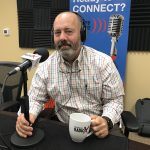
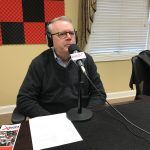
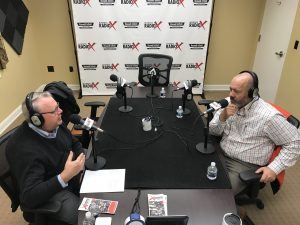
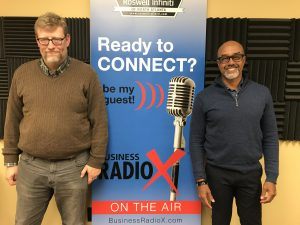
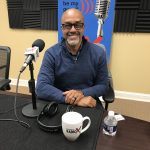
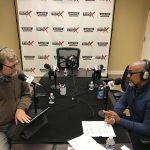
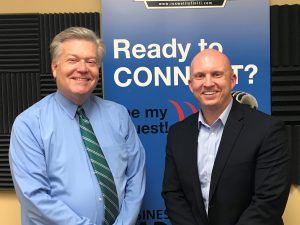
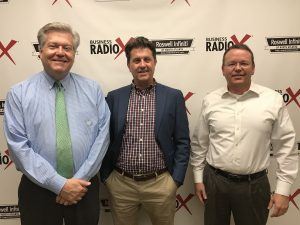
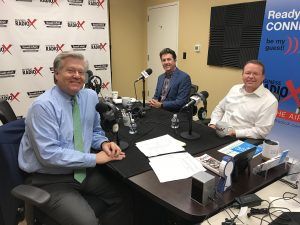
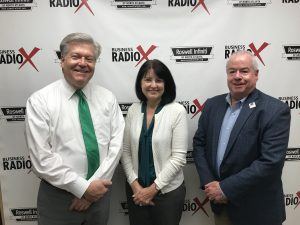
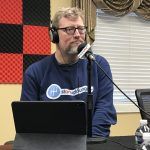
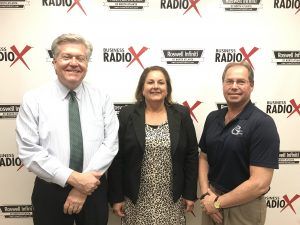
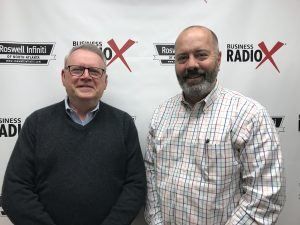
John Ray, Derek Griffin, and Gary Grace

North Fulton Business Radio, Episode 174: Gary Grace, Atlanta North Art Gallery, and Derek Griffin, Speartek

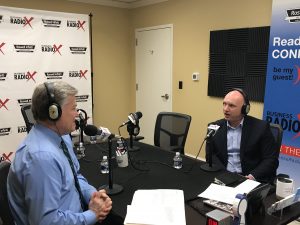
An artist’s story, an technology-enabled art gallery, and technology expertise in ecommerce for wholesalers were the topics featured on this edition of “North Fulton Business Radio” as Gary Grace, Atlanta North Art Gallery, and Derek Griffin, Speartek joined the show. “North Fulton Business Radio” is hosted by John Ray and is broadcast from inside Renasant Bank in Alpharetta.

Gary Grace, Atlanta North Art Gallery

Gary Grace

Gary Grace opened Atlanta North Art Gallery in the Warehouse District of Peachtree Corners in 2019.  The  location allows the artist, owner enough space to design and display his large scale industrial abstract masterpieces. He is also a photographer. A large section of the gallery is dedicated to Gary’s photography, offering originals and prints.

Gary is a native of  Pittsburgh, PA. He grew up during a time when Steel town blast furnaces were still ablaze, and the scent of coke and soot dominated the city. As a child, Gary rode his bicycle through busy streets from one corner of the city to the other, exploring fearlessly. Today, it is his quest to blend form with nature and his innate ability to visualize abstract concepts that are the foundation of his highly revered art style “Industrial Abstract.” Abstract artwork using oils is the medium Gary is most known for in the art world. His travels have brought him an affinity for landscape photography, and he has written and Illustrated a published children’s book, “Sasha, I Can’t Find My Bicycle.” Gary is currently working on two adventure novels’, “45” and “Throwbacks.”

Gary’s dyslexia has been the pathway to his creativity and exploration. He attended the Art Institute of Pittsburgh, where he majored in fashion illustration and clothing design. He is the founder of the clothing line “Posse,” which went national in the 1980s.

To learn more, go to the Atlanta North Art Gallery website, email Gary directly, or call 678-283-5390.

Derek Griffin, Speartek

Derek Griffin

Derek Griffin is co-founder of Speartek, a unique combo of technology firm and web development shop. Over the past 20 years, Speartek has built and continued to evolve the only ecommerce platform created primarily for the needs of B2B ecommerce. B2B is Business to Business and is often used by companies that sell their products wholesale or through distribution.

Speartek works primarily with product companies that are either manufacturers or importers, and while the industry doesn’t matter, they have numerous clients in Gift and Home Decor, Promotional Merchandise, and Industrial Products. Speartek designs and builds websites that are essentially a business solution that helps companies capture revenue more seamlessly and have those orders feed directly into accounting and ERP systems.

To learn more, go to the Speartek website, email Derek directly, or call 770-674-3900.

North Fulton Business Radio” is broadcast from the North Fulton studio of Business RadioX®, located inside Renasant Bank in Alpharetta. Renasant Bank has humble roots, starting in 1904 as a $100,000 bank in a Lee County, Mississippi, bakery. Since then, Renasant has grown to become one of the Southeast’s strongest financial institutions with approximately $12.9 billion in assets and more than 190 banking, lending, wealth management and financial services offices in Mississippi, Alabama, Tennessee, Georgia and Florida. All of Renasant’s success stems from each of their banker’s commitment to investing in their communities as a way of better understanding the people they serve. At Renasant Bank, they understand you because they work and live alongside you every day.

Tagged With: derek griffin, dyslexia, ecommerce platform, ERP systems, Gary Grace, gift and home decor, Hat Cat, Hat Cat Artist, industrial abstract art, industrial products, landscape photographer, landscape photograpy, leased artwork, North Fulton Business Radio, North Fulton Studio, promo merchandise, promotional merchandise, Speartek, technology firm, web development, wholesale ecommerce

Decision Vision Episode 38: Should I Outsource My IT? – An Interview with Tony Rushin, Network 1 Consulting

October 31, 2019 by John Ray

Decision Vision
Decision Vision
Decision Vision Episode 38: Should I Outsource My IT? – An Interview with Tony Rushin, Network 1 Consulting
Loading
00:00 /
RSS Feed
Share
Link
Embed

Download file

Mike Blake and Tony Rushin

Decision Vision Episode 38:  Should I Outsource My IT? – An Interview with Tony Rushin, Network 1 Consulting

Will outsourcing my IT increase my cybersecurity? What’s a human firewall and how does a managed services provider help me with this aspect of my IT? In this episode of “Decision Vision,” host Mike Blake explores these questions and much more with Tony Rushin, Network 1 Consulting. “Decision Vision” is presented by Brady Ware & Company.

Tony Rushin, Network 1 Consulting

Tony Rushin

Tony Rushin is a Vice President, Sales & Marketing, with Network 1 Consulting.

Network 1 Consulting is a 21-year-old, IT Support company in Atlanta, GA. They become – or augment – the IT department for law firms, medical practices and real estate & construction companies. Their IT experts can fix computers, but what their clients value most are the industry-specific best practices we bring to their firms. This is especially important with technology, along with regulations and cyber threats, changing so rapidly. They take a proactive approach to helping our clients use technology to gain and keep their competitive advantage.

For more information, go to the Network 1 Consulting website, or contact Tony directly by email.

Michael Blake, Brady Ware & Company

Mike Blake, Host of “Decision Vision”

Michael Blake is Host of the “Decision Vision” podcast series and a Director of Brady Ware & Company. Mike specializes in the valuation of intellectual property-driven firms, such as software firms, aerospace firms and professional services firms, most frequently in the capacity as a transaction advisor, helping clients obtain great outcomes from complex transaction opportunities. He is also a specialist in the appraisal of intellectual properties as stand-alone assets, such as software, trade secrets, and patents.

Mike has been a full-time business appraiser for 13 years with public accounting firms, boutique business appraisal firms, and an owner of his own firm. Prior to that, he spent 8 years in venture capital and investment banking, including transactions in the U.S., Israel, Russia, Ukraine, and Belarus.

Brady Ware & Company

Brady Ware & Company is a regional full-service accounting and advisory firm which helps businesses and entrepreneurs make visions a reality. Brady Ware services clients nationally from its offices in Alpharetta, GA; Columbus and Dayton, OH; and Richmond, IN. The firm is growth minded, committed to the regions in which they operate, and most importantly, they make significant investments in their people and service offerings to meet the changing financial needs of those they are privileged to serve. The firm is dedicated to providing results that make a difference for its clients.

Decision Vision Podcast Series

“Decision Vision” is a podcast covering topics and issues facing small business owners and connecting them with solutions from leading experts. This series is presented by Brady Ware & Company. If you are a decision maker for a small business, we’d love to hear from you. Contact us at decisionvision@bradyware.com and make sure to listen to every Thursday to the “Decision Vision” podcast. Past episodes of “Decision Vision” can be found here. “Decision Vision” is produced and broadcast by the North Fulton studio of Business RadioX®.

Visit Brady Ware & Company on social media:

LinkedIn:  https://www.linkedin.com/company/brady-ware/

Facebook: https://www.facebook.com/bradywareCPAs/

Twitter: https://twitter.com/BradyWare

Instagram: https://www.instagram.com/bradywarecompany/

Show Transcript

Intro: [00:00:02] Welcome to Decision Vision, a podcast series focusing on critical business decisions, brought to you by Brady Ware & Company. Brady Ware is a regional, full-service accounting and advisory that helps businesses and entrepreneurs make visions a reality.

Michael Blake: [00:00:20] And welcome to Decision Vision, a podcast giving you, the listener, clear vision to make great decisions. In each episode, we discuss the process of decision making on a different topic. Rather than making recommendations because everyone’s circumstances are different, we talk to subject matter experts about how they would recommend thinking about that decision.

Michael Blake: [00:00:37] My name is Mike Blake, and I’m your host for today’s program. I’m a director at Brady Ware & Company, a full-service accounting firm based in Dayton, Ohio, with offices in Dayton; Columbus, Ohio; Richmond, Indiana; and Alpharetta, Georgia, which is where we are recording today. Brady Ware is sponsoring this podcast. If you like this podcast, please subscribe on your favorite podcast aggregator. And also, please, consider leaving a review of the podcast as well.

Michael Blake: [00:01:01] Our topic today is, should I outsource my IT or information technology functions? And you know, I think this is a question that companies wrestle with quite a lot. In fact, I know companies that kind of do the IT two-step where they’ll insource it, and then outsource it for a while then. And then, thrilled to kind of bring it back, and then send it out again. And, you know, it’s really sort of the Texas two-step information technology style. And, you know, having been a business owner myself, I had to face that decision.

Michael Blake: [00:01:32] Now, as an anecdote, when I had my firm for a while, Arpeggio Advisors, our family at that time had started out as a Windows platform family. And then, something like three weeks into my trying to launch my company where my blood pressure was at a fairly high level, all of a sudden, my wife’s computer crashes and my oldest son’s computer crashed. Basically a race time when they can’t do anything and we’ve got to figure it out. And I’ve spent an entire day getting them back up and running, which I eventually did. But I said I’m just never doing that again.

Michael Blake: [00:02:16] So, on Saturday, I don’t know if Apple salespeople work on commission or not. But whoever—if they did, they made a lot of money on me that day because that day all the PCs are out. Macs were in. Never had trouble since. And this is not meant to be an Apple infomercial. I mean I do actually still have Windows machines for some things, but it’s indicative of how IT can be disruptive to a business, even if you’re a sole practitioner or even if you’re a home based business. That when you—when you’re infrastructure doesn’t work well, it is a real pain in the neck. It’s one of those things. It’s kind of like an umpire in baseball. You don’t notice and necessarily they do great. But boy, when they fail, you notice the heck out of them.

Michael Blake: [00:03:02] And IT is like that one. When your technology fails you, I can tell you from my perspective, I feel betrayed when my technology does not work. So, I feel like, you know what? I’m doing my my job. Right. Why is Apple, why is Microsoft, why is whoever not sort of holding up their end of the bargain? And so, the IT function in a company in the 21st century is every bit as important, if not more important than sales, than an accounting product delivery. You know, it’s right up there. But I don’t think that there’s as much controversy or consternation on whether or not to to keep that function or to outsource it or maybe if there’s, you know, identify kind of where that inflection point is, where you should consider that—you should consider that decision.

Michael Blake: [00:03:59] And so, as is often the case, you know, I’m not qualified to advise you on how to make that decision. So, I’ve brought in somebody who is qualified to help you make that decision. And joining us today is my friend Tony Rushin, who is vice president of Network 1 Consulting. Spending 30 years in high technology sales and marketing from IBM to startups, Tony brings his broad experience and business development marketing in IT business strategy to Network 1’s leadership team clients and partners. His passion is to help people achieve greatness and however they define it. And by the way, if your Atlanta Braves fan, you will appreciate this. He does run it out when the ball is hit into the gap in the outfield. Unlike some of our players here.

Michael Blake: [00:04:38] Network 1 delivers I-T managed services exclusively to businesses in Metro Atlanta. Since 1998, Network 1 becomes or augments the IT department for companies. Network 1’s IT experts fix computers for what their clients really values, the industry best practices they bring to the firm. It’s especially important with technology, along with regulations and cyber threats, which are changing rapidly.

Michael Blake: [00:05:02] With over 30 employees, Network 1 has built a culture that attracts and retains network and desktop professionals who know their stuff and have an outstanding desk side. Man, that is not easy to do. They find a fixed root causes instead of putting a Band-Aid on issues. Network 1 delivers proactive planning, so their clients avoid problems and gain competitive advantage. They’re not just a cost function. Network 1 is a fractional chief information officer, a support desk network engineer and everything in between. Tony, welcome to the program.

Tony Rushin: [00:05:32] Well, glad to be here, Mike. Thank you.

Michael Blake: [00:05:34] So many of us encounter outsource support when we need to fix our computer in sort of a robot vacuum. Is outsourced IT support simply hiring day from India. What does that look like?

Tony Rushin: [00:05:49] Well, no offense today from India, but if that’s all outsourced, IT support would be, there wouldn’t be much outsourced IT. So, it’s much more than that. But, you know, it can be confined to that, too. It really runs the gamut as far as what companies need, and then what they go out and get.

Michael Blake: [00:06:08] So, you know, what if a company happens to have a lot of people who are relatively computer uncomfortable, does that change the equation? Not every company necessarily has or needs people who are power users at every desk, right? Does that at all impact the decision on whether or not you should keep that function in-house versus outsourcing it?

Tony Rushin: [00:06:29] Great question. We’ve got 120 clients around Metro Atlanta. And I would say most of the users we support are relatively uncomfortable with technology and yet they still have a job to do. And their threshold for when they need help is much lower than that, power user often. And some of those that are uncomfortable with technology are also in some form the rainmakers. It could be a salesperson. It could be a managing partner in a law firm. And so, we haven’t found any correlation to whether or not you outsource to the how comfortable or uncomfortable people are with technology.

Michael Blake: [00:07:15] So, let’s back up. I probably should have made this the first question but too late. But there’s a term people hear a lot and I’m not sure they understand what it means. What—when we say managed services, what does that mean?

Tony Rushin: [00:07:27] Yeah. Managed services. It can mean something different to different IT support companies. What it means for Network 1, and in general I think we’re aligned with the industry, it’s the ongoing and always up to date services that are delivered by your outsourced IT company. So, what does that mean? And not all outsourced IT is—includes managed services.

Tony Rushin: [00:07:53] But, for instance, basic security. Well, that’s antivirus. Well, making sure it’s the latest version and it’s on everyone’s desktop or laptop. Well, that kind of infers that desktops and laptops need to be monitored to make sure that the latest is on there. It could be advanced security suite that’s got more tools and solutions in there to protect and prevent bad guys from getting in, but also detecting them when they get in. It can be managing a firewall. So, it always has the latest firmware and software involved in the company that is being managed on behalf. Never has to worry about it, never has to buy the hardware, it just gets supplied. So, think of it as baked in.

Michael Blake: [00:08:40] And so, in effect, is it fair to kind of characterize managed services for the most part as just a turnkey solution to some IT operation that needs to happen?

Tony Rushin: [00:08:50] Yeah, great, great summary of it. Turnkey and but typically it’s also based on a menu. Hey, I need this, that and the other and I don’t need those other things.

Michael Blake: [00:08:59] Okay. So, I think—in fact, I know a question on a lot of business owners and executives minds. As you know, we both understand the importance of IT to an organization. Right. And when IT doesn’t work, an organization can stop dead. And we’ve seen, we’ve heard of those those things. How do you overcome as an executive this notion or the idea or the fear that if I don’t own my IT department, really own them, right, they’re employees and I can, I don’t know, yell at them or fire or throw rocks at them, whatever, right, that that just leaves me more vulnerable to a disaster?

Tony Rushin: [00:09:42] Yeah. You know, it’s great you do this podcast because you’re getting advisors in here that have some experience and yet some in your audience that own businesses will say, yeah, I hear that but I think I have a better way. And so, we don’t do too much to educate people. We let the marketplace educate them for them. What I mean by that is the common sense of one business owner might be, I need IT in-house and it could be going great because let’s say there are financial advisory company and they’ve got 15 people and they’ve got an IT guy. That’s good. He’s customer-oriented. He’s focused. He runs around. He helps fix issues. And then, he gets sick or he quits or he’s not so good and he’s spotty.

Tony Rushin: [00:10:36] That’s the education of the owner like, oh, wait a minute, he is who he is. And by the way, the dynamic of the marketplaces, if he is really good, and I say he because most of them are guys, then he won’t be satisfied forever at a 15 person financial advisory company. He’ll want colleagues. He’ll want more challenges, whatever it is. And so, if someone chooses to bring it in-house, it could work great. My guess is for a small size business, say under 50 employees, it will bite them in some way, in some form or fashion.

Michael Blake: [00:11:17] You bring up something I want to make sure that I talked about because I do think it’s important. You know what was not intended to create innuendo here, but I think size really does matter. Right? I mean, I think there’s a—is it fair to speculate on my part that there’s maybe a sweet spot where, you know, can an organization get so big that having outsourced IT just isn’t—at least entirely, is no longer practical and maybe even on the small end, right, outsourced IT may kind of even be overkill, right? If you only wanted two people and you know your way around a computer, maybe it should just kind of do that. Is that fair?

Tony Rushin: [00:11:57] It is fair. And I’ll talk in generalities because it’s different depending on the kind of business it is. Some are highly regulated. I use financial advisory as an example and some are less regulated for instance. In the marketplace over time—and Network 1’s 21 years old. I’ve been there almost 10 years. I’ve seen almost a physics of size and when they need certain IT support. And if you’re less than 10 employees or or less than 8, you can often get away with some kind of as needed IT support. So, the opposite of managed services. You simply pick up the phone and call somebody if you need their help, only when you have an issue. And sometimes that can be done internally if you got a smart guy. And hey, I’ll fix it for you, right.

Tony Rushin: [00:12:52] Sometime between 5 and 10 employees, if they’re doing it with a smart person in-house and they’re growing, they might say, hey, wait a minute, it’s better to have Sally get out there and get new clients than fix our computers, and she’s really good at getting new clients, for instance. And so, that’ll happen. And they’ll say, well, let’s get someone that can fix things when they break. Often at about that 10 employees standpoint up to say 50, they’ll say, hey, look, I need—it would be better if there was someone more proactive and all inclusive delivering these services, not just when my hair’s on fire. Because when my hair’s on fire, I need him here now. And you can always get him here now. Whereas if they’re fixing little things along the way, it can avoid the big thing.

Tony Rushin: [00:13:42] So, really, for companies less than 50 employees, but 10 to 50, we don’t find a lot of in-house IT people. They’re outsourcing everything. Somewhere between 50 and 100, typically, we see them get their first IT person and that can actually be worked really well with an outsourced firm. We love working with an internal IT person because no matter how good our support desk is and they’re really good, I mean, they get to every issue within on average, seven minutes.

Michael Blake: [00:14:16] Wow.

Tony Rushin: [00:14:16] But the person on site can beat that every time. Now, not if he’s helping Joe and Susie down the hall needs him at the same time.

Michael Blake: [00:14:26] Right. That just assumes a personal sort of waiting for the phone to ring and that phone lights up and all of a sudden-

Tony Rushin: [00:14:32] Yeah.

Michael Blake: [00:14:32] … you’re rushing up to that person, right?

Tony Rushin: [00:14:34] Yeah. But between that 50 and 100 people, they typically have a person onsite. And then, if they get to that issue where, hey, we have multiple people and you know, our IT guy can’t get to them all, they’ll often bring in someone like us and say, hey, look, is there a way we can streamline, so that they take what they can? But if it’s over their technology knowledge or if they’re flat out, you know, covered up with a couple different issues or you know what, the dang employee wants vacation once in a while, go figure, right. They’ll have a relationship with someone like us, a managed service company, and says, look, we want to escalate or we want to hand off whenever we need to. So, that’s about 50 to 100.

Tony Rushin: [00:15:19] And then, when you get multiple people in I.T., then they have colleagues, then they can internally go on vacation or go to a class and still have someone to back fill. And we find that typically when there’s more than 100 employees.

Michael Blake: [00:15:35] So, I think there’s an important point there that I want to make sure we highlight is that this choice may or may not necessarily be an either or. Right. It very well could be an and, right. You may have, you know, one IT resource that is captive. Right. But then some firm like yours might then be available to augment that. It could be as needed, it could be strategic, whatever. Right. So, maybe in some cases it’s a fault—you can have your cake and eat it, too.

Tony Rushin: [00:16:09] Yeah. Really, it ends up being managing the business risk and managing the ongoing productivity of the employees on a fundamental level. The business risk is I have one IT guy and he gets sick. He leaves, he goes on vacation, whatever. And, of course, Murphy says that’s when the bad things gonna happen. And you need help.

Michael Blake: [00:16:28] Absolutely.

Tony Rushin: [00:16:29] And if you wait till then to have this outsourced relationship, well, the company you bring in doesn’t know your system. And so, they’re doing the best they can. But at best, it’s triage learning the systems. Oh, was it documented? Oh, you don’t even know passwords. Well, then they’re hacking into your system.

Michael Blake: [00:16:48] Right. It’s like an emergency room visit.

Tony Rushin: [00:16:50] Exactly. Whereas if you do it when everything’s quiet, you’ve got your IT person, they’re part of the solution of bringing in the company. They’re actually even getting, hey, what’s my style? What’s the style of the person to work with? Do they work with me well? Then they’re part of the solution. And it works fine for when those emergencies come up.

Michael Blake: [00:17:12] So, you mentioned something else I want to make sure to underline, because I think one of the arguments somebody might have to maintain a captive IT resource is that notion that while I own most of the service, the response time is going to be instantaneous. Right. But, you know, that’s not necessarily the case. And if you work with the right partner, you may very well find that you get, you know, assuming it doesn’t necessarily need to be an onsite because most of these—most computer issues can be addressed remotely now that you aren’t necessarily making that sacrifice of responsiveness that you thought you might.

Tony Rushin: [00:17:47] Yeah, it all depends. It depends a lot on how customer service oriented is the person you hire. And, you know, people can be really good in interviews, and then you get what you get. But let’s say they’re great, you know, and they know their technology and they’re really customer service oriented. You still run into, oh, my gosh, the rainmaker’s on the road and his laptop failed and yet they’re addressing a server down issue in the other part of your company, they can’t do two things at once. But that’s part of the business dynamic. I think companies get there on their own, get their meaning. Oh, we need to augment the current person we have in site simply from enduring enough IT issues that, you know, the person can’t clone themselves.

Michael Blake: [00:18:36] So, I would have to imagine that you’re having many more conversations about cyber security now than you were, say, 10 years ago, 5 years ago, right. So, how does—how do concerns about cyber security impact that decision of outsourcing IT functions? On the one hand, I could see an argument that’s well, again, if I have this captive asset, I own it, it’s ostensibly a closed cycle that should be nominally more secure. On the other hand, maybe it’s by outsourcing your brain and expertise, you could not possibly afford to hire cause cyber security experts are—they’re as well paid as a senior software engineer, if not more, at this point. Where do you kind of fall in that? Where—how do you kind of look at that, that many decision within the decision process?

Tony Rushin: [00:19:27] Yeah, great question. I don’t think overall it really affects the fundamental of do I outsource or do I bring it, have it in-house. What it has done—and really we’ve seen the acceleration rapidly in the last three years, you know, where cyber security, it’s gone from reading about it in the newspaper like, oh, it happened to someone else, to people—oh, it happened in my company or my next door neighbor’s company and I know him personally and I think that’s what’s accelerated it.

Tony Rushin: [00:20:00] You kind of set it up really well with if it’s that single in-house person and you’re keeping them really busy, how much time do they have to do that proactive. Hey, what new solutions are in the marketplace that might protect us better? Do they have colleagues already in-house that they can pick up the phone and just have a brainstorm sounding board conversation about, hey, we got this bad malware, how did you guys prevent it? It’s hard to find that really tactically good computer broke, fix it fast, person. And have that same person be that strategic, always looking forward, hey, what’s on the horizon? What do the bad guys do and what do the good guys do and what solutions should I be looking at? Oh, I should bring it in and vet it and do a pilot on it. Oh, wait a minute, this guy’s computer broke. That’s where I have to spend my time. And that’s the reality of what that single shingle person is involved with. And so, it ends up driving more people, I think driving more outsourced I.T.’s conversations, whether you keep that internal person and if he’s good, you should or whether you simply want to outsource all of it.

Michael Blake: [00:21:15] So many companies now are also using cloud services or putting all their data up in the cloud, whether that’s One Drive, Dropbox, something like that. Does that impact a need to—does that impact at all kind of the decision as to whether or not you outsource versus keep in-house, given that by definition, when you’re putting your data in a cloud, you’re already taking a step to outsource anyway, right?

Tony Rushin: [00:21:41] Yeah. Yeah. And a lot of things that are bundled into that, you know, cloud solution are what a company like us would do if you had it running on a server internally, meaning the servers in that cloud solution if you picked a good one, right. Not one that’s really in someone’s basement, but, you know, Microsoft or, you know, Office 365 or something like-

Michael Blake: [00:22:10] Josvpn.com.
Tony Rushin: [00:22:12] Right. They’re going to have redundancy built in. They’re going to have backups built in. And they’re going to make sure that everything is designed in a way where the application is not going to go down. Or if it goes down, it’s gonna be minutes and, you know, like that, not two days. So, all of that is a real big step up where we find that people—I mean you still need—you still have users and you still have them. I mean, I’ll flip it around, ask you question. Do people still go to the wrong websites?

Michael Blake: [00:22:47] All the time.

Tony Rushin: [00:22:47] Do they still get tricked by that e-mail, that phishing e-mail, and they might click on something?

Michael Blake: [00:22:53] You better believe that.

Tony Rushin: [00:22:55] Do they still forget to run the updates when their computer says run these updates?

Michael Blake: [00:23:00] Especially with Windows, I think many people actively avoid it.

Tony Rushin: [00:23:04] Yeah, because then, you know, you got a reboot or hey, the update might cause a problem.

Michael Blake: [00:23:09] And takes a minute.

Tony Rushin: [00:23:10] Takes a minute. So, it’s the user issues that are still the same. In fact, maybe they’re more complicated because you’re not going to pick up the phone if Office 365’s not working right and call Microsoft and actually get a response.

Michael Blake: [00:23:23] Right. Not unless you’re a really big user.

Tony Rushin: [00:23:25] Right.

Michael Blake: [00:23:26] Or you’ve really paid for their Cadillac plan, which they will sell you. Right. But then are you really saving anything, right?

Tony Rushin: [00:23:31] Right.

Michael Blake: [00:23:32] You know, I want to go back to those questions you just asked because they’re so important. You know, speaking of spear phishing attack, a friend of mine who was a CFO fell prey to a spear phishing attack and lost her job.

Tony Rushin: [00:23:52] Wow.

Michael Blake: [00:23:52] Within two days, gone. Right. Now, I do not believe it was her fault. The organization had never trained her or anybody to recognize spearfishing. There are no policies, rules, procedures, right? Yes, there’s human error. But to me, that was human error that was set up by an organizational failure to be prepared. So, my question for you is, beyond kind of the nuts and bolts of of keeping a machine running and keeping software update and so forth, can an outsourced IT function, if it’s not you, maybe somebody else, also help kind of establish those rules, procedures, create awareness? Because the end of the day, you do still need your end users to be smart about this thing.

Tony Rushin: [00:24:37] Yeah, and it’s interesting. The biggest weakness in any network is still the human firewall.

Michael Blake: [00:24:44] Yeah.

Tony Rushin: [00:24:44] It’s that person. And you hit the nail on the head. Well, how do you make that human firewall more secure? It’s through education. It’s through training. It’s through—and not one time events. Right. It’s like, hey, security is important. And that’s the day that you hired him, and then you never talk about it again. Well, that doesn’t work.

Michael Blake: [00:25:06] Right. This isn’t sensitivity training. OK, just kidding, just kidding, hold your e-mails.

Tony Rushin: [00:25:11] Right. So, the—first of all, we, as the outsourced IT or any outsourced IT can influence the leadership of the company to take security seriously and make it part of their employee handbook, make it part of their regularly ongoing employee training. But at the end of the day, if they don’t—if the leadership doesn’t step up to lead it and say this is important and this is what we’re doing, we can only influence, right.

Tony Rushin: [00:25:51] But let’s say it is a company that they care. It’s like, look, I want this to care. Then, yeah, we can advise. Well, then here are the steps, the processes, the training that you should incorporate into your culture. And here’s the frequency at which you should do it. So, I think most companies that are like us and helping those smaller companies can at least advise, influence, give some examples of processes and procedures to put in place to raise up their security. And solutions are put in place. If they need—if they’re in a regulated industry and they need something more robust than you’ve got those paid as much as a software developer kind of people that are consultants to put whole company assessments in place around security, physical and online security and put, you know, really extensive processes and procedures in place.

Michael Blake: [00:26:53] I mean, that—yeah, and that security space has has evolved into sort of the neurosurgery, I think of the IT world. Partially because I’m glad about the regulations, because, you know, financial statement, audit rules are now directly addressing this. Right. Your data security. In my world now, you know, I am—although badly I am now asking customers, not customer, I’m asking clients, why appraise their business? What are they doing about data security? How many records do they have that are potentially exposed, right, to do business in Europe where GDPR becomes effective or in California where their roles become effective? Because I don’t think that if you’re—if you ignore that, you’re really missing a big potential risk, right?

Tony Rushin: [00:27:38] Yeah.

Michael Blake: [00:27:39] So—but it’s become so specialized that, you know, if you’re a generalist, you just can’t cover it, right. And if you’re really sensitive, if you’ve got high sensitivity, that maybe another IT function that needs to ultimately be outsourced and just part of the cost of doing business. Right?

Tony Rushin: [00:27:56] Yeah. And the good news is. When you look at the tools of the technology that’s available to also help protect and prevent and detect security breaches, in this day and age, they are very affordable for small businesses. And especially if they outsource because what they also get the benefit of, let’s say with us, is a 50 person company pays a 50 person price for whatever licenses they might get of Cisco umbrella that protects them way out on the Internet side, or Huntress Labs, which is a cool piece of software that doesn’t protect you. But it always scans to check and detect if something made it through because something’s going to get through no matter how good your protection is.

Tony Rushin: [00:28:51] Well, those things for a 50 person company might cost them, say, $40 per computer per month. Well, a company like us will buy 2000 nodes for all our clients, and then we’ll offer it to our clients for $10 a computer a month. Plus, by the way, you know, we’ll get an alert when something happens and we’ll dig into it. You don’t even have to know about it. So I wanted to bring in costs because it’s important. These solutions typically start with big companies. And then, over the years, more competition comes in or that same company will develop a price point that is very palatable for small businesses.

Michael Blake: [00:29:37] And interestingly enough, I see the same thing, but from a different angle. I see that also occurring because small companies, most of them at some point would like to be bought by a larger company. And I have seen deals get stopped dead or at least get dragged through the mud and prices go down because the larger acquirer that does have kind of “best practices”, I think they do. Right. And they’re reaching down into this small company that is farther behind. Right. And it’s like trying to buy a house and you realize you’ve got to put a million dollars to get up the code and the deal can fall apart.

Michael Blake: [00:30:18] So, you know, I think a best practice for many companies is to make your IT as best practice as you can afford if you want to be acquired, because an information officer will say, look, this is too risky.

Tony Rushin: [00:30:33] Right.

Michael Blake: [00:30:33] Either they’ve got to go through and get a real grown up IT audit and a clean bill of health from your national firm or it just doesn’t make sense. An Exhibit A was the Verizon Yahoo! deal. Right. I remember when Verizon bought Yahoo! a while ago. And in the middle of that deal, they discovered a breach and it shaved billions of dollars off the acquisition price. I mean that’s an extreme example, but it happens all the time.

Tony Rushin: [00:30:57] Yeah. And I want to play off that a couple different ways. And in your example, it doesn’t mean the small company has to spend big company money. I mean, at the end of the day, you have to be more secure than your neighbor, just like physical security with your house.

Michael Blake: [00:31:13] Run faster than the other guy when you’re running from there.

Tony Rushin: [00:31:16] Exactly. And so, no one’s asking them to, you know, spend what Yahoo! or Verizon spent. In fact, no matter how much they’re spending, they can’t keep themselves safe. So, if the bad guys want to get you, they’re going to get you. What you want to do is button down things, so when they knock on your door from a cyber standpoint, oh, no one’s home. Go to the next. I checked the windows, can’t get in and they quickly go to the next. And so, you don’t have to spend that kind of price. You just have to pay attention to it appropriately.

Tony Rushin: [00:31:51] And going back to outsourcing, if you’re a single small business, you may not know what’s available out there in your price point or what are best practices without overspending for a company that’s 40 people. Whereas a company like us has one hundred and twenty clients that are that size and we work in there all day. And by default then because we earn a living doing this, we understand what best practice is or what’s appropriate and what’s available for that sized company.

Michael Blake: [00:32:23] Now, correct me if I’m wrong. If I’m not mistaken, a lot of your clients are law firms and accounting firms.

Tony Rushin: [00:32:30] They’re law firms and financial advisors.

Michael Blake: [00:32:31] Financial advisors, okay.

Tony Rushin: [00:32:32] Yeah, not quite accounting firms.

Michael Blake: [00:32:34] So, is that because those kinds of firms tend to lend themselves better to outsourced IT than do others? And are there other kinds of firms that say, you know what, this kind of firm probably really needs to just have staff in-house?

Tony Rushin: [00:32:51] So, way back in our history, 21 years, our founder married an attorney and the daughter of an attorney. So, it’s not rocket science why we got law firms at the beginning. We got referred in by people that knew our-

Michael Blake: [00:33:05] Right. Fair enough.

Tony Rushin: [00:33:06] And then, we built enough reputation there for being good. We call it that side manner to be able to explain things to an attorney or their staff that wasn’t tech talk and to be empathetic and to be responsive. And so, we got more law firms and attorneys. So, truth be told. Now, are some better outsourced than others? No, pretty much we find across the board any business can benefit from it. The ones we found actually—I say any. The ones that don’t seem to be quite as good a fit is that technology company that part of their offering is delivered through technology that’s facing for their client.

Tony Rushin: [00:33:52] Think of Amazon when they were really little. Well, when they were really little, they’re structured the same way as they are now and their technology was really client facing. Click here and go on and order a book. Well, if you outsource the IT support for that, you may not—that’s a critical function to their business. Those critical functions or the family jewels, if you will, you typically want to have in-house. So, that’s not quite a fit. But any others, we haven’t seen the correlation.

Michael Blake: [00:34:29] So, what does—what are the economics of outsourcing IT typically look like? And what I mean by that in a more specific way is, is pricing typically done on a monthly retainer? Is it on a per incident basis, done on an hourly basis, some other basis? How does that typically work?

Tony Rushin: [00:34:53] Yeah. Well, the good news for that small business owner is it’s a highly competitive marketplace. In Metro Atlanta alone, there’s over 800 IT support companies.

Michael Blake: [00:35:07] Wow.

Tony Rushin: [00:35:07] Yeah.

Michael Blake: [00:35:08] I thought I had competition.

Tony Rushin: [00:35:09] That’s a real number. And now, granted, 780 of those 800 are one, two or three-man shops. But the good news is that business owner, you brought up examples, you know, is it on a monthly retained basis, is it per incident, is it this or that? The answer’s yes.

Michael Blake: [00:35:26] Got it.

Tony Rushin: [00:35:26] You can find a provider that works with any of those models.

Michael Blake: [00:35:31] And what about you guys? Is it—do you find that you kind of tailor your pricing to the particular needs and wants of that customer as while? Do you sort of have—or do you have kind of a more of a fixed model?

Tony Rushin: [00:35:44] It’s both. We have three different basic plans, and then we have these managed services that, oh, you don’t need the advance security suite in your environment. Okay, don’t get that. Or you don’t need the the backup and recovery with disaster recovery built into it or at least it’s not at your price point. Great, let’s not do that. So, it’s some of both smorgasbord and fixed plans.

Tony Rushin: [00:36:10] We, in particular, won’t take a client that merely wants to call us when their hair’s on fire. That’s the as needed only. However, we’ve been around Atlanta for 21 years. So, if we find someone or if someone’s referred to us and say this is the kind of plan I want, we’ll simply say, well, that doesn’t fit us but we know two people that are really good at that. And would you like their names. Yes, we would. All right. Go call them. We found—we—I’ve been there 10 years. And for the first three years of me being there, we tried to serve both kind of client and we found we simply couldn’t because our monthly retained clients are where we put all our resources. And then, that person with their hair on fire calls and it’s like, do we take this engineer off this client that pays us every month? No, of course, we don’t. And then, we’d never be responsive enough for the hair on fire guy.

Michael Blake: [00:37:00] Right. That makes sense. And it would be like working at, you know, at a car company. And they have this assembly line, that’s their model, and then all of a sudden the CEO wants a custom car built, right? It would break everybody. Right. You wouldn’t get a very good custom car and it would disrupt the entire assembly line, too. Tony, this has been great. We’re running out of time, so we’re gonna need to wrap up. But if somebody wants to contact you with questions about this decision, how can they do that?

Tony Rushin: [00:37:31] Yeah, a lot of ways to contact. It’s trushin, R-U-S-H-I-N, @network1consulting.com. And that’s the numeral 1. So, that’s long the first time you type it. You know, just put me in as a contact. You can find me on LinkedIn, Tony Rushin. We’ve got a website. You know, we do tweet and we do Facebook. Personally, I’m not on those too much cause our—I’m on LinkedIn mostly cause that’s where business people are.
Michael Blake: [00:37:56] Right.

Tony Rushin: [00:37:57] Yeah.

Michael Blake: [00:37:58] Well, good. Well, that’s going to wrap it up for today’s program. I’d like to thank Tony Rushin so much for joining us and sharing his expertise with us. We’ll be exploring a new topic each week. So, please tune in, so that when you’re faced with your next business decision, you have clear vision when making it. If you enjoy these podcasts, please consider leaving a review with your favorite podcast aggregator. It helps people find us, so that we can help them. Once again, this is Mike Blake. Our decision—our sponsor is Brady Ware & Company and this has been the Decision Vision podcast.

Tagged With: CPa, CPA firm, Dayton accounting, Dayton business advisory, Dayton CPA, Dayton CPA firm, Decision Vision, firewall, Information technology, information technology strategies, IT managed services, it outsourcing, managed IT services, managed IT support, Managed Service Provider, managed services, Michael Blake, Mike Blake, Network 1 Consulting, outsourced it, outsourced IT services, outsourcing IT, Tony Rushin

David Shavzin, The Value Track

October 29, 2019 by John Ray

North Fulton Business Radio
David Shavzin, The Value Track
Loading
00:00 /
RSS Feed
Share
Link
Embed

Download file

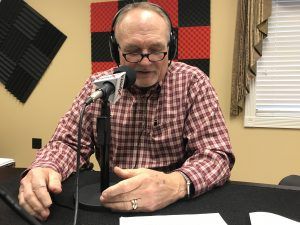
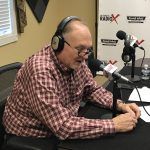
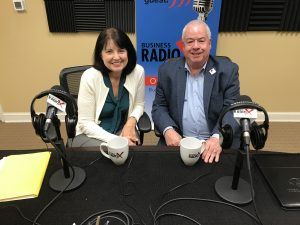
John Ray and David Shavzin

North Fulton Business Radio, Episode 173: David Shavzin, The Value Track

David Shavzin, Founder and President of The Value Track, explains how he gets business owners on “the value track,” methodically building the value of their business in preparation for a successful sale or transition in the future. “North Fulton Business Radio” is hosted by John Ray and is broadcast from inside Renasant Bank in Alpharetta.

David Shavzin, The Value Track

David Shavzin

David Shavzin created The Value Track to help business owners build value and create a path toward a successful exit. Too often, they have not built the value they need and are unprepared when the time comes to put their transition into action.

Since 2000, David has helped business owners get on The Value Track. He helps them think through their long-term goals and plans, educates them on business value and brings the right – collaborative – advisory team around the table. He then assists in the implementation of value-growth initiatives, guiding them to a successful transition (sale, family transfer, etc.) His 7-step process improves their quality of life and allows them to exit on their own terms.

A frequent speaker on these topics, David is a Certified Management Consultant, former IMC Georgia chapter president and President and Co-Founder of Exit Planning Exchange Atlanta, formed to bring advisors together in a collaborative effort to serve their clients.

His early career was in banking and finance, then 12 years with life sciences company Sanofi/Aventis. He spent 4 years in corporate finance and Mergers & Acquisitions. Then, 8 leading teams responsible for Quality, Finance, Supply Chain, Customer Service and IT functions within a $175M subsidiary.

To learn more, go to The Value Track website. email David directly, or call 770-329-5224.


“North Fulton Business Radio” is broadcast from the North Fulton studio of Business RadioX®, located inside Renasant Bank in Alpharetta. Renasant Bank has humble roots, starting in 1904 as a $100,000 bank in a Lee County, Mississippi, bakery. Since then, Renasant has grown to become one of the Southeast’s strongest financial institutions with approximately $12.9 billion in assets and more than 190 banking, lending, wealth management and financial services offices in Mississippi, Alabama, Tennessee, Georgia and Florida. All of Renasant’s success stems from each of their banker’s commitment to investing in their communities as a way of better understanding the people they serve. At Renasant Bank, they understand you because they work and live alongside you every day.

Tagged With: David Shavzin, exit plan strategy, Exit Planning Exchange, IMC-USA, Key Performance Indicators, kpi target, KPI’s, North Fulton Business Radio, potential business buyer, profitability, revenue, small business exit planning, small business exit planning strategies, The Value Track

Alan Rosenbaum, Dream Vacations

October 25, 2019 by John Ray

North Fulton Business Radio
Alan Rosenbaum, Dream Vacations
Loading
00:00 /
RSS Feed
Share
Link
Embed

Download file

Alan Rosenbaum, Dream Vacations

North Fulton Business Radio, Episode 172:  Alan Rosenbaum, Dream Vacations

The differences in ocean cruise line brands and why river cruises are so popular were just two of the travel topics discussed with Alan Rosenbaum, Dream Vacations, on this edition of “North Fulton Business Radio.” The show is hosted by John Ray and is broadcast from inside Renasant Bank in Alpharetta.

Alan Rosenbaum, Dream Vacations

Alan Rosenbaum

Alan Rosenbaum has been planning vacations since 2003. In 2003, Dream Vacations was known as CruiseOne because virtually all bookings were cruises. However, over the years they added almost everything related to vacations, so in April of 2016, they re-branded to Dream Vacations. In the past, Alan served on the CruiseOne Advisory Board. He has been quoted numerous times in trade publications and he frequently mentors new franchise owners.

Dream Vacations is a travel agency specializing in vacation destinations. This can range from a simple 3-day cruise to a custom tour of the world. Agents book destination weddings, honeymoons, and anniversaries. They also plan for groups of all kinds including celebrations, reunions, and fundraising cruises. Dream Vacations offers company incentive travel for organizations that seek to reward their best performers. Knowing clients can buy a vacation from hundreds of places, the most important aspect of the travel agency is its excellent service.

For more information visit VacationsByAlan.com, email Alan directly. or call him at 770-664-9010.

“North Fulton Business Radio” is broadcast from the North Fulton studio of Business RadioX®, located inside Renasant Bank in Alpharetta. Renasant Bank has humble roots, starting in 1904 as a $100,000 bank in a Lee County, Mississippi, bakery. Since then, Renasant has grown to become one of the Southeast’s strongest financial institutions with approximately $12.9 billion in assets and more than 190 banking, lending, wealth management and financial services offices in Mississippi, Alabama, Tennessee, Georgia and Florida. All of Renasant’s success stems from each of their banker’s commitment to investing in their communities as a way of better understanding the people they serve. At Renasant Bank, they understand you because they work and live alongside you every day.

Tagged With: Cruise One, cruises, custom travel, customized travel, Dream Vacations, favorite place travel, global travels, land cruises, ocean cruises, Princess Cruise Lines, river cruises, Royal Caribbean Cruise Lines, travel agency, travel agent, Viking River Cruises

Alpharetta Tech Talk: Joseph Garfield, Phase3 IT

October 24, 2019 by John Ray

Alpharetta Tech Talk
Alpharetta Tech Talk: Joseph Garfield, Phase3 IT
Loading
00:00 /
RSS Feed
Share
Link
Embed

Download file

John Ray and Joseph Garfield

“Alpharetta Tech Talk,” Episode 2: Joseph Garfield, Phase3 IT

Why should you outsource your IT project management? What are the characteristics of a successful IT project manager? Joseph Garfield, Founder and CEO of Phase3 IT, answers these questions and much more on this edition of “Alpharetta Tech Talk,” broadcast from the North Fulton Business RadioX® studio inside Renasant Bank in Alpharetta.

Joseph Garfield, Phase3 IT, Inc.

Joseph Garfield

Joseph Garfield is Founder and CEO of Phase3 IT, which has one mission: To help people succeed with complex IT projects. The company focuses on enabling business leaders to develop a clear vision of project success and then make their vision a reality through exceptional people and processes that cut through the fluff and deliver results. Phase3 IT’s background includes such recent projects as the merge of Northside/Gwinnett Hospitals, rollout of Cerner EMR to Northside, large network infrastructure upgrades, and various upgrades and deployments. Phase3 IT has a reputation for taking ownership of project delivery.

Joseph has a broad technical and business background that enables him to quickly adapt to diverse environments and get complex projects back on track.

For more information go to the Phase3 IT website. You can also email Joseph directly or call 678-906-9308.

About “Alpharetta Tech Talk”

“Alpharetta Tech Talk” is the radio show/podcast home of the burgeoning technology sector in Alpharetta and the surrounding GA 400, North Fulton, Roswell, Johns Creek, and South Forsyth area. We feature startup entrepreneurs, executives of larger enterprise companies, and other key technology players from a region with over 900 technology companies.  “Alpharetta Tech Talk” is hosted by John Ray and originates from the North Fulton Business RadioX® studio inside Renasant Bank in Alpharetta.

“Alpharetta Tech Talk” is broadcast from the North Fulton studio of Business RadioX®, located inside Renasant Bank in Alpharetta. Renasant Bank has humble roots, starting in 1904 as a $100,000 bank in a Lee County, Mississippi, bakery. Since then, Renasant has grown to become one of the Southeast’s strongest financial institutions with approximately $12.9 billion in assets and more than 190 banking, lending, wealth management and financial services offices in Mississippi, Alabama, Tennessee, Georgia and Florida. All of Renasant’s success stems from each of their banker’s commitment to investing in their communities as a way of better understanding the people they serve. At Renasant Bank, they understand you because they work and live alongside you.

Tagged With: GA 400 technology, healthcare IT, Healthcare IT Projects, Healthcare IT Services, IT project and program management, IT project management, IT project management healthcare, IT project management hospitals, IT project manager, medical records companies, niche project management, North Fulton Business Radio, North Fulton technology, outside project manager, outsourced project management, Phase3, Phase3 IT, project management, Project Manager, Tech Alpharetta, Tech in Alpharetta, tech talk, technology GA 400, technology in Alpharetta, technology in Johns Creek, technology in North Fulton

Decision Vision Episode 37: Should I Use an Offshore Software Developer? – An Interview with Dave Bernard, The Intellection Group

October 24, 2019 by John Ray

Decision Vision
Decision Vision
Decision Vision Episode 37: Should I Use an Offshore Software Developer? – An Interview with Dave Bernard, The Intellection Group
Loading
00:00 /
RSS Feed
Share
Link
Embed

Download file

Mike Blake and Dave Bernard

Decision Vision Episode 37:  Should I Use an Offshore Software Developer? – An Interview with Dave Bernard, The Intellection Group

What countries should I consider for offshore software development? How should I manage an offshore software development project? The answer to these questions and much more come in this in-depth, frank interview with Dave Bernard of The Intellection Group. “Decision Vision” is hosted by Mike Blake and is presented by Brady Ware & Company.

Dave Bernard, The Intellection Group

Dave Bernard

Dave Bernard is the CEO and Co-Founder of The Intellection Group. He is a serial entrepreneur, technologist, investor, inventor.

The Intellection Group specializes in rapidly building sophisticated, high-quality and innovative technology solutions that deliver breakthrough business results.

No matter where you are in the world, if your company or government agency is a market leader in your niche that requires highly-custom systems to maintain your leadership position and invent further marketplace advantages, they can help. The company’s specialty is complex (and often, award-winning) SaaS projects, and they’ve become well-known as the “vendor of last resort” for many of their clients.

The Intellection Group applies their versatile and deep technology and project management skills to solve problems in areas like developing database architectures that ensure effective data mining, integrated disparate information systems through service oriented architectures and loosely-coupled techniques, applying advanced techniques in data presentation, often an important selling point and differentiator, and rescuing complex technology projects that threaten to derail business plans.

The Intellection Group also has special expertise in emerging technologies, including voice recognition, text-to-speech, location services (GPS, RFID), natural language processing and search (supported by their patent portfolio.)

They like nothing better than for you to count on us to bring new and exciting ideas to the table that enable you to succeed in a tough and complex marketplace.

The Intellection Group delivers technology solutions which get results, like

  • A comprehensive portfolio management program for a world-leading private equity firm
  • A flexible data interchange application for one of the world’s largest vehicle transporters
  • A complex human resources system for a European defense ministry
  • A sales force productivity management system used by Microsoft, Symantec and Computer Associates
  • The most advanced online education delivery platform available.

The Intellection Group’s work has won awards such as the TAG (Technology Association of Georgia) Excalibur Award, the TAG Top 40 Most Innovative Company Award, and the Virginia Governor’s Technology Award.

To contact Dave, you can find him on LinkedIn or you can email him directly.

Michael Blake, Brady Ware & Company

Mike Blake, Host of “Decision Vision“

Michael Blake is Host of the “Decision Vision” podcast series and a Director of Brady Ware & Company. Mike specializes in the valuation of intellectual property-driven firms, such as software firms, aerospace firms and professional services firms, most frequently in the capacity as a transaction advisor, helping clients obtain great outcomes from complex transaction opportunities. He is also a specialist in the appraisal of intellectual properties as stand-alone assets, such as software, trade secrets, and patents.

Mike has been a full-time business appraiser for 13 years with public accounting firms, boutique business appraisal firms, and an owner of his own firm. Prior to that, he spent 8 years in venture capital and investment banking, including transactions in the U.S., Israel, Russia, Ukraine, and Belarus.

Brady Ware & Company

Brady Ware & Company is a regional full-service accounting and advisory firm which helps businesses and entrepreneurs make visions a reality. Brady Ware services clients nationally from its offices in Alpharetta, GA; Columbus and Dayton, OH; and Richmond, IN. The firm is growth minded, committed to the regions in which they operate, and most importantly, they make significant investments in their people and service offerings to meet the changing financial needs of those they are privileged to serve. The firm is dedicated to providing results that make a difference for its clients.

Decision Vision Podcast Series

“Decision Vision” is a podcast covering topics and issues facing small business owners and connecting them with solutions from leading experts. This series is presented by Brady Ware & Company. If you are a decision maker for a small business, we’d love to hear from you. Contact us at decisionvision@bradyware.com and make sure to listen to every Thursday to the “Decision Vision” podcast. Past episodes of “Decision Vision” can be found here. “Decision Vision” is produced and broadcast by the North Fulton studio of Business RadioX®.

Visit Brady Ware & Company on social media:

LinkedIn:  https://www.linkedin.com/company/brady-ware/

Facebook: https://www.facebook.com/bradywareCPAs/

Twitter: https://twitter.com/BradyWare

Instagram: https://www.instagram.com/bradywarecompany/

Show Transcript

Intro: [00:00:02] Welcome to Decision Vision, a podcast series focusing on critical business decisions, brought to you by Brady Ware & Company. Brady Ware is a regional, full-service accounting and advisory firm that helps businesses and entrepreneurs make vision a reality.

Michael Blake: [00:00:20] Welcome to Decision Vision, a podcast giving you, the listener, clear vision to make great decisions. In each episode, we discuss the process of decision making on a different topic. Rather than making recommendations because everyone’s circumstances are different, we talk to subject matter experts about how they would recommend thinking about that decision.

Michael Blake: [00:00:38] My name is Mike Blake, and I’m your host for today’s program. I’m a director at Brady Ware & Company, a full service accounting firm based in Dayton, Ohio, with offices in Dayton; Columbus, Ohio; Richmond, Indiana; and Alpharetta, Georgia, which is where we are recording today. Brady Ware is sponsoring this podcast. If you like this podcast, please subscribe on your favorite podcast aggregator. And please, also, consider leaving a review of the podcast as well.

Michael Blake: [00:01:02] Our topic today is, should I have software developed offshore? And for those of you who either know me in real life or have follow the podcast, and if you have followed the podcast, thank you very much for doing that. It’s a small but growing club I’m sure. You know that I have a background working with emerging technology companies, even matured technology companies. And in working with such companies, there are a few universal truths that I hear about how somebody is going to grow and scale their company. One, they say, well, we’re gonna have viral marketing and that’s a whole—that’s a different animal that we’ll tackle at some point. But if you know how to reliably produce viral marketing, you don’t need to raise money. Somebody will pay you $10 million a year to do it. But I digress.

Michael Blake: [00:01:59] Second is, all I need is three million dollars and this idea comes to fruition. And the third is we are going to develop software offshore. And we tend to think about this as if it’s something that is just very easily done and very easily executed because we are used to technology now being imported from overseas, whether it’s phones from Korea, whether it’s Macintosh’s or iPhones being made in Taiwan and China, whether it is Facebook memes coming from Volgograd. The fact of the matter is we have a lot of technology that comes from abroad. And of course, everybody is familiar with the meme of Steve from Wichita, who’s actually based over in Mumbai. And so, we’re used to having our technology come from someplace else.

Michael Blake: [00:02:50] And so, at a high level, it’s easy to kind of think about, well, we’ll just have our software developed abroad. These—you know, many of these countries have very strong educational systems and in particular,  very strong in producing engineers, scientists, mathematically oriented people. People are clearly very comfortable with computers. And by the way, you know the story goes that they basically work for peanuts or whatever the Indian equivalent of a peanut is.

Michael Blake: [00:03:20] And that’s fine as far as it goes. But when you sort of dig into it, you know, I’ve discovered that for every success story about well, we’re just going to offshore and outsource our software development, there are few stories that are not as successful. In fact, some of them are just outright tire fires. And so, it’s indicative, I think, of an important notion that software development abroad, really anywhere, but especially offshore doesn’t just happen just because you know that other companies have been able to do it.

Michael Blake: [00:03:55] And so, it’s a decision that needs to be worked through very carefully, because for most companies, getting your software done correctly, getting it done on time and now in a way that makes sure that you’ll have security back doors is not just a financial imperative, it is existential to the firm. And if you get that wrong, you just have no product. Not every firm can just sort of hit the reset button. So, OK, this didn’t work, let’s try it again a second or third time. And so, I think it’s important to kind of understand what exactly is involved in that.

Michael Blake: [00:04:27] And other than what I just told you, this is not a topic I know anything about, but fortunately I have a guy here in front of me who does know a lot about that and he’s going to tell us about it and share that knowledge with us. So, joining us today is Dave Bernard. Dave is a serial entrepreneur, technologist, inventor, and investor living in Atlanta, Georgia, an expert in new and emerging technologies.

Michael Blake: [00:04:48] Dave has co-founded several companies, including the Intellection Group, an innovative technology consulting group that has been recognized as one of Georgia’s most innovative companies. The Intellection Group specializes in building complex award winning-software as a service systems for both commercial and government entities in North America, Europe, and Africa. The Intellection Group specializes in rapidly building sophisticated, high-quality and innovative technology solutions that deliver breakthrough business results. They like nothing better than for you to count on them, to bring new and exciting ideas to the table that enable you to succeed in a tough and complex marketplace.

Michael Blake: [00:05:26] Dave has led and helped create award-winning complex software programs for organizations across many different industries, including healthcare, supply chain, insurance, retail, hospitality. You get the idea, all shapes and sizes from startup to multi-billion dollar enterprises. Dave has also founded a company called BeneVets providing technology solutions to veterans services organizations. Boy, did we ever need that. He’s also led the Intellection Group’s development of a patented technology architecture that unifies web development capabilities with voice recognition, text to speech, natural languages, radio frequency identification, and global positioning system technologies, deliverable to wireless, handheld, and desktop services. And his credentials go on and on but you get the idea. He’s pretty smart. He’s pretty accomplished. Dave, welcome to the program.

Dave Bernard: [00:06:19] Thanks, Mike. That’s quite, quite an intro. I’m really glad to be here, though. Going to have fun with this.

Michael Blake: [00:06:24] We’re going to have fun with this. And I know that we’re going to learn a lot because, you know, do you agree with me that I think you know, I think a lot of people are just sort of take for granted that offshore software development happens, right? And that’s not the case.

Dave Bernard: [00:06:38] They do. And, you know, there’s definitely what I would consider an almost mythology about it. And, you know, I tend to have a bit of a contrarian attitude about a lot of things. I’ve been in this business 40 years. I’ve seen a lot of best thing since sliced bread come and go. And so, I have an increasing skepticism about what that next best thing is.

Dave Bernard: [00:07:03] When we first started our company, our technology company, about 16 years ago, you know, you’re a new company, you want to control costs and make some money coming out of the gate. And I already had a large network of offshore people I have met at conferences over the years. And I just kind of flipped through my Rolodex and started calling some of these people overseas and we actually started establishing a nice little business doing that. And it has been—it has not been a better process. All along we’ve learned a lot through the school of hard knocks. And I’ll tell you, one of the biggest revelations for me in building this up has been that I thought software development is software development, no matter where it’s done, and that meaning that I didn’t think that there were cultural differences that would make a difference. I’ve found that to be diametrically opposite in practice, that cultural differences may matter a lot to how work is done and you have to account for that.

Michael Blake: [00:08:06] Good. So, let’s put a pin in that. So, we are going to get back to that. But speaking about kind of those cultural differences, in your mind and your experiences, you see it sitting here today. What are the countries right now that seem to attract the most interest in terms of being hosts of offshore development exercises?

Dave Bernard: [00:08:24] Yeah, it—I mean, everybody talks about South Asia, India, Pakistan, even Bangladesh. You have the Far East emerging as a very low cost area, Vietnam, Philippines in particular. The Philippines is very attractive because a lot of English speakers there. But there are also an entire half day ahead of you. So, that needs to be—I actually use a virtual assistant of the Philippines. So, I am acutely aware of that.

Dave Bernard: [00:08:52] Other areas that are up and coming, I think of Central America, South America, their values, because there tend to be in about the same time zone we’re in. And you also have to pull in Canada as a nearshore opportunity. But mostly Canada’s been positioning itself as QA technical support type of capability. So, that’s what you hear about. What we have found after going through the school of hard knocks on this is that Eastern Europe for us is the biggest bang for the buck. Best cultural fit. And just—there’s just a lot of stud developers over there.

Michael Blake: [00:09:28] Now, an important sort of nuance. When you say Eastern Europe, do you mean sort of all of the countries east of Germany or do you parse kind of central Europe that has Poland, Czech Republic versus Belarus, Ukraine, Russia? Does that make a difference?

Dave Bernard: [00:09:42] I would say Central and Eastern Europe.

Michael Blake: [00:09:44] OK.

Dave Bernard: [00:09:45] We’ve been—we have a ton of experience with Bulgaria, for example. And I’d like to highlight them because there’s a historical reason why there’s that way, but also a substantial experience in Poland and Belarus. And I know people who work with Serbs, Croats, Romanians, and Hungarians, and Czechs, and they’re all very, very good. It’s a very similar type of approach.

Michael Blake: [00:10:13] You know something about Bulgaria, they produce a ton of academic finance people and economists, for some reason more than any other country. When—you know, in my field, when somebody writes a really new and interesting paper that is super quantitative, like, you know, it takes me an hour and a half to get through the first page basically, Bulgaria seems to produce a lot of people like that. And I think that goes to the culture, right. For whatever reason, their culture, maybe their education system seems to skew towards that way.

Dave Bernard: [00:10:47] Yeah, there’s a very interesting wrinkle in Bulgaria that I did not discover till after I was working there for a few years. And that is that if you recall, the command economy that the Soviet Union ran in the Warsaw Pact, you had countries like Poland that were building aircraft. So, the Soviets would outsource a lot of their aircraft manufacturer to Poland in order for the economy to succeed. So, the Czechs and Hungarians built cars. The Bulgarians built computers. That’s what they did. They built software-

Michael Blake: [00:11:18] That’s right.

Dave Bernard: [00:11:19] … firmware and computers. They’re very well known for that. So, when you do that, your whole education ecosystem is built around that. So, that is still there. That disproportionate focus on the hardware and software side of things is tremendous there. And I think that part of that is informed—you know, a disproportionate amount of their population is in that business. And we just found tremendously talented people there.

Michael Blake: [00:11:48] That’s really interesting. And somewhere in the back of my mind, I was aware of that, but never made that connection until you made it for me. That explains. And I’ll pull the kimono back for just a second. One of my hobbies is retro computers. One of my prized possessions is an Apple IIGS. It actually works, souped up, et cetera, et cetera. But one of the—one thing that I do not have in my collection and I will not because that will be a major fight with my wife that I’m not going to have is a Pravetz computer, which was their knockoff of the Apple II, that their spies basically went into Cupertino, stole the diagram, stole everything, basically, and remade it. And if you look, you can find on eBay once in a while and it looks almost exactly like an Apple IIe, except Apple has been replaced with the Pravetz.

Dave Bernard: [00:12:40] Well, next time, I’ll go see if I dig one up for you.

Michael Blake: [00:12:42] Oh, boy, you do that. You’re my friend forever.

Dave Bernard: [00:12:44] But, you know, there’s one other really interesting thing about this and something that Bulgarians are immensely proud of. And that is the the person who invented the digital computer is widely regarded as a fellow named John Atanasoff out of, I believe, is Iowa State University. Well, at—his name is spelled Atanasoff with two Fs at the end. But I didn’t ever made the connection because I know a lot of Atanasoff in Bulgaria. And sure enough, he’s Bulgarian.

Michael Blake: [00:13:18] Is that right?

Dave Bernard: [00:13:19] And, in fact, when I made that connection, I asked—when I was in Soviet one time, I asked my team, do you know about this? “Oh, yeah. He’s one of our greatest heroes.” And they took me to a large statue in the middle of Soviet that has his figure on it. And I also had a little—another little antidote is that I was actually at a soccer game with my daughter, probably about 12 years ago and standing next to an old friend of mine who also had a daughter in the team. And I had mentioned—so, I must have been talking about going to Bulgaria. And she said, “Oh, my family’s Bulgarian.” Oh, really? No kidding. And she said, “Oh, by the way, my grandfather invented the digital computer.” And I was like, John Atanasoff? “Yeah, that was him.” And actually, a few years later, on his 100th birthday anniversary, they came over, found her, and brought her whole family over for 10 days random around the country and just celebrating his 100th anniversary. It was a big deal there. Big deal.

Michael Blake: [00:14:17] Well, good. So—and by the way, if you’re listening from the Bulgarian Embassy, the commercial attache, feel free to call up and sponsor our program. That’s fascinating. I did not know that. But, you know, getting back to the, you know, the current part of the question is that not all offshore hosts are the same, right? And it’s not just about cost structure but cultural. So, I’m curious. You said that Central and Eastern Europe for, at least for you, seem to have worked the best, maybe for your clients. Why is that?

Dave Bernard: [00:14:49] Yeah, there’s a very definite pattern there. When you’re in a small business like me, you know, I can’t afford to micromanage people. I need to have smart people, knowledge workers you can call them, that could run on their own, take initiative and go solve problems and think for themselves. Otherwise, it doesn’t scale, just doesn’t scale. So, with a lot of countries, there is actually a great cultural barrier to saying no to the boss, you know, or disagreeing with the boss at all. So, you—they’ll just say yes to you all day long, and then you’re just paying them all day long.

Dave Bernard: [00:15:29] With the Bulgarians and with many others in that part of the world, I found a pretty common theme is that they definitely will push back. I mean, it’s great to have those kind of—you know, they’re not tense conversations but they, you know, sharpening the steel. And we’ve had many times, many times when I’ve said for them to do something and they said, “Dave, that’s a really bad idea. And this is why.” And I said, oh, you’re right. Thank you for telling me. And I love that aspect of it with them.

Michael Blake: [00:16:01] And, you know, I’ve found something similar. As you know, I spent a lot of time in Belarus and Ukraine myself. And they are not shy. I mean, they’ve-

Dave Bernard: [00:16:10] They aren’t.

Michael Blake: [00:16:10] And for whatever reason, maybe it’s because for 70 years, they couldn’t say no. Now, they can’t say no fast enough, right. And you’re right, that is a good thing. You’d much rather have that than the passive aggressive, hey, we’ll take your money, right?

Dave Bernard: [00:16:23] Yes.

Michael Blake: [00:16:24] But then you don’t wind up with what you want. I’d much rather be told that I’m not doing the right thing upfront.

Dave Bernard: [00:16:30] And they do appreciate that directness, too. It’s part of their culture. So, if I’m direct with them, they’re direct with me, we all get along great and we get a lot done. So, that’s what—that’s really the big difference for me.

Michael Blake: [00:16:42] Interesting. Okay. So, the obvious driver to move development offshore is cost, at least perceived cost anyway. Are there other things you might want to consider? Is there a reason besides cost to consider offshore development?

Dave Bernard: [00:16:58] Yeah. I mean—and I hope I don’t upset too much of the audience but, you know, I’ve been just underwhelmed by the bang for the buck I get from onshore developers. There’s several problems with onshore developers and I just have chosen not to deal with them. One, I think is they’re grossly overpaid for what they do. And I’ve seen that firsthand with working with developers all over the world. The other thing is I think that even more important—and all these things are kind of tied together. Cost is an issue. Culture is an issue. Work ethic and attitude is an issue. But also there’s this kind of pattern in the U.S. where you job hop. You don’t like your job. You can make 10 bucks an hour or more over there or another 20 grand a year over there. You job hop. That just doesn’t happen. In my world, in Central and Eastern Europe.

Dave Bernard: [00:17:49] We have multiple examples where we’ve had the same small group of developers working on a project for 10, 12, 13 years. And when you have that kind of continuity on a project, all kinds of things happen that you don’t have to worry about. They tend to be a lot better at their work because they can work in the system. They make a lot fewer mistakes. That makes QA and testing a whole different ballgame. Responsiveness goes way through the roof. And I don’t have to have all these processes and plans for when they leave. So, we actually don’t even think about that. Because there’s so much continuity now, we don’t worry about it, you know. And that is so ingrained in the U.S. approach. If you really looked at all the processes and procedures that they put into U.S. based software development, the vast majority of is geared toward that guy walking out the door and screwing us.

Michael Blake: [00:18:46] You know, it’s—you know, actually, you bring up two things that I want to kind of highlight. One is that, yeah, the cost here is higher but it doesn’t sound like that in and of itself is problematic. What’s the value that you get for the cost?

Dave Bernard: [00:18:59] Yeah.

Michael Blake: [00:19:00] Right? You can live with the high cost if the value were there. But-

Dave Bernard: [00:19:03] Yes.

Michael Blake: [00:19:03] … the value was not there.

Dave Bernard: [00:19:05] And I would say too that, you know, we don’t pay the lowest rates that are out there.

Michael Blake: [00:19:09] Right.

Dave Bernard: [00:19:10] And there is a lot of academic work done on programmer productivity. If you look at DeMarco and Lyster and Ed Yordan and some of—and Steve McConnell, you’ll see a lot of academic work. And at the end of it is, is that there’s a wide range of talent in developer community. The difference between a mediocre developer and a top notch stud, it can be 7, 8, 9 10x. So, what we want to do is we want to find the 7 or 8x guy that we can pay 2x, 4. That’s a tremendous bargain. So, a lot of times the $10 and $15 an hour people take four times as long to do something. I could pay somebody $20 or $25 an hour and they do the work of five people. So, there’s a whole different mindset there. It’s economics. It’s math.

Michael Blake: [00:20:01] Yeah.

Dave Bernard: [00:20:01] You know, that’s what it boils down to.

Michael Blake: [00:20:02] And we’ll take a little bit of the finance side tour. As you know, one of the things I do a fair amount of is, is appraising software. Right. Internally developed software. And two of the factors that we consider that plugged directly into the quantitative models we use are how effective are the programmers and what is the turnover. And it’s fascinating because you would think not knowing, and I didn’t know this, not knowing the intricacies of that software development process. The knee jerk reaction would be, oh, turnover is gonna be lower here, especially if they’re kind of in-house people, right. I can pay him. I can keep him.

Michael Blake: [00:20:45] But that’s so not true it sounds like that, in fact, these offshore teams, for whatever reason and maybe that’s cultural, right, tend to stick around for prolonged periods of time. They’re actually more stable than even if you hire people in-house.

Dave Bernard: [00:20:59] They are. And there’s—I think there are some insight that I can add to that. I think software developers in general, having been one for 40 years myself, I think in general they’re a lot like doctors. They’re trained to practice a craft. And that’s what they want to do. They don’t want to run a business. They don’t want to have to deal with insurance companies. They don’t want to have to market themselves. Software developers not that much different. If you could create an environment for them where all they got to do is code and build stuff and be creative, they’re very happy.

Dave Bernard: [00:21:30] So, really our job in the Intellection Group is to find customers and give them work. And when we do that, we make them very happy and they’re not going to go anywhere because they’d be shooting themselves in the foot. I think the other thing we do, because of distance, it’s also very hard to—it’s harder to build relationships with people, even if you get Skype and e-mail and all that. We communicate with our guys constantly. But we also visit them on a regular basis, at least once a year. And we know their kids. We know we—visit their houses. We know their spouses. So, it’s a relationship that’s built on that personal side as well as the commercial side.

Michael Blake: [00:22:14] So you talked about the fact that you’ve found some folks that work really well and you’ve got long-term relationships. Let’s put ourselves in the seat of somebody now as thing on a map, you know, I should think about offshoring. How do you go about making an assessment as to whether or nothing would be a good fit? I mean, it can’t be as simple as finding resumes on Indeed.com or something, you know. And you’ve got the cultural, geographic, distance, how do you do that?

Dave Bernard: [00:22:43] You know, I mean getting introduced to them is probably the hardest part because there’s a lot of them out there to sift through. What I try to do is—and I rarely add new teams, although I did add some new teams the last couple of years in Krakow, in Minsk. And I actually went to visit them before I engaged with them, to see their offices, to see how they run their shops, you know, and look them in the eye. I mean, I—that’s worth the investment because I’m about to bet my company on these guys.

Dave Bernard: [00:23:14] The other thing we’ll do is to test them on some small projects that we don’t pay for. Okay. I learned that a long time ago. Find a 20 or 40 hour project that they’ll do. And almost all them will say, yeah, sure, we’ll be happy to do that. And what you really want to test there is not necessarily their coding ability, but I want to see how well and how they communicate and how responsive they are, because in our business has everything. Our clients want us to be responsive and communicate frequently. They don’t want unknowns. And that’s the same way I want to run my business. So that’s really what I’m looking for. If I see a lag in that, that’s a big red flag for me.

Michael Blake: [00:23:56] And that’s gonna be another differentiator between an offshore market here. I mean you try to get somebody local to take on a project of that scope to test out their capabilities, right.

Dave Bernard: [00:24:08] They’re not going to do it.

Michael Blake: [00:24:09] They’re not going to do it.

Dave Bernard: [00:24:09] Yeah.

Michael Blake: [00:24:10] Right. At best, they will not refuse with extreme prejudice.

Dave Bernard: [00:24:15] Yeah. And that’s part of that whole attitude thing.

Michael Blake: [00:24:18] Yeah.

Dave Bernard: [00:24:18] You know, I actually think there’s a tremendous desire to work with Americans in overseas markets.

Michael Blake: [00:24:25] I think so too.

Dave Bernard: [00:24:26] There’s a cache to that. That’s leverage for you. And if you treat them as equals—you know, the thing I used to hear all the time from some teams—I mean every time I visited, they tell me this. You know, we do work with some other U.S. companies but they don’t let us do cool stuff. You guys let us do stuff that people actually use. They also feel distrusted and disrespected in a lot of ways because oh, well, the Americans know best, but that’s not the case.

Dave Bernard: [00:24:52] And what we try to do, actually, because it’s good for business is to push everything down to the lowest level. We want them to do architecture. We want them to do database design. We want them to do documentation, so that they own the whole thing, and then they learn the business. So, again, that scales. If I get to tell them every little thing to do, that doesn’t scale. So, Mike, I got guys who know—I got guys in Soviet who know more about global private equity than most people in New York. You know, I’ve got people in Minsk who know more about sales, online sales and marketing than most people in California do. That’s because they’ve had to bury themselves in it, in the details and build it and they own it. So, I don’t have to tell them technical specs. I just say the customer wants a report that shows this, this, and this. Four or five sentences, they go build it. They know what to do.

Michael Blake: [00:25:44] So, that brings up another question or two later but the segue works here. It sounds like—and correct me if I’m wrong but it sounds like you’re an advocate of sending entire projects, not necessarily having the offshore developer work on a piece or a part of it and maybe keep it here. Sounds like you think just either you’re going to give them the project or not. Is that fair?

Dave Bernard: [00:26:06] That is fair. I mean the structure we have is we have onshore managers here, but really the delineation is in customer ownership. Who owns relationship? We own the relationship, the Intellection Group, with our customers. The developers rarely talk directly to our customers. We want to be that intermediary who want to own the relationship. And actually, quite frankly, the developers are very happy with that. They don’t wanna talk to customers.

Michael Blake: [00:26:32] I’m sure.

Dave Bernard: [00:26:34] They want to do their thing. So, that works out very, very well. So, we—that model is really important, I think. And that’s actually—I would say it’s our biggest problem is finding good onshore management. That is a—still an Achilles heel for us, because, again, you know, we’re dealing with people who are trying to run by an agile playbook or something like that. And I think if I just put all these processes in place, everything’s going to work. No, you’ve got to get engaged. You’ve got to talk these people everyday. You can’t just e-mail them, you got to get on Skype, look them in the eye. You got to be able to be flexible and move priorities around. These guys are good at that. Make use of it. You know, and I still have a difficulty finding people who will do that.

Michael Blake: [00:27:25] And I think that’s an important point because it’s different to manage an offshore team.

Dave Bernard: [00:27:32] It is.

Michael Blake: [00:27:32] Right. Even if you’ve had 15 years of experience that—pick a company, Cox Communications, right, managing their internal software development processes, it’s just a different skill set, a different animal managing an offshore team, isn’t it?

Dave Bernard: [00:27:48] It is. And we have—I have my own personal philosophy with the hundreds of projects I’ve been involved in in my career. Like agile is not fast enough. Two weeks grumps to me are awful. We drop code every day with our clients. You know, when you do that, you don’t have to give them a status report because the system is the status. It’s always built. It’s always running. It’s always up to date. You want to see where we are? Go look at the system. That’s where we are.

Dave Bernard: [00:28:18] And if you do that every day, mind share is preserved. okay, so that’s where we would hate for a developer to make a change. Wait for two weeks to deploy it. So, the customer tests it. He’s already forgotten after the third day what he did. Customers come back and said, “Oh, there’s something wrong with it.” I don’t know what I did back then. That’s how things really work. We would rather have that very tight velocity and much, much—it’s much better use of mind share for us. And that has worked for me in lots of projects.

Dave Bernard: [00:28:50] So, we call it, for want of a better term, call it super agile. And we’ve gotten that confirmed with some independent third parties who looked over our process and our code. And they—I was actually told by a European firm that just did a large code review, a multi-million line system we’ve been building for 10 or 12 years and they told us they’d never seen a more productive team. And I said, it’s really simple. We just—we deploy a lot and we still do 500 hours of work on that system every month, every single month. It’s never going to end. And so—and they couldn’t—they’ve never seen by with our velocity. But that to me is the only way to build this, to preserve mind share. It’s a knowledge worker business.

Michael Blake: [00:29:36] It’s—even in my field, it’s very hard to start, put down, pick up, down, pick up.

Dave Bernard: [00:29:44] Right.

Michael Blake: [00:29:45] It’s—the creativity gets lost, the time getting up to speed and so forth.

Dave Bernard: [00:29:53] And you know it intuitively, you know.

Michael Blake: [00:29:55] You do. I mean I—you know, I had—not in software, but I was set to be an expert witness in a case that I last touched about four years ago. And I assume the thing had settled. And then, all of a sudden, you know, the attorney e-mails and says, “Hey, this thing looks like it’s going to trial.” Let me see if I can find it. I wish I find can it. But, you know, you’re trying to kind of get back and step back for—you know, thankful it’s settled. So, nobody wanted to be in that case. But the notion of having something that’s sort of still like that, and then try to pick it up and try to do the same quality work that you were doing when you started, boy, that’s the exception rather than the rule, isn’t it?

Dave Bernard: [00:30:39] It is. And, you know, I would—and this discussion is about offshore development, but a lot of things I’m talking about apply to software development in general. And the point I want to make is that the reason we do offshore development is it actually makes some of the other stuff clearer and easier and more predictable to do in a lot of ways. So, that’s—its big advantage.

Michael Blake: [00:31:02] So, talking about kind of where you can get this done and you of all people appreciate this, because I know that there’s something that you’re very involved in studying, is the nature of security, right. There are countries out there that wish the United States ill. And candidly, they realize they cannot defeat us on a conventional battlefield. And so, their battlefield is cyberspace.

Michael Blake: [00:31:28] And there’s concern. And we’ve seen even with the current administration that, you know, we’re not necessarily letting other companies sort of have the run of the place from technology anymore. And I’m curious on, even if it’s not a particularly “sensitive project”, is that something you think about? If you think about, you know, a Russia, if you think about a China being a software developer for us. Maybe they’re not enemies but I’m not sure I’d say they’re friends either. Right. Is that something if you’re in the private sector, should give you pause?

Dave Bernard: [00:31:59] You know, I would say that we let economics drive us and talent. Talent and economics drive us where we’re gonna go. So, I have nothing against working with Russians or Chinese. There may be some other things that give me pause. So, I do pay attention to things like economic sanctions. And that’s a business risk. It’s a business risk if—you know, I was actually working in Bulgaria before the VAT was implemented there, and I had some concern about whether they were going to apply it to services. It turns out they didn’t because that would have changed our business model. That’s a 20 percent tax. So, it’s things like that more that are going to drive me.

Dave Bernard: [00:32:37] I—if you’re talking about intellectual property, I get that asked of me a lot. People will say, well, what if they go and steal our code? And my response to that is a question. What are they going to do with it? I mean, they don’t—by definition, they don’t like marketing or selling. So, they’ve got to have—they would have to package it up and figure out where the market is and go sell and build a business around it. They don’t have time for that. They don’t want to do it. And plus AB, as soon as I found out about it and I would, I’d kill—you know, I’d cut them off.

Michael Blake: [00:33:08] Right.

Dave Bernard: [00:33:08] So, that’s a disincentive. So, I think right now, can you completely bottle that up and make sure it doesn’t happen? No, you can’t. And even if you have NDAs and contracts, they’re worth your ability to defend them, which you want to do.

Michael Blake: [00:33:25] Right.

Dave Bernard: [00:33:26] It’s like a pattern-

Michael Blake: [00:33:26] Which is tough.

Dave Bernard: [00:33:27] So, if you’d not willing to defend it, why go do it? But in our case, we are—we focus on making a relationship very strong and making it a really symbiotic relationship that tends to keep those things at bay. And I’ve never had a problem with that. As far as national security types of aspects of this. Well, that has its own rules. And we have done cleared projects overseas under U.S. Army contract or NATO. And I do some pro bono work on the national security space anyway. So, I have a maybe an extra sensitivity to working with some of those places. And for me, there’s just so much work and so many good people that I can work with. Why risk working with people who are on the fringe? And I might consider right now in the current political climate and economic climate that Russia and China are kind of on the fringe.

Michael Blake: [00:34:20] Got it. So, switching gears a little bit. I’m curious in your experience, are there certain kinds of software applications that are better or worse suited to being developed offshore?

Dave Bernard: [00:34:36] You know, I was giving that some thought because I had your question ahead of time and I just couldn’t think of any pattern one way or the other.

Michael Blake: [00:34:44] Okay.

Dave Bernard: [00:34:44] The thing that I could think of the most was if you had a—an application that was such high availability that you needed to have 24/7 engineering support on it and that time zones might cause your problem with that. But other than that, we’ve already built systems used in tens of countries at a time 24/7 around the world and they were all built by the offshore guys. And you know, a lot of our customers in the beginning, they’ll say, well, you know, they’re not available after like 1:00 p.m. Eastern or something like that. And they actually fall into our pattern of following the sun. They love sending me stuff at 11 p.m. And when they get up in the morning, it’s done. So, actually, they’ve all adapted to our pace and our time zone and they actually understand it. You’re going to have a gap somewhere or by sleeps, right. So, all they do is they understand, hey, I can get stuff today late and it’s going to be done while I’m sleeping.

Michael Blake: [00:35:48] It’s interesting you said that. And sometimes I wonder if they sleep, because for a while, I’ve actually used an Indian contractor for my valuation practice. And, you know, it just astounded me. I would send something at 9:00 at night. That’s when I have a bunk bunch of my sort of technical work done and I’m getting a response in 30 minutes. I’m like, dude, you should—what? You should be asleep.

Dave Bernard: [00:36:11] I’ve had that same experience. I tell them the same thing, go to bed.

Michael Blake: [00:36:16] You know, you’re no use to me if you do it, you know, if you’re—but you’re right. They seem to adapt. They seem to be willing and enthusiastic to adapt their body clocks to match our time zone if necessary.

Dave Bernard: [00:36:27] And your customers adapt too.

Michael Blake: [00:36:30] Yeah.

Dave Bernard: [00:36:30] I mean, it’s all kind of the same thing you’ve got to do with them anyway, set expectations. This is the way it works and it’s very effective for them.

Michael Blake: [00:36:41] So, I’m going to show off a word here that our mutual friend, Scott Burkett, who is on podcast number two or three, I think-

Dave Bernard: [00:36:48] Oh, I know Scott.

Michael Blake: [00:36:48] … shared with me and that was technical debt. So, I did not know what that was until about six months ago. Anyway, it is—and for those who don’t know, as I did not six months ago, technical debt is basically the amount of rework you may have to do with a software package to get it done, so that it actually can be expanded upon as opposed to just getting it done in a rigid way to meet a deadline.

Dave Bernard: [00:37:15] Yes.

Michael Blake: [00:37:16] More or less. Right. Also sort of covering-

Dave Bernard: [00:37:18] That’s a good definition.

Michael Blake: [00:37:18] Also, covering obsolescence to a certain extent. Is there a greater risk or a lesser risk of accumulating technical debt when an offshore project is-

Dave Bernard: [00:37:28] The short answer is no, I don’t think so.

Michael Blake: [00:37:29] Okay.

Dave Bernard: [00:37:30] I mean developers—you know, a good developer knows the best way to implement any given task. Now, given that, I’ll just get on my soapbox a little bit about technical debt and I have a really good example, a counter example-

Michael Blake: [00:37:45] Got it.

Dave Bernard: [00:37:45] … for this. It’s actually a little bit of a surprise when I heard it. Like I said earlier, we had had a large system reviewed by European—it took months for them to do the review. Very thorough job. They looked at every bit of our code. And they came out and said, you know, you have a bunch of technical debt in your reports. And this is a system that had been around for a while. We’ve probably built 200 or 300 reports. We’d even retired like 20 of them. And they said you have a tremendous amount of code duplication among these reports. And I said, really? Because I don’t tell the developers how to write stuff. That’s their job.

Dave Bernard: [00:38:21] And I talked to developers and they had a very interesting story to tell me. They had followed my directive exactly. And what I directive to them was this customer is extremely sensitive to accuracy and risk in the code. They just don’t want bugs. So, they took that to heart. And basically the approach they took is whenever a new report request came, they went and found another report that was battle tested, coded and worked, copied the code and worked from that, the one that was closest to what they had to build. So, immediately, they were reducing the risk tremendously, increasing the likelihood of accuracy and reduce the amount of work they had to do. So, responsiveness went through the roof. Accuracy was still really good and risk was low. Exactly what the customer wanted and they’d been doing that for years. Okay.

Dave Bernard: [00:39:10] And so—but these guys who were reviewing said, oh, this has got to be fixed. I said, really? Okay. So, what’s my pitch to the customer here? I’ve got to go burn a whole bunch of time that you’re gonna pay for and I’m gonna refactor this code. So, now, I’ve just instituted a whole lot of risk and I get cussed. I get developers changing code. That’s risk. And then, at the end of the day, it’s all gonna be tested again, which is the bulk of work in software development. And so, at the end—and after all that’s done, then the customer’s got to verify it, which they’ve already done with the existing reports.

Dave Bernard: [00:39:46] And after all that’s done, they had the same thing they started with. So, how do I pitch that to them? And they said, “Oh, I see your point.” Because they were gonna make it a prominent part of their presentation to clients. I said you can do whatever you want but I know what they’re going to say. And so actually, it’s turned into—it was eye opening for me because I love—it was the genius creativity in my mind because the customer doesn’t care how it’s written. They just want it to work and make their business grow. And this is a customer who’s realize billions of dollars of return on this system.

Dave Bernard: [00:40:21] So that’s why there’s a lot of these little things, object-oriented programming, agile development, technical debt, QA processes, you know, test driven development. All this stuff is really to me, they’re red herrings. They’re distractions from serving the customer in the way that best does that. So, I have a similar contrarian attitude about testing as well based on experience. So, you know, I did tell the customer a little bit about this, said you may hear about it, I’m just telling you, just say no, you know, it doesn’t matter. So, that’s my my little soapbox on that.

Michael Blake: [00:41:02] All right. So, let-

Dave Bernard: [00:41:07] And oh, by the way, I would challenge anyone in the audience to counterpoint that. I would love to hear it.

Michael Blake: [00:41:11] Okay. Well, please do also, because the more you challenge something and write about the podcast, the better SVO it gets. So, light it up, everybody. It’s open season for trolls on offshore software development.

Dave Bernard: [00:41:25] There you go.

Michael Blake: [00:41:26] So, I want to ask this. I mean you’ve mentioned several countries in which you work. I’m curious if you’ve ever had different teams in different countries working on the same project or do you kind of allocate kind of one project per team?

Dave Bernard: [00:41:41] Yeah, as a general rule, it’s one team per project. I think it’s—you know, there was a book 50 more years ago by Fred Brooks, the guy who invented the 360 operating system for IBM called The Mythical Man-Month and is still in print. It’s a fabulous book. Every software developer should read it. Basically, one of his famous quotes in there, adding people to a late project makes it later. But his big thing was that  lines of communication expand exponentially as you add people. So. the Google approach is to keep teams very small because the lines of communication are very—are fewer. If you have three people, then you have—you know, I guess it’s a factorial, three factorial lines of communication. And if you add a fourth one, it goes up a lot.

Dave Bernard: [00:42:35] So, if I have to have multiple teams working in different parts of the system at the same time, I have to not only contend with communication, but I also have to contend with different styles and approaches. I have to contend with different velocities because there’s different talent in different places. It’s a nightmare, quite frankly. It’s really, I think, is uncontrollable. I think there are certain—there could be situations where the system can be built in very parallel pieces where you could probably get away with that. But I prefer actually for the mind share to be in one place and not in multiple places. It’s just—that’s just something I’ve not—I’ve found to work much better. And there’s an ownership issue, too, you know. These developers want to own their work. They want to have—it’s their baby. You know, it’s a creative process. It’s not engineering. It’s a craft. So, if you’ve split the craft up between two groups, who owns it? You know, they’ll bid—you get into finger pointing exercises. It becomes a blame game if something goes wrong.

Michael Blake: [00:43:39] Yeah. Okay. So, you’re obviously a big fan of offshore development. So, let me ask you a contrarian question. Are there cases where you have advised clients that offshore development may be not—may not be a great idea?

Dave Bernard: [00:43:57] I think if there—for—there are clients out there or people I’ve talked to who just can’t wrap their head around it. They don’t—it’s a trust issue when you boil it down. They just don’t trust what they can’t see. They want the person in their office. You know, you just can’t get around that. And I would tell them, then we’re not a good fit for you because we don’t work that way. You know, we can’t give you the economies and the performance and velocity of development in that environment because we’re committing to something when we quote our system. And we’re committing to it based on how we do it. You know, if you want to change that, then you got to get a different group of people. So, I think that’s probably the only real time I tell them it’s not going to work for you.

Michael Blake: [00:44:42] Okay.

Dave Bernard: [00:44:42] Other than that, because we tend to deliver very quickly on stuff, it’s almost like they’re there. You know, it just starts. And then, they forget that the person is not there because they’re seeing results. A lot of it is that trust, because I don’t see what’s happening, I don’t see a guy typing at a keyboard and come in at 8:00, leaving at 5:00. But if you see and results, then it doesn’t matter. They quickly get over that. That’s what I would say to them.

Michael Blake: [00:45:09] Okay. Well, Dave, we could easily go another hour on this but we’re running out of time. So, I think what I’d like to do is invite people if they want to learn more about this, if they’re thinking about this for their own companies, how can they contact you to maybe ask a question or two and follow up?

Dave Bernard: [00:45:24] You know, my e-mail address is, I’m always available, dbernard@intellectiongroup.com. You can easily find me on LinkedIn. I get a lot of people communicating with me on LinkedIn. Happy to do that. So, I’m not gonna give out my phone number over the podcast but I can be called too. Once you e-mail me, then you—I’ll allow you to call me.
Michael Blake: [00:45:48] Yeah, you’re not hard—and I mean phones are so 20th century anyway.

Dave Bernard: [00:45:52] My phone number is probably on several websites out there anyway.

Michael Blake: [00:45:54] Probably is.

Dave Bernard: [00:45:55] If you do a search, you’ll find me.

Michael Blake: [00:45:56] Probably is. Well, that’s going to wrap it up for today’s program. I’d like to thank Dave Bernard so much for joining us and sharing his expertise with us. We’ll be exploring a new topic each week. So, please tune in, so that when you’re faced with making your next business decision, you have clear vision when making it. If you enjoy these podcasts, please consider leaving a review with your favorite podcast aggregator. It helps people find us, so that we can help them. Once again, this is Mike Blake. Our sponsor is Brady Ware & Company. And this has been the Decision Vision podcast.

Tagged With: CPa, CPA firm, Dave Bernard, Dayton accounting, Dayton business advisory, Dayton CPA, Dayton CPA firm, Decision Vision, Eastern Europe, location services, Michael Blake, Mike Blake, natural language processing, offshore development, offshore software development, Software Developers, software development, Software Development project management, text-to-speech technology, The Intellection Group, voice recognition

To Your Health With Dr. Jim Morrow: Episode 19, Dementia, An Interview with Dr. Peter Futrell, Lakeside Neurology

October 23, 2019 by John Ray

North Fulton Studio
North Fulton Studio
To Your Health With Dr. Jim Morrow: Episode 19, Dementia, An Interview with Dr. Peter Futrell, Lakeside Neurology
Loading
00:00 /
RSS Feed
Share
Link
Embed

Download file

Dr. Jim Morrow and Dr. Peter Futrell

To Your Health With Dr. Jim Morrow: Episode 19, Dementia, An Interview with Dr. Peter Futrell, Lakeside Neurology

On this episode of “To Your Health with Dr. Jim Morrow,” Dr. Jim Morrow interviews neurologist Dr. Peter Futrell of Lakeside Neurology on the causes, risk factors, and symptoms of dementia. “To Your Health” is brought to you by Morrow Family Medicine, which brings the CARE  back to healthcare.

Dr. Peter Futrell, Lakeside Neurology

Dr. Peter Futrell

Dr. Peter Futrell is a neurologist at Lakeside Neurology in Cumming, GA. Lakeside Neurology is dedicated to serving the neurological needs of Forsyth County, GA, and the surrounding communities. Experience has taught the physicians to treat each patient as an individual and a partner in his or her medical care. The medical practice strives to provide state-of-the-art diagnosis and treatment using the latest neurological innovations. Sub-specialties include electrodiagnostic medicine and sleep disorders. 

 Dr. Futrell received his M.D. from the University of Cincinnati School of Medicine in 1994. He completed his medical internship at Good Samaritan Hospital in Cincinnati, Ohio, in 1995. He was a resident in the Department of Neurology at Emory University School of Medicine in Atlanta from 1995 to 1997, and chief resident in neurology at Emory University School of Medicine from 1997 to 1998. He continued on at Emory University School of Medicine as a fellow in clinical neurophysiology.
​

Dr. Futrell received his certification from the American Board of Psychiatry and Neurology in 1999. He is a member of the American Academy of Neurology. Dr. Futrell practices at Wellstar North Fulton and Northside Forsyth Hospitals.

About Morrow Family Medicine and Dr. Jim Morrow

Morrow Family Medicine is an award-winning, state-of-the-art family practice with offices in Cumming and Milton, Georgia. The practice combines healthcare information technology with old-fashioned care to provide the type of care that many are in search of today. Two physicians, three physician assistants and two nurse practitioners are supported by a knowledgeable and friendly staff to make your visit to Morrow Family Medicine one that will remind you of the way healthcare should be.  At Morrow Family Medicine, we like to say we are “bringing the care back to healthcare!”  Morrow Family Medicine has been named the “Best of Forsyth” in Family Medicine in all five years of the award, is a three-time consecutive winner of the “Best of North Atlanta” by readers of Appen Media, and the 2019 winner of “Best of Life” in North Fulton County.

Dr. Jim Morrow, Morrow Family Medicine, and Host of “To Your Health With Dr. Jim Morrow”

Dr. Jim Morrow, Morrow Family Medicine, and Host of “To Your Health With Dr. Jim Morrow”

Dr. Jim Morrow is the founder and CEO of Morrow Family Medicine. He has been a trailblazer and evangelist in the area of healthcare information technology, was named Physician IT Leader of the Year by HIMSS, a HIMSS Davies Award Winner, the Cumming-Forsyth Chamber of Commerce Steve Bloom Award Winner as Entrepreneur of the Year and he received a Phoenix Award as Community Leader of the Year from the Metro Atlanta Chamber of Commerce.  He is married to Peggie Morrow and together they founded the Forsyth BYOT Benefit, a charity in Forsyth County to support students in need of technology and devices. They have two Goldendoodles, a gaggle of grandchildren and enjoy life on and around Lake Lanier.

Facebook: https://www.facebook.com/MorrowFamMed/

LinkedIn: https://www.linkedin.com/company/7788088/admin/

Twitter: https://twitter.com/toyourhealthMD

Show Transcript

Intro: [00:00:06] Broadcasting live from the North Fulton Business RadioX Studio, it’s time for To Your Health with Dr. Jim Morrow. To Your Health is brought to you by Morrow Family Medicine, an award-winning primary care practice which brings the care back to health care.

Jim Morrow: [00:00:24] Hello. This is Dr. Jim Morrow with Morrow Family Medicine Offices in Cumming and Milton, Georgia. We’re here today for another episode of To Your Health. And I think it’s gonna be a great episode today. We’re here in the North Fulton Business RadioX Studio on Windward Parkway. I’m here with John Ray. John’s running the board and taking tweets and e-mails and we’ll talk about that in a second. How are you doing, John?

John Ray: [00:00:46] I’m doing great. How are you?

Jim Morrow: [00:00:47] Good. You’re getting over that cold?

John Ray: [00:00:49] I am. Thanks to early office hours from my family care physician.

Jim Morrow: [00:00:56] Great. That’s good to know. I’m glad to hear that.

John Ray: [00:00:58] That’s how I started coming to your place.

Jim Morrow: [00:01:00] Well, it’s one of the best reasons.

John Ray: [00:01:01] Well, absolutely, because I couldn’t get into the—the one I had wanted me to wait three days until I died. Then, they would see me.

Jim Morrow: [00:01:08] It drives me crazy.

John Ray: [00:01:09] I know. And then—and that’s how I got to you.

Jim Morrow: [00:01:11] So, at Morrow Family Medicine, we do have a walk-in hour every morning. We open at 7:30 for the first hour the day. You don’t need an appointment. If you just walk in, we will take care of whatever’s going on with you right then and there. We see walk-ins every day, Monday through Friday in that hour from 7:30 to 8:30 in the Cumming and the Milton office. And that way, there’s never a weekday you can’t be seen in one of our offices. And we like to say that we’re bringing care back to health care, and that’s one of the ways that we’re doing it.

Jim Morrow: [00:01:39] So this is our 19th episode of the podcast and radio show, and we’re excited to be here again. We do have a couple of ways you can get in touch with us if you want to. You can e-mail us at drjim@toyourhealth.md or you can tweet us @toyourhealthmd. So, that’s two ways you can get to us if you have recommendations for a show, or suggestions, or comments about the show you’re listening to at the moment. We try to gather some questions during the show and present those to you and come up with some answers at the end of the show every time.

Jim Morrow: [00:02:13] So, today we’re going to be talking about dementia, dementia in multiple forms. People think about dementia, they immediately think Alzheimer’s. But Alzheimer’s is a form of dementia. It’s not the only form. And we’re lucky today to have with us a neurologist from Cumming, Dr. Peter Futrell. Pete is the neurologist, one of the two with Lakeside Neurology and Cumming, Georgia. I’ve known Pete for about 20 years. Pete, how you are doing?

Peter Futrell: [00:02:39] I’m great. Glad to be here with you, guys, today.

Jim Morrow: [00:02:41] I appreciate you doing this for us. So-

Peter Futrell: [00:02:45] I was inadequate because I don’t have walk-in hours from 7:30 to 8:30 every weekday and-

Jim Morrow: [00:02:51] But you can start anytime.

Peter Futrell: [00:02:52] I still see a patient but-

Jim Morrow: [00:02:54] You can do that any time you want to. I bet your people would be tickled to death. But I will say I’ve been referring people to Pete Futrell for 20 plus years and getting in to see him when they need somebody to take care of you from a neurological standpoint. It’s never been a problem. And I do appreciate the care you take of the people in North Georgia.

Jim Morrow: [00:03:13] So, I started researching dementia a little bit because, honestly, it’s something that family doctors are probably a little bit weak in. I know I’m a little bit weak in that particular area. And that’s why I’m thankful that you’re around. But what I read says that during the age—in the 70s and people’s ages of 71 to 79, 1 in about 20 people will have dementia of some sort. In 80 to 89, 1 in 4. And over 90, 1 in 3. And so, with the population aging like it is, this is an, obviously, increasing problem for everybody out there.

Peter Futrell: [00:03:46] It keeps us busy in the office. That’s for sure.

Jim Morrow: [00:03:49] I know it does. So-

Peter Futrell: [00:03:51] You refer patients to us all the time, including for dementia, and much appreciate that. But sorry to see the patients with it. But, of course, try to help others. And yeah, there’s no shortage of them out there as you’re suggesting with those numbers.

Jim Morrow: [00:04:06] So, Pete, tell me, in your words, what exactly is dementia?

Peter Futrell: [00:04:12] Well, the term dementia just refers to a progressive decline in cognition. So, people can have chronic issues or maybe just isolated memory issues for any number of reasons. But if it’s not kind of a progressive thing. So, for example, somebody who had a brain injury, and they had some cognitive issues from that, that’s not dementia. That’s a one-time event that happened to the brain. It can affect them. It can be residual through their entire life, but it’s not something that necessarily will get worse.

Jim Morrow: [00:04:43] Right.

Peter Futrell: [00:04:43] Dementia, on the other hand, is progressive. As you said earlier, several different forms. People always equate dementia and Alzheimer’s, but that’s not always the case. That’s, usually, the case but not always.

Jim Morrow: [00:04:58] And what are some of the other things that might go on in your body that can make you have dementia?

Peter Futrell: [00:05:07] Well, that’s probably a long list. When we see somebody who we, at least, suspect dementia, we, of course, always start looking for the basic things first. As you know, some of the simple metabolic issues. Thyroid disease is a common one that can cause cognitive issues. There’s some undiagnosed kidney or liver problems. Those could, at least, mimic dementia. Of course, medications. Also confusion because that can be hard to discern if it’s medication effect or it is dementia.

Peter Futrell: [00:05:43] There’s four different forms of dementia. So, there’s the Alzheimer’s, which is by far the most common. But things like vascular dementia, which occurs from being in multiple strokes. There’s frontal dementia. People with Parkinson’s have a form of dementia that’s not technically Alzheimer’s but very close to it. So, a lot of different things to consider.

Jim Morrow: [00:06:09] Right, right. So, if you suspect that a patient has dementia, other than what you would do in the office, are there other ancillary tests that you do? Do you order CAT scans, MRIs, that kind of thing?

Peter Futrell: [00:06:22] Of course, yeah. And it depends on—as you were saying, it depends on the patient, all the different variables, whether it’s age, or medications, or other medical issues they might be having. Obviously, in the office, we can examine the patient, we can test their cognition. And probably most important actually is having a family member or someone else who can provide history. Obviously, if you a patient is having kinds of issues, they’re not always the best historians sometimes because, of course, they don’t remember. And other times, they just don’t have the insight, and they’re not aware of even having a problem. So, that’s what we’ll do in the office is the exam and history, of course.

Peter Futrell: [00:07:04] After, the office is checking lab work. Like, for example, the thyroid we talked about. Vitamin B12 deficiency is a common one that can cause kinds of issues. Imaging, almost always either CAT scan or MRI, and depends on the patient’s age, and what else is going on with them, how we decide if we choose one or the other. We may do an EEG, electroencephalogram, looking at electrical activity in the brain. It’s, at least, possible for some types of seizures to go undiagnosed and to manifest as cognitive issues. So, that’s always worth screening for.

Peter Futrell: [00:07:46] Other than that, one test I use a lot, and I think most urologist would agree with me, is sending the patient for formal neuropsych or neuropsychological testing, which is a battery of tests. As I tell patients, it’s kind of putting your brain through the ringers, kind of a stress test for your brain, looking at all forms of cognition, whether it’s language, memory, concentration. And using your psychologist is pretty good about, sort of, teasing out what might be causing the cognitive issues, whether it’s dementia, mood issues. That can certainly fool you and look like dementia when it present. It might just be bad depression. So, we use all those things and kind of put them in the pot, mix them up, and see what it looks like when we’ve got them all together.

Jim Morrow: [00:08:34] Right. So, in the office, I see people every day, seems like. I saw one this morning who was concerned about their memory. And he was having trouble, like everybody I know, I think, having trouble remembering why he went into the kitchen, and why he walked in the room, and sometimes with people’s names. And I think is important for people to understand that that’s not necessarily dementia. And can you tell me a little bit about how you delineate the two?

Peter Futrell: [00:09:05] Well, those two examples you gave are the names in particular is, far and away, the most common complaint that I get also for older folks. And their memory complaint is forgetting names, And then, the classic, I went upstairs or I went to the kitchen to get something, I don’t remember why. That’s probably number two or three on the list as far as memory complaints. But you’re right, just because you have a little trouble with those things does not mean that it’s dementia. Depending on age, there’s a certain amount of falling off that we kind of allow.

John Ray: [00:09:40] After that, there’s a kind of stage of cognitive issues called mild cognitive impairment, which essentially just means you’re having more trouble with your memory than you should for your age, but it’s not to an extent of being dementia. Those folks are important keep an eye on though because that can, within time, sort of, switch into dementia. But no, just because you can’t remember names, definitely not that simple as being diagnosed with dementia right there.

Jim Morrow: [00:10:10] Right. And when someone is diagnosed with dementia, I know it’s important to get them on medication as quickly as possible. You know, if you start losing brain cells, which is what we’re talking about, you’re not gonna get them back. So, it’s important to protect the ones you have. Medications, it seems like we’ve been using the same medications for this for a very long time.

Peter Futrell: [00:10:34] You’re right. There has been nothing new for dementia. I have to—I could probably look it up quickly, but the most new thing we have for dementia has been out for, gosh, I’d bet 12 or 15 years. Here it is. You’re right. We really have—it, essentially, comes down to four medications that we use for dementia. Three of them are very similar, and you don’t use one at a time with a patient. And then, there’s another one, Memantine or Namenda is the brand name that can be used in conjunction with one of those other three. And that’s about what we have in our hard material right now.

Jim Morrow: [00:11:18] And I’m sure—exactly, it is sad. And I’m sure there’s a great deal of research going into that, but I think if you think about the brain and how difficult it is to understand what’s going up there, it makes it a bit little easier to understand why that’s not something that’s easy to figure out. What about—as far as meds and things, though, what about things that you hear about on the radio? I hear the advertisement for meds all the time on the radio, help your memory, prevent memory loss. Anything to that at all?

Peter Futrell: [00:11:47] Not that I’ve seen. Nothing that has been proven sufficiently, at least, for me, to recommend, as I’m sure you do. I got plenty patients asking about it. I hear it on the radio or see an advertisement on the Internet all the time. Kind of amazing what someone purports to do, but I have not seen any of the supplements that has have, you know, a reasonable study had been proven to have any benefit. So, when patients ask me about it, I caution against because of just the lack of proven efficacy. And I mean, quite simply, some are of them are pretty expensive and it’s-

Jim Morrow: [00:12:29] They are.

Peter Futrell: [00:12:29] You know, especially the older folks who are already paying enough for medications, on and off medications, and other supplements, and throw more in the mix. And not only is it a cost issue, but then, you might have to worry about interactions. And just as you know, the more medications I think we’re on, the muddier the waters are.

Jim Morrow: [00:12:47] That’s right. Very true.

Peter Futrell: [00:12:48] And I’d love for it to be the case. I tell patients all the time, “Boy, if somebody proves to me that eating, or sleeping over here, or something will do the trick, I will be the first to not only recommended but take it myself.”

Jim Morrow: [00:12:59] Right, right.

Peter Futrell: [00:13:00] I just don’t see it yet. I wish I did.

Jim Morrow: [00:13:04] What about alcohol as far as bringing on dementia. Is there a relationship that you’ve seen there?

Peter Futrell: [00:13:12] Alcohol, a little bit of a funny one. Just with dementia, just like with other medical conditions, you always say, “Well, drinking in moderation helps. Drinking too much hurts.” And that’s probably the case for dementia that that little bit of alcohol may have some benefit actually in preserving. I guess, that’s the mixed results about that. I don’t think anybody would argue, though, that too much alcohol, and I’m not sure I can find too much alcohol, but too much alcohol absolutely can exacerbate dementia and even cause reform of dementia, that alcohol boost dementia that we occasionally see, and fortunately not too often but clearly can happen.

Jim Morrow: [00:14:00] One thing I get asked a good little bit in the office is about people that have a family history of dementia, and they’re concerned about that. Do you find that it runs in families? Do you find that is hereditary?

Peter Futrell: [00:14:13] There’s likely some genetic component. I’m not sure how strong that really is. My—when I’m asking about it from patients, I explain that if there’s family members, especially multiple family members, then just it seems to be borne out. I think common sense would tell you that, yeah, your risk is somewhat higher. But it’s not one—certainly not a slam dunk like, “Oh, gosh. Mom or dad had it. The rest of us are going to get it too.” That is not the case.

Jim Morrow: [00:14:41] Good, good. And once somebody is diagnosed with dementia, I know the progression can happen at all kinds of different rates. There’s no way to really predict most of that. But what would you tell or what do you tell caregivers to expect or that they need to understand about dealing with a patient that has dementia?

Peter Futrell: [00:15:06] Well, that’s a big question there. I think there’s probably a lot of aspects on that one. You know, everybody wants to know where it’s going from here. No question that that’s one of the most top concerns is, “All right. You just diagnosed my husband and my father with dementia. What can we expect in a year, or two years, whatever?” I dodge that question the best I can, usually, from patients, because it’s just so difficult. I have my own patients, some of them that clearly have dementia, but it’s been terribly slow, which is a good thing that I’ve been following for many years, and I’m not sure I’ve seen that. Well, a little bit decline over that time, but not anything terribly significant.

John Ray: [00:15:50] And then, I got patients, including, actually, ironically just one I saw yesterday, who just really began having problems earlier this year. And, now, it’s pretty well advanced. That’s certainly not your usual, but you see everything in between. As far as what to tell family otherwise, yeah, I guess the most important thing is explaining to them that it will get worse. Even though you can’t define over what time, this is something that is going to be worse at some point. Of course, this applies to any of us that you need to have your affairs in order, whether you’ve been diagnosed with dementia or not. That’s always a good idea, but even probably more so if you catch dementia early, and get to the attorneys, and get your power of attorneys, and health care, and all that. Then, you got to worry about issues with driving, and just safety, managing finances. There’s just so many things that come up.

Jim Morrow: [00:16:58] And I know one thing – people, a lot of times will want to, I guess, argue is the best way to put it, with a patient when they have dementia, and they will be insistent that something hasn’t happened or something has happened. And I’ve seen a lot of people go through the problems with that. And I think it always seems best if they just kind of go with the flow instead of trying to correct people every time. Is that a decent piece of advice for them?

Peter Futrell: [00:17:28] Absolutely. Just—it wasn’t this week, but last week, a patient mine that I’ve been seeing for probably five or six years, his wife as well, and almost every time they’re in, we have this discussion about her getting frustrated with him over kind of same thing. And as much as I love her, I think she’s actually one of my favorite folks, but she just, sometimes, just can’t let it go. Just stirs that pot. And I told her what I tell people all the time, “You got to move on. You got to distract to do a different subject. You’re just asking for a whole lot more frustration.” It’s already bad enough. If you let that frustration level get even higher, that’s not good for anybody involved, patient or family. You know, I just remind people that it’s not their loved one, it’s not really the patient who’s trying to be frustrating.

Jim Morrow: [00:18:26] Yeah.

Peter Futrell: [00:18:26] They just don’t know they’re doing it. And sometime, people, they kind of have a hard time getting their head around that.

Jim Morrow: [00:18:35] Yeah, I can imagine.

Peter Futrell: [00:18:35] They had been with them for 50 years, and known them, and this is such a change. It’s hard to deal with. That, of course, is understood.

Jim Morrow: [00:18:45] Do you see more dementia in men or women? Is there a gender split?

Peter Futrell: [00:18:53] It seems, to me, in my practice, more women. And I believe the research would show that it’s more women than men as well.

Jim Morrow: [00:19:03] It makes you wonder if that has something to do with-

Peter Futrell: [00:19:04] I’m not sure I know why. I’ll probably know at some point why that might be, but off the top of my head, I don’t know.

Jim Morrow: [00:19:09] I know we could chat about why and guess about why for a long time. But the truth is, we just don’t know enough about this particular disease. That’s the bottom line.

Peter Futrell: [00:19:19] Well, that’s the bottom line. I’m sure that that’s, at least, somewhat limiting the treatment options that we have. We’re talking about medications earlier. Every now and then, you hear about something that sounds like it might be coming out, and it is promising. And I’ll be damned if not. Two months later, the studies dropped because there’s some safety concern.

Jim Morrow: [00:19:41] Right, right.

Peter Futrell: [00:19:42] And that’s just—with dementia, that is—it seems like that happens way too much, which is why, I guess, we’re stuck in this rut we are right now with the very limited options.

Jim Morrow: [00:19:52] Well, that’s actually something I was going to ask you about. I was going to ask you if there’s something on the horizon that you anticipate coming out the next three to five years.

Peter Futrell: [00:20:03] I’d love to be more optimistic, but I’m not sure I’ve seen anything here, at least, recently, that looks like it has the numbers or momentum behind it to be available to us at anytime real soon-

Jim Morrow: [00:20:18] Right.

Peter Futrell: [00:20:18] … which, obviously, is not what I’d like to say and not what people would like to hear but that’s, at least, my experience.

Jim Morrow: [00:20:27] Well, what about reducing your risk of developing dementia? And this is not really funny, but I thought I’d already ask that but I guess I forgot. But what can we do?

Peter Futrell: [00:20:41] I can’t see you between 7:30 and 8:30 tomorrow because we don’t have any walk-in hours, but I could probably get you in later in the morning.

Jim Morrow: [00:20:45] Because you’re still in the bed at 7:30 in the morning?

Peter Futrell: [00:20:49] I don’t think so.

Jim Morrow: [00:20:50] So, what can people do to help keep this from being a problem of theirs?

Peter Futrell: [00:20:57] Well, that’s another one that’s mixed. I’m not sure that a month or two goes by where somebody doesn’t come up with, “Well, there’s this diet,” or take an anti-inflammatory, or keeping your sugar under control. And not that all these things aren’t necessarily good things, but all the time, we seek them out that seem to maybe help the risk of dementia down the road. And the other one I see and have seen in the past is you keep using your mind as you get older and trying to stave off dementia.

Jim Morrow: [00:21:33] Use it or lose it.

Peter Futrell: [00:21:34] Right. And that’s one where I would love to see better numbers on that too because as I explain to patients, it’s certainly not going to hurt to stay, obviously, physically active and mentally active. But I think someone seems to think that they can just do enough, they’ll be able to keep it away. And unfortunately, if it’s going to come, it’s going to come. You might delay it, you might make it slower, but not necessarily gonna stop it from coming.

Jim Morrow: [00:22:07] You mentioned the anti-inflammatory-

Peter Futrell: [00:22:08] I wish the brain was like the muscle where you can go to the physical therapist, and work on your balance, get you stronger, and do that for your brain.

Jim Morrow: [00:22:14] Exactly, yes.

Peter Futrell: [00:22:16] This comes down to it’s not that simple, currently.

Jim Morrow: [00:22:22] And I forgot the question I was going to ask. Again, there’s-

Peter Futrell: [00:22:28] So, we may need to advance it. We may need to move that-

Jim Morrow: [00:22:30] I’ll be there at 7:30 in the morning.

Peter Futrell: [00:22:33] How long is it gonna take you to get from Windward?

Jim Morrow: [00:22:35] Not long this time of day. So, what about the memory care units we’re blessed in the area to have? And I think across the country, there’s an assisted living place on every street corner, it seems like. And then, most of them have a memory care unit. Do you feel like society has handled the aging population and the increasing patients with dementia as well as they could? Is there something we could do better? This is not a medical question.

Peter Futrell: [00:23:03] Sure. Again, that’s one that I actually kind of had that discussion with a patient just this morning or the caregiver, actually, who was actually just more frustrated with her loved one staying home and having more resources there. These assisted living with the lock-down memory care units, so you don’t have to worry about patients wandering off, fantastic. As you pointed out, you can barely turn a corner now without there being one. And there are certainly things that seem to provide a service. But of course, a lot of people want to, for a lot of reasons, and expense being one of them, because assisted living for memory cares are not cheap-

Jim Morrow: [00:23:52] Right.

Peter Futrell: [00:23:53] … loved ones only want to keep their family member with them, not just for, obviously, the cost, but just because best to have family around. And it probably is for the patients, if it weren’t for safety issues, that it’s probably better to be in a familiar environment. Sometimes, that environment is just not safe if patients are wandering off, stairs and family finding them two miles down the road in the middle of the night. So, I’m not sure what the answer is as far as having some better in-home care that’s affordable, but a lot of people would appreciate that if it was more of an option.

Jim Morrow: [00:24:38] You’ll be glad to know that I remembered the other question. You were talking about anti-inflammatories and keeping sugar under control. Is there anything at all to be said for taking statins? Is there anything at all that has anything to do with dementia?

Peter Futrell: [00:24:52] Well, that’s—like all—I mean, yeah, it’s not like I’m saying things every time, but it’s just the way it is. You know, mixed things. I’ve seen studies indicating that, at least, some of the statins might help to prevent dementia and help prevent some of this buildup of the proteins in the brain that occurs with Alzheimer’s. But then, some of statins, in a very small number of patients, seem to actually cause some cognitive decline. Unfortunately, it seems like it probably resolves if they’re off the medication, but it’s just kind of interesting that it can cause some mental changes. But, on the other hand, it might long-term help to—it might help to prevent. I’m going to say might.

Jim Morrow: [00:25:38] Right, right.

Peter Futrell: [00:25:39] But, you know, I try not to let patients make decisions based on that because those numbers just aren’t solid enough. And the reason they’re taking statins is so that they can avoid having their stroke or their heart attack.

Jim Morrow: [00:25:50] Right.

Peter Futrell: [00:25:51] And those things are much more likely to happen. And they seem to have—they have patients stop the medicines to—for the medicine’s issue they’re concerned about cognition when you don’t want them having that heart attack or stroke.

Jim Morrow: [00:26:05] I gotcha. Well, that’s great, and that’s really all the things I had that I want to talk to you about. And out time’s about up. But John, I believe, have some questions that people have sent in that we’d like to run by you.

John Ray: [00:26:17] A couple for you, if we can. So, one is, for a person who has a parent, in this case, and they’re—they’re really—they don’t know. They think there may be a dementia issue, but they’re kind of concerned about maybe broaching that with the parent so—because they don’t want to be—they want to get them taken care of, but they don’t want to alarm them, right? So, how should that—how should they approach that issue? What do you suggest?

Peter Futrell: [00:26:59] Yeah, I’m not sure how—I’m not sure how Jim handles that one. I’m sure, he’d run into it too. From my standpoint, that’s a concern for patients. The families, all the time, are worried about how their loved one is going to take the news or is even willing to accept the news. You know what? Other than sitting down, and trying to explain that you have some concern, and that you think it needs to be checked out, and “Hey, if you see the doctor, and everything’s fine like you think it is, well, great. Nothing is lost. But can we, at least, go have it looked into.” I’m not sure I have a better way of handling it. but-

Jim Morrow: [00:27:40] I think that’s-.

Peter Futrell: [00:27:41] … that is definitely something—definitely something that can get to be an approaching point. I’ve seen it too many times with—and it’s the reason why, sometimes, I am seeing the patients and the family separate because it’s just the subject that follows a big risk.

Jim Morrow: [00:27:55] It is. And that’s something that I would encourage people to lay it on me, and bring them into the office, and let me bring up the point that I’m seeing some things about memory that I’m concerned about. And I think we need to try some medication, do some tests, and so forth. And invariably, they’re gonna end up in a neurologist’s office, but I think it’s just easier-

Peter Futrell: [00:28:17] Be the bad guy, ultimately.

Jim Morrow: [00:28:18] Ultimately, absolutely.

Peter Futrell: [00:28:20] Yeah.

Jim Morrow: [00:28:20] Absolutely. But at the same time, I think it’s something that the family needs to feel free to bring them to somewhere. And they’re usually gonna start with us. And that will start with you in those cases. And so, you know, to keep them from being the bad guy, I think it’s important that they just come in and let me broach the subject. The same way with driving. I get asked, and I know you do too, I get asked all the time to tell daddy that he can’t drive anymore. And usually, if you bring him in, and you can make a point of reflexes and so forth, you can make a good point with him and get him to not drive anymore. John?

Peter Futrell: [00:28:55] Well, you took the words right of my mouth. I was gonna say driving is the other big moment of tension that we have to be a bad guy about.

Jim Morrow: [00:29:02] It’s huge.

Peter Futrell: [00:29:04] Yeah, that’s huge. It impacts too many people.

Jim Morrow: [00:29:08] One other question here surrounds incidents at seemingly earlier ages. This person is citing the Pat Summitt case, the Tennessee women’s basketball coach. And I guess she had early onset Alzheimer’s in her 50s. Is it just coincidental or anecdotal? I mean, are we seeing more dementia and Alzheimer’s cases earlier in age and stage than we have used to see 10 or 20 years ago.

Peter Futrell: [00:29:52] Well, I mean I can speak for the last 20 years, I’ll be quick to point out Jim can talk a little bit longer than that. But I don’t—in my practice, I haven’t seen, I don’t think, an uptick in the earlier patients. I think patients I have in their late 50s with it now. I don’t think that numbers a whole lot different than it was 20 years ago when I started. That’s just—that’s my own experience. Others may see otherwise. But I’ve not seen an epidemic of a 52-year-old coming out with dementia.

Jim Morrow: [00:30:30] Well, good, good. So, we’ve been talking with Dr. Peter Futrell, neurologist with Lakeside Neurology in Cumming, Georgia. Pete, I want to thank you for taking the time to be with us today. I really appreciate this. I think this is the kind of thing that many, many families are dealing with and that might benefit them to listen to the podcast. And I appreciate you taking the time out of your day to do this with us.

Peter Futrell: [00:30:54] Well, not a problem. Sorry I couldn’t join you in the studio there but happy to help, of course.

Jim Morrow: [00:30:59] Good to have you anyway. Thanks very much. So, for now, this is To Your Health.

Tagged With: Cumming doctor, Cumming family care, Cumming family doctor, Cumming family medicine, Cumming family physician, Cumming family practice, Cumming md, Cumming physician, dementia, Dementia ages, dementia signs, Depression, Dr. Jim Morrow, Dr. Peter Futrell, family history of dementia, Lakeside Neurology, memory problems, mild cognitive impairment, Milton doctor, Milton family care, Milton family doctor, Milton family medicine, Milton family physician, Milton family practice, Milton md, Milton physician, mood issues, Morrow Family Medicine, neuropsychological testing, North Fulton Business Radio, Parkinson's and Dementia, progressive memory problems, thyroid issues, vascular dementia

Jesse Morton, Stout

October 22, 2019 by John Ray

North Fulton Business Radio
Jesse Morton, Stout
Loading
00:00 /
RSS Feed
Share
Link
Embed

Download file

John Ray and Jesse Morton

North Fulton Business Radio, Episode 171: Jesse Morton, Stout

Financial fraud detection and prevention, anti-money laundering, and elder financial exploitation were among the topics discussed on this edition of “North Fulton Business Radio” with Jesse Morton, Stout’s Director of Dispute Consulting and Forensic Services. “North Fulton Business Radio” is hosted by John Ray and is broadcast from inside Renasant Bank in Alpharetta.

Jesse Morton, Stout

Jesse Morton

Jesse Morton is a Director in Stout’s Dispute Consulting and Forensic Service practice and has professional experience as a consultant, lawyer, accountant, investigator, and auditor since 2002. Jesse regularly writes and presents on topics related to fraud prevention, detection, response, and remediation. He frequently is featured on televised news reports and investigations. In addition, he is frequently quoted in periodicals including Bloomberg, The Wall Street Journal, the Atlanta Journal-Constitution.

Jesse typically focuses on clients in the financial services sector, and has a niche specialization working with investment managers, but he has also worked with clients in many other sectors. His expertise includes performing investigations related to financial statement fraud, asset misappropriation, illegal acts and regulatory compliance violations; conducting anti-money laundering and anti-bribery/corruption engagements; securities and trading violations; mortgage and loan origination and servicing fraud engagements; fraud risk assessments, in addition to establishing and enhancing regulatory compliance and ongoing monitoring processes and procedures.

He also assists clients in developing and strengthening fraud prevention, detection, and response controls, as well as anti-fraud programs including corporate governance; performing asset tracing and financial analysis, such as blockchain/digital assets/cryptocurrencies; insider threat and third party risk management; and, litigation assistance including expert witness support and litigation consulting.

To learn more go to Stout’s website or email Jesse directly.

“North Fulton Business Radio” is broadcast from the North Fulton studio of Business RadioX®, located inside Renasant Bank in Alpharetta. Renasant Bank has humble roots, starting in 1904 as a $100,000 bank in a Lee County, Mississippi, bakery. Since then, Renasant has grown to become one of the Southeast’s strongest financial institutions with approximately $12.9 billion in assets and more than 190 banking, lending, wealth management and financial services offices in Mississippi, Alabama, Tennessee, Georgia and Florida. All of Renasant’s success stems from each of their banker’s commitment to investing in their communities as a way of better understanding the people they serve. At Renasant Bank, they understand you because they work and live alongside you every day.

Tagged With: dispute consulting, elder abuse, elder financial exploitation, embezzlement, financial analysis, financial fraud, financial fraud detection, financial fraud prevention, financial statement fraud, forensic accounting, forensics, fraud detection, fraudsters, investment banking, North Fulton Business Radio, Stout

The GNFCC 400 Insider: An Interview with Kerry Armstrong, Chairman of the Board, and Kristin Winzeler, Program Director, North Fulton CID (Community Improvement District)

October 22, 2019 by John Ray

North Fulton Studio
North Fulton Studio
The GNFCC 400 Insider: An Interview with Kerry Armstrong, Chairman of the Board, and Kristin Winzeler, Program Director, North Fulton CID (Community Improvement District)
Loading
00:00 /
RSS Feed
Share
Link
Embed

Download file

Kali Boatright, Kerry Armstrong, and Kristin Winzeler

“GNFCC 400 Insider,” Episode 29, An Interview with Kerry Armstrong and Kristin Winzeler, Chairman and Program Director of North Fulton CID (Community Improvement District)

First in the nation connected vehicle technology in Alpharetta was just one of the topics discussed on this edition of “GNFCC 400 Insider,” as host Kali Boatright interviewed Kerry Armstrong, Chairman, and Kristin Winzeler, Program Director, of the North Fulton Community Improvement District (CID). The “GNFCC 400 Insider” is presented by the Greater North Fulton Chamber of Commerce.

Kerry Armstrong, North Fulton Community Improvement District

Kerry Armstrong

Kerry Armstrong is Chairman of the North Fulton Community Improvement District (NFCID) and Managing Director and Development Partner at Pope & Land Real Estate, which specializes in developing office and mixed-use properties in the Southeastern United States. The firm is rooted in the real estate marketplace with a history dating back to 1979. Since 2000 alone, Pope & Land led partnerships have developed and acquired over 5 million square feet of office product, more than 400 acres of land and executed over $1 billion in real estate transactions.

Kerry is on the board of directors of the Greater North Fulton Chamber of Commerce, and the Council for Quality Growth, a not-for-profit trade association, that works to ensure that the Atlanta region’s regulatory environment supports quality growth and development.

Kristin Winzeler, North Fulton Community Improvement District

Kristin Winzeler

Kristin Winzeler is Program Director of the North Fulton Community Improvement District (NFCID), and assists in advancing infrastructure projects throughout the District.

​Prior to joining the NFCID, Kristin studied community improvement districts as a graduate research assistant for the public administration department at Kennesaw State University. Her work has been published in Public Performance and Management Review.

​The NFCID is a self-taxing district that was formed in 2003 by a group of business leaders committed to maintaining and enhancing the North Fulton community. With the goal of investing in a more vibrant and sustainable North Fulton, the NFCID advances infrastructure projects that enhance the livability, walkability and drivability of the entire community. The NFCID spans from Mansell Road north to McGinnis Ferry Road, serving as a catalyst for transportation planning, investment and improvement.

For more information go to the North Fulton Community Improvement District website. Email Kristin or call (678)-397-0570.

About GNFCC and “The GNFCC 400 Insider”

Kali Boatright, President and CEO of the Greater North Fulton Chamber of Commerce

“The GNFCC 400 Insider” (formerly “North Atlanta’s Bizlink”) is presented by the Greater North Fulton Chamber of Commerce (GNFCC) and is hosted by Kali Boatright, President and CEO of GNFCC. The Greater North Fulton Chamber of Commerce is a private, non-profit, member-driven organization comprised of over 1400 business enterprises, civic organizations, educational institutions and individuals.  Their service area includes Alpharetta, Johns Creek, Milton, Mountain Park, Roswell and Sandy Springs. GNFCC is the leading voice on economic development, business growth and quality of life issues in North Fulton County.

The GNFCC promotes the interests of our members by assuming a leadership role in making North Fulton an excellent place to work, live, play and stay. They provide one voice for all local businesses to influence decision makers, recommend legislation, and protect the valuable resources that make North Fulton a popular place to live.

For more information on GNFCC and its North Fulton County service area, follow this link or call (770) 993-8806.

For previous episodes of “The GNFCC 400 Insider,” go to GNFCC400Insider.com.

Tagged With: connected vehicle technology, connected vehicles, contiguous road intersections, encore bridge, GNFCC, GNFCC 400 Insider, infrastructure, Kali Boatwright, Kerry Armstrong, Kristin Wenzeler, live, live work play communities, mixed-use developments, NFCID, North Fulton Business Radio, North Fulton CID, North Fulton Community Improvement District, North Fulton Studio, Pope and Land Real Estate, special purpose tax district, traffic signal preemption, windward phase two project, windward project

  • « Previous Page
  • 1
  • …
  • 253
  • 254
  • 255
  • 256
  • 257
  • …
  • 275
  • Next Page »

Business RadioX ® Network


Our Most Recent Episode

CONNECT WITH US

  • Email
  • Facebook
  • LinkedIn
  • Twitter
  • YouTube

Our Mission

We help local business leaders get the word out about the important work they’re doing to serve their market, their community, and their profession.

We support and celebrate business by sharing positive business stories that traditional media ignores. Some media leans left. Some media leans right. We lean business.

Sponsor a Show

Build Relationships and Grow Your Business. Click here for more details.

Partner With Us

Discover More Here

Terms and Conditions
Privacy Policy

Connect with us

Want to keep up with the latest in pro-business news across the network? Follow us on social media for the latest stories!
  • Email
  • Facebook
  • Google+
  • LinkedIn
  • Twitter
  • YouTube

Business RadioX® Headquarters
1000 Abernathy Rd. NE
Building 400, Suite L-10
Sandy Springs, GA 30328

© 2025 Business RadioX ® · Rainmaker Platform

BRXStudioCoversLA

Wait! Don’t Miss an Episode of LA Business Radio

BRXStudioCoversDENVER

Wait! Don’t Miss an Episode of Denver Business Radio

BRXStudioCoversPENSACOLA

Wait! Don’t Miss an Episode of Pensacola Business Radio

BRXStudioCoversBIRMINGHAM

Wait! Don’t Miss an Episode of Birmingham Business Radio

BRXStudioCoversTALLAHASSEE

Wait! Don’t Miss an Episode of Tallahassee Business Radio

BRXStudioCoversRALEIGH

Wait! Don’t Miss an Episode of Raleigh Business Radio

BRXStudioCoversRICHMONDNoWhite

Wait! Don’t Miss an Episode of Richmond Business Radio

BRXStudioCoversNASHVILLENoWhite

Wait! Don’t Miss an Episode of Nashville Business Radio

BRXStudioCoversDETROIT

Wait! Don’t Miss an Episode of Detroit Business Radio

BRXStudioCoversSTLOUIS

Wait! Don’t Miss an Episode of St. Louis Business Radio

BRXStudioCoversCOLUMBUS-small

Wait! Don’t Miss an Episode of Columbus Business Radio

Coachthecoach-08-08

Wait! Don’t Miss an Episode of Coach the Coach

BRXStudioCoversBAYAREA

Wait! Don’t Miss an Episode of Bay Area Business Radio

BRXStudioCoversCHICAGO

Wait! Don’t Miss an Episode of Chicago Business Radio

Wait! Don’t Miss an Episode of Atlanta Business Radio