Business RadioX ®

  • Home
  • Business RadioX ® Communities
    • Southeast
      • Alabama
        • Birmingham
      • Florida
        • Orlando
        • Pensacola
        • South Florida
        • Tampa
        • Tallahassee
      • Georgia
        • Atlanta
        • Cherokee
        • Forsyth
        • Greater Perimeter
        • Gwinnett
        • North Fulton
        • North Georgia
        • Northeast Georgia
        • Rome
        • Savannah
      • Louisiana
        • New Orleans
      • North Carolina
        • Charlotte
        • Raleigh
      • Tennessee
        • Chattanooga
        • Nashville
      • Virginia
        • Richmond
    • South Central
      • Arkansas
        • Northwest Arkansas
    • Midwest
      • Illinois
        • Chicago
      • Michigan
        • Detroit
      • Minnesota
        • Minneapolis St. Paul
      • Missouri
        • St. Louis
      • Ohio
        • Cleveland
        • Columbus
        • Dayton
    • Southwest
      • Arizona
        • Phoenix
        • Tucson
        • Valley
      • Texas
        • Austin
        • Dallas
        • Houston
    • West
      • California
        • Bay Area
        • LA
        • Pasadena
      • Colorado
        • Denver
      • Hawaii
        • Oahu
  • FAQs
  • About Us
    • Our Mission
    • Our Audience
    • Why It Works
    • What People Are Saying
    • BRX in the News
  • Resources
    • BRX Pro Tips
    • B2B Marketing: The 4Rs
    • High Velocity Selling Habits
    • Why Most B2B Media Strategies Fail
    • 9 Reasons To Sponsor A Business RadioX ® Show
  • Partner With Us
  • Veteran Business RadioX ®

Inspiring Women, Episode 11: The Benefits of a Women’s Initiative in Your Company

June 17, 2019 by John Ray

Inspiring Women PodCast with Betty Collins
Inspiring Women, Episode 11: The Benefits of a Women’s Initiative in Your Company
Loading
00:00 /
RSS Feed
Share
Link
Embed

Download file

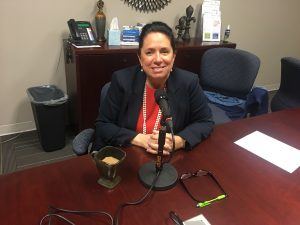
Mary McCarthy, Betty Collins, and Christy Farnbauch

Betty’s Show Notes

If you want to encourage the women in your organization to achieve more success, a women’s initiative can help.

There are several key parts to forming a successful women’s initiative.

  1. 100% buy in from the top level of the company.
  2. The mindset cannot be “have to” but a “want to.” It’s not a fad or short-term. It has to become a part of the culture.
  3. It’s not a one-person show. All the women in your company need to participate. It’s about addressing the needs of all the women in your company in their varying stages.
  4. Evolving goals and purposes.
  5. Partnering with strong women-oriented organizations in your area, such as the Women’s Small Business Accelerator (WSBA) and the National Association of Women Business Owners (NAWBO).

The benefits of a women’s initiative include developing leadership skills, attracting and retaining employees, energizing your current workforce, building confidence and networking skills, and more.

This episode includes interviews with Christy Farnbauch, Executive Director of the Columbus Chapter of the National Association of Women Business Owners, and with Mary McCarty, Co-Founder of the Women’s Small Business Accelerator.

Christy Farnbauch, Executive Director, NAWBO Columbus

Christy Farnbauch, NAWBO Columbus

Christy Farnbauch is the Executive Director of NAWBO Columbus. Established in 1996, NAWBO Columbus is the largest chapter of NAWBO in the nation. This chapter’s work includes elevating women business owners through connections, advocacy, and mentorship. Founded in 1975, the National Association of Women Business Owners (NAWBO) is the unified voice of America’s more than 10 million women-owned businesses representing the fastest growing segment of the economy. NAWBO is the only dues-based organization representing the interests of all women entrepreneurs across all industries; and boasts over 7,000 members and 70 chapters across the country.  With far-reaching clout and impact, NAWBO is a one-stop resource to propelling women business owners into greater economic, social and political spheres of power worldwide.

Mary McCarthy, Women’s Small Business Accelerator

Mary McCarthy, Women’s Small Business Accelerator

Mary McCarthy has 20+ years of experience as an entrepreneur and seven years as the owner and founder of YMT Consultants, Inc., a business consulting and development firm. McCarthy is the former Chairperson of SCORE Columbus, sat on the Athena PowerLink Governing Body, sits on the programming committee for the Westerville Chamber, and public policy committee for National Association of Women Business Owners (NAWBO) Columbus Chapter. She is a former member of the now-retired Ohio Department of Development’s Small Business Advisory Council. In 2018, Mary was hired at the WSBA as executive director. Her leadership and passion for the organization and its mission cannot be matched. She plans to take the organization to the next level and beyond. For more information go to https://www.wsbaohio.org/.

“Inspiring Women” Podcast Series

Betty Collins, CPA, Host of “Inspiring Women”

“Inspiring Women” is THE podcast that advances women toward economic, social and political achievement. The show is hosted by Betty Collins, CPA, and presented by Brady Ware and Company. Brady Ware is committed to empowering women to go their distance in the workplace and at home. Past episodes of “Inspiring Women” can be found here.

Show Transcript

Betty Collins: [00:00:01] This is Betty Collins, and we are Inspiring Women, presented by Brady Ware. This is the podcast that advances women towards economic, social, and political achievement. I am here to inspire you to take steps to the next level in your career. Thanks for listening and investing your time in yourself. More about Inspiring Women in this episode can be found at Bradyware.com/resources.

Betty Collins: [00:00:29] Today, I want to talk about having a women’s initiative in your company, or in your organization. A women’s initiative, a lot of that started, easily, years ago, and it kind of became a checklist, and it was more- it was the right thing to do.

Betty Collins: [00:00:49] A lot of times those initiatives within companies turned out to be not very good, because the women were set up, in many ways, to fail, because it was a given that they were getting promotions. It was a given that they were getting a job before someone who might have qualified for it. In some ways, it served a purpose, but in other ways, it was not probably the way to do it.

Betty Collins: [00:01:12] I can tell you, from my experience, I have had the privilege of directing a women’s initiative within my company, and it’s had a lot of success wrapped up in it. I wish I could just be a director of the women’s initiative at Brady Ware, but unfortunately, I have to work for a living, right? I’m a CPA, and an advisor, and play leadership roles within my company that are really important, but I put the directing the women’s initiative as one of those that are just as important.

Betty Collins: [00:01:44] If you have a company that you would like to really empower your workforce, or you would really like to support women, or get the women within your organization to achieve more, have more success, then this is one of the ways that you can do that.

Betty Collins: [00:02:02] I’m going to go a little bit on the journey of the women’s initiative that I have directed, and started, and founded at Brady Ware. The key, and success to it – truly I believe this – was, from the beginning in 2014, the CEOs of Brady Ware, Brian Carr, and Jim Kaiser, were absolutely behind the initiative.

Betty Collins: [00:02:24] People within our organization saw that this came from the top, and obviously the board of directors agreed to it, and then all the shareholders. It was a unanimous vote that we would start this initiative.

Betty Collins: [00:02:39] The second key to this was that the mindset of this initiative was not a “have to”. It was a “want to,” and it was not to be a fad, it was not to be short term. It was to just become part of the culture, and part of the mindset, and the way we think. I was really, really fortunate that I had that leadership from the beginning, and then, they challenged me to just take this, and go, and let’s see where it ends up.

Betty Collins: [00:03:12] The third thing I would tell you, as to why there was success, was it was not Betty Collins’ initiative. It was the women of the company. “What is it that you want?” We have times where we do a lot more with women’s initiative than we don’t, and it has ebbs, and flows, and timing. We don’t do a whole lot in women’s initiative stuff during tax season, with the exception of celebrating Women’s International Day. We just have a fun time doing that.

Betty Collins: [00:03:38] Otherwise, it’s the ideas, and it’s what they need, and it’s not what I think. I think women should read lots of books. They do not have that same opinion. In the beginning, I was thinking we can have a book club, and we can really read, and we can go with that. Some of them still like to do that, and I encourage that at all, because you’re better, if you read.

Betty Collins: [00:04:00] I just thought I’m going to go ahead, and let them make ideas, let them say what they would like to see happen. They also, at that time, didn’t know what that meant, but, we just kind of evolved into different things.

Betty Collins: [00:04:14] You have to really have some goals, and purposes. You can have great leadership support you; you can make sure this isn’t a fad; that this is going to stay around for a while; you can make sure, obviously, even that this is what the women of your company want, but you would still have to have: what is the goal, and purpose of having the initiative?

Betty Collins: [00:04:37] Our overall goal was to empower women, obviously, to succeed professionally, but also personally. We wanted to focus on them, and doing that with investing in resources, development of skills – that’s what I call reading books, by the way – creating support systems for women, every day, so that they can live out that full potential, and balance a lot of life.

Betty Collins: [00:05:01] Advancing their careers is a huge issue, but also that they can deal with issues that are in their personal life, that are at home, because that affects your career, and your professional life. You have to make sure that’s all in balance.

Betty Collins: [00:05:15] We really had those goals in mind. It was about their success professionally, their success personally. Then we invested. I mean, it takes that when you want to do this; you can have things like seminars, and meetings, and things that are directed to them. We also made sure that we were involved in our community outside of our office.

Betty Collins: [00:05:37] We’re a CPA, as you know. We sit in office a lot, and you can get kind of lost in that. Sometimes, you need to get out in your community, and see what’s happening with other women, and other organizations.

Betty Collins: [00:05:49] We did that, and we’re going to talk about that at the end of this podcast. Two organizations: the WSBA, which is the Women’s Small Business Accelerator, and NAWBO, which is the National Association of Women Business Owners. We got involved in those things. Those organizations really helped the women in our office, and other offices did other things, because we’re in four locations.

Betty Collins: [00:06:11] We also wanted to develop skills in women, utilizing resources like books, and CPE, speakers, or encouraging them to go to things, get involved with things. Meeting, also, as a group. Because we have four offices, we made sure that, at least once a year, our four offices come together, and we get to know other women within Brady Ware. That has been a big plus.

Betty Collins: [00:06:38] We do that once a year; we have about a day and a half, where we just spend on topics, on self-development, on what we think the firm needs, what we think that we would like for them to do. Then, we also have some kind of speaker come in, and talk; always getting that other perspective. We’ve done that ever since, so, those are things …

Betty Collins: [00:06:58] Then you have to have support systems that create, and value a culture that addresses the barriers, and the hurdles that women face. Over 50 percent of accountants today are women; it’s a little over 50 percent, and 21 percent of them are in the leadership, whether it’s the board of directors, or the shareholders.

Betty Collins: [00:07:25] What are those hurdles as to why they’re not in more of the leadership? When I came to Brady Ware there were two shareholders that were women, and I was one of them. Today, we have six. On top of that, we have a lot of managers, and senior managers that could still continue to go the distance, if they choose to do that, so we want to keep cultivating, “What are those barriers that are holding you back?”.

Betty Collins: [00:07:54] Women have different seasons in life; the 20s look nothing like the 30s, the 30s look nothing like the 40s, and certainly your 50s look like none of those. I don’t know what 60s look like, because I’m not there, but there’s different seasons, and there’s different times.

Betty Collins: [00:08:11] I have no regrets, when my kids were certain ages, that I wasn’t trying to build more of my career. I have no regrets in that. I’ve had parents aging. I have no regrets that I can drop, and go do what I need to do there. There are things, and times … When your kids are in college, you need to make sure that you make as much money as you can. Those years are different than other years, and they’re not home, and you have time, and you can be doing that.

Betty Collins: [00:08:38] There comes a point in time, too, I found in my 50s, “Wow, I’ve built a lot, and now I have opportunity to build even more if I want it.” If I would have looked, and thought about that in my 30s, I would have never seen that my 50s will be this period of freedom in my life. Every season’s different, and you just need to help them get there.

Betty Collins: [00:09:00] I never missed a game for my kids; I never missed the birthday parties; I always took off a day with them. Those type of things will never come back. In my 50s, it’s just different, and I’m seizing more opportunity. Everybody’s seasons are different, and we have to help them get through those barriers.

Betty Collins: [00:09:19] There’s also this whole thing on we have to balance professional and personal life, and I will tell you now – I’m doing this for 30-plus years – it’s a myth. You will never balance it. My theory has really become more, and I want to make sure other women understand this, is you can have it all. You just can’t do it all.

Betty Collins: [00:09:36] You have to have systems around you that allow you to say no. You had to have systems around you, where people will tell you “No, you’re not going to do that”, and you have to promote a sense of it’s okay that every everything is not okay. Instead of we think we have to live this ideal perfect life. Those are things that women need encouragement about. Those are things that women need support systems about. By the way, so do men in your organizations, they just handle things differently.

Betty Collins: [00:10:09] The real success that you want to see in a women’s initiative is that they are going the distance. They don’t cut short, they don’t stop when they can keep going forward, and when it comes to their decision in it, it’s theirs. We just need to make sure we help them run as far as they can go.

Betty Collins: [00:10:27] What benefits can come out of a woman’s initiative? I can tell you for sure – this has gone on for five years – I think we could still do a lot more; we’ve just scratched the surface in many respects, but you definitely develop leadership.

Betty Collins: [00:10:42] I had a woman come to Brady Ware as an intern, and she was young, and she just didn’t know a lot, right? We’re starting the women’s initiative, and man, did she just take off during those years. She isn’t with Brady Ware, because public accounting was not her forte, at the end of the day.

Betty Collins: [00:11:01] The development I saw in her, from being a pretty quiet, reserved person, in some regards, to serving on committees at N.A.W.B.O., and getting out there, and wanting to do marketing events, even when she wasn’t supposed to … She didn’t have to sell. She was still out there wanting to do it. I just saw development in her in a very quick time, and so we need to do that.

Betty Collins: [00:11:25] You will recruit new talent because of women’s initiatives, and you will retain them. When we do recruitment at colleges, the women’s initiative always comes up. When we have people look at our website, when they interview, most of the time, if they’re women, they’ve looked at the women’s initiative part of our website, and that’s a big play for them. It has kept people here longer than they might have not- left early, or whatever, but it’s really part of recruiting, and retaining.

Betty Collins: [00:11:53] You will energize your current workforce. When you have annual meetings with them, when you have conferences, when you’re getting them to events, when they’re going to fundraisers that benefit women, and they’re seeing success in those stories, you will energize your workforce. They will love doing it.

Betty Collins: [00:12:07] 55 percent of our workforce are women. I want them to have success. Their talent is valuable, and I don’t want them getting bogged down in things that women get bogged down in. Number-one thing they get bogged down in is just time, and there’s not enough of it, but the other would be lack of confidence. When we have things that support that, or enhance that, we’re going to see them really develop.

Betty Collins: [00:12:34] The other benefit from the women’s initiatives most certainly is … In my world is I now have well over 50 percent of my business are women-owned, and I’m known in the community, and in the marketplace for that.

[00:12:26] Business is business. Women aren’t any different, when it comes to … They have to have cash in the bank, like a man-owned business. Those things stay the same, but I will tell you that women have a different perspective sometimes of how they do things, and sometimes their battle is just bigger, because of that perspective, and the way they do things. As an advisor, I’ve been able to have a totally different outlook on how to help a woman-owned business.

Betty Collins: [00:13:23] Those are just some of the benefits that we’ve seen over the last five years. Now, here are some of our results for sure: in 2014, again, we had two shareholders that were women, and now we have six.

Betty Collins: [00:13:36] Those shareholders, those women, all look different on what they do, and how they do it, and how much time they work, and how much time they don’t work. It’s been very, very flexible for them, but that’s a good success, not because we can say we have women in the boardroom. We have the talent that we want in the boardroom, and that’s huge.

Betty Collins: [00:13:55] Some of the results … I think one of our biggest successes have been that we founded a woman’s conference, and this is year six for us, that we have had in the central-Ohio area. We partner with two organizations that I had mentioned earlier, that we’re going to interview.

Betty Collins: [00:14:10] Those organizations benefit, because this is- number one, it’s for their members; it’s for their connections, but it also helps their profits, and the profits of this conference go to their organizations. That has been a huge success, and that conference is happening June 28th of this year, and it’s at the OSU Marriott, and it will sell out. We’re already well halfway there on registration. I will tell you that that’s been a huge, huge thing.

Betty Collins: [00:14:39] Other results: we started a one-and-a-half to two day retreat, just for the women in Brady Ware, where we get together, and it’s totally optional. They do not feel pressure to come to this. It is something that they want to do; it’s something that they really look forward to. It’s just been one of those things where we’ve really learned a lot from each other, and we’ve been able to have some cohesiveness that has been fantastic.

Betty Collins: [00:15:03] We have a podcast series; you’re listening to it. This is one of the things that came out of the women’s initiative, as I got more and more into women-owned businesses, and the more I speak the more I’m out there. The podcast became something that we wanted to do, and it’s been extremely well-received.

Betty Collins: [00:15:21] We celebrate Women’s International Day. The first day we did it, the theme was on persistence. I asked the women of Brady Ware to write about that persistent woman in their life, and those stories were just phenomenal. We had a great day reading those, and celebrating those, of course with chocolate, but it was a fun time.

Betty Collins: [00:15:38] Just two success stories that I would share with you because of the women’s initiative. Sharon Hess, who is a senior manager out of our Dayton office, she’s been involved with Habitat for Humanity, and she’s on their board.

Betty Collins: [00:15:53] They decided to build a house for a single mom. She really, really took that to heart, and just went with it. She’s one of our leading women in the firm, who just has that energy, and smile. She raised the most money. In fact, she was involved to the point that she had the women of our Dayton office go … They had shovels, and hammers, and they just got really into helping that single woman. It was a great story … She did a phenomenal job.

Betty Collins: [00:16:22] The other one I would tell you is that Loranί Orobitg, who is a tax manager in our Columbus office, she … When the hurricane hit Puerto Rico – well, actually they had to hit within a week’s time – the second one just wiped out a school for girls that she had attended there, because she grew up in Puerto Rico.

Betty Collins: [00:16:43] She just hated to see the devastation. The school was suffering quite extensively, not just from damage, but the fact that nobody was working, so they couldn’t send their kids. She said “Hey could we just start a fundraiser in Brady Ware?” I said “Sure, you know, let’s have a breakfast, and we’ll charge a crazy amount for that.”

Betty Collins: [00:16:43] Before you know it, all four offices had some kind of fundraiser for that. Then, on top of that, her daughter went to Columbus School for Girls, where she goes to school, and got them involved. Now, that school, and the Puerto Rican school kind of are sister schools. At the end of the day, we raised almost ten thousand dollars. It all comes from the empowerment. It’s the thing that we push, but it was awesome to see that.

Betty Collins: [00:17:32] The biggest thing I hear from the women’s initiative … We’re all very busy here. We have day jobs, and we’re out there; we’re helping women-owned businesses, but we’re also CPAs, and we’re busy. The thing I hear the most is that the conversation started in 2014 about women, about what women need, about the empowerment of women, I could go on and on. The good news is is that conversation still continues. It’s still there.

Betty Collins: [00:17:58] Why did we have success? Because it was not my idea, or the top leadership idea. That was just the go to have it. It was that the women created what happened, and they had to step up, and they had to get involved, and then they helped it evolve into what it is.

Betty Collins: [00:18:17] Then, the last reason, of course, is that we are out there in our community, like the conference that I talked about. This conference isn’t just come for two hours, and have breakfast. It is an entire day. It is a breakfast panel of very successful women that will be a really good moderated time.

Betty Collins: [00:18:35] It’s about awards, and celebrations for women who are visionaries, and emerging leaders. It will have a national keynote speaker, and it has 10 breakout sessions of professionals. That’s a lot to accomplish in a five-year period to build that reputation of that conference, and there’ll be 300-plus women there.

Betty Collins: [00:18:55] The last part of the success, though, is that we partnered with other organizations that help, and support women who are in business, who are business leaders, who are executives in their companies. That, to me, is women supporting women.

Betty Collins: [00:19:12] It has just been an incredible journey, and I would encourage you, if you think you would like to do something, start out small. Start out with a vision that will go bigger, and be committed to it for a time period, and you’re going to energize a workforce, and develop some leadership there that you will have for a long time.

Betty Collins: [00:19:31] After the podcast, I’m going to interview Mary McCarthy, who is the co-founder and the executive director of the WSBA, and Christy Farnbauch, who is the executive director of NAWBO Columbus, which is the largest chapter in the country.

Betty Collins: [00:19:47] We’ve been talking about women’s initiatives in corporate America today, and how can that work that we can empower our workforce and really energize and develop talent? That’s what it’s about, at the end of the day, when you have these types of initiatives within a company.

Betty Collins: [00:20:06] Well, part of really having this success is partnering with the right people. I’m fortunate that we’re from Columbus. Ohio. There’s tremendous amounts of women’s groups that we can get involved with. We had to choose, and in the beginning of this, we went to a NAWBO event. We came back from that, and everyone was like “That’s what we’re going to do. That’s the place, that’s the place”.

Betty Collins: [00:20:33] Now, of course, NAWBO is the tribe; that’s where we belong. It’s the National Association of Women Business Owners. It’s the number-one chapter in the country. It does everything very, very well. It’s been very impactful, certainly for me, professionally, and as a person, and the women within my company.

Betty Collins: [00:20:57] You can’t go wrong by getting the right organization, and because we represent a lot of small businesses, it really is very, very helpful. I don’t go to NAWBOs events to always go get a client. I go there because you’re supporting other women, and then they’re helping you, and they don’t even know it.

Betty Collins: [00:21:12] I have the privilege today of interviewing Christy Farnbauch. She is the executive director for NAWBO Columbus. I would love for her just to … I’m going to ask her some questions, and some general things, and talk about the organization.

Betty Collins: [00:21:23] I could talk about it all day, and the impact that it’s had, but she really has some other perspectives. First, why don’t you tell my listeners a little just about yourself- that 30-second commercial thing?

Christy Farnbauch: [00:21:35] Well, thanks, Betty; thanks for having me with you today. I really appreciate the opportunity. I’m a loyal listener of your podcast, so it’s kind of fun to be on the other side today.

Christy Farnbauch: [00:21:44] I became the first professional executive director of NAWBO Columbus in July of 2017, so just almost two years. Prior to that, my whole career, you know, almost 30 years, as surprising as that is to say, almost 30 years in nonprofit-sector work …

Christy Farnbauch: [00:22:01] In 2006, I got the entrepreneurial bug, and started a small business working with non-profits, coaching them in board development, and fundraising, that kind of work, grant writing. This position really blends my expertise of nonprofit governance, and my entrepreneurial spirit.

Betty Collins: [00:22:17] As the executive director of NAWBO, tell us about the mission, and the purpose of your organization.

Christy Farnbauch: [00:22:23] NAWBO Columbus exists to elevate women business owners, of all sizes, and from all industries. We’re really the only association that works in that way. We do our work through networking, advocacy and mentorship, which are our three key pillars.

Christy Farnbauch: [00:22:38] We’re keenly focused on helping women business owners be competitive in an inclusive economy. Women are really important to the growth of the economy in Ohio, and in the country, so that’s really our long term focus, is on the impact.

Betty Collins: [00:22:51] Why do you serve in this position? What’s the why? What’s the passion?

Christy Farnbauch: [00:22:54] I said a minute ago, it really blends my nonprofit governance  experience, and my entrepreneurial spirit. I just really like helping people. One of my core values is leave people, and organizations better than where you found them, and fill them up.

Christy Farnbauch: [00:23:07] Malcolm Gladwell, if you’re familiar with him, and his book, “The Tipping Point,” would probably call me a maven, and a connector. I’m a learner at heart, and I collect information, all in the spirit of maybe sharing it with somebody, helping somebody learn, and grow, and develop.

Christy Farnbauch: [00:23:22] I love to connect people. Some of my favorite things – put people together, and let the magic happen, so they can achieve their goals, and dreams. I’m just super-passionate about empowering women, and this cause of women’s entrepreneurship.

Betty Collins: [00:23:35] Small business, you just get that bond, that entrepreneurship, and then when you add in that “Hey, we’re women who own businesses,” there’s a passion there. When you can get in a group of women that all support that, it’s just a phenomenal thing. I would ask: who should belong to NAWBO? What’s your membership made up right now? That was two questions …

Christy Farnbauch: [00:23:58] Yeah. This chapter’s 20 years old, as you know. I personally believe every woman who’s an entrepreneur should belong to NAWBO, and it’s not about the transaction of joining. It’s not about how many meetings I can come to, or how many things I get out of my membership.

Christy Farnbauch: [00:24:13] It’s really about the transformation that happens when you surround yourself with peers and mentors, who are on the same journey. We hear a lot of women who say “Oh, I’m looking for women,” or “I’m lonely,” or “I gotta get out of my house …” It’s that tribe.

Christy Farnbauch: [00:24:27] Then, second, becoming a part of the movement of women’s entrepreneurship. We’re better together, and we go farther, faster, together. Of our 250 members, to date, we really range from solopreneurs, multi-level marketing consultants, ladies- like financial advisors, and attorneys who have books of business, all the way up to multi-million-dollar companies. It’s the whole range.

Christy Farnbauch: [00:24:27] For me, I’ve been thinking about this a lot lately, my vision is that any woman who considers herself an entrepreneur joins this tribe, and wears that badge of honor, as an entrepreneur, proudly. This is the place you want to be to sort of shout that from the rooftops.

Betty Collins: [00:25:08] Women in business have challenges. Any business owner does. You’re a risk-taker; the liability’ on you. You might have the largest check, but you might not have any check. What is the challenge that you find in the business environment today for women, and how does NAWBO help navigate that?

Christy Farnbauch: [00:24:50] There are two that I hear a lot, and one is access to mentors. “Where are women who look like me, who are maybe a little farther, or a lot farther ahead of me, that I can aspire to be?” We do that in a host of ways, through the events that we host every month, through our round-tables, our groups of six to eight women who work on their business, and just helping women connect. “I want to know so-and-so,” and we can help make those connections. I hear that a lot – access to mentors.

Christy Farnbauch: [00:25:58] The other piece is access to capital. As you know, NAWBO was founded over 30 years ago, when women were not allowed, or didn’t have the right to borrow money for a business loan in their own name. Here we are, 30 years later, past that milestone, and women still receive only two percent of the capital that go to businesses in the country.

Christy Farnbauch: [00:26:18] That needle hasn’t moved in 30 years. Why is that? How …? We’re starting to look at that a little bit. Our new Women’s Business Certification for the state of Ohio will help women be more competitive across state lines, and in the state, and give us the first data that we have to sort of understand the ecosystem of women business owners.

Christy Farnbauch: [00:26:37] Along those lines, I shared a stat the other day with someone, and they were stunned to learn this; we talk a lot about wage gap, and wage disparity among women, and the whole ’80 cents on the dollar’ conversation … For entrepreneurs, female entrepreneurs make about 25 cents on the dollar, compared to men, and that’s a host of reasons.

Christy Farnbauch: [00:26:57]  Part of it is we can’t access the capital, and sometimes we don’t ask for what we’re worth; we charge too little, and what not. I feel like if we’re going have the wage conversation, we’re at that table, because it’s pretty abysmal for women entrepreneurs. Those are the two biggies – capital, and mentors.

Betty Collins: [00:27:14] Yes, okay. Where can my listeners, and a lot of them probably are joint members of NAWBO, but where can they find NAWBO? Where can they find, and get connected to you?

Christy Farnbauch: [00:27:25] Our website is a great place to start: nawbocbus.org. I always invite new women entrepreneurs that I meet to just come check us out; come to an event; come meet some folks. I can pretty much guarantee you, you’ll be welcomed with open arms, and members are curious about your journey. They’re quick to offer help. “How can we support each other?”

Christy Farnbauch: [00:27:47] It’s pretty interesting the magic that happens in that room. While I think we are- well, I know we are, the largest chapter in the country, we try to break it down into a smaller community, so that when you show up, and you don’t know anybody, we’ll shepherd you through that.

Betty Collins: [00:28:03] I appreciate you coming, and talking with me today, and being part of my podcast. I can tell you that one of the reasons that I am a member of NAWBO is I look at the past, and the sacrifice, and work that people, over 30 years, and certainly over 20 years in Columbus … The sacrifice that was made to have NAWBO what it is today is huge.

Betty Collins: [00:28:24] In the present, I want to seize those opportunities. I want to seize, and make sure that we honor them by seizing our opportunities. Then, we have generations behind us, who are watching, and I want to make sure what they’re seeing is what they should be seeing. Thank you for coming to us today, and I’m looking forward to our conference that we’re having soon.

Betty Collins: [00:28:46] I’m interviewing Mary McCarthy, and she is with the WSBA, which stands for Women Small Business Accelerator. A few years ago, I got to know … Well, actually, I’ve known, Mary McCarthy, and the other founder, Caroline Worley, for- I don’t know when I haven’t known them, I guess is how I’ll say it.

Betty Collins: [00:29:04] I went to an event that they had, and was just so inspired by it. I said, “This is where we can give back. This is where Brady Ware can be involved,” because if women in small business can accelerate, it will just totally impact the marketplace. Women have a harder time, in those initial years as entrepreneurs, than men.

Betty Collins: [00:29:27] I don’t want to go into a lot of that today, but this is another partner that Brady Ware chose to be with, because it was just a way to give back, and it was a way to get women- “Hey, how can we help you so that you can succeed?”

Betty Collins: [00:29:42] It’s not, to me, that women need to take over the world … Okay, maybe they do, but, there’s a lot of talent, and there’s a lot of passion, and there’s a lot of ideas, and we want to make sure they’re successful. We’re just going to call this the WSBA; it’s much easier for me to say. Tell my listeners a little bit about yourself. Give that 30-second commercial of, just, Mary McCarthy.

Mary McCarthy: [00:30:03] Okay. Well, hi, everybody. I am Mary McCarthy. I have two organizations. YMT Consultants is a business consulting firm. I have been a business consultant, working with the early-stage micro-business owner for over 10 years.

Mary McCarthy: [00:30:21] Back in 2011, I ran across an SBA article that said, “If all things are equal, why are men succeeding more than women?” That launched the really good question of: well, the answers weren’t anything unique, but the fact is, we’re still saying the same answer, so what can we do to change that?

Mary McCarthy: [00:30:43] I happened to talk a really good friend of mine into launching the organization called the Women’s Small Business Accelerator. We’re actually entering our seventh year of operations, so I’m busy running two organizations on a daily basis.

Betty Collins: [00:30:55] Yes you are. I’ve known you a long time, and I don’t know that you’ll ever not be busy, Mary, but that’s okay. So, tell me, as the executive director of the WSBA, what is the mission, and the purpose of the organization?

Mary McCarthy: [00:31:09] When we go back to the SBA article, it really talked about “if education and income are the same between men and women, why are men succeeding?” The answers, again, were no surprise. Men assumed they would be a million-dollar business; women hoped to pay their bills. A man said he wanted to launch a business, and he was told “Good luck, and congratulations.” A woman was, “How do you do that, and support your family,” right?

Betty Collins: [00:31:35] Right.

Mary McCarthy: [00:31:35] That’s not necessarily going to change. What we determined was we really needed support. We needed guidance. When we created the WSBA, our mission is to help all women. It’s not based on income, or age, ethnicity, location; it’s all women, regardless, that wants to have a successful business.

Mary McCarthy: [00:31:58] Success is what they define it as, not what society defines it as. If you do want that – make money and be home to support, and care for your family – good for you. You should be able to, and you should be able to do it with pride that you are balancing your life, and caring for your family, and providing a financial means. If you want to be a multi-million-dollar business owner, great. We’re going to help you do that, as well. We want all women to be helped, regardless.

Betty Collins: [00:32:26] When you help women, what does that mean? What is the help you’re giving them?

Mary McCarthy: [00:32:32] Well, I think, first, it is just appreciation that they can accomplish whatever they would like. They’re no longer doing it alone. We’re there to help, mentor, guide, support, push, listen to – whatever that you need.

Mary McCarthy: [00:32:49] We have a lot that we deal with on a daily basis, and we allow ourselves, at times, to get completely overwhelmed. We want to work through all of that, and really take the emotion out; figure out what is the business model that we want to accomplish. How are we going to accomplish it? Then, let’s put a plan in action, and let’s make it happen.

Betty Collins: [00:33:08] You have a mentoring program, an educational program, as well as Power Circles. You want to just tell us a little bit about that?

Mary McCarthy: [00:33:15] We have three signature programs. We work with the “I’ve got an idea,” all the way through “I want to grow.” The idea stage, to “I have launched, but I’m not making any money, because I haven’t really figured out my business model …” that’s called the inspired entrepreneur. “We have a great dream, a great desire. How do we monetize?”.

Mary McCarthy: [00:33:36] It is a six-month education program, and it’s focused on really creating a model. Who is your target customer? What is your pricing? The outcome is a written business plan. I like to tell people it’s not the plan that matters, it’s the journey. It’s the research, it’s understanding the information, not the assumption, on what your business is going to be, and do.

Mary McCarthy: [00:34:00] Power Circles is once you’ve been in business for a year … Think of a mini-mastermind group. We have a group of six to eight women that get together on a monthly basis, that support each other, that provide ideas, information, support, but it’s facilitated by a business expert that brings in the business tools, brings in the knowledgeable speakers. It’s about dealing with the day-to-day, allowing you to get out of your head, and focus on working on the business.

Mary McCarthy: [00:34:31] Then, Mentor Match. Once you’ve been in business for three years, or more, it is time now for a mind-shift change. You want to grow, and you’re not sure how to do it. We’ve got to change you from being the owner of your small business, to becoming the CEO of your organization. We will match you, and it’s all a hand-selected match, based on what your needs are, with a very successful woman business owner who’s already done it, that can help provide strategy, and guidance.

Betty Collins: [00:35:00] Those are awesome programs. It’s why Brady Ware has definitely wanted to partner with you in helping to make sure those launch, and get going, because you guys are only seven years old. It’s taken some time, but you’ve built up quite a bit of clientele, and a good board, and you have a lot of substance in your stuff.

Mary McCarthy: [00:35:17] We’ve come a long [00:35:18] way [cross talk]  [00:35:18]

Betty Collins: [00:35:18] Tell me this; tell me the favorite story of the woman who’s come through your program.

Mary McCarthy: [00:35:24] There are so many incredible women that have come through the program. We had one who had been very successful. She had to take time out of her business, in order to be a caregiver, and that meant she had a year, almost a year and a half, where she wasn’t generating any income.

Mary McCarthy: [00:35:42] When the individual passed, she’s sitting there, going “What do I do?” She got a mentor. They created very specific goals, and it was all about sales. She had someone who held her accountable. She accomplished goals in four months.

Betty Collins: [00:35:58] Wow.

Mary McCarthy: [00:35:59] I had somebody who went through the Inspired, because I’m going to give you [00:36:02] two [cross talk] You asked for one, but [00:36:03] I’m going to give you two. She went through the Inspired, and she wanted to be a food business. One of my favorite sayings, if you’re a food entrepreneur, is “Just because your friends, and family like your food, does not mean they will pay for it,” right?

Betty Collins: [00:36:15] Yes.

Mary McCarthy: [00:36:18] She started a Friday night supper club. She delivered food to somebody that knew someone, and next thing you knew, she ended up on Food Network.

Betty Collins: [00:36:27] Very nice.

Mary McCarthy: [00:36:27] She was on Food Court Wars, if anyone remembers that show, on Food Network. She won. Couldn’t tell anyone that she won, but she won. She needed funding to open up, and it was in a food court. Wasn’t necessarily what she wanted to be, but it was a good learning lesson, so we decided to go for it.

Mary McCarthy: [00:36:44] After she won, we had to get funding; signed a very strict nondisclosure, and we couldn’t say she won. The lender didn’t want to give her money unless they knew she won. We had to navigate that. Finally got the funding, got her launched, ran it for a year. She learned so much, shut it down; then went back to catering. She was pregnant, and she had a child.

Betty Collins: [00:37:06] Okay.

Mary McCarthy: [00:37:06] She recently just went back into her business, big time, and she is now in Cameron Mitchell’s food court.

Betty Collins: [00:37:14] Very nice, very nice. The success stories are what keep your vision alive. It keeps the purpose, it keeps … Because you’re very busy, and so, for you to still be co-leading this, and doing this is awesome.

Betty Collins: [00:37:27] Let’s go with the last question, which is where can business owners, inspire people … What did you call them, the Inspired Entrepreneur?

Mary McCarthy: [00:37:37] The Inspired Entrepreneur.

Betty Collins: [00:37:38] Where do they find the WSBA? Where can they go on, and find your information?

Mary McCarthy: [00:37:42] Well, I would say the easiest way to find us is on our web site, which is wsbaohio.org. They can come to the Women’s Conference and see us. We have our annual gala, and fundraiser every October, and they can come. We celebrate with 300 to 350 of our closest friends. You’re welcome to be a friend, and come join us as well.

Betty Collins: [00:38:02] Well, I appreciate, today, Christy, and Mary, both coming. These partnerships for Brady Ware have been invaluable. We look at them as just part of the success of our women’s initiative.

Betty Collins: [00:38:14] I cannot emphasize to you enough that if you really want to start this within your company, and you don’t need to be a large company to start a women’s initiative, you’ve got to partner with the right people in town that support you, and you support them. It will make a difference in that.

Betty Collins: [00:38:32] As your career advancements continue, your financial opportunities will continue to grow. Be prepared. Visit bradyware.com/resources to download a copy of the financial checklist for every stage of your life. Everything about the Inspiring Women podcast, this episode, and Brady Ware & Company Accounting Services can be found in the podcast show notes.

Tagged With: Dayton accounting, Dayton business advisory, Dayton CPA, Dayton CPA firm, leadership development, Mary McCarthy, Mentors, NAWBO, NAWBO Columbus Chapter, recruiting women, retaining women, woman-owned business enterprise, Women in Business, women owned business

Decision Vision Episode 19: How Should I Engage in Philanthropy?, An Interview with Chris Gabriel

June 13, 2019 by John Ray

Decision Vision
Decision Vision
Decision Vision Episode 19: How Should I Engage in Philanthropy?, An Interview with Chris Gabriel
Loading
00:00 /
RSS Feed
Share
Link
Embed

Download file

“Decision Vision” Host Mike Blake and Chris Gabriel

How Should I Engage in Philanthropy?

Most everyone would agree that it’s good to give back. But what’s the best way to give? Can giving become enabling or even toxic? Chris Gabriel has performed extensive research on philanthropy and individuals who are heavily philanthropic. He shares his insights with Host Mike Blake on this edition of “Decision Vision,” presented by Brady Ware.

Chris Gabriel, Age of Generosity, LLC and the Generosity Project

Chris Gabriel

Chris Gabriel runs a wealth management practice for a major investment firm. He also has more than 25 years of experience serving charitable organizations and their donors as a development director, as a nonprofit finance and fundraising consultant, and as a guide for successful charitable givers.  He has participated in the gift process from every vantage point as a staffer, board member, consultant, and financial advisor.

His process focuses on “philanthropic enabling” which seeks to maximize the value and benefits of charitable contributions for everyone involved. His mission is helping successful people to be even more generous and generous people to be even more successful.

Chris is an honors graduate of Yale College and earned his master’s degree from Oxford University. He also is the founder of Age of Generosity, LLC and of The Generosity Project, a nonprofit seeking to promote giving as an essential virtue of a life well lived. Chris is writing a set of books and building a giving consulting platform, both of which are scheduled to launch in 2020.

Michael Blake, Brady Ware & Company

Mike Blake, Host of “Decision Vision”

Michael Blake is Host of the “Decision Vision” podcast series and a Director of Brady Ware & Company. Mike specializes in the valuation of intellectual property-driven firms, such as software firms, aerospace firms and professional services firms, most frequently in the capacity as a transaction advisor, helping clients obtain great outcomes from complex transaction opportunities. He is also a specialist in the appraisal of intellectual properties as stand-alone assets, such as software, trade secrets, and patents.

Mike has been a full-time business appraiser for 13 years with public accounting firms, boutique business appraisal firms, and an owner of his own firm. Prior to that, he spent 8 years in venture capital and investment banking, including transactions in the U.S., Israel, Russia, Ukraine, and Belarus.

Brady Ware & Company

Brady Ware & Company is a regional full-service accounting and advisory firm which helps businesses and entrepreneurs make visions a reality. Brady Ware services clients nationally from its offices in Alpharetta, GA; Columbus and Dayton, OH; and Richmond, IN. The firm is growth minded, committed to the regions in which they operate, and most importantly, they make significant investments in their people and service offerings to meet the changing financial needs of those they are privileged to serve. The firm is dedicated to providing results that make a difference for its clients.

Decision Vision Podcast Series

“Decision Vision” is a podcast covering topics and issues facing small business owners and connecting them with solutions from leading experts. This series is presented by Brady Ware & Company. If you are a decision maker for a small business, we’d love to hear from you. Contact us at decisionvision@bradyware.com and make sure to listen to every Thursday to the “Decision Vision” podcast. Past episodes of “Decision Vision” can be found here. “Decision Vision” is produced and broadcast by Business RadioX®.

Visit Brady Ware & Company on social media:

LinkedIn:  https://www.linkedin.com/company/brady-ware/

Facebook: https://www.facebook.com/bradywareCPAs/

Twitter: https://twitter.com/BradyWare

Instagram: https://www.instagram.com/bradywarecompany/

Show Transcript

Intro: [00:00:01] Welcome to this Decision Vision, a podcast series focusing on critical business decisions, brought to you by Brady Ware & Company. Brady Ware is a regional, full-service, accounting and advisory that helps businesses and entrepreneurs make vision a reality.

Mike Blake: [00:00:20] And welcome back to Decision Vision, a podcast giving you, the listener, clear vision to make great decisions. In each episode, we discuss the process of making decision on a different topic. Rather than making recommendations because everyone’s circumstances are different, we talk to subject matter experts about how they would recommend thinking about that decision.

Mike Blake: [00:00:38] My name is Mike Blake, and I am your host for today’s program. I’m a Director at Brady Ware & Company, a full-service accounting firm based in Dayton, Ohio, with offices in Dayton; Columbus, Ohio; Richmond, Indiana; and Alpharetta, Georgia, which is where we are recording today. Brady Ware is sponsoring this podcast. If you like this podcast please subscribe on your favorite podcast aggregator, and please also consider leaving a review of the podcast as well.

Mike Blake: [00:01:02] And today, we’re going to be talking about philanthropy and, specifically, the decision as to whether or not you should engage in philanthropy or not engage in philanthropy. And in some respect, maybe that sounds like a loaded question. Of course, you should engage in philanthropy. We should all be interested in giving back to our communities, sending the elevator back down, whatever cliché you want to use. Who doesn’t like a good philanthropist? Who doesn’t like someone that’s going to be throwing $100 bills around or $1000 checks around, always going to be the life of the party? But when you get into philanthropy, it’s really not that simple. And philanthropy not done well can be not just not impactful but, in some cases, can actually be harmful.

Mike Blake: [00:01:51] One of the things I’ve done a lot of in the last few years, I’ve studied dynastic wealth, which means that wealth that has survived for a number of generations. And what a lot of people may not realize is that being rich actually is hard. It’s just hard in a different way. You have trouble paying your light bill, your cable bill, but then managing wealth responsibly is not easy, and it’s a skill set.

Mike Blake: [00:02:19] And there are wealthy families whose names that you would know – the Vanderbilt’s come to mind – that have literally philanthropies themselves into the ground. It’s that they’re very generous. And, of course, their names are on many buildings in New York. Their name is on Vanderbilt University and so forth. But as Anderson Cooper, who is a sixth generation Vanderbilt, has said, “There ain’t no trust fund waiting for me.” And 150 years ago, that would be unthinkable. And so, this is a complex topic that I hope as you, as the listeners, a little bit different than what we normally talk about, but one that I think is very important.

Mike Blake: [00:03:02] And joining us today is my very good friend, Chris Gabriel, and somebody who I’ve known for a number of years, longer than we would care to admit. Neither of us had gray hair, that’s how long we’ve known each other. And he’s been a student of philanthropy for as long as I have known him, and is starting to break out of his shell, and systematize the way that he shares his knowledge.

Mike Blake: [00:03:29] He runs a wealth management practice for a major investment firm that has more than 25 years of experience serving charitable organizations and their donors as a development director, as a nonprofit finance and fundraising consultant, and as a guide for successful charitable givers. He has participated in the gift process from every vantage point as a staff, or a board member consultant, and financial advisor.

Mike Blake: [00:03:52] His process focuses on philanthropic enabling, which seeks to maximize the value and benefits of charitable contributions for everyone involved. His mission is helping successful people to be even more generous and generous people to be even more successful.

Mike Blake: [00:04:07] Chris is an honors graduate of Yale College and earned his Master’s Degree from Oxford University. He is also the Founder of Age of Generosity LLC and the Generosity Project, a nonprofit seeking to promote giving as an essential virtue of a life well lived. Chris is writing a set of books and building a giving consulting platform, both of which are scheduled to launch in 2020. I’m going to hold you to that. Chris, thank you so much for coming on the program.

Chris Gabriel: [00:04:33] Thank you, Mike. It’s such a pleasure to be here.

Mike Blake: [00:04:36] So, what led you to start down the path of becoming an effective student of philanthropy.

Chris Gabriel: [00:04:44] Would you believe, midlife crisis?

Mike Blake: [00:04:47] I believe midlife crisis is responsible for a lot of things. I’ve seen people buy motorcycles, sports cars, and-

Chris Gabriel: [00:04:52] Yeah. It seemed more positive and less expensive than the proverbial red sports car. But in all seriousness, I was noodling over my career, and personal life, and other things that were important to me a few years back. And I was at that crossroads in life that the others have described as a transition from success to significance. And in thinking that through, I came to a realization of really four things that mattered to me – my spiritual life, my family and friends, my professional work, and my community service. And I wanted to be more deliberate and intentional about how to align those different forces together.

Chris Gabriel: [00:05:34] And in thinking that through, I recognized that the unifying thread through all those different areas and experiences at all stages of my life had been generosity, people who had been generous to me, generous acts that I had witnessed, or participated in, or benefited from. It really sparked a curiosity that’s led down a journey of getting to know more about the topic, talking with inspiring people, and really immersing myself in what I found to be a very worthwhile and enjoyable effort. So, that’s what brings us here this afternoon.

Mike Blake: [00:06:11] So, we’re in a society of greed is good. There’s a certain zeitgeist right now, I think, of sort of every person for themselves to a certain extent. And I won’t turn this into an NPR interview. I’ve already said zeitgeist. I don’t want to do that because that does sound like NPR. I don’t want to go in that direction. But in a culture that fosters and glorifies, really, self-reliance, and you earn what you get, you keep what you earn, et cetera, et cetera; in spite of all those kind of external forces, why do people give? And why do people give a lot?

Chris Gabriel: [00:06:54] Yeah, it’s a great question. And there’s a lot of different ways that you could approach it. I’ll start with what you might think of as an unusual source. So, Adam Smith is well-known as the protocapitalist, the founder of classical economics.

Mike Blake: [00:07:09] Of course.

Chris Gabriel: [00:07:09] He was actually a professor of moral philosophy. And while his very large difficult-to-read, coffee-table-sized book, Wealth of Nations, it gets most of the press. I think his best work is a much thinner volume called Theory of Moral Sentiments. And that book starts out by saying, essentially, as an observation of human nature and the human character, that there’s something about giving and altruism that just seems to be hardwired into who we are. These were his observations about the human condition. And we seemed to get pleasure from the success of others, and even more pleasure from participating in that success.

Chris Gabriel: [00:07:44] And it turns out, if you look across the spectrum of research on the topic, there’s almost unanimous agreement on that topic. One of the inspirations for my own understanding is a fellow by the name of James Doty, who is a Professor of Neurosurgery at Stanford. He also founded an organization called the Center for Compassion and Altruism Research and Education. The founding benefactor of which is the Dalai Lama, interesting friends.

Chris Gabriel: [00:08:14] And what Dr. Doty has realized in all of his work as a physician, so healing physical illness, there were bigger illnesses in play that were illnesses more of the spirit. And he felt compelled to travel down that path and see where it led. And what he discovered is a whole lot of research around the notion that giving is both psychologically and physiologically essential to health. It’s on par with exercise and your ideal body weight.

Chris Gabriel: [00:08:46] And there’s a whole system of physiological processes that relate to our sympathetic and parasympathetic nervous systems, if you want to get into the technical side of it. That mean that giving is rewarding to us in very selfish ways, and that our human evolution is designed to reward compassionate altruistic behavior.

Mike Blake: [00:09:09] So, it’s a dopamine rush at the end of the day, right?

Chris Gabriel: [00:09:12] Even as simple as in a smile. There’s a whole article in Psychology Today about how a simple smile triggers this whole cascade of effects, physiological effects in terms of neurotransmitters and activity in the brain. And not only does that benefit the person who receives the generous act of a smile, but it benefits the person who smiles as well, and there’s this virtuous cycle. So, again, even its most fundamental level, there’s something about generosity that’s worthwhile.

Mike Blake: [00:09:42] So, in your writings, I’ve had the privilege of seeing, I think before most people have, you linked giving with wisdom. Talk through that connection.

Chris Gabriel: [00:09:53] So, my working definition of wisdom is that it is — understanding that exists at the intersection of moral truth and practical experience. And there’s something about wisdom that really is fundamental to success in life. We live in a society that prizes knowledge and prizes achievement.

Chris Gabriel: [00:10:12] But the ancients may have one up on us here. They taught their children wisdom. They were concerned with helping them to make good decisions about how to live. And I think we missed out on a lot of that in terms of our education and a lot of our cultural milestones and markers. And generosity was at the center of that set of constant texts around successful living, whether you call that virtue, or wisdom, or anything else.

Chris Gabriel: [00:10:42] And what’s interesting, to connect Dr. Doty’s work and there are millions literally. If you Google generosity science, there’s over 38 million hits. There’s a ton of research done. And what that research suggests, essentially, is the guys in the white lab coats, the scientists, and the ladies in the white robes, the sages, all agree that this is something that’s meaningful and worthwhile.

Chris Gabriel: [00:11:06] If you want to use an example of how that type of wisdom intersects in real life, think of something really big and important that’s happened in our society in the course of the last couple of generations. Let’s think about the Civil Rights Movement. So, the Civil Rights Movement recognized that there was something unjust about racial inequality. And that sense of injustice drove people to organize around overcoming that great wrong in our society.

Chris Gabriel: [00:11:35] But at the same time, there was a sense of love that drove the behavior of the people that were protesting and advocating for change. And that love, which was generous on their part, really drove a constructive outcome from what might have been a very destructive set of forces in society. And there’s a wonderful sermon from Dr. Martin Luther King called Loving Your Enemies.

Mike Blake: [00:11:58] I’m familiar with that.

Chris Gabriel: [00:12:00] He preached in 1957 that summarizes this whole concept really brilliantly. And that, to me, is the definition of generosity and wisdom. It’s a good outcome. It’s a practical outcome. We improved society and humanity in the process, but it was really based on the sense of something fundamentally generous happening on the part of the people that were forwarding that change.

Mike Blake: [00:12:22] So, to that end, and I suspect this is not a random connection, you’ve developed something called the WISE Giving Framework. Can you walk us through it at high level? I mean, it’s a very detailed framework. So, we don’t have time but, at a high level, what is the WISE Framework?

Chris Gabriel: [00:12:39] Sure. And it’s a great question. So, you think about the nature of generosity, and the working title of one of the books I’m producing is called Transformational Generosity. And the idea of that transformation is that it’s this incredibly virtuous 360-degree cycle of positive change that happens when people give, and when they give wisely and well. And I think we’ll talk some more about what that means.

Chris Gabriel: [00:13:05] But the notion of constructive giving boils down to an appreciation of the internal benefits and the external benefits that are involved. And those benefits, again, if they’re done well produce positive change on the part of the giver, on the part of the receiver. And then, by extension is that effect ripples out into community and into society as a whole. You have all of these positive effects that are produced.

Chris Gabriel: [00:13:32] So, the WISE giving process, WISE is an acronym, and you know me well enough to know I’m a sucker for acronyms and alliteration.

Mike Blake: [00:13:38] Who doesn’t love a good acronym?

Chris Gabriel: [00:13:39] I can’t help myself. So WISE is well-grounded, inspired, satisfying, and effective. And those four components reflect that dynamic of internal and external benefits. Inspired and satisfying, things that relate to us and the benefits that we get from giving. Well-grounded and effective, looking outward to the beneficiaries of the giving and making sure that those gifts have the kind of impact that we want them to have. And so, the process aligns a set of different forces and factors together to help produce those good outcomes, back to the philanthropic enabling that you referenced at the outset.

Mike Blake: [00:14:16] So, I mean, why have a plan? It seems like one of the easiest thing is in the world to do is to just give money away, right?

Chris Gabriel: [00:14:23] Sure.

Mike Blake: [00:14:23] It’s not like nobody is going to take it. In most cases, you walk into, really, anything, it doesn’t have to be a nonprofit, “Hey, you want a thousand bucks?” “Sure.” So, why does there need to be a planning process around something that, at least, on a very fundamental level seems like a lot of the easiest thing in the world?

Chris Gabriel: [00:14:45] Yeah, it’s a great question. And on the one hand, you certainly don’t want to overthink it. There should be no paralysis by analysis when it comes to giving. But on the other hand, like every other aspect of life, better inputs lead to better outputs. And the more time and effort you put into a project or a decision, the more likely that there is going to be a good outcome for that decision.

Chris Gabriel: [00:15:05] I’ll give you a concrete example because I think it helps to illustrate the point. And it’s one of my favorites that I’ve come across in the generosity journey that I’ve been on. There is an entrepreneur in California, a Chinese-American named Kenneth Yang. And he’s founded a very successful tea company. And having gone back and forth to China for years in developing and promoting his business, he became very troubled by the plight of disabled Chinese orphans who are put in institutions, have very little in the way of support, and opportunities, and prospects. And this disturbed him.

Chris Gabriel: [00:15:42] And he reached a milestone in his life personally and professionally where he felt he needed to do something about that. And so, it became something of an existential crisis. Am I going to fold up my business, or sell it, or do something else? Am I going to dedicate myself full time to this effort about which I feel really passionate? Interwoven with all of that was, his favorite pastime was photography, really passionate, very capable photographer.

Chris Gabriel: [00:16:06] And so, as he’s thinking through all of these different issues and potential decisions, he seeks counsel from a wise guide. And the advice that he ends up getting and the conclusion that he arrives at is wonderfully powerful. He realized that his business was a platform and created its own opportunities.

Chris Gabriel: [00:16:26] And so, he started traveling back to China more intentionally and taking pictures of the smiling faces of the children that he was coming across in these different residences that he was going to visit. And then, he put those pictures on the packets of his tea, and described the circumstances by which the photos were taken, and the opportunity there was to support this great need that he had found. And he created a foundation to help serve that effort and raised millions of dollars which then got funneled back to the care of the children he was so concerned about.

Chris Gabriel: [00:16:58] So, he created this amazing dynamic. And I referenced the word power before one of my touchstones in this set of processes around giving is the idea of powerful giving, which is if you can imagine Venn Diagram, there’s opportunity, passion, and impact. And the things that we’re really passionate about, the things that we have an opportunity to pursue, and the pursuits that have the potential for impact. You align all those together, that’s really where the best giving happens. And I think Mr. Yang’s example is a great one.

Mike Blake: [00:17:28] So, I’d like to go off the script a little bit and follow up on something because I think you touched on something that is really important, which is the notion of a business as a platform. In my own work and study, as I’ve been studying dynastic wealth and sustain multigenerational wealth, one common theme I’ve noticed is that the business is the platform that supports that family and sustains it. And I think by extension, the business sustains giving because it’s the income generator.

Mike Blake: [00:18:02] And I’m curious if you think there’s a correlation between families that maintain kind of that family enterprise versus selling out, which is what the Vanderbilt stood, for example, made themselves more liquid, which means it’s easier to give your stuff away and screw it up, as opposed to having the platform business. Do you think there’s a connection between the ability to sustain philanthropy over the longer term if there’s that enterprise level engine, or am I just making this up, and I’m just sleep deprived on a Friday?

Chris Gabriel: [00:18:35] I think your intuition is correct. So, I work with a lot of entrepreneurs, and the goal is to help navigate through the various challenges and opportunities that they have when it comes to their businesses, and their families, and their communities. And giving can and should be at the center of that. And what’s interesting about giving, and we may talk more about this, but my work is focused not just on financial giving. That’s certainly an important piece of it, but there’s actually five types of giving.

Chris Gabriel: [00:19:05] There’s possessional giving, which is money and stuff. There is personal giving, which is time and talent. There is social giving, which is everything from hospitality and manners to civic duty. There is emotional giving, which starts to get more personal. It’s about connectivity, and vulnerability, and really being supportive of folks with whom you are close. And then, lastly, relational giving, which, in essence, is the sum of all the others. And that’s where the rubber meets the road in our lives.

Chris Gabriel: [00:19:30] We are defined, to a very large degree, by our relationships, and the quality of our life is determined by those relationships. And so, to get to an answer to your question, if you think about generosity across all those different dimensions, and then you look at what makes success in a family — and this is something that I’ve been thinking and working on a lot about lately with a colleague. We’ve been developing a set of constructs and processes around wealth and success.

Chris Gabriel: [00:19:56] And our appreciation has stemmed from the fact that wealth success has both a family and a financial component to it. And the family component’s really about relationships. And, of course, the financial component is about resources. And when you look at where success comes in — and by the way, success is almost unbelievably rare. The shirtsleeves-to-shirtsleeves phenomenon that we hear about is alive and well. 90% of wealthy families don’t make it past the third generation in terms of intact functioning family or finances.

Chris Gabriel: [00:20:32] And I think families that have businesses have a purpose, and a purpose that fosters relational connectivity and resource generation. And that is a great recipe for success, provided that the business is run well and provided that the relationships in the family survive the pressures of having the business. But I do think, in cases where I’ve seen where family wealth is sustained across generations — and I can think of several examples. One family, in particular, that’s into their sixth generation now and is still quite successful. There was a family business at the center of that.

Mike Blake: [00:21:04] And it underscores a fact that people don’t like to talk about, but there’s ample data to support this, the family unit is an economic unit. We don’t want to think about that necessarily, but economics does factor into that in many complicated ways.

Chris Gabriel: [00:21:23] Sure.

Mike Blake: [00:21:24] So, it’s hard to separate that. And, actually, that segues very nicely into my next question, which is, is it fair to categorize a will as a form of giving?

Chris Gabriel: [00:21:37] I think it is. Based on what I just shared, a will is a legal document that transfers assets. And, of course, it focuses on physical assets, possessions. But at the same time, it embeds values, and relationships, and other essential aspects of the family, and is a mechanism by which all of those different things are passed from one generation to another. So, certainly, families that do wealth transfer well and do legacy well have built into those mechanics. A lot of other elements that relate to values, and priorities, and purpose, and meaning.

Chris Gabriel: [00:22:18] And I had a friend, when I was describing some of this a few years back, who leaned back and thoughtfully said, “Well, what you’re really describing is operating at the intersection of money and meaning.” I said, “Yeah, that’s exactly right. I think I’m going to write that down. That’s really good.” And so, a will is a document that represents that, an intersection of money and meaning, and the values, and the relationships, and all the other aspects of the family. So, it is a form of giving. And then, that kind of estate planning, if it’s done wisely and well, I think can produce very good outcomes, or it can instill a lot of discord and division within a family if it’s not done well.

Mike Blake: [00:22:55] So, let’s talk about maybe potential, maybe downsides or pitfalls. What are some cases where giving can go bad, or what are the risks associated with giving?

Chris Gabriel: [00:23:13] That’s a great question. So, I’m a cheerleader for giving, and I think it’s good. And I’ve used the expression already, “If it’s done wisely and well.” In fact, Adam Smith makes this point later in the same book I referenced earlier. It, perhaps, is the human virtue of which there can be no excess if it’s done well. You can have too much of almost anything, but you can’t be too generous if you’re going about it the right way.

Chris Gabriel: [00:23:39] And so, what is the right way? If there is a formula, if we could reduce giving to a formula, I’d suggest it would be something along the lines of consider-it attitude, plus carrying action, equals a positive generous outcome. And so, where things go wrong is in those dynamics. If your attitude is not considerate, if your actions are not caring, and that’s two-way because there is a reciprocity in the giving dynamic. There is a giver and a receiver. And it’s a two-way process. And so, both the giver and receiver have responsibility in terms of what happens with the gift in the end.

Chris Gabriel: [00:24:13] And, in general, a poor attitude will lead towards a gift that doesn’t have the kind of meaning that it could have and benefit psychologically to either or both parties. And uncaring actions typically will lead to a result that suboptimal in terms of impact or, sort of, physical outcome. And there are lots of dynamics you can point to where those are real issues.

Chris Gabriel: [00:24:39] I’ll call your listeners’ attention to one particular book on this topic, which is really powerful. It’s by a local Atlantan, named Bob Lupton, and he wrote a book called Toxic Charity. And after decades spent assisting the poorest people in our community, he came to the conclusion that more harm than good was done out of a lot of well-meaning support, which robbed people of dignity and effective opportunity in the name of providing them with some kind of support. And a lot of times, that did more good for the people giving than people receiving. So, there is a lot of research out there on this topic.

Mike Blake: [00:25:14] So, that’s interesting. And it brings to mind something that I know you and I both wrestle with because we are both parents. And I have a teenager. Are either of your kids a teenager yet?

Chris Gabriel: [00:25:25] Yes.

Mike Blake: [00:25:25] Yes, okay. So-

Chris Gabriel: [00:25:26] Joyfully.

Mike Blake: [00:25:27] Yeah. So, that’s where most of my gray hair came from. And as parents, we are givers, right? And one of the things that I know you’re mindful of, and I’m mindful of, is where is the line between generosity and enabling, right? And enabling, actually, is a selfish act because what you’re really doing is you’re bribing somebody to make a problem staring you in the face to go away. That needs to be solved with some process that is much more difficult, right.

Mike Blake: [00:26:01] That, to me, strikes as very similar to that toxic charity that you’re describing where the road to hell is paved with the best of intentions, right? And there’s this line between charity and enabling. And even charities, if something’s not structured correctly, not just individuals, organizations, can be harmed with too much too fast, right?

Chris Gabriel: [00:26:30] Again, very thoughtful and insightful question. One of the great insights that I’ve taken away from all this work is positivity. And it relates very much to this point. There’s other research on this topic that I’m drawing on here that makes the point that if you look at what produces good outcomes in a charitable community development context, they almost always involve coming into this situation with a sense of positivity and optimism.

Chris Gabriel: [00:27:09] In other words, asking the question, “What is right here?” rather than “What is wrong?” If you’re showing up in this situation saying, “Everything here is horribly broken. You’re clearly terribly messed up. And I’m here to help you fix it,” that is a totally different dynamic than coming in and saying, “Thank you so much for the opportunity to be engaged with you. What is it that you want and need? And what is it that is going right in your life? And how can we help build on that?”

Chris Gabriel: [00:27:14] There’s a bunch of research that’s just come out of Harvard. Even in the most intractable problems that we have in the world, like systemic poverty, that point out that international aid efforts that focus on creating opportunity in a society have far greater success than ones that focus in on whatever the pathologies and difficulties are. So, to your question about parenthood, I’m totally guilty of exactly what you described, by the way, that-

Mike Blake: [00:28:01] We all are.

Chris Gabriel: [00:28:02] … enabling mindset because it’s just easier – let’s face it – to get that immediate issue out of the way because I’ve got other things to do. And I see myself, at times, robbing my kids of an opportunity to build their own sense of dignity, and self-confidence, and self-reliance just because it’s convenient for me at that particular moment. And I think we run into a lot of those same issues when we try to do good, and the most thoughtful people in that world are folks that recognize those challenges and look to approach their efforts in ways that get past them.

Mike Blake: [00:28:37] Now, I’m going to go off the script again because this topic begs kind of another question. And a very practical and unusual example, you may remember the ALS Ice Bucket Challenge-

Chris Gabriel: [00:28:51] Absolutely.

Mike Blake: [00:28:51] … of three or four years ago. And that raised roughly $120 million, which was something like what the ALS Association of United States raises over a 12-year period basically, right? And they were faced with an interesting problem that, all of a sudden, they had more money than they had the capacity to manage. And for them, it created a real problem because, (1), they received a lot of money, they have obviously a very important mission to battle that disease, and they’re extremely high profile. All right. Everybody knew what the ALS Ice Bucket. They didn’t even know what ALS was, right, people were dumping buckets of ice over their head. And I did it, but it was thoroughly physically traumatic.

Mike Blake: [00:29:40] But there’s need to be planning ideally on the side of the recipient too that if this windfall comes, right, we got to be prepared to use it and use it responsibly. Now, thankfully, the ALS Association, on the fly, I think, they figured it out and everything. I’ve read about them is that they handled it very well, what they have, and used it, put in endowments, they funded a lot of research. But even that’s a challenge, right? Even a firehose of generosity is still a firehose.

Chris Gabriel: [00:30:15] So, parenting comes to mind again, although I’ll use a business example first. Having been around a lot of businesses and entrepreneurs through the years, one of my observations is the number one cause of business failure is failure. And the number two cause is success. It is certainly possible to grow too fast to take on too much and to being unable to digest even good fortune. And charities are no different and, certainly, have those same kinds of risks.

Chris Gabriel: [00:30:48] And so, back to your question about planning, particularly, for people in society who have more in the way of resources and do have more in the way of potential impact, that set of responsibilities that goes along with that is really important because if you’re not careful about where you give your money and how you give it, then, again, you can end up messing up a good organization by being too generous, by giving it too much in a way that it’s not prepared and doesn’t have a good strategy or plan in place about how to manage it.

Chris Gabriel: [00:31:15] So, there is definitely a reciprocity that goes into good giving. Back to that concept of philanthropic enabling again, having a conversation and a real dialogue where everyone around the table is trying to achieve a positive outcome and figuring out what resources can be brought to bear, what challenges can those resources be applied towards, and what are the outcomes that we’re seeking, and what’s the strategy that’s in place to make that happen. That’s where you see the best giving.

Mike Blake: [00:31:40] Now, I want to shift gears a little bit. There’s a conversation that we had I think around corporate philanthropy and Warren Buffett. I call him Warren, He says, “Who the hell are you?” or “Why are you in my office?” But Warren Buffett has written about philanthropy at the corporate level, and whether or not it’s appropriate. And his position if you read his essays has been, “Look, it’s not my job to use this company as a platform to make any kind of social statement, or an economic statement, or a philosophical statement. My job is to build shareholder value, period, end of discussion.”

Mike Blake: [00:32:22] I’m curious if that’s something that’s ever kind of crossed your path in terms of the conversations you’ve had with your entrepreneurial clients. Where does that line — where do you think the optimal line is, or how do you how do you set that line between? As somebody of means, and you’re a steward of shareholder money, where do you think that line is in terms of supporting philanthropy through a corporate entity versus, “We’ll we’ll just declare a lot of dividends that people can give to whatever they want to”? Does that make any sense?

Chris Gabriel: [00:32:56] Oh, totally.

Mike Blake: [00:32:56] So, how do you kind of talk through that?

Chris Gabriel: [00:32:58] That’s a great question. And you’re illuminating a real debate. And it’s a debate between two different models of corporate purpose and structure. And there’s the shareholder model and there’s the stakeholder model. And the shareholder model is along the lines of what you described Mr. Buffett is advocating. And at the end of the day, it’s a simple job that we have as corporate stewards. It’s to make money. And what the owners of our companies do with that money is up to them.

Chris Gabriel: [00:33:24] The stakeholder model has a more complex view of corporate structure and behavior and recognizes that corporations are, in fact, engaged in various ways with various groups from owners, of course, but also employees, and managers, the communities in which they operate, society as a whole. And there’s an interplay potentially between those different elements that’s important to consider. And it fits into that framework better than it does the shareholder framework.

Chris Gabriel: [00:33:57] My personal view is while I’m as capitalist as they come or, at least, believe in the virtues and benefits of capitalism. I think, at least, there should be a balance, if not more of an appreciation for the stakeholder model. And I think it’s good business, as well as being something that’s an extension of values even.

Chris Gabriel: [00:34:22] From a legal standpoint, if you think about the way corporations are treated under the law, in areas like free speech, for instance. Corporations are imagined to be like people. And in the same way that people get all of the benefits that I had described earlier from generosity, companies can as well. And I think that thoughtful stewards of corporate resources can make good decisions about how to apply those in service to needs in their community, they can have a very positive impact on the company, as well as on the community.

Chris Gabriel: [00:34:48] However, I think you can go awry there as in other areas. And there are some trends right now that I think are not so constructive. And this is editorializing, but there are some institutional investors that are getting on their soapboxes and telling companies, “Not only do we want you to do all these things in the name of stakeholder value, but we want to tell you what you should be doing.” And that I find more troubling. So, there is a balance to strike, I would say. But it’s a great question in there. I don’t think there’s an easy answer or necessarily one that fits all enterprises. It’s certainly something that if I were in management, I would want to think through.

Mike Blake: [00:35:22] A great example of that is the Koch Brothers, right? Regardless of what you think of their political outlook, they are very clear that they’re in a certain social political camp, and they’re not afraid of using their wealth, their power, their enterprise to support that. And I think it’s an open question as to what impact that’s had on their business, right. To some people, I’m sure they’re cheering them right along, right. That’s great. What do the Koch Brothers sell? You sell carpet. Okay. I’m going to buy as much carpet as I possibly can.

Mike Blake: [00:35:58] But there are others that are strongly philosophically opposed to their political viewpoint, would prefer they be defeated rather than advanced. And it probably cost them some customers. And there’s probably no way or, at least, nobody’s really cared to take a look to see kind of what the net is, but we see examples of that struggle happening right in front of us in real time. And for us, as citizens — at least, for myself. I don’t want to lump you into this. As a citizen who is a voter, I’m not really all that interested in what Koch Brothers do or do not do per se, but it clearly has an impact. And I’m not a shareholder either.

Chris Gabriel: [00:36:44] Right.

Mike Blake: [00:36:44] Right? And it raises some very interesting questions about that web between individual philosophy enterprise and society that we’ll never solve.

Chris Gabriel: [00:36:57] And there are cynics out there that will argue that any giving by very wealthy donors is inherently suspect and corrupt. If you want to take it all the way into a Marxist framework. Marx believed that giving, in general, was immoral because it was the ill-gotten fruits of the proletariat labor that the bourgeoisie unjustly accumulated, and then doled back out to them. It was a form of oppression.

Chris Gabriel: [00:37:29] You actually prompted me to do this in one of our many conversations over libations. In the interest of really exploring the challenges to the giving paradigm, there is a section in in one of the books that will be coming out looking to the most intractable opponents of a generosity framework and, sort of, gauging the ideas that I’m developing and promoting against their philosophy, one of which is Marx.

Chris Gabriel: [00:38:03] At the one extreme end of the spectrum, to Marxist communitarianism, if you will. And at the other end of the spectrum is extreme individualism in the form of Ayn Rand. And I think they both get humanity and human nature wrong. And there’s something in between. Again, back to Adam Smith about us that just is naturally generous.

Chris Gabriel: [00:38:20] And so, applying that in the context that you described, I think it is interesting that many of the famous philanthropists distinguished between their businesses and their giving. And that trend has continued up to the present day with with folks like Bill Gates. And, again, a cynic might say that it’s not very difficult to give away vast amounts of money if you have vast amounts of money.

Chris Gabriel: [00:38:47] One friend with whom I had a conversation along these lines early on in my process just shook his head and said, “Look, this is really waste management. Let’s be honest. We give all these people all these accolades because they’re so generous. But in reality, they’d never spend a tiny fraction of the money they have. They could light it on fire, they could throw it in the ocean, or they could give it away. We applaud them for giving it away and maybe so, but it’s not any great sacrifice. And it’s really no act of nobility on their part.”

Chris Gabriel: [00:39:13] I don’t share that view entirely. In fact, a couple of the billionaires that I’ve interviewed have made the point, because I’ve asked them, “How would you rate the difficulty of giving money away versus making it?” and they’ve said, “It’s, in many respects, more difficult to give it away wisely and well than it is to make it in the first place.” And so, I think, you rightly point out that there’s a lot of complexity to this and a lot of challenges involved in giving in and being a responsible steward of the assets that you’ve been given.

Mike Blake: [00:39:44] So, you mentioned Bill Gates I want to. I want to address that because Bill Gates is such an interesting guy in that 20 years ago, for a lot of us, he was a laughing stock, even seen as a somewhat sinister figure because he was the guy that foisted Windows 98 on us, right. As if he was the guy who wrote the code. And he was the guy that was crushing this plucky little company in Cupertino called Apple. And they were so mean. And anything that was innovative, they’d buy up and crush. That was the narrative for Bill Gates, right?

Chris Gabriel: [00:40:24] And Lotus and my beloved Word Perfect-

Mike Blake: [00:40:27] There you go.

Chris Gabriel: [00:40:27] … all went the way of the dinosaur.

Mike Blake: [00:40:31] And if you’re a gamer, Halo, that was supposed to be a Mac-only platform. A lot of people blame the destruction of the Mac as a gaming platform on buying Bungie and Halo, right. right.

Mike Blake: [00:40:44] Fast forward now, I’m not sure I can name a more famous philanthropist of our time, right. And, really, in my own opinion, I think, deservedly, his reputation has been rehabilitated, and he’s successfully changed the narrative. And he’s come out – you know this, but the audience may not – that he’s basically pledged to give away 99% of his wealth. That is his mission is that before he and Melinda go to the great windows machine in the sky that they’re going to give away 99% of their wealth. And not only are they going to do that, but they are encouraging other billionaires – and Warren Buffett has signed on with this and a few others have – to also give away the bulk of their assets because, as your friend noted, what are you going to do with it? Are you going to build yourself a solid gold pyramid when you go or freeze your head like Walt Disney and hope you can be resuscitated? So, I’m curious in that. How does that movement mesh, or is it described at all by your WISE framework?

Chris Gabriel: [00:41:55] Yeah, it’s a great question. And part of what’s interesting about that, if you look into where that idea came from, it actually had very humble origins. And one of the things I’d like to overcome in my work is the misperception that generosity is narrowly defined as the province of only the very wealthy in terms of professional generosity, or only the saintly in terms of personal generosity. If I’m not Mother Teresa, then what good is what I do? What kind of impact is it going to have?

Chris Gabriel: [00:42:32] And as a case in point, if you actually look at the origins of the billionaires giving pledge, Gates himself credits an organization called Bolder Giving, which was a group started by a husband and wife that was designed to be a platform to celebrate extraordinary acts of generosity on the part of everyday, normal people like us. And they defined generosity in terms of time and talent, as well as treasure. And they found stories, and posted them, and celebrated them. And it grew into something of a mini movement. And there are school teachers, and college students, and retirees, and folks from all walks of life, every age and stage.

Chris Gabriel: [00:43:14] And Gates said that he read an account of this group and the work that they were doing, and that was the inspiration for him to say, “If I’m not doing at least as much as these folks, then shame on me.” And I think a lot of his peers felt the same once they were presented with the opportunity.

Chris Gabriel: [00:43:32] And back to the idea of generosity having its selfish benefits as well, David Rubenstein who founded the Carlyle Group, and is one of the billionaires I’ve interviewed, he’s so rich that he bought the — and so generous that he bought one of the few existing copies of the Magna Carta on a whim, so that he could donate it to America, and then built the building to put it in where it now resides in the National Archives. So, yeah, it’s nice if you can do that.

Chris Gabriel: [00:44:00] I asked him about the giving pledge, in particular, and he said he was already very much inclined along these lines and was doing the same thing, but was happy to sort of sign on as a public participant. But the point that he made was even more blunt. He said, “Look. if you’ve got several billion dollars, and you’re 70 years old, and you don’t know what you’re going to do with it, that’s not only a problem for society, that’s a problem for you. That is going to cause you a great deal of grief.” And back to the idea of family and wealth success, if you haven’t thought that clearly through, then you’re going to be creating a whole lot of heartache and headache for people that are close to you.

Mike Blake: [00:44:40] We’re running a little a little long, but there’s a couple more questions I’ve got to get in here because I feel like I won’t have done the topic justice. To that point that you just made, I mean, do some people think of wealth almost like a ticking time bomb that you got to do something with it? And particularly, maybe the longer you hang onto it, that’s when the ravens or the vultures in the family starts circling, and you see more agendas kind of pop up; whereas, if you’ve already said, “Hey, look, guys, this is already gone. Don’t worry about it.” Is that something you see, or is that something I’m just making up?

Chris Gabriel: [00:45:19] No, I think it’s very real. Look, money is a tool. It’s the meta tool. It’s the tools by which we acquire all other tools.

Mike Blake: [00:45:26] It’s a power tool.

Chris Gabriel: [00:45:27] It’s a power tool. So, it’s extraordinarily important. And it is central to our lives. And great spiritual and philosophical teachings focus on it for a reason. At the same time, like any other form of technology or tool, it can be used for good or bad. A hammer is great if I want to build a house. It’s not so good. If I hit you in the head with it. And money is the same way. And the way in which money is used for ill is when people prioritize it above other values and above other people. And that kind of corruption is easy to fall prey to. And you see that happen in families all the time and in other parts of our society.

Chris Gabriel: [00:46:07] So, these are very real challenges. And part of what I’ve discovered in the course of the research I’ve done, coming back again to this idea of wealth success, the common denominator among families that beat those odds and actually survive in terms of relationships and resources are families that are generous. And there are families that are generous both internally and externally. They treat each other well, and they treat the people around them well. And as an expression of that generosity, they are very active and committed to causes in their communities.

Chris Gabriel: [00:46:39] And so, there’s something very healthy about all of these forces and how they work together in people’s lives. That is one of the reasons why I’m such a tireless advocate for giving. I think it truly is an essential virtue of a life well lived, and it’s an antidote for much of what ails our society and our lives. And everyone, again, from the scientists to the sages draws the same conclusion.

Mike Blake: [00:47:06] Again, this is one of these topics we could easily open a bottle of 18-year-old and just sort of do this three hours or so.

Chris Gabriel: [00:47:14] Can we do that?

Mike Blake: [00:47:15] Oh, it’s tempting, but we can’t do that. We’ve got to be respectful of your time and that of others. If somebody within the earshot of this podcast would like to learn more about generosity, and how to structure it, and how to be generous in a way that is mutually beneficial and kind of meets that WISE framework, can they contact you to find out more?

Chris Gabriel: [00:47:42] Absolutely.

Mike Blake: [00:47:42] How do they do that?

Chris Gabriel: [00:47:43] I’d welcome any correspondence. In fact, I’m looking for great stories about generosity. I love being connected to people who are interested in being effectively generous and working with the types of charitable and nonprofit organizations to help them be more effective in engaging with their constituents and supporters.

Chris Gabriel: [00:48:03] As we’re preparing this platform of generosity to launch at some point, our public-facing side of that is not yet up, but I’d encourage people and welcome email correspondence to my personal email address, which is ccgabriel2@mindspring.com, flash from the past, and would love to hear from folks.

Chris Gabriel: [00:48:25] And for a final thought, since a lot of your listeners, I imagine, are successful executives, and entrepreneurs, and business people, or on a trajectory that’s going to lead them in that direction, I will put in a plug for effective use of community capital, and say from a very practical sense, the best giving gets done with appreciated assets. And those appreciated assets, if there are interests in a business that you own or help to start, are often the best ways.

Chris Gabriel: [00:48:55] And we get back to that idea of the three things that matter to an entrepreneur. It’s the business, it’s their family, and it’s their community, in many cases. And coming up with ways to balance all those out and, in essence, redirect community capital away from Uncle Sam and towards causes that you really care about, that’s one of my favorite things to do. So, if there’s any opportunity along those lines in the part of any of your listeners, I would love to hear from them.

Mike Blake: [00:49:18] All right. Well, I think that’s going to wrap it up for today’s program, a program that has ranged from Karl Marx to Adam Smith. You don’t see that every day, I’ll tell you that right now, and certainly not on this podcast. But I would like to thank Chris Gabriel so much for joining us and sharing his expertise with us. This has just been a heck of an intellectual exercise and a lot of information. I don’t think you can find anywhere else. So, thank you so much for joining us.

Chris Gabriel: [00:49:43] My pleasure. Thank you, Mike.

Mike Blake: [00:49:44] We’ll be exploring a new topic each week. So, please tune in, so that when you’re faced with your next business decision, you have clear vision when making it. If you enjoy this podcast, please consider leaving a review with your favorite podcast aggregator. It helps people find us, so that we can help them. Once again, this is Mike Blake. Our sponsor is Brady Ware & Company, and this has been the Decision Vision Podcast.


Tagged With: Corporate Philanthropy, Dayton accounting, Dayton business advisory, Dayton CPA, Dayton CPA firm, dopimine rush, emotional giving, financial giving, generosity, giving, giving back, giving to charities, Michael Blake, Mike Blake, personal giving, philanthrophy, philanthropists, planned giving, relational giving, responsible giving, social giving, The Generosity Project, Toxic Charity, Transformational Generosity

To Your Health With Dr. Jim Morrow: Episode 10, Colon Cancer Screening, An Interview with Dr. Simon Confrancesco

June 12, 2019 by John Ray

North Fulton Studio
North Fulton Studio
To Your Health With Dr. Jim Morrow: Episode 10, Colon Cancer Screening, An Interview with Dr. Simon Confrancesco
Loading
00:00 /
RSS Feed
Share
Link
Embed

Download file

Dr. Jim Morrow and Dr. Simon Cofrancesco

Episode 10, Colon Cancer Screening

Statistics show that colon and rectal cancers are the second biggest cancer killer, yet unlike most cancers, this disease is preventable with proper screening. On this episode of “To Your Health with Dr. Jim Morrow,” Dr. Morrow welcomes gastroenterologist Dr. Simon Cofranceso to the show to get the lowdown on colon cancer screening. “To Your Health” is brought to you by Morrow Family Medicine, which brings the CARE back to healthcare.

Dr. Simon Confrancesco, GI North

Dr. Simon Cofrancesco

Dr. Simon Cofrancesco is a board certified gastroenterologist with over 25 years of experience.  Dr. Cofrancesco is originally from Massachusetts. He completed his medical training at Baystate Medical Center of the Tufts University School of Medicine, followed by a Fellowship in Gastroenterology at Long Island College Hospital in Brooklyn.

Dr. Cofrancesco began his career in an underserved area of Mississippi as part of his school loan repayment. He worked at Southwest Mississippi Regional Medical Center in McComb, Mississippi, for over sixteen years and was named Chief of Staff in 2007. While in Mississippi, he met his wife Roxanna Redden, and they started their family of 5 children, ages 10-19.

Dr. Cofrancesco then moved to Georgia and founded GI North in 2011, followed by GI North Endoscopy in 2018.  GI North has steadily grown and currently has 3 additional providers including two additional gastroenterologists and a GI nurse practitioner.  GI North is physician owned and operated, and because of their commitment to patient centered care has been awarded “Best of Forsyth” in 2017 and 2018.   For further information on GI North you can go to their website at gi-north.com, or call 404-446-0600.


About Morrow Family Medicine and Dr. Jim Morrow

Morrow Family Medicine is an award-winning, state-of-the-art family practice with offices in Cumming and Milton, Georgia. The practice combines healthcare information technology with old-fashioned care to provide the type of care that many are in search of today. Two physicians, three physician assistants and two nurse practitioners are supported by a knowledgeable and friendly staff to make your visit to Morrow Family Medicine one that will remind you of the way healthcare should be.  At Morrow Family Medicine, we like to say we are “bringing the care back to healthcare!”  Morrow Family Medicine has been named the “Best of Forsyth” in Family Medicine in all five years of the award, is a three-time consecutive winner of the “Best of North Atlanta” by readers of Appen Media, and the 2019 winner of “Best of Life” in North Fulton County.

Dr. Jim Morrow, Morrow Family Medicine, and Host of “To Your Health With Dr. Jim Morrow”


Dr. Jim Morrow, Morrow Family Medicine, and Host of “To Your Health With Dr. Jim Morrow”

Dr. Jim Morrow is the founder and CEO of Morrow Family Medicine. He has been a trailblazer and evangelist in the area of healthcare information technology, was named Physician IT Leader of the Year by HIMSS, a HIMSS Davies Award Winner, the Cumming-Forsyth Chamber of Commerce Steve Bloom Award Winner as Entrepreneur of the Year and he received a Phoenix Award as Community Leader of the Year from the Metro Atlanta Chamber of Commerce.  He is married to Peggie Morrow and together they founded the Forsyth BYOT Benefit, a charity in Forsyth County to support students in need of technology and devices. They have two Goldendoodles, a gaggle of grandchildren and enjoy life on and around Lake Lanier.

Facebook: https://www.facebook.com/MorrowFamMed/

LinkedIn: https://www.linkedin.com/company/7788088/admin/

Twitter: https://twitter.com/toyourhealthMD

Show Transcript

Intro: [00:00:06] Broadcasting live from the North Fulton Business RadioX Studio. It’s time for To Your Help with Dr. Jim Morrow. To Your Health is brought to you by Morrow Family Medicine, an award-winning primary care practice, which brings the care back to health care.

Jim Morrow: [00:00:23] Good afternoon. This is To Your Health with Dr. Jim Morrow, and that’s me. I’m Jim Morrow. I’m with Morrow Family Medicine. We have an office in Milton, Georgia and in Cumming, Georgia, where we like to say we are bringing care back to health care. And we are here every second and fourth Wednesday on North Fulton Business Radio. We’re very excited to be here today. We’re doing something new and different for our show today. Today, for the first time, I have a guest with me who I’m going to be talking with about colon cancer and colon cancer screening. So, I’d like you to welcome Dr. Simon Cofrancesco from GI North in Cumming, Georgia. Hey, Simon.

Simon Cofrancesco: [00:01:01] Thanks, Jim.

Jim Morrow: [00:01:03] Good to have you.

Simon Cofrancesco: [00:01:03] Thank you very much. Glad to be here.

Jim Morrow: [00:01:05] Yeah. So, tell me a little bit about your practice and you before we get started, if you would.

Simon Cofrancesco: [00:01:09] GI North started in 2011 when I got to town, and we’ve steadily grown since then. We started out with just myself. And then, we’ve added three additional providers – two gastroenterologists and one nurse practitioner. And we’ve opened up an endoscopy center that’s just starting to get going. In addition to our clinic, it’s actually just across the hallway in a building, probably a half a mile from where you are.

Jim Morrow: [00:01:41] Well, that’s wonderful. I know you’re glad to have that up and running.

Simon Cofrancesco: [00:01:44] Absolutely.

Jim Morrow: [00:01:45] That’s got to be a good thing. So, I want to talk to you about colon cancer screening and colon cancer itself a little bit. And I know the whole thing of colon cancer screening has changed so much since you and I were in training. We went from what looked like this stand this microphone is on to what’s thankfully a lot more flexible now. But if you would, give us an overview of what a colonoscopy is all about.

Simon Cofrancesco: [00:02:14] Most people today, especially around here, know about it. It’s unusual, like you said, 20 or 30 years ago to run into somebody who’s not familiar with what it is. But it is just a long, flexible tube, very small, about like a finger in diameter, and it has a light on the end. And we just look carefully in the colon for little growths called polyps and remove those because that’s how you develop colon cancer. A slow process of a little growth called a polyp that over years gets bigger, and eventually turns into cancer.

Jim Morrow: [00:02:50] Okay. Now, speaking of colon cancer, can you talk a little bit about how many people get colon cancer and how common it is? Is it something everybody needs to be worried about and so forth?

Simon Cofrancesco: [00:02:59] Well, it really is either the second or third most common cancer in this country. And I think the number has hovered around 5%. That’s a big number, 5% of people in this country are going to get colon cancer. But the good news is, is that you can prevent that. Not catch it early but prevent that by getting a colonoscopy and removing polyps to prevent cancer.

Simon Cofrancesco: [00:03:26] So, it’s really a very different concept than most other cancers. It’s not like a mammogram where you detect breast cancer early. We prevent it. And the numbers are showing that. So, the newest numbers out show that colon cancer in people older than 50 is going down in this country over decades because people are getting screened for it. Unfortunately, the other new news is people under 50, it’s going up. So, the good news, though, is you can prevent it and they’re starting to change some of the age ranges, and it’s very prevalent, and it’s the number two cancer killer in this country.

Jim Morrow: [00:04:10] Wow. Well, that’s a wonder. I know I preach to people about going to get colonoscopies to the point, sometimes, of berating, I suppose you could say, but I certainly browbeat them if nothing else if they’re 56 or 58 and they haven’t been.

Jim Morrow: [00:04:25] So, you had one the other day, 63 years old, never been for colonoscopy. I’ve broken the bad news to him. I said, “You need two colonoscopies. You need one for when you were 50 and one for when you were 60. Lucky for you, you can make that all up in one. You don’t have to worry about it.” Now, people worry about colon cancer, but what are the signs and symptoms of colon cancer?

Simon Cofrancesco: [00:04:45] The bad news is, is that we go based on age because symptoms are not a reliable way to detect it. So, everybody thinks they’re in touch with their body. And I constantly hear, which I’m sure you hear too, “I know my body. I feel fine. There’s nothing wrong.” And it’s hard to explain to people, when you do find cancer, and it’s really a surprise that it’s probably been there for — it’s been cooking or evolving for 5 to 10 years. So, probably, one of the most common symptoms of colon cancer is that there isn’t any symptoms.

Jim Morrow: [00:05:22] Wow.

Simon Cofrancesco: [00:05:22] And that’s the scary part. But when people do get more advanced disease, some things that do show up to the patient are pain, or change in bowels, or blood in the stool. If they’re lucky enough to have those symptoms because of where the cancer is, then they may get detected at a time where they can be treated successfully. But, again, probably the cancers that we’re seeing more and more lately start in the beginning of the colon. And so, those symptoms I just mentioned are not usually as prevalent or common.

Jim Morrow: [00:05:59] Okay, good. Now, I know the thing that patients talk about the most about a colonoscopy, at least, to me, is the prep. They dread the prep because they know that they’ve got to drink, or they think they’ve got to drink this gallon of salt water, and it’s horrible. Last time I had one, I think you told me to put a packet of Crystal Light in my gallon of GoLytely. And, now, I can’t drink Crystal Light because I can’t get that taste out of my mouth, the GoLytely. But talk about the options for a prep for a colonoscopy.

Simon Cofrancesco: [00:06:30] Well, there’s been some improvement. We have smaller preps now that are about half of a soda, six ounces or so. So, it’s improved. It’s not a major improvement, but it’s an improvement. And it does make it a little easier on patients, to be honest with you, because more people can tolerate low volumes even though the taste isn’t that good. So, it’s a lot easier as far as the prep goes. It’s still the part that people don’t like.

Jim Morrow: [00:07:03] Well, if it’s only a few ounces, it must be liquid dynamite. Is that what they call it?

Simon Cofrancesco: [00:07:06] Well, it works. It works for 99% of people.

Jim Morrow: [00:07:10] I bet. I bet it does. I can just imagine. So, if we’re going through the colon, and we’re looking for things, and we found a polyp, what do you do at that point?

Simon Cofrancesco: [00:07:21] The majority of the time, we just take it out. It’s usually not big. And we have devices that can remove them. People don’t feel anything. The risk of injury to the colon is very very small. Especially today, we use devices where we don’t have to use any electricity. And that really has almost completely removed significant risks from performing a colonoscopy, but it’s just a small bump. Now, there are times where it’s big unexpectedly, and we can’t safely remove it endoscopically. And sometimes, people do have to have surgery, but that’s a real vast minority of people.

Jim Morrow: [00:08:02] And am I right in remembering that if you do that, you’ll put a tattoo on the inside of the colon?

Simon Cofrancesco: [00:08:07] Very correct. That is correct. If there’s something that we have to monitor closely or we have to alert the surgeons to, then we do put a tattoo on that. That’s correct.

Jim Morrow: [00:08:17] That’s amazing.

Simon Cofrancesco: [00:08:18] Yeah.

Jim Morrow: [00:08:18] That’s amazing. So, you mentioned a potential problem. And the other thing people talk about is I’ll say, “Well, you need a colonoscopy,” and I’ll hear, “Well, I don’t want a colonoscopy because I knew somebody that had a colonoscopy, and they had a perforation.” And, usually, at that point, I’ll say, “Well, how do you get to the office?” And they’ll say, “Well, what do you mean? I drove.” And I’ll say, “You drove an automobile? Have you not known anyone that got killed in a car wreck? Oh my God. And you drove here.” So, talk about the numbers for perforations.

Simon Cofrancesco: [00:08:51] Well, they’re changing, and they should be changing because, as I mentioned, in the last 5 to 10 years, we’re using devices that make it almost impossible to perforate somebody. Now, if something’s big, and we have to use what’s called electrocautery or electricity, that does increase the risk, but it’s still somewhere in the range of 1 in 2000. And I like your approach with the automobile. What I tell people though is the other side of the coin is that there is a rare risk of perforation, but what is your risk of colon cancer? And it’s going to be, at least, 5%. So 1 in 2000 versus, at least, 5%, which one’s less risky?

Jim Morrow: [00:09:36] I have to get the calculator, Apple, my phone, open to answer that, but I’ll do that later, I promise. So, you’re going through the colon, and you’re looking at polyps, and you pull them out, and you take them off and do a polypectomy. You send them to the lab. This is a little bit more detail than some people will want, but I think we’ve got a fairly intellectual listening audience. So, I want to give them some details about that. Can you talk a little bit about the types of polyps they might find?

Simon Cofrancesco: [00:10:01] Probably the easiest thing for me to say, and this is a big point of confusion, is that there’s two types of polyps. Not really, but I’m going to simplify it. So, there’s the kind of polyp that you have to remove because it has potential in time to turn into cancer. And then, there’s some small percentage of polyps that don’t have any potential to turn into cancer. And we see those in certain locations of the colon.

Simon Cofrancesco: [00:10:29] So, I first divided into that kind of approach. Then. you get into a lot more detail that’s probably, as you’ve mentioned, a little bit above the routine dialogue you’ll have with the patient, but there is two kinds of polyps. And there’s some that we can simply ignore because they’ll never be a problem.

Jim Morrow: [00:10:51] So, I know, until recently, it was fairly clean cut, very simple. If you had a hyperplastic polyp that doesn’t turn to cancer, you can repeat the test in five years. If you had an adenoma, the type that can turn to cancer, you’re going to repeat it in one to three years, depending on size. But you told me not long ago that that has changed. So, what should people expect in that now?

Simon Cofrancesco: [00:11:14] Yeah. The most common thing is that if people are going to have polyps, or there’s a family history of polyps or cancer, they should get a colonoscopy roughly every three to five years. It’s usually five years but depending on what we find, it can vary a little bit.

Simon Cofrancesco: [00:11:30] In people who are average risk, where they don’t have polyps, and/or nobody in their family has polyps or cancer, they can go 10 years. That shows you how slow a process colon cancer is. If we check someone today whose average risk, it would, generally speaking, take 10 years for them to start to develop colon cancer. So, it’s such a slow process, but it’s usually that 5 or 10 years.

Simon Cofrancesco: [00:11:57] And then, we do kind of bring it down under certain circumstances. There’s variables that we look at that can make us do it more frequently – the size of the polyp, how we have to remove the polyp, the specific pathology of the polyp, the number of polyps, how well they were cleaned out, avariety of different things.

Jim Morrow: [00:12:19] And the low-volume prep, as they usually call it, does a good enough job, so you don’t have to go back because you didn’t get cleaned out well in most cases.

Simon Cofrancesco: [00:12:26] The preps work but not all the time. And that’s true. Unfortunately, we disappoint about 1 out of 10 people. They have to come back because the standard prep, for whatever reason, didn’t work. Studies show that. I see that in my experience. So, there are a small group of people that will do what they’re supposed to, and it doesn’t matter whether it’s a large volume prep, Jim, or the new smaller ones.

Simon Cofrancesco: [00:12:52] The change we have in the preps today are split dose. And nobody likes this, but it does allow us to get a better examination where you take half of the prep the day before like usual, and the other half, three hours before your colonoscopy. And what that does is it keeps the colon clean on that beginning part of the colon where the bacteria start to repopulate very quickly from drinking the prep the day before. So, we don’t see as well when they do it all in one day versus plating it up. So, that’s a quality measure that us, GI doctors, are supposed to be doing to get a more thorough examination.

Jim Morrow: [00:13:34] Super. You mentioned the family history. If they do have a family history, what age do you recommend they start it?

Simon Cofrancesco: [00:13:40] A family history is either at 40 years of age, from 50 to 40, or if the person in the family, like a 45-year-old comes in, and I find a polyp on them, it would be 10 years younger than that, whichever is the youngest. So, I’m seeing polyps now, and people in their 30s and 40s, their children have to get checked 10 years before they were diagnosed with a polyp. So, we’re starting to reach downwards with colonoscopy.

Jim Morrow: [00:14:11] Well, as I tell patients too, I think very few people ever died and went to the pearly gates and said to St. Peter, “I wish I had so many colonoscopies.” But I can promise you that the opposite have been said to St. Peter.

Simon Cofrancesco: [00:14:23] Yeah.

Jim Morrow: [00:14:24] So, occasionally, patients will tell me that it was very uncomfortable when they had their colonoscopy or there were unable to finish the colonoscopy because of what’s called a torturous colon, a twisted sort of colon, curvy colon. Can you tell me a little bit about what you do in that situation and what all that means?

Simon Cofrancesco: [00:14:41] Well, first off is that if you have an experienced gastroenterologist, the chances of not completing a colonoscopy should be literally 1%, 2%, or 3%.. I mean it should be exceptional.

Jim Morrow: [00:14:55] Good.

Simon Cofrancesco: [00:14:55] So, first of all, that’s not really something that’s very common. But on occasion, it can happen. And then, if that does, by chance, happen, the testing you would have to do as an alternative would be probably some form of an x-ray or some of those tests that people who don’t want to have colonoscopy get like hemoccult testing, which is testing for microscopic blood in the stool, or there’s that relatively new DNA test cologuard. Those aren’t perfect ways. Those have limitations, but those are some of the things that you can do. It should be exceptional that a colonoscopy cannot be completed, just so you know.

Jim Morrow: [00:15:34] So, you mentioned cologuard. I was going to get to that because I get asked that daily, it seems like. What do you tell patients about why the colonoscopy is a preferred test to cologuard?

Simon Cofrancesco: [00:15:46] Cologuard has a lot of limitations. It’s not meant to pick up polyps, first of all. It picks up cancer. So, you’re already moving away from something that can prevent cancer, and you’re moving into something that diagnoses cancer. Big difference there, right? Number one.

Simon Cofrancesco: [00:16:07] Number two. Although the studies say that it’s supposed to be accurate or specific 85% of the time, I think not, just myself but everybody I’ve spoken to will say that it’s not the case. Probably the last 20 people I’ve scoped with a positive cologuard have not had colon cancer. So, it’s been wrong.

Simon Cofrancesco: [00:16:32] And then, finally, the biggest thing about cologuard is that patients and doctors don’t know what it’s indicated for. It’s very narrow indication. It’s not for everybody. It’s for average-risk individuals. So, if they have had polyps, or cancer, and/or if somebody else in their family has had polyps or cancer – in other words, a high-risk individual – it’s not intended for them because those people have a high rate of polyps, and the cologuard test will not tell you if they have polyps.

Simon Cofrancesco: [00:17:07] So, it’s very narrow, but, in reality, I know that people get it, and I don’t blame you for what you do or anybody else, is that they’re just not going to have a colonoscopy. And this is probably the best you can do. So, that’s real world. People ask me, who’s the cologuard for? I tell them it’s for chickens because it’s just for people who don’t want to have the best test because they’re scared, or frightened, or things like that.

Jim Morrow: [00:17:31] They’ve been reading on the internet about colonoscopies.

Simon Cofrancesco: [00:17:34] Yeah. And like you say, it’s very anecdotal. They’ll hear about — you do hear about that one person who had a tragic complication, but they don’t hear about the thousands of people that they don’t mention it because it was no big deal.

Jim Morrow: [00:17:49] Yeah. And after a colonoscopy, what should patients expect post-op, if you will? I know it’s not an operation. But after the colonoscopy, what’s the rest of their day likely to be like?

Simon Cofrancesco: [00:17:59] I have to say it should be normal. I mean, the biggest thing when they wake up is going to be just the sedation wearing off, and what they’ve just been through the day before by not eating, and maybe some electrolyte disturbances. They may feel tired a little. They’ve been getting up very early to finish the second half of their prep. So, the biggest thing is this, people are going to probably be a little bit fatigued or tired after sedation, and not eating regularly, and maybe some mild electrolyte abnormalities.

Simon Cofrancesco: [00:18:30] But here’s a nice thing, I’ll put a little plug in for our practice. We have scopes now where we are that we don’t use air to put into the colon. We use CO2. So, that bloating, and distention, and air feeling that some people got, or cramping, they won’t have that at our place because we have CO2, for instance, which was probably the most common complaint – feeling bloated, or distended, or cramping. So, barring a rare complication, most people are just pretty normal after the procedure. They can eat normal. They can’t drive but everything else is pretty much the same.

Jim Morrow: [00:19:10] And they can’t drive because they’ve been sedated. In these days, you’re using Propofol. Is that right?

Simon Cofrancesco: [00:19:15] Which is ultra quick, and it wears off quick. And people feel great. They really feel like they can drive, but, still, their motor skills probably aren’t up to snuff, and that’s even though they feel like they are.

Jim Morrow: [00:19:28] Right. And by that, Propofol was what Michael Jackson used to go to sleep at night for years, and years, and years, which is a little bit of a problem, which is why his doctor is in jail right now.

Simon Cofrancesco: [00:19:39] Yeah. And that came up a lot. When that first happened with Michael Jackson, a lot of patients were very scared. And all I can convince people and tell people about is I’ve been using Propofol for my patients for probably 20 to 25 years right before we were using Versed and so forth. And it’s a perfect drug for endoscopy. In fact, when I have my colonoscopy, that’s what I have, Propofol.

Jim Morrow: [00:20:04] Which is incredibly safe, and people just don’t realize the one-off that they’re doing is nothing compared to anything else. So, I think it’s a great choice. I’m glad you’re using it now. I know when I had mine done, it was a nothing event.

Simon Cofrancesco: [00:20:17] Exactly, exactly.

Jim Morrow: [00:20:18] [Crosstalk] is just a nothing event. So, with the colonoscopy, you’re going through there, you’re looking for polyps, but I know there are other things that you might find. It doesn’t relate directly to colon cancer screening, but talk about some of the other things you might find – the inflammation, and bleeding, and so forth, and so on.

Simon Cofrancesco: [00:20:37] Yeah, the most common thing we see is polyps or actually second most common thing because everybody’s got diverticulosis. I’ll mention that. It’s very unusual in this country that I do a colonoscopy on someone 50 or older and don’t see diverticulosis. So, fortunately though, most people won’t be bothered by that. Only a small percentage will get an infection called diverticulitis.

Simon Cofrancesco: [00:20:59] So, that is the most common abnormal finding, and we don’t really do anything about it except, excuse me, encourage people to eat more fiber, and to take a fiber supplement every day. Actually, I encourage everybody to take a fiber supplement every day. It’s an important part of our diet that we are missing in this country. We just don’t get enough fiber. So, with or without diverticulosis, I think it’s a good idea, but especially with diverticulosis.

Simon Cofrancesco: [00:21:26] And then, probably, the next most common thing that we see is inflammatory conditions, which you’ve already kind of alluded to. And they can be infections, or, very commonly, it can be autoimmune conditions like Crohn’s disease or ulcerative colitis. We see a lot of autoimmune conditions. It’s very common. It’s not diminishing. In fact, I think it’s probably becoming more common in my practice to see somebody with Crohn’s or ulcerative colitis. And then, there’s a smattering of less common diseases that cause inflammation.

Jim Morrow: [00:22:00] And with insurance coverage today, most insurance companies that I know of these days cover a screening colonoscopy. Is that right?

Simon Cofrancesco: [00:22:08] Yes, they do. And the problem is it’s very complicated, but you’re correct. If someone has no history of colon cancer, colon polyps, they get screening, but it’s funny how the insurance companies play games. And if your family history was positive, or you have irritable bowel syndrome or symptoms, or you’ve had a polyp in the past, they try to change things, or if I remove something during a screening colonoscopy, it changes. So, my perspective on that is it’s become a very tricky thing. It’s become a game, and you know how insurance companies do that.

Jim Morrow: [00:22:50] True.

Simon Cofrancesco: [00:22:50] And we were constantly struggling to placate the insurance companies on this and help our patients. It’s kind of a little conflictual.

Jim Morrow: [00:23:01] Okay. Yeah. So, while you’ve got patients, so there are a lot of times when the patients will come to me, and they’ll be taking Prilosec or the generic version and take it every single night. If they don’t take it for two days, they have horrible heartburn. So, while we’re staying in the endoscopy suite, sort of, you can look for ulcers by doing an upper endoscopy, not just a colonoscopy. So, how is that procedure done?

Simon Cofrancesco: [00:23:30] Upper endoscopy is a much quicker test. You don’t have to prepare for it. It takes about 10 minutes. All you do is skip your breakfast, put in an IV, and then people take a nap for 5 or 10 minutes. They won’t know anything was done. Just like a colonoscopy, they’ll wake up speaking to the nurse like when are they going to start. So, like you said about your experience, there is no experience.

Simon Cofrancesco: [00:23:51] And we look carefully at the esophagus, stomach, and do a DME, which is basically the upper GI tract. Commonly, we see diseases of the esophagus. It’s very common, probably more so now than stomach disorders, believe it or not. Ulcer disease was the king when I was starting out in the early ’90s. And it’s funny how it’s shifted esophageal diseases have become much more common. Maybe it’s because of the medications we have over the counter. Maybe it’s because of H.pylori being treated so much. But esophageal diseases make up a big part of what gastroenterologists take care of in the upper part.

Jim Morrow: [00:24:29] I think every time I mentioned to a patient that they can do the two tests at the same time, their biggest question is, will they use a different scope? And I assure them that they will. And if they don’t, ask them to do the upper first. That way, it doesn’t really matter.

Simon Cofrancesco: [00:24:44] Yeah. I joke around, and I tell them it depends on their insurance.

Jim Morrow: [00:24:50] I’ll have to remember that. I love that. So, John’s over here acting like he has some question for us. We’re here in the studio at Renasant Bank on Windward Parkway. And we’ve got John Ray here in North Fulton Business Radio. John’s got some questions from listeners.

John Ray: [00:25:05] That’s right.

Jim Morrow: [00:25:05] What you got, John? How are you doing?

John Ray: [00:25:07] I’m good. How are you?

Jim Morrow: [00:25:08] Good. This is my first guest.

John Ray: [00:25:10] I know. You did a great job.

Jim Morrow: [00:25:11] I’m nervous as a cat.

John Ray: [00:25:13] Why?

Jim Morrow: [00:25:13] I don’t know, but I am.

John Ray: [00:25:15] Well, he’s the one that had to have all the answers today. Usually, it’s you.

Jim Morrow: [00:25:20] I count on him too.

John Ray: [00:25:22] Okay. Well, here’s a couple of questions that we’ve got that have come in. So, this question is about blood in the stool. Does that automatically mean I have colorectal cancer?

Simon Cofrancesco: [00:25:37] Absolutely not. If I looked at all comers with that problem, fortunately, it’s a minority, but it’s important for us to make sure that it isn’t colon cancer. But in many instances, it’s something very insignificant or small that we can easily take care of, hemorrhoids, et cetera.

Jim Morrow: [00:25:59] So, along those lines — let me jump in there, John.

John Ray: [00:26:01] Sure.

Jim Morrow: [00:26:02] If someone comes to me, their family doctor, and says ” I have some blood in my stool,” do I send them straight to you?”

Simon Cofrancesco: [00:26:11] I guess, if it’s been a few years since they’ve had a colonoscopy, and if they’re not young like 20 or 25, it does kind of get into that mode where there might be a concern about liability because today, it’s hard to ignore an adult who has blood in the stool, who hasn’t had a recent colonoscopy. I’d say it’s almost a no-brainer, but there are some circumstances where you could probably just say, “Let’s try to treat you for hemorrhoids first because you had a colonoscopy a year or two ago,” or something like that.

Jim Morrow: [00:26:47] Well, it’s good to know I’m doing that, right? Because I do know that one of the worst things I hear is when you hear about a patient, 36 years old, that actually died from colon cancer because it does happen, and you talked about that earlier. And if anybody gets anything from this, I hope they’ll get it, they need to go for colonoscopy. What else you got, John?

Simon Cofrancesco: [00:27:07] So, I want to say something about that because I, actually, last year, had a young man with no family history who came to me with what sounded like hemorrhoidal bleeding, and I wiped the sweat off my brow after I scoped him because he had colon cancer. So, your experience with a 30-year-old, and I’ll just tell you why you got to pay attention, and I didn’t mean to say you don’t pay attention when they’re younger because I’ve clearly had people — fortunately, this young man survived and has done very well, but I see all age groups. And so, it gets tricky, but it’s a no-brainer when they’re mid 40s and 50s, and they have blood, and you just got to get checked.

Jim Morrow: [00:27:49] Right, right.

Simon Cofrancesco: [00:27:49] Yeah.

John Ray: [00:27:50] So, you’re hitting something on that this next question gets at right now, which is you mentioned the earlier incidents of colorectal cancer. So, is every 10 years enough?

Simon Cofrancesco: [00:28:07] I can just tell you about my experiences is that it works well the vast majority of times. The screening procedures are set up not to be perfect. They’re not perfect. And I hate to have to explain common sense to people. We don’t have perfect tests, and we don’t have unlimited resources, so they draw a line somewhere that gets almost everybody. But yeah, 10 years is a long time. And when that first was incorporated, a lot of us were very uncomfortable. As it’s panned out over the years, I don’t see a lot of people getting burned, but it’s not perfect. Some people will.

John Ray: [00:28:51] Now, one other age-related question. This comes from a listener talking about her mom. At what point does a patient’s age make a colonoscopy more of a problem than it’s worth?

Jim Morrow: [00:29:03] Good question.

Simon Cofrancesco: [00:29:03] Yeah, that’s an excellent question, and there’s no simple answer to that. I go through that every day. Everybody’s very focused on the number. The first thing I’d say is the number starts the conversation. So, to give you an example, I have an 85-year-old gentleman, and this is not an isolated situation. I have lots of people like this in their mid-80s, highly functioning. They just finished mowing their lawn, they drove themselves in, and I diagnosed them with colon cancer six years ago, and they want their colonoscopy. So, they’re a high-risk individual, and they’re highly functioning. That person has already broken the curve on the age thing.

Jim Morrow: [00:29:39] Right.

Simon Cofrancesco: [00:29:40] So, I do a colonoscopy. And I have lots of those people, and they do great. And then, I have somebody who comes in who’s 75, who’s not doing well. They’re just not healthy. And they have a limited life expectancy. Maybe three, four, or five more years left. They haven’t had polyps, or there’s no high risk. That person clearly doesn’t need a colonoscopy. The risk of the colonoscopy might be greater because their risk of cancer is low.

Simon Cofrancesco: [00:30:08] So, I mean, age is, to me, something that you start a dialogue with. And then you have to look at both sides. What’s the risk for the patient of the procedure, and what are their risks possibly of having colon cancer? And then, I get with the patient. And then, we come together on a decision because, many times, sometimes, I do a procedure because the patient wants me to because they’re concerned because their dad had colon cancer, and they don’t want to get colon cancer. And that may make us favor doing a colonoscopy. So, it’s not an easy answer, and it’s a case-by-case basis.

John Ray: [00:30:43] Peace of mind is an incredible commodity. I tell people you should get all you can get.

Simon Cofrancesco: [00:30:49] It can be therapeutic for some people. Jim and I see people everyday that suffer from anxiety. I mean, it’s real, especially as people get older. They get more fragile. And you can give them peace of mind. And if you’re smart, and you’ve done this, we’re not hurting older people, but there’s definitely people that are older that safely can have colonoscopy.

John Ray: [00:31:13] Great.

Jim Morrow: [00:31:13] That’s it?

John Ray: [00:31:14] That’s it.

Simon Cofrancesco: [00:31:15] That’s it.

Jim Morrow: [00:31:16] Well, good. Well, this is Dr. Jim Morrow. And, again, I want you to know that I’m with Morrow Family Medicine. At Morrow Family Medicine, we use technology and old-fashioned attitudes to do our very best to make you feel better every day. We’re located in Milton and Cumming, Georgia. Our website for the show is toyourhealth.md. If you want to send us a question or a show topic you might want us to try, the email is drjim@toyourhealth.md, or you can tweet us @toyourhealthmd. And Dr. Simon Cofrancesco, if you would tell us a little bit about how patients can get in touch with you, and come see you, or one of your partners.

Simon Cofrancesco: [00:31:55] Absolutely. Thanks, Jim. GI North. And the phone number is 404-446-0600. They can also look at our website, ginorth.com. And I believe our web site is GI-north — I’m blanking out right there. Help me out here.

Jim Morrow: [00:32:19] His marketing director is right behind him.

Simon Cofrancesco: [00:32:21] Unfortunately, my marketing director doesn’t remember our website. So I apologize.

Jim Morrow: [00:32:27] We’ll have it in the show notes. This is great. I love it. Well, I do appreciate everybody listening. And if you are enjoying the show and the podcast, wherever you’re listening, hit the subscribe button, so you can be sure and be notified when there’s another episode. I really want to thank Dr. Simon Cofrancesco for being my first guest on the show and for coming on with us. It’s great.

Jim Morrow: [00:32:49] In two weeks, we’re going to have a very interesting show, a little bit different also. This is going to be an interview with Derek Bailey from the Right Move. They specialize in helping your seniors find a good location and a good solution to whatever their residential situation might be. So, we’re going to talk with Derek in two weeks. And until then, that is To Your Health.

Tagged With: Crohn's disease, Cumming doctor, Cumming family medicine, Cumming family practice, Cumming healthcare, Cumming md, Cumming primary care, diverticulitis, Diverticulosis, Dr. Jim Morrow, fiber supplement, gastroenterologist, gastroenterology, GI North, Healthcare, incidence of colon cancer, inflamatory bowel disease, inflammation, Irritable Bowel Syndrome, Milton doctor, Milton family doctor, Milton family medicine, Milton family practice, Milton md, Morrow Family Medicine, polyp, rectal bleeding, rectal cancer

Kent Davies, Johns Creek Chamber of Commerce

June 11, 2019 by John Ray

North Fulton Business Radio
Kent Davies, Johns Creek Chamber of Commerce
Loading
00:00 /
RSS Feed
Share
Link
Embed

Download file

Host John Ray and Kent Davies, President and CEO of the Johns Creek Chamber of Commerce

“North Fulton Business Radio,” Episode 142:  Kent Davies, Johns Creek Chamber of Commerce

Kent Davies, President and CEO of the Johns Creek Chamber of Commerce, speaks with Host John Ray about the growth of his Chamber, how the Chamber unifies the broader Johns Creek community, and how Chamber membership benefits business owners.

Kent Davies, President & CEO, Johns Creek Chamber of Commerce

Kent Davies, President & CEO, Johns Creek Chamber of Commerce

Kent Davies is the President and CEO of the Johns Creek Chamber of Commerce.

Prior to joining the Johns Creek Chamber, Kent retired as Vice President of the World Financial Group, as well as President of the WFG Foundation. WFG’s Worldwide Headquarters is located in Johns Creek. As Vice President, he worked with a large financial services sales force in both the USA and Canada. As President of the WFG Foundation, he led fund raising efforts, operations, and grant distribution to help serve those in need across the world. He is also a licensed life, accident & health agent and a securities registered rep, holding a supervisory license.

Kent also serves as a Board Member on Johns Creek Advantage helping with ‘smart growth’ of Johns Creek bringing & growing business and jobs to Johns Creek.

Kent and wife Susan met while both attended college at Brigham Young University. They have 4 children and 10 grandchildren. Kent also is a community volunteer in many projects, including a program that helps find employment for those in need and directly facilitating an emergency preparedness program involving 200 families through his church. Past positions held include Division Manager for GNC/DCI with responsibility for 1,800 franchises and 30 company units and VP of Operations for over 100 restaurants. For recreation Kent enjoys scuba diving, travel and spending time with family.


“North Fulton Business Radio” is broadcast from the North Fulton studio of Business RadioX®, located inside Renasant Bank in Alpharetta. Renasant Bank has humble roots, starting in 1904 as a $100,000 bank in a Lee County, Mississippi, bakery. Since then, Renasant has grown to become one of the Southeast’s strongest financial institutions with approximately $12.9 billion in assets and more than 190 banking, lending, wealth management and financial services offices in Mississippi, Alabama, Tennessee, Georgia and Florida. All of Renasant’s success stems from each of their banker’s commitment to investing in their communities as a way of better understanding the people they serve. At Renasant Bank, they understand you because they work and live alongside you every day.

Tagged With: Emory Johns Creek Hospital, Ken Davis, Kent Davies, Leadership Johns Creek, minority entrepreneurs, minority-owned businesses, North Fulton Schools, renasant bank, small business advice, value of chamber membership

Decision Vision Episode 18: Should I close my business? – An Interview with Milas King

June 6, 2019 by John Ray

Decision Vision
Decision Vision
Decision Vision Episode 18: Should I close my business? – An Interview with Milas King
Loading
00:00 /
RSS Feed
Share
Link
Embed

Download file

“Decision Vision” Host Mike Blake and Milas King, Co-Founder and Co-Owner of Davinci’s Pizza

Should I close my business?

How do you come to this decision? What are the factors you should consider? What’s the right way to close a business such that you’ll be able to live to fight another day? In a frank conversation with “Decision Vision” Host Michael Blake, Milas King of Davinci’s Pizza answers these questions and more.

Milas King, Davinci’s Pizza

Milas King, Co-Founder and Co-Owner of Davinci’s Pizza

Milas King is the Co-Founder and Co-Owner of DaVinci’s Pizza, with locations in Midtown Atlanta, Smyrna, and Kennesaw, Georgia. Davinci’s Pizza is recognized for their made from scratch pizzas and other menu items, great service, and community involvement.

Milas is also the owner of an e-commerce company and a real estate development company.


Michael Blake, Brady Ware & Company

Mike Blake, Host of “Decision Vision”

Michael Blake is Host of the “Decision Vision” podcast series and a Director of Brady Ware & Company. Mike specializes in the valuation of intellectual property-driven firms, such as software firms, aerospace firms and professional services firms, most frequently in the capacity as a transaction advisor, helping clients obtain great outcomes from complex transaction opportunities. He is also a specialist in the appraisal of intellectual properties as stand-alone assets, such as software, trade secrets, and patents.

Mike has been a full-time business appraiser for 13 years with public accounting firms, boutique business appraisal firms, and an owner of his own firm. Prior to that, he spent 8 years in venture capital and investment banking, including transactions in the U.S., Israel, Russia, Ukraine, and Belarus.

Brady Ware & Company

Brady Ware & Company is a regional full-service accounting and advisory firm which helps businesses and entrepreneurs make visions a reality. Brady Ware services clients nationally from its offices in Alpharetta, GA; Columbus and Dayton, OH; and Richmond, IN. The firm is growth minded, committed to the regions in which they operate, and most importantly, they make significant investments in their people and service offerings to meet the changing financial needs of those they are privileged to serve. The firm is dedicated to providing results that make a difference for its clients.

Decision Vision Podcast Series

“Decision Vision” is a podcast covering topics and issues facing small business owners and connecting them with solutions from leading experts. This series is presented by Brady Ware & Company. If you are a decision maker for a small business, we’d love to hear from you. Contact us at decisionvision@bradyware.com and make sure to listen to every Thursday to the “Decision Vision” podcast. Past episodes of “Decision Vision” can be found here. “Decision Vision” is produced and broadcast by Business RadioX®.

Visit Brady Ware & Company on social media:

LinkedIn:  https://www.linkedin.com/company/brady-ware/

Facebook: https://www.facebook.com/bradywareCPAs/

Twitter: https://twitter.com/BradyWare

Instagram: https://www.instagram.com/bradywarecompany/

Show Transcript

Intro: [00:00:01] Welcome to Decision Vision, a podcast series focusing on critical business decisions, brought to you by Brady Ware & Company. Brady Ware is a regional full-service, accounting and advisory firm that helps businesses and entrepreneurs make vision a reality.

Michael Blake: [00:00:20] And welcome to another episode of Decision Vision, a podcast giving you, the listener, clear vision to make great decisions. In each episode, we’re discussing the process of making decision on a different topic. Rather than making recommendations because everyone’s circumstances are different, we will talk to subject matter experts about how they would recommend thinking about that decision.

Michael Blake: [00:00:38] My name is Mike Blake, and I am your host for today’s program. I’m a Director at Brady Ware & Company, a full-service accounting firm based in Dayton, Ohio, with offices in Dayton; Columbus, Ohio; Richmond, Indiana; and Alpharetta, Georgia, which is where we are recording today. Brady Ware is sponsoring this podcast. If you like this podcast, please subscribe on your favorite podcast aggregator, and please also consider leaving a review of the podcast as well.

Michael Blake: [00:01:03] And so, our topic today is, should you close your business? And I predict this topic is going to have a lot of interest because it’s kind of one of those topics nobody wants to talk about. When you’re an entrepreneur, particularly if you’re a first-time entrepreneur, you sort of have boundless optimism. The last thing you want to think about is the end of the road. You hope it never happens.

Michael Blake: [00:01:29] And talking to entrepreneurs about closing a business is like talking to your parents or your grandparents about their funeral arrangements. It’s about as pleasant and comfortable a conversation, and you’re about as enthusiastic engagement. But the fact of the matter is that not every business survives forever. In fact, most businesses don’t survive even a year or two. And sometimes, closing a business effectively and efficiency is as important as how you run the business because if you do it the wrong way the results can be very unpleasant and even disastrous. If you do it the right way, that often means that you, kind of, live to fight another day.

Michael Blake: [00:02:15] And I am delighted to invite Milas King on the program. Milas is a serial entrepreneur. And he’s usually on the other side of the microphone rather than being the target here of the interview. And I’m very grateful. And I hope our listeners are grateful because not everyone wants to talk about this kind of subject. Milas is willing to do it. I think it takes a lot of courage, It takes a lot of emotional maturity to do that because you do talk about some very tough subjects and will probably reliving some tough moments here. And I’m very grateful that Milas is willing to do that with us today.

Michael Blake: [00:02:56] Milas is co-founder of DaVinci’s Pizzeria, which is a small pizza chain with various locations around Atlanta. Founded in 2006 as an original concept, they built their brand on forgotten values in today’s distracted tech-driven society. I say this as I’m reading off of both a smartphone and an iPad. Be the neighborhood pizzeria of choice to the passionate commitment to food quality, guest experience, employee empowerment, and community advocacy is their motto. Milas, thank you so much for joining us today.

Milas King: [00:03:26] Okay. Thanks for having me.

Michael Blake: [00:03:28] So, you’ve got one business that we just talked about. You’re in the pizza business. Any other businesses? You’re not just a one-trick pony, are you?

Milas King: [00:03:39] Yeah, I have a couple of things. I have an e-commerce group in Scanner Society, and I just started a real estate company.

Michael Blake: [00:03:50] And I kind of wonder if you have — I’m going to go off the script for just a second. I promise I’ll come back to it. But that answer kind of begs the question. You’ve closed a couple of businesses in your career.

Milas King: [00:04:02] That’s correct.

Michael Blake: [00:04:03] Is the fact that you had to close a couple of businesses, do you think that drives the fact that you have multiple businesses now, or that’s sort of a diversification thing?

Milas King: [00:04:11] Sort of, because it’s like you put a couple of horses in the race and see which one you think you’re going to go all in on. Because that way, for me, it has worked out better. So, I didn’t have two to three years not doing anything else when I could have been — maybe something would have shown better promise in the beginning. So, yes, that is a part of it.

Michael Blake: [00:04:36] So, what kinds of businesses have you had and have had to close over the years?

Milas King: [00:04:42] The first one was my original passion, which was video production. So, I did a studio back in ’92. I had a building, employees, and then the DSLR came out. And what happened was all the corporate clients I used to get, they started going to the schools. And then, the schools, back then, you have to find a good film program. Now, everybody had a film program. So, you have this massive influx of every quarter, media, professionals coming out. And then the corporate people will just start going to these local colleges to get their things produced. And so, it really just dried up and kind of disrupted the business.

Michael Blake: [00:05:22] So, overnight, that technology made your business to something viable and, I hope, financially successful into something that was really going to be a struggle because, in effect, it democratized your skillset.

Milas King: [00:05:35] Absolutely. When I started, one of the major things I did was weddings. Wedding videos is a big one. All the studios can just go in on Craigslist and say, “I do your wedding video $400-$500.” And I used to get around two grand to do a wedding video. And there was a two-year span where the prices just cratered. And it got — I looked around at my numbers, this is year eight or nine of me doing over hundreds of weddings, and yet my sales were down. My network was better, my work was better, and my marketing was better, but sales were dropping. That’s when I knew it was the forest.

Michael Blake: [00:06:11] At some point, you can’t fight city hall, right?

Milas King: [00:06:13] Yes.

Michael Blake: [00:06:13] It doesn’t matter how good you are, at some point, it’s not going to happen. Now, what else? You’ve had at least one other business that was closed?

Milas King: [00:06:19] That was another pizza chain, Big Fella’s. That was before 9/11. And we try to compete in a space with our brand that wasn’t our strength. So, we were trying to use, for example, pizza-controlled pricing. Papa Johns was quality and Domino’s was service. And yet, we didn’t hang our hat on anything. We tried to compete with them all in that, and that really did the scene.

Michael Blake: [00:06:44] So, you learned there was a reason they all sort of picked their one thing.

Milas King: [00:06:48] Exactly.

Michael Blake: [00:06:50] It couldn’t be all things to all people.

Milas King: [00:06:52] Right.

Michael Blake: [00:06:52] So, I want to focus on that because you’re in business with my wife, and she told me something that you told her, that I’ve talked to dozens of people now, which I think is is extremely profound. I’m going to ask this in a different way because I want you to tell it. Your first pizza business was not successful. You, then, turned around and start another one. Why?

Milas King: [00:07:14] I told my partner, literally after we close, I told him, “We have to do it again.” I said, “Otherwise, everything we just learned is a waste.” And he looked at me. He was like, “Whatever, man.” He was not trying to hear what we just went through. And I just said, “We got to. All of these, we just learned. We would do everything differently. So, let’s do it differently.”

Michael Blake: [00:07:37] And that makes perfect sense because you literally just paid one of the most expensive tuitions you could possibly imagine, but without the benefit of student loans even.

Milas King: [00:07:46] Right.

Michael Blake: [00:07:46] We’ll probably get into this, right? But then, you’re right, you’ve just learned that maybe your execution may have been great, all the things are great, but the fundamental strategy was it couldn’t be all things to all people. You try it again, and then maybe you can have some success.

Milas King: [00:08:05] Yes.

Michael Blake: [00:08:05] And that’s not something that’s celebrated enough. Google is famous for the fail fast, and they celebrate failure, right? I think it’s because of that celebration of failure that makes them what they are is because failure is a fact of life, but as Bill Gates said, “Success is a lousy teacher.”

Milas King: [00:08:23] Right.

Michael Blake: [00:08:27] So, pick either one of the businesses, it doesn’t matter. How hard is it to come to that realization that, “This thing just got to stop. We’re at the end”?

Milas King: [00:08:39] Well, if you pay attention to your business and the data, you let the data lead you there. When you look at everything you had going for you, and if it all starts to move against you, and you look outside your company to see what other ones are experiencing, it’s easier to accept that you did what you could, and you might need to pivot to something else.

Michael Blake: [00:09:00] Interesting. So, you look at, I guess, in the photo and the video business, you saw it wasn’t just you that was really suffering, all your competitors couldn’t give their businesses away.

Milas King: [00:09:12] Absolutely. Like I used to do music videos. And with the iPhone all the artists are shooting their own. And they start trying to kind of use their name as a credit card. And the record labels used to pay for it. Then, they start taking it out of the artists. So, all that just collapsed, as an example.

Michael Blake: [00:09:31] And in some respect, I mean, it’s smart not to fight that. Is this even a part of my business that is now going away due to technology? And I lost one of my oldest clients, actually a 10-year client to that technology, right. But in the cold, hard light of day, I have to acknowledge that they’re probably making the better choice by going with the automated, right. And I’ve got to pivot and find something else useful to do as well.

Milas King: [00:09:59] Right.

Michael Blake: [00:10:00] Technology is just one thing that’s really hard to fight.

Milas King: [00:10:03] Yes.

Michael Blake: [00:10:03] So, you talked about data, and I know that you’re a big data guy. What are some of those data points that kind of say, “Well, this is not just a speed bump. This is a structural event”?

Milas King: [00:10:23] The video or the pizza?

Michael Blake: [00:10:24] Either one.

Milas King: [00:10:24] Okay. Or I can do both quickly.

Michael Blake: [00:10:27] or both.

Milas King: [00:10:27] In video, like I said, my network was stronger, my product was as good as it’s ever been, and my marketing was as good as it’s ever been, but the sales were dropping precipitously. And then, when I looked at the technology, and what the students were doing, and why it was dropping, then I knew. It was an easy solution. It wasn’t me. It’s like trying to sell pages now. It’s just something, no matter what your marketing is, you can’t sell pages.

Michael Blake: [00:10:53] Yeah.

Milas King: [00:10:54] So-

Michael Blake: [00:10:54] I’m expecting a call from 1986.

Milas King: [00:10:56] Right. Right. So, I knew, that one, we had to pivot. Currently, even though we rebooted in ’06 for DaVinci’s, the pizzeria, now, 13 years later, things have changed again. We have a lot of — perfect example. Labor costs are at a search level that was never there before. And I’ve said before, you can’t pay someone $20 an hour to take an order. Yes, they need that to live, but it’s just not there in food. It’s not efficient.

Michael Blake: [00:11:28] Right. You can’t sell $30 pizzas.

Milas King: [00:11:29] Right. Exactly.

Michael Blake: [00:11:31] Markets will not sustain that.

Milas King: [00:11:32] Right. And then another issue is the apps. The delivery services have wedged themselves more and more in between our customer. And so, we’re losing data and insight to our customers. For example, Uber Eats, they take 30% of the order and we have none of the data.

Michael Blake: [00:11:49] Now, I’ve heard about that cut and the fact that it’s — I read in The Wall Street Journal about four or six weeks ago, something like that, that these ordered services are being very disruptive in a different way, just making it harder to operate a business because businesses are operating a take-out business.

Milas King: [00:12:08] Yes.

Michael Blake: [00:12:09] Just different operationally than a sit-down, quick-service restaurant, right?

Milas King: [00:12:14] Correct.

Michael Blake: [00:12:14] But now, if you don’t have that, you’re dead because so many Americans now, culturally, they don’t want to come into the restaurant, right?

Milas King: [00:12:23] Right.

Michael Blake: [00:12:24] But it massively disrupts your operations. So, I’ve understood that part, and that I did not know it’s 30%, I mean, with margins of a restaurant. Not many restaurants make a 30% margin, period.

Milas King: [00:12:38] Right.

Michael Blake: [00:12:38] So, the economics have changed there. I never thought about the data. So, now, they’re also stealing the data from you.

Milas King: [00:12:45] Right.

Michael Blake: [00:12:46] And you don’t get any of that as a pastor.

Milas King: [00:12:48] Exactly.

Michael Blake: [00:12:48] So, you make less money. Your operations are less efficient.

Milas King: [00:12:53] Yes.

Michael Blake: [00:12:53] And you know less about your customers.

Milas King: [00:12:55] Exactly.

Michael Blake: [00:12:56] And you own less of the relationship.

Milas King: [00:12:57] Right.

Michael Blake: [00:12:57] Other than that it sounds like a great deal.

Milas King: [00:12:59] Right, right. And so, Uber or apps as a general, I’d say, two years ago was probably 1% to 2% of our revenue. It’s now 9%. So, it’s having an outsized impact on our margins.

Michael Blake: [00:13:12] And then, you’ve got to think about too, when you started in 2006, you started a restaurant thinking that you needed a certain footprint because you’re going to have traffic parking. In Buckhead, that ain’t easy either, right?

Milas King: [00:13:26] Right.

Michael Blake: [00:13:27] And now you’ve got, I’m guessing an asset mismatch.

Milas King: [00:13:32] Yes.

Michael Blake: [00:13:32] Right. If that’s really where it’s going, at some point, these pizza chains is just going to be a counter.

Milas King: [00:13:38] Right, exactly.

Michael Blake: [00:13:39] They’ll be just sitting, and that means less real estate costs, and maybe that’s how the business model ultimately works. But if you’re caught in the middle on a 10=year lease, God forbids you own the building.

Milas King: [00:13:48] Correct.

Michael Blake: [00:13:48] You can’t just sort of switch that on a dime, can you?

Milas King: [00:13:52] Right.

Michael Blake: [00:13:52] And that’s another example of technology coming in and you can’t fight it. You either going to adapt or you’re not.

Milas King: [00:14:02] Yeah. So, now we’ve covered labor. We’ve covered some logistics. Now, let’s talk about the actual transactional costs. Five to six years ago, people used cash. And so, the credit cards was as a mix less than a percent of your revenue. Now, we’re getting the full hit of that straight to margins 2% to 3% because everybody uses credit card.

Michael Blake: [00:14:23] I haven’t of thought of that either, but I can’t remember the last time I paid cash for a meal.

Milas King: [00:14:28] So, we do our own 400K in revenue per month. If you’re talking 3% of that, that is 12 grand right off the bottom line. That wasn’t there four or five years ago.

Michael Blake: [00:14:41] Yeah, yeah.

Milas King: [00:14:41] Now, 9% of app orders. So, now, we’re paying-

Michael Blake: [00:14:45] 36 grand out.

Milas King: [00:14:47] Exactly, exactly. And then, the labor costs are basically creeping up to $20 an hour. So, we feel like the walls are beginning to close in.

Michael Blake: [00:14:58] Yeah. So, I guess what’s going to happen then, you either got to raise your prices, and that’s either going to happen because you can raise the prices or you can wait it out while your customers go away, but then your competitors will either have to raise prices or shut down and sort of wait for that readjustment, or do you say, “You know what, it’s just time to cut our losses. Let’s get out early.”

Milas King: [00:15:23] It is because it’s becoming a scale game. So, for someone to pick up our restaurants would be a buyer who’s looking to really start scaling, and we just don’t have the capital. Because even today, these businesses are going to, “Let’s compete by seeing who can lose the money the longest. So, then we capture the market share, and then grow.”

Michael Blake: [00:15:44] Yeah. And I’ve likened that and you see that in the startup world all the time, right. The startup world, even Uber, and Lyft, and those guys, they’re not making any money, they’ve gone in public, but the startup world or if you’ve got a structural issue with your business, it’s almost like chemotherapy.

Milas King: [00:16:03] Right, yeah.

Michael Blake: [00:16:04] Chemotherapy is really just a race to see if the cancer dies before the patient does.

Milas King: [00:16:12] Right.

Michael Blake: [00:16:12] Right. And that’s exactly what you’re, kind of, describing if you try to stick it out, right. Does the other guy die first and then I’m-

Milas King: [00:16:20] Exactly.

Michael Blake: [00:16:20] … sort of there in a smaller market. And that’s not easy.

Milas King: [00:16:25] Right.

Michael Blake: [00:16:25] So, one of the things that strikes me about you – I know you a little bit – that I think it might differentiate you a little bit is, at least, with this round of businesses you’re in, you’re not overly emotional about them, are you?

Milas King: [00:16:41] Correct. Not anymore.

Michael Blake: [00:16:42] So, with your earlier businesses, were you? Were they kind of your baby and-

Milas King: [00:16:46] Yes, because you start to take it personal and say, “I failed. What did I do wrong? What could have I done differently?” And now, I have a more objective view. When you look at the data and just see, like when you know what would fix it, and then you know I don’t have the solution to do that, like the scale now. For DaVinci’s to continue to grow, we would need massive capital and try to get to scale. So, I know the solution. The question is, do I have it?

Michael Blake: [00:17:13] And was it those initial setbacks that taught you to be less emotional?

Milas King: [00:17:20] Yes.

Michael Blake: [00:17:20] And how does that help you now?

Milas King: [00:17:25] I can be more objective when I approach something, and I have a more foundational view before I even start. Before, it was just like, if we hustle hard enough, we’ll make it happen. Well, no, you need to check-

Michael Blake: [00:17:37] That’s what we’re taught.

Milas King: [00:17:38] Yeah. You need to check the boxes because, to me, it’s about percentage of success, right. So, if none of the boxes are checked, maybe you have a 5%. You check them all, maybe you have 80% chance of success. So, how many boxes can I check when I look at an idea to give me the most percentage for success?

Michael Blake: [00:17:55] Okay. So, in your previous, it was Big Fella’s, right?

Milas King: [00:18:00] Yes.

Michael Blake: [00:18:01] You had a business partner.

Milas King: [00:18:02] Yes.

Michael Blake: [00:18:03] Did you both agree, at the time, that it was time to close, or did one of you want to stick it out longer than the other? How did that dynamic work?

Milas King: [00:18:13] We both agreed at the same time.

Michael Blake: [00:18:14] Okay. So, you both have the same route.

Milas King: [00:18:15] Yes, yes. With Big Fella’s, we didn’t have a choice because we ran out of money. We just failed.

Michael Blake: [00:18:21] Okay. All right.

Milas King: [00:18:23] We just failed.

Michael Blake: [00:18:23] The decision was made for you.

Milas King: [00:18:24] Right. This one, it was definitely both of us. We’re high school friends. So, this was a lightning strike in that he’s been my partner in everything. We just work well together. So, this time, we looked at the same data and got the same conclusion.

Michael Blake: [00:18:41] Okay. So, I like to talk about that day you sort of run out of money. I have to imagine that’s a traumatic, panic-inducing experience. It would be for me.

Milas King: [00:18:53] It is like so. It’s almost like someone passing away. You really mourn. You feel like you let a lot of people down, even though you realize everybody will go and get jobs elsewhere, but it feels like they put their financial well-being, at least, at that moment in your hands, and you drop the ball. So, yeah.

Michael Blake: [00:19:15] So, when you ran out, I mean, were you able to at least make the last payroll?

Milas King: [00:19:23] Oh sure.

Michael Blake: [00:19:23] You were able to do that?

Milas King: [00:19:24] Right.

Michael Blake: [00:19:24] You were? Okay.

Milas King: [00:19:24] Well, it was an orderly shutdown.

Michael Blake: [00:19:27] Okay.

Milas King: [00:19:27] Yeah. It wasn’t just like they showed up in the doors like — no.

Michael Blake: [00:19:30] Okay, because sometimes that happens so.

Milas King: [00:19:31] Right, absolutely. No, we didn’t do that.

Michael Blake: [00:19:33] Okay. So, what was — As you approach that, you’re obviously a very organized guy, and you did this in an organized way. What were some of the kind of the key points of that to-do list when you realized we’re going to shut this thing down?

Milas King: [00:19:47] Start getting your receivables caught up and start paying for everything in cash, so you can really see where your cash flow is. Give the employees a heads up. We weren’t going to just — And a lot of them will appreciate that. They’ll work all the way through if you let them know everything ahead of time. You say, “Listen, we’re going to be closing down in the next 60 days.” And then, they’ll start looking for things. And they’ll even tell their next job, “I can’t start until this date.” So, those are types of things we did.

Michael Blake: [00:20:16] That’s a little counterintuitive. So, I think most people would say, “Don’t let anybody know you’re in trouble, right? That starts the death spiral. You just got to sort of do the cold turkey thing.” But in your experience, if you show people the loyalty to them, then they’ll show you the loyalty back.

Milas King: [00:20:34] Right, right. Yeah. At least, that’s how we felt.

Michael Blake: [00:20:37] Okay. And that was in both. So, obviously, you had employees for the videography business, and you did for the piece of business. You found that was roughly the same kind of experience?

Milas King: [00:20:48] Yes.

Michael Blake: [00:20:48] Okay.

Milas King: [00:20:49] And the funny thing is this time around DaVinci’s, a lot of our old employees have come back. We’ve got managers that worked with us 15 years ago. They were early 20s, Now, they’re 30 some working with us, been with us since we opened.

Michael Blake: [00:21:02] Right. And maybe they’ll be with you with the next thing too, right?

Milas King: [00:21:05] Yeah, it could be.

Michael Blake: [00:21:08] So, when you were seeing the handwriting on the wall, did you think about alternatives? Do you think about trying to sell, trying to merge, anything like that as a way to kind of save the business?

Milas King: [00:21:21] No, because maybe we could have or maybe not, but we looked at it as if it wasn’t worth anything.

Michael Blake: [00:21:28] Okay.

Milas King: [00:21:30] It didn’t even cross our mind why would someone buy this, it’s dying.

Michael Blake: [00:21:34] One of the things I remember from the Dot Com era, the first one in the late ’90s was that a lot of startups merge. And what they’re trying to do is merge their problems away. But at the end of the day, neither one of them had any customers.

Milas King: [00:21:49] Right.

Michael Blake: [00:21:50] So it didn’t matter. So, only people that really benefit from that were the accountants and attorneys to create those transaction documents, but it generally didn’t save those businesses.

Milas King: [00:21:59] Especially in the restaurant space, they’re everywhere. Restaurants everywhere. So, unless there’s something spectacular about yours to begin with, they might as well just start their own if yours is dying.

Michael Blake: [00:22:09] Right. Yeah, that’s true, right. Selling tickets to the Titanic is a tough sell, right, no matter how you slice it because you know how the movie ends.

Milas King: [00:22:20] Hey, you might turn it around.

Michael Blake: [00:22:24] So, did you have advisors helping you during this process of closing the businesses. And if so, how did they help you?

Milas King: [00:22:31] No. And that’s probably in experience. Maybe we should have, but no, we didn’t.

Michael Blake: [00:22:35] So, you went it alone.

Milas King: [00:22:36] Yes.

Michael Blake: [00:22:37] So, what did you learn from that process? Did you make any moves you’d like to have back, or did you kind of figured out any way?

Milas King: [00:22:45] From closing it down?

Michael Blake: [00:22:46] Yeah.

Milas King: [00:22:48] Keep your sales tax accurate.

Michael Blake: [00:22:49] Okay. The government has a very poor sense of humor about the sales tax.

Milas King: [00:22:53] Right, right. So, we did have a little bit of that. And the biggest thing I learned was leases, how you’re still responsible for those leases afterwards. And you’re like, “Well, I’m out a business.” Well, you still have six years on your lease.

Michael Blake: [00:23:06] You signed a personal guarantee.

Milas King: [00:23:08] Yes. So, that was one. We had to do some negotiations to settle those. So, that was a big one. That was — didn’t realize.

Michael Blake: [00:23:17] So, other than kind of the education, what are some of the other positives you take from closing businesses historically?

Milas King: [00:23:27] That my partner, Jason, was the right partner because it could have easily been finger-pointing, and it was his fault, and this, and that. It actually made our friendship stronger because we had failed together.

Michael Blake: [00:23:41] And what’s the nature of that business relationship? Are you the operational guy, and he tends to be more capital, or are you both really rolling up your sleeves, you’re both in the business day-to-day? What does that look like?

Milas King: [00:23:52] In the beginning, we were both operating. And then, the evening, I would market. And then, probably five or six years later, he went operations, and I went more training, marketing, talking to vendors. And, now, 10 years in, we both are sort of out of operations. He’s really dealing with vendors and just putting out fires every day at the restaurants. And myself is more of the marketing.

Michael Blake: [00:24:20] Okay. Now, one of the things I would think, for me, would be very difficult is, how do you decide whether or not the business is in trouble and can be turned around versus it’s just got to end?

Milas King: [00:24:37] For a restaurant, it was easier – And I had to speak in the restaurant space – is your cash flow. I would benchmark where our cash flow was trending, and what it would take to turn that around. And you can project out how much months and cash you have. And so, like the first time, that’s how we knew in 60 days, without trying to go into debt and do all these things, like let’s just end it because we don’t really see a solution. So, even here now, it’s just projecting out cash flow is our number one reason to see what we need to do if we’re in trouble.

Michael Blake: [00:25:10] So, having discipline with the numbers-

Milas King: [00:25:12] Yes.

Michael Blake: [00:25:12] … obviously is a big deal. The numbers, at some point, math is math.

Milas King: [00:25:16] Yes.

Michael Blake: [00:25:16] Right? Now, you said something there I kind of want to pursue a little bit. One option business owners have if they have some sort of convictions, you could borrow money to kind of cover the shortfall. Now, that’s something you chose not to do.

Milas King: [00:25:32] Correct.

Michael Blake: [00:25:33] Is that something you chose not to do on principle that if you had a business in trouble, you just would never borrow money to sustain it, and there’s nothing wrong with that, or is it because in those particular businesses, you did not see a path to victory, so why extend yourself?

Milas King: [00:25:49] That’s correct. If I see a solution, I will borrow because I have in other circumstances. But if I don’t see a path, I’m not going to make it worse by piling debt into it.

Michael Blake: [00:26:00] So, obviously, one theme that’s really emerging here is called self-awareness. It’s so critical.

Milas King: [00:26:09] Okay, yeah.

Michael Blake: [00:26:09] Because it sounds like, right?

Milas King: [00:26:11] Yeah.

Michael Blake: [00:26:11] That there are all kinds of reasons you don’t want to close a business, right? You can find a lot of excuses not to close it.

Milas King: [00:26:18] Yes, yes.

Michael Blake: [00:26:20] And people even lend you money when they probably shouldn’t to help you keep it open.

Milas King: [00:26:23] Yes, they call us now. And it’s like these mafia loans. But I’d give you an example of of little losses along the way. So, we’ve opened five locations. We only have three. So, we decided never let something kill the body, right. So, when we did our Roswell location, we quarantined it. We’re like, “Here’s the funds we’re dedicating to it. This is how much time it has to get off the ground. If it doesn’t, we close it,” because we’re not going to let it drag down the other restaurants. We spent years building trying to make, “This one’s got to work.” So, we did one in Roswell, it didn’t work. And we did one, Decatur. Decatur didn’t work. And they didn’t work for different reasons, but we quarantined them, so the company stayed healthy.

Michael Blake: [00:27:08] So, that’s an interesting strategy. And clearly, that worked for you to keep the core business going as long as it has, right?

Milas King: [00:27:16] Right.

Michael Blake: [00:27:20] And again, it sounds like you do embrace that Google philosophy of failing fast.

Milas King: [00:27:26] I guess, unwillingly, maybe, I guess so.

Michael Blake: [00:27:29] Well, okay, yes. It’s worked for them. So, it’s hard to argue with that kind of success. So-

Milas King: [00:27:35] I was going to finish that point. So, that taught us the power of saying no after that because your ego starts to be like, “Yeah, we could do it. We’ve got these three. Let’s just make it work.” And when they start not working, like we’ve had other location approaches like the Braves Stadium, they were a great company. Fuqua, I think that was it. Great company, it was great lease, everything for us to go in there, but we didn’t have the cash flow to sustain it. So, we had to tell them no. And we started doing it after the failure of Roswell and realized you just can’t brute force it. If the boxes aren’t checked, don’t do it.

Michael Blake: [00:28:13] I’m curious what your reaction will be to this. When entrepreneurs ask me for advice about their business, they’re struggling, I liken a business to Great Dane. The Great Dane will tell you what to do with the business and how well you’re doing. If the Great Dane is pulling you down the street, and you can’t keep up with it, it’s going to rip your shoulder off, right?

Milas King: [00:28:44] Right, okay.

Michael Blake: [00:28:45] That’s telling you about the business. That’s the signal that’s telling you to reinvest, to double down, right-

Milas King: [00:28:50] You have to.

Michael Blake: [00:28:50] … because you can’t catch your breath. If on the other hand, that great danger sits his butt down the sidewalk as like Marmaduke, and you’re yanking on the thing saying, “Please, please, would you please walk?” that’s a useful signal.

Milas King: [00:29:06] Got you.

Michael Blake: [00:29:06] The Marmaduke telling you something. We’ll bring it up because of copyright laws. The big Great Dane from a comic strip is telling you something that you need to be listening to. And, sometimes, you’re just never going to get that dog to move.

Milas King: [00:29:21] Right, I can see that. Yeah, yeah.

Michael Blake: [00:29:23] So, think back from when you closed either Big Fella’s or the video production company, think about the day after, what was that day like for you?

Milas King: [00:29:35] I guess the analogy would be like after a big race. So, you just did a decathlon or a marathon, and you’re exhausted, you’re regrouping, you just started thinking what’s the next step, and you got to take a little time to just let the fog clear. Otherwise, you might make a knee jerk reaction and do something, go in a bad direction just because-

Michael Blake: [00:29:56] Like a rebound relationship?

Milas King: [00:29:57] Right, exactly. Take some time. Yes, let it marinate. Not to be cliche, but do an autopsy of what happened. And that will give you things to, then, make sure of when you’re doing your next project to look into, “Well, here’s what caused us to fail before. Let’s answer this.”

Milas King: [00:30:18] For example, I can tell you like what having DaVinci’s. Here’s everything we fixed that now we’re 13 years in. So, the mistake we made the first time is we try to compete on price. So, what we did was pizza. So, what we said, “Let’s make all sizes.” So, their extra large is smaller than ours. Their extra large is 16, ours is 20. So, the all sizes gave us our price control back.

Milas King: [00:30:38] Domino’s was get to the door, speed of delivery. So, in a better product, we started par baking our dough almost like bread, and it makes a better product, so we could get to the door in 15 to 20 minutes. We could beat them by changing our process. Then, Papa Johns was easy because they sort of abandoned quality. Me and Jason both came up through Papa John’s.

Michael Blake: [00:30:57] Really?

Milas King: [00:30:59] Yeah. I was a manager there for about five years. Jason was even longer. And they used to fly us out to the tomatoes, and let us pick tomatoes, and they’re canned, and preserves, and all of that is gone. So, we decided to hang our hat on quality. And the thing about quality is just don’t add stuff to it. Just make it in its natural form. So, that’s what we did,

Milas King: [00:31:20] So, we addressed, what were the strengths of all three, and what would, not necessarily beat them, but judo, use our strength against them, and what wouldn’t hurt us. That’s everything we learned from the first time.

Michael Blake: [00:31:30] That’s just the over-complicating part. Pizza seems to me, to have the attraction, it’s got to be one of the easier foods to make. Is that fair or not?

Milas King: [00:31:40] No because-

Michael Blake: [00:31:40] Because I don’t know.

Milas King: [00:31:41] … you can make it a million different ways.

Michael Blake: [00:31:43] Yeah.

Milas King: [00:31:43] Yeah.

Michael Blake: [00:31:44] Okay.

Milas King: [00:31:44] So, to me, it’s hard to make it well, to make it — like, you’ll see the commercials made with whole mozzarella. Why isn’t it whole mozzarella? Ours is whole mozzarella. It’s like they’re putting oil and everything in there. We’re like, “Just use the cheese.”

Michael Blake: [00:32:02] Yeah. Maybe, I guess, that should be table stakes, right?What is the alternative?

Milas King: [00:32:08] Right.

Michael Blake: [00:32:09] Part mozzarella and part toxic-

Milas King: [00:32:11] Exactly. So, when you see that cheese stretching, that’s oil. Cheese shouldn’t do that.

Michael Blake: [00:32:18] I think, I’ll have hummus for lunch now instead of pizza. So, how long did it take for that fog to lift, right? You’re in that postmortem. You’ve run that race. You’re exhausted. How long did it take you then to say, “Okay. I think I’m ready to try something again”?

Milas King: [00:32:34] Actually, when you have — it’s kind of like when you’re ending a relationship. Sometimes, it’s over before it actually is. So, there’s a little bit of relief in it. And then, you have in the back of your mind. Being an entrepreneur, there’s something else I’ve been one to try. So, that’s when I started my video production studio. So, I went and sat down with my dad, put down a plan, and actually make an investment. I was going to pay a return on his investment and I’ve founded my studio.

Michael Blake: [00:33:00] And how long did that — I mean, was that days? Hours? Weeks?

Milas King: [00:33:05] A couple of weeks. It wasn’t long.

Michael Blake: [00:33:07] So, you weren’t — there wasn’t — you’re right on the runway. I mean, you were ready to-

Milas King: [00:33:08] Got bills to pay.

Michael Blake: [00:33:11] You got knocked out. You’re ready to get back up.

Milas King: [00:33:14] And even in sunsetting, I had set aside recent money because I knew that’s how I was going to get a job. If I didn’t try something else, I was preparing for that too.

Michael Blake: [00:33:22] Yeah. And I’d like to explore that point. So, one of the things you did was, in effect, you had that contingency plan. It wasn’t that you ran out of money that you spent your last dollar.

Milas King: [00:33:33] Right.

Michael Blake: [00:33:34] But you ran out of money in terms of what you were prepared to spend.

Milas King: [00:33:37] Exactly.

Michael Blake: [00:33:38] And you set, sort of, this point of no return-

Milas King: [00:33:41] Exactly.

Michael Blake: [00:33:41] …that you just weren’t going to go by.

Milas King: [00:33:42] Yeah.

Michael Blake: [00:33:43] And then, that empowered you, then, to have the dry powder to come back.

Milas King: [00:33:47] Exactly.

Michael Blake: [00:33:48] And, also, you’re not in a financial panic where you have to get a job.

Milas King: [00:33:51] Exactly.

Michael Blake: [00:33:52] So, you’re leaving yourself more choices, right. So, one thing I was advising a client of mine that’s in a dispute, and we’re trying to help them negotiate it is, if you’ve got a raccoon that you got to get rid of, and you got it cornered, you want to have two things. You want to have a club, and you want to have a hole in the wall for it to run out through other because, otherwise, it will not end well. And what you have, you made sure that you have that hole through the wall to run through, right?

Milas King: [00:34:24] Right.

Michael Blake: [00:34:24] Because if you didn’t have that, at some point, where there’s a point of no return, you start making irrational decisions.

Milas King: [00:34:30] Yes.

Michael Blake: [00:34:31] Right? And maybe you would’ve stuck with it longer than you should have because you wouldn’t have had an alternative?

Milas King: [00:34:35] One bad decision leads to another.

Michael Blake: [00:34:37] It does, it does. And there’s studies that talk about when people are in financial crisis, their effective IQ is reduced by 10% to 15%.

Milas King: [00:34:47] Okay.

Michael Blake: [00:34:48] So, staying out of that empowers you. Literally, your brain chemistry lets you make better decisions.

Milas King: [00:34:54] Yeah. I guess there’s a part of me that’s always kept me from going for broke. And it’s like, “We’ll go for it but not to broke. Just make sure if it’s going to work or not.”

Michael Blake: [00:35:03] And I think no serial entrepreneur has ever gone for broke. Got you.

Milas King: [00:35:10] Okay, makes sense. Okay.

Michael Blake: [00:35:10] That’s the definition of a one-time entrepreneur, one way or the other.

Milas King: [00:35:14] Got you.

Michael Blake: [00:35:16] So, what kind of expenses, when you’re — you generally can’t close a business for free, or maybe you can, you tell me. My impression is you can’t do that. Do you need to have some capital set aside to make sure that you can close the business in an orderly manner?

Milas King: [00:35:36] It depends how you set up your vendor relationships. If you have a lot of 14 day, 30-day terms, yes, because you got all that flow-through you got account for once you close. We pretty much ran pretty close to the day of operations. So, it is literally just the leases. Then, we’ve got deposits back. So, that was good too from utilities and everything else. So, we didn’t really run along receivables that we owed.

Michael Blake: [00:36:04] And you basically moved to a cash-base-

Milas King: [00:36:07] Exactly, yeah.

Michael Blake: [00:36:08] You didn’t pay for anything unless you had the cash to pay for it.

Milas King: [00:36:10] Right.

Michael Blake: [00:36:14] Any other key lessons that you can think of or maybe something that you might have done differently in closing either of these businesses?

Milas King: [00:36:25] Experience is the best teacher. So, looking back, there’s lots of things I know I should do. But at the time, you don’t know until afterwards, right. But I do tell other people that are looking to start their own businesses is expect to fail. That way, the pressure’s off. I said, you have, at least, experience. You’re in the weakest position ever. You’re going to put all that pressure on yourself. So, if anything, prepare yourself to try it again.

Michael Blake: [00:36:50] That’s interesting. It reminds me of what I think is the Samurai code. Nothing I’m an expert in Japanese history, but I think the Samurai code is samurai would go out to battle with the mentality they’re already dead.

Milas King: [00:37:03] Got you. Okay, yeah, I’ve heard that.

Michael Blake: [00:37:06] They had nothing to lose, right?

Milas King: [00:37:07] Yeah.

Michael Blake: [00:37:07] So, if you’re already dead, sure I’ll jump into the five other people with spears, and swords, and stuff. Why not, right?

Milas King: [00:37:14] And the other thing that I would advise is, for me, with that mentality, until I reach a certain point, I always just committed my own money. I see a lot of people, they use other people’s money. I’ve never been comfortable with that, right. And so, when I would go in expecting to fail, I just make sure I was the only one at risk.

Michael Blake: [00:37:32] I think that’s smart. You see a lot of — you see the use of an expression called friends, family, and fools that will fund startups, right. And at the outset, they say, “Look, I don’t care if I get money back. I’m just investing in you. I’d like you to be successful.” And sometimes, it turns out to be right. Sometimes, it’s not, right. And maybe your business is not doing as well as you thought. And I was kind of curious when I might be able to get some of my money back.

Milas King: [00:38:04] Right, right.

Michael Blake: [00:38:05] I thought you weren’t interested in that. Well, I got some expenses now.

Milas King: [00:38:09] It is funny you say that. You know how I funded DaVinci’s?

Michael Blake: [00:38:12] No.

Milas King: [00:38:12] I literally went to my dad, and I said, “Let me rent two credit cards from you. I’ll pay you $100 a month until I give them back to you balance free.” So, he lent me two credit cards. We bought some used equipment, and some stuff and Best Buy, and that’s how we started.

Michael Blake: [00:38:27] Is that right?

Milas King: [00:38:28] Yeah.

Michael Blake: [00:38:28] And you paid back every penny?

Milas King: [00:38:29] Yeah. Within like nine months, I gave him his card back.

Michael Blake: [00:38:32] And with all the other businesses, you paid all your vendors. Anybody that likes any credit, you paid back every penny, correct?

Milas King: [00:38:38] Yeah, yes.

Michael Blake: [00:38:38] And I think you’re proud of that.

Milas King: [00:38:41] Yeah.

Michael Blake: [00:38:41] As you should be. You didn’t walk away from anything, nobody hung anything. And if you ever need them again, they’ll be right there for you.

Milas King: [00:38:48] My dad has been there every time. When I did the studio, he loaned me $30,000. And when I was closing it, I converted his investment into a straight interest loan. So, over five years, I just made payments to close him out as I was closing the business out.

Michael Blake: [00:39:03] When you take money from family and friends, I mean, I don’t think I could do it either. I don’t have a suspension of guilt or responsibility.

Milas King: [00:39:16] Right.

Michael Blake: [00:39:16] And it would just make for some pretty awkward Thanksgiving conversations and Christmas conversations, right? “Pass the turkey. And by the way, how’s your business doing Asia?” Chirp, chirp.

Milas King: [00:39:28] Right. Like I’ve told you, I have entrepreneur’s credit. Some things work, some things didn’t. But your family and friends, they didn’t do a credit check when they gave you the money. So, they were always the first I paid.

Michael Blake: [00:39:38] Yeah. This has been great. I think our listeners are going to learn a ton. And, again, I’m so grateful for your willingness to come on and talk about this – the good, bad, and the ugly. Hopefully, you’ll never have to go through it again.

Milas King: [00:39:52] Right.

Michael Blake: [00:39:52] But, obviously, if you do, you obviously know what you’re doing. If somebody is kind of thinking about this, can they reach out to you, maybe shoot you an email-

Milas King: [00:39:59] Sure.

Michael Blake: [00:40:00] … or something and ask you about your experience with it because I think it would really help them.

Milas King: [00:40:04] Yeah, absolutely. You can reach me milas@davincisdelivers.com.

Michael Blake: [00:40:06] @davincisdelivers.com.

Milas King: [00:40:12] Yeah.

Michael Blake: [00:40:12] Okay. So, we’re adapting. Well, that’s great. Thank you so much. That’s going to wrap it up for today’s program. And I want to thank Miles so much for joining us and sharing his expertise with us.

Michael Blake: [00:40:22] We’ll be exploring a new topic each week. So, please tune in, so that when you’re faced with your next business decision, you have clear vision when making it. If you enjoy this podcast, please consider leaving a review with your favorite podcast aggregator. It helps people find us, so that we can help them. Once again, this is Mike Blake. Our sponsor’s Brady Ware & Company. And this has been the Decision Vision Podcast.

Tagged With: customer data, data driven decision, DaVinci's, Davinci's Pizza, Dayton accounting, Dayton business advisory, Dayton CPA, Dayton CPA firm, food delivery services, going out of business, Michael Blake, Mike Blake, Milas King, personal guarantee, pizza, pizza restaurant, Uber Eats

Katie Sparks, Herbert Legal Group, and Bill McDermott, McDermott Financial Solutions

June 4, 2019 by John Ray

North Fulton Business Radio
Katie Sparks, Herbert Legal Group, and Bill McDermott, McDermott Financial Solutions
Loading
00:00 /
RSS Feed
Share
Link
Embed

Download file

Host John Ray, Katie Sparks, and Bill McDermott

Katie Sparks, Herbert Legal Group

Katie Sparks, Herbert Legal Group

Katie Sparks is an attorney with Herbert Legal Group in Roswell. Her practice includes all aspects of business and corporate law. She has a particular interest in trademark law and enjoys helping her clients to develop and protect their valuable brands.

Katherine is a graduate of the University of Georgia where she graduated with a double major in History and French. She earned her law degree from The Catholic University of America in Washington, DC.

Katherine is a member of the Alpharetta Business Association and Roswell Attorney Project. She is mother to a young daughter and in her spare time enjoys reading, cooking and traveling.

Bill McDermott, McDermott Financial Solutions

Bill McDermott, McDermott Financial Services

Bill McDermott is the founder and CEO of McDermott Financial Solutions. As a “recovering” banker of 32 years, Bill got to see first hand thousands of companies struggle with all kinds of issues pertaining to people, process, strategy, execution and money. Less than 10% of all companies were really hitting on all cylinders.  These days, he’s known as The Profitability Coach℠.  He helps business owners make Profits on Purpose℠ by putting the building blocks in place for financial success.  By utilizing EOS, Bill helps leadership teams to get on the same page and crystallize their vision, gain more Traction to execute on that vision and become a more healthy cohesive team.

“North Fulton Business Radio” is broadcast from the North Fulton studio of Business RadioX®, located inside Renasant Bank in Alpharetta. Renasant Bank has humble roots, starting in 1904 as a $100,000 bank in a Lee County, Mississippi, bakery. Since then, Renasant has grown to become one of the Southeast’s strongest financial institutions with approximately $12.9 billion in assets and more than 190 banking, lending, wealth management and financial services offices in Mississippi, Alabama, Tennessee, Georgia and Florida. All of Renasant’s success stems from each of their banker’s commitment to investing in their communities as a way of better understanding the people they serve. At Renasant Bank, they understand you because they work and live alongside you every day.

Tagged With: execution, Herbert Legal Group, improving cash flow, intellectual property, Intellectual Property Law, intellectual property protection, Katherine Sparks, Katie Sparks, Leadership, legal services, McDermott Financial Solutions, profitability, profitability coach, Profits on Purpose, recovering banker, strategy, The Profitability Coach, trademark, trademark law, trademarks

Inspiring Women, Episode 10: Leadership Without a Title (An Interview with Janet Smith Meeks, Part 2)

June 3, 2019 by John Ray

Inspiring Women PodCast with Betty Collins
Inspiring Women, Episode 10: Leadership Without a Title (An Interview with Janet Smith Meeks, Part 2)
Loading
00:00 /
RSS Feed
Share
Link
Embed

Download file

Janet Smith Meeks with Betty Collins, Host of “Inspiring Women”

Betty’s Show Notes

Leading without a title: it’s tough, it’s risky, it’s not always as efficient as leading with a title. And sometimes you feel like you’re running uphill because you’re often seen as having no authority. But leadership goes beyond the CEO or the shareholder or owner, but they are not the only person in the organization who matters.

And even though I have a title now, I still lead without a title. It takes trust. People want to follow you when they can trust you. Trust is earned and developed over time, it’s not easy, and it requires a focus on helping, serving, consistency, and a genuine concern for the job and the people you are responsible for. It takes a lot of time and effort to build all that and to learn to look for opportunity.

Join me as I talk with Janet Smith Meeks about this other type of leadership in part two of our two-part interview.

Janet Smith Meeks, Healthcare Alignment Advisors

Janet Smith Meeks

Janet Smith Meeks has devoted nearly four decades of her professional life to the healthcare and financial services industries. As a C-suite executive and corporate director, she has vast experience in finance, strategy, operations, marketing, business development and leadership effectiveness.

Janet has served in executive roles for four nationally known healthcare systems, including Trinity Health (the second largest Catholic Healthcare system in the nation) and the prestigious Vanderbilt University Medical Center. Janet spent nine years as president of Mount Carmel St. Ann’s Hospital in Westerville, Ohio where she led the organization to peak performance through applying the key ingredients of Gracious Leadership.

As co-founder and CEO of Healthcare Alignment Advisors, Janet uses her experience to guide C-suite executives across multiple industries in strategies that are designed to optimize corporate performance within a positive work environment.

Janet is the author of Gracious Leadership: Lead Like You’ve Never Led Before.

“Inspiring Women” Podcast Series

Betty Collins, CPA, Host of “Inspiring Women”

“Inspiring Women” is THE podcast that advances women toward economic, social and political achievement. The show is hosted by Betty Collins, CPA, and presented by Brady Ware and Company. Brady Ware is committed to empowering women to go their distance in the workplace and at home. Past episodes of “Inspiring Women” can be found here.

Show Transcript

Betty: [00:00:28] Leading, it doesn’t take a title. Leadership is such a hot topic in today’s world. We have tremendous amounts of leadership areas – between our homes, our businesses, at school, the community, and, dare I say, politics. People are looking for leaders.

Betty: [00:00:47] Leadership, to me, is simple. It’s pure influence. You don’t have to have a title to do that. Sometimes, the title obviously makes it easier. It’s why I’m doing a podcast about this topic. This is part two on leading. Today, we’re going to talk about leading, no title needed.

Betty: [00:01:07] I just want to give you a quick summary of my last podcast, in case you didn’t get to listen to it; I would challenge you to listen to it. Really, we talked about leadership being influence. It starts with you.

Betty: [00:01:18] You have to own when you lead. Your mindset has to be open to many types of different change, and circumstances; you have to be willing to look at things totally different sometimes. The most important thing is you’ve got to show up every day when you lead. Yesterday is over.

Betty: [00:01:36] Be responsible with your time. We also talked a lot about that. When you do finally get to have a title where you can influence, be responsible. Make sure you’re using it for the good. Then we ended with Janet Meeks. She’s the author of “Gracious Leadership.” You will really love her interview today. You’re going to just really get into it.

Betty: [00:01:55] Leading without a title, it can be really tough. It’s risky. It’s not as efficient, sometimes. You feel like you’re running uphill. You are perceived, really, as having no authority. It takes a lot of depth of commitment. Leadership goes beyond the CEO. It goes be beyond the shareholder, or the owner. They are necessary, by all means. We have to have somebody there, but they’re not the only people in the organization that lead.

Betty: [00:02:24] Many years ago, I was not the owner. This was before I was the owner. I was the employee, and I absolutely led without a title. It frustrated some of the owners within that organization, because I was treated like an owner by my peers. I had the respect, and it paid off for me. Even today, as the owner, there are times I still lead from behind, without the title. Then, eventually, I had a lot of reward because of that hard work. I get to lead my office. I serve on the board of directors. I direct a women’s initiative at Brady Ware.

Betty: [00:03:02] I didn’t always have the titles, but I have them now. I guarantee you, I’m still leading without a title. What does it take to do that? Well, it takes trust. If you’re going to lead without a title, it will take trust. It’s the simple truth. People simply want to follow you, when they can trust you. Trust is earned, and it’s developed over time, and it is not easy.

Betty: [00:03:27] To be trusted, there’s just some real minimums. You have things that you have to do to be trusted. First, you have to do what you say you’re going to do. If you say it, then you better do it. You have to focus on helping, and serving. You certainly have to be consistent. Nobody likes a leader who is not consistent, and they never know where they’re coming from. You have to genuinely care about the people, and what it is you’re doing.

Betty: [00:03:56] Who do you trust in life, right now, and why? Is that you? Do you act that way?  Believe me, it takes a lot of time and effort to build that. Never underestimate that. When you’re leading without a title, trust is the core to what you’re doing. It also takes a lot of patience to lead without a title.

Betty: [00:04:15] I came across a really great quote from [00:04:18] Robin S. Sharma. I [00:04:22] like this visual that he kind of gives. “I want you to think about a farmer in a field, totally barren; acres and acres of it. Then I want you to picture it totally, totally full of beautiful high, growing, green corn stalks. Think of those two pictures. All it is is that the farmer has patience, and he trusts the process. He just has the faith, and the deep understanding that through daily efforts, the harvest is going to come. Then, one day, almost out of nowhere, there it is, and you have this field full of good, really good corn to pick.” Let’s take that quote to your world. Patience, trusting your process, and knowing that through daily effort, the harvest is going to come.

Betty: [00:05:15] For the listener today who is the leader with the title, start thinking about those leaders in your company that don’t have a title. You know who they knowledge, and hopefully you’ll do something about it. In order to lead without a title – trust, patience … You have to be the solution, and not the victim. You have to look for the opportunity, if morale is down, culture’s tanked, piles of work are overwhelming, turnovers keep happening … The employee from hell sits next to you. In fact, if you were the title- had the title of HR Director, you would probably ask them to be alumni, the first day you were on. Clients expect way too much. Some of the clients owners think are great, and they’re really not. They should also become alumni. Does this sound familiar to you? By the way, every business, every organization has these issues.

Betty: [00:06:06] The difference is how those who lead handle it, title or not. Be the solution, and not the victim, and look for that opportunity. When people are negative, be positive. When the work piles are high, figure out how to prioritize them. Look for opportunity. You’ve got to observe your surroundings to see that opportunity, so that you – you – can save the day.

Betty: [00:06:31] Here’s a quote I found: “Sometimes, saving the day is pretty uncomfortable.  Sometimes, being the leader without the title, when there’s a titled person right next to you, isn’t real comfortable, but the more you leave your comfort zone, the bigger your comfort zone becomes”

Betty: [00:06:46] In order to lead without a title, you have to have the mindset of a leader. Remember, great leaders talk about vision and ideas, not others. Having that mindset, when you’re leading without a title, of a true leader – it’s a choice every day. You have to choose to be your best. If you really believe what you’re doing matters, and if you really have purpose, and a vision of the future, then that choice is easier.

Betty: [00:07:13] Those are key things that you have to have. [00:07:16] You have to truly … It matters in a vision. [00:07:18] I really have that in my life. I really believe in the marketplace, the business world, the economy, and that accounting has a role to play in that. The success of the marketplace then ensures that the employees that work there have provision for their households; those households, or communities in which we work, and all play, so it matters what I do. It matters what my peers do. That’s a key component, when you want to make the choice to be the best every day. Then I have a vision of what that marketplace can look like, and you’ve got to be able to perceive, or show that, and influence those around you.

Betty: [00:07:56] To be a leader without a title, it takes ability. You’ve got to be able to create value. It’s what leaders do, title or nothing. There’s nothing worse than being busy at something, and working hard for really very little value. Let me put it to you this way, why would you paint a car, overhaul its entire interior, put a new stereo system in, if there wasn’t an engine in the car? The car really has no value, and everything you’re doing around it has no value. Doesn’t matter that it’s got cleaned-up paint look, right? If you can’t create value, you probably should walk away from the organization you work for, or volunteer for.

Betty: [00:08:39] If you aren’t perceived as value, maybe you should consider that, or you create the value, and you seize the opportunity. If you’re so good that they can’t ignore you … If they do, maybe they need to- maybe you need to reconsider things, but if you’re so good that they can’t ignore you, that influence will continue to go on, and you will lead, because you’re not just good; you’re probably really great at what you do. Take time to make sure that your game is not just good, but great, and add that value.

Betty: [00:09:11] Leaving without a title, you’ve got to put people first. My team is led by my tax manager, Loranί, who decided for ’19 that our mission and tagline would be, “People, purpose, and process.” Accounting is not exactly real motivating – spreadsheets, software, the new rules, the new laws – but the people it affects, and the process, how it gets done, can be inspiring, because you can see, again, what we do matters. The people getting it done, and the process, then, to get it done is crucial.

Betty: [00:09:47] You’ve got to give credit where credit is due. There is nothing like a leader who takes all the glory. You know who those are. Most importantly about it, don’t get trapped into the mindset that you give up your influence as that leader without a title, because you just don’t think you have any. Putting people first – huge, huge deal.

Betty: [00:10:12] I searched the internet to find examples of leaders that were behind the scenes. There’s plenty of them, but the one that really caught my eye was a janitor of a school, middle school, at that, with about 900 kids. Imagine the mess every day. The janitor, Mr. Eugene, as the students called him, was given a standing ovation by the kids, and the teachers of the school for his service; service of a thankless job.

Betty: [00:10:38] He did it with such grace. He did it by greeting kids every morning, by high five, by bumping the fist; always smiling, and not complaining. If a mess needed cleaned up, he just did it. He accepted this award so humbly. I cannot imagine those kids, as I watched them stand and cheer him on, and high five with him, I cannot imagine that they will never not stop talking about Mr. Eugene in their middle school. He was the janitor. This is how he conducted his life.

Betty: [00:11:12] I end with this thought: become the leader you want. You may just be surprised at the results, not just on your professional life, but on your personal life, as well. Never get trapped up in thinking you can’t lead without a title, and have influence. Leading with a title – use it responsibly. Leading without a title – it takes courage, and perseverance, which can result in such fulfillment, and reward.

Betty: [00:11:41] The last podcast, I interviewed Janet Meeks, who is the author of “Gracious Leadership.” You want to stay tuned for another interview with her. It’s really going to be good. It’s going to blow you away.

Betty: [00:11:51] Today we’ve been talking about leadership without a title. It’s my privilege today to have someone who truly is an amazing leader. Janet Smith Meeks has devoted nearly four decades of her professional life to healthcare, and financial-services industries. She is an amazing executive, and director, and she wrote a really, really great book, “Gracious Leadership: Lead Like You’ve Never Led Before.” I’ve read this book. and it really is just impactful with such simple things. It’s amazing what the power of those simple things can create in leadership.

Betty: [00:12:26] I’m just so thrilled to have you here today, Janet. We’re going to just talk a little bit about leadership from your perspective. Leaders without a title – the podcast is a tougher one, because leading without a title can be harder. Really, to me, leadership is influence. Janet, I’ve got a couple of questions about leading without a title. Leaders without a title, obviously, must lead through influence. Would you share an example of how you led through influence earlier in your career, when you didn’t have the C-suite title?

Janet Smith Meeks: [00:13:01] Absolutely, Betty. For the overwhelming majority of my career, I was not in a line function with a lot of employees. I was in a staff function, such as leading strategic planning, or marketing, where I definitely had employees, but I didn’t have the 1,900 employees that I was blessed to follow when I was at St. Anne’s.

Janet Smith Meeks: [00:13:23] You take me back to my early days at my first employer, which was Bank of Mississippi, now BancorpSouth. I was a management trainee, and then immediately after that was named the administrative officer, and was an assistant for Mr. Patterson.

Janet Smith Meeks: [00:13:42] Mr. Patterson asked me if I would coordinate the bank’s responsibility associated with a 10k run call the Gumtree Run. It had about 2,000 runners. That may not sound like a big responsibility, but to a 24-year-old kid, it was a big deal.

Janet Smith Meeks: [00:14:03] It was important, because it was my responsibility to make sure that we had every intersection covered with a guard, who was trained to know when to be there, what to do, when they can leave. I was barely known in the bank, but I had to start building relationships with people, getting to know them, being kind in my conversations with them, which, by the way, was the only way I knew how to be, but, then, asking them for their help.

Janet Smith Meeks: [00:14:32] We did that. We were able to successfully staff this race for several years without incident. The main thing, after the event was over, was taking time to celebrate, and to thank them, and to give those volunteers the credit for the great work they had done. Yes, I had organized it – Mr. Patterson knew that – but we wanted to give to the praise to the people who were on the front line, really making it matter.

Betty: [00:14:59] That’s one of the key things is giving the right people the right credit. A bad leader takes all the credit, when they really-

Janet Smith Meeks: [00:15:07] Always.

Betty: [00:15:08] -when you’re only as good as your team.

Janet Smith Meeks: [00:15:09] The bad leader takes the credit when things go well. When they don’t go well, they point the fingers at others.

Betty: [00:15:16] Right. You led a large hospital for almost a decade. Please share some examples of the employees who led without that title.

Janet Smith Meeks: [00:15:26] I think of two or three examples. First of all, let’s talk about environmental-services employees, where they all have exactly the same title; maybe they’re an Environmental Tech I. Even within a group of 10 or 20 housekeepers, leaders will emerge. They can emerge either as naysayers, who are going to want to take the group into a dark place, or they can emerge as positive forces that can help to unify the team, and provide value to the organization.

Janet Smith Meeks: [00:16:03] It happened every time, and thankfully, most of the leaders that we had, the informal leaders, wanted to help. What I see that they do is that if a manager needs some extra work to be done, a good leader without a title would raise his or her hand and say, “I want to do it.” A good leader without a title, if some negative information was being spread, would choose to take a positive stance, and to help his or her colleagues see the reality of what is being discussed; not to immediately go to a place of negativity.

Janet Smith Meeks: [00:16:44] Nurses … We have lots of front-line nurses, but it’s within the ranks of those nurses that the clinical manager, or the charge nurse will emerge. How we identify the next rising leader within nursing would be to see who, from our front-line nurses, has asked to have stretch assignments; has gone above and beyond the call of duty; has been a positive influence in conversations with his or her colleagues.

Janet Smith Meeks: [00:17:17] I think it’s really important for people without a title to really think of it this way: “I don’t have a title yet, but how I show up, and the work that I’m doing every day can actually position me well to have that title that I would want to have one of these days.”

Janet Smith Meeks: [00:17:38] Then, really, there’s a third category that I would like to mention, because I think all too often people miss out on the power of the individuals in these positions. Those are the executive assistants to the C-suite leaders. Although they might not have a title that has the word chief in it, like Chief Executive Officer, the Executive Assistants command a lot of control within organizations. They are the gatekeepers to the executives. They know what’s going on. I would say it’s always a wise thing to befriend the Executive Assistants within any organization. They’re very important people.

Betty: [00:18:21] Good advice. Great advice, in fact. Well, our last podcast, you shared some lessons of leadership that you learned outside of your workplace. Can you talk about any examples where leaders outside of that workplace, they didn’t have that fancy title, but they had a maximum impact?

Janet Smith Meeks: [00:18:38] I think of a couple of examples, Betty. One takes me all the way back to kindergarten, where one of the teachers, Mr. E.O. White, a very precious man, sat with me at the table. I was writing my “N”s backwards. Instead of telling me, “You’re doing that incorrectly,” he sat down with me, and guided my hand, and showed me how to write the “N” the right way.

Janet Smith Meeks: [00:19:09] That really struck me, and I have held on to that moment, that memory, forever, because it helped me to understand that instead of telling our employees what you’re doing wrong, it’s our responsibility to show them what they need to do to get it right.

Betty: [00:19:28] Very good.

Janet Smith Meeks: [00:19:29] That was really impactful at the age of four, or five. Then, probably not surprising to you, the other two individuals who, outside the workplace, have had the most impact on my life are my parents. I shared a bit last week about my father, and the stance that he took, and the courage that he displayed in the midst of the 1960s.

Janet Smith Meeks: [00:19:51] Another comment about my father: he was a very busy attorney, and would be all over the country representing his clients, but I don’t ever remember a single time when he missed one of my basketball games. That meant a lot to me. It showed me he cared, and it showed me how much, frankly, that he loved me. He was also the first person, after the game was over, who wanted to go home, and debrief every play of the game.

Betty: [00:20:18] Sure.

Janet Smith Meeks: [00:20:19] My mother, in a slightly different way. She never graduated college. She did attend college, but she was a bank teller, and she was very much a community volunteer. She was the president of the PTA. It was my mother, who role-modeled kindness, consideration, and thoughtfulness that has really helped to shape and form me into the person that I am today. I really think, at the end of the day, that although they don’t have titles, per se, as we would view them in the workplace, there probably is no more important title than mother, or father.

Betty: [00:20:57] Right. That influence is so needed in your life, as a child; as an adult child, it still is. In corporate America, of course, we always hear it’s better with  more, or with less. What can leaders do without a title to create more value to the organization, and also to grow professionally?

Janet Smith Meeks: [00:21:15] I think there’s a ton of potential for leaders without a title to grow professionally, and to add more value to the organizations. I mentioned earlier that they need to ask for stretch assignments. I don’t know why it is that we are so timid about volunteering to do something that we’ve never done before, other than the fear of failure.

Janet Smith Meeks: [00:21:39] I think in organizations where they view failures as learning opportunities, and I’ve heard it said, “If you’re gonna fail, fail fast, and then get up, and go again,” but to take on stretch assignments, and to do them well; then to make it clear to your supervisor that, “I really enjoyed this. I’m so glad you were pleased with the results. Please keep me in mind if you have other stretch assignments …”  That truly can pave the way for a potential promotion at some point in time.

Janet Smith Meeks: [00:22:10] Then, I think that being a positive force among your co-workers is always going to be extremely valuable, because it helps you to establish your personal brand. You want the leaders of the organization to see you as an optimistic positive can-do person, as opposed to potentially being categorized as a naysayer, or a complainer. Very, very important. I think it’s important that we realize the less time we spend complaining, the more time we have to add value to the organization.

Janet Smith Meeks: [00:22:44] Then, lastly, I think that, as a leader without a title, it’s really important for you to have the courage that if you see a concern, or a problem that, rather than grousing about it with your peers, with your colleagues, have the courage to go forward, and share that legitimate concern with your supervisor. I believe that when leaders are so open, and welcoming to hearing complaints, and viewing them as gifts, or opportunities to serve that we can have more transparency within organizations, and perform at a higher level.

Janet Smith Meeks: [00:23:23] I think it’s important for employees to understand that we, as leaders, can only fix what we know is broken. If we don’t know about a problem, then, to us, it may not exist. I think that having that courage to speak up is really important.

Janet Smith Meeks: [00:23:39] Then, I think that, in summary, you just need to prove your value to your organization by doing what you do in the best manner possible, every day. Then, look for opportunities to become empowered as your leaders trust you. Ask for more opportunity, and then that will give you the potential to be all that you were created to be, and hopefully, to have a promotion down the road.

Betty: [00:24:06] Well, Janet, it has been such a pleasure asking you questions, and just hearing your perspective on leadership, whether there’s a title or not. It’s why I think your book, “Gracious Leadership,” is having success. It’s no doubt that you’ve led like you’ve never led before, and you’ll continue to lead like you’ve never led before. It’s just who you are. We are grateful today for your time, and we would love to direct people to your website. What would that be?

Janet Smith Meeks: [00:24:33] The website is www.GraciousLeadershipbook.com. I do invite you to go to the website, scroll down to the bottom of any page, and sign up for the free Gracious Leader blog. By the way, I just learned that the book is now in 44 states across our nation-

Betty: [00:24:54] Very nice.

Janet Smith Meeks: [00:24:54] -so, it’s continuing to have a big impact, and, for that, I have been extraordinarily humbled.

Betty: [00:25:00] Well, we are glad that you had this passion, and you have lived it out, because we are in a time where we really need leadership; that’s for sure. Thank you, again, and have a great day everyone.

Tagged With: Dayton accounting, Dayton business advisory, Dayton CPA, Dayton CPA firm, gracious leadership, Healthcare Alignment Advisors, healthcare leadership, influence, influencer, Inspiring Women, Leadership, leadership attributes, leadership examples, leadership insights, leadership without a title, patience, trust, trusted leadership, trusting the process

Inspiring Women, Episode 9: Leadership With a Title (An Interview with Janet Smith Meeks, Part 1)

June 3, 2019 by John Ray

Inspiring Women PodCast with Betty Collins
Inspiring Women, Episode 9: Leadership With a Title (An Interview with Janet Smith Meeks, Part 1)
Loading
00:00 /
RSS Feed
Share
Link
Embed

Download file

Janet Smith Meeks with Betty Collins, Host of “Inspiring Women”

Betty’s Show Notes

Everywhere today you see people are looking for great leadership. When you’re a leader, you can influence. You can change your world around you. You can impact people in your life and organizations. You can be part of success because of your leadership and influence. And you can use that title responsibly for yourself as well as for others.

Leadership, influence, AND the title are all one package deal.

One of the people who I love, I’ve heard speak, and read her book on leadership, is Janet Smith Meeks. She is so passionate about how we can lead. She wrote a book called Gracious Leadership. You should check it out. It’s really good. She lives it. She wants to change the world for the good. She’s a leader because she influences those around her.

And I’m am so thrilled to have interviewed her for this episode. This episode is part one of my two part interview with her.

Janet Smith Meeks, Healthcare Alignment Advisors

Janet Smith Meeks

Janet Smith Meeks has devoted nearly four decades of her professional life to the healthcare and financial services industries. As a C-suite executive and corporate director, she has vast experience in finance, strategy, operations, marketing, business development and leadership effectiveness.

Janet has served in executive roles for four nationally known healthcare systems, including Trinity Health (the second largest Catholic Healthcare system in the nation) and the prestigious Vanderbilt University Medical Center. Janet spent nine years as president of Mount Carmel St. Ann’s Hospital in Westerville, Ohio where she led the organization to peak performance through applying the key ingredients of Gracious Leadership.

As co-founder and CEO of Healthcare Alignment Advisors, Janet uses her experience to guide C-suite executives across multiple industries in strategies that are designed to optimize corporate performance within a positive work environment.

Janet is the author of Gracious Leadership: Lead Like You’ve Never Led Before.

“Inspiring Women” Podcast Series

“Inspiring Women” is THE podcast that advances women toward economic, social and political achievement. The show is hosted by Betty Collins, CPA, and presented by Brady Ware and Company. Brady Ware is committed to empowering women to go their distance in the workplace and at home. Past episodes of “Inspiring Women” can be found here.

Show Transcript

Betty : [00:00:00] Leadership, it takes more than a title. This podcast, along with a million other podcasts, is about leadership because it’s just a really hot topic. It’s something that is so needed everywhere. Leadership takes more than a title. Maybe you’re fortunate enough to have that title in your life …

Betty : [00:00:20] Everywhere today, you see people are looking for great leadership. It can be in your home, your business, nonprofits you volunteer for. It can be politically, for sure, schools, education, et cetera, et cetera. Just great leadership is needed. Great leadership, to me, it engages, and influences the followers to just develop, be better … It’s all positive. Again, you don’t have to have that title to be an effective leader, but that is for part two of this series.

Betty : [00:00:53] Are you a leader with a title? Maybe you’re striving to become that leader, and get the promotion, and the title, and all the perks/headaches that go with it. Maybe you’re frustrated, as a leader, and you’re just not getting that engagement. You’re just not influencing. Maybe you’re striving to get a promotion, and you continue to be overlooked. Maybe you’re also just looking for a good leader, someone that you can follow.

Betty : [00:01:19] I just want to take all of those scenarios, and I want to share you my insights today on leadership. I’ve led, and I’ve followed, and I’ve done both at the same time; we all have, but it’s more than that title, and that perk. When you’re a leader, you can influence. You can change your world around you. You can impact people in your life, and organizations. You can be part of success, because of your leadership, and influence, and you can use that title responsibly, for yourself, as well as others.

Betty : [00:01:49] Leadership, it gives you more than a title. It gives you a authority, it gives you that … You can lead organizations, and people. It’s guidance, it’s directions, it’s even control, which we, of course, all like. It’s about being intentional. It’s really about engagement. To me, at the end of the day, leadership is nothing more than influencing. It’s why you don’t have to have that title, but again, that’s for part two of this podcast.
Betty : [00:02:16] Think about who’s been an exceptional leader in your life – any part of it, any area of it, any age. Who led, and you followed? Who’s come into your mind right now, because I’m sure there’s people in your life that you’re thinking about? Who also was that leader with the title, who really had a negative impact, and you never want to be that person?

Betty : [00:02:40] I’ve been fortunate enough to have great leadership all around me, and I’ve experienced, I’ll call it, the dark side, as well. I’m going to start with those people we have in our lives that have influenced us, but they’re from afar, right? You’ve never met them.

Betty : [00:02:57] One of those influencers, for me, back in the young age, as I was getting out of college, was President Ronald Reagan. I never met him. We never had coffee. He never had me come to the White House. By the way, this is not a political podcast; I want you to know that … He influenced those around him, and you could see it.

Betty : [00:03:16] I recently watched a documentary of his first big meeting with international leaders. They knew his title. They knew what his job was, but they really didn’t have much to say to him. He wasn’t really respected that day. In fact, he remembers leaning over, looking at people going, “Hey, I’m Ron,” and they still just … There was no connection. There was no engagement. He certainly left there with no influence.

Betty : [00:03:42] The next time he met, the next time – again, they knew his job, and they knew his title – but it was different, because this time, he didn’t have to say who he was. He didn’t have to introduce himself. He was the focus. It was all completely different, because he had gained tremendous respect because of the success, and results he was having as the president, and it was just different,  and he was an influencer.

Betty : [00:04:10] Of course, we always like presidents, once they’re out of office, but, why did I like him? He was optimistic. He always used humor. He was respectful, but he was a driver of the agenda of the day. That agenda, for him, was conservatism, and it was the American people. He also had a lot of … He was a Conservative, but he was respected by many Liberals, and it was a very united country at that time, with a lot of success. I think of him today, and I still watch things about him … You just feel better.

Betty : [00:04:41] You all have those people in your life that you look, from a distance, and from afar, but really, what I want to focus on is who has been around me. Most of my career, of course, has been focused in business, as a CPA, and I had … I had one major job outside of accounting. I worked in food service. I was the Director of Food Service for a college campus.

Betty : [00:05:03] I worked for a man by the name of Austin Swallow. He influences me to this day. I haven’t seen him probably in 10 years. He influences me because his very core was what drove everything. That was his faith, and his ethics, and what he believed. There was never any compromise for that. He didn’t beat it on you. He didn’t shout it from the mountain top. He did none of those things. He just lived it, and you knew it was there. Family was more important to him because he always emphasized – those moments never come back.

Betty : [00:05:33] In business, we had a hard job feeding college kids food, where you had to make it for a thousand, so it was never real rewarding. When it was hard, you stayed the course. If you didn’t do your job, you owned it, and you always took whatever it is for that customer.

Betty : [00:05:46] He lost a big account, and he knew for a while that it was going to end, but he still led. He did his job, he fulfilled his obligation. He finished to the end with pride, and walked away that day, already knowing, for about 60 days, he had been fired. He never had any regrets about it. He let me fail. He did those type of things.

Betty : [00:06:07] I was in a company, where I was the only woman. There were about 30 people, totally, in the company. He made sure I developed, and had success, and I climbed the ladder there very quickly at a very young age. He valued his employees. He had a lot of loyalty because of it. He always talked to me about executive presence. He always would say, “If you want to be taken seriously, you gotta act accordingly.” Those four years of working with him, as a leader, watching him, influenced me in these last 30.

Betty : [00:06:35] I’ve also seen the dark side, but I don’t want to focus on that today. I really want to focus on the good side.  Which are you? Which do you want to be? Who is influencing you right now? Is it good? Is it positive? Who are you influencing right now? Is it good, and is it positive?

Betty : [00:06:53] Leadership, it starts with you. It absolutely starts with you. Here’s a great thing I came across. I don’t know where I found this, I just have it in my notes, and I’m not sure what I got it from, but it’s really good. “Great leaders talk about vision, and ideas. Average leaders talk about things, and small leaders talk about others.” Then, “Those who lead them talk with them, and they all join in, and they tell others.” Three very different … Great, average, and small.

Betty : [00:07:23] Take it a step further. What positive qualities of leadership do you appreciate? Are you doing that? In what ways are you a leader? Who has been the leader with the title that influenced you the most, and why? I would challenge you, after this podcast, or think about that, as you’re struggling through leading, or you’re struggling with a leader, or you want to be a better one.

Betty : [00:07:42] You got to think differently. Mindset, you’ve got to have that in all roles, and positions in your organization, or your family, or at the school board. It doesn’t matter. They’re all important, and they serve a reason. You have a mindset that thinks differently when you’re a good leader.

Betty : [00:07:58] True leaders do not create more followers. It’s kind of easier to have followers than it is to create more leaders. If you’re really good in your job, in your career, in your company, you will have it. You will have a legacy one day, because you created leaders to come behind you. If you’re fortunate enough to get at the top, then you have you have an obligation to send the elevator down. Not my statement, but it’s a good one.

Betty : [00:08:23] In the mindset of a leader, all things are possible. In the mindset of an expert, a few things are possible. I say those two sentences because, sometimes, your talents as an expert, or a technician, or a really good hair salon … You can make someone look really good. Doesn’t mean you can be a leader. Leaders, probably you’re not going to be the technical expert. In the mindset of a leader, you understand what you’re good at, and what others are good at.

Betty : [00:08:55] We all start out as an original, and a lot of times, we just become a copy. Instead of transforming, we settle for conforming, and nobody is inspired when you conform. Instead, they all become leaders that they don’t have. If you’re frustrated with what’s happening around you, it’s time for change on your part. If you think, and renew your mind, you will change the way you feel, and you will change your behavior.

Betty : [00:09:20] Here’s another thing about a great leader. They show up every day. They don’t look at the past, and say, “Look what I built.” They don’t look at the past, and go, “But I did this yesterday.” You’ve got to show up every day. The title, ‘What you did in the past as a leader,’ probably is not enough; it doesn’t sustain.

Betty : [00:09:37] Truly, if you’re not at the table, then your perspective is never going to be heard, so you’ve got to be there. Decisions are made by those who show up. You can come to the table, and you have to either eat, or you’re going to be on the menu. I want you to think about that. I’ll say it one more time, for those of you who’re slow: when you come to the table, you either eat, or you’re on the menu.

Betty : [00:09:58] Another thing you have to realize: leadership and influence is never a straight line. You’re going to go from all over, to all over, and back again. Three steps forward, and it’s two steps back, and upstairs … You’re going to do all those different ways. It’s like that famous guy, Forrest Gump. “Life is like a box of chocolates.” You never know what you’re going to be, and who you’re going to affect as a leader. You’re never going to know what the circumstance is. You’re never going to control all that. Showing up every day is really important, and going forward is never- is never easier, sometimes, and going bigger is never easier, most of the time, right?

Betty : [00:10:35] Ways that you can lead, and you can influence … You have the title. I would tell you to use it wisely. You’re lucky enough that you have it. You’ve got to leverage your super power, which is you. I leverage my uniqueness. I am not your average CPA type of a person. I’m more of a personal person. I’m more of a common sense … I am more of a layman terms, let’s get it on the table. I use that. Please do not misunderstand me. Do not let your uniqueness be an excuse for you to act inappropriately, or drive people crazy. Use it so that you can influence.

Betty : [00:11:16] Sometimes, you just got to … As a leader, if you’re going to really lead and influence, you’ve got to invest your time differently. Do you know that there are 1,440 minutes in a day, and there are 10,080 of them in a week? You got to look at your time as an absolute asset, not a liability. People do not email or call me after 5:00, because I don’t pick up, and I don’t answer, unless it’s really, really crucial. It’s very few and far between.

Betty : [00:11:43] I used to be in business with somebody, who had a building, where we had our practice there. He would get a little frustrated with me not being available after hours. I said, “Unless the building is burning down … Oh, wait, you own the building …” You’ve got to set that time. Your time is an asset.

Betty : [00:12:01] You’ve got to look at the way you lead, and influence. A lot of times, people don’t want to let go. Just because you work harder, and you work, and you work doesn’t mean you will lead, and influence. You’ll just be tired. Time is really important. You’ve got to cultivate some resilience within yourself, and within your people, but that’s an entire podcast I wish I had time for.

Betty : [00:12:25] Then, you’ve got to be creative. You’ve got to have some unscheduled time, when you lead, because sometimes, you just got to sit back. I do that on my motorcycle. I do that at the spa. I get those times where I truly, truly, truly step back. Again, leadership starts with you. It’s a mindset that you have to really, really cultivate, and you’ve got to show up every day.

Betty : [00:12:47] Most importantly, lead responsibly with your title, so that those results will influence, and you’ll have engagement that will fulfill your role as that leader. The success of who you are leading is counting on you to do that. I have about 150 people that count on me as a shareholder, and a leader in my company.

Betty : [00:13:08] Today, leadership, influence, and the title – they all come together. One of the people that I love, that I’ve heard talk about, and I’ve read her book on leadership is Janet Meeks. She is so passionate about how we can lead. She wrote a book called, “Gracious Leadership.” You should check it out. It’s really good. She lives it. She wants to change the world for the good. She’s a leader, because she influences those around her, and I’m going to interview her next, so stay tuned.

Betty : [00:13:39] Today, we’ve been talking about leadership with a title. Of course, the next podcast coming will be Leadership Without a Title. Either way you can lead, and it’s my privilege today to have someone who truly is an amazing leader.

Betty : [00:13:56] Janet Smith Meeks has devoted nearly four decades of her professional life to healthcare, and financial-services industries. She is an amazing executive, and a director, and she wrote a really, really great book, “Gracious Leadership: Lead Like You’ve Never Led Before.” I’ve read this book, and it really is just impactful, with such simple things. It’s amazing what the power of those simple things can create in leadership.

Betty: [00:14:24] I’m just so thrilled to have you here today, Janet. We’re going to just talk a little bit about leadership from your perspective. As you know the podcast, I talk about Ronald Reagan being one of my favorite leaders in my lifetime. I would like you to share your thoughts about Reagan, and any particular leadership attributes he possessed that you believe are more important for today’s leaders.

Janet Smith Meeks: [00:14:50] Thank you so much, Betty, for the opportunity to be with you today. It’s so ironic that Ronald Reagan is also one of my favorite leaders, over the course of time. I think Reagan was so impactful, and so memorable because he was known to be the Great Communicator. I believe that the people of America, especially at that time, and now, also, are clamoring for a glimpse of what optimistic leadership looks like.

Janet Smith Meeks: [00:15:21] Reagan frankly said that he was not necessarily a great communicator, but he had the opportunity to communicate great things. In fact, in his campaign for presidency in 1980, there were five simple words that he called his platform – family, work, neighborhoods, freedom, and peace. He was just such an optimistic person that people wanted to follow him. They wanted to hear what he had to say.

Janet Smith Meeks: [00:15:54] I’ll share one funny story about Reagan. In 1981, when he was shot, he tried to walk into the hospital, and his feet buckled, as he was unable to take himself into the facility. He was aided by being put on a gurney, and then was taken into surgery. Quoting Churchill, Reagan said that, “There’s nothing so exhilarated as to be shot at without effect.”

Janet Smith Meeks: [00:16:21] Then, to his wife, he said, “Honey, I’m so sorry. I forgot to duck.” To the doctors, he said, “I just hope you’re Republicans,” to which one of the doctors replied, “Today, Mr. President, we’re all Republicans,” which I think spoke to the unity that this man with his optimism, and his wonderful ability to use humor made him someone that we all wanted to follow.

Betty: [00:16:46] Absolutely. Those are reasons, too, I really respected him, and looked up to him. Even when you talk in your book – it’s titled “Gracious Leadership” – that does not mean you’re nice all the time, and roll over. Reagan could be as tough as he could be as loving, and led. It all mixes together, but he had those skills, for sure.

Janet Smith Meeks: [00:17:08] You’re right, Betty, and I think sometimes people will believe that you have to be a tough leader, or you’re a kind, soft leader, but just as you said, you can be both. You can be tough, and kind; you can be compassionate, and require accountability, and in so doing, you show respect.

Betty: [00:17:24] Right. Sometimes, we learn a lot about leadership outside of our workplace. We only think leadership is in the workplace. Would you share an individual who impacted your leadership convictions, and some lessons that you learned from that person?

Janet Smith Meeks: [00:17:42] Two people come to my mind. One would be my high school basketball coach. Listen, if this coach said, “Jump off the bridge,” I would have said, “Yes, sir, what side?” He encouraged us, and expected us to be our very best. As well as we may have played, he always wanted more. It’s probably not a surprise that, our senior year, we went 24-0 before we ever lost a game.

Janet Smith Meeks: [00:18:07] What I learned from him is that you can encourage people to give their best without screaming at them. He taught us the importance of having a game plan, so that we all were united to work on behalf of the greater good. He all taught us the importance of continuous self-improvement, as we would shoot that one hundredth free shot of the day, perhaps, or run those terribly tiring drills, where we’d have to run the lines of the basketball court.

Janet Smith Meeks: [00:18:37] The other person who comes to my mind is my father. I talk about this quite a bit in “Gracious Leadership,” but my dad was a unique individual; an attorney who, in the 1960s, in the heart of Mississippi, found it to be his calling to advocate for equal rights for all people. He actually was the attorney who told the local school board that the schools had to be integrated, when the federal mandate was issued.

Janet Smith Meeks: [00:19:09] My dad actually was one of a couple of people who escorted the first black child, African-American, Debra Lewis safely to her desk at Carthage Elementary School. He found himself to have become an enemy target of the KKK. They threatened his life. They threatened the lives of my brother, my mother, and myself, and he had to meet regularly with the FBI.

Janet Smith Meeks: [00:19:32] Here’s the most important lesson he taught my brother, and me, two lessons. First of all, every person, regardless of how they are different from us, every person is supposed to be respected. Secondly, he taught us that you always, as a leader, do what is right, even and especially when it’s not popular, and regardless of the cost. I will forever be grateful for those important lessons of leadership that I learned both from my dad, and from my coach.

Betty: [00:20:03] Thank you so much for sharing such a personal story about your father. That was just- that was just great. Why don’t you share with us a little about the most impactful leader from within the workplace, and the lessons that you learned from that individual?

Janet Smith Meeks: [00:20:22] Betty, my favorite professional mentor ever is a gentleman whose name is Aubrey Patterson. He retired several years ago, as the chairman of the board, and the chief executive officer of BancorpSouth, a financial conglomerate that transcends eight states in the southeastern part of our nation.

Janet Smith Meeks: [00:20:39] I was a management trainee; green management trainee, right after having finished my MBA program at Ole Miss, and had the good fortune of being assigned to work for Mr. Patterson. From the very beginning, he put me in situations where clearly I had never been before.

Janet Smith Meeks: [00:20:58] He taught me how to become comfortable being uncomfortable. He gave me stretch assignments. He gave me a little guidance, and then he gave me free rein to go figure it out. Then, I would bring back the work product to him; he could give me some hints about how to improve it, always in a kind spirit. Then, he would assign me the next big stretch assignment.

Janet Smith Meeks: [00:21:22] It was really a continuous learning journey, and it’s one that really helped to mold, and shape my leadership philosophies, because I made it my practice to identify high-potential employees, and to give them stretch assignments, so they could start building more and more confidence, as they broadened their skill sets.

Janet Smith Meeks: [00:21:42] The other thing about Mr. Patterson … This man is absolutely brilliant; so highly well-regarded. He’s won so many incredible awards, including having served as the chairman of the American Bankers Association, several years ago.

Janet Smith Meeks: [00:21:57] He was so compassionate. He was the first one from our bank to show up at the hospital, when I was experiencing a significant health concern related to my first baby. After I left the bank, and went to work for the medical center, Mr. Patterson was the first one always to congratulate me on the birth of my second, and third babies. To have a brilliant business man, who is so, savvy, so effective, so results-oriented, but who also has a kind heart, and he’s not afraid to share that heart by showing his employees how much he cares about them, that stuck with me.

Betty: [00:22:46] Hopefully, Janet, we all have a Mr. Patterson in our career at some point, and take it a step further. We, then, will make sure that we are that Mr. Patterson to someone; make sure that it goes on, because that’s the leadership that people need, in leadership, that they need to see demonstrated in front of them.

Janet Smith Meeks: [00:23:04] You know, Betty, one other comment I have to tell you. When I was writing “Gracious Leadership,” and clearly Mr. Patterson is one of the four professional mentors whom I highlight within the book, it gave me such great joy to reach out to him, and to tell him what his leadership had meant to me, and that I wanted to showcase that leadership within this book that aspiring leaders would be reading, hopefully, for generations to come; to help him see the incredible ripple effect that his leadership has had, and will have for generations to follow.

Betty: [00:23:41] Wonderful. Now, we’ve talked about the good side, so we probably need to talk about the bad, or the dark side, as I call it. There are those leaders out there that probably shouldn’t be leaders, or they’re influencers, and probably are influencing in a negative way.

Betty: [00:23:57] Can you tell us a little bit about that person, or that leader in your life; somebody that just really had an impact, negatively, but probably you used it for the better of what you’re not going to be, right? If you can talk about that?

Janet Smith Meeks: [00:24:13] You’re right, Betty. We certainly learn how to lead from those positive mentors, and we learn how not to lead from those who don’t quite reach the bar. Betty, two people come to my mind. Interestingly, both of them possess the same leadership liability. Each of them was a bully.

Janet Smith Meeks: [00:24:33] I had been recruited to a particular organization, and, of course, during the interview process, everything’s beautiful, all is cool. This is a little piece of heaven. Not so much, once I arrived on the job, and realized that, although this was not an individual to whom I reported directly, I had a close working relationship with the individual.

Janet Smith Meeks: [00:24:58] That person reigned with fear, and terror. It was so pervasive that employees, and leaders throughout the organization literally would fly under the radar for fear that they might get their heads “lopped off.” That was not a culture where I felt at home. To be candid with you, I jokingly tell people I stayed there two years, three months, four days, two hours, and 22 minutes. In other words, it was not a place where I felt that I was going to be able to be all that I was created to be, so I made a conscious decision to leave, when another opportunity presented.

Janet Smith Meeks: [00:25:42] Now, the other example was an individual to whom I reported. This person came into the organization, and was a bully from day one. It was always a little bit scary when I would look at the phone in my office, and see the individual’s cellphone number pop up. I never knew if it was going to be a pleasant conversation, or one that was not so much.

Janet Smith Meeks: [00:26:08] I began to study this individual, and to try to determine what was it that caused the person to have an eruption. There was one time that there was a very unpleasant conversation, and I thought to myself, “I don’t have to put up with this. I’ll leave.” Then, frankly, I did some more reflection and decided I love what I do. I love the people with whom I work. I feel I’m called to serve in this organization. I’ve got to figure out how to work with this person.

Janet Smith Meeks: [00:26:43] I did study the individual’s habits, and what I’ve figured out is that if anyone ever was tentative in how they replied to this individual’s questions during presentations, that’s when the individual was like a shark going in for the strike.  The lesson I took away from that is that, although I always prided myself on being very well-prepared, I needed to double down, and be more prepared than I had ever been.

Janet Smith Meeks: [00:27:12] Furthermore, I needed to try to anticipate the questions the person might ask me, and then answer those questions before the individual had a chance to pose them. Then, when the individual would push back on me, I was armed with facts, and could respectfully push back, which gave the individual boundaries. Thankfully over the course of time, this person changed, at least in the relationship with me, changed from being a bully to actually being an advocate, and a cheerleader for the work that I was doing.

Betty: [00:27:44] Interesting two choices. You chose to leave, because sometimes, that’s what you do. It’s not worth it. Then, secondly, you chose to stay because it mattered. That’s great. We’re going to end today with just one quick, quick thing. “Gracious Leadership” is your book; wonderful book, I’ve read it. Why the word  ‘gracious?’

Janet Smith Meeks: [00:28:03] When I had retired from my full-time role as president of St. Anne’s Hospital in the summer of 2015, I became very contemplative about different leadership lessons I had learned throughout my life – either from my parents, from my mentors, or from my own professional journey. From time to time, I would jot down my thoughts about each of those particular leadership attributes.

Janet Smith Meeks: [00:28:25] Then, in early 2016, I was asked by [00:28:29] Weld [00:28:30] and by the Ross Leadership Institute if I would make a presentation on a leadership topic of my choice. I pulled out my file; I spread out that list of leadership attributes, which, by that time, had grown to around a dozen. Honestly, as I looked at the words on those pieces of paper, the word ‘gracious’ came to my mind.

Janet Smith Meeks: [00:28:51] I know that sometimes people may think “Gracious Leadership” sounds like it’s soft stuff. There’s a whole chapter in the book dedicated to refute that proposition. You can be kind, and respectful, and take your team to peak performance.

Janet Smith Meeks: [00:29:08] Let me give you an example. One of the kindest things a leader may ever do is to tell an employee who is not a good fit in the organization that it’s better for them to leave, and to share that information with them in a kind way, so that they will not have ill feelings towards you, but they will understand that, frankly, you’re watching out for the best interests of the organization, and for them.

Janet Smith Meeks: [00:29:30] Gracious was a word that I thought was appropriate, also, given the state of affairs throughout our country in 2016-17-18, and even now. We know that 30 percent of leaders are toxic, and that a recent Gallup survey has shown that,  around the world, we lose $7 trillion per year in lost productivity attributed to employee disengagement. Most of the time, that comes from having had a bad boss.

Betty: [00:30:04] Well, I cannot thank you enough for taking time today to be here. I would challenge anyone who is listening today buy the book, “Gracious Leadership.” Also, you can find Janet; she has a website. Can you give us your information on that?

Janet Smith Meeks: [00:30:18] It’s www.graciousleadershipbook.com, and by all means, visit the website, and scroll down to the bottom of any page, and join in the free leadership blog. The Gracious Leadership blog that I send out about once a month.

Betty: [00:30:37] It’s excellent. Again, thank you. Leader with the title, leader without a title – either way you can lead.

Tagged With: Dayton accounting, Dayton business advisory, Dayton CPA, Dayton CPA firm, finding a mentor, gracious leadership, Healthcare Alignment Advisors, healthcare leadership, humor in leadership, influence, influencer, Inspiring Women, Leadership, leadership attributes, leadership examples, leadership in healthcare, leadership insights, mentorship

Inspiring Women, Episode 8: Are You Hanging with the Right People? (with Derek Grosso)

June 3, 2019 by John Ray

Inspiring Women PodCast with Betty Collins
Inspiring Women, Episode 8: Are You Hanging with the Right People? (with Derek Grosso)
Loading
00:00 /
RSS Feed
Share
Link
Embed

Download file

Episode 8: Are You Hanging with the Right People? (with Derek Grosso)

Who are you hanging with these days, in your personal life? Your professional life? Are you okay with it? When you think about the people you surround yourself with, is there a contentment there? Excitement?

We become the people we surround ourselves with. I’m sure you’ve heard that before, but it’s true. And even if you separate your personal life from your professional life, you should have the same process and same expectations from the people you spend your time with.

Join Betty Collins as she discusses this topic with Derek Grosso, CEO and Founder of the Columbus Young Professionals Club (CYP Club), a “for-impact” membership association made up of 25,000 young professionals, entrepreneurs, executives, and creatives who live in the Columbus region. Founded in 2005, the CYP Club is the largest membership organization of young professionals/millennials in the United States.

Derek Grosso, Founder and CEO, Columbus Young Professionals Club

Derek Grosso, Founder and CEO, Columbus Young Professionals Club

Derek Grosso is CEO and Founder of the Columbus Young Professionals Club (CYP Club), a “for-impact” membership association made up of 25,000 young professionals, entrepreneurs, executives, and creatives who live in the Columbus region. Founded in 2005, the CYP Club is the largest membership organization of young professionals/millennials in the United States.

Through Derek’s leadership, the CYP Club has offered hundreds of events, established thousands of connections, volunteered more than 100,000 service hours, donated more than $500,000 to local charities, and contributed $2.7 million in economic impact in Central Ohio since its inception. Derek also advises young professional organizations and membership clubs around the country through The Grosso Group. He is an entrepreneur, a leadership consultant, and a public speaker.

Derek studied entrepreneurship and small business management at The George Washington University in Washington, DC and holds a bachelor’s degree in business administration. He proudly serves the community as a board member for CYP Club Cares, Columbus Inspires, Experience Columbus, and Keep Columbus Beautiful. He lives in Upper Arlington with his wife Nicci and step-daughter Hannah.

“Inspiring Women” Podcast Series

“Inspiring Women” is THE podcast that advances women toward economic, social and political achievement. The show is hosted by Betty Collins, CPA, and presented by Brady Ware and Company. Brady Ware is committed to empowering women to go their distance in the workplace and at home. Past episodes of “Inspiring Women” can be found here.

Interview Transcript

[00:00:00] As I said at the end of our podcast we were going to introduce the CEO of Columbus young professionals Derek Grosso and Derek is just if there’s one person who knows how to hang around with the right people and get the right people to come together. It would be him. He’s built the organization pretty pretty quickly over a time period with 20000 thousand people in it. So today Derek I would like you just to talk for a few minutes about what you do and your organization.

[00:00:29] Well I’m happy to do so and thank you so much for asking me to talk with you a little bit more about the subject. When I first moved to Columbus which was back in 2005 I moved here I didn’t go to Ohio State I didn’t grow up around here so I always kind of say that I had two strikes against me. And so I moved here knowing one person and I saw a need for for myself to connect and network in the community and get to know the city. And I also saw a need for others to do the same. So the organization was born out of that simple idea and it quickly turned into something where a lot of people were engaged with the organization coming out to our event. So it turned into a full time job for me but the organization I took part is about connecting our members who are in their 20s 30s and some in their early 40s with one another with opportunities to network to meet new friends to plan sports teams to get back to the community and really to build their capacity of learning leadership and all the great things that there are in the city of Columbus in the region. If all those things and more we have a network of over 20000 making us the largest in the country we also host about 150 events a year. So there’s a lot of connecting we’re definitely trying to get people to hang with the right crowd at our events.

[00:01:39] And we also we we contribute a lot back to the community. We donate our time to the tune of about 10000 volunteer hours a year. There’s a lot of connecting and giving back in and around the city or sports league. We have two magazines that we publish. We’re actually also in Nashville Tennessee with a sister group that we started and we have a number of big events that range from a few hundred people to a few thousand people in attendance. You know I tried to learn as well as execute a lot of the ins and outs to let people know it’s not always easy to connect but it but it’s much easier if you put yourself out there you have a positive mentality and you also let people know hey you know I’m looking at this from the perspective of trying to interact and meet people not necessarily to take something from them and I think people appreciate that authenticity while at the same time they they’re looking for learn and grow and develop whether it’s in business or in any other area the same way. So it’s very important when I tell people be yourself but get outside your comfort zone in any area whether you’re trying to make a sale or you’re trying to get a new job or move to another city. Whatever the case may be. It’s about the relationships that you develop.

[00:02:47] Well obviously you’ve been very successful at not only having relationships in your life but doing a very successful organization. So I am sure no doubt that connections aided you to have that success. Tell us how you select which relationships that you develop.

[00:03:05] I try to think that I’m a good judge of character. You know as everyone likes to feel that they are. And so when I’m interacting with people I’m always I’m always trying to you know offer up nonverbal cues. You know a firm handshake a smile looking people in the eye. And that’s just the kind of way that I would like for people to interact with me. Patrick DiNardo who has helped develop some of our program communication and and helped us you know speak at some events is a local author and speaker. He talked a little bit about building relationships and communicating with impact. And one of the things that stuck out to me that when I look at building those relationships and pursuing the right ones he says everybody knows the golden rule which is treat others as you would have them treat you. And he also he talked about the platinum rule which is treat people the way that they want to be treated. So it’s very important not just to think about how you would like people to treat you but also how they would like to be treated in return. And that’s very important when you’re pursuing relationships and trying to figure out which ones to develop. If someone’s really not into helping others or at least if they’re all about themself which way we meet those people from time to time and that’s ok sometimes it’s not a bad thing to just kind of look at that opportunity and just say you know we don’t want to we can’t focus on that control in that situation but we can’t focus on who we spend our time with.

[00:04:23] Well that’s great segway into kind of my next question. If someone is pursuing a relationship with you or you see this at your organization I’m sure its voice to you but you don’t see value in it whether it’s business or even personal. What do you do with that.

[00:04:39] You know it’s tough because we want to be polite. I’m always trying to be the nice guy. But sometimes you also have to you know make sure that you’re not you’re not focused on pleasing everybody. And that’s a that’s something in sales that’s something in relationships personal and professional. But I think that. Honesty and openness is helpful. So for example a lot of counsel I’ll be introduced to people adults and they’ll want to meet with me and that’s great. I love meeting with people I love interacting. If I can provide some value some connection but sometimes people just just want to get together because and there’s not like a real purpose behind it. And I know that everybody’s busy and the perfect might just be to get to know you a little better and that’s fine. But at the same time when you’re meeting with someone and you’re talking with them and you and you’ve made me feel like you don’t see value in it I think you can kind of emphasize some of your expectations while at the same time saying no you a lot of people have a hard time saying no to thing.

[00:05:33] And sometimes that’s a 30 minute coffee meeting oh you know what’s coffee. But if you take that 30 minutes and you value the time that you’re spending with yourself and really investing in what you’re doing I think you’re going to quickly see that sometimes you have to say no to these opportunities and sometimes being open are to say hey look you know I’m really excited to talk with you about this but maybe introducing them to another person would be a better a better step because if you can’t figure out what the goal is it’s really difficult for you to move forward without wasting everyone’s time. Ultimately I think that if everyone is focused on the value that they bring to the table you also have to you have to be focused on the value that you’re bringing to yourself. You don’t want to lose sight of that when we’re in these connecting opportunities because quite frankly there’s only so many hours in the day so many days in the week.

[00:06:19] Right. I mean I always say this. I could have lunch three times a day with the amount of people sometimes that want to help me or help my clients and they’re just not the Fed right. So I tried again on but sometimes act you know we’ve been talking a lot about hey the connection let’s make the connection. What do you consider Once that connection you decide I can make and pursue this or I’m not going to pursue it because now I want this to be a successful relationship. You know right. What do you do to build upon those relationships that you can see to success.

[00:06:53] Whenever I’m looking to build on relationships I always want to know not just what the short term value is but what’s the long term value. How can. If I’m in a room with somebody and I value my time I value other people’s time. I also want to value the future time that we have together. So if we’re just getting together and getting to know each other and building those connections I mean I’ve got plenty of folks who I’ve never met in person home connected with on LinkedIn and there’s a will there’s a way of betting or there’s a there’s kind of like another endorsement another person that I know and sometimes that’s helpful sometimes it’s not because you know if you don’t know someone in real life do you really know them in the virtual world. I think that you know when you really want to be successful in building relationships it’s simply that it’s how do we build this relationship. How do we help each other. And then the people who are connected with and I think that when you’re just thinking about what’s the next step what’s the next action.

[00:07:44] And that helps because you have a clear vision. You know I don’t mind grabbing drinks every so often or getting coffee or tea with someone to get keep rising. This book is I’d never eat alone. So there’s a lot of good gems in terms of getting connected you know as you’re as you’re mentioning are you hanging with the right crowd. You have to be reassessing that. A lot of times that changes over the course of your career or your life that you’re hanging with people who are connecting with the things that you need right now. And at the same time the things that you can provide for them and that relationship could change or or improve or evolve over years or over time. So I think it’s nice to think about what the future can hold and then you have a clear direction versus hey let’s just get together and see what happens when you really want to be successful in building relations with you really need to be a little bit more selective in the time that you spend just kind of hanging out.

[00:08:33] Yeah definitely. Now here’s a tougher question and hopefully you can share honestly but not use names again. So have you ever been in a relationship that went sour and how did you end it did you end it gracefully did you know. How does that play out. Because sometimes they’re just they’re in. You’ve got to detox your life.

[00:08:56] And it does happen. And when that does happen sometimes I was looking to every opportunity as a way to make a good impression. Every opportunity to meet someone to interact to promote my business my brand. But sometimes it just doesn’t work and that could be the the really trying not to focus on things you can’t control. If you did something wrong apologize for it. Move on. If you do something that is destructive you start to reexamine what it is you’re doing in these relationships. I’m burning bridges is never a good idea no matter how upset or pissed off or disastrous it is for the bottom line. I will say though when you’re dealing with unreasonable people that’s a different story. But ultimately you know you’re in a relationship in the community with the community. And so all of the people who talk and don’t and don’t talk it’s always nice when people can say nice things about you when you’re not in your room because that amplifies your you know your relationship building and interconnect ability. But it also it sends the right energy out to the universe I think. And so if these things happen you know if it’s your fault sometimes it’s not always our fault but it seems like it is. So when a relationship or if a relationship goes sour maybe it’s salvageable or maybe it’s not. But I think you have to if you did something wrong apologize for it.

[00:10:11] Learn from it. There are things you can’t control and many of those things are other people’s perspective or other people’s minds if you’re trying to sell them something or you’re trying to offer them something and they just don’t get it. You can’t really be in their earbuds in too much because then you start to become the person who is too aggressive or too obnoxious right. And so sometimes just taking some time to have some quiet time. I like to recharge the battery and sometimes spend time alone or with others who you we really can kind of pump you up not yes men or yes women but people who really you know have your best interests and so really focusing on on the positive versus the negative that can help you get out of the situation but also can help you reflect and make sure. Oh man I did something wrong. Don’t do it again and realizing that there are gonna be some times where other people are just going to not not be worth your time quite frankly. Or maybe they’re just acting or or they’re unreasonable. You know there’s a lot of good people out there there’s also a lot of idiots out there do. So you know we don’t want to waste our time trying to convince somebody when they’re just never going listen or they’re never gonna understand your perspective.

[00:11:17] Well you know I appreciate you being very honest with that because it’s it can be hard to. Something or to realize this is not the relationship you want in your life but you know we have different relationships in business for sure. I mean the owners that you work for or maybe owners that you are partnered with your managers that direct reports your peers your clients prospects people you think you want to get to know and then organizations that you volunteer and if you can give us one takeaway today on and giving some advice to our listeners. Just one really strong take. How could you be more strategic in developing relationships.

[00:11:57] That’s a great question. I can give you many many tips and suggestions but the one thing I’ll say is when you’re trying to build and develop those strategic relationships I think you do need to fit in and spend time whether it’s during the day during the week or maybe it’s like a retreat session. Take the time as an individual whether you run a business whether you work for somebody whether you’re we’ve got a side hustle whatever it is that you do take some time so that you can figure out what it is that you want to do. Get it clear in your head and then go for it. There’s a lot of books that are on my bookshelf and someone might get a chance to read the whole the whole book and sometimes I get the Cliff’s Notes or spark notes version. But ultimately I think that if you’re focusing on time to learn and sharpen the saw and really try to be strategic and get a lot of self reflection that’s what we put out what we get back what we put out to the universe when we’re connecting with people. I think that when I’m connecting with someone if they make me feel good about myself or what I’m doing I want to talk with them more I want to converse with them I want to send them business.

[00:13:00] It’s not something where you want to have people that are brown noses but you know that’s not what I’m saying I’m saying people who are complementary and make you feel good and positive about what you do because we all do great things. And some of us do things better than others and we can continue to learn. But the one advice I would say is surround yourself with the right people as you mentioned. You’ll get an internal gauge. The more people you interact with who are the people who you really connect with who are the people who are in your neighborhood that they’re not just that you want to do business with but these are the type of people who you feel this is an important part of my life. And it makes me feel good and it makes me self reflect in a good way not looked down at my shoes and be embarrassed or be sad or be depressed and upset and when you’re talking to people I think if you’re positive if you’re uplifting and if you have something important and valuable to say they’re going to respond and you’re going to help them in many ways just as much as yourself.

[00:13:50] Well there’s no doubt that you know how to hang with the right people started with one in 2005 and now you’re at twenty thousand more. So I just so appreciate you joining us today and talking about this subject because I think it’s just important for people to have some perspective on it. And we wish you the best of success in what you’re doing with your local sister place in Tennessee. Appreciate. Have a good one. You too. Thanks.

Tagged With: connections, connectors, CYP Club, Dayton accounting, Dayton business advisory, Dayton CPA, Dayton CPA firm, Derek Grosso, networkers, networking, relationships

  • « Previous Page
  • 1
  • …
  • 262
  • 263
  • 264
  • 265
  • 266
  • …
  • 275
  • Next Page »

Business RadioX ® Network


Our Most Recent Episode

CONNECT WITH US

  • Email
  • Facebook
  • LinkedIn
  • Twitter
  • YouTube

Our Mission

We help local business leaders get the word out about the important work they’re doing to serve their market, their community, and their profession.

We support and celebrate business by sharing positive business stories that traditional media ignores. Some media leans left. Some media leans right. We lean business.

Sponsor a Show

Build Relationships and Grow Your Business. Click here for more details.

Partner With Us

Discover More Here

Terms and Conditions
Privacy Policy

Connect with us

Want to keep up with the latest in pro-business news across the network? Follow us on social media for the latest stories!
  • Email
  • Facebook
  • Google+
  • LinkedIn
  • Twitter
  • YouTube

Business RadioX® Headquarters
1000 Abernathy Rd. NE
Building 400, Suite L-10
Sandy Springs, GA 30328

© 2025 Business RadioX ® · Rainmaker Platform

BRXStudioCoversLA

Wait! Don’t Miss an Episode of LA Business Radio

BRXStudioCoversDENVER

Wait! Don’t Miss an Episode of Denver Business Radio

BRXStudioCoversPENSACOLA

Wait! Don’t Miss an Episode of Pensacola Business Radio

BRXStudioCoversBIRMINGHAM

Wait! Don’t Miss an Episode of Birmingham Business Radio

BRXStudioCoversTALLAHASSEE

Wait! Don’t Miss an Episode of Tallahassee Business Radio

BRXStudioCoversRALEIGH

Wait! Don’t Miss an Episode of Raleigh Business Radio

BRXStudioCoversRICHMONDNoWhite

Wait! Don’t Miss an Episode of Richmond Business Radio

BRXStudioCoversNASHVILLENoWhite

Wait! Don’t Miss an Episode of Nashville Business Radio

BRXStudioCoversDETROIT

Wait! Don’t Miss an Episode of Detroit Business Radio

BRXStudioCoversSTLOUIS

Wait! Don’t Miss an Episode of St. Louis Business Radio

BRXStudioCoversCOLUMBUS-small

Wait! Don’t Miss an Episode of Columbus Business Radio

Coachthecoach-08-08

Wait! Don’t Miss an Episode of Coach the Coach

BRXStudioCoversBAYAREA

Wait! Don’t Miss an Episode of Bay Area Business Radio

BRXStudioCoversCHICAGO

Wait! Don’t Miss an Episode of Chicago Business Radio

Wait! Don’t Miss an Episode of Atlanta Business Radio