Business RadioX ®

  • Home
  • Business RadioX ® Communities
    • Southeast
      • Alabama
        • Birmingham
      • Florida
        • Orlando
        • Pensacola
        • South Florida
        • Tampa
        • Tallahassee
      • Georgia
        • Atlanta
        • Cherokee
        • Forsyth
        • Greater Perimeter
        • Gwinnett
        • North Fulton
        • North Georgia
        • Northeast Georgia
        • Rome
        • Savannah
      • Louisiana
        • New Orleans
      • North Carolina
        • Charlotte
        • Raleigh
      • Tennessee
        • Chattanooga
        • Nashville
      • Virginia
        • Richmond
    • South Central
      • Arkansas
        • Northwest Arkansas
    • Midwest
      • Illinois
        • Chicago
      • Michigan
        • Detroit
      • Minnesota
        • Minneapolis St. Paul
      • Missouri
        • St. Louis
      • Ohio
        • Cleveland
        • Columbus
        • Dayton
    • Southwest
      • Arizona
        • Phoenix
        • Tucson
        • Valley
      • Texas
        • Austin
        • Dallas
        • Houston
    • West
      • California
        • Bay Area
        • LA
        • Pasadena
      • Colorado
        • Denver
      • Hawaii
        • Oahu
  • FAQs
  • About Us
    • Our Mission
    • Our Audience
    • Why It Works
    • What People Are Saying
    • BRX in the News
  • Resources
    • BRX Pro Tips
    • B2B Marketing: The 4Rs
    • High Velocity Selling Habits
    • Why Most B2B Media Strategies Fail
    • 9 Reasons To Sponsor A Business RadioX ® Show
  • Partner With Us
  • Veteran Business RadioX ®

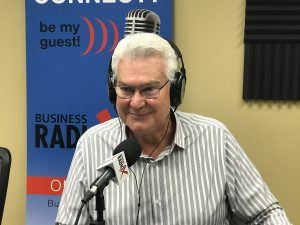
Alan Crowe, Room2work

May 14, 2019 by John Ray

North Fulton Business Radio
Alan Crowe, Room2work
Loading
00:00 /
RSS Feed
Share
Link
Embed

Download file

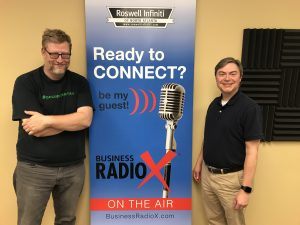
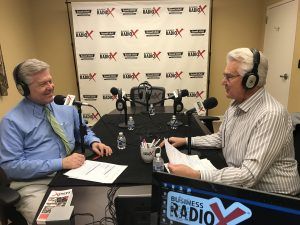
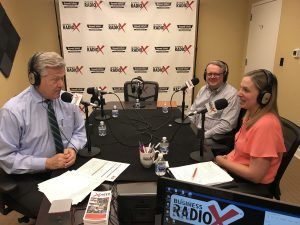
John Ray, Host of “North Fulton Business Radio,” and Alan Crowe, Room2work
Alan Crowe, Room2work

Alan Crowe developed the idea for Room2work in 2016 while President of SpecPoint Incorporated. His experience finding the right space for SpecPoint, plus an understanding of what his customers, mostly contractors, needed in a commercial space, helped form early versions of the Room2work concept.

There are lots of commercial options for business owners that only need office space. However, there’s a substantial gap between a home-based business and the jump to a commercial space if you need storage space for inventory or equipment. Room2work bridges that gap by providing flexible office, meeting, and warehouse space under one roof.

Ultimately, Room2work is more than just coworking – it’s an ecosystem of space plus services like accounting, marketing and logistics that give business owners the confidence to leave their home office and let their business grow.

For more information, call (470) 721-0606 or go to their website, https://www.room2work.com/.


“North Fulton Business Radio” is broadcast from the North Fulton studio of Business RadioX®, located inside Renasant Bank in Alpharetta. Renasant Bank has humble roots, starting in 1904 as a $100,000 bank in a Lee County, Mississippi, bakery. Since then, Renasant has grown to become one of the Southeast’s strongest financial institutions with approximately $12.9 billion in assets and more than 190 banking, lending, wealth management and financial services offices in Mississippi, Alabama, Tennessee, Georgia and Florida. All of Renasant’s success stems from each of their banker’s commitment to investing in their communities as a way of better understanding the people they serve. At Renasant Bank, they understand you because they work and live alongside you every day.


Tagged With: coworking, coworking and storage space, e-commerce businesses, Essie Escobedo, home office, Inventory, meeting space, North Fulton, office space, outsourced services, outsourced services for small business, pallet racks, pallet space, pallets, podcast studio, rack space, renasant bank, Room2work, Roswell, secure storage, self-storage, shipping and receiving services, small businesses, warehouse, warehouse space

Decision Vision Episode 14: CEO Peer Groups – An Interview with Marc Borrelli, Vistage Worldwide

May 9, 2019 by John Ray

Decision Vision
Decision Vision
Decision Vision Episode 14: CEO Peer Groups – An Interview with Marc Borrelli, Vistage Worldwide
Loading
00:00 /
RSS Feed
Share
Link
Embed

Download file

Marc Borrelli, Vistage Worldwide, and Michael Blake, Host of “Decision Vision”

CEO Peer Groups

What’s a CEO peer group all about? Should I join one? What’s the return on the investment of participating in such a group? In this edition of “Decision Vision” host Michael Blake, interviews Marc Borrelli, Chair of Vistage Worldwide.

Marc Borrelli, Vistage Worldwide

Marc Borrelli, Vistage Worldwide

Marc Borrelli arranges and chairs Vistage Peer Advisory Groups, which have about 16 CEOs in them, meet on a monthly basis to discuss issues and opportunities the members face to provide advice, challenge assumptions, prevent hubris, and then hold the members accountable for the commitments they have made.  The members discuss all kinds of issues in these meetings from profits and cash flow, strategic planning, acquisitions, and sales, and challenges with other owners. The members get the benefit of 15 other CEOs helping them, who are not beholden to them for anything, other than being helped themselves. Members come from a wide variety of industries and the only rules are not customers or suppliers. Vistage has 23,000 members worldwide and 17,000 in the US.

Michael Blake, Brady Ware & Company

Mike Blake, Host of “Decision Vision”

Michael Blake is Host of the “Decision Vision” podcast series and a Director of Brady Ware & Company. Mike specializes in the valuation of intellectual property-driven firms, such as software firms, aerospace firms and professional services firms, most frequently in the capacity as a transaction advisor, helping clients obtain great outcomes from complex transaction opportunities. He is also a specialist in the appraisal of intellectual properties as stand-alone assets, such as software, trade secrets, and patents.

Mike has been a full-time business appraiser for 13 years with public accounting firms, boutique business appraisal firms, and an owner of his own firm. Prior to that, he spent 8 years in venture capital and investment banking, including transactions in the U.S., Israel, Russia, Ukraine, and Belarus.

Brady Ware & Company

Brady Ware & Company is a regional full-service accounting and advisory firm which helps businesses and entrepreneurs make visions a reality. Brady Ware services clients nationally from its offices in Alpharetta, GA; Columbus and Dayton, OH; and Richmond, IN. The firm is growth minded, committed to the regions in which they operate, and most importantly, they make significant investments in their people and service offerings to meet the changing financial needs of those they are privileged to serve. The firm is dedicated to providing results that make a difference for its clients.

Decision Vision Podcast Series

“Decision Vision” is a podcast covering topics and issues facing small business owners and connecting them with solutions from leading experts. This series is presented by Brady Ware & Company. If you are a decision maker for a small business, we’d love to hear from you. Contact us at decisionvision@bradyware.com and make sure to listen to every Thursday to the “Decision Vision” podcast. Past episodes of “Decision Vision” can be found here. “Decision Vision” is produced and broadcast by Business RadioX®.

Visit Brady Ware & Company on social media:

LinkedIn:  https://www.linkedin.com/company/brady-ware/

Facebook: https://www.facebook.com/bradywareCPAs/

Twitter: https://twitter.com/BradyWare

Instagram: https://www.instagram.com/bradywarecompany/

Show Transcript

Intro: [00:00:01] Welcome to Decision Vision, a podcast series focusing on critical business decisions, brought to you by Brady Ware & Company. Brady Ware is a regional, full-service accounting and advisory firm that helps businesses and entrepreneurs make visions a reality.

Michael Blake: [00:00:20] And welcome back to Decision Vision, a podcast giving you, the listener, clear vision to make great decisions. In each episode, we discuss the process of decision making on a different topic. Rather than making recommendations because everyone’s circumstances are different, we talk to subject matter experts about how they would recommend thinking about that decision.

Michael Blake: [00:00:38] My name is Mike Blake, and I’m your host for today’s program. I’m a Director at Brady Ware & Company, a full-service accounting firm based in Dayton, Ohio, with offices in Dayton; Columbus, Ohio; Richmond, Indiana; and Alpharetta, Georgia, which is where we are recording today. Brady Ware is sponsoring this podcast. If you like this podcast, please subscribe on your favorite podcast aggregator and please also consider leaving a review of the podcast as well.

Michael Blake: [00:01:02] So, today we’re going to talk about CEO/executive peer study groups. And these are groups that are entities that have like-minded or ostensibly like-minded decision makers where they, kind of, have group therapy, study issues together, and learn from one another. And there are number of groups that are all over the place, literally, worldwide.

Michael Blake: [00:01:27] And it’s an interesting model because being CEO of any organization is a very lonely place, and everyone expects you to have the answers, sometimes, even unrealistically. And just like we’ve kind of asked, “Who does the therapist talk to when they’re feeling depressed?” who does the decision maker turn to when they need some help making important decisions, but they don’t necessarily know who to turn to, and maybe not warrant engaging in consulting, or may require a different relationship than what a consultant could provide? And it’s a big decision. I know these groups help a lot of people. And for other people, it’s not necessarily the right fit.

Michael Blake: [00:02:10] And joining us to help us work through this is Marc Borrelli. Marc Borrelli arranges and chairs Vistage Peer Advisory Groups, which have about sixteen CEOs in them. They meet on a monthly basis to discuss issues and opportunities the members face to provide advice, challenge assumptions, prevent hubris, and then hold the members accountable for the commitments they have made. The members discuss all kinds of issues in these meetings from profits, to cash flow, strategic planning, acquisitions, and sales, and challenges with other owners. Not necessarily among the other owners, just challenges among the other owners.

Michael Blake: [00:02:46] The members get the benefit of 15 other CEOs helping them who are not beholden to them for anything other than being helped themselves. Members come from a wide variety of industries. And the only rules are not customers or suppliers. Vistage has 23,000 members worldwide and 17,000 in the United States. Marc has 30 years of strategy and investment banking experience. Marc is expertly positioned to offer a range of unique advisory services, and he’s worked across Europe, Africa, and the United States, closing more than 100 transactions worth over $3 billion, and is perhaps best known for his fluency in the language of numbers.

Michael Blake: [00:03:23] He is a current chair of the Technology Association of Georgia’s Corporate Development Board, which basically means M&A advocacy, and is a CFA charter holder. Marc is a sharp, sharp guy who is not afraid to tell you what he thinks and why. And that’s why he’s going to be a great interview today. Marc, thanks for coming on.

Marc Borrelli: [00:03:41] Thank you for having me.

Michael Blake: [00:03:43] So, Marc, you’ve done all this stuff. You do deals, doing deals of very intense, fast-paced, sort of, all out kind of profession. And then, you decide to go and become an educator. Why?

Marc Borrelli: [00:03:57] So, I think, to cut this long story short, way back, when I started my own M&A firm, somebody from Vistage approached me and said, “Are you interested in joining a Vistage Group?” And being a very conceited, young 40-year-old, I turned around and said, “God, no. I know everything. I don’t need you. I’m an M&A expert.” Fast forward about — Actually, I was in my mid-30s. And fast forward 10 years, and I was in my mid-40s, I’d just gone through a divorce. I was in a child custody battle. My business was on the ropes. And another person came along and asked the same question, and I grabbed the lifeline with both hands before I drowned.

Marc Borrelli: [00:04:31] So, I think, yes. I think everybody gets — and I was in the group for years, and then I decided to come and do this. And it’s not really — I like your term educate. I don’t think it’s an educator. And, I think, truly, the groups you get into, the benefit I always say is challenging the assumptions and truly finding out what the underlying question is. It’s not there to provide magic answers. It’s not like we lift up the Magic 8 ball at every meeting and say, “Okay, this is what you have to do.” But it’s really asking questions and deep questions to find out what the real issue is, and then getting the person to commit to do something, and then holding them accountable.


Marc Borrelli: [00:05:07] And that’s what I love about it. I love seeing people succeed and grow. I think the people who don’t like it in a lot of cases, or like I was in my mid 30s, they think they know it all, I always say, to be a great Vistage member, you have to have experienced pain, and suffered, and you realize you don’t know it all, and you need help every day.

Michael Blake: [00:05:25] So, you need to be broken down before you’re ready to join Vistage.

Marc Borrelli: [00:05:28] Absolutely, absolutely. Yes.

Michael Blake: [00:05:33] You mentioned asking the right questions, and it calls to mind an Einstein quote that goes something like, “”Finding solutions is easy. It’s asking the right questions that’s the hard part.” Right?

Marc Borrelli: [00:05:45] Absolutely.

Michael Blake: [00:05:46] And I think that’s what’s drawn me to you and our friendship over the years is that you do ask great questions, and you don’t take anything for granted. Even if it’s something that maybe we thought was true two years ago, that doesn’t necessarily mean it’s true today, right?

Marc Borrelli: [00:06:02] No. And I think that’s the hardest thing for business members, business owners, and CEOs, and for myself is the world is changing so fast. I’ll give you an example. I recently gave every one of my Vistage members Tom Friedman’s book, Thank You for Being Late, which is about how much the world has changed, and technology is changing, everything. And the speed of change is affecting every area of our business. Whatever model got us to here — it’s a great book. What got you to here won’t get you to there. And that’s why we need others to challenge us, and make us think, and just digressing slightly. The common complaint I hear is, “Damn, these millennials, how do we work with them?” And it’s like they’re now the biggest sector of the working population. You got to figure this out.

Michael Blake: [00:06:42] Right.

Marc Borrelli: [00:06:43] You can complain about them, but if you don’t figure out how to make them happy and keep them, you’re going to lose, not them.

Michael Blake: [00:06:48] Right. Really, they’re saying, “Damn, how we’re going to work with these Gen Xer’s and late baby boomers, right?

Marc Borrelli: [00:06:53] Exactly.

Michael Blake: [00:06:54] That’s really the conversation that’s going on. We’re going to be in a position where we’ve got to justify ourselves to them, and we probably seem clinically insane too many of them.

Marc Borrelli: [00:07:04] Totally, yes.

Michael Blake: [00:07:05] And maybe they’re not wrong.

Marc Borrelli: [00:07:07] No. And I think it’s very interesting for those of us, we’re about the same age, we grew up in an environment where you’ve joined a company, you paid your dues, you worked hard, nobody thanked you, and you just accepted that was the norm. And it was interesting in the Vistage Group, somebody posed the question, you have the most perfect employee sitting across from you that you’re interviewing that you really want, and they look at you and say, “Why should I join your organization?” And nobody could answer the question. I mean, they all said, “Because we’re a great company.” And the person who raised it said, “So, all the other companies will say ‘We’re really bad companies. Come here and be abused.'” No, they all say they’re great. So, how do you sell this?

Marc Borrelli: [00:07:45] And I think that’s the challenge that we have to deal with, and that’s what I love about it. It’s always new, and it’s always interesting, and helping people try, and just do it better.

Michael Blake: [00:07:55] I’ve got to have some discipline because if I take the conversation the way I want to, we’ll be here three hours later, and they’re going to cut us off. So, I got to stay on topic. It’s just so hard with you. There’s so many peer executive types of groups out there. Vistage is one. There are others. Some are just informal. Others are formalized. What do you think sets Vistage apart from those other groups, if anything?

Marc Borrelli: [00:08:17] So, I think if you look at all four groups, they all have some component of four things. They’re either networking groups, they are social groups, they are personal improvement groups, and they’re business improvement groups. As I tell people, Vistage is not a networking group. We don’t encourage you doing business with each other. We’re not a BNI group. We don’t want that.

Marc Borrelli: [00:08:39] We’re not really a social group. Yeah, we do get together a couple of times a year, but it’s not our key thing. YPO is probably the greatest and best social group. We are a business improvement and a personal improvement. That’s what we focus on. So, I think when you’re looking it, what do you want out of the group? And then, of course, there are some groups that have specific categories like religious affiliations, which we don’t have. We’re open. We believe the more diverse the members, the better input you get, and the better results you get. But I think that’s what you look at is what is it you want out of the group.

Michael Blake: [00:09:12] So, what kinds of topics have you been covering in your group over the last year? Can you talk about that, or is it confidential?

Marc Borrelli: [00:09:20] No, absolutely. Well, I won’t give names away, so it’s not confidential. So, on some of the more simple things we’ve been talking about is getting lines of credit available and making sure you well banked, so if a downturn comes you can get through it financially. How do we challenge clients who are not paying us on a timely basis and get our receivables down? Some people are looking for a COO to help them grow the business through the next stage, which comes into things like technology systems, implementing ERP systems, for advice on that.

Marc Borrelli: [00:09:54] A common one is my exit strategy. Your exit strategy might be you’re the owner, and you’re going to exit at some point, or even more simply, I’m the key person in the private equity own group, and I don’t want to be sold with the company at the next sale. So, how do I build my exit? Some people, it’s as simple as what does success mean for you in your organization. They haven’t really thought that through. And then, we get into some of the more personal ones. And I’m not going to give names, but I’ve had people deal with issues like children with drug problems, abuse issues. So, we cover a wide gamut of things.

Michael Blake: [00:10:29] So, that’s interesting. So, your discussions do bleed over into the personal-

Marc Borrelli: [00:10:34] Oh totally.

Michael Blake: [00:10:34] … as life part of the work life.

Marc Borrelli: [00:10:36] I come from the assumption that we’re here to help you with anything that affects your business. And as I tell people, having been through a divorce and, now, proudly wear the t-shirt, for a year, you’re useless. Your mind is not focused, you’re distracted, you cannot put the attention you need in. And if that’s one of your issues, or you’ve got a dying parent, or child going through some trauma, you are heavily distracted, which affects your business. Now, we’re not therapists. I’m not going to claim we provide therapy, and we’re not going to tell you, but we’re going to try and give you coping mechanisms.

Marc Borrelli: [00:11:08] So, for instance, one of my members is going through a serious litigation at the moment, very distracted by it, and it’s just simple things like the members reach out to him on a regular basis, see if they can help him. Remind him, “Are you meditating? Are you getting a break from it? Because if you don’t do these things, it will consume you.” And as one member said to him, “Look, don’t worry about the litigation, beat them at business. If you beat them at business, you’ve won.” So, it’s just helping people come at it from different perspectives.

Michael Blake: [00:11:34] So, your group then must get pretty tight pretty quickly I would imagine.

Marc Borrelli: [00:11:41] Yes. You’d definitely see there are two types of people that come in the group, those that get tight, and they get together socially. And I encourage that because you’re not going to care about other people and take care of them unless you know them. And then, there’s some that never really get socially involved for whatever reason, and they tend to drift off.

Marc Borrelli: [00:11:58] So, yes, I try and encourage my group. This is a personal thing. Every Vistage Group is different. As of this year, we try and get together four times a year for dinners. Twice a year, we have spouses. We do retreats, I’m going on a retreat with another group next week. I believe the more you’re entangled with each other, the more you care about each other, the more you’re going to help each other. And that’s what this is about.

Michael Blake: [00:12:21] Okay. Now, obviously, although you’re providing it good, it is a commercial exercise.

Marc Borrelli: [00:12:25] Absolutely.

Michael Blake: [00:12:25] So, if I’m thinking about, “This sounds interesting, I might be able to make use of it,” what are the economics look like? What are the costs look like?

Marc Borrelli: [00:12:36] So, basically, in my main Vistage Groups, it’s about $1600 a month to be a member. It has a 90-day termination clause. So, it’s not payable for a whole year upfront. You just pay monthly. And then, once a month, you have to host a meeting, which means you have to provide all the food and the facilities. Now, we also do retreats and dinners where everybody pays their share. So, if I’m looking at all those numbers, you’re just over 20 grand a year.

Marc Borrelli: [00:13:01] A lot of people look at me and say, “Oh my God. I could never afford that.” Being a business person and investment banker, my mind automatically goes to numbers, as you mentioned. So, I’m looking at it, and I say, “Well, what’s the ROI on it? And if you’re the CEO of a business, what’s your average decision? Now, hopefully you’re not just deciding on paper clips, but if you’re deciding on hiring senior people or new market stand, your average decisions got to be over 100 grand a year. And if the group helps you make one good decision a year, the ROI is 500%. So, where can you go wrong with this?”

Marc Borrelli: [00:13:35] Now, some people say, “Well, the group didn’t help me with their decisions.” And I was like, “Well, you didn’t bring a good question to the group,” or “If you just want them to pat you on the back, that’s not using them effectively,” but yes. So, I think there is cost, as you said, but there should be a return on it.

Michael Blake: [00:13:49] And how many groups do you have?

Marc Borrelli: [00:13:51] I have two CEO groups. My one group is from a million to about 8 million in revenue. My other groups 8 million to 50 million in revenue. And I’ve split them because the bigger companies just have more employees and a different type of issue. And then, I have a third group, which is less expensive, but it’s not for CEOs, it’s for senior executives within organizations that are coming up.

Michael Blake: [00:14:12] Okay. And so, that’s a peer group to help them from a career counseling standpoint?

Marc Borrelli: [00:14:16] Correct, yes.

Michael Blake: [00:14:19] Okay. So, did you have a chance to meet other — is your official title a facilitator? Are you a group leader, are you-

Marc Borrelli: [00:14:29] I’m called the Chair.

Michael Blake: [00:14:29] … the ayatollah?

Marc Borrelli: [00:14:30] I am called the Chair of the group. And I guess if you wanted to say anything, I’m a facilitator.

Michael Blake: [00:14:37] Okay. So, as the chair/facilitator of the group, do you have a chance to meet other chair facilitators? And if so, how much do you differ, or do you tend to have a very kind of consistent profile?

Marc Borrelli: [00:14:52] No, I think we’re all very different. And, at least, I meet within the Vistage community. All the chairs get together once a month to discuss best practices and different things. I think we’re all different. We all bring different skill sets because of our background to the table. I bring a financial background. Other people run HR companies, so they bring an HR background. We’re all different.

Marc Borrelli: [00:15:12] I think having spoken to people who were in other organizations, which didn’t have a “facilitator” or somebody in charge, and they took turns, they have said to me that they didn’t find the issues we run as well because nobody is trained to do it. My job is not to jump and tell everybody the answer. My job is just to keep the conversation, draw people out, and make sure everybody gets — I herd the cats.

Michael Blake: [00:15:36] So, do you find then that you tend to draw people that already have an affinity for numbers, data, analytics, finance, or is it the opposite? Do you tend to draw people that know that that’s a weakness of theirs, and they’re hoping that you’re going to plug that or somehow fill that gap?

Marc Borrelli: [00:15:55] I wish I could say it was one or the other, but it doesn’t seem to be either. I have people who are very numerate, and I have people who have no clue, and I’m trying to educate those that don’t. But, again, it comes back to what do you really want to learn? And, often, I tell people, “Look, as a CEO, it’s not so much what you have to learn on the finance side. It’s actually just knowing the numbers you need to look at to make sure your business is operating.”

Marc Borrelli: [00:16:19] So, I encourage all the CEOs that I work with to get custom dashboards built for them that, at one glance, they can tell what’s going on in their business. They should get them every week or less depending on — I mean, more often than that, depending on what their business is, but they should not be delving into Quickbooks or whatever the accounting package they have spending hours looking at reports.

Michael Blake: [00:16:39] That’s probably got to be music to many of their ears?

Marc Borrelli: [00:16:44] It is, but they can’t resist.

Michael Blake: [00:16:45] Yeah.

Marc Borrelli: [00:16:45] They get sucked back into Quickbooks. And I see them all playing with reports, and I’m like, “You shouldn’t be doing this. This is not good return on your time.”

Michael Blake: [00:16:52] Problem with so many business owners, they’re very heavily — they’re type A detail-oriented people.

Marc Borrelli: [00:16:57] Yes.

Michael Blake: [00:16:57] And, I guess, sometimes, you have to tell them like, “What are you doing this for?” Right?

Marc Borrelli: [00:17:00] Right.

Michael Blake: [00:17:02] Now what about like personality of the facilitator. Would you say they are different personalities? Maybe some are what we call sort of an American football coach, and others are more kind of nurturing, or is there a spectrum of personalities as chair facilitators?

Marc Borrelli: [00:17:18] That’s an interesting question. I think there is a variety. And some chairs have been coaches, and some chairs are maybe more touchy-feely. But I think at the end of the day, we’re encouraged to through Vistage, and I think what really works, is we’re what we call carefrontational. We care about you. We want you to succeed, but we’re not going to let you off the hook. We’re going to hold your feet to the fire. You said you were going to do this. Why haven’t you done it?

Marc Borrelli: [00:17:43] And as I always tell people, in Vistage, there’s no public flogging, but humiliation in front of your peers on a regular basis, it will destroy you. So, you got to stand up. And it’s very hard to turn around to a group of people who are also CEOs and say, “Well, I didn’t do it because I’m busy.” And you just get these looks like, “Really? Tell me about it.”

Michael Blake: [00:18:02] We’re recording this right before April 15th, and I don’t ever use the phrase, “I am busy inside of my firm.” I’ll simply be thrown out of our third=floor window.

Marc Borrelli: [00:18:13] Right.

Michael Blake: [00:18:17] What kind of time commitment is required? Now, we’ve talked about the cost, right? So, I guess you have monthly meetings. Is that right?

Marc Borrelli: [00:18:23] Correct. So, our group meets once a month as a group. And then, I meet with every member for an hour to an hour and a half during the month. What I tell my members is, “Look, there are 12 meetings a year. I expect you to make nine. People have business trips, family events, you get sick, client unexpected issues arise, you make nine.”.

Marc Borrelli: [00:18:43] But your time commitment is, I think, the most interesting question because speaking to those that I think are really engaged, and want to get the most out of it, and those that do get the most out of it actually invest the time preparing for the meeting. So, they think about the issue they want to bring. They think about all the information they need to present to the group. And so, when they come in, they’re prepared, and they think about, “If there’s a speaker, what do I want to learn from it?” So, they do a lot of upfront preparation. And afterwards, they spend time implementing it.

Marc Borrelli: [00:19:10] Those that don’t get much out of it don’t spend any preparation, walk into the meeting, haven’t thought about anything except they’re just walking in. They don’t really have a good issue. They are sure as heck they can’t give you any information about it, and they don’t really pay attention afterward. And, again, I herd the cats, I can’t make them. But I always say to them, “Look, you’ve spent money on this. If you’re meeting with your lawyer or your accountant, would you just walk into the room with no papers, no backup, and sit there, and know that they’re charging you by the hour to sit there and say nothing?” And they say, “No.” And I said, “Well, why don’t you do that? This is your board. These are your advisers. They’re here to help you. If you invest the time, you will get a greater return.” So, I think people should.

Michael Blake: [00:19:50] And probably the people that don’t prepare, that’s probably a symptom of something else.

Marc Borrelli: [00:19:55] Absolutely.

Michael Blake: [00:19:56] Right? Chances are that’s not the only thing in their business life for which they’re routinely systematically unprepared?

Marc Borrelli: [00:20:04] I would say that’s true, but I would say there is a culture, especially in the US, but it’s infecting the rest of the world, is we’re busy, we believe we’re successful. And I’m really fighting that culture to say-

Michael Blake: [00:20:17] I think, that’s right.

Michael Blake: [00:20:17] I think busy is not a sign of success. Success is thinking, if you’re the leader, you don’t need to be busy, you need to be thinking, you need busy people under you, but you need to be thinking about where the ship is going, and how you’re going to get it there. And getting caught up in the daily minutia is not helping. I try encourage members, the best thing you can do is take two weeks off at a time, and go let your brain regenerate.

Michael Blake: [00:20:40] It’s a very interesting point. And I have to admit, I fall into that trap that I think that being busy is ipso facto good, and it isn’t necessarily. And I think it just comes from this puritanical streak that we have as Americans that idle hands are the devil’s playground et cetera, et cetera. But you’re right, being able to sort of take us a step back, it’s amazing what your mind can do if you force it to do nothing.

Marc Borrelli: [00:21:14] Exactly. Well, I think on that. I’m going to throw two things out that I tell my members, and some do, and some don’t, is you should have an automatic reply in your e-mail that says I’ve received your e-mail, I will revert to you within 48 hours.

Michael Blake: [00:21:25] Ha!

Marc Borrelli: [00:21:26] Because all people want to know is, did you get the e-mail? That’s the main thing. And if you give yourself two days to think about it, you will probably come to a better solution than if you just shoot something off on the spur of the moment without giving it true deep thought.

Marc Borrelli: [00:21:42] And then the second thing I say to them is when you go on holiday, putting out of office e-mail which doesn’t just say, “I’m out of the office,” but says, “I will be gone for this date and this date. I’ll check email once a day, but I’m not checking this address. Please email me at this new address.” And the new address is, “I’m terribly sorry to interrupt your personal family vacation at…” whatever your alias. Nobody will ever send you an e-mail to that address. And we just copy people, we send this stuff out, and we all become slaves, and jump to it. And I think it’s a waste of our mental energy and our physical energy.

Michael Blake: [00:22:11] That’s a great point. That’s something I’ve learned and one of the few benefits of getting gray hair and two arthritic ankles is a little bit of wisdom and realizing you don’t have to respond to every email as it comes in, right? And I can’t tell you how many times I felt like I had a much better response by just stepping away, sleeping on it, and often just say, “Look, I got it.” That’s what most people want. What annoys people if you don’t respond and don’t even acknowledge that you’ve got it.

Marc Borrelli: [00:22:43] Correct.

Michael Blake: [00:22:43] If you acknowledge that you received the e-mail, the person that sent it then knows they are in the queue. You’re, at least, important enough to respond in that way. And then, they know they’re not being ignored. Being ignored really pisses people off when you get right down to it.

Marc Borrelli: [00:22:56] Exactly. But as you said, rushed answers are bad. One last point on this is I try and say to people, “Look, when you finish a meeting, don’t rush into the next meeting. Can you set yourself 30 minutes just to reflect on what truly happened, and what’s really important, and what you need to do?” Because we rush, and I’m guilty, I rush all day from meeting to meeting, and I get to the end of the day, I forgot what I promised at the first meeting. And it’s something I’m working on to try and be more effective with my time.

Michael Blake: [00:23:20] Not to mention, the emotional tenor from meeting to meeting may be entirely different, right?

Marc Borrelli: [00:23:25] Right.

Michael Blake: [00:23:25] But if you go from a dispute mediation into a sales meeting, can you imagine? You can’t handle those. Oh sorry, you just wanted the proposal? Got it. Okay.

Marc Borrelli: [00:23:37] Yeah, yeah.

Michael Blake: [00:23:37] So, you’re right, having that time to sort of kind of reset and center, that is part of time management is giving yourself that space to then, kind of, reset because in a different meeting, you have to play a different role, right?

Marc Borrelli: [00:23:51] Correct.

Michael Blake: [00:23:53] So, are there sorts of personalities that tend to do well in peer groups or ones that don’t do well in peer groups? I guess, know-it-all isn’t great.

Marc Borrelli: [00:24:03] I would say, the ones that don’t do well are know-it-alls and people who don’t care about others. You have to go in saying, “Look, I’m going to get stuff out of this, but what I really want to do is help everybody else.” And if you go in there with either, “I’m superior to everybody else, I know more than everybody else, and I don’t really care about these people,” you’re not going to work out. If you go in there saying, “I can learn from everybody…”

Marc Borrelli: [00:24:27] We have a guy in my group, and those who know him would recognize from his description. He has the worst ADHD of anybody I’ve ever met but has more interesting ideas than any human I ever met. He’s who’s got more patents in process. And the more you get to know this character, the more amazing he is. But a lot of people wrote him off in the beginning because he’s all over the place, and he’s not focused, and you think, “How does this guy get by?” But then, as you get to know him, when you peel back the onion, like this is truly an amazing person.

Marc Borrelli: [00:24:55] And so, I think, there are those that come in saying, “I’ve built my business to X, and I don’t need to talk to anybody else because I’ve done it, and I’m so great.” And I think it’s those that have realized that there are great people in many different guises, and they can all add something who will truly benefit from.

Michael Blake: [00:25:12] Now, what does it take when you — presumably, you prepare extensively for one of these meetings, what does your preparation routine look like?

Marc Borrelli: [00:25:23] So, it depends on the meeting. What I try and do is when I meet with my members one on one is to find out what issues are going on in their life. So, if I find an issue, I will say, “You should bring this issue to the group. And here’s a form. This what you need to write down. Try and bring all this information to the group.” I’ll think of exercises to do with them.

Marc Borrelli: [00:25:45] So, to give you an example of one I’m doing right now, and a number of Vistage Chairs are doing it, And I’ll go back to the beginning, Vistage has an event once a year for all the chairs. And Jim Collins who wrote Good to Great was there, and he spoke about Good to Great and the 12 questions for leadership, and we thought this is great.

Marc Borrelli: [00:26:01] So, I’m sitting down with all my group going through each of the questions. So, we start out with the flywheel. What is your flywheel? Define how your flywheel works? How do you confront the brutal facts? How do you know you have the right people regardless where on the bus they are? And then, you put them in. So, thinking through these things, sending them out links to documents, YouTube videos on this stuff, and then saying, “Okay. This is what we’re going to discuss.” And carving aside, anybody presents it. And then, we challenge each other. And I always say, “You’re open to challenge.” So, yeah, things like that.

Michael Blake: [00:26:32] Are there particular industries that you think CEO peer groups tend to serve better than others, or can it be adapted to any industry, whether it’s high tech, e-commerce, or janitorial services?

Marc Borrelli: [00:26:49] I think it can be adapted to any industry. The only place I think it has a bit of a problem, and maybe I’m wrong, because there are people in groups from these companies, but I think a large professional partnership is sometimes more difficult because nobody, even the managing partner, as a managing partner of an accounting firm once said to me, “We have all the responsibility and no authority.” So, they find it hard.

Marc Borrelli: [00:27:11] But I have a lawyer in one of my groups, and he said to me, “Why should I join? I’m a lawyer. I don’t know about selling and marketing.” And I said, “Well, you should. I mean, today, we all have to sell, we have to market, we have to collect. So, yes, your expertise may be in another area, but you still got to do all these business functions to get ahead, and build your model, and think of a different way of doing business.” So, I think everybody can benefit if you go in with an open mind.

Michael Blake: [00:27:36] Yeah. And that advice of having to sell, I mean, I long learned there are people in my industry and finance that are sufficiently technical. They can just be the technical nerd in the corner and thrive. I ain’t that smart. So, I have to develop other skills as a survival path. All right. So, how long does the meeting last?

Marc Borrelli: [00:27:59] That’s an all-day meeting.

Michael Blake: [00:28:00] All-day meeting. So, what happens? Kind of go through the order of battle in a given meeting.

Marc Borrelli: [00:28:07] So, eight times a year, we have a speaker. So, the speaker will come in in the morning. They will talk for about 3-3.5 hours on a subject matter area of expertise to them. And if we don’t have a speaker, we’ll think of either we’ll do what I’m going to describe next for the rest of the meeting, or I may present a topic of discussion.

Marc Borrelli: [00:28:29] So, aside from the speaker, what we’d usually do, we have what we call a check-in. Everybody goes around, says what’s happened since the last meeting personally and privately in their lives, what’s good, what’s bad. Then, we have a host of the meeting who I mentioned is responsible. They get an hour to present their business, their issues, and tell us about what they’re thinking, what are their three-year plans, what’s the business plan, what’s their exit, what challenges they’re facing. And that’s usually an in-depth discussion.

Marc Borrelli: [00:28:58] And then, the rest of the meeting, really, is everybody writes up issues or opportunities they’re facing. And we sit down, and we go through our process of asking, probing questions. When we’ve got no more questions, we then go around and ask everybody what they would recommend they would do if they were the person with the issue.

Marc Borrelli: [00:29:12] When everybody’s told them what they would do – and during this time, they’re not allowed to say anything, they just listen – we basically turn to them and say, “So, what are you going to do?” And they could say, “I like what John said,” or “I like what Mary said,” or “I think you’re all a bunch of idiots, and I’m going to do something else.” And we don’t really care, but we say. “Okay, So, you’re going to do X, and when are you going to do it by?”.

Marc Borrelli: [00:29:31] And when you come to the meeting next month, “Did you do it?” And if you didn’t do it, then we’ll say, “Well, do you want somebody in the group to be a wingman, and remind you, and lead you through it?” And if you repeatedly don’t do it, then there’s an issue that you haven’t really gone into.”

Michael Blake: [00:29:42] Right, there’s a deeper issue. I guess.

Marc Borrelli: [00:29:44] Exactly.

Michael Blake: [00:29:45] So, you have a buddy system, almost like alcoholics anonymous, right?

Marc Borrelli: [00:29:48] Oh totally. There’s a joke in Vistage where AA is for CEOs.

Michael Blake: [00:29:52] Oh, is that right?

Marc Borrelli: [00:29:53] Yeah. Because they need somebody. And the thing I found, and I speak for myself knowing this as my own behavior, is when we’re stressed, we revert back to what we like to do because it’s comfortable. And CEOs, like everybody else, get stressed. They’ve got big decisions, and they don’t know what to do with them. So, they revert back into their comfort zones.

Marc Borrelli: [00:30:12] I have one member who’s very stressed with things going on. I spoke to him the other day, and I’m like, “What have you been doing?” And he’s like, “I was rebuilding our website.” And I’m like, “Why are you rebuilding? You should not be rebuilding a website. This is not your time.” But that’s where he’s comfortable. And so, he’s reverting back. And I think where the group is there is to help pull you out and focus on.

Michael Blake: [00:30:30] Are there certain kinds of questions or challenges that you found a group like this is not particularly adept at addressing?

Marc Borrelli: [00:30:42] I would say the hardest thing with a bunch of CEOs, and this is reflective, again, of being CEOs is you have to train them to go through their probing questions. They’re all ready to jump in and tell you the answer. And it’s only through the questions we truly find the issue and think about what it is. So, the hardest thing when the group starts, and even you’ve got to keep reminding them, “Guys, this is not the time for solutions. We’re working on questions. Wait. Think about it.” And it’s that old adage that we all fall victim to, “When you ask a question. actually, listen to the answer. Don’t prepare your next question.”

Michael Blake: [00:31:17] It sounds like that age old Mars, Venus thing, right?

Michael Blake: [00:31:20] Yeah, absolutely.

Marc Borrelli: [00:31:21] You want to try to solve the problem, but, in fact, until you’ve asked enough questions, you don’t really know what the problem is.

Marc Borrelli: [00:31:28] Exactly.

Michael Blake: [00:31:28] Right.

Marc Borrelli: [00:31:28] Yeah. So, that in itself on that, some of your members may struggle with initially, and that is a skill that they develop.

Marc Borrelli: [00:31:39] Yes.

Michael Blake: [00:31:39] Right? Because if they carry that into their business life, that means they can then seek better and more input in a more honest and vulnerable way from their other resources. It could be their subordinates, their other officers board, and can be more effective in that way too, right? The sort of a sneaky little personality business skill that gets inculcated there.

Marc Borrelli: [00:32:01] Yeah. And hopefully, some of them do. But there are still a bunch who, “I’m the boss.” It reminds me of the classic scene when we’re talking about age things. It’s the Italian Job movie with Michael Caine, the original version. It came out the ’60s. And there’s a great line, and he says, “This job requires team effort, which means you all do exactly what I say.” And it’s breaking that and making them here.

Marc Borrelli: [00:32:23] The thing I found with CEOs, and I’m making a huge generalization, but most of them have one or two skills or both. They either invent something, or they’re great salesman, or they’re great salesmen and they invented it, which means they know their products, and they know their best customers. They have no idea what’s happening in the finances. HR is a mess. Legal doesn’t exist. I’m trying to arrange them to be slightly broad and understand these other parts, especially the HR side. It’s the most common areas motivating people, retaining, people, culture.

Marc Borrelli: [00:32:51] I heard a great line the other day, “Is you’re onboarding process more akin to waterboarding?” And I love that because I think we hire people, we don’t do anything, then we wonder why they leave. It’s this new environment. We’re talking about millennials.

Michael Blake: [00:33:05] We put you through our process. What’s the problem?

Marc Borrelli: [00:33:07] Right, exactly.

Michael Blake: [00:33:07] I mean, yeah, you got waterboarded, but I mean, it’s that sunny area, tropical weather, beach front property you can see.

Marc Borrelli: [00:33:16] Right.

Michael Blake: [00:33:17] Right. So, you mentioned that one of your groups is $1 to $8 million in revenue. And the other is $8 and above basically. I infer from that then, do you need to have a company with a million bucks of revenue to be involved in a Vistage group, or is that just sort of where you’ve carved out your delineations?

Marc Borrelli: [00:33:35] No, you don’t need to be a million bucks and above. But I do find the companies under a million bucks find the financial commitment and the time commitment very hard. Now, the companies that do come in under a million bucks are, usually, professional groups like lawyers, accountants, maybe some engineers, architects, but because they’re more — and I’m not knocking saying the others aren’t professional, but they had that structure, and they have a lot of systems in place.

Marc Borrelli: [00:33:59] But under a million bucks, even my group that’s a million to eight, what I refer them to is my entrepreneurial group or entrepreneurial management group. And what I mean is all spokes feed into the center. And then, my larger group has more of a professional management where they have various functions under them, and the CEO is truly being a CEO. And those where the CEO has everybody feed into them, they’re very distracted, they’re very hard to focus. And, again, companies under a million, the CEO is just getting yanked. They don’t show up for most the meetings. They’re always about the numbers. They’ll sell anything and promise anything. I mean, they’re the people who need it the most, but most can’t commit to it.

Michael Blake: [00:34:37] Probably because they’re so and probably necessarily involved in the tactical-

Marc Borrelli: [00:34:42] Correct.

Michael Blake: [00:34:44] … that they just don’t have the bandwidth to address the strategic.

Marc Borrelli: [00:34:48] Exactly.

Michael Blake: [00:34:48] Right?

Marc Borrelli: [00:34:49] Yeah.

Michael Blake: [00:34:52] Yeah. You don’t think about, “How I’m going to put in a new sprinkler system?” when there’s a four-alarm fire right in front of you, I guess.

Marc Borrelli: [00:34:58] Right.

Michael Blake: [00:34:59] So, let’s say there’s a listener now that that is listening to this thing, “I merely thought about this, but I think I’d like to learn more,” is there a system or a path where somebody can perform due diligence on a peer group before making that commitment? It doesn’t sound like the kind of thing that sells itself, well, kind of shrink-wrapped and off the shelf, right? It sounds like it’s got to be the right fit. So, how can a business owner figure out if a group is right for them without sort of making the big upfront commitment?

Marc Borrelli: [00:35:36] Well, I think, first of all, every group is different. So, there’s no standard. But what I do with my potential members, if I meet somebody that’s interested, I’ll say, “Okay.” First of all, I meet with them, learn about their business tone, learn about Vistage. At the end of that meeting, if I think they’d be a good member, then I say, “Okay. We need another meeting. You cannot sign up today. I’m not selling you anything.”

Marc Borrelli: [00:35:58] I then, go back, and we have a much longer meeting, probe more deeply, and there are questions I want to find out about their caring side, how much they’re willing to try new things. I always ask them. “When was the last time you did something new for the first time?” If you’re not learning and pushing yourself, you’re probably not a good fit.

Marc Borrelli: [00:36:15] If they get through that meeting, then I say to them, “Look, I’m interested. I think you’d be a good member. Now, you have to come and meet the group. While they’re not the final authority, they have a huge input into whether or not you come into this group. And because you have to fit with them, and (A), they have to like you, but (B), you also have to like them.”.

Marc Borrelli: [00:36:33] So, I usually get them to come to a meeting, and they sit through a meeting. And at the end of the meeting, I’m like, “Okay, you can wait, and I’ll ask the group if they want you. And then if they say you’re in, and you decide you want in, then you’re in. And if you’re not, go away and enjoy your life.”

Michael Blake: [00:36:49] Okay.

Marc Borrelli: [00:36:49] And I usually find it helpful too, if they come to a meeting to have the present an issue. I’m like, “Really come with an issue. Present it, and get feedback, and learn new things.”

Michael Blake: [00:37:00] Okay. Now there are probably people out there that have maybe tried a peer group like this in some fashion that, for whatever reason, didn’t work out. Maybe they weren’t emotionally ready to handle it, maybe the company wasn’t mature enough, whatever, or just life happens. Is it possibly worth them circling back and revisiting the issue? Maybe the second time around will be different.

Marc Borrelli: [00:37:25] I think so. I think the best way I can describe it is groups like ours are necessary but not urgent. And so, people put them off or say, “Well, I didn’t have the time.” I think if you put the time and the effort, you will find the reward huge. And it’s like having a gym membership. You got to go, and you got to work hard to make it worthwhile; otherwise, it’s not.

Marc Borrelli: [00:37:48] What happens is people sign up, but they’re passive members, and they don’t get anything out of it. So, if you truly want to be a leader, there are competitors out there all the time. Everybody’s challenging your business. If you want to stay ahead of the crowd, a group like this will help you, but you’ve got to put in the effort and the time.

Michael Blake: [00:38:05] Is there any kind of success story that comes to mind, someone that’s been in one of your Vistage groups, and they’re just a great example of somebody that’s been helped in a clear fantastic way?

Marc Borrelli: [00:38:17] There are quite a few. I think, I look at one gentleman who’s in my Vistage group. He was in a different type of peer group, but he came to Vistage because he wanted a strict facilitator. He said, “We used to meet, but it had no direction.” And he’s basically got to the point. He says, “In seven years, I don’t want to work anymore. That doesn’t mean I’ve sold my business. It just means I don’t want to work. And I’m putting in place all the steps.” So, we met recently, he’s got a COO, he’s got a CFO, he’s putting on an ERP system. His business is growing 30% a year. And his goal is that in seven years, he will not work, but the money will keep coming in. To me, that is a great success story.

Marc Borrelli: [00:38:57] There’s another guy I know who wasn’t in one of my groups but a Vistage member. And he brought in a present, and he said to me, “I have a house out in the country. I’m in my house, country house, Monday through Thursday. I come into Atlanta on Fridays. Meet with the president of my company, figure out what the issues are that we need to discuss, if any. And then, I spend the weekend socializing with my wife and friends. And on Monday morning, I go back to the country and do the stuff I like on my farm.” And he said I make more money now than I ever made before. He sold his private equity group recently and did incredibly well.

Marc Borrelli: [00:39:28] So, I think, yes. I think there’s definitely help there, and people have had great things. There are other people in my group who’d tell you they’ve got more out of this, and it’s saved them more, and helped them more than they can ever imagined.

Michael Blake: [00:39:39] Well, very good. I think you’ve made a very compelling case for why one would consider joining a group like this. How can people contact you to learn more about this?

Marc Borrelli: [00:39:49] The easiest is to reach out to me, marc@marcborrelli.com, which I know is a lot.

Michael Blake: [00:39:55] Two Rs, two Ls.

Marc Borrelli: [00:39:56] Correct.

Michael Blake: [00:39:57] I have to remind myself of that.

Marc Borrelli: [00:39:58] Yeah, or you just go to marcborrelli.com. And there’s information on how to set up a meeting with me. I’d love to meet anybody. If you don’t feel it’s not a fit after we’ve talked, that is perfectly okay. I only want people who are willing to come in and work hard.

Michael Blake: [00:40:14] Okay. Well, very good, Marc. Thanks for joining us. That’s going to wrap it up for today’s program. I’d like to thank Marc Borrelli so much for joining us and sharing his experience with us.

Michael Blake: [00:40:23] We’ll be exploring a new topic each week. So, please tune in, so that when you’re faced with your next business decision, you have clear vision when making it. If you enjoy this podcast, please consider leaving a review with your favorite podcast aggregator. It helps people find us, so that we can help them. Once again this is Mike Blake. Our sponsor is Brady Ware & Company. And this has been the Decision Vision Podcast.

Tagged With: CPA Alpharetta, Dayton accounting, Dayton business advisory, Dayton CPA, Dayton CPA firm, executive coaching, executive coaching group, exit strategy, exit strategy planning, financial dashboard, flywheel, M&A, Marc Borrelli, mastermind groups, Michael Blake, Mike Blake, millennials, peer executive group, peer to peer executive group, personal improvement, probing questions, quickbooks, return on investment, time management, Vistage, Vistage Chair, Vistage International, Vistage Peer Advisory Group, Vistage Worldwide

To Your Health With Dr. Jim Morrow: Episode 8, Sleep Apnea, and Two Special Guests from Taylor Road Middle School

May 8, 2019 by John Ray

North Fulton Studio
North Fulton Studio
To Your Health With Dr. Jim Morrow: Episode 8, Sleep Apnea, and Two Special Guests from Taylor Road Middle School
Loading
00:00 /
RSS Feed
Share
Link
Embed

Download file

Dr. Jim Morrow, Morrow Family Medicine, and Host of “To Your Health With Dr. Jim Morrow”

Episode 8, Sleep Apnea, and Two Special Guests from Taylor Road Middle School

Sleep apnea affects not only a partner who can’t sleep for the snoring, but it reduces quality of life for the person affected by this condition. So why does sleep apnea occur, and what are the best treatment options? On this episode of “To Your Heath,” Dr. Jim Morrow addresses these questions and more, and talks about his own experience with sleep apnea.

Also in this episode, Dr. Morrow welcomes two 8th grade students from Taylor Road Middle School in Johns Creek, Cion Kim and Ananya Shaeker. To complete a project assignment for their language arts class, Cion and Ananya used a previous episode of “To Your Health” to explore the dangers of vaping for their peers. Impressed by their work, Dr. Morrow was delighted to welcome Cion and Ananya to the show!

Ananya Shaeker and Cion Kim


Dr. Morrow’s Show Notes on Sleep Apnea

Sleep Apnea

  • There are two kinds of sleep apnea: obstructive apnea and central apnea.
  • Obstructive sleep apnea is the most common type.
    • Nine out of 10 people who have sleep apnea have this type of apnea.
    • something is blocking the airway that brings air into your body (also called the trachea).
    • When you try to breathe, you can’t get enough air because of the blockage. Your airway might be blocked by your tongue, tonsils, or uvula (the little piece of flesh that hangs down in the back of your throat).
    • It might also be blocked by a large amount of fatty tissue in the throat or by relaxed throat muscles.
  • Central sleep apnea is less common. This type of sleep apnea is related to the function of the central nervous system. If you have this type of apnea, the muscles you use to breathe don’t get the “go-ahead” signal from your brain. Either the brain doesn’t send the signal, or the signal gets interrupted.

Obstructive Sleep Apnea

  • Obstructive sleep apnea is a common disorder that causes patients to temporarily stop or decrease their breathing repeatedly during sleep.
  • People who have sleep apnea stop breathing for 10 to 30 seconds at a time while they are sleeping.
    • These short stops in breathing can happen up to 400 times every night.
    • If you have sleep apnea, periods of not breathing can disturb your sleep (even if they don’t fully wake you up).
  • This results in fragmented, non-restful sleep that can lead to symptoms such as morning headache and daytime sleepiness.
  • Obstructive sleep apnea affects persons of all ages, especially:
    • Men,
    • people who are overweight, and
    • people who are older than 40 years of age are more likely to have sleep apnea.
  • However, it can affect anyone at any age.
  • There are many health conditions associated with obstructive sleep apnea, including
    • hypertension,
    • coronary artery disease,
    • cardiac arrhythmias, and
    • depression
  • Predictive clinical features are:
    • Loud snoring,
    • gasping during sleep,
    • obesity, and
    • enlarged neck circumference.
  • Screening questionnaires can be used to assess for sleep apnea, although their accuracy is limited.
  • The diagnostic standard for obstructive sleep apnea is nocturnal polysomnography in a sleep laboratory (a sleep study).
    • Home sleep apnea tests are available and in recent years have become more reliable.
    • Home portable monitoring can be used as a substitute for in-laboratory polysomnography for the diagnosis of OSA in patients with a high likelihood of SA.
    • Most patients prefer home monitoring, and clinical outcomes among patients diagnosed by either method are comparable regarding sleepiness, sleep-related quality of life, and compliance with continuous positive airway pressure (CPAP) therapy

What is the Result of Untreated Obstructive Sleep Apnea?

Relation to Hypertension

  • About one half of patients who have essential hypertension have obstructive sleep apnea, and
  • About one half of patients who have obstructive sleep apnea have essential hypertension.
  • A growing body of evidence suggests that obstructive sleep apnea is a major contributing factor in the development of essential hypertension.

Excessive Daytime Sleepiness

  • Excessive daytime sleepiness is one of the most common sleep-related patient symptoms
    • affects an estimated 20 percent of the population. Persons with excessive daytime sleepiness are at risk of motor vehicle and work-related incidents, and have poorer health than comparable adults.
    • The most common causes of excessive daytime sleepiness are sleep deprivation, obstructive sleep apnea, and sedating medications.
    • Other potential causes of excessive daytime sleepiness include certain medical and psychiatric conditions and sleep disorders, such as narcolepsy.
    • Obstructive sleep apnea is a particularly significant cause of excessive daytime sleepiness.
      • An estimated 26 to 32 percent of adults are at risk of or have obstructive sleep apnea, and the prevalence is expected to increase.
      • The evaluation and management of excessive daytime sleepiness is based on the identification and treatment of underlying conditions (particularly obstructive sleep apnea), and the appropriate use of activating medications.

Connection to Heart Disease

  • The connection between sleep apnea and heart disease is evolving very rapidly.
  • People with cardiovascular problems such as high blood pressure, heart failure, and stroke have a high prevalence of sleep apnea.
  • Whether sleep apnea actually causes heart disease is still unclear, but we do know that if you have sleep apnea today, the chance that you will develop hypertension in the future increases significantly.
  • One of the problems in defining the relationship between sleep apnea and heart disease is that people with sleep apnea often have other co-existing diseases as well.
  • If you treat people with high blood pressure and sleep apnea, or heart failure and sleep apnea, the measures of blood pressure or heart failure are significantly improved. There is good evidence to think there is a cause-and-effect relationship between hypertension and sleep apnea.
  • Why does your blood pressure go up when your sleep is disrupted by sleep apnea?
    • Your blood pressure will go up because when you’re not breathing, the oxygen level in your body falls and excites receptors that alert the brain. In response, the brain sends signals through the nervous system and essentially tells the blood vessels to “tighten up” in order to increase the flow of oxygen to the heart and the brain, because they have priority.
    • The problem is that things that go on at night tend to carry over in the daytime, even when the sleep apnea patient is awake. The low oxygen levels at night seem to trigger multiple mechanisms that persist during the daytime, even when the patient is breathing normally.
  • How can CPAP (continuous positive airway pressure) reduce the cardiovascular consequences of sleep apnea?
    • The available evidence tells us that when you treat people with sleep apnea using CPAP, their blood pressure is not only lower at night—it’s also lower during the day. That’s a very good thing.
    • Moreover, people with atrial fibrillation (a common type of irregular heart beat) with sleep apnea that is appropriately treated have only a 40% chance of coming back for further treatment of their atrial fibrillation.
      • If their sleep apnea is untreated, the chance of a recurrence of atrial fibrillation goes up to 80%. The message to heart patients with sleep apnea is: With treatment of your sleep apnea, your chances of improvement are considerably better.

Can Sleep Apnea Be Prevented or Avoided?

  • There are things you can do to prevent sleep apnea. The following steps help many people:
    • Stop all use of alcohol or sleep medicines. These relax the muscles in the back of your throat, making it harder for you to breathe.
    • If you smoke, quit smoking.
    • If you are overweight, lose weight.
    • Sleep on your side instead of on your back.

About Morrow Family Medicine and Dr. Jim Morrow

Morrow Family Medicine is an award-winning, state-of-the-art family practice with offices in Cumming and Milton, Georgia. The practice combines healthcare information technology with old-fashioned care to provide the type of care that many are in search of today. Two physicians, three physician assistants and two nurse practitioners are supported by a knowledgeable and friendly staff to make your visit to Morrow Family Medicine one that will remind you of the way healthcare should be.  At Morrow Family Medicine, we like to say we are “bringing the care back to healthcare!”  Morrow Family Medicine has been named the “Best of Forsyth” in Family Medicine in all five years of the award, is a three-time consecutive winner of the “Best of North Atlanta” by readers of Appen Media, and the 2019 winner of “Best of Life” in North Fulton County.

Dr. Jim Morrow, Morrow Family Medicine, and Host of “To Your Health With Dr. Jim Morrow”

Dr. Jim Morrow is the founder and CEO of Morrow Family Medicine. He has been a trailblazer and evangelist in the area of healthcare information technology, was named Physician IT Leader of the Year by HIMSS, a HIMSS Davies Award Winner, the Cumming-Forsyth Chamber of Commerce Steve Bloom Award Winner as Entrepreneur of the Year and he received a Phoenix Award as Community Leader of the Year from the Metro Atlanta Chamber of Commerce.  He is married to Peggie Morrow and together they founded the Forsyth BYOT Benefit, a charity in Forsyth County to support students in need of technology and devices. They have two Goldendoodles, a gaggle of grandchildren and enjoy life on and around Lake Lanier.

Facebook: https://www.facebook.com/MorrowFamMed/

LinkedIn: https://www.linkedin.com/company/7788088/admin/

Twitter: https://twitter.com/toyourhealthMD

Tagged With: continuous positive airway pressure, coronary artery disease, CPAP, Cumming doctor, Cumming family doctor, Cumming family practice, Cumming md, Cumming physician, daytime sleepiness, Depression, heart disease, hypertension, Milton doctor, Milton family doctor, Milton family medicine, Milton family practice, Milton md, Milton physician, nocturnal polysomnography, non-restful sleep, obstructive sleep apnea, obstructive sleep disorder, OSA, overweight, sleep apnea, sleep study, sleep technology, snoring, snoring treatment, Taylor Road Middle School

Laura DaSilva, Big Fish Technology, and Michael Cross, Briskin, Cross & Sanford, LLC

May 8, 2019 by John Ray

North Fulton Business Radio
Laura DaSilva, Big Fish Technology, and Michael Cross, Briskin, Cross & Sanford, LLC
Loading
00:00 /
RSS Feed
Share
Link
Embed

Download file

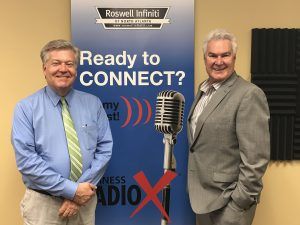
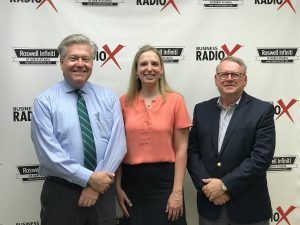
John Ray, Laura DaSilva, and Michael Cross

Laura DaSilva, Big Fish Technology

Laura DaSilva, Big Fish Technology

Laura DaSilva is a Technical Sales Account Manager for Big Fish Technology. Big Fish Technology is a full-service technology support company that delivers high quality, timely technology services and solutions for small and medium sized businesses and organizations. Our clients range from small sole proprietors to capital management firms with international offices.

Big Fish Technology is a hands-on company. They use many of the same processes and technologies they recommend to their clients. Therefore, they know what works and what does not. Here is a partial list of what they can do for you:  CIO services; wired and wireless network design, implementation, and management; network security audits and tuning; Windows server and Windows server application design, implementation, and management, including MS Exchange, MS SQL, MS SharePoint, Citrix, and others; SQL application design, implementation, and management; remote and onsite Windows and Apple desktop support; data backup and business continuity services, managed services solutions for Windows servers and desktops; hosted applications such as MS Exchange email, MS Sharepoint, online/offisite backups, and others; phone system services (hosted, VoIP, on-premise); and internal low-voltage network and phone wiring and infrastructure.

For more information on Big Fish Technology, go to their website or call 678-528-7713.

Michael Cross, Briskin, Cross & Sanford, LLC

Michael Cross, Briskin, Cross & Sanford, LLC

Michael Cross is an attorney and partner with Briskin, Cross & Sanford, LLC. Michael’s practice focuses on matters involving business law, including general corporate transactions, mergers & acquisitions, partnership and LLC law, and franchise law; employment law, including executive employment agreements, employment manuals, sales, distributor, and independent contractor agreements, and employment litigation; commercial real estate, including commercial lease preparation and negotiation, sales, acquisitions, and construction; and non-profit organizations, including the formation of and application for tax-exempt status for charitable organizations, private foundations, and trade associations.

From negotiating business agreements to aggressive representation in commercial litigation, Briskin, Cross & Sanford provides comprehensive legal service to entrepreneurs, executives, and companies in Alpharetta, Roswell, Johns Creek, Sandy Springs, Cumming, Marietta, and other communities throughout the north Atlanta metropolitan area.

Their chief focus is providing counsel to technology firms and other businesses located in the developing Georgia 400 corridor. Two of their attorneys were founding members of the steering committee for the 400 Technology Connection, which fostered technology and commercial growth in the area prior to partnering with the Technology Association of Georgia (“TAG”).

For more information, go to their website or call (770) 410-1555.

Tagged With: contracts, downtown Alpharetta, help desk, IT managed services, it outsourcing, it services, IT Solutions, Laura DaSilva, litigation, machine monitoring, managed services, Managed Services Provider, Michael Cross, MSP, partnerships, remote IT monitoring, service agreements, single source IT management, small business legal protection, startups, Technology Services, vendor management

Decision Vision Episode 13: Opportunity Zones – An Interview with Vishay Singh, The GlobeHUB

May 2, 2019 by John Ray

Decision Vision
Decision Vision
Decision Vision Episode 13: Opportunity Zones – An Interview with Vishay Singh, The GlobeHUB
Loading
00:00 /
RSS Feed
Share
Link
Embed

Download file

Vishay Singh, Co-Founder of The GlobeHUB, and Michael Blake, Host of “Decision Vision”

Opportunity Zones

What is an opportunity zone? How can operating within an opportunity zone help a business? With numerous opportunity zones across the country, what are the differences entrepreneurs and investors should be aware of? In this edition of “Decision Vision” host Michael Blake, interviews Vishay Singh, Co-Founder of The GlobeHUB, a coworking space located in an opportunity zone in Chamblee, GA.

Vishay Singh, The GlobeHUB

Vishay Singh, The GlobeHUB

Vishay Singh is Co-Founder of The GlobeHUB. The GlobeHUB was established in 2016 by Kevin Henao and Vishay Singh when they felt a calling to make a lasting impact on the startup community. They had a vision to not only inspire the next generation of  entrepreneurs but to provide them the community, funding, mentorship and ecosystem that every business owner requires to succeed. Globe’s coworking spaces offer plug-and-play memberships to accelerate business growth. They understand the power of the tech community and aim to facilitate meaningful connections across our unique member network. The diversity of people and ideas make the world better and makes companies better. It’s time to put your big ideas into motion. GlobeHUB is a tech community that promotes high energy, hard work, and creative innovation. There is no better place to launch your business. Get involved! For more information, go to www.globehub.com.

Michael Blake, Brady Ware & Company

Mike Blake, Host of “Decision Vision”

Michael Blake is Host of the “Decision Vision” podcast series and a Director of Brady Ware & Company. Mike specializes in the valuation of intellectual property-driven firms, such as software firms, aerospace firms and professional services firms, most frequently in the capacity as a transaction advisor, helping clients obtain great outcomes from complex transaction opportunities. He is also a specialist in the appraisal of intellectual properties as stand-alone assets, such as software, trade secrets, and patents.


Mike has been a full-time business appraiser for 13 years with public accounting firms, boutique business appraisal firms, and an owner of his own firm. Prior to that, he spent 8 years in venture capital and investment banking, including transactions in the U.S., Israel, Russia, Ukraine, and Belarus.

Brady Ware & Company

Brady Ware & Company is a regional full-service accounting and advisory firm which helps businesses and entrepreneurs make visions a reality. Brady Ware services clients nationally from its offices in Alpharetta, GA; Columbus and Dayton, OH; and Richmond, IN. The firm is growth minded, committed to the regions in which they operate, and most importantly, they make significant investments in their people and service offerings to meet the changing financial needs of those they are privileged to serve. The firm is dedicated to providing results that make a difference for its clients.

Decision Vision Podcast Series

“Decision Vision” is a podcast covering topics and issues facing small business owners and connecting them with solutions from leading experts. This series is presented by Brady Ware & Company. If you are a decision maker for a small business, we’d love to hear from you. Contact us at decisionvision@bradyware.com and make sure to listen to every Thursday to the “Decision Vision” podcast. Past episodes of “Decision Vision” can be found here. “Decision Vision” is produced and broadcast by Business RadioX®.

Visit Brady Ware & Company on social media:

LinkedIn: https://www.linkedin.com/company/brady-ware/

Facebook: https://www.facebook.com/bradywareCPAs/

Twitter: https://twitter.com/BradyWare

Instagram: https://www.instagram.com/bradywarecompany/


Show Transcript

Intro: [00:00:01] Welcome to Decision Vision, a podcast series focusing on critical business decisions, brought to you by Brady Ware & Company. Brady Ware is a regional, full-service accounting and advisory firm that helps businesses and entrepreneurs make visions a reality.

Michael Blake: [00:00:20] And welcome back to another episode of Decision Vision, a podcast giving you, the listener, clear vision to make great decisions. In each episode, we’re discussing the process of decision making on a different topic. Rather than making recommendations because everyone’s circumstances are different, we’ll talk to subject matter experts about how they would recommend thinking about that decision.

Michael Blake: [00:00:39] Hi. My name is Mike Blake, and I’m your host for today’s program. I’m a Director at Brady Ware & Company, a full-service accounting firm based in Dayton, Ohio, with offices in Dayton; Columbus, Ohio; Richmond, Indiana; and Alpharetta, Georgia, which is where we are recording today. Brady Ware is also sponsoring this podcast. If you like this podcast, please subscribe on your favorite podcast aggregator, and please also consider leaving a review of the podcast as well.

Michael Blake: [00:01:04] So, I’m going to apologize to listeners right off the bat. In Atlanta here, it is the height of allergy season. And, generally speaking, once the pollen count gets above a thousand, the air becomes toxic. So, I’m on a combination of cocktail to, sort of, keep me off my feet. And I don’t have a cough button, but I will try to turn my head if that happens. And if you don’t suffer from allergies, feel blessed that you you don’t suffer from that. But I’m a launch panel guy. We play hurt, and we’re going to continue on through this podcast. We’ll get through the episode.

Michael Blake: [00:01:41] And today, we’re going to talk about opportunity zones. And opportunity zones are newly created, tax-break-driven investment areas that are designed to promote private investment in economically distressed communities. And they’re an interesting topic because – and this is a personal ideological view – I think, anytime we can harness market forces to promote social welfare, I think, that’s a good thing to do. There are actually many of these across the country. And as it turns out, I’m very fortunate to live very close to an opportunity zone. So, I look forward to seeing how that leads to some development of my own community.

Michael Blake: [00:02:20] Joining us today is Vishay Singh, Co-Founder of the Globe Hub, which is Chamblee’s premiere co-working and entrepreneurship facilitation space located a Peachtree-Dekalb Airport. And for those of you not in the Atlanta area, PDK airport is Georgia’s second largest commercial airport. So, when Super Bowl 53 happened here, and all the other billionaires came in on their jets, that’s where they came in.

Michael Blake: [00:02:43] The Globe Hub was established in 2016 by Kevin Henao and Vishay when they felt a calling to make a lasting impact on the startup community. They had a vision to not only inspire the next generation of entrepreneurs but to provide them the community, funding, mentorship, and ecosystem that every business owner requires to succeed. Vishay is a successful serial entrepreneur, whose current venture MapMeLocal. And maybe if we have a few minutes at the end of the podcast, we’ll get a chance to learn a little bit about that as well.

Michael Blake: [00:03:11] Globe Hub’s co-working spaces offer plug-and-play memberships to accelerate business growth. They understand the power of the tech community and aim to facilitate meaningful connections across their unique member network. The diversity of people and ideas makes the world better and makes companies better. They’re a technology community that promotes high energy, hard work, and creative innovation. On a personal note, I’m very proud to say that Brady Ware is a member of the Globe Hub, and I personally find it an excellent resource for my own professional needs. Vishay, welcome to the podcast. Thanks for coming on.

Vishay Singh: [00:03:41] Thank you, Mike. I appreciate it.

Michael Blake: [00:03:43] So, we have a lot to talk about but let’s, sort of, dive right in. Why did you start the Globe Hub? Why do you feel there is a need to create a new co-working space? We’ve got a lot of these things right in Atlanta now. Why do we need a new one?

Vishay Singh: [00:04:04] Actually, I think, for me, it was probably the second step to my needs. It was Kevin, my co-founder, who actually came up with that vision because he spent a lot more time in that building. And the building is in a prime location, as you’re aware. And it is outdated. It had the ’80s look. And Kevin was in a poky hole upstairs, small office, and always had this vision of, “Man. I wish I could just have a bigger space, have larger boardrooms, share it with everybody, and keep my rental down while I’m growing up my business called SameDay Printing.”

Vishay Singh: [00:04:48] And when I got there, I was in Marietta, Georgia, and I had met a bunch of entrepreneurs that wanted to expand with me. And we were like, “Man, we can be in Marietta Georgia. We should get somewhere to more of the inner city, and be where the hype is, and be closer to more millennials, and where the excitement is.”

Vishay Singh: [00:05:08] So, we started looking. And then, when we found 1954 Airport Road, we stumbled upon Kevin, and what he was doing, and we immediately fell in love with it. And, sometimes, entrepreneurs go with gut feel versus just the pure science of why co-working, etcetera. But I think, what we saw instantly, the differences was with that location was you could drive in, you could park, and it was all on the ground floor. You had no hassle of worrying about how to get upstairs or how to get to you office, and how do you park your vehicle, etcetera. You can eliminate all those thought processes and hurdles, as I call them, from your thought process because you’re so focused in what you’re trying to do.

Vishay Singh: [00:05:56] So, you just want to get into a space, and you want to be inspired, and you want to be with a community, and you want to build a business. So, that’s how we decided just to say “Okay, let’s just take what we have and create a Globe Hub,” but we understand that co-working, potentially, could be the red ocean. I think, there’s still a lot of space of it, especially we’re going to talk further about opportunity zones and how our strategy would differ.

Vishay Singh: [00:06:21] But the long story and the short story of it, I always felt that, and I’ve always been passionate about helping entrepreneurs. I just couldn’t figure out whether thinking too small. So, I needed to think bigger, and I needed to think and dream a bit bigger on how to do this. And I think that’s potentially coming together. But that’s when we decide, we said, “Let’s just do it. Let’s just create the space first. Let’s crawl before we dream and drink a lot of beer, and we make nothing happen,” right?

Vishay Singh: [00:06:49] So, we did it. Baby steps first. We got 10,000 square feet. We’ve told community. We’ve flushed that community as well to get more and more of the right entrepreneurs there to be able to, then, create an ecosystem that starts to support itself. And like you said, a system that we’re each another could help each another. We even crowdsource to each another. We crowdfund to each another. When somebody’s stuck and really can’t get any angel money or something, we become the angels. And we all chip in whatever we’ve got in our pockets to help that person get the next contract or the next deal, so that they can get to the next level.

Michael Blake: [00:07:22] I didn’t know that.

Vishay Singh: [00:07:22] That’s exactly what’s goes on in the ecosystem. So, we don’t like — again, it’s not about sitting and waiting. If somebody needs something, and we can’t get it from an outside source, all the guys look in and say, “Let’s see how we could just crowdsource it ourselves.”

Michael Blake: [00:07:37] In a way, it’s kind of a microcosm of the Chamblee area, right? I’ve lived in Chamblee since 2005. And in the last three or four years, somebody figured out that Chamblee has a Marta Station, and it is right at the intersection of 285 and 85, And, of course, the airport there. Chamblee is booming, right?

Vishay Singh: [00:07:56] That’s right.

Michael Blake: [00:07:57] Is that part of the calculus? Was that something you’re excited about with Globe Hub kind of being in the middle of that renaissance that Chamblee’s enjoying now?

Vishay Singh: [00:08:04] Absolutely. I mean, I would say right place, right time. Nothing more than that. A lot of things can happen by accident. I mean, we went into downtown, we went into midtown, we looked at other places before we landed up at the Globe building and met Kevin, as well as the building entrepreneur who owns the building, Robert Muller. And decided, “Man, this is the right place.”

Vishay Singh: [00:08:31] And then, you slowly start to discover, well, it’s a hub zone. And then, what is the hub zone? What does the hub zone mean? And then, next thing is we figured out, there’s this press release and the meeting downtown about opportunity zones. And by the way, we looked on the map, and, boom, we are on an opportunity zone. What does that mean? And how does that potentially help us and help the he entrepreneur within us?

Vishay Singh: [00:08:52] But Chamblee is blooming. That’s another thing that we — It’s as a consequence of Brookhaven being overfull, and Buckhead, and that overflow that’s happening. It’s just a natural consequence, I guess. And I think it’s bound to spread into Doraville and places like that. So, I think that’s exciting to have all that and to see all that flourishing around us, as well as to see the potential of the hub zone area, which is the PDK area and the three-mile radius around it, which needs to now come up with a strategy and a plan on how that’s going to unfold itself and become or join into that overflow of where the Whole Foods is and this building across of Clermont, etcetera. So, very, very exciting stuff going on there.

Michael Blake: [00:09:46] You talked about the serendipity of real estate. So, we moved into Chamblee back in 2005, and I had zero to do with that decision. We just moved back to Atlanta, or I moved to Atlanta, my wife went back. She’d been here. I know nothing about real estate. I’m not even very good of monopoly. So, we’re very fortunate that we happened to move into the right place.

Michael Blake: [00:10:10] And your commitment goes beyond just sort of cheerleading. I mean, you’ve put in us substantial financial stake in this. In making that investment, do you see that as a business opportunity, as well as a social project, or do you see it more as purely a social project?

Vishay Singh: [00:10:28] I think it’s a hybrid. I think the environment does lend itself to being profitable. And it’s not as if we’re not profitable. The ecosystem and being full, we had capacity, we can grow upwards by virtue of membership and monetizing other spaces by being creative. So, we have reached that level of profitability.

Vishay Singh: [00:10:54] Is it highly profitable to just have one of that? Absolutely not. I think it’s the great American model where, typically, like franchises and/or similar sort of businesses where you’re doing one well, you need to duplicate it in order to reach good revenues and reach good valuations. Sometimes, when you look online, and you look at the evaluations of WeWork and Industrious, it’s amazing that they’ve got those numbers, and they’ve got those valuations. So, from that perspective, there’s definitely an opportunity.

Vishay Singh: [00:11:33] And I think, on the other hand, it’s helping entrepreneurs. So, I don’t know if that’s social, but if we look at helping entrepreneurs, the way we do it and by no means, we are in absolute shock triangle. We are having a huge purse string, per se. But with our micro funding methodology, and bootstrapping, and working with entrepreneurs, if they succeed, we succeed.

Vishay Singh: [00:11:59] So, from, that, that’s how we’re landing into – and we’ll talk about it later, I guess – the Founders Institute and why we’re doing that. It’s just tying that up into a mechanism where they could be that risk, the risk of investing time, investing money, and then being rewarded with upsides of one or two of those startups becoming successful in Chamblee.

Michael Blake: [00:12:24] So, you found Globe Hub in 2016. You’re at 1954 Airport Road. A little over a year goes by, next thing you know, they slapped an opportunity zone basically right on top of you.

Vishay Singh: [00:12:37] Absolutely.

Michael Blake: [00:12:38] And you’re right in the middle. It basically covers the Peachtree Dekalb Airport, that mini industrial complex there. Did you know what an opportunity zone was or was going to be? Do you have any idea that was going to happen or is that just you, sort of, woke up one day, and it was like a big present?

Vishay Singh: [00:12:55] That’s exactly what it is. It’s the latter. It just happened. I’ve always been aware of economic zones or development zones. And the opportunity zone by definition means the same thing. But it’s a positive effect. It’s it’s great to be in that. It gives us a larger opportunity because as I was just trying to look online and trying to look on how many opportunity zones actually do have incubators, and so far, possibly may have found one that’s a veteran on somebody up in Virginia that’s fallen into that space, and so have we.

Vishay Singh: [00:13:31] So, it looks like we are one of two that are in the zone, which actually complements and lends ourselves into the strategy of how we were thinking of expanding because what could make us different is our plan now of, actually, working the dream of building entrepreneurs but, perhaps, what we could do is build these further hubs in opportunity zones and work in those cities and create a sustainable environment for startups that are funded and, also, help with the marketing of main streets.

Michael Blake: [00:14:13] So, there is this opportunity zone, and I have to confess, I don’t know a lot about it until a few months ago. What is an opportunity zone? For whom is it an opportunity?

Vishay Singh: [00:14:25] Absolutely. So, I keep this piece of paper here because it’s kind of technical, but we won’t get into technical jargon. But the bottom line, the opportunities is on the left and the right side. So, the left side is taxpayers, and people that have capital gains events, and/or postpone capital gains events because they just simply don’t want to pay the tax on it. It’s an opportunity for them because, then, they could liquidate their position, be it a stock, be it a partnership, be it a sale of a business. And that the gain that they’re supposed to pay immediately could not defer through a 1031 exchange, I think it’s called, for property. If they could not do that, they have this chance now to invest it in an opportunity zone.

Vishay Singh: [00:15:17] And that investment could go two ways. It could go in into a property and enhance a property, and there’s rules sets against that, or it could come into a hub like ours and be invested into startups, in our case, and/or it could be invested into small to medium businesses, even if it’s a restaurant, a mom and pop store that’s doing really good and needs that extra capital. That money could be used. So, on that side, that’s the advantage.

Vishay Singh: [00:15:47] On this side, the opportunity is for entrepreneurs to maybe get out of their basements, and start thinking bigger and bring out the ideas, and really have a good opportunity of having some, if I may call it, venture fund or having some access to angel money that could help them get the small businesses or startups and ignited. And the whole idea is, then, to uplift that community, uplift the environment, and create a sustainable environment that makes it a retainer. It retains entrepreneurs and retains the younger audience, the younger people to stay back home versus go to Silicon Valley and other places.

Michael Blake: [00:16:35] So, this, I think, is a very important point because I’m an economist by training. So, I’ll apologize to everybody for that now. But one of the things that they teach us in economics, at least, until you get to the graduate level is that you, sort of, set taxes aside. All the models assume there’s no taxes, right? And if somebody knows of a place where there’s actually no taxes, please let me know, I’d love to go there. But it calls into focus, the fact that taxes do matter. And I think the way this works, your basic and deferred capital gains for up to 10 years, if I’m not mistaken. Correct?

Vishay Singh: [00:17:10] That’s right.

Michael Blake: [00:17:10] So, that increases the return on the same investment, whether you’re making the opportunity zone or not, at that level of risk. And therefore, it’s going to be more attractive. And it’s not just attractive to the investor but the entrepreneur. I imagine on a certain level, an entrepreneur can make an investment in their own business, right? And that means they get to defer or somehow offset their own capital gains as well.

Vishay Singh: [00:17:39] That’s right, yes. As long as it’s done in the zone, and they’re improving that zone by the definition of those regulations, which is still pending final publication, but it’s almost there, you can absolutely — I think that’s absolutely doable.

Michael Blake: [00:17:55] And any kind of business, it could be an e-commerce business, it could be a service business, it could be a software startup.

Vishay Singh: [00:18:01] Absolutely. From where it stands right now, it seems to be pretty clear that that would be covered. There is pending clarity on the regulations with the IRS. So, we were expecting to be published end of March, but it hasn’t come out as yet. We anticipate hopefully now, May or June. But that was pieces of the actual discussion by the forums that took place in DC, where interested parties went and lobbied further to have clarity that it can cover these broader spectrums.

Michael Blake: [00:18:37] Well, if it gives you any comfort, we have about 50 accountants back in my office, they’re tearing their hair out because the IRS has not even published final guidelines on all of the Tax Cut and Jobs Act at the end of 2017. So, we’re still guessing. And even if you do Turbo Tax for your own taxes now, the program says, “Well, this is what we think it’s going to be, but the regulations aren’t final yet.”

Vishay Singh: [00:19:02] That’s right.

Michael Blake: [00:19:02] So, IRS has a lot of regulations to write. So, are you seeing this impact to Globe Hub? Are you seeing an uptick in interest, in activity? And if so, what does that look like?

Vishay Singh: [00:19:13] Definitely. I mean, we’ve seen a positive impact on it. I think that’s how. I think it’s also contributed us to being at full capacity because it’s definitely encouraging a lot of startup entrepreneurs and a lot of businesses to want to think about how they could be part of the zone, how could they get access to capital. And strangely, a lot of the businesses that come in, it’s not purely just looking at, “How could I just get access to capital?” It’s working out, by definition, complementary to what they trying to do.

Vishay Singh: [00:19:49] So, like Chamblee is growing in that film industry. It’s growing in leaps and bounds with studios and the like. So, we’re finding a lot of inquiries that those entrepreneurs are saying, “We want to set up a studio. We want to set up an office there because we want to launch films. So, we want to raise funds for creating films in Chamblee.” So, we’ve seen quite a bit of that. We’ve seen other entrepreneurs in tech and non-tech come through and make inquiries because they’ve learned or heard about the OZ. And we have the double whammy where you can, also, if you’re in our zone, you’re also a hub zone, which allows you to get some extra points when you qualify to do government contracting as well.

Michael Blake: [00:20:38] Oh.

Vishay Singh: [00:20:38] So, there’s that advantage too.

Michael Blake: [00:20:41] And doing some homework before our conversation today, I looked on a map, and there are lots of these opportunity zones all across the country, right? So, for our listeners that are outside of Atlanta, outside of Georgia, chances are very good. If you live in the United States, you live close to an opportunity zone. Is that accurate? Did I read that correctly?

Vishay Singh: [00:21:01] I think that’s quite correct. If you just Google it and just put up “opportunity zone map,” you’ll get the maps that come up, and you’ll see all the brown dots. It’s spread out throughout the US. And chances are if you are in a major city like Atlanta, there’s one near you. I live in Marietta, and there’s several zones in Marietta, and really good opportunities for building acquisitions and/or rejuvenation of certain buildings, which will turn Marietta around in the next 10 years from what I can see.

Michael Blake: [00:21:38] So, in order to take advantage of an opportunity zone, do you have to apply for a license? Do you have to file anything, or do you have that level of knowledge, or do you just check a box? How do you sort of tell the IRS, “Hey, I’m in an opportunity zone, so give me these benefits”?

Vishay Singh: [00:21:54] Sure. I think it’s not about the — yeah, it’s about a process. There is paperwork, but it’s nothing that I can see that’s a special application. It’s more, “Who is that investor? And does that investor have a capital gain event? And is he or she investing in your business?” And then, there is a form that the investor will fill in and file with the IRS return. And there’s a simple methodology that that could be a partnership or whatever in which they put the money into. So, it’s just transactional like as if you’re investing in any other business.

Vishay Singh: [00:22:33] And then, from you, as a business owner, it’s the basic requirements of, “Do you have an LLC, or do you have a company, or do you have a partnership? And do you have a business license in in that area?” And I think the business license will help confirm that you are in the zone and, perhaps, a lease agreement, or, in our case, we have the membership agreement coupled with a lease agreement, if both are needed. And that’s only for purposes of your accountants, auditors having that to satisfy them.

Vishay Singh: [00:23:01] I don’t think the IRS — the IRS seems to be quite lenient with not being too red tape about this. I think they understand this is a process for entrepreneurs. And I think, finally, America’s getting to understand that entrepreneurs need less red tape and get easier access to money, so that they can run with their business ideas or, at least, one business idea.

Michael Blake: [00:23:27] Yeah. I’m sure there’s a forum for that. I don’t know what the number of the form is, but if you just go to irs.gov, and you do a search for opportunity zone, chances are very good. There’ll be links that pop up, and you can see what the form looks like. And it’s comforting to know this is not a place the IRS is really digging in and making it a massive bureaucratic challenge.

Michael Blake: [00:23:48] So, a lot of listeners, when you hear something like an opportunity zone, you’re creating a tax incentive to invest in a certain area, I think, in many people’s minds, I think, with some fairness, it evokes, “Well, if you have to offer an incentive to invest in a particular area, it must be a disaster area. It must be rat-infested. It must be gang infested. It must be dilapidated,” whatever lousy adjective you have, right? Is that necessarily the case if I’m going into an opportunity hub? Do I need to be prepared to walk into a disaster area?

Vishay Singh: [00:24:25] I think, I’m smiling because, I think, every time when I drive around with Kevin, because he grew up in the neighborhood, and until you’ve lived there, it’s like, that probably aptly describes what Chamblee, Brookhaven was many, many, many years ago. Unfortunately, I didn’t have the privilege of seeing that. But having grown up in South Africa, I’ve seen a lot of that.

Vishay Singh: [00:24:44] So, almost many areas start off like that. And, eventually, the right ideas come about, the right ways of cleaning up a city, the right ways of creating good sustainable economy or businesses in there to sustain the environment, and bringing on better homes, etcetera help build up an area.

Vishay Singh: [00:25:07] So, I think you’re absolutely right, there are those areas. They are definitely part of it. And I think it’s a long, long-term vision in terms of this process that that would happen. And it’s possible that certain pockets of that will happen.

Vishay Singh: [00:25:24] The opportunities within the opportunity zone is what I call the sandwich zones. The sandwich zones are the zones that are kind of like us where we are somewhere in between, where Chamblee is booming, Brookhaven is full out and is doing well. Chamblee is booming, and there’s these pockets in Chamblee that are opportunity zones, and that can be turned around, and compliment the entire ecosystem. So, there’s those.

Vishay Singh: [00:25:53] So, what you have to do is just put a magnifying glass on and look for those because those are going to be easier for you to start a business in and have direct access to a more affluent community or more affluent buyers just around you in the eight-mile radius, right?

Vishay Singh: [00:26:10] And then, those that have, I would say, the entrepreneurs with grit, and gut, and maybe deeper pockets are going to go for the other areas, which could be as bad as what you describe, but they still see a longer-term opportunity in that. And they would come out on the other side and probably redevelop it, or create something about it, or create a new form of sustainable buildings, et cetera, or homes or properties because those things are included.

Vishay Singh: [00:26:40] So, by definition, the IRS has included apartment living or anything to do with some form of commercial mix like live, work, play, etcetera, seems to be covered. So, I think those really deep areas, let’s call it poverty-stricken or crime-ridden, that could be cleaned up could absolutely be done as well.

Vishay Singh: [00:27:05] There’s a lot of that in Macon Georgia. And I’ve been traveling to Macon Georgia back and forth and doing a little bit of spec projects there. And we would love to get into the main streets. Our target, our focus is going to be main streets of Atlanta because we have this whole theory that main streets are sick and we can help fix it by bringing in a Globe Hub into each main street. Maybe not as big as what we have. Maybe a smaller model an express model. But then, collaborating working with those businesses and the city to create some form of digital marketing altogether in one single platform. And that’s where we’ll probably talk a little bit later with the MapMeLocal software.

Michael Blake: [00:27:44] Okay.

Vishay Singh: [00:27:44] Yeah.

Michael Blake: [00:27:44] Good. So, you mentioned in passing, I do want to touch on this. You’re involved in the Founders Institute.

Vishay Singh: [00:27:53] Correct.

Michael Blake: [00:27:54] Am I correct in saying you’re creating the Atlanta Chapter of Founders Institute?

Vishay Singh: [00:27:58] Correct.

Michael Blake: [00:27:58] Is that correct?

Vishay Singh: [00:27:58] Correct, yeah.

Michael Blake: [00:27:59] It’s the first presence in the area.

Vishay Singh: [00:28:01] Correct.

Michael Blake: [00:28:01] What is that? What’s the elevator pitch for Founders Institute?

Vishay Singh: [00:28:03] If I had to just say it simply, it’s designed for people coming out of corporate environment and/or startup entrepreneurs, maybe the one vice versa. But it’s designed for people like that that are thinking about entrepreneurship or wanting to become an entrepreneur, and they just need a way to understand how that entire environment works, and understand what hurdles they will face, and understand, basically, the Founders Institute will give you a really good platform to get you through that.

Vishay Singh: [00:28:45] Founders Institute, basically, in Atlanta, having gone through the process now, by definition, what we’re going to be doing is pulling together very experienced entrepreneurs in Atlanta, in our own environment, from larger companies to smaller companies that have experienced even from bankruptcy to building 100 million companies to come share the experiences with these want-to-be or wannabe entrepreneurs in a 16-week program. The program is well-defined, but it’s the experience of the entrepreneur that’s already gone through it coupled with the theory behind it that will be shared in evening classes to these startup entrepreneurs.

Michael Blake: [00:29:35] So, essentially, that’s the first stage. And the second stage is if you get through all that, you know you want to become an entrepreneur, you don’t particularly drop out, you get through that hard phase, and you know what you’re going to be in for, and you really want to do it, then you go to the next stage of going through the funds instead maybe going up to Silicon Valley and/or looking within the Globe Hub for funding and getting your startup up and running.

Michael Blake: [00:30:00] It’s an interesting approach. You touched upon something that I do when I advise people to the think about entrepreneurship. I feel like I do people the best service when they say, “I think I want to start my own business,” by trying to scare them out of it and try to show them how ugly and how terrifying it is. For every Jeff Bezos out there that is glamorous and is, obviously, enormously successful as a transformative business, there are others that are not that. And even though they may not fail, it’s a slog. It’s probably harder than the day job that you just left. Certainly more stressful than the day job that you just left.

Michael Blake: [00:30:41] And it sounds like you take that approach where, “Hey, you want to be an entrepreneur, great. But before you take the plunge, let’s give you a sort of a little look as to what you’re really signing up for because it’s not all what they publish in Fast Company, for example, or on the magazine.”

Vishay Singh: [00:30:57] Absolutely. It’s an absolute window. Actually, Founders Institute encourages you to keep your day job. Therefore, they put the program on 6:00 in the evening and run it for two hours once a week, so that you can get kick started. Once you go through the program, in that process, you’re then encourage to, “Do you want to incorporate?” And there’s a lawyer that will come, and show you how to incorporate, and get you to take that step.

Vishay Singh: [00:31:19] So, you can take those baby steps towards heading to where you want to be successful. But it is about the truth of it is we want to get you to a point where you don’t — like most of us, entrepreneurs, went through a lot of pain. Even though we did our MBAs and stuff like that, we still go through a lot of pain in growing a business. And that pain is a consequence of maybe not understanding the entire landscape and not having had sufficient coaches, mentors, experienced entrepreneurs like yourself, Michael, and everybody else around us that has had gone through a couple of ventures to say, “You know what, this is what happens. This is my experience. It may not happen to you, but just be aware of this.”.

Vishay Singh: [00:32:06] The academic side is great, but when you get through nuts and bolts, it’s all about you. And entrepreneurship, for me, is, by definition, entering within. That’s how I see entrepreneurship is the moment you become an entrepreneur is actually entering into your own self and challenging your own self into how you’re going to break all these barriers and create a successful business.

Michael Blake: [00:32:31] You mentioned the MBA. So, I have an MBA myself. And I’ve started a couple of businesses. And I found, frankly, the MBA did not teach me a lot of the blocking and tackling. It’s fine. My MBA, at least, would teach me, if I want to go to Wall Street, I want to work for Bain or McKinsey, Home Depot’s corporate department, lots of tools to help you there.

Vishay Singh: [00:32:55] That’s right.

Michael Blake: [00:32:55] That was 20 years ago, my diploma is in a cave painting in France somewhere. But nevertheless, the basic MBA doesn’t necessarily teach you how do you send an invoice, how do you negotiate, how do you set a fee, how do you create a proposal, how do you become an amateur graphics designer, so you’re not just sending dense text things to everybody. And how do you deal with the stress, the loneliness, the thing about you might have a panic attack because you’re not sure how you’re going to make payroll the next four days.

Vishay Singh: [00:33:27] That’s right.

Michael Blake: [00:33:27] So, I think, it’s so real. And even for myself or somebody who has done it, I mentor, I teach entrepreneurship, I’ve helped people in business planning competitions. Even with all that, it’s still punch me in the face and was jarring.

Vishay Singh: [00:33:40] That’s right.

Michael Blake: [00:33:40] So, to whatever extent that the Founders Institute can prepare people for that, for that first punch, if you will, I think that’s going to make all the world a difference because, personally, I felt it. So, I went on the Founders Institute website, again, preparing for this interview, and it turns out the Atlanta part says coming soon.

Vishay Singh: [00:34:05] Sure.

Michael Blake: [00:34:05] So, you can’t necessarily sign up yet. You can’t get on the mailing list, which now I’m on. When do you think you’re going to launch? When are you going to open for business?

Vishay Singh: [00:34:13] The official launch will be May 16th. We’ll have an invitation. We’ll send an invitation. We’ll run some ads as well, adverts and email as you mentioned. And put it on our Globe Hub digital assets. So, 16th of May, we’ll have the first gathering. And then the website and signing up on the website should be, I’d say, after next week. We, ourselves, have to graduate and totally understand how it’s a large portal, and it’s a large organization. It’s a great brand.

Vishay Singh: [00:34:47] Adeo Ressi’s pretty phenomenal entrepreneur himself, the CEO of Founders Institute. And he takes personal pride in making sure it’s him or his COO that works with each new city that comes about. So, we had to go, my team had to go through a six-week process with them. And every week, we had to go through kind of funny assignments that felt like we were back in MBA school, but quite practical and quite relevant because when we finished off, it was like, “Okay, we got it.”.

Vishay Singh: [00:35:18] It is more about understanding the depth of the portal, understanding the depth of an intensity of making sure we communicate the right things to the people, and then making sure that we make an environment that’s going to be exactly what you described. It’s going to be an environment with the right entrepreneurs, sharing the right experiences to people that want to become entrepreneurs in that way.

Vishay Singh: [00:35:40] They’ll have that fail safe. They’ll have the mechanisms to help them achieve success faster even if it could be a small business. I mean, of course, everybody wants to have the big tech idea or the big innovative idea, but if you’ve got a good solid business that you know it’s going to make you 500k to a million, nothing wrong with that.

Michael Blake: [00:36:01] Nothing. And I call those meat and potatoes businesses, right?

Vishay Singh: [00:36:04] That’s it.

Michael Blake: [00:36:04] They’re not necessarily sexy. All they do is make money.

Vishay Singh: [00:36:06] That’s it. That’s it. Nothing wrong with that-

Michael Blake: [00:36:08] Nothing wrong with that.

Vishay Singh: [00:36:09] … because that’s what turns economies, that’s what changes cities, and that’s what creates employment.

Michael Blake: [00:36:15] All right. So, I want to give you a chance to talk a little bit just about MapMeLocal because I know that’s the big venture that you’re involved in now, before we wrap up here. What’s the elevator pitch of MapMeLocal, and kind of where are you with that?

Vishay Singh: [00:36:28] So, yes. It’s pivoting, and it’s growing. MapMeLocal has always had success in the — I would say, the immediate goal was to help small entrepreneurs or somehow help small businesses, especially businesses that had bricks and mortar. We focus on local search and we focus on getting Google My Business right. And besides the Google My Business, a lot of entrepreneurs just don’t stand that behind that, there’s some little piece of SEO work, the little secrets that need to be executed. And then, the calls start to happen, and people start to get this.

Vishay Singh: [00:37:07] So, we’ve always been doing that. And we’ve had success and failure in it. And that’s a good thing because what we’re achieving over time as the service is vertical is to make sure that we are able to help small businesses, and succeed at it, and get them the right amount of local searches that they need, which is their digital billboard at the end of the day.

Vishay Singh: [00:37:34] And that ecosystem is completely changed from your yellow pages, to putting up a billboard sign, and sending out pamphlets, and doing that. Basically, that service is working well but where we pivoting to and we’ve always been getting close to this is we’re building a software that literally pins and maps out events, festivals. And what we want to do is map out main streets in America.

Vishay Singh: [00:38:01] So, that’s MapMeLocal and the idea was first conceived was to how to build something that we could map it out better than Google would and privatize it. In other words, it’s, then, focused for the city, and the city would have absolute control over it, and they’d be able to use it as a marketing tool. And so, with the small businesses, be able to use it as a marketing tool without having to go through spending lots of money to try and get found online.

Michael Blake: [00:38:34] And I’m going to go off the script a little bit because it brings up a question I find really interesting. Local search has been around, has been a topic for, at least, 15 years, and a minimum since the iPhone was introduced, and probably even a bit earlier than that. Why has that been such a hard nut to crack? Nobody’s really figured that out yet. Why?

Vishay Singh: [00:38:57] It’s as a consequence of the evolving technology and the very fact that everything evolves. Just like your website has evolved over time, and people evolve, and people’s behavior evolves as well.

Michael Blake: [00:39:11] Stupid people.

Vishay Singh: [00:39:14] So, everybody changes the way they want to do things, and people want more. Don’t make me think IoT systems ,right? Internet of Things system. So, when you look at your device, the device has grown from typing in something to, “Hey, Siri, tell me where I can get my nearest tacos, or give me the address to RadioX.” That’s how it goes these days. So, voice just changed the environment.

Vishay Singh: [00:39:38] The landscape of local searches has changed, but I wouldn’t say drastically. I would think that because Google is the godfather of it right now, they have their methodology of changing algorithms, and they have the mentality of wanting to do things better every time. So, that kind of impacts on where you’re at.

Vishay Singh: [00:39:59] And then, it’s just broad. The depth of it is just not about Google My Business. It’s about that, plus it’s about your web page where you have your contact us, and you have your pin. And then, it depends on your business. It could be, then, about OpenTable, it could be about Yelp, it could be about Citysearch. So, there’s all these directories, right? And then, there’s these godfathers of the directories as well that enforces axiom, that control data. And it spreads from this.

Vishay Singh: [00:40:28] So, everybody has a role to play in it. And when you think about it as Brabys or the Yellow Pages, that’s why the Yellow Pages existed because nobody could really control it until it got together and published it into one publication. It’s the same thing that’s happening in the internet. So, it’s a question of how do you manage of that? How do you get through all that to make it successful for your business?

Michael Blake: [00:40:55] Okay, I will look forward to seeing the evolution of the post pivot MapMeLocal.

Vishay Singh: [00:41:02] Okay.

Michael Blake: [00:41:03] All right. It’s about time to wrap up. How can people contact you or follow you to learn more about opportunity zones, Globe Hub, Founders, and all these things you’re interested in? How can people follow you?

Vishay Singh: [00:41:12] Absolutely. Just contact us or visit us online at the globehub.com. You will find our social, that’s stable at Instagram. We’ve got Facebook. We’ve got Twitter. I have also mapmelocal.com. You’ll get my personal Facebook and Twitter through mapmelocal. You’ll find me through that. So, those are the best ways to try to contact us or just e-mail me at vishay@theglobehub.com.

Michael Blake: [00:41:45] All right. Well, that’s going to wrap it up for today’s program. I’d like to thank Vishay Singh so much for joining us and sharing his expertise with us.

Michael Blake: [00:41:52] We’ll be exploring a new topic each week. So, please tune in, so that when you’re faced with your next business decision, you have clear vision when making it. If you enjoy this podcast, please consider leaving a review with your favorite podcast aggregator. It helps people find us so that we can help them. Once, again, this is Mike Blake. Our sponsor’s Brady Ware & Company. And this has been the Decision Vision Podcast.

Tagged With: coworking, coworking space, Crowd Funding, Dayton accounting, Dayton business advisory, Dayton CPA, Dayton CPA firm, Doraville, economic development zones, Founder Institute, Founders Institute, GlobeHUB, helping entrepreneurs, hub zone, hubspot, increasing access to capital, Industrious, IRS, Macon, mapmelocal, mapmelocal.com, mapping events, mapping festivals, Michael Blake, micro funding, Mike Blake, opportunity zones, OZ, sandwich zones, startup incubator, startups, tech startups, The GlobeHUB, Vishay Singh, WeWork

Stephanie Sokenis, SmallBiz Ally

April 30, 2019 by John Ray

North Fulton Business Radio
Stephanie Sokenis, SmallBiz Ally
Loading
00:00 /
RSS Feed
Share
Link
Embed

Download file

John Ray and Stephanie Sokenis, SmallBiz Ally

Stephanie Sokenis, SmallBiz Ally

Stephanie Sokenis, SmallBiz Ally

Stephanie Sokenis is the Founder and Owner of SmallBiz Ally. Specializing in assisting new businesses with starting properly, and existing businesses with proactive strategies for remarkable growth, SmallBiz Ally is a small businesses new best friend.

As Accredited Small Business Consultants, their services are reliable and effective, and with the experience of hundreds of consultations, their efforts are always focused on providing a customized strategic road map for clients to meet their objectives and reach their goals.

Dedicated to demonstrating the highest levels of professional integrity, while understanding both the needs and budget of a small business, SmallBiz Ally works to help meet one without exceeding the other.

Whether you are already up and running and unsure what to do next or considering a launch of a new business and feeling overwhelmed, take advantage of a complimentary call to discuss how SmallBiz Ally can help!

For further information, go to https://www.smallbizally.com/ or call (678) 822-3959. For their event calendar, go to https://www.smallbizally.com/events.


Tagged With: consultation, effective email marketing, email marketing, growth impediments, marketing consultation, north fulton business, North Fulton Business Radio, outsourced services for small business, outsourcing, SCORE, small business advice, small business advisory, small business consultant, small business financials, small business owner, small business owners, small business problems, small business resources, SmallBiz Ally, starting a business, startups, Stephanie Sokenis, strategic plan

ATL Developments with Geoff Smith: Georgia Sen. Brandon Beach

April 29, 2019 by John Ray

North Fulton Business Radio
ATL Developments with Geoff Smith: Georgia Sen. Brandon Beach
Loading
00:00 /
RSS Feed
Share
Link
Embed

Download file

Geoff Smith and GA Sen. Brandon Beach on “ATL Developments with Geoff Smith”

ATL Developments with Geoff Smith:  An Interview with Ga. Senator Brandon Beach

Host Geoff Smith speaks with Georgia State Senator Brandon Beach on the process of improving transportation infrastructure in the state, how drivers of economic development has changed in recent years, the importance of transportation in economic development, and creating better coordination across local jurisdictions in Metro Atlanta.

Senator Brandon Beach, Georgia Senate District 21 and Chairman of the Senate Transportation Committee

GA Sen. Brandon Beach

Senator Brandon Beach was elected to the Georgia State Senate in 2013. He represents District 21 which includes portions of Cherokee and Fulton counties. Senator Beach is the Chairman of the Senate Transportation Committee. He is also a member of the Economic Development, Higher Education and Science and Technology committees. Sen. Beach served as the Chairman of the Public Private Partnership Committee (P3 Committee). Under his leadership, the P3 Committee was able to acquire key local transportation projects approved for Cherokee and North Fulton.

Sen. Beach was named Executive Director of the North Fulton Community Improvement District (CID) in January 2018. Previously, he was President of the North Fulton CID and President & CEO of the Greater North Fulton Chamber of Commerce. Under his leadership, the North Fulton CID has invested more than $20 million to help bring more than $100 million in new infrastructure for the District area.

In 2001, Governor Sonny Perdue appointed Sen. Beach to the board of Georgia Regional Transportation Authority (GRTA). In 2008, he was selected to chair one of GRTA’s most important committees — The Land Development Committee. In this role, Sen. Beach is responsible for leading a review of every significant development brought before the 16-county area that GRTA serves. Sen. Beach was elected to the Board of the Georgia Department of Transportation by state legislators from the 6th Congressional District in 2008.

Sen. Beach is a member of numerous community boards including the Regional Business Coalition, Grady Hospital Board of Visitors, the Greater Metro Atlanta American Heart Association, the Georgia Association of Chamber of Commerce Executives, Encore Park and the Historic Roswell Convention and Visitors Bureau. Senator Beach received an undergraduate degree from Louisiana State University and a Masters in Business Administration degree from Centenary College. He is also a graduate of the Regional Leadership Institute and a former member of the Alpharetta City Council and the Alpharetta Planning and Zoning Commission. He and his wife, Shuntel, have two children and have lived in Alpharetta for the past 24 years.

Geoff Smith, Host of “ATL Developments with Geoff Smith”

Geoff Smith, Host of “ATL Developments with Geoff Smith”

Geoff Smith is the host of “ATL Developments with Geoff Smith” and a mortgage banker with Assurance Financial. Possessed with a strong passion for helping his community, Geoff works closely with people and their families so they may live comfortably in fantastic homes and neighborhoods in the booming Atlanta area.

Geoff is an active member of his community serving on the Board of Directors of the Greater North Fulton Chamber of Commerce, as well as holding the position of chairman for the Chamber’s Education Committee. He is also Secretary of the Roswell Youth Baseball Association and coaches his sons in football, baseball and basketball. Geoff enjoys golf, camping and traveling with his wife and two sons. He is a graduate of the University of Georgia.


Tagged With: CSX, Delta Air Lines, Delta Airlines, drone taxis, Drones, express lanes, fiber, fiber broadband, GA 400, GA 400 express lanes, GA Senator Brandon Beach, Geoff Smith, Georgia 400, Georgia Senate, Georgia Senator Brandon Beach, GNFCC President, Hartsfield Jackson Airport, heavy rail, light rail, MARTA, Mayor Keisha Lance Bottoms, Metro Atlanta traffic, mortgage banker, mortgages, NCR, New Orleans, Norfolk Southern, Port of Savannah, residential mortgages, reversable lanes, Sen. Brandon Beach, Senate Transportation Commitee, Shuntel Beach, talent development, The ATL, Transportation Committee, transportation infrastructure, transportation innovation, truck freight, U.S. Congress

Decision Vision Episode 12: Splitting Up a Business Partnership – An Interview with Bill Piercy, Berman Fink Van Horn

April 25, 2019 by John Ray

Decision Vision
Decision Vision
Decision Vision Episode 12: Splitting Up a Business Partnership - An Interview with Bill Piercy, Berman Fink Van Horn
Loading
00:00 /
RSS Feed
Share
Link
Embed

Download file

Michael Blake, Host of “Decision Vision” and Bill Piercy, Berman Fink Van Horn

Splitting Up a Business Partnership

It’s inevitable that business partnerships will dissolve, argues Bill Piercy of Berman Fink Van Horn, so partners need to prepare for the inevitable. In this episode of “Decision Vision” host Michael Blake talks with Piercy on how to prepare ahead of time, signs it is time to dissolve a partnership, and mistakes to avoid.

Bill Piercy, Berman Fink Van Horn

Bill Piercy is a Shareholder with Berman Fink Van Horn. Bill works with business owners to bring successful resolution to disputes concerning the management and control of the business. Frequently this means representing partners or shareholder groups who find themselves embroiled in controversy with their co-owners. After more than two decades of practice in the “corporate divorce” arena, he understands the challenges and the opportunities that arise from internal dissension within the management, operations and ownership of a closely held business.

Bill was named a “SuperLawyer” in the Atlanta legal community by Atlanta Magazine in 2012 – 2019, and as a “Rising Star” by that same periodical in 2006, 2009, 2010 and 2011. He is a member of the 2012 Class of Leadership DeKalb, as well as an Eagle Scout.

Recently, Bill put pen to paper to share his more than two decades of practice in the “corporate divorce” arena with entrepreneurs in his new book Life’s Too Short for a Bad Business Partner.

Michael Blake, Brady Ware & Company

Mike Blake, Host of “Decision Vision”

Michael Blake is Host of the “Decision Vision” podcast series and a Director of Brady Ware & Company. Mike specializes in the valuation of intellectual property-driven firms, such as software firms, aerospace firms and professional services firms, most frequently in the capacity as a transaction advisor, helping clients obtain great outcomes from complex transaction opportunities. Mike is also a specialist in the appraisal of intellectual properties as stand-alone assets, such as software, trade secrets, and patents.

He has been a full-time business appraiser for 13 years with public accounting firms, boutique business appraisal firms, and an owner of his own firm. Prior to that, he spent 8 years in venture capital and investment banking, including transactions in the U.S., Israel, Russia, Ukraine, and Belarus.

Brady Ware & Company

Brady Ware & Company is a regional full-service accounting and advisory firm which helps businesses and entrepreneurs make visions a reality. Brady Ware services clients nationally from its offices in Alpharetta, GA; Columbus and Dayton, OH; and Richmond, IN. The firm is growth minded, committed to the regions in which they operate, and most importantly, they make significant investments in their people and service offerings to meet the changing financial needs of those they are privileged to serve. The firm is dedicated to providing results that make a difference for its clients.

Decision Vision Podcast Series

“Decision Vision” is a podcast covering topics and issues facing small business owners and connecting them with solutions from leading experts. This series is presented by Brady Ware & Company. If you are a decision maker for a small business, we’d love to hear from you. Contact us at decisionvision@bradyware.com and make sure to listen to every Thursday to the “Decision Vision” podcast. Past episodes of “Decision Vision” can be found here. “Decision Vision” is produced and broadcast by Business RadioX®.

Visit Brady Ware & Company on social media:

LinkedIn: https://www.linkedin.com/company/brady-ware/

Facebook: https://www.facebook.com/bradywareCPAs/

Twitter: https://twitter.com/BradyWare

Instagram: https://www.instagram.com/bradywarecompany/

Show Transcript:

Intro: [00:00:01] Welcome to Decision Vision, a podcast series focusing on critical business decisions, brought to you by Brady Ware & Company. Brady Ware is a regional, full-service accounting and advisory firm that helps businesses and entrepreneurs make vision a reality.

Michael Blake: [00:00:20] And welcome back to another episode of Decision Vision, a podcast giving you, the listener, clear vision to make great decisions. In each episode, we discuss the process of decision making on a different topic. Rather than making recommendations because everyone’s circumstances are different, we talk to subject matter experts about how they would recommend thinking about that decision.

Michael Blake: [00:00:38] Hi, I’m Mike Blake. And I’m your host for today’s program. I’m a Director at Brady Ware & Company, a full-service accounting firm based in Dayton, Ohio, with offices in Dayton; Columbus, Ohio; Richmond, Indiana; and Alpharetta, Georgia, which is where we are recording today. Brady Ware is sponsoring this podcast. If you like this podcast, please subscribe on your favorite podcast aggregator, and please also consider leaving a review of the podcast as well.

Michael Blake: [00:01:04] Today, we’re going to talk about splitting up a business partnership, or some people call it a business divorce. And for purely selfish reasons, this is a topic that’s near and dear to my heart because this, actually, happens to be a big part of my practice. Often though, not every time, that there’s a business split, somebody wants to know what the number is that one person should be bought out at. And, so, that’s a part of my practice from, sort of, a purveyor of misery.

Michael Blake: [00:01:35] But the thing about business divorces is that they can be equally as dramatic, equally as painful, equally as tense. And, yes, on some levels, equally as entertaining as watching a conventional marital divorce. But we don’t have to just take my word for it. We’re bringing in a subject matter expert. And joining us today, to help us work through this decision process is my good friend Bill Piercy of Berman Fink Van Horn here in Atlanta.

Michael Blake: [00:02:02] Bill works with business owners to bring successful resolution to disputes concerning the management and control of businesses. Frequently, this means representing partners or shareholder groups who find themselves embroiled in controversy with their co-owners. After more than two decades of practice in the corporate divorce arena, Bill understands the challenges and the opportunities that arise from internal dissension within management, operations, and ownership of a closely-held business.

Michael Blake: [00:02:28] Through hard work, candid advice and effective advocacy, Bill helps clients achieve successful outcomes. Bill was named a Super Lawyer in the Atlanta Legal Community by Atlanta Magazine in 2012 and as a Rising Star by that same periodical in 2006, 2009, 2010 and 2011. Bill is a member of the 2012 Class of Leadership DeKalb. Bill previously served on the Executive Committee of the Gators for Business Arm of the Atlanta Gator Club and as a member of the Board of Directors of the Sole Practitioner Small Firm Section of Atlanta Bar Association.

Michael Blake: [00:03:04] In addition, to practicing in the corporate divorce arena, Bill has written a book on the subject, Life’s Too Short for a Bad Business Partner. Bill’s book is available for purchase at amazon.com. I would also say a bookseller near you, but those are pretty much gone now, especially, I think, Barnes & Noble is history, about to be history. And Bill has an undergraduate degree from the University of Florida and earned his law degree from Emory University in Atlanta. And I understand his parents did not bribe either institution in order to get in there. So, we’re getting the real deal. Bill Piercy, thanks so much for coming on the program.

Bill Piercy: [00:03:38] Thank you very much. I appreciate the opportunity to be here.

Bill Piercy: [00:03:41] So, you’ve got kids, I’ve known you a long time. You’re a busy successful attorney doing important things. Why do you find the time to write this book on business divorce?

Bill Piercy: [00:03:55] I found myself saying the same things to clients over and over again. And it occurred to me one day, “Why don’t I write this stuff down? It might be easier or better for people to digest it that way.” When someone has dissension in their business particularly with the other owners that can be a very lonely time and a lonely place to be.

Bill Piercy: [00:04:23] You can’t really go talk to the CPA to ask for a referral to a lawyer because, well, he answers to your business partner too. You certainly don’t want to go to clients and had them know that there’s some sort of problem with the business. You don’t tell vendors, you don’t tell lenders. And so, sort of like when your leg hurts and you go on to Google or Web MD to figure out what’s going on, people would find my blog and find me through that. And it occurred to me that if I created maybe a little more comprehensive guide, I might be able to help even more people.

Michael Blake: [00:05:02] Okay. I’d never thought of that but you’re right. I mean, all the venues that you would normally associate with getting help are close to you because the last thing you want broadcasted to anybody is I’ve got a potential business dispute internally. That freaks out employees. It freaks out advisors. It freaks out clients, vendors. Pretty much everybody within earshot gets freaked out by that.

Bill Piercy: [00:05:28] It’s absolutely right.

Michael Blake: [00:05:28] So, essentially. I haven’t thought of it that way, but that makes sense. So, they say that debt and taxes are the two things in the world that are inevitable. Is the same true of business partnerships? Are business partnerships kind of hired to be fired?

Bill Piercy: [00:05:43] I mean, they should be. Marriage is supposed to last forever or until death do us part, but that’s not the way business partnerships are supposed to be. You come together. You work together. It’s the common goal of making some money. And hopefully everybody leaves with their pockets loaded and as friends. Sometimes, they don’t end that way. And my practice is typically revolves around those situations where folks are less than happy as they are parting ways.

Michael Blake: [00:06:16] I did not expect that answer. I learned something. And you’re right, the notion of death do us part. And what the heck, my wife will never listen to this. But we know that that convention came into play when the life expectancy was about 42. And by then, you’re expected to die of black death, or a rotten chicken bone, or having somebody impale you with a hoe, basically, right?

Michael Blake: [00:06:45] And, now, things have changed. That till death do you part is a much larger commitment. I think when we think of partnership as intimate as a business partnership, I have to admit, I think of it as a lifelong engagement. But maybe you’re right, it’s healthy that you should kind of plan for the split. And maybe if it works out, that you both, as two business partners, you die lovingly and in each other’s arms on a pile full of money, right?

Bill Piercy: [00:07:15] That’s right.

Michael Blake: [00:07:15] Maybe that’s the optimal outcome, but that’s sort of a rarity. So, planning for that in advance, I guess, makes you more prepared, right?

Bill Piercy: [00:07:25] Absolutely.

Michael Blake: [00:07:26] Okay. So, where do the cracks start? I mean, you and I could trade war stories probably all afternoon. We don’t have unlimited time unfortunately. But I’d like to hear from you and maybe I’ll jump in, but where the cracks start to show? What are the things that tend to be the kernels that, ultimately, result in a dispute that is most likely to lead to some kind of split?

Bill Piercy: [00:07:52] Sure. Lack of communication is huge. Lack of transparency is distinguished, in my mind, from lack of communication because it’s one thing for everybody be talking. It’s another thing to actually reveal the financial statements or the underlying transactions that one partner may be responsible for as opposed to the other. The lack of a shared vision among the partners, one wants fast growth, the other doesn’t.

Bill Piercy: [00:08:28] And tied to that, maybe a divergent comfort level with risk score, with debt. Some people, rob Peter, pay Paul, let’s run to the races. And other people want all kinds of money in the bank before they do anything. And that can cause a lot of tension among owners of a business. Disparity and contribution, right. It’s owned 50/50, but one guy is doing 80% of the work. You can see why he might get frustrated.

Bill Piercy: [00:08:56] And a lack of clearly defined roles. Sometimes, early on, we’re all going to jump in. We’re all going to do everything that needs to be done to make this a success, and they’re excited. And 10 years down the line, it would make sense for one person with a particular set of skills to do certain aspects of the business, and someone else to do other tasks. And sometimes, those either formally or informally happen. Sometimes, they don’t. Sometimes, it’s, “Well you were in the office, so you did it, or I thought you were going to do it,” and that can lead to problems.

Michael Blake: [00:09:36] That communication transparency part it, really resonates with me. With the partnership splits in which I’ve been involved in appraising the core business, it has always struck me that if a few honest conversations for 30 minutes had happened two years prior to when they’ve hired me, we may very well not be here, right? And the transparency, to me, is connected with surprise, right?

Bill Piercy: [00:10:11] That’s right.

Michael Blake: [00:10:11] When a surprise happens in the business. In my case, one of the things I really insist on is if a company hires me in a buy/sell that I want to interview both partners even if one of them is retaining me, and try to get them all involved in that, and engaged in that conversation because you’re more likely to get buy-in if there’s not a surprise, if you see the freight train coming, right. And the lack of transparency leads to surprise. Surprise leads to anger. And then, that leads to imagination.

Bill Piercy: [00:10:43] That’s exactly right.

Michael Blake: [00:10:44] And that’s where you kind of get the runaway train, right?

Bill Piercy: [00:10:46] Well put.

Michael Blake: [00:10:50] So, are there are the reasons that are, kind of, avoidable? I mean, we just talked a little about communication. But when you kind of look at that portfolio of partnership disputes, what are the ones you see most often that maybe resonate with what I describe which is, “Jeez, why are we here?” Like the old cartoon of what would you’ve done right to the police is never what would have happened, that sort of thing. Are there things in your mind or patterns that you see that have you, kind of, asking yourself why we’re at this point or are we sure this is not reparable?

Bill Piercy: [00:11:29] It’s whatever the problem is, it’s festering for a while. And so, it’s not necessarily — I mean, communication is a huge one, but whatever the issue is, the people, the partners involved aren’t addressing it head on. They aren’t confronting it with each other. And from my perspective, if there is tension in that way, I would encourage folks to consider ending the business relationship, in its current form. I’m not saying that every fight should lead to divorce, but if there is a persistent problem, the underlying structure isn’t working, right.

Bill Piercy: [00:12:22] And so, it may just need to be fixed, but I find it’s often more productive to go into that fix with, “You know what, the old way is done. We are starting from scratch, and we’re going to talk about how often we’re going to communicate, and we’re going to talk about who is responsible for what, and we’re going to talk about who stays in whose lane, and we’re going to decide what level of commitment and what level of compensation we’re going to have.” And I think those are the business relationships that can be salvaged, if that’s the right word.

Michael Blake: [00:12:57] Yes. So, I’m going to go off script a little bit. I think that’s really smart, if nothing else, because I never thought of it that way. The notion that there is this binary choice that you either keep the partnership as is, baby and bathwater, or you dump baby and bathwater out, it’ s a false choice, isn’t it, right? There’s an option to say, to consider, maybe this relationship, the way it’s structured, isn’t working. But what if we just sort of took a blank sheet of paper, literally a blank sheet of paper, that clean slate, what would we do differently to make us both happy? And maybe there’s a way to salvage that.

Bill Piercy: [00:13:33] That’s my idea.

Michael Blake: [00:13:35] And I’m curious, what’s your betting average with that? Have you suggested that? Have you gotten traction with that?

Bill Piercy: [00:13:44] I have, not a lot.

Michael Blake: [00:13:46] Yeah.

Bill Piercy: [00:13:46] By the time folks get to me, and they’re paying a lawyer by the hour to fight, they’re generally pretty mad. I think that there are probably a lot of transactional lawyers that do this sort of thing all the time. I’m a litigator. When they get to me, we’re typically filing lawsuits, or threatening lawsuits, or being threatened with a lawsuit.

Bill Piercy: [00:14:12] And so, it’s pretty rare, but I do have one shining moment example where I helped. And my opposing counsel was of a similar mindset. And we got these folks to agree to have breakfast at Shoney’s every Friday morning with a checklist. And they would talk through that checklist because despite all their hating each other, they were printing money, and it just made sense to keep printing money. And as far as I know, they’re still printing money today.

Michael Blake: [00:14:43] No kidding. Well, good for you. Well, if the law thing doesn’t work out, maybe you can be a counselor.

Bill Piercy: [00:14:48] Maybe.

Michael Blake: [00:14:48] Maybe as a second career. So, you’ve written this book, and you’ve done it because it’s an opportunity to, kind of, avoid the repetition. And it’s a quick read. Certainly, you’re not going to be mistaken for a Russian novel. But even that having been said, if you wanted a reader to take one thing away from that book, what do you think that would be? ***

Bill Piercy: [00:15:15] To focus on the future, where you’re headed, where you want to be, and not on the past, and what your partner did or didn’t do, and how angry you are about it, if you’re at the point where you’re reading a book called Life’s Too Short for a Bad Business Partner, or talking to a business litigator, or to a business valuation person because your business is in some sort of crisis, then, you’ve already, kind of, lost. And, now, it’s time to stop the bleeding, and to focus on going somewhere else, and making some money. It is easy to let that anger or fear consume you, and it’s just not productive.

Michael Blake: [00:16:07] And I will attest that. I’ve never had to go as far as a litigation, but I’ve been involved in business partnerships where I’ve been upset. And I think that advice is so good that, on the one hand, you do feel like you’ve been wounded somehow. And you’ve been wounded in what, really, is a very intimate relationship. You’ve placed your financial well-being and that of your family in somebody else’s hands to a certain extent.

Bill Piercy: [00:16:39] That’s right.

Michael Blake: [00:16:39] And that means that the second that is even a whiff of being threatened in some way, it’s very hard not to react. Like your bass is super tight in piano string, right?

Bill Piercy: [00:16:51] I’m not suggesting it’s easy.

Michael Blake: [00:16:52] Yeah. And there’s a lot of deep breaths and whatnot that sort of have to take place. And I think that focusing kind of — because you can remedy the passing. A lot of what you do is to recover things from the past, the past injuries. But the end of the, day everything’s out in front of us, I guess, right?

Bill Piercy: [00:17:12] That’s right.

Michael Blake: [00:17:15] Okay. So, you talked about, by the time you get to reading a book, by the time you get to talking to somebody like you, and paying your fees, and so forth, what is that trigger? How do I know that I’m so mad that I got to contact Bill Piercy, and have him help me figure this out, and have some combination of making me whole/extracting horrible revenge versus, yeah, I’m ticked off, but do I really like to get a lawyer involved? You know what I mean? What’s that Rubicon? What’s that inflection point?

Bill Piercy: [00:18:01] Sure. It’s nice when folks have the option of just being mad or annoyed. Sometimes, they do. Sometimes, they don’t. Frankly, in either circumstance, I would encourage folks to get a handle pretty quickly on what rights and obligations they have to and from the business, to and from the other owners, to and from lenders and landlords. And that may mean getting a hold of your shareholder’s agreement, seeing where you can’t remember if you guaranteed the lease on the building or not. Those kinds of things.

Bill Piercy: [00:18:44] Some people are pretty organized. And sometimes, those documents are pretty easy to read. Sometimes, it takes a lot of work. Sometimes, there is no document. Sometimes, it’s on the back of a napkin, or it’s just a handshake, right. And a good lawyer can help folks understand that the law will impose some order on your situation, but it’s not intuitive always what those rules are. So, I would encourage folks to do it.

Bill Piercy: [00:19:15] And as for the trigger, as to when you start investigating those things, I mean, when you don’t trust your partner anymore, when you just can’t see yourself being in business with them anymore. or on a shorter time frame when your little key doesn’t work in the office lock one day-

Michael Blake: [00:19:37] Okay, that’s a trigger.

Bill Piercy: [00:19:38] … or you get served with a summons. I mean those sorts of things.

Michael Blake: [00:19:43] Okay, yeah. Or, as I’ve had with a client, just all of a sudden, one day, gets walked out of the building.

Bill Piercy: [00:19:51] That’s right.

Michael Blake: [00:19:51] Right. Obviously, there’s going to be a call to maybe multiple counsel at that point. So, I was going to ask one question, but I want to interject or intercede one question. Obviously, one sign that a business breakup is coming is that summons, that walking out, right. But are there more subtle signs that it’s sort of happening, but it may not be that apparent, and you’re like the frog in the water? You don’t realize it’s a business break until you’re the boiled frog in the water. You know what I mean?

Bill Piercy: [00:20:25] There are. There absolutely are. Trust that spidey sense or trust your gut. If it seems like maybe, “Boy, my partner seems to be having a lot of meetings with a closed door, or out of the office, or he’s kicked the can down the road on our weekly catchup meeting four weeks in a row. And I keep asking about the financial statements, and I keep being told I’ll see them tomorrow.” We all have other things to do. And not everybody turns everything in on time. But when those things start to lag, and you start to get suspicious, listen to your gut. Trust but verify.

Michael Blake: [00:21:12] Yeah. So, when that spidey sense, then, kicks in, what should you do? First thing, top of the to-do List.

Bill Piercy: [00:21:24] Gather whatever information you can that will help you and your team understand what rights and obligations you have and your partner has because that will be hugely determinative about your next steps and, frankly, the obstacles and opportunities that you have.

Michael Blake: [00:21:47] Now, do you have to treat a little bit differently when — I mean, you’re a company insider. On the one hand, I could certainly see advising somebody to be aggressive because if you think you might get locked out of the business, that means you may be locked out of your access to that information, and the only way we’re going to get it is through discovery. But on the other hand, do I have to be careful if I’m in that scenario because I may be acquiring and taking information that isn’t rightfully mine to have custody? Or I’m an owner of the business, therefore, I have the right to custody. Is there a balance there or a maze there that has to be navigated?

Bill Piercy: [00:22:28] It’s absolutely a complicated maze. And you’ve touched on a really good point. It’s as an owner of the business, you generally have the right to look behind the curtain and see whatever is there. But property that belongs to the business doesn’t belong to you just because you own a piece of the business. It’s not so much taking that information to yourself. I wouldn’t counsel anybody to email the customer a pricing list to their Gmail account, but I would encourage them to access it regularly and to ensure that they have that access.

Bill Piercy: [00:22:28] Sometimes, the division of labor leads partners to where one’s never met the landlord, or the IT guy, or the banker. And, all of a sudden, those things get shut off. It’s much harder to turn it back on when the relationship manager at the bank has never heard of you, and the IT guy doesn’t really know who you are. But if you have — not saying you take over that responsibility, but every once in a while, you stick your head in, and you make sure those folks know you. It’s much easier to restore your access should your partner do something nefarious.

Michael Blake: [00:23:49] So, one of the lessons here is in a partnership, protect yourself. Make sure that there are no key relationships and information sources that are proprietary to your other business partner. Maybe you’ll never have to call upon that, but if you do, you’ll be glad that you made that effort to have that line of communication, that recognition regularly.

Bill Piercy: [00:24:10] Absolutely.

Michael Blake: [00:24:10] So, sort of a hypothetical. Let’s say that that maybe there’s a bunch of information on a laptop, right. It’s a company laptop. It’s one that has not necessarily been assigned to me, but that laptop has information that, I think, is material to my potential case going forward. Is that’s something I may be forced to kind of leave behind, or can I take it, or is it a it-depends kind of deal.

Bill Piercy: [00:23:12] I mean, it’s a it-depends kind of deal. Is it used in the day-to-day business by you? Physically taking it, are you depriving the business of the opportunity to use that information? I’m not so worried about where the laptop sits. It’s, “Can the other partner access the data on it just because it’s sitting in your living room?” Maybe. Maybe it’s linked to cloud, or they can call you up and say, “Hey, I want to come look at it.” And if you allow that, I’m much less concerned about that conduct than one partner excluding the other from some critical piece of the business.

Michael Blake: [00:25:19] Right. So, don’t take the laptop, and then put in a safe deposit box, or bury it, or something like that.

Bill Piercy: [00:25:25] That’s probably right.

Michael Blake: [00:25:26] Okay. So, one of the most common mistakes you see business owners, soon-to-be-splitting partners make during that process that if they hadn’t made those mistakes, they might have had a better outcome.

Bill Piercy: [00:25:40] I think that we’ve touched on really the two big ones already here today. And that’s taking company property and assuming that because you own a piece of that company, you can take this equipment or this data, and either use it for competitive purposes or exclude the other folks in the business from using it. That’s number one. And number two, just not having keys to the castle. Not knowing how to turn your access to the network back on, or get back in the front door, or whatever it may be.

Michael Blake: [00:26:18] I’m going to go off script again because I think this is an important question. What about the scenario, I’ve got two clients in the scenario now, the majority shareholder, basically, fires a minority shareholder, cuts off their income, cuts off access to bank accounts. How is that properly handled? Can the majority shareholder typically just do that? Is it that simple, or, for the minority shareholders, is there are remedy, or does a majority shareholder have to go through a process to do that legally?

Bill Piercy: [00:26:53] So, the firing, pretty much if the majority owner can say, “You know what, we’re going to hire out whatever work you’ve been doing,” or “I’m going to start doing it.” And it’s a complicated question but, generally, can show that minority owner to the door.

Michael Blake: [00:27:15] Okay.

Bill Piercy: [00:27:16] But access to information, if you own a piece of the company, you have a statutory rite, generally, to review the books and records of the business. And it’s a different right, whether it’s a corporation or an LLC, but, generally, you’ve got that right. And you’re supposed to just be able to write a letter, and then be provided reasonable access and an opportunity at your cost to copy whatever information you want to copy. And if that information is not provided, there is generally an expedited legal remedy for ensuring your access to that information. Basically, it means filing a lawsuit, but that lawsuit is supposed to and typically does move faster than your average case.

Michael Blake: [00:28:13] Okay. So, not all business divorces go to court, right, thankfully. But some of them do. I think you’ve touched upon this, but I want to make sure the point is clear. What, in your mind, distinguishes the amicable or, at least, non-hostile partnership dissolution from the all-out, knockdown, drag-out, street-fight of litigation?

Bill Piercy: [00:28:42] Sure. Fundamentally, people change their interest in the business, change their interest in being involved in the business, and what they want to do can change over time. Those are legitimate bases for folks just deciding to part ways and go do something else. Where it turns hostile and expensive, typically, I mean without getting too philosophical about it, it’s pride, greed, lust, anger, gluttony, envy, and sloth. The seven deadly sins or some combination of them that cause people not only to decide they don’t want to be in business together but decide that I want all the business or whatever their dispute may be. Those typical, those raw emotions are often what’s behind it.

Michael Blake: [00:29:44] That’s interesting. That’s a heck of a checklist. I’ve been around a long time now. So, have you found — I mean, people talk a lot about buy/sell agreements. And for the listeners, a buy/sell agreement is just the rules by which the two or more partners agree that a share will be bought out either by the company of one or more shareholders or between each other when somebody is going to get out of the partnership. Have you found them to be helpful? I mean, are they as useful as advertised?

Bill Piercy: [00:30:16] So, in some, typically, when they’re is useful as advertised, I never see it because it doesn’t result in litigation. And so, the transactional lawyers that are deal makers do them and do them well all the time. And I think they provide a valuable set of rules for — agree when you’re agreeable, right. And so, everyone has come to it. We’ve already established how we’re going to decide, how much, and when somebody pays somebody else for their share in the business. And we’re going to already decide ahead of time on these triggering mechanisms. And so, it provides, I think, an efficient and useful tool for helping people through what can sometimes be a pretty difficult situation.

Michael Blake: [00:31:09] Okay.

Bill Piercy: [00:31:10] That said, when I see them, either there is a legitimate dispute about language, and who’s got the right to do what, or somebody is gaming the system. It may be that one partner or faction has significantly more resources than the other. And so, a common buy/sell arrangement is one in which one partner makes an offer to buy the other out at a fixed price per share. And the recipient of that offer, then, has the option. I can either take that offer, or turn it around, and buy out the offer, or at the same price. So, that ought to result in a fair offer because you don’t know if you’re going to be a buyer or a seller.

Bill Piercy: [00:32:02] And it, probably, most of the time, does. I never see it because I’m a business litigator. I see it when maybe one side has more money than the other and thinks, “You know what, even if I make a low-ball offer, he still can’t come up with the cash to buy me out,” or the insider trading, kind of, “I know something about the business that’s about to happen that he doesn’t know. So, I’m either going to offer more than fair market value or try to get myself bought out before things go down the tubes by manipulating my offer. So, those are, unfortunately, the kinds of things that I see on a fairly regularly basis with buy/sell. But I’m certainly not against them. I think in a lot of situations, they can be very useful.

Michael Blake: [00:32:56] I see similar manipulation. In particular if the buy/sell price is either a set number or a set formula because that’s set number or set formula could be right whenever the buy/sell was initiated. But now, five years down, the road the company has changed, the market has changed, the economy has changed. That price is going to benefit someone, right?

Bill Piercy: [00:33:21] Right.

Michael Blake: [00:33:23] And then, there’s at least a financial incentive to manipulate or force a transaction because you know you’re either going to be bought dear or you have an opportunity to sell cheap, right?

Bill Piercy: [00:33:33] That’s absolutely right.

Michael Blake: [00:33:34] And I’m guessing that’s also a scenario that might come your way even though there is a buy/sell. I think in those cases the buy/sells actually can do more harm than good because they motivate the kind of behavior they’re trying to avoid.

Bill Piercy: [00:33:48] That’s right.

Michael Blake: [00:33:51] So, I’m going to switch gears here, more of a governance question. So, I would imagine if I’m a general counsel for a company – internal, external, it doesn’t matter – I have to imagine the worst nightmare I could think of is I’m in the middle now of a business partnership because I’m going to be asked to take sides. All right. It’s just inevitable.

Michael Blake: [00:34:21] But on the other hand, I mean, on one level, it’s “Golly, does the company have to have an attorney, and both sides have to have their own counsel and combine? You’re running the clock at $2000 an hour or something like that.” Have you seen that? Is that a legitimate concern? How does that get resolved? If you’re a corporate counsel or if you’re involved in that, what can you reasonably expect your corporate counsel to do and not do…

Bill Piercy: [00:34:48] Sure.

Michael Blake: [00:34:49] … or that they cannot do for you.

Bill Piercy: [00:34:51] That’s right. The corporate counsel can certainly help partners to access the information that they need to determine their respective rights and obligations like we’ve talked about. What the company’s lawyer can’t do, what would be a conflict of interest is for the company’s attorney to offer advice or suggestions to one partner, or the other, or God forbid. both on what their respective rights are, or what positions or strategies they might employ. The company’s lawyers got to look out for the company and really needs to be careful not to be answering to more than one chief at any one time.

Michael Blake: [00:35:47] The last thing you said, “God forbid, both.” So, I want to expand on that a little bit because I can see a scenario where maybe a counsel feels like they’re doing the right thing, right. They feel like, somehow, they’re giving equal advice to both parties. There’s no conflict of interest. Can you expand that upon it? That sounds like a land mine.

Bill Piercy: [00:36:08] I mean, yeah, it sounds to me like a call to your malpractice carrier at some point because, eventually, likely, one partner is not going to be happy with the advice they got, or even if they are happy with it, they may see an opportunity, and because desperate times call for desperate measures. And really, it doesn’t help anybody to do that. Partners would do well to go get their own private independent counsel even if it’s just a, “Hey, run through this with me for an hour and help me understand where I stand,” as opposed to relying on someone who has multiple folks to answer to and may or may not have your best interest at heart.

Michael Blake: [00:36:59] Now, I think, if I’m not mistaken, there’s a nuclear option out there where if there’s enough of an impasse, at least, in our State in Georgia, I don’t know if this is true in all 50 states. Logically, I don’t, but a judge could actually dissolve a company if there is a sufficient impasse. Is that correct? And what are the circumstances under which that might actually occur?

Bill Piercy: [00:37:23] There absolutely is. It’s called judicial dissolution. And there are two general scenarios when that can happen. One is — and I think it’s the more common of the two deadlock. And that would be very common if you’ve got two partners, and each one of them owns 50% of the company, and one of them wants to franchise and go national, and the other wants a sole location and to become the master of one particular area of town in which whatever they do, they do. One wants white, the other wants black. They can’t agree. They have equal voting power. The company can’t do anything. In that circumstance, a judge can order that the company be dissolved. And we’ll talk about that. I’ll talk about that just a little more after I talk about the other factor.

Bill Piercy: [00:38:19] The other is waste. If the one partner – often, the majority owner – is taking advantage of the company paying unequal distributions, just taking money, and not even calling it a distribution out of the company or steering work to other businesses, all of those things can happen. And in those circumstances, a judge can order, “You know what, this is never going to work. The majority isn’t taking care of the minority here, not fulfilling his fiduciary duties. I’m just going to order this company dissolved.”

Bill Piercy: [00:38:57] And basically, a receiver is typically appointed. some third party. It might be a business broker. It might be a real estate agent. It, kind of, depends on what the company’s assets are. The assets are marshaled, gathered all in one place, and then sold. Sometimes, on the courthouse steps on foreclosure day. Other times, in a more orderly fashion. And then, that money is used to pay the company’s debts. And if there’s any money left over, it’s divided up pro-rata among the owners of the company.

Michael Blake: [00:39:31] And just like that.

Bill Piercy: [00:39:32] It is not a simple process, it’s not an inexpensive process, and you’re never going to get top dollar for a business that’s being sold on the first Tuesday of the month.

Michael Blake: [00:39:44] Yeah, yeah. In effect, it’s a slightly dignified fire sale.

Bill Piercy: [00:39:50] That’s exactly it. I’m not even sure it’s dignified.

Michael Blake: [00:39:53] Okay, fair enough. I certainly don’t want to put words in your mouth. Well, we’re running out of time. I wish we could talk more about this. There’s a lot of war stories I know that we could swap. But if somebody wants to learn more, or they’re thinking about they may be in this situation, think may be in the situation, and want to learn more, how can they contact you to to benefit from your expertise?

Bill Piercy: [00:40:16] I am fairly easy to find on the internet. Again, my name is Bill Piercy. I practice law with the Berman Fink Van Horn. The firm web site is bfvlaw.com. And my email address is bpiercy@bfvlaw.com.

Michael Blake: [00:40:37] All right. Well, thank you. That’s going to wrap it up for today’s program. I’d like to thank Bill Piercy so much for joining us and sharing his expertise with us today. We’ll be exploring a new topic each week. So, please tune in, so that when you’re faced with your next business decision, you have clear vision when making it. If you enjoy this podcast, please consider leaving a review with your favorite podcast aggregator. It helps people find us, so that we can help them. Once again, this is Mike Blake. Our sponsor’s Brady Ware & Company. And this has been the Decision Vision Podcast.

Tagged With: corporate counsel, corporate divorce, Dayton accounting, Dayton business advisory, Dayton CPA, Dayton CPA firm, debt, Decision Vision, Decision Vision podcast, Decision Vision podcast series, dissolving a business partnership, dissolving a partnership, lack of shared vision, lack of transparency, mediation, Michael Blake, Mike Blake, partnership disputes, risk, shareholders agreement, splitting a business partnership, William J. Piercy

To Your Health With Dr. Jim Morrow: Episode 7, Allergies

April 24, 2019 by John Ray

North Fulton Studio
North Fulton Studio
To Your Health With Dr. Jim Morrow: Episode 7, Allergies
Loading
00:00 /
RSS Feed
Share
Link
Embed

Download file

Dr. Jim Morrow, Host of “To Your Health With Dr. Jim Morrow”

Episode 7, Allergies

Allergies affect almost 50 million people in the United States alone. On this episode of “To Your Heath,” Dr. Jim Morrow, an allergy sufferer himself, takes them all on:  food, plants, drug, environmental, and contact allergies. Dr. Morrow also talks about Forsyth BYOT, a non-profit established by Dr. Jim and Peggie Morrow to support technology initiatives in Forsyth County Schools.

Dr. Morrow’s Show Notes on Allergies

Allergies

  • When you hear someone talk about having allergies, usually they mean rhinitis or upper respiratory symptoms (runny nose, watery eyes, itching eyes and ears and nose, sneezing).
  • Allergies also can be due to food, medications, animal dander or plants.

Allergic Rhinitis

  • The diagnosis of allergic rhinitis (AR) should be made when history and physical findings are consistent with an allergic cause (e.g., clear rhinorrhea, pale discoloration of nasal mucosa, and red and watery eyes) and one or more of the following symptoms: nasal congestion, runny nose, itchy nose, or sneezing.
  • Individuals with allergic rhinitis should be assessed for the presence of associated conditions such as asthma, atopic dermatitis, sleep-disordered breathing, conjunctivitis, rhinosinusitis, and otitis media.
  • Specific testing (blood or skin) should be performed for patients with a clinical diagnosis of allergic rhinitis who do not respond to empiric treatment, or when diagnosis is uncertain, or when determination of specific target allergen is needed.
  • Sinus imaging should not routinely be performed in patients presenting with symptoms consistent with allergic rhinitis.
  • Intranasal steroids should be prescribed for patients with allergic rhinitis whose symptoms affect quality of life.
  • Oral second-generation/less sedating antihistamines should be prescribed for patients with allergic rhinitis and primary complaints of sneezing and itching.
  • Intranasal antihistamines may be prescribed for patients with seasonal, perennial, or episodic AR.
  • Oral leukotriene receptor antagonists should not be prescribed as primary therapy for patients with AR.
  • Combination pharmacologic therapy may be prescribed for patients with allergic rhinitis who have inadequate response to monotherapy. The most effective combination therapy is an intranasal steroid and an intranasal antihistamine.
  • Immunotherapy should be prescribed for patients with allergic rhinitis who have inadequate response to pharmacologic therapy
  • Avoidance of known allergens or environmental control may be considered in patients with allergic rhinitis who have identified allergens that correlate with their clinical symptoms.
  • Inferior turbinate reduction may be considered for patients with allergic rhinitis with nasal airway obstruction and enlarged inferior turbinates who have failed medical management.

Allergy Testing

  • Many types of allergies: environmental, foods, drug, contact.
  • An estimated 10% to 30% of the global population has an allergic disease.
  • Clinical presentations of allergic diseases, respiratory infections, and autoimmune conditions have similar features.
  • Allergy and immunologic testing can help clarify the diagnosis and guide treatment. Immediate immunoglobulin E (IgE) and delayed T cell–mediated reactions are the main types of allergic responses.
  • The allergens suspected in an immediate IgE-mediated response are identified through serum IgE-specific antibody or skin testing.
  • For patients with an inhalant allergy, skin or IgE-specific antibody testing is preferred.
  • In patients with food allergies, eliminating the suspected allergenic food from the diet is the initial treatment.
  • If this is ineffective, IgE-specific antibody or skin testing can exclude allergens.
  • An oral food challenge should be performed to confirm the diagnosis. Results of laboratory testing for food-specific IgE are generally poor, even less helpful than those for percutaneous skin testing.
  • Patients with an anaphylactic reaction to an insect sting should undergo specific antibody or skin testing.
  • Skin testing for penicillin has a high negative predictive value and can help when penicillin administration is indicated and there are limited alternatives. Testing for other drug allergies has less well-determined sensitivity and specificity, but can guide the diagnosis.
  • Patch testing can help identify the allergen responsible for contact dermatitis.

Food Allergies

  • Patients with suspected food allergies are commonly seen in clinical practice.
  • Although up to 15 percent of parents believe their children have food allergies, these allergies have been confirmed in only 1 to 3 percent of all Americans.
  • Family physicians must be able to separate true food allergies from food intolerance, food dislikes, and other conditions that mimic food allergy.
  • The most common foods that produce allergic symptoms are milk, eggs, seafood, peanuts, and tree nuts.
  • Although skin testing and in vitro serum immunoglobulin E assays may help in the evaluation of suspected food allergies, they should not be performed unless the clinical history suggests a specific food allergen to which testing can be targeted.
  • Furthermore, these tests do not confirm food allergy. Confirmation requires a positive food challenge or a clear history of an allergic reaction to a food and resolution of symptoms after eliminating that food from the diet.
  • More than 70 percent of children will outgrow milk and egg allergies by early adolescence, whereas peanut allergies usually remain throughout life.
  • The most serious allergic response to food allergy is anaphylaxis. It requires emergency care that should be initiated by the patient or family using an epinephrine auto-injector, which should be carried by anyone with a diagnosed food allergy.
  • There are no recommended medications to prevent IgE- or non–IgE-mediated allergic reactions to food. Allergen-specific immunotherapy or immunotherapy with cross-reacting allergens is not recommended to treat food allergy.
  • Some environmental allergens cross-react with foods, such as:
    • Birch pollen:  Carrots, celery, fresh fruit (e.g., apples, cherries, nectarines, peaches, pears), hazelnuts, parsnips, potatoes
    • Grass pollen:  Kiwi, tomatoes
    • Ragweed pollen:  Bananas, melons (e.g., cantaloupe, honeydew, watermelon)

Nonallergic Rhinitis

  • Chronic nonallergic rhinitis encompasses a group of rhinitis subtypes without allergic or infectious etiologies.
  • Although chronic nonallergic rhinitis represents about one-fourth of rhinitis cases and impacts 20 to 30 million patients in the United States, its pathophysiology is unclear and diagnostic testing is not available.
  • Characteristics such as no evidence of allergy or defined triggers help define clinical subtypes.
  • There are several subtypes with overlapping presentations, including:
    • nonallergic rhinopathy,
    • nonallergic rhinitis with nasal eosinophilia syndrome,
    • atrophic rhinitis,
    • senile or geriatric rhinitis,
    • gustatory rhinitis,
    • drug-induced rhinitis,
    • hormonal rhinitis, and
    • occupational rhinitis.
  • Treatment is symptom-driven and similar to that of allergic rhinitis. Patients should avoid known triggers when possible.
  • First-line therapies include intranasal corticosteroids, intranasal antihistamines, and intranasal ipratropium.
  • Combination therapy with decongestants and first-generation antihistamines can be considered if monotherapy does not adequately control symptoms.
  • Nasal irrigation and intranasal capsaicin may be helpful but need further investigation.

Hives (Urticaria)

  • Hives are typically large, raised areas on the skin that can itch and spread and coalesce into huge areas of swelling
  • They can be caused by many things, including:
    • Colds
    • Bladder infections or other types of infection
    • Allergies to food, particles in the air, or things that touch your skin
    • Insect stings or bites
    • Medicines
    • Heat, cold, or pressure
    • Exercise
    • A serious disease, but this is uncommon In many cases, no specific cause is found.

About Morrow Family Medicine and Dr. Jim Morrow

Morrow Family Medicine is an award-winning, state-of-the-art family practice with offices in Cumming and Milton, Georgia. The practice combines healthcare information technology with old-fashioned care to provide the type of care that many are in search of today. Two physicians, three physician assistants and two nurse practitioners are supported by a knowledgeable and friendly staff to make your visit to Morrow Family Medicine one that will remind you of the way healthcare should be.  At Morrow Family Medicine, we like to say we are “bringing the care back to healthcare!”  Morrow Family Medicine has been named the “Best of Forsyth” in Family Medicine in all five years of the award, is a three-time consecutive winner of the “Best of North Atlanta” by readers of Appen Media, and the 2019 winner of “Best of Life” in North Fulton County.

Dr. Jim Morrow, Morrow Family Medicine

Dr. Jim Morrow is the founder and CEO of Morrow Family Medicine. He has been a trailblazer and evangelist in the area of healthcare information technology, was named Physician IT Leader of the Year by HIMSS, a HIMSS Davies Award Winner, the Cumming-Forsyth Chamber of Commerce Steve Bloom Award Winner as Entrepreneur of the Year and he received a Phoenix Award as Community Leader of the Year from the Metro Atlanta Chamber of Commerce.  He is married to Peggie Morrow and together they founded the Forsyth BYOT Benefit, a charity in Forsyth County to support students in need of technology and devices. They have two Goldendoodles, a gaggle of grandchildren and enjoy life on and around Lake Lanier.

Facebook: https://www.facebook.com/MorrowFamMed/

LinkedIn: https://www.linkedin.com/company/7788088/admin/

Twitter: https://twitter.com/toyourhealthMD

Forsyth BYOT

In 2013, Dr. Jim and Peggie Morrow found that hundreds of students in Forsyth County did not have the technology necessary to succeed in the highly technical environment that school is today. The county relies on online work a great deal and so many students were having to go to the library or a Starbucks to access assignments because they did not have internet in their homes.  Additionally, many did not and do not have internet capable devices that make this work possible either.

So, the Morrows made it their mission to bridge this gap and help these students try to break the cycle of generational poverty that so many of them are born to.

In the last five years, over $300,000 has been raised and donated by Forsyth BYOT to the Forsyth County Schools for this purpose. Forsyth BYOT seeks to raise awareness of the problem and find sponsors to donate or raise money outright through two yearly fundraisers, the BYOT Golf Tournament in May and the iRUN for BYOT 5K & FunRun in October.  Donated funds are given to the school district, which has staff in place to first determine which students are in need and then to purchase and distribute internet hotspots or devices to that family.

Tagged With: Cumming family doctor, Cumming family practice, Cumming md, Cumming physician, Dr. Jim Morrow, drug allergies, drug allergy, egg allergy, environmental allergies, environmental allergy testing, epinephrine auto-injector, epipen, Food allergies, food allergy, Forsyth BYOT, inhaled allergies, Milton family doctor, Milton family practice, Milton md, Milton physician, Morrow Community Foundation, Morrow Family Medicine, peanut allergy, penicillin, pine pollen, poison ivy, pollen, pollen allergy, ragweed, rash, rhinitis, skin rash, skin rashes, skin testing, tree nut allergy, urticaria

  • « Previous Page
  • 1
  • …
  • 265
  • 266
  • 267
  • 268
  • 269
  • …
  • 275
  • Next Page »

Business RadioX ® Network


Our Most Recent Episode

CONNECT WITH US

  • Email
  • Facebook
  • LinkedIn
  • Twitter
  • YouTube

Our Mission

We help local business leaders get the word out about the important work they’re doing to serve their market, their community, and their profession.

We support and celebrate business by sharing positive business stories that traditional media ignores. Some media leans left. Some media leans right. We lean business.

Sponsor a Show

Build Relationships and Grow Your Business. Click here for more details.

Partner With Us

Discover More Here

Terms and Conditions
Privacy Policy

Connect with us

Want to keep up with the latest in pro-business news across the network? Follow us on social media for the latest stories!
  • Email
  • Facebook
  • Google+
  • LinkedIn
  • Twitter
  • YouTube

Business RadioX® Headquarters
1000 Abernathy Rd. NE
Building 400, Suite L-10
Sandy Springs, GA 30328

© 2025 Business RadioX ® · Rainmaker Platform

BRXStudioCoversLA

Wait! Don’t Miss an Episode of LA Business Radio

BRXStudioCoversDENVER

Wait! Don’t Miss an Episode of Denver Business Radio

BRXStudioCoversPENSACOLA

Wait! Don’t Miss an Episode of Pensacola Business Radio

BRXStudioCoversBIRMINGHAM

Wait! Don’t Miss an Episode of Birmingham Business Radio

BRXStudioCoversTALLAHASSEE

Wait! Don’t Miss an Episode of Tallahassee Business Radio

BRXStudioCoversRALEIGH

Wait! Don’t Miss an Episode of Raleigh Business Radio

BRXStudioCoversRICHMONDNoWhite

Wait! Don’t Miss an Episode of Richmond Business Radio

BRXStudioCoversNASHVILLENoWhite

Wait! Don’t Miss an Episode of Nashville Business Radio

BRXStudioCoversDETROIT

Wait! Don’t Miss an Episode of Detroit Business Radio

BRXStudioCoversSTLOUIS

Wait! Don’t Miss an Episode of St. Louis Business Radio

BRXStudioCoversCOLUMBUS-small

Wait! Don’t Miss an Episode of Columbus Business Radio

Coachthecoach-08-08

Wait! Don’t Miss an Episode of Coach the Coach

BRXStudioCoversBAYAREA

Wait! Don’t Miss an Episode of Bay Area Business Radio

BRXStudioCoversCHICAGO

Wait! Don’t Miss an Episode of Chicago Business Radio

Wait! Don’t Miss an Episode of Atlanta Business Radio