Business RadioX ®

  • Home
  • Business RadioX ® Communities
    • Southeast
      • Alabama
        • Birmingham
      • Florida
        • Orlando
        • Pensacola
        • South Florida
        • Tampa
        • Tallahassee
      • Georgia
        • Atlanta
        • Cherokee
        • Forsyth
        • Greater Perimeter
        • Gwinnett
        • North Fulton
        • North Georgia
        • Northeast Georgia
        • Rome
        • Savannah
      • Louisiana
        • New Orleans
      • North Carolina
        • Charlotte
        • Raleigh
      • Tennessee
        • Chattanooga
        • Nashville
      • Virginia
        • Richmond
    • South Central
      • Arkansas
        • Northwest Arkansas
    • Midwest
      • Illinois
        • Chicago
      • Michigan
        • Detroit
      • Minnesota
        • Minneapolis St. Paul
      • Missouri
        • St. Louis
      • Ohio
        • Cleveland
        • Columbus
        • Dayton
    • Southwest
      • Arizona
        • Phoenix
        • Tucson
        • Valley
      • Texas
        • Austin
        • Dallas
        • Houston
    • West
      • California
        • Bay Area
        • LA
        • Pasadena
      • Colorado
        • Denver
      • Hawaii
        • Oahu
  • FAQs
  • About Us
    • Our Mission
    • Our Audience
    • Why It Works
    • What People Are Saying
    • BRX in the News
  • Resources
    • BRX Pro Tips
    • B2B Marketing: The 4Rs
    • High Velocity Selling Habits
    • Why Most B2B Media Strategies Fail
    • 9 Reasons To Sponsor A Business RadioX ® Show
  • Partner With Us
  • Veteran Business RadioX ®

Clark Savage, Clayton CameraCraft Photography

April 23, 2019 by John Ray

North Fulton Business Radio
Clark Savage, Clayton CameraCraft Photography
Loading
00:00 /
RSS Feed
Share
Link
Embed

Download file

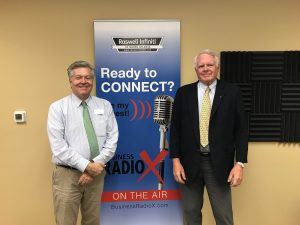
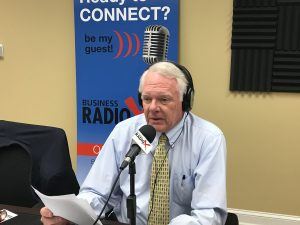
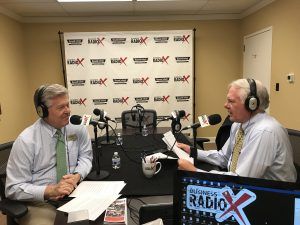
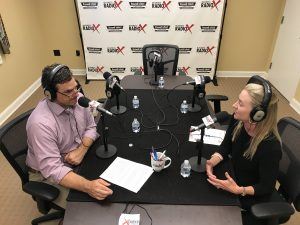
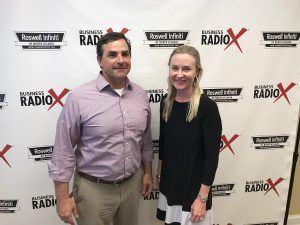
Clark Savage and John Ray

Clark Savage, Clayton CameraCraft Photography

Clark Savage, Clayton CameraCraft Photography

Clark Savage is a photographer, author and arts advocate. Since 1994, he has owned and operated Clayton CameraCraft Photography in Alpharetta, specializing in corporate and family photography. His photography career spans 30 years and includes creating portraits of presidents, music, and sports stars. Clark is Co-President of Arts Alpharetta, a non-profit organization dedicated to advancing Alpharetta as a cultural arts destination for artists and their work and strategic local partnerships with a variety of arts organizations. Arts Alpharetta operates in the newly opened Alpharetta Arts Center. Clark is also author of the forthcoming book The Kenyan Rhino Rider’s Club. Clark was born in Berkeley, CA and has lived in Georgia for 25 years.

For more information or to contact Clark, go to www.atlantaphotographer.com.

Tagged With: coporate photography, corporate photography, digital imagery, event photography, family portraits, Kenyan Rhino Rider's Club, lighting, North Fulton, North Fulton Business Radio, outdoor art, Photography, portrait photography, President Jimmy Carter

Decision Vision Episode 11: The Atlanta startup ecosystem and the Siggie Awards – An Interview with Gordon Rogers, Avondale Innovation District

April 18, 2019 by John Ray

Decision Vision
Decision Vision
Decision Vision Episode 11: The Atlanta startup ecosystem and the Siggie Awards – An Interview with Gordon Rogers, Avondale Innovation District
Loading
00:00 /
RSS Feed
Share
Link
Embed

Download file

“Decision Vision” Host Michael Blake and Gordon Rogers

The Atlanta startup ecosystem and the Siggie Awards

Startup investor and mentor Gordon Rogers speaks with “Decision Vision” host Michael Blake on the history and development of the Atlanta startup ecosystem, the pivotal role of Sig Mosley in this community, and the “Siggie Awards,” which honor Sig’s contribution and recognize other noteworthy Atlanta investors.

Gordon Rogers, Avondale Innovation District

Gordon Rogers

Gordon Rogers is a three decade veteran in the Atlanta startup community, particularly in the field of education technology and online learning. In 1992, he founded a company that created one of the industry’s first learning management systems. He led the start-up from the bootstrapped stage to an IPO, through a merger with Paul Allen’s company, Asymetrix Learning in 1998, now part of SumTotal Systems, a SkillSoft company. He has spent the past 15 years working with startups in the ed-tech sector, including K-12, higher-ed and career & tech ed programs.

He mentors early stage ventures at Georgia Tech’s ATDC incubator and Flashpoint programs. As a social impact investor and entrepreneur, he advises Village Capital’s Ed-Tech Accelerator and Points of Light Civic Accelerator programs. He’s served as an advisor to over a dozen startups, including Authentica Solutions (now BrightBytes), Crescerance, ExceptionALLY, and RapidLD. In his role as advisor to CTE Portfolio, he works with Career & Technology Education directors to streamline Work-Based Learning and Apprenticeship Programs. CTE Portfolio can be thought of as a student-friendly version of LinkedIn.

He is Past President of Atlanta Technology Angels, and serves on the TAG Top 40 committee. He co-founded Teachers & Techies, a group of educational innovators working to improve technology in schools. He also serves as a guest lecturer and business competition judge at Georgia State, Georgia Tech, Emory, University of Georgia and Kennesaw State University business schools.

The Avondale Innovation District™, located in downtown Avondale Estates, is a place-based urban development designed specifically to support entrepreneurs and creative professionals, foster open innovation, attract and accelerate new business ventures. It is the venue for the inaugural Siggie Awards.  The “Siggies” are a way to recognize some of the unsung heroes in the Atlanta startup community: early-stage investors. The “Siggies” are named after Sig Mosley, Managing Partner of Mosley Ventures. To nominate an Atlanta investor for a Siggie award or to get more information on the inaugural event on May 15, 2019, click here.

Michael Blake, Brady Ware & Company

Mike Blake, Host of “Decision Vision”

Michael Blake is Host of the Decision Vision podcast series and a Director of Brady Ware & Company. Mike specializes in the valuation of intellectual property-driven firms, such as software firms, aerospace firms and professional services firms, most frequently in the capacity as a transaction advisor, helping clients obtain great outcomes from complex transaction opportunities. Mike is also a specialist in the appraisal of intellectual properties as stand-alone assets, such as software, trade secrets, and patents.

He has been a full-time business appraiser for 13 years with public accounting firms, boutique business appraisal firms, and an owner of his own firm. Prior to that, he spent 8 years in venture capital and investment banking, including transactions in the U.S., Israel, Russia, Ukraine, and Belarus.

Brady Ware & Company

Brady Ware & Company is a regional full-service accounting and advisory firm which helps businesses and entrepreneurs make visions a reality. Brady Ware services clients nationally from its offices in Alpharetta, GA; Columbus and Dayton, OH; and Richmond, IN. The firm is growth minded, committed to the regions in which they operate, and most importantly, they make significant investments in their people and service offerings to meet the changing financial needs of those they are privileged to serve. The firm is dedicated to providing results that make a difference for its clients.

Decision Vision Podcast Series

Decision Vision is a podcast covering topics and issues facing small business owners and connecting them with solutions from leading experts. This series is presented by Brady Ware & Company. If you are a decision maker for a small business, we’d love to hear from you. Contact us at decisionvision@bradyware.com and make sure to listen to every Thursday to the Decision Vision podcast. Past episodes of Decision Vision can be found here. Decision Vision is produced and broadcast by Business RadioX®.


Visit Brady Ware & Company on social media:

LinkedIn: https://www.linkedin.com/company/brady-ware/

Facebook: https://www.facebook.com/bradywareCPAs/

Twitter: https://twitter.com/BradyWare

Instagram: https://www.instagram.com/bradywarecompany/

Show Transcript:

Intro: [00:00:01] Welcome to begin Decision Vision, a podcast series focusing on critical business decisions brought to you by Brady Ware & Company. Brady Ware is a regional, full-service accounting and advisory that helps businesses and entrepreneurs make vision a reality.

Michael Blake: [00:00:20] And welcome to another episode of Decision Vision, a podcast giving you, the listener, clear vision to make great decisions. In each episode, we discuss the process of decision making on a different topic. Rather than making recommendations because everyone’s circumstances are different, we talk to subject matter experts about how they would recommend thinking about that decision.

Michael Blake: [00:00:38] My name is Mike Blake, and I’m your host for today’s program. I am a Director at Brady Ware & Company, a full-service accounting firm based in Dayton, Ohio, with offices in Dayton; Columbus, Ohio; Richmond, Indiana; and Alpharetta, Georgia, which is where we are recording today. Brady Ware is sponsoring this podcast. If you like this podcast, please subscribe on your favorite podcast aggregator, and please also consider leaving a review of the podcast as well.

Michael Blake: [00:01:03] So, today, we’re going to talk about a startup project in Atlanta called the Siggie Awards. And we’re going to talk a little bit about the award program itself, but also dig into what goes into launching an award program, what it takes to build and sustain one, and whether you, as a business owner or decision maker, should consider being involved in an award program in your community.

Michael Blake: [00:01:25] And to help us today is Gordon Rogers, the Avondale Innovation District. Gordon is a 25-year veteran of startups in the field of digital education and learning management, both as a founder and an investor. Gordon is a mentor at Georgia Tech’s ATDC and Flashpoint Accelerator Programs, as well as Managing Director of Vernon Bridge Ventures, an early-stage capital advisory firm. He serves on the advisory boards of Authentica Solutions, Crescerance, ExceptionAlly, and Rapid LD.

Michael Blake: [00:01:55] As a social impact investor and entrepreneur, he advises Village Capital’s Education Accelerator, as well as Points of Light Civic Accelerator programs. He is also past president of Atlanta Technology Angels. He sits on planning committees for Venture Atlanta and TAG, Technology Association of Georgia, Top 40. He also serves as a guest lecturer and business plan competition judge at Georgia State University, Georgia Tech, Emory University, Kennesaw State University, and the University of Georgia Business Schools. He has made angel investments in mobile learning, online language training and employee wellness companies, and virtual world startups.

Michael Blake: [00:02:32] Gordon’s newest project is serving as venture partner of the Avondale Innovation District located in downtown Avondale Estates, which is almost due, well, I guess north and east of Atlanta. Avondale Innovation District is a place-based urban development designed specifically to support entrepreneurs and creative professionals foster open innovation, attract and accelerate new business ventures. It is the venue for the inaugural Siggies Awards. The Siggies is our way to recognize some of the unsung heroes in the Atlanta startup community. The Siggies are named after Sig Mosley, who is the Managing partner of Mosley Ventures and is widely regarded as the godfather of the Atlanta early stage investment community.

Michael Blake: [00:03:17] In addition, Gordon, how many children do you have? Seven or eight?

Gordon Rogers: [00:03:20] Seven at last count.

Michael Blake: [00:03:22] Severn at last count.

Gordon Rogers: [00:03:23] We’re holding.

Michael Blake: [00:03:24] And holding steady. Very talented, by the way. I’m an amateur musician. Gordon’s family is a gaggle of musicians and have some fascinating YouTube videos. In particular, a couple where they all play around the same piano doing a couple of songs. He’s doing percussion, playing the strings, playing the keys. And it’s remarkable, not only the musicianship, but they all get along well enough to accomplish that.

Gordon Rogers: [00:03:51] For those three minutes.

Michael Blake: [00:03:51] For those three minutes. Well, I have two, I have two kids, I’m not sure I can accomplish that for those three minutes. So, congratulations to you.

Gordon Rogers: [00:03:59] Thank you.

Michael Blake: [00:03:59] And I guess I didn’t realize how much you’re involved in addition to your expansive family. How on earth do you find the time for this?

Gordon Rogers: [00:04:12] Well, as you know, kids grow up. So, most of them have finished college by now. So, they’re “self-sustaining adults.”

Michael Blake: [00:04:21] Congratulations.

Gordon Rogers: [00:04:23] And we have one about to graduate from high school. So, we are not quite as encumbered as we once were.

Michael Blake: [00:04:30] The herd is somewhat thinning, I guess.

Gordon Rogers: [00:04:32] Yeah, but it’s kind of like a herd of cats.

Michael Blake: [00:04:34] But you’re still — I mean, you’re still busy, but you somehow found time to take on this new project. So, you, obviously, have a lot of demands on your time. You don’t say yes to everything. Why did you say yes to this?

Gordon Rogers: [00:04:46] Well, it was a chance to work with two people that I’ve admired and enjoy working with for quite some time. Ed Rieker, who is the guy who started and launched Avondale Innovation District, a serial entrepreneur from ATDC and others who have several healthcare startups that have gone on to success. And he’s always been a great supporter of the startup community.

Michael Blake: [00:05:11] Yes, he has.

Gordon Rogers: [00:05:10] And I’ve worked with him for, at least, 10 years. As a matter of fact, fun fact, I think, Mike, you and I were behind the microphones at a different podcast in 151 Locust in 2010.

Michael Blake: [00:05:27] That sounds right. Yeah, the old Startup Lounge Podcast.

Gordon Rogers: [00:05:29] The Startup Lounge Podcast was there. And you and Scott were kind of the originators of this whole process. And 151 Locust was an old farmhouse that Ed converted in the middle of Avondale Estates into a co-working space. And we held a lot of events there, one of which was hosting your Startup Lounge Podcast.

Michael Blake: [00:05:51] Yeah. And that was sort of a co-working space before it became cool to have co-working spaces. Really, I mean, before Atlanta Tech Village, before Tech Square, before Opportunity Hub, before for any of these guys, right?

Gordon Rogers: [00:06:03] Ed was a man ahead of his time.

Michael Blake: [00:06:06] And so, you’re involved now in the Avondale Innovation District. And then, at some point the conversation came up, “Let’s have, I guess, an awards ceremony,” or was that you’re just sick and tired of Sig getting every award there is? So, we’ve got to find a way to give an award to somebody else. How did that conversation come around?

Gordon Rogers: [00:06:24] It was a little bit of both. We thought, “Okay, Sig has received a lot of awards. Maybe it’s time to put him on the other side instead of being on the receiving end,” which is well-deserved over all those years. But to give him yet another award might be just another of the same old, same old.

Gordon Rogers: [00:06:43] And we both recognized that Sig has been around, a fixture really, for three decades or more. And he really is the guy who got the whole angel early startup program off within Atlanta. And, now, it’s time that he kind of takes a little more time to go off to his villa in Costa Rica and other places. And there’s so many other people around the community that are doing similar work but may not get such recognition. So, we thought, what better way to honor that legacy that Sig has created and let him provide some accolades to others, other deserving souls?

Michael Blake: [00:07:27] And I think there’s another benefit. I do want to get into the notion of recognizing people are social contributors. But, also, for a long time, this town was basically Sig, and maybe Charlie Paparelli, and maybe Steven Fleming. And if those three said no, you basically felt like your deal was done.

Michael Blake: [00:07:47] And Sig is still so highly regarded. He’s such an important fixture that I think a lot of people who would like guidance and funding themselves don’t realize there are many active people, maybe more active at their stage of their lives versus Sig at this point that can be resource to them. It’s an opportunity to highlight that and pass the baton on in a way, sort of, kind of, this group succession planning. Is that a reasonable way to think about it, or am I off the reservation?

Gordon Rogers: [00:08:16] No, I think you’re right. And let’s go back to another throwback to that Startup Lounge here. I don’t know if it was you or your buddy, Scott, that came up with that t-shirt “Sig said No.”

Michael Blake: [00:08:28] That was Scott. He was the funny one.
Gordon Rogers: [00:08:29] All right. So, just for those who weren’t around in that era, there was a T-shirt that kind of threw a little bit of humor at. If you got a no from Sig, essentially, your startup was dead in the town of Atlanta. And that put a lot of pressure on Sig, of course. And it just didn’t give a lot of opportunities for people with ideas to go somewhere else.

Michael Blake: [00:08:54] I think Sig would tell you, he didn’t want to be in that position.

Gordon Rogers: [00:08:57] Absolutely not.

Michael Blake: [00:08:57] He did not want to be that that grand inquisitor, that grand executioner.

Gordon Rogers: [00:08:59] Right, exactly. But he was the default. And I look back, and if you look at Silicon Valley, if Ron Conway was the only guy out there that made angel investments, where would that be today? There’s a lot of Ron Conways out there. And I argue there’s a lot of folks like Sig, but they don’t have the same name and reputation. And, now, it’s time to build more pillars. I mean, he’s been the central tent pole, but we need others holding up the tent as well.

Michael Blake: [00:09:29] I think part of that is cultural too. I think Silicon Valley has a culture where if you’re an angel investor, you’re kind of like the rock star mentality, you’re kind of okay with the spotlight and drawing a lot of people to you. I think, in Atlanta, we still have a little bit more keep it close to the vest. Yeah, I’d like to make some investments, but I don’t necessarily want everybody knowing that I have the wherewithal financially to make those investments too.

Gordon Rogers: [00:09:55] Fair enough. And, yeah, Sig is kind of the unsung hero. And he is, obviously, responsible for a lot of successes. But you know what, you can’t rely on one person because that one person is not going to do it forever. And so, if you want a sustainable ecosystem you got to have a lot of people in the game.

Michael Blake: [00:10:12] So, you’re setting up this award program. What are you looking to reward? What are you looking to acknowledge and bring to light? What categories do you want to acknowledge people in?

Gordon Rogers: [00:10:26] Well, the first people who we’re turning to are those entrepreneurs who have raised capital and want to recognize the angels and mentors that have helped them do that. So, for founders that have started companies and raised anywhere between, say, 250K up to a million dollars, it’s an actual seed stage investment.

Gordon Rogers: [00:10:47] We want them to nominate angel investors and others who have helped them raise that round because anyone who’s done a startup knows that that first round is probably the hardest. And the more people that are involved in that process, the better chances you have of getting that first round. So, that’s the launching pad. So, that’s one award.

Michael Blake: [00:11:09] Okay.

Gordon Rogers: [00:11:11] The other one is Investors’ Choice, which comes from angels choosing other investors and recognizing other investors. And that’s not necessarily people who write the biggest checks or the most checks. It’s the people who are there helping those startups refine their pitch deck, work on product market fit, mentor them through the many different programs that are around here today, which were not around back in the Startup Lounge days.

Gordon Rogers: [00:11:41] Besides ATDC, which has been there all along, but you’ve got the Farm, you’ve got TechStars. Most of the universities have entrepreneurship programs. All those rely on outside mentors and many angels to help provide that support. And those are the people we’re looking to recognize.

Michael Blake: [00:12:02] Now, you also have a category, an award called the Resurgent Award. What is that? Who do you think the ideal nominee for that award would be?

Gordon Rogers: [00:12:11] Well, yeah. We had a list of potential award categories, and I came up with 8 or 10, and we had to pare it down. But the two that Sig really, really wanted to make sure got recognized, one of those was that, originally, we call it the Comeback Kid, but it’s recognized as a fact that not every founder and, certainly, not every startup is successful the first time around. And we need to recognize and honor those who have gone through failure and be willing to do it again, and maybe got socked by the markets, or they had missed the product market fit, but they learned from that, and that wasn’t the end of their journey. And so, by giving this award and this recognition to someone who is “resurgent,” we want to encourage failure, and learning from that, and continuing. And that’s how you build the ecosystem.

Michael Blake: [00:13:09] And Bill Gates is famous for saying that, “That success is a lousy teacher.” I think that concept is so important. My wife is in entrepreneurial venture. And her business partner, who himself has had a couple of failed ventures said that, I think is very profound, “If you don’t start a business after the failed one, then you’ve wasted the most expensive education you’ve ever had.”.

Michael Blake: [00:13:36] And I think that’s profound, right? When you get to sort of rewind, you realize, “I should have paid more attention to marketing,” or “I should have had a compensation program that was different,” or “I should have pivoted.” Whatever those would have, could have, should have were, you gain no value from them if you don’t find some way to, sort of, act upon them and profit that, right? And profit from that.

Gordon Rogers: [00:13:58] Exactly.

Michael Blake: [00:13:59] And, of course, the other part of that is it requires an investment community to be accepting a failure. And one of the criticisms of the Atlanta ecosystem for a long time has been, one and done. You lose money, you get that reputation, you’re damaged goods, and you’re just done. Do you think that’s changing now in the Atlanta area? Can you get a second shot?

Gordon Rogers: [00:14:24] Absolutely. And that’s what the purpose of this award is to recognize that shift. Before 2010-2011, I would say what you just described was absolutely the situation. As more capital has come in and as investors have become more sophisticated, they are looking at the founders and say, “Did you learn from this? Are you coachable? Are you willing to try again?” And they’re willing to give them another shot. And that’s the whole purpose of this award is to recognize that the shift has occurred and to encourage that failure. We’re willing to try and try again.

Michael Blake: [00:15:03] So, you’ve mentioned the timeline of the startup community here in Atlanta. And you and I have both been referred to as the OGs of the community. I’m not sure how I feel about that, but I’m going to lean into it for the time being. What are some of the other ways you’ve seen the startup community here evolve in the last 10-15 years?

Gordon Rogers: [00:15:22] Well, again, the support infrastructure that did not exist back when 151 Locust was, as you’ve mentioned, the first co-working space, before it became cool. Now, you cannot throw a rock without hitting either an accelerator, incubator, or co-working space. And that’s also part of a stronger ecosystem. Back before, if you try a startup, and you were working out one or two places that were the only place you could go, if you failed there, you might want to go somewhere else, but there really wasn’t anywhere else.

Gordon Rogers: [00:15:59] And, now, you can bounce around from one accelerator program to the next. And, hopefully, you’re learning something from those. And those accelerator programs, they’re not all based just here. They’re part of national chains and international organizations, such as TechStars, for example. They are bringing international focus to these startups. And so, they plug those founders into a network, not just of national but international investors and customers. And so, none of that infrastructure was there even five years ago. It’s really shifted in the last few years.

Michael Blake: [00:16:33] Yeah. Even in Chamblee, where I live, there are, at least, two co-working spaces of, which I’m aware. And then just three miles north up Peachtree Boulevard, this Prototype Prime, Sanjay Parekh is out there. We’ll get him on a podcast at some point. And, now, you’re seeing some market segmentation, right? Each of these are bringing something a little bit different to the table. Globe Hub in Chamblee has sort of an international focus, and Prototype Prime has a maker space, and Opportunity Hub has become a focus for minority entrepreneurs or entrepreneurs of color. Kind of interesting how that’s shaking out, isn’t it?

Gordon Rogers: [00:17:12] Yeah. Well, because there’s so many products out there, there has to be some product differentiation. One aspect, a potential downside that I worry about is growth of a species called accelerators surfers. And that’s people who really don’t necessarily have a business plan, but they can exist and survive three months at a time going from one accelerator program to another. Hopefully, they’re learning from that program, but it could also be a lifestyle. It’s like, “Hey, this is cool, I get to hang around with other innovative thoughtful people,” and they go through three or four accelerators, and they still don’t have a product. But, hopefully, that’s not going to be the case with most entrepreneurs.

Michael Blake: [00:17:55] Now, one thing I would argue has been, I think, a refreshing constant of the Atlanta community is even though capital has been hard to come by, historically, and to some extent appropriately so, there’s always been, I think, a very broad willingness to kind of pitch in not necessarily because you think you’re going to get something out of it, but I think people like you, like Sig, like many others, Scott Burket, have been very willing to give of their time to be a resource to help the entrepreneurs up their game, because I think that’s been another shift. I think entrepreneurs on the local market are better. I think they’re more skilled, they’re more sophisticated. What do you think?

Gordon Rogers: [00:18:36] Well, I agree. And I agree, the mentorship aspect has always been healthy and robust. But without the other side of that coin, literally, which is writing checks, the capital does still have to be there. Now, arguably, you can do more with less capital, and that has created a much bigger funnel of choice for VCs and angel investors because if you have an idea, and you can set up a wireframe, and get yourself a cloud account, you may have a company.

Gordon Rogers: [00:19:09] And so, as a result, thousands of companies are created. How many make it across the finish line? How many are actually able to raise capital? That’s a tougher thing to look at. And so, with a large pipeline, one of the benefits of these accelerators is you can help whittle down the actual likely people who are going to succeed out of those programs.

Michael Blake: [00:19:32] I guess, part of it, also, and I post this on a chart of the day about a week and a half ago, and you just alluded to it, the cost of starting the business now is so much less. It’s down to orders of magnitude in the last 20 years, right? I guess, part of the other side of the coin is you may not need the coin, right? Bootstrapping a company is much more viable than it was even five years ago. So, there’s actually a little, I think – tell me if I’m wrong- – there’s a little bit of a supply crunch to of companies that might have been coming to you, or to Sig, or to Atlanta Technology Angels. They’re not coming to them anymore because they’re finding they can do it on their own, thank you very much.

Gordon Rogers: [00:20:15] Well, absolutely. And the more of that, the better because startups should not have to rely solely on VC and venture funds to get off the ground. And by being able to go further and achieve some kind of customer penetration with bootstrap funds, and they become healthier, then that just raises their own valuations, and then puts those founders in a much better position, more in the driver’s seat when it comes to negotiation for valuation, when it comes time to actually raise capital.

Michael Blake: [00:20:46] Now, I understand you’re partnering with a nonprofit organization in putting the Siggies together. Tell us about that.

Gordon Rogers: [00:20:51] Yes. Well, one of the important things that we wanted to do here is to bring members of the investment community, angel community together with those who are supportive of nonprofits. And so, we wanted to find a nonprofit that followed the philosophy that we all support. And in this case, STE(A)M Truck is the one that we selected. And STE(A)M Truck, started by Jason Martin three or four years ago, essentially, is maker labs on wheels. They travel around the schools that don’t have their own facility, and it teaches STEM and STEAM skills to middle-school kids, and it gives them the access to those facilities that they might not otherwise have. And he’s grown from one pickup to five or six trucks and trailers in the last four years.

Michael Blake: [00:21:45] And so, why them? What’s that connection that you saw, or what connection did they see with you?

Gordon Rogers: [00:21:53] Well, I first met Jason when he was in the Civic X Accelerator Program, which Points of Light started several years ago. And that’s where nonprofits and social enterprises learned, build, and perfect their business model, so they can become sustainable. And they were scrappy, they figured out how to do it. And they’ve lasted several years now and grown to serve thousands of kids all around Georgia.

Gordon Rogers: [00:22:24] And so, to me, that’s a model that more nonprofits and social enterprises need to be able to follow. Still, they need capital, they need help. And by bringing them in the same room as investors in more for-profit startups, hopefully, there’s going to be some serendipity there, and people will take a look and say, “Yeah, this is a great model.”

Michael Blake: [00:22:47] Okay. So, I want to switch a little bit to kind of the nuts and bolts because, I think, a lot of people think about starting awards programs, getting involved in awards programs. You’re now doing it. Is this the first one? I guess not because you’ve been involved with Tag top 40, Venture Atlanta, and awards program of sorts, at least, as competitive to be invited to make a pitch. And that’s become a very successful exercise on its own right. Probably one the most awarded in Atlanta now.

Michael Blake: [00:23:19] From your perspective, you’re a successful individual, you got a lot of demands in your time, why choose to be involved in awards programs? Why is that a good outlet for your time or a good use of your time?

Gordon Rogers: [00:23:31] Well, I guess, I looked at this, and Ed and I kind of put our heads together, and we decided, “Okay, let’s go from ironic to iconic.” And so, we’re going to start off with — it’s sort of tongue and cheek. It’s not-

Michael Blake: [00:23:44] That sounds like Ed, by the way.

Gordon Rogers: [00:23:46] Yes, yeah. We decided not to take this too seriously. And, thankfully, Sig is happy to play along. So, we’re not giving out any kind of gold statuettes. We’re actually giving out bubbleheads with Sig’s likeness on it. And, again, we stole that idea from Scott because he had that idea back in the day. And we’re looking at some interesting things. Our version of the swag bag for the winners is the Siggie sack. And so, there will be some interesting things in that for the winners.

Gordon Rogers: [00:24:18] And so, we hope to have fun along the way, not take it too seriously. It is the first one of these awards. So, it’s the inaugural Siggie awards. But we’re hoping it will become an annual event, a must-attend event. And, again, as people age out of the ecosystem like Sig, he’s not going to be here forever, we need to build that next generation. So, my tag line for this is “Star Trek the Next Generation.”

Michael Blake: [00:24:48] Okay. Well, yeah. And I think for something like this, it is important not to take it too seriously.

Gordon Rogers: [00:24:56] That’s why we’re bringing you and Scott in to help with that.

Michael Blake: [00:24:59] I clearly see. Clearly, you’re not afraid of failure. That’s for sure.

Gordon Rogers: [00:25:02] Right.

Michael Blake: [00:25:03] Just as a side note, we’d contemplated doing some kind of awards program. We just didn’t have the time to pull it off. But we did get as far as we were going to name at the Shafties.

Gordon Rogers: [00:25:14] Okay.

Michael Blake: [00:25:15] Because the Startup Lounge logo was a gear shift. So, we’re going to give people like a golden gear shaft or something like that.

Gordon Rogers: [00:25:23] Right, right.

Michael Blake: [00:25:23] But we couldn’t really decide if that was going to be kind of too edgy or not. So, it kind of died there.

Gordon Rogers: [00:25:29] Well, we think the community is matured enough that they are ready for this kind of event.

Michael Blake: [00:25:34] I think so. I think you’re going to find that there’s going to be a tremendous amount of community support. Of course, Brady Ware supporting the program.

Gordon Rogers: [00:25:42] We appreciate that.

Michael Blake: [00:25:43] And we’re delighted to be a charter sponsor, so.

Gordon Rogers: [00:25:45] We know Sig is willing to play along because, again, going back to the 151 Locust days, we had those events called the Spring Fling. And we took over the streets. And there was a dunk tank, and guess who was in the middle the dunk tank? Sig Mosley.

Michael Blake: [00:26:00] He was. I did the dunk tank as well, and I learned a couple of things. The one I learned just how much my children hate me because when they couldn’t hit the target, they would just simply walk up and smack the target to make sure that I would be dunked.

Gordon Rogers: [00:26:17] Right.

Michael Blake: [00:26:18] Have you ever done a dunk tank?

Gordon Rogers: [00:26:20] I did. At that point, yes.

Michael Blake: [00:26:21] It is-

Gordon Rogers: [00:26:22] I didn’t let my kids participate though.

Michael Blake: [00:26:23] It is jarring.

Gordon Rogers: [00:26:25] It is.

Michael Blake: [00:26:26] I don’t think my back has ever been so wrenched as to when, all of a sudden, the seat just sort of gives way. And even though you fall into a tank of water, now, I know how the coyote feels basically when that happens. It’s a surprisingly weird physical experience.

Gordon Rogers: [00:26:41] Well, as I said, Sig has a good sense of humor, but he drew the line at that. He wouldn’t do the dunk tank this time.

Michael Blake: [00:26:46] Well, everybody has to draw the line someplace.

Gordon Rogers: [00:26:48] Yeah.

Michael Blake: [00:26:52] Thinking as somebody, then, who is a financial contributor, what’s the case for a company that has limited funds, limited marketing budget to support awards programs like this?

Gordon Rogers: [00:27:06] Well, I think it shows that they are recognizing the importance of building the community. And I hate to use that proverbial, it takes a village term, but it really does. And by participating in that, I mean, these things don’t happen automatically. We have to pay caterers. And, thankfully, Ed is really digging into his own because he’s providing the facility without charge.

Gordon Rogers: [00:27:32] And it’s also to showcase the fact that there are other centers of activity besides Midtown, and Buckhead, and Alpharetta. Avondale Estates is kind of a well-kept secret, although it’s due east, five miles due east of Ponce. So, we just want to show showcase the fact that there’s other parts for entrepreneurship activity around Atlanta. And it’s a stone’s throw from downtown Decatur.

Michael Blake: [00:28:02] You’re right about that. I mean, Decatur is sneaky entrepreneurial. Avondale is sneaky entrepreneurial. Chamblee is sneaky entrepreneurial in that way as well. I haven’t thought about that, but you’re right. A way to sort of — and there’s nothing wrong with the center of gravity, and the Georgia Tech Mafia and so forth, but there’s a lot of Atlanta that is not Georgia Tech, and TechSquare, and ATDC. And they’re great organizations, but they’re not for everybody. They’re not for everybody from a programmatic perspective. And we know how hard it is to get around town too, that for somebody coming in from Avondale Estates having to go into Midtown, that’s not an insignificant time commitment anymore. So, being able to localize these things, I think, is really important.

Gordon Rogers: [00:28:46] That and the fact that, as you’ve pointed out, as the economy has improved, rates for per square foot have gone up in those areas that you just mentioned. And most startups are pretty cash-strapped. And while some of these programs do give them free rent for two to three months, eventually, they have to start paying. And no one wants to commute two hours to get to their office. And so, they can find affordable space along with other people – mentors and co-workers – who are doing similar things with startups that provide that support. Then, they shouldn’t have to drive for two hours to get there.

Michael Blake: [00:29:27] So, how do you define — have you set a vision for this program will be a success if A, B, and/or C happen? And if so, what are those A, B, and Cs?

Gordon Rogers: [00:29:40] I guess if we get a flood of nominations for these different categories and get a lot of people recognized for what they’re doing, and we get a great turnout on May 15th at Avondale Innovation District, I think those are the things. And if we get people who were not prior to this event, didn’t have that awareness, or didn’t have that recognition. And so, then, founders can say, “Well, here’s some more people that I can tap into that I didn’t even know existed.” And so, again, it’s spreading the word about the entrepreneurial ecosystem.

Michael Blake: [00:30:17] Is there also a hope that perhaps by recognizing those who have made those contributions that it might inspire others to follow suit and maybe be that generation after next?

Gordon Rogers: [00:30:28] Yes, what you said, exactly.

Michael Blake: [00:30:29] And, hopefully, inspire the current one maybe to expand that as well, I guess.

Gordon Rogers: [00:30:34] Absolutely.

Michael Blake: [00:30:35] So, I think one of the challenges that awards programs have is they can become a little cynical. I think, you’ve probably seen it. I know that I have. They can be taken over by sponsors. They can start to become a vehicle, whereby the primary goal starts to become not so much recognizing whatever it is the award program was supposed to recognize. But then, sponsors want to recognize their clients, people on the board selection committee want to nominate p they can generate business. We’ve both seen that. And I’m sure you’re very aware of that. How do you keep an award program like this from going in that direction to make sure that it maintains its value over the long term?

Gordon Rogers: [00:31:32] Well, I think, by adhering to the standards. Ed, as I pointed out, has graciously agreed to put this event on. And, obviously, he’d love to have help from others, but there’s no real necessity to bow to that kind of financial pressure. We want people who are going to contribute on the basis of recognizing and helping building that ecosystem. And so, hopefully, we can stay true to that philosophy.

Michael Blake: [00:32:03] Do you see this award continuing to be to be run 5-10 years from now?

Gordon Rogers: [00:32:11] I would think, yeah, that’s quite a possibility. I mean, I think, it’s a — again, a lot depends on the first couple of years. It always takes a while to get these events off the ground. I remember with Tag Top 40, that was a much smaller production than it is now. And it takes two to three years to get these things into momentum. Even Venture Atlanta started off relatively small scale back in, I think, 2010 when they started or ’09. And it’s been a great success, but it’s taken a few years to get to reach their stride.

Michael Blake: [00:32:47] One of the things I’ve found, as I’ve been involved in a few of these things, it’s surprisingly hard to get nominations. I’ve always found that. I always figured, “Well, having award and nominations are flowing. Who wouldn’t like to have the public recognition, have people clap for you, etcetera, etcetera, so they get a front seat of the banquet?” But it’s actually deceptively hard to get a good nomination flow, isn’t it?

Gordon Rogers: [00:33:09] Well, it is. And, also, people don’t necessarily like to follow directions. When I send out this-

Michael Blake: [00:33:13] I have teenager, so I’m familiar with that. Yes.

Gordon Rogers: [00:33:15] Well, yeah, but even adults. You send them an email saying, “Hey, we’re having this event. Here’s the link to the Siggie awards site. We’d love for you to nominate.” And they reply, “Oh, great idea. Here’s five people I want to nominate.” And they missed the fact that, well, you need to fill out the form because why you’re nominating this individual, et cetera. So, I appreciate their willingness to help, but they’ve got to take that final step to actually get the nominations.

Michael Blake: [00:33:41] Yeah, if you break the — And we ran this at Startup Lounge to is that people want to be in the program, but they know us. They figure they can just send us an email, but the thing is we have systems of knowing who’s going to be in. If you break the system, then we might remember you’re coming, or we might not remember that you’re coming, right?

Gordon Rogers: [00:33:59] Right.

Michael Blake: [00:34:00] It’s not personal. It’s just Scott and I aren’t all that bright to, sort of, remember everything.

Gordon Rogers: [00:34:05] Well, you got a lot going on.

Michael Blake: [00:34:05] So, in order to sustain this program, what do you think are the key two or three things you need to make sure that this program is sustainable, so 5-10 years, we are still talking about, hopefully, as, by then, an institution of the Atlanta startup scene?

Gordon Rogers: [00:34:26] Well, for that, I would almost prefer to throw that over to my colleague and your good friend as well, Peter Baron of Carabiner Communications, because they are our communications partner. And they are starting to socialize this. And they are the experts on how to make something like this become, hopefully, a meme or something that people want to get to, what’s the buzz, and let’s find out what this is all about, and it’s a must-attend event.

Gordon Rogers: [00:34:55] Now, that doesn’t happen overnight typically, but by getting it into the hands of the right people and building awareness in the communications side of things with the owners and the investors, hopefully, the VCs will pay attention to this because this is helping their pipeline down the road. Typical VCs aren’t going to invest in the seed round, but they do want to keep their eyes open for the promising entrepreneurs. So, it behooves them to have this event continue because five years from now, they’re going to be writing series A and B checks for those same entrepreneurs.

Michael Blake: [00:35:31] It is a visibility into who is working with lots of entrepreneurs too, right-

Gordon Rogers: [00:35:35] Oh yeah.

Michael Blake: [00:35:35] … because you’re networking your pipeline?

Gordon Rogers: [00:35:37] Yes.

Michael Blake: [00:35:37] So, all right. So, I’m running out of time. So, we have to kind of wrap this up. How can people contact you or follow you to learn more about the Siggies?

Gordon Rogers: [00:34:54] Well, I’m on LinkedIn at Gordon Rogers. The Siggie Awards has its own site, siggieawards.com. And so, I would start with those two.

Michael Blake: [00:35:56] All right. Well, that’s going to wrap it up for today’s program. I’d like to thank Gordon Rogers so much for joining us, and sharing his expertise with us, and helping us learn more about the Siggie Award Program.

Michael Blake: [00:36:07] We’ll be exploring a new topic each week. So, please tune in, so that when you’re faced with your next business decision, you have a clear vision when making it. If you enjoy this podcast, please consider leaving a review with your favorite podcast aggregator. It helps people find us, so that we can help them. Once again, this is Mike Blake. Our sponsor is Brady Ware & Company. And this has been the Decision Vision Podcast.

Tagged With: Dayton accounting, Dayton business advisory, Dayton CPA, Dayton CPA firm, Emory University, Gordon Rogers, Investors Choice, Kennesaw State University, Michael Blake, Mike Blake, Mosley Ventures, Sig Mosley, Siggie Awards, Siggies, startup community, startup ecosystem, startups, venture capital, venture capital funding

NORTH ATLANTA’S BIZLINK: GNFCC Women In Business Award Winners Lindsey Petrini, WellStar North Fulton Hospital, and Staci Hutto, Troy University

April 17, 2019 by John Ray

North Fulton Studio
North Fulton Studio
NORTH ATLANTA’S BIZLINK: GNFCC Women In Business Award Winners Lindsey Petrini, WellStar North Fulton Hospital, and Staci Hutto, Troy University
Loading
00:00 /
RSS Feed
Share
Link
Embed

Download file

Staci Hutto, Kali Boatright, and Lindsey Petrini

Show Summary

This edition of “North Atlanta’s Bizlink” features two GNFCC Women in Business Award Winners for 2019. Lindsey Petrini, Chief Operating Officer of WellStar North Fulton Hospital is the 2019 JenLan Rising Star Award Winner, and Staci Hutto, Atlanta Area Coordinator for Troy University, is the Runner-up for the JenLan Rising Star Award. These exceptional leaders were interviewed by Kali Boatright, CEO of the Greater North Fulton Chamber of Commerce and Host of “North Atlanta’s Bizlink.”

The award is named for Jennifer Lan, a young professional and GNFCC member who passed away in 2013, the first year of the Women in Business luncheon. Each year, GNFCC honors young professionals who demonstrate the qualities of a born leader, are relentless in reaching their professional goals; and triumphs over obstacles with the Jen Lan Rising Star Award.

Lindsey Petrini, Chief Operating Officer, WellStar North Fulton Hospital

Lindsey Petrini, Chief Operating Office, WellStar North Fulton Hospital

Lindsey Petrini is the Chief Operating Officer of WellStar North Fulton Hospital. WellStar North Fulton Hospital is a 202-bed facility located in Roswell, Georgia. The hospital is recognized for its accredited cancer program, trauma and primary stroke center designations, and for providing a continuum of services through its centers and programs, including neurosciences, pain management, cardiology, women’s services, rehabilitation, surgical services and oncology. For more information click here.​


Staci Hutto, Area Coordinator, Troy University

Staci Hutto, Atlanta Area Coordinator, Troy University

Staci Hutto currently serves as the Area Coordinator for Troy University in Atlanta, Georgia.  Staci is a two-time graduate of Troy University.  She has a Bachelor of Science in Marketing and a Masters in Public Administration.  Staci works each day with students from all walks of life to ensure their enrollment process at TROY is unmatched and unrivaled by any other institution of higher learning.

Mrs. Hutto also oversees the TROY Partnership program, which offers businesses and organizations an opportunity to further their employee’s educational opportunities through TROY. Staci has served in various capacities and functions in higher education for nearly 9 years now.  Recently, Mrs. Hutto was the catalyst in moving TROY’s Atlanta office to the North Fulton economic powerhouse.  The new location boasts a state of the art facility that encourages creative learning and networking amongst students.

Staci and her husband have two sons and reside in Atlanta Metro area.

About GNFCC and “North Atlanta’s Bizlink”

Kali Boatright, President and CEO of the Greater North Fulton Chamber of Commerce

North Atlanta’s Bizlink is produced by the Greater North Fulton Chamber of Commerce (GNFCC) and is hosted by Kali Boatright, President and CEO of GNFCC. The Greater North Fulton Chamber of Commerce is a private, non-profit, member-driven organization comprised of over 1400 business enterprises, civic organizations, educational institutions and individuals.  Their service area includes Alpharetta, Johns Creek, Milton, Mountain Park, Roswell and Sandy Springs. GNFCC is the leading voice on economic development, business growth and quality of life issues in North Fulton County.

The GNFCC promotes the interests of our members by assuming a leadership role in making North Fulton an excellent place to work, live, play and stay. They provide one voice for all local businesses to influence decision makers, recommend legislation, and protect the valuable resources that make North Fulton a popular place to live.

For more information on GNFCC and its North Fulton County service area, follow this link or call (770) 993-8806.


Tagged With: gnfcc podcast, gnfcc radio, GNFCC Talent Coalition, GNFCC women in business, greater north fulton chamber, Greater North Fulton Chamber of Commerce, Kali Boatright, north atlanta's bizlink, North Fulton healthcare, North Fulton hospital, talent coalition, The Greater North Fulton Chamber of Commerce, Troy University, Troy University Atlanta, Wellstar North Fulton, Women in Business, women in business award winners

Dr. Ruben Boling, University of North Georgia, and Caleb Hearn, Opus Affinity

April 16, 2019 by John Ray

North Fulton Business Radio
Dr. Ruben Boling, University of North Georgia, and Caleb Hearn, Opus Affinity
Loading
00:00 /
RSS Feed
Share
Link
Embed

Download file

John Ray, Dr. Ruben Boling, and Caleb Hearn

Dr. Ruben Boling, Director, Center for Entrepreneurship and Innovation, University of North Georgia

Dr. Ruben Boling, Director, Center for Entrepreneurship and Innovation, University of North Georgia

With over 30 years of combined experience in business and academics, Dr. Boling has developed an expertise in the fields of strategy, entrepreneurship and management. During his business career, Ruben has served in leadership and staff positions for several major companies including Arthur Andersen, Georgia Power and WorldColor. He has also served as owner or co-owner of two different small businesses and as a key partner in start-up initiatives in larger companies and institutions. His managerial and consulting experience has spanned several industries and focused on enhancing or improving strategy, customer acquisition and retention, and operations.

As part of the Mike Cottrell College of Business and as Director of the Center for Entrepreneurship and Innovation, Dr. Boling’s primary focus is to promote entrepreneurship and business leadership in the classroom and regional and international business community.

The Center for Entrepreneurship & Innovation in the Mike Cottrell College of Business at UNG is a collaborative initiative that engages students, faculty and staff across the University, as well as communities within the region who imagine, innovate, start and grow new and existing ventures. The initiatives within the Center for Entrepreneurship & Innovation are designed to spark entrepreneurial efforts become the go-to place for aspiring and existing entrepreneurs across the north Georgia region.

The University of North Georgia (UNG) comprises five campuses and almost 20,000 students. UNG offers more than 100 programs of study ranging from certificate and associate degrees to professional doctoral programs.


Caleb Hearn, CEO of Opus Affinity

Opus Affinity, a student business founded by Caleb Hearn and Sam Herrera at UNG, provides a means for brands and individual to share their unique amazing stories through their application, unique code recognition software, and direct integration into existing product label design.

Opus Affinity was a top 5 finisher in the 2019 Georgia Inventure Prize Competition.


Tagged With: craft brewery, Dr. Ruben Boling, entrepreneurial education, Entrepreneurship, Etowah Meadery, Georgia Craft Brewers Guild, Georgia Inventure Prize Competition, Mike Cottrell College of Business, Opus Affinity, QR code, Ruben Boling, Sam Herrera, Samuel Herrera, student entrepreneurship, University of North Georgia

Frazier & Deeter’s Business Beat: Chuck Walker, Chemlink Laboratories

April 16, 2019 by John Ray

Business Beat
Business Beat
Frazier & Deeter's Business Beat: Chuck Walker, Chemlink Laboratories
Loading
00:00 /
RSS Feed
Share
Link
Embed

Download file

Roger Lusby, Chuck Walker, and Matt Williams on “Business Beat” presented by Alpharetta CPA firm Frazier & Deeter

Show Summary

This edition of Frazier & Deeter’s “Business Beat” features Chuck Walker, Founder and Chairman of Chemlink Laboratories. The Chemlink story is fascinating, from their serendipitous beginnings in tablet technology to a successful enterprise which three decades later is recognized for their leadership in innovation and environmental sustainability.  Alpharetta CPA firm Frazier & Deeter is pleased to bring you success stories like Chemlink in the “Business Beat” podcast series.

Chuck Walker, Chemlink Laboratories

Chuck Walker, Chemlink Labs

Chuck Walker is the Founder and Chairman of Chemlink Laboratories. For over 25 years, Chemlink has been a leader and innovator in tablet technology. Founded in 1989 as a research and development company specializing in formulating effervescent powders and tablets used as cleaners and disinfectants. ChemLink’s patented technologies encompass a variety of markets including household, industrial, beauty supplies and medical/dental.

Since its inception, this Kennesaw, GA-based company has worked to reduce the environmental impact of its products, an effort which includes identifying renewable and less-toxic chemicals for its formulas. ChemLink also has become a strong advocate for sustainability among its customers and is recognized as an authority on cost-effective approaches to producing more earth-friendly products. In 2015, the company participates in the United States Environmental Protection Agency (EPA) Safer Choice program, an initiative that helps consumers, businesses and institutional buyers identify products which perform well, are safer to use and are cost-effective. In 2015, the company was recognized by the EPA as a Safer Choice Partner of the Year in the “Innovators” category.

Chemlink works with companies of all sizes, from independent entrepreneurial companies to Fortune 500 companies. Chemlink creates custom solutions to the challenges their clients face, whether that’s a need for a new delivery system for an existing product, or a problem that can’t be, or hasn’t yet been, solved by liquid formulations.

Frazier & Deeter

The Alpharetta office of Frazier & Deeter is home to a thriving CPA tax practice and Employee Benefit Plan Services group. CPAs and advisors in the Frazier & Deeter Alpharetta office serve clients across North Georgia and around the country with services such as personal tax planning, estate planning, business tax planning, business tax compliance, state and local tax planning, financial statement reviews, financial statement audits, employee benefit plan audits, internal audit outsourcing, cyber security, data privacy, Sarbanes-Oxley (SOX) and other regulatory compliance, mergers and acquisitions, and more. Alpharetta CPA professionals serve clients ranging from business owners and executives to large corporations.

Roger Lusby, Managing Partner of Alpharetta CPA firm Frazier & Deeter

Roger Lusby, host of Frazier & Deeter’s “Business Beat,” is the Alpharetta Office Managing Partner for Frazier & Deeter. He is also a member of the Tax Department in charge of coordinating tax and accounting services for our clientele. His responsibilities include a review of a variety of tax returns with an emphasis in the individual, estate, and corporate areas. Client assistance is also provided in the areas of financial planning, executive compensation and stock option planning, estate and succession planning, international planning (FBAR, SFOP), health care, real estate, manufacturing, technology and service companies.


LinkedIn: https://www.linkedin.com/company/frazier-&-deeter-llc/
Facebook: https://www.facebook.com/FrazierDeeter
Twitter: https://twitter.com/frazierdeeter

Past episodes of Frazier & Deeter’s “Business Beat” can be found here.

Tagged With: dental cleansers, dental supplies, disinfectants, effervescent powders, Environmental Protection Agency, EPA, Frazier & Deeter's Business Beat, Frazier and Deeter, Frazier Deeter, household cleaners, intellectual property, kennesaw, Kennesaw GA, less-toxic chemicals, liquid formulations, Matt Williams, Partner at Frazier & Deeter, patent protection, Patents, renewable chemicals, Roger Lusby, Safer Choice Partner of the Year, Safer Choice Program, sustainability, tablet technology, tablets

Decision Vision Episode 10: Should I Have a Quality of Earnings Report Done? – An Interview with Teresa Snyder, Brady Ware & Company

April 11, 2019 by John Ray

Decision Vision
Decision Vision
Decision Vision Episode 10: Should I Have a Quality of Earnings Report Done? – An Interview with Teresa Snyder, Brady Ware & Company
Loading
00:00 /
RSS Feed
Share
Link
Embed

Download file

Teresa Snyder, Brady Ware & Co., and Mike Blake, Host of “Decision Vision”

Should I Have a Quality of Earnings Report Done?

What is a quality of earnings report? Why would I want one done for my business? How does a quality of earnings report help as I’m getting ready to make an acquisition or sell my company? These questions and more are answered in this episode of “Decision Vision,” as host Michael Blake, Director of Brady Ware & Company, interviews Teresa Snyder, Director of Brady Ware & Company.

Teresa Snyder, Brady Ware & Company

Teresa Snyder, Brady Ware & Company

Teresa Snyder is a Director of Brady Ware & Company. Teresa has over twenty-five years of experience in public accounting and private industry. Her experience includes not-for-profit organizations, professional service firms, wholesalers, manufacturing and importers/exporters of various industries. Teresa has assisted her clients in a broad range of general management and financial consulting services, accounting systems design, and accounting and financial reporting issues.

In addition to providing client service, Teresa serves as the Atlanta Audit Leader for the firm. She has earned the AICPA IFRS Certificate. Prior to joining the firm, Teresa specialized in software consulting and implementation of fully integrated accounting software for various types of organizations including wholesalers and manufacturers, and importers/exporters.

Teresa is a CPA in Georgia and a member of the American Institute of Certified Public Accountants and the Georgia Society of Certified Public Accountants. Teresa has served as a coach for youth sports and is involved in a variety of not-for-profit organizations where she holds leadership positions.

Michael Blake, Brady Ware & Company

Mike Blake, Host of “Decision Vision”

Michael Blake is Host of the Decision Vision podcast series and a Director of Brady Ware & Company. Mike specializes in the valuation of intellectual property-driven firms, such as software firms, aerospace firms and professional services firms, most frequently in the capacity as a transaction advisor, helping clients obtain great outcomes from complex transaction opportunities. Mike is also a specialist in the appraisal of intellectual properties as stand-alone assets, such as software, trade secrets, and patents.


He has been a full-time business appraiser for 13 years with public accounting firms, boutique business appraisal firms, and an owner of his own firm. Prior to that, he spent 8 years in venture capital and investment banking, including transactions in the U.S., Israel, Russia, Ukraine, and Belarus.

Brady Ware & Company

Brady Ware & Company is a regional full-service accounting and advisory firm which helps businesses and entrepreneurs make visions a reality. Brady Ware services clients nationally from its offices in Alpharetta, GA; Columbus and Dayton, OH; and Richmond, IN. The firm is growth minded, committed to the regions in which they operate, and most importantly, they make significant investments in their people and service offerings to meet the changing financial needs of those they are privileged to serve. The firm is dedicated to providing results that make a difference for its clients.

Decision Vision Podcast Series

Decision Vision is a podcast covering topics and issues facing small business owners and connecting them with solutions from leading experts. This series is presented by Brady Ware & Company. If you are a decision maker for a small business, we’d love to hear from you. Contact us at decisionvision@bradyware.com and make sure to listen to every Thursday to the Decision Vision podcast. Past episodes of Decision Vision can be found here. Decision Vision is produced and broadcast by Business RadioX®.


Visit Brady Ware & Company on social media:

LinkedIn: https://www.linkedin.com/company/brady-ware/

Facebook: https://www.facebook.com/bradywareCPAs/

Twitter: https://twitter.com/BradyWare

Instagram: https://www.instagram.com/bradywarecompany/

Show Transcript:

Intro: [00:00:01] Welcome to Decision Vision, a podcast series focusing on critical business decisions, brought to you by Brady Ware & Company. Brady Ware is a regional, full-service, accounting and advisory firm that helps businesses and entrepreneurs make vision a reality.

Michael Blake: [00:00:20] And welcome back to Decision Vision, a podcast giving you, the listener, clear vision to make great decisions. In each episode, we’ll discuss the process of decision making on a different topic. Rather than making recommendations because everyone’s circumstances are different, we’ll talk to subject matter experts about how they would recommend thinking about that decision.

Michael Blake: [00:00:40] Hi. This is Mike Blake. And I’m your host for today’s program. I’m a Director at Brady Ware & Company, a full-service accounting firm based in Dayton, Ohio with offices in Dayton; Columbus, Ohio; Richmond, Indiana; and in Alpharetta, Georgia, which is where we are recording today. Brady Ware is sponsoring this podcast. If you like this podcast, please subscribe on your favorite podcast aggregator, and please also consider leaving a review of the podcast as well.

Michael Blake: [00:01:04] So, today, we’re going to talk about something called quality of earnings reports. And this an important topic. We’re, right now, at a high point over the last 10 years of merger and acquisition activity, which in English means that businesses are being bought and sold all over the place, and valuations are very attractive, financing is out there. Whether you think it’s back to the good slash battle days of 2006 -2007, I’ll leave it to you to make that determination. But the fact of the matter is that buying businesses is definitely back, and it’s back in style.

Michael Blake: [00:01:42] And as it turns out, a lot of that or a lot of my practice in the business appraisal happens to be in the M&A world. And my job is to help a client figure out the appropriate price and, to a certain extent, the terms associated with the transaction. But within that process of examining a transaction, there’s this thing that we call due diligence. And due diligence, when we really get down to it, is really just trying to answer the question, is this business what the seller says the business is? It’s really all that and a bag of chips basically.

Michael Blake: [00:02:22] That due diligence process, if it’s done well, is typically very involved and a very engaged process. It sometimes takes 30 days. Usually, it takes 60 to 90 days. And I’ve seen it go as far or as long as 180 days if it’s a particularly complicated transaction. And the due diligence process will involve everything from legal due diligence, intellectual property, customer due diligence, and so forth. And to be perfectly candid, from the seller’s perspective, it’s about as comfortable as your garden variety colonoscopy. But if you want to sell your business, you want to get the right price for it, that’s what you got to do. There’s just no alternative to it.

Michael Blake: [00:03:07] Now, financial due diligence, of course, is an important part of this entire kind of investigation and, sort of, crunching the numbers. And what we’re going to learn about today is, kind of, a specialized portion of that financial due diligence that’s called quality of earnings. And what quality of earnings means at the end of the day is that not all earnings are alike. Accounting is a funny thing. Accounting is a language. And like any language, a word or a term can mean different things depending on the context, depending on the syntax of that conversation.

Michael Blake: [00:03:47] And so, quality of earnings can mean different things to different people, to different buyers. And looking at quality of earnings has become much more in vogue. I’ve seen it come much more in vogue in, say, the last 10 years where a specific exercise is done, not just to, kind of, validate the numbers that are presented, but really dig into what do those numbers mean, is the financial performance of the company sustainable, is it telling us the story of what we would like to do.

Michael Blake: [00:04:19] But, of course, with performing additional due diligence, that means extra expense, extra time, extra fees. So, the question comes up, does it make sense to perform or have a quality of earnings report done on this particular transaction?

Michael Blake: [00:04:35] And for those of you who have listened before, I am not qualified to tell you that. I’m not an accountant. I’m not a CPA. I don’t even do my own taxes. But I have somebody here today who is qualified to help us answer that question. And she is my friend and business partner, Teresa Snyder.

Michael Blake: [00:04:50] Teresa is an audit partner with with Brady Ware. She has over 25 years of experience in public accounting and private industry. Her experience includes not-for-profit organizations, professional services firms, wholesalers, manufacturing, and importers/exporters of various industries. Teresa has assisted her clients in a broad range of general management and financial consulting services, accounting systems design, and accounting and financial reporting issues.

Michael Blake: [00:05:17] In addition to providing clients service, Teresa serves as the Atlanta Audit Leader for the firm. She has earned the AICPA IFRS, which means international gap certificate. Prior to joining the firm, Teresa specialized in software consulting and implementation of fully-integrated accounting software for various types of organizations, including wholesalers, and manufacturers, and importers/exporters. Now, until I looked this up, I did not know you are that much of a tech head. You’ve been holding out on me.

Michael Blake: [00:05:44] Teresa is a CPA in Georgia and a member of the American Institute of Certified Public Accountants and the Georgia Society of Certified Public Accountants. Teresa has served as a coach for youth sports and is involved in a variety of not-for-profit organizations in which she holds leadership positions. Teresa, thank you so much for coming on the program today.

Teresa Snyder: [00:06:05] Thank you, Mike. Happy to be here.

Michael Blake: [00:06:07] So, let’s, sort of, before we get into it, I’d like to learn a little bit more and let our listeners learn a little bit more about your role at Brady Ware. When we say that you’re the Director of the Audit Leader of the Atlanta office of Brady Ware, what does that mean? What does somebody who hears that take away from it?

Teresa Snyder: [00:06:28] Well, our team provides audit and review services that help our clients in meeting their financial reporting obligations to investors and bankers. We also serve as advisors to our clients in a variety of business transactions, which include M&A transactions.

Michael Blake: [00:06:47] Okay. And one of the services that you provide out of this office is a quality of earnings analysis.

Teresa Snyder: [00:06:54] Yes, that’s correct.

Michael Blake: [00:06:55] So, somebody is buying a company, and they’re really interested, but they think that they would like to kind of do that deep dive into the financials. That’s something that you do through your practice, correct?

Teresa Snyder: [00:07:11] Yes, that’s right.

Michael Blake: [00:07:12] So, what is a quality of earnings analysis exactly? What is a client buying?

Teresa Snyder: [00:07:18] Well, it’s a detailed analysis of all the components of the company’s revenue and expenses, their operating cash flows, and their assets and liabilities. Typically, we’re going to look at a period of about 24 to 36 months of financial data, so that we can assess the accuracy of the historical data and consider the sustainability of future operations.

Michael Blake: [00:07:42] So, I’d like to hone in a little bit on the sustainability. What are the kinds of things that make operations or make earnings sustainable versus not sustainable?

Teresa Snyder: [00:07:52] Well, we’re looking for transactions such as non-recurring items. They might be non-recurring revenue. It might be a one-time revenue opportunity that a company had and is not present in the future on an ongoing basis.

Michael Blake: [00:08:09] Now, one thing, actually, I’m engaged, and I’m working on right now, I’ve got client who’s thinking about buying a company. And then, all of a sudden, their expenses went down conveniently right before the transaction is supposed to take place. And we’re kind of suspecting, but we don’t know that what’s happened is they’ve delayed their expenses to make that look good. And then, those expenses will wind up popping up after the transaction. Is that something that a quality of earnings analysis can bring to light for a client?

Teresa Snyder: [00:08:39] Yes, it should. It should be part of that analysis. So, you’re going to be looking at expenses as well and trying to determine, are there understated expenses for a variety of reasons? It could be someone postponing. It could be an unfilled position. For instance, an executive position that’s not filled for a time period, and so your expenses come in understated

Michael Blake: [00:09:01] Okay. So, if I’m a — we both know that doing a transaction is not cheap-

Teresa Snyder: [00:09:10] Right.

Michael Blake: [00:09:10] … if you want it done well, right. If you want to go into it blindly, it’s very cheap. It’s not cheap to do it well. On top of all the other fees we got going on, paying somebody like me for appraisals, tax advice, investment bankers, lawyers, everything else, when does it make sense to think about adding a quality of earnings study onto that to-do list or onto that venue?

Teresa Snyder: [00:09:36] Well, I think, the quality of earnings study, going through that process, part of it is to normalize your EBITDA. That’s your earnings before interest, taxes, depreciation, and amortization.

Michael Blake: [00:09:51] And that’s often a proxy for cash flow, right?

Teresa Snyder: [00:09:54] Correct. And so, then, once you normalize your EBITDA for the time period that you’re looking at, then you’re also going to start looking for those one-time transactions. And, generally, they’re going to be add-backs. They might involve owner transactions that wouldn’t be present in the future operation. There could be a variety of of add-backs to that number. And you’re trying to — once you normalize the EBITDA, that becomes your basis for establishing the multiple, which is your selling price. So, it’s very important. That number is critical in the sales transaction.

Michael Blake: [00:10:32] So, I want to touch upon — so, it’s not uncommon, it sounds like, that for even a seller to have a quality of earnings done on their own company, right? Almost like having a private investigator investigate yourself.

Teresa Snyder: [00:10:46] Correct. So, there can be two different approaches. Typically, the buyer is the one that’s going to commission the quality of earnings study. They’re going to use it for their own purposes to decide if what they’re looking at buying has a sustainability that they’re looking for. But a seller could also — and I have seen that, a seller might commission a quality of earnings study in preparation for going to market, or a buyer has come to them, and they want to see what it looks like, and are they being offered a fair price.

Michael Blake: [00:11:19] And I think that’s a smart thing to do because selling a business, in addition to being expensive, is hard. It’s complex. You and I both know the business owners, and they’re selling a business. It’s both an exciting and stressful time.

Teresa Snyder: [00:11:38] Yeah, exactly.

Michael Blake: [00:11:39] And the stress often comes from when a buyer starts pointing out, “Face of the baby is not as pretty as you think it is.”

Teresa Snyder: [00:11:47] Right.

Michael Blake: [00:11:48] Right? So, you’re getting very constructive, very practical criticism about the business. And that’s a lot easier to react to in a constructive way if you already know that criticism is coming, right. And maybe even, you’re in a scenario where you know that criticism is coming, but because you had that study done before the seller even finds out about it, maybe it discloses them proactively. And that can create a positive impression, create trust in the conversation. But the minute, at least, then, you’re prepared for it, right?

Teresa Snyder: [00:12:21] Yes.

Michael Blake: [00:12:21] So, you don’t you don’t react to it in a panic, right. Is that a fair way to think about it?

Teresa Snyder: [00:12:25] Yeah, I think so. And even if you back up and take even a longer-term view, and you go through this process or some version of this process, then you can react to it and act on opportunities that you might be missing or make corrections in areas that need to be corrected before you ever go into the marketplace.

Michael Blake: [00:12:46] Interesting. So, can you think of examples of those, kind of, opportunities that might surface if you do this preemptive, proactive QoE or quality of earnings? And if I understand you correctly, it sounds like you don’t necessarily have to wait until there’s a pending transaction. You may just do it as a matter of good management. Is that fair to say?

Teresa Snyder: [00:13:05] Correct.

Michael Blake: [00:13:06] Okay.

Teresa Snyder: [00:13:06] If you’re anticipating that you want to sell at some point in the future, and again you may not go through the full level of the quality of earnings analysis, you might do — there are some other engagements and agreed-upon procedures. And a lot of business owners know if they have a problem area. And so, that could be something that a business owner might enter into to help construct what are our challenges here, and perhaps what are some things that we can do to correct that.

Michael Blake: [00:13:38] Okay. So, a question I hear a lot is, what if the firm’s financial statements are already audited, right? There’s a perception, which I’m not sure is entirely right, but there’s a perception that because an audit has been done, automatically, they’re going to catch these things. And we had one of our colleagues, Randy Domigan on a few weeks ago and talked about forensic accounting. And audits don’t necessarily catch fraud, for example. Is it reasonable to assume that because there’s a gap compliance audit with a clean opinion or an unqualified opinion, is it reasonable to assume that there’s a quality of earnings report kind of baked in, or do you really need to kind of parse that out and separate that out because that’s a more separate detailed exercise?

Teresa Snyder: [00:14:32] That’s a great question. And there is absolutely added value to a quality of earnings study on top of an audit. So, an audit or even a review, which is a lower level of service, either one of those are a great tool to enter into a transaction or enter into discussions. Adding the quality of earnings study, it has a lot more key details of what’s occurring in the business. Those details are not going to be contained in the audit, and you won’t go through that process of normalizing the EBITDA and looking through what those add-back items might be that might be unique to your business but not necessarily to the industry.

Michael Blake: [00:15:20] Now, as a buyer, I might be thinking to myself, “I’m retaining attorneys, and I’m paying the 400-500 bucks an hour or more. I’m working with investment bankers, and they’re doing their thing. They’re getting their fees, and all kinds of advisors.” Aren’t they already doing this? Isn’t this already part of their normal scope?

Teresa Snyder: [00:15:45] No, they’re not. Everyone works in their specialized areas. And so, the attorneys are focused on the legal due diligence issues. The investment bankers are looking at how to market your company, and how to negotiate your selling price, and how to represent you in that particular transaction. So, the CPA is the accounting advisor as a part of that team. And putting that team together can help you successfully navigate a transaction and, hopefully, navigate — or excuse me, but, hopefully, to achieve your maximum selling price.

Teresa Snyder: [00:16:23] So, it does cost a lot of money for all of these professional services. But, again, going back to the CPA, the other part of the team is looking to them for their expertise and applying gap, which is generally accepted accounting principles. That’s what’s used in the audits and the reviews. And once you start applying gap, you’re taking that company, and you are measuring the transactions of applying consistency, and comparability, and reliability to the numbers in their financial statements.

Michael Blake: [00:16:58] Okay. Now, as we know, not every business acquisition is a financially-driven transaction. We can see this in some of the price multiples that are paid. Maybe there’s a strategic customer, or maybe there’s a piece of technology, maybe they just want to hire some of the talent. The only way they can do that is through an acquisition. In that case, does a quality of earnings report still make sense?

Teresa Snyder: [00:17:23] It possibly could from a buyer perspective. It really depends. They may want to look at the historical transactions and use that as a measure of not only the sustainability but the future predictions of what they anticipate doing with that business.

Michael Blake: [00:17:43] Okay. So, what are the most common issues you see that come up in a quality of earnings report? What is, sort of, on your checklist?

Teresa Snyder: [00:17:53] Well, the top one is inconsistency in financial reporting. And this goes back to the gap financial statements. Not all companies are preparing GAP financial statements. They don’t necessarily have to in terms of their tax compliance. So, even though their work might be going through a CPA for tax preparation, it doesn’t necessarily mean their financial statements are in accordance with gap. And so, inconsistency is a big thing. The gap part of that process is comparability and consistency of the financial statements and the reporting.

Teresa Snyder: [00:18:31] You also have, again, the non-recurring items or the understated expenses. If you’re trying to defer expenses in accordance with gap, you’re going to accrue that. The businesses is incurring those expenses. They just haven’t paid for them yet. So, again, you also identify related party relationships, and transactions, and owner items. That’s all a part of that process.

Michael Blake: [00:18:57] So, when you say inconsistencies, what’s an example of something that you might find an inconsistency and that winds up being material potentially to the transaction?

Teresa Snyder: [00:19:07] There, generally, are — cutoff is a big issue for a lot of companies, especially smaller businesses. So, the proper timing and recording of sales transactions, and the allocation of expenses, or the matching of expenses to those revenues generated, those are generally your two top areas where you’ve got cutoff and maybe not consistency and reporting.

Michael Blake: [00:19:33] Now, have about revenue? How about the way in which revenue is recognized? I see that in an area that’s near and dear to my heart, which is technology. And what about revenue recognition? Can you, sometimes, see inconsistencies there and how revenue recognition is applied?

Teresa Snyder: [00:19:50] Absolutely. Revenue recognition is different among different industries. And technology is unique to some other industries or other businesses. So, yes, you can see differences in revenue recognition. And, of course, the standards are changing for that as we speak. They’re going into effect this year for private companies. And so, that may present a challenge to some private companies for transactions over the next two years is working through the revenue recognition issues.

Michael Blake: [00:20:25] So, on, sort of, the other side of this process, you go through a quality of earnings process. Have you seen it? Have you seen instances where it’s actually kind of changed the price in terms of a deal? The deal typically starts with the letter of intent, which we both know is varying degrees of not that binding. It’s really just a place holder. Have you seen it since where the QoE basically changed the parameters of the deal?

Teresa Snyder: [00:20:56] Yes, it can. It can start reducing that multiple of the EBITDA. So, a seller who enters into a transaction, and they have their financial reporting house in order, so to speak, and they are able to substantiate all of the information that they’ve reported, they’re generally able to hold on to that initial selling price and not face the adjustments.

Michael Blake: [00:21:25] Now, another concern that I wonder if clients have, particular if a transaction is ongoing, we all know good transactions take a long time to unfold. When there are millions of dollars involved, grownups are careful making decisions around millions of dollars. And so, a concern might be, “Oh boy, we’re already doing X, Y, and Z. We’re negotiating. We’re doing the due diligence. If we inject a quality of earnings report into this discussion, am I going to drag this thing out yet more months and might just never going to sell this business?” I mean, how do you frame that conversation, or is that even a legitimate concern?

Teresa Snyder: [00:22:08] The due diligence process is lengthy. And I think you described it accurately. And it can be a painful exercise for you’re still trying to run the business, but at the same time, you’ve got to address all of the due diligence items in this transaction. And they do take a lot of time. And you’re addressing, again, your legal diligence, your tax diligence. There’s so many issues. Your customers, your HR, the culture. There are many, many aspects of it.

Teresa Snyder: [00:22:39] So, it’s all running concurrently, and you’re hitting all of these fronts at the same time as you’re going through this process. The quality of earnings study could potentially add time to it. It may depend on the complexity of your revenue and expense streams. Again, if the house, if your financial reporting is in order, if your books are current, and they’re accurate, and you’re able to quickly respond to questions, then it’s going to speed up that process. But if you’re asked a question, for instance, to produce an accounts receivable report, and, now, you’ve got to take some time to put one together because you haven’t been maintaining it, those things just keep adding time from the seller’s perspective.

Michael Blake: [00:23:32] Okay. So, one of the things I think, also, a client has to think about, and certainly in the appraisal world, it’s t’s very important because gathering data is the lifeblood of what we do. And, sometimes, I wonder if the client wonders who’s working for whom sometimes.

Teresa Snyder: [00:23:52] That is true.

Michael Blake: [00:23:54] I’ll get 50 questions from me. And, all of a sudden, they find out they have to blow a whole morning, or an afternoon, or sometimes more getting us the data. Does a quality of earnings look like that? And if I’m a client, I’m signing up for this, I’m not just signing up for the money but also the time I got to invest, how much of the client’s time or typically at what level of the organization does that time need to be spent?

Teresa Snyder: [00:24:18] I guess, the answer to that depends on the kind of team that you have in place. So, if you have an accounting and a finance team in your organization, obviously, they’re going to be able to field most of the questions when it comes to quality of earnings study. The owner potentially may need to get involved in terms of explaining some things, but it depends on the quality, and the training, and the experience of the accounting team that that you have.

Michael Blake: [00:24:46] Okay. Now, do you find that the quality of earnings makes a difference in terms of the impression on the parties in the transaction, the advisors in the transaction? Maybe you’re a seller, and you’ve already got a QoE, you’re ready to go, or maybe your buyer, and you want to buy the business, but you still have to get the thing financed. Do other parties appreciate kind of having the quality of earnings report ready to go, done, kind of part of the package, or are they a little maybe a little bit more blasé about that, and they kind of think, “Well, we’ll get to it when we get to it”?

Teresa Snyder: [00:25:21] Like many answers in our business, I think, that depends. Some buyers may not rely on a quality of earnings report that you provide to them. They may want to have their own report commissioned. Sometimes, depending on the complexity and, obviously, the dollar value of the transaction, sometimes, they will want to see national firms conduct the quality of earnings study.

Teresa Snyder: [00:25:48] So, again, it depends. They might read it and decide if they question that report or the credibility of that report. And they may decide to accept it if they’re satisfied with what they see, and it’s consistent with the information that you’re providing. So, that’s hard to say. If you’ve gone through it on your own and in advance of entering into a sales transaction, and you have to go through it a second time, it’s certainly not going to be as painful because you have the information. You know what it is and what they’re looking for.

Michael Blake: [00:26:24] So, another question that kind of comes up, and I see this in my world, sometimes, a client is reluctant to have their business appraised because, then, it can be asked for in the due diligence of the locker to say, “Well, I’m not going to provide that to you.” But on the other hand, it feels like you’re in a poker game, but you have to show the other person your cards-

Teresa Snyder: [00:26:45] Right.

Michael Blake: [00:26:45] … before the bets are in, right. So, that’s a delicate thing that I have to work around on my practice. I’m curious, does that come up on your end to where maybe somebody doesn’t want to do the buyer’s work for them and at their expense and kind of risk exposing anything in advance? Again, is that a reasonable concern to have?

Teresa Snyder: [00:27:09] I guess it could be. I think it depends on how much they know and understand their business, I guess, and, perhaps, what they think the buyer is looking for or might find. Generally, if they’re trying to hide something somewhere it’s going to come out at some level. So, that’s generally not advisable. The buyer, if a buyer commissions a report, which is what we’ve seen historically, they don’t necessarily have to share that information. Now, they may choose to, but they don’t have to share that information with the seller.

Teresa Snyder: [00:27:48] And, again, I think from the seller’s perspective, it’s their option if they want to share that with the buyer. They may want to share it in the hopes that they don’t have to go through the process again or, you know what I mean, it can be very positive information that comes out of that quality of earnings report. And so, it could be to their advantage to share it.

Michael Blake: [00:28:08] There’s certainly something to be said for getting out in front of the entire discussion.

Teresa Snyder: [00:28:14] I think so on many levels. And I think the seller, if they commissioned a quality of earnings study, no matter at what point they are in the process that they would want to share that with their investment bankers because their investment bankers are the ones that are cued up and ready to represent them and help them present their business in its best light and, also, provide advice to them throughout the process.

Michael Blake: [00:28:39] So, running out of time. We got one last question. and I’ll have to wrap it up. And I know, for you, it’s also busy season, so we do want to keep you away from it too long. The deliverable of the quality of earnings report, how is that typically used? Does it kind of automatically get sent out as part of the sales package, as a part of maybe the offering memorandum, or is it kept in the data room for part for the due diligence exercise? How have you most typically seen that used?

Teresa Snyder: [00:29:10] I think that would depend on the investment banker and probably the results of that quality of earnings study and how they might present that. They may decide to take the time, and make some corrections, make some improvements in the business operations, and then update a quality of earnings. I haven’t personally participated in that, but I could conceive of that happening.

Michael Blake: [00:29:37] Okay. So, if someone wants to contact you because we’re running out of time, but somebody who may have other questions, if somebody would like to contact you and learn more about this quality of earnings process whether the buy side or the sell side, how can they reach you?

Teresa Snyder: [00:29:51] Sure. You can find me on our website. That’s bradyware.com. My email is tsnyder@bradyware.com. And, also, my direct line is 678-350-9510.

Michael Blake: [00:30:11] All right. Well, thank you so much. That’s going to wrap it up for today’s program. I’d like to thank Teresa Snyder so much for joining us and sharing her expertise with us. We’ll be exploring a new topic each week. So, please tune is that when you’re faced with your next business decision, you have clear vision when making it. If you enjoy this podcast, please consider leaving a review with your favorite podcast aggregator. It helps people find us that we can help them. Once again, this is Mike Blake. Our sponsor’s Brady Ware & Company. And this has been the Decision Vision Podcast.

Tagged With: Dayton accounting, Dayton business advisory, Dayton CPA, Dayton CPA firm, due diligence, earnings sustainability, ebitda, financial statement review, financial statements, legal due diligence, M&A, M&A transaction, merger, Michael Blake, Mike Blake, normalized cash flow, normalized EBITDA, one-time revenue, operations sustainability, quality of earnings, quality of earnings analysis, quality of earnings study, revenue recognition, sustainability, Teresa Snyder, understated expenses

To Your Health With Dr. Jim Morrow: Episode 6, The Keto Diet

April 10, 2019 by John Ray

North Fulton Studio
North Fulton Studio
To Your Health With Dr. Jim Morrow: Episode 6, The Keto Diet
Loading
00:00 /
RSS Feed
Share
Link
Embed

Download file

Dr. Jim Morrow, Host of “To Your Health With Dr. Jim Morrow”

Episode 6, The Keto Diet

The Keto Diet has grown significantly in popularity over the last couple of years. Is it effective? More important, is it safe? Dr. Jim Morrow calls it “the worse diet ever devised by man.” He offers reasons for this opinion, talks about his own struggles with weight, and offers recommendations.

Dr. Morrow’s Show Notes on the Keto Diet

What is a Diet?

  • The word “diet” can mean two things.
    • That food plan you follow for a period of time, to your weight
    • Whatever you eat on a daily basis.
  • The first one is what most people think about when they talk about a diet.
    • It has an artificial beginning and an artificial end, e.g. “Man, I can’t wait to lose this 20 pounds so I can get off of this diet!”
  • The problem is, that losing weight is the easy part. Keeping weight off is the hard part.

Diet Plans

  • There are as many diet plans available for you to follow as there are people in the world. And many of them will work. But, are they healthy?
  • The whole idea is to “eat less food.” That’s it, that’s what you have to do. As long as you eat less food than you have been eating, you will lose weight.
  • The hard part is that you have to eat less food FOREVER!
  • It’s the hardest thing you will EVER do. Harder than tobacco, harder than drugs, harder than anything because you have to eat.
  • So, as I tell patients, “If you want to change your weight, you have to change your life.”
  • And THAT is why it is so hard. We are who we are, we do what we do, and we like what we like. Lifestyle and genetics
  • Some of you will be like my brother-in-law, who admittedly eats to live. And some of you will be like me, live to eat. Well, the ones who eat to live will forever and for always be thinner than me. It’s a mindset, it is the way they are. It’s their nature.
  • And those like me will forever fight a battle, or have to adjust to being heavier.
  • If you follow a commercially available plan like Jenny Craig or Nutri-System, you’re very unlikely to do them for the long term. You’re just not likely to pay for that food for long.
    • I bought a month’s worth of Nutri-System’s food several years ago and in two weeks I was starving!
  • It has got to be a plan that you can stay on FOREVER. And that’s hard.
  • But what all of this boils down to is that you have to eat less food. So, to that end, I have written a book for those of you who really want to lose weight, or have a friend who wants to lose weight.
    • “Dr. Morrow’s Guaranteed Guide to Weight Loss” is a 50-page paperback book that you can purchase for $9.92 on lulu.com
    • Fifty-page book with the instructions, “Eat less food.”
    • It’s that simple, and it’s also that hard.

Keto Diet

  • A new twist on extreme weight loss is catching on in the United States. It’s called the “keto diet.”
  • The keto diet was originally formulated to treat seizures. In some patients, this does help reduce the number and severity of their seizures, although experts are not quite sure why it works.
  • It uses the body’s own fat burning system to help people lose significant weight in as little as 10 days.
  • Proponents say the diet can produce quick weight loss and provide a person with more energy.
  • The “keto” diet is any extremely low-carbohydrate diet that forces the body into a state of ketosis. This occurs when fat tissue is used for energy instead of sugar.
  • Low carbohydrate levels cause blood sugar levels to drop and the body begins breaking down fat to use as energy.
  • Keto diets vary in detail but are usually between 75 and 90 percent fat in the diet
  • Ketosis occurs when people eat a low- or no-carb diet and molecules called ketones build up in their bloodstream.
  • Ketosis is actually a mild form of ketoacidosis. Ketoacidosis mostly affects people with type 1 diabetes. In fact, it is the leading cause of death of people with diabetes who are under 24 years of age.
  • Many experts say ketosis itself is not necessarily harmful.
  • Some studies, in fact, suggest that a ketogenic diet is safe for significantly overweight or obese people.
  • However, other clinical reviews point out that patients on low-carbohydrate diets regain some of their lost weight within a year.
  • The keto diet that has been studied and that researchers say is a healthy diet is one consisting of:
    • 20 g to 30 g of carbohydrate in the form of green vegetables and salad, and
    • 80 g to 100 g of protein in the form of meat, fish, fowl, eggs, shellfish and cheese.
    • Polyunsaturated and monounsaturated fats are also included in the diet.
      • This is canola oil, olive oil, safflower oil, peanut oil, sunflower oil and corn oil.
      • Other foods high in polyunsaturated fats are walnuts, sunflower seeds, flax seeds or flax oil.
      • And fish, such as salmon, mackerel, herring, albacore tuna, and trout
    • Monounsaturated fat foods are avocados, almonds, cashews and peanuts
  • BUT this is NOT the Keto Diet that most people follow. The Keto Diet, as followed by most Americans, is not healthy.
  • Many people on keto include “High fat days” and on these days they might eat as much as a pound of bacon a day.
  • I have had patients who had well-controlled cholesterol, then started this version of the keto diet, and their cholesterol climbed 40 points or more.
  • On the true Keto diet, cholesterol has been shown to come down. But as it is practiced in most of America, cholesterol can go up. You’ll lose weight but won’t be healthy.
  • Weighing less is great, but having a normal cholesterol is extremely important also.

Long Term Weight Loss

  • The biggest issue I have with the Keto Diet is that in any form, it is not a plan that you are going to follow for very long.
  • The amount of fat that many people are taking in, by not following the original Keto Diet, is grossly unhealthy.
  • This diet, as too many people practice it every day, is the WORST DIET EVER DEVISED BY MAN.
  • There is not a fad diet, one that is intended to get a lot of weight off of you in a hurry, that you are likely to stay on, or certainly be healthy on, for a long time.
  • I do think that people need to do their very best to eat well, to be healthy.
  • But you also need to be realistic. If you go to a family reunion and everyone there is grossly overweight, you are probably not going to be a size 4. You can almost certainly lose some weight, but be realistic.
  • Be more concerned about not gaining weight. Too many people gain 5 pounds a year, look up in 5 years and have gained a lot of weight.
  • Women, you are especially unlucky when it comes to weight loss. Everyone who loses weight will lose and plateau for a while, lose then plateau again.
  • Women plateau at the beginning. Might be three months.
  • The best diet for long-term weight maintenance is one that you can and will follow for a very long time.
  • Because of that, Weight Watchers is, in my opinion, the best commercially available plan around.
    • You don’t buy your food from them,
    • You can eat anything in the world,
    • It helps you understand portion control, a novel idea for anyone dieting
    • It can be done long term, but again it is a way of life.

About Morrow Family Medicine and Dr. Jim Morrow

Morrow Family Medicine is an award-winning, state-of-the-art family practice with offices in Cumming and Milton, Georgia. The practice combines healthcare information technology with old-fashioned care to provide the type of care that many are in search of today. Two physicians, three physician assistants and two nurse practitioners are supported by a knowledgeable and friendly staff to make your visit to Morrow Family Medicine one that will remind you of the way healthcare should be.  At Morrow Family Medicine, we like to say we are “bringing the care back to healthcare!”  Morrow Family Medicine has been named the “Best of Forsyth” in Family Medicine in all five years of the award, is a three-time consecutive winner of the “Best of North Atlanta” by readers of Appen Media, and the 2019 winner of “Best of Life” in North Fulton County.

Dr. Jim Morrow, Morrow Family Medicine

Dr. Jim Morrow is the founder and CEO of Morrow Family Medicine. He has been a trailblazer and evangelist in the area of healthcare information technology, was named Physician IT Leader of the Year by HIMSS, a HIMSS Davies Award Winner, the Cumming-Forsyth Chamber of Commerce Steve Bloom Award Winner as Entrepreneur of the Year and he received a Phoenix Award as Community Leader of the Year from the Metro Atlanta Chamber of Commerce.  He is married to Peggie Morrow and together they founded the Forsyth BYOT Benefit, a charity in Forsyth County to support students in need of technology and devices. They have two Goldendoodles, a gaggle of grandchildren and enjoy life on and around Lake Lanier.

Facebook: https://www.facebook.com/MorrowFamMed/

LinkedIn: https://www.linkedin.com/company/7788088/admin/

Twitter: https://twitter.com/toyourhealthMD


Tagged With: Cumming doctor, Cumming family medicine, Cumming family practice, Cumming healthcare, Cumming md, Cumming physician, diabetic ketoacidosis (DKA), diet plans, diets, Dr. Jim Morrow, fat burn, Keto Diet, ketoacidosis, ketogenic diet, ketogenic diets, low carb diet, low fat foods, low-carbohydrate diet, Milton doctor, Milton family medicine, Milton family practice, Milton md, Milton physician, Morrow Family Medicine, Nutri-System, Nutrisystem, weight watchers

Jason Moccia, OneSpring LLC

April 9, 2019 by John Ray

North Fulton Business Radio
Jason Moccia, OneSpring LLC
Loading
00:00 /
RSS Feed
Share
Link
Embed

Download file

Jason Moccia, CEO of OneSpring LLC, and John Ray, Host of “North Fulton Business Radio”

Jason Moccia, OneSpring LLC

Jason Moccia, OneSpring LLC

Jason Moccia has over 20 years of experience in the digital strategy and software fields and is the founder and CEO of OneSpring LLC. Jason has worked with numerous Fortune 1000 companies and Federal Agencies including but not limited to Department of Homeland Security (DHS), Ernst & Young, General Electric, Internal Revenue Service (IRS), SAIC, Florida Power & Light, InterContinental Hotels, Deloitte, Veteran Affairs (VA) and SunTrust.

OneSpring is an Alpharetta-based experience design firm focused on helping companies and government agencies understand how design thinking can solve their most complex problems.  Their team is well versed in Human-Centered Design and Customer Experience which they utilize to streamline the way in which software is designed, validated, and launched to market.

“North Fulton Business Radio”

John Ray, Host of “North Fulton Business Radio,” interviews Jason Moccia, OneSpring LLC

Each week, host John Ray interviews the area’s top business leaders, spotlighting companies and entrepreneurs from across the region. Tune in each week, live at 11:30 EST, to hear the live broadcast. An archive of past shows can be found here.


Tagged With: Culture, customer experience, customer experience at Avalon, customer journey, CX, design standards, human-centered design, north fulton business, north fulton business community, North Fulton Business Radio, OneSpring, organizational culture, prototype, software, software applications, software blueprints, software consulting, software design, software functions, software testing, story-telling

Decision Vision Episode 9: Should I Sue? – An Interview with Jessica Wood, Bodker, Ramsey, Andrews, Winograd & Wildstein, P.C.

April 4, 2019 by John Ray

Decision Vision
Decision Vision
Decision Vision Episode 9: Should I Sue? – An Interview with Jessica Wood, Bodker, Ramsey, Andrews, Winograd & Wildstein, P.C.
Loading
00:00 /
RSS Feed
Share
Link
Embed

Download file

Jessica Wood and Mike Blake

Should I Sue?

How do you assess the pros and cons of bringing a suit or defending against one? How do you know “when to hold ’em and when to fold ’em?” What’s the best way to work with your attorney in a lawsuit? In this episode of “Decision Vision,” litigator Jessica Wood speaks with host Michael Blake, Director of Brady Ware & Company, on these questions and much more.

Jessica Wood, Bodker, Ramsey, Andrews, Winograd & Wildstein, P.C.

Jessica Wood

Jessica Wood is a Principal with Bodker, Ramsey, Andrews, Winograd & Wildstein, P.C. one of the top 100 Super Lawyers™ in Georgia.  She has won all of her trials in her twenty-four year practice.   Jessica is also known for achieving outstanding results for her clients without going to trial.  She helps individuals (including doctors, lawyers, CPAs, and entrepreneurs) and companies begin, maintain, and end business relationships.  Her advice relates to contracts, employment issues, officer and director duties, and trade secrets.

In addition to practicing law, Jessica teaches law students and attorneys.  She lectures on contract drafting, expert depositions, mindfulness in the practice of law, networking, pro bono work, trial techniques, and wellness. In her free time, Jessica enjoys volunteering, 80s new wave/pop/punk, and compulsive punning.

More on Jessica’s professional affiliations, awards, publications, and representative cases can be found here.

Michael Blake, Brady Ware & Company

Mike Blake, Host of “Decision Vision”

Michael Blake is Host of the Decision Vision podcast series and a Director of Brady Ware & Company. Mike specializes in the valuation of intellectual property-driven firms, such as software firms, aerospace firms and professional services firms, most frequently in the capacity as a transaction advisor, helping clients obtain great outcomes from complex transaction opportunities. Mike is also a specialist in the appraisal of intellectual properties as stand-alone assets, such as software, trade secrets, and patents.


He has been a full-time business appraiser for 13 years with public accounting firms, boutique business appraisal firms, and an owner of his own firm. Prior to that, he spent 8 years in venture capital and investment banking, including transactions in the U.S., Israel, Russia, Ukraine, and Belarus.

Brady Ware & Company

Brady Ware & Company is a regional full-service accounting and advisory firm which helps businesses and entrepreneurs make visions a reality. Brady Ware services clients nationally from its offices in Alpharetta, GA; Columbus and Dayton, OH; and Richmond, IN. The firm is growth minded, committed to the regions in which they operate, and most importantly, they make significant investments in their people and service offerings to meet the changing financial needs of those they are privileged to serve. The firm is dedicated to providing results that make a difference for its clients.

Decision Vision Podcast Series

Decision Vision is a podcast covering topics and issues facing small business owners and connecting them with solutions from leading experts. This series is presented by Brady Ware & Company. If you are a decision maker for a small business, we’d love to hear from you. Contact us at decisionvision@bradyware.com and make sure to listen to every Thursday to the Decision Vision podcast. Past episodes of Decision Vision can be found here. Decision Vision is produced and broadcast by Business RadioX®.


Visit Brady Ware & Company on social media:

LinkedIn: https://www.linkedin.com/company/brady-ware/

Facebook: https://www.facebook.com/bradywareCPAs/

Twitter: https://twitter.com/BradyWare

Instagram: https://www.instagram.com/bradywarecompany/

Show Transcript:

Intro: [00:00:01] Welcome to Decision Vision, a podcast series focusing on critical business decisions, brought to you by Brady Ware & Company. Brady Ware is a regional, full-service accounting and advisory firm that helps businesses and entrepreneurs make vision a reality.

Michael Blake: [00:00:21] And welcome to Decision Vision, a podcast giving you, the listener, clear vision to make great decisions. In each episode, we’re discussing the process of decision making on a different topic. Rather than making recommendations because everyone’s circumstances are different, we are talking to subject matter experts about how they would recommend thinking about that decision.

Michael Blake: [00:00:39] Hi. My name is Mike Blake. And I am your host for today’s program. I’m a Director at Brady Ware & Company, a full-service accounting firm based in Dayton, Ohio, with offices in Dayton; Columbus, Ohio; Richmond, Indiana; and Alpharetta, Georgia, which is where we are recording today. Brady Ware is sponsoring this podcast. If you like this podcast, please subscribe on your favorite podcast aggregator and please, also, consider leaving a review of this podcast as well.

Michael Blake: [00:01:06] So, today, we’re going to have the car wreck equivalent of a business conversation, which is about, “Should I sue?” And if you’ve never thought about suing somebody, it means that you have not been in business long enough to have thought about it. It, ultimately, is going to come up. And it’s a lot more complicated than just, sort of, dialing up the phone number of an attorney whose picture you saw on a bus driving by to figure out if that’s a good idea. It’s a very complex decision. There’s a heavy emotional investment, as well as a financial investment in doing it.

Michael Blake: [00:01:48] And, of course, this is not something we can just tell you over the virtual radio, “Hey, you got to go sue somebody.” That doesn’t make any sense. But we can give you some advice from somebody that knows what they’re talking about in terms of thinking through that decision. And, probably, maybe there’s no place for a framework is more helpful because chances are if you want to sue somebody, think you might want to sue somebody, you’re pretty upset. And not many of us make our best decisions when we’re upset

Michael Blake: [00:02:19] And so, having that touchstone, I hope for all of you guys listening, that’s going to be helpful. And to help us through this is a dear friend of mine, Jessica Wood, who is a litigation attorney with Bodker, Ramsey, Andrews, Winograd & Wildstein. Stein or Stein?

Jessica Wood: [00:02:36] Stein.

Michael Blake: [00:02:39] And I’ll say this. I know Jessica. I know a lot of her colleagues as well. And it’s, sort of, hard, I felt like I was picking which one of my children I was going to have on the podcast, I was going to favor.

Jessica Wood: [00:02:50] Are you saying that because I’m so short?

Michael Blake: [00:02:53] Not at all, not at all. I’m definitely not going there. But one of things that impresses me about the firm too is all of your colleagues mentioned all five named partners all the time. Everybody else. There may be 18 partners, only the first two get mentioned. We have this firm in town called Morris, Manning & Martin. Nobody ever here is the Martin. I wonder if there’s a real Martin or not. It’s just everybody says Morris Manning, for example. But you guys all mentioned the five. I think it has something to do with the law firm culture, but I digress.

Michael Blake: [00:03:24] Jessica is one of the top 100 Super Lawyers in Georgia. She’s won all of her trials in her 24-year practice. So, she’s basically the Golden State Warriors of litigation or the Miami Dolphins of the early 1970s that were undefeated. She’s also known for achieving outstanding results for her clients without going to trial. So, this is not something that’s necessarily trying to railroad you into a trial, which is why I wanted to have her on. She helps individuals, including doctors, lawyers, CPAs, and entrepreneurs, and companies begin, maintain, and end business relationships. Her advice relates to contracts, employment issues, office and director duties, and trade secrets.

Michael Blake: [00:04:04] In addition to practicing law, Jessica teaches law students and attorneys. She lectures on contract drafting, expert desk positions, mindfulness in the practice of law, networking, pro bono work, trial techniques and wellness. Jessica also runs a quarterly water cooler event in midtown Atlanta that’s designed to help attorneys build a professional network within the legal profession, focusing on younger attorneys, but also helping older and younger attorneys build mentor-mentee relationships. She enjoys volunteering ’80s new wave punk rock, which explains the orange hair that she walked in with here today and compulsive planning.

Michael Blake: [00:04:43] And on a personal note, I’ve known Jessica for, I think, about 15 years or so. And she’s also been my personal attorney, although I’ve not had used her in the context of a lawsuit. I’ve used her for contract work to make sure that I didn’t get sued. So, I have a healthy respect. And I’m not just an admirer, I’m also a client, as they say. Jessica, welcome to the program.

Jessica Wood: [00:05:07] Thank you for having me. Just one friendly addition to my bio. You, Michael Blake, helped me invent Water Cooler Office Hours. So, thank you.

Michael Blake: [00:05:17] Again, I think you give me too much credit for that, but I’m just going to stop resisting everything and accept it. You’re welcome. I’m awesome. So, we’ll will just move-

Jessica Wood: [00:05:25] I agree.

Michael Blake: [00:05:26] We’ll just agree I’m awesome and move on.

Jessica Wood: [00:05:28] All right.

Michael Blake: [00:05:29] So, you’re undefeated in law. What’s your secret to being undefeated?

Jessica Wood: [00:05:38] Luck and preparation.

Michael Blake: [00:05:39] Yeah, okay.

Jessica Wood: [00:05:39] And it’s really picking the cases to go to trial. You can control the outcome by knowing where the dangers lie.

Michael Blake: [00:05:51] Yeah.

Jessica Wood: [00:05:51] And I coach my clients relentlessly about, “Here are the pros. Here are the cons. Here’s a risk benefits analysis,” so that they — and I love the way you described this podcast. We are on the same team. I’m trying to coach them, so they can make an intelligent decision. And it really depends on what the goal is, what the mission is.

Jessica Wood: [00:06:13] Sometimes, the mission in my life as a litigator, sometimes, the mission is to save a marriage. There’s an inconvenient fact that you do not want your wife to know about. And so, that person is going to be incentivized to not sue or to get out of the lawsuit by settling on reasonable terms. Sometimes, the mission is to teach the other person a lesson, so that they do not commit this business sin that they’ve committed again. Sometimes, the mission is to punish and deter. Sometimes, the mission is to save the company. So, every decision we make, every bit of analysis that we do is around what is that end result that we want to see.

Jessica Wood: [00:07:00] So, a lot of this, I guess — and we’ll get into this as we really jump into the questions here, but is it fair to say a lot of litigation is knowing when to hold and knowing when to fold?

Jessica Wood: [00:07:10] Yes.

Michael Blake: [00:07:11] Right. Because, sometimes, I’ve heard-

Jessica Wood: [00:07:12] To quote of Kenny Rogers, yes.

Michael Blake: [00:07:12] There you go. You can’t go wrong with that, right? So, I miss that punk rock. But there is such a thing as overplaying your hand.

Jessica Wood: [00:07:22] Absolutely.

Michael Blake: [00:07:22] That’s right. It can be irresponsible and can really blow back in your face, right?

Jessica Wood: [00:07:26] Yeah.

Michael Blake: [00:07:26] So, you want to understand, sort of, the certainty of your outcome. So, with that, let’s talk at the very beginning. And the first question I have, I think, really gets to probably the first question, the first call you receive from a potential client. They’re mad, they’re upset, they’re frightened. Maybe some cocktail of all three and plus two other things I can’t think of right now.

Jessica Wood: [00:07:56] Chagrined.

Michael Blake: [00:07:57] At what point — Chagrined, nonplussed.

Jessica Wood: [00:08:00] Yes.

Michael Blake: [00:08:01] At what point does that emotion get converted into a serious discussion about taking this from a garden variety, “I’m mad” kind of, dispute into potentially a court of law?

Jessica Wood: [00:08:16] One approach that I’ve used with some success with clients is telling them, “I want you to sleep well at night. I want this business issue to stop haunting you at a certain point, so that you can go forward and be successful.” People don’t come to see me on a good day. They don’t come in to tell me how well their business is going.

Michael Blake: [00:08:36] That would be weird.

Jessica Wood: [00:08:37] It would be really. I would love it, actually. It would be delightful. So, they’re coming to me on their worst day. A nightmare has occurred. Something awful has happened. Someone may be about to see them, or, as you said, they’re furious. They performed a bunch of work. Someone got what they wanted out of them. And, now, they refuse to pay. And it can be very consequential for small to mid-sized businesses. So, they are, I think, you mentioned the cocktail of emotion. And I think you’re dead on.

Jessica Wood: [00:09:09] And so, I always want people to have to take a deep breath. I always urge them, “Let’s talk. And let’s go away from this, spend the weekend. Go to your child’s dance recital. And then, come back and tell me how you want to do this.” Of course, you always have to look at timing. There is a statute of limitations that may apply. The quickest one is defamation, that’s one year, on up to breach of a written contract, which is six years. So, there’s a lot of time for that anger to cool.

Jessica Wood: [00:09:43] And we also have to look at the life cycle of a lawsuit, which it’s going to be 18 months to two years. I have a case right now in Knoxville that’s been pending for five years, but I’m the defendant, s I’m okay with that.

Michael Blake: [00:09:56] Right.

Jessica Wood: [00:09:58] We can take as long as we need.

Michael Blake: [00:09:59] And so, I think, it’s not by accident that that the honorific of attorneys is often counselor because one thing that you and I have in common, your profession and my profession has in common, is that we are counselors. And I don’t think that’s not what they teach me in business school. I don’t know if they teach that in law school either necessarily.

Jessica Wood: [00:10:24] They don’t, unfortunately.

Michael Blake: [00:10:25] But you do have to have a certain way of managing anxiety and managing emotions to kind of get to the root of the problem and make the problem manageable, right? Is that fair to say?

Jessica Wood: [00:10:36] Yes, yes. We break it up into smaller components. Often, these things are inextricably bound, but there’s a lot of untangling that goes on. And a lot of the times — this bears noting. A lot of the times I have to be cognizant of the fact that a portion of my client’s anger is with themselves. And so, I have to be somewhat deaf and delicate around that. We can’t change the past. So, frequently, I will say to a client, “We can’t change what happened then, but what can we do today? What can we do tomorrow?”

Jessica Wood: [00:11:16] Another question that I ask along the road is, “Do you care about this?” I’m involved in a negotiation right now where it came down to a stapler. It’s not about the stapler.

Michael Blake: [00:11:29] Just not.

Jessica Wood: [00:11:31] The stapler, I don’t think. It’s a proxy for something else. But I will, sometimes, give my clients a little bit of tough love and say, “Okay, you’re paying me X number of dollars an hour. Do you want me to negotiate this stapler deal for you?”

Michael Blake: [00:11:49] Right, in an hour.

Jessica Wood: [00:11:49] And then, they’ll be like, “Wait a minute.”

Michael Blake: [00:11:51] An hour, you could have gone to Office Depot and bought a hundred staplers.

Jessica Wood: [00:11:56] Exactly. Here, take my stapler.

Michael Blake: [00:11:58] So, at what — So, let’s fast forward that a little bit. Let’s say somebody gets through your game. I think it’s worth mentioning that I know that you don’t take every case that comes to the door. I know your colleagues don’t take every case that comes to the door. And I think that’s a sign of a good advisor. But let’s say they meet your standard, that this is (A), a case that is winnable on facts and law; and (B), is worth having the fight about basically.

Jessica Wood: [00:12:29] Right.

Michael Blake: [00:12:31] What does that process look like? And we push that red button. What are the mechanics that process look like?

Jessica Wood: [00:12:39] Well, so, there is something that leads up to the process. I will frequently say to the client, “I want every piece of paper that relates to this. I want every text, I want you to tell me every scary thing. I want you to tell me every embarrassing thing.” And it goes back to what you said about our roles as counselors. We, as humans, want to impress each other. And so, frequently, what can tank a case is what a client does not tell me. And so, I try to be very kind and gentle and say, “There’s no perfect case. If you think there’s something stunning and bad out there, I really, really, really need to see it.”.

Jessica Wood: [00:13:15] Because I can always help a client. I can always do my special brand of legal ninja. And I can handle it live on the record as a surprise, but I can do a lot better if I know about it. So, I’m simply just going to gather up everything. Frequently, I’ll ask my clients to do a narrative for me, and everything in chronological order. That can be enormously helpful because they’re going to bottom line everything even though I’m going to look at the documents behind the narrative.

Jessica Wood: [00:13:46] But it also helps them unburden a little bit. It, also, helps them refresh their recollection. Frequently, clients will say, “As I was typing this 27-page, eight-point font, single-space document for you, I remembered that one time where the bad guy did this thing.” And I, also, always tell them, “We’ve all seen so many police procedurals and TV shows about law firms. They will want to censor themselves and say something like, ‘Well, I can’t tell you about that. It’s hearsay or what have you.'” I’m like, “Don’t you worry. We’ll fix that in the mix. Tell me everything. Don’t worry about whether it’s relevant. You and I will sort that out together.”

Michael Blake: [00:14:32] So, that’s interesting. I was not expecting that answer, which means I’m learning something. Part of that decision process, if you’re going to sue is, are you willing to be vulnerable yourself? And I imagine not just to your counselor but to your representation. But you’re, also, asking that questions because you’re assuming opposing counsel, who is competent, will make the best move available to them, and it’s going to come up and, potentially, on the public record.

Jessica Wood: [00:15:02] That’s correct.

Michael Blake: [00:15:04] So, you had to think long and hard that if push comes to shove, am I willing to have that out there? Winning this case, is the price of having that out there a price I’m willing to pay to win this case?

Jessica Wood: [00:15:21] Yes.

Michael Blake: [00:15:21] And, sometimes, maybe it isn’t.

Jessica Wood: [00:15:23] That’s right.

Michael Blake: [00:15:24] I imagine, right.

Jessica Wood: [00:15:25] That’s right.

Michael Blake: [00:15:26] I mean, have you ever had a client, you say, “You need to know X, Y, and Z,” and they say, “You know what. If I got to disclose that, it’s not worth it”?

Jessica Wood: [00:15:34] Absolutely.

Michael Blake: [00:15:34] Okay.

Jessica Wood: [00:15:35] And the issue that comes up the most frequently would be what I would delicately call a relationship overlap issue where you’re engaged in one marital relationship, but there’s another relationship that occurred simultaneously or a couple of them.

Michael Blake: [00:15:51] An uncomfortable Venn diagram.

Jessica Wood: [00:15:53] Yes, a very uncomfortable Venn diagram.

Michael Blake: [00:15:56] Okay. So, you’re right. A nice segue. So, thank you for that. One of the first things you do is you ask in effect for a data dump.

Jessica Wood: [00:16:05] Yes. yes.

Michael Blake: [00:16:06] Everything on analog paper, digital paper, and otherwise.

Michael Blake: [00:16:09] And texts. How does that-

Jessica Wood: [00:16:10] And Facebook post and social media.

Michael Blake: [00:16:13] All that too, right?

Jessica Wood: [00:16:14] Yeah

Michael Blake: [00:16:14] If it’s out there, it’s out there.

Jessica Wood: [00:16:15] Absolutely.

Michael Blake: [00:16:17] Certainly cheaper, if the client provides it to you, than you have to go scrape it somehow

Jessica Wood: [00:16:21] Yes.

Michael Blake: [00:16:21] So, how does all of that work? I mean, you mentioned police procedurals. Everything I know about the law, I learned from basically NCIS and TJ Hooker because I’m in the tank for William Shatner, and I just admit it. I have a problem, I admit it. But in the real world, how does evidence work? I mean, is everything on the table? What kind of stuff does get excluded. I mean, go through the mechanics of how evidence works in a trial scenario.

Jessica Wood: [00:16:56] Sure. It’s a multi-step process. So, in a lawsuit, there’s going to be a complaint. And then, 20 to 30 days after service, depending on if you’re in state of federal court, there’s going to be a responsive pleading, which could be an answer and could be a counterclaim. So, that’s always something you have to keep in mind. And then, there’s a discovery period. And, again, state versus federal, it’s going to be about four to six months. Frequently, it’s going to get extended because it’s unwieldy, and it takes a long time.

Jessica Wood: [00:17:24] So, everyone is going to exchange documents. They’re going to pose written questions. Then, you’re going to be deposed. So, that’s all of these pieces of paper, they all become evidence, could conceivably become evidence. So, at the discovery stage, you’re not really looking at whether something’s admissible. So, it’s a little more free range. At the trial stage, however, there are going to be many motions filed. They’re called motions in limine. You’re going to file motions to knock out certain evidence because it is irrelevant. That’s a big one. It’s actively harmful and can bias the jury in a way that’s inappropriate.

Jessica Wood: [00:18:09] And so, what comes in and what comes out is going to be up to the judge. I will tell you a very interesting evidentiary issue that’s arisen recently is what do emojis mean? So, we’re seeing more and more. When we think of a contract, we think of something with very formal language, and whereas, and things of that nature drafted by an attorney. Well, most of my messy cases don’t involve that. It’s the old spinal tap. They drew it on a napkin and crayon.

Michael Blake: [00:18:41] Right.

Jessica Wood: [00:18:41] And that leads to problems. Well, now, you might have a contract that’s a series of letters, or emails, or texts. And people are less and less formal in how they communicate. So, what does that winky emoji mean? Does it mean that that’s really the deal or that you were kidding? So, we’re starting to see this show up as an evidentiary issue.

Michael Blake: [00:19:01] That is fascinating.

Jessica Wood: [00:19:02] A very pivotal one, Isn’t it?

Michael Blake: [00:19:04] That is fascinating. So, a thumbs up emoji could be, I guess, construed-

Jessica Wood: [00:19:07] It’s a deal.

Michael Blake: [00:19:08] … as acceptance of a deal, right?

Jessica Wood: [00:19:09] Absolutely.

Michael Blake: [00:19:11] That’s really interesting. So.

Jessica Wood: [00:19:12] So, watch your emojis, people.

Michael Blake: [00:19:14] Yeah. Well, boy. Nothing but smiley faces now or maybe just the straight face actually, just noncommittal. Now, what is a deposition? Not everybody necessarily knows what a deposition is.

Jessica Wood: [00:19:28] All right.

Michael Blake: [00:19:28] And they’re not necessarily the funnest things to go through. So, what is a deposition?

Jessica Wood: [00:19:33] Well, they’re fun for me.

Michael Blake: [00:19:35] It’s more fun if you’re in the driver’s seat, right?

Jessica Wood: [00:19:37] Absolutely. So, in a deposition, it’s a Q&A. You’re going to ask. An attorney’s going to ask questions. And then, the deponent is going to answer those questions. And the deponent is going to be seated right next to their attorney. And the attorney may object as to form. But like I said, it’s going to be pretty free range. Mostly anything goes. So, truly, you’re trying to figure everything out and get to the essential facts of the case. And they may ask something that is impertinent or improper, but you’re rarely going to see an objection that’s going to stick. Typically, the client is going to have to answer.

Jessica Wood: [00:20:20] So, this is where you start getting nervous in a lawsuit, if there’s something that’s got to be — something unsavory that has to be unpacked.

Michael Blake: [00:20:27] Okay.

Jessica Wood: [00:20:29] And it might be audiotape. There’s going to be a court stenographer there. It may be audiotaped. And then, it’s ultimately going to be transcribed. And it might be videotaped and shown to the jury. So, if it’s videotaped, and my client is going to be videotaped, I’m obviously going to prepare them for that and videotape them beforehand. We all have weird facial tics.

Michael Blake: [00:20:51] We do.

Jessica Wood: [00:20:53] And some of us may have an aspect to our personality where the outside doesn’t match the inside, and where your credibility could be called into question even though you’re telling the truth. But you’re so nervous, it appears that you are not being truthful. And the opposite is also true. I’ve seen some very smooth operators in my day.

Michael Blake: [00:21:15] We all do.

Jessica Wood: [00:21:16] They are absolutely not telling the truth, but if you’re looking at their micro expressions, and you’re listening to them, and you’re watching their body language, they appear to be truthful.

Michael Blake: [00:21:27] So, at what point then or what are the most common reasons where you look at this whole process, you look at what the client is telling you, saying, “You know what, don’t sue. This is not going to help anybody. I don’t want to take your money.” What kinds of things typically leads you to that advice?

Jessica Wood: [00:21:47] What’s going to lead me to that advice is a client who has never been in a lawsuit before, and a client who does not seem to understand my warnings, doesn’t understand — when a client says it’s about the principle, that is never about the principle. It’s about something else. When a client wants a victory that to me seems unseemly, or inappropriate, or something I’m not going to sign up for, I’m going to show them the door. If someone walks in and says, “It’s not enough for me to win. The other guy’s got to lose, and he’s got to be humiliated-

Michael Blake: [00:22:26] He’s got to be scorch to earth.

Jessica Wood: [00:22:27] … in front of the world.” I’m not going to do that.

Michael Blake: [00:22:31] Why?

Jessica Wood: [00:22:32] I find it wildly inappropriate. It will take a portion of my soul that I’m not willing to give. And that’s just not how I’m going to do business. And not for nothing. It’s destined to blow up in everyone’s face. It’s just not an appropriate mission statement in my view.

Michael Blake: [00:22:51] Now, I want to pause on that and kind of go off a script. So, I think that’s a really important discussion point because one thing that I have observed in the litigation process, the few times that I’ve been involved, is clients will sometimes be frustrated because they don’t think that their counsel is mad enough basically, right. And then, like, “You know I’m right. Why aren’t you pissed off about this whole thing? Why don’t you leaping across and ripping out their throat and so forth?” Why is it not a good idea to have your counsel get swept up in that?

Jessica Wood: [00:23:31] I have a saying, “A mad attorney is a bad attorney.” The calmest person in the room is the person in the catbird seat. So, actually, I would think the opposite. I would want my attorney to be very calm, cool, collected, and poised because they know something that everyone else in the room is about to find out; that they’re really, really good; that they’ve got good facts; that they have marshaled for their client; and that they’ve got solid case law. So, I don’t believe that yelly attorneys are good. And when I find one on the opposite side, I actually know instantly that they do not have what it takes.

Michael Blake: [00:24:12] Well, that makes sense. To me, I always advise my clients, no matter how mad you are on the outside and the inside, always be the adult in the room-

Jessica Wood: [00:24:24] Absolutely.

Michael Blake: [00:24:24] … on the outside because, at some point, somebody outside maybe determining your fate. And in my experience, it does not impress a trier of fact to have somebody that’s just a blow hard or your stack bully kind of personality.

Jessica Wood: [00:24:41] Not only that, it may infuriate the judge, it may infuriate the jurors, it might infuriate the bailiff, or the court stenographer in the courtroom. You can make a lot of enemies really, really fast by engaging that kind of vituperative behavior. Honestly, I’ve never seen it serve anyone. And when I do see it, I just sit back because I know I’m winning-

Michael Blake: [00:25:08] Yeah.

Jessica Wood: [00:25:08] … when that happens.

Michael Blake: [00:25:08] That’s right. Nobody gets upset because they’re winning so much, right?

Jessica Wood: [00:25:13] Exactly, exactly. It’s fear based, right? Someone feels insecure, or that is — or they’ve been bullied, and this is how they walk around in the world, which must be very exhausting. And I’m sorry for them. but I’ve never seen it gain an advantage for a client. Now, passion, yes. I am passionate in the courtroom. I take umbrage at things, but I just do it in a quieter way.

Jessica Wood: [00:25:39] And I should also say, attorneys come in all shapes and sizes. We all have our own level of emotional intelligence, and our own skill sets, and our own personalities. And I think we should bring our personalities to the table, whatever that looks like. A lot of people when they see me, I’m diminutive, I’m kind, I offer people snacks and coffee. And, sometimes, they think I’m a human marshmallow. and they find out very quickly that that’s incorrect.

Michael Blake: [00:26:14] You’re just luring them into the trap.

Jessica Wood: [00:26:15] I am, absolutely. Come hit her.

Michael Blake: [00:26:19] So, a question almost any client is going to come to the table with, and one of the sources of their anxiety frankly, and I know you encountered this is, can they afford justice? It’s one thing to have a problem you’d like to have solve. It’s another thing to be able to have the financial wherewithal to solve it. And going into a judicial process ain’t cheap, right? A friend of mine years ago told me it’s expensive to be mad. That’s just kind of all there is to it.

Jessica Wood: [00:26:50] Absolutely, it’s the most expensive anger you can feel. You’re better off axe-throwing.

Michael Blake: [00:26:56] Right.

Jessica Wood: [00:26:57] I think that’s like $30 per hour.

Michael Blake: [00:26:59] Not at people.

Jessica Wood: [00:26:59] Not at people.

Michael Blake: [00:27:00] Wooden targets or, at least, something, right?

Jessica Wood: [00:27:02] At a target.

Michael Blake: [00:27:05] Do you play a role in helping a client understand that? And maybe there are times when a client does need to financially extend themselves because of the benefit on the other end of the rainbow. And in that conversation, does that add extra pressure on you knowing that the client is extending themselves because they’re literally putting their faith and some of their financial stability in your hands to produce that outcome a year or two down the road? Am I making sense?

Jessica Wood: [00:27:34] You are making total sense.

Michael Blake: [00:27:35] So, how do you navigate that?

Jessica Wood: [00:27:37] So, we would have a budget. Frequently, we blow past it. It’s just like construction, right. It’s going to take twice the amount of money as predicted and three times the length of time, right? It’s always going to blow past that. Going back to a question you asked earlier about when would I show a client the door. If a client told me that they were going into their children’s college fund, I’m not going to do that. I’m just not. They’re going to be enraged. They aren’t going to get what they want. And I don’t think that’s a good use of their money.

Michael Blake: [00:28:11] And that’s not so much you don’t have faith in winning the case. You just don’t think that’s a good idea for the client.

Jessica Wood: [00:28:17] Yes. I think it’s a wretched idea because you could lose. You could lose. You could wind up paying your attorney’s fees and the other side’s attorney’s fees. So, what I would do at the beginning of a case would be to sit down and, sort of, project out how much will this cost. Are there less expensive alternatives?

Jessica Wood: [00:28:35] Frequently, even before suit is filed, I’ll want to go into a mediation or perhaps sit down and talk with the other side. It won’t hurt. It might help. But yeah, we’re going to have a very careful conversation about money because it’s going to be — the other thing is there’s no economy of scale. I will do almost these identical actions for a suit over $5000 as a $5 million case. You still have to have the depositions, you still have to file a complaint. So, you still have to do all this work. So, we really have to look at the scale.

Michael Blake: [00:29:10] That’s somewhat of my line of work. It costs as much or, sometimes, even more for me to appraise a pre-revenue startup than it would to appraise a $100 million publicly-traded company.

Jessica Wood: [00:29:26] Exactly.

Michael Blake: [00:29:26] And it’s not the scale. It’s just that the diligence and do-care required doesn’t vary depending on the size of the matter. It’s just you either do it right or you don’t do it right. End of discussion, right.

Jessica Wood: [00:29:39] Absolutely. Now, there might be a $5000 case I would take if my client walked in the door, if my client was a corporation, and had a lot of money, and the client said, “We need the word out on the street that we don’t put up with this kind of behavior. You will get sued, and it will be painful for you.” Something like that. That’s a noble cause, and that’s a good use of money. Frequently, I actually send my client to their tax advisor, whether it’s an individual or a corporation, our attorneys fee is going to be deductible. And what are the tax ramifications of what you may have to pay for a claim or a counterclaim?

Michael Blake: [00:30:18] Okay. Now, what about contingency fees? We all hear about attorneys that will take a case on a contingency fee. One, I mean, does that happen, or is that urban legends like roving bands of surgeons that steal kidneys when you’re drunk and dump you in a bathtub, or does it only happen in certain areas of law like personal injury? Talk a little bit about that. Is that a realistic expectation in a commercial civil litigation context?

Jessica Wood: [00:30:47] It is. It is a rare attorney who will do them. And I’ll tell you when they might be inclined to do them. So, if you have a vanilla breach of contract, you can get compensation for the breach, and you can get attorney’s fees and expenses. But to get the numbers really pumped up, to get punitive damages, you cannot get punitives on a breach of contract. You can on a tort. So, a tort might be tortuous interference with a business prospect, or it might be defamation, or it might be trespass, something of that ilk. Assault, battery-

Michael Blake: [00:31:22] Fraud.

Jessica Wood: [00:31:23] … fraud. All of these can be torts. So, you could have fraud in a director officer case for example. So, you might be able to find an attorney who would take something involving fraud on a contingency because the punitives are going to be in an amount to punish and deter. They aren’t going to be somewhat tied to the worldly circumstances of the defendant. So, you might be able to find someone to do that.

Jessica Wood: [00:31:47] The incentives are going to be a little bit different in terms of how that attorney is going to behave. They may be in a bigger hurry. They may really want to settle for some certain. They may be super aggressive because they want to get it in, or they want to get to trial by the end of the year, if that’s possible. But I’ve also seen cases where the other side, I suspected they were on a contingency fee basis, and they were not pushing hard at all, perhaps, because they had too much going on.

Jessica Wood: [00:32:17] So, it’s difficult to predict what kind of business incentives they’re going to be when you have a contingency fee attorney. But they are very, very rare, I can tell you that. Contingency fees are more common in personal injury.

Michael Blake: [00:32:31] Now, we’re talking about-

Jessica Wood: [00:32:34] And plaintiffs. Sorry to interrupt. Plaintiff’s employment, those are frequently done on a contingency.

Michael Blake: [00:32:41] Right, okay, yeah.

Jessica Wood: [00:32:42] Which makes sense, you’ve just lost your job. You don’t have any money for attorney’s fees.

Michael Blake: [00:32:45] Right, right. Okay. So, switching gears just a little bit. I think, there’s a conception or concept that if we are suing somebody, then this automatically is going to end up in court at some point. Is that true? How many of these cases actually make it in front of a judge and a jury?

Jessica Wood: [00:33:11] Very few. So, first of all, I would want to look at the contract to see, is there an arbitration provision? So, arbitration is basically, you’re going to pay the judge in your case. You’re not going to have a jury. It’s going to be swifter and more expensive because instead of your tax dollars paying the judge, you’re paying the arbitrator or arbitrators per hour.

Michael Blake: [00:33:32] That can be more than one.

Jessica Wood: [00:33:33] Yes. I once had an arbitration where he had — the deal was if the two sides couldn’t agree on an arbitrator, and, of course, they could not, each one would choose an arbitrator. And those two would choose a third arbitrator. And all three arbitrators would hear the case. And that is what we did.

Michael Blake: [00:33:50] Wow.

Jessica Wood: [00:33:50] Yeah.

Michael Blake: [00:33:51] That’s a fast running meter.

Jessica Wood: [00:33:53] Oh my gosh, yes. And we won. Thank goodness. But it was very, very expensive. But I’ll tell you this, the arbitrators, when you’re paying an arbitrator, they’re going to read every word, you’re going to brief the issues before you walk into court. It’s a little bit wild west-ish in terms of evidence because they know what they should pay attention to and what they shouldn’t.

Jessica Wood: [00:34:15] So, the first, the threshold question is going to be, do you have an arbitration provision? Then, the next question is going to be, is it enforceable? Otherwise, it is a long road to justice. As I said, it can be 18 months, 24 months, five years. So, you are going to wind up in court along the way perhaps for hearings or a status conference. But to get to trial, it takes a long time. Frequently, the judges will order you to mediation because you have to look at what — The judge is trying to be efficient with these public funds. They’re trying to get cases off their calendar. And so, there’s big incentive to settle.

Michael Blake: [00:34:57] Yeah. I want to ask you about that, in fact. So, I am familiar with the fact that judges want to — they do want to get it off their calendar, and mediation is often a step. Have you found mediation frequently to be effective?

Jessica Wood: [00:35:11] Yes.

Michael Blake: [00:35:11] Really?

Jessica Wood: [00:35:13] I have a 100% — there’s an asterisk here. for sports fans.

Michael Blake: [00:35:21] You did steroids?

Jessica Wood: [00:35:21] Yes, I did steroids. No, I used my whole anger to get through it. I have a 100% success rate in mediations. The asterisk is it doesn’t always settle that day. But it’s like, you know how you’re trying to open up a peanut butter jar, and you’re not successful, and you have to hand it to somebody else? It’s like that. You’re going to loosen things up a little bit. You’re also — not for nothing, you’re going to get free discovery. You’re going to learn something that you don’t know by the end of the day.

Jessica Wood: [00:35:52] And, frequently, going back to your question about anger-fueling litigation, there are other ways to feel like you’ve been heard, and you’ve had your day in court than actually going to trial. Mediation, I think, is a great way to do it. Frequently, you’re going to be in front of someone who’s a current judge, who you’ve hired, or a retired judge, or a litigator with years or decades of experience. And they’re going to sit down and listen to you. I’ve had things wind up at 2:00 in the morning. You’re going to spend a very long day, but your client can bring up things that you don’t feel are — perhaps, aren’t relevant in the case but are important to the client.

Michael Blake: [00:36:36] And so, there’s a-

Jessica Wood: [00:36:37] Going back to the stapler-

Michael Blake: [00:36:37] … cathartic element.

Jessica Wood: [00:36:38] Going back to the stapler. The gosh darn stapler. I’m so furious about the stapler.

Michael Blake: [00:36:43] I’m never going to look at a stapler the same way now. I’m going to have issues with stapling. In fact, I may have stapled my last thing. It’s all going to be paper clips and thumbtacks from now on.

Jessica Wood: [00:36:53] There’s always a stapler in every case. I have a case right now where there’s a stapler. I mediated a case to a successful conclusion a couple of months ago. And it was all about the social media of a non-human animal. That was the most important issue. So, you never know, but there’s some version of a stapler in every case.

Michael Blake: [00:37:17] Okay.

Jessica Wood: [00:37:17] But it’s rosebud, right?

Michael Blake: [00:37:19] Yeah. That’s right.

Jessica Wood: [00:37:19] It has meaning. It has meaning to the client, and I’m not going to look askance at that.

Michael Blake: [00:37:25] Sure.

Jessica Wood: [00:37:25] I must respect it.

Michael Blake: [00:37:27] Well, it’s part of the fact pattern at the end of the day, right?

Jessica Wood: [00:37:30] Absolutely, yes.

Michael Blake: [00:37:33] So, it wouldn’t be the way I ran a railroad, but it’s not my railroad.

Jessica Wood: [00:37:35] Exactly.

Michael Blake: [00:37:36] So, I got time for a couple. I could have a two-hour conversation with you on this, but I can’t afford your rate. So, I’ve only got time and budget for another couple of questions. But one question I do want to ask is, at a high level, what is the best way a client can maximize your value to them? How does a client make sure you’re in the position to be most successful for them?

Jessica Wood: [00:38:03] That’s a great question. Give me everything at the front end or as much as you can, partner with me, collaborate with me on coming up with your narrative, be available. That’s another thing that we haven’t talked about. Once you file a lawsuit, you can be held into court at any moment. And the court does not care if you’re on spring break with your children. So, that’s another thing. You’re giving up time, but you might be giving up something intensely personal as well.

Jessica Wood: [00:38:36] I want my clients to be responsive, to get back to me quickly. In general, I want to get some forward momentum on a case. There are rare times where I will ask my client, do you want me to refrain from acting? Do we want to just hang out and see what the other side’s going to do? So, there are appropriate times for silence and not doing anything. But, in general, I just need the client to be available to me. I have clients who I will pose a pivotal question, or the other side will ask them for when can we have deposition dates, and they will become [monstrous]. That’s a client I’m going to fire.

Michael Blake: [00:39:12] Okay. There are lots of people out there who do what you do. Same with me. There’s people out there who do what I do. And as you said, all attorneys are different. They bring their different strengths and weaknesses to the table. Somebody decides they want to have that conversation, and they need to kind of pick the right representation for them, what are the two or three things you think are the most important or the, kind of, due diligence points that that potential client should be doing on their own end?

Jessica Wood: [00:39:48] So, most of my clients are sophisticated business people. Either individual C-suite level, doctors, lawyers, or on the corporate side, very good at what they do. I would say that they should ask around. That’s the best way to find — a lot of people find me through two completely different people. That always makes me feel really good when that happens. But they should ask around, and they need to hear horror stories, and they need to hear success stories. I think that’s the due diligence.

Jessica Wood: [00:40:19] You can’t really look up a win/loss record. You would actually have to talk to the attorney about that. I mean, I’m sure you could go to the Northern District of Georgia or Fulton County and look up what cases they’ve dealt with but ask the attorney. And a win/loss rate isn’t everything because, sometimes — or as I’d like to put it, coming in second place because that’s what happens at trials sometimes.

Michael Blake: [00:40:41] And there’s that human element, right?

Jessica Wood: [00:40:44] Yes.

Michael Blake: [00:40:44] You don’t know what kind of judge and jury you’re going to get, and the client may sandbag you by withholding material information.

Jessica Wood: [00:40:52] Right.

Michael Blake: [00:40:52] And you can play a great game basically and still lose. That’s just the way it works.

Jessica Wood: [00:40:58] Absolutely. So, to quote Depeche Mode, “Everything counts in large amounts.” So, it’s a little bit your likability on the stand. It’s a little bit how good is your attorney. It’s a little bit what are the facts of the case, how did the court rule on whether certain evidence should come in or be left out. So, there are many, many ingredients that go into a success or going into second place.

Jessica Wood: [00:41:24] Just because you go into second place doesn’t mean that you’re an abject failure. And just because you win doesn’t mean you really won. There are appeals that can be had. I had one case where — and I told my client this. I said he’s going to file for bankruptcy if we win. He said, no, he would never do that. His pride won’t allow him. Guess what happened, spoiler alert. So, my client got a sheet of paper that said, “You won, and you’re awesome. Here’s $1.1 million.” But then, my client had to chase this guy for another two years to get a fraction of that. So, you can win without winning.

Michael Blake: [00:42:01] Yeah.

Jessica Wood: [00:42:01] You can lose without losing. You can also win too hard. There are times where you have an early victory, perhaps, at an evidentiary hearing, or you humiliate the other side intentionally in a deposition. And then, that person’s ego becomes so fragile and so involved that they then make the decision to crush your client. So, you have to be deaf at all times, and you have to think everything through. Every single step comes with a consequence. And so, I’m always careful to avoid blow back.

Michael Blake: [00:42:42] So, I can’t do any better ending an interview than with a Depeche Mode quote. So, I’m not going to try. I don’t have it in me. If somebody wants to learn more about this topic, if they want to learn more about Depeche Mode, or they just have a great pun they want to share with you, how do they get in contact with you?

Jessica Wood: [00:43:07] Well, they can call me. I actually pick up my phone.

Michael Blake: [00:43:09] You do?

Jessica Wood: [00:43:09] I absolutely do. I know, unless I’m on a deadline, in which case I’m going to ignore the call and get back to you. But typically, I’m going to pick up the phone. So, they can call me on my direct line, which is 404-564-7409, or they can email me at jwood@brawwlaw.com. They can look at my website, and read more about my bio, and read more about the kinds of litigation that I’ve done.

Michael Blake: [00:43:40] All right. Well, that’s going to wrap it up for today’s program. I’d like to thank Jessica Wood so much for joining us and sharing her expertise with us. We’ll be exploring a new topic each week, so please tune in, so that when you’re faced with your next business decision, you have clear vision when making it. If you enjoy this podcast, please consider leaving a review with your favorite podcast aggregator. It helps people find us, so that we can help them. Once again, this is Mike Blake. Our sponsor’s Brady Ware & Company. And this has been the Decision Vision Podcast.

Tagged With: contingency fees, data dump, Dayton accounting, Dayton business advisory, Dayton CPA, Dayton CPA firm, Decision Vision, Decision Vision podcast, Decision Vision podcast series, deposition, discovery, due diligence, emojis, fraud, lawsuit, legal evidence, mediation, Michael Blake, Mike Blake, pleading, settlement, Super Lawyer, Super Lawyers in Georgia, tort, trade secrets

  • « Previous Page
  • 1
  • …
  • 266
  • 267
  • 268
  • 269
  • 270
  • …
  • 275
  • Next Page »

Business RadioX ® Network


Our Most Recent Episode

CONNECT WITH US

  • Email
  • Facebook
  • LinkedIn
  • Twitter
  • YouTube

Our Mission

We help local business leaders get the word out about the important work they’re doing to serve their market, their community, and their profession.

We support and celebrate business by sharing positive business stories that traditional media ignores. Some media leans left. Some media leans right. We lean business.

Sponsor a Show

Build Relationships and Grow Your Business. Click here for more details.

Partner With Us

Discover More Here

Terms and Conditions
Privacy Policy

Connect with us

Want to keep up with the latest in pro-business news across the network? Follow us on social media for the latest stories!
  • Email
  • Facebook
  • Google+
  • LinkedIn
  • Twitter
  • YouTube

Business RadioX® Headquarters
1000 Abernathy Rd. NE
Building 400, Suite L-10
Sandy Springs, GA 30328

© 2025 Business RadioX ® · Rainmaker Platform

BRXStudioCoversLA

Wait! Don’t Miss an Episode of LA Business Radio

BRXStudioCoversDENVER

Wait! Don’t Miss an Episode of Denver Business Radio

BRXStudioCoversPENSACOLA

Wait! Don’t Miss an Episode of Pensacola Business Radio

BRXStudioCoversBIRMINGHAM

Wait! Don’t Miss an Episode of Birmingham Business Radio

BRXStudioCoversTALLAHASSEE

Wait! Don’t Miss an Episode of Tallahassee Business Radio

BRXStudioCoversRALEIGH

Wait! Don’t Miss an Episode of Raleigh Business Radio

BRXStudioCoversRICHMONDNoWhite

Wait! Don’t Miss an Episode of Richmond Business Radio

BRXStudioCoversNASHVILLENoWhite

Wait! Don’t Miss an Episode of Nashville Business Radio

BRXStudioCoversDETROIT

Wait! Don’t Miss an Episode of Detroit Business Radio

BRXStudioCoversSTLOUIS

Wait! Don’t Miss an Episode of St. Louis Business Radio

BRXStudioCoversCOLUMBUS-small

Wait! Don’t Miss an Episode of Columbus Business Radio

Coachthecoach-08-08

Wait! Don’t Miss an Episode of Coach the Coach

BRXStudioCoversBAYAREA

Wait! Don’t Miss an Episode of Bay Area Business Radio

BRXStudioCoversCHICAGO

Wait! Don’t Miss an Episode of Chicago Business Radio

Wait! Don’t Miss an Episode of Atlanta Business Radio