Business RadioX ®

  • Home
  • Business RadioX ® Communities
    • Southeast
      • Alabama
        • Birmingham
      • Florida
        • Orlando
        • Pensacola
        • South Florida
        • Tampa
        • Tallahassee
      • Georgia
        • Atlanta
        • Cherokee
        • Forsyth
        • Greater Perimeter
        • Gwinnett
        • North Fulton
        • North Georgia
        • Northeast Georgia
        • Rome
        • Savannah
      • Louisiana
        • New Orleans
      • North Carolina
        • Charlotte
        • Raleigh
      • Tennessee
        • Chattanooga
        • Nashville
      • Virginia
        • Richmond
    • South Central
      • Arkansas
        • Northwest Arkansas
    • Midwest
      • Illinois
        • Chicago
      • Michigan
        • Detroit
      • Minnesota
        • Minneapolis St. Paul
      • Missouri
        • St. Louis
      • Ohio
        • Cleveland
        • Columbus
        • Dayton
    • Southwest
      • Arizona
        • Phoenix
        • Tucson
        • Valley
      • Texas
        • Austin
        • Dallas
        • Houston
    • West
      • California
        • Bay Area
        • LA
        • Pasadena
      • Colorado
        • Denver
      • Hawaii
        • Oahu
  • FAQs
  • About Us
    • Our Mission
    • Our Audience
    • Why It Works
    • What People Are Saying
    • BRX in the News
  • Resources
    • BRX Pro Tips
    • B2B Marketing: The 4Rs
    • High Velocity Selling Habits
    • Why Most B2B Media Strategies Fail
    • 9 Reasons To Sponsor A Business RadioX ® Show
  • Partner With Us
  • Veteran Business RadioX ®

Decision Vision Episode 6: Should We Hire a CFO? – An Interview with Jay Ruhm, JCR Financial

March 14, 2019 by John Ray

Decision Vision
Decision Vision
Decision Vision Episode 6: Should We Hire a CFO? - An Interview with Jay Ruhm, JCR Financial
Loading
00:00 /
RSS Feed
Share
Link
Embed

Download file

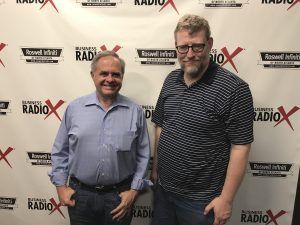
Jay Ruhm and Michael Blake

Should We Hire a CFO?

Michael Blake, Director of Brady Ware & Company and Host of the Decision Vision podcast, interviews Jay Ruhm on when to hire a CFO, what a good CFO offers a growing company, and whether there’s a role for the fractional CFO.

Jay Ruhm, JCR Financial

Jay Ruhm

Jay Ruhm recently retired from Dinova, where he was CFO for the past 8 years and is currently offering financial consulting services to startups, early stage, and venture companies through his newly launched firm, JCR Financial Consulting.

As CFO of Dinova, he worked closely with the Founder and CEO as they took a bootstrap startup through several funding rounds of both debt and equity, culminating in a $40 million equity investment by Frontier Capital in 2017.  Finding the startup and venture world the most exciting environment of his career, Jay is looking to share the benefits of this experience with today’s aspiring entrepreneurs.

Jay received his MBA from Columbia Business School in NY.  He spent the formative years of his career at American Express where he rose from Financial Analyst to Southern Region Financial Officer of the Corporate Services Division.  As Financial Officer, he also had financial oversight responsibilities for several other Amex businesses based in Atlanta.  Jay led several major strategic initiatives including a major pricing initiative that saved Amex $125 million of at-risk annual revenues.

Between his stints at Dinova and Amex, Jay spent time as a Senior Managing Consultant at Huron Consulting, leading varied teams of up to 40 people working on the Delphi bankruptcy from the initial filing to post-emergence.  At the time it was the largest manufacturing bankruptcy in US history.  He also initiated and led the development of a system to coordinate the claims across multiple parts of the case.  He also spent time as a Division CFO at Kelly Services improving back office systems and pricing methods.

Michael Blake, Brady Ware & Company

Mike Blake, Host of “Decision Vision”

Michael Blake is Host of the Decision Vision podcast series and a Director of Brady Ware & Company. Mike specializes in the valuation of intellectual property-driven firms, such as software firms, aerospace firms and professional services firms, most frequently in the capacity as a transaction advisor, helping clients obtain great outcomes from complex transaction opportunities. Mike is also a specialist in the appraisal of intellectual properties as stand-alone assets, such as software, trade secrets, and patents.

He has been a full-time business appraiser for 13 years with public accounting firms, boutique business appraisal firms, and an owner of his own firm. Prior to that, he spent 8 years in venture capital and investment banking, including transactions in the U.S., Israel, Russia, Ukraine, and Belarus.

Brady Ware & Company

Brady Ware & Company is a regional full-service accounting and advisory firm which helps businesses and entrepreneurs make visions a reality. Brady Ware services clients nationally from its offices in Alpharetta, GA; Columbus and Dayton, OH; and Richmond, IN. The firm is growth minded, committed to the regions in which they operate, and most importantly, they make significant investments in their people and service offerings to meet the changing financial needs of those they are privileged to serve. The firm is dedicated to providing results that make a difference for its clients.

Decision Vision Podcast Series

Decision Vision is a podcast covering topics and issues facing small business owners and connecting them with solutions from leading experts. This series is presented by Brady Ware & Company. If you are a decision maker for a small business, we’d love to hear from you. Contact us at decisionvision@bradyware.com and make sure to listen to every Thursday to the Decision Vision podcast. Past episodes of Decision Vision can be found here. Decision Vision is produced and broadcast by Business RadioX®.


Visit Brady Ware & Company on social media:

LinkedIn: https://www.linkedin.com/company/brady-ware/

Facebook: https://www.facebook.com/bradywareCPAs/

Twitter: https://twitter.com/BradyWare

Instagram: https://www.instagram.com/bradywarecompany/

Show Transcript:

Intro: [00:00:01] Welcome to Decision Vision, a podcast series focusing on critical business decisions brought to you by Brady Ware & Company. Brady Ware is a regional, full-service accounting and advisory firm that helps businesses and entrepreneurs make visions a reality.

Michael Blake: [00:00:21] And welcome back to Decision Vision, a podcast giving you, the listener, clear vision to make great decisions. In each episode, we’ll discuss the process of decision making on a different topic. Rather than making recommendations because everyone’s circumstances are different, we’ll talk about and we’ll to subject matter experts about how they would recommend thinking about that decision.

Michael Blake: [00:00:41] My name is Mike Blake, and I’m your host for today’s program. I’m a Director at Brady Ware & Company, a full-service accounting firm based in Dayton, Ohio, with offices in Dayton; Columbus, Ohio; Richmond, Indiana; and Alpharetta, Georgia, which is where we are recording today. Brady Ware is sponsoring this podcast. And if you like this podcast, please subscribe on your favorite podcast aggregator and please consider leaving a review of the podcast as well.

Michael Blake: [00:01:05] So, today we’re going to talk about whether to hire a chief financial officer and when to hire a chief financial officer. And this is a decision, I think, that any company that plans to grow to any size must wrestle with. You can’t manage a business without numbers. It’s just impossible to do that. And then, managing by the numbers goes a lot beyond simply debits and credits, counting beans, counting money as it comes in. In fact, on another podcast, we’re talking about data analytics, and that is becoming part of the CFO’s job description.

Michael Blake: [00:01:49] But the big question, particularly for small companies, when you take that plunge, because CFO, these Chief Financial Officers, if they’re any good, they ain’t cheap. And that represent — and they’re not generating revenue – at least, not directly – they’re not selling, they’re not marketing, they’re not advertising, but you can’t find a big or even medium-sized successful company that does not have a competent CFO at the helm.

Michael Blake: [00:02:18] And, as a listener, you’re probably wondering — you might be wondering, “Should I hire a CFO now? Is it something I should wait two to three years on, or did I hire a CFO too quickly? Did I take that plunge too quickly, and maybe I should have waited?” And we’re going to talk about that. We’re going to talk about this issue with one of the best in the business. I am delighted to have my good friend, Jay Ruhm, on the program with us today.

Michael Blake: [00:02:49] Jay and I have known each other for a long time, longer than any of us would probably care to admit. We know where each other’s bodies are buried. We’ll just sort of leave it at that. But Jay recently retired from a company here in Alpharetta, Johns Creek, called Dinova, where he was the Chief Financial Officer for the past eight years, really from startup until exit. And he’s currently offering financial consulting services to startups, early stage, and venture companies to his newly launched firm JCR Financial Consulting.

Michael Blake: [00:03:25] As CFO of Dinova, he worked closely with the founder and CEO as they took a bootstrapped startup through several funding rounds of both debt and equity, culminating in a $40 million equity investment by Frontier Capital, which is a North Carolina-based private equity firm in 2017.

Michael Blake: [00:03:41] Finding a startup and venture were the most exciting environment of his career, Jay is looking to share the benefits of this experience with today’s aspiring entrepreneurs. That’s why he’s here. Jay received his MBA from Columbia Business School in New York. I didn’t realize that. You’re smarter than I thought. That’s great. He spent the formative years of his career at American Express where he rose from financial analyst to Southern Region Financial Officer of the Corporate Services Division. As financial officer, he also had financial oversight responsibilities with several other AMEX businesses based in Atlanta. Jay led several major strategic initiatives including a major pricing initiative that saved AMEX $125 million of at-risk annual revenues.

Michael Blake: [00:04:23] And. there’s sort of the canned introduction. I’m going to go off the script a little bit. Jay brings a wonderful and very unusual combination of technical acumen and just plain horse sense that you don’t often find. And maybe I’ll let him tell you about the Dinova story. I like it so much. I want to tell it, but that’s depriving him of the opportunity. But this is a guy who’s paid his dues. There are a lot of CFOs around, but this is a guy who really paid his dues to get from where he started off with Dinova to now enjoying, at least, a semi retirement. If I build him up any more, he’ll never be able to live up to the hype like the Batman movie. So, Jay Ruhm, welcome to the podcast, my friend. It’s great to have you on.

Jay Ruhm: [00:05:14] Thank you, Mike. Thanks for having me. It’s a delight to be here.

Michael Blake: [00:05:17] So, I’m going to start. I’d like you to talk about the Dinova story because, I think, it talks about the evolving role of the CFO. That company literally went from napkin to something big, something that had an eight-figure exit, and you were there pretty much every step of the way. So, talk about the Dinova story and your role. And I’m already jumping off the script, but we’ve known each other long enough. I can do that from day one, minute one. Talk about that story. It’s so awesome. The world’s got hear it.

Jay Ruhm: [00:05:53] I was on a consulting gig for a number of years in the bucket of no good deed goes unpunished. This was supposed to be a short bankruptcy, 90 days, solve one of the first day motion issues, and I ended up staying for four and a half years helping the Delphi company through its bankruptcy from the day they filed until well after the emergence. So, as I roll off that gig, my second phone call — The first phone call was home of course. The second phone call was to a very, very good friend of mine named Vic Macchio. Vic had this idea for Dinova. And so, I called him and said, “Hey, I’m off. How are you doing?” And he says, “I’ve got Dinova up and running.” I said, “That’s terrific.”

Jay Ruhm: [00:06:46] So, I get home, I go visit him, “What are you doing?” He says, “Well, I’m trying to raise some money. This thing is going to be bigger than I am.” And I said, “That’s a delight. I’m happy to help you. Do you have financial statements?” He says, “No. I don’t need financial statements. This is a pretty simple business model.” I said, “Vic, you need financial statements.” He comes around and says, “Okay. Let’s get some financial statements.” And he says, “But I can’t pay you.” And I said, “Vic, not a worry. I’ve known you 25 years,” at that time. That was 10 years ago. And I said, “It will all work out in the end. I believe in the business. Let me help.”.

Jay Ruhm: [00:07:27] And so, we started looking to raise some funds. That’s where I met my good friend, Mike Blake. Mike, you had no small role in that with your introductions to people in the community. You were a great, great help in helping us secure that funding and helping us network through the community.

Michael Blake: [00:07:46] I think I was the ugliest cheerleader on the planet, but okay. If you want to give me the credit, I’ll stop resisting it. I’m awesome. Go ahead.

Jay Ruhm: [00:07:53] There you go. So, we raised a few million dollars and got the business up and running. And over the years, took in some small amounts of equity, but I would call that A round the primary round. And their incomes, what does a CFO do? The first thing I did was work with Vic and manage the financials, so that we were cash flow-positive. As quickly as we could be cash flow-positive, that’s key. An investor does not want to hear, “I need money from an entrepreneur. I need money to make payroll.” An investor wants to hear, “I have an opportunity, which I’d like to take advantage of. Are you in?”

Michael Blake: [00:08:39] When an investor hears that, “I need money to make payroll,” it’s like we’re talking about the movie Airplane. By the way, does anybody know how to fly a plane? It goes over about that well, right?

Jay Ruhm: [00:08:53] So, right away, early on, you could use, at least, some CFO to help guide the financialship as it were. And through the years, we maintained financial discipline, turned profitable in the middle of the period, somewhere around 2014-2015, and grew the business that way. I think one of the key things that a CFO does that’s helpful to a business in that stage is other than the CEO, the CFO is the only other one that doesn’t have a parochial view or a view from a department head. It’s the one place in the company, other than the CEO, where an individual has a cross-company view. And that’s a pretty vital role, and it’s important that the CFO understand that and apply that. So, when one department head says, “I want to do this,” where’s the one place who’s going to say, “Well, you need to talk to this department and that department because you’re going to have impact over there”?

Michael Blake: [00:10:03] That’s interesting. I’d never heard of the CFO’s role being described that way. So, in effect, you become the air traffic controller?

Jay Ruhm: [00:10:10] In effect, yes. And it’s at a peer level too because the department heads and the CFO, they all report to the CEO. And so, that’s key. And so, you’ve got to be a good partner and a good team player.

Michael Blake: [00:10:26] So, let me ask this then. So, you’re brought into Dinova, Dinova, I think, at that time, was not generating revenue, or if it was, it was de minimus revenue. Is that correct?

Jay Ruhm: [00:10:37] It was de minimus, right. As I said, Vic had said, “Yes, I got Dinova up and running.” He didn’t tell me it was $12. Just getting started at 12 bucks, but it was small.

Michael Blake: [00:10:47] But it’s higher than zero, right?

Jay Ruhm: [00:10:49] Yes, it was more than zero.

Michael Blake: [00:10:50] So, technically, it was revenue-positive. So, why do you think he saw wisdom in hiring a person whose job is to count money when there is no money to count yet?

Jay Ruhm: [00:11:03] I’m not sure that that’s why he brought me in. I don’t know that Vic was thinking, “I need financial help.” It was more that-

Michael Blake: [00:11:12] Yeah, clearly.

Jay Ruhm: [00:11:14] It was much more that we had been good friends for a long time, and I offered to help for free. And when you’re starting a business, and you’re a CEO, and you’re trying to get something going, you take all the free help you can get.

Michael Blake: [00:11:28] So, one of the things I’m taking away from this is that a CFO, and at least in your case, you tell me if you think it’s more common or not, but you are kind of internal trusted advisor, right? We talk about trusted advisors and the outside. Ostensibly, I am a trusted advisor to god knows who. But you became Vic’s internal trusted advisor that was captive, somebody he could talk to, and early on, would have skin in the game by the way of having a modest ownership of the company and so forth.

Jay Ruhm: [00:12:03] Sure.

Michael Blake: [00:12:03] Right?

Jay Ruhm: [00:12:04] Yes.

Michael Blake: [00:12:06] And that has maybe very little to do with finance.

Jay Ruhm: [00:12:11] It has. You’re correct. It doesn’t require the knowledge or the technical skills that a CFO typically has, but that role is vitally important. And many experienced CEOs know that when they’re hiring a CFO, they are hiring a trusted adviser.

Michael Blake: [00:12:33] And is that why you wanted to have a CFO role? I mean, the CFO role is not easy, and it’s high stress. There’s very high turnover in the CFO world. It’s like a baseball manager almost hired to be fired. That’s the nature of the game. Why do you want to do that? What was your calling to do that?

Jay Ruhm: [00:12:55] I was lucky. Early in my career, I started off as an engineer and didn’t succeed very well. And so, went to – as we used to say in the ’70s – find myself. And I found myself curled up in a ball over in a corner, and picked myself up, and started looking at all different kinds of things, and found the business classes to be easy and fun. And the more I got into it, the more I enjoyed the operating finance role as opposed to accounting. What I like about operating finance is it’s there on the front line of the business.

Jay Ruhm: [00:13:33] As you said before, no, I’m not the one ringing the cash register, but I am the one working with the sales leader to price, and what’s a good deal, and to coach and advise not only the CEO but all of the other department heads as to what makes good financial sense.

Michael Blake: [00:13:57] All right. So, now, I think one of the reasons to bring in a CFO is to get the CEO out of the CFO business, right?

Jay Ruhm: [00:14:07] Yes.

Michael Blake: [00:14:09] To let them do what what they do well. So, if you’re at liberty to do so – We’re going off script again, that’s okay – Talk a little bit about your relationship with Vic. And we know what his strengths are. What did him hiring you enable him to do more of that made Dinova successful?

Jay Ruhm: [00:14:27] In a bootstrapped startup, you have to do everything. And Vic was paying the bills, literally, writing the checks, and keeping track of everything. And so, I took him out of that business. I started paying the bills, keeping the books. That was the very, very beginning, preparing the financial statements, as well as advising on business direction and strategic issues.

Michael Blake: [00:15:00] And then, that enabled him to do more of what?

Jay Ruhm: [00:15:03] At that stage in the business and pretty much throughout, his forte is is marketing, sales and marketing. And so, it really allowed him to work that much closer with the sales and marketing folks and build the business on that side. As Vic and I often joke, I say, “Vic, you take care of the revenue. That’s not my thing. You bring in the revenue. I’ll take care of the expenses and the bottom line and make sure we have a healthy balance sheet.”

Michael Blake: [00:15:34] And as I recall, he is very good at raising capital too, which if you’re to generate revenue, you’d better be raising capital. You’ll have one of those two things in the short trip, right. So, I think, the wisdom of him bringing you in as that internal trust advisor enabled him to get out the things that were not value added from his perspective and really focus on the things that were required for Dinova to ultimately thrive, right?

Jay Ruhm: [00:16:01] Yes.

Michael Blake: [00:16:02] Right.

Jay Ruhm: [00:16:02] Yes, absolutely. One of the things that you mentioned raising capital as a value-add, to a point. When you spend too much time raising capital, you’re not focusing on the business. And one of the things I wanted to do was get Vic out of the capital racing business and raise funds when we had to, when we needed to. And when I say when we had to, it wasn’t to make payroll. Remember debt, from a CFO’s perspective, is a tool if you can lever up the balance sheet from nothing. The example I use is the cost of capital. If your equity costs 30%, then you’re not going to take on a 25% return project. That’s not worth it. But if you can throw a little debt on there at 5% or 10%, you bring that cost of capital down to 20%, then, all of a sudden, you’re 25% projects start to look pretty good, and it lets you do more.

Michael Blake: [00:17:08] And, now, working cost of capital. Now, we’re talking dirty. That’s good. Yeah, the finance geeks are going to really geek out on this. So, I think, a lot of listeners don’t necessarily understand the difference between a CFO and a controller. And many companies, I think, hire a controller and they may decide that that’s enough. But I wonder how many people really understand the difference between a CFO and a controller. Can you explain that difference because they are different roles? The controller typically reports to a CFO if there is one. What are those jobs? How do those job descriptions typically differ?

Jay Ruhm: [00:17:50] Well, it starts right with the skills that are brought to the table. There’s a reason one can major in Finance in school, and one can major in Accounting in school, and they are different. So, it starts right with the skill set. Accounting is very technical, very important. The financial statements are how a business communicates to its audience, its investors. And it’s very, very important that the language of accounting be observed, so that those financial statements mean something. That is the primary focus of a controller is not only the preparation, the debits and credits, also the controls – hence, the word controller – but there are checks and balances that one needs to put in place, segregation of duties. We’re really going to get into it now, Mike.

Jay Ruhm: [00:18:45] When we started, we had our first audit, and I told the auditor, “Yes, I pay the bill. I pay the bills, I reconcile the bank account, and I prepare the financial statements. How’s that for segregation of duty?” Man, there wasn’t any, but that’s what it was. So, the controller is going to build all those processes as the company grows and prepare the company for its first audit, which, by the way, I recommend be done as early as possible. You always want to build the infrastructure ahead of the future growth. You don’t want to find you’ve got all this money coming in, and you can’t control it. That’s a recipe for losing some. And so, that’s the primary focus of the controller.

Jay Ruhm: [00:19:35] The CFO is a broader job. The CFO must be fluent in accounting and all that goes along with it. But the CFO, as we’ve talked earlier in the show, also has to be the internal advisor. Another piece of the CFO job that we didn’t talk about is strategic. And that is, what’s the strategic plan? There’s another function that many folks know is BP&FA, business planning and financial analysis. That falls under the CFO as well. And, oftentimes, in a growing company, the CFO is wearing many, many other hats. I had responsibility for HR. And so, there’s lots of things.

Jay Ruhm: [00:20:25] I had a mentor once, when I was at American Express, a young lad was working for an executive. And he said, “Hey, I’ve got an HR person. I have a marketing person. I have an operations person. And if it’s not HR, marketing, or operations, it’s finance.” And so, the finance is the one place that’s got to pick up all the loose ends. Make sure all the Ts are crossed, and the Is are dotted.

Michael Blake: [00:20:52] Interesting. Okay. So, I’ve never heard the role quite that described and quite that way, but it does make sense of the C-level positions other than CEO as you talked about. It’s the least siloed of any of those functions, right? And I’m reading a lot about the CFO role even changing beyond that as the stereotypical CFO role is you’re the numbers guy. And you leave the strategy to somebody else or the job is to somehow make the finance work with that strategy or advise when the finances will not support that strategy and it must be altered. But I’m seeing a trend where those two roles are now converging. You cannot be a non-strategic CFO and be successful anymore in that role. Do you agree with that?

Jay Ruhm: [00:21:50] I completely agree with that. One of the benefits of being at American Express early in my career is that’s a very, very forward-thinking company. It’s been a leader. What I define as a great company is a company that’s been a leader in its field, top of its game for a hundred years, not 15 or 20, because all of those companies that are leaders in their field and have been for a century are in a completely different business than they were a hundred years ago. How did they do that? Microsoft may very well be a great company, and it is a great company, but their business model hasn’t yet been turned completely upside down. They’re growing, they’re bigger, but they’re not in a completely different business than they were when they started. I think Procter & Gamble has one product that’s a hundred years old, and that’s Ivory Soap.

Michael Blake: [00:22:49] Is that right? I didn’t know that.

Jay Ruhm: [00:22:51] Yeah. Ivory Soap has been around a very, very, very long time.

Michael Blake: [00:22:54] Okay.

Jay Ruhm: [00:22:54] So, right there at the operating level within AMEX, there was a distinction between accounting and a business unit CFO as I was. Now, of course, if something went wrong on an audit report, it landed on my desk. But, generally, I was not involved in the debits and credits. It was BP&FA, and it was an advisory role to the general manager. And that was back in the late ’80s. And the world has since moved much, much more in that direction. And I don’t mean to take anything away from my CPA brethren. They bring a whole lot to the table, and I’ve seen many, many CPAs who are just as strategic as any other CFO, and they make great CFOs.

Michael Blake: [00:23:51] So, I was going to kind of ask this. Historically, there’s been this dichotomy or this distinction that you either had a CFO who is a real accounting wiz, or you had a CFO that really understood finance, could have conversations with bankers, venture capitalists, and so forth, set up financing schemes, and you really couldn’t have both in the same individual. So, you had one of the other, and you chose that role depending on how the organization shakes out, and what their particular goals and needs are. Is that distinction meaningful anymore?

Jay Ruhm: [00:24:36] Yes, it still is.

Michael Blake: [00:24:38] Okay.

Jay Ruhm: [00:24:38] Because as we were talking earlier, when I described the differences in the roles between what a controller does and what a CFO does, they’re still extremely vital to the company. And even a CPA and CFO. And I know many of those, they will also have a controller work for them, so that they’re not totally focused on that, and they free up some time to do the advisory role and the strategic role that’s required of a CFO today.

Michael Blake: [00:25:14] Okay. So, do you have a story out there where you, as a CFO at Dinova, what’s an example where you felt like you made the greatest impact on the company?

Jay Ruhm: [00:25:28] That all comes back in my view, ultimately, to a leadership question. And it’s much more about leadership than it is about necessarily technical finance. So, as we were growing, it had been my approach to prepare the infrastructure for the growth, so that when we had outside funding coming in and needed to deliver audited financial statements that we had the processes and procedures in place, and how would I get that done.

Jay Ruhm: [00:26:05] And in leading a team it wasn’t me. I was fortunate enough to have a dedicated team of professionals, great, great people who I keep in touch with, of course, who I would set the guiding way, and said, “Okay, we need to-” A great example is the implementation of NetSuite. We were on QuickBooks Online. Just didn’t meet our needs. A great product, we used it for many years, but we needed something much, much more. And I wanted online, which, at the time, QuickBooks didn’t have. QuickBooks would have meant a server. I didn’t want that.

Jay Ruhm: [00:26:42] So, we went with NetSuite, and it gave us a lot more flexibility in terms of analytics. It gave us great, great efficiencies, and that had a huge impact because it allowed us to grow and build the finance team and structure and get all those things done.

Jay Ruhm: [00:27:07] Well, I always had my eye on, what’s a world class finance organization? What is it as a percentage of the expenses or the headcount? And my research indicated it was something less than 10%. I wanted less than 10% of the resources of the company going to the finance and the infrastructure. And so, that was the target. And to do that, like I said, it comes back to the team and the leadership. And in leading a team, you set a direction, you leave your door open, and then you get the hell out of the way and let them go to work.

Michael Blake: [00:27:50] So, all right. So, I think this is drawing out a very important point because, I think, many folks, especially if they have not hired a CFO before, we equate CFO with accounting first; finance second, ironically, but there are intertwined. But what’s coming out of this is that it’s not about how much money you have to count. It’s not about how complex your finances are, but do you need somebody else, or you always need somebody else on the team who is a good leader who happens to have a skill set in those particular areas. And no firm can ever have too much leadership, right?

Jay Ruhm: [00:28:36] Right. There’s an old saying, and you mentioned it earlier, you said a CFO can be expensive. I would suggest that it’s less expensive than not having one.

Michael Blake: [00:28:50] Because things get missed, right?

Jay Ruhm: [00:28:53] Yes.

Michael Blake: [00:28:53] And people don’t get led. And when you’re in a startup position particularly, right, you can outspend your mistakes.

Jay Ruhm: [00:29:04] That’s true. And I’m going to relate it back to the advisory role. Every small company tries to get a good board of advisors, but they’re external people. And the CFO can be the internal advisor, as you pointed out earlier. And how that differs from the external is not only a better understanding of the nuts and bolts of the business, but it’s also a frequency. How often does the CEO get to turn to somebody and ask a question? You make use of the outside advisors, but on a daily basis, it’s the CFO.

Michael Blake: [00:29:44] Yeah. It’s a lonely place, right? So, the CFO makes it a little bit less lonely. I’m curious about your position on this. Of course, in your position with Dinova, where Vic didn’t have the money to pay you right off the bat, you accepted equity as part of that compensation. But even if a company has cash, do you think that ownership of the company in some fashion ought to be a requirement of the CFO, or do you think it matters?

Jay Ruhm: [00:30:16] It matters a whole lot. And my own view is that ownership of the company should be spread as far and wide inside the company as possible. Absolutely critical. What goes along with that, just giving somebody ownership of the company doesn’t mean that they’re always going to act in the best interest of the company. And I’m not suggesting malfeasance. What I am suggesting is a simple lack of knowledge. When you give a financial device or implement such as a share of stock to an HR manager who is not very terrifically skilled in HR matters, but not in finance-

Michael Blake: [00:31:01] They’re not Warren Buffett necessarily.

Jay Ruhm: [00:31:04] So, what goes along with that is some level of financial knowledge has to be spread along. So, in my view, just a recap, I think as many people as possible should have stock. And when that stock goes out, there should also be workshops and sharing of knowledge of what is finance. And as a valuation expert, Mike, you understand the name of the game for small companies. To get to that exit, you have to understand valuation. What makes the stock price go up?

Michael Blake: [00:31:37] Yeah. Yeah, for sure.

Jay Ruhm: [00:31:38] And it’s more than just making money.

Michael Blake: [00:31:40] So, one of the roles we often associate with a CFO is to be a counterweight to the CEO. That’s stereotypical. Do you find that to be true? And if so, how do you manage that, so the conversations are always constructive and not potentially destructive?

Jay Ruhm: [00:32:14] I would say that’s even desirable, Mike. You want a yin and yang. There’s no better role for a CFO than to have the classic entrepreneur as the CEO. That CEO is going to do a lot of things that the CFO just can’t. They’re not in the toolkit, right? And that’s where the advisor and the relationship comes in. There has to be healthy discussions. Not every entrepreneur can bring in a CFO that they knew for 25 years. You’re going to have to hire somebody who you previously didn’t know. However, you’ve got to start building that relationship immediately, and there has to be that healthy give and take.

Michael Blake: [00:33:06] And one thing, often, in observing how you manage that, I don’t recall a story of you ever telling Vic no but rather responding to a decision and saying, “Here’s what the impact is.” And we’ve said that we’ve had certain goals. In your case, it was on a certain amount of cash in the account, right, certain amount of safety. And if we do it this way, it’s going to take some of that safety away.

Jay Ruhm: [00:33:37] I would say yes to both. I don’t often retell stories of when I’ve told Vic no, and I’ll let him tell you how many times he’s heard me say no, but it’s always followed up with, “Here’s why.” I would not trade away the classic entrepreneurialism that Vic brought to the table-

Michael Blake: [00:33:57] Sure.

Jay Ruhm: [00:33:58] … for anything.

Michael Blake: [00:33:59] It was critical.

Jay Ruhm: [00:34:00] It was absolutely critical to the growth of the business. So, that’s where our healthy discussions came in is, “You want to do what?”

Michael Blake: [00:34:11] But you didn’t always agree necessarily right off have to achieve a consensus somehow.

Jay Ruhm: [00:34:16] I would say most of the time, we came to consensus. And there were times where he would take my advice and not do something. And there were other times where he would say, “Nope, we’re doing this, and I’m pulling rank on you.”

Michael Blake: [00:34:38] And that happens.

Jay Ruhm: [00:34:39] That absolutely happened. And you know what, didn’t hurt my feelings at all.

Michael Blake: [00:34:42] That’s the NFL, right?

Jay Ruhm: [00:34:43] Yup.

Michael Blake: [00:34:46] So, one last question I want this could be a two podcast. But do you think about part CFOs? There are a lot of those services around, fractional CFO services. Is there a useful role for providers, advisors like that to you’re not quite sure about if  want a CFO full maybe you don’t feel comfortable financial commitment, or do you think you’ve just got to  the Band-Aid off and just go?

Jay Ruhm: [00:35:19] No. I think, there’s a role for the fractional CFO. There absolutely is. What I would advise in a relationship with a fractional CFO is that you don’t have that CFO doing the accounting.

Michael Blake: [00:35:36] Really?

Michael Blake: [00:35:37] Why?

Jay Ruhm: [00:35:40] Because I would want that CFO going over business plans, making forecasts, understanding the business, and advising. I would have an outside CPA or a bookkeeper. What many, many businesses do when they start up is get that accounting piece done. I would keep that away from the fractional CFO, just so that I’m not spending my resources having the CFO doing that.

Michael Blake: [00:36:12] And in effect, spending $250 hour and a $60 an hour skill set, among other things. Right?

Jay Ruhm: [00:36:18] Yes. That’s a good way to describe it.

Michael Blake: [00:36:20] And I think I’ve seen this too is that, sometimes, a CFO will be hired, but then they’re doing the wrong not doing CFO things. And that’s not great either.

Jay Ruhm: [00:36:36] Yeah. There is a balance that has to be struck between where the CFO spends their time. As you recognized right up front, we’re not the ones who make the cash register ring, but I sure want to help make it ring. And if I’m preparing a financial statement, which I did in the beginning because I had to, when I’m doing that, I’m not out meeting a customer.

Michael Blake: [00:37:06] Right, okay. This has been great. We have all kinds of other things we could cover, but we can’t cover this topic exhaustively. If somebody wants to follow up with you and ask about some of this, can they do that?

Jay Ruhm: [00:37:27] Absolutely.

Michael Blake: [00:37:27] So, how would they get a hold of you?

Jay Ruhm: [00:37:30] Best way to do it is through e-mail. I’m at Gmail. It’s my name followed by the number one. So, it’s jayruhm1@gmail.com.

Michael Blake: [00:37:42] All right. Very good. Well, that’s going to wrap it up for today’s program. I would like to thank my good friend, Jay Rhum, so much for joining us and sharing his expertise with us on this CFO issue. We’ll be exploring a new topic each tune in, so when you’re faced with your next business decision, you have clear vision when making it. Again, if  you enjoy this podcast, please consider leaving a review with your favorite podcast aggregator. It helps people find us, so that we can help them. Once again, this is Mike Blake. Our sponsor is Brady Ware & Company. And this has been the Decision Vision Podcast.

Tagged With: controller, Dayton business advisory, Dayton CPA, Dayton CPA firm, dinova, financial statements, Michael Blake, Mike Blake

To Your Health With Dr. Jim Morrow: Episode 4, Vaping

March 13, 2019 by John Ray

North Fulton Studio
North Fulton Studio
To Your Health With Dr. Jim Morrow: Episode 4, Vaping
Loading
00:00 /
RSS Feed
Share
Link
Embed

Download file

Dr. Jim Morrow, Morrow Family Medicine

Dr. Morrow’s Show Notes on Vaping

  • If we are going to talk about vaping, we have to talk about: NICOTINE.
  • Why nicotine? What does it do to your brain?
  • Nicotine activates the circuitry that regulates feelings of pleasure, the so-called reward pathways. Research has shown that nicotine increases the levels of dopamine (a key brain chemical involved in mediating the desire to consume drugs) in the reward circuits of the brain.
  • Cigarettes also cause a marked decrease in the levels of monoamineoxidase (MAO), an enzyme responsible for breaking down dopamine, so…. more dopamine in the circulation.
  • The need to sustain the high dopamine levels results in the desire for repeated drug use.
  • Outward Signs of Nicotine Addiction
    • an inability to stop using tobacco products
    • withdrawal symptoms when nicotine use stops
    • a desire to keep smoking even when health complications arise
    • continued use of tobacco products even if it negatively impacts your life
  • Treatment for Nicotine Addiction
    • Wellbutrin
    • Chantix
    • Support groups

What We Learned

  • In 1950, the tobacco companies came out with a huge ad, a statement to America, that they did not believe that cigarettes were any health threat at all. Their “Frank Statement to Cigarette Smokers” essentially stated that they felt tobacco was completely safe and caused no harm, stating that “for more than 300 years, tobacco has given solace, relaxation and enjoyment to mankind.”
  • In 1964, the Surgeon General, Luther Terry, submitted his report on the direct link between smoking and cancer. It concluded that smoking is a cause of lung cancer and laryngeal cancer in men, a probable cause of lung cancer in women, and the most important cause of chronic bronchitis.
  • In 1965, labeling changes occurred and today labels show graphic evidence of what cigarettes can do.
  • In 1967, advertisements for cigarettes had to start giving significant time to the dangers of smoking.
  • What is NOT a Treatment for Nicotine Addiction: VAPING!
  • If you’re puffing on something electronic – it’s vaping.
  • Might call it e-cig, vape, Juul (a brand name)
  • Bottom line is that it is an ENDS (electronic nicotine delivery system)
  • Vaping appears to increase young people’s risk of starting smoking
  • Young people who reported having used e-cigarettes were more than eight times as likely to start using conventional cigarettes
  • Problem may be exacerbated by the many flavors used to enhance the enjoyment of e-cigarette use
  • Adolescents and young adults are known to be very susceptible to flavorings
  • Vaping is exposing them to one of the most addictive chemicals known — nicotine
  • Studies show teens tend to underestimate their risk for getting addicted and overestimate their ability to quit once addicted

Types of e-Cigs

  • 1st Gen: closely resembles a cigarette and is disposable
  • 2nd Gen: larger, pen shaped, rechargeable
  • 3rd Gen: do not look like combustible cigs at all, have large batteries, replaceable parts, these are called “mods”
  • Latest: Sleek, modular design like Juul (looks like a USB drive) and some others. These often have a much higher nicotine content than traditional cigs or earlier devices.

Nicotine Concentrations

  • Levels vary – some are nearly the same as traditional cigarettes
  • Mislabeling is a common problem
  • Nicotine delivery is affected by how the device is used by the consumer.
  • Juul delivers nicotine almost THREE TIMES FASTER than a typical cigarette.
    • This increases the likelihood of addiction
    • Often, (some say 37 % of the time) youth and young adult users are not even aware that the device has nicotine in it at all.

As Harmful as Typical Cigarettes?

  • While e-cigarettes contain some fewer toxins than combustible cigarettes, they are not free of toxins and still deliver harmful chemicals
  • There is an enormous variability within the product category and there is no typical e-cigarette
    • different ingredients and different hardware, and deliver highly variable amounts of nicotine and potentially toxic chemicals

What People Think

  • Among adults,
    • 31% think they are the same as cigs
    • 4% think they are more harmful
    • 29% don’t know
    • 36% think they are less harmful

Usage Rates

  • In 2011, 1.5 percent of high school age students used e-cigs
  • In 2017 that number was up to 12 percent
  • In 2011, 0.6 percent of middle schoolers used them, and
  • In 2017, 3.5 percent used them
  • Among adults, in 2015, more than HALF of users also smoked cigarettes.
  • Among young adults, 40% also smoked cigarettes.

Patterns of Use

  • In 2017, studies showed that 12% of high school and 3.5% of middle school students has used e-cigs in the previous 30 days
  • 2018 NASEM report concluded that, “there is substantial evidence that e-cigarette use increases risk of ever using combustible tobacco cigarettes among youth and young adults”
  • 60 percent of teens incorrectly reported e-cigarettes as being comprised of mostly flavoring.

Juul

  • Since 2016, Juul has surged in popularity – now with 68% of the e-cig share.
  • Many are unaware that the product always contains the addictive chemical nicotine
  • A single JUUL cartridge is roughly equal to a pack of cigarettes

Health Effects

  • Much is still unknown
  • E-cigs can deliver levels of nicotine similar to combustible cigarettes and this is causing concern about the potential risk for addiction
  • Exposure to nicotine among youth is particularly dangerous since it has been shown to have an effect on key brain receptors, making young people more susceptible to nicotine addiction
  • Effect of nicotine on developing brains may result in nicotine addiction and greater vulnerability to addiction to other drugs as well
  • Pregnant women who use nicotine are at a greater risk of stillbirth and preterm delivery.
  • At least 60 chemical compounds have been found in e-liquids, and more are present in the aerosol produced by e-cigarettes.
  • We don’t know what exposure to these flavors will do. Marketing has gotten out of hand with some being labeled “Thin Mint” or “Redi-Whip”, etc.
  • E-liquids can cause unknown problems
  • Explosions of devices can and do occur, although unlikely this is very dangerous.
  • Vaping is in its infancy. It is tobacco fifty years before the discovery that it caused lung cancer. What good could you possibly hope to derive from vaping?

Thinking about vaping? Think before you start! (Before you buy even that first device.)

About Morrow Family Medicine and Dr. Jim Morrow

Morrow Family Medicine is an award-winning, state-of-the-art family practice with offices in Cumming and Milton, Georgia. The practice combines healthcare information technology with old-fashioned care to provide the type of care that many are in search of today. Two physicians, three physician assistants and two nurse practitioners are supported by a knowledgeable and friendly staff to make your visit to Morrow Family Medicine one that will remind you of the way healthcare should be.  At Morrow Family Medicine, we like to say we are “bringing the care back to healthcare!”  Morrow Family Medicine has been named the “Best of Forsyth” in Family Medicine in all five years of the award, is a three-time consecutive winner of the “Best of North Atlanta” by readers of Appen Media, and the 2019 winner of “Best of Life” in North Fulton County.

Dr. Jim Morrow is the founder and CEO of Morrow Family Medicine. He has been a trailblazer and evangelist in the area of healthcare information technology, was named Physician IT Leader of the Year by HIMSS, a HIMSS Davies Award Winner, the Cumming-Forsyth Chamber of Commerce Steve Bloom Award Winner as Entrepreneur of the Year and he received a Phoenix Award as Community Leader of the Year from the Metro Atlanta Chamber of Commerce.  He is married to Peggie Morrow and together they founded the Forsyth BYOT Benefit, a charity in Forsyth County to support students in need of technology and devices. They have two Goldendoodles, a gaggle of grandchildren and enjoy life on and around Lake Lanier.

Facebook: https://www.facebook.com/MorrowFamMed/

LinkedIn: https://www.linkedin.com/company/7788088/admin/

Twitter: https://twitter.com/toyourhealthMD

Dr. Jim Morrow, Morrow Family Medicine

Tagged With: Cumming doctor, Cumming family medicine, Cumming family practice, Cumming md, Cumming physician, dopamine, e-cigarettes, e-cigars, electronic cigarettes, electronic nicotine delivery system, ENDS, gateway drug, laryngeal cancer, Lung cancer, Milton doctor, Milton family medicine, Milton family practice, Milton md, Milton physician, nicotine, nicotine addiction, nicotine concentration, nicotine delivery, tobacco, USB drive, vape, vaping, Wellbutrin, withdrawal symptoms

David Maradiaga, Maradiaga Media, and John Mitchell and Randy Hasslinger, Slingshot Product Development Group

March 12, 2019 by John Ray

North Fulton Business Radio
David Maradiaga, Maradiaga Media, and John Mitchell and Randy Hasslinger, Slingshot Product Development Group
Loading
00:00 /
RSS Feed
Share
Link
Embed

Download file

John Ray, David Maradiaga, John Mitchell, and Randy Hasslinger

David Maradiaga, Maradiaga Media

David Maradiaga, Maradiaga Media

David Maradiaga is the CEO of Maradiaga Media. Maradiaga Media is a video production and marketing agency that helps business owners express their passion and mission, all while reaching more clients. From wedding videos to television commercials, Maradiaga Media has the experience and expertise to deliver your story to the masses. Visit MaradiagaMedia.com for more information.


John Mitchell and Randy Hasslinger, Slingshot Product Development Group

Randy Hasslinger and John Mitchell, Slingshot Product Development Group

John Mitchell is Chairman of the Board and Randy Hasslinger is Vice President, Business Development with Slingshot Product Development Group. Slingshot Product Development Group, founded in 2001, develops new products for customers in consumer, medical, military/security, and industrial markets. It is driven by the knowledge that new products are the life blood of companies, large or small, and that clients will lead their markets with innovative solutions that meet their customer’s needs. From napkin sketch to manufacturing, Slingshot applies a comprehensive and seasoned set of skills for impactful results through each phase of development. For further information, go to http://www.slingshotpdg.com/.

Tagged With: David Maradiaga, Facebook, facebook marketing, instagram, Instagram marketing, iPhone video, LinkedIn, Maradiaga Media, north fulton business, north fulton business community, North Fulton Business Radio, product design, product development, product engineering, product management, product research, Randy Hasslinger, social media marketing, video, video for small business, video production

Jim Gilvin, Mayor, City of Alpharetta

March 7, 2019 by John Ray

North Fulton Business Radio
Jim Gilvin, Mayor, City of Alpharetta
Loading
00:00 /
RSS Feed
Share
Link
Embed

Download file

Host John Ray and Alpharetta Mayor Jim Gilvin

“State of the City” with Mayor Jim Gilvin, City of Alpharetta

Fresh from his first “State of the City” address, Mayor Jim Gilvin is interviewed by Business RadioX Host John Ray on some of the key issues in front of the City at this time, including transportation infrastructure improvement, North Point Mall redevelopment, the technology industry network in Alpharetta, maintaining a health environment for locally-owned businesses, and more.

Jim Gilvin, Mayor, City of Alpharetta

Alpharetta Mayor Jim Gilvin

Jim Gilvin is the Mayor of Alpharetta, GA, elected in May 2018. Mayor Gilvin has lived in Alpharetta since the late 1990’s along with his wife, Mary Anne, and their two children Justin and Sarah. The Gilvins live in the Windward subdivision and attend Mount Pisgah United Methodist Church. Mayor Gilvin holds a Bachelor’s Degree in Finance from Georgia Southern University. He is a residential real estate agent and an owner of an Alpharetta-based technology company. He served on the Alpharetta City Council from 2012 to 2018, when he resigned his seat to run for Mayor. During his time as City Councilman, Gilvin served as liaison to Alpharetta’s Parks and Recreation Department and the Public Safety Department.

Tagged With: coworking, coworking in Alpharetta, mayor gilvin, Mayor Jim Gilvin, North Fulton, North Point Mall, Roam coworking, State of the City Address, Tech Alpharetta, technology in Alpharetta

Decision Vision Episode 5: Should We Use Data Analytics in Our Business? – An Interview with Angela Culver, Mobile Labs, and Micky Long, Arketi Group

March 7, 2019 by John Ray

Decision Vision
Decision Vision
Decision Vision Episode 5: Should We Use Data Analytics in Our Business? - An Interview with Angela Culver, Mobile Labs, and Micky Long, Arketi Group
Loading
00:00 /
RSS Feed
Share
Link
Embed

Download file

Angela Culver, Micky Long, and Michael Blake

Should We Use Data Analytics in Our Business?

It’s a question for which all businesses should have an affirmative answer. Businesses large and small have all the means to collect and store significant amount of data on every aspect on their business. In this interview with Decision Vision host Michael Blake, Angela Culver and Micky Long argue that business success in coming years will be determined by a company’s ability to analyze the data they collect.

Angela Culver, Mobile Labs

Angela Culver

Angela Culver is the Chief Marketing Officer of Mobile Labs.  Since the first install in 2012, Mobile Labs remains the leading supplier of in-house mobile device clouds that connect remote, shared smartphones and tablets to Global 2000 mobile web, gaming, and app engineering teams. The company’s patented GigaFox™ is offered on-premises or hosted, and solves mobile device sharing and management challenges that arise during development, debugging, manual testing, and automated testing. A pre-installed and pre-configured Appium server with custom tools provides “instant on” Appium test automation. GigaFox enables scheduling, collaboration, user management, security, mobile DevOps, and continuous automated testing for mobility teams spread across the globe and can connect cloud devices to an industry-leading number of third-party tools such as XCode, Android Studio, and many commercial test automation tools. For more information please visit www.mobilelabsinc.com.

Micky Long, Arketi Group

Micky Long

Micky Long is Vice President and Practice Director, Lead Nurturing at Arketi Group. Arketi Group is a public relations and digital marketing firm that helps business-to-business technology organizations accelerate growth through intelligent strategy, public relations, messaging, branding and demand generation. Consistently recognized by Chief Marketer magazine as one of the nation’s “B2B Top Shops” and a “Chief Marketer 200” firm, Arketi helps its clients use marketing to generate revenue. Companies benefiting from this approach to B2B marketing include Cox, First Data, Featurespace, Mobile Labs, NCR and Snapfulfil. For more information, call 404-929-0091 ext. 210 or visit www.arketi.com.

Michael Blake, Brady Ware & Company

Mike Blake, Host of “Decision Vision”

Michael Blake is Host of the Decision Vision podcast series and a Director of Brady Ware & Company. Mike specializes in the valuation of intellectual property-driven firms, such as software firms, aerospace firms and professional services firms, most frequently in the capacity as a transaction advisor, helping clients obtain great outcomes from complex transaction opportunities. Mike is also a specialist in the appraisal of intellectual properties as stand-alone assets, such as software, trade secrets, and patents.

He has been a full-time business appraiser for 13 years with public accounting firms, boutique business appraisal firms, and an owner of his own firm. Prior to that, he spent 8 years in venture capital and investment banking, including transactions in the U.S., Israel, Russia, Ukraine, and Belarus.

Brady Ware & Company

Brady Ware & Company is a regional full-service accounting and advisory firm which helps businesses and entrepreneurs make visions a reality. Brady Ware services clients nationally from its offices in Alpharetta, GA; Columbus and Dayton, OH; and Richmond, IN. The firm is growth minded, committed to the regions in which they operate, and most importantly, they make significant investments in their people and service offerings to meet the changing financial needs of those they are privileged to serve. The firm is dedicated to providing results that make a difference for its clients.

Decision Vision Podcast Series

Decision Vision is a podcast covering topics and issues facing small business owners and connecting them with solutions from leading experts. This series is presented by Brady Ware & Company. If you are a decision maker for a small business, we’d love to hear from you. Contact us at decisionvision@bradyware.com and make sure to listen to every Thursday to the Decision Vision podcast. Past episodes of Decision Vision can be found here. Decision Vision is produced and broadcast by Business RadioX®.


Visit Brady Ware & Company on social media:

LinkedIn: https://www.linkedin.com/company/brady-ware/

Facebook: https://www.facebook.com/bradywareCPAs/

Twitter: https://twitter.com/BradyWare

Instagram: https://www.instagram.com/bradywarecompany/

Show Transcript:

Intro: [00:00:01] Welcome to Decision Vision, a podcast series focusing on critical business decisions, brought to you by Brady Ware & Company. Brady Ware is a regional, full-service accounting and advisory firm that helps businesses and entrepreneurs make visions a reality.

Michael Blake: [00:00:22] And welcome back to Decision Vision, a podcast giving you, the listener, clear vision to make great decisions. In each episode, we will discuss the process of decision making on a different topic. Rather than making recommendations because everyone’s circumstances are different, we will talk to subject matter experts about how they would recommend thinking about that decision.

Michael Blake: [00:00:41] Hi. My name is Mike Blake, and I’m your host for today’s program. I’m a Director at Brady Ware & Company, a full-service accounting firm based in Dayton, Ohio, with offices in Dayton; Columbus, Ohio; Richmond, Indiana; and Alpharetta, Georgia, which is where we are recording today. Brady Ware is sponsoring this podcast. If you like this podcast, please subscribe on your favorite podcast aggregator, and please consider leaving a review of the podcast as well.

Michael Blake: [00:01:06] And, today, we’re going to talk about making customer data analytics an integral part of your business. And this is a topic that, I think, we’re only, as a community, as an economy, scratching the surface of. American society sort of runs away from math. We kind of run away from numbers. We know what the educational data are out there in terms of our general math capability, but the fact of the matter is, now, if you’re running away from numbers, you’re running away from business. And like it or not, if you want to be successful, you’ve got to get comfortable with data analytics, with data collection, with data science.

Michael Blake: [00:01:52] But that’s an intimidating decision because what I’ve observed – and we have experts here that will say if this is right or not – people are having to fundamentally change how they are thinking about their businesses. They’re changing their business models based on data analytics, and they’ve had to move towards kind of a fact-based, scientifically-driven decision making process that the age of, sort of, the crusty executive that just flies by the seat of their pants and makes gut decisions, takes gut decisions on major points of interests or points of issue, that is rapidly disappearing. So, this is a very interesting topic, a very important topic, and one that I hope that you, as a listener, will listen to very carefully.

Michael Blake: [00:02:37] A little bit of data here. With predictions that by 2020, there will be 1.7 megabytes of data created for every person on earth every second. I’m old enough to remember one when all the data would fit on a half of a megabyte floppy disk. I still have a computer that does that. And now that that data is being created at that rapid rate, there’s no doubt that we’re in the age of data-driven business.

Michael Blake: [00:03:08] Businesses of all sizes, all markets, and all customer types simply must get a handle on the information generated by business transactions, internet behavior, and simple day-to-day activity. Those who understand and find ways to manage this endless and growing data flow will flourish. Those who don’t are destined to drown. And I couldn’t agree with that more.

Michael Blake: [00:03:30] We’re being joined by two guests today. Our first guest, not concurrently, but I’m just going left to right as I sort of see across the microphone, is Angela Culver. Since the first install in 2012, Mobile Labs remains the leading supplier of in-house mobile device clouds that connect remote shared smartphones and tablets to global 2000 mobile web gaming and app engineering teams.

Michael Blake: [00:03:55] The company’s patent of GigaFox is offered on premises or hosted and sells mobile device sharing and management challenges that arise during development, debugging manual testing and automated testing, a pre-installed and pre-configured IPM server with custom tools, provides instant-on IPM test automation. GigaFox enables scheduling, collaboration, user management, security, mobile dev ops, and continuous automated testing for mobility teams spread across the globe and can connect cloud devices to an industry-leading number of third-party tools such as Xcode, Android Studio, and many commercial test automation tools. Angela, thanks for joining us today.

Angela Culver: [00:04:35] Thank you.

Michael Blake: [00:04:36] We’re also being joined by Micky Long of Arketi Group. Arketi Group is a public relations and digital marketing firm that helps business-to-business technology organizations accelerate growth through intelligent strategy, public relations messaging, branding, and demand generation. Consistently recognized by Chief Marketer Magazine as one of the nation’s B2B Top Shops and a Chief Marketer 200 Firm, Arketi helps its clients use marketing to generate revenue. Companies benefiting from this approach to B2B marketing include Cox, FirstData, Featurespace, Mobile Labs, NCR, and Snapfulfil. Micky, thanks for joining us.

Micky Long: [00:05:14] You’re welcome. Glad to be here.

Michael Blake: [00:05:16] So, you guys are tag teaming today. You guys, obviously, had a relationship. Talk about that relationship. How did it start? How are you guys working together?

Micky Long: [00:05:26] You want to go first?

Angela Culver: [00:05:28] So, I actually inherited Arketi. I joined Mobile Labs about four months ago, and they were the agency of hire. I know one of the founders of Arketi. He’s been in my network for quite some time and was, actually, introduced to Mobile Labs through Mike Neumeier. I’m a data-driven marketer. Mike is all about numbers as well. He has built a practice, a marketing agency practice around that. So, there has definitely been synergy. I met Micky about four months ago. And we’ve had a great relationship. He is one of the drivers. I see him and his team as my extended marketing team, and they help me execute almost on daily tasks for what we need to get done.

Micky Long: [00:06:22] Yeah. As you say, we are a company that believes in the data. Everything we do is built around data. And having Angela at Mobile Labs has been really refreshing because with her approach, it really, really works much better than if you’re dealing with an organization that perhaps doesn’t have the same focus and commitment to making the data work for you.

Micky Long: [00:06:40] So, marketing has changed. Marketing over the years goes back to the way — I go back as far as to say I remember the days when marketing and advertising was built around I know that of every dollar I spend, I’m going to waste 50 cents of it, but I just don’t know which 50 cents. Well, those days are really gone. We have the tools, we have the data streams, we have all those things today that we can measure it. We just, now, have to figure out how to put it into practice and make it work.

Michael Blake: [00:07:05] Yeah, that’s a great point. So, I’ve heard that expression before. I mean, that’s just not acceptable anymore to say you’re going to waste 50% of your money, right?

Angela Culver: [00:07:14] Yeah.

Michael Blake: [00:07:14] But it wasn’t that long ago when that was sort of considered acceptable losses, right? But, now, for most well-run businesses, if you tell somebody, “Hey, look, I need $5000. We’ll do well to get 2500 bucks of value of.” You’ll be laughed at out of their office at this point, right?

Angela Culver: [00:07:33] Absolutely.

Michael Blake: [00:07:33] For most mature businesses, right?

Micky Long: [00:07:35] Right.

Michael Blake: [00:07:35] There are others, I’m sure, that haven’t gotten the program yet. So, where’s this data coming from? Data is hitting us from everywhere. I’ve got Amazon Echoes in my house, I’ve got a smart home, I’ve got cameras every place. Pretty much anybody on the planet who wants to know anything about my habits, they know it all, right. Where’s the data that you’re working with coming from?

Angela Culver: [00:08:03] So, we’re inundated with data. It truly is coming from all different sources. Everything that we do is tracked, essentially. My iRobot tracks and mops my house and becomes more intelligent on how it needs to vacuum my floors. Your Echo tracks your behaviors and delivers products to you that is more succinct with what you want.

Angela Culver: [00:08:38] It really is coming from everywhere. We are in a situation where we are living in a world, especially in business, where the mindset is the more data I have, the more I rule the world. And we’re about to take a bit of a shift with this. It’s no longer how much data you have. It’s how you use that data and why you’re using that data. And we’re starting to see that shift happen where our big data is just too big for us to manage and for us to actually use intelligently. And, now, we’ve got to focus on the quality of the data.

Micky Long: [00:09:17] It seems to me it’s kind of gotten to the point now there is so much data available. It’s like living in a library where all the books are in a foreign language.

Angela Culver: [00:09:25] Yes.

Michael Blake: [00:09:26] Right? And there’s so much of it that you cannot possibly use at all. And 20 years ago, companies would be begging for this kind of data. They thought they died and gone to whatever heaven it is they believe in. And, now, it’s an embarrassment of riches. They’re so much coming from all sides. Is it fair to say the first step is kind of wrestling that steer to the ground, and hog tying it, and just trying to organize it?

Micky Long: [00:09:56] I think you have to start with the goals of your own business. And this is where we see because we deal with a lot of companies helping them try to figure this out. And what we typically find is companies start at — Usually, they start at step two or three. And what is missing is the initial step of saying, “Okay, I’ve got all these data streams, but what from a business standpoint do I really want to accomplish with this? What can I do? What do I want to do? Assume I have everything, but what do I want to do?”

Micky Long: [00:10:22] And figure a plan based on that because once you have your strategy, then you can plug in what you’ve got. If you don’t do that, you go back to sort of just thrashing about. And we see a lot of thrashing. Companies have not really mastered that yet. That’s one of the things that we’re working with Angela is to figure out how the process is supposed to work. So, I think that’s the key. That’s the first step you’ve got to look at.

Michael Blake: [00:10:43] So, is there a particular kind of data that you find is the most often overlooked? There’s just a goldmine sitting right there in front of people. They just walk by it every day, not realizing they’re walking past a goldmine.

Angela Culver: [00:10:55] Yes. So, especially in B2B, one of the most overlooked data sources or types of data is emotional and behavior data. From a marketer, we all buy from people. We buy products. And for the longest time in B2B, there was a sense that there was no emotion in the buy. There’s always emotion in the buy because you are buying into a relationship with another organization, and you’ve got an entry point of the person.

Angela Culver: [00:11:28] Tracking that type of information, it’s been difficult. It’s much like unstructured data. We’re inundated today with unstructured data. Figuring out how to manage it is a bit reminisce of about 20 years ago, 15-20 years ago, of how you manage transactional data. Everybody wanted very structured data, non-changing. It stayed essentially in its format and didn’t it morph into something else like transactional data. And, now, we’re looking at that in an unstructured data. But within the unstructured data, the gold mine is understanding how to use the emotional behavior components.

Michael Blake: [00:12:17] All right. So, you said something really cool I want to come back to because I think there’s a very important vocabulary point, but this notion of of emotional data is really fascinating. And I’m in finance, and emotions have finally worked its way into what I do. It’s called behavioral economics or behavioral finance where academics and I are asking, “Well, what if everybody doesn’t make the right decision all the time?” Well, we never thought of that. Well, let’s start thinking about that.

Michael Blake: [00:12:43] Is emotional data, is it as simple as, “It’s 10:00 at night, and I stress eat, so I know I’m going to Taco Bell,” or is it, “I’m more likely to make impulse purchase because I’m depressed or I’m an insomniac. I’m up 2:30 in the morning watching QVC or Home Shopping Network”? Is it as simple as that or is it — Where else does that kind of show up?

Micky Long: [00:13:07] From my perspective, one of the things that is really interesting is you, now, with the tools and the ability, you have the ability to track behavior enough that I’ll eventually know more about you than you know about yourself. So, I know what behavior you take. And we often tell people, and this is somewhat overlooked when you’re looking at just crunching the numbers, if you want to find out what people are about sometimes, one of the easiest ways to is to ask them because from a behavioral standpoint, they’ll tell you. If you ask the right questions, they’ll tell you.

Micky Long: [00:13:35] A lot of companies we work with will do why they won analysis of sales, but what they don’t do is they don’t do the loss sale analysis. They don’t say, “Why did somebody either did not buy my product in favor of somebody else’s or just not buy anything at all?” And knowing that information to balance that scale is critical if you want to drive additional sales from learning what the behavior was that was going on in your prospect’s mind when they made the purchase decision, or they didn’t make a purchase decision.

Michael Blake: [00:14:02] And that requires behavioral changes of itself, right, because a big part of what I do is in sales, and learning a new engagement candidly is an endorphin rush. I like it. I never thought I’d enjoy sales as much as I do because I’m a natural introvert. My wife always says if they ever do a Mars mission, I’m going to be first one. Like I’m going to be a tin can with no way to talk to for seven months.

Angela Culver: [00:14:28] Yeah.

Michael Blake: [00:14:28] I am in. Radiation be damned, but that on the other side, it’s human nature to focus on the positive. But as Bill Gates is famous for saying, “Success is a lousy teacher. It’s learning from the places where you failed,” but that’s hard to do. So [crosstalk].

Micky Long: [00:14:45] I think, you learn more about it from why you failed if you really look at it that way because, again, we all believe that what we’re selling is wonderful, and it solves a problem for people, and what have you, and everybody should buy it, but not everybody does. So, learning why they didn’t is really the key thing. To me, that’s the most interesting data points that you can pull out of things. And, now, with the tools we have, we don’t have to do a one-to-one conversation each time. The behavior is out there for us to kind of measure and pull together. And it makes it much easier.

Michael Blake: [00:15:16] But, as a company or as a decision maker, you’ve got to have the courage to dive into the failure.

Angela Culver: [00:15:23] Absolutely.

Michael Blake: [00:15:23] And I think, Angela, you’ve told me stories about that with people that have basically made that kind of change in terms of their attitudes and approaches to things that it really drives it.

Angela Culver: [00:15:34] Yes. Emotional type of data can be seen as abstract. And I’ve learned over the years, I started off my career in technology and business intelligence, BI tools. And I went through the dot com boom, and then immediately the bust. And I realized very quickly that in order to keep my job, I had to become a data scientist. And then, I had to teach my team and my customers how to be that as well. One thing I realized is that marketing has really started taking this shift.

Angela Culver: [00:16:10] I seem to take it probably a little earlier than most folks, but, now, everyone needs to be a data scientist in marketing. And I use the scientific, basically, approach. I create a hypothesis, I formulate what my end result is going to be, I use math to manage and monitor that result that I’m anticipating. And with emotional behavior data, you’ve got to do the same thing. You’ve got to understand how you’re going to use it to make business decisions, and you’ve got to put a stake in the ground to start with. I find that a lot of people find this intimidating initially until they start working through this process. And it is all about a process, putting a process in place.

Michael Blake: [00:17:02] So, you mentioned something a little while back, but I think it’s important vocabulary, structured versus unstructured data.

Angela Culver: [00:17:09] Yes.

Michael Blake: [00:17:09] What does that mean? What is the difference?

Angela Culver: [00:17:11] So, unstructured data would be e-mail, or Slack messages, or Instagram feeds, or video content where you’re — I’m going to throw another word out there, where you’re managing it through metadata, which is essentially data about data. You’re giving a description. But the core information content is not in a table column field format that’s easy to search on. You’re doing more of a, I would say, free-form find and search.

Micky Long: [00:17:52] And the tools are getting better. And there’s a lot of the — We’re starting to see the prominence of artificial intelligence coming into data management and things like that that are giving us the ability to sort of go after this unstructured data and start to pull it together in ways that we didn’t have before. But it’s still early stage on that. But it’s a matter — You still have to do both because there’s a lot of unstructured data that factors into the process that you’ve got to consider.

Michael Blake: [00:18:15] And that unstructured data has a lot of really cool stuff. It’s harder to use because it’s unstructured. But like so many things, the thing that’s most valuable requires the most effort to monetize. So, yeah, I suspect almost anybody who’s listening to this podcast has read an article, Harvard Business Review, McKinsey Quarterly, whatever it is, you got to get on data. You got to get on data. Does that apply to any sized company? Like if I’m a small, three-person, graphic design shop, do I need to get on top of data, or is this something that only applies to the NCRs of the world, the Coxes of the world, and so forth?

Angela Culver: [00:19:02] Yes. Everybody needs to have an understanding of their data. You’re not too small. You’re definitely not too big. The biggest challenge I’ve seen over the course of my career is that companies start too late. They start during a growth acceleration period. And at that point, they don’t have the historical data captured to help them make decisions to properly forecast on growth. How many leads they need to have? How many leads turn into sales opportunities that, then, turn into closed one? They’re having to back step, and capture the data, and hoping that their intuition is going to guide them in the right direction while they’re going through growth acceleration.

Angela Culver: [00:19:50] So, I believe you start the minute that you open your company doors. Do you have to have so much sophisticated technology? No. You can start with a spreadsheet, but you have to have a plan. That’s the number one thing that you have to go to the table with is having a data management plan. And you need to be looking at where you need to go two quarters from now, but also a year from now, versus five years, so that you can grow and manage your data strategy according to the company growth.

Michael Blake: [00:20:27] It’s a whole lot easier when you’re small.

Angela Culver: [00:20:29] Yeah.

Micky Long: [00:20:30] Yeah.

Michael Blake: [00:20:30] … than when you get bigger.

Micky Long: [00:20:30] That’s right. It really is. And so, if you get the right things, it’s like a lot of other things, if you set the discipline up on the early stage, and you put the processes in place that are going to drive it, it’s a whole lot easier than trying to come back and backfill as Angela mentioned when you get larger or when you’re going through a growth stage. That’s a challenge.

Michael Blake: [00:20:50] I don’t know this for sure, but it makes intuitive sense. As you grow the data inflows become exponentially greater, right? And it’s just it’s harder to wrestle that loose firehose off the ground and do something with it. You haven’t developed habits. And then, I’m guessing, I do a lot of work with startups, when you do hit that high growth, when you haven’t put in that discipline of data analytics yet, it’s hard to kind of stop and make yourself do that when you have five prospects wanting to get a proposal right away, right?

Angela Culver: [00:21:22] Absolutely.

Michael Blake: [00:21:22] And the next thing you know, it just never gets done. Until then, it becomes such a big problem you can never tackle, right?

Micky Long: [00:21:27] Yeah. Let me give you a really, really quick example of what you were just talking about. A lot of companies spend a good bit of time trying to make sure they capture their information about prospects into a program like Salesforce. If they don’t have the discipline set up on the early stage to identify, “How are we going to manage the titles of these prospects that we’re using or the functions of these prospects?” and they allow that to go on for a while, you could end up-

Michael Blake: [00:21:54] We had a client, for example, and a couple of years back that will remain nameless that when we went in to try to find out how to segment to do a better job of marketing, they had 375 different types of titles in their Salesforce program because they never forced their salespeople to consolidate. So, if I was the vice president of stuff in my organization, that’s what went into Salesforce. But the vice president of stuff is not really something that you could really sort on.

Micky Long: [00:22:24] So, the reality is as it gets larger, and as your database gets larger, this company had 100,000 people in their database when we started to look at this. It was a phenomenal problem, a very expensive problem to fix. So, if you start early, and put the discipline process in place early, when you have 25 people or 100 people, it’s a whole lot easier to deal with.

Michael Blake: [00:22:45] Yeah. Our firm is a case study as well. We’re starting to go back now and trying to understand basic things about our clients. What industries are they in? And can we associate them with [makes] codes, so we can start doing some kind of categorization, and some geographic analysis, and income levels, very basic stuff.

Michael Blake: [00:23:05] But we’ve been in business 60 years. The easiest thing to do is to cache that stuff and make people put that on the client intake form. But then, you try to go back and capture. You’re trying to ask a partner who’s building it 400 bucks an hour, and it’s busy tax season. Like, “Hey, can you verify these 80 different clients?” Like, “No, I can’t. I mean, I understand you need this data, but I’m not going to tell — which client do I tell their tax return doesn’t get filed because I’ve responded to your data request.” It’s because 65 years ago, nobody thought about this. But, now, we have to go back. It does become 10 times harder.

Michael Blake: [00:23:42] But let’s say you do have a clean slate, and start a company called Donut Shop. What’s the most — What are the pitfalls or how do I get started? Sorry, this. How do I get started doing that, right? I think about data, open the door day one. What’s my to-do list?

Angela Culver: [00:24:04] So, I always advise people to start with the company goals. What are your company goals? What are you trying to achieve within this first calendar year? And then, how do you need to make those decisions whether it’s successful, failure, or neutral? And then, from there, start building an alignment with the type of data that you need to help you manage to those goals.

Angela Culver: [00:24:35] Data is not the only thing that you’re using as a resource, but it should be one that allows you to create predictability. Most of our data is still historical. So, if you’re just starting, then you really need to identify your company goals, so that you can start mapping. And a lot of times, I advise people to start with a free technology. Start with a spreadsheet and just start identifying some of those metrics that will help you move towards that.

Angela Culver: [00:25:09] Being in marketing, I focus more on that. So, I’m looking at, what is it going to cost me to acquire a customer? What’s my cost per lead? What are my retention rates? How many products am I selling by month, by quarter? Do I have any slow periods? What is the actual selling price on average, and the time for payback as well? Not just marketing but overall cost of the company. Those are some fundamentals that I look at initially. As you drill down, you’ll see that you have website metrics that roll up to that. You’ll have advertising metrics that roll up to that. But it all starts with company goals. Micky, what do you think?

Micky Long: [00:25:59] Yeah, you have to have them. And the other part of this is you can’t go too far too fast. What I mean by that is you have to — I would say the way I would put it is you have to figure out the appetite of your company for this because if you try to bite off too much and go way down the path, you’re not going to win. You’re not going to be able to do it, and you get frustrated, and somebody’s going to throw up their hands and say, “Well, that was a wasted exercise.” And it isn’t. It’s just that you tried to do too much. So, the idea of having a plan based on your business goals and taking steps along the way, so you create milestones is really the way to sort of do it in stages, so that you’re not trying to eat the elephant all at one time. So, that’s an important consideration.

Michael Blake: [00:26:40] So, there’s something to be said about being incremental and that-

Angela Culver: [00:26:42] Yes.

Micky Long: [00:26:42] Absolutely, absolutely.

Michael Blake: [00:26:43] Otherwise, you’re so intimidating, like, “Yeah.” You’re just sort of-.

Micky Long: [00:26:44] And if you try to do too much too fast, this is where you run into problems with something that nobody from the marketing side, anyway, wants to hear about, which is the data quality issues. So, that’s a real problem for clients now, for companies that are trying to deal with this because as the data flow comes in, and this data gets into their systems, if it’s not set up right the first way, if it’s not cleaned regularly, what you’re going to end up with is the dirty data issue, which costs companies millions of dollars to sort of struggle through. And that’s a big problem that it’s out there because if you run it too fast, you’re not going to have the discipline to sort of figure it out.

Micky Long: [00:27:22] So, I could be in your system as Micky Long, Micky L. Long, M. Long, or something else, and how do you know it’s all the same person? So, if you don’t have those things figured out, the tools and the processes, you’re not going to get there. So, you really have to make sure that you put the emphasis on ensuring that the data that you have in your system is clean. That’s a big consideration.

Michael Blake: [00:27:44] And the data collection itself, I think, to a degree, needs to be non-intrusive too, right? I’m old enough to remember RadioShack. And RadioShack used to be able to get cool stuff. I want to fix my TV, I want to get a remote-controlled car, you go to RadioShack. But, golly, the thing I always dreaded was that they would insist on taking my phone number every time I went in. Every time, which meant they took it. So, they wanted it, presumably, to know the geographic distribution of their customers, but they never hung onto it. There’s nothing — And, I think, the technology is not available that there is a central database to which they could connect, right?

Michael Blake: [00:28:30] If you think about it, if we had that barrier to kind of mechanically cough up our data every time we bought something, we’d never buy anything. We’d all live on some sort of agricultural economy and just share things with each other because the time costs of going into Kroger, and share, and getting our blood drawn is just not worth it, right?

Angela Culver: [00:28:49] Yeah.

Micky Long: [00:28:50] But the reality of that is I often had this this conversation with my kids, there is more data about you, and there are more people out there that know more about you than you’ll ever imagine. So, we’ve given up a lot of our data freedom, if you will, because of the exchanges we made. So, the reality in my mind is it’s there. Why can’t companies put it together and make sense of it? So, why can’t I walk into a Publix or a Kroger, and as I’m walking down the aisle with my mobile phone, have them immediately start feeding me offers about the dog food that I bought last time I was in the store or the competitor’s dog food with a special opportunity to try it?

Michael Blake: [00:29:29] All of that exists. All of that data is there at all of the stores. This is what Angela’s company does is help companies with these mobile applications. So, the applications are there. The data streams are there. Why haven’t they put it together? That’s, I guess, the big question is, why haven’t they figured out how to join A to B to create a really strong environment? Because they build better customer interactions that way, along with higher revenue.

Michael Blake: [00:29:54] Is part of it because maybe the data tools themselves are just prohibitively expensive, intimidating?

Angela Culver: [00:30:01] So, intimidation is probably one key. So, if we just look at MarTech alone, in 2018, there were over 8000 types of technology in this space. So, if you look at the Loomis Escape, you need a magnifying glass to actually see the logos now on the sheet. About five years ago, I think, we were at about 600 companies. So, the space has grown considerably. So, there’s more options than you know what to do with.

Angela Culver: [00:30:33] And a lot of companies start with, “Okay. I’ve got this huge dataset. I know I have all the answers in this dataset. So, I need to run out and buy the technology to support that, and be able to mine it, and digest it.” The problem is they start with the how. They go out and buy this complex system, multiple systems, integrated together, but they never really understand why they’re doing it and what they’re trying to solve for.

Angela Culver: [00:31:03] So, they put in these systems. They’ve got the technology to find the answer, but they don’t know what the answer they’re looking for. So then, they start breaking it apart and going backwards. So, we see this shift in companies quite a bit just because they didn’t start with the plan initially to figure out what they wanted. So, if I went into a grocery store, and they had an aisle that said, “Angela, here’s all the products you want. And this is what you typically buy,” or they packed my bags for me, they have all that information, and they could manage that if they wanted to create that type of a customer experience for their customers.

Micky Long: [00:31:50] Amazon’s doing it. You look at what Amazon does. When you go to Amazon, you buy something from Amazon. And so, for the next lifetime, you’re going to get recommendations from Amazon based on the products you’re buying. So, they’re using that same kind of technology with the data from previous sales to give you a better user experience. And that’s what it’s all about is trying to make the user feel more comfortable, more personal, and more engaged with the brand of the company.

Micky Long: [00:32:14] And that goes across, I think, companies from the three-person company that starting out as a very boutique-oriented company to a large organization. It’s trying to just keep things going in the middle of the road. So, whether you’re large or small, you really want to build that brand. So, it’s all about customer experience.

Michael Blake: [00:32:32] Now, there’s the tool out there. And that makes sense. I mean, if you have a mismatch tools, it’s like buying a Tesla. And then, all of a sudden, realizing you really like to do off-road stuff, and you think it’s the Tesla’s fault, right.

Angela Culver: [00:32:45] yeah.

Michael Blake: [00:32:46] Well, it’s not. You just you didn’t buy a truck. So, the other side of the coin is the skills, right?

Angela Culver: [00:32:54] Right.

Michael Blake: [00:32:54] Not everybody has taken a course in statistics. And many who did like me 20 years ago in my MBA diploma’s in a caved wall in France someplace, I don’t necessarily remember it. How do you get up to speed or how do you hire for that, find somebody that can make sense of that data and interpret it in a way that becomes useful business information?

Angela Culver: [00:33:16] So, when I’m hiring someone into a marketing operations role, which is traditionally where my data scientists, or analytics person or persons would sit, I am looking for someone that has a science and math mind, and they have a natural curiosity to solve problems with numbers. They’re usually linear in thought, but they’re very flexible to creative ideas. So, they’re a bit different than a financial person that you would see doing accounting or working in the finance department. But I found if — I have discovered that if I find someone that has a knack for science and really likes math, then they can learn the technology and be successful in this job.

Micky Long: [00:34:12] I think, you got to find somebody — Forgive the term. You have to find some that’s a little geeky, somebody that really gets excited over data, the kind of person that kind of runs out of their office and says, “Look what I found,” when they put these two things together, but they really have to I think have a passion for it because if you really want to see what the insights are, you’re looking for something, as you said for that, you want that curiosity, that deep curiosity that says, “If I put A and B together with 1 and 4, what I’m going to show you is this is something you never thought of before, and this is going to help drive our business in a different direction or a different way.”.

Micky Long: [00:34:43] To me, that’s nirvana. That’s what you really want to get out of this is to be able to take these things together in ways people haven’t thought of and say. “That’s going to put us in a new direction. That’s going to really, really light some fires under the sales team to get some high revenue coming in.” And it happens every day. You just have to have the right people.
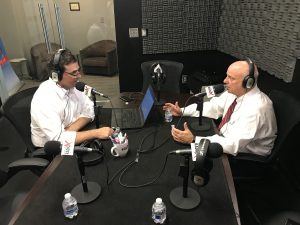
Michael Blake: [00:35:00] And that sounds a lot like what Angela was describing in terms of that like hybrid of flexibility and linearity. You need the flexibility and creativity to ask the right questions, but then the linearity to answer the question in a process-driven way-

Angela Culver: [00:35:13] Absolutely.

Michael Blake: [00:35:14] … so, that the statistics are meaningful? right?

Angela Culver: [00:35:16] Yes.

Michael Blake: [00:35:16] If we don’t do that, then you get gobbledygook basically.

Micky Long: [00:35:19] Right.

Michael Blake: [00:35:24] What do most companies miss? What are companies most missing out on in data management? What do you think is the most frequent opportunity or biggest opportunity they’re missing out on?

Angela Culver: [00:35:33] I think to go back to when they get started, I think that is a miss that I see quite a bit in a lot of companies where they’re starting too late. They don’t set it as a priority earlier in the business when it can have a huge impact. They’re not treating data as an asset from day one. And that’s a potential mess.

Micky Long: [00:36:02] Yeah. I see two things. Number one, they take the approach that’s incorrect, which is that this is a marathon, it’s not a sprint. You have to be able to do this and have the discipline to do this over the long haul, and not do this as, “Oh, let’s try this for a couple of months. And if it doesn’t quite work, we’ll go back and do something else.” That’s one thing.

Micky Long: [00:36:18] And the other thing is it’s not a marketing exercise for the most part, it’s a revenue exercise, which means you can’t just sort of take the data streams coming in and say, “That’s the prevalence of the marketing organization.” You’ve got to join marketing and sales together for this thing to really work. And that’s something that is still a challenge.

Micky Long: [00:36:36] I remember back in the day when marketing automation tools first started. It was supposed to be the answer to all of our prayers. It was going to be marketing and sales were now, finally, going to get together, and sing Kumbaya around the campfire, and we’re all going to do everything together. And we’re still trying to put marketing and sales people together. And it’s been at least 10 years since that started. So, why has that not happened? It’s because we still have issues. They’re the people issues. They’re not tool issues.

Micky Long: [00:37:00] So, the reality of it is you’ve got to look at this thing holistically and say, “It’s a business issue, not so much that.” So, that’s what people miss, in my mind, that are big things that they don’t look at. It’s the integration.

Michael Blake: [00:37:10] So, do you have a favorite data success story, something really wonderful, spectacular you’ve found that you just did not expect to find in a data exercise?

Angela Culver: [00:37:20] I have two actually. I was working for a company a few years back, and part of what I was hired to do was to increase the brand equity of the company in a relatively short period of time. And when I got into the company, the brand colors were predominantly green and red. And after looking at the customer base, I realized that 80% were male, most of them were between the age of 35 to 50, and 1:10 were color blind, red/green colorblind. So-

Michael Blake: [00:37:59] Oh, yeah. I’ve heard of that statistic. Yeah.

Angela Culver: [00:38:00] Yeah. So, our ads, the call to action were either highlighted in red or green. And the company was losing almost a half a million dollars in advertising cost due to the end user not being able to see the call to action. So, I went into the leadership team, said, “We need to change the brand colors,” presented my data, and within seconds had the approval to change the brand colors. I changed from red/green to essentially green/yellow, citron. And we immediately saw an uptick in the brand value. We went from about 16% to a 25%, which is unheard of, especially with a tech company. So, I wouldn’t have been able to do that without the data.

Micky Long: [00:39:03] So, I can give you one that’s a really simple one hasn’t having to do with database size and the quality of data we talked about before. I had a client that had a base of 100,000 people, and they were doing the classic marketing e-mails and things like that to try to get them in place, and they were having miserable returns, miserable e-mail open rates, and all those statistics you look at. So, what we did was we started doing an analysis. And what we found was there was a large group of these 100,000 that had never opened an email, had never engaged with it, and had never done anything for them.

Michael Blake: [00:39:36] So, what we tried was something very revolutionary for that company, which is we said, “Let’s ignore that 75,000 people in your database that have never touched anything. Just don’t send e-mail to them. Don’t think about them when you’re crafting your messages, and concentrate only on that smaller group, and really refine that smaller group to see what we could do.”.

Michael Blake: [00:39:56] And as you might expect, what’s happening is the company is now seeing a tremendous return on the investment against that smaller group of people. And, now, with better messages and better approaches, they can start to expand out to other people that are like that. And the 75,000 that never did anything, they still sit there, and we don’t do anything with them.

Michael Blake: [00:40:14] So, the reality is it’s a matter of concentrating on the people that are likely to do something and ignore the ones that don’t. And I would predict that most companies, if not all companies, have that same situation in place.

Angela Culver: [00:40:25] We have been dealing with email within our support group. We track at mobile apps, all our support tickets. And we actually get a little worried if we’re not receiving support tickets from our customers because, typically, they’re not using the product daily. One set of support tickets we’ve realized has helped us educate and improve the functionality of the product. So, within our product, we use iPads, telephones, mobile devices. They come in at all different versions. So, you’ll have an iPhone 6, an iPhone 8, and they’re plugged in 24 hours a day.

Angela Culver: [00:41:15] After a certain period of time, you will start seeing battery bloating. And it will slow down the performance of actually testing a mobile application on one of those devices. So, through our support tickets, we started seeing that customers were complaining about battery bloating. So, we actually started sending out information in advance. We knew if they were a customer for six months, and that they were constantly plugged in, that they were most likely going to start seeing deterioration of devices. And we’ve been able to counterattack that through putting out more educational information through emails; where in the past, we would send out promotional materials and emails, and they weren’t getting it, they didn’t want it, but this educational material is actually helping them improve the performance of the product overall. And in the end, it has an impact on retention rates, customer churn. So-

Michael Blake: [00:42:14] Sure, it makes sense. So, okay. So, we’ve talked through a lot of topics here. Some of our listeners are thinking, “Okay, I’m sold. I got to make data part of my business,” where do they start? What’s the what’s the first thing on their to do-list?

Angela Culver: [00:42:32] Start with the goals, set realistic expectations. So, like what Micky has said, you don’t want to try to boil the ocean. Start with what your company can tolerate. So, understanding that if you’re going to set up a marketing data hub, and you need to utilize sales information, understand what the tolerances from your sales team. Putting over 50 required fields in Salesforce for them to fill out every time they have a prospect come in probably might be over their risk tolerance or their ability to handle that initially. Maybe start with five fields if you’re just starting to input data and utilize data. So, setting up expectations would definitely and setting goals would be my first.

Micky Long: [00:43:34] Mine would be just do it. Just stop talking about it, stop thinking about it, stop reading about it. Just go do something because even if the first thing you do isn’t 100% correct, it’s going to get you further than if you just start reading whitepapers about, “Look, I get this data under control.” And that’s what we see is just that inertia is what stops a lot of people because they start looking at all the downsides to it. Just go do it is really what I would recommend.

Michael Blake: [00:44:00] Just rip the Band-Aid off.

Micky Long: [00:44:01] Just rip the Band-Aid off and just go for it.

Michael Blake: [00:44:04] Okay. So, all right. So, again, a lot to unpack here. We’ve only scratched the surface. We could easily make this a three-hour podcast, but not everybody would listen for three hours. So, if somebody wants to learn more, can they contact you and ask you some questions?

Angela Culver: [00:44:21] Absolutely.

Michael Blake: [00:44:21] Would that be okay?

Micky Long: [00:44:21] Sure.

Michael Blake: [00:44:21] So, Angela, why don’t you go first? If somebody wants to ask you about your experience with this, ask you some advice, how would they contact you?

Angela Culver: [00:44:28] So, you can definitely contact me via LinkedIn. That’s my name, Angela Culver, Mobile Labs. Also, my email, angela.culver@mobilelabsinc.com.

Micky Long: [00:44:41] And likewise, my LinkedIn profile is out there for prevalence. And my email is really, really simple. It’s mlong@arketi.com.

Michael Blake: [00:44:53] Okay. Gone are the days, the long strings with nine different numbers behind the at symbol, right? So, thank goodness for that. That’s going to wrap it up for today’s program. I’d like to thank Angela Culver and Mickey Long from Mobile Labs and Arketi Group respectively so much for joining us and sharing their expertise with us.

Michael Blake: [00:45:13] We’ll be exploring a new topic each week, so please tune in so that when you’re faced with your next business decision, you have clear vision when making it. Again, if you enjoy this podcast, please consider leaving a review with your favorite podcast aggregator. It helps people find us, so that we can help them. Once again, this is Mike Blake. Our sponsor is Brady Ware &c Company. And this has been the Decision Vision Podcast.

Tagged With: customer data, customer data analytics, data analytics, data collection, data flow, Data Management, data science, Dayton accounting, Dayton business advisory, Dayton CPA, Dayton CPA firm, marketing, mobile applications, mobile devices, stored data, structured data, unstructured data

Ken Crosson of Piedmont Injury Law

March 5, 2019 by John Ray

North Fulton Business Radio
Ken Crosson of Piedmont Injury Law
Loading
00:00 /
RSS Feed
Share
Link
Embed

Download file

Ken Crosson, Piedmont Injury Law

Ken Crosson, Piedmont Injury Law

Ken Crosson is the Founder and Owner of Piedmont Injury Law. Piedmont Injury Law helps good people whose lives and families have been affected by an injury caused by careless driving or some other acts of negligence. Their clients come to them in pain, facing medical bills, loss of income, and fears of a permanent injury. Often they need surgery, lack the resources to find or pay for the care they need.

Piedmont Injury Law helps their clients reach the best possible outcome and getting compensation for the full value of their injury. Their strong and growing record of success has built trust and attracted referrals from all over Georgia. Clients are sent to them by their neighbors, coworkers, friends, and loved ones, and also by their doctors, chiropractors, physical therapists, and other medical providers.

By working hard, being thorough and aggressive, and truly caring about the people we help, Piedmont Injury Law has won millions of dollars in judgment and settlement for their clients.

John Ray with Ken Crosson and Jen Starks of Piedmont Injury Law

Tagged With: liability insurance, Lyft, motorcycles, Personal Injury, personal injury attorney, personal injury case, personal injury law, personal injury lawyer, rideshare, rideshare drivers, slip and fall accidents, texting accidents, texting while driving, Uber, uninsured motorist, uninsured motorist coverage

Decision Vision Episode 4: What Corporate Form Should I Choose? – An Interview with Anita Anand, Brady Ware & Company

February 28, 2019 by John Ray

Decision Vision
Decision Vision
Decision Vision Episode 4: What Corporate Form Should I Choose? - An Interview with Anita Anand, Brady Ware & Company
Loading
00:00 /
RSS Feed
Share
Link
Embed

Download file

Mike Blake and Anita Anand

Choosing the Correct Business Structure

Michael Blake, Director of Brady Ware & Company and Host of the Decision Vision podcast, interviews Anita Anand, Director of Brady Ware & Company on the decision process on a corporate business structure, how recent tax law changes might dictate a change in corporate entity selection, and other questions related to corporate structure.

Anita Anand, Esq., Brady Ware & Company

Anita Anand, Director, Brady Ware & Company

Anita Anand, Esq. is a licensed attorney and has over 10 years of experience consulting with businesses to help them align their long-term business and financial objectives with a tax strategy that minimizes their overall exposure. Anita specializes in technical international, federal, state, and local tax research and consulting. She provides taxpayer representation in matters requiring federal and state private letter rulings and is responsible for international, federal, state, and local technical tax support involving a range of clients and industries. Anita works closely with the tax team to provide quality control in all aspects of Brady Ware’s tax division. Anita is also the author of articles and white papers on various subject matters. She has presented at conferences and led training sessions and initiatives. Anita is a graduate of Georgia State University College of Law.

Michael Blake, Brady Ware & Company

Mike Blake, Host of “Decision Vision”

Michael Blake is Host of the Decision Vision podcast series and a Director of Brady Ware & Company. Mike specializes in the valuation of intellectual property-driven firms, such as software firms, aerospace firms and professional services firms, most frequently in the capacity as a transaction advisor, helping clients obtain great outcomes from complex transaction opportunities. Mike is also a specialist in the appraisal of intellectual properties as stand-alone assets, such as software, trade secrets, and patents.

He has been a full-time business appraiser for 13 years with public accounting firms, boutique business appraisal firms, and an owner of his own firm. Prior to that, he spent 8 years in venture capital and investment banking, including transactions in the U.S., Israel, Russia, Ukraine, and Belarus.

Brady Ware & Company

Brady Ware & Company is a regional full-service accounting and advisory firm which helps businesses and entrepreneurs make visions a reality. Brady Ware services clients nationally from its offices in Alpharetta, GA; Columbus and Dayton, OH; and Richmond, IN. The firm is growth minded, committed to the regions in which they operate, and most importantly, they make significant investments in their people and service offerings to meet the changing financial needs of those they are privileged to serve. The firm is dedicated to providing results that make a difference for its clients.

Decision Vision Podcast Series

Decision Vision is a podcast covering topics and issues facing small business owners and connecting them with solutions from leading experts. This series is presented by Brady Ware & Company. If you are a decision maker for a small business, we’d love to hear from you. Contact us at decisionvision@bradyware.com and make sure to listen to every Thursday to the Decision Vision podcast. Past episodes of Decision Vision can be found here. Decision Vision is produced and broadcast by Business RadioX®.

Visit Brady Ware & Company on social media:

LinkedIn: https://www.linkedin.com/company/brady-ware/

Facebook: https://www.facebook.com/bradywareCPAs/

Twitter: https://twitter.com/BradyWare

Instagram: https://www.instagram.com/bradywarecompany/

Show Transcript:

Intro: [00:00:01] Welcome to Decision Vision, a podcast series focusing on critical business decisions brought to you by Brady Ware & Company. Brady Ware is a regional, full-service accounting and advisory firm that helps businesses and entrepreneurs make visions a reality.

Michael Blake: [00:00:22] And welcome to Decision Vision, a podcast giving you, the listener, clear vision to make great decisions. In each episode, we’ll be discussing the process of decision making on a different topic. But rather than making strict recommendations because everyone’s circumstances are different, we’re talking to subject matter experts about how they would recommend thinking about that decision.

Michael Blake: [00:00:42] My name is Mike Blake, and I am your host for today’s program. I’m a Director at Brady Ware & Company, a full-service accounting firm based in Dayton, Ohio with offices in Dayton; Columbus, Ohio; Richmond, Indiana; and Alpharetta, Georgia, which is where we are recording today. Brady Ware is sponsoring this podcast. If you like this podcast, please subscribe on your favorite podcast aggregator, and please consider leaving a review of the podcast as well.

Michael Blake: [00:01:07] So, today, we’re going to talk a little bit a hard accounting. We haven’t done that yet on the program. We’ll probably do it in a few episodes along the way. And we’re not necessarily going to get that technical, but this just in, you may have heard that the tax law changed radically at the end of last year that has changed the way that businesses are making decisions and making businesses kind of rethink decisions they may have made last year, five years ago, 10 years ago, 20 years ago.

Michael Blake: [00:01:41] And one of those decisions that when businesses, typically, are started – and maybe they changed along the way – is the corporate form. In other words, are you a C Corporation, and S corporation, you’re a limited liability company, and so forth? And there are many reasons or factors that drive that decision initially. But, quite candidly, one of them is what is your tax liability going to be. And depending on your corporate form – if it’s done correctly, and matches up with how your business makes money, and how you make money from your business – that’s going to drive what form of corporation or what corporate form you decide to take.

Michael Blake: [00:02:21] And what we’re finding at Brady Ware is that a lot of clients now and others are coming to us and asking, “Well, given these changes in the law, am I the right corporate form to frankly maximize or optimize my tax liability?” Nobody that I know likes to pay more taxes than than they absolutely have to. I know I’m not tipping the federal government when I write mine out. But, unfortunately, I know almost zero about it other than what I just talked about for the last 30 seconds.

Michael Blake: [00:02:52] So, we’ve brought in a subject matter expert. And I’m joined by my colleague, fellow director, and good friend, Anita Anand. Anita is a Director at Brady Ware, and she’s a licensed attorney and tax director at Brady Ware. She has over 10 years of experience consulting with businesses to help them align their long-term business and financial objectives with a tax strategy that minimizes their overall exposure. She believes it is necessary to take the time to understand what her business clients have done to achieve the success they have and where they plan to go. She, then, uses her broad knowledge of US and international tax laws to develop strategies and the most efficient tax structure to keep clients fully compliant at the lowest expense.

Michael Blake: [00:03:37] Anita has worked with a broad range of companies including technology, manufacturing, renewable energy, construction, real estate, and many other industries. She has helped them craft strategies to deal with federal state and local taxes, as well as inbound and outbound international tax issues. Along with these day-to-day responsibilities, Anita contributes her expertise to a number of local government agencies, industry organizations, and nonprofits. She is a guest lecturer at Georgia State University and the University of Georgia. Anita is also the author of various articles and whitepapers on various subject matters. In fact, I think she’s the most prolific writer in the firm, and she’s always writing something.

Anita Anand: [00:04:14] You’re so sweet, Mike.

Michael Blake: [00:04:15] She is presented at conferences, authored articles, and led training sessions and initiatives. Anita is a graduate of Georgia State University’s College of Law. And on a personal note, Anita was actually the first person that I met outside of the interview process before I joined the firm. And I remember very clearly that she was kind of one of the first to kind of welcome me, and we’ve latched on to each other because the two of us are the two non-CPAs-

Anita Anand: [00:04:39] That is true.

Michael Blake: [00:04:41] … in the firm at the director level., right. And so-

Anita Anand: [00:04:45] Right, very true.

Michael Blake: [00:04:45] And that-.

Anita Anand: [00:04:45] We got to stick together, Mike.

Michael Blake: [00:04:46] We do have to stick together. But that having been said, you studied tax, I have not. So, it’s just delightful to welcome you to the program. We’re going to have some fun today while we help people work through this decision.

Anita Anand: [00:05:00] I look forward to it. Thanks for having me.

Michael Blake: [00:05:02] So, Anita, I’ve given, sort of, this introduction, but I’d like you to kind of humanize a little bit. Talk about what you do at Brady Ware, and how you’re helping clients on a day-to-day basis.

Anita Anand: [00:05:12] Yeah. So, like you, said I’m a director with the firm. I spearhead the international tax practice. And so, because I’m a lawyer by trade and not a CPA by trade, I come at it from a slightly different angle in that tax consulting really is my specialty. So, I work a lot with clients, whether they’re individuals or businesses, here in the US that are wanting to expand their operations or their work in foreign jurisdictions and vice versa, right. So, if we have, let’s say, a company that has already established their business in foreign markets, and, now, they want to expand into the US, helping them understand what US tax rules are, how they work, what the regime is like, and what kind of an impact they’re going to be probably faced with is really what I like to kind of help them plan with.

Anita Anand: [00:06:03] But outside of the international, my foundation is technical tax. That’s what my career has always been. So, I also serve as a resource to others across the firm on technical tax matters, which vary all across the spectrum. So, if there is, let’s say, a client that has maybe a little bit more of a complex issue that requires some more technical tax research, looking into trying to figure out maybe how IRS may interpret a specific set of facts and circumstances, really diving into those types of situations, and then advising the clients appropriately. So, that’s just a very nice way, I think, of saying that I’m a tax nerd, but I enjoy it. I enjoy it. My job is to understand how these tax rules work, and then help explain to clients what it means to them.

Michael Blake: [00:06:53] It’s okay to be a nerd. The nerds rule the world, man.

Anita Anand: [00:06:55] That’s okay. Right, yeah.

Michael Blake: [00:06:56] The nerds are the ones driving Teslas. The nerds are the ones with second and third homes.

Anita Anand: [00:07:00] There you go, right?

Michael Blake: [00:07:01] You know, it’s all good. So, if you’re the nerd that everybody comes to for things tax, I mean, that’s not a bad place to be. So, what does being a tax expert an advisor mean? I mean, you talked a little bit about, sort of, being a tax nerd, but it goes a little bit beyond that, doesn’t it?

Anita Anand: [00:07:18] It does. It does. And, I think, the overarching goal for any tax advisor – and this is the way I view it – is you really are taking what is a complex set of rules that in the federal income tax code, you’re taking the code, you’re taking the regulations associated with it, the guidance IRS has issued along the way, and trying to, number one, keep up with that, understand what that means, interpret it correctly. But then, more importantly, be able to communicate that to a client in a way that they understand, right. It’s no different than, for example if I go to a doctor not feeling well, and they spit out all of these medical terms that have 15-18 syllables to it. Well, he or she could be the most brilliant person on the face of the earth, but they’re not communicating to me in a manner I understand what it means.

Anita Anand: [00:08:09] And so, I kind of take tax advisory in that light where our job is to really take something that the average person probably doesn’t even want to deal with. And it’s our job to make them understand how it impacts their business. But that’s also a loaded job description, right, because that includes that the advisor needs to be keeping up with all these tax law changes, which is constantly in a state of flux, not only on a federal level but international implications, state and local tax implications. So, there’s a lot to always keep up with.

Anita Anand: [00:08:43] But then, I think, what also sets maybe tax advisors apart from just true tax compliance, because I view tax compliance as you’re looking in the rearview mirror, you’re reporting what has already happened; whereas, I think, one of the key aspects of a tax advisor is to have more of a proactive approach, work with clients from the beginning, and more so on the front end, and along the way in terms of, “Hey, how’s the business going? How are we seeing things go? What is the ultimate goal here? What are things you should be aware of? How they’re going to impact you? What are you thinking about? What aren’t you thinking about that you should be thinking about?” That way, we’re making sure that clients are in the best position possible to make the best business decisions understanding tax impacts along the way.

Michael Blake: [00:09:29] I think that’s a very smart comment that you made that I want to highlight because I think it’s that important that it’s worth going off script to do that. There’s a big difference between being an analyst and an advisor, isn’t there?

Anita Anand: [00:09:43] There is.

Michael Blake: [00:09:43] And when you’re an analyst, you often talk about either, “Here’s what happened,” right, or “If A, B. C happened, then, sort of, here’s the flow chart, and here’s what will happen. Here’s kind of what the math says. And here’s what the law clearly says.” The advisor’s job is a lot less comfortable, isn’t it?

Anita Anand: [00:10:04] It is. And you have to be okay with the — You have to get comfortable with the uncomfortable. And that is difficult to do because nobody likes to be in that gray space. And in my experience, and especially in light of tax reform, a lot of tax professionals are stuck in that gray space.

Michael Blake: [00:10:23] And it’s even worse now, right?

Anita Anand: [00:10:25] It is.

Michael Blake: [00:10:25] Because you’re talking about changing rules and changing regulations. As I understand, in many ways, the IRS has not decided or, at least, has not chosen to share with us yet-

Anita Anand: [00:10:35] Correct.

Michael Blake: [00:10:35] … what they’ve decided the rules actually mean, right? So, in a lot of cases, to be perfectly candid, we’re all, not just Brady Ware but every CPA who’s being intellectually honest-

Anita Anand: [00:10:46] Right.

Michael Blake: [00:10:47] … is making a best guess based on available information that could turn out to be wrong.

Anita Anand: [00:10:52] Absolutely. And I think that’s another thing that’s going to set what I believe tax advisors into different buckets is being honest with clients. I understand we have — I’ve had to have these conversations multiple times with clients as clients are expecting an answer. When they come to you, they are expecting an answer on, “Okay, this is my issue. Tell me what I need to do.” And we need to be honest in that we are in this state of flux, and that there is so much that is unknown. But given what we know as it stands right now, this is what we believe to be where we think IRS is going to come out on it, but with the caveat that it could completely change because we just don’t know what we don’t know.

Michael Blake: [00:11:36] And does your legal training help you with that? I mean, the law is the law, but, on the other hand, the law is the law until it gets in front of a judge and jury.

Anita Anand: [00:11:43] Correct. It did, it did. But I also think it’s also experience along the way. The legal training helps you analyze what is already in front of you. It helps you interpret, okay, if you’re looking at, let’s say, 10 tax court cases on a particular issue, and eight have gone a certain way, and two have possibly gone a different way, to kind of help analyze what that really means. So, it has provided the analytical skills that I think I have, but there is still that second part of the equation, which is being okay with communicating your analysis accurately and honestly with a client, which just, I think, comes with experience.

Michael Blake: [00:12:29] So, I want to go out on a limb and say you didn’t necessarily, when you’re eight years old, say, “I want to become a tax advisor.”

Anita Anand: [00:12:37] No.

Michael Blake: [00:12:37] Is that fair?

Anita Anand: [00:12:38] That is a fair statement.

Michael Blake: [00:12:39] Some people have done that. And maybe they go and do, more power to them, you didn’t, and I didn’t grow up saying, “I was going to be a business-” I didn’t know what a business appraiser was until I graduated from business school. So, what got you into tax advisory? What captivated you that you want to make that your career and you wanted to be an expert in tax?

Anita Anand: [00:12:57] It’s really funny that you asked that question because I’ve asked that question of myself a couple of times along the way.

Michael Blake: [00:13:04] During busy seasons?

Anita Anand: [00:13:05] Yeah, yeah, yeah. Every year between that February and April timeframe. So, early on in my career, I never at all thought that I was going to do tax. Honestly, doing my own personal income tax return that one time a year was enough tax I ever needed to be exposed to. But I got a good opportunity in tax and, obviously, in the tax advisory role. And I went in with a certain set of expectations, and I was actually pleasantly surprised. So, I stuck around. And over time, that’s how I built my career.

Anita Anand: [00:13:40] But along the way, obviously, you learn a lot about yourself as an individual and as a professional. And when I look back at really what made me stick around in the tax space is, I think, believe it or not, in a weird way, I think, I like problem solving. And tax advisory is that every day. It’s not necessarily that a client is coming to you, “Hey, I have an IRS audit. Now, please fix this for me.” It’s advising clients along the way and what they’re trying to do. There’s a constant “problem” that business owners are constantly faced with. And so, you’re able to advise them on that.
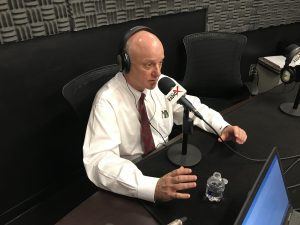
Anita Anand: [00:14:18] So, it’s problem solving that I enjoy. And then, I enjoy working with people. So, I like getting to know my clients, and understanding what their business is, where their goals lie. And, obviously, building that kind of professional relationship where they believe that you are a valuable member to the team. So, I think all of those things put together have made tax advisory a good fit for me, which is I guess why it’s been working pretty well.

Michael Blake: [00:14:46] It has worked pretty well. You’re a brand director, so.

Anita Anand: [00:14:49] That is right. That is right.

Michael Blake: [00:14:51] Can you think of a neat success story you’ve had with the clients, something you really, really either helped them out of a bind or helped them frankly just save a lot of money that they’re going to be on the hook for?

Anita Anand: [00:15:02] Yeah. I’ve been blessed with quite a few clients’ situations where we were able to get them out of what I’m going to just call a pickle. I had a client that specifically came to me from a prior CPA firm. They were in the midst of a complete reorganization, corporate reorganization. And the amount of dollars that were involved were quite significant. And so, the way the prior CPA firm was advising them to pursue this reorganization was going to be a completely taxable event, and it was going to cost them a lot of money.

Anita Anand: [00:15:41] So, when they came to me, we had some certain discussions, and we really  to dive in to some of the tax rules in terms of, could they possibly benefit from a tax-free reorganization? So, we worked very closely with our legal team to stay within the parameters of the law and what is allowed. And, in fact, what the tax liability their prior CPA had estimated to them, we were able to completely wipe it out.

Anita Anand: [00:16:08] So, that was one of the success stories that I kind of hold on to quite a bit and it saved them millions of dollars. So, quite significant on their end as well. But my success story is truly where I find the successes when you have a client that achieved success, and you’re a valuable member to the team that helped them do it, and they look at you as being a valuable member to the team. And that in and of itself is success.

Michael Blake: [00:16:35] Yeah, that’s what it’s all about, right? And that is the stimuli.

Anita Anand: [00:16:36] That’s what are in it for everyone.

Michael Blake: [00:16:38] So, all right. So, let’s talk now about entity conversions. Why are people talking about them so much now? Why is there so much chatter about, “I want to convert from C, to S, to SSC, or something else”?

Anita Anand: [00:16:51] Well, it’s this little thing called tax reform that you had alluded to.

Michael Blake: [00:16:54] Oh, yeah, I heard of that.

Anita Anand: [00:16:54] Yeah, that little thing that happened at the end of 2017. The tax cuts and Jobs Act was the tax reform package really. And it was high time for tax reform. If you go back and you think about the last major tax regime overhaul, it was back in 1986. So, the fact that this last one was done in 2017, I mean, you’re talking 30 plus years later. So, it was high time for there to be, I think, a little bit more of a look towards our tax laws, our tax rules, and modify them to be in line with the current marketplace and business realities of our country

Anita Anand: [00:17:32] So, with  reform though, we had a number of different changes. And one of the most talked about is the reduced corporate tax rate. So, we went down from 35% to 21%. And, now, that has raised this conversation amongst various taxpayers, “Does it make sense for me to use a traditional corporate structure? Because before, it was going to cost me 35% at the corporate level. Well, now, it’s lower. So, should I be thinking about a conversion?” So, that’s truly what has sparked it, and all the conversations that we’re hearing and reading about.

Michael Blake: [00:18:08] And what are clients converting from and to in order to take advantage of that?

Anita Anand: [00:18:14] So, at this point, a lot of clients are thinking about converting from what’s called a pass-through entity, which is like your traditional partnership as corporation limited liability company or LLC to a C corporation. So, that’s what, I think, the conversation is and that discussion point is right now is I’m taking what — There really is no corporate entity. It’s a pass-through. And does it make sense now for me to convert that pass-through entity to a traditional C corporation?

Michael Blake: [00:18:45] Now, that’s kind of different from, at least, what I’ve encountered maybe that’s because that’s where valuation comes in, but I’m more used to seeing C to S form conversions, right?

Anita Anand: [00:18:58] Right.

Michael Blake: [00:18:58] Is going back the other way more or less complicated than C to S, or about the same?

Anita Anand: [00:19:03] So, it’s very — Okay. I want to caveat this, but it’s simpler to go from a pass-through entity like an S to a C, or a partnership to a C, or LLC to a C. But going the other way is a little bit more difficult. You’ve got a lot more considerations that go into that, and there’s usually some pain and cost associated with it. And so, that’s kind of part of the conversation that we’re having with our clients right now is, sure, we can talk about this conversion. We can do the modeling. We can certainly walk you through it. But just know that as easy as it is to maybe check the box and convert to a C corporation, in the event two years down the road, you wanted to go back, there’s going to be some cost. So, the short answer to your question is it’s really just not that easy to go back once you’ve elected to be a corporation.

Michael Blake: [00:19:59] So, you better be sure?

Anita Anand: [00:20:01] You should be sure.

Michael Blake: [00:20:02] And I mean, again, I’m not an account, but my impression is the IRS generally is not a huge fan of changing corporate forms all the time like share changes-

Anita Anand: [00:20:13] Right.

Michael Blake: [00:20:15] … outfits in a concert-

Anita Anand: [00:20:17] Absolutely.

Michael Blake: [00:20:17] … because you want to optimize your tax rate.

Anita Anand: [00:20:19] Right, right.

Michael Blake: [00:20:20] So, they’re not a huge fan of that.

Anita Anand: [00:20:22] No.

Michael Blake: [00:20:23] So, can we say there’s a bottom line or a blanket statement? Or I’m going to rephrase the question actually. And the question is, what are kind of the criteria that makes a company a good candidate for a pass-through entity conversion to a non-pass-through entity conversion? What’s kind of that checklist look like?

Anita Anand: [00:20:45] Mike, that’s a really good question. But, unfortunately, there is no one-size-fits-all. And the reason I say that is because there were so many different moving pieces in tax reform that there are new benefits that are afforded to those businesses that are operating as a pass-through entity. And, now, there are new benefits that are afforded to those that are operating in a traditional corporate structure.

Anita Anand: [00:21:11] So, it’s kind of hard because you’re not really comparing apples to apples. So, what you really need to look at, I can tell you kind of what maybe the logic should be, and the logic should be taking a closer look in terms of what is your business today; what are your near-term and long-term goals; what type of activities are you engaging in; are you expanding in international markets; are you investing in real estate? What is it? Where is your income coming from? Because those are going to help, I think, really determine whether one particular type of structure is better than others.

Anita Anand: [00:21:49] And then, from there, you really have to do modeling. It’s very easy to speak conceptually and in big picture, but, at the end of the day, what everyone wants to know is the bottom line. It’s, how much is this going to cost me? And the thing is whatever structure you choose, it’s an annual cost. There’s an annual cost associated with it. That’s your tax liability.

Anita Anand: [00:22:10] So, you got to put pen to paper or, in this case, maybe have some intricate and complex spreadsheets, but to really help understand, “Okay. Well, if I do it in a partnership form, could I maybe tap into certain benefits there?” So, for example, like under tax reform, there’s a new deduction that’s afforded to certain qualified business income of qualified trades or businesses that’s afforded in partnership, or S corporation, or even sole proprietorships that is not available to a C corporation. But, now, the C corporation has a lower tax rate. They have other benefits that could potentially be taken advantage of, let’s say, if there’s some exports or something going on.

Anita Anand: [00:22:53] So, you just have to understand what different pieces kind of fit together, and then be able to compare both of them, and see what works out better. In my experience, the conversations that I’ve had with clients, it really has been a toss you kind of go in thinking that, okay, a conversion might actually prove to be beneficial. But then, when you put that pen to paper, you see that maybe not and vice versa. So, it’s really, unfortunately, the facts and circumstances are going to dictate.

Michael Blake: [00:23:22] And, sometimes, the cure is worse than the disease.

Anita Anand: [00:23:25] Correct.

Michael Blake: [00:23:26] Right? So-

Anita Anand: [00:23:26] Yeah.

Michael Blake: [00:23:26] All right. So, I want take a step back for just a second because I’m sure some of our listeners don’t geek out on this accounting stuff. So, I want to take a step back and do a little bit of remedial tax accounting 101. And that is at the outset, generally, why do people check that box they’re going to be a pass-through entity to begin with versus a non-pass-through entity? What generally kind of drives that decision initially?

Anita Anand: [00:23:55] So, I think, first and foremost, the overarching benefit of having a pass-through entity is the fact that you truly get passed through of income loss, credits, deductions, whatever may be generated from the business. So, let’s take a structure. Let’s assume that we’ve got a partnership that owns a business. The business is profitable. And so, whatever income is generated from the business is reported at the partnership entity level.

Anita Anand: [00:24:26] So, the partnership itself will file a tax return, but the partnership itself does not pay an income tax. Instead, the partners get their pro-rata share of income, and all the other items of tax that are allocated to the partners. And then, they report their income on their personal income tax return based on whatever tax bracket they may be in. So, that’s your traditional pass-through. You don’t have the two layers of taxation, but you’re afforded, obviously, limited liability, right, with having a certain type of a limited liability in their partnership or S corporation.

Anita Anand: [00:25:00] Nowadays, like I was mentioning earlier, because of tax reform with this new deduction now, there’s an additional reason or an additional benefit to operate in the form of a pass-through, which is called this qualified business income deduction, which is up to a 20% deduction on certain types of income from certain types of qualified trades or businesses. The thing you need to know about tax is when the I–RS is offering a tax credit or a deduction, they’re qualifying it. So, you need to make sure you truly are eligible. But-

Michael Blake: [00:25:30] You can’t just say, “Hey, it’s all good.”

Anita Anand: [00:25:33] Exactly, right. You can’t just assume you’re going to be eligible for anything. So, there are quite a bit of caveats. And so, you want to make sure you’re eligible for it. But that is another benefit that’s afforded to pass-throughs that isn’t afforded to your traditional corporation.

Anita Anand: [00:25:48] And then, if you kind of go to — Let’s go to like an LLC structure, right. If you have an LLC with just one  So, like I set up an LLC, I’m the only one in it, well, I’m afforded the limited liability from a legal standpoint, but for tax purposes, that LLC is treated as a disregarded entity. So, what that means is I don’t even have a compliance requirement at that LLC level, but I still get the benefit of the flow through.

Anita Anand: [00:26:17] So, flow-throughs have quite a bit of benefits, and there’s a little bit more flexibility associated as well with pass-through entities that aren’t necessarily available in the corporate structure. But I think those are kind of, I think, your main points that have had people gravitate towards a pass-through structure as opposed to some others.

Michael Blake: [00:26:38] Okay. Now, a big part of your practice, an increasing part of your practice is international, and you do a lot of work particularly in Latin America, but a bunch of other places too. Is this change in the law, this discussion of corporate form conversion, having an impact in companies doing a lot of international business?

Anita Anand: [00:26:58] It most definitely is. So, if you take a step back and try to understand part of what was going on from the legislative side in tax reform, I think, a lot of what the US was realizing was that US companies are choosing to do business in foreign jurisdictions because of the tax rates in the US. It’s that they were just too high. And so, there was an effort to try to incentivize businesses to bring those operations back into the US.

Anita Anand: [00:27:31] And so, part of it is bringing the corporate tax rate down from 35% to 21%. But then, there were other incentives that were added as part of the tax reform package that are only afforded to corporations that have an international presence that are not afforded to those that are operating through a pass-through entity.

Anita Anand: [00:27:50] So, for example, now, obviously, because the corporate tax rate has come down, it’s making it, (1), just more attractive; but (2), if you have, let’s say, a US company that is providing services or selling goods to an unrelated third-party, that happens to be a foreign person for ultimate foreign use and consumption, they’re eligible to tap into a tax deduction benefit that is only afforded to corporate taxpayers, not afforded to a partnership or an S corporation.

Anita Anand: [00:28:22] So, there’s that benefit that, again, if that’s, kind of, the line of business you’re in, that may tip the scale in the favor of operating in a corporate form. Other types of benefits, especially in the international space, what we have is a lot of US corporations that have ownership and controlled foreign corporations. And so, now, there’s  received deduction for those dividends that are truly foreign-sourced. So, that’s an added benefit, again, only to corporate taxpayers.

Anita Anand: [00:28:56] But, also, in light of tax reform, there were also some new taxes that IRS decided, or Congress decided to go ahead and enact. And so, to to help offset the overall tax cost, there are deductions to help, like I said, offset that tax liability, but that deduction is only available to corporations not available to pass-through. So, a couple of those different pieces put together are making an impact, especially for those with an international presence. So, I think, the analysis is slightly different for those with a multinational footprint than those with just a domestic operation.

Michael Blake: [00:29:34] Okay. Let me switch gears here a little bit. I’d like to talk about a topic near and dear to my heart, which is startups. In my experience, most startups — Well, if a startup is going to start — If they think they’re going to raise venture capital, they may start out as a past-through, but they wind up migrating to being a C corporation.

Anita Anand: [00:29:55] Right, right.

Michael Blake: [00:29:55] They do that because, one, it allows them to issue multiple classes of stocks, like preferred shares; and the other is that venture capitalists don’t want to have passed-through gains.

Anita Anand: [00:30:06] Right.

Michael Blake: [00:30:07] They’re profits that they have to pay taxes on.

Anita Anand: [00:30:08] Right.

Michael Blake: [00:30:09] Because it deprives the company of cash. Is that calculus now changing because of the tax law? The tax law, now, driving something else.

Anita Anand: [00:30:20] Yes and no. And, I think, some of the considerations as it relates to startups remain the same. Typically, startups, what we  see is that in the first few years, there’s just a lot of losses. And so, a pass-through structure is attractive for the reason that, as a name implies, is you get the pass-through of those losses to the individuals versus that getting trapped at a corporate level, right. So, if they had set it up as a corporation from the beginning, whatever losses are being generated, they get stuck at that corporation level, and they don’t really, or they’re not able to be realized, or benefits are not able to be realized at the individual shareholder level.

Anita Anand: [00:31:04] So, I think that consideration still holds true. But I think, to your point, what we have seen in the past and what we will probably continue to see is, over time, as they get closer to raising capital, there is going to be maybe not necessarily a tax decision that’s the primary driver but more so a business decision to elect to be treated as a C corporation instead, and more so because of the VC money. If the VCs are expecting it to be a corporate structure, they’re the ones that are bringing the money to the table. So, naturally we want to please them, right?

Michael Blake: [00:31:40] Yeah.

Anita Anand: [00:31:40] So, that’s what we’ve seen in the past, and I think we’ll continue to see that. I think, our experience has been that some VCs – and this is maybe where I defer to you – Some VCs, I think, are starting to get maybe a little bit more comfortable than what we used to see 10 years ago with a pass-through entity structure but, still, traditionally, I think, most still expect to see that corporate form in place.

Michael Blake: [00:32:00] Yeah. In my experience, I see Angel investors, particularly if they only have one or two investments, they’re okay with an LLC because when there are pass-through losses, they can actually use them, right, but if you’re an investor, and you’ve got eight of these startups, right, you’ll never be able to use all the losses. They’ll just expire before you’ll be able to use them, right?

Anita Anand: [00:32:24] Right, right.

Michael Blake: [00:32:24] So, you may as well go ahead, at least, in some of these entities, make it a C Corp because you can’t benefit from the past-through losses anyhow.

Anita Anand: [00:32:30] Right, right. The only thing that is just going to make that decision a little bit easier is that, obviously, if you’ve got a company that’s now choosing to be a C Corp because of VC money or whatever other reasons might be associated with it, it’s not that 35% income tax rate that you’re looking at that’s glaring at you with flashing lights and everything. It’s 21%, which seems to be a little bit more tolerable.

Michael Blake: [00:32:55] By the way, I’m going to note something to our listeners. This is the first time in my life I’ve said three correct accounting things in a five-minute period.

Anita Anand: [00:33:01] We’re so proud of you, Mike.

Michael Blake: [00:33:02] Thank you very much.

Anita Anand: [00:33:02] We are so proud of you.

Michael Blake: [00:33:03] Thank you very much. I’m going to give myself a little present at the end of the day. All right. So, this is, obviously, very complex, right? This is not something we can solve for anybody over a 30-minute — I don’t think you could solve with a 30-minute conversation directly with a client, right?

Anita Anand: [00:33:20] Right, right.

Michael Blake: [00:33:20] So, can you provide some guidelines on how to think about this decision, right? At least, some of these interests now piques like, “Gee, I’m a C. Maybe I ought to be a pass-through and start not pay so much in taxes.” What can they think about to make that decision to e-mail you, call you, decide if this is kind of a worthwhile pursuit on their part?

Anita Anand: [00:33:45] Right. I think, first and foremost, I think, you need to really sit down and take a step back. I think a lot of business owners, they kind of know what they’re expecting and what they want out of their business, but because they get involved sometimes in the day-to-day, we don’t necessarily just take a step back and really think about, “What is our strategic goal? What is our strategic vision for the business? What are we doing today? What am I wanting to do tomorrow, 5 years down the road, 10 years down the road?

Anita Anand: [00:34:14] Think of that. Map that part out because talking to your tax advisor or talking to your legal team, they’re not going to be able to give you those answers, right. That needs to be driven by the business owner. But once you have that strategy laid out, then, I think, it’s prudent to go ahead and initiate those conversations with a tax advisor and say, “Hey, you know what. This is kind of where I’m at right now. This is my current structure. This is what I’m expecting to do.”

Anita Anand: [00:34:39] Obviously, we understand we plan, and life  a different plan for us. So, we understand that, but I think if you have a roadmap to start with, that, at least, prompts the conversation for discussion and considerations. And then, from there, talk about the benefits of kind of what benefits are they currently realizing versus what are the benefits that they could be realizing under a different structure.

Anita Anand: [00:35:04] And then, you really have to do the modeling. You really do. I would go on record and say that, I think, any type of a conversion without modeling is a little scary because, again, you’ve got to put the pen to paper and really see how it all shakes out. So, do the modeling. And then, once you kind of know how the numbers shake out, then, I think, there’s still a second layer of considerations in terms of, okay, now, administratively, what is the cost of conversion? What are going to be my legal fees? What are going to be my tax fees? Other non-tax considerations for example.

Anita Anand: [00:35:41] So, if you have a client that’s got a partnership, and modeling the C corporation might be a more advantageous tax structure. Okay. Now, you’ve got to think about corporate formalities, articles of incorporation. Do I need to have annual shareholder meetings? How are my minutes going to be recorded? So, there’s other stuff to think about that’s not necessarily just tax considerations. And so, the conversation needs to be not only with your tax advisor but also your legal team because all these pieces need to fit together like a proper puzzle.

Michael Blake: [00:36:14] And to be clear, when you say modeling, we’re not talking about getting on a runway and strutting down, but rather, it’s doing the math, right?

Anita Anand: [00:36:22] Absolutely.

Michael Blake: [00:36:23] Opening up a spreadsheet. And just, at some point in business, there’s just no substitute for grinding out the number, right?

Anita Anand: [00:36:31] Right, right.

Michael Blake: [00:36:32] And one of the things that you guys are doing, and we do, is we help you grind through the numbers.

Anita Anand: [00:36:36] Absolutely.

Michael Blake: [00:36:36] So, if somebody wants to — If someone’s not sure, the listener to this podcast who think, “I’m not sure, but I don’t want to waste Anita’s time. She seems really nice and busy,” can they just sort of call you and get kind of a consultation to see if it makes sense.

Anita Anand: [00:36:53] Oh, absolutely, absolutely. I mean, that’s what we’re doing for so many. And, honestly, I would encourage it because as a business owner, you should be thinking about it. At least, ask the question. The answer may be you’re absolutely fine, but be thinking about it, and have these conversations. And I will say that I don’t believe that this conversation is going to be a one conversation and be done with it because as we’ve spoken about earlier in this conversation is there’s still so much to be learned in light of tax reform. We’re still waiting on more guidance to come out.

Anita Anand: [00:37:26] So, the conversation may actually be more of a continuing conversation because, again, ultimately, you want to be making the best decision for you out of a position of being in possession of as much knowledge as you’ve had.

Michael Blake: [00:37:41] Being informed, right?

Anita Anand: [00:37:41] Right. You want to be informed. You want to be educated. And, like I said, if you convert you can’t really go back without there being some tax pain and cost associated with it. So, you want to be really sure. And then, also, weigh the fact that some people are talking about, what’s the certainty? Will tax law change again? Okay, if we go ahead and convert, down the road, now, the rules are completely different, then what happens? And that is a risk, that is a factor, but you’ve got to weigh that with maybe some of these other considerations and really see how the scale tips.

Michael Blake: [00:38:16] That sounds cool. Somebody got to really do a podcast about making informed decisions. Well, never mind.

Anita Anand: [00:38:21] Yeah.

Michael Blake: [00:38:23] So, if someone wants to ask you, if someone wants to reach out to you and pursue this, how can somebody get a hold of you?

Anita Anand: [00:38:29] Well, the good thing is I think I’m pretty flexible. People call all the time, e-mail all the time, LinkedIn, Facebook. I mean, I’ve got clients that reach out to me a form of different ways. And so, I would encourage anyone to reach out in however they feel fit. Email, call, and want to schedule an in-person meeting, happy to do that as well. But I would encourage that conversation with someone, whether it’s me or whoever, just people you feel comfortable with but, at least, be having that conversation with your tax advisor because I think it is high time. And if they haven’t brought it up to you, you should probably bring it up to them.

Michael Blake: [00:39:07] And what’s your e-mail address?

Anita Anand: [00:39:08] It’s aanand@bradyware.com. So, aanand@Brady.com.

Michael Blake: [00:39:17] All right. So, there you have it. Everything that you want to know about corporate form conversion but may or may not have been afraid to ask. But you shouldn’t be afraid asking more because Anita really knows her stuff, and she’s pretty cool too. So, do ask.

Anita Anand: [00:39:28] Thanks, Mike.

Michael Blake: [00:39:28] Do ask to ask her about it.

Anita Anand: [00:39:31] Happy to help.

Michael Blake: [00:39:33] So, I’m going to thank Anita for coming on. This is great. This is, literally, thousands of dollars of free advice that you’ve just given. So, that’s awesome. And that’s going to wrap it up for this program. I’d like to thank Anita so much for joining us and sharing her expertise with us.

Michael Blake: [00:39:33] We’ll be exploring a new topic each week so please tune in. So, when you’re faced with your next business decision, you have clear vision when making it. If you enjoy these podcasts, please consider leaving your review with your favorite podcast aggregator. It helps people find us, so that we can help them. Once again, this is Mike Blake. Our sponsor is Brady Ware & Company, and this has been the Decision Vision Podcast.

Tagged With: corporate structure, corporate taxes, Dayton business advisory, Dayton CPA, Dayton CPA firm, flow-through entity, IRS, pass through entity, personal taxes, S Corp, Tax, tax advice, tax advisor, tax benefits, tax deductions, tax liability, tax problem solving

To Your Health With Dr. Jim Morrow: Episode 3, The Truth About Statins

February 27, 2019 by John Ray

North Fulton Studio
North Fulton Studio
To Your Health With Dr. Jim Morrow: Episode 3, The Truth About Statins
Loading
00:00 /
RSS Feed
Share
Link
Embed

Download file

Dr. Jim Morrow, Morrow Family Medicine

Dr. Morrow’s Show Notes on Statins

  • Before talking about statins, we should talk about high cholesterol.
  • What qualifies as high cholesterol?
    • Has changed a lot over the years.
    • Now, it is LDL > 130 or HDL < 40 if you have no family history of heart disease.
    • It is an LDL > about 75 if you do have a family history.
  • Hard to raise your HDL. No matter what you do.
  • United States Preventive Services Task Force (USPSTF) recommends that adults without a history of cardiovascular disease (CVD) use a low to moderate dose statin for the prevention of CVD events and mortality when all the following criteria are met:
    • (1) they are aged 40 to 75 years;
    • (2) they have 1 or more risk factors (i.e., high cholesterol, diabetes, high blood pressure, or smoking) ; and
    • (3) they have a calculated 10-year risk of a cardiovascular event of 10% or greater
  • So, to determine whether a patient is a candidate for medical treatment, clinicians must first determine the patient’s risk of having a future cardiovascular event.
  • Task Force found adequate evidence that the risk of statins in adults aged 40 to 75 years is small

What are “Statins”?

  • Statins are prescription medications that lower cholesterol to prevent cardiovascular disease (heart attack or stroke), which is the leading cause of death in the United States.
  • These are medicines you have probably heard of, or more likely Googled, like Zocor, Lipitor or Crestor.
  • First line of therapy should be lifestyle changes. Try lifestyle changes for a few months, then on to the meds.
  • Statins can reduce the risk of stroke, heart attack and even death by 25 percent or more.

Side Effects

  • There are two side effects that actually happen from statins.
    • Myalgia (muscle aches or weakness) is a commonly reported adverse effect of statins,
    • Liver irritation or inflammation can occur. Need to have lab work before starting and then regularly when taking them.  Not smart to give a year’s supply.

Myths about statins

  • Myth #1:  Taking Statin Drugs Leads to Diabetes Out of the Blue
    • Truth:  In clinical trials, statins appear to accelerate a diagnosis of adult-onset diabetes because they cause a slight elevation in blood sugar.
    • However, people impacted by this side effect already have higher than normal blood sugar.
    • For those who are borderline diabetic, the mild increase in blood sugar can lead to a diabetes diagnosis about five weeks earlier than it would be otherwise.
    • Fact: Research indicates that statin drugs do not induce diabetes in someone who isn’t already nearing a diabetes diagnosis.
    • Additionally, the benefits of reducing cardiac events in someone who has prediabetes or is a diabetic greatly outweigh the mild increase that might occur in their blood sugar.
  • Myth #2:  Statins Frequently Cause Memory Loss
    • Truth:  In 2012, the FDA changed statin drug labels to include information that some people had experienced memory loss and confusion while taking the medications.
    • Unfortunately, that change was based on some poor-quality studies and evidence. People became seriously concerned that lower cholesterol levels could affect the brain’s function. But in fact, the brain makes its own cholesterol. It doesn’t depend on the cholesterol in the blood.
    • The most rigorous studies show that statins do not commonly cause memory loss. If anything, long-term use of statins might have a beneficial effect on the brain since they help prevent strokes and protect the health of arteries in the brain.
  • Myth #3:  You Could Get Cataracts from Taking Statin Drugs
    • Truth:  Some studies have indicated that there may be a relationship between statin drugs and an increased risk for developing cataracts. However, these investigations have been either conducted in animals or in less-than-rigorous studies.
    • The best evidence we have comes from high-quality clinical trials in humans, which showed that statin drugs do not increase risk of cataract formation. In fact, some studies even performed eye exams in people over time and showed no difference in eye health between those taking and not taking statins.

The Truth About Statins

  • Statins are safe
  • Statins save lives
  • Statins are affordable
  • If you do get side effects, there is a good chance that you can tolerate a different statin or a different dose
  • If all else fails and you are in a high-risk group due to your cholesterol, there are alternatives
    • Red yeast rice – less effective and still could cause same side effects
    • Fish oil or krill oil, etc. – less effective
    • Diet and exercise
    • Praluent or Repatha –monoclonal antibodies that promotes removal of LDL cholesterol from circulation, thereby lowering cholesterol in the blood

If your statin does what we want it to do, you will never know it. It’s one of the mysteries of medicines.  People who have benefited from statins are not sitting at home posting online about side effects that in most cases are not even related to statin therapy.

So… You can take cholesterol medicine, or you can wait and take heart attack medicine – but the ironic thing is: they are the SAME MEDICINE!

About Morrow Family Medicine and Dr. Jim Morrow

Morrow Family Medicine is an award-winning, state-of-the-art family practice with offices in Cumming and Milton, Georgia. The practice combines healthcare information technology with old-fashioned care to provide the type of care that many are in search of today. Two physicians, three physician assistants and two nurse practitioners are supported by a knowledgeable and friendly staff to make your visit to Morrow Family Medicine one that will remind you of the way healthcare should be.  At Morrow Family Medicine, we like to say we are “bringing the care back to healthcare!”  Morrow Family Medicine has been named the “Best of Forsyth” in Family Medicine in all five years of the award, is a three-time consecutive winner of the “Best of North Atlanta” by readers of Appen Media, and the 2019 winner of “Best of Life” in North Fulton County.


Dr. Jim Morrow is the founder and CEO of Morrow Family Medicine. He has been a trailblazer and evangelist in the area of healthcare information technology, was named Physician IT Leader of the Year by HIMSS, a HIMSS Davies Award Winner, the Cumming-Forsyth Chamber of Commerce Steve Bloom Award Winner as Entrepreneur of the Year and he received a Phoenix Award as Community Leader of the Year from the Metro Atlanta Chamber of Commerce.  He is married to Peggie Morrow and together they founded the Forsyth BYOT Benefit, a charity in Forsyth County to support students in need of technology and devices. They have two Goldendoodles, a gaggle of grandchildren and enjoy life on and around Lake Lanier.
Facebook: https://www.facebook.com/MorrowFamMed/

LinkedIn: https://www.linkedin.com/company/7788088/admin/

Twitter: https://twitter.com/toyourhealthMD


Tagged With: Crestor, Cumming doctor, Cumming family practice, Cumming healthcare, diabetes, Dr. Jim Morrow, HDL, HDL cholesterol, heart attack, inflammation, LDL, LDL cholesterol, Lipitor, liver irritation, memory loss, Milton doctor, Milton family practice, Milton healthcare, myalgia, myths about statins, North Fulton doctor, North Fulton family practice, North Fulton healthcare, statins, Stroke, To Your Health

Gayle Ely, Total Life Leadership

February 26, 2019 by John Ray

North Fulton Business Radio
Gayle Ely, Total Life Leadership
Loading
00:00 /
RSS Feed
Share
Link
Embed

Download file

John Ray and Gayle Ely

Gayle Ely, Total Life Leadership

Gayle Ely is an executive coach and leadership development specialist focused on helping entrepreneurs, senior leaders and their teams perform more effectively so they and their businesses can thrive.

Gayle’s firm, Total Life Leadership, is dedicated to working with business leaders who get that the tone they set in their business creates a chain reaction all the way down to the bottom line.  Total Life Leadership helps these leaders answer the question, “How Do I Become a More Effective Leader?”  Total Life Leadership offers individual and team coaching, leadership and team development, as well as change management services designed to allow leaders to gain clarity so they can take action to achieve results.

Tagged With: Dale Carnegie, DISC, DISC assessment, effective leadership, executive coach, executive coaching, Gayle Ely, Leadership, leadership development, organizational change management, Simon Sinek, team building, team building exercises, team dynamic, Total Life Leadership, trust building

  • « Previous Page
  • 1
  • …
  • 268
  • 269
  • 270
  • 271
  • 272
  • …
  • 275
  • Next Page »

Business RadioX ® Network


Our Most Recent Episode

CONNECT WITH US

  • Email
  • Facebook
  • LinkedIn
  • Twitter
  • YouTube

Our Mission

We help local business leaders get the word out about the important work they’re doing to serve their market, their community, and their profession.

We support and celebrate business by sharing positive business stories that traditional media ignores. Some media leans left. Some media leans right. We lean business.

Sponsor a Show

Build Relationships and Grow Your Business. Click here for more details.

Partner With Us

Discover More Here

Terms and Conditions
Privacy Policy

Connect with us

Want to keep up with the latest in pro-business news across the network? Follow us on social media for the latest stories!
  • Email
  • Facebook
  • Google+
  • LinkedIn
  • Twitter
  • YouTube

Business RadioX® Headquarters
1000 Abernathy Rd. NE
Building 400, Suite L-10
Sandy Springs, GA 30328

© 2025 Business RadioX ® · Rainmaker Platform

BRXStudioCoversLA

Wait! Don’t Miss an Episode of LA Business Radio

BRXStudioCoversDENVER

Wait! Don’t Miss an Episode of Denver Business Radio

BRXStudioCoversPENSACOLA

Wait! Don’t Miss an Episode of Pensacola Business Radio

BRXStudioCoversBIRMINGHAM

Wait! Don’t Miss an Episode of Birmingham Business Radio

BRXStudioCoversTALLAHASSEE

Wait! Don’t Miss an Episode of Tallahassee Business Radio

BRXStudioCoversRALEIGH

Wait! Don’t Miss an Episode of Raleigh Business Radio

BRXStudioCoversRICHMONDNoWhite

Wait! Don’t Miss an Episode of Richmond Business Radio

BRXStudioCoversNASHVILLENoWhite

Wait! Don’t Miss an Episode of Nashville Business Radio

BRXStudioCoversDETROIT

Wait! Don’t Miss an Episode of Detroit Business Radio

BRXStudioCoversSTLOUIS

Wait! Don’t Miss an Episode of St. Louis Business Radio

BRXStudioCoversCOLUMBUS-small

Wait! Don’t Miss an Episode of Columbus Business Radio

Coachthecoach-08-08

Wait! Don’t Miss an Episode of Coach the Coach

BRXStudioCoversBAYAREA

Wait! Don’t Miss an Episode of Bay Area Business Radio

BRXStudioCoversCHICAGO

Wait! Don’t Miss an Episode of Chicago Business Radio

Wait! Don’t Miss an Episode of Atlanta Business Radio