Business RadioX ®

  • Home
  • Business RadioX ® Communities
    • Southeast
      • Alabama
        • Birmingham
      • Florida
        • Orlando
        • Pensacola
        • South Florida
        • Tampa
        • Tallahassee
      • Georgia
        • Atlanta
        • Cherokee
        • Forsyth
        • Greater Perimeter
        • Gwinnett
        • North Fulton
        • North Georgia
        • Northeast Georgia
        • Rome
        • Savannah
      • Louisiana
        • New Orleans
      • North Carolina
        • Charlotte
        • Raleigh
      • Tennessee
        • Chattanooga
        • Nashville
      • Virginia
        • Richmond
    • South Central
      • Arkansas
        • Northwest Arkansas
    • Midwest
      • Illinois
        • Chicago
      • Michigan
        • Detroit
      • Minnesota
        • Minneapolis St. Paul
      • Missouri
        • St. Louis
      • Ohio
        • Cleveland
        • Columbus
        • Dayton
    • Southwest
      • Arizona
        • Phoenix
        • Tucson
        • Valley
      • Texas
        • Austin
        • Dallas
        • Houston
    • West
      • California
        • Bay Area
        • LA
        • Pasadena
      • Colorado
        • Denver
      • Hawaii
        • Oahu
  • FAQs
  • About Us
    • Our Mission
    • Our Audience
    • Why It Works
    • What People Are Saying
    • BRX in the News
  • Resources
    • BRX Pro Tips
    • B2B Marketing: The 4Rs
    • High Velocity Selling Habits
    • Why Most B2B Media Strategies Fail
    • 9 Reasons To Sponsor A Business RadioX ® Show
  • Partner With Us
  • Veteran Business RadioX ®

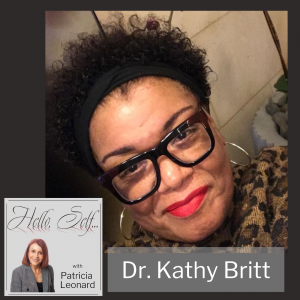
Dr. Kathy Britt, Minister and Licensed Realtor

February 15, 2023 by John Ray

Kathy Britt
Hello, Self . . .
Dr. Kathy Britt, Minister and Licensed Realtor
Loading
00:00 /
RSS Feed
Share
Link
Embed

Download file

Kathy Britt

Dr. Kathy Britt, Minister and Licensed Realtor (Hello, Self… Episode 13)

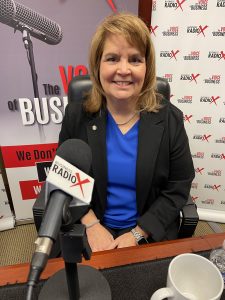
Dr. Kathy Britt, an ordained minister and licensed realtor, joined Hello, Self… She shared with host Patricia Leonard the many Hello, Self.. moments in her life, how God leads her, how to listen, and her life experiences. She talked about being led to go to real estate school at 50, her Emotionally Healthy course, stories from her ministry at the Debra K. Johnson Rehabilitation Center, and much more.

Hello, Self… is presented by Patricia Leonard & Associates  and produced by Arlia Hoffman in association with the North Fulton studio of Business RadioX®.

Dr. Kathy Britt, Minister and Licensed Realtor

Dr. Kathy Britt, Minister and Licensed Realtor

Kathy Britt has a deep love for all mankind but has a “burden” for those who struggle…specifically the incarcerated and the spiritually downtrodden (both affluent & impoverished). She is a passionate teacher and encourager. She sees herself as a “Destiny Escort” as she mentors many into their purposes.

Kathy is a licensed and ordained minister and has a Bachelor of Christian Education and a Master of Theology from Southern Bible Institute and Seminary. She earned a Doctorate in Christian Education From The GODSOM-U in September of this year. She faithfully assists her husband Dr. Clinton Britt at “Living Water Ministries” with local feeding and clothing   outreaches done regularly in Nashville, TN and Bowling Green, KY.  Ms. Britt is a Volunteer Chaplain at the Debra K. Johnson Rehabilitation Center located in Nashville. The Britts operate in the capacity of Region Changers by “Renewing Minds with The Word of God.”

In addition to her responsibilities with Living Water, Kathy is also a licensed Realtor with Benchmark Realty LLC in Tennessee and with Florida Realty Homes & Mortgage in Florida.  She enjoys assisting clients with their real estate needs.

She has two sons and one daughter, five grandchildren, and one great-grandson.

Facebook |  LinkedIn

About Hello, Self…

Hello, Self… is a biweekly podcast focused on inspiring stories of turning dreams into reality. Join coach and author Patricia Leonard and her guests as they share life-changing Hello, Self… moments.

Hello, Self… is brought to you by Patricia Leonard & Associates and is based on the new book by Patricia Leonard, Hello, Self.., available here.

The show is produced by Arlia Hoffman in association with Business RadioX®. You can find this show on all the major podcast apps. The complete show archive is here.

Patricia Leonard, Host of Hello, Self…

Patricia Leonard, Host of Hello, Self…

Patricia Leonard is President of RUNWAY TO SUCCESS, a division of Patricia Leonard & Associates located in Nashville, TN.  She is a MESSAGE ARTIST speaker, career & business coach, author and magazine columnist.  Patricia consults with clients on leadership, empowerment, career management, entrepreneurship and the power of language.  Her work is focused on helping clients find their runway to success!

She has a professional background in management, human resources, corporate training, business consulting and talent development.   Patricia has worked with companies in the service, music, banking, manufacturing, publishing, warehousing, healthcare, academic, retail and financial industries, and has taught management classes as an adjunct professor.

Patricia has a degree in Human Resource Management, is certified as a Career Coach and Consulting Hypnotist and is MBTI qualified.

Her volunteer energies are focused on Women in Film and Television-Nashville, where she is a Board Vice President; Dress for Success as the Advisory Board President; and International Coaching Federation-Nashville where she held Board roles for several years.

Patricia is the author of Wearing High Heels in a Flip Flop World, BECOMING WOMAN…a journal of personal discovery, THE NOW, HOW & WOW of Success, Happenings, a full year calendar of inspirational messages and a spoken word album titled, I AM…

She enjoys songwriting, creating poetry and has written a one-woman show and artistic speech she performs titled Hello, Self…, about a woman in midlife reinventing herself, which led to her new book by the same name, available here.

On the personal side, Patricia, describes herself as a woman, lover of life, mother, grandmother, career professional and message artist; AND in that order!  Her goal is to continue inspiring others, of any age, to START NOW creating and expanding their Runway to Success.

She believes that life is a gift, the way we wrap it is our choice.

Connect with Patricia:

Website| LinkedIn | Facebook | Twitter | Instagram

Tagged With: Benchmark Realty, christian education, Dr. Kathy Britt, dreams to reality, GODSOM-U, Hello Self Podcast, Hello Self..., Kathy Britt Realtor, Patricia Leonard, Patricia Leonard & Associates

Mary Ellen Garrett, Merrill Lynch Wealth Management

February 14, 2023 by John Ray

Mary Ellen Garrett, Merrill Lynch Wealth Management
North Fulton Business Radio
Mary Ellen Garrett, Merrill Lynch Wealth Management
Loading
00:00 /
RSS Feed
Share
Link
Embed

Download file

Mary Ellen Garrett, Merrill Lynch Wealth Management

Mary Ellen Garrett, Merrill Lynch Wealth Management (North Fulton Business Radio, Episode 608)

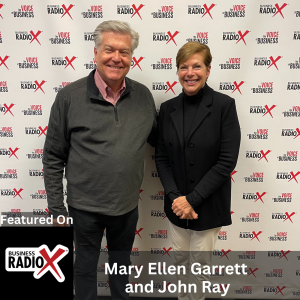
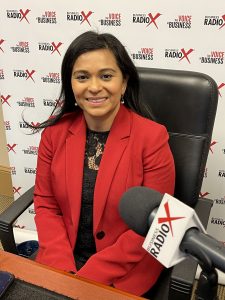
On this edition of North Fulton Business Radio, Mary Ellen Garrett, Senior Vice President, Wealth Management Advisor with Merrill Lynch Wealth Management and The Garrett Group, joined host John Ray to discuss her work helping families reach their financial goals. She talked about how she got into the investment business, what investors can expect this year, advice to women seeking to enter her industry, the strong ethic she exhibits in giving back to the community, award recognitions she has received, and much more.

North Fulton Business Radio is broadcast from the North Fulton studio of Business RadioX® inside Renasant Bank in Alpharetta.

Merrill Lynch Wealth Management / The Garrett Group

The Garrett Group believes that good client relationships are built through teamwork and client involvement, delivered through our advisors, client associates and access to the global resources of Merrill.

Their goal is to be your primary source for financial advice and guidance. The Garrett Group wants you to value the dedication and diligence we provide at each step of the wealth management process.

Website

Mary Ellen Garrett, Senior Vice President Wealth Management Advisor, Merrill Lynch Wealth Management

Mary Ellen Garrett, Senior Vice President Wealth Management Advisor, Merrill Lynch Wealth Management

Under the direction and leadership of Mary Ellen Garrett, Senior Vice President–Wealth Management Advisor, The Garrett Group provides clients with consecutive decades of solid industry experience at Merrill Lynch. Within Merrill Lynch, The Garrett Group is a leader in the firm’s wealth management line of business, striving to offer exceptional capabilities in wealth planning and investment and financial management to high-net-worth individuals, families, family offices, corporations, charitable gift programs, endowments, and foundations.

Mary Ellen is a frequent guest speaker at seminars and is recognized for her commitment to professional excellence, client trust and community service. For the past six consecutive years, she has been named Forbes “Best-In-State Wealth Advisors,” Forbes “America’s Top Women Wealth Advisors,” and Forbes “Top Women Advisors” list, as well as being recognized out of close to 60,000 Merrill Lynch employees worldwide as a recipient of the 2015 David Brady Award.

In the Atlanta community, Mary Ellen serves as Trustee of Emory St. Joseph Hospital Board, Chair of the Atlanta Catholic Archdiocese–Finance and Advisory Council, and Trustee of The Parkinson’s Foundation.

Mary Ellen has been married to Scott for 40 years and has three children and three grandchildren.


Questions and Topics in this Interview:

  • What can investors expect this year?
  • How likely are investors to move out of assets, such as equities, and seek other safe harbors?
  • What is the probability the market could see a substantial pullback?
  • What else should investors keep in mind in today’s markets?

North Fulton Business Radio is hosted by John Ray and broadcast and produced from the North Fulton studio of Business RadioX® inside Renasant Bank in Alpharetta. You can find the full archive of shows by following this link. The show is available on all the major podcast apps, including Apple Podcasts, Spotify, Google, Amazon, iHeart Radio, Stitcher, TuneIn, and others.

RenasantBank


Renasant Bank has humble roots, starting in 1904 as a $100,000 bank in a Lee County, Mississippi, bakery. Since then, Renasant has grown to become one of the Southeast’s strongest financial institutions with over $13 billion in assets and more than 190 banking, lending, wealth management and financial services offices in Mississippi, Alabama, Tennessee, Georgia and Florida. All of Renasant’s success stems from each of their banker’s commitment to investing in their communities as a way of better understanding the people they serve. At Renasant Bank, they understand you because they work and live alongside you every day.

Since 2000, Office Angels® has been restoring joy to the life of small business owners, enabling them to focus on what they do best. At the same time, we honor and support at-home experts who wish to continue working on an as-needed basis. Not a temp firm or a placement service, Office Angels matches a business owner’s support needs with Angels who have the talent and experience necessary to handle work that is essential to creating and maintaining a successful small business. Need help with administrative tasks, bookkeeping, marketing, presentations, workshops, speaking engagements, and more? Visit us at https://officeangels.us/.

Tagged With: emory st. joseph's hospital, John Ray, Mary Ellen Garrett, Merrill Lynch Wealth Management, North Fulton Business Radio X, Office Angels, Parkinson's Foundation, renasant bank, The Garrett Group, Wealth Management Advisor

How to Maximize Profit as a Car Dealership, with Max Zanan, MZ Dealer Services and Author of the Perfect Dealership Series

February 14, 2023 by John Ray

Max Zanan
How to Sell a Business
How to Maximize Profit as a Car Dealership, with Max Zanan, MZ Dealer Services and Author of the Perfect Dealership Series
Loading
00:00 /
RSS Feed
Share
Link
Embed

Download file

Max Zanan

How to Maximize Profit as a Car Dealership, with Max Zanan, MZ Dealer Services and Author of the Perfect Dealership Series (How To Sell a Business Podcast, Episode 11)

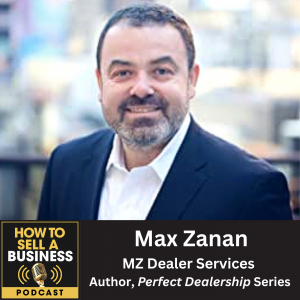
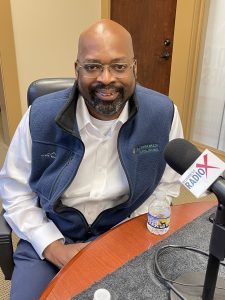
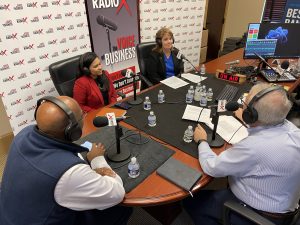
Max Zanan, owner of MZ Dealer Services and author of Perfect Dealership, a four book series dedicated to helping car dealership owners adapt and thrive in their business, joined host Ed Mysogland. They discussed the industry as a whole, how dealers make their money, where the profit actually is, why dealerships are not likely to stay in the owner’s family, the role of the service department, how to keep qualified employees or train them, why buying a car takes so long, and much more.

How To Sell a Business Podcast is produced and broadcast by the North Fulton Studio of Business RadioX® in Atlanta.

MZ Dealer Services

Max Zanan is an automotive industry leader offering a comprehensive automotive consulting service for car dealers nationwide. His goal is to improve customer experience and retention while increasing dealership’s profits.

Contact Max today to build a better dealership including automotive compliance, F&I optimization, sales strategy, and more. He welcomes phone calls at  917-903-0312.

Website | Facebook| YouTube

Perfect Dealership Books by Max Zanan

Remember travel agencies? They were a thriving business not so long ago. Then online services transformed the industry, and brick-and-mortar travel agencies died—and died quickly.

Today, traditional car dealerships are facing much the same threat. Innovative and convenient digital startups and services threaten to disrupt the traditional car-sale process, egged on by consumers who aren’t happy with the existing sales process. If car dealerships don’t adapt, they too will face an industry-wide extinction.

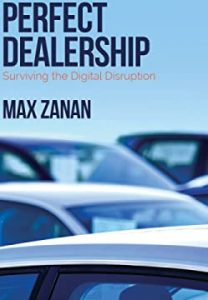
Perfect Dealership offers help and hope for dealerships struggling to adapt to this digital-based paradigm shift. Consultant Max Zanan applies fifteen years of automotive-industry experience to the future of the car dealership. Arguing that dealerships must make significant changes if they are to survive the coming storm, Zanan takes a close look at every department within the business, including

    • human resources,
    • business development centers,
    • information technology,
    • parts and service, and
    • finance and insurance.

By improving the role of each department and transforming them from individual echelons into a cohesive whole, Zanan offers a road map for the creation of a perfect dealership—the only way to remain relevant and solvent in the digital age.

Find all of Max’s books here: Perfect Dealership

Max Zanan, Owner, MZ Dealer Services, and Author of the Perfect Dealership Series

Max Zanan, Owner, MZ Dealer Services, and Author of the “Perfect Dealership” Series

Max Zanan is the author of four best-selling books on automotive retail management: Perfect Dealership, Car Business 101, The Art and Science of Running a Car Dealership, and Effective Car Dealer. Each book is a top-ranked Amazon category leader and have received many 5-star reviews from prominent car dealership owners and managers. Max’s success as an author, general manager and entrepreneur has helped to cement his position as a preeminent voice leading the charge for modernization of the auto retail industry.

Max Zanan is a seasoned automotive industry expert with 20 years of experience in sales, F&I, compliance, and dealership management consulting. His goal is to help car dealers improve profitability while increasing customer satisfaction and retention. Zanan is a thought leader, organizer of the Perfect Dealership Conference, keynote speaker, and frequently quoted in trade publications such as Automotive News, Fixed Ops Journal, and Auto Dealer Today.

LinkedIn

Ed Mysogland, Host of How To Sell a Business Podcast

Ed Mysogland, Host of “How To Sell a Business”

The How To Sell a Business Podcast combines 30 years of exit planning, valuation, and exit execution working with business owners. Ed Mysogland has a mission and vision to help business owners understand the value of their business and what makes it salable. Most of the small business owner’s net worth is locked in the company; to unlock it, a business owner has to sell it. Unfortunately, the odds are against business owners that they won’t be able to sell their companies because they don’t know what creates a saleable asset.

Ed interviews battle-tested experts who help business owners prepare, build, preserve, and one-day transfer value with the sale of the business for maximum value.

How To Sell a Business Podcast is produced virtually from the North Fulton studio of Business RadioX® in Alpharetta.  The show can be found on all the major podcast apps and a full archive can be found here.

Ed is the Managing Partner of Indiana Business Advisors. He guides the development of the organization, its knowledge strategy, and the IBA initiative, which is to continue to be Indiana’s premier business brokerage by bringing investment-banker-caliber of transactional advisory services to small and mid-sized businesses. Over the last 29 years, Ed has been appraising and providing pre-sale consulting services for small and medium-size privately-held businesses as part of the brokerage process. He has worked with entrepreneurs of every pedigree and offers a unique insight into consulting with them toward a successful outcome.

Connect with Ed: LinkedIn | Twitter | Facebook

TRANSCRIPT

Intro: [00:00:00] Business owners likely will have only one shot to sell a business. Most don’t understand what drives value and how buyers look at a business. Until now. Welcome to the How to Sell a Business podcast where every week we talk to the subject matter experts, advisors and those around the deal table about how to sell at maximum value. Every business will go to sell one day. It’s only a matter of when. We’re glad you’re here. The podcast starts now.

Ed Mysogland: [00:00:36] On today’s show, I get the opportunity to interview Max Zanan. Max is the author of four bestselling books on automotive retail management, and they’re entitled Perfect Dealership, Car Business 101, The Art and Science of Running a Car Dealership, and Effective Car Dealer. Each book — and I did this in my — reviewed them in my research for this interview. Each book has plenty of stars right next to it. So each book is a top-rated Amazon category leader and certainly has received many five-star reviews from prominent dealership owners and managers.

Max’s success as an author, general manager, and entrepreneur has helped position himself as the premier preeminent voice of leading the charge for modernization of the auto retail industry. He has 20 years of experience in sales, compliance, dealer management, consulting. And everywhere I looked, his name kept popping up. So I hope you enjoy my conversation with Max Zanan.

I’m your host, Ed Mysogland. And on this podcast, I interview buyers, sellers, dealmakers and other professional advisors on what creates value in a business and then how that business can be effectively sold at a premium value. So as I — in the introduction, you heard me talk about Max. And Max Zanan of MZ Dealer Services is literally the authority on automobile dealerships. I looked high and low for my research, during my research, and he is just that guy. And so I’m so grateful to introduce to you Max Zanan. So welcome to the show.

Max Zanan: [00:02:34] I mean, Ed, thank you for this wonderful introduction and the opportunity to be part of your podcast.

Ed Mysogland: [00:02:41] Well, I’ll tell you, I’ve been looking forward to this because it’s a different animal. And like I said in my research and all the things that, all the different pieces that go into making a successful dealership, there’s a lot going on there. But before we get into my questions, can you talk a little bit about MZ Sealer Services?

Max Zanan: [00:03:07] So MZ Dealer Services is me. There’s nobody else.

Ed Mysogland: [00:03:12] That’s the MZ part.

Max Zanan: [00:03:14] Right. There’s nobody else. Meaning literally, I do not even have an assistant.

Ed Mysogland: [00:03:19] Okay.

Max Zanan: [00:03:20] And my job is to help dealers make money. And it sounds easy, but car business is so complicated and complex that there’s a reason why a lot of dealers do not make money. So again, there are different ways where you can make money. And I tried to bring all the options to the table, so the dealer doesn’t become a one trick pony. They can maximize profit opportunities in every single department because oftentimes, dealers make a mistake, and they obsess over the sales department, right, because they’re convinced that you can sell your way out of any trouble.

But when you buy a dealership, a franchised dealership, you’re not just getting a new car department. You’re getting a used car department. You’re getting a service department. You’re getting parts department. Sometimes you get in the body shop. So unless you’re maximizing every single opportunity that you paid for, you’re literally leaving money on the table.

Ed Mysogland: [00:04:37] Yeah. Some of the research that I had found was that you look at each of those respective divisions as almost their own business within a larger business and each has their own various attributes that contribute to value. One of the things that — you know, I’ve been appraising companies for 30 years or so. And the funny thing is that everybody says business valuation, it’s both an art and science. And the funny thing was in the research, I saw the same thing about what you do. So can you talk a little bit about the art and science of what you do?

Max Zanan: [00:05:16] So the science is easy, right? Because there are certain KPIs. Right, whether it’s profit per car, number of line items on the repair order, number of hours worked per repair order, stuff like that. But the art part is the hard part, right, because you’re right, sometimes and actually most of the times, each department operates in a silo. To a degree, where there’s zero communication with other departments. And the art is actually to bring them all together and make sure that they work towards a common goal. Because the common goal is to sell cars and then to service cars and then to sell cars again. So if the sales department and the service department are in silos, you will never get that full circle.

Ed Mysogland: [00:06:20] I get it. So is it a people issue? For the art part, is it a people issue? Is it a technology issue or is it an all of the above issue?

Max Zanan: [00:06:36] You know, it’s all of the above, plus lack of professional training issue. So the problem that we have is that I don’t think you’ll ever run into a Harvard MBA at a car dealership. Car dealers fail to attract talent the way Wall Street does.

Ed Mysogland: [00:06:58] So why is that?

Max Zanan: [00:06:59] Or the way Silicon Valley does.

Ed Mysogland: [00:07:00] Yeah. Why is that?

Max Zanan: [00:07:02] Well, because people think of car dealers — you know, car dealers have a terrible reputation, right, up there with Congressman. Right?

Ed Mysogland: [00:07:10] Right.

Max Zanan: [00:07:13] So, when there is this stigma attached to the industry, nobody is growing up saying that Ed, I can’t wait to grow up and get into car sales. But let’s say Wall Street doesn’t have that stigma and you do have kids finishing school, going to college with a goal of getting into Wall Street. Whether as a trader, as a broker, as an analyst, they just want to be part of that institution.

Ed Mysogland: [00:07:47] I get it. Well, the funny thing you would think, like, isn’t it John Elway? Doesn’t he own like a portfolio of —

Max Zanan: [00:08:00] Everybody wants to be a car dealer. John Elway, you know, Mark Wahlberg. You know, everybody. I mean, Warren Buffett.

Ed Mysogland: [00:08:09] Sure. That’s what I’m getting at. So you would think that with that kind of notoriety, that it would garner attention for more people to get into it, but it doesn’t seem to be the case. Maybe it’s a best kept secret in entrepreneurship.

Max Zanan: [00:08:27] Maybe, but it works against the dealer, right, because you cannot attract talented people.

Ed Mysogland: [00:08:34] I see.

Max Zanan: [00:08:35] You don’t even get an opportunity, right? You literally get the bottom of the barrel.

Ed Mysogland: [00:08:41] So how do you offset that? I mean, yeah, that’s a big problem.

Max Zanan: [00:08:45] The only way to offset it is to grow your own talent internally.

Ed Mysogland: [00:08:49] Okay. And then that begs, how do you keep them? How do you keep them from going to the — is it all economics or is there something else that keeps the tech, keeps whoever there?

Max Zanan: [00:09:03] There is definitely something else because it’s not just money. Right. It’s the organizational culture.

Ed Mysogland: [00:09:10] Okay.

Max Zanan: [00:09:11] So, and again, I think a lot of dealerships fail at that. You know, for example, if you talk about organizational culture, the best example I can give you is probably Zappos.

Ed Mysogland: [00:09:25] Okay. Oh, sure. The shoe company. All right.

Max Zanan: [00:09:27] That’s right. I mean, there’s a reason why Amazon paid billion dollars for a shoe company. Right. It was the culture.

Ed Mysogland: [00:09:35] I see.

Max Zanan: [00:09:36] And it’s that culture that keeps the people, you know, allows you to retain talent and attract talent so you can be the highest paying dealer on the block. But if the organizational culture is terrible, people will go elsewhere and work for less money and be happy.

Ed Mysogland: [00:09:57] Yeah. Yeah. And certainly — and I’ve got a question that I found. This is a statement from CDK Global. I don’t know who CDK Global is, but it said that, and I’ll just read it. So it says, CDK said that there are a lot of assumptions made about Gen Z loosely defined as individuals born between 1997 and 2012, the need for instant gratification from simple online purchase experience to real time social media engagement. However, when it comes to buying a vehicle, CDK discovered that Gen Z seems to be more thoughtful and spend more time weighing decisions while the experience of buying new and used cars, of buying a newer used car more frustrating than any other generation. With Gen Z, the most interested in understanding all of their options. So that was 81 percent compared to Millennials of 73 percent, Gen X of 60 percent, and Baby Boomers 45 percent. The need for education, both online and from knowledgeable representative at the dealership proves to be critical according to the study.

So that, my point to you is it’s exactly what you were saying regarding employees and the people that are representing the dealership that the expectation of those that are now buying it has to be a better experience. And those people have to be able to have the education and communication. Right or no?

Max Zanan: [00:11:35] You know, to me, the most frustrating part about the statement is the fact that CDK Global made it. Right. I don’t think they have any place to make that statement because CDK Global makes an operating system that dealers use.

Ed Mysogland: [00:11:52] Well, then that makes sense.

Max Zanan: [00:11:54] So I don’t know how much CDK Global knows about car buying, car selling or the demographics of buyers. But to be honest with you, this is what they say about every generation. I mean, if you look back, I mean, they were saying the same thing about Millennials, that Millennials are different. I’m a Generation X, right, the best generation.

Ed Mysogland: [00:12:13] Yeah, it is.

Max Zanan: [00:12:15] Yeah. And everybody was saying, oh, my God, you know, Millennials, everything’s going to change. They will not be buying cars. They will be using rideshare. They’ll be Uber, this, lifting that. But at the end of the day, this is what happens in the real world. You become an adult, regardless of your generation. And as an adult, you know what happens? You move to suburbs. You know what happens in suburbs? You can’t live there with Uber. You need a car. You become an adult, you get married. You become an adult, you have kids. Right. You can use rideshare if you got to take your kid to the soccer practice. Right. So at the end of the day, you become like the generation before you and you buy cars exactly the same way as the generation before you.

Ed Mysogland: [00:13:08] And it’s such a great point. And you’re exactly right. And I didn’t think of it until you said it. But the same thing, the same concerns that I have put in my kids in cars and such are the same ones certainly my parents had, and your parents had.

Max Zanan: [00:13:25] That’s it.

Ed Mysogland: [00:13:27] So, as you know, I mean earnings drive business value. In reviewing the comments about all four of your books, it was a repeated theme that your tips led to increased profitability. Do you have any favorites that you could share without selling out?

Max Zanan: [00:13:50] Listen, the beauty of this business is there’s nothing I can trademark.

Ed Mysogland: [00:13:57] I get you.

Max Zanan: [00:13:57] The secret sauce is really understanding how every part of the business operates. And I’ll give you the easiest example. For example, when you buy a car, at the end of the transaction, you’re going to go into the office where they’re going to try to sell you an extended warranty or gap insurance or tire and wheel protection. And this is the true profit center for any car dealership. That’s the finance department. So you can make money selling this product. And that’s what probably 99 percent of car dealers do. But you can probably double your profits as a dealer if you reinsure these products.

By reinsuring, I mean you open your own insurance company. And you buy a contractual liability insurance policy for each policy that you sell from the insurance company. So that’s why it’s called reinsurance. A real insurance company is reinsuring your business. And then if the premium dollars that you pay to your own insurance company exceed the claims dollars that you pay out, you will enjoy underwriting profit like any other insurance company. And the crazy part is that the underwriting profit is not taxed. That’s the beauty of insurance business as opposed to car business.

Ed Mysogland: [00:15:35] I get it. Okay.

Max Zanan: [00:15:37] So think about it. You can have, if you reserve properly for each policy that you sell, and you control your claims because you recondition your used cars before you sell them, you make sure you do the right thing by the customer. That underwriting profit is definitely there to be had. On top of it, this money, they don’t sit dormant, right? There is investment income that grows on these dollars. That’s how insurance companies make money.

Ed Mysogland: [00:16:13] Sure, sure. No, I get it.

Max Zanan: [00:16:15] And the investment income is subject to tax. But again, at capital gains rate, not an ordinary income rate. So it’s a phenomenal, phenomenal opportunity for any car dealer to build an asset outside of the dealership.

Ed Mysogland: [00:16:33] Got it.

Max Zanan: [00:16:33] Not be dependent on the factory and build generational wealth. And unfortunately, a lot of these dealers do not do it.

Ed Mysogland: [00:16:44] No, I mean, I can totally see that the synergy between the businesses that support the dealership are where the profit is, which literally blows the next question right out of the water, but I’m still going to ask it. So I’m told that in valuing a dealership, it’s made up of four components, the market value of the parts inventory, the market value of the equipment, the market value of the real estate, and then a multiple on the goodwill. Is that a fair assumption?

Max Zanan: [00:17:25] So think of it this way. You can ignore parts inventory and inventory because it just comes with the building, right? You can buy a dealership and say, you know what Ed, I’m only going to take the dealership, but you keep the parts. It doesn’t work like that, right? Yes, you can definitely put a dollar amount on the parts inventory. But at the end of the day, you still have to buy it. You can say, well, you take the parts inventory with you, I’m going to start fresh. Just doesn’t work like that.

Same thing with cars. If you’re selling, let’s say Nissan dealership to me and you have brand new Nissans on the lot. I mean, I can tell you Ed, I’m going to buy the dealership on the parts department, but you keep the cars, right? It just doesn’t work. We’re going to have to work out a number, how much I’m willing to pay for these cars, but the real crux of the issue is the blue sky. Blue sky is the value of the franchise. And the value of the franchise is something that market dictates. It’s not dictated by the dealer.

Ed Mysogland: [00:18:35] Really? So where does the market get its multiple or factor to apply to the goodwill?

Max Zanan: [00:18:46] Well, you see most corporations in America report their earnings on a quarterly basis. Of course, car dealers are different, they report every month. So this information is public. And every manufacturer, so let’s say you are a Nissan dealer or you are a Chevy dealer, doesn’t matter. When the month is over, let’s say January is over, within the first week of February, your factory expects a complete financial statement electronically sent to them. They know the profitability of –.

Ed Mysogland: [00:19:29] Of the franchise.

Max Zanan: [00:19:30] Exactly. So I think that’s how the –.

Ed Mysogland: [00:19:34] Really?

Max Zanan: [00:19:35] Gets established. But then again, listen, a lot of it is common sense. For example, I’m sure there are more KIA dealers than Porsche dealers.

Ed Mysogland: [00:19:45] Sure.

Max Zanan: [00:19:46] And you sell more KIAs, but you make less money per KIA sold as opposed to Porsche, right. You sell a few of those, but you make a lot more per car sold. And then let’s say, usually the high line brands have a higher multiple. Porsche being the highest multiple. Last time I checked, Porsche was selling for 11 multiple.

Ed Mysogland: [00:20:13] 11 times what?

Max Zanan: [00:20:15] Earnings.

Ed Mysogland: [00:20:16] Okay.

Max Zanan: [00:20:17] But these are crazy earnings.

Ed Mysogland: [00:20:19] Sure, sure. No, I get.

Max Zanan: [00:20:20] Because you see what happens with the high line dealership, whether it’s Porsche or Mercedes, not only that you get to make money selling the car, right, because it’s a desirable product and people are willing to pay for the service and the car. But let’s assume for a second that you bought that Porsche, you’re not going to Jiffy Lube for an oil change. You’re not.

Ed Mysogland: [00:20:44] Yeah, I know. You’re right.

Max Zanan: [00:20:46] So that service retention is almost guaranteed as opposed to you buying a Toyota Corolla. You can easily go to Jiffy Lube. Easily.

Ed Mysogland: [00:20:58] You’re right.

Max Zanan: [00:20:59] So that service retention is basically guaranteed and the amount of money that you are charged in a service department. I think Mercedes, Porsche dealerships right now are over $200 an hour for labor. I mean these are almost like doctors.

Ed Mysogland: [00:21:23] Right. No, no, you’re right. You’re exactly right. Oh, man. So you said, so there’s, let’s just say the Porsche dealership, you have an 11 multiple on earnings. Is that all in? Like you were talking about like the reinsurance company, is that all dumped in? All right.

Max Zanan: [00:21:46] No, reinsurance company is out. It’s almost like an off of balance sheet.

Ed Mysogland: [00:21:52] Okay. So they’ll bring their own, if they want to do it, they’ll do it themselves. But that’s independent of the value of the dealership.

Max Zanan: [00:22:01] Exactly. So basically, your net profit, right, that you generated in sales, service, and parts.

Ed Mysogland: [00:22:10] I got it. So around here, there was a recent article about — and here in Indianapolis, we’re seeing some dealerships turning over. And these were family dealerships, and it doesn’t seem — the article was basically that the next generation, or I shouldn’t say that, the selling generation did not want to invest in modernization in order to make it more marketable. So then a different dealer from a neighboring town comes in and now they have a presence in Indianapolis. So are you seeing that the generation, I guess the generation before us, that’s trying to transition would rather sell than modernize?

Max Zanan: [00:23:13] So, I’m not sure because the way it works is that their brand standards that are dictated, let’s say, by Mercedes or Nissan or Toyota and they say Ed, if you are a Toyota dealer, your showroom has to look this way. That’s why they look the same regardless of whether you’re in Indianapolis or New York. And you have to spend your hardearned money to do that. It’s not open to negotiation. These brand standards are real, and I think generation is really irrelevant, right? Because whether it’s the older generation or younger generation, you just have to do what the factory tells you to do in terms of the brand standards. I think the generation that’s older than us, the baby boomers that are selling, I think they’re selling for one reason and one reason only. They’re selling because their kids are not interested in going into the business.

Ed Mysogland: [00:24:16] But why? They must have seen mom and dad print money. I mean, especially those that have been around for 20, 30 years.

Max Zanan: [00:24:25] So, unfortunately, you know, car dealers, probably like many other business owners, they don’t tell their kids to go into the same business. Right. They tell them, go become a doctor, go and become a lawyer. You know, do whatever makes you happy, and they do. Right. And they become high school teachers making $40,000 a year because mom and dad are gazillionaires, and subsidize their lifestyle.

Ed Mysogland: [00:24:58] No. You know what? That’s a great point and disappointing. But at the same time, it is what is. So you see industry consolidation more so than transfer from Gen one to Gen two. Fair statement?

Max Zanan: [00:25:19] You know, car business is extremely fragmented. I don’t think there’s another business like that because if you look you know, I mean, look at, let’s say, Internet search business, right? It’s Google or nothing. Right? Social media, it’s Facebook, Instagram, Twitter and Snapchat. There are 18,000 franchised dealers in America. The largest auto group publicly traded, it’s called AutoNation. They have 330 dealerships, out of 18,000.

Ed Mysogland: [00:25:57] Yeah. No, no. I see where you’re going.

Max Zanan: [00:25:59] So it’s super fragmented. So when we talk about consolidation, you know, even if it consolidates another 10 percent, it still be super fragmented.

Ed Mysogland: [00:26:08] Yeah. No, that’s a great point. Like I said, in communities like ours, it seems as though one family starts buying out another family. Like it seems in our community, it’s Tom Wood. It’s now, I’m trying to think of who’s buying them out but, Andy Moore. You know, he just continues to expand his market share, I guess. And it doesn’t seem — and that leads me to my next question. I mean, are individual buyers candidates for getting into this business or do you really have to, is the pedigree you really better have a real clear understanding of what you’re getting into because all the moving parts in this business is something unlike anything you’ve been accustomed to?

Max Zanan: [00:27:01] So listen, there’s this failsafe mechanism built into the buy sell process. For example, you would like to buy a Toyota dealership. Toyota will never approve you even if you have the money, because you don’t have the experience, because the factory is not interested in having dealerships failed because it’s a bad reflection on the name.

Ed Mysogland: [00:27:28] I got it.

Max Zanan: [00:27:29] So it’s not like, well, let me just have some money and become a car dealer. There’s a very thorough approval process. And if you don’t have the experience, you would have to bring in an executive manager that would probably end up being your partner.

Ed Mysogland: [00:27:47] I got it. Yeah, that’s fascinating. While I understand, like franchises, not necessarily automobile franchises, I do understand the rigors of going through the approval process. But again, I follow what you’re saying that it needs, you know, you need to have —

Max Zanan: [00:28:08] I think the difference between a Dunkin Donuts franchise and a Nissan franchise is that you and I can become Dunkin Donuts franchisees, but we will have to attend the Dunkin Donuts University.

Ed Mysogland: [00:28:21] All right.

Max Zanan: [00:28:23] It doesn’t work like that in car business. You can buy the franchise and then go to school provided by the manufacturer.

Ed Mysogland: [00:28:32] I got it. So the book you wrote during COVID. So in the book Effective Car Dealer: Selling Cars, Parts, and Labor After COVID-19, you talk about these are the silos, the sales, finance, financial and insurance compliance, service and parts. So what — and you alluded to this earlier, but I wanted to scratch the itch a little bit more on what area makes the biggest contribution to making the business saleable. I’m assuming it’s service, but I may be wrong.

Max Zanan: [00:29:12] SoSo there’s a huge problem in car business. And the problem is this, 97 percent of owners, partners, general managers all came up through sales.

Ed Mysogland: [00:29:27] Okay.

Max Zanan: [00:29:28] They don’t understand parts and service. So since 97 percent of your owners or future owners came up through sales, to them, sales department is it. So all they want to know is how many cars you sell, how much money per car you make. They don’t really understand KPIs that are in parts and service.

Ed Mysogland: [00:29:56] Got it.

Max Zanan: [00:29:57] And yes, you’re right. You know, parts and services are extremely profitable. For example, markup on labor in a car dealership is 75 percent. Markup on parts is 50 percent. You can never get these margins selling cars, ever.

Ed Mysogland: [00:30:17] Yeah. No, I get it, which leads me to my next question. So you mentioned KPIs a couple of times. So what are the leading indicators for a car dealer or are there tripwires that an owner needs to be aware of?

Max Zanan: [00:30:39] So to me, a huge indicator is service absorption. So service absorption means that the gross profit generated from parts and service covers all of your fixed expenses. For the entire operation, not just for parts and service.

Ed Mysogland: [00:31:00] Oh, okay. That’s a telling one.

Max Zanan: [00:31:03] Right. And so, for example, if your service absorption is 100 percent, that means you cover 100 percent of your fixed expenses through parts and service. Most dealers are nowhere near 100 percent. They’re below it. But there are some dealers that are above because you can be above 100 percent. You can be 110, 120 if you are a superstar. And what that tells me, if you are 100 or above, is that it doesn’t cost anything to sell cars. Right. It doesn’t cost anything. Meaning you can actually give cars away to grab market share because all of your expenses are covered, fixed expenses by parts and service.

Ed Mysogland: [00:31:52] Got it. So as the previous generation, we touched on this, and I guess I wanted to go back on how do you size up the next leader in the business? Like, for example, say the owner is going to just ride it out. I’m going to hold on to this, you know, and I’m going to leave involuntarily. They’re going to take me out in a box. So how does — I mean, are there certain attributes that you can see in dealer leadership? Like this is a man or woman that has, you know, this is the pedigree that I’m looking for that will preserve my investment?

Max Zanan: [00:32:48] You know, I wish it was that easy.

Ed Mysogland: [00:32:50] Me too.

Max Zanan: [00:32:53] So what usually ends up happening is that you have to grow your own talent. You have to invest into education. And this education is very, very limited. It’s not like you can go to school and major in dealership management. It’s not really an option. So you have to find information elsewhere. And there are good resources out there. There’s National Association Dealer — Association of Automotive Dealers, NADA. They have a university where you can enroll your employees. And it’s not cheap, but it’s worth every dollar.

And then usually a State Dealer Association would have some other courses available to its local dealer body. And again, you have to take advantage of it because these courses are available. But if you actually go there, you will see that the attendance is really, really poor. Because, you know, car dealers, as I mentioned before, they have to report every 30 days. So they live in a 30-day cycle, which really is counterproductive. It prevents you from building a long-term strategy, building a vision.

Ed Mysogland: [00:34:21] Because of the expectations to the franchise itself. So they’re not able to — they are expected to have a certain level of profit. Right or?

Max Zanan: [00:34:33] Well, it’s either profit — it’s not in profit, but let’s say if you are a Chevy dealer, right, the factory will say, well, in the month of February, we expect you to sell this many cars. So it becomes a rat race.

Ed Mysogland: [00:34:51] So does it — when does it trigger, I don’t want to say a default, but when do you — I mean, how many missed 30-day cycles can you —

Max Zanan: [00:35:04] Many. Many

Ed Mysogland: [00:35:05] Okay. So I can say, look, you know, I’m sending my best guys to this university to get educated. But as a consequence to doing that, it’s a good long-term play, but short term, I’m going to take it on the chin because I’m sending these guys to get educated. That fair statement?

Max Zanan: [00:35:28] Yeah. But again, this is a dealership specific education. They’re not going to NADA University to learn sociology and psychology.

Ed Mysogland: [00:35:37] All right. So how do you handcuff those people that you’re investing in?

Max Zanan: [00:35:43] So I think there’s a saying, like when the CEO is speaking to the CFO. And the CFO says, you know, we’re spending all this money training people, what if they leave? And the CEO says, what if we go then they stay?

Ed Mysogland: [00:36:01] I get it. That makes sense. Have you seen any noble ways to keep people? I mean, I know originally you were talking a little bit about culture, and you can go back to it. But how do I keep my best people?

Max Zanan: [00:36:20] So the hardest people to find right now are technicians. So as the dealer principal, you have to be really creative and come up with ways to keep them.

Ed Mysogland: [00:36:34] And you were saying it’s not all economic.

Max Zanan: [00:36:37] It’s not. Exactly. So, for example, what I learned is that every technician is addicted to buying tools. That’s their livelihood. They buy tools. This is what they spend their money on. Because as cars become more and more complicated, you need more and more sophisticated tools to work on these cars.

Ed Mysogland: [00:37:00] Well, it’s funny you say that, because in — so I’ve got a fellow that is coming on the podcast that specializes in the sale of automobile repair businesses. And one of the things in that research was that the technicians bring their own tools. Is that the same in dealerships or no?

Max Zanan: [00:37:28] Yes. So there’s certain special tools that are extremely expensive and they’re owned by the dealership. But your day-to-day wrenches, et cetera, are owned by technicians. So basically when you hire a technician, he shows up with his toolbox and then he keeps spending money to put more tools in his toolbox. So one of the most innovative ways, I think, to retain a technician is to go and help them buy tools.

Ed Mysogland: [00:38:02] Nice. No, that’s a great, you know, here’s X number of dollars per month for you to keep your toolbox up to date and find —

Max Zanan: [00:38:13] Another way, which is very effective, is to really come up with a formula and say for each year of service, it doesn’t matter if you’re a technician or you work in accounting and you’re selling cars for each year of service, there’ll be a bonus of X amount of dollars. So listen, if Ed is at XYZ Toyota for 15 years, right. And the bonus is $1,000 per year, you collect $15,000 around Christmas, which I think is worth it for the dealer and definitely is worth it for you. Because even if you were to get another job, you would start at zero, right?

Ed Mysogland: [00:38:58] Right. A hundred percent. Yeah. That’s a great idea. Okay. So I’ve got a couple more questions if you got some time.

Max Zanan: [00:39:10] Sure.

Ed Mysogland: [00:39:11] So, my first question is, where is the puck going in this industry? I mean, it seems as though — you know, it’s a volatile time, but yet maybe not.

Max Zanan: [00:39:24] This is a really controversial topic because as you know, this business operates based on franchise laws and we are living in the environment where every manufacturer wants to be like Tesla. And Tesla operates outside of franchise laws.

Ed Mysogland: [00:39:54] Really? How so?

Max Zanan: [00:39:55] Tesla sells direct. Tesla was able to [inaudible]. So Tesla sells direct to consumer. And now basically what happens in every boardroom, whether it’s Ford, GM, you know, there are two factions in every boardroom. There are old dogs that understand that you cannot sell cars in the United States without dealers. And then there’s another fraction that says, but wait, look at Tesla. And then they keep pointing at Tesla’s valuations. And Tesla is valued more than every manufacturer combined on planet earth. That’s a stock valuation.

Ed Mysogland: [00:40:40] Sure, sure. I get it.

Max Zanan: [00:40:41] Right. So these factories, again, whether it’s Ford or GM, they’re trying to come up with creative ways of how to cut out a dealer and sell direct to consumer. And that’s the real danger that I see. So to answer your question, where the puck is going, hopefully these manufacturers will understand that our franchise model is more than 100 years old. It has been proven and battle tested. And it’s really, really good for the consumer.

Whereas the direct-to-consumer model is extremely complicated in the sense that the manufacturer doesn’t have expertise selling cars, they have expertise making cars. So, for example, if you want to sell direct to consumer, most consumers have trade ins. Right. Who’s going to put a dollar amount on the trade in? In the car dealership, we have a used car manager for that. But if you’re doing this as direct-to-consumer online, you know, it becomes problematic.

Ed Mysogland: [00:42:02] And this is also the collapse of Carvana. Is that how that fell apart or no?

Max Zanan: [00:42:10] Well, Carvana fell apart because the math doesn’t work. You know, math is math.

Ed Mysogland: [00:42:17] Right.

Max Zanan: [00:42:17] Right. So let’s say, you know, just to use round numbers, let’s say every used car that you sell, let’s say you make $1500 on the sale of the vehicle in a dealership. And then there’s other profit by selling warranties, you know, and stuff like that. But let’s say you didn’t sell anything in that office, you only sold the car and you made $1500 dollars. It’s a very respectable number, but that’s assuming that you have a local customer. They took the car and they drove home. Let’s say Carvana made the same $1500 dollars, but they had to ship the car to Alaska.

Ed Mysogland: [00:43:00] Oh, sure. That makes sense.

Max Zanan: [00:43:03] You know, your $1500 is gone.

Ed Mysogland: [00:43:06] Yeah, I get it. I guess then the car buying experience is always brutal and everybody wants to know why it takes four hours to buy a car. I mean is that designed to car buying fatigue and I mean —

Max Zanan: [00:43:34] You know, I’ll be honest with you, it only takes four hours because of the consumer.

Ed Mysogland: [00:43:41] Oh, really?

Max Zanan: [00:43:42] Right. Because they come in not knowing what they want. All the things that you read about them doing research, all that research is gone by the time they walk into the showroom. And they’re like, “Well, I’m looking for an SUV”. Two row, three row. They start choosing the model, go on in the test drive, you know, and then let’s say the wife says, I hate it.

Ed Mysogland: [00:44:12] I get it.

Max Zanan: [00:44:13] Okay. So we start the process all over again. So let’s say, for example, you walk into a Jeep dealership, right, and you want to buy an SUV. Jeep makes SUVs of every size, right? There’s a tiny one. There’s a Cherokee. There’s a Grand Cherokee. There’s a Grand Cherokee longer version. And then there’s a Grand Wagoneer, which is like a school bus. And now, the consumer has to make a decision. And that decision making process is extremely long.

Ed Mysogland: [00:44:46] Sure. But once they’ve established price, it seems as though, the meter starts all over again waiting for financing and waiting for the opportunity to go through that process.

Max Zanan: [00:44:58] You see, this is not so clear cut because, yes, if you walk into a dealership and we pick the car for you and we settled on the price, and you don’t have a trade in, and you have excellent credit, that financing process is instantaneous, right? You are easy to get approved on. But usually, most people have a trade in, right. So now it’s the reverse because when you have a trade in, you are selling the car to the dealer.

Ed Mysogland: [00:45:31] Sure. I get it.

Max Zanan: [00:45:32] So now you negotiate on the trade in. And then what if you have some blemishes on your credit? And maybe you were hoping to get that low APR, but you don’t qualify. So the dealer has to find a different bank. And that takes time. And then you go into that office to sign the paperwork and the finance manager has to go through his presentation and present to you every protection product that’s available for sale, because you will then turn around and sue the dealership if this product wasn’t presented.

Ed Mysogland: [00:46:10] I get it. Okay. So it really isn’t a vehicle to, you know — I mean, certainly there’s some upselling that goes on, but it’s not a tactic to wear you down so you buy more.

Max Zanan: [00:46:29] It is not. And I think every dealer would want to speed up the process.

Ed Mysogland: [00:46:34] Sure.

Max Zanan: [00:46:37] If it takes me to sell a car and the process is four hours and I’m the salesperson, I cannot take another customer for the next four hours while I’m selling the car to you.

Ed Mysogland: [00:46:46] Sure. That’s what I would have thought. I get it. So at the conclusion of every podcast, I’ve always asked everyone I’ve interviewed, what is the single best piece of advice that you could give our listeners that would have the most impact on their dealership? What would that be?

Max Zanan: [00:47:08] Make sure that all of the departments in your car dealership are operating and working towards a common goal. And you have to define that common goal. And it has to be very, very specific because you can’t say our common goal is to sell cars. Right. It’s a little too vague because every dealer’s goal is to sell cars. Yet to me, the dealer, his goal was not to sell cars.

Ed Mysogland: [00:47:35] I see.

Max Zanan: [00:47:36] Right. So you have to say, well, my goal is to sell cars because, and what is the value proposition that you are bringing in your sales department? And then after, let’s say I bought a new car from you, what is the value proposition that you bring in in your service department? Because I could have had an amazing experience buying a car. And then I come for service and experience is terrible. I will never be back to buy another client, that dealership, unfortunately. Even though the sales experience was phenomenal. That’s how interconnected these silos are.

Ed Mysogland: [00:48:19] I get it. So it’s funny you say that because I, for my youngest daughter, she has a little Hyundai Santa Fe. And I took it in for a recall. And it came out and here was four pages long of all the recommended things that we do. And I mean it was like five grand of stuff. And it was like, yeah, I felt I was getting squeezed and what do you do? And so my point to you is you’re right, it left a real bad taste in my mouth that I’m not really certain — I’m all for you making money, I’m just not all for you making money only off of me. It just — there was a lot to what they gave me. And when I vetted it out, I was getting jammed. I mean, that’s the long and the short of it.

And so yeah, but back to your original comment when we first got started, you know, the reputation of the industry is a tough one to overcome. And again, it’s things like that that cause it. So I’m with you. But to your point, the good dealerships will always sell. Those that have the value proposition that have the synergy between the silos, I’m a hundred percent with you that those are the ones that you’re looking for, and those are the ones that will get the premium, you know?

Max Zanan: [00:50:08] Yeah, exactly. And the other piece of advice that I can give, it’s a tough pill to swallow. I encourage every dealership owner to mystery shop his own business. And you can really have a heart attack doing it.

Ed Mysogland: [00:50:32] Yeah, that makes sense. So what’s the best way that listeners can find you, other than all you have to do is put Max in Google and you got the first few pages? So what’s the best way we can do that?

Max Zanan: [00:50:50] I mean, listen, as I told you before, you know, I am a one man show. And the best way to get in touch with me is just call me. I actually answer the phone. There’s no answering service. There’s no secretary. I know how to use a phone. So I actually, like, hold back.

Ed Mysogland: [00:51:10] Got it. So you kick it old school. That’s –.

Max Zanan: [00:51:13] Yeah. Yeah.

Ed Mysogland: [00:51:14] Well, I will have everything we talked about as well as a link to your website and everywhere that you can find Max. Including, if you’re all right, I’ll have your phone number in the show notes. So, Max, you a hundred percent lived up to the hype I was hoping you would. It was awesome. I so enjoyed our time together.

Max Zanan: [00:51:42] Thank you. Thank you.

Ed Mysogland: [00:51:43] So thanks so much for being on.

Outro: [00:51:46] Thank you for joining us today on How To Sell Your Business podcast. If you want more episodes packed with strategies to help sell your business for the maximum value, visit howtosellabusinesspodcast.com for tips and best practices to make your exit life changing. Better yet, subscribe now so you never miss future episodes. This program is copyrighted by Myso Inc. All rights reserved.


Tagged With: auto retail industry, automobile dealer, Business Owners, Car Business 101, dealer management, Ed Mysogland, Effective Car Dealer, entreprenuers, How to Sell a Business, How to Sell a Business Podcast, Max Zanan, Perfect Dealership, pricing, reinsurance, selling a business, The Art and Science of Running a Car Dealership, valuation, value

Quick Tips for Time Well Spent: Just Because You Can Do It Yourself Doesn’t Mean You Should

February 13, 2023 by John Ray

Do it Yourself
North Fulton Studio
Quick Tips for Time Well Spent: Just Because You Can Do It Yourself Doesn’t Mean You Should
Loading
00:00 /
RSS Feed
Share
Link
Embed

Download file

Do it Yourself

Quick Tips for Time Well Spent: Just Because You Can Do It Yourself Doesn’t Mean You Should

In this Quick Tips for Time Well Spent, host Julie Hullett shared a Quick Tip about when it doesn’t make sense to “do it yourself.”

Julie’s commentary was taken from this episode of Time Well Spent with Julie Hullett. 

Time Well Spent with Julie Hullett is presented by Julie Hullett Concierge, LLC and produced by the North Fulton studio of Business RadioX®.

About Time Well Spent

Time Well Spent with Julie Hullett features stories from busy professionals who have created more time to do what they love. Every other week, your host and personal concierge Julie Hullett speaks with entrepreneurs, community leaders, and influencers to answer the question: What would you do if you had more time?

The show is produced by the North Fulton studio of Business RadioX® and can be found on all the major podcast apps. The complete show archive is here.

Julie Hullett, Host of Time Well Spent with Julie Hullett

Julie Hullet, Host of Time Well Spent with Julie Hullett

Julie Hullett is the host of Time Well Spent with Julie Hullett.

Julie Hullett is a personal concierge and entrepreneur in Nashville, TN. She founded Julie Hullett Concierge, LLC in 2011 to give people their time back so they can do more of what they love. No stranger to big ideas and pursuing passions, Julie left corporate America to create her business. She capitalized on her skills—multi-tasking, attention to detail, and time management, to name a few—to build a successful business that gives back. Her clients enjoy ample free time. They’ve traveled more, spent more time with those they love, and have even created their own businesses.

Connect with Julie:

Website| LinkedIn | Instagram. Sign up to receive her newsletter.


Tagged With: do it yourself, home renovation, Julie Hullett, outsourcing, personal concierge, Quick Tips for Time Well Spent, Time Well Spent, Time Well Spent with Julie Hullett

FTC Cracks Down on Companies Non-Compete Restrictions

February 10, 2023 by John Ray

non-complete restrictions
Advisory Insights Podcast
FTC Cracks Down on Companies Non-Compete Restrictions
Loading
00:00 /
RSS Feed
Share
Link
Embed

Download file

non-complete restrictions

FTC Cracks Down on Companies Non-Compete Restrictions (Advisory Insights Podcast, Episode 30)

On the episode of Advisory Insights, Stuart Oberman of Oberman Law Firm discussed how the Federal Trade Commission (FTC) is cracking down on companies that have non-compete restrictions. Stuart gives a quick update on the current state of non-compete agreements, noting that there is a lot of uncertainty and that this could have a chilling effect on the professional fields.

Advisory Insights is presented by Oberman Law Firm and produced by the North Fulton studio of Business RadioX®. The series can be found on all the major podcast apps. You can find the complete show archive here.

TRANSCRIPT

Intro: [00:00:01] Broadcasting from the Studios of Business RadioX, it’s time for Advisory Insights. Brought to you by Oberman Law Firm, serving clients nationwide with tailored service and exceptional results. Now, here’s your host.

Stuart Oberman: [00:00:20] And welcome everyone to Advisory Insights. Stuart Oberman here, your host. All right. Folks, we’re going to be off and running today on the podcast. An enormous topic that is taking the business world by extreme uncertainty. We’ve got fires going everywhere. I want to talk about the FTC cracks down on company’s non-compete restrictions.

Stuart Oberman: [00:00:44] So, I want to briefly review this particular matter because this is a prelude to what I think the Federal Government is going to do down the road. So, I want to review a release dated January 4, 2023 that the FTC released. And I want to look at some broad things on this.

Stuart Oberman: [00:01:07] So, what happened is the FTC has taken action against three companies, two individuals – get this – forcing them to drop non-compete restrictions that would have imposed thousands and thousands of workers with restrictions. So, what does this mean?

Stuart Oberman: [00:01:27] So, according to the FTC, each of the companies and individuals illegally – illegally – impose non-compete restrictions on workers in positions that range from low level security guards to manufacturing workers to engineers that just stepped into the professional markets – engineers – which barred them from seeking or accepting another employer or operating a competing business after they left the company. Folks, that is extremely, extremely problematic going down the road.

Stuart Oberman: [00:02:13] Now, one of the things we need to look at in this particular order – and you’ve got to sort of read between the lines on this, what the FTC said – they issued a statement that they are going to vigorously – cannot just enforce, but vigorously – enforce Section 5, which prohibits unfair methods of competition. Which, from all indications is going to be non-compete agreements.

Stuart Oberman: [00:02:44] So, in each these cases – and I’m not going to go into names because it’s all public record, but I want to look at the ramifications – the FTC ordered the companies to cease enforcing, threatening to enforce, or imposing non-compete restrictions on relevant workers. Now, understand that. The FTC said, the government said you are not going to enforce these. You’re not going to threaten employees – which means you cannot allegedly send a letter of a cease and desist that if you do this, you’ll have this penalty, your contract says this, you’re going to be sued, whatever – or impose non-compete restrictions on relevant workers. So, they’ve also required – again, far reaching effect – the employer should notify the infected employees that they are no longer bound by the restrictions.

Stuart Oberman: [00:03:51] So, you got to understand this. They said, “Oh, by the way, three companies, two individuals, we’re nullifying your non-compete agreements.” And not only that, but now you’ve got to notify the employees that, “Oh, by the way, we’re not enforcing your non-compete.”

Stuart Oberman: [00:04:08] So, I want to go through some things that the FTC, in this order – which I’m going to give you my opinion. It’s going to be a prelude of what’s down the road. There’s a lot of things going on we need to look at, but this is the prelude – they have banned in the order the company from communicating to any relevant employee or other employer that the employee is subject to a non-compete – which means you’ve cut off communication to third parties – requiring them to void and nullify the challenge non-competes without penalizing the infected employees – without penalizing the infected employees.

Stuart Oberman: [00:04:56] Require them to provide copies of the order to current and past employees who are subject to the challenges non-compete. Again, get that, current and past employees. Require them to provide a copy of the complaint and order to current and future directors, officers, employees of the companies who are responsible for hiring and recruiting. That’s H.R., folks. That’s H.R. So, now this is their H.R. responsibility.

Stuart Oberman: [00:05:34] So then, here’s the interesting part, again, far reaching. Requires them for the next ten years – ten years, not ten days, but ten years – to provide a clear and conspicuous notice to any relevant employees that they may freely seek or accept a job with any company or person, run their own business, or compete with them at any time following their employment.

Stuart Oberman: [00:06:05] Folks, you understand what that is and how far reaching that is to these three businesses and two individuals? So, again, there’s been a lot of discussion as to what is going to take place as far as non-competes go. But what I’m giving you right now is an actual FTC release as to what occurred to these three companies and two individuals.

Stuart Oberman: [00:06:33] So, what do we do from here? I think that knowing what we know now, I think every, every, every company has got to look at their H.R. top to bottom. They’ve got to look at their non-competes. Now, are we non-solicitations, trade secrets. No. That’s non-competes. I think we’ve got to take a look at every contract. I don’t care what business you’re in, whether you’re in dental or manufacturing or global and you’ve got business in the United States. I think we need to look at every contract that has a non-compete agreement in it, and determine what the ramifications are and how broad this is.

Stuart Oberman: [00:07:11] First and foremost, we’ve got to determine, one, forget about the FTC, whether or not you’re non-compete, is it even enforceable? There’s very specific guidelines for that. It’s got to be geographically specific. It can’t be overly broad. So, there’s some very specifics. So, once we get through that that hurdle and say, “Yeah. It’s enforceable,” on a general basis, then we need to take a look at these these non-competes as a whole and figure out how as a company you’re going to approach this.

Stuart Oberman: [00:07:36] Folks, it is some Wild Wild West stuff going out there on non-compete agreements and in business environments. And I think this may have a chilling effect on, especially, the professional fields. Folks, that’s a quick update on a very, very broad topic that I could spend probably three hours on a whole event on.

Stuart Oberman: [00:07:55] But thank you again, folks, for joining us on the podcast for Advisory Insights. My name is Stuart Oberman. If you have any questions, please feel free to give us a call, 770-886-2400. Or send me an email, stuart, S-T-U-A-R-T, @obermanlaw.com Thanks, folks, and have a fantastic day.

Outro: [00:08:16] Thank you for joining us on Advisory Insights. This show is brought to you by Oberman Law Firm, a business-centric law firm representing local, regional, and national clients in a wide range of practice areas, including health care, mergers and acquisitions, corporate transactions, and regulatory compliance.

About Advisory Insights Podcast

Presented by Oberman Law Firm, Advisory Insights Podcast covers legal, business, HR, and other topics of vital concern to healthcare practices and other business owners. This show series can be found here as well as on all the major podcast apps.

Stuart Oberman, Oberman Law Firm

Oberman Law Firm

Stuart Oberman is the founder and President of Oberman Law Firm. Mr. Oberman graduated from Urbana University and received his law degree from John Marshall Law School. Mr. Oberman has been practicing law for over 25 years, and before going into private practice, Mr. Oberman was in-house counsel for a Fortune 500 Company. Mr. Oberman is widely regarded as the go-to attorney in the area of Dental Law, which includes DSO formation, corporate business structures, mergers and acquisitions, regulatory compliance, advertising regulations, HIPAA, Compliance, and employment law regulations that affect dental practices.

In addition, Mr. Oberman’s expertise in the healthcare industry includes advising clients in the complex regulatory landscape as it relates to telehealth and telemedicine, including compliance of corporate structures, third-party reimbursement, contract negotiations, technology, health care fraud, and abuse law (Anti-Kickback Statute and the State Law), professional liability risk management, federal and state regulations.

As the long-term care industry evolves, Mr. Oberman has the knowledge and experience to guide clients in the long-term care sector with respect to corporate and regulatory matters, assisted living facilities, continuing care retirement communities (CCRCs). In addition, Mr. Oberman’s practice also focuses on health care facility acquisitions and other changes of ownership, as well as related licensure and Medicare/Medicaid certification matters, CCRC registrations, long-term care/skilled nursing facility management, operating agreements, assisted living licensure matters, and health care joint ventures.

In addition to his expertise in the health care industry, Mr. Oberman has a nationwide practice that focuses on all facets of contractual disputes, including corporate governance, fiduciary duty, trade secrets, unfair competition, covenants not to compete, trademark and copyright infringement, fraud, and deceptive trade practices, and other business-related matters. Mr. Oberman also represents clients throughout the United States in a wide range of practice areas, including mergers & acquisitions, partnership agreements, commercial real estate, entity formation, employment law, commercial leasing, intellectual property, and HIPAA/OSHA compliance.

Mr. Oberman is a national lecturer and has published articles in the U.S. and Canada.

LinkedIn

Oberman Law Firm

Oberman Law Firm has a long history of civic service, noted national, regional, and local clients, and stands among the Southeast’s eminent and fast-growing full-service law firms. Oberman Law Firm’s areas of practice include Business Planning, Commercial & Technology Transactions, Corporate, Employment & Labor, Estate Planning, Health Care, Intellectual Property, Litigation, Privacy & Data Security, and Real Estate.

By meeting their client’s goals and becoming a trusted partner and advocate for our clients, their attorneys are recognized as legal go-getters who provide value-added service. Their attorneys understand that in a rapidly changing legal market, clients have new expectations, constantly evolving choices, and operate in an environment of heightened reputational and commercial risk.

Oberman Law Firm’s strength is its ability to solve complex legal problems by collaborating across borders and practice areas.

Connect with Oberman Law Firm:

Company website | LinkedIn | Twitter

Tagged With: Advisory Insights, Advisory Insights Podcast, employment law, Federal Trade Commission, FTC, Non-Compete, non-compete agreement, Non-Compete Restrictions, Oberman Law, Oberman Law Firm, Stuart Oberman

Vaccine Myths vs. Facts

February 9, 2023 by John Ray

Vaccine Myths
North Fulton Studio
Vaccine Myths vs. Facts
Loading
00:00 /
RSS Feed
Share
Link
Embed

Download file

Vaccine Myths

Vaccine Myths vs. Facts (Episode 84, To Your Health with Dr. Jim Morrow)

On this episode of To Your Health, host Dr. Jim Morrow of Village Medical addresses some of the most common myths surrounding vaccines, including myths like vaccines aren’t safe, they don’t work, and that vaccines cause autism spectrum disorder. He also mentions the Georgia Registry of Immunization Transactions & Services (GRITS) as a resource to track immunization records.

To Your Health is brought to you by Village Medical (formerly Morrow Family Medicine), which brings the care back to healthcare.

About Village Medical (formerly Morrow Family Medicine)

Village Medical, formerly Morrow Family Medicine, is an award-winning, state-of-the-art family practice with offices in Cumming and Milton, Georgia. The practice combines healthcare information technology with old-fashioned care to provide the type of care that many are in search of today. Two physicians, three physician assistants and two nurse practitioners are supported by a knowledgeable and friendly staff to make your visit to Village Medical one that will remind you of the way healthcare should be.  At Village Medical, we like to say we are “bringing the care back to healthcare!”  The practice has been named the “Best of Forsyth” in Family Medicine in all five years of the award, is a three-time consecutive winner of the “Best of North Atlanta” by readers of Appen Media, and the 2019 winner of “Best of Life” in North Fulton County.

Village Medical offers a comprehensive suite of primary care services including preventative care, treatment for illness and injury, and management of chronic conditions such as diabetes, congestive heart failure, chronic obstructive pulmonary disease (COPD) and kidney disease. Atlanta-area patients can learn more about the practice here.

Dr. Jim Morrow, Village Medical, and Host of To Your Health with Dr. Jim Morrow

Covid-19 misconceptionsDr. Jim Morrow is the founder of Morrow Family Medicine. He has been a trailblazer and evangelist in healthcare information technology, was named Physician IT Leader of the Year by HIMSS, a HIMSS Davies Award Winner, the Cumming-Forsyth Chamber of Commerce Steve Bloom Award Winner as Entrepreneur of the Year and he received a Phoenix Award as Community Leader of the Year from the Metro Atlanta Chamber of Commerce.  He is married to Peggie Morrow and together they founded the Forsyth BYOT Benefit, a charity in Forsyth County to support students in need of technology and devices. They have two Goldendoodles, a gaggle of grandchildren and enjoy life on and around Lake Lanier.

Facebook | LinkedIn | Twitter

The complete show archive of To Your Health with Dr. Jim Morrow addresses a wide range of health and wellness topics.

Dr. Morrow’s Show Notes

Vaccine Myths vs Facts

  • There are many common misconceptions regarding vaccines.
    • If you find yourself trying to decide if you’re for or against them, here is some evidence-based information offered to clear up any confusion.

Myth: Vaccines don’t work.

  • Fact: Vaccines prevent many diseases that used to make people very sick.
    • Now that people are being vaccinated for those diseases, they’re not common anymore.
    • One example is measles. It used to be a serious respiratory illness that affected children.
      • But once the vaccine was developed and people got immunized, it’s almost completely eliminated.
    • A vaccine helps your body build immunity to a particular disease.
      • Immunity means you’re protected from getting the disease.
        • In order for them to work properly, vaccines need to be given at certain times.
        • That’s because some vaccines take a few weeks or months to create immunity in your body.
        • Therefore, you and your children should get all vaccines per the schedule provided by your doctor.

Myth: Vaccines aren’t safe

  • Fact: The safety of vaccines is important, from beginning to end.
    • When a vaccine is developed, it goes through a strict and detailed process overseen by the U.S. Food & Drug Administration (FDA).
    • The FDA must prove the vaccine is safe before it can be given to people.
  • Vaccines go through many testing phases before they’re given to people.
    • This includes testing on thousands of people and careful analysis of the test data by scientists.
    • Once the FDA decides a vaccine is safe for people, the Centers for Disease Control and Prevention (CDC) joins the FDA in continuing to monitor the vaccine as it’s given to people.
    • They watch for many things, including how well it works and what side effects happen.
  • In addition to watching vaccines, the CDC and FDA monitor the facilities where the vaccines are made.
    • They do this to make sure the vaccines are being produced safely.
    • The two groups also check each batch of vaccines before they’re distributed to the public to make sure they’re safe.
  • If you have questions about vaccine safety, talk with your doctor. Ask to see the CDC’s Vaccine Information Sheet for information about each vaccine.

Myth: I don’t need vaccines. My natural immunity is better than a vaccination.

  • Fact: Many preventable diseases are dangerous and can cause lasting side effects.
    • It’s much safer—and easier—to get vaccines, instead.
    • Plus, being vaccinated helps keep you from spreading the disease to unvaccinated people around you.

Myth: Vaccines include a live version of the virus.

  • Fact: Diseases are caused by either bacterial or viral infections.
    • Vaccines trick your body into thinking you have the infection caused by a particular disease.
  • Some vaccines contain a pretend version of the infection.
    • But your body thinks it’s the real infection.
    • It wants to protect itself from the infection, so it creates antibodies to attack it.
    • Antibodies are infection fighters that live in your blood.
    • After your body rids itself of the pretend infection, the antibodies remember how to fight the real infection.
    • This makes you immune against the disease.
  • Other vaccines contain live versions of the bacteria or virus that causes the disease.
    • However, those infections have been so weakened during the vaccine creation process that they can’t make you sick with the disease.
    • But your body fights the infection as if it’s the strong version of the infection.
    • This creates immunity, too.

Myth: Vaccines have negative side effects.

  • Fact: Side effects can be common with vaccines.
    • In fact, your doctor may tell you to expect minor side effects.
    • However, the benefit of getting vaccines outweighs the possibility of side effects.
    • Possible common side effects include
      • pain,
      • redness, and swelling near the injection site;
      • a low-grade fever of less than 100.3 degrees;
      • a headache;
      • and a rash.
    • Severe side effects of vaccines are rare.
      • If you experience a severe issue after getting a vaccine, let your doctor know right away.

Myth: Vaccines cause autism spectrum disorder.

  • Fact: There is proof that vaccines do not cause autism.
    • A study published more than 20 years ago first suggested that vaccines cause the disability known as autism spectrum disorder.
      • However, that study has been proven to be false.
      • Researchers have studied vaccines and autism and haven’t found anything that links the two.
      • Instead, scientists have found a gene that’s linked to autism.
      • That means children with autism have had the gene for it since birth.
    • Timing may be behind why people believe vaccines and autism are related.
      • Some children begin to show signs of autism spectrum disorder around the same time they receive the vaccine for measles, mumps, and rubella.

Myth: Vaccinations aren’t safe to get while pregnant.

  • Fact: Actually, the opposite is true.
    • The CDC recommends pregnant women get the vaccine for diphtheria, tetanus, and whooping cough.
      • Additionally, if the woman is pregnant during influenza season, it’s recommended she get the flu vaccine, too.
      • These vaccines can protect the mother—and the baby.
    • A baby develops immunity when their mother gets a vaccine.
      • And vaccines can protect the baby for a few months after they’re born.
      • This is especially important because newborn babies don’t have fully developed immune systems.
      • If they become sick, it can be very serious.
        • However, the immunity a baby gets from their mother only lasts for a few months after birth.
        • That’s why it’s important your baby receives all suggested vaccinations from your doctor.

Myth: I don’t have to tell anyone if I choose to not vaccinate my child.

  • Fact: If you choose not to vaccinate your child, you need to tell certain people.
    • These include your doctor and other medical professionals.
      • They need to know so they can best determine how to care for your child if they become sick.
      • Additionally, your child’s daycare, school, or babysitter should know.
    • Vaccines are required for many activities.
      • Not having the appropriate vaccine can interfere with your plans. These instances include:
      • School (K-12 and college dorm life)
      • Travel

Questions to ask your doctor:

  • Can I delay a vaccine?
  • Can I get a disease after I’ve gotten the vaccine?
  • What should I do if I don’t have health insurance, or my insurance doesn’t cover vaccinations?
  • What vaccinations do I need as an adult?
  • How do I know if I had certain vaccines as a child if I don’t have the records?
  • Is my newborn at risk of certain diseases if he or she isn’t old enough to get certain vaccines?

Credit: www.familydoctor.org

Tagged With: Dr. Jim Morrow, family practice, healthcare provider, To Your Health, To Your Health With Dr. Jim Morrow, Vaccine facts, vaccine myths, vaccines, Village Medical

Nancy McGill, Cartridge World Lawrenceville, Neeli Shah, The Law Offices of Neeli Shah, and Karl Barham, Transworld Business Advisors of Atlanta Peachtree

February 9, 2023 by John Ray

Nancy McGill, Cartridge World Lawrenceville, Neeli Shah, The Law Offices of Neeli Shah, and Karl Barham, Transworld Business Advisors of Atlanta Peachtree
North Fulton Studio
Nancy McGill, Cartridge World Lawrenceville, Neeli Shah, The Law Offices of Neeli Shah, and Karl Barham, Transworld Business Advisors of Atlanta Peachtree
Loading
00:00 /
RSS Feed
Share
Link
Embed

Download file

Nancy McGill, Cartridge World Lawrenceville, Neeli Shah, The Law Offices of Neeli Shah, and Karl Barham, Transworld Business Advisors of Atlanta Peachtree

Nancy McGill, Cartridge World Lawrenceville, Neeli Shah, The Law Offices of Neeli Shah, and Karl Barham, Transworld Business Advisors of Atlanta Peachtree (ProfitSense with Bill McDermott, Episode 42)

On this episode of Profit Sense, host Bill McDermott welcomed three accomplished business leaders. Nancy McGill, Cartridge World Lawrenceville, discussed Nancy’s 2022 Gwinnett Chamber business award, the upcoming 20th anniversary of her business, what differentiates Cartridge World from its competitors, and more. Neeli Shah discussed what probate is and why it can be quite onerous, how business owners can avoid their business growing through probate upon their death, and more. Finally, Karl Barham, Transworld Business Advisors of Atlanta Peachtree, shared the biggest mistake small business owners make, myths and faces about small business valuation, the impact of baby boomer retirement, and more. Bill ended the show talking about cashflow. 

ProfitSense with Bill McDermott is produced and broadcast by the North Fulton Studio of Business RadioX® in Alpharetta.

Cartridge World Lawrenceville

Cartridge World Lawrenceville was the first Cartridge World to open in Gwinnett in 2004. As a locally owned and operated franchise, their mission is to help each customer with their printing needs with quality products, education, expert printing advice, and great customer service. They want every customer to have a great experience when they shop with them, saving both time and money.

They are your local source for all your printer needs. They sell high quality replacement ink and toner cartridges for printers, copiers and postage meters at an affordable price. They provide printer repair, secure shredding, recycling, mobile printing, computer upgrades and repairs, copy and scan services.  They have all major brands HP, Canon, Brother, Samsung and more. They have a retail location for individuals and free delivery for businesses.

As home and office printing experts, they answer printing questions and simplify the entire printing experience with advice and cost-effective supplies. Cartridge World Lawrenceville is your one stop shop for printers and supplies.

Website | Facebook | LinkedIn | Twitter

Nancy McGill, Owner/President, Cartridge World Lawrenceville

Nancy McGill, Cartridge World Lawrenceville, Neeli Shah, The Law Offices of Neeli Shah, and Karl Barham, Transworld Business Advisors of Atlanta Peachtree
Nancy McGill, Owner/President, Cartridge World Lawrenceville

Nancy McGill grew up in Stillwater Oklahoma and graduated from Oklahoma State University with B.S. in Business Administration. She moved to Lawrenceville, Georgia in 1990.

Nancy has been in sales and management most of her career. She worked in corporate America for a temp to perm company and selling yellow page advertising. She was a stay-at-home mom for a few years and then a substitute teacher for Gwinnett County Public Schools.

In 1999 Nancy became a business owner and bought 2 locations in an existing ladies fitness franchise, which ultimately wasn’t a good fit, so she sold it. She then looked for another opportunity with less employees and a smaller retail space.

She read an article in the Wall Street Journal about Cartridge World and decided to buy a franchise in 2004, and almost two decades later, she’s still going strong!

LinkedIn

The Law Offices of Neeli Shah

At the Law Offices of Neeli Shah they believe that planning for your future should be purposeful and practical. Their team works with and/or helps you to develop a collaborative team of advisers committed to navigating the planned and unplanned transitions of life.

They strive to empower and enrich the financial lives of those they serve as a source of education, information, and solutions by integrating the personal family dynamics and relationships with the financial and tax planning processes.

Website | LinkedIn | Facebook | Instagram

Neeli Shah, Attorney, The Law Offices of Neeli Shah

Nancy McGill, Cartridge World Lawrenceville, Neeli Shah, The Law Offices of Neeli Shah, and Karl Barham, Transworld Business Advisors of Atlanta Peachtree
Neeli Shah, Attorney, The Law Offices of Neeli Shah

Neeli G. Shah believes that for any well-drafted estate plan to work in practice, it must also work within the family dynamics of each unique family structure. That is why she works hard to create a confidential environment where her clients feel comfortable sharing their family’s unique goals and challenges.

Neeli was born in India and moved to Hartselle, Alabama when she was 13 years old. She has personally experienced many of life’s uncertainties and brings that experience into her practice. Her personal background gives her a unique and compassionate perspective on Estate Planning and Estate Administration.

As a mother of two little boys, she is mindful of the fact that your family is your most valuable asset. She has the big law pedigree with the heart and soul of the small practice. She leads with gratitude and looks to add value wherever possible.

With over 11 years of experience in the Tax and Trusts and Estates industry, she has represented many individuals, families, closely-held businesses and non-profits build a legacy.

LinkedIn

Transworld Business Advisors of Atlanta Peachtree

Transworld Business Advisors is the world leader in the marketing and sales of businesses, franchises and commercial real estate. Whether you represent an acquisition-minded corporation, or are personally interested in owning your own company, Transworld offers professional services that successfully bring buyers and sellers together.

In today’s economy, there are more people looking to buy and sell businesses than ever before. When a company owner needs to sell their business, they can’t just stick a for sale sign in the window. They need the assistance of a business broker to locate and vet potential buyers. On the other side, buyers rely on the broker to help facilitate the process of evaluating potential businesses and franchises for sale. A Transworld Business Advisor is the solution for both scenarios.

Website | Facebook | LinkedIn | Twitter

Karl Barham, President, Transworld Business Advisors of Atlanta Peachtree

Nancy McGill, Cartridge World Lawrenceville, Neeli Shah, The Law Offices of Neeli Shah, and Karl Barham, Transworld Business Advisors of Atlanta Peachtree
Karl Barham, President, Transworld Business Advisors of Atlanta Peachtree

Karl Barham is a co-owner and President of Transworld Business Advisors of Atlanta Peachtree, a global leader in business brokerage and Mergers & Acquisitions. Karl is a recognized expert in business sales, valuations, and business coaching. Karl is a licensed Georgia Real Estate agent and 2022 Million Dollar Club member of the Georgia Association of Business Broker’s (GABB). Karl’s 25+ years of expert knowledge in business is now used to help business owners with valuations, business exit planning, M&A, and Business Sales transactions. He speaks the language of small business to help small business owners start/acquire, grow, and then successfully sell and exit businesses.

When Karl is not helping clients, he can be found volunteering and supporting a number of great organizations in the Metro Atlanta area including Atlanta Black Chambers of Commerce, StartMe:Atlanta, and Junior Achievement. He serves on several nonprofit boards including Southwest Gwinnett Chamber of Commerce, Cornerstone Christian Academy, and Global Growers Network.

Karl resides in Peachtree Corners, GA with his wife and two daughters.

LinkedIn

About ProfitSense and Your Host, Bill McDermott

Bill McDermott
Bill McDermott

ProfitSense with Bill McDermott dives into the stories behind some of Atlanta’s successful businesses and business owners and the professionals that advise them. This show helps local business leaders get the word out about the important work they’re doing to serve their market, their community, and their profession. The show is presented by McDermott Financial Solutions. McDermott Financial helps business owners improve cash flow and profitability, find financing, break through barriers to expansion, and financially prepare to exit their business. The show archive can be found at profitsenseradio.com.

Bill McDermott is the Founder and CEO of McDermott Financial Solutions. When business owners want to increase their profitability, they don’t have the expertise to know where to start or what to do. Bill leverages his knowledge and relationships from 32 years as a banker to identify the hurdles getting in the way and create a plan to deliver profitability they never thought possible.

Bill currently serves as Treasurer for the Atlanta Executive Forum and has held previous positions as a board member for the Kennesaw State University Entrepreneurship Center and Gwinnett Habitat for Humanity and Treasurer for CEO NetWeavers. Bill is a graduate of Wake Forest University and he and his wife, Martha have called Atlanta home for over 40 years. Outside of work, Bill enjoys golf, traveling, and gardening.

Connect with Bill on LinkedIn and Twitter and follow McDermott Financial Solutions on LinkedIn.

Tagged With: Bill McDermott, business advisor, cartridge world lawrenceville, Karl Barham, Nancy McGill, Neeli Shah, Printer, Profit Sense, Profitability Coach Bill McDermott, ProfitSense with Bill McDermott, The Law Offices of Neeli Shah, toner, Transworld Business Advisors of Atlanta Peachtree

Maria Fundora, Casa Nuova Italian Restaurant

February 9, 2023 by John Ray

Maria Fundora, Casa Nuova Italian Restaurant
North Fulton Business Radio
Maria Fundora, Casa Nuova Italian Restaurant
Loading
00:00 /
RSS Feed
Share
Link
Embed

Download file

Maria Fundora, Casa Nuova Italian Restaurant

Maria Fundora, Casa Nuova Italian Restaurant (North Fulton Business Radio, Episode 607)

This month Casa Nuova Italian Restaurant is celebrating 25 years in business, and owner Maria Fundora joined North Fulton Business Radio host John Ray to commemorate this noteworthy milestone. Maria shared the restaurant’s early beginnings, how they treat their employees and dining clients as part of the family, their philosophy of customer service, giving back to the community, celebratory specials they are offering throughout this year, and much more.

North Fulton Business Radio is broadcast from the North Fulton studio of Business RadioX® inside Renasant Bank in Alpharetta.

Casa Nuova Italian Restaurant

Casa Nuova is a family-owned gourmet Italian restaurant, owned by the Fundora family. Casa Nuova opened in 1998 and it has become a local favorite in the Alpharetta/Cumming and metro Atlanta community. Prior to Casa Nuova, they owned and operated other restaurants in Atlanta including Alfredo’s, Avanti’s, Toni’s Casa Napoli, Antonio’s Bakery and Tony’s Farmer’s Market.

Casa Nuova is known for its astounding number of menu items. It has become an Atlanta staple with intimate seating, semi-formal service and a finely-tuned take on Italian classics.

Website| Facebook | Instagram | LinkedIn

 Maria Fundora, Owner and General Manager, Casa Nuova Italian Restaurant

Maria Fundora, General Manager, Casa Nuova Italian Restaurant

Maria Fundora is the owner and general manager of Casa Nuova Italian Restaurant in Alpharetta and founder of nonprofit Purple Pansies.

She opened Casa Nuova in 1998 (now celebrating 25 years) with her late husband Antonio, master chef and founder, and owned five restaurants in Atlanta prior. Their first restaurant was Alfredo’s followed by three Avanti’s restaurants in downtown Atlanta. Avanti’s Pescivino opened in 1988 and was the first open kitchen concept with seating by a kitchen. They also opened one of the first bakeries in Atlanta in 1980 called Antonio’s Bakery. Additionally, the family owned and operated the first ethnic open market in Atlanta proper called Tony’s Farmer’s Market in 1993.

Maria founded nonprofit Purple Pansies in 2008 following her own mother’s death from pancreatic cancer. She felt called to raise awareness and crucial research dollars for this chronically underfunded but deadly cancer.

Her presence in the metro Atlanta area reaches the hearts and lives of hundreds of regular patrons as she infuses inspiration and a welcoming environment to all those who their frequent the restaurant and she gives back to her community through many fundraising efforts.

Questions and Topics in this Interview:

  • Celebrating the 25th anniversary of Casa Nuova
  • Early history
  • Challenges presented by the pandemic
  • Opening Cork & Glass
  • Giving back to the community
  • What’s ahead

North Fulton Business Radio is hosted by John Ray and broadcast and produced from the North Fulton studio of Business RadioX® inside Renasant Bank in Alpharetta. You can find the full archive of shows by following this link. The show is available on all the major podcast apps, including Apple Podcasts, Spotify, Google, Amazon, iHeart Radio, Stitcher, TuneIn, and others.

RenasantBank


Renasant Bank has humble roots, starting in 1904 as a $100,000 bank in a Lee County, Mississippi, bakery. Since then, Renasant has grown to become one of the Southeast’s strongest financial institutions with over $13 billion in assets and more than 190 banking, lending, wealth management and financial services offices in Mississippi, Alabama, Tennessee, Georgia and Florida. All of Renasant’s success stems from each of their banker’s commitment to investing in their communities as a way of better understanding the people they serve. At Renasant Bank, they understand you because they work and live alongside you every day.

Since 2000, Office Angels® has been restoring joy to the life of small business owners, enabling them to focus on what they do best. At the same time, we honor and support at-home experts who wish to continue working on an as-needed basis. Not a temp firm or a placement service, Office Angels matches a business owner’s support needs with Angels who have the talent and experience necessary to handle work that is essential to creating and maintaining a successful small business. Need help with administrative tasks, bookkeeping, marketing, presentations, workshops, speaking engagements, and more? Visit us at https://officeangels.us/.

Tagged With: Casa Nuova Italian Restaurant, Cork & Glass, Family Owned, italian restaurant, John Ray, Maria Fundora, North Fulton Business Radio X, Office Angels, renasant bank

How Clear Processes Add Value, with Marie Mills, Clear Solutions, LLC

February 7, 2023 by John Ray

Clear Solutions
How to Sell a Business
How Clear Processes Add Value, with Marie Mills, Clear Solutions, LLC
Loading
00:00 /
RSS Feed
Share
Link
Embed

Download file

Clear Solutions

How Clear Processes Add Value, with Marie Mills, Clear Solutions, LLC (How To Sell a Business Podcast, Episode 10)

Marie Mills, Owner of Clear Solutions, LLC, is an experienced business process analyst, and she joined host Ed Mysogland to talk about the value of documenting processes for a business. Marie discussed the importance of clear and efficient processes regardless of the industry or size of business. They also covered how to get started, why two weeks isn’t enough time to create documentation, who should do it, the return on the investment, the impact on the sale of the business, and much more.

How To Sell a Business Podcast is produced and broadcast by the North Fulton Studio of Business RadioX® in Atlanta.

Clear Solutions, LLC

Whether you’re ready to scale, preparing to sell, or simply tired of putting out fires, clarifying your processes is key to success.

Clear Solutions works with you and your team to capture the knowledge and expertise that is key to running your business well. They show you how to shift from running your business out of your head to running it from clear and user-friendly instructions and information, written at the right level of detail.

Marie’s method takes a structured approach to ensure your documentation and processes support you as your business grows and shifts. Most documentation efforts fail because they don’t include the framework to effectively build, manage, and maintain the work. Clear content is key and the framework will keep it going.

The process: Clear Solutions uses any existing documentation as the foundation. They focus on your top priority processes. They provide templates that will make the documents easy to find, easy to use, and easy to build upon. They transform your detailed knowledge and vision of how you want your business to run into clear instructions for everyone on your team.

As you work together, you can take on as much or little of the work as you want. They track the work and keep it moving forward.

Company website | LinkedIn | Facebook

Marie Mills, Owner, Clear Solutions, LLC

Marie Mills, Owner, Clear Solutions, LLC

Marie Mills has over 15 years of experience helping organizations capture and clarify their processes to create a shared understanding and improve efficiencies.

She has a passion for understanding the nuts and bolts of business operations. Launching two small businesses prior to starting Clear Solutions provided her with first-hand experience running a business and all the challenges that go with it.

As a business process analyst, Marie learned how to ask the right questions to understand the work at a detailed level. She worked with employees in a variety of roles, in small, medium, and large businesses, across different industries. She developed a practical approach to capturing the process details, in plain language, that worked every time.

Clear Solutions helps business owners succeed by freeing up their time for what they do best – running their business.

LinkedIn

Ed Mysogland, Host of How To Sell a Business Podcast

Ed Mysogland, Host of “How To Sell a Business”

The How To Sell a Business Podcast combines 30 years of exit planning, valuation, and exit execution working with business owners. Ed Mysogland has a mission and vision to help business owners understand the value of their business and what makes it salable. Most of the small business owner’s net worth is locked in the company; to unlock it, a business owner has to sell it. Unfortunately, the odds are against business owners that they won’t be able to sell their companies because they don’t know what creates a saleable asset.

Ed interviews battle-tested experts who help business owners prepare, build, preserve, and one-day transfer value with the sale of the business for maximum value.

How To Sell a Business Podcast is produced virtually from the North Fulton studio of Business RadioX® in Alpharetta.  The show can be found on all the major podcast apps and a full archive can be found here.

Ed is the Managing Partner of Indiana Business Advisors. He guides the development of the organization, its knowledge strategy, and the IBA initiative, which is to continue to be Indiana’s premier business brokerage by bringing investment-banker-caliber of transactional advisory services to small and mid-sized businesses. Over the last 29 years, Ed has been appraising and providing pre-sale consulting services for small and medium-size privately-held businesses as part of the brokerage process. He has worked with entrepreneurs of every pedigree and offers a unique insight into consulting with them toward a successful outcome.

Connect with Ed: LinkedIn | Twitter | Facebook

TRANSCRIPT

Intro: [00:00:00] Business owners likely will have only one shot to sell a business. Most don’t understand what drives value and how buyers look at a business. Until now. Welcome to the How to Sell a Business podcast, where, every week, we talk to the subject matter experts, advisors, and those around the deal table about how to sell at maximum value. Every business will go to sell one day. It’s only a matter of when. We’re glad you’re here. The podcast starts now.

Ed Mysogland : [00:00:36] On today’s episode, I had the opportunity to interview Mary Mills. And great timing, you know, we’re having some turnover, and it’s one of those things of – oh, my gosh – as far as what I don’t know about the role that I’m trying to fill. And it was just awesome and so fortuitous for me to talk to Mary Mills of Clear Solutions. That’s what she does. She is all about documenting procedures and processes.

Ed Mysogland : [00:01:13] And from a business value standpoint, one of the things I really believe is that a business that has documented processes and you can hand those to a buyer is a more valuable business. And Marie, she hit it out of the park as far as how this process works, why perhaps you shouldn’t do it yourself, how your employees might react if you started down that path of documentation, and a whole host of other things. Out of all of the niche businesses, I think she’s got a great one. And I hope that you’ll – in fact, I shouldn’t say I hope. I know that you’ll enjoy this conversation I had with Mary Mills of Clear Solutions.

Ed Mysogland : [00:02:01] I’m your host, Ed Mysogland. I interview buyers, sellers, dealmakers, and other professional advisors about what creates value in a business and how that business is effectively sold at a premium value. On today’s show, you have no idea how excited I am to have Marie Mills of Clear Solutions.

Ed Mysogland : [00:02:22] So, like I said in the introduction, Marie helps businesses clarify, and prove, and document processes in plain language so the business can run consistently and efficiently. She’s been doing this for over 15 years, and has provided this service through her own business, Clear Solutions, for the past six years. So, Marie, welcome to the show. It’s great to have you.

Marie Mills: [00:02:47] Thank you. Great to be here, Ed.

Ed Mysogland : [00:02:51] So, I’m in this now with a situation where we have a team member that is leaving and, you know, I’m stuck. I know how to do her job. I have done her job. And I’m the guy. And here I am, how fortuitous that you and I are talking. You know, you have quite a niche, but can you tell a little bit more about Clear Solutions and just the organization, how you work, and where you’re working.

Marie Mills: [00:03:33] Yeah. You bet. So, I work with a number of different companies, big, small, different industries, what industry they work in is really not that important. They could be making about 200,000 a year. They could be making over 20 million. All of those have been my clients. They might have zero employees and they might have over 150 employees. So, what they all have in common is they have some issues, they have some challenges running their business that has to do with process, that has to do with the lack of clear and efficient process. And that’s where I come in and that’s where I help them.

Ed Mysogland : [00:04:19] Well, like I was saying, in my situation, I don’t want to say I’m stuck, but as a practitioner, I’m sitting here going, “All right. You know, this is not that big of a deal.” But whether it be preparing for this podcast or all the other things that I have to do today, I’m now focused on, “All right. I got to think about this onboarding or hiring and then onboarding this person.” And, boy, wouldn’t it be great if I had, you know, here’s kind of the playbook on your position. And I’ve been doing it for 30 years. So, I guess that’s kind of where I want to start, is, am I alone?

Marie Mills: [00:05:00] You’re definitely not alone. I mean, I have got a few panicked calls from businesses like, “Hey. My key person is leaving. They’ve been here 5 years, 10 years, 15 years, and they just gave two weeks notice. And they’ve always kept things running smoothly and now they’re leaving. And believe it or not, I don’t actually know what they do.” And that’s in addition to the I have to hire, I have to onboard, I have to do all those things. And if you don’t have a clear process, now you know, it’s a lot. Now, you have to think of the process as you need it.

Ed Mysogland : [00:05:39] Yeah. And the funny thing is, you know, you don’t think of the process complexity until you start being empathetic to the next person. And you take for granted all of the experience, all of the reps that you’ve had, either doing it or overseeing it or whatever role you’re playing. Now, all of a sudden, it’s a different animal, where someone coming is in cold. They have a working knowledge of the industry, but they have no idea how to work in your environment.

Ed Mysogland : [00:06:21] So, I know there wasn’t a question there. I’m crying on your shoulder, really. So, one of the things that we talked about or we wanted to talk about is the difference between process and procedure. So, what’s the difference?

Marie Mills: [00:06:37] Yeah. Great question, there’s a lot of confusion around that. And I like to keep things simple whenever possible to avoid confusion. I think, technically, if you talk to people who are really into process, they’ll say, “Well, a process is more general. It’s higher level. And in a big company, it will cross multiple departments. And a procedure is more of the step by step instructions.”

Marie Mills: [00:07:02] So, with the work I do, I think keeping it simple is really the best approach. So, I use the terms interchangeably. I’ll say process, procedure. And people talk about their SOPs or their standard operating procedures. I’m like, “Yeah. It’s all the same thing.” Define it. What is it? It’s like you’re following a series of steps to achieve a desired outcome. So, if you weren’t following a process or you didn’t have a process, you would be working randomly and just kind of doing it however every single time. So, the whole point is to have a series of steps to that desired outcome.

Ed Mysogland : [00:07:42] So, I was forced to think about how I am going to do this. I have options. I could I could dump it into the other staff members, kind of divide the roles. But you can’t grow doing that. And we’re always constantly trying to grow our business. And by saying, “Okay. We have a hole here, we’ll just kind of divide roles because it’s the easy way and they have an understanding of the process.”

Ed Mysogland : [00:08:24] So, where I’m heading with this is from a development standpoint, like I said earlier, if I could just hand somebody, “This is the playbook.” So, how do I do that? Because I was thinking about, “All right. Here’s what I’ll do. I’m going to strap on my dictation machine and I’m just going to talk through this. And then, I’m going to memorialize it, this is how you do it.” But I suspect that’s probably not the way this whole thing goes.

Marie Mills: [00:09:00] Well, it’s not a bad idea of how it goes. I mean, so you start with finding out who understands how the job works, like whatever the individual tasks that’s involved. And then, for each task, each process, what are you trying to do and how do you do it. And then, you need to write it down because it’s not enough just to have it in your head. That doesn’t work very well. It’s too easy to have misunderstandings. So, you write it down.

Marie Mills: [00:09:29] So, you could get your dictation machine on and you could speak into it, and then you could have somebody just dictate it word for word. And that would be a good start. And that’s what I would call the brain dump. That’s your initial brain dump. So, first you’ve identified what it is you’re going to document. And then, you go to each piece and you do the initial brain dump of how it works.

Marie Mills: [00:09:51] Now, the difference between how it’s going to come out of your mouth and how easy it is for somebody else to read that and understand it – that’s the next step – you’ve got to organize it. You have to organize it so that you could hand that document to somebody, and with relatively little explanation from you, you want to provide some basic context, but relatively little explanation. Now, they can read that and understand what is it they’re trying to do and how do they do it, and how do they know that they’ve done it correctly in the end.

Marie Mills: [00:10:24] And so, when I work with companies, that’s basically what I’m doing. I’m sitting down and I’m saying, “What are the issues you’re facing? Okay. So, these processes aren’t clear. Let’s start talking about each process individually, and then let’s get really clear on that until it’s done.”

Ed Mysogland : [00:10:45] Okay. So, your role is one of scrutinizing the clarity of the process. Is that a fair statement or no?

Marie Mills: [00:10:54] Yes, it is. And it’s also capturing it. It’s capturing it. Because many, many businesses, they don’t really have the processes written down. Somebody comes in, they’re trained. There might be a few notes here and there. It’s what I call the oral tradition. You’re just passing it down through oral tradition. And it’s from my head, now it’s in your head. And maybe you understood what I said, maybe you didn’t, maybe you remembered everything I told you, maybe you didn’t, probably you didn’t.

Marie Mills: [00:11:26] And so then, I’m helping them really capture all the details. And then, as we do it, as we’re capturing all the details, that initial brain dump, it’s like, “Okay. Let’s go through and organize this and see where’s the sequence, where are the handoffs, who else is involved in this, and how do you go from the beginning to the end, and what’s the end and all that.” So, it’s the capturing and the clarifying and the organizing.

Ed Mysogland : [00:11:56] I get it. So, who does this? You know, is it the business owner that documents it and oversees it? Or do you say, “You know what? Valued employee, I need your help here. Just in case you get run over by a bus, we need to figure out how to keep going.” Is it fair to ask them to help at this initial stage?

Marie Mills: [00:12:27] Yeah. Absolutely. Because they are like the keepers of the knowledge. They’re the ones that know how this works. So, they’re the subject matter experts. So, now, you’ve identified which processes you need to write down and who’s the subject matter expert. And then, you go talk to them and you could start. It’s a great thing to ask your people to write down what they do. And that is, again, a great start.

Marie Mills: [00:12:54] It will only take you so far, because usually the people who are really good at doing the work aren’t necessarily really good at writing down what they do. So, not everybody is a great writer. Not everybody is great at organizing information.

Marie Mills: [00:13:09] And the other thing is it’s kind of counterintuitive. But the more you know, the more likely you are to leave a detail out. Because all these assumptions, you know, we’re so used to doing this, “Oh, yeah. I forgot you wouldn’t know that. Oh, yeah. I forgot not everybody would know that.”

Marie Mills: [00:13:28] So then, the subject matter expert – absolutely – they could start by writing it down. And then, you want somebody who’s more objective, who’s not actually the expert to come in and read it, and then start saying, “Well, wait a minute. What did you mean by this? And what does this acronym mean?” And then, that’s how you refine it. Sometimes that’s the owner and sometimes it’s the person doing it. It’s whoever’s doing the most familiar.

Ed Mysogland : [00:13:58] I wonder whether the employee feels threatened, like, “Here. Write the playbook for how you do your job. Just in case.”

Marie Mills: [00:14:15] “Just in case. And get it done within two weeks, if you don’t mind.” This comes up a lot. And so, when I work with a company, usually there’s one main point person. It could be the owner or it could be somebody else who’s in charge of a division. And I work with them, so they’re my primary liaison between me and all the people I’ll talk to. And I first want to make sure that everybody understands why we’re doing this. And it’s not because we’re going to then replace you or take away your job. And then, when I work with them directly, I let them know that.

Marie Mills: [00:14:54] And it’s not just saying we’re doing this because we want to run more efficiently. It’s really showing the advantages of doing it. It’s like, This should make your job easier. This will make it easier for somebody to fill in if you want to go on vacation. This is going to make it easier for you to go on vacation because somebody else is going to know how to fill in for you when they need to.

Ed Mysogland : [00:15:17] Sure. No, that’s a great point.

Marie Mills: [00:15:20] And, also, oftentimes when you get these employees and they’ve been around for a long time, it’s not so much – I won’t to say taken for granted, but people, they’re used to that person really handling all this work. And then, when you write it down, I’ve had managers and owners just go, “Oh, my gosh. I had no idea how valuable this employee is and how much they did.” And the employee will say the same thing, “I didn’t realize I did so much.” So, really, it’s like a way of recognizing all their hard work.

Ed Mysogland : [00:15:58] Yeah. Let’s visit at my next review about just how valuable I am.

Marie Mills: [00:16:03] Exactly. Right?

Ed Mysogland : [00:16:04] Oh, my goodness. Right.

Marie Mills: [00:16:05] Yeah. Exactly.

Ed Mysogland : [00:16:07] So, how do you prioritize? I mean, where do you start? I mean, I’m sitting here, for me, I’m going to say, “All right. I started the money and work backwards. Whatever gets me closest to being able to pay the bills is where I probably should start.” Is that right or no?

Marie Mills: [00:16:25] Okay. So, oftentimes, there’s many, many processes that need to be documented and improved, so you can start by looking at what is a priority for the business right now. Now, if you have an employee who just gave two weeks notice and they’re a key employee and there’s a lot that employee knows that maybe somebody else doesn’t know, that’s a priority right there, that person’s job.

Marie Mills: [00:16:54] And then, within that job, to be perfectly honest, two weeks is not enough time to document what somebody knows. So, you’re not going to be able to even capture everything that they know. So then, you’re going to say, What are those things that, if you walked away tomorrow, and nobody else knew that could really cripple a business or at least cost a lot churn and scrambling to reinvent the wheel? Those are the kinds of things. And so, I start by trying to get an outline of what are the tasks that you do and what are the most important ones.

Marie Mills: [00:17:32] And if you’re not used to documenting processes, I also recommend don’t pick the easiest and don’t pick the hardest. Pick something in between and start warming up to what this is going to take.

Ed Mysogland : [00:17:49] Well, I know a lot of business owners that we’re bumping into these days are using Loom, and this is a video. And to me, I don’t think it’s any different than the dictation illustration I used earlier. I mean, you can show me but somebody’s got to document it. You know, what I thought was super easy as far as procedural, it may not be for the next person. You can watch that video over and over and over again and kind of get the gist. But the finer points, I’m with you. I don’t think that’s the best way to say it. I like Loom. It may be great for here’s kind of an example at a high level of how this works. But as a replacement for my SOP, probably not. Do you agree?

Marie Mills: [00:18:55] I agree. I think video has its place. Like things that are highly visual, like if you’re going through a complicated software procedure, trying to write that line by line, that’s not easy to follow. But if you have a little video about that, that’s good. But, yeah, I mean, having context and having the outline of what you’re doing is most helpful in most cases.

Ed Mysogland : [00:19:22] I get it. Well, earlier, you had talked about capturing and clarifying the process. Can you talk a little bit about why that works so well?

Marie Mills: [00:19:36] Why it’s so important to capture and clarify it?

Ed Mysogland : [00:19:39] Yeah. So, the best approach was capturing and clarifying a process is an iterative approach. And I’m just wondering what makes that approach work so well? Because I’m assuming, this is a living document that, once you get it down, you’re constantly tweaking it and updating it, right?

Marie Mills: [00:20:08] Yes. Right. Yes. That’s a really good point. So, it’s not a one and done. Your process documentation is living documentation that needs to be updated as your business changes. And capturing it, initially, I found that an iterative process is really the most efficient way to go, because there’s usually more to it than you think. When you go into it, you say, “Oh. I’m going to document this. This is so easy. It’s going to take me an hour. And then, we’ll do a review and then it’ll be done.”

Marie Mills: [00:20:42] And the reality is, again, going back to kind of the curse of excellency or whatever, where somebody knows it so well, they write it down, they say I think this is everything. And then, somebody else reads it and go, “Wait a minute. I don’t quite understand this or this.”

Marie Mills: [00:21:00] And so, the iterative approach is where you start with a brain dump and then you have somebody else review it and organize it. And then, you go back and let’s review the draft. Now, here’s our questions. Now, expand on it again. And you just keep doing that. And the key point is that you walk away from it for a while. Because you’re going to come back to it with fresh eyes and that’s where the things that don’t quite make sense and aren’t completely explained, that’s where you’re going to catch that.

Ed Mysogland : [00:21:33] That’s a great point. I guess this is a long term process. And for someone like me that is scrambling now trying to document a 40 year old business and all the processes that we have implemented over the years, that’s a big ask. And for people that are looking at selling their business, something is better than nothing. But at the same time, I don’t think that you’re going to see the value benefit by just throwing together a Google Doc and thinking that this is my SOP, and, oh, by the way, we wrote it a month ago.

Ed Mysogland : [00:22:30] And that’s kind of my next question, is, from a value standpoint – I know this is kind of a loaded question – I know from where I sit that a business is more valuable that has documentable processes. You read it in Michael Gerber’s E-Myth, the whole franchise world, they’re about that. Let the system be the expert, not the people.

Ed Mysogland : [00:23:09] I mean, I want to ask you about value, but I’m not really certain how to ask the question, other than you’ve been to different businesses, you’ve seen it, can you tell the difference pre and post implementation of this process? You know what I mean? Because I’m certain you worked with them on a long term basis. And I know that was the longest question that you’ve ever heard, but you know where I’m going with it, right?

Marie Mills: [00:23:42] Yeah. It’s an investment for sure. It’s an investment. And then, how does it pay off? How soon can you get the payoff? Obviously, it depends on the situation, but I almost always see a payoff right away. Because one of the biggest benefits to doing this, is that, yes, you have clear documented processes, but you’ve also had the discussion.

Marie Mills: [00:24:09] It generates a discussion that is so valuable. Because people come in and they just do the work and why did they do that. “Well, I’ve always done it this way.” And then, when you sit down and say, “Hey, I really want to make this clear and write this down,” it generates a discussion about why do we do it that way, why do we do it that way.

Marie Mills: [00:24:28] And I’ll tell you a story, a true story. So, I was working with a company and I was documenting the receiving processes. And the guy is telling me, “This packet comes in, we check it off, blah, blah, blah. We take the packing list and then we walk over to accounting and we put it in their inbox.” “What does accounting do with it?” “Oh, I have no idea. That’s just what I was told.”

Ed Mysogland : [00:24:52] So, later, I go down to accounting and I said, “Hey, you know, that packing list that receiving gives you, what do you do with it?” And they go, “Oh, yeah. I put it in the recycle bin.” And I said, “Why do you think they give it to you?” “Well, I don’t know. They always did so I just let them do it.” And so, I said, “Well, we should talk.” And we all got in the room and kind of talked it out and we all had a really good laugh.

Marie Mills: [00:25:14] But it’s that kind of thing, you know, that’s a small thing, but you take that and then you multiply it by all your different processes, now you’ve got time wasted, energy wasted.

Ed Mysogland : [00:25:29] A hundred percent. That’s a great example. Because the same kind of thing, I mean, if you came in our business, you would see the same thing. It was like, “Well, that’s how we do it. What do you mean?” Ignore the efficiency. This is just how we do it.

Marie Mills: [00:25:53] This is just the way it is.

Ed Mysogland : [00:25:55] And the funny thing is – and I know I’m asking you some questions that we didn’t really talk about – for the older folks, the older sellers, let’s take 60 and up, I’m trying to figure out whether this is an easy process to sell them or not. You know what I mean?

Ed Mysogland : [00:26:28] Because we talk to a lot of business owners that are getting ready to sell and they’re saying, “Hey. What can I do in order to prepare and maximize value?” And, certainly, this is on the list. But at the same time, I’m not certain they buy into it. Maybe I’m wrong. But I mean, the people you work with based on age – and sorry, I’m kind of in that camp – how do you work through that?

Marie Mills: [00:27:02] Yeah. So, I don’t know if it’s so much about age or if it’s just about kind of mindset about how the business runs. But I think one thing I see – I’ve seen this several times – is that the owner manager says, “Yeah. Yeah. This is what my people do.” Well, guess what? That’s not what their people do. Their people do something else, and they don’t know that until it’s written down.

Marie Mills: [00:27:33] And so, if you’re preparing to sell your business, what comes to mind is a couple of things. You want to be informed. You don’t want to show up to sell your business and say, “Oh, by the way, I had no idea that’s what we did.” That’s not going to look good. You want to know how your business is currently running.

Marie Mills: [00:27:57] And my understanding when you sell a business, isn’t there some kind of transition period from the old owner to the new owner and training. So, what are you going to do? Just fill, like, 100 million phone calls from the new owner or you could have your processes.

Ed Mysogland : [00:28:14] You know what? That’s a great example. And to be honest with you, one of the things why a business owner would want to do this is that it lessens the amount of time they have to work with the buyer post-sale. Because that could be a one to three year process. I mean, it takes time to transition the business. So, having all of this knowledge out of people’s heads onto paper, and then it becomes clarifying, like you said, clarifying the process, do you understand how we operate then, then it’s a matter of getting out. So, if I’m a business owner, I’m like, “Man, if I could reduce the amount of transition time, this is a really good investment.” That’s a great point. Go ahead.

Marie Mills: [00:29:11] And I was also going to say that you might meet a business buyer who buys the business, and then they’re saying, “Hey. How does this work?” And you say, “Well, this is how we do it.” And they’re like, “Why do you do it that way? That doesn’t seem to make much sense.” And I don’t know if you ever get into some debate about that, but if you have a written process, there’s a credibility there. You have taken the time to write this down, and to vet it, and to make sure this is a good way of doing the work. Then, you have more credibility when you’re in that transition phase and less debate.

Ed Mysogland : [00:29:46] Well, it’s funny you say that, because there’s some guys that are buying up foundries and that’s their thing, that they are way into process and efficiency and retooling, for lack of a better word, an antiquated industry. I mean, they’re just killing it just because of that. I mean, there is just an antiquated way of doing things. And you start documenting that one work in one particular business, and you take that playbook and you put it on the next acquisition, you’re miles ahead and your ROI is happening so much quicker.

Ed Mysogland : [00:30:34] One of the things I would love to know, and I have no way of quantifying it, is the increase in value. In valuation, it’s more about earnings and risk. And so, when you look at a franchise, all things being equal, you’re buying a process. I have to believe that by doing something like this, you are buying the business owner’s process and that lowers the risk and that increases your value. Wouldn’t you agree? I think so.

Marie Mills: [00:31:22] Absolutely. Yeah, absolutely. And, again, let me talk a little bit more about the explicit benefits of doing this. And so, there are a lot of benefits. So, I was trying to narrow it down and make it easy to understand. So, the first thing is, when you document your processes, when you clarify them, you are creating a shared understanding in the business.

Marie Mills: [00:31:49] So, you don’t have opposing points of view of what you’re doing and how it’s supposed to get done. You get everybody on the same page and you create that transparency. So, like I had said before, the employees are more aware of what they’re doing, the managers are more aware of what the employees are doing. So, you have this shared understanding.

Marie Mills: [00:32:14] And so, I had this experience working with the business, and their business had to do with event planning. They had a long term employee, the salesperson, and she was great. Sales were coming in. There was no reason to question the process. But they wanted this documented because she was leaving the company.

Marie Mills: [00:32:37] And so, I went to talk to her and document it. It turns out, from the time they got the initial inquiry from a potential customer to when the deal was closed was about three months. And so, I wrote this down and got it all organized, reviewed it with the owners, and their jaws just dropped. “Three months? Three months to close a sale? We want that sale closed in three weeks.”

Marie Mills: [00:33:06] So, there you go. Now, you have a shared understanding when it’s written down. There’s not, like, an assumption of how it’s happening. You have the guidelines written up. This is how we want it to happen. So, that’s one main benefit.

Marie Mills: [00:33:22] The other we’ve talked about a little bit, what you’re kind of experiencing, the dependence or being overly dependent on a single employee. And that employee has knowledge that nobody else in the business knows. And this is a real risk. And sometimes you can figure out what they know pretty easily and sometimes you cannot. It depends on how complex. And that is a problem.

Marie Mills: [00:33:51] And my story there is about a company that did a lot of shipping. And then, somebody retires. And a few weeks later, the postage machine runs out of postage. And now you got three guys standing around the postage machine staring at it trying to figure it out. Because nobody knows how to refill the postage machine. Something really simple, right?

Marie Mills: [00:34:16] Often, it’s much more complicated than that. I mean, you probably can find that on the internet, but a lot of stuff you can’t. Either way, it’s a waste of time. It’s not a good deal.

Ed Mysogland : [00:34:31] A hundred percent. And it’s like you’re in our shop, because just a couple of days ago, I was trying to figure out how to print out the year-end postage by person who spent what. And I’m like, “Good, God. How do you do this?” And you’re right, I can’t tell you how much time I spent monkeying with that silly thing.

Marie Mills: [00:34:59] Because it’s rocket science, right? It’s just rocket science. And the thing is, people think, “Well, it’s so simple. I don’t have time to write it down.” But, actually, if you don’t know it, you don’t know it. It takes time to figure it out.

Ed Mysogland : [00:35:13] Yeah. And at the same time, you’re talking about employees, I’m looking at business owners too, what do you do. And we probably shouldn’t minimize their role because a lot of reasons the businesses don’t sell is because they believe that the business is the owner. So, if you can document the owner’s role, this is what I do every single day, there are certain duties that a business owner has on a regular basis, that, to me, will lessen the potential value penalty that the business owner may incur.

Marie Mills: [00:36:03] So, the funny thing, and I can hear the people talking, is, if these processes are so important to the business, why don’t I do this myself? I mean, why don’t I take the time? I mean, I know that they’re important. So, what advice do you have for those business owners that are listening to this going, “You know what? They actually have a point.” And they want to dip their toe into this world.

Marie Mills: [00:36:44] Yeah. Yeah. So, it is challenging for businesses to do this completely on their own. First of all, I hear this from pretty much every client I’ve ever had. They show up and they’re embarrassed, “I should have been able to do this myself. I should have been able to do it myself.” It’s very straightforward, but it’s not as easy as it looks.

Marie Mills: [00:37:07] And so, we’ve talked about not everybody is process-oriented, not everybody is really good at writing or organizing information. It takes time. People do not like doing it. Number one reason, “I hate writing processes.” I love writing processes that’s why I’m in this business. But most people don’t. And you don’t know where to start. You don’t know where to put it. So, guess what? You write a process. You put it out there. You can’t find it. You rewrite it. Now, you’ve got multiple versions. Now, what are you going to do?

Marie Mills: [00:37:44] So, it’s not just the documentation, it’s also there has to be a system for managing it. There has to be a system for managing it. It’s like a lot of things. It’s so beneficial when you do it, but it doesn’t make it any easier to do it.

Ed Mysogland : [00:38:03] Yeah. Go ahead. I’m sorry.

Marie Mills: [00:38:08] So, I was going to say, but I forgot the advice part. So, what’s the advice? The thing is, like we talked about, it’s not a one and done. It really needs to be a habit. And it needs to be a habit that’s integrated into doing your everyday work. And so, if you schedule, if you have each one of your people schedule some time out every single week, and all you get to do during that time is you work on your processes, even if you don’t make really fast headway, you’re now creating this habit. And it gets people thinking about, not just doing the work, but thinking about the work and starting to write it down.

Ed Mysogland : [00:38:53] Yeah. That part is really good. And from the standpoint, if I’m a business owner, I’m sitting here going, “When do I call Marie? Am I supposed to do this at myself and start here and then call her?” Do you start and you coach the whole process? How do you work?

Marie Mills: [00:39:27] Yeah. No, that’s great. So, I would say, if you have any questions, like, don’t hesitate to call. So, we’ll jump on a discovery call first. And the first thing I want to do is I want to make sure that the problem that you’re having really is process related. I actually have had somebody who wanted to hire me, and they’re like, “Yeah. This person is not doing the process.” And it’s like, “Well, do you have a process?” “Yes.” “Did you train them on it?” “Yes.” “They just don’t want to do it?” “Yes.” Okay. That’s not a process problem. That’s a performance problem.

Marie Mills: [00:39:59] So, now let’s clarify that the problem really is that you don’t have clear processes. And not that you have them, but people just aren’t using them. So, when I work with people, I can do all the writing. I can do some of the writing. I can coach you to do the writing. I can coach you through the whole process of writing your processes. So, every engagement is customized and it’s individual to your budget, and to what you need, and how willing and ready and interested you are in doing some of the work yourself.

Marie Mills: [00:40:34] And it can vary. It doesn’t have to be we decide that at the very beginning. We’ll decide like, let’s just jump in, document something together. Now, you get a sense. You want to write more, perfect. You don’t want to write more, perfect. I can work with any of that.

Ed Mysogland : [00:40:49] I got it. So, one of the questions we were talking about is how to overcome resistance when someone doesn’t want to adopt the new process. Because this is the way we’ve always done it. And aside from just the sheer embarrassment in doing this podcast and telling you all the things that are going wrong in my life, I could hear our staff going, “Well, this is the way we’ve always done it.” So, how do we overcome that?

Marie Mills: [00:41:25] Yeah. So, when there’s resistance, the first thing I always say is find out why. Because people always do things for a reason, even if they don’t think they do. They do it for a reason. Find out why they are resistant, what is behind it. If it is, in fact, it’s just we’ve always done it this way and I kind of am a lazy person and I don’t really want to change or whatever, that’s one thing. And a way to deal with that is, really, you got to get people thinking like this is best for the business. And if it’s good for the business, it’s going to be good for you ultimately.

Marie Mills: [00:42:00] So, we never want to ask you to do something just to do it a certain way just because or because that’s what I told you to do. There should be a good reason for why the process is being done a certain way. So, try to get them onboard by showing them that this is in their own benefit. This is in their own interests to work efficiently.

Marie Mills: [00:42:23] Now, let’s say that’s not the reason, but there’s some resistance. There’s some reason they’re not following the process – and I’ve had this happen. Again, you find out why. So, I had a fellow and he was working in H.R. and he was responsible for offboarding and terminating employees when they left the company, you know, terminating their access. And so, we had this process to make sure that the access was shut down, and it wasn’t happening.

Marie Mills: [00:42:52] And I went back to this guy and I said, “Are you following the process?” And he said, “Yeah.” I said, “Well, can I watch you?” “Okay.” And then, I watched him and I watched him skip a key step. So, he was shy to admit that he wasn’t following it. So, I got to find out what’s that about. And it turned out the way the process was written, he was sending an email to a manager and saying, “I need you to tell me what the termination date and time is.” Well, the manager and the manager’s worldview has better things to do with this time. So, he wasn’t replying.

Marie Mills: [00:43:33] And this is a cultural issue. This is like an internal cultural issue that you have to deal with. You’re not going to solve it with the process. So, I informed the right people and they can deal with that in their own way. But what I ended up doing is we rewrote the process so that he sends the email to the manager and he says, “If I do not hear from you by such and such date, I will assume the termination date and time is this and this.” Now, the responsibility is on the manager. And that worked much better with that particular dynamic in that particular culture. So, always find out first why they’re resistant to it.

Ed Mysogland : [00:44:15] Well, to be honest with you, I would foresee that or I would assume that there is a certain level of being threatened. Threatened that someone’s going to find out that there’s greater throughput, I could be doing more.

Marie Mills: [00:44:36] Yeah, yeah, yeah.

Ed Mysogland : [00:44:37] I could see that.

Marie Mills: [00:44:42] That’s more of a performance issue. And I mean, it is threatening. Even when there’s nothing bad to discover, it is a little bit unsettling to your employees when someone comes in. It takes a really confident employee for somebody to come in from the outside and say, “Hey, tell me everything you do. I’m going to write it down.” And then, we’ll all know that you said it and this is the way you work. And I think you just have to be very gentle with people and very supportive and make sure that everybody understands this is for the sake of efficiency and clarity.

Ed Mysogland : [00:45:17] Yeah. And I think that as a business, you have to probably have the communication and culture dynamics down. Because I was trying to formulate one of my last questions of, you know, from a timing standpoint, throwing this on somebody, I think, puts them in a defensive position. But if you work on the culture and communication and what are some of the problems, here’s a solution that, collectively, will benefit all of us if we can document our work. Because if someone leaves, “Oh, by the way, Joe, you’re the guy that’s going to backfill all of the responsibilities that the outgoing employee has.” Don’t you think?

Marie Mills: [00:46:14] Yeah. Right, it can happen. I mean, I think that you just have to be very transparent as to the reasons of why you’re doing this, and to really help the employee know. And I had a brilliant thought there, it flew away out of my head. And maybe it’ll come back, but maybe not. Okay. I know what I was going to say.

Marie Mills: [00:46:40] So, it does help. It does help. This is another reason why you might want to bring in somebody from the outside. I have worked with dynamics where the manager employee dynamic is not good. And you know what the manager will say? “I need to know what this person does and I don’t want to ask. It’s not going to go well if I ask.” They may not even tell me the whole thing. I want you to ask.

Marie Mills: [00:47:01] Now, the employee knows that I’ve been hired by the manager or by the owner. But if I approach it neutrally, which I’m always going to, because my job is to show up and to understand, it’s not to judge. That’s not going to happen when I’m working there. Now, employees are much more willing and able to open up and talk to me because I am a neutral person, and I am an interested person, and I’m not going to judge them.

Ed Mysogland : [00:47:30] I get it. Well, I appreciate you going a little over talking to me. And at the end of every episode, I always ask, what’s the one piece of advice that you could give listeners that would have the greatest impact on their business. For you, what would that be?

Marie Mills: [00:47:48] Well, I would say, don’t wait for your employees to give two weeks notice. Start now. Start next week. Don’t wait. Don’t wait.

Ed Mysogland : [00:47:56] You had to jam that to me, didn’t you?

Marie Mills: [00:47:58] I know you don’t want to hear it. That is the thing, though, don’t wait.

Ed Mysogland : [00:48:05] Okay. So, where can we find you? And you do work all across the country, right?

Marie Mills: [00:48:12] I work all across the country. I don’t know if I mentioned earlier, I do all my work on Zoom. I do not need to be onsite. I have a process that works virtually.

Ed Mysogland : [00:48:25] So, what’s the best way we can connect with you?

Marie Mills: [00:48:27] So, I have a website, clearsolutionsbymarie.com. I’m on LinkedIn. I would love to LinkedIn with anybody who wants to LinkedIn.

Ed Mysogland : [00:48:37] Well, we will have every way that someone can possibly get in touch with you on in the show notes, on the website, and on your favorite podcast player. So, Marie, there’s different businesses that you see that are niched, and I got to tell you, you have one fascinating business. And to be honest with you, how I wish I would have known you so much sooner than now. So, I appreciate your time. I thoroughly enjoyed our conversation.

Marie Mills: [00:49:16] Yeah. Me, too. Thank you so much for having me on your show.

Outro: [00:49:21] Thank you for joining us today on the How to Sell your Business Podcast. If you want more episodes packed with strategies to help sell your business for the maximum value, visit howtosellabusinesspodcast.com for tips and best practices to make your exit life changing. Better yet, subscribe now so you never miss future episodes. This program is copyrighted by Myso, Inc. All rights reserved.


Tagged With: Business Owners, business sale, Clear Solutions LLC, documentation, Ed Mysogland, Entrepreneurs, How to Sell a Business Podcast, Marie Mills, Operations, process documentation, processes, salable, valuation

  • « Previous Page
  • 1
  • …
  • 85
  • 86
  • 87
  • 88
  • 89
  • …
  • 275
  • Next Page »

Business RadioX ® Network


Our Most Recent Episode

CONNECT WITH US

  • Email
  • Facebook
  • LinkedIn
  • Twitter
  • YouTube

Our Mission

We help local business leaders get the word out about the important work they’re doing to serve their market, their community, and their profession.

We support and celebrate business by sharing positive business stories that traditional media ignores. Some media leans left. Some media leans right. We lean business.

Sponsor a Show

Build Relationships and Grow Your Business. Click here for more details.

Partner With Us

Discover More Here

Terms and Conditions
Privacy Policy

Connect with us

Want to keep up with the latest in pro-business news across the network? Follow us on social media for the latest stories!
  • Email
  • Facebook
  • Google+
  • LinkedIn
  • Twitter
  • YouTube

Business RadioX® Headquarters
1000 Abernathy Rd. NE
Building 400, Suite L-10
Sandy Springs, GA 30328

© 2026 Business RadioX ® · Rainmaker Platform

BRXStudioCoversLA

Wait! Don’t Miss an Episode of LA Business Radio

BRXStudioCoversDENVER

Wait! Don’t Miss an Episode of Denver Business Radio

BRXStudioCoversPENSACOLA

Wait! Don’t Miss an Episode of Pensacola Business Radio

BRXStudioCoversBIRMINGHAM

Wait! Don’t Miss an Episode of Birmingham Business Radio

BRXStudioCoversTALLAHASSEE

Wait! Don’t Miss an Episode of Tallahassee Business Radio

BRXStudioCoversRALEIGH

Wait! Don’t Miss an Episode of Raleigh Business Radio

BRXStudioCoversRICHMONDNoWhite

Wait! Don’t Miss an Episode of Richmond Business Radio

BRXStudioCoversNASHVILLENoWhite

Wait! Don’t Miss an Episode of Nashville Business Radio

BRXStudioCoversDETROIT

Wait! Don’t Miss an Episode of Detroit Business Radio

BRXStudioCoversSTLOUIS

Wait! Don’t Miss an Episode of St. Louis Business Radio

BRXStudioCoversCOLUMBUS-small

Wait! Don’t Miss an Episode of Columbus Business Radio

Coachthecoach-08-08

Wait! Don’t Miss an Episode of Coach the Coach

BRXStudioCoversBAYAREA

Wait! Don’t Miss an Episode of Bay Area Business Radio

BRXStudioCoversCHICAGO

Wait! Don’t Miss an Episode of Chicago Business Radio

Wait! Don’t Miss an Episode of Atlanta Business Radio