Business RadioX ®

  • Home
  • Business RadioX ® Communities
    • Southeast
      • Alabama
        • Birmingham
      • Florida
        • Orlando
        • Pensacola
        • South Florida
        • Tampa
        • Tallahassee
      • Georgia
        • Atlanta
        • Cherokee
        • Forsyth
        • Greater Perimeter
        • Gwinnett
        • North Fulton
        • North Georgia
        • Northeast Georgia
        • Rome
        • Savannah
      • Louisiana
        • New Orleans
      • North Carolina
        • Charlotte
        • Raleigh
      • Tennessee
        • Chattanooga
        • Nashville
      • Virginia
        • Richmond
    • South Central
      • Arkansas
        • Northwest Arkansas
    • Midwest
      • Illinois
        • Chicago
      • Michigan
        • Detroit
      • Minnesota
        • Minneapolis St. Paul
      • Missouri
        • St. Louis
      • Ohio
        • Cleveland
        • Columbus
        • Dayton
    • Southwest
      • Arizona
        • Phoenix
        • Tucson
        • Valley
      • Texas
        • Austin
        • Dallas
        • Houston
    • West
      • California
        • Bay Area
        • LA
        • Pasadena
      • Colorado
        • Denver
      • Hawaii
        • Oahu
  • FAQs
  • About Us
    • Our Mission
    • Our Audience
    • Why It Works
    • What People Are Saying
    • BRX in the News
  • Resources
    • BRX Pro Tips
    • B2B Marketing: The 4Rs
    • High Velocity Selling Habits
    • Why Most B2B Media Strategies Fail
    • 9 Reasons To Sponsor A Business RadioX ® Show
  • Partner With Us
  • Veteran Business RadioX ®

Using Influencer Marketing to Build a Business, with Richard Grove, Wall Control, on the Unpolished MBA Podcast with Monique Mills

December 16, 2022 by John Ray

Unpolished MBA influencer marketing
North Fulton Studio
Using Influencer Marketing to Build a Business, with Richard Grove, Wall Control, on the Unpolished MBA Podcast with Monique Mills
Loading
00:00 /
RSS Feed
Share
Link
Embed

Download file

Unpolished MBA

Using Influencer Marketing to Build a Business, with Richard Grove, Wall Control, on the Unpolished MBA Podcast (Organization Conversation, Episode 52)

Recently Richard Grove was a guest on the Unpolished MBA podcast, discussing how Wall Control built its business using influencer marketing. In his conversation with host Monique Mills, Richard discussed the evolution of their family business, how Wall Control’s use of and success with influencer marketing began, the dos and don’ts of influencer marketing, and much more.

Organization Conversation is broadcast from the North Fulton studio of Business RadioX® inside Renasant Bank in Alpharetta.

Unpolished MBA Podcast, with host Monique Mills

Monique Mills, Host of the “Unpolished MBA” podcast

Entrepreneurs are sometimes called “unpolished” because they are scrappy and unconventional when starting a business. On this podcast, host Monique Mills speaks with entrepreneurs and innovators. Some went to Business School and have a formal MBA degree while others don’t.

Did it make a difference? They share the answer to that as well as other pieces of wisdom.

To listen to all episodes or apply to become a guest, visit their website.

Host Monique Mills is a degreed electrical engineer turned serial entrepreneur. Having experience in everything from building software companies to building power plants, she’s worked in multiple industries including water, semiconductor, aviation, construction, and real estate.

She’s founded 5 companies and focuses on business innovation through her consulting and acquisition companies.

Monique currently serves as the CEO of TPM Focus, an innovation strategy consulting firm, and as President of Focused Innovation Group (FIG), a family-owned acquisition company. Monique serves as a Mentor, Advisor, Consultant, and Strategic Partner to several entrepreneurial and innovation organizations such as Advanced Technology Development Center at Georgia Tech (ATDC), STEM to Market, Founder Institute, Minority Business Development Agency (MBDA), National Minority Diversity Supplier Development Council (NMSDC), Winston Starts, and Operation Hope.

She is also an Adjunct Professor of Entrepreneurship at Georgia State University. With an electrical engineering degree from Rochester Institute of Technology and an MBA from Georgia Institute of Technology, she is an advocate for the diversification of STEM careers, expanded leadership, and equitable entrepreneurial opportunities for women and underrepresented minorities.

TPM Focus Company Website |LinkedIn | Facebook | Monique’s LinkedIn Page

About Organization Conversation

Organization Conversation is hosted by Richard Grove and broadcast and produced from the North Fulton studio of Business RadioX® inside Renasant Bank in Alpharetta. You can find the full archive of shows by following this link. The show is available on all the major podcast apps, including Apple Podcasts, Spotify, Google, Amazon, iHeart Radio, Stitcher, TuneIn, and others.

Richard Grove, Wall Control

Richard Grove, Host, Organization Conversation

Richard Grove‘s background is in engineering but what he enjoys most is brand building through relationships and creative marketing. Richard began his career with the Department of Defense as an engineer on the C-5 Galaxy Engineering Team based out of Warner Robins. While Richard found this experience both rewarding and fulfilling, he always knew deep down that he wanted to return to the small family business that originally triggered his interest in engineering.

Richard came to work for the family business, Dekalb Tool & Die, in 2008 as a Mechanical Engineer. At the time Wall Control was little more than a small ‘side hustle’ for Dekalb Tool & Die to try to produce some incremental income. There were no “Wall Control” employees, just a small warehouse with a single tool and die maker that would double as an “order fulfillment associate” on the occasion that the original WallControl.com website, which Richard’s grandmother built, pulled in an order.

In 2008, it became apparent that for the family business to survive they were going to have to produce their own branded product at scale to ensure jobs remained in-house and for the business to continue to move forward. Richard then turned his attention from tool and die to Wall Control to attempt this necessary pivot and his story with Wall Control began. Since that time, Richard has led Wall Control to significant growth while navigating two recessions.

Outside of Richard’s work at Wall Control he enjoys helping other business owners, operators, and entrepreneurs along their own paths to success by offering personal business coaching and advising through his website ConsultantSmallBusiness.com. Richard has developed an expansive and unique skillset growing and scaling Wall Control through a multitude of challenges to the successful brand and company it is today. Richard is happy to share his knowledge and experience with others who are looking to do the same within their own businesses.

Connect with Richard:

Instagram | Twitter | LinkedIn | Richard’s Website

About Wall Control

The Wall Control story began in 1968 in a small tool & die shop just outside Atlanta, Georgia. The first of three generations began their work in building a family-based US manufacturer with little more than hard work and the American Dream.

Over the past 50+ years, this family business has continued to grow and expand from what was once a small tool & die shop into an award-winning US manufacturer of products ranging from automobile components to satellite panels and now, the best wall-mounted tool storage system available today, Wall Control.

The Wall Control brand launched in 2003 and is a family-owned and operated business that not only produces a high-quality American Made product but sees the entire design, production, and distribution process happen under their own roof in Tucker, Georgia. Under that same roof, three generations of American Manufacturing are still hard at work creating the best tool storage products available today.

Connect with Wall Control:

Company website | Facebook | Instagram

Tagged With: Affiliate Marketing, Family Business, Monique Mills, Organization Conversation, Richard Grove, SEO, social media marketing, storage systems, Unpolished MBA Podcast, Wall Control

“It’s Too Expensive”

December 16, 2022 by John Ray

"It's Too Expensive"
North Fulton Studio
"It's Too Expensive"
Loading
00:00 /
RSS Feed
Share
Link
Embed

Download file

"It's Too Expensive"

“It’s Too Expensive”

When a prospect tells you “it’s too expensive,” they’ve done you a favor:  they’re telling you that you haven’t had an effective value conversation.
The Price and Value Journey is presented by John Ray and produced by the North Fulton studio of Business RadioX®.

TRANSCRIPT

John Ray: [00:00:00] Hello again. I’m John Ray on The Price and Value Journey. “It’s too expensive.” How do you react when a prospect says this?

John Ray: [00:00:11] All of us are human, and the normal reactions might be to give up, get angry, get defensive. And, of course, let that imposter syndrome rear its ugly head. Don’t give in to any of these impulses. Instead, you should mentally thank that prospect for their response. They’ve given you valuable feedback, which prospects don’t always do. Often they’re too polite to tell you that.

John Ray: [00:00:42] Further, though, and more important, if you get this reaction, it’s almost always your fault. Well, why is that? It’s because you haven’t had an adequate value conversation. A conversation which helps you determine what the client values, what they hold dear. Because you don’t understand the client’s perception of value, you’ve been in the dark as you prepared your proposal.
John Ray: [00:01:07] And here’s another reason why if a client says you’re too expensive it might be your fault. You’re only offering one option. You haven’t taken advantage of what many professional services providers are able to do. Offer three options, optimally, which are crafted to respond to the client perception of value as revealed in that great value conversation that you should have had.

John Ray: [00:01:32] Offering only one option creates a fill or kill situation, one in which you are more likely to get a too expensive response. Or just as bad, the prospect immediately accepts your proposal quietly thinking that they can’t believe you’re offering so much for the stated services at the low price that you’re offering. Effective value conversations invariably help you avoid the “too expensive” response.

John Ray: [00:02:06] I’m John Ray on The Price and Value Journey. Past episodes of this series can be found at pricevaluejourney.com or on your favorite podcast app. And if you’re not already a subscriber, I’d be honored if you would do that. You can also email me directly, john@johnray.co. And big news, I’ve got a book coming in 2023, and I would love to tell you more about that if you’d like to be in touch. Thank you.


About The Price and Value Journey

The title of this show describes the journey all professional services providers are on:  building a services practice by seeking to convince the world of the value we offer, helping clients achieve the outcomes they desire, and trying to do all that at pricing which reflects the value we deliver.

If you feel like you’re working too hard for too little money in your solo or small firm practice, this show is for you. Even if you’re reasonably happy with your practice, you’ll hear ways to improve both your bottom line as well as the mindset you bring to your business.

The show is produced by the North Fulton studio of Business RadioX® and can be found on all the major podcast apps. The complete show archive is here.

John Ray, Host of The Price and Value Journey

John Ray The Price and Value Journey
John Ray, Host of “The Price and Value Journey”

John Ray is the host of The Price and Value Journey.

John owns Ray Business Advisors, a business advisory practice. John’s services include advising solopreneur and small professional services firms on their pricing. John is passionate about the power of pricing for business owners, as changing pricing is the fastest way to change the profitability of a business. His clients are professionals who are selling their “grey matter,” such as attorneys, CPAs, accountants and bookkeepers, consultants, marketing professionals, and other professional services practitioners.

In his other business, John is a Studio Owner, Producer, and Show Host with Business RadioX®, and works with business owners who want to do their own podcast. As a veteran B2B services provider, John’s special sauce is coaching B2B professionals to use a podcast to build relationships in a non-salesy way which translate into revenue.

John is the host of North Fulton Business Radio, Minneapolis-St. Paul Business Radio, Alpharetta Tech Talk, and Business Leaders Radio. house shows which feature a wide range of business leaders and companies. John has hosted and/or produced over 1,600 podcast episodes.

Coming in 2023:  A New Book!

John’s working on a book that will be released in 2023. The book covers topics like value and adopting a mindset of value, pricing your services more effectively, proposals, and essential elements of growing your business. For more information, contact John below.

Connect with John Ray:

Website | LinkedIn | Twitter

Business RadioX®:  LinkedIn | Twitter | Facebook | Instagram

Tagged With: client perception, expensive, John Ray, Price and Value Journey, pricing, professional services, professional services providers, prospect, solopreneurs, value, value conversation, value pricing

Considerations When Expanding Globally

December 16, 2022 by John Ray

Considerations When Expanding Globally
Advisory Insights Podcast
Considerations When Expanding Globally
Loading
00:00 /
RSS Feed
Share
Link
Embed

Download file

Considerations When Expanding Globally

Considerations When Expanding Globally (Advisory Insights Podcast, Episode 22)

On this episode of Advisory Insights, Stuart Oberman of Oberman Law Firm discussed some of the challenges businesses face when expanding globally, including compliance with various laws and regulations. He stressed the importance of getting expert legal counsel to advise on these matters.

Advisory Insights is presented by Oberman Law Firm and produced by the North Fulton studio of Business RadioX®. The series can be found on all the major podcast apps. You can find the complete show archive here.

TRANSCRIPT

Intro: [00:00:01] Broadcasting from the studios of Business RadioX, it’s time for Advisory Insights. Brought to you by Oberman Law Firm, serving clients nationwide with tailored service and exceptional results. Now here’s your host.

Stuart Oberman: [00:00:20] Welcome everyone to Advisory Insights. Stuart Oberman here as your host. I want to talk a little bit about going global. So, as a law firm, we are very, very fortunate. We have clients that are growing globally. We have clients that are coming across border into the United States. And it’s got its own twists and turns. So, I want to drill down a little bit on considerations when expanding globally.

Stuart Oberman: [00:00:53] So, look, as we enter 2023, as we go into it, companies are anticipating and increasing international business activity. That’s just the way it is, whether it’s products, whether it’s services. Everything now, it seems, is going cross-border, whether it’s across the pond to Europe or to our friends up north to Canada. So, a lot of our clients think that going globally is necessary in order to maintain long term growth.

Stuart Oberman: [00:01:25] And a lot of those markets are Western Europe and China. But I will tell you, the emerging markets are Mexico, Brazil, and India. So, I think that you’ve got to take a look at some of those opportunities. Now, I will tell you, once you get into those countries and once those countries come into us, on the expansion side, you’ve got mandated compliance that is very different.

Stuart Oberman: [00:01:58] But I want to talk about our clients going globally. So, you’ve got absolute mandated regulatory compliance that is required. For every different country, you’re going to have a different regulation. You look at Canada, you’ve got providences. A lot of providences are absolutely separate. They’ve got their own rules, regulations, they’ve got their own regulatory boards. So, you’ve got to know this.
Stuart Oberman: [00:02:23] So, I want to take a look at a couple of considerations going global expansion, corporate governance. One is that, in a lot of jurisdictions, you have to have a physical presence. You have to have a registered agent. You have to have, in some cases, actual subsidiaries. And in some jurisdictions, you have to look at the regulatory compliance and tax considerations.

Stuart Oberman: [00:02:52] So, if you have an expansion that requires in a foreign jurisdiction forming a subsidiary, you’ve got to look in multiple corporate structures for that. Are they going to have shareholders? Are they going to have members? Are they going to comply with certain regulatory matters as far as registration goes? How’s the names?

Stuart Oberman: [00:03:19] Another area you have to look at is regulatory compliance. Folks, you know, some jurisdictions absolutely require import and export licenses. Do you know what that is? And that includes technology and products. So, are you exporting your technology into another country? What’s the compliance? Are you importing into another country products? What is the taxes? What are the tax stamps? So, depending on your service, your product, your facility, you’re going to have regulatory compliance issues and they are very, very complex.

Stuart Oberman: [00:04:03] Now, of course, we all know there’s tax considerations. So, some laws, depending on jurisdiction, are very, very strict, some are very high, some are very favorable tax structures. You have to know what your tax structure is, what your tax liability is before you start getting into the export of services and products. You have to retain counsel. You have to retain a CPA, if you will, that is well-versed on those particular regulations. What are the direct taxation rules? What are the antideferral rules? If you don’t know what antideferral rules are, you have to take a step back and understand that.

Stuart Oberman: [00:04:56] Now, I want to take a look at employment, area number four. In a foreign country, there are some cases where you have to enter into and adhere to strict collective bargaining requirements. Some require work permits for non-local nationals. What are your requirements if you have members of the company that are from the states, if you will, going into China, into Western Europe, into Mexico, Brazil, India? What are the local national requirements? You have to understand what the benefits are if you are hiring personnel from that particular country. What are the mandated benefits? Folks, there’s mandated benefits that are different in Canada, in Europe, Asia, South America.

Stuart Oberman: [00:05:49] Now, one of the biggest concerns that you should always have in any kind of expansion globally is trade secrets, privacy and non-compete agreements. What are you going to do if, all of a sudden, your models, your technology, your outsourcing is being stripped of its privacy? And all of a sudden you’ve got duplicates flooding the market. What are you going to do? How are you going to deal with it? Are you going to lose money? Just think of the counterfeit luxury brands that come into the states. Well, what’s going to happen if you’re over there and your brand, your product is hijacked? And then, you’ve got duplicates. You’ve got counterfeit. What do you do?

Stuart Oberman: [00:06:45] I also want to look at a couple things regarding global equity. So, certain security laws in certain countries may have very strict corporate equity distribution models. Some are unique. Some involve fund remittance limits. Some involve reporting. Some involve repatriate of funds and requirements. Do you know what those requirements are? Do you know the structure for the corporate equity distributions? You have to understand the accounting mechanisms for that as far as the tax benefits and the replacement or awarding of equity to the employees.

Stuart Oberman: [00:07:25] Again, I want to drill down a little bit on data privacy, intellectual property technology, and information law. So, again, each country is going to have different privacy, data transfer, customer employee notification laws, data monitoring, payment obligations. What happens if they are found to be liable for your stripping of ideas, they’re counterfeiting?

Stuart Oberman: [00:07:52] So, not only do you have state and federal law, if you will, going into different global jurisdictions, but you’ve got local laws regarding the enforcement and validation of intellectual property assignments. How are you going to transfer various company policies, procedures, and assignments to different entities that you create in a different country? Do you have those particular trade secrets protections in order? Are you training your staff, your team members, your office, or your directors who are located in that country and are national to that particular jurisdiction and country? Have you trained them? Are you training them?

Stuart Oberman: [00:08:40] And then, from an accounting standpoint, what are the tax or replacement benefits for, again, awarding equity to employees? Is that confidential? What about relevant technology regarding newly formed subsidiaries? How are you training your people? What are the restrictions on third party technology due to territorial restrictions? Do you know what those are?

Stuart Oberman: [00:09:09] Folks, these are just a mirror of some things you can run into. You’ve got corporate governance, regulatory compliance, tax considerations, employment matters, global equity distributions, data privacy, intellectual property, technology, information law. Those are the things you have to have a really, really expert grasp on before you’re ready to expand.

Stuart Oberman: [00:09:35] Folks, again, I can’t stress enough if you’re going to expand globally, you have to understand those ramifications and you’ve got to get appropriate legal counsel to outline those things.

Stuart Oberman: [00:09:47] Folks, thanks again for joining us on Advisory Insights. Stuart Oberman here. If you have any questions, give us a call, 770-886-2400, or send me an email, stuart@obermanlaw.com. Thanks a lot. Have a fantastic day.

Outro: [00:10:07] Thank you for joining us on Advisory Insights. This show is brought to you by Oberman Law Firm, a business-centric law firm representing local, regional, and national clients in a wide range of practice areas, including health care, mergers and acquisitions, corporate transactions, and regulatory compliance.

About Advisory Insights Podcast

Presented by Oberman Law Firm, Advisory Insights Podcast covers legal, business, HR, and other topics of vital concern to healthcare practices and other business owners. This show series can be found here as well as on all the major podcast apps.

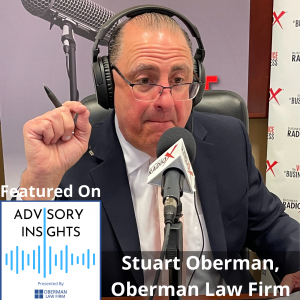
Stuart Oberman, Oberman Law Firm

Oberman Law Firm

Stuart Oberman is the founder and President of Oberman Law Firm. Mr. Oberman graduated from Urbana University and received his law degree from John Marshall Law School. Mr. Oberman has been practicing law for over 25 years, and before going into private practice, Mr. Oberman was in-house counsel for a Fortune 500 Company. Mr. Oberman is widely regarded as the go-to attorney in the area of Dental Law, which includes DSO formation, corporate business structures, mergers and acquisitions, regulatory compliance, advertising regulations, HIPAA, Compliance, and employment law regulations that affect dental practices.

In addition, Mr. Oberman’s expertise in the healthcare industry includes advising clients in the complex regulatory landscape as it relates to telehealth and telemedicine, including compliance of corporate structures, third-party reimbursement, contract negotiations, technology, health care fraud, and abuse law (Anti-Kickback Statute and the State Law), professional liability risk management, federal and state regulations.

As the long-term care industry evolves, Mr. Oberman has the knowledge and experience to guide clients in the long-term care sector with respect to corporate and regulatory matters, assisted living facilities, continuing care retirement communities (CCRCs). In addition, Mr. Oberman’s practice also focuses on health care facility acquisitions and other changes of ownership, as well as related licensure and Medicare/Medicaid certification matters, CCRC registrations, long-term care/skilled nursing facility management, operating agreements, assisted living licensure matters, and health care joint ventures.

In addition to his expertise in the health care industry, Mr. Oberman has a nationwide practice that focuses on all facets of contractual disputes, including corporate governance, fiduciary duty, trade secrets, unfair competition, covenants not to compete, trademark and copyright infringement, fraud, and deceptive trade practices, and other business-related matters. Mr. Oberman also represents clients throughout the United States in a wide range of practice areas, including mergers & acquisitions, partnership agreements, commercial real estate, entity formation, employment law, commercial leasing, intellectual property, and HIPAA/OSHA compliance.

Mr. Oberman is a national lecturer and has published articles in the U.S. and Canada.

LinkedIn

Oberman Law Firm

Oberman Law Firm has a long history of civic service, noted national, regional, and local clients, and stands among the Southeast’s eminent and fast-growing full-service law firms. Oberman Law Firm’s areas of practice include Business Planning, Commercial & Technology Transactions, Corporate, Employment & Labor, Estate Planning, Health Care, Intellectual Property, Litigation, Privacy & Data Security, and Real Estate.

By meeting their client’s goals and becoming a trusted partner and advocate for our clients, their attorneys are recognized as legal go-getters who provide value-added service. Their attorneys understand that in a rapidly changing legal market, clients have new expectations, constantly evolving choices, and operate in an environment of heightened reputational and commercial risk.

Oberman Law Firm’s strength is its ability to solve complex legal problems by collaborating across borders and practice areas.

Connect with Oberman Law Firm:

Company website | LinkedIn | Twitter

Tagged With: Advisory Insights, Advisory Insights Podcast, Dental Practice, doing business globally, employment law, Expanding Globally, Oberman Law, Oberman Law Firm, Stuart Oberman

Becky Berry, Becky Berry Career Coaching

December 14, 2022 by John Ray

Becky Berry
North Fulton Business Radio
Becky Berry, Becky Berry Career Coaching
Loading
00:00 /
RSS Feed
Share
Link
Embed

Download file

Becky Berry

Becky Berry, Becky Berry Career Coaching (North Fulton Business Radio, Episode 589)

Becky Berry, Owner and Executive Coach at Becky Berry Career Coaching, joined host John Ray on this episode of North Fulton Business Radio. She spoke candidly on the pressing career issues her clients face, what’s really going on with “quiet quitting,” the post-Covid work environment, the availability of jobs, the idea of “safety” in employment today, and much more.

North Fulton Business Radio is produced and broadcast by the North Fulton studio of Business RadioX® inside Renasant Bank in Alpharetta.

Becky Berry Career Coaching

Becky Berry coaches women who are determined to have an impact through their work. Women come to her to identify their unique skills and hone their leadership. They also come to Becky to rid themselves of the noise from a society that says women need to work harder but be smaller to succeed.

Becky champions each client as they excavate and deploys their unique and powerful work experiences to position themself for increasingly influential and impactful work. Becky provides a framework that goes beyond support – it’s a safe space for women to claim the potential they’re afraid to admit that they have.

Her coaching strategies start with insight and discovery. She and her clients work through their past story about work and uncover new ways to see themselves and describe their skills.

They do a Work Visualization to home in on the ideal environment and people to work with. Then, with the Windowshop Your Way to Work™ Strategy, clients learn how to own their value (and talk about it fluently) and present that value to prospective employers.

Website | LinkedIn

Becky Berry, Owner/Executive Coach, Becky Berry Career Coaching

Becky Berry, Owner/Executive Coach, Becky Berry Career Coaching

Becky Berry is the owner of Becky Berry Career Coaching and MAD! Workspace for Women, a boutique coworking space for women only. She lives in Alpharetta, Georgia, a suburb of Atlanta.

Becky is a career and executive coach who champions women as they excavate and deploy their unique and powerful experiences to position themselves for claiming their leadership and delivering increasingly influential and impactful work. Her specialty is creating outside-the-box strategies for helping clients jump their internal roadblocks to moving forward. Many clients come to her to learn how to re-frame their so-called problem traits—like ADD and dyslexia—into the powerful advantages they really are. Here’s how Becky describes her approach: “I get people. All kinds, sizes, and flavors of people. Crowds of people, or one-on-one. I get people because I love people and I live to champion them to themselves.”

Becky has experienced several crossroads in her life including careers as a magazine publisher, software entrepreneur, stay-at-home mom, special education teacher, social entrepreneur, and widowhood. Her experiences inform her coaching as she helps women create rich, meaningful work and home lives on their own terms.

Her rich background in startups and entrepreneurship allows her to provide uniquely powerful insights and strategies to clients as they pursue their business and life goals.

Becky also produces and cohosts two podcasts, Uniquely Brilliant and She’s Not Done Yet: Conversations with Women Over 50, available wherever you listen to podcasts, including Apple Podcasts and Spotify.

LinkedIn

Questions and Topics in this Interview

  • Why are people coming to you for career coaching and what do they get out of it?
  • What’s your take on quiet quitting?
  • How has the job market changed since COVID?
  • What type of environment are people looking for at work?
  • How can people be prepared for unexpected things like layoffs and re-assignments?

North Fulton Business Radio is hosted by John Ray and broadcast and produced from the North Fulton studio of Business RadioX® inside Renasant Bank in Alpharetta. You can find the full archive of shows by following this link. The show is available on all the major podcast apps, including Apple Podcasts, Spotify, Google, Amazon, iHeart Radio, Stitcher, TuneIn, and others.

RenasantBank

Renasant Bank has humble roots, starting in 1904 as a $100,000 bank in a Lee County, Mississippi, bakery. Since then, Renasant has grown to become one of the Southeast’s strongest financial institutions with over $13 billion in assets and more than 190 banking, lending, wealth management and financial services offices in Mississippi, Alabama, Tennessee, Georgia and Florida. All of Renasant’s success stems from each of their banker’s commitment to investing in their communities as a way of better understanding the people they serve. At Renasant Bank, they understand you because they work and live alongside you every day.

Since 2000, Office Angels® has been restoring joy to the life of small business owners, enabling them to focus on what they do best. At the same time, we honor and support at-home experts who wish to continue working on an as-needed basis. Not a temp firm or a placement service, Office Angels matches a business owner’s support needs with Angels who have the talent and experience necessary to handle work that is essential to creating and maintaining a successful small business. Need help with administrative tasks, bookkeeping, marketing, presentations, workshops, speaking engagements, and more? Visit us at https://officeangels.us/.

Tagged With: Becky Berry, Career Coaching, empowering women, John Ray, layoffs, North Fulton Business Radio, Office Angels, renasant bank, retaining women

Prospects Send Signals…Believe Them

December 14, 2022 by John Ray

Prospects Send Signals Believe Them
North Fulton Studio
Prospects Send Signals…Believe Them
Loading
00:00 /
RSS Feed
Share
Link
Embed

Download file

Prospects Send Signals...Believe Them

Prospects Send Signals…Believe Them

Pay attention: prospects send signals when they’re not a great fit for your business. Ignore these signals at your business peril.

The Price and Value Journey is presented by John Ray and produced by the North Fulton studio of Business RadioX®.

TRANSCRIPT

John Ray: [00:00:00] Hello. I’m John Ray on the Price and Value Journey. Recently, I was chatting with an attorney friend of mine about clients, the signals that they send, and how they tell us who they are if we’ll just pay attention. It reminded me of a client I’d been referred to quite a few years ago now, early on in my journey. I was able to get an appointment with her, but that took an abnormal amount of time to do despite her acknowledgment that she desperately needed to get her house in order.

When I got there several minutes early, I had to wait quite a while for her. Once the meeting finally started, it took only about 10 minutes to realize that her practice was a complete mess. Her books looked like the work product you’d see if Charlie Brown’s friend, Pigpen, was the bookkeeper. Any talk about KPIs or how we could use the numbers to improve her business was meaningless. She seemed to thrive on all the chaos. Every few minutes we were interrupted by her assistant with questions which were not urgent, but which she insisted on taking and answering.

And as I sit there, letting the debris of all this situation wash over me, I fell victim to the thought this can’t be as bad as it looks. Yep, I did it. I waited in where I shouldn’t have. Just like the well-meaning person who thinks they’ll reform their spouse after they get married. I quoted her a retainer to get started, and she wrote me a check. On the way back to my office, I drove by my bank and deposited the check. And that’s when the fun really started.

The next day, I got an email from my bank that the check had bounced. Almost immediately after getting that email, as if the clouds parted with a sign from above, my phone pinged with a text message. “Can you believe that guy went and deposited my check already?”, the text said. And then after a minute or two later, another text followed, “Sorry, meant that for my husband. Lol.” Yeah. Lots of laughs. There wasn’t any reason to be upset with her actually. That bounced check was the apex of a host of signals I should have paid attention to, but I ignored them or explain them away.

The message was there, but I was too hardheaded, determined or blind, take your pick, to pay attention. Clients will tell you with their actions that they’re not a fit for you and your practice. Believe them.

I’m John Ray on the Price and Value Journey. Past episodes of the series can be found on your favorite podcast app where you can subscribe if you’re not already. And if you are, thank you. You can also go to pricevaluejourney.com. Feel free to email me John@johnray.co. And hey, big news. I’ve got a book coming out in 2023. If you’d like more details, just let me know. Thank you for joining me.


About The Price and Value Journey

The title of this show describes the journey all professional services providers are on:  building a services practice by seeking to convince the world of the value we offer, helping clients achieve the outcomes they desire and trying to do all that at pricing which reflects the value we deliver.

If you feel like you’re working too hard for too little money in your solo or small firm practice, this show is for you. Even if you’re reasonably happy with your practice, you’ll hear ways to improve both your bottom line as well as the mindset you bring to your business.

The show is produced by the North Fulton studio of Business RadioX® and can be found on all the major podcast apps. The complete show archive is here.

John Ray, Host of The Price and Value Journey

John Ray The Price and Value Journey
John Ray, Host of “The Price and Value Journey”

John Ray is the host of The Price and Value Journey.

John owns Ray Business Advisors, a business advisory practice. John’s services include advising solopreneur and small professional services firms on their pricing. John is passionate about the power of pricing for business owners, as changing pricing is the fastest way to change the profitability of a business. His clients are professionals who are selling their “grey matter,” such as attorneys, CPAs, accountants and bookkeepers, consultants, marketing professionals, and other professional services practitioners.

In his other business, John is a Studio Owner, Producer, and Show Host with Business RadioX®, and works with business owners who want to do their own podcast. As a veteran B2B services provider, John’s special sauce is coaching B2B professionals to use a podcast to build relationships in a non-salesy way which translate into revenue.

John is the host of North Fulton Business Radio, Minneapolis-St. Paul Business Radio, Alpharetta Tech Talk, and Business Leaders Radio. house shows which feature a wide range of business leaders and companies. John has hosted and/or produced over 1,600 podcast episodes.

Coming in 2023:  A New Book!

John’s working on a book that will be released in 2023. The book covers topics like value and adopting a mindset of value, pricing your services more effectively, proposals, and essential elements of growing your business. For more information, connect with John below.

Connect with John Ray:

Website | LinkedIn | Twitter

Business RadioX®:  LinkedIn | Twitter | Facebook | Instagram

Tagged With: good fit, John Ray, Price and Value Journey, pricing, professional services, professional services providers, prospects, signals, solopreneurs, value, value pricing

John Hanning and Brian Wages, Specialty Tax Group, LLC

December 13, 2022 by John Ray

Specialty Tax Group
North Fulton Business Radio
John Hanning and Brian Wages, Specialty Tax Group, LLC
Loading
00:00 /
RSS Feed
Share
Link
Embed

Download file

Specialty Tax Group

John Hanning and Brian Wages, Specialty Tax Group, LLC (North Fulton Business Radio, Episode 588)

John Hanning and Brian Wages of Specialty Tax Group joined host John Ray to discuss how they help businesses secure tax credits and deductions they might not otherwise receive. John and Brian covered cost segregation as well as the R&D and green energy tax credits, businesses who are eligible, how they partner with CPA firms to work with clients, and much more.

North Fulton Business Radio is produced and broadcast by the North Fulton studio of Business RadioX® inside Renasant Bank in Alpharetta.

Specialty Tax Group, LLC

Specialty Tax Group is on a mission to help CPA firms and taxpayers by advancing the specialty tax industry through the use of technology. STG provides innovative tax planning strategies to secure tax credits and deductions with audit-ready deliverables.

They provide detailed benefit estimates prior to beginning work to ensure clients get the value they are looking for. For client conveyance, STG has the expertise to implement their delivered solutions.

STG is a nationwide specialty tax firm focused on engineered tax services.

Website | LinkedIn

John W. Hanning, Founding Principal, Specialty Tax Group, LLC

John W. Hanning, Founding Principal, Specialty Tax Group, LLC

John W. Hanning is the Founding Principal of Specialty Tax Group, LLC (STG) a consulting group focused on servicing capital-intensive clients with value-added services relating to cost segregation, fixed asset reviews, repair & expense studies, 263(a) compliance, 45L, and 179D.

Prior to founding STG John worked with several large and small CPA firms helping clients to secure cost-recovery solutions. Over the past 15 years as a Fixed Assets specialist, John was responsible for fixed asset services including new client identification, proposals, and client deliverables. John has led and executed cost recovery studies on thousands of facilities including; healthcare, retail, manufacturing, commercial office, multi-family, power generation, and dealerships. He has performed inspections of machinery, equipment, buildings, and construction projects estimated construction costs using nationally recognized costing manuals, and analyzed technical specifications, construction drawings & construction invoices. John generated sales utilizing both internal and external networks. John also provided numerous continuing education presentations relating to tax incentives related to real estate.

John received his Bachelor’s in Economics Management from Ohio Wesleyan University and graduated with his MBA from Ohio University. John is a certified member of the American Society of Cost Segregation Professionals (ASCSP) and President (2019 – 2021) of the Board of Directors. He began his service to the ASCSP as an active member of the Education Committee, where he co-authored the Senior Exam Study Guide in 2012. From 2017-2019, he served as Treasurer on the Board of Directors. He also holds his LEED Green Association credential.

Affiliations: ASCSP Certified Cost Segregation Specialist: Member # C0139-10; ASCSP President (Current), ASCSP Treasurer (Past), Author for numerous national educational groups, “Big Four” industry experience, Real Estate Roundtable – Associate Council Member.

LinkedIn

Brian Wages, Senior Manager, Specialty Tax Group, LLC

Brian Wages, Senior Manager, Specialty Tax Group, LLC

As a senior manager with Specialty Tax Group, Brian specializes in cost segregation, which in turn saves his clients money and helps them to better grow their companies. He can be found completing cost segregation studies for clients and reviewing credit and incentive deliverables. Beginning his career in 2011, Brian has worked for Deloitte Tax, McMillian & Associates, and Reliance Trust Company.

He has a focus on the Georgia retraining tax credit, Georgia jobs tax credit, Georgia quality jobs tax credit, Georgia investment tax credit, and federal work opportunity tax credit.

Brian earned his bachelor’s degree in business management from the University of Georgia. He is a member of the Institute for Professionals in Taxation (IPT), while also serving as a leader for middle school boys at Woodstock City Church. 

LinkedIn

Questions and Topics in this Interview

  • What is the focus of Specialty Tax Group?
  • What are some of the tax credits businesses need to look at?
  • What is cost segregation?
  • How it works
  • Avoiding risk
  • How do I qualify to work with STG?
  • What industries can take advantage of cost segregation?

North Fulton Business Radio is hosted by John Ray and broadcast and produced from the North Fulton studio of Business RadioX® inside Renasant Bank in Alpharetta. You can find the full archive of shows by following this link. The show is available on all the major podcast apps, including Apple Podcasts, Spotify, Google, Amazon, iHeart Radio, Stitcher, TuneIn, and others.

RenasantBank


Renasant Bank has humble roots, starting in 1904 as a $100,000 bank in a Lee County, Mississippi, bakery. Since then, Renasant has grown to become one of the Southeast’s strongest financial institutions with over $13 billion in assets and more than 190 banking, lending, wealth management and financial services offices in Mississippi, Alabama, Tennessee, Georgia and Florida. All of Renasant’s success stems from each of their banker’s commitment to investing in their communities as a way of better understanding the people they serve. At Renasant Bank, they understand you because they work and live alongside you every day.

Since 2000, Office Angels® has been restoring joy to the life of small business owners, enabling them to focus on what they do best. At the same time, we honor and support at-home experts who wish to continue working on an as-needed basis. Not a temp firm or a placement service, Office Angels matches a business owner’s support needs with Angels who have the talent and experience necessary to handle work that is essential to creating and maintaining a successful small business. Need help with administrative tasks, bookkeeping, marketing, presentations, workshops, speaking engagements, and more? Visit us at https://officeangels.us/.

Tagged With: Brian Wages, cost segregation, CPa, engineer, John Hanning, North Fulton Business Radio, Office Angels, renasant bank, Specialty Tax Group, tax credits, Taxes

How To Sell a Play It Again Sports Franchise, with Scott Ward, Former Play It Again Sports Franchisee

December 13, 2022 by John Ray

Scott Ward
How to Sell a Business
How To Sell a Play It Again Sports Franchise, with Scott Ward, Former Play It Again Sports Franchisee
Loading
00:00 /
RSS Feed
Share
Link
Embed

Download file

Scott Ward

How To Sell a Play It Again Sports Franchise, with Scott Ward, Former Play It Again Sports Franchisee (How to Sell a Business Podcast, Episode 2)

On this episode of the How to Sell a Business podcast, host Ed Mysogland welcomed former multi-store Play It Again Sports franchisee Scott Ward to discuss his journey from opening the business to a successful sale. Scott discussed how he developed some of his team members into business owners in their own right, lessons in the exit process, managing employees during the sale, recommendations for other Play It Again Sports franchisees planning their exit, and much more.

How To Sell a Business Podcast is produced and broadcast by the North Fulton Studio of Business RadioX® in Atlanta.

Scott Ward

Scott Ward

Scott Ward is a veteran of over 25 years of owning businesses. Successfully representing and consulting other business owners in lease negotiations in the technology, creative media, retail, and manufacturing industries, Scott’s unique perspective keeps in mind the owner/tenant’s long-term cash flow needs as a catalyst for the future health of his client’s company.

Scott is the author of Scabs, Scars and Pots O’Gold: True-Life Stories of a Successful Franchisee, available here.

Examples of Scott’s work include a young tech company expanding for the first time and helping to enable its current growth to include private and government clients worldwide. An industrial cabinet manufacturer successfully expanding to handle over 40 percent growth. Media agencies that need flexibility in their space to address the demands of sudden surges or shrinkage in client needs. And retail/franchise situations that come with issues of territory, visibility, and access.  Scott has mentored five former employees to own their own businesses and applies these techniques in formulating winning space solutions for his clients.

Scott’s contacts and involvement in citywide groups give him an innovative perspective on trends in traffic, population, education, and economics. He is part of enabling organizations throughout metro Atlanta in realizing their missions by serving on boards or as an officer in Rotary International (Treasurer/International Director), The Chattahoochee Nature Center Board, The North Fulton Chamber of Commerce, Scouts BSA (adult training), Toastmasters International, The Georgia Production Partnership (membership, industry relations, and governmental relations) and Atlanta Theatre to Go Board. He is also a member of the Atlanta Commercial Board of Realtors.

Scott is a graduate of the University of Florida. Scott is also a public speaker and presentation coach. He loves fly fishing, and sailing and has been known to swing a golf club or two! His family’s accomplishments overwhelm him with pride. If you would like to share a coffee please reach out!

LinkedIn

Ed Mysogland, Host of How To Sell a Business Podcast

Ed Mysogland, Host of “How To Sell a Business”

The How To Sell a Business Podcast combines 30 years of exit planning, valuation, and exit execution working with business owners. Ed Mysogland has a mission and vision to help business owners understand the value of their business and what makes it salable. Most of the small business owner’s net worth is locked in the company; to unlock it, a business owner has to sell it. Unfortunately, the odds are against business owners that they won’t be able to sell their companies because they don’t know what creates a saleable asset.

Ed interviews battle-tested experts who help business owners prepare, build, preserve, and one-day transfer value with the sale of the business for maximum value.

How To Sell a Business Podcast is produced virtually from the North Fulton studio of Business RadioX® in Alpharetta.  The show can be found on all the major podcast apps and a full archive can be found here.

Ed is the Managing Partner of Indiana Business Advisors. He guides the development of the organization, its knowledge strategy, and the IBA initiative, which is to continue to be Indiana’s premier business brokerage by bringing investment-banker-caliber of transactional advisory services to small and mid-sized businesses. Over the last 29 years, Ed has been appraising and providing pre-sale consulting services for small and medium-size privately-held businesses as part of the brokerage process. He has worked with entrepreneurs of every pedigree and offers a unique insight into consulting with them toward a successful outcome.

Connect with Ed: LinkedIn | Twitter | Facebook

TRANSCRIPT

Intro: [00:00:00] Business owners likely will have only one shot to sell a business. Most don’t understand what drives value and how buyers look at a business. Until now. Welcome to the How to Sell a Business Podcast, where every week we talk to the subject matter experts, advisors, and those around the deal table about how to sell at maximum value. Every business will go to sell one day. It’s only a matter of when. We’re glad you’re here. The podcast starts now.

Ed Mysogland: [00:00:36] Welcome to another episode of How to Sell Your Business Podcast. On today’s episode, I got to visit with Scott Ward. Now, Scott is a former franchisee of the Play It Again Sports franchise. And he was a multi-unit franchisee on top of that. And so, I wanted to visit with him, number one, because retail is a terribly complex type business. I mean, it’s dependent on, obviously, customers but more so on employees.

Ed Mysogland: [00:01:14] And one of the things that we found in our conversation is, the employees became who bought the business. And that’s a little bit different from the way a business normally is sold. I mean, it’s great to be able to sell to employees, if you can do it that way, but it’s not very often that you can. Number one, predominantly because of lack of capital. They may just not have that kind of access to capital to buy.

Ed Mysogland: [00:01:45] And so, we had the opportunity to visit through some of the things that, you know, how did he prepare the business to sell? He went through a couple of brokers, that it didn’t work out so well. And by aligning with the franchisor, he was able to come alongside of some of the people that he had been raising up through the organization to actually become his buyers.

Ed Mysogland: [00:02:13] And he wrote a book memorializing these types of adventures, as he put it, adventures throughout his career. And the book is called Scabs, Scars and Pots O’Gold: True Life Stories from a Successful Franchisee. And so, I found his story fascinating, and I’m certain you will, too. So, let’s get on with the show.

Ed Mysogland: [00:02:45] Good morning. I’m your host, Ed Mysogland. I teach business owners how to build value and maximize the value of their companies when they choose to sell, when they want to sell, how they want to sell, and for what they want to sell as far as value goes.

Ed Mysogland: [00:03:03] On today’s show, I am really excited to welcome Scott Ward. Scott successfully sold his franchise in the last few years and he authored a book, and that book is entitled Scabs, Scars and Pots O’Gold: The True Stories of a Successful Franchisee. And having done deals for a long time, I can tell you that most businesses don’t sell and a lot of people don’t talk about that. But to be successful in selling your business is certainly something to celebrate. So, welcome to the show, Scott.

Scott Ward: [00:03:38] Hey, thank you. I’m so glad to be here. And I appreciate the invite.

Ed Mysogland: [00:03:42] Well, I’m happy to have you. Before the show started, I began with a little overview of you, but could you go ahead and kind of cover your background and what you’ve been doing since you sold the company?

Scott Ward: [00:03:57] Sure. So, I spent over 25 years as a multi-store owner of Play It Again Sports stores as one of their initial franchisees back in the ’90s, and really grew with them and their kind of learning curve. And it was a great experience. It was a great franchise. It enabled me to do what a lot of franchises do for people. No one in my immediate family had ever owned a business or really completed college. And so, there was not a lot of that kitchen table, you know, business talk, a stratagem of things. So, the franchise really helped me with that.

Scott Ward: [00:04:35] And similar things when it came to exit, you know, I didn’t know anything, really. As I was aging through the franchise, they were as well as people came up for resale. So, that was actually very helpful.

Scott Ward: [00:04:52] Since I sold the business in the last four years or so, I realized being a community-based guy and a community-based store, I started thinking about what to do next. And I loved my community, I realized that property values and property taxes affect the money going into our basic communities. And then, I thought, “Well, wow, commercial real estate is a big portion of that. And if I can help other businesses with their leasing or purchasing of investment, and be involved in that same way,” that has provided a real meaningful second career for me in that sense. And it’s been a lot of fun because, let’s say, I’m one of the few commercial real estate guys now that’s actually owned a business, so I think about your cashflow.

Ed Mysogland: [00:05:38] You know what? And I have to imagine that that is a value add, because, you know, just being able to relate to, like you said, the challenges of cashflow and all of the trials and tribulations that go into just existing as a business owner. And I’m certain that your second career, you know, it’s all about doing just that, that you can relate and I’m certain that your clients appreciate that. So, I got a bunch of questions. Are you ready?

Scott Ward: [00:06:18] Hit me. Hit me.

Ed Mysogland: [00:06:19] All right. So, why Play It Again Sports? How did you get into that?

Scott Ward: [00:06:25] So, you mentioned my book, and that’s my opening thing in my little book, The Scab, Scars and Pots O’Gold. When I first come out of school, I was working actually for ad agencies and film production companies, and I was a writer. And I was sitting in my office looking out to the parking lot with the owner pulling in, in his really nice car, coming in a little late. And I’m thinking, “Wow. That’s pretty good. I should own my own business.”

Ed Mysogland: [00:06:52] Everybody should do it. It’s easy.

Scott Ward: [00:06:54] Yeah. And so, a film production company or an ad agency, but there was a little recession that came along, and that’s the first thing that budgets were being bad, we want people to add budgets. And I said, “Well, I had actually been a customer in this cool little sports store called Play It Again Sports.” And we were relocating at the time. My wife got a job offer coming back to Atlanta. And I thought, “Maybe let me check that out.” Because, again, I really wanted a community-based business and I’m kind of a tree hugger, hiker, outdoorsman, and I thought recycling, “What can never go out of business in a recession? Let’s see, sports, recycling. It was a no brainer.” So, that’s why I was investigating Play It Again Sports.

Ed Mysogland: [00:07:47] So, that was a conscious decision. I mean, you thought about what was recession proof and how you were going to offset it. Boy, that’s some good foresight. So, fast forward now, 25 years, how did you know it was the right time to exit?

Scott Ward: [00:08:05] Well, I always had this antsy-ness to do a little bit of something else. And my kids were early high school, and I started thinking, before they get into college, it might be a good time to transition before we get that heavy college payment. Again, thinking about personal financial cashflow. And how a lot of small to medium sized businesses, we live almost personally off that business cashflow. So, I’m like, “Okay. Let’s sell this business, I’m kind of burned out anyway, blah, blah, blah, like we all get. Let’s sell it now.”

Scott Ward: [00:08:39] And I listed it with a broker and he created this nice booklet for me and then I never heard from him again. And I even called, and so I was like, “Well, you’re not worth anything. Let me try someone else.” So, I tried someone else, and they were a little bit better, but they were still not really speaking to me in terms of how can we get your business better to sell in valuations. They just pretty much evaluated the way it sat. We’re trying to sell it the way it sat.

Scott Ward: [00:09:11] Even selling your home, at least the real estate agent comes in and says, “Hey, we need to stage this” or “You need to clean this up.” I found on the business broker side I wasn’t getting that. And then, I realized it, and really being a part of a franchise helped, too, because I had insight into what others were selling for or not selling for, specific same inventory and margins and sales and comps, and all these things. So, I’m thinking, “Okay. I’m just not ready.”

Scott Ward: [00:09:40] A-year-and-a-half went by, I was like, I just need to mentally re-gear myself – that six inch difficulty between the ears. Mentally gear myself up. Reboot this business. Kick it in the butt. Ramp up everything about it, about the EBITDA and everything else. And then, we’ll sell it right. So, that’s what I did. And we ramped up and another, I guess, six years went by. The kids were pretty much getting into college or getting out of college. And then, I created a five year business plan to sell the business.

Ed Mysogland: [00:10:18] Good for you. I can tell you, most people don’t do that.

Scott Ward: [00:10:22] Well, this hit me actually after I sold it. I mean, like a lot of us, our heads are in the weeds with our own business. But when I finally came up for air, I realized we, business people, either have this great product and service and we know how to sell it. And we take sales seminars to learn how to sell and learn how to market our business for the business that we’re selling, the service or the product we’re selling.

Scott Ward: [00:10:50] But then, when it comes to actually selling our business, we don’t do any of that. We just think you just obviously should know that it’s worth something, but you have to make it. So, in this five year plan, I had a three year balance sheet and penal management program. I, for three years, specifically worked on making and squeezing out every bit of profit and showing that profit. And, yes, I was going to pay maybe a little more in taxes here. And then, I had a two year marketing plan.

Ed Mysogland: [00:11:25] Good for you.

Scott Ward: [00:11:26] And I was able to sell it. Out of that two year marketing plan, I think I sold it in 18, 19 months or something. That’s when we finally closed.

Ed Mysogland: [00:11:36] So, who coached you on the plan or did you just put it together yourself?

Scott Ward: [00:11:45] The franchise helped a little bit. You know, at that point, again, as those years had gone up, we were on our learning curve together. Also, I had been elected to be on the Franchise Advisory Council for the whole country, so I did liaison between the franchisor and all the franchisees who are coming herding cats sometimes. They’re all very independent minded. But it was a great spot to be because I, again, had a broad view of the overall system margins, inventory, all the data that gets sliced and diced when you go into selling a business.

Ed Mysogland: [00:12:27] You know, there’s a lot of scrutiny. I guess I wanted to ask, well, first thing, so the franchise didn’t have a resale component. I mean, it’s a large franchise operation.

Scott Ward: [00:12:48] It’s so much better now. It’s so much better now.

Ed Mysogland: [00:12:51] Well, probably because of you.

Scott Ward: [00:12:54] They’re getting better. What you want, you want that in a franchise, you want everybody getting better and learning. At least you feel like your royalties are going somewhere if they’re getting better. So, I knew I needed a booklet. I knew I needed [inaudible].

Ed Mysogland: [00:13:11] Promotional material. Sure.

Scott Ward: [00:13:11] Yeah. And it lays out every single thing about your business. And that’s what I encourage anyone getting ready to sell their business is, you need to just be a total open book about every aspect, and that creates trust immediately.

Ed Mysogland: [00:13:32] Yeah, and it does. But at the same time, I think that there needs to be the appropriate phasing of information as you’ve developed that trust.

Scott Ward: [00:13:46] Yeah. Because everybody comes in kicking the can, “Well, how much do you want for it? I’ll pay for that.” And so, you had to submit your financial statements and they have to be approved through the franchisor. But if you’re selling an independent business, I would suggest you have the same exact criteria. You know, work with your business broker, such as yourself, or your banker, accountant, attorneys to say, “Okay. Here’s the minimum that someone is realistic about buying your business is going to have in personal assets so you don’t go any further.”

Ed Mysogland: [00:14:27] Yeah. When you were working or evaluating brokers, how did you select? I mean, you said the first one was a dud. Second one was a step above a dud. And I’ve always been pretty transparent. I think, you know, it’s better to have no broker than a bad one, because it just locks you in and your hands are tied. But what were your steps, and I guess if you could rewind it, what would have been the red flag for you on selecting someone to represent you?

Scott Ward: [00:15:09] So, when I finally did sell it, I did sell it without a broker, because at that point the franchise had ramped up their marketing of stores for sale and that type of thing. And I really felt good about my package. The second but is, part of the data that the franchise was coming up with was 70 percent of the sales for a store – and this is just unique to this industry that I’m within – would sell to either an employee or a customer.

Ed Mysogland: [00:15:44] Really?

Scott Ward: [00:15:45] So, they were like, “You just put a big sign on the door that says franchise for sale, owner retiring, transitioning,” whatever, and I fully instructed my employees and educated them as to their value to the business. And if anyone asks about it, how to guide them. So then, it was up on the National Franchise Board and then it was up on our personal website board. So, that’s how we started getting those.

Scott Ward: [00:16:23] But to your question, after being involved with the Georgia Brokers Association a little bit and I’m also in a succession planning group, in evaluating a broker, I would say, one, very clearly kind of almost like working with an accountant or an attorney, you set a scope of work and a timeline and expectations.

Scott Ward: [00:17:01] And then, you have something that you can compare maybe apples to apples. Like, this broker is going to put together this book, but then what are you going to do with it? Do you have other outside advisors? Initial consultation helped me create better value, perhaps, or suggest some outside coaching that can be brought in. And a realistic timeline from that broker knowing what it’s going to take to sell, because it’s just not going to sell. It’s not going to sell. It could take a couple of years or two or three years or longer.

Ed Mysogland: [00:17:42] Believe it or not, 53 percent of the time from engagement to selling, so that’s half, it’s 6 to 12 months.

Scott Ward: [00:17:56] That’s awesome. Well, you know because you’re a good broker.

Ed Mysogland: [00:18:00] Well, I don’t know about that.

Scott Ward: [00:18:04] You know where the people are that are interested in buying.

Ed Mysogland: [00:18:07] Well, that’s true. But one of the things you said, which is total counterintuitive, is that 70 percent of the buyer pool for the franchise is coming internally or a customer. And so, I guess my question is, how did you communicate to your employees that, “Hey, I’m selling the business. You’re integral to it and I don’t want you to be a flight risk.” I mean, in a brokerage environment, that is an absolute no, no, because that value is stuck in those employees.

Ed Mysogland: [00:18:56] Because everybody watches the movies, “You know, I’m going to get displaced. Somebody’s going to come in and break it up and sell the pieces.” And it doesn’t happen that way. It never happens that way. The value is in the employees. But, boy, I have to imagine that was a real big risk for you to communicate selling.

Scott Ward: [00:19:20] Maybe it was the communication and trust I had already built up with my employees. You know, it wasn’t like I was coming out of the blue with communication, “Oh, he’s never talked to us before about how the store runs.” When I first hire employees, I set them up. In fact, I mentored six former employees to go on and own their own businesses.

Ed Mysogland: [00:19:44] Good for you.

Scott Ward: [00:19:46] Three of them were Play It Again Sports stores, other Play It Again Sports stores in the region. And it was tough on me to lose them. But I told them, when I would first bring an employee on, I said, “If you’re here three, four or five years from now, you should be getting close to buying your own store,” or running your own or something. I would set them up of my expectation of them.

Ed Mysogland: [00:20:12] All right. So, that’s the expectation. So, as an employee, typically, they don’t have a whole lot of funding. I mean, the people that we have worked with that want to sell to key people, they may be operationally sound, but financially they may be short. So, did you bump into that? And if so, how did you get around it?

Scott Ward: [00:20:36] So, I would tell them my story. You know, I didn’t have a whole lot of funds getting going, but I had a little bit from a relative that passed away, not a whole lot, but just enough. But it was enough that I could put together a plan, and then present it to friends and family, and say, “Would you come in with me as an investor or partner on buying this franchise?”

Scott Ward: [00:21:05] And so, I just educated them as to how I started. And, in fact, when the employees would come in, again, I kind of go this about employee retention and how do you get better employees. You treat it more like it’s an entry level to a larger corporate professional. It’s not just this little retail store. This is an entry level position to the sporting goods industry, which was gigantic.

Ed Mysogland: [00:21:41] And still is.

Scott Ward: [00:21:42] Yeah. So, whether you’re going into engineering, product design, safety health, health care, medical, marketing and media, I would ask my employees, “What areas are you interested in, in growing your career?” And I would speak to them, “If you’re coming on, this is the beginning of a career.” So, I just spoke to them in more of executive terminology, even if they were part-time employees.

Scott Ward: [00:22:10] And I just think that it helped over time and that built the trust. So, when it came time for me to sell, swinging all the way back around to your original question, how did you talk to your employees about this, we were already having conversations about business plans and business models, what are our sales going to be. “Our margins dropped. Oh, gosh, that’s not good. Nobody’s getting their bonus.” We would really miss [inaudible]. I do well, you do well.

Ed Mysogland: [00:22:37] So, you were really a transparent owner from the beginning. I mean, that’s the way it sounds, because I know a lot of employees or a lot of business owners don’t want their employees to know the kind of money that the owner is making, because then they’re going to squeeze on bonuses and so on and so forth.

Scott Ward: [00:23:03] To be clear, they didn’t know how much I was making. I wasn’t that transparent. But just like any sales, we set sales goals, we had margin goals, and then we got rewarded for it. You know, when we first sat down, I said, “You know, I’ve been doing this 25 years. It’s awesome. I love it. But I’m going to be doing some transitioning. You wouldn’t expect me not to. I expect you to.” You know, I just put myself on that level and I said, “You guys are an integral part of this and we’re going to be putting the store up for sale and you guys need to be on your toes because the future owner could be coming in and watching or looking around.”

Ed Mysogland: [00:23:48] Yeah. And like I said, I mean, it’s so —

Scott Ward: [00:23:53] I worked hard. I didn’t have anybody.

Ed Mysogland: [00:23:55] So, with the franchise, I mean, one of the things that I guess I want to know has to do with technological obsolescence. Like, for example, do people still go into retail and buy? You know, I know we did. As our kids were growing up, when the the kids pick their sports, we always seem to be the last people to go to Play It Again Sports, and everything had been picked over and I had to go to full retail.

Scott Ward: [00:24:36] Yeah. But maybe you can at least trade in a tennis racket for a bat or a bicycle or a bigger bike.

Ed Mysogland: [00:24:41] So, I know Craigslist has kind of gone by the wayside. It seems as though a lot of transactions are now being handled by the people themselves. And I’m just curious to know how did you guys offset that.

Scott Ward: [00:25:01] Yes. The internet came on, it’s like a lot of things in any technology. And I almost kind of look at it in a judo versus karate tradition. Karate is kind of like force against force and judo is you take force and you go with it. So, when the internet and all this started coming on, all the price comparison, people would pop up and go, ” Walmart’s got it for this,” and they fan it in your face or something. You’d say, “That’s fantastic. We’ll match it.” But here was the thing, when you look at the bottom line, it says, “Oh, they’re all triple extra smalls in chartreuse, so if you really want the navy blue one in your size or whatever it is -” there was a lot of that that happened on the internet.

Scott Ward: [00:25:52] But we’ve just embraced that technology and used it to our advantage to help us sell our advantage. And the advantages with this particular model of business was that, at Play It Again, we gave you a full guarantee and inspection period of, like, ten days. So, you could take it to the ballpark if it was used or new, of course if it’s new, we’re going to like anybody give refunds on new stuff if it’s defective or whatever.

Scott Ward: [00:26:27] But you can’t get that type of easy return. And you’re also [inaudible] even more of a discount by bringing something in. We would start going through all the things we took and people would start thinking, “Oh, we didn’t think about the horse shoes we’ve never used in five years. We didn’t think about those little things. We need little kids bikes and we need baby seats.” And there are all these things sitting around in people’s homes. You start going through this list and they go, “Okay. Hold that and we’ll be right back.”

Scott Ward: [00:27:02] So, when we were getting price comparison, that particular franchise is unique in that we gave guarantees, we gave customer service, we would match the same price. On any given day on the internet, something could be up or down. Sometimes it was more expensive than what we had. And I’d say, “Should I raise my price for you?” And they go, “Oh, no, no.” So, we had fun with it. That’s what we did.

Ed Mysogland: [00:27:29] Yeah. And the funny thing is, at least the one locally that we have, I mean, it’s always busy. It is always busy, which is great to see. I’m really happy when local businesses are thriving. How did you value your company? So, I mean, you got some consultation from brokers, that’s true. But then, when you went out to do it yourself, what did you go to market with? How did you price it? Or were you getting guidance from – I know you said that the franchisor provided some market data on other sales or resales, did it hold true, multiples changed?

Scott Ward: [00:28:28] I would look at those, and so I had a rough idea from other market data, from other resales around the country based on inventory levels and what our sales were compared to their yearly sales. But then, the franchise had a relationship with an accounting firm, a third party accounting firm, not my accountant, that was new to the business that knew the resale business.

Scott Ward: [00:29:00] And because there are several different franchise groups, right? There’s Once Upon a Child and Plato’s Closet and Dialogue, and all those others, so this accounting group knew the Winmark branded properties. Because of that, I went to them and I think I paid $1,000 for them to do a complete three or four different styles of valuation on our business, which you’re more familiar with those than I am in this world.

Ed Mysogland: [00:29:33] That’s okay.

Scott Ward: [00:29:34] But there’s the cashflow model, the EBITDA model, the times, whatever. So, they did four of those and it came out, and I had them do that after the three years of balance sheet management that I had done. I was ready to go to market now and do my two year marketing plan, sell the business. And so, that’s when I was pulling together the final sales booklet and I wanted their valuation.

Scott Ward: [00:30:05] And they evaluated the business – I can’t remember if it was 12 percent or maybe a little bit more higher than what I thought it was worth because they knew the business. And here’s what’s interesting, maybe even as a business broker, there might be certain brokers that are better at selling convenience stores and some are better in restaurants or manufacturing or tech companies. But that really was worth my $1,000 because it was –

Ed Mysogland: [00:30:36] It was validation, sure.

Scott Ward: [00:30:37] … a bunch of money more than what I invested to get those valuations. And the education I got from them was one of those that I even knew about my business, but I didn’t know about it to talk about it. And that is, bankers look at your inventory. If you’re an inventory type company, you’re warehousing, distribution, whatever, you’ve got inventory as a part of your assets. They look at those inventory and say, How old is it? If it’s old inventory, it’s not worth as much. What are the terms?

Scott Ward: [00:31:11] If you’re a broker or a banker who understands that – that’s another thing, get a banker who understands your type of business. All bankers will say they can, but they can’t. They’re not all the same. Some of them specialize better in certain industries. But most bankers would look at used inventory and go, “Oh, we’re going to give you like $0.07 on the dollar.”

Ed Mysogland: [00:31:36] That’s where I was going with this, I was like, “Oh, my gosh. I have to admit.” Yeah, go ahead.

Scott Ward: [00:31:41] However, in a used situation, which there are tons of used – I just heard a statistic this week, like, 70 or 80 percent of Americans have purchased or sold something used in the last five years through some sort of used website, whether it’s these high end purses or whatever it is. So, that used inventory on my books, if I’m getting a 60 or 70 percent margin on used versus 35 to 45 percent margin on new, which one’s more valuable?

Ed Mysogland: [00:32:26] Sure. Yeah, you’re exactly right on the banker portion of it that when it goes to underwriting –

Scott Ward: [00:32:35] Oh, my gosh. The light bulbs come on. And then, you go, “Well, if it’s not turning fast, it’s old inventory. But if it’s turning fast, it’s just cashflow.” So, there’s a subtlety that then you have to educate your buyer.

Ed Mysogland: [00:32:52] Yeah. Yeah. No, and I can totally see that. And I did not think about it that way. And like I told you before, I’ve been doing this 30 years, I never thought of how you just described that type of inventory, you know, the margin associated with the – I knew it was hot. But I looked at it from a profitability standpoint, not necessarily as a collateral value.

Ed Mysogland: [00:33:20] So, I know we’re coming a little bit up on time, and I do want to talk about Scab, Scars and Pots O’Gold. That’s not just a book for franchisees, right?

Scott Ward: [00:33:34] No. My editor said I should niche it. And since I had a franchise, we’ll say franchisees. But it’s really an Aesop’s Fable for business. So, with Aesop’s Fables, you tell a story and it has a moral to the story. So, as Scabs, Scars and Pots O’Gold, I tell my true life stories from beginning to end how I went through everything all the way up to selling the business.

Scott Ward: [00:34:00] And my stories, I compare to true life examples of enterprise level businesses that did the exact same thing and mistakes I did. And they have room full of MBAs and CFOs and stuff, but they did the same mistakes. And then, there’s a business lesson moral to the story that resounds with no matter what size your business is. So, it’s an easy read. It’s kind of like, say, a Chicken Soup for the Soul or Who Moved My Cheese?

Ed Mysogland: [00:34:34] So, before we conclude, if I’m a Play It Again Sports franchisee, and I am just thinking about I know I’m going to have to do something in the next few years. I mean, what are my next steps? Regardless of a broker or whatever, what do I need to start thinking about how do I start mentally preparing? I know I can get the book. But before that, because I think the challenge that a lot of business owners face is mentally checking out as soon as I say I’m selling, they take a foot off the gas, and that is –

Scott Ward: [00:35:26] It’s hard.

Ed Mysogland: [00:35:27] Right.

Scott Ward: [00:35:29] It’s hard.

Ed Mysogland: [00:35:29] And so, I guess what are your final thoughts on these are the things you need to be thinking about.

Scott Ward: [00:35:37] So, with any plan, a good, well thought out plan, it’s going to have a timeline, and expectations, and goals to reach at each of those steps throughout your timeline. So, when you set out a reasonable timeline for selling your business, that gives you those expectations so that you don’t get checked out. Because you say to yourself, “Okay. Well, I’m where I said I’m supposed to be, so let’s keep at it. Because, here in another few weeks, I’m going to be at this next step, and at the next step, and I can see the light at the end of the tunnel, and I’m not checking out.”

Scott Ward: [00:36:16] When you don’t have any expectations or any guideposts, then, yes, so easy to check out because you’re just spinning, whatever, whatever. So, get the proper people. I would say, check in with your accountant, check in with your attorneys, check in with a business broker, and interview a couple of different business brokers, and maybe even your personal wealth management people to help you get that side.

Scott Ward: [00:36:47] And with your team, now you’ve built a team to run your business, now you need to build a team to sell your business. So, you get the right people and you ask the right questions and that will help you come up with that proper timeline. And it sounds like a lot, but this could be done in a week. I mean, it really doesn’t take that long to pull that team together because all those people I mentioned, including people like yourself, Ed, want to help.

Scott Ward: [00:37:13] And part of that might even be, you know, you get a coach or a business evaluation person who can come in. And there is so much cash to be squeezed out of everybody’s P&L and balance sheet you don’t even realize. Like in my situation, I now handle leasing for people, just because your lease is not up for three years doesn’t mean you can’t renegotiate it right now and squeeze some cashflow out of that, put it in towards marketing, or whatever it is. Then, promote within the next three years your EBITDA and your cashflow, and suddenly your business valuation has been 1.5 more than what it was. It’s fun.

Ed Mysogland: [00:37:56] Yeah. I’ve wanted to make sure, from a timing standpoint, I meant to get to it earlier. But how does franchises like this fare in recessionary times?

Scott Ward: [00:38:15] They use businesses that does very well. I mean, it does well. And normally everybody wants to save money. The nice thing about any used business or clearance or closeout is to make sure you have a good product mix to answer your target audience, target customer’s need. So, even if you don’t have everything they want, they can at least pick it up new or in some other way. They don’t have to go to another location..

Ed Mysogland: [00:38:46] Okay. So, how do we connect with you?

Scott Ward: [00:38:51] So, I’ve got a website, Scott Ward, scottyward.com. And then, there’s my email address, scottyward4@gmail. The book, you can find on Amazon. It’s under entrepreneurship, franchising. Even, again, you don’t have to have a franchise, I think, to get some fun kicks and giggles out of some of the stories.

Ed Mysogland: [00:39:21] Nice.

Scott Ward: [00:39:22] I use Bobby, Talladega Nights, Bobby, Slingshot.

Ed Mysogland: [00:39:32] Right. Right. Okay. Well, we will make sure that we have all the ways to get in touch with you in the show notes. And thank you so much for the time. I mean, I know your experiences and the work that you currently do as well, the big takeaway, just how you shepherd in employees to not only work for you, but went on into entrepreneurship. And I think that, you know, that is an attestation to you on just the kind of guy you are and the help that you’ve given. So, thanks so much for your time today and I hope you enjoyed it as much as I did.

Scott Ward: [00:40:21] I did. It was a pleasure, Ed. Thank you so much.

Ed Mysogland: [00:40:24] All right. Well, thanks again. We’ll see you around.

Outro: [00:40:29] Thank you for joining us today on the How to Sell Your Business Podcast. If you want more episodes packed with strategies to help sell your business for the maximum value, visit howtosellabusinesspodcast.com for tips and best practices to make your exit life changing. Better yet, subscribe now so you never miss future episodes. This program is copyrighted by Myso, Inc. All rights reserved.


Tagged With: Business Owners, Ed Mysogland, exit planning, Franchisee, Franchisor, How to Sell a Business Podcast, Play It Again Sports, Scabs Scars and Pots O'Gold, Scott Ward, valuation

HBS Legal Trends: Jon-Paul Croom, Wellstar North Fulton, and Alex Kaufman, Hall Booth Smith, P.C.

December 12, 2022 by John Ray

Jon-Paul Croom
Hall Booth Smith Podcast Network
HBS Legal Trends: Jon-Paul Croom, Wellstar North Fulton, and Alex Kaufman, Hall Booth Smith, P.C.
Loading
00:00 /
RSS Feed
Share
Link
Embed

Download file

Jon-Paul Croom

HBS Legal Trends: Jon-Paul Croom, Wellstar North Fulton, and Alex Kaufman, Hall Booth Smith, P.C.

On this edition of HBS Legal Trends, Hall, Booth, Smith’s Alex Kaufman welcomed Jon-Paul Croom, President of Wellstar North Fulton Hospital, to discuss what’s new at Wellstar, their new and expanded services, the hospital’s facilities and staffing, their presence in the community, and much more.

HBS Legal Trends is sponsored by Hall, Booth, Smith, PC and is produced by the North Fulton studio of Business RadioX®.

Wellstar North Fulton

Equipped with the latest technology and medical expertise, Wellstar North Fulton Hospital is committed to delivering quality, personalized care, tailored to you. Wellstar North Fulton is a Level II Emergency Cardiac Care Center, Level II Trauma Center, and Joint Commission Primary Stroke Center.

From their convenient Roswell location, Wellstar North Fulton Hospital offers the most advanced stroke care and leading therapies, specializing in complicated and complex cases. Count on their dedicated neuro team, state-of-the-art imaging technologies, and neuro-trained intensive care unit (ICU), to treat all types of strokes, including ischemic strokes, intracerebral hemorrhages, and subarachnoid hemorrhages.

Wellstar North Fulton’s team of neurosurgeons, neurocritical care physicians, and neuroradiologists perform thrombectomies, aneurysm treatments, and cerebral bypass procedures. In addition, our dedicated hybrid neurovascular suite is equipped with innovative bi-plane technology. This allows neurosurgeons to view highly detailed images of brain vessels, so our experts can customize treatments in real time. That means you don’t have to go far for expert stroke treatment.

From diagnostic testing to life-saving emergency care to physical rehabilitation, Wellstar North Fulton Hospital provides comprehensive stroke care so you can get back to life, faster.

Company Website | Facebook | Twitter

Jon-Paul Croom, FACHE, President of WellStar North Fulton and SVP at WellStar Health System

Jon-Paul Croom, FACHE, President of WellStar North Fulton and SVP at WellStar Health System

Jon-Paul Croom is the President of Wellstar North Fulton and joined the hospital in 2017.

Croom previously served as CEO of the 429-bed Central Mississippi Medical Center (CMMC) in Jackson, Miss. At CMMC, Croom was regarded as a team builder, using daily team huddles focused on delivering care that exceeded patient expectations while working to improve access to needed services. Croom opened the only burn center in Mississippi and increased the availability of inpatient psychiatric services at the facility.

Croom was also CEO for Merit Health Rankin in Brandon, Miss., chief operating officer for Clearview Regional Medical Center in Monroe, Ga., and chief operating officer for Roxborough Memorial Hospital in Philadelphia. Additionally, he served on the board of the Mississippi chapter of March of Dimes.

Croom received his bachelor’s degree from Mercer University, in Macon, Ga., and a master’s degree in both business administration and health administration from the University of Alabama at Birmingham.

Jon-Paul lives in Roswell with his wife and three children.

LinkedIn

Hall Booth Smith, P.C.

Established in 1989, Hall Booth Smith, P.C. (HBS) is a full-service law firm with six regional offices strategically located throughout Georgia, as well as offices in Birmingham, AL; Little Rock and Rogers, AR; Denver, CO; Jacksonville, Miami, St. Petersburg, Tallahassee, Tampa, and West Palm Beach, FL; Missoula, MT; Asheville and Charlotte, NC; Saddle Brook, NJ; New York, NY; Oklahoma City, OK; Charleston, SC; and Memphis and Nashville, TN.

Experienced across a wide range of legal disciplines, HBS prides itself on providing knowledgeable, proactive, client-specific counsel to individuals, domestic and international corporations, state and federal agencies, and nonprofit organizations.

At HBS they possess the legal knowledge, skill, and experience to meet our clients’ needs wherever they do business. HBS maintains the highest commitment to serve clients ethically and professionally by providing the highest quality legal representation.

Company Website | LinkedIn | Facebook

Alex B. Kaufman, Partner, Hall Booth Smith, P.C.

Alex B. Kaufman, Partner, Hall Booth Smith, P.C.

Alex B. Kaufman is a Partner in Hall Booth Smith’s Alpharetta office, and he is an experienced trial attorney who represents clients on business transactions, commercial matters, employment, and securities issues. He also counsels clients on government relations, employment issues, as well as corporate and franchise matters.

Before joining Hall Booth Smith, Alex was a partner at a national law firm and other Atlanta firms where he concentrated his practice on business law and business litigation as well as corporate matters and a wide range of employment and commercial disputes.

During law school, Alex served in Georgia Governor Sonny Perdue’s Office of Executive Counsel, and he held positions in the Appellate and Trial divisions of the Cobb County District Attorney’s Office.

Alex’s wide-ranging work and internship experience include the U.S. Department of State’s Diplomatic Affairs Division, Fulton County Superior Court Judge Craig L. Schwall, Sr.’s chambers, and The United States House of Representative’s Judiciary Committee’s Subcommittee of Crime, Terrorism, and Homeland Security.

Alex is active in Republican politics and civic leadership and was honored to be the GOP’s nominee for State House District 51. Alex has served in several Republican Party leadership positions, including serving on the State Executive Committee as well as the Fulton Country and 6th Congressional District’s General Counsel. Alex has also worked on many political campaigns, including at the Presidential level.

Community involvement is important to Alex, and he has spent considerable time on the boards of many philanthropic and educational organizations including the Georgia Rotary Student Program, The Roswell Rotary Club, The Star House Foundation, The Emory University Annual Fund, The Roswell Arts Fund, and The Westminster Schools Young Alumni Council.

Alex is passionate about trial advocacy and for years has coached the Westminster Schools’ mock trial team as well as served as an adjunct faculty member at Emory School of Law’s Trial Advocacy Program – Trial Techniques.

Alex earned a Juris Doctorate degree from Emory University School of Law and has worked as an adjunct faculty member to teach courses on trial techniques. He completed a Bachelor of Arts degree at Hamilton College and graduated with honors.

LinkedIn

Tagged With: Alex Kaufman, cancer center, cancer treatment, Cyberknife, Hall Booth Smith, HBS Legal Trends, Healthcare, Jon-Paul Croom, stroke care, Wellstar North Fulton

The Tale of the Impatient Garage Door Repairman

December 12, 2022 by John Ray

The Tale of the Impatient Garage Door Repairman
North Fulton Studio
The Tale of the Impatient Garage Door Repairman
Loading
00:00 /
RSS Feed
Share
Link
Embed

Download file

The Tale of the Impatient Garage Door Repairman

The Tale of the Impatient Garage Door Repairman

As a professional services provider, your pricing depends on the conversations you’re willing to have with prospective clients. This cautionary tale of the impatient garage door repairman illustrates the cost of not having a value conversation.

The Price and Value Journey is presented by John Ray and produced by the North Fulton studio of Business RadioX®.

TRANSCRIPT

John Ray: [00:00:00] Hello. I’m John Ray on The Price and Value Journey. The Tail of the Impatient Garage Door Repairman.

John Ray: [00:00:09] One morning several years ago, I woke up, sleepily took care of our morning potty time for our dogs. And then, when I brought in the last one and lowered the garage door, disaster struck. As the garage door lowered, it crinkled. And my wife couldn’t get out of the garage. Fortunately, though, I was parked outside and can take her to the school where she teaches.

John Ray: [00:00:35] On the drive over, she asked who I was going to call about our problem. I have no idea, I told her, but I’ll work it all out. Well, after I dropped her off, I went straight to my desk and started my work. I could deal with that garage door stuff later, right? Well, a few hours went by and my wife called me during her lunchtime planning period to check on how that garage door repair was going. I’m working on it, I told her. Well, Dr. Ray has a keen nose for bull. You need to know, she said, that I’m not spending the night in that house if that garage door is not fixed.

John Ray: [00:01:19] Well, my priorities, you might say, had suddenly been realigned. I had to get on the stick and make something happen. I didn’t have a contact among garage door installers, so I did what most people do in such circumstances, I went online. I looked for a garage door expert with what seemed to be satisfactory and legitimately honest reviews. I found a nearby provider who seemed pretty good and I gave him a call. I described the problem, gave him my addres, and texted him pictures of the door along with measurements of the door panels.

John Ray: [00:01:59] After a few minutes, he called me back, I’ve got the panels we need to replace the door, he said, are you open for me to come out there this afternoon? Yes, I said. And I was trying to damper my excitement when he said that. Well, normally, he said, I would charge $1,100 or so. But if you’ll pay cash, I’ll charge you $800. I immediately responded, “Get over here, man. I’m headed to the ATM.” So, I get a sizable discount for paying in cash and I’m not going to be in trouble with my wife, I felt like I was at the casino and three cherries had just come up on the slot machine.

John Ray: [00:02:37] I had no idea when I made the call what a garage door replacement like this should cost. I had visions of four figures dancing in my head before this conversation, so that’s what I was braced for. In his impatience to get this job and seemingly, also, to avoid taxes by receiving cash, my garage door repairman screwed up.

John Ray: [00:03:01] He was focused only on the job at hand, not the why of the job. He didn’t have a value conversation with me, his client. He never asked me any questions that would have revealed my sense of urgency and what I valued. He could have asked questions such as, “Well, what happened and when? Do you know why it happened? Was there anything unusual happening prior to the problem? What do you have in mind to replace the door? Any upcoming outside house painting or remodeling projects you have? When was the house built? Any issues with the garage door motor itself? How many cars are parked in the garage?”

John Ray: [00:03:47] You see the point? He could have then said after all that questioning, “Hey, my crews are pretty busy right now and we’re more than halfway through the day today, when did you need to have the work completed?” At some point in this conversation, I would have revealed the big problem, which had little to do with the garage door itself. It was important to my wife that this job be completed that day and, therefore, it was important to me.

John Ray: [00:04:17] I would have understood that I’m calling him in the middle of the day hoping he could get my replacement done by day’s end, if he told me that he had a rush charge, but that he could get out there that afternoon, I would have paid – I don’t know – $1,500, $2,000. I don’t know what I would have paid. But I felt like I’d drawn the get out of jail free card to only pay $800.

John Ray: [00:04:42] In the services business, home professional or otherwise, the price you ultimately receive is based in part on your willingness to have a value conversation which taps into the hopes, fears, dreams, and other emotions which are bubbling up inside of your client. But you won’t know those unless you ask.

John Ray: [00:05:04] And your impatience can cost you a lot of money like it did my garage door repairman. And you might be, like I imagine he could be, wondering why you’re working so hard for so little on the bottom line.

John Ray: [00:05:19] Thanks for joining me on The Price and Value Journey. Past episodes of this series can be found at pricevaluejourney.com or on your favorite podcast app. I’d be honored if you’d subscribe to the show, if you’re not already. And feel free to send me an email, john@johnray.co.

John Ray: [00:05:40] And, hey, some big news, in 2023, I’ll be releasing a book, so if you want more information on that, feel free to connect with me. You can send an email or connect with me on LinkedIn. johnray1 is my handle on LinkedIn. Thanks for joining me.


About The Price and Value Journey

The title of this show describes the journey all professional services providers are on:  building a services practice by seeking to convince the world of the value we offer, helping clients achieve the outcomes they desire and trying to do all that at pricing which reflects the value we deliver.

If you feel like you’re working too hard for too little money in your solo or small firm practice, this show is for you. Even if you’re reasonably happy with your practice, you’ll hear ways to improve both your bottom line as well as the mindset you bring to your business.

The show is produced by the North Fulton studio of Business RadioX® and can be found on all the major podcast apps. The complete show archive is here.

John Ray, Host of The Price and Value Journey

John Ray The Price and Value Journey
John Ray, Host of “The Price and Value Journey”

John Ray is the host of The Price and Value Journey.

John owns Ray Business Advisors, a business advisory practice. John’s services include advising solopreneur and small professional services firms on their pricing. John is passionate about the power of pricing for business owners, as changing pricing is the fastest way to change the profitability of a business. His clients are professionals who are selling their “grey matter,” such as attorneys, CPAs, accountants and bookkeepers, consultants, marketing professionals, and other professional services practitioners.

In his other business, John is a Studio Owner, Producer, and Show Host with Business RadioX®, and works with business owners who want to do their own podcast. As a veteran B2B services provider, John’s special sauce is coaching B2B professionals to use a podcast to build relationships in a non-salesy way which translate into revenue.

John is the host of North Fulton Business Radio, Minneapolis-St. Paul Business Radio, Alpharetta Tech Talk, and Business Leaders Radio. house shows which feature a wide range of business leaders and companies. John has hosted and/or produced over 1,600 podcast episodes.

Coming in 2023:  A New Book!

John’s working on a book that will be released in 2023. The book covers topics like value and adopting a mindset of value, pricing your services more effectively, proposals, and essential elements of growing your business. For more information, connect with John below.

Connect with John Ray:

Website | LinkedIn | Twitter

Business RadioX®:  LinkedIn | Twitter | Facebook | Instagram

Tagged With: John Ray, professional services, professional services providers, solopreneurs, The Price and Value Journey, value, value conversation, value pricing

  • « Previous Page
  • 1
  • …
  • 94
  • 95
  • 96
  • 97
  • 98
  • …
  • 275
  • Next Page »

Business RadioX ® Network


Our Most Recent Episode

CONNECT WITH US

  • Email
  • Facebook
  • LinkedIn
  • Twitter
  • YouTube

Our Mission

We help local business leaders get the word out about the important work they’re doing to serve their market, their community, and their profession.

We support and celebrate business by sharing positive business stories that traditional media ignores. Some media leans left. Some media leans right. We lean business.

Sponsor a Show

Build Relationships and Grow Your Business. Click here for more details.

Partner With Us

Discover More Here

Terms and Conditions
Privacy Policy

Connect with us

Want to keep up with the latest in pro-business news across the network? Follow us on social media for the latest stories!
  • Email
  • Facebook
  • Google+
  • LinkedIn
  • Twitter
  • YouTube

Business RadioX® Headquarters
1000 Abernathy Rd. NE
Building 400, Suite L-10
Sandy Springs, GA 30328

© 2026 Business RadioX ® · Rainmaker Platform

BRXStudioCoversLA

Wait! Don’t Miss an Episode of LA Business Radio

BRXStudioCoversDENVER

Wait! Don’t Miss an Episode of Denver Business Radio

BRXStudioCoversPENSACOLA

Wait! Don’t Miss an Episode of Pensacola Business Radio

BRXStudioCoversBIRMINGHAM

Wait! Don’t Miss an Episode of Birmingham Business Radio

BRXStudioCoversTALLAHASSEE

Wait! Don’t Miss an Episode of Tallahassee Business Radio

BRXStudioCoversRALEIGH

Wait! Don’t Miss an Episode of Raleigh Business Radio

BRXStudioCoversRICHMONDNoWhite

Wait! Don’t Miss an Episode of Richmond Business Radio

BRXStudioCoversNASHVILLENoWhite

Wait! Don’t Miss an Episode of Nashville Business Radio

BRXStudioCoversDETROIT

Wait! Don’t Miss an Episode of Detroit Business Radio

BRXStudioCoversSTLOUIS

Wait! Don’t Miss an Episode of St. Louis Business Radio

BRXStudioCoversCOLUMBUS-small

Wait! Don’t Miss an Episode of Columbus Business Radio

Coachthecoach-08-08

Wait! Don’t Miss an Episode of Coach the Coach

BRXStudioCoversBAYAREA

Wait! Don’t Miss an Episode of Bay Area Business Radio

BRXStudioCoversCHICAGO

Wait! Don’t Miss an Episode of Chicago Business Radio

Wait! Don’t Miss an Episode of Atlanta Business Radio