
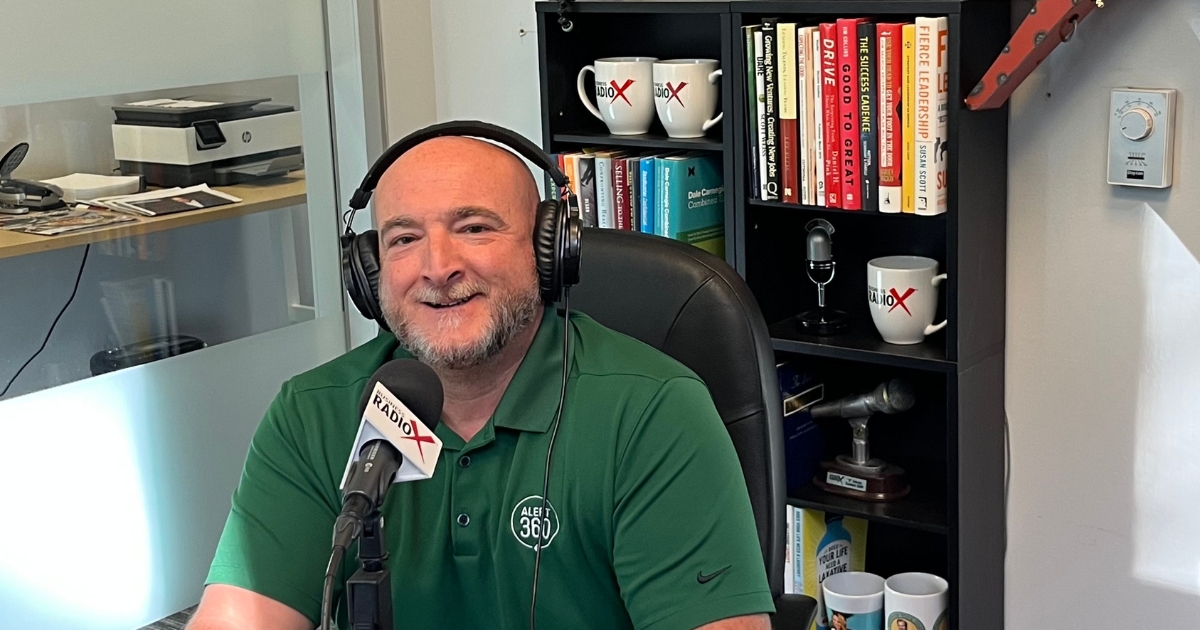
In this episode of Greater Perimeter Business Radio, Lee Kantor interviews Matt Harvey, General Manager of Alert 360 Security. Matt shares his journey in the security industry and discusses Alert 360’s evolution from traditional alarm systems to advanced, proactive solutions like live video monitoring and cloud-based access control. The conversation covers the changing needs of residential and commercial clients, the importance of upgrading outdated systems, and real-world examples of preventing theft and improving safety. Matt also highlights how modern technology makes security more accessible and effective for businesses of all sizes.
 Matt Harvey is a Dunwoody, GA resident and a native Georgian. He’s a 30 year Atlanta security industry veteran.
Matt has worked on all sides of the industry from owning my own company, operations management, top producing consultant, Former Director of Sales. Current General manager at Alert 360 Security.
He’s now focused on leadership of my team and growing the Alert 360 brand in Atlanta.
Connect with Matt on LinkedIn.
Episode Highlights
- Overview of Alert 360 Security and its services, including alarm systems, video surveillance, and access control.
- Matt’s personal journey in the security industry, starting from childhood and evolving through various roles.
- The importance of proactive video monitoring technology, such as Alert 360’s Video Shield.
- The impact of DIY security solutions on the residential market and the preference for professional installation among older homeowners.
- The growing demand for advanced technology in commercial security, particularly in video surveillance and access control systems.
- The challenges faced by property management companies with outdated security infrastructure and the need for modernization.
- The role of monitored video surveillance in protecting vulnerable sites, including construction sites and small businesses.
- Future marketing strategies for Alert 360, focusing on educating various industries about modern security technologies.
 This transcript is machine transcribed by Sonix.
TRANSCRIPT
Intro: Broadcasting live from the Greater Perimeter. It’s time for Greater Perimeter Business Radio. Now here’s your host.
Lee Kantor: Lee Kantor here another episode of Greater Perimeter Business Radio, and this is going to be a good one. So excited to be talking to my guest today. General Manager with Alert 360 Security, Matt Harvey. Welcome.
Matt Harvey: Thank you. Thank you very much. It’s great to be here.
Lee Kantor: Well, I am so excited to learn what you’re up to. For those folks out there who aren’t familiar, can you share a little bit about Alert 360? How you serving folks?
Matt Harvey: Absolutely. Alert 360 has been in business for over 50 years. Uh, we service over 14,000 customers here in metro Atlanta and nationally, about 475,000 customers. Uh, it makes us the fourth largest security provider in the country. And here in Atlanta we are about the third or fourth largest provider.
Lee Kantor: So what’s your backstory? How’d you get involved in security biz?
Matt Harvey: Well, I’m second generation. My dad started dragging me along, uh, wiring houses when I was, uh, 7 or 8 years old. It, uh, when you’re 7 or 8, climbing around in attics and crawl spaces. And the most amazing thing ever, it turns out, as an adult, not so much. No, not so much fun at all. So. So I’d been in the security industry pretty much my entire life. And, uh, when I got into college, I started my own contracting company. So I had installers that were going in doing installations for other companies. So I would line up the jobs from larger companies for my guys to go do the installs, and they would go out to install and I would go to class. And that was and then in the summer I would run service calls. And at that point I’d started building my own company up 90, 94 to 98, uh, had my own security company.
Lee Kantor: Oh. Your own? That was not affiliated with one of the.
Matt Harvey: No, that was my. It was my own company. Wow.
Lee Kantor: And you started that from scratch?
Matt Harvey: From scratch. And I was a college. College kid. College kid?
Lee Kantor: Uh, you figured I knew everything I could figure. This isn’t that hard, right?
Matt Harvey: Well, you know, realistically, I installed my first alarm system completely by myself when I was 16. And, you know, once you figure out what you’re doing from there, it’s it’s really meeting people and making contacts, uh, getting with the people, you know, that are going to be able to put you in a place to, uh, build your business. And I was fortunate that I had connected with, uh, a few attorneys and property managers that had, uh, a lot of businesses in the area. And when they found out, hey, this guy’s doing the same thing as the others, and he’s cheaper because he’s a college kid living in his parents basement. Uh.
Lee Kantor: They trust him.
Matt Harvey: Exactly.
Lee Kantor: And then at some point you started working for a larger firm, or you got bought by a larger firm.
Matt Harvey: Yeah. I sold off my accounts and went to work for a for a larger company. And, uh, in, in, uh, an operations capacity and, uh, was there for 20 some odd years, uh, transitioned over into sales and then, uh, sales management, uh, director of sales. So at the time, the company I was with previously, but the time they were sold, I was managing, uh, three branches, seven states. So.
Lee Kantor: Oh, so it was regional?
Matt Harvey: Yeah. Yeah.
Lee Kantor: And then. So how did alert 360 come into play?
Matt Harvey: When? When my previous company was bought out? Uh, they, uh, they didn’t. They wanted the accounts. Not so much the guys. So. So, uh, I came over to alert 360, and, uh, it’s, uh, it’s been a great move. It’s a really great, great company, great bunch of folks.
Lee Kantor: And then your responsibilities are similar.
Matt Harvey: Well, What they are. They’re a little more. Here I’m with is the general manager. I’m in charge of sales over operations, admin over the entire branch. So rather than just having, having to, to, to deal with the sales side, I’ve, you know, got.
Lee Kantor: The whole.
Matt Harvey: Show, I’ve got the whole.
Lee Kantor: Show and that’s for the whole Atlanta area or.
Matt Harvey: Metro Atlanta, metro Atlanta. We’ve got, we’ve got like I said, about 14,000 customers in metro Atlanta. Uh, and.
Lee Kantor: That’s to keep you busy.
Matt Harvey: Enough to keep us busy. Yeah. But we but you know what? We can always be busier because I’ve got a great team and things are really streamlined in the branch to the point that we definitely have the bandwidth to take on a lot more customers.
Lee Kantor: Atlanta now, has the strategy shifted or is it still the similar in the terms of I’m going to build relationships with these kind of key people that might get me into, uh, more opportunities?
Matt Harvey: That’s still the same, but the opportunities we’re trying to get into are different. They’re different where, you know, the, uh, traditionally people have, you know, kind of looked at it as the residential model. The residential has been the, the focus because there’s obviously more homeowners homes. Right? Yeah, there’s more homeowners than business owners. So it was a bigger pool. But as the market has evolved, really the DIY section has, has, has grown in the residential side. And, you know, commercial has really been where the focus of the industry is going.
Lee Kantor: So then, uh, just regular consumers are probably more apt to do a DIY.
Matt Harvey: Some of them are. It’s, uh, you know, and it’s a certain segment of the population that, you know, they’re uh, that for them, they have the time, they have the ability, you know, where, you know, if you look at our, uh, consumer, residential consumer, their, their demographics, they’re probably late 40s or older there. They either don’t have the time or the initiative, or they don’t. They don’t want to mess with it.
Lee Kantor: They’d rather just have somebody, an expert do it. Why am I going to mess with it myself and screw it up when I can get an expert? And it’ll be done right?
Matt Harvey: Exactly. And that’s that’s our that’s that is the residential market that we exist in now is the people who, uh, who want an expert to do it, who don’t mind paying for an expert to do it, don’t don’t have the time or the initiative to do it. That’s that’s really the residential customer now, uh, where commercially, uh, the industry has really started evolving with a lot of the video technology and a lot of the things that we can do now that were, weren’t, weren’t really on the table even even 3 or 4 years ago.
Lee Kantor: Right. So now you can go into a business and offer them a whole suite of things that they couldn’t even imagine, probably when you started.
Matt Harvey: Absolutely true. And we because we do, you know, full suite of security services. We can handle the security. But video surveillance is really where things are going. Because people people love cameras. They want cameras. There’s cameras everywhere. We know there’s cameras everywhere. And now we have a technology which is proactive video monitoring. So, uh, everybody has a CCTV system. It’s great because, you know, depending on the age of the quality, if there was a break in or an incident, you know, they would be able to kind of see an image of something that happened. I mean, we’ve all seen the news where you get the blurry picture of somebody jumping over a fence that doesn’t do the authorities any good. Uh, so traditional traditionally CCTV systems, uh, they’re reactive. They’re showing you something that happened in the past. Now we have what we call our video shield. It video shield is monitored video surveillance. So our video shield operators are actually monitoring the camera cameras at the facility so we can see a potential intruder, a potential someone coming to put graffiti, someone coming to, uh, you know, steal things off a job site. We can see the intruders before they ever come into, uh, they ever come in to do any damage or, you know, create a loss on the property. So our operators are in a position where they can, you know, they can yell at, you know, yell at the person and say, hey, this is a restricted area. Get out of here. And, you know, because they are an actual person, they can say, yes. You two guys went in.
Lee Kantor: The blue shirt.
Matt Harvey: In the blue shirt, you in the blue shirt. I’m talking to you. Yes. Turn around. Go the other way. So, uh, or, uh, you know, a lot of, a lot of people don’t want, you know, they want us. You know, when we see somebody coming in, you know, we’re dispatching the police immediately. So we’re not waiting until they actually.
Lee Kantor: After it happened. Right?
Matt Harvey: Exactly. It’s after it happens. You’re dealing with insurance at that point. Yeah. So a perfect example. We’ve got a client here off of off of Spalding, that, uh, construction site. Uh, some folks came in and cut all the copper out of the construction site. And, you know, you have the loss of the materials. Now, you have.
Lee Kantor: The time.
Matt Harvey: And the time, the labor expense. The labor expense, the time and again, it pushes back the construction timeline. So it pushes back, you know. So now the electrician has to come back in. So it pushes back HVAC. It pushes everything back on the construction project. So we’ve installed we installed, uh, a mobile surveillance unit there on the site, uh, big pole cameras, flashing lights, you know, and, uh, nobody’s coming near the place anymore, so.
Lee Kantor: Right when it when it seems vulnerable, that attracts a certain type of person that’s like, hey, there’s an opportunity here, but if it looks kind of like, hey, they got some stuff here that I’ll just pick somebody else.
Matt Harvey: Yeah. And that’s, that’s kind of the oldest thing in security is, you know, it’s it’s that’s why you put a yard sign out in front of the house. Because if if there’s a yard sign in front of your house and there’s no yard sign in front of your neighbor’s house, I’m going to break in somewhere. I’m going to go over there. So, you know, if you’re looking at a construction site or a parking lot or, you know, a facility that it’s dark, you don’t see much going on there. Uh, you know, they’re going to choose that over, you know, a place where you visibly see cameras and signage, right?
Lee Kantor: That these people obviously care enough to invest in that type of security, that why mess with it?
Matt Harvey: Exactly.
Lee Kantor: Now, um, when you’re kind of explaining this to your clients, uh, I would imagine because Atlanta is such a booming city, there’s job sites everywhere. And if they don’t have security, are they just leaving stuff out, like, without anybody watching? Like, is that really happening?
Matt Harvey: It does happen. As crazy as it sounds, um, and, you know, for years it was okay. Somebody would, you know, come to the job site and they might, you know, they might steal a little something or they might, you know, you had kids that would break in and break things, you know, just for vandalism. Uh, and, you know, so you had that, uh, but now it’s more that, you know, people want to protect their site. You know, they don’t they don’t want to deal with the hassle of, again, being reactive rather than proactive. Uh, so it’s, you know, they’re investing in, you know, monitored video technology and security so that, you know, we’re deterring you’re deterring the issues before they even happen.
Lee Kantor: Right. So now are you having to explain that to a prospective client, or are they coming to you saying, hey, we want to be proactive or do you have to kind of explain, hey, you, you might want to be proactive here.
Matt Harvey: Usually we’re explaining it because people they have the idea of cameras when you’re talking to them about cameras. It’s oh, oh I’ve got cameras. Okay. You have cameras and that’s great. Um, but the cameras again are going to tell you what happened in the past.
Lee Kantor: So they think they might have enough, but they in reality they have old technology and there’s better solutions nowadays.
Matt Harvey: There is better solutions because it’s it’s it’s, you know, stopping the incident before it happens. Right. And that’s really, you know, again, it’s, it’s and even and not just what they steal, but going through insurance claims and the hassle and having to replace, you know, had a site where they stole a, you know, a side by side, you know, so, uh, you know, replacing equipment and filing the insurance claims. And it’s just, it’s the hassle of it that, you know, just spending, you know, spending a little more, you know, for monitored video is going to really create a lot of that hassle down the road should something happen.
Lee Kantor: Right. I would imagine if you can equate it to if this saves you a day of being down, then this pays for this whole thing for the year, probably. Or like it’s probably from a long length of time. The savings if you’re down for a day.
Matt Harvey: Right. Depending on I mean depending on what what you lose. Right.
Lee Kantor: Well, if you’re waiting for a supply chain issue to get back the thing that you lost, if you’re waiting for now the delay, I got to wait another day or two or a week before my team can get back in here. And and now the deadline of the thing. There might be some bonuses if I get done earlier. Like all that gets thrown out the window. Like the cost could be extreme. If if they don’t aren’t proactive, I would imagine.
Matt Harvey: It’s absolutely true. And you know, we would like to and we we love law enforcement. Law enforcement is wonderful. But realistically on the list of priorities that they have going on.
Lee Kantor: Getting your copper wire back is.
Matt Harvey: Looking, looking, looking, looking at your somewhat blurry, outdated video, uh, video images to try to determine.
Lee Kantor: The wall.
Matt Harvey: Yeah, exactly. To try to determine who that guy is. Yeah, that’s probably not going anywhere.
Lee Kantor: So now in this market that you’re serving, what are kind of the top couple or two, three, five, um, you know, commercial opportunities for you?
Matt Harvey: Sure. Right now, uh, obviously video, uh, surveillance is huge and access control is something that has also really, uh, become much more affordable, uh, to.
Lee Kantor: That’s like coming in and out of the place of work.
Matt Harvey: Exactly. And it’s not it’s not super exciting. You know, the card, you put it next to the reader and it opens the door. Uh, so it’s something we kind of take for granted. But there’s new technology now where we’re using cloud based solutions. People think about access control as, oh, there’s this computer sitting in an IT closet somewhere, and somebody has to go in and type card numbers, right?
Lee Kantor: And then it’s like, thumbs up, you’re in and it’s red light, green light.
Matt Harvey: And then you. Yeah. Okay then. Okay. We’re getting you know Dave’s getting the ax, so we gotta take Dave’s car away. So the guys got to go back and sit at the computer and take Dave off, you know? So now everything, uh, the systems were installing their cloud based, and we can now the administrator can now add, delete, change access to codes, everything from any smart device. So you know, when when HR says, hey, we had to let Dave go. Uh, you know, they pull up their smartphone, they’re sitting at dinner, pull up the smartphone, just.
Lee Kantor: Say.
Matt Harvey: Dave, Dave no longer can get in the building. The other thing that, uh, we have now is mobile credentials. So instead of having to have a physical card to badge in, you have to.
Lee Kantor: Use your phone.
Matt Harvey: Use your phone. So you and it’s an app with hours, it’s not even pulling up an app. It’s running in the background all the time. So you just walk up to the door, hold your phone to the reader.
Lee Kantor: Instead of clicks, it.
Matt Harvey: Clicks right open. You don’t have to scroll in and look for, you know. So, uh, and that is, it’s it’s convenient. It saves money.
Lee Kantor: Because you don’t need a car to.
Matt Harvey: Buy the cards anymore. But think about the applications in homeowners associations or, uh, condo associations where they have a pool. One of the biggest, uh, one of the biggest complaints we always hear from HOA residents is people give out their cards to the pool in the summer, and their cousin and their sister and everybody gone. Yeah. Everybody comes to use the pool. So now think about you don’t have a car.
Lee Kantor: So they’re all sharing the same card, right?
Matt Harvey: So that’s what happens is you go to work, but you give your your cousin the card and her and all of her friends go and hang out at the pool.
Lee Kantor: And then they give it to a friend because the so all of a sudden there’s 50 people on one card.
Matt Harvey: Well, there’s there’s 50 people in the pool and none of them live on the property, right? Exactly. That or, you know, you’re you’re you know, you’re constantly trying to, you know, get a card back from somebody when you know, when when they when they move out. Okay, you can delete it. But you again, you’ve lost the card there so it won’t work. But you still spent the money on that. But now think about that scenario with mobile credentials. So the HOA president, he is giving access to the homeowners and just to that homeowner directly to their phone. So he’s sending them an.
Lee Kantor: At least they’d have to give up their phone.
Matt Harvey: Exactly.
Lee Kantor: And nobody’s nobody’s doing that.
Matt Harvey: Exactly. So now you know. So now instead of hey, you decide to share your card with your cousin while you’re at work and there’s no.
Lee Kantor: Car happening.
Matt Harvey: Because your cousin’s not going to leave their phone, you’re not gonna leave.
Lee Kantor: You’re not giving your phone to five different people.
Matt Harvey: Exactly. So, and the other thing is, you know, hey, it’s. You didn’t pay your HOA dues.
Lee Kantor: Uh, click, click.
Matt Harvey: Exactly. So, uh, so it’s it’s it’s really streamlined the process. It’s made it easier. And the great thing about it is in most situations, the readers themselves can be reused. So we’re going into a lot of older commercial buildings that have existing access control, that it’s an outdated system and they want newer technology. In a lot of cases we can just swap out the head end and they don’t even have to they don’t have to replace the locks. They don’t have to replace.
Lee Kantor: So everything else stays the same.
Matt Harvey: Everything else stays the same.
Lee Kantor: It’s much cheaper, probably exactly, or cheaper than they probably anticipated.
Matt Harvey: It is because traditionally people have thought about access control being, you know, $3,000 a door. And, you know, we do an access control for $400 a door. It’s really we have, you know, we have some systems now with, you know, with our cloud based product that gives us a lot of flexibility that we didn’t have previously. And it’s really opening access control up to a lot of new, uh, a new a lot of new users. Uh, we had a client over here off Peachtree Parkway that, you know, they were sitting in their office and a guy was kind of walking around and after 3 or 4 people, they, you know, they were like, do you know who that guy is?
Lee Kantor: Right.
Matt Harvey: So, so finally somebody walks up and says, can I help you? And the guy just mumbles something and runs out the door. He was just some random person that had walked and was walking around their office. And the more I started talking with people that are attorneys offices or architects or things that you’re not going to have really walk in traffic, right? They’re telling me, oh, yeah, at least a couple times a month, we’ll have a random person walk in and ask to use the bathroom or that kind of thing. If you think about most office layouts, you’ve got a receptionist, someone at the front that’s by themselves quite frequently. It’s kind of unnerving that you have just random people walking in. Well, in the past, that’s not something a business owner was going to drop, you know, 3 or $4000 on. Well, now when we can do it for $400.
Lee Kantor: Right.
Matt Harvey: Now, this is something that business owners, small businesses are going, oh yeah, this this this is.
Lee Kantor: This makes.
Matt Harvey: Sense. This is worth that investment.
Lee Kantor: Now for you, when you’re going to market, uh, you know, here we’re at the tail end of this year and going into next year, what are kind of some of the target industries or niches that you’re looking to educate about, uh, the company and how they might benefit from partnering with you? Like, are there some, you know, kind of areas, you know, you mentioned HOAs. That’s probably not. People wouldn’t maybe think of that as a as a good area. But that sounds like it is. But are there other ones that you’re going after right now?
Matt Harvey: Uh, property management is great. Uh, because property management, uh, you typically have, uh, a lot of scenarios where they have outdated video surveillance systems, they have outdated access control systems. Uh, they have, you know, it’s amazing how many locations we go into that, you know, we look at there, we look at their camera system and okay, well, there’s nothing showing on camera number four. Yeah, that one doesn’t work. Okay. What about camera number eight? It looks like. Yeah, it got water in it. And it’s so that they.
Lee Kantor: Just accept it over time that they just periodically don’t work. And we’re okay with that.
Matt Harvey: They do. And but the problem is they get you know, that’s when that complacency.
Lee Kantor: Right now you’re vulnerable.
Matt Harvey: Exactly. So now you’re in that place where, you know, you don’t think about it until it’s too late. So property management is always.
Lee Kantor: Then property management is apartments and uh, like homes developments and things like that.
Matt Harvey: So, uh, office buildings, office buildings are fantastic. We just finished a project over over here, uh, near Cumberland. We did, uh, a 16 story office building. We had, uh, 20 something doors of access, and there were three of the floors that only you had to have a key when you got in the elevator to.
Lee Kantor: So it’s for the actual building operators or management company, not necessarily a company within the building?
Matt Harvey: Uh, both. I, you know, we have because you do have, uh, specific you have offices inside an office building that they have their own security, which we, we, you know, certainly take care of that. And then the entire building so it, you know, it’s set to lock down at 6 p.m., the doors lock at six, and, uh, you know it. Fire alarm. They have their, uh, video, you know, they’ve got camera systems that a lot of these, uh, buildings, especially in this area, you know, a lot of this stuff grew up in the 90s, you know, the buildings and, you know, these they grew up in the 90s, and they’re a lot of them are still running on the original old technology. They’re still running on the systems that were put in, uh, you know, 30 years ago, 20 years ago.
Lee Kantor: So, so property management, that’s kind of the, the major focus. You think.
Matt Harvey: Property management, small business really is, uh.
Lee Kantor: Like mom and pop retail.
Matt Harvey: Mom and pop retail, uh, offices because that’s those are the those are the people that in the past may have They wanted these solutions.
Lee Kantor: But they couldn’t afford.
Matt Harvey: It. They couldn’t afford it. They couldn’t afford it. And now the technology has evolved to the point that it’s easier and it’s become less expensive. And, you know, so, so small businesses, there’s so much that they can take advantage of now that they couldn’t previously. And then also, you know, again, the monitored video, the monitored video is, is really where I believe the industry’s going because.
Lee Kantor: And that’s primarily job sites or like um, uh, parking lots, things like that.
Matt Harvey: Parking lots. So if you think about if you go to a lot of these parking lots, you see, uh, you see the, the trailer with the big solar panels on it and the cameras, that’s, that’s, that’s what we do. And, uh, we have those we actually protecting a, uh, a large solar farm, uh, out, uh, out way out east of Atlanta. Uh, it’s, uh, middle of nowhere. You would never know the place was there, but they’ve got 1500 acres of solar panels out there. It’s it’s so it’s it’s part of the energy infrastructure. And we have our mobile surveillance units out there because there’s nobody manning 1500 acres of solar panels. And and again, you think about, you know, the vandalism, uh, of that it’s not you know, now you’re not talking about just some, some vandalism and some loss of property. You’re talking about, you know, you know.
Lee Kantor: That’s electricity you’re.
Matt Harvey: Affecting. You’re affecting the infrastructure there. So, um, you know, any of any of those type sites, construction sites, parking lots, shopping centers, uh, you know, there’s a lot of liability. You see the commercials, you know, if you have your crime in a parking lot, you know, those are those are big issues now. So, uh, those the monitored video and and also your industrial sites where, you know, people that have park, they park 18 wheelers, they park construction equipment, they have their, you know, those are things that people hop the fence, you know. Okay. You’ve got a fence with with barbed wire on it. They don’t care. They’re going through the fence if they want to go through the fence, and they’re stealing the catalytic converters off of vehicles, they’re going through the trucks and stealing, you know, stealing stuff, you know, out of the out of the 18 wheelers and out of the equipment where with the monitored video surveillance, you know, we’re we can watch them, we see them. And, you know, we’ve got some great videos on our, uh, on our YouTube channel, uh, alert 360. Our YouTube is great. Uh, we’ve got a lot of great videos of our, uh, video shield operators catching people.
Lee Kantor: Like, calling them out.
Matt Harvey: Oh, well. And even, uh, my favorite one is, uh, where, you know, there’s they’re doing no talk down, but they’re communicating with the officers. So they’re actually, you know, as, as the police are arriving on site, they’re going, okay, one of them is under the yellow truck. He just crawled under there. The other one is behind the green dumpster. So, you know, they’re actually talking the police into where the people were.
Lee Kantor: Wow. That’s amazing.
Matt Harvey: Yeah, it’s it’s it’s really it’s really great technology.
Lee Kantor: Now, is there a story you can share that maybe illustrates the impact this could make? Is there a favorite one where you were able to help somebody either prevent something from happening or else get a good outcome?
Matt Harvey: You know, there’s there’s a lot that we’ve there’s a lot that we’ve had. And one of my, one of my and this one’s a kind of a small story, but um, but it is one of my favorite because it was something that that happened, you know, uh, somewhat early on, um, is, you know, now everybody’s somewhat takes it for granted that, you know, when you arm and disarm your alarm system, you’re doing it from your phone and you receive text notifications. That’s just kind of par for the course. You know, your, you know, your, um, you know, that that’s kind of part of the deal now. Uh, but back, you know, 20 years ago, that was that was really new technology was, you know, wait, I can get a notification when my. Yeah. So, um, we had, uh, it’s actually a personal story. My wife and I had had gone out of town, and we had a dog sitter, uh, coming to stay with the dogs and, um, and, you know, so we left and said, okay, we’re leaving. And, um, it was probably, you know, 6:00, we get down to the beach, you know, it’s all right. Well, the sitter get to the house. Yet to let the dogs out. No. Not yet. Okay, well, then it’s 8:00. Sitter. No, no, no, but she’s, you know, she’s a high school girl. No, she’s she’s out a little late. It’s Friday. It’s, you know, so, uh, we get up the next morning and the system was never disarmed, so she never showed up to let the dog out. So I had to call my friend, and. Hey, can you come let the dog out? It’s probably not going to be very pretty, but, uh, you know, who knows when she would have shown up.
Lee Kantor: Right?
Matt Harvey: To let the dog out if I didn’t have the security system telling me when it was armed or disarmed. We had, uh, had another another lady who, um, another pet story, another lady who had had this pet sitter for, uh, for 2 or 3 years. And, you know, every day the lady came and took the dog out for a walk and, uh, came, took a walk, play all of that. And, um, we had installed a security system, and, uh, she actually wrote a letter to myself and the president of the prior company I was with thanking us because she receives the text notification system disarmed for the dog sitter to take the dog out at 12:00 and receive the signal that the alarm was re-armed at 1203.
Lee Kantor: So how could they have?
Matt Harvey: So she calls everything okay? And the dog sitter says, oh yeah, it’s great. We went for a walk. Belly rubs, scratches. No, she was in the house for three minutes. And how would you know? It’s one of those things you would have never known what was going on. You know, now you would have video that would that would show you that same thing is really showing you, you know, what’s going on around your home. So it’s, um, you know, it it really is being connected with your home or your business when you’re away.
Lee Kantor: Now is the part of home a residential security? Does that include, like, cameras in the home? So, like, you could see things within the home, like for pet owners? I would think that would be an important component to have access to be able to say, okay, the dog’s okay or the cats are okay.
Matt Harvey: Some people do, some people don’t. Um, you know, there’s there’s some people that, um, you know, kind of freaks them out. The idea of having cameras inside their house. I have one in my living room for exactly what you said. I want to just see what my dog’s doing. Right. Because, you know, he’s going to be sleeping on that couch or that couch is basically what happens. But, uh, you know, I, you know, I like to I have, especially.
Lee Kantor: If you travel, I would think. And if you’re hiring a doctor so you can see what they’re doing and interacting.
Matt Harvey: Sure, sure. And we have, uh, and you would have people, uh, with elderly parents is another one where they do they do a lot.
Lee Kantor: Of tests to see if they fell down because they a parent could lie and say, oh, everything’s fine. And then they’re like laying on the ground for an hour and no one even knows they could.
Matt Harvey: And, and you know that that and also, you know, being able to, you know, if we actually have the ability to program the system so that by a certain time, if there’s no detection of movement inside the house, that we can notify and say, hey, yeah, it’s 9:00 and nobody’s moved inside the house, and mom always gets up at 730 in the morning. So we have the ability to do a lot of cool stuff like that. Um, but you know, video again, you can, you know, look in and just make sure everything’s okay. Um, commercially, obviously cameras are everywhere. Uh, we did, um, uh, sure, I would be mentioning the school of Rock over here, and they’re great folks. And, um, they have to have cameras in every single, uh, in every instructional room in all the common areas because you have, you know, adults and kids, you know, in an instructional situation. So, uh, you know, we have, you know, full camera system, uh, there, um, you know, that’s just kind of expected in a lot of, you know, in a lot of.
Lee Kantor: Especially with kids.
Matt Harvey: Absolutely. And, uh, and then, you know, we also have, you know, large industrial sites. We just finished a job down by the airports, 60 some odd cameras. Uh, so, uh, and then, but again, at the same time, we did a little hair salon over here that had two doors and a motion detector. So we really, we really, uh, can take care of anybody residentially or commercially.
Lee Kantor: And at any size. It sounds like.
Matt Harvey: Of any size. Yeah. I mean, we, uh, we go into little, little condo with, you know, little condo with a couple of doors or, you know, a 16 story office building, right?
Lee Kantor: Or a solar.
Matt Harvey: Or a solar farm? Yes. Everything. Everything from, you know, two, two door contacts on a hair salon to a solar farm. Yes, that’s.
Lee Kantor: So if somebody wants to learn more, have more substantive conversation with you or somebody on the team, what’s the website? What’s the best way to connect?
Matt Harvey: Uh w-w-w-what. I360. Com. Uh, you can catch us. Uh, check out our YouTube channel. We’ve got some great videos of our video shield, uh, product. Uh, they’re, uh, they can, uh, you know, always, uh, hit us up, uh, on the web.
Lee Kantor: All right, well, Matt, thank you so much for sharing your story today. You’re doing such important work, and we appreciate you.
Matt Harvey: Awesome. Thank you very much.
Lee Kantor: All right. This is Lee Kantor. We’ll see you all next time on Greater Perimeter radio.