Business RadioX ®

  • Home
  • Business RadioX ® Communities
    • Southeast
      • Alabama
        • Birmingham
      • Florida
        • Orlando
        • Pensacola
        • South Florida
        • Tampa
        • Tallahassee
      • Georgia
        • Atlanta
        • Cherokee
        • Forsyth
        • Greater Perimeter
        • Gwinnett
        • North Fulton
        • North Georgia
        • Northeast Georgia
        • Rome
        • Savannah
      • Louisiana
        • New Orleans
      • North Carolina
        • Charlotte
        • Raleigh
      • Tennessee
        • Chattanooga
        • Nashville
      • Virginia
        • Richmond
    • South Central
      • Arkansas
        • Northwest Arkansas
    • Midwest
      • Illinois
        • Chicago
      • Michigan
        • Detroit
      • Minnesota
        • Minneapolis St. Paul
      • Missouri
        • St. Louis
      • Ohio
        • Cleveland
        • Columbus
        • Dayton
    • Southwest
      • Arizona
        • Phoenix
        • Tucson
        • Valley
      • Texas
        • Austin
        • Dallas
        • Houston
    • West
      • California
        • Bay Area
        • LA
        • Pasadena
      • Colorado
        • Denver
      • Hawaii
        • Oahu
  • FAQs
  • About Us
    • Our Mission
    • Our Audience
    • Why It Works
    • What People Are Saying
    • BRX in the News
  • Resources
    • BRX Pro Tips
    • B2B Marketing: The 4Rs
    • High Velocity Selling Habits
    • Why Most B2B Media Strategies Fail
    • 9 Reasons To Sponsor A Business RadioX ® Show
  • Partner With Us
  • Veteran Business RadioX ®

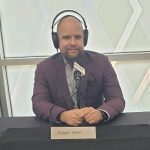
Robert Daniel With ATDC

December 22, 2022 by Jacob Lapera

Robert-Daniel-ATDC
Startup Showdown Podcast
Robert Daniel With ATDC
Loading
00:00 /
RSS Feed
Share
Link
Embed

Download file

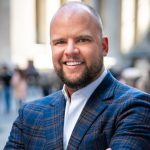
RobertRobert Daniel received his Bachelor of Science in Management at Georgia Institute of Technology and is an MBA candidate at Scheller College of Business at Georgia Tech for the class of 2022.

He is a seasoned executive in financial services, management consulting, hedge funds, payment operations, wealth management, and fintech.

He’s current focus is on expanding the startup ecosystem in the Metro Atlanta area through his advisory and mentorship with the Technology Association of Georgia (TAG) and Atlanta Technology Development Center (ATDC).

Connect with Robert on LinkedIn.

What You’ll Learn In This Episode

  • Benefits of mentorship in the startup ecosystem
  • A Catalyst/Coach do
  • Avenues for startup help in the ATL

This transcript is machine transcribed by Sonix

TRANSCRIPT

Intro: [00:00:04] Welcome back to the Startup Showdown podcast, where we discuss pitching, funding and scaling startups. Join us as we interview winners, mentors and judges of the monthly 120,000 pitch competition powered by Panoramic Ventures. We also discuss the latest updates in software Web three, health care, tech, fintech and more. Now sit tight as we interview this week’s guest and their journey through entrepreneurship.

Lee Kantor: [00:00:39] Lee Kantor here another episode of Startup Showdown podcast, and this is going to be a good one. But before we get started, it’s important to recognize our sponsor, Panoramic Ventures. Without them, we couldn’t be sharing these important stories. Today on Startup Showdown, we have Robert Daniel and he is the fintech catalyst with the ATDC. Welcome, Robert.

Robert Daniel: [00:01:02] Hey, Lee, great to be here today.

Lee Kantor: [00:01:04] Well, I’m excited to catch up with you. For those who aren’t familiar, can you share a little bit about the brief history of ATDC and why it’s such an important part of the Atlanta startup and tech area and the state of Georgia Tech infrastructure here?

Robert Daniel: [00:01:20] Yeah, that’d be great. ATDC has been around for about 40 years. We started in 1980. We are focused on building the startup community here in Georgia. So most of them are most, if not all of our companies that come through ATDC or Georgia based. Some have exposure and reach that happens outside of the state. But we want to focus on how can we create economic growth? And it’s anywhere from, hey, hey, I have a business idea. And they might join our first of our three memberships, which would be educate. Then we have accelerate and signature, which is what I usually focus on is a fintech catalyst. And those are companies that really have product market fit. They’re looking for their first first customers or partners and all the way up to usually Series A and that’s at the end of the signature and hopefully they will graduate from there. We have about a 95% success rate for graduation for our signature companies, so we’re pretty proud of that.

Lee Kantor: [00:02:18] And ATDC though has a place for everybody at every stage from like you said at the from the napkin stage all the way up through funding and exiting.

Robert Daniel: [00:02:30] Correct. That’s a lot of a lot of startup founders come to us when they first have an idea and they say, we don’t know how to get started, you know, these first time founders and they’re looking for ways and opportunities to build their skill sets around entrepreneurship. We have a lot of kind of educational platforms or programs that we offer anything from customer discovery, how to get funded and how to manage your manage. Starting up a company, all the back end components that go into that. It’s a choose your own adventure model where you get to log on, create an account and then just start learning. So this is a fantastic way to really start your entrepreneurial journey, entrepreneurial journey through the cycle and really get a good understanding of what it takes.

Lee Kantor: [00:03:15] Now, when they get to you as the fintech catalyst, like you said, they’re already kind of more mature and they’ve got some more traction. Can you share a little bit about what your day to day as a catalyst? You’re kind of a coach, right? A catalyst slash coach.

Robert Daniel: [00:03:30] A catalyst would be a good coach. Yeah. I feel like my day feels like an entrepreneurial journey in and of itself. I could be talking to. My day usually starts off with some sort of podcast. I’m trying to get a good temperature gauge of what’s going on within the Atlanta ecosystem, looking at bringing on new companies always. So trying to find the next fintechs. Since I’m focused on fintechs, we’ve got other catalysts that are doing supply chain. They’re doing robotics, they’re doing we’re looking at cybersecurity. We’re looking at, you know, any really solid tech that’s coming through through the pipeline. So I focus on fintechs. Some people reach out to me and say, Hey, I have this great idea. We’d love to chat and see how there’s an opportunity to work together, have office hours that we can we can make that happen. Other parts of the day are looking at how I can work and develop good habits with some of our some of our existing members on our and our fintech portfolio. And then sometimes it’s just reaching out to other community builders and finding ways we can work together and continue to build the ecosystem and that that might be other just startup ecosystems or it might be part of the fintech community. So working with some of those bigger banks and payment operators within the community so that when there’s an opportunity to present one of my companies, it’s much easier. And even working with some of those who might be investing, so whether it’s angel investors or venture capitalists, always trying to keep a pipeline open and say, here’s what we’re working on. And Community Bankers of Association and FinTech Atlanta have been a couple of a couple of the groups that we’re looking at to to really develop deeper relationships to to help the fintechs in Atlanta.

Lee Kantor: [00:05:27] Now, the fintech scene in Atlanta is pretty collaborative. There’s a lot of enterprise activity out there, but there’s also a lot of space for these entrepreneurial fintech. Companies to partner with these enterprises. They’re kind of open to that, which might not be the case in every community. But can you talk about how some of those relationships get made and and how Etsy kind of helps facilitate some of that?

Robert Daniel: [00:05:55] Yeah, that’s that’s a great question. There’s there’s lots of ways to get involved in the fintech space in Atlanta. Atlanta is truly a leader and transaction alley. We always hear that 70% of the payments come through Atlanta, but we’re much, much deeper than just the payments and transaction a town. I think there’s much more opportunity to look at some of the other things coming through, especially as we dig deeper into Defi and other opportunities there. But we have an incredible support system from the amount of organizations that are out there. Fintech Atlanta Tag and their fintech society are two that come to mind that are usually powerhouses with that. So digging deeper into into their network. The CBA CBA all have opportunities to to partner and develop those relationships. I mean, you have NCR right down the street from Georgia Tech and Deluxe, not too far up the highway as well. So we have a number of people who are really, really interested in seeing the fintech space and the transaction and payment space and Atlanta thrive. And it’s pretty easy to tap into them and just have conversations and see where we are, where their needs are, and where our fintechs that are just starting up solving different problems can fit into that kind of puzzle piece.

Lee Kantor: [00:07:26] So what’s your backstory? How did you get into this line of work?

Robert Daniel: [00:07:30] Yeah, I didn’t really anticipate getting into this from the from the front end of my career. I went up to New York and I’ve been up there for the past 15 years. The pandemic brought me back. I was up in New York doing everything from hedge funds all the way to managing roundtables with financial service execs. So that’s where my payments industry background really thrived for the past six years. So we were looking at fintechs, auto finance fraud, anything from credit cards to bank, and really learning the best practices of what what these executives were doing at their respective shops. So being able to translate that into something down here was important for me. The pandemic kind of got me off the road every two weeks and got me thinking what my purpose could be. Purpose is very important for for from my perspective, and I think it’s very important for a lot of entrepreneurs. And so I wanted to focus on Atlanta, grow up here, love it. And now we’re seeing a lot more companies staying here instead of getting pulled out to Silicon Valley or Silicon Alley. So we have an opportunity to cultivate this ecosystem, and that’s what I wanted to do. I had 20 some odd years of experience to be able to pour back into into the knowledge bucket of other startups, whether that’s business development and sales or team leadership or operations. I just wanted to be able to give back and be that mentor, advisor and investor in the community here, really at the seed stage level. So that’s what I started looking at as the pandemic hit. You know, sometimes there’s there’s things that kind of shape your career. It’s kind of funny because I graduated college in 2001 when we saw the dotcom bubble dry up, and that’s why I didn’t necessarily gravitate towards startups then and move towards hedge funds. But this is the next phase of my kind of my career trajectory. And I think this is going to be it because this is there’s so much to do over the next few decades here, and it’s going to be a fascinating ride.

Lee Kantor: [00:09:42] So what excites you the most about working with these kind of earlier stage companies?

Robert Daniel: [00:09:50] Yeah, I think that’s a that’s a fantastic question because one of the one of the phrases I hate most in life is we’ve always done it like this. That’s kind of when I when I hear that, I think organizations, that’s where they go to die. So entrepreneurs always think of what can we do different? How can we solve this problem? And look at really early stage companies. That’s when they’re taking a problem and really trying to figure that out most of the time because it irks them and they just want to want to deal with it and then hand that off to somebody else, or maybe they want to stay with it for the long time. So having an opportunity to be a part of that journey and be a part of the journey with some specific community builders who are focused definitively on the community as well, is fantastic. And having conversations about early strategy, early ways to to help and give back and that just. Into the DNA because the DNA of the strategic DNA gets really formulated with the founders and can live with the company for its entire existence. So being part of that early on is just an amazing experience and it’s a fun, fun thing to see. Now humbling and able to help with it, if you think about it.

Lee Kantor: [00:11:15] Yeah, I mean, it requires a level of humbleness, humility and vulnerability in order to to do it right, I think. Now, can you give some advice for maybe people that were on the or are on the same track that you used to be on where you were, you know, in this kind of big business world and you weren’t kind of I mean, you were I’m sure you were aware of the startup community, but you weren’t as immersed as you are today. Any advice for them to maybe kind of open up some time for those folks, whether it be mentorship in the startup community or I mean, they don’t have to do what you do and pull the ripcord and just jump right in. But, you know, just to open themselves up to to getting more involved with the startup ecosystem in terms of mentorship or at least paying more attention to it personally.

Robert Daniel: [00:12:10] Yeah. That’s that’s something I’ve been thinking about. Leading a panel next week. And that’s that’s one of the questions. It’s how do you how do you kind of get involved in stage one? Just raise your hand. There’s a lot of opportunities now around the country. In Georgia itself, you have at D.C. ATV Russell Center, there’s ways to get involved and give back tech stars. Everybody needs mentors right now. Start ups, showdown. That’s how I got drawn into Startup Showdown. I was talking to Dan Driscoll at a fintech Atlanta event and he goes, Hey, you know, you’re talking about trying to get involved. You’re looking to raise your hand start up showdown needs mentors, get involved in sign up and help just shape their pitches. So getting more involved is just a matter of looking for those opportunities. There’s plenty of them around. Startups need, need a few things. They definitely need access to capital. They need access to kind of the knowledge that a lot of these seasoned executives have not from a standpoint that you can coach them on their strategy. But there’s a lot of tactical components that go into starting up a company that people who have had experience can help with everything from sales.

Robert Daniel: [00:13:31] What’s your sales strategy? How have you cold called people? Do you know the great right times of day or how should I form my company? These are things that seasoned execs can help with. You’re probably not going to get in there and say, okay, your strategy on your strategy of your company is incorrect because they’ve done the customer discovery and they should know intimately the problem. So I don’t usually touch those things, but there’s other ways for people to get involved in and whether it’s through AC DC, we have entrepreneurs night and people gather there every third Thursday ATV, they have mentor days where people come in and just sit there and have that open opportunity. I was at Capital Factory last month and they have the opportunity for mentors to come in. So mentors are needed. So you all out there who want to find a great way to get involved and give back to some amazing companies, go search it out. It’s it’s a it’s a Google search away and just get involved.

Lee Kantor: [00:14:36] Yeah. And I think it it by coming from the perspective, like you said, of this seasoned veteran in the industry and you come back and see the energy and the creativity and the problems that these startup founders are trying to solve. It might connect dots for you and it could lead you to some opportunity that you could never have anticipated in your office. You know, I think it’s a really symbiotic relationship.

Robert Daniel: [00:15:07] I agree. You never know where the opportunities are. And I think that’s the beauty of startups because even a startup that that formulates from a business idea, it might pivot along the way. Anybody who gets involved with startups, you might start as a as a trusted mentor advisor and you might pivot into a startup and possibly be a co founder from there, or you might just be an investor, or you might just want to do this as as a side hustle to be able to help and give back. And that’s that’s it.

Lee Kantor: [00:15:37] Yeah. I think there’s it’s definitely a worthwhile pursuit and the impact that these mentors give to the startup founders and startups, it’s real. I mean, the impact can be dramatic. Like one sentence from a mentor can really open the mind of a founder and shift their business. I mean, stuff that that a veteran, seasoned person in the industry kind of takes for granted. You know, the founder is hungry for that.

Robert Daniel: [00:16:10] I completely agree. I was sitting down with a company the other day and was asking. They were looking at a double sided marketplace and I said, Well, what are you doing on this side of the marketplace? They’ve been so focused on one side, and they they hadn’t really formulated the other side as much. And you said you just gave me this amazing jewel, this idea. And I was like, Well, I’m not trying to change your strategy. You have to go back and test this. It’s all part of the testing phase. I’m not there to as I said, I’m not there to affect strategy, but I’m there to kind of uncover opportunities because some people can get very myopic and focus on one specific area. But as a coach, you’re there to look at everything holistically and look at the entire business model and the business. So it’s part of that operational structure as well and how that fits together. So that’s what I’m I’m there to help uncover. And everybody in life, I feel like needs a good wolfpack around them, whether that’s a coach and mentor or whether that’s a trusted friend. Keith Frost had your own personal board of trustees. I think that’s a such an important thing to have people who will continue to challenge you to kind of get outside your own mind and your own kind of ideas that you think are correct and keep pushing you. So that’s that’s what I feel like I can help do and other mentors can help do. They can be that part of that wolfpack of that that founder.

Lee Kantor: [00:17:39] Now, you mentioned Startup Showdown and panoramic for the startup founder that’s going through a startup showdown or any type of competition like that. Is there any advice you would give them in order to get the most out of that activity? Like what could they be doing either before they get started or as they’re in it, to really wring out the most value? Because, you know, obviously there’s the winners are few, but the participants are many. So for for the many people that maybe don’t win, but how do they get the most out of the experience?

Robert Daniel: [00:18:16] I think one of the first stops is, is the mentors going through and being able to mentor and mentoring from a perspective of the pitches was it was incredible. I would say before you go in there, have a few pitch, pitch run thrus with different coaches, different mentors. You’ve got to have a good pitch and you’ve got to get to the point of the problem first. Why is your problem important and why is it a personal issue for you? So telling that story is is very important and getting it right is not necessarily easy, especially for a five minute pitch. But a five minute pitch is just about what you’re going to have out in the world. People are not going to say, okay, I’ve got 15 minutes to listen to your problem and how you’re fixing it. Sometimes it’s only 30 seconds, so you have to have various different pitches and various different ways of telling your story, whether that’s 30 seconds, whether that’s 5 minutes, whether that’s 15 minutes. So get a good coach. Get an advisor to help you with that. It could be your Wolfpack. Talk to some other co founders and see what’s worked for them. Get a good deck because that’s important, kind of that visual aspect as well. But really understanding your product market fit is what’s key. You see various different stages coming to panoramic ventures and even coming to coming to DC to kind of talk to us about what they want to do or what they want to solve. So I think that’s kind of the challenge is how do you pair that up? So you might lose, but you might have an amazing idea. That doesn’t mean that you did it once and you should stop. You should continue down your path. And then at some point in time, it’s going to be the right time and that’s when it’s going to be click and investable, because at the end of the day, this isn’t investable. They’re looking for investable companies. So you might be early and that’s fine. You’ll eventually get there, hopefully.

Lee Kantor: [00:20:22] And Robert, if somebody wants to connect with you or learn more about DC and the beauty of DC, it’s whatever stage you’re at, there’s a place for you there. Can you share the coordinates? Best way to connect with you and ATC.

Robert Daniel: [00:20:36] Yeah. Atc dot org is our website. Feel free to go there. I’m on there. You can click through there and find me, but you can also connect on LinkedIn. I’m pretty active on there are Daniel and I’m there and available. Love to talk to anybody who’s looking to start a business and how how you can go from there.

Lee Kantor: [00:20:58] Yeah. And you’re the fintech catalyst at ATC, but there’s a place for pretty much anybody in tech. There’s a there’s a home for you there.

Robert Daniel: [00:21:06] Right? There’s anything that that’s tech we’ve got we’ve got a wide spectrum of different companies. And, you know, I focus on on fintech for AC DC, but I also look at other, other industries. I’m also a also working with a space company. I always wanted to be an astronaut as a kid until I found out that I didn’t have 2020 vision. But my friend was storing up space elements, so I was able to be an advisory board member there. So I look at a lot of different industries and some of the same things that we can help across the board, like pitch practice is is pretty agnostic to industry.

Lee Kantor: [00:21:44] Well, Robert, thank you again for sharing your story. You’re doing important work and we appreciate you.

Robert Daniel: [00:21:49] Well, thank you for your time. And thank you for thank you to panoramic for the opportunity as well.

Lee Kantor: [00:21:54] All right. This is Lee Kantor. We’ll see you all next time on Startup Showdown.

Intro: [00:22:00] As always, thanks for joining us. And don’t forget to follow and subscribe to the Startup Showdown podcast. So you get the latest episode as it drops wherever you listen to podcasts to learn more and apply to our next startup Showdown Pitch Competition Visit Showdown DOT VC. That’s Showdown VC. All right, that’s all for this week. Goodbye for now.


 

Tagged With: atdc, Robert Daniel

Fintech South 2022: Robert Daniel with ATDC

July 19, 2022 by angishields

Robert-Daniel
ATDC Radio
Fintech South 2022: Robert Daniel with ATDC
Loading
00:00 /
RSS Feed
Share
Link
Embed

Download file

Atlanta-Blockchain-Center-Sponsor-v2

Robert-DanielRobert Daniel, Advanced Technology Development Center (ATDC)

TRANSCRIPT

Intro: [00:00:07] Broadcasting live from the Georgia World Congress Center for Fintech South 2022. It’s time for Atlanta Business Radio. Brought to you by Atlanta Blockchain Center. Now, here’s your host.

Lee Kantor: [00:00:27] Lee Kantor here back at Fintech South 2022. So excited to be talking to Robert Daniel with ATDC. He’s the FinTech Catalyst. Welcome, Robert.

Robert Daniel: [00:00:36] Welcome. It’s great to be here.

Lee Kantor: [00:00:38] Well, tell us — for the people who don’t know, tell us a little bit about ATDC and your role as FinTech Catalyst.

Robert Daniel: [00:00:48] Yes, I’d love to. ATDC has been around for 40 years. We’re an incubator in Atlanta, state funded. So, our goal is to really produce some fantastic startups that are coming out of ATDC, the incubator that really impact the Georgia economy. So, we’re looking for companies anywhere from, hey, I have an idea and I’m trying to figure out how to get this off the ground, all the way up to, hey, I need to raise Series A and find that next growth trajectory.

Lee Kantor: [00:01:16] And then, do you mind sharing, if you know, some of the kind of superstar companies that have come out of ATDC? I think this is one of those best kept secrets. Unless you are kind of in the know, you may not be aware of how important ATDC has been to some of the biggest startups here in Georgia.

Robert Daniel: [00:01:35] I think that’s the key. There’s a lot of unicorns that have popped up. We’ve had 13 unicorns over the past eight years. We’ve been fortunate to see Rob from Kabbage. He was up on stage earlier. He’s one of the unicorns, green light, green sky flocked — flock safety. There’s just some phenomenal companies that are coming out of there, and we’d love to hear more of those successes. I think 90% of our signature’s companies graduate with a certain amount of success. Obviously, we’d love to see more unicorns, but they really feed the Atlanta economic — or ecosystem a little better that way because that money keeps pouring back into talent and you have some more startups, just like Rob is starting to keep now. So, you have follow-on companies just like that.

Lee Kantor: [00:02:22] Right. They have a successful exit and then, they — fortunately, for the folks here in Georgia, they decide to stay here in Georgia instead of going to some island somewhere and, you know, going to the beach all day.

Robert Daniel: [00:02:34] And that’s what we need to see more of. And that’s what I’m excited about. We’re starting to see more and more of that in the ecosystem here. And that’s going to create more opportunity all around.

Lee Kantor: [00:02:44] Now, at ATDC, like you said, you can be a student, you can be young. It’s for any part of kind of the life cycle of a startup, right? It’s not just for people who are funded. It’s not just for super technologists. You can be a non-technical founder. There’s a place for you to learn to kind of just educate yourself about how to be a leader or how to get involved in the startup community. It is — you don’t have to have this fully baked to participate at some of the work that’s happening at ATDC.

Robert Daniel: [00:03:20] That’s correct. We have a staff of about 30 people. I’m one of them. I’m the FinTech Catalyst. So, my job is to focus on the Fintech vertical. We’ve got a program for that. We’ve also got a supply chain vertical. We’ve got robotics. We’ve got health tech. We’ve got kind of the ESG focus and sustainability. So, the coaches are there to help get you through that, you know, product market fit, customer discovery, all the way up to how do you find partnerships? We’ll help you try to connect into people and leverage our connections as well as who are the angel investors or who are the venture capitalists we need to talk to. That’s our role to kind of connect the dots there and make those opportunities happen.

Lee Kantor: [00:04:03] So, it doesn’t matter what stage you’re at, there’s a place for you at ATDC. And that’s important for people to understand. And the fees there are minimal and sometimes nothing.

Robert Daniel: [00:04:15] That’s exactly correct. Our lowest membership is — our lowest dollar denominated membership is the Educate platform, which is fantastic because there’s a lot of training and around — especially customer discovery, which you need to know to get off the ground. And then, there’s other opportunities to connect with how do you leverage grants for some of our startups there? So, having that education platform is so critical for a lot of people who have never gone through this program before. They’re interested in startups. They have an interesting idea, but they might not be either technically savvy with a lot of the coding, or they might not be able to understand what goes into being a great entrepreneur. We’ll help teach that. We’ll help get you off the ground, and then we’ll make those connections as you progress through the various different memberships.

Lee Kantor: [00:05:02] So, what’s your back story? Did you come from a startup? Did you come from technology into the — you’ve been in Fintech your career and decided to get involved with a ATDC to give back? Like, what’s your back story?

Robert Daniel: [00:05:15] Yes, my back story is a bit interesting. I don’t have a startup behind me. When I originally graduated from Georgia Tech in 2001, wanted to get into startups. Not the best time during the recession. And at that point in time, you saw a lot of companies being pulled away from Georgia. I went into more of a traditional finance. I went into hedge funds until 2008, which was a different time.

Lee Kantor: [00:05:38] Timing is everything for you.

Robert Daniel: [00:05:39] Timing is everything. And then, for the past six years, I’ve been working in New York at a company that was kind of consulting and also producing events. We’d talk about best practices in the banking and payments and Fintech space. So, really learn what the best operations were and wanted to leverage that when the pandemic hit to really come back to Atlanta and make an impact here. I was looking for purpose in my life. I saw that the startups were actually now staying in Atlanta and the ecosystem here was amazing. Got involved with TAG, the TAG FinTech society. And just the support kind of pulled me back in and said, I need to be here. I want to be part of this. And the growth that we’re — we’ve yet to see in Atlanta. I mean, it’s phenomenal, but there’s a lot more coming and you just want to be a part of it.

Lee Kantor: [00:06:27] Now, for folks who, you know, maybe haven’t worked in the New York environment that you did for the years, can you kind of just shed a little light on what it’s like there as opposed to here? Like, what are some of the — you know, there’s obviously trade-offs. What are some of the good and the bad and the ugly of the difference between New York and Atlanta?

Robert Daniel: [00:06:49] Wow. There’s — that’s — I think about that quite often. New York is very fast. It’s fast paced. You have to get the things going very quickly, especially when you’re in finance. Hedge funds, you’re trading down to the second. In a way, I feel like that sometimes happens in the in the startup ecosystem. You have to get things moving. You have to build a product —

Lee Kantor: [00:07:13] Action first, right? You got to take action.

Robert Daniel: [00:07:16] Yes, action. And you see that. But I think in New York, it’s a bit different. We were moving so quickly and sometimes it’s a little more gruff. The hospitality down in Atlanta is amazing. The networks that I see down here, you say, I need help, and people are like, oh, you need to talk to this person or you need to get involved —

Lee Kantor: [00:07:34] It’s very collaborative?

Robert Daniel: [00:07:35] Oh, yes. I had somebody who was saying, you need to be part of the technology executive roundtable. You need to get involved with TAG. You need to get involved with Fintech Atlanta. So, all of a sudden, it just weaves together a lot quicker. So, you have that support system. And I think that is — that’s the really power of Atlanta.

Lee Kantor: [00:07:55] That’s a secret sauce?

Robert Daniel: [00:07:56] It is the secret sauce. It’s the Southern hospitality.

Lee Kantor: [00:07:59] Right. And the relationships, to me, it’s very collaborative. Everybody’s kind of trying to help everybody. It’s not as — they don’t treat every relationship as precious, and I’m going to keep this from you because I need this information for myself.

Robert Daniel: [00:08:13] It’s all about the ecosystem and how can we build that up? You know, I was at Atlanta Blockchain Center and somebody said, well, you know, you have at ATDC, ATV, you know, Atlanta Blockchain Center and Ali over at ATV, she said, but we’re all here to support the ecosystem. We’re all here to see how we can work together and build that.

Lee Kantor: [00:08:33] Right.

Robert Daniel: [00:08:33] Because it’s —

Lee Kantor: [00:08:33] It’s not a zero-sum game?

Robert Daniel: [00:08:35] It’s not. And it’s more important to help everybody around us and produce more of those unicorns.

Lee Kantor: [00:08:53] Right.

Robert Daniel: [00:08:53] Because it gives back to the community in a way that affects our culture, it affects diversity, it affects education and our economic viability.

Lee Kantor: [00:08:53] Well, if somebody wants to get involved with a ATDC, what is the coordinates? What’s the best way to get a hold of you or somebody on your team?

Robert Daniel: [00:09:00] I’m available on LinkedIn or you, R. E. Daniel. Just look for R.E.D. That’s my initials. So, everybody usually calls me Red. I’m available on Twitter and, you know, just reach out to me.

Lee Kantor: [00:09:12] And ATDC.org? Is that the website?

Robert Daniel: [00:09:15] It’s at ATDC.org. You can’t miss it.

Lee Kantor: [00:09:17] All right. Well, thank you so much for doing what you do. It’s important and we appreciate you.

Robert Daniel: [00:09:22] It’s my pleasure.

Lee Kantor: [00:09:23] All right. This is Lee Kantor. We’ll be back in a few at Fintech South 2022.

Outro: [00:09:35] This episode has been brought to you by Atlanta Blockchain Center. The catalyst for Atlanta’s emergence as the Premier Blockchain Innovation Hub globally, through cultivating entrepreneurship, inclusivity and education. To learn more, go to atlblockchaincenter.com.


Fintech South 2022 is a world-class summit with its nexus in Atlanta live and in-person, a global financial technology hub that is home to more than 200 fintech companies. The top 15 public fintech companies in Georgia alone generate more than $100 billion in revenues.

Tagged With: atdc, Fintech South 2022

Melanie Flores and Chris Nedza, Symtrain

October 4, 2021 by John Ray

Symtrain
North Fulton Business Radio
Melanie Flores and Chris Nedza, Symtrain
Loading
00:00 /
RSS Feed
Share
Link
Embed

Download file

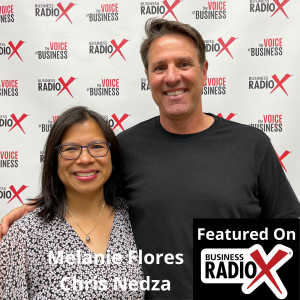
SymtrainMelanie Flores and Chris Nedza, Symtrain (North Fulton Business Radio, Episode 394)

Facing the twin challenges of training and retaining employees while providing consistent customer service, salon owners and real estate companies now have the technology of Symtrain to rely on. Using Symtrain ensures customer-facing personnel are well-trained and provide outstanding customer service. Melanie Flores, Program Manager at Symtrain, and Chris Nedza, who mentors Symtrain through Georgia Tech’s ATDC, joined host John Ray to discuss Symtrain’s efficacy, impact, other verticals their technology can be applied to, and much more.  North Fulton Business Radio is broadcast from the North Fulton studio of Business RadioX® inside Renasant Bank in Alpharetta.

Symtrain

Instructional training is not enough. People learn best by doing. In fact, we retain only 10% of what we’re “taught” compared to 90% of what we “do”. That’s because experience is immersive and gets us “involved”. But it can also be costly and difficult to scale, especially remotely. So, all too often learning happens on the job, which really means “on the customer”.

Symtrain engages employees in simulated work experiences that feel “real” – working at their own pace, anywhere, anytime, on any device. So, they’re empowered to take charge of their own learning and success. As a result, they learn faster, retain more, build confidence, and master the skills they need to deliver the best customer interactions every time.

While our platform makes it easy to create and manage simulations, we also offer expert professional services to help businesses succeed:

  • EConsulting and Needs Assessment
  • ETraining and Simulation Integration
  • ESimulation Design and Implementation
  • ECurriculum Planning

Company website | LinkedIn | Twitter

Melanie Flores, Program Manager, SymTrain

Melanie Flores, Program Manager, Symtrain

Melanie Flores is the Program Manager at SymTrain. She leverages an engineer’s mind, a teacher’s heart, and a gardener’s hands to help people learn and share memorable experiences together. She started up Corning’s optical fiber factory in the Charlotte, NC area, founded a popular kindergarten engineering design workshop based on a famous MIT course, and led the STEM coaching team serving Easter Seals teachers across metro Atlanta. Her work has been featured by TEDxJacksonville, TEDxAlpharettaWomen, Women 2.0, the National Association of Independent Schools, Engineering is Elementary, MIT’s pK-12 Action Group, the Boston Museum of Science, and many other entities. In June 2021 she joined SymTrain, an Atlanta-based tech startup. She is excited to apply her passion for learning and customer experience to the workforce development space. In her spare time, she enjoys reading, traveling, and spending time outdoors with her husband and two sons.

LinkedIn

Chris Nedza, Entrepreneur in Residence, Advanced Technology Development Center (ATDC) at Georgia Tech

Chris Nedza, Entrepreneur in Residence, Advanced Technology Development Center (ATDC) at Georgia Tech

Chris Nedza is a serial entrepreneur and loves diving into a start-up business. He’s built an Inc. 500 company, led a turnaround as the CEO of a restaurant Point of Sale company, became CEO of an Ozone based technology company, and even brought his creative thinking and love of students to Gwinnett County Public Schools by becoming a high-school teacher and ultimately coordinator of academy business partnerships in 2014.

He most recently founded and scaled ZeeZor, a real-time mobile reporting and employee engagement platform for the beauty industry. ZeeZor was acquired by Vista Private Equity group in early 2020 and became part of Mindbody, a business management software system for the fitness, wellness and salon/spa industry.

Chris is currently serving as an EIR (entrepreneur-in-residence) and is on the faculty/staff of Georgia-Tech University. In his role, he helps technology companies with ideation>launch>funding>scale.

He has an undergraduate degree in economics from the University of Georgia and an MBA from Emory University. He is a frequent contributing author, keynote speaker, devoted husband, father to 6 sons, drummer at church and championship level Pizza eater.

LinkedIn

Questions and Topics

  • What does SymTrain do?
  • How did this business come about?
  • Why do you care about solving this problem?
  • Tell us about one of your customers and how you made their lives better.
  • What are SalonScripts and how are they different from the rest of SymTrain’s offerings?
  • Who does SalonScripts help?
  • Where do you see this business going next? Who else could you serve?

North Fulton Business Radio is hosted by John Ray, and broadcast and produced from the North Fulton studio of Business RadioX® inside Renasant Bank in Alpharetta. You can find the full archive of shows by following this link. The show is available on all the major podcast apps, including Apple Podcasts, Spotify, Google, Amazon, iHeart Radio, Stitcher, TuneIn, and others.

RenasantBank


Renasant Bank has humble roots, starting in 1904 as a $100,000 bank in a Lee County, Mississippi, bakery. Since then, Renasant has grown to become one of the Southeast’s strongest financial institutions with over $13 billion in assets and more than 190 banking, lending, wealth management and financial services offices in Mississippi, Alabama, Tennessee, Georgia and Florida. All of Renasant’s success stems from each of their banker’s commitment to investing in their communities as a way of better understanding the people they serve. At Renasant Bank, they understand you because they work and live alongside you every day.


Special thanks to A&S Culinary Concepts for their support of this edition of North Fulton Business Radio. A&S Culinary Concepts, based in Johns Creek, is an award-winning culinary studio, celebrated for corporate catering, corporate team building, Big Green Egg Boot Camps, and private group events. They also provide oven-ready, cooked from scratch meals to go they call “Let Us Cook for You.” To see their menus and events, go to their website or call 678-336-9196.

Tagged With: artificial intelligence, atdc, Chris Nezda, customer service training, Georgia Tech, John Ray, Melanie Flores, North Fulton Business Radio, real estate, salons, Symtrain, training

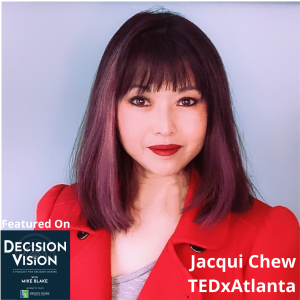
Decision Vision Episode 113: Should I Disclose My Mental Illness? – An Interview with Jacqui Chew, iFusion and TEDxAtlanta

April 22, 2021 by John Ray

Jacqui Chew
Decision Vision
Decision Vision Episode 113: Should I Disclose My Mental Illness? - An Interview with Jacqui Chew, iFusion and TEDxAtlanta
Loading
00:00 /
RSS Feed
Share
Link
Embed

Download file

Jacqui Chew

Decision Vision Episode 113:  Should I Disclose My Mental Illness? – An Interview with Jacqui Chew, iFusion and TEDxAtlanta

Diagnosed with bipolar disorder in 2005, Jacqui Chew seeks to normalize the conversation around mental illness. In a candid and open conversation with host Mike Blake, Jacqui discussed the journey to her diagnosis and how she’s learned to manage it. She also offered advice to HR directors and the rest of us who are approached by an employee or friend who discloses their mental illness. “Decision Vision” is presented by Brady Ware & Company.

Jacqui Chew, iFusion and TEDxAtlanta

Jacqui Chew is an award-winning marketing and business executive with more than two decades of experience delivering creative, data-driven strategies for venture-backed, high-growth companies. A proven positioning expert, brand builder, and innovation thought-leader with P/L experience, her programs contribute to MQL growth.

A creative problem solver and convener, Jacqui believes in the potential for ideas to change the world. As licensee of TEDxAtlanta, one of the largest TED affiliates in the region, she galvanizes a team of volunteers to produce the annual TEDxAtlanta show. Under her leadership, tickets for nine of the 11 sold out weeks before. This must-attend event has become the platform for tomorrow’s leaders playing host to renowned bioethicist Paul Root Wolpe, hunger eradication entrepreneur Jasmine Crowe, and Ryan Gravel, the “father” of the Atlanta Beltline.

Jacqui served as senior vice president of marketing at Avertium, an award-winning cybersecurity firm founded from a three-company roll-up. She led brand marketing, demand generation, social media, PR, sales enablement, analytics, marketing operations, and communications. During her tenure, Jacqui spearheaded the company’s successful repositioning, messaging and rebranding and, its CRM/marketing automation platform integration. She also worked cross-functionally to support the acquisition of a fourth company during this period.

Previously, as CMO-in-residence at the Advanced Technology Development Center at Georgia Tech (ATDC), a globally ranked business incubator, she worked with the 170+ companies to develop their go-to-market and product strategy. During her tenure, she also developed and taught the incubator’s first strategic marketing curriculum.

Prior to ATDC, Jacqui founded iFusion, a fractional CMO consultancy for high-growth venture-backed companies. Primary client projects: positioning, messaging, customer journey mapping, marketing plan development and marketing and sales alignment. The company led the launch of more than two dozen companies/products and contributed to $100+m in funds raised.

Jacqui served in executive marketing roles at PeopleSoft (acq by Oracle), Stonesoft (acq by McAfee now Intel), Silverpop(acq by IBM) and worked, on the agency side, with IBM Global Services, The Weather Channel, KontrolFreek, MessageGears, Preparis, Venture Atlanta, EarthLink and eBay.

Website | LinkedIn | Jacqui’s TEDx Video

Mike Blake, Brady Ware & Company

Mike Blake, Host of the “Decision Vision” podcast series

Michael Blake is the host of the “Decision Vision” podcast series and a Director of Brady Ware & Company. Mike specializes in the valuation of intellectual property-driven firms, such as software firms, aerospace firms, and professional services firms, most frequently in the capacity as a transaction advisor, helping clients obtain great outcomes from complex transaction opportunities. He is also a specialist in the appraisal of intellectual properties as stand-alone assets, such as software, trade secrets, and patents.

Mike has been a full-time business appraiser for 13 years with public accounting firms, boutique business appraisal firms, and an owner of his own firm. Prior to that, he spent 8 years in venture capital and investment banking, including transactions in the U.S., Israel, Russia, Ukraine, and Belarus.

Brady Ware & Company

Brady Ware & Company is a regional full-service accounting and advisory firm which helps businesses and entrepreneurs make visions a reality. Brady Ware services clients nationally from its offices in Alpharetta, GA; Columbus and Dayton, OH; and Richmond, IN. The firm is growth-minded, committed to the regions in which they operate, and most importantly, they make significant investments in their people and service offerings to meet the changing financial needs of those they are privileged to serve. The firm is dedicated to providing results that make a difference for its clients.

Decision Vision Podcast Series

“Decision Vision” is a podcast covering topics and issues facing small business owners and connecting them with solutions from leading experts. This series is presented by Brady Ware & Company. If you are a decision-maker for a small business, we’d love to hear from you. Contact us at decisionvision@bradyware.com and make sure to listen to every Thursday to the “Decision Vision” podcast.

Past episodes of “Decision Vision” can be found at decisionvisionpodcast.com. “Decision Vision” is produced and broadcast by the North Fulton studio of Business RadioX®.

Connect with Brady Ware & Company:

Website | LinkedIn | Facebook | Twitter | Instagram

TRANSCRIPT

Intro: [00:00:02] Welcome to Decision Vision, a podcast series focusing on critical business decisions. Brought to you by Brady Ware & Company. Brady Ware is a regional full-service accounting and advisory firm that helps businesses and entrepreneurs make visions a reality.

Mike Blake: [00:00:21] Welcome to Decision Vision, a podcast giving you, the listener, clear vision to make great decisions. In each episode, we discuss the process of decision making on a different topic from the business owners’ or executives’ perspective. We aren’t necessarily telling you what to do, but we can put you in a position to make an informed decision on your own and understand when you might need help along the way.

Mike Blake: [00:00:40] My name is Mike Blake and I’m your host for today’s program. I’m a Director at Brady Ware & Company, a full service accounting firm based in Dayton, Ohio, with offices in Dayton; Columbus, Ohio; Richmond, Indiana; and Alpharetta, Georgia. Brady Ware is sponsoring this podcast, which is being recorded in Atlanta per social distancing protocols. If you would like to engage with me on social media with my Chart of the Day and other content, I’m on LinkedIn as myself, and @unblakeable on Facebook, Twitter, Clubhouse, and Instagram. If you like this podcast, please subscribe on your favorite podcast aggregator, and please consider leaving a review of the podcast as well.

Mike Blake: [00:01:15] Today’s topic is, Should I be open about my mental illness? One in five U.S. adults report that they suffer with some sort of mental illness, and an estimated two-and-a-half percent of U.S. adults experience bipolar disorder at some point in their lifetimes, 7.1. percent of U.S. adults are characterized as having major depression. And these are numbers that go back to 2019. And in case you haven’t heard, most of us had kind of a rough year in 2020. We had a combination of a once in a century global pandemic. We had unprecedented, massive social upheaval. And in some places in the country, we had murder hornets.

Mike Blake: [00:01:59] And, you know, for a lot of us, it’s been a rough ride, a lot rougher than usual. And most of us, I’m sure, have heard, many have read, and seen many stories of the mental toll that the pandemic has taken on many of us, ranging from job loss to being cooped up at home, to having to take on home roles that we were not prepared for. For example, I am the world’s lousiest Spanish teacher for home schooling our son, which is not necessarily our plan. We can only hope we can order a Taco Bell because I think that’s the only thing I’m qualifying him to do. But his ten, he might grow out of it.

Mike Blake: [00:02:39] And, you know, you think about mental illness, and I’m hoping that kind of one good thing that comes out of the pandemic is, I hope it makes us more aware of mental illness and it kind of give it its due. You know, years ago, I served on the board of a nonprofit called Care and Counseling Center of Georgia, whose mission was to provide mental health care services to low income folks. And they did a really good job of it in spite of my being on the board.

Mike Blake: [00:03:13] But one of the things you learn about mental health and mental – you will actually learn about two things. Number one is, your mental health is still sort of taken a backseat to so-called physical health. And, you know, you grow up and you talk about people who are either tough or they’re not tough. And some people of faith will claim that that makes them impervious to any kind of mental illness and so forth. Even to the point where, you know, it wasn’t that long ago, I think a lot of people thought that mental illness was a choice.

Mike Blake: [00:03:51] And secondly, I think people are understanding now that not only does it need to be destigmatize, but the thing on mental health is that if you don’t have mental health, a lot of bad downstream things happen. They can happen at the micro level where it impacts your job, it impacts your personal relationships, it impacts your ability to be a fully engaged, fully actualized member of society, fully actualized person. And in very extreme cases, particularly the United States where gun ownership is plentiful, mental illness that is either undiagnosed, untreated, unmonitored, simply not paying enough attention to, can have, frankly, catastrophic results.

Mike Blake: [00:04:38] And I can’t help but wonder how different might our world be if we gave, frankly, mental illnesses its due. And I think now as we are entering this this trans-pandemic phase where, you know, many of us are becoming vaccinated and we’re starting to kind of wrestle with returning to work, we’re wrestling with returning to restaurants, going back to baseball games, and so forth. And, you know, the mental health issues aren’t going away. In fact, you could argue that there are more mental health issues that are going to be created by sending people back to the office.

Mike Blake: [00:05:18] And I think and I hope that one thing is abundantly clear that, you know, mental health simply cannot be ignored anymore. It’s not the moral thing to do. And I would argue it’s not the business correct thing to do. Because if you have even a small business of 25 people, statistically speaking, five of those people are really struggling with a diagnosable disorder. And one of them probably has something akin to bipolar disorder. And they’ve just done a very good job of hiding it or we’ve done a very good job of not seeing it.

Mike Blake: [00:05:57] And so, therefore, I wanted to cover this topic. It’s not an easy topic. I’m certainly not a physician, but I think it’s so important. I think we have to equip ourselves. Statistically speaking, again, there are thousands of listeners listening to this that are struggling with this question. And then, for people like me, who at least I don’t believe that I have a diagnosable mental illness, others may disagree, but I don’t believe that I do.

Mike Blake: [00:06:22] But I do want to make sure that every resource is available in my network and my company – of which I’m a shareholder – that if there are folks – again, statistically speaking, there are a number of people – that are struggling with mental illness of some kind that we, as a company, do the right thing. That we are compassionate, that we are accommodating, and that we stand up for them, and we don’t abandon them. We don’t try to force them into the shadows. And so, I hope that that thesis makes sense to use as we kind of go through, I think, what is a very challenging and necessary topic.

Mike Blake: [00:07:01] And joining us today to help us talk about this is Jacqui Chew. Jacqui works at the intersection of storytelling, innovation, and business. And I’ve known her for a long time. In fact, I took over her office once. She deploys the power of narrative design and reframing an organization’s brand story for resonance and to inspire action. Described as the Lara Croft of problem solving, Jacqui is a seasoned business operator with a passion for building inclusive teams and working cross-functionally to bring disparate groups together towards a common goal.

Mike Blake: [00:07:33] As the curator and licensee of TEDxAtlanta, Jacqui is always on the lookout for change makers and innovations that are solving for the challenges of today and those just around the corner. Under her leadership, first of TEDxPeachtree from 2009 to 2018 and presently of TEDxAtlanta, Atlanta has grown in recognition within the global TEDx community as an innovation hub for technology, health care, and social impact initiatives. And I’m a big fan of TEDx. I watch three to four TEDx videos a week. And I’ve watched Jacqui’s video as well, we’ll refer to that in our conversation. Jacqui is resourceful, tenacious, and well-networked in the Atlanta business, social impact, and technology communities. Jacqui Chew, welcome to the program.

Jacqui Chew: [00:08:16] Thank you for having me, Mike.

Mike Blake: [00:08:21] So, Jacqui, I brought you on because you’ve chosen to hold yourself out there as a person that has bipolar disorder and has figured out how to navigate life with that particular disorder. So, you know, I’ve read about bipolar disorder. Thank God I don’t have it. I don’t have a family member that has it. I have a couple of friends that have. But explain to the audience in your kind of best terms, how would you describe bipolar disorder to somebody?

Jacqui Chew: [00:08:54] So, first of all, I would call it a mood disorder, because the symptoms manifests itself in extremes in mood changes. And this isn’t to be confused with a person who is “moody.” But mood changes from the standpoint of severe depression to the point where you would lose interest in what you normally enjoy. Or you have a really severe depressive episode would be if you are unable to sleep and you find yourself crying uncontrollably at absolutely nothing, severe fatigue. So, these are severe manifestations of depression. So, there’s that aspect of it.

Jacqui Chew: [00:09:50] At the worst in terms of depression, the worst manifestation of a symptom on the depression side is suicide, thoughts of self-harm and, in some cases, self-harm. So, that’s that part of it. The other side of the equation or the other end of the pendulum is mania and manic episode. So, mania is generally characterized as severe anger to the point of violence. So, for instance, this individual that I know from our support group sessions, when he is in mania, he specifically does not drive. He actually specifically has stopped driving because there are certain types of traffic situations that trigger the symptoms and cause him to act out in violence.

Jacqui Chew: [00:10:59] Other expected symptoms of mania is excessive shopping. You know, maxing out your credit cards. And then, yet another is hypersexuality, which can be really, really hard. Now, I’m not a doctor. These are sort of observations and sharings over the years since – gosh – I’ve been going to support group sessions and since 2005. So, over the years, these are some of the experiences that my fellow attendees have shared with the group. And so, these are some of the symptoms. It’s generally two opposite extremes experienced by an individual, and each of those extremes could be experienced by the person for a couple hours, a couple of weeks.

Jacqui Chew: [00:11:59] I’ll give you an example. There was a point in time when I wasn’t diagnosed, which I remember staying up for three days and going through a complete cleaning of my house. Now, I did end up with a very clean condo, but I didn’t realize at the time that I was experiencing mania and that I wasn’t able to sleep. I was hyperactive. There was just a lot of energy. And I was probably a lot blown up. I was testier and quicker to anger than normal. And this went on for a couple weeks, as I recall. Now, looking back after my diagnosis in 2005, I recognized through my therapy sessions that these moments in time or periods in my life that I had dismissed as just me being the eccentric me that I am were actually symptoms. I was experiencing episodes. That was a very long explanation.

Mike Blake: [00:13:13] Well, I think it deserves it. And for the audience listening at home, too, I think bipolar disorder until recently was more commonly known as manic depressive disorder. Correct?

Jacqui Chew: [00:13:26] Yes. Correct.

Mike Blake: [00:13:27] That’s sort of the new or maybe that’s the clinical. I’m not sure why the name change. But if it sounds like manic depressive disorder, the answer is, yeah, because it is. So, you know, I watched your video and you described a time which I guess is 15, 16 years ago when you kind of came to a crisis point effectively where you sought specific medical attention, and I want to come to that.

Mike Blake: [00:13:56] But before I get to that particular moment, I’m curious, before you got to that moment, was there a gradual kind of trail of breadcrumbs, if you will, of increasingly frequent or severe symptoms that led you to that point where, “Man, this is not right. This is not what most human beings have to go through.” Or as is the case with something like schizophrenia, did one day all of a sudden or in a very short period of time, you simply became bipolar. Does it work one of the two ways? Did you have one of those two experiences?

Jacqui Chew: [00:14:34] I can’t speak for, you know, my peers. But I can tell you, for me, I had no idea that anything was wrong with me. That period of time of three days where I stayed up and cleaned my loft, I think that was back in 2004. And I wasn’t diagnosed until towards the end of January of 2005. And the reason why I know this is because – and I talk about this in my TED talk – it was an evening, I was watching Jeopardy, and then I was prompt while I was watching Jeopardy, which is not something that you would normally do. Though, I didn’t think very much of it, actually, which is kind of strange in and of itself now in hindsight.

Jacqui Chew: [00:15:30] And the next day going into work, I found myself, essentially, just staring at a document for a very long time. It didn’t seem like a very long time, but it turned out to be a very long time and then realizing that I wasn’t processing any of the words that I was looking at. And that was when it was like a stroke of panic. It was a surge of panic where I knew something was wrong, I didn’t know what was wrong. So, I called my regular doctor and it was an emergency. I called him and I explained what had happened. I didn’t explain the night before and the crime, but I just explained to him that I really couldn’t understand anything that I was reading.

Jacqui Chew: [00:16:27] He was clearly concerned and he gave me the names of three doctors and phone numbers. Now, that in and of itself was a little strange because I could write numbers and read numbers, but I couldn’t really write the names of the doctors and read it back to myself. I don’t really know how to explain that. So, I had to remember, so I, essentially, just remembered the first name and wrote down the first number, because that’s all that I could process at the time. And so, I was very fortunate.

Jacqui Chew: [00:17:06] Now, I called that particular doctor, that psychiatrist. Now, he couldn’t see me for a-month-and-a-half. I mean, that kind of tells you, 2005, our health care system was just not geared toward helping people with mental health challenges. So, unless, of course, had I said to my doctor that I thought about killing myself, I had thoughts of self-harm, that would have been a whole different ball of wax.

Mike Blake: [00:17:38] Right. You have to move to the front of the line at that point.

Jacqui Chew: [00:17:40] Pretty much. And there’s another story about that. I’ll explain that in a second. So, there wasn’t a slot in time for six weeks. I made the appointment. I wrote down the date. And then, I was very fortunate because a few days later the office called me. The doctor’s office called me and said, “Hey, we have a cancellation. Would you like to come in? Are you available to come in?” And I did. So, that was super fortunate for me because, at that point in time, I was starting to hallucinate. And I knew I was hallucinating because there’s no way that I was hanging off of the rafters on my loft with a noose around my neck. I knew that wasn’t happening. So, I knew I was hallucinating. So, that began my journey until today. That was how it all began.

Mike Blake: [00:18:48] So, when you were first diagnosed, did you feel that you had to hide your condition? Did you feel like you sort of had to tell the whole world? Did it not make an impact if you felt like it’s just like being told I have arthritis? How did you kind of emotionally react to that?

Jacqui Chew: [00:19:12] Well, so you have to remember, this is 2005, before people could talk about these things, before it was normal. I mean, ADHD in your kid was something to be ashamed of, still, at the time. Or people would talk about their kids in [inaudible] like, “Oh, my child has autism.” Just none of this was okay to talk about. And so, I’m thinking about becoming an evangelist or raising awareness. I wasn’t. I had no idea, first of all, what this is all about.

Jacqui Chew: [00:19:56] First of all, I wasn’t diagnosed with bipolar disorder. My original diagnosis was schizophrenia. Which, you know, there are similarities in symptoms. I mean, the fact that I was seeing myself hanging from the rafters and I was hearing voices, that is classic schizophrenia symptoms. So, I was diagnosed that way and I was prescribed medication for that. And along with going into therapy with my psychiatrist, he also recommended that I go to a support group on a regular basis. So, I didn’t know that it was a lifelong condition. That there is no cure. I had no clue. And it was one of those, like, eye for an eye. So, if I take my meds, I do all the things that my doctor wanted me to do, I’m going to be okay. All of this will stop. And I can just move on. So, this is 2005, and I did.

Jacqui Chew: [00:21:15] And then, for the longest time, I just assumed that I was fine. [Inaudible]. Now, we did find out six weeks later or two months later that the schizophrenic diagnosis was incorrect. It was bipolar disorder because my hallucinations receded once I was putting into place some of the sleep hygiene, the official term. Like, taking the television out of your bedroom. By the way, you cannot or should not, no one should be watching television and go to sleep. It’s really bad for you. I can’t tell you the science behind it, it was explained to me, I forget. But it’s really bad.

Jacqui Chew: [00:22:03] And so, just practicing good sleep hygiene, getting eight hours of sleep, ensuring that it’s deep REM restful sleep. Those were the measures that I took. When I went back to my sixth week visit, it was hallucinations that got away. Some of the other symptoms still persisted. And he was able to give me a correct diagnosis of bipolar disorder and then we went from there. So, I was in no way thinking about telling people. It was more about getting well. How do I get well? How do I ensure that I can cognitively process reading works?

Jacqui Chew: [00:22:55] I’m a knowledge worker. It’s what I do for a living. I’m a writer. I tell stories. I read messaging. I help entrepreneurs with their positioning. And if I’m unable to be on my game from a cognitive function point of view, then I don’t have a way to be self-sufficient. It’s Maslow’s Hierarchy of Needs. You first have to take care of your bare essentials. And because I was living on my own, my family is still 10,000 miles away. I essentially was my own person, my own provider, and I had to take care of myself. So, that was the sole focus.

Jacqui Chew: [00:23:46] I have to tell you that this erroneous notion that bipolar can be cured. And after a period of time, I can just go back to doing all the things that I used to do. You know, that’s not even good for me, was a really bad thing and catastrophic because I had a relapse and a really severe episode of 15 months starting February-ish of 2008. And I didn’t come out of it until July, August of 2009.

Mike Blake: [00:24:20] And, you know, that’s something I think is very underappreciated, maybe unappreciated, about mental illness. I’m not a doctor either, but I’m not aware of any mental illness that is considered curable. I’ve never heard a psychiatrist say, “I cured somebody of X or Y.” Right now with the current state of the art science, it’s all about treatment and management. Right? Again, unless there’s a radical shift in technology, it ain’t going away. And if you’re afflicted in some way like that, then it’s just going to be your companion.

Jacqui Chew: [00:25:01] Right. Well, you know, it’s amazing. We know we have gone so far or come so far in terms of technological advancements. Advancements in all kinds of areas. But scientists are still somewhat mystified by the brain and how it works. They do know that it’s a chemical imbalance. It is truly a chemical imbalance. They’re not entirely sure what causes it altogether. They know that some types of bipolar disorder, and there are four types. Some types are triggered by damage to the hippocampus part of the brain. Some of it has to do with the neurotransmitters not firing the right way. So, there’s not a lot of clarity.

Jacqui Chew: [00:26:10] And then, of course, there’s environmental factors as well. There are theories that it’s genetic – actually, it’s not a theory. They’ve done experiments with twins and they’ve seen that mood disorders, there’s a genetic underpinning to mood disorders. And environmental factors like stress or death in family or substance abuse, those factors could trigger symptoms.

Mike Blake: [00:26:50] So, yes. I want to kind of seize on that a little bit, grab a hold of that for a little bit, because you mentioned in your video that you had to implement a certain rule. Because there’s one certain work trigger that you highlighted. So, I was wondering if you could talk about that and has it worked?

Jacqui Chew: [00:27:10] You are referring, like, to the no asshole rule.

Mike Blake: [00:27:15] I am indeed. Thanks for coming on the podcast anyway. I hope you’re alright.

Jacqui Chew: [00:27:23] You know, I think so. So, in mood disorders, like for me, there are stressors and there are triggers. So, stressors are conditions that kind of exacerbate that gives me a heightened sense of stress – hence, stressors – which then triggers a certain emotion. Triggers are, literally like for me – I can’t speak for the rest of my peers here – there are certain behavior, certain personality types, and, sometimes, in some cases certain phrases that trigger me to anger, to behave in a certain way that I have no control over. And they also trigger such an overwhelming sense of doubt and fear and shame, even, that I have no control over. It’s completely irrational and I have no control over it.

Jacqui Chew: [00:28:38] And so, the no asshole rule has everything to do with a certain kind of personality that, unfortunately, is quite persistent in the technology, I dare say, in this –

Mike Blake: [00:28:54] There’s no shortage of assholes. Yeah. Yeah.

Jacqui Chew: [00:28:59] Yes.

Mike Blake: [00:28:59] And we make more.

Jacqui Chew: [00:29:01] So, when I say asshole, what I mean is there are certain traits. Like, people who always demand more and they move the goalpost. I think we’ve all experienced coworkers or managers like that, who they demand without ever providing positive reinforcement. And when a certain goal had been attained, instead of taking a moment to acknowledge or appreciate, they move the goalpost just a little bit further. And for me, that sort of personality is a trigger for me. And so, I’ve tried very, very hard to steer away from working with people like that. And in many cases, I’ve had to develop coping mechanisms. So, you hear that a lot if you come to my group support sessions. We talk about coping mechanisms.

Mike Blake: [00:30:25] I’m sure you do.

Jacqui Chew: [00:30:26] And just techniques to moderate the impact of certain kinds of behavior that trigger us. Because in many cases, in the workplace, you can’t always remove yourself from personalities like that. You just have to find ways of reducing and minimizing the exposure to personalities like that.

Mike Blake: [00:30:53] So, I’d like to talk about that because I think that’s a very important subject and starts to intersect with the business part of it, if you will. And what I’d like to ask about that, first of all is this, is that, given that you know these things about yourself, do you entirely take it upon yourself to minimize your exposure to these triggers? Or do you kind of try to work with the people that you’re involved with and say, “Hey, look. You know, I sort of have this thing going on and these four things are really not good. And I’d like to try to avoid those in this environment as much.” can you have conversations like that? Am I just sort of off the reservation?

Jacqui Chew: [00:31:45] If I care enough about the person and respect the person enough, quite honestly, Mike, I’ll take the trouble to do that. Because honestly – let me give you an analogy and perhaps this would become clear. If someone is being abusive or discriminatory toward me, it is not my responsibility to tell them that they are and to teach them some other way. I don’t think it’s my responsibility. And I don’t want to carry that burden. That’s me personally. I know other people would.

Jacqui Chew: [00:32:25] However, if I care and I respect the person enough, and want to continue to have a relationship with that person, an ongoing sustainable relationship with that person, then I would because I want a sustainable ongoing relationship. Then, the amount of investment that I would have to make that the outcome warrants the investment. Because it’s a big investment. It is very difficult. So, first of all, that person has to have some semblance of empathy.

Mike Blake: [00:33:04] Yeah. That it’s a nonstarter, right?

Jacqui Chew: [00:33:08] Correct. One of the primary reasons why assholes are assholes, Mike, is because they lack empathy and self-awareness. And I, in my years, have come to the conclusion that some people just can’t help themselves. And who am I to help them stop being an asshole? So, I’m just going to work with them as best as the situation calls for it to get the job done, to accomplish the goal, and move on. That’s how I feel. That’s my coping mechanism. It would take too much energy for me to manage my disorder and try to change these people.

Jacqui Chew: [00:34:00] The situation is quite different if a person is exhibiting these behavior traits, these less desirable behavior traits, but has some semblance of empathy. They just don’t know it. They don’t know what they’re doing. But if they did, if I thought that if they did know what they were doing, and it’s the impact of their behavior on others that they would consider a different way. If I detected that and I wanted a sustainable relationship with these people, I would make the investment.

Jacqui Chew: [00:34:39] And yes, I would absolutely say, “Look -” and I would train it to the standpoint of I have a mood disorder. And that, too, is a very self-centric thing and that’s just not my style. I would make the standpoint of, “Look, when you say these kinds of things in this sort of a situation, you may not mean it this way.” But let me tell you how it’s being perceived. And if this is not the way you want it to be perceived, then let’s find a better way of articulating your thoughts. And that’s how I do it.

Mike Blake: [00:35:20] So, beyond this particular approach, which is a very sort of – let’s call it – individualized or even a non-scalable approach, because that’s been focused to one person at a time. And I think that’s part of where the ROI equation comes in that you’re describing. Are there other things that you need to do to kind of protect yourself? For example, I would imagine because you said that a good sleep schedule is essential to managing your condition. To me, that says it would be very difficult for you to be in a culture that thrives on the all-nighter. It sounds like that’s something that could be not only suboptimal, but potentially even dangerous for you.

Jacqui Chew: [00:36:05] Yes. And, actually, when I violate my no asshole rule and I allow myself to be consumed by let’s work an all-nighter type of culture is when I get into trouble. I literally get myself very sick. And so, yes, there’s a measure of protection that I have to put around my boundaries. So, this is where boundaries come in. And people without the bipolar disorder have boundaries.

Jacqui Chew: [00:36:41] Now, what is really interesting, I think, in my situation that I think is worth noting for your listeners who may find themselves in a similar situation is, I am naturally a high performance, hard charging individual. That is my nature.

Mike Blake: [00:37:04] Yeah. I’ve seen it.

Jacqui Chew: [00:37:04] Unfortunately, my nature is hurtful to my condition. So, I have to fight my default and learn a new default. And so, what I’ve done is learning a new default – perhaps, old dogs can’t learn new tricks, as the saying goes. Learning a new default has proven to be too difficult. So, what I’ve done is I’ve created extensions to the default. So, it’s like home improvement. I’ve added extensions and caveats to the default where, yes, when it is absolutely necessary, I will work the 80 hour week. But I will not work the 80 hour week, I would work for a week, maybe two, at most. And then, I have to go back to a 40, 50 hour week, which is a normal week for me. Or I take a mental health game – you hear people say that all the time – where you take a Friday and you just switch it up.

Jacqui Chew: [00:38:18] Now, I have learned as a coping mechanism to turn off my phone and go off grid one day out of every weekend. You have Saturday, you have Sunday, so I either pick a Saturday or Sunday – usually it’s a Sunday – where I completely go off grid and I do not check phone, emails, nothing. So, it’s kind of like an electronic detox or digital detox.

Mike Blake: [00:38:51] Well, you know, I mean, a lot of the things you’re describing sound like they’re probably pretty useful for people that aren’t fighting bipolar disorder, frankly. I can tell you something, I’ve started to become very mindful of my own sleep schedule, because when you can operate in short sleep, it’s a blessing and a curse. It’s a blessing because it allows you to to do more. But for me, Parkinson’s Law just takes over. And all it does, it allows me to outwork my mistakes. And that’s not really an optimal place to be anyway. So, you know, the way you described these sort of parameters in a way that I think are consistent with kind of best practices for mental maintenance anyway.

Jacqui Chew: [00:39:39] Indeed. So, many of the measures that I’ve taken, anyone and everyone, really, should take regardless of what sort of a workspace they’re on, it really doesn’t matter. And so, I’ll be very specific. If you have a television in your bedroom, remove it. This is probably the hardest one for most people, because a lot of people I know have televisions in their bedrooms. It’s terrible. Eight hours of sleep? Now, some people need eight. I need six hours of sleep. Six good hours of sleep is sufficient for me. It’s the quality sleep more than the quantity of sleep.

Jacqui Chew: [00:40:31] So, for me to process problems, I need to be doing something else. So, this is the other thing about corporate America is, it’s not always forgiving about extracurricular activities. There are some cultures that they don’t condone a person, an employee, having nonprofit work or volunteer work or anything like that, when they want you and all of you and all of your time.

Jacqui Chew: [00:41:06] So, I stay away from cultures like that because that is not how I operate ultimately. My optimal goal is the ability to problem solve at work, but I’m on problem solving whilst I’m doing other things, other activities that are not work related, like organizing TEDxAtlanta. That actually is invigorating. It’s a very renewing process of organizing that endeavor. And it helps me process the other kind of work problems that I have, the revenue generating problems that I have that I’m helping to overcome and add value to. That is my mode.

Jacqui Chew: [00:41:47] So, I think people have to find what works for them. I’m describing what actually works for me in this instance. The whole sleep hygiene thing, absolutely, that works for everybody. That applies to everybody. The hours, that’s individualized. Everyone has a sweet spot. And then, finally – gosh – a lot of what happens that may not be obvious is that people with bipolar disorder, when there is an episode and there’s a true multi-week, multi-month episode of depression, what it does is, it also completely obliterates your self-confidence. And one of the ways to rebuild self-confidence is to do volunteer work.

Jacqui Chew: [00:42:43] So, when I experienced the very long episode from February 2008 to 2009, July, August, was the way I slowly came back to the world, so to speak, was beyond the talk therapy, beyond the medication, beyond the group support sessions every two weeks, every month. I also began to volunteer at, actually, St. Vincent de Paul in this case, where something as simple as stocking shelves at the food bank. So, rebuilding a sense of confidence is really, really important in the recovery process as well. And engaging in activities that reinforce your sense of self when you’re not in an episode, when things are being managed, when your condition is being managed is also very important.

Mike Blake: [00:43:58] So, one question I want to make sure to get to is – and I’m curious about this for myself, because as a manager, as a leader, I may encounter this – if somebody that were in my charge were to approach me and sort of close the door and just say, “Hey, look. I’ve got this issue. I’ve got this issue of bipolar disorder. And I just want to let you know about it, because some things you may not expect to happen, might happen. Or I may have specific needs, I need help manage it.” What’s the best way for me to react to that? Should I react to it? Do I hit them off to H.R.? I mean, how can I engage constructively in that conversation?

Jacqui Chew: [00:44:50] Well, that’s a tough one, Mike, because you’re now wandering into labor laws and H.R., all of that. That’s the difference. So, I’ll tell you how I react in the past to team members who come to me whose work performance had visibly, obviously fallen off. And I’ve had this composition, I initiated a conversation. And then, they told me that there has been a series of deaths in the family and they were just not feeling well. It’s months apart. So, first of all, regardless of what your H.R. policy is about this, I think it’s important to just listen. Sometimes the best action is no action. And sometimes the person may just want to be heard.

Jacqui Chew: [00:45:50] People have to consider that. I mean, there may not be an action necessarily. The person, they just want to be heard. Because it’s very lonely when you’re experiencing symptoms. You feel like you’re the only one in the world feeling it when it’s not true. But your brain is telling you that you’re the only one. So, just being an ear and not committing to anything, not saying anything, and just understanding and showing kindness and empathy, that sometimes can be enough.

Mike Blake: [00:46:34] I really like that. And, you know, it reminds me actually of a quote from Art of War that suggests that one of the hardest things to do but the best thing to do is simply nothing. I’m paraphrasing. It’s really, one of the hardest things to do in battle is wait. But, you know, it translates very well there that sometimes the best thing to do is just nothing. And for somebody like me who prefers to be proactive and, frankly, would like to help, if somebody comes to me with something like that, my first instinct is how can I help? Even though I am patently unqualified to help somebody. I don’t have that condition. I’ll have medical training. You know, I read what I read on the Internet, half of which is probably wrong. But I think that’s a really good piece of advice. I really do. And it’s surprisingly hard.

Jacqui Chew: [00:47:32] Yes, it is. So, being heard is often times the best answer for the person across the table who is sharing something that is very difficult for them to share. Making sure that they feel heard is possibly the best gift that you can give them as manager. Now, I think, though, the situation would be different if you are sensing that they could possibly hurt themselves. It could be in that state. You never know. So, first of all, you never know. But if you even have a glimmer of that, then it’s time to have a conversation with your H.R. to better understand all the different angles.

Mike Blake: [00:48:32] We’re talking with Jacqui Chew, and the topic is, Should I be open about my mental illness? And that conversation is adjacent to something that I started a conversation in our company, about, three years ago – not long after I joined, actually. And this is in the wake of the Ohio State scandal where one coach was abusing his wife, and other coaches knew, and apparently didn’t do anything. Certainly, not enough to kind of intervene in that. And the question I ask and still ask – because there’s really no great answer – is, as an employer, as a leader, if I hear something like that in my firm, what are my obligations, both ethical and legal? What are my constraints, both ethical and legal? And I think what you just described is actually quite adjacent to that.

Mike Blake: [00:49:32] So, we need to wrap up here. We could do this for a lot longer, but we have limited time. I want to be respectful of the rest of your day. But I am curious about about one thing, you know, in the 15, 16 years that you’ve struggled with this and have become an advocate for awareness, do you think that as a society we’ve gotten better at acknowledging the importance, severity, and impact of mental illness?

Jacqui Chew: [00:50:03] Unequivocally, yes. And it’s been accelerated by the onset of COVID. Ironically, COVID has affected such a large swath of the population in terms of the social distancing and isolation having such a profound impact on a person’s psyche and for many people. That it has given those of us who were diagnosed before, who have diagnosed condition, it’s given us a broader audience. There’s more empathy. There’s less likelihood of the other person, saying, “Oh, it’s all in your head.”

Mike Blake: [00:50:51] Right. It’s a stupid thing to say.

Jacqui Chew: [00:50:57] Well, people say it.

Mike Blake: [00:50:59] There’s no shortage of stupid things for people to say. But go on.

Jacqui Chew: [00:50:59] There you go. Or this notion that, if you take a pill, if you take a series of pills, and you go to your doctor, you’ll be fine. Because the pandemic has affected so many people in so many different ways that there’s a really good chance if you talk to your neighbors, they know someone in their family or they know someone in their second ring of peers or friends and associates who’ve been affected by the pandemic from a mental health point of view.

Jacqui Chew: [00:51:37] So, my point is, mental health issues are more prevalent as a result of the pandemic. And, therefore, the conversation around it is just more mainstream. COVID has mainstreamed mental health, and the challenges, and the symptoms, and the problems. And there’s a distinct level volume of conversation that’s happening on social media, on Clubhouse, and on Twitter.

Jacqui Chew: [00:52:14] I mean, even at Ted, I spent my lunch time listening and watching a whole panel of iconic TED speakers as part of this thing that Ted puts together. And Monica Lewinsky was there. She’s a huge advocate for mental health and normalizing the conversation around mental health. She shares my vision and my wish that – gosh – I wish that it could be a dinner table conversation, just like diabetes. Like, talking about how’s your dad’s diabetes coming along? How’s he managing it? Is he exercising? I wish we could talk about how’s your brother’s mood disorder coming along? Is he getting his weekly needs? I mean, I would love to see that happen. And I think we are closer. We’re not there, but we’re closer because of the pandemic.

Mike Blake: [00:53:10] I think that’s a great place to put a pin in this and wrap it up. And maybe we’ll do a part two at some point. I only got through about half the questions, but that’s fine. How can people contact you for more information about this, maybe just to share their journey or get your advice?

Jacqui Chew: [00:53:28] Sure. So, I’m active on Facebook. It’s just Jacqui Chew. I’m also active on LinkedIn, also Jacqui Chew. And I have a website, jacquichew.com.

Mike Blake: [00:53:39] Yeah. As you can tell, Jacqui is not an introvert. She is not hard to find. And that’s going to wrap it up for today’s program. I like to thank Jacqui so much for joining us and sharing her expertise with us. And on a side note, frankly, just for having the courage to be this advocate, I am confident that it has helped a lot of people over the way. And I’m equally confident is going to help at least a few listeners to this program.

Mike Blake: [00:54:05] We’ll be exploring a new topic each week, so please tune in so that when you’re faced with your next business decision, you have clear vision when making it. If you enjoy these podcasts, please consider leaving a review with your favorite podcast aggregator. It helps people find us that we can help them. If you like to engage with me on social media, with my Chart of the Day and other content, I’m on LinkedIn as myself and @unblakeable on Facebook, Twitter, Clubhouse, and Instagram. Once again, this is Mike Blake. Our sponsor is Brady Ware & Company. And this has been the Decision Vision podcast.


Tagged With: atdc, Bipolar disorder, Brady Ware, Brady Ware & Company, iFusion, iFusion Marketing, jacqui chew, Mental Illness, Mental illness stigma, Michael Blake, Mike Blake, schizophrenia, TEDxAtlanta

ATDC Radio: Take 5 – We’re Back Edition

September 19, 2020 by angishields

About Your Host

Jane McCracken returns to ATDC as a Startup Catalyst, having started her career here many years ago. She then moved into venture capital and investment banking both in the United States and Europe before joining an early-stage, medical diagnostics company as chief financial officer.  During her time there, she raised $60 million and completed eight international acquisitions. The company was listed on both the London and Oslo stock exchanges.

Jane then worked with two venture-backed companies.  She joined the founders of an online travel company as CEO, and took it from startup to the world’s second-largest hotel booking site before Travelocity acquired it. At the request of her venture investors, Jane then joined a computer games developer as CEO and turned around the faltering enterprise before it was sold to a NASDAQ-listed games company.

Most recently, Jane was CEO of an oncology-focused clinical research company, which grew from startup to a multinational firm with $15 million in annual revenue and offices across Europe and the United States.  The company was financed through its own cash flow and was sold in early 2012 to a larger clinical research organization.

Jane continues to work with fast growing companies — in interim and full-time positions — as a consultant, board member, and angel investor. In addition, Jane has served on boards for public and private companies, as well as government-related and non-profit organizations. She is a frequent speaker and panelist at conferences, companies, and universities and is an active volunteer in her community. Jane obtained her bachelor’s degree from Wake Forest University and her master’s degree at the Georgia Institute of Technology.

Connect with Jane on LinkedIn.

Tagged With: atdc, Take 5

Business RadioX ® Network


Our Most Recent Episode

CONNECT WITH US

  • Email
  • Facebook
  • LinkedIn
  • Twitter
  • YouTube

Our Mission

We help local business leaders get the word out about the important work they’re doing to serve their market, their community, and their profession.

We support and celebrate business by sharing positive business stories that traditional media ignores. Some media leans left. Some media leans right. We lean business.

Sponsor a Show

Build Relationships and Grow Your Business. Click here for more details.

Partner With Us

Discover More Here

Terms and Conditions
Privacy Policy

Connect with us

Want to keep up with the latest in pro-business news across the network? Follow us on social media for the latest stories!
  • Email
  • Facebook
  • Google+
  • LinkedIn
  • Twitter
  • YouTube

Business RadioX® Headquarters
1000 Abernathy Rd. NE
Building 400, Suite L-10
Sandy Springs, GA 30328

© 2025 Business RadioX ® · Rainmaker Platform

BRXStudioCoversLA

Wait! Don’t Miss an Episode of LA Business Radio

BRXStudioCoversDENVER

Wait! Don’t Miss an Episode of Denver Business Radio

BRXStudioCoversPENSACOLA

Wait! Don’t Miss an Episode of Pensacola Business Radio

BRXStudioCoversBIRMINGHAM

Wait! Don’t Miss an Episode of Birmingham Business Radio

BRXStudioCoversTALLAHASSEE

Wait! Don’t Miss an Episode of Tallahassee Business Radio

BRXStudioCoversRALEIGH

Wait! Don’t Miss an Episode of Raleigh Business Radio

BRXStudioCoversRICHMONDNoWhite

Wait! Don’t Miss an Episode of Richmond Business Radio

BRXStudioCoversNASHVILLENoWhite

Wait! Don’t Miss an Episode of Nashville Business Radio

BRXStudioCoversDETROIT

Wait! Don’t Miss an Episode of Detroit Business Radio

BRXStudioCoversSTLOUIS

Wait! Don’t Miss an Episode of St. Louis Business Radio

BRXStudioCoversCOLUMBUS-small

Wait! Don’t Miss an Episode of Columbus Business Radio

Coachthecoach-08-08

Wait! Don’t Miss an Episode of Coach the Coach

BRXStudioCoversBAYAREA

Wait! Don’t Miss an Episode of Bay Area Business Radio

BRXStudioCoversCHICAGO

Wait! Don’t Miss an Episode of Chicago Business Radio

Wait! Don’t Miss an Episode of Atlanta Business Radio