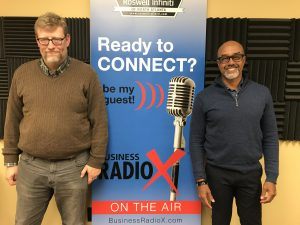
Decision Vision Episode 43: Should My Business Buy Real Estate? – An Interview with James Pitts, FRED – Fractional Real Estate Department
Should I lease my real estate or buy? What are the factors to consider if I do buy? Answers to these questions and much more come from James Pitts, FRED – Fractional Real Estate Department, on this edition of “Decision Vision.” Mike Blake is the host of “Decision Vision,” presented by Brady Ware & Company.
James Pitts, FRED – Fractional Real Estate Department

James Pitts is the CEO of FRED – Fractional Real Estate Department. James is a 20 year corporate real estate professional with experience at Jones Lang Lasalle, Grubb & Ellis, Johnson Controls (JCI) Global Workplace Solutions, and Sheraton Hotels. Most notably, James worked as Solutions Development Director at JCI Global Workplace Solutions where he was responsible for the design of global and regional corporate real estate outsourcing solutions for companies such as Motorola, Barclays, HP, SunTrust Banks, HSBC with annual spends of $50M-$500M.
FRED – Fractional Real Estate Department is a corporate real estate services firm designed to serve middle market companies that don’t have a real estate department but need one. For most businesses, real estate is the second or third highest cost after people, and a lease or purchase of real estate can be one of the longest commitments a company makes. These strategic decisions have cost and business risk implications but are typically left to managers with non-real estate backgrounds and outside real estate brokers to handle. The FRED team is made up of former heads or managers of corporate real estate for Coca Cola, E&Y, Wells Fargo & AT&T with 30+ years of experience each. FRED doesn’t do real estate transactions; they provide analysis, strategy, and manage the client’s process and brokers on behalf of the business. They are paid on a project, cost savings or retainer basis and promise to provide trustworthy real estate expertise.
For more information, go to their website or email James directly.
Michael Blake, Brady Ware & Company

Michael Blake is Host of the “Decision Vision” podcast series and a Director of Brady Ware & Company. Mike specializes in the valuation of intellectual property-driven firms, such as software firms, aerospace firms and professional services firms, most frequently in the capacity as a transaction advisor, helping clients obtain great outcomes from complex transaction opportunities. He is also a specialist in the appraisal of intellectual properties as stand-alone assets, such as software, trade secrets, and patents.
Mike has been a full-time business appraiser for 13 years with public accounting firms, boutique business appraisal firms, and an owner of his own firm. Prior to that, he spent 8 years in venture capital and investment banking, including transactions in the U.S., Israel, Russia, Ukraine, and Belarus.
Brady Ware & Company
Brady Ware & Company is a regional full-service accounting and advisory firm which helps businesses and entrepreneurs make visions a reality. Brady Ware services clients nationally from its offices in Alpharetta, GA; Columbus and Dayton, OH; and Richmond, IN. The firm is growth minded, committed to the regions in which they operate, and most importantly, they make significant investments in their people and service offerings to meet the changing financial needs of those they are privileged to serve. The firm is dedicated to providing results that make a difference for its clients.
Decision Vision Podcast Series
 “Decision Vision” is a podcast covering topics and issues facing small business owners and connecting them with solutions from leading experts. This series is presented by Brady Ware & Company. If you are a decision maker for a small business, we’d love to hear from you. Contact us at decisionvision@bradyware.com and make sure to listen to every Thursday to the “Decision Vision” podcast. Past episodes of “Decision Vision” can be found here. “Decision Vision” is produced and broadcast by the North Fulton studio of Business RadioX®.
Visit Brady Ware & Company on social media:
LinkedIn: https://www.linkedin.com/company/brady-ware/
Facebook: https://www.facebook.com/bradywareCPAs/
Twitter: https://twitter.com/BradyWare
Instagram: https://www.instagram.com/bradywarecompany/
Show Transcript
Intro: [00:00:01] Welcome to Decision Vision, a podcast series focusing on critical business decisions brought to you by Brady Ware & Company. Brady Ware is a regional service accounting and advisory firm that helps businesses and entrepreneurs make visions a reality.
Michael Blake: [00:00:19] And welcome to Decision Vision, a podcast giving you, the listener, a clear vision to make great decisions. In each episode, we discuss the process of decision making on a different topic, rather than making recommendations because everyone’s circumstances are different. We talk to subject matter experts about how they would recommend thinking about that decision. My name is Mike Blake and I’m your host for today’s program.
Michael Blake: [00:00:40] I’m a director at Brady Ware & Company, a full-service accounting firm based in Dayton, Ohio, with offices in Dayton, Columbus, Ohio, Richmond, Indiana, and Alpharetta, Georgia, which is where we are recording today. Brady Ware is sponsoring this podcast. If you like this podcast, please subscribe in your favorite podcast aggregator and please consider leaving a review of the podcast as well.
Michael Blake: [00:01:02] Today, we’re going to talk about, should your business buy its real estate. And I’m prompted to this question because it comes up a lot. And interestingly enough, I’m actually seeing it come up more now with technology companies under the thesis that a technology company, by acquiring hard assets in some way, makes itself less risky in front of an investor and potentially, even a bank financing candidate.
Michael Blake: [00:01:35] Now, I’m not a real estate expert at all. In fact, I’m a disaster at Monopoly. Both my kids wiped me out. I think that’s because I’m a technology guy, by the way. Because I think in SAS terms, I’m always by the utilities and the railroads because there’s a more kind of recurring revenue as opposed to, you know, idiosyncratic by landing in a hotel in Boardwalk. But the problem is, and spoiler alert, if you do that in Monopoly, you basically die a slow death to your children who do a victory dance over you, by the way.
Michael Blake: [00:02:04] So, don’t be like me in Monopoly. But anyway, real estate is a different animal. And I get asked about real estate a lot because I’m in the appraisal business, but I’m in the business appraisal business. Again, I don’t know anything about real estate. We lucked out when we got a good deal on our house. I truly mean that with no sense of humility whatsoever, that is as factual an assessment as I can offer.
Michael Blake: [00:02:29] But, you know, especially in a market where you have loose credit, you have banks that very much want to lend. And frankly, you know, we are, especially in Atlanta, a real estate town. America’s a real estate society in terms of investment. The allure of buying real estate can have a very strong pull, but I’m not sure that that’s necessarily the right thing to do for many companies. And so, that’s what I want to talk about this day.
Michael Blake: [00:02:57] Because I’ll bet in the sound of my voice with someone who is listening to this podcast that somebody right now is looking at, they’re either looking at buying real estate or they’re going, “Why the heck did I buy that real estate? Now, I’ve got this albatross around my neck.” You know, “What made me do that and how do I get out of that?” And like I said, I’m not an expert on this. And for those of you who have been listeners to this podcast, you know that I know not a lot about much. And so, I bring in subject matter experts to help us figure that out. And helping us today is my friend James Pitts, who is CEO of Fractional Real Estate Development or FRED. That has-
James Pitts: [00:03:39] Fractional Real Estate Department.
Michael Blake: [00:03:40] Department, sorry. Department, FRED, a corporate real estate services firm designed to serve middle market companies that don’t have a real estate department, but need one. FRED’s team is made up of former heads and managers of corporate real estate for Coca-Cola, Ernst & Young, Wells Fargo, and AT&T with 30-plus years of experience in each. FRED doesn’t do real estate transactions but rather, they provide analysis, strategy, and manage the client’s process and brokers on behalf of the business. They get paid on a per project basis, cost savings or retainer, and provide real estate expertise that can be trusted.
Michael Blake: [00:04:18] Now, James himself has a 20-year corporate real estate professional with Jones Lang LaSalle, Grubb & Ellis, Johnson Controls Global Workplace Solutions, and Sheraton Hotels. Most notably, James worked as solutions development director at JCI Global Workplace Solutions, where he was responsible for the design of global and regional corporate real estate outsourcing solutions for companies such as Motorola, Barclays, HP, SunTrust Banks, and HSBC with annual spends of $50 million to $500 million. So, yeah, he’s an expert. James, thanks so much for coming on the program.
James Pitts: [00:04:54] Thanks, Mike.
Michael Blake: [00:04:54] And in spite of my botching the name, I think that the name itself is just awesome. FRED. And nobody’s ever called a Fred anymore, right? You don’t meet very many Freds, right? But it’s sort of just short and to the point and sounds very authoritative. Now, did you have Fred in mind and then, you built the words around it or did you just put those words in papers, “Hey, that spells Fred.”.
James Pitts: [00:05:17] The latter.
Michael Blake: [00:05:17] Is it really?
James Pitts: [00:05:19] Mm hmm.
Michael Blake: [00:05:19] So, my guess is both parts of your brain are working at that point and then, sort of put it down a piece of paper for you. So, well done. Frankly, it’s easier to remember than Brady Ware. So, you’ll get more mileage on this podcast than I will most likely. So, James, you’re obviously the resident expert on this, not just here, but just about any place you go. Why do companies want to buy real estate when they’re not in the business of real estate?
James Pitts: [00:05:45] Well, they typically want to buy it as an investment. Some see it as a hedge against risk. Some don’t like the idea of paying rent and they want to build equity. All valid points, but just not that simple.
Michael Blake: [00:05:58] And how compelling is that argument that real estate is an investment?
James Pitts: [00:06:04] Real estate in the nature of itself is an investment. The question is whether it’s a good investment, depends on the goals and the needs of the investor and what their alternative investment options are. It’s a good investment if the company doesn’t have a better alternative for investing its money. Also, a company has to ask itself if it’s in the real estate business or if it’s really going to be in its core business because real estate can really be a distraction to the core business.
James Pitts: [00:06:31] And I’d like to give you a quick example. We had a client that we worked with for years, lost contact with. They went out and bought their own real estate, built a building, overpaid for land, went through a business downturn, suddenly, couldn’t use all of the real estate. They were upside down in the building and the land that they bought. And they were trying to lease out the space and they had other businesses in their space. And the CEO literally said, “I can’t get any work done because I have all of these tenants.” So, suddenly, their core business was being distracted by the real estate business.
Michael Blake: [00:07:06] And, you know, I think that’s important because on the outside looking in, if you’re not in real estate, it must look easy, right? You buy a property, you own it. You just sit back and you let the income roll in or let the savings roll in. And then, at some point, you sort of dispose of it. But as a homeowner and not a very good one, by the way, it’s amazing I still have all of my fingers, frankly, owning real estate, even very basic real estate is an effort and there’s further costs in upkeep, right? So, that doesn’t go away just because now, you own a factory or a warehouse or an office building, right?
James Pitts: [00:07:46] Well, yes. And so, when the roof has a leak, that’s on you. When you have the HBC system go out, that’s now on the business. So, suddenly, instead of making a phone call, you’re managing that, paying for that, checking on that, and just dealing with that.
Michael Blake: [00:08:02] So, we talked a little bit about what are the reasons for wanting to own real estate. What conditions typically lead to a company finding that real estate ownership is beneficial to them? What does a company kind of look like that is a good candidate for that?
James Pitts: [00:08:19] Well, for example, you have a specialized use. So, maybe you need land or maybe you need a certain building that unless you own it, the landlord will not let you perform your operations at a core to your business. Let’s say there’s a specialized use of land or buildings that may require large capital outlay to construct. For instance, a movie studio with a purpose-built sound stages, water stage, back lots, et cetera, will want to own the real estate.
James Pitts: [00:08:49] We had a client from South Korea that needed to test its rubber treads on a proving ground. Imagine a Jeep obstacle course, three acres next door. Industrial buildings aren’t designed to have like a three-acre playground next door. So, they literally had to buy a building actually and then, buy the land next door, and build their proving ground. Otherwise, they wanted to lease. They didn’t want to get into the ownership. But because of their use, no one would let them do that.
Michael Blake: [00:09:24] Right. So, at some point, you got to be the person that gives yourself permission to do it, right?
James Pitts: [00:09:28] Exactly.
Michael Blake: [00:09:29] So, you have to own it in that case.
James Pitts: [00:09:29] Exactly.
Michael Blake: [00:09:30] Right? So, you know, in home ownership, there’s a rule of thumb, the basis, unless you’re going to be in the property for five, six years, don’t buy because by the time you factor in all the transaction costs and so forth, it just doesn’t make any sense, right? Keep on renting. Is there a similar rule of thumb time frame in the commercial business area?
James Pitts: [00:09:56] Well, real estate cycles are typically seven to 10 years long. If you want to talk about that cycle, you have declining prices, rents and construction, then that leads to absorption of excess supply, that leads to low vacancy, which leads to increasing prices and rents, which leads to accelerate new construction. At some point, as you go around the circle, you get to oversupply and then, you have high vacancies, which is typically when you want to buy at that lower end of the cycle. Right now, in Atlanta, we’re at the high end of the cycle. So, it’s really a landlord and sellers market. So, from a real estate cycle, if you’re going to be in it, at least seven to 10 years. And we’ll really talk about that probably and some of your other questions about the life cycle of a business as well.
Michael Blake: [00:10:44] So, I’m going to go off script a little bit, but I know it’s a question I want to get out and I think it’s going to be of a lot of interest, which is, you know, as you walk in as the Fractional Real Estate Department for your clients, how much of that work is taking over the management of their properties and how much of it is reversing buyer’s remorse and helping them kind of liquidate, you know, “What have I done?” And sort of get rid of that. How often do you encounter that latter scenario?
James Pitts: [00:11:14] We’re working with a client right now that the previous CEO leased three times as much space as they need. They are actually laying off people right now while they spend an extra $250,000 a year in excess real estate costs. So, sometimes, the first thing you have to do is come in and do an analysis and then, come back with a strategy of how do we fix what you’ve inherited. And the previous CEO signed an eleven-year lease, so they still have eight years of pain.
Michael Blake: [00:11:44] And so, I’ll continue off the script, but I’ve got to follow that question up. So, you know, in some cases, can you then lease that out to try to get a—you know, or sublease, or something like that?
James Pitts: [00:11:56] You can sublet it. You can sell it. You can try to work with the landlord to get out of it. The goal for FRED is to keep people from making these sorts of costly mistakes.
Michael Blake: [00:12:07] Yeah.
James Pitts: [00:12:07] And then, reduce the expense, increase EBITDA, and reduce risk. But what you find, and I used to manage some of the Fortune 500 real estate portfolios when I was at JLL, is that real estate’s the hidden dragon on earnings. And people just don’t realize it. And that even big companies make huge mistakes. And then, that gets multiplied across portfolios. And then, everyone says, “Well, why are we doing this?” “Well, because everyone else did it.” And that’s what it’s always been. We’ve been in this position, in this location for 20 years. And it doesn’t really match anything that the business is doing today.
Michael Blake: [00:12:41] And do you find that businesses may think they know more about real estate than they do because they’re good at the business, but real estate is just different animal? Like I said, I’m a business appraiser, but I’m not a real estate appraiser. Is real estate just fundamentally a different animal?
James Pitts: [00:12:55] Everyone other than you believes that because they bought a house that they’re a real estate mogul. So, they believe that they know a lot more about real estate. It’s something they don’t deal with every three to five years. And when you think about it, real estate is one of those commitments that a company makes that goes three to five years out. Most businesses can’t see that far. And who knows what your strategy or your operations or your sale is going to be in three to five years. And the real estate does not care.
Michael Blake: [00:13:21] No, it doesn’t, right? I’ve never seen the real estates, “Oh, man. I’m sorry”, you know.
James Pitts: [00:13:26] Yeah, the landlords-
Michael Blake: [00:13:27] We’ll just let you out.
James Pitts: [00:13:28] Oh, yeah. Yeah. “Sorry, you guys had a downtime.”
Michael Blake: [00:13:30] Have to reset.
James Pitts: [00:13:32] Yeah.
Michael Blake: [00:13:32] So, getting back to the primary conversation. So, we’re in a cheap money cycle right now. Feds just lowered interest rates three times in the last three or four months or so. How much should that be a factor in driving the real estate purchase decision? I mean, on some level, obviously financing is cheaper, but is it that simple or does that need to kind of be mixed in with some other considerations?
James Pitts: [00:14:00] So, great question. Depends on the cycle. Even before you get to that, you really have to look at, does a company have excess cash that it can’t really invest back in its operations? Are they stable? Like have they grown to the point where they aren’t going to outgrow the space that they buy? Because why buy it if you’re gonna outgrow it? Now, suddenly, you’re in the real estate business. And, you know, are you in some type of low-margin business where you get a greater return by putting your money in the real estate?
James Pitts: [00:14:32] But let’s talk about cheap money. So, the cheap money of the late 2007s and 2008s actually caused the real estate bubble. So, that led to that balloon. People who bought early in the cycle did well. People who came at the end with that cheap money and bought at the height of the cycle, like we are now, when prices were inflated, got hurt. After the crash, money tightened considerably and people with cash came back and bought things cheaply. Sold as the market was coming back up. And now, we’re back toward the top of market. So, I’d say that the cheap money is there, but it could lead you into bad decisions.
Michael Blake: [00:15:13] Yeah. So, the cheap money could be a sign, right, that maybe the timing is off. And again, I think that that requires a specific real estate expertise to really understand and read the market, right? Certainly, I can’t do it. So, now, there’s an argument out there that companies make that they want to own their real estate because it’s a hedge against risk. How do you respond to that? Is that often a reasonable argument or is that just somebody talking themselves into doing a real estate deal?
James Pitts: [00:15:44] The latter.
Michael Blake: [00:15:45] Is it?
James Pitts: [00:15:45] It could be. So, it depends on what risk you’re worried about, right? So, there’s investment risk and there’s business risk. So, if you have a basket of equities, fixed income, cash alternatives, alternative investments, and real estate, you are diversified. Real estate typically lacks business downturns by six to eight months. So, if there’s a general drop in the economy, then the real estate will eventually fill that. And if the company bought the high of the market, you can suddenly be under water with regards to the value of your property in which you paid for it.
James Pitts: [00:16:18] The mortgage payment is still the same. The company may have to downsize, but your costs are still the same for your real estate portfolio. And it’s hard to sell asset in the downturn as well. So, if you’re trying to use—real estate does follow business cycles. So, it’s not necessarily a risk against that. And you also have to say, “If buying real estate makes your business operations riskier, you shouldn’t do it.” But if you’re at a point where purchasing the real estate, you know, lessens risk or doesn’t impact your risk profile, then you can look at that as a separate investment.
Michael Blake: [00:16:53] And I think what you’re talking about is the operational risk-
James Pitts: [00:16:56] Exactly.
Michael Blake: [00:16:56] … of the company, right?
James Pitts: [00:16:57] And correct me if I’m wrong, but the way I interpret what you just said is that one of the dangers is a business can undertake gymnastics that they would not normally undertake in order to get into the real estate game just because there’s cheap money and they feel like that there’s sort of a momentary opportunity. That sounds like a path to trouble.
James Pitts: [00:17:20] We see it a lot where once people get into their brain, “I’d like to own something and build equity”, they will do unnatural things to accomplish that that may not be in the best interest of the business. So, for instance, we had a service company growing rapidly up to 60 people. They were leasing 2,600 square feet. People were literally on top of one another. The owner said, “I want to go out and buy something.” And we said, “Well, you’re still growing. So, let’s lease 13,000 square feet for five years. That gives you plenty of room to grow. And then, once you get to a point where you’re stable and you’re not growing, maybe that’s when you buy a specialized site for your business.” And I said, “Plus, you’re at the top of the cycle. So, why would you buy now? There’s no equity in it.”
Michael Blake: [00:18:07] Right. Buy high, sell low is not a successful business strategy for most, right?
James Pitts: [00:18:12] Exactly.
Michael Blake: [00:18:13] And, you know, that gets to something that I encounter a lot, which is, as you know, I do a fair bit of work in the emerging tech sector, right? And, you know, to me, buying a building when you think you’re going to grow, right? And tech companies grow rapidly. They don’t add two or three people, right? If they don’t catch fire, it doesn’t matter. But once they catch fire, they’re adding people at a hundred a time, right?
James Pitts: [00:18:37] Right.
Michael Blake: [00:18:37] I wouldn’t say you can’t, but, boy, it’s got to be hard just to buy your way out of that problem every time through.
James Pitts: [00:18:46] Exactly. It’s like buying a 15-year old boy a pair of $400 sneakers. Right. You’ll be out of them in two months.
Michael Blake: [00:18:54] Right. Right.
James Pitts: [00:18:56] So, why do it?
Michael Blake: [00:18:56] Right. Yeah. Now, that’s fair. That’s fair. So, let me ask this a little bit off script. But what about the lease-to-own deals? Do you see a lot of those? And if so, do they change the dynamic at all?
James Pitts: [00:19:12] Oh, lease-to-own. I don’t see a lot of that. Not at a corporate level. You see that more so in a residential level-
Michael Blake: [00:19:21] Okay.
James Pitts: [00:19:21] … who would do a lease-to-own. But now, some people may lease and they’ll have an option to purchase later.
Michael Blake: [00:19:28] Yeah.
James Pitts: [00:19:29] You know, if they think that they’re gonna really like the space. But you don’t see too many of those.
Michael Blake: [00:19:35] Okay. What are some of the hidden costs owning the real estate?
James Pitts: [00:19:40] Oh, so those are capital improvements that you weren’t expecting. If you’re in a building and you decide you don’t need all of it and you have a vacancy, so now, you’re inefficient. Maybe you did a floating rate loan or a swap loan and rates are changing on you, and they’re not going in your direction. We actually had a client that the rates right now, like if they were to sell the building that they’re in, they’d owe $200,000 versus if the rate stayed where they used to be, they’d get a check for $300,000 of repairs and maintenance.
James Pitts: [00:20:17] We did a project for a large nonprofit here in Atlanta that owned the building with very little debt. They had about $5 million in deferred maintenance on the property. They were trying to figure out what they would do with the building. They were in about half of it, in 40,000 square feet with three tenants. They weren’t getting any new tenants. And we did a study and looked at what their other costs were, including the maintenance people that they had on staff. And they didn’t realize all the hidden cost in it.
James Pitts: [00:20:47] And we ended up selling the building for them, reducing their space. They got $2 million above what the market was offering. And then, by reducing their space and making them more efficient, we save them $3 million on their lease. So, they were like, “How did you make leasing a building cheaper than owning a building and put $5 million in our pocket?” Like, you know, it was a lot of financial engineering. Just looking at—that the real estate didn’t match your needs, you know, financially or even their people.
Michael Blake: [00:21:18] Well, and that goes to knowing the real estate market, right? And knowing what the market will bear and kind of what the terms are, and, you know, being able to use that as a negotiation point, right?
James Pitts: [00:21:30] Mm hmm.
Michael Blake: [00:21:30] I mean, again, you know, real estate is one of those things, it bears repeating, it looks easy, but it ain’t.
James Pitts: [00:21:38] It is really not.
Michael Blake: [00:21:40] So, how much should an opportunity to acquire real estate is sort of like as a good deal? How much does that drive or should it drive the discussion? You know, maybe your building is just going to be sold. Maybe there’s an estate situation, divorce situation, like that, and the son has got to sell, so it’s going to—if you can kind of do the deal quickly, it’s going to go for below fair market or market value, how much should that play into that lease-versus-buy decision?
James Pitts: [00:22:13] And I think we have to make sure that if your core business is your priority, as long as you check all the boxes and purchasing the building does not impact your core business, which is really your bread winner, then you can consider it, if it’s a great deal. I mean, if it’s a deal that if, for some reason, you need to sell it or lease it out and you could lease out, say, maybe 70 percent and that would easily cover your mortgage, you should consider it. You know, but if it’s an arbitrage opportunity, you should consider it. If it’s a great deal, you should always consider that.
Michael Blake: [00:22:49] Okay. And what about the argument that real estate can be used as a way to diversify the assets of the company or sometimes, the assets of the owner that is not necessarily that clearly separated from the company because it’s sort of one of the same? How compelling is that argument?
James Pitts: [00:23:08] So, that can be a sticky wicket. It can also be a great strategy. Some owner, company owners purchase building and lease it back to the company, and let the company expense the rent payments while paying off the mortgage on the property, then the owner can personally tap the built up equity in the property without taxation. If the owner expects to sell the company, then they may have to unwind or restructure their intertwined real estate in their business to make it attractive to the buyer.
James Pitts: [00:23:38] We were talking to a private equity firm out in California and the owner sold—they bought a business, the owner sold it to them, and it was 150,000 square foot warehouse. They only need 50,000. He had them as part of the deal, signed a 10-year lease for 150,000. So, they were suddenly stuck with three times as much space as they needed. And they were lamenting that they didn’t make him unwind that. So, you have to be clear, if you’re trying to exit your business and you now have some real estate obligations, it could affect your valuation.
Michael Blake: [00:24:14] Now, we tussled on this a little bit before, but I want to make sure that we address this explicitly. How important is the decision whether or not you need to kind of build your own custom real estate? We talked about customizing a building that you own. But now, I want to kind of move kind of, you know, a step further. What about kind of building your own real estate versus buying something that may or may not suit you on the existing market? How often do you encounter that? Does that build versus buy change the business discussion at all?
James Pitts: [00:24:48] So, it can. If your movie studio is custom-built, then it’s really important to buy and build your own. Back to that one client of ours who built their own building, they bought the land too expensive. Right now, construction costs are really high in Atlanta. But they’ve done that in 2010. Much better deal, cheaper land, cheaper construction costs. So, what we found is that given the costs of construction right now with the steel tariffs and just the land costs, there’s a lot of existing buildings that you can buy that are actually cheaper than in building right now in this particular part of the cycle.
Michael Blake: [00:25:31] And-
James Pitts: [00:25:32] And it just depends on where you are in the cycle-
Michael Blake: [00:25:33] Sure.
James Pitts: [00:25:35] … basically.
Michael Blake: [00:25:35] Okay. And I guess to some extent, too, if you can actually find someone to build the building, right, at the top of the cycle-
James Pitts: [00:25:40] Right.
Michael Blake: [00:25:40] … it’s-
James Pitts: [00:25:41] Everybody’s busy. Right.
Michael Blake: [00:25:42] Everybody’s busy. Right. So, you don’t even get out of radar screen unless you have a big job to begin with.
James Pitts: [00:25:47] And for one of our South Korean clients, we actually did a study of, do you buy a building or do you build it? And it came out, it would be easier to buy a building, existing building, renovate it, and do what you needed to do next door than to just build from the ground up.
Michael Blake: [00:26:08] I wonder if there’s kind of a conceptual benefit there, too. You know, my parents built a house and the thing that I learned from that process, I’ll never build a house because it seems to me that if you’re trying to imagine a structure from the ground up, there’s just nothing there today. And then, a year from now or two years, you know, there’s going to be a building. Just seems like so many things can go wrong and there’s not going to be the way that you visualized or to make them the way that you visualize them is going to be prohibitively expensive along the way.
James Pitts: [00:26:42] Depends on where you are in the cycle.
Michael Blake: [00:26:43] Yeah.
James Pitts: [00:26:44] But you have architects for that.
Michael Blake: [00:26:45] Yeah.
James Pitts: [00:26:45] Architects and civil engineers, and they can deliver exactly what you want.
Michael Blake: [00:26:49] So, are there any rules of thumb around a company’s finances in terms of how much cash to have in the bank or how profitable they are or how, I don’t know, sort of reliable their profitability is that maybe goes into your calculus as to whether or not you advise a client to buy versus lease?
James Pitts: [00:27:08] So, in general, real estate as an investment, I’ve read somewhere, returns about 7 to 8 percent of the long-term as an investment. If the business return—if your margins on your business are 20 percent, and why wouldn’t you invest that in your business, if you still have the opportunity to grow? So, people get, “Oh, I want own real estate and I’m gonna build up equity.” But if you can put that money into your people, if you can leave the risk of ownership of real estate to a landlord so that if you shrink or grow, you can go elsewhere versus now, I have a building and I have to do the capital improvements. And I have to pay the taxes on it and if I grow or shrink, it stays the same. So, there’s a business risk there.
Michael Blake: [00:27:59] You know, I want to come back to that or stay on that, actually, because I think that’s a very important point. You know, many of the drivers I see for buying real estate lie in something else other than directly operationally imperative to the business, right? Sometimes is. And I think we’ve covered that. You know, rule number one is make sure that that decision is driven by the operational imperative-
James Pitts: [00:28:24] Right.
Michael Blake: [00:28:24] … not because of something else that you want to do. And, you know, there’s no law that says, if you have excess cash or even excess borrowing power that you have to buy real estate with it, right?
James Pitts: [00:28:36] Right.
Michael Blake: [00:28:36] Or if you want to buy real estate, you know, buy into a read, right? You can get real estate exposure that way.
James Pitts: [00:28:42] Or buy an actual investment property that’s not attached to your—if you have extra cash, maybe you go and buy another real building that has tenants in it.
Michael Blake: [00:28:54] Yeah.
James Pitts: [00:28:54] And you manage that as a separate investment. But now, you sort of linked your business to your real estate and they’re intertwined. Let’s say you have partners in your business, there’s three or four partners, and Ted decides to leave the company. And now, you know, you have to unwind the real estate side of it and the business side of it. And maybe Ted didn’t want to get out of the real estate side or, you know, you have to make sure all the interests are aligned on the real estate side as well.
Michael Blake: [00:29:22] So, one other question I want to ask as we move towards wrapping up here is, a company can accidentally acquire real estate through an acquisition, right? And although I’m confident in most cases, a company isn’t necessarily surprised that it owns real estate, but I think that I’ve certainly seen the case where the acquirer spend so much time performing due diligence in the company that they feel that the real estate is a sort of a side gig or a throw away or something. And then, all of a sudden, you wind up owning it and maybe they should have done due diligence on that or sometimes, you’re even forced to buy the real estate. The seller will not sell unless you take the whole thing, business and real estate. How often do you see that? And if you do see that a lot, in your mind, is that a complicating factor in the M&A process?
James Pitts: [00:30:15] I definitely think it’s a complicating factor. Part of what FRED services we offer to come in as a part of that M&A process is to look at the real estate and say, “Here are you trailing obligations from a real estate perspective and here’s how you need to account for that, because either you’re going to end up with some excess cost or some real estate that you don’t need, and maybe, you should make that a part of the negotiation” versus “You take this”, and suddenly, you basically paid the seller twice. And that you paid them for the business, you paid them for the real estate. Now, you take the loss on the real estate. And that’s not a choice that you make. You actually came there for the business.
Michael Blake: [00:30:56] So, if somebody wants to learn more about this process, they have a question about their own real estate decision they’re looking at, how can they contact you?
James Pitts: [00:31:05] Please feel free to e-mail me at james.pitts, P-I-T-T-S like in Pittsburgh, @fred, F-R-E-D,-solution.com. And love to hear from you.
Michael Blake: [00:31:19] All right. And that’s going to wrap it up for today’s program. I’d like to thank James Pitts so much for joining us and sharing his expertise with us and telling us about his company, FRED, Fractional Real Estate Department. We’ll be exploring a new topic each week. So, please tune in so that when you’re faced with your next business decision, you have clear vision when making it. If you enjoy these podcasts, please consider leaving a review with your favorite podcast aggregator. It helps people find us so that we can help them. Once again, this is Mike Blake, our sponsor is Brady Ware. And this has been the Decision Vision podcast.