Business RadioX ®

  • Home
  • Business RadioX ® Communities
    • Southeast
      • Alabama
        • Birmingham
      • Florida
        • Orlando
        • Pensacola
        • South Florida
        • Tampa
        • Tallahassee
      • Georgia
        • Atlanta
        • Cherokee
        • Forsyth
        • Greater Perimeter
        • Gwinnett
        • North Fulton
        • North Georgia
        • Northeast Georgia
        • Rome
        • Savannah
      • Louisiana
        • New Orleans
      • North Carolina
        • Charlotte
        • Raleigh
      • Tennessee
        • Chattanooga
        • Nashville
      • Virginia
        • Richmond
    • South Central
      • Arkansas
        • Northwest Arkansas
    • Midwest
      • Illinois
        • Chicago
      • Michigan
        • Detroit
      • Minnesota
        • Minneapolis St. Paul
      • Missouri
        • St. Louis
      • Ohio
        • Cleveland
        • Columbus
        • Dayton
    • Southwest
      • Arizona
        • Phoenix
        • Tucson
        • Valley
      • Texas
        • Austin
        • Dallas
        • Houston
    • West
      • California
        • Bay Area
        • LA
        • Pasadena
      • Colorado
        • Denver
      • Hawaii
        • Oahu
  • FAQs
  • About Us
    • Our Mission
    • Our Audience
    • Why It Works
    • What People Are Saying
    • BRX in the News
  • Resources
    • BRX Pro Tips
    • B2B Marketing: The 4Rs
    • High Velocity Selling Habits
    • Why Most B2B Media Strategies Fail
    • 9 Reasons To Sponsor A Business RadioX ® Show
  • Partner With Us
  • Veteran Business RadioX ®

Do You Really Know Your Competition?

September 11, 2024 by John Ray

Do You Really Know Your Competition, The Price and Value Journey Podcast with host John Ray
North Fulton Studio
Do You Really Know Your Competition?
Loading
00:00 /
RSS Feed
Share
Link
Embed

Download file

Do You Really Know Your Competition, The Price and Value Journey Podcast with host John Ray

Do You Really Know Your Competition? (The Price and Value Journey, Episode 113)

In this episode of The Price and Value Journey, host John Ray delves into the concept of understanding your competition from a unique perspective. He challenges common assumptions about competitors and highlights how they can be hidden in unexpected places, ranging from DIY solutions to client procrastination and unexpected market influences. John uses real-world examples from various industries to illustrate his points and emphasizes the importance of recognizing these hidden competitors. Additionally, he explains how this understanding can be leveraged to improve pricing strategies and ultimately enhance the perceived value of services.

The Price and Value Journey is presented by John Ray and produced by Business RadioX® – North Fulton.

Topics Discussed in this Episode

00:00 Introduction to The Price and Value Journey
00:25 Understanding Hidden Competition
00:43 Examples of Unexpected Competitors
02:19 The Importance of Recognizing Hidden Competitors
02:44 Strategies to Shift Perceived Value
03:47 Conclusion and Final Thoughts

About The Price and Value Journey

The title of this show describes the journey all professional service providers are on:  building a services practice by seeking to convince the world of the value we offer, helping clients achieve the outcomes they desire, and trying to do all that at pricing that reflects the value we deliver.

If you feel like you’re working too hard for too little money in your solo or small firm practice, this show is for you. Even if you’re reasonably happy with your practice, you’ll hear ways to improve both your bottom line and the mindset you bring to your business.

The show is hosted and produced by John Ray and the North Fulton studio of Business RadioX®. The show can also be found on all the major podcast apps. The complete show archive is here.

John Ray, Host of The Price and Value Journey

John Ray, Author of The Generosity Mindset and Host of "The Price and Value Journey"
John Ray, Author of The Generosity Mindset and Host of The Price and Value Journey

John Ray is the host of The Price and Value Journey.

John owns Ray Business Advisors, a business advisory practice. John’s services include business coaching and advisory work, as well as advising solopreneurs and small professional services firms on their pricing. John is passionate about the power of pricing for business owners, as changing pricing is the fastest way to change the profitability of a business. His clients are professionals who are selling their expertise, such as attorneys, CPAs, accountants and bookkeepers, consultants, coaches, marketing professionals, and other professional services practitioners.

In his other business, John is a Show Host and Producer and owns the North Fulton (Georgia) studio of Business RadioX®. John and his team work with B2B professionals to create and conduct their own podcast using The Generosity Mindset™ Method:  building and deepening relationships in a non-salesy way that translates into revenue for their business.

John is also the host of North Fulton Business Radio. With over 780 shows and having featured over 1,200 guests, North Fulton Business Radio is the longest-running podcast in the North Fulton area, covering business in its region like no one else.

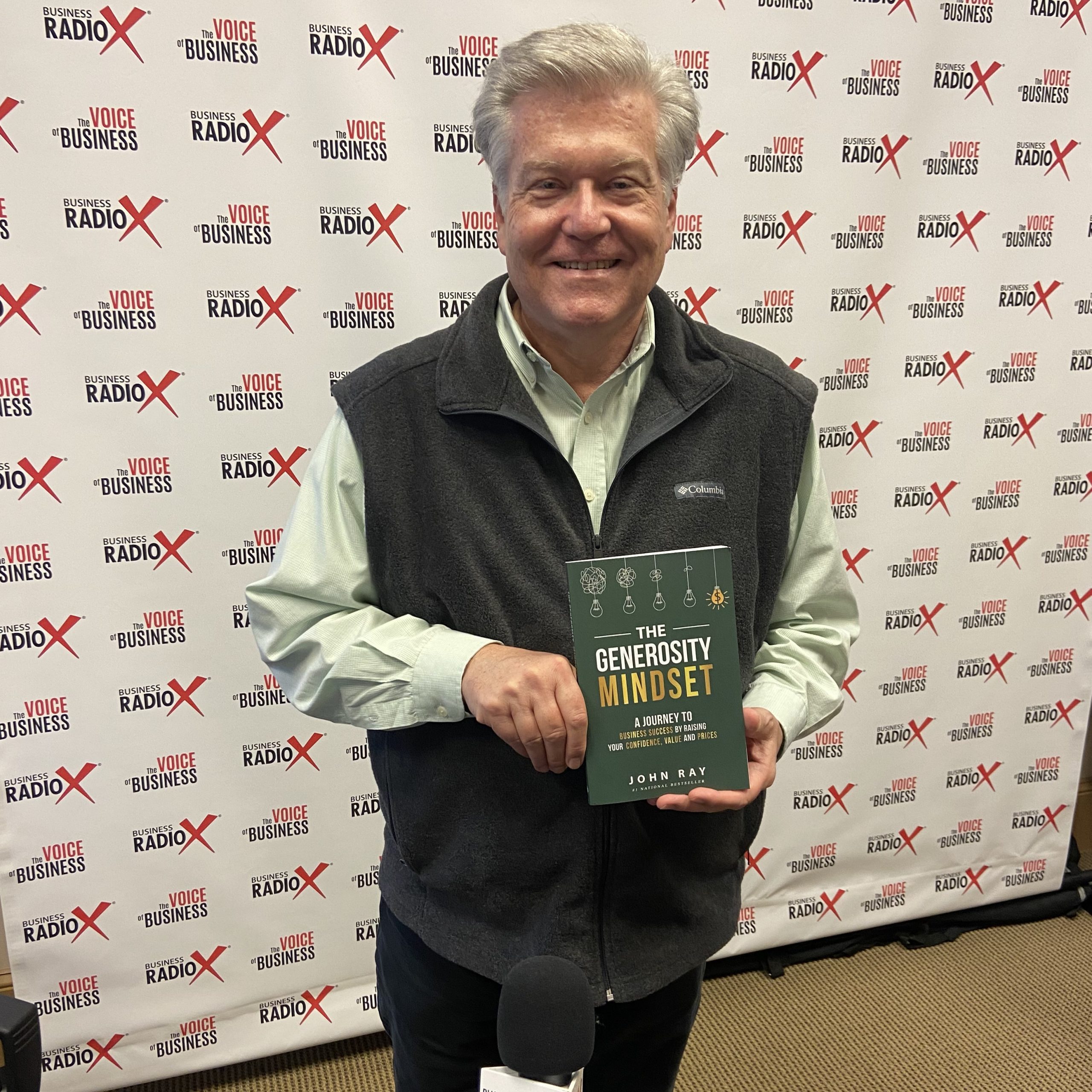
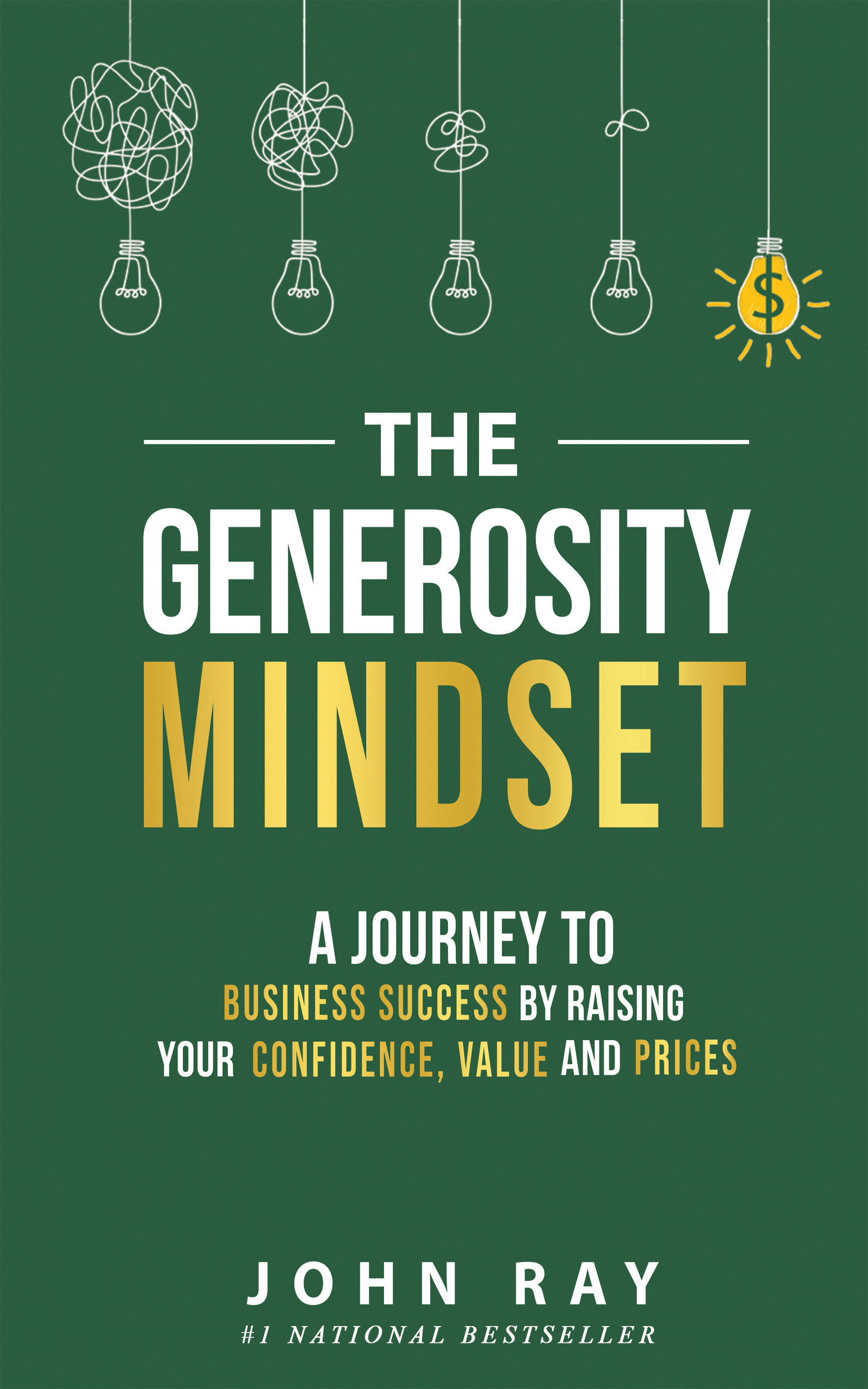
John’s book, The Generosity Mindset: A Journey to Business Success by Raising Your Confidence, Value, and Prices
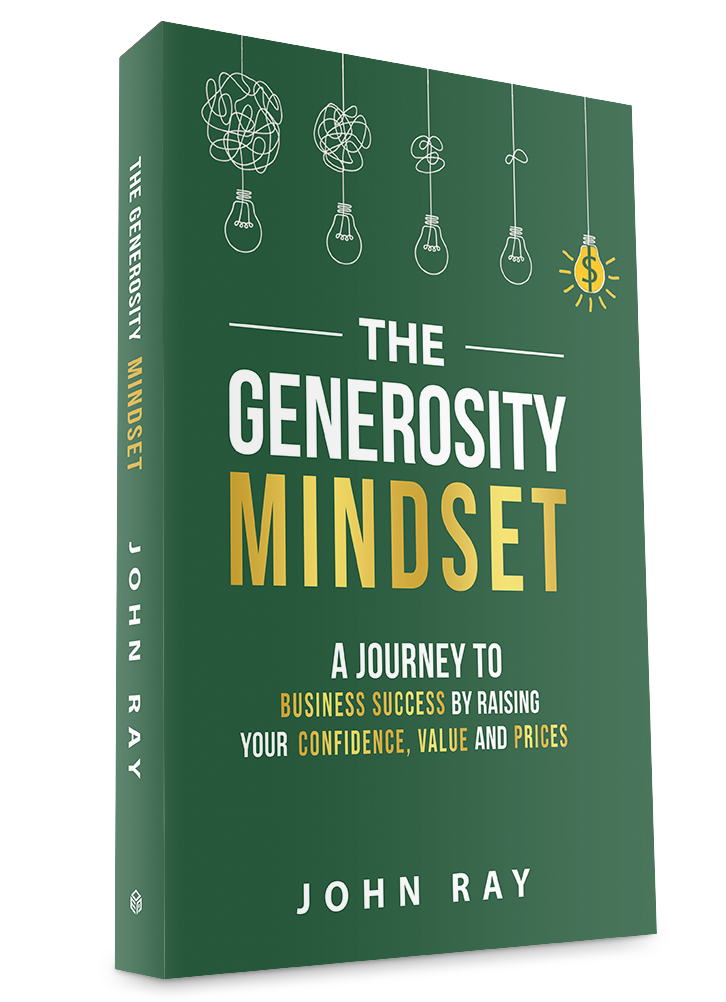
The Generosity Mindset, by John RayJohn is the #1 national best-selling author of The Generosity Mindset: A Journey to Business Success by Raising Your Confidence, Value, and Prices.

If you are a professional services provider, your goal is to do transformative work for clients you love working with and get paid commensurate with the value you deliver to those clients. While negative mindsets can inhibit your growth, adopting a different mindset, The Generosity Mindset™, can replace those self-limiting beliefs. The Generosity Mindset enables you to diagnose and communicate the value you deliver to clients and, in turn, more effectively price to receive a portion of that value.

Whether you’re a consultant, coach, marketing or branding professional, business advisor, attorney, CPA, or work in virtually any other professional services discipline, your content and technical expertise are not proprietary. What’s unique, though, is your experience and how you synthesize and deliver your knowledge. What’s special is your demeanor or the way you deal with your best-fit clients. What’s invaluable is how you deliver great value by guiding people through massive changes in their personal lives and in their businesses that bring them to a place they never thought possible.

The combination of all these elements is quite different for you compared to any other service provider in your industry. Therein lies your value, but it’s not the value you see. It’s the value your best-fit customers see in you.

If pricing your value feels uncomfortable or unfamiliar to you, this book will teach you why putting a price on the value your clients perceive and identify serves both them and you, and you’ll learn the factors involved in getting your price right.

The book is available at all major physical and online book retailers worldwide. Follow this link for further details.
Connect with John Ray:

Website | LinkedIn | Twitter

Business RadioX®:  LinkedIn | Twitter | Facebook | Instagram

Tagged With: competition, competitors, John Ray, pricing, professional services, The Price and Value Journey

Giving is Living

August 21, 2024 by John Ray

Giving is Living, from the Price and Value Journey podcast, with host John Ray
North Fulton Studio
Giving is Living
Loading
00:00 /
RSS Feed
Share
Link
Embed

Download file

Giving is Living, from the Price and Value Journey podcast, with host John Ray

Giving is Living (The Price and Value Journey, Episode 110)

In this episode of The Price and Value Journey, host John Ray explores a profound lesson of generosity from the book Tuesdays with Morrie by Mitch Albom. John highlights how Morrie Schwartz, despite his own suffering with ALS, always centered conversations on others, embodying the philosophy that “giving is living.” John encourages professionals to shift their mindset from taking to giving, emphasizing that the true value provided to clients lies not just in the services we provide them but in the care, attention, and genuine interest shown in their lives and businesses. This approach, he argues, leads to greater fulfillment and success.

The Price and Value Journey is presented by John Ray and produced by the North Fulton studio of Business RadioX®.

Topics Discussed in this Episode

00:00 Introduction to the Price and Value Journey
00:18 A Story of Profound Value
00:55 Lessons from Morrie Schwartz
01:58 Applying Generosity in Professional Services
02:41 Embodying the Philosophy of Giving
03:36 Reflecting on Morrie’s Wisdom
03:58 Conclusion and Call to Action

About The Price and Value Journey

The title of this show describes the journey all professional service providers are on:  building a services practice by seeking to convince the world of the value we offer, helping clients achieve the outcomes they desire, and trying to do all that at pricing that reflects the value we deliver.

If you feel like you’re working too hard for too little money in your solo or small firm practice, this show is for you. Even if you’re reasonably happy with your practice, you’ll hear ways to improve both your bottom line and the mindset you bring to your business.

The show is hosted and produced by John Ray and the North Fulton studio of Business RadioX®. The show can also be found on all the major podcast apps. The complete show archive is here.

John Ray, Host of The Price and Value Journey

John Ray, Author of The Generosity Mindset and Host of "The Price and Value Journey"
John Ray, Author of The Generosity Mindset and Host of The Price and Value Journey

John Ray is the host of The Price and Value Journey.

John owns Ray Business Advisors, a business advisory practice. John’s services include business coaching and advisory work, as well as advising solopreneurs and small professional services firms on their pricing. John is passionate about the power of pricing for business owners, as changing pricing is the fastest way to change the profitability of a business. His clients are professionals who are selling their expertise, such as attorneys, CPAs, accountants and bookkeepers, consultants, coaches, marketing professionals, and other professional services practitioners.

In his other business, John is a Show Host and Producer and owns the North Fulton (Georgia) studio of Business RadioX®. John and his team work with B2B professionals to create and conduct their own podcast using The Generosity Mindset™ Method:  building and deepening relationships in a non-salesy way that translates into revenue for their business.

John is also the host of North Fulton Business Radio. With over 780 shows and having featured over 1,200 guests, North Fulton Business Radio is the longest-running podcast in the North Fulton area, covering business in its region like no one else.

John’s book, The Generosity Mindset: A Journey to Business Success by Raising Your Confidence, Value, and Prices

The Generosity Mindset, by John RayJohn is the #1 national best-selling author of The Generosity Mindset: A Journey to Business Success by Raising Your Confidence, Value, and Prices.

If you are a professional services provider, your goal is to do transformative work for clients you love working with and get paid commensurate with the value you deliver to those clients. While negative mindsets can inhibit your growth, adopting a different mindset, The Generosity Mindset™, can replace those self-limiting beliefs. The Generosity Mindset enables you to diagnose and communicate the value you deliver to clients and, in turn, more effectively price to receive a portion of that value.

Whether you’re a consultant, coach, marketing or branding professional, business advisor, attorney, CPA, or work in virtually any other professional services discipline, your content and technical expertise are not proprietary. What’s unique, though, is your experience and how you synthesize and deliver your knowledge. What’s special is your demeanor or the way you deal with your best-fit clients. What’s invaluable is how you deliver great value by guiding people through massive changes in their personal lives and in their businesses that bring them to a place they never thought possible.

The combination of all these elements is quite different for you compared to any other service provider in your industry. Therein lies your value, but it’s not the value you see. It’s the value your best-fit customers see in you.

If pricing your value feels uncomfortable or unfamiliar to you, this book will teach you why putting a price on the value your clients perceive and identify serves both them and you, and you’ll learn the factors involved in getting your price right.

The book is available at all major physical and online book retailers worldwide. Follow this link for further details.

Connect with John Ray:

Website | LinkedIn | Twitter

Business RadioX®:  LinkedIn | Twitter | Facebook | Instagram

Tagged With: generosity, giving, giving is living, John Ray, Mitch Albom, Morrie Schwartz, professional services, The Generosity Mindset, The Price and Value Journey, Tuesdays with Morrie

Scale Your Business Without Compromising Happiness, with Doc Dockery, The Resolve Firm

April 17, 2024 by John Ray

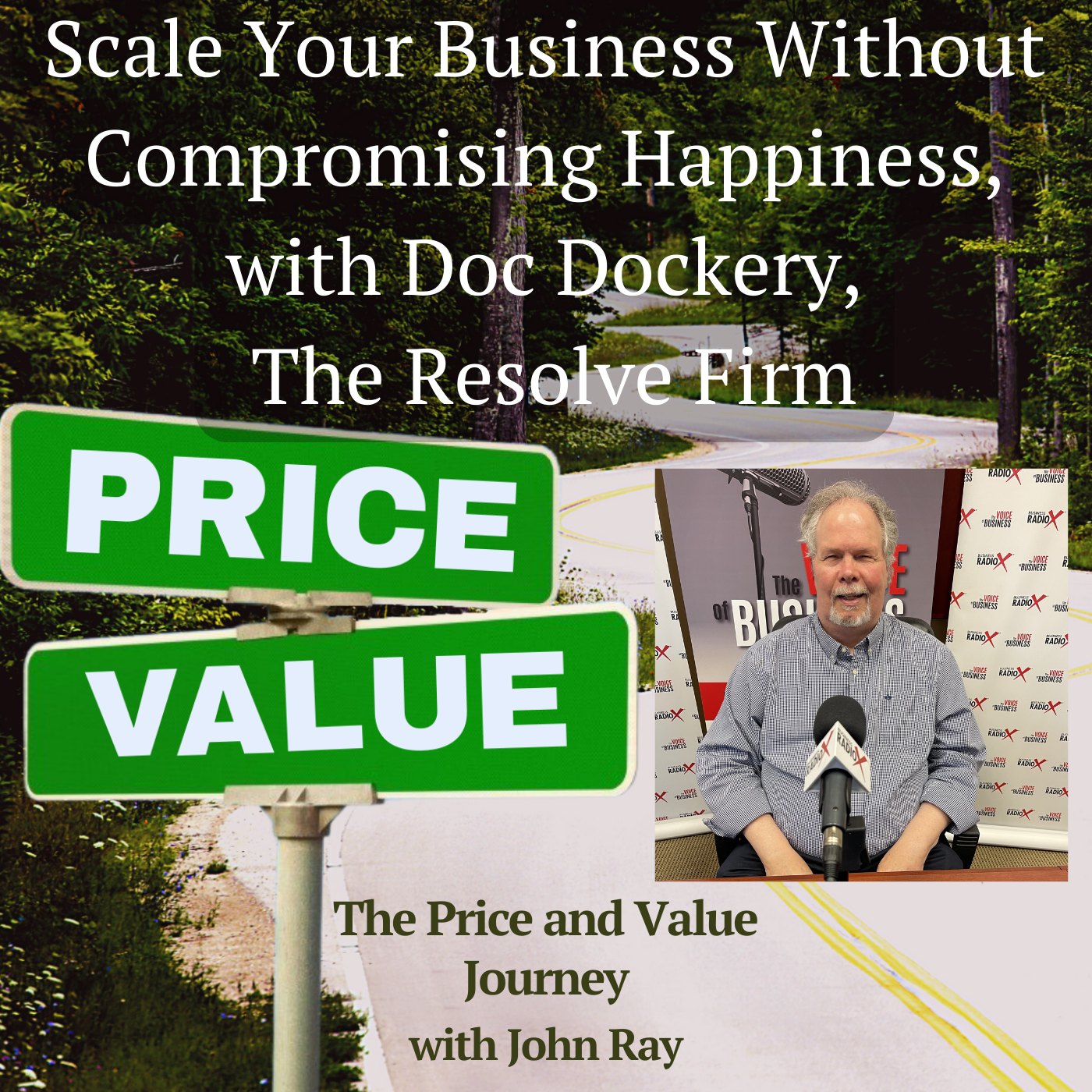
Scale Your Business Without Compromising Happiness, with Doc Dockery, The Resolve Firm, on The Price and Value Journey with John Ray
North Fulton Studio
Scale Your Business Without Compromising Happiness, with Doc Dockery, The Resolve Firm
Loading
00:00 /
RSS Feed
Share
Link
Embed

Download file

Scale Your Business Without Compromising Happiness, with Doc Dockery, The Resolve Firm, on The Price and Value Journey with John Ray

Scale Your Business Without Compromising Happiness, with Doc Dockery, The Resolve Firm (The Price and Value Journey, Episode 108)

Dr. Terry “Doc” Dockery, a renowned expert in business scalability and the author of the Amazon number one bestseller, Leadership, Happiness, and Profit: 12 Steps to a High Performance Business, was host John Ray’s guest on this edition of The Price and Value Journey. The discussion centers on the critical role of happiness and personal fulfillment as you scale your business. Doc discusses sustainable business growth, emphasizing leadership development, achieving a balance between professional achievements and personal life, and the impact of positive psychology in the workplace. The conversation also covers the challenges of recruiting and retaining top talent, debunking the myth of a talent shortage, and the essential elements of feedback and trust in effective leadership. Moreover, they address specific hurdles service firms encounter during scaling, the value of skill development, and how to synchronize individual team member advancement with organizational goals.

The Price and Value Journey is presented by John Ray and produced by the North Fulton studio of Business RadioX®.

Dr. Terry “Doc” Dockery, Founder, The Resolve Firm

Dr. Terry "Doc" Dockery, The Resolve Firm
Dr. Terry “Doc” Dockery, The Resolve Firm

Dr. Terry “Doc” Dockery, a true maestro in the realms of business scaling and leadership development. With a career that spans decades, Doc stands out not only as a licensed business psychologist and founder of The Resolve Firm but also as a beacon of guidance for businesses ranging from small enterprises to Fortune 500 giants across the country, particularly in the Atlanta region. His unparalleled expertise in doubling revenues without the baggage of stress or risk has not only propelled companies to new heights but has also cultivated environments recognized nationally as “Best Places to Work.”

Doc’s insights have been crystallized in his Amazon #1 Bestseller, Leadership, Happiness, and Profit: 12 Steps to a High-Performance Business, offering a roadmap to success that balances professional achievement with personal fulfillment. A fervent advocate for maintaining family harmony amidst business success, he often shares, “There are a hundred ways to make money, but you’ve only got one family. It’s a shame to ruin your family relationships over making a buck.”

Beyond his professional prowess, Doc’s soulful side emerges through music—whether he’s playing and singing in a band or charmingly putting the “harm” in harmonica. Receiving the Lucille Award from B.B. King himself is his proudest moment as a professional musician.

As a happily married father of three grown children, Doc embodies the very essence of leading a harmonious life, blending passion, purpose, and play. Join us as we delve into the journey of a man who helps leaders navigate the intricate dance of business growth, family values, and musical escapades.

Website | LinkedIn

Topics Discussed in this Interview

00:00 Welcome to The Price and Value Journey with guest Dr. Terry “Doc” Dockery
00:25 Unveiling Doc Dockery: From Business Scaling to Harmonica Playing
03:15 The Essence of Happiness in Business and Life
06:16 Scaling Your Business: Insights and Strategies
08:12 Leadership and Self-Discovery: Key to Scaling Success
14:53 Effective Leadership: Balancing Consideration and Process
23:56 Navigating Team Conflicts and Leadership Dynamics
24:19 Parenting as a Metaphor for Leadership
25:38 The Essence of Trust in Leadership
26:51 Conflict Resolution and Family Business Challenges
27:36 Identifying and Hiring A-Players
30:53 Addressing the Talent Shortage Myth
35:12 Feedback: The Breakfast of Champions
37:52 Aligning Individual and Organizational Growth
42:06 Deciding to Scale Down
43:42 Closing Remarks and Contact Information

About The Price and Value Journey

The title of this show describes the journey all professional service providers are on:  building a services practice by seeking to convince the world of the value we offer, helping clients achieve the outcomes they desire, and trying to do all that at pricing that reflects the value we deliver.

If you feel like you’re working too hard for too little money in your solo or small firm practice, this show is for you. Even if you’re reasonably happy with your practice, you’ll hear ways to improve both your bottom line and the mindset you bring to your business.

The show is hosted and produced by John Ray and the North Fulton studio of Business RadioX®. The show can also be found on all the major podcast apps. The complete show archive is here.

John Ray, Host of The Price and Value Journey

John Ray, Author of The Generosity Mindset and Host of "The Price and Value Journey"
John Ray, Author of The Generosity Mindset and Host of The Price and Value Journey

John Ray is the host of The Price and Value Journey.

John owns Ray Business Advisors, a business advisory practice. John’s services include business coaching and advisory work, as well as advising solopreneurs and small professional services firms on their pricing. John is passionate about the power of pricing for business owners, as changing pricing is the fastest way to change the profitability of a business. His clients are professionals who are selling their expertise, such as attorneys, CPAs, accountants and bookkeepers, consultants, coaches, marketing professionals, and other professional services practitioners.

In his other business, John is a Show Host and Producer and owns the North Fulton (Georgia) studio of Business RadioX®. John and his team work with B2B professionals to create and conduct their own podcast using The Generosity Mindset™ Method:  building and deepening relationships in a non-salesy way that translates into revenue for their business.

John is also the host of North Fulton Business Radio. With over 750 shows and having featured over 1,200 guests, North Fulton Business Radio is the longest-running podcast in the North Fulton area, covering business in its region like no one else.

John’s Book, The Generosity Mindset: A Journey to Business Success by Raising Your Confidence, Value, and Prices

The Generosity Mindset, by John RayJohn is the #1 national best-selling author of The Generosity Mindset: A Journey to Business Success by Raising Your Confidence, Value, and Prices.

If you are a professional services provider, your goal is to do transformative work for clients you love working with and get paid commensurate with the value you deliver to those clients. While negative mindsets can inhibit your growth, adopting a different mindset, The Generosity Mindset™, can replace those self-limiting beliefs. The Generosity Mindset enables you to diagnose and communicate the value you deliver to clients and, in turn, more effectively price to receive a portion of that value.

Whether you’re a consultant, coach, marketing or branding professional, business advisor, attorney, CPA, or work in virtually any other professional services discipline, your content and technical expertise are not proprietary. What’s unique, though, is your experience and how you synthesize and deliver your knowledge. What’s special is your demeanor or the way you deal with your best-fit clients. What’s invaluable is how you deliver great value by guiding people through massive changes in their personal lives and in their businesses that bring them to a place they never thought possible.

The combination of all these elements is quite different for you compared to any other service provider in your industry. Therein lies your value, but it’s not the value you see. It’s the value your best-fit customers see in you.

If pricing your value feels uncomfortable or unfamiliar to you, this book will teach you why putting a price on the value your clients perceive and identify serves both them and you, and you’ll learn the factors involved in getting your price right.

The book is available at all major physical and online book retailers worldwide. Follow this link for further details.
Connect with John Ray:

Website | LinkedIn | Twitter

Business RadioX®:  LinkedIn | Twitter | Facebook | Instagram

Tagged With: Doc Dockery, happiness, John Ray, personal fulfillment, professional services, professional services firms, retaining talent, scale your business, scaling, talent shortage, Terry Doc Dockery, The Generosity Mindset, The Price and Value Journey

Should You Discount Your Services When You’re Starting Out?

April 8, 2024 by John Ray

Should You Discount Your Services When You're Starting Out?, John Ray, The Generosity Mindset
North Fulton Studio
Should You Discount Your Services When You're Starting Out?
Loading
00:00 /
RSS Feed
Share
Link
Embed

Download file

Should You Discount Your Services When You're Starting Out?, John Ray, The Generosity Mindset

Should You Discount Your Services When You’re Starting Out?

John Ray discusses a common mistake solopreneurs make when starting out: discounting their services. John explains that such a decision attracts non-ideal clients and creates problems with value perception due to anchoring bias. He uses an example from his own buying experience of how initial pricing can anchor client expectations of price and value, making it hard to adjust perceptions of value later. Ray advocates engaging in value conversations with clients before discussing pricing and positioning services as an investment with a return.

This episode was adapted from the August 17, 2023 edition of John’s newsletter, The Price and Value Journey.

The Price and Value Journey is presented by John Ray and produced by the North Fulton studio of Business RadioX®.

Topics Discussed in this Episode

00:00 Embarking on the Price and Value Journey
00:05 The Pitfalls of Discount Pricing for New Businesses
01:17 Understanding the Anchoring Effect in Pricing
02:18 A Real-Life Example of Anchoring: The Athletic
03:52 Navigating Business Challenges with Value Conversations
06:04 Crafting Service Options and Setting Prices
06:58 Laying the Foundation for Long-Term Business Success
07:28 Exploring Further: The Generosity Mindset Book

About The Price and Value Journey

The title of this show describes the journey all professional service providers are on:  building a services practice by seeking to convince the world of the value we offer, helping clients achieve the outcomes they desire, and trying to do all that at pricing that reflects the value we deliver.

If you feel like you’re working too hard for too little money in your solo or small firm practice, this show is for you. Even if you’re reasonably happy with your practice, you’ll hear ways to improve both your bottom line and the mindset you bring to your business.

The show is hosted and produced by John Ray and the North Fulton studio of Business RadioX®. The show can also be found on all the major podcast apps. The complete show archive is here.

John Ray, Host of The Price and Value Journey

John Ray, Author of The Generosity Mindset and Host of "The Price and Value Journey"
John Ray, Author of The Generosity Mindset and Host of The Price and Value Journey

John Ray is the host of The Price and Value Journey.

John owns Ray Business Advisors, a business advisory practice. John’s services include business coaching and advisory work, as well as advising solopreneurs and small professional services firms on their pricing. John is passionate about the power of pricing for business owners, as changing pricing is the fastest way to change the profitability of a business. His clients are professionals who are selling their expertise, such as attorneys, CPAs, accountants and bookkeepers, consultants, coaches, marketing professionals, and other professional services practitioners.

In his other business, John is a Show Host and Producer and owns the North Fulton (Georgia) studio of Business RadioX®. John and his team work with B2B professionals to create and conduct their own podcast using The Generosity Mindset™ Method:  building and deepening relationships in a non-salesy way that translates into revenue for their business.

John is also the host of North Fulton Business Radio. With over 750 shows and having featured over 1,200 guests, North Fulton Business Radio is the longest-running podcast in the North Fulton area, covering business in its region like no one else.

John’s Book, The Generosity Mindset: A Journey to Business Success by Raising Your Confidence, Value, and Prices

The Generosity Mindset, by John RayJohn is the #1 National Bestselling Author of The Generosity Mindset: A Journey to Business Success by Raising Your Confidence, Value, and Prices.

If you are a professional services provider, your goal is to do transformative work for clients you love working with and get paid commensurate with the value you deliver to those clients. While negative mindsets can inhibit your growth, adopting a different mindset, The Generosity Mindset™, can replace those self-limiting beliefs. The Generosity Mindset enables you to diagnose and communicate the value you deliver to clients and, in turn, more effectively price to receive a portion of that value.

Whether you’re a consultant, coach, marketing or branding professional, business advisor, attorney, CPA, or work in virtually any other professional services discipline, your content and technical expertise are not proprietary. What’s unique, though, is your experience and how you synthesize and deliver your knowledge. What’s special is your demeanor or the way you deal with your best-fit clients. What’s invaluable is how you deliver great value by guiding people through massive changes in their personal lives and in their businesses that bring them to a place they never thought possible.

The combination of all these elements is quite different for you compared to any other service provider in your industry. Therein lies your value, but it’s not the value you see. It’s the value your best-fit customers see in you.

If pricing your value feels uncomfortable or unfamiliar to you, this book will teach you why putting a price on the value your clients perceive and identify serves both them and you, and you’ll learn the factors involved in getting your price right.

The book is available at all major physical and online book retailers worldwide. Follow this link for further details.
Connect with John Ray:

Website | LinkedIn | Twitter

Business RadioX®:  LinkedIn | Twitter | Facebook | Instagram

Tagged With: discounting, John Ray, Price and Value Journey, pricing, professional services, professional services providers, solopreneurs, The Generosity Mindset, value, value pricing

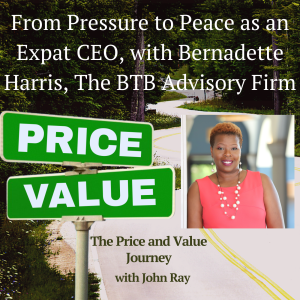
From Pressure to Peace as an Expat CEO, with Bernadette Harris, The BTB Advisory Firm

March 20, 2024 by John Ray

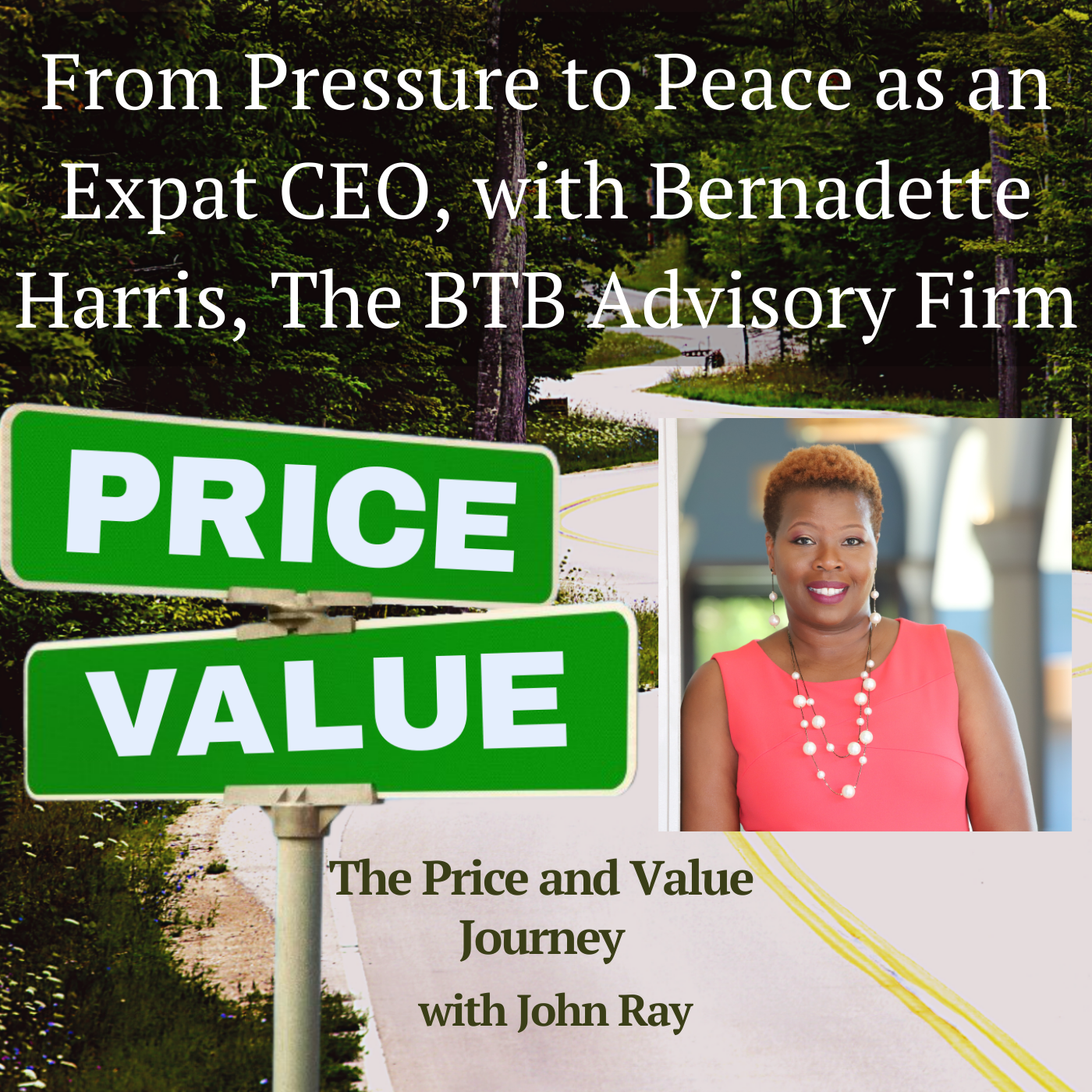
Bernadette Harris, The BTB Advisory Firm
North Fulton Studio
From Pressure to Peace as an Expat CEO, with Bernadette Harris, The BTB Advisory Firm
Loading
00:00 /
RSS Feed
Share
Link
Embed

Download file

Bernadette Harris, The BTB Advisory Firm

From Pressure to Peace as an Expat CEO, with Bernadette Harris, The BTB Advisory Firm

Bernadette Harris, the owner of The BTB Advisory Firm, joined host John Ray to share her unique entrepreneurial journey. Bernadette shared insights from starting her tax preparation and bookkeeping business in 2001, evolving into a forensic accountant and a certified fraud examiner dedicated to aiding small businesses. Her narrative includes navigating the successes and challenges of entrepreneurship, the pressure that built up over the years, how the pandemic amplified that pressure, and a health scare that led to a pivotal decision to drastically cut down her client list. Bernadette also discussed her transition towards a CEO role, moving out of day-to-day operations, and her move to Mérida, Mexico, to live as an expat. This move, she emphasized, was a crucial step in reshaping her business to focus on providing comprehensive services to a curated list of clients, significantly contributing to her firm’s evolution and her personal rejuvenation.

The Price and Value Journey is presented by John Ray and produced by the North Fulton studio of Business RadioX®.

Bernadette L. Harris, Founder and CEO, The BTB Advisory Firm

Bernadette L. Harris is the CEO and Forensic Accountant at The BTB Advisory Firm, a small business accounting firm focused on helping entrepreneurs make confident financial decisions and propel their businesses forward. With over 20 years of experience, she has helped numerous small business leaders gain a handle on their finances, understand their financial picture, and positively impact their bottom line.

Bernadatte is not only an award-winning tax and forensic accountant, but she is also a bestselling author and keynote speaker. She holds an MBA from Keller Graduate School of Management and an MS from Carlow University. Her professional certifications include Certified Fraud Examiner and QuickBooks Certified ProAdvisor.

Bernadette is passionate about empowering small business owners with financial literacy and expertise. Through her firm, she provides high-quality financial data, advice, and strategies to help clients make informed decisions and achieve long-term success. Her clients praise her ability to ease their fears, help them understand their financial picture, and positively impact their profits.

With a strong educational background, professional certifications, and decades of experience, Bernadette has established herself as a trusted advisor and advocate for small business owners seeking financial guidance and growth.

Website | LinkedIn | Instagram | Facebook

Topics Discussed in this Episode

00:00 Welcome to The Price and Value Journey with Bernadette Harris
01:44 The Evolution of Bernadette’s Accounting Firm
04:02 Navigating the Pandemic: Challenges and Growth
06:14 A Personal Health Crisis Leads to Major Changes
10:43 Strategic Business Shifts and Becoming an Expat
15:44 The Difficult Decision to Let Go of Clients
20:46 Revamping the Team and Embracing Remote Work
22:59 Embracing Remote Work and Flexibility
24:07 The Power of Location Independence
25:59 The Role of Coaching in Business Transformation
28:40 Stepping into the CEO Role: A New Leadership Paradigm
32:33 Navigating Business and Personal Growth from Mexico
38:23 Envisioning the Future: Business Evolution and Client Relationships
42:21 Connecting with Bernadette
43:17 Closing Thoughts

About The Price and Value Journey

The title of this show describes the journey all professional service providers are on: building a service practice by seeking to convince the world of the value we offer, helping clients achieve the outcomes they desire, and trying to do all that at a price that reflects the value we deliver.

If you feel like you’re working too hard for too little money in your solo or small firm practice, this show is for you. Even if you’re reasonably happy with your practice, you’ll hear ways to improve both your bottom line and the mindset you bring to your business.

The show is hosted and produced by John Ray and the North Fulton studio of Business RadioX®. The show can also be found on all the major podcast apps. The complete show archive is here.

John Ray, Host of The Price and Value Journey

John Ray, Author of The Generosity Mindset and Host of "The Price and Value Journey"
John Ray, Author of The Generosity Mindset and Host of The Price and Value Journey

John Ray is the host of The Price and Value Journey.

John owns Ray Business Advisors, a business advisory practice. John’s services include business coaching and advisory work, as well as advising solopreneurs and small professional services firms on their pricing. John is passionate about the power of pricing for business owners, as changing pricing is the fastest way to change the profitability of a business. His clients are professionals who are selling their expertise, such as attorneys, CPAs, accountants and bookkeepers, consultants, coaches, marketing professionals, and other professional services practitioners.

In his other business, John is a Show Host and Producer and owns the North Fulton (Georgia) studio of Business RadioX®. John and his team work with B2B professionals to create and conduct their own podcast using The Generosity Mindset™ Method:  building and deepening relationships in a non-salesy way that translates into revenue for their business.

John is also the host of North Fulton Business Radio. With over 750 shows and having featured over 1,200 guests, North Fulton Business Radio is the longest-running podcast in the North Fulton area, covering business in its region like no one else.

John’s Book, The Generosity Mindset: A Journey to Business Success by Raising Your Confidence, Value, and Prices

The Generosity Mindset, by John RayJohn is the #1 national best-selling author of The Generosity Mindset: A Journey to Business Success by Raising Your Confidence, Value, and Prices.

If you are a professional services provider, your goal is to do transformative work for clients you love working with and get paid commensurate with the value you deliver to those clients. While negative mindsets can inhibit your growth, adopting a different mindset, The Generosity Mindset™, can replace those self-limiting beliefs. The Generosity Mindset enables you to diagnose and communicate the value you deliver to clients and, in turn, more effectively price to receive a portion of that value.

Whether you’re a consultant, coach, marketing or branding professional, business advisor, attorney, CPA, or work in virtually any other professional services discipline, your content and technical expertise are not proprietary. What’s unique, though, is your experience and how you synthesize and deliver your knowledge. What’s special is your demeanor or the way you deal with your best-fit clients. What’s invaluable is how you deliver great value by guiding people through massive changes in their personal lives and in their businesses that bring them to a place they never thought possible.

The combination of all these elements is quite different for you compared to any other service provider in your industry. Therein lies your value, but it’s not the value you see. It’s the value your best-fit customers see in you.

If pricing your value feels uncomfortable or unfamiliar to you, this book will teach you why putting a price on the value your clients perceive and identify serves both them and you, and you’ll learn the factors involved in getting your price right.

The book is available at all major physical and online book retailers worldwide. Follow this link for further details.
Connect with John Ray:

Website | LinkedIn | Twitter

Business RadioX®:  LinkedIn | Twitter | Facebook | Instagram

Tagged With: advisory services, Bernadette Harris, BTB Advisory Firm, CPa, expat, John Ray, Mexico, Price and Value Journey, pricing, professional services, professional services providers, solopreneurs, value, value pricing

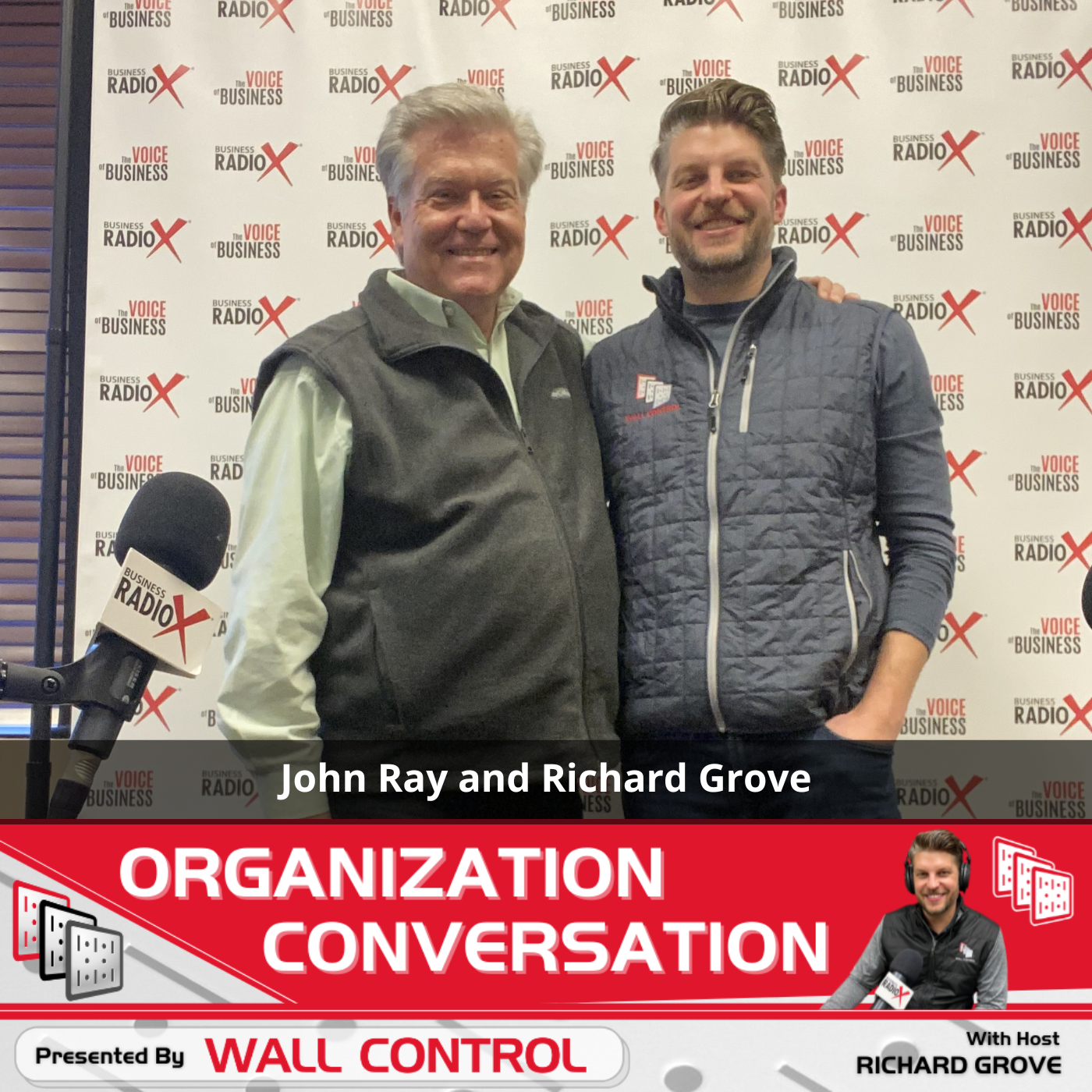
John Ray, Author of The Generosity Mindset, joins Richard Grove on the Organization Conversation Podcast Radio Show

February 21, 2024 by John Ray

John Ray, The Generosity Mindset
North Fulton Studio
John Ray, Author of The Generosity Mindset, joins Richard Grove on the Organization Conversation Podcast Radio Show
Loading
00:00 /
RSS Feed
Share
Link
Embed

Download file

John Ray, The Generosity Mindset

John Ray, Author of The Generosity Mindset, joins Richard Grove on the Organization Conversation Podcast Radio Show (Organization Conversation, Episode 58)

Organization Conversation host Richard Grove welcomed John Ray behind the mic, as John is normally in the background as the producer of the show. John is also a business consultant for service providers, and the conversation revolved around John’s newly published book, The Generosity Mindset. John emphasizes that focusing on intangible values can transform the way service providers view their services and their pricing strategy. He discussed the concept of “value dialogues” with clients to uncover the intangible value that clients find in the outcomes service providers produce. He also advised against standard pricing strategies such as pricing by the hour or pricing based on costs, which fail to capture the clients’ perception of value. Furthermore, he suggests three-tiered pricing (Good, Better, Best) based on different levels of service to let customers choose based on their perceived value. He also emphasized the need for networking and mutual support among service professionals. John notes that practicing The Generosity Mindset™ can significantly enhance a unique perception of a professional’s value and transform their business.

Organization Conversation is broadcast from the North Fulton studio of Business RadioX® inside Renasant Bank in Alpharetta.

John Ray, Author of The Generosity Mindset

John Ray, Author, The Generosity Mindset

John Ray is a pricing, value, and business development consultant for professional services providers. His passion is to help solopreneurs and small firm service providers thrive by using The Generosity Mindset™.  John is the author of The Generosity Mindset:  A Journey to Business Success by Raising Your Confidence, Value, and Prices.

John Ray, The Generosity MindsetIn his business advisory practice, John’s services include advising solopreneurs and small professional services firms on their value, their positioning and business development, and their pricing. His clients are professionals who are selling their expertise, such as consultants, coaches, attorneys, CPAs, accountants and bookkeepers, marketing professionals, and other professional services practitioners.

John is also a podcast show host and producer, and he owns the North Fulton (Georgia) studio of Business RadioX®. John and his team work with B2B professionals to create and conduct their own podcast using The Generosity Mindset™ Method: building and deepening relationships in a non-salesy way that translates into revenue for their business.

John is the host of North Fulton Business Radio and The Price and Value Journey. North Fulton Business Radio, the longest-running podcast in the North Fulton region of Georgia, features a wide range of business and community leaders. The Price and Value Journey is devoted to solo and small firm professional services providers and covers issues such as pricing, value, and business development.

Website | LinkedIn

Topics Discussed in this Interview

00:00 Introduction and Welcome
00:31 Introducing the Guest: John Ray
01:11 John’s New Book: The Generosity Mindset
01:43 John’s Journey in Business and Pricing
02:10 The Importance of Pricing in Business
03:51 The Generosity Mindset Explained
05:23 Understanding the Value of Your Service
10:44 Overcoming Mindset Obstacles in Business
15:28 Conducting Value Conversations with Clients
18:47 Differentiating Yourself in the Market
21:08 Setting the Right Price for Your Service
22:05 Understanding the Value of Your Services
22:26 The Power of Offering Options
22:41 The Magic of Three: Good, Better, Best
25:14 The Impact of Pricing on Your Business
27:13 The Pitfalls of Inadequate Pricing
30:08 The Power of Networking and Generosity
33:58 The Role of Podcasting in Professional Services
35:12 Final Thoughts and Where to Find More Information


About Organization Conversation

Organization Conversation is hosted by Richard Grove and broadcast and produced from the North Fulton studio of Business RadioX® inside Renasant Bank in Alpharetta. You can find the full archive of shows by following this link. The show is available on all the major podcast apps, including Apple Podcasts, Spotify, Google, Amazon, iHeart Radio, Stitcher, TuneIn, and others.

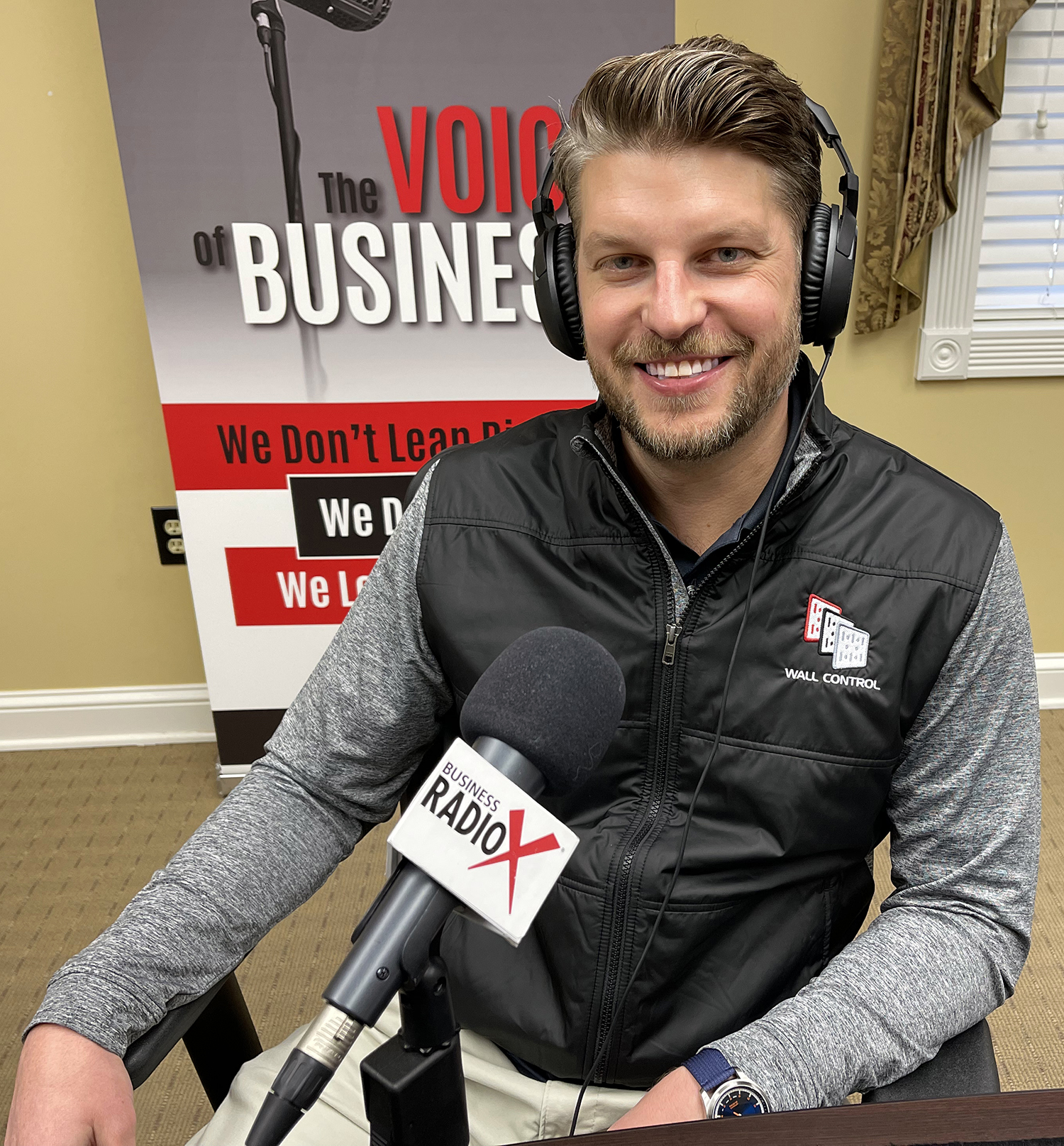
Richard Grove, Wall Control

Richard Grove, COO, Wall Control, Small Business Consultant, and Host of Organization Conversation

Richard Grove‘s background is in engineering, but what he enjoys most is brand building through relationships and creative marketing. Richard began his career with the Department of Defense as an engineer on the C-5 Galaxy Engineering Team based out of Warner Robins. While Richard found this experience both rewarding and fulfilling, he always knew deep down that he wanted to return to the small family business that originally triggered his interest in engineering.

Richard came to work for the family business, Dekalb Tool & Die, in 2008 as a Mechanical Engineer. At the time, Wall Control was little more than a small ‘side hustle’ for Dekalb Tool & Die to try to produce some incremental income. There were no “Wall Control” employees, just a small warehouse with a single tool and die maker that would double as an “order fulfillment associate” on the occasion that the original WallControl.com website, which Richard’s grandmother built, pulled in an order.

In 2008, it became apparent that for the family business to survive, they were going to have to produce their own branded product at scale to ensure jobs remained in-house and for the business to continue to move forward. Richard then turned his attention from tool and die to Wall Control to attempt this necessary pivot, and his story with Wall Control began. Since that time, Richard has led Wall Control to significant growth while navigating two recessions.

Outside of Richard’s work at Wall Control he enjoys helping other business owners, operators, and entrepreneurs along their own paths to success by offering personal business coaching and advising through his website ConsultantSmallBusiness.com. Richard has developed an expansive and unique skillset growing and scaling Wall Control through a multitude of challenges to the successful brand and company it is today. Richard is happy to share his knowledge and experience with others who are looking to do the same within their own businesses.

Connect with Richard:

Instagram | Twitter | LinkedIn | Richard’s Website

About Wall Control

The Wall Control story began in 1968 in a small tool & die shop just outside Atlanta, Georgia. The first of three generations began their work in building a family-based US manufacturer with little more than hard work and the American Dream.

Over the past 50+ years, this family business has continued to grow and expand from what was once a small tool & die shop into an award-winning US manufacturer of products ranging from automobile components to satellite panels and now, the best wall-mounted tool storage system available today, Wall Control.

The Wall Control brand launched in 2003 and is a family-owned and operated business that not only produces a high-quality American Made product but sees the entire design, production, and distribution process happen under their own roof in Tucker, Georgia. Under that same roof, three generations of American Manufacturing are still hard at work creating the best tool storage products available today.

Connect with Wall Control:

Company website | Facebook | Instagram

Tagged With: Author, Business Development, John Ray, Organization Conversation, pricing, professional services, professional services providers, Richard Grove, The Generosity Mindset, value, Wall Control

Sarah Adams, Owner of Blue Chip Branding & Headshots

September 11, 2023 by Amanda Pearch

Forsyth Business Radio
Sarah Adams, Owner of Blue Chip Branding & Headshots
Loading
00:00 /
RSS Feed
Share
Link
Embed

Download file

Sarah Adams, Owner of Blue Chip Branding & Headshots

Sarah Adams is the enthusiastic Owner of Blue Chip Branding & Headshots. This episode, Sarah talks about her unique photography style, why she narrowed her niche to headshots, tips for beginners, how she works with clients in-session that sets the experience apart from others, the importance of professional branding and much more.

Sarah specializes in crafting professional headshots that cultivate connection and provide the foundation for a stand-out personal brand. Book a session now!

The Blue Chip Headshots Studio is located in Cumming GA. Sarah serves the Greater Atlanta area.

Connect with Sarah on LinkedIn


Podcasts by Amanda Pearch

Tagged With: amanda pearch, Amanda Pearch Marmolejo, Atlanta Photographer, Blue Chip Branding & Headshots, Blue Chip Headshots, Headshot Photographer, photographer, professional services, Sarah Adams

Changing Your Pricing Mindset

July 21, 2023 by John Ray

Changing Your Pricing Mindset
North Fulton Studio
Changing Your Pricing Mindset
Loading
00:00 /
RSS Feed
Share
Link
Embed

Download file

Changing Your Pricing MindsetChanging Your Pricing Mindset

On this episode The Price and Value Journey, host John Ray presents “Changing Your Pricing Mindset” to a group of business owners. John lays out mindsets that create problems for professional services providers, such as the mindset of comparison and the mindset of inadequacy. John defines and discusses what he calls “the generosity mindset” as an antidote. He also shares how clients decide to buy based on intangibles, having value conversations with prospects and clients, constructing proposals with a three-option model, and closes by answering questions from roundtable members.

The Price and Value Journey is presented by John Ray and produced by the North Fulton studio of Business RadioX®.

TRANSCRIPT

John Ray: Hello, I’m John Ray on the Price and Value Journey. Recently I was honored to be invited to present to a private round table, organized and run by Terry Dockery, better known as Doc Dockery. He has a business consulting firm called The Resolve Firm and as part of his work he runs this private round table for business leaders and business owners, and occasionally he’ll have guest speakers in to come in and talk about various areas of

[00:00:33] expertise and topics of interest. He invited me to speak on pricing and value and other issues like that, and I gave a presentation called Changing Your Pricing Mindset. And in that presentation I covered issues like mindset and the mindsets which inhibit our growth and the generosity mindset to get over those

[00:01:01] inhibiting mindsets that hold us back. I also talked about the value conversation, how to construct better proposals and more.

[00:01:16] With Doc’s permission, I’m releasing the recording of that round table as an episode of the Price and Value Journey.

John Ray: [00:00:00] Okay. I’m going to talk about pricing mindset. And pricing mindset has a lot to do with you as a services provider, me as a services provider. If you’re a product provider, not so much, but we’ll talk about the difference here in a second.

John Ray: [00:00:21] So, here’s the obvious statement, in professional services, you’re not selling a product. So, you’re not selling a bicycle, you’re not selling apples, you’re not selling doggy treats, you’re not selling cans of green beans or craft beer, let’s say. What you’re selling and what your factory for amounts to is what’s between your ears. It’s the sum total of your experience, your expertise, what you bring to the table for your clients. And what that means is that you are the product. You individually are the product.

John Ray: [00:01:04] And that creates a big problem because, essentially, you’re pricing yourself. Now, you’re not pricing a third inanimate object. That bag of doggy treats or that can of green beans or that bicycle, you’re not pricing that. What you’re pricing is, essentially, yourself because everything that you’re offering that client is you, who you are, and what comes out of your head. And that’s a problem. It’s a problem because what gets in the way as a services provider, you being able to most effectively position yourself and price your services are mindsets, it gets into what’s in our head.

John Ray: [00:01:56] And here are a few of those mindsets that inhibit our growth that hold us back as services providers. One is the mindset of inadequacy. Another way to say that is the imposter syndrome, “I’m not quite good enough to be sitting in front of this client” or “I need to discount my services in order to measure up and to get this client to take a chance on me.”

John Ray: [00:02:24] That’s particularly a problem mindset with somebody that’s new in their business. I get the question all the time about should I discount my services when I’m first starting out. The answer to that is no, and we can get into that if you want to know more about that. But the mindset of inadequacy can even affect you as you grow and you start to take on larger clients. And you get to a point where maybe sometimes you come across a client, you wonder if you’re adequate to be able to handle that client.

John Ray: [00:03:01] The mindset of comparison. So, the mindset of comparison is really pretty simple, particularly in a social media soaked world. It’s, “Hey, I see someone else out there that doesn’t seem to have any warts, any problems. They’ve got slick social media images. They write well, blah, blah, blah. I can’t measure up to that.”

John Ray: [00:03:28] The mindset of binary thinking. Everything is black and white. There’s no gray. That kind of thinking inhibits our growth. The mindset of helping. So, the best example of this I’ve heard in the last few years is, I got invited to speak to a group of leadership coaches, and one of those coaches came up and told me that they are just on a mission to help everyone and they just do not believe in overcharging for the help that they want to be. Another way to say that is that’s the Mother Teresa syndrome. That’s nice and cute, but it’s not going to sustain a business longer term.

John Ray: [00:04:15] The mindset of scarcity. So, the feeling that the world is a fixed pie, that there are only so many clients to go around, and, therefore, whatever someone “takes from me” is something that I’ll never be able to replace. It’s seeing the world as I’ve got to get what I can get today and whatever client is in front of me, I have to sign up.

John Ray: [00:04:45] So, it’s mindsets like this that inhibit our growth. So, to get past this, I think what we have to do is we have to understand there are two distinct perspectives that exist for our clients, our prospects, the community, our network, and us as a service provider. We’re the business owner and we’re looking at ourselves and our expertise. We look at our certifications and, of course, we’re swimming in some combination. Each of us have some combination of some mindset issues that affect how we look at our business.

John Ray: [00:05:27] Clients, however, have an entirely different perspective. They don’t see those mindset issues that we have. And a lot of them really don’t care about our expertise and certifications. What they care about is solutions to their problems. And they are sitting in front of us for a reason that goes beyond the things that we like to talk about, which is our expertise, our qualifications, degree, certifications, past clients, et cetera. Those aren’t the same perspectives.

John Ray: [00:06:11] Here’s my solution to this, if you will, or the way I think about it and my philosophy about it in terms of what I see as work for me and many others. And it’s really making it about others in terms of the mindset you bring to the table. So, those clients, prospects, referral partners, community is creating a generosity mindset around that entire ecosystem, if you will. And not leaning into those mindsets you carry in your head but the needs, hopes, desires, wants, dreams of that person sitting in front of you, whether they’re a client, a prospect, a referral partner, or a member of your community.

John Ray: [00:07:05] And the generosity mindset has a number of different characteristics, but here are just a few. It’s empathetic. Generosity is something where you’re standing in the shoes of someone else and thinking about their needs and wants first. You’re thinking in terms of how you empower others to improve their lives and their businesses and create transformative outcomes for them, both professionally and personally. It’s not transactional.

John Ray: [00:07:42] So, sometimes when you hear some people say I want to help, the way they frame that sometimes can be transactional and it feels that way and people smell that, “when you want to help” but there’s a catch. And I think the companies that did particularly well during the pandemic were those that helped without a catch to it, if you will. Those that had a catch to it, consumers, the rest of us, we all smelled that out. And people are very smart and they see through that.

John Ray: [00:08:30] So, generosity mindset is not transactional. And, again, it’s about empowering others. I feel so strongly about that, I have said that on here twice. But maybe it’s all summed up in one of my favorite books, The Go-Giver by Bob Burg. And he says, your influence is determined by how abundantly you place other people’s interests first.

John Ray: [00:08:55] And you can put income, you can put your value, you can put a lot of different nouns in there in place of influence, and they all come out the same is that the extent to which you place other people’s interests first is the extent to which your business ultimately will grow.

John Ray: [00:09:16] Now, here’s the beautiful irony of this. We as business owners, we see ourselves in a certain way and the clients view us as outcome deliverers. And what they’re looking for is value received, and their perception of value received is really how they’re looking at us. And they’re looking for transformational outcomes. And the value of those outcomes are always more, worth more to them than what we see. They see more value in us as services providers than we see in ourselves.

John Ray: [00:10:02] Now, why is that? Let’s talk about the lottery. This is a good way to explain intangible value. So, we’ve had several billion dollar lotteries, and the odds of winning $1 billion lottery are about one in 300,000,000. So, one piece of paper that you receive after standing in line for however long you have to stand in line to get one of those pieces of paper, that’s a statistically worthless piece of paper. That’s what the odds of one in 300,000,000 amount to.

John Ray: [00:10:42] Well, people are obviously buying those tickets for some reason. So, what are they getting if the chances are overwhelming that they’re buying something that they’re not going to receive any money back from? What they’re receiving are hopes. Hope springs eternal, as it will. They’re dreaming of what they’re going to do if they win.

John Ray: [00:11:07] Identification. Identification is, “Hey. I’m standing in line with all the people in my community.” Fear of missing out, “There’s my wife right there who texts me and says, ‘Hey, did you buy a ticket for the billion dollar lottery?'” So, there’s the fear of missing out. We can’t win if we don’t play. So, all of those benefits are intangible benefits, and that’s the reason people buy. They get something out of buying that ticket that goes well beyond the value of the ticket or they wouldn’t buy.

John Ray: [00:11:42] So, the point of that is that clients buy based on intangibles, not just tangible value. They buy based on intangibles. And if you want to characterize what those look like, it could be things like fulfillment, you feel more educated, for example, because I have engaged in the service, or identity. Identity may be a plain baseball cap is worth a whole lot less than one that’s got a Georgia Bulldogs logo on it. There’s identity.

John Ray: [00:12:21] Nostalgia, that may be an old soft drink that people have nostalgia for or an old type of food or a place or what have you. Enhancement, something that enhances my life in some way, whether that’s through knowledge or pleasure or what have you. Rituals, the place I drive by every day or the same coffee place I go to every day for my coffee or what have you. And indulgence is how I reward myself. So, whether that’s my favorite restaurant, my wife has her favorite place to go get a facial, what have you.

John Ray: [00:12:58] These are intangibles that have nothing to do with your service per se. So, let me explain how this works in real life. So, this is my friend Gloria Mattei. Gloria is the owner of Nothing Bundt Cakes, which she’s got now two locations, one here in Alpharetta and one in Sandy Springs. And Gloria came on my show and the first question I always ask on my show is the elevator pitch question, let’s tell folks about how you serve everyone.

John Ray: [00:13:32] And the first thing that she said on my show was we deliver joy. See, she’s positioned herself in an entirely different place than the sheet cake makers at Walmart and Kroger that are right around the corner from her locations. And when you see her product – you can get a sense of it here in one of these photos – you can see why people light up when someone walks in the room with one of her cakes. So, yes, she does deliver joy.

John Ray: [00:14:05] And the other intangibles that she has as well that she likes to talk about is that she’s a locally owned business. So, she’s not a unit of some corporate entity that’s located out of town. And she’s very active in the community in terms of supporting local charitable causes. So, when you support her business and you buy joy from her, if you will, you’re supporting local, charitable causes.

John Ray: [00:14:35] Here’s another example closer to home in professional services. Roger Lusby and Frazier & Deeter – they do a show with us, they’re a client of mine – he had one of his clients on, a fellow named Chuck Walker. And during the show, I asked Chuck, I said, “Tell me about Frazier & Deeter and how they’ve helped you build your business, and what it’s like working with Roger Lusby?”

John Ray: [00:14:58] And he didn’t say anything about the quality of his tax return, or the quality of business advice, or anything like that. Although, Roger has been a long time provider to him and so he must be doing a great job. The first thing he said was, “Roger has a calming effect on me.”

John Ray: [00:15:19] He says, “Sometimes when you talk to Roger, I don’t really come away with anything, maybe necessarily, although I usually do. But he helps calm me down because I’m an excitable guy and I get mad when I get a notice from the IRS or I’ve got a business problem or something like that. He just talks me through and calms me down.” That’s a complete intangible that has nothing to do with the quality of the tax return preparation or the business advice itself.

John Ray: [00:15:53] So, this – what I call – generosity mindset, how does it play in terms of how we have real conversations with real clients? It starts out by having a value conversation with a prospect that talks in terms of looking at that conversation from their perspective. We’re not pitching. We’re not selling anything. We’re just having a conversation to see if I’m the best fit because I may not be. And if I’m not, we’ll find someone else who is. Oh, and by the way, we will only enter into this relationship if the value that I provide is more than the price you pay. Everyone will say yes to that because that’s what people are looking for. Always.

John Ray: [00:16:47] And when you have a value conversation with a prospect, you want to get strategic so that you can ask a whole lot of questions that may or may not necessarily apply to your service. But what they do for you is allow you to get to what the real underlying dreams, hopes, needs, concerns of that client really are. And you allow clients to brain dump with the reasons that they called you, but also the things that are going on in the back of their head that they may not think are germane but actually truly might be.

John Ray: [00:17:33] Some of these questions I like to ask are questions like What’s keeping you up at night? What are you procrastinating about? That’s always a great question. My favorite is, How does your spouse or your significant other feel about your business? And I wrote a LinkedIn piece about this, so if you’re already following me on LinkedIn, you can find it there. It’s a newsletter I released last week. My newsletter is called The Price and Value Journey, and you can find it there.

John Ray: [00:18:06] But it was about a client meeting I had with a fellow that called me to come in and advise him on his business. And he was going on and on about how this and that was going well, and he had these multiple locations, and what great things he had done. And it was getting to the point where I was wondering why I was there.

John Ray: [00:18:27] And then, his spouse came in. And we introduced and she asked who I was, and I told her. And she said, “Oh, my gosh. Thank you so much for being here. We’ve got all sorts of problems and our books are terrible. We don’t know exactly what we’re making. We don’t know what the business is worth. Our retirement is sunk into this business and we don’t know what all that’s going to end up being worth.”

John Ray: [00:18:53] Guess what? Truth blew in the room when she came in. And, suddenly, I had a clear picture of what the needs, hopes, and desires of that client were that her husband really didn’t want to get into voluntarily.

John Ray: [00:19:10] I love to ask why questions, because why questions are catalytic. They cause people to think. So, when you’re in front of somebody talking about your business, Why are we doing this? What’s the end game? What do you think you’re going to accomplish out of this? What would happen if you just left things like they are? Why now? Is it really urgent that you do it now? You made this call to me or you’ve been referred in to me for a reason, why are we doing it now? And why did you wait so long to address the problem? Why me because I’m not the cheapest?

John Ray: [00:19:49] You see what I did there? I’ve positioned myself for a later conversation around price. Why not just handle that internally or do it yourself or hire someone else? So, why me? This is a very powerful question to ask.

John Ray: [00:20:09] Now, one thing about a value conversation is I think it’s not just a conversation you have with prospective clients. It’s a continuing dialogue, if you will, that you have with your clients. “Hey, how are things going? What are we doing right lately? Hey, we’ve cleaned this up or that up in your business, how has that transformed things that are going on in the rest of your business? Those kind of questions that you ask on an ongoing basis are really valued dialogue. And that value dialogue helps you later when it comes to having a conversation around raising prices.

John Ray: [00:20:54] Let’s talk briefly about proposals. The biggest mistake professional services folks make in offering a proposal is there’s one option and one price. And basically what you’re saying to a client is take it or leave it. It’s basically yes or no. It’s an ultimatum. That’s not a great message to leave.

John Ray: [00:21:15] What you really want to do is offer choices. And it’s really a recognition that different clients have different values. And clients like choices to an extent they can get confused with way too many choices. They’re relying on you as the expert to craft options that they can choose from.

John Ray: [00:21:38] Three is the magic number. So, it’s kind of a good, better, best model. Three is not overwhelming. And there’s a tendency to gravitate to the middle option. So, I advocate a good, better, best model. Good is your basic version of what’s requested by the client. Better includes a little bit more, so everything that’s in your good category plus additional benefits. Those benefits, by the way, may be, if you’re in the services business, things like your accessibility, how quickly you deliver the service, that kind of thing. So, it doesn’t all have to be additional things that you do. It’s how you deliver your service. And, of course, best is your velvet rope option, if you will.

John Ray: [00:22:34] Now, the biggest mistake that a lot of services folks make is they have one option, and that option is basically best. There’s no differentiation here.

John Ray: [00:22:47] Constructing a proposal, so I believe there’s just a few basic things that a proposal needs to have. Please do not put your qualifications, your picture, your degrees, anything about yourself in a proposal. That’s already settled. You wouldn’t have gotten that far if the client had any concern about that. So, please don’t put your team pictures, don’t put any of that stuff in there.

John Ray: [00:23:18] You simply reiterate the customer request, what did they originally talk about and what came out of that value conversation that you had. So, what you’re doing is you’re demonstrating that you were listening and you’re demonstrating an understanding of the client.

John Ray: [00:23:36] You provide options, recommendations. I call my proposals engagement recommendations or engagement options. I don’t like the term proposal because I’m an expert just like you are. And experts don’t propose, they give recommendations. So, when you go to the doctor, it does not propose to do something for you and you should be the same way.

John Ray: [00:24:03] And then, terms and conditions, that’s how you’re going to get paid. And that’s a pretty important piece of any document that you put in front of a client.

John Ray: [00:24:14] So, here’s just an example of a client that I worked with and what happens, the power of offering options. And this particular client, I can’t really get into the detail of exactly what they do, but essentially what they offered was an online coaching experience, we’ll call it, that lasted for a couple of hours and it was $800. Now, they didn’t price it by the hour – thank goodness. And by the way, you will notice that none of this really works that well if you’re pricing by the hour. That’s an entirely different discussion I’m happy to have.

John Ray: [00:24:59] But this particular client was thinking of it that way, if you will, and he was looking at the service that he offered in this experience and looking at it and saying I’m making $400 or $500 an hour, that’s pretty good money. And as we went into it and started thinking about it, what we talked about was what’s the perceived client value that’s coming out of that experience that you’re giving that client? And what we came up with were good, better, and best options.

John Ray: [00:25:40] And what was clear is what he had previously been pricing at $800 really had perceived value that was much, much higher such that he could justify a $1,500 price. We went through a whole exercise about what would be in his better option, what would be in his best option. I tried to get his best option a lot higher than 5,000, but he wouldn’t do that, so that’s as high as we went. But what we did was we came up with options that would allow him to put those in front of a client and let them choose what was the best fit for them.

John Ray: [00:26:21] So, right out of the chute, the first client he put this in front of chose the better option for $3,300. So, you don’t need me to do the math on this. That’s over four times the revenue you would received otherwise. Here’s the deal, the first bullet point is the most important to me, that client received much more value than they thought possible. They’re the ones that selected that. He didn’t. They selected that.

John Ray: [00:26:58] So, what he was doing by simply offering one option at a much lower price, he was not offering clients the value that they wanted to choose. So, it was really was all about them. And when he made it about them and gave them choices, those choices inevitably end up working out better for him as well. So, it’s happier client, happier consultant.

John Ray: [00:27:30] So, I’m going to take questions at this point because I’ve hit a lot of this at a real high level. And what I find is it starts generating questions and I want to get to that. But just real quick, you can find out more about me at pricevaluejourney.com. That includes my podcast. And I also have a book coming out later this year, it’s called – ironically enough – The Price and Value Journey: How to Improve Your Confidence, Your Value, and Your Prices Using the Generosity Mindset Method. So, that’s the name of the book, and here are some of the topics, whatnot, that you’ll find that I’ve addressed in my podcast and I’ll be addressing in my book as well.

Speaker 1: [00:28:18] John, how did you know that you could drop that last bit about the sky’s the limit on pricing your professional services? Right at the time when Terry had stepped out of the room, we really appreciate your ability to deliver that message when he couldn’t hear it.

John Ray: [00:28:34] Timing is everything, right?

Speaker 1: [00:28:35] Yeah, yeah, yeah.

Speaker 2: [00:28:36] John, I’ve been thinking of engaging in myself because I feel like I’m not charging these guys merely —

Speaker 1: [00:28:42] No. No. I already cut that off because you were out of the room. There was a whole bunch of caveats on there that you didn’t hear.

John Ray: [00:28:55] Well, I’m interested in your question. So, what questions can I answer?

Speaker 2: [00:29:00] I have a question for you.

John Ray: [00:29:02] Please.

Speaker 2: [00:29:02] But it’s very [inaudible]. So, I used to cut my teeth doing Fortune 500 consulting. I was traveling a lot, and my kids were growing up without me, and I was making a lot of money, but I was miserable. So, I decided to move downstream to the small business market and focus on the Atlanta region, basically to get out of hotels and off airplanes.

Speaker 2: [00:29:23] And it has been a pricing dilemma. What people used to pay me just to have access to be able to call me was a whole lot more. And it’s funny because it’s a different market of people in the smaller companies, they’re not as comfortable asking for help. The corporate guys get used to bringing in experts. And small business people – we’re talking about that earlier – they want to do everything themselves, they have a hard time asking for help, et cetera.

Speaker 2: [00:29:54] So, finding a pricing model that works in that market has always been an ongoing debate with myself about, “Damn. I’m worth more than that.” But then, what can a small business person realistically spend that makes sense for their budget where their kid doesn’t have to do without braces or that sort of thing? Anyhow, I’m sure you deal with small businesses and entrepreneurs that are scaling up their businesses. And I don’t know if that’s a question, but it certainly is an ongoing concern just for these guys and for myself as well.

John Ray: [00:30:29] Yeah, I mean – go ahead. Someone else had —

Speaker 1: [00:30:33] No. I’d like to hear your response.

John Ray: [00:30:35] Okay. Yeah. So, there’s several things there. So, one is that the caché and the authority value of the business card that you used to have is not with you anymore, so that’s one thing. And, yes, that can be a negative because people by McKinsey, let’s say – I’ll use that term – they buy the security of McKinsey not the consultant. In the small to medium-sized business market, they’re buying the consultant.

John Ray: [00:31:13] So, here’s a couple of things. One is that, when you come in with an hourly price to someone like that, the problem with an hourly price to a small to medium-sized business owner is they’ll tell you, “Hey. I’m not making $500 or 750 or 1,000 an hour.” Whatever you’re charging, they immediately look at that and say that makes no sense. And, of course, quoting an hourly rate is not the final price anyway, because they don’t know how long anything’s going to take. And, frankly, it really doesn’t matter how long it takes. It should not matter to them. What they care about are transformational outcomes, not how long it takes you to do it.

John Ray: [00:31:55] And increasingly, with the way services are changing with AI and a lot of other tools, we can come up with diagnostic solutions faster than ever. So, it’s really incumbent upon us to get away from hourly pricing. But part of what I think you have to do is have that value conversation with clients.

John Ray: [00:32:20] And let’s talk about what this project is going to do, not just for you professionally and in your business, but what is it going to do for you personally. So, what I tell people in my pricing consulting is I’m the difference between somebody being able to vacation in Rome, Georgia versus Rome, Italy. That puts it in an entirely different frame of mind. That gets into where the spouse wants to go for vacation, or whatever, and doesn’t want to get stuck on vacation. I call it a confidence crutch. That’s what you lean on. You don’t lean on the service itself. You lean on the value of the transformation.

John Ray: [00:33:11] So, that’s why value conversation is so important and that you continue to dig on, let’s say, we get this project done and it’s going to cost your business to make X more in revenue. What’s that going to do for you? It allows us to hire more employees so we can expand, maybe expand our sales force. What is that going to do for you? And you keep digging into that. And there’s value that comes out of that, that is not just tangible but intangible. And it’s a multiple, a big multiple of whatever it is you’re charging.

John Ray: [00:33:53] So, what that does is it makes your fee, whatever you decide to charge, an investment in an outcome. And it also creates room for you to improve your price. Now, there’s a lot more to it than that, but that’s the best answer I can give in just a couple of minutes. Does that make sense?

Speaker 1: [00:34:22] Yeah. Yeah. What’s got me thinking and marveling at this is how you took a concept that we were talking about pricing and pack so much more into it. This idea of the generosity mindset, which requires an attitude and behavior of empathy, I’ve written out a formula that you got me thinking about. And the formula is nothing but equals, so it’s not a real formula. Empathy equals respect. Respect equals trust. And trust equals next. Meaning next problem, next opportunity, next whatever.

Speaker 1: [00:35:10] Because I’m already thinking past what we’re talking about right now. I know that we’re going to address what we’re talking about right now, but I’ve now blown past all of the, like you say, statement of work, proposal, et cetera, et cetera. I’m just thinking about where do we start on the next item?

Speaker 1: [00:35:32] And pricing isn’t even in the conversation at that point because they’re already trusting you to essentially price your services appropriately for them because you do everything else appropriately with them in mind. And like I say, you’ve just packed so much into a pricing parameter that is really helpful to think through what we perhaps stumble through as to what we think and how we deliver our services and how we engage with our customers.

Speaker 2: [00:36:08] John, I hope you heard that compliment.

John Ray: [00:36:10] Thank you. Thank you for that. Thank you very much.

Speaker 2: [00:36:13] We got about ten minutes left, but before you get away, I have decided to double the price of this group, and I want to thank you for giving me the confidence to do so.

Speaker 1: [00:36:22] That joke is already an old joke. I’m worried that long.

John Ray: [00:36:26] It’s an old joke, but I didn’t hear much of a value conversation that came out of it. That was a real truncated value conversation, Doc, so you’re going to have to do better than that, bud.

Speaker 2: [00:36:34] I skipped a few steps, I guess.

Speaker 5: [00:36:38] I got a question. You had talked about kind of the Goldilocks price and a good, better, best, and how someone who doesn’t have that today just has a best option. And I’ve seen it for myself and I’ve seen it for other people, where, when you take just that and then you start to build out the good, better, best very quickly, it comes back to wanting to just be nice to people. And if someone chooses the good, they continue to get the best treatment.

Speaker 5: [00:37:11] So, where someone struggles when they created this stratification into three levels, now a client comes in and chooses the lowest level, but the service provider still gives them the same level of attention and support as someone who chose the top. How do you help someone work through dialing down their service for scope creep?

Speaker 2: [00:37:35] Scope creep.

John Ray: [00:37:36] Yeah. There’s horror movies with that name, scope creep. Yeah. So, this is where you have to, first of all, document. So, this is why the engagement recommendations are so important because you’re documenting the scope. And if someone comes back to you and says can you do X, that’s in your better or best options and they’ve got your good option, then what you say is, “You know what? Here’s the thing, I’ve got folks that are paying for that and it’s not fair to them for me to give that away, because, essentially, it would be giving it away because you didn’t select that to begin with. And I understand why you want that now, so let’s talk about that. Okay? Let’s talk about what a different kind of relationship looks like.” That’s one way to address it is that, because what you’re getting at with that client is what’s fair. What’s fair?

Speaker 2: [00:38:43] Reciprocal empathy.

John Ray: [00:38:45] Yes. Essentially, that’s a good way to put it. And people want themselves to be treated fairly, so they understand, most of them do. The vast majority of people are going to understand that response. But the key is having the guts, frankly, to have that conversation. And a lot of times it’s just easier to do that because you want to please. We’re all pleasers, right? We want to please our clients. And there’s nothing wrong with that, but we don’t please by giving things away ultimately, because what we’re doing is, of course, we’re really changing the value perception that they have of our service and ourselves.

Speaker 3: [00:39:35] Related to what you just said, value and perception, on the last slide, I think the first bullet point was where you were saying when the client did the better option and you said that was a win-win for the service provider and the client. The first bullet point you said there is that something like the client perceives a much higher value.

Speaker 3: [00:39:58] Can you elaborate on that, why you say that? Is that because they picked the middle one, is it because it’s their decision, it’s a psychological thing that they’re saying, “Okay. Because this is my choice, and I had three choices, I picked what I perceived to be the greatest value.” How do you make that statement with confidence that because they picked it, they perceive it to be a higher value or the highest value?

John Ray: [00:40:23] Yeah. That’s a really important question. So, let me give an example here. And I know we’re running up on time, but this is going to be a quick example. So, let’s talk about coffee. I’m a cheapskate when it comes to coffee. Even the dollar cup at racetrack, I’m perfectly fine with the racetrack coffee, but I’d rather come to Doc’s office and let him buy my coffee. So, I’m a cheapskate when it comes to coffee.

John Ray: [00:40:51] My daughter wears out Starbucks every day for 5 or 6 bucks. The most expensive cup of coffee in the United States is a $75 cup of coffee from some farm in Panama. And it’s a one night only tasting blah, blah, blah. Who knew coffee is like wine? I had no idea. I’m not criticizing it. People see value in that.

John Ray: [00:41:14] There’s an example right there since we’re talking about the middle option, if you’re offering my daughter who wants to pay more than racetrack cup of coffee, then that doesn’t match. And she’s willing to pay more for what she perceives as more value. And that’s really what we’re talking about.

John Ray: [00:41:38] So, each of us have our own laundry list of services or things that we do for clients that people have different perceptions of value of. And what we’re trying to do is better match client perception of value with the particular mix of service that we offer. Does that make sense?

Speaker 3: [00:42:01] That’s a great explanation. The daughter wanting to buy the more expensive cup of coffee. But [inaudible] makes good sense.

Speaker 2: [00:42:09] So, what [inaudible] wants.

Speaker 3: [00:42:12] It’s the perception of what you’re getting because you’re spending more enhances – I think psychologically, part of what you’re saying is I’m getting a better value because I’m paying more for it.

Speaker 1: [00:42:20] Or I’ve figured out that this is —

Speaker 2: [00:42:24] Can the value be tied to whether the solution I’m looking for is a pain point or it’s nice to have?

John Ray: [00:42:37] Yeah. It makes perfect sense. And, yeah, thank you for that. Because, hey, pain, particularly with small and medium-sized businesses, that may be one of the hardest things we have to do when we talk to our business clients, is, they’ve been dealing with pain so long they’ve forgotten what it’s like to be well. And so, they don’t even know what that feels like. And you have to draw a picture of that.

John Ray: [00:43:08] But psychologically, pain avoidance is the biggest thing that makes us react to something. Only half the people in this country go to the dentist regularly. Think about that. They would rather avoid potential pain than deal with dental hygiene. That’s a powerful emotion. And if you can tap into that emotion with your service offering, it has powerful perceived value.

Speaker 4: [00:43:42] Yeah. Because usually when I deal with clients, I haven’t looked at it, unfortunately, from a value standpoint. It’s always been I have a Tylenol or a vitamin analogy, and I try to put them in one of those buckets to know if this will be a potential client or not. So, from hearing you talk today, I’m definitely looking at things a little differently.

John Ray: [00:44:07] And see, here’s the thing, our clients that we’ve had successful engagements with will tell us some of these things. And this is where you go talk to them. What did this engagement do for you that goes beyond just the engagement itself, and have that conversation. You’ll be amazed at what you find out. And you’ll also be amazed at what you find out, how people see value in you. They will come back with things like you had a calming effect or you had these other intangibles that are reasons why they did business with you or doing business with you, and it’s important for you to know what those are.

Speaker 4: [00:44:57] Very helpful.

Speaker 1: [00:44:58] That phrase that you used is something I haven’t heard before that is especially powerful, why questions are catalytic. There’s so much there in those few words. That’s wonderful. Keep using it.

John Ray: [00:45:14] Yeah. Thank you. I mean, see, we’re sitting here talking about this intellectually, and, hey, I’m on a journey. We’re all on a journey. That’s why I call my podcast The Price and Value Journey. We’re all on a journey doing better about this, and I am too.

John Ray: [00:45:35] I’ll just throw this in, by the way, one change I’ve made recently and it worked quite well, when I went to raise the price for a client, I presented them a whole new set of engagement options. I didn’t come back to raise the price on the existing set of service deliverables. I gave them a whole new set of options.

John Ray: [00:45:57] And the basic option was what they had today where I had a higher price. And I went through that and explained the value that they had gotten out of. And so, I had a value conversation along the way and they had told me about all the things that had happened because of their consumption of that basic service option, if you will.

John Ray: [00:46:23] But then, I gave them a better and a best, “Hey, if you want more, here’s how you can get that and here’s the value that comes out of that, I think.” And guess what? They picked the middle option. So, I got a much more engaged client a much higher fee. So, think about using options just to be able to raise your price.

John Ray: And that’s it. And I want to thank again my friend, Doc Dockery for allowing me to repurpose the recording of that presentation as an episode of the Price and Value Journey. Doc does great work, and if you’d like to know more about him you can go to the resolve firm.com. That’s The resolve. R E S O L V E firm dot com. That’s the name of his consulting practice. Doc is also the author of “Leadership, Happiness and Profit :12 Steps to a High-Performance Business.” You can find that book on Amazon and it’s terrific. I can’t recommend it highly enough if you’re looking to be happy and scale your business at the same time, that’s Doc’s specialty.

[00:00:49] Check him out at your convenience. And folks, just a quick reminder that more information on The Price and Value Journey can be found at pricevaluejourney.com. You can find a link to our show archive there at pricevaluejourney.com. And of course, you can find the show on all the major podcast apps.

[00:01:11] You can also sign up to receive updates on my book that’s coming out later this year in 2023. It’s called “The Price and Value Journey: Raising Your Confidence, Your Value, and Your Prices Using the Generosity Mindset Method.” We cover a lot of the topics in that book that you’ve heard on this episode. So if you like updates on when that book will be released check that out.

[00:01:38] And if you’d like to connect with me directly, you can email me, john at john ray.co. Thank you for joining me.


About The Price and Value Journey

The title of this show describes the journey all professional services providers are on:  building a services practice by seeking to convince the world of the value we offer, helping clients achieve the outcomes they desire, and trying to do all that at pricing which reflects the value we deliver.

If you feel like you’re working too hard for too little money in your solo or small firm practice, this show is for you. Even if you’re reasonably happy with your practice, you’ll hear ways to improve both your bottom line as well as the mindset you bring to your business.

The show is produced by the North Fulton studio of Business RadioX® and can be found on all the major podcast apps. The complete show archive is here.

John Ray, Host of The Price and Value Journey

John Ray The Price and Value Journey
John Ray, Host of “The Price and Value Journey”

John Ray is the host of The Price and Value Journey.

John owns Ray Business Advisors, a business advisory practice. John’s services include advising solopreneur and small professional services firms on their pricing. John is passionate about the power of pricing for business owners, as changing pricing is the fastest way to change the profitability of a business. His clients are professionals who are selling their “grey matter,” such as attorneys, CPAs, accountants and bookkeepers, consultants, marketing professionals, and other professional services practitioners.

In his other business, John is a Studio Owner, Producer, and Show Host with Business RadioX®, and works with business owners who want to do their own podcast. As a veteran B2B services provider, John’s special sauce is coaching B2B professionals to use a podcast to build relationships in a non-salesy way which translates into revenue.

John is the host of North Fulton Business Radio, Minneapolis-St. Paul Business Radio, Alpharetta Tech Talk, and Business Leaders Radio. house shows which feature a wide range of business leaders and companies. John has hosted and/or produced over 1,700 podcast episodes.

Coming in 2023:  A New Book!

John’s working on a book that will be released in 2023:  The Price and Value Journey: Raise Your Confidence, Your Value, and Your Prices Using The Generosity Mindset Method. The book covers topics like value and adopting a mindset of value, pricing your services more effectively, proposals, and essential elements of growing your business. For more information or to sign up to receive updates on the book release, go to pricevaluejourney.com.

Connect with John Ray:

Website | LinkedIn | Twitter

Business RadioX®:  LinkedIn | Twitter | Facebook | Instagram

Tagged With: changing your pricing mindset, generosity mindset, John Ray, mindset, Price and Value Journey, pricing, professional services, professional services providers, solopreneurs, Terry Doc Dockery, value, value pricing

Burnout in Professional Services, with Dr. George Vergolias, R3 Continuum

June 8, 2023 by John Ray

Burnout
North Fulton Studio
Burnout in Professional Services, with Dr. George Vergolias, R3 Continuum
Loading
00:00 /
RSS Feed
Share
Link
Embed

Download file

Burnout

Burnout in Professional Services, with Dr. George Vergolias, R3 Continuum

Dr. George Vergolias, Chief Clinical Officer at R3 Continuum, joined host John Ray to discuss burnout in solo and small firm professional services providers. Dr. Vergolias described the stages of burnout, differentiated between stress and burnout, and offered tips and strategies to mitigate its effects, particularly when your firm is small without a lot of big firm resources. He also discussed building resilience in recovery from burnout, broaching the topic with someone you think might be suffering, and much more.

The Price and Value Journey is presented by John Ray and produced by the North Fulton studio of Business RadioX®.

R3 Continuum

Behavioral health is fundamental to workplace wellbeing, culture, and performance. It is also the key to resilient and thriving employees, organizations, and communities. For over thirty years, R3 has been a workplace behavioral health pioneer and innovator, providing rapid response and ongoing behavioral health solutions that help people and organizations recover, perform, and thrive in the wake of disruption and stress.

Company website | LinkedIn | Facebook

Dr. George Vergolias, Chief Clinical Officer, R3 Continuum

Dr. George Vergolias, Chief Clinical Officer, R3 Continuum

George Vergolias, PsyD, LP is a forensic psychologist and threat management expert. As part of his role of Chief Clinical Officer of R3 Continuum, he leads their Threat of violence and workplace violence programs.

Dr. Vergolias is also the founder and President of TelePsych Supports, a tele-mental health company providing involuntary commitment and crisis risk evaluations for hospitals and emergency departments. He has over 20 years of forensic experience with expertise in the following areas: violence risk and threat management, psychological dynamics of stalking, sexual offending, emotional trauma, civil and involuntary commitment, suicide and self-harm, occupational disability, law enforcement consultation, expert witness testimony, and tele-mental health.

Dr. Vergolias has directly assessed or managed over one thousand cases related to elevated risk for violence or self-harm, sexual assault, stalking, and communicated threats. He has consulted with regional, state, and federal law enforcement agencies, including the FBI, Secret Service, and Bureau of Prisons.

He has worked for and consulted with Fortune 500 companies, major insurance carriers, government agencies, and large healthcare systems on issues related to work absence management, workplace violence, medical necessity reviews, and expert witness consultation.

LinkedIn

TRANSCRIPT

John Ray : [00:00:00] Hello, I’m John Ray on the Price and Value Journey. As we pour our passion and energy into serving our clients and growing our respective businesses, we often find ourselves walking a tightrope, you might say, balancing multiple responsibilities in our firms and with our families, of course, and pushing ourselves to meet the ever-increasing demands of entrepreneurship. Those never stop. The risk of burnout is ever present in that kind of situation and understanding its causes, its consequences, and most importantly, prevention strategies is essential for our well-being and our long-term success.

John Ray : [00:00:44] So, to address the issue of burnout, I’m privileged to have Dr. George Vergolias join us today. George is a doctor of psychology. He’s a workplace resilience consultant. He’s an expert in workplace well-being. He’s got quite a CV, you might say, in this area. And he is the chief clinical officer at R3 Continuum, and R3 Continuum is a worldwide leader in providing tailored behavioral health solutions for organizations that help people manage through workplace disruption and stress. George, thank you for joining us.

George Vergolias: [00:01:23] Pleasure to be here, John. Thanks for having me.

John Ray : [00:01:25] Yeah, thank you so much. So before we get going on burnout, let’s talk a little bit about you and R3 Continuum and the work you’re doing.

George Vergolias: [00:01:34] Certainly. Let me start with talking about R3 Continuum. We’ve been in business for about 35 years, and as you said in the intro, we really offer tailored behavioral health solutions to workplaces to help promote well-being, help mitigate disruptive events. Those could be anywhere from a natural disaster like a fire or tornado, as well as manmade tragedies like an active shooter situation, an accidental death, a suicide at the workplace. We respond to almost 3000 individual events every month. We have an international network of providers that we leverage to do that. And our goal is in that front to really help people recover and bounce back from those events in a way that kind of maximizes their resilience and allows them to get back on their feet.

George Vergolias: [00:02:21] We also offer a range of psychological evaluations that might be required in the workplace, fitness for duty evaluations, pre-employment screens that help reduce risk and help, again, get people back on track that may be struggling with some issues. And then, we do workplace violence solutions as well because unfortunately, we see a rise in those across the workplace, across all sectors.

George Vergolias: [00:02:46] And then, we have a leadership program and executive optimization, leadership wellness program, where we work with high-level leaders and a number of organizations, both small and large, around helping promote their well-being and their leadership skills. And part of that is leadership wellness, support as well as performance coaching. So, it’s a wide range of activities that we engage in, but all of it is geared towards offering those tailored behavioral health solutions to the workplace.

George Vergolias: [00:03:14] As far as my background, I’ve been a psychologist, initially a clinical psychologist, and I did my post-doc in forensic psychology at Notre Dame many years ago, longer than I care to admit. But I’ve been doing this for almost 30 years. And early career, I actually did a lot of traditional forensic work. I did a lot of work with the courts. I did a lot of assessments for people not guilty by reason of insanity and so on.

George Vergolias: [00:03:39] And then, at one point I started moving into doing school violence assessments and school shooting assessments right around the time that Columbine hit and when that occurred, because there were so few specialists doing that, you were thrust into being an expert. A few years later, I transitioned that expertise into the corporate setting, working with workplace violence, and I’ve been doing that now for 20-plus years.

George Vergolias: [00:04:01] It was about 10 or 12 years ago that I really felt like when I joined R3 about 12 years ago, it was right around that time that I began to realize that dealing with individual threats, I still do that, by the way. It’s an important activity. There’s a lot we can do to mitigate threats if we’re aware of them. But I felt like it was whack-a-mole, like you would deal with one threat and mitigate it and then another would pop up somewhere else and another would pop up somewhere else.

George Vergolias: [00:04:28] And I began to ask the question, “What can we do at scale? What can we do larger? And I was watching a documentary on the Dalai Lama, ironically, and it struck me, John, that the Dalai Lama is probably close to 0% risk of engaging in a mass shooting because the Dalai Lama it’s because he’s living his life, maximizing a sense of emotional and psychological well-being. He’s living a really sharp, well-honed life of resilience and compassion. And that got me thinking. If we could build workplace cultures, and let’s be honest, we spend about a third of our life at work, if we could build workplace cultures that foster well-being and resilience, we at scale can really start moving the needle towards more people being somewhat inoculated from engaging in heinous, violent acts. That’s what got me into understanding psychological resilience and well-being. I approach it from a kind of a tougher edge. I don’t approach it from the let’s-go-to-a-mountain-top-and-do-yoga approach. I find it’s really useful. And then, of course, the pandemic hit and the awareness of employee well-being skyrocketed. It had to.

John Ray : [00:05:40] Yeah.

George Vergolias: [00:05:40] And that finds us here today. So that’s my trajectory with a lot of details left out. But that’s a larger part of my story that brings me here today.

John Ray : [00:05:48] Yeah, that’s really helpful. And that could take me on a bunny trail we don’t have time to go down, so I’m going to the Dalai Lama piece of that particularly, but we’ll let that go for the moment. But maybe that’s another episode. But let’s talk about burnout. And maybe what we can do is start by defining burnout, because everyone’s got their own idea of what that means.

George Vergolias: [00:06:10] Yeah. And there are many definitions of this, by the way. When I think of burnout, I think of feeling overwhelmed, right? And by the way, I’m stealing some of these ideas from Brene Brown. She does wonderful work. Many of your audience may know her. She does wonderful work on resilience and vulnerability.

George Vergolias: [00:06:25] So when we speak of overwhelm, it really means an extreme level of stress and emotional or cognitive intensity that really evolves to a point where we’re feeling unable to function. We’re immobile. Even if we’re somewhat functional, we’re just clearly not near the top of our game. What’s interesting is we can function with stress. We all have stress. We have stress every day at various levels. And some of that stress is good. When we think of negative stress we don’t want in our life, the word stress captures that.

George Vergolias: [00:06:25] There’s actually a psychological concept that’s not often used. It’s called eustress, E-U-S-T-R-E-S-S. And this stands for stress that we actually embrace or choose. Think of planning a wedding. Think of planning a large family reunion, of preparing for the birth of a first child or a second child, and the nesting that comes with that. These are very stressful events. Building a new home, which I’m doing right now. These are very stressful things, but they’re exciting stress. So there is a difference there. The key is we all experience that.

George Vergolias: [00:07:26] But when we get to burnout, really what we’re talking about is there are three stages we tend to think about. And the first is normative. We’re not even necessarily – I call it pre-burnout, right? It’s stage one. It’s stress. We feel increased arousal, increased demands on us, both personal and professional. We have some irritability and we might have some anxiety. We might wake up in the night and we can’t get back to bed.

George Vergolias: [00:07:50] Stage two, we actually go into almost an evolutionary defense of starting to conserve energy. We might be showing up to work late. Even if we’re working remotely from home as I do, we might be waking up later. It’s harder to get out of bed. It’s harder to be excited in the morning. We procrastinate a little more than we normally would, and that eventually could lead to presenteeism or quiet quitting.

George Vergolias: [00:08:16] Stage three, we get to a place we are psychologically and physically exhausted. In addition to that, there’s a disengagement from the work. The passion just is no longer there anymore. And that could also then lead to or spill into clinical levels of sadness, depression, and anxiety, among other things, which can lead to increased substance abuse if someone’s trying to cope or combat those.

George Vergolias: [00:08:40] That is my definition. But the stages I think are helpful because it helps people understand where they might be in that process of evolving or – I don’t like evolving – progressing into more and more burnout.

John Ray : [00:08:54] Yeah, that’s very helpful. But let’s dive into that a little further. These are signs or symptoms. But how do I self-identify? Particularly, our audience is particularly solo and small professional services providers. You know, the question of self-identification of where you are in those stages can be hard, right?

George Vergolias: [00:09:18] Absolutely. It absolutely can be. And what’s tough is when you are a solopreneur, right, a solo entrepreneur or whether even just a small group, most people that are running or leading those companies, they’re in it at some level because they feel some passion for it. Not always necessarily. It might be, I just got connected to a job, but often there is some degree of feeling some ownership, especially owners of these groups and solo folks.

George Vergolias: [00:09:46] And so, what’s interesting is, what I like to ask, is there a passion that has been lost? I remember a quote I heard a while back that said this, the reason that you feel burned out is not that you’re doing too much. The reason that you feel burned out is that you’re not doing enough of what really gets you excited. And what happens often with solo entrepreneurs or really small companies, especially leaders in those companies, is they go into the business because they love being an architect.

George Vergolias: [00:10:22] I love being a psychologist, but then once I start a group practice and I got four or five people under me and I’m running it, now I’m a business person, now I’m an H.R. director. Now I’m navigating malpractice insurance premiums. I’m navigating marketing and sales if I want to grow. And most small companies don’t have separate divisions for all of these functions. And it takes a while for that person to realize that I’m no longer doing the thing I love doing at the beginning, which is being a psychologist. Being aware of that, being aware of where has that passion gone and how has it been lost is the first step.

George Vergolias: [00:10:52] I think it’s also important to just be aware of how we feel emotionally and physically. And I know that sounds so easy, but for most people, and there are some gender differences, especially for men, we’re not very good at that. And entrepreneurs that maybe are a little type-A personality, maybe high motivation that goes, it’s really hard to slow down and take inventory around how we’re feeling. So, things like meditation, journaling, doing gratitude practices, they are helpful in their own right by slowing us down, but they’re helpful because they allow us to self-reflect and get an idea of where we stand. So that helps with that identification of that first stage of burnout even going into that second stage. It comes with awareness.

John Ray : [00:11:43] So, I would think a lot of professionals have the feeling, look, it’s supposed to be stressful. I’ve been in a stressful profession my whole life. I think of accountants, the tax deadlines and having to deal with that. Just, for example, attorneys with court filings and deadlines they have to meet and so forth, they are – stress is part of the deal. Right? And so – and how do I incorporate some sense of awareness when my default has always been stress?

George Vergolias: [00:12:19] Yeah, that’s a great point. So what I like to do to break that down, because it is hard, right? Because again, when you’re high performing, when the whole company lays on your shoulders or you feel like it does, it’s hard to turn that off. And the reality is you may not be able to, right? You just may not be able to. There’s people that depend on you, not only your family, but other workers that depend on you.

George Vergolias: [00:12:40] What I like to do is I like to look at barriers and goals. And what’s interesting is when people start out any kind of new business, even a new job, they tend to be focused on goals, right? How do I improve? How do I get these sales? How do I build this new production line? How do I grow this practice? Whatever it may be. And there’s excitement with that often. At some point, for many of us, what happens is we transition and we have to deal with the barriers that get in the way.

George Vergolias: [00:13:08] When we are focused, when we are waking up every day, or for me at times in my life, waking up at three in the morning and just focused and obsessing over the barriers and not focusing on the goals as well, I start asking for me at least, am I now entering some realm of burnout? Because the goal is what sustains us. We could be stressed and as long as we’re still focused on that ultimate goal, getting through law school, getting through med school, whatever it may be, even more benign issues like planning a wedding, that’s stressful, but there’s that ultimate goal that kind of sustains us.

George Vergolias: [00:13:45] When we start focusing just on the barriers, and I don’t mean just our attention emotionally, we’re just emphasizing and obsessing over the barriers in a way that we feel like we’re stuck in a sandbag or in a mud pit, the inertia, then I start asking the question the people I consult with, “Are we now in a burnout stage? And let’s reassess where we’re at.”

John Ray : [00:14:07] Right.

George Vergolias: [00:14:07] The question is, what can you do to reignite the spark? And that’s where – I don’t want to go down a rabbit hole because we might get to it, but just at a high level right now, that might mean time management. It might mean we have to give up some control and delegate so that we can get back to doing some of what we really love. And that doesn’t mean we’re doing it 50% of the time.

George Vergolias: [00:14:28] I remember when I was at the height of growing my hospital practice, I got to a point that 10% of my time was what I love doing, 90% I just felt like a daily slog. I just offloaded maybe an additional 20% to some key people and I paid them well to do it, and I still do. So, I didn’t go from 10% of what I love to do to 70%. I literally went from 10 to 30%. That made all the difference in the world. That sustained me. So, it’s finding that balance and then reigniting what it is that brought you to this work and what used to get you excited in it.

John Ray : [00:15:04] This is a really important point here because I think a lot of professionals, service providers, think of outsourcing as something that’s purely economic, that, hey, my time is worth more when I’m working on a case or I’m working on a client issue than it is when I’m doing the social media, or I’m doing the bookkeeping, or I’m doing administrative tasks in the business. And so, they think of it in economic terms purely as opposed to self-care terms, which is what you’re getting at.

George Vergolias: [00:15:36] Yeah. And I would even push back a little. I absolutely am getting at that about the self-care because, again, as leaders, we are not optimizing our performance. We are no different than a track star or a hockey player or an NBA player that is coming off an injury and trains or forces them to play the next night. We know that doesn’t happen, right? It doesn’t happen, right? Now, they have huge resources. They have massive budgets. Right? They have cold plunge baths and all kinds of technology to help recover from injury. But it’s the same logic from an emotional well-being perspective. You can’t lead, you can’t grow if you’re not working close or trying to push towards your optimal performance. And so, there is a cost from that angle: innovation, creativity, flexibility, just good management of people, all suffers, when we feel we don’t have the time to do those things or focus on those things. So, I think it is important to be aware of that from the self-support or emotional support angle to ourselves.

George Vergolias: [00:16:38] But I would say one other thing that I want to push back on only, John, is that from a purely economic stance, my time certainly is better spent seeing a client at a couple of hundred dollars an hour or whatever the rate would be than social media. But the question is, if I want to scale, if I want to grow, if I want to expand, I got to figure out how to do that. And maybe for me, it makes sense for me to do it. If maybe I’m good at it, maybe I enjoy it. I actually enjoy social media a bit myself, so maybe it actually fuels me so then I’ll just keep it. But if it is just another task that continues, I wake up every day loathing, there’s a value in offloading that in some cases. And that’s where each individual has to decide what makes sense.

John Ray : [00:17:30] Yeah. I like the way you frame that because I guess what you’re saying is there are hidden economics in there that you need to recognize and maybe they’re not – maybe they’re hidden, maybe they’re long-term versus short-term. But they have an economic impact on the business one way or the other.

George Vergolias: [00:17:50] Yes.

John Ray : [00:17:50] Ultimately.

George Vergolias: [00:17:51] The most common variation of this that I see, John, and I see it in Fortune 500 companies down to companies that have four employees, I don’t have time to really manage my people and grow them. Like, I can manage them in terms of problems. You made a mistake, let me bring out the stick and admonish you for – but don’t have time to grow them. And my rebuttal constantly is you don’t have time not to, because the cost of replacing them, the cost of building talent in your organization, whether you have two people or 2000 people, is extremely costly in terms of time, lost opportunity, lost sales and lost customer satisfaction. And so, we have to make time for these things. We have to carve out time.

John Ray : [00:18:37] Yeah, for sure. Those costs are only going up, right?

George Vergolias: [00:18:40] Especially since the pandemic hit. Because workers now are really saying, you know, the old model that I grew up in, and perhaps you and I both grew up in and certainly our parents did, you work at a place for 10 or 12 years, you work like a dog, and hopefully there’s some payout at the end. We have Gen X and Gen Z workers that want a lot out of their – they want to feel valued, they want to feel supported, they want to feel like they have a growth trajectory, they want to be compensated well, and they are not afraid to move around every two or three years. They don’t care if their resume has a new job on it for every two years. Whereas I remember coming up early on, all of my advisors were saying, “Oh, you can’t leave a job under five years because it looks terrible.” So as leaders, we have to be mindful of those new dynamics in the workforce because otherwise, we’re just going to lose talent.

John Ray : [00:19:27] Yeah, for sure. George, you mentioned a little earlier and I want to get to this before we get too far away from it. You mentioned the term stepping outside yourself. It strikes me that phrase is a vital one for people that hear the phrase mindless – mindfulness and think, I’m not that person. I’m not the Dalai Lama. You’re pointing toward something I think that may be helpful to people like that.

George Vergolias: [00:19:57] Yeah. Exactly.

John Ray : [00:19:59] Say more about that.

George Vergolias: [00:20:00] Yeah. Yeah. I have a saying and I’ve heard it around. It’s not mine. I didn’t coin it. But we are at a place, I think, in business understanding well-being where yoga does wonderful things. But the saying is you can’t yoga your way out of this. And that’s what we learned from the pandemic, right? All the stressors hitting us and even now, economic stressors, high-interest rates, tremendous difficulty getting reasonable rates on loans and lending, all of that. We’re just not going to be able to sit on a mountaintop and yoga our way out of this as leaders.

George Vergolias: [00:20:30] And so, the mindfulness isn’t necessarily just about meditation or gratitude practices. It’s about really understanding what are you good at as a leader and what are you not good at. And related to that, overlapping that, is what charges you, refuels you, and what burns you out, and then architecting, structuring your workplace, your leadership, whether again three people or a thousand people, in a way that builds on your strengths and builds on what refuels you, and then finding people to do those other things that fuel them, that they’re good at it. And that’s going to take some time to restructure that. That’s how I think about mindfulness. But it begins with really taking a deep inventory, right, of what works for you and then what doesn’t work for you.

George Vergolias: [00:21:19] And that, I think is at the core of resilience as well, is understanding where am I, what do I need to do in this situation and what’s my best plan forward, and having that approach. It can be difficult to figure that out. For many people, they’re like, “Listen, I’m not a meditation person.” That’s fine. By the way, I cannot sit and just meditate. I actually do walking meditation. I’m way too active. I have ADHD. I manage it. Sometimes it’s a superpower, sometimes it’s a liability. You know, my mindfulness is I fly fish. I go out in the river and there’s a meditative thing to that fly fishing unless I get caught in the tree and then it’s frustrating. But I don’t think of work. I come back after two hours on the river.

John Ray : [00:22:03] Yeah.

George Vergolias: [00:22:04] My family will ask, “So what’d you do? What’d you think about?” Nothing. I didn’t think about anything. But I am now ready to attack the day either later or tomorrow.

George Vergolias: [00:22:13] So, mindfulness isn’t just meditating or putting Tibetan bowls in front of you, right? It can be any activity that allows you to recharge and allows the dust to settle so you can re-approach the barriers and issues in front of you with a fresh eye.

John Ray : [00:22:28] Yeah, that’s really liberating, I think, for a lot of people because it’s not -you’re talking about practices now.

George Vergolias: [00:22:35] Yes.

George Vergolias: [00:22:35] And so, those practices can be as varied as there are human beings, right? It just – it depends on your own mindset, your own DNA when it comes to that kind of thing.

George Vergolias: [00:22:46] Yeah, absolutely. The other thing I would add, I encourage, is seek input from other people. Get an inventory around, whether it’s your workers, whether you have a business coach, whether there’s just somebody you respect in the community that is a colleague of sorts. Maybe you’re part of a business group, maybe you’re part of a church-based group and someone understands you. What kind of leader do you think I am? How do I engage with people? If you could give me feedback on improving my leadership approach or helping grow people, what would that be like?

George Vergolias: [00:23:21] You know what I did early career and I still do it from time to time, I will ask this of coaches of soccer or baseball, not necessarily super young, but grade school to high school coaches that have done it for 15 plus years, ten, 15 years, because these people that stick with that, they know how to develop kids. They know how to develop youngsters. And what I love about when I ask people that do that regularly, they’ll tell me, “I know you, George, and I think you’re too harsh on yourself and as a result, you’re too harsh on your people.” That’s interesting. And then I’ll take that back and I’ll think about that. So you have to seek that input. One of the difficulties of being a solopreneur or just even a small business is you don’t have the feedback loop.

John Ray : [00:24:05] Exactly.

George Vergolias: [00:24:06] Yeah. And so you have to seek that where else you can from people that know you reasonably well. That’s part of the mindfulness as well.

John Ray : [00:24:14] Yeah, for sure. Let’s talk about workload management, and to your point about solo and small professional services firms, there’s a heavy workload, and I’m sure a lot of folks hear tips about time management or what have you and think, “Oh, that’s great for them. I’m not sure it works for me.” So, let’s talk about how you see that for these particular professionals.

George Vergolias: [00:24:40] Yeah. It’s a great question and it’s something that really strikes a lot of people. You know what’s interesting? I consult with a number of firms. I’m not going to mention them but they are in the financial or tax arena, and they have seasons in which half the year they’re working 12, 14 plus hours a day.

John Ray : [00:24:59] Sure.

George Vergolias: [00:24:59] Sometimes six days a week. And we apply these concepts. The first thing we talk about is you have to make it feasible. And so, I’m going to start with what not to do, right? If you go on Instagram or TikTok these days, you’re going to find some productivity guru that’s going to say, you should wake up at 6 a.m., go out – and by the way, I love all of these techniques. I do. But they’re saying do this every day. Go get ten, 15 minutes of sun, then do a cold plunge, and then, or a cold shower, then do like 10 or 15 minutes of mindfulness meditation. Then maybe do 5 to 10 minutes of breath work, then go work out, then come back and have a nice breakfast and fuel yourself. Then do a gratitude. Who has time for that? I got kids. I got to get up and get to work. Right? Chronic, not chronically, but often, I’m up at two in the morning and I can’t get back to bed. I have mental insomnia occasionally, so I need that extra hour of sleep to compensate for what I missed.

George Vergolias: [00:25:53] So what I say is, you can’t do all of that. The question is what can your morning ritual be even if it’s really minimized down that allows you to at least get something in. Just because you can’t do a ten-minute meditation, do a two minute. Just do it. Just get it going, right? Get it started. If you can’t do a 15 or 20-minute walk, do a five-minute walk. Whatever it may be, try to find those places in your day where you can carve out the things that you feel you need to sustain yourself. There will be days that are just not feasible.

George Vergolias: [00:26:28] But what I think one of the hardest things that many solopreneurs and small business leaders do, but I also see this at higher leadership levels with big companies, is they will say, I just don’t have time for that. And I will often say, you know, you have 40 hours a week to get done your work. The question isn’t you don’t have the time. The question is how are you allocating it. A little bit about different ways to think about that and try to do that, it becomes very individualistic. Now that takes time. It takes time to architect that.

George Vergolias: [00:27:02] So one thing that I do, John, usually the first weekend of the new year, I will purposely not plan anything for the weekend. Obviously, there might be some family activities within reason, but I try to have nothing planned and I take that weekend and I do it on the weekend because during the week it’s hard. Business stuff comes up. And I really try to architect what worked for me last year, what do I need to change in my schedule this year, and let me lay that out.

George Vergolias: [00:27:31] I also go into my goals, writing my objectives, but I really try to architect my day of what habits do I want to instill and how do I do that, and then how do I set a goal for 21 days because we know that 21 days is typically your window of really solidifying a habit, and then I build on that. That takes time to do that. It takes time to build that out. I know that’s pretty high level, so we could get into some detail if you want, depending on –

John Ray : [00:27:57] I think everyone’s mileage may vary. Right? And I think to some degree, we’re not going to be able to hit all the possibilities there. But certainly, you’ve given folks, I think, a lot to think about. So, maybe we can just leave it at that because I want to get to recovery. So, building resilience as you recover from burnout, for those of our listeners that may have had an episode, a time in their life when they experienced burnout, how do they recover?

George Vergolias: [00:28:30] Yeah. So, it does begin with awareness of just being aware that I need to recover and I need – where I am today is not where I want to be. There’s a quote I heard not long ago, which I absolutely love, and it is, the reason that you’re burned out is not – no, sorry, I already said that one. Sorry. It’s – bear with me. I’ve got some notes here.

John Ray : [00:28:51] Sure.

George Vergolias: [00:28:54] And actually, I know this by heart. I don’t even need to say it. The single most important factor in determining your success in life is the degree into which you can keep a promise to yourself. And what I love about that is because think about it, how many times on January 1st we said, I’m going to lose weight, I’m going to learn Spanish, I’m going to do something else. February is completely riddled with the broken promises that we made in January for all of us.

George Vergolias: [00:29:19] But when you frame it as I am making a promise to myself, one, there’s total accountability there now. And you’re really framing it in a way that you could choose to go back on that promise. And I do. There’s things I promised, and I said, this isn’t the year for that or this isn’t the month for that. I need to reassess my goals. Nothing wrong with that. But that’s a different dynamic than I let myself down. So I think it starts with awareness and knowing what do you want to improve on. From there, I think what comes with the resilience piece, and this is pretty critical, is understanding the different components of resilience.

George Vergolias: [00:29:58] So for me, I go back to the old Jim Collins analogy from Good to Great, the mirror, the window and the interaction between. So what I like to say when I think of resilience, it’s the ability to absorb adversity and to bounce back from difficult situations. So it really has two forms. One is when I’m resilient emotionally and psychologically, I can take the blow better. I can take a punch better without completely falling down. But there are times in life that I’m going to fall down and resilience also helps me get back on my feet more quickly, right, emotionally and psychologically.

George Vergolias: [00:30:35] And so, from the mirror perspective, I ask the question, “Am I responding to this situation the best way I know how? Am I maximizing my response?” So, I’m looking in the mirror at what can I do, what can I control. It’s a very stoic kind of way of looking at the world.

George Vergolias: [00:30:50] I’m also looking out the window, which is not I’m blaming John because he was mean to me or he didn’t give me the promotion. I’m looking out the window and saying, how has this dilemma or situation been broken down into actionable steps that I can act on? Because again, now I have locus of control. I’m not blaming the world. I’m I now have some ability to control the situation, even if it’s seemingly not in control. And what I mean by that, John, is sometimes there are things we simply cannot control.

George Vergolias: [00:31:21] A great example of resilience, and this was not easy, many local, very small family-owned restaurants or bars when the pandemic hit were just completely limited when everything shut down.

John Ray : [00:31:34] Sure.

George Vergolias: [00:31:36] Bars were – in North Carolina, bars could not open. They were just stuck. But those that had food, they were starting to pivot to doing DoorDash, takeout, delivery. And for a number of them, that allowed them to barely get by. That’s an example where they looked at the situation, said this isn’t ideal, what can we do in the moment?

George Vergolias: [00:31:54] And then, the third aspect there is exploring what are the options. So what resources in me and what resources externally based on the situation and the actionable steps I’ve identified need to come together to maximize the outcome I want to drive towards, right? It’s a very analytical way of looking at it. But the problem when we get beat down or when we get knocked down in life is we tend to get stuck in the emotionality of it. And so, breaking it down that way at least gets us back on track.

George Vergolias: [00:32:25] The other thing that we have to be mindful of or just aware of is there’s a tendency when we feel broken down, beat down, to sink into a state of inertia and hopelessness. That can be very difficult and it could even elevate to clinical levels of depression or anxiety. It’s important that we try to break through and push through those, and there are a number of things we can do to do that, and we could talk about that depending on what direction you want to go in the conversation.

John Ray : [00:32:51] Yeah.

George Vergolias: [00:32:53] You want to do that?

John Ray : [00:32:54] Yeah, let’s briefly do that because I’ve got another little particular piece of this puzzle I want to get to as well.

George Vergolias: [00:32:59] So, I will say that what we saw even pre-pandemic, exacerbated in the pandemic and still lingering on, is four big areas related to burnout that affect people. One is stress and anxiety, two is depression, three is general sleep problems, and four is difficulty with focus.

George Vergolias: [00:33:17] So under anxiety, stress and depression, I’m not going to go into all of these, but it’s important to, one, deep breathing exercises can help with stress and anxiety. Doing easy stuff. Start the day if you feel like I can’t get the motor going in the morning, start with easy stuff. Wash the dishes. In some cases, if you’re simply procrastinating or emotionally avoiding a task, “I don’t want to do my taxes,” right, then start with the harder task. Do something unrelated that’s even more difficult. And what happens is in both of those scenarios, you’re actually priming your dopamine circuit. And not only is it psychologically beneficial because you say to yourself, “I just did that harder thing that was even more annoying, now I’m more open to doing the taxes. The taxes are actually a relief compared to having cleaned out the garage this morning.” But there’s a dopamine effect, a circuit of the dopamine circuit that kicks in, based on achieving those tasks. That’s why when we check off a to do, we often feel good. It’s a little win for the day. There’s actually both a psychological and a biological basis for that.

George Vergolias: [00:34:21] The other is with depression especially or withdrawal, trying to prioritize FaceTime with people. And now that we’re back to engaging, it’s important to try to get out, push past inertia and keep it simple. The KISS technique, Keep It Simple, Stupid. Right? Often people will say, “I need to paint the bedroom. I can’t get motivated.” I’ll tell you what, just paint one wall. Get started.

George Vergolias: [00:34:48] Years ago, I was quite young, but years ago, I just – I procrastinated and I didn’t floss much. Right? A lot of people. Some people floss regularly, others don’t. I had a dentist that said something amazing to me. “I don’t want you to floss your whole mouth. All I want you to do in the morning and when you go to bed is floss one tooth. You floss one tooth. Just do it for a while.” And I did. But what happened is once I got the floss on my fingers and I started doing one tooth, my mind said, “You’re already there, man, finish it. Just finish it.”

George Vergolias: [00:35:16] So when you start with small steps, it creates “All right, now, I’ll take the second. Now, I’ll take the third.” And before you know it, you’ve taken 100 or 200 steps. So that helps in terms of dealing with that bouncing-back inertia that often hits people.

John Ray : [00:35:31] Yeah, that’s very helpful. So, let’s talk about a different aspect of this burnout issue, and that’s what we see in others that we care about. So, maybe it’s a colleague, maybe it’s a strategic partner that has their own firm that we spend a lot of time with, that we refer business back and forth to each other, whatever. What are those warning signs that we need to be watching out for with them? And how do you broach that topic with a colleague that you may think is suffering from burnout?

George Vergolias: [00:36:06] Yeah. That’s a really great question and something that I think affects all of us, not perhaps just on the being burnout side, but certainly on knowing or interacting with others. So, I’ll start with the signs and they can be different, certainly, but some of what I mentioned earlier. So, people that are either more aroused, more vigilant, more emotionally volatile than they used to be, especially if they were subdued and now they’re just acting or their arousal is more, they get more upset, they get more irritable. But the flip side can happen. If you have somebody that’s normally – I’m Greek and Irish, I tend to be a little more dynamic.

John Ray : [00:36:44] You don’t have a chance, George.

George Vergolias: [00:36:45] I don’t. I don’t. Here’s what’s funny, though. I was out a week ago, got some bad news about a friend going through health issues. And ironically, I was at a bar with some friends for a Thursday night trivia thing, and a buddy came up and he goes, “Hey, George, you seem really subdued and quiet today. Everything okay?” I wasn’t, like, sad. I wasn’t crying in my beer, but I was just subdued and he noticed. So, a change in someone’s demeanor is important to notice. That’s one of the first steps. Irritability, more anxiety. And at some point, especially for smaller organizations or companies, because we interact so much with each other when it’s four or five or six of us or less, we can tell when people are off for a period of time. Now, people might be off for a few days or a week or two weeks. Typically what I like to look at is if you’re off for a week or two, I now want to start checking in with you. That’s not just a blip on the map once you get past two or three weeks.

George Vergolias: [00:37:45] What’s interesting, a lot of the diagnostic categories in the Diagnostic and Statistical Manual of Mental Disorders use two to three weeks as a window by which you go from simply having symptoms of depression to now you are in a depression. So I often look at that too. And then, what I will – so, again, irritability, increased anger, just a change in mood, is there a sense that they’re phoning in work where before they weren’t? Are they more scattered with their focus? Are they more short or curt in their emails or a little more hostile? And you’re like, “God, that’s not like John. What’s going on with him?” And I noticed that for a week or one to two weeks for a while.

George Vergolias: [00:38:26] What I will do is, one, I’m pretty direct but in a supportive way. So what I’d like to do is I don’t do it in an audience. I don’t do it in a group format. Let’s say to you, John, I’ll pull you aside and say, “Hey, John, we’ve been working together for five, what, five, six years now?” And if it’s a small business, it might be something like, “You come over to the pool, I’ve come and seen your kids play basketball. We know each other pretty well. I’m a little concerned. I just noticed a change in you, and I just want to check in. How are you doing? Is there anything I can help or support with?” And I open that up not in an accusatory way, “John, you look depressed. John, what the hell is wrong with you?”

John Ray : [00:39:03] Sure.

George Vergolias: [00:39:04] Especially men, especially men. And so really, it’s “I care about you. I’m noticing a change. I just want to check in and see how you’re doing and how can I help.” Hopefully, that leads to a little more dialogue around how things are going. This gets back to what we said earlier, John, around we don’t have time to not manage and engage with our employees. It’s part of that process. The more that we do that as a baseline and we know what their baseline is, the easier it will be for us to spot that they’re sliding a bit into burnout or they’re struggling with their mental health.

John Ray : [00:39:42] Do you find that individuals like this are they’re really just waiting for someone to break that ice for them, to broach this and that by us just knowing that, if that’s the case, that might give us the courage to have that conversation when it’s needed?

George Vergolias: [00:39:59] Yeah, I think it’s one of two things, but both should embolden our courage. One is just they may not be aware, they may not be aware. They may be – their MO in life and in business might be just I am that knight on the white horse and I’m going to ride this white horse until I fall off and die. That’s just – that’s been successful for me for ten years. And damn it, I’m going to keep doing it.

George Vergolias: [00:40:22] And if your ankle was just – imagine a running analogy. If your ankle is a little sore or your Achilles tendon is just tight, maybe pushing through that and doing a marathon works. If you have a broken leg, that’s not going to work. It’s just not going to work. You have to take time away. So that’s the first bucket is they’re just not aware.

George Vergolias: [00:40:41] The other bucket is exactly like you said, they are aware and they feel I cannot slow down. Everyone is depending on me and I can’t let myself down. I can’t let my family down. I can’t let my employees down. When someone comes to you and opens up in the way I said, checks in, they still might be a little bit defensive, but it softens. It makes it more open for them to engage.

George Vergolias: [00:41:08] I heard something ironically from a cartoon. There’s a great cartoon called The Horse, the Fox, I think, the Hare and the Boy. And the fox and horse are walking along and the horse says to the fox, “What’s the bravest word you ever said?” And the fox said, “Help. That’s the bravest thing I’ve ever said is help.” What’s funny is when you ask for help or if we were to go, if I saw you struggling and I came to you and checked in and you admitted, “Yeah, I am struggling and this is what I’m dealing with,” in a way, you’re saying help. If it’s nothing more than just hear me out, just listen to me, that is decidedly not giving up because you’re still in the fight. You’re still wanting to engage. Right?

George Vergolias: [00:41:53] So I think it’s important that we try to have those conversations earlier, then better. There is a point when people get so burned out that they are now just checked out. They are just disengaged. It doesn’t mean it isn’t worth having. It’s just harder to get them back. But I think those are really important discussions that we don’t have enough at work.

John Ray : [00:42:14] Yeah, absolutely. So, we were talking before we came on here about just the plethora of resources that are out there that have come about here over the last few years, even really before the pandemic as you pointed out, and some innovative approaches to address burnout and workplace well-being. Talk about the ones – help people sort through those, if you will, and the ones that our listeners ought to pay attention to in your view.

George Vergolias: [00:42:47] So, I want to open this by just anchoring a critical concept and that is I do a lot of training internationally and I always ask around this topic. If I were to write a blog, let’s say, or an article on physical health, what do you think I would talk about? And typically people say nutrition, weight lifting, cardio, working out, yoga, Pilates, whatever. And if I was going to talk about physical illness, what would I be writing about? Cancer, diabetes, heart issues. Okay.

George Vergolias: [00:43:17] What’s funny is when I ask the same question about mental health, people mention anxiety, depression, bipolar disorder, suicidality, substance abuse. We automatically attribute mental health to mental illness. We equate them in the zeitgeist, in the general culture. It’s important to know that mental health is like physical health. We are all invested in that. Some of us do better than others in managing that. Some of us do well for a while and we fall away. But every day we are invested in our mental health the way we are invested in our physical health. We all don’t have physical illness and we all don’t have mental illness.

George Vergolias: [00:43:53] So, it’s important for us to understand there’s a difference. As a leader, you have to be engaged and invested in your people’s mental health, even if they don’t have mental illness. Those are not always the same. So, it’s important for us to realize that.

George Vergolias: [00:44:04] In terms of resources, larger companies have employee assistance programs or they have internal wellness or well-being programs that are built in. Solo entrepreneurs don’t have that. Smaller companies often don’t have that. So what you can do, in some ways, maybe you could bring in training to help build on these concepts of resilience and well-being even that can be expensive. But there’s a benefit to being a small company with only a few employees, and that is if you or maybe you designate your office manager because he or she is really into well-being issues, right, you designate them to learn about some of these techniques and then you have them educate or train maybe the rest of the company or just check in with people, or you have certain incentives.

George Vergolias: [00:44:51] You can have – at a local company in Raleigh here, literally, I think they had six people. And what they did is they did a really simple thing. They said, for people that want to do hot yoga or Pilates or even CrossFit, we are going to supplement 25 or 50% of the cost of your training for two months. So it didn’t break the budget. It wasn’t like exactly, totally cheap, but it didn’t break the budget. And what they found, why two months? If you do these things for two months, people either drop out after two weeks, but those that go for two months, they tend to stick with it and they tend to find, hey, this is now is worth it to me and I’m going to pay for it on my own and it’s going to help with my well-being.

George Vergolias: [00:45:35] So, there are creative ways to think about how to connect people to resources without necessarily paying for them for the next two years. The other thing that we will do or we recommend with small companies is have occasional check-ins, right, where it might be once a week, it might be once every other week where you’re checking in with your employees in a morning huddle, and you’re decidedly, for those days, not talking about the business. You’re checking in with how are you doing, how are things at home? Not pushing for that but you’re creating a space in which people feel open to raise their hand and say, “You know what? I’m struggling. My kid’s struggling in school and there’s a lot of tension in the marriage right now and it’s adding to my overall burnout.” Sometimes just sharing that or having coworkers know what that understanding is helps a lot. And then, from there, it’s amazing that other coworkers might say, “You know what? I dealt with that three years ago, and I went and talked to this counselor,” or, “I joined this group,” or My church has a group that deals with this issue.” It’s amazing what those resources are organically if we can tap into those.

John Ray : [00:46:43] Yeah, for sure. And I want to follow up on that, just to be specific. Are you suggesting that as leaders of our teams that we should bring that up in a small group or just in our one-on-one sessions with our team members, or both?

George Vergolias: [00:47:00] No, that’s a great distinction. And I’m glad you made that because I don’t want to, I don’t want to – I was not totally clear on that. What I would recommend is if you have a concern in particular about one employee, back to your previous question, I would do that on a one-to-one basis. Again, let’s say, John, I thought you maybe were struggling. You’ve had a change in behavior. I wouldn’t call you out in front of a group for confidentiality reasons, for stigma. Sometimes people feel a little bit shamed or shameful. They shouldn’t, but they do. It’s a natural reaction. I would do that on a one-to-one basis to keep the confidentiality and the privacy intact.

George Vergolias: [00:47:34] But what I’m talking about in the group format is, let’s say I did this for a while when I was working in the hospital, we would have a Wednesday morning huddle and it was always patient care and what do we need to work on and what do we need to change in our documentation. But what I did at least once a month is I would say the first 15 minutes, no business. I’m just checking in. And how are you guys doing? Let’s just take a temperature. On a scale of 1 to 10, how are you coping? And then, if someone said – ten being bad, they might say – I’m at an eight, do you want to say anything more about that? And invariably, the first few times, no. But as soon as one person starts opening up and engaging, the other group starts feeling more comfortable. So what you’re doing is you’re creating just a safe environment for people to open up and talk and share ideas about how they’re dealing with it.

George Vergolias: [00:48:22] Often you know what one of these is, I’m working with a certain client who’s extremely demanding, maybe even hostile. And someone says, “I had that client last year and this is what I found works with him.” It can be something just really tactical like that that really can help take the edge off and give somebody some insight on how to face a certain problem.

George Vergolias: [00:48:44] So, that’s what I would do in the group format is keep it more general and then allow people to explore whatever or discuss what they feel they need to.

John Ray : [00:48:53] Yeah. Wow. That’s extremely valuable advice there, George. We’re coming up on time for sure. And you’ve been so generous with your time and thank you again for that. But before we let you go, any other success stories of individuals that have overcome burnout or lessons that can be learned that maybe we haven’t touched on?

George Vergolias: [00:49:18] I think there are a lot of success stories. None immediately come to mind. But what I would say is what’s really interesting about burnout is it’s not about – people – we keep thinking it’s about stress. It’s about our reaction to the stress. It’s fascinating how much the human individual, the human being can take in terms of managing stress if we’re managing it in a way that’s palatable. It isn’t about volume. It’s about the quality of how we’re managing that and prioritizing things. And so often what leads to burnout is we are prioritizing things in a way that doesn’t necessarily have to be put at the front of the line.

George Vergolias: [00:50:03] So a classic example for me, and I guess maybe I’m the story, is being a bit ADHD and being a bit driven, I chronically for years, I’m 54, up until literally about 50 years of age I did this, I would make a list of 25 things every day I wanted to get done, and if I didn’t get them done, I really felt like I’m a loser. What am I doing? What did I accomplish? I finally just had to make – I have three key things I want to get done. Everything beyond that is gravy. And if I only get two of those, I feel like it’s a major success. If I get one, I still feel positive about the one. I just had to reorient my sense of priority and my sense of accomplishment. It didn’t take away my drive or my motivation.

George Vergolias: [00:50:47] So, those things that I think are important to realize is that the burnout is yes, we have a lot going on outside of us, but it’s really about our reaction to that and how we’re managing that.

John Ray : [00:50:58] Yeah. Wow, George, this has been terrific. And I can’t imagine there aren’t some folks that having heard some of the advice, tips, guidance that you’ve shared would like to know more. Can they be in touch, and if so, how?

George Vergolias: [00:51:13] Certainly. One is our website, of course, r3c.com, is a great place to find more about the topics I’m talking about. You can reach me directly. It’s george.vergolias – I’ll spell that, V-E-R-G-O-L-I-A-S – @r3c.com. And I’m also, if you use that same name I just linked to you, I’m on LinkedIn, which is another wonderful way to reach out to me.

John Ray : [00:51:41] Terrific. Dr. George Vergolias, R3 Continuum, thank you so much for joining us here on the Price and Value Journey.

George Vergolias: [00:51:48] My pleasure, John. Thanks so much for having me.

John Ray : [00:51:51] Thank you. And, folks, just a quick reminder as we wrap up here, if you want to be in touch with me directly, feel free to email me at john@johnray.co. I’m happy to respond there. Or also on LinkedIn, John Ray, on LinkedIn. You can find me there.

John Ray : [00:52:09] If you would like to receive an update or updates on my upcoming book due to be released later this year, 2023, you can go to pricevaluejourney.com. The name of the book is The Price and Value Journey. Imagine that. The Price and Value Journey: Raising Your Confidence, Your Value and Your Prices Using The Generosity Mindset Method. So if those are issues for you, this book may be right up your alley. Feel free to be in touch to learn more on that.

John Ray : [00:52:39] So for my guests, Dr. George Vergolias, I’m John Ray on the Price and Value Journey. Thank you again for joining us.


About The Price and Value Journey

The title of this show describes the journey all professional services providers are on:  building a services practice by seeking to convince the world of the value we offer, helping clients achieve the outcomes they desire, and trying to do all that at pricing which reflects the value we deliver.

If you feel like you’re working too hard for too little money in your solo or small firm practice, this show is for you. Even if you’re reasonably happy with your practice, you’ll hear ways to improve both your bottom line as well as the mindset you bring to your business.

The show is produced by the North Fulton studio of Business RadioX® and can be found on all the major podcast apps. The complete show archive is here.

John Ray, Host of The Price and Value Journey

John Ray The Price and Value Journey
John Ray, Host of “The Price and Value Journey”

John Ray is the host of The Price and Value Journey.

John owns Ray Business Advisors, a business advisory practice. John’s services include advising solopreneur and small professional services firms on their pricing. John is passionate about the power of pricing for business owners, as changing pricing is the fastest way to change the profitability of a business. His clients are professionals who are selling their “grey matter,” such as attorneys, CPAs, accountants and bookkeepers, consultants, marketing professionals, and other professional services practitioners.

In his other business, John is a Studio Owner, Producer, and Show Host with Business RadioX®, and works with business owners who want to do their own podcast. As a veteran B2B services provider, John’s special sauce is coaching B2B professionals to use a podcast to build relationships in a non-salesy way which translate into revenue.

John is the host of North Fulton Business Radio, Minneapolis-St. Paul Business Radio, Alpharetta Tech Talk, and Business Leaders Radio. house shows which feature a wide range of business leaders and companies. John has hosted and/or produced over 2,000 podcast episodes.

Coming in 2023:  A New Book!

John’s working on a book that will be released in 2023:  The Price and Value Journey: Raise Your Confidence, Your Value, and Your Prices Using The Generosity Mindset Method. The book covers topics like value and adopting a mindset of value, pricing your services more effectively, proposals, and essential elements of growing your business. For more information or to sign up to receive updates on the book release, go to pricevaluejourney.com.

Connect with John Ray:

Website | LinkedIn | Twitter

Business RadioX®:  LinkedIn | Twitter | Facebook | Instagram

Tagged With: behavioral health, burnout, Dr. George Vergolias, John Ray, Price and Value Journey, pricing, professional services, professional services providers, R3 Continuum, solopreneurs, stress, value, value pricing

  • « Previous Page
  • 1
  • 2
  • 3
  • 4
  • 5
  • …
  • 14
  • Next Page »

Business RadioX ® Network


Our Most Recent Episode

CONNECT WITH US

  • Email
  • Facebook
  • LinkedIn
  • Twitter
  • YouTube

Our Mission

We help local business leaders get the word out about the important work they’re doing to serve their market, their community, and their profession.

We support and celebrate business by sharing positive business stories that traditional media ignores. Some media leans left. Some media leans right. We lean business.

Sponsor a Show

Build Relationships and Grow Your Business. Click here for more details.

Partner With Us

Discover More Here

Terms and Conditions
Privacy Policy

Connect with us

Want to keep up with the latest in pro-business news across the network? Follow us on social media for the latest stories!
  • Email
  • Facebook
  • Google+
  • LinkedIn
  • Twitter
  • YouTube

Business RadioX® Headquarters
1000 Abernathy Rd. NE
Building 400, Suite L-10
Sandy Springs, GA 30328

© 2025 Business RadioX ® · Rainmaker Platform

BRXStudioCoversLA

Wait! Don’t Miss an Episode of LA Business Radio

BRXStudioCoversDENVER

Wait! Don’t Miss an Episode of Denver Business Radio

BRXStudioCoversPENSACOLA

Wait! Don’t Miss an Episode of Pensacola Business Radio

BRXStudioCoversBIRMINGHAM

Wait! Don’t Miss an Episode of Birmingham Business Radio

BRXStudioCoversTALLAHASSEE

Wait! Don’t Miss an Episode of Tallahassee Business Radio

BRXStudioCoversRALEIGH

Wait! Don’t Miss an Episode of Raleigh Business Radio

BRXStudioCoversRICHMONDNoWhite

Wait! Don’t Miss an Episode of Richmond Business Radio

BRXStudioCoversNASHVILLENoWhite

Wait! Don’t Miss an Episode of Nashville Business Radio

BRXStudioCoversDETROIT

Wait! Don’t Miss an Episode of Detroit Business Radio

BRXStudioCoversSTLOUIS

Wait! Don’t Miss an Episode of St. Louis Business Radio

BRXStudioCoversCOLUMBUS-small

Wait! Don’t Miss an Episode of Columbus Business Radio

Coachthecoach-08-08

Wait! Don’t Miss an Episode of Coach the Coach

BRXStudioCoversBAYAREA

Wait! Don’t Miss an Episode of Bay Area Business Radio

BRXStudioCoversCHICAGO

Wait! Don’t Miss an Episode of Chicago Business Radio

Wait! Don’t Miss an Episode of Atlanta Business Radio